When I was a kid, one of the best things about Sunday morning was opening up the newspaper to find the funny pages. Lying there on the carpet, going through the comic strips, was like falling through two-dimensional doors into so many magical universes.
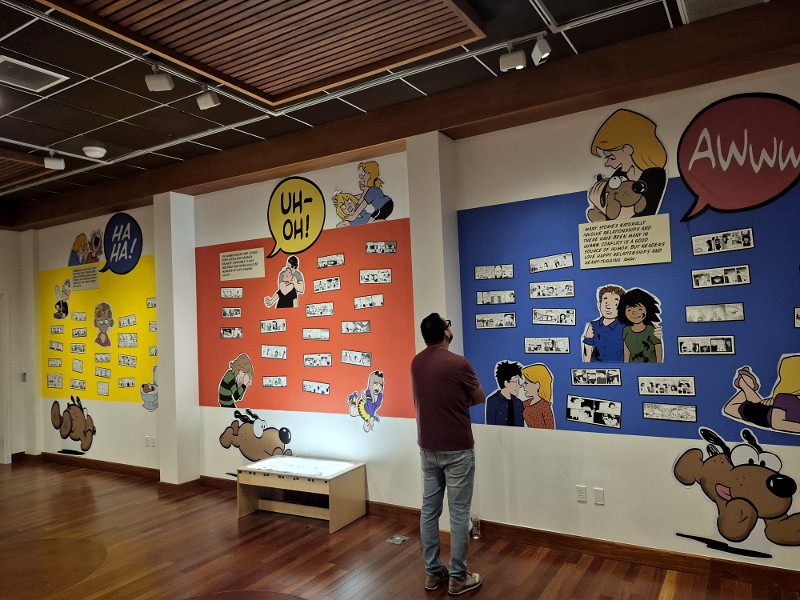
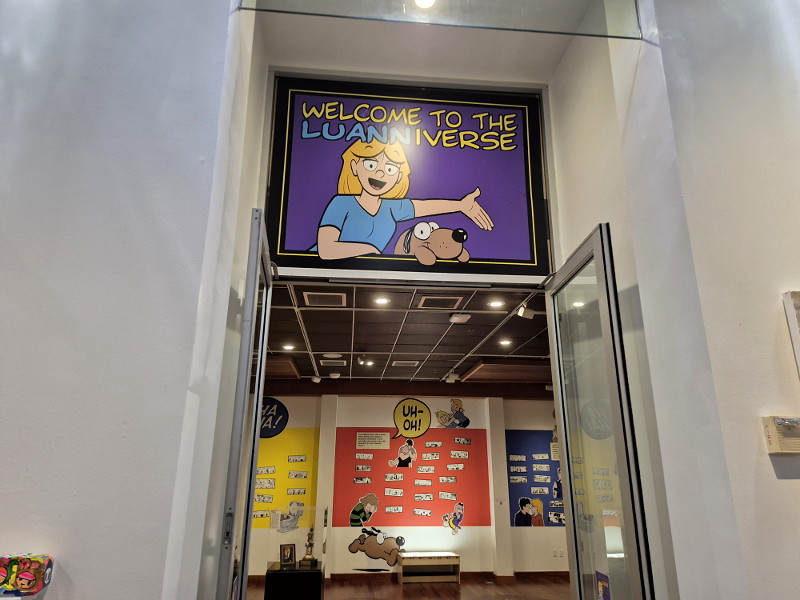
I must admit that as a boy I often skipped over the comic strip Luann. But now I have a new appreciation for the Luanniverse, because yesterday I enjoyed an exhibit at San Diego’s Comic-Con Museum: Growing Up Luann.
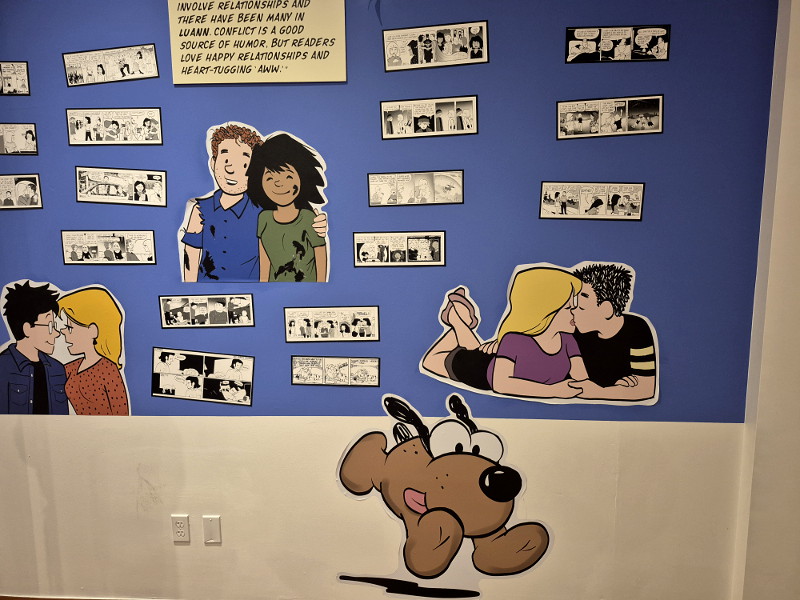
I hadn’t realized Luann’s universe was so vast and complex. Luann herself, and the strip’s large cast of characters, experience evolving relationships, lifelike troubles and humorous situations that stimulate in the reader a range of emotions. But Luann’s essential happiness is never far away.
The award-winning strip was launched in 1985 and continues to this very day. That’s forty years of living. Fortunately, time in Luann’s universe unfolds very slowly!
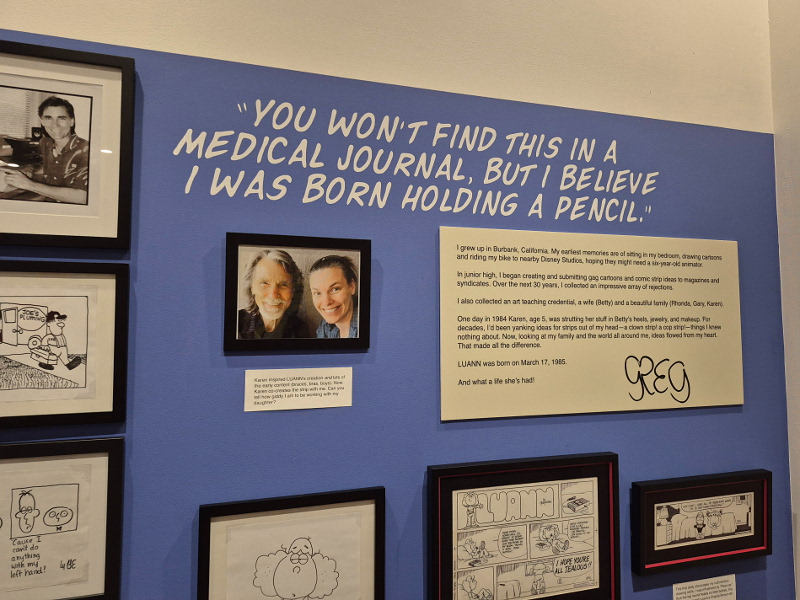
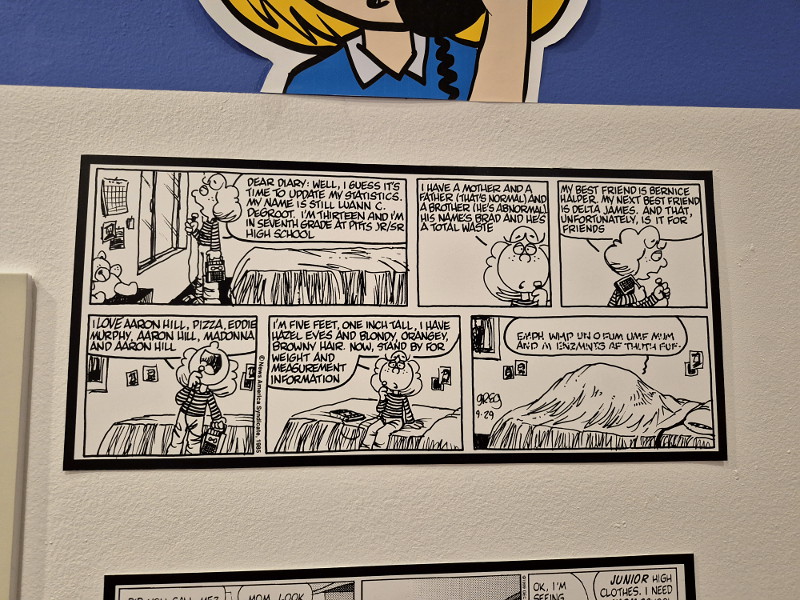
What interests me most about the comic strip is its evolution–both the art and Luann’s story. By reading the displays, one can follow the creative process undertaken by Luann’s creator, writer and artist Greg Evans.
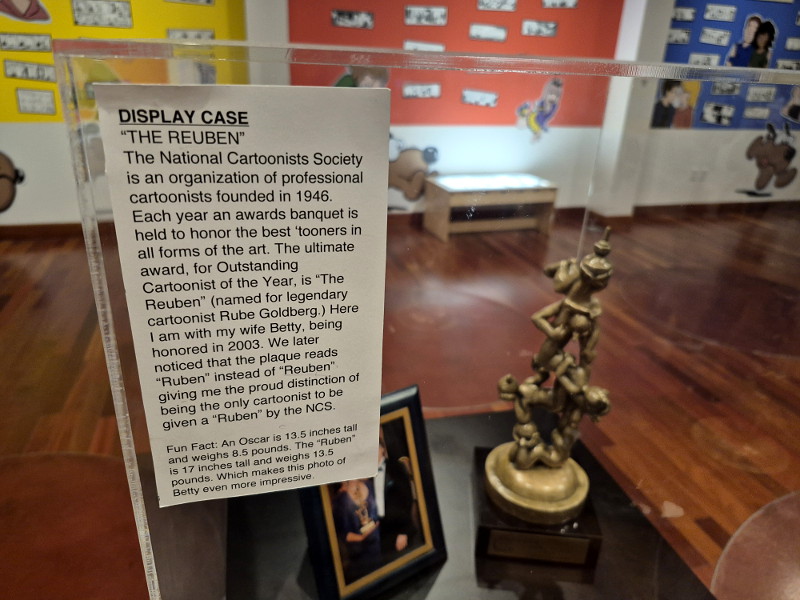
Visitors to the exhibit learn how fleshing out a beloved character and her universe took years of dreaming, experimentation and work. And how the effort has resulted in worldwide popularity and the National Cartoonist Society’s ultimate award, a Reuben.
Are you fascinated by the creative process? Do you love art? Do you love Luann?
Pay this exhibit a visit!
A bit of what you’ll discover…
…
I post new blogs pretty often. If you like discovering new things, bookmark coolsandiegosights.com and swing on by occasionally!
I live in downtown San Diego and love to walk around with my camera! You can follow Cool San Diego Sights via Facebook or X.
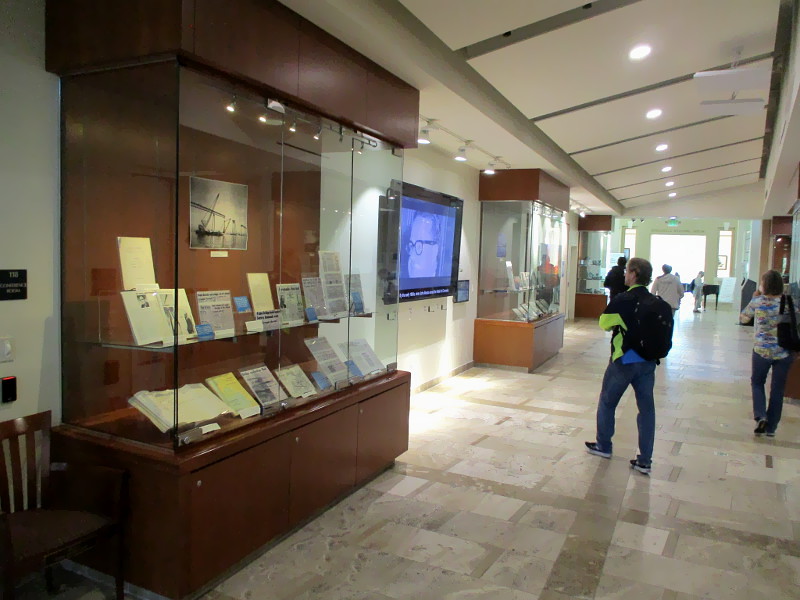
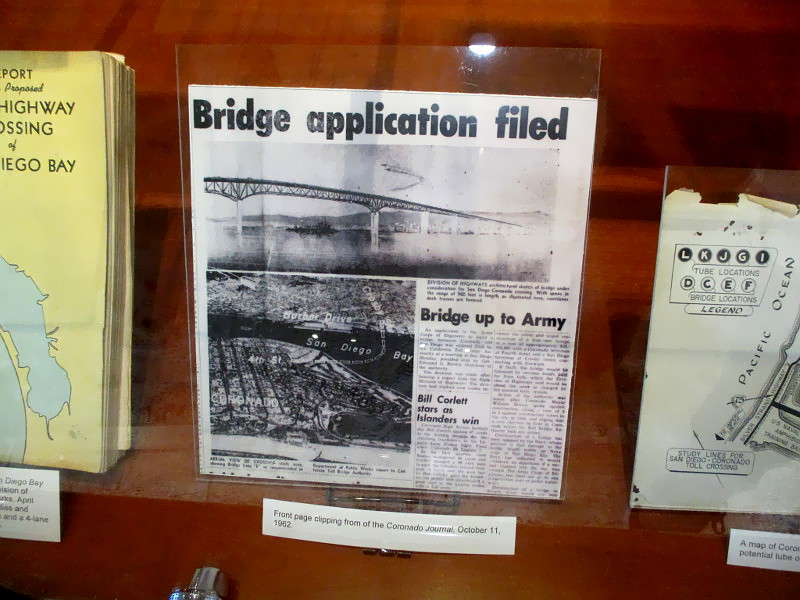
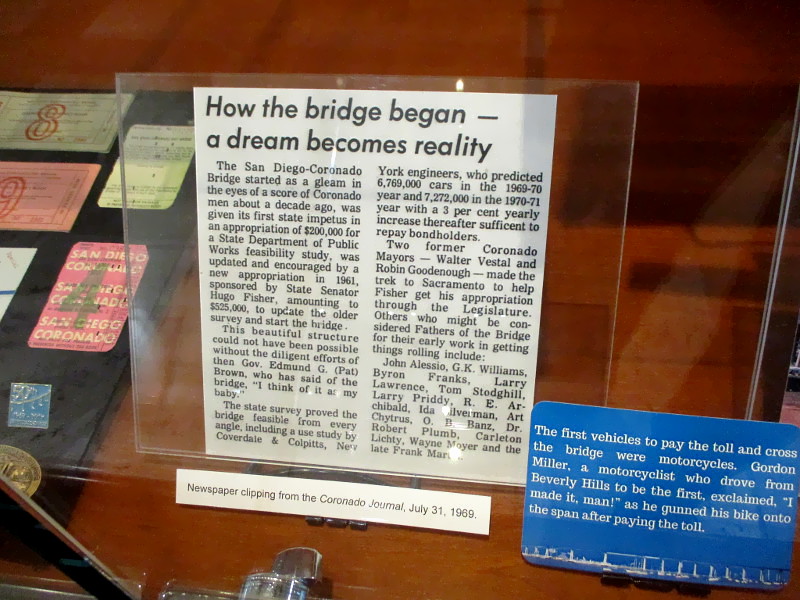
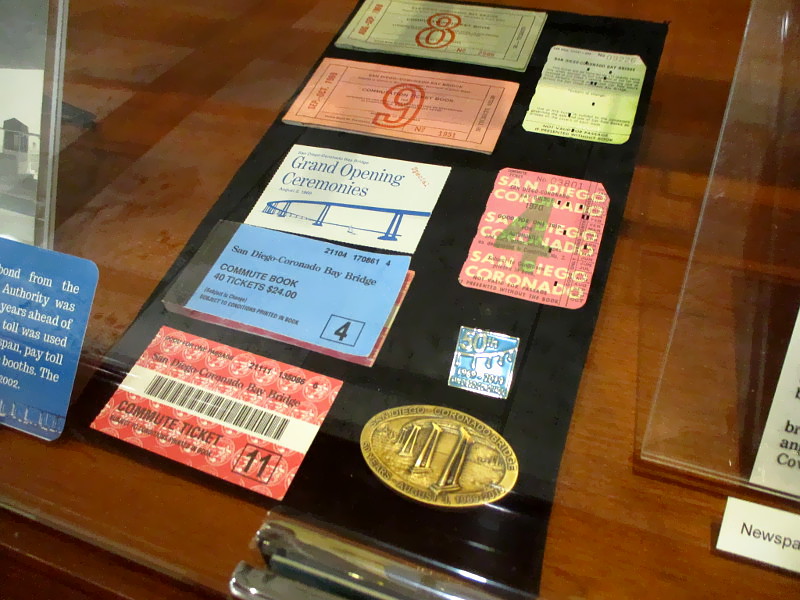
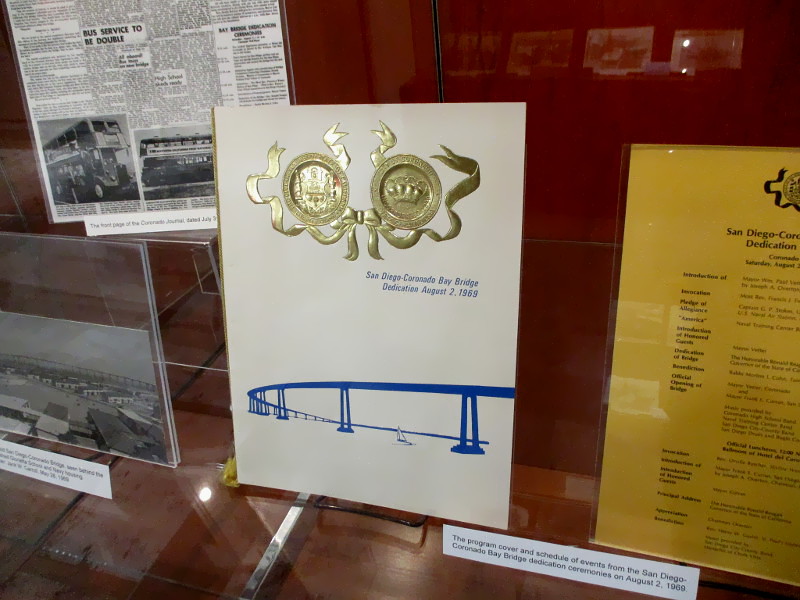
Large display cases contain old photographs, newspaper articles, documents and preserved artifacts representing the bridge’s complex history–from initial proposals to its construction to its grand opening and beyond.
Peering into the displays, reading descriptions, I learned interesting facts about the Coronado Bridge, including:
In 1926, the Spreckels Companies announced bold plans to construct a steel bridge linking Coronado to San Diego, envisioning an engineering marvel with arched spans and a lift section for maritime traffic. This news thrilled many residents eager for a fast connection to the mainland. Advocating for a tunnel instead, the Navy raised concerns about navigation and national defense. Despite initial optimism and plans for completion by 1928, the project became embroiled in decades of debate, delays, and revisions.
Mosher’s design was initially rejected by the state’s civil engineers for being too expensive. They proposed a more traditional trestle bridge, suggesting it be painted rust red or pink. Ultimately, Mosher’s design was accepted.
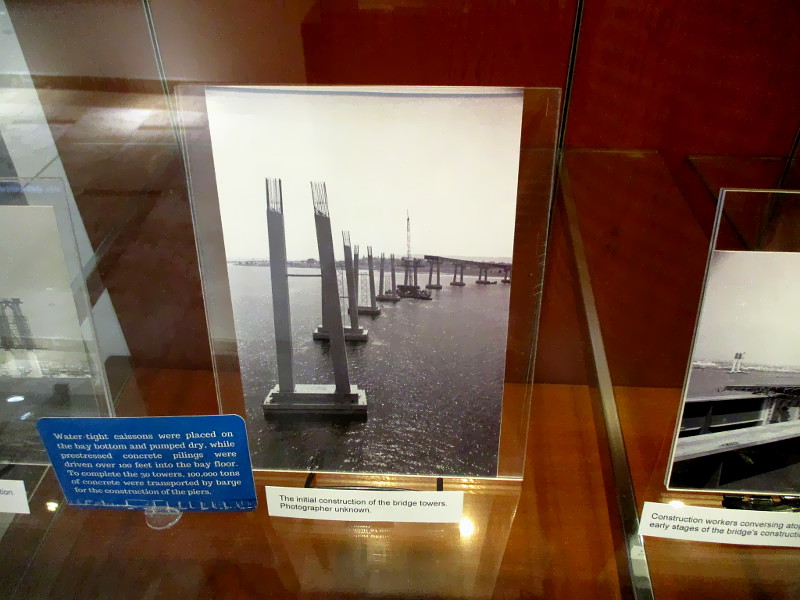
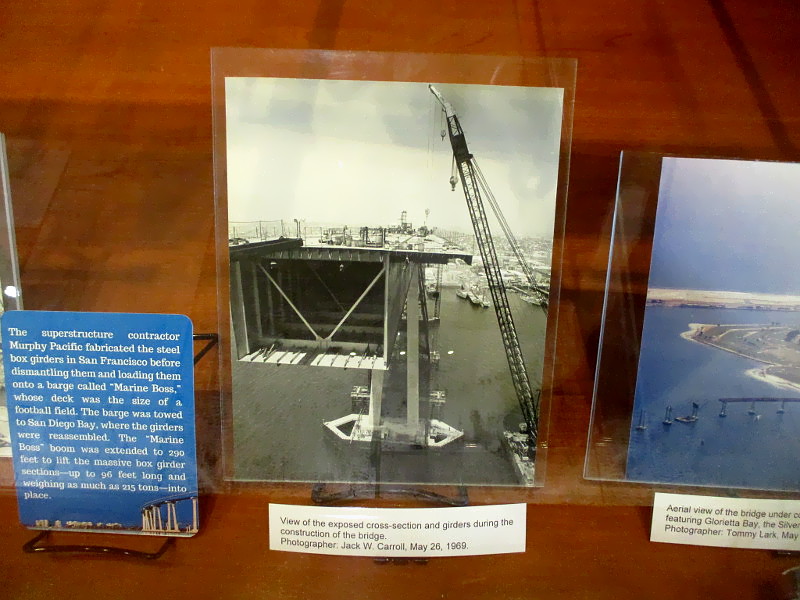
Water-tight caissons were placed on the bay bottom and pumped dry, while prestressed concrete pilings were driven over 100 feet into the bay floor. To complete the 30 towers, 100,000 tons of concrete were transported by barge for the construction of the piers.
The superstructure contractor Murphy Pacific fabricated the steel box girders in San Francisco before dismantling them and loading them onto a barge called “Marine Boss,” whose deck was the size of a football field. The barge was towed to San Diego Bay, where the girders were reassembled. The “Marine Boss” boom was extended to 290 feet to lift the massive box girder sections–up to 96 feet long and weighing as much as 215 tons–into place.
The final span, one of 27 girders, was placed on May 28, 1969. Coronado Mayor Paul Vetter participating in the informal ceremony, signing his name on the metal plate at the edge of the girder.
Mosher’s original design included lights on the low side of the railing, but they were cut to reduce costs… Coronado resident Carol Cahill…flew to Sacramento, successfully petitioned officials, and secured their installation. The lights were added in April 1970.
In 1970, the bridge received the National Award of Merit for Most Beautiful Bridge from the American Institute of Steel Construction.
The bridge’s 90-degree curve allows it to reach a height of 200 feet, tall enough for an empty aircraft carrier to pass underneath, while also providing the necessary length to ramp down to the Coronado side, which is significantly lower than the San Diego side that connects to Interstate 5.
I was told by a library employee that this fascinating exhibit will be on view through early May, 2025. Go check it out!
…
I post new blogs pretty often. If you like discovering new things, bookmark coolsandiegosights.com and swing on by occasionally!
I live in downtown San Diego and love to walk around with my camera! You can follow Cool San Diego Sights via Facebook or X.
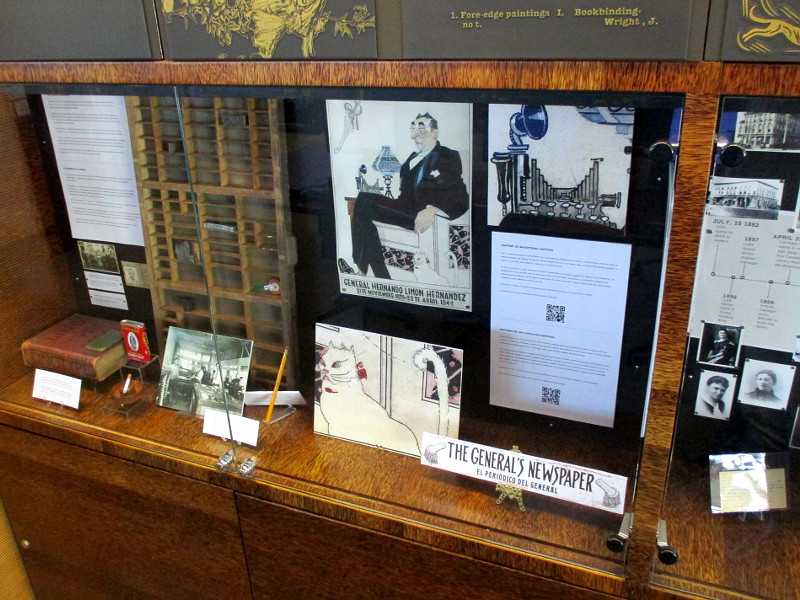
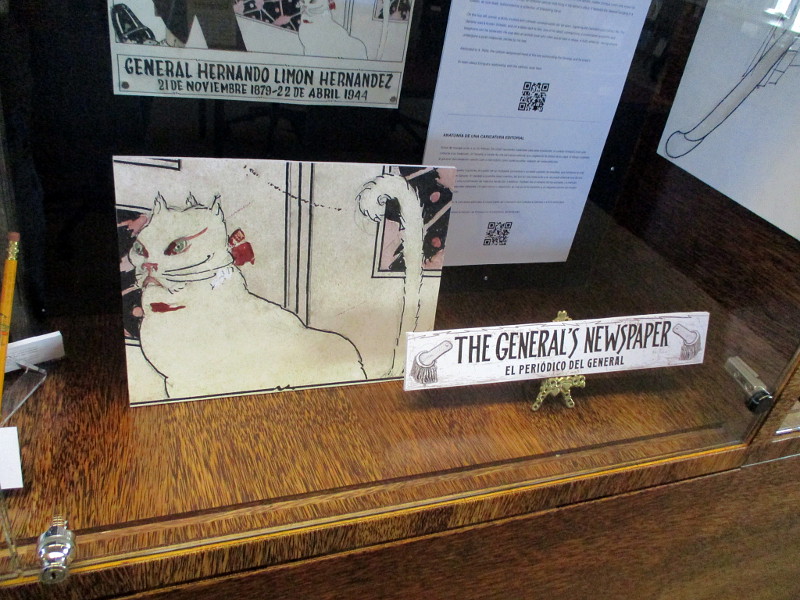
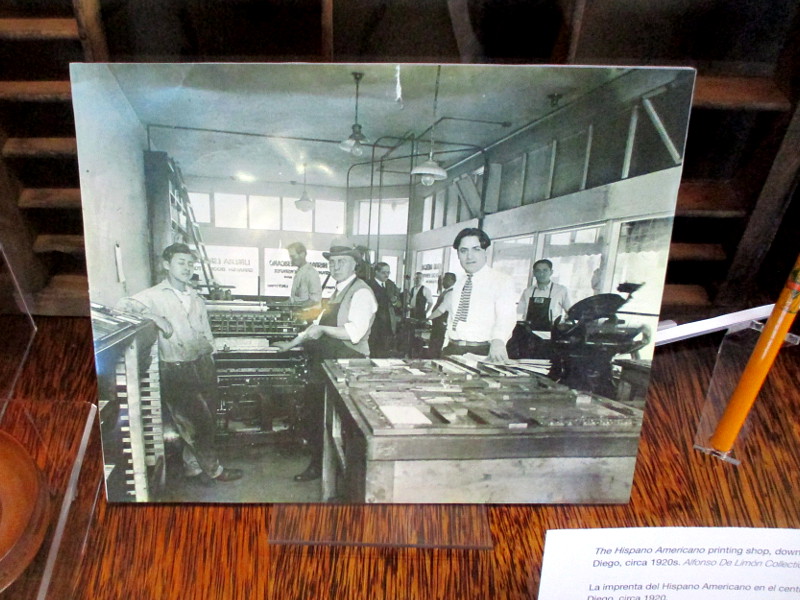
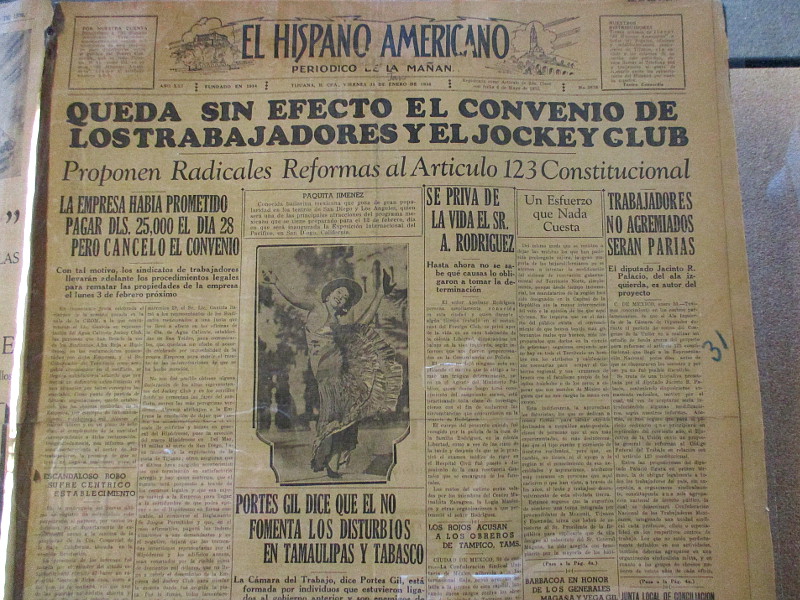
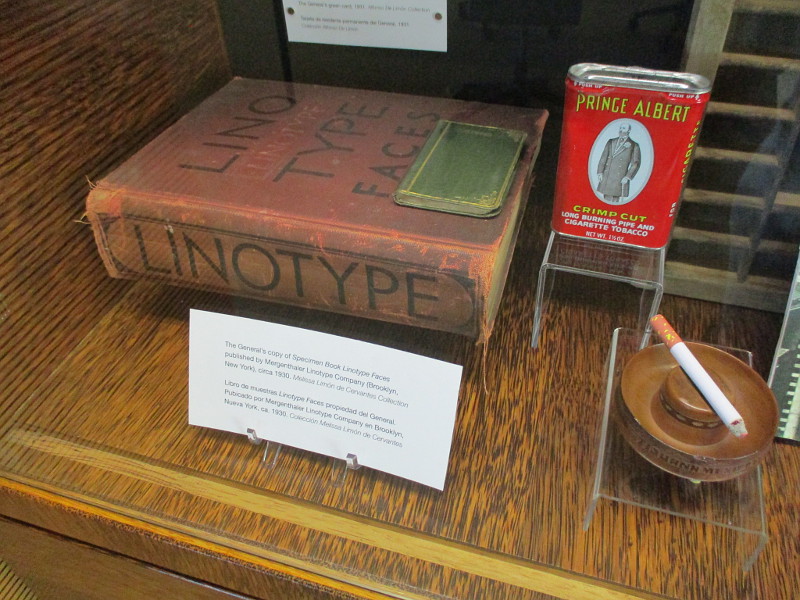
A fascinating exhibit on the 9th Floor of San Diego’s Central Library concerns the history of the old El Hispano Americano newspaper, founded in San Diego by Hernando Limón Hernández, who had been a general in the Mexican Army.
Display cases in the library’s Marilyn & Gene Marx Special Collections Center contain photographs, printed art, old newspapers and documents, detailing the life of General Hernando Limón Hernández and his groundbreaking newspaper in San Diego.
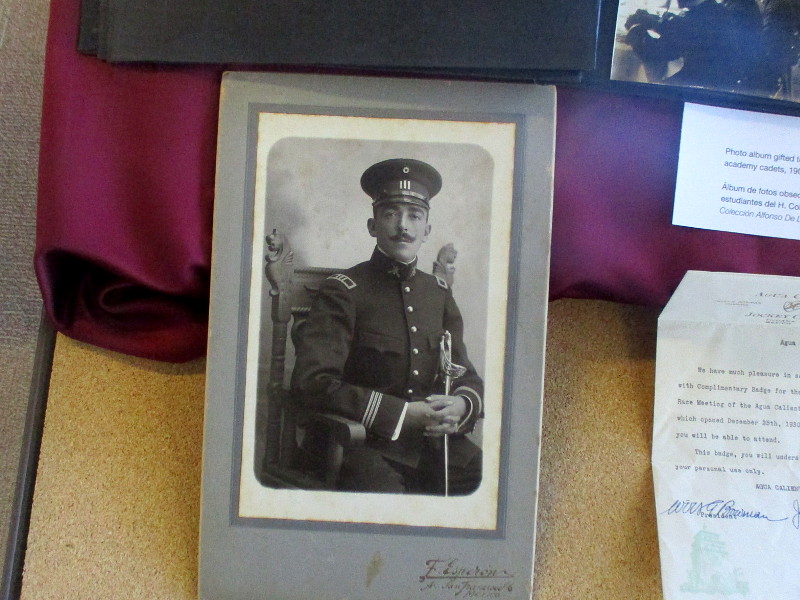
While living in Mexico, the General had been tasked with designing and building lighthouses across Mexico’s main ports. He and his family would settle in San Diego by 1916, where the retired General became a Spanish teacher at the military compound in Coronado.
He soon purchased the new El Hispano Americano newspaper, and began to operate its print shop in downtown San Diego.
El Hispano Americano was the first modern Spanish language newspaper published in California. It would become the first binational newspaper that circulated simultaneously in Southern California and Northern Baja California. At its peak, in 1932, El Hispano American averaged 25,000 daily readers.
…
Thanks for visiting Cool San Diego Sights!
I post new blogs pretty often. If you like discovering new things, bookmark coolsandiegosights.com and swing on by occasionally!
I live in downtown San Diego and love to walk around with my camera! You can follow Cool San Diego Sights via Facebook or X.
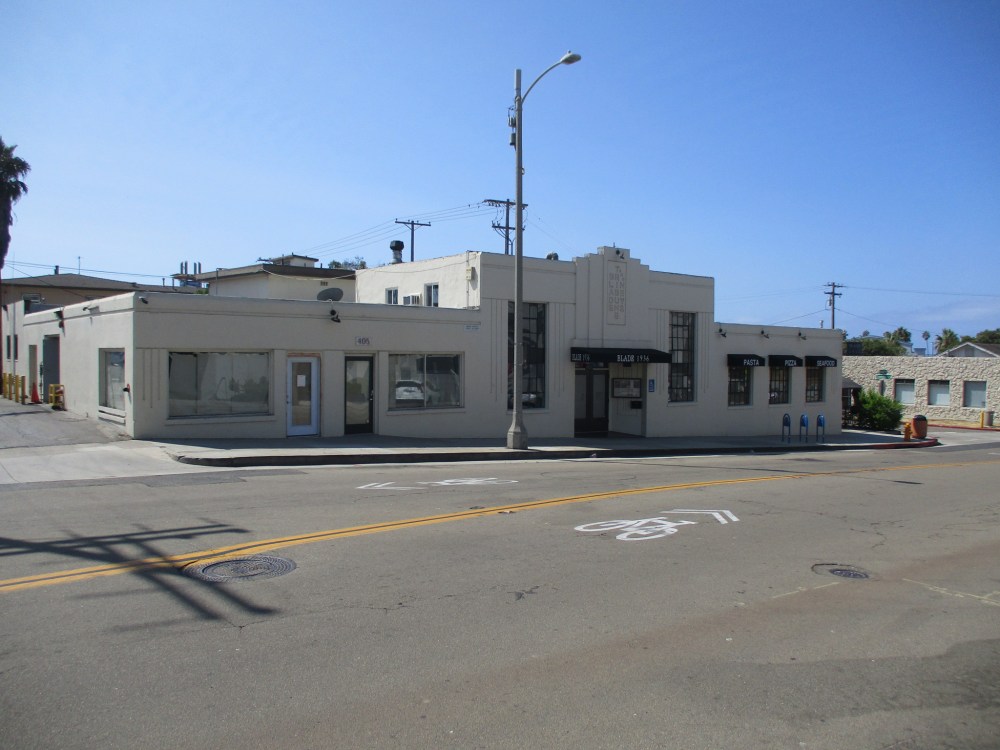
Irving Gill was an American architect who did most of his work in Southern California, especially in San Diego and Los Angeles. He is considered a pioneer of the modern movement in architecture.
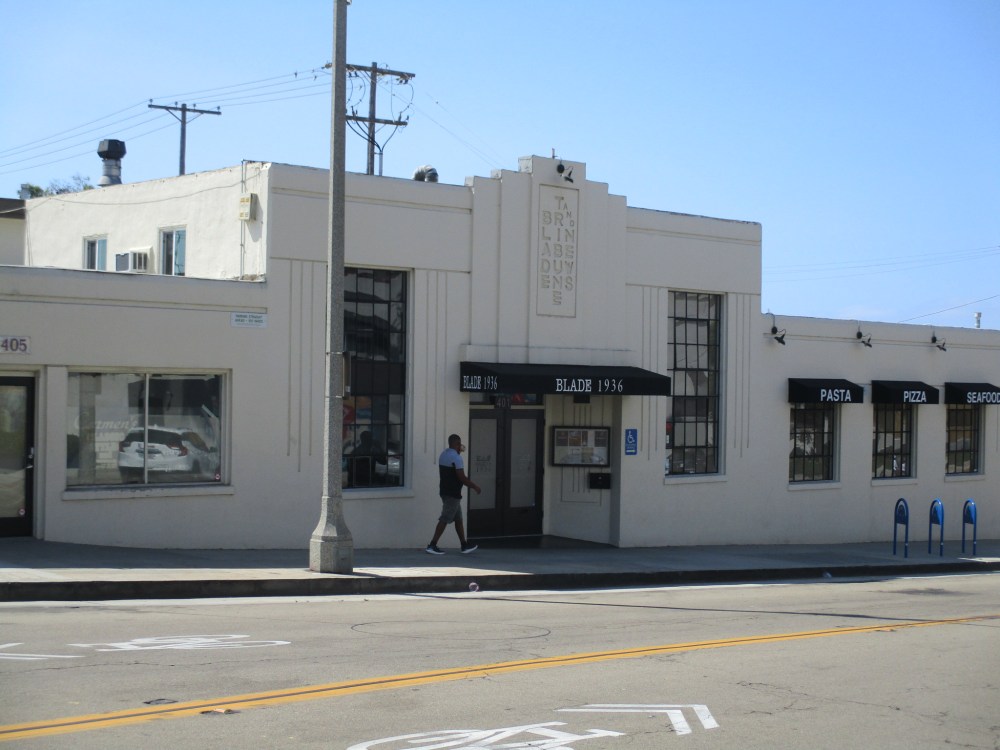
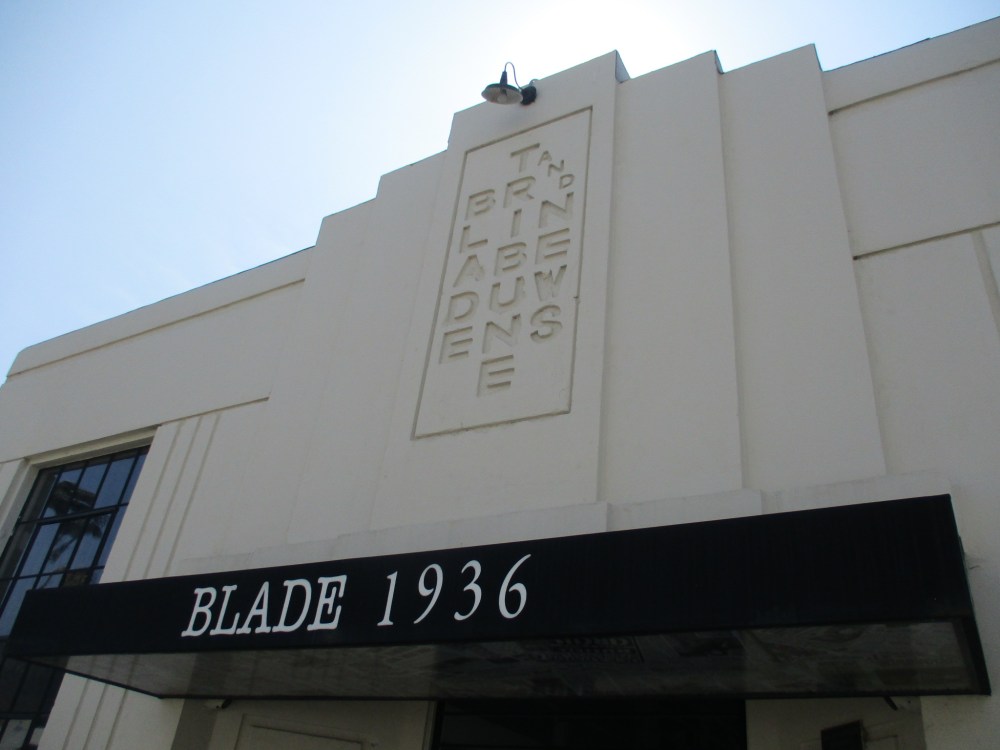
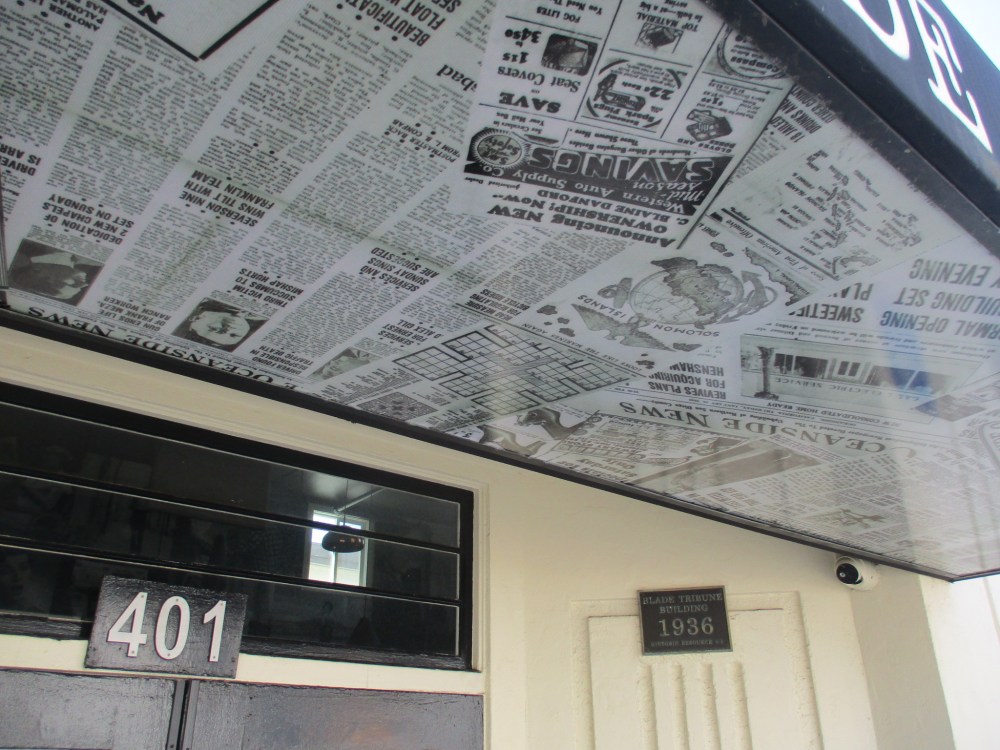
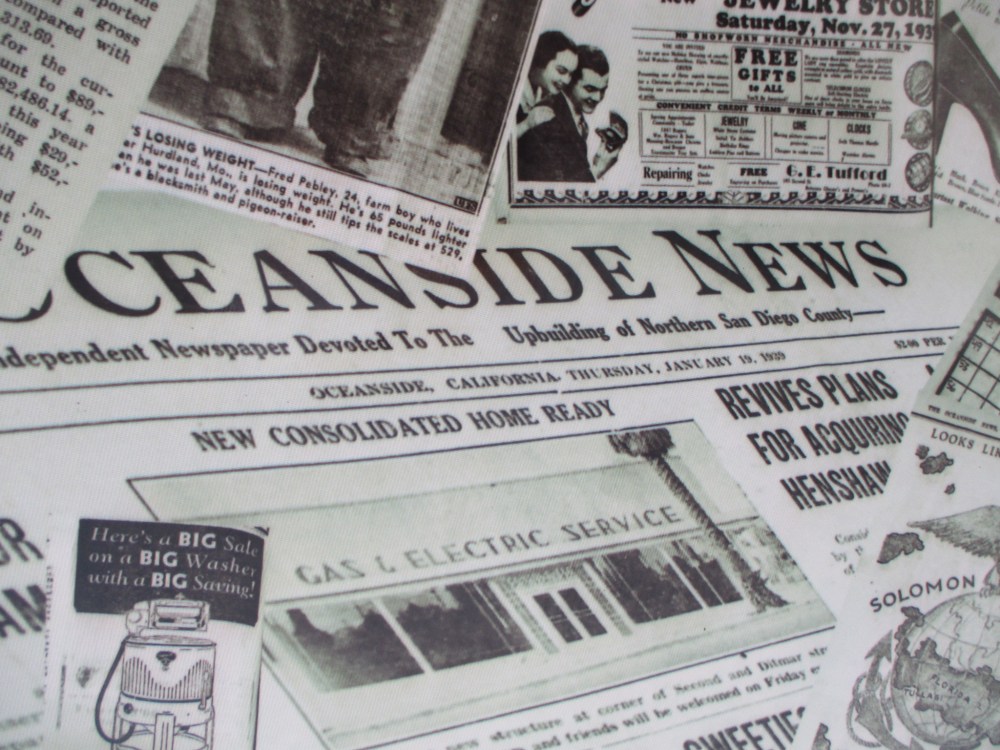
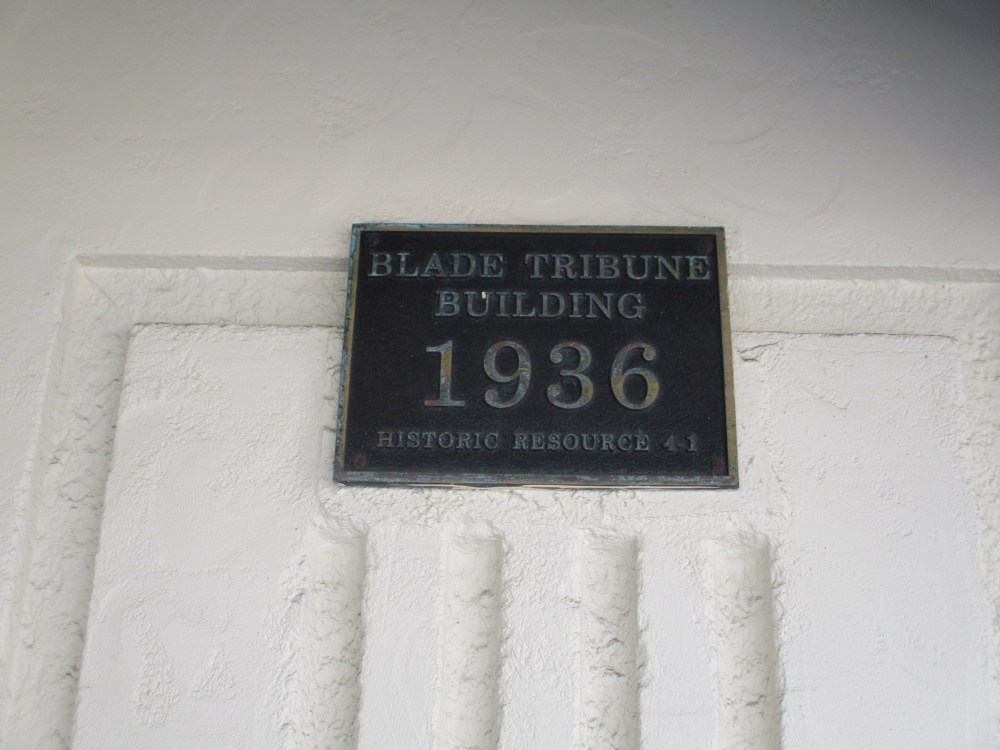
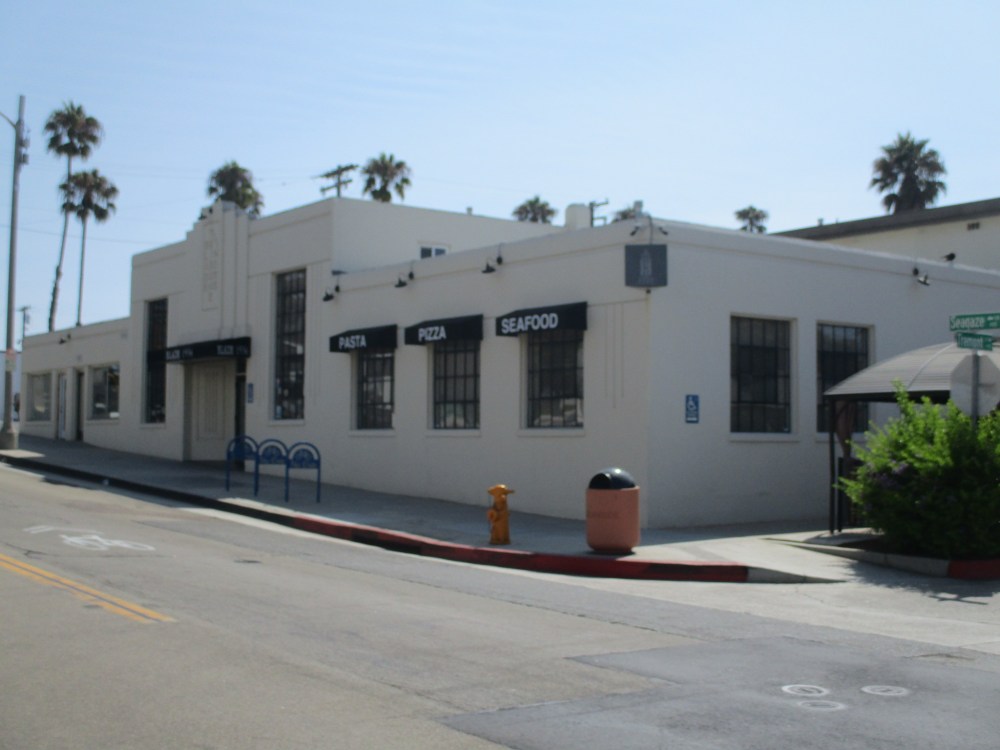
When I visited Oceanside a little over a month ago, I photographed Irving Gill’s final project: the 1936 Blade Tribune building. Let me share those photos now!
If you’d like to read a great article concerning the history of the now defunct Oceanside Blade-Tribune newspaper, click here.
The 1936 Irving Gill building you see in these photos, at 401 Seagaze Drive, was built to accommodate a newly created Oceanside Daily Blade Tribune and News. The unique building with an Art Deco façade was restored in 2019 and today is home to the Blade 1936 Italian restaurant!
…
Thanks for visiting Cool San Diego Sights!
I post new blogs pretty often. If you like discovering new things, bookmark coolsandiegosights.com and swing on by occasionally!
I live in downtown San Diego and love to walk around with my camera! You can follow Cool San Diego Sights via Facebook or X.
Balboa Park in San Diego is full of surprising history.
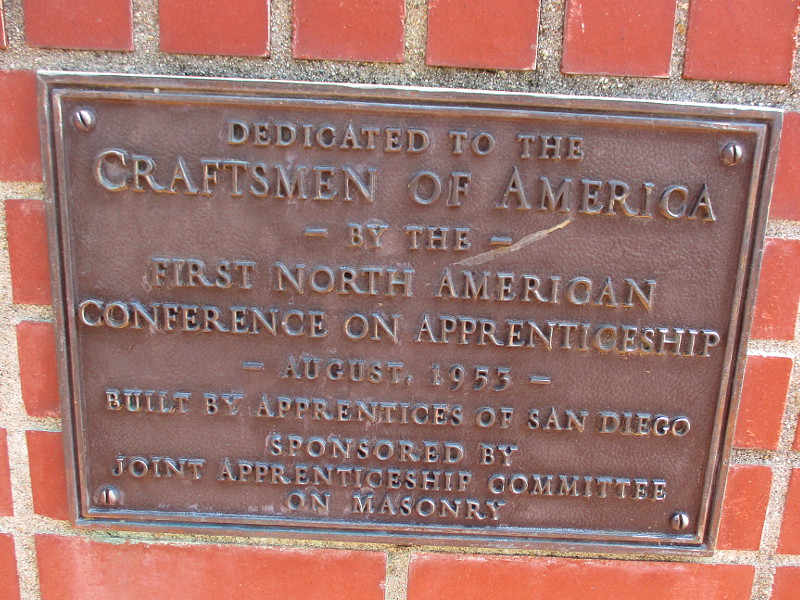
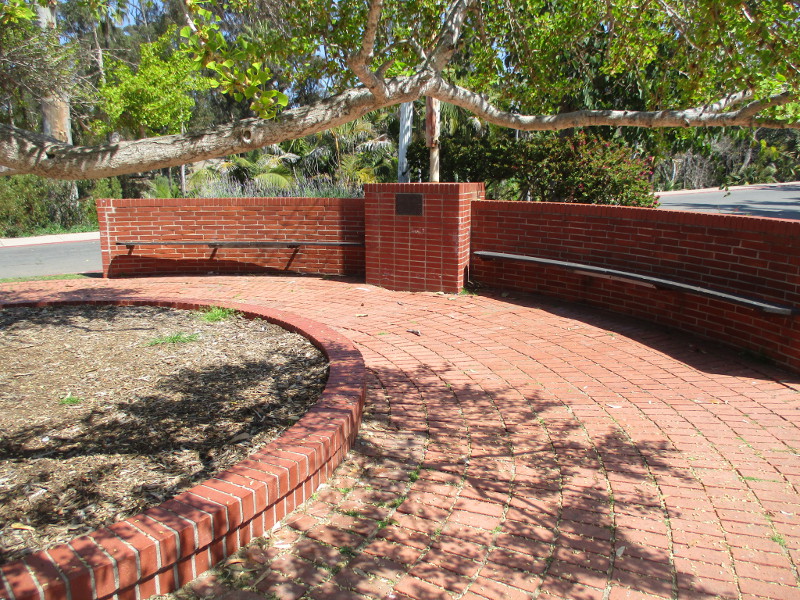
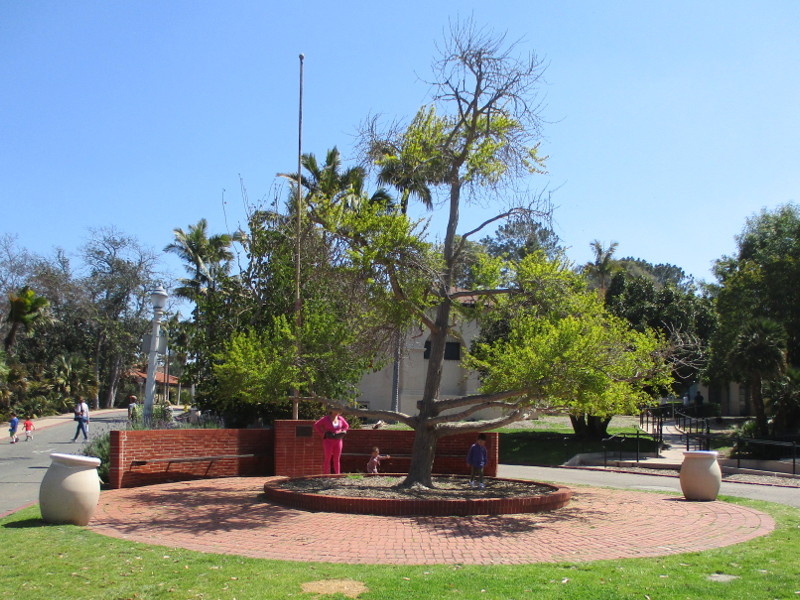
Perhaps you’ve seen this plaque. It can be found in a modest brick plaza at the House of Pacific Relations International Cottages, beneath a rusty, flagless flagpole, a few steps from the entrance to the United Nations Building and Gift Shop.
The plaque proudly states:
DEDICATED TO THE CRAFTSMEN OF AMERICA BY THE FIRST NORTH AMERICAN CONFERENCE ON APPRENTICESHIP — AUGUST, 1953 — BUILT BY APPRENTICES OF SAN DIEGO SPONSORED BY JOINT APPRENTICESHIP COMMITTEE ON MASONRY
Internet searches provide very little about this history. Perhaps a knowledgeable reader out there can contribute a comment. The brick wall and circular patio must have been built by local masonry apprentices.
I did find an interesting old article in the August 26, 1953 edition of CONVAIRIETY, a newspaper for employees of the Convair Division of General Dynamics. It begins by explaining how Two Convair San Diego men who formerly were apprentices at SD were singled out for honors during the first North American Conference on Apprenticeship held in San Diego Aug. 2-9.
You can see the full CONVARIETY article by clicking here, or read the text more easily by clicking here and scrolling down.
…
Thanks for visiting Cool San Diego Sights!
I post new blogs pretty often. If you like discovering new things, bookmark coolsandiegosights.com and swing on by occasionally!
I live in downtown San Diego and love to walk around with my camera! You can follow Cool San Diego Sights via Facebook or X.
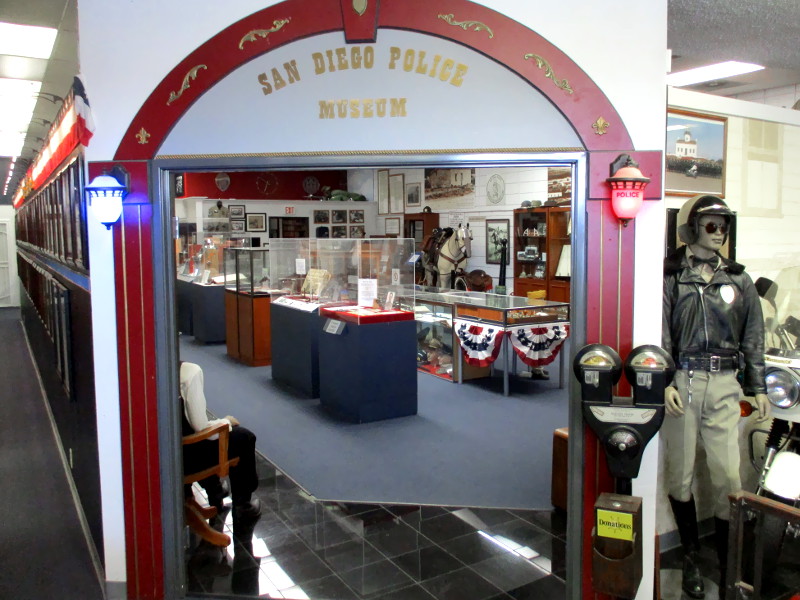
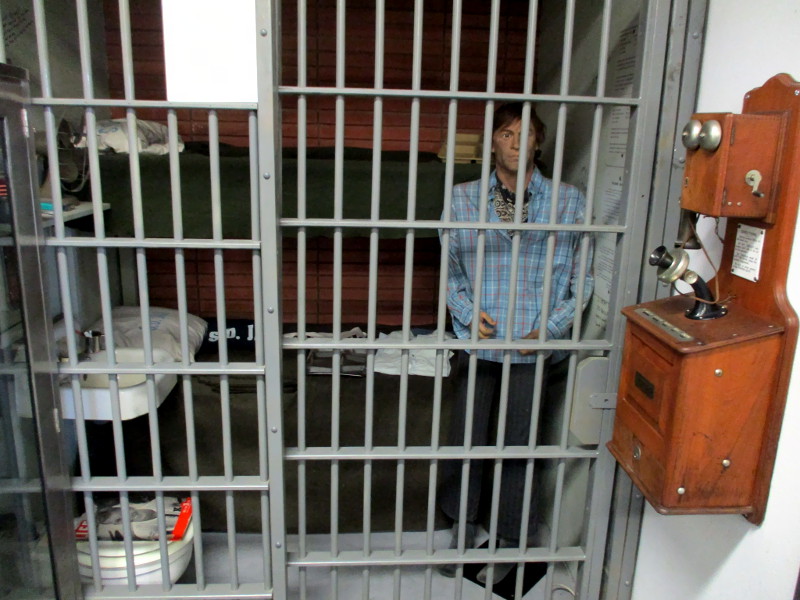
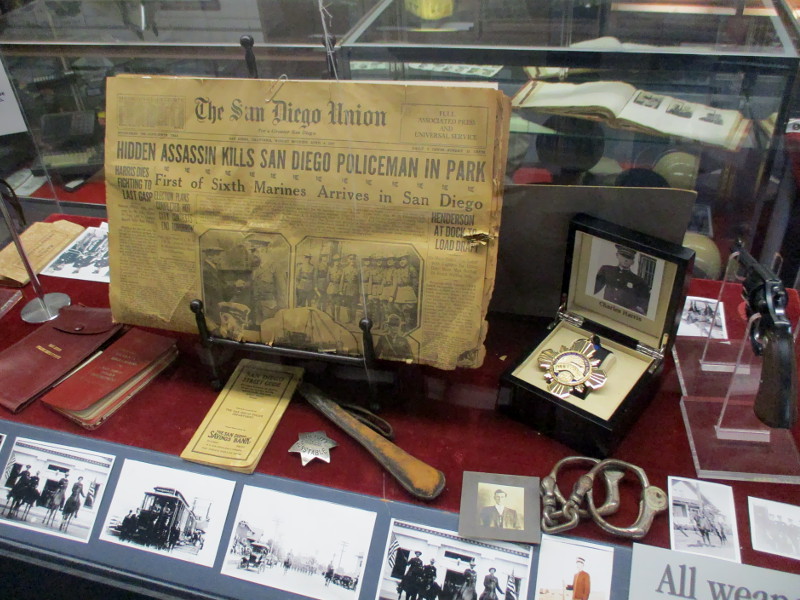
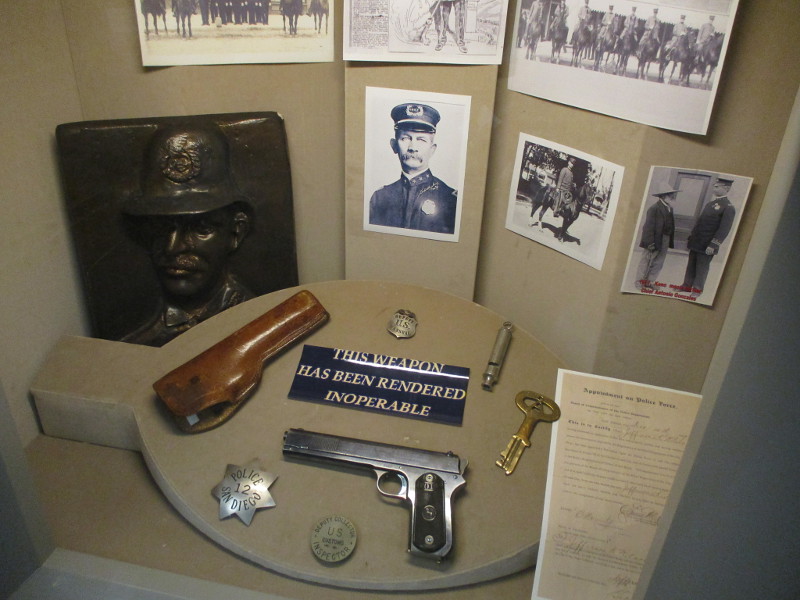
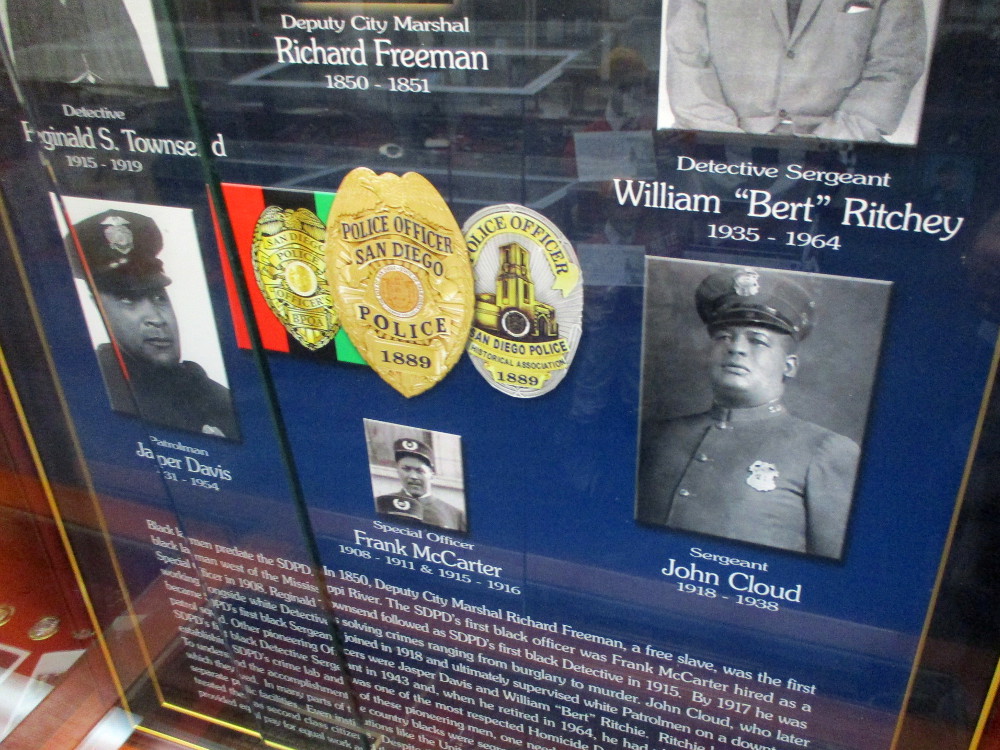
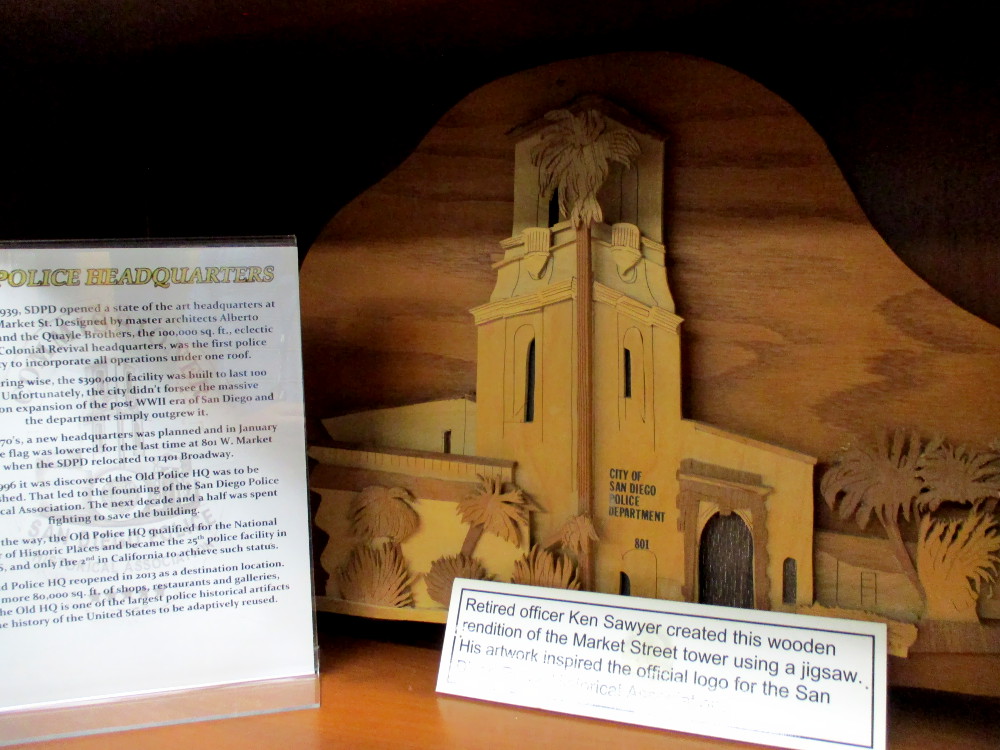
There’s a fascinating museum in San Diego that seemingly few know about. Occupying a modest, easily missed building near the intersection of El Cajon Boulevard and College Avenue, the San Diego Police Museum is packed wall-to-wall with displays that lovers of history shouldn’t miss!
I visited the museum for my very first time a while ago and was amazed at the quality and variety of exhibits.
Photographs, documents, equipment and artifacts trace the earliest days of the San Diego Police Department right up to the present.
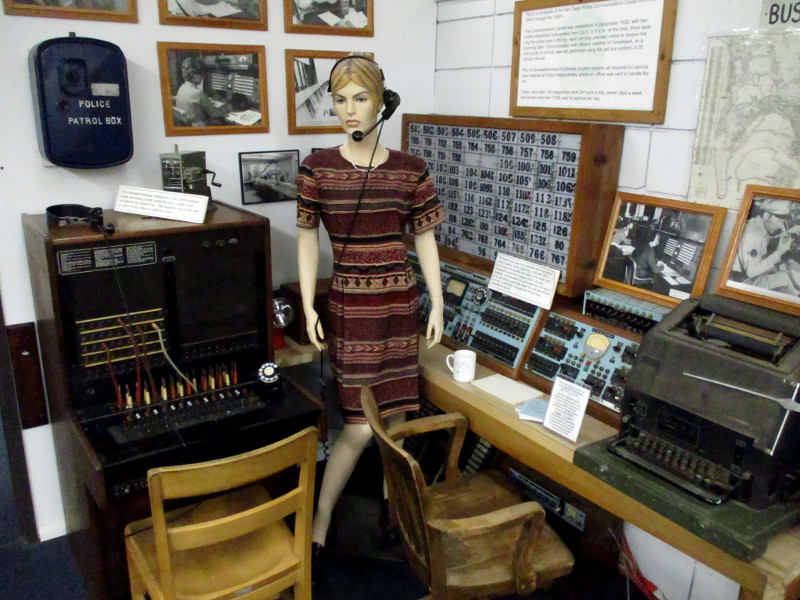
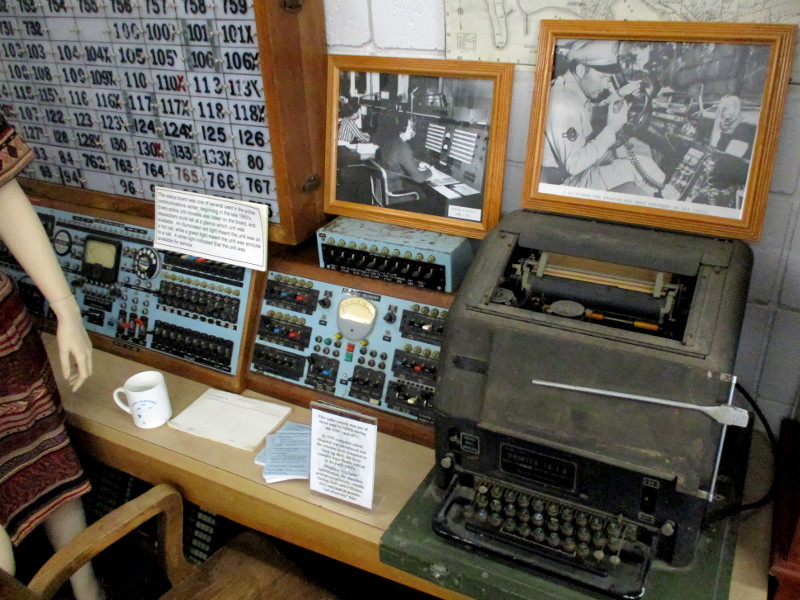
There’s a mid-20th century police Communication Center. There’s a simulated jail cell, and a real police motorcycle. There are different uniforms from the past.
There are old newspapers with headlines about crime in San Diego. There are memories of past police chiefs. There is standard law enforcement gear dating back to the 1800s, and even a Tommy Gun, like those that were once used by gangsters.
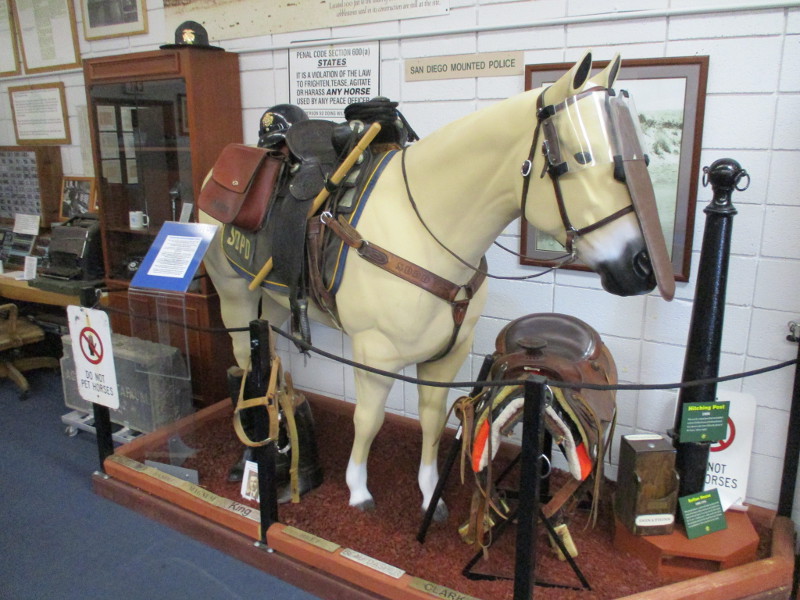
There are displays concerning horse mounted officers, bike teams that were established in the early 1920s, and four-legged K-9 officers. There’s recognition of how diversity has played a more and more important role in the San Diego Police Department through the years.
There are old police badges and hundreds of patches. There are even artifacts from charity football COP’er Bowls and sports trophies won by officer athletes and bodybuilders.
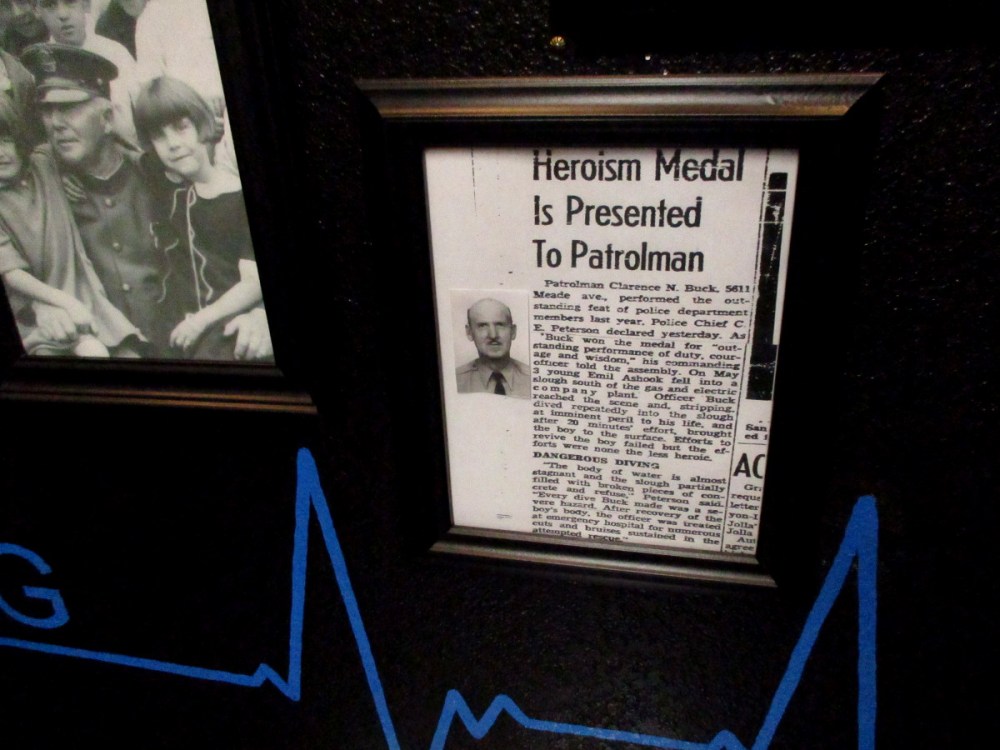
And there are medals won by police heroes. They ran toward danger in the service of others.
And covering one wall: a memorial to fallen officers.
For more details about the museum, including its hours of operation, check out the SDPD Museum website.
…
Thanks for visiting Cool San Diego Sights!
I post new blogs pretty often. If you like discovering new things, bookmark coolsandiegosights.com and swing on by occasionally!
I live in downtown San Diego and love to walk around with my camera! You can follow Cool San Diego Sights via Facebook or Twitter!
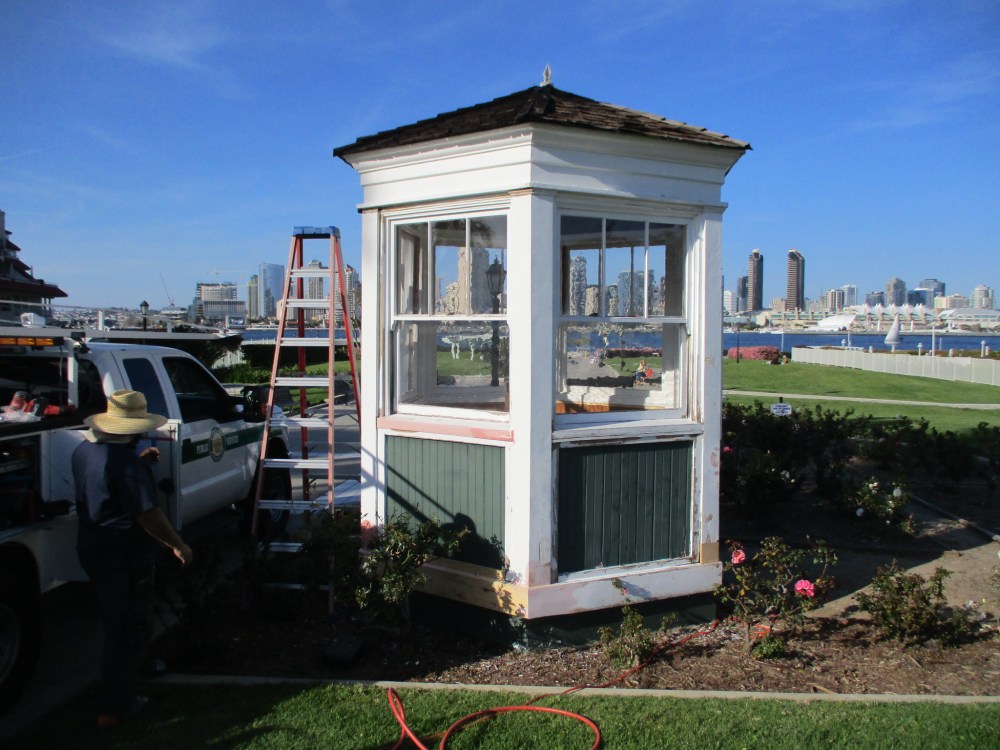
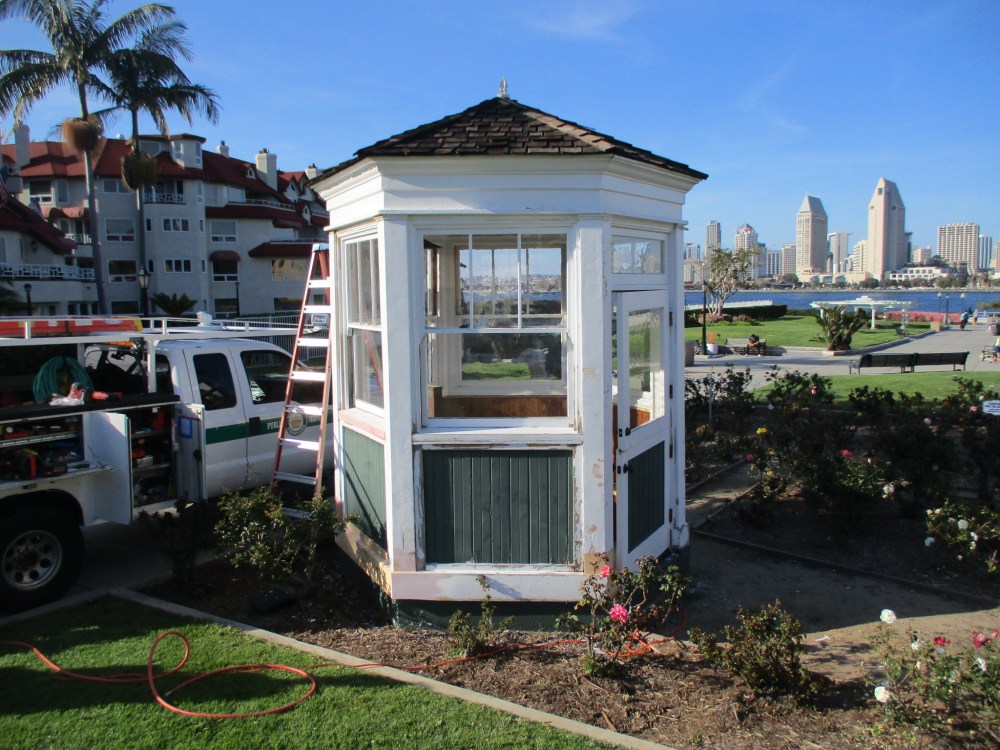
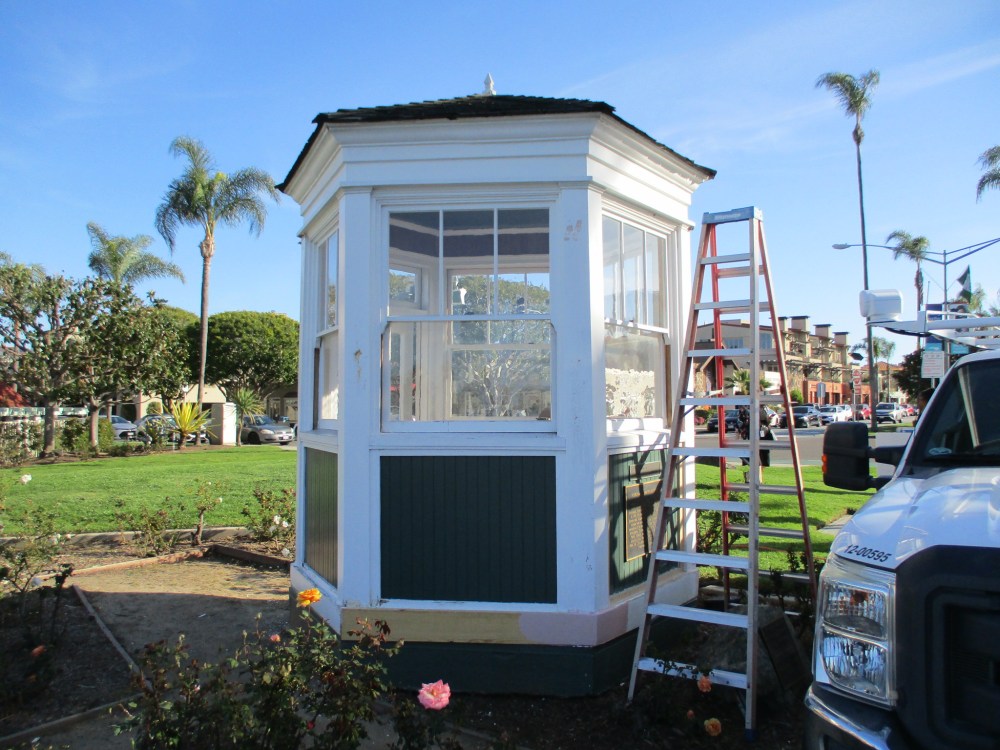
I had walked into Coronado’s bayfront Centennial Park this afternoon, making my way toward the Coronado Ferry Landing, when I noticed work being done on the historic old ferry ticket booth.
I paused to watch for a few moments, then asked some questions.
I learned this old ticket booth, dating from 1886, has suffered pretty badly from rot and termites. A substantial portion of the structure must be replaced.
I was also told this ticket booth, back in the day before the Coronado Bridge opened, was located closer to the water, where ferries crossing San Diego Bay would land. The booth also stocked newspapers that were sold to ferryboat passengers.
If you’d like to learn a little more about the booth and see its historical plaque, you can read a past blog post here.
…
Thanks for visiting Cool San Diego Sights!
I post new blogs pretty often. If you like discovering new things, bookmark coolsandiegosights.com and swing on by occasionally!
I live in downtown San Diego and love to walk around with my camera! You can follow Cool San Diego Sights via Facebook or Twitter!
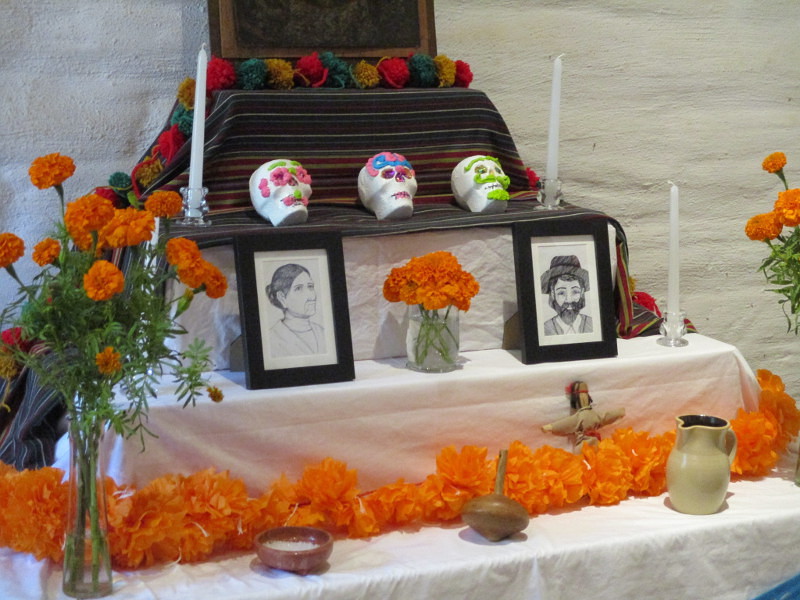
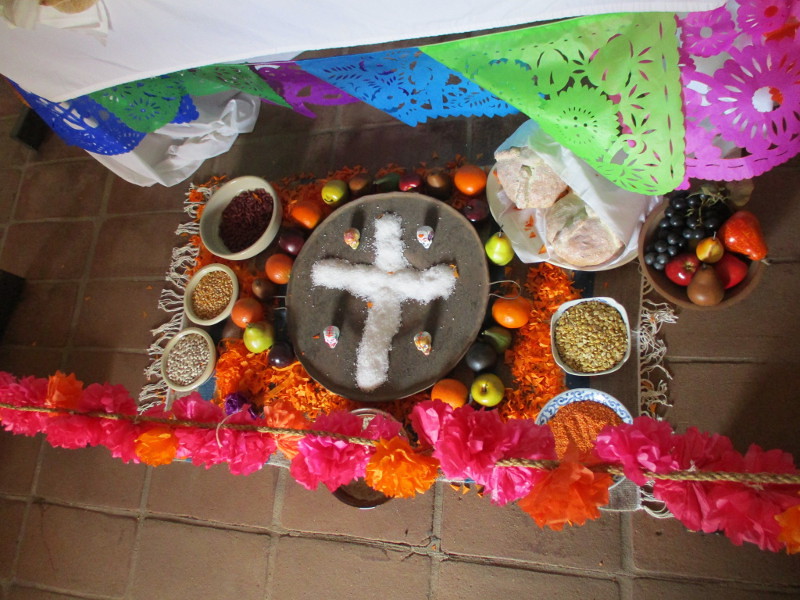
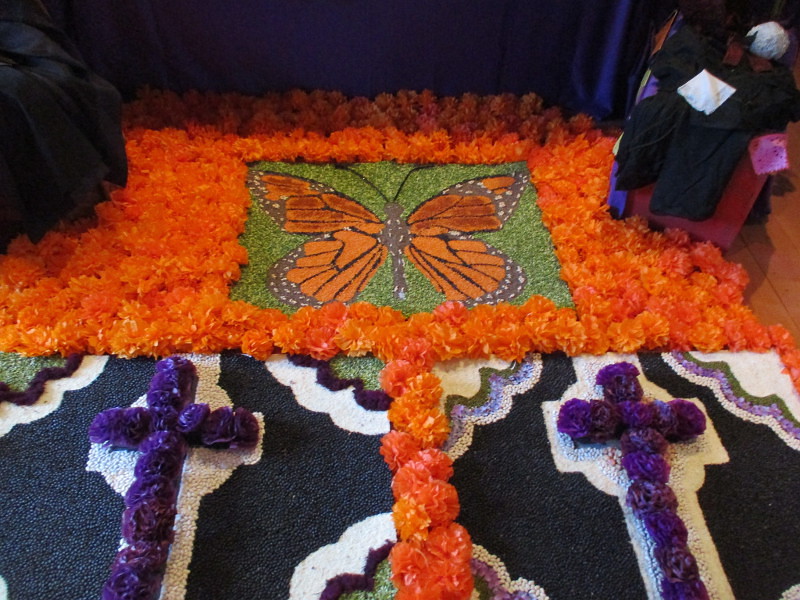
Many beautiful Día de los Muertos altars can now be viewed in Old Town San Diego State Historic Park. They were built for Mexico’s traditional Día de los Muertos celebration, which begins in a little over a week. The holiday stretches from November 1st to 2nd.
Several of the beautiful altars you are about to see have been installed in historical buildings that operate in the State Park as free museums. These altars pay tribute to people who lived in early San Diego.
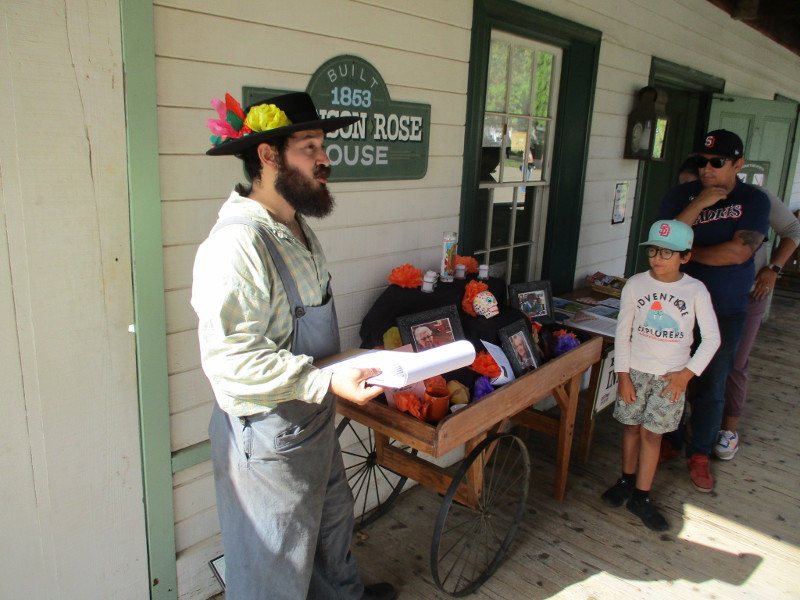
Today I and several other visitors enjoyed an educational tour of four particular altars. Our friendly and knowledgeable guide was Aaron, whom I’d seen a few minutes prior to the tour hammering away in Old Town’s Blacksmith Shop!
Our group began in front of the Robinson-Rose Visitor Information Center, where we learned about the history of Día de los Muertos, its origin, meaning, and the rich symbolism contained in the traditional altars. You can learn all about the Day of the Dead by checking out this Wikipedia page here.
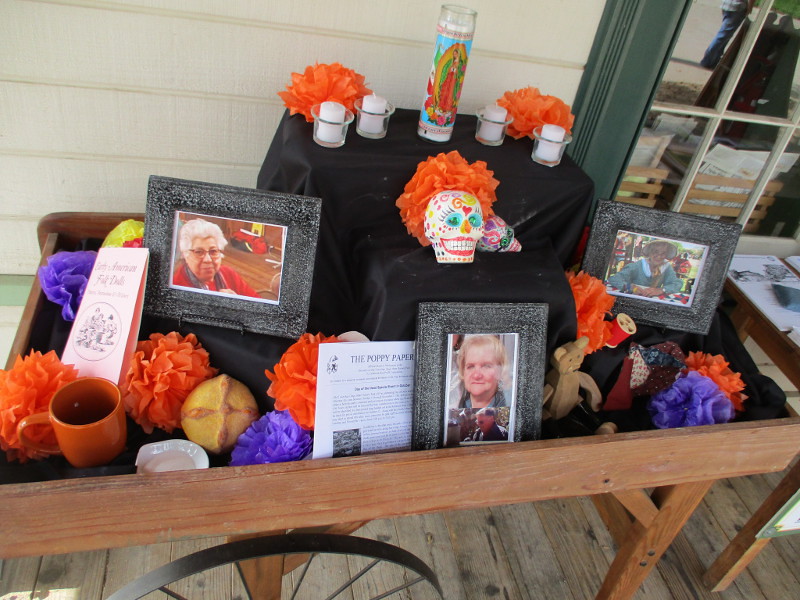
Our group began by looking at a small altar set up on a cart by the Visitor Center’s front door. The touching altar honored and remembered Old Town State Park volunteers who had passed on from this life.
Over 4 million visitors come to this State Park every year, including many school children. Without dedicated volunteers, maintaining the vibrancy of this very special place wouldn’t be possible.
We then proceeded across a corner of Old Town’s grassy plaza to La Casa de Machado y Silvas, which is now the Commercial Restaurant museum. Inside, we learned about this old adobe’s history.
In one room of the historic adobe a large, beautiful altar paid tribute to many notable residents of San Diego in the mid-1800s.
Some photographs in the altar showed relatives of María Antonia and her husband, José Antonio Nicasio Silvas. The newly married couple was gifted this house by María’s father José Manuel Machado, who commanded the military guards at nearby Mission San Diego.
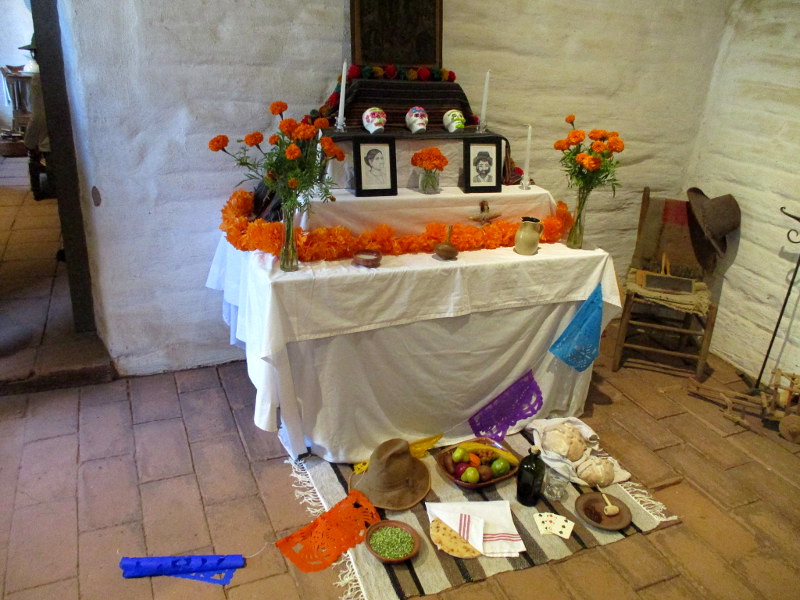
Next came an altar inside La Casa de Machado y Stewart. The images in this altar are of José Manuel Machado and his wife María Serafina Valdez de Machado.
The two raised eleven children. Their daughter, Rosa Machado, married a New Englander named John “Jack” Collins Stewart and thereby inherited this house. Stewart was a shipmate of famous author Richard Henry Dana, Jr., who described a visit to the house in Two Years Before the Mast.
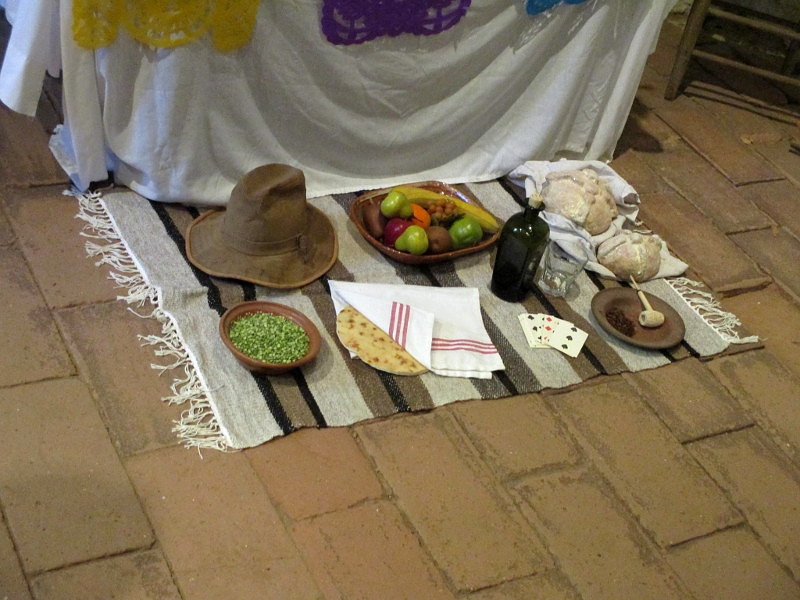
It was interesting to see that the ofrendas (offerings) on the floor in front of this altar include playing cards, a pipe and liquor!
Food and objects that brought pleasure in life are meant to entice souls back to our world–at least during Día de los Muertos.
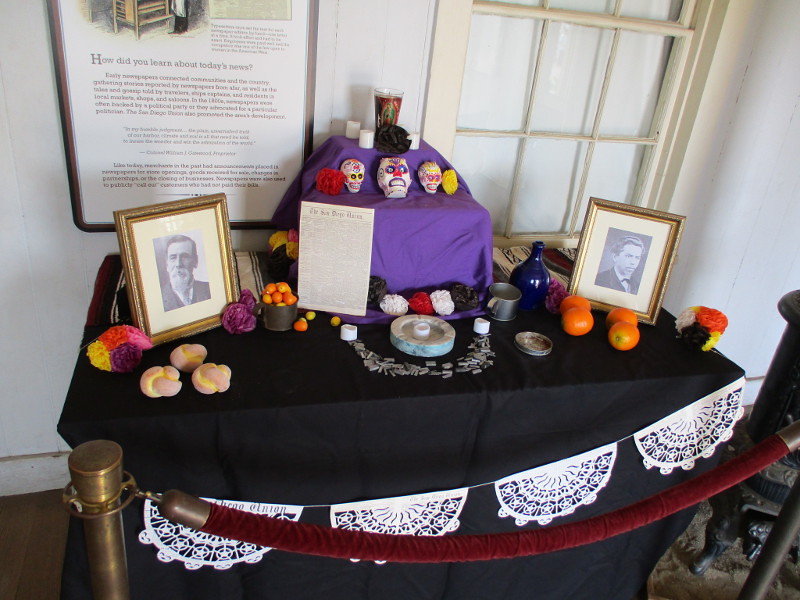
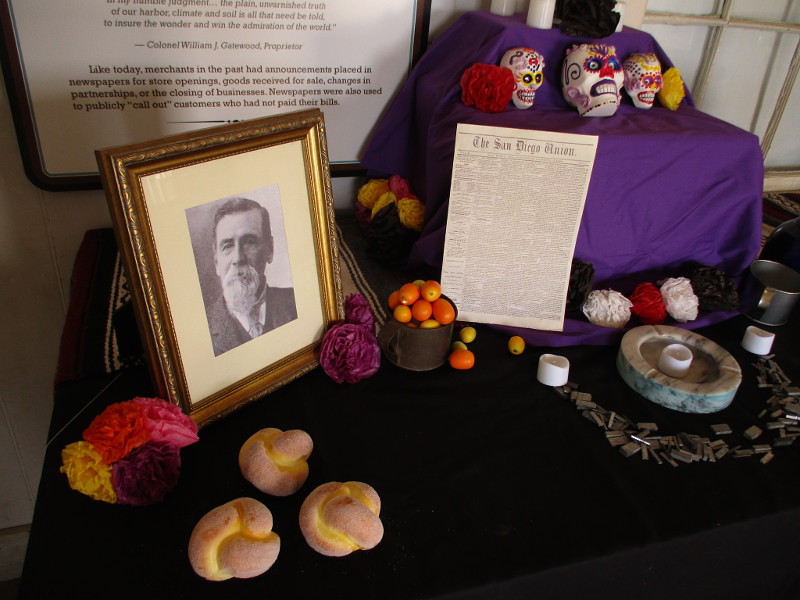
Our group finally headed to the small historic San Diego Union Building, where an altar remembered two figures in the early history of our city’s major newspaper.
The photos are of Edward “Ned” Bushyhead and José Narciso Briseño. Bushyhead was not only a Cherokee miner and lawman, but he was the newspaper’s first publisher. Briseño, a native of Chile, was the printer.
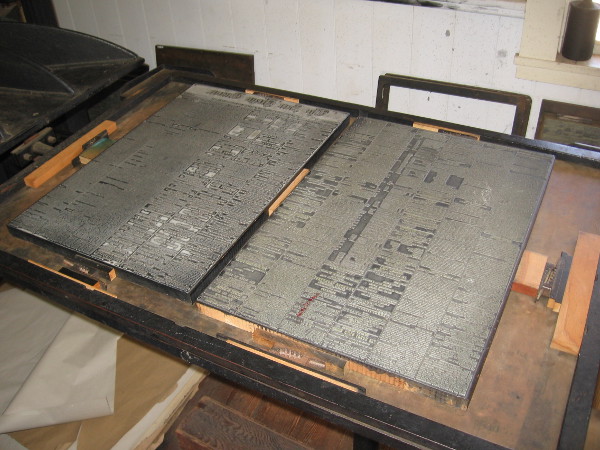
This altar is quite unusual in that it contains a pile of sorts–small typesetting pieces used to assemble words, that were subsequently printed in columns on sheets of paper using a hand press.
The next two altars that I photographed today were not part of the tour.
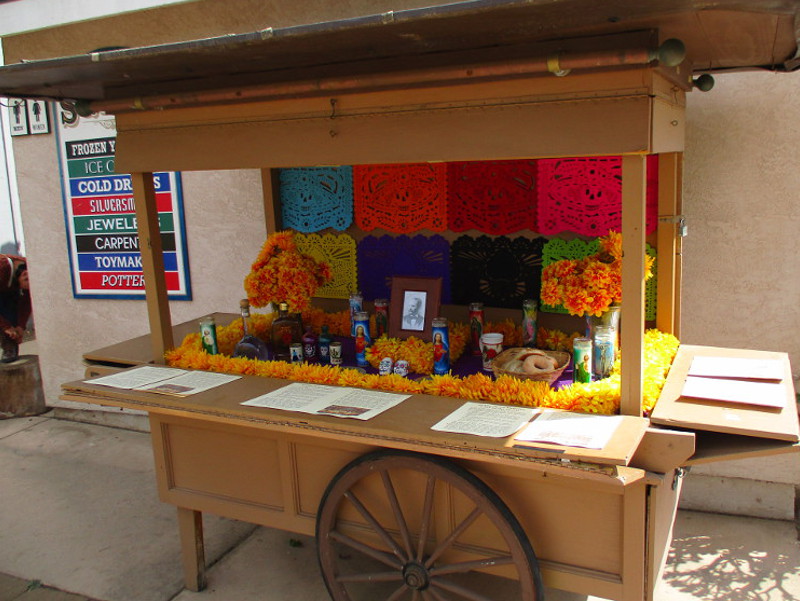
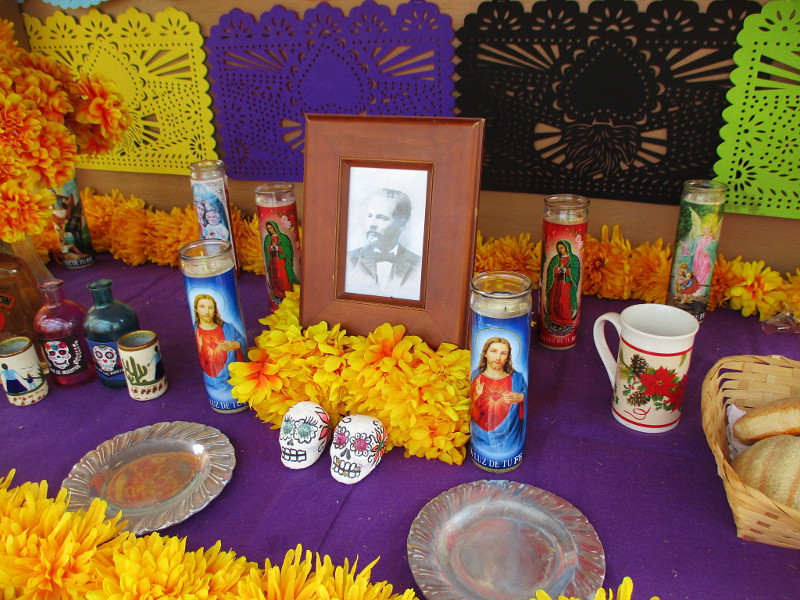
The following example on a cart can be found in Wallach & Goldman Square, among many shops. I know nothing specific about it…
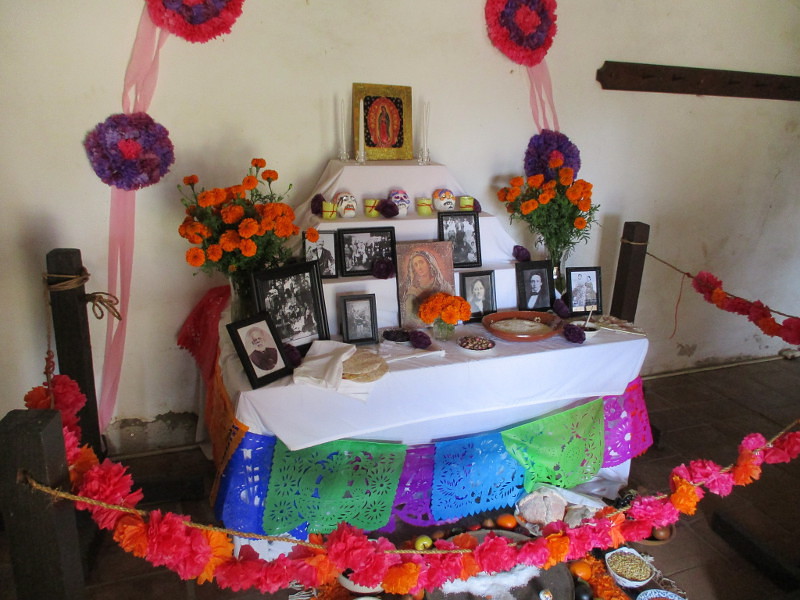
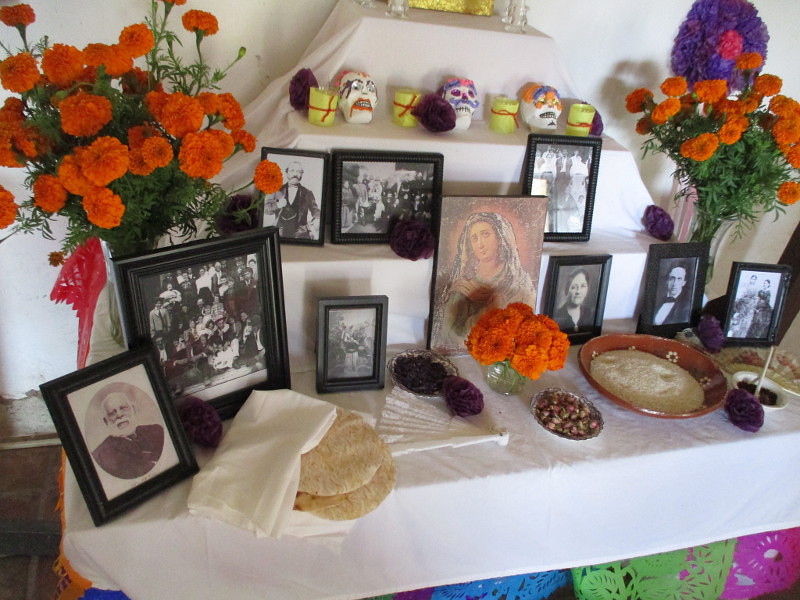
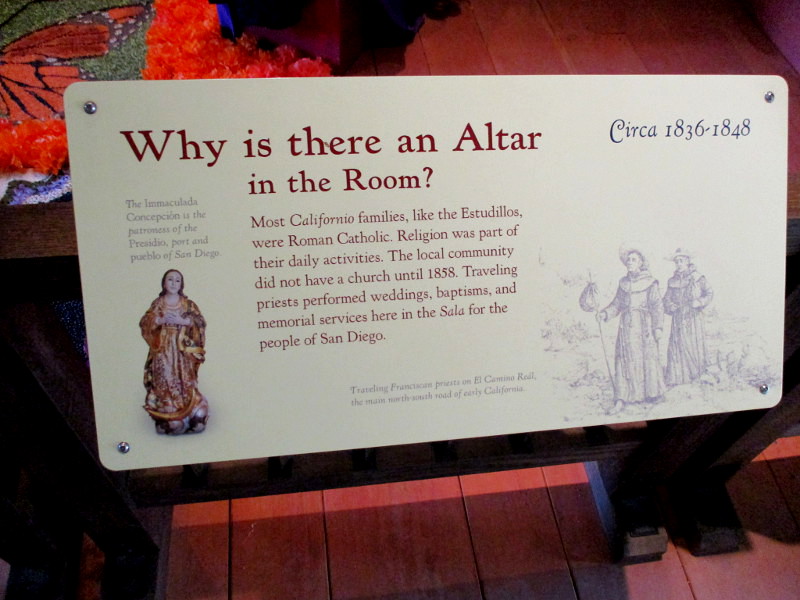
And finally, probably the most impressive of all the Old Town altars is the one inside the sala (living room) of La Casa de Estudillo.
The sprawling adobe and its beautiful courtyard, built by Presidio comandante José María Estudillo and his son, lieutenant José Antonio Estudillo, became San Diego’s social and religious center during the Mexican and early American periods.
Most Californio families, like the Estudillos, were Roman Catholic…traveling priests performed weddings, baptisms, and memorial services here in the Sala for the people of San Diego.
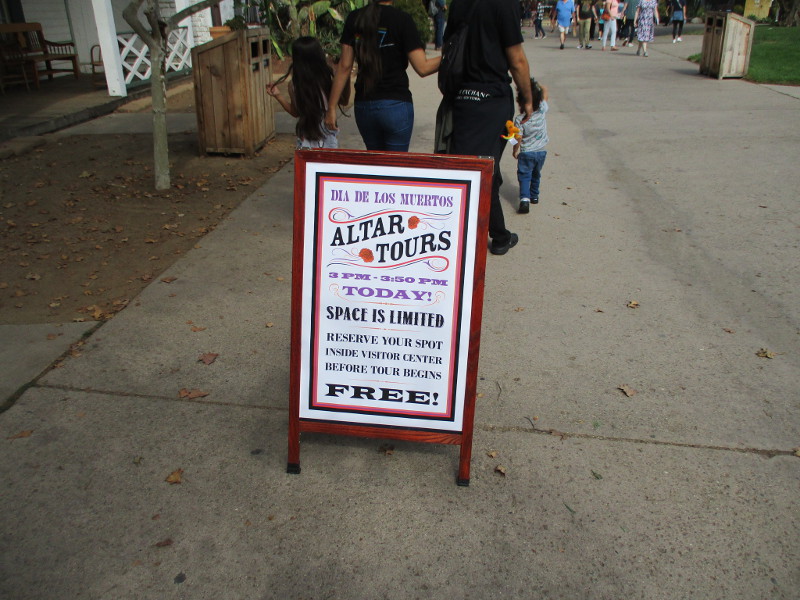
I encourage those visiting Old Town San Diego State Historic Park this week to sign up for the daily 3 pm Día de los Muertos altar tour. A limited number of people can participate. The guided tour lasts a little less than an hour.
You can sign up at the counter inside the Robinson-Rose Visitor Information Center!
…
Thank you for visiting Cool San Diego Sights!
I post new blogs pretty often, so you might want to bookmark coolsandiegosights.com and check back from time to time.
You can explore Cool San Diego Sights by using the search box on this website’s sidebar. Or click a tag! There’s a lot of stuff to share and enjoy!
I live in downtown San Diego and love to walk around with my camera! You can follow Cool San Diego Sights via Facebook or Twitter!
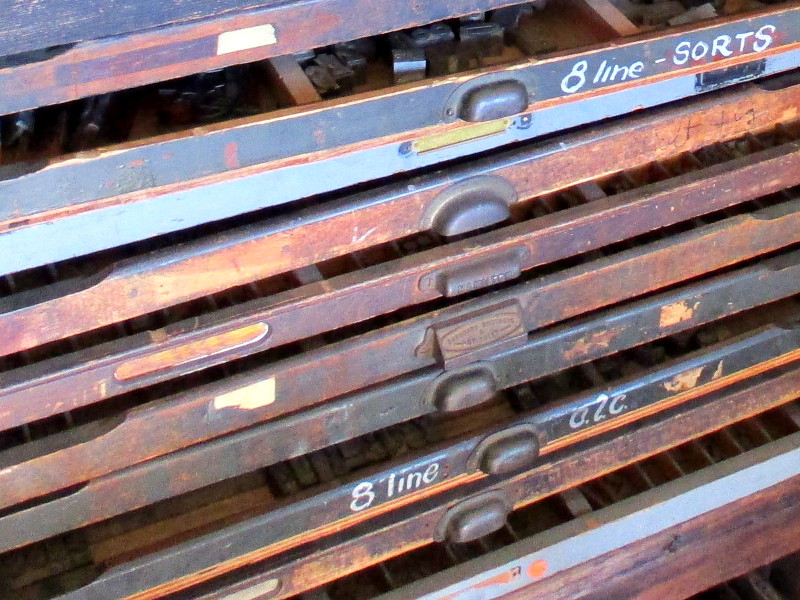
I learned yesterday during a visit to the San Diego Union Building in Old Town San Diego State Historic Park that these expressions are believed to come from days long past.
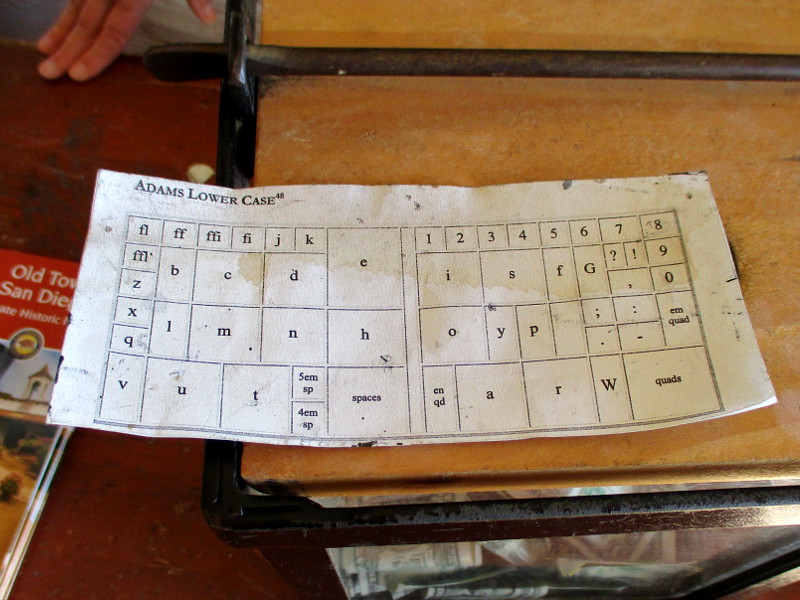
There was a period in history when printing was a tedious operation requiring a hand operated press. To print pages, small cast metal blocks that imprint individual characters were manually assembled into words and sentences. These physical types were set into printable forms by the skilled, quick fingers of print shop compositors.
See all those drawers in the above photo? Each drawer is a type case containing sorts, the particular letters and other characters that are “sorted” into the forms.
Somewhere along the line, capital letters were arranged in an upper drawer: the upper case. Compositors rushing to print a newspaper would sometimes confuse the similar appearing p’s and q’s. Or accidentally choose the wrong sort. Or become disconcerted when they ran out of sorts.
And that how these peculiar expressions are said to have originated!
…
I live in downtown San Diego and love to walk around with my camera! You can follow Cool San Diego Sights via Facebook or Twitter!
You can easily explore Cool San Diego Sights by using the search box on my blog’s sidebar. Or click a tag! There are thousands upon thousands of photos for you to enjoy!
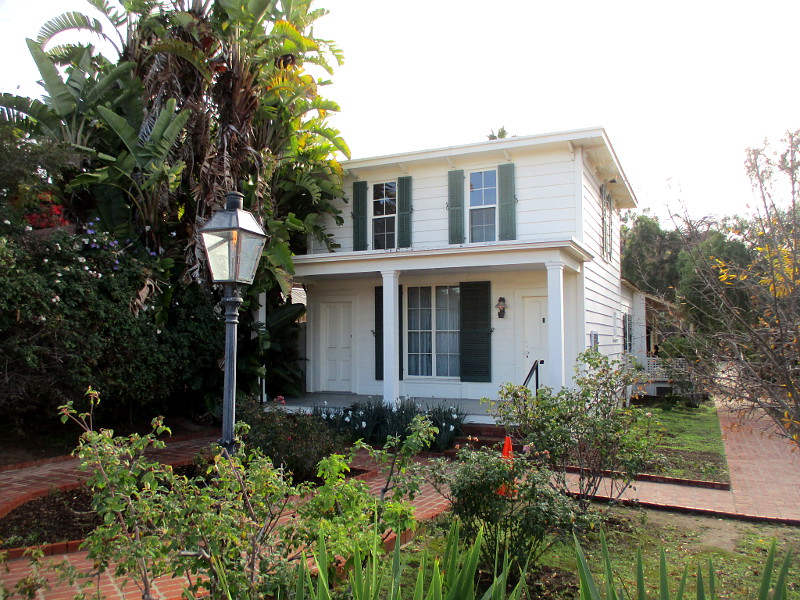
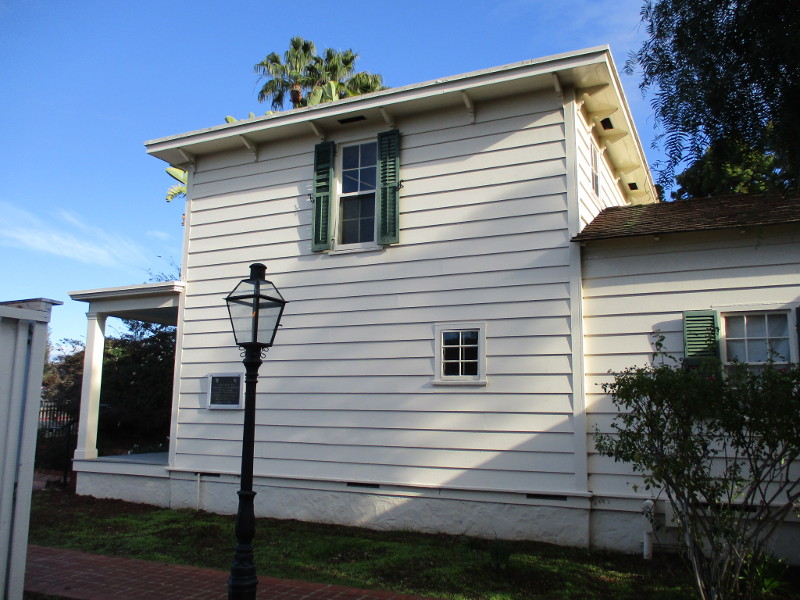
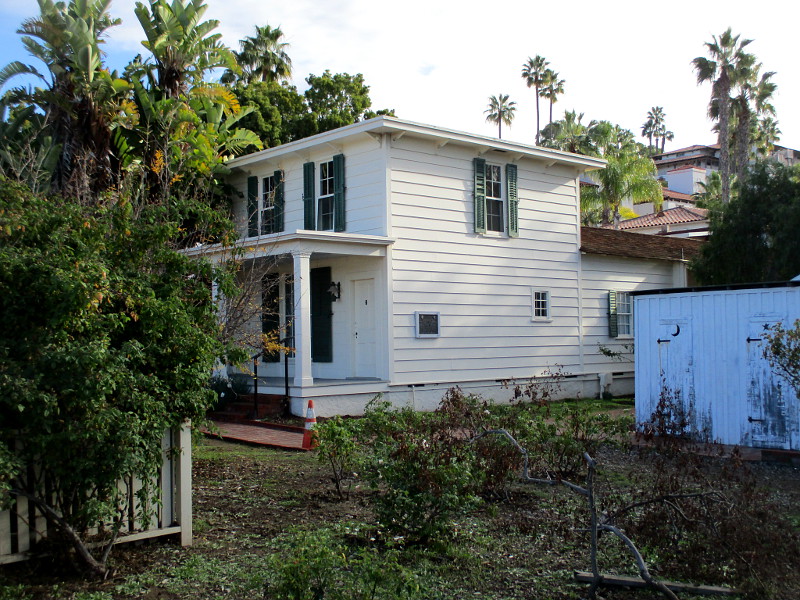
One of San Diego’s most famous houses stands in Old Town at 4015 Harney Street. It’s a modest little structure that you might easily pass by without a second glance.
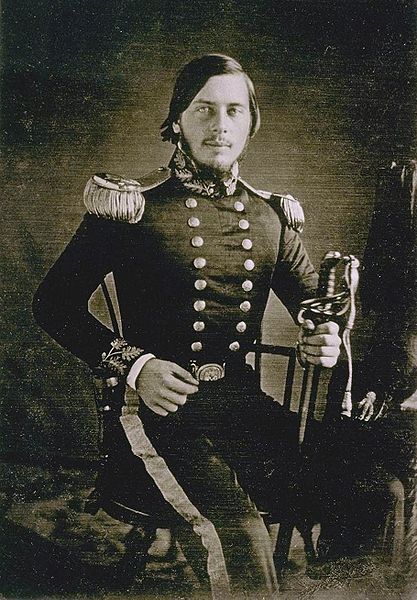
For a couple of years, 1853-1854, the Derby-Pendleton House was the home of Lieutenant George Horatio Derby, an American humorist who wrote articles for California newspapers, including the San Diego Herald, under the pseudonyms Squibob and John Phoenix. It is said his style of writing, employing absurdity, exaggeration, irreverence and good fun, inspired Mark Twain, Artemus Ward, Bret Harte and others.
Derby’s Wikipedia page states: According to the newly (2010) published Autobiography of Mark Twain, Vol. One, Ulysses S. Grant was a classmate of “Squibob’s” and the General told Twain some stories of Squibob at West Point.
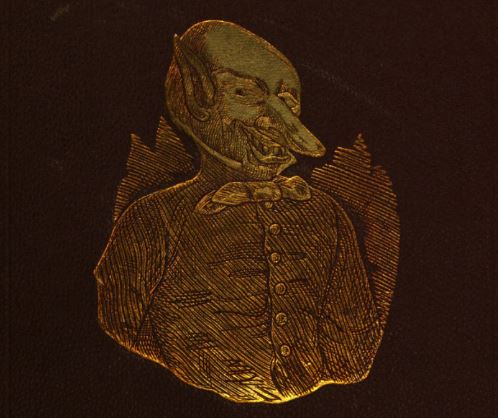
In 1856 Derby’s immensely popular book Phoenixiana was published. It contains many of his humorous pieces, including articles he wrote concerning San Diego. I like the gentle humor of his description of Old Town’s Fourth of July in 1854. It is found on page 123: At 9 A.M. precisely, the San Diego Light Infantry, in full uniform, consisting of Brown’s little boy, in his shirt-tail, fired a national salute with a large bunch of fire-crackers. This part of the celebration went off admirably; with the exception of the young gentleman having set fire to his shirt tail, which was fortunately immediately extinguished without incident.
Why was Lt. George H. Derby, a West Point graduate and engineer of the United States Topographical Corps, in San Diego? To survey the San Diego River and build a dike that would divert its water into False Bay–now Mission Bay.
While in San Diego, he and his wife rented a prefabricated house that was originally brought by ship around Cape Horn. Learn all about the Derby-Pendleton House’s complex history here. It has had many owners, including William Heath Davis and Don Juan Bandini, and has been moved repeatedly.
You can see an historical marker concerning Derby Dike here. You might note that the marker was placed by Squibob Chapter, E Clampus Vitus.
The San Diego chapter of E Clampus Vitus, “a fraternal organization dedicated to the preservation of the heritage of the American West,” is named after Derby’s pseudonym, Squibob. The motto of Clampers is Credo Quia Absurdum, which purportedly means “I believe it because it is absurd.”
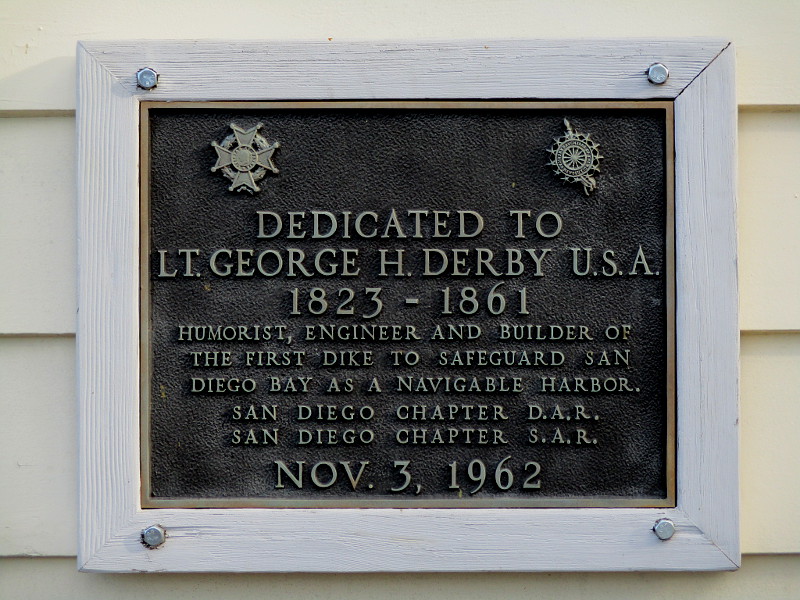
In 1962 an historical plaque was placed on The Derby-Pendleton House by the San Diego chapters of the Sons of the American Revolution and Daughters of the American Revolution. I took a photo of it yesterday.
Public domain photo of Lieutenant George Horatio Derby.
From the book cover of Phoenixiana.
…
I live in downtown San Diego and love to walk around with my camera! You can follow Cool San Diego Sights via Facebook or Twitter!
You can easily explore Cool San Diego Sights by using the search box on my blog’s sidebar. Or click a tag! There are thousands upon thousands of photos for you to enjoy!




 Cool San Diego Sights!