Orphan baby whale sculpture at La Jolla Shores!

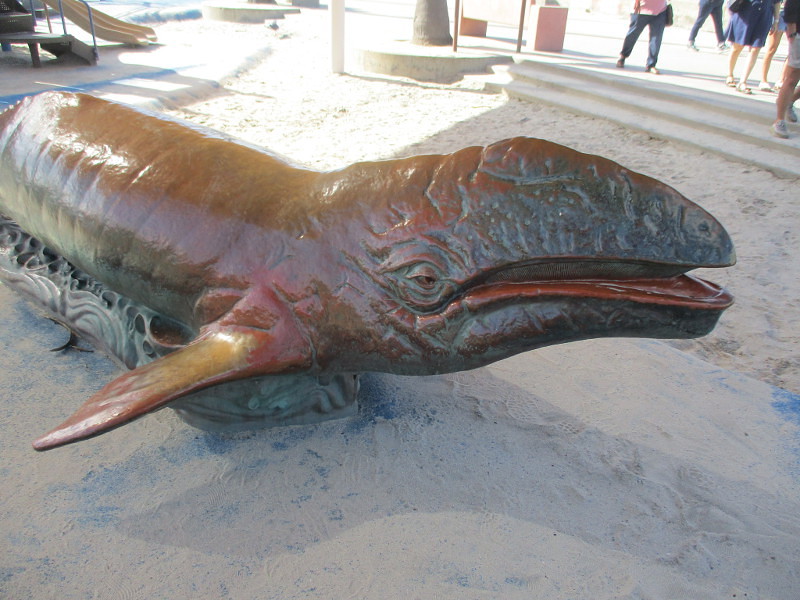
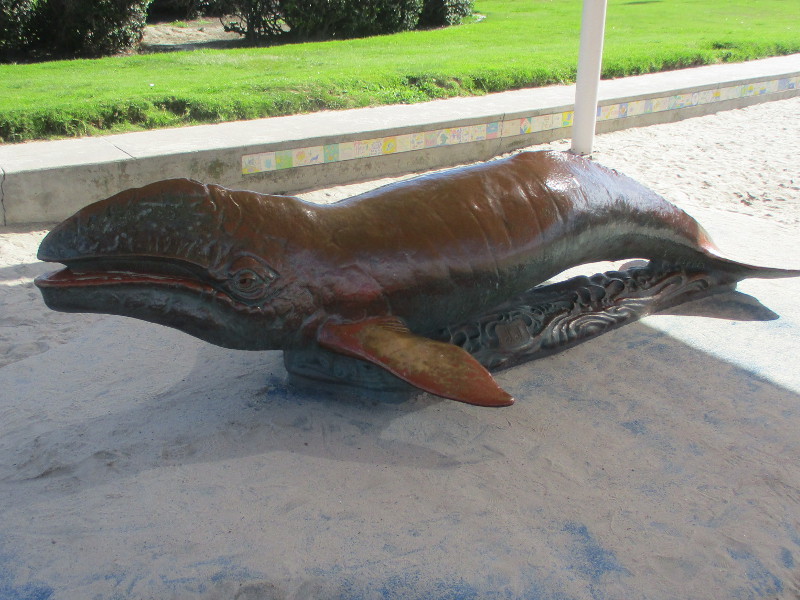
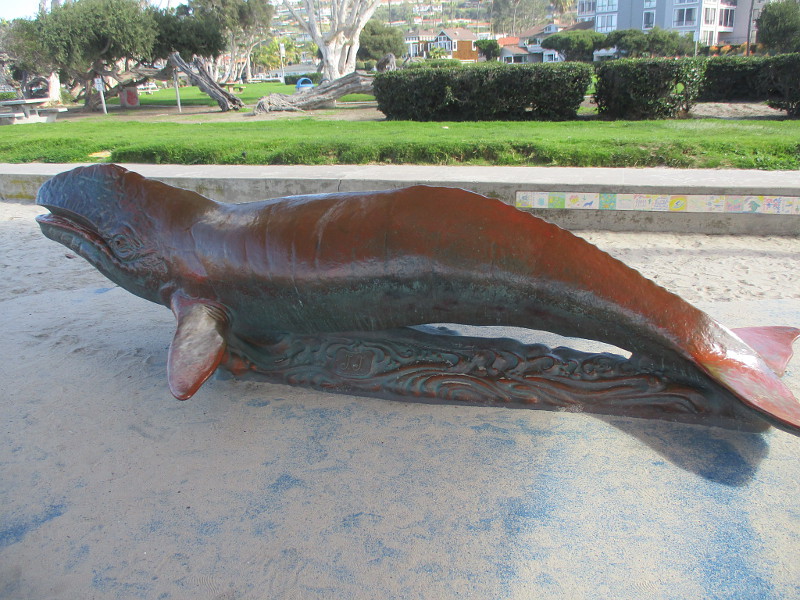
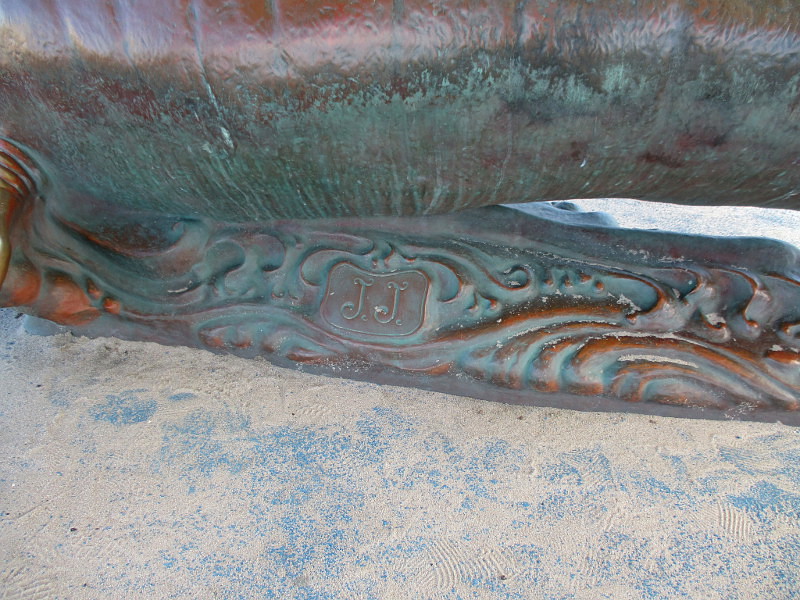
These photographs were taken during a recent walk through La Jolla Shores, at the Kellogg Park playground. What you see is the 16-foot-long life-size bronze sculpture of J.J., an orphaned baby California gray whale.

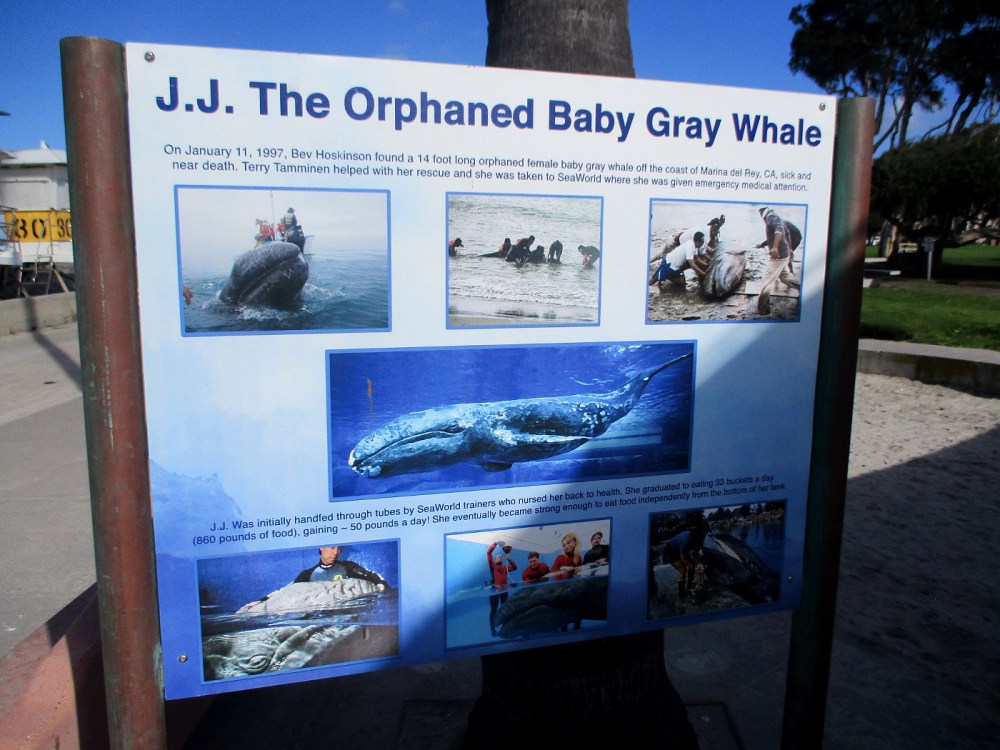
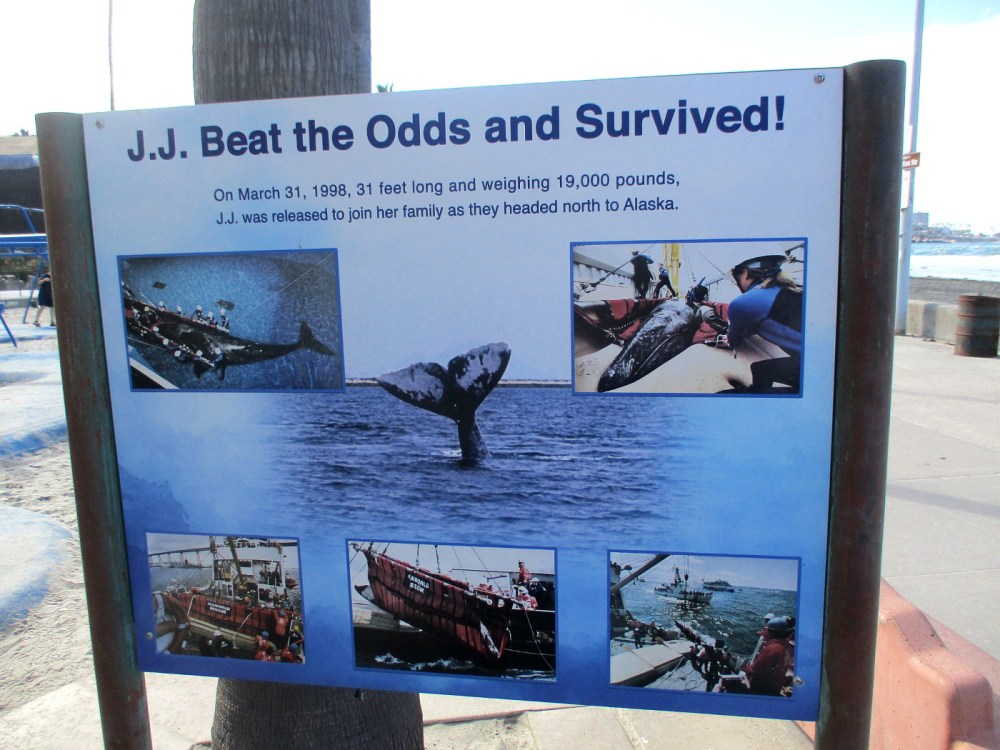
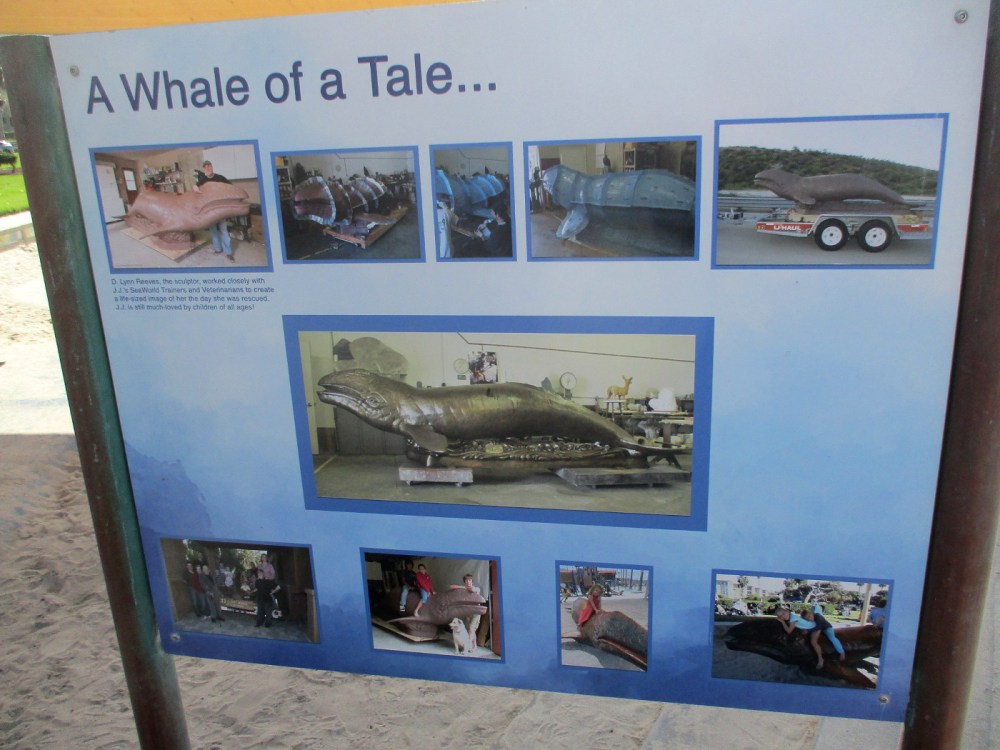
The malnourished baby whale, near death, was rescued off the coast of Marina del Rey in 1997, and nursed back to health at SeaWorld. She would ultimately be released back into the Pacific Ocean to resume her migration to Alaska.

The sculpture of J.J., which children love to ride and play on, was created by sculptor D. Lynn Reeves. It was commissioned by Friends of La Jolla Shores and was installed at the Kellogg Park playground next to the beach boardwalk in 2011.

Signs posted beside J.J. tell the tale of her rescue and of the creation of her beautiful sculpture.

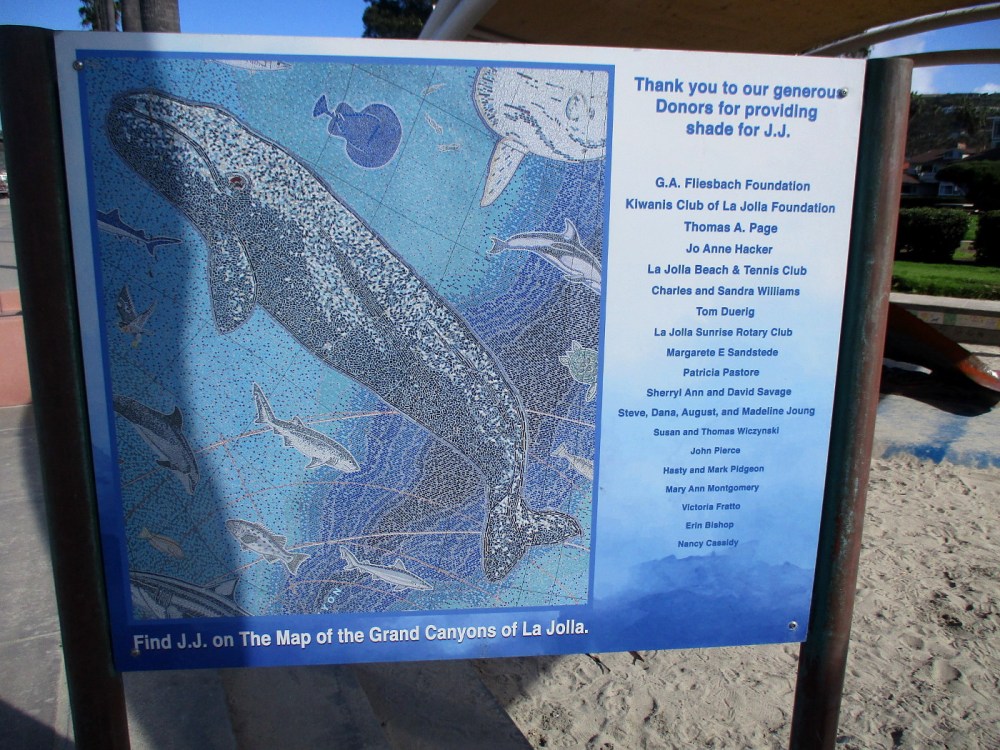
The image of J.J. also appears in the nearby mosaic Map of the Grand Canyons of La Jolla.

To follow my blog, find the “Follow” box in this website’s sidebar. Or bookmark coolsandiegosights.com and swing on by occasionally!

(If you’re viewing this on a phone, open my website’s sidebar by tapping those three parallel lines at the top of the page.)
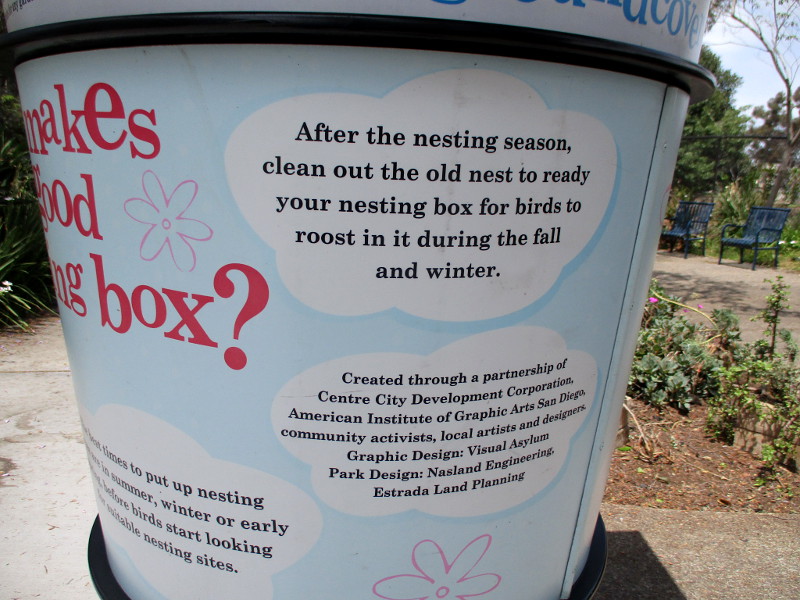
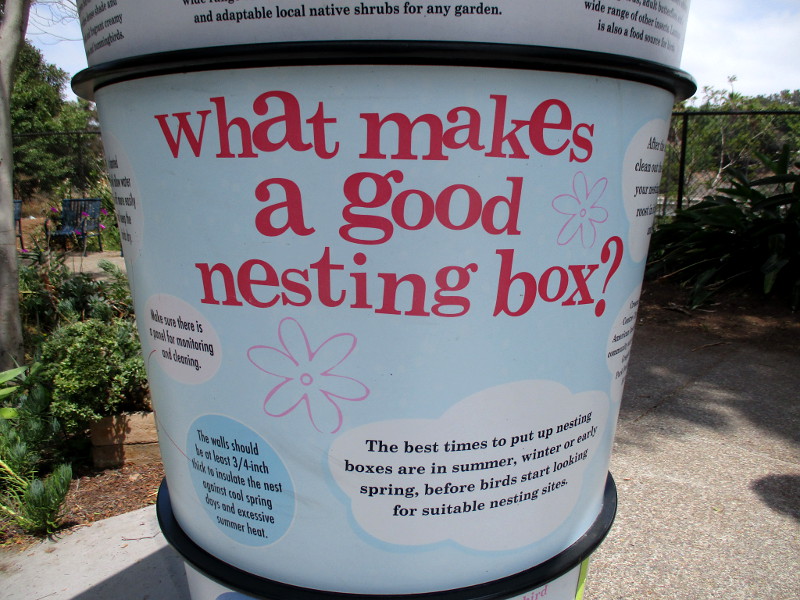
What makes a good nesting box?

We might be in the middle of winter, but spring will be here before you know it, and birds will be looking to build their nests.

If you’d like to construct a nesting box for your yard or as a community project, how can you make one that bird’s will like, choose and use?

Some useful information is posted in downtown San Diego at the Tweet Street linear park atop Cortez Hill. If you’re into DIY and like to use saw, hammer and nails, here goes:

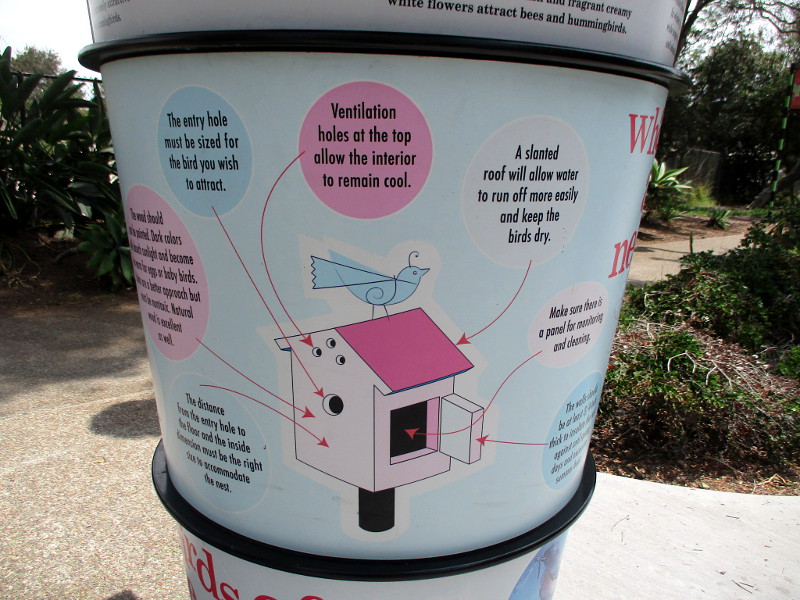
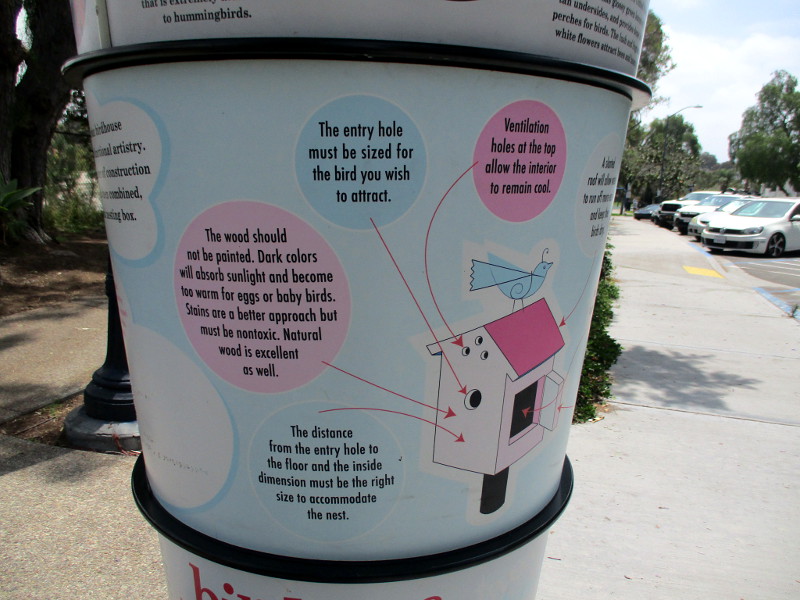
The wood should not be painted. If you use a nontoxic stain, use lighter colors–sun on dark colors might make the box too hot. Natural wood is excellent.

The entry hole must be sized for the bird you wish to attract, and raised from the nesting box floor to accommodate a nest. Small ventilation holes at the top keep the inside of the nesting box cool.

A slanted roof will allow water to run off, keeping the birds living inside the nesting box dry.

Have a side panel that opens for monitoring and cleaning when the box is not in use.

Put up your box before birds begin to look for suitable nesting sites. (And put it well above the ground somewhere the birds feel safe.)

After the nesting season, use the side panel to clean out the old nest. Ready your nesting box for birds to roost in during the fall and winter, or the following spring.

If you’d like to see photographs of the many cleverly designed birdhouses in Tweet Street Park (and they’re pretty amazing), click here!

As you build your own unique bird house, have fun and be safe!

To follow my blog, find the “Follow” box in this website’s sidebar. Or bookmark coolsandiegosights.com and swing on by occasionally!

(If you’re viewing this on a phone, open my website’s sidebar by tapping those three parallel lines at the top of the page.)
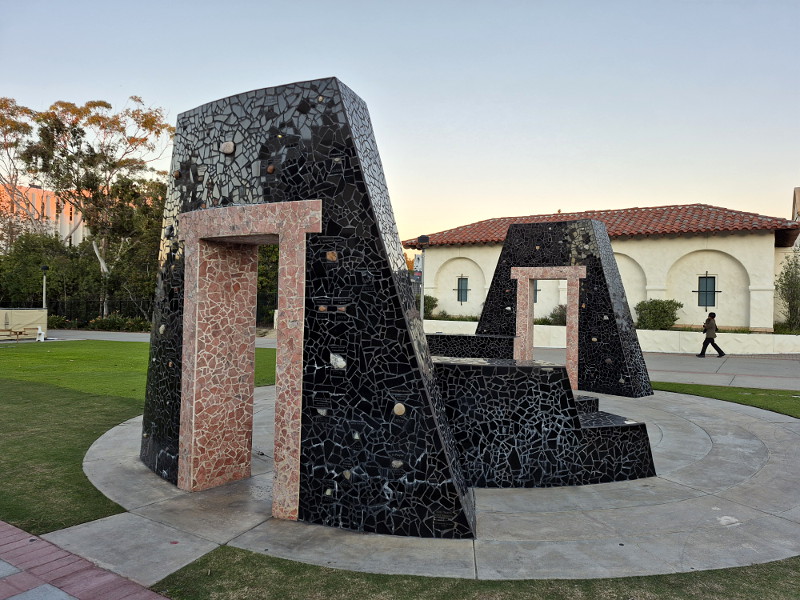
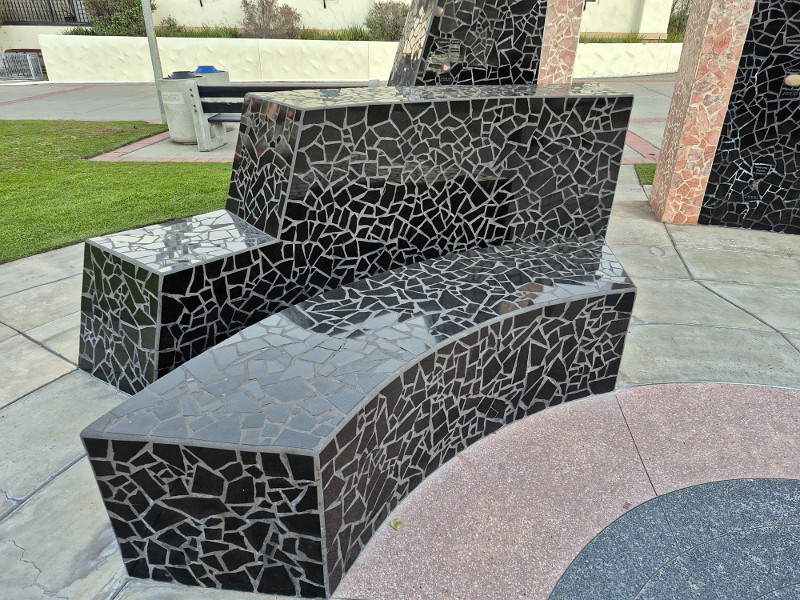
100 Years, 100 Stones monument at SDSU.

In 1997 the 100 Years, 100 Stones monument debuted at San Diego State University. It was created to celebrate the 100th anniversary of SDSU.

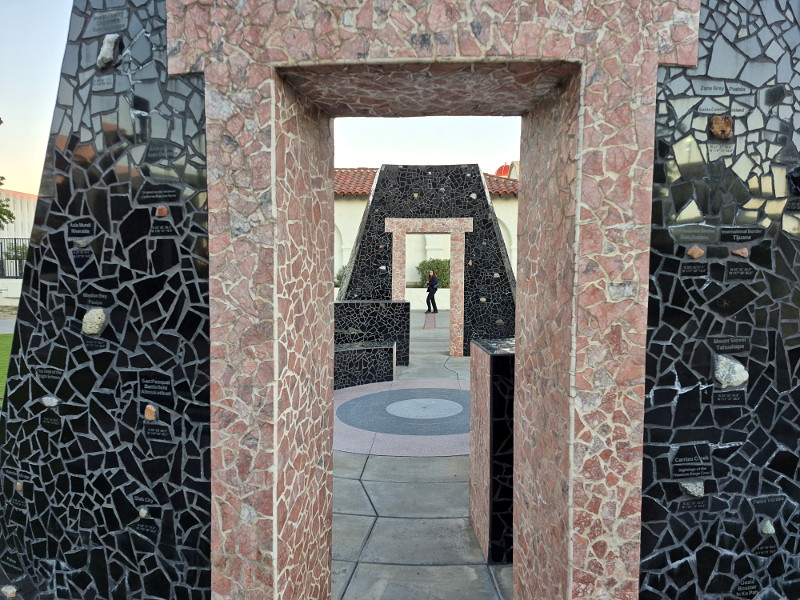
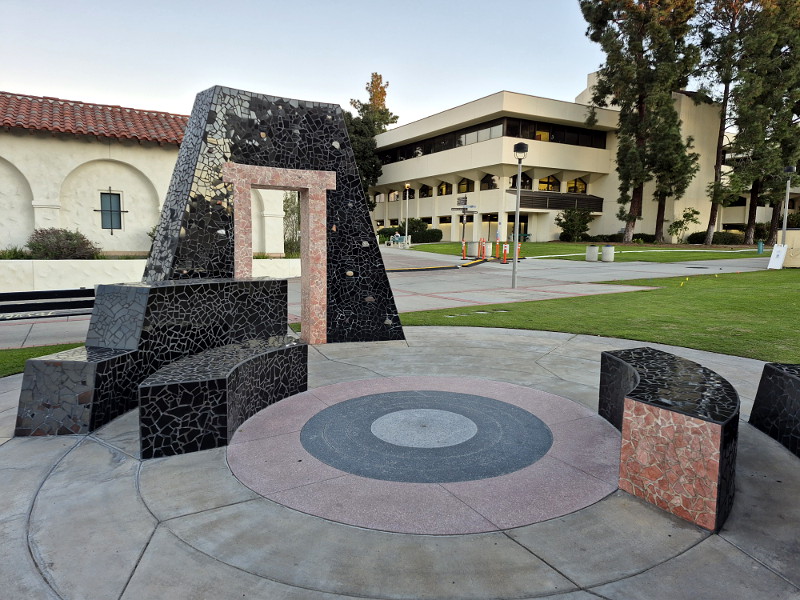
If you’ve ever walked down the campus’ central Campanile Walkway you’ve no doubt seen this unique stone-like sculpture with its two portals. It has an appearance suggestive of ancient temples or ruins.

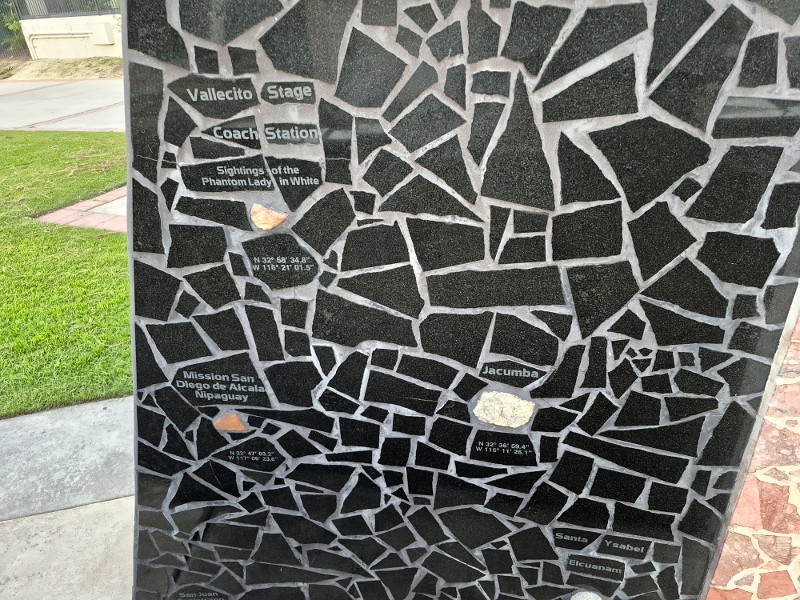
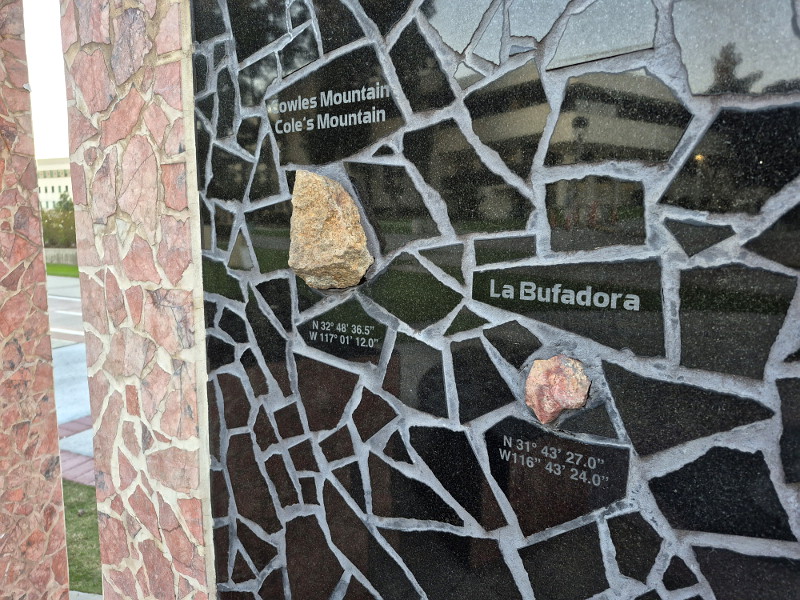
Those who look closely at the monument will see small rock samples embedded in it, with informative labels. The rocks come from locations all around our region, within a hundred miles of SDSU, including places in Mexico. The art blends culture with geology.

Installation artist Eve Andree Laramee designed 100 Years, 100 Stones. There’s no plaque by this public art with any sort of explanation (that I’ve noticed), so I wonder if students walking past it understand its origin and nature. For years I myself didn’t know. Thank you Google!

To follow my blog, find the “Follow” box in this website’s sidebar. Or bookmark coolsandiegosights.com and swing on by occasionally!

(If you’re viewing this on a phone, open my website’s sidebar by tapping those three parallel lines at the top of the page.)
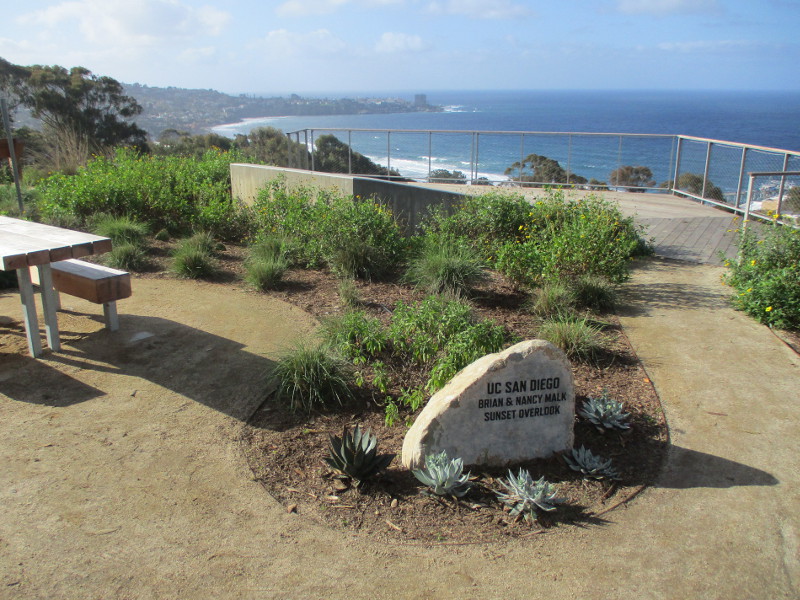
Views from UC San Diego sunset overlook.

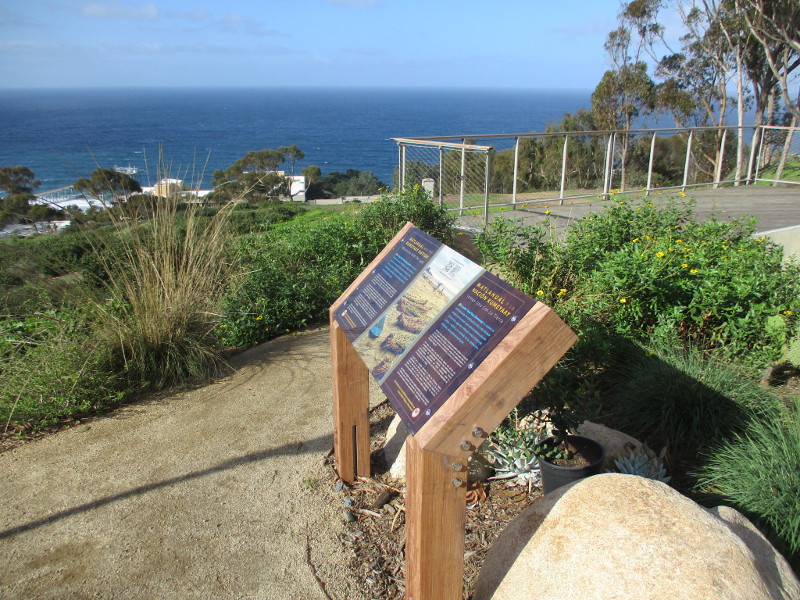
The UC San Diego Brian & Nancy Malk Sunset Overlook opened last summer. Situated high above Scripps Institution of Oceanography, an elevated platform offers wide views of the Pacific Ocean and parts of coastal La Jolla.

If you’d like to enjoy amazing panoramic views, head down La Jolla Shores Drive to Midpac Lane and look for the small parking lot.

The new overlook includes picnic tables and a bench where you can sit, relax and gaze out over the ocean. Native plants flourish around the platform and pathway.

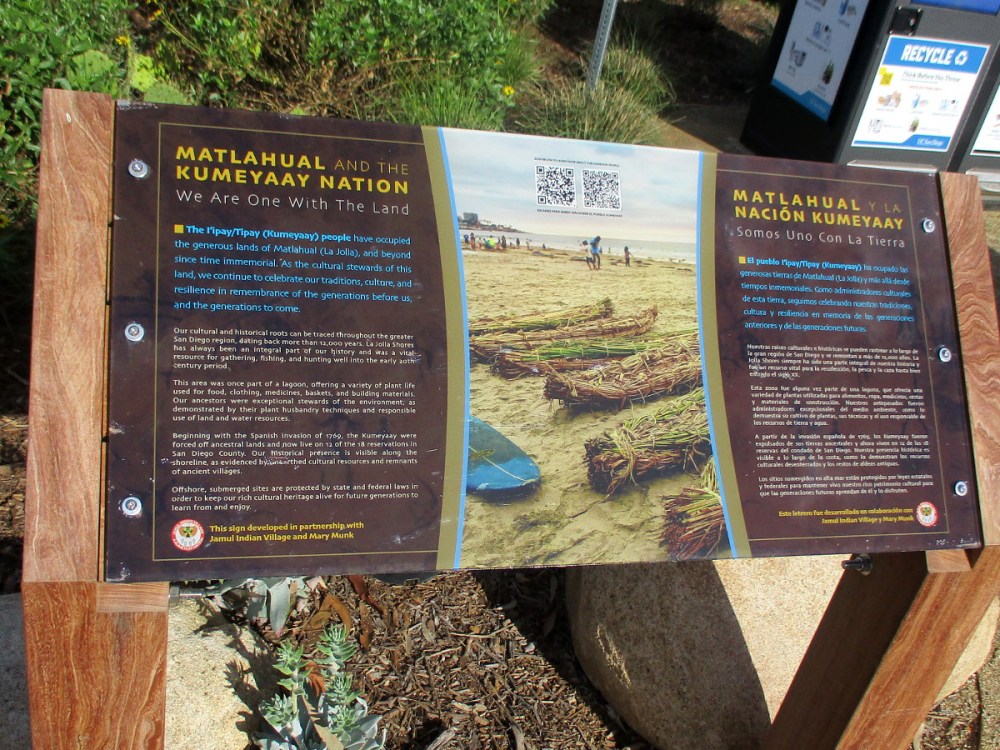
Nearby, an informative sign tells how the Kumeyaay people lived in La Jolla (Matlahual) for thousands of years and have acted as stewards of the land. This area was part of a lagoon. It was an important natural resource that provided useful materials–for basket making, medicines, fishing, hunting, gathering and more. The sign at the overlook was developed in partnership with Jamul Indian Village and Mary Munk.

I visited recently on a sunny day…

To follow my blog, find the “Follow” box in this website’s sidebar. Or bookmark coolsandiegosights.com and swing on by occasionally!

(If you’re viewing this on a phone, open my website’s sidebar by tapping those three parallel lines at the top of the page.)
Fencing trees and space at UC San Diego.

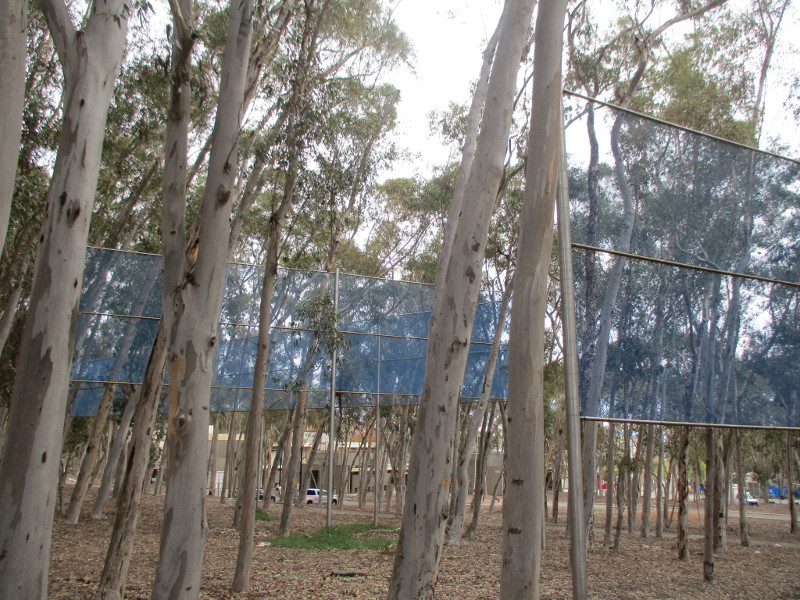
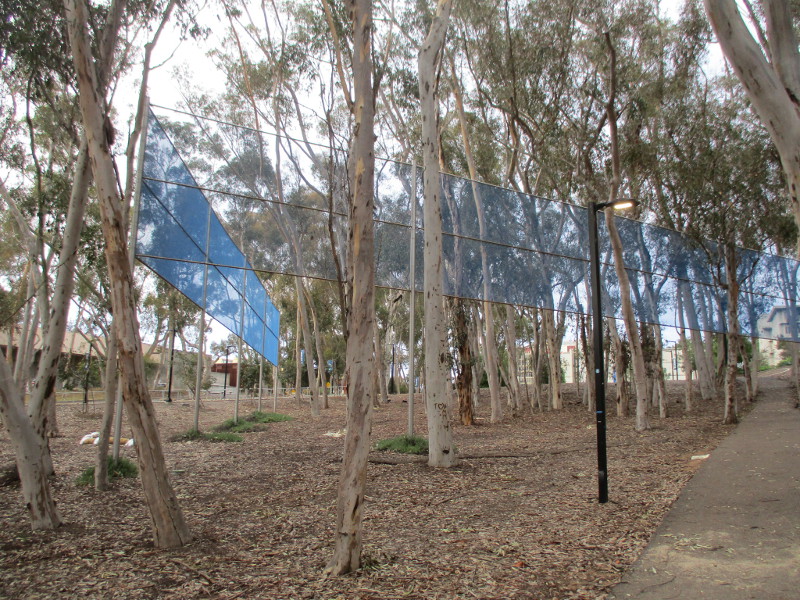
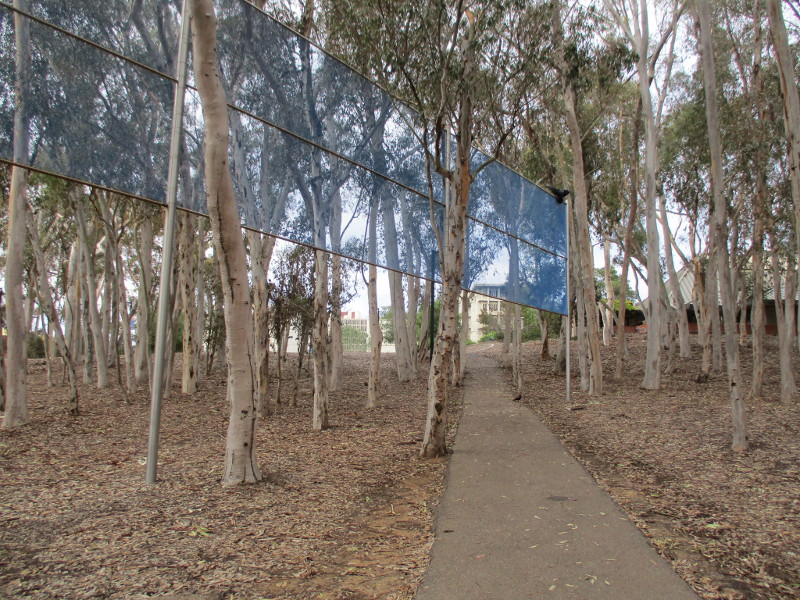
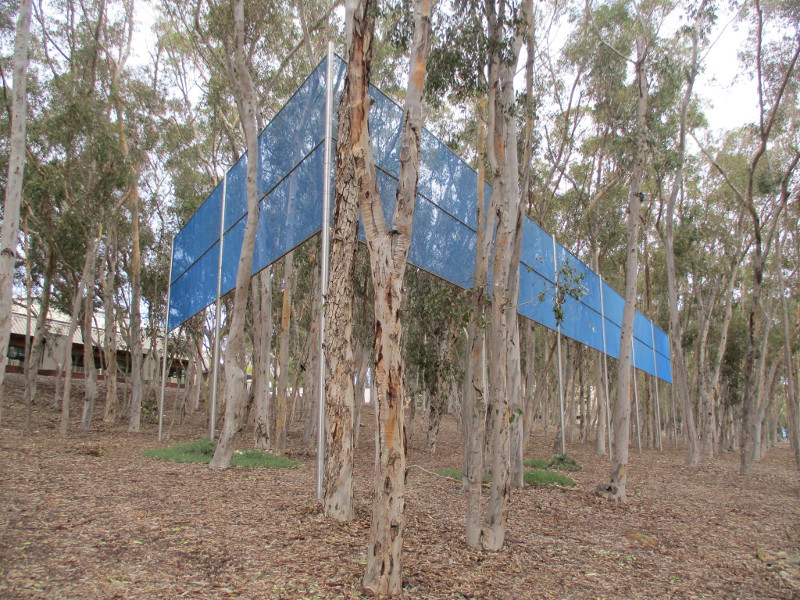
UC San Diego’s outdoor public art can be surprising. That is certainly the case with Two Running Violet V Forms. The 1983 installation by artist Robert Irwin is part of UCSD’s Stuart Collection.

Located near the center of the La Jolla campus in a eucalyptus grove, stretches of blue-violet chain-link fencing form two elevated v’s that students can walk beneath. These linear geometric forms pierce the complexity of living eucalyptus trees.

I walked into the grove yesterday and paused for a few minutes to take in the effect.

The sky at the moment was cloudy gray. Had the sky been bright blue, the Two Running Violet V Forms might have been more intriguing–even spiritual–showing different qualities of light, seeming to blend with the upper air, providing a more subtle contrast with the organic grayish eucalyptus trunks and high green leaves.

Under a colorless gray sky, however, and among grayish trees, the fencing’s stark color was too garish, too harshly artificial. At least for me. Sorry to criticize. Keep in mind I’m no art expert.

When I finished reading an essay concerning of this unusual art, I completely understood the intention. I’ll have to return on a sunny blue sky day.

The sculpture and artist are explored in depth on this Stuart Collection webpage.

Robert Irwin‘s work is held in high esteem. His unique creations focus on human perception, engaging different environments and effects of light. His work includes the Central Gardens at The J. Paul Getty Center in Los Angeles.

His cut glass windows overlooking the ocean at the Museum of Contemporary Art San Diego produce interesting contrasts of light. See those photos here.

To follow my blog, find the “Follow” box in this website’s sidebar. Or bookmark coolsandiegosights.com and swing on by occasionally!

(If you’re viewing this on a phone, open my website’s sidebar by tapping those three parallel lines at the top of the page.)
Art and nature at Paradise Creek Educational Park!

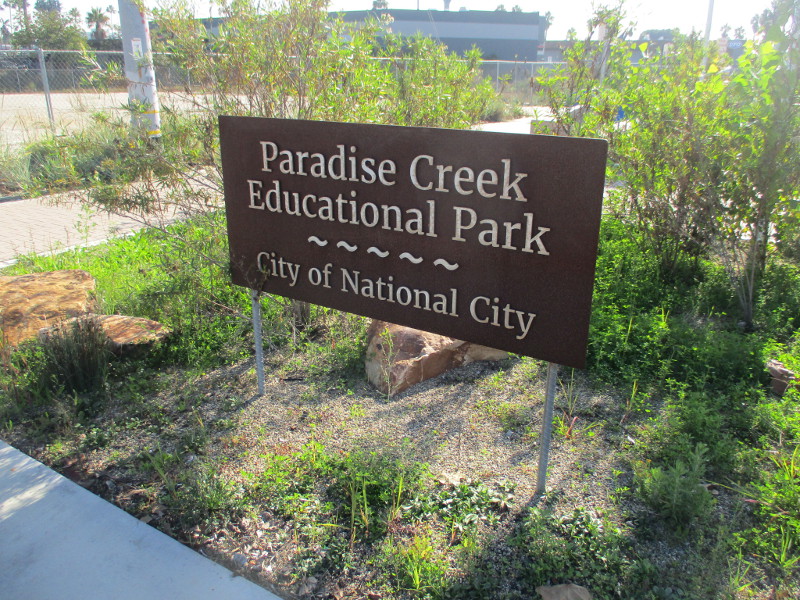
If you’re ever in National City and in the neighborhood of Paradise Creek Educational Park, you might pay a visit. I enjoyed a ramble through the park a couple weeks ago and found the beauty of nature and surprising public art!

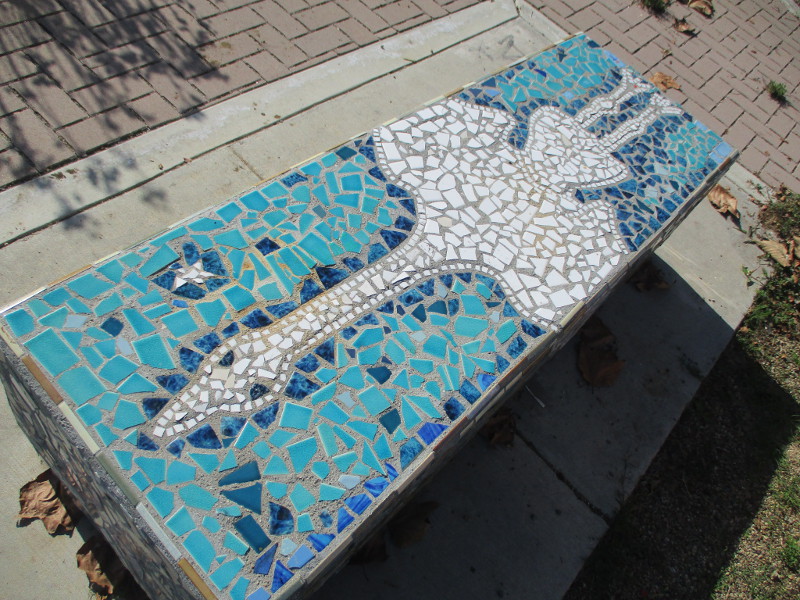
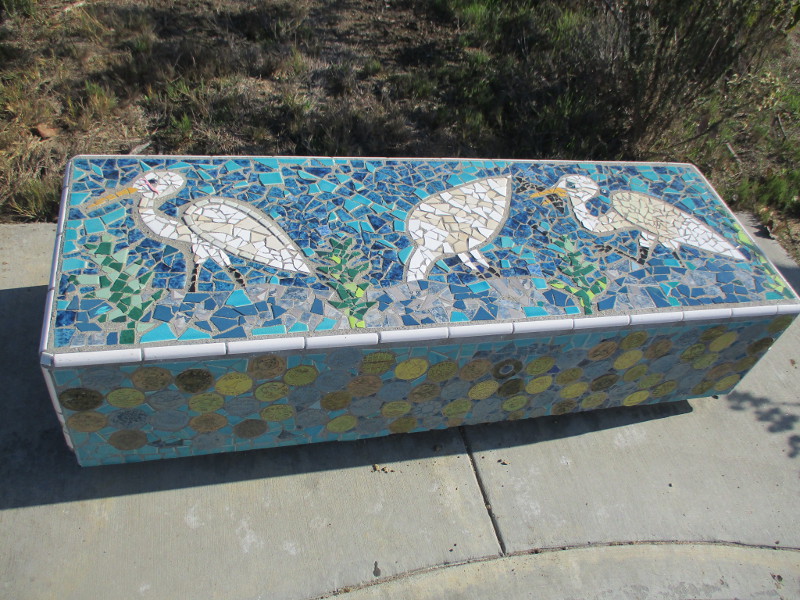
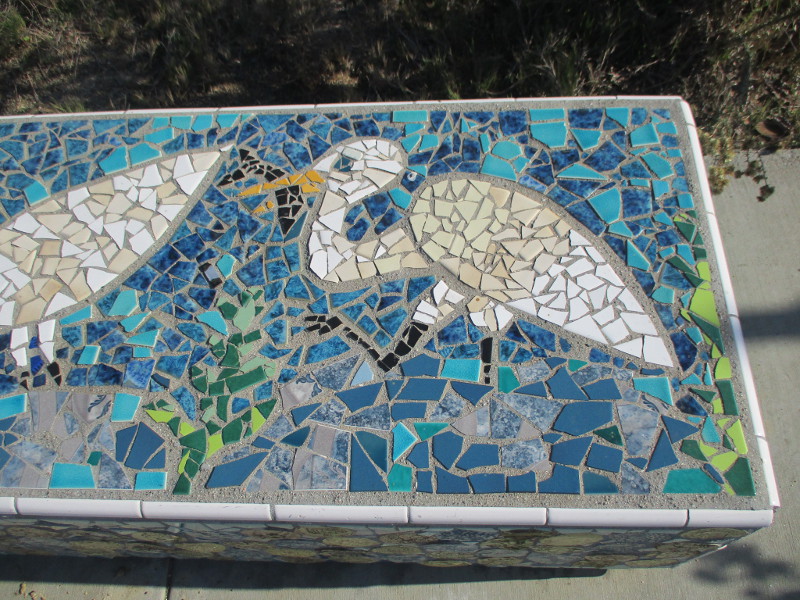
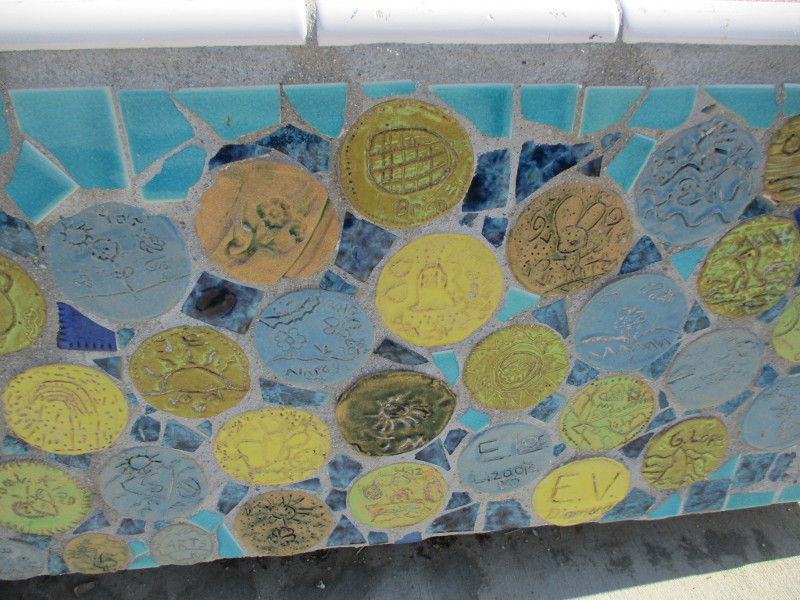
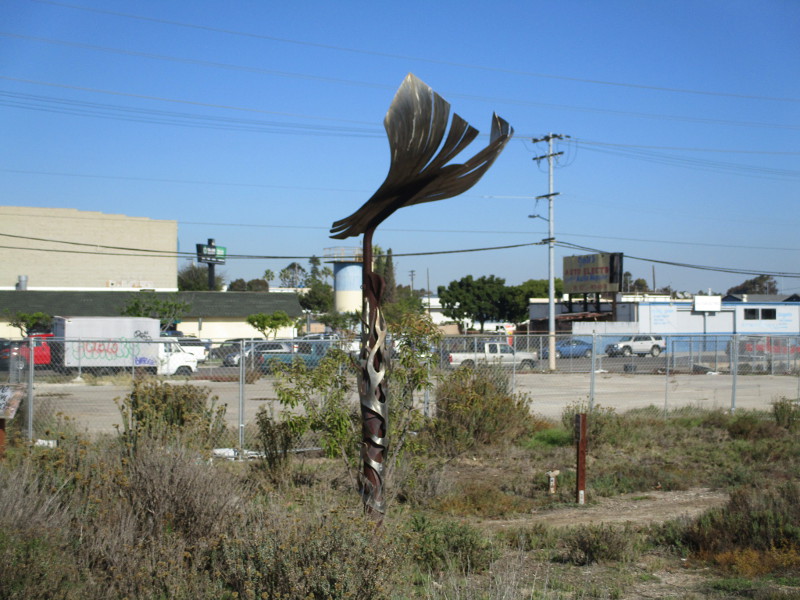
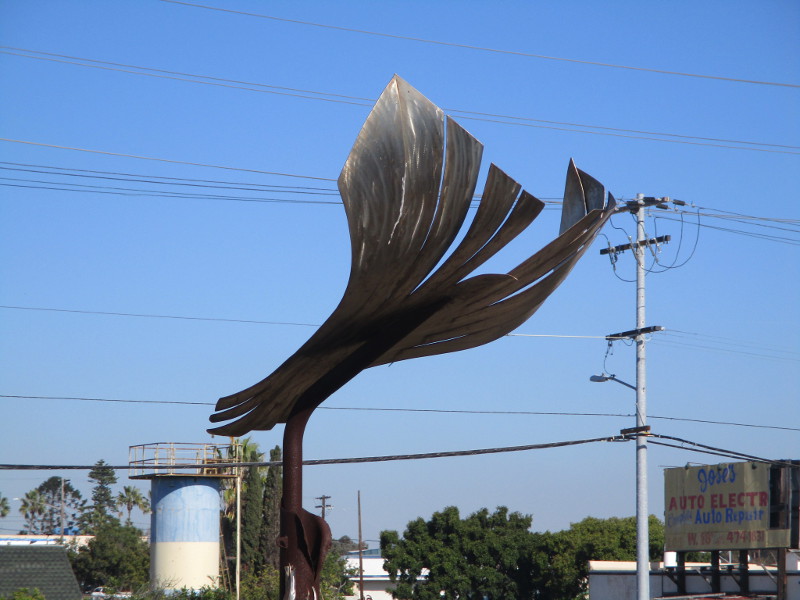
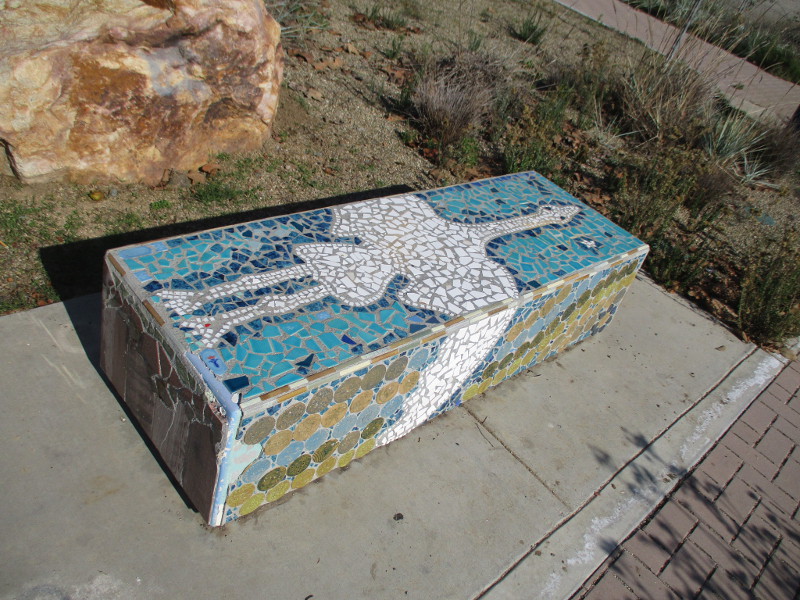
I began at the north end of the park at West 18th Street and Hoover Avenue. That’s where I spied two gorgeous mosaic benches depicting birds and other wildlife. Near the path rose a silvery wing-like sculpture.

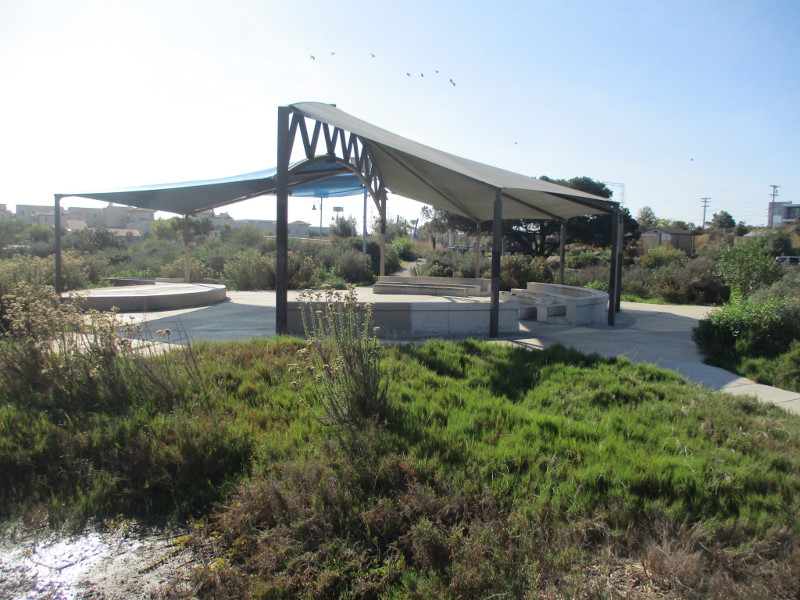
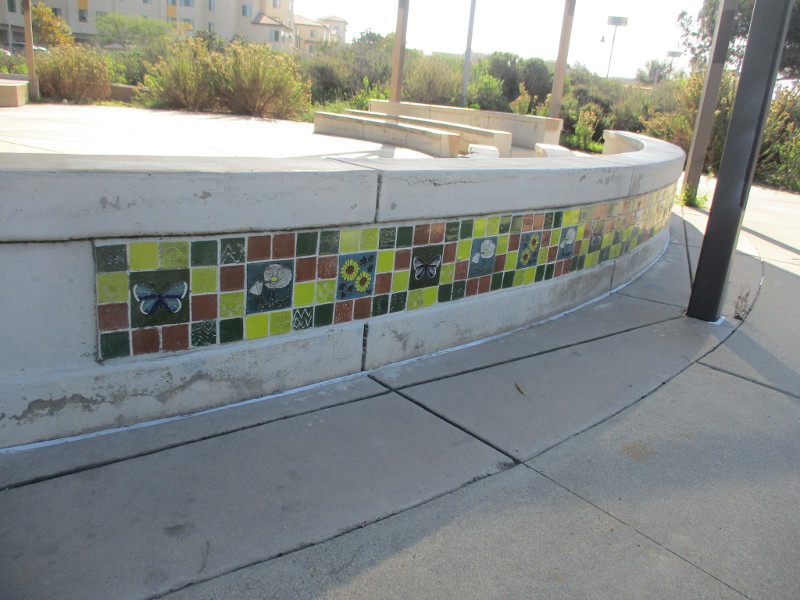
I then proceeded over a long curving bridge above the wetland. Arriving at the amphitheater with its shade structure (in the shape of the moon), I discovered colorful art tiles. Students from Kimball Elementary School, which is directly adjacent to the park, have outdoor classes here.

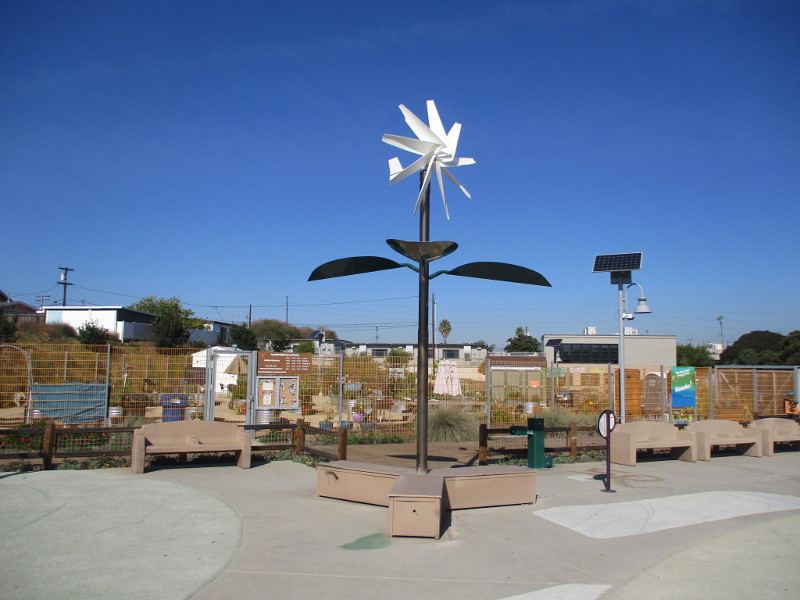
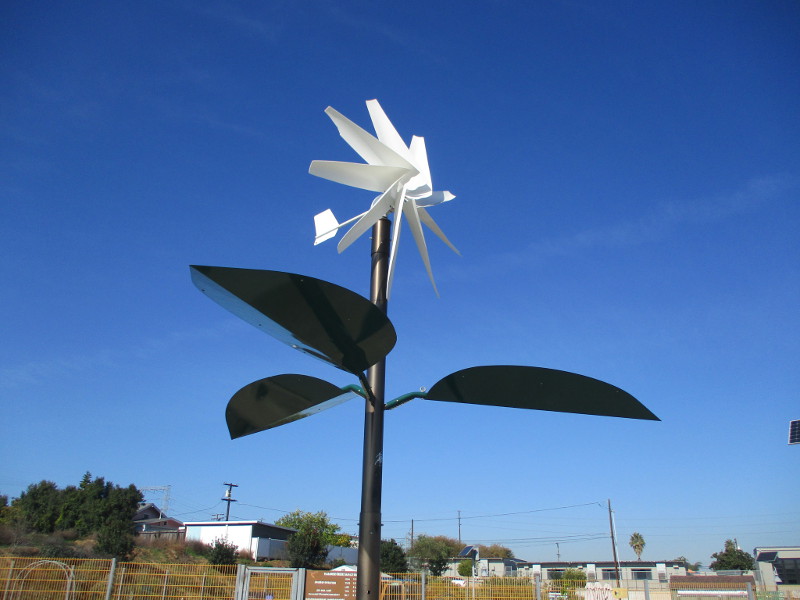
From the amphitheater I walked past the community garden and playground and on, until I reached the south end of the half mile, 6-acre linear park at West 22nd Street, just east of Wilson Avenue. I turned around, headed back, and discovered a flower-like windmill sculpture between the playground and community garden!

Paradise Creek Educational Park was an Urban Greening Project of National City. It was designed by Schmidt Design Group. The park has won multiple awards, including an Orchid from the San Diego Architectural Foundation.

You might enjoy a similar walk on a sunny day. You’ll spot some birds, too!

If you’d like to see San Diego through my lens, find the “Follow” box in the sidebar to receive new posts in your email, or bookmark coolsandiegosights.com and swing on by occasionally!

(If you’re viewing Cool San Diego Sights on a phone, you can open my website’s sidebar by tapping those three parallel lines at the top of the page.)
Giant butterfly visits Balboa Park garden!

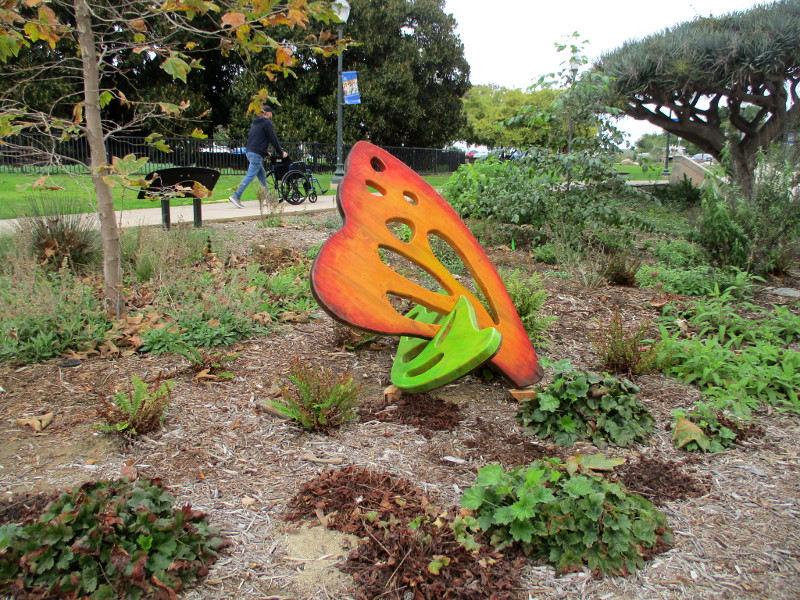
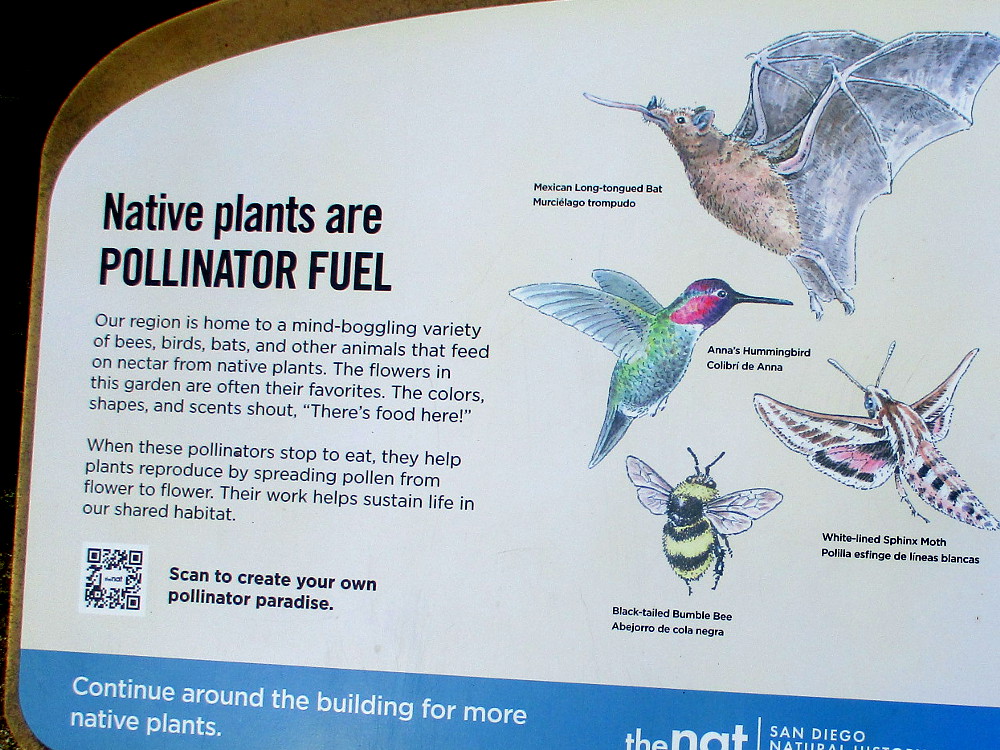
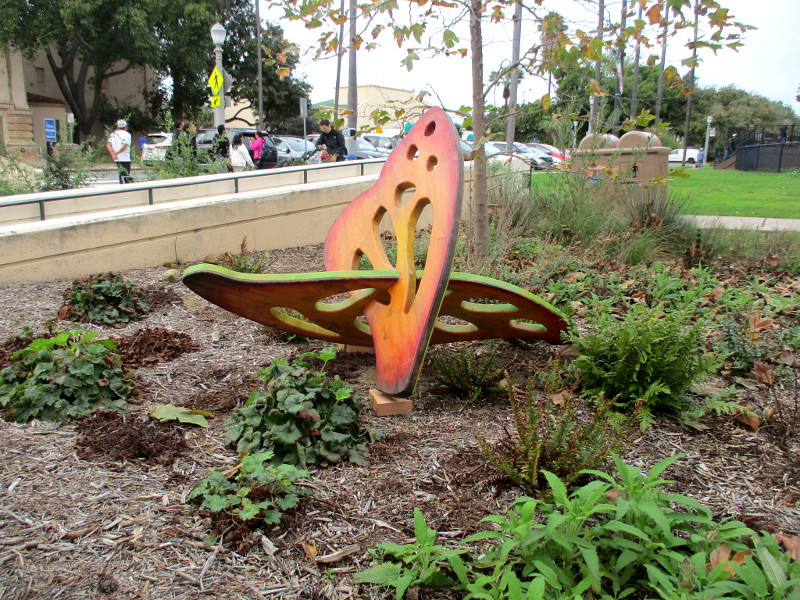
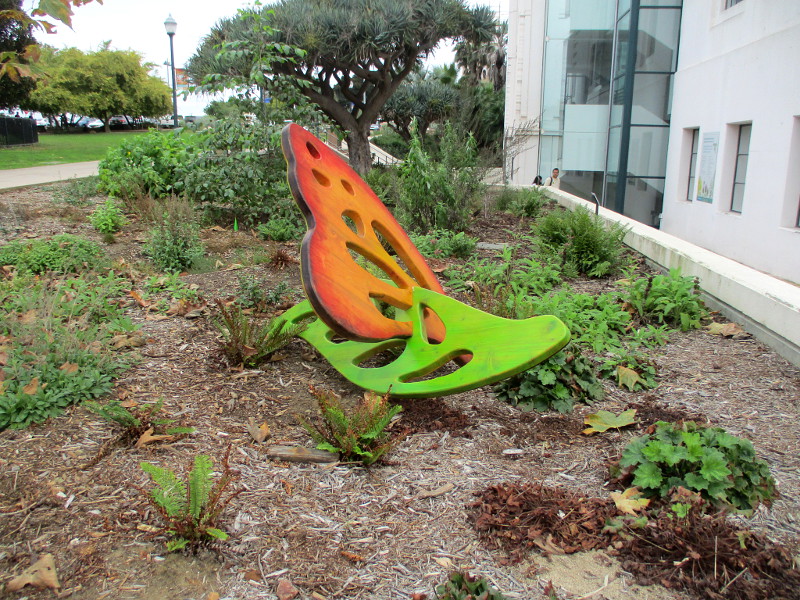
A giant butterfly now makes its home in a special Balboa Park garden. The butterfly can be seen among the native plants of the San Diego Natural History Museum‘s Nature Trail!

Today I spotted this butterfly sculpture on the north side of the museum building. It can be observed from the Wildlife Walkway portion of the Nature Trail. I was told it appeared in the past week or two.

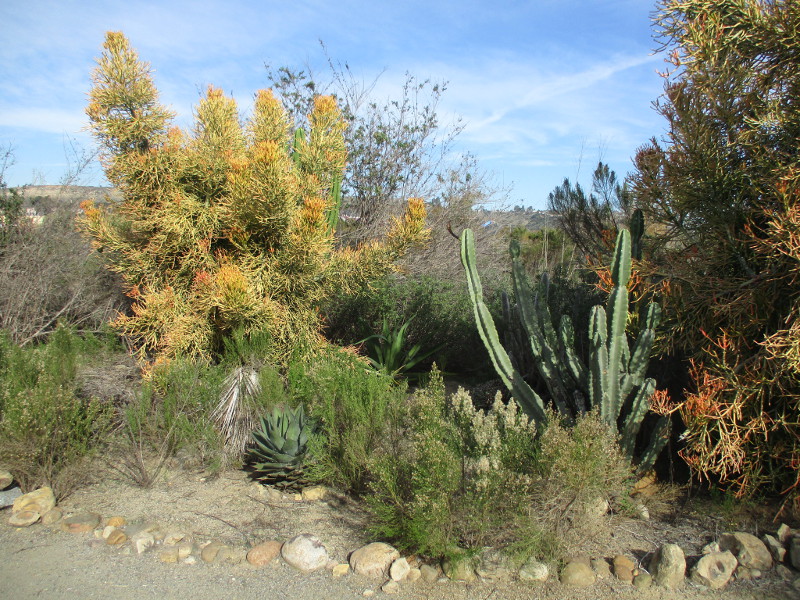
It’s appropriate the butterfly now makes this garden home. Many of the native plants along the Nature Trail attract nectar loving pollinators.

I tried to ascertain who made this beautiful sculpture, but no luck yet. If you know anything about it, please leave a comment!

If you’d like to see San Diego through my lens, find the “Follow” box in the sidebar to receive new posts in your email, or bookmark coolsandiegosights.com and swing on by occasionally!

(If you’re viewing Cool San Diego Sights on a phone, you can open my website’s sidebar by tapping those three parallel lines at the top of the page.)
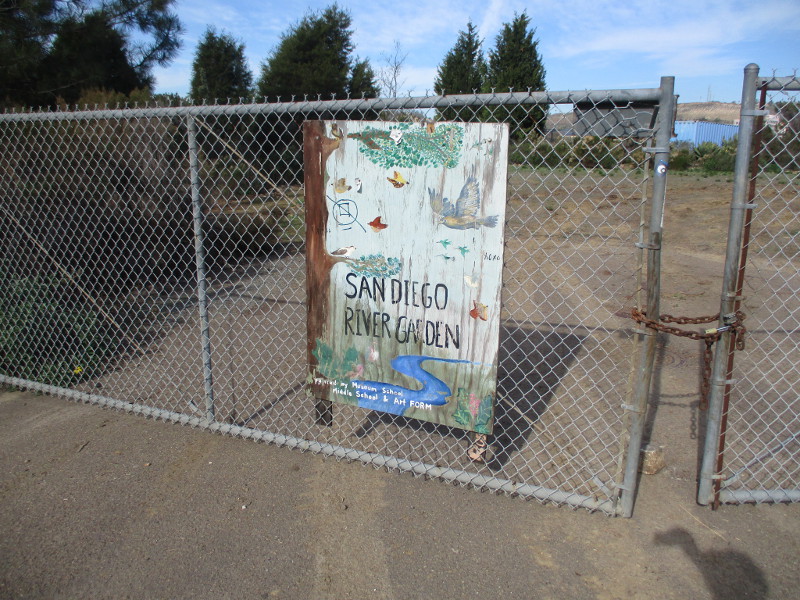
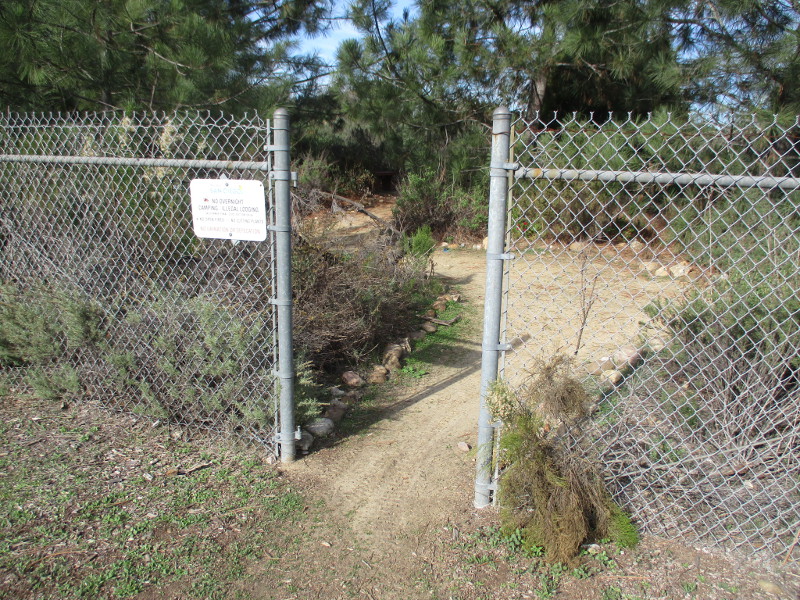
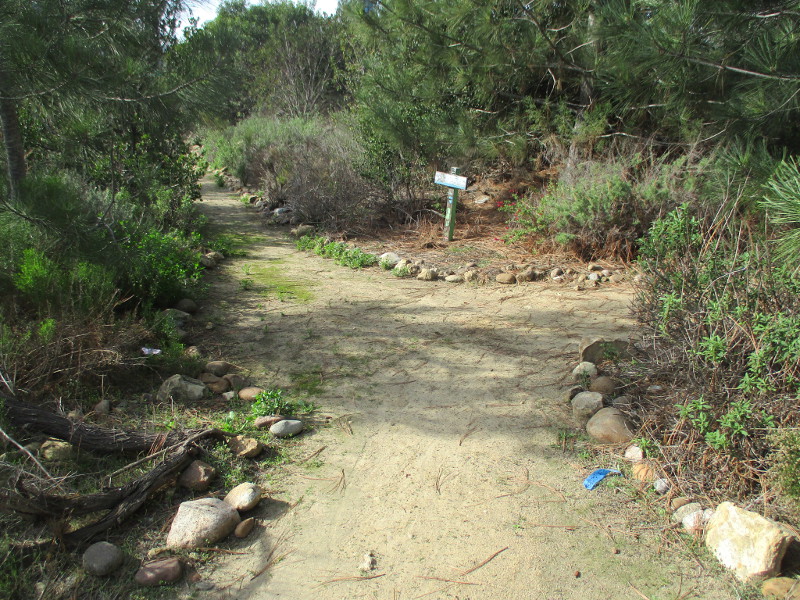
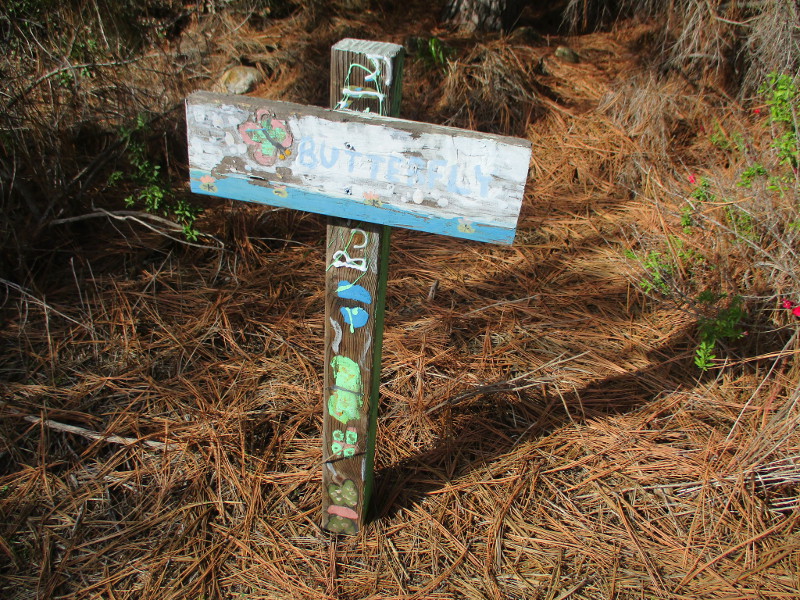
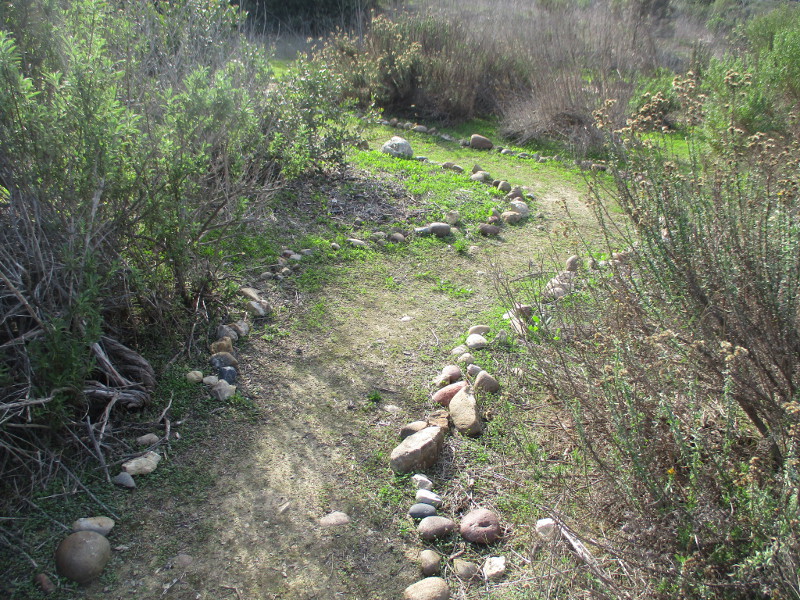
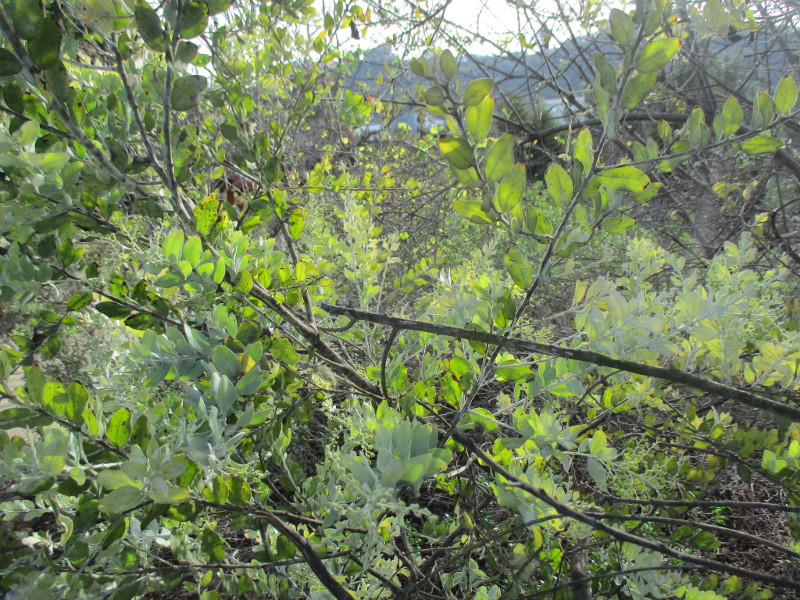
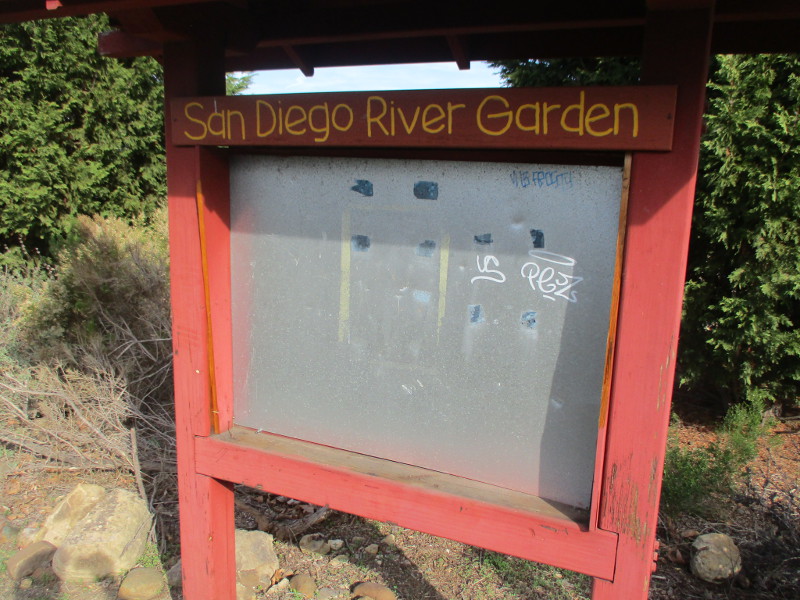
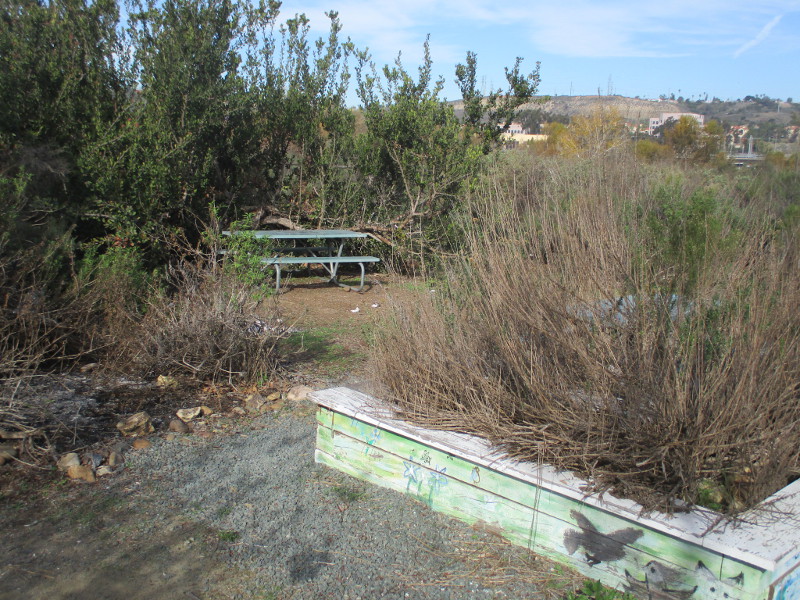
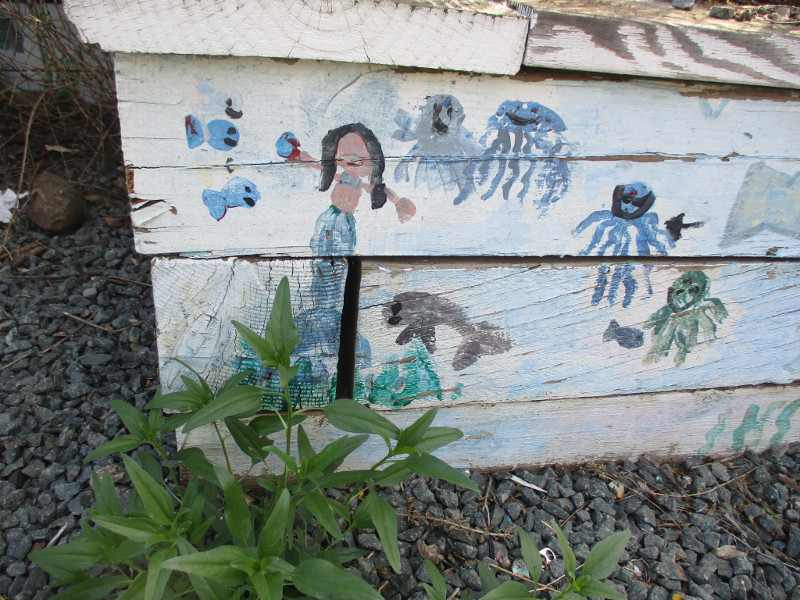
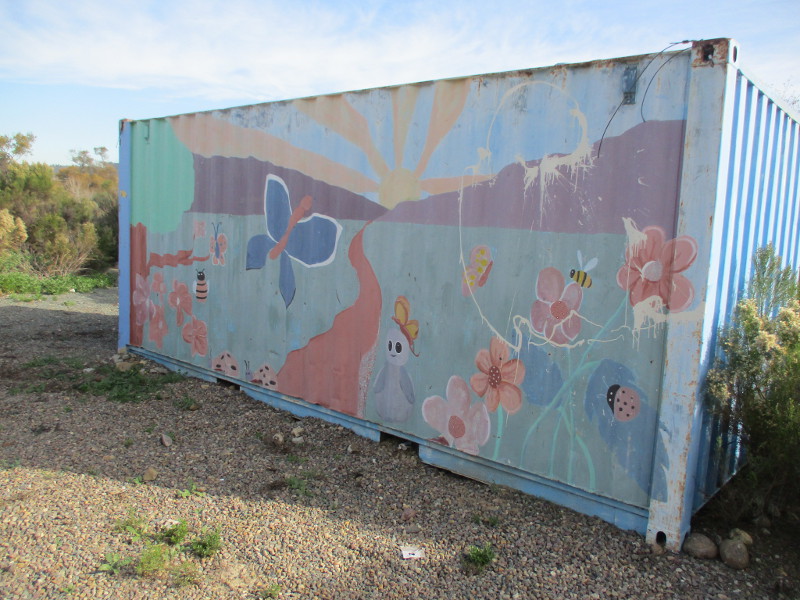
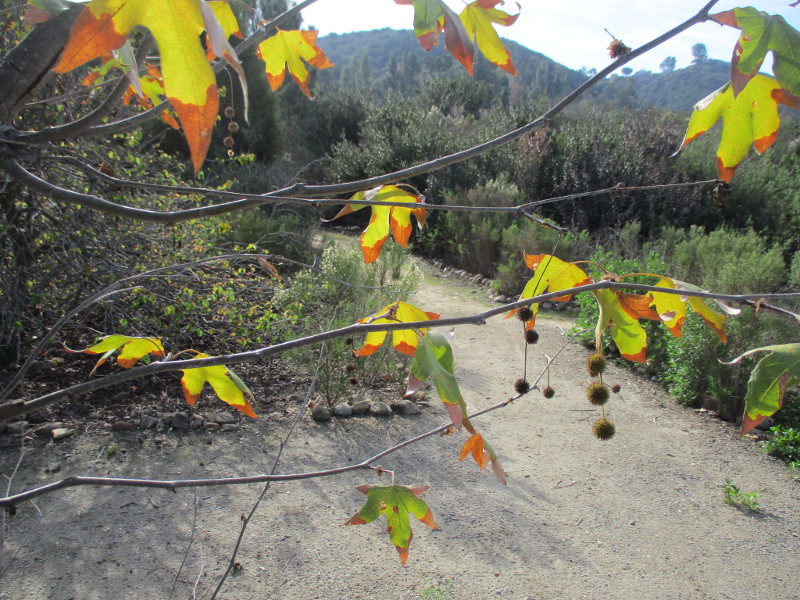
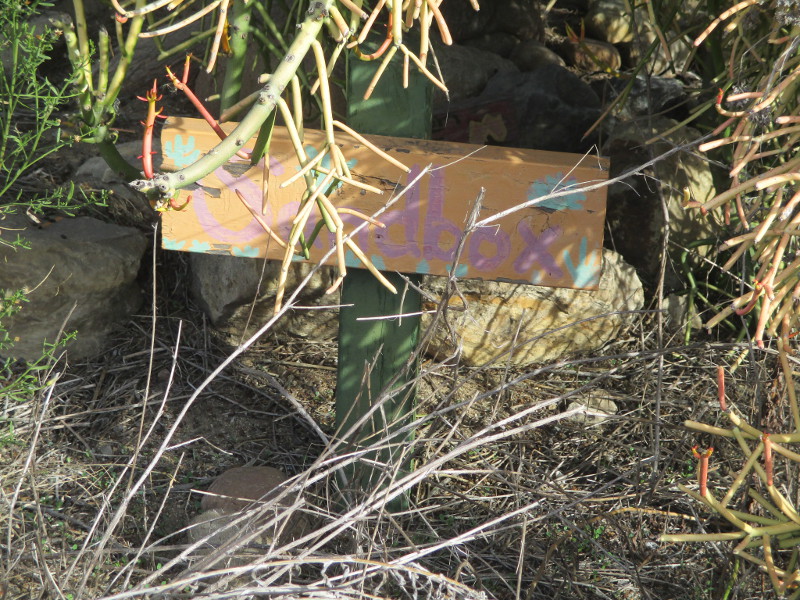
Nature slowly reclaims San Diego River Garden.

Five years ago I explored the San Diego River Garden in Mission Valley. Read about my visit here.

The community park, full of native vegetation and art, was developed by the San Diego River Park Foundation. It’s no longer listed on the foundation’s website. For all intents and purposes, it appears to have been abandoned.

I noticed, about a week ago, that people can still enter the old River Garden and walk about on its trails. So that’s what I did.

As you can see, the human-made parts of the park are fading away. Signs, planters and art are weathered and are slowly disintegrating.

While works of the human hand gradually pass away, the forces of nature persist. Plants, trees and natural life grow, renew, overtake.

If you’d like to see San Diego through my lens, find the “Follow” box in the sidebar to receive new posts in your email, or bookmark coolsandiegosights.com and swing on by occasionally!

(If you’re viewing Cool San Diego Sights on a phone, you can open my website’s sidebar by tapping those three parallel lines at the top of the page.)
Legacy Blossoms mural brightens Valencia Park!

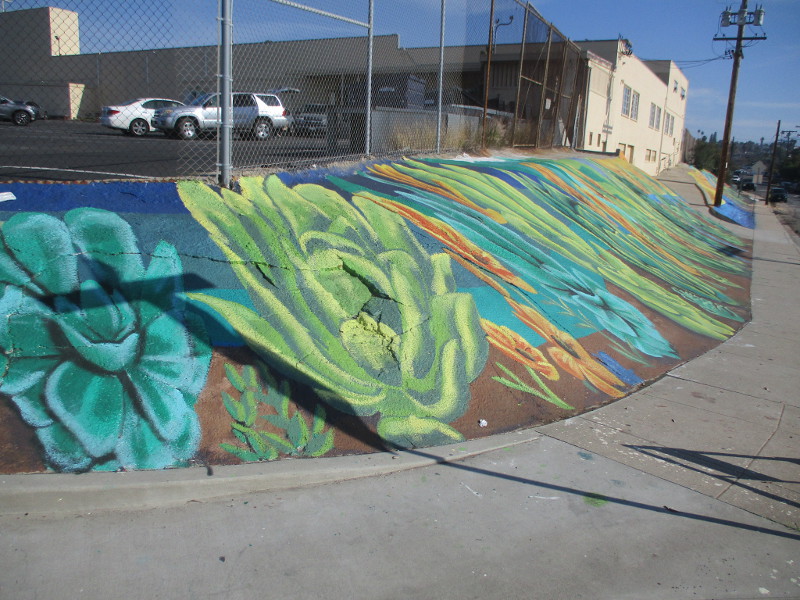
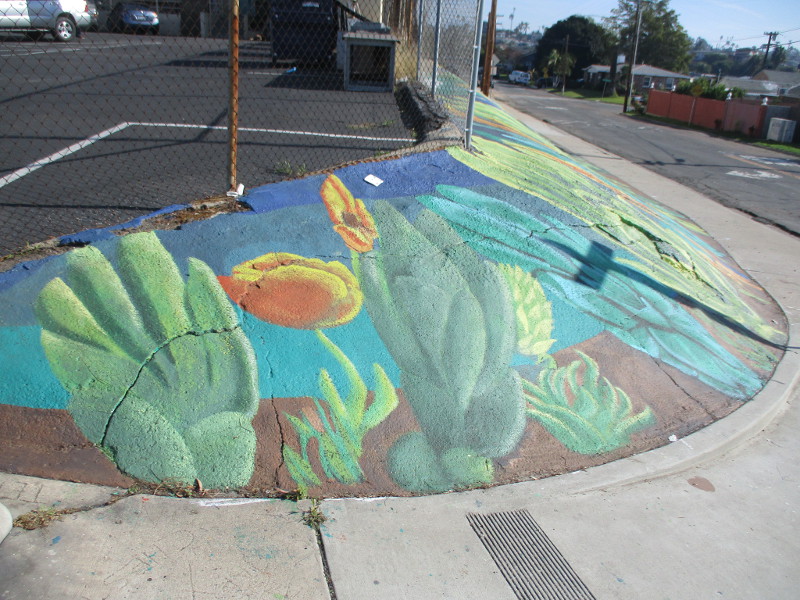
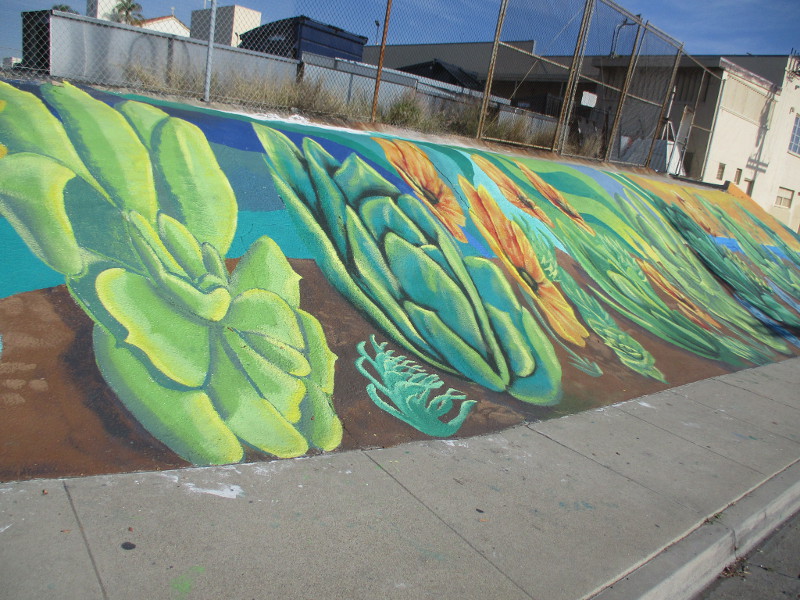
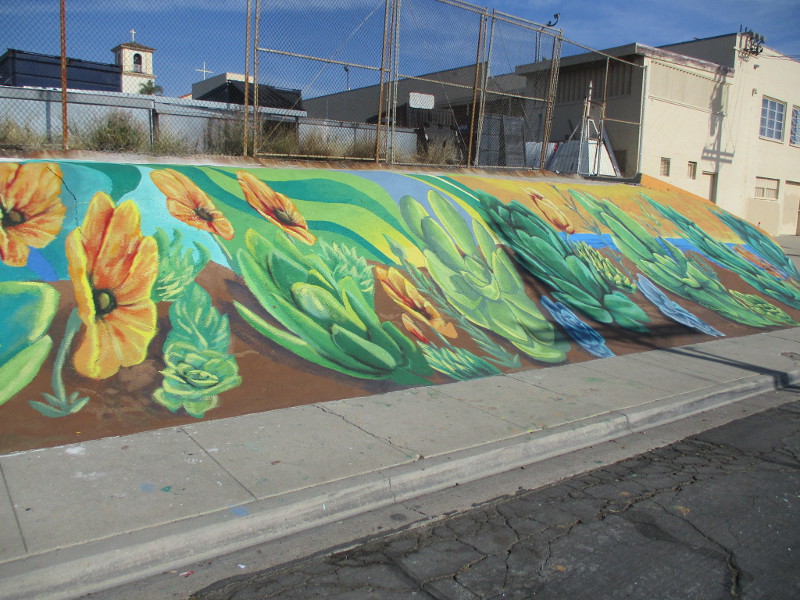
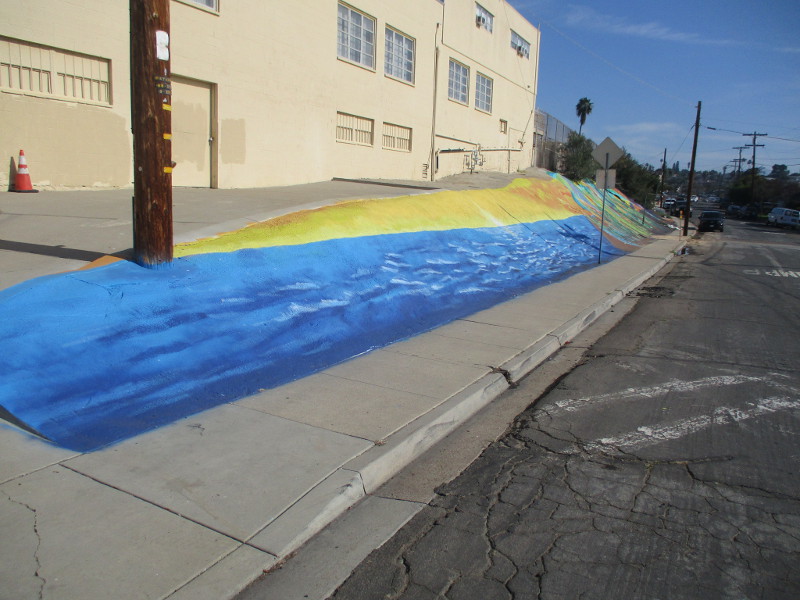
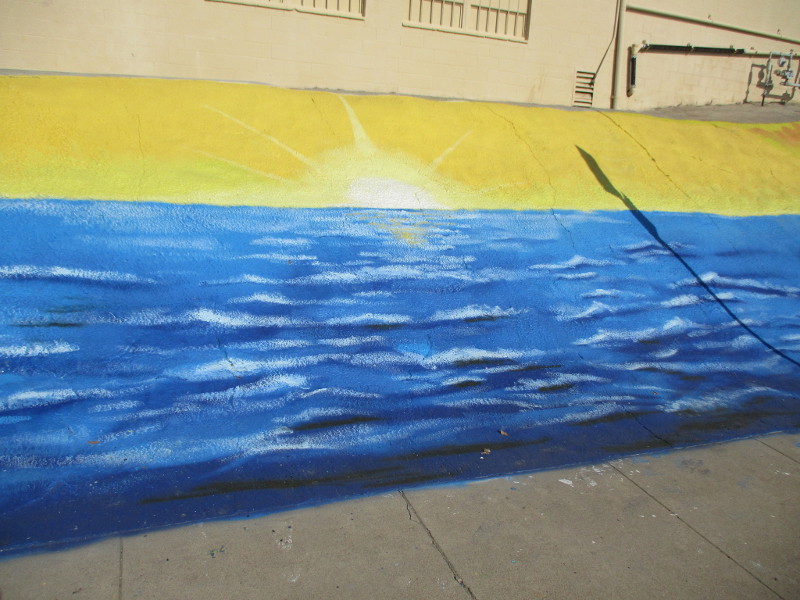
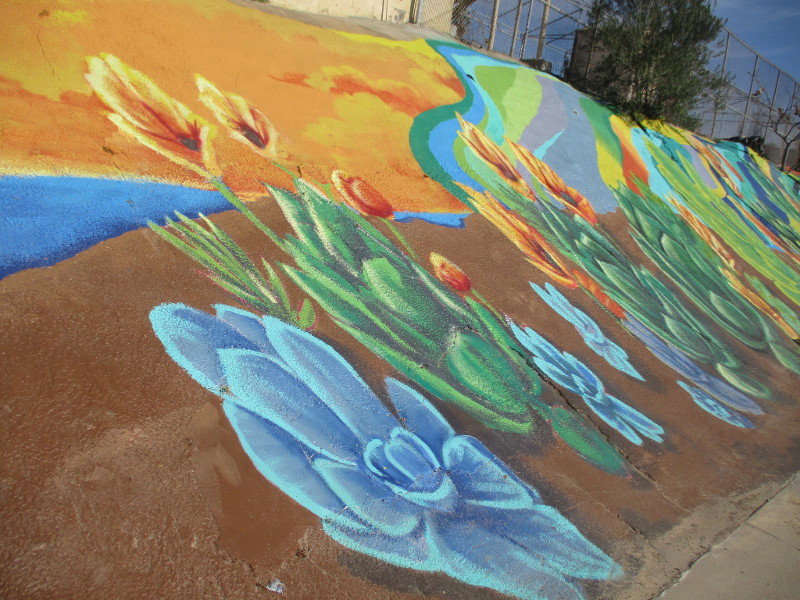
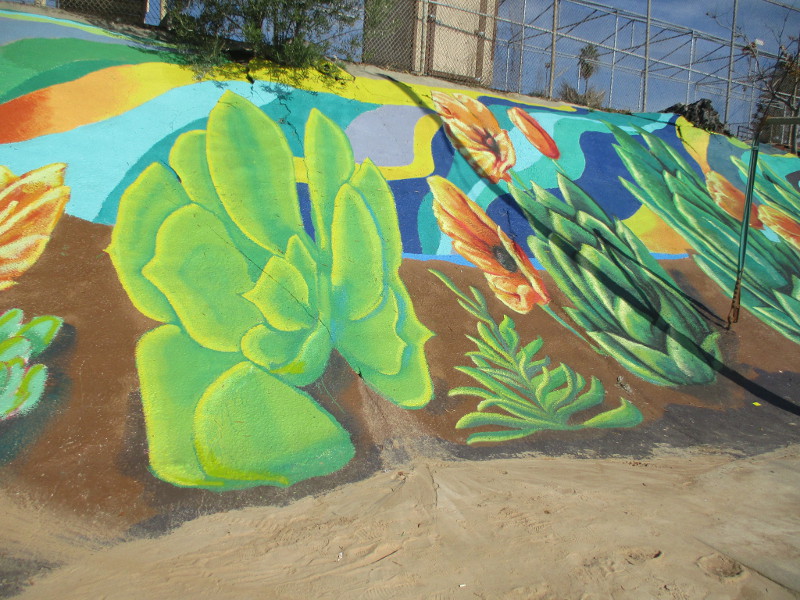
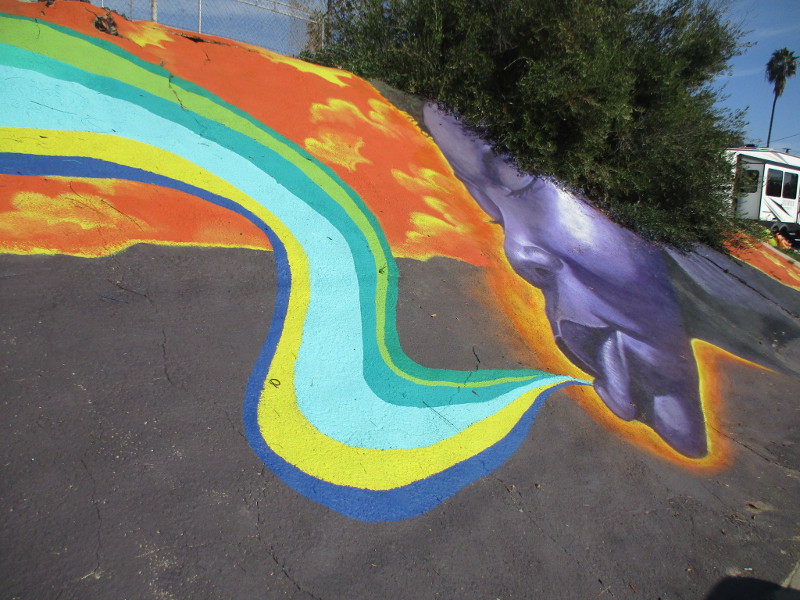
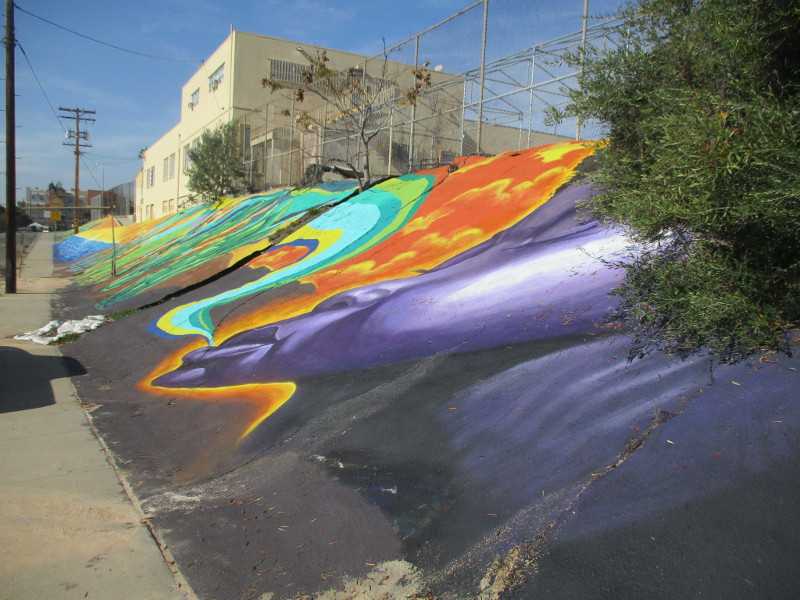
In October, inspired local artists and volunteers came together to paint this beautiful 250-foot mural in Valencia Park, along Manzanares Way east of Euclid Avenue. It’s called the Legacy Blossoms mural.

You can see a photograph of the mural being painted on Instagram here. The installation team is credited as: Kim, Dentlok, SD Writerz and Natifa.

Additional photos of the mural’s progress can be seen on the Southeast Art Team Instagram page here. If you like what these artists are doing for the community, why not provide them with an assist?

The large concrete embankment south of the St. Rita Catholic Church complex is now covered with colorful poppies, succulents, an ocean sunset and the breath of life, brightening this neighborhood in Southeast San Diego!

Look how wonderful the art is!

If you’d like to see San Diego through my lens, find the “Follow” box in the sidebar to receive new posts in your email, or bookmark coolsandiegosights.com and swing on by occasionally!

(If you’re viewing Cool San Diego Sights on a phone, you can open my website’s sidebar by tapping those three parallel lines at the top of the page.)
Pollinator garden planted near Lemon Grove Depot!

A week ago, members of the Lemon Grove volunteer group Revitalize Broadway planted an extensive pollinator garden next to the Lemon Grove Depot trolley station, in what is called Promenade Park. I first read about the project here. I saw the garden today!

Keep in mind the new plants are very small now, but they’ll grow and eventually fill out the garden spaces.

Several informative plaques among the new plantings explain the benefits of native plants, and how they attract a variety of local wildlife, including beneficial insects like butterflies and bees.

If you’d like to learn more about the Revitalize Broadway group and their positive community efforts, click here. Do you live in Lemon Grove? Why not join these good people?

What did I see today?

One plaque describes the life cycle of the monarch butterfly.

Another plaque explains the migration of monarch butterflies and how certain plants provide food sources for declining butterfly populations. Pictured are Yarrow, California Lilac, Pozo Blue Sage, Pacific Aster and Narrow Leaved Milkweed.

Another part of the new garden is slightly depressed and resembles a dry creek. It’s called a rain garden.

Designed to be environmentally friendly, it will help valuable rain water permeate the ground and act as a natural filter.

If you’d like to see San Diego through my lens, find the “Follow” box in the sidebar to receive new posts in your email, or bookmark coolsandiegosights.com and swing on by occasionally!

(If you’re viewing Cool San Diego Sights on a phone, you can open my website’s sidebar by tapping those three parallel lines at the top of the page.)