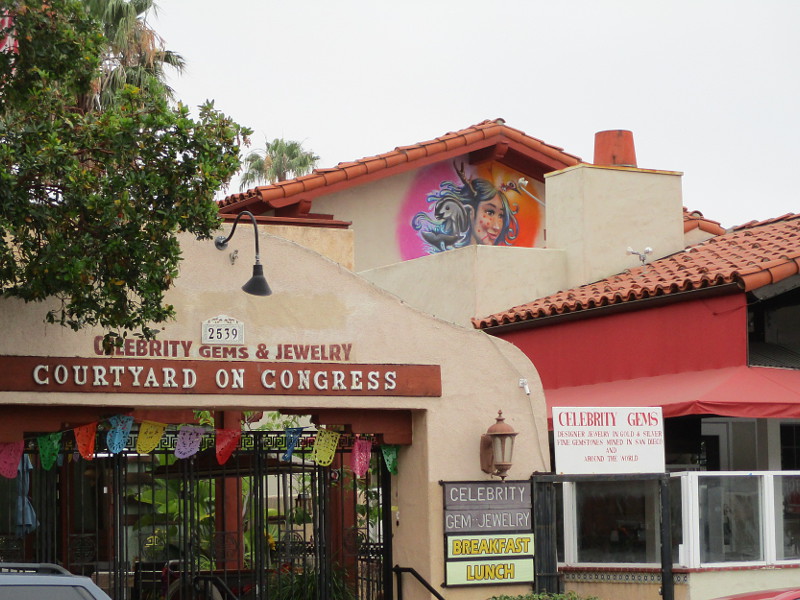
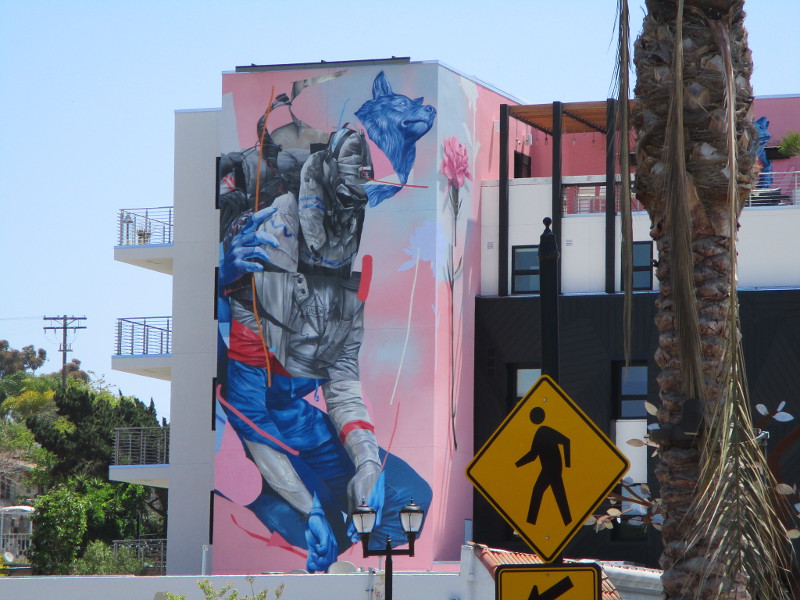
Two colorful faces have been painted on the second floor of the Courtyard on Congress building in Old Town. Both are by local artist Guillermo “memuco” Munro.
I saw these beautiful faces as I walked near the intersection of Congress Street and Twiggs Avenue early this morning. I was able to capture the artist’s signature, then I checked out his Instagram page, which is here.
It appears the murals were created back in January.
Memuco describes the female with ceremonial Kumeyaay face decoration as a woman that represents all nationalities. A being so beautiful and peaceful. With the most sincere smile in the Universe.
The second face is of Mexican painter Diego Rivera. He’s holding a Frida Kahlo doll, which the balcony concealed from my camera. Check out the artist’s Instagram page to see it all!
You can enjoy more of his great artwork that I’ve stumbled upon here (across the street) and here!
…
I live in downtown San Diego and love to walk around with my camera! You can follow Cool San Diego Sights via Facebook or Twitter!
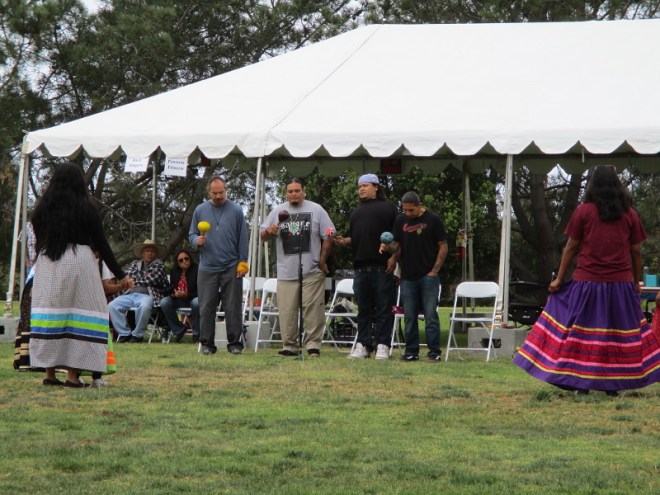
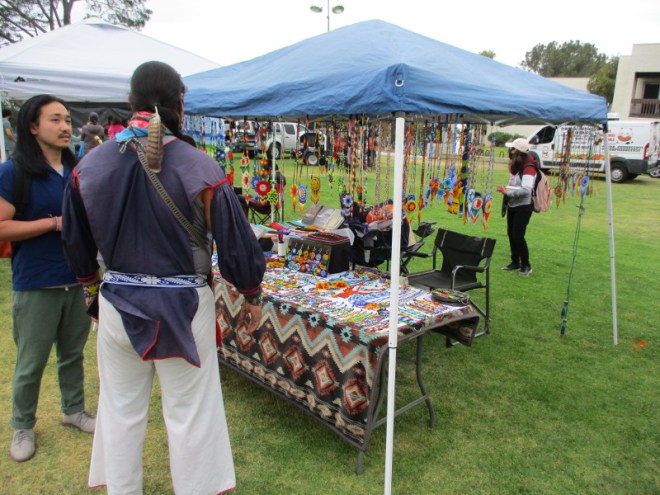
The UC San Diego 2022 Powwow began late this morning with Bird Singers from the Viejas Band of Kumeyaay Indians.
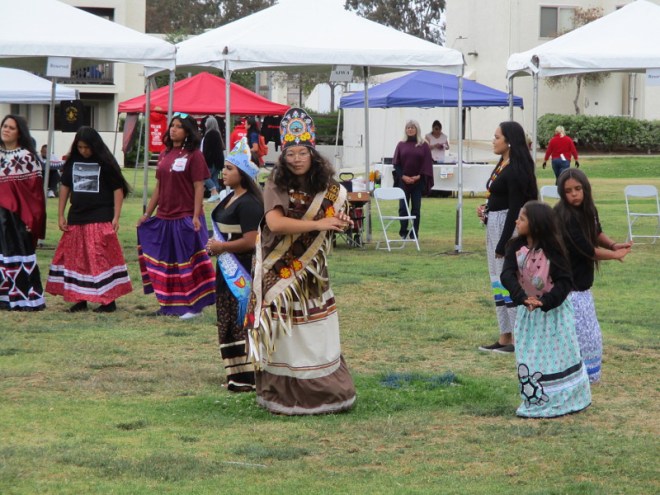
As people slowly arrived at Marshall College Field, the singers sang ancient stories of the world’s creation. Traditional dancers and shaken gourd rattles moved in rhythm with the words.
In the San Diego sunshine, the culture and history of the Kumeyaay was alive, passing from heart to heart, from generation to generation.
One of the bird singers explained how culture and spirituality live together hand in hand. The singing takes much time and sacrifice. It is for the people. It brought him and others happiness, enriching life in many ways.
Bringing this beautiful music to our world helps many to thrive in this day and time.
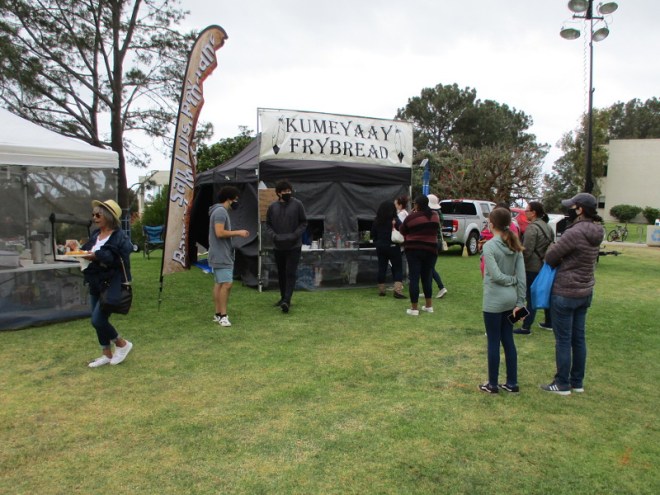
I listened. Took some photos. I stretched my legs and ate some Kumeyaay fry bread with powdered sugar and drizzled honey. Yum!
Bird Singers were followed by Gourd Dancers.
After a little while, I felt the urge to move forward through this amazing world, and I walked again down my path.
…
I live in downtown San Diego and love to walk around with my camera! You can follow Cool San Diego Sights via Facebook or Twitter!
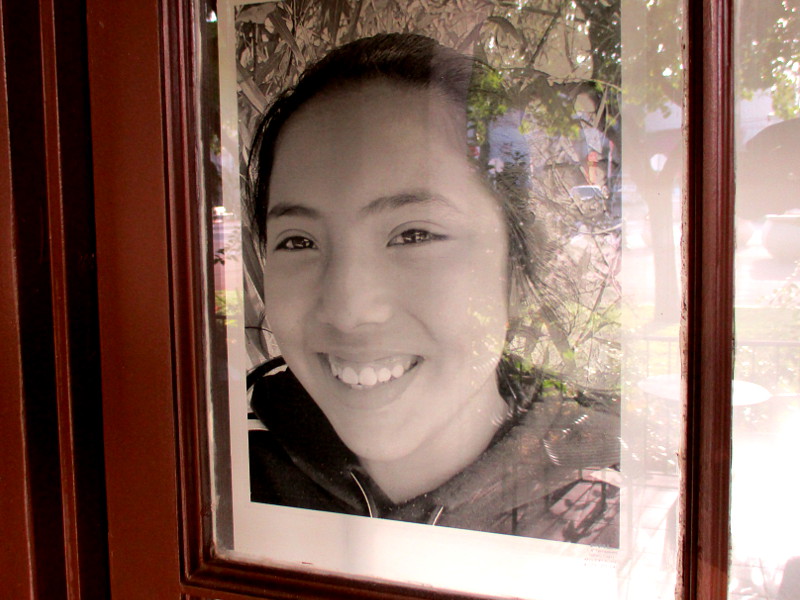
Students from the 8th Grade Culture Class at Barona Indian Charter School have created a Heritage Project concerning Kumeyaay culture and history. Their work will be displayed in an upcoming exhibition at the Mingei International Museum in Balboa Park!
The exhibition is titled Kum ‘Enyaawapch Ewuupch which is in the northern dialect of the Kumeyaay language. Translated to English, it means The Way We See It.
The exhibition has its big opening celebration on May 26, 2022. See all the details here!
I learned about this exhibition as I walked past the entrance of the Mingei International Museum last weekend. Photos of students filled one window, near an informative sign.
You can hear introductions by the participating students on the Barona Cultural Center & Museum website here!
…
I live in downtown San Diego and love to walk around with my camera! You can follow Cool San Diego Sights via Facebook or Twitter!
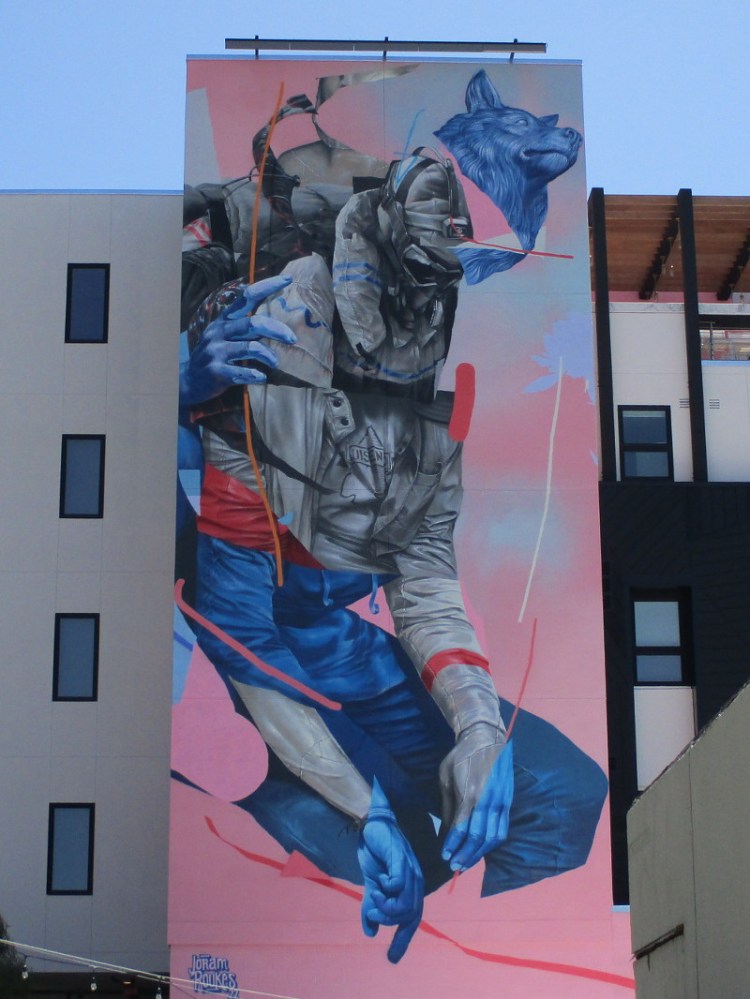
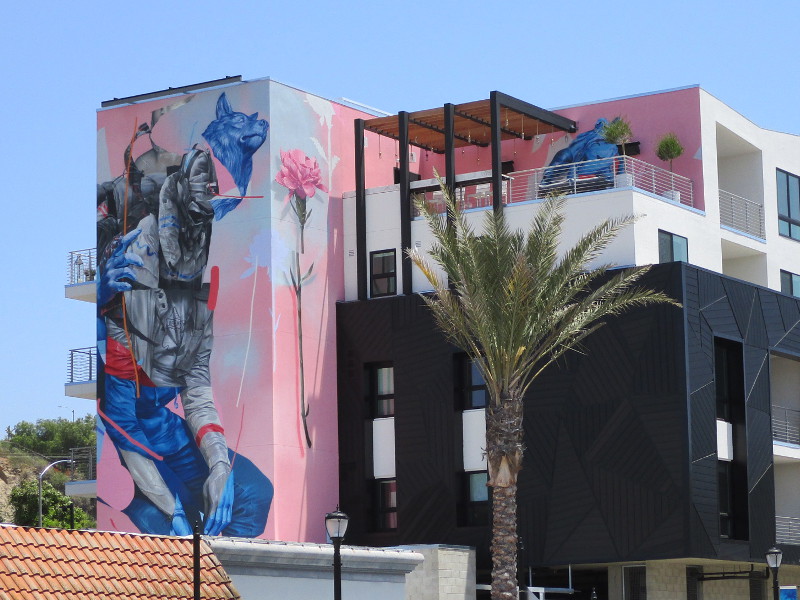
Have you seen the 60 foot tall mural at the new Found Lofts apartments in Vista’s Arts and Culture District? Joram Roukes, an internationally famous artist and muralist from The Netherlands, painted it a couple months ago!
The collage-like, multi-wall mural contains many elements, including a mountain climber, and images that represent the culture of the San Luis Rey Band of Mission Indians. The frog and the coyote in the mural come from a traditional animal story of The First People: How Coyote Killed Frog. The Luiseño people inhabited this area long before Spaniards established nearby Mission San Luis Rey in 1798.
The very cool mural is located at 516 S. Santa Fe Avenue. You can’t miss it!
…
I live in downtown San Diego and love to walk around with my camera! You can follow Cool San Diego Sights via Facebook or Twitter!
You can easily explore Cool San Diego Sights by using the search box on my blog’s sidebar. Or click a tag! There are thousands upon thousands of photos for you to enjoy!
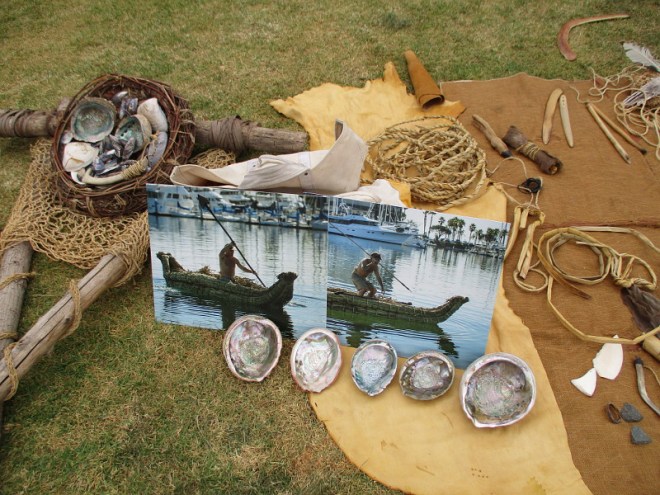
The rich culture of our region’s Native American Kumeyaay is honored at Old Town San Diego State Historic Park.
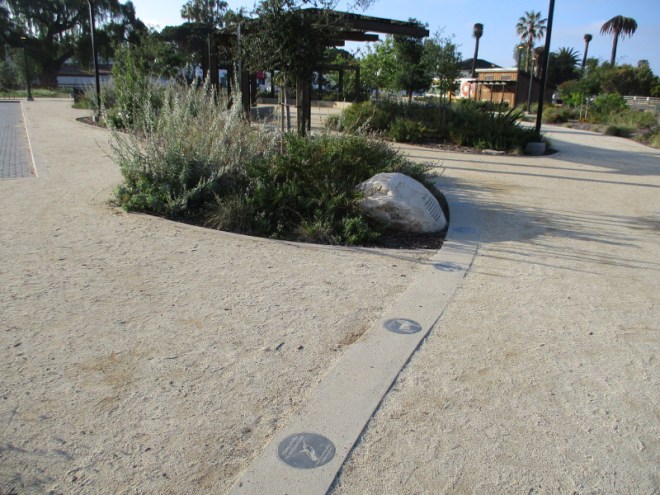
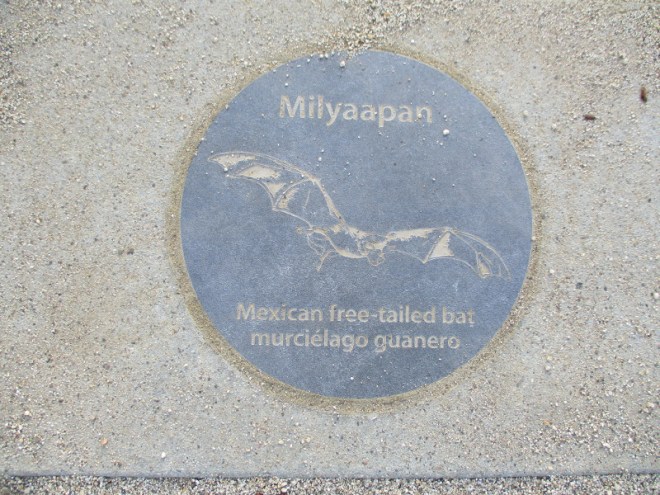
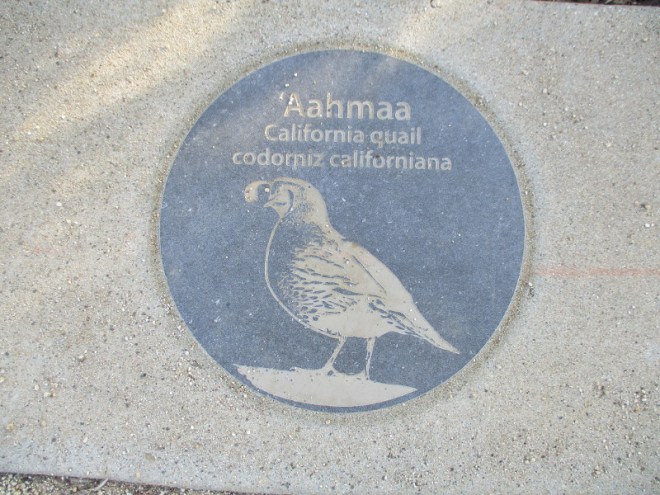
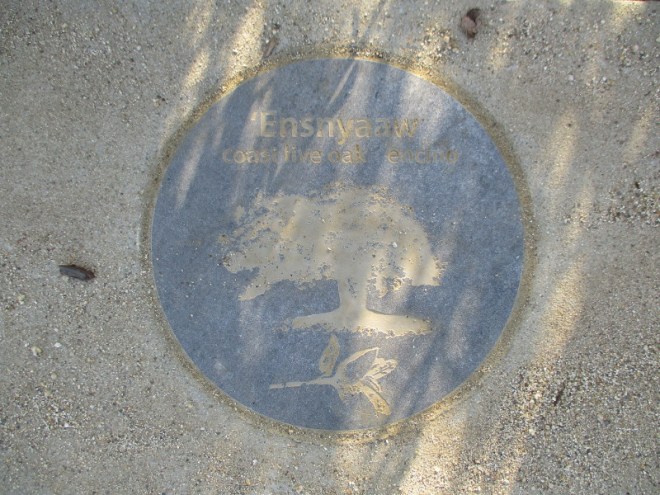
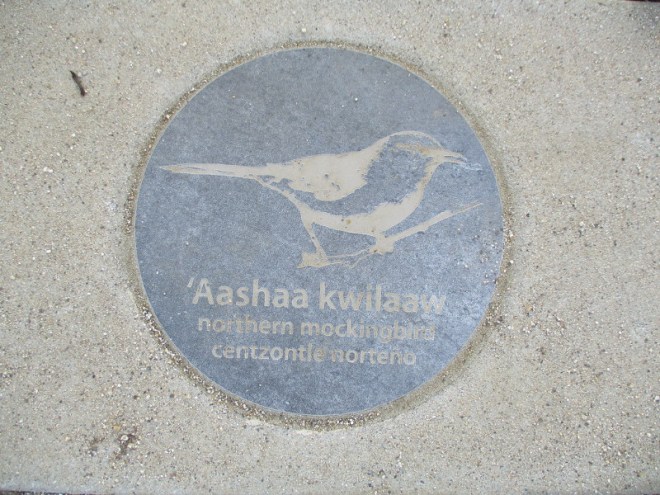
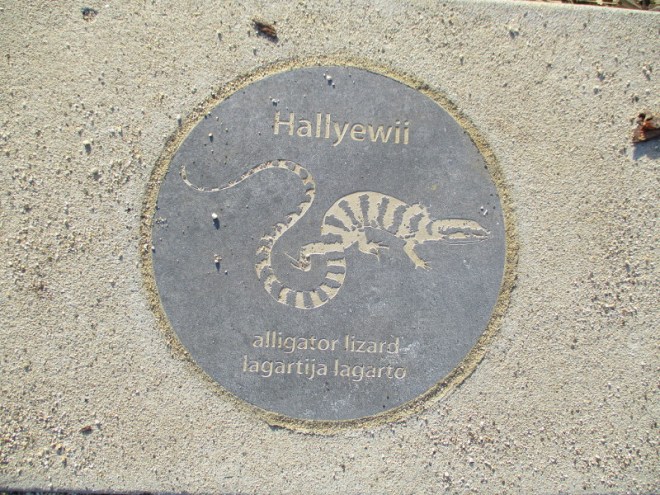
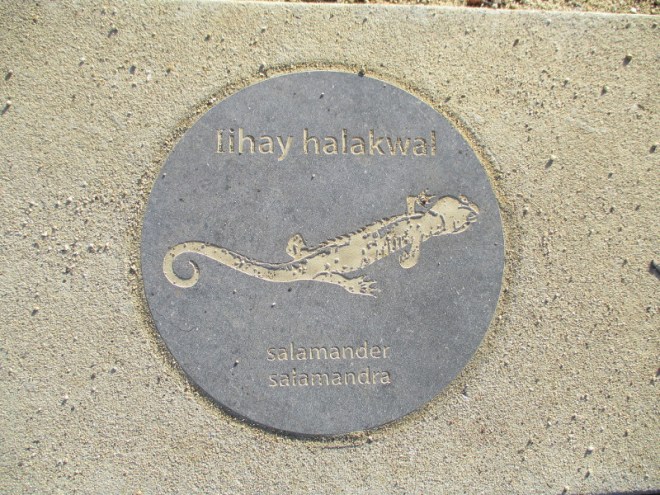
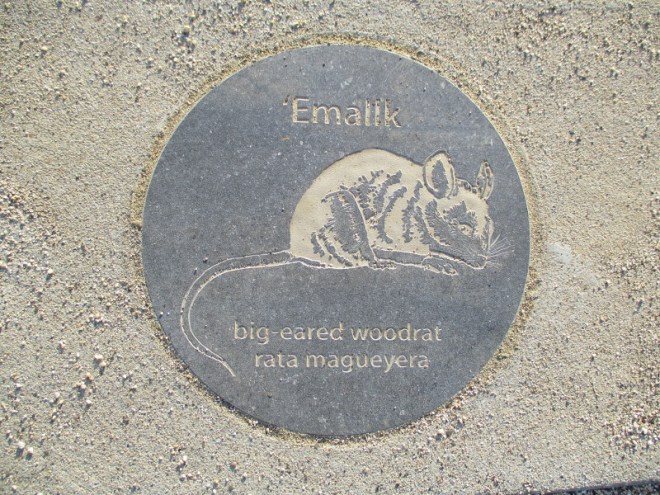
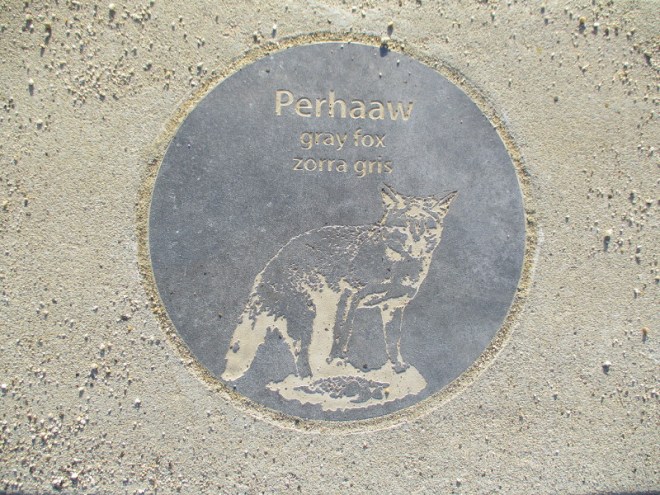
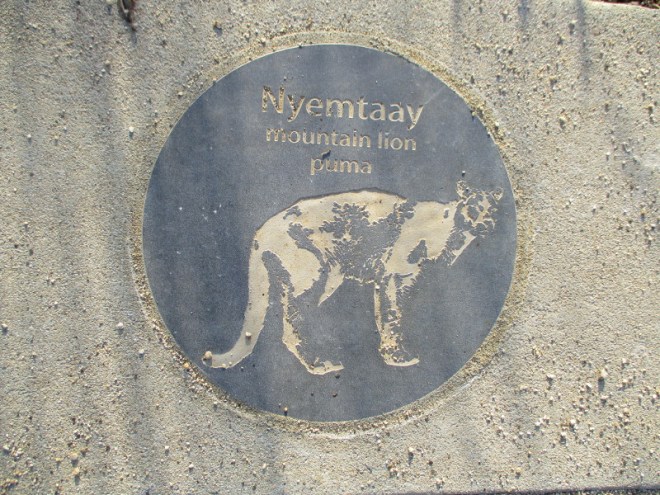
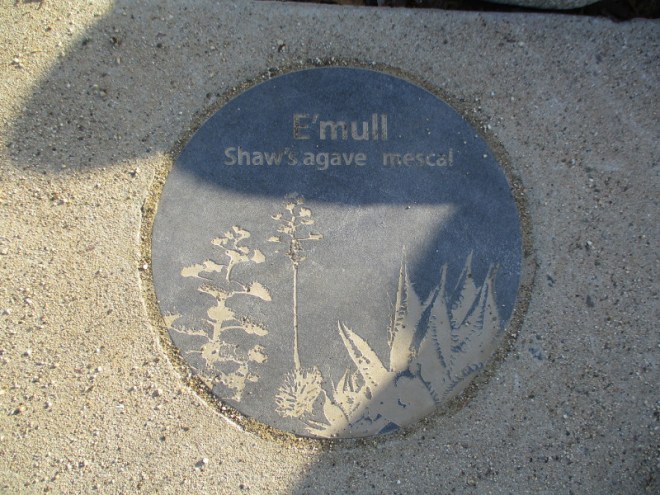
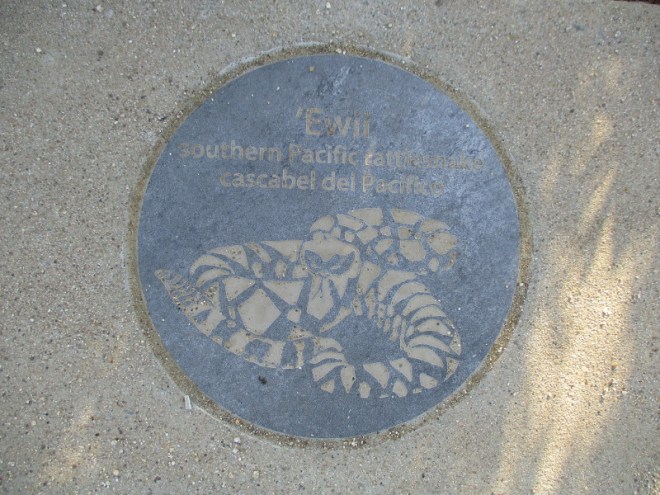
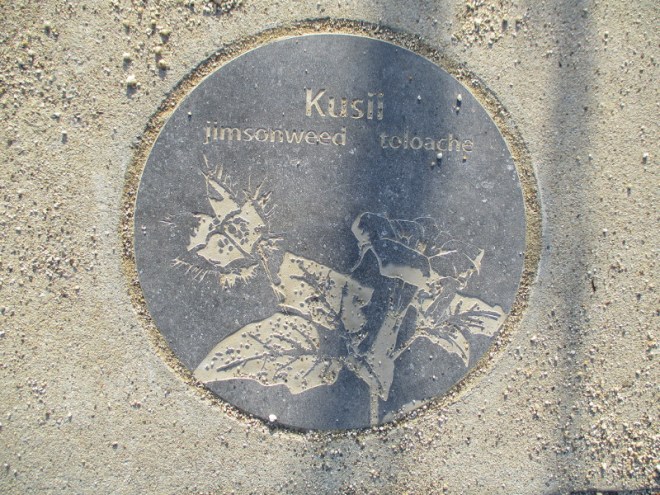
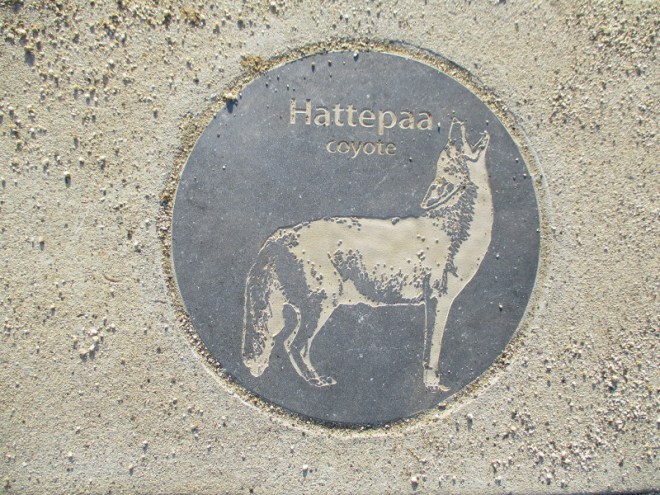
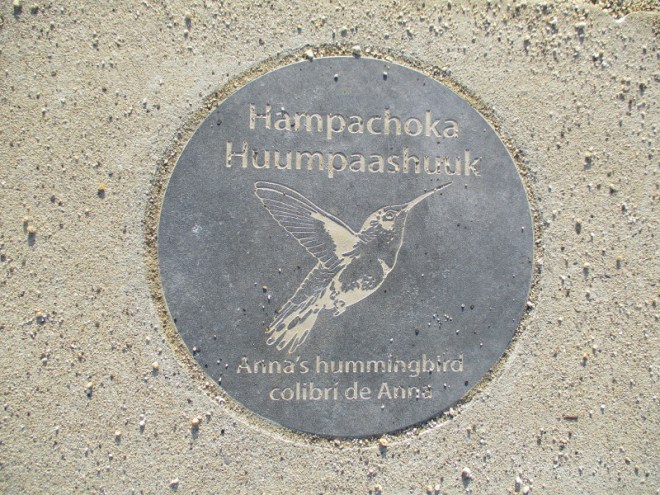
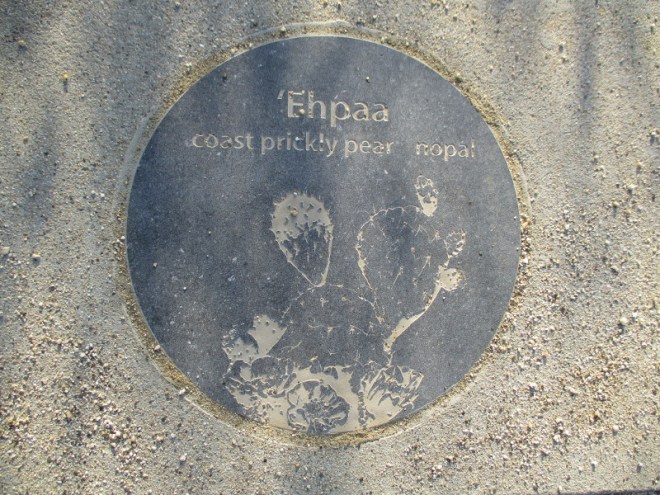
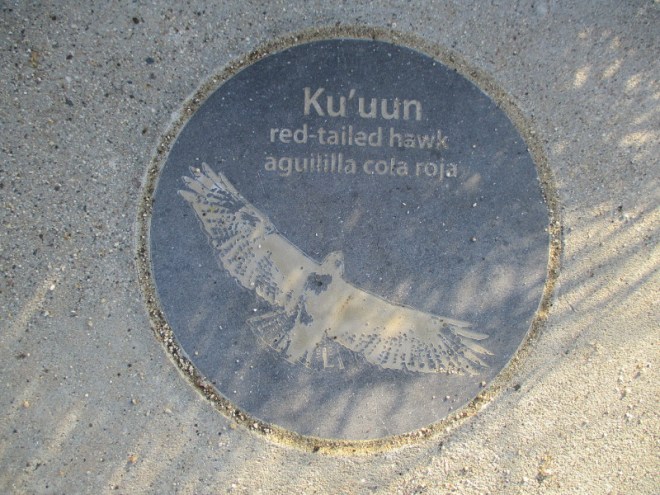
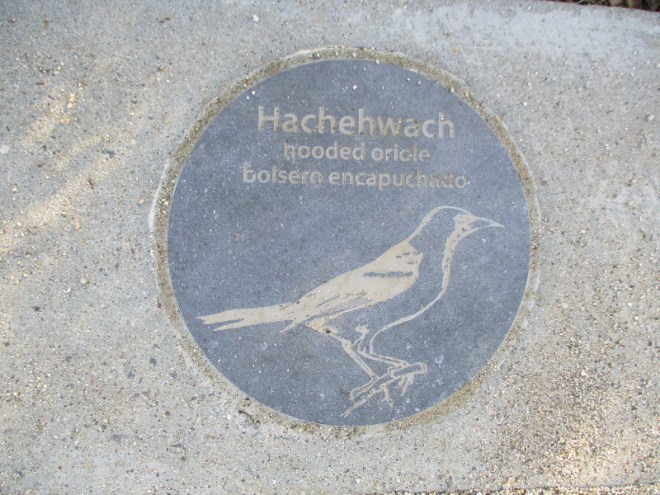
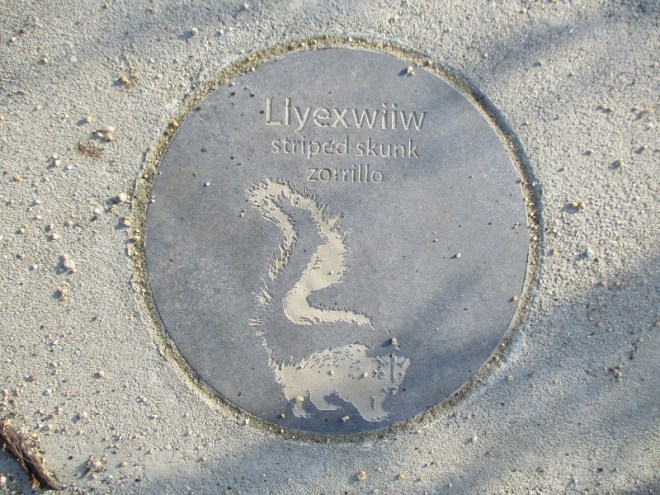
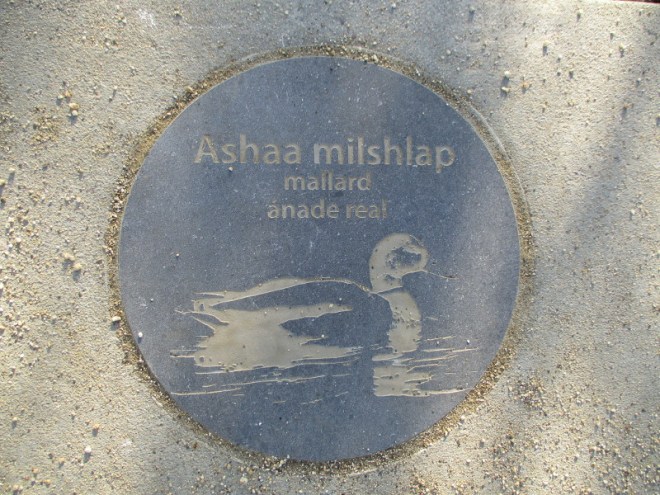
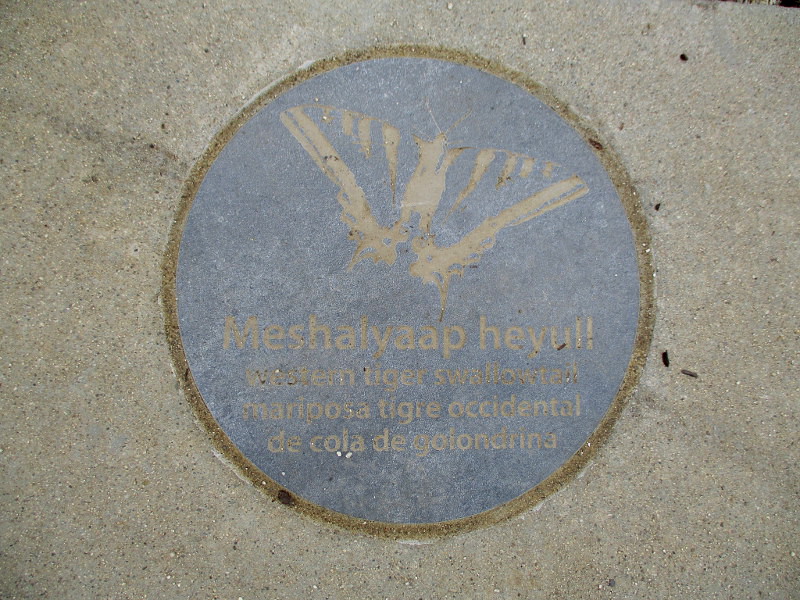
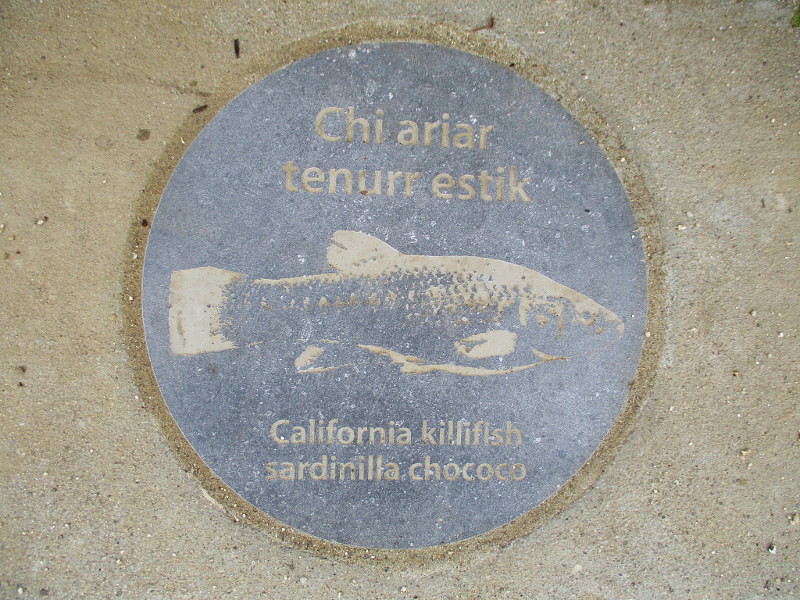
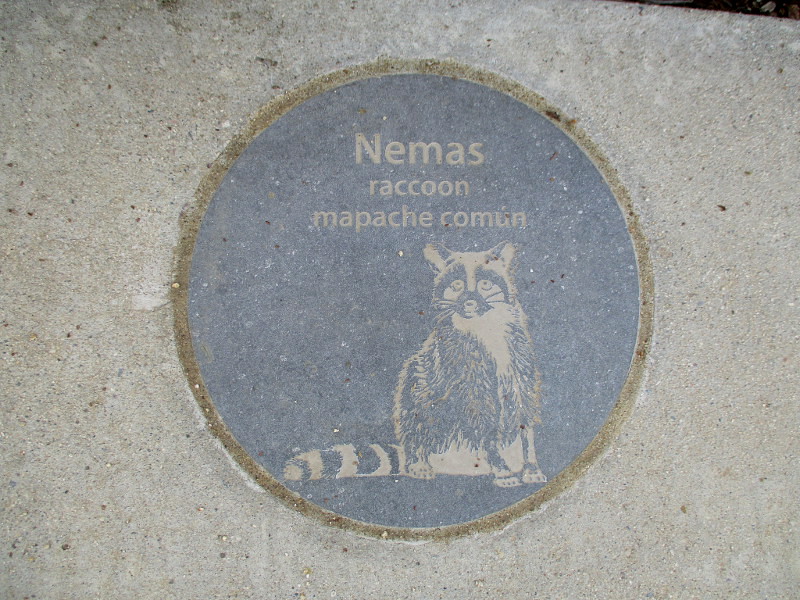
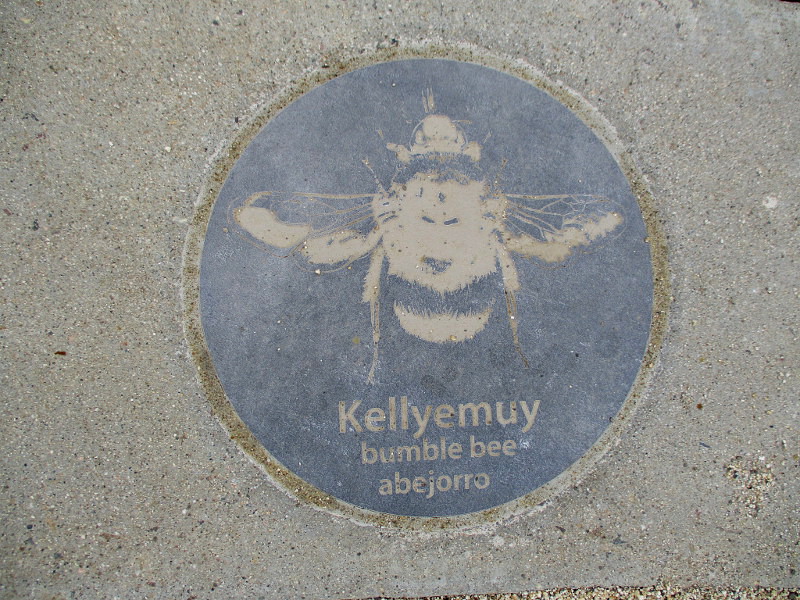
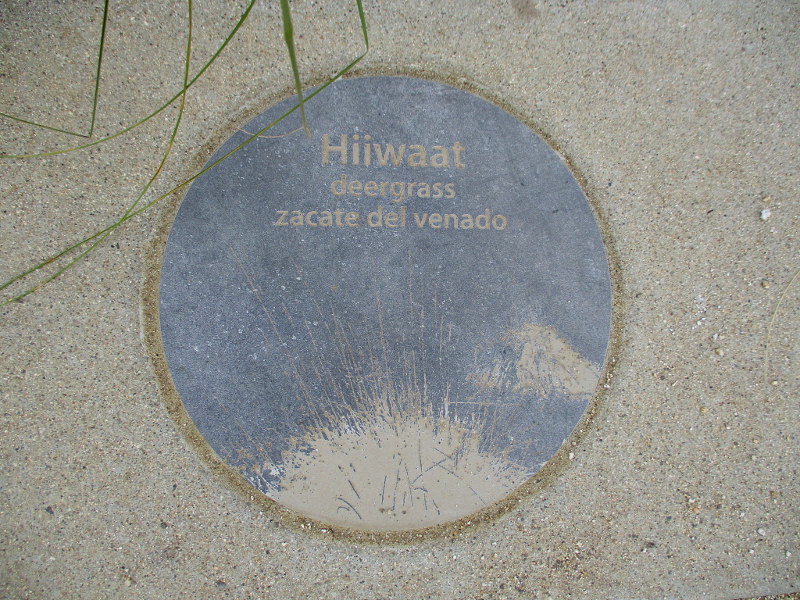
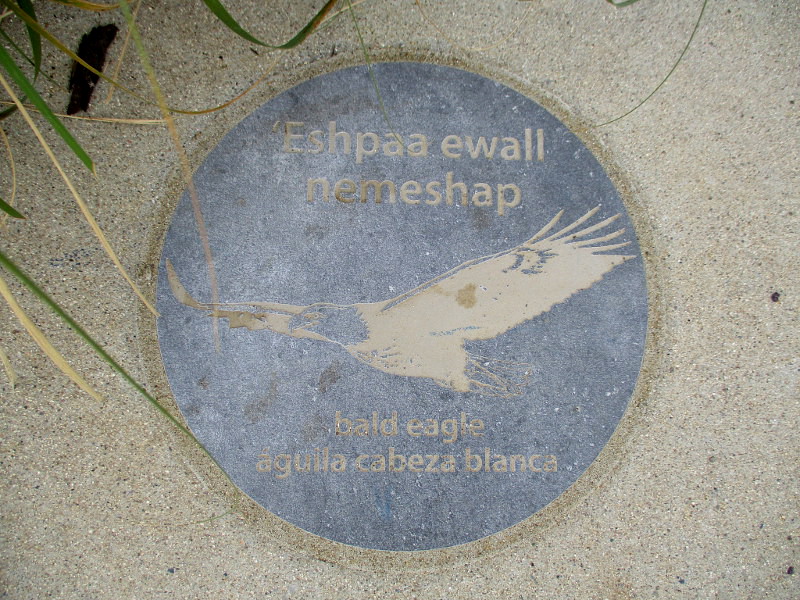
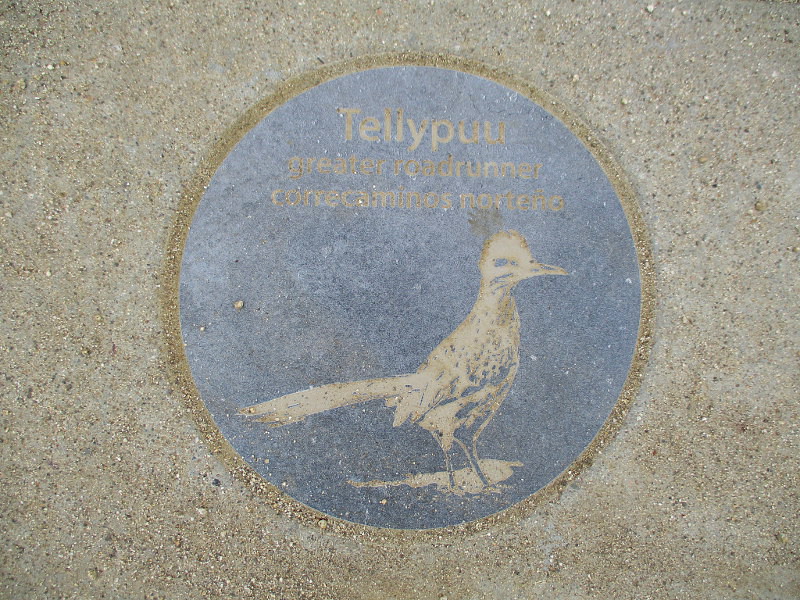
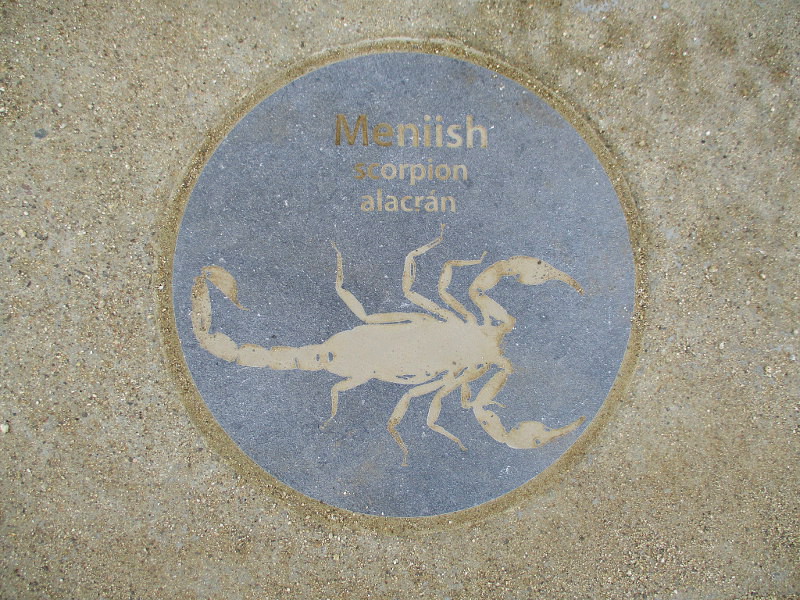
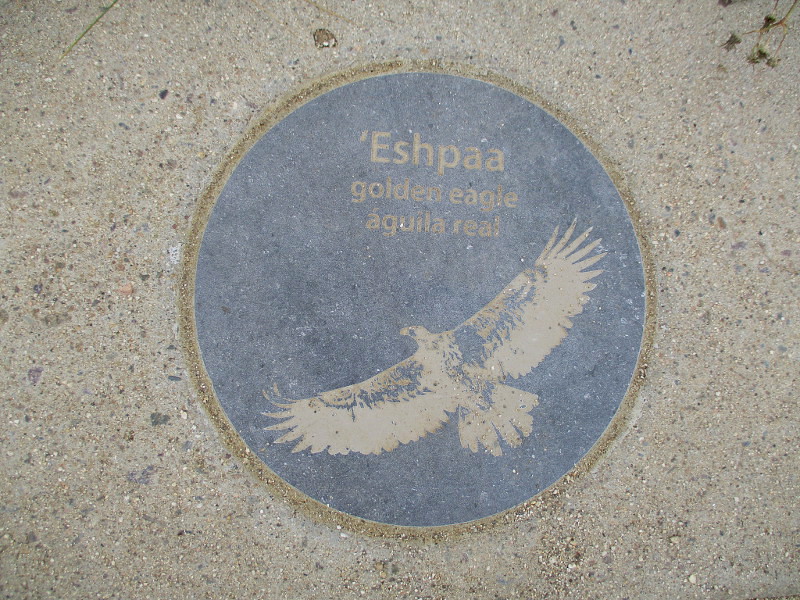
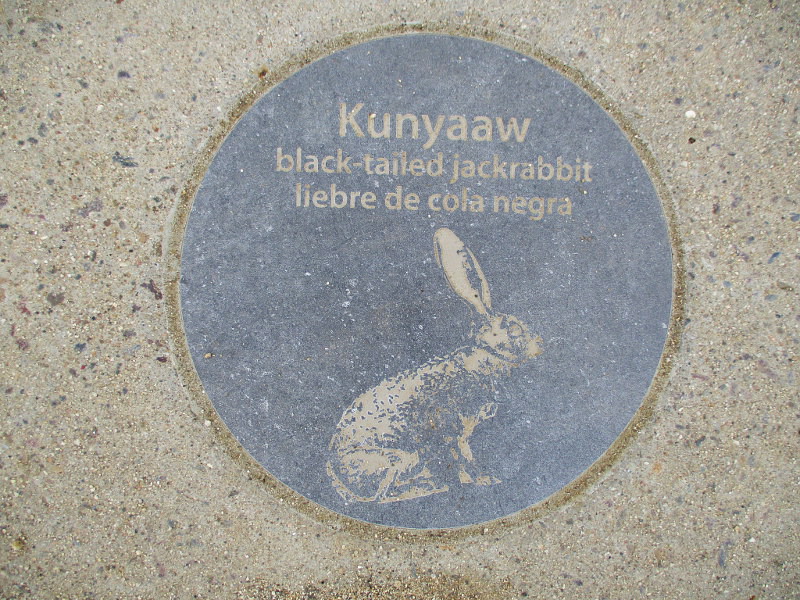
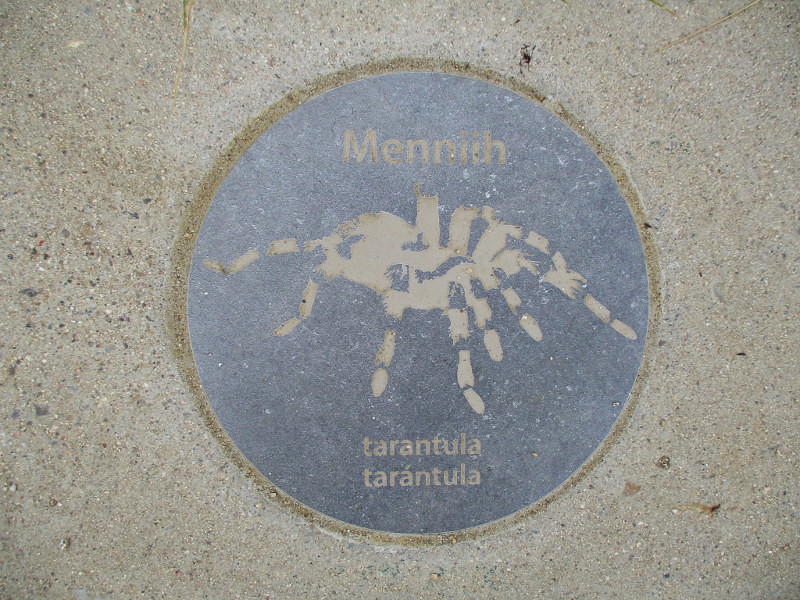
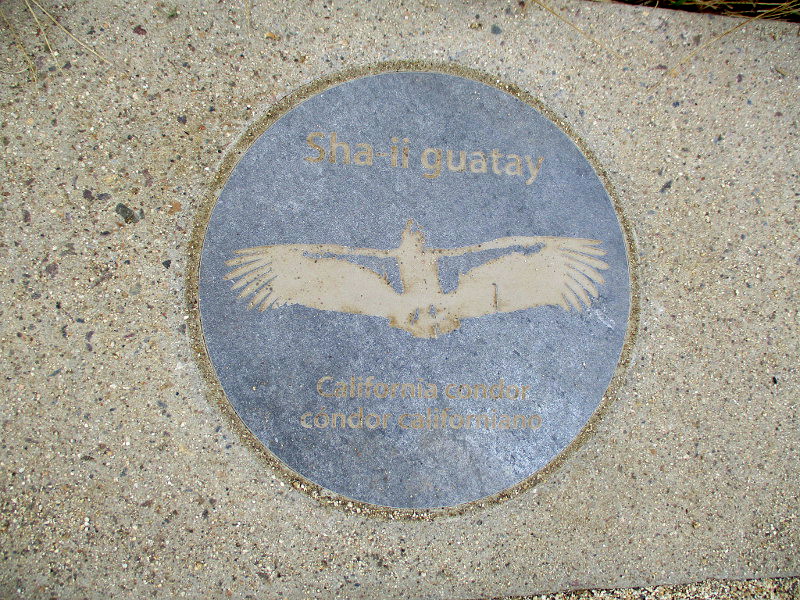
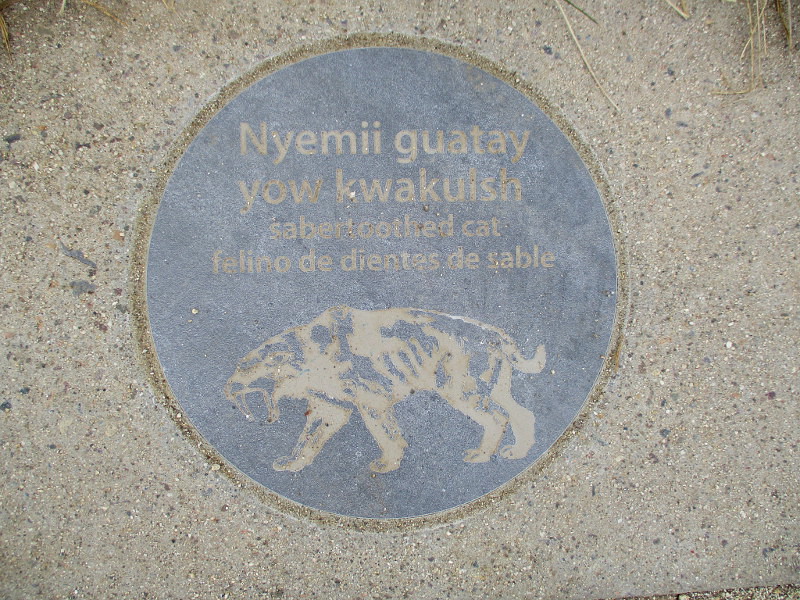
Near the corner of Juan Street and Taylor Street, the beautiful Iipay ~ Tipai Kumeyaay Mut Niihepok Land of the First People outdoor interpretive area teaches interested visitors a little of the Kumeyaay language. Kumeyaay words for many native animals and plants can be read along the edge of walkways.
During my last visit, I photographed many of the engraved artworks representing wild mammals, birds, reptiles, insects, cacti and trees, and the corresponding Kumeyaay and Spanish words.
If you want to see more of the surrounding area, the Land of the First People opened last year, and soon thereafter I took these photographs.
Incidentally, today there will be a special event held in this corner of Old Town San Diego State Historic Park. Earth Day will be celebrated! So if you read this in time, and you’re in the area, you might want to come on by!
Milyaapan. Mexican free-tailed bat.Sha-ii. Turkey vulture.Meshalyaap. Monarch butterfly.‘Aahmaa. California quail.‘Ensnyaaw. Coast live oak.‘Aashaa kwilaaw. Northern mockingbird.Hatepull. Nuttall’s woodpecker.Kekhuu. Northern flicker.Hallyewii. Alligator lizard.Iihay halakwal. Salamander.‘Emallk. Big-eared woodrat.Perhaaw. Gray fox.Kwak. Mule deer.Nyemtaay. Mountain lion.E’mull. Shaw’s agave.Ehmaall. Ground squirrel.‘Ewii. Southern Pacific rattlesnake.Waipuk. California kingsnake.Kusii. Jimsonweed.Hattepaa. Coyote.Hampachoka Huumpaashuuk. Anna’s hummingbird.‘Ehpaa. Coast prickly pear.Ashaa hahpaa. Cactus wren.Ku’uun. Red-tailed hawk.Hachehwach. Hooded oriole.Kupally. Blue elderberry.Nyemii. Bobcat.Llyexwiiw. Striped skunk.Para ak hepeshu. Great blue heron.Hantak. Treefrog.Ashaa milshlap. Mallard.
UPDATE!
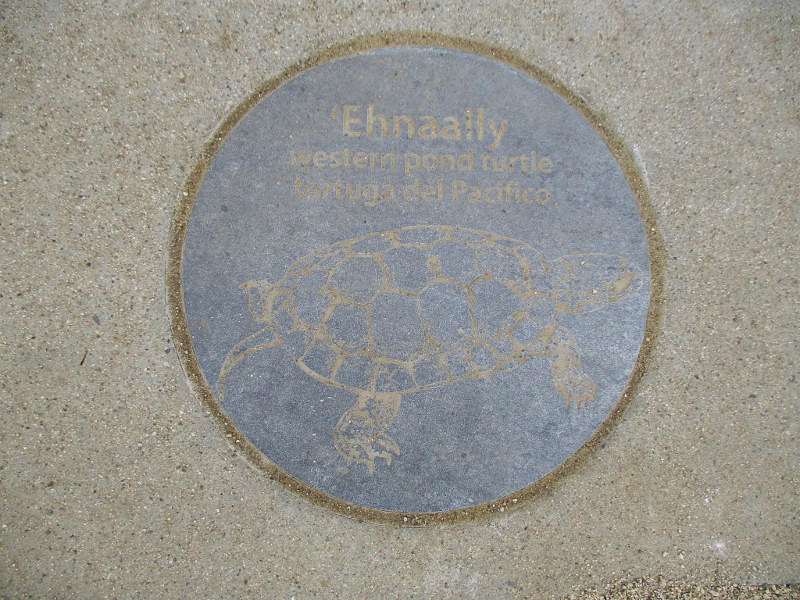
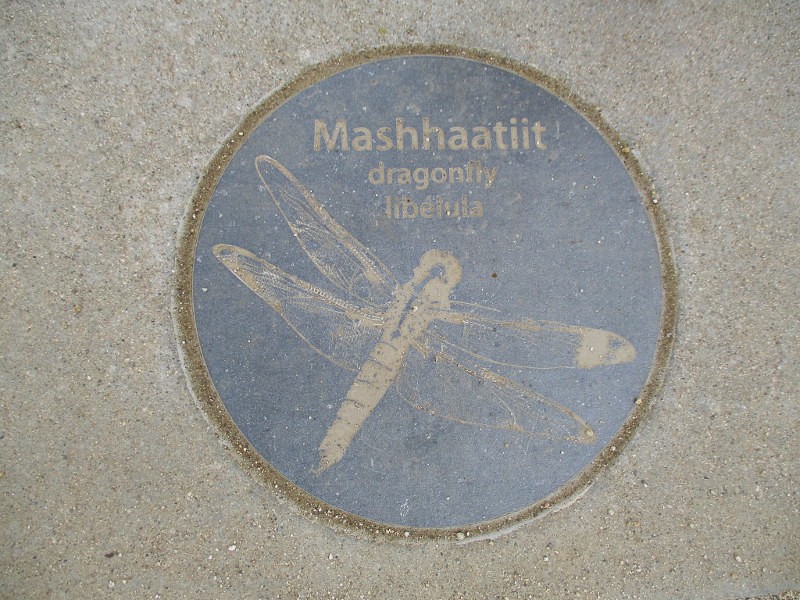
I took photographs of more words during a later visit…
Hantak sa-ai. California toad.‘Ehnaally. Western pond turtle.Mashhaatiit. Dragonfly.E’pilly. Southern cattail.Meshalyaap heyull. Western tiger swallowtail.Para ak nemeshap. Great egret.Chi ariar tenurr estik. California killifish.‘U’uu. Great horned owl.Nemas. Raccoon.Miskenan. Stink beetle.Kellyemuy. Bumble bee.Hiiwaat. Deergrass.‘Eshpaa ewall nemeshap. Bald eagle.Kilyaahwii. Mourning dove.Tellypuu. Greater roadrunner.Meniish. Scorpion.‘Aanall. Honey mesquite.‘Eshpaa. Golden eagle.Kunyaaw. Black-tailed jackrabbit.Menniih. Tarantula.Muu. Bighorn sheep.
The following are animals that are extinct or no longer found in the area around San Diego…
I live in downtown San Diego and love to walk around with my camera! You can follow Cool San Diego Sights via Facebook or Twitter!
You can easily explore Cool San Diego Sights by using the search box on my blog’s sidebar. Or click a tag! There are thousands upon thousands of photos for you to enjoy!
San Diego history buffs know that the San Diego River, where it approaches the Pacific Ocean, is not located where it flowed originally.
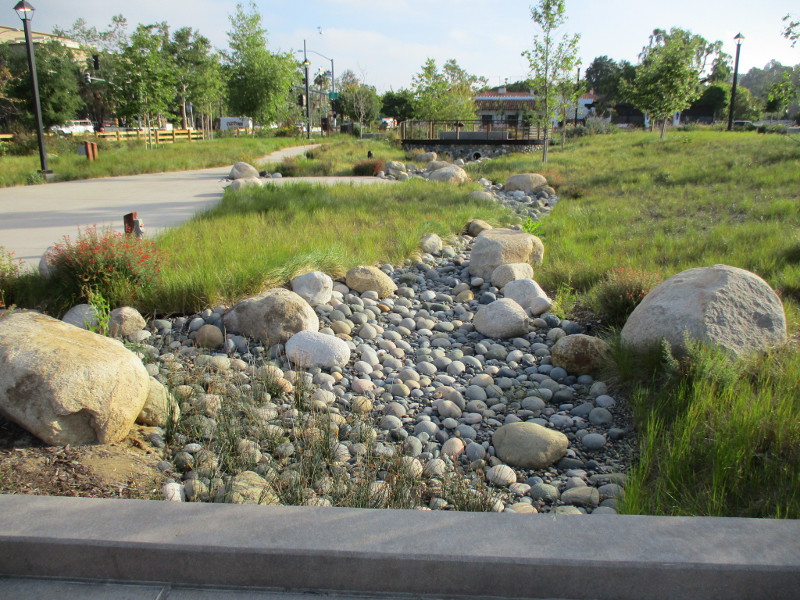
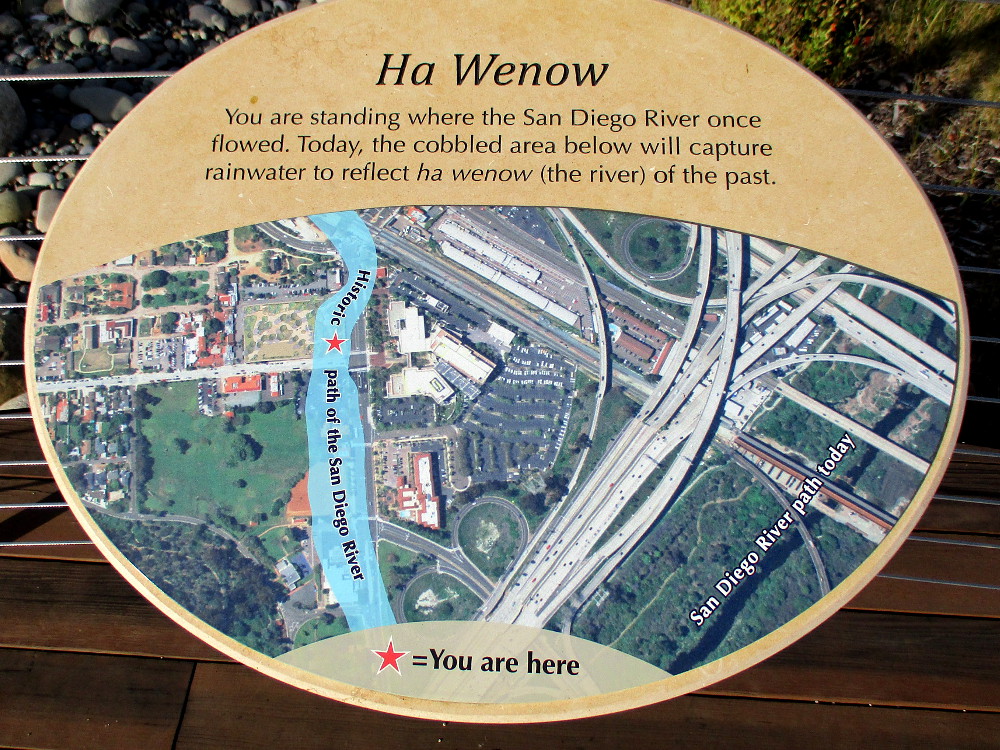
A cobblestone filled channel in Old Town San Diego State Historic Park is a visual reminder that the river once flowed directly next to our city’s birthplace.
In 1853, to prevent flooding in Old Town and the build-up of sediment in San Diego Bay, the Derby Dike was built, diverting the river into False Bay–today’s Mission Bay.
A sign by a footbridge over the modest cobblestone channel shows where the San Diego River was originally located in relation to the park and nearby Taylor Street. You can find this sign in the beautiful outdoor Iipay – Tipai Kumeyaay Mut Niihepok Land of the First People, at the northwest corner of the State Park.
Long before the arrival of explorer Juan Rodríguez Cabrillo in 1542, and the establishment of the nearby Spanish Presidio in 1769, the Native American Kumeyaay lived here on the banks of the life-sustaining river in a village called Kosa’aay. They called the river ha wenow.
…
I live in downtown San Diego and love to walk around with my camera! You can follow Cool San Diego Sights via Facebook or Twitter!
You can easily explore Cool San Diego Sights by using the search box on my blog’s sidebar. Or click a tag! There are thousands upon thousands of photos for you to enjoy!
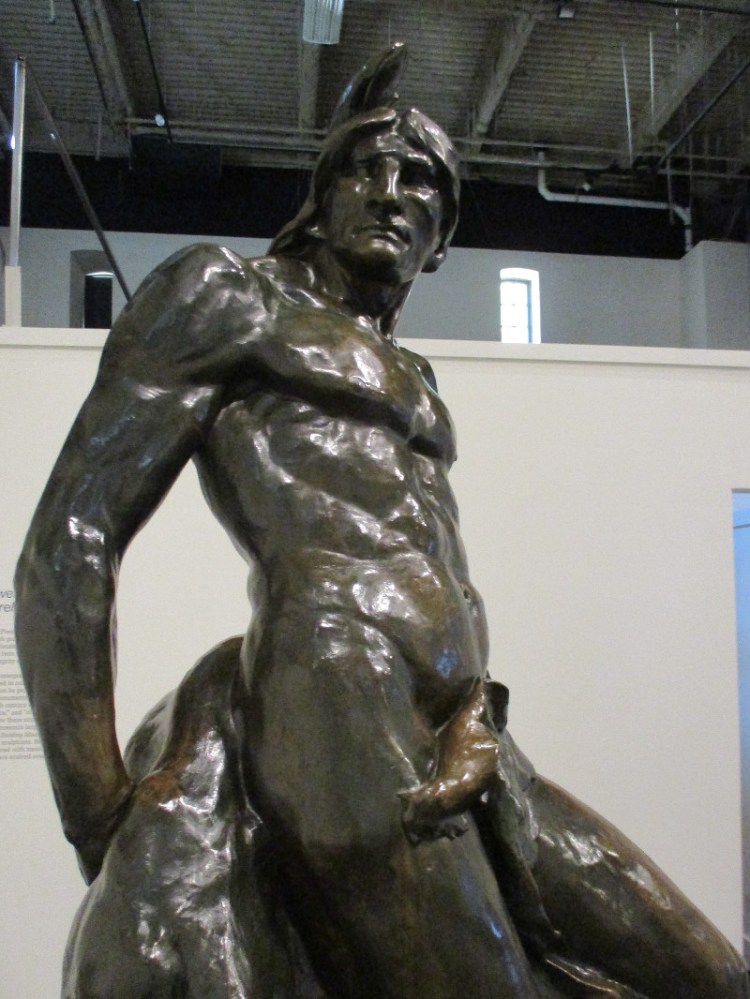
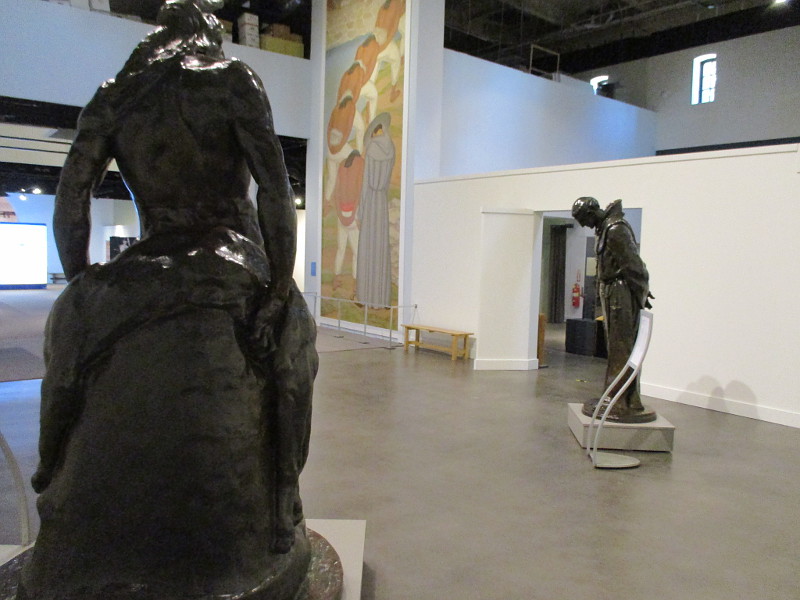
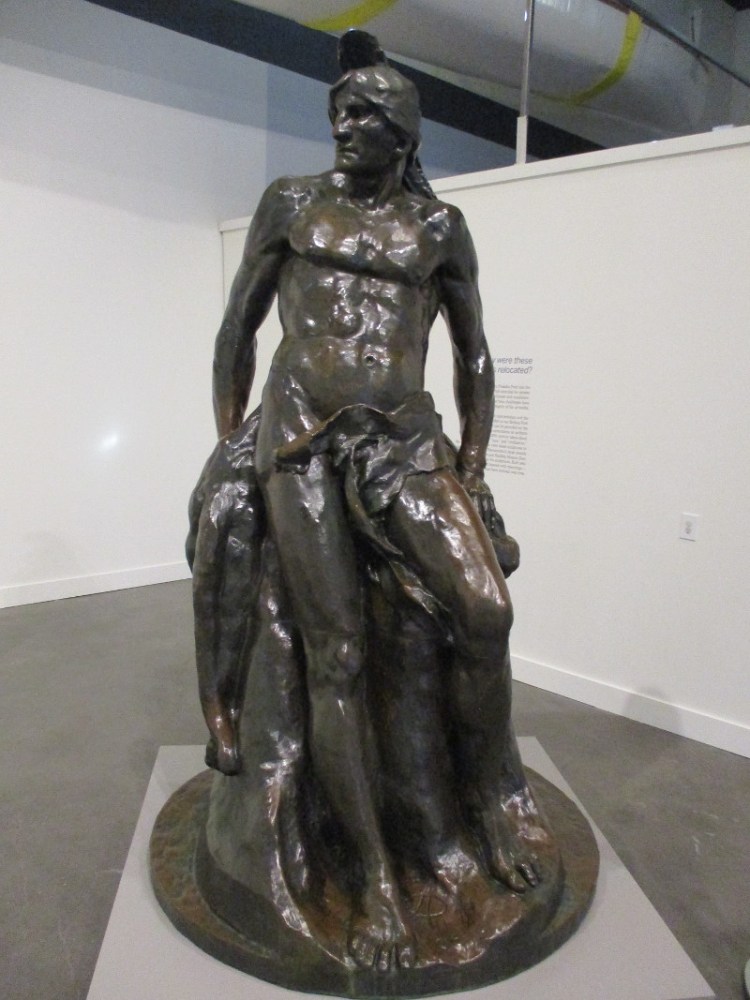
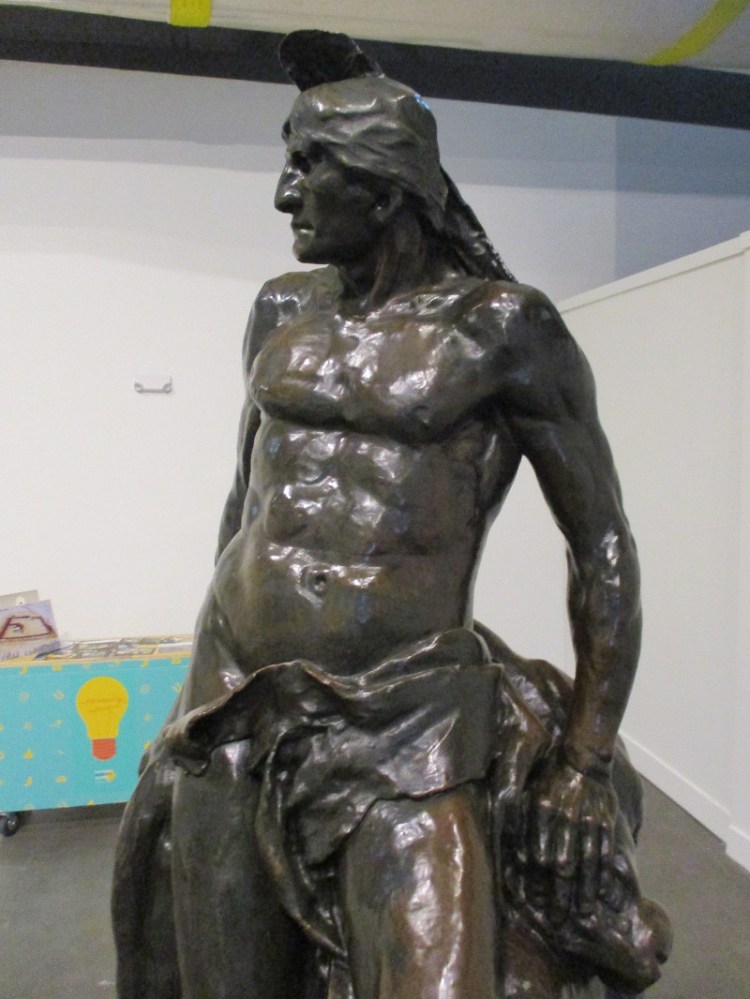
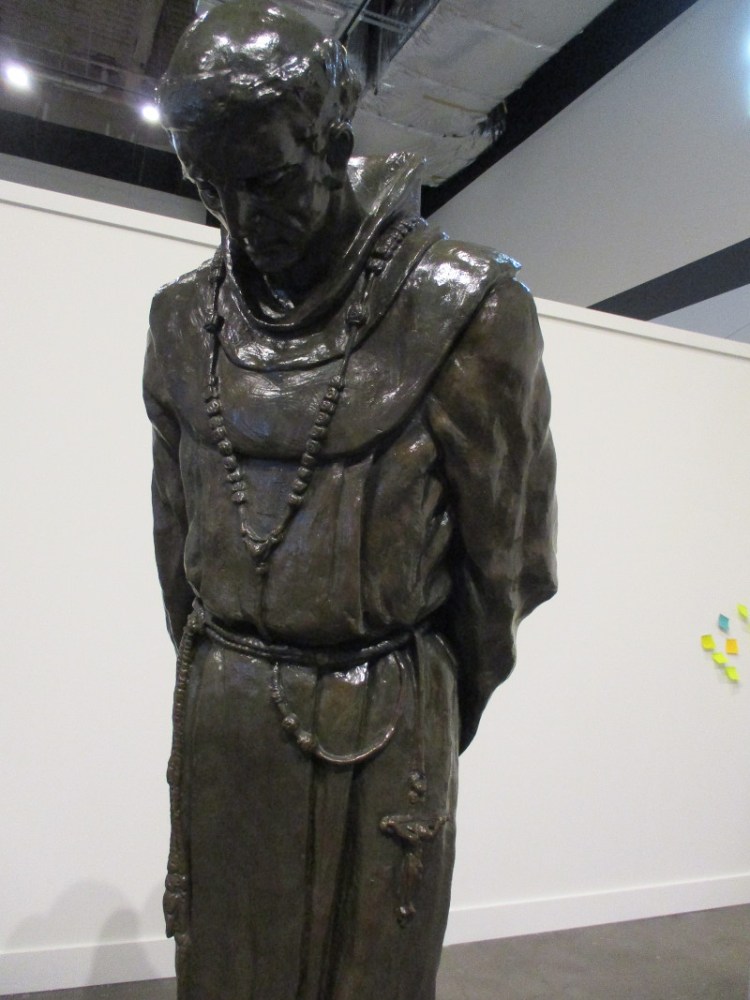
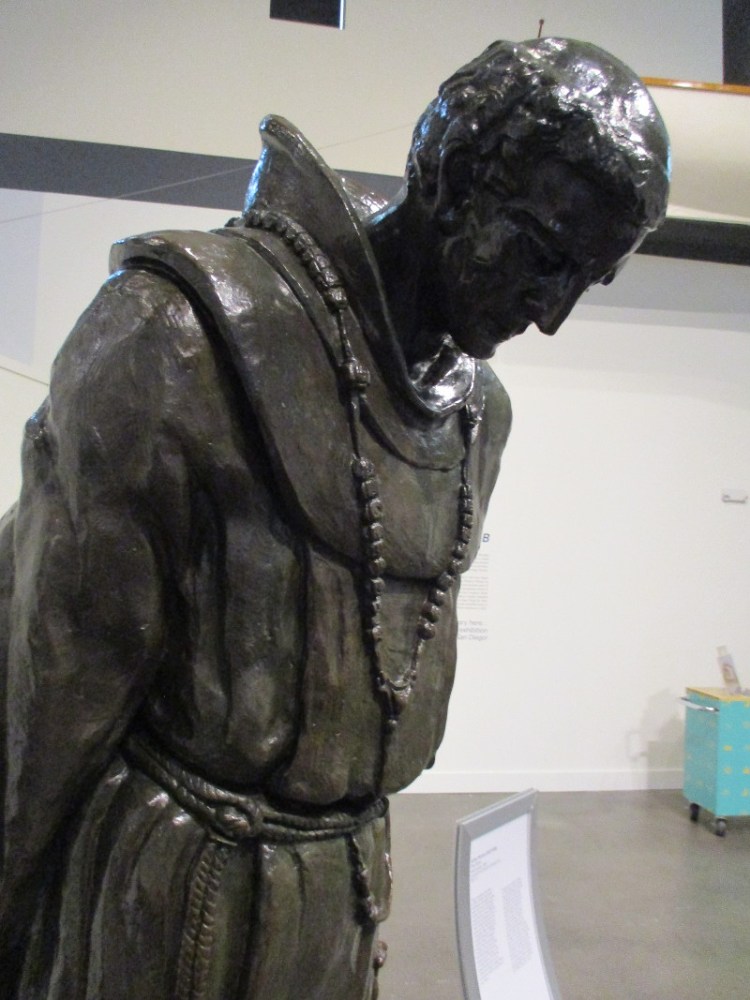
Two remarkable and historically important sculptures were moved recently from Presidio Hill to the San Diego History Center in Balboa Park.
When I visited the History Center today I was surprised to see the two large Arthur Putnam works, because I’d observed them several times in the past during walks through Presidio Park.
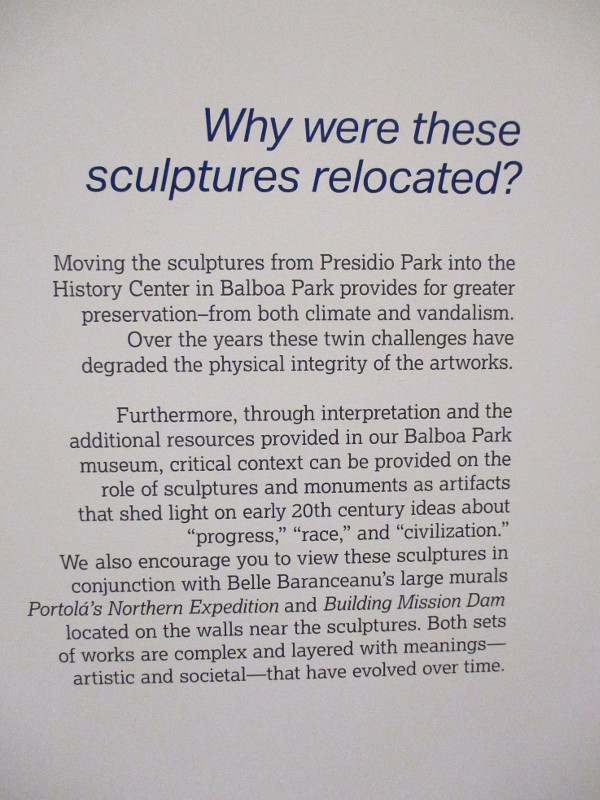
An explanation on the gallery wall explains that The Indian (1904) and The Padre (1908) were moved to protect them from the outdoor elements and vandalism. I learned they will be gallery centerpieces as this section of the San Diego History Center receives additional material. Critical context will be provided for these bronze statues.
If you’d like to see photos of the two sculptures when they stood on Presidio Hill, check out past blog posts here and here.
The first link will take you on a walk from Old Town up to the Serra Museum–a walk I made years ago when Cool San Diego Sights was just getting started.
The second link concerns an Arthur Putnam exhibition at the San Diego Museum of Art. You’ll learn that he was internationally renowned, particularly for his sculptures depicting animals. And he also had an interesting San Diego connection!
…
I live in downtown San Diego and love to walk around with my camera! You can follow Cool San Diego Sights via Facebook or Twitter!
You can easily explore Cool San Diego Sights by using the search box on my blog’s sidebar. Or click a tag! There are thousands upon thousands of photos for you to enjoy!
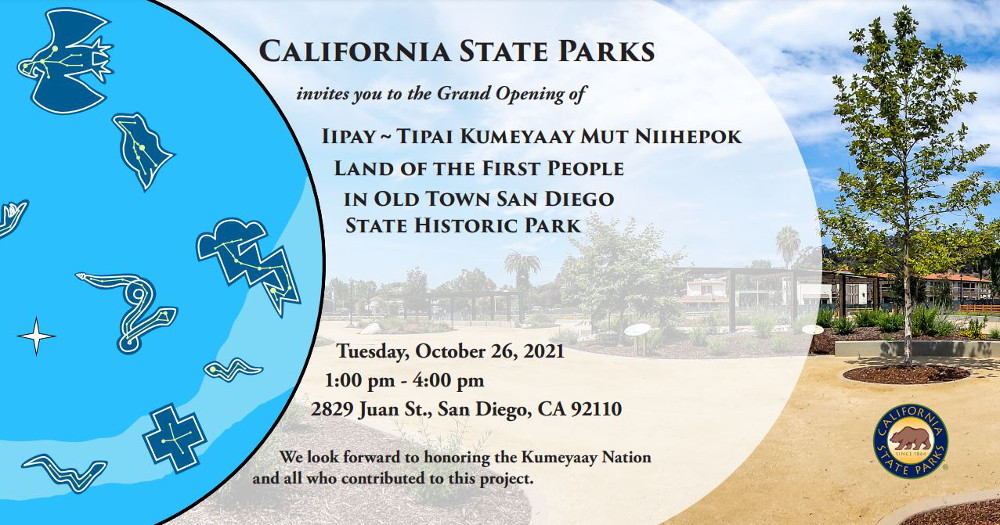
I just received the above information. There will be a Grand Opening of Old Town San Diego State Historic Park’s recently completed expansion!
The new outdoor interpretive area, which I visited yesterday and blogged about here, is called Iipay ~ Tipai Kumeyaay Mut Niihepok, Land of the First People. It’s a beautiful place, with winding walkways and public art and displays concerning the history and culture of the Native American Kumeyaay. These First People have lived in our region for thousands of years, long before European explorers arrived.
The big Grand Opening is scheduled for Tuesday, October 26, 2021, and will take place between 1 pm and 4 pm.
Kumeyaay bird singers will perform during the historic Grand Opening ceremony!
If you plan to go, look for the large park-like space full of trees and native greenery, at the corner of Taylor Street and Juan Street!
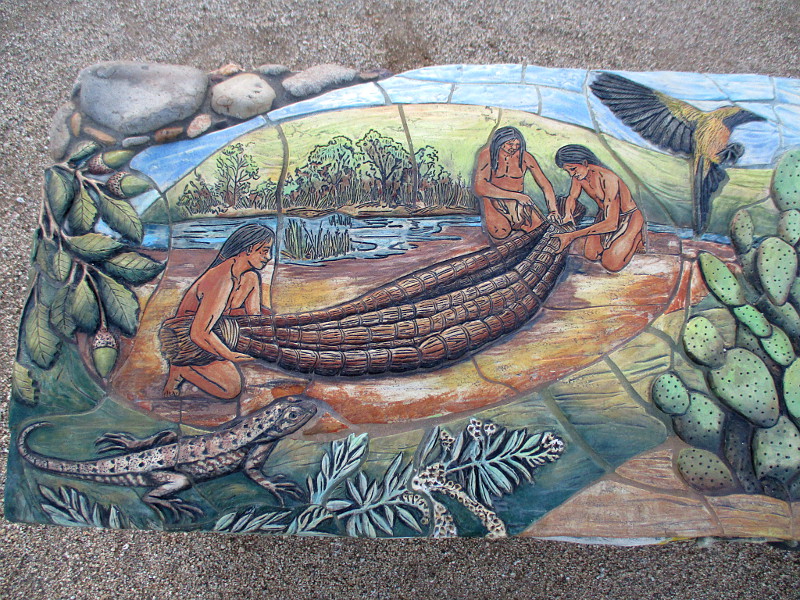
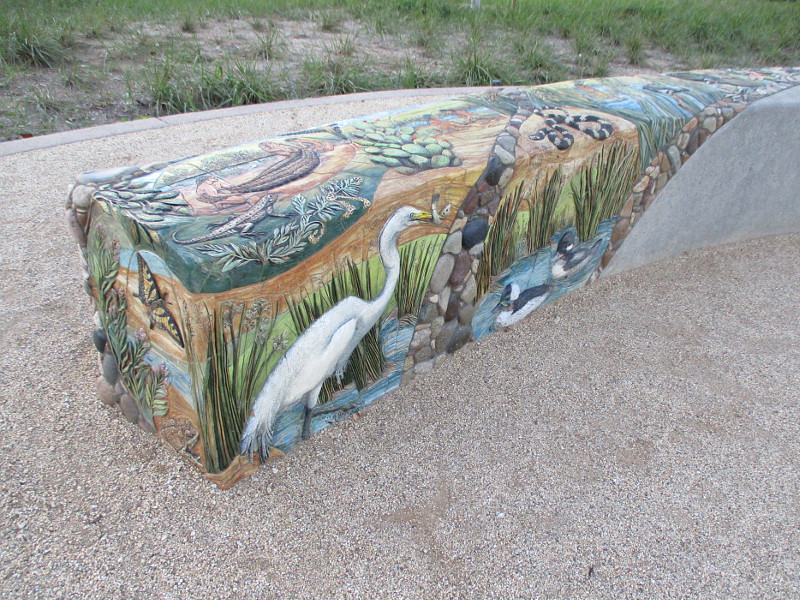
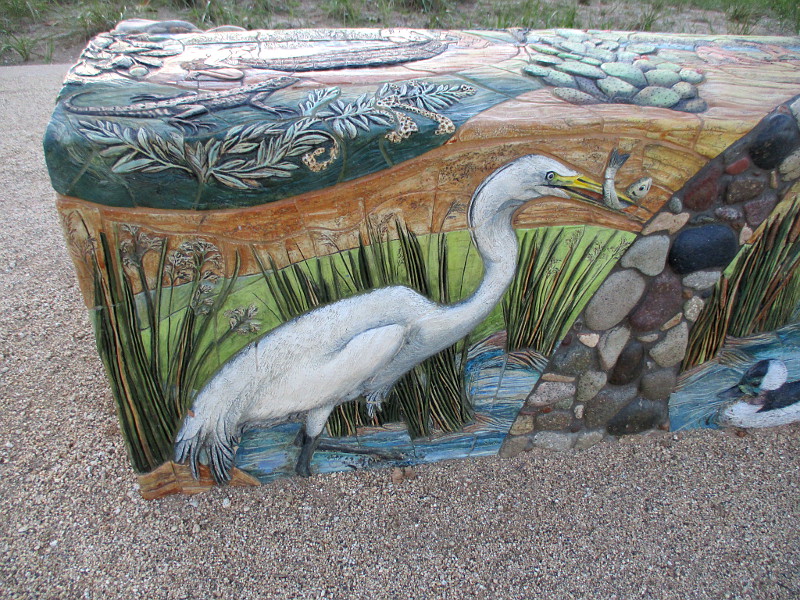
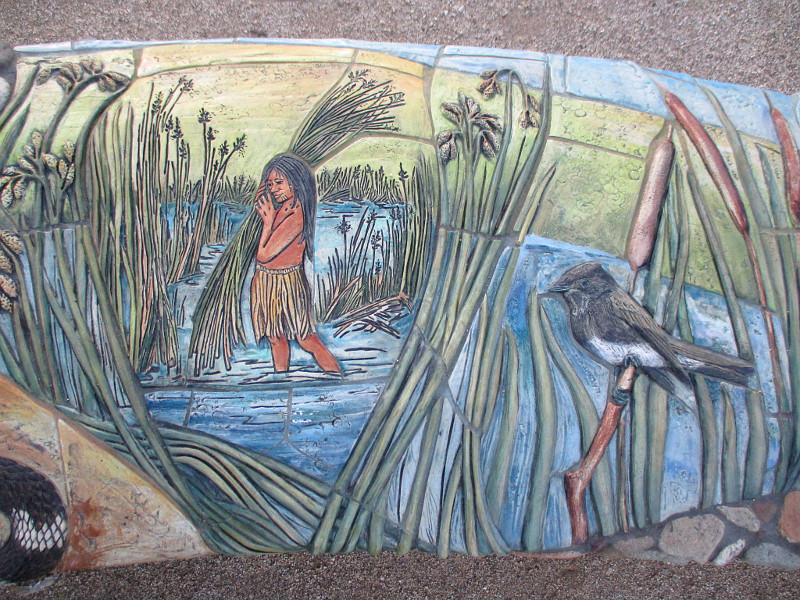
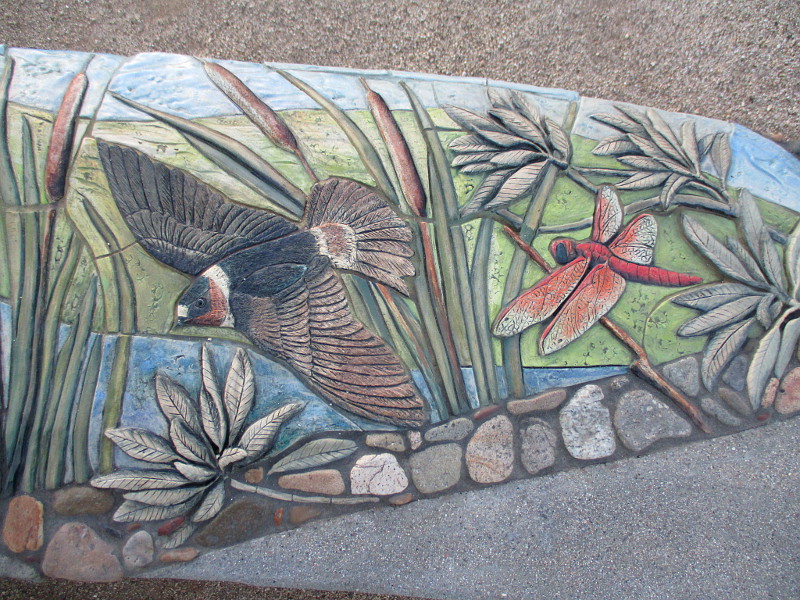
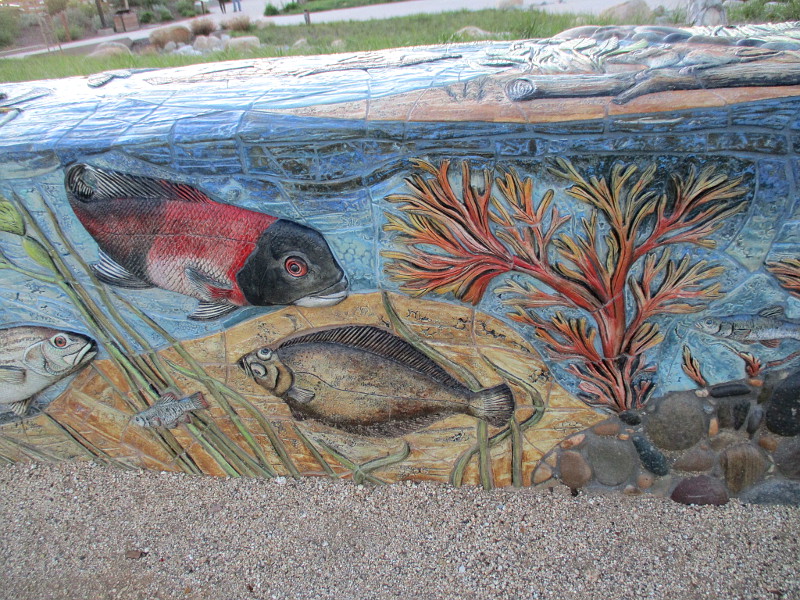
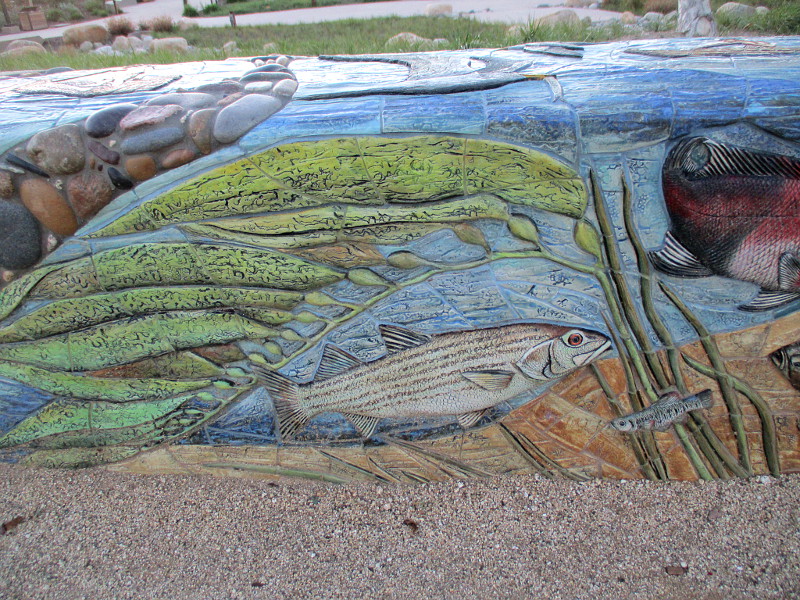
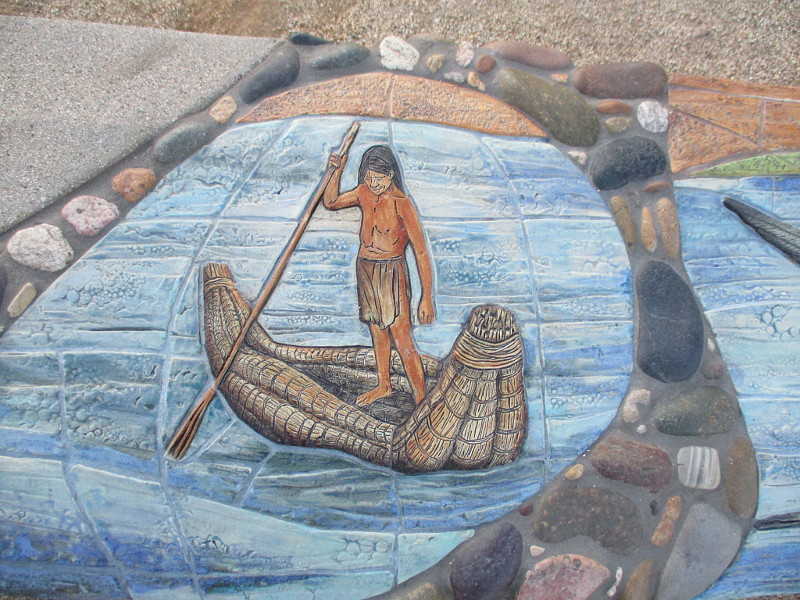
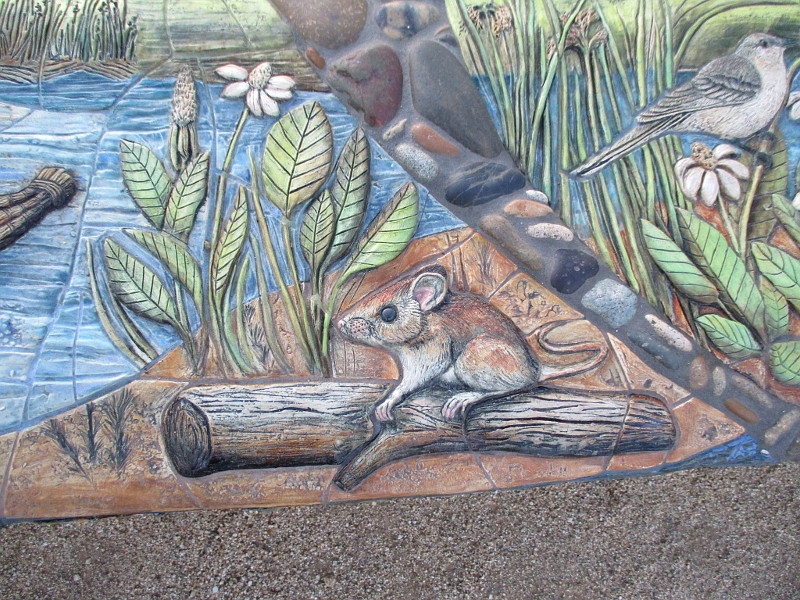
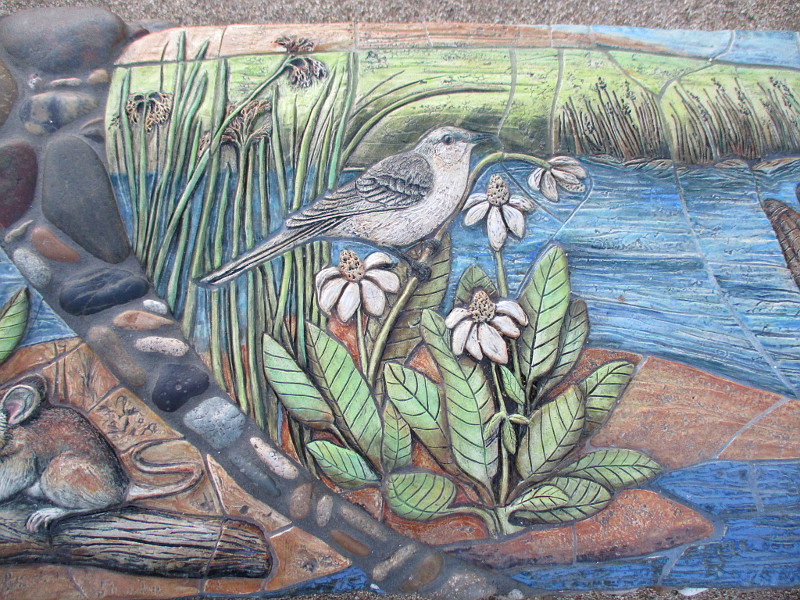
Extraordinary new public art has been unveiled in Old Town San Diego State Historic Park!
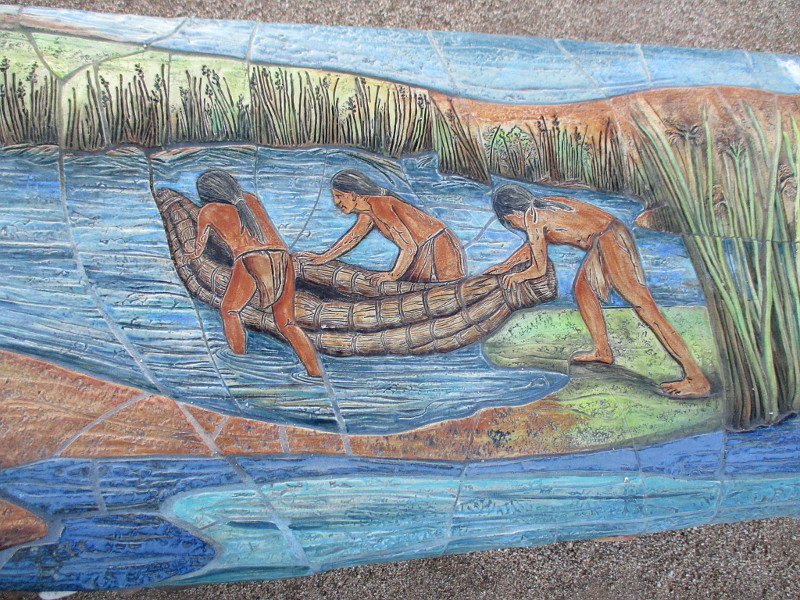
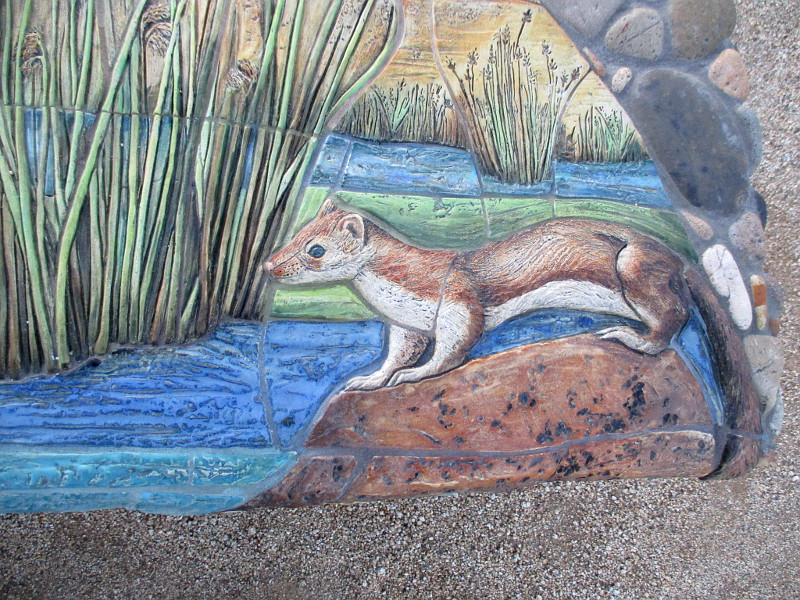
Two benches in the park’s recently opened outdoor expansion, which is called Land of the First People, feature beautiful mosaics that honor the Native American Kumeyaay and the world of nature.
Once you look at the following photographs, you’ll likely agree these ceramic mosaics are exceptional. They were created by local artist Betsy K. Schulz.
The two interpretive benches contain images of the Kumeyaay people in our region, fishing, collecting reeds, paddling boats and living by a river, among birds, fish and other native wildlife.
If you’d like to see more stunning public art around San Diego that was created by Betsy K. Schulz, click here.
These images were captured yesterday evening just before nightfall. I took additional photographs of this newly opened area of Old Town San Diego State Historic Park, and posted them here.
…
I live in downtown San Diego and love to walk around with my camera! You can follow Cool San Diego Sights via Facebook or Twitter!
You can easily explore Cool San Diego Sights by using the search box on my blog’s sidebar. Or click a tag! There are thousands upon thousands of photos for you to enjoy!








































 Cool San Diego Sights!