Important stories from local history are preserved at the Women’s Museum of California.
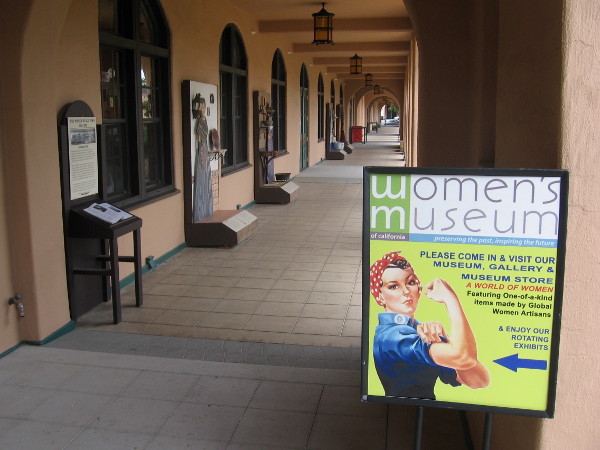
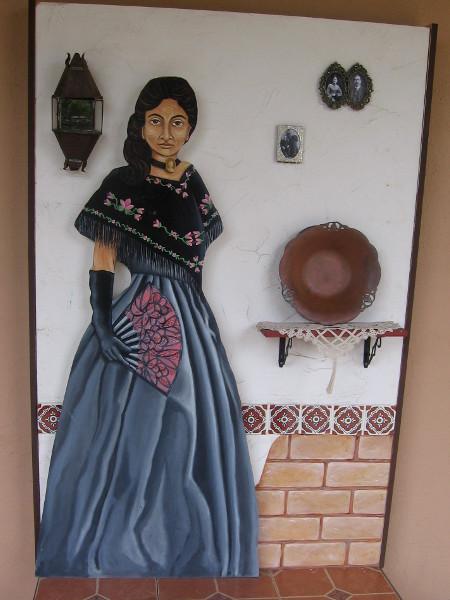
The Women’s Museum of California is one of many cultural attractions that can be enjoyed at Liberty Station in Point Loma. I took some photos of a historical exhibit just outside their front door.
This unique museum was founded by Mary Maschal, a collector of memorabilia and artifacts pertaining to women. The collection has moved to different locations and evolved over the years; today it has grown into an important museum that features art shows, live performances, lectures and other educational events. Its mission is summarized by the slogan: Preserving the past…inspiring the future.
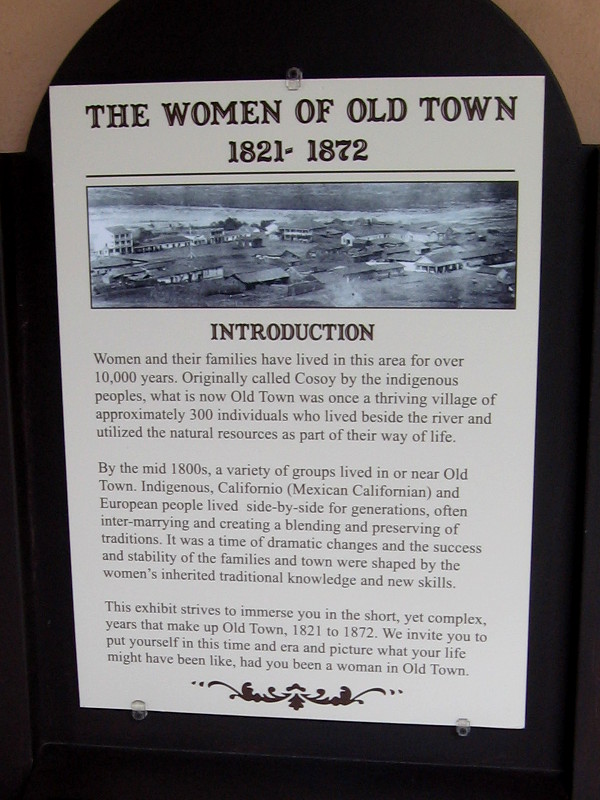
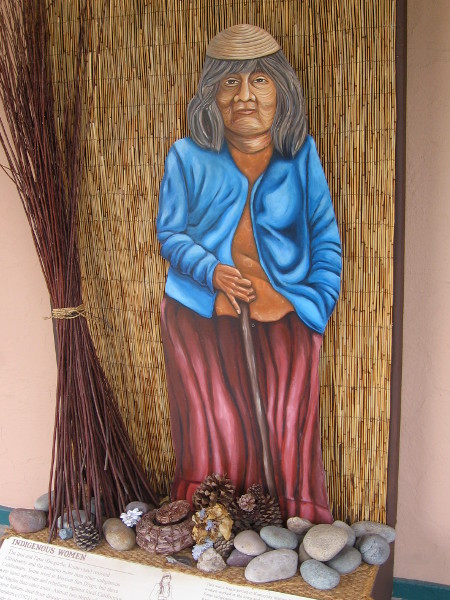
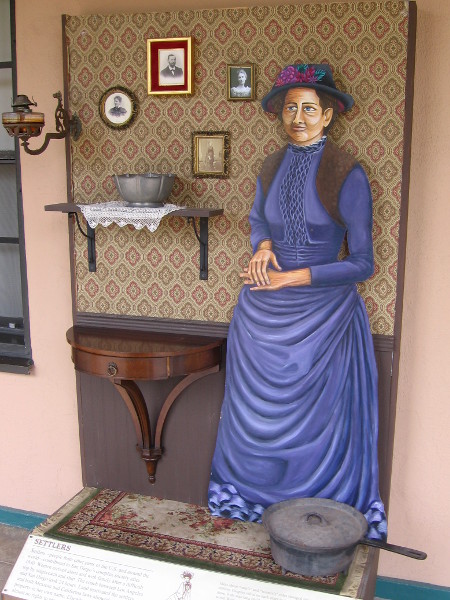
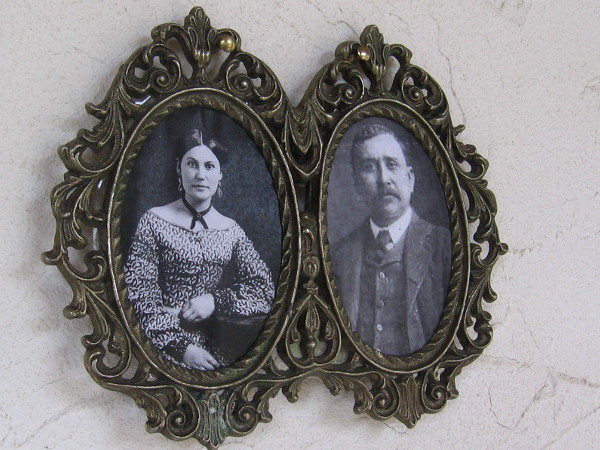
The women of Old Town, 1821-1872. Women and their families have lived in this area, called Cosoy by indigenous people, for over 10,000 years. This exhibit focuses on a short period.The historical experiences and accomplishments of local women are preserved at this unique San Diego museum.The Ipai and Tipai (Diegueño, Kumeyaay) resisted Christianity and the missions more than other indigenous Californians. Moved off their land, the women worked in the town and ranchos.The few women in Old Town had more opportunities to earn money than in the Eastern U.S. They did traditional work: laundry, baking, cooking, sewing, tending to children and livestock.Settlers contributed to San Diego’s complex society after 1830. Women arrived alone and with family after a difficult trip by stagecoach and ship.Californios were a diverse group whose culture created el pueblo San Diego. They were descendants of mixed Spanish and indigenous peoples, often given land grants by Mexico.Old photographs in an artifact help modern San Diegans remember their rugged, fascinating past.
…
To enjoy future posts, you can “like” Cool San Diego Sights on Facebook or follow me on Twitter.
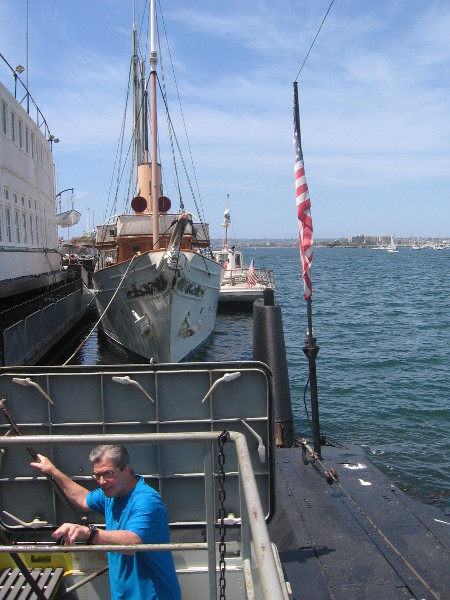
The black sail of submarine USS Dolphin (AGSS-555). The retired research sub is docked next to steam ferry Berkeley of the Maritime Museum of San Diego.
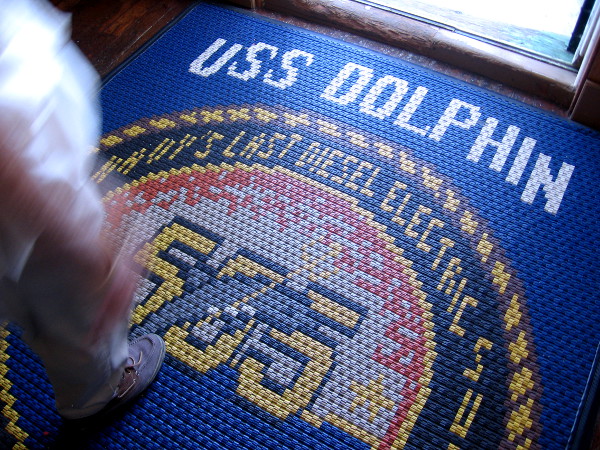
Here come some photographs taken inside the USS Dolphin, the world record deepest diving submarine!
Anyone can tour the Dolphin when visiting the Maritime Museum of San Diego. The museum, located downtown on the waterfront, is home to a world-class collection of unique and historic ships.
I personally know very little about submarines. My descriptions come from various signs and a little searching performed on the internet. If you spot an error or would like to provide some info, please leave a comment at the bottom of this post!
The Maritime Museum of San Diego boasts two submarines in its world-class collection of ships. The USS Dolphin holds the world record for deep diving.Display inside the Berkeley, next to doorway which leads museum visitors outside to the Dolphin.
The above Maritime Museum display includes the following information:
On November 24, 1968, barely two months after commissioning, the USS Dolphin dove to a depth in excess of three thousand feet to become the world’s deepest diving submarine…this record still stands today. The following year, in August 1969, the Dolphin achieved another world record by launching a torpedo from a depth never equaled by another submarine.
Built exclusively for research, Dolphin is responsible for many achievements. Most significant among these is her unique deep diving capability… Employed by both Navy and civilian researchers, she is equipped with an impressive array of instruments that can support multiple missions…. She is currently configured to conduct extensive deep water acoustic research, oceanic survey work, sensor trials, and engineering evaluations.
…With her decommissioning on January 15, 2007, the United States retired its last active diesel-electric submarine.
Second display contains info about the sub’s design and it’s numerous historic achievements.
External mounting pads: 6 port, 6 starboard, forward and aft of sail
Crew compliment: 3 officers, 18 enlisted, 4 scientists (46 crew, all are not deployed)
Operational endurance: Over 15 days (for long deployments, Dolphin can be towed at 9-10 knots)
ACHIEVEMENTS AND CONTRIBUTIONS
First successful submarine-to-aircraft optical communication
Development of a Laser Imaging system of photographic clarity
Development of an Extreme Low Frequency (ELF) antenna
Evaluation of various non-acoustic Anti-Submarine Warfare techniques
Evaluation of various “low probability of interception” active sonars
First submarine launch of a mobile submarine simulator (MOSS) system
First successful submarine test of BQS-15 sonar system
Development of a highly accurate towed body position monitoring system
Development of a highly accurate target management system
Evaluation of a possible “fifth force of nature”
First successful submarine-to-aircraft two-way laser communication
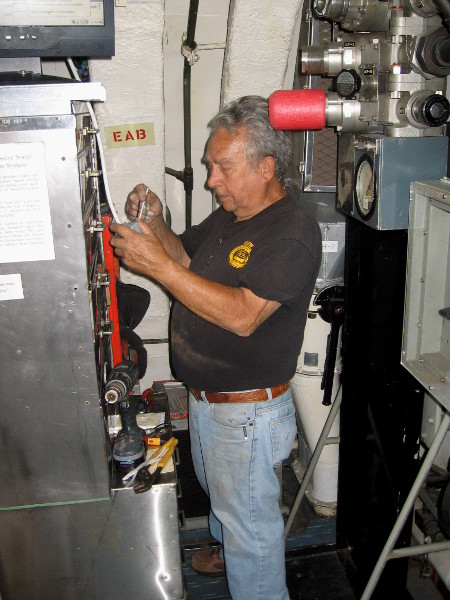
A museum visitor gets ready to walk outside to a very cool submarine.Walking along the deck to forward end of the submarine. The tower-like sail contains the bridge, periscope and communications masts.This forward hatch (and the rear one) were cut into the hull so museum visitors could easily walk through the sub’s length. Originally there was one hatch, at the sail.An electrician volunteer, Ed, at work just inside the USS Dolphin. He told me several stories from his days serving on submarines.A sign inside the underwater research vessel provides answers to a few common questions.
This sign inside the submarine answers some common questions and includes the following fascinating facts:
Dolphin’s hull material is HY-80 steel…her hull is a ring-stiffened cylinder without pressure bulkheads (if she has a leak the whole boat will flood)…
When she had her torpedo tube installed, Dolphin could carry four torpedoes… After initial tests and the launch of a torpedo in 1969 from the deepest depth ever recorded, Dolphin was refitted for other research purposes, and never carried torpedoes again.
There are no visual viewing ports in this submarine…. Dolphin did carry imaging electronics for observing the bottom.
Dolphin did not have any claws for picking items off the seafloor as she was restricted to a minimum altitude of fifty feet above the bottom. One experiment launched an ROV (remote operated vehicle) with power and communication cable attached to Dolphin while submerged…
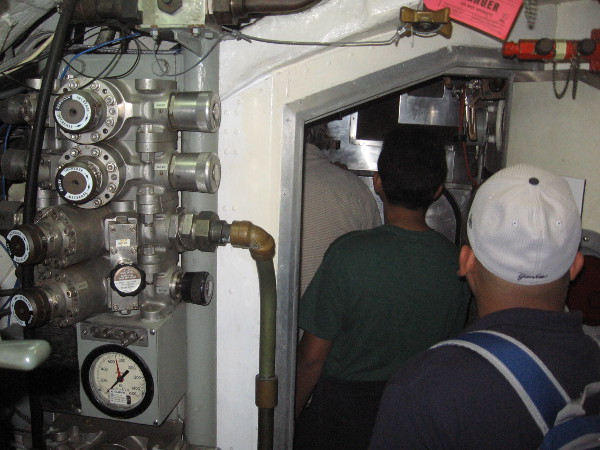
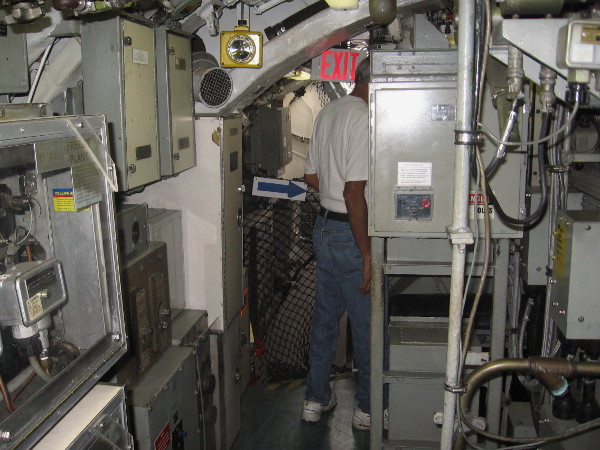
Starting along the very narrow main hallway. This unusual sub contains no compartments. To the left one can see a reverse osmosis water filtration system.Red pyro locker used to safely house signal flares.Those crew bunks on the left don’t look terribly spacious or comfortable.There are more pipes, wires, gauges, valves and gizmos than you can shake a stick at.A group of curious visitors is entering the amazing Control Room, near the center of the USS Dolphin.The periscope works and tourists can view San Diego Bay and downtown buildings with perfect clarity.Folks peer down through floor at Pump Room below the Control Room, where a hero defied death to save his crewmates.
On May 21, 2002, the room below was the center of heroic action to save the submarine and crew. On that day, Dolphin was conducting training exercises about 100 miles off the San Diego coastline when a torpedo shield door gasket failed, and water began to flood the submarine…
Chief Machinist’s Mate (SW) John D. Wise Jr., realizing what needed to be done, dove into the 57 degree water of the flooded pump room…with less than a foot of breathable space…he aligned the seawater valves and then remained in the pump room for more than 90 minutes…
For his courageous efforts, Chief Wise was awarded the Navy and Marine Corps Medal.
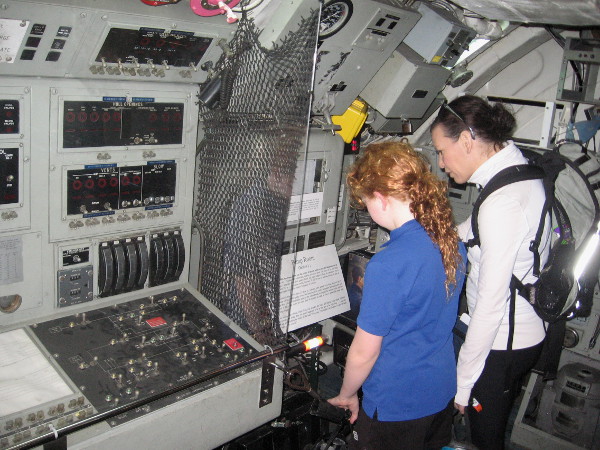
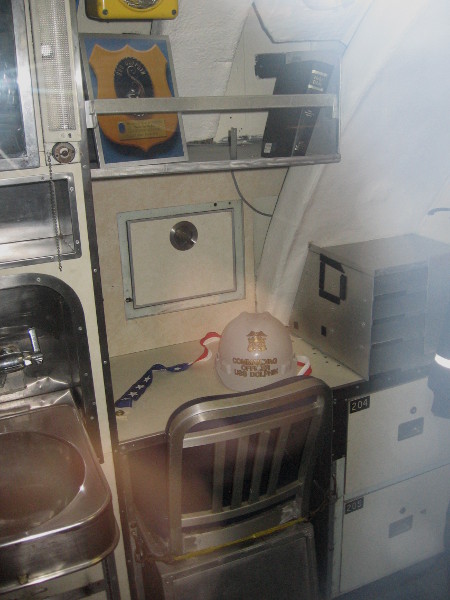
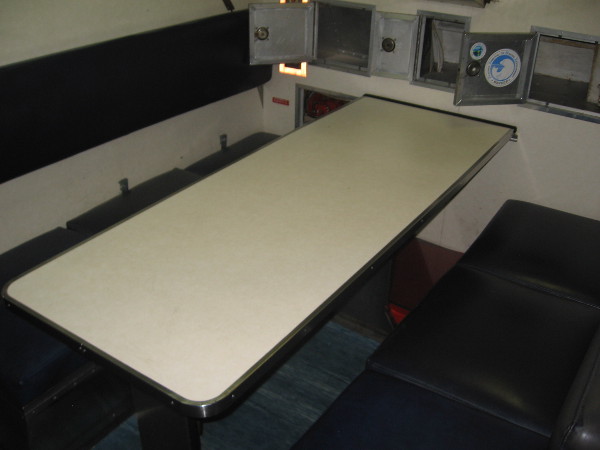
A panel with many complicated switches. In the Control Room, one can monitor the main storage batteries, generators and propulsion system.The wheel used to pilot the Dolphin. One drove using only instruments, including gauges that display rise/dive, ordered depth, system depth, cavitation, turns, dummy log, depth to keel.Photo of tiny Officers’ Quarters was through glass, which produced some glare.This is the first toilet I’ve photographed for my blog. Hopefully the last!Photos on wall of tiny mess area show what life was like aboard Dolphin.This is where food was prepared.This dining table was constantly in use. Not much to see in the way of decor.Continuing down the main hallway toward the rear of the submarine. Don’t ask me what all this stuff is.Apparently this is some sort of freezer.You get an idea of what it’s like to carefully walk through the narrow submarine.High-Pressure Air Compressor Controllers among a jumble of pipes and valves.Up a ladder and back outside into the bright San Diego sunshine!
…
To enjoy future posts, you can “like” Cool San Diego Sights on Facebook, or follow me on Twitter.
From the South Bay to the World Series, a very special exhibit at the New Americans Museum.
It’s been over five years already? Time flies!
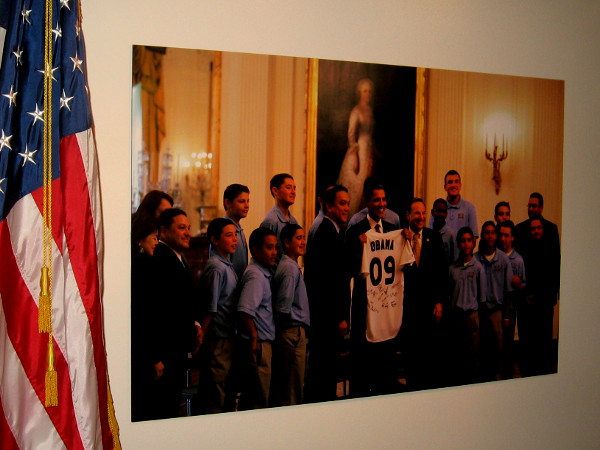
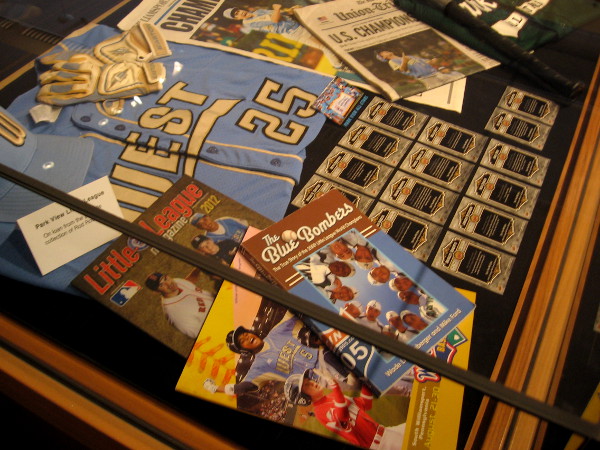
I can still remember the excitement throughout San Diego as a bunch of local kids stole our hearts and battled their way to become Little League World Series Champions in 2009!
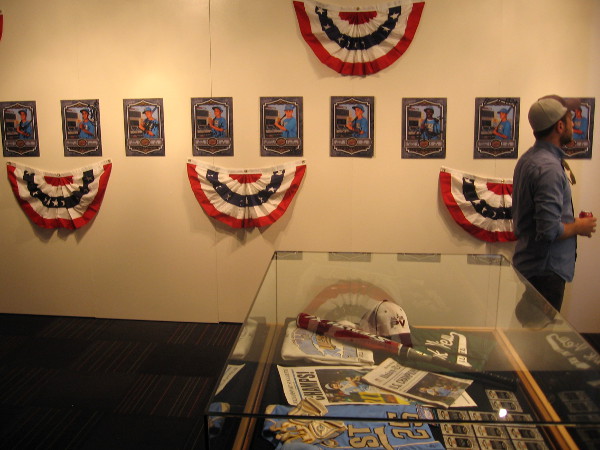
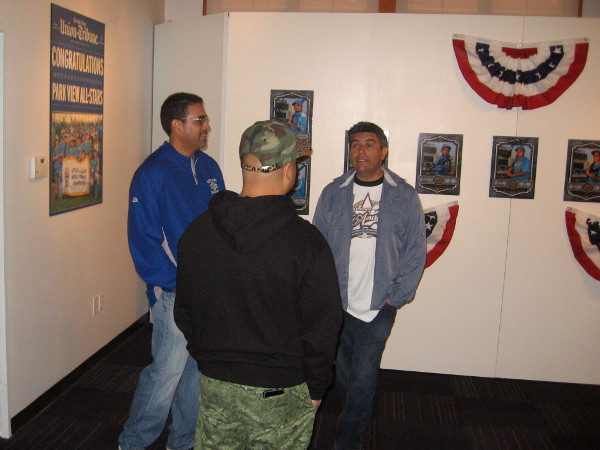
During my visit to the New Americans Museum today, I checked out a special exhibit which relives and commemorates the historic victory. The Park View team, based in Chula Vista, California (in San Diego’s South Bay not far from the Mexican border), scored a dramatic, storybook 6-3 come-from-behind victory over Chinese Taipei.
Super cool!
San Diegans rooted for our local kids as they battled the world’s best baseball teams.Photo shows President Obama honoring the 2009 Little League World Series champs.Memorabilia on display in San Diego museum recalls the historic victory of young Park View baseball players.Park View Little League 2009 coach Ric Ramirez talks with visitors at New Americans Museum exhibit.Kids from San Diego’s proud Chula Vista community won the 2009 Little League World Series in Williamsport, Pennsylvania.
…
To enjoy future posts, you can “like” Cool San Diego Sights on Facebook or follow me on Twitter.
The New Americans Museum at NTC Liberty Station opens an important exhibit titled Becoming All-American: Diversity, Inclusion, and Breaking Barriers in Major League Baseball.
Today I experienced something undeniably cool. The New Americans Museum, located at NTC Liberty Station, held Becoming All-American Family Day. The fun event celebrated the opening of the museum’s new exhibit, Becoming All-American: Diversity, Inclusion & Breaking Barriers in Major League Baseball.
In keeping with the small museum’s American immigration and diversity theme, this inspiring exhibit showcases Major League Baseball players who broke through racial barriers during the long history of the quintessentially American sport.
If you live in San Diego and you’re a fan of history or baseball, make sure to check it out! You might also visit the many other interesting museums nearby! Liberty Station, the redeveloped site of the old Naval Training Center, is brimming with flowers, sunshine, fountains, shops, culture and history.
Becoming All-American: Diversity, Inclusion, and Breaking Barriers in Major League Baseball runs April 24 to July 5.
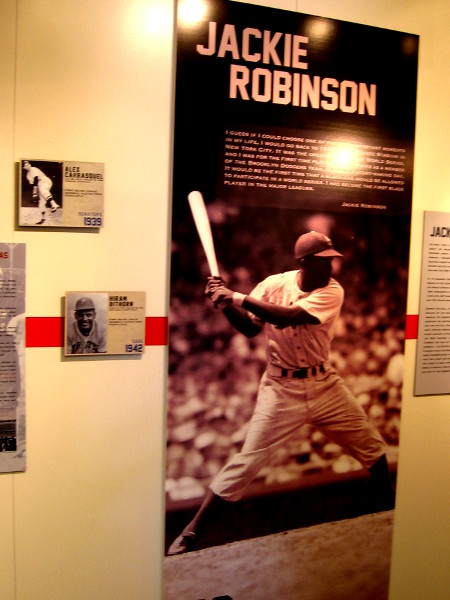
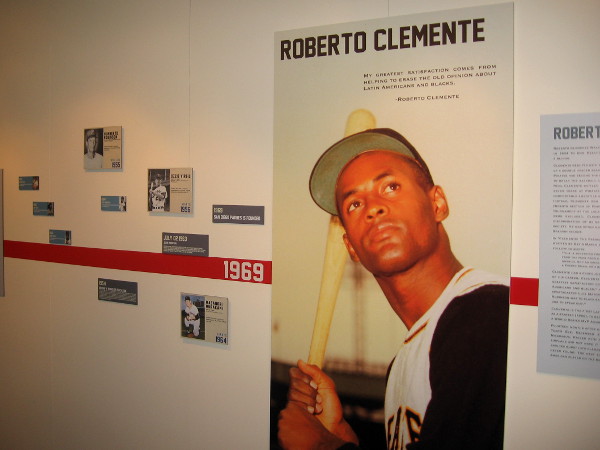
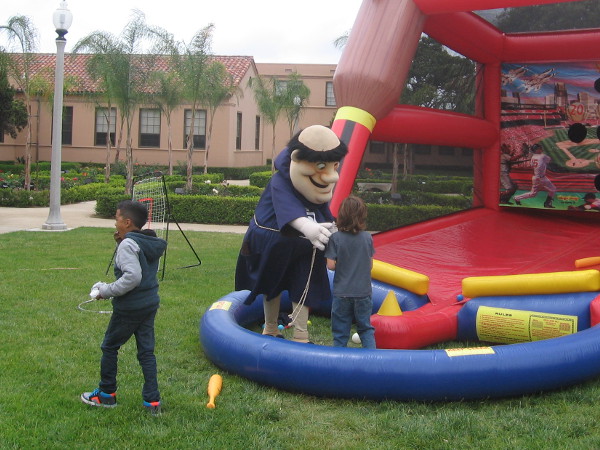
The New Americans Museum is located at the beautifully redeveloped old Naval Training Center in Point Loma.Becoming All-American Family Day was held to celebrate a fascinating new exhibit.Cool displays in a unique immigrant-themed museum showcase diverse players through the history of professional American baseball.Colorful painting of Gene Locklear, Native American of Lumbee Tribe of North Carolina. He played for several teams, including the San Diego Padres.A quote from Gene Locklear. “Education, that’s the only way it’s going to change…”Black, white…and shades of gray. In American society, Jews, Irish, Latinos and Asians were sometimes considered white…and sometimes not.Museum display honors the legacy of Roberto Clemente with his quote. “My greatest satisfaction comes from helping to erase the old opinion about Latin Americans and Blacks.”Timeline on wall shows notable baseball players through history, eventually shattering racial stereotypes and barriers.Harry Kingman in 1914, the only Major League player to have been born in China.Putting on a baseball uniform was like wearing the American flag. Japanese baseball player and manager Kenichi Zenimura, placed in internment camp during WWII, organized a league.Museum visitor reads display about Ted Williams, American baseball legend who grew up in San Diego. He had Welsh, Irish, Mexican, Basque, Russian and Native American roots!Padres baseball mascot the Swinging Friar plays with kids at the batting inflatable outside during the museum’s family event.The wisdom of courageous hero Jackie Robinson. “A life is not important except in the impact it has on other lives.”
…
To enjoy future posts, you can “like” Cool San Diego Sights on Facebook or follow me on Twitter.
Yarns dyed many different colors out on display in San Diego’s Old Town.
One more quick post from today’s stroll through Old Town San Diego State Historic Park. After going on the free walking tour, which I do every few years to jiggle my memory, I observed that a couple of unique exhibits were out on public display. One concerned yarn, the other twine. A “string” of coincidence too good not to blog about!
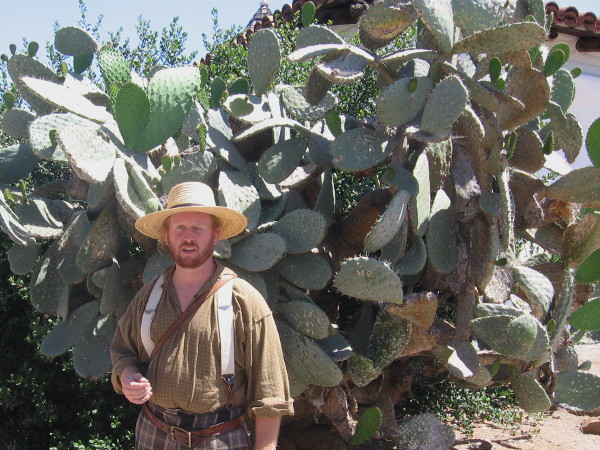
During the tour, our knowledgeable guide explained how red dye in the olden days was derived from a particular insect–the cochineal. The cochineal is a beetle that can be found on prickly pears, a cactus which grows abundantly in arid San Diego. While we watched, the guide plucked one from a prickly pear next to the Casa de Estudillo, then crushed it. His fingers turned bright purple from the beetle juice! (He explained the British Red Coats dyed their uniforms with cochineal, but Purple Coats didn’t sound quite so fierce.)
Tour guide ready to produce some reddish dye.
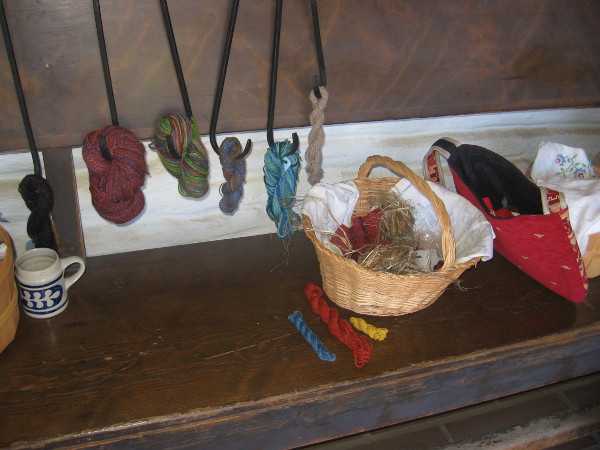
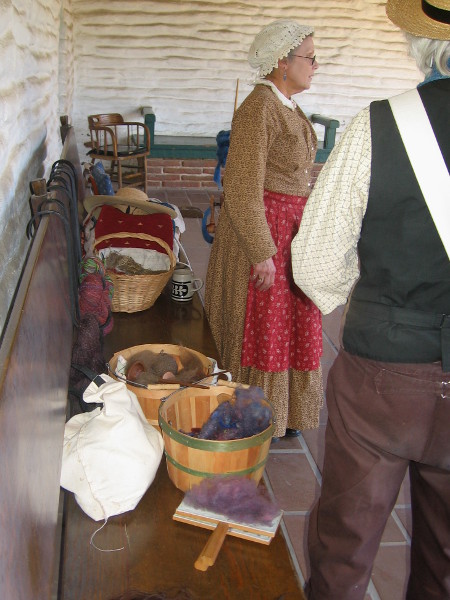
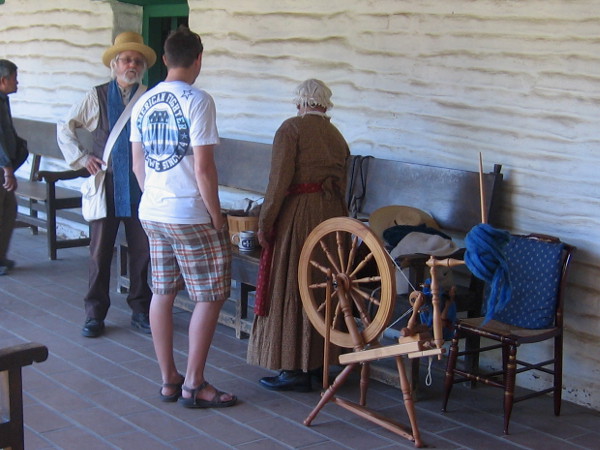
After the tour ended, two volunteers inside the Casa de Estudillo were demonstrating how yarn used to be made. To dye the fibers, both cochineal and indigo dye were commonly used. A spinning wheel served to demonstrate the hard work required to live comfortably before our more modern conveniences.
La Casa de Estudillo, an elegant adobe house built in 1827 by a wealthy Californio family that owned several large ranchos in Southern California.Volunteers in costume with baskets of color. They told me some yarns concerning San Diego’s complex, fascinating history.State Park volunteers describe life in early San Diego, when spinning wheels were common household objects.
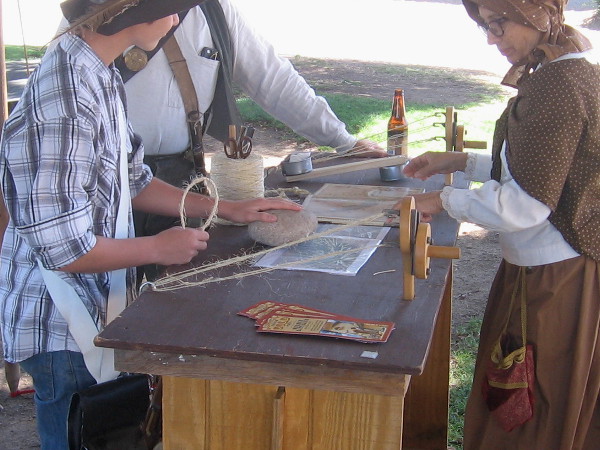
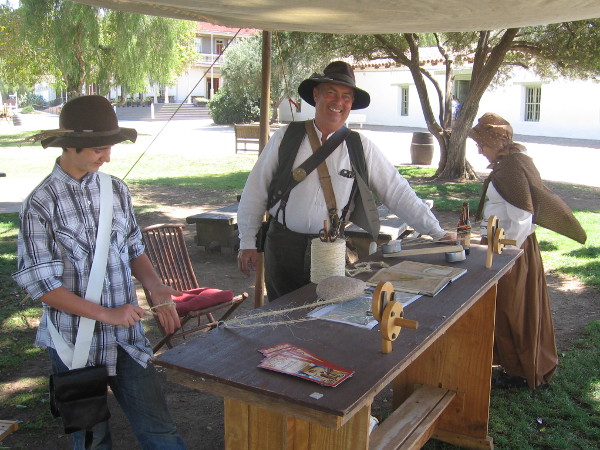
Out in one corner of Old Town’s big central plaza, some friendly Mormons were demonstrating the making of twine. Like the native prickly pear, yucca plants have always been plentiful in San Diego’s desert-like environment. The tough fibers in the leaves, once extracted, are dried and then twisted using a simple mechanism to create primitive but very practical twine or rope.
Making twine involved twisting fibers found in native yucca plants.Mormon guy smiles as he exhibits rope-making in Old Town. The Mormon Battalion was one of many diverse participants in San Diego’s early history.
Someday I’ll probably blog about the amazing, hour-long Old Town walking tour. I need some more photos and many more notes before I undertake that, however!
…
To enjoy future posts, you can “like” Cool San Diego Sights on Facebook or follow me on Twitter.
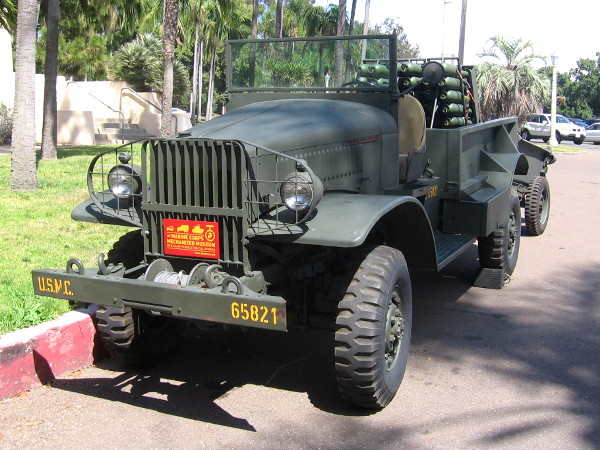
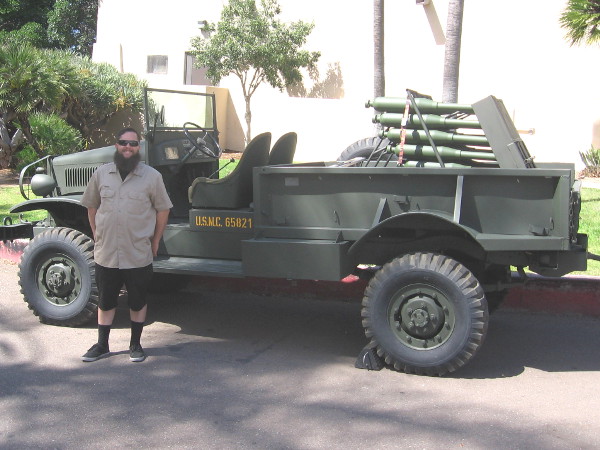
International M-2-4 Rocket Truck used in the Pacific during World War II.
An interesting new exhibit will open this coming Friday, April 3 at the San Diego Automotive Museum. Part of this year’s Centennial Celebration, the new exhibit is called Balboa Park: The War Years. According to one website: “The (auto museum) floor will be transformed into a USO show venue to tell the story of the impact that war had on San Diego and the entire West Coast.” As part of the museum’s general admission, visitors will be able to check out a dozen-or-so 1940s period vehicles used by the American military during the Second World War.
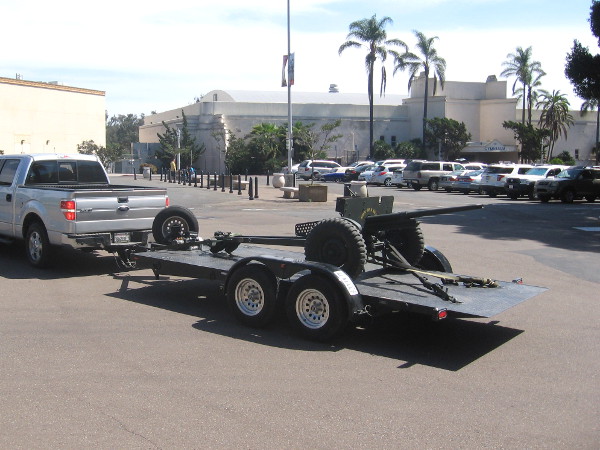
I was lucky to experience a small taste of the exhibit this afternoon. A rocket launching truck and anti-tank gun were waiting to be rolled from the outside parking lot into the museum during my Sunday walk through Balboa Park.
Here are several pics…
This historical military vehicle comes from the Marine Corps Mechanized Museum at Camp Pendleton north of San Diego.One of many interesting vehicles arriving for the upcoming Balboa Park: The War Years exhibit at the San Diego Automotive Museum.US WW2 37mm M3 Anti-Tank Gun backing up to the museum’s big side door!
(After doing some searching on the internet, I’m pretty sure I have the above caption correct. If I don’t, leave a comment!)
Cool guy from San Diego Automotive Museum smiles for the camera!
…
To enjoy future posts, you can “like” Cool San Diego Sights on Facebook or follow me on Twitter.
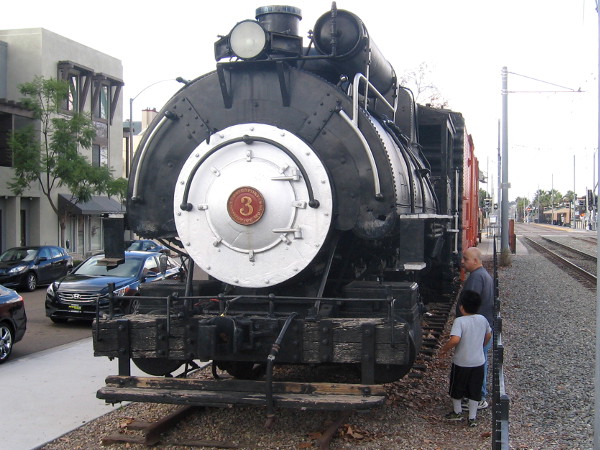
Dad and son check out old steam locomotive on display at La Mesa Depot Museum.
I’ve driven past the La Mesa Depot Museum many times over the years, but have never stopped to check it out. Today I remedied that very unfortunate situation!
Here’s a ton of cool pics. The small display train and historic railroad depot are found along Spring Street near the center of La Mesa, in San Diego’s sunny East County. I walked from south to north with my camera.
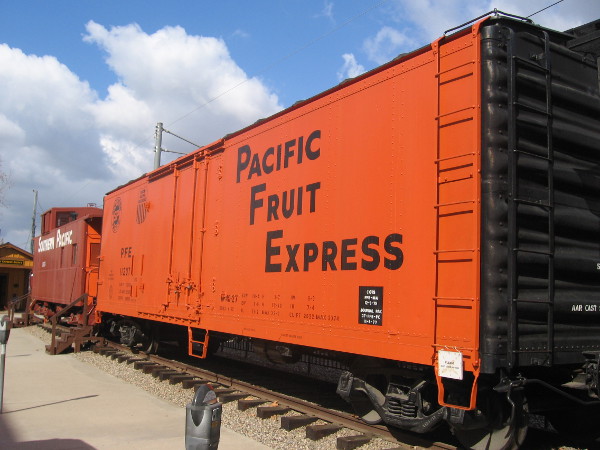
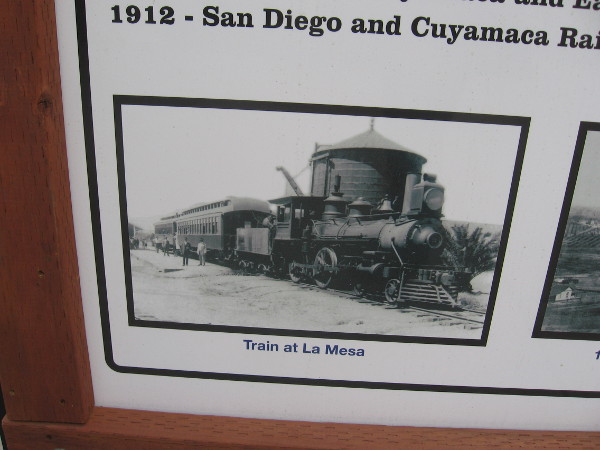
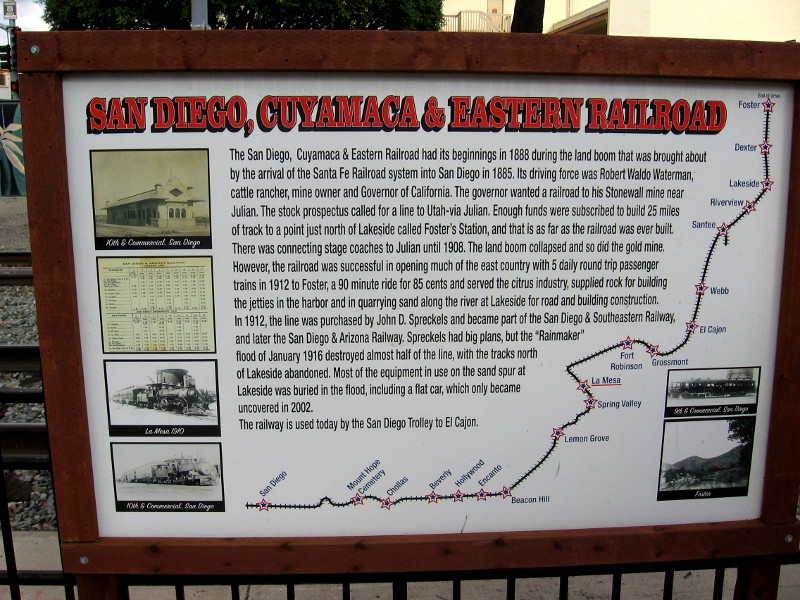
A friendly volunteer told me a little bit about the locomotive, reefer (refrigerator) car and caboose on exhibit, plus facts about the old La Mesa depot and San Diego and Cuyamaca Eastern Railway line. The depot is La Mesa’s oldest building and the only surviving San Diego and Cuyamaca Railway Station. Over the years it has experienced a colorful history, serving as an antique store and a worm farm! Please refer to the interesting signs, and my captions. Hopefully you get an idea of how awesome this place is!
The La Mesa Depot Museum is operated by the Pacific Southwest Railway Museum, which displays many old trains in Campo, an hour’s drive east of San Diego near Mexico. I went there with my family when I was very young and took a fun train ride. I plan on going again one day!
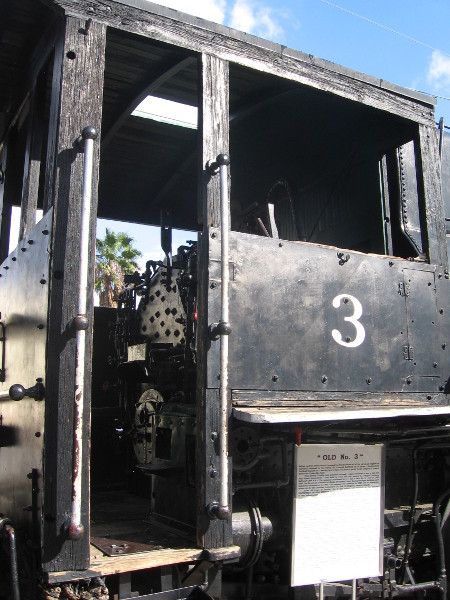
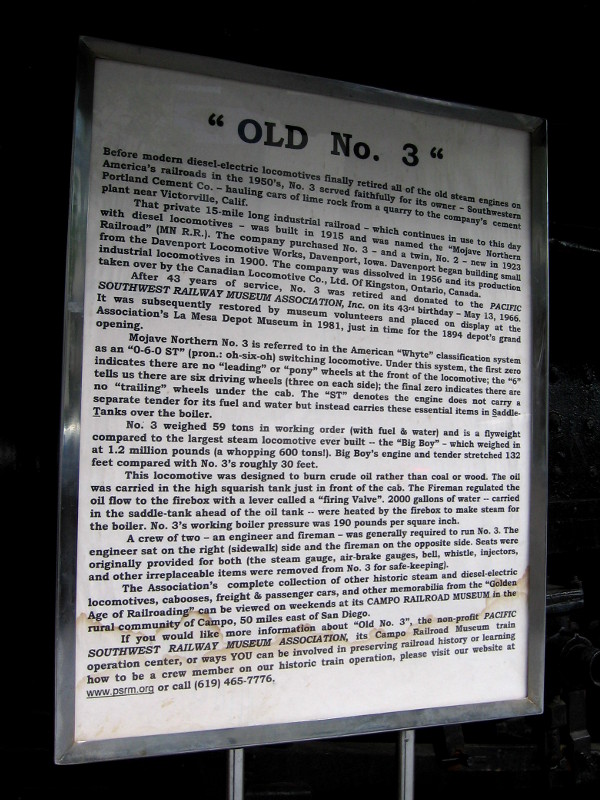
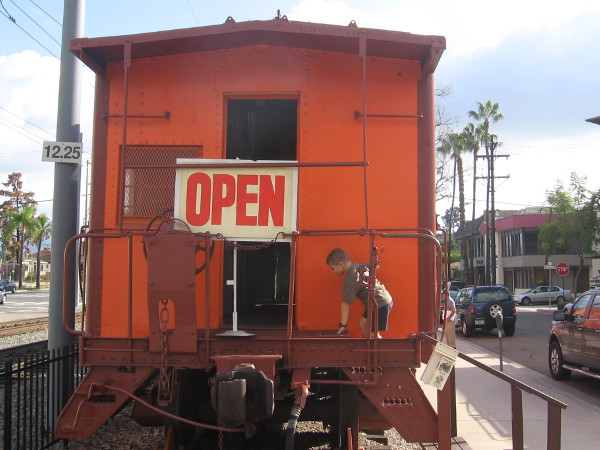
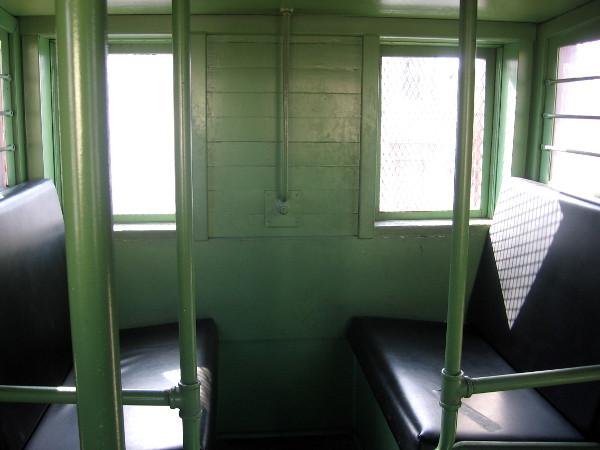
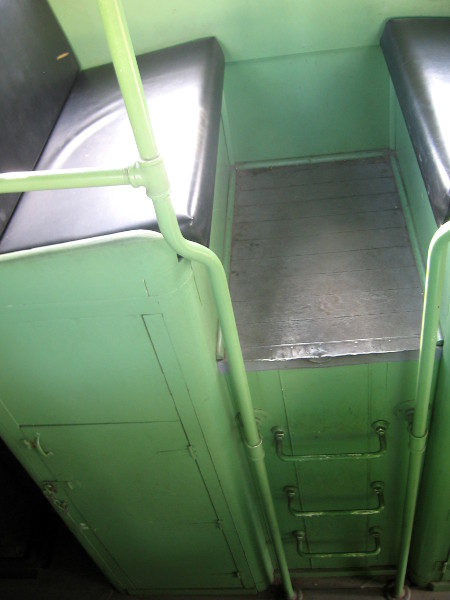
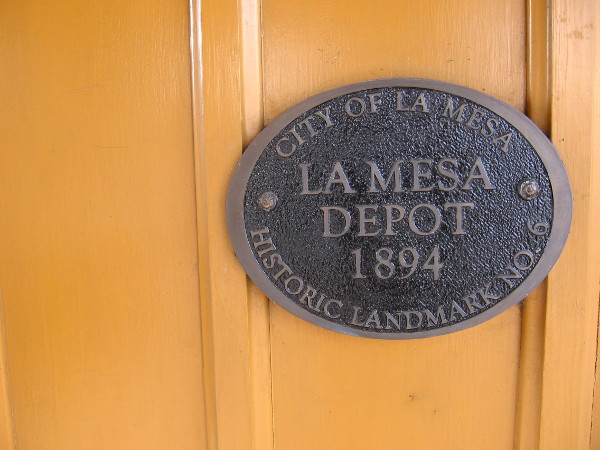
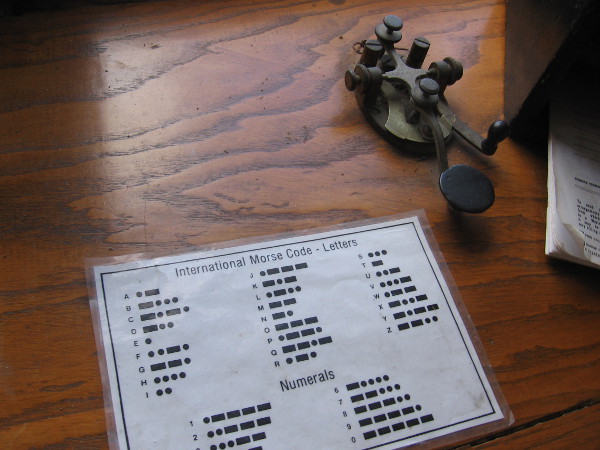
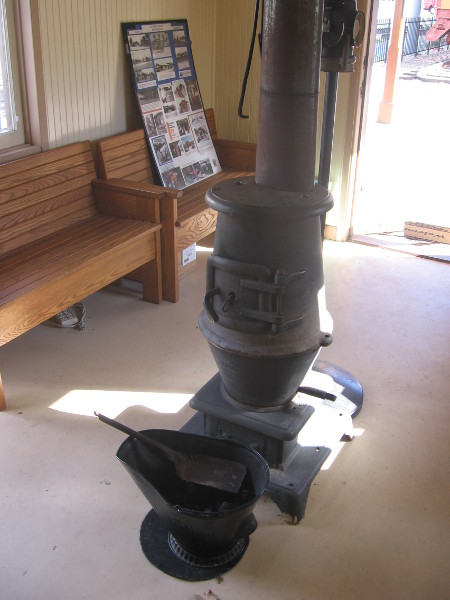
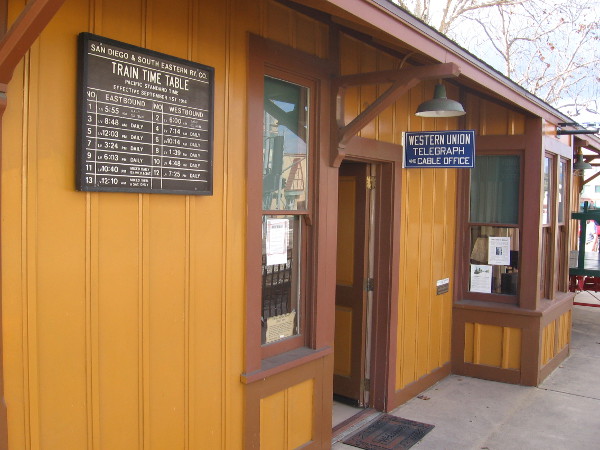
Locomotive was donated after 43 years of service to the Pacific Southwest Railway Museum Association.Looking up into door of steam locomotive Mojave Northern Railroad #3.Old No. 3 originally hauled lime from a quarry near Victorville, California.Part of the complex machinery and controls in the steam locomotive’s cab.Pacific Fruit Express reefer car on display at old train depot in La Mesa, California.Southern Pacific Railroad caboose can be boarded free by visitors on Saturdays, 1-4 pm.I saw a bunch of people during my short visit. There were many excited kids!Entering the caboose, to check out what life was like working on the railroad.The conductor had high windows to see around the train during operation.A freight train’s conductor or crew could sit up here to see in every direction.That’s quite a climb, even for a tall guy like me!The small La Mesa depot sits near tracks now used by the San Diego Trolley Orange Line.The depot opened in 1894, and this 44-star flag would’ve flown above it.Information sign outlines the early history of La Mesa’s train depot.Historical photograph of a train stopping at La Mesa.In the early 20th century the depot was sold and moved on various occasions.McKeen Car at the La Mesa Depot.This very small building contains lots of cool stuff!City of La Mesa Historic Landmark No. 6 on side of 1894 train depot.Ticket office in depot contains various old telephones and a telegraph.The telegraph key still works!Telegraphic messages were received here!Looking out through ticket window at the tiny train depot waiting room.In one corner of the office is an old-fashioned manual typewriter.This old wood stove still works and provides a lot of heat!Signs bring to life the old train time table and Western Union office.An old railway hand cart for hauling freight or luggage.Sign tells complex story of the San Diego, Cuyamaca and Eastern Railroad.Here comes the San Diego Trolley, approaching the nearby La Mesa Boulevard station.The La Mesa Depot Museum is a fun place to visit on a Saturday afternoon!
…
To enjoy future posts, you can “like” Cool San Diego Sights on Facebook or follow me on Twitter.
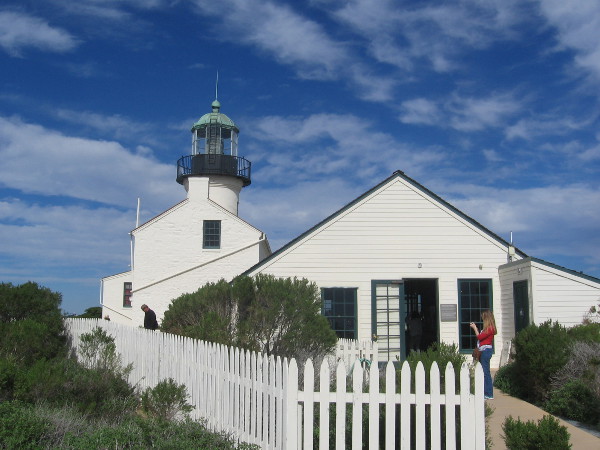
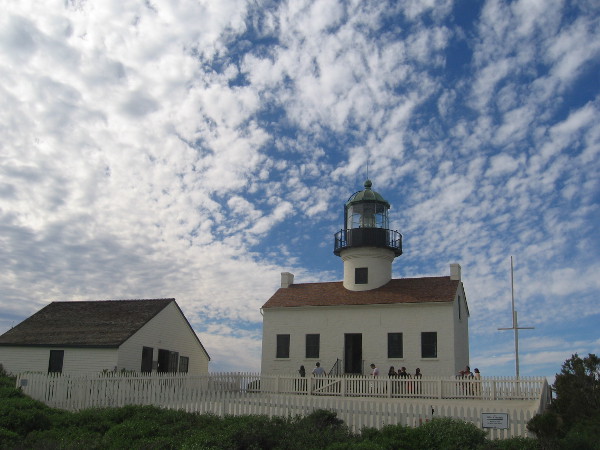
Looking up at the Old Point Loma Lighthouse in Cabrillo National Monument.
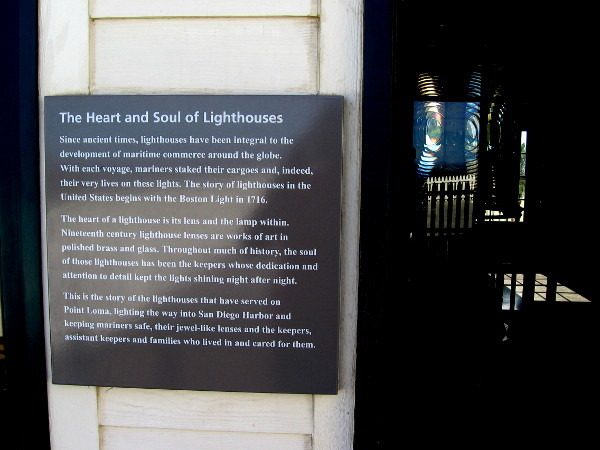
Everyone likes to explore the Old Point Loma Lighthouse. You can climb up the winding staircase and peer into several interesting rooms where the lighthouse keeper and his family lived. But the small museum in the nearby assistant keeper’s quarters contains the true marvels of science and art. Come inside and let us have a quick look!
The assistant keeper’s quarters next to the lighthouse today contains a small museum.Sign outside lighthouse shows huge Fresnel lens which guided ships with focused light 400 feet above sea level.Sign at entrance to museum. The heart of a lighthouse is the lens and lamp. 19th century lenses are works of art made of polished brass and glass.
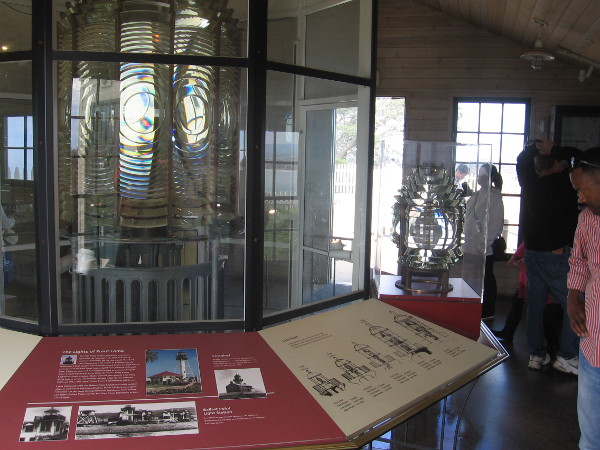
The highly polished Fresnel lenses utilized by lighthouses are beautiful objects. They refract and reflect light, creating prismatic colors when viewed from certain angles. It’s almost a miracle that a small flame in a lamp can be magnified to the extent that ships far out at sea can easily see it and be guided to safety. Light intensified by lenses in this museum could be seen 18 to 24 miles away!
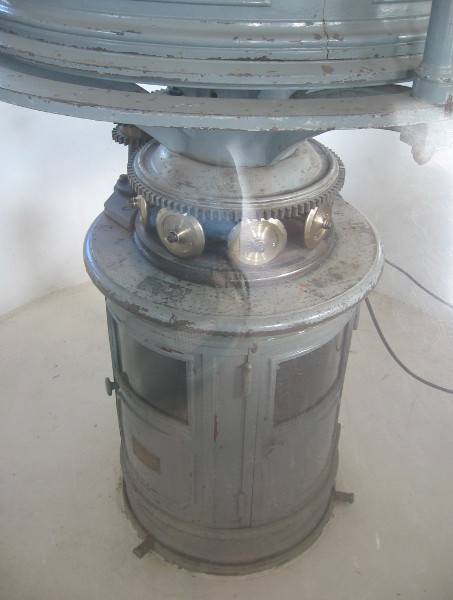
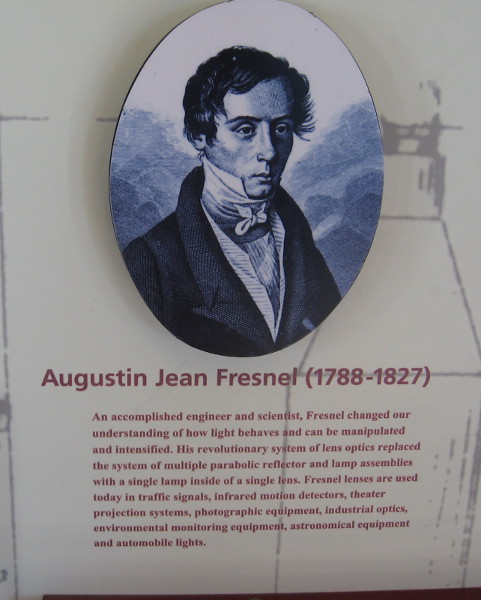
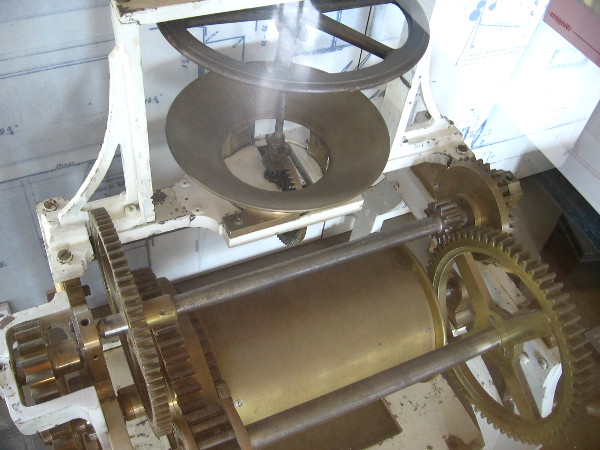
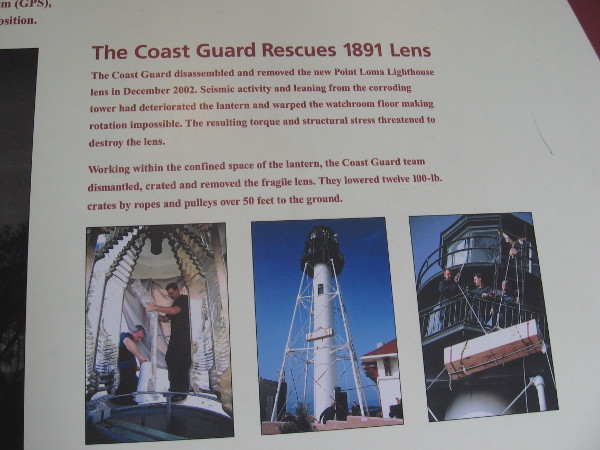
This 3rd Order Fresnel lens was used by the New Point Loma Lighthouse, built in 1891 down by the water.An optical wonder, this huge lens is an amazing, highly polished light bender.Diagram shows how a complex Fresnel lens functions.The base of the heavy Fresnel lens with chariot wheels visible.There are different orders of size, as illustrated in this display.Augustin Jean Fresnel (1788-1827) was an accomplished engineer and scientist. Fresnel lenses are used in many modern applications today.Small museum by Old Point Loma Lighthouse contains various very cool exhibits.This small 5th Order lens lighted the Ballast Point Lighthouse from 1890 to 1960.Log book of daily expenditures for oil, wicks and chimneys.This clockwork of gears slowly turned the light above.The keeper’s service box contained cleaning supplies and delicate tools for maintaining the lamp.The Coast Guard removed this large Fresnel lens from the New Point Loma Lighthouse in 2002.Looking at the iconic Old Point Loma Lighthouse and small museum beside it.
…
To enjoy future posts, you can “like” Cool San Diego Sights on Facebook or follow me on Twitter.
Looking out the rear of the Cabrillo National Monument Visitor Center on a beautiful day.
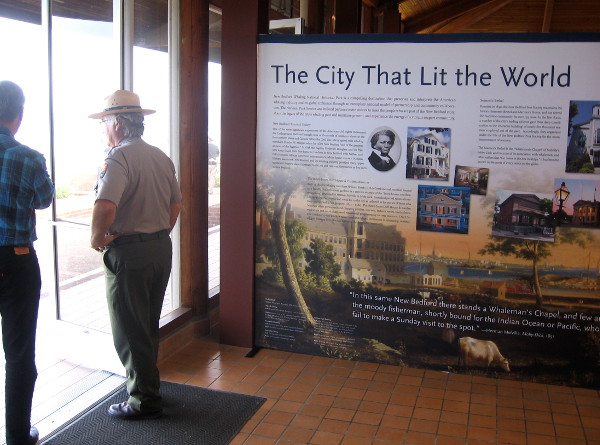
I saw on the morning news that an important exhibit was opening today in the Cabrillo National Monument Visitor Center. I haven’t been up that way since I blogged about the park’s centennial, so I figured I’d go check things out!
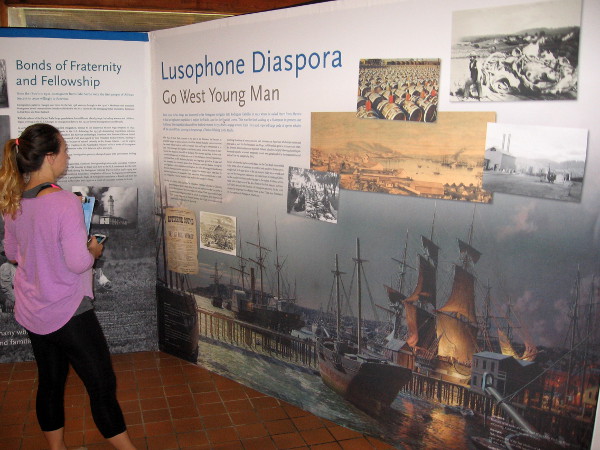
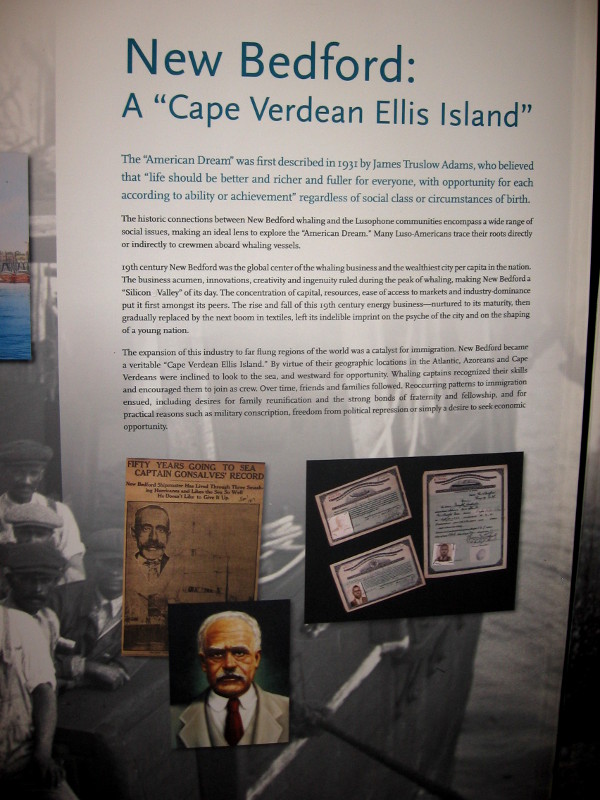
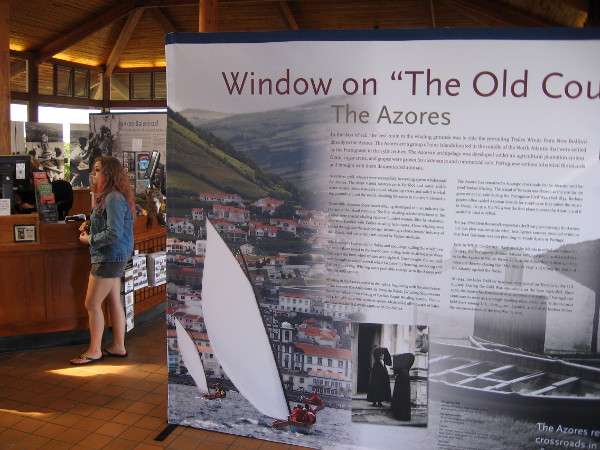
The traveling exhibition is called Yankee Baleeiros! The Shared Legacies of Luso and Yankee Whalers. That’s quite a long title, but it’s fitting for the epic displays that occupy about half of the sizable visitor center. Developed by the New Bedford Whaling Museum, the exhibit “celebrates the interwoven Luso-American stories of the Azorean, Cape Verdean, and Brazilian communities in the United States from early immigration in the 18th century through the latter half of the 20th century.” Sounds like a long and tedious thesis! But it’s actually fascinating! Basically, it shows the rich history of Portuguese speaking whalers in the Northeast, primarily New Bedford, and how they interacted with Yankee whalers.
As San Diego is one of the world’s best places to encounter a large variety of whale species, and as this is the season for migrating gray whales, the exhibit is more than appropriate. The displays also address how whaling techniques evolved over the years, the success of modern conservation efforts, and how whale-watching is now a much larger industy than whaling.
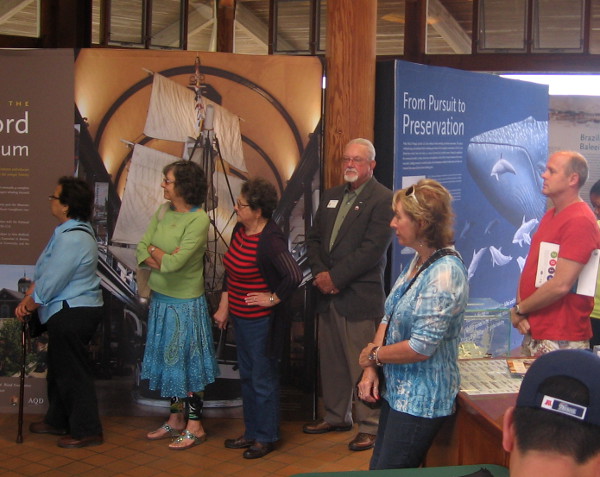
After listening to a short opening presentation by Park Superintendent Tom Workman and Christina Connett, PhD, Curator of Collections and Exhibitions at the New Bedford Whaling Museum, I headed out to Cabrillo’s excellent Pacific Ocean viewing areas to scan the horizon for spouts. I didn’t see any, but there were a bunch of boats off Point Loma whale-watching on this sunny Sunday afternoon. I got more pics from my visit coming, so stay tuned!
If you haven’t been to Cabrillo National Monument in a while (or ever), head on over! The special exhibit will be on display through April 12, 2015.
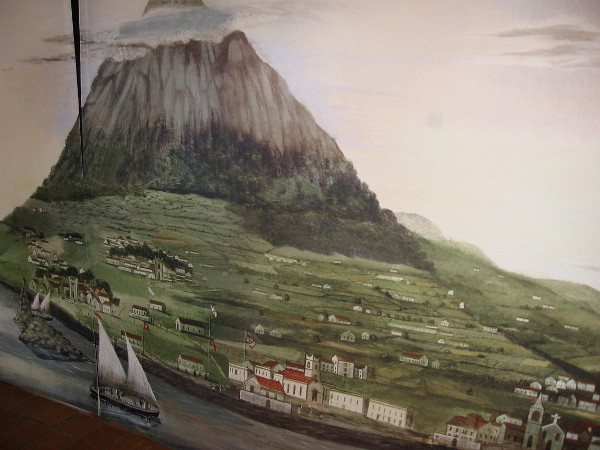
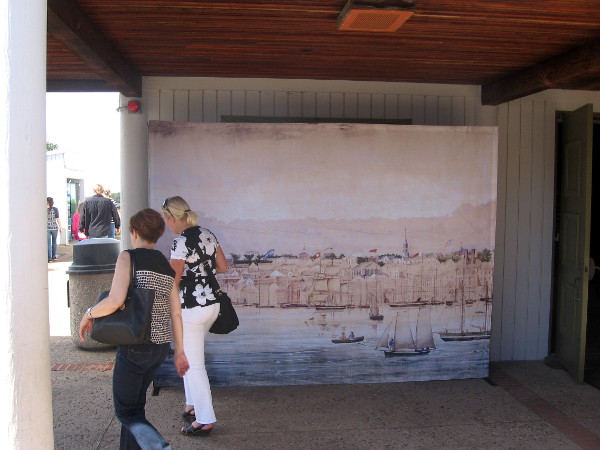
Park Superintendent Tom Workman talks while Christina Connett of the New Bedford Whaling Museum listens.People listen to presentation at opening of Yankee Baleeiros whaling exhibit.Displays recount the history of Lusophone (Portuguese-speaking) whalers in America.New Bedford was the major port for whalers in the Northeast.Inside the visitor center is a section of the 1848 Grand Panorama of a Whaling Voyage ‘Round the World by Benjamin Russell and Caleb Purrington.
Portions of the 1848 Grand Panorama of a Whaling Voyage ‘Round the World by Benjamin Russell and Caleb Purrington were on display inside and outside the visitor center. The complete work is 1,275 feet long and eight and a half feet tall! It’s believed to be the longest painting in the world! The piece went on a national tour shortly after completion, and appeared at the 1964 New York World’s Fair! Cool!
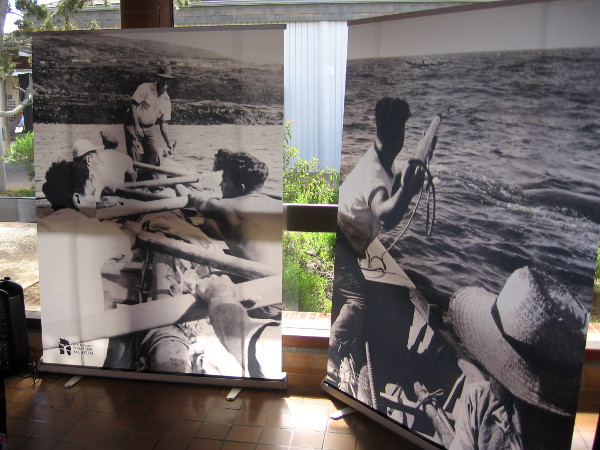
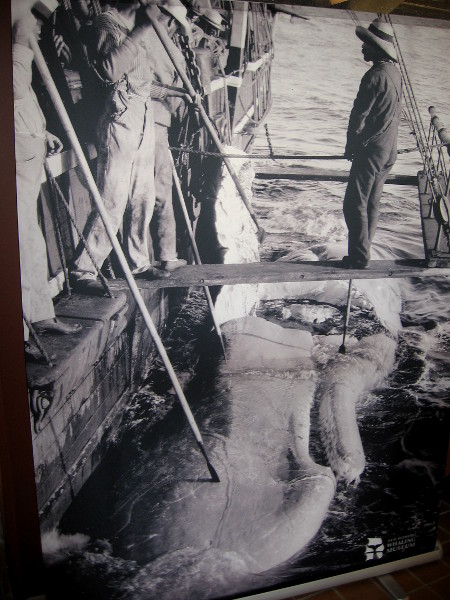
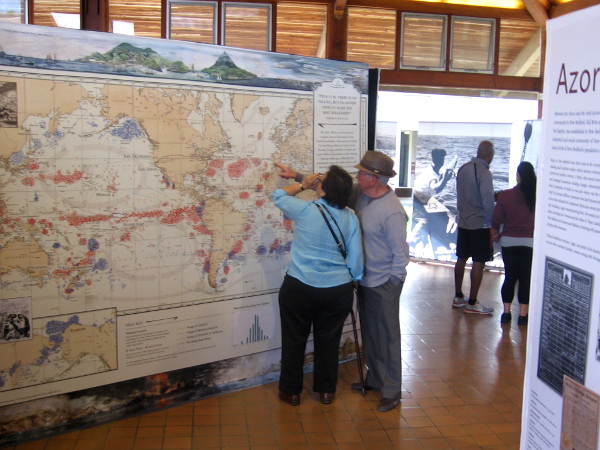
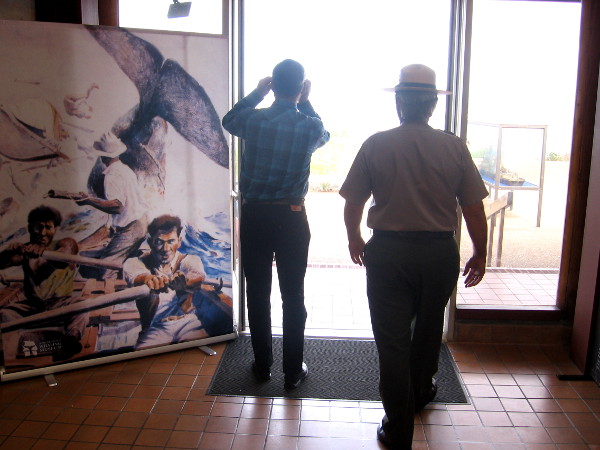
The fantastic displays are museum quality and extremely informative.Photos of sailors rowing out to hunt whales, and a harpooner at the ready.A dead whale is hauled to the ship’s side and stripped of blubber by many hands.People point out spots on a map of historical whaling grounds.The opening presentation is over and folks head out to take in the many sights around Cabrillo.Is there a whale out there? Probably not. This back door faces San Diego Bay!
…
To enjoy future posts, you can “like” Cool San Diego Sights on Facebook or follow me on Twitter.
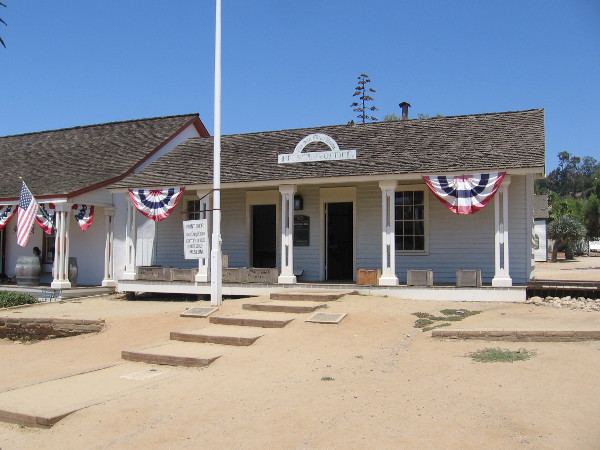
Plaque marks the birthplace of the San Diego Union newspaper in 1868.
There are many interesting houses and buildings within Old Town San Diego State Historic Park. One of the most fascinating is the San Diego Union Building. Take a step inside and you’ll see the carefully restored birthplace of a present-day major newspaper: the San Diego Union Tribune.
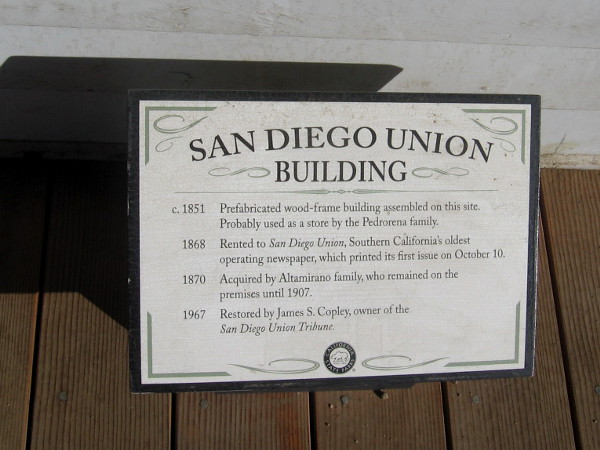
The framework of the building, erected around 1851, is believed to have been originally fabricated in Maine, then shipped to San Diego around Cape Horn. The San Diego Union was first published on October 10, 1868. The newspaper’s editor at that time was Edward “Ned” Wilkerson Bushyhead, a Cherokee Indian with a Scottish ancestor.
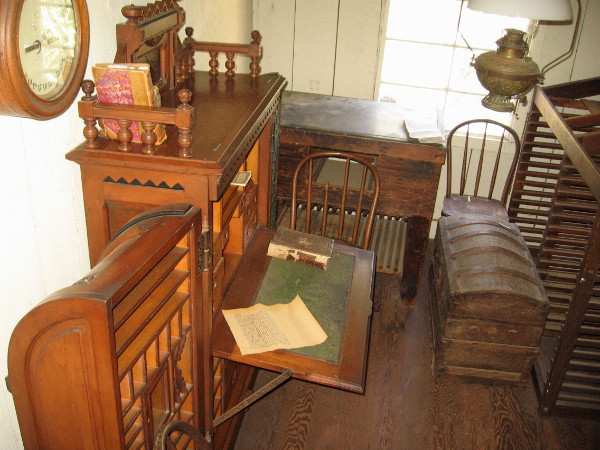
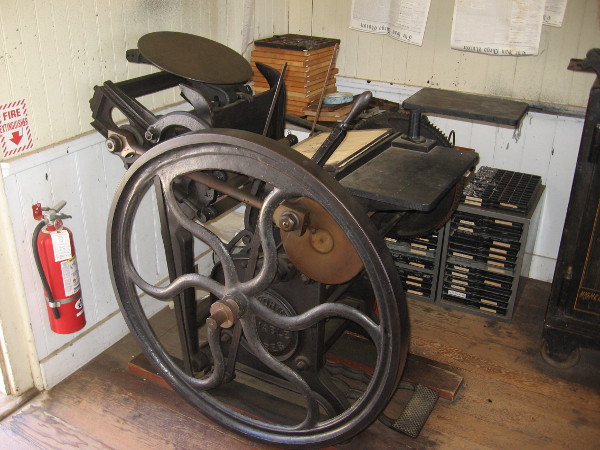
The newspaper began as a modest four page weekly, and was produced on a massive wrought iron Washington hand press. In the museum one can also see an authentic 1860’s recreation of the editor’s room, which contains a desk once owned by the son of Ulysses S. Grant!
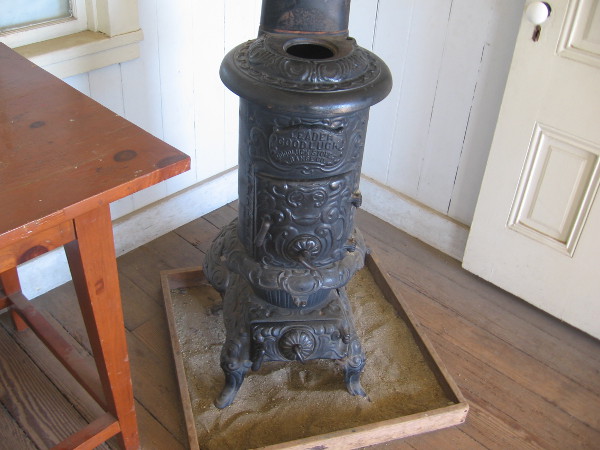
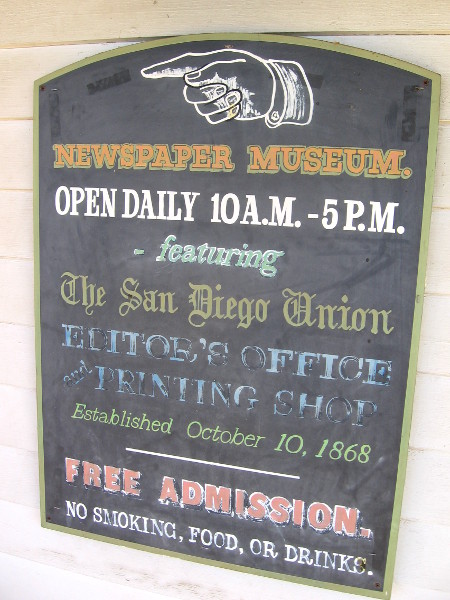
The San Diego Union Building in Old Town San Diego State Historic Park contains a print shop and editor’s office.The prefabricated wood-frame building was erected circa 1851. In 1967 the building was restored by James S. Copley, who at the time was owner of the San Diego Union Tribune.Old wood stove just inside the front entrance of accurately restored newspaper office.Drawers hold hand-set type that used to be assembled in a press for newspaper printing.A massive Washington hand press can be glimpsed to the right in the small printing shop.The small editor’s office contains a desk once owned by the son of President Ulysses S. Grant. In 1910 Ulysses S. Grant, Jr. built a grand hotel in San Diego’s New Town. (I took this photo in August 2017.)The Newspaper Museum is open daily from 10 to 5.
UPDATE!
In August 2017, during Stagecoach Days in Old Town, I was able to actually enter the print shop and take better photos of the presses and other objects inside. (Usually visitors must peer or take photographs from a greater distance.)
Washington hand presses were common on the frontier because of their relative light weight. They required two people for efficient operation.Fresh paper was laid on inked type and an impression made. Setting the type for new articles on just one page could take hours. Fortunately, many advertisements on a page didn’t change.A jobber printing press like this would have been used for small jobs such as stationery and handbills.This safe is the only original object displayed inside the restored San Diego Union Building in Old Town.A type case full of large cast metal sorts. Individual letters were combined into words, sentences and paragraphs. UPDATE! Big mistake by the caption writer: me! The largest letters you see in the above photo are actually made of hard wood. I was corrected by a member of the 919 Gang blog, who’s far more knowledgeable than me. I returned to the museum to confirm this. I learned very large metal sorts would be very heavy!Manual typesetting for old presses, as one might imagine, took lots of patience and a good eye.Gazing from the print shop toward the small building’s entrance area.According to one sign, the San Diego Union Building was erected around 1850 by Miguel Pedrorena. The Washington Press, type and printing supplies arrived by steamship from Northern California.A knowledgeable lady in period attire explains how the San Diego Union newspaper was composed and printed a century and a half ago, long before the digital age.
…
To enjoy future posts, you can “like” Cool San Diego Sights on Facebook or follow me on Twitter.























































 Cool San Diego Sights!