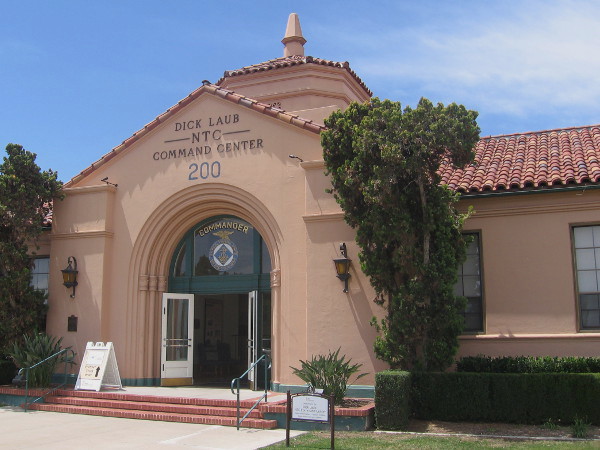
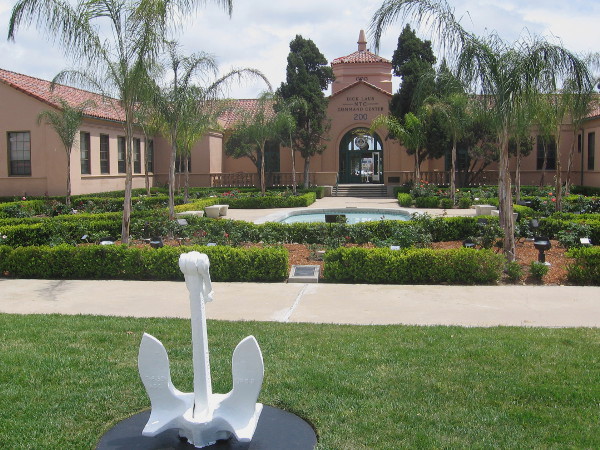
Historic Decatur Road entrance of Dick Laub NTC Command Center at Liberty Station in Point Loma.
Some time ago I visited the Command Center at NTC Liberty Station in Point Loma. Two interesting exhibits can be found along the main hallway that runs the length of the historic building. The Command Center was once the operational hub of former Naval Training Center San Diego.
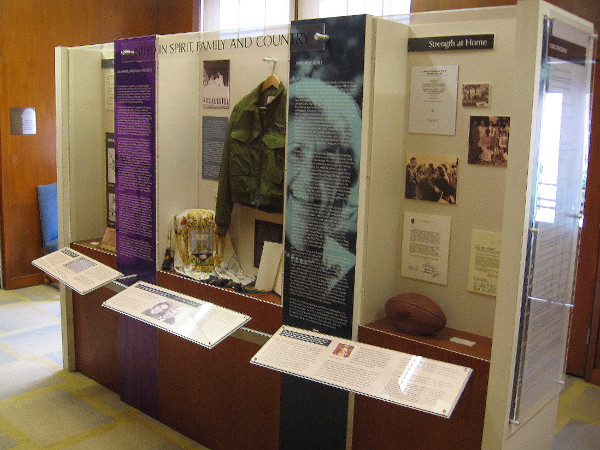
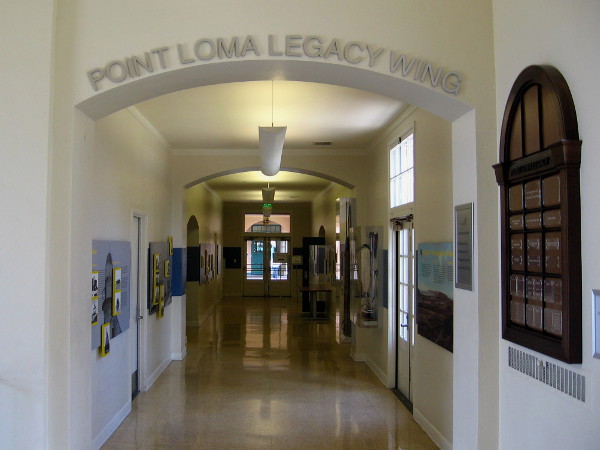
The museum-like Stockdale Family Exhibit concerns the life and history of celebrated Navy Vice Admiral James B. Stockdale and his wife Sybil. The Point Loma Legacy Wing contains many displays that provide insights into the fascinating history of San Diego’s Point Loma.
Should you visit, here’s what you’ll see…
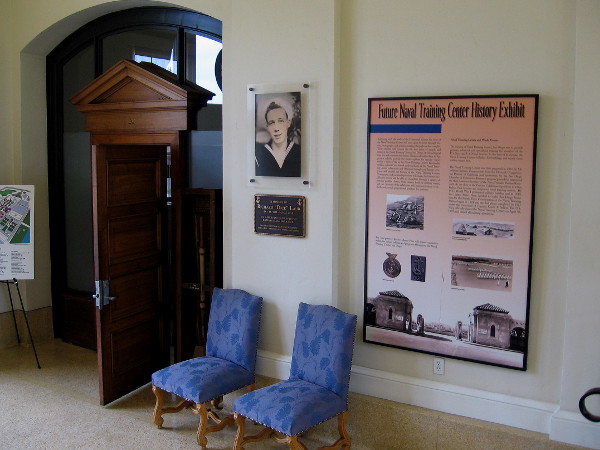
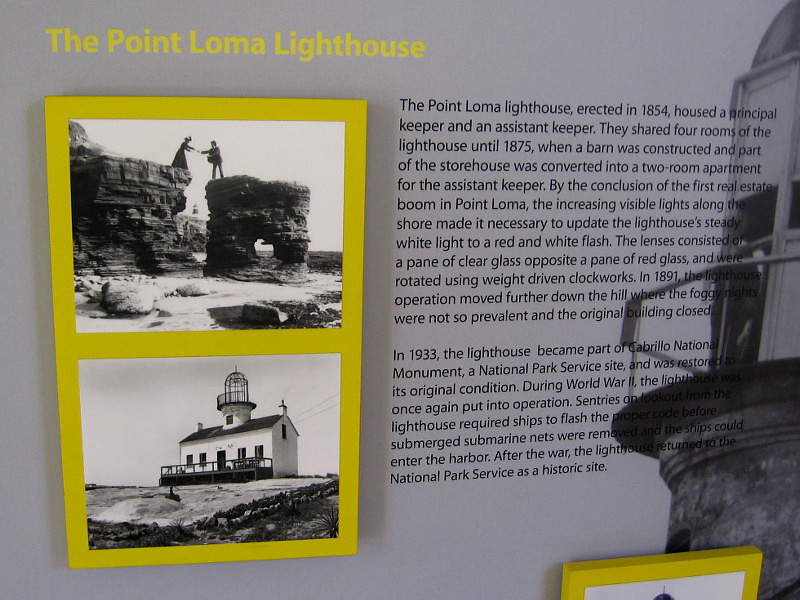
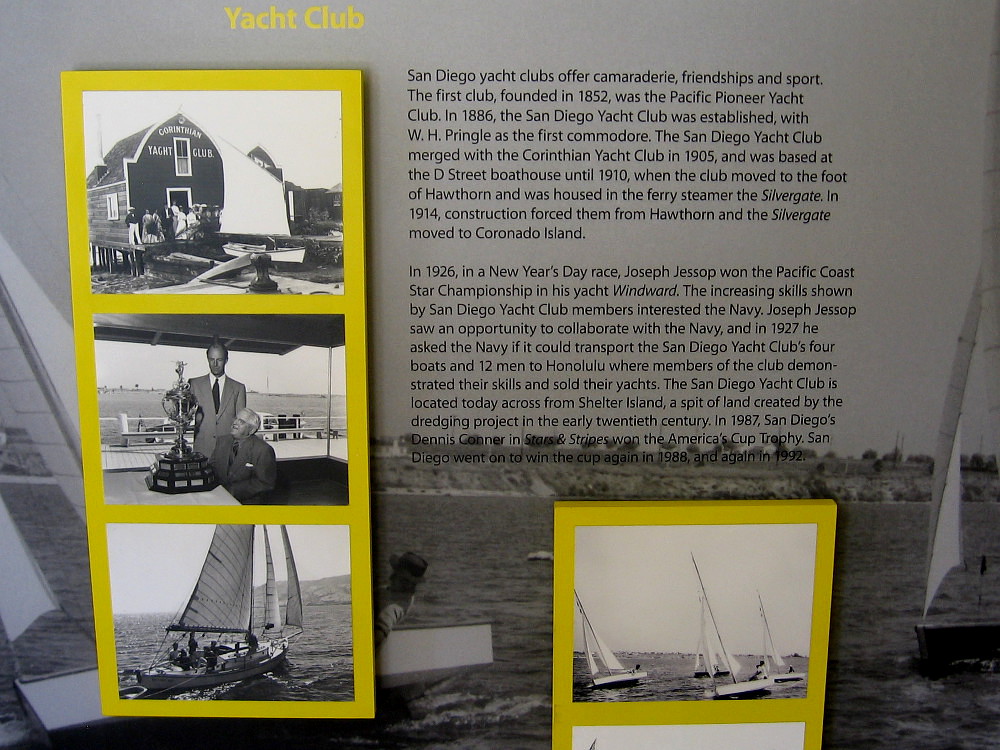
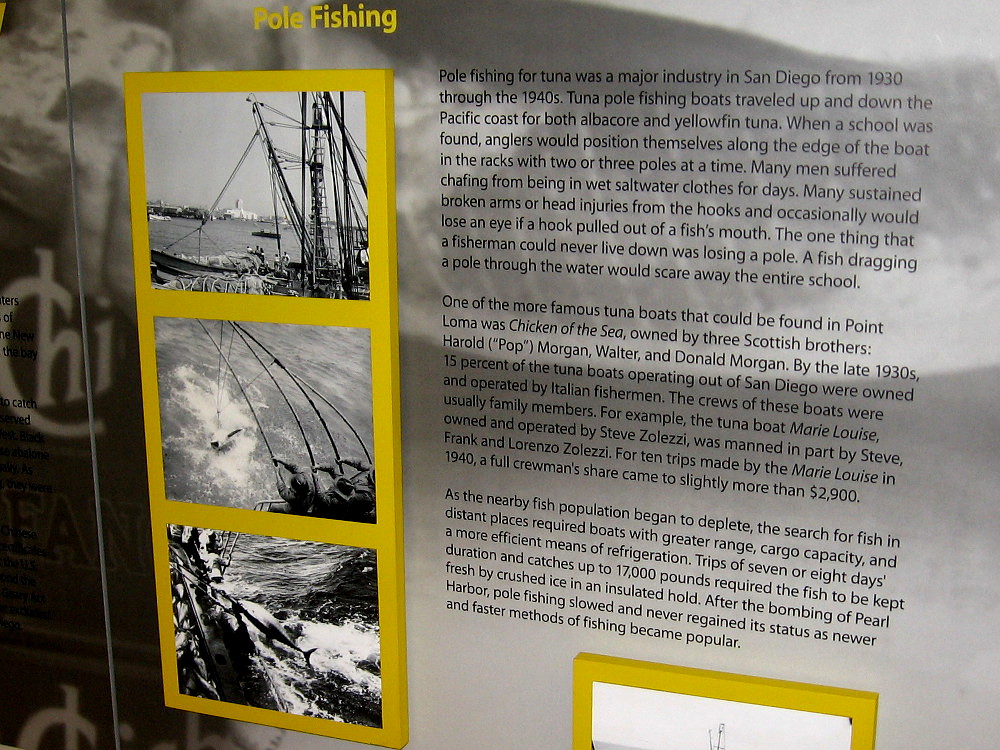
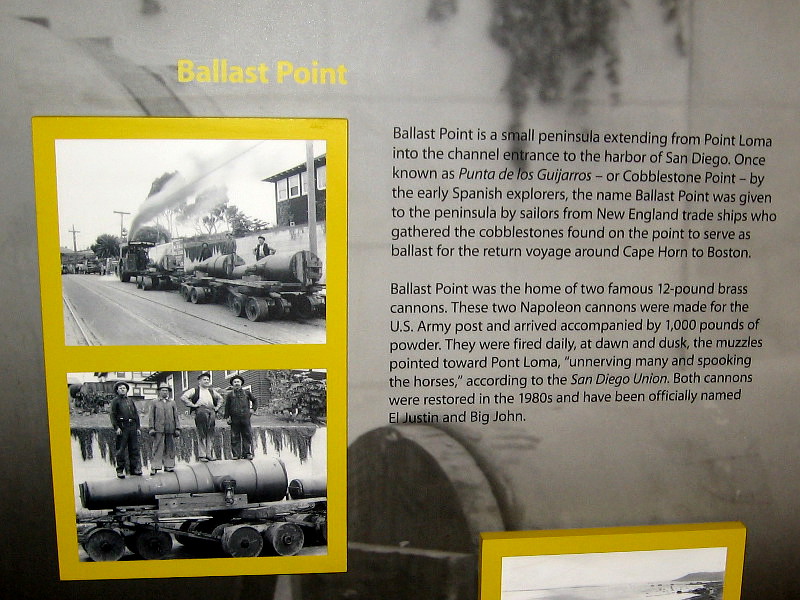
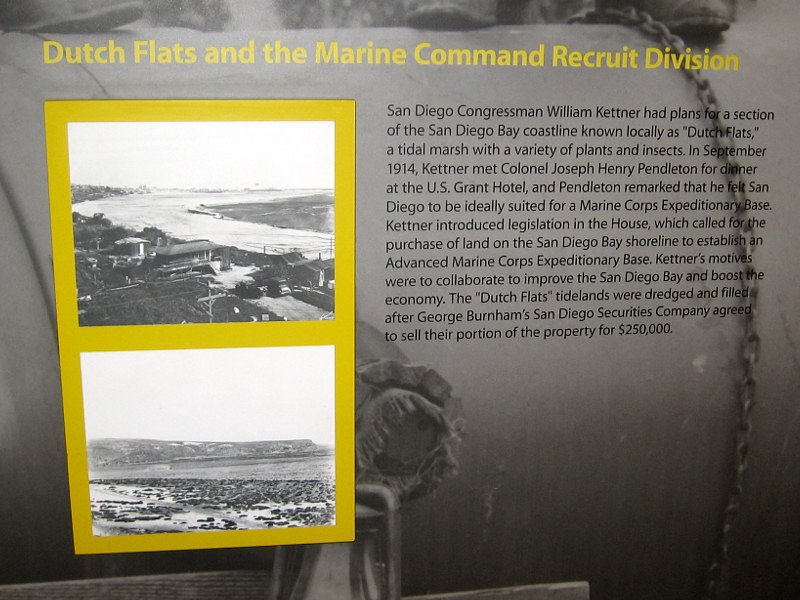
Built in 1941, The Command Center (Building 200) was the focal point of the base. These were offices for the highest-ranking officers, including the Admiral in Command of the Center.Looking from inside the Command Center southeast toward Preble Field and a large American flag.Inside the entrance to the Command Center. Various signs and free literature provide information about the converted military base and its many cultural attractions.Naval Training Center, San Diego. The recruit story is one of personal transformation; a recruit’s experience from arrival through graduation is the foundation for memories…In Memory Of Richard “Dick” Laub. Dick gave credit for much of his success to the G.I. Bill. His passion was the sea and fishing.One wing of the NTC Command Center today contains the Stockdale Family Exhibit. James and his wife Sybil are Navy heroes from the Vietnam War era.Vice Admiral James Stockdale, long-time resident of Coronado, obtained and conveyed important tactical information while imprisoned in North VietnamStockdale was candidate for United States Vice President in 1992 on Ross Perot’s independent ticket. During a debate, he famously said: “Who am I? Why am I here?”The exhibit contains photographs and objects from James and Sybil Stockdale’s family life.The Point Loma Legacy Wing at the NTC Command Center contains two walls of fascinating displays concerning this area’s history.The Point Loma lighthouse, erected in 1854, housed a principal keeper and an assistant keeper. In 1933, the lighthouse became part of Cabrillo National Monument and was restored.San Diego yacht clubs offer camaraderie, friendships and sport. The first club, founded in 1852, was the Pacific Pioneer Yacht Club. In 1886, the San Diego Yacht Club was established.Display case contains artifacts from the San Diego Maritime Museum, including model of a tuna boat.The first fish cannery was built in 1909 at La Playa designed for processing sardines. Albacore canning started in 1911.Pole fishing for tuna was a major industry in San Diego from 1930 through the 1940s. Tuna pole fishing boats traveled up and down the Pacific coast for both albacore and yellowfin.Ballast Point is a small peninsula extending from Point Loma into the channel entrance to the harbor of San Diego. Cobblestones on the point were used for ballast by early trade ships.The Point Loma kelp forest is part of one the largest kelp forests in the northern hemisphere. Giant kelp is a species of marine alga, which may grow up to 200 feet in length.Fort Rosecrans. In 1793, British Captain George Vancouver entered San Diego harbor. He noted the port would be better defended from the Point Loma peninsula.Dutch Flats and the Marine Command Recruit Division. Plans were devised by San Diego Congressman William Kettner. A tidal marsh would be dredged and filled.Anchor and Sybil Stockdale Rose Garden next to NTC Command Center. Photo taken from Legacy Plaza near the center of Liberty Station.
…
Follow this blog for more photos of cool stuff! Join me on Facebook or Twitter.
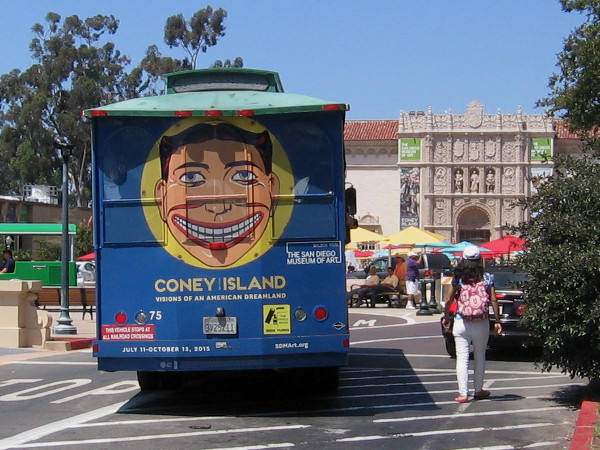
Grinning face of Tillie, symbol of Coney Island, on the back of a tour bus heading toward the San Diego Museum of Art in Balboa Park.
An extraordinary exhibit recently opened at the San Diego Museum of Art. It’s called Coney Island: Visions of an American Dreamland, 1861-2008. Last Saturday, I enjoyed a very special tour, courtesy of my docent friend Catherine!
The exhibit features a collection of more than a hundred objects that depict 150 years of Coney Island’s amusement parks, boardwalk, beach and people. It includes paintings, photographs, videos, carnival posters, sideshow banners, carved wooden carousel horses, and a wide range of colorful, unique artifacts.
From its early days as a peaceful beach getaway for wealthy New Yorkers, to the rise and fall of amusement parks, years of decay, political wrangling, then modern renewal, Coney Island has been interpreted by artists through the years in a variety of surprising ways. Some artists portray an innocent playland for common people. Others, something more complex, and less innocent.
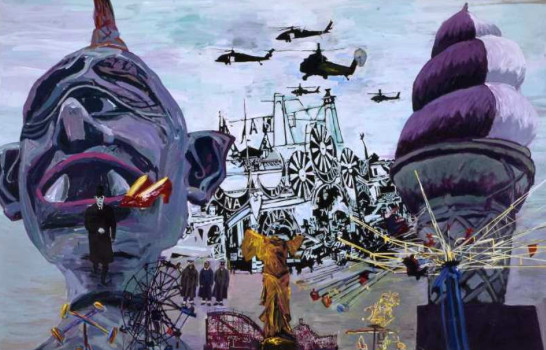
Most of the exhibit’s artwork centers on Coney Island’s legendary amusement parks. Many images resemble exuberant scenes from a carnival or circus. They’re full of energy, laughter, humanity, wonder–but often base, superficial, disturbing, despairing. Many painting are dark, almost gaudy with a crowded press of people seeking pleasure. A symbol adopted by Coney Island–the unnatural, exaggerated grin of Tillie–seems to be a taunting reminder that the purchased thrills are artificial. The grin is strangely maniacal and mindless, one part Joker, one part Cheshire Cat.
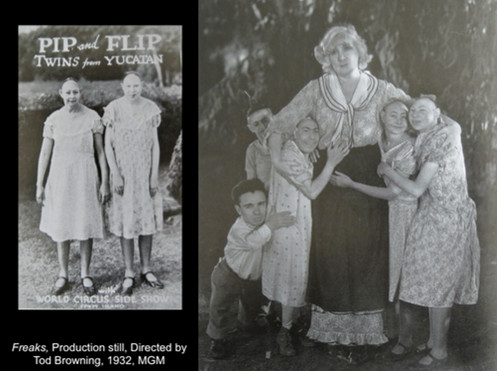
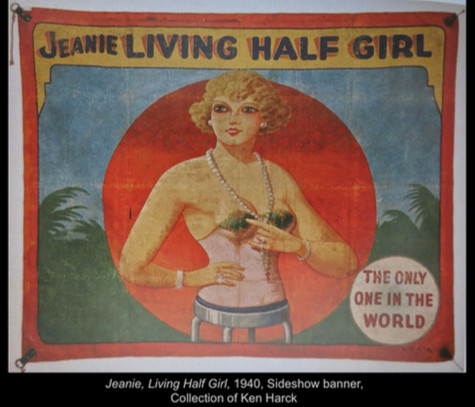
Fantastic imagery abounds in the exhibit, which is sure to delight many kids. They’ll see huge cyclops heads, videos of romping midgets, a banner promising a sideshow freak with inhuman tentacles. The adults will see images of lust, insatiability, scattered litter, dripping blood.
I suppose we humans like to be both excited and terrified.
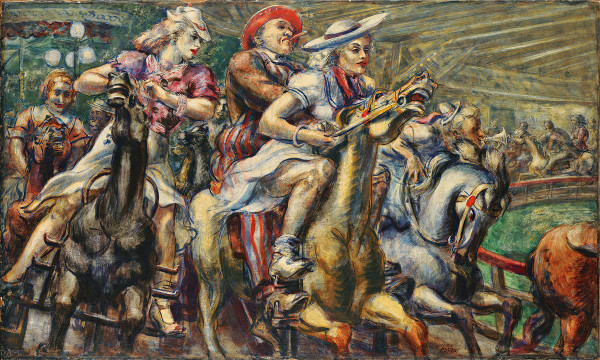
One Impressionist painting by the important American artist William Merritt Chase shows a landscape of sunlight and natural, unspoiled beauty; the egg tempera painted canvases of Reginald Marsh are dark, crammed with unabated appetite, bold kinetic energy and human expression; photographs by Arthur Fellig (Weegee) show people crowded onto the beach like fleshy, happy sardines.
Personally, as I took my amazing tour, I saw life’s wonderful jumble and a sample of our world’s endless variety. All the emotions, the complexity–but mostly I recognized the sunlit memories of ordinary good-natured neighbors heading to the beach and boardwalk, and some exciting, brief amusements, on a sunny weekend day.
This isn’t a typical art museum exhibit. It’s more like taking an instant journey to a place you already know. A Coney Island in your mind. And your vivid experiences in the San Diego Museum of Art will make the journey seem very real.
Coney Island: Visions of an American Dreamland, 1861-2008, has come to San Diego from the Wadsworth Athenium Museum of Art in Hartford, Connecticut. This special exhibition continues through October 13, 2015.
Here are just a few things that you’ll see…
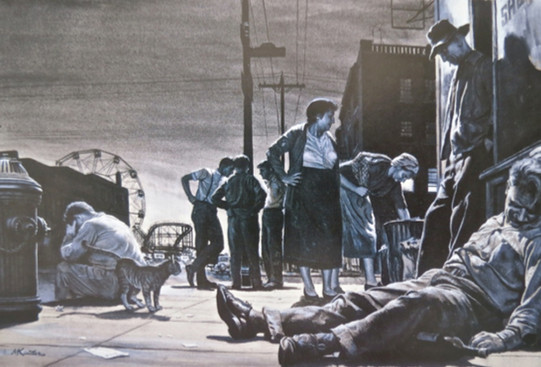
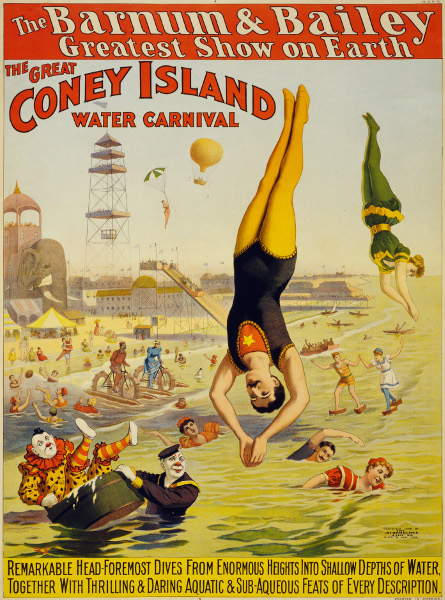
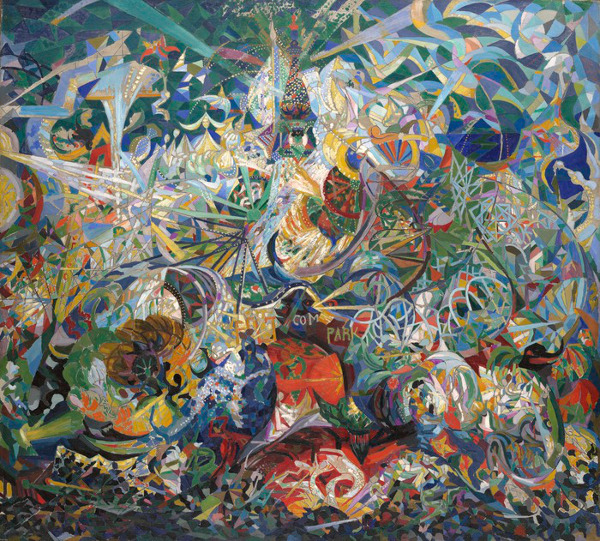
Reginald Marsh, Wooden Horses, 1936, Tempera on board. Wadsworth Atheneum Museum of Art.Pip and Flip, Twins from Yucatan with World Circus Side Show, Coney Island, 1929, Photographic reproduction. Georgia Archives, Vanishing Georgia Collection.Jeanie, Living Half Girl, 1940, Sideshow banner. Collection of Ken Harck.Mort Künstler, Coney Island, 1953, Gouache on paper. Collection of the artist.Barnum & Bailey Greatest Show on Earth, the Great Coney Island Water Carnival poster. Thrilling and daring feats of every description!Arnold Mesches, Anomie 1991: Winged Victory, 1991, Acrylic on canvas. San Diego Museum of Art.Joseph Stella, Battle of Lights, Coney Island, Mardi Gras, 1913, Oil on canvas. Yale University Art Gallery.
The San Diego Museum of Art in Balboa Park is simply jammed with fantastic, provocative Coney Island art. This is a once-in-a-lifetime opportunity. So go see it!
Coney Island, Visions of an American Dreamland, 1861–2008, at the San Diego Museum of Art.
Sign outside the Spanish Village history exhibit, which is open to the public in Gallery 21.
Anyone in San Diego who loves art must visit Spanish Village Art Center in Balboa Park. Some of the region’s finest local artists occupy its 38 working studios. By strolling around the large, colorful courtyard and poking a nose here and there, the public can see (and purchase) finished artwork of every kind, watch the creative process, and talk to the friendly artists themselves.
While at Spanish Village–if you’re the curious sort–you might also check out a small but fascinating history exhibit. Just step into Gallery 21.
Earlier this summer I was graciously given a tour of the exhibit by one of the resident artists. Here are a few photos and captions describing what I saw. Of course, it’s much better to experience Spanish Village and these memories of its history firsthand. So I encourage everyone to head on over.
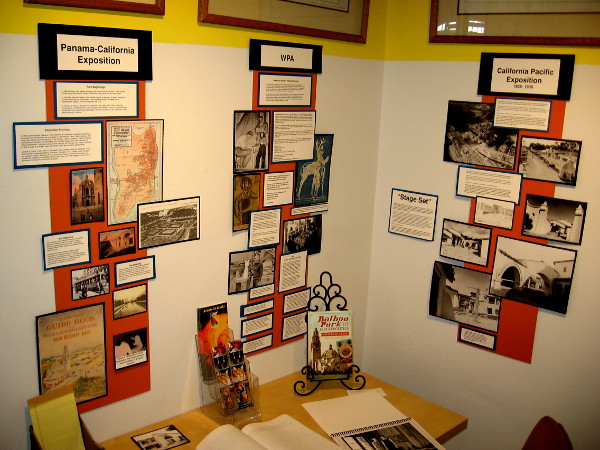
The exhibit reviews how, a century ago, Balboa Park (originally called City Park) was developed and transformed into a dreamlike landscape for the 1915 Panama-California Exposition. Many fantastic buildings were created, using a variety of influences from Spanish, Mexican, European Renaissance and Moorish origins. This unique mixture became what is known as Spanish Colonial Revival architecture.
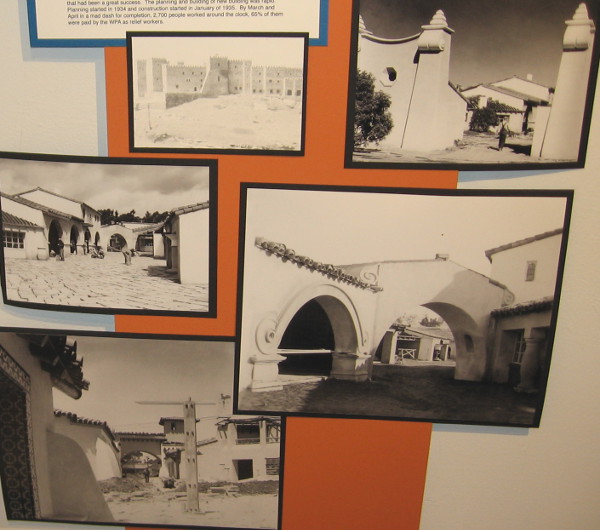
Later, the successful California Pacific International Exposition of 1935 was promoted to boost San Diego during the Great Depression. It used existing buildings from the Panama-California Exposition and exhibits from the recent Chicago Century of Progress Expo. New construction designed by master architect Richard Smith Requa added a variety of buildings to Balboa Park, including those of Spanish Village. Spanish Village, as its name implied, originally recreated life in Spain, with “shops that sold art, curios, flowers, music and wine. It had a children’s theater, a Chinese Bazaar, a cocktail lounge called Cafe Granada and other restaurants. The Village was at the entrance to the Fun Zone which contained a Midway, a midget zoo, and an Indian Village.”
Today, this exhibit’s historical photographs, newspaper articles and ephemera relating to Spanish Village help visitors understand and appreciate the cultural contributions over many decades of hundreds of participating artists.
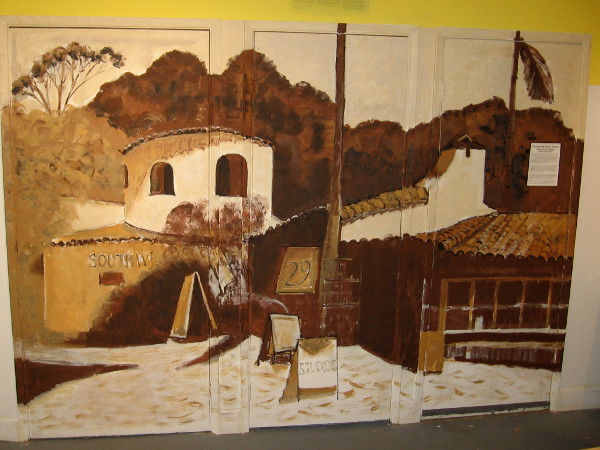
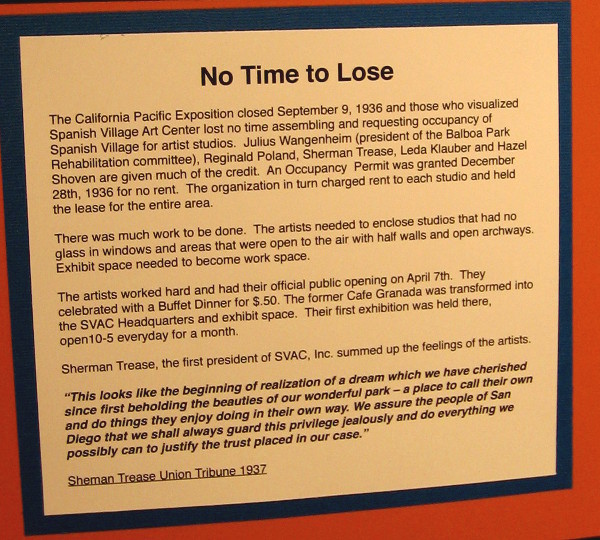
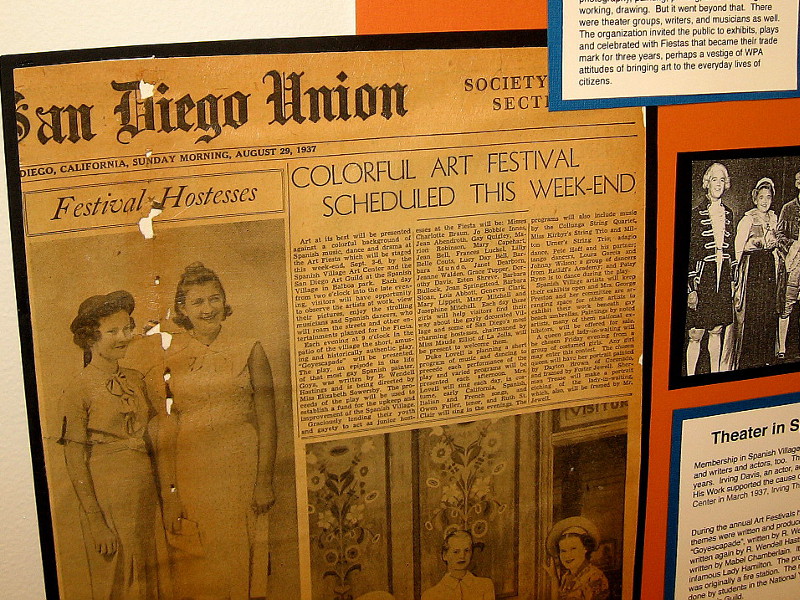
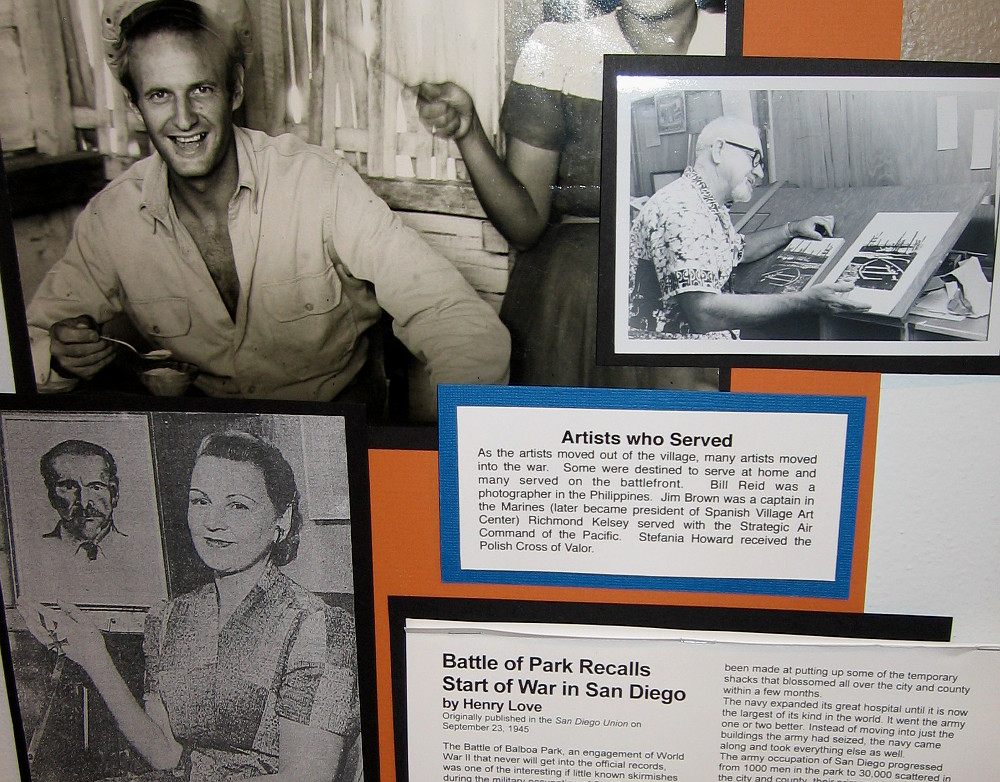
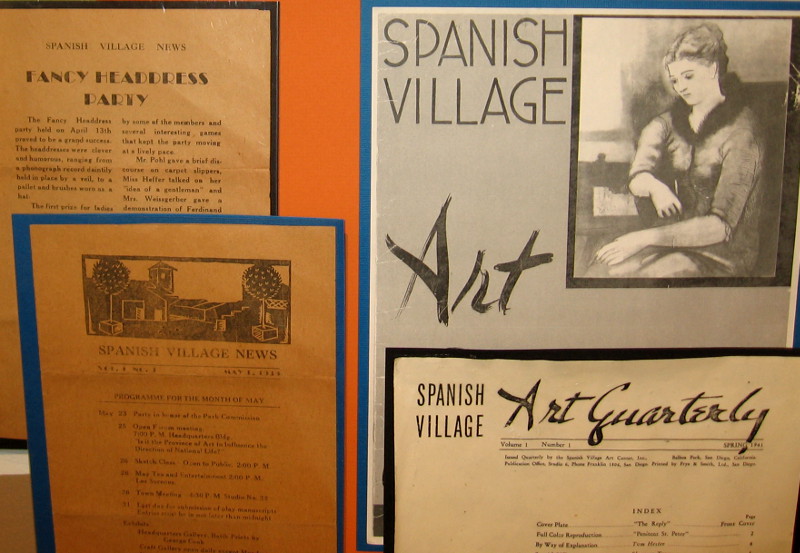
Doorway inside Gallery 21 leads to an unexpected treasure trove of Balboa Park and San Diego history.Beautifully painted mural in the small museum pleases the eyes of art-loving visitors.The walls, like a scrapbook, feature a mosaic of images and articles chronicling the history of Spanish Village.Old photographs show Spanish Village buildings, which were erected for the 1935 California Pacific Exposition in Balboa Park. They housed shops and restaurants during the expo.The California Pacific Exposition closed September 9, 1936, and the idea for Spanish Village Art Center was soon realized. Artists completed their studios and had a public opening on April 7th.Display lists Spanish Village’s artist founders. Newspaper clipping’s “Officers of Culture Project” included Sherman Trease, Mina Schultz Pulsifer, and Henry Long.Old San Diego Union newspaper announces first Art Fiesta, a festival held September 3-6, 1937. Spanish Village hosted all forms of visual art, plus theater groups, writers and musicians.Visitor to the Spanish Village history exhibit learns about the rich heritage of this very unique and wonderful place.Another display tells of the coming of World War II, and how the Army took over Spanish Village. Many departing artists would serve in the military. Some later returned to renew their art.After the Army left, a financial dispute with the City of San Diego was resolved. Artists would pay affordable rent for each studio. A jury would decide on qualified renters.Samples of past Spanish Village publications, including a quarterly. Today the artists promote their work online using websites, e-newsletters and social media.Do you have a memory or story about Spanish Village Art Center? Experiences are being collected and added to this show. Thanks for the community spirit!Spanish Village is located in amazing, historic Balboa Park. Art grows here.
…
Follow this blog for more photos of cool stuff! Join me on Facebook or Twitter.
Old poster highlights points of interest reached by past San Diego streetcar and railroad lines. Depicted are orange groves, Mexican bullfighting, an ocean liner and Balboa Park.
When I catch the trolley at downtown San Diego’s Santa Fe Depot, I often walk through an outdoor passageway that separates the hundred year old train station’s enormous waiting room from it’s original baggage terminal. The latter building was converted years ago into an interesting space used by the Museum of Contemporary Art San Diego (MCASD).
Recently, while strolling through the passageway, I paused to examine three eye-catching graphics created by the museum to promote one of its current exhibitions. Two of the images incorporate old train posters from San Diego history, which I find to be very cool. I thought you might enjoy a look!
MCASD’s exhibition titled “John D. Spreckels and The Impossible Railroad” concerns a railway project undertaken a century ago by one of San Diego’s most prominent entrepreneurs and benefactors. Perhaps Spreckels’ greatest accomplishment was to complete the logistically difficult San Diego & Arizona Railroad, our nation’s southernmost transcontinental railroad route. I haven’t visited the exhibition, but according to what I’ve read it utilizes interesting visual devices to demonstrate the near impossibility of building Spreckels’ railroad, which had to wind around and over deep mountain gorges. (Spreckels was also responsible for a large network of electric streetcars which traversed San Diego decades before our modern day trolleys.)
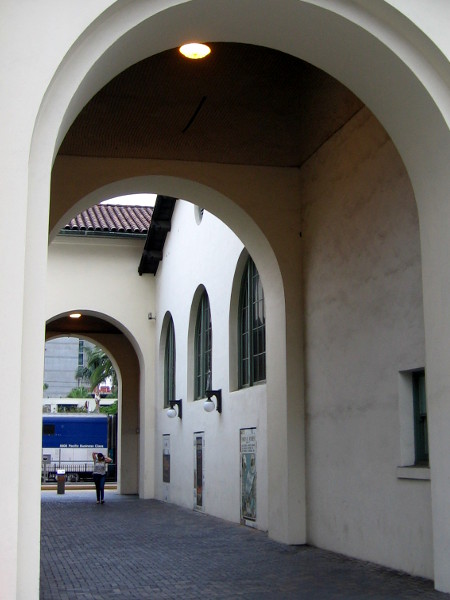
Outdoor passage between the Santa Fe Depot and the Museum of Contemporary Art San Diego’s downtown Jacobs Building, which years ago was the train station’s baggage terminal.John D. Spreckels and the Impossible Railroad is one of the current art exhibitions at MCASD. These interesting promotional graphics also incorporate historical newspaper articles.Old advertisement for the San Diego and Arizona Railway, called the Carriso Gorge Route, which included possible destinations Chicago, New Orleans, Kansas City, El Paso, San Diego.
…
Enjoy photos of random cool stuff! Join me on Facebook or Twitter.
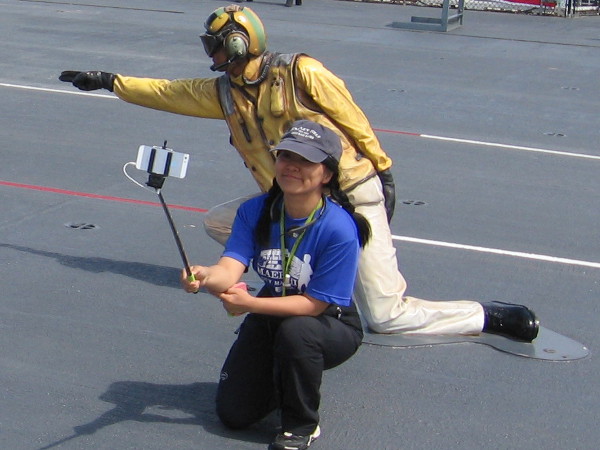
USS Midway visitor takes photograph with selfie stick next to aircraft-launching Shooter mannequin.
I hope you enjoy a few photos I took recently of planes and people (and helicopters) on the flight deck of San Diego’s USS Midway Museum. The historic aircraft carrier served longer than any other American carrier in the 20th century, spanning five decades from 1945 to 1992. Countless amazing stories have been lived by thousands serving aboard the USS Midway, and many of those stories continue today as docents and volunteers relate their personal shipboard experiences to visitors from around the world. San Diego’s unique aircraft carrier museum, now over ten years old, hosts over a million visitors a year.
Midway’s large flight deck, enlarged from 2.8 to 4 acres in 1966, today features a couple dozen restored aircraft that represent different eras of modern military history. The internet is jammed with pages showing and describing these aircraft in detail, so I thought I’d just provide a quick flavor of what it’s like to walk out on the flight deck on a typical San Diego day. If you’d like to take the cool self-guided tour of the ship, which I highly recommend, plan to spend at least an hour!
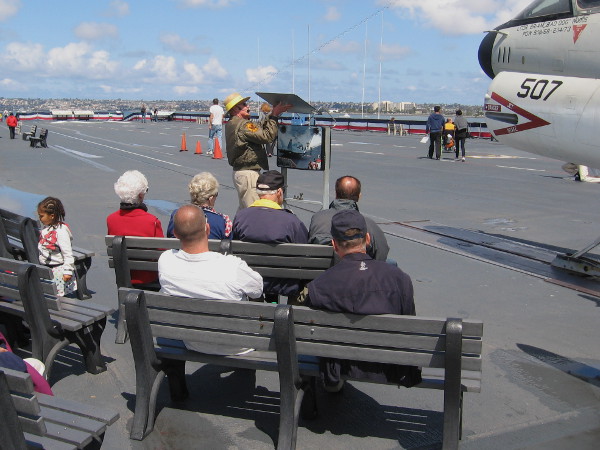
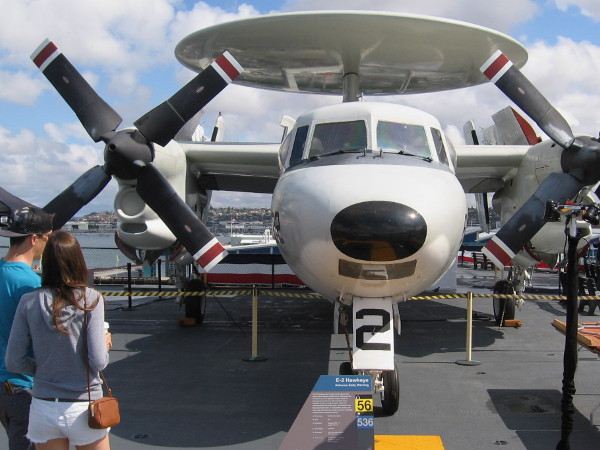
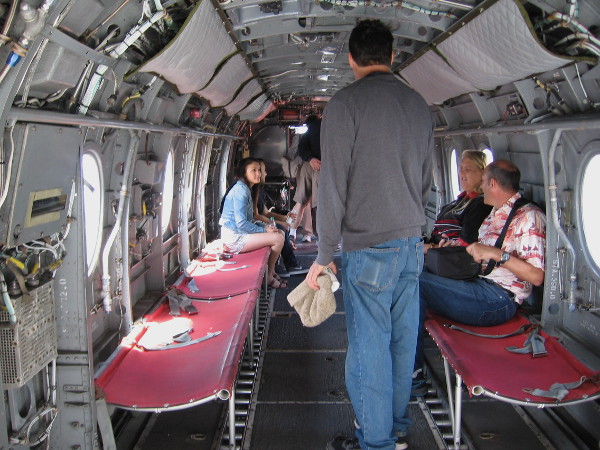
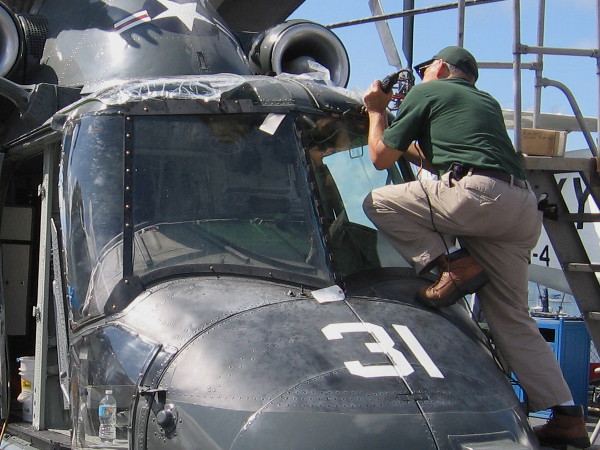
Lady walks past F-14 Tomcat fighter jet on USS Midway aircraft carrier’s flight deck.Tourists at USS Midway Museum walk out onto one of the two horns that project over San Diego Bay.Sign describes how to read Navy flag signals.Man lingers near F-8 Crusader, the US Navy’s first supersonic fighter.People sit on benches listening to a docent talk about launching airplanes from Midway’s two steam-powered catapults.Guy checks out A-7 Corsair positioned to be launched from powerful catapult, which accelerated aircraft to 170 mph in about 3 seconds!Young couple takes a look at E-2 Hawkeye, an Airborne Early Warning aircraft.Looking south from atop the flight deck. Seen are the Unconditional Surrender statue, Tuna Harbor, and the Coronado Bay Bridge.USS Midway visitors enjoy a sunny San Diego day near EKA-3 Skywarrior.Visitors find out what it’s like inside a CH-46 Sea Knight helicopter.Peering through cockpit of HO3S utility helicopter at the nearby HUP Retriever.This HO3S Dragonfly, first helicopter aboard the USS Midway in 1948, is undergoing restoration.Docent veteran talks about how aircraft landed on the flight deck using a tailhook and multiple arresting cables.Exhibit on Midway’s LSO Platform shows how Navy pilots landed in difficult conditions, relying on optical guidance.Navy pilot mannequin in flight suit stands near FA-18 Hornet, painted as a TOPGUN enemy aircraft.A-6 Intruder bomber on display near USS Midway’s superstructure.Volunteers work to restore SH-2 Seasprite, beyond orange nose of H-34 Seabat.The huge flight deck of the USS Midway Museum hosts visitors from around the world, special military-related events, decades of history, and never-ending activity on San Diego Bay.
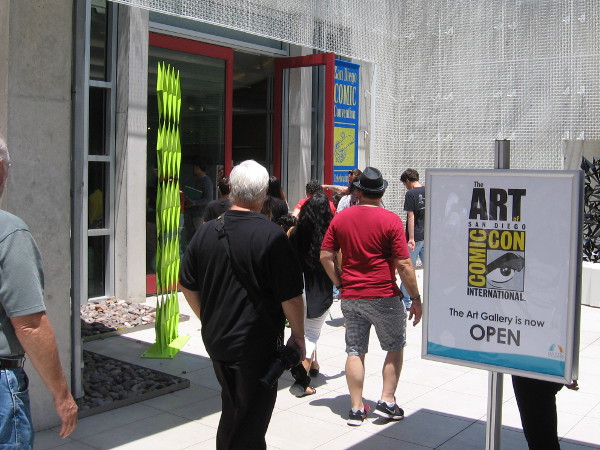
People enter the Art of Comic-Con exhibit, opening today at the downtown San Diego Public Library.
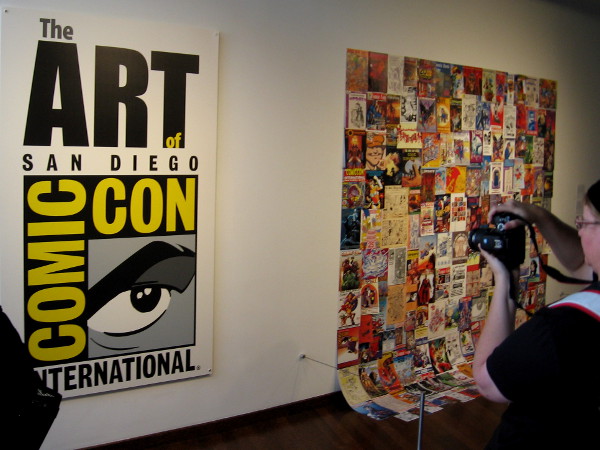
Today a very special exhibition opened at the downtown library’s 9th floor gallery. The Art of Comic-Con, developed by Comic-Con International and the San Diego Public Library, contains a huge collection of original artwork used throughout the 45 year history of San Diego Comic-Con.
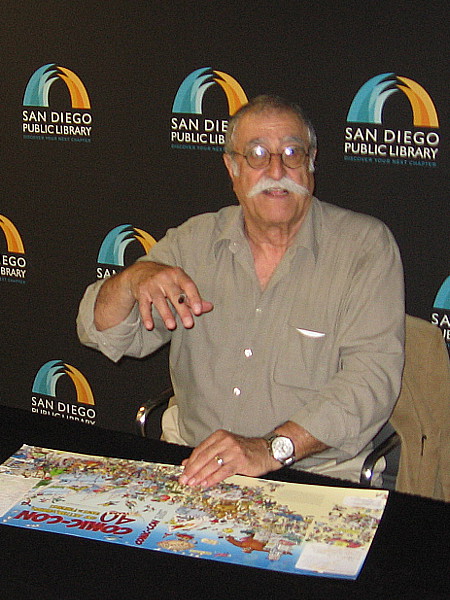
The exhibition runs through August 30 and should draw a crowd during Comic-Con week. During today’s two hour opening reception, super popular cartoonist Sergio Aragones was on hand to talk with fans and sign copies of his 40th anniversary Comic-Con cover. He was very friendly and spoke with everyone in line for a minute or two, always smiling and laughing and posing for the camera. He’s into his fourth decade of writing and drawing the adventures of the hilarious and very successful Groo the Wanderer!
Here are a bunch of photos! My small camera did its best in the dim light of the gallery…
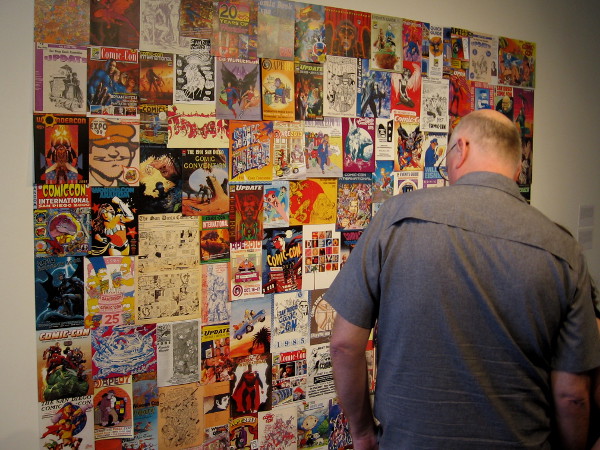
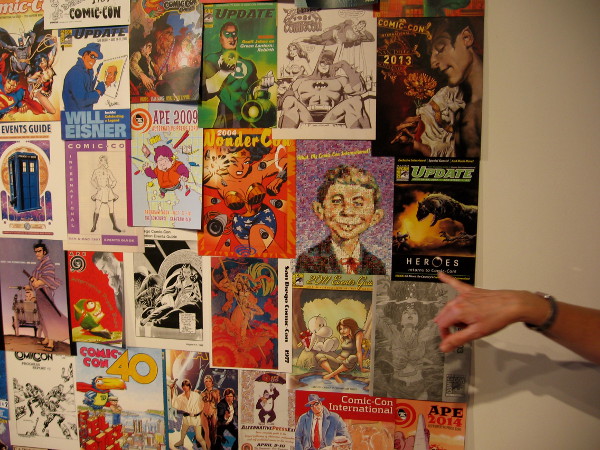
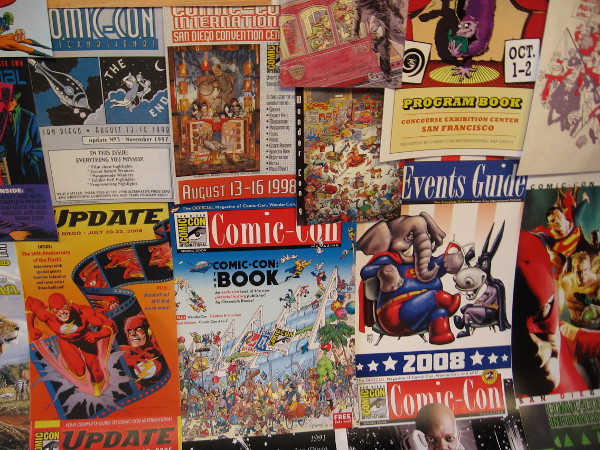
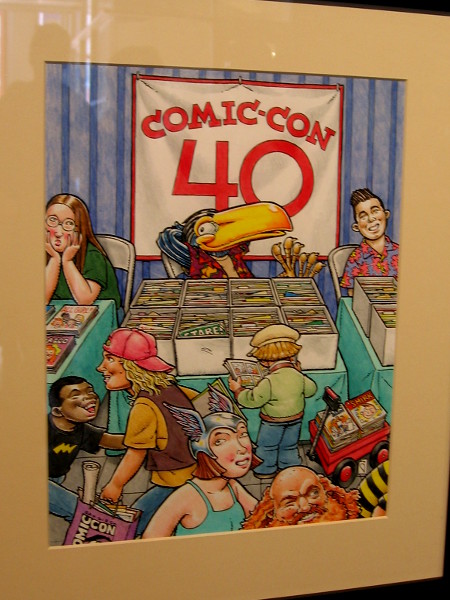
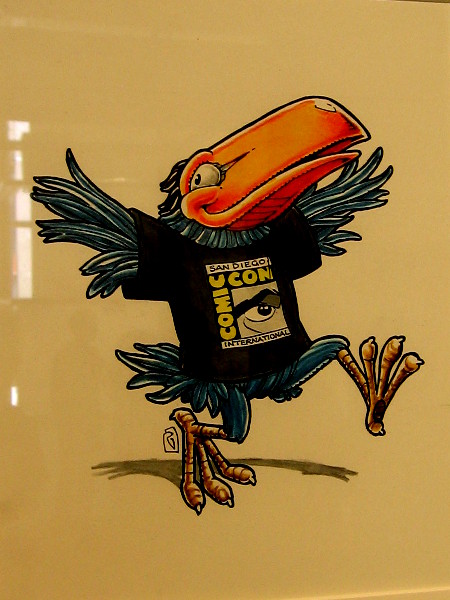
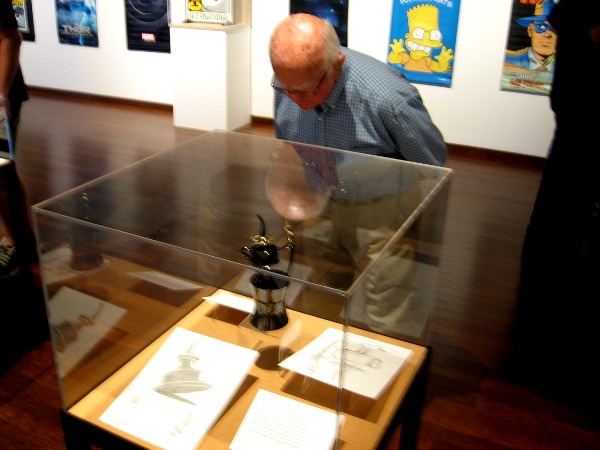
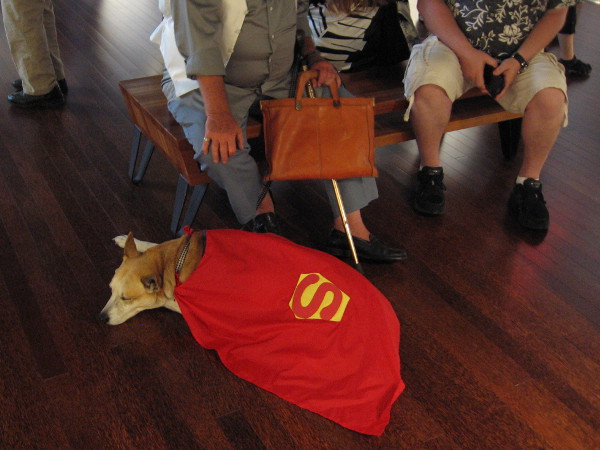
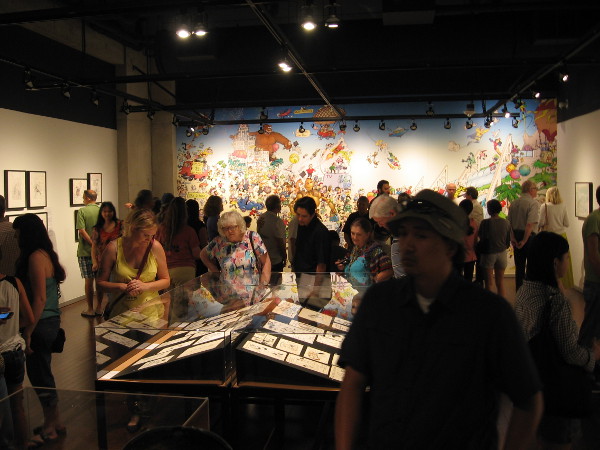
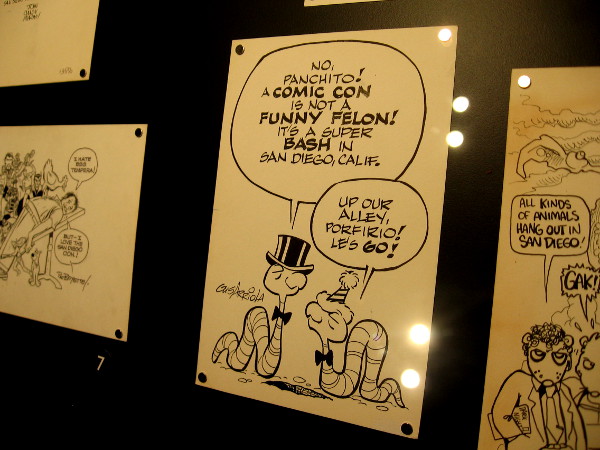
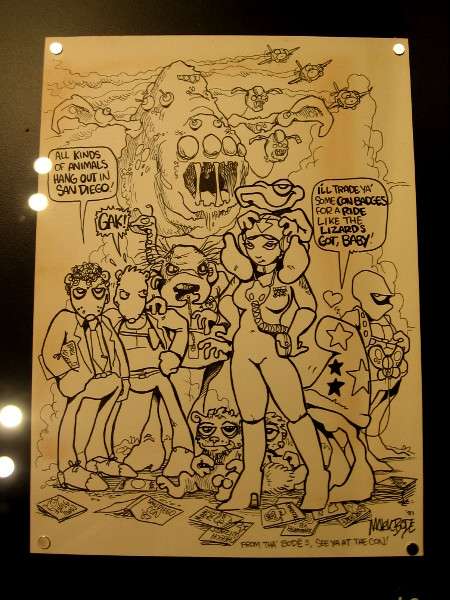
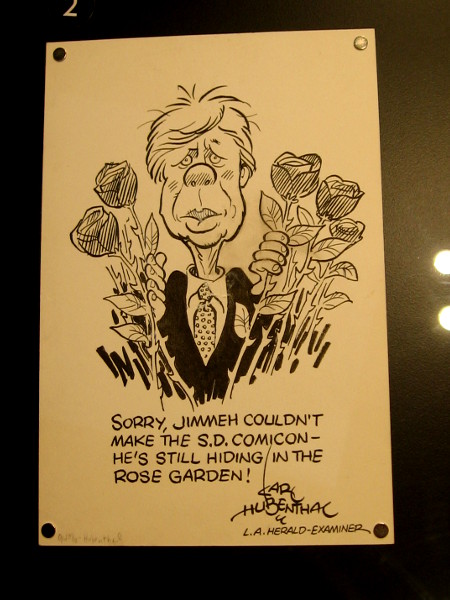
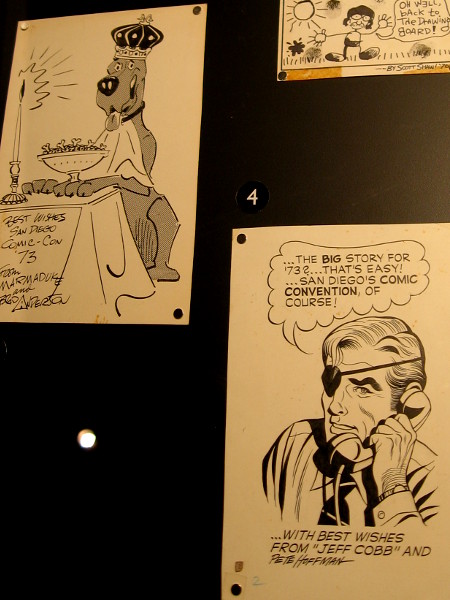
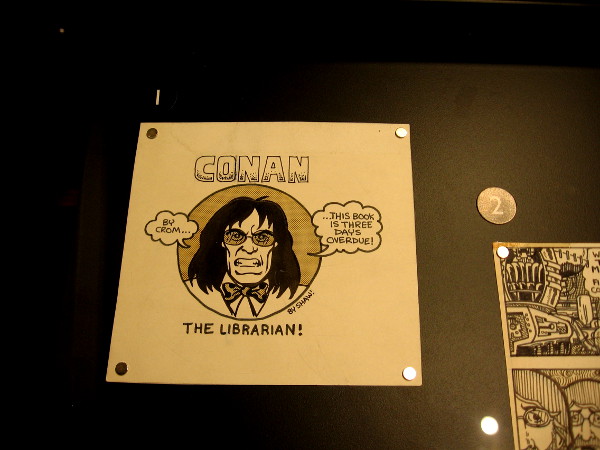
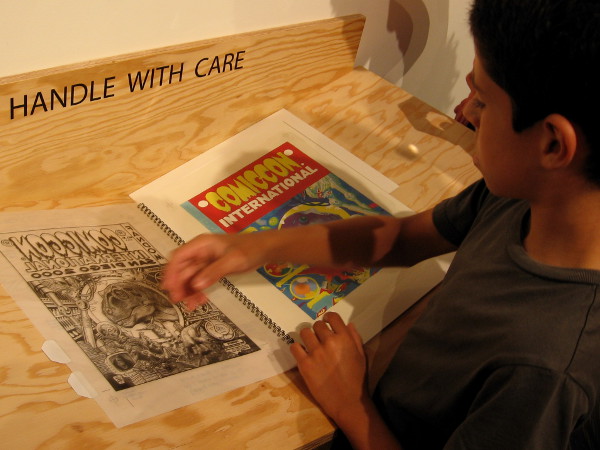
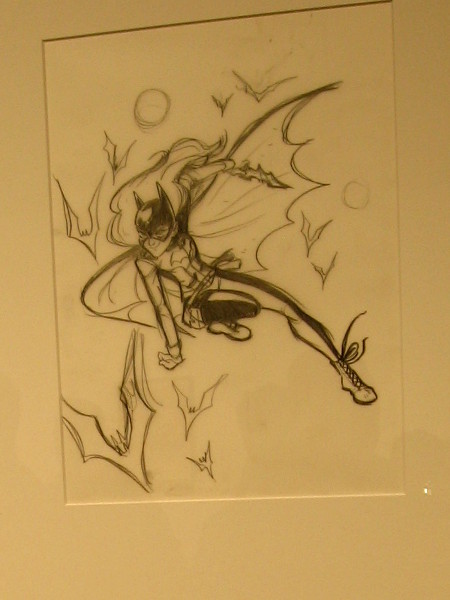
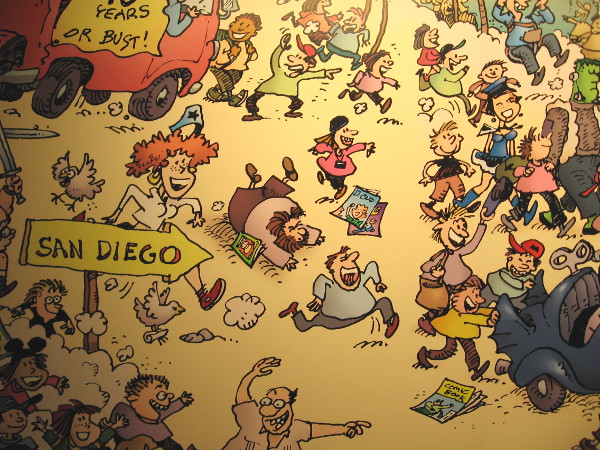
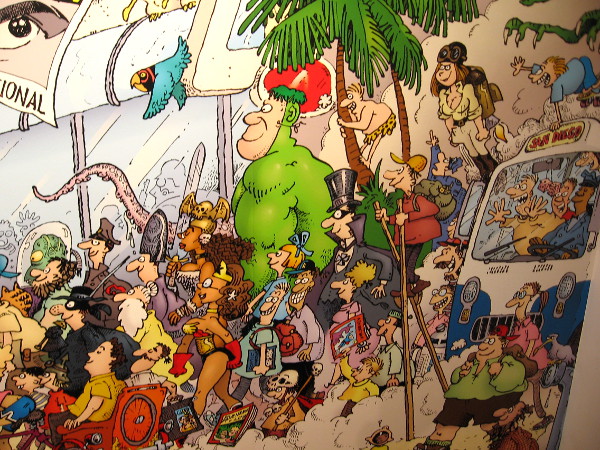
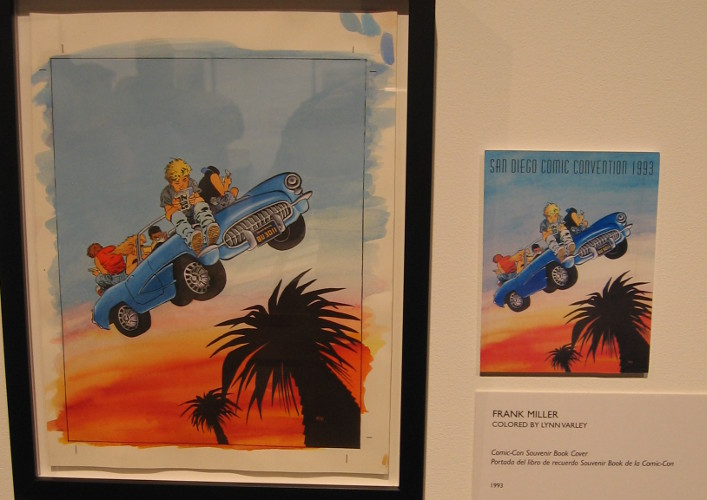
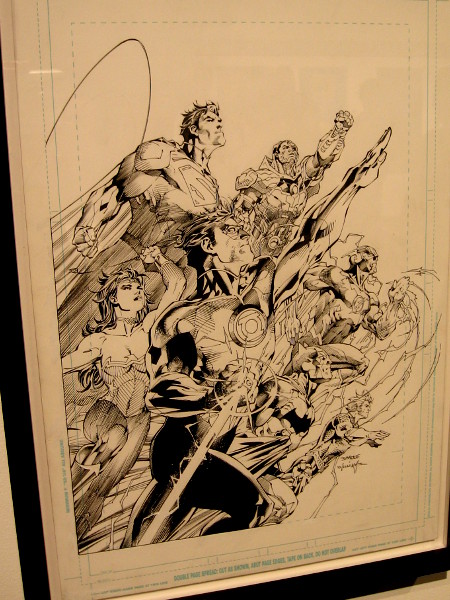
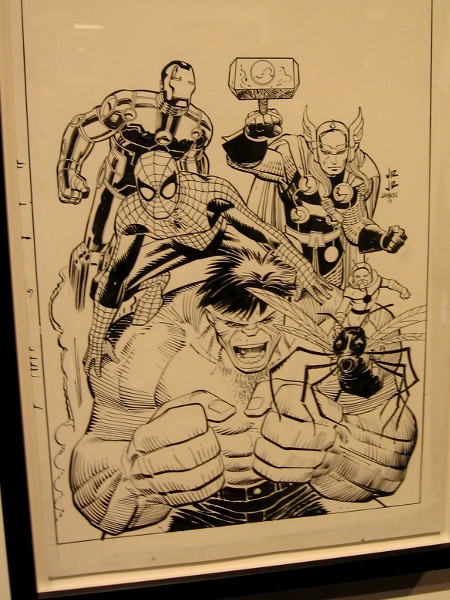
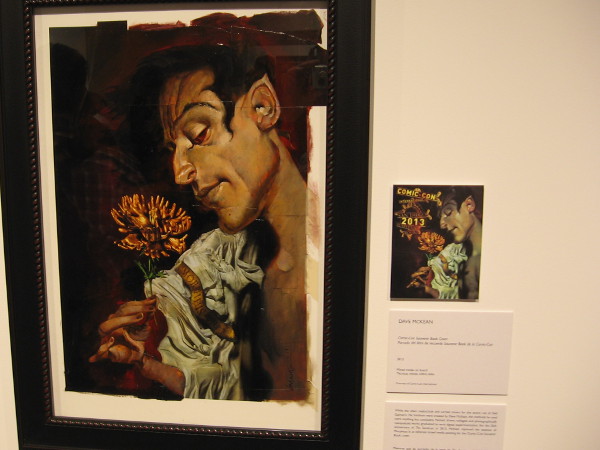
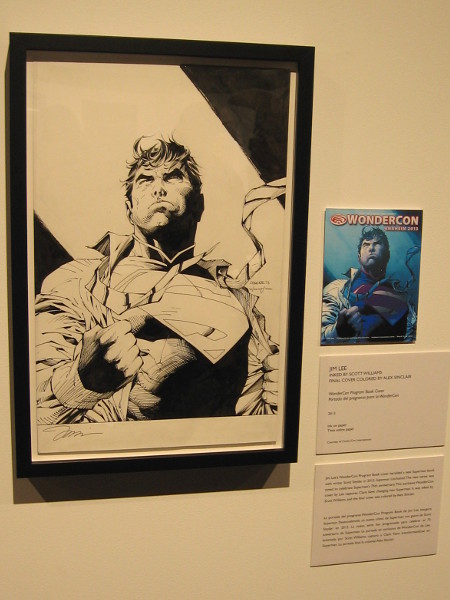
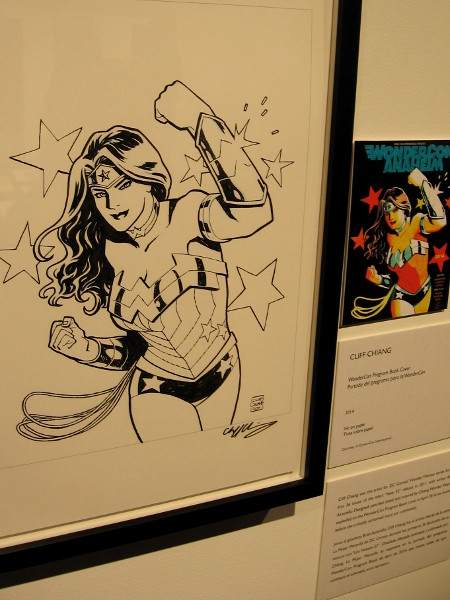
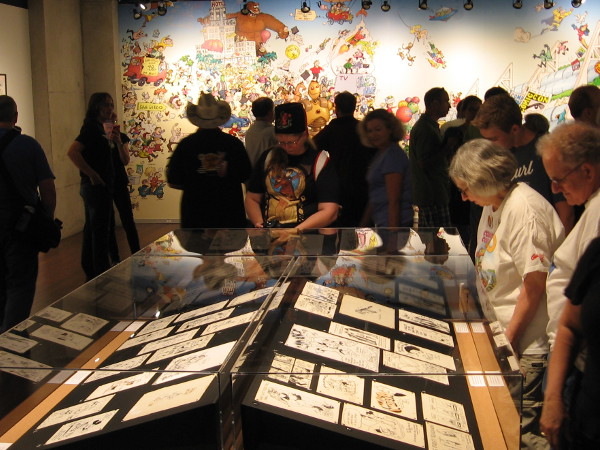
Someone heading in to check out the gallery is wearing a 1997 Comic-Con International shirt.The Art of Comic-Con is a first ever museum exhibition consisting of original artwork used for past comic conventions.A cool mural composed of covers from past San Diego Comic-Con programs, plus other affiliated conventions.Past souvenir program covers feature many different superheroes and pop culture characters.A riot of fun images dazzled many visitors to the opening of this special exhibit.Close photo of part of the Comic-Con program book mural.I see Bart Simpson, a bunch of Marvel heroes, Star Wars characters, Balboa Park and much more.This part of the exhibit traces the history of the Comic-Con International logo and the development of the popular toucan mascot.Fun artwork that was used during the 40th anniversary of San Diego Comic-Con.The toucan is flapping around anticipating another Comic-Con!Someone checks out a display case containing an example of an Inkpot Award. These are presented to outstanding authors, artists and other creative luminaries every year during Comic-Con.I spotted Krypto the Superdog taking a nap among more enthusiastic human Comic-Con fans.Visitors check out original comic book art created for Comic-Con souvenir program books over the past 45 years.The Art of Comic-Con special exhibit contains original work from more than 60 notable cartoon and comic book artistsAll kinds of animals hang out in San Diego!Space alien asks Marmaduke for directions to Comics Con. It will be mere blocks from the Central Library! In a few weeks, I expect to see a few aliens walking around San Diego, too!I guess Jimmy Carter was having troubles during a past Comic-Con.Cartoonists of every stripe have contributed greetings for the Comic-Con souvenir book over the years.I spotted Conan the Librarian in downtown San Diego’s incredible new library!Commander Spock of Vulcan visited Earth back in 1974. Comic-Con then was held in the El Cortez Hotel, a couple blocks from where I’m preparing this blog!Mickey Mouse headed down to San Diego one year. I’m willing to bet he’ll be here again this year!In 1981, Peter Parker lost a game of strip poker with Mary Jane Watson!This guy is probably still looking for the San Diago Convention Center.Kid checks out a hands on exhibit showing how comic books are produced and printed.A penciled panel featuring Batgirl in action. Part of a cool display which demonstrates the processes involved in creating a comic book.Inked and finished cover of the 2015 San Diego Comic-Con souvenir book. The art celebrates the 75th Anniversary of Will Eisner’s The Spirit, by artist Michael Cho.Visitors to the San Diego’s Art of Comic-Con museum exhibit enjoy a huge mural from a 2008 book cover created by legendary cartoonist Sergio Aragones.Check this out! The mural by Sergio Aragones, of Groo the Wanderer fame, contains hundreds of characters romping about San Diego during Comic-Con!Everyone is heading toward San Diego! I bet they’ll crowd into the Gaslamp for an enormous cosplay and pop culture party!Gazillions of fans and cosplayers are assembled in front of the San Diego Convention Center!Superheroes are swinging and flying all over the place!The silly Sergio Aragones characters have materialized in San Diego from a fertile imagination.One wall in the Central Library museum contained original art used to create past Comic-Con souvenir book covers.Artwork used for the 1989 program book cover.1993 cover artwork from the legendary comic book and graphic novel artist Frank Miller.The Justice League flies into action in this original 2011 cover art from fan favorite Jim Lee.John Romita, Jr. drew some of Marvel’s Avengers for the 2012 San Diego Comic-Con souvenir book.Dave McKean cover artwork for 2013 Comic-Con.Jim Lee drew Superman for this WonderCon program book cover in 2013.Cliff Chiang’s Wonder Woman graced the cover of WonderCon’s program book in 2014.Sergio Aragones signed his covers from the 2008 book “Comic-Con 40 Years of Artists, Writers, Fans and Friends”. He’s a super friendly guy!If you’re going to 2015 San Diego Comic-Con, head to the 9th floor of the downtown library. The gallery is up there, along with some great views of the city!
A very cool comic art gallery created by IDW Publishing opened a little over a week ago in San Diego’s Liberty Station.
This morning I enjoyed an incredible treat. I checked out the new San Diego Comic Art Gallery, part of IDW Publishing’s new headquarters at NTC Liberty Station. IDW is the fourth largest comic book publisher in the United States, and their rapid expansion was the reason for their move. Their new home is in a renovated barracks at the historic Naval Training Center San Diego, located in Point Loma. NTC Liberty Station has become home to a number of other museums, galleries and cultural attractions, a few of which I’ve blogged about already.
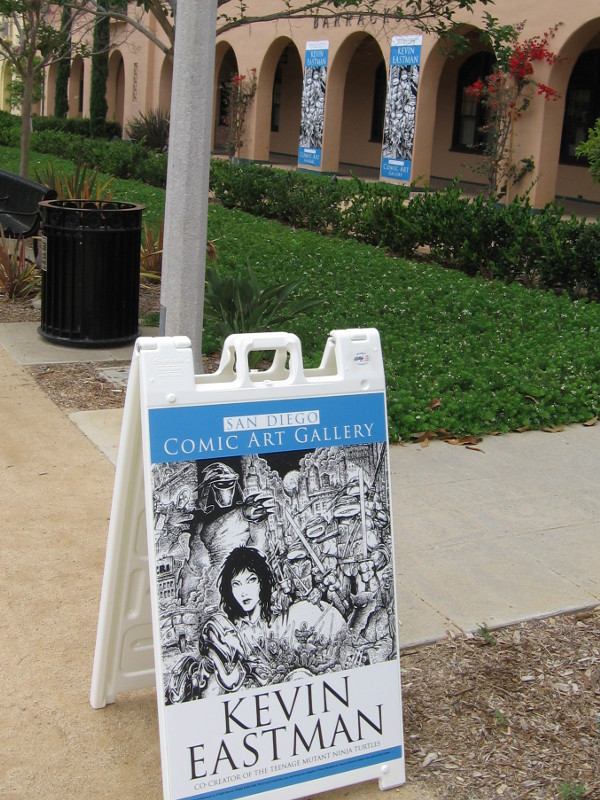
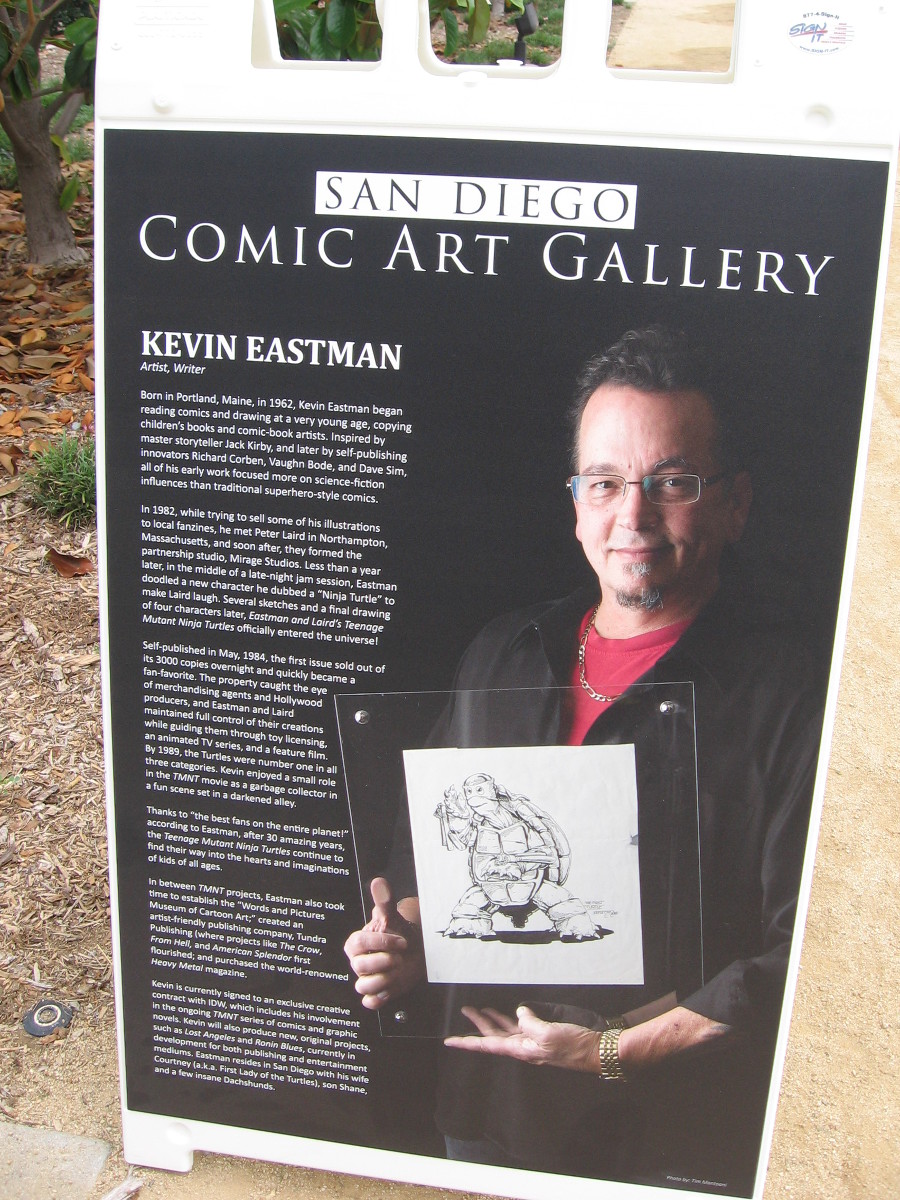
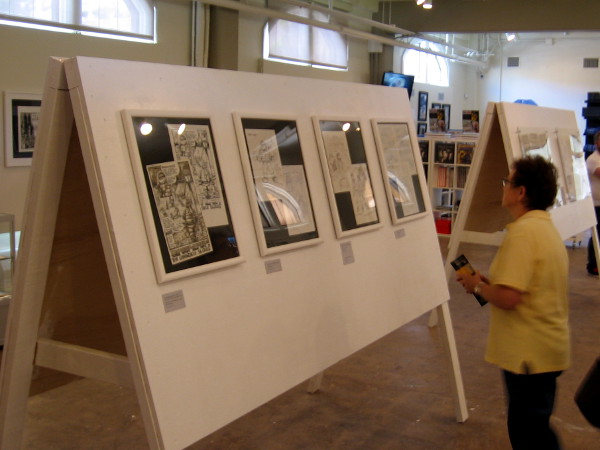
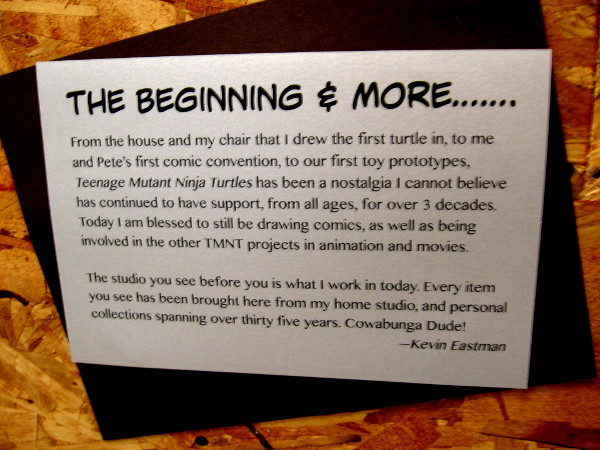
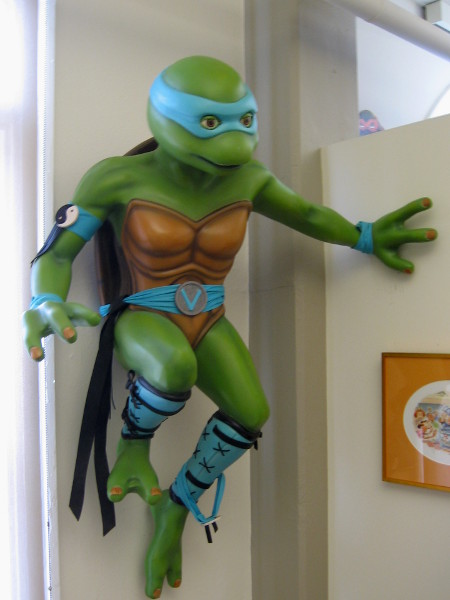
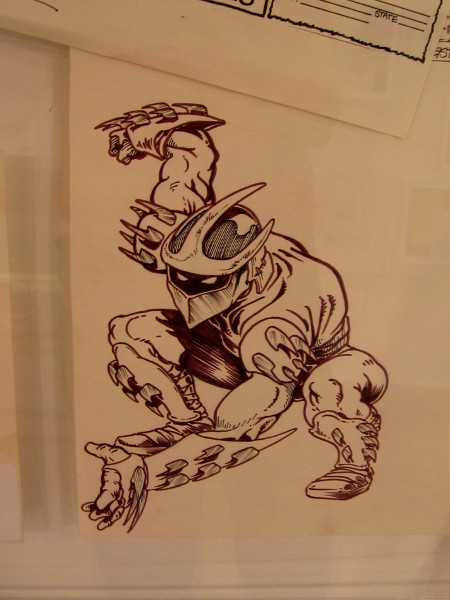
The first exhibition at the San Diego Comic Art Gallery concerns the art of Kevin Eastman. He is a co-creator of the stupendously successful Teenage Mutant Ninja Turtles. He and Peter Laird imagined the funny characters during a casual brainstorming session over thirty years ago. Their Mirage Studios was founded in 1983. IDW now owns publishing rights to Teenage Mutant Ninja Turtles, so original artwork provided by Kevin Eastman appropriately fills the comic gallery for the public to freely enjoy. Perhaps the most incredible part of the exhibition is a realistic representation of his studio, filled with creative materials and his own personal collectibles. There are shelves and shelves of toys, figurines and cool pop culture stuff!
Flash photography is not allowed in the museum-like gallery, because the light degrades the extremely valuable artwork. Consequently, many of my photos came out dim or blurred. Here are a few which turned out reasonably okay. They provide a flavor of what you’ll see should you visit!
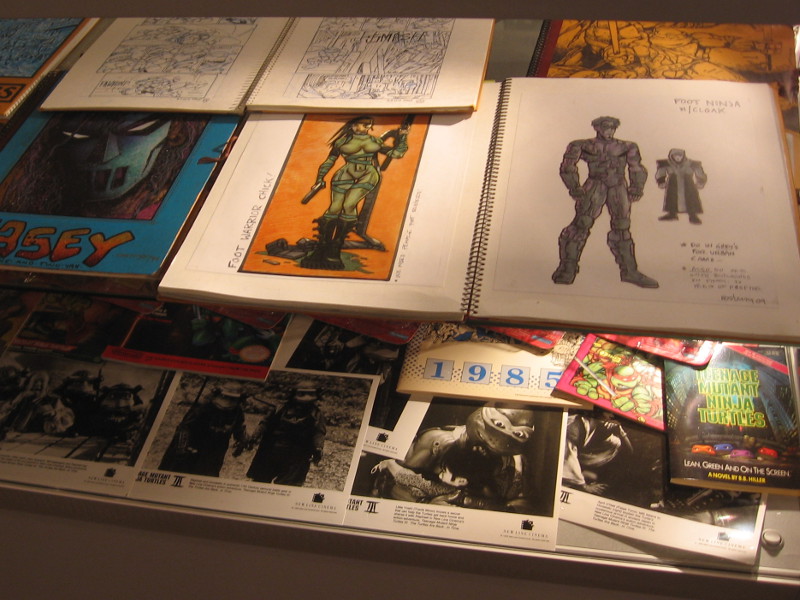
The first exhibition of the San Diego Comic Art Gallery features the work of Kevin Eastman, co-creator of the Teenage Mutant Ninja Turtles.Kevin Eastman began reading comics and drawing at a very young age. Major influences include Jack Kirby and science fiction. He created a character named Ninja Turtle just for fun.One of several TMNT drawings in a front window at the new San Diego Comic Art Gallery.Many examples of original Teenage Mutant Ninja Turtle artwork are on display in the fun, family-friendly museum.Foot Warrior Chick and a Foot Ninja with cloak, two enemies of the world-famous comic book, movie and cartoon turtles.Images in one display show some work of comic artist Kevin Eastman and the studio where he has worked.The studio you see before you is what I work in today. Every item has been brought from my home studio, and personal collections spanning over thirty five years. Cowabunga Dude!Photo through glass of the Kevin Eastman studio, transported to San Diego for this special exhibition.Wood panel by studio window shows the four funny, dynamic turtles in action.Venus, wearing a blue mask, overlooks visitors to a room where kids and adults are encouraged to draw, experience and read about comic art.Inked panel is one sample of the fun TMNT artwork on display at the Kevin Eastman exhibition.From sketch to finished page, visitors to the gallery can view a comic book’s creative process.Leonardo, Michelangelo, Raphael, Donatello and Splinter, the Turtles’ sensei.Shredder, the villainous leader of the Foot Clan in New York City.Colorful graphic depicts Raphael, of the Teenage Mutant Ninja Turtles.Life is Art. Paint your Dreams.
…
To enjoy future posts, you can “like” Cool San Diego Sights on Facebook or follow me on Twitter.
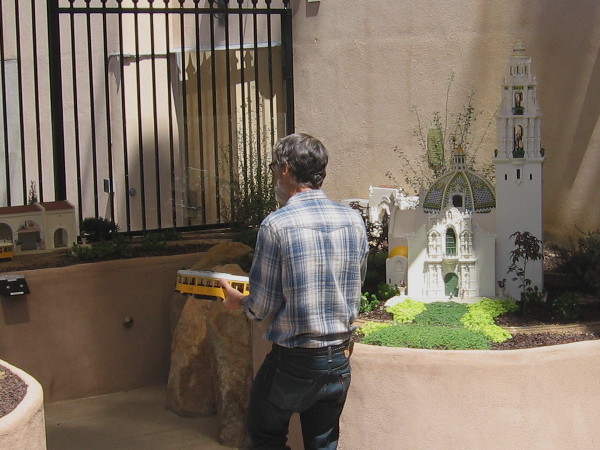
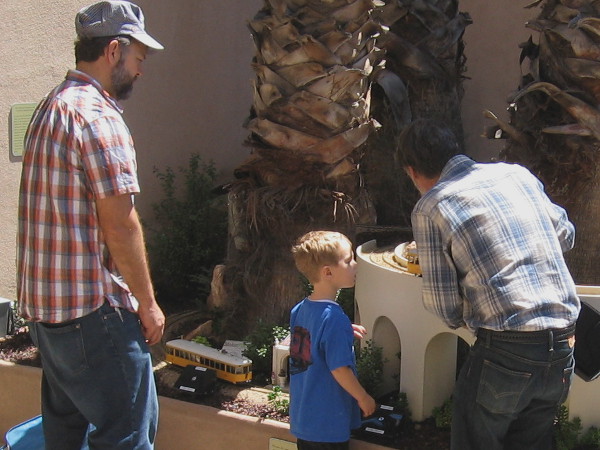
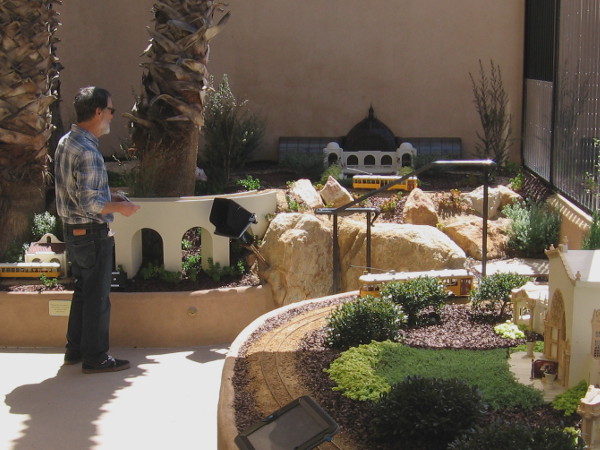
Young and old together dream in a small outdoor nook in Balboa Park.
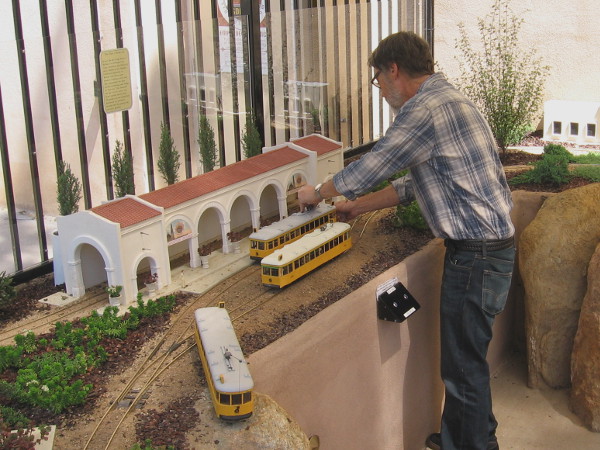
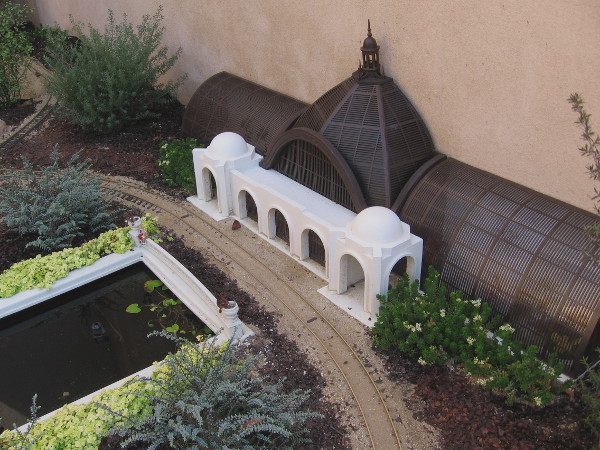
The San Diego Model Railroad Museum in Balboa Park has erected a cool little exhibit on their outdoor rear patio called the Centennial Railway Garden. To commemorate the hundred year anniversary of Balboa Park, a detailed layout features streetcars traveling among 3D-printed reproductions of several buildings in the park. The scenes date from the 1915 Panama-California Exposition. Visitors young and old can dream they’ve traveled back in time as they take control of the fun model train action with their smart phone! (Technology has changed somewhat in the last hundred years!)
Go check out the Centennial Railway Garden and have a lot of fun!
Volunteer at San Diego Model Railroad Museum walks past 3D-printed model of the historic California Building with its bell tower.Putting a model of a streetcar on the tracks. A hundred years ago, John D. Spreckels’ Class 1 streetcars provided transportation around San Diego.This small replica of the Spreckels Organ Pavilion is part of special exhibit that commemorates Balboa Park’s centennial.The Centennial Railway Garden also includes a model of Balboa Park’s Botanical Building and nearby reflecting pool!Getting the streetcars ready early one weekend morning before many visitors arrive at the San Diego Model Railroad Museum.The very cool Centennial Railway Garden is a place in Balboa Park where dreams from the past come alive.
…
To enjoy future posts, you can “like” Cool San Diego Sights on Facebook, or follow me on Twitter.
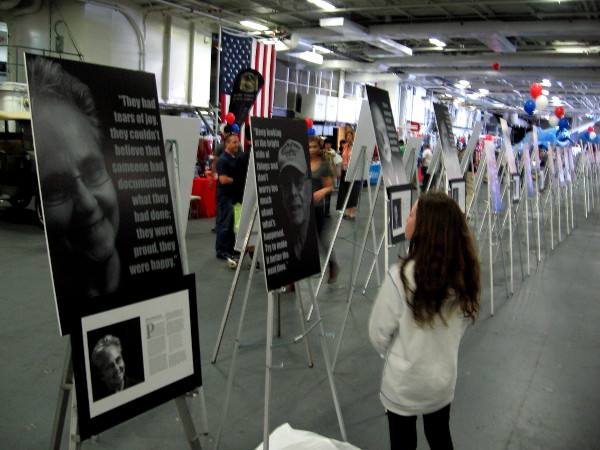
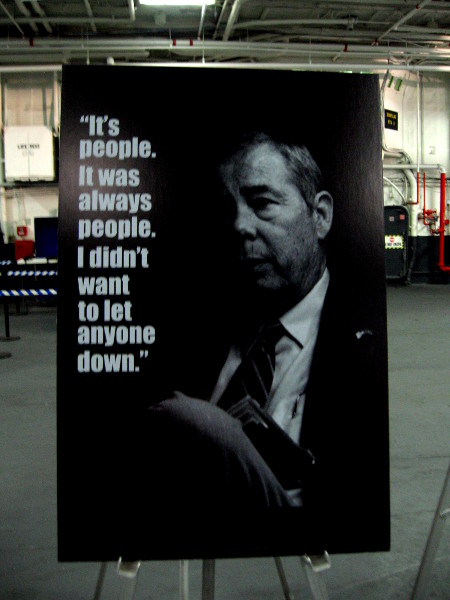
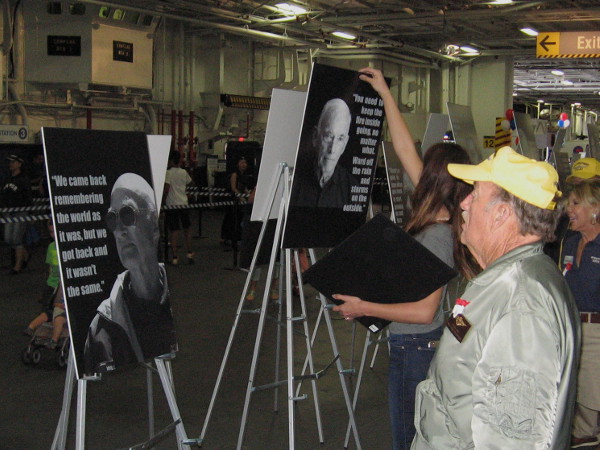
Visitor to USS Midway Museum on Memorial Day weekend absorbs Portraits of Resilience exhibit, created by students of High Tech High Charter School.
This morning I walked a little around the USS Midway. The historic aircraft carrier is now a popular museum docked on San Diego Bay. I was there because it’s Memorial Day weekend, and I have personal experiences that make me grateful for America and our brave servicepeople. But I won’t blog about that here.
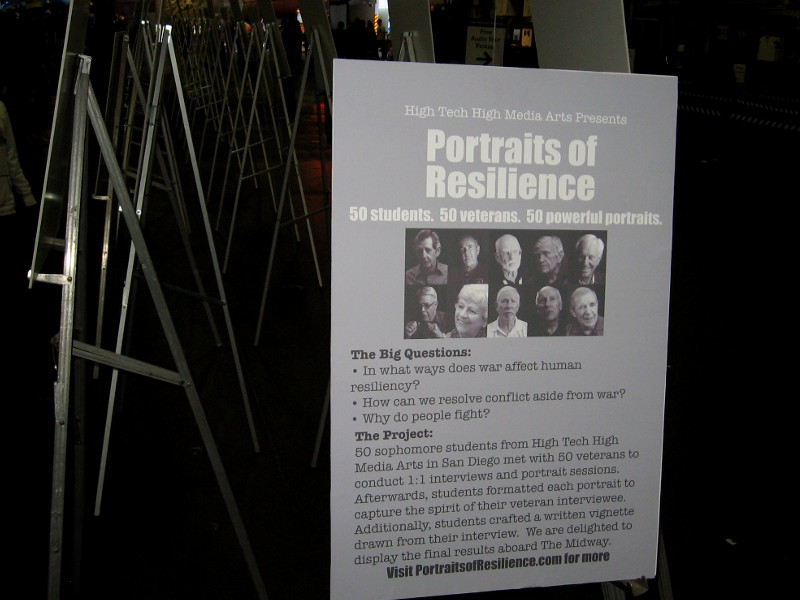
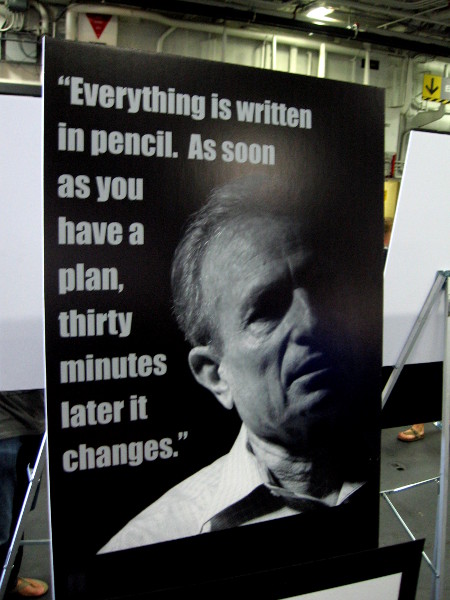
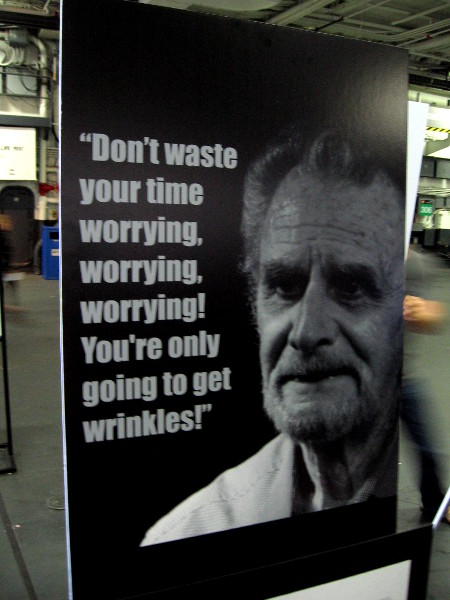
I was surprised to see a thought-provoking exhibit being set up in the hangar deck of the Midway. I learned it was a project of students at High Tech High, which is a charter school in Point Loma. 50 students interviewed 50 veterans, to learn about war, and peace, and human resiliency.
I took some photos in less-than-optimal lighting, and my flash wasn’t entirely helpful, so I had to apply a good deal of contrast.
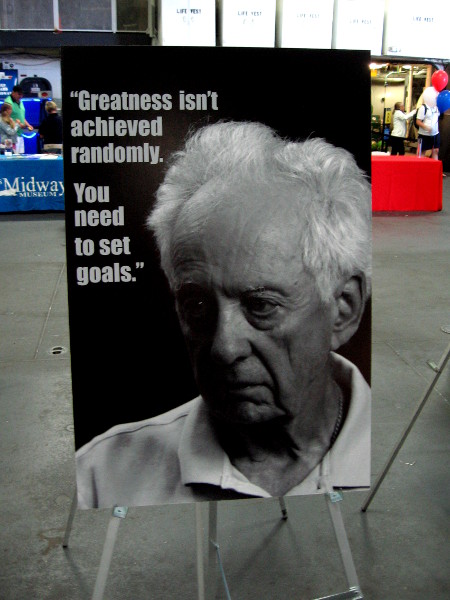
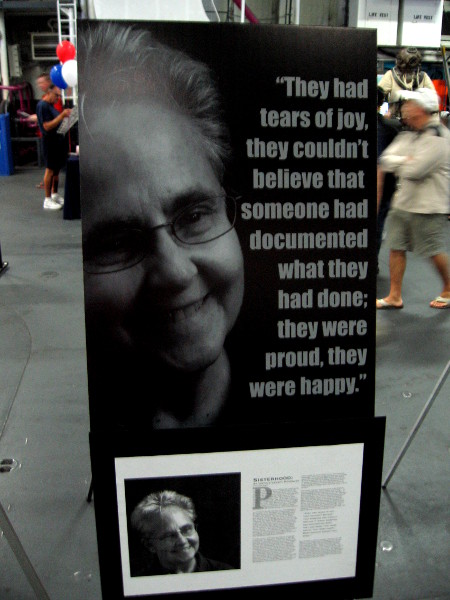
Portraits of Resilience. 50 students. 50 veterans. 50 powerful portraits.The whole point of the Armed Forces is to protect freedoms so that people can agree or disagree with what’s going on.Greatness isn’t achieved randomly. You need to set goals.It’s people. It was always people. I didn’t want to let anyone down.A veteran reads words of pain, joy, memory and wisdom spoken by others who’ve served in the military.Everything is written in pencil. As soon as you have a plan, thirty minutes later it changes.Don’t waste your time worrying, worrying, worrying! You’re only going to get wrinkles!My best decision was marrying my wife. My number two was being a pilot and getting my wings.No matter how your grades are or what people think about you, do what you want to do and you can accomplish it.We didn’t have names of battles. We had excursions, and we had firefights, but we didn’t have names of them.When you return, things are physically and emotionally different. It’s like moving from one world to another.They had tears of joy, they couldn’t believe that someone had documented what they had done; they were proud, they were happy.You’re watching his back, he’s watching your back.Now when somebody says, “Thank you for your service”, I look them directly in the eye and say, “It was my privilege”.
…
To enjoy future posts, you can “like” Cool San Diego Sights on Facebook or follow me on Twitter.
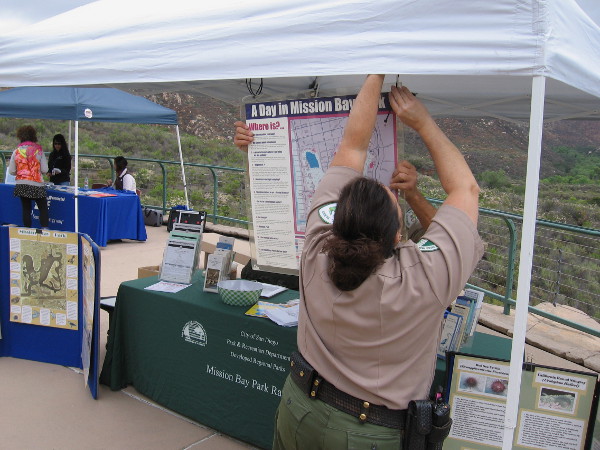
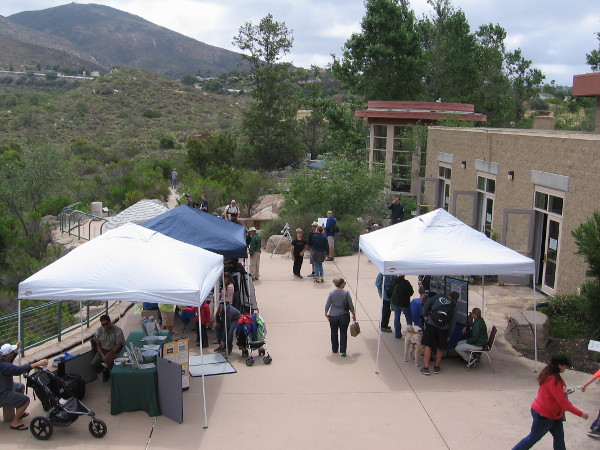
Park rangers and community organizations set up displays on the Visitor Center patio.
This morning I headed up Mission Gorge Road to check out the big annual Explore Mission Trails Day event!
Mission Trails Regional Park is a 6000-acre nature reserve located in San Diego’s East County. It’s one of the largest urban parks in the United States–basically a wide stretch of rugged, rocky wilderness within our large modern city! The San Diego River runs through the very heart of the park as it makes its way from higher inland elevations to the Pacific Ocean. I often drive past and gaze at the low chaparral-covered mountains and hills, and twice I’ve climbed Cowles Mountain, but this was the first time I’ve actually set foot inside the Visitor Center.
What an awesome place! How did I miss it all of these years?
Today I limited myself to the south end of the park, including a short but super cool hike from the Visitor Center to the Grinding Rocks. (That will be my next blog post!) There were additional Explore Mission Trails Day activities up by the Old Mission Dam and Kumeyaay Lake Campground, and by Mast Boulevard and Highway 52. I suppose I’ll have to go again next year!
My photos tell the story of what I saw…
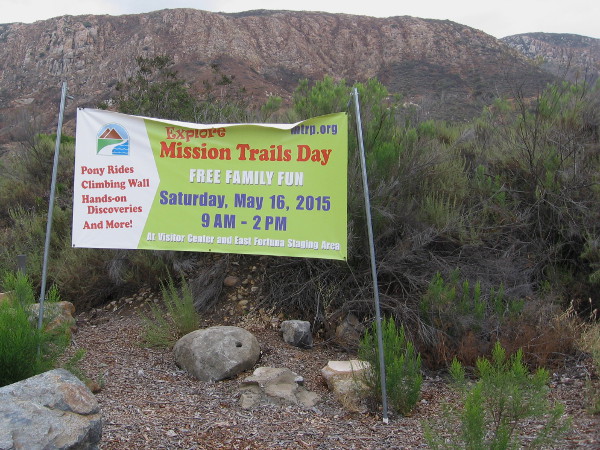
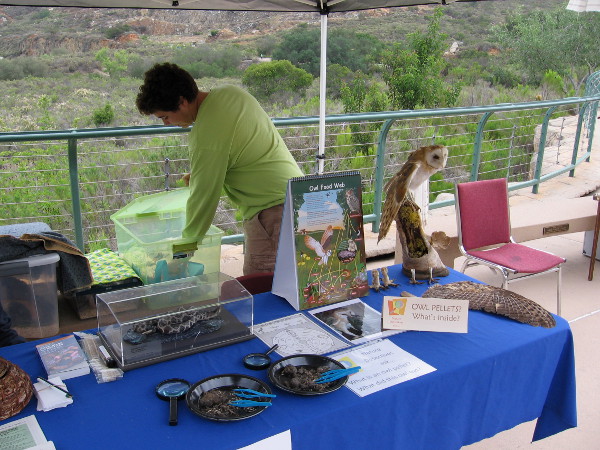
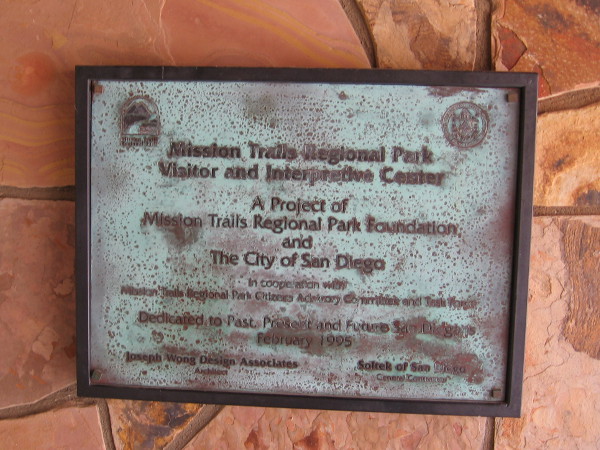
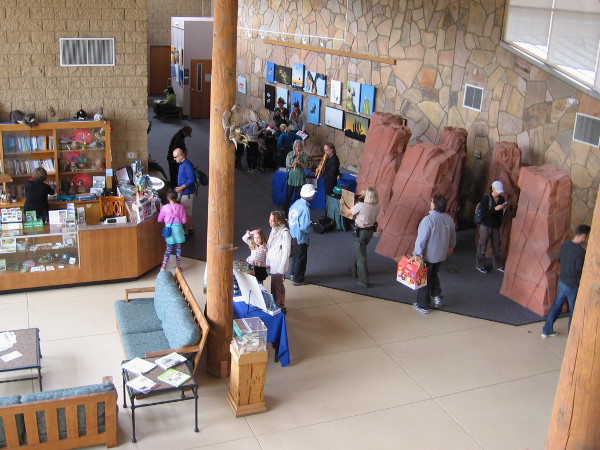
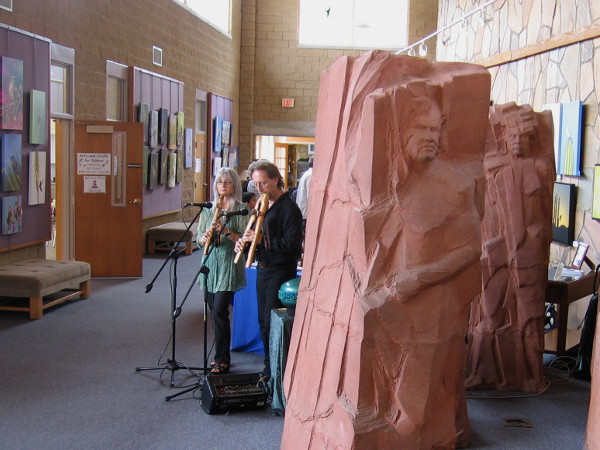
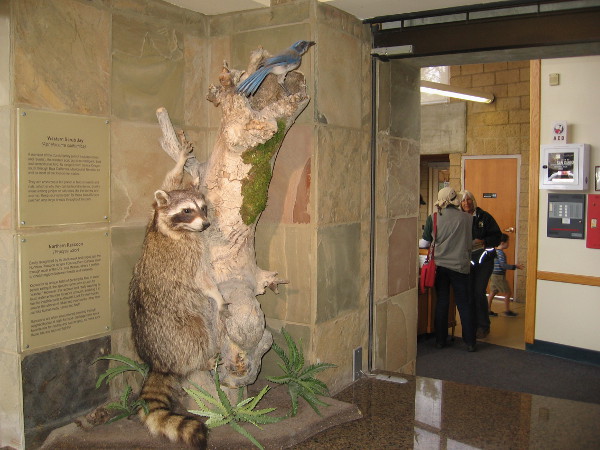
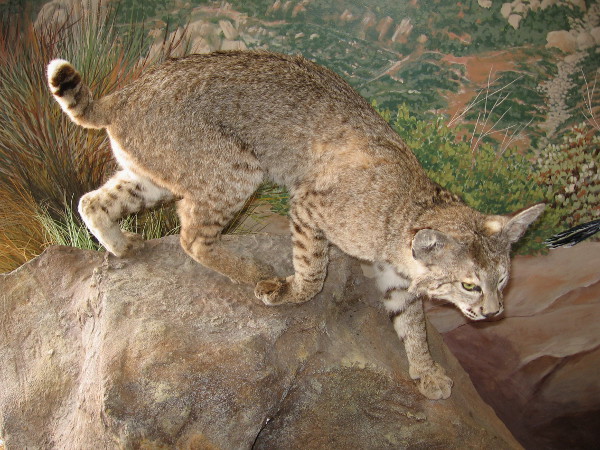
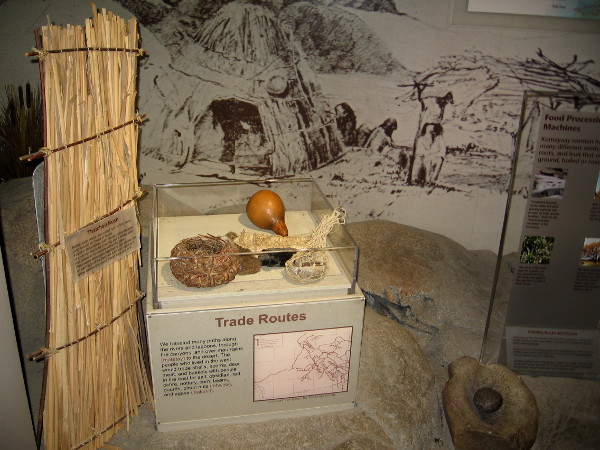
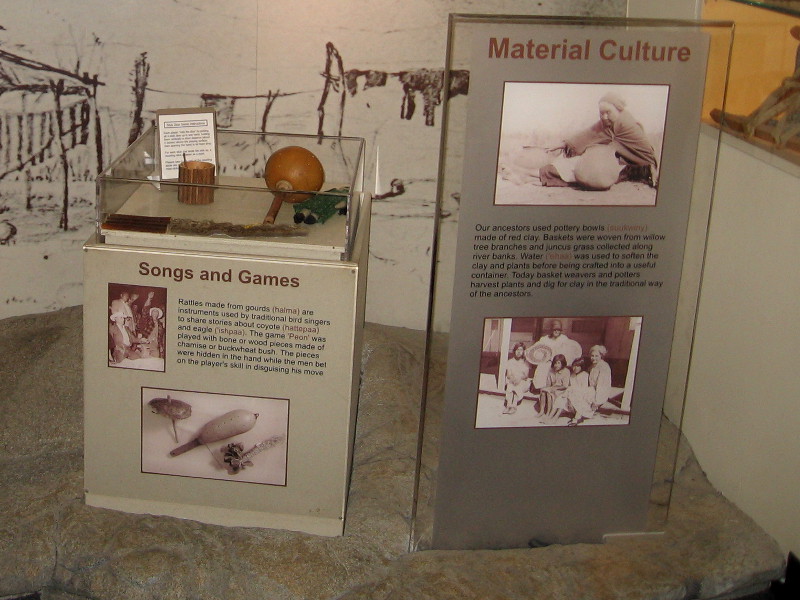
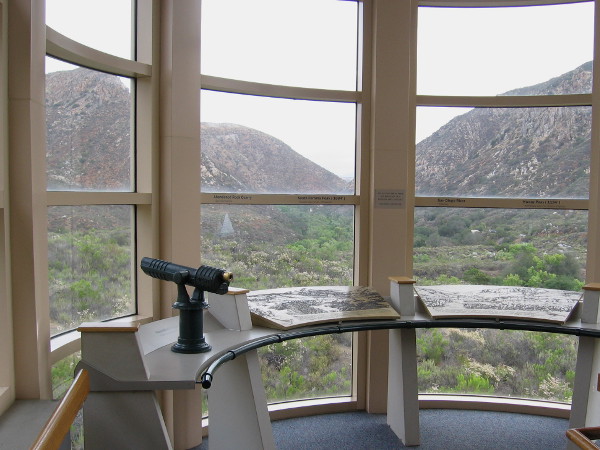
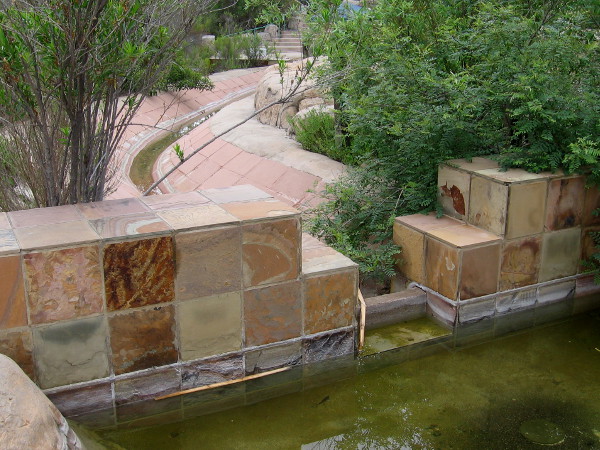
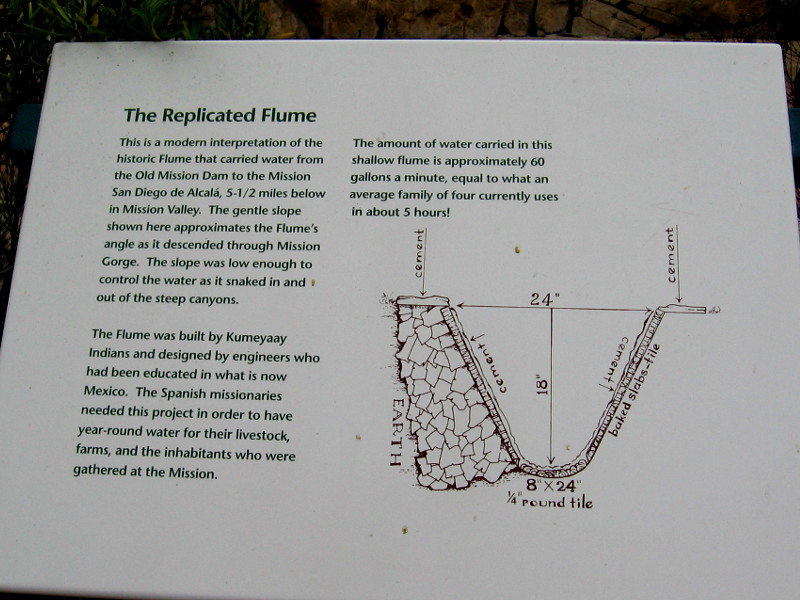
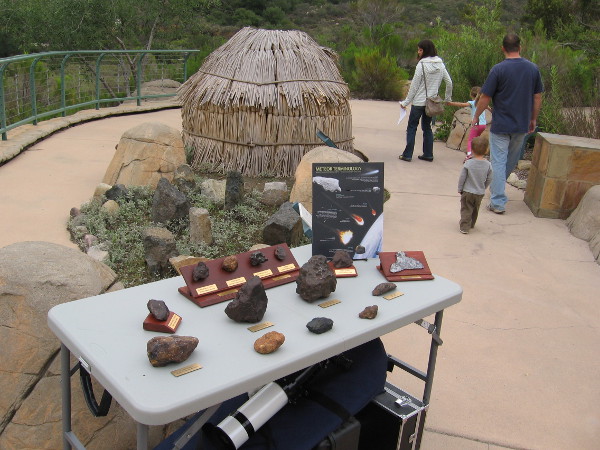
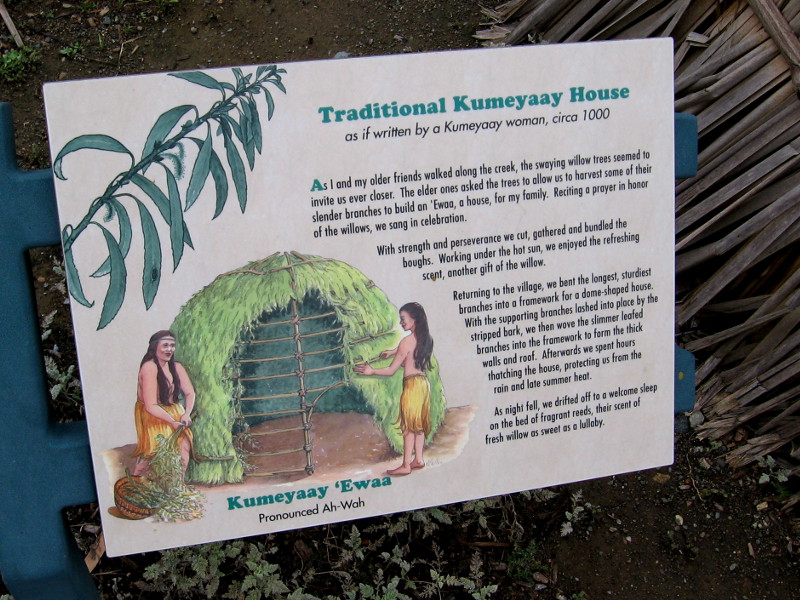
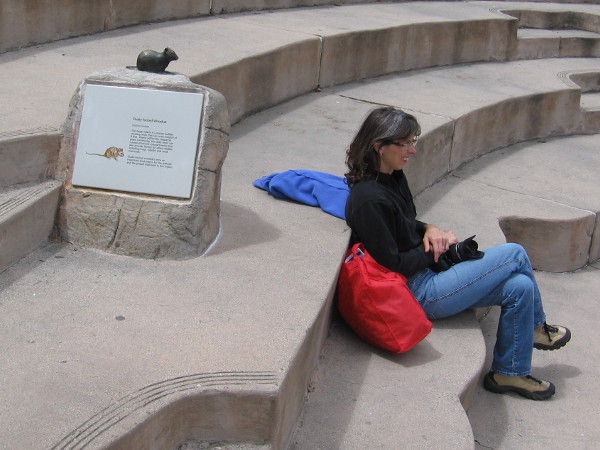
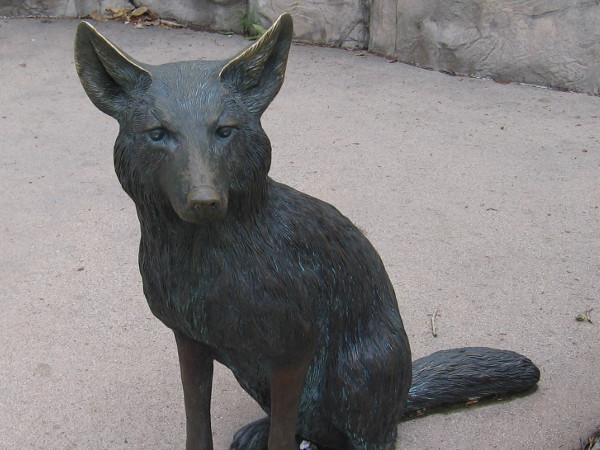
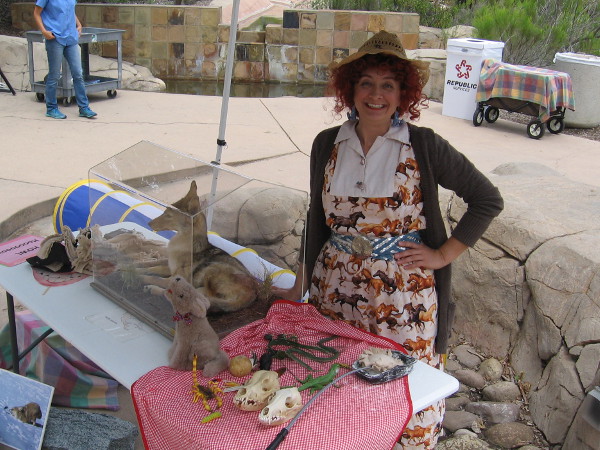
Banner beside Father Junipero Serra Trail announces Explore Mission Trails Day!There were opportunities to learn about nature, wildlife, science, history and the environment.Some folks near the main entrance of the Mission Trails Regional Park Visitor Center.Bronze sculpture of a golden eagle is perched above path near the Visitor Center entrance.Plaque by door dedicates the large open space park to past, present and future San Diegans.View inside the Mission Trails Visitor and Interpretive Center from second floor balcony.Flutists play near “Heritage” sculpture depicting native Kumeyaay elders. Amazing monumental artwork is by T.J. Dixon and James Nelson.The Art of Bird Photography is a special exhibition featuring the work of Blake Shaw.Roberta Labastida is the author of My Ancestors’ Village, which tells about the life of the Kumeyaay people who were here long before the arrival of Europeans.Numerous exhibits and activities could be found inside the Mission Trails Visitor and Interpretive Center.Western Scrub Jay and Northern Racoon are animals one might see in this very large San Diego urban park.Cleaning some chalk off where kids have been identifying animal tracks.The bobcat is often encountered in the hills and mountains of San Diego County. I once saw one while hiking around Mount Laguna!Historically, the Kumeyaay lived in large family groups, and moved about depending on the season and the availability of nature’s bounty.Exhibits in Visitor Center’s museum show different aspects of Kumeyaay culture, including songs, games and crafts.Very cool observation window allows visitors to look out upon South Fortuna and Kwaay Paay Peak.With the majestic chaparral-covered Fortuna Mountains as its backdrop, the coastal sage scrub habitat is highly adapted to our long hot summers.Looking back out at the rear patio. More people have arrived in the past few minutes while I explored inside.Now I’m outside again, coming down some steps. Another cloudy day, following San Diego’s latest storm!Replicated flume near Visitor Center is a modern interpretation of the man-made channel that carried water from the Old Mission Dam (a couple miles upriver) to Mission San Diego de Alcala.Sign by replicated flume details how it was engineered over two centuries ago. Water was used at the old historic Mission for livestock, farms and inhabitants.Cool table full of meteorites next to traditional Kumeyaay house made of willow branches.This sign tells the story of a fictional Kumeyaay woman, circa the year 1000. This primitive house was called an Ewaa.Large boulder moved to Visitor Center due to construction contains a mortar-like hole used by Kumeyaay to grind acorns, seeds, roots, herbs and other natural foods.A replicated solar calendar made of stones, used by Native Americans to mark the Winter Solstice. Only a couple have been found in San Diego County.This pink beauty is a California Wild Rose, found beside the patio. They’re more often found along streams.Lady rests in Visitor Center amphitheater by small bronze sculpture of a Dusky-footed Woodrat. This wild rodent can create a nest up to 8 feet high!Sculpture of a coyote, one the top predators of Mission Trails Regional Park. Even with human encroachment, they remain numerous today.Family checks out a very cool, life-size sculpture of a mountain lion at the amphitheater. This secretive animal is rarely seen around here.Ms. Frizzle was present at Explore Mission Trails Day! The event was an educational treat for both kids and adults!
…
To enjoy future posts, you can “like” Cool San Diego Sights on Facebook or follow me on Twitter.
































































 Cool San Diego Sights!