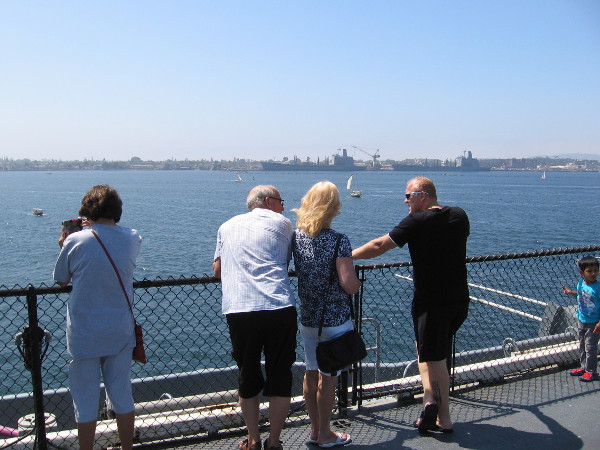
A kid visiting the USS Midway Museum with family checks out the dizzying view from the end of one of the aircraft carrier’s projecting horns.
This morning I paid a visit to San Diego’s amazing USS Midway Museum.
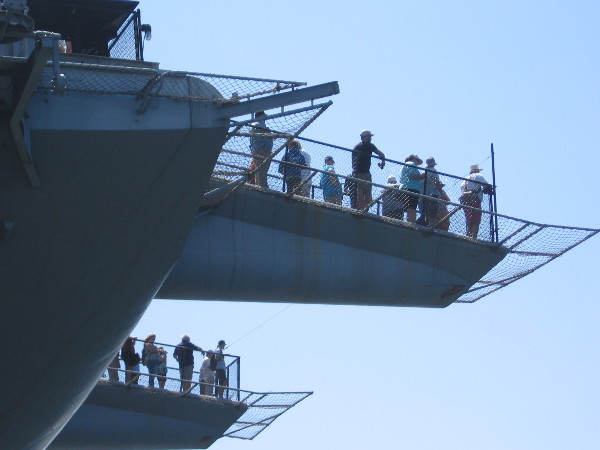
During my short visit I ascended to the flight deck and walked around a bit. I couldn’t resist walking out to the end of one of the aircraft carrier’s bridle-arrest horns. The two downward sloping projections at the bow of the USS Midway allow visitors to stand high over San Diego Bay, with wide views across the water.
I took some photos!
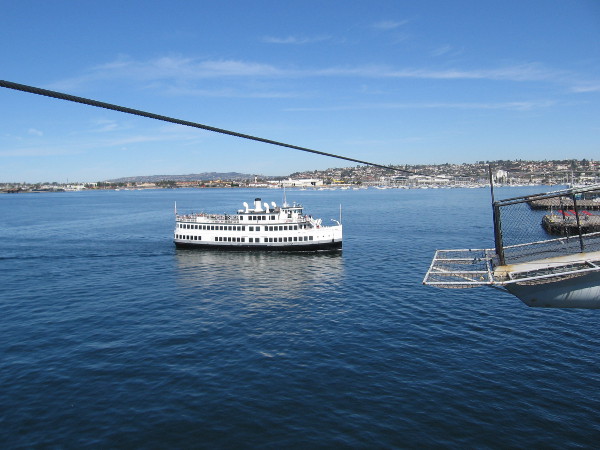
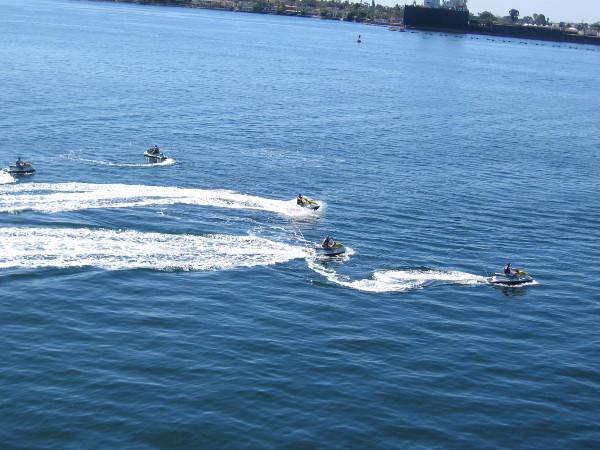
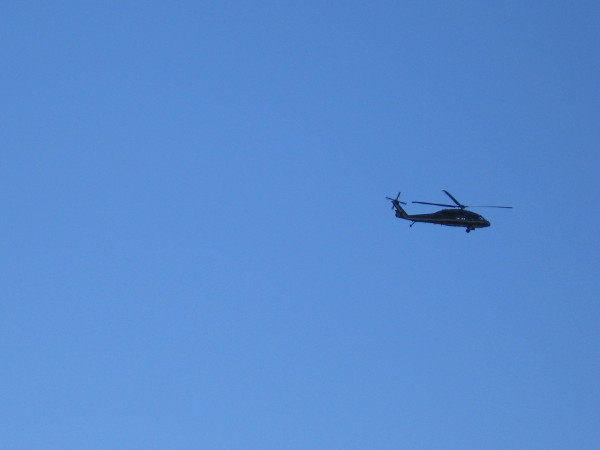
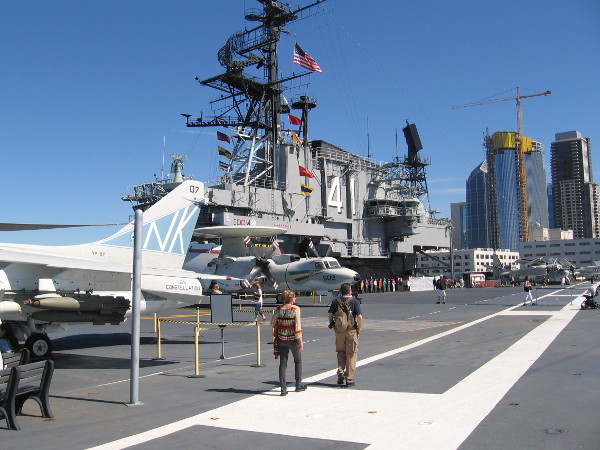
Sign at bow of USS Midway aircraft carrier explains the function of bridle-arrest horns. They were used until the 1980’s. They are a vestige of an earlier era in carrier aviation.People walk down one horn for an amazing view of San Diego Bay.The Admiral Hornblower, beyond the second bridle-arrest horn, is heading in toward the Embarcadero after completing a harbor tour.And here comes the Spirit of San Diego right behind! Now I’m standing at the end of one horn, which hangs high over the blue water below!Five people were jetting around the bay on some fun personal watercraft.Photo aiming south from the end of the horn shows the Fish Market Restaurant, Tuna Harbor, a bit of Seaport Village and the San Diego–Coronado Bridge.A helicopter passes overhead. Active aircraft are a frequent sight near the four large Navy bases on San Diego Bay: Naval Base San Diego, Naval Air Station North Island, Naval Amphibious Base Coronado and Naval Base Point Loma.Looking back up toward the flight deck of the USS Midway. Some visitors are reading signs which describe the history of naval aviation–a history that originated at North Island across San Diego Bay.Looking down through safety nets fringing the carrier at sparkling water far below.After drinking in the incredible views, I headed back onto the flight deck.I noticed some school kids learning about the Midway from a docent.A look from the bow of the USS Midway back toward the aircraft carrier’s Island superstructure and downtown San Diego skyscrapers.Someone else walks out to the end of one horn. Across the water at North Island I see the active aircraft carrier USS Theodore Roosevelt (CVN-71).
…
I live in downtown San Diego and love to walk around with my camera! You can follow Cool San Diego Sights via Facebook or Twitter!
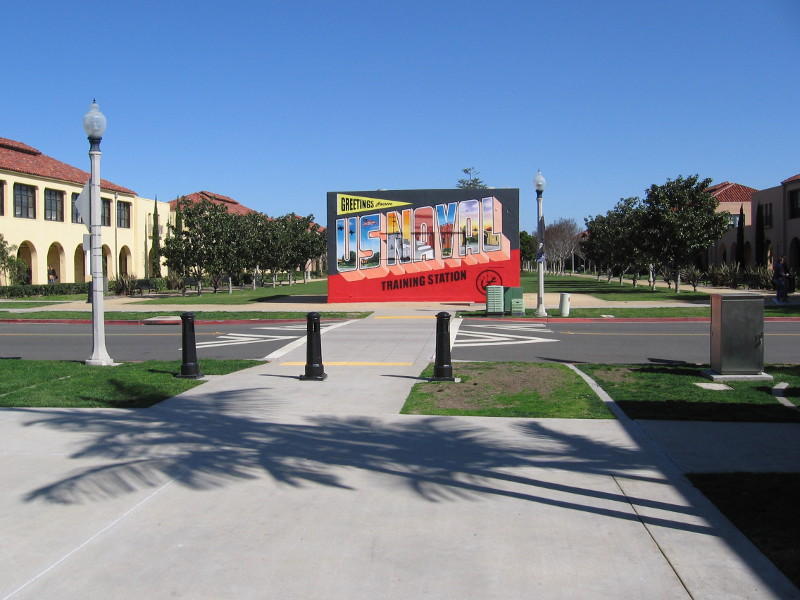
A huge postcard has appeared on Dewey Road in Point Loma, at the southwest end of Liberty Station’s Arts District!
I walked around Liberty Station today before sitting down by the boat channel to write another short story. And look what I discovered! It’s the first time I’ve seen this cool mural!
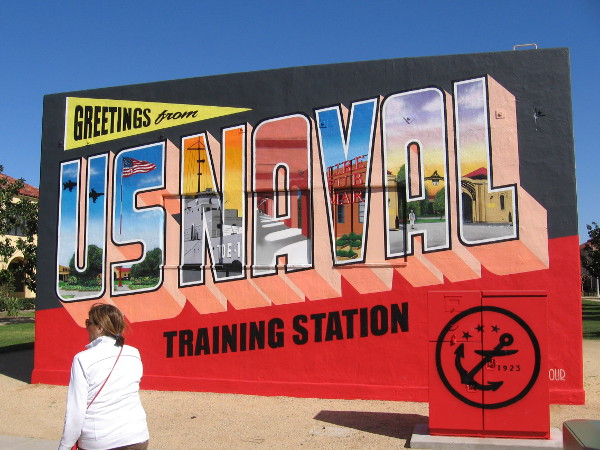
This new public art resembles a gigantic postcard, which reads: Greetings from U.S. Naval Training Station. It was created by the two artists who painted the postcard-like Greetings from San Diego mural, which I photographed a month ago in North Park. Victor Ving and Lisa Beggs are travelling around the country in an RV and creating a whole bunch of these huge colorful postcard murals!
Painted inside the letters I see scenes from Ingram Plaza, the Barracks Arcade, Liberty Public Market and the USS Recruit!
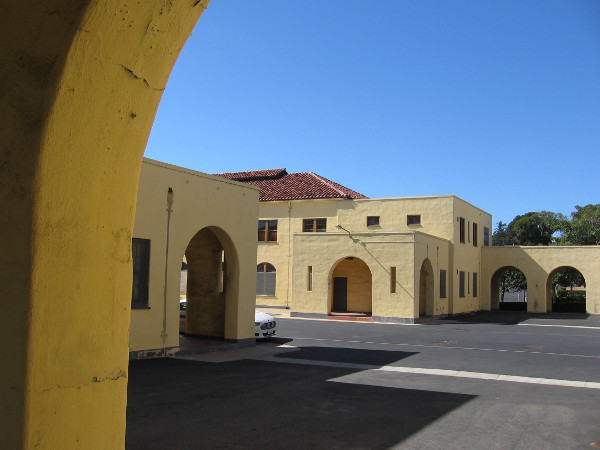
As you might know, the U.S. Naval Training Station, or Naval Training Center San Diego, was a military base where thousands of sailor recruits learned the ropes upon enlisting in the U.S. Navy. It closed in 1997 and has been redeveloped into a mixed cultural, recreational, shopping, business and residential complex in Point Loma. It’s like a spacious park with lots of grass, arched walkways and fountains–a perfect place to relax!
During my stroll today though Liberty Station, I discovered even more public art, which I’ll blog about shortly. And please watch for my new work of fiction at Short Stories by Richard. I think it’s almost done!
Greetings from U.S. Naval Training Center. A cool new mural at Liberty Station by artists Victor Ving and Lisa Beggs.
…
I live in downtown San Diego and love to walk around with my camera! You can follow Cool San Diego Sights via Facebook or Twitter!
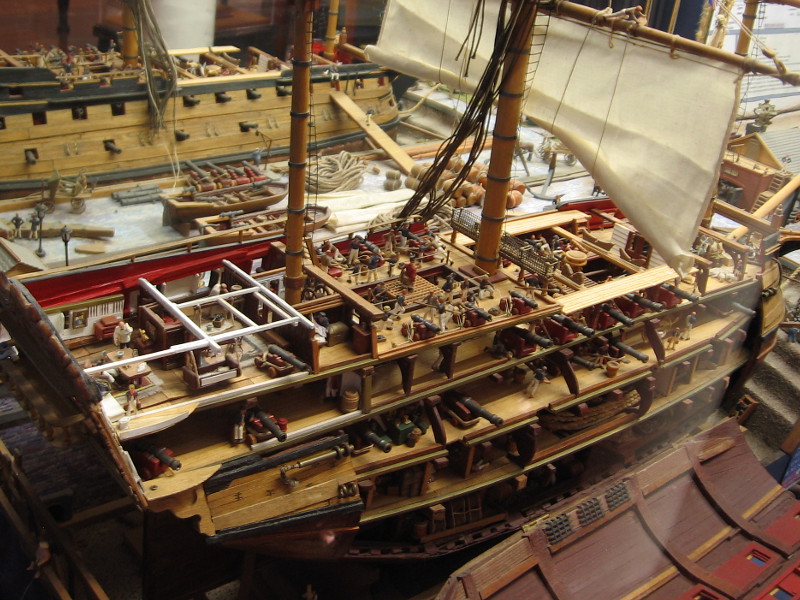
An amazing ship model by artist Joe Frangiosa, Jr. One of many fantastic examples in an extensive, special exhibition at the Maritime Museum of San Diego.
The Maritime Museum of San Diego currently has an exhibit that’s a lot of fun. It concerns collecting model ships and model ship building! Anyone interested in the hobby or nautical history in general should check it out!
I took a few photos to provide just a taste of what you’ll see. Bring your kids! They’ll love it!
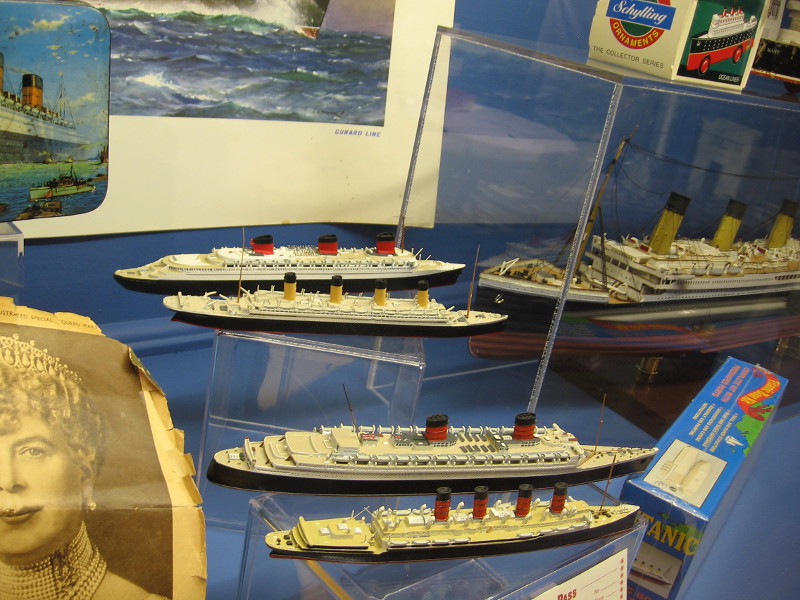
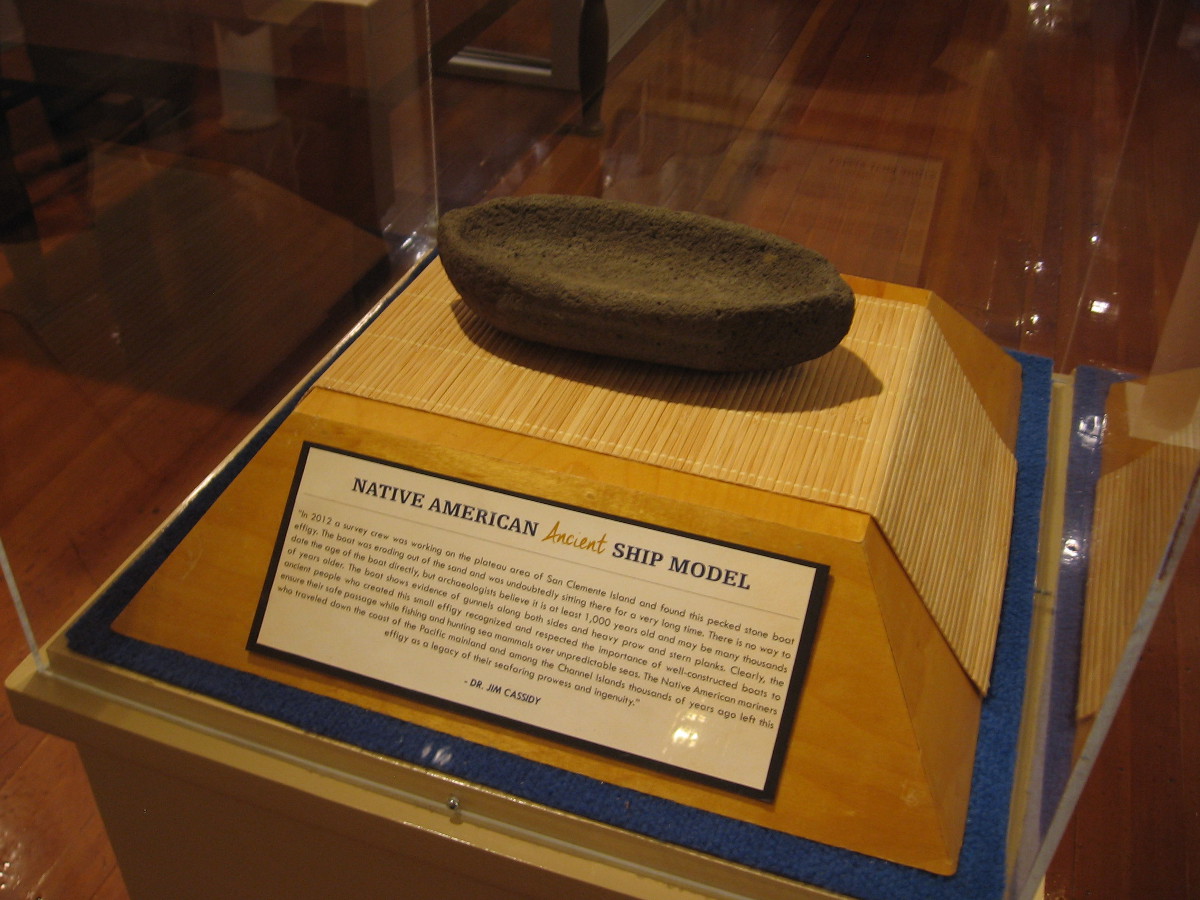
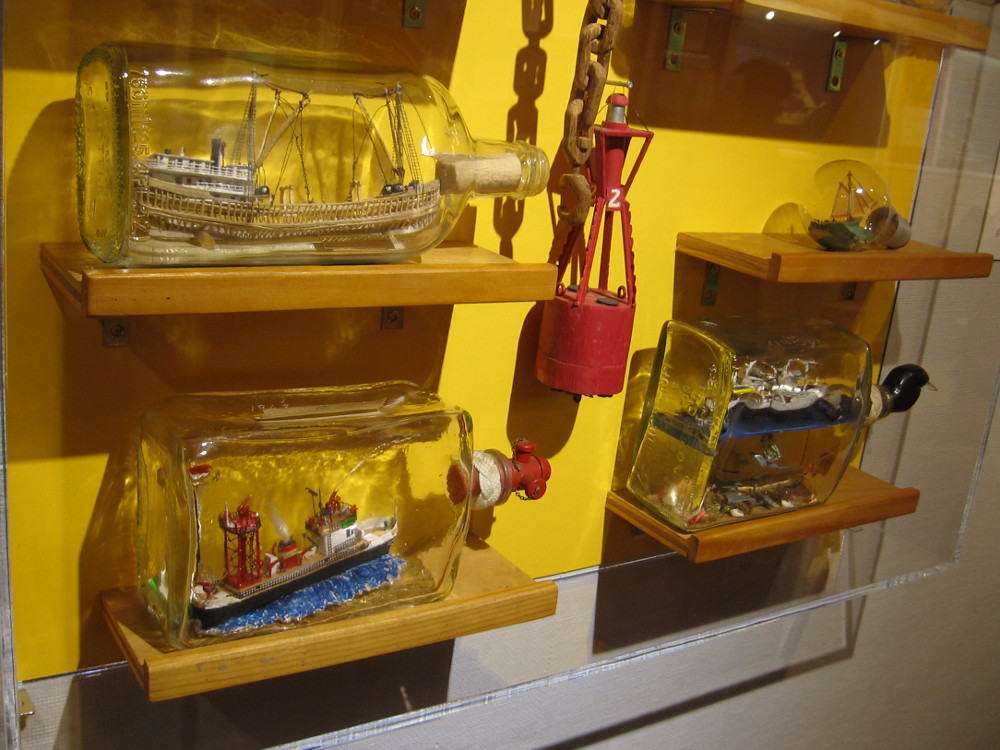
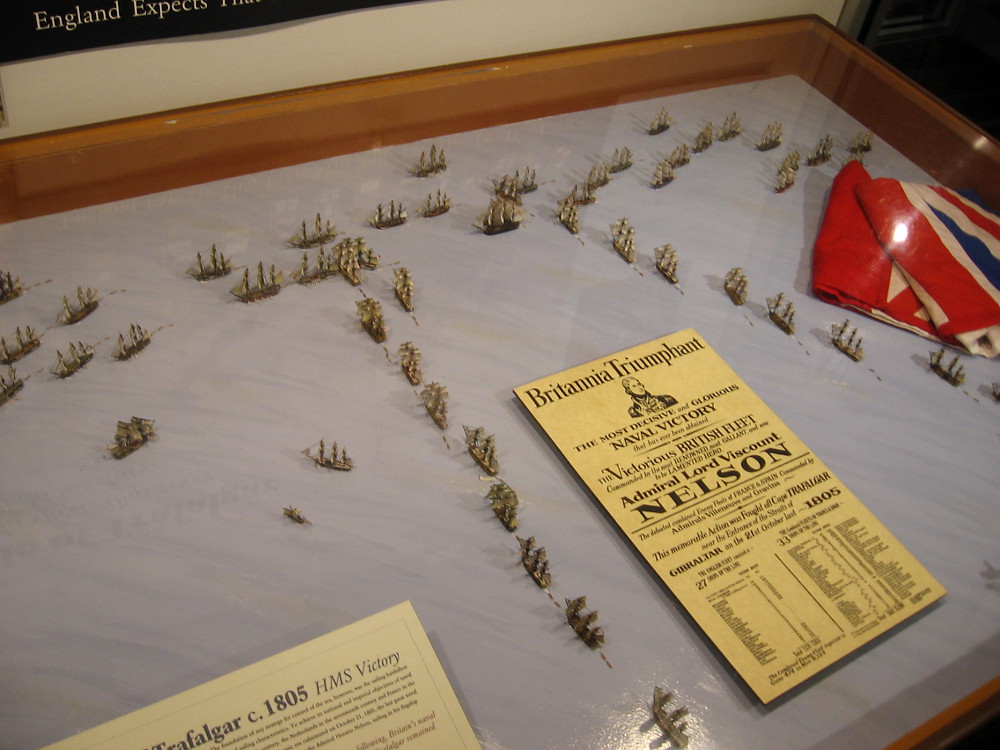
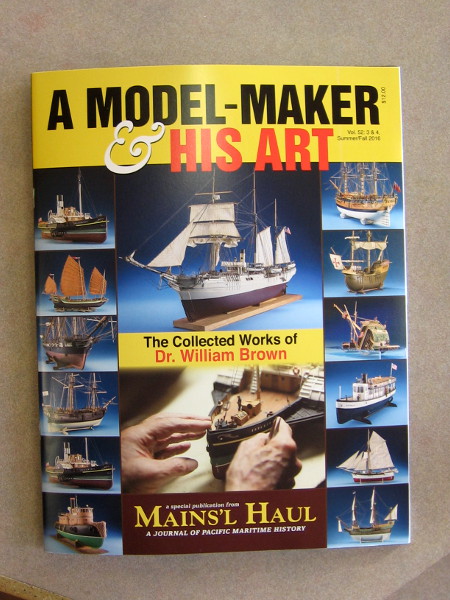
Detailed model of a 74 gun two-decker British Ship of the Line, circa 1800. By artist Joe Frangiosa, Jr.Half a dozen ship models in different scales of the San Salvador, historic galleon of explorer Juan Rodriguez Cabrillo, who discovered San Diego Bay for Spain in 1542.Tiny models of classic cruise ships, including the famous Titanic.A Native American ancient ship model. This pecked stone boat effigy was found in 2012 on San Clemente Island. It’s at least 1000 years old.Just a few of the many ships in bottles on display now at the Maritime Museum of San Diego.Tiny model ships recreate the Battle of Trafalgar between the British Royal Navy and the Spanish fleet in 1805. Outnumbered, British Admiral Nelson sailed two columns directly into the opposing line of ships.The Cutter Bear, by famous ship modeler Dr. William Brown, a local artist. His amazing work appears in prestigious museums around the world, including Mystic Seaport and the Smithsonian Institution.A Model-Maker and His Art. The collected works of Dr. William Brown. Any serious model ship maker, collector or hobbyist must have this fine publication.
As a member of the Maritime Museum I recently received the latest publication of Mains’l Haul, titled A Model-Maker and His Art. It features the collected works of one of the world’s most famous model ship builders: Dr. William Brown. It’s really amazing! Any serious model ship hobbyist must have a copy of this fine publication in their library. The many photos are extremely detailed–much better than my few, which were taken in dim light through glass!
Hopefully you’ll soon be able to buy A Model-Maker and His Art online here. Or look for it at the museum’s gift shop!
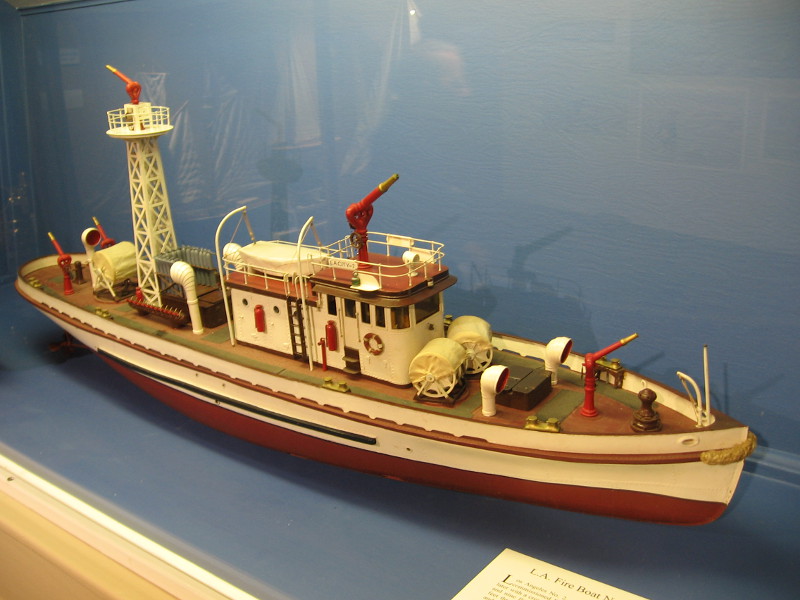
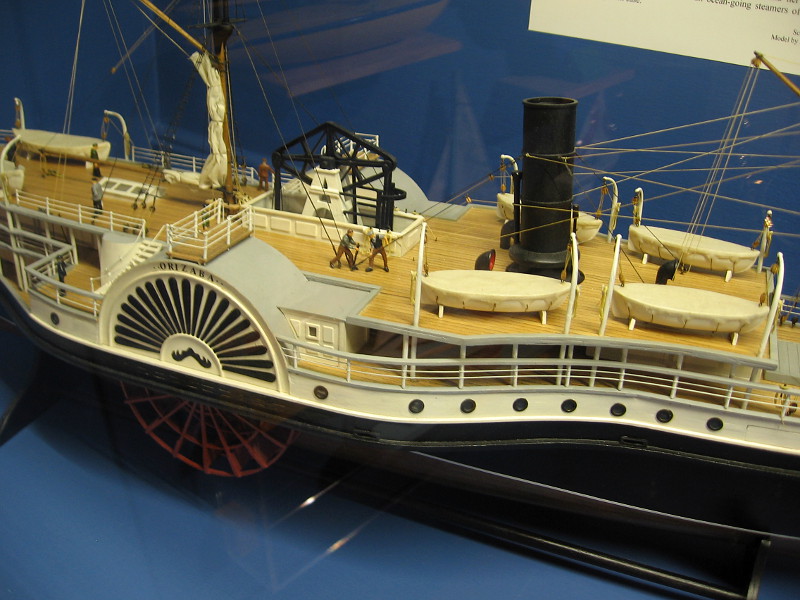
Dr. William Brown produced models of ordinary working boats and ships, as well as historically important vessels. This is L.A. Fire Boat No. 2 which was launched in 1925.Close look at Orizaba, a merchant vessel instrumental in San Diego’s early history. Dr. William Brown has produced dozens of models specifically for the Maritime Museum of San Diego.
…
I live in downtown San Diego and love to walk around with my camera! You can follow Cool San Diego Sights via Facebook or Twitter!
You can easily explore Cool San Diego Sights by using the search box on my blog’s sidebar. Or click a tag! There are thousands upon thousands of fun photos for you to share and enjoy!
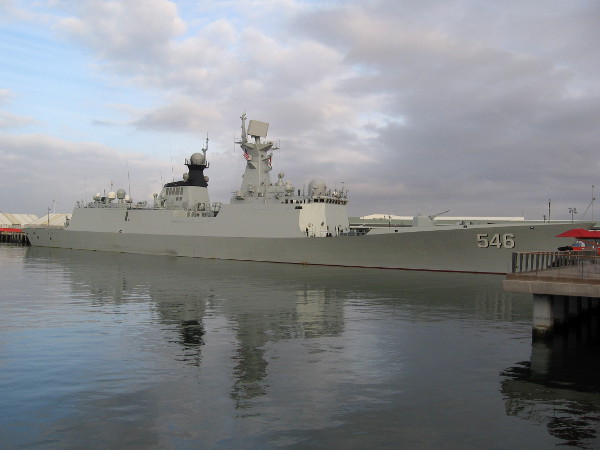
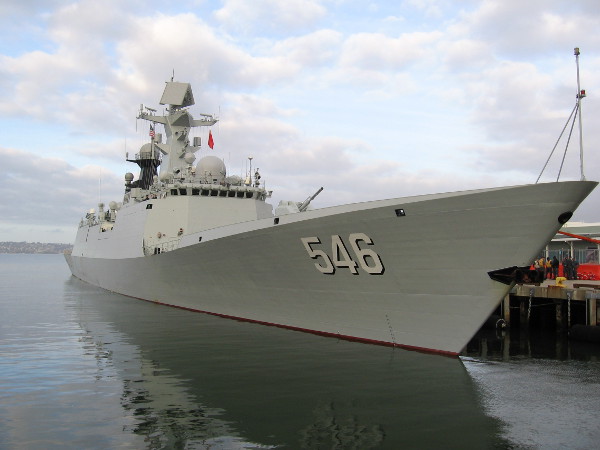
The Chinese frigate Yancheng, docked in San Diego at the Cruise Ship Terminal. It is part of a four day visit by ships of the People’s Liberation Army Navy.
This morning I got a few photos of a Chinese Navy warship that will be visiting San Diego for four days. The ship I saw docked at the Cruise Ship Terminal is the frigate Yancheng, which is part of the People’s Liberation Army Navy Surface Force. Two additional Chinese Navy ships arrived during the day. I saw them in the darkness after work during an evening walk along the Embarcadero. Those two other ships are the frigate Daqing and the oiler Tai Hu.
The intent of the visit is to foster trust and mutual understanding between two military powers–the United States and China. In addition to cultural exchanges, visiting Chinese and local American sailors will enjoy playing games of table tennis and basketball together. In a small, sometimes turbulent world, perhaps it is good to make friendships.
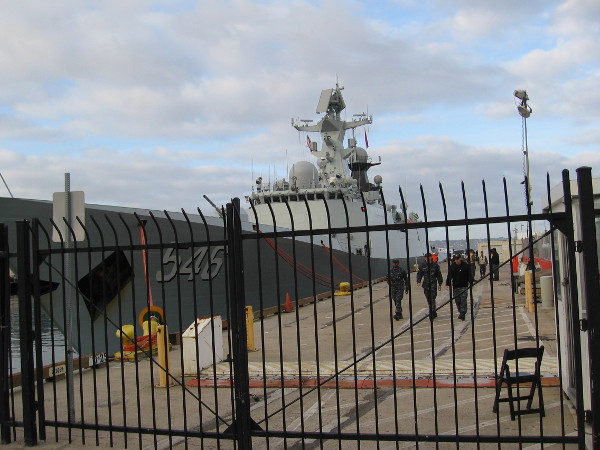
United States military personnel walk along the B Street Pier during a visit of the Chinese Navy to San Diego.Another photo of the Chinese frigate Yancheng, docked in San Diego Bay on December 6, 2016.
…
The once-mysterious origin of a U. S. Navy bronze plaque on display in San Diego has come to light. Learn more about this fascinating bit of San Diego and Navy history by checking out my blog post Creating a plaque: Navy history in San Diego revealed!
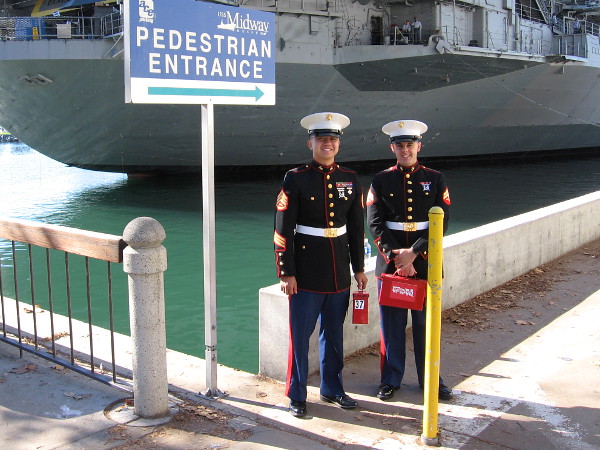
Marines stand at pedestrian entrance to Navy Pier, welcoming people to the Toys For Tots event by the USS Midway Museum.
Most of you reading Cool San Diego Sights probably can’t make it out to the Toys for Tots event today. It’s being held in downtown San Diego, on the pier next to the USS Midway Museum. But if you’d like to make a charitable donation to the cause, please go the Toys for Tots website.
I headed on down to Navy Pier for a few minutes to see what was going on. Not only did I spy Santa and Mrs. Claus, but a dancing green elf, and some very generous people. Toys collected (and donations made) help less fortunate children to have a Merry Christmas. Thank you United States Marine Corps!
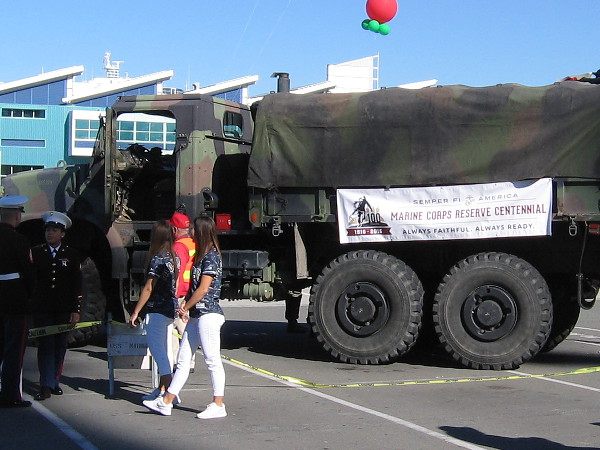
Toys and donations are being collected by San Diego Marines next to the USS Midway. Santa will be parachuting onto the aircraft carrier throughout the day!This funky elf is present to lend a helping hand and a laugh or two!Donated toys will fill this United States Marine Corps truck. A banner on its side commemorates the Marine Corps Reserve Centennial.Santa and Mrs. Claus are visiting again for the toy drive! I saw them here a year ago!San Diego Marines collect toys for the less fortunate, to be distributed by charitable organizations during Christmas.
…
I live in downtown San Diego and love to walk around with my camera! You can follow Cool San Diego Sights via Facebook or Twitter!
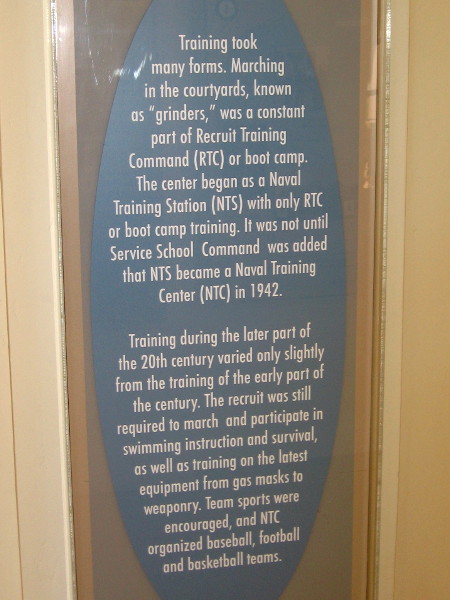
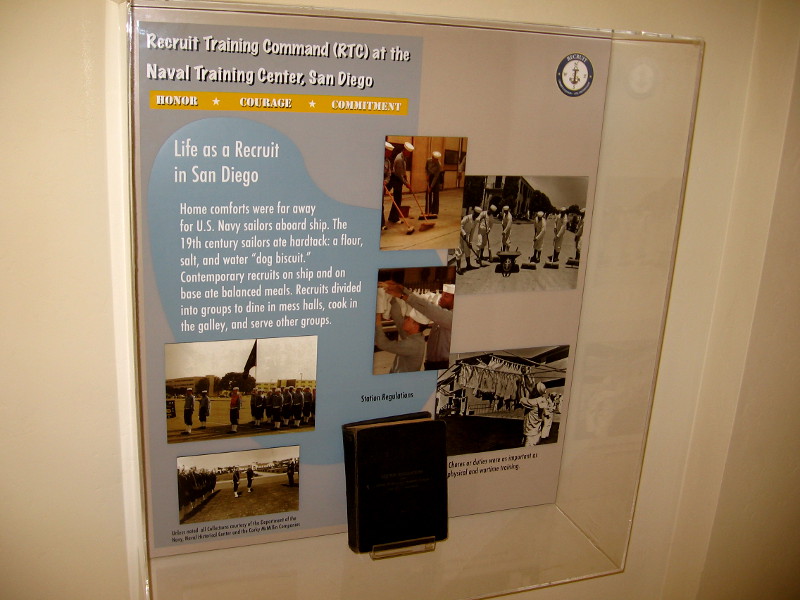
The Recruit story is one of personal transformation and maturity. A display explains how sailors were made at Naval Training Center San Diego.
Over a span of 74 years, Naval Training Center San Diego in Point Loma graduated over 2 million recruits. Most went on to serve as sailors in the United States Navy.
A fascinating historical exhibit in the NTC Command Center at Liberty Station provides visitors with a glimpse of what life was like as a naval recruit. Photographs recall how young men were transformed at Naval Training Center San Diego and prepared for service on a ship at sea, far from home.
If you’d like to read some of these displays, click the photos and they will enlarge.
To those of you leaving comments concerning memories–thank you for your service!
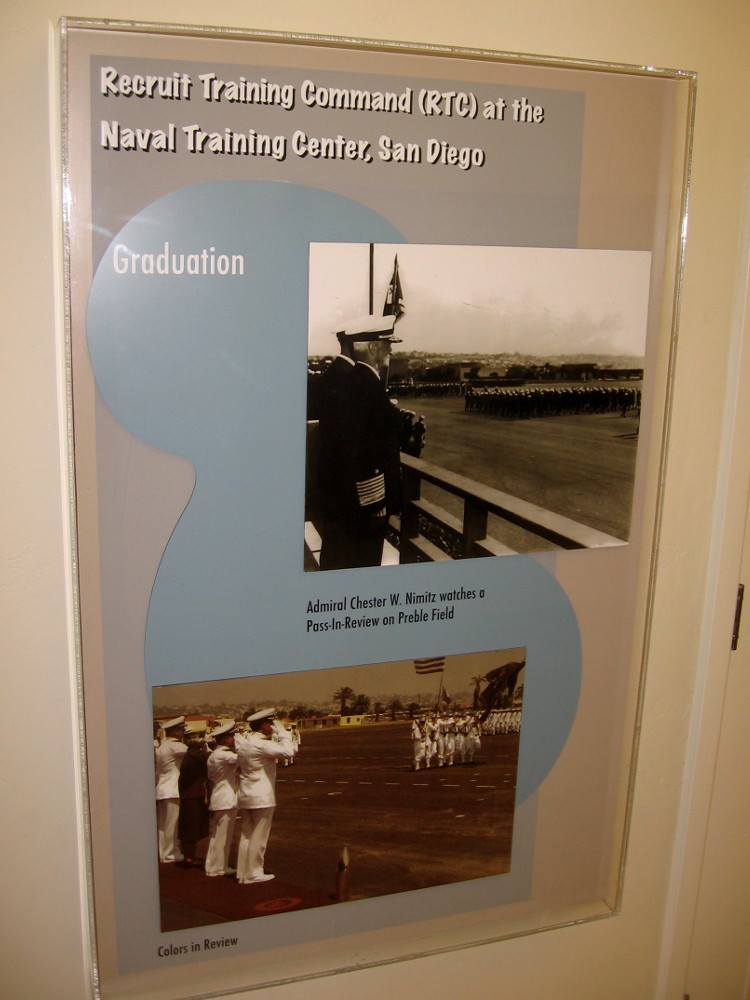
The Dick Laub NTC Command Center at Liberty Station has a fascinating exhibit about the training of naval recruits at this location years ago.The Admiral Stockdale Wing of the NTC Command Center has a corridor lined with historical photos, Navy artifacts and interesting information.Marching in the courtyards, known as grinders, was a constant part of Recruit Training Command or boot camp.Home comforts were far away for U.S. Navy sailors aboard ship. A display shows sailors training in San Diego.The USS Recruit–a model Training Destroyer Escort–is where most men experienced their first duty aboard ship.The USS Recruit is landlocked permanently at Liberty Station. Fondly called the USS Neversail, this ship set in concrete was used for training new Navy sailors.Graduation at Naval Training Center San Diego. One photo shows Admiral Nimitz watching a Pass-In-Review at Preble Field.A large map of the old Naval Training Center San Diego, which today has been transformed into Liberty Station, featuring shopping, parks, museums and more.Photo of vacant old Naval Training Center buildings waiting to be restored and put to use commercially at Liberty Station.During training, recruits were divided into companies of 100 men. Teamwork was promoted.Homecooked meals were prepared by NTC’s Chef and Mess School, which was one of the best in the country.NTC grew in size over the years, expanding across the boat channel. A march over Nimitz Bridge was a rite of passage. (I blogged recently that a new public park will be opening east of the channel.)An old poster depicts authorized grooming standards for United States Navy Personnel.Photos of graduation from San Diego’s NTC include the final 1993 ceremony before the base closed.The official program for the 2082nd and Final Recruit Pass-In-Review, Friday, November 19, 1993.NTC San Diego graduated over 2 million recruits over its 74 year history!Welcome aboard!
…
I live in downtown San Diego and love to walk! You can follow Cool San Diego Sights via Facebook or Twitter!
You can easily explore Cool San Diego Sights by using the search box on my blog’s sidebar. Or click a tag! There are thousands upon thousands of fun photos for you to enjoy!
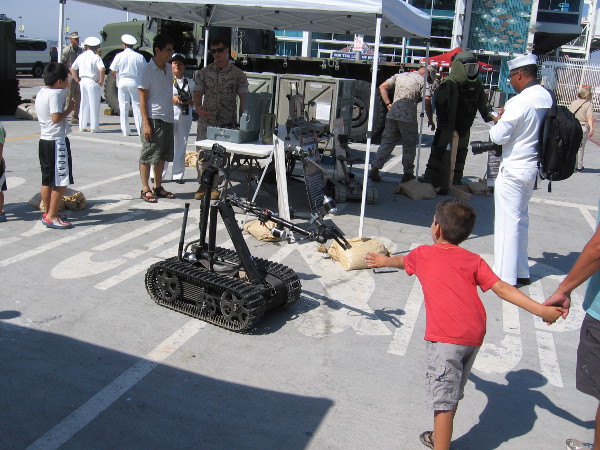
Kid checks out a military robot at the STEM fair on the Broadway Pier during San Diego’s 2016 Fleet Week.
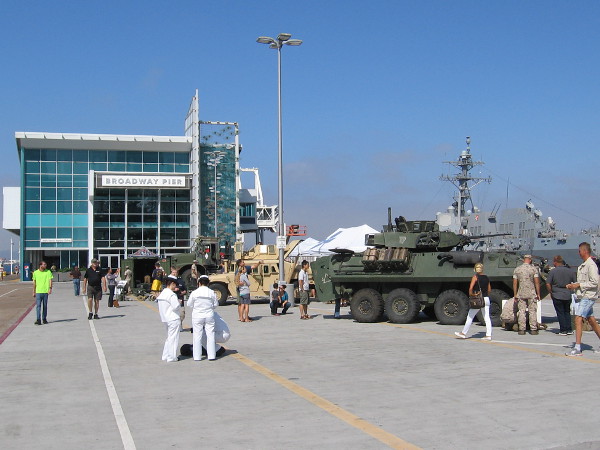
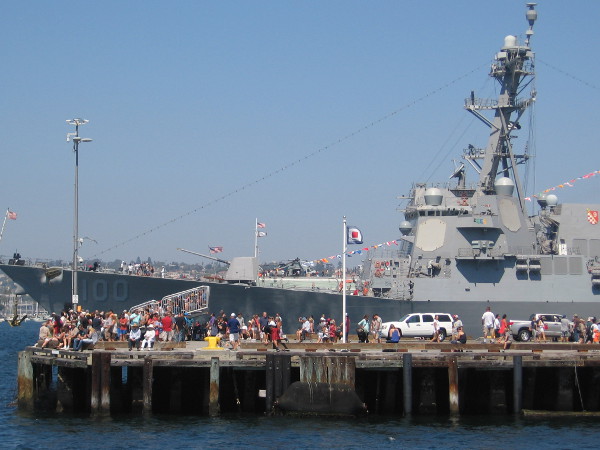
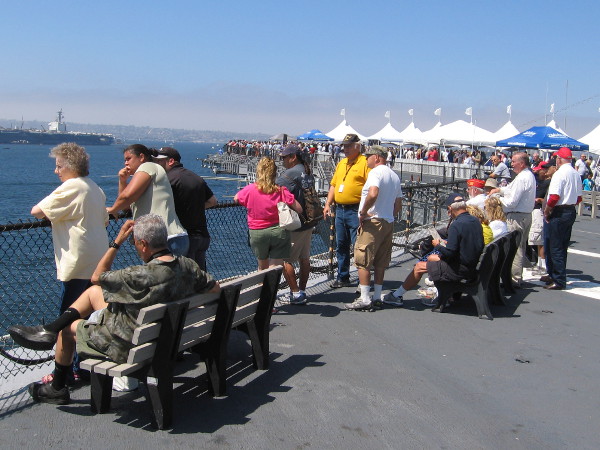
2016 Fleet Week is a big deal in San Diego. Our city is the home port of much of the United States Navy’s Pacific Fleet. Today, Saturday, I walked down to the Embarcadero to see a little of what is going on during the event this year. I visited the Broadway Pier and the military STEM fair, then headed over to the USS Midway Museum. The flight deck of the USS Midway was by far the best vantage point to watch today’s Sea and Air Parade, which I learned has returned to San Diego after an eight years’ absence.
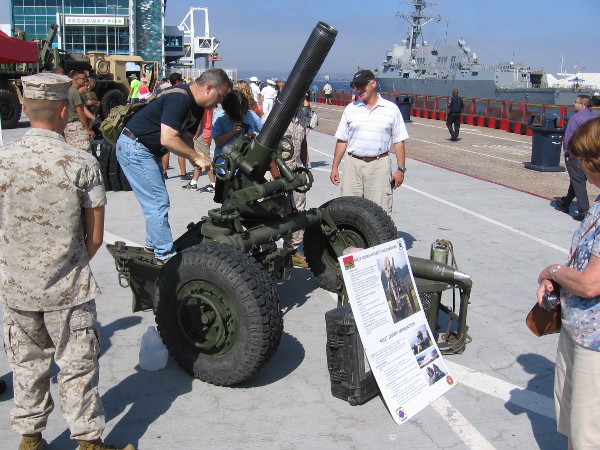
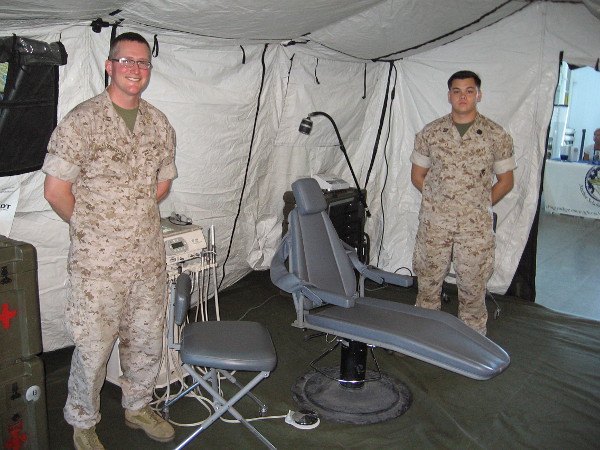
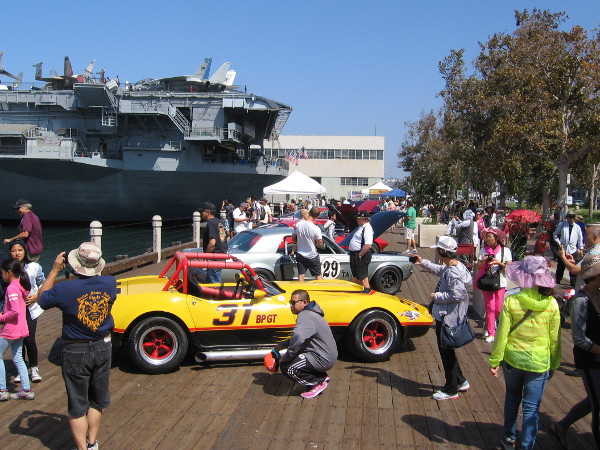
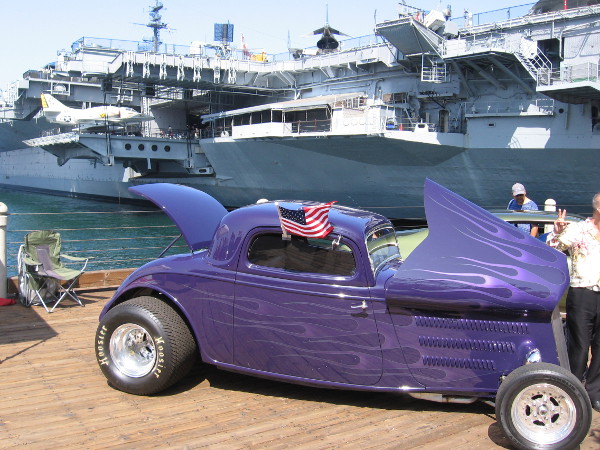
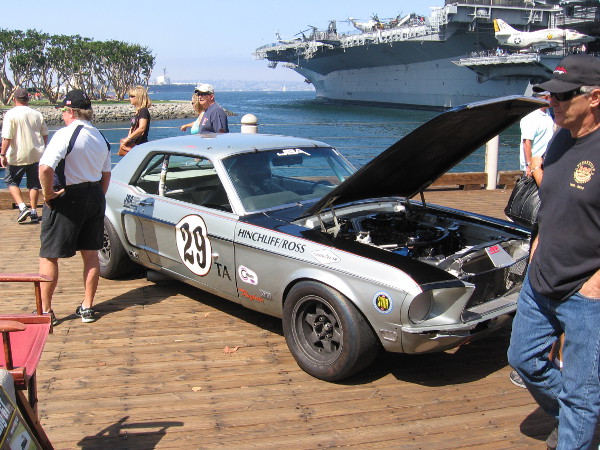
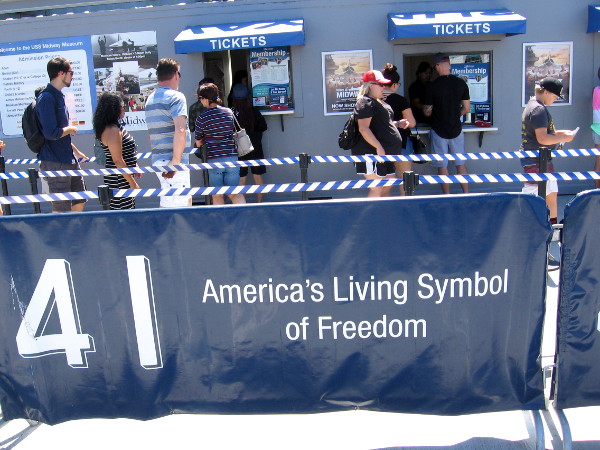
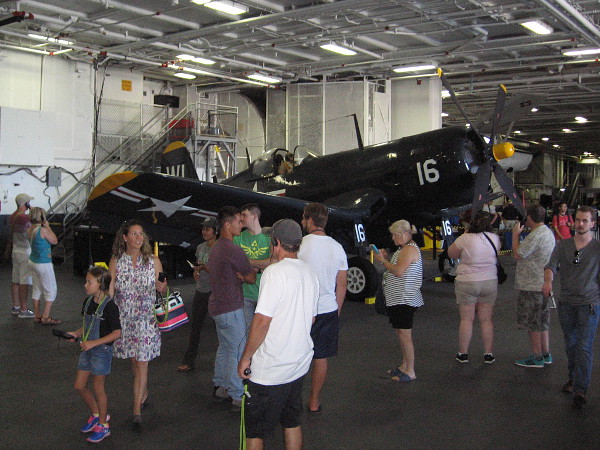
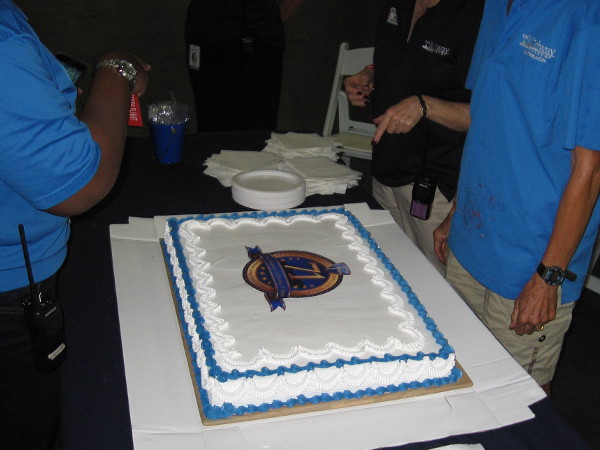
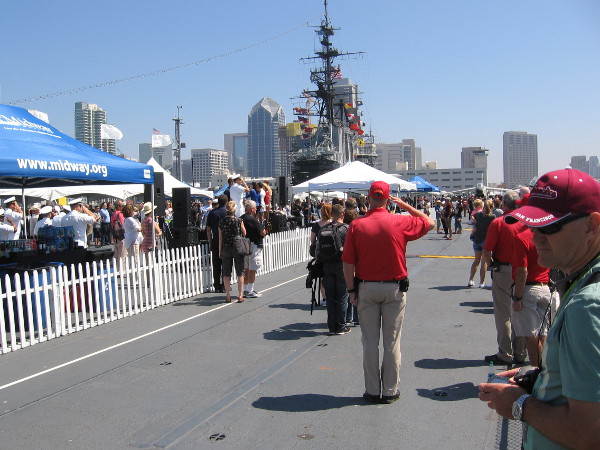
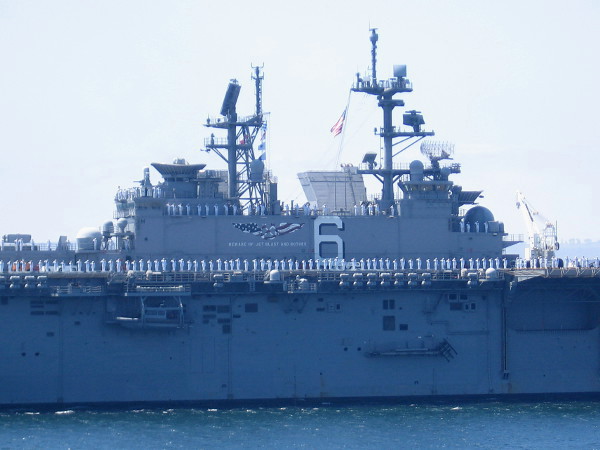
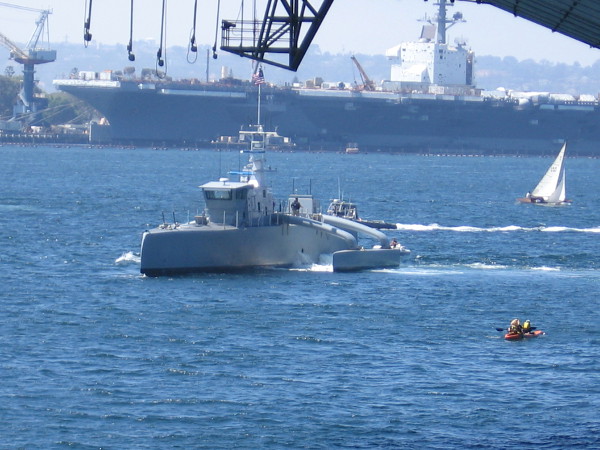
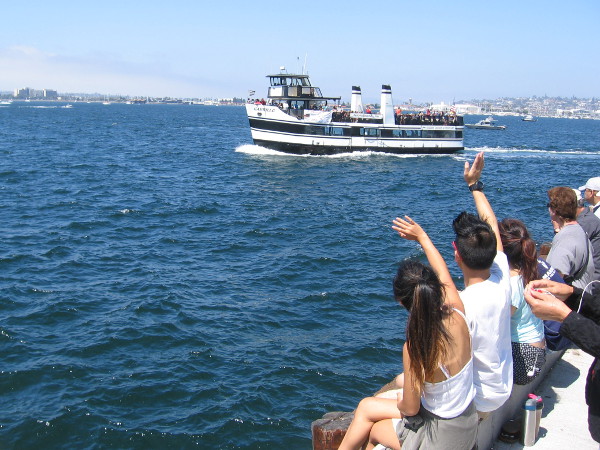
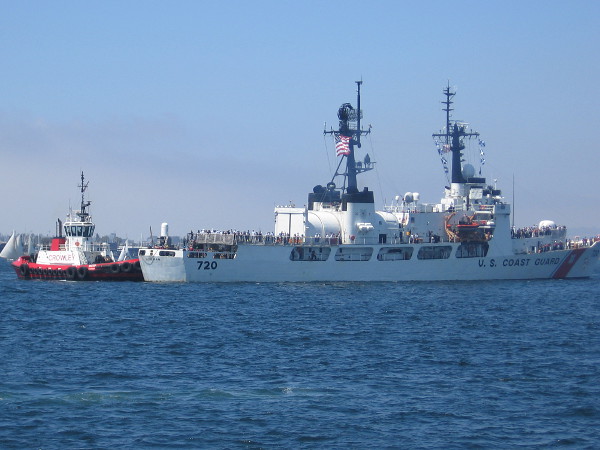
As usual, many events are being held during Fleet Week in San Diego. On the Broadway Pier and the B Street Pier, exhibits demonstrate various technologies utilized by the military.Visitors at 2016 Fleet Week on the Broadway Pier peer inside an LAV-25A2 Light Armored Vehicle.A water filtration system that uses reverse osmosis in the field, often far from reliable water sources, on display for curious STEM fair visitors.This enormous gun on San Diego’s Embarcadero during 2016 Fleet Week is an M777A2 155MM Howitzer.And this is an M327 120MM Rifled Towed Mortar.Inside the Port Pavilion, an extensive exhibit demonstrates medical facilities that would be set up near an area of combat. This is a surgical tent.This is a dental chair! Even the toughest warriors occasionally need to have cavities filled.Out on the boardwalk near the USS Midway, cool cars are on display for 2016 Fleet Week in San Diego.One of many cars that visitors to the Embarcadero can check out. They are on display to promote the speed festival at North Island next weekend. Races are held every year during Fleet Week on the Navy air base’s huge runway!This car, I was told, would actually race in the Fleet Week Coronado Speed Festival. The public can watch auto races next weekend at Naval Air Station North Island, situated across San Diego Bay.People buy tickets to board the USS Midway Museum. The aircraft carrier turned 71 years old today. It has become one of San Diego’s top attractions.Inside the hangar deck of the USS Midway during 2016 Fleet Week. The aircraft carrier has been voted best museum ship in the United States.The USS Midway aircraft carrier celebrated its 71st anniversary today. She was commissioned just as World War II came to an end.A cake to celebrate 71 years of history on the USS Midway!Up on the Midway’s flight deck, people head toward viewpoints overlooking San Diego Bay. Fleet Week’s Sea and Air Parade is about to begin!At the rail of the USS Midway. There are beautiful views in every direction. Any day is a great day to visit.Navy officers and VIPs listen to some short speeches just before the Sea and Air Parade begins.USS Midway Museum volunteer salutes the American flag while the Star Spangled Banner is sung.Here comes USS America, the flagship of 2016 Fleet Week in San Diego. She is only the fourth American warship to ever be given the very special name.Sailors in white line the deck of USS America as she passes through San Diego Bay during Fleet Week’s Sea and Air Parade.Next comes the USS Champion, an Avenger class ship that can seek out and destroy mines.According to my Fleet Week program book, I believe this is an ACTUV, or Anti-Submarine Continuous Trail Unmanned Vehicle. Correct me if I’m wrong!People watch the Sea and Air Parade from launch ramps at the bow of the USS Midway.Folks gathered on Navy Pier wave to tourists and others crossing the bay on the Coronado Ferry.The Coast Guard’s USCGC Sherman endurance cutter is given an assist by a tug boat as it comes into dock during the Sea and Air Parade.Lots of people watch the action on San Diego Bay from the end of the Broadway Pier. USS Kidd is in the background, hosting public tours from the B Street Pier.A pair of jets pass overhead during the 2016 San Diego Fleet Week Sea and Air Parade.People on the flight deck of USS Midway take in sunshine and military pageantry during 2016 Fleet Week in San Diego.
…
I live in downtown San Diego and love to walk! You can follow Cool San Diego Sights via Facebook or Twitter!
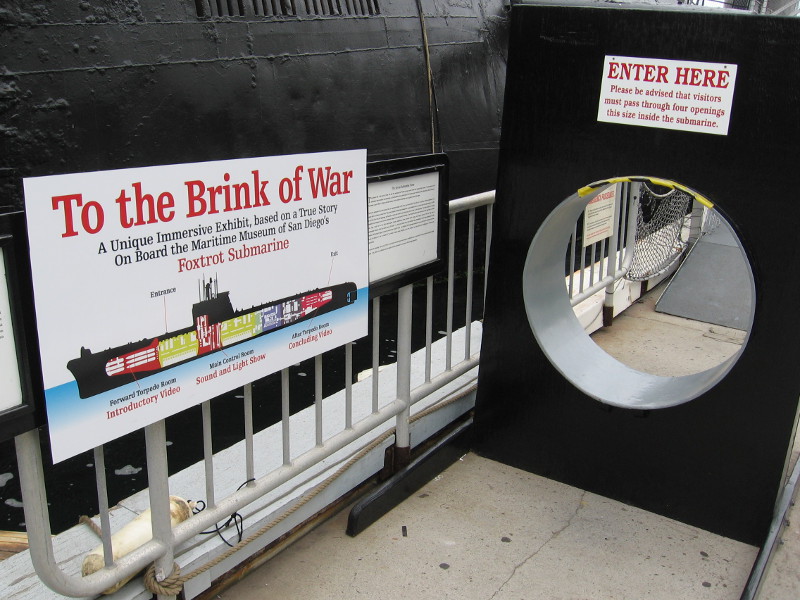
To the Brink of WAR. A sound and light exhibit at the Maritime Museum of San Diego based on a true Cold War event during the Cuban Missile Crisis.
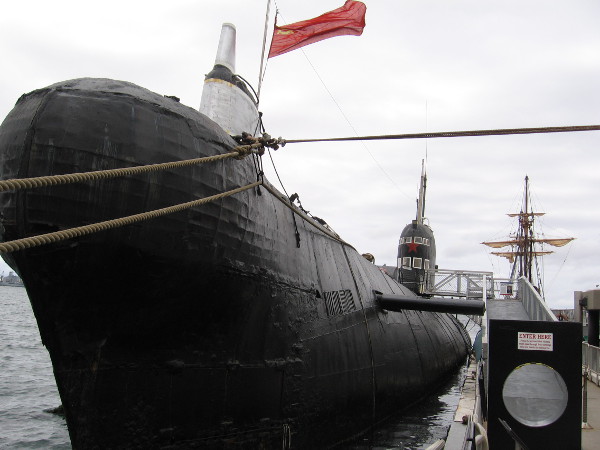
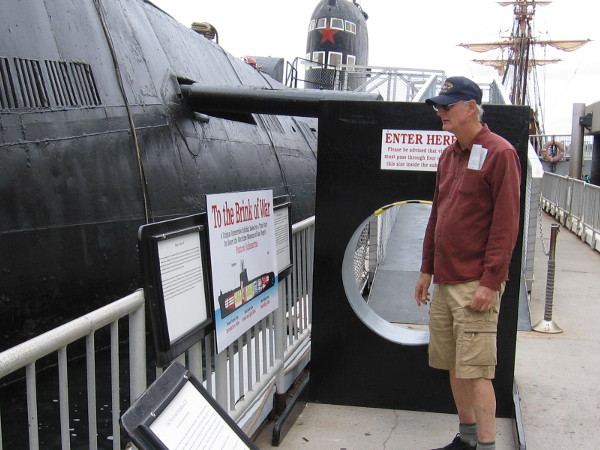
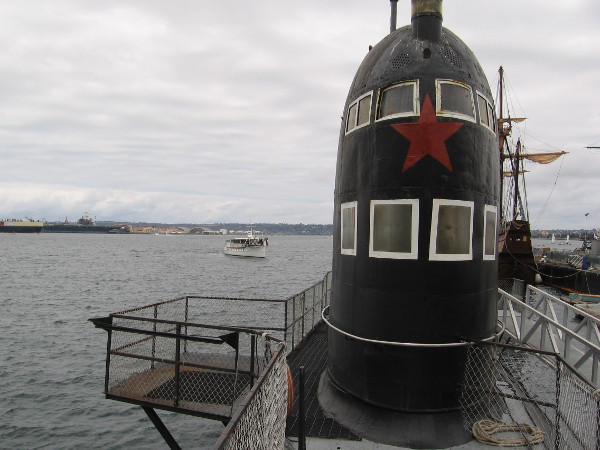
A fantastic exhibit recently opened at the Maritime Museum of San Diego. You’ll find it aboard their B-39 Foxtrot-class Soviet submarine. The exhibit, using videos, a light show and other exciting effects, tells the story of how one man likely saved the world.
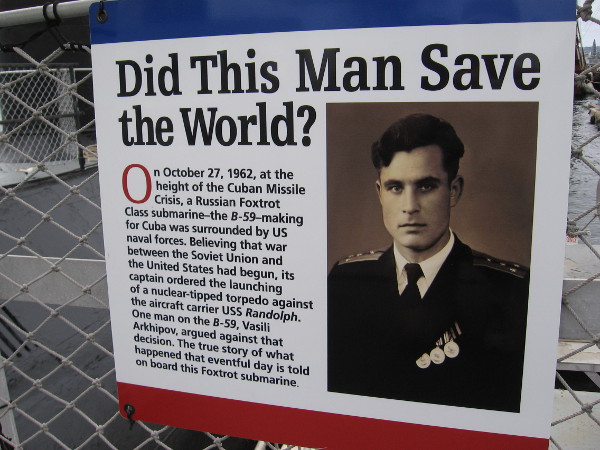
At the height of the Cold War, during the Cuban Missile Crisis in 1962, a Soviet commander on the B-59, another Foxtrot-class submarine, spoke a few cautious words. Those words might have averted World War III and worldwide nuclear destruction.
The B-59 was one of four Soviet submarines that were sent to the Caribbean Sea to support ships delivering arms to Cuba. In October of 1962 the B-59 was detected by the United States, and Navy destroyers began dropping the sort of depth charges that are used for training–practice depth charges with very little explosive impact. It was the US Navy’s intention to have the sub surface in order to gain positive identification.
Aboard the B-59, however, batteries were running critically low, the air-conditioning had ceased working, and if the submarine didn’t surface eventually the crew would perish. They hadn’t had radio communication with Moscow for several days. The captain of the submarine, Valentin Grigorievitch Savitsky, believed that war had probably begun. He wanted to launch their T-5 nuclear torpedo at the USS Randolph aircraft carrier.
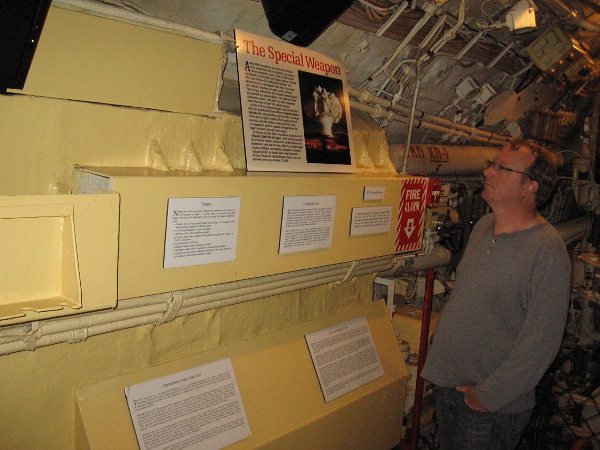
The exhibit inside the Maritime Museum of San Diego’s Foxtrot-class Soviet submarine allows visitors to relive those tense moments. They’ll hear how sub-flotilla commander Vasili Arkhipov, also on the B-59, reasoned that a conflict might not have started, and that firing their “Special Weapon” nuclear torpedo would certainly result in World War III. His calm words of council prevailed, the sub surfaced peacefully, and today visitors to the museum can appreciate his level-headed wisdom, and the extreme pressure that the crew of the B-59 felt on that fateful day.
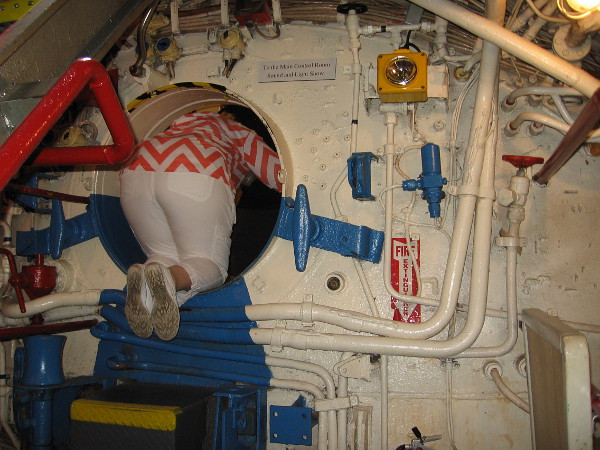
Anyone visiting the exhibit should be prepared for very close quarters. Ducking and engaging in a variety of pretzel-like contortions while moving along the length of the submarine, one can appreciate how life must have been as a crewmember, even under normal circumstances. It’s definitely not a place for those who have claustrophobia!
Here are a few photos that give you a taste of what you’ll experience. Of course, enjoying the exhibit in person is a thousand times more interesting!
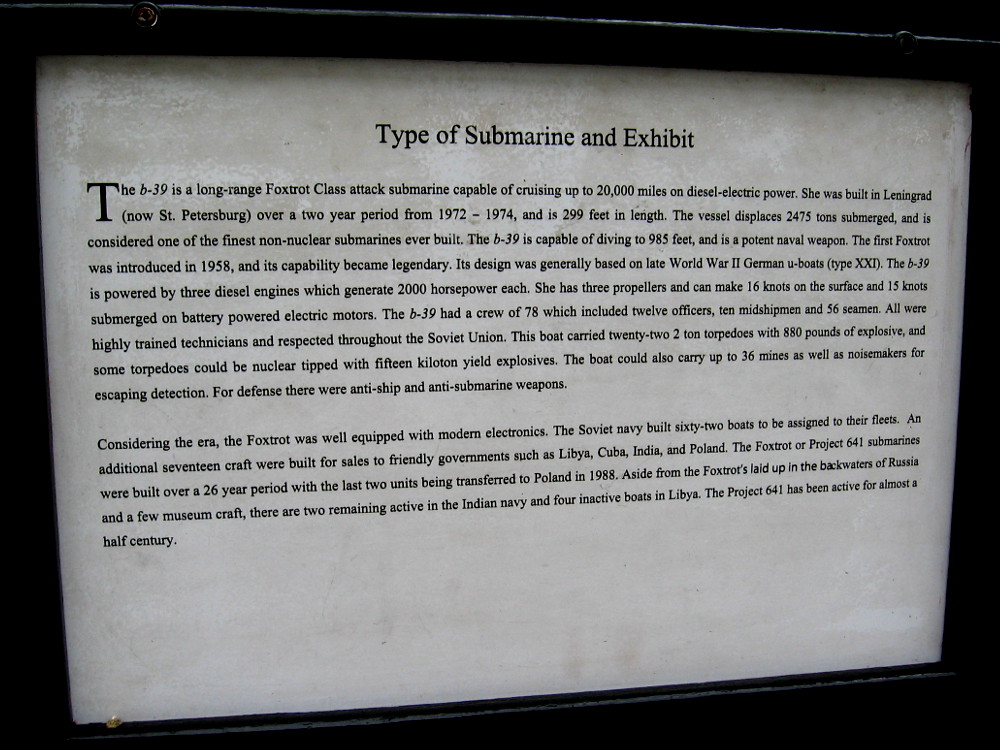
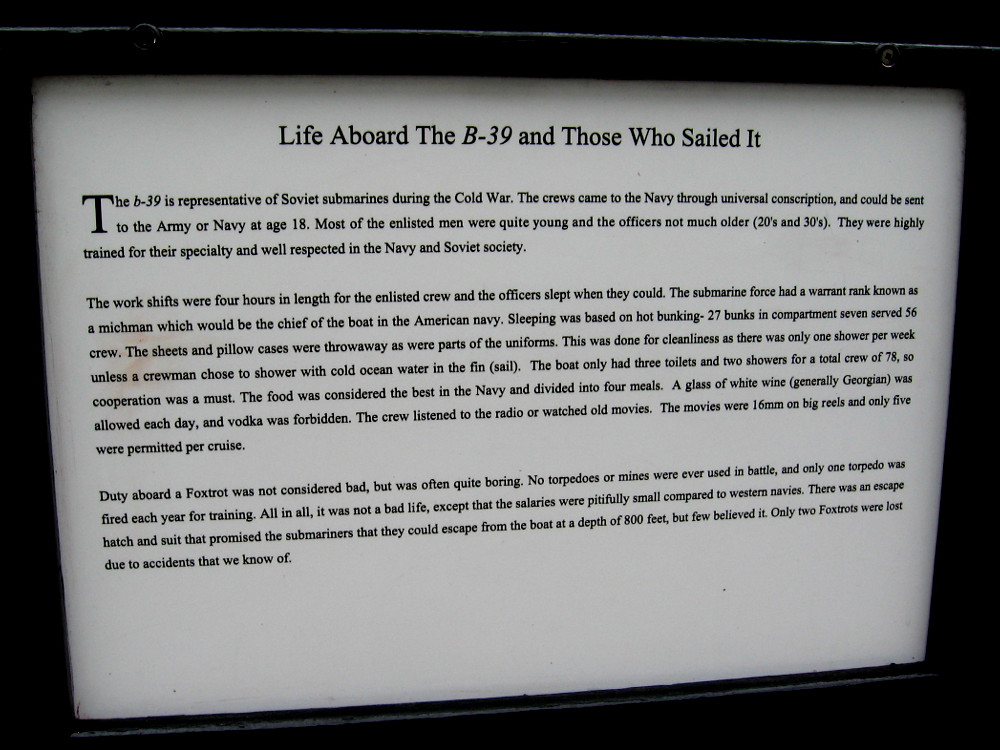
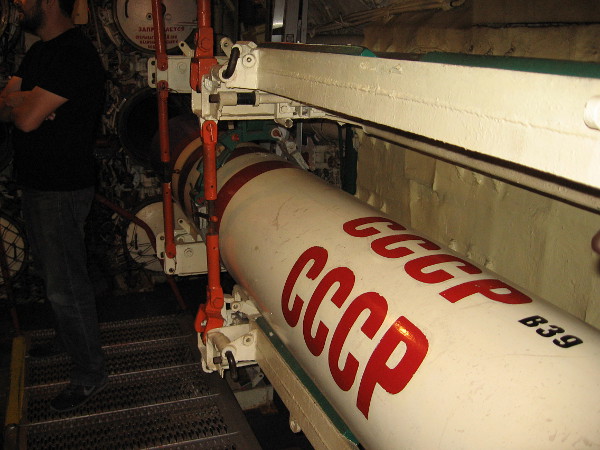
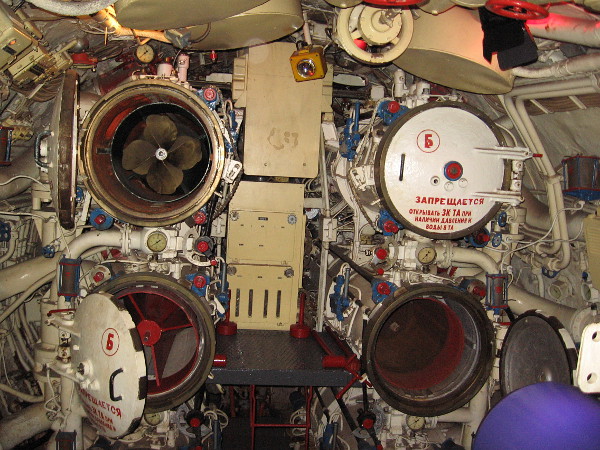
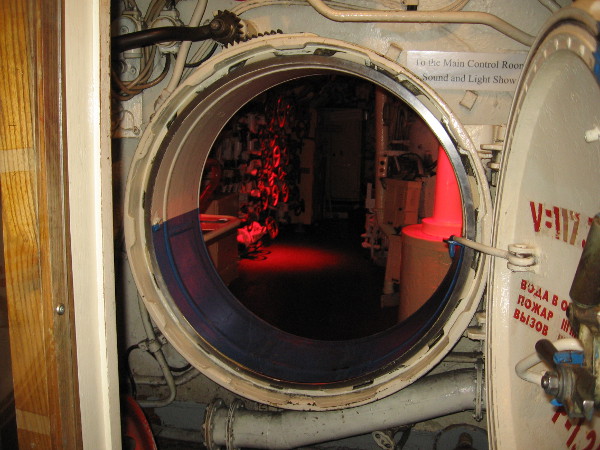
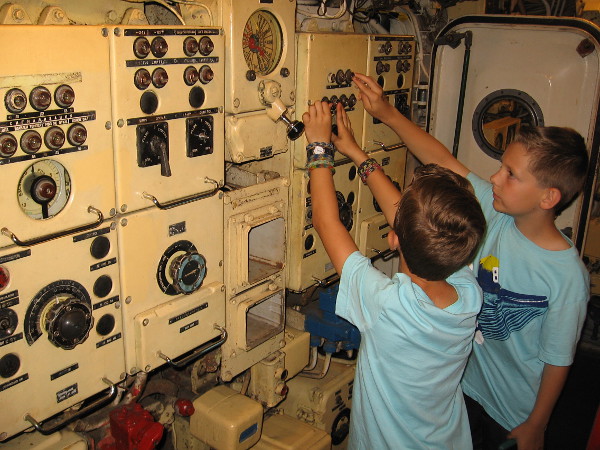
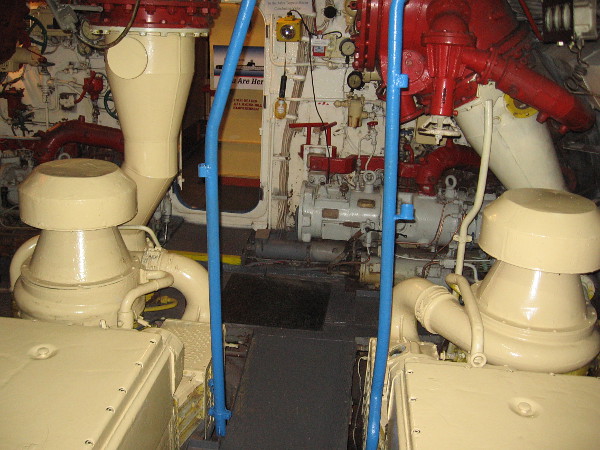
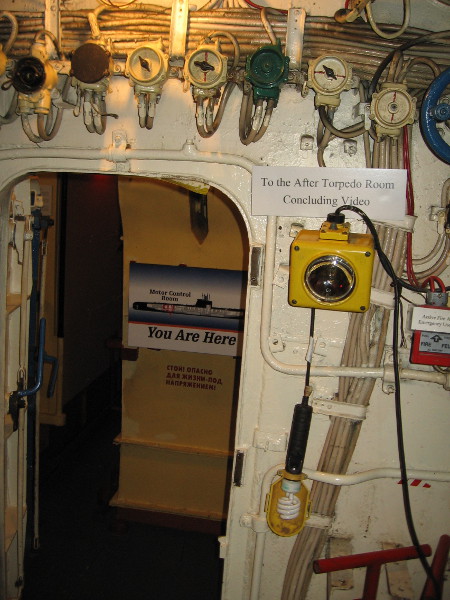
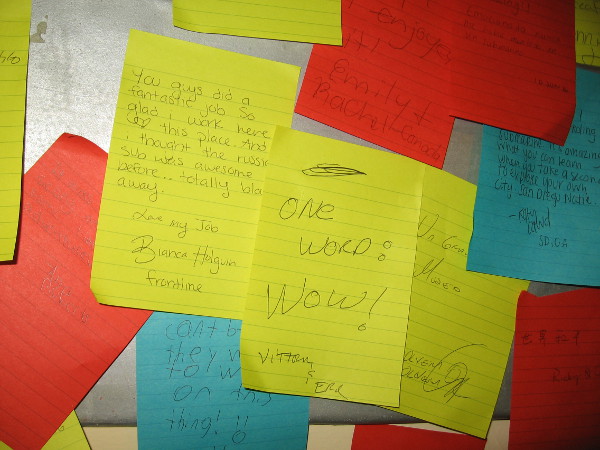
This man might have literally saved the world. Vasili Arkhipov argued against the B-59 captain’s determination to fire a nuclear torpedo against the U.S. aircraft carrier USS Randolph.Today, the Maritime Museum of San Diego’s B-39 Foxtrot-class Soviet submarine allows visitors to see what sub warfare was like during the Cold War, and to relive the crisis.Many signs containing interesting info can be read before boarding the B-39.Sign provides some details about the B-39. It could cruise 20,000 miles on diesel-electric power. It was built in Leningrad. It’s design was generally based on late World War II German u-boats.Life aboard a Foxtrot-class Soviet submarine is briefly described. Duty aboard a Foxtrot was not considered bad, but was often quite boring.Sign shows main parts of the museum’s current Cuban Missile Crisis exhibit. Inside the sub, one must nimbly climb through rather small circular openings!I’ve ascended the gangway and I’m standing forward of the submarine’s sail (or fin). I’ll enter the forward torpedo room via some steps behind me.Enter Here! And prepare to relive a tense moment in history, when the future of humankind teetered on the brink.Just inside the old Soviet sub. There’s a video explaining the Cold War and beginning of the Cuban Missile Crisis, and many signs nearby. The B-59 was armed with a Special Weapon: one nuclear torpedo.This museum torpedo represents what the B-59 Foxtrot carried back in 1962. A purple tip meant a particular torpedo had a nuclear warhead.You might note this torpedo has a purple tip! To fire a nuclear weapon during the Cuban Missile Crisis would have certainly resulted in World War III.A Hair’s Breadth from Nuclear War. President John F. Kennedy dealt with an extremely difficult crisis. Common sense, decisive action–and possibly some luck–helped the world avoid catastrophe.It’s no easy feat going from one section of the sub to another! A visitor is about to head into a narrow corridor en route to the Control Room.Heading through the Foxtrot-class Soviet submarine. Tiny rooms on either side include the Captain’s Cabin, the Officer’s Wardroom, and Medical Exam Room.A look into the Electronic Officer Cabin.The sonar room was critical to the safety of the submarine. Without sonar, the underwater vessel had no eyes.A photo of equipment in one corner of the sonar room.Into the Main Control Room we go, the scene of a sound and light show reenacting those tense minutes before the B-59 chose to surface peacefully without firing their nuclear torpedo.Signs throughout the Maritime Museum of San Diego’s Cuban Missile Crisis exhibit help visitors understand their position in the Foxtrot submarine.Photo includes the Foxtrot’s helm, where a Soviet sailor steered the submarine by moving a lever left and right.Visitor inside the Maritime Museum of San Diego’s B-39 submarine looks through the periscope. Red lights come on as depth charges are heard. A fateful decision must be quickly made.Voices from nearby speakers reenact tense discussions, then orders to the crew. The submarine captain wished to fire a nuclear torpedo; the level-headed flotilla commander convinced him not to.We’ve left the Control Room and are continuing along the center of the submarine. Here’s part of the galley. The crew ate well by Soviet standards–better than most ordinary citizens.More knobs, switches, levers, buttons, dials, gauges and whatnot on the way to the Engine Room.The engine room contains three turbo diesel engines that each put out 2000 horsepower. They drove three shafts connected to six-blade propellers.Another photo inside the museum’s B-39 engine room. During the 1962 events, the B-59’s batteries were low and the air conditioning had failed. Their hot engine room must have been intolerable.Now we’re heading to the Motor Control Room.Bunks for Enlisted Ratings line the corridor. These were shared by the crew and in constant use. No room to spare!A very tight squeeze!And finally we’ve made our way into the After Torpedo Room, where visitors can watch a concluding video documentary. After surfacing peacefully, the B-59 eventually re-submerged and vanished.School students left notes. It seems most really liked the tour! It’s not every day one can see the interior of a Cold War Soviet submarine!Climbing back out of the B-39 Foxtrot-class Soviet submarine, one of many historic vessels that are part of the Maritime Museum of San Diego.
…
I live in downtown San Diego and love to walk! You can follow Cool San Diego Sights via Facebook or Twitter!
You can easily explore Cool San Diego Sights by using the search box on my blog’s sidebar. Or click a tag! There are thousands upon thousands of fun photos for you to enjoy!
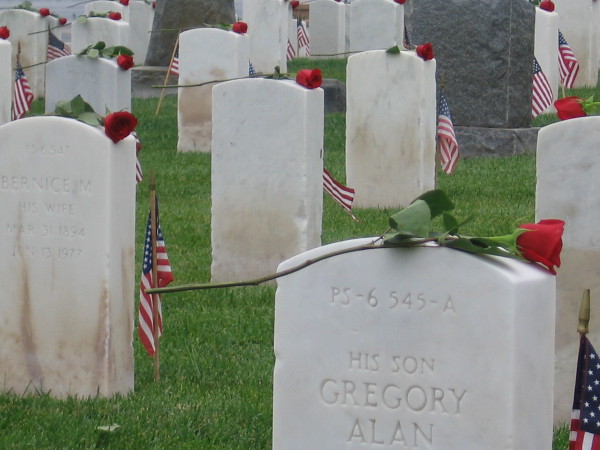
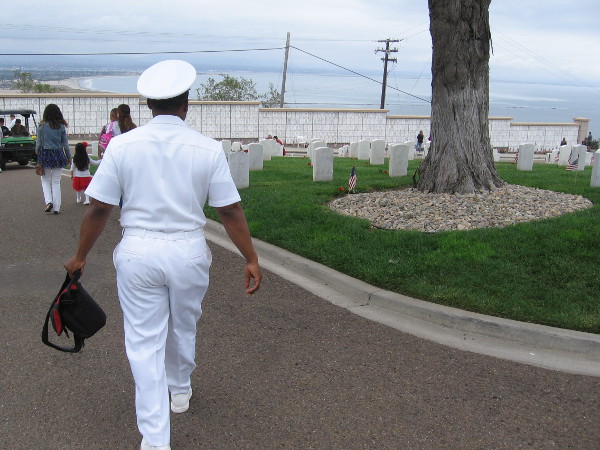
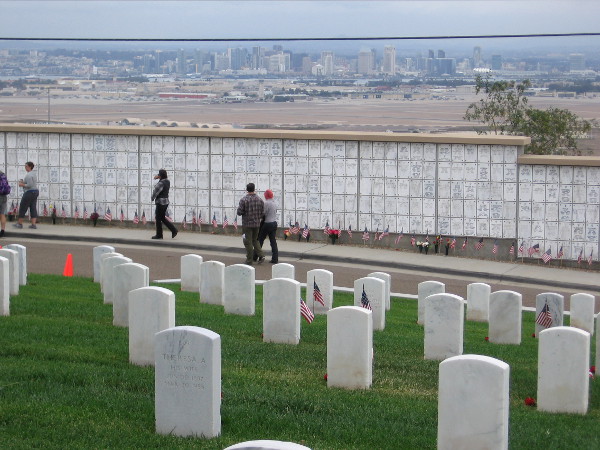
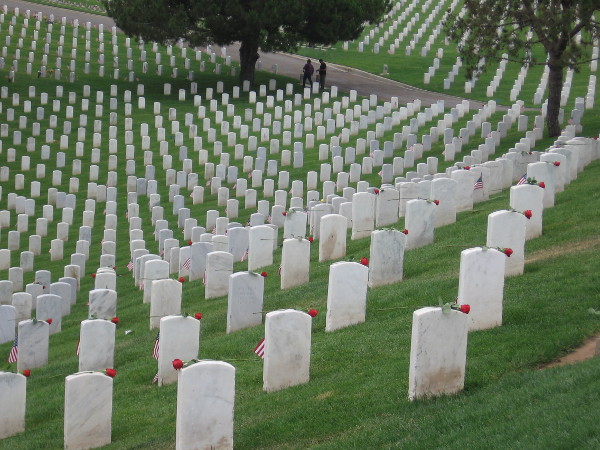
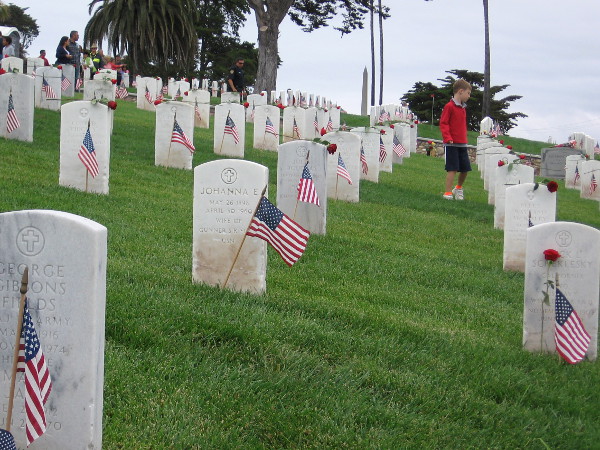
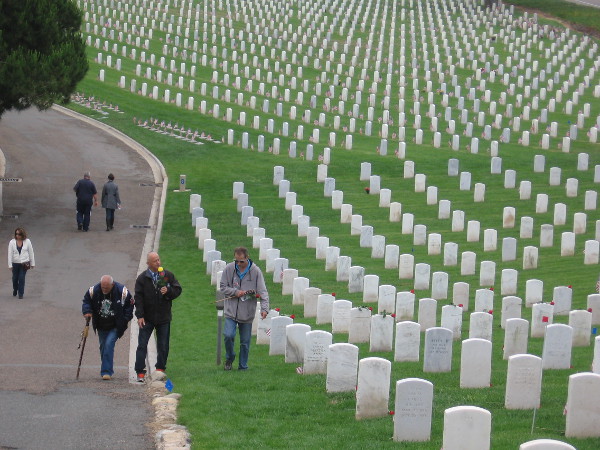
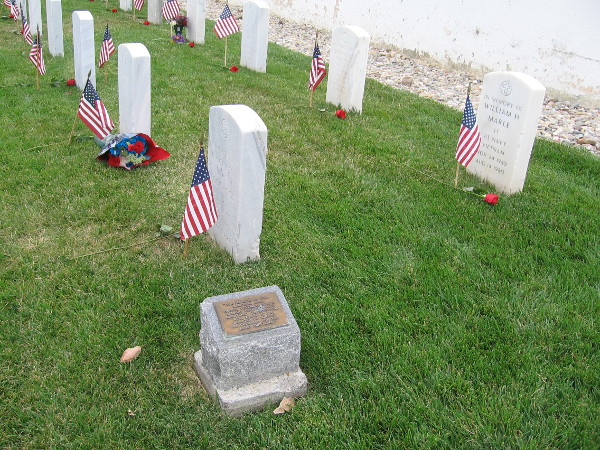
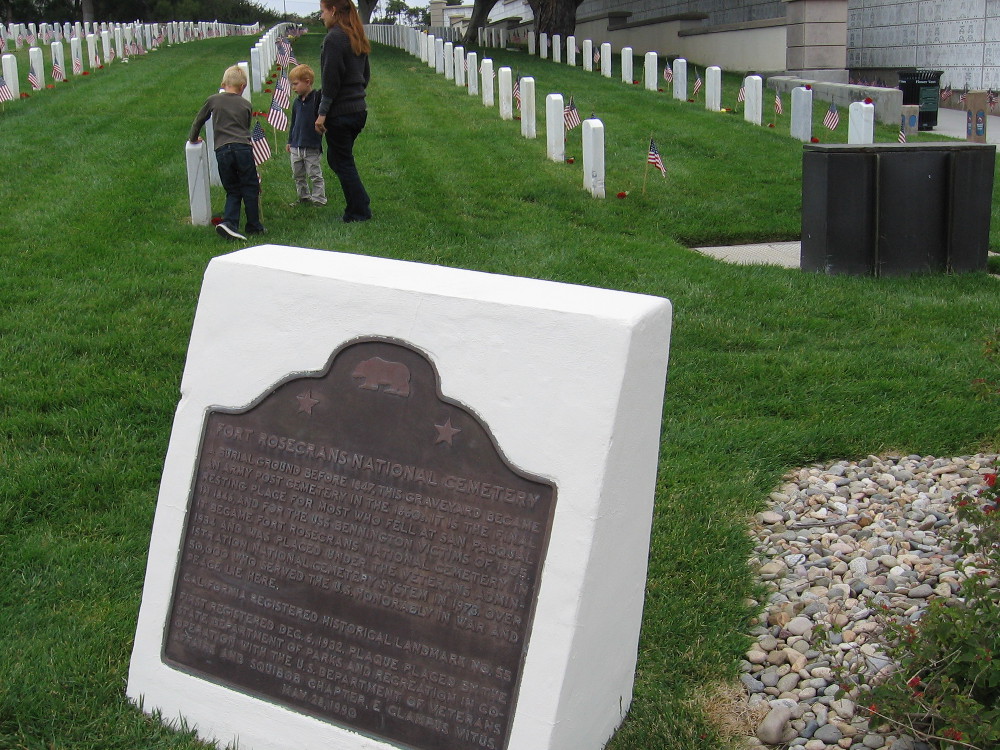
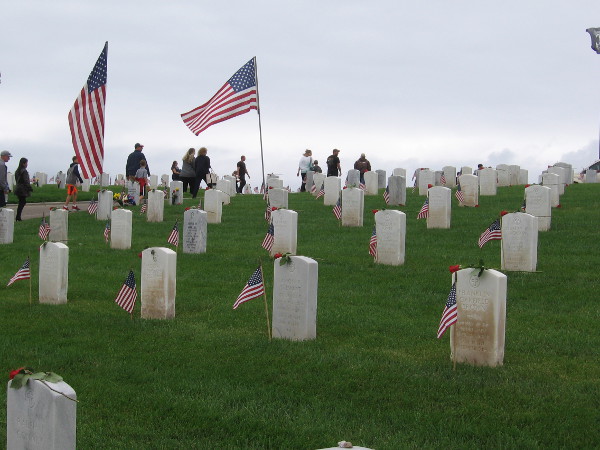
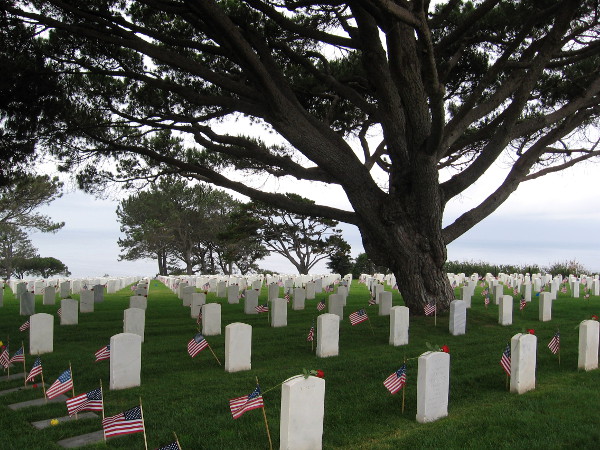
Flags and flowers are placed where the fallen now rest.
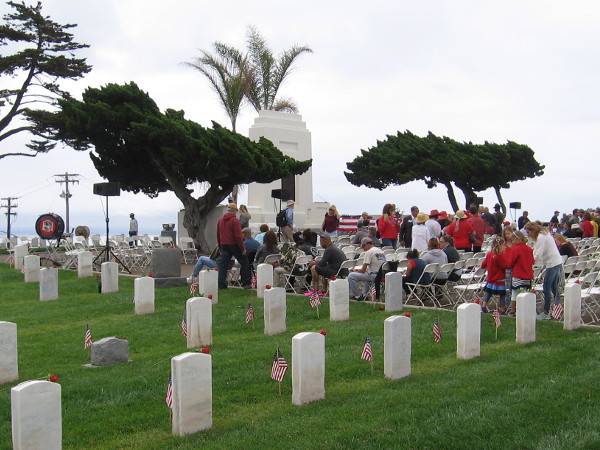
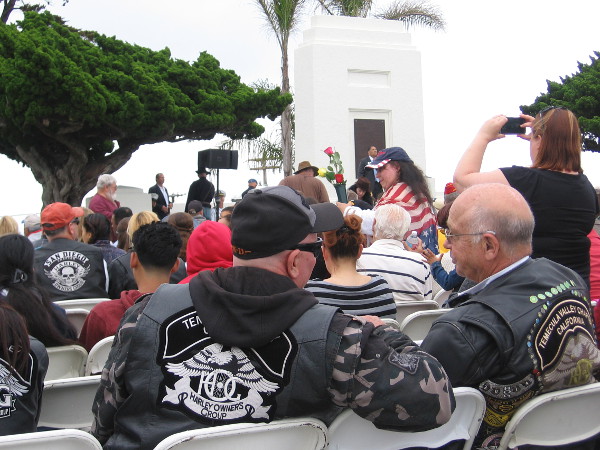
Today there was a moving Memorial Day ceremony at Fort Rosecrans National Cemetery. I attended.
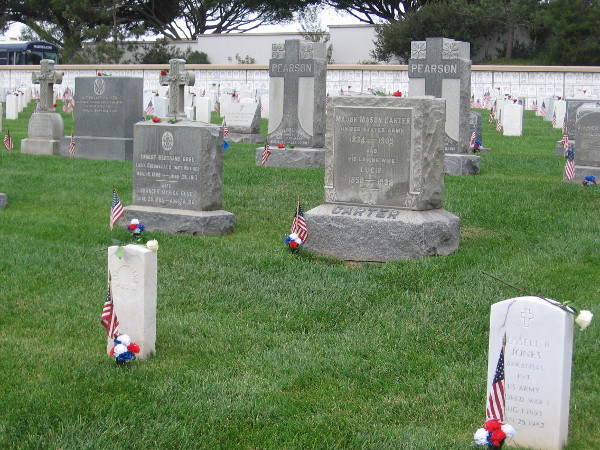
Here are some photos. Fort Rosecrans National Cemetery, located on Point Loma high above the Pacific Ocean and San Diego Bay, is the final resting place of thousands of American soldiers, sailors, airmen and Marines, and their families, who served their country with courage and honor. Many who are buried in this hallowed place fought in different conflicts spanning our nation’s history, right up to the present-day War on Terrorism. Because of its amazing natural setting, many say Fort Rosecrans is more beautiful than even Arlington or Normandy. As you can see, it’s a special place.
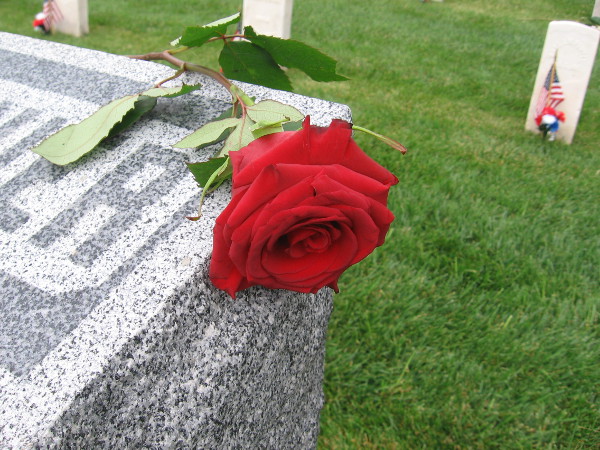
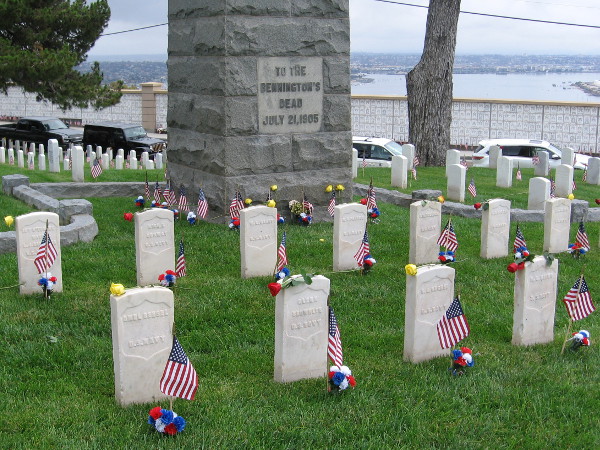
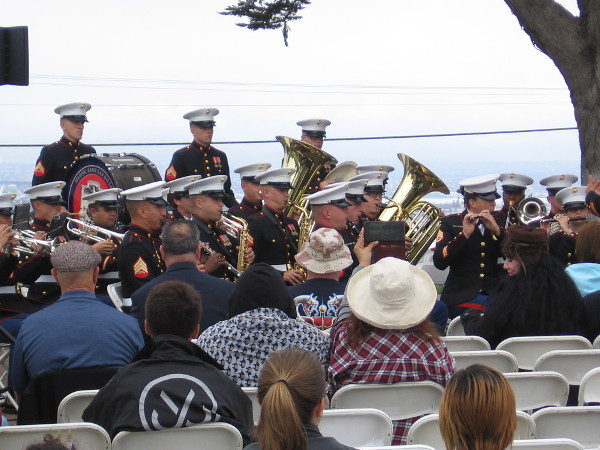
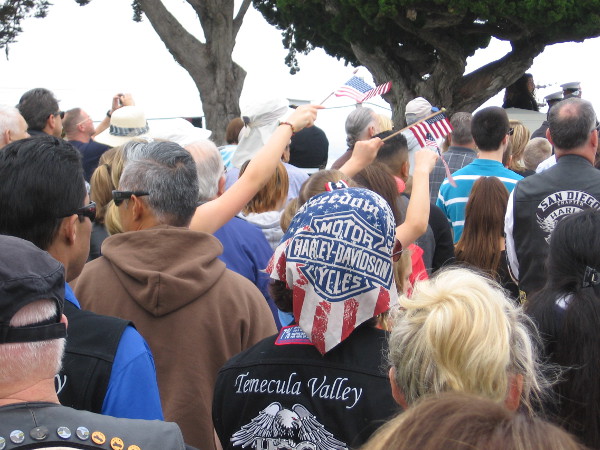
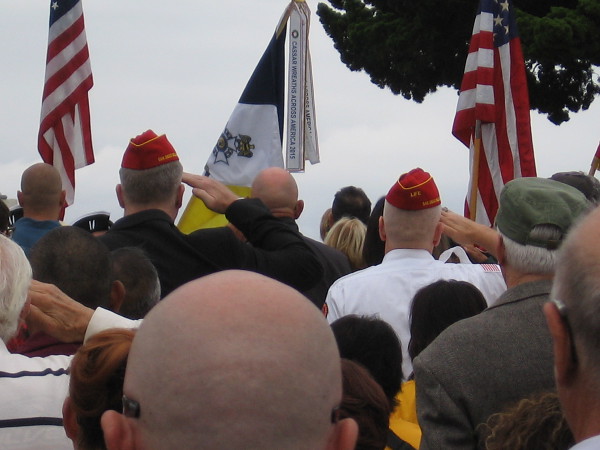
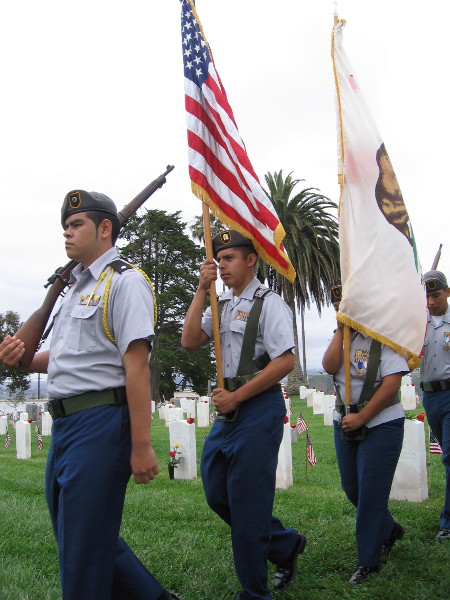
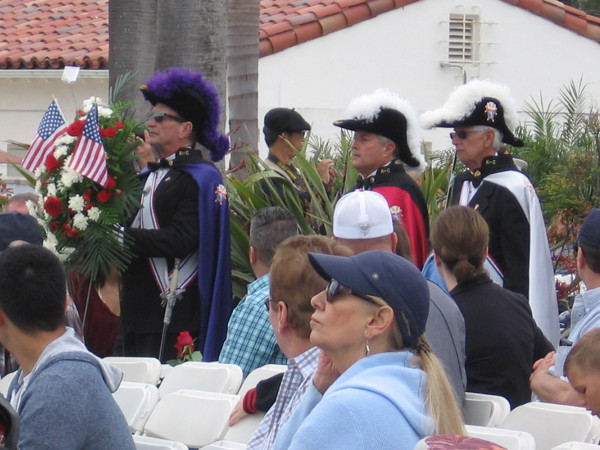
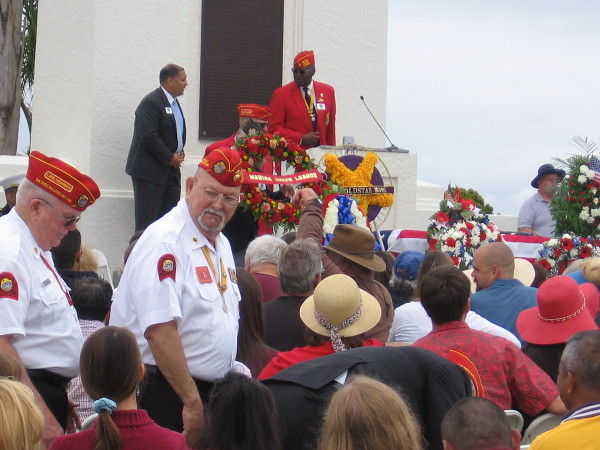
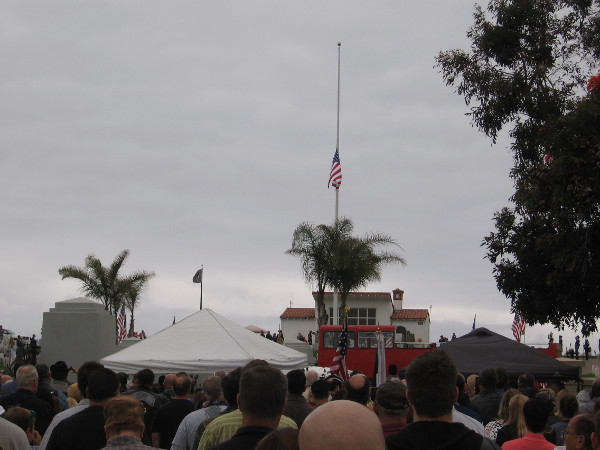
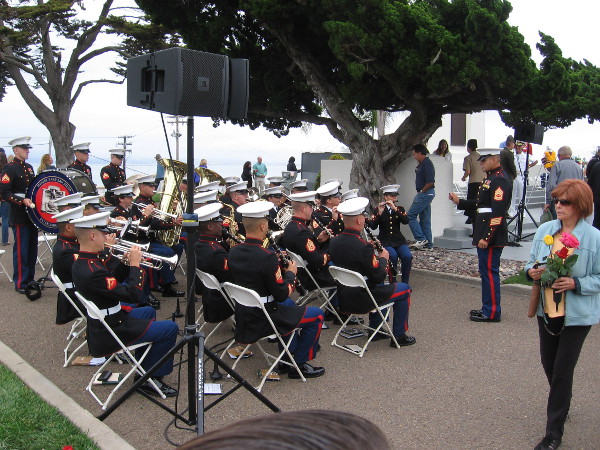
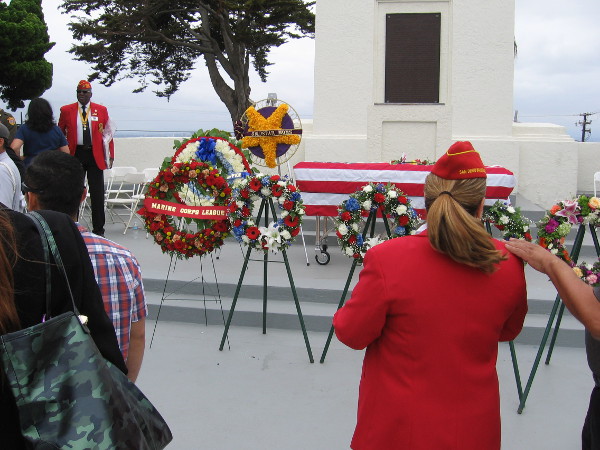
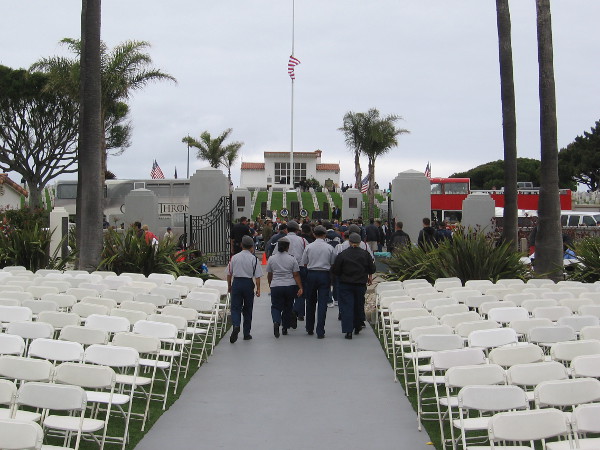
A Memorial Day rose adorns a solemn grave marker at Fort Rosecrans National Cemetery.American flags at the grave markers around the USS Bennington Monument. The granite obelisk remembers those sailors who lost their lives when the warship’s boiler exploded in San Diego Bay in 1905.Love and respect are shown for those in the military who pledged to protect their countrymen, and defend freedom. They are honored on Memorial Day.Walking among silent rows of white. Many gave the ultimate sacrifice for their nation.Many old granite markers at Fort Rosecrans National Cemetery recall decades and centuries of history.A marker reads: “Lydia Hunter died from complications resulting from the birth of her only child, a son named Diego Hunter, the first American born in San Diego. Diego was born 20 April 1847, Lydia died 6 days later. May we honor her and each of those women who served with the Mormon Battalion.” Members of the Mormon Battalion made the longest military march in U.S. history. They marched over 2000 miles from Iowa to San Diego in 1847.People assemble in front of the rostrum where the Memorial Day service will be conducted at Fort Rosecrans National Cemetery.People from all walks of life have gathered together to honor those who died while serving in the United States Armed Forces.While people take their seats before the opening and introduction, Marine Band San Diego provides music.The color guard comes forward. Those attending the ceremony sing the Star Spangled Banner and recite the Pledge of Allegiance.Some patriots in the crowd wave small flags.Veterans salute. Respect is shown for the flag.The color guard exited along the side where I sat, allowing me to take a couple of good photographs.Members of a high school ROTC program carry the United States and California flags.Folded flags are presented to families of fallen heroes. Everyone watching was very attentive and quiet.An address about different forms of love during Memorial Day. The moving speech was given by Major General O’Donohue of the 1st Marine Division in Camp Pendleton.Ceremonial wreaths approach the rostrum. Many organizations presented wreaths, including the Knights of Columbus shown here.Various ceremonial wreaths are displayed in front of the assembled people. Tokens of love, gratitude and respect.Finally, taps is played while the cemetery flag is lowered to half staff. Salutes included three rifle volleys, a musket volley, and a cannon.A bagpiper, after playing Lament for a Soldier, exits across the green grass, where the fallen lie eternally.The ceremony is over, and those visiting the cemetery fan out to pay their respects. The Marine Band remained seated for a bit of concluding music.A Navy officer walks down a cemetery driveway, which overlooks the channel entrance to San Diego Bay.Walls around the cemetery contain columbarium niches for cremated remains. Naval Air Station North Island and downtown San Diego are visible in the background.Walking along the columbarium. Its plaques identify loved ones.These two guys had bouquets in their backpacks. They are gazing along the Point Loma peninsula in the direction of Cabrillo National Monument.A deeply moving sight. Solemn rows of white on rolling green hills. Volunteers have provided every grave with an American flag and rose.Member of the next generation among those who came before.The living walk thoughtfully through Fort Rosecrans National Cemetery in San Diego.More grave markers and a small plaque nearby.The markers in this memorial area honor veterans whose remains have not been recovered or identified, were buried at sea, donated to science, or cremated and the ashes scattered.After the Memorial Day ceremony, some people linger to view the floral tributes and the flag-draped Casket of the Unknown Soldier. The plaque behind the rostrum contains President Lincoln’s famed Gettysburg Address.And now almost everyone has departed.Plaque near Fort Rosecrans National Cemetery entrance has lines from The Bivouac of the Dead, a poem by Theodore O’Hara.The main entrance plaque at Fort Rosecrans National Cemetery. The flag flies at half staff.Fort Rosecrans National Cemetery is also a California Registered Historical Landmark.Several monuments near the cemetery entrance memorialize tragic events in U.S. military history, including ships lost in action.Flags in the breeze. A cloudy day. People atop the hill gaze down at the eternal ocean.Looking beyond grave markers toward a hazy blue horizon.A beautiful old tree rises from the Earth. Life persists.A slow, thoughtful walk.Youth replaces a red rose that was blown by the wind to the ground. He doesn’t realize that someone is watching.
…
I live in downtown San Diego and love to walk! You can follow Cool San Diego Sights via Facebook or Twitter!
Do you like to read short pieces of thought-provoking fiction? You might enjoy checking out Short Stories by Richard.
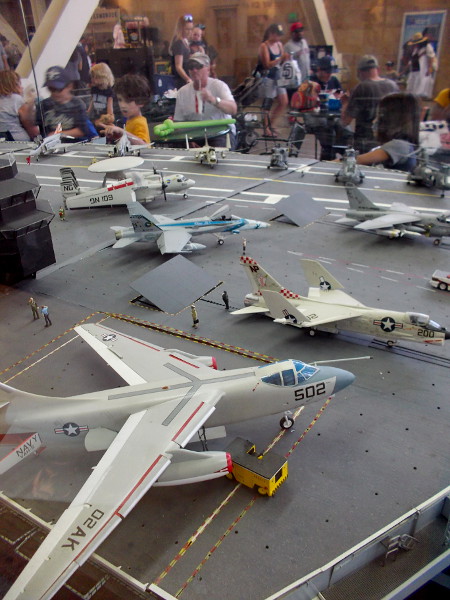
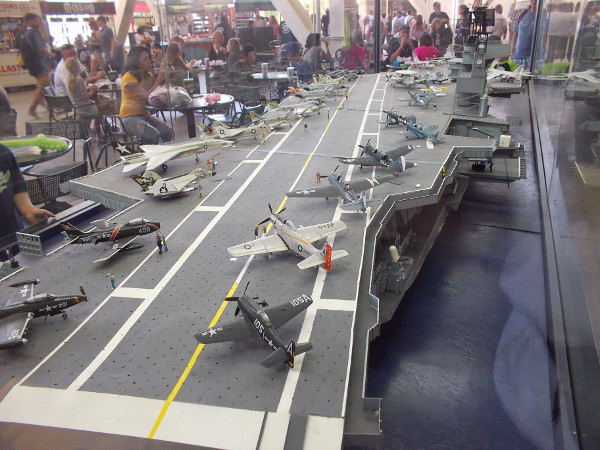
Kids check out the large USS Midway model inside the Power Alley at Petco Park during a Padres game.
I remember first seeing this impressive model of the USS Midway aircraft carrier many, many years ago. It was located inside the enormous passenger waiting room of the Santa Fe Depot, which is downtown San Diego’s historic train station. I’m not sure exactly when the model was moved into Petco Park’s Power Alley. It has been many years.
I like to check out this cool sight whenever I’m at a Padres baseball game or some other event at Petco Park. (It reminds me of when I was a kid, assembling a variety of small airplane models, gluing together the plastic pieces, carefully applying daubs of paint.) Young people today who wander through the stadium’s Power Alley can test their arm at a fast pitch game, enjoy a hot dog, then perhaps peer through the glass at the many aircraft arranged on the Midway’s flight deck.
In case you don’t have a chance to see this fantastic USS Midway model for yourself, here are a few photos.
Along the wall behind the large model you’ll find a moving tribute to our country’s military heroes, including the many professional baseball players who have served. I’ll blog about that one day, too!
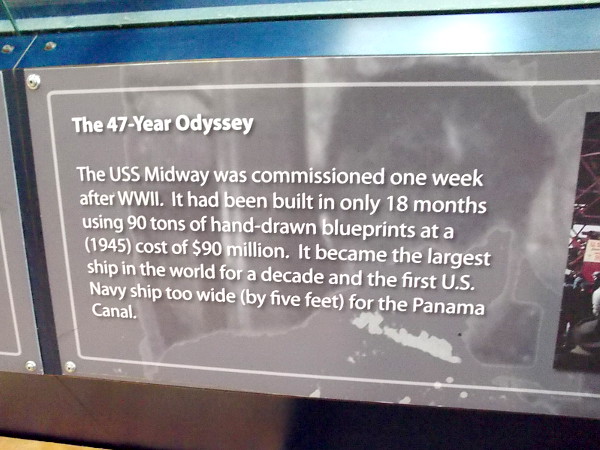
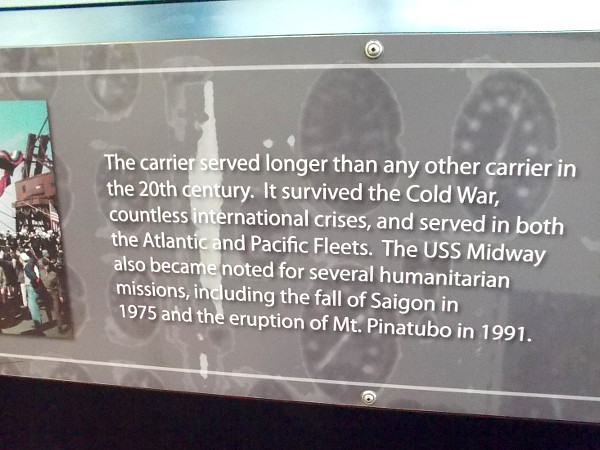
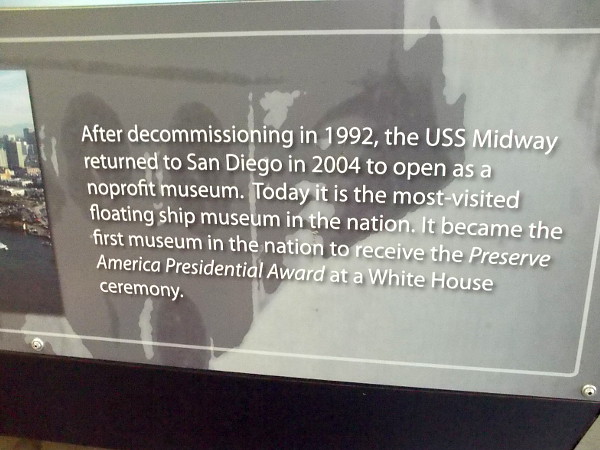
The USS Midway was commissioned one week after World War II. It became the largest ship in the world for a decade and the first U.S. Navy ship too wide for the Panama Canal.Many different model aircraft are parked on the flight deck of the small scale aircraft carrier.The USS Midway was active longer than any other carrier in the 20th century. It served during the Cold War, international crises and humanitarian missions…in both the Atlantic and Pacific Fleets.A closer photo of the USS Midway model which is displayed inside Petco Park’s Power Alley. I even see some tiny sailors!After decommissioning in 1992, the USS Midway returned to San Diego in 2004 to open as a nonprofit museum. It is now the most visited floating ship museum in the nation.Padres fans eat at tables near an impressive model of the USS Midway, a cool sight inside San Diego’s Petco Park.
…
I live in downtown San Diego and love to walk! You can follow Cool San Diego Sights via Facebook or Twitter!
You can easily explore Cool San Diego Sights by using the search box on my blog’s sidebar. Or click a tag! There are thousands upon thousands of unique photos for you to enjoy!




























































 Cool San Diego Sights!