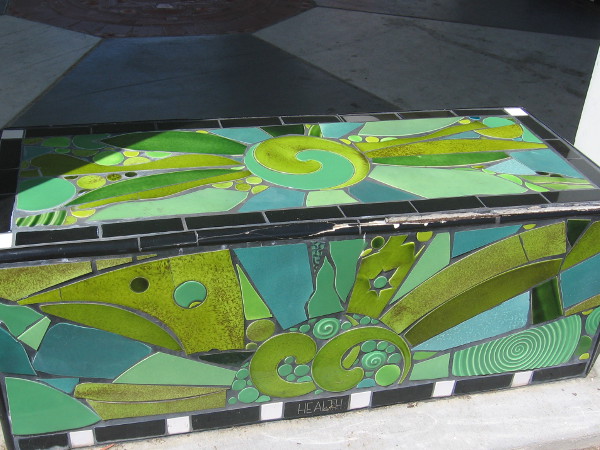
HEALTH is written at base of fantastic tile mosaic on bench.
A super long walk yesterday took me past Cancer Survivors Park at Spanish Landing, which is located between Harbor Island and the San Diego International Airport. I first blogged about the inspirational installation of art over a year ago.
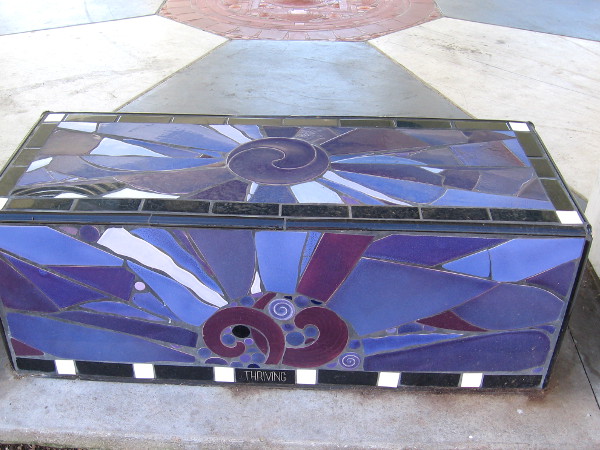
The purpose of Cancer Survivors Park is to educate, provide hope and encourage appropriate, prompt medical treatment. A domed structure at one end contains beautiful tile benches designed by artist Marlo Bartels. Each differently colored bench invites restful meditation and is dedicated to a single idea written near the base.
Beautiful dome of San Diego’s Cancer Survivors Park contains artistic tiled benches and words of encouragement.CELEBRATIONTHRIVINGLOVEWELLNESSHOPEGazing across grassy park toward bronze sculpture of people beating cancer through prompt, appropriate treatment.
…
To enjoy future posts, you can “like” Cool San Diego Sights on Facebook or follow me on Twitter.
Tile mosaic on Pacific Coast Highway shows fisherman rowing out over the ocean.
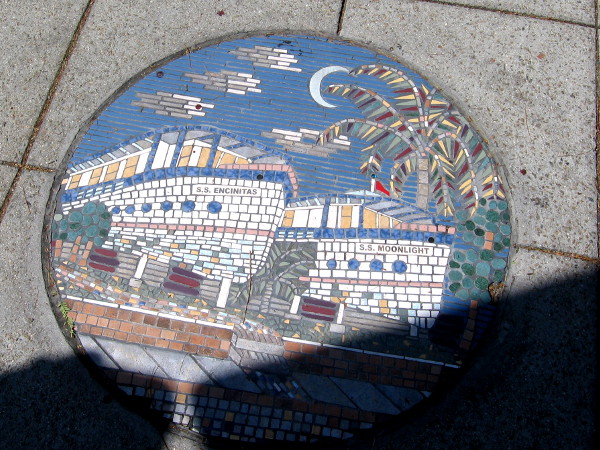
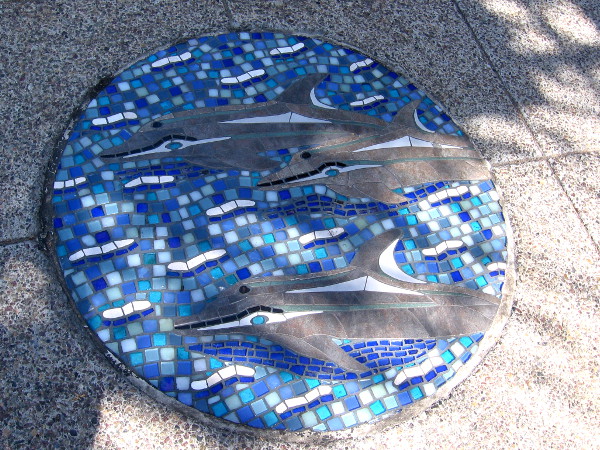
During my recent meandering walk in Encinitas, I noticed some colorful mosaics in the sidewalk. The circular tile and glass artwork seemed to be at intervals up and down Coast Highway 101, the historic Pacific Coast Highway. I took photos whenever I noticed one. A few were partly covered by shadow.
When I got home and did some research on the internet, I learned these pieces were created by artist Terry Weaver, who grew up in Encinitas, and that there are 16 mosaics all told. I only recorded seven! Had I paid closer attention, I might have found many more!
Encinitas artwork near train station depicts Coaster coming down track.Beautiful Moonlight Beach in Encinitas is celebrated with fun sidewalk art.Colored tile and glass form hot air balloons soaring through a swirling sky.The famous S.S. Encinitas and S.S. Moonlight “boat houses” are docked on this sidewalk!A pod of dolphins seems to be swimming down Pacific Coast Highway.Surfer rides an eternal wave under the feet of passing pedestrians.
UPDATE!
During a later visit to Encinitas I discovered three more of the sidewalk mosaics…
Cool image of surfer by sand, Pacific Ocean and his woodie at Swami’s Beach, overlooked by the grounds of the Self-Realization Fellowship ashram.Beautiful flowers including bird of paradise.Tile mosaic depiction of the historic La Paloma Theatre building in Encinitas.
And here are two more I stumbled upon during another walk…
A poinsettia.Encinitas woody with surfboard.
And two more even later!
Hummingbird and flowers.More hot air balloons!
And, finally, two more mosaics I spotted in 2021!
I believe I’ve now managed to photograph all 16…
Music and dance.Bicyclists.
…
To enjoy future posts, you can “like” Cool San Diego Sights on Facebook or follow me on Twitter.
Dedicate each day to that purpose, that great good.
Uplift others. Propagate love. Oppose what is wrong. Discover truth. Create new beauty. Voice what is worthy. Share your gifts. Send ripples of generosity into the future. Do an unselfish thing.
Choose.
Once your purpose is found, think of little else.
You will gain everything.
…
To enjoy future posts, you can “like” Cool San Diego Sights on Facebook. or follow me on Twitter.
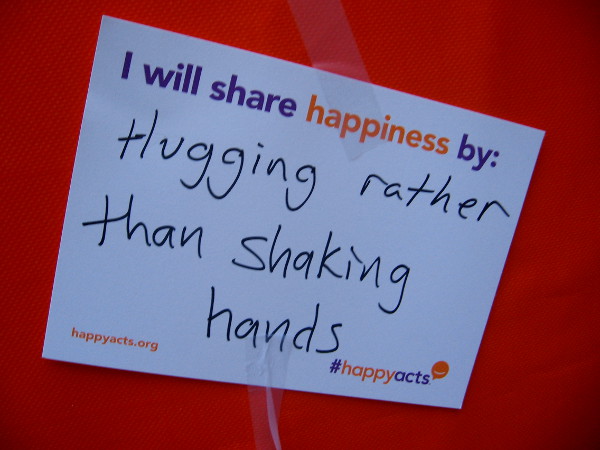
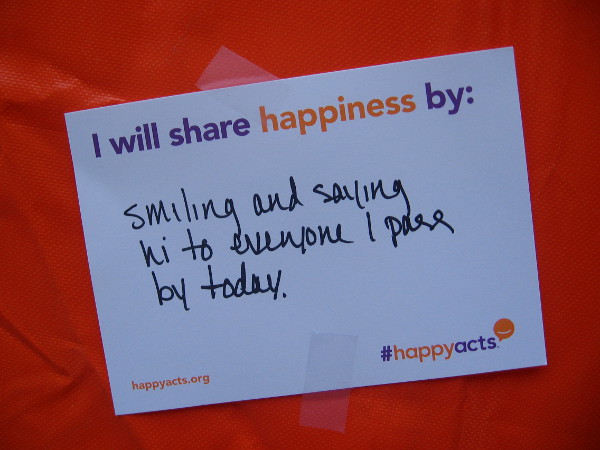
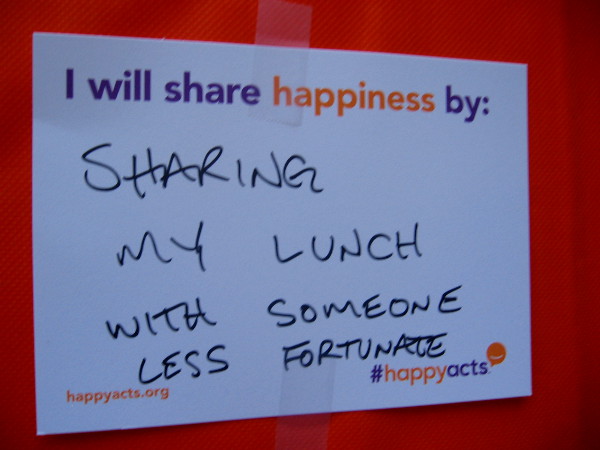
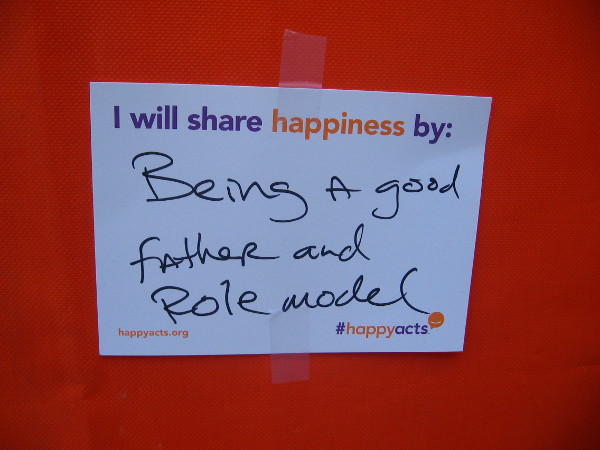
Today is the International Day of Happiness! Happy thoughts and deeds were underway in downtown San Diego this morning, just outside Horton Plaza. I swung on by to check things out!
International Day of Happiness in San Diego at Horton Plaza.Early morning vows of how people will make the world a more happy place.Smiling at my kids more.Smiling and saying hi to everyone I pass by today.Sharing my lunch with someone less fortunate.Being a good father and role model.Help make the world a happier place!
…
To enjoy future posts, you can “like” Cool San Diego Sights on Facebook or follow me on Twitter.
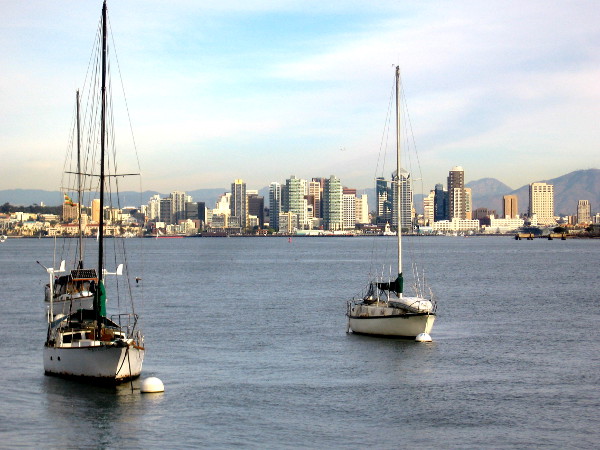
Sailboats moored near Shelter Island, downtown San Diego in the background.
Anyone who tries to write soon realizes a daunting truth. There are countless possible stories to tell, and numberless ways to tell each one. Infinity multiplied by infinity amounts to a whole lot of indecision!
Last weekend I stood on a patch of beach on Shelter Island. A sailboat moored nearby fascinated my eye, and I puzzled over its profound complexity for several minutes. How could I accurately paint that sailboat with words? How could I phrase the most perfect description? Is it even possible? With a million words is it possible?
As I watched the bobbing boat and struggled to sequence potent adjectives, a sudden thought shook me: Writing’s purpose, like art’s purpose, isn’t to replicate the world. It’s to stretch our minds. That is all.
Words are limitless. As limitless as the universe. They allow us to travel anywhere, in any direction.
A few well-directed words can focus our minds (for a moment) on overlooked things; they can help us see vague things more vividly. Words can seek and memorialize those things that seem important. Words tossed about can provoke hidden feeling and allow us to draw nearer to others. Words, when magical, can help us to discern whispers of meaning in the echoing vastness around us.
Our lives are finite. But the infinity that is contained in words can expand our lives. That is their purpose.
…
To enjoy future posts, you can “like” Cool San Diego Sights on Facebook or follow me on Twitter.
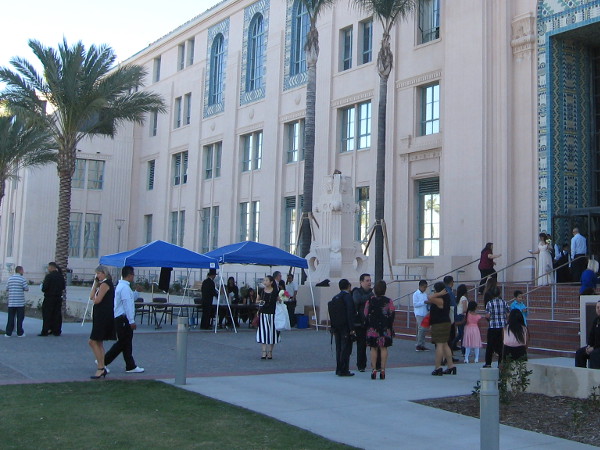
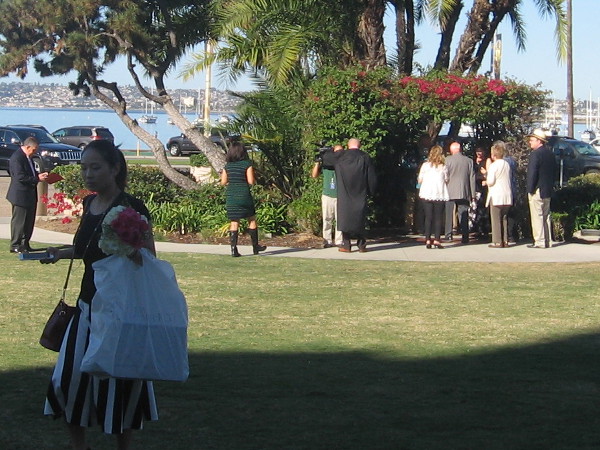
Brides, grooms and special guests approach County Administration Building on Valentine’s Day.
Today I took the trolley to Qualcomm Stadium to check out the very cool Lunar New Year Festival. Before catching the trolley at the Little Italy station, I walked around the nearby County Administration Building and its beautiful waterfront park. Every year on Valentine’s Day, hundreds of weddings are performed here. According to an article I read, this year 187 ceremonies were scheduled!
I didn’t stay long, and I kept a respectful distance from those who were tying the knot, but I did manage to get a few decent pics!
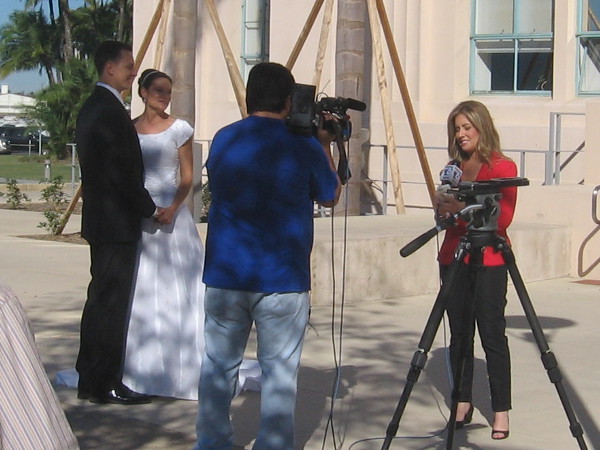
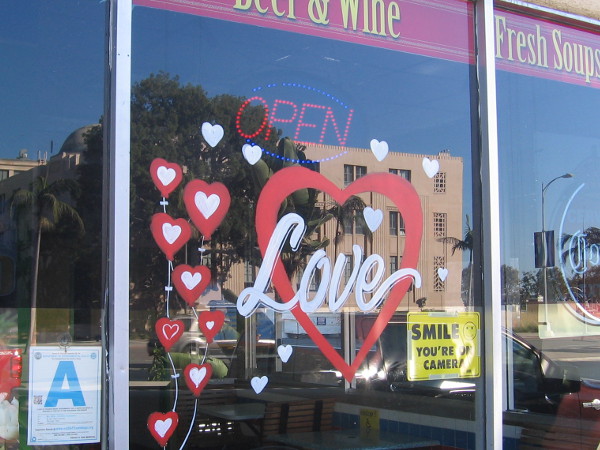
This happy soon-to-be-wed couple is interviewed by a television reporter.People enter and leave San Diego’s County Administration Center in bliss.The first ceremony takes places at the small wedding arbor in the waterfront park.Love is in the air, and across the street at the waiting taco shop.
…
To enjoy future posts, you can “like” Cool San Diego Sights on Facebook or follow me on Twitter.
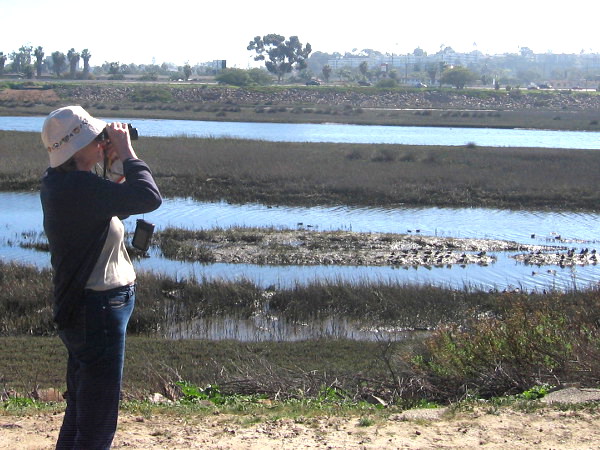
Birdwatching on north side of San Diego River, not far from Pacific Ocean.
Today I enjoyed a glorious walk. I hiked along the always life-filled San Diego River Estuary.
Beginning along the north side of the San Diego River from Friars Road, I headed west down the bicycle and jogging trail which parallels Sea World Drive. I then crossed the river over the Sports Arena Boulevard bridge and returned along the San Diego River Trail back east to Morena Boulevard.
I didn’t expect to get any decent shots of birds with my dinky little camera, but as it turned out I got lucky. While the estuary is always teeming with both migrating and native birds, most tend to gather on the small islands and mud flats a fair distance from the path.
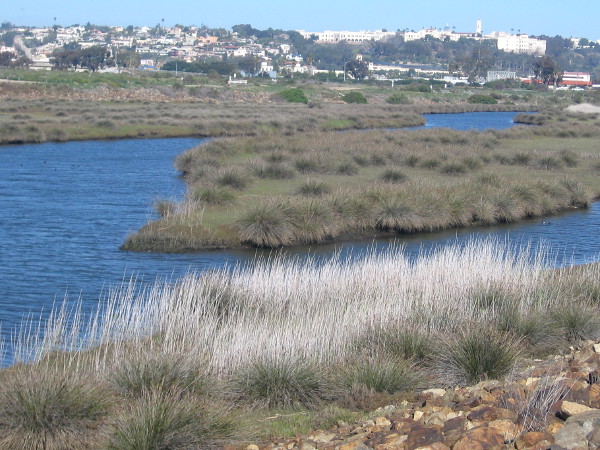
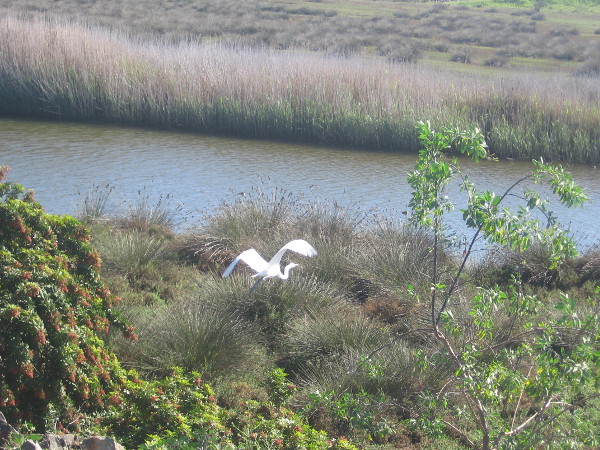
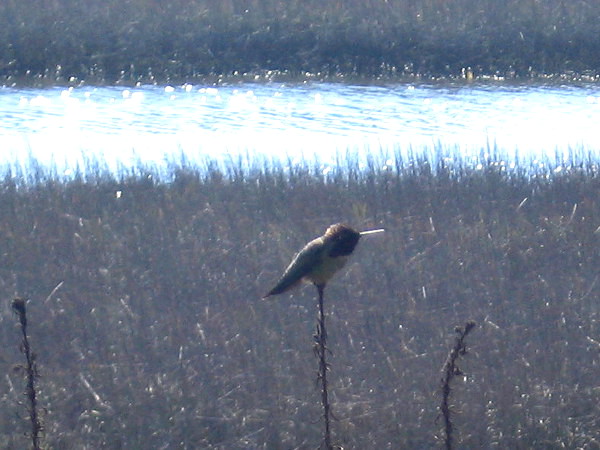
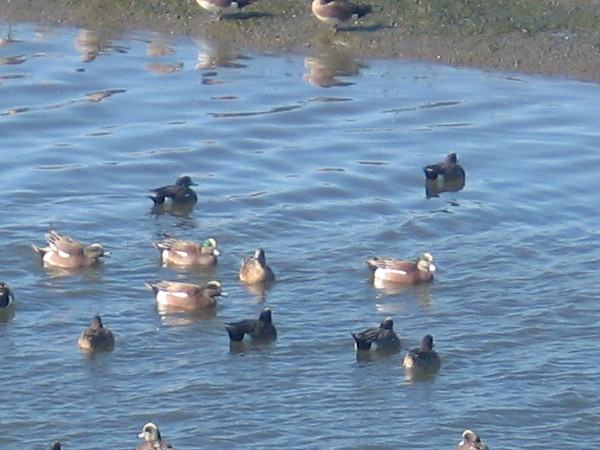
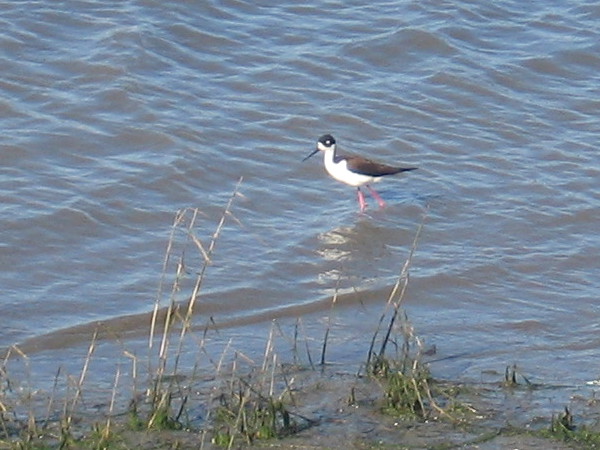
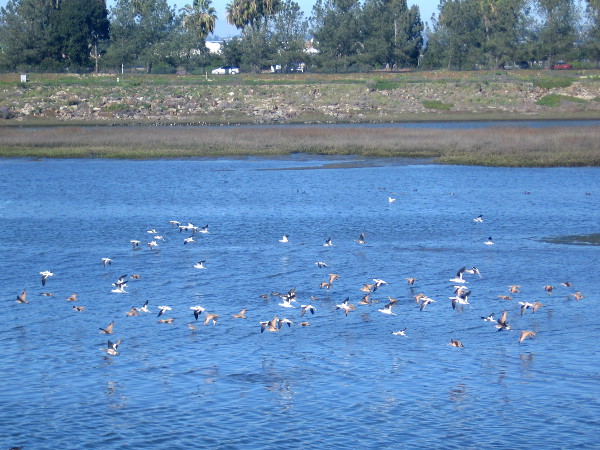
The San Diego River Estuary is one of the best birding spots in Southern California.Great egret takes flight from river’s edge, very close to pedestrian and bike path.Hummingbird takes a rest on a twig on a sunny winter afternoon.Plenty of ducks and shore birds dot the living river throughout the year.Black-necked stilt walks through the water, perhaps watching for a meal.Looking north across blue water. Mission Bay and SeaWorld lie beyond the trees.Huge flock of seagulls takes flight from mud flat near mouth of San Diego River.A fish-hunting osprey flies above the San Diego River Estuary.
…
To enjoy future posts, you can “like” Cool San Diego Sights on Facebook or follow me on Twitter.
Two adults in historical costumes at Seaport Village. I don’t know why!
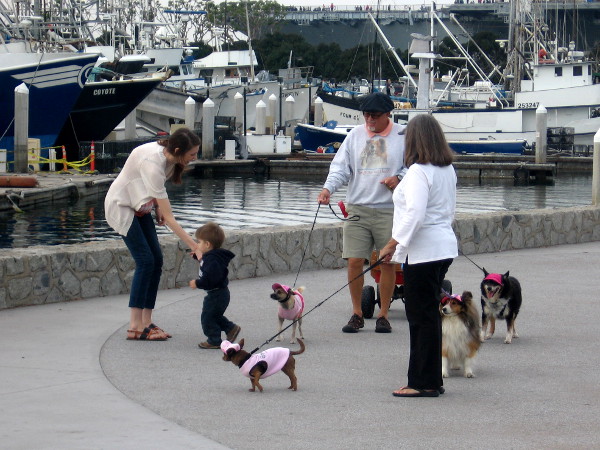
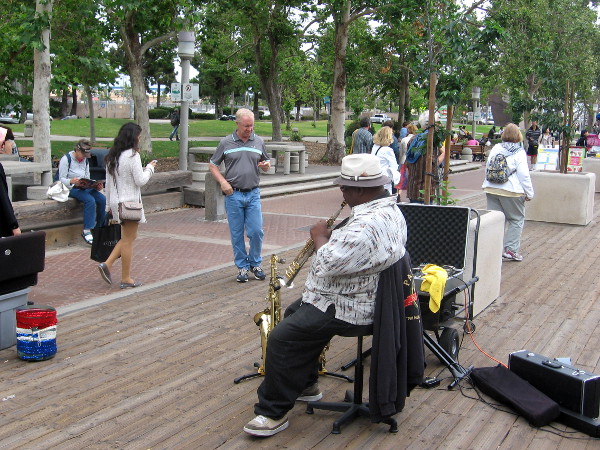
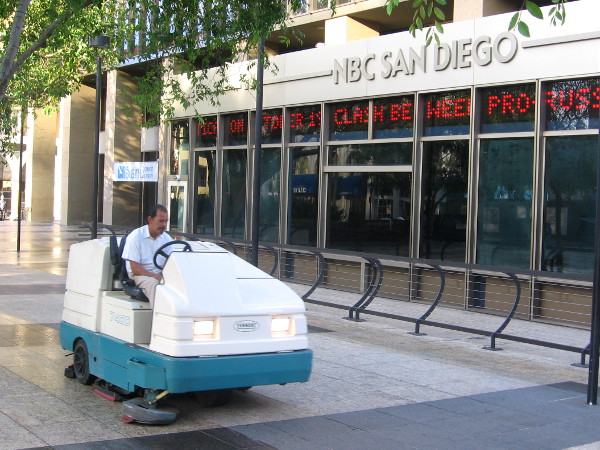
Here are pics of folks simply living life in downtown San Diego. Strangers working, playing, or doing random odd stuff make fascinating subjects. I’ll glance at a photograph downloaded to my computer, and I’ll wonder for a brief moment about the story unfolding in front of me. Is the story happy? Sad? A complicated mixture? Then a curious thought strikes: someone might have taken a secret photograph of me, and they could be wondering the same thing!
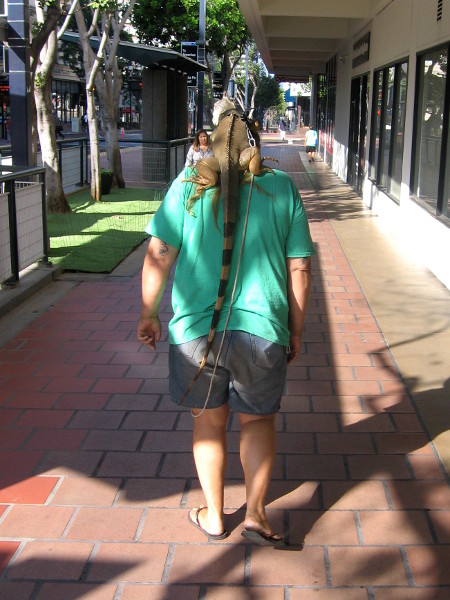
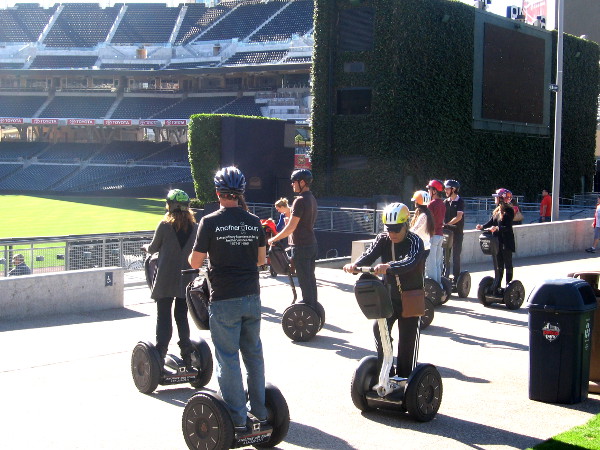
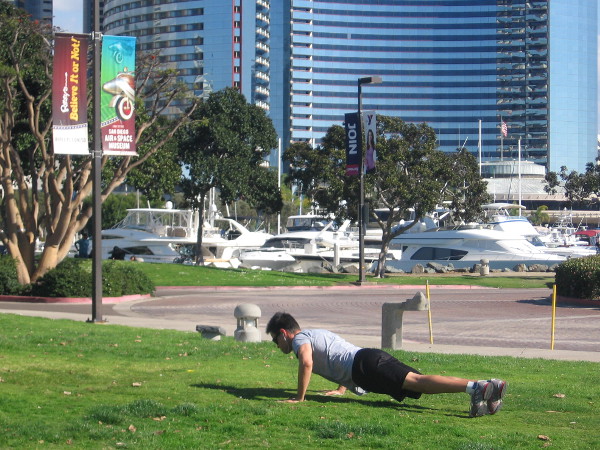
Reluctant child, dressed dogs, and unheard words on the Embarcadero.People staring downward, and a street musician near USS Midway.Man cleans sidewalk in early morning at downtown NBC building.A huge iguana takes a curious ride on someone’s shoulders!Tour group on Segways stops in Petco’s Park at the Park to gaze at empty field.I believe those are choir members outside Our Lady of the Rosary in Little Italy.Adults seem preoccupied as balloon twister guy creates colorful fun for kids!Couple takes a selfie on a beautiful day as sailboats glide past USS Ronald Reagan.Man doing a few public push-ups on grass in Embarcadero Marina Park North.Amish tourists taking an odd stroll through a very strange, big city!
…
To enjoy future posts, you can “like” Cool San Diego Sights on Facebook or follow me on Twitter.
Birds take flight above palm trees in downtown San Diego.
This is my 500th post. I can’t believe it.
When I started writing this blog on a lark about a year and a half ago, it was a puny little creation, and I hadn’t a clue where it would take me. Alas, after many hours pounding away at the old keyboard, I haven’t earned one thin dime. But that’s perfectly fine. The riches I’ve received are immaterial, and far greater.
Writing a blog–one that involves photography in particular–opens your eyes, enhances your appreciation of all that is around you. To chronicle a walk through this world, one must carefully experience each step and turn curious eyes everywhere. One must note light, depth, and the color of things. One must listen to others. If I hadn’t begun to meander about San Diego purposefully, searching for “cool” material, I might never have seen some hidden rainbows. Or a small bit of street art. Or dogs surf.
Writing a blog encourages creativity. It’s casual and conversational. There’s no need to fret too much about editing. Readers are just friends. So you can yap freely and let the mind flow. I’ve always been a fan of science fiction writer Ray Bradbury. His great book Zen in the Art of Writing talks about the power of just letting thoughts flow, uninhibited, like gushing water from a wildly whipping dangerously uncontrolled hose. That water will irrigate one’s life, and the lives of others who are splashed.
Writing a blog leads the author to be more honest. More understanding. More compassionate. More vulnerable. Writing a blog, giving birth to a few silly words, expands the soul.
Thanks for coming along on my walks!
Where will I go today? I have a bit of an idea, but I’m not certain. Time propels us forward into the unknown. If you’d like, follow me on Twitter, Facebook, Pinterest and Tumblr!
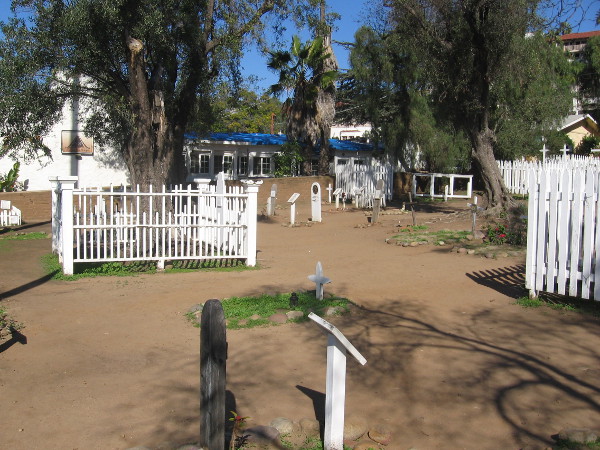
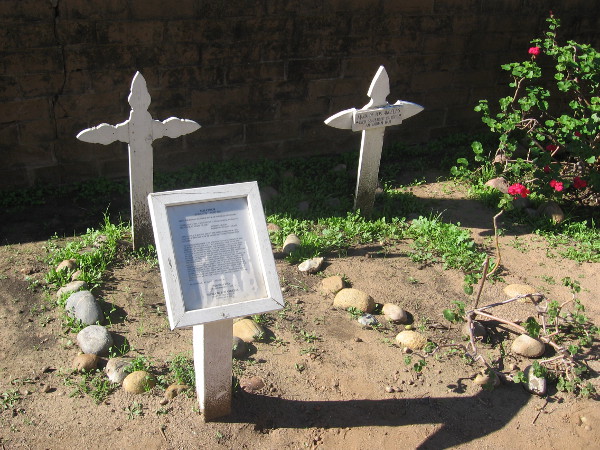
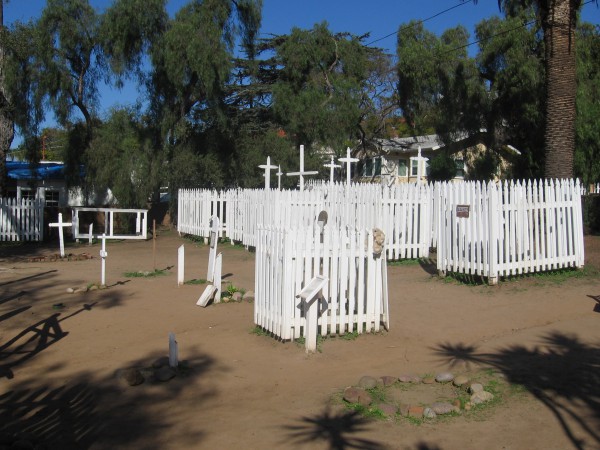
El Campo Santo cemetery in Old Town San Diego contains much history.
El Campo Santo, a cemetery located in Old Town, contains many of San Diego’s earliest residents. By walking respectfully among the gravestones, one can learn much about the city’s interesting history and what life was like for its diverse people. Real-life characters buried here include ranchers, gold miners, sailors, Californios, Native Americans, soldiers, politicians, merchants, actors, children and outlaws.
Established in 1849, the graveyard is the final resting place of nearly five hundred souls. Just a handful are shown in this blog post.
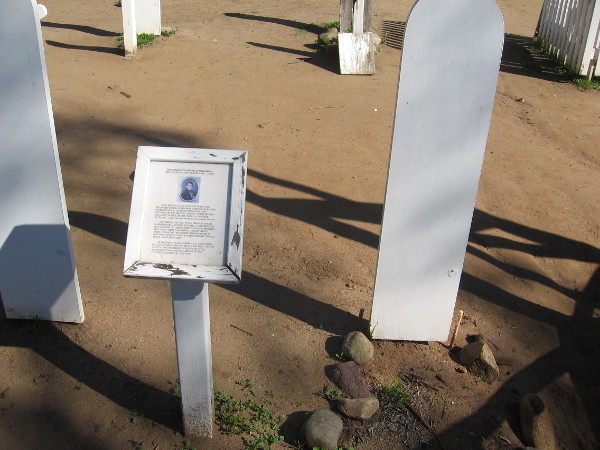
I took photographs of grave sites, headstones and many small signs in the “Holy Field” that describe what is known about the deceased. With a little editing, I’ve provided information here from many of those signs, and from a few other online sources.
Melchior was a Native American who lived to be 97 years old.
Melchior, born 1770, died 1867, age 97 years. Very little is known about the Indian Melchior. He was born a year after the arrival of Junipero Serra in San Diego. He was baptized by the missionaries and became a Roman Catholic Christian. During his long life, he saw San Diego grow from a small pueblo to a city.
Thomas W. Tanner ran an acting troupe that performed at the Whaley House.
Thomas W. Tanner was buried December 22, 1868, age 55 years. He ran an acting troupe that performed on the second floor of the Whaley House in December 1868. Tanner’s troupe offered moral, chaste and versatile entertainment consisting of drama, farce, comedy, singing and dancing. Unfortunately, Tanner died 17 days after his troupe opened. He was married to Policarpia de la Rosa and was a native of Baltimore, Maryland.
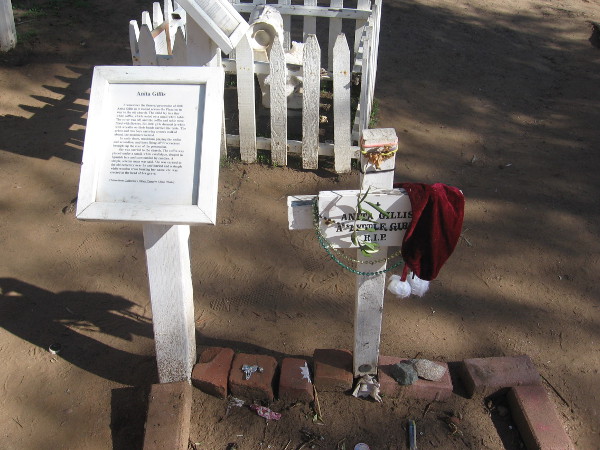
Anita Gillis was a young child.
Anita Gillis was a child when she died. Her funeral is remembered as follows on a plaque by the grave. A funeral procession wound across the Plaza and ended at the old church. The child lay in a tiny white coffin, which rested on a small white table. The cover was off, and the coffin and table were filled with flowers. Six little girls dressed in white with wreaths on their heads carried the table. The priest and two boys carrying crosses walked ahead, the mourners behind. Musicians played the violin and accordion, and boys firing off firecrackers brought up the rear of the procession. She was carried to the church, and the coffin placed under a small white catafalque, draped in Spanish lace and surrounded by candles. A simple, solemn mass was said. She was then carried to the old cemetery and buried with a simple white wooden cross bearing her name erected at the head of her grave.
Juan Mendoza worked on a ranch and was shot in the back.
Juan Mendoza died February 6, 1865. He was the victim of a fatal shotgun blast to the back. The assailant was Cave Johnson Couts, a local landowner and prominent San Diegan born in Tennessee. As the story goes, Mendoza worked as majordomo, or chief steward, on one of Cave Couts’ ranches. Couts claimed that Mendoza had threatened his life and in a hasty act of revenge killed Mendoza in broad daylight. The action violated the legendary “Code of the West” which prohibited “shooting an unarmed man” and “shooting a man in the back”. Couts was tried by jury for his crime and found not guilty. This was received “with much applause” from local citizens since threatening the life of a man, as Mendoza allegedly did, gave Couts the right to stand his ground and kill him.
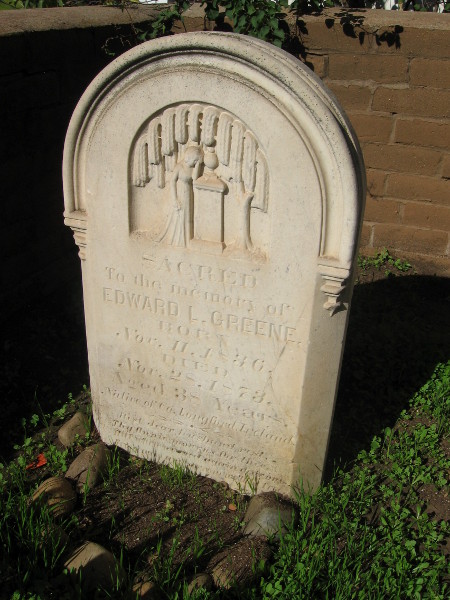
Edward Lynch Greene was a gold miner who became member of the state legislature.
Honorable Edward Lynch Greene died November 28, 1872, age 38 years. He was a native of Ireland who came to California in 1852 and was a miner for gold. He was naturalized in 1861. He became a member of the state legislature when he was elected to the Assembly from Calaveras County in 1869. He was staying in San Diego at the Era House when he died of consumption. He’d been ill for the past eighteen months. He left behind a young wife, Ann Greene.
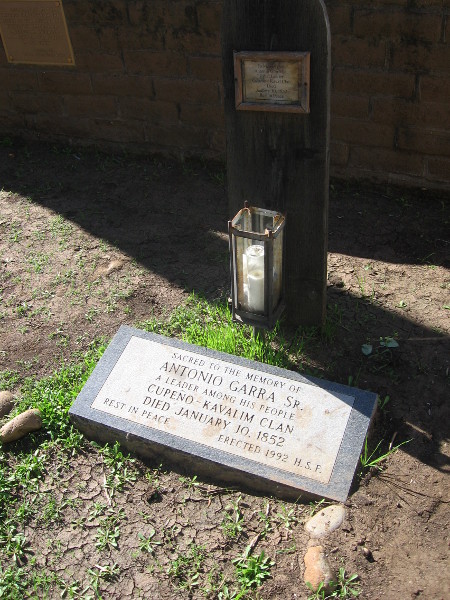
Antonio Garra Sr. was a Native American who rebelled against taxation.
Antonio Garra Sr. died January 10, 1852. He was a leader among his people, the Cupeno-Kavalim Clan. He was educated at Mission San Luis Rey and spoke as many as five Indian dialects, as well as Latin. He was one of the foremost chiefs with great power and influence among his people. The Cupeno were considered mission Indians and were subject to pay taxes in San Diego County. Garra, upset by the taxation of his people, helped to organize a resistance movement, comprised of attacks on Santa Barbara, Los Angeles and San Diego. Against his wishes, a fatal attack was made on Warner’s Ranch. He was soon thereafter captured. On January 10, 1852 Garra was found guilty of murder and theft, but not treason, as he had never taken an oath of allegiance to the United States. Before being executed by firing squad, Garra said in his last words: “Gentlemen, I ask your pardon for all my offenses, and expect yours in return.” Antonio Garra, Sr. is believed to be buried underneath what is now San Diego Avenue.
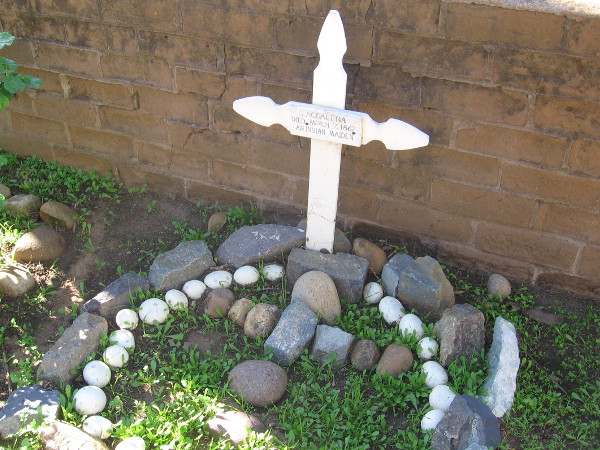
Magdalena was a Native American young lady.
Magdalena was an Indian maiden who died on March 7, 1867 at age 21.
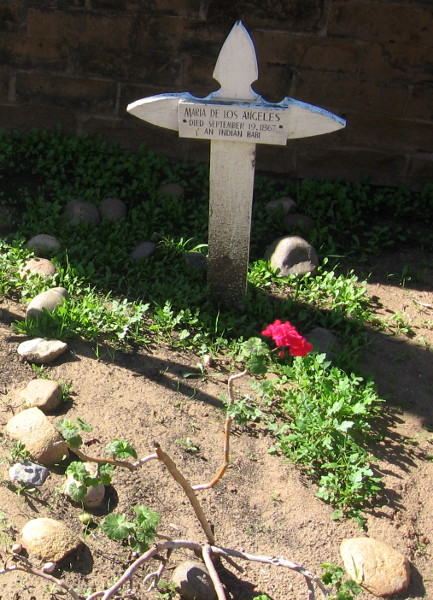
Maria de los Angeles was a Native American infant.
Maria de los Angeles was an Indian infant who died September 19, 1867.
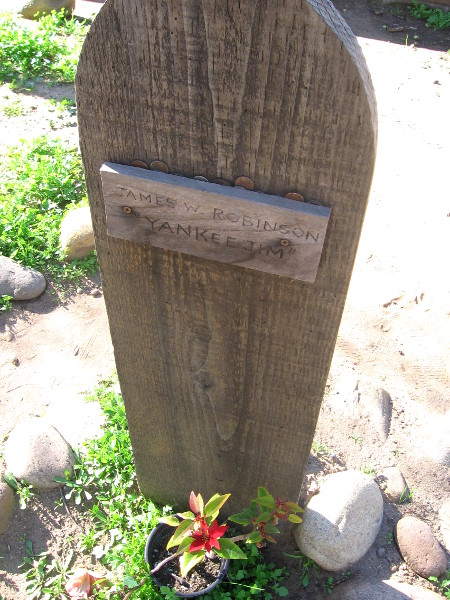
Yankee Jim was hung for stealing the only rowboat in San Diego Bay.
James W. Robinson was known as Yankee Jim. He suffered an extreme penalty for stealing the only rowboat in San Diego Bay. He was sentenced to be hanged. He couldn’t believe that he would be hanged until the very last moment. He appeared to think it was all a grim joke, or at worst, a serious effort to impress him with the enormity of his evil ways. He was still talking when the deputy sheriff gave the signal. Yankee Jim converted to the Roman Catholic Church prior to his death, and so was given the baptismal name of Santiago (Spanish for James). His godfather was Philip Crosthwaite, the deputy sheriff who gave the signal for his execution.
Rosa Serrano de Cassidy and her husband owned a rancho in Pauma.
Rosa Serrano de Cassidy died February 10, 1869, age 21 years. She was the first wife of Andrew Cassidy (a native of County Cavan, Ireland) who helped establish and operate the U.S. tidal gauge in La Playa (in present day Point Loma). Rosa was the daughter of Jose Antonio Serrano who served under Pio Pico in the Mexican War and was in the battle of San Pasqual. Rosa and her husband owned a rancho in Pauma. Her headstone is one of the few remaining originals in the cemetery. After cracking during an earlier restoration, it was placed flat on the ground in order to preserve it.
Don Miguel was a native of Spain, and one of the founding fathers of California.
Don Miguel Telesforo de Pedrorena died March 21, 1850. Don Miguel was a native of Spain, belonging to one of the best families of Madrid. After receiving an education in his own country, he was sent to London, where he was educated in English. In 1845 he settled in San Diego. He married Maria Antonia Estudillo, daughter of Jose Antonio Estudillo, and the two had four children. They built their casa behind the Estudillo home. It was one of the first framed houses in Old Town, and still stands beside the San Diego Union print shop. Don Miguel became a leading merchant and citizen of old San Diego. He served as a delegate to the State’s Constituional Convention at Monterey in 1849 and became one of the founding fathers of California.
Juan Maria Marron was a ship’s captain who became prominent politically.
Juan Maria Marron, born 1808, died at the age of 45. He was a ship’s captain before coming to San Diego in the early 1820’s. He was the owner of 13,311 acres called Rancho Agua Hedionda, which extends from modern day Vista to Carlsbad. He became prominent politically when he married Dona Felipa Osuna in 1834. She was the daughter of Juan Maria Osuna, who was the first alcalde of San Diego and the owner of Rancho San Dieguito. During the Mexican-American War, Marron supported the Americans against many of his Mexican friends. He was captured by Californios who threatened to execute him, but he was released, and his rancho was stripped of horses and cattle.
Jayme Lyons was the son of a carpenter, merchant, blacksmith and sheriff.
Buried November 28, 1859, age 4 years, Jayme was one of probably thirteen children of George and Bernarda Lyons. Jayme’s father was a native of Donegal, Ireland, who came to San Diego in 1847. He had been a carpenter on a ship that came around Cape Horn from New Bedford, Massachusetts. He kept a store in Old Town, owned a blacksmith shop, and was sheriff for two terms. Jayme’s mother was Bernarda de Villar, the daughter of Lieutenant de Villar, who at one time was the Commandant of the San Diego Presidio.
Bill Marshall and Juan Verdugo were hanged nearby.
Bill Marshall and Juan Verdugo were hanged on December 13, 1851. Bill Marshall was an American married to the daughter of a local Indian chieftain. He was a renegade sailor from Providence, Rhode Island, who’d deserted from a whaling ship at San Diego in 1844. After taking up habitation with the Indians, he took an active part in the Garra Indian uprisings in 1851. He and the Indian Juan Verdugo were caught and brought back to San Diego to be promptly tried by court martial. Both were found guilty. The Indian acknowledged his guilt, but Marshall insisted he was innocent. At two o’clock in the afternoon, a scaffold was erected near the old Catholic cemetery, the men placed in a wagon, the ropes adjusted about their necks, and the wagon moved on, leaving them to strangle to death.
Rafael Mamudes worked at chopping wood and digging wells. He dug the graves for the people of Old Town
Rafael Mamudes was a Native American born in Hermosillo, Mexico. He was a baker in Monterey, a miner in Calaveras County, and made a sea voyage to Guaymas. He owned a little plot of land in San Diego where the old jail stands. Legend has it he made a murderous attack upon his wife. To do penance, the priest gave Rafael the task of ringing the church bells when the occasion demanded. Rafael worked at chopping wood and digging wells. He dug the graves for the people of Old Town. He never missed a church service.
Jesus was a Native American who died of a blow to the head while drunk.
Jesus, an Indian, passed away December 15, 1879, age 25 years. He died of a blow to the head without receiving sacraments. According to the priest Juan Pujol, he was said to be drunk, so he was buried near the gate of the cemetery.
Hundreds of varied, rich life stories were concluded here in this early San Diego cemetery.
…
To enjoy future posts, you can “like” Cool San Diego Sights on Facebook or follow me on Twitter.





















 Cool San Diego Sights!