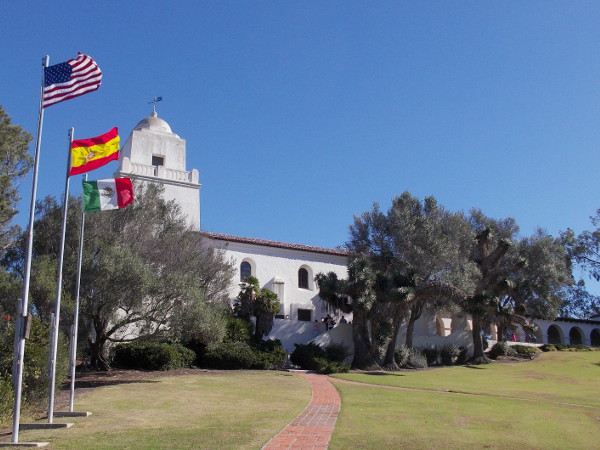
The Junipero Serra Museum of the San Diego History Center was built in 1928 on Presidio Hill, where European civilization was established in Alta California.
I recently visited one of San Diego’s most fascinating museums. The Junipero Serra Museum is located atop Presidio Hill, in a distinctive Mission Revival architectural style building overlooking San Diego Bay and the San Diego River, just east of Old Town. It stands near the site of San Diego’s historic Spanish presidio, built in 1769. The presidio was the birthplace of European civilization in Alta California.
The Serra Museum is operated by the San Diego History Center, which is headquartered today in Balboa Park. Back in 1929, when the building was dedicated, it became home of what was then called the San Diego Historical Society. The important San Diego institution was established by civic leader George W. Marston.
Can you believe it? I’ve lived in San Diego for 15 years . . . and this was the very first time I ventured into the Serra Museum. (I can thank my blog for that!)
What I discovered was an absolutely amazing place that both residents and visitors to San Diego should definitely not miss.
Here’s a sample of what you’ll see…
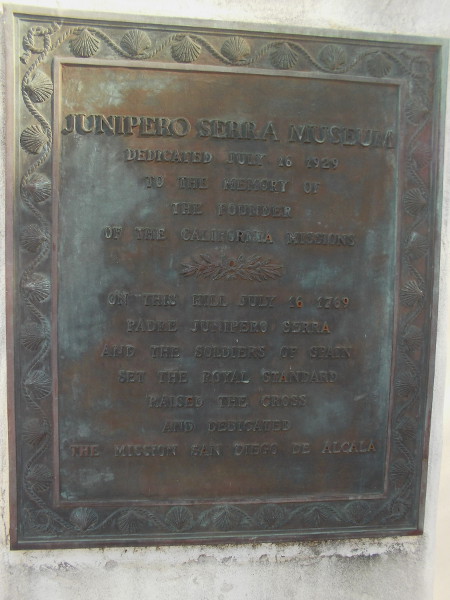
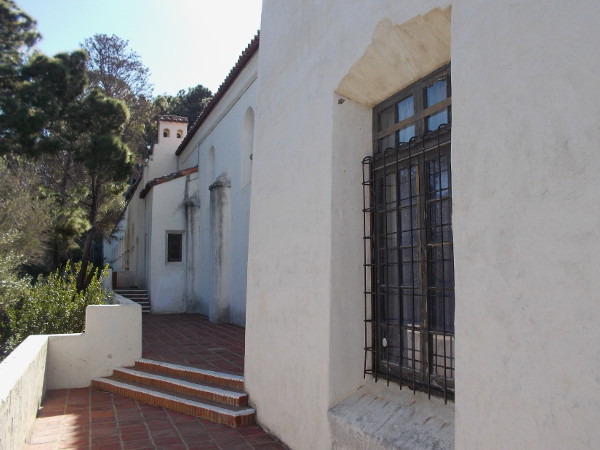
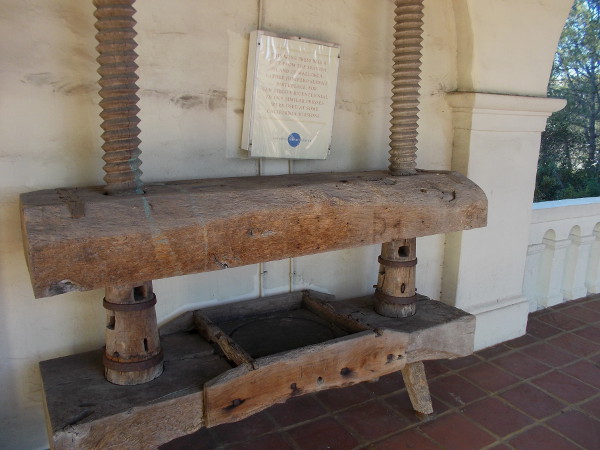
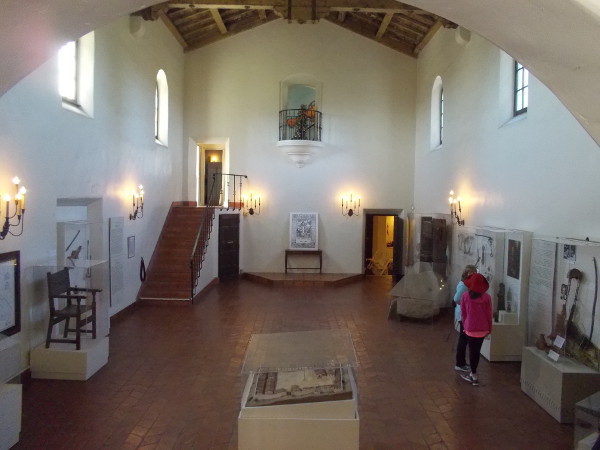
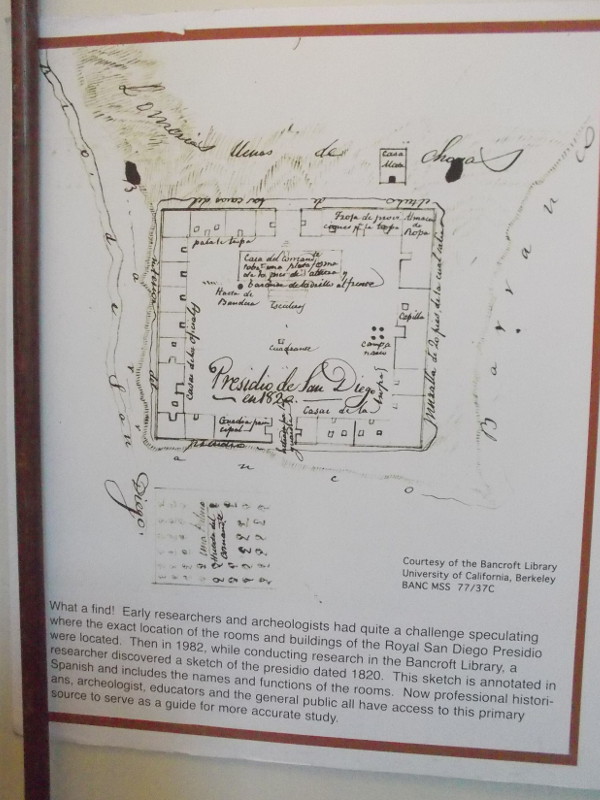
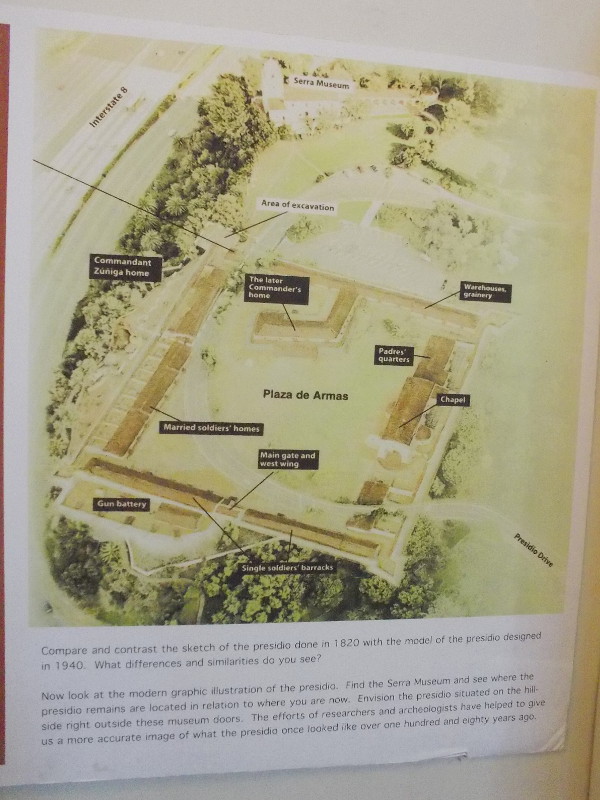
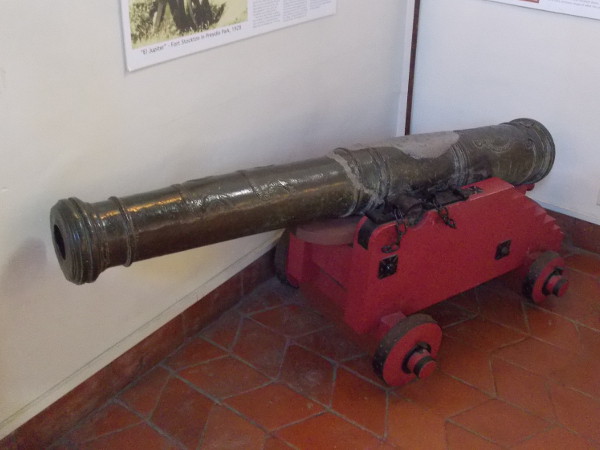
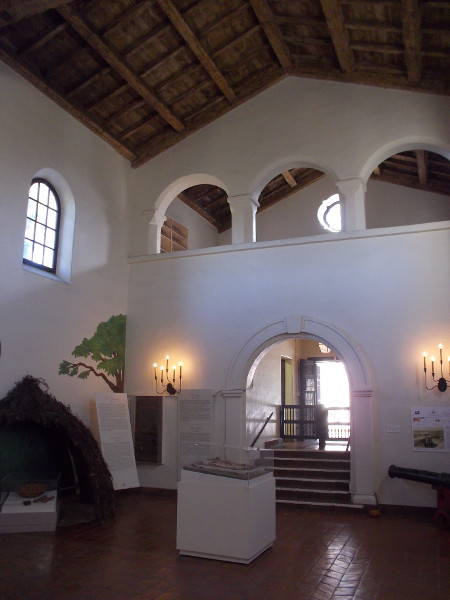
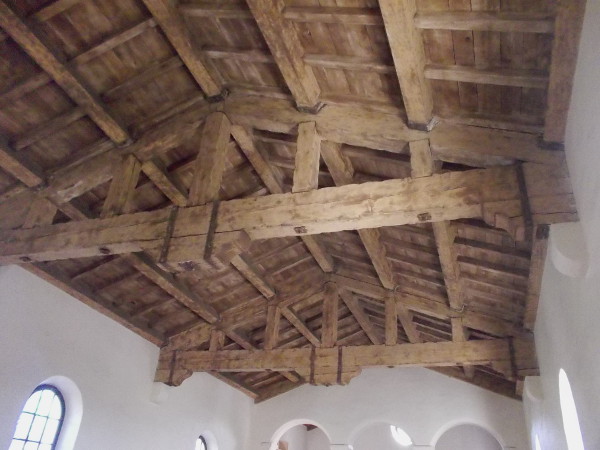
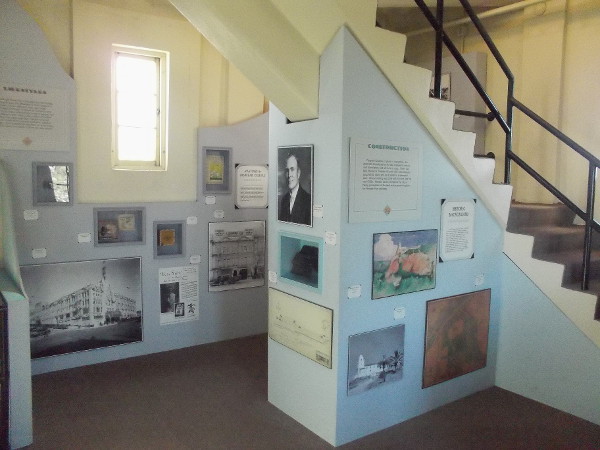
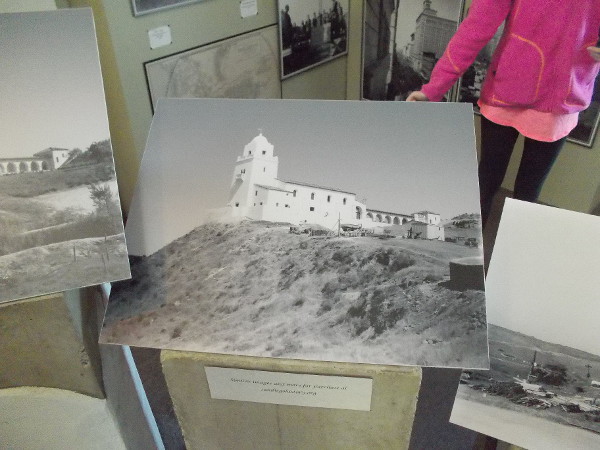
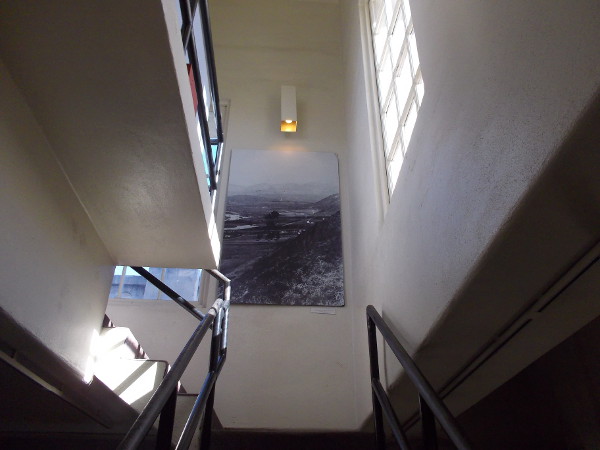
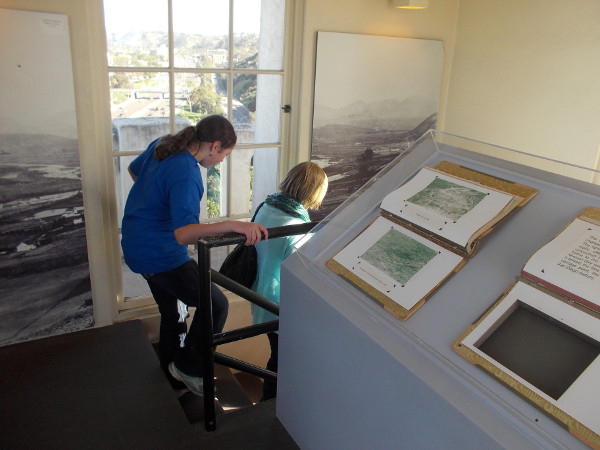
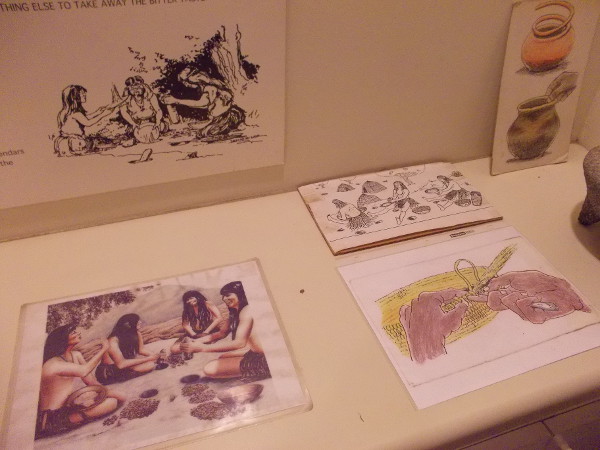
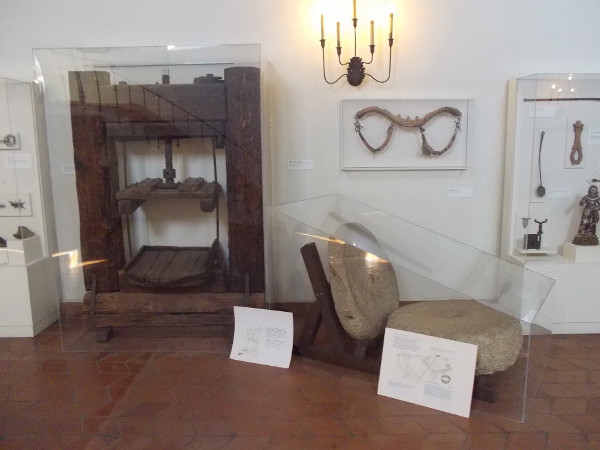
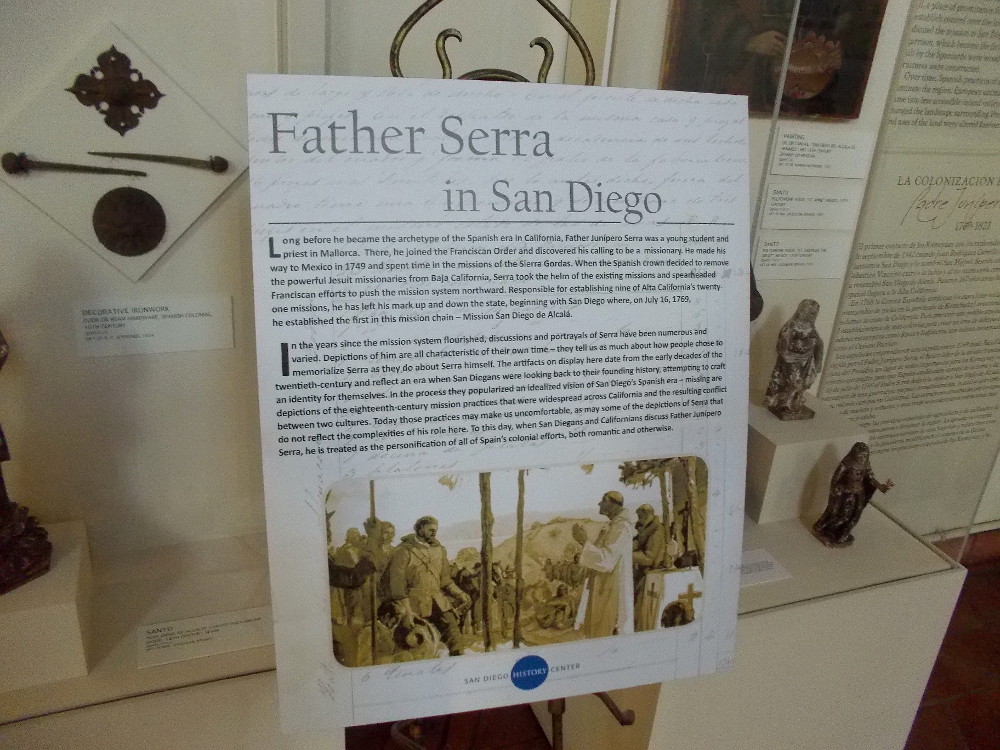
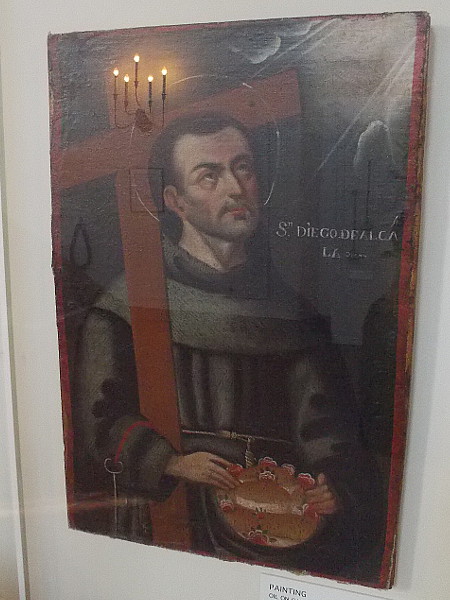
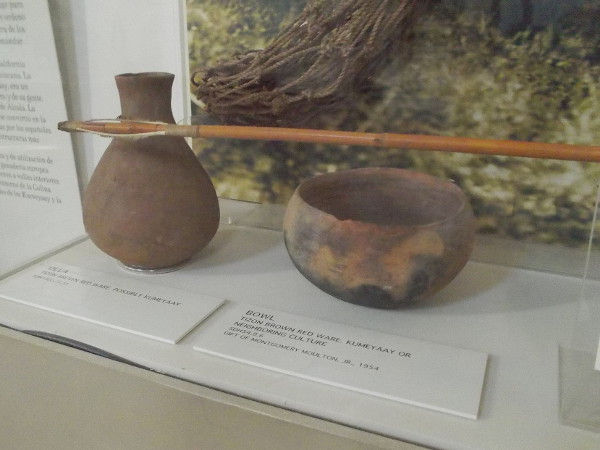
People arrive at the Serra Museum, where San Diego’s early Spanish history comes alive.Junipero Serra Museum dedicated July 16, 1929 to the memory of the founder of the California missions. The original Mission San Diego de Alcalá was established nearby in 1769.A quick look at the rear of the museum.The Serra Museum building was designed by noted architect William Templeton Johnson. It reflects Mission Revival style architecture.Large wine press in front of the museum was a gift from the Spanish island of Mallorca, Father Junipero Serra’s birthplace.Plaque near entrance reads George White Marston 1850-1946. FRIEND OF HIS FELLOW MEN – LOVER OF ALL GROWING THINGS. Piece by piece through many years he acquired these acres…Elegant interior of the Serra Museum contains many exhibits pertaining to San Diego’s early Spanish history.Researchers discovered this sketch of the Royal San Diego Presidio dated 1820. It shows the layout of the old buildings which no longer exist.Modern graphic illustration of the fortified presidio, which was located a short distance below the Serra Museum’s front entrance.Old Spanish cannon named El Jupiter, cast in Manila in the 18th century. El Jupiter stood in Fort Guijarros at Ballast Point, the first defensive fortifications for San Diego Bay.Leather armchair made in Catalan, Spain in the 17th century. This “friar’s chair” was part of the original Serra Museum’s furnishings.Old violin with bow, a branding iron used by rancheros to identify cattle, and iron spurs are among the many historical objects on display.Another look at the beautiful interior of the Serra Museum in San Diego.Large wooden beams in a truly amazing ceiling.Stairs lead up to the Serra Museum’s tower. Painted on the wall is a map showing the sea journey of the Spanish expedition which founded San Diego in 1769.March 9-20, 1769. Desperate to replace drinking water which leaked from the ship’s casks, Captain Vicente Vila commands the tacking Spanish galleon San Carlos near Isla de Cedros.A room halfway up the tower. Numerous displays recall San Diego’s history, most notably around the time when the Serra Museum was dedicated in 1929.Old photo of the crowd attending the Serra Museum’s dedication ceremony on July 16, 1929.A fascinating look at Presidio Hill almost a century ago.A lovely watercolor sketch of the Junipero Serra Museum atop Presidio Hill.On the wall are many historical photos and artifacts, including an image from around 1930 of a cigar factory on 4th Street in San Diego.A reproduction of the west elevation drawing of the Serra Museum by architect William Templeton Johnson.Now we’re heading up to the very top of the tower.Looking west from the Serra Museum tower along Interstate 8. Point Loma is on the left and Mission Bay is to the right.Looking east into Mission Valley.Visitors at the Serra Museum head back down from the tower, after looking at old photos which show a much less-developed surrounding landscape.A small theater in the Serra Museum contains additional exhibits about life in and around the old Presidio.Examples of what life was like for the Native American Kumeyaay, who occupied this region long before it was discovered by the Spanish.Stories of two people who lived on a local Rancho. Click the image to enlarge, if you’d like to read it.Map of the old Presidio’s archaeological site. You can see where the fort was located in relation to the Serra Museum.Explanation of the excavation process utilized by researchers. Some artifacts that were unearthed are on display in the museum.Artistic rendition of a Mexican presidio soldier circa 1830, and a horse bit.An olive press, granite mill stones, and an ox yoke.Small artifacts include this carved polychrome wood San Diego de Alcala Santo from 18th century Spain.Sign describes the life of Franciscan missionary Father Junipero Serra, and his work to establish the California Missions under the flag of Spain. He was recently made a Catholic Saint.Painting. Oil on canvas. San Diego del Alcala de Henares. Mid 18th century, Spanish or Mexican.Olla and bowl. Kumeyaay or neighboring culture.The Junipero Serra Museum in San Diego provides a fascinating look at our culturally diverse city’s very early history.
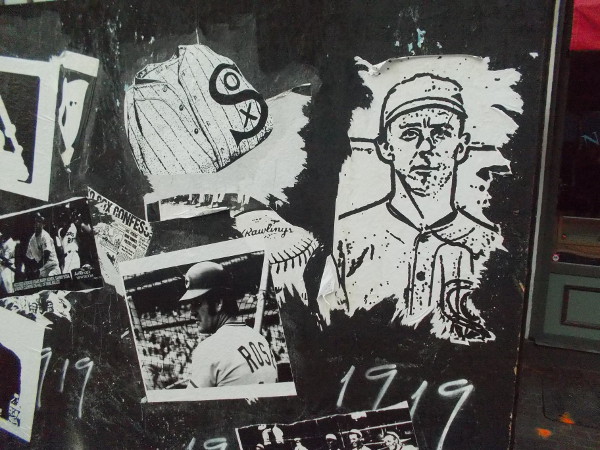
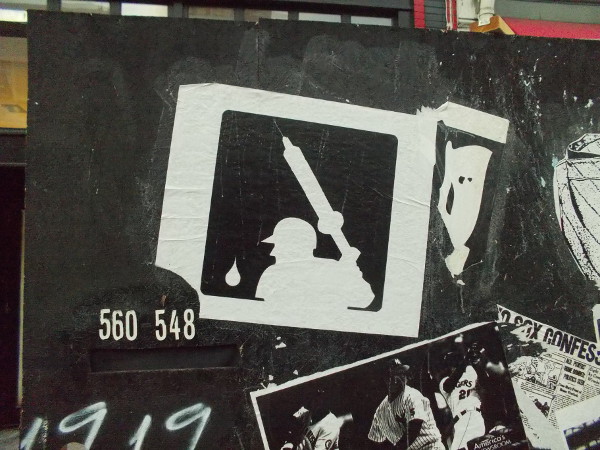
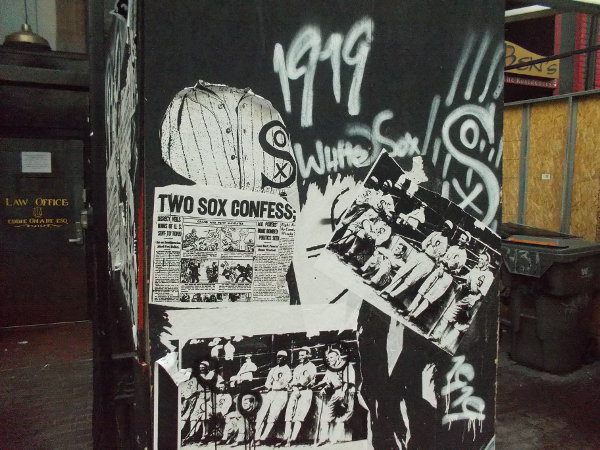
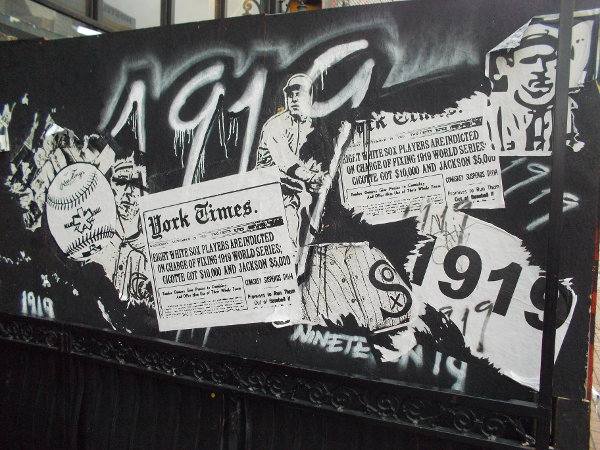
Urban artwork depicts professional baseball scandals.
Over the years, in San Diego’s bustling Gaslamp Quarter, countless businesses have come and gone. Restaurants, bars and nightclubs crowd the streets, so there always seems to be some construction or renovation taking place.
In professional baseball, over the decades, headlines have come and gone concerning a variety of scandals.
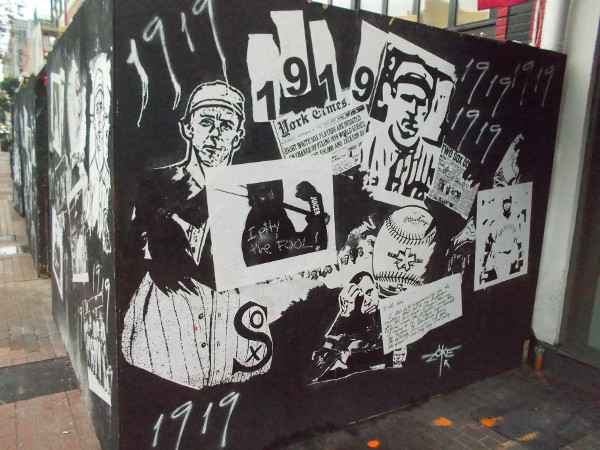
A temporary wall surrounds some current construction activity in the Gaslamp. The wall features a collage of images depicting baseball’s history of scandals. The two themes that I noted are gambling and doping. There is particular emphasis on the Black Sox Scandal of 1919.
I took some photos a week or so ago…
Unusual street art at a construction site on Fifth Avenue in San Diego’s Gaslamp Quarter.Images in the collage include Pete Rose and the 1919 World Series Black Sox Scandal.The MLB logo is transformed. A doping baseball player holds a syringe. Images also include Barry Bonds, Sammy Sosa and Roger Clemens.1919 is spray painted repeatedly on this bold street art in downtown San Diego.During the 1919 World Series, Chicago White Sox players were paid by gamblers to lose games.A collage of baseball scandals on a temporary construction wall in the Gaslamp Quarter.
…
Join me for more fascinating discoveries on Facebook and Twitter!
Do you like to read original, thought-provoking fiction? Visit my Short Stories by Richard writing blog!
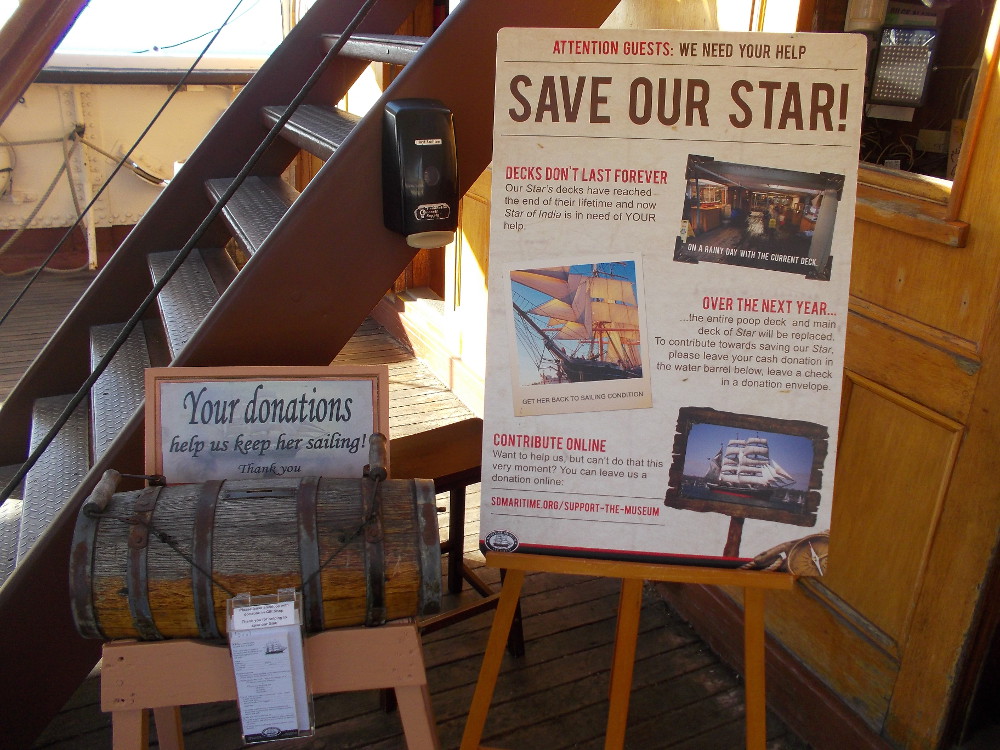
Decks don’t last forever. Our Star’s decks have reached the end of their lifetime and now Star of India is in need of YOUR help.
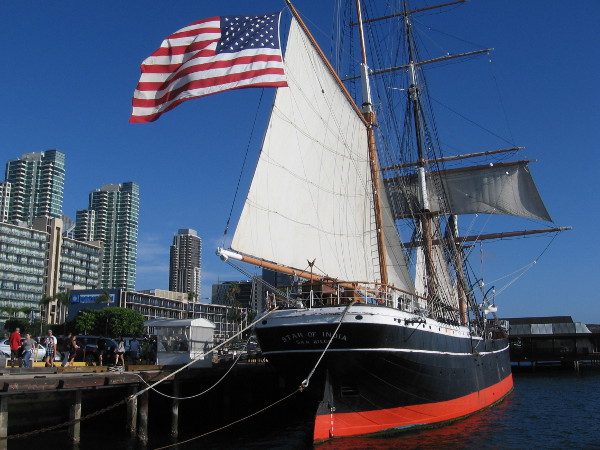
The Star of India is one of the most famous and important historic ships afloat. Built in 1863, she’s the oldest active sailing vessel in the world and the oldest iron-hulled merchant ship still on the water. She has sailed twenty-one times around the world, surviving the tempests of Cape Horn. She has been caught in a devastating cyclone, trapped in Alaskan ice, and even went aground in Hawaii. She still plies the Pacific Ocean with a volunteer crew. And her hull, cabins and equipment are almost completely original.
So it isn’t surprising the deck needs a bit of help.
“…Our museum is working as part of an international effort to see Star of India inscribed, along with other great historic ships, by UNESCO as a multi-national world heritage site. Like the Parthenon, the Pyramids, and the Great Wall of China, such a distinction would…see that she lives forever.”
Wow!
Right now, the main deck and poop deck need replacing. The wooden decks have come to the end of their lifetime. The Star of India “was recently awarded a $192,000 National Parks Service Maritime Heritage Grant, one of very few such awards and a testimony to both her historical significance and to the viability of the project for extending her life. However, these funds are available to Star of India only if they are matched by an equal amount contributed by those who love her and want to see her sail for generations to come.”
With YOUR contribution, you can become part of an eternal legacy and help to preserve an important part of world (and San Diego) history. That’s big, very important stuff!
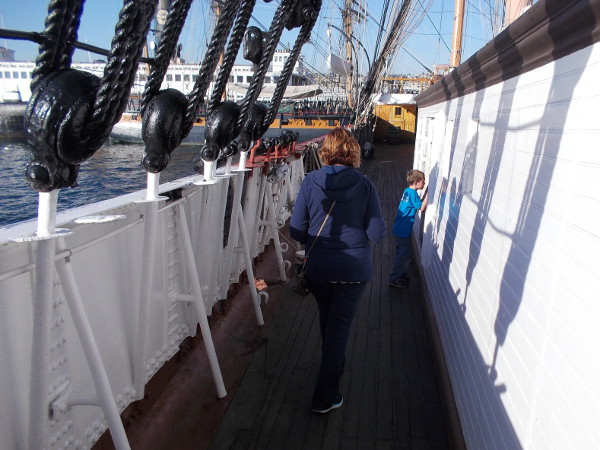
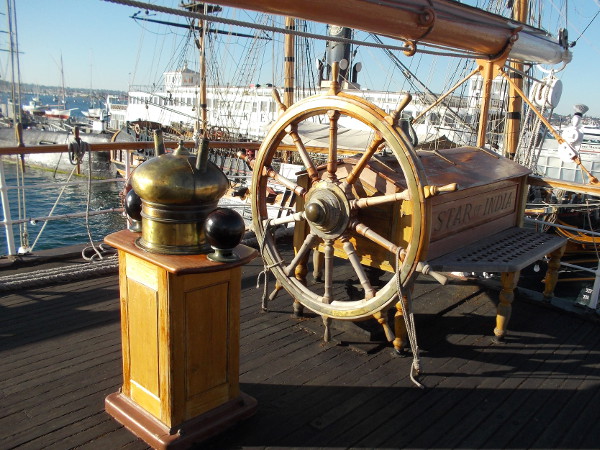
Looking along the length of the main deck of Star of India. Deck replacement is needed and so is the generous help of the public.Parts of the wooden deck are in pretty bad shape. Feet, salt, sun and rain have taken their toll.The Star of India is a National Historic Landmark. The oldest active sailing ship in the world, it’s a treasured part of San Diego and world history.Visitors descend from the poop deck. Beautiful woodwork is found all about the ship. But the elements can be harsh.A very old photo of Star of India’s launching day in 1863. Originally it was named Euterpe.Photo of Euterpe, later renamed Star of India, docked at Port Chalmers, Otago, New Zealand in 1883.Exquisite section of the stained glass skylight in the teak and oak paneled saloon of the Star of India.Peeking into Star of India’s forward house, which contains ropes, tools and instruments which were necessary to maintain and operate the tall ship.I believe that long timber supported by the forward house and forecastle is the top section of the foremast, which is being refurbished. But I might be mistaken.The Star of India’s steering wheel and binnacle on the poop deck.The Star of India needs YOUR help! Donate today to help replace the deck, and to preserve this amazing ship for generations to come.
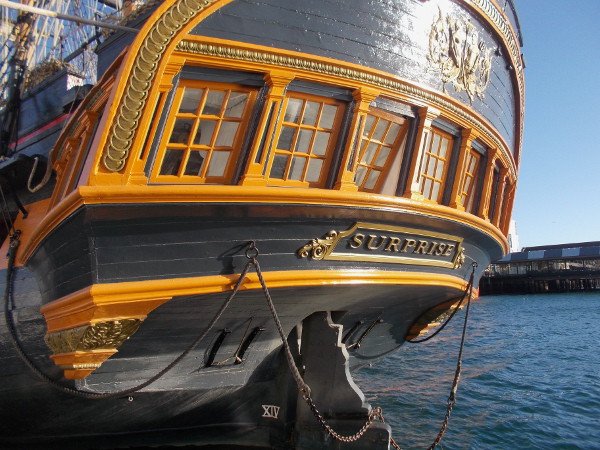
Elegant stern of HMS Surprise, one of many fascinating ships owned by the Maritime Museum of San Diego.
It’s Christmas. I wasn’t planning to blog today. But this afternoon I became a new member of the Maritime Museum of San Diego! (Having lived for 15 years just a short walk from the museum, it’s about time!)
Naturally, I couldn’t wait to visit several of the amazing ships. The Maritime Museum of San Diego has one of the finest and largest collections of historical ships in the world!
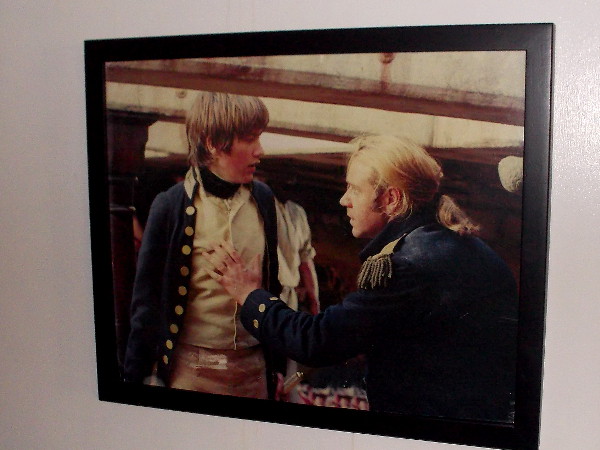
If you’ve ever watched the movie Master and Commander: The Far Side of the World, then you’ll probably recognize the HMS Surprise. The beautiful tall ship, upon which many scenes were filmed, is in the museum’s collection. And I took a bunch of photos today!
Becoming a member of the Maritime Museum of San Diego is going to be awesome. Among other great perks, I can visit any of the ships free for an entire year. I can sit in the elegant enclosed passenger deck of the Steam Ferry Berkeley and read and write whenever I please! Right out on beautiful San Diego Bay! How cool is that?
I bet some of you might really enjoy membership, too! I’m told they are looking for volunteers to help sail their new Spanish galleon replica San Salvador!
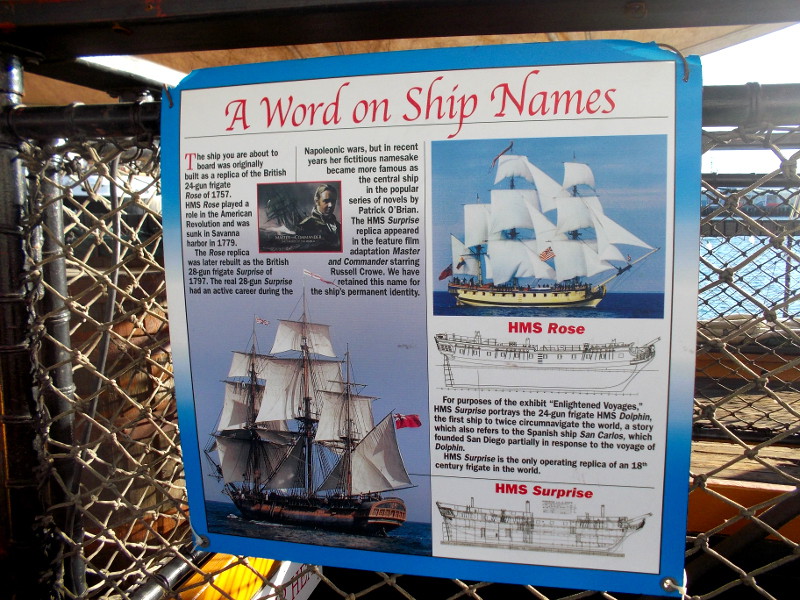
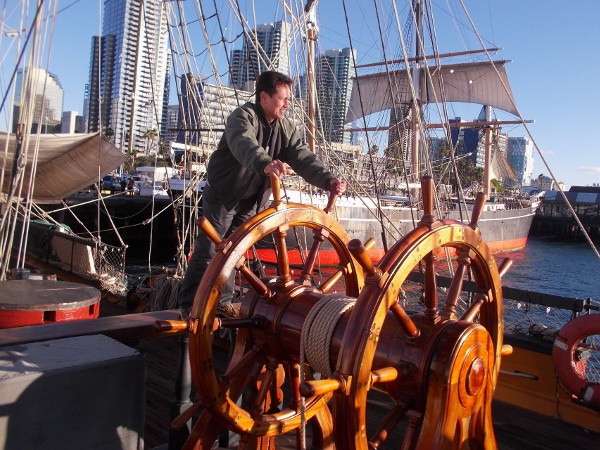
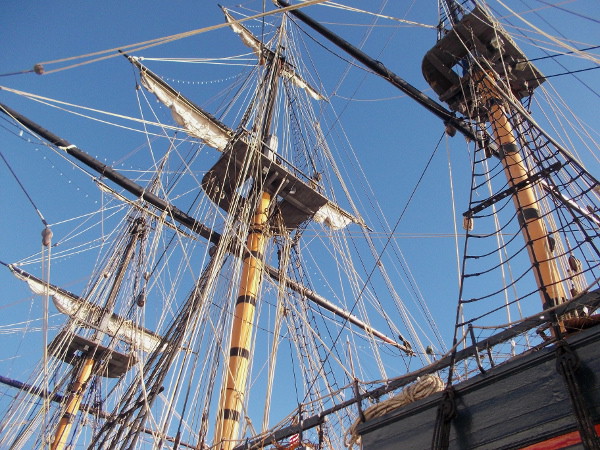
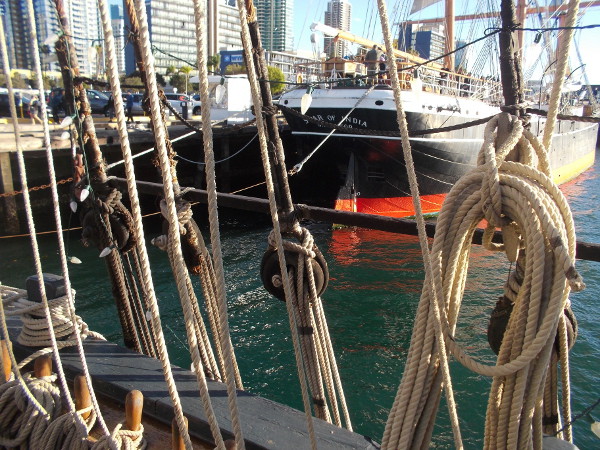
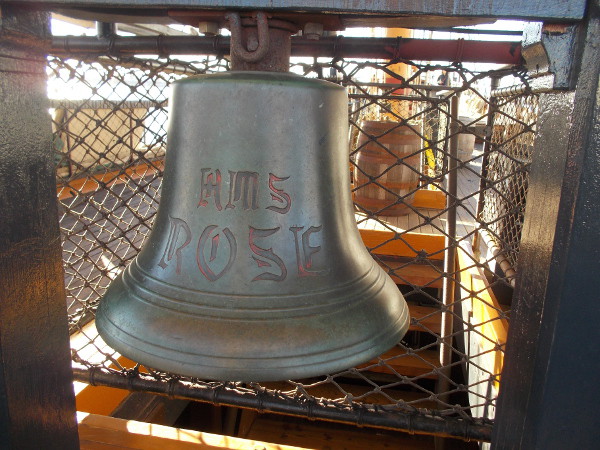
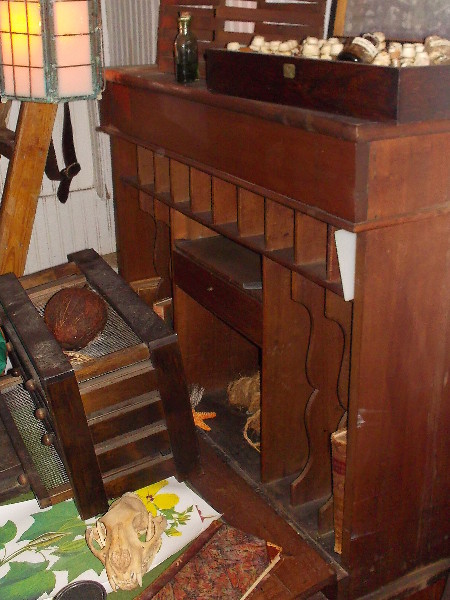
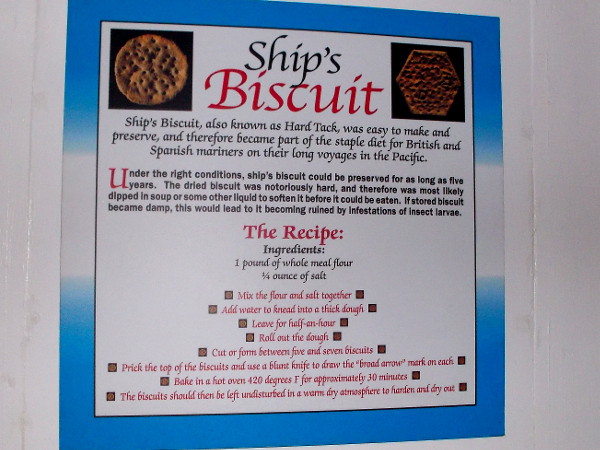
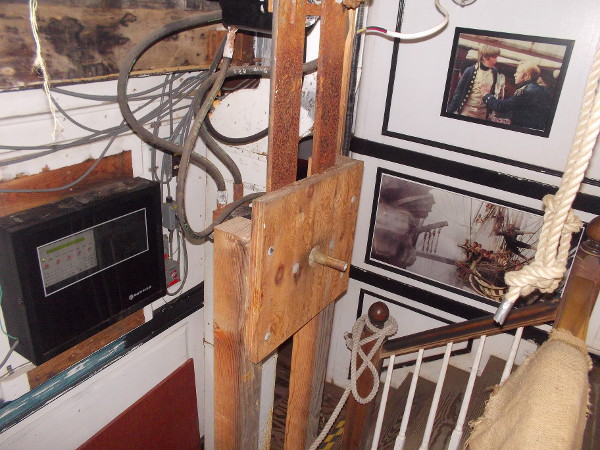
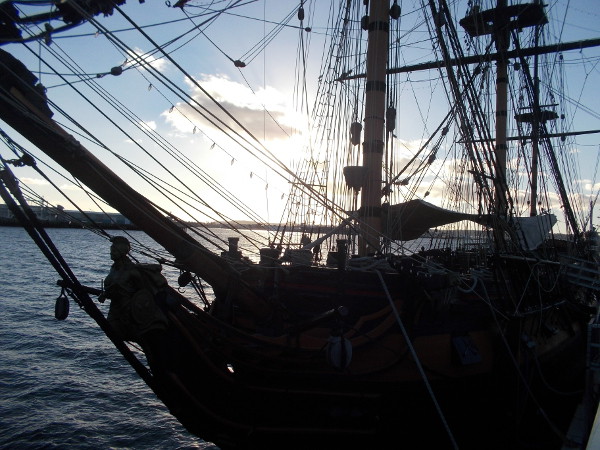
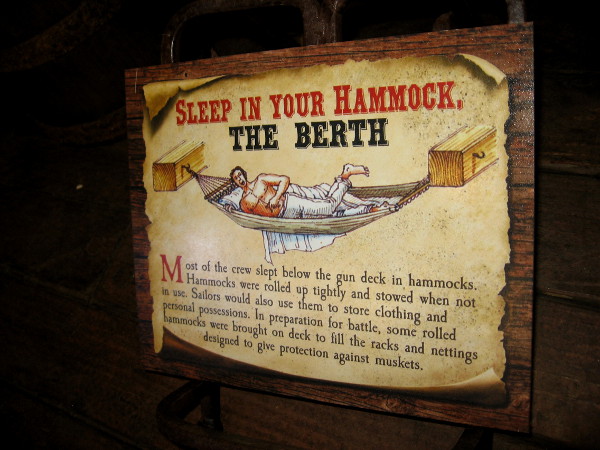
HMS Surprise in some morning sunlight.The ship you are about to board was originally built as a replica of the British 24-gun frigate Rose of 1757. HMS Rose played a role in the American Revolution and was sunk in Savanna harbor in 1779.Detailed model of the HMS Surprise, which is the only operating replica of an 18th century frigate in the world. The ship was used in the filming of Master and Commander, starring Russell Crowe.Visitor to the San Diego Maritime Museum pretends to steer the tall ship HMS Surprise, which is docked on the Embarcadero near the historic Star of India, in the background.View of the ship’s main deck and lower rigging from the quarterdeck. A portion of San Diego’s skyline and the County Administration Building are visible.Cannon projects from hull of HMS Surprise, which is a replica of a 24-gun frigate of the Royal Navy, based on 18th century British Admiralty drawings.Looking upward at the three masts, furled sails and other complicated rigging.Photo through ropes of the nearby Star of India, the world’s oldest active sailing ship, also part of the Maritime Museum of San Diego.The ship’s bell. Originally named the HMS Rose, the ship was re-registered as HMS Surprise because of her starring role in the film Master and Commander.Below deck there are many fascinating exhibits, which show what life was like aboard a frigate. Other displays recall the filming of Master and Commander.Pick the right kind of shot. The Surprise carried a variety of projectiles, each suited for different purposes.Artistic depiction of activity below deck during an engagement with the enemy. Operating the cannons was a complicated, dangerous duty.Feeling seasick? Visit the surgeon. Getting sick at sea was very serious not only for the ill sailor, but also for the entire crew.Exhibit inside HMS Surprise recalls the ship’s doctor in the movie Master and Commander: The Far Side of the World. The fictional Dr. Stephen Maturin was also a scientist and naturalist.Most of the crew slept below the gun deck in hammocks. Tightly-packed swinging hammocks figured memorably in the visuals of the movie Master and Commander.Ship’s Biscuit, also known as Hard Tack, was easy to make and preserve, and became part of the staple diet for British and Spanish mariners on their long voyages in the Pacific.Chickens, geese and ducks were carried on board as live food. Officers enjoyed eggs. Fresh meat was reserved for the officers and those sick with scurvy.A remote station used for steering the ship when she is propelled by her twin diesel engines. In 2007, HMS Surprise was restored to sailing condition.One of several photos on display from the movie Master and Commander: The Far Side of the World. Famous actor Russell Crowe played the role of Captain Jack Aubrey.Distinctive figurehead representing the Greek goddess Athena often seen in the popular movie. It now graces San Diego’s waterfront. UPDATE! I’ve been told it actually represents Boadicea, queen of the British Celtic Iceni tribe who led an uprising against the conquering forces of the Roman Empire.Photograph of the HMS Surprise as evening approaches. One of many wonderful ships that visitors can board at the Maritime Museum of San Diego.
UPDATE!
A new exhibit called Man-of-War opened on HMS Surprise in May, 2018. There are many new signs around the ship, and the captain’s great cabin is now open to the public. (I intend to blog about the great cabin separately.)
Here are additional photos. Read the captions for explanations about life aboard British fighting ships from that fascinating era.
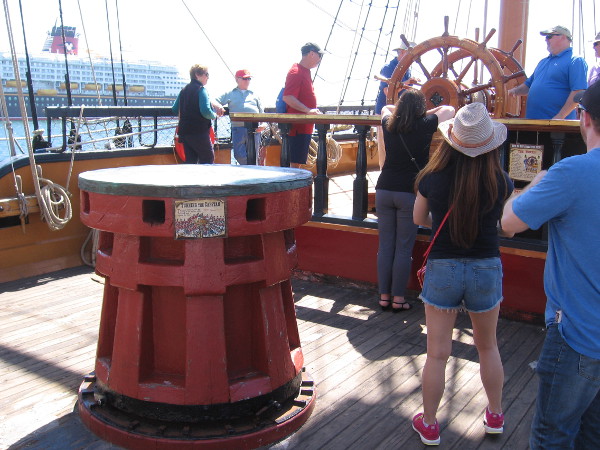
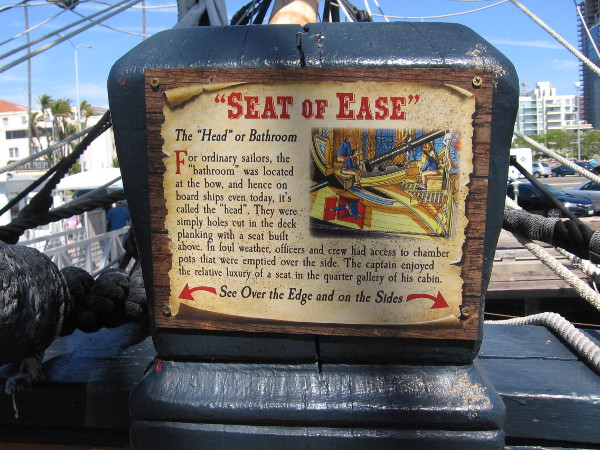
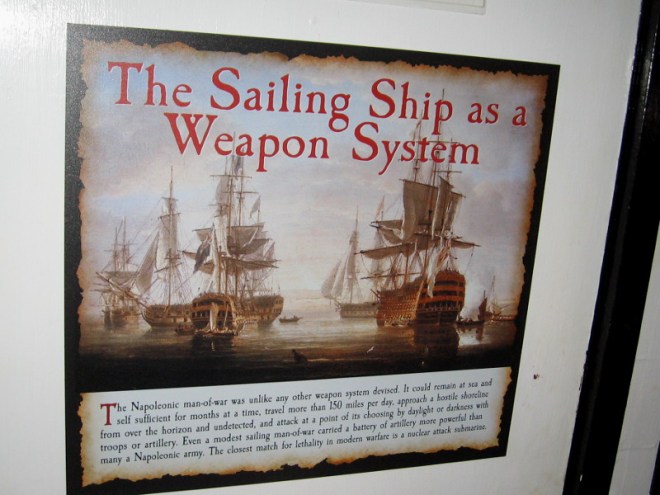
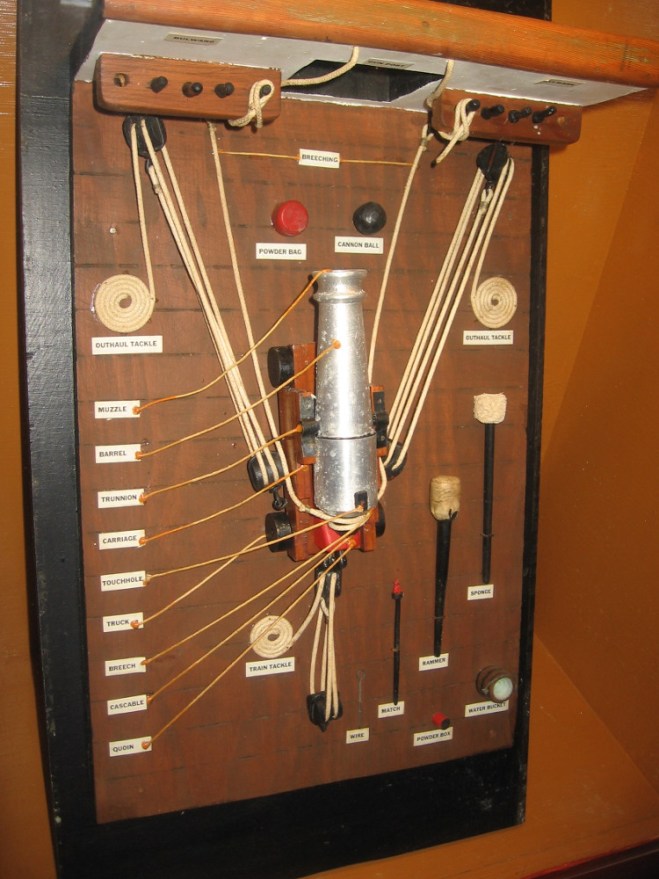
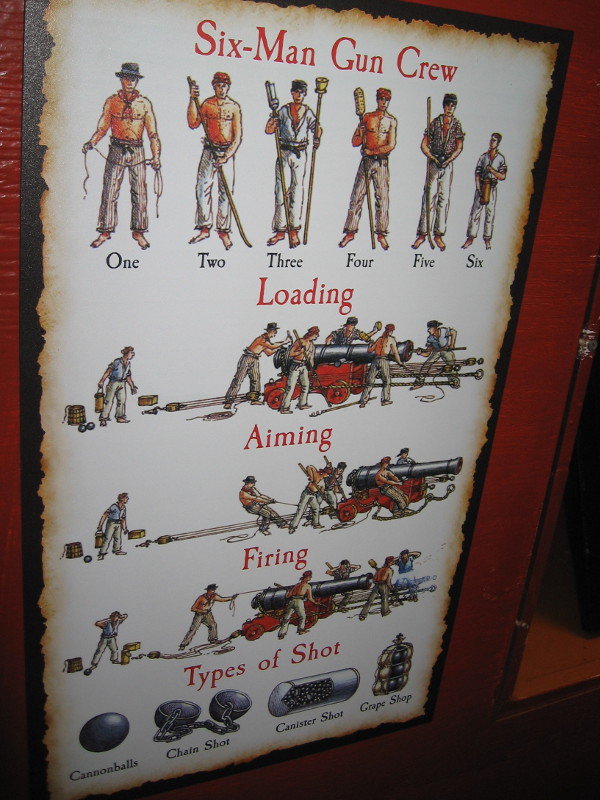
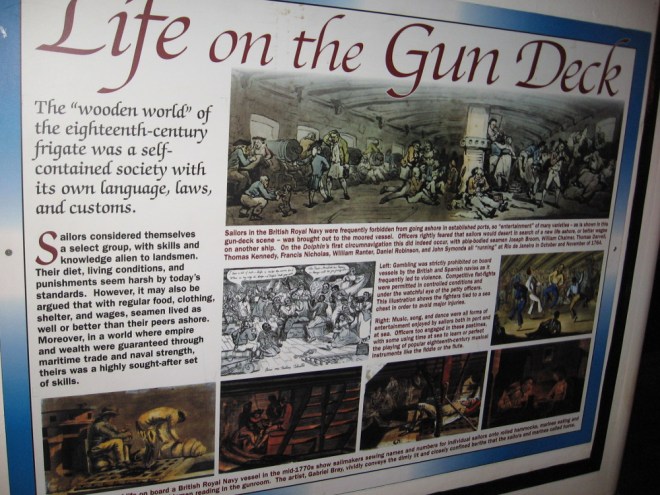
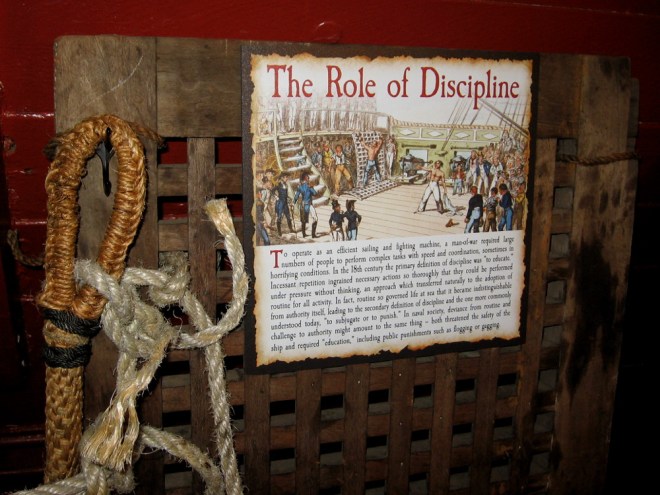
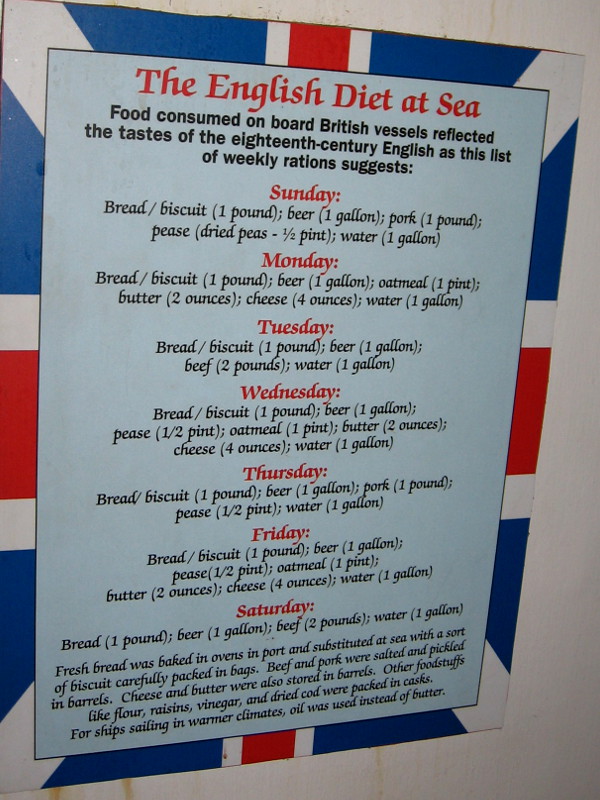
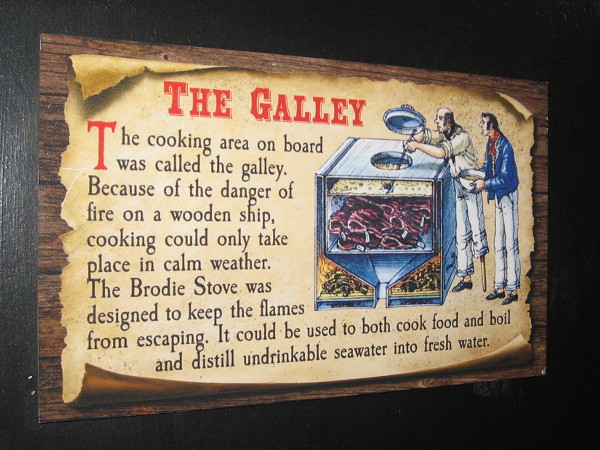
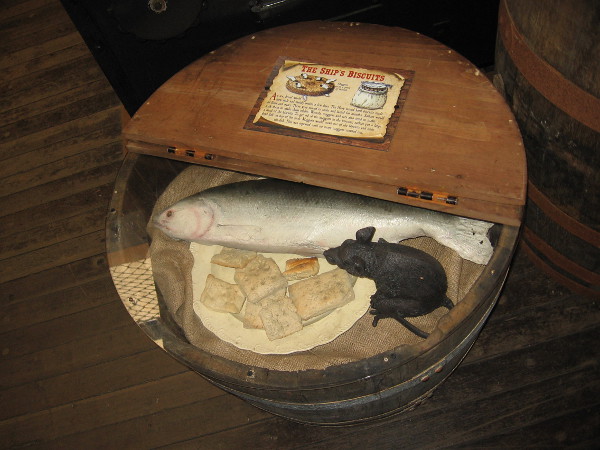
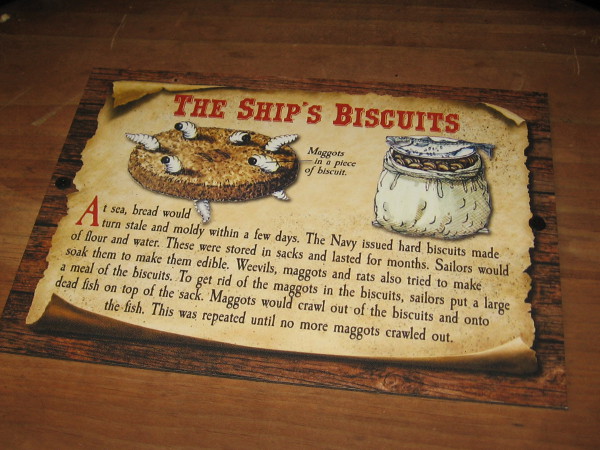
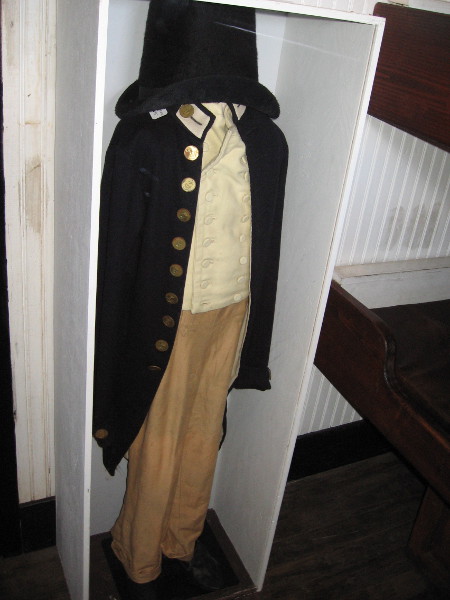
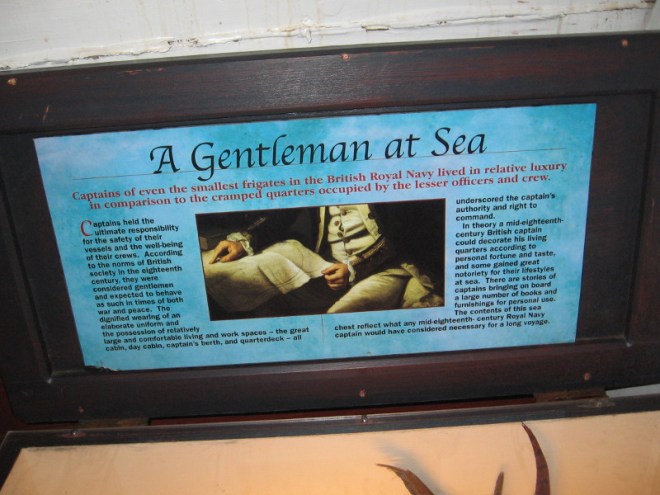
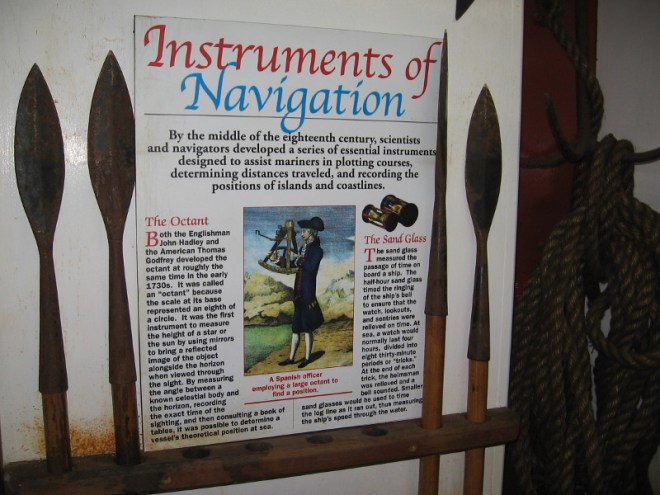
A new exhibit called Man-of-War aboard the HMS Surprise features new signs describing life aboard an 18th century British frigate. Prepare for Battle!The ship was built as replica of the HMS Rose in 1970. It was purchased by Twentieth Century Fox to be used in the movie Master and Commander, starring Russell Crowe, and was subsequently renamed HMS Surprise.Following maritime tradition, the ship has retained its original bell.Looking at the newly redecked quarterdeck of the HMS Surprise. The rest of the main deck will be restored as well.An officer on the quarterdeck would issue commands to the sailor manning the wheel, which controlled the rudder at the ship’s stern.The Disney Wonder cruise ship is seen docked in San Diego beyond the capstan. HMS Surprise was used in the filming of Disney’s movie Pirates of the Caribbean: On Stranger Tides.Many hands turned the capstan to raise or lower the anchor.Ordinary sailors relieved themselves at the ship’s bow. Hence the name head.This was a sailor’s bathroom!A man-of-war could remain at sea for many months and travel more than 150 miles per day.On the gun deck of HMS Surprise, replica twenty-four-pound cannons have names like Spit Fire, Beelzebub and Bulldog. Larger than what a frigate would carry, these were used for dramatic effect in the movie.A display demonstrates aspects of a warship’s gun and its operation.Diagram depicts how a six-man gun crew would load, aim and fire different types of shot.Sailors lived in their own specialized world, with familiar customs, rules, routines and expectations.The complex often stressful operation of a man-of-war required strict discipline. Punishments included flogging and gagging.The English diet at sea was rather simple and predictable. Lots of biscuit, beer, pease, oatmeal and butter. Pork and cheese, too.Cooking in the galley was done in calm weather. The Brodie Stove was designed for use on crowded wooden ships where dangerous fire must be avoided at all costs.A rat has found its way into a ship’s food barrel.The Royal Navy issued hard biscuits made of flour and water that were stored in sacks for months at a time. Weevils and maggots were a constant problem.Costume worn by character Midshipman Lord William Blakeney in the movie Master and Commander.Unlike the captain who in his great cabin as a gentleman lived in comparative luxury, lesser officers, like the crew, made due with cramped quarters.Midshipmen who sought to become officers learned seamanship and navigation. They had to master many skills required to operate and command a ship.Instruments used to navigate a ship included the octant and sand glass.The doctor’s quarters on the HMS Surprise. A photo shows actor Paul Bettany as the film’s character Dr. Stephen Maturin.Hammocks were often used by sailors to store clothing and personal items.A suspended mess table where sailors would eat together next to a hammock on the gun deck of museum ship HMS Surprise.
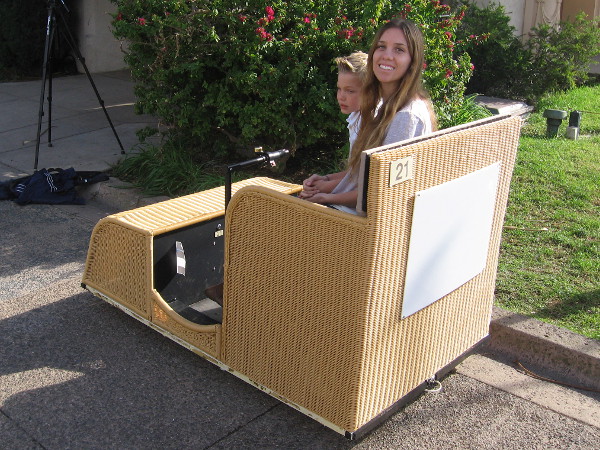
The electric wicker cart Electriquettes are returning to Balboa Park in early 2016!
The wicker carts are returning to Balboa Park! What fun!
The now famous electric motorized wicker carts were introduced to Balboa Park one hundred years ago for the 1915 Panama-California Exposition. They were called Electriquettes. They were an enormous success!
Starting in early 2016–perhaps February I was told–visitors to Balboa Park will be able to rent the new wicker carts at the San Diego Air and Space Museum. The test program will run for a year, and I hope it’s successful!
I learned that the carts travel at about 2-3 miles per hour, an easy-going speed appropriate for a pedestrian and family-friendly city park. As I understand it, the carts will be restricted to Balboa Park’s core area. They appear super easy to operate–one just steers and applies power! Perhaps the coolest thing is that these vehicles are a reasonably close representation of the original Electriquettes.
The Electriquettes began running toward the end of March! I even saw a couple driving about the Plaza de Panama, but didn’t have my camera handy! I’ve learned they can be rented right in front of the Reuben H. Fleet Science Center!
An Electriquette is displayed in Balboa Park, in anticipation of the vehicle’s reintroduction. The unique wicker carts will be rented by visitors at the Air and Space Museum.Old photograph of an original Electriquette in San Diego’s Balboa Park a century ago.Introduced at the 1915 Panama-California Exposition in Balboa Park, the historical wicker Electriquettes are making a comeback! Very cool!
Bill “Santa” Swank has written a really great book about the history of Christmas in San Diego!
I was privileged today to meet Bill Swank. Perhaps you’ve met him, too. Since 2002, Bill has been the volunteer Santa Claus at the Spreckels Organ Pavilion during Balboa Park’s popular December Nights. He’s a friendly good guy who effortlessly spreads cheerfulness and joy.
Bill Swank is probably best known for being a leading expert on baseball and the San Diego Padres. He’s written numerous books about baseball history. His knowledge is so deep, the San Diego Historical Society has called him our city’s top baseball historian.
His most recent book, published earlier this year, is titled Christmas in San Diego. If you love both Christmas and San Diego, I know you’ll treasure this book. It’s loaded with history, local traditions and hundreds of fun, very unique photos. (Six photos from Cool San Diego Sights are in the book! How cool is that?)
Bill “Santa” Swank believes the true meaning of Christmas is found in the Golden Rule. His excellent book also proves another important truth: that human hearts are warmed when we are generous and kind. In the book you’ll see community-spirited Santas through the decades bringing joy to many generations, lifting the spirits of all.
From Christmas Eve way back in 1775, to the present day, Christmas in San Diego covers over two hundred years of local history. You’ll find out how both famous and ordinary San Diegans have celebrated the holiday season, and learn a good deal about many historical places and events. Personally, I love the parts concerning unselfish Santa Claus volunteers who’ve participated in a surprising range of charitable activities. Touching young and old alike, with a twinkle-eyed smile and merry Ho, Ho, Ho!
I was privileged to shake the hand of Santa Claus today. Read Christmas in San Diego, and you will be able to peer into Santa’s heart.
A statue of China’s unifying First Emperor. It stands at the front entrance of the Dr. Sun Yat-Sen Memorial Extension of the San Diego Chinese Historical Museum.
From time to time I walk through San Diego’s historic Chinatown, which is located in what is officially called the Asian Pacific Thematic Historic District. The area is bounded by Market Street, 2nd Avenue, 6th Avenue and J Street. You’ll find it downtown right next to the Gaslamp Quarter.
Over the years, I’ve learned a bit about San Diego’s early history during these walks. And I’ve accumulated a few photographs. Here are some cool sights that you might enjoy. I’ve provided interesting information in the captions.
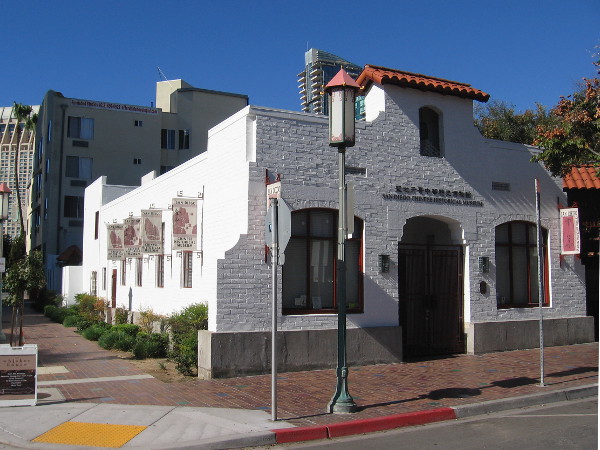
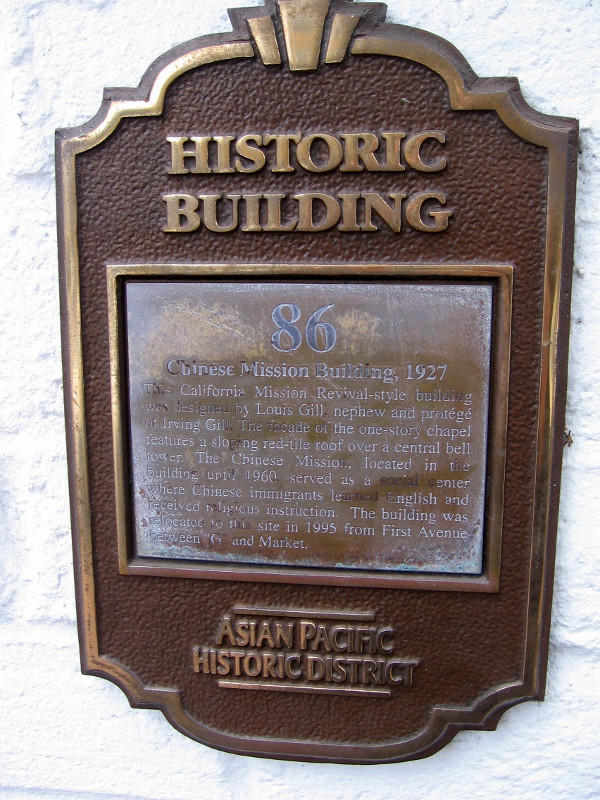
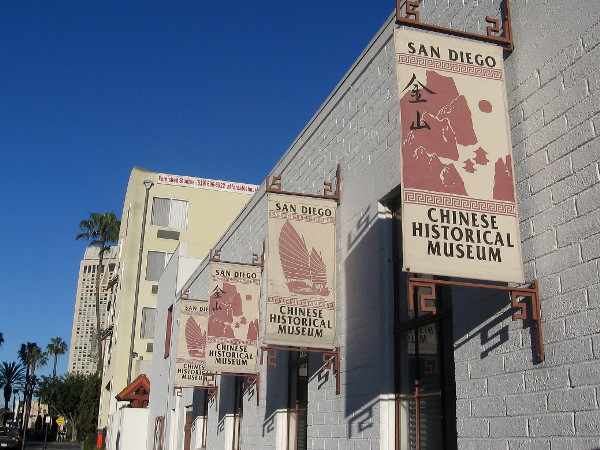
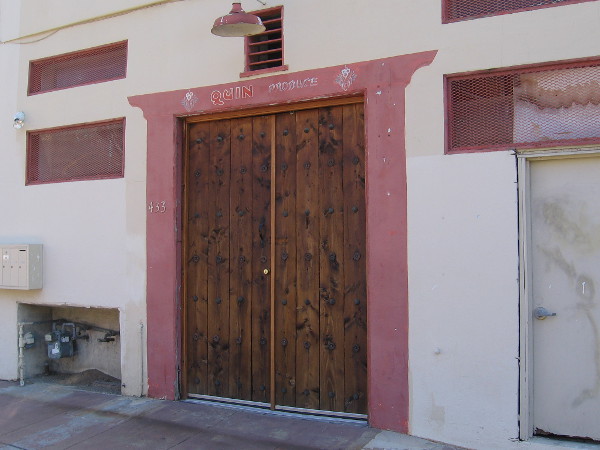
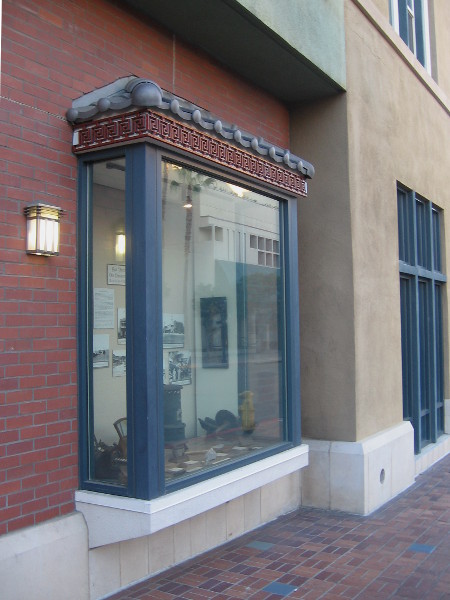
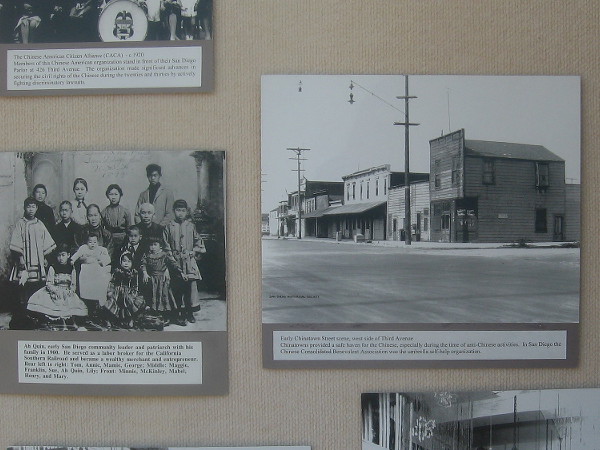
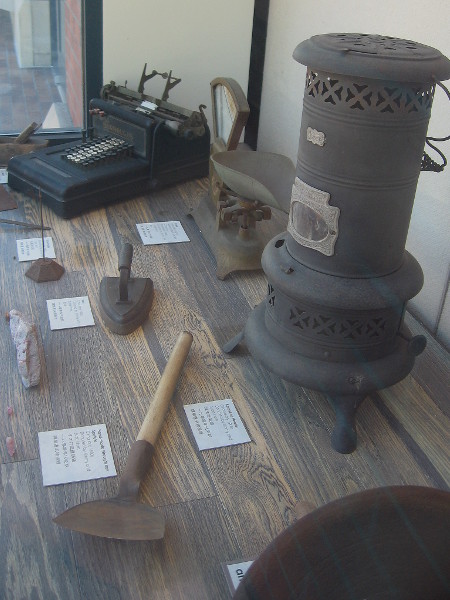
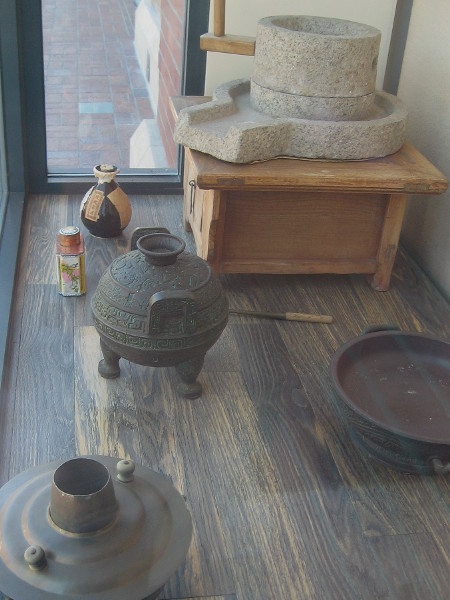
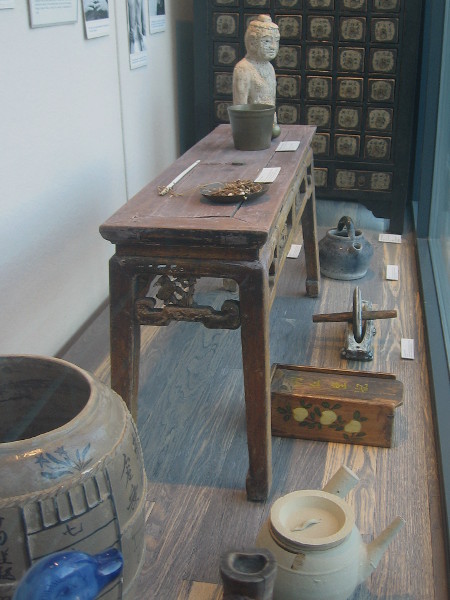
The San Diego Chinese Historical Museum in the Asian Pacific Thematic Historic District. The Chinese Mission Building, built in 1927, was moved in 1995 to its present location at 404 3rd Avenue.The California Mission Revival-style Chinese Mission Building, dated 1927, was designed by Louis Gill, nephew and protege of renowned architect Irving Gill.Banners along side of downtown’s San Diego Chinese Historical Museum.Looking through the Dr. Sun Yat-Sen Memorial Gate on Third Avenue. Behind the museum is a small Asian garden.Ornate front of the San Diego Chinese Center, a community resource located in the Asian Pacific Thematic Historic District.A century ago, Quin Produce was located here on Third Avenue. Ah Quin ran a family produce business and was once considered the unofficial mayor of Chinatown.The Chuang Archive and Learning Center of the San Diego Chinese Historical Museum.Display in window explains Feathered Beings Iconography. Feathered beings were frequently seen motifs in artifacts of the Han Dynasty.Three bay windows at the Dr. Sun Yat-sen Memorial Extension display historical photographs and common artifacts from San Diego’s old Chinatown.Photographs in this outdoor exhibit show various aspects of Chinese culture.A view of San Diego’s Third Avenue a hundred years ago, and the family of influential businessman and civic leader Ah Quin.Items from daily life in old Chinatown include kerosene heater, iron, and a grocery scale.Scale manufactured by National Store Specialty Company, circa early 1900s.Display includes various articles used for food preparation and cooking in San Diego’s old Chinatown.Beautiful, artistic and historically interesting objects from daily life long ago in Chinatown.A walk through San Diego’s Asian Pacific Thematic Historic District provides many cool sights!
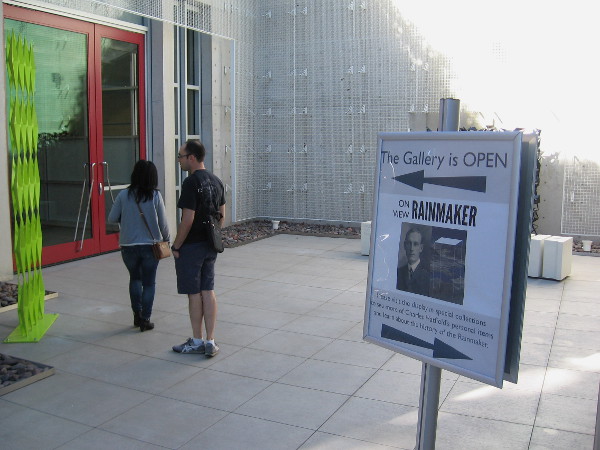
The 9th floor gallery at San Diego’s Central Library features an art exhibit called RAINMAKER. The theme is water, drought and climate change.
RAINMAKER is a fascinating, thought-provoking art exhibition at downtown San Diego’s Central Library. Because it will be coming to a close this weekend, I recently headed to the library’s 9th floor gallery to check it out.
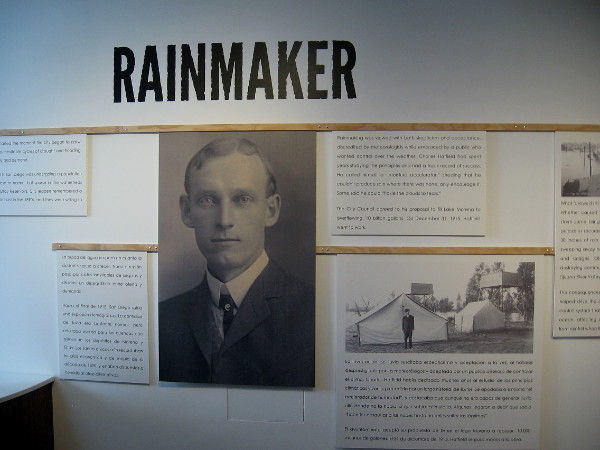
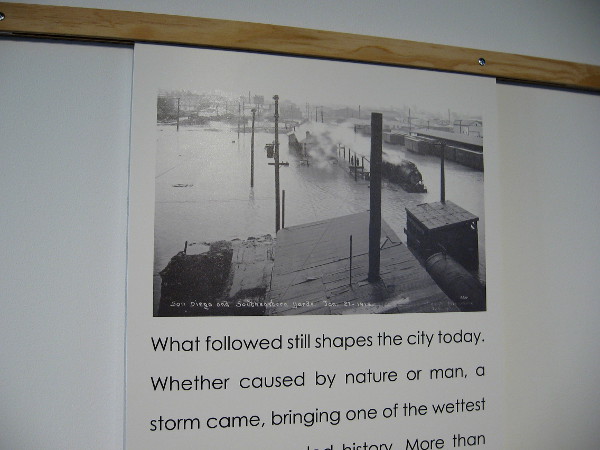
Charles Hatfield was hired by the city of San Diego a hundred years ago to produce much-needed precipitation in order to fill Lake Morena. He might or might not have created the torrential rains and catastrophic flooding that followed his efforts at “moisture acceleration”. Was Hatfield an actual scientist or a charlatan? The question remains open.
This art exhibition focuses on the importance of water in our arid region, and how people affect and are influenced by the environment. Twelve local artists have contributed pieces which touch upon this theme. RAINMAKER is especially relevant today, considering San Diego’s current long drought, and the threat of coming winter storms caused by a strong El Niño that has developed in the Pacific Ocean.
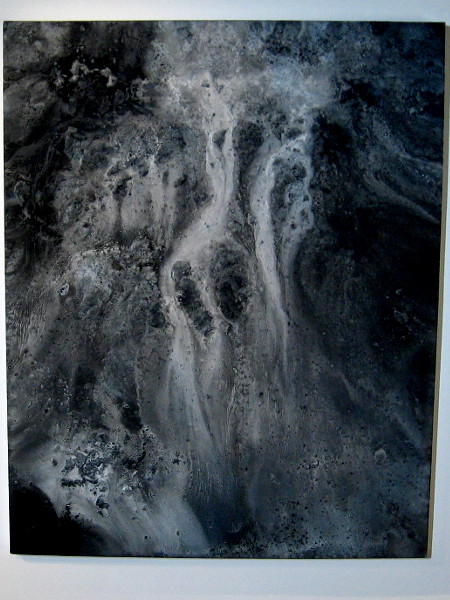
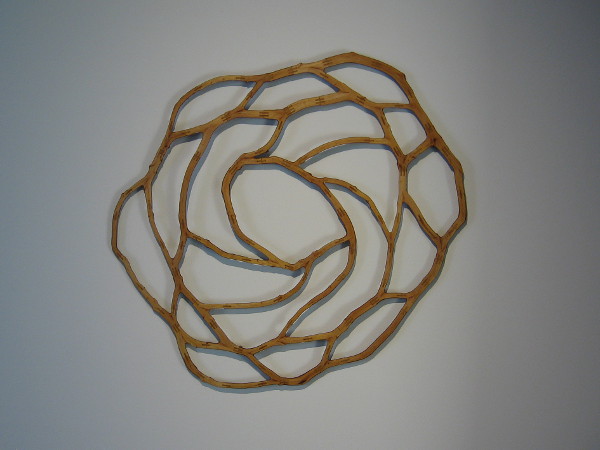
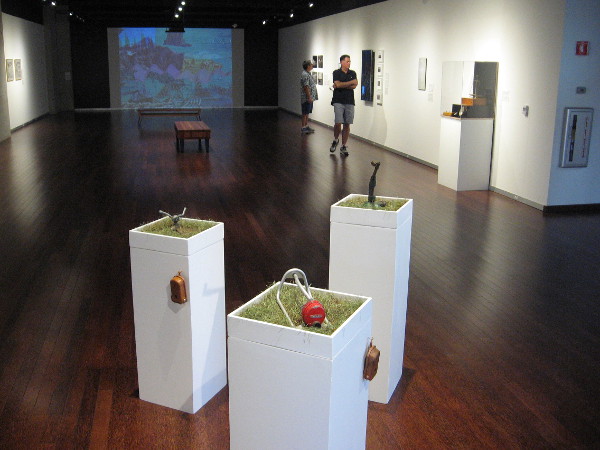
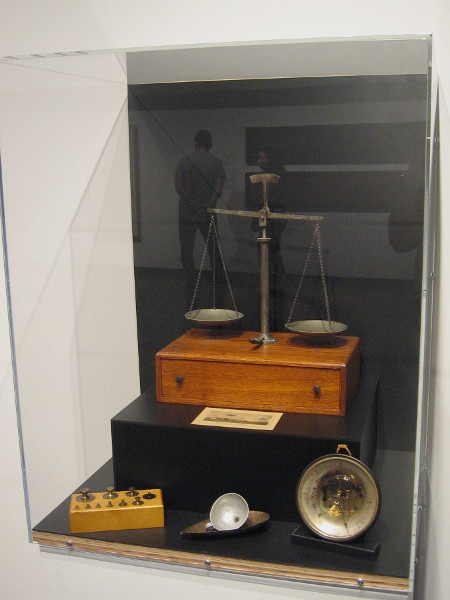
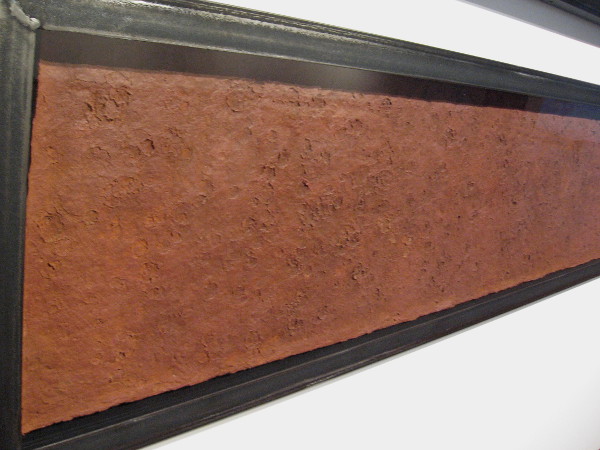
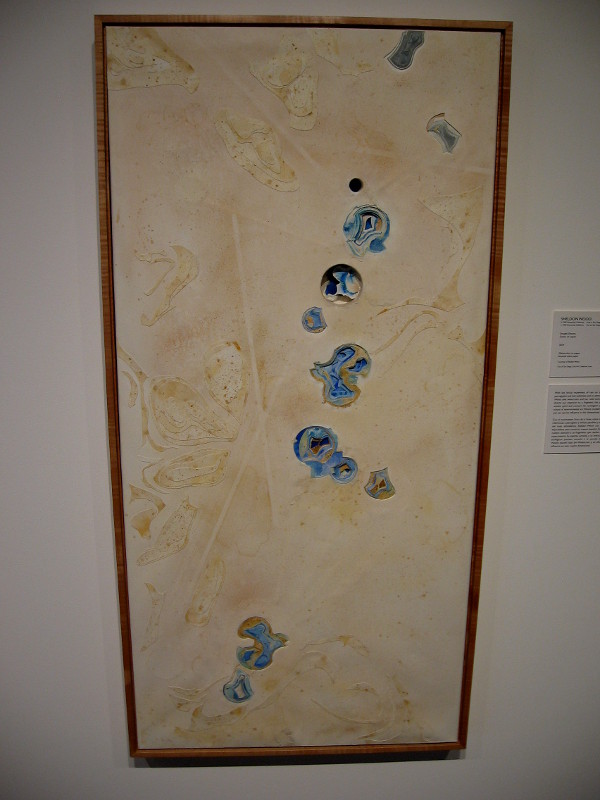
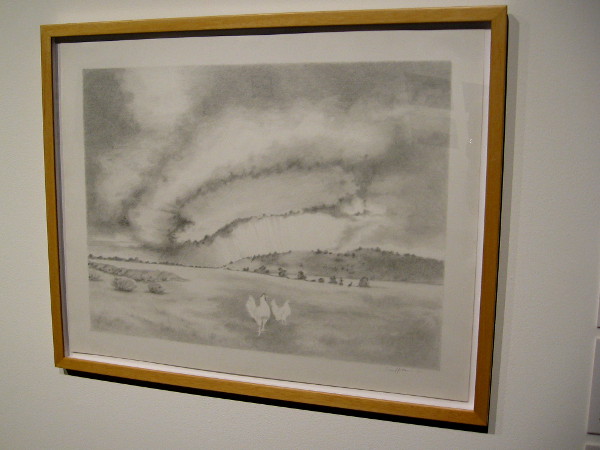
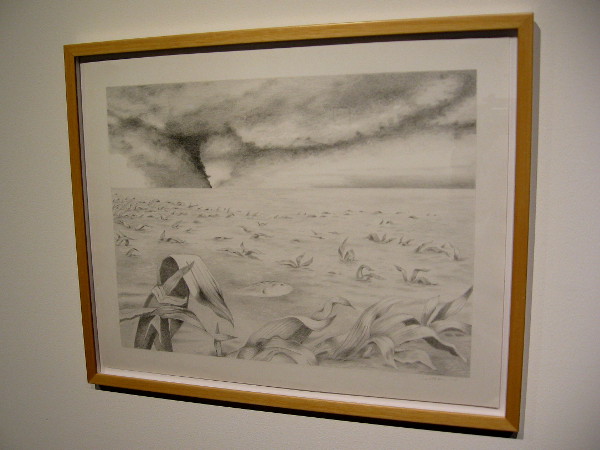
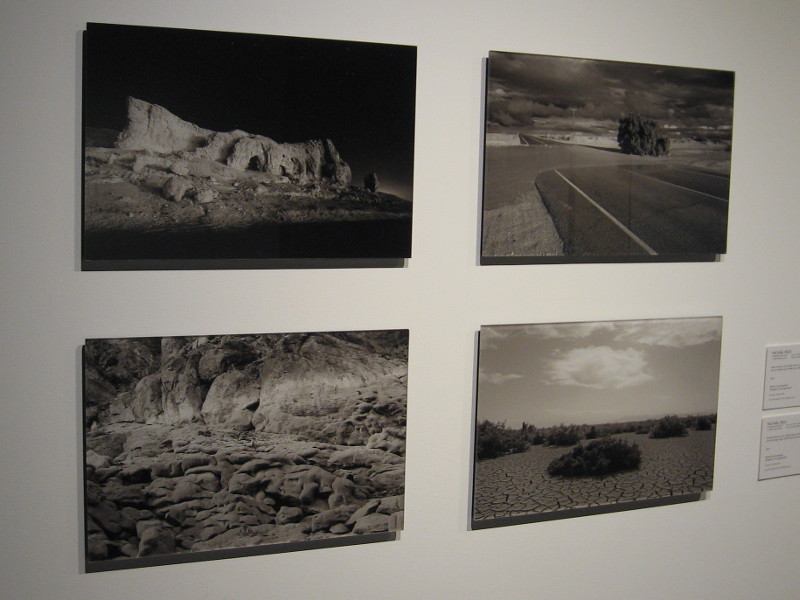
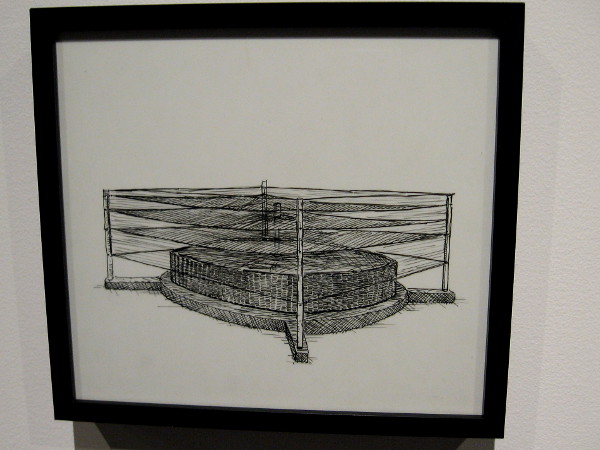
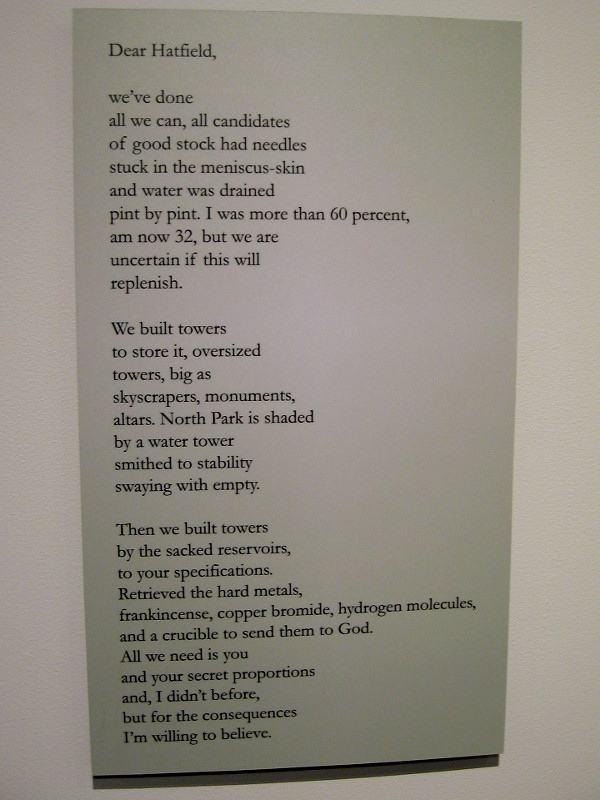
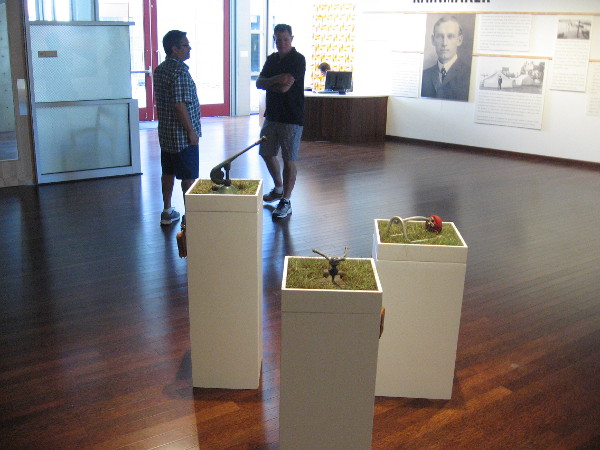
Charles Hatfield, self-proclaimed rainmaker, was hired by the city of San Diego in 1915 to fill Lake Morena reservoir during a severe drought. Record rain and floods ensued. Was this a coincidence?Photo at RAINMAKER exhibition shows catastrophic San Diego flooding caused by over 30 inches of rain in 1915.Adam Belt, Willow Wash, 2015. Paint, graphite and reflective powder on canvas. Where is the boundary between science and magic?Roman de Salvo, Joinery Blossom, 2013. Chinese elm, glue. Metaphor of Earth’s ecosystem, with networks of family, community, interdependence.Eva Struble, Navy Yard, 2011. Oil and acrylic on canvas. This piece emerged from a trek through Brooklyn’s Navy Yard. A vision of decay that is also expansive, waiting.Margaret Noble, I Have Arrived, 2015. Mixed media installation with 3 pedestals, 3 plant boxes, 3 sprinklers, and 3 handheld audio players. Lawns have been a symbol of status in society.Tools of the Rainmaker. The scales, measuring scoops and barometer in this case were donated to the San Diego Library in 1972 by Paul A. Hatfield, brother of rainmaker Charles M. Hatfield.Jim Wilsterman, Rain Event #10, 2011. Earth, fiber, raindrops. Somewhere between photograph, sculpture and painting, this art has recorded rainfall using clay and mud.Sheldon Wood, Drought Dreams, 2014. Watercolor on paper. With the lyrical movement of rain on a hot surface, references to petroglyphs and lost sinkholes, and an atmospheric perspective…Lisa Hutton, Supercell with Chickens, 2013. Graphite on paper. Environmental artwork depicts storm clouds.Lisa Hutton, A Flood and a Fire, 2013. Graphite on paper. The catastrophic effects of environmental disasters.Four pigment ink photographs of desert environment by Michael Feld record beauty and natural history.Dominic Paul Miller, rain gatherer, 2008. Ink on mylar. Part of a larger body of work concerning uranium mining and the Navajo Nation, who have scant access to running water.Gabriel Kalmuss-Katz, Dear Hatfield, 2015. Speculative writing. Reflects modern anxiety associated with urbanization.RAINMAKER, a fascinating art exhibition at San Diego’s Central Library, continues through November 29.
Benjamin Franklin with his famous kite, and Thomas Edison, inventor of the light bulb and phonograph, are depicted on a very unique mural in Ocean Beach.
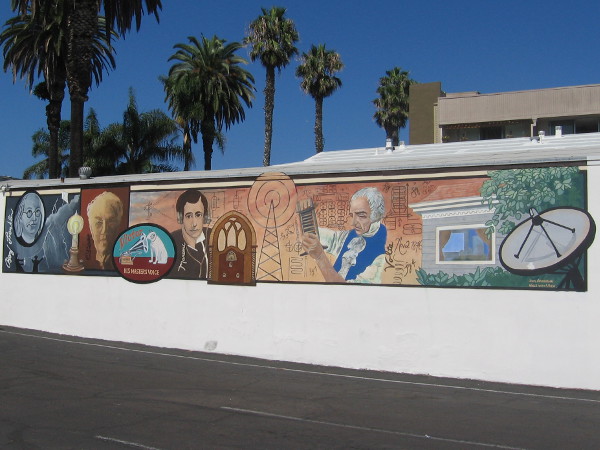
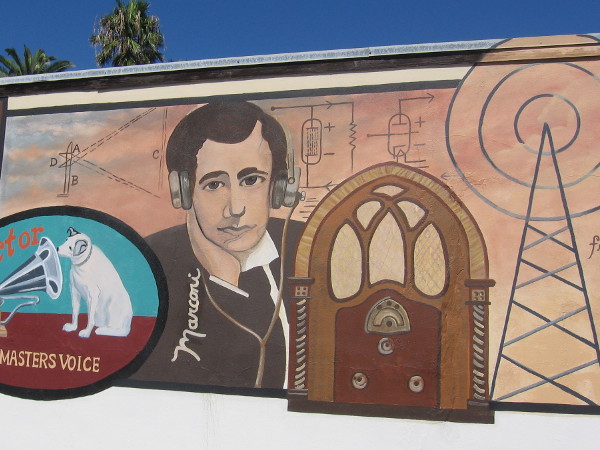
Here’s a cool (and somewhat unusual) mural that I spotted on a wall next to a parking lot in Ocean Beach. It’s called History of Electricity! Benjamin Franklin, Thomas Edison, Guglielmo Marconi and Alessandro Volta share the OB streets with images of pop culture icons and surfers!
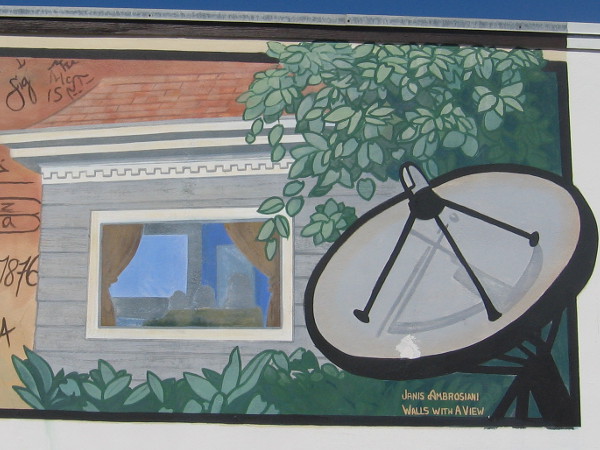
This artwork was created by Janis Ambrosiani of Walls With A View. Take a look!
Janis Ambrosiani of Walls With A View painted History of Electricity in Ocean Beach. OB is a cool, laid-back neighborhood with lots of colorful street art.Guglielmo Marconi was instrumental in the development of the radio.Alessandro Volta invented the electrical battery.Electricity has become a modern necessity. Technology is the backbone of our day-to-day living and central feature of 21st century culture.
…
Follow this blog for more photos of cool stuff! Join me on Facebook or Twitter.
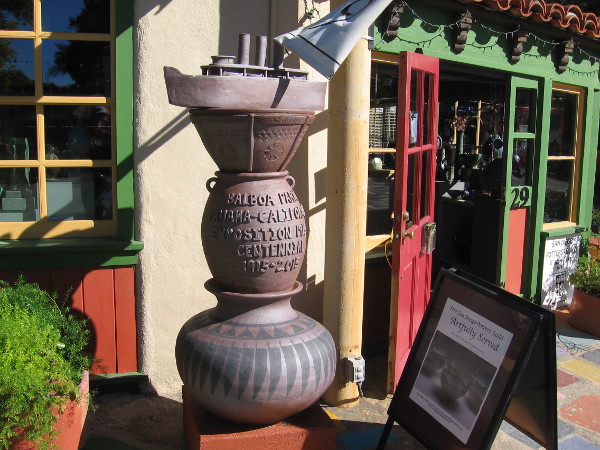
The San Diego Potter’s Guild in Spanish Village recently created this artistic tribute to the 1915 Panama-California Exposition and Balboa Park’s centennial.
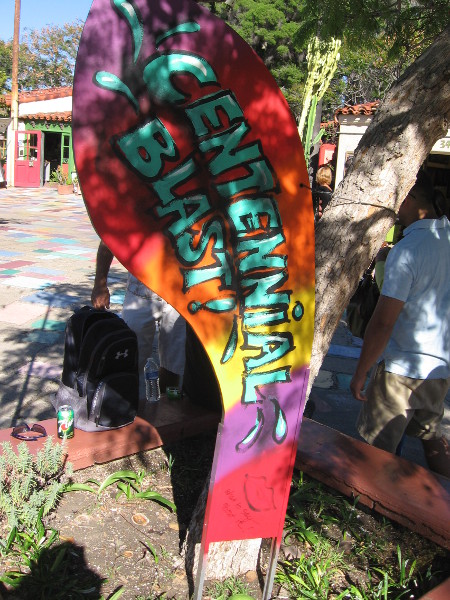
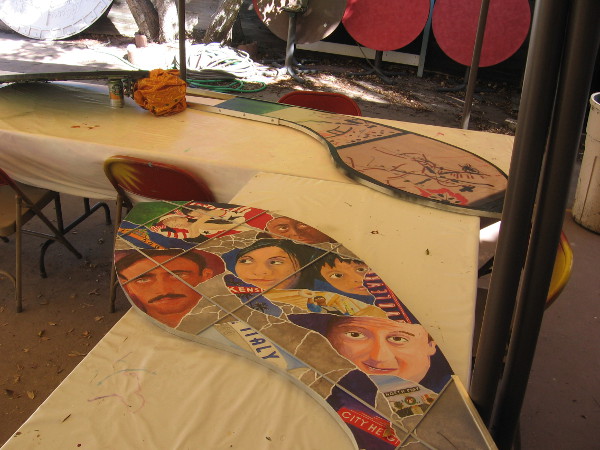
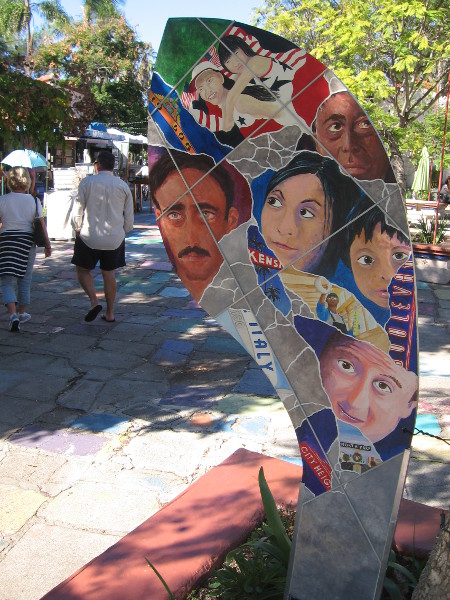
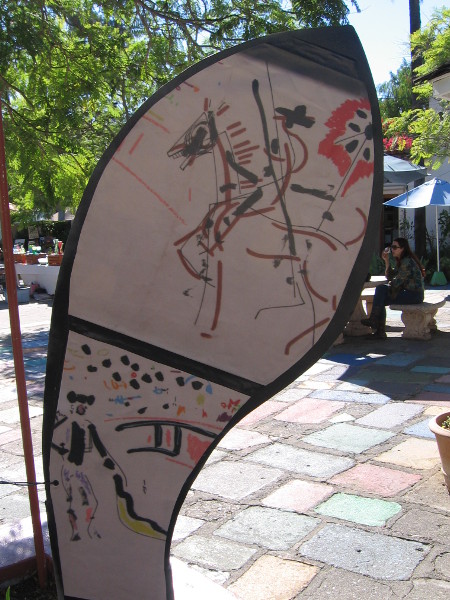
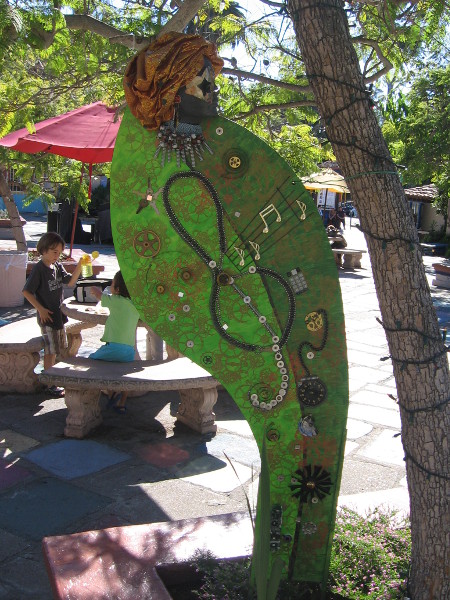
A fun exhibit debuted today in Spanish Village’s large outdoor patio courtyard. It’s called Dance through the Decades of Art! Colorful works by local artists jut out of various planters, representing the history of art styles over the past century. It’s another creative offshoot resulting from Balboa Park’s centennial, which is being celebrated throughout this year! The cool exhibit lasts through November 25.
I walked about and took these photos…
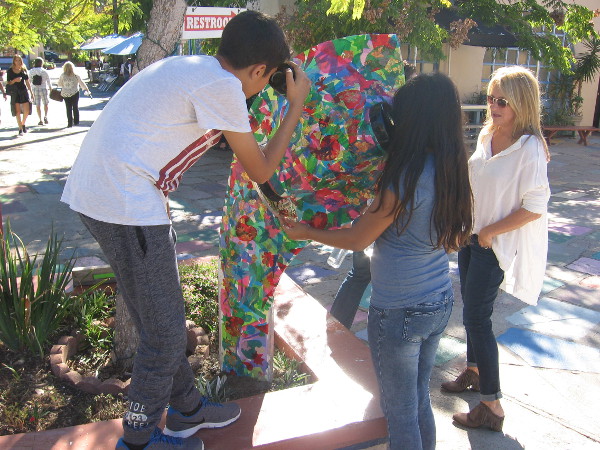
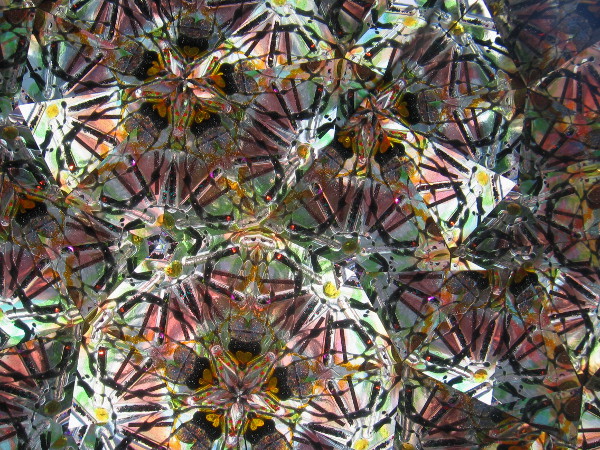
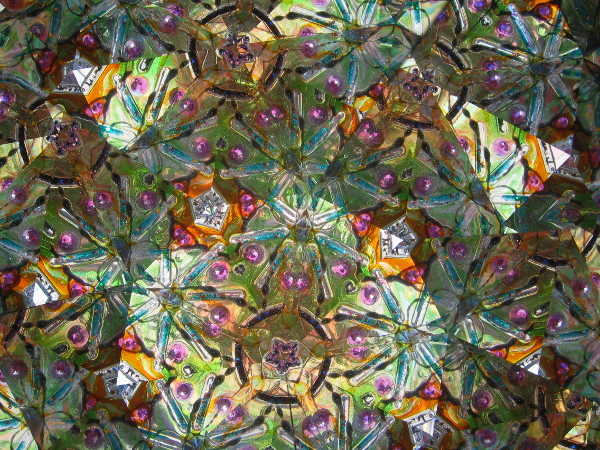
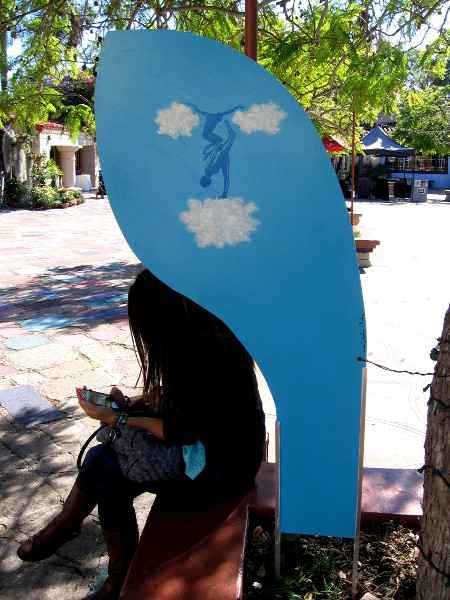
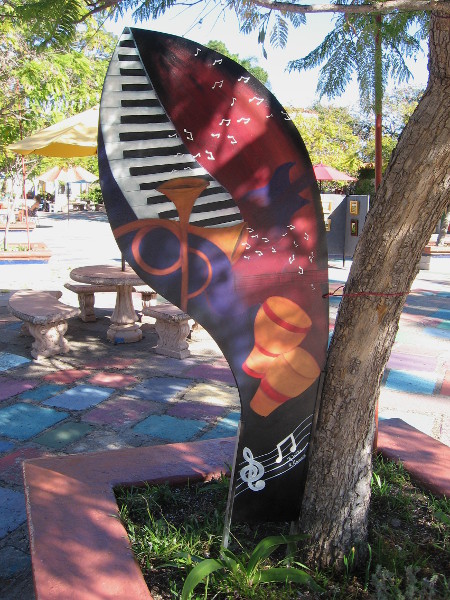
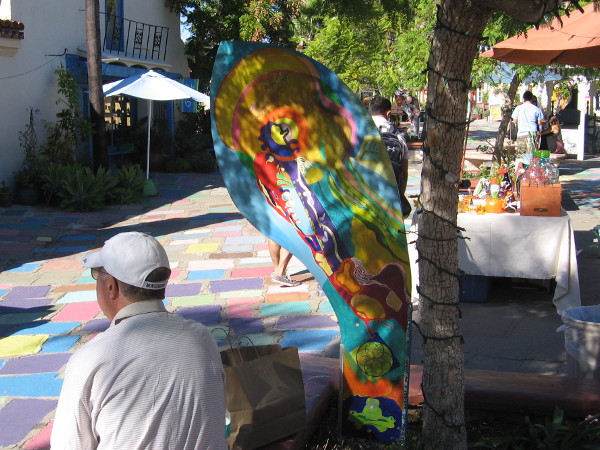
Spanish Village in Balboa Park has a new Dance through the Decades of Art exhibit in their patio courtyard. It celebrates the evolution of art over the past hundred years. This bold piece represents the graffiti art style!I was allowed to photograph these works of art being created on Saturday (the day before the exhibit opened) in a hidden Spanish Village work area!This artwork represents the 1930s, when the Works Progress Administration provided artists with employment during the Great Depression.This work very loosely represents photorealism, a distinctly American genre of painting that originated in the late 1960s.This fun art in Spanish Village contains elements of steampunk, a sub-genre of science fiction that highlights 19th century Victorian and industrial themes.Visitors to Balboa Park look into a double kaleidoscope! This wildly colorful sculpture represents psychedelic art, which originated from 1960s counterculture.Here’s a photo I took after turning a dial of the kaleidoscope.I turned the dial again!These splashes of bold color are a tribute to Abstract expressionism, which originated in the late 1940s, the first specifically American movement to achieve international influence.Someone sits on a planter which contains artwork representing minimalism, a literalist movement that arose during the 1960s.This panel celebrates the Art Deco style with images of musical instruments popular during the Jazz Age.This creation for the outdoor exhibit represents Cubism, an early 20th century avant-garde movement, which revolutionized painting and other art forms.Dance through the Decades of Art enlivens Spanish Village! Painted pieces trace art’s history and development over the past 100 years.
…
Follow this blog for more photos of cool, creative stuff! Join me on Facebook or Twitter.






















































 Cool San Diego Sights!