National City’s unique Historic Railcar Plaza. One can peek inside the barn and see a few exhibits that recall 19th century rail service in San Diego’s South Bay.
During my excursion last weekend to National City, I saw several very cool sights. Here’s one!
Those interested in San Diego’s rich history of trains and streetcars should visit the Historic Railcar Plaza, which is located at the intersection of Bay Marina Boulevard and Harrison Avenue. (It’s right across from National City’s awesome Old Depot museum, which I’ll blog about as soon as my photos are ready!)
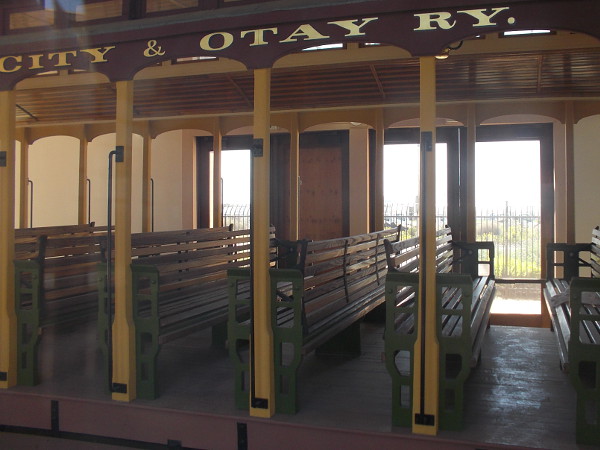
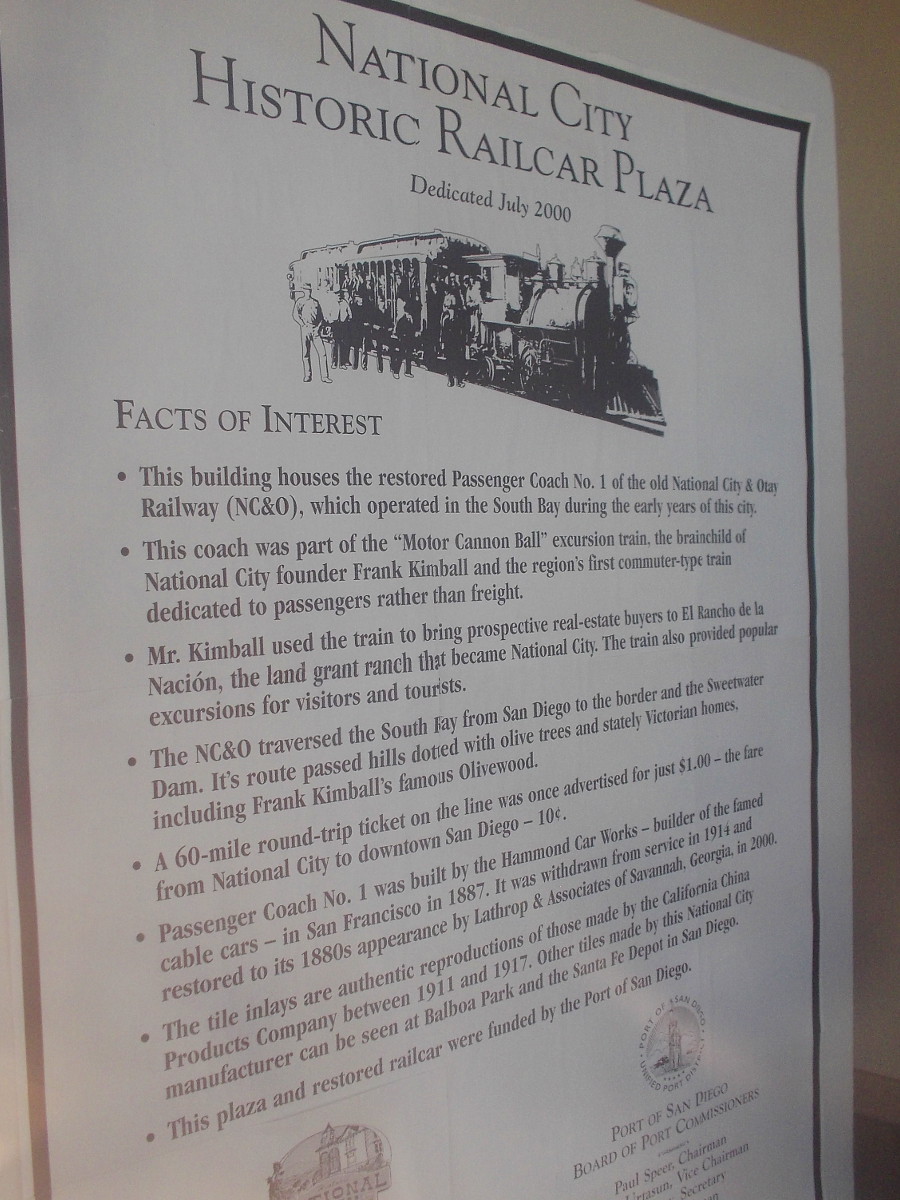
In addition to several displays dedicated to past railroads that serviced San Diego’s South Bay, the Historic Railcar Plaza features the fantastic, restored Passenger Coach No. 1. The old coach can be rolled outside of a small train barn on special occasions. Passenger Coach No. 1 was originally built in 1887 and carried passengers up and down the National City and Otay Railway (NC&O) until 1914. The beautiful open railcar used to seat up to 58 passengers in varnished redwood splendor.
The Historic Railcar Plaza’s small barn was built in 2000. The day I peeked through the windows it was padlocked shut. The windows were rather dirty and a few of the displays within had toppled over, which seems to indicate a degree of neglect. Apparently the cool car is rolled outside on the short track from time to time. I hope to see that one day!
Many of my photos were through those dirty windows. I did my best to adjust the images for clarity.
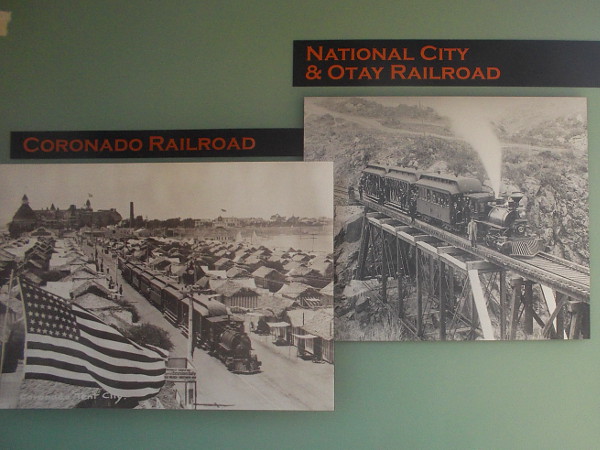
Mysterious stretch of train track emerges from the barn’s door. A very cool bit of history can be rolled outdoors during special occasions.That bit of history is the restored Passenger Coach No. 1, of the long-defunct National City and Otay Railway.The restored coach features outdoor bench seating and beautiful woodwork. Passengers could ride this car from San Diego through National City and Chula Vista to the Mexican border.A mannequin inside the Historic Railcar Plaza depicts the legendary Millionaire Hobo, J.B. King, Esq. His one burning ambition was to write his name on every car of every train in the country!A century ago, a ticket for the sixty mile round trip on the National City and Otay Railway could be purchased for just one dollar.Two old photographs. On the left, the old Coronado Railroad traveled through Imperial Beach and up the Silver Strand to Tent City in Coronado. One can see the splendid Hotel del Coronado in the distance!Map inside the Historic Railcar Plaza shows the various railways that once serviced San Diego, when transportation by train was extremely popular.Key to the above map includes the region’s evolving railroads: the California Southern, the National City and Otay, the Coronado, the San Diego Southern, the San Diego and Southeastern. and the San Diego and Arizona.
I live in downtown San Diego and love to walk! You can follow Cool San Diego Sights via Facebook or Twitter!
You can easily explore Cool San Diego Sights by using the search box on my blog’s sidebar. Or click on a tag! There are thousands upon thousands of fun photos for you to enjoy!
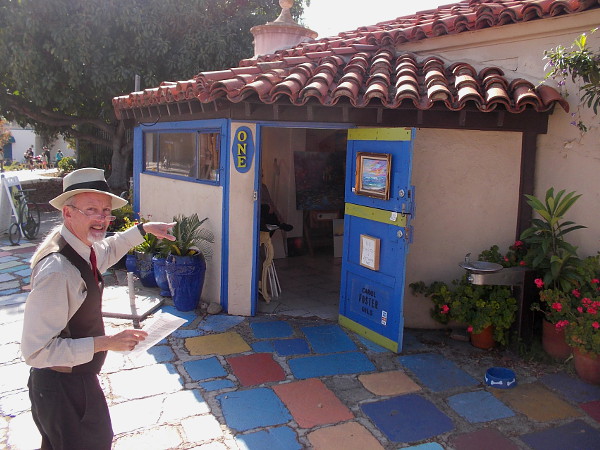
Tour guide Jeff explains that today’s Studio 36 Sculptors Guild was an outdoor theatre in the early years of Spanish Village. The front was a lobby and ticket booth. Writers, actors and set designers would act out plays on the inner patio.
Spanish Village Art Center, in beautiful Balboa Park, is where you’ll find the colorful studios of many fine San Diego artists. Last year I blogged about the history of this fascinating place. A small exhibit in Gallery 21 recounted how Spanish Village was created for the 1935 California Pacific International Exposition, and traced the village’s evolution over subsequent decades. Unfortunately, that exhibit no longer exists. But I did record much of it. To enjoy an overview of the history, you can revisit my old blog post by clicking here.
Last Saturday I was given a terrific tour of Spanish Village by a super friendly guy named Jeff. During the tour, Jeff showed me some unusual, unexpected features of Spanish Village and delved into its often surprising history.
(Fortunately, Jeff gave me some notes that I will reference in this blog. Should you enjoy a tour yourself, you can probably obtain your own copy!)
Please read the photo captions where I provide descriptions and very short explanations. As you’ll see, many interesting changes in Spanish Village have taken place over the years. And I’ve barely begun to scratch the surface!
If something I’ve written is inaccurate, or needs some elaboration, leave a comment! What memories do you have?
Click here to check out the Spanish Village Art Center blog! Support these great artists!
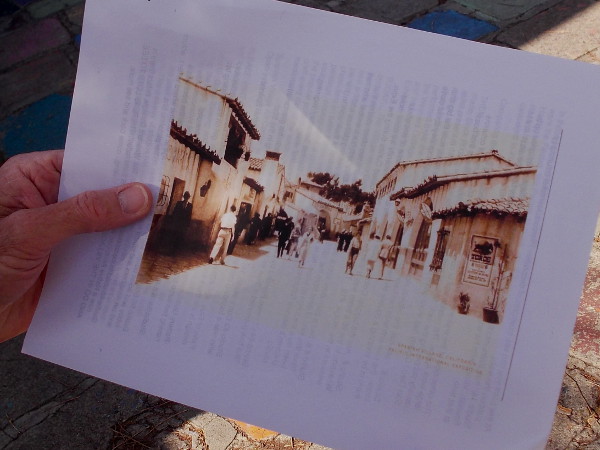
An old photograph of how Spanish Village appeared around the time of the California Pacific International Exposition of 1935.
In 1935, when Spanish Village opened, visitors strolled down simulated Old World streets, which featured restaurants and shops in picturesque, open-arched buildings. The architecture was inspired by the Andalusian region of southern Spain. In addition to wine shops, a cocktail lounge and a Chinese Bazaar, one could buy flowers and enjoy music, art . . . and even a high wire trapeze act!
You can see in the above old photograph a no-longer-existing building at the center of today’s large patio. It separated Spanish Village into two “streets” that visitors could enjoy.
Over the years, resident artists have built out the small open air shops to create practical but unique enclosed spaces. Some of the open arches have been filled in, or can now be seen inside certain studios.
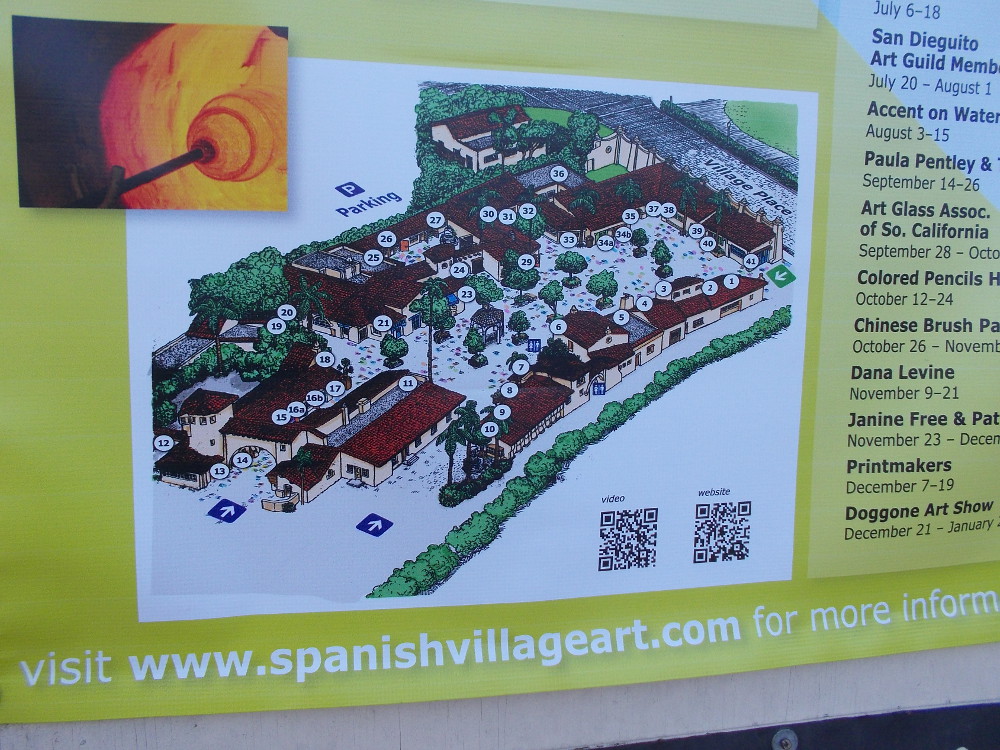
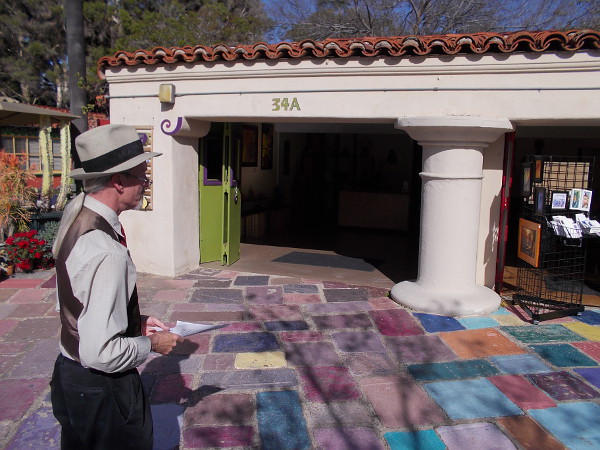
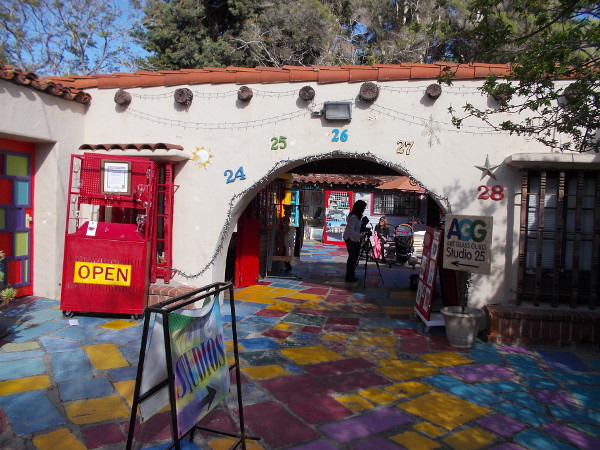
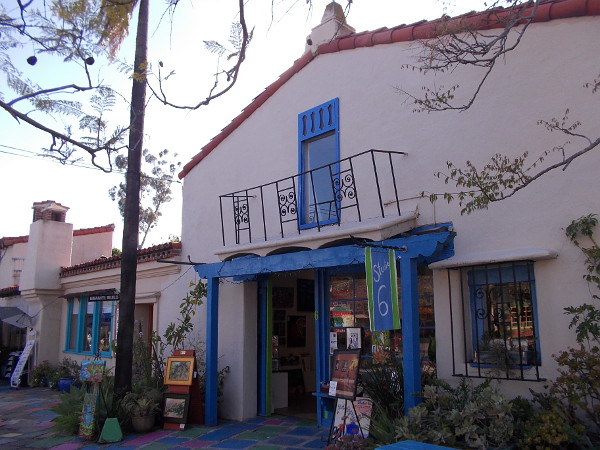
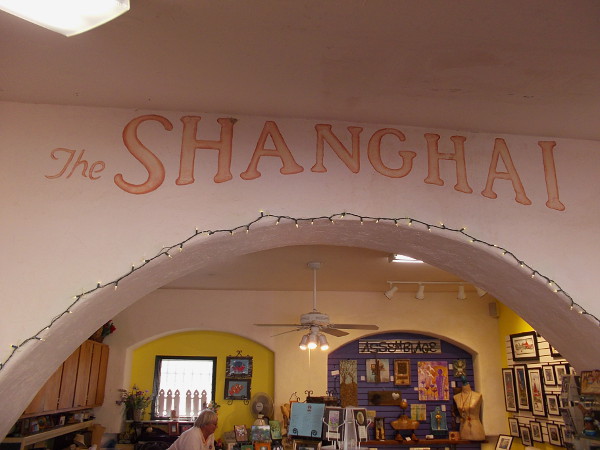
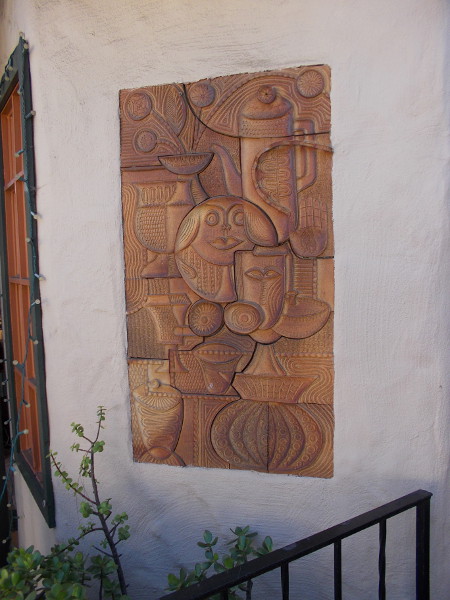
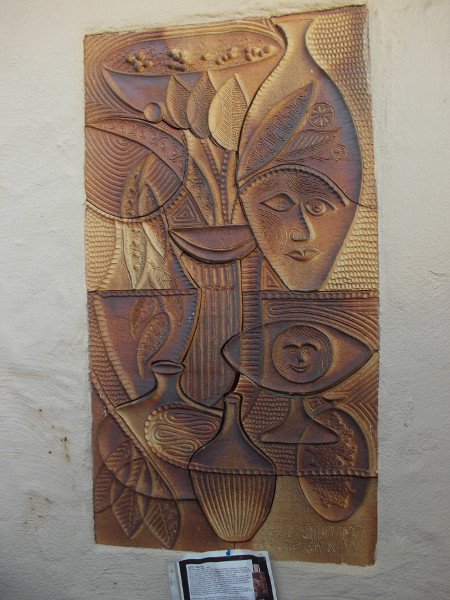
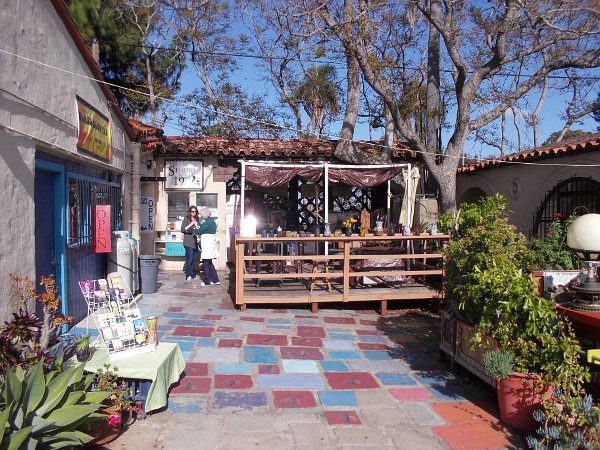
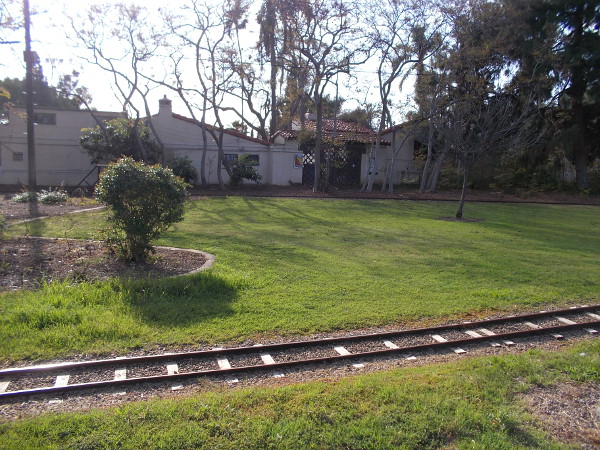
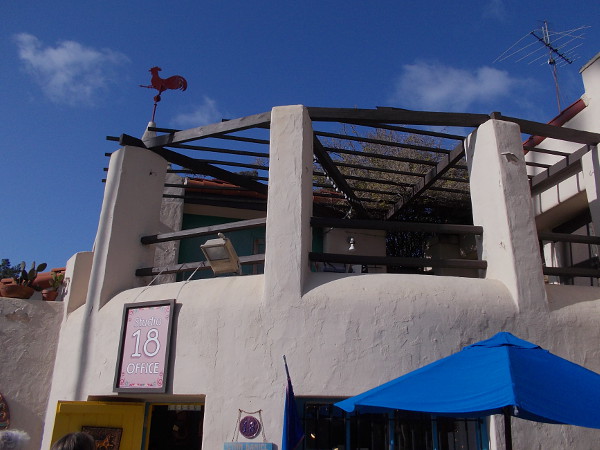
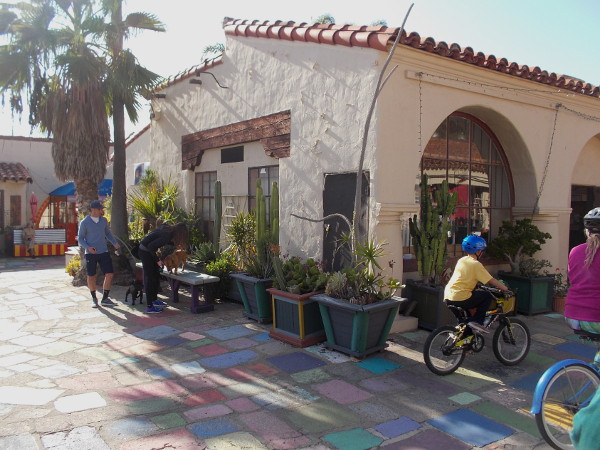
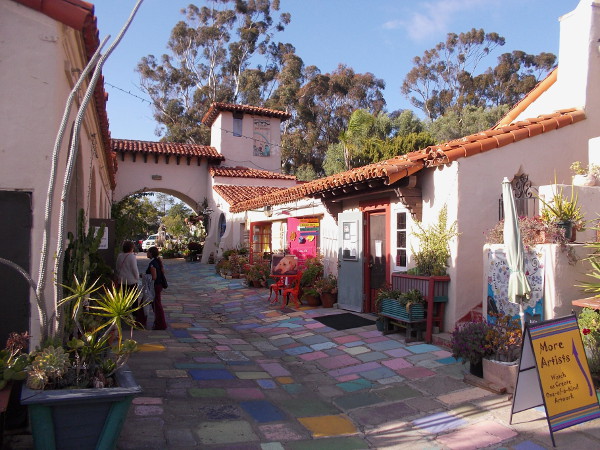
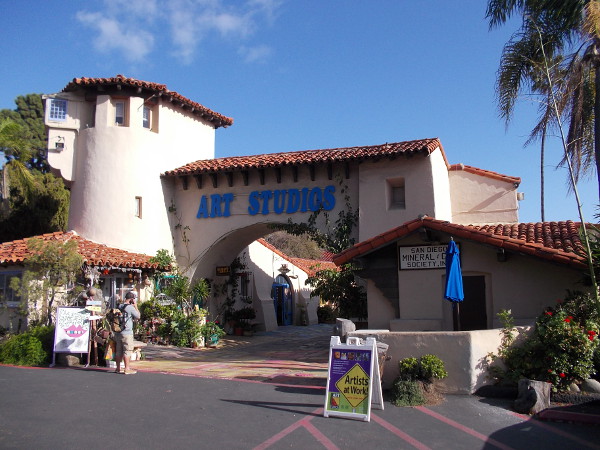
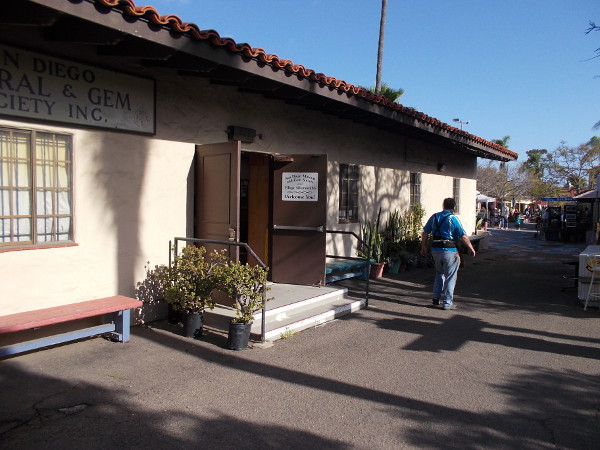
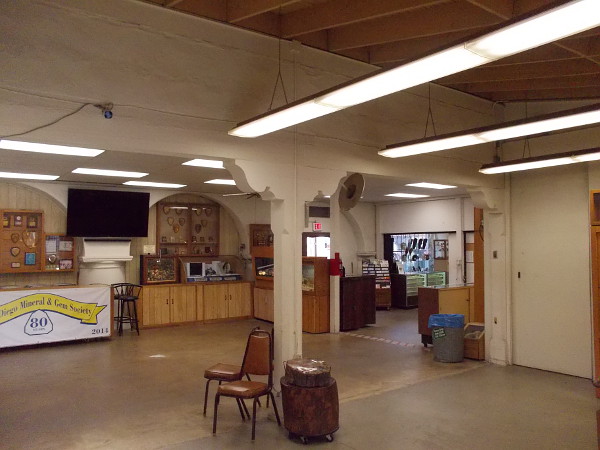
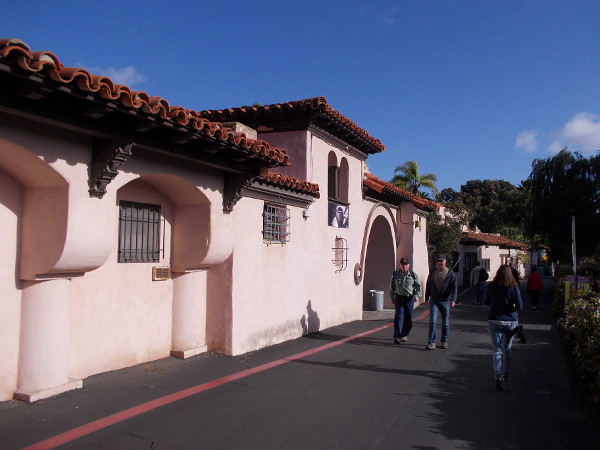
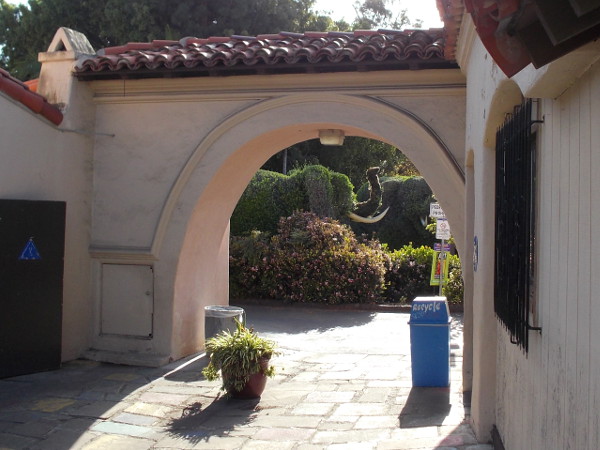
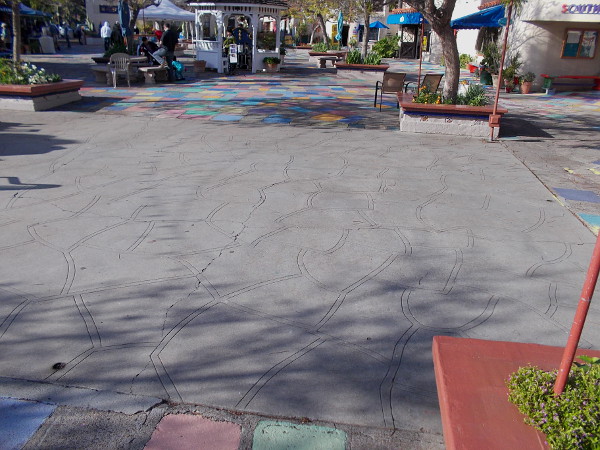
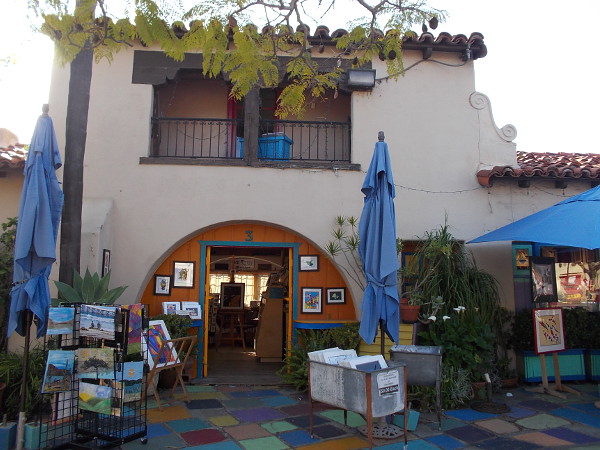
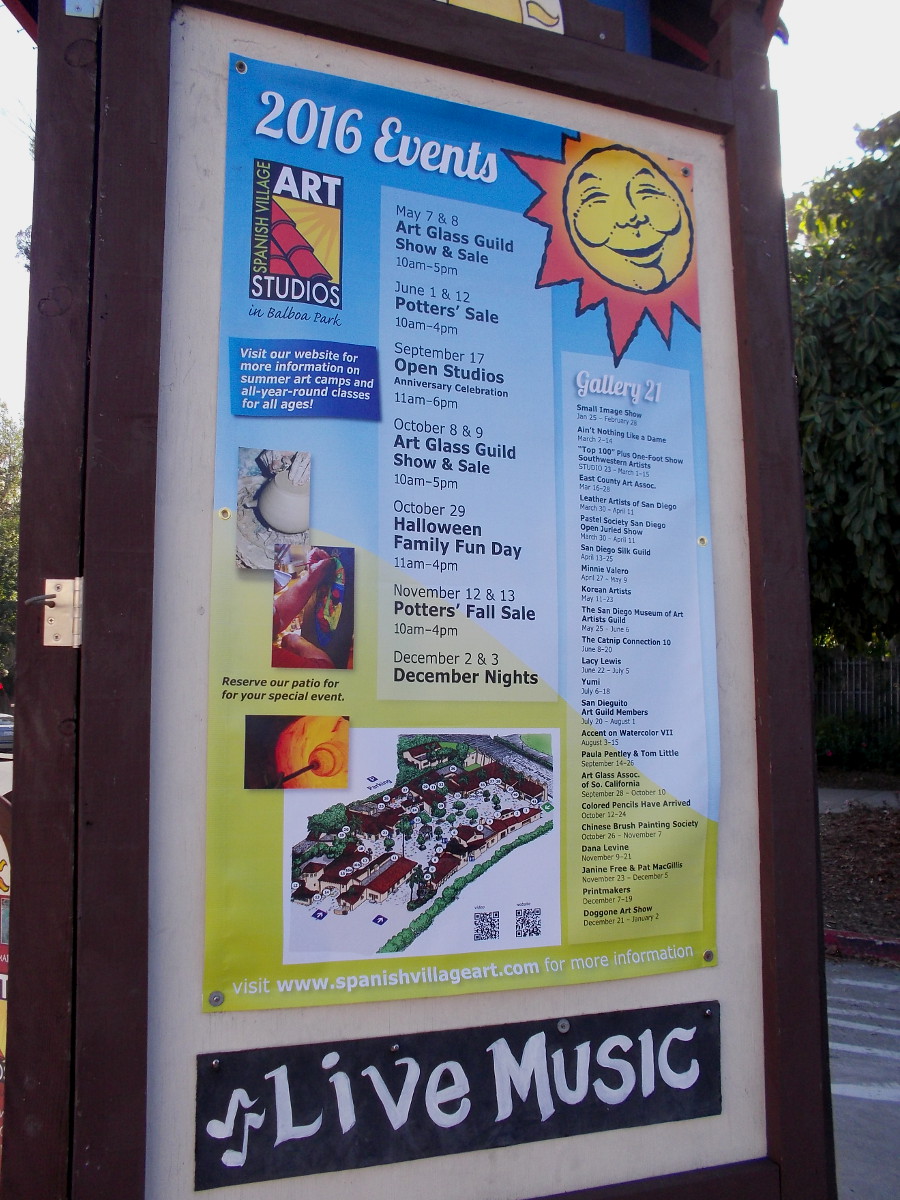
A current map of Spanish Village shows how it appears today. You can find this wonderful part of Balboa Park between the Natural History Museum and the San Diego Zoo.Jeff shows me Studios 34 A and 34 B, which were originally one space featuring a puppet show.Studios 24 through 28 surround a small inner courtyard. This area in Spanish Village originally contained a wishing well and actual horse stalls!Studio 6 has a sliding barn door! Two other studios dating from the 1935 California Pacific International Exposition have similar doors.Studio 8, like many others in Spanish Village, was built out from the original open archway to provide more space for the artists. The words The SHANGHAI are from 1935. It evidently used to be a bar.Near Studio 8’s entrance are two amazing works of art. Here’s one. It was created by John Novy, a potter who was a member of Spanish Village from 1969 to 1977.Second installation of ceramic tiles on exterior of Studio 8 in Spanish Village. This art was created by professional potter John Novy.This used to be the east entrance into Spanish Village. Today you’ll find outdoor glassblowers creating amazing glass pieces while visitors gather around to watch.The old east entrance (under the tiles) is now blocked off. Much of the grassy area occupied by today’s Balboa Park Miniature Railroad used to be a parking lot.Studio 18 is now the office of Spanish Village Art Center. In the early years a caretaker lived here. That rooster weather vane can be seen in many old photographs.The south end of the San Diego Mineral and Gem Society building used to extend a bit into today’s large patio area. You can see an old wooden beam on the present-day exterior.This quaint little street, during the 1935 California Pacific International Exposition, led into the Fun Zone! Now it leads to a small parking lot.Gazing back south from the parking lot at today’s Spanish Village artist co-op in Balboa Park.The extended west side of the San Diego Mineral and Gem Society building was built sometime after the 1935 Expo.Originally, the building terminated where you see the column.Walking along the west edge of Spanish Village. Many decorative columns and arches provide this artist’s co-op with unique character.Looking through the west archway toward a shrub elephant, which stands on a nearby, newly improved walkway that heads north to the San Diego Zoo.This large dance floor (and the area where I’m standing) at the center of the colorful Spanish Village patio was once occupied by a large building. It seems there is some debate as to what that building was, exactly.Studio 3 is occupied by artist Don Knapp. He arrived at Spanish Village as a child! His grandmother was a founding member in the 1930s.Loads of fun, creative stuff is going on in Spanish Village Art Center in 2016. Please click the image to enlarge it, and then mark your calendar!Jeff provides a really interesting tour. Look for his friendly smile if you happen to find yourself in wonderful, historic Spanish Village!
…
I live in downtown San Diego and walk like crazy! You can follow Cool San Diego Sights via Facebook or Twitter!
Do you like to read short pieces of thought-provoking fiction? You might enjoy checking out Short Stories by Richard.
Is Balboa Park one of your favorite places? Follow my special new blog, which I call Beautiful Balboa Park!
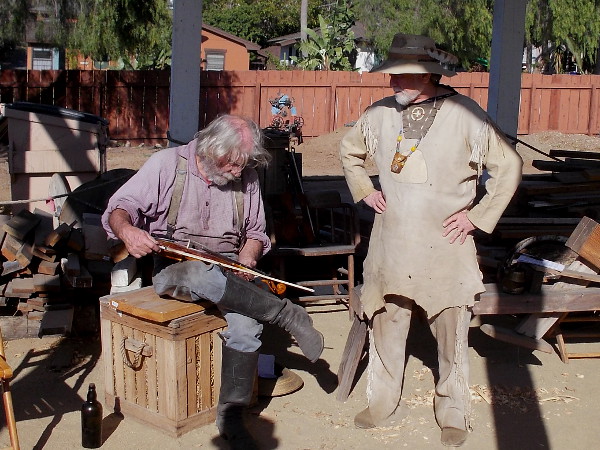
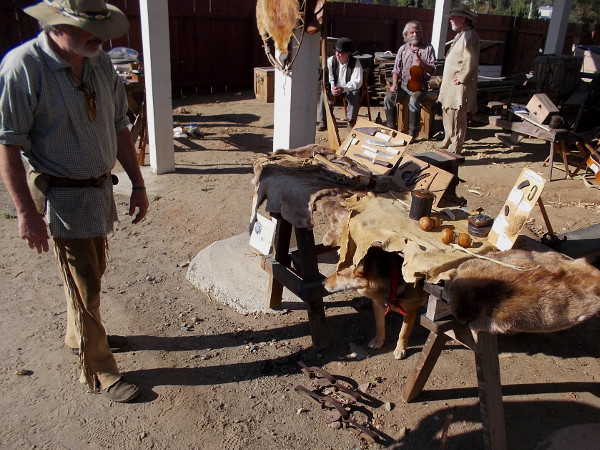
Two rugged mountain men, one with a fiddle, hang out behind Seeley Stable in Old Town San Diego State Historic Park.
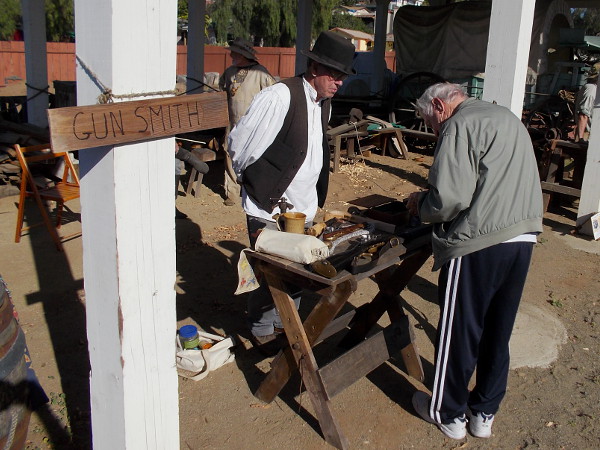
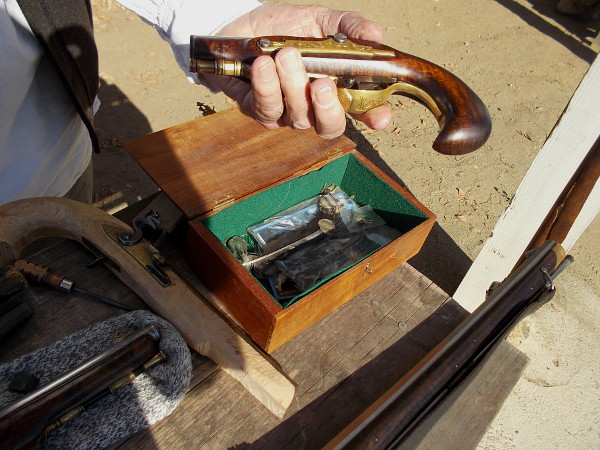
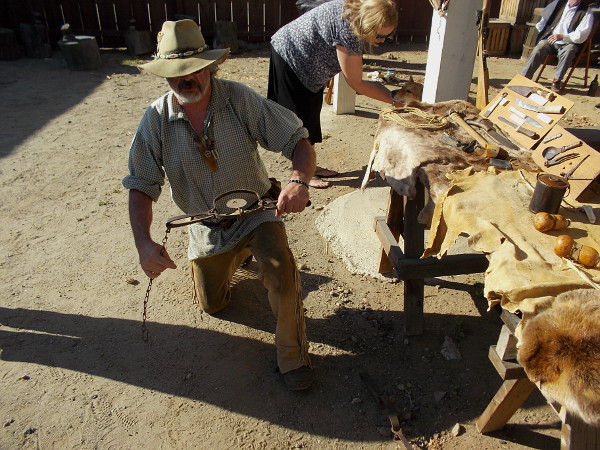
Here are some cool photos of what life was like back in the Old West. I snapped these last weekend behind Seeley Stable at Old Town San Diego State Historic Park. Some mountain men, a gunsmith and blacksmith were showing visitors a few aspects of frontier life long ago.
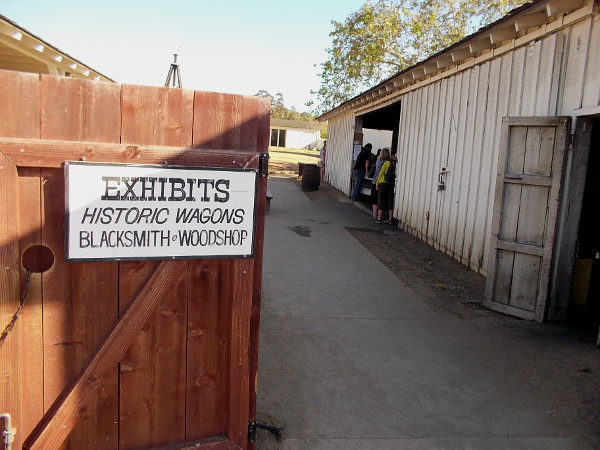
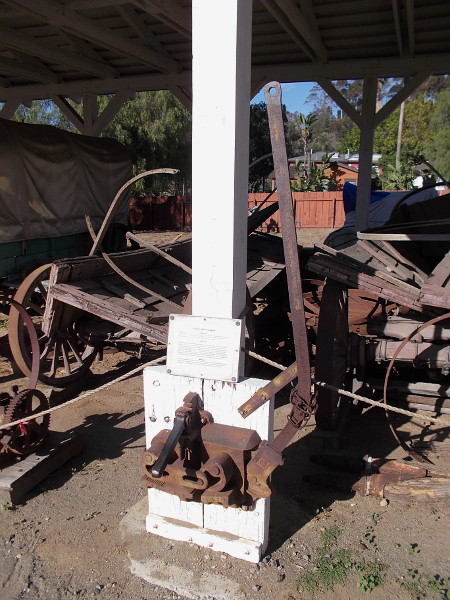
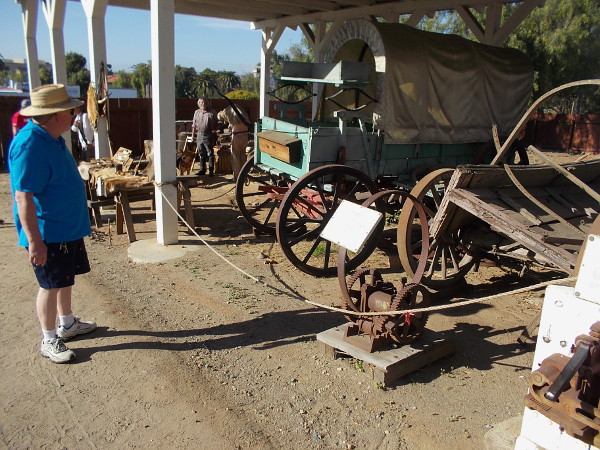
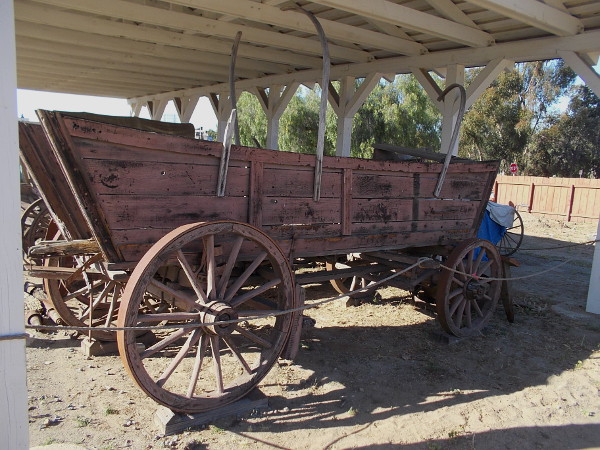
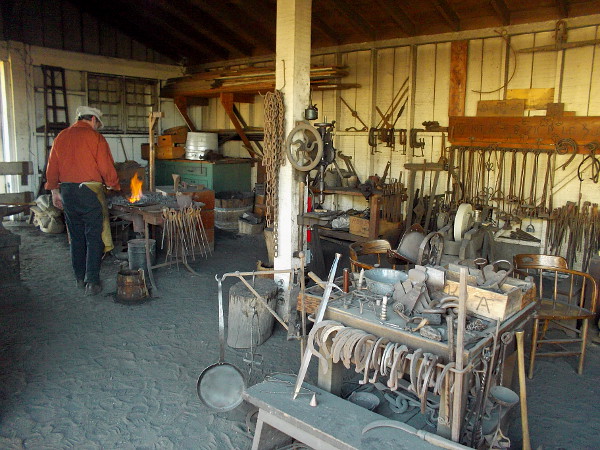
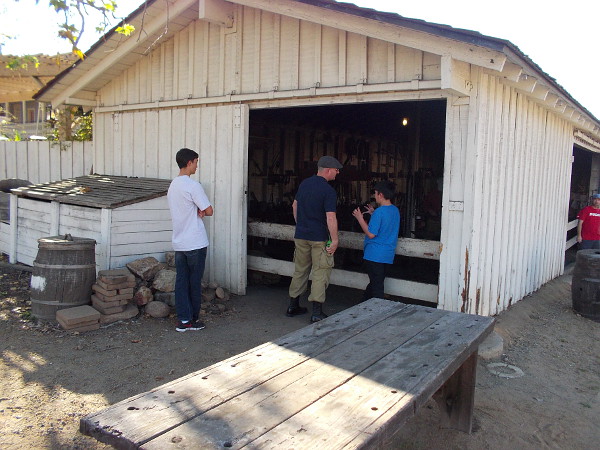
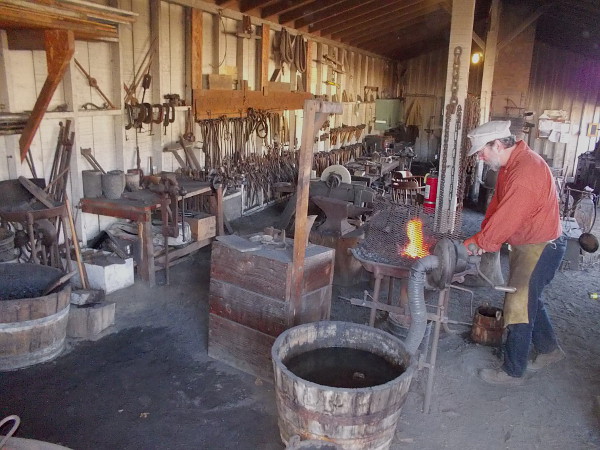
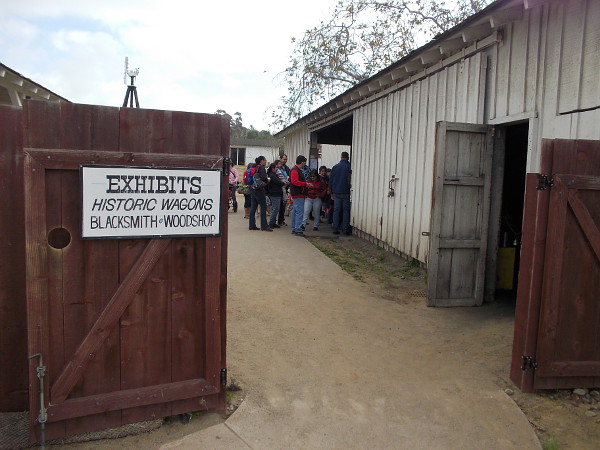
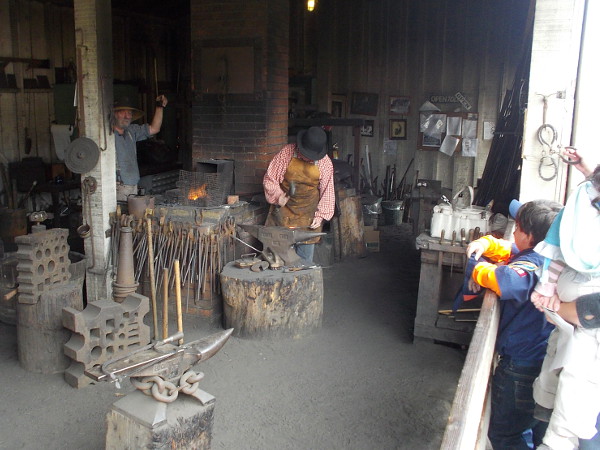
Beyond this gate just off La Plaza de Las Armas is the yard behind Seeley Stable. Here you’ll find outdoor exhibits, including old wagons and a blacksmith and woodshop.A gunsmith who assembles his own old-fashioned rifles and firearms shows a visitor some examples in San Diego’s historic Old Town.This antique flintlock pistol would have been used in past centuries for personal protection at close range.A friendly mountain man had a table full of skins, knives and other objects associated with frontier life in the Old West.A demonstration of how trappers in the Old West would set a beaver trap by a river and anchor it to a strong stick in the mud.This rusty tool with a long handle is a tyre shrinker. It was used for routine maintenance in the olden days–reducing the diameter of the iron tyres found on wooden wagon, cart and buggy wheels.Someone reads a sign near a tyre bender. This device was used to send long, flat bars of iron or steel into a smooth circle that would become an iron tyre.An old covered wagon on display behind Seeley Stable. They were typically sturdy farm wagons with a canvas top. Covered wagons were used on trail drives and cross-country treks.Photo inside the well-equipped blacksmith shop. It’s located behind Seeley Stable in Old Town San Diego State Historic Park.Some park visitors look into the small blacksmith building.A blacksmith removes red hot iron from the fire. He was demonstrating how to make hinges today!
…
I live in downtown San Diego and love to walk! You can enjoy more Cool San Diego Sights via Facebook or Twitter!
Do you like to read short pieces of thought-provoking fiction? Please click Short Stories by Richard.
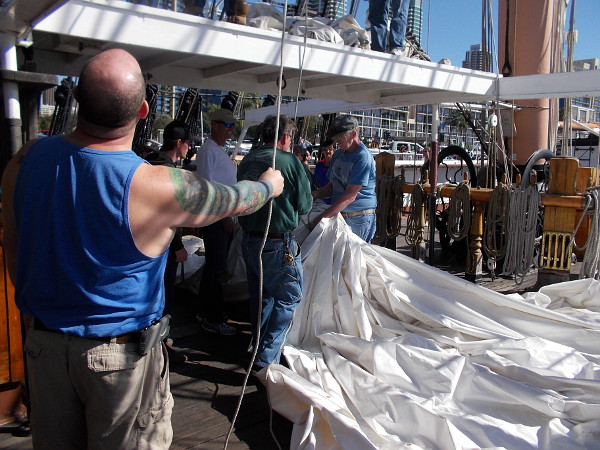
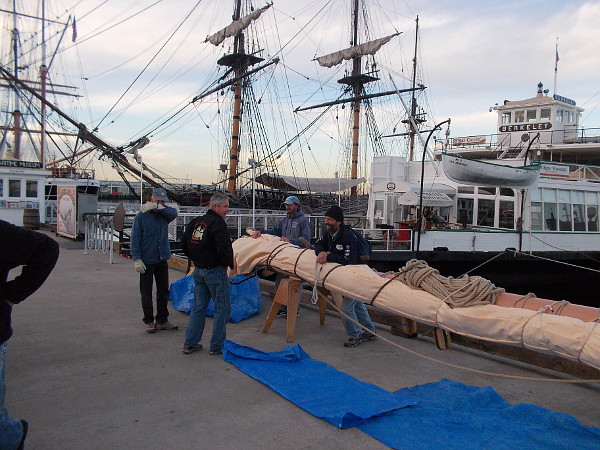
Volunteers at the Maritime Museum of San Diego haul a rope on the deck of Star of India to help raise a protective tarp above the historic ship.
Sunday is volunteer work day at the Maritime Museum of San Diego. Anyone walking along the Embarcadero or visiting the museum can watch history being preserved by energetic volunteers. You can see them pulling ropes, painting masts, scraping, polishing, sweeping and just generally doing all those things necessary to maintain historic old ships.
The Maritime Museum of San Diego could always use new volunteers! No experience required! You mostly work out on the sparkling water, in the sunshine, with senses full of invigorating smells, sights and sounds. And know what? You become a part of history!
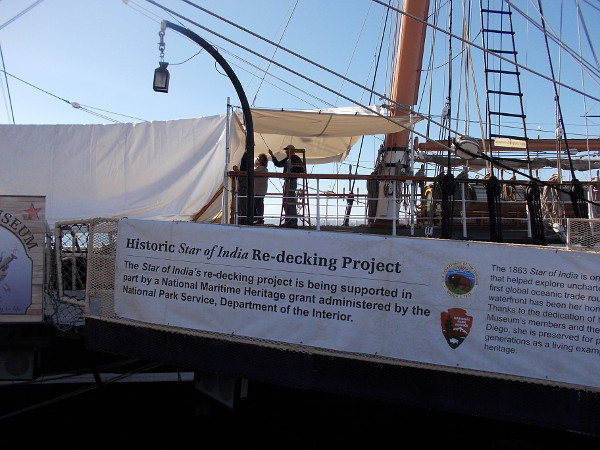
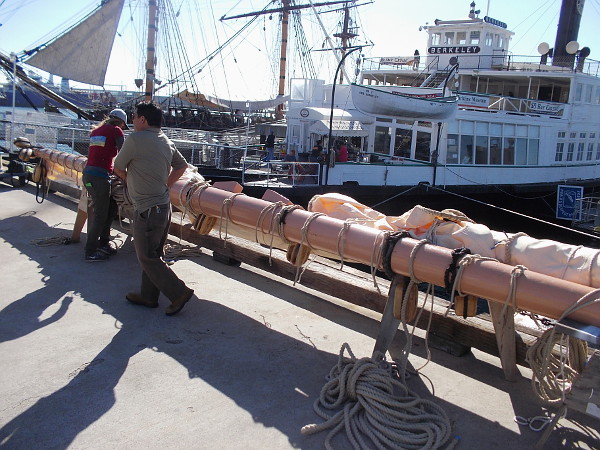
Large plastic canopies are being installed on the Star of India to protect her from rain during the upcoming deck restoration.The Star of India’s re-decking project is being supported in part by a National Maritime Heritage grant administered by the National Park Service, Department of the Interior.Another volunteer works near the bow of the historic tall ship. Downtown San Diego’s skyline provides a gleaming backdrop.These guys are working above the forward house near the foremast.A mast of the HMS Surprise has been scraped and coated with primer. Now some paint will preserve this amazing tall ship used in the movie Master and Commander.Another yard to be installed on the San Salvador by crane awaits on the Embarcadero. This heavy yard with sails furled will be supported by the replica Spanish galleon’s foremast.Volunteering for the Maritime Museum of San Diego can be very satisfying. Are you free on Sundays?
…
I live in downtown San Diego and love to walk! You can enjoy more Cool San Diego Sights via Facebook or Twitter!
Native American Kumeyaay from the San Diego area work near the foot of an ewaa, a dome-shaped hut made of sycamore and oak tree branches.
Over two years ago, when Cool San Diego Sights was relatively new, I blogged about some amazing public art near the Santa Fe Depot in downtown San Diego. I provided just a brief glimpse, really.
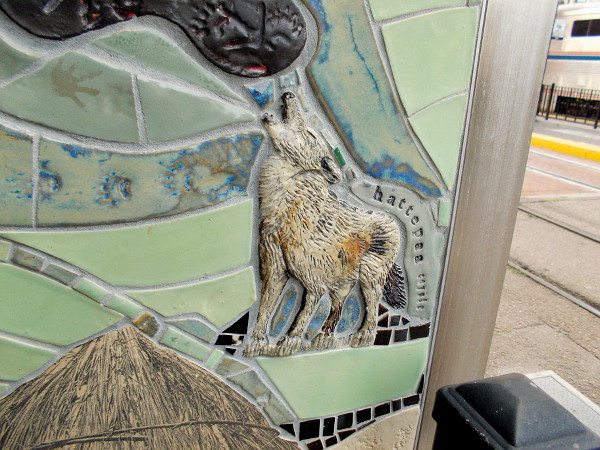
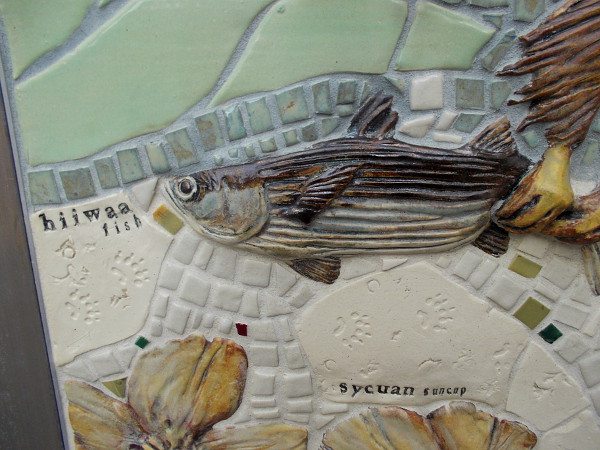
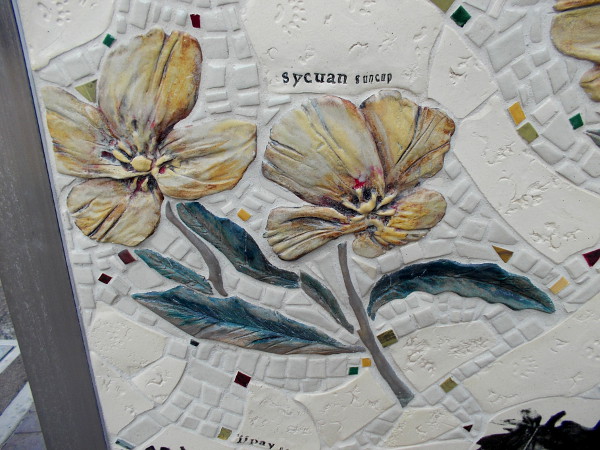
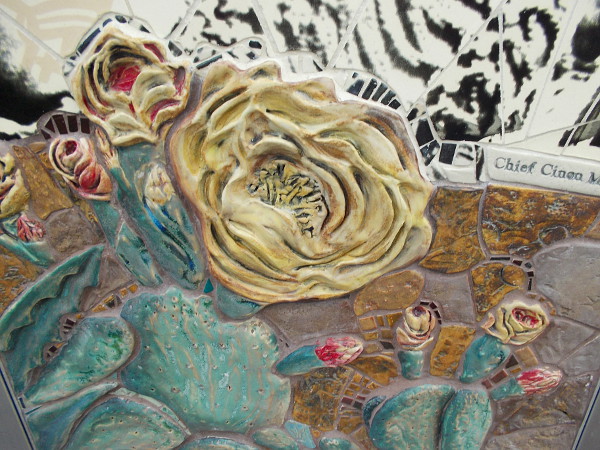
The artwork, titled The Tracks We Leave Behind, created by Betsy K. Schulz in 2008, is so utterly fantastic, so absorbing, I’ve decided to blog about it once again. Whenever I walk past (which is often), I like to pause an extra few seconds beside my favorite column, which features gorgeous mosaics that depict wild nature and the Native American Kumeyaay people, who have lived around San Diego for about 12,000 years.
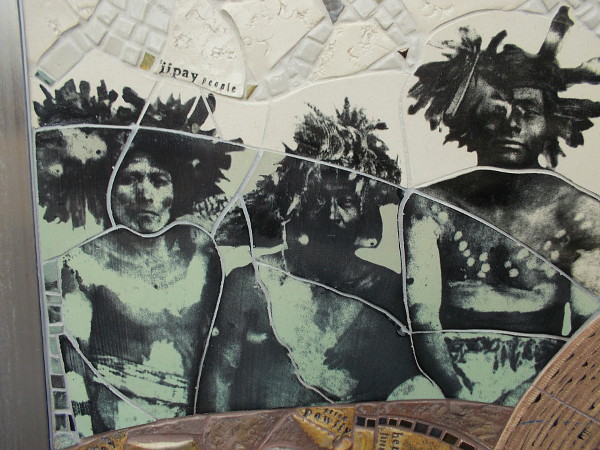
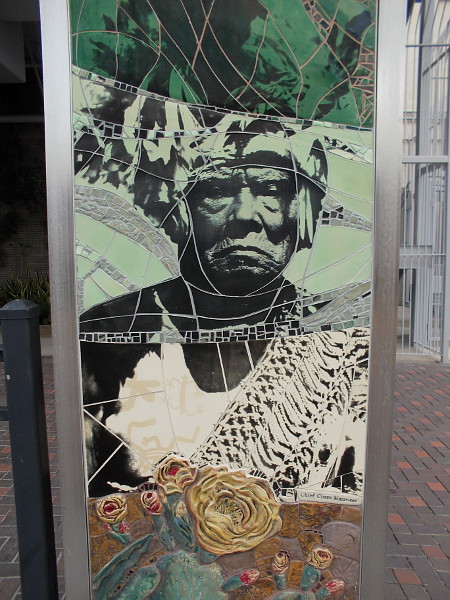
Living in this place we set fires to open the land and make the seeds grow. We fish all year, both near shore and deep. We walk to the canyons and the mountains–hunting, gathering food and trading . . .Public art titled The Tracks We Leave Behind, by Betsy K. Schulz, 2008, includes the image of a Kumeyaay hattepaa (coyote) howling.Beautiful handmade mosaic tiles form a Kumeyaay ispa (eagle) in flight.The bald eagle has captured a Kumeyaay hiiwaa (fish).Yellow Sycuan Suncups grace this gorgeous, detailed public artwork in downtown San Diego.The yellow bloom of a prickly pear. This sculpted tile mosaic is so phenomenal, you almost can’t remove your eyes from it!The native Kumeyaay people (also called Kumiai, Ipai-Iipay, Tipai-Tipay, Diegueño, Kamia) have lived in the San Diego region for around 12,000 years.Public art in San Diego depicts Cinon Duro Mataweer, spiritual leader (kuseyaay or tribal shaman) of the Ipai (formerly northern Diegueño) Native American Indian tribe.
…
Join me for many more Cool San Diego Sights on Facebook and Twitter!
It’s hard to believe, but this photo blog of San Diego now contains over 800 posts, and features a vast universe of wonderful art–not to mention other random cool stuff! Click some links that look interesting if you’d like to explore! Have fun!
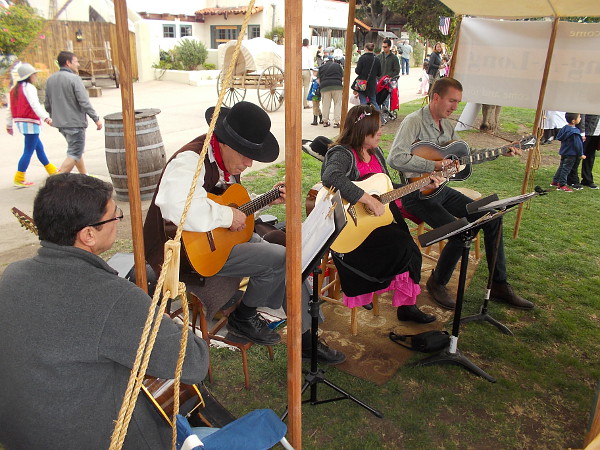
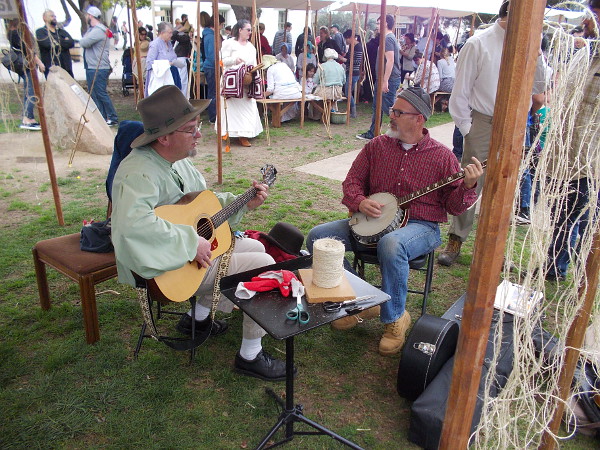
Lots of music was being played during today’s Mormon Battalion Commemoration event in Old Town San Diego.
I love history. So I was thrilled to stumble upon a special event today in Old Town San Diego!
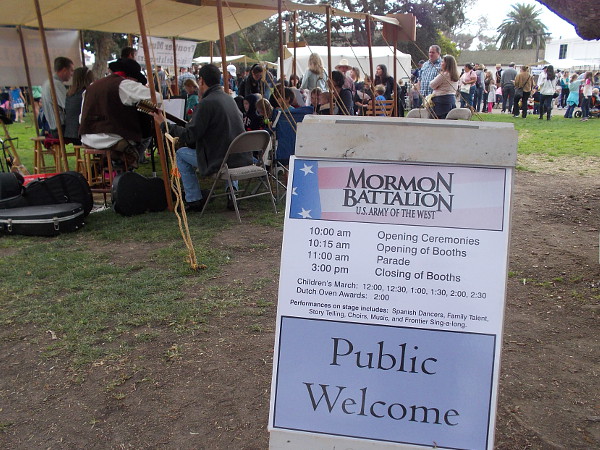
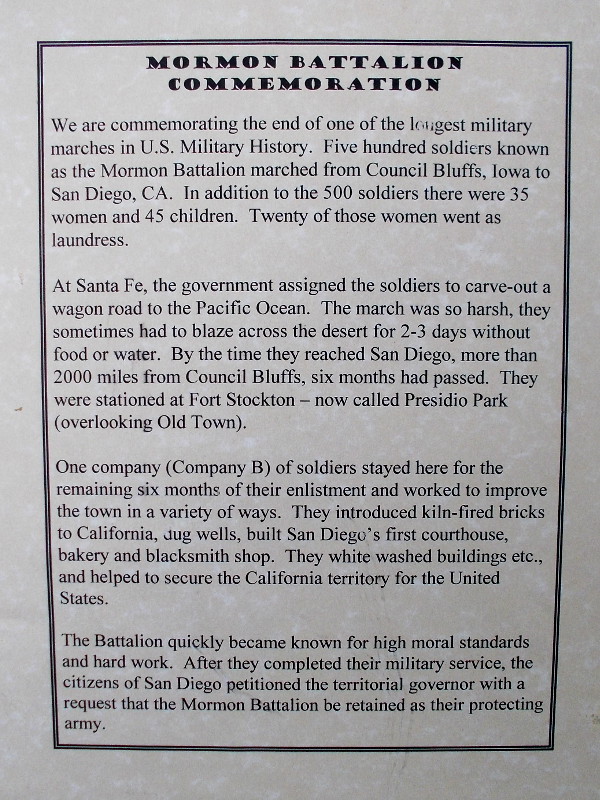
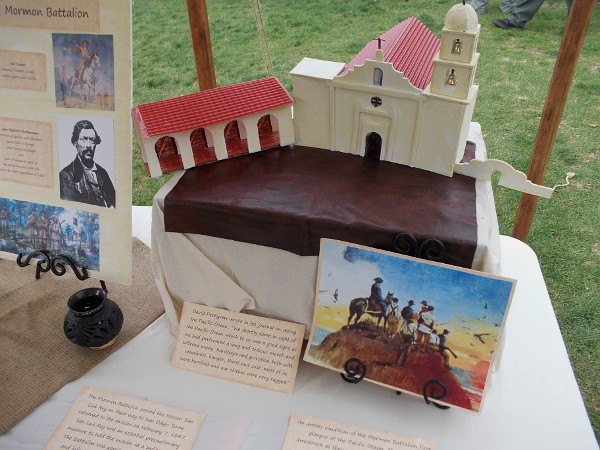
The Mormon Battalion Commemoration is an annual celebration that recalls a part of San Diego’s diverse, often surprising history. The battalion was formed in 1846. Composed of members of the Latter Day Saints and led by regular U.S. Army officers, over 500 men and several dozen women and children set out from Council Bluffs, Iowa and endured an almost 2,000 mile march to San Diego. Their presence in San Diego and several other locations in Southern California helped to support the eventual cession of much of the American Southwest from Mexico to the United States. Many members of the Mormon Battalion went on to play leading roles in the settlement of the West.
Of course, history–like life itself–is a complex thing that can be told and interpreted from many differing viewpoints. Happy reenactments don’t tell the entire story. But among so many costumes and demonstrations, one can start to imagine what life appeared like in San Diego over a century and a half ago.
I ambled around Old Town’s central plaza, spoke to some very friendly folks and took a few photos.
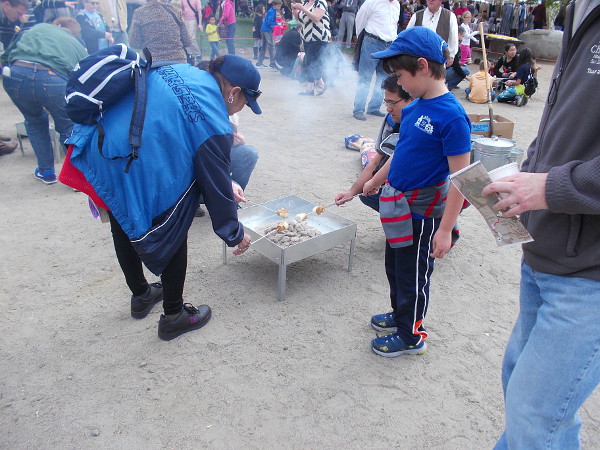
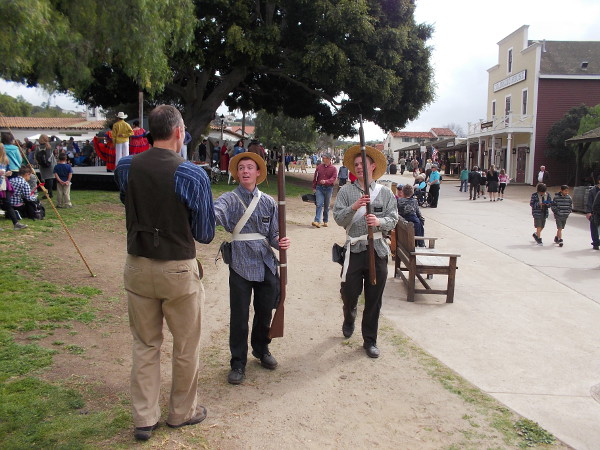
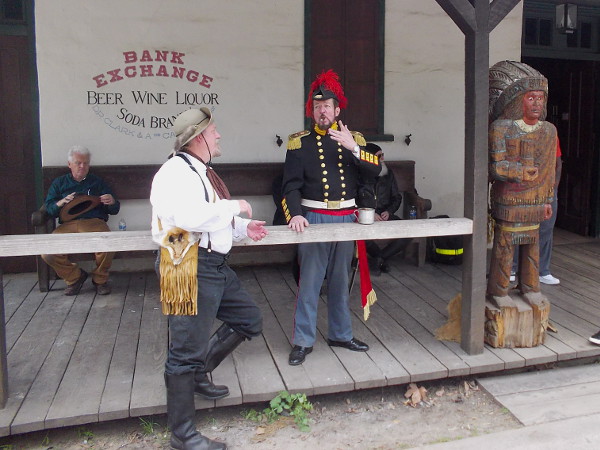
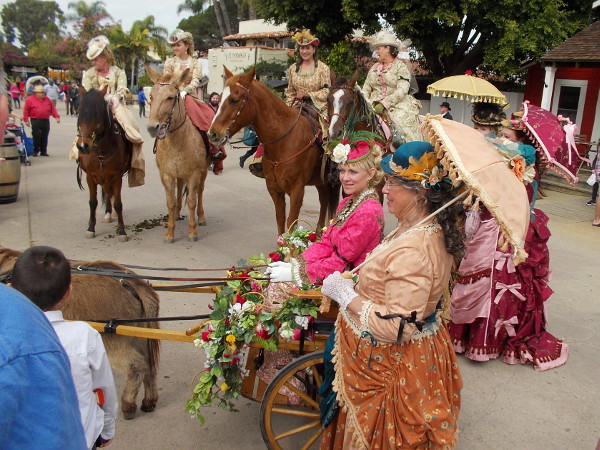
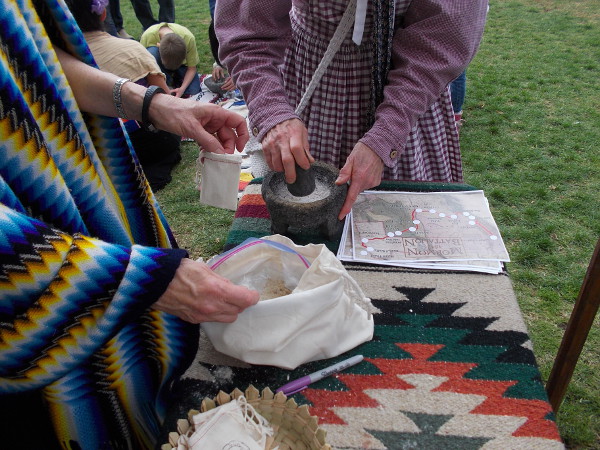
When I saw this rider on horseback as I entered Old Town this afternoon, I knew something special was going on!The public was welcome to this celebration of the Mormon Battalion. It included a parade, which I unfortunately missed.I saw kids in covered wagons, folks on horseback, and just a big whirl of activity all around Old Town today!We are commemorating the end of one of the longest military marches in U.S. Military History. Five hundred soldiers known as the Mormon Battalion marched from Council Bluffs, Iowa to San Diego, CA. In addition…there were 35 women and 45 children.Various exhibits recreated aspects of camp life, and life in San Diego during the mid-19th century.Treats on a stick. Lots of families were present for the very popular history-based event.One tent explained the hardships of women settling the West, and what life was like as a laundress.Lots of folks were about Old Town San Diego State Historic Park in period costume. Many people participating in the event were themselves Mormons.More unique and colorful costumes worn to help reenact a fascinating period of local history.Traditional folklorico dancing on a stage in Old Town. A strong Mexican heritage is a vibrant part of San Diego history.During the festivities, a large crowd enjoyed music, dance, food and all sorts of interesting sights.Contestants in a Dutch Oven Bake Off prepare their tasty concoctions for the judges.Young people were shown how clay bricks were made in the early days of San Diego.I was told this fabric would be used in the making of dolls.These ladies on horseback and in a fancy miniature donkey-driven cart were being photographed right and left. Wearing elegant frilly dresses and holding parasols, they delighted everybody!One booth in Old Town’s central plaza had a quilt-making demonstration, where kids could learn about the craft.Of course, there were many historical exhibits that told the Mormon Battalion’s story and described their contributions to San Diego’s early life and culture.The Liberty Stand explained how Mormons believe in the vision of America’s founding fathers, and their belief in values delineated by the U.S. Constitution.Another demonstration had folks grinding nuts and seeds, a skill adapted from Native American Kumeyaay who lived in this region long before Europeans.A guitar and a banjo create upbeat frontier-style music.This nice lady at an information stand gave the thumbs up for my camera!I wandered behind Seeley Stable because I noticed their famous blacksmith demonstration was open today!This lady was hammering glowing red hot iron while kids watched.A miniature donkey pulls an elegant cart!
…
Join me for more fascinating sights on Facebook and Twitter!
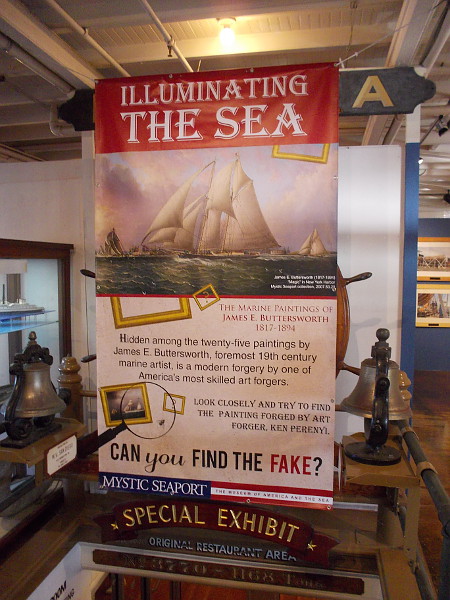
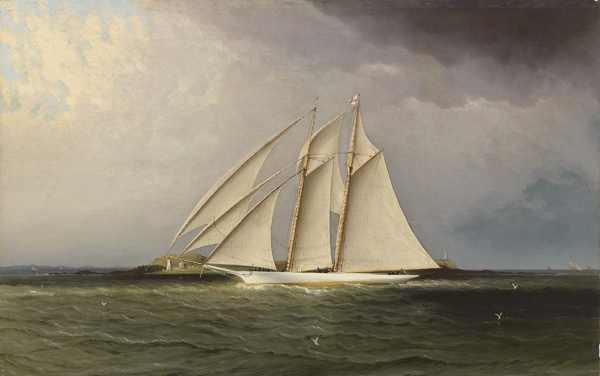
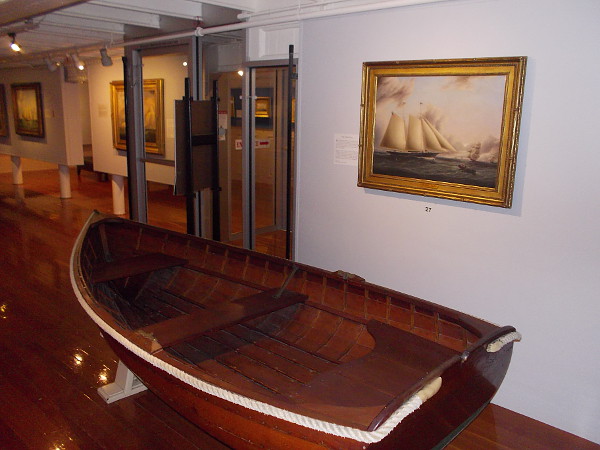
Illuminating the Sea: The Marine Paintings of James E. Buttersworth, 1817-1894. This very special exhibit can be seen at the Maritime Museum of San Diego!
Do you love breathtaking works of fine art? Are you fascinated by 19th century history? Do you like to feast your eyes on beautiful tall ships, sailing yachts and ocean scenery? There’s a special exhibit in San Diego that you positively must see!
I was surprised to discover that the Maritime Museum of San Diego, located downtown on the Embarcadero, is featuring a fantastic exhibit of marine art masterpieces by the famous painter James Edward Buttersworth. Buttersworth is considered to be one of the most important painters of the nineteenth century. His portraits of tall ships, racing yachts, steamships and other vessels from that era are beautiful works of genius, resplendent with light, energy and grace. About 600 of his classic paintings exist today, and the Maritime Museum has 24 amazing examples on display!
The exhibition is titled “Illuminating the Sea: The Marine Paintings of James E. Buttersworth, 1817-1894.” The collected paintings, on loan from Mystic Seaport until May 31, 2016, are so dynamic, detailed and glowing with beauty, they’ll make a permanent impression in your mind. His images of sky and sea are realistic and alive. Colors are rich and subtle; stormy waters seem to spray off a painted canvas; white sails shine. Several paintings depict yachts racing together, engaged in historic competitions that include the America’s Cup, an event that became important in San Diego’s more recent past.
Another interesting aspect of the exhibition is the inclusion of a modern Buttersworth forgery by Ken Perenyi. Visitors to the museum can become a detective, and do their best to uncover the cleverly made fake!
Go enjoy this exhibit of rare, fantastic paintings, then prepare to spend a good hour or two exploring the many historic ships owned by the Maritime Museum of San Diego. You’ll find yourself within a magical world. A world that gently floats upon shining water, alive with history, adventure, beauty and wonder!
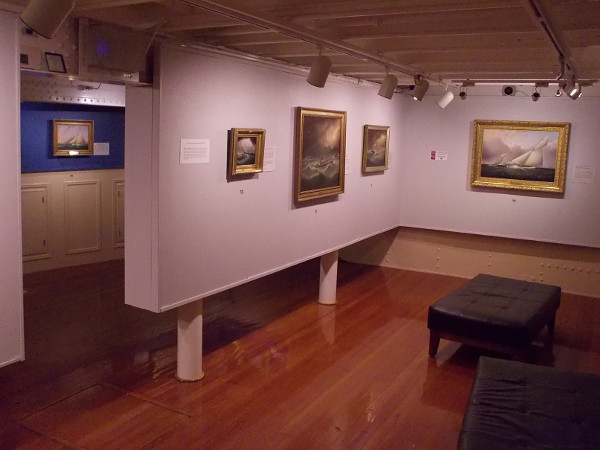
Among the classic maritime paintings of world-famous artist James E. Butterworth is a forgery. Visitors to the museum are challenged to spot it!Truly stunning works of art on display inside the steam ferryboat Berkeley, hub of the Maritime Museum of San Diego.Illuminating the Sea, James E. Butterworth, oil on canvas. Magic, schooner of New York Yacht Club, winner of the America’s Cup in 1870. Photo credit: Wikimedia Commons.In addition to this world-class art, the Maritime Museum of San Diego contains a vast collection of nautical objects. It is a must-see destination for those interested in our city’s rich history.
Here are a couple bonus photographs! I took them this morning during a short walk before heading to work!
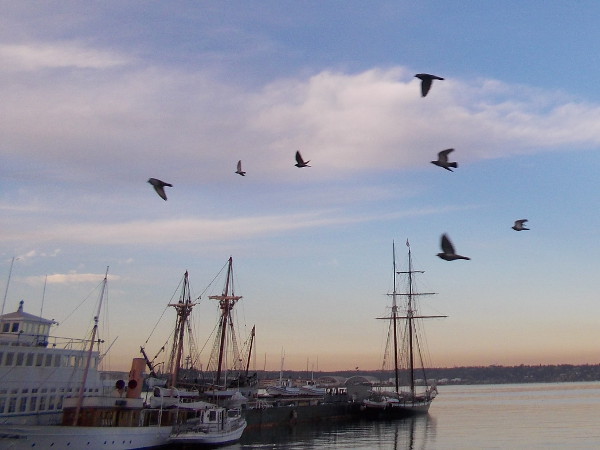
Museum volunteers gather around a ship’s yard. It would soon be lifted by crane onto the nearly-completed Spanish galleon replica San Salvador.Tall ships San Salvador and Californian docked behind the Berkeley. Just a few of the fascinating ships you can visit at the Maritime Museum of San Diego.
People walk along narrow outdoor deck of Anthony’s Fishette, a popular casual dining spot for half a century in downtown San Diego.
Their 50 year lease is almost up. Anthony’s Fish Grotto on San Diego’s Embarcadero will soon be no more. They are to be replaced in 2017 by the Brigantine seafood restaurant. A golden era that produced many wonderful, irreplaceable memories is coming to a close.
I’ve lost track of how many times I’ve lingered in ecstasy at Anthony’s outdoor Fishette, which is adjacent to the more formal indoor restaurant. Except when I was a child, I’ve never eaten in the restaurant. But outside, on the deck, inhaling the ocean breeze, listening to the cries of circling seagulls, squinting into the sun and feeling its warmth on my face–I’ve devoured acres of tasty french fries and oceans of fish.
Millions of people around the planet have golden memories of the place. This is my small photographic tribute to Anthony’s outdoor Fishette. I stopped by for a delicious grilled tuna melt sandwich late yesterday afternoon.
Over the years, many of the people who have worked at Anthony’s Fishette gave me a friendly smile or hello. To them, I say thank you.
You have until January 31, 2017 to enjoy this true San Diego tradition and treasure, and to say thank you.
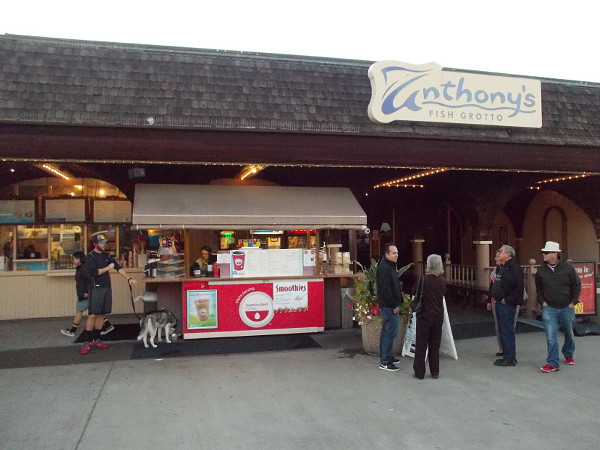
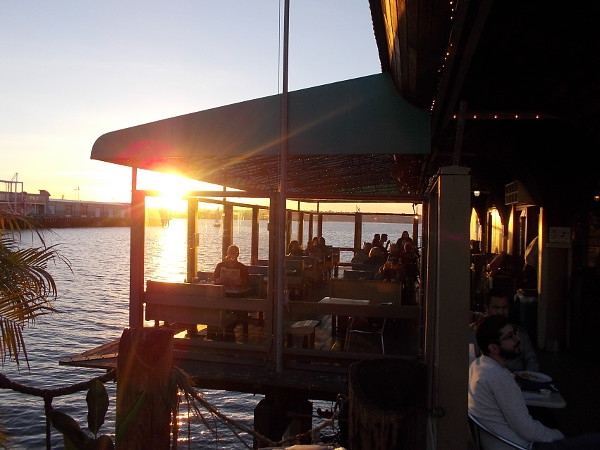
Front of Anthony’s Fish Grotto as seen from Harbor Drive. In early 2017, this iconic San Diego restaurant will be demolished.Smiles are typical at Anthony’s Fishette. So is sunny outdoor pleasure and yummy seafood.A photo through glass of the small boat dock and blue San Diego Bay as a glowing sunset nears.A reflection in window of Anthony’s Fish Grotto of the setting sun. A golden era is coming to a close on San Diego’s waterfront.Possibly the best outdoor seating in all of San Diego. Just above the lapping water, with a sweeping, wonderful view.Passing by Anthony’s Fishette one fine January day. I’ve walked past perhaps a thousand times.Countless millions of fond memories have been made here.
…
Join me for more wonderful San Diego sights on Facebook and Twitter!
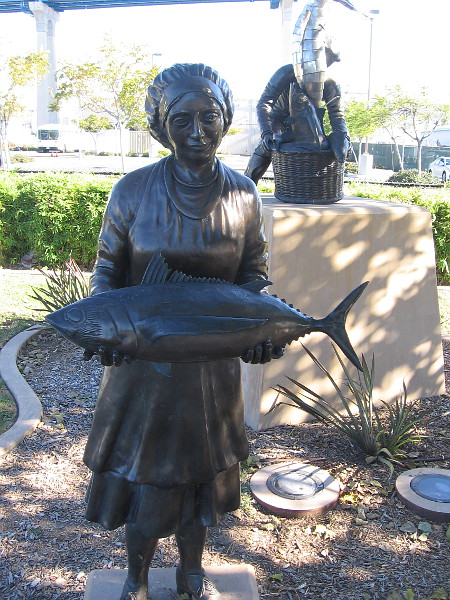
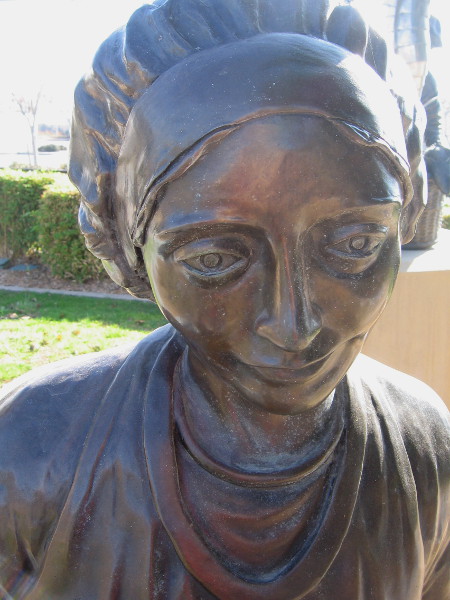
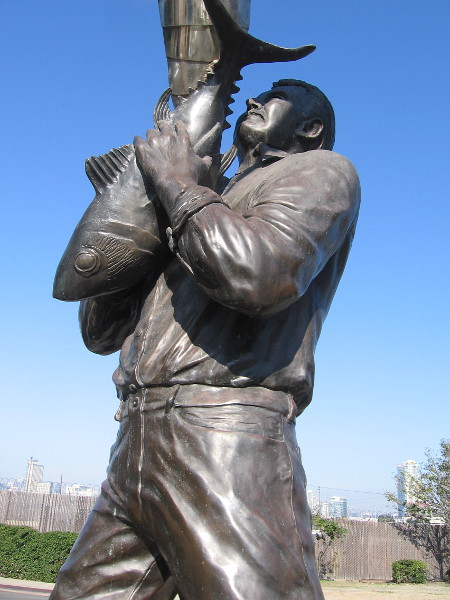
Sculpture of woman fish processor holding a large tuna. This area south of downtown was once the home of many San Diego canneries.
A month or two ago, during a leisurely walk from downtown to the pier at Cesar Chavez Park, I was thrilled to discover some truly amazing public artwork!
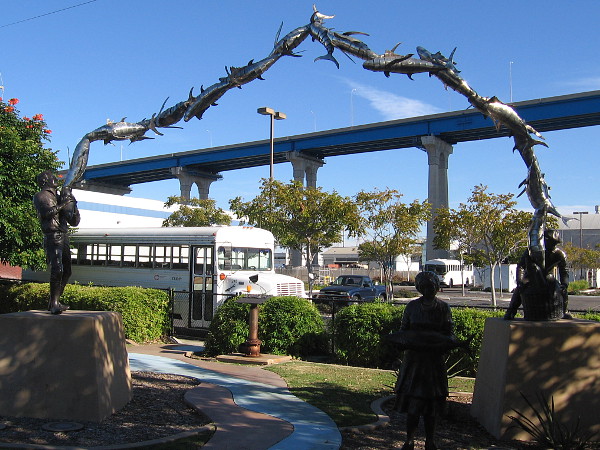
The Cannery Workers Tribute at Parque del Sol is tucked away in a place where very few people go. You’ll find it just a bit north of the Coronado Bay Bridge (which you can see in some of my photographs), near the entrance to Cesar Chavez Park.
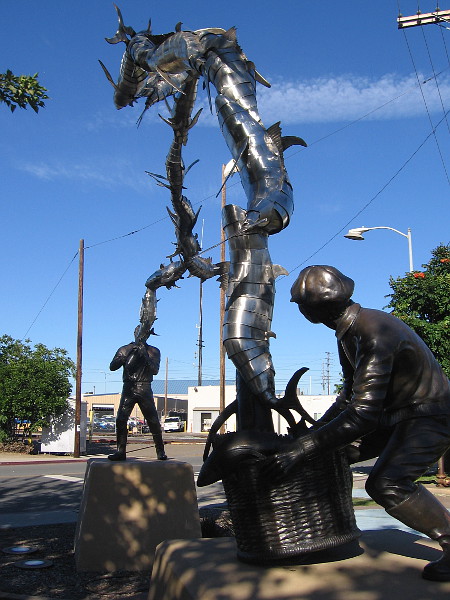
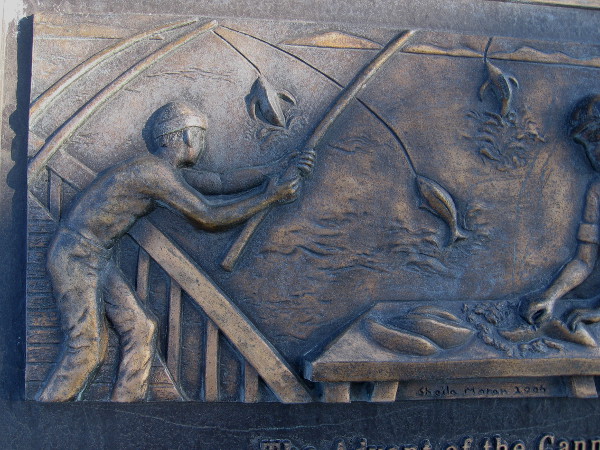
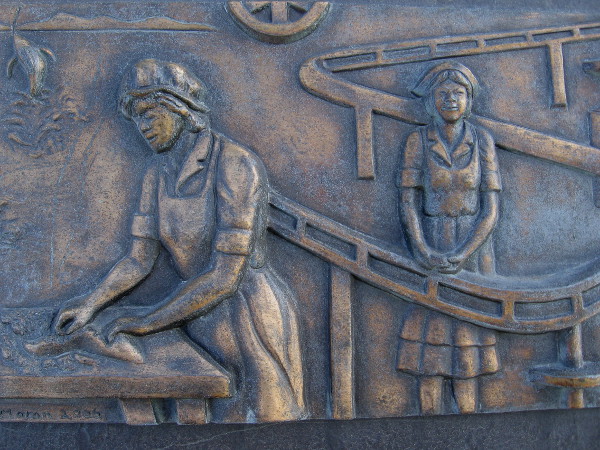
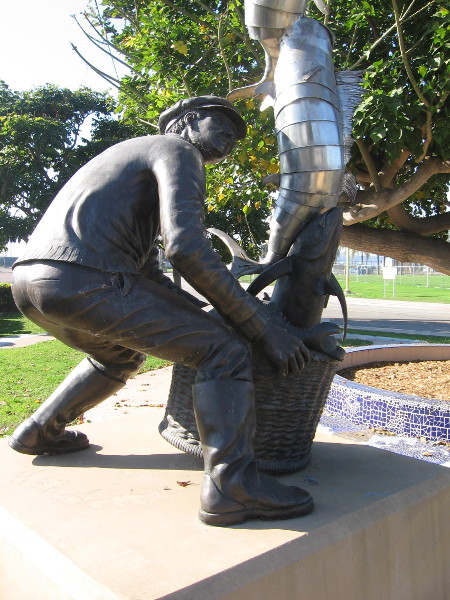
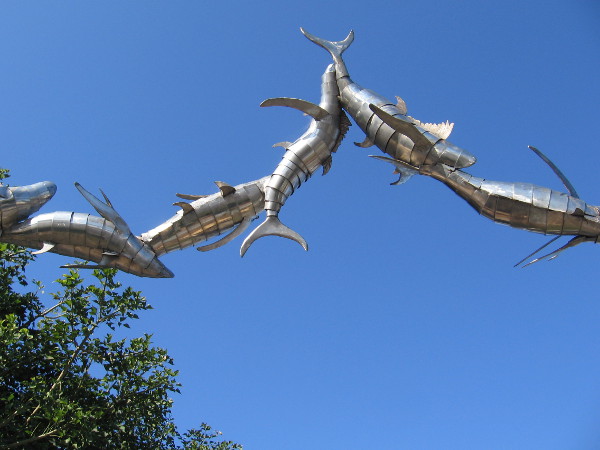
The large gleaming sculpture honors thousands of hard-working people who were employed by San Diego’s tuna canneries decades ago. I’ve blogged about our city’s once-thriving tuna industry on several occasions. Not only was San Diego home to the world’s largest tuna fishing fleet during much of the 20th century, but numerous canneries dotted our bayside. In the 1950s, the tuna industry provided more than 17,000 local workers with a living. Many of the jobs involved cleaning and packing fish that would be shipped around the world.
According to the Port of San Diego website, this public artwork is situated in a spot where workers at a nearby cannery would take their break. “During the 1970s, former cannery maintenance worker Roberto Carrero and co-workers dug a hole and planted a small tree. This, now large, coral tree was incorporated into the artwork.”
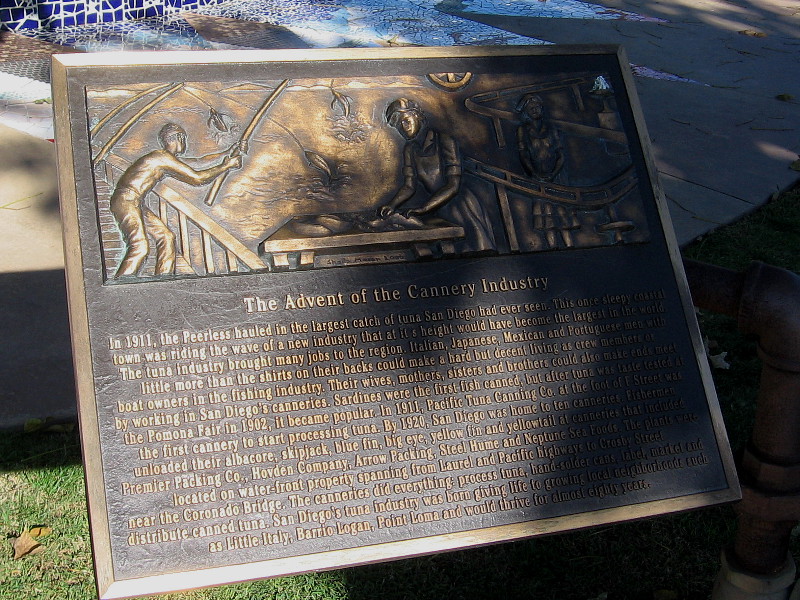
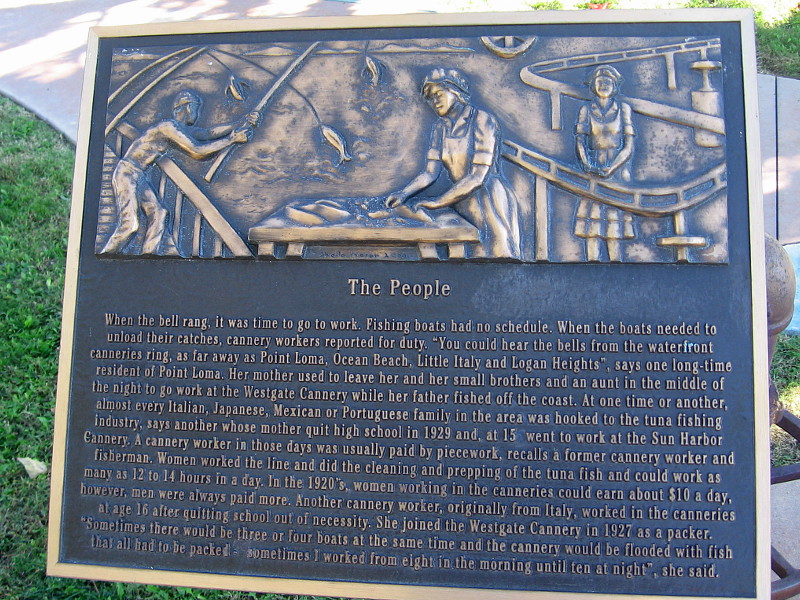
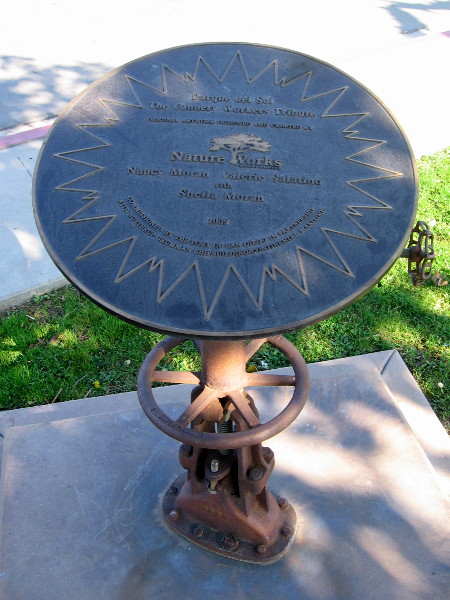
Four bronze plaques mounted on bits of old machinery recall the history of this area and the once-thriving tuna industry. Click the plaque photos to read them.
The Cannery Workers Tribute sculpture was created in 2009 by Valerie Salatino and Nancy Moran, with assistance from Sheila Moran. It is indeed a very cool sight!
Coral tree planted by a cannery maintenance man decades ago is an important feature of the Cannery Workers Tribute at Parque del Sol.A high arch of gleaming fish seems to rise above the nearby Coronado Bay Bridge. This public art is located in Barrio Logan, near the entrance to Cesar Chavez Park.Few people pass this way. This public art is definitely a hidden San Diego gem.A large catch of ocean tuna seems to burst from a basket!The advent of the cannery industry in the early 1900s. For most of the 20th century, San Diego was the tuna fishing capital of the world.The people included Italian, Japanese, Mexican and Portuguese fishermen, and many cannery workers. Fishing boats have no schedule. When the cannery bell rang, it was time to go to work.The process was smelly and messy! For tuna to go into a sandwich or salad bowl, it often traveled up to 7000 miles!The end of the San Diego tuna fishing era came in the 1980s, due to foreign competition, high expenses and other factors.Another photograph that you might enjoy.An arch of abundant fish above tuna cannery workers. Public artwork that honors an important chapter in San Diego’s history.
UPDATE!
I took additional photos on a later walk past the park…
…
Join me for more cool San Diego discoveries on Facebook and Twitter!
Do you like to read original, thought-provoking fiction? Visit my Short Stories by Richard writing blog!
A variety of dried food hangs from the ceiling. The kitchen of the Commercial Restaurant museum in Old Town is a place where visitors are transported back in time.
There are dozens of cool things to see in Old Town San Diego State Historic Park. I’ve barely scratched the surface so far with my blog.
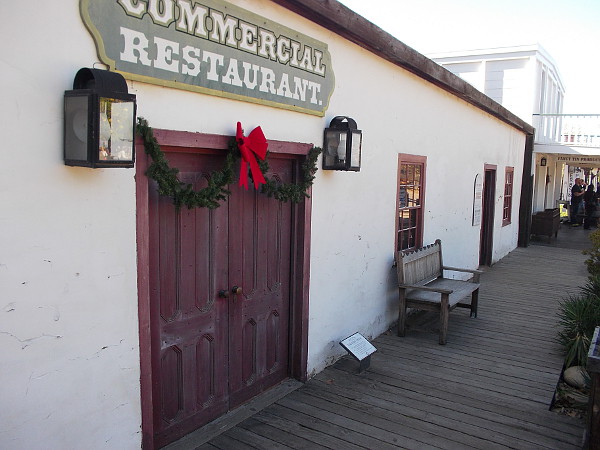
For example, there’s a small free museum right next to the central Plaza de Las Armas called Commercial Restaurant. A rather dull name, but a very interesting place jam-packed with history!
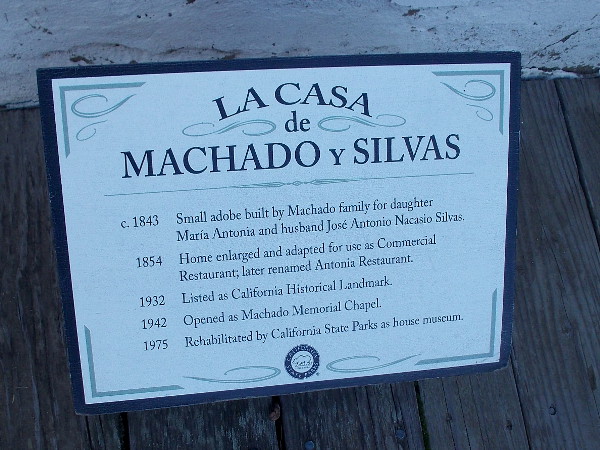
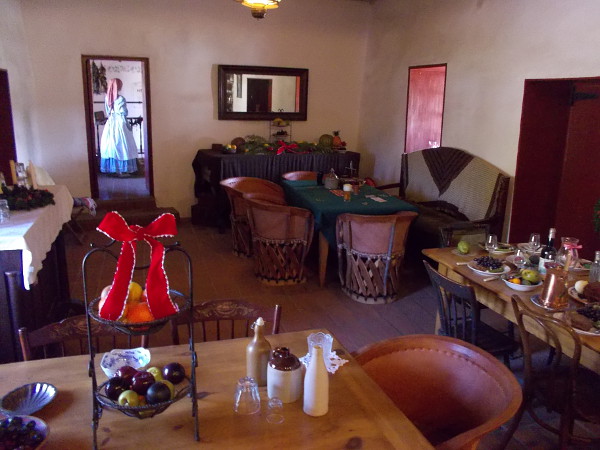
The small recreated restaurant shows what life was like in the mid 1800s, back when San Diego was downright tiny. The Commercial Restaurant is comprised of two rooms: one contains the dining area, the other, the kitchen. Originally called the Casa de Machado y Silvas, the house was built by José Manuel Machado and given as a wedding gift to his daughter María Antonia, and her husband, José Antonio Nicasio Silvas. The simple adobe building was converted into a modest restaurant by its owners in the early 1850s. Today it stands as one of the five historic adobes in Old Town San Diego.
I’ve provided a bit more info in the photo captions!
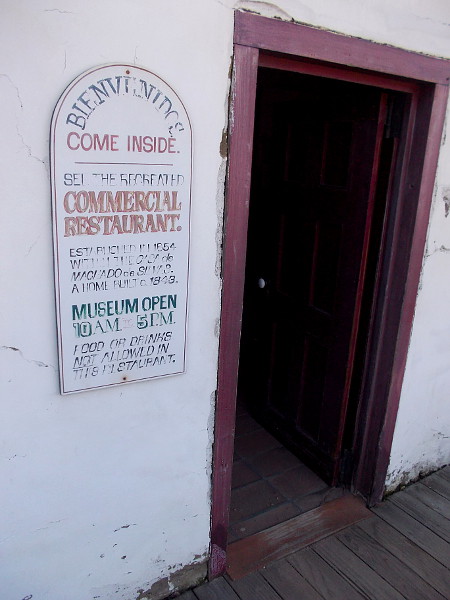
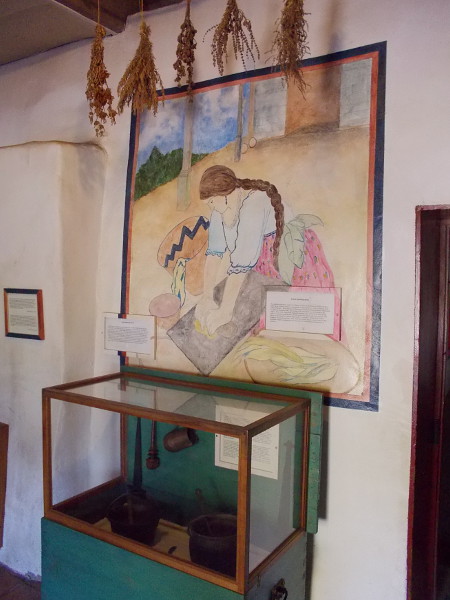
Photo shows the Commercial Restaurant museum, which is free and open to the public in Old Town San Diego State Historic Park.La Casa de Machado y Silvas in Old Town San Diego was turned into Commercial Restaurant, then later renamed Antonia Restaurant.Bienvenidos. Come inside. See the recreated Commercial Restaurant. Established in 1854 within the Casa de Machado y Silvas, a home built in 1843. Museum open 10-5.The dining area of the Commercial Restaurant. This is was what it was like to eat in style in the mid 1800s. Many exhibits along the walls recall the history of old San Diego.Art on one wall depicts the grinding of corn. Other nearby maps and graphics show how food is related to our city’s history.
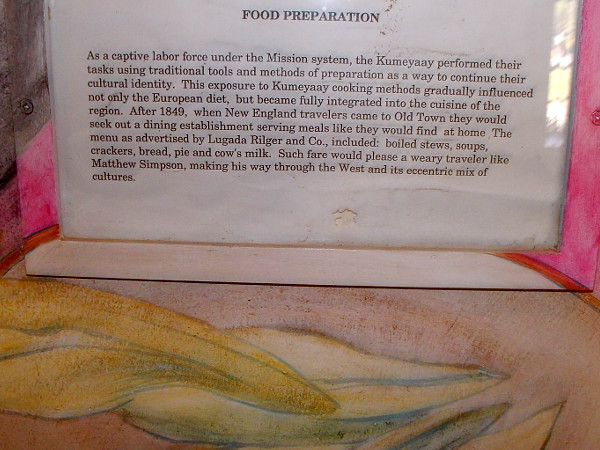
In the mid 1800’s, when New England travelers arrived by ship to Old Town, they sought out a dining establishment serving meals like they would find at home, including stews, soups, crackers, bread and cow’s milk. Over the years, exposure to native Kumeyaay cooking influenced the European diet and became integrated into the region’s cuisine.
As a captive labor force under the Mission system, the Kumeyaay performed their tasks using traditional tools and methods of preparation as a way to continue their cultural identity.Display case contains artifacts used in the daily life of San Diego residents almost two centuries ago.Shelves in the Commercial Restaurant contain old jars, goblets, bowls, bottles, plates and more.It was 1948 when a secret hiding place was discovered in one of the adobe’s window wells. Within the niche were two documents relating to life of an early Old Town San Diego resident.
Historical documents discovered by archeologists hidden in the Casa de Machado y Silvas shed light on the life of San Diego resident Allen B. Light. He was also know as the “Black Steward”. Allen arrived in California during the 1830s, aboard the sailing ship Pilgrim, the same vessel that brought Richard Henry Dana Jr. who would later write Two Years Before the Mast.
One document was “a sailor’s protection”, which proclaimed Light was a “coloured man, a free man, and a citizen of the United States of America”. The second document was his commission from the Mexican Governor of Alta California to investigate illegal sea otter hunting along the coast.
A peek into the recreated kitchen next to the dining room. Cooking was rather primitive in early San Diego.A table full of peppers and vegetables. What life was like many generations ago, in the kitchen of Old Town’s Commercial Restaurant museum.





































 Cool San Diego Sights!