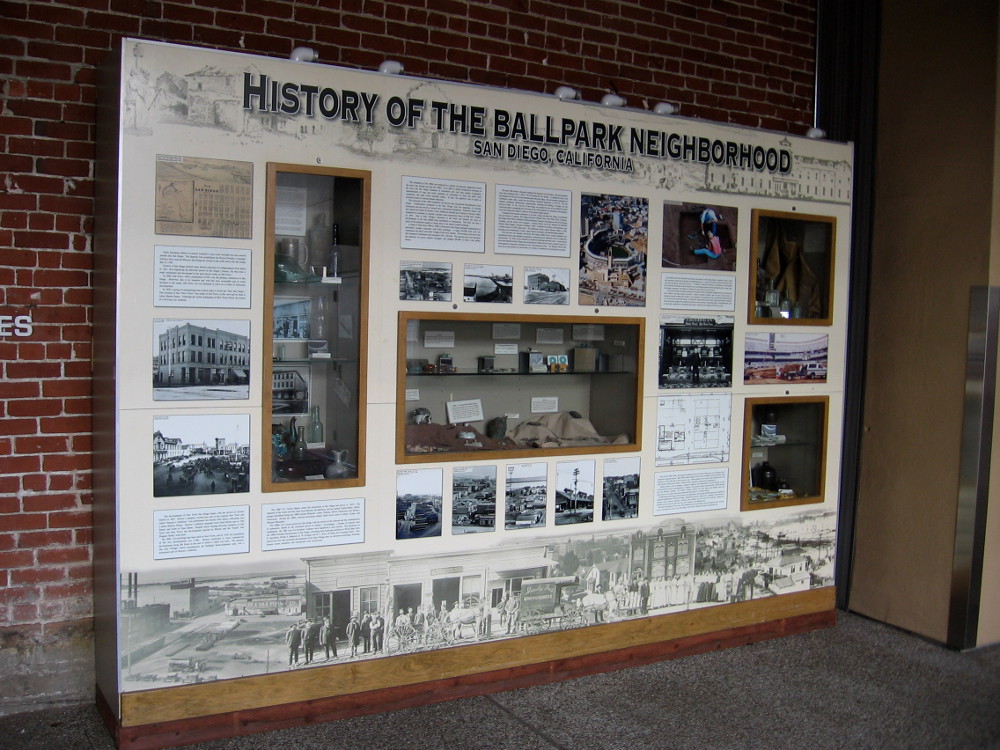
An exhibit in Petco Park shows the History of the Ballpark Neighborhood, San Diego, California.
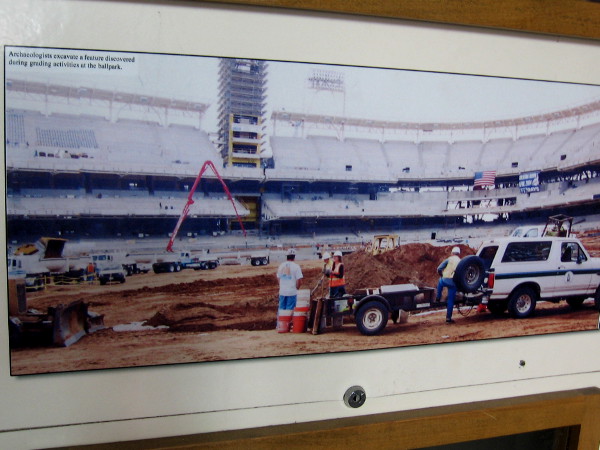
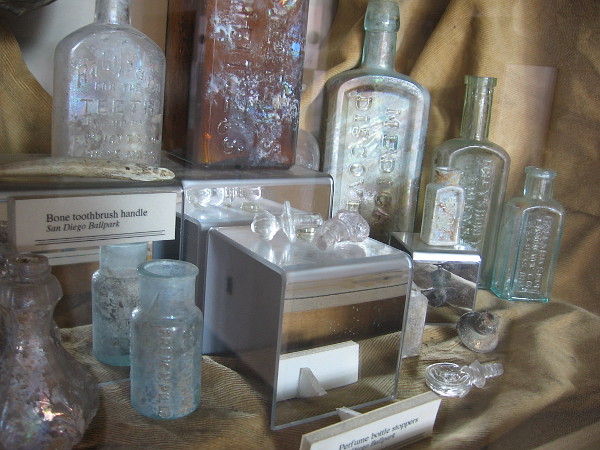
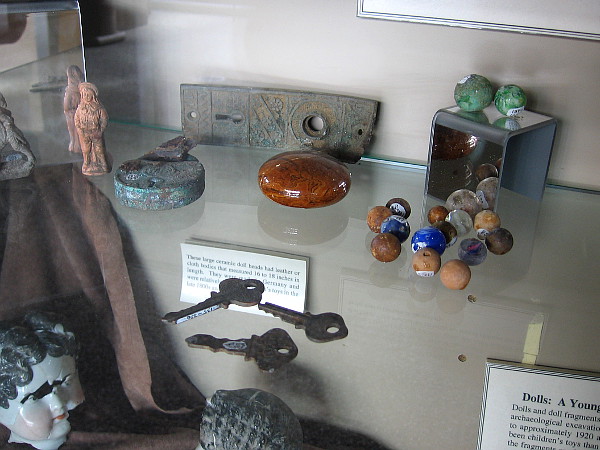
There’s a small but very cool exhibit at Petco Park that depicts the early history of East Village and nearby blocks in downtown San Diego. During the baseball stadium’s construction, a number of fascinating artifacts were recovered by archaeologists. Each object was carefully recorded in order to preserve aspects of our city’s diverse history.
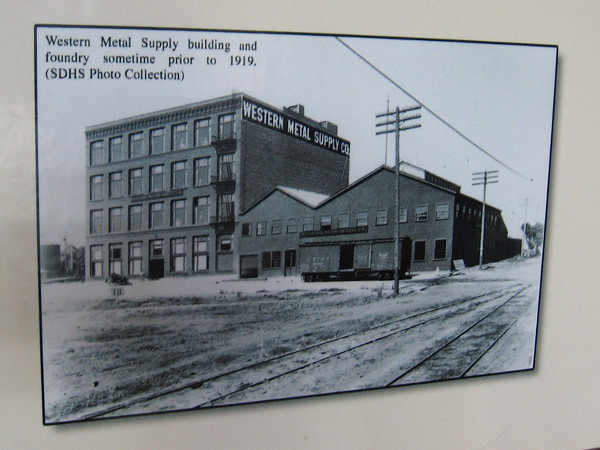
Here are some of the old photographs and artifacts that are on public display. You can find this exhibit near the San Diego Padres Hall of Fame, just to the right of the north entrance to the Padres Team Store. I learned this exhibit used to be on the third floor of the Western Metal Supply building, at the top of the escalators. But the area was rather dark and so it was moved to its present location.
Please read the captions to learn more about what was unearthed during the grading of the ballpark, and what everyday life was like in San Diego over a century ago.
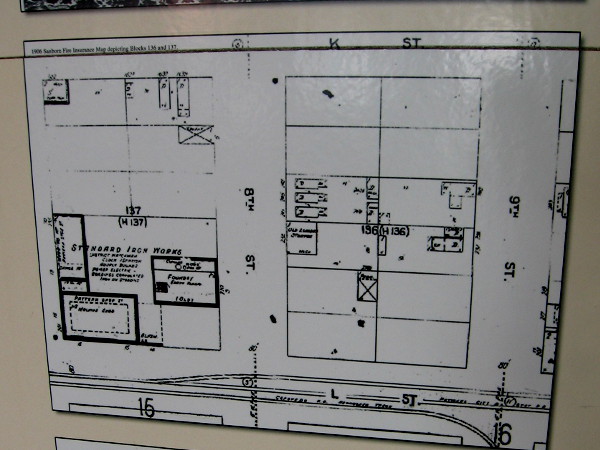
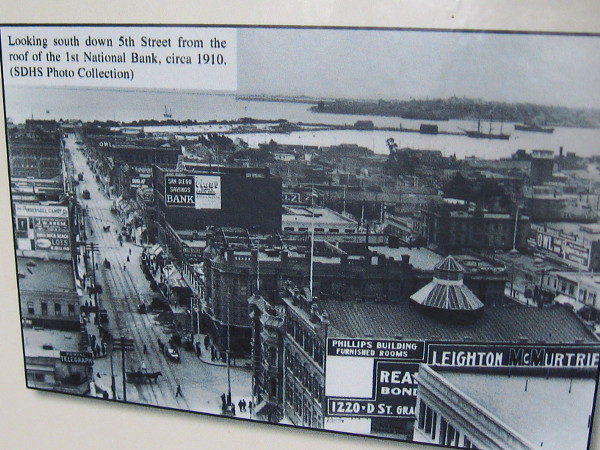
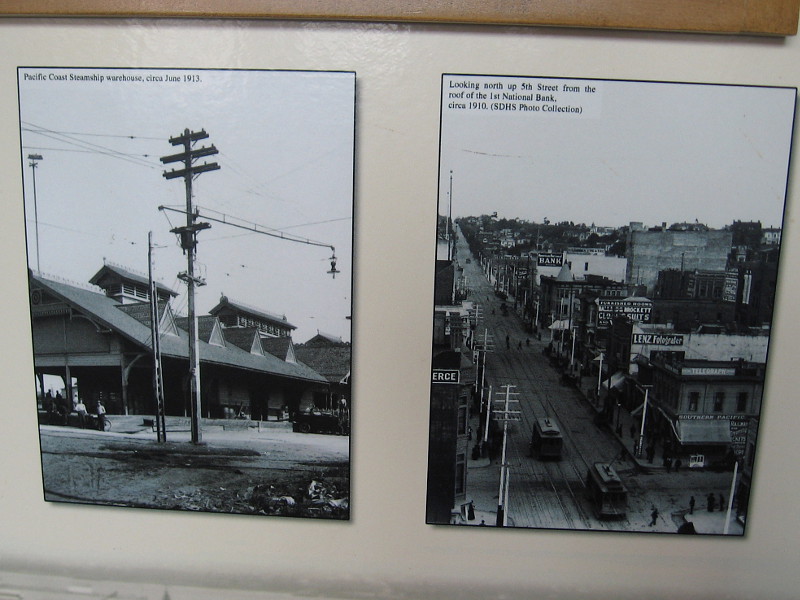
Photo taken during construction of Petco Park baseball stadium in East Village. Archaeologists excavate a feature discovered during grading activities at the ballpark.After researching the immediate area’s history, the grading of the future ballpark was environmentally monitored. Artifacts that were recovered reveal everyday life in San Diego’s past.Excavated objects include jars, bottles, glass stoppers and a bone toothbrush handle. Names of medical remedies on bottles include Hamlin’s Wizard Oil and Dr. J.H. McLean’s Volcanic Oil.1906 Sanborn Fire Insurance Map depicting Blocks 136 and 137, part of the footprint of today’s Petco Park, home of the baseball Padres.From the late 1800s to the 1930s, most residents of East Village appear to have been of moderate to lower economic status, employed at blue collar jobs downtown.Other artifacts recovered during Petco Park’s construction include dolls, toys, marbles and keys.Old photograph shows East Village as it was in 1914, looking west from the 10th Street terminal.Looking south down 5th Street (now Fifth Avenue) from the roof of the 1st National Bank, circa 1910. The area is heart of the Gaslamp Quarter.Two historical photos. To the left: Pacific Coast Steamship warehouse, circa 1913. To the right: looking north up 5th Street circa 1910.Old photo of Western Metal Supply building and foundry sometime prior to 1919. The preserved brick building is now a unique part Petco Park’s structure.Fragments of earthenware jars and Chinese and Japanese ceramic tableware show Asian culture thrived in the neighborhood’s past.
…
This blog now features thousands of photos around San Diego! Are you curious? There’s lots of cool stuff to check out!
Here’s the Cool San Diego Sights main page, where you can read the most current blog posts. If you’re using a phone or small mobile device, click those three parallel lines up at the top–that opens up my website’s sidebar, where you’ll see the most popular posts, a search box, and more!
To enjoy future posts, you can also “like” Cool San Diego Sights on Facebook or follow me on Twitter.
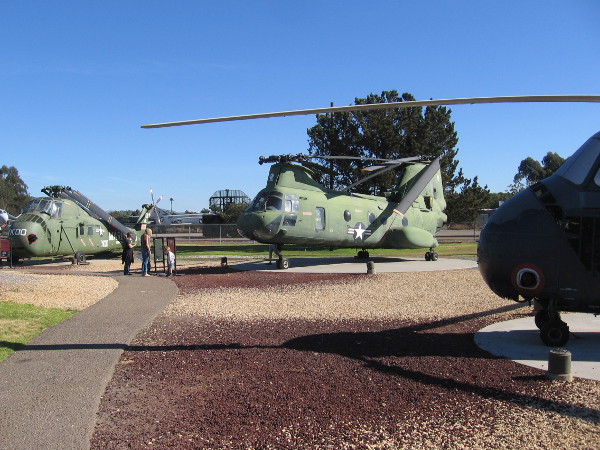
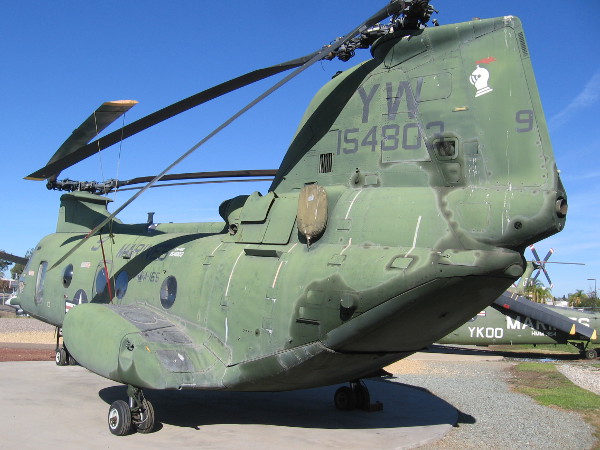
This particular Boeing Vertol CH-46D(E) Sea Knight military helicopter in San Diego is an object of great historical importance.
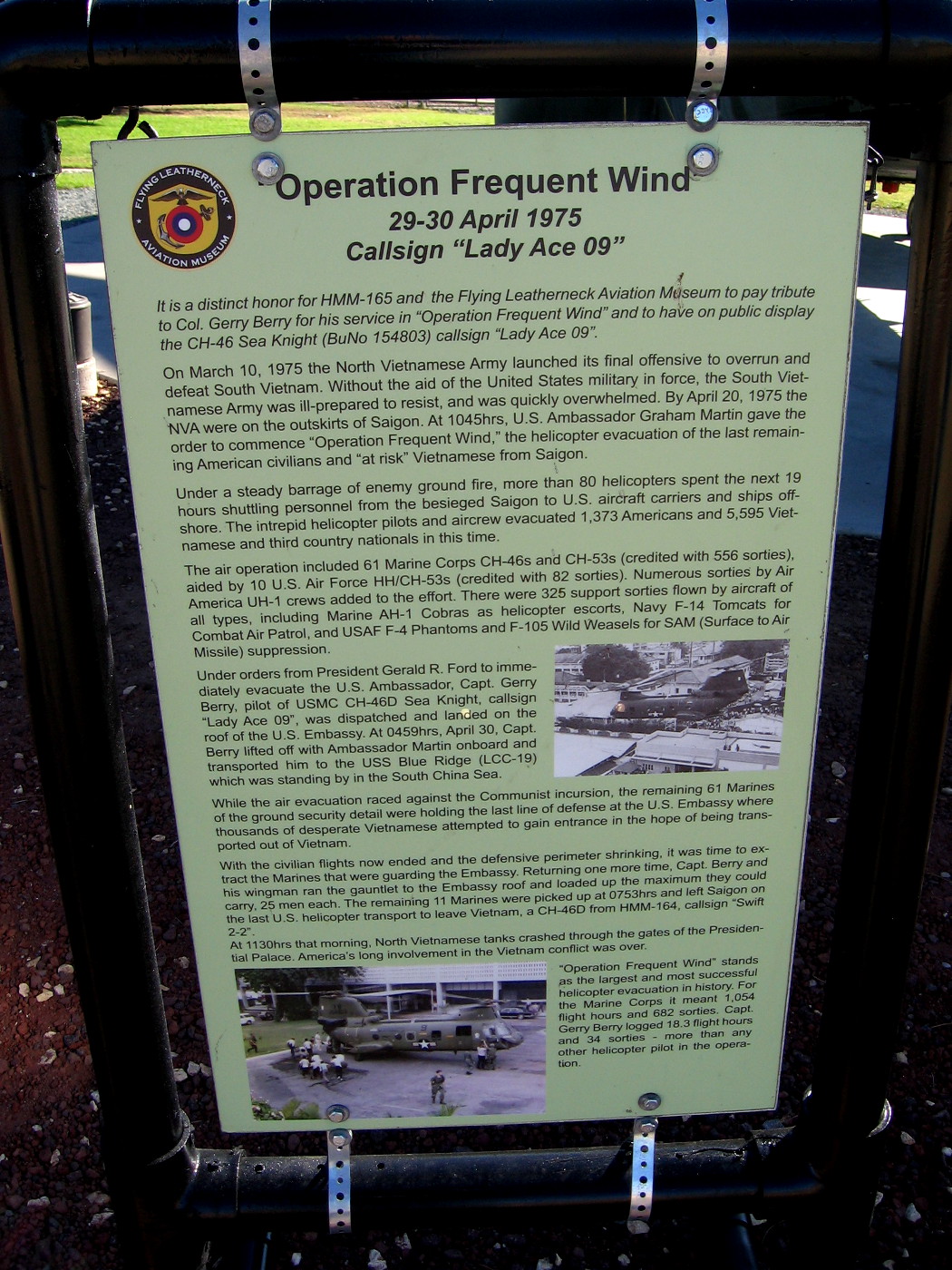
Many regard the evacuation of the United States Ambassador from Saigon as the end of the Vietnam War. On April 30, 1975, as ordered by President Gerald Ford, Ambassador Graham Martin was airlifted from the rooftop of the American Embassy. He had stepped aboard a Boeing Vertol CH-46D(E) Sea Knight military helicopter, call sign Lady Ace 09, flown by pilot Captain Gerry Berry.
While the Ambassador’s evacuation from the Embassy has provided a visual symbol of America’s departure from South Vietnam, the reality was a bit more chaotic. When Lady Ace 09 transmitted “Tiger is out,” indicating the Ambassador had been retrieved, other helicopter crews involved in the evacuation mistakenly thought the mission was completed. But Marine Security Guards on the Embassy’s rooftop would be lifted to safety hours later. Shortly thereafter, Communist forces would raise the Viet Cong flag over Saigon’s Presidential Palace.
The Flying Leatherneck Aviation Museum is located at Marine Corps Air Station Miramar in San Diego. In addition to Lady Ace 09, over two dozen aircraft that have been flown by the United States Marines are on display. Admission is free.
The museum wants to expand. You can help! Learn more here.
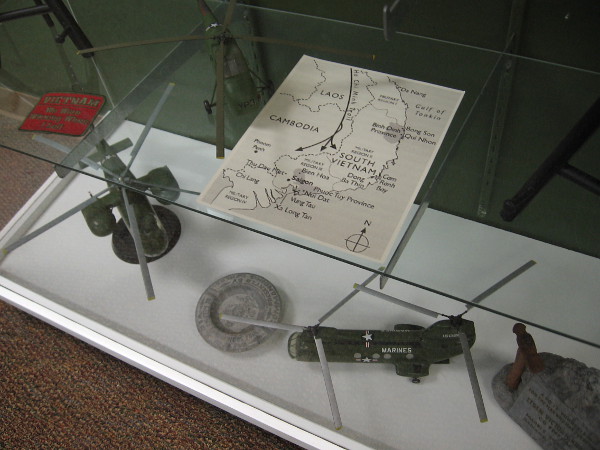
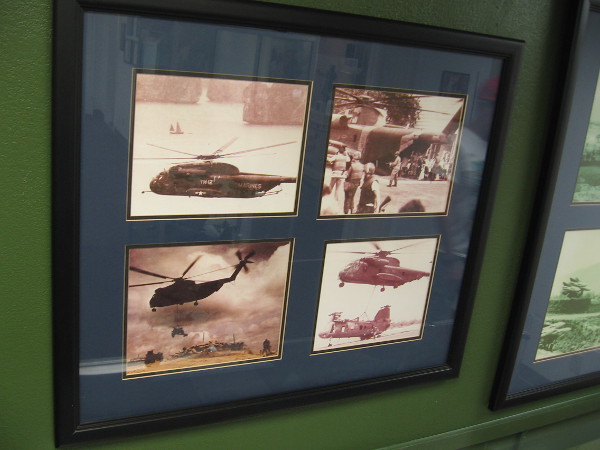
The Flying Leatherneck Aviation Museum in San Diego contains many aircraft that have been used during the history of the United States Marine Corps.At the Flying Leatherneck Aviation Museum at MCAS Miramar, the public can see the actual helicopter that evacuated the U.S. Ambassador from Saigon at the end of the Vietnam War.Operation Frequent Wind, 29-30 April 1975, call sign Lady Ace 09. This Sea Knight helicopter evacuated Ambassador Graham Martin from the U.S. Embassy in Saigon, South Vietnam. (Click photo to expand.)A look at the rear of the historic helicopter that transported U.S. Ambassador Graham Martin to the safety of USS Blue Ridge (LCC-19) standing by in the South China Sea.The fuselage of Sea Knight troop transport helicopter, call sign Lady Ace 09.At 04:58 Ambassador Martin boarded Lady Ace 09 on the rooftop of the American Embassy in Saigon. The message “Tiger is out” was transmitted, signaling the departure of the U.S. Ambassador.The nose of Lady Ace 09, which today is on display at the Flying Leatherneck Aviation Museum.Inside the the Flying Leatherneck Aviation Museum, visitors can see one section devoted to USMC aviators and aircraft that participated in the Vietnam War.One museum display case includes a map of Laos, Cambodia, and North and South Vietnam during the war.Photos of Marine helicopter operations during the Vietnam War.Boeing Vertol CH-46D(E) Sea Knight, call sign Lady Ace 09, the helicopter whose historic flight is often regarded as the conclusion of the Vietnam War.
…
I live in downtown San Diego and love to walk around with my camera! You can follow Cool San Diego Sights via Facebook or Twitter!
You can easily explore Cool San Diego Sights by using the search box on my blog’s sidebar. Or click a tag! There are thousands of interesting photos for you to check out!
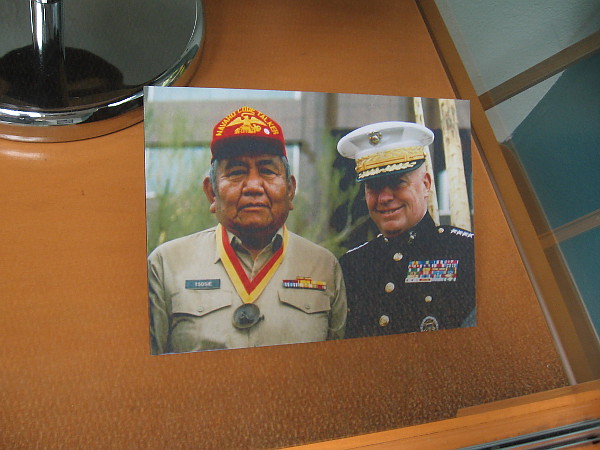
Photo of Samuel Tsosie Sr., Navajo Code Talker during World War II.
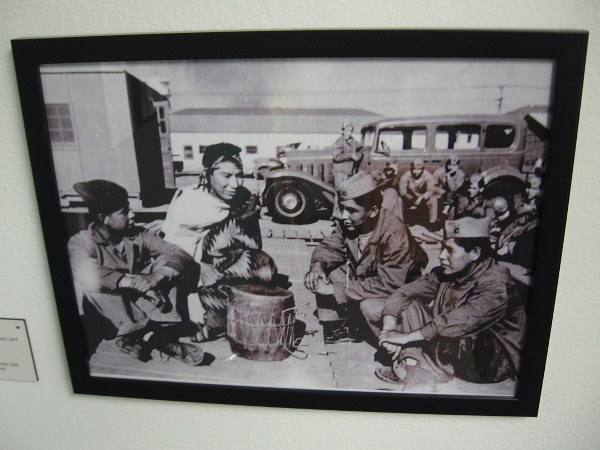
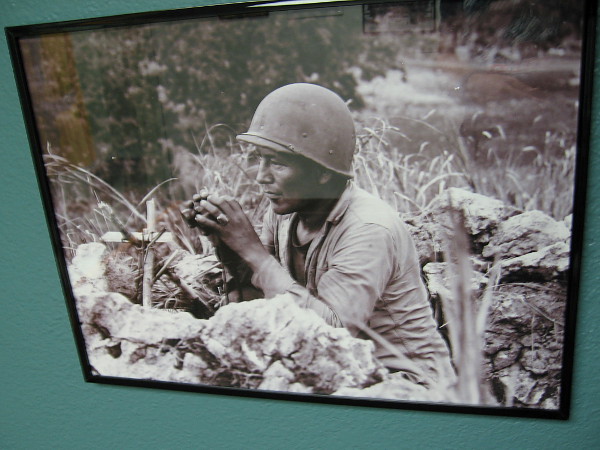
A small but fascinating exhibit remembering the Navajo Code Talkers of World War II is currently on display at the Flying Leatherneck Aviation Museum in San Diego. The exhibition, titled CELEBRATING 75 YEARS – CODE TALKERS: THE NAVAJO WEAPON, contains photos, documents, uniforms and historical artifacts that describe how the Navajo language was used to develop a code for secret tactical communication in the Pacific, in places like Iwo Jima and Okinawa. The Navajo code, which was classified until 1968, is the only spoken military code that was never deciphered.
The exhibit explains:
Many scholars credit Philip Johnston with initiating the Code Talker idea. Johnston was a Caucasian who grew up in Leupp, Arizona on the Navajo Reservation. He approached the Marine Corps in 1942 after the attack on Pearl Harbor and proposed using Native American Navajo language for combat communications.
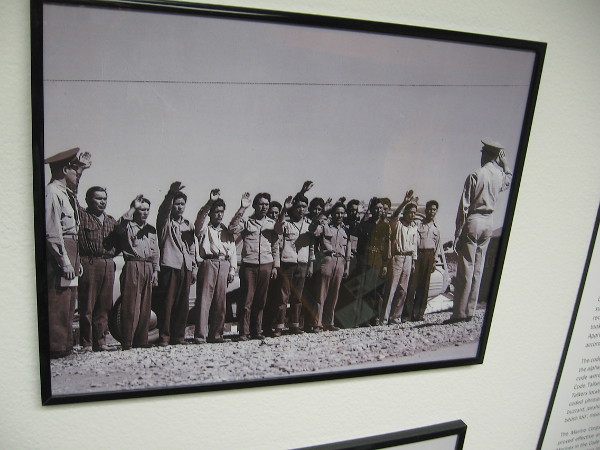
His knowledge of the Navajo culture led him to bring four Navajo volunteers to Camp Elliott in San Diego, California (an area that is now part of MCAS-Miramar) for a demonstration. Impressed with successful and efficient English and Navajo translations, the Marine Corps began recruiting Navajos. The first group of twenty-nine recruits entered boot camp, took courses in military communication procedures and developed the code. Approximately 400 Navajo recruited by the Marines learned the code.
Working around the clock during the first two days of Iwo Jima, six Navajo Code Talkers sent and received over 800 messages, all without error. According to Major Howard Connor, 5th Marine Division Signal Officer, “Were it not for the Navajos, the Marines would never have taken Iwo Jima”.
The Flying Leatherneck Aviation Museum is free and open to the public at Marine Corps Air Station Miramar. The museum grounds contains over two dozen aircraft used during the proud history of Marine Corps aviation. It has the world’s largest and most complete collection of vintage aircraft flown by United States Marine pilots.
The museum is looking to expand and I’m told they would really appreciate your help. For more info, click here.
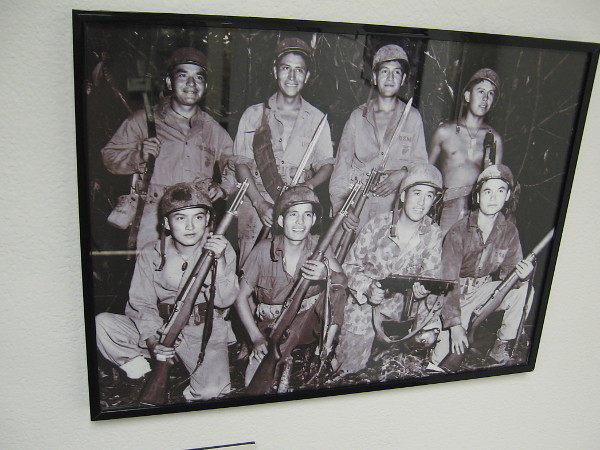
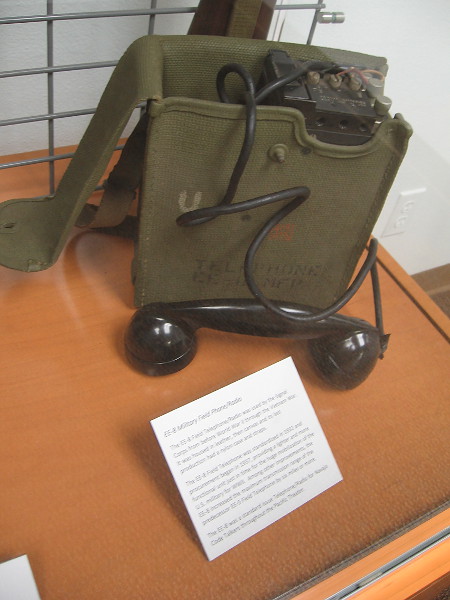
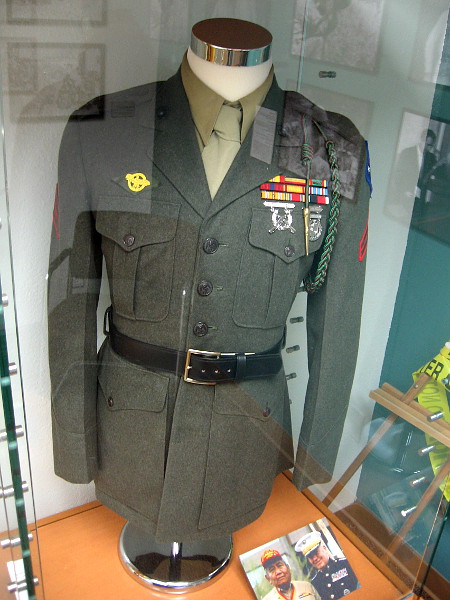
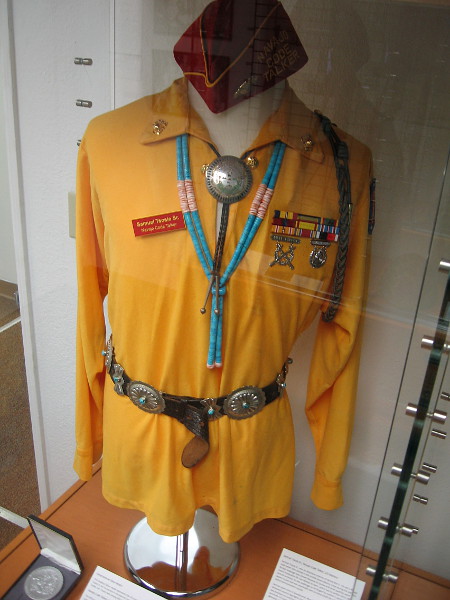
Celebrating 75 Years – Code Talkers: The Navajo Weapon. The Marine Corps deployed the Code Talkers to the Pacific, where the code proved effective and indecipherable. (Click photo to expand for easy reading.)The first 29 Code Talkers enlisting in the United States Marine Corps, 1942.First 29 Code Talkers of 382nd Platoon, 1942.Navajo Code Talkers Henry Bahe and George Kirk working their radio in the jungles of Bougainville.Eight Navajo Code Talkers on Bougainville. Most hold an M1 Garand used in combat.Display case in this special Flying Leatherneck Aviation Museum exhibit includes military field equipment used by the Navajo Code Talkers during World War II.The EE-8 Field Telephone/Radio was used by the Signal Corps from before World War II through the Vietnam War.Navajo Code Talkers share their culture at Camp Elliott, 1943.One of four creators of the code, Navajo Code Talker Chester Nez.Navajo Code Talker PFC Carl Gorman mans his observation post overlooking Garapan Saipan, 1944.This enlisted man’s uniform jacket, shirt and tie belonged to Samuel Tsosie Sr. The Guadalcanal patch was worn on discharge uniforms by all Navajo Code Talkers.Navajo Code Talker Samuel Tsosie Sr., pictured with Alfred M. Gray Jr. during an award assembly in 2009. Gray served as the 29th Commandant of the Marine Corps from 1987-1991.Official uniform of the Navajo Code Talkers includes a red cap, Navajo jewelry, gold shirt, patch on upper arm, light-colored trousers and abalone-colored shoes.
The museum exhibit explains the significance of various items worn by the Navajo Code Talkers.
The red cap indicates the United States Marine Corps. The jewelry represents the Navajo or Diné, which translates “Children of God” or “The People”. The gold shirt represents corn pollen. The light-colored trousers represent Mother Earth. The abalone-colored shoes represents the sacred mountains.
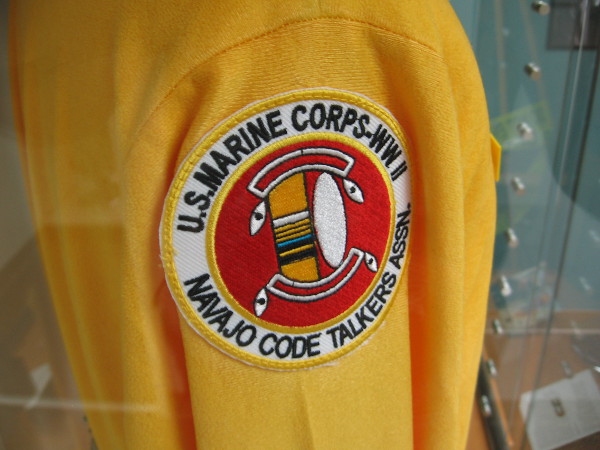
Replica of Congressional Silver Medal represents the medal received by Samuel Tsosie Sr. for his service during World War II. 300 Navajo received the Silver medal.Shoulder patch of U.S. Marine Corps–WWII Navajo Code Talkers Association.
…
I live in downtown San Diego and love to walk around with my camera! You can follow Cool San Diego Sights via Facebook or Twitter!
You can easily explore Cool San Diego Sights by using the search box on my blog’s sidebar. Or click a tag! You’ll find many interesting historical photographs!
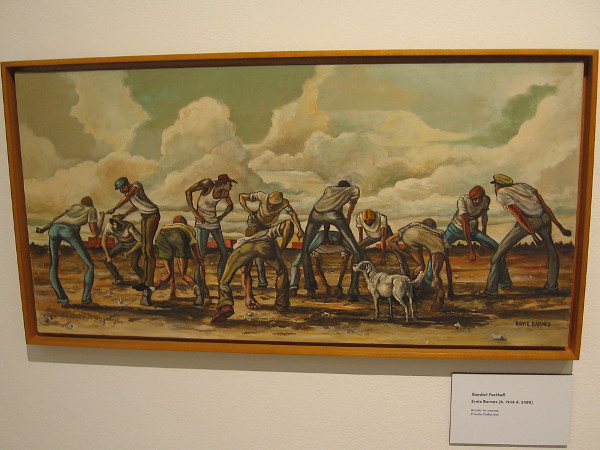
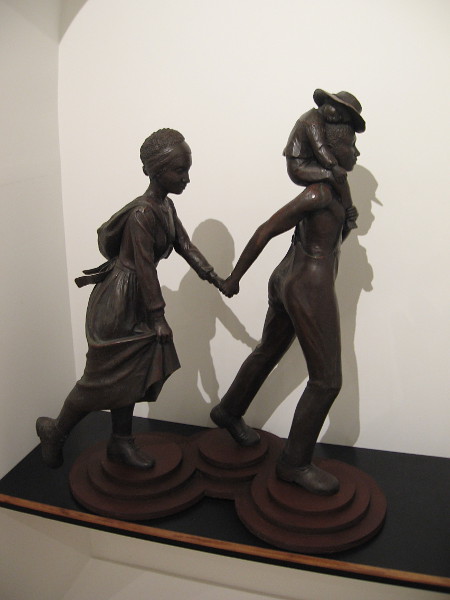
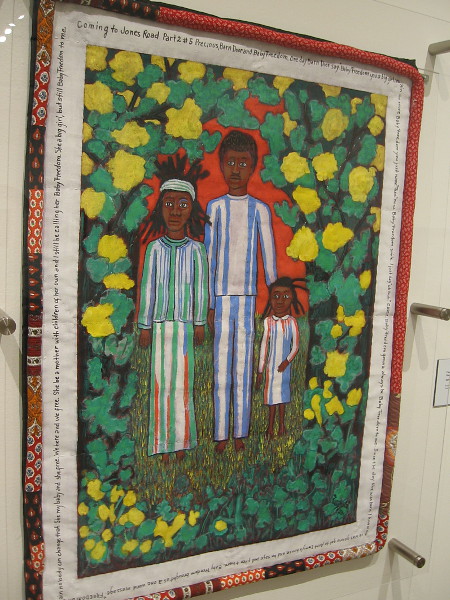
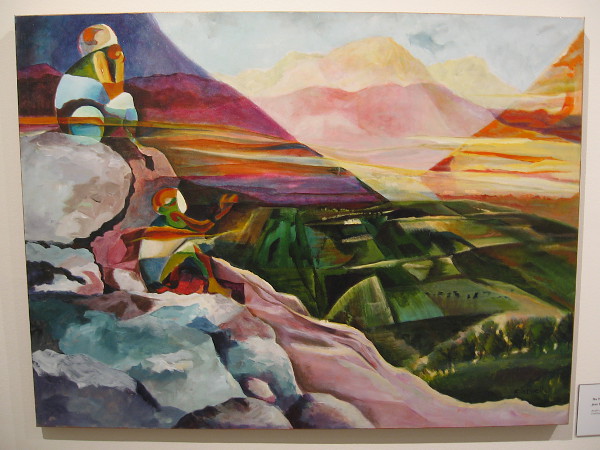
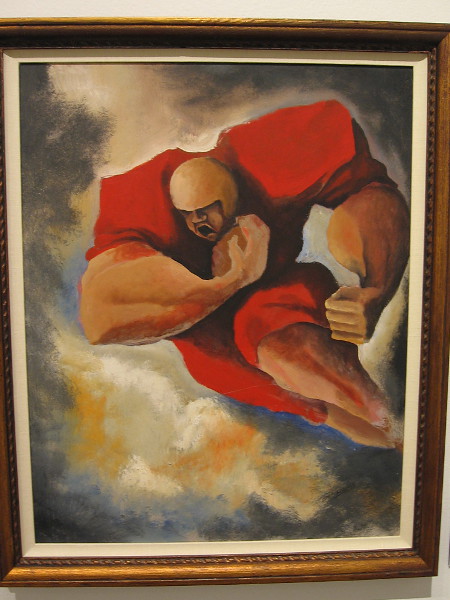
If you love fine art, there’s something you really need to see. Legacy in Black is an exhibition featuring the work of local African American artists who enjoy national and international acclaim. You can enjoy this exhibition for free by visiting the San Diego History Center in Balboa Park.
A number of outstanding pieces represent the work of eight artists who’ve made significant contributions to our city’s cultural life. Many of the artists have produced public art around San Diego and California. Faith Ringgold has had works exhibited in places like The Metropolitan Museum of Art, The National Museum of American Art, and The Solomon R. Guggenheim Museum. Ernest Eugene Barnes Jr. was the official artist of the 1984 Olympic Games in Los Angeles. Kadir Nelson was the lead conceptual artist for Steven Spielberg’s film Amistad, and his work is often featured on the cover of The New Yorker magazine. All eight artists featured in this exhibition are exceptional.
Legacy in Black is a collaboration between the San Diego History Center and the San Diego African American Museum of Fine Art. Head on over to Balboa Park before the exhibition closes on March 28, 2018!
Sandlot Football. Ernie Barnes, acrylic on canvas.Legacy in Black, an exhibition of work by local African American artists, is now on display at the San Diego History Center in Balboa Park.I’ll Fly Away. Manuelita Brown, bronze with painted wood base, 2003.Coming to Jones Road Part II #5, Precious, Barn Door and Baby Freedom. Faith Ringgold, acrylic on canvas with fabric border, 2010.The Valley. Jean Cornwell Wheat, acrylic on canvas, 2014.Gridiron Hero. Ernie Barnes, acrylic on board.
…
I live in downtown San Diego and love to walk around with my camera! You can follow Cool San Diego Sights via Facebook or Twitter!
You can easily explore Cool San Diego Sights by using the search box on my blog’s sidebar. Or click a tag! There are thousands upon thousands of photos for you to enjoy!
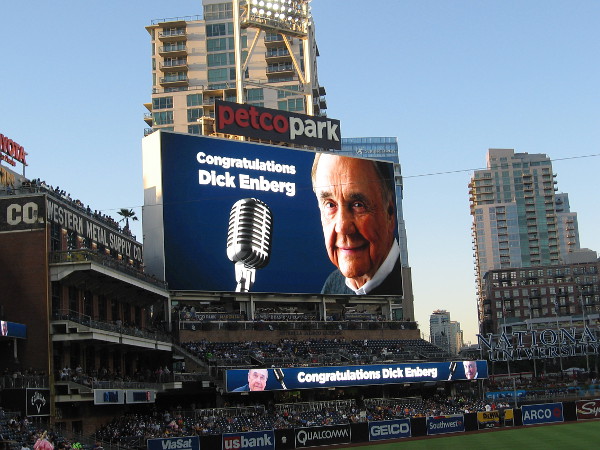
Beloved, legendary sports broadcaster Dick Enberg has passed away in his La Jolla home. Many in San Diego and around the world are heartbroken.
On September 29, 2016, the final home game of that Padres baseball season, I was privileged to see retiring Dick Enberg’s public celebration at Petco Park.
If you’d like to see a few images from that day, here is that blog post.
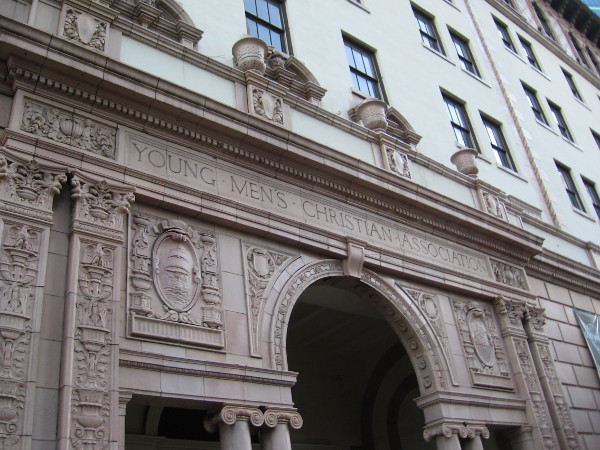
Front of the 1924 Army-Navy YMCA building in downtown San Diego, designed by architects Lincoln Rogers and Frank W. Stevenson.
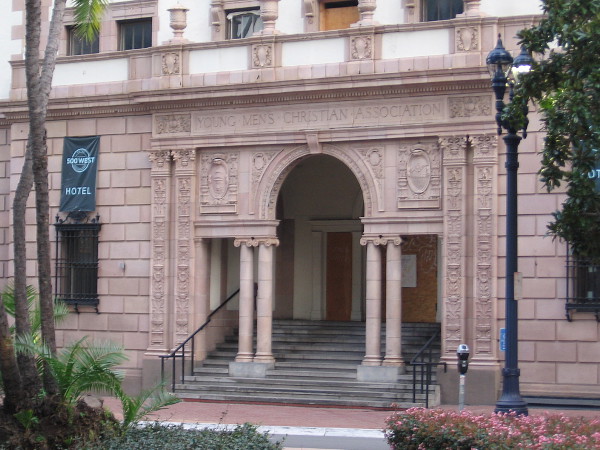
The grand entrance of the historic Army-Navy YMCA building in downtown San Diego is presently shuttered from view. That’s because the structure, built in 1924 for the recreational activities of San Diego’s many enlisted military men, is being converted into an elegant new hotel on Broadway. The Guild San Diego will open in spring 2018 and promises to offer a variety of unique features, including a ballroom inside what was once the old YMCA basketball court.
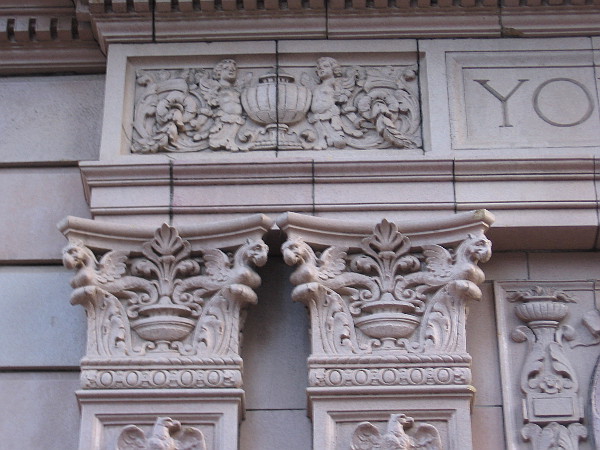
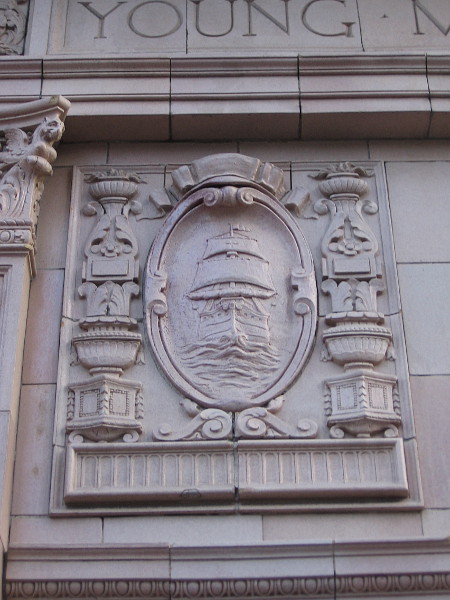
Before the present construction began, I took some photos of the columns and artwork around the building’s amazing front entrance. These images have been sitting idle in my computer. Here they are for your enjoyment.
When I took this photo, the 500 West Hotel had closed. Today a new luxury destination, The Guild Hotel, is under construction. Much of the historic building will be preserved.Some beautiful sculptural work around the elegant front entrance.I believe this represents Cabrillo’s ship San Salvador, which entered San Diego Bay in 1542.Part of the very ornate front entrance to the Army-Navy YMCA building in San Diego.
…
I live in downtown San Diego and love to walk around with my camera! You can follow Cool San Diego Sights via Facebook or Twitter!
You can easily explore Cool San Diego Sights by using the search box on my blog’s sidebar. Or click a tag! There are thousands upon thousands of photos for you to enjoy!
Rotary Plaza in Coronado includes several interesting features, including a clock, fountain and community Christmas tree.
During my recent walk through Coronado, I paused for a bit at Rotary Plaza to check out the old clock, pleasant fountain and community Christmas tree. I read a few plaques near each of these features and learned a little about the history of the place. I’ve never seen the very tall star pine lit at night during the holidays, but I bet it’s quite a sight!
Coronado Rotary Plaza (sometimes called Rotary Park) is located on Orange Avenue at Isabella Avenue.
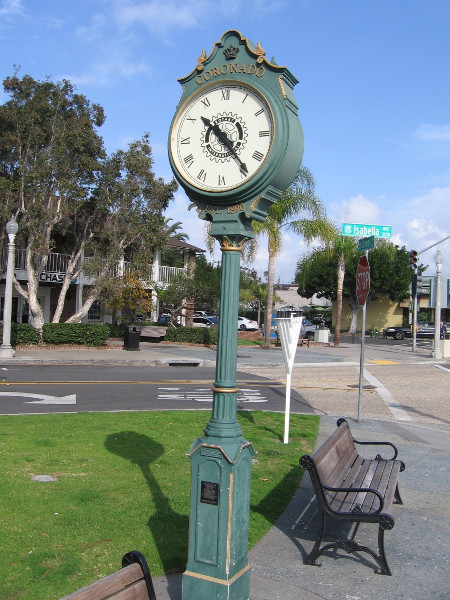
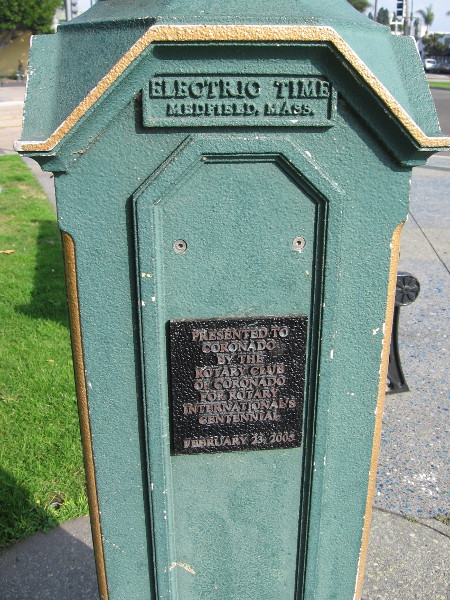
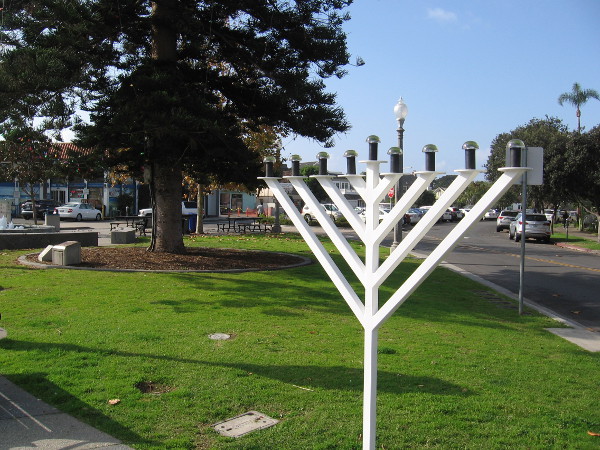
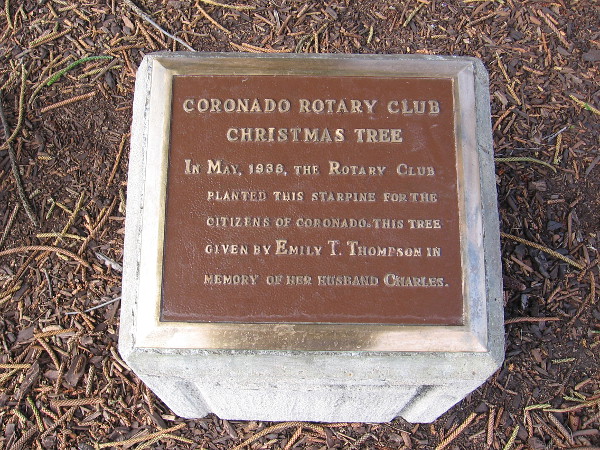
A handsome Rotary International clock and peaceful bench await passersby in Coronado Rotary Park.Plaque on the Electric Time clock reads Presented to Coronado by the Rotary Club of Coronado for Rotary International’s Centennial, February 23, 2005.The bubbling Jim Vernetti Fountain in Coronado’s Rotary Plaza, dedicated 2009.A Hanukkah menorah stands in Rotary Plaza during the holiday season. (The trunk of the large Coronado star pine Christmas tree is in the background.)Walking along Orange Avenue toward Rotary Plaza and the high Coronado Rotary Club Christmas Tree, which is lit at night.In May, 1936, the Rotary Club planted this starpine for the citizens of Coronado. This tree given by Emily T. Thompson in memory of her husband Charles.
…
I live in downtown San Diego and love to walk around with my camera! You can follow Cool San Diego Sights via Facebook or Twitter!
You can easily explore Cool San Diego Sights by using the search box on my blog’s sidebar. Or click a tag! There are thousands upon thousands of photos for you to enjoy!
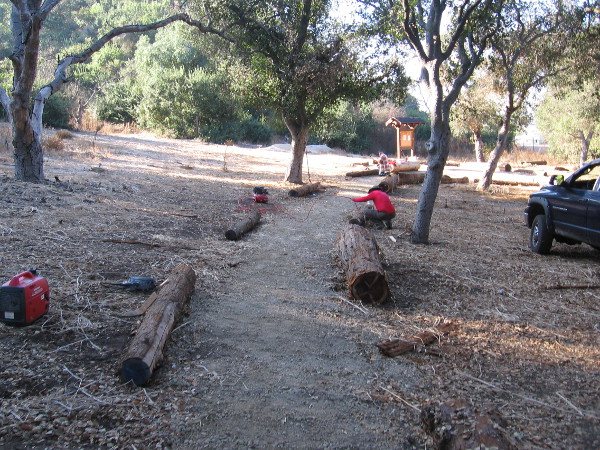
Volunteers and Boy Scouts work to improve the USS Bennington Memorial Oak Grove in Balboa Park.
Your help is needed to help restore a beautiful U.S. Navy sailor memorial in San Diego. I’m speaking of the USS Bennington Memorial Oak Grove in Balboa Park. Some of the 66 oak trees planted to honor the victims of the USS Bennington boiler explosion in 1905 have themselves died. They need to be replaced.
The San Diego Chapter of the Daughters of the American Revolution is working to restore and improve the historic oak grove with the help of hardworking Boy Scouts and locally-based U.S. Navy sailors. You can read more about these efforts here.
But money is needed. Donations are sought to purchase new trees. Please contact the San Diego DAR to learn how you can help honor and beautify the USS Bennington Memorial Oak Grove.
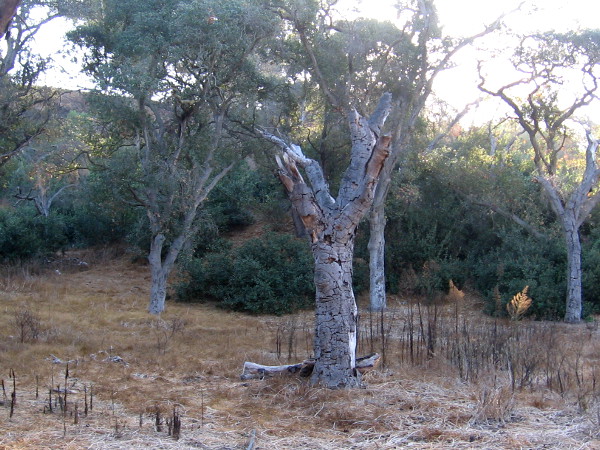
A dead oak tree that needs to be replaced.
…
I live in downtown San Diego and love to walk around with my camera! You can follow Cool San Diego Sights via Facebook or Twitter!
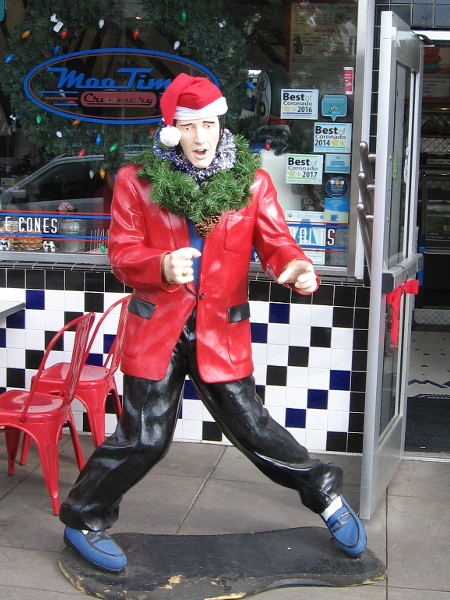
Elvis and cow in front of MooTime Creamery are decked out for Christmas.
I love to walk around Coronado. It’s like taking a small vacation.
In the past I’ve posted all sorts of cool sights around the island. My adventure yesterday along Orange Avenue yielded even more fun photos!
Enjoy!
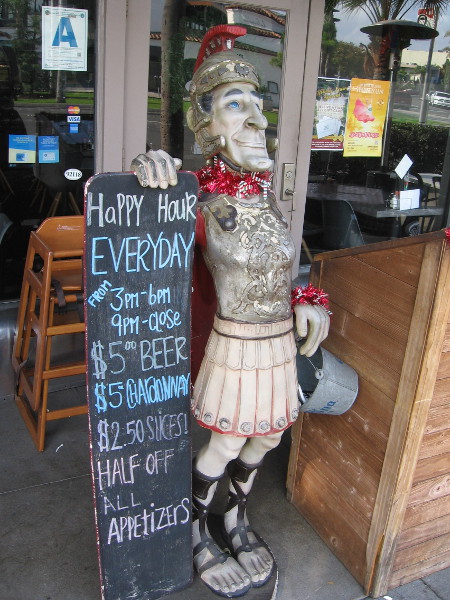
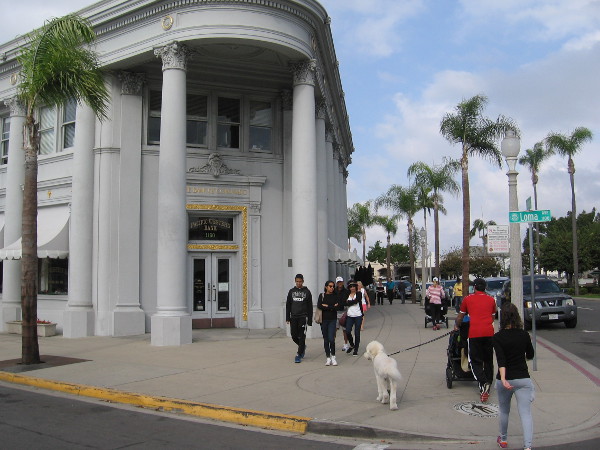
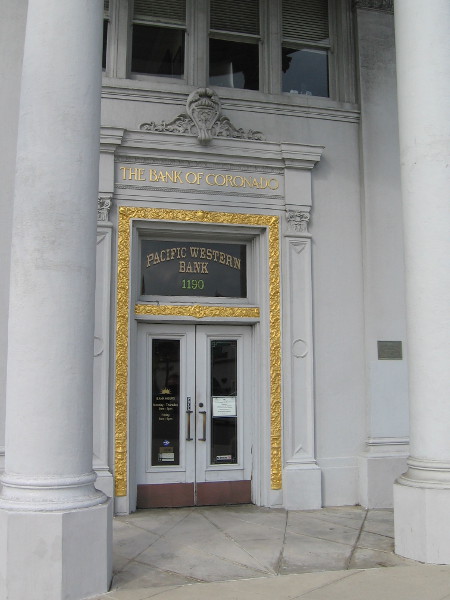
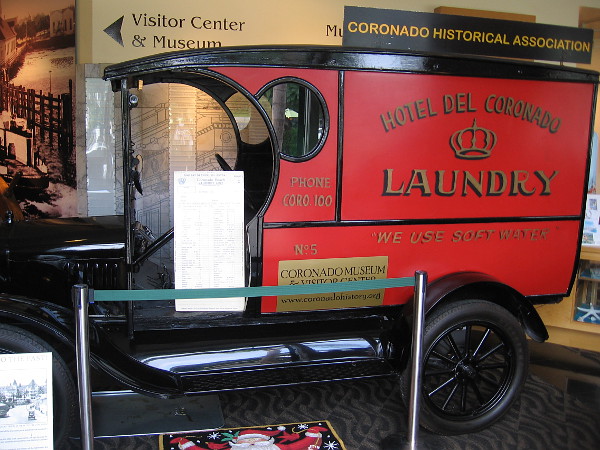
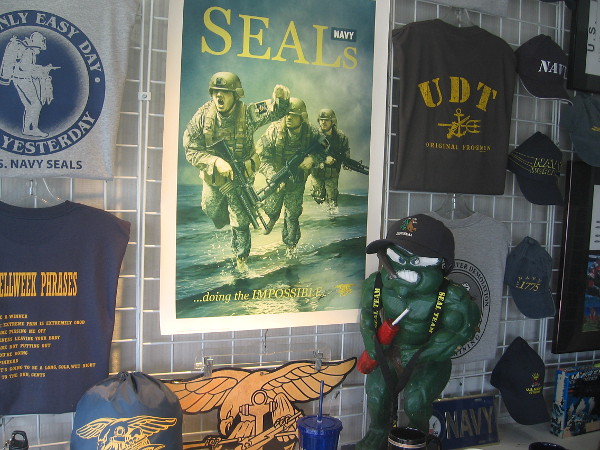
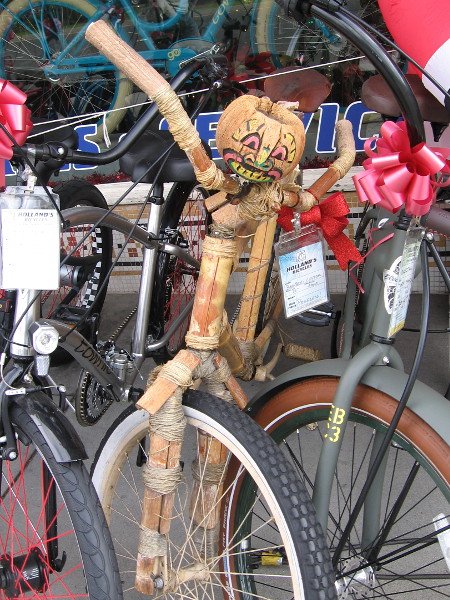
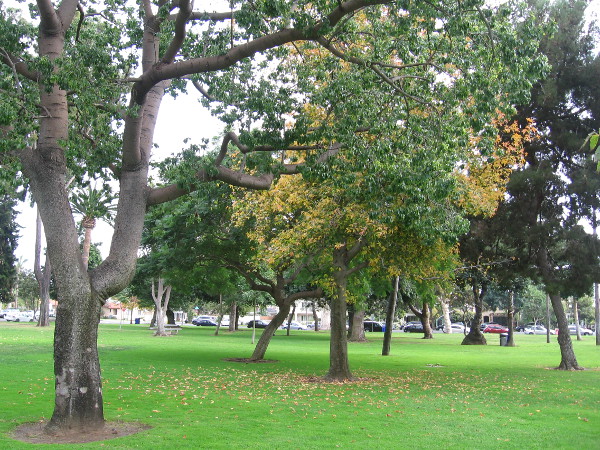
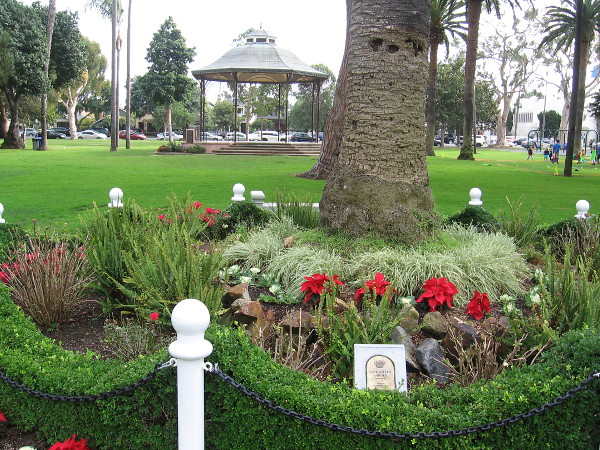
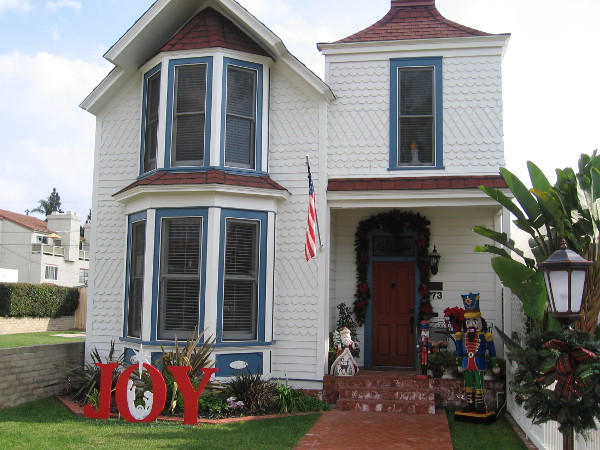
A funny Roman warrior stands guard outside Village Pizzeria.A zoom photo of the north side of the Hotel del Coronado from a block or two up Orange Avenue.A view of the elegant Spreckels Building which was erected in 1917. It’s now home to the Bank of Coronado.Fancy gold ornamentation around front entrance of the Bank of Coronado, an historical landmark.Inside the front door of the Coronado Museum of History and Art one can see a Model T Laundry Truck once used at the Hotel del Coronado.Santa Elvis at MooTime Creamery is sporting a wreath around his neck.SEAL gifts and memorabilia for sale in the window of Bullshirt. Nearby Naval Amphibious Base Coronado is home to several SEAL teams.A fun tiki-style bamboo bike in front of Holland’s Bicycles. You can rent it for a ride around the beautiful island.Beautiful autumn trees and grass in Spreckels Park.The small June Miller Garden at the base of a tall palm tree in Spreckels Park. The gazebo in the background is the setting of Concerts in the Park during the summer.A joyful Victorian house on Orange Avenue reminds those passing by that it’s the holiday season in Coronado.
…
This blog now features thousands of photos around San Diego! Are you curious? There’s lots of cool stuff to check out!
Here’s the Cool San Diego Sights main page, where you can read the most current blog posts. If you’re using a phone or small mobile device, click those three parallel lines up at the top–that opens up my website’s sidebar, where you’ll see the most popular posts, a search box, and more!
To enjoy future posts, you can also “like” Cool San Diego Sights on Facebook or follow me on Twitter.
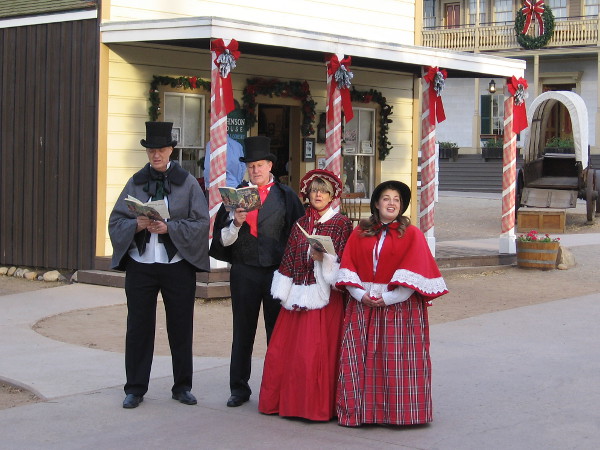
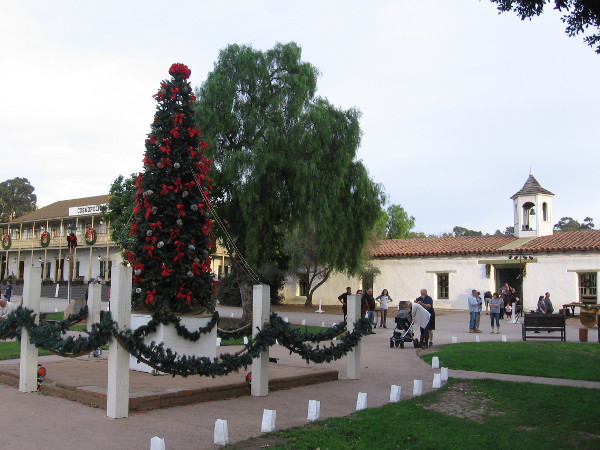
The Dickens Carolers sing during the annual Las Posadas event in Old Town San Diego State Historic Park.
This afternoon I headed to Old Town San Diego State Historic Park to experience the annual Las Posadas Celebration. There were many families in the park enjoying all sorts of holiday activities, gazing at beautiful decorations, and preparing to witness the reenactment of Mary and Joseph’s search for shelter before the birth of Jesus.
Las Posadas is a Christmas tradition cherished by many Latinos and Spaniards. A candlelight procession after nightfall by members of the community symbolizes the Nativity. Angels and shepherds join along the way. Mary rides a live donkey. There is much joyful singing.
My camera is inadequate after dark. To see (and hear) tonight’s procession in Old Town, you’ll have to use your imagination.
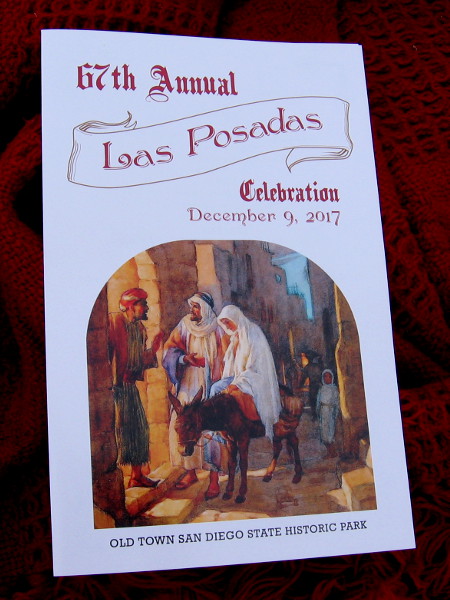
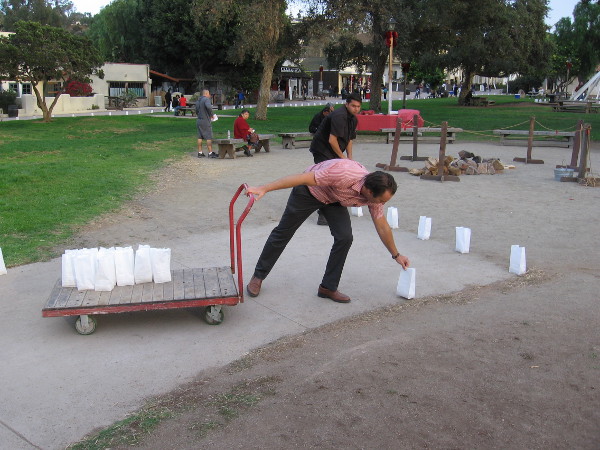
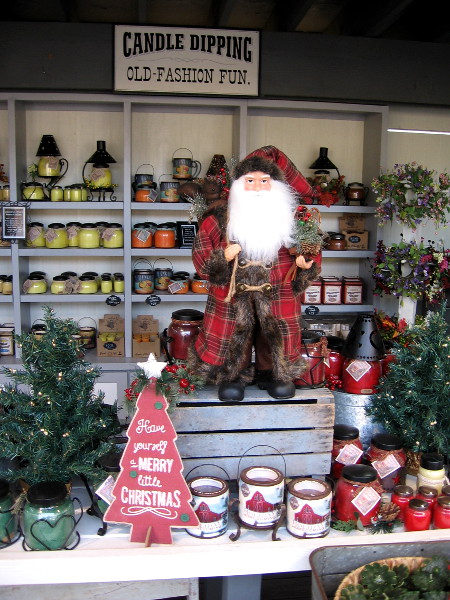
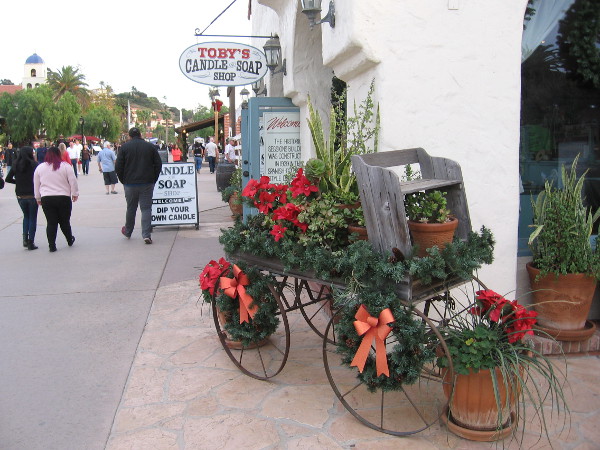
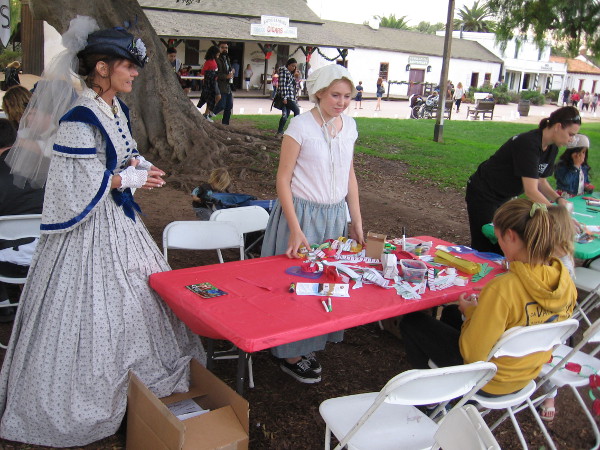
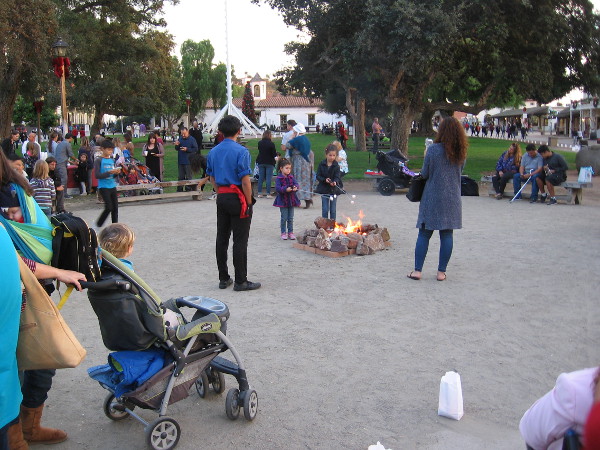
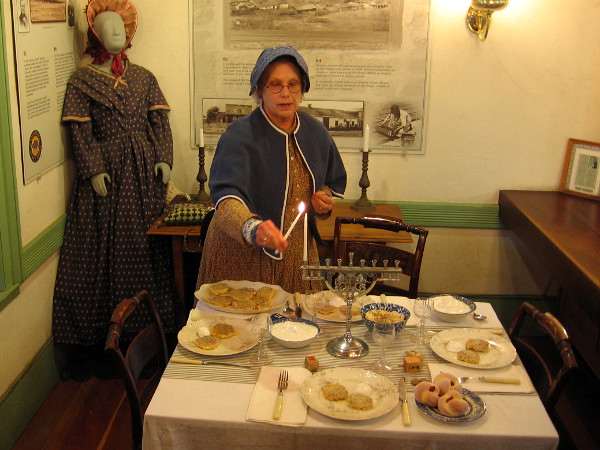
The 67th Annual Las Posadas Celebration in Old Town celebrated a rich holiday tradition. A candlelight procession after dark reenacted the journey of Mary and Joseph in search of shelter before the birth of Jesus.As evening approaches, paper bag luminaries containing candles are placed around the central Plaza de las Armas.A big festive Christmas tree stands near the plaza’s center, beside the tall flagpole.Looking out the front door of the Casa de Estudillo at Old Town San Diego’s big Christmas tree.A shiny star-like pinata hangs in front of the Colorado House. This is where the holiday celebration would reach its joyful climax.Santa wishes everyone a Merry little Christmas inside Toby’s Candle and Soap Shop.A colorful holiday wagon containing red poinsettias is parked outside Toby’s Candle and Soap Shop.Kids activities during Las Posadas included making Christmas tree ornaments.This holiday wreath is decorated with spools of thread! It hangs on a door at Threads of the Past.A big wreath adds holiday cheer to the sunlit Seeley Stable Museum barn.As daylight wanes, families congregate around a campfire and roast marshmallows for s’mores.A special display inside the Robinson-Rose Visitor Center describes the life of Louis Rose, the first Jewish person to settle in San Diego.Reenacting a Hanukkah Candle Lighting Blessing inside the historic Robinson-Rose Visitor Center.
…
I live in downtown San Diego and love to walk around with my camera! You can follow Cool San Diego Sights via Facebook or Twitter!
You can easily explore Cool San Diego Sights by using the search box on my blog’s sidebar. Or click a tag! There are thousands upon thousands of photos for you to enjoy!



























 Cool San Diego Sights!