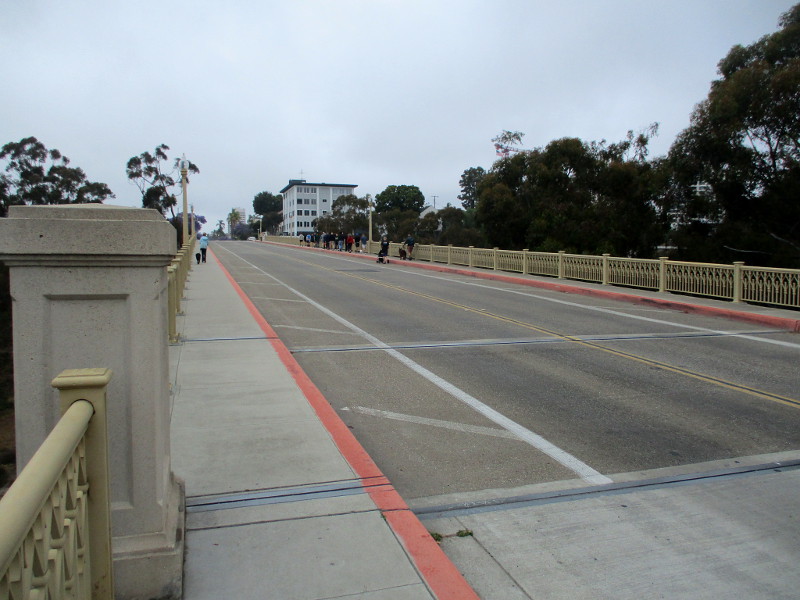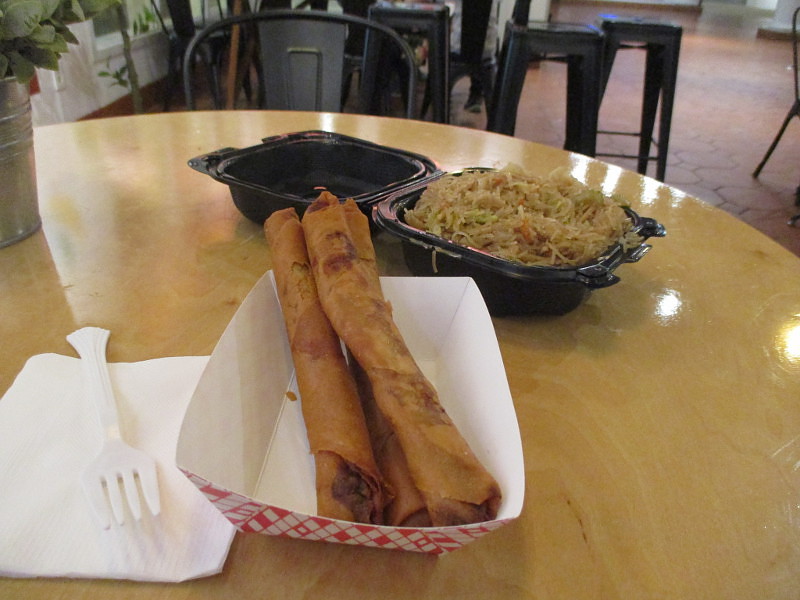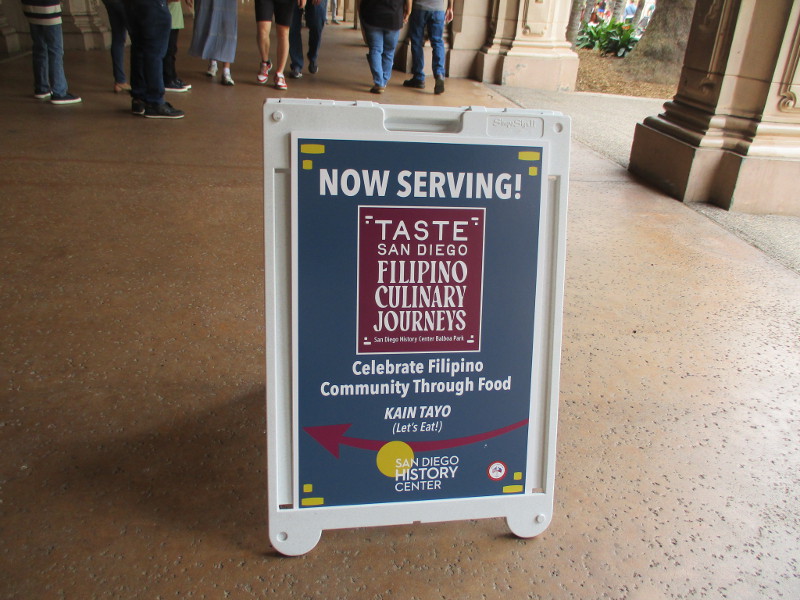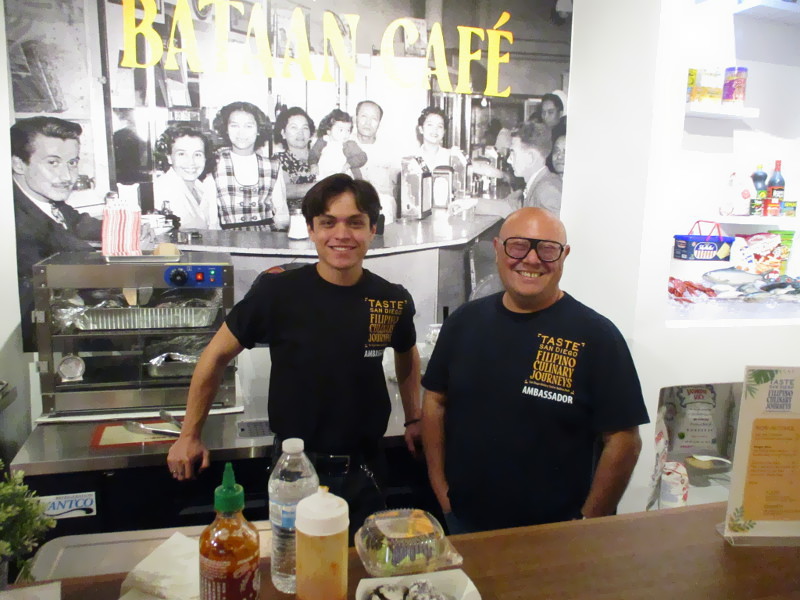
On May 10, 2025, a monument will be unveiled in the northeast corner of Pantoja Park. The bust of William Heath Davis Jr. will debut, commemorating the founder of downtown San Diego!
The public event will take place between 10:30 am and 2 pm. There will be speeches, informational booths, a blessing by Kumeyaay Bird Singers, and Pacific Islander traditions. William Heath Davis “Kanaka Bill” was born in Hawaii.
Many associate Alonzo Horton with the founding of downtown San Diego. Horton’s ultimately successful New Town, however, came after an attempt by William Heath Davisto build a new community closer to San Diego Bay than the original Old Town San Diego… His New Town was located west of today’s Gaslamp Quarter. The venture did not do well due to a lack of fresh water and hostility from the established settlements at Old Town and La Playa…
Pantoja Park, at 500 West G Street, was established in 1850. It was created at the center of William Heath Davis’ 160-acre subdivision and is San Diego’s oldest city park. Originally it was known as New Town Park. Appropriately, it will be home to the soon-to-be-unveiled bust.
The William Heath Davis Monument and the Monument Unveiling Ceremony are the work of the Gaslamp Quarter Historical Foundation and The Kanaka Davis Trust Group.
(I saw a preview of the monument a couple years ago. See that blog post here.)
…
I post new blogs pretty often. If you like discovering new things, bookmark coolsandiegosights.com and swing on by occasionally!
I live in downtown San Diego and love to walk around with my camera! You can follow Cool San Diego Sights via Facebook or X.
Large display cases contain old photographs, newspaper articles, documents and preserved artifacts representing the bridge’s complex history–from initial proposals to its construction to its grand opening and beyond.
Peering into the displays, reading descriptions, I learned interesting facts about the Coronado Bridge, including:
In 1926, the Spreckels Companies announced bold plans to construct a steel bridge linking Coronado to San Diego, envisioning an engineering marvel with arched spans and a lift section for maritime traffic. This news thrilled many residents eager for a fast connection to the mainland. Advocating for a tunnel instead, the Navy raised concerns about navigation and national defense. Despite initial optimism and plans for completion by 1928, the project became embroiled in decades of debate, delays, and revisions.
Mosher’s design was initially rejected by the state’s civil engineers for being too expensive. They proposed a more traditional trestle bridge, suggesting it be painted rust red or pink. Ultimately, Mosher’s design was accepted.
Water-tight caissons were placed on the bay bottom and pumped dry, while prestressed concrete pilings were driven over 100 feet into the bay floor. To complete the 30 towers, 100,000 tons of concrete were transported by barge for the construction of the piers.
The superstructure contractor Murphy Pacific fabricated the steel box girders in San Francisco before dismantling them and loading them onto a barge called “Marine Boss,” whose deck was the size of a football field. The barge was towed to San Diego Bay, where the girders were reassembled. The “Marine Boss” boom was extended to 290 feet to lift the massive box girder sections–up to 96 feet long and weighing as much as 215 tons–into place.
The final span, one of 27 girders, was placed on May 28, 1969. Coronado Mayor Paul Vetter participating in the informal ceremony, signing his name on the metal plate at the edge of the girder.
Mosher’s original design included lights on the low side of the railing, but they were cut to reduce costs… Coronado resident Carol Cahill…flew to Sacramento, successfully petitioned officials, and secured their installation. The lights were added in April 1970.
In 1970, the bridge received the National Award of Merit for Most Beautiful Bridge from the American Institute of Steel Construction.
The bridge’s 90-degree curve allows it to reach a height of 200 feet, tall enough for an empty aircraft carrier to pass underneath, while also providing the necessary length to ramp down to the Coronado side, which is significantly lower than the San Diego side that connects to Interstate 5.
I was told by a library employee that this fascinating exhibit will be on view through early May, 2025. Go check it out!
…
I post new blogs pretty often. If you like discovering new things, bookmark coolsandiegosights.com and swing on by occasionally!
I live in downtown San Diego and love to walk around with my camera! You can follow Cool San Diego Sights via Facebook or X.
Fashion Redux 2025 will soon be opening at the San Diego History Center in Balboa Park!
The extraordinary exhibition will include opulent garments created by renowned designers (including Hollywood’s legendary Irene Sharaff) worn between 1940 and 1988 during iconic San Diego events. They will be displayed along with unique creations by San Diego Mesa College students, who were inspired by the past styles and elegance.
I was wandering through the History Center yesterday when I noticed the exhibition is being set up in one gallery. I snapped the above photo.
Fashion Redux 2025 will be ready to go on April 10th–that’s this coming Thursday!
If you’ve never been to the San Diego History Center, located near the center of beautiful Balboa Park, why not go check it out? It’s a museum full of history, culture and amazing, important works of art!
…
I post new blogs pretty often. If you like discovering new things, bookmark coolsandiegosights.com and swing on by occasionally!
I live in downtown San Diego and love to walk around with my camera! You can follow Cool San Diego Sights via Facebook or X.
The Timken Museum of Art in Balboa Park has opened a fascinating exhibition titled Reconsidering Bierstadt: Kent Monkman. Visitors to the fine art museum are encouraged to compare two similar but very different works: Albert Bierstadt‘s 1864 painting Cho-looke, The Yosemite Fall, and First Nation Cree artist Kent Monkman‘s 2012 work The Fourth World.
The photograph above shows Kent Monkman’s painting (on loan from the Denver Art Museum) which reimagines the Bierstadt piece in the light of a different perspective.
Bierstadt’s oil painting conveys a sense of rustic tranquility and natural beauty; the somewhat shocking bottom portion of Monkman’s bolder, brighter acrylic piece shows bison being frightened and funneled in Yosemite through sheer steel walls by white men with guns.
Monkman’s contemporary painting clearly expresses that an environment can be forcibly altered by the actions of humans. Like any good art, the image ignites complex thought.
I’m no expert when it comes to the history of Yosemite. Doing some online research, I was surprised to learn that, according to a National Park Service Facebook post: Here in Yosemite, though, bison have never roamed.
Here’s the bottom portion of The Fourth World:
The next photograph is of Cho-looke, The Yosemite Fall. It’s darker, vaguer, somehow more sublime. (The docent thought perhaps the painting needs to be cleaned.)
This Smithsonian website has a better photograph and explains: Bierstadt was inspired to paint Yosemite after seeing Carleton Watkins’s photographs in a New York gallery in 1862…In 1864, the year Bierstadt painted this view, President Abraham Lincoln set aside Yosemite as a protected reserve…
Head down to the Timken Museum of Art when they’re open and observe both canvases up close. When I visited, a friendly docent was standing by to answer questions and provide more insight.
The Timken, which contains many painted masterpieces, is always free! The exhibition will continue through June 8th, 2025.
…
I post new blogs pretty often. If you like discovering new things, bookmark coolsandiegosights.com and swing on by occasionally!
I live in downtown San Diego and love to walk around with my camera! You can follow Cool San Diego Sights via Facebook or X.
San Diego’s legendary radio and television personality “Shotgun Tom” Kelly has created many fond memories. I remember listening to him on B100 back in the 1980s. Other San Diegans I’ve spoken to remember him introducing cartoons on The KUSI Kids Club. Over the years, he worked at KDEO, KPRI, KGB, KCBQ, KOGO, KBZS and KFMB-FM and Los Angeles oldies station KRTH-FM (K-Earth 101).
During my recent visit to the San Diego Model Railroad Museum in Balboa Park, I was surprised to see an exhibit concerning Shotgun Tom. Did you know he’s a big fan of model trains? He even has his own cool model train layout! I was told he often visits the museum, operating trains of the San Diego and Arizona Eastern HO layout on Wednesdays!
According to the exhibit, the layout at his home is 10 by 7 feet and includes a radio and television station and a mountain for the TV station’s tower!
(I recall seeing a tiny “Shot Gun” Tom billboard in the Old Town Model Railroad Depot’s big model city, which sadly no longer exists. You can see photos of that incredible layout here.)
“Shot Gun” Tom’s real name is Thomas Joseph Irwin. The museum exhibit includes an old photo of his father J. G. Irwin Sr., a Santa Fe railroad engineer, on the 2357 switch engine in 1955.
Curious about the unusual nickname Shot Gun? It resulted from Tom liking to sit in the front of the family car beside his dad.
…
I post new blogs pretty often. If you like discovering new things, bookmark coolsandiegosights.com and swing on by occasionally!
I live in downtown San Diego and love to walk around with my camera! You can follow Cool San Diego Sights via Facebook or X.
There’s a special once-a-month free tour in Balboa Park that I learned about today. The Balboa Park Women’s History Tour commemorates the women who’ve contributed to Balboa Park and San Diego history.
The inspiring tour begins every 3rd Saturday by the Bea Evenson Fountain (between the San Diego Natural History Museum and Fleet Science Center) at 10 am. The walking tour lasts for one hour.
I’ll have to take this tour at some point in the future!
What I’ve found out is the Balboa Park Women’s History Tour is presented by Forever Balboa Park. The historical substance is provided by the Women’s Museum of California, which makes its home inside the San Diego History Center in Balboa Park’s Casa de Balboa.
You might remember how years ago the Women’s Museum of California made its home at Liberty Station in Point Loma. Well, soon they will have their own permanent gallery inside the San Diego History Center! Their first exhibit will concern Women in STEM. Watch for it!
…
I post new blogs pretty often. If you like discovering new things, bookmark coolsandiegosights.com and swing on by occasionally!
I live in downtown San Diego and love to walk around with my camera! You can follow Cool San Diego Sights via Facebook or X.
The public seldom gets to step into Balboa Park’s historic Pratt Loggia. The columned, balcony-like loggia is easily seen when gazing up from El Prado at the Casa del Prado. You can see it in my next photograph:
During a recent tour of Balboa Park conducted by the Committee of 100, an organization working to preserve Balboa Park’s historic architecture, gardens and public spaces, I was fortunate to step foot into the Pratt Loggia and discover something wonderful.
Before our special tour entered the loggia, we were shown a plaque. It lists the people instrumental in funding the loggia’s creation back in 1971, during the Casa del Prado’s reconstruction.
According to this San Diego History Center webpage: During the course of reconstruction it was discovered that the bond issue did not allow for an expenditure of $70,000 to rebuild the second-level fluted, striated columns with capitals of cupids and the ornate balustrade on the outside loggia of the south building. The Committee of 100 raised the needed money with $50,000 coming from Mrs. Jeannette Pratt, in whose honor the reconstructed gallery was named the “Jeannette Pratt Loggia.”
Our group observed how the plaque contains a Who’s Who of leading San Diego citizens back in 1970s, including the Copleys, Cushmans, Fletchers, Rohr, Ryans, Scripps, and many others. Bea Evenson led the creation of the loggia.
And now here is the beautiful loggia!
We were surprised to see numerous bells in the Pratt Loggia: a few along the balustrade and many others contained in large display cases at either end.
These bells were sent to San Diego from cities around the nation during our city’s bicentennial back in 1969! To mark the 200 year anniversary celebration, San Diego wrote to these cities asking for a donated bell.
What was received? There are fire bells, school bells, bells of all sizes and kinds!
This big one rang loudly and deeply!
THIS BELL IS IN MEMORIAM OF SAN DIEGO’S 200 YEARS. FROM TOPEKA, KANSASSAN DIEGO 1769 BICENTENNIALPRESENTED TO THE CITY OF SAN DIEGO ON THE OCCASION OF ITS 200TH ANNIVERSARY BY THE CITIZENS OF WASHINGTON, D. C.
Another wonderful surprise in San Diego’s ever-amazing Balboa Park!
…
I post new blogs pretty often. If you like discovering new things, bookmark coolsandiegosights.com and swing on by occasionally!
I live in downtown San Diego and love to walk around with my camera! You can follow Cool San Diego Sights via Facebook or X.
In 1940, a year after publishing his masterpiece The Grapes of Wrath, John Steinbeck went on a scientific expedition to the Sea of Cortez with marine biologist Ed Ricketts. The 4000 mile, six week journey, made famous in Steinbeck’s books Sea of Cortez and The Log from the Sea of Cortez, utilized the Monterey fishing boat Western Flyer, a 77-foot purse seiner that had been used in the sardine fishery.
On their way to Baja California, Steinbeck, Ricketts and the small crew of the Western Flyer visited San Diego. Eighty five years later, the storied fishing boat returned!
Yesterday the Western Flyer was docked at the Maritime Museum of San Diego and museum visitors had the opportunity to tour her!
I was one of many who stepped aboard the historic vessel that is called the most famous fishing boat in the world. I took photographs, of course!
The first thing we were shown was the head! Yes, what you see in the next photograph is where John Steinbeck himself sat! During the Sea of Cortez expedition, he developed the idea for his future novels Cannery Row and The Pearl. Perhaps he did some brainstorming here…
We then went forward to the pilot house…
All the instruments are modern–the Western Flyer during its long complex history sank and was submerged for six months. The boat was restored to look and feel as it did originally. Ninety percent of the hull and ten percent of the wheelhouse was replaced.
When we turned around, we discovered a small room with a single bed. This is where Steinbeck’s wife, Carol, slept. Even though she was part of the marine specimen collecting expedition, she was never mentioned in Steinbeck’s books concerning it.
We then proceeded down through the deckhouse past more equipment and bunks and entered the galley. The Western Flyer Foundation takes students out on educational trips, performing ocean research. The young people are privileged to gather around a table where Steinbeck and his friends sat…
At the table, I was shown a remarkable shot glass. It retains marking from barnacles that attached to it while the boat was submerged. The shot glass is dated from the 1930s. It’s quite likely that John Steinbeck drank from it!
Back out on the boat’s weather deck, we descended into what originally had been the vessel’s fish hold. It was converted for the Sea of Cortez expedition into a laboratory, where small marine specimens–urchins, crabs, chitons, snails, clams, starfish and more, gathered mostly from the intertidal zone–were preserved using formaldehyde and other chemicals. Steinbeck and Ricketts discovered that the old fish hold was so damp that it quickly corroded much of their equipment.
Historical photographs of Western Flyer, and from the Sea of Cortez expedition, cover the large table for our tour. You can see in the next photo some of the modern research equipment used by ocean-going college students today…
This is how Western Flyer looked before its 7 million dollar restoration by Port Townsend Shipwrights Co-Op…
The image of the Baby Flyer is one of only two known photographs showing Steinbeck and Ricketts together. John Steinbeck is in the striped shirt, and Ed Ricketts is sitting next to him…
We then proceeded through the crowded engine room. You can learn about the Western Flyer’s original Atlas-Imperial diesel engine here. Today’s diesel/electric engine is quite useful for scientific research, allowing the boat to maneuver silently. I took no photographs of it–sorry.
We then peeked into the boat’s forepeak, where there are more bunks. John Steinbeck and the Western Flyer’s engineer Tex slept here and certainly held many interesting conversations.
Up some steep steps and we’re back out on the main deck. That is HMS Surprise of the Maritime Museum of San Diego straight ahead, and their iconic Star of India–oldest active sailing ship in the world–to the right.
The Western Flyer Foundation had hats, shirts and stickers available for purchase. They are a nonprofit and would appreciate your donation!
Some more looks…
After departing the Maritime Museum of San Diego, the restored Western Flyer heads south to Ensenada, Mexico. They’re embarking on a recreation of the historic Sea of Cortez expedition. Instead of collecting marine specimens, however, they will be making new friends and educating the curious.
Follow the Western Flyer’s journey online! Experience it all virtually on the Western Flyer Foundation’s Facebook page here, and their Instagram page here!
…
I post new blogs pretty often. If you like discovering new things, bookmark coolsandiegosights.com and swing on by occasionally!
I live in downtown San Diego and love to walk around with my camera! You can follow Cool San Diego Sights via Facebook or X.
Did you know that glider history was made above the bluffs of Point Loma in San Diego?
Two landmark plaques that commemorate this history (which includes the breaking of a sailplane flight duration world record) are located just inside the entrance gate of Cabrillo National Monument. A small dirt footpath leads up to the boulder upon which they are mounted. Beyond, a slope descends steeply to the Pacific Ocean.
I recently walked from the Cabrillo National Monument’s visitor center down to the plaques to have a close look…
The plaque on the left states:
IN COMMEMORATION OF THE EARLY AVIATION PIONEERS THAT FLEW AMERICAN DESIGNED AND MANUFACTURED SAILPLANES IN SAN DIEGO. THESE AVIATORS ARE REMEMBERED BY THOSE WHO FLEW AFTER THEM AND THE CITIZENS OF SAN DIEGO
John C. Barstow – William Hawley Bowlus – Alan R. Essery – Forrest H. Hieatt – Anne Lindbergh – Earle R. Mitchell – Adolph R. “Bud” Perl – William Beuby – Lowell E. Bullen – Albert E. Hastings – I. N. Lawson – Charles A. Lindbergh – Allison J. Moore – William Van Dusen
SAN DIEGO SAILPLANE ENTHUSIASTS – THE ENVIRONMENTAL TRUST
(Yes, the names include Anne and Charles A. Lindbergh!)
The plaque on the right states:
POINT LOMA
THIS LANDMARK IS DEDICATED TO THE PIONEERING SPIRITS OF THE PILOTS WILLIAM HAWLEY BOWLUS AND JOHN C. BARSTOW WHO MADE MILESTONE FLIGHTS IN GLIDER HISTORY AT THIS SITE
WILLIAM HAWLEY BOWLUS – FIRST AMERICAN SOARING FLIGHT TO EXCEED ONE HOUR DURATION – 1 HOUR 21 MINUTES OCTOBER 19, 1929
JOHN C. BARSTOW – DURATION FLIGHT OF 15 HOURS 13 MINUTES EXCEEDING THE WORLD RECORD – APRIL 29-30, 1930
DEDICATED APRIL 27, 1996
THE NATIONAL SOARING MUSEUM – HARRIS HILL, ELMIRA NY – AN AFFILIATE OF THE SOARING SOCIETY OF AMERICA
SPONSORED BY THE ENVIRONMENTAL TRUST
…
I post new blogs pretty often. If you like discovering new things, bookmark coolsandiegosights.com and swing on by occasionally!
I live in downtown San Diego and love to walk around with my camera! You can follow Cool San Diego Sights via Facebook or X.
Antonio Garra Day is returning to Old Town San Diego tomorrow, Saturday, March 22, 2025.
Presented by the Pala Band of Mission Indians, the event will be held from 12 pm to 4 pm in Old Town San Diego State Historic Park, at the First San Diego Courthouse Museum.
I attended the event back in 2020 (see the next photo) and learned Antonio Garra was a leader of the Cupeño people in Southern California who sought to organize tribes of our region to resist unfair taxation. Even though Native Americans were not citizens of the United States, a tax was levied upon their animals, property and agriculture. This taxation without representation was considered by many fair-minded people to be illegal and unjust. Read more about it here.
You can see my photos from Antonio Garra Day five years ago by clicking here.
This year, as before, Antonio Garra Day will feature traditional Bird Songs, inspirational speeches and cultural exhibits. Everyone is welcome to drop by and learn an important aspect of our region’s history.
…
I post new blogs pretty often. If you like discovering new things, bookmark coolsandiegosights.com and swing on by occasionally!
I live in downtown San Diego and love to walk around with my camera! You can follow Cool San Diego Sights via Facebook or X.