The 250th Anniversary of San Diego is being celebrated this year.
In 1769 a Spanish expedition established El Presidio Reál de San Diego atop a hill near the San Diego River, along with the original Mission San Diego de Alcalá.
San Diego, however, didn’t become a city of any real significance until the late 19th century.
For a city that is relatively young, San Diego today enjoys remarkable cultural diversity. Much of this diversity is due to our close ties and overlapping history with Mexico. Much also comes from the variety of immigrants who have settled in and helped to build our growing city.
In the past, Cool San Diego Sights has featured many posts about cultural diversity in San Diego’s history.
I live in downtown San Diego and love to walk around with my camera! You can follow Cool San Diego Sights via Facebook or Twitter!
You can easily explore Cool San Diego Sights by using the search box on my blog’s sidebar. Or click a tag! There are thousands upon thousands of photos for you to enjoy!
Breathtaking views and unique history can be enjoyed during a hike on the Helix Flume Trail in Lakeside.
In 1889 a 35-mile long wooden water flume was completed that brought water from Lake Cuyamaca in San Diego’s East County into the rapidly growing city.
This morning I enjoyed an amazing walk up the historic Helix Flume Trail in Lakeside!
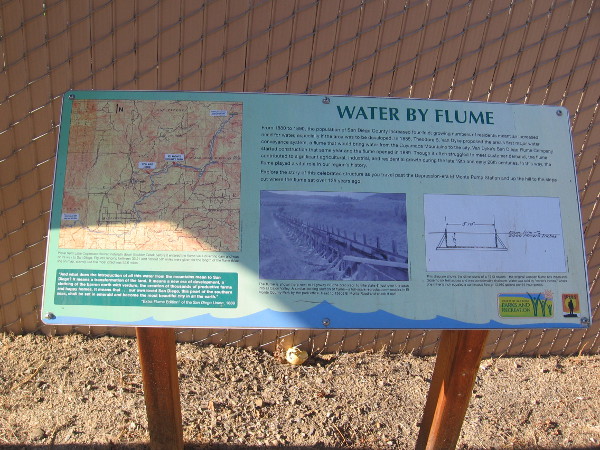
The moderately easy hiking trail begins at the old El Monte Pump Station, climbs a nearby hillside with a series of short steep switchbacks, then follows a short, mostly level section of the historic flume’s route. Information signs describe the construction and history of the engineering marvel, and hikers are able to see the entrance to one of the flume’s old tunnels!
As you will observe in the following photographs, the walk includes some fantastic vistas and natural beauty.
Come along with me and read the photo captions to learn much more…
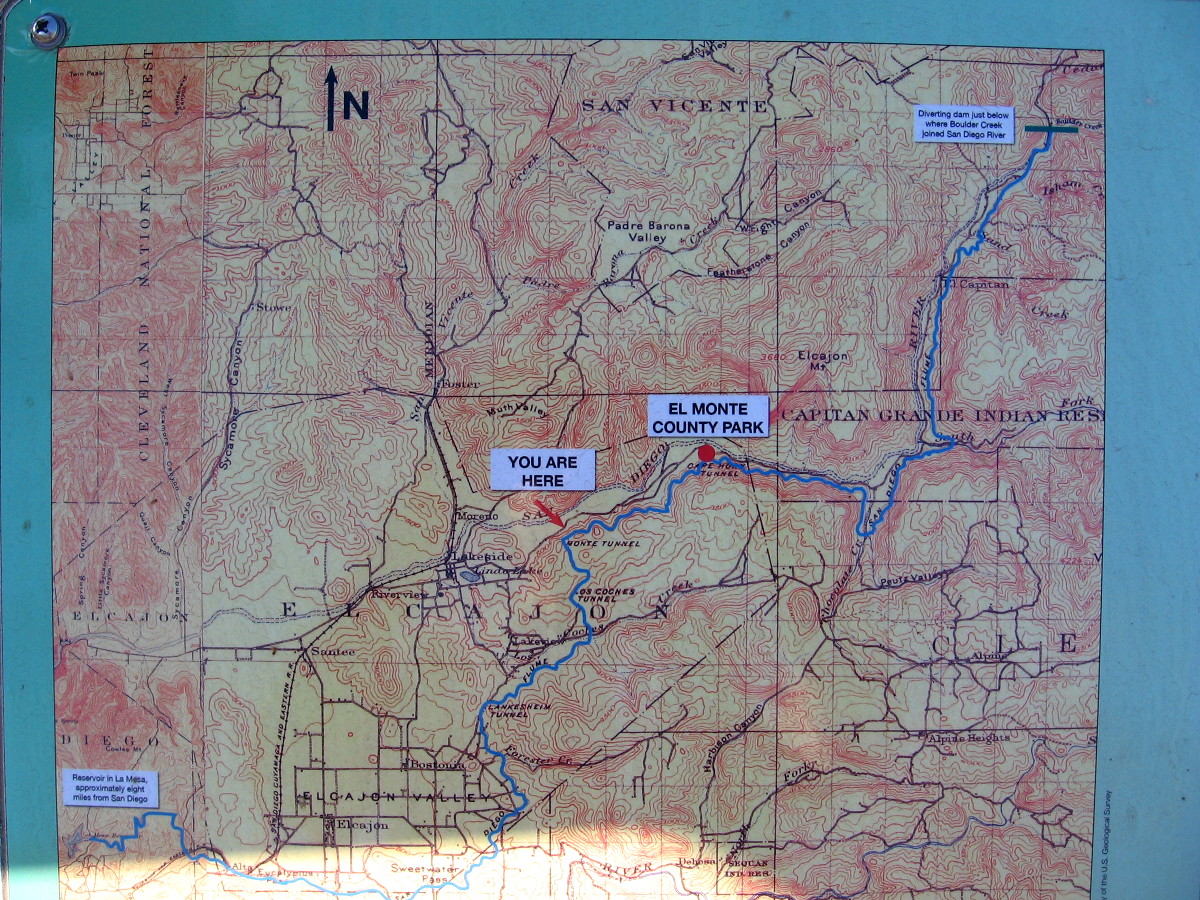
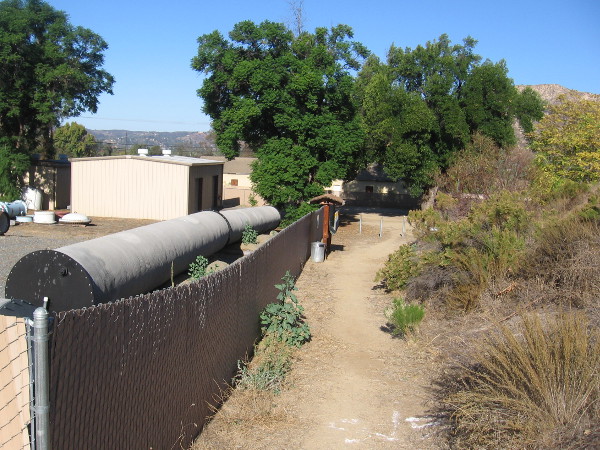
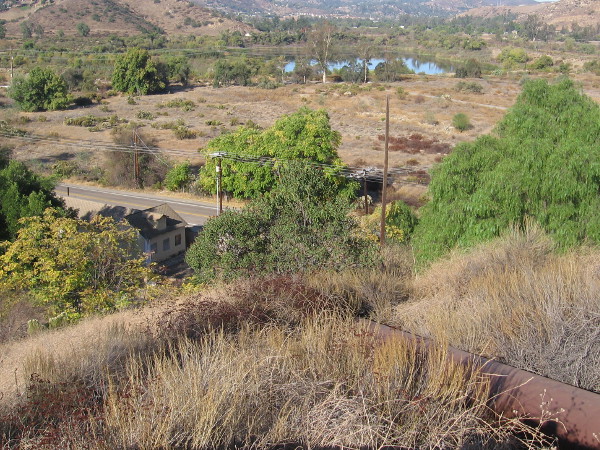
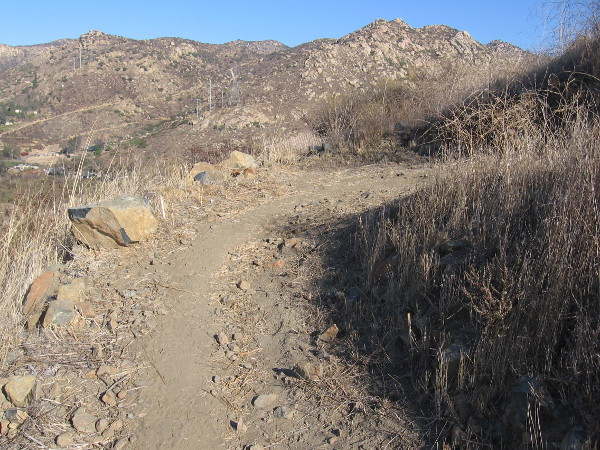
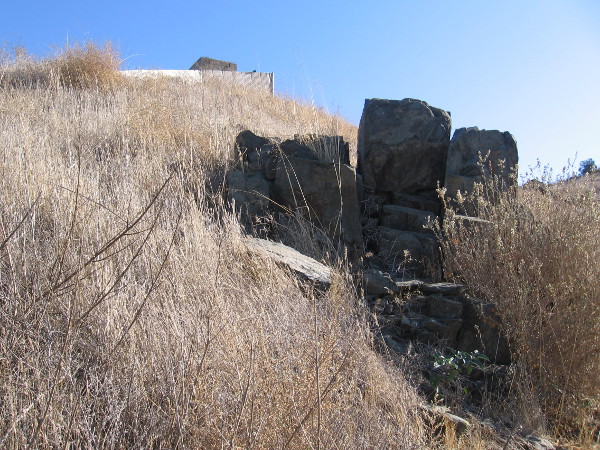
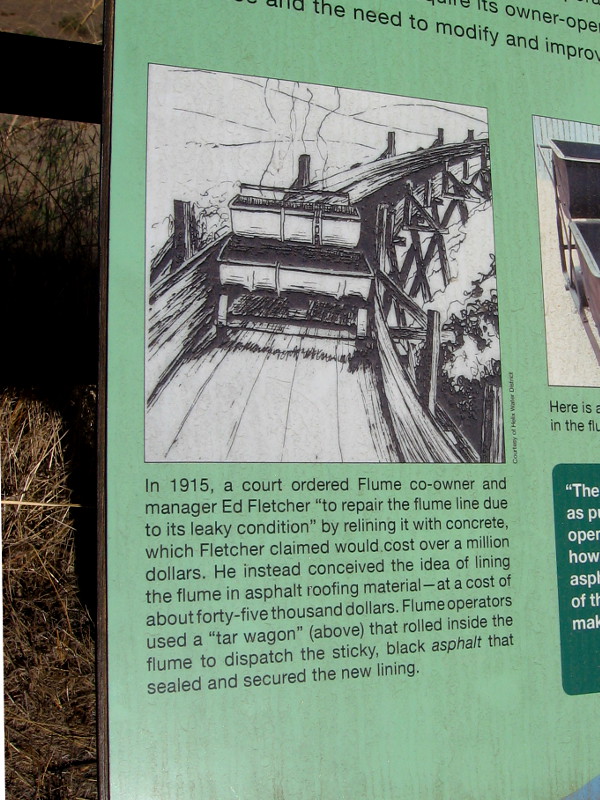
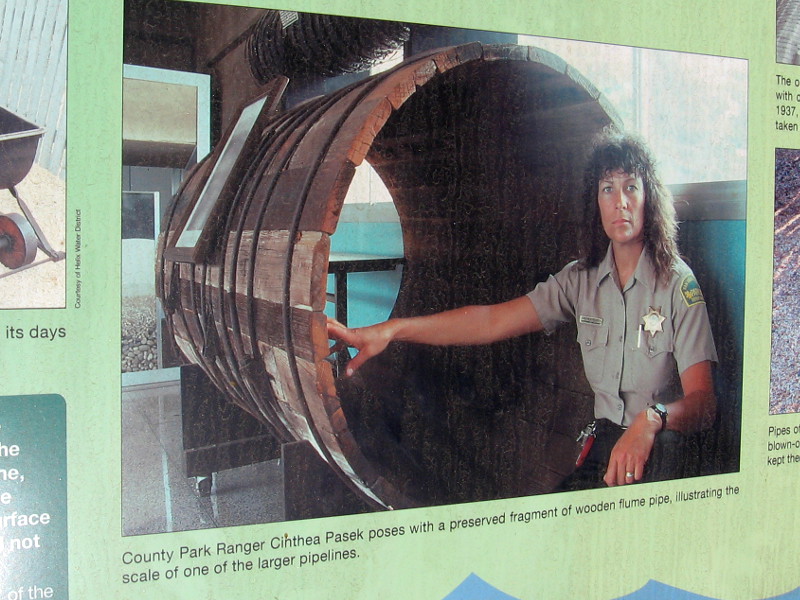
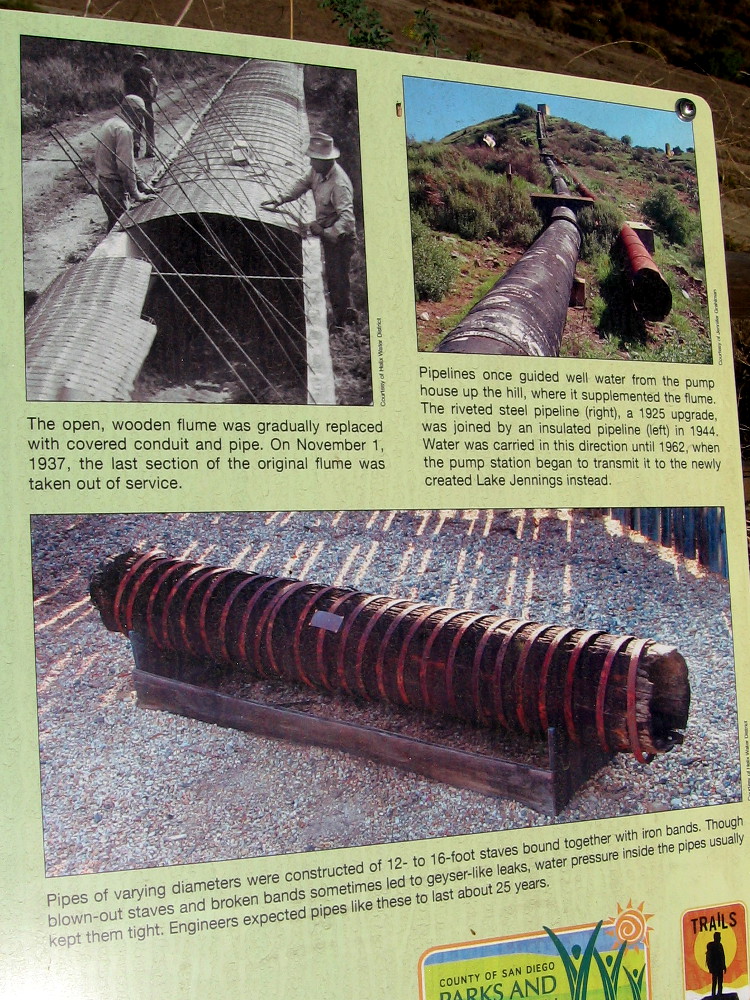
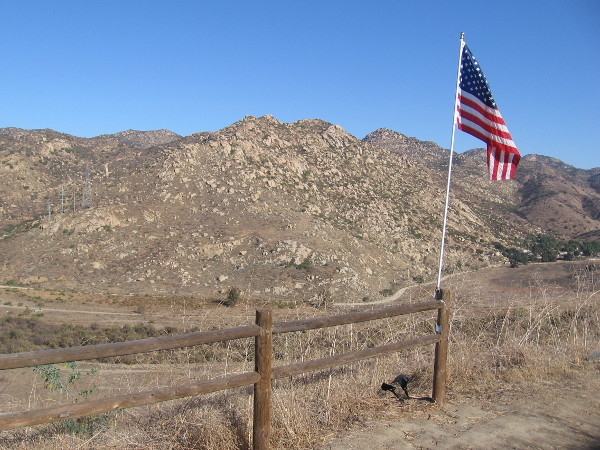
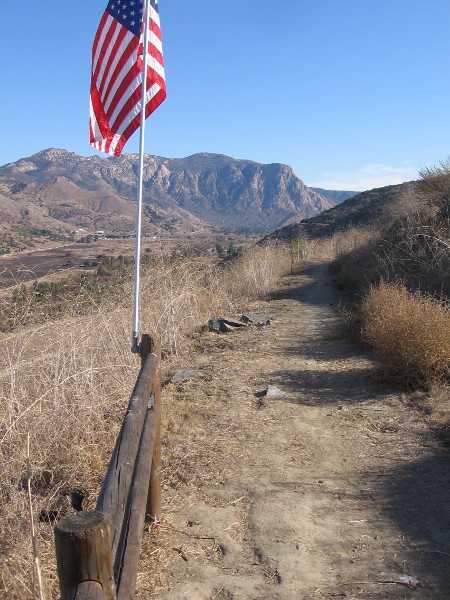
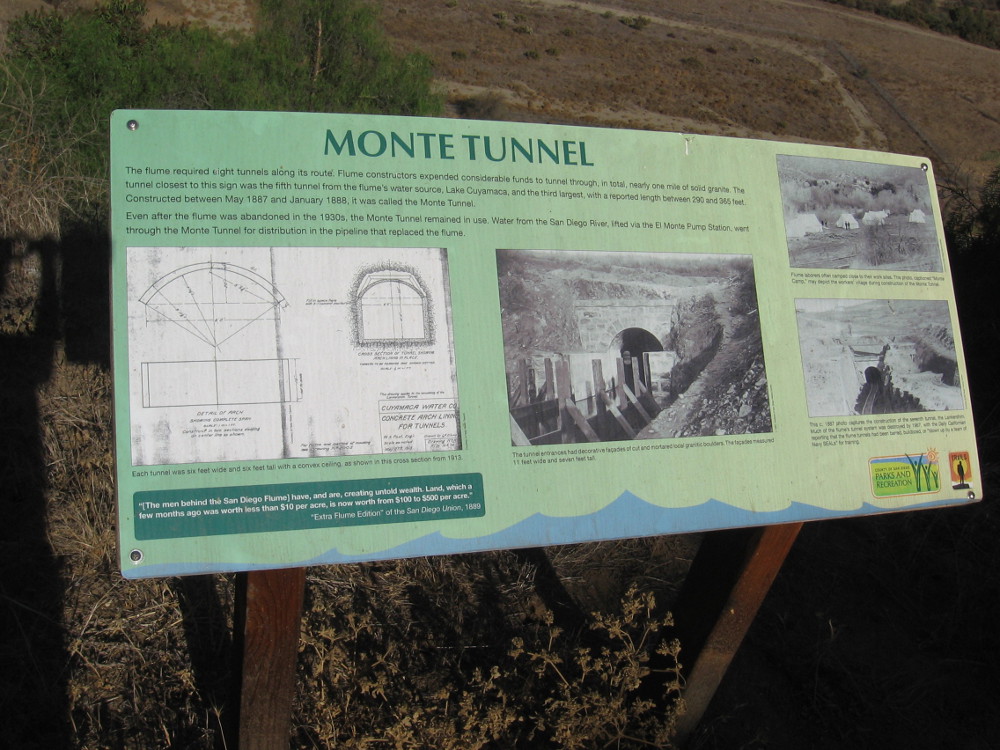
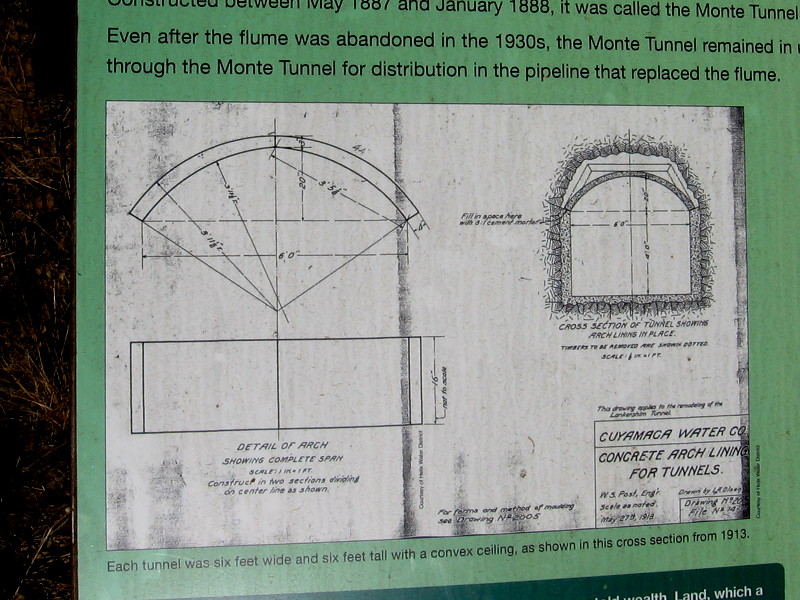
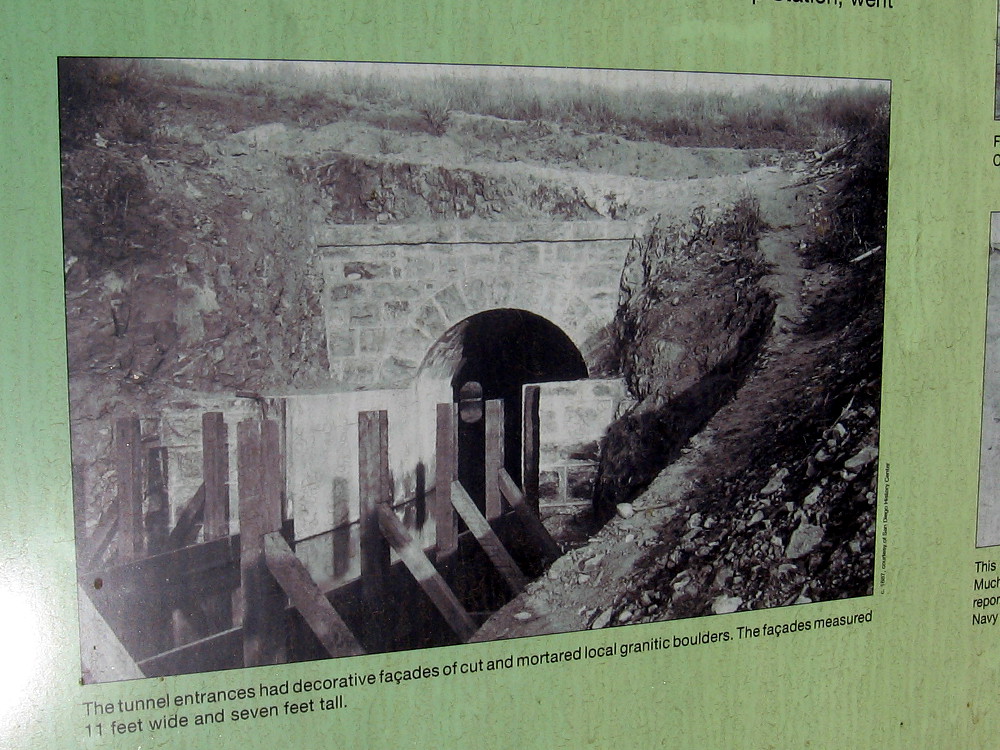
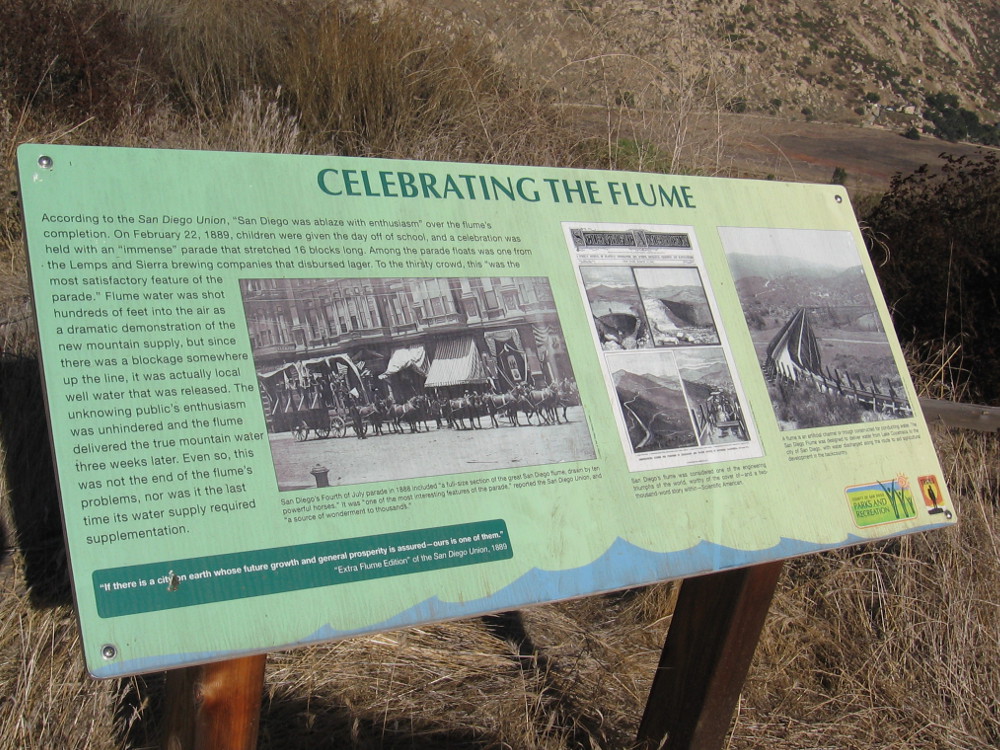
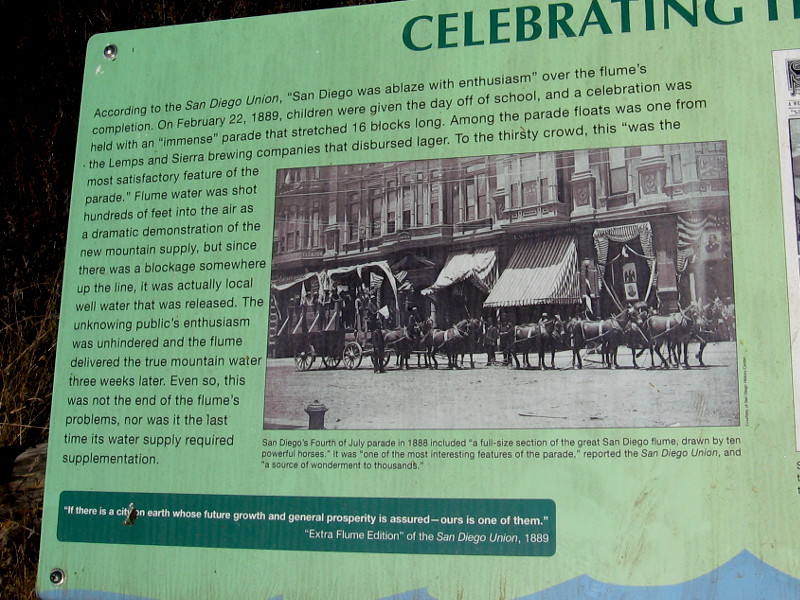
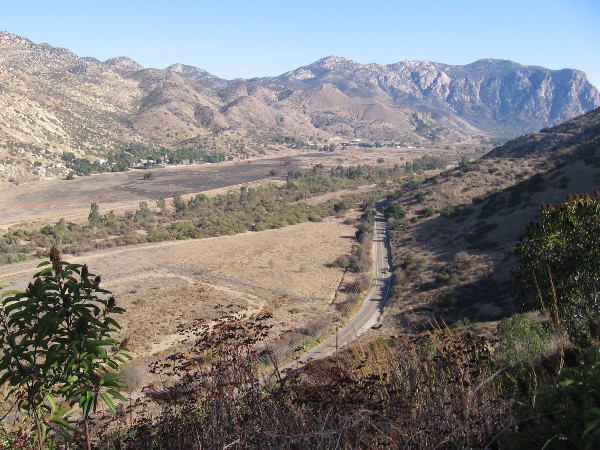
Looking past a large shady tree toward the trailhead of the historic Helix Flume Trail.The old El Monte Pump Station is located next to a small parking lot by the trailhead to the Helix Flume Trail.The El Monte Pump Station was originally built in 1898 to lift well water to the flume on the hillside using steam powered pumps.Photograph includes huge pipes outside the historic pump station in Lakeside, California.Plaque by door of El Monte Pump Station dated 1937, when a major overhaul was finally complete. Water was then pumped from the El Capitan Reservoir.Heading toward the trailhead and an information sign concerning the flume.One of several signs along the trail that describe the construction and history of the famous water flume.The blue line on this topographic map is where the flume water descended as it flowed west to the growing city of San Diego.Photograph of the wooden water flume next to old Highway 80 in El Cajon Valley.Diagram of cross section of wooden flume box from 1913.As I started up the trail, I looked back toward the parking lot and its big tree. The Helix Water District has a nearby lot with modern pipes and equipment.Heading up short but steep switchbacks, with power lines overhead and rugged mountains in the distance.Hikers must stay on the trail due to the historical importance of this area.Looking down toward the pump station and El Monte Road. An old rusty pipeline that ascends from the station is visible in this photo.Climbing higher. Wear sturdy shoes if you go on this hike. If it’s hot, bring plenty of water.I’ve gained more elevation on the switchbacks. The hillside is dotted with many prickly pears. That’s Hanson Pond in the distance.Higher we climb!A fence conceals an old pipeline that ran from the El Monte Pump Station to the flume.Interesting rock outcroppings.A beautiful view of the El Monte Valley below.A better view of Hanson Pond.The climb is over. We approach another information sign where the old hillside pipeline terminates.An amazing view of rocky mountains across the valley opens up here.Sign describes the struggles to supply water. The open flume had troubles with massive leakage due to rot, and evaporation.In 1915, a court ordered Ed Fletcher to repair the leaky flume. He lined it cheaply with asphalt roofing material using a rolling tar wagon.San Diego County Park Ranger shows a section of wooden flume pipe.The open, wooden flume was eventually replaced with covered conduit and pipe. In 1962, the pump station began to send water to the newly created Lake Jennings.A flag flies near the information sign.The trail continues along the flume’s old route.Turning a corner, with rugged El Cajon Mountain (El Capitan) in the distance.Some natural beauty by the hiking trail.Entering mountain lion country. A sign describes what to do should you encounter one.I spot another information sign down below, at the end of a short path.A short distance from the sign is the entrance to the Monte Tunnel.The flume needed eight tunnels along its slowly descending route. The Monte Tunnel was the fifth tunnel from the flume’s original water source, Lake Cuyamaca.Diagram on the sign shows the dimensions of each tunnel.The tunnel entrances had decorate facades of cut and mortared local granitic boulders.The bottom 1887 photo shows construction of the seventh tunnel. Part of the eventually outdated tunnel system was destroyed by Navy SEALS for training.The barred Monte Tunnel entrance photographed during my hike.I took this flash photograph into the tunnel. After the flash I heard a curious low noise, like that of an animal.Another information sign can be found nearby, where the Helix Flume Trail connects with the Lake Jennings trail system.San Diego residents were thrilled at the flume’s completion in 1889. There was a parade and a fountain of water. But it wasn’t flume water–it was well water! There was a blockage somewhere up the line!San Diego’s historic water flume was considered such an engineering triumph that it was featured on the cover of Scientific American.Today little remains of the flume. But the natural beauty of this area in San Diego’s East County endures.
…
I live in downtown San Diego and love to walk around with my camera! You can follow Cool San Diego Sights via Facebook or Twitter!
You can easily explore Cool San Diego Sights by using the search box on my blog’s sidebar. Or click a tag! There are thousands upon thousands of photos for you to enjoy!
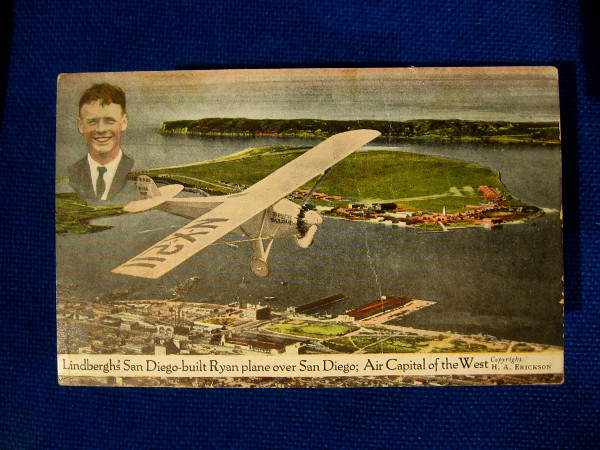
Original vintage postcard shows Lindbergh’s San Diego-built Ryan plane over San Diego; Air Capital of the West.
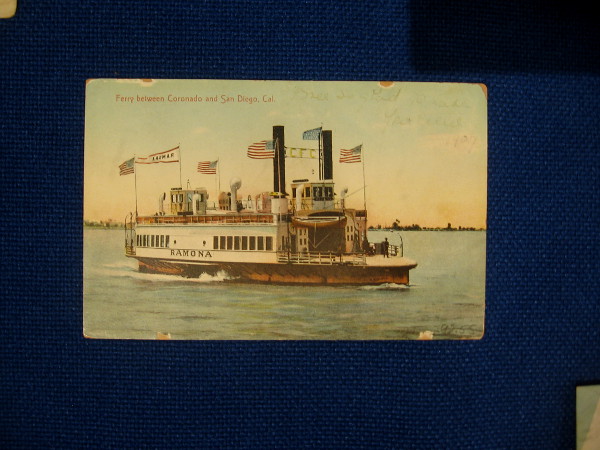
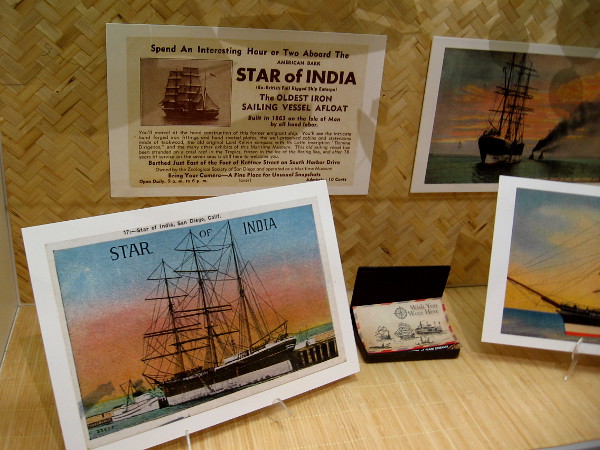
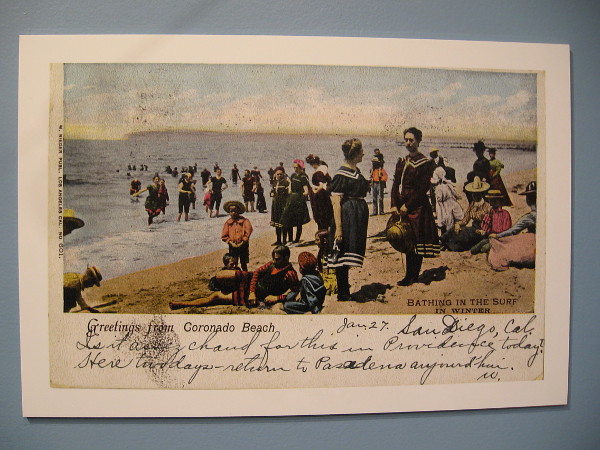
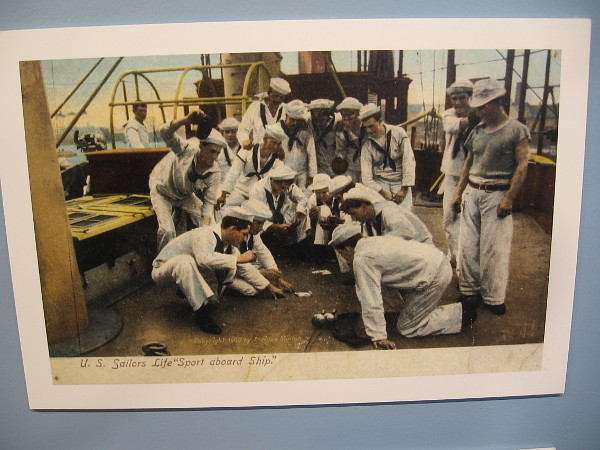
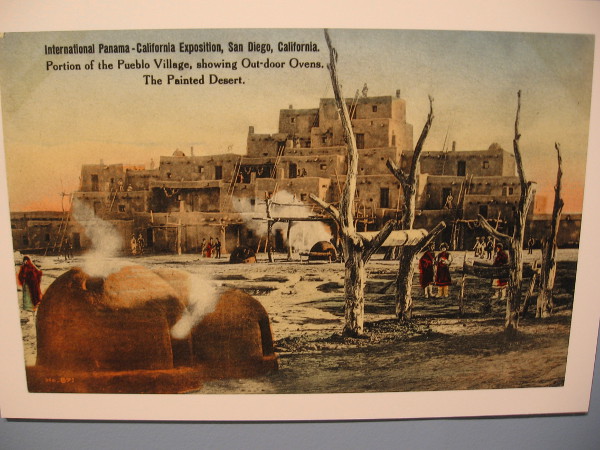
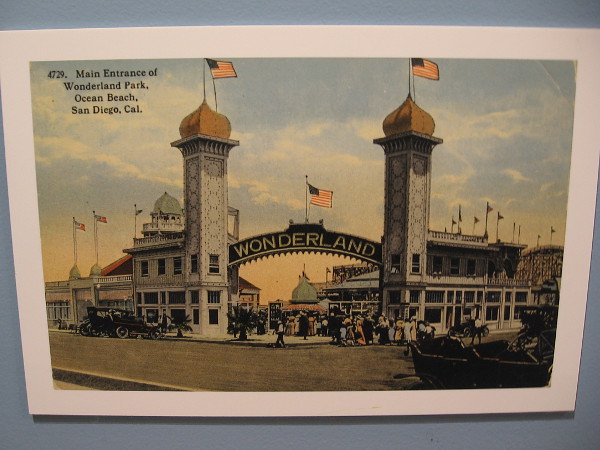
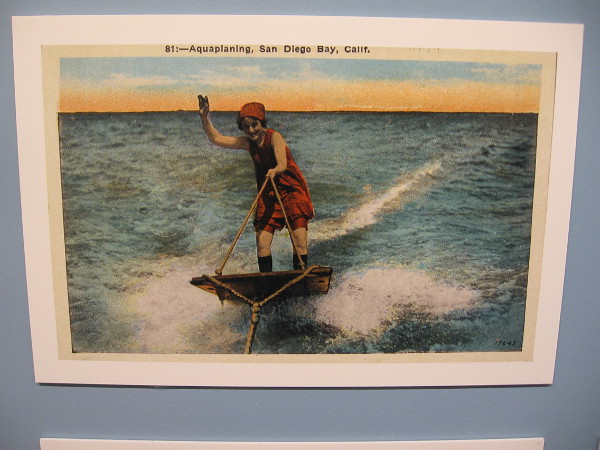
A very cool exhibition titled “Wish You Were Here” is about to officially open at the Maritime Museum of San Diego. The colorful exhibit, which I experienced this evening aboard the 1898 steam ferryboat Berkeley, features vintage postcards of San Diego from a century ago.
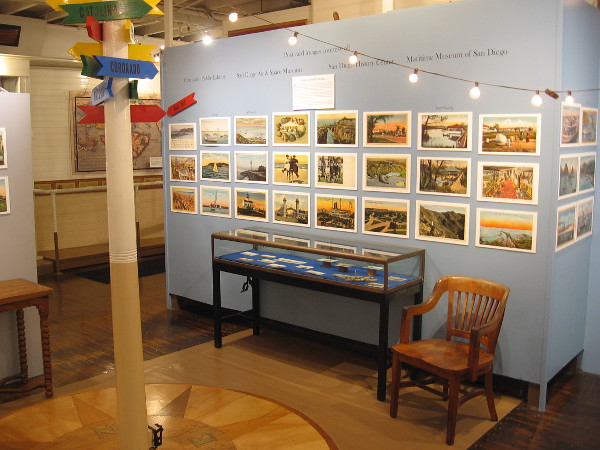
A collection of authentic original postcards is displayed in glass cases; enlarged images from dozens of fascinating old postcards cover several walls.
Visitors to the exhibit will see depictions of popular destinations, famous attractions, Balboa Park, beaches, downtown, Coronado, La Jolla, and all sorts of unique places around San Diego County. Many of the hand-colored postcards show what life was like in our city in the early part of the 20th century.
The images for the wall displays were obtained from the Coronado Public Library, San Diego Air and Space Museum, San Diego History Center, and the archives of the Maritime Museum.
The official opening of “Wish You Were Here” will be on Saturday, November 16, 2019. On that special day representatives of the U.S. Postal Service will be at the museum from 11 am to 3 pm. Visitors will be able to get a collectible Maritime Museum of San Diego cancellation postmark on a special commemorative postcard!
The following photos provide a small taste of this amazing exhibit…
Many historical postcards are on display for the “Wish You Were Here” exhibit at the Maritime Museum of San Diego.Original postcard shows Ferry between Coronado and San Diego.Various postcards images that promote a visit to Star of India, the oldest iron sailing vessel afloat.Diverse themes in the postcard exhibit include beach fun and sailing.Bathing in the surf in winter.U. S. Sailors Life “Sport aboard Ship.”Lake at Lakeside, near San Diego.Carriso Gorge showing track skirting mountain side in the distance, on San Diego and Arizona Railway.Ruins of San Diego Mission.Ramona’s Marriage Place (Casa de Estudillo in Old Town), and monument where American flag was first raised in Southern California.International Panama-California Exposition, San Diego. Portion of the Pueblo Village.International Boundary Line, Tijuana, Mexico.Main Entrance of Wonderland Park, Ocean Beach.Aquaplaning, San Diego Bay.
…
I live in downtown San Diego and love to walk around with my camera! You can follow Cool San Diego Sights via Facebook or Twitter!
You can easily explore Cool San Diego Sights by using the search box on my blog’s sidebar. Or click a tag! There are thousands upon thousands of photos for you to enjoy!
People in Grape Day Park head toward buildings that are part of the Escondido History Center’s unique Heritage Walk.
Last weekend I enjoyed a fascinating walk around the Escondido History Center!
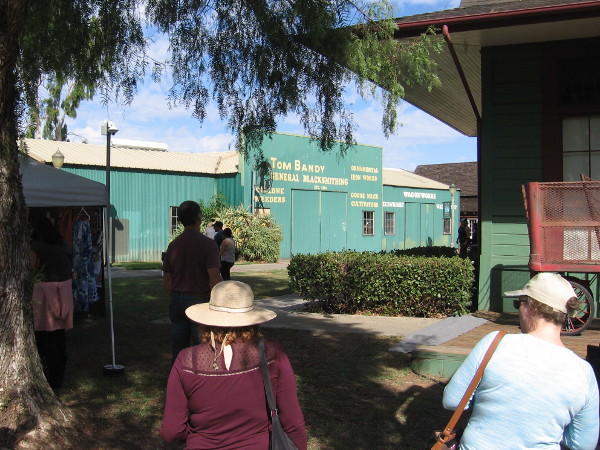
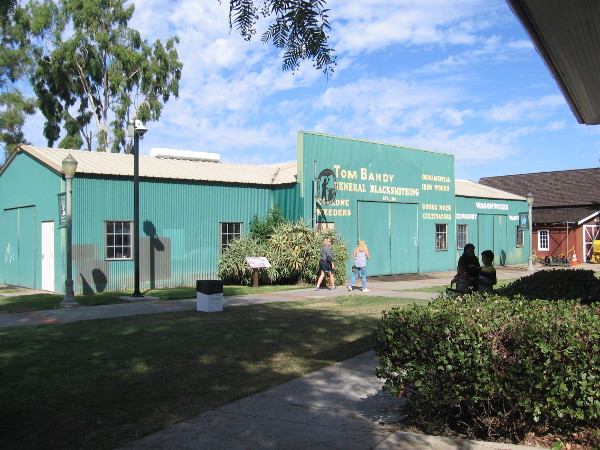
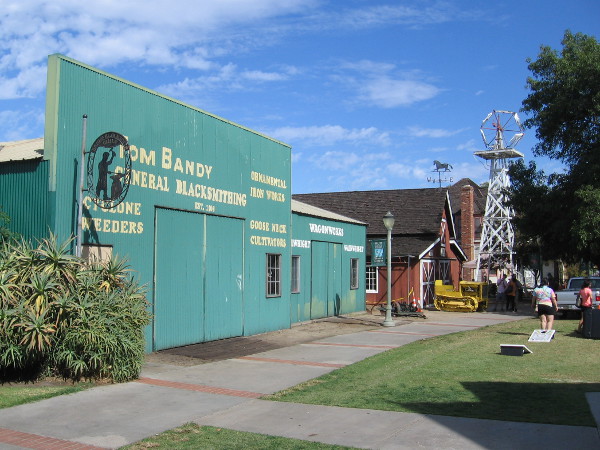
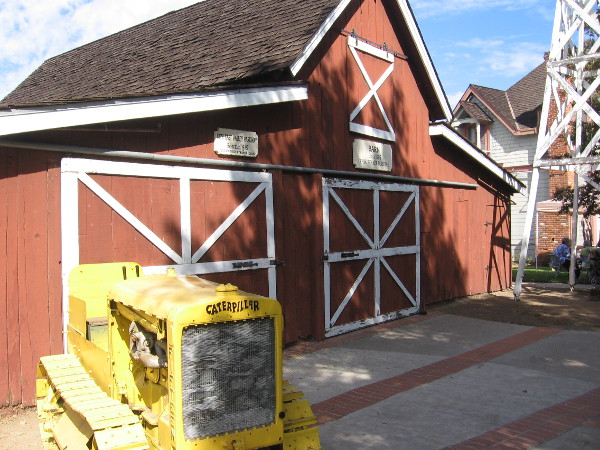
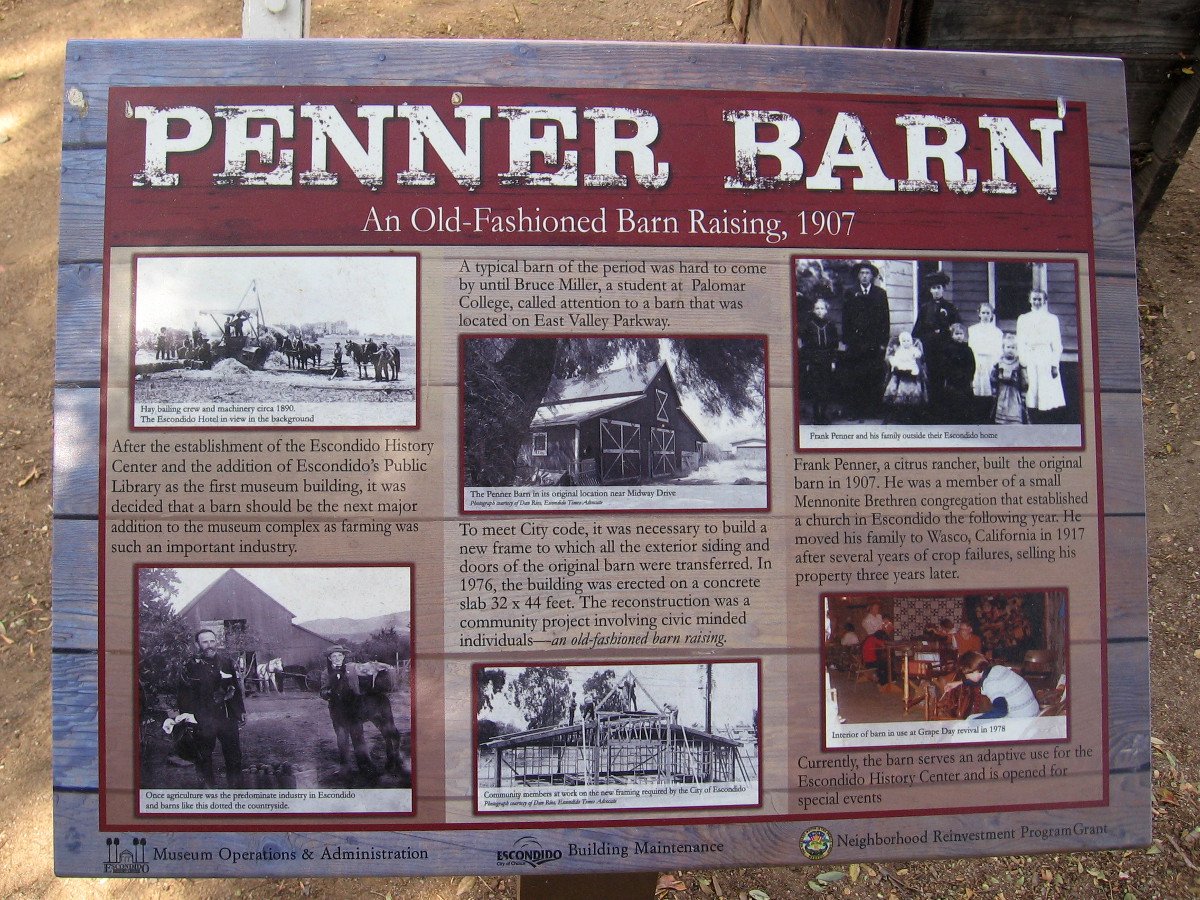
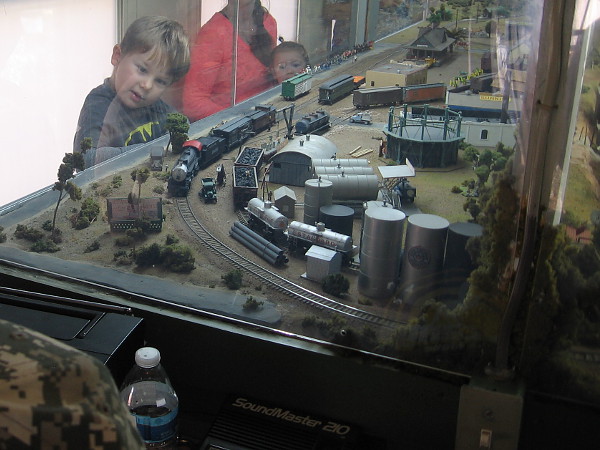
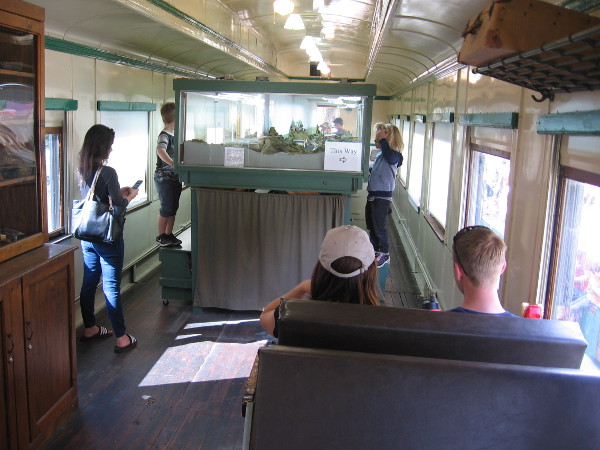
Several original and reconstructed buildings operated by the Escondido History Center form the Heritage Walk at the north end of Grape Day Park. Anyone who is curious can freely visit the Bandy Blacksmith & Wheelwright Shop, the Penner Barn, the Victorian House, the City’s First Library, and an excellent museum inside Escondido’s old Santa Fe Depot. A very cool Pullman railroad car parked nearby contains a large model train layout!
While I really enjoyed my visit, I still don’t know much about the history of Escondido, so please visit the Escondido History Center’s informative website here.
Come along with me as we head down the Heritage Walk. We’ll make several interesting discoveries!
(Click the photos of signs and they will enlarge for easier reading.)
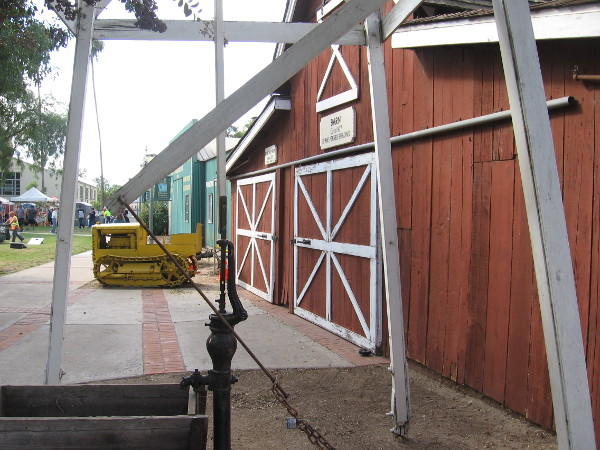
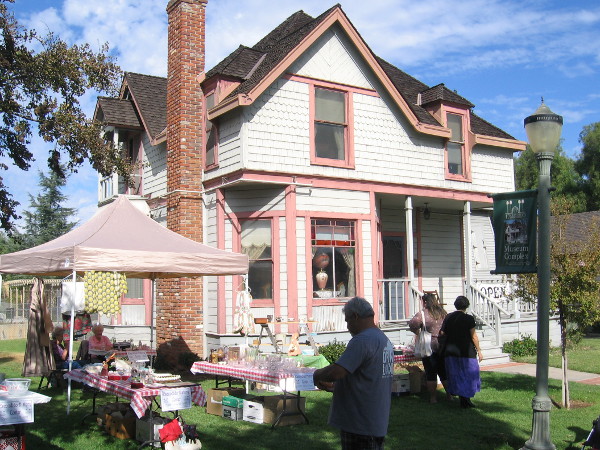
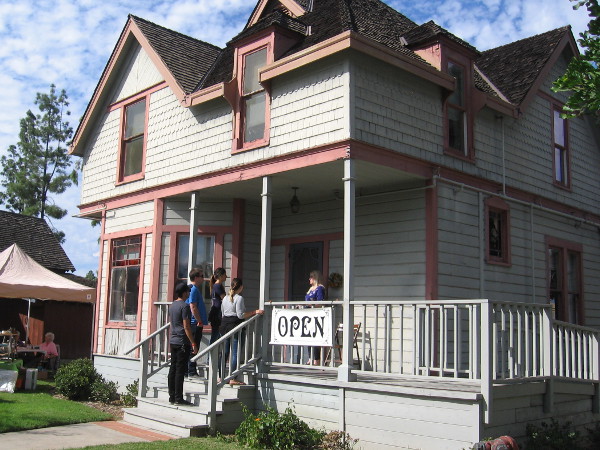
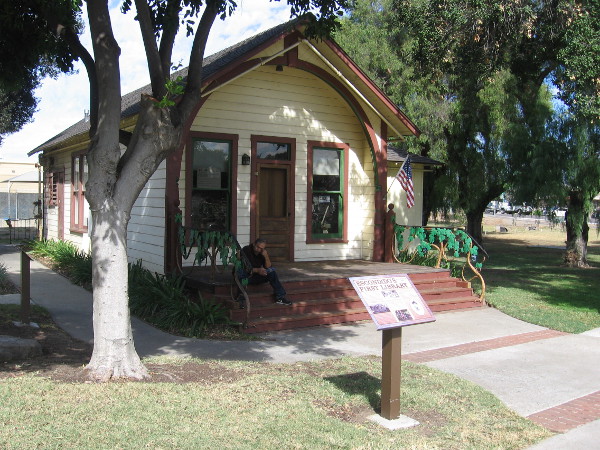
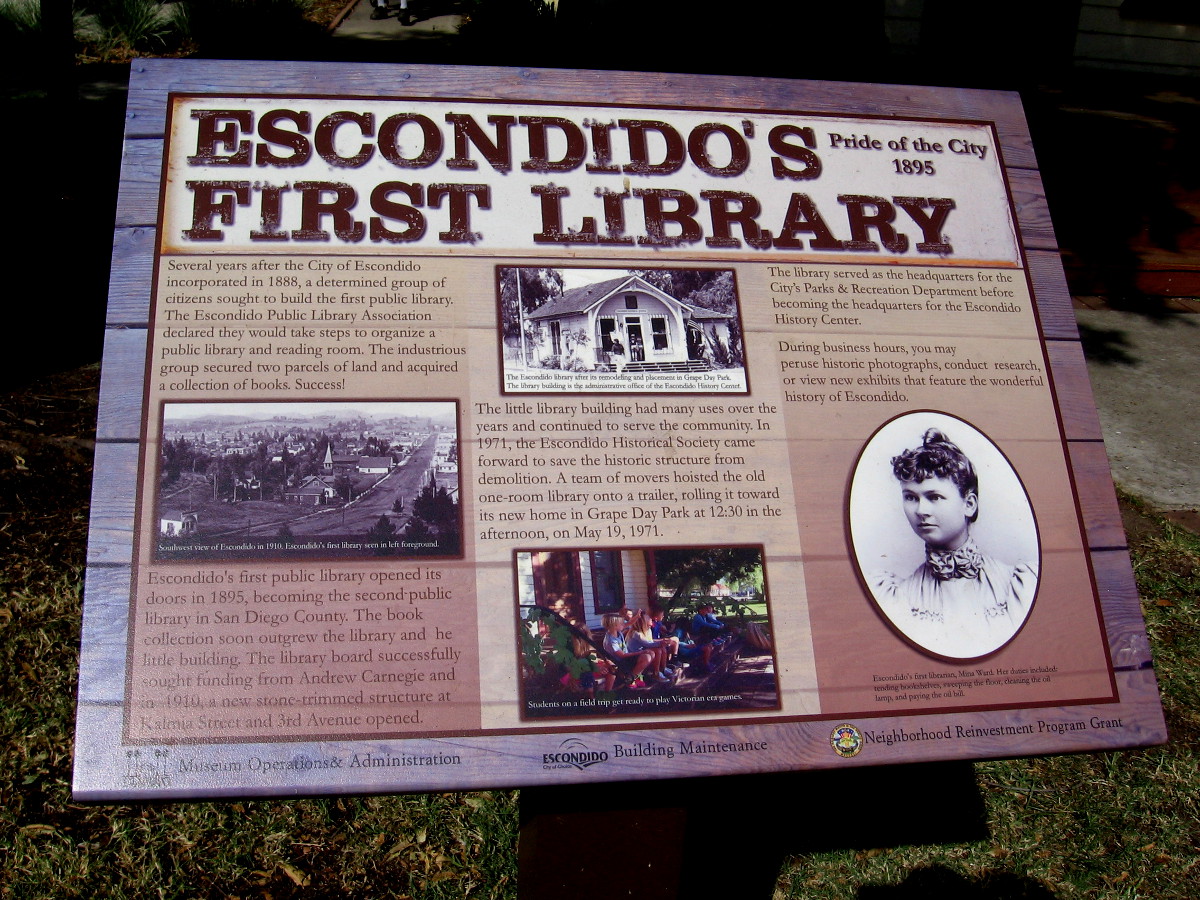
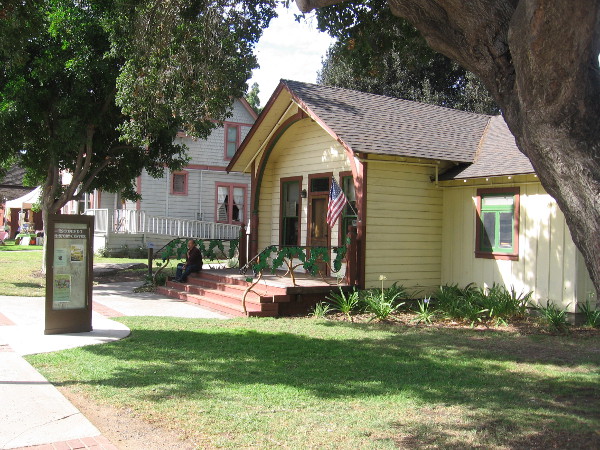
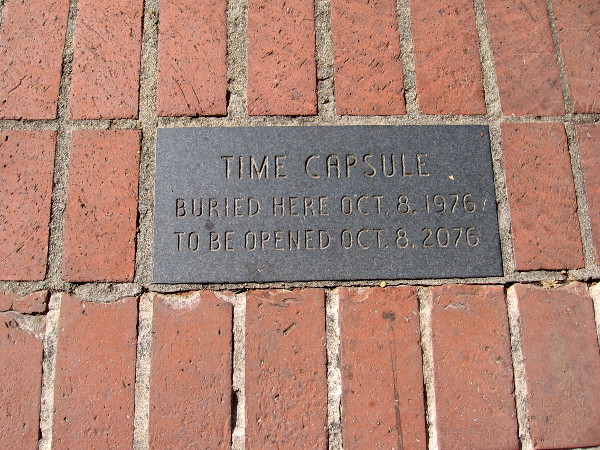
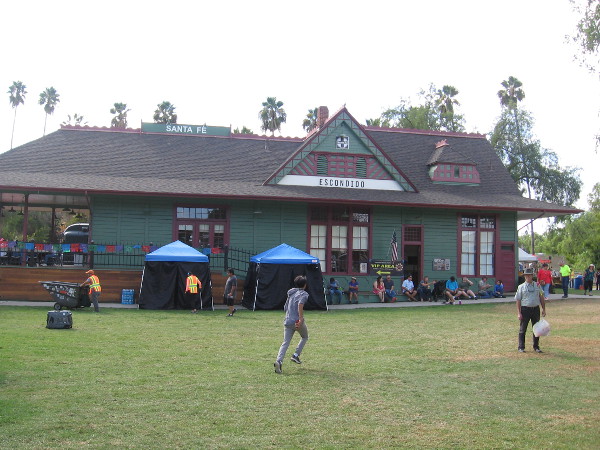
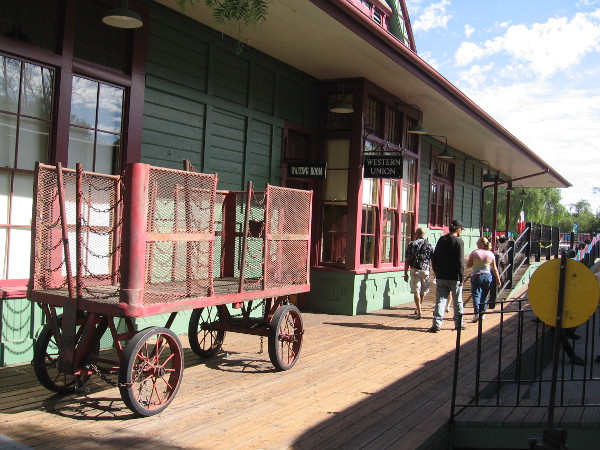
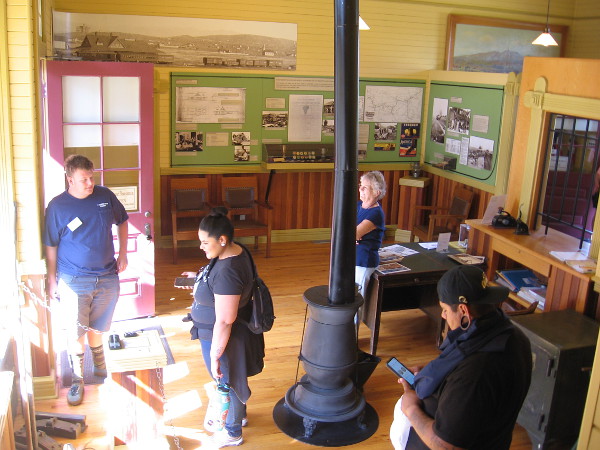
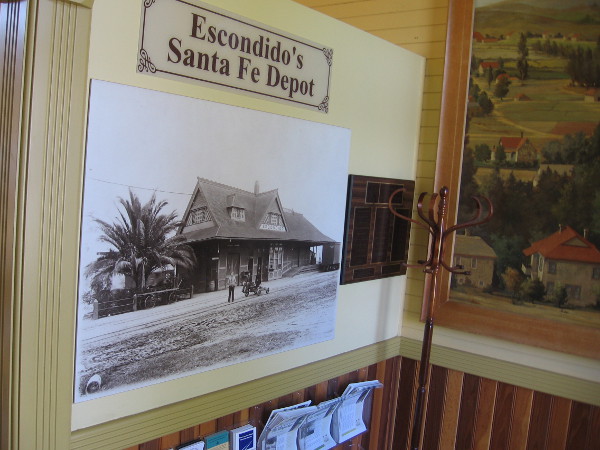
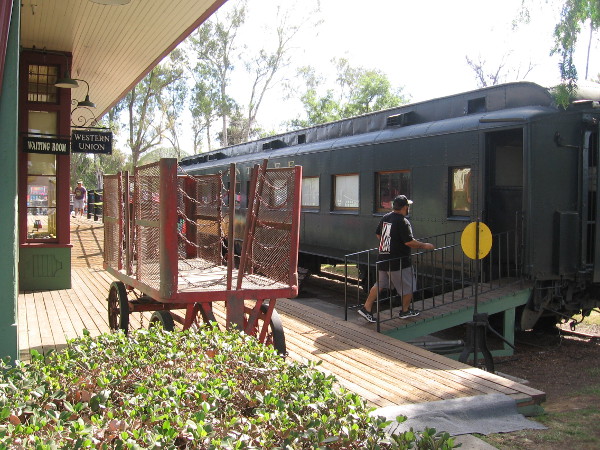
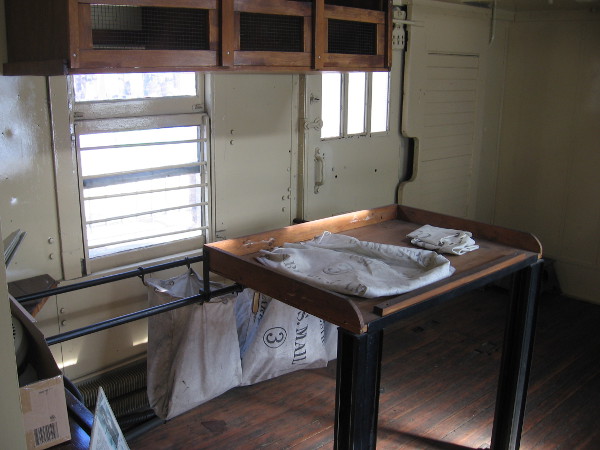
The functioning Bandy Blacksmith and Wheelwright Shop beckons. (It was closed the day I visited.)The 1947 Bandy Blacksmith Shop was reconstructed in Grape Day Park in 1993. The building is used today for education and blacksmith demonstrations.As we continue down the Heritage Walk, the Penner Barn and nearby windmill come into view.The Penner Barn at Escondido’s Heritage Walk.The 1907 Penner Barn was reconstructed here in 1976 using the original exterior siding and doors. It’s now used by the Escondido History Center for special events.Looking backward through the windmill, we see a vintage Caterpillar tractor parked in front of the Penner Barn.The Victorian House is furnished as it might have been a century ago. It is open to the public for tours. (I didn’t go inside the day I visited.)The Victorian Country House is an 1890 Queen Anne style farmhouse that was moved to this location by the Escondido Historical Society.A small tour group assembles on the front porch of the transplanted farmhouse.This modest building was the very first library in Escondido.Escondido’s First Library opened in 1895. In 1971 the Escondido Historical Society saved it from demolition and moved it to Grape Day Park.Escondido’s original public library is now headquarters for the Escondido History Center.Sign details the mission and work of the Escondido History Center, formerly the Escondido Historical Society, which was founded in 1956.A time capsule buried under the Heritage Walk is to be opened in 2076.The handsome old Santa Fe Depot was moved to Grape Day Park in 1984. It houses the main museum of the Escondido History Center.The platform side of the historic train depot, complete with Western Union sign and vintage baggage cart.Exhibits inside the old train depot concern local history, from the Native American Kumeyaay who lived off the land, through Escondido’s development as a town.A black-and-white photograph on one wall shows Escondido’s Santa Fe Depot.Parked next to the depot’s passenger platform is railroad car number 92, built by the Pullman Company in the 1920s.Inside the railroad car is a huge, detailed model train layout that kids love!Sacks of mail were transported at one end of the railroad car.Visitors inside the old railroad car relax and enjoy another facet of Escondido’s fascinating history!
…
I live in downtown San Diego and love to walk around with my camera! You can follow Cool San Diego Sights via Facebook or Twitter!
You can easily explore Cool San Diego Sights by using the search box on my blog’s sidebar. Or click a tag! There are thousands upon thousands of photos for you to enjoy!
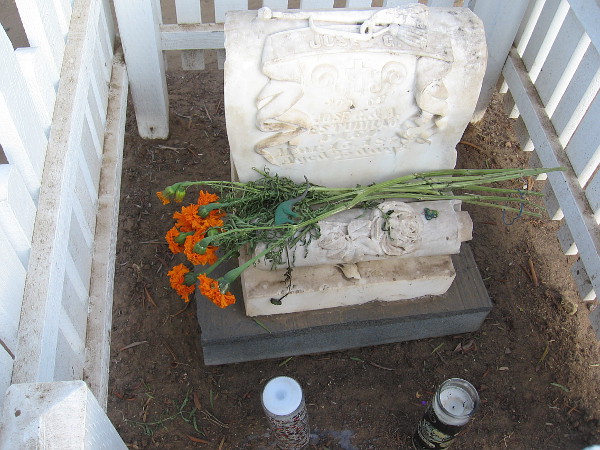
Most of the traditional Día de los Muertos decorations have been put away.
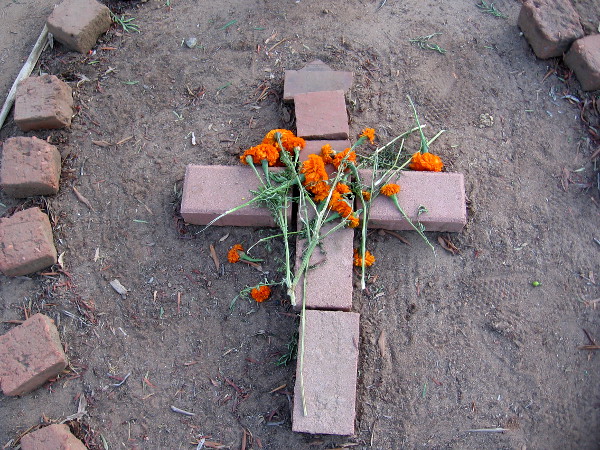
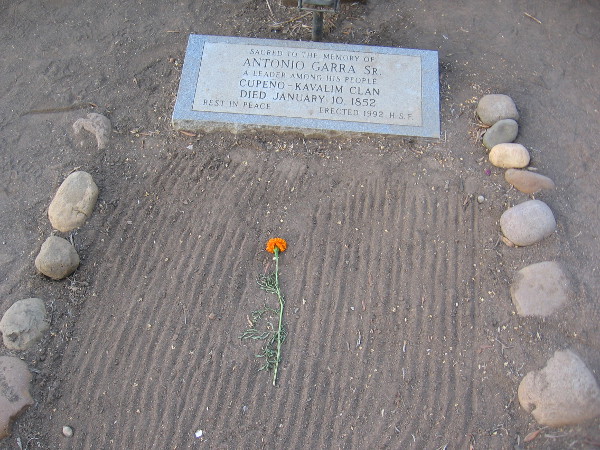
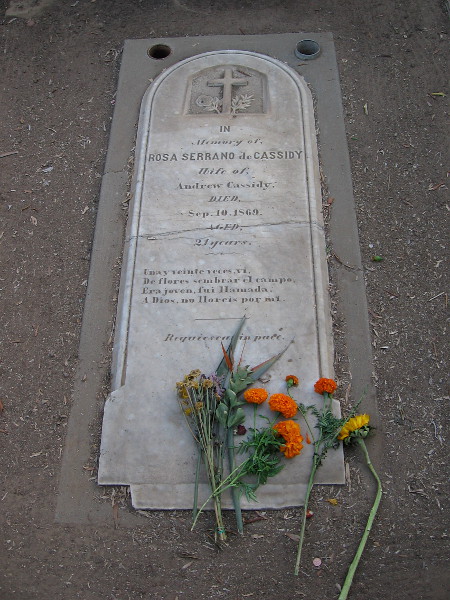
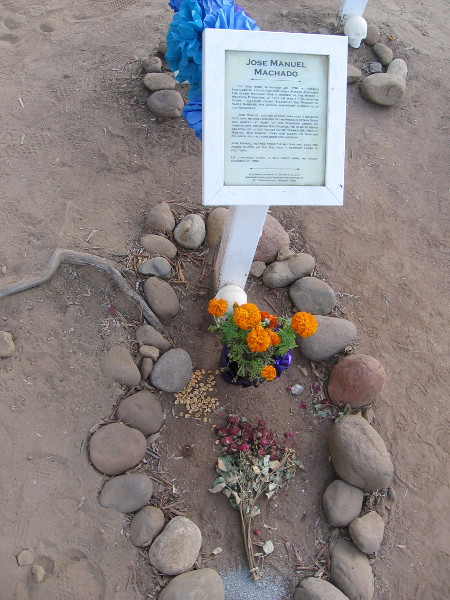
In the small El Campo Santo cemetery, marigolds are all that remain.
According to Mexican tradition, marigolds, with their color and scent, guide spirits back to the living.
El Campo Santo (The Holy Field) is where many of San Diego’s earliest residents were buried. Marigolds on graves remind the living that those who founded our city are still with us.
To learn more about some of the people laid to rest in Old Town’s historic El Campo Santo cemetery, click here.
…
I live in downtown San Diego and love to walk around with my camera! You can follow Cool San Diego Sights via Facebook or Twitter!
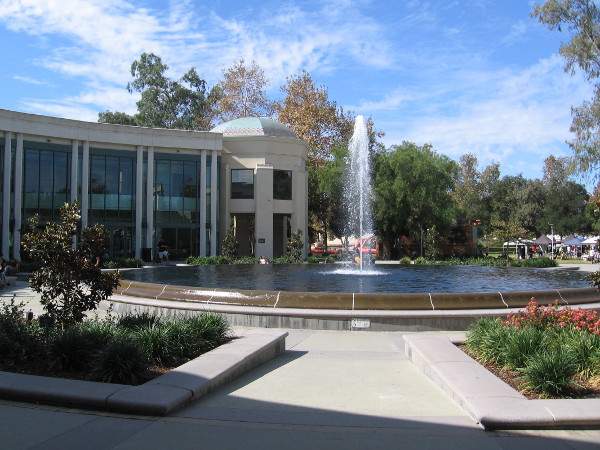
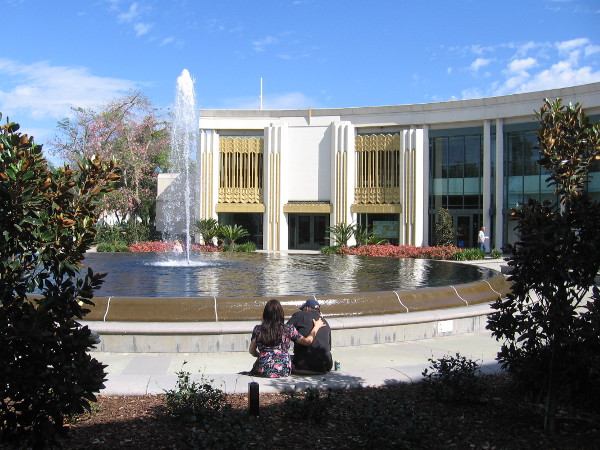
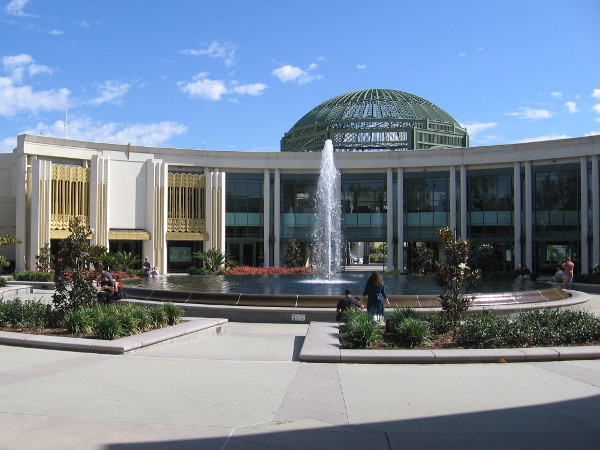
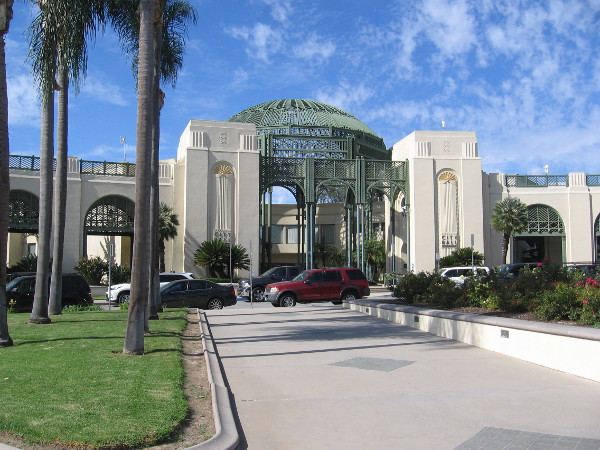
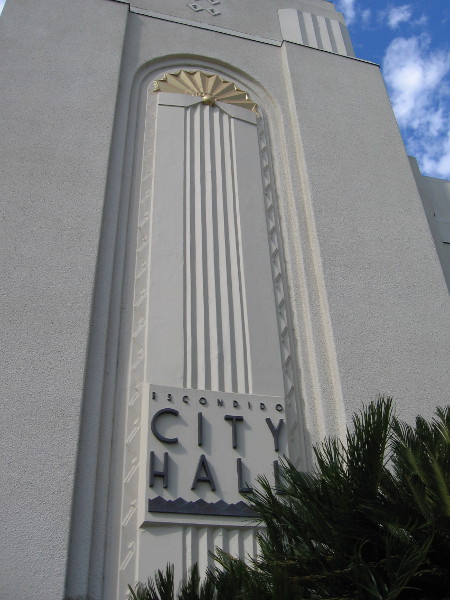
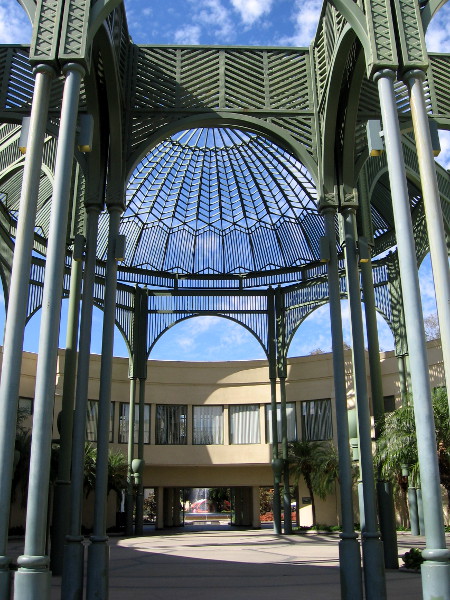
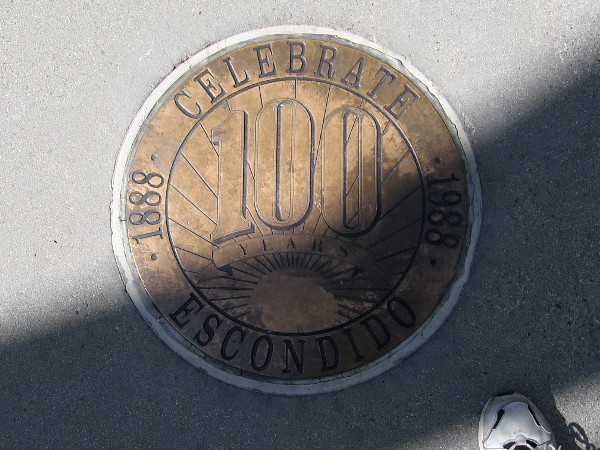
Escondido City Hall was built in 1988. Its design remains remarkable today. Walk around the stately but welcoming building, and you’ll be greeted by light, water and beauty.
I enjoyed a look at City Hall’s award-winning architecture during my visit to Escondido last weekend. In the past I’ve been able to venture inside, and I can tell you the functional interior is just as spacious and friendly.
You can learn more about the history of the Escondido Civic Center here.
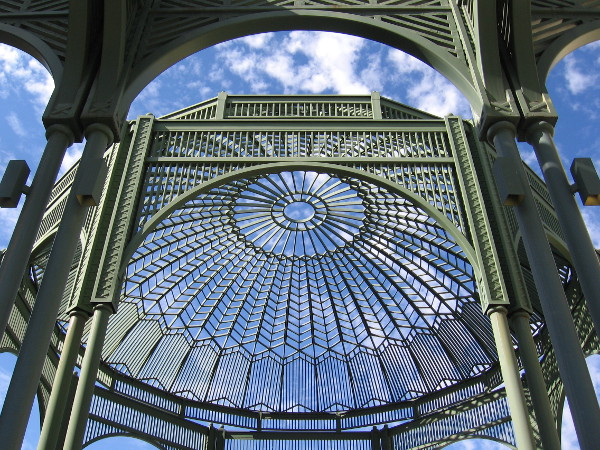
My photos include the large fountain by Grape Day Park and the fantastic open dome at the building’s entrance.
…
I live in downtown San Diego and love to walk around with my camera! You can follow Cool San Diego Sights via Facebook or Twitter!
You can easily explore Cool San Diego Sights by using the search box on my blog’s sidebar. Or click a tag! There are thousands upon thousands of photos for you to enjoy!
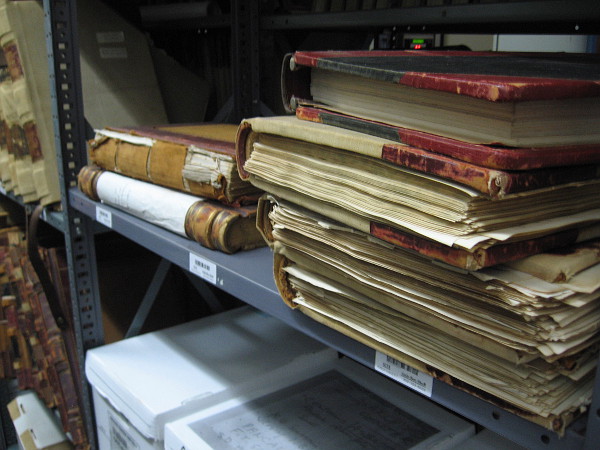
Stacks of old books contain important records in the cold vault of the San Diego City Clerk’s Archives Center.
Yesterday I stepped into City Hall to enjoy an educational event open to the public during the City Clerk’s 3rd Annual Archives Month. When I entered the Archives Center in the basement of the San Diego City Administration Building, I didn’t really know what I might experience.
I saw and learned more from this behind the scenes tour than I expected!
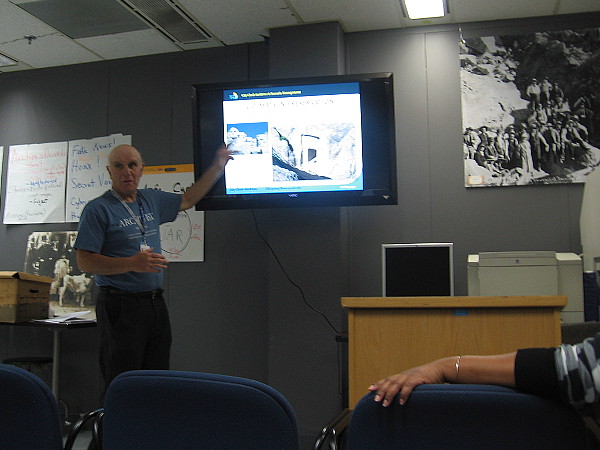
I and a few others were led into a small lecture room and introduced to City of San Diego Archivist Jerry Handfield. He’s an energetic historian and professional archivist who in the past has served as State Archivist for both Indiana and Washington.
Jerry Handfield presented an overview of his job and explained the critical importance of maintaining genuine, reliable, trustworthy public records.
We learned that good governance depends on maintaining accurate records. Trustworthy public records protect the rights of citizens and promotes public trust in government. A healthy democracy relies on trust in its institutions.
Archives play such an important role that in 1850, when San Diego was a tiny town with very limited resources, the city’s newly created common council directed that a very expensive iron safe be appropriated to the clerk for the safekeeping of city records.
As an archivist, Jerry Handfield provided a list of reasons why records matter: they protect life (medical records), protect the public from disasters (maps and floor plans), protect property rights (deeds), and include all sorts of other critical information. He mentioned insurance and bank records, marriage licenses, work licenses and business records.
We learned that for an archivist preservation is a constant war. It’s a war against time, negligence, disasters like floods and mold, decay caused by acids in paper, and other often unpredictable factors. Some media that store records, such as floppy disks and magnetic tape, degrade over time, become corrupted or technologically obsolete.
Some of the City Archive’s older paper documents are given a special chemical treatment to help preserve them. Many are placed in acid-free sleeves or boxes and placed in a temperature and humidity controlled cold vault.
The City Clerk Archives is continuously working to digitize its many hard copy records–to preserve them for all time and make them readily available to the public via the internet. But there remain thousands upon thousands of documents and photos to be scanned and classified.
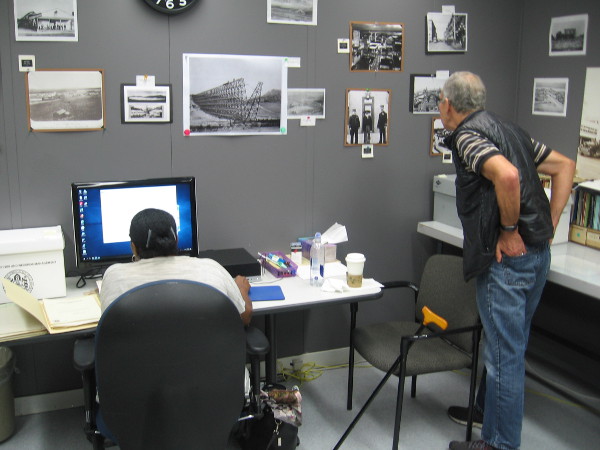
After the lecture we stepped into the cold vault and saw shelves stacked high with archival material. Then we stepped into a room where photos and negatives are scanned and digitized.
Ranged all around the main room of the Archives Center are additional interesting displays. I saw many Mayoral Artifacts that were presented as gifts to the city from all over the globe. Among these are an assortment of beautiful decorative plates.
Enough of my inadequate written description. Let’s look at a few photos and you’ll get a better idea of what I experienced!
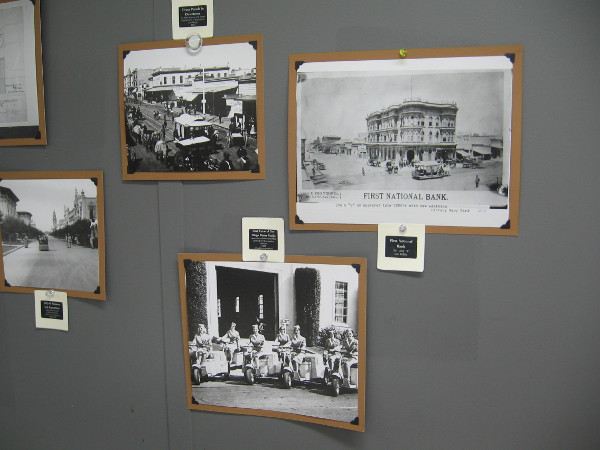
San Diego City Archivist Jerry Handfield describes the importance of accurately recording and carefully preserving critical information.Stacks of boxes containing official records fill the temperature and humidity controlled cold vault at the City Archives.Archivist Jerry Handfield shows visitors shelves of old canvas and leather-bound books, including many that contain past City Council Resolutions.In one room at the Archives Center, old photographs are scanned and categorized by trained volunteers, in order to be digitized for easy public access.Many cool historical photos of San Diego cover the walls of this room!Man and Children in Halloween costumes, circa 1960.First Official Map of San Diego, June 1867.A treasure trove of San Diego history at one’s fingertips!Mayoral artifacts displayed in the main room of the San Diego City Clerk’s Archives Center include gifts from other cities and people around the world.Armetale plate with Seal of City of San Diego.Paper mache oni mask from Mizusawa, Japan.Filner Mayoral Artifact RF-4. Ballast Point Whaling Station, San Diego, California (1820’s).While walking about the main room of the City Archives I spied this cover of an Official Views San Diego Panama-California Exposition souvenir book.Boxes upon boxes hold tons of paper records in the basement of City Hall!
…
I live in downtown San Diego and love to walk around with my camera! You can follow Cool San Diego Sights via Facebook or Twitter!
You might say this blog is a sort of digital archive. You can easily explore Cool San Diego Sights by using the search box on my blog’s sidebar. Or click a tag! There are thousands upon thousands of photos for you to enjoy!
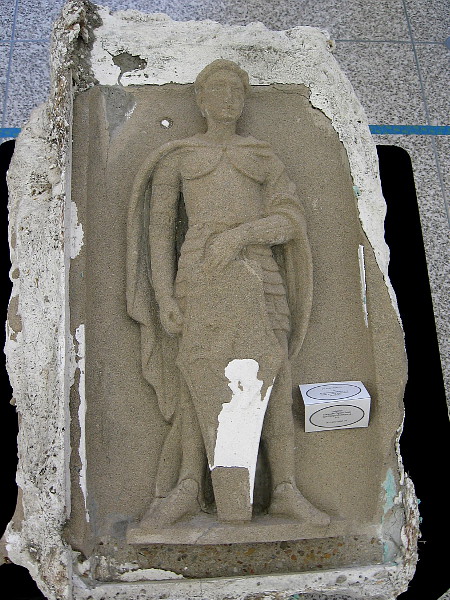
Original concrete figure from San Diego Museum of Art, 1915-1916.
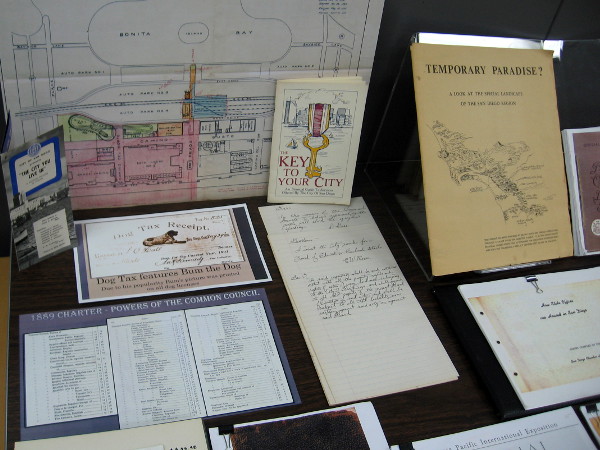
Today I walked to the City Administration Building in downtown San Diego to view a unique historical exhibit. During City Clerk’s Archives Month, from September 30th to October 31st, the public can step inside the lobby of City Hall and discover Hidden Treasures!
The San Diego City Clerk has partnered with the San Diego History Center to display a variety of documents and artifacts from our city’s past. In addition to this exhibit, Archives Month features many free educational events including lectures, movies and workshops.
(I attended one of the lectures today, and took a tour behind the scenes in the City Administration Building’s basement, where the City Archives are safely preserved. I’ll be blogging about that awesome experience shortly!)
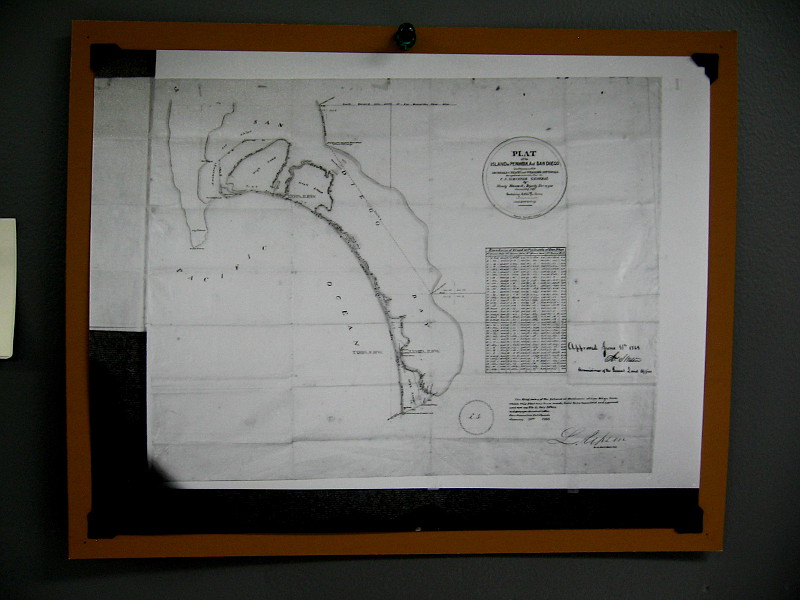
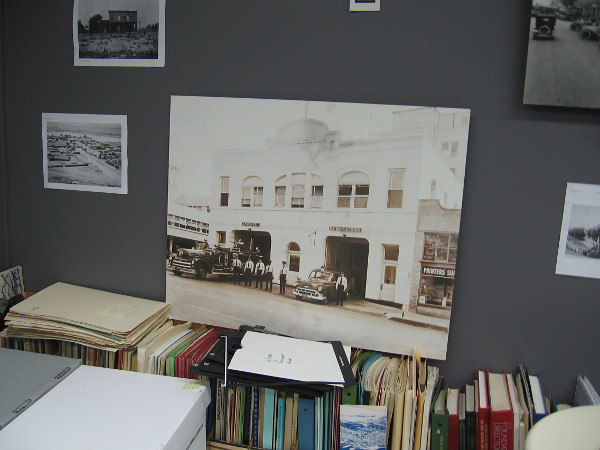
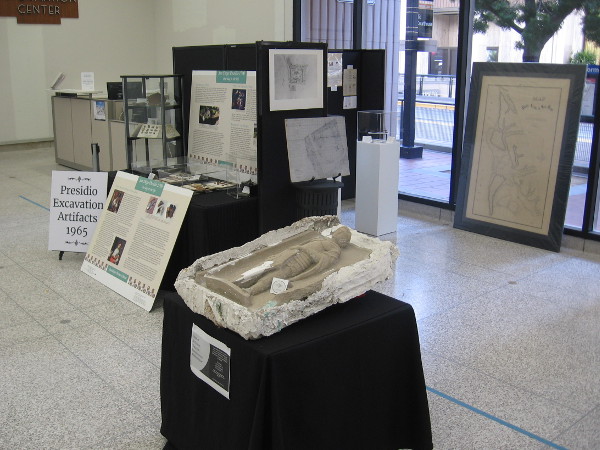
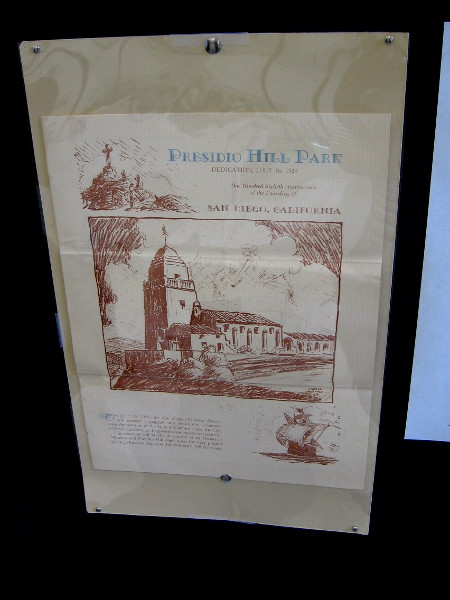
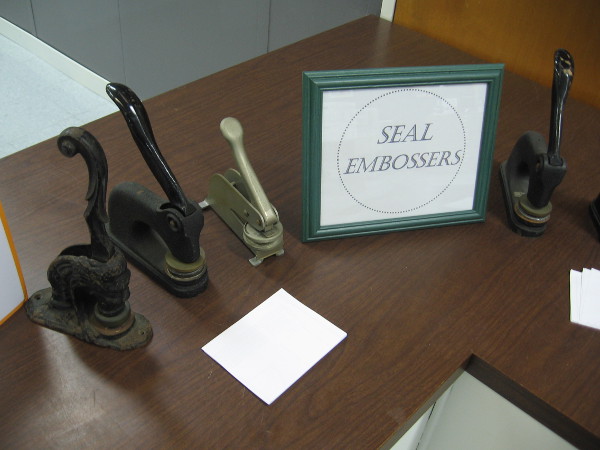
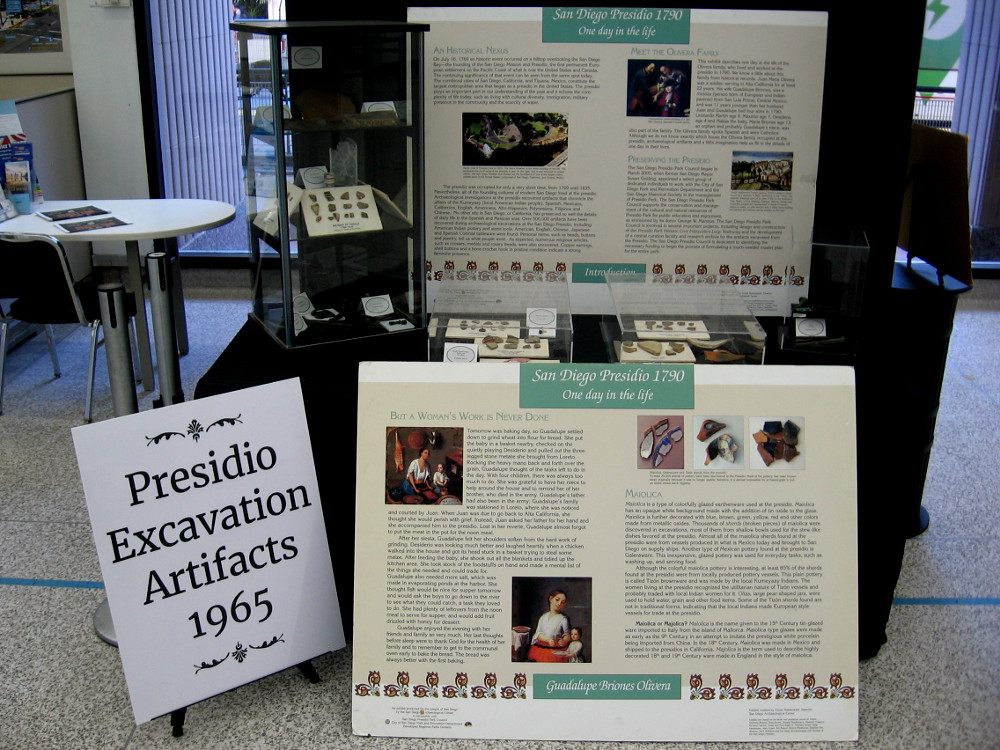
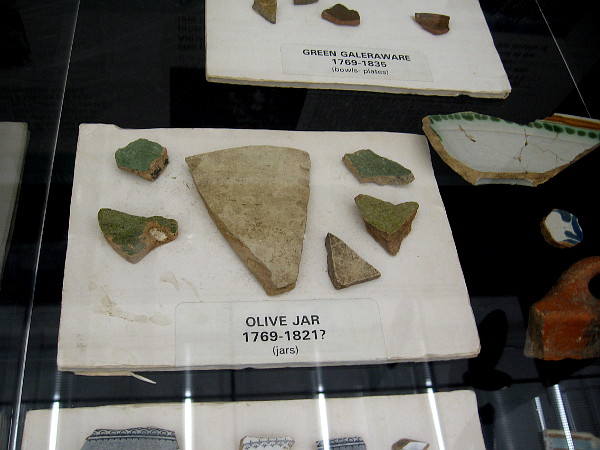
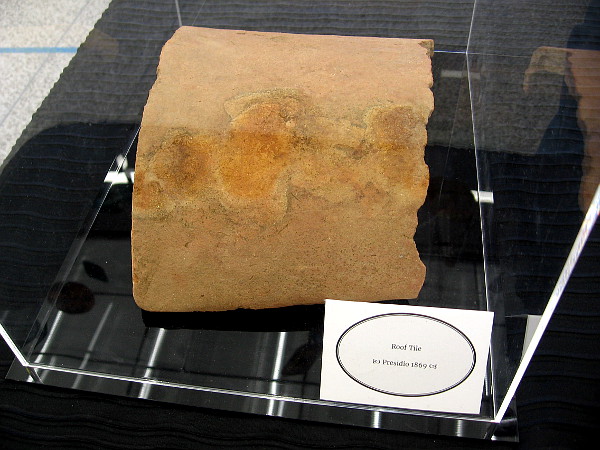
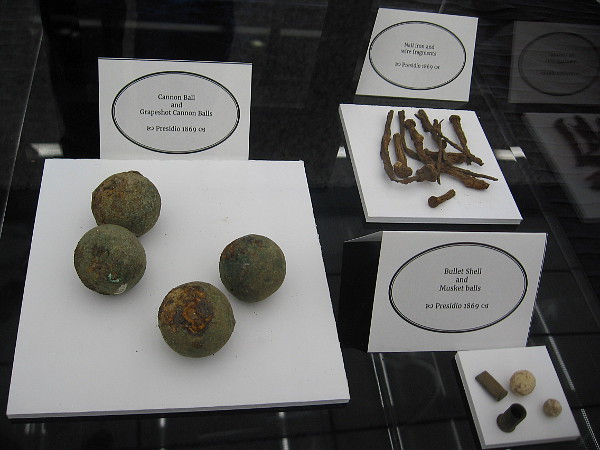
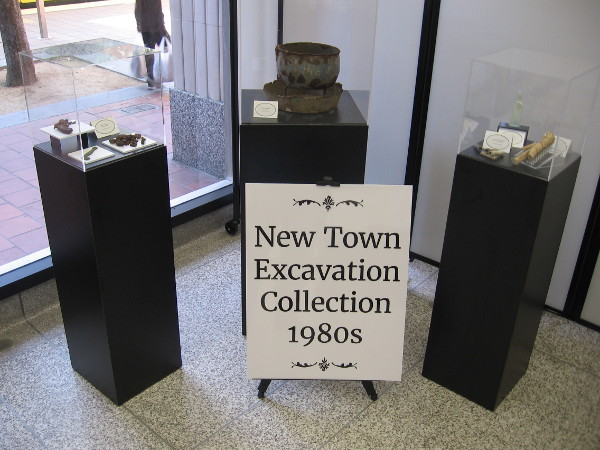
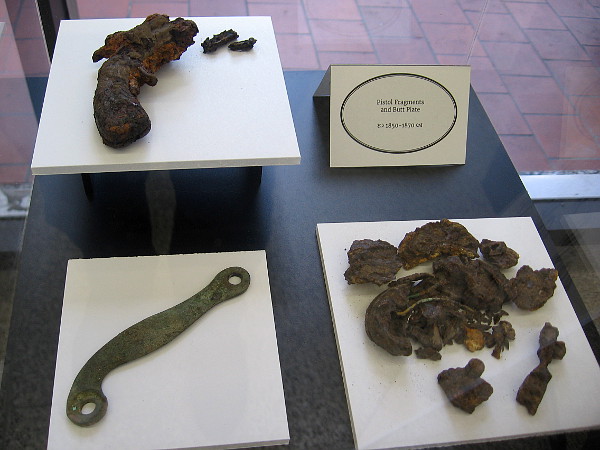
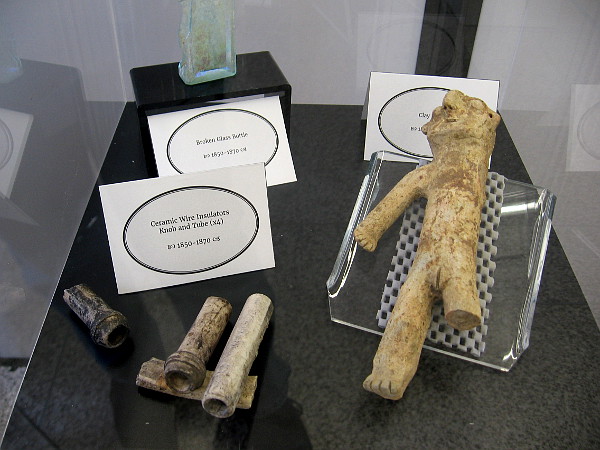
Sign shows 2019 Archives Month Lecture and Tour Schedule. (Click photo to enlarge for easy reading.)City Clerk Archives Month in 2019 features an exhibit of Hidden Treasures in the lobby of the City Administration Building.Many historical documents in the exhibit provide fascinating glimpses into San Diego’s past. (I was pleased to see a Dog Tax Receipt featuring San Diego’s famous town dog, Bum.)Documents on display include an announcement for the Presidio Hill Park dedication in 1929. Pictured is the Junípero Serra Museum, original home of the San Diego Historical Society.A collection of old City Clerk seal embossers.Posters describe life in 18th century San Diego. Nearby are Presidio Excavation Artifacts from 1965.These fragments from an olive jar might date as far back as 1769.The exhibit includes fragments of bottles, jars, bowls and plates from early San Diego.Roof tile from the Presidio.Presidio artifacts include cannon and musket balls.Other artifacts on display include the New Town Excavation Collection from the 1980s.New Town artifacts include pistol fragments, 1850-1870.Other artifacts from 19th century New Town include a broken bottle, ceramic wire insulators and a clay effigy.
…
I live in downtown San Diego and love to walk around with my camera! You can follow Cool San Diego Sights via Facebook or Twitter!
You can easily explore Cool San Diego Sights by using the search box on my blog’s sidebar. Or click a tag! There are thousands upon thousands of photos for you to enjoy!
Is there an old model ship in your attic? Perhaps a treasured family heirloom? Is it falling to pieces or in a terrible tangle? Would you like to restore it?
Today, during a visit to the Maritime Museum of San Diego, I learned of a group of dedicated model ship builders who are busy repairing and restoring old model ships!
The members of the San Diego Ship Modelers Guild love their hobby and hold regular meetings aboard the Maritime Museum ship Berkeley. I happened to be walking around the museum today before one of their evening meetings. I struck up a conversation with Guild Master James Pitt and was fascinated as he told me about various aspects of model ship building.
The San Diego Ship Modelers Guild, which was formed in 1971, has dozens of members hailing from all around Southern California and even Arizona. They have partnered with the Maritime Museum of San Diego, and guild members can often be seen working in the museum’s specially equipped Model Makers Workshop.
What interested me most was how the modeler’s guild has been repairing and restoring an increasing number of model ships of late. Many are family heirlooms passed down from previous generations, and are treasured for the memories and special meaning they embody.
If you have any sort of model ship that needs expert repair, check out the San Diego Ship Modelers Guild website by clicking here! Send them an email! I met a couple of the members and all were really nice guys!
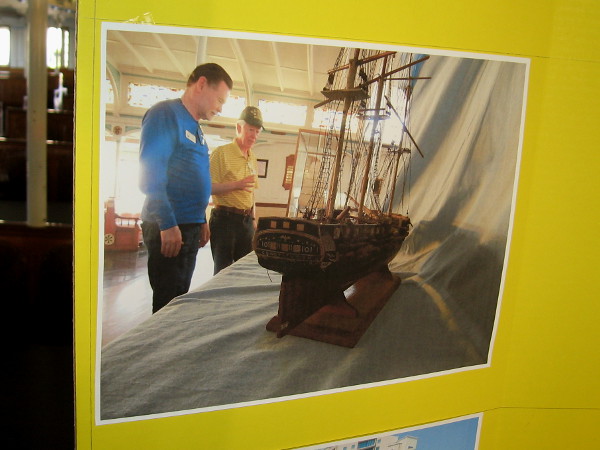
I took some photos of a display for today’s meeting. You can see examples of model ships that have undergone restoration.
…
I live in downtown San Diego and love to walk around with my camera! You can follow Cool San Diego Sights via Facebook or Twitter!
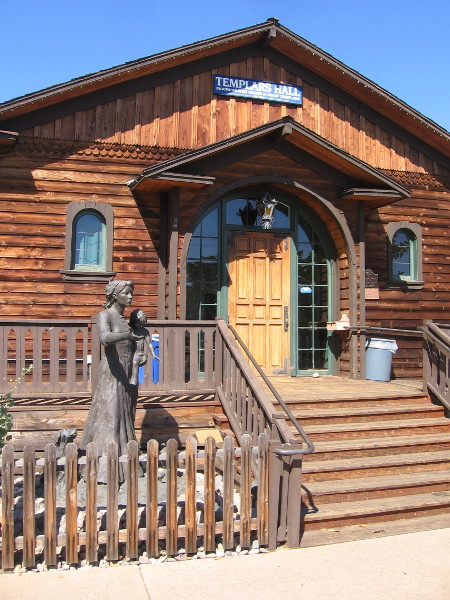
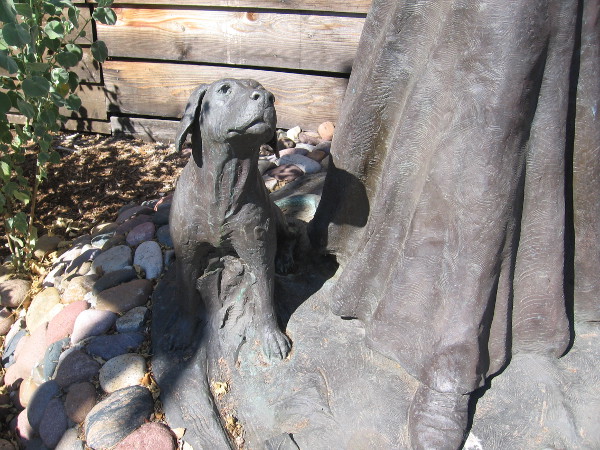
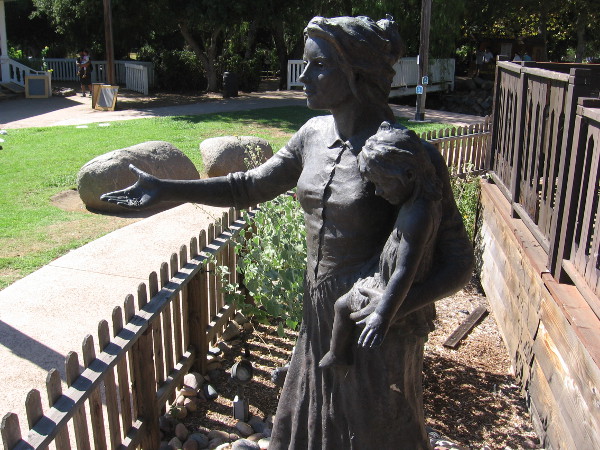
Last weekend I walked all around Old Poway Park. During my visit I took a look at the park’s many historic structures and interesting sights. When I approached the front of the 1886 Templars Hall, I noticed a large bronze sculpture standing near the foot of the front steps.
The Pioneers is a seven-foot-tall bronze sculpture by renowned local artist Richard Becker. It was commissioned in 2006 by the City of Poway. The gentle figures of a mother, child and faithful dog provide a beautiful tribute to Poway’s early pioneer founders.
Plaque reads: The Pioneers. Sculptor Richard Becker, 2007. Mother and child welcoming families to Poway. A tribute to the pioneers who settled in Poway at the turn of the 19th century.
…
I live in downtown San Diego and love to walk around with my camera! You can follow Cool San Diego Sights via Facebook or Twitter!
You can easily explore Cool San Diego Sights by using the search box on my blog’s sidebar. Or click a tag! There are thousands upon thousands of photos for you to enjoy!









































 Cool San Diego Sights!