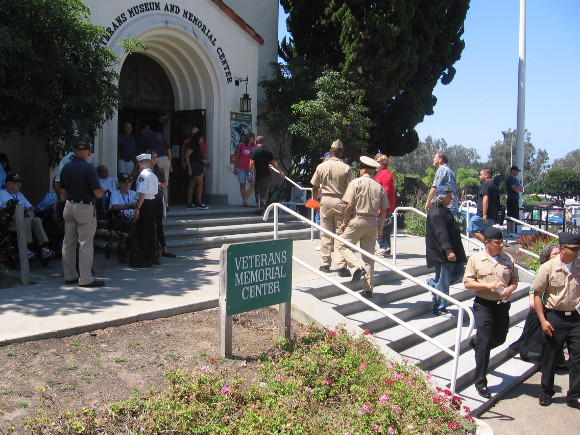
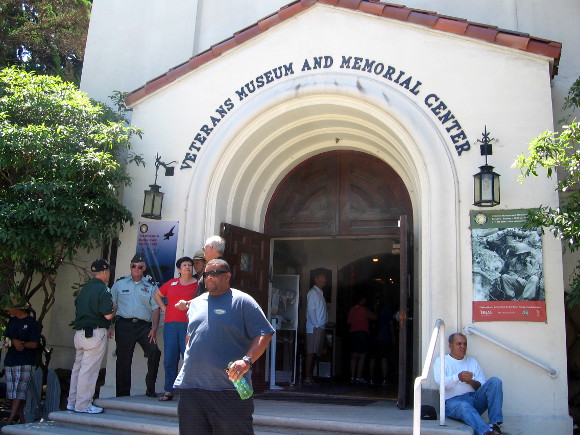
On steps of the Veterans Museum and Memorial Center in Balboa Park.
Today a special event was held at Balboa Park’s Veterans Museum and Memorial Center. The Spirit of 1945 National Day of Remembrance honored American veterans who defended freedom around the globe during World War II.
The Spirit of ’45 is an annual event held throughout the United States in many cities. It marks the anniversary of V-J Day, the day the Japanese finally surrendered and World War II ended. The special event has become increasingly important, as thousands of heroes from The Greatest Generation now pass away every year.
Many San Diego dignitaries attended today’s ceremony, including an ex-mayor, city council member, district attorney, police chief, plus some very high-ranking military officers. But in my mind, the day was all about ordinary Americans who personally sacrificed to do an extremely difficult and very important thing.
Several of these heroes recalled in short speeches what it was like to hear the news that the war had ended. You could hear the emotion in their voices, almost 70 years later.
After the ceremony, veterans told their personal stories inside the museum, so that memories will continue of those times and their deeds.
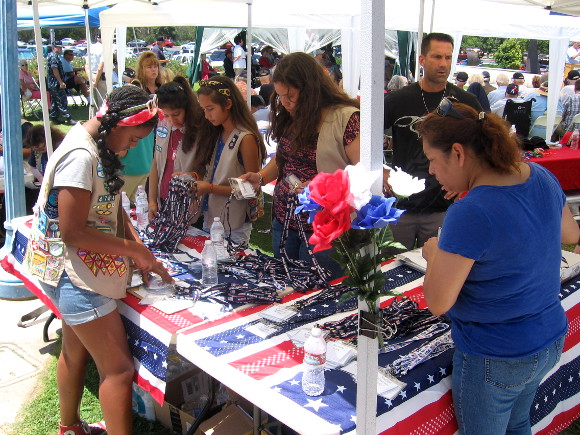
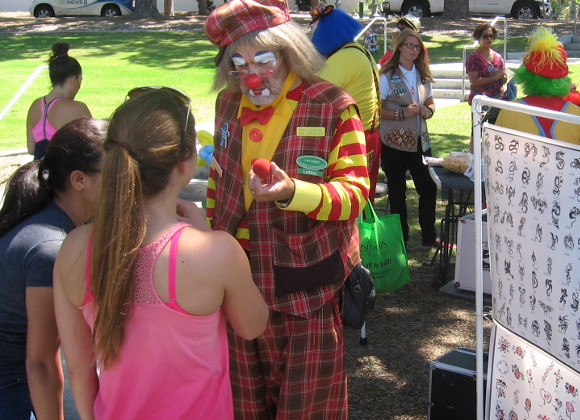
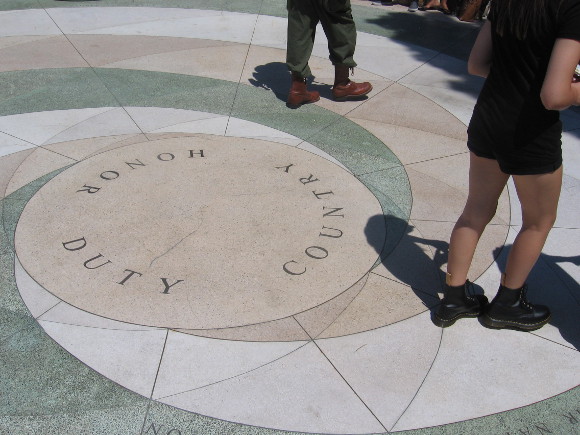
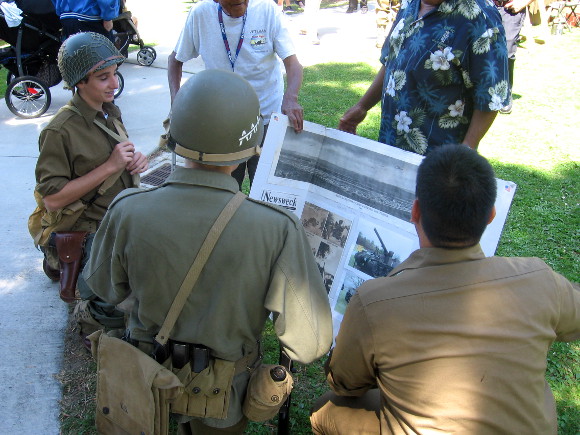
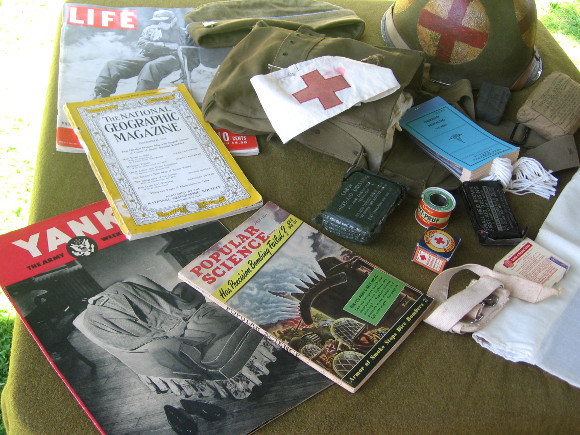
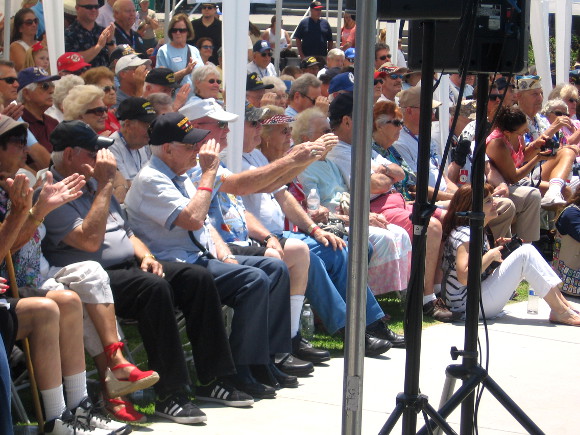
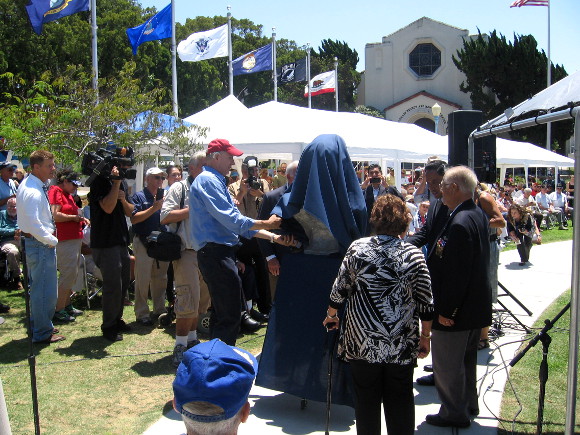
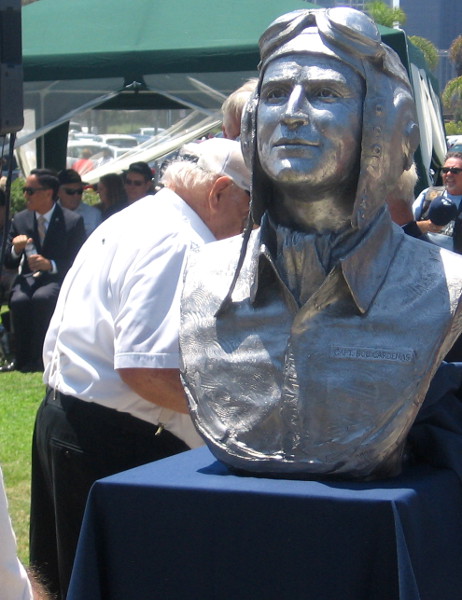
Spirit of 1945 National Day of Remembrance was held near the museum.Memorial for combat wounded veterans is one of the nearby monuments.Color guard poses for me while they wait for the event to officially begin.World War II veteran helped by serviceman into museum side door.Tents line walkway where Spirit of 1945 event took place today.Girl Scouts help to check in the honored veterans.Over a hundred vets were in attendance, remembering the war’s end.Mt. Soledad Veterans Memorial had a display.Filipino-American Military Officers Association tent.Clowns and face painters were there to entertain families with kids.Duty Honor Country written at the center of a small circular plaza.Dancers enjoy the nearby band playing swing music!Now it seems everybody’s dancing!Here are the musicians. Big band music was playing from the 1940s era.B-24 Liberator bomber from World War II rises above a nearby fountain.Now I’m standing in back area where chairs were under shady trees.Nearby, guys in vintage military uniforms look at some historical images.Kids check out a tent and various items carried by soldiers decades ago.Many were wearing clothing and uniforms common during World War II.Display on grass shows maps and articles from a battlefield.Scattered items inside a command tent include old magazines.One got a flavor of the difficult experiences of the Greatest Generation.Here comes color guard, prior to National Anthem and Pledge of Allegiance.Veteran talks about Victory in the Pacific and how overjoyed the troops were.A generation of veterans listens as speakers honor their sacrifices for freedom.Veterans salute a general who spoke about his pride for those who served.A bust to be set near the B-24 Liberator sculpture is unveiled by local artist Richard Becker. To the far right stands retired Brigadier General Robert L Cardenas, USAF.Bust of Brigadier General Robert L Cardenas , an accomplished World War II aviator. The sculpture was created by renowned San Diego artist Richard Becker.Everyone listens to happy memories of V-J Day on August 14, 1945.Crowd was twice the size that had been expected.The ceremony ends and I take a pic over beautiful flowers.Sailors ready to help aging American heroes back to their cars.
…
To enjoy future posts, you can “like” Cool San Diego Sights on Facebook, or follow me on Twitter.
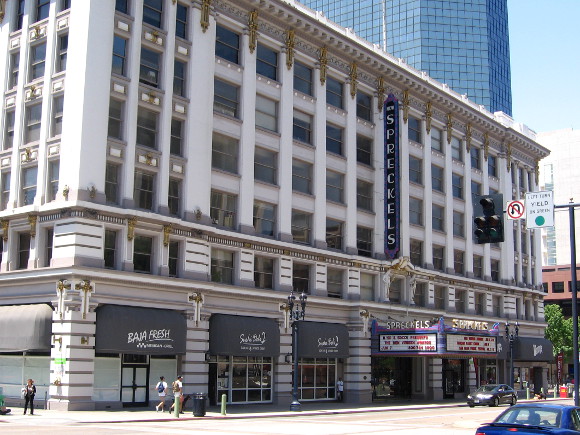
The Spreckels Theater Building was erected in downtown San Diego in 1912.
I must confess I’ve never seen a show at the historic Spreckels Theatre. I do occasionally sit at a table in the building’s Grand Lobby. On a quiet Saturday I’ll eat lunch and write while watching pedestrians pass down the Broadway sidewalk, just outside the glass doors.
The mixed-use Spreckels Theater Building was built in 1912 and has been a cool sight in downtown San Diego for over a hundred years. While the upper stories are occupied by numerous small offices, the theatre itself was built as a 1,915-seat auditorium with an ornate Baroque interior. Over the decades, the theatre has also served as a vaudeville house and movie palace. Famous performers at the theatre have included Enrico Caruso, John Barrymore, Al Jolson, Will Rogers, and Abbott and Costello. In 1978, when Balboa Park’s famous Old Globe Theatre was destroyed by fire, the Spreckels was used as a temporary stage for the Globe. Today, as a live presentation venue, the Spreckels Theatre attracts many diverse attractions, including concerts, comedy shows, and dance and theatrical productions.
The six-story building, designed by Harrison Albright with influences from the Chicago School style of architecture, was built by philanthropist John D. Spreckels, a name you might have noted elsewhere on my blog. Spreckels was a wealthy sugar heir and leading San Diego entrepreneur. He wanted the building to commemorate the opening of the Panama Canal, much like the Panama-California Exposition, that would be held in Balboa Park in 1915.
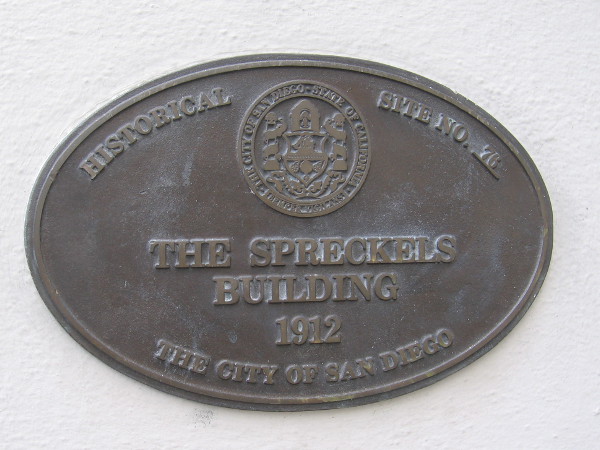
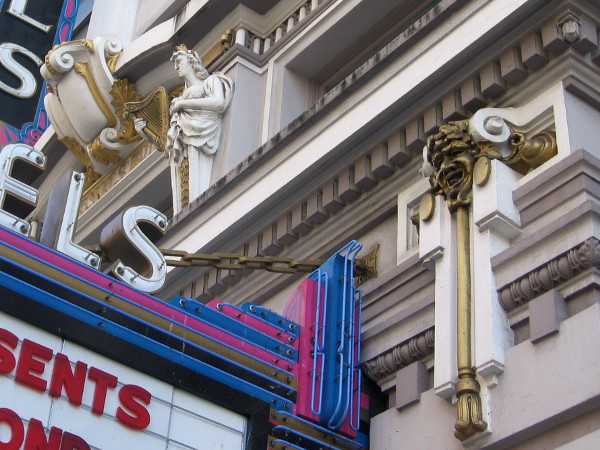
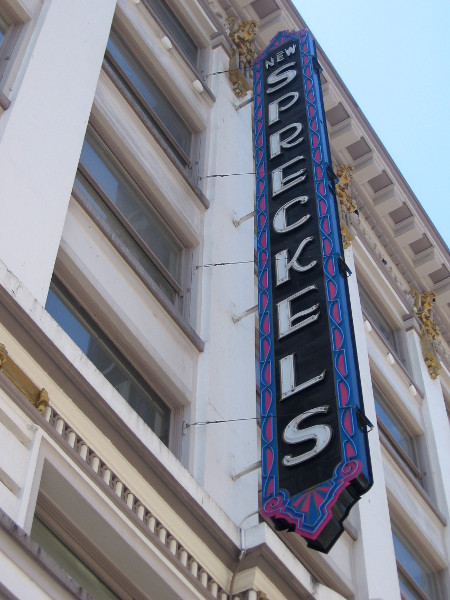
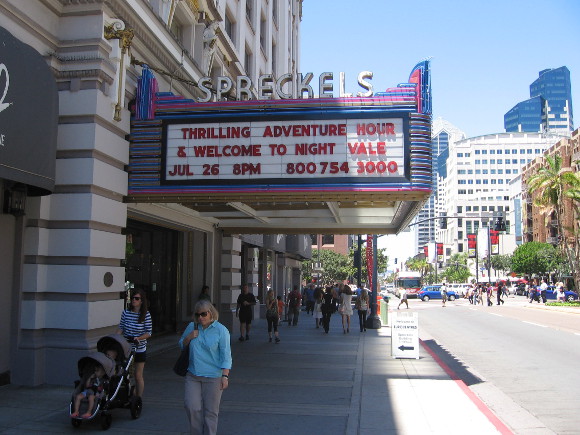
Plaque on The Spreckels Building indicates it’s an historical site of the City of San Diego.The Spreckels marquee is a cool fixture on Broadway in San Diego.Classic theatrical figures above and beside the marquee.Looking up at the Spreckels sign.The shining, polished onyx Grand Lobby of the Spreckels Theater Building.Close look at the ornate old ceiling in the Grand Lobby. The building has undergone several restorations over the years, most recently in 2012.A Tiffany window depicting Nine Dancing Muses was originally above the theatre’s entry. While stored during World War II due to blackout regulations in the city, the window was stolen. It was replaced in 1985 by this colorful window designed by Yaakov Agam.Gazing west down Broadway on another sunny day.
…
To enjoy future posts, you can “like” Cool San Diego Sights on Facebook, or follow me on Twitter.
Approaching the La Casa de Machado y Stewart Museum in Old Town.
It seems most of the tourists who visit Old Town San Diego State Historic Park enjoy the large central grassy plaza and the many interesting buildings immediately around its perimeter. Few, however, go slightly off the beaten track to investigate the several restored old structures that are scattered a few easy steps farther away.
In addition to a very cool one room schoolhouse dating from 1865 (which I remember visiting during a field trip as a child), there is a restored adobe house called Casa de Machado y Stewart which stands as an open museum to any passersby who are curious.
The Casa de Machado y Stewart dates from 1835. It was built by José Manuel Machado, a Spanish (then later Mexican) officer who served at the nearby presidio. Jack Stewart, an American shipmate of famous author Richard Henry Dana Jr., and a pilot on San Diego Bay, married Machado’s youngest daughter Rosa in 1845 and the two moved into the house. Over their many years of residence they made many improvements, including a clay tile roof and wood-paned windows. What today seems a very simple and almost primitive existence was back in those days living in the lap of luxury.
In 1932, the house became an official California Historic Landmark.
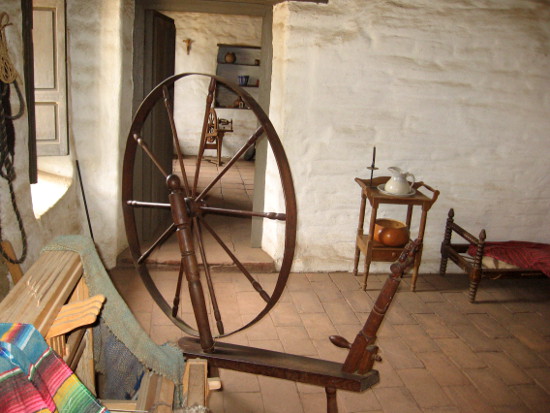
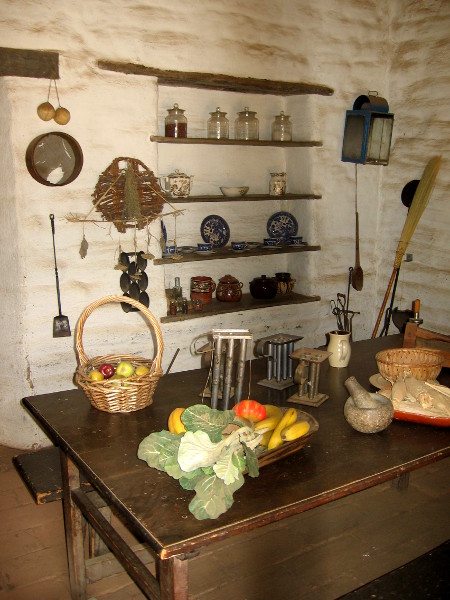
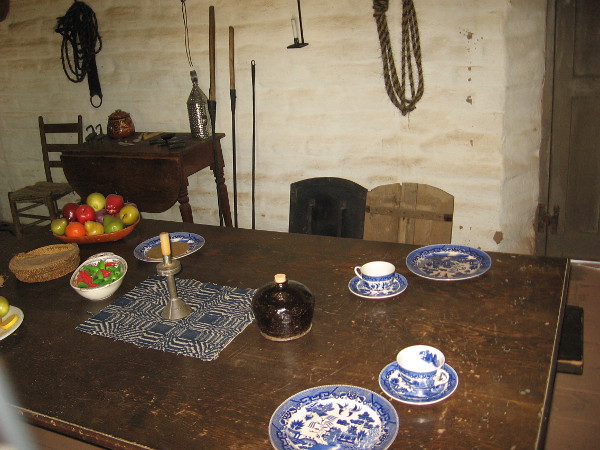
Restored 1835 adobe house in San Diego’s Old Town State Historic Park.Sign details history of La Casa de Machado y Stewart.House was built by a soldier from nearby presidio.A spinning wheel in one of the simple rooms suggests what life was like.A modest dining area as it appeared long ago.
UPDATE!
I visited La Casa de Machado y Stewart again in August, 2018, and noticed the exterior had been painted white. When I looked through the front door into the main living room, I observed that new furnishings and artifacts have been added, and others moved about.
I also peered through a window into what appears to be a bedroom.
Here are photos…
…
To enjoy future posts, you can “like” Cool San Diego Sights on Facebook, or follow me on Twitter.
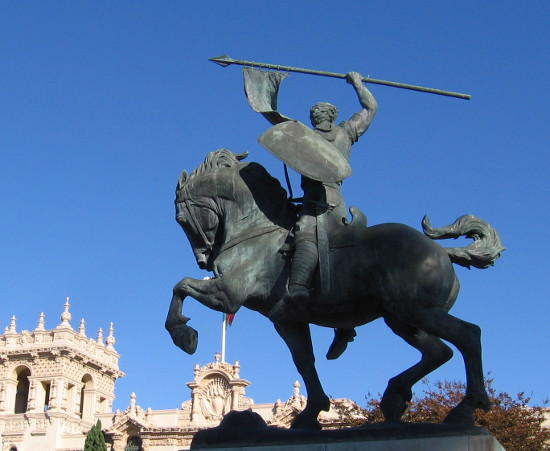
El Cid sculpture in Balboa Park, by artist Anna Hyatt Huntington.
Near the center of Balboa Park, between the San Diego Museum of Art and the Spreckels Organ Pavilion, you’ll find a 23-foot high bronze statue of El Cid. The legendary hero of Spain is mounted on his horse Babieca and proudly holds a spear and shield.
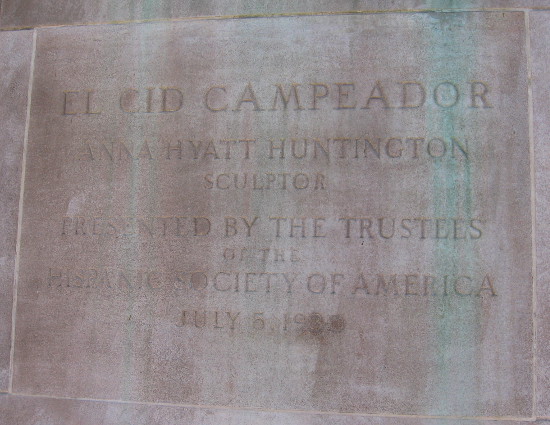
The striking sculpture is formally called El Cid Campeador and was created in 1927 by Anna Hyatt Huntington, a famous American sculptor who during her life won numerous awards and commissions. Most known for her lifelike animal sculptures, she is remembered for being the first woman to create a public monument in New York City. Her Joan of Arc was also New York City’s first monument dedicated to a female historical figure.
Anna Hyatt Huntington was married to Archer Milton Huntington, a wealthy philanthropist and art enthusiast, who founded The Hispanic Society of America. He made the very first contribution to the nearby San Diego Museum of Art, in the form of the painting María at La Granja, by famed Spanish post-impressionist painter Joaquín Sorolla y Bastida.
The El Cid in Balboa Park is one of several identical statues. The original stands in front of the Hispanic Society in New York City. Other copies stand in Seville, San Francisco, and Buenos Aires.
It seems that when the statue was installed in Balboa Park in 1930, there was a good deal of public comment about the horse’s unsightly posterior, and a debate over the direction it should face! To the relief of many, the horse’s rear end faces away from the central square and nearby buildings!
A much smaller horse sculpture by Anna Hyatt Huntington can be enjoyed a short distance to the north of El Cid, right next to the San Diego Museum of Art. It’s called Youth Taming the Wild.
El Cid Campeador, presented by the Hispanic Society of America in 1930.El Cid, with Balboa Park’s House of Hospitality in the background.East side of El Cid. The Mingei Museum is in background.Balboa Park’s free shuttle passes the El Cid statue on a sunny day.
…
To enjoy future posts, you can “like” Cool San Diego Sights on Facebook, or follow me on Twitter.
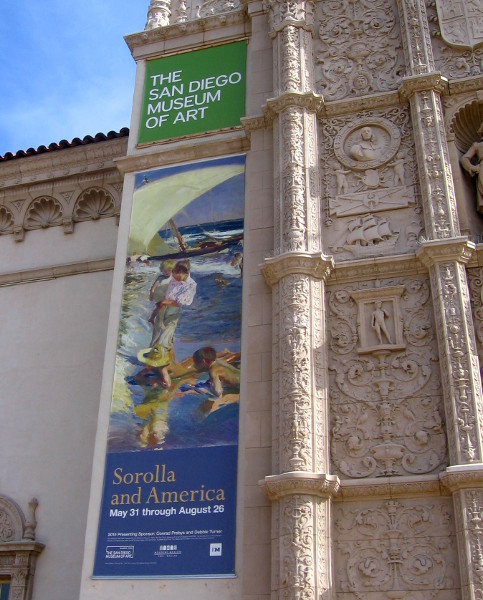
Sorolla and America special exhibit at San Diego Museum of Art.
Light is the physical means by which my eyes see. But I often don’t see true light.
Light is a mixture of myriad colors. But I often don’t see those many colors.
Yesterday I was struck by a few small touches of rare light. My eyes widened with astonishment during a few joyful, delicious moments of revelation.
I was very fortunate and privileged to be a given a special tour of the amazing Sorolla exhibition at the San Diego Museum of Art in Balboa Park. Catherine Jones, a docent at the museum, provided an excellent introduction to the light-dabbed paintings of a very important artist that the world has often overlooked.
Joaquín Sorolla y Bastida was a Spanish post-Impressionist painter who won several major art awards and popular fame while he lived, but who soon became forgotten with the advent of the modern abstract movement in the early twentieth century. His stylistically varied and often unusually angled images contain applications of light like I’ve never before seen. Bits of reflection and exquisite luster, and sheens of revealed color, pulled me into a world where the true essence of a subject seems to shine out like magic, but in a very natural way.
I could have gazed at his emotionally stirring, always fascinating paintings for the entire day!
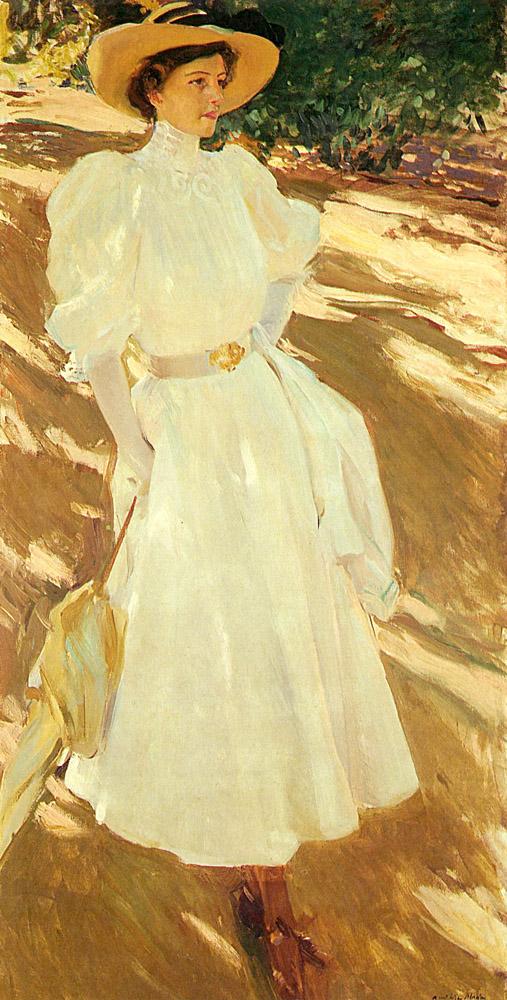
María at La Granja, courtesy San Diego Museum of Art.
The above painting, María at La Granja, was painted by Sorolla in 1907. In it you can see Sorolla’s famous application of light. The piece was donated to the San Diego Museum of Art in 1925 by Archer Huntington, philanthropist and founder of The Hispanic Society of America. The very first work of art to enter the collection, today María at La Granja is probably the most recognized image in the entire museum.
Joaquin Sorolla’s Portrait of President Taft, courtesy of Wikipedia.
Joaquin Sorolla’s Portrait of President Taft was commissioned by the president in 1909. It is one of many canvases in a special exhibit at the San Diego Museum of Art assembled from museums throughout the world. Most of Sorolla’s important works are present, including Another Marguerite (1892), which was awarded a gold medal at the National Exhibition in Madrid and first prize at the Chicago International Exhibition, and Sad Inheritance (1899), which was awarded the Grand Prix and a medal of honor at the Universal Exhibition in Paris in 1900, and the medal of honor at the National Exhibition in Madrid in 1901.
The two paintings that I’ve posted here hardly do justice to the full range of Sorolla’s splendor. His sun-splashed scenes of beach life in Valencia, his diverse and stunning portraits, his detailed scenes of life in Spain, all the essence and astonishing light that he captured, must be experienced firsthand to be most fully appreciated.
These works by Sorolla are on display for a limited time at the San Diego Museum of Art. If you can, you really should go see them! The special exhibition ends August 26, 2014.
…
To enjoy future posts, you can “like” Cool San Diego Sights on Facebook, or follow me on Twitter.
Mural in Old Town alley depicts explorer Juan Rodriguez Cabrillo.
I was wandering aimlessly around Old Town some time ago, just poking my nose here and there, when I discovered a whole bunch of beautiful murals! I found them in an interesting alley off San Diego Avenue, just south of the State Historic Park. The alley, a narrow walkway containing a variety of touristy wares, is called Avila Court. It’s tucked between the Old Town Surf Co. and Covered Wagon stores.
After looking at the artwork closely and talking to a lady working in the area, I learned most of the murals were painted by students from Grossmont College out in East County. Further research on the internet showed that there were originally ten murals, created in 2008, decorating over 85 feet of stucco wall. It’s apparent some of the murals were redone or altered in 2011.
Most of the murals depict people or places that are important in San Diego’s history. Those of you who follow my blog will probably recognize many!
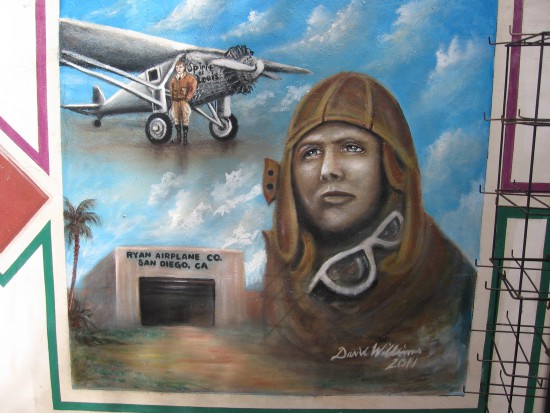
Image of Charles Lindbergh and Spirit of St. Louis.
Lindbergh’s famous airplane that crossed the Atlantic, the Spirit of St. Louis, was custom-built in San Diego by Ryan Airline Company.
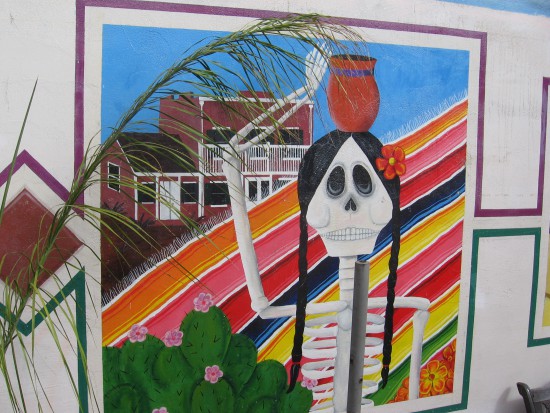
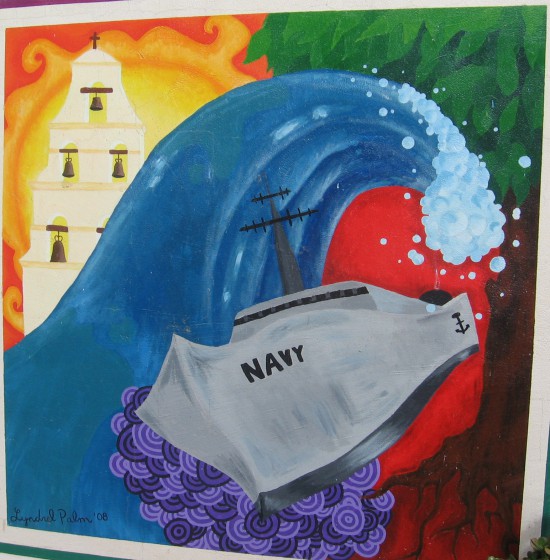
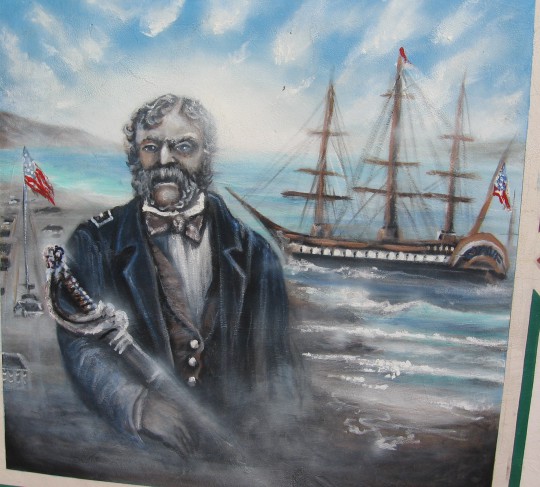
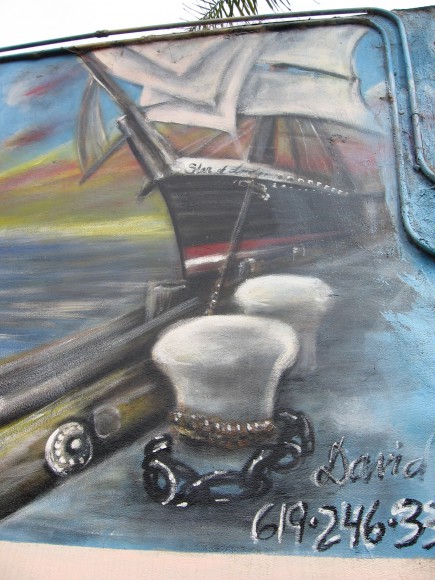
Native American with flower at night painted in rich colors.Hotel del Coronado, buildings and beach scene.Day of the Dead skeleton in front of the Whaley House.Tuna fishermen and whale fluke off Coronado.Navy ship, huge surf and Mission San Diego.Mural shows an American tall ship in San Diego Bay.
I’m not sure who the whiskered military person is. If anyone out there knows, please tell us!
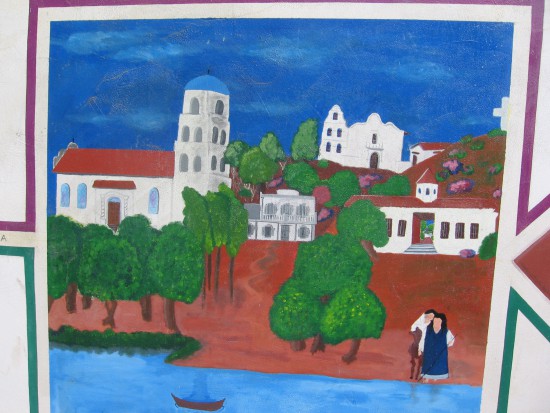
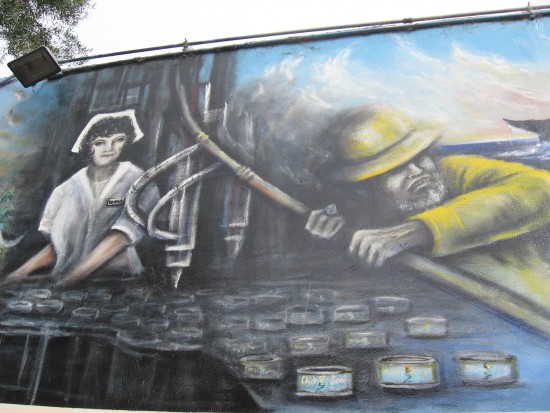
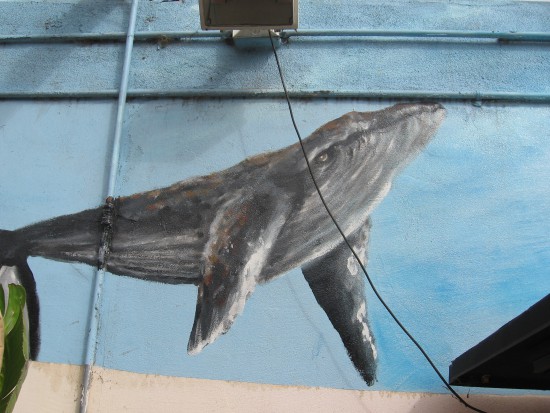
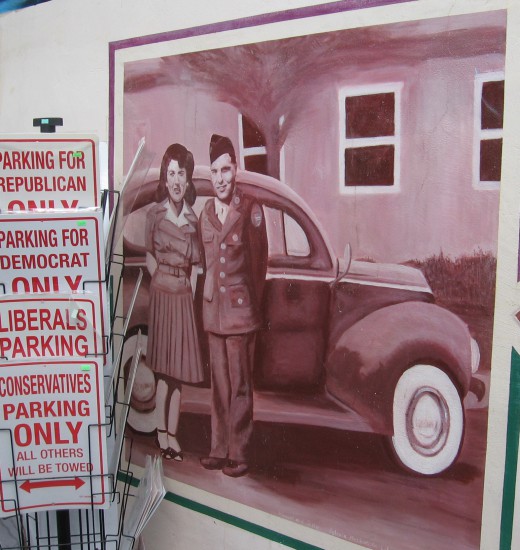
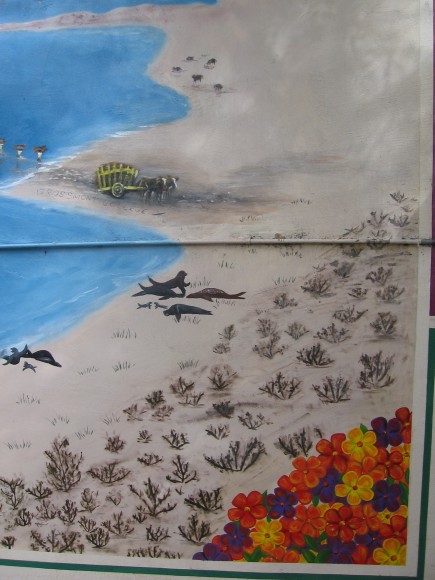
A combination of various old historic buildings.Point Loma lighthouse shines over Pacific Ocean.Tuna cannery worker and a Little Italy fisherman.Star of India tied to dock at Embarcadero.This part of one mural contains a gray whale.Sepia tone World War II era figures stand by old car.Seals, flowers and carrying cattle hides from a beach.Many murals were painted by Grossmont College students.
…
To enjoy future posts, you can “like” Cool San Diego Sights on Facebook, or follow me on Twitter.
Approaching the front entrance of Union Station in San Diego.
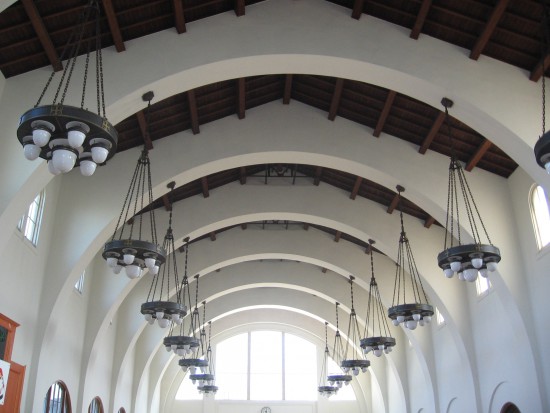
Walking into San Diego’s Union Station, more commonly called Santa Fe Depot, is like walking into the past. Or through some airy, sacred, vaulted cathedral.
The old train station seems utterly enormous when contrasted with the actual role that it plays in modern San Diego. Sure, it’s a reasonably important transportation hub, serving two lines of the San Diego trolley, plus the Amtrak Surfliner and Coaster trains. But today it seems to me more like a living memorial to a time long ago, when trains were a central feature of American life.
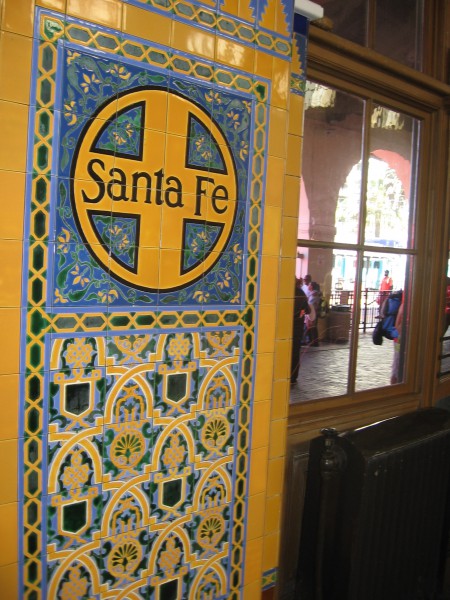
Here are a few cool photos of the Santa Fe Depot’s somewhat sparse but elegant interior. I love the tile work on the walls, the huge glowing windows, the beams in the arched ceiling…but most of all the classic long polished wooden benches. Whenever I walk through I feel like sitting down with the waiting passengers and pretending I’m off on some exciting transcontinental voyage.
Many years ago the depot held a large model of the USS Midway aircraft carrier under glass; I remember seeing that it was moved over to Petco Park. If memory serves, there was also a small pinball and video game arcade off to one side, by an exit to Kettner Boulevard.
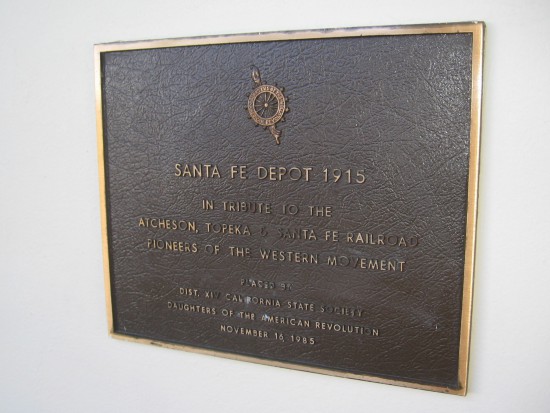
Plaque dates Santa Fe Depot from 1915.
The above plaque is just outside the main entrance.
A look inside the large train station in downtown San Diego.A cool photo of the arched ceiling of Union Station.Looking back toward the front entrance from inside.Coaster train can be seen waiting outside on one track.Blue and orange tiles form classic Santa Fe design.
…
To enjoy future posts, you can “like” Cool San Diego Sights on Facebook, or follow me on Twitter.
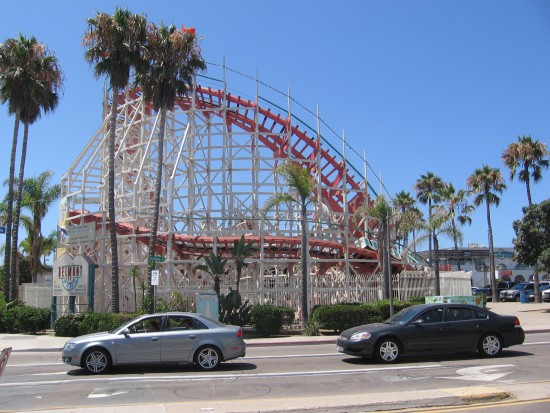
Looking across Ventura Place at the Giant Dipper roller coaster.
Mission Beach is one of the most popular attractions in Southern California. One big reason: Belmont Park and the wonderful Giant Dipper roller coaster!
In my last blog post I walked south down the busy beach boardwalk to Hamel’s. Belmont Park stands just across the street. The historic amusement park was built in 1925 by wealthy sugar magnate John D. Spreckels, and was called the Mission Beach Amusement Center. The 2,600 foot Giant Dipper roller coaster, made entirely of wood, was built in less than two months. Over the ensuing years, the coaster fell into disrepair; it was then carefully restored in 1990 and became a huge success.
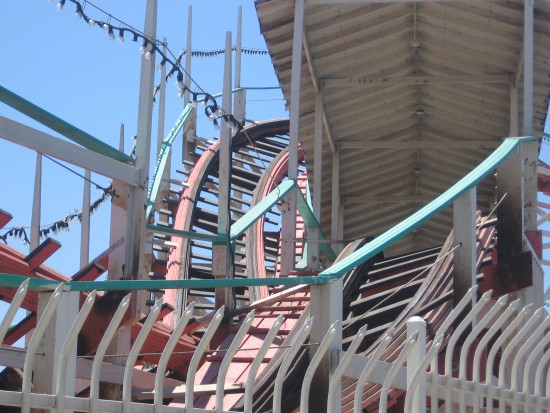
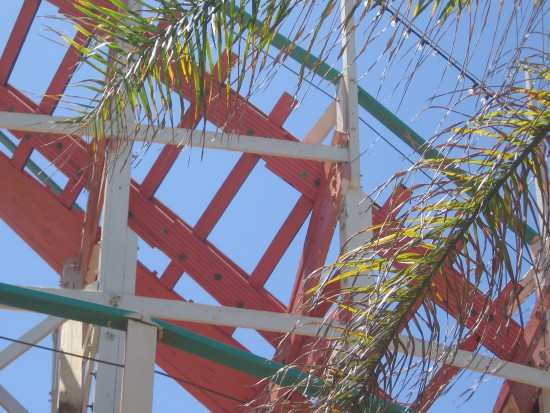
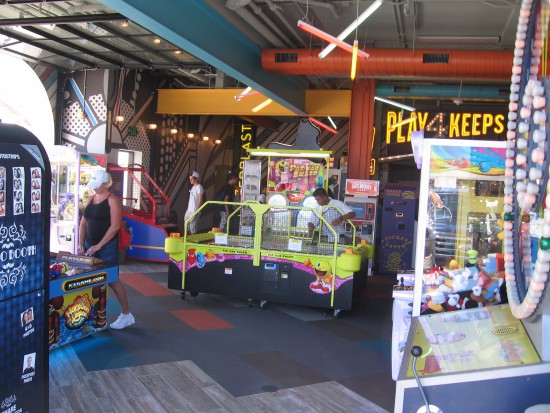
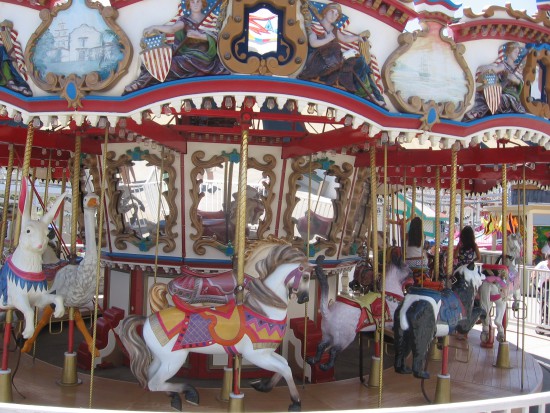
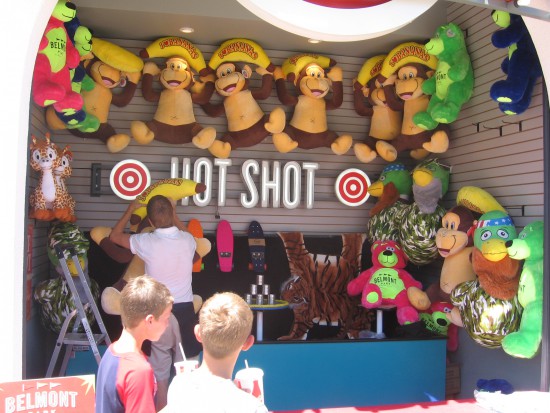
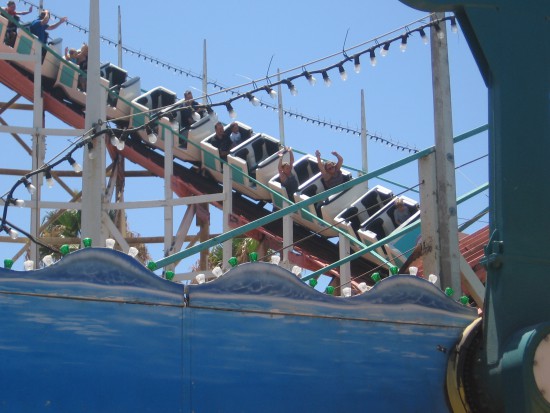
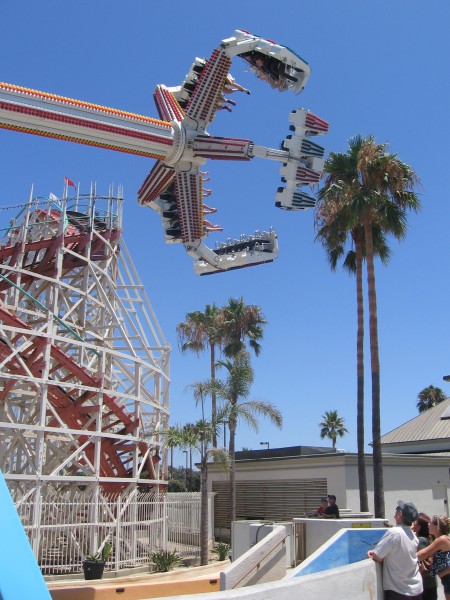
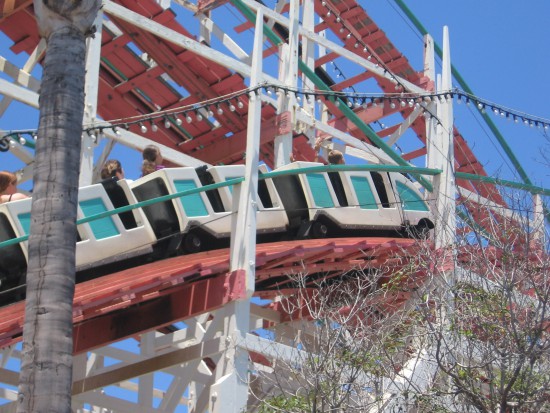
Entering Belmont Park beneath the wooden roller coaster.Looking up at red tracks of the picturesque coaster.Kid-friendly Belmont Park has thrilling rides and lots of fun stuff.People wait to board the historic roller coaster.The winding coaster tracks make for interesting photos.Palm fronds, painted wood and clear blue sky.A large indoor arcade at Belmont Park features many classic games.This small merry-go-round is a treat for kids of every age.A carnival midway area has tests of skill and a food court.Riders whiz by as the cars rattle on wooden rails.This yellow submarine requires no water!Wild and crazy Tilt-A-Whirl provides a big adrenaline rush.The Giant Dipper roller coaster swooshes by!Peeking into the innards of a wooden roller coaster.
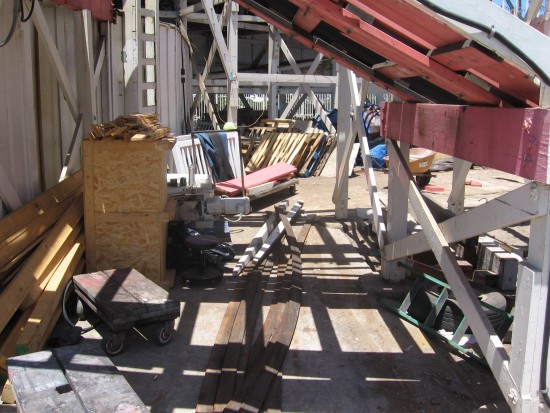
It’s interesting to walk around the perimeter of the Giant Dipper. You can peer beneath the rails and see the materials used to build and maintain the huge wooden construction.
The Plunge giant swimming pool is undergoing restoration.
Right next to Belmont Park’s amusement rides you’ll find The Plunge, originally called The Natatorium. The huge 12,000 square foot swimming pool originally contained salt water. It was the largest such pool in the world with 400,000 gallons of water!
The Plunge has also become famous for its Orcas off Point Loma whaling wall, painted in 1989 by famous marine artist, Wyland.
Today the pool and surrounding structure are being repaired. It’s scheduled to reopen by the end of this summer.
I hoped to get pictures of Belmont Park’s relatively new FlowRider wave machine, which allows thrill-seekers continuous surfing without entering the ocean! Unfortunately, it was down for maintenance.
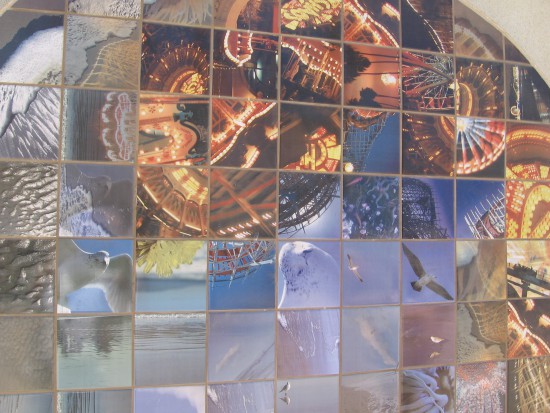
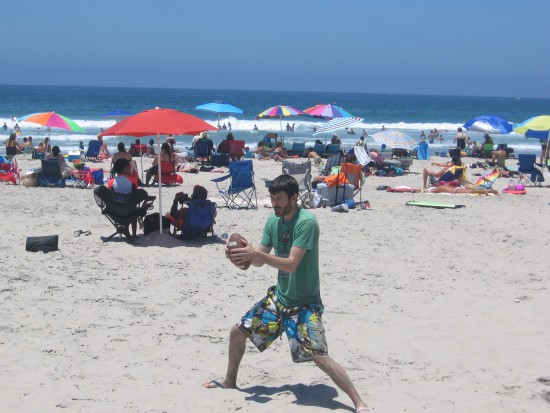
Photo mosaic on a nearby beach restroom shows bits of Belmont Park.Playing football on the sand at Mission Beach.
…
To enjoy future posts, you can “like” Cool San Diego Sights on Facebook or follow me on Twitter.
Many distinguished speakers at the Tony Gwynn Memorial Tribute remembered and honored one of the greatest baseball hitters of all time. The public ceremony was held at Petco Park on June 26, 2014. Here are some quotes…
Ted Leitner, Padres radio broadcaster:
So we will cry together, we will laugh together, we will have joy together today, but one thing we will never never do is to forget the greatest hitter of his generation and one of the greatest people in the history of major league sport.
I would like one more time one final standing ovation before the anthem for that magnificent Padre, number 19, Tony Gwynn.
They lied to us, you know. They lied to us in the movie A League of Their Own, when the manager and the Tom Hanks character said “There’s no crying in baseball!” Wrong, huh? Since June 16, there’s been almost nothing but crying in baseball.
People identified with him more than big muscled sculpted athletes because they thought he was the guy next door. Tony was chunky…He was 4 for 5 today, he doesn’t need to lose weight, okay?
Many of you were there in 2007 when he was inducted with the immortals, literally, in the Baseball Hall of Fame in Cooperstown, New York. It was the biggest crowd in Cooperstown history, beyond Ruth, beyond Mantle, beyond Aaron, beyond anybody when he and Cal Ripken were inducted that hot summer day.
See, nobody’s talking about at-bats and number of hits. We know those numbers. 3141 hits, and 15 All Star Games, and 8 batting titles and 5 Gold Gloves, and all that stuff, but it’s, and that is greatness unto itself, but it’s so beyond that, it’s so beyond that, but the man and the compassion…
But he stayed here. It was never about the money. It was about you folks…it was about this Padre organization that he loved..he was never about the money.
The greatest laugh of all time…it was the best…it was better than the game. I could’ve broadcast that instead of the game.
Ron Fowler, Executive Chairman of the San Diego Padres:
Tony was important to all of us. The number of wonderful stories since his passing from around the country reinforces the many reasons why he was loved by so many.
We all know of Tony’s iconic status as one of the greatest baseball players ever, but even more importantly, many of us experienced the special qualities of the warm, giving and compassionate member of our community. What stood out most for me was Tony’s ability to relate to people from all demos and economic strata. His special ability to relate to children…
Tony considered himself an Everyman and remained an Everyman throughout his entire life, so approachable and so easy for San Diegans to embrace as our city’s favorite son.
Reggie Jackson, member of baseball’s Hall of Fame:
He was a genuine man, he was a quality man, one hundred percent family man, he was a great son, a great husband, a great father, and a great brother. A great friend and a great teammate. He was the example of what we all want to live and emulate as a person. He cared about his fellow Man, and we understand and know that he cared about his community.
During the dash of his 54 years, he showed us the template of how to live with dignity.
I’ll leave you with something to think about as I refer about baseball. I saw some great hitters. I saw Mike Schmidt and Jim Rice. Kaline, Dick Allen, Molitor, Yount and Brett. Cooper and Bench. I saw Mays, Aaron, Clemente, Billy Williams, Stargell and Stretch McCovey. I saw Banks at the end. Number 19, Tony Gwynn, belongs on that page.
John Boggs, Tony Gwynn’s agent:
Tony was a very humble man, and he wasn’t big on ceremonies, especially ceremonies that were about him, but I know he’s looking down this evening on all of us here at Petco and I’m sure he’s very grateful for this outpouring of love.
He was an incredible friend. He was the definition of friend. In life there are a lot of acquaintances but very few true friends…He touched so many people, and I was just lucky to be one of them.
He was so much better than the statistics he accumulated.
There was also the memory of Tony and Ted Williams together in the first interview they did together and I’ve never seen Tony so energized and excited as two of the greatest hitters exchanged baseball knowledge…I was lucky to be just a fly on the wall.
And Tony’s humility. Waiting for the Hall of Fame call, I could not believe how nervous he was. With all of his accomplishments, I said, “Tony, this is a slam dunk.” And he just smiled and looked at me and said. “Hey, you never know.” That was Tony. He never took anything for granted.
To the fans, he loved you and appreciated you more than I convey into words. He loved the city of San Diego, he loved being an Aztec, and he most definitely loved being a Padre. He was and always will be Mr. Padre.
Kevin Faulconer, Mayor of San Diego:
Tony Gwynn represented the best of San Diego. His infectious personality did more than spark the Padres to two World Series appearances, he lit up our entire community with pride, and it’s almost impossible to sum up how much Tony Gwynn meant to our city.
Damian Jackson, former San Diego Padres player:
He was a baseball giant to me…who he was as a man so overshadows what he was as a baseball player, and that’s amazing to me.
He not only showed us how to play the game the right way, but he also showed us how to be the right person, and be a great, respected man in the community.
And boy did he love his family. He talked about them daily. When he talked about his children, he just lit up, like the sun.
He wouldn’ve been a great dad to have.
So Tony taught and inspired us on a daily basis…he was a Hall of Fame man, in my eyes.
You inspire me to be a better father, you inspire me to be a better man, and your legacy lives on in this city and in my heart. And thank you Tony. May you rest in peace.
Rob Manfred, COO of Major League Baseball:
In my 25 years in the game, I’ve known scores of players. Even among this elite group, Tony Gwynn was special. He was special because of his Hall of Fame talent, his devotion to the game, and the values he came to represent.
Tony Gwynn may have been the perfect member of the baseball family.
While he was playing, baseball could always count on Tony to do the right thing…he was a great role model to young players.
Mark Martinez, SDSU Aztecs baseball head coach:
He was my colleague, my mentor, but more importantly, my friend. My family. He was part of the Aztec family.
Coach Gwynn’s a teacher. And he was best at teaching all kinds of things. Obviously baseball, but teaching life lessons…All of his teachings were centered around his core value: Do things right.
And then he would say: “Let’s go to work.” Let’s go to work. Does that not embody what he was about? For 20 years in the big leagues and 12 years on the mesa…
Finally, Coach Gwynn is a gift. He’s a gift to all of us. His laugh, his mentorship, the way he made you feel important, even if he just met you for the first time. He gave these gifts every single day.
Trevor Hoffman, former San Diego Padres player:
Whenever… he had the opportunity to speak to you the fans, it felt like he was talking to us one on one.
What a gift he gave us all. That joy that everybody’s talked about, his smile, and his laugh, will be etched in our memories forever, another great gift…He always said, you give a little bit, you get a lot. How appropriate that was about T. Gwynn…What a great man, T. Gwynn.
It was on one of those videos we heard Tony say thank you, thank you, thank you–always being humble, always thanking us. Well it’s us that needs to be saying thank you to T. Gwynn. Thank you for your Hall of Fame career over twenty years, sharing it with us. Thank you for representing San Diego with such class. And thank you for letting us all in your house tonight. Amen.
Anisha Gwynn Jones, daughter of Tony Gwynn:
On behalf of all of the Gwynn family, I would just like to take the time to thank each and every one of you for all of the support and all the love. Thank you. You guys are why my dad loved San Diego so much.
…
To enjoy future posts, you can “like” Cool San Diego Sights on Facebook, or follow me on Twitter.
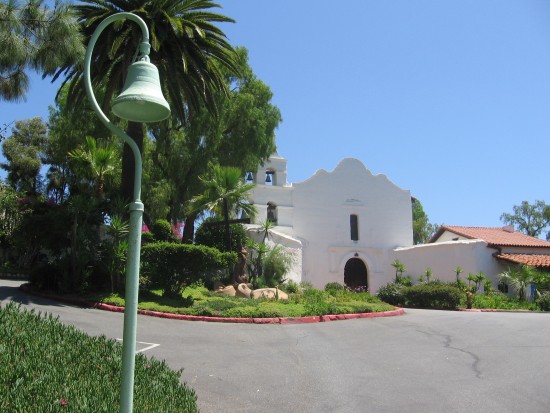
El Camino Real bell in front of California’s first Spanish mission.
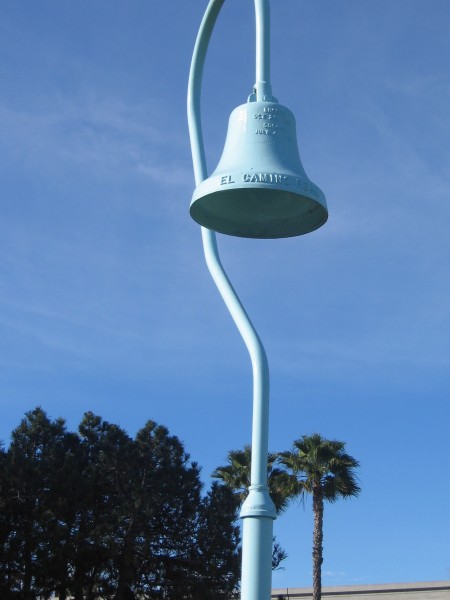
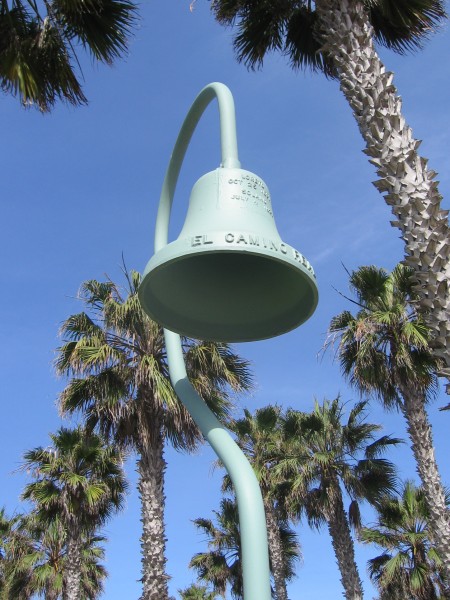
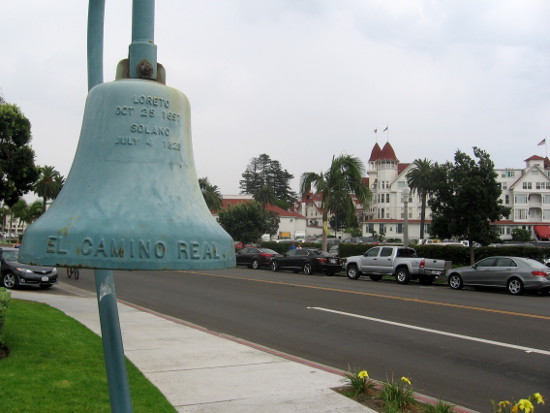
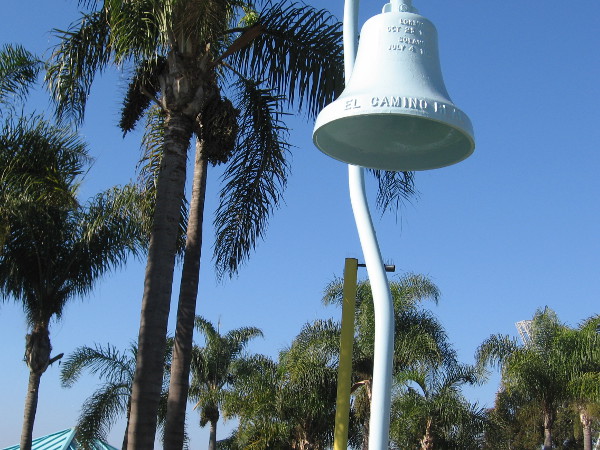
Here are just a few random pics of El Camino Real bells around San Diego. During my walks, I’m often surprised to discover a new bell.
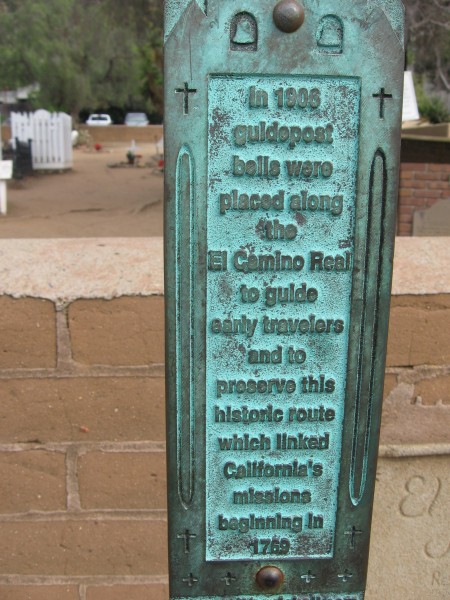
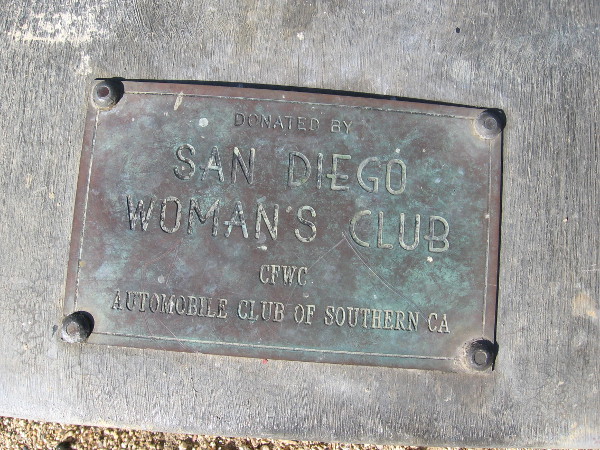
Many of these guidepost bells were placed in 1906 by the California Federation of Women’s Clubs. They marked the primitive roads that connected the old Spanish missions in California. El Camino Real, which means the Royal Road or King’s Highway in Spanish, led to 21 missions in Alta California, plus a variety of sub-missions, presidios and pueblos. The bells stand on tall posts in the shape of a shepherd’s crook. In subsequent years, bells have been removed or added to the California landscape.
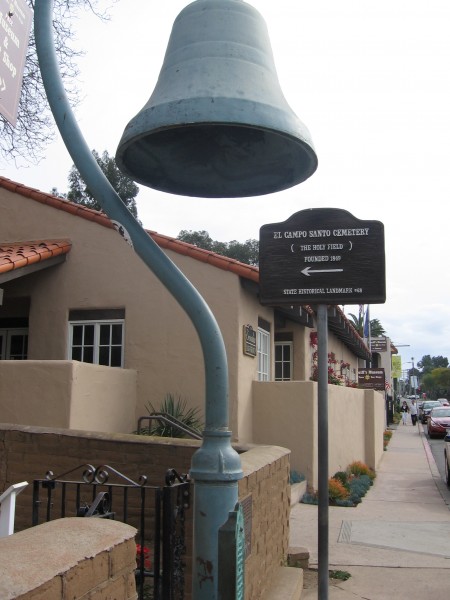
Bell in front of Old Town’s historic El Campo Santo cemetery.Plaque explains history of the guidepost bells.El Camino Real bell spotted on Harbor Island.El Camino Real bell by the downtown County Administration Building.Historic bell and palm trees in Imperial Beach.I found an El Camino Real bell near the Hotel del Coronado!El Camino Real bell in Cesar Chavez Park in Barrio Logan.Plaque on Harbor Drive reveals that a nearby bell was donated by San Diego Woman’s Club.
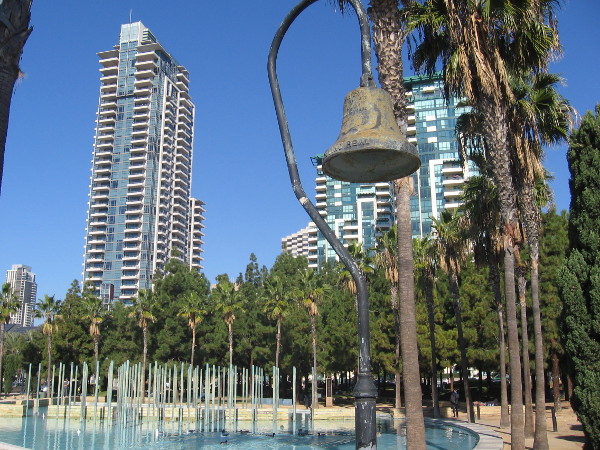
El Camino Real bell on Martin Luther King Jr. Promenade by Children’s Park.
…
To enjoy future posts, you can “like” Cool San Diego Sights on Facebook, or follow me on Twitter.




































 Cool San Diego Sights!