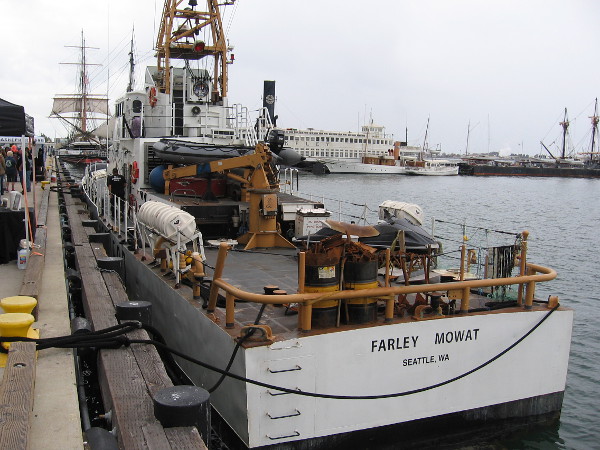
The Sea Shepherd Conservation Society’s old Coast Guard patrol boat, renamed M/V Farley Mowat, is docked this weekend on San Diego’s Embarcadero.
Yesterday after work, I noticed that an unusually decorated old U.S. Coast Guard patrol boat was docked along the Embarcadero, just north of the Maritime Museum of San Diego. Naturally, I had to investigate!
Turns out the renamed boat, M/V Farley Mowat, is now owned and operated by an organization called the Sea Shepherd Conservation Society, whose stated mission is to defend, conserve and protect marine ecosystems and species. They use direct-action tactics to expose and confront the illegal slaughter of marine wildlife at sea. I’d seen their exhibit aboard the steam ferry Berkeley during Earth Day on the Bay, where their representative explained that Sea Shepherd was like Greenpeace on steroids.
I spoke to a friendly crewmember near the Farley Mowat and learned they would be offering the public free tours on Saturday. The vessel has just returned from its second mission in the Sea of Cortez off Baja California–the wildlife defense campaign was titled Operation Milagro II. For a number of months, Sea Shepherd worked with the Mexican government in a marine refuge near San Felipe to identify and intercept illegal gillnet fishing which has reduced the population of the rare Vaquita Porpoise over the decades to just about 100 animals. This is commendable work! Sea Shepherd not only has permission from the Mexican government to patrol for poachers and pull up illegal fishing nets when encountered, but they are making observations concerning this endangered marine species. They are doing similar work to protect another rare fish in the region: the Totoaba Bass.
Working within the law in a positive way to protect these species is commendable and extraordinary! After doing some research at home, however, I learned that the organization is quite controversial. Some say they go too far. Some, including other environmental activists and organizations, have called them eco-terrorists. I don’t know enough to comment, but I do know that sometimes people with enthusiastic agendas and a sense of urgent purpose can lose their sense of humanity. The people I met yesterday and this morning when I walked again along the Embarcadero seemed like very nice people. I will say no more.
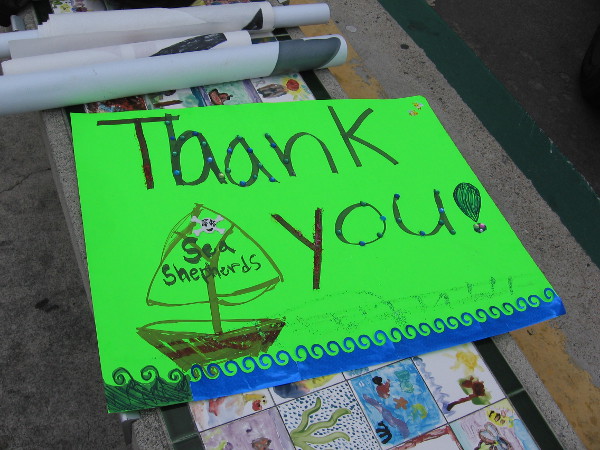
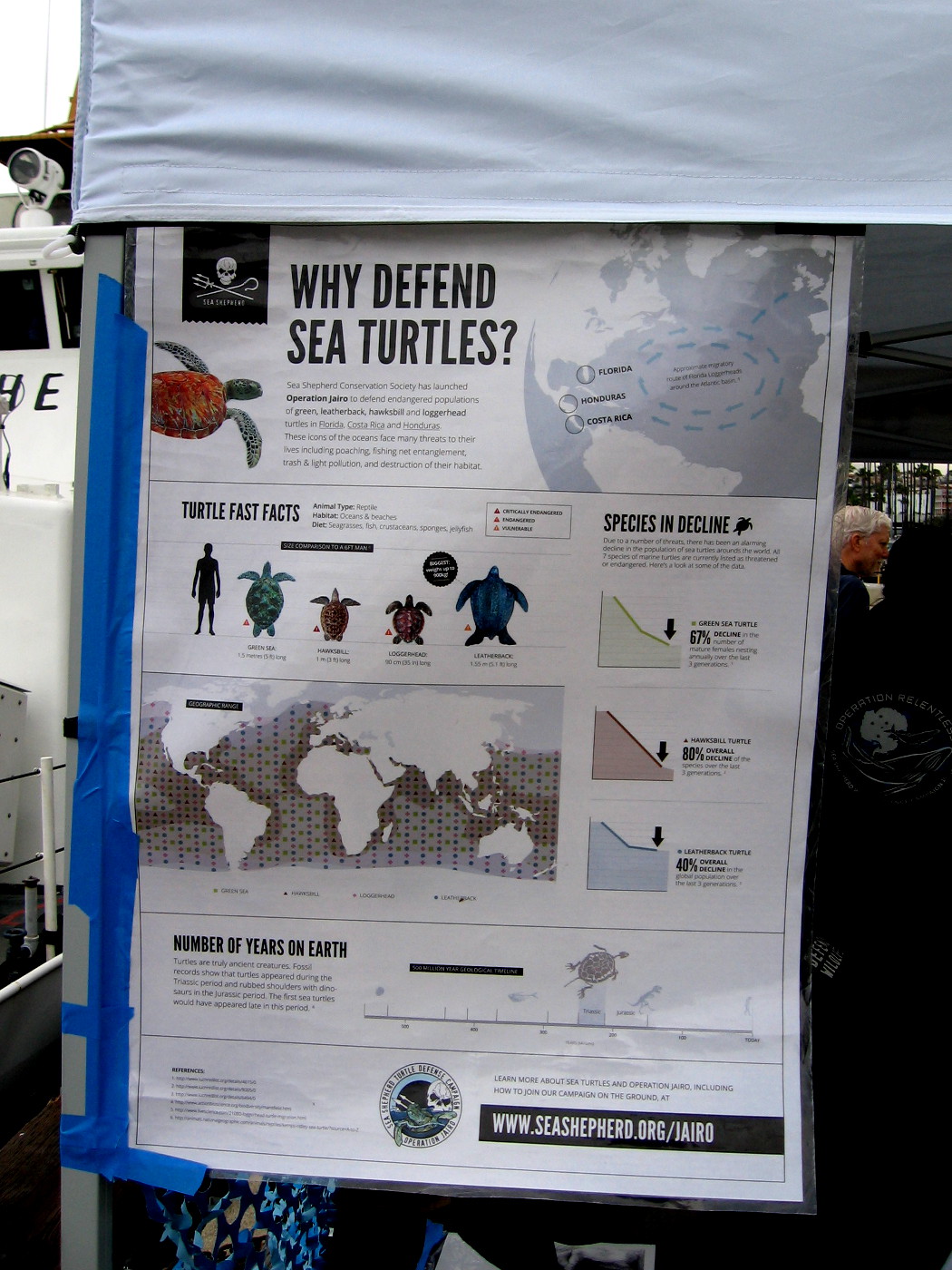
A very friendly, informative crewmember of Farley Mowat explained their recently completed mission, which was to defend the Vaquita Porpoise in Mexico’s Sea of Cortez.Photograph of M/V Farley Mowat the following cloudy morning. Visitors were being given tours aboard the vessel.Interested people and crew mingle before boarding the Sea Shepherd’s cool boat. Public tours of M/V Farley Mowat are being offered this weekend in San Diego.Looks like kids made some Thank You signs for Sea Shepherd!A tent near the boat featured gifts and information in support of Sea Shepherd. Defending Ocean Wildlife Worldwide.A detailed poster explains why sea turtles should be defended. Click to enlarge. San Diego’s South Bay has its own small group of migratory green sea turtles.Sea Shepherd stops in San Diego. They were featured in Animal Planet’s television show Whale Wars. M/V Farley Mowat will soon be on its way to another location on the high seas.
…
I live in downtown San Diego and love to walk! You can follow Cool San Diego Sights via Facebook or Twitter!
Do you like to read short pieces of thought-provoking fiction? You might enjoy checking out Short Stories by Richard.
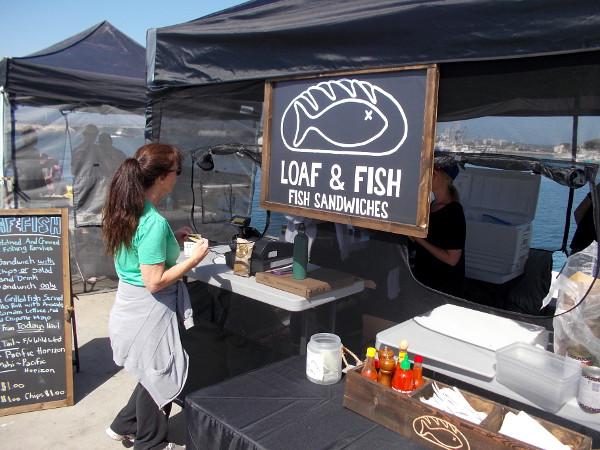
Today I saw a new canopy and sign at the ever-expanding Tuna Harbor Dockside Market. It’s a food tent called Loaf and Fish! They’ve got one of my favorite things!
I’m not really a food blogger, but I have a terrible weakness for fish sandwiches, fish tacos and fish burritos. So when I saw a new food vendor was selling fresh fish sandwiches this weekend at the Tuna Harbor Dockside Market, of course I had to try one!
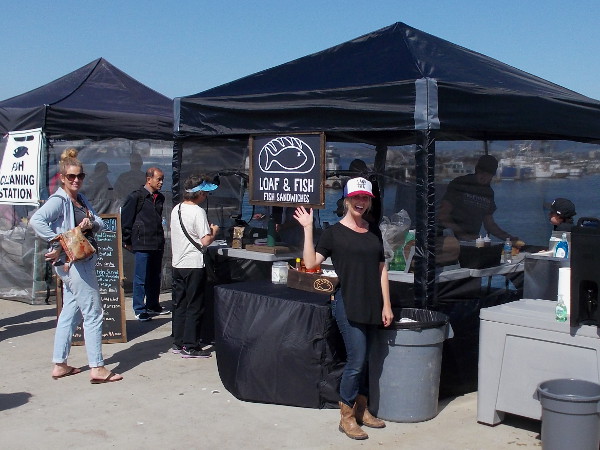
A bit down the pier you’ll find the sign that reads Loaf and Fish. Those are the nice folks you need to see. My grilled fish sandwich was really good! I was told they don’t have a website yet, but they’ll be there on the pier every Saturday morning, a tasty addition to the constantly growing Dockside Market!
(You can visit San Diego’s new outdoor fish market every Saturday morning on the pier just north of Seaport Village, next to Tuna Harbor.)
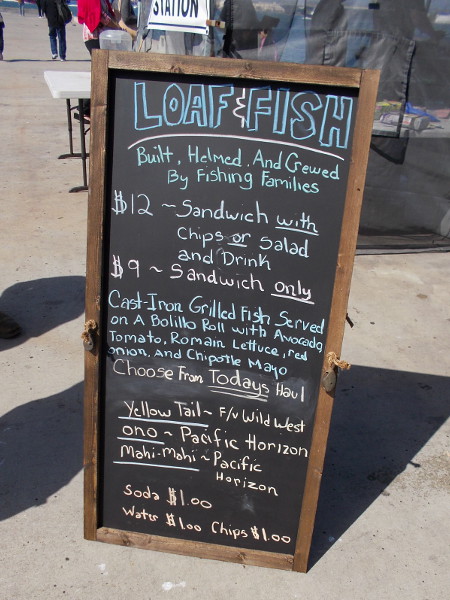
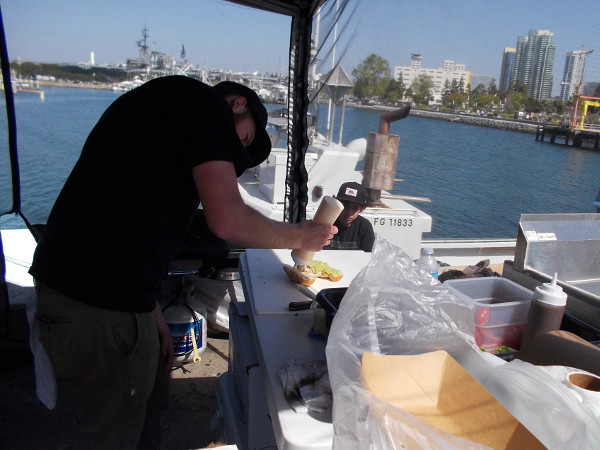
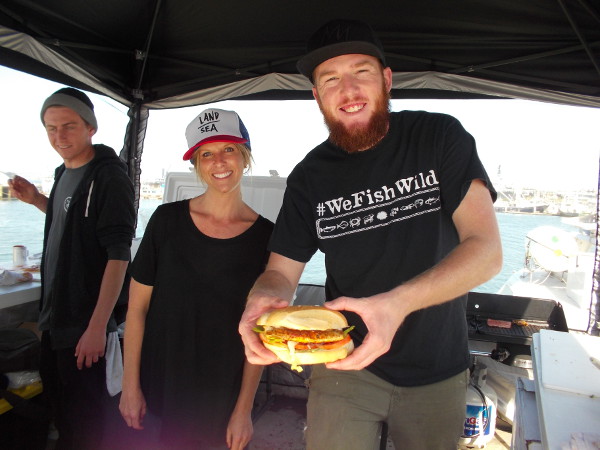
Loaf and Fish. Built, helmed and crewed by fishing families. The tasty yellowtail in my sandwich was caught by the fishing vessel Wild West!Oh, man! My fish sandwich is getting ready! Some tomatoes, avocado (yum), red onions, chipotle mayo, lettuce, all on a fresh bolillo roll. And, of course, grilled fresh fish!And here it is, with a smile! You know what? It was pretty darn good. I recommend devouring these!Everyone at Loaf and Fish was super nice to some strange blogger guy walking around with a camera. Good luck guys!
UPDATE!
Loaf and Fish has added a couple of items to their menu. You can now enjoy fish tacos and tasty fish soup!
The fish tacos are just as yummy as any you’ll find in San Diego. And keep in mind our city has the best fish tacos in the entire world.
I’ve also tried the fish soup and it’s really tasty! In addition to big chunks of freshly caught fish, there are fresh vegetables and slices of avocado floating on top! On chilly mornings this hot soup really hits the spot!
To top it all off, eating on the pier by the water–with the bustle of activity all around, including friendly fishermen and local fishing boats and the seagulls and playful sea lions barking nearby–it’s a feast for the senses that can’t be beat!
…
I live in downtown San Diego and love to walk! My blog covers anything that catches my fancy!
You can follow Cool San Diego Sights via Facebook or Twitter!
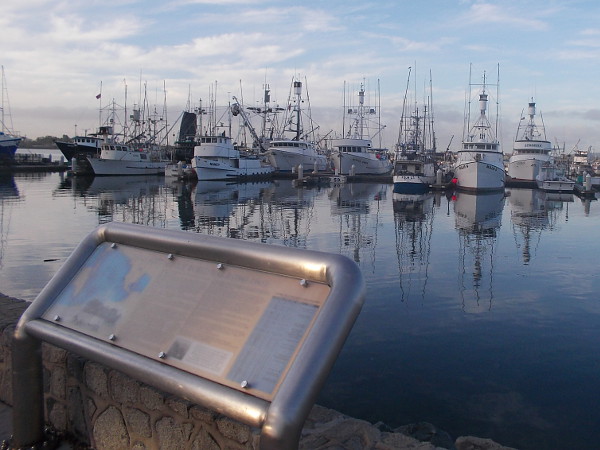
Information sign beside Tuna Harbor, in downtown San Diego, describes how local tuna boats were utilized in the Pacific Ocean theater of World War II.
Some fascinating historical information can be found on San Diego’s Embarcadero, right next to Tuna Harbor where many commercial fishing boats dock downtown. The sign, erected by the San Diego Port Commission in 2008, is titled Tuna Fleet Service World War II (1941-1945). It provides a glimpse of how dozens of San Diego-based Tuna Clippers joined the American war effort during the Second World War.
Here is the text on the sign:
During World War II, 600 fishing vessels were taken by the Navy, Army, and Coast Guard, including 52 “Tuna Clippers”.
On Pearl Harbor Day, the U.S. canned tuna industry was located almost exclusively in Southern California, and canners received most of their tunas from “baitboats”. Fishermen on these boats chum live bait (sardines, anchovies) to attract the tunas into a feeding frenzy and then use rigged bamboo poles to pull the hooked tunas aboard. Dating from 1924, a fleet of large “baitboats” was developed and became know as “Tuna Clippers”. These large ships, equipped with powerful diesel engines and newly developed brine refrigeration, fished for tunas found migrating thousands of miles from San Diego on trips of 90 days or more. During the 1930s, this San Diego high seas fleet was studies by the U.S. Navy, resulting in wartime plans that included the conversion of Tuna Clippers to minesweepers.
At the time Pearl Harbor was attacked, there were 90 vessels in the California baitboat fleet, including 76 Tuna Clippers plus 3 under construction. The 49 Tuna Clippers taken by the Navy and 3 by the Army represented about 55% of the fish carrying capacity of the entire baitboat fleet.
After war was declared, the Government ordered the Tuna Fleet to make port in California or Panama. Ten of the Tuna Clippers entering the Canal Zone in December 1941, were immediately taken for temporary patrol duty. The U.S. Army took three Clippers for use in the Panama Sea region, the SHASTA and CAPE HORN as tugs and the INVADER as a supply ship.
On February 16, 1942, tuna fishermen attended a meeting conducted by Commander W. J. Morcott, USN (Ret.) at the Naval Reserve Armory. 600 tuna fishermen signed up, with Skippers and Engineers receiving warrant ratings, and others given petty officer ratings according to age and experience. Within 10 days, a fleet of 16 Tuna Clippers, painted gray and marked with YP number designations as Yard Patrol vessels, left San Diego harbor on February 25, 1942. Their destination was the “Panama Sea Frontier” for picket duty to protect the Canal.
In May 1942, a convoy of six YP Clippers left San Diego for the “Hawaiian Sea Frontier”. These YPs transported supplies to French Frigate Shoals, the islands of Midway, Johnston, Fanning, Christmas, Palmyra, and Canton. In June 1942, seven YP Clippers left San Diego, for service at Efate Island or Samoa, or Auckland, New Zealand. In November 1942, another group of five headed for the U.S. Naval base at Tutuilla, Samoa. As the conflict moved towards Japan, YP Tuna Clippers were sent on missions to other Islands and Atolls of the Western Pacific.
The Navy discovered that “Yippies” were able to transport troops, gasoline, ammunition, and refrigerated cargoes and capable of navigation within shallow atolls and over minefields, of towing damaged warships, and rescuing downed pilots. This is why “Yippies” were also called the “Pork Chop Express” or “Errand Boys of the Pacific” or the “Solomon Island Ferry”. During the Solomon Island Campaign in 1942, the PARAMOUNT (YP 289) and the PICOROTO (YP 290) delivered frozen turkeys and all the fixings for a traditional holiday feast at Guadalcanal Island. In 1943, frozen turkeys were also delivered to the Marines fighting on Bougainville in time for Thanksgiving by the AMERICAN BEAUTY (YP-514).
“Yippies” were equipped with CW radios, fathometers, Navy radar and Navy sonar. Armament included machineguns, and other gun gear to fire Depth charges. The YP crew of tuna fishermen and regular Navy ran from 4 to 20 men.
Two YPs were destroyed in the Solomon Islands campaign by enemy surface ships: On 9 September 1942, off Tulagi Island, the PROSPECT (YP-346), and on 25 October 1942, off Guadalcanal Island, the ENDEAVOR (YP-284). The number of casualties sustained is unknown.
Two YPs were lost in the Midway region: On 23 May 1942, the TRIUNFO (YP 277) was destroyed by fire and explosions enroute to French Frigate Shoals (North of Hawaii), and then scuttled to avoid enemy capture. Only two crewmembers survived. During October 1942, the YANKEE (YP-345), with 17 crewmembers, on a voyage from Pearl Harbor to Midway Island via French Frigate Shoals, was “lost without a trace from causes unknown”.
Four YPs were lost at sea: CALIFORNIA (YP-235) on 1 April 1943, after fire and beaching in the Gulf of Mexico from an explosion of undetermined origin; NAVIGATOR (YP-279), 5 September 1943, foundered in heavy weather enroute to Townsville, Australia; CAPE SAN VINCENT (YP-280), on 24 April 1946, sank near Saipan Island; SAN SALVADOR (YP-281) on 9 January 1944, was destroyed after the foundering in Force 9 storm, with crew of 19 and one dog rescued, near Wallis Island, South Pacific. After transfer to the U.S. Army in July, 1943 the SEA TERN (ex YP-269) was lost at sea off Baja California.
Three YPs were destroyed during October 1945, because of a typhoon off Okinawa: PARAMOUNT (YP-289); CONTE GRANDE (YP-520) and CHALLENGER (YP-239).
The Navy destroyed 7 YPs after the War during 1946 and 1947: AMERICAN VOYAGER (YP-287), CIPANGO (YP-504), EUROPA (YP-236), FALCOM (YP-515), QUEEN AMELIA (YP-516), QUEEN ELIZABETH (YP-519), and YVONNE LOUISE (YP-282).
The successful wartime experience of the “Yippies” caused the Navy to build 30 wood-hull vessels patterned on the Tuna Clipper design. Each of 30 newly constructed wood hull Navy YPs was of 128 in length, of 14 feet draft, and powered with a 500 H.P. diesel main engine. They were built during 1945, two each by 15 different shipyards located in California, Oregon, and Washington.
Commencing in 1947, 24 of these YPs were added to the U.S. Tuna Fleet.
After the war, the Navy and Army transferred 33 surviving former Tuna Clippers to the War Shipping Administration (WSA) for buy-back by the previous owners. Three of these surviving vessels never returned to the U.S. tuna fishery: CABRILLO, FISHERMAN II, AND THEODORE FOSS.
Additional information on the sign:
Tuna clippers joined the navy too and were painted a dull slate grey, while the stalwart Portuguese descendants learned to fire the guns that were mounted upon the deck. Equipped with the finest refrigeration systems, these trim craft became “errand boys” of the Pacific, delivering food and fuel to the fronts. One day these tunaboats will be convoying a fleet of small ships to Panama. Next month, perhaps, they’ll be off to Midway Island with gasoline for navy PBYs. Two months later, they’ll be down in the Solomons running the “milk route” between Guadalcanal and Tulagi with supplies – part of the saga of men and boats.
excerpt from San Diego Union
July 23, 1943
Scores of converted tuna clippers slipped out of San Diego bay on their way to do valiant work in Pacific battle areas. First boats sailed from here Feb. 25, 1942. These small, sturdy diesel-powered boats are ideal for convoying and patrolling as well as for transporting needed war supplies to defeat the Japanese.
excerpt from San Diego Union
July 23, 1943
Today’s commercial fishing fleet in San Diego includes picturesque boats that provide fresh seafood for restaurants and a Saturday dockside market. (The USS Midway aircraft carrier, now a popular museum) is visible in the background of this photograph.)Someone walking down the Embarcadero near Tuna Harbor pauses to read a bit of fascinating information concerning the Second World War.Left part of the sign depicts map of the Pacific theater of World War II in relation to San Diego. Pictured are some vessels that participated.A detailed description of how the local Tuna Fleet served in various capacities during World War II.California Tuna Clippers: Military Service World War II. (Click the image to enlarge.)Commercial fishing vessel Dalena in San Diego’s present-day Tuna Harbor.
…
I live in downtown San Diego and love to walk! You can follow Cool San Diego Sights via Facebook or Twitter!
You can easily explore Cool San Diego Sights by using the search box on my blog’s sidebar. Or click a tag! There are thousands upon thousands of unique photos for you to enjoy!
Brand new artwork enlivens a familiar place on San Diego’s Embarcadero.
For over a year the small food concession at the foot of the Embarcadero Marina Park South Pier has been vacant. JJ’s Sunset Deli by the Bay shut down at the end of 2014. So I was surprised during my walk today to see another business has finally moved in! And I learned the new eatery with the same cool patio has been open for only four days!
Burgers, Bait and Beer looks like a great, relaxed place to kick back. The guys I met were very friendly. And the light salad I had was really good. I’m told their hamburgers are superb. So I guess I’ll have to try one next weekend!
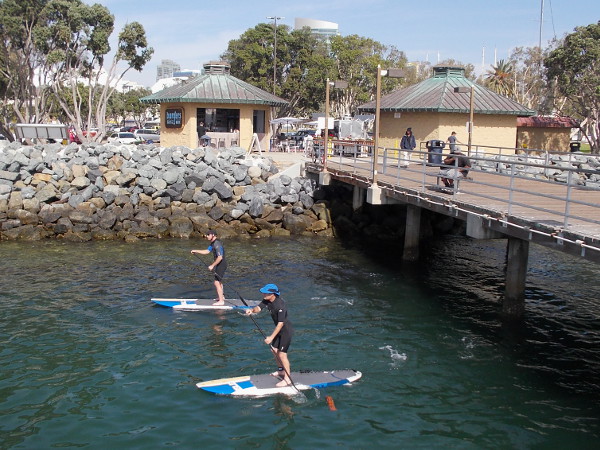
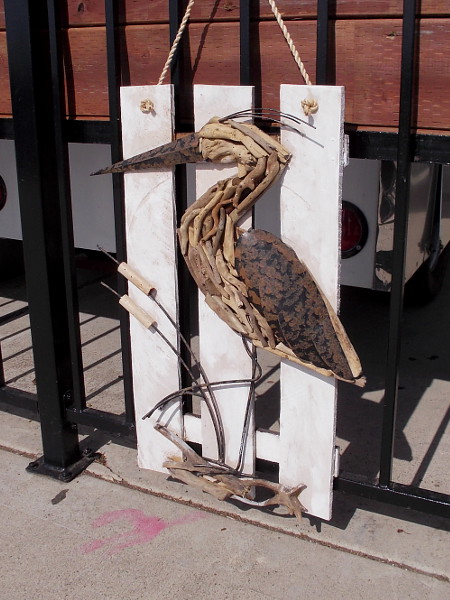
Burgers, Bait and Beer can be found at the foot of the Embarcadero Marina Park South Pier, behind the San Diego Convention Center!A pair of standup paddleboarders have passed under the Embarcadero Marina Park South Pier, one of my favorite places to visit on San Diego Bay.This cool artistic heron is part of the decor at the new outdoor cafe, tackle and bait shop.
…
I live in downtown San Diego and love to walk. Once in a while I happen upon an unexpected discovery!
You can enjoy more Cool San Diego Sights via Facebook or Twitter!
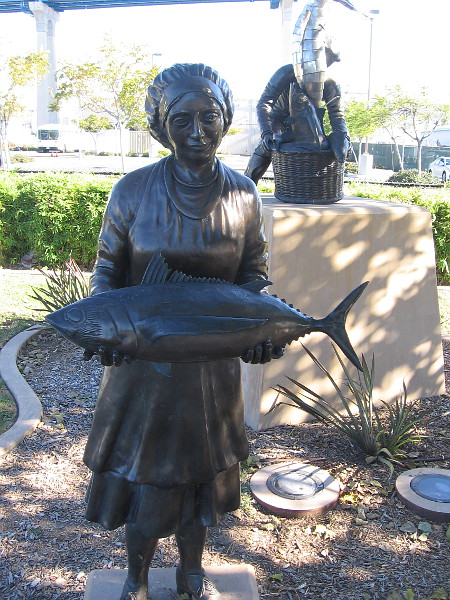
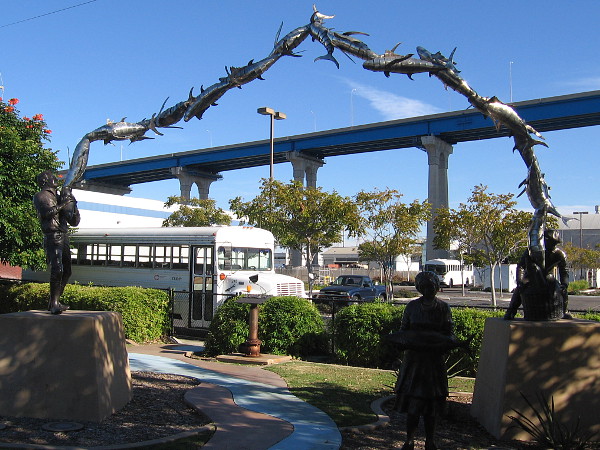
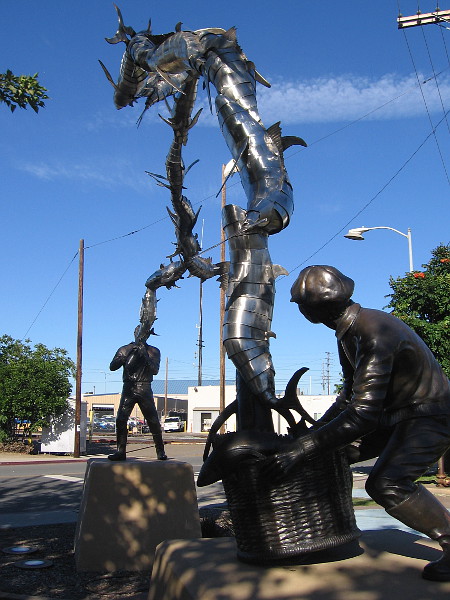
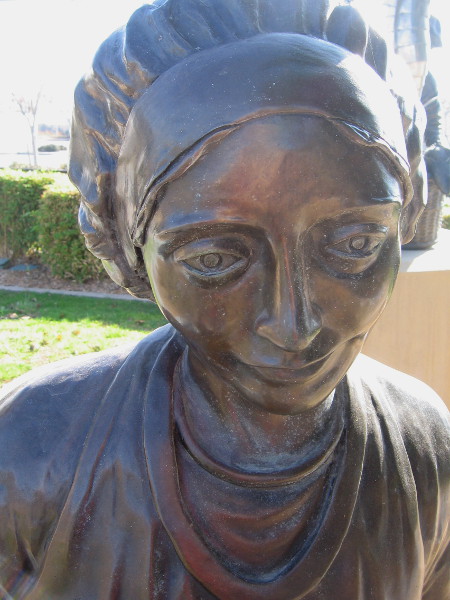
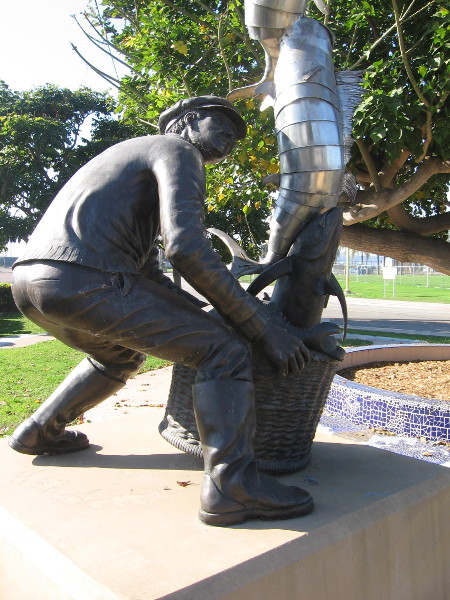
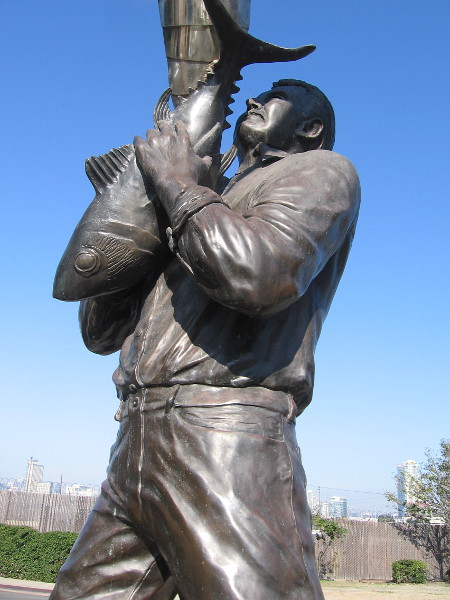
Sculpture of woman fish processor holding a large tuna. This area south of downtown was once the home of many San Diego canneries.
A month or two ago, during a leisurely walk from downtown to the pier at Cesar Chavez Park, I was thrilled to discover some truly amazing public artwork!
The Cannery Workers Tribute at Parque del Sol is tucked away in a place where very few people go. You’ll find it just a bit north of the Coronado Bay Bridge (which you can see in some of my photographs), near the entrance to Cesar Chavez Park.
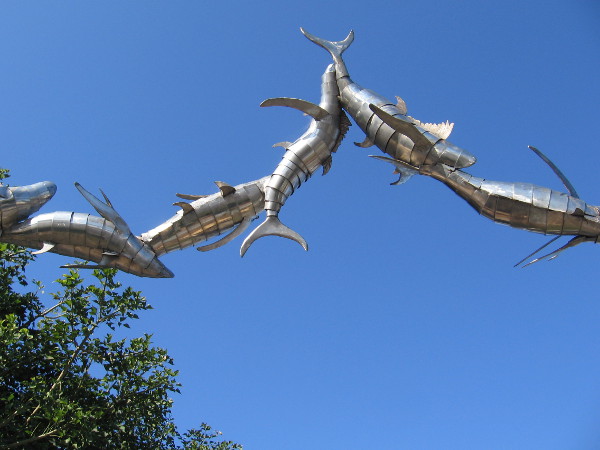
The large gleaming sculpture honors thousands of hard-working people who were employed by San Diego’s tuna canneries decades ago. I’ve blogged about our city’s once-thriving tuna industry on several occasions. Not only was San Diego home to the world’s largest tuna fishing fleet during much of the 20th century, but numerous canneries dotted our bayside. In the 1950s, the tuna industry provided more than 17,000 local workers with a living. Many of the jobs involved cleaning and packing fish that would be shipped around the world.
According to the Port of San Diego website, this public artwork is situated in a spot where workers at a nearby cannery would take their break. “During the 1970s, former cannery maintenance worker Roberto Carrero and co-workers dug a hole and planted a small tree. This, now large, coral tree was incorporated into the artwork.”
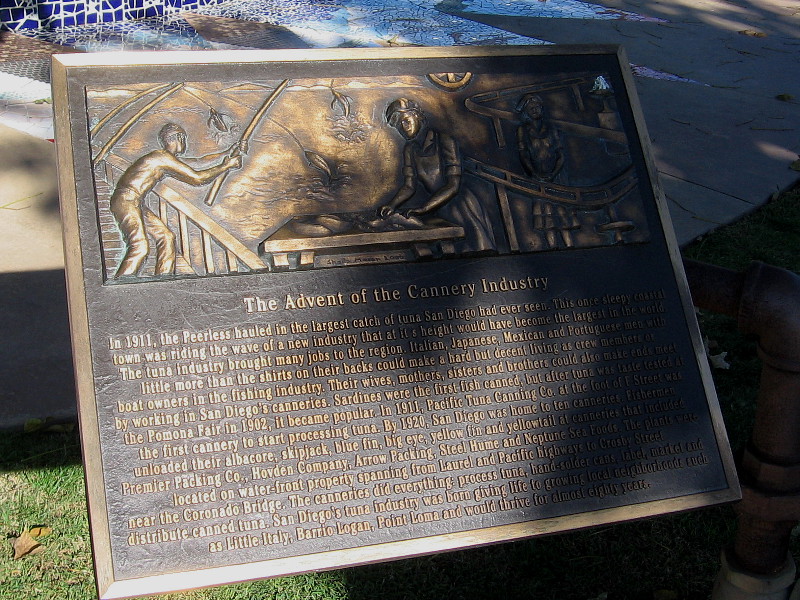
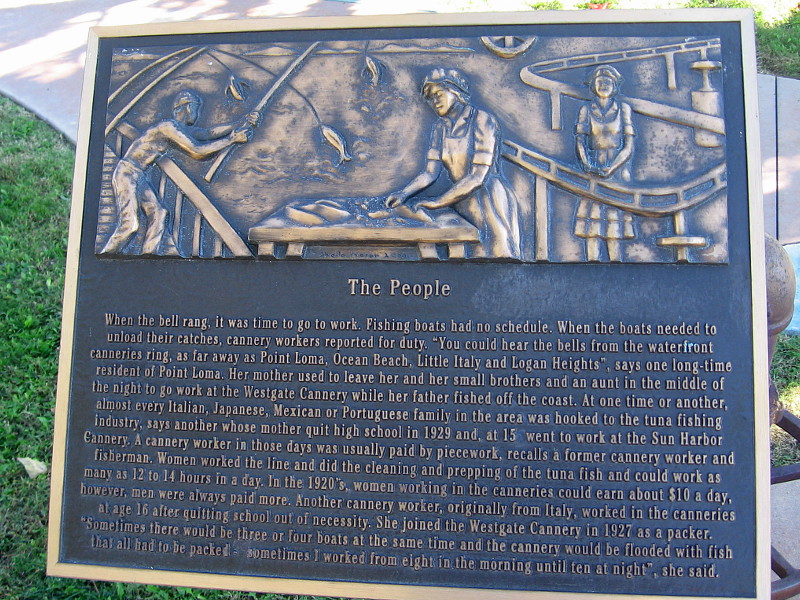
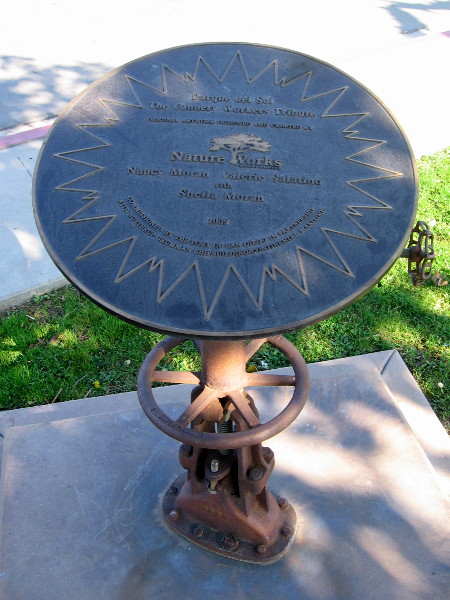
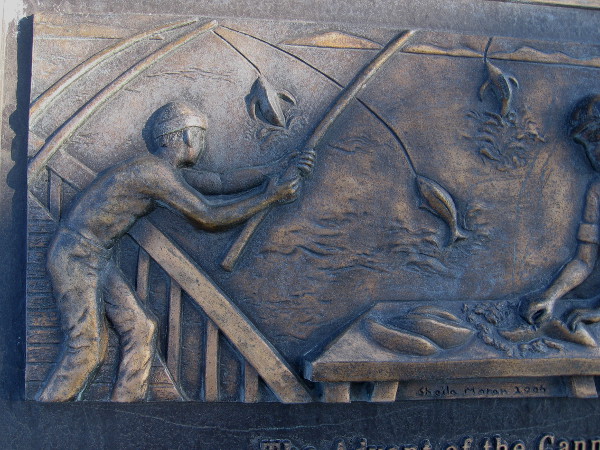
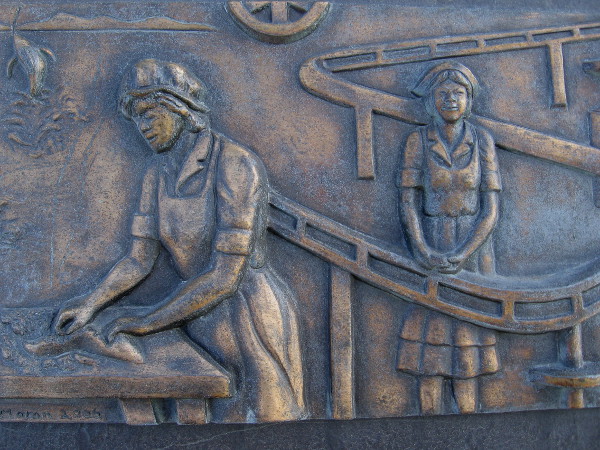
Four bronze plaques mounted on bits of old machinery recall the history of this area and the once-thriving tuna industry. Click the plaque photos to read them.
The Cannery Workers Tribute sculpture was created in 2009 by Valerie Salatino and Nancy Moran, with assistance from Sheila Moran. It is indeed a very cool sight!
Coral tree planted by a cannery maintenance man decades ago is an important feature of the Cannery Workers Tribute at Parque del Sol.A high arch of gleaming fish seems to rise above the nearby Coronado Bay Bridge. This public art is located in Barrio Logan, near the entrance to Cesar Chavez Park.Few people pass this way. This public art is definitely a hidden San Diego gem.A large catch of ocean tuna seems to burst from a basket!The advent of the cannery industry in the early 1900s. For most of the 20th century, San Diego was the tuna fishing capital of the world.The people included Italian, Japanese, Mexican and Portuguese fishermen, and many cannery workers. Fishing boats have no schedule. When the cannery bell rang, it was time to go to work.The process was smelly and messy! For tuna to go into a sandwich or salad bowl, it often traveled up to 7000 miles!The end of the San Diego tuna fishing era came in the 1980s, due to foreign competition, high expenses and other factors.Another photograph that you might enjoy.An arch of abundant fish above tuna cannery workers. Public artwork that honors an important chapter in San Diego’s history.
UPDATE!
I took additional photos on a later walk past the park…
…
Join me for more cool San Diego discoveries on Facebook and Twitter!
Do you like to read original, thought-provoking fiction? Visit my Short Stories by Richard writing blog!
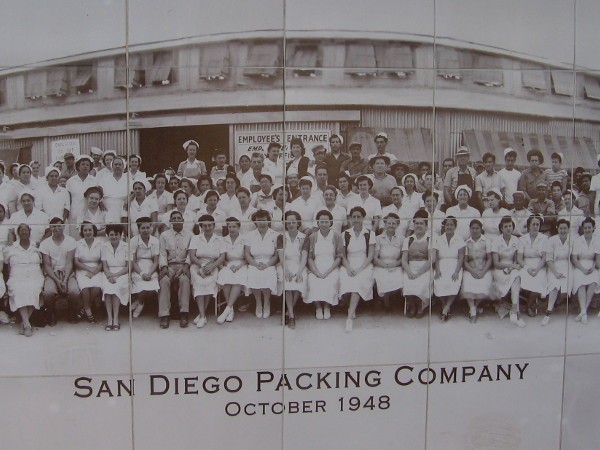
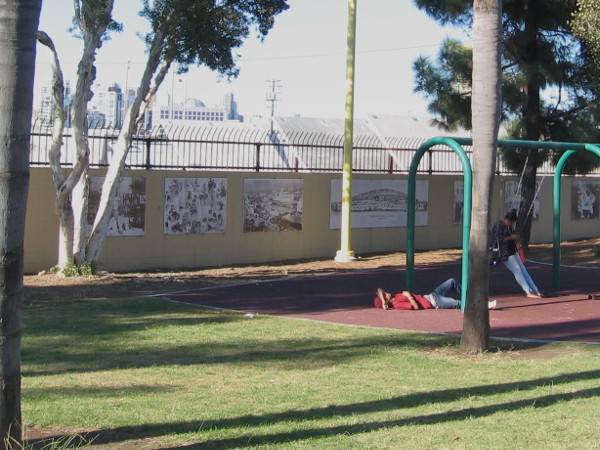
Close-up photo of one tile panel in a long mural, which is located on a wall near the Cesar Chavez Park playground in Barrio Logan.
Relatively few people know about a fascinating mural in Barrio Logan. Dedicated art and history lovers can find it at the very edge of San Diego’s beautiful bay, between the Tenth Avenue Marine Terminal and the base of the Coronado Bridge.
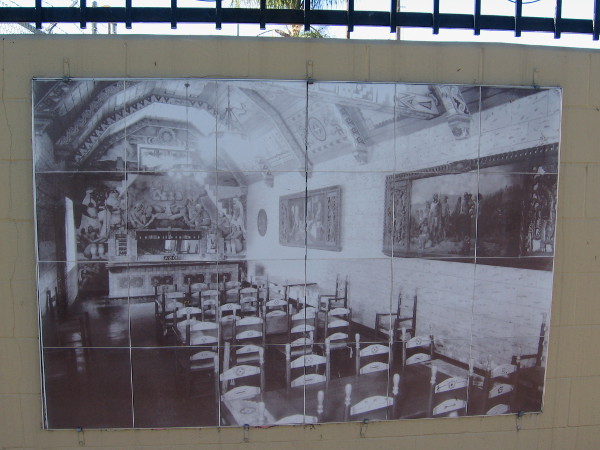
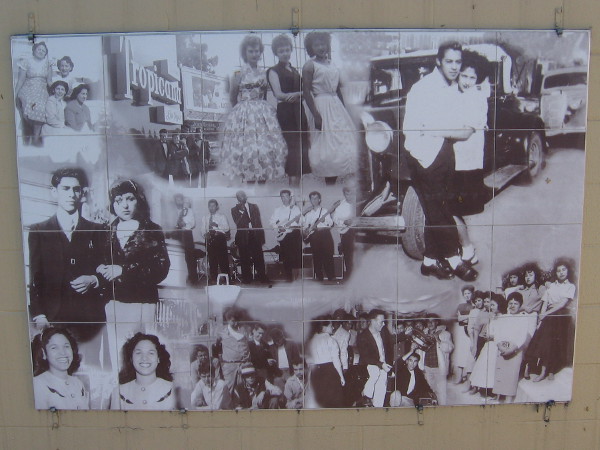
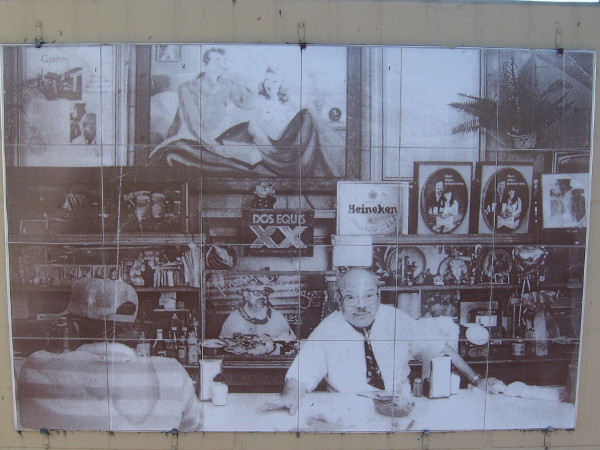
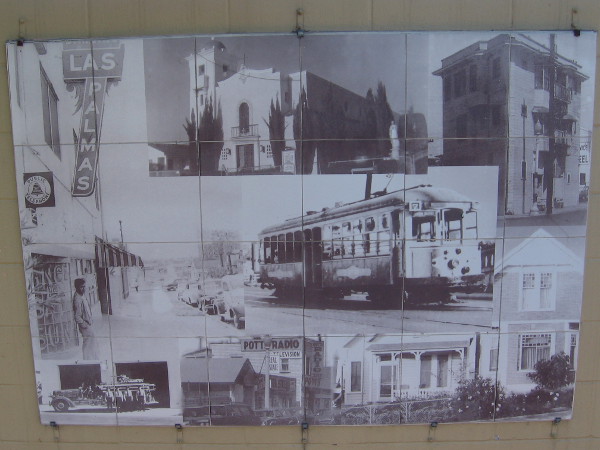
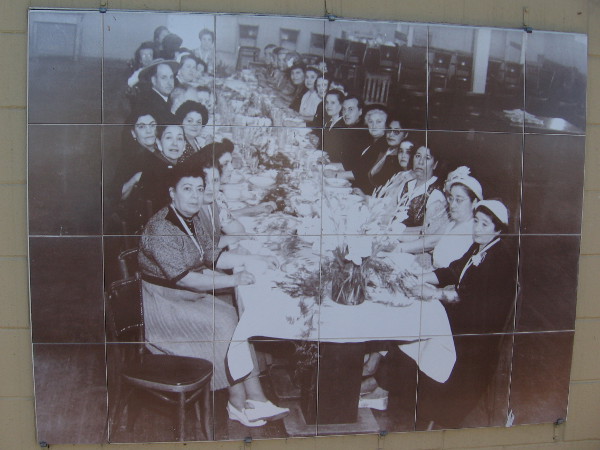
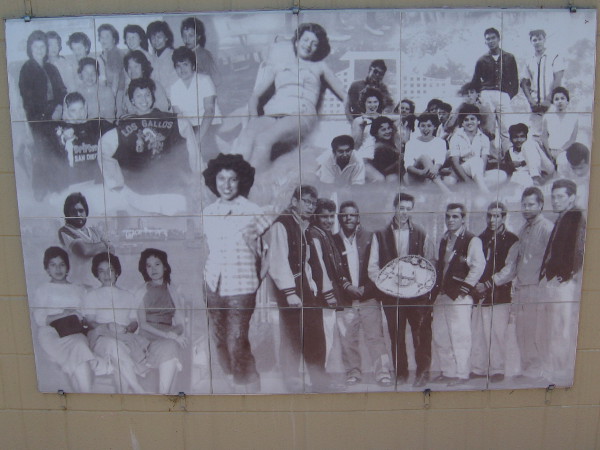
The mural is located in Cesar Chavez Park, on a long wall just north of the playground. Created by Dale Marsh/Tile Artisans, it consists of eleven ceramic tile panels depicting half a century of local history–from the 1900s to the 1950s–through the use of vintage photographs. Images fondly remember the day-to-day life many San Diegans in this predominantly Mexican American neighborhood experienced while growing up and working on our busy waterfront.
A brief description of each panel is contained in a nearby plaque also composed of tiles. I’ve transcribed most of the words and have used them in my photo captions.
Looking north past the Cesar Chavez Park playground at an interesting public mural that depicts local history.Descriptions of the eleven panels in the mural, which depicts Logan Heights in its Golden Years, 1900 through 1959.Aztec Brewery Art Ensemble adorned the ceiling and walls of the Rathskeller and Beer Tasting Room of the brewery in the early to mid 1900s on Main Street.Hoop skirts, 1932 Model T car with rumble seat and white 1936 Ford, Metro Theater usherette twins, model parents of the era, neighborhood Rhythm and Blues bands and their followers.Papa Chuey founding proprietor of Chuey’s Restaurant cashed checks and provided credit accounts for fishermen and cannery workers in hard times.Nifty Fifties teen scene in “The Heights” spotlights Physical Education class, jitterbug dancing and positive socialization. Friendship was a true binding factor among teenagers.Tuna boats filled with tired fishermen arrived at the tuna canneries bringing work for hopeful dockworkers and cannery workers. Their arrival meant livelihood for countless families.This 1948 Cannery Workers group photo depicts the numbers and spirit of the work force of the various canneries of San Diego’s Cannery Row.The “Leona C – San Diego” fishing crew portray the faces of the hard working men who in turn provided for numerous jobs for entire communities.Logan Heights landmarks include the street car at 5 cents per ride . . . the beautiful earlier architecture of Our Lady of Guadalupe Church and Las Palmas nightclub . . .Community social groups fostered a healthy and happy neighborhood where age gaps did not exist. Neighbors watched out for each other and provided a safety net for the youth.Teen social clubs such as Los Gallos, Los Chicanos and the Drifters comprised the Southeast Youth Council, which was sponsored by the Old Neighborhood House.Neighborhood House provided many community programs including Rondalla musical groups for women. Lupita, far right first row, is a legend in Logan Heights.
…
Follow this blog for more photos of interesting San Diego stuff! Join me on Facebook or Twitter.
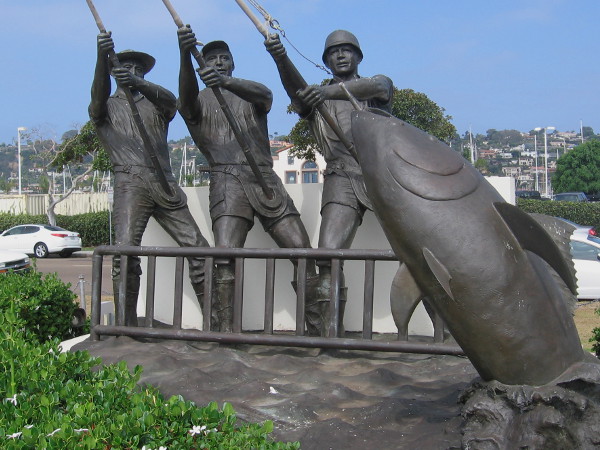
Three bronze fishermen on Shelter Island together reel in a large tuna.
A monumental bronze sculpture in Shoreline Park on Shelter Island has become an iconic image. The Tunaman’s Memorial, by artist Franco Vianello, dedicated in 1988, honors the courage and hard work of generations of tuna fishermen in San Diego. The 9,000 pound sculpture depicts three individuals pole fishing from a boat of the once-large tuna fleet out on the Pacific Ocean. The history of San Diego’s tuna fishing industry contains generations of life stories. These unwritten stories involve fishermen who immigrated from many different nations, including Italy, Portugal and Japan.
One polished side of the sculpture contains names of fishermen who were pioneers in our region, and those who were lost at sea. An inscription reads: Tunaman’s Memorial honoring those that built an industry and remembering those that departed this harbor in the sun and did not return. Anthony Mascarenhas.
The Tunaman’s Memorial on Shelter Island is a 9,000 pound bronze sculpture honoring generations of diverse fishermen.Tuna fishing in local waters was once a major industry in San Diego.Polished side of Tunaman’s Memorial contains names of San Diego fishing pioneers, and those who were lost at sea.This iconic sight on Shelter Island provides a glimpse back in history, at those in our community who worked the sea.
…
Follow this blog for more photos of cool stuff! Join me on Facebook or Twitter.
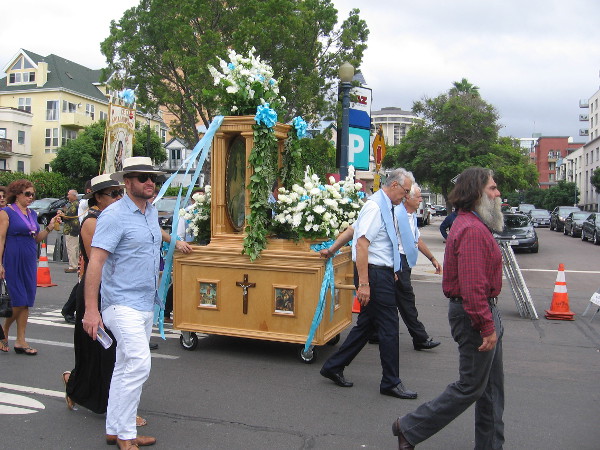
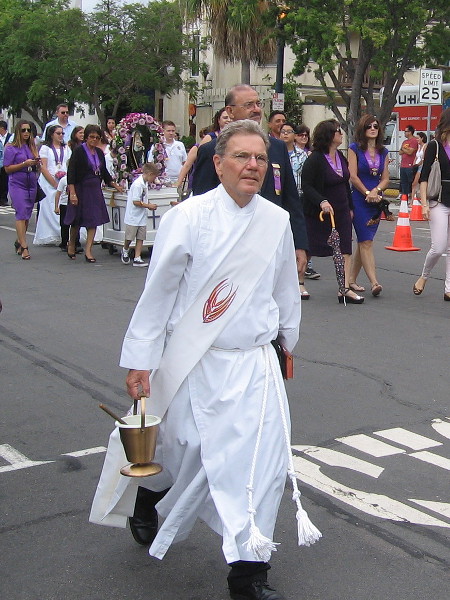
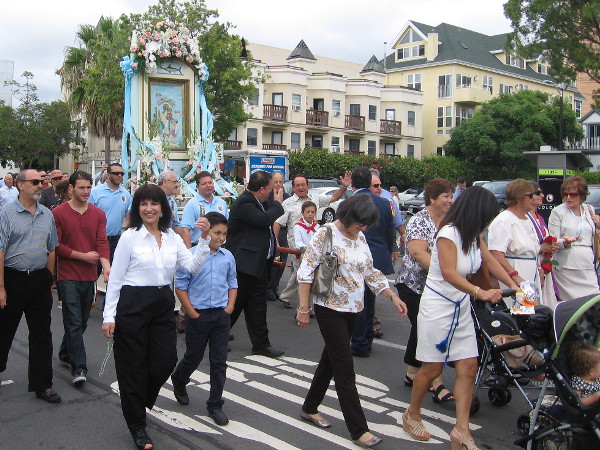
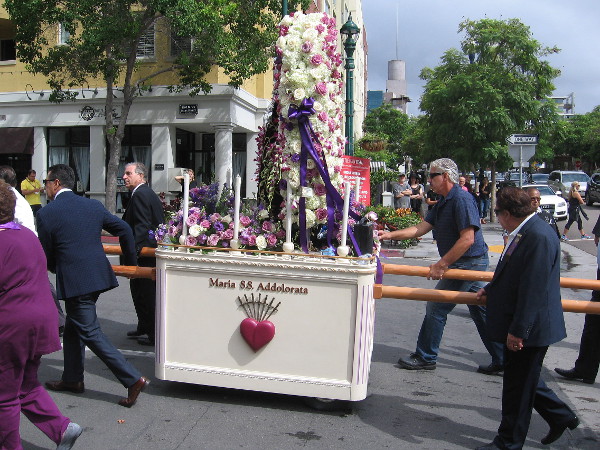
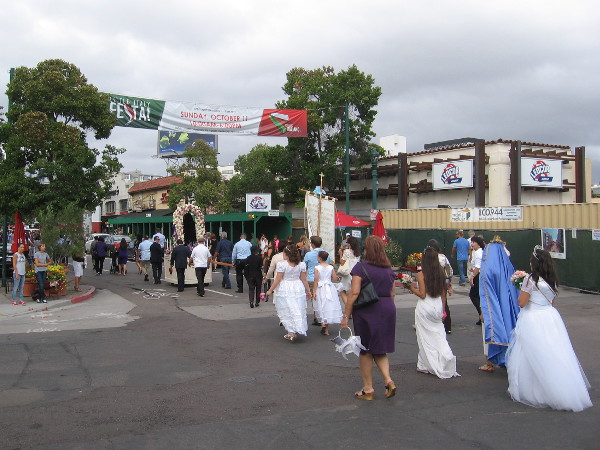
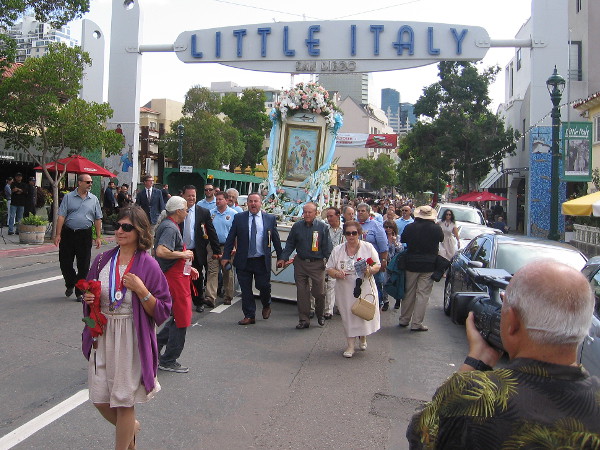
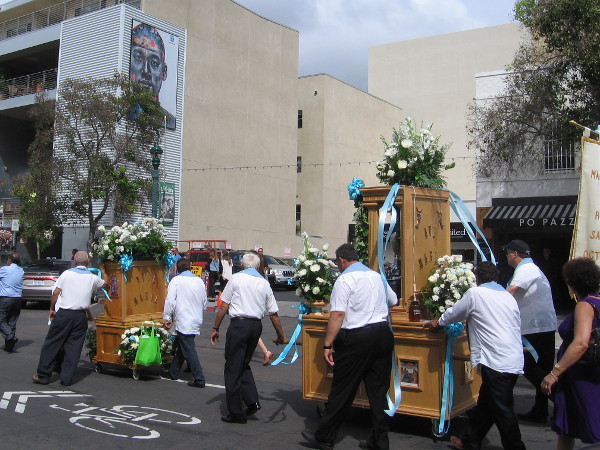
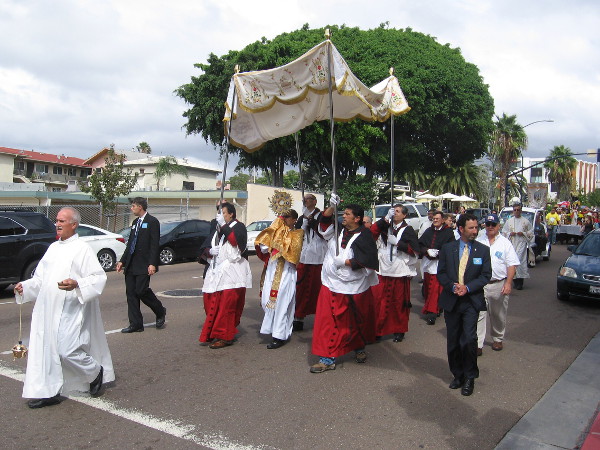
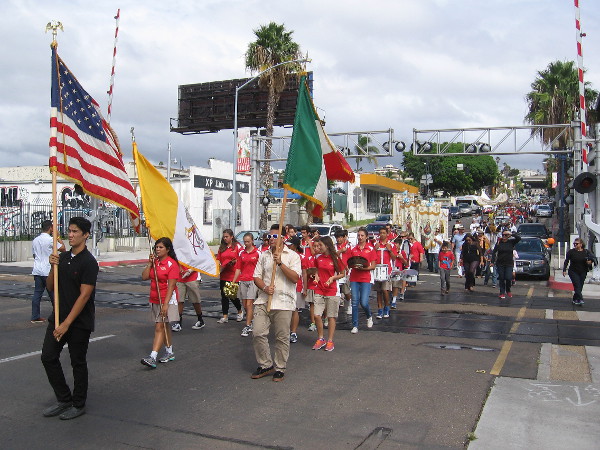
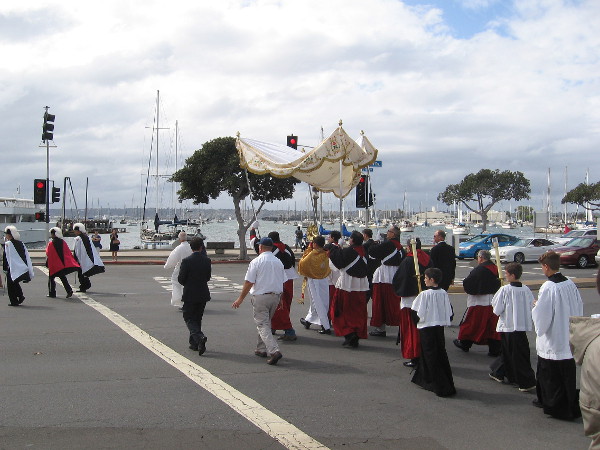
A colorful religious procession makes its way through San Diego’s culturally rich Little Italy neighborhood.
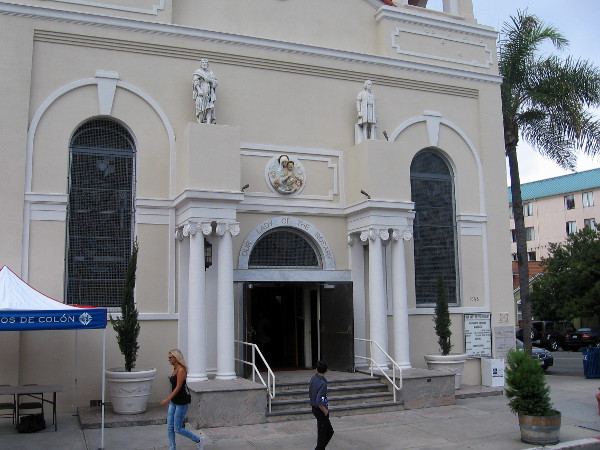
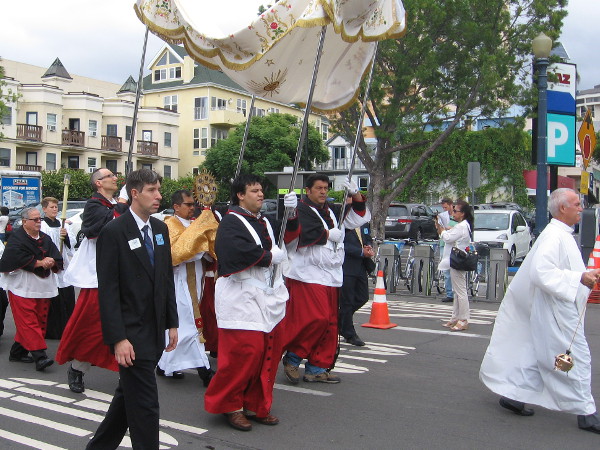
Early this afternoon, the historic Our Lady of the Rosary Parish in Little Italy celebrated Catholic Mass then held a grand procession. Parishioners marched from State Street in front of their church down to San Diego’s Embarcadero, where a fishing boat representing the local tuna fleet was blessed. I witnessed the procession a few years ago, but took no photos. So today I decided to walk along the sidewalk with my camera.
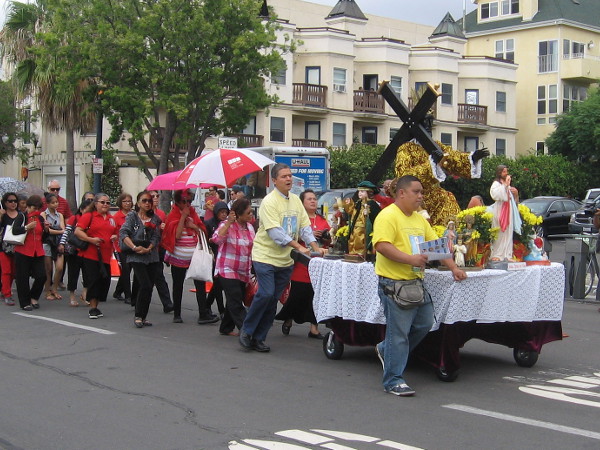
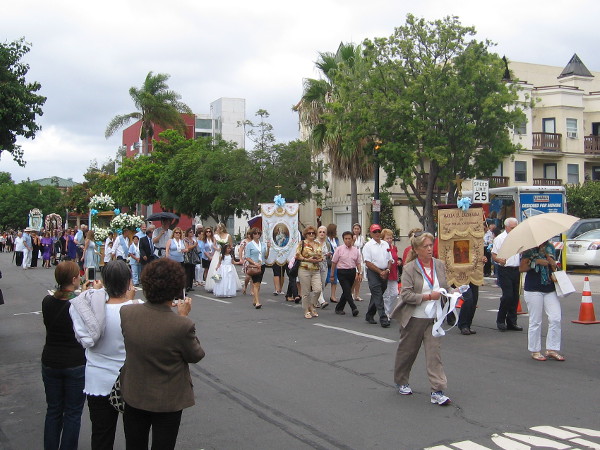
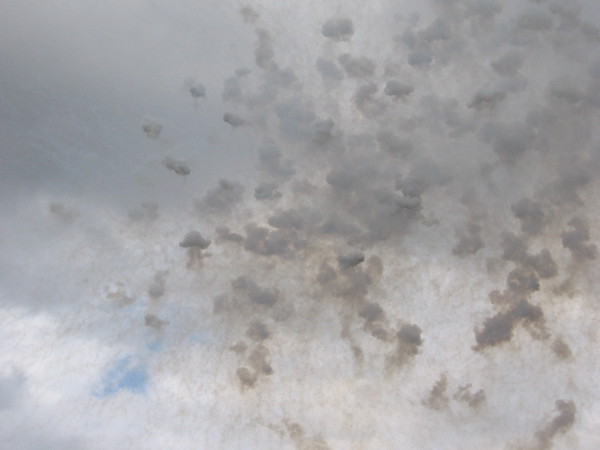
Forgive me for not knowing the details of the religious procession. I do know a large host of the faithful, in all manner of dress, many of Italian descent, and many carrying images of Jesus and Virgin Mary, marched joyfully north up India Street, then turned west down Hawthorn Street until they reached Harbor Drive. At the Hornblower dock, the fishing boat Patty Jo, which is a common sight out on San Diego Bay, was blessed by the priests of Our Lady of the Rosary. It’s a unique San Diego tradition that dates from the early 50s. At the completion of the religious ceremony, which was not open to the public, fireworks resounded in the overcast October sky!
In the early afternoon few were near the front entrance of the Our Lady of the Rosary Church in Little Italy. That would soon change.Plaque on Our Lady of the Rosary Church. Historical monument dedicated December 20, 1925.Banner declares Sunday, October 4 is Our Lady of the Rosary Catholic Church’s much anticipated Festa 2015.Mass was celebrated at noon in a large outside tent in nearby Amici Park.
The procession slowly assembles after Mass in front of the church.An elegant canopy emerges from the Catholic Church.The colorful religious procession, led by a youthful band, is ready to begin.
The procession is now heading north up India Street.
Approaching a banner announcing that next Sunday is Little Italy’s popular neighborhood Festa.Passing under the landmark Little Italy sign on India Street.
I caught an airplane coming over Bankers Hill preparing to land at Lindbergh Field.Now proceeding down Hawthorn. The threatened rain held off for the event!You can see that hundreds participated in this truly grand spectacle.
Finally arriving at San Diego Bay.A Harbor Patrol boat gives a water cannon salute for the occasion.Priests and those instrumental in blessing the tuna boats head onto the Hornblower dock at Grape Street.My camera could just catch a glimpse of the elaborate Catholic ritual beside the Patty Jo fishing boat.Fireworks launched from a nearby pier burst loudly in the air like exultant sparks.Little puffs of smoke hover in the heavens after the fireworks.The Patty Jo now confidently heads off across the gray water, hoping for safe ocean journeys and bountiful catches.
…
Follow this blog for more photos of uniquely interesting stuff! Join me on Facebook or Twitter.
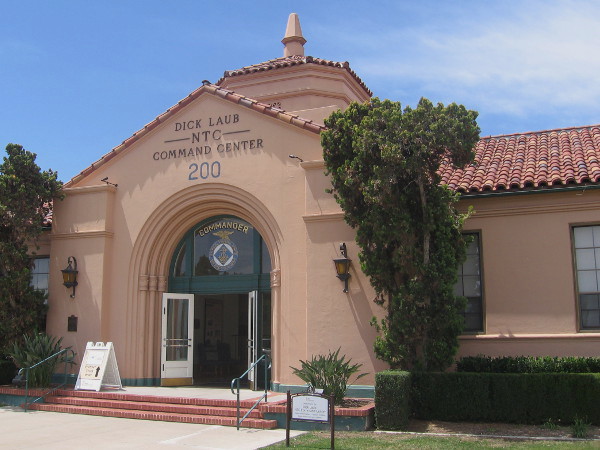
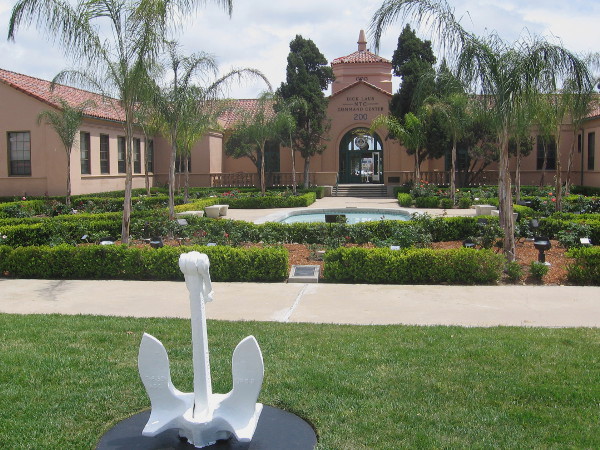
Historic Decatur Road entrance of Dick Laub NTC Command Center at Liberty Station in Point Loma.
Some time ago I visited the Command Center at NTC Liberty Station in Point Loma. Two interesting exhibits can be found along the main hallway that runs the length of the historic building. The Command Center was once the operational hub of former Naval Training Center San Diego.
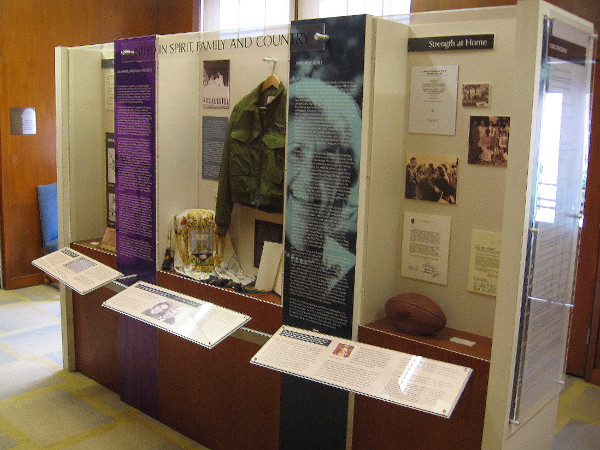
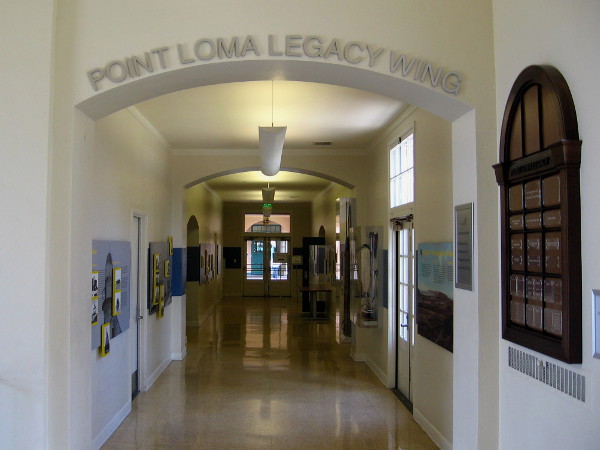
The museum-like Stockdale Family Exhibit concerns the life and history of celebrated Navy Vice Admiral James B. Stockdale and his wife Sybil. The Point Loma Legacy Wing contains many displays that provide insights into the fascinating history of San Diego’s Point Loma.
Should you visit, here’s what you’ll see…
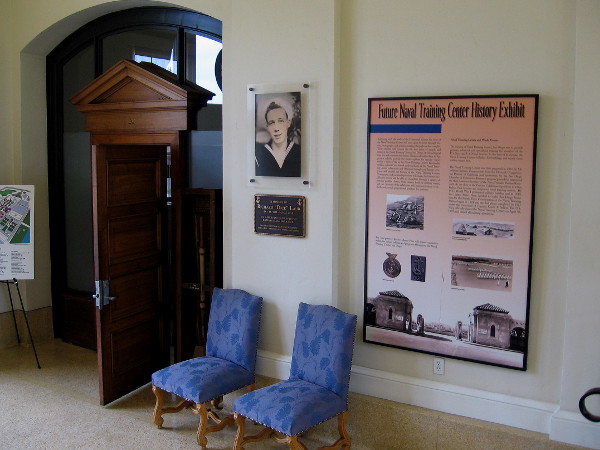
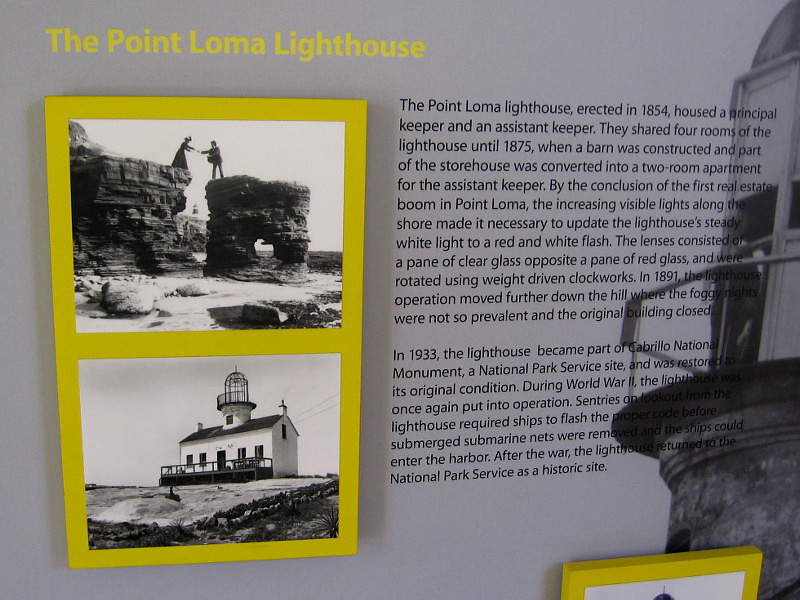
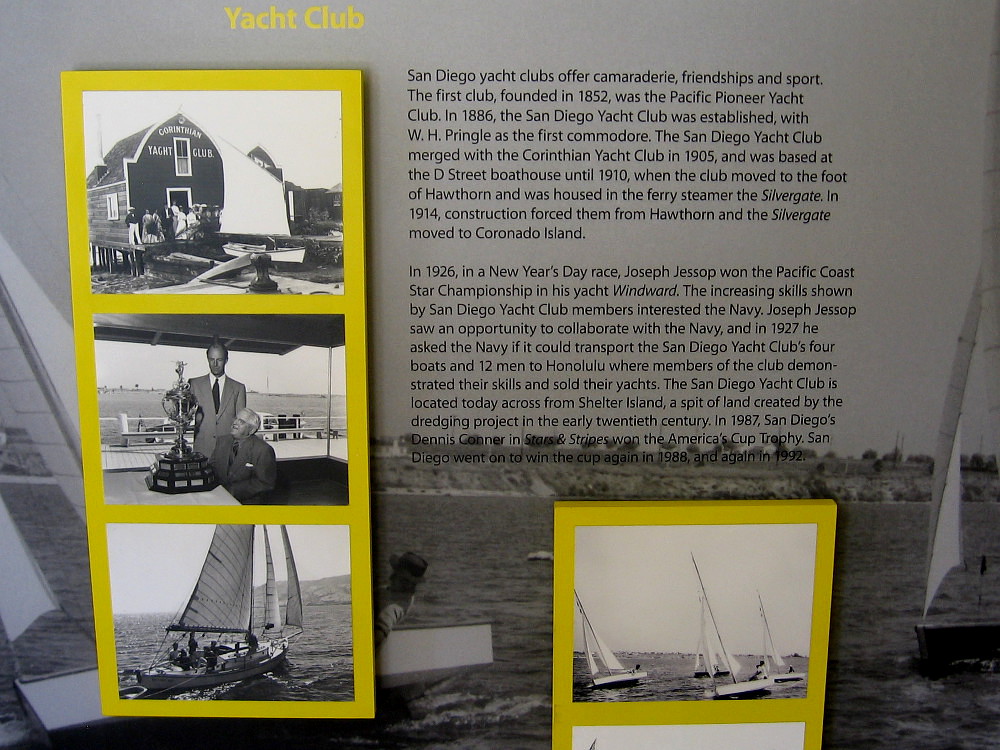
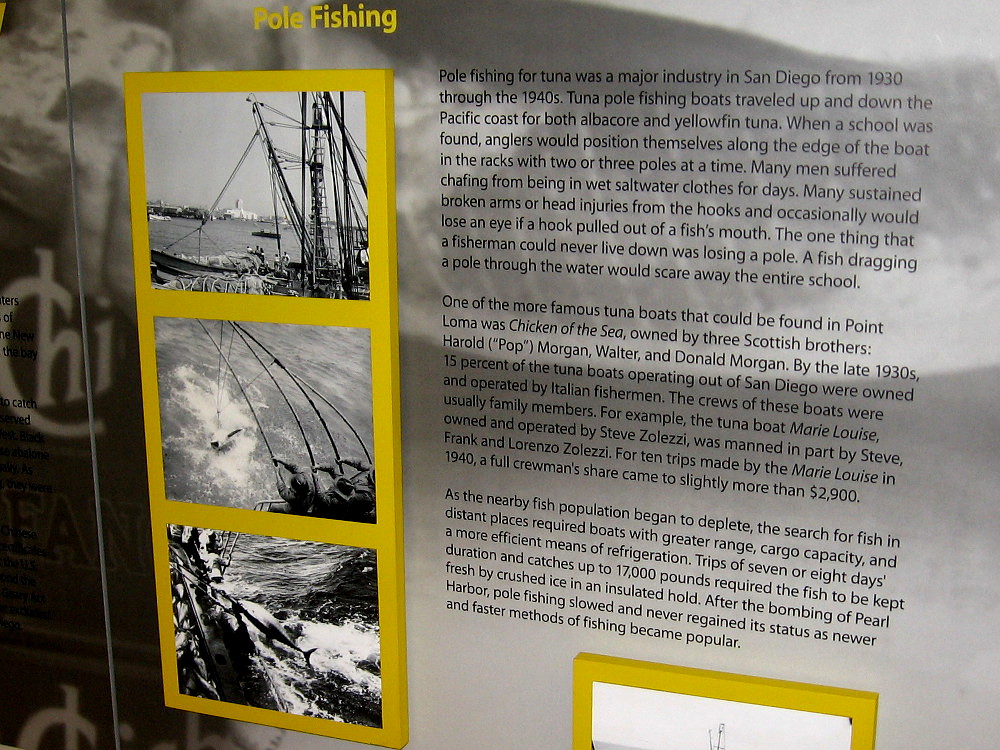
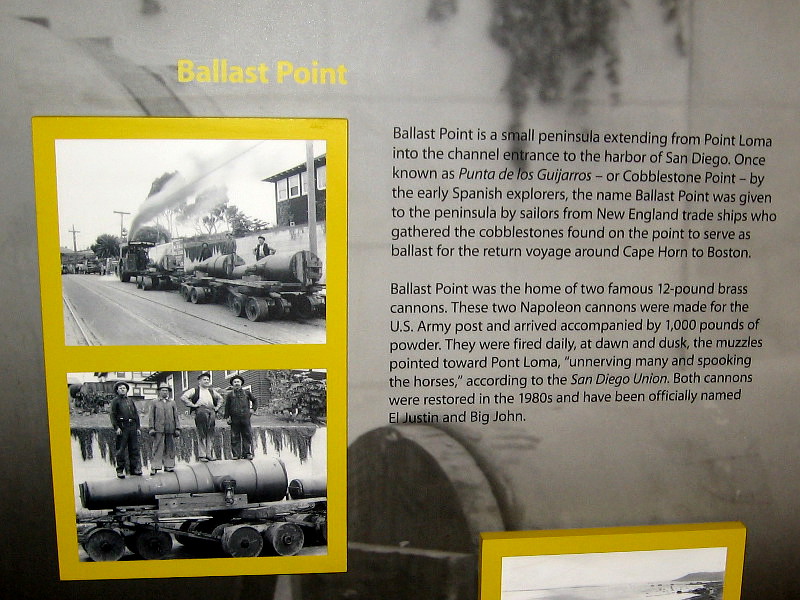
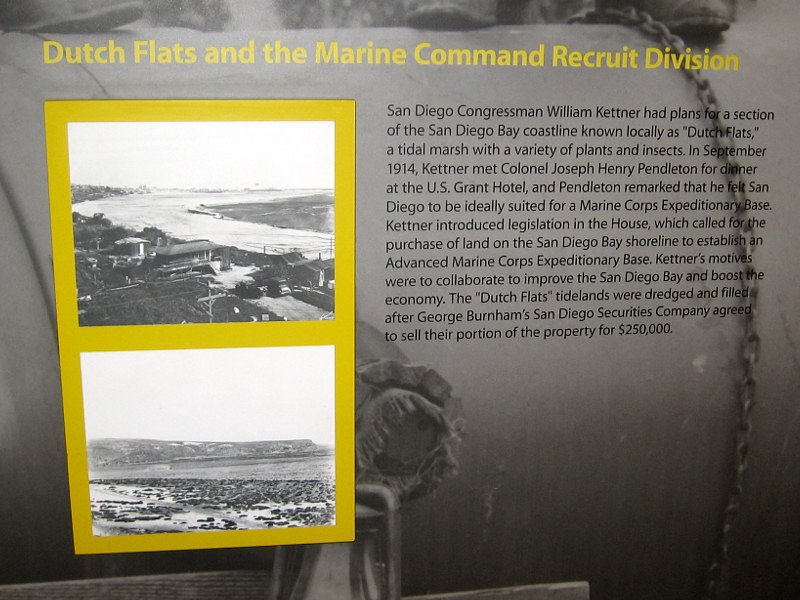
Built in 1941, The Command Center (Building 200) was the focal point of the base. These were offices for the highest-ranking officers, including the Admiral in Command of the Center.Looking from inside the Command Center southeast toward Preble Field and a large American flag.Inside the entrance to the Command Center. Various signs and free literature provide information about the converted military base and its many cultural attractions.Naval Training Center, San Diego. The recruit story is one of personal transformation; a recruit’s experience from arrival through graduation is the foundation for memories…In Memory Of Richard “Dick” Laub. Dick gave credit for much of his success to the G.I. Bill. His passion was the sea and fishing.One wing of the NTC Command Center today contains the Stockdale Family Exhibit. James and his wife Sybil are Navy heroes from the Vietnam War era.Vice Admiral James Stockdale, long-time resident of Coronado, obtained and conveyed important tactical information while imprisoned in North VietnamStockdale was candidate for United States Vice President in 1992 on Ross Perot’s independent ticket. During a debate, he famously said: “Who am I? Why am I here?”The exhibit contains photographs and objects from James and Sybil Stockdale’s family life.The Point Loma Legacy Wing at the NTC Command Center contains two walls of fascinating displays concerning this area’s history.The Point Loma lighthouse, erected in 1854, housed a principal keeper and an assistant keeper. In 1933, the lighthouse became part of Cabrillo National Monument and was restored.San Diego yacht clubs offer camaraderie, friendships and sport. The first club, founded in 1852, was the Pacific Pioneer Yacht Club. In 1886, the San Diego Yacht Club was established.Display case contains artifacts from the San Diego Maritime Museum, including model of a tuna boat.The first fish cannery was built in 1909 at La Playa designed for processing sardines. Albacore canning started in 1911.Pole fishing for tuna was a major industry in San Diego from 1930 through the 1940s. Tuna pole fishing boats traveled up and down the Pacific coast for both albacore and yellowfin.Ballast Point is a small peninsula extending from Point Loma into the channel entrance to the harbor of San Diego. Cobblestones on the point were used for ballast by early trade ships.The Point Loma kelp forest is part of one the largest kelp forests in the northern hemisphere. Giant kelp is a species of marine alga, which may grow up to 200 feet in length.Fort Rosecrans. In 1793, British Captain George Vancouver entered San Diego harbor. He noted the port would be better defended from the Point Loma peninsula.Dutch Flats and the Marine Command Recruit Division. Plans were devised by San Diego Congressman William Kettner. A tidal marsh would be dredged and filled.Anchor and Sybil Stockdale Rose Garden next to NTC Command Center. Photo taken from Legacy Plaza near the center of Liberty Station.
…
Follow this blog for more photos of cool stuff! Join me on Facebook or Twitter.
The sun glows behind a pair of palm trees at the edge of Mission Bay.
Late this morning I headed to the Pacific Islander Festival, which took place in the grassy Ski Beach Park near the center of Mission Bay. I’ll get my photos ready and blog about it shortly!
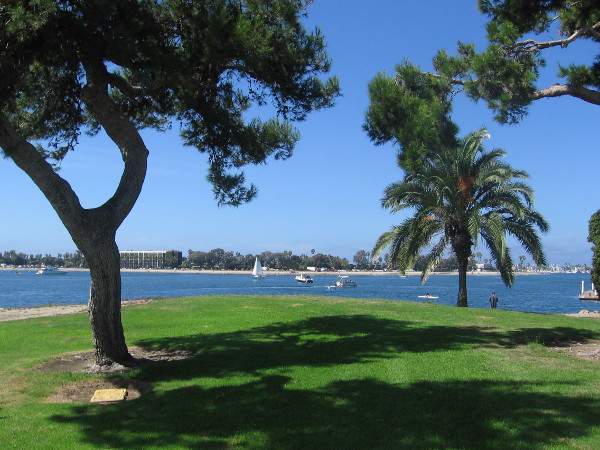
On the way to the festival and afterward, I took a long, leisurely walk. Mission Bay might be the best place in San Diego for an easy saunter through sunshiny paradise.
When I say Mission Bay Park is a paradise, that’s no exaggeration. Grassy parkland, beaches, islands, resorts and marinas are found everywhere you go, whether by foot, bicycle, roller skate, car or boat. Its 4,235 acres make it the largest man-made aquatic park in the nation. Roughly half land and half water, what was originally a lagoon at the mouth of the San Diego River has been transformed into one of our city’s most popular destinations. Especially during the summer.
But summer is over and the crowds have thinned. Perfect for a quiet, thoughtful walk.
Here are a few random pics…
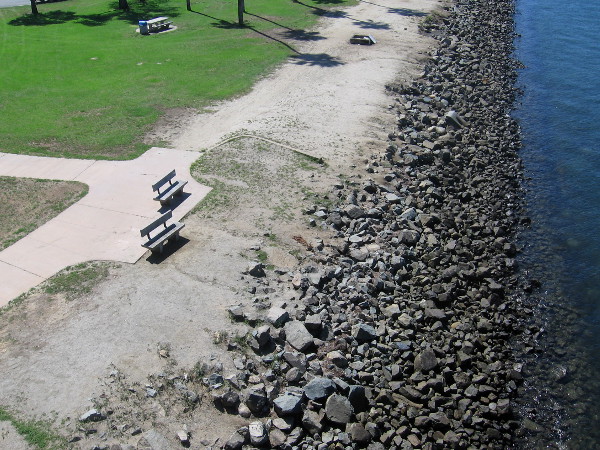
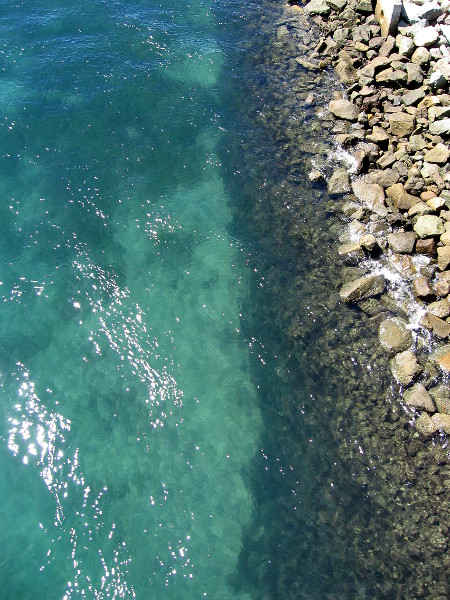
A fisherman rows a kayak near sailboats docked at Paradise Point Resort on Vacation Isle.Mission Bay Park is the largest man-made aquatic park in the United States. Its 4,235 acres is a wonderland of blue water, islands, beaches, resorts, marinas, and tree-shaded grass.Skateboarding over the Ingraham Street bridge between Vacation Isle and Dana Landing. A seagull on every lamp post!Looking down from the bridge. It’s a quiet Sunday after Labor Day, and many benches are empty. Mission Bay is a perfect place for a long, sunny walk in San Diego!Light reflected on water contrasted with shore rocks.A small pleasure boat glides through South Cove and is ready to pass under the Ingraham Street bridge.A colorful sail and reflection on smooth water at the Hyatt Regency Mission Bay Marina.Fishing on a Sunday by the bridge north of Quivira Basin. It crosses over Mission Bay Channel and leads to nearby Mission Beach.Broad blue water and folks recreating on Mission Bay. Kayaks, paddle boards, peddle boats, sailboats, windsurfers and fishing boats can be spotted on any given day.
…
Follow this blog for more photos of cool stuff! Join me on Facebook or Twitter.














































 Cool San Diego Sights!