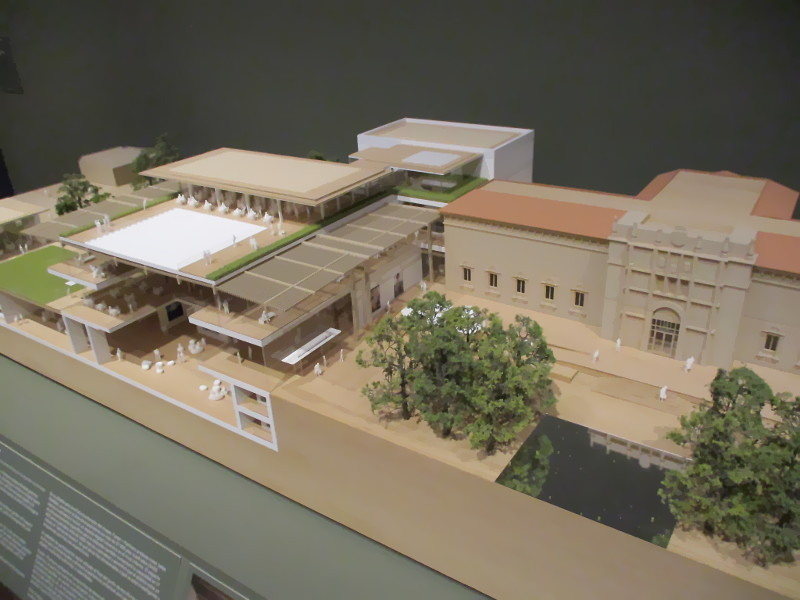
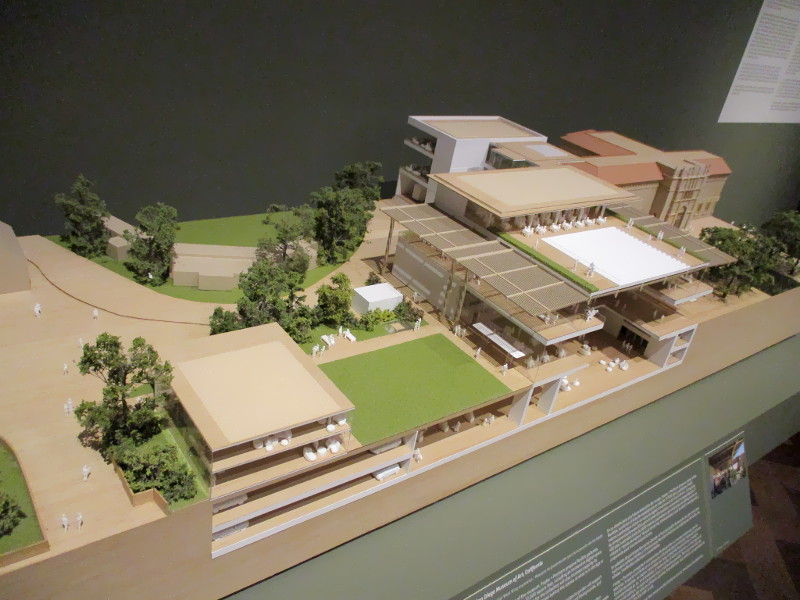
Model of San Diego Museum of Art’s expansion.

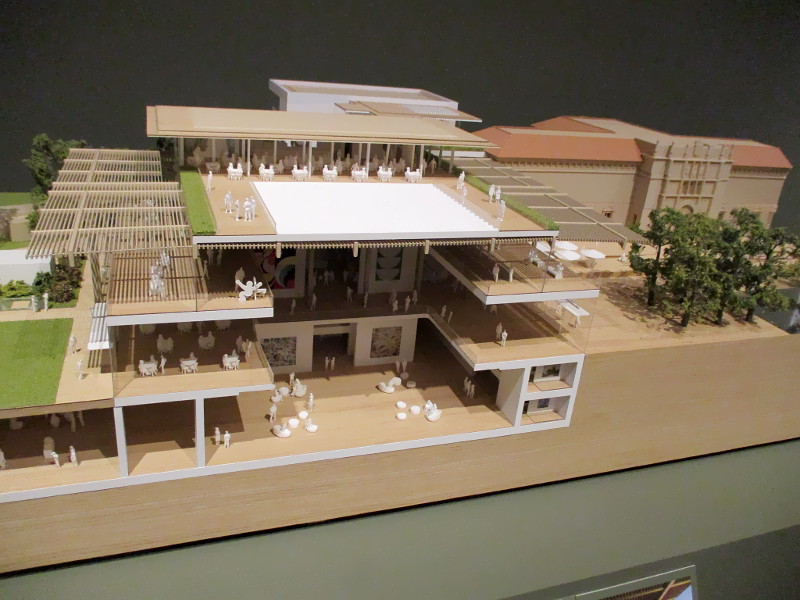
The San Diego Museum of Art in Balboa Park has plans to substantially expand. The proposed renovation of the West Wing celebrates the centennial of the museum in 2026.

A physical model of an early design concept for this new West Wing extension can be viewed today inside the museum. The design was conceived by the prestigious international architectural firm Foster + Partners, and the model is part of an exhibition that shows their other work around the world.

I got a look at the model yesterday and took some photos so you might visualize how Balboa Park might appear in the future. Obviously, this is important to everyone in San Diego.

Like other Foster + Partners projects, the design will create an experience that is spacious and full of natural light. The proposed expansion will add 37,000 square feet of gallery space, including an immersive digital space. There will also be a community engagement pavilion that will provide interactive space for artists and visitors alike.

As you can see, this large expansion will replace today’s sculpture court and garden.

Personally, I’m not really sure what to think of it.

I like the general idea, but how will this new structure fit in with the surrounding, entirely different Spanish Colonial Revival architecture? It will stand across Plaza de Panama from the much smaller Timken Museum, which also has a more sleek, modern appearance, perhaps creating a visual counter-balance.

The very first thing that struck me is how small the historic San Diego Museum of Art appears beside their wide, taller expansion. No other buildings are shown in the model such as the nearby House of Charm, but I imagine it, too, will appear small in comparison.

My main concern is how this fairly tall new structure might obscure or partially obscure views of Balboa Park’s iconic California Tower, which is arguably the most beloved sight in all of San Diego. The expansion will almost certainly hide the California Tower from people who are in the north part of the Plaza de Panama.

It also appears the design work at the sculpture court and garden by renowned modernist Malcolm Leland will disappear. You can see photographs of that in one of my past blog posts by clicking here.

Well, what do you think?

If you visit the model in the museum, there’s a nearby video that helps you better visualize how this expansion will appear, and an opportunity to leave your own comment.
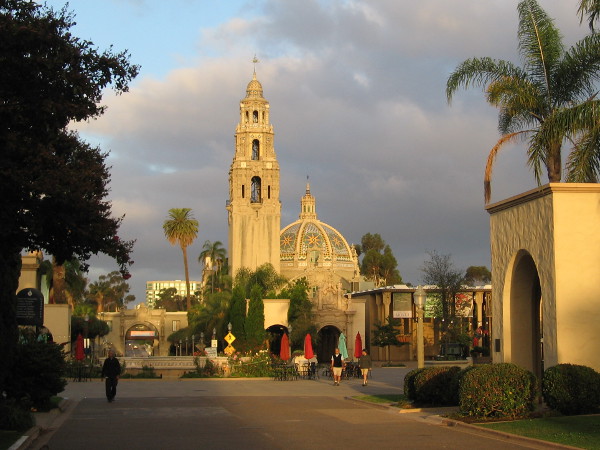
Here’s a photo I took a few years ago from a short distance up El Prado. You can see the present-day sculpture court with its columns and banners to the right of the California Building’s dome.

The proposed expansion, to my eye, appears to be about three times the height of the sculpture court. So imagine that. The California Tower should remain visible down El Prado, fortunately.
I post new blogs pretty often. If you like discovering new things, bookmark coolsandiegosights.com and swing on by occasionally!

I live in downtown San Diego and love to walk around with my camera! You can follow Cool San Diego Sights via Facebook or X.

Feel free to share!
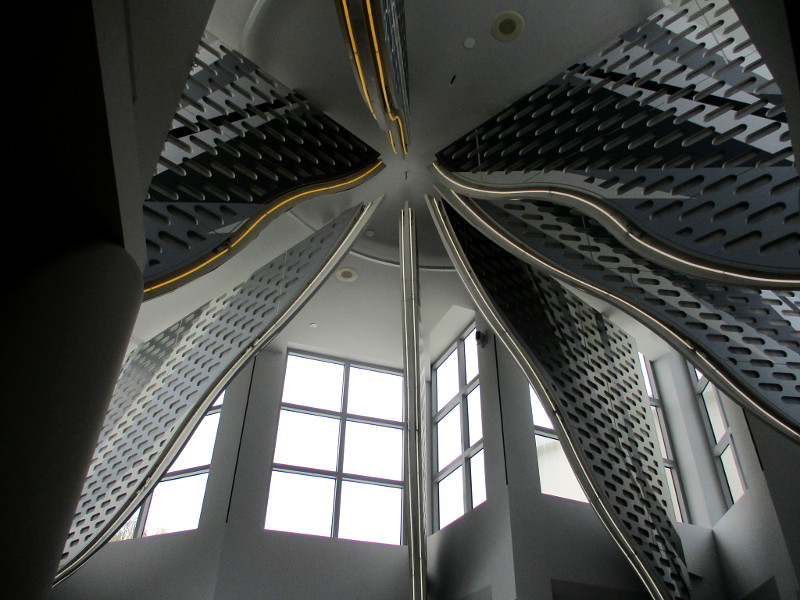
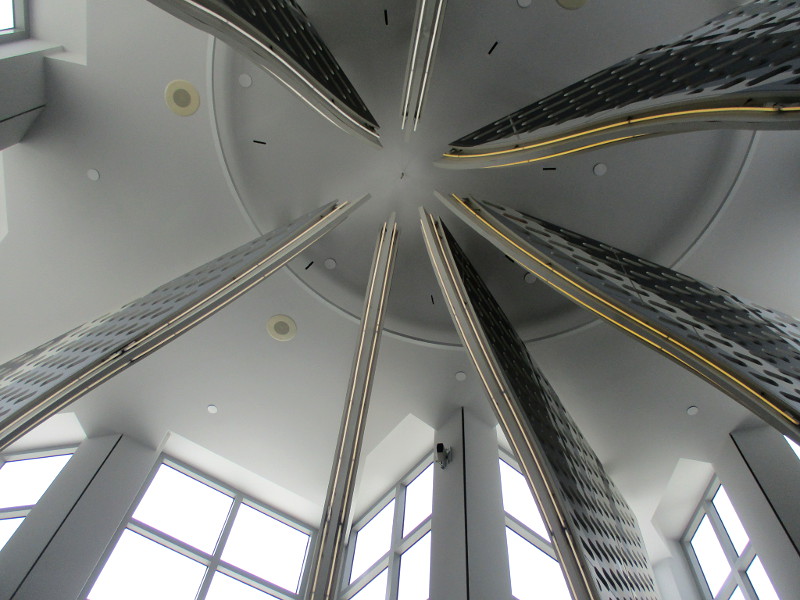
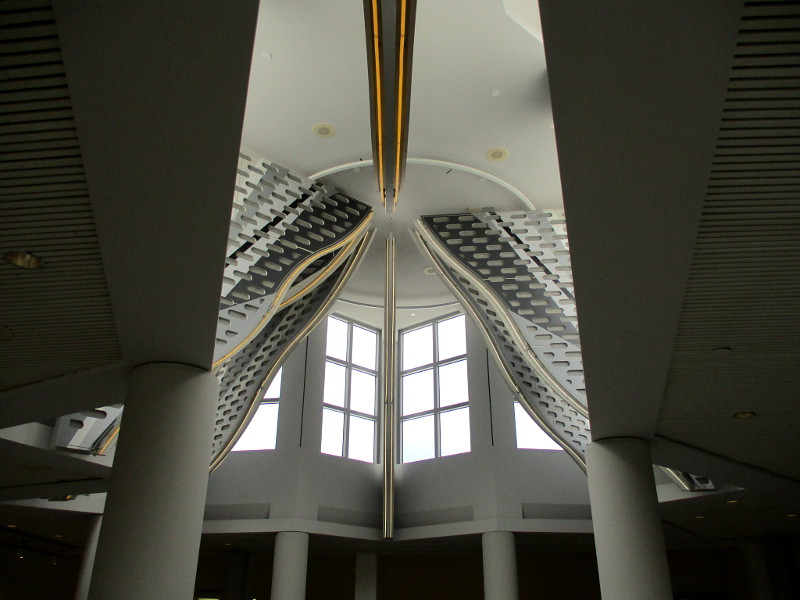
Magical light and form inside the Axline Court.

How does one describe the Axline Court inside the Museum of Contemporary Art San Diego?

Magical, perhaps?

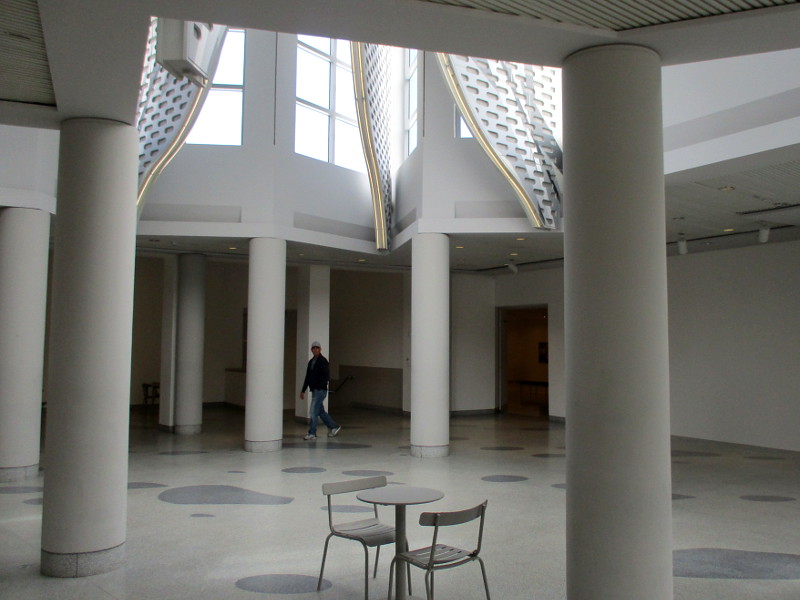
Should you ever visit the museum in La Jolla, step into this space and look up. Move about as your eyes are lifted. See how the light and form changes as if by magic. (Come to think of it, doesn’t the entire world operate this way?)

The Axline Court was designed by famed postmodern architect Robert Venturi. It was part of a 1996 expansion of the historic building, which originally was home to newspaper journalist and philanthropist Ellen Browning Scripps.

The star-shaped Axline Court, a spacious atrium with simple white columns, bright high angled windows, and curvaceous neon fringed fins descending from the ceiling, was retained in the building’s latest redesign and expansion. Today it can be used as a gallery, or for weddings or special events.

I wandered about the space and took these photos. You have to experience the magical effect yourself. I personally wonder how, with the neon, it appears at night.

(My next blog post will concern an exhibition of art by Hoover High School students along one wall. You can glimpse a bit of it on a table in the next photo.)

I post new blogs pretty often. If you like discovering new things, bookmark coolsandiegosights.com and swing on by occasionally!

I live in downtown San Diego and love to walk around with my camera! You can follow Cool San Diego Sights via Facebook or X.

Feel free to share!
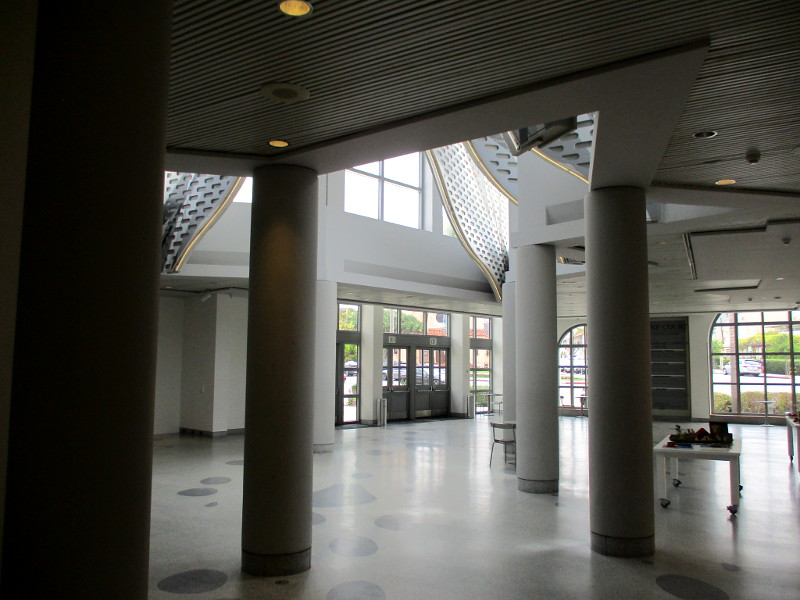
Exhibit shows history of Coronado Bridge.

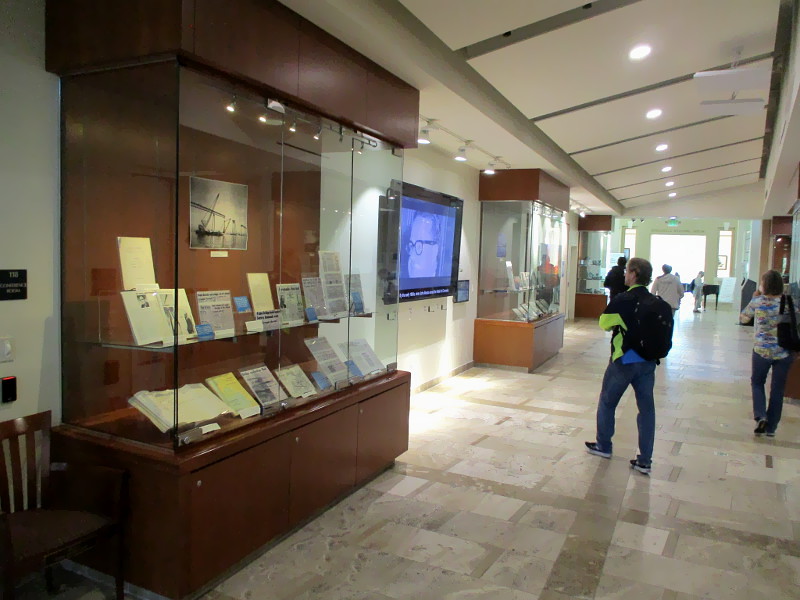
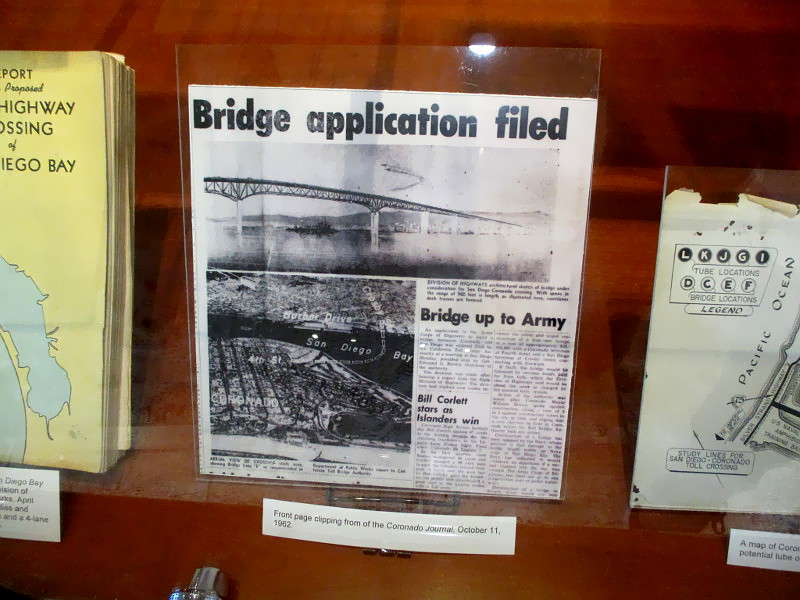
An exhibit detailing the history of the San Diego-Coronado Bridge can now be enjoyed at the Coronado Public Library.

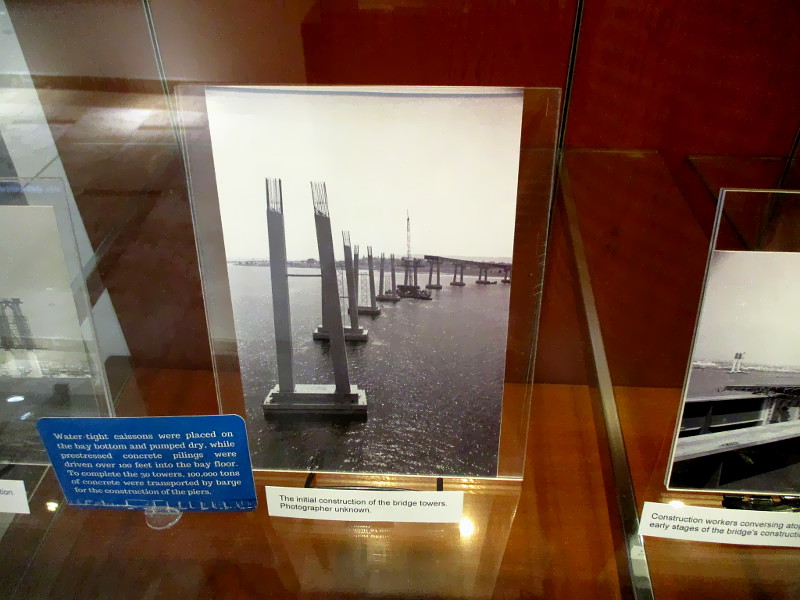
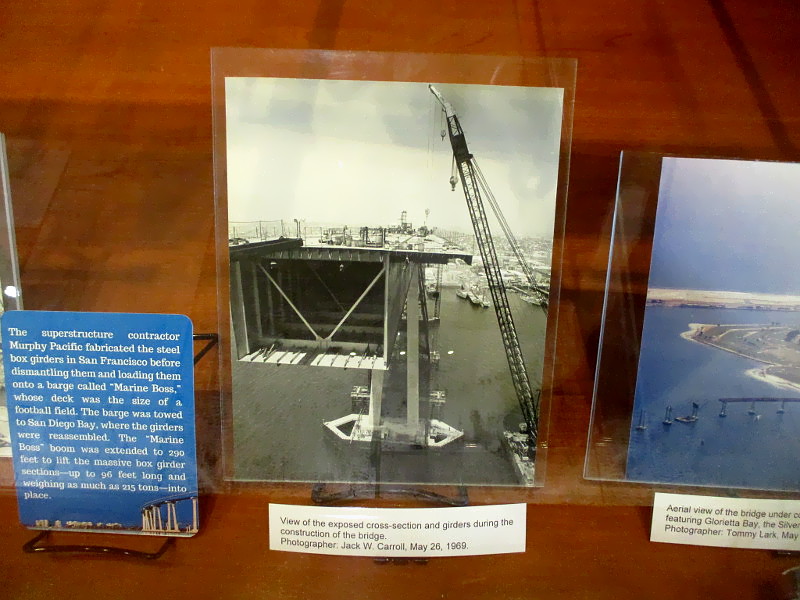
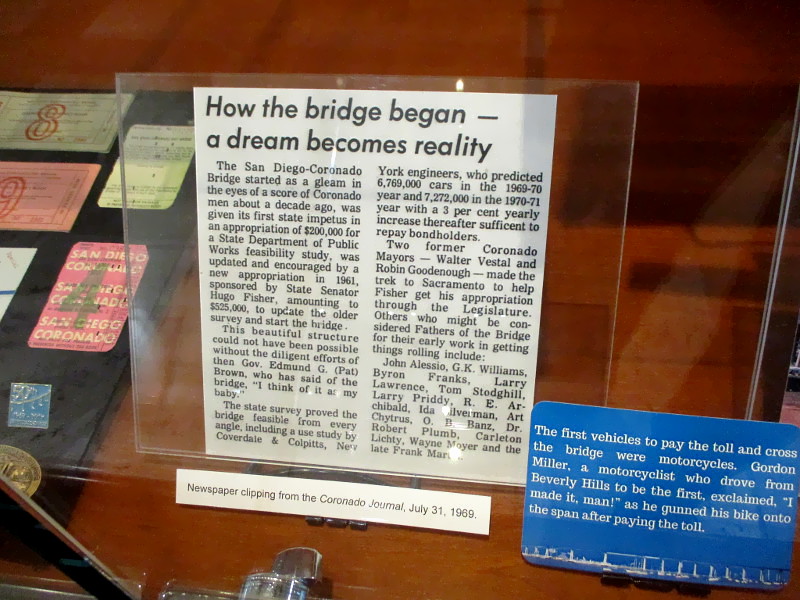
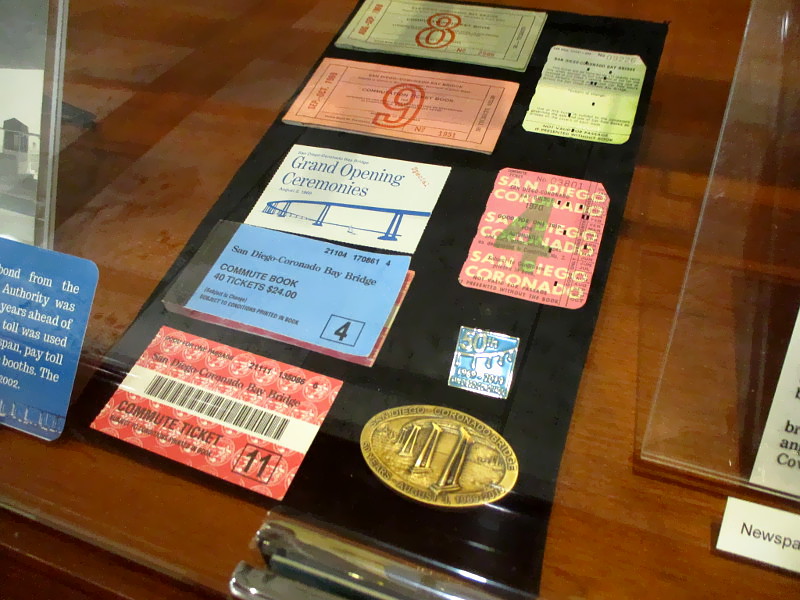
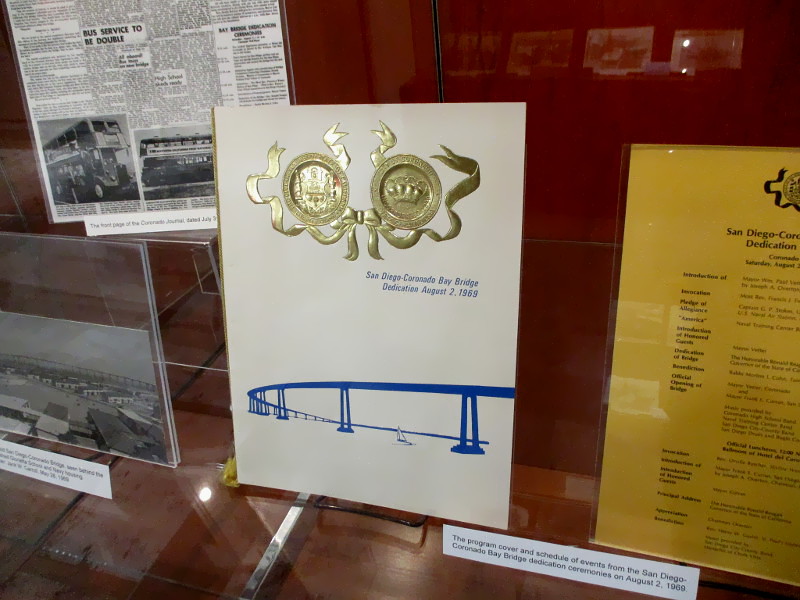
Large display cases contain old photographs, newspaper articles, documents and preserved artifacts representing the bridge’s complex history–from initial proposals to its construction to its grand opening and beyond.

Peering into the displays, reading descriptions, I learned interesting facts about the Coronado Bridge, including:

In 1926, the Spreckels Companies announced bold plans to construct a steel bridge linking Coronado to San Diego, envisioning an engineering marvel with arched spans and a lift section for maritime traffic. This news thrilled many residents eager for a fast connection to the mainland. Advocating for a tunnel instead, the Navy raised concerns about navigation and national defense. Despite initial optimism and plans for completion by 1928, the project became embroiled in decades of debate, delays, and revisions.

Mosher’s design was initially rejected by the state’s civil engineers for being too expensive. They proposed a more traditional trestle bridge, suggesting it be painted rust red or pink. Ultimately, Mosher’s design was accepted.

Water-tight caissons were placed on the bay bottom and pumped dry, while prestressed concrete pilings were driven over 100 feet into the bay floor. To complete the 30 towers, 100,000 tons of concrete were transported by barge for the construction of the piers.

The superstructure contractor Murphy Pacific fabricated the steel box girders in San Francisco before dismantling them and loading them onto a barge called “Marine Boss,” whose deck was the size of a football field. The barge was towed to San Diego Bay, where the girders were reassembled. The “Marine Boss” boom was extended to 290 feet to lift the massive box girder sections–up to 96 feet long and weighing as much as 215 tons–into place.

The final span, one of 27 girders, was placed on May 28, 1969. Coronado Mayor Paul Vetter participating in the informal ceremony, signing his name on the metal plate at the edge of the girder.

Mosher’s original design included lights on the low side of the railing, but they were cut to reduce costs… Coronado resident Carol Cahill…flew to Sacramento, successfully petitioned officials, and secured their installation. The lights were added in April 1970.

In 1970, the bridge received the National Award of Merit for Most Beautiful Bridge from the American Institute of Steel Construction.

The bridge’s 90-degree curve allows it to reach a height of 200 feet, tall enough for an empty aircraft carrier to pass underneath, while also providing the necessary length to ramp down to the Coronado side, which is significantly lower than the San Diego side that connects to Interstate 5.

I was told by a library employee that this fascinating exhibit will be on view through early May, 2025. Go check it out!

I post new blogs pretty often. If you like discovering new things, bookmark coolsandiegosights.com and swing on by occasionally!

I live in downtown San Diego and love to walk around with my camera! You can follow Cool San Diego Sights via Facebook or X.

Feel free to share!
Fashion Redux 2025 at San Diego History Center.

Fashion Redux 2025 will soon be opening at the San Diego History Center in Balboa Park!

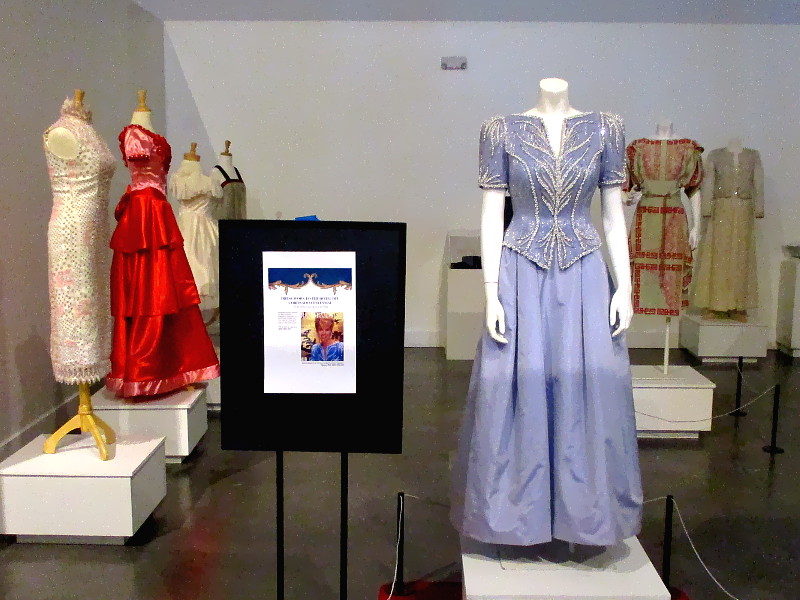
The extraordinary exhibition will include opulent garments created by renowned designers (including Hollywood’s legendary Irene Sharaff) worn between 1940 and 1988 during iconic San Diego events. They will be displayed along with unique creations by San Diego Mesa College students, who were inspired by the past styles and elegance.

I was wandering through the History Center yesterday when I noticed the exhibition is being set up in one gallery. I snapped the above photo.

Fashion Redux 2025 will be ready to go on April 10th–that’s this coming Thursday!

If you’ve never been to the San Diego History Center, located near the center of beautiful Balboa Park, why not go check it out? It’s a museum full of history, culture and amazing, important works of art!

I post new blogs pretty often. If you like discovering new things, bookmark coolsandiegosights.com and swing on by occasionally!

I live in downtown San Diego and love to walk around with my camera! You can follow Cool San Diego Sights via Facebook or X.

Feel free to share!

Two-inch railroad cars to travel in San Diego!

What is the smallest operating railroad car you’ve ever seen? Have you ever seen a moving train so small that bits of dust on the track can stop it?

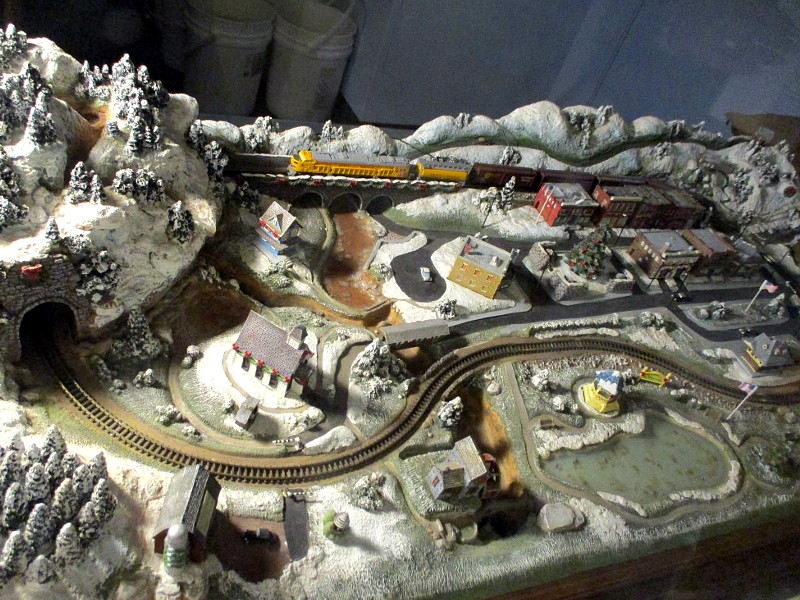
Incredibly diminutive trains are coming to the San Diego Model Railroad Museum in Balboa Park! Each car is about two inches long–the size of your finger!

A new Z scale permanent exhibit is being built in the museum and should be completed later his year. As a sign in the museum explains, this cool project is being supported by a grant from The Norris Foundation.

Z scale model trains are so tiny a complete oval layout can fit inside a briefcase. They have a scale ratio of 1:220. They’re even smaller than the N scale trains one can see in the museum’s incredible Pacific Desert Lines layout, which is operated by the San Diego Society of N Scale.

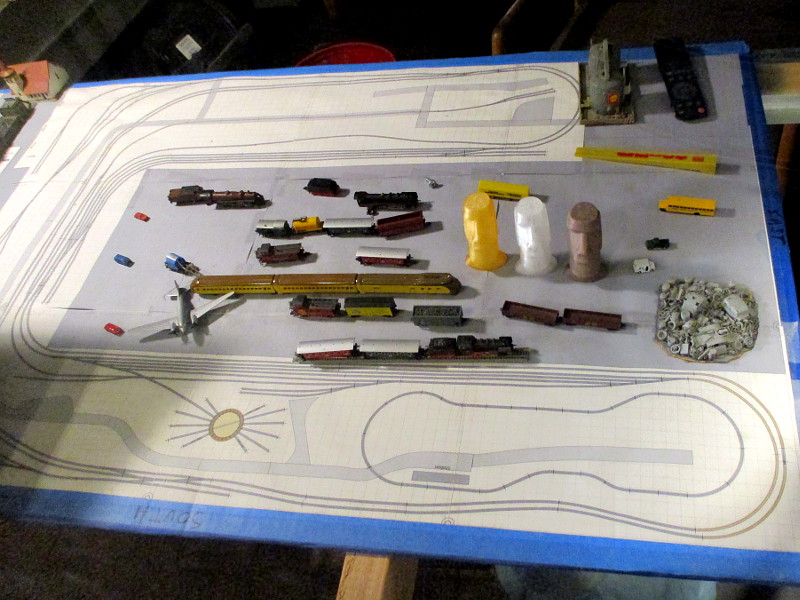
A sample Z scale layout is already on display (above photo). Plans for the not-yet-built layout can also be viewed…

I post new blogs pretty often. If you like discovering new things, bookmark coolsandiegosights.com and swing on by occasionally!

I live in downtown San Diego and love to walk around with my camera! You can follow Cool San Diego Sights via Facebook or X.

Feel free to share!
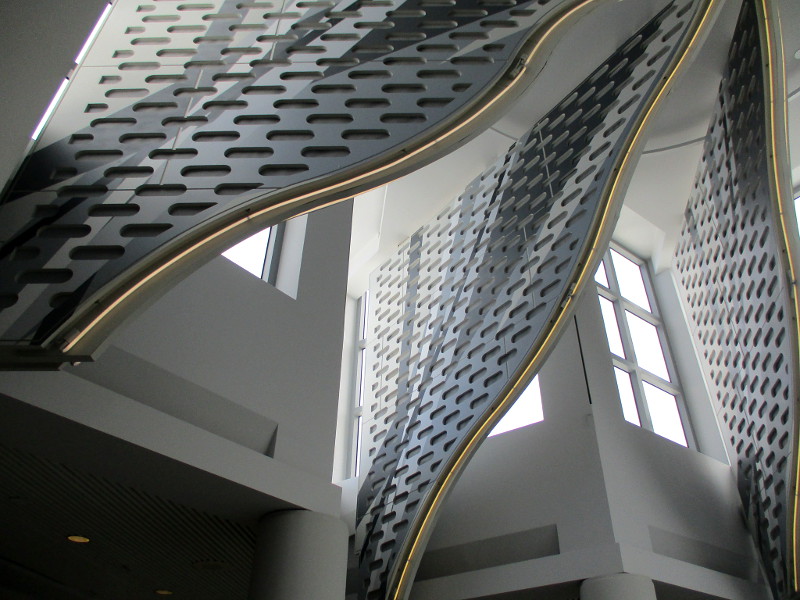
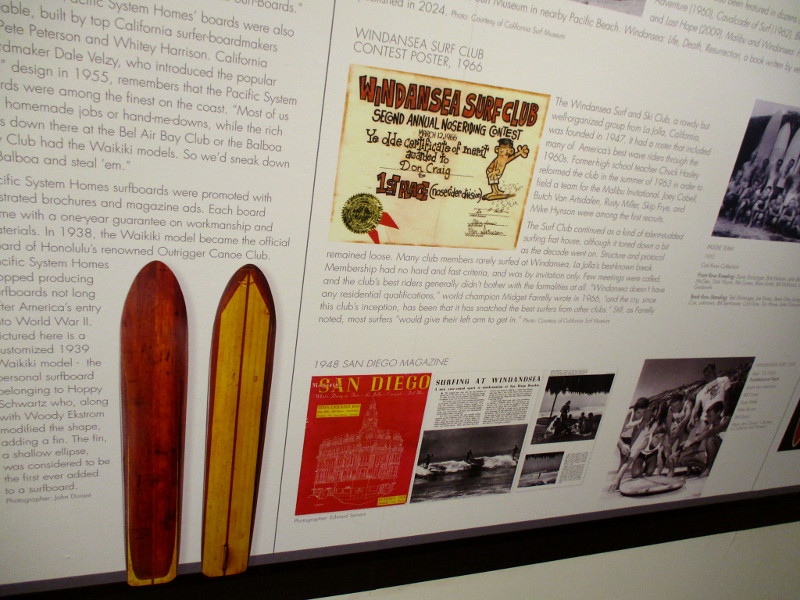
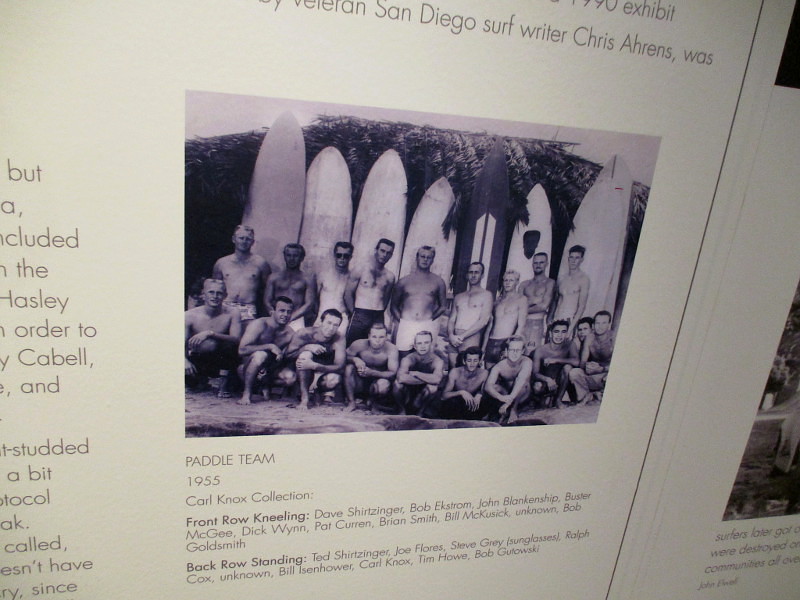
Exhibit explores La Jolla surf culture, art and history.

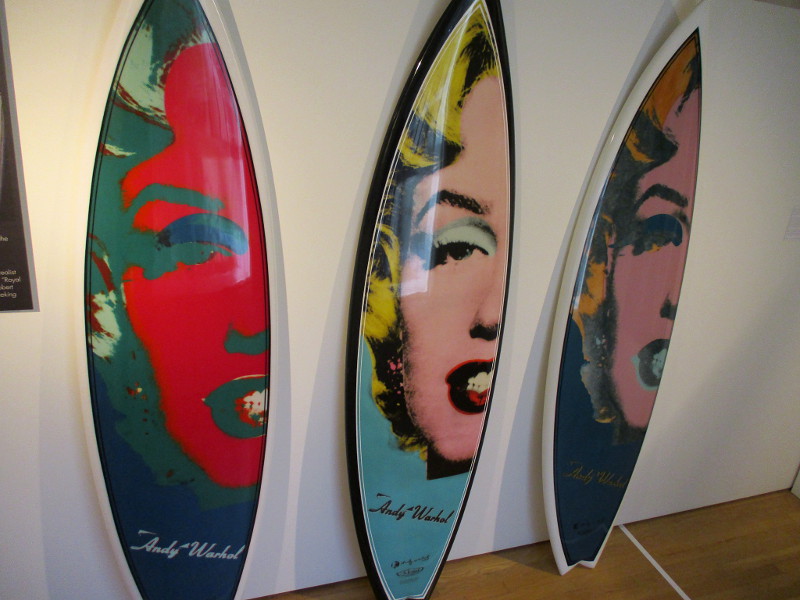
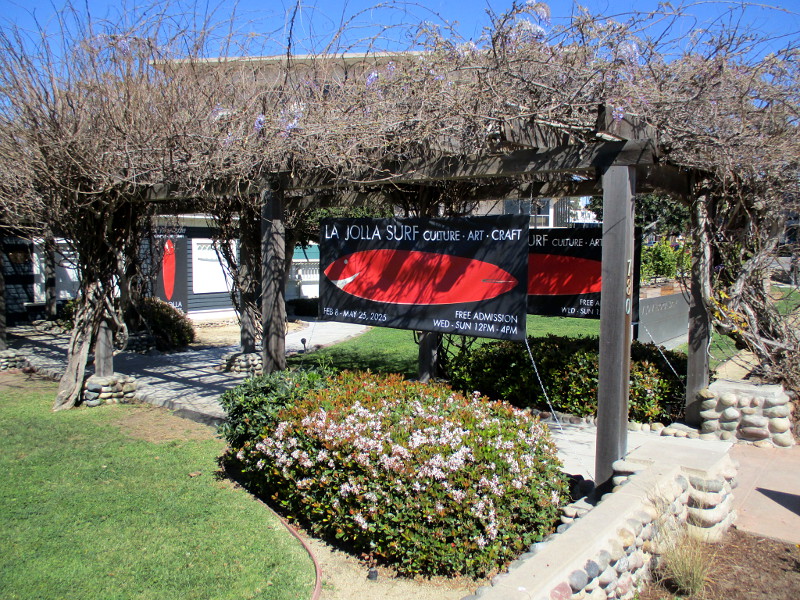
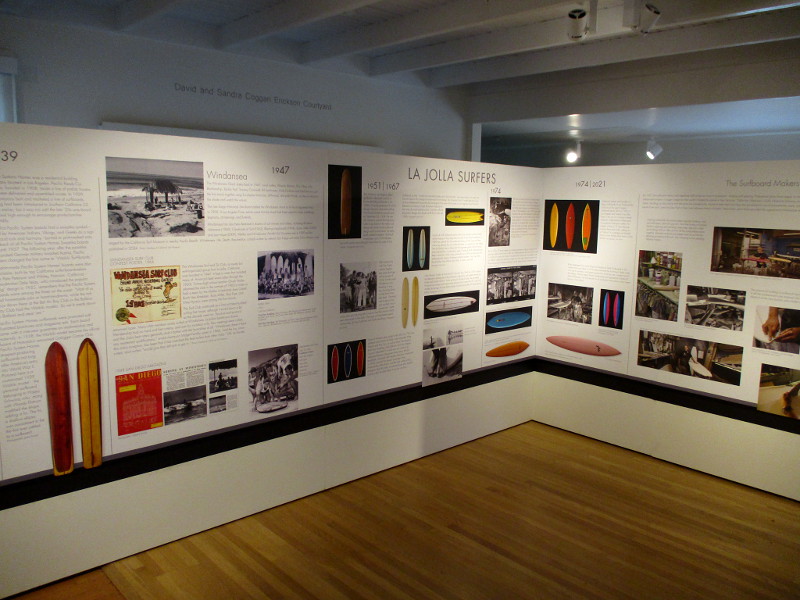
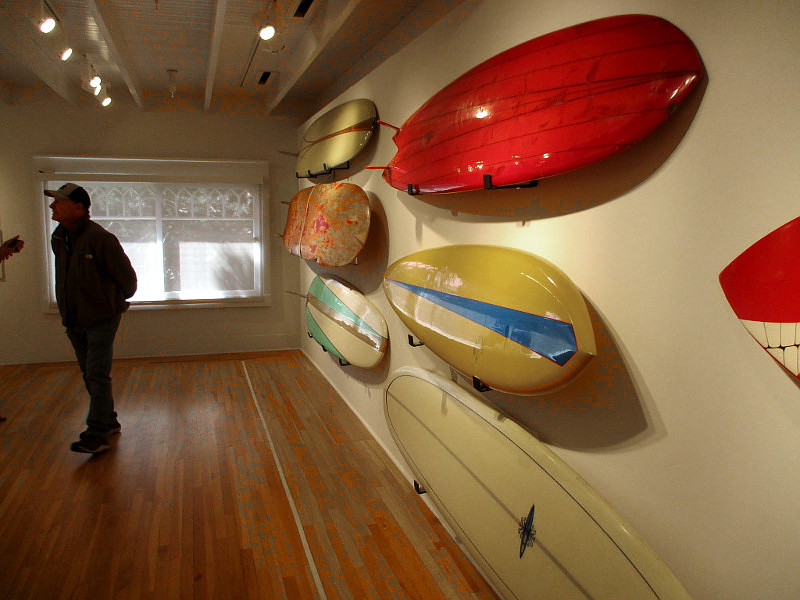
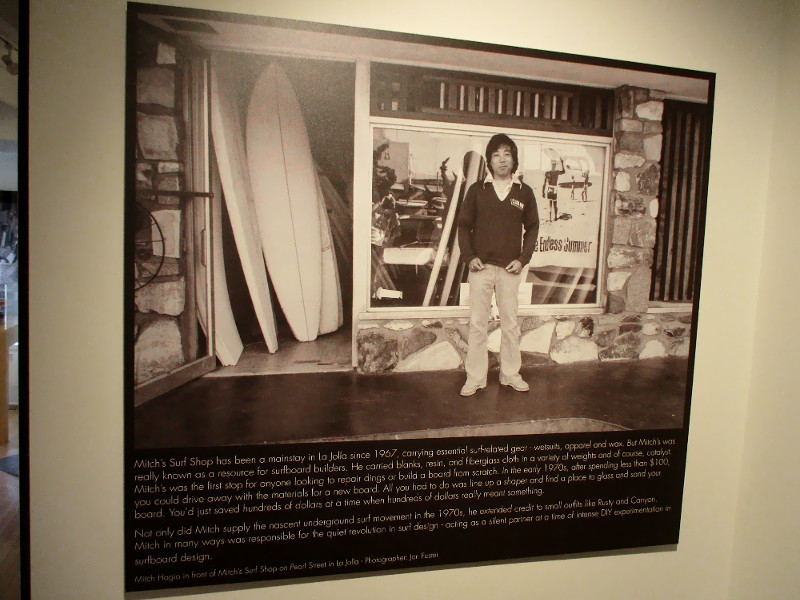
A super cool exhibition recently opened in the La Jolla Historical Society‘s free Wisteria Cottage museum. The exhibition is titled La Jolla Surf: Culture, Art, Craft. As the name suggests, surf culture is explored in La Jolla and nearby communities, from the earliest days right up to the present.

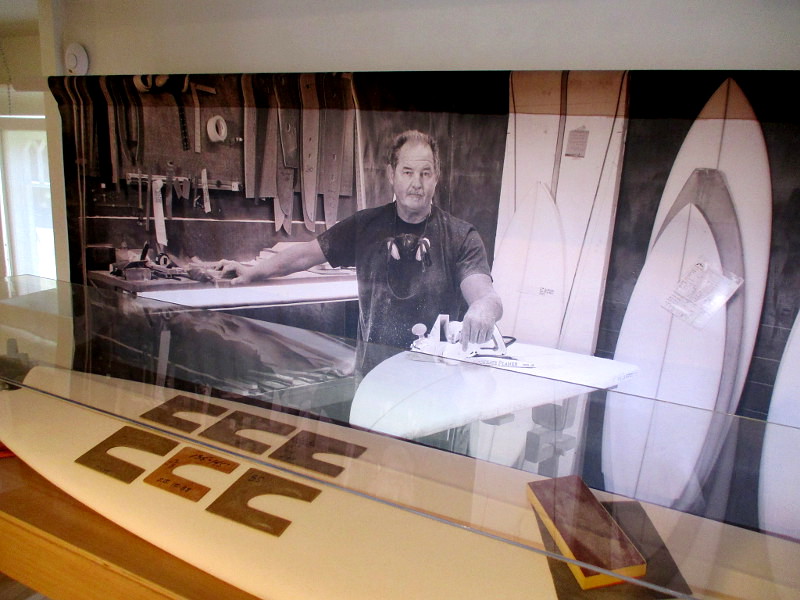
There are all sorts of different surfboards on display. Each is cleverly designed and artistically unique. Local designers, shapers and surfers used these boards to conquer the world-famous surf found off La Jolla and other nearby Southern California beaches.

Subjects explored include the iconic Windansea Shack, which dates back to 1947 and has been featured in dozens of movies. Legendary surfboard makers and surfers, like Bob Simmons, are also celebrated. One of the notable board shapers honored is Rusty Preisendorfer, who, at the age of 16, began a factory in a garage a short distance from La Jolla Shores.

I was surprised to learn pop art icon Andy Warhol filmed the movie ‘San Diego Surf’ in 1968 in La Jolla.

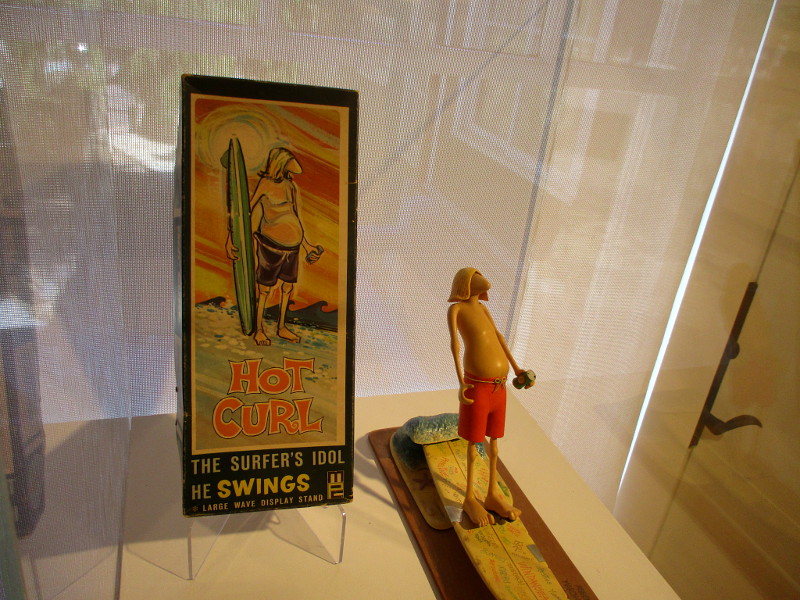
As you might expect, the exhibit includes dozens of excellent surfing photographs, and examples of cool artwork, too.

I really enjoyed viewing a short film. It featured a variety of important personalities. Their words about surfing were often poetic or philosophical.

One interviewee called surfing spiritual. Another called it a beautiful dance. Another explained that surfing brings you to close to yourself. It’s peaceful and calming, said another. The experience is deep and powerful, another voice affirmed. Skip Frye, world-famous surfer, surfboard designer, shaper and environmental advocate, likened surfing to being in close touch with God’s creation.

La Jolla Surf: Culture, Art, Craft will be open to the public through May 25, 2025. Learn more about it here!
A small taste of this awesome exhibit…

I post new blogs pretty often. If you like discovering new things, bookmark coolsandiegosights.com and swing on by occasionally!

I live in downtown San Diego and love to walk around with my camera! You can follow Cool San Diego Sights via Facebook or X.

Feel free to share this!

Bringing a Survival Piece to life in La Jolla!

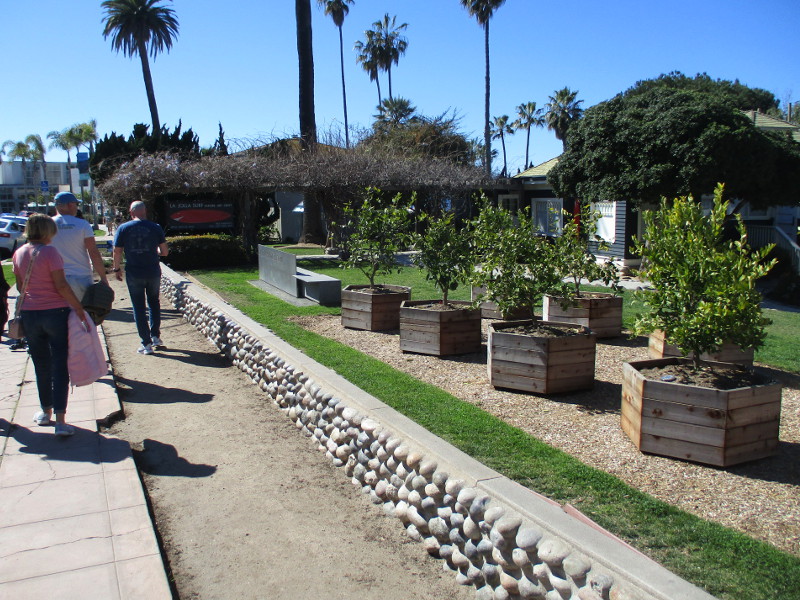
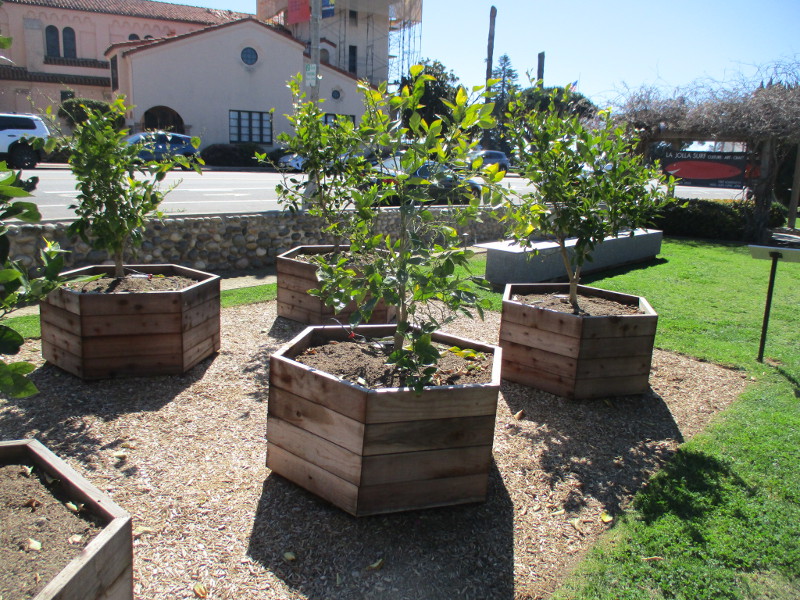
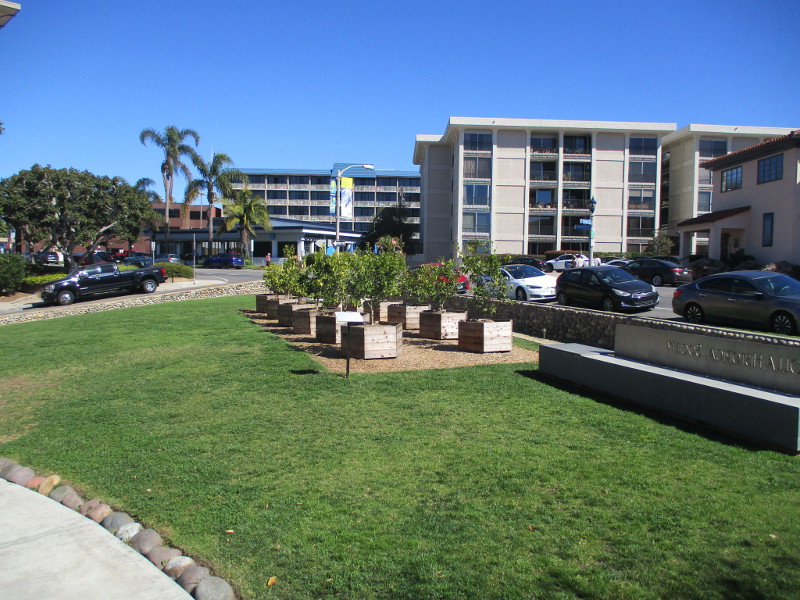
Why are there 12 hexagonal planters containing citrus trees in front of the La Jolla Historical Society‘s Wisteria Cottage? That’s what I wondered when I paid a visit to the society’s museum yesterday, to view their new exhibition about the history of surfing in La Jolla. (I’ll be blogging about that shortly.)

It turns out the dozen redwood planters with citrus trees is a 2024 project titled Exterior Orchard, A Conversation with Survival Piece V. The uniquely designed orchard examines the necessity of ecologically focused and sustainable food systems in a future where farming practices may become obsolete.

The installation was inspired by the La Jolla Historical Society’s recent exhibition Helen and Newton Harrison: California Work. The Harrisons, founding members of the Visual Arts Department at UC San Diego, were visionary thinkers and designers who developed fascinating Ecological Art. They created plans for a Portable Orchard such as this in 1972.

The hexagonal redwood planters were built by students from High Tech High Mesa. The trees and planters, I was told, can be adopted. Funds raised will help support the La Jolla Historical Society’s work.

I post new blogs pretty often. If you like discovering new things, bookmark coolsandiegosights.com and swing on by occasionally!

I live in downtown San Diego and love to walk around with my camera! You can follow Cool San Diego Sights via Facebook or X.

Feel free to share this!

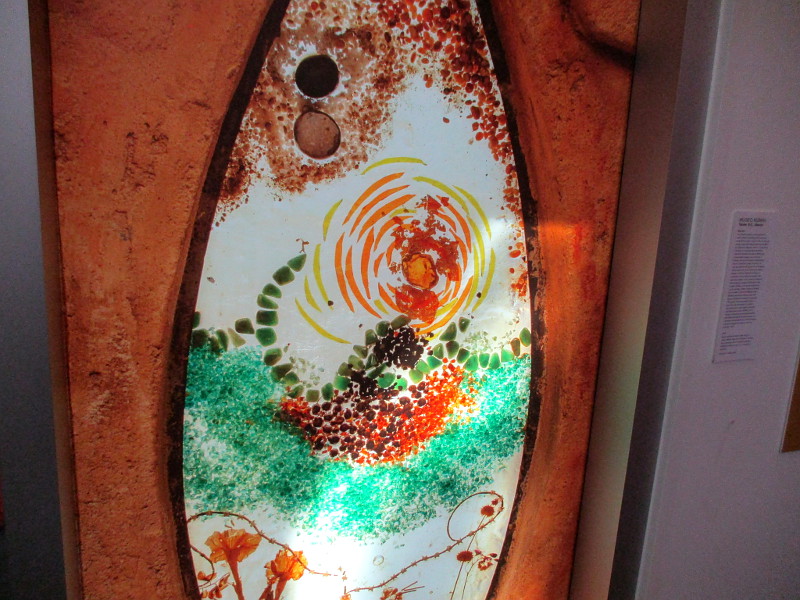
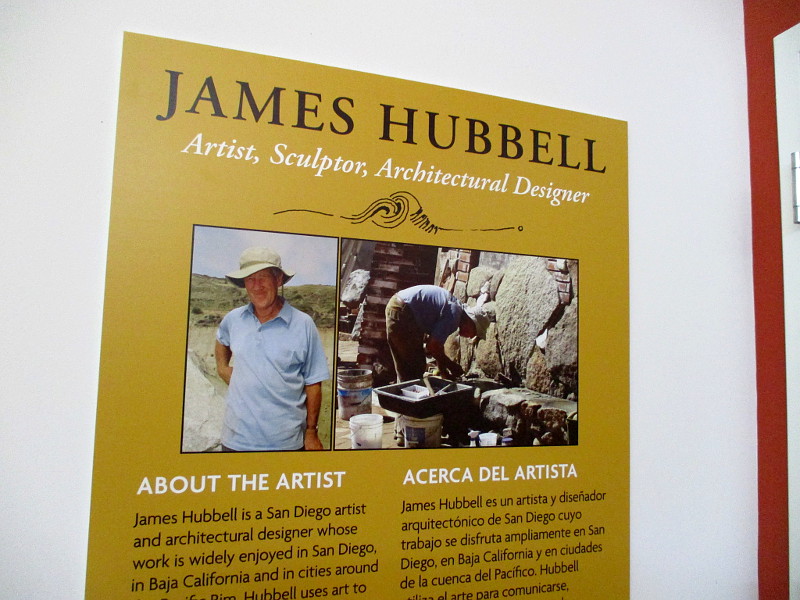
Library exhibit celebrates Hubbell art in Mexico.

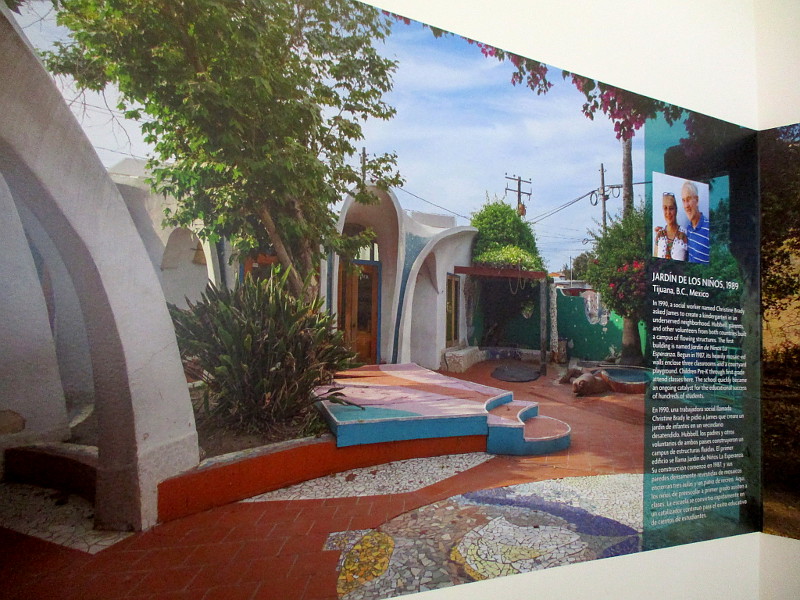
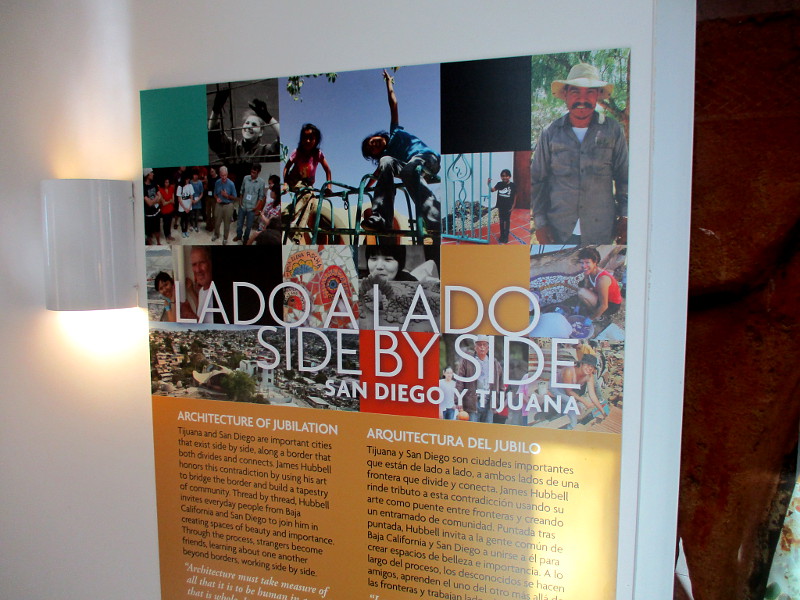
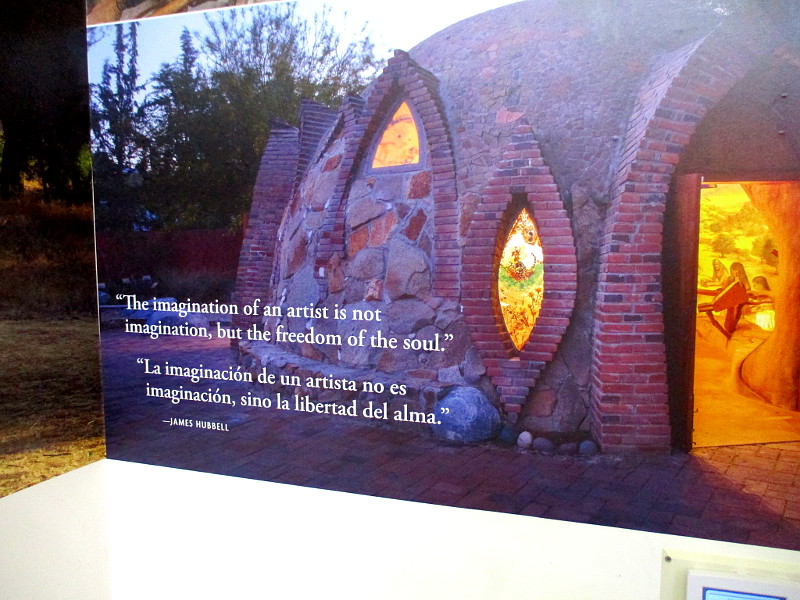
The Otay Mesa-Nestor Library currently has a great exhibit in their community room. Informative displays concern the work of renowned San Diego artist, architectural designer and sculptor James Hubbell in Mexico.

The exhibition, Architecture of Jubilation: Lado a Lado, was supposed to conclude in 2024, but has been extended. A librarian told me they’re hanging onto the exhibit as long as they can!

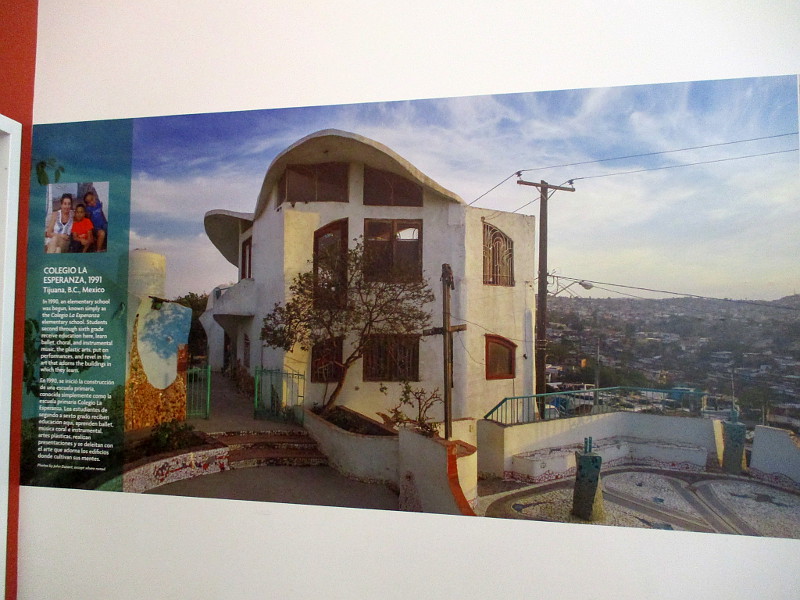
This afternoon I visited the library and gazed at photographs and descriptions of Hubbell’s amazing, organic architectural work in Mexico, including the elementary school Colegio La Esperanza in Tijuana, which he and thousands of community volunteers built.

Another display concerns his Kuchumaa Passage art park, which honors our region’s native Kumeyaay people. Hubbell, with artist Milenko Matanovic, assisted by more volunteers, created beauty on the grounds of Rancho La Puerta fitness spa and resort in Tecate, Mexico. The community-built art park would lead to the creation of Hubbell’s later Pacific Rim Park projects. (The one on Shelter Island–Pearl of the Pacific–can be seen here.)

Other Hubbell projects covered by the Architecture of Jubilation: Lado a Lado exhibit include the Museo Kumiai in Tecate, and Jardín de los Niños in Tijuana.

As one poster explains: Tijuana and San Diego are important cities that exist side by side, along a border that both divides and connects. James Hubbell honors this contradiction by using his art to bridge the border and build a tapestry of community. Thread by thread, Hubbell invites everyday people from Baja California and San Diego to join him in creating spaces of beauty and importance…

James Hubbell passed away last year, but his work will inspire many people and brighten our world far into the future.

I post new blogs pretty often. If you like discovering new things, bookmark coolsandiegosights.com and swing on by occasionally!

I live in downtown San Diego and love to walk around with my camera! You can follow Cool San Diego Sights via Facebook or X.

Thank you for sharing!

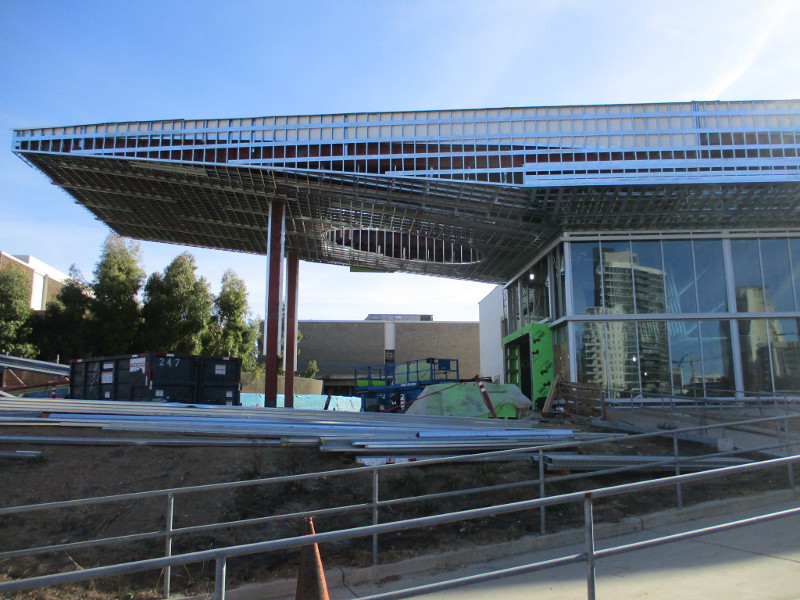
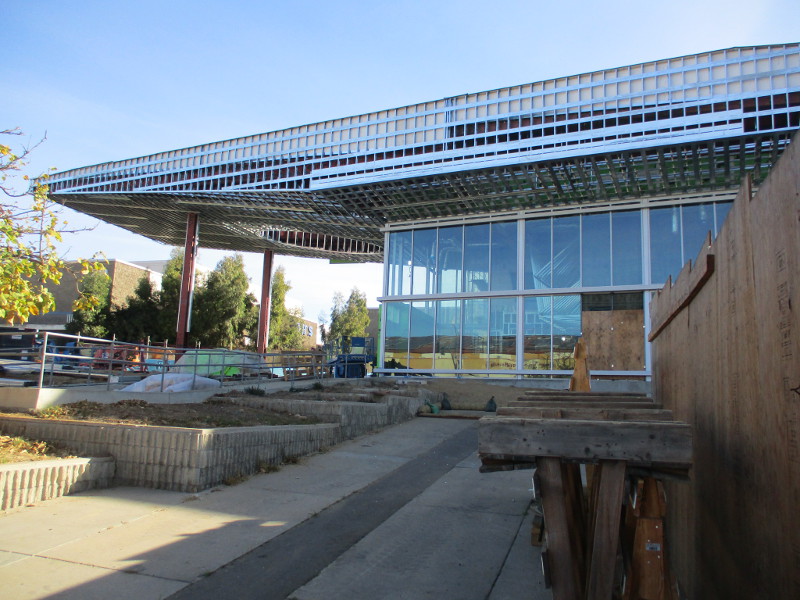
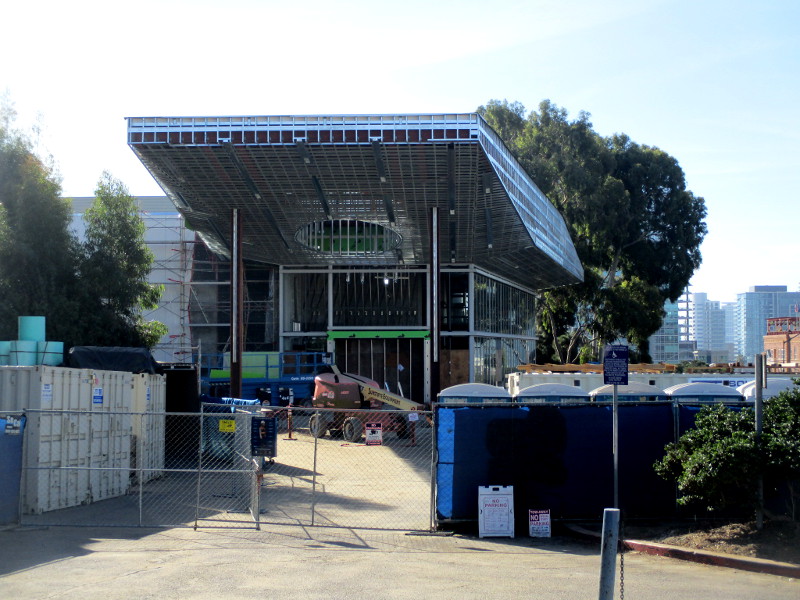
An amazing transformation at San Diego High School!

An amazing transformation is now underway at San Diego High School!

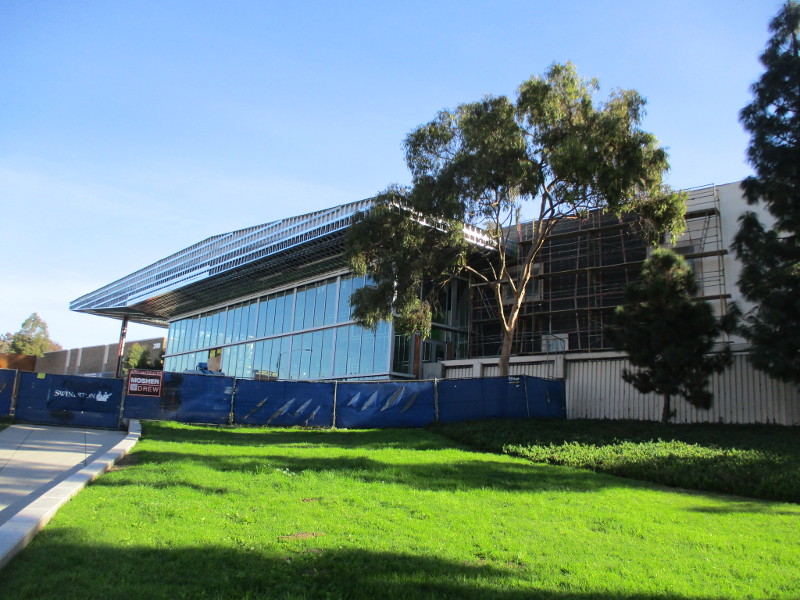
The school’s once drab appearance as seen from Park Boulevard is being radically altered. As you can see from these photographs taken today, a very cool new entrance is being built. San Diego’s oldest high school is being modernized!

The San Diego High School Administration & Classroom Building (Building 100) was an addition completed in 1976, and had all the stark aesthetics of many buildings designed in that era. The building serves as entrance to the campus.

Take a look at what’s coming!

You can see how the new glassy entrance with its cantilevered, sleekly projecting roof will make San Diego High School a new downtown landmark at the south end of Balboa Park! (Yes, the school is actually located inside Balboa Park.)

To learn about all the changes that are being made, and to view a flyover video of the project, check out the design team’s website here.

I post new blogs pretty often. If you like discovering new things, bookmark coolsandiegosights.com and swing on by occasionally!

I live in downtown San Diego and love to walk around with my camera! You can follow Cool San Diego Sights via Facebook or X.

Thank you for sharing!

San Diego canals, survival ideas, and a sky mirror!

I didn’t know what to expect when I recently visited the La Jolla Historical Society‘s museum to experience their current exhibition Helen and Newton Harrison: California Work.

The exhibition is described as a retrospective about the work of husband-and-wife team of Helen Mayer and Newton Harrison, who were among the earliest and most notable ecological artists. Founding members of the Visual Arts Department at UC San Diego, Helen and Newton were local San Diego artists for nearly four decades, where they developed their pioneering concepts of Ecological Art.

Would I see paintings? What exactly was this ecological art?

What I discovered was unexpected and thoroughly thought-provoking!

The walls of the La Jolla Historical Society’s museum–the Wisteria Cottage–were covered primarily with technical drawings, maps and designs that conveyed innovative environmental ideas the couple developed over many years of working together.

If you love invention and human creativity, you’ll want to view this exhibition. You’ll see how human genius can create previously unthought-of technology that can benefit both people and the planet. You’ll observe how our understanding of nature and the ecosystems we all live in might conceivably be improved.

There were dozens of surprising ideas. I saw a proposal to create flood-reducing canals around downtown San Diego, practical Survival Pieces intended to create self-sustaining ecosystems (including a portable fish farm), and even a huge, Earth-orbiting sky mirror!

The Harrisons’ work is so expansive and full of variety that it’s hard to describe it all. So you’d better check it out yourself!

Helen and Newton Harrison: California Work is actually a multi-museum exhibition in San Diego County. The La Jolla Historical Society’s part of this exhibition is sub-titled Urban Ecologies, and traces the Harrisons’ collaborative practice during the late 1960s-1990s.

Additional parts of this exhibition can be viewed at the California Center for the Arts Escondido, and at the San Diego Public Library Gallery. Helen and Newton Harrison: California Work continues at all three locations through January 19, 2025.

If that’s not enough, this exhibition is part of a much larger Southern California event now underway: the Getty’s 70+ institution PST: Art and Science Collide!
I post new blogs pretty often. If you like discovering new things, bookmark coolsandiegosights.com and swing on by occasionally!
I live in downtown San Diego and love to walk around with my camera! You can follow Cool San Diego Sights via Facebook or X.

Thank you for sharing!