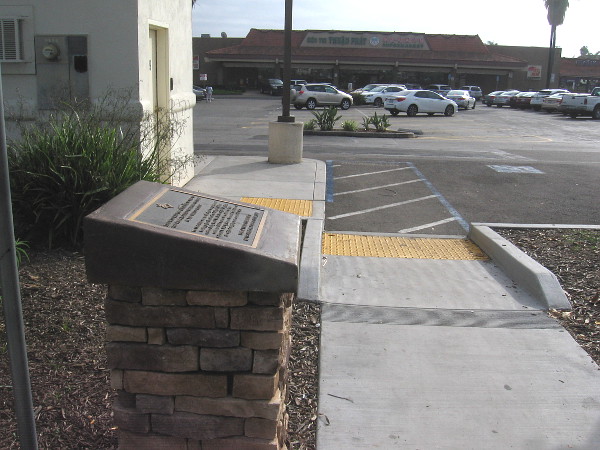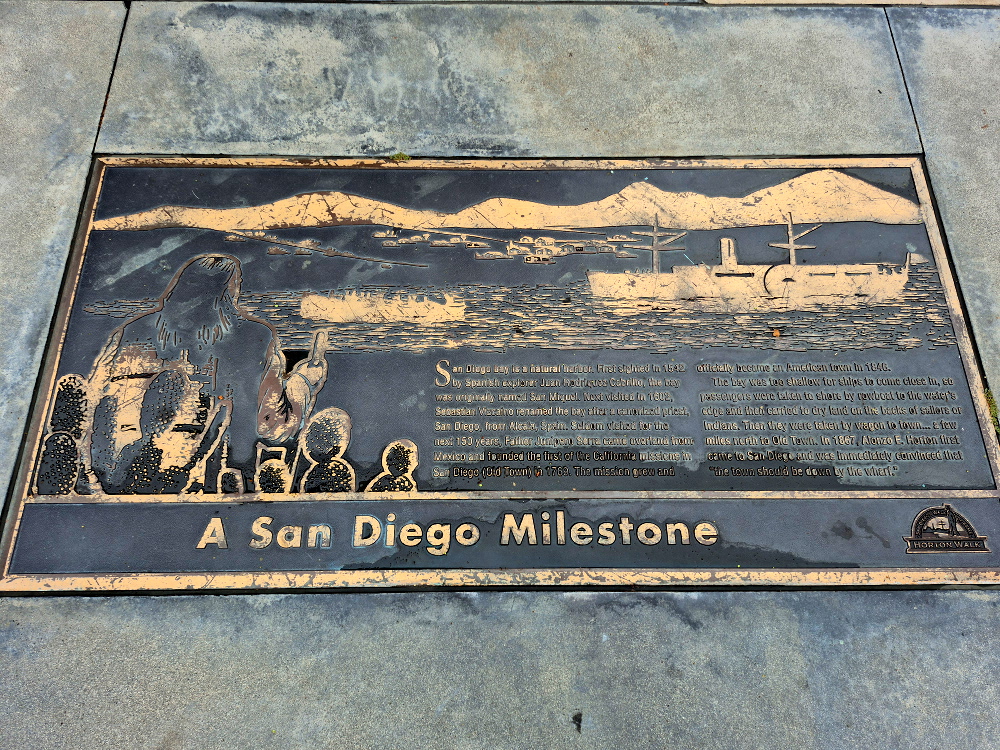
A San Diego Milestone in Horton Square.

A plaque in downtown San Diego relates a bit of our city’s early history. It’s titled A San Diego Milestone.

You can find the bronze plaque in Horton Square, an outdoor area north of the old Horton Plaza shopping mall. (Not to be confused with larger Horton Plaza Park.)
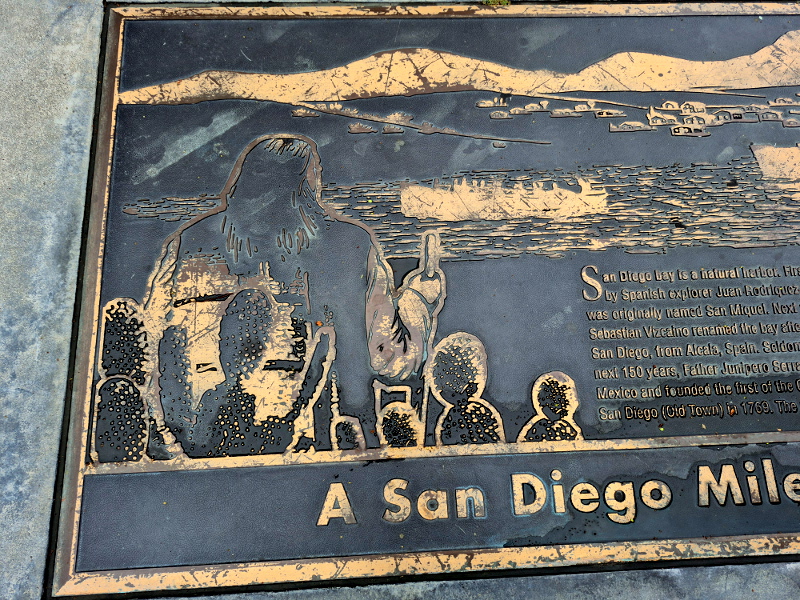
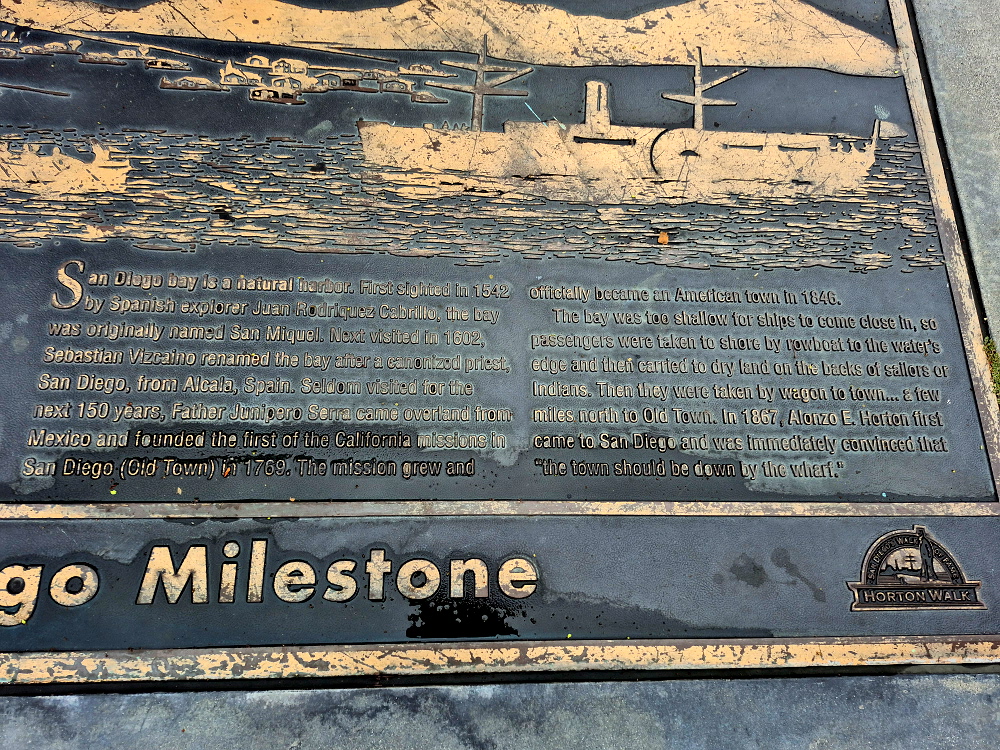
The plaque states:

San Diego bay is a natural harbor. First sighted in 1542 by Spanish explorer Juan Rodriguez Cabrillo, the bay was originally named San Miguel. Next visited in 1602, Sebastian Vizcaino renamed the bay after a canonized priest, San Diego, from Alcala, Spain. Seldom visited for the next 150 years, Father Junipero Sera came overland from Mexico and founded the first of the California missions in San Diego (Old Town) in 1769. The mission grew and officially became an American town in 1846.

The bay was too shallow for ships to come close in, so passengers were taken to shore by rowboat to the water’s edge and then carried to dry land on the backs of sailors or Indians. Then they were taken by wagon to town…a few miles north to Old Town. In 1867, Alonzo E. Horton first came to San Diego and was immediately convinced that “the town should be down by the wharf.”
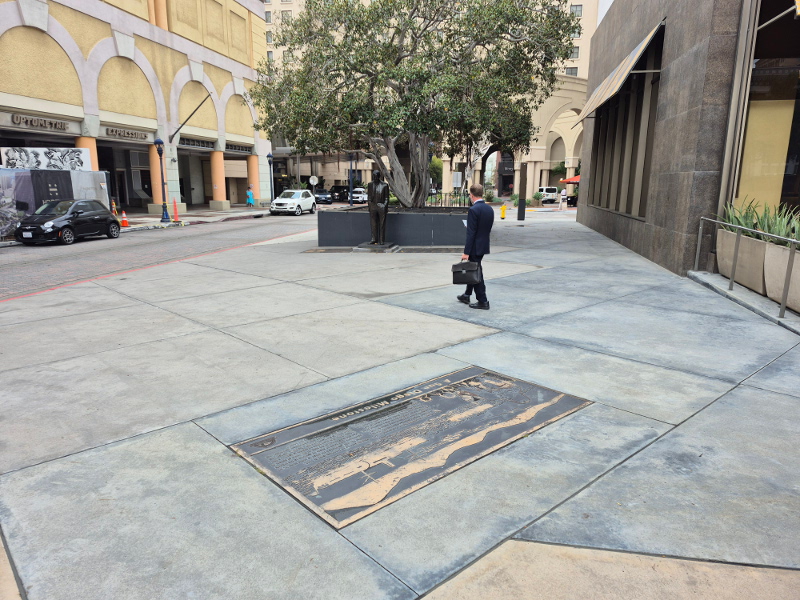
This plaque is one of several in Horton Square. Two bronze statues stand among them.

Apparently, according to one corner of the plaque, all together these make up the Horton Walk.

Twelve years ago, back when Cool San Diego Sight was brand new, I photographed the other statues and plaques. See those by clicking here.

The old statue of Ernest Hahn has since been moved–I don’t know where. If you know, please leave a comment!

I post new blogs pretty often. If you like discovering new things, bookmark coolsandiegosights.com and swing on by occasionally!

I live in downtown San Diego and love to walk around with my camera! You can follow Cool San Diego Sights via Facebook or X.

Feel free to share!
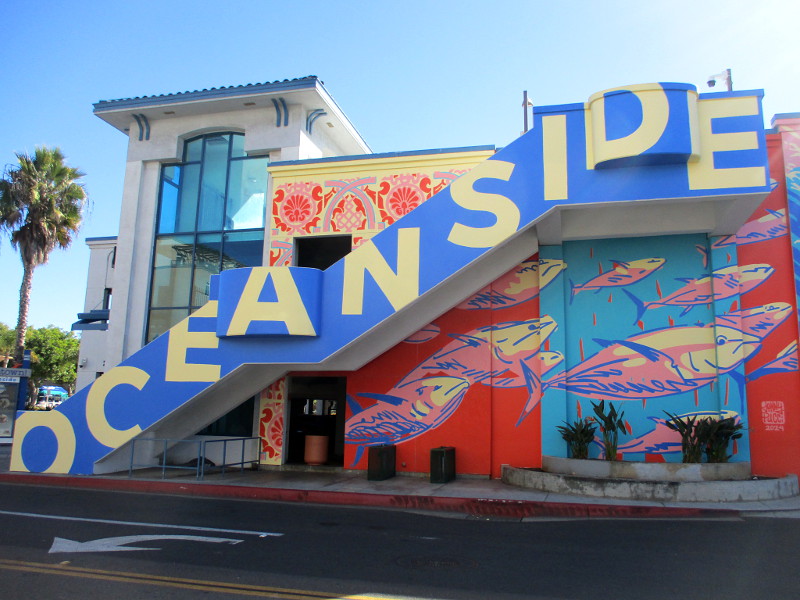
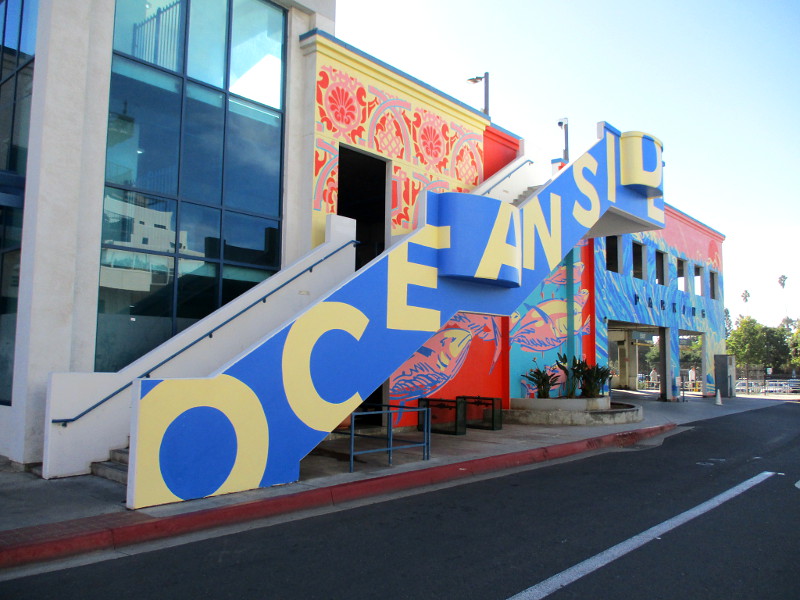
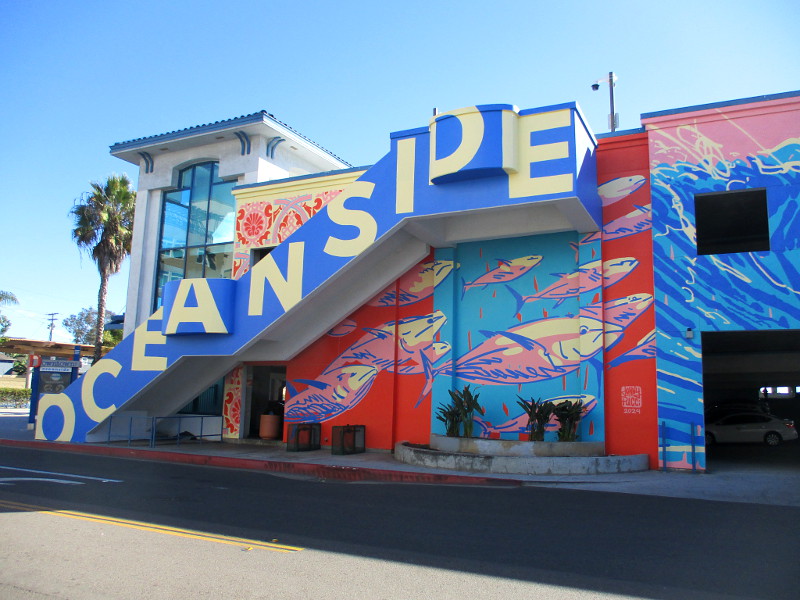
Colorful new mural at Oceanside Transit Center!

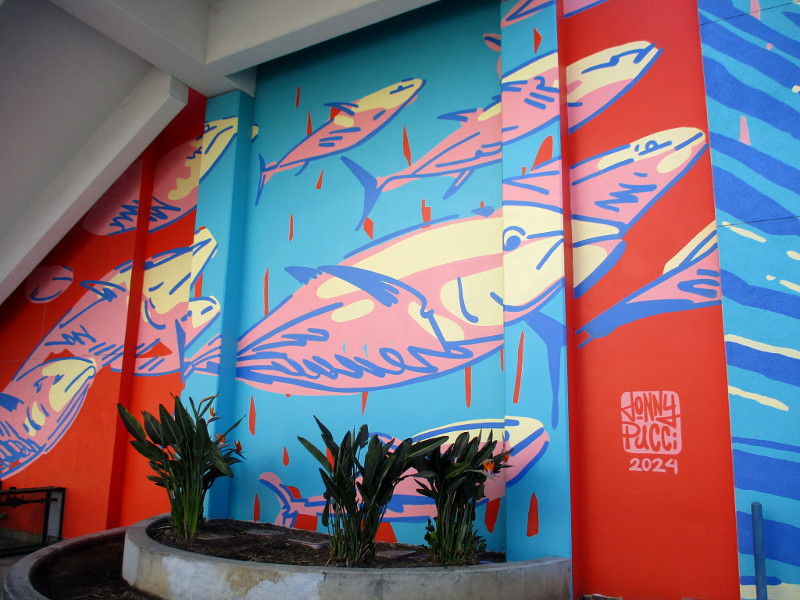
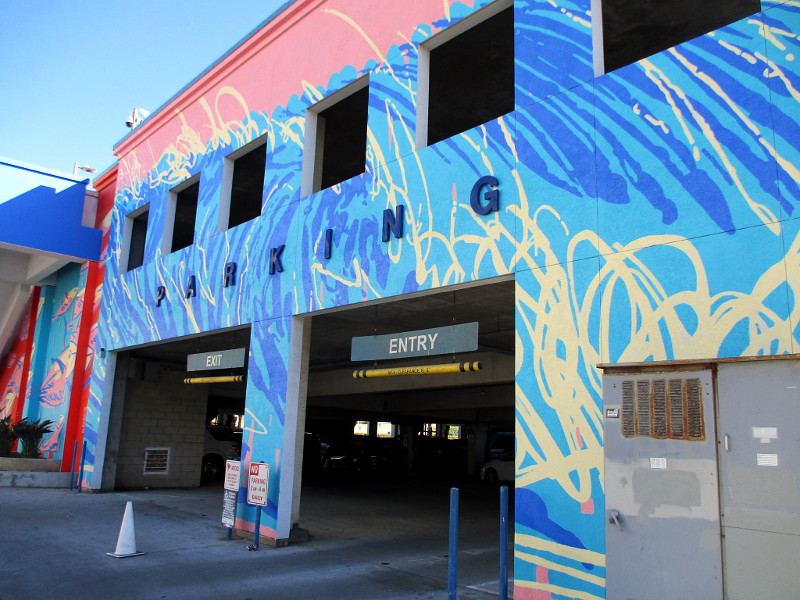
This very colorful new mural was painted a couple months ago on the north side of the Oceanside Transit Center parking structure. It celebrates Oceanside–its Spanish mission and fishing history, and the nearby Pacific Ocean!

Jonny Pucci created the striking mural. See his Instagram page here.

According to this article, the work is part of MainStreet Oceanside’s Art that Excites program, which aims to install up to 10 murals in public spaces throughout downtown Oceanside.

I love how so many Southern California cities and communities continue to enliven neighborhoods and destinations with public art. No matter where I walk, I always seem to encounter something new. That was certainly the case yesterday!

Next time I walk in Oceanside, I have no doubt I’ll stumble upon more cool sights like this. Meanwhile, stay tuned for more outdoor art that I also discovered yesterday–in Escondido!

Enjoy a few more photos of the Oceanside Transit Center parking garage mural…

I post new blogs pretty often. If you like discovering new things, bookmark coolsandiegosights.com and swing on by occasionally!

I live in downtown San Diego and love to walk around with my camera! You can follow Cool San Diego Sights via Facebook or X.

Thank you for sharing!

San Diego assisted the American Revolution?

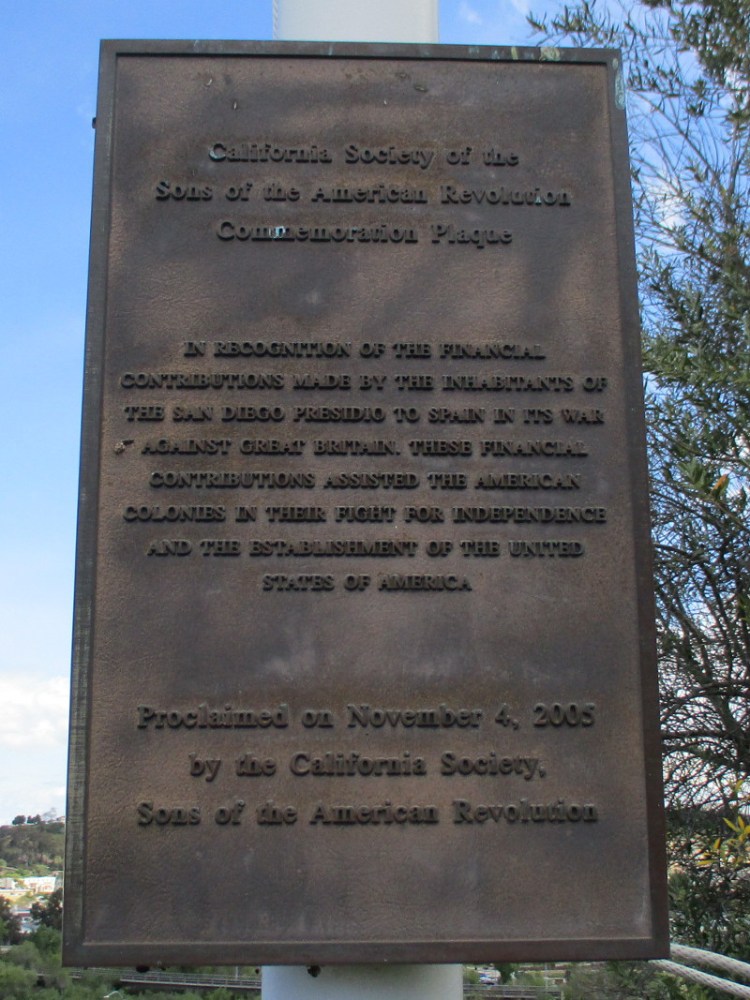
I’m not a historian. If you are, perhaps you might leave a comment concerning a plaque that is mounted to a flagpole on San Diego’s Presidio Hill, near the ruins of the old Spanish Presidio.

The plaque states:

California Society of the Sons of the American Revolution Commemoration Plaque

IN RECOGNITION OF THE FINANCIAL CONTRIBUTIONS MADE BY THE INHABITANTS OF THE SAN DIEGO PRESIDIO TO SPAIN IN ITS WAR AGAINST GREAT BRITAIN. THESE FINANCIAL CONTRIBUTIONS ASSISTED THE AMERICAN COLONIES IN THE FIGHT FOR INDEPENDENCE AND THE ESTABLISHMENT OF THE UNITED STATES OF AMERICA

Proclaimed on November 4, 2005 by the California Society, Sons of the American Revolution

The Presidio of San Diego was established in 1769, seven years before the adoption of the United States Declaration of Independence in 1776. The American Revolution saw its ultimate success in 1783 when the British signed the Treaty of Paris.

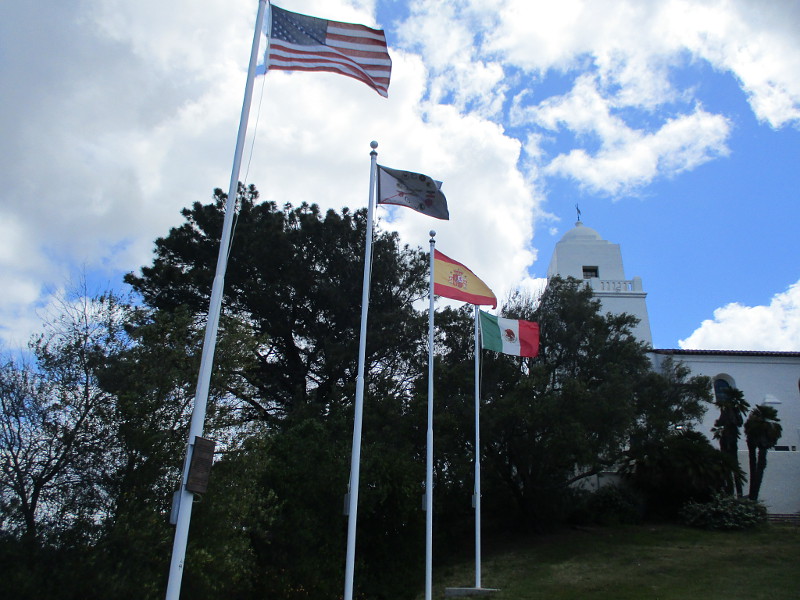
Today four flagpoles stand on Presidio Hill. The four flags represent the United States, the Kumeyaay Nation, Spain and Mexico. They demonstrate that San Diego’s history is both diverse and complex.

How significant were these financial contributions made by inhabitants of the Presidio to Spain? In what form were the contributions? Were they obtained through the labor of indigenous Kumeyaay on the land taken by Spanish missions? San Diego in its very early years was sparsely populated and relatively poor. How, specifically, did these financial contributions help Spain in its war against Great Britain?

Clearly, I’m no historian! If you know more about this, please leave a comment!

UPDATE!

On July 6, 2024 I came across more information concerning this.

During the Independence Day celebration at the International Cottages in Balboa Park, the House of Spain had an elaborate display in front of their cottage, explaining how Spain helped the United States win the Revolutionary War against Great Britain.

An emphasis was placed on the Spanish General Bernardo de Galvez, who provided patriots with money, medicines, arms, and key wartime information. He was a hero at the Battles of Mobile and Pensacola.

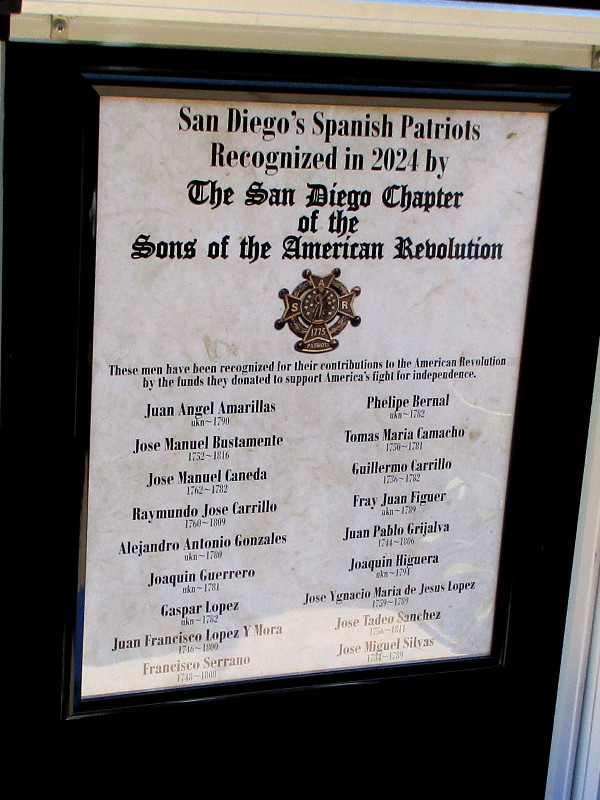
One display explained how the Spanish living in distant San Diego contributed, too. “San Diego’s Spanish Patriots” were soldiers at the old Presidio, who provided funds from their own pockets to support America’s fight for independence.

I was told by a gentleman who sounded knowledgeable that in addition to soldiers and others associated with the newly established Spanish Missions, Native Americans up and down California within the Spanish sphere of influence were also “persuaded” to make monetary contributions, albeit in lesser amounts.

Apparently all of these contributions were provided at the request of Junípero Serra. Collected funds then made their way to the opposite coast of America, where they bolstered the efforts of Galvez.

If my understanding of this history isn’t correct, or you know more about the subject, please leave a comment!

Thanks for visiting Cool San Diego Sights!

I post new blogs pretty often. If you like discovering new things, bookmark coolsandiegosights.com and swing on by occasionally!

I live in downtown San Diego and love to walk around with my camera! You can follow Cool San Diego Sights via Facebook or X.

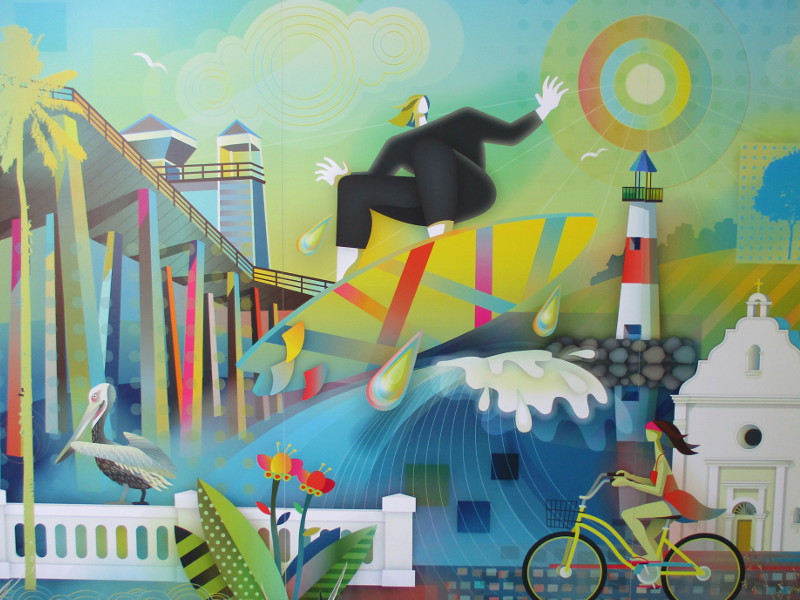
Colorful mural at SALT in Oceanside!

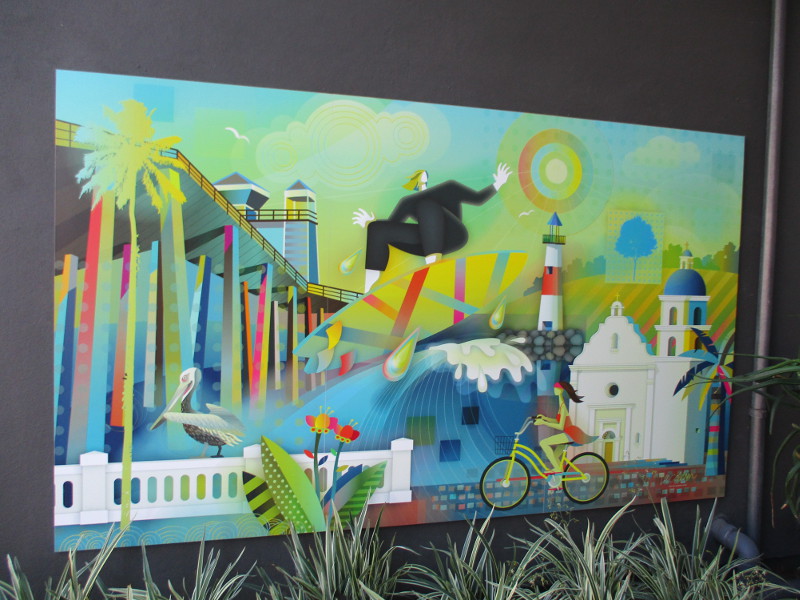
This wonderful mural depicting life, sunshine and landmarks in Oceanside can be found at the SALT Apartments at 311 N. Cleveland Street. It was created by well-known abstract artist Lee Calderon.

I see the Oceanside Pier, a surfer, the harbor lighthouse, and Mission San Luis Rey. And many bright, vibrant colors!

Thanks for visiting Cool San Diego Sights!

I post new blogs pretty often. If you like discovering new things, bookmark coolsandiegosights.com and swing on by occasionally!

I live in downtown San Diego and love to walk around with my camera! You can follow Cool San Diego Sights via Facebook or X (formerly known as Twitter)!

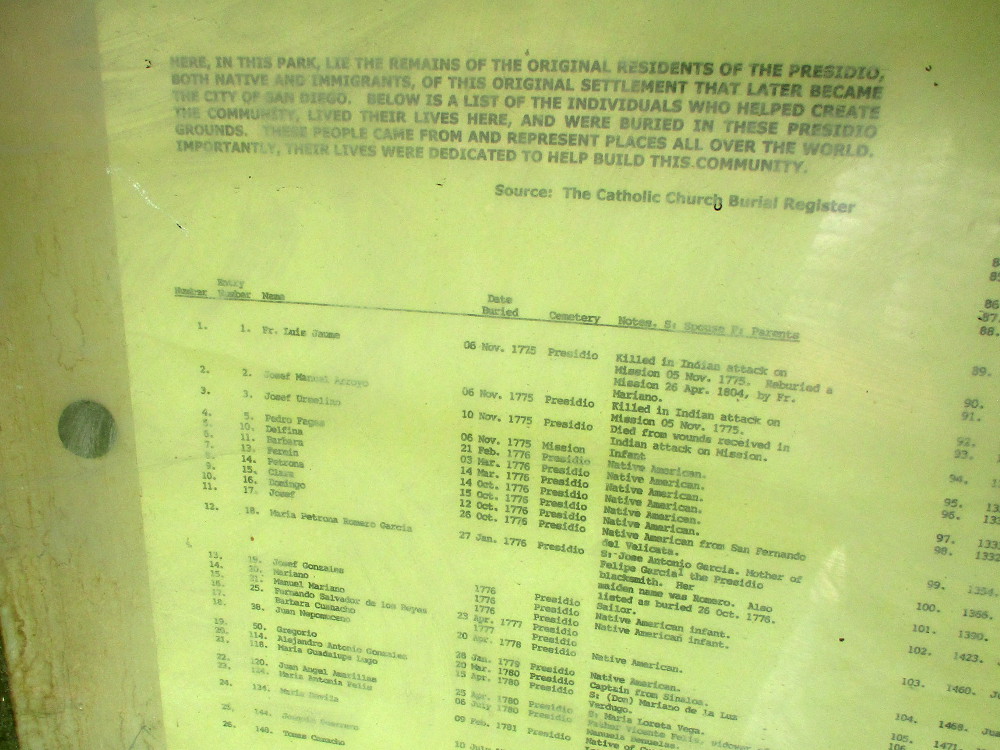
Life and death at the San Diego Presidio.

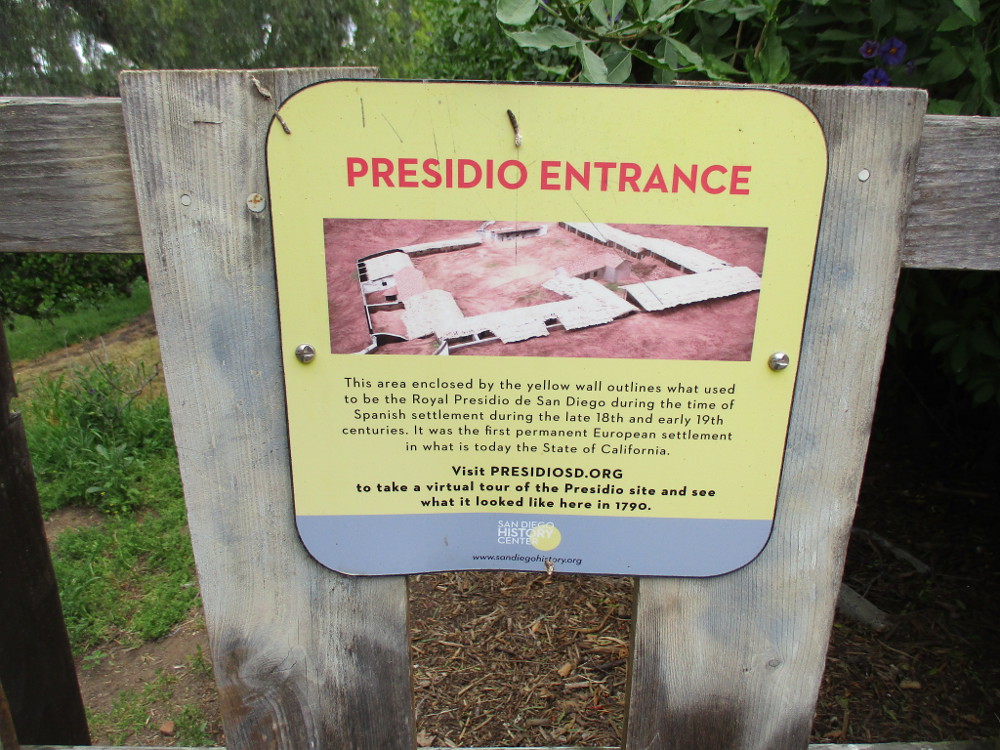
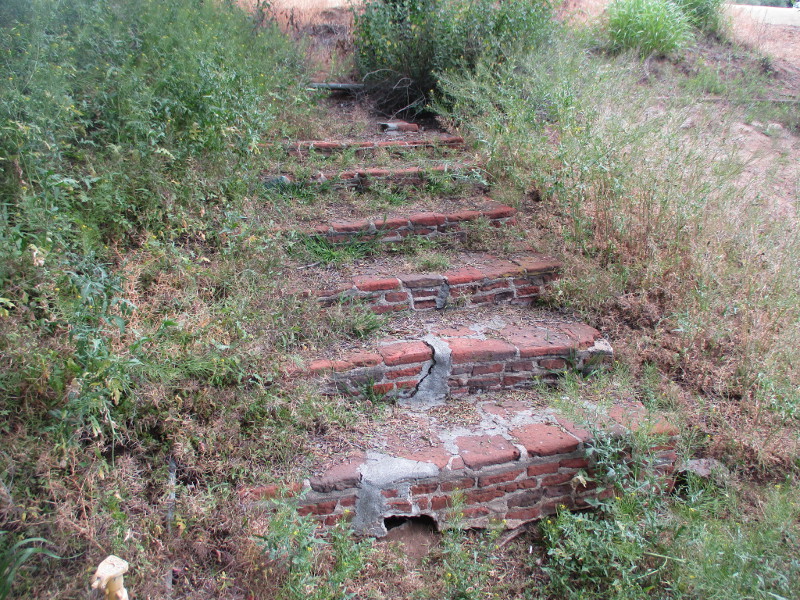
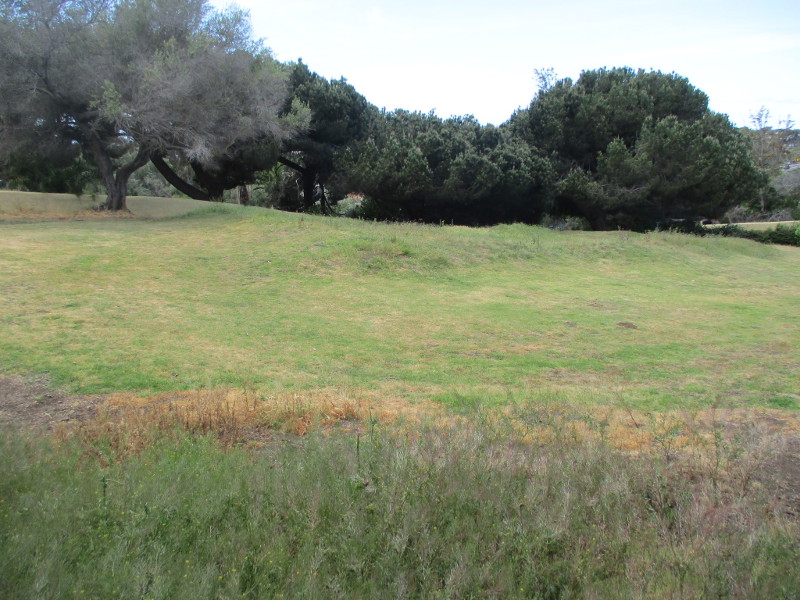
Spain’s first outpost in Southern California, the 1769 Royal Presidio of San Diego, is long gone. Its ruins are buried on Presidio Hill just beneath the Junípero Serra Museum. Grassy mounds and bits of old brick can still be found as one walks about.

This historical site is a place where very diverse stories were lived. It’s a place were many were buried when life finally ended.

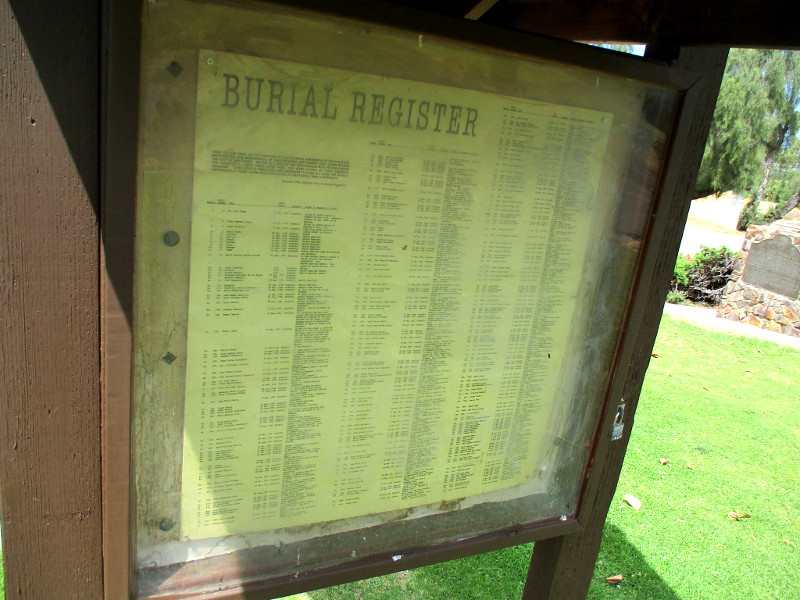
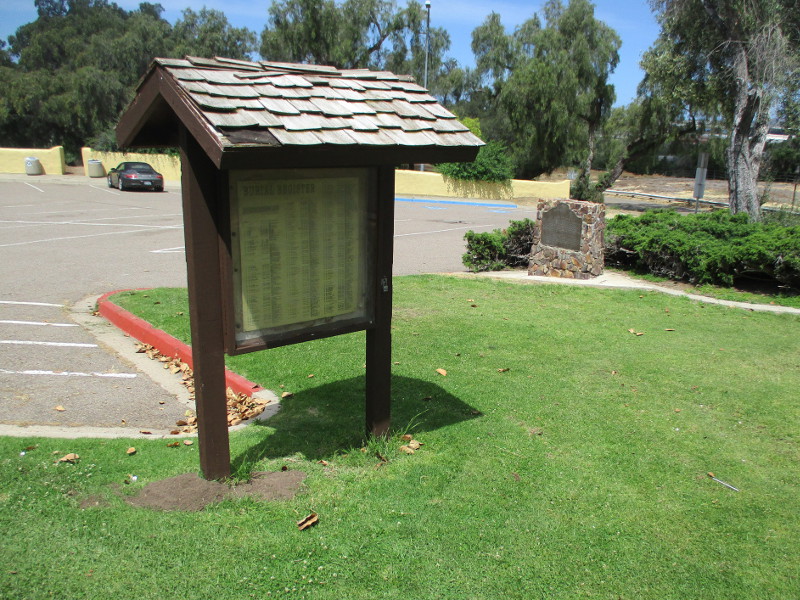
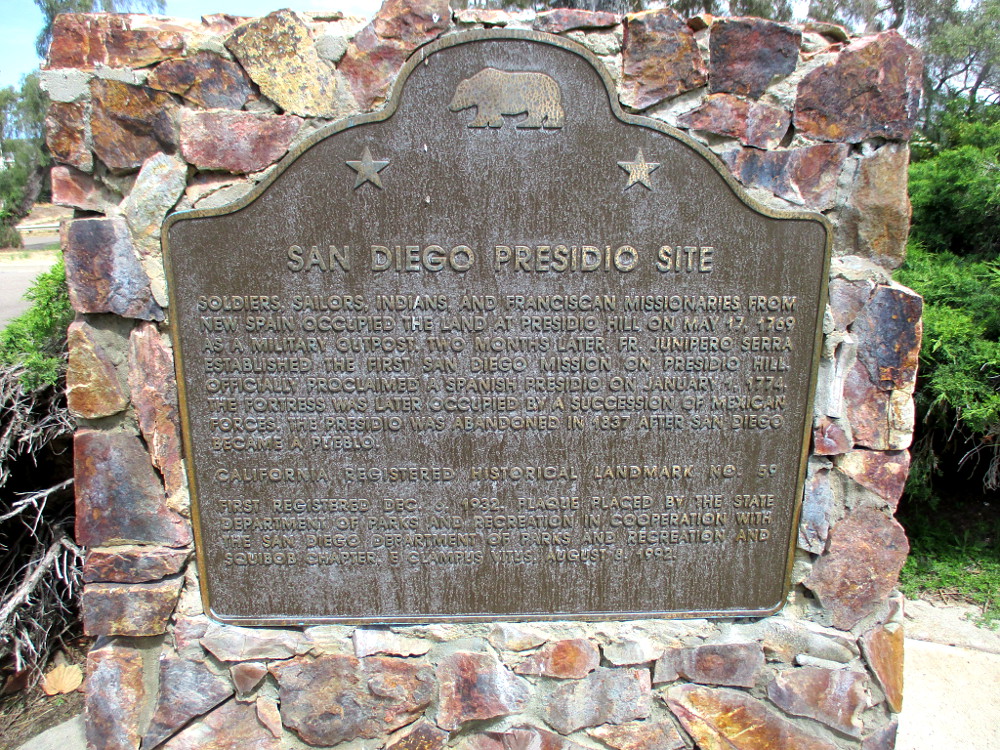
At the corner of the main visitor’s parking lot one can find an historical marker. On the rear of a nearby kiosk is a faded Burial Register.

SAN DIEGO PRESIDIO SITE

SOLDIERS, SAILOR, INDIANS, AND FRANCISCAN MISSIONARIES FROM NEW SPAIN OCCUPIED THE LAND AT PRESIDIO HILL ON MAY 17, 1769 AS A MILITARY OUTPOST. TWO MONTHS LATER FR. JUNIPERO SERRA ESTABLISHED THE FIRST SAN DIEGO MISSION ON PRESIDIO HILL. OFFICIALLY PROCLAIMED A SPANISH PRESIDIO ON JANUARY 1, 1774, THE FORTRESS WAS LATER OCCUPIED BY A SUCCESSION OF MEXICAN FORCES. THE PRESIDIO WAS ABANDONED IN 1837 AFTER SAN DIEGO BECAME A PUEBLO.

CALIFORNIA REGISTERED HISTORICAL LAND MARK NO. 59

HERE, IN THIS PARK, LIE THE REMAINS OF THE ORIGINAL RESIDENTS OF THE PRESIDIO, BOTH NATIVE AND IMMIGRANTS, OF THIS ORIGINAL SETTLEMENT THAT LATER BECAME THE CITY OF SAN DIEGO. BELOW IS A LIST OF THE INDIVIDUALS WHO HELPED CREATE THE COMMUNITY, LIVED THEIR LIVES HERE, AND WERE BURIED IN THESE PRESIDIO GROUNDS. THESE PEOPLE CAME FROM AND REPRESENT PLACES ALL OVER THE WORLD. IMPORTANTLY, THEIR LIVES WERE DEDICATED TO HELP BUILD THIS COMMUNITY.

Source: The Catholic Church Burial Register

During past walks, I’ve photographed other historical plaques and signs on Presidio Hill. See many of them here and here.

Thanks for visiting Cool San Diego Sights!

I post new blogs pretty often. If you like discovering new things, bookmark coolsandiegosights.com and swing on by occasionally!

I live in downtown San Diego and love to walk around with my camera! You can follow Cool San Diego Sights via Facebook or Twitter!

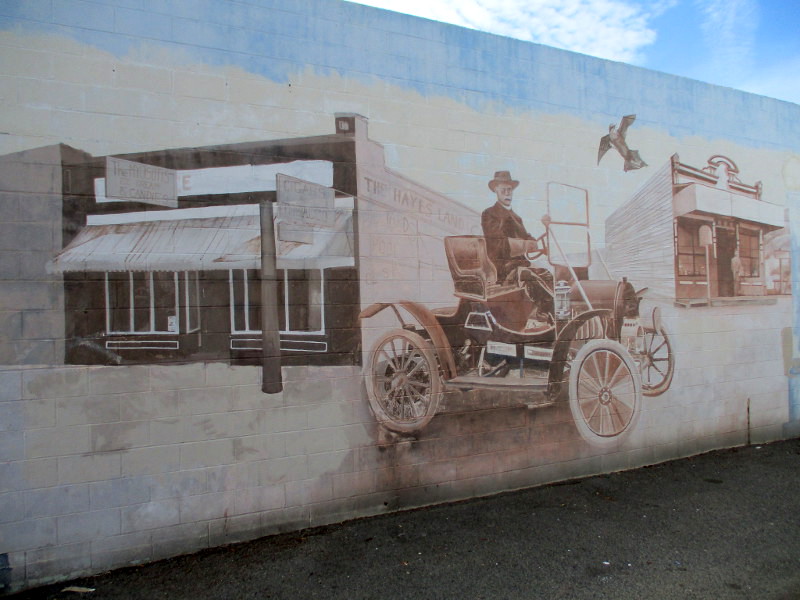
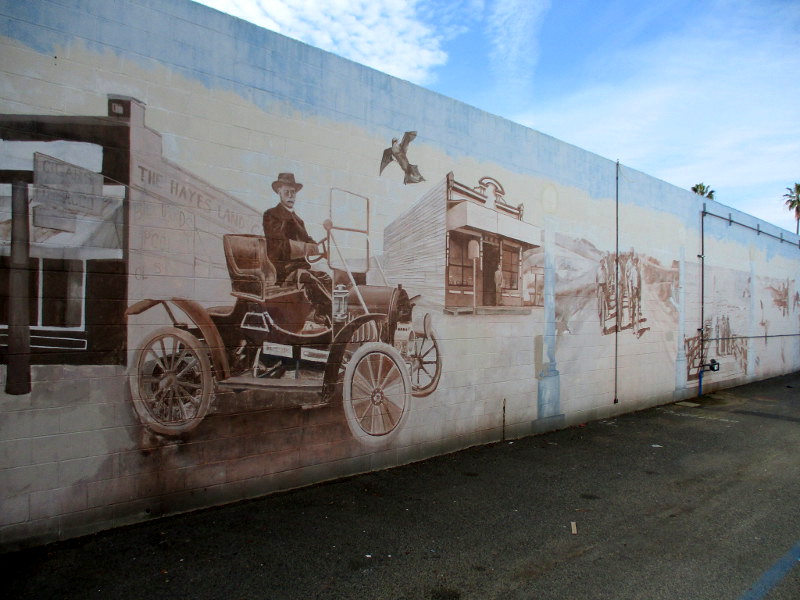
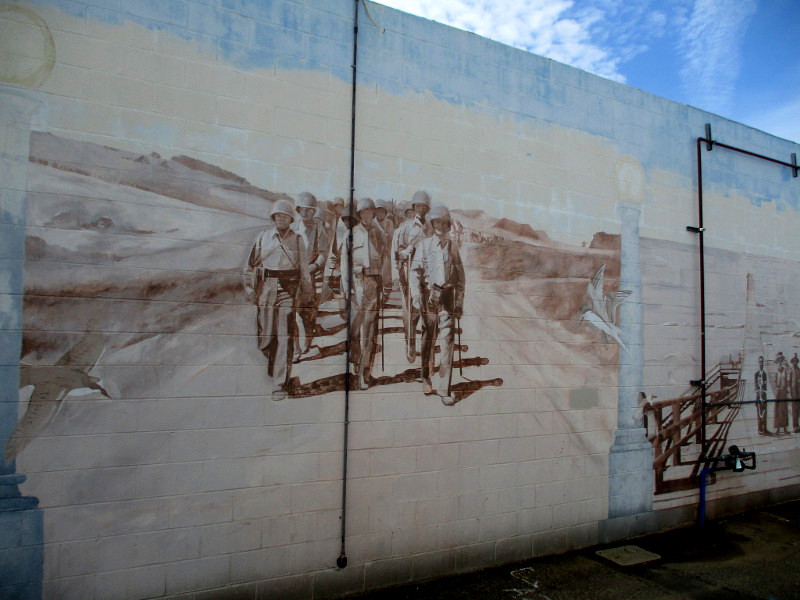
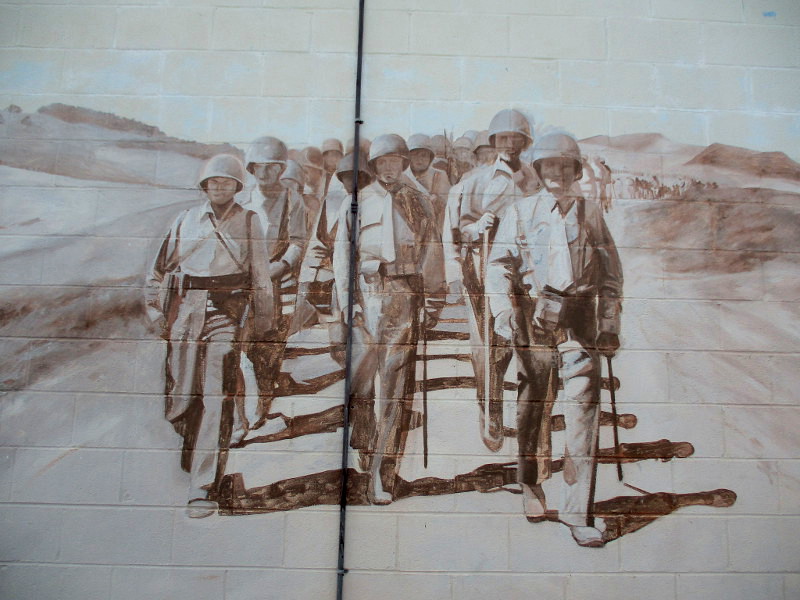
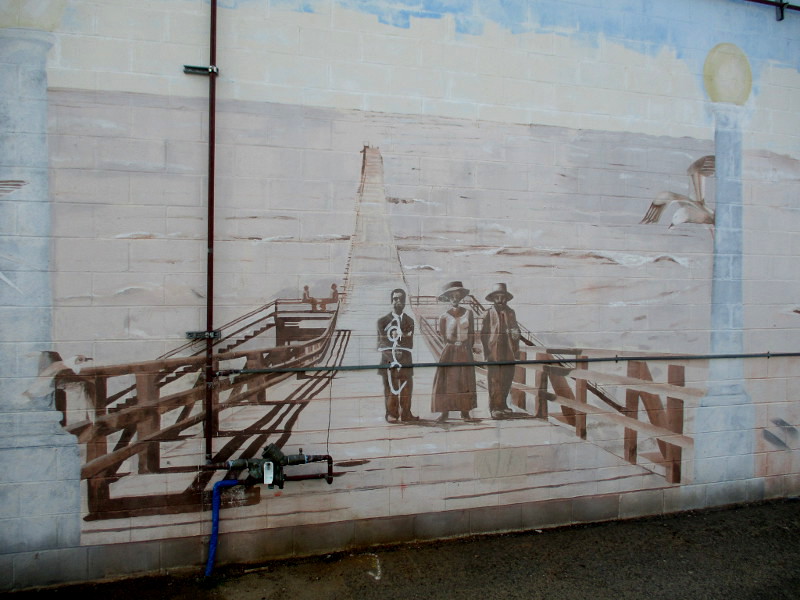
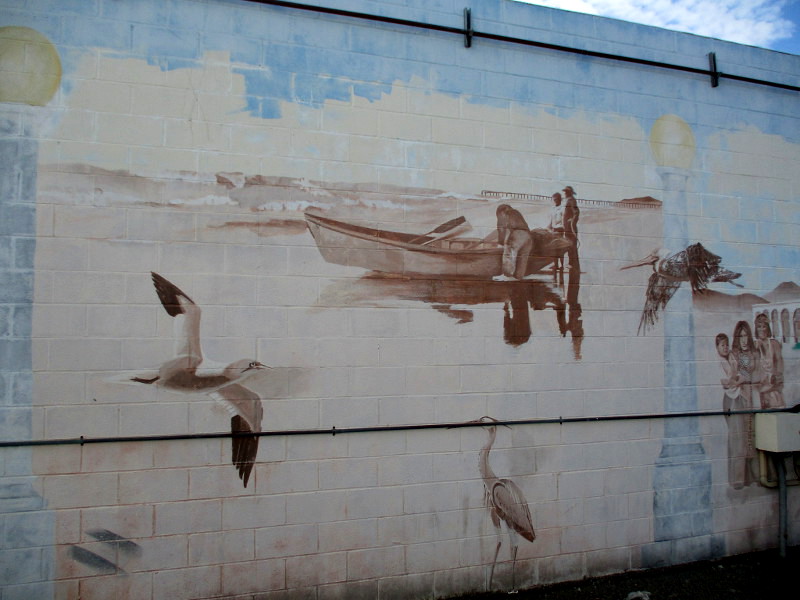
Mysterious mural shows Oceanside history.

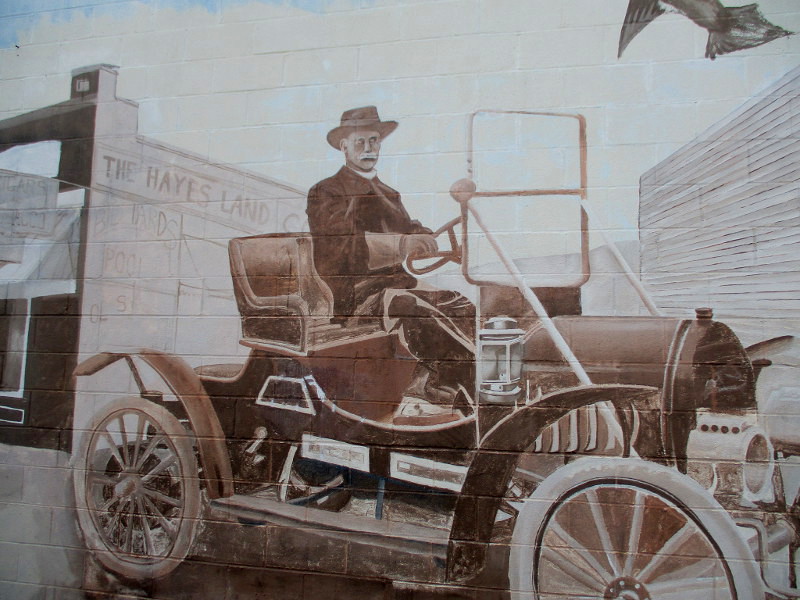
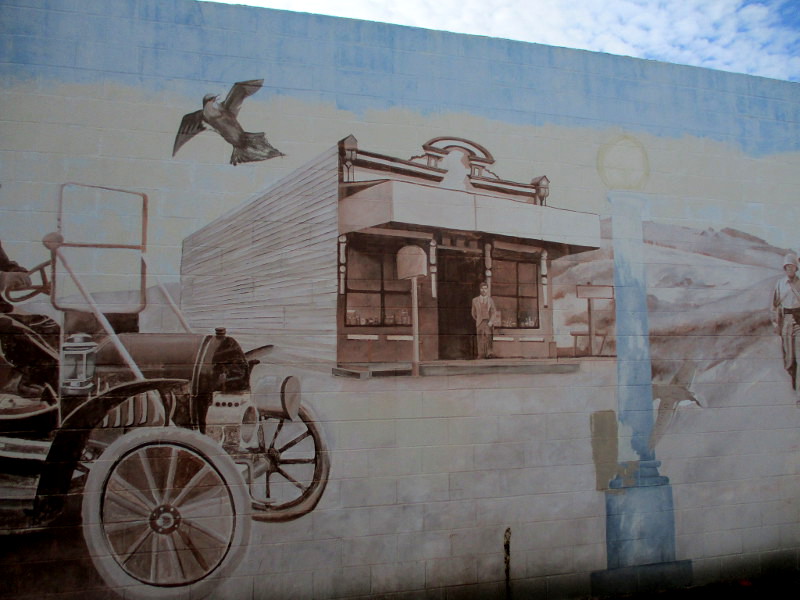
Does anyone out there know anything about this faded mural in Oceanside? It’s a mystery to me.

The long mural was painted in an alley off Mission Avenue, between Freeman Street and Ditmar Street. The Murals in Oceanside web page merely calls it the 608 mural, presumably after a restaurant that used to be on the other side of the wall. The location is now Rosewood Kitchen.

I can find no signature or date on the mural. I do see scenes from Oceanside’s history.

The Hayes Land Co., Oceanside’s first pier, and Mission San Luis Rey are recognizable.

The artwork is rather faint, so I had to greatly increase the contrast of my photos.

Leave a comment if you have any information!

Thanks for visiting Cool San Diego Sights!

I post new blogs pretty often. If you like discovering new things, bookmark coolsandiegosights.com and swing on by occasionally!

I live in downtown San Diego and love to walk around with my camera! You can follow Cool San Diego Sights via Facebook or Twitter!

Progress of California mural in La Jolla.

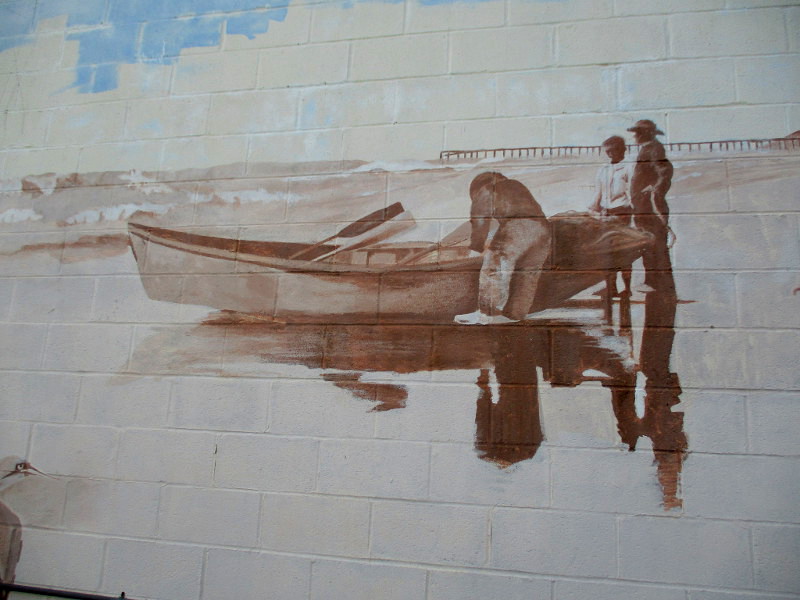
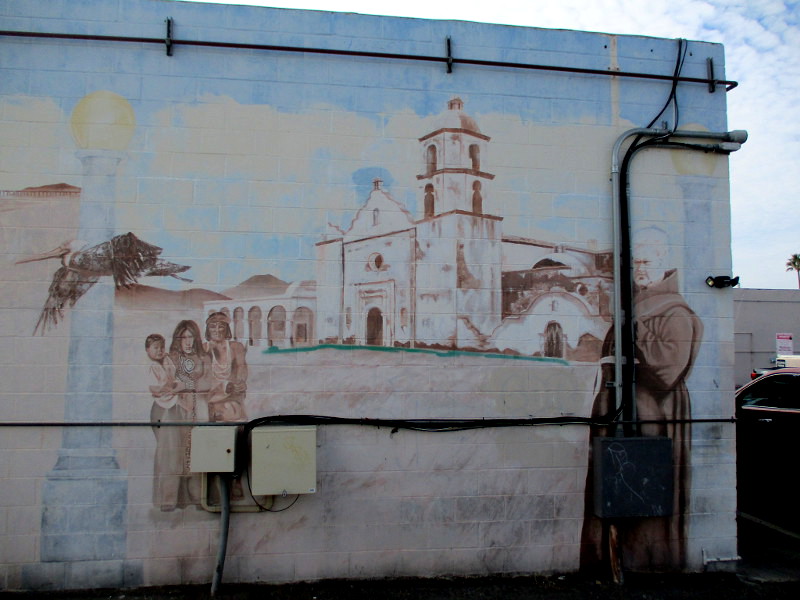
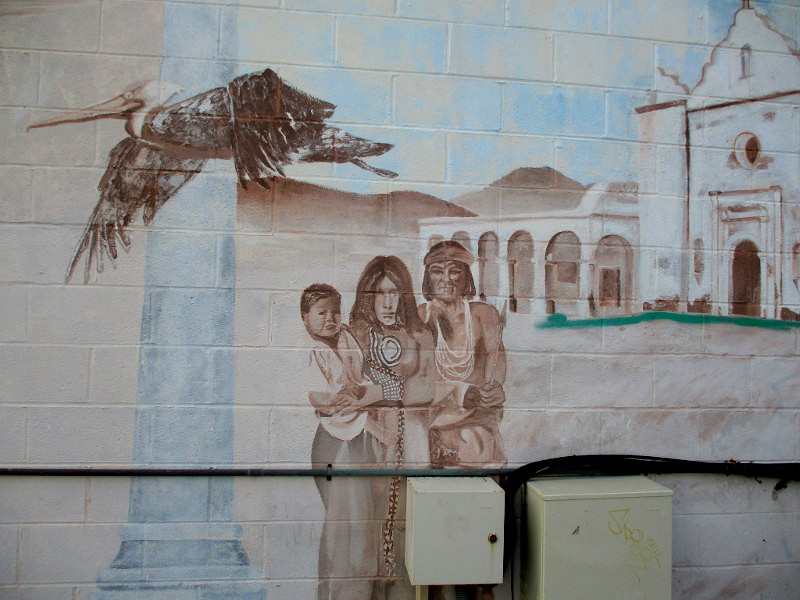
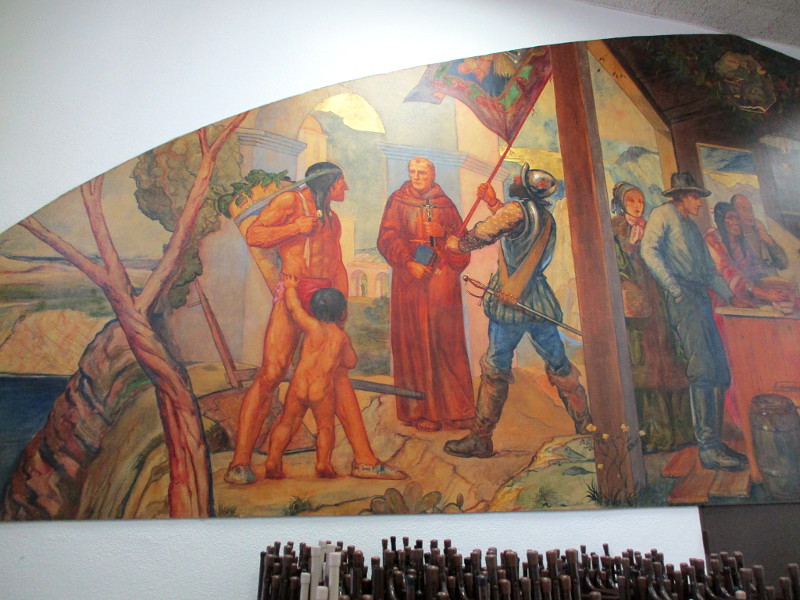
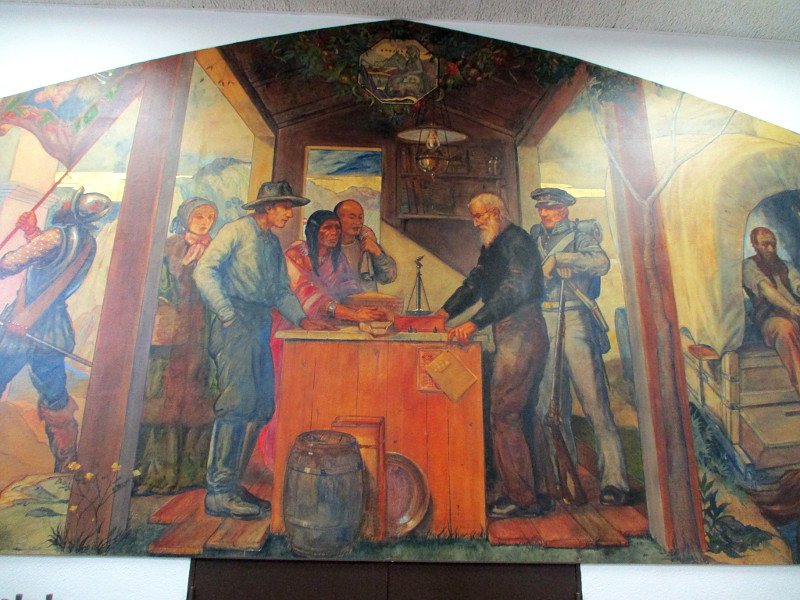
When I stepped into the La Jolla Recreation Center’s small auditorium the other day, I barely noticed the game of ping pong that was in progress. That’s because my eyes were immediately drawn to a large, incredible mural on one wall above some vending machines.

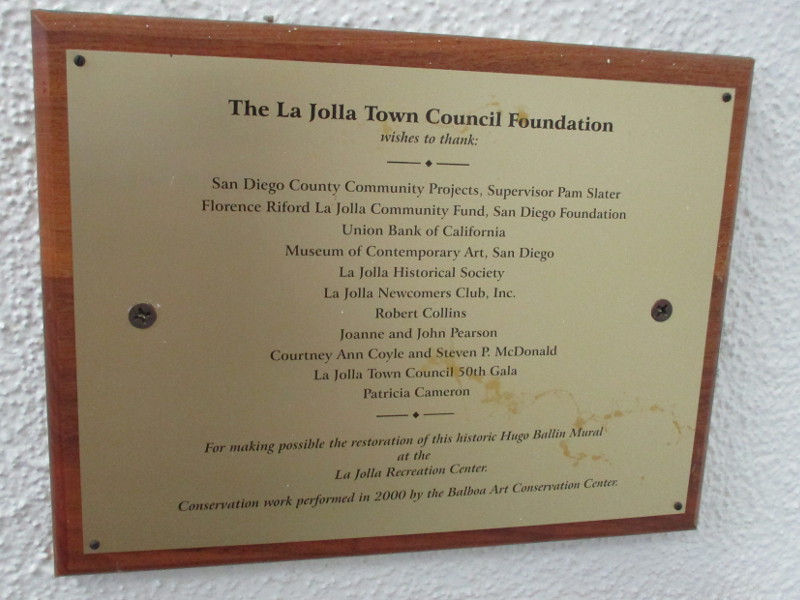
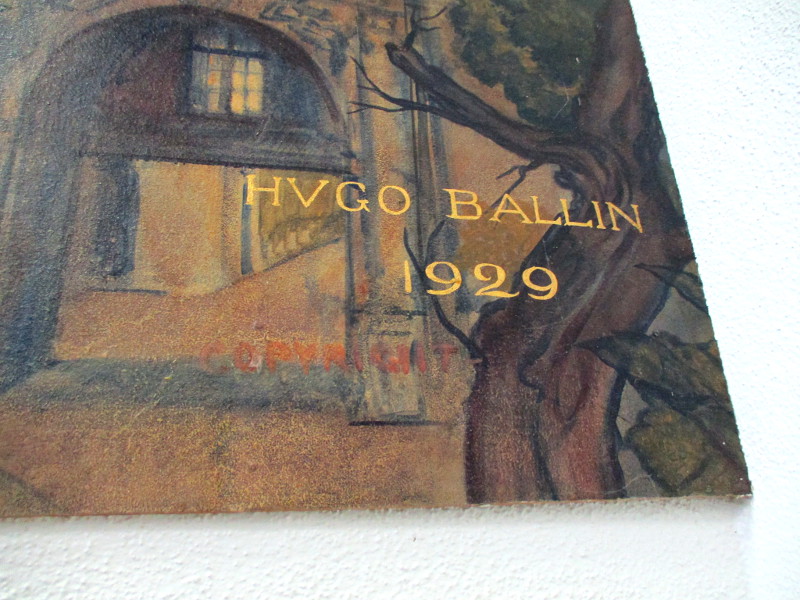
The mural, painted in 1929 by renowned artist Hugo Ballin, is titled Progress of California.

I found this article. It explains how the mural was originally located at First National Bank, which opened in La Jolla in 1930 on the corner of Silverado Street and Girard Avenue. The mural was placed on the wall above the vault door. When the bank was demolished, a decision was made to move the mural to the La Jolla Recreation Center, where the public could freely see it.

Hugo Ballin is best know for his work in Los Angeles, including murals at Burbank City Hall, Griffith Observatory, LA County General Hospital, and the Los Angeles Times Building. During the era of silent movies, he was art director for Goldwyn Pictures.

As you can see, his Progress of California mural depicts people from different periods of history, including Native Americans, Spanish explorers and missionaries, 49ers during the Gold Rush, and pioneers.

Rising at the right end of the mural is Balboa Park’s iconic California Tower, which was built for the 1915 Panama-California Exposition in San Diego.

I did my best to take good photos without interrupting the game of ping pong…

Restoration of the historic Progress of California mural was performed in 2000.

Thank you for visiting Cool San Diego Sights!

I post new blogs pretty often, so you might want to bookmark coolsandiegosights.com and check back from time to time.

You can explore Cool San Diego Sights by using the search box on this website’s sidebar. Or click a tag! There’s a lot of stuff to share and enjoy!

I live in downtown San Diego and love to walk around with my camera! You can follow Cool San Diego Sights via Facebook or Twitter!

Hidden historical markers around San Diego.

Walk around the city and you’ll discover surprising things. Once in a while, if you’re lucky, you might stumble upon an historical marker in a hidden or unexpected place!

Over the years I’ve happened upon a number of these historical plaques and markers. I’ve seen them by shopping centers, by apartment buildings, on hilltops, beside trails, and tucked away in odd places off the beaten track.

I thought that perhaps you’d enjoy reading a few of them.

Here are a few of the more interesting markers I’ve found….

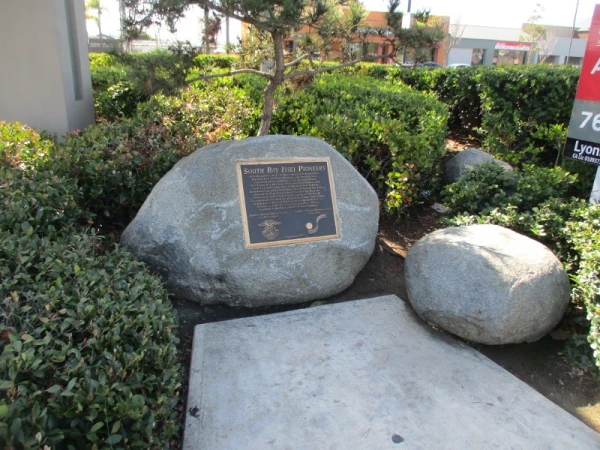
To read a plaque in Linda Vista about one of the first planned shopping centers in the United States, click here.

To read a plaque in National City about a “miraculous” well dug for Mount Paradise Sanitarium, click here.

To read numerous historical plaques on the top of Presidio Hill, where Fort Stockton once was, click here.

To read an historical marker in the middle of UC San Diego in La Jolla, click here.

To read a plaque marking the location of Kate Sessions’ nursery in Pacific Beach, click here.

To read a plaque near old Mission San Diego de Alcalá, marking the location of Padre Luis Jayme’s death during a Native American uprising, click here.

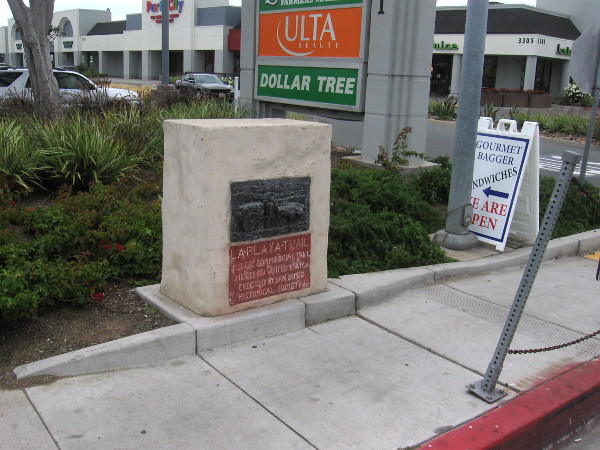
To see a fascinating marker recalling the historic La Playa Trail which passed through present-day Point Loma, near Midway and Rosecrans, click here.

To read several historical markers that are easily overlooked near an entrance to Presidio Park, click here.

To read a plaque in Coronado that concerns the birthplace of naval aviation, click here.

To read a marker that recalls a long vanished Chinese shipbuilding site in Point Loma, click here.

To read a marker in Chula Vista that commemorates Japanese immigrant farmers in the South Bay, click here.

To read plaques and inscriptions near the Old Mission Dam in Mission Trails Regional Park, click here.

Finally, to read a marker at the edge of a golf course near Old Town, detailing the history of San Diego’s oldest surviving structure, click here.

This blog now features thousands of photos around San Diego! Are you curious? There’s lots of cool stuff to check out!

Here’s the Cool San Diego Sights main page, where you can read the most current blog posts.  If you’re using a phone or small mobile device, click those three parallel lines up at the top–that opens up my website’s sidebar, where you’ll see the most popular posts, a search box, and more!
To enjoy future posts, you can also “like” Cool San Diego Sights on Facebook or follow me on Twitter.

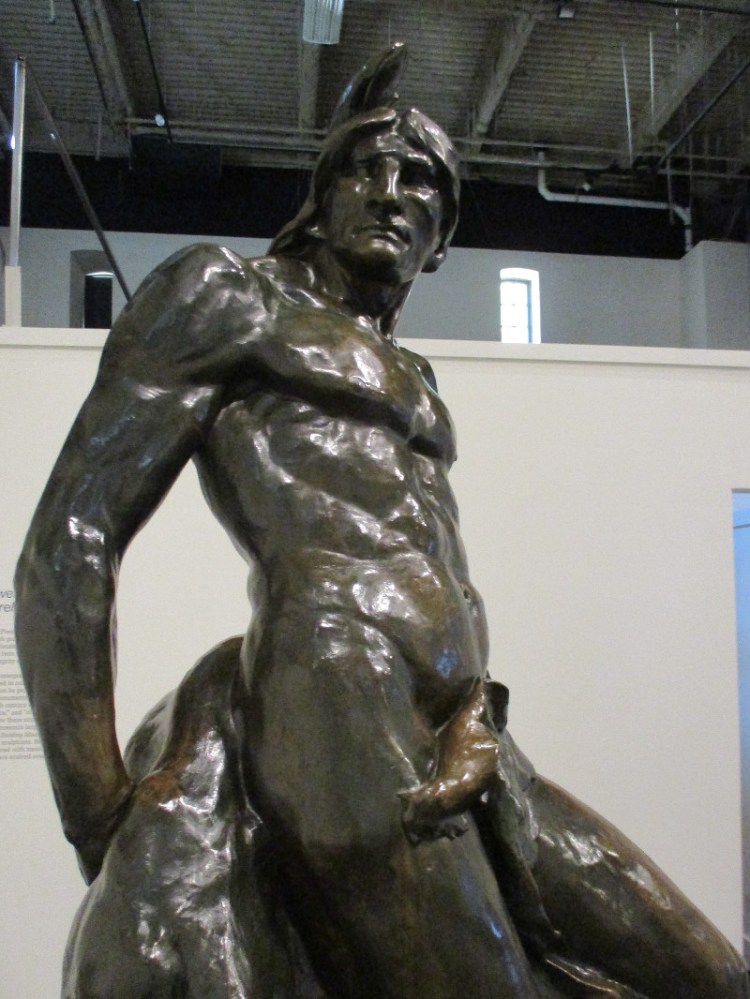
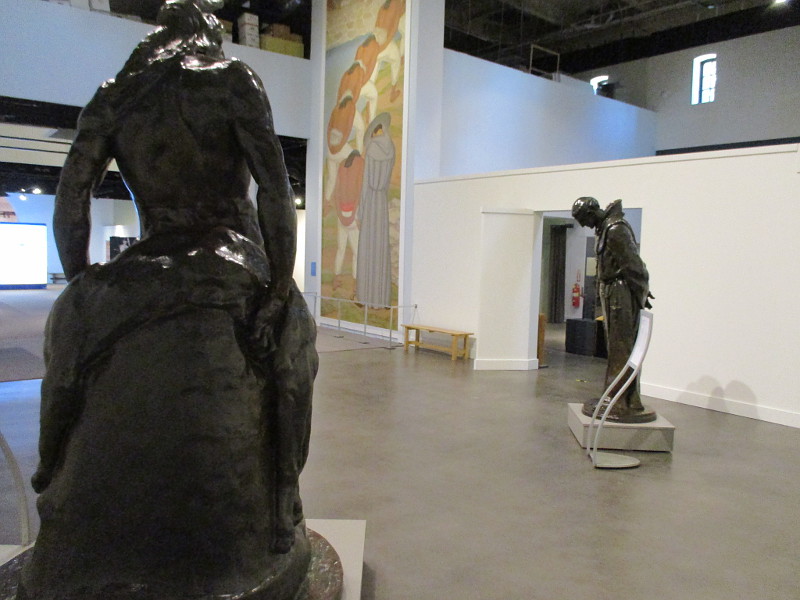
Presidio Hill sculptures moved to History Center.

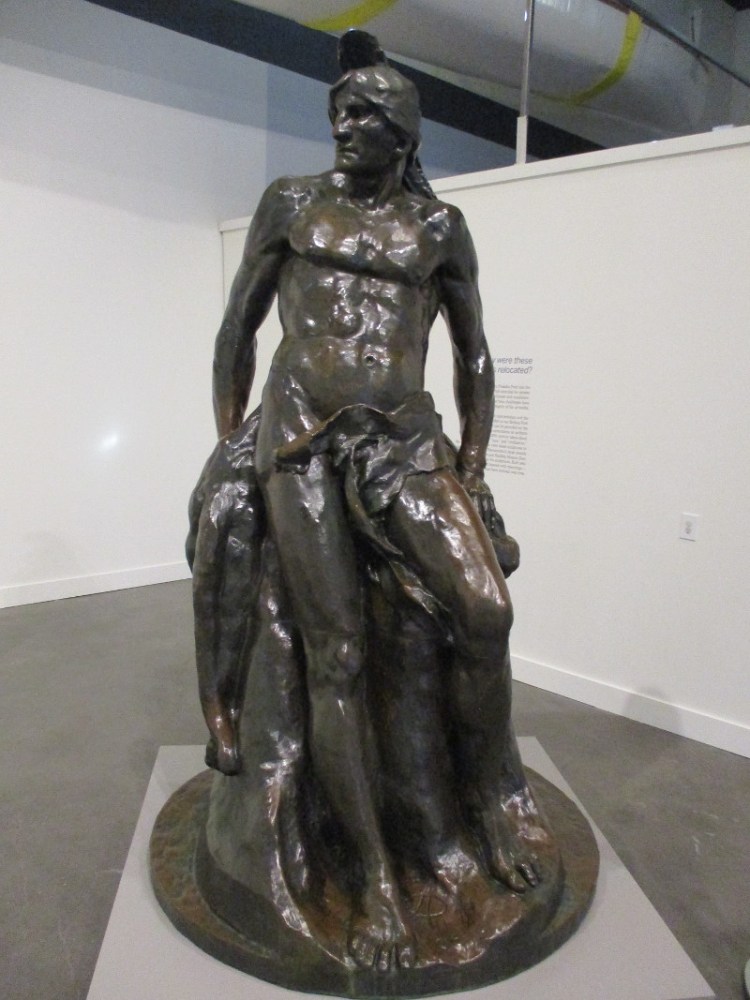
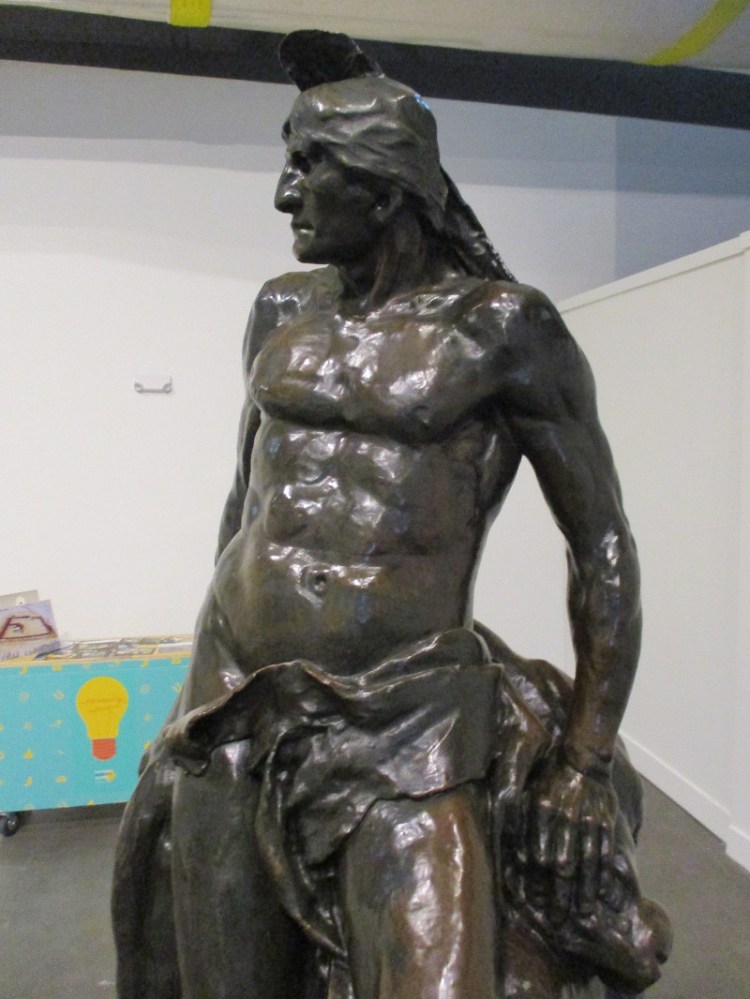
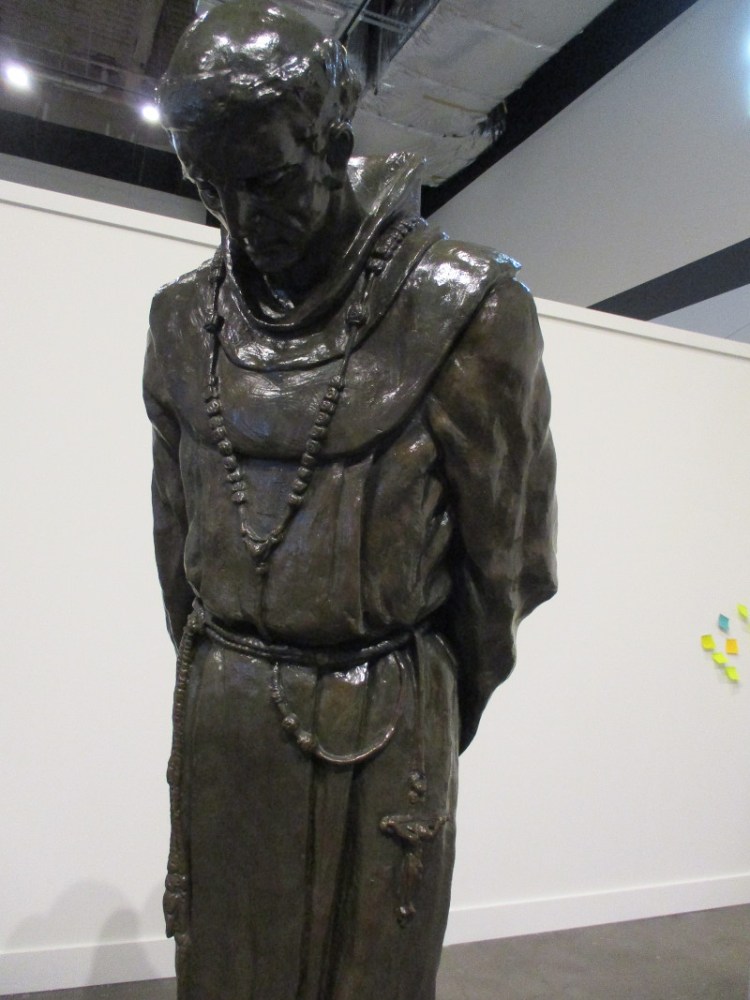
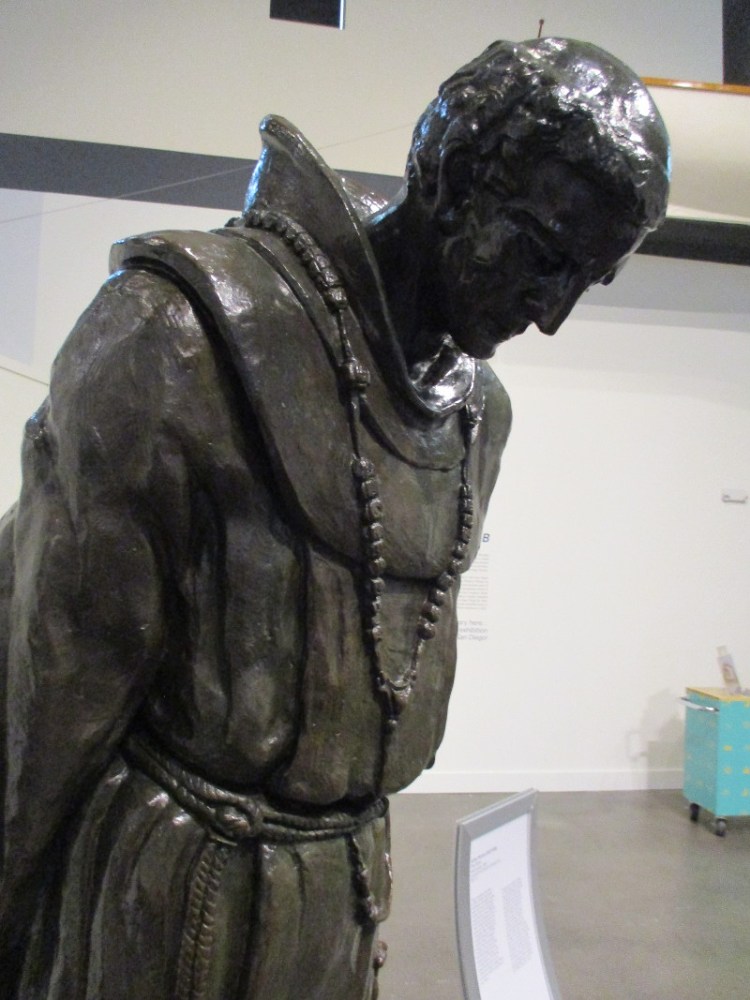
Two remarkable and historically important sculptures were moved recently from Presidio Hill to the San Diego History Center in Balboa Park.

When I visited the History Center today I was surprised to see the two large Arthur Putnam works, because I’d observed them several times in the past during walks through Presidio Park.

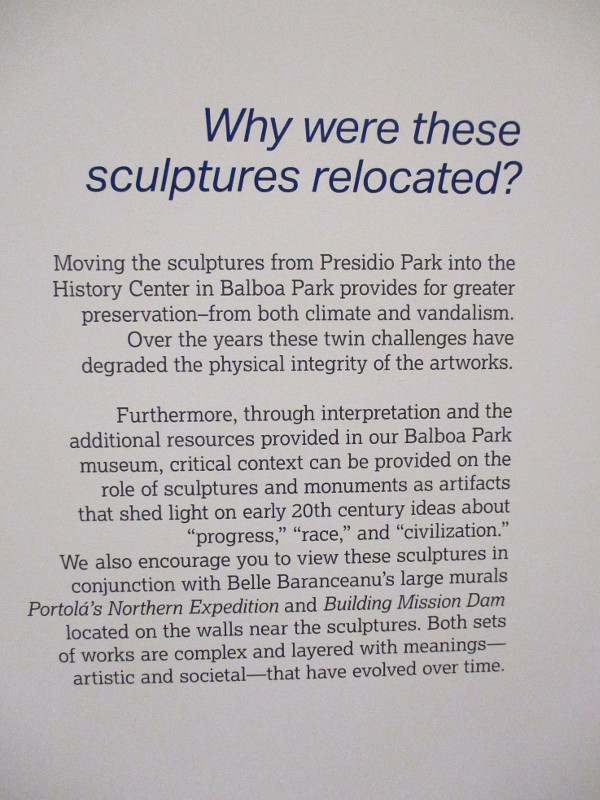
An explanation on the gallery wall explains that The Indian (1904) and The Padre (1908) were moved to protect them from the outdoor elements and vandalism. I learned they will be gallery centerpieces as this section of the San Diego History Center receives additional material. Critical context will be provided for these bronze statues.

If you’d like to see photos of the two sculptures when they stood on Presidio Hill, check out past blog posts here and here.

The first link will take you on a walk from Old Town up to the Serra Museum–a walk I made years ago when Cool San Diego Sights was just getting started.

The second link concerns an Arthur Putnam exhibition at the San Diego Museum of Art. You’ll learn that he was internationally renowned, particularly for his sculptures depicting animals. And he also had an interesting San Diego connection!
I live in downtown San Diego and love to walk around with my camera! You can follow Cool San Diego Sights via Facebook or Twitter!

You can easily explore Cool San Diego Sights by using the search box on my blog’s sidebar. Or click a tag! There are thousands upon thousands of photos for you to enjoy!

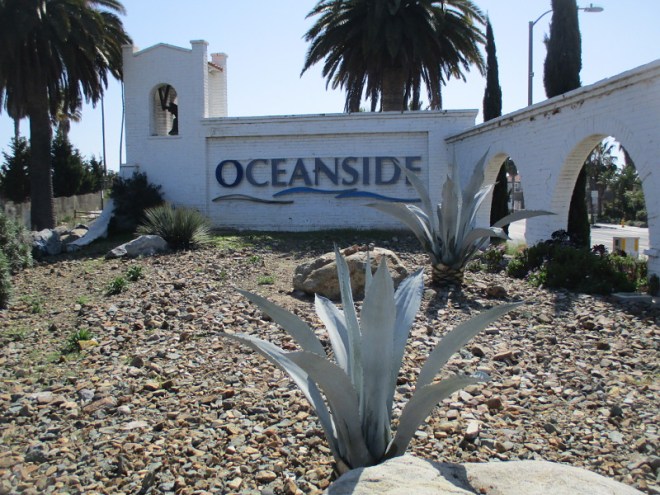
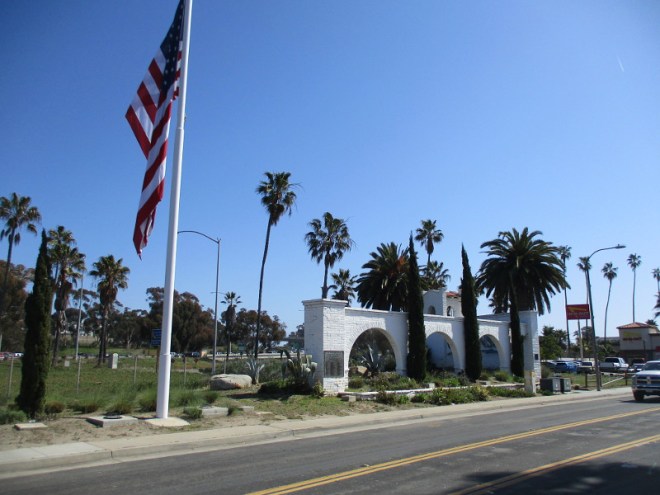
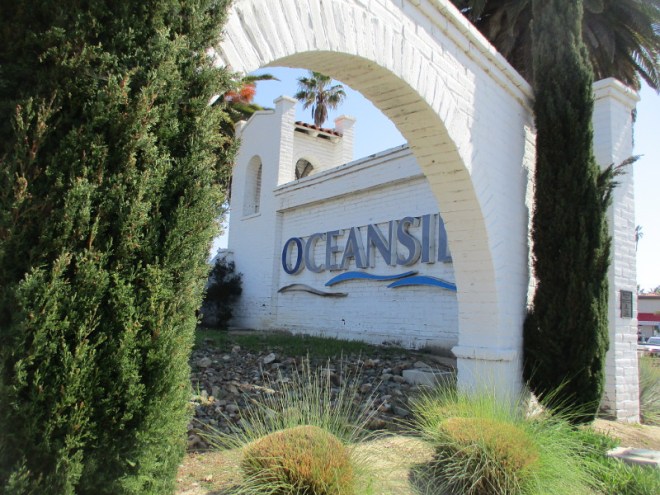
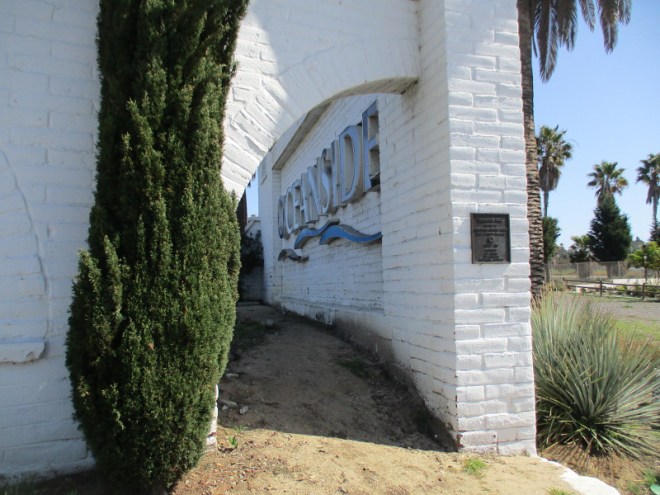
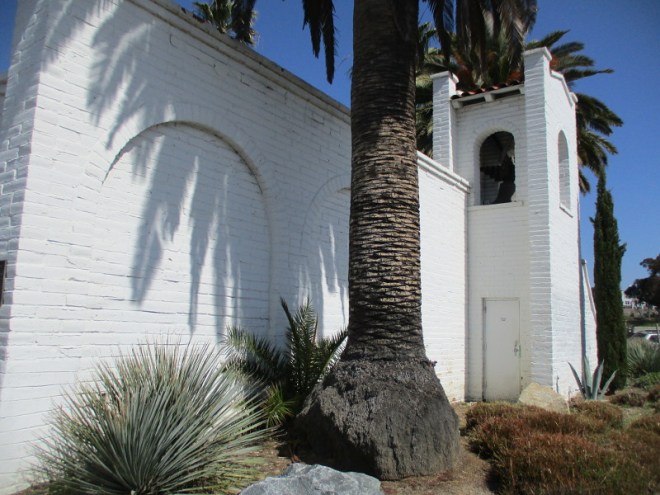
The Welcoming Arches and Bell of Oceanside.

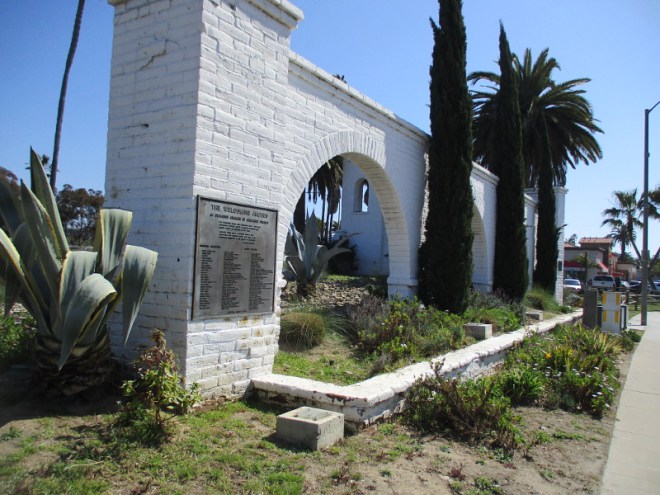
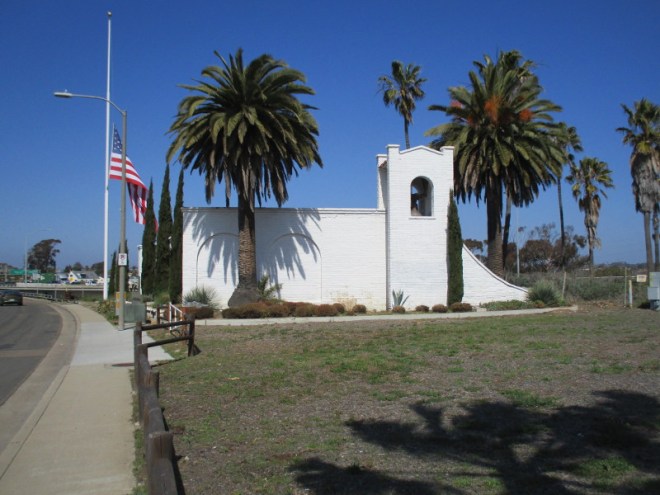
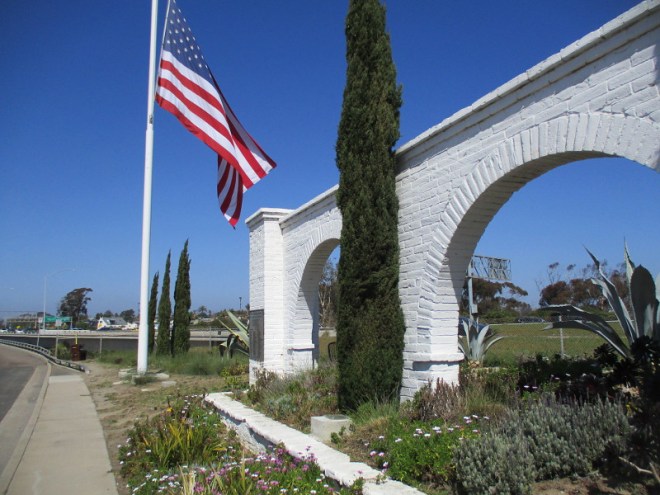
The Welcoming Arches and the Welcome Bell greet motorists driving south on Interstate 5 as they enter Oceanside, California. The arches and bell stand just beyond a large American flag and beside the parking lot of an In-N-Out Burger.

I passed by the California Mission inspired structure last weekend as I walked down the Coast Highway.

Mission San Luis Rey, founded in 1798, is located about four miles east-northeast of these bright white adobe mission-style arches.

The Welcoming Arches were designed by noted Southern California architect George M. Adams in 1978 and dedicated in 1982.

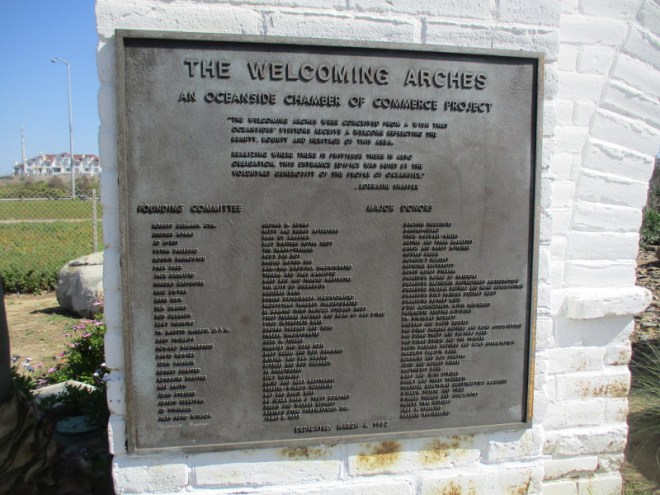
The first part of the above plaque reads:

THE WELCOMING ARCHES

AN OCEANSIDE CHAMBER OF COMMERCE PROJECT

“THE WELCOMING ARCHES WERE CONCEIVED FROM A WISH THAT
OCEANSIDES’ VISITORS RECEIVE A WELCOME REFLECTING THE
BEAUTY, BOUNTY AND HERITAGE OF THIS AREA.

REALIZING WHERE THERE IS PRIVILEGE THERE IS ALSO
OBLIGATION, THIS ENTRANCE EDIFICE WAS BUILT BY THE
VOLUNTARY GENEROSITY OF THE PEOPLE OF OCEANSIDE”


..LORRAINE SHAFFER

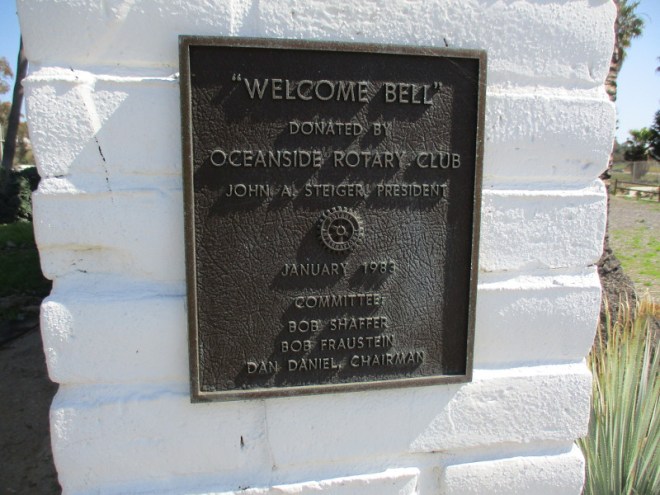
Part of this smaller plaque reads:

“WELCOME BELL”
DONATED BY
OCEANSIDE ROTARY CLUB
JOHN A. STEIGER, PRESIDENT
JANUARY 1983

I live in downtown San Diego and love to walk around with my camera! You can follow Cool San Diego Sights via Facebook or Twitter!

You can easily explore Cool San Diego Sights by using the search box on my blog’s sidebar. Or click a tag! There are thousands upon thousands of photos for you to enjoy!