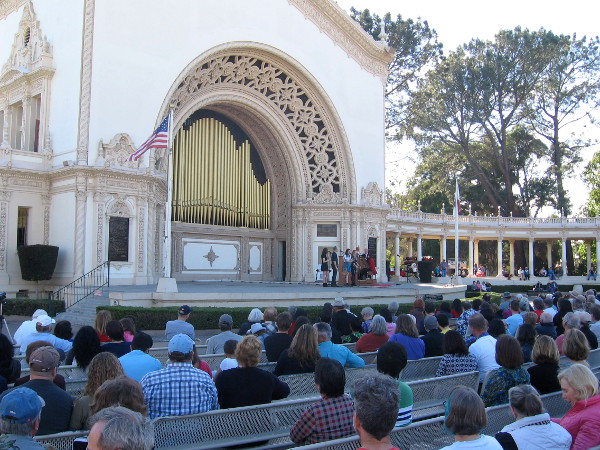
The von Trapp family sings live on stage at San Diego’s Spreckels Organ Pavilion.
This afternoon in Balboa Park’s Spreckels Organ Pavilion, a very large crowd of people heard the singing of angels.
The great grandchildren of Captain and Maria von Trapp were live on stage, performing beautiful, exquisitely harmonized vocals during this Sunday’s free organ concert. Almost everyone loves the classic film The Sound of Music, which was based on the real life musical family’s escape from Nazi occupied Austria. Sofi, Melanie, Amanda, and August von Trapp are the grandchildren of Werner von Trapp, who was portrayed in the movie as Kurt, the youngest child. The four young musicians have obviously inherited the von Trapp magic.
The quartet of siblings have performed around the world to critical acclaim, appearing in the world’s top concert venues and on many major television shows. We in San Diego were truly fortunate to be graced with their music…and on a sunny, perfect day!
The von Trapps performed eight incredible numbers: Dream a Little Dream of Me; the old German folk song Die Dorfmusik (which was made famous by the German group Comedian Harmonists before being disbanded by the Nazis, because some members were Jewish); Storm, an original composition written by the group while living in Portland, Oregon and performed a cappella ; French pop musician Françoise Madeleine Hardy’s well known Le Premier Bonheur du Jour; The Sound of Music, by Rodgers & Hammerstein; Hushabye Mountain from Chitty Chitty Bang Bang; a new piece (I missed the name) sung with ukelele from their upcoming album, due to be released on April 14; and, of course, Edelweiss. The four voices were so pure, so buoyant, so uplifting, and melded so deliciously, a standing ovation erupted.
Wow!
A huge crowd gathered as the incredible family quartet warmed up.Today’s Sunday afternoon concert included Dr. Carol Williams, San Diego’s Civic Organist.Youthful singers have inherited the von Trapp vocal magic.Almost all of the benches in the large Spreckels Organ Pavilion were full.The von Trapps sing on stage on a sunny San Diego afternoon!
…
To enjoy future posts, you can “like” Cool San Diego Sights on Facebook or follow me on Twitter.
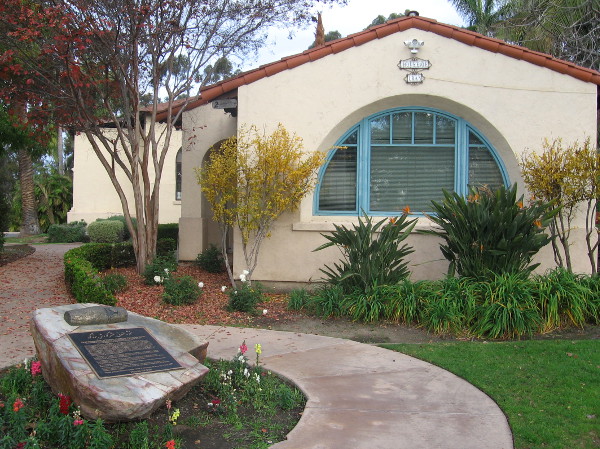
House of Iran at Balboa Park’s International Cottages and a proclamation supporting human liberty.
When I go for a pleasant stroll I’m often lazy. I’ll note interesting things from afar, but fail to walk up for a closer look.
Recently I took a good close look at a large plaque located conspicuously near the House of Iran in Balboa Park. The House of Iran is one of the couple dozen cottages built for the 1935 California Pacific International Exposition. The furnishings in the colorful little buildings exemplify life in their respective countries. Many members of each “house” trace their ancestry to the old country.
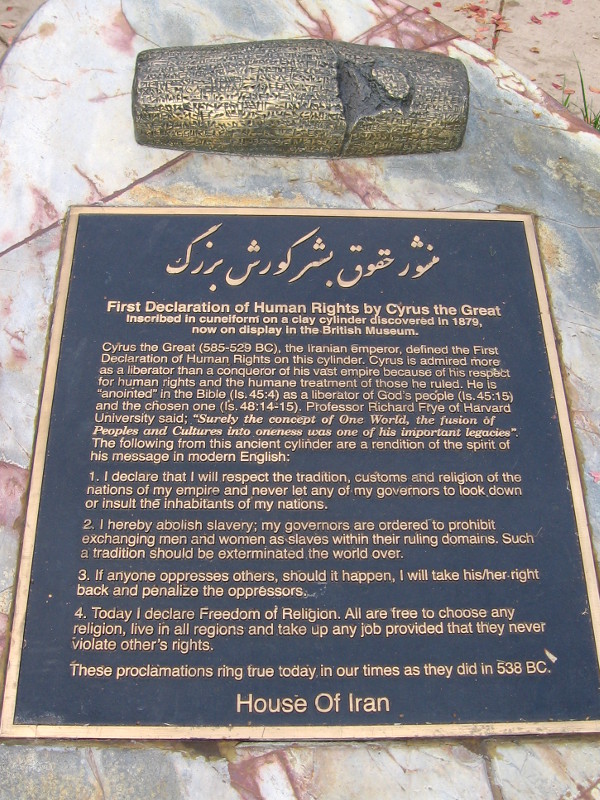
The shining plaque lies in a bed of flowers. I approached it and paused to read. It’s dedicated to the First Declaration of Human Rights by Cyrus the Great.
According to the plaque Cyrus the Great (585-529 BC) was an enlightened Iranian emperor. Unlike many rulers of old, he upheld human dignity throughout his vast empire and treated his subjects humanely. He opposed slavery and supported the freedom of religion.
This ancient declaration of human rights was inscribed in cuneiform on a clay cylinder, which is now on display in the British Museum.
Plaque with translation of the First Declaration of Human Rights by Cyrus the Great.
…
To enjoy future posts, you can “like” Cool San Diego Sights on Facebook or follow me on Twitter.
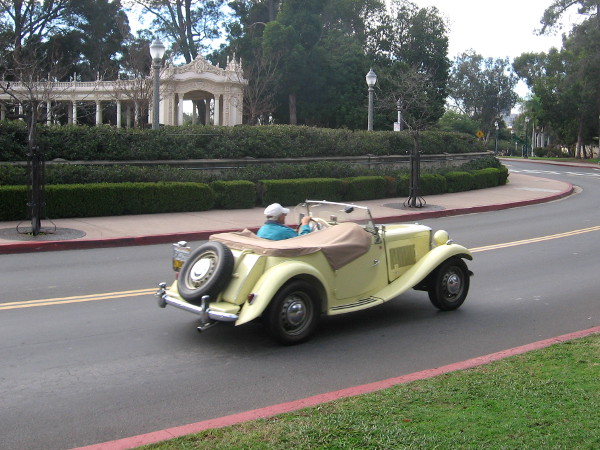
Kid checks engine of vintage car at Balboa Park show commemorating 1915 race.
One hundred years ago a famous road race took place in San Diego. Many of the world’s greatest race drivers took part. The 1915 San Diego Exposition Road Race was a thrilling, dangerous 300 mile race around the streets of Point Loma. Those streets still exist today.
This morning, dozens of vintage cars took part in a rally along the old race route. The event was part of Balboa Park’s Centennial celebration, which is being held all year long to remember the 1915 Panama-California Exposition.
Before the rally, the participating cars gathered in Balboa Park in front of the San Diego Automotive Museum for a special car show. I walked up to the park this morning to check things out.
Wow! Double wow!
Please enjoy these photos. While I love looking at classic cars, I’m very far from being an expert. If you detect an error in the captions, or have something interesting to add, please leave a comment!
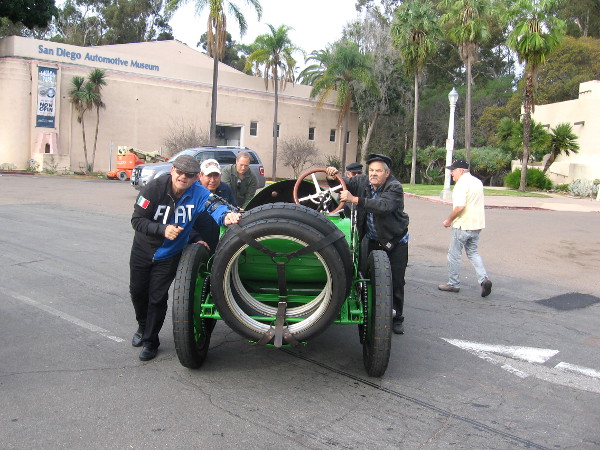
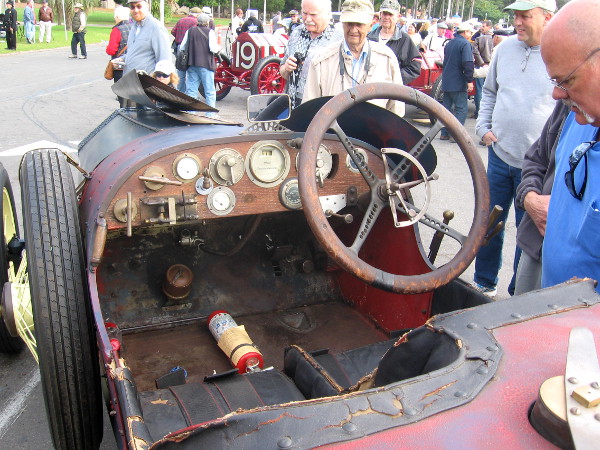
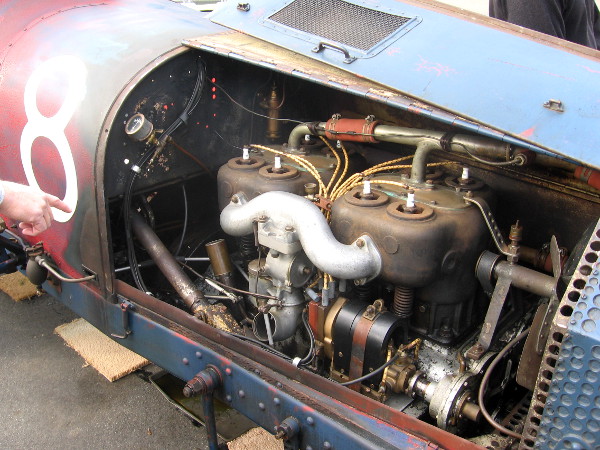
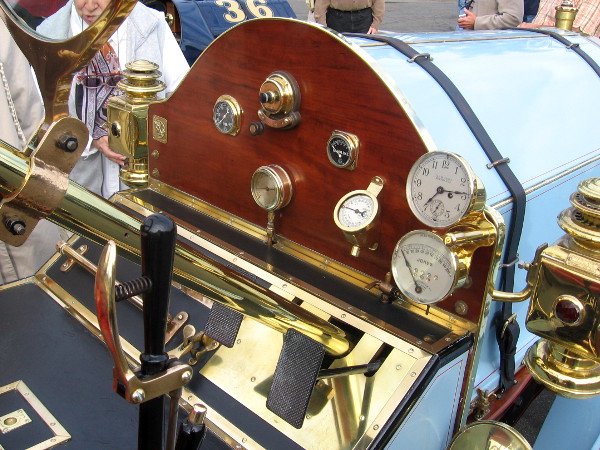
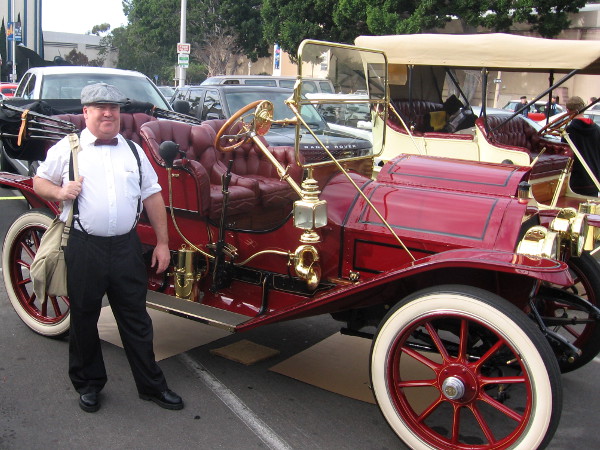
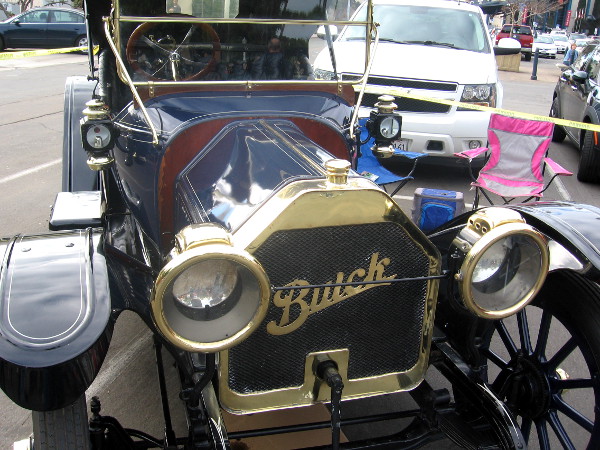
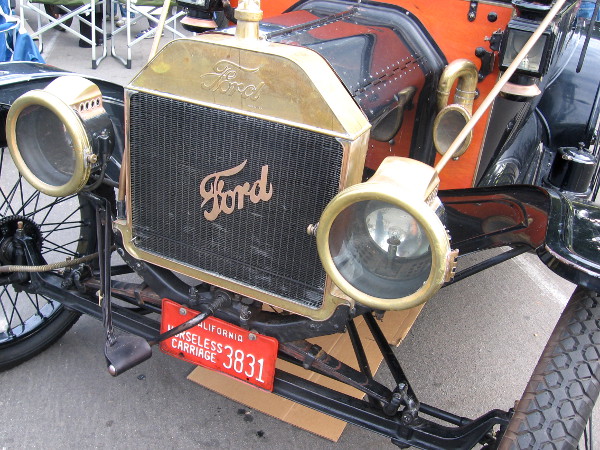
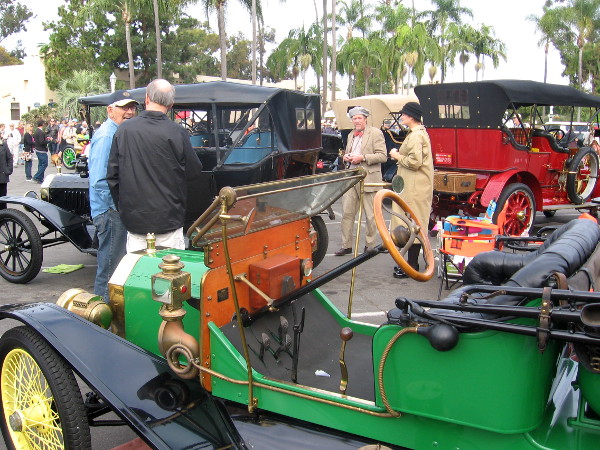
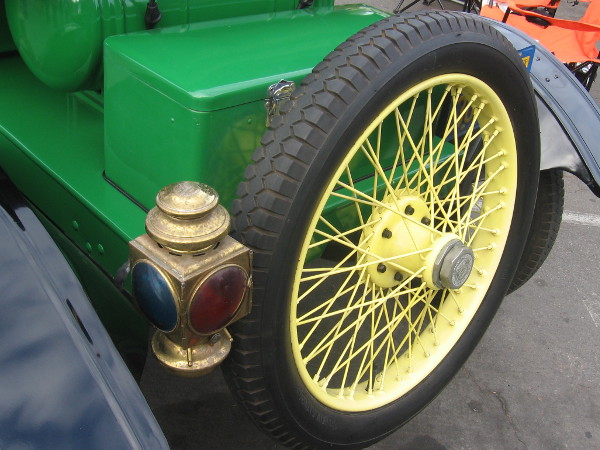
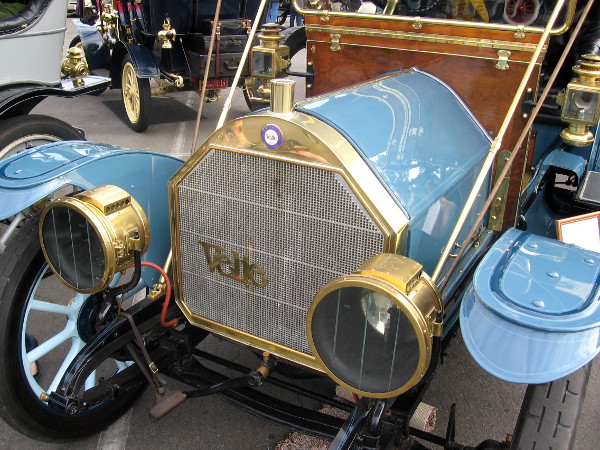
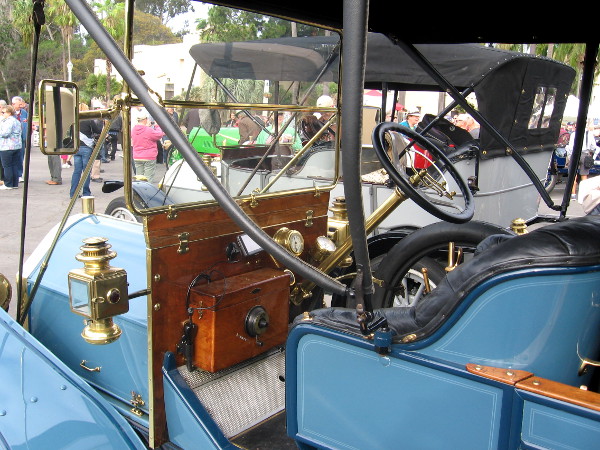
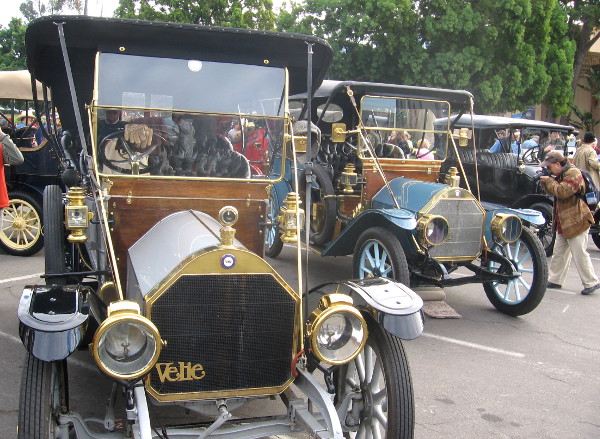
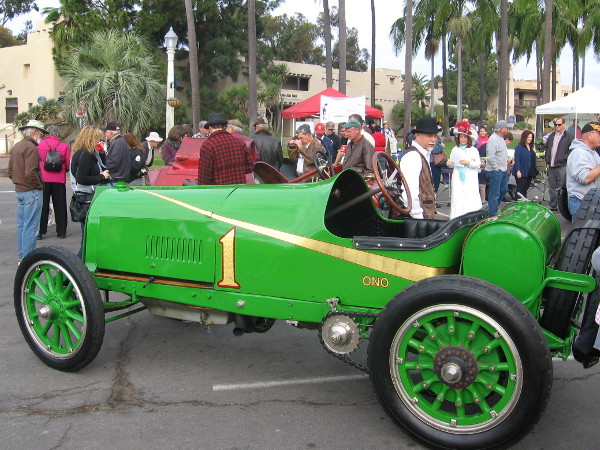
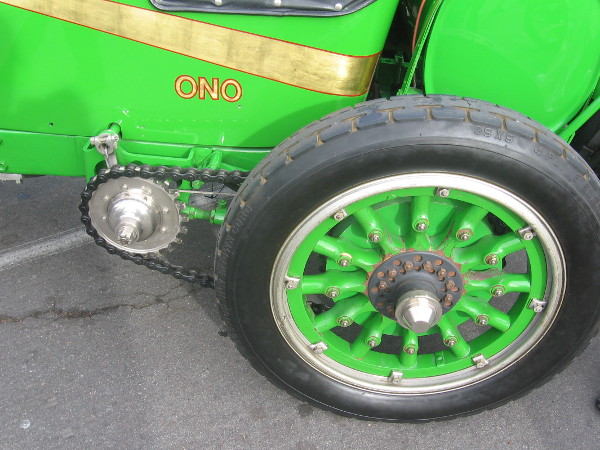
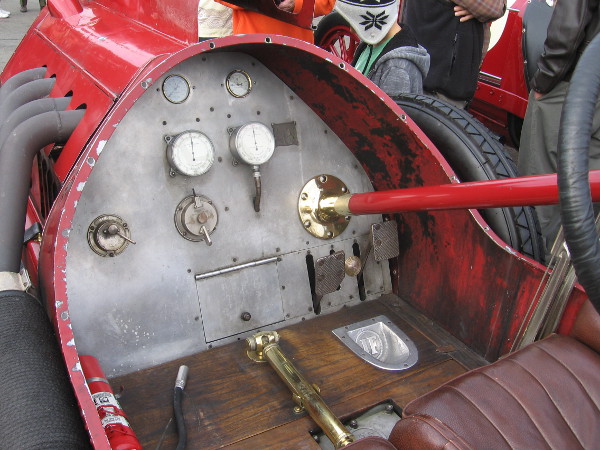
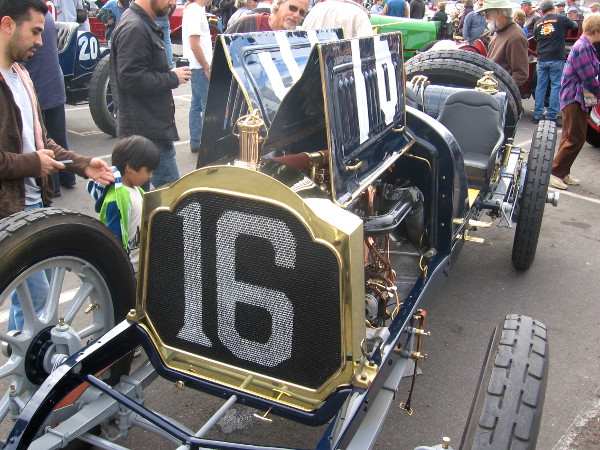
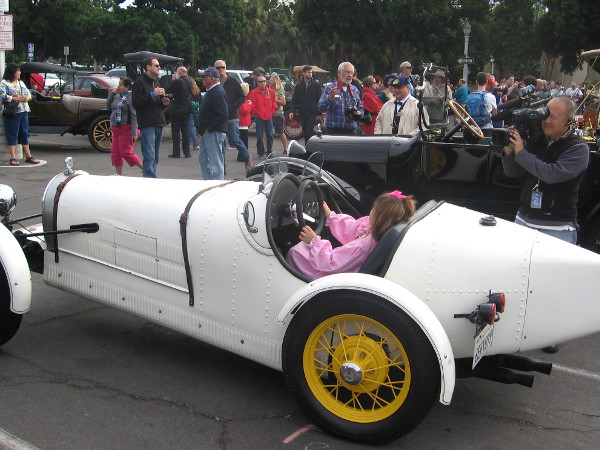
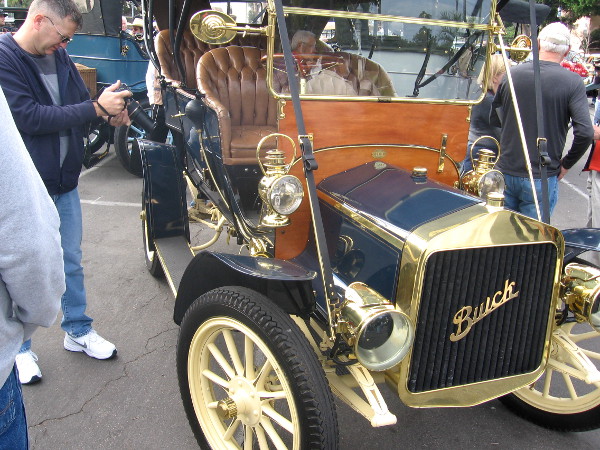
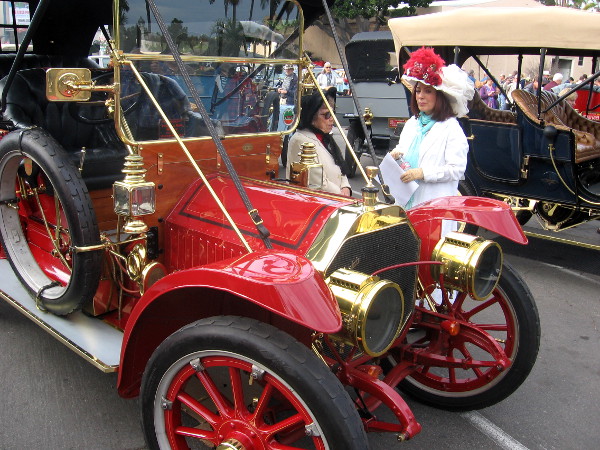
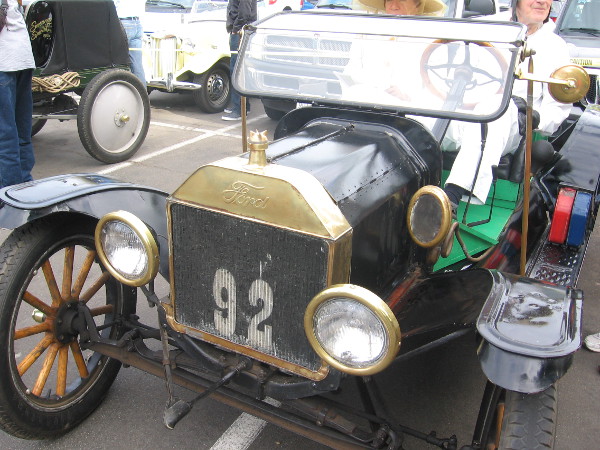
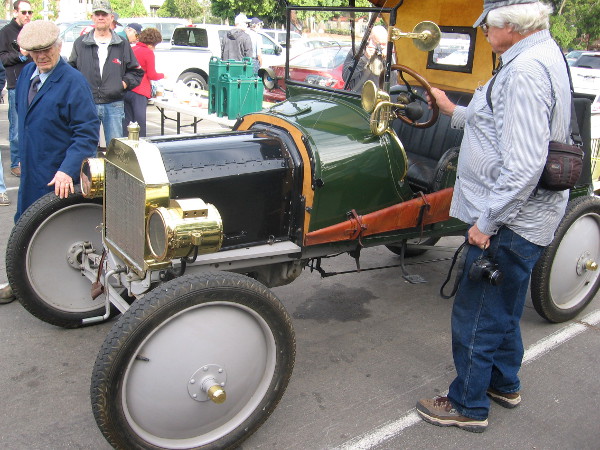
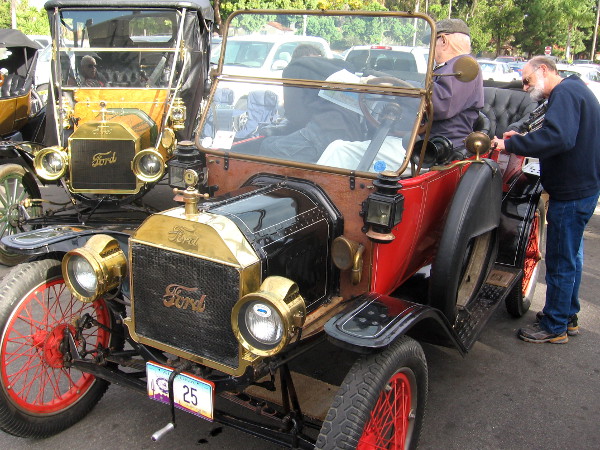
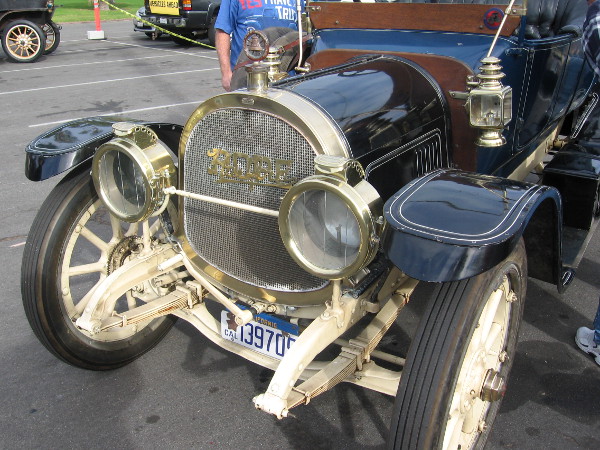
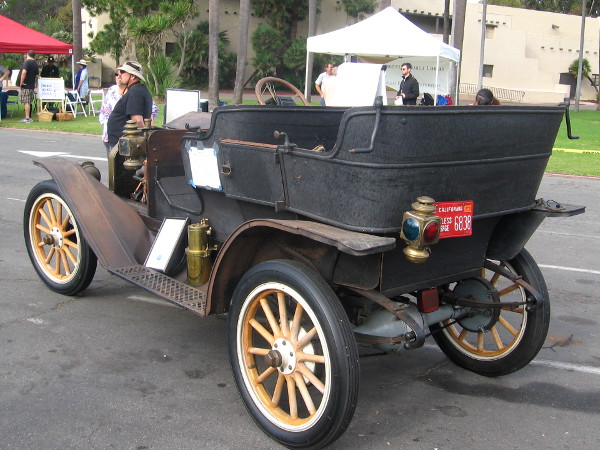
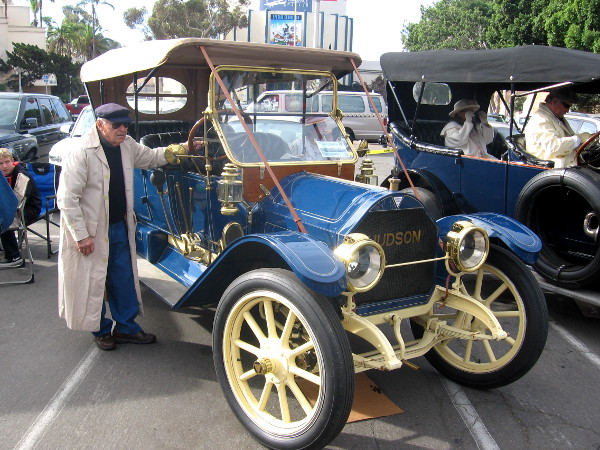
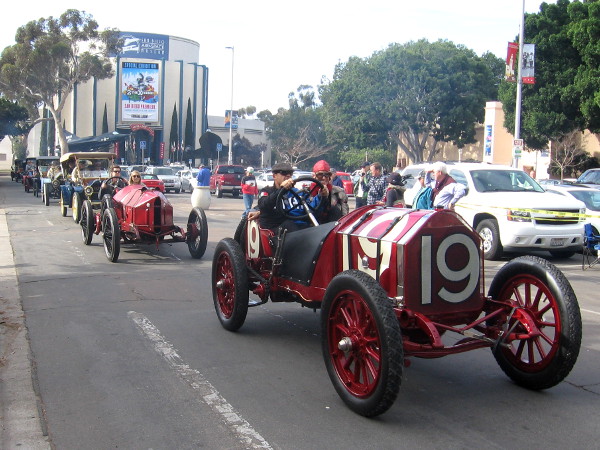
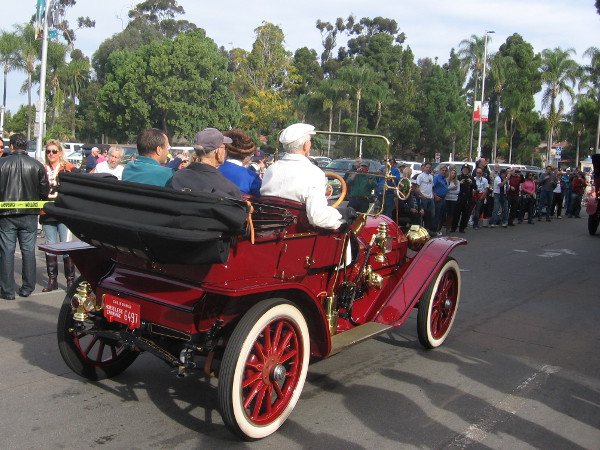
Guy drives his classic automobile through Balboa Park, heading to a special car show.Old race car is pushed into position. San Diego Automotive Museum is in the background.Vintage cars from era of Point Loma road race that began 1915 Panama-California Exposition.Someone checks out Fiat racing car at special Balboa Park Centennial event.Wooden dashboard full of knobs looks almost prehistoric compared to modern cars!Engine of 1914 Tahis Special that competed in many races!Collectibles from 1915 road race in Point Loma that kicked off Panama-California Exposition!People can still ride in style in this elegant Pierce-Arrow.Pierce-Arrow luxury automobiles in early 1900s were owned by many movie stars and tycoons.So many amazing cars were lined up in the parking lot it was hard to take it all in!1910 REO Model D Touring car has a very classic look.Check out this awesome vintage Cadillac!1909 Pope Hartford on display at Balboa Park Centennial special car show.This isn’t your father’s Buick. But it might have been driven by your grandparents!Walking around, I felt like I’d stepped back in time one hundred years!Here’s the grill of a cool Ford. License plate is for a Horseless Carriage.Colorful Ford is painted orange and green. Awesome!Red and green signal light near spare tire on back.1910 Velie Model D Touring cars were popular. Velie race cars were also successful.Many of these beautiful old cars contain lots of wood, brass and leather.Dozens of classic cars were out on public display!Inspecting another Velie, made early last century in Moline, Illinois.Very cool 1911 Ono, a vintage chain-driven race car.Someone nearby joked: It’s a motorcycle chain!And here’s a guy checking out the engine of an Italian Isotta Fraschini.Makes my own extremely modest car look downright futuristic!Chests full of tools that car mechanics would use back in the old days.Kid checks out a 1912 Packard race car in Balboa Park.Many refurbished motors were open for people to investigate.A large crowd enjoys many super cool cars in front of San Diego Automotive Museum.News cameraman gets a shot of young girl in pink pretending to race a vintage car.Racing goggles lie ready on leather seat. The road rally will begin in a few minutes!I’ve never seen so many cameras taking so many photographs in one place!Fun historical costumes were everywhere you turned.This fellow is ready to go! It’s a perfect Saturday morning for a road trip!It might have a dent or two, but it still runs!One guy checks out the steering wheel, another the unusual wheels on the asphalt!Getting the engine started with the old hand crank!Gentlemen, take your seats! We’re about to get started!Don’t touch this fancy car unless you are nude! (And showered, presumably.)I love this shiny oval grill on a Pope-Hartford.Not sure how this old horseless carriage would fare in a race.That’s as primitive a motorcar as you’re likely to ever see.Folks are shooting the breeze and having a whole lot of fun!This guy is getting ready to climb aboard a gorgeous classic Hudson.Car show disbands and crowds have scattered to make way.Here they come! That’s the San Diego Air and Space Museum in the background.Many drivers and onlookers wore fashion styles from early 20th century.A long line of beautifully restored hundred-year-old autos rumbles past.Heading out of Balboa Park for Point Loma, where historic 1915 race will be commemorated.
…
To enjoy future posts, you can “like” Cool San Diego Sights on Facebook or follow me on Twitter.
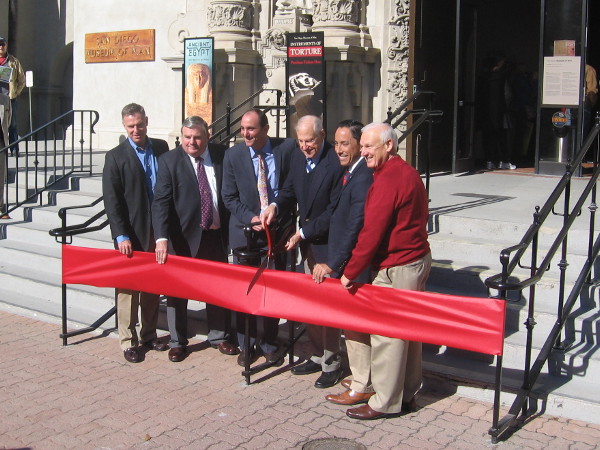
Dignitaries cut symbolic ribbon officially opening California Tower on New Year’s Day.
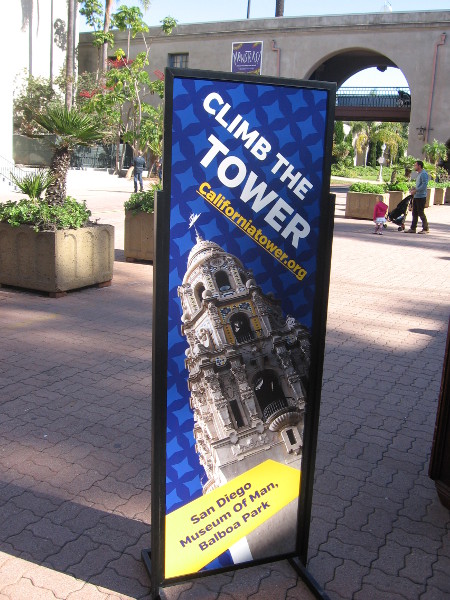
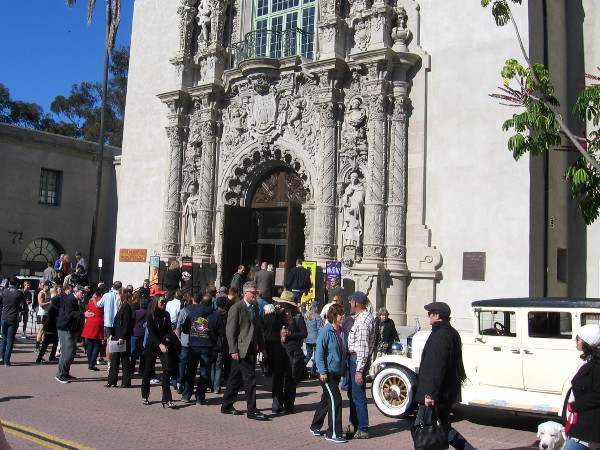
New Year’s Day in San Diego’s beautiful Balboa Park was marked by a historic event. Today, after 80 years, the California Tower reopened to the general public!
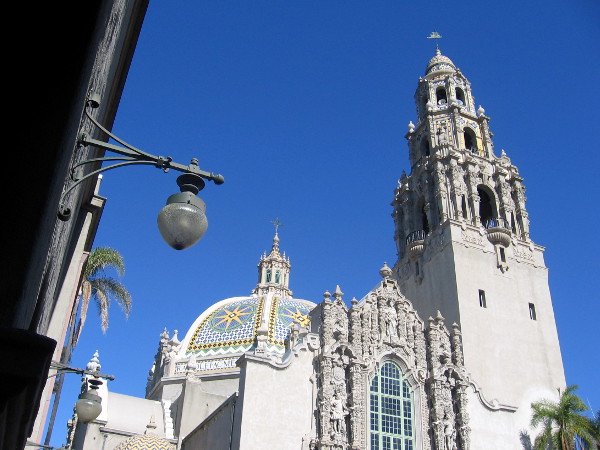
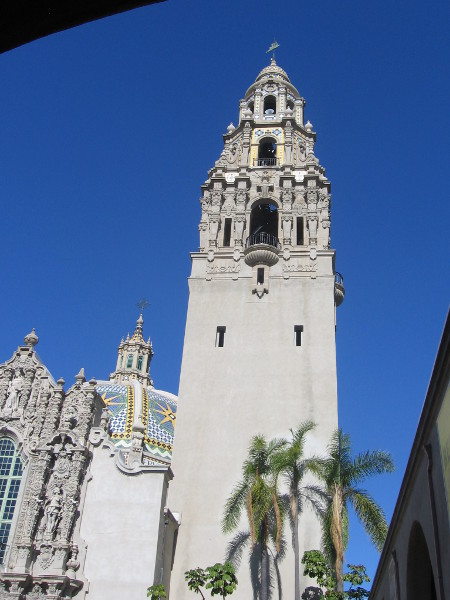
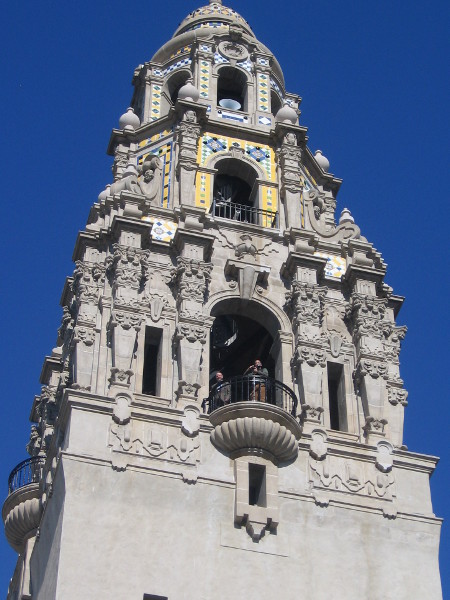
The California Tower is one of the most iconic sights in San Diego. Like many of the ornate Spanish Colonial Revival-style buildings in today’s Balboa Park, it was built for the 1915 Panama-California Exposition, which celebrated the opening of the Panama Canal. The tower was originally accessible to visitors, but in 1935 that changed. One of the most important developments during the Balboa Park Centennial Celebration this year is the long-awaited reopening of the amazing tower!
With the purchase of a special ticket, anyone can now join a small tour that climbs up 125 steps to an observation deck high above the park. Views are said to be breathtaking in all four directions. One day (when it’s not sold out) I’ll check the tour out and post some pics!
Dignitaries at the noon ribbon-cutting ceremony included U.S. Congressman Scott Peters, San Diego County Supervisor Ron Roberts, and San Diego City Councilman Todd Gloria.
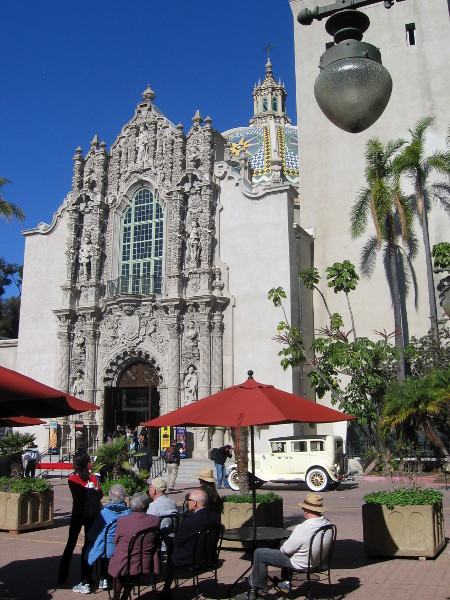
You might recognize the California Tower and other portions of the California Building, which now houses the San Diego Museum of Man, from the movie Citizen Kane. Shots of Balboa Park’s architectural wonder were said to be Charles Foster Kane’s Xanadu Mansion in Orson Welles’ classic film.
The tower, reopened today to the general public, rises above tiled dome of California Building.Museum visitors can now climb the California Tower for amazing panoramic views.Audience gathers for ceremony on the tower’s 100 year anniversary.Several cool bicyclists happened to ride down El Prado in front of the Museum of Man.News cameras wait for speeches, and so do the assembled dignitaries nearby.Micah D. Parzen of the San Diego Museum of Man begins by thanking many people.California Tower first opened in 1915 for Panama-California Exposition in Balboa Park.Photographers up on the observation deck, where the public can now go!Local politicians, museum head and donor, poised ready to cut the big red ribbon!Feeling great about historic event, taking place during Balboa Park’s Centennial Celebration.Crowd disperses from ribbon cutting ceremony on another beautiful San Diego day!
…
To enjoy future posts, you can “like” Cool San Diego Sights on Facebook or follow me on Twitter.
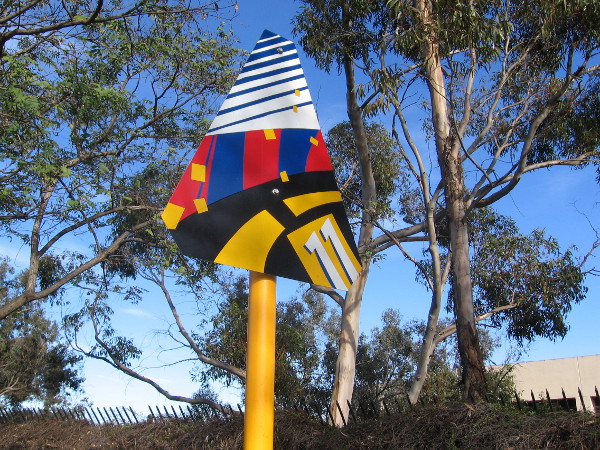
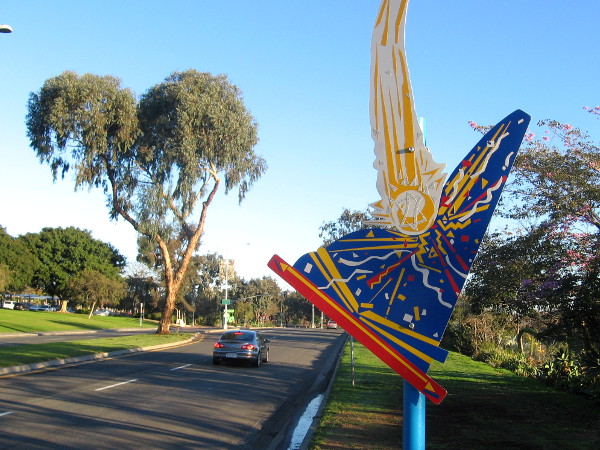
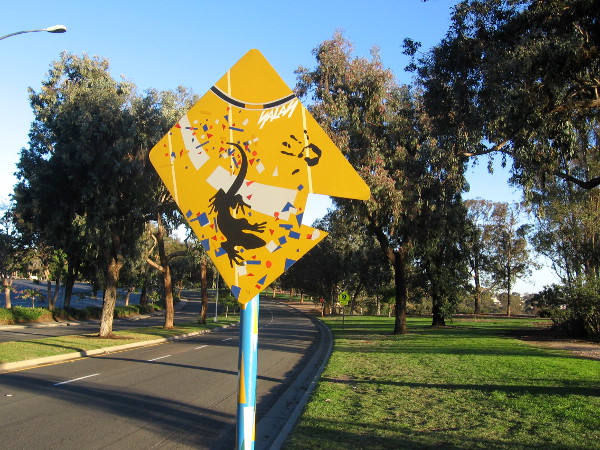
Unusual street sign on Park Boulevard shows the road in someone’s hand.
A dozen very unusual, artistic street signs line Park Boulevard in the vicinity of Balboa Park. Drive north and you’ll see them standing at intervals, all the way from Presidents Way up to Upas Street. For many years I’ve noted them.
I’m not sure how passing drivers respond to all the crazy artwork. I’m pretty sure these unique signs aren’t included in the Department of Motor Vehicles driving test! I hope not!
UPDATE!
I’ve learned this installation of art is titled Night Visions, by artist Roberto Salas. They first appeared in 1988, a year our city hosted the Super Bowl. According to what I read, in 1989 Night Visions was the very first acquisition of public art by the City of San Diego.
This funny sign shows a magician pulling a rabbit from hat.Drivers might think the speed limit here is 11 miles per hour!Odd, speckled sign stands beside Balboa Park’s rose garden.This crazy sign is a meteoric explosion of creativity.Car near San Diego Zoo entrance heeds artistic street sign, I’m sure.Does this sign indicate that a lizard is crossing?This unofficial street sign is open for interpretation.
…
To enjoy future posts, you can “like” Cool San Diego Sights on Facebook or follow me on Twitter.
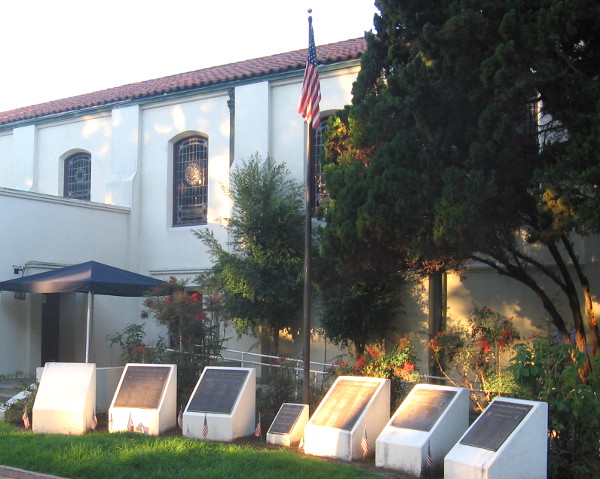
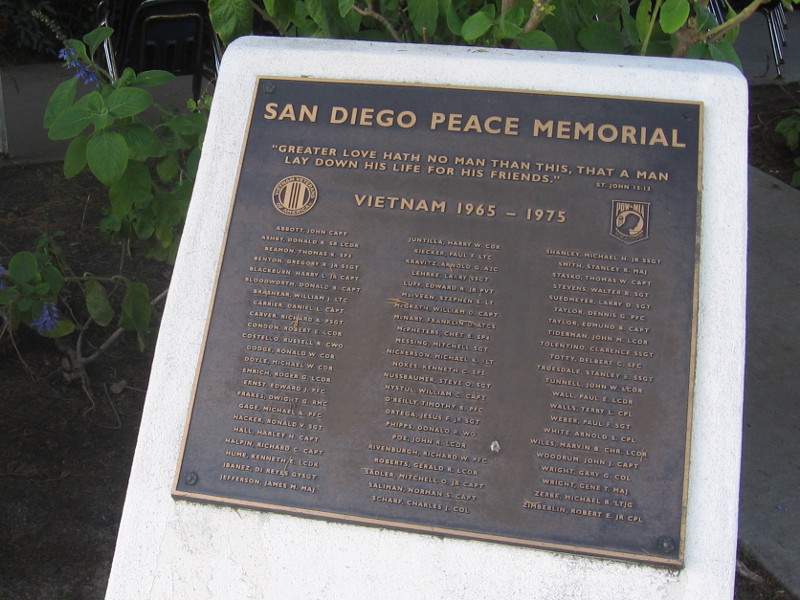
Morning light shines on monument originally called the San Diego Peace Memorial.
A fervent wish for this New Year: May There Be Peace on Earth.
Perhaps it’s futile to expect peaceful human coexistence on this crazy, mixed up planet. It often seems that way. That’s unfortunate. But it would be even more tragic to completely lose hope.
The creators of one poignant local memorial certainly yearned for the end of war. Because they understood war is brutal.
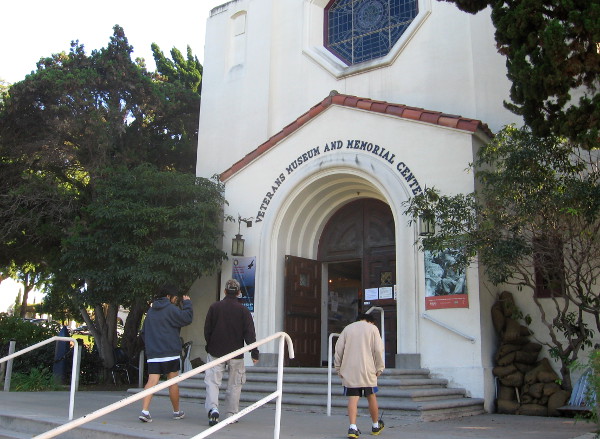
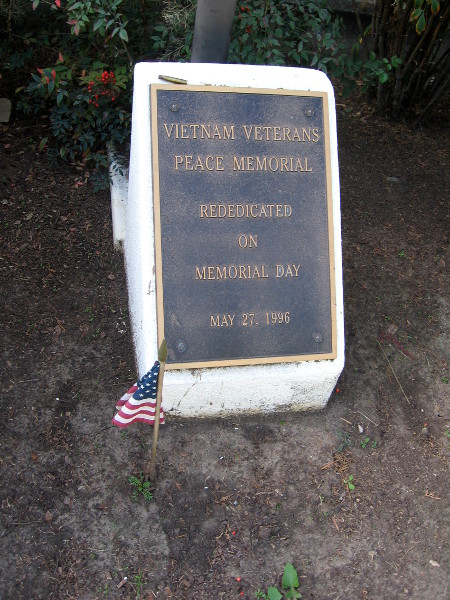
A row of plaques stand on the east side of the Veterans Museum and Memorial Center in Balboa Park. Originally called the San Diego Peace Memorial and installed in Old Town in 1969, the silent monument was renamed the Vietnam Veterans Peace Memorial in 1996 and moved to this location. It lists all San Diegans who were killed or designated missing in action during the Vietnam War.
Today’s Veterans Museum and Memorial Center is housed in the former chapel of the old San Diego Naval Hospital, which was built during World War II. Throughout the history of mankind, wars have invariably reminded us of the sanctity of peace.
In 2015, May There Be Peace on Earth.
People head into the Veterans Museum and Memorial Center in Balboa Park.Vietnam Veterans Peace Memorial was originally located in Old Town.Small American flags remember those who sacrificed in a difficult, controversial war.Names of San Diegans who lost their lives fighting in the Vietnam War, 1965-1975.Flag flies above Veterans Museum, formerly the San Diego Naval Hospital Chapel.
…
To enjoy future posts, you can “like” Cool San Diego Sights on Facebook or follow me on Twitter.
House of England’s Victorian gentleman with top hot and monocle!
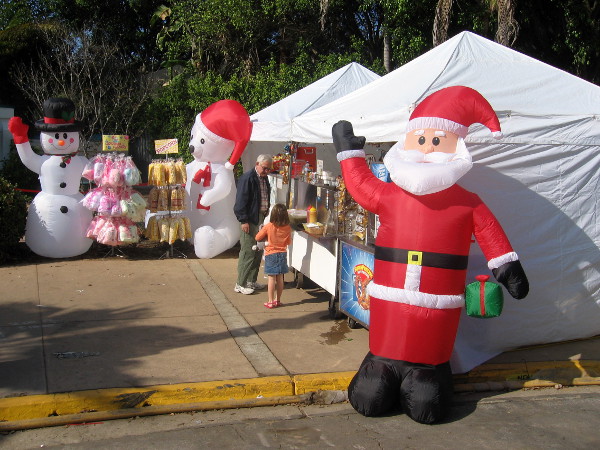
This afternoon I enjoyed several daylight hours at the 2014 December Nights event in Balboa Park! It looks like the Christmas spirit is alive in San Diego!
December Nights, which used to be named Christmas on the Prado, is an annual holiday celebration that attracts around three hundred thousand people over two absolutely amazing days. The best time to experience December Nights is after dark, when Balboa Park from end to end is lit with thousands of lights. The scene is vast and magical. Carolers and choirs seem to be everywhere you turn. There are so many jolly Santas taking pictures with families you might think you’d arrived at the North Pole! The traditional sights, yummy smells, and cheerfully lit colors of Christmas abound.
But, alas, my camera doesn’t cope well with darkness. So here are some sunny pics from a couple hours ago!
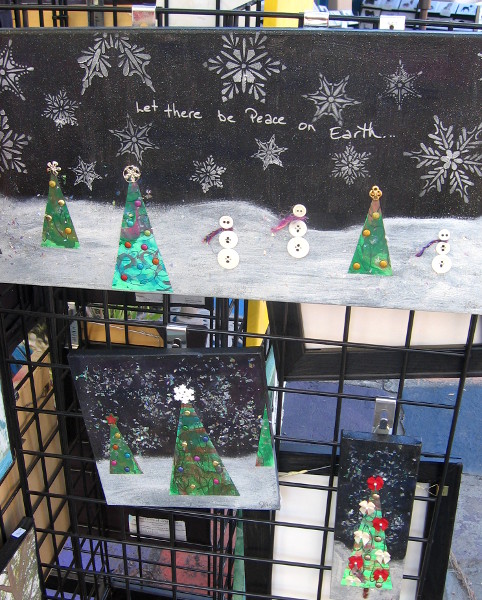
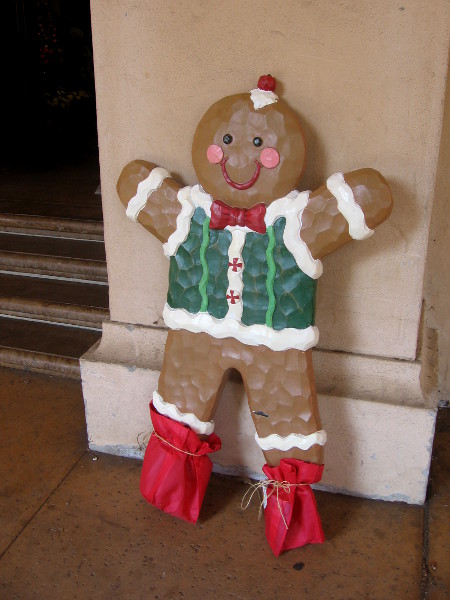
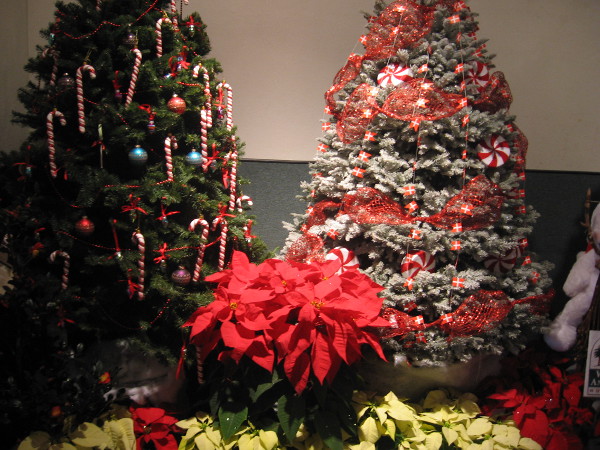
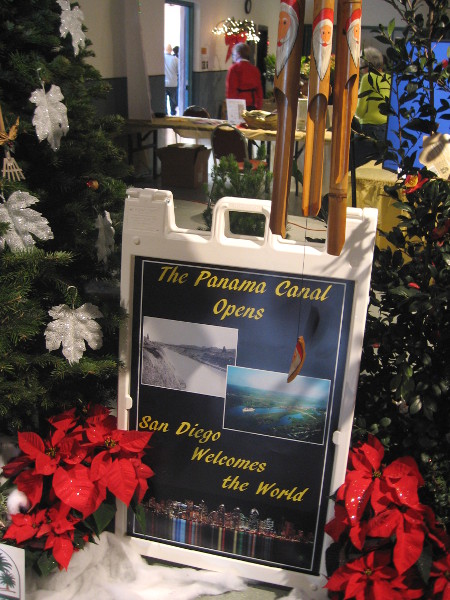
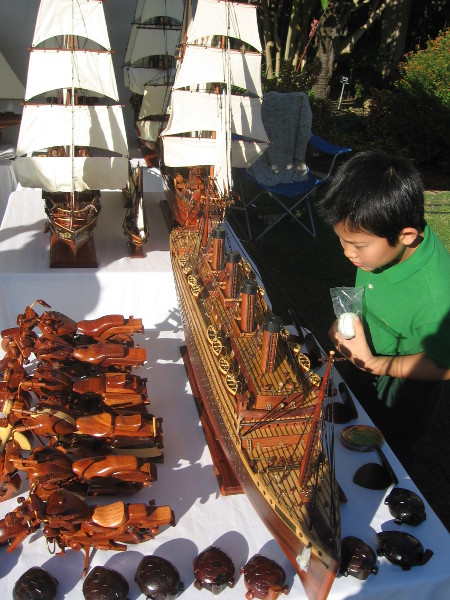
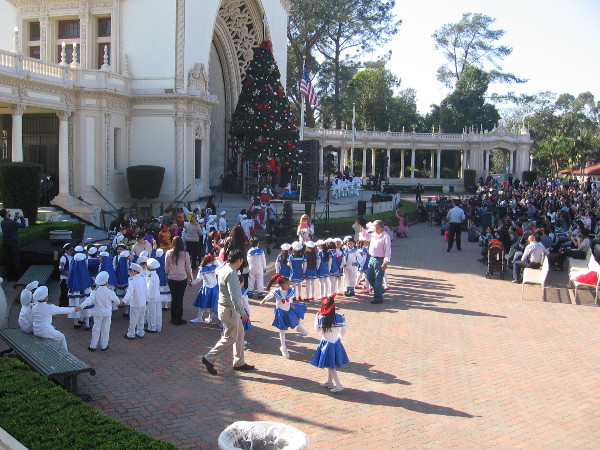
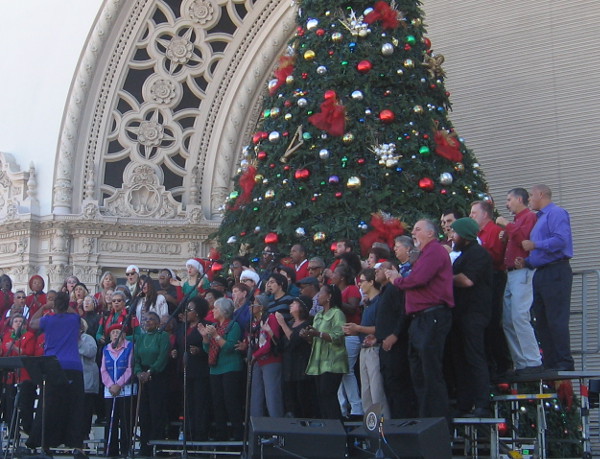
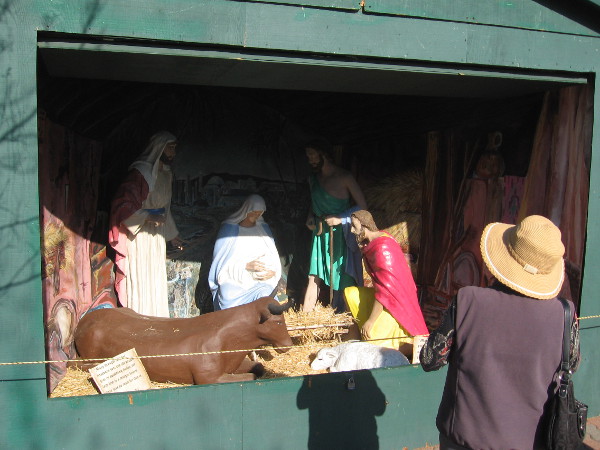
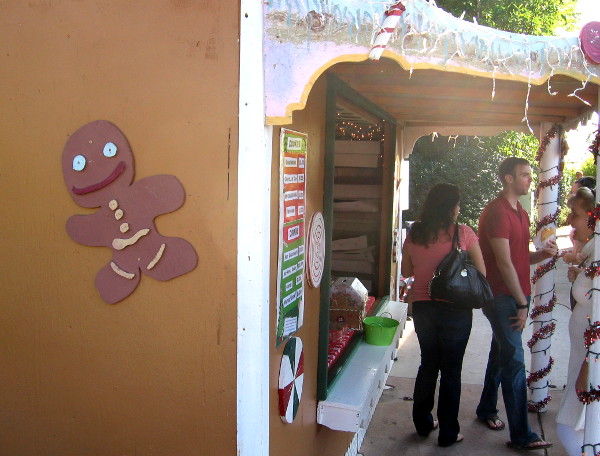
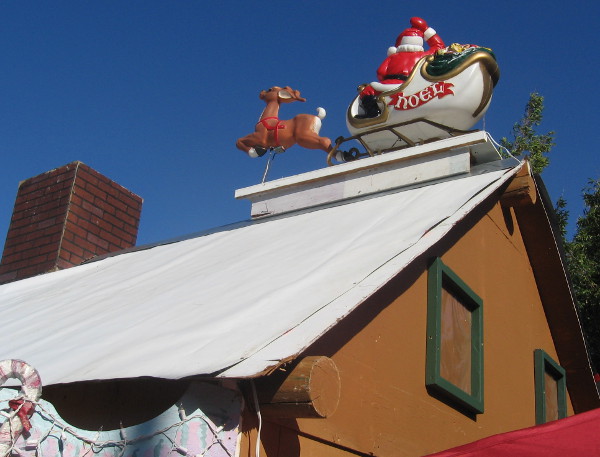
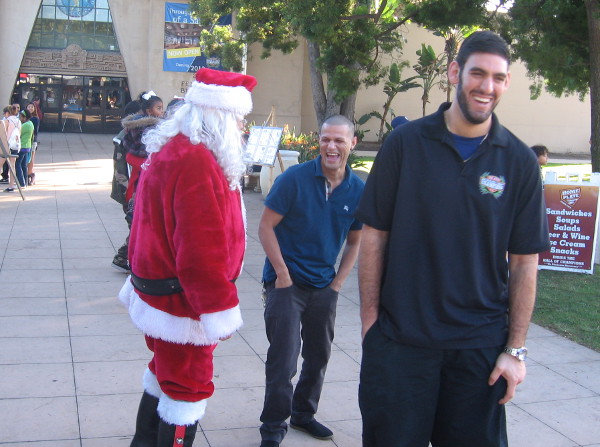
Santa, Frosty and joyful San Diegans at December Nights in Balboa Park.Presents, ornaments and cacti in Balboa Park’s Spanish Village!An artist studio in Spanish Village behind many very colorful Christmas trees.These handmade blown glass ornaments were out on display.Artist’s message: Let there be Peace on Earth…Is this face painter by the Balboa Park carousel Mrs. Claus or a ladybug?A smiling gingerbread man greets one and all to Casa del Prado.San Diego Floral Association hosted many Christmas trees created by local folk.Sign acknowledges the Balboa Park Centennial, kicking off this weekend!Lots of vendors everywhere had holiday crafts that would make great gifts.A table full of unique Christmas stocking stuffers.One table had cool model ships! I know what this kid wants for Christmas!Kids from Colegio Ingles in Tijuana, Mexico perform in the Spreckels Organ Pavilion.Martin Luther King Jr. Community Choir sings rousing gospel music!Manger scene in one of the huts along back of Spreckels Organ Pavilion.Gingerbread House in the organ pavilion sells Christmas treats to the slowly growing crowd.Santa Claus has landed with his little reindeer on a rooftop!Huge, glorious poinsettia display inside the popular Botanical Building.It’s Wendy! No, I don’t want a hamburger today. Maybe tomorrow. Thank you!Photos with Santa will take place here and elsewhere once the sun sets.Lots of people dressed for the holidays this afternoon at December Nights in San Diego.These guys were probably informed they were naughty.
…
To enjoy future posts, you can “like” Cool San Diego Sights on Facebook or follow me on Twitter.
Photograph of the Panama-California Exposition’s La Puerta del Oeste (west entrance) taken from Cabrillo Bridge. The dome and bell tower of the California State Building rise into the San Diego sky.
Balboa Park’s big Centennial celebration is approaching fast! The year-long event kicks off with the opening of December Nights on Friday, December 5th. Later this month, the celebration will continue with a grand New Year’s Eve procession and concert at the Spreckels Organ Pavilion!
The Balboa Park Centennial marks the hundred years that have passed since the opening of the Panama-California Exposition in 1915. While a large open space park near downtown San Diego (originally named City Park) was established in 1872, Balboa Park didn’t really take shape until many years later. Many of the buildings along El Prado which visitors enjoy today owe their existence to the development of the Panama-California Exposition, which covered 640 acres and promoted San Diego as the first United States port of call after a passage through the newly opened Panama Canal. Other parts of Balboa Park were created twenty years later for the California Pacific International Exposition–but that’s a different story.
In honor of the Centennial–now just two days away–I figured I’d post a bunch of historical photographs of Balboa Park as it appeared a century ago. The following black-and-white photos are from Wikimedia Commons, and provide different views of the amazing Panama-California Exposition. I had to do a little detective work with some of the images. Since I’m by no means an expert, please leave a comment if I’ve written captions that require correction.
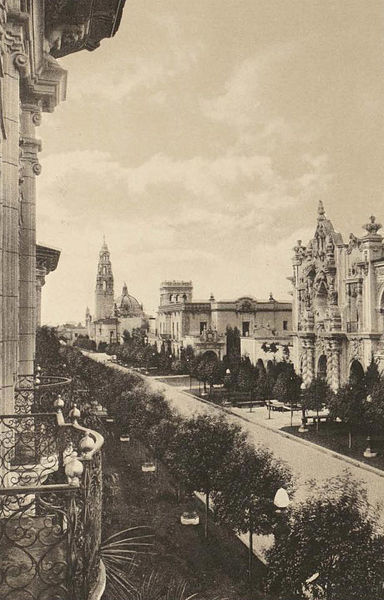
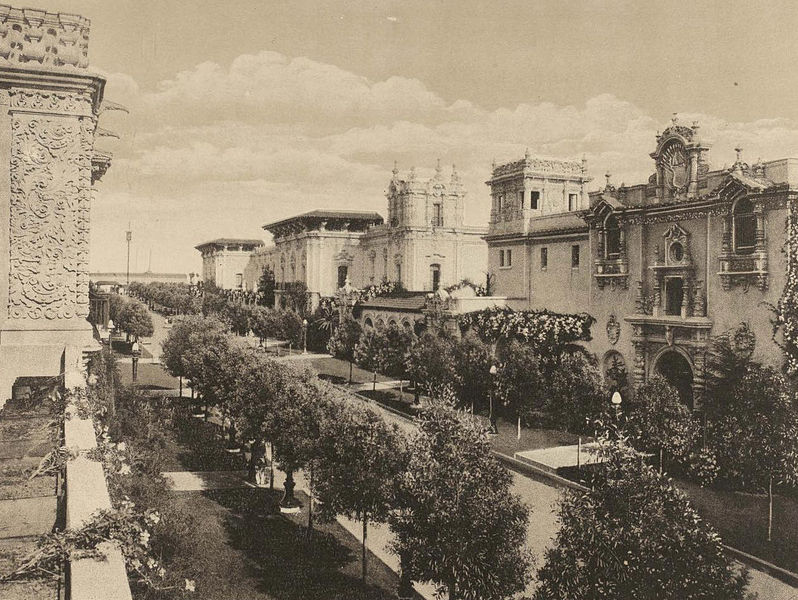
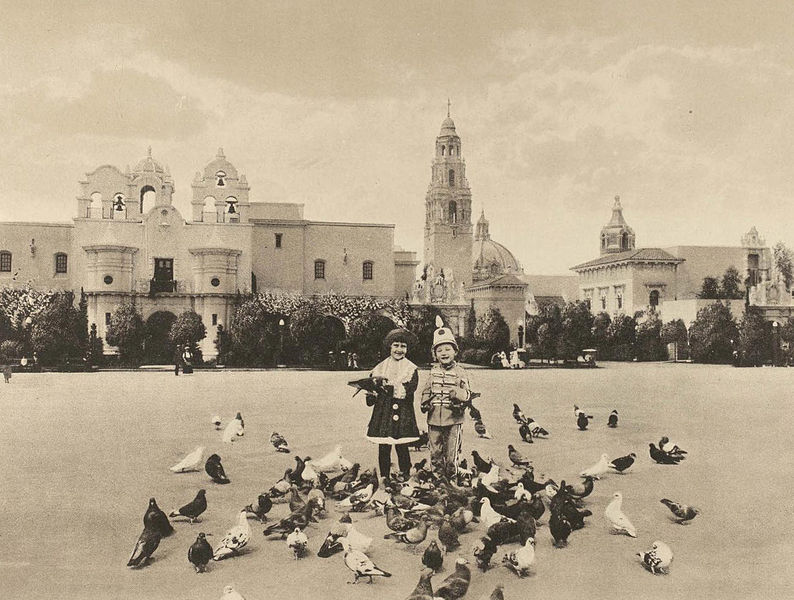
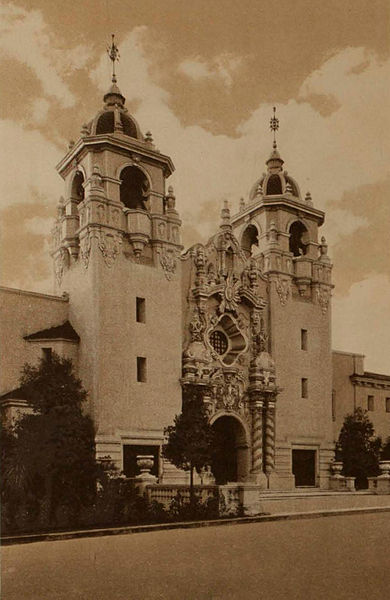
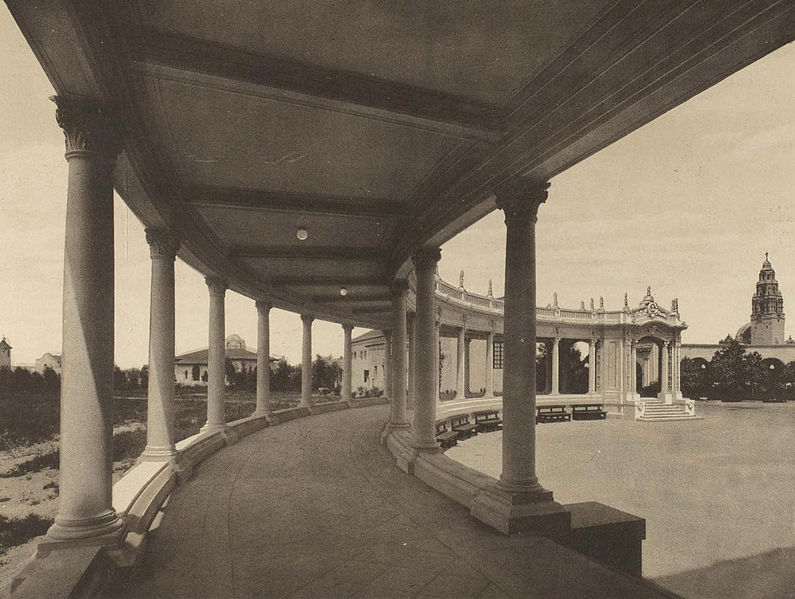
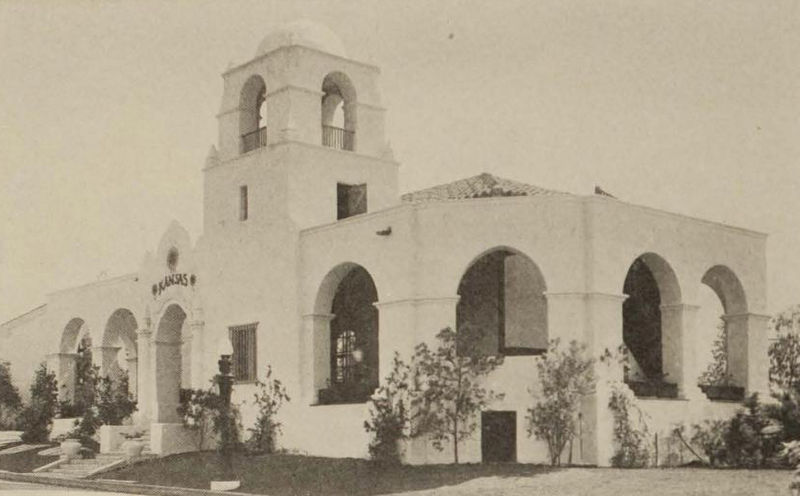
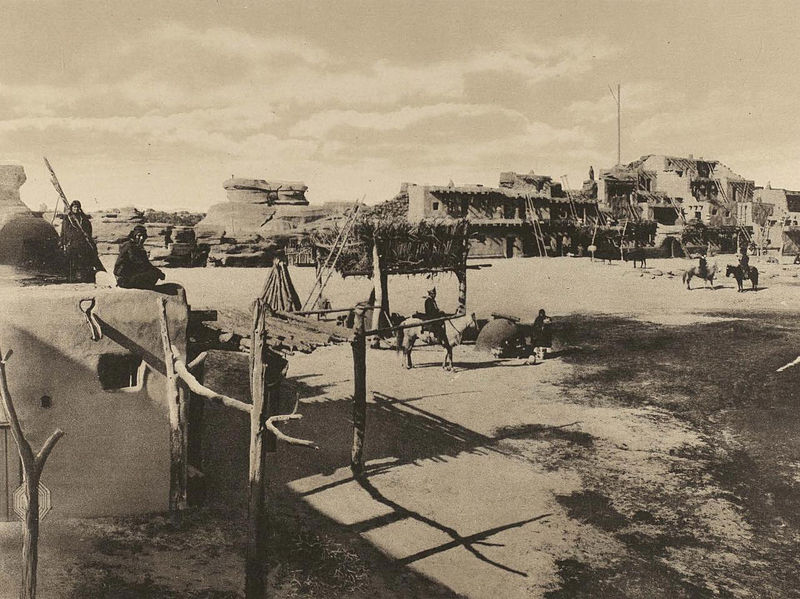
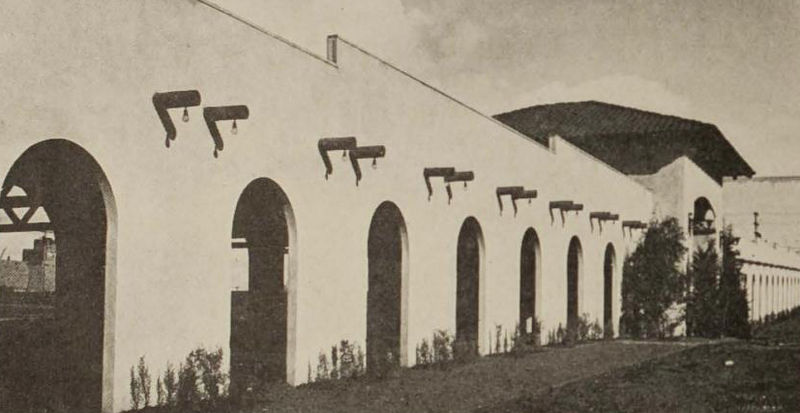
Cover of the 1915 Official Guide Book to San Diego’s Panama-California Exposition. The event celebrated the opening of the Panama Canal, and lasted through 1916.Aerial view from downtown San Diego of Balboa Park’s 1915 Panama-California Exposition. In 1910 San Diego had a small population of only 39,578.La Laguna Cabrillo lake and Camino Cabrillo road beneath Cabrillo Bridge. California State Route 163, a designated scenic highway, runs beneath the historic bridge today.Detailed 1915 map shows Panama-California Exposition ground plan in Balboa Park (originally named City Park).Photo taken of Balboa Park in 1915 from the California Tower provides panoramic view of many exposition buildings designed in the Spanish Colonial Revival architectural style.Looking west along El Prado through the heart of Balboa Park in 1915. At the exposition’s opening ceremony, President Woodrow Wilson activated the electric street lamps with a telegraphic signal.Commerce and Industries Building and Foreign Arts Building stand side-by-side on the south side of tree-lined El Prado. Today, the rebuilt structures are called the Casa de Balboa and House of Hospitality.Commerce and Industries Building. Rebuilt as Casa de Balboa, it’s now home of Museum of Photographic Arts, San Diego History Center, and San Diego Model Railroad Museum.View of shady pergola and the iconic 208 feet tall California Tower from Los Jardines de Montezuma (Montezuma Gardens) in 1915.Los Jardines de Montezuma (today named Alcazar Garden) at Balboa Park’s Panama-California Exposition.Spacious gardens near California State Building’s landmark dome and bell tower during the Panama-California Exposition.U.S. Navy ambulance parked near entrance of the California State Building, today the Museum of Man.Kids feed pigeons on the central Plaza de Panama. The Indian Arts Building with mission bells on left was renamed House of Charm and reconstructed in 1996. It now contains the Mingei Museum.Expansive gardens near the Food Products Building. Today’s enormous Moreton Fig Tree was planted in 1914 near this location.Elegant facade of Food Products Building, which was eventually reconstructed in 1971 as part of the Casa del Prado. It’s now the entrance to the San Diego Junior Theatre.View of La Laguna de las Flores, the reflecting pool (or lagoon) at the Panama-California Exposition. This area was called the Botanical Court.The Botanical Building, then and now one of the largest lath structures in the world. In 1915 its popular name was Lath Palace.Fountain by Botanical Building at the Panama-California Expositon in Balboa Park. The Botanical Court a hundred years later remains largely unchanged.Gazing over reflecting pool at Commerce and Industries Building and Foreign Arts Building. A favorite photographic spot for a century in San Diego.Food Products Building is reflected in tranquil lily pond directly in front of the large lath Botanical Building.View of tree-lined El Prado from second floor of Varied Industries Building, which is now part of the Casa del Prado.Varied Industries Building seen from the west a short distance. Rebuilt as a part of Casa del Prado, today it houses various art and botanical organizations.Home Economy Building (left of Foreign Arts Building), site of today’s Timken Museum of Art. A wicker Electriquette motor cart is visible among people in the Plaza de Panama.Fine photo across Esplanade of the Indian Arts Building, rebuilt in later years and renamed the House of Charm.One of many popular recitals in the Organ Pavilion at the Panama-California Exposition. (This venue is now called the Spreckels Organ Pavilion.)Organ Pavilion colonnade with California Bell Tower in distance. Trees and a large parking lot exist today on the left, behind the classic structure.View of Spreckels Organ in 1915, from a shady spot in the colonnade. Those wooden benches were replaced many years ago with benches made of steel.The distant Organ Pavilion appears in this photo between the San Joaquin Valley Building and the Kern and Tulare Counties Building.Kansas State Building at Panama-California Exposition. Most of these old state buildings no longer exist today, a hundred years later.Montana State Building, near the site of today’s International Cottages.People take a stroll past a handful of state buildings at the Panama-California Exposition in Balboa Park.Utah State Building at the Panama-California Exposition.Washington State Building at the Panama-California Exposition.Artillery practice at the exposition’s U.S. Marine Camp, which was located near the site of today’s Air and Space Museum.Southern California Counties Building, which stood a century ago in Balboa Park at the site of today’s Natural History Museum.Visitors back in 1915 enjoy the Southern California Counties Building’s elegant patio.Large area called the Painted Desert at the Panama-California Exposition. This unique attraction was near the site of today’s Veteran’s Memorial.The elaborate Taos pueblo in the Painted Desert was a fantastic sight at San Diego’s Panama-California Exposition.Realistic exhibit shows Zuni native life at the Panama-California Exposition in San Diego’s Balboa Park.The Pala gem mine was one of the amusements along the Isthmus north of El Prado, near today’s San Diego Zoo parking lot. It featured a 300 foot long tunnel filled with simulated gems.The Cawston Ostrich Farm was an Egyptian pyramid-shaped amusement on the Isthmus, a section of the expo popularly called the fun street.The Japanese Tea Pavilion, northeast of the Botanical Building in 1915. Today, the Tea Pavilion at the Japanese Friendship Garden is located elsewhere and appears entirely different.Citrus and other gardens in a wide north section of the Panama-California Exposition. This is near the entrance of today’s San Diego Zoo.The long Tractor Building was located near a tractor demonstration field, just west of the Painted Desert.California bungalow, surrounded by model farm at the 1915 exposition. Agricultural exhibits and demonstrations were an important part of the event.The Lipton Tea Gardens at the Panama-California Exposition, one more interesting image from San Diego’s rich history.
…
To enjoy future posts, you can “like” Cool San Diego Sights on Facebook, or follow me on Twitter.
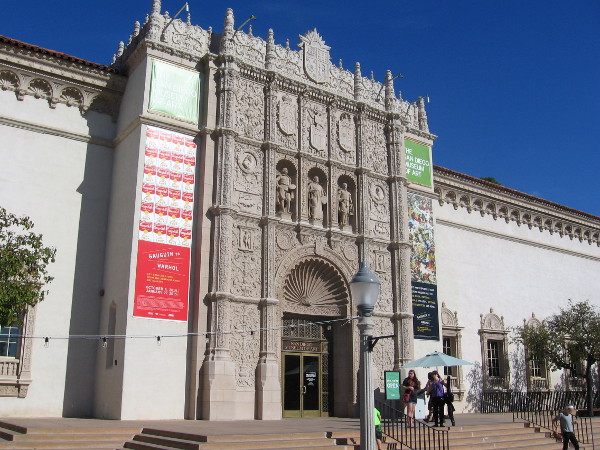
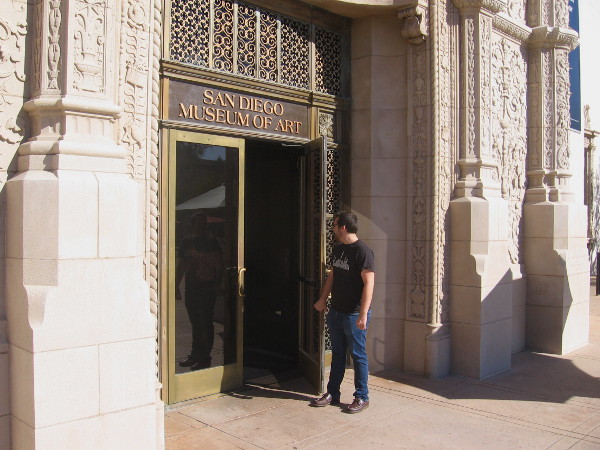
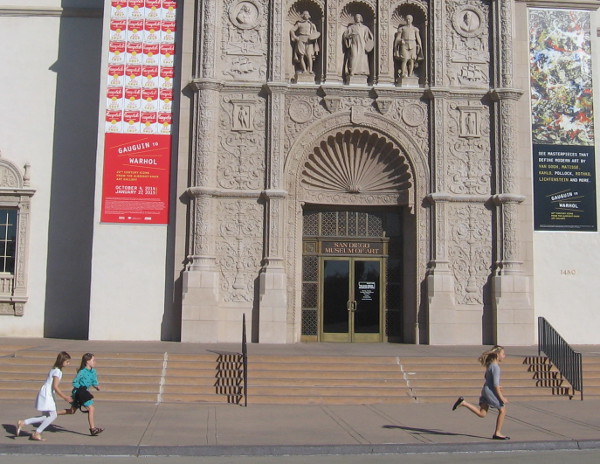
Visitors near entrance to the San Diego Museum of Art in Balboa Park.
Yesterday morning was super special. I was able to experience dozens of amazing fine art masterpieces firsthand!
My friend Catherine Jones, a docent at the San Diego Museum of Art in Balboa Park, very graciously provided me and a friend with a special tour. We were given an in-depth look at the landmark Gauguin to Warhol exhibit, being shown for a limited time in San Diego.
Follow me into the world-class San Diego Museum of Art, and we’ll check out a few of these stunning paintings together!
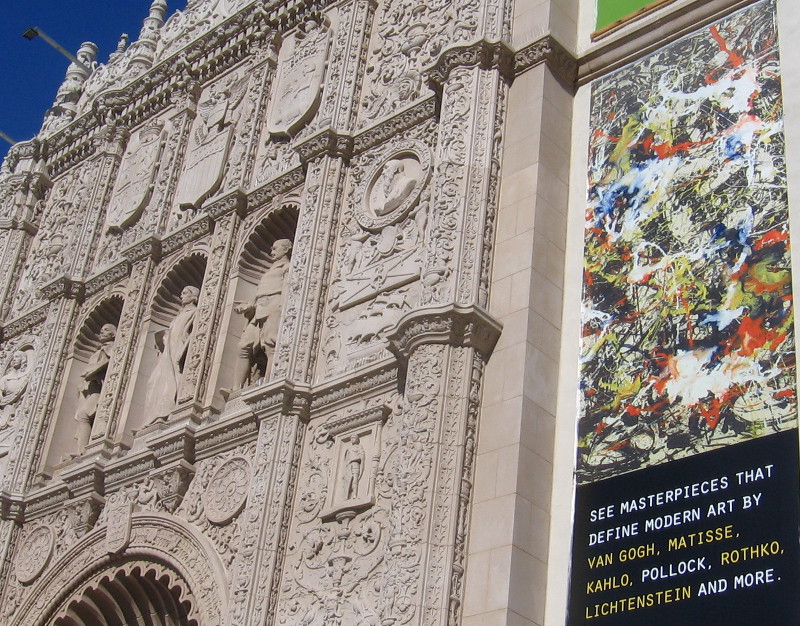
Masterpieces that define modern art by Van Gogh, Matisse, Kahlo, Pollock, and more…Step through this door to see an amazing exhibit of mind-blowing art!
Gauguin to Warhol: 20th Century Icons from the Albright-Knox Art Gallery is an exhibit containing dozens of true masterpieces from many of the world’s most famous modern painters. Artists with important pieces on display include Vincent Van Gogh, Pablo Picasso, Henri Matisse, Marc Chagall, Georgia O’Keeffe, Salvador Dalí, Frida Kahlo, Jackson Pollock and Roy Lichtenstein .
The exhibit is a whirlwind journey through time, progressing from Impressionism in the late 18th Century to Post-impressionism, Surrealism, Abstract Expressionism, Minimalism and finally Pop Art in the 1960s. One can follow the emergence and evolution of major art movements over eight decades–and observe how visual abstraction, experimentation and provocative simplicity took a greater and greater hold on the imaginations of many great artists.
These fantastic paintings all come from the Albright-Knox Art Gallery in Buffalo, New York. San Diego is the exclusive West Coast stop for this traveling exhibition.
(The following descriptions and reactions were formed in my own muddled human brain, and notes were taken only sporadically. I’m not even close to being an art expert, so take everything I say with a very large grain of salt!)
Paul Gauguin. Spirit of the Dead Watching,1892, courtesy the Albright-Knox Art Gallery.
A few steps after we admire a fine example of classic Impressionism, the 1890 Peasants in the Fields by Camille Pissarro, we are stopped in our tracks by a stunning masterpiece by Paul Gauguin. It’s the instantly recognizable Spirit of the Dead Watching, painted in 1892.
Spirit of the Dead Watching was created during Gauguin’s residence in Tahiti. It depicts his young wife Tehura, awakened by a frightening dream. A nightmarish figure with a mask-like face sits at the foot of her bed, seemingly a dark omen.
The bright, gauzy, fine daubs of paint of the earlier Impressionist movement seem to have given way to broad, unabashed swaths of rich color. The elements in this Post-Impressionist image appear two-dimensional; objects depicted seem to have become bold, emotionally colored symbols, rather than more-realistic objects given depth using traditional perspective.
The Spirit of the Dead Watching is both uniquely beautiful and disturbing, not unlike a few of the canvases to come on our tour.
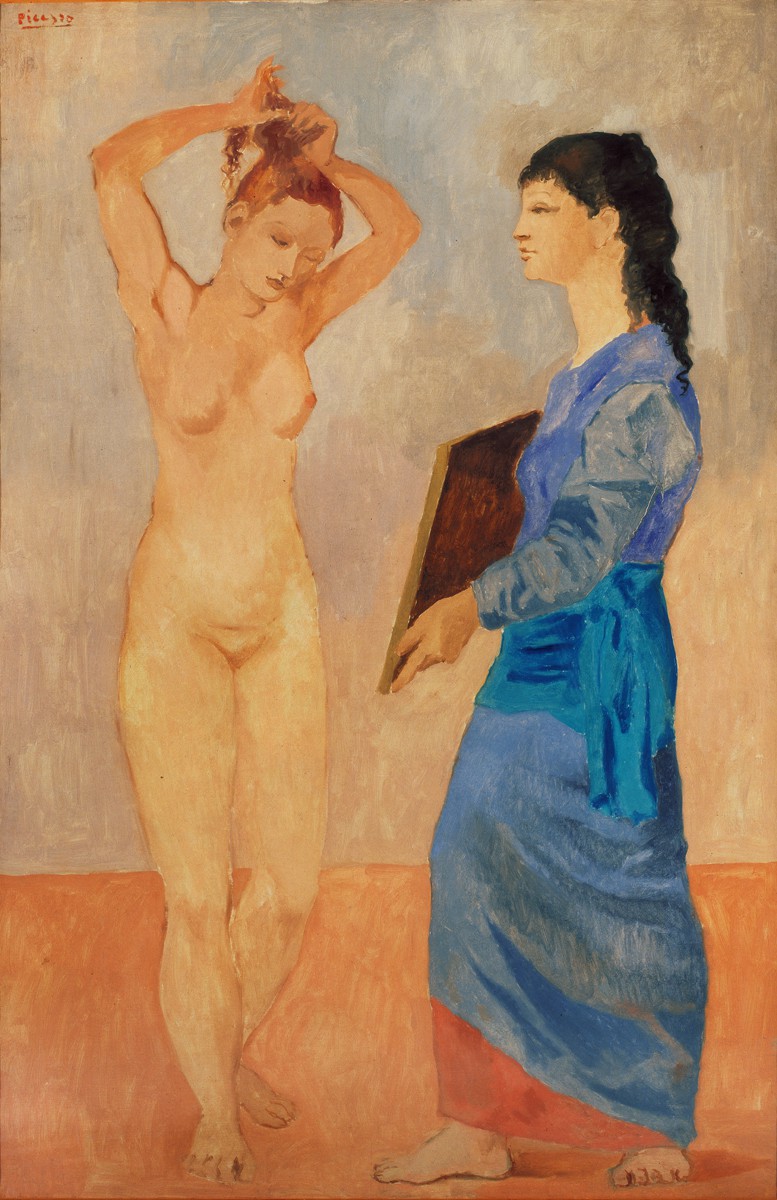
Pablo Picasso, La Toileete, 1906, courtesy the Albright-Knox Art Gallery.
Another few steps and we are looking at Pablo Picasso’s La Toilette, painted in 1906 just before his well-known innovations with Cubism.
The two women depicted are different views by Picasso of the same model. The painting seems to be mostly about lustrous, subtle color and soft, slightly angular shapes. It struck me that fusing the two figures, with their simple faces and forms, would result in a sort of Cubist composite creation. Perhaps we see the gears slowly turning in Picasso’s creative mind.
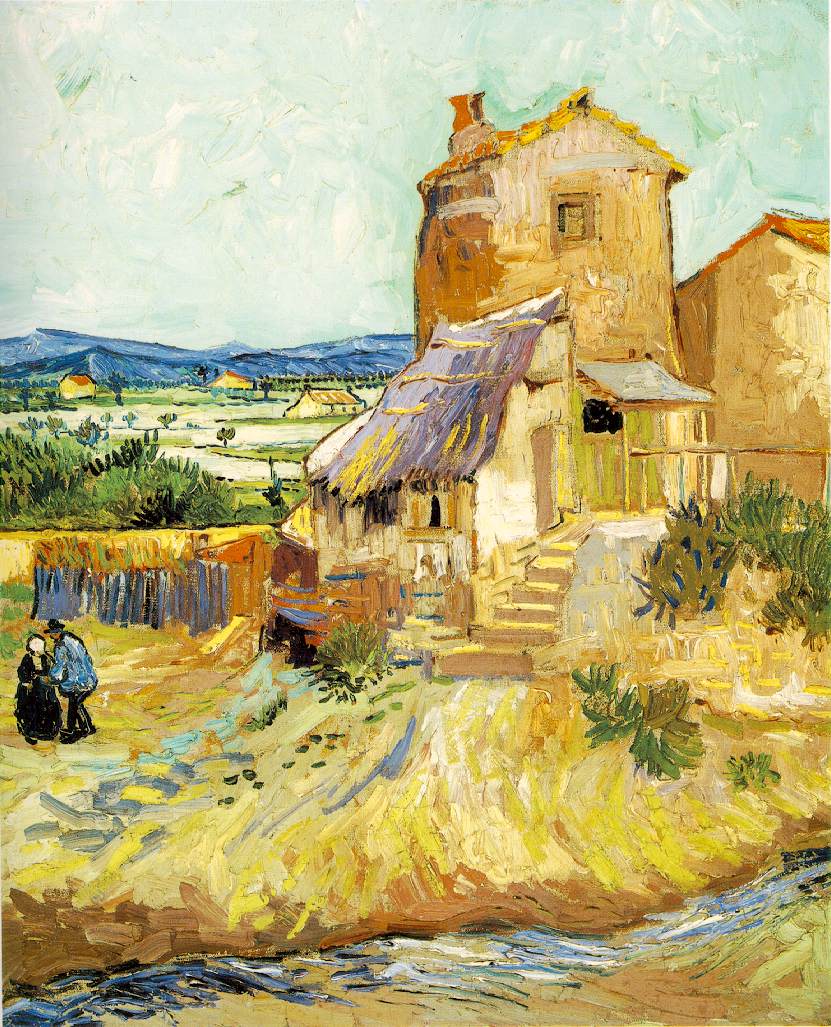
Vincent Van Gogh, The Old Mill, 1888, courtesy the Albright-Knox Art Gallery.
The masterpiece that I enjoyed most–because it’s just so indescribably magical–is Van Gogh’s The Old Mill, from 1888, another fine example of Post-Impressionism. Thick smears of paint and bold brush strokes of light give the painting strange depth and glowing solidity, in spite of its greatly simplified, almost crude representation of a country scene. I felt like I had entered a magical landscape, located somewhere between a gleaming dream and a warm, everyday experience. To me, it’s a piece of art that would never grow old.
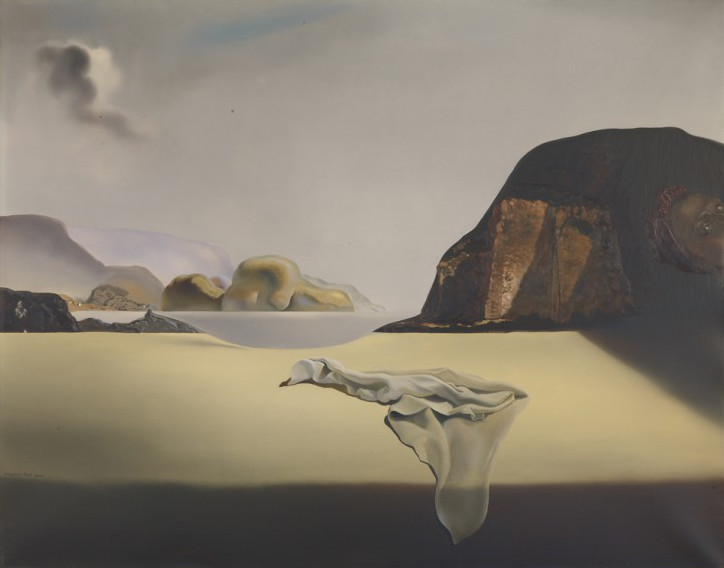
Salvador Dalí, The Transparent Simulacrum of the Feigned Image, 1938, courtesy the Albright-Knox Art Gallery.
Here we see the emergence of Surrealism. And this masterpiece is by the ever popular Salvador Dalí!
The Transparent Simulacrum of the Feigned Image, 1938, is one of Dalí’s most iconic works. It’s mysterious, strange and stimulates thought. What do the various elements in the design represent? Is that a bowl of mashed potatoes with gravy on a table with a napkin, or is that a lake nestled between mountains? The onlooker isn’t quite sure if the painting is primarily fun or symbolic, or a depiction of the unconscious, or sublime reality. Abstraction has surely taken hold of the artist’s vision, as the scene is a complete departure from ordinary experience.
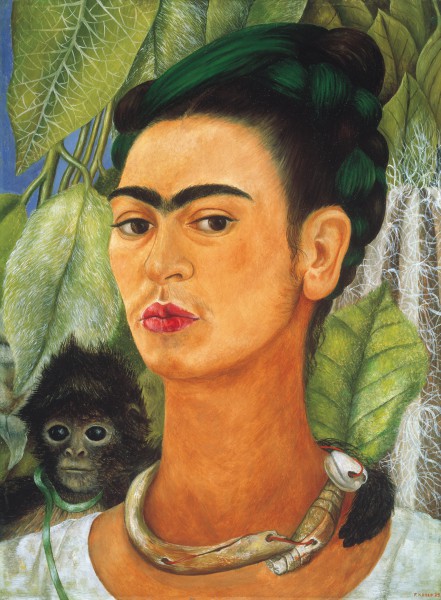
Frida Kahlo, Self-Portrait With Monkey, 1938, courtesy the Albright-Knox Art Gallery.
Mexican artist Frida Kahlo’s impressive Self-Portrait With Monkey, painted in 1938, is said to be Surrealist. To me it appears more like a beautifully colorful Post-Impressionist Gauguin. According to Wikipedia: “Frida rejected the “surrealist” label; she believed that her work reflected more of her reality than her dream.”
Gazing at this one portrait, I understand her assertion. Apart from one canvas in the exhibit, a depiction of fleshy, bloody butchered meat, this painting seems more solidly lifelike and ripe with organic truth than any other work that I recall seeing.
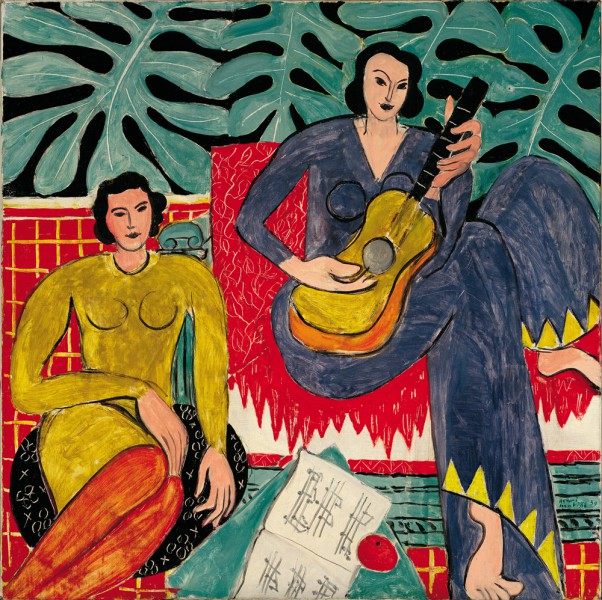
Henri Matisse, La Musique, 1939, courtesy the Albright-Knox Art Gallery.
I also love this one! La Musique, by Henri Matisse in 1939, is the sort of joyful, broadening, invigorating style of art that I personally like. Catherine pointed out that the lady on the left is very prim and composed, but the wild lady on the right is the type you’d want to date! Exactly right! The hands and feet are wonderfully twisted and elongated as if they’re swimming within splashes of swirling color and music!
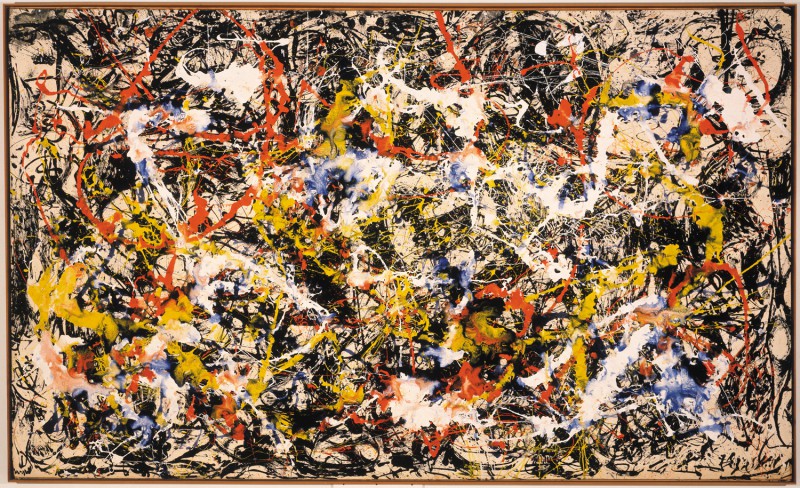
Jackson Pollock, Convergence, 1952, courtesy the Albright-Knox Art Gallery.
Jackson Pollock today is recognized as a master of Abstract Expressionism. His unique drip paintings are unmistakeable. And his Convergence from 1952 nearly covers an entire museum wall!
Okay, perhaps I’m an ignoramus and a dullard. To me this style of painting seems a bit random, cynical, and a thumb in the eye of earlier, more skillful artistic styles. Several of the canvases in this portion of gallery struck me in a similar way. The absurdly huge creations of these famous Abstract Expressionists seem more than experimental–they seem despondent, angry, nihilistic and disillusioned–perhaps a reaction to the massive chaos and inhumanity of two world wars in the early 20th Century. But I do appreciate Pollock’s artful balance, his dynamic strands of color, and the peculiar, imposing beauty that has resulted!
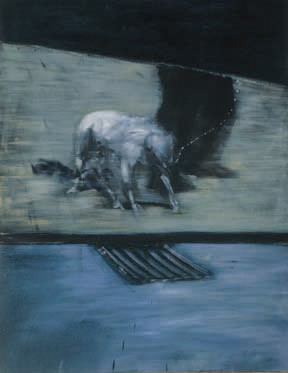
Francis Bacon, Man With Dog, 1954, courtesy the Albright-Knox Art Gallery.
Here’s one painting that is absolutely disturbing. It’s the sort of thing you’d expect to see in a short horror story by Poe, or above the mantle in a cobwebby haunted house! As if penetrating the dark recesses of the human subconscious, Francis Bacon’s unsettling Man With Dog, 1954, seems to portray the bottom of a shadowy figure being resisted by a featureless, spectral hound attracted to a sewer grate. This painting definitely succeeds in bringing out a strong feeling of unfocused loathing. If the aim of art is to stir the emotions, this piece is triumphant!
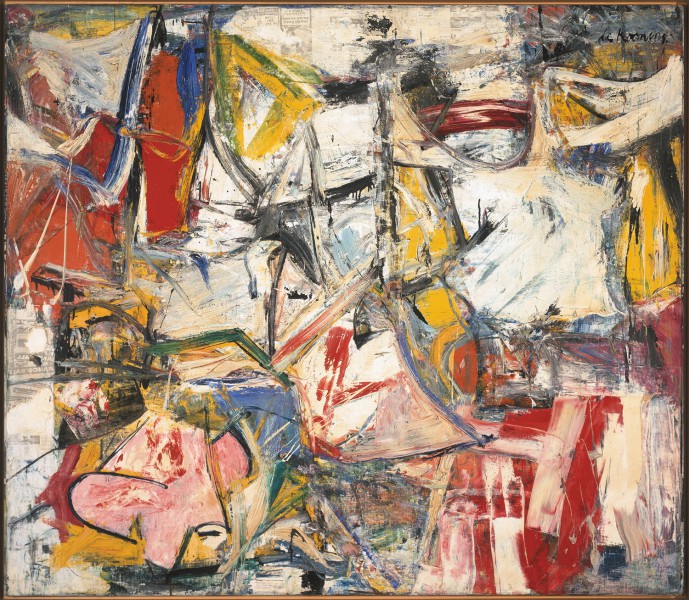
Willem de Kooning, Gotham News, 1955, courtesy the Albright-Knox Art Gallery.
A manic jumble of impulsive, uncertain emotions in two dimensions seems to compose Willem de Kooning’s Abstract Expressionist Gotham News, completed in 1955. Flesh tones and slightly organic shapes are intermixed with the angled, heavy lines of a large city’s architecture, looking to my eye like stained glass put into a blender. Energy and spasmodic randomness seem to convey no clear artistic notion, nor rouse any one particular emotion. It’s just a big mixture of complex energy! Perhaps that was the artist’s intent!
Andy Warhol, 100 Cans, 1962, courtesy the Albright-Knox Art Gallery.
An Andy Warhol response to modernism, his iconic 100 Cans was painted in 1962. Since then, the Pop Art image of multiple Campbell’s Soup cans has spread and mutated throughout the popular culture.
Is this painting a celebration of unrepentant commercialism, or a resigned condemnation? Is he asking the fundamental question: What is art? Or is it just his affirmation that an increasingly technological and global culture has changed life forever, and that art has become something of a commodity? I’ve heard arguments on every side.
The original painting is hanging on a wall at the San Diego Museum of Art! See it for yourself and decide!
The amazing Gauguin to Warhol exhibit runs in San Diego through January 27, 2015.
This truly special, eye-opening exhibit, Gauguin to Warhol, can be enjoyed at the San Diego Museum of Art through January 27, 2015.
It might be a once-in-a-lifetime opportunity to really appreciate these many great masterpieces. If you can, go see it!
…
To enjoy future posts, you can “like” Cool San Diego Sights on Facebook, or follow me on Twitter.
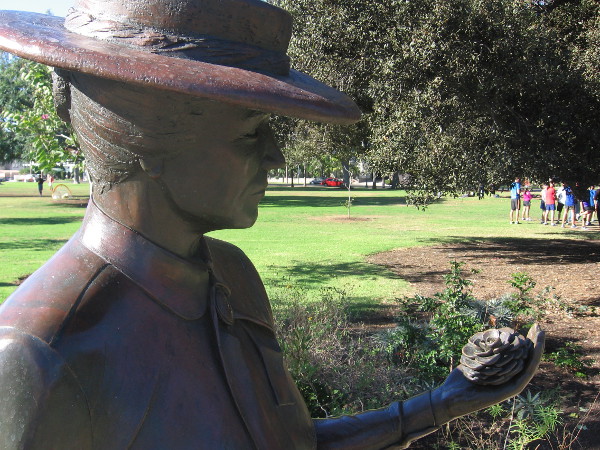
Kate Sessions, the Mother of Balboa Park, holds a pine cone by the grass.
Balboa Park is bursting with cool sights wherever you go. If you’ve ever driven or walked along El Prado a short distance west of the Cabrillo Bridge, you’ve probably seen some slightly larger than life sculptures of people standing on either side of the street. Sefton Plaza, located at the intersection of El Prado and Balboa Drive, is the location of these four bronze sculptures.
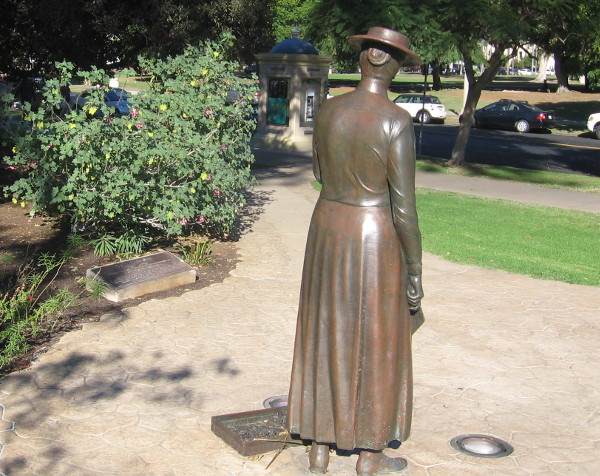
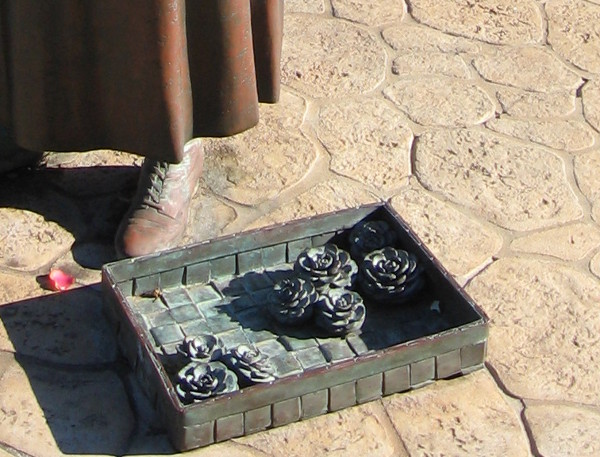
On the south side stands a representation of horticulturist Kate Sessions holding a trowel and pine cone. Often called the Mother of Balboa Park, she was instrumental in creating the park’s many lush gardens and groves of trees. The sculpture stands among a variety of beautiful plants including species she introduced in the early years of the park.
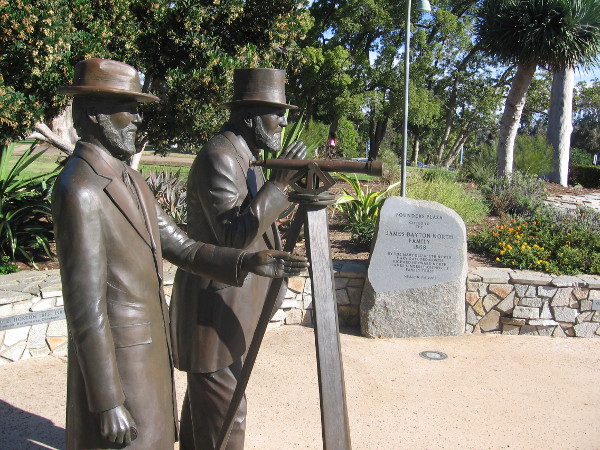
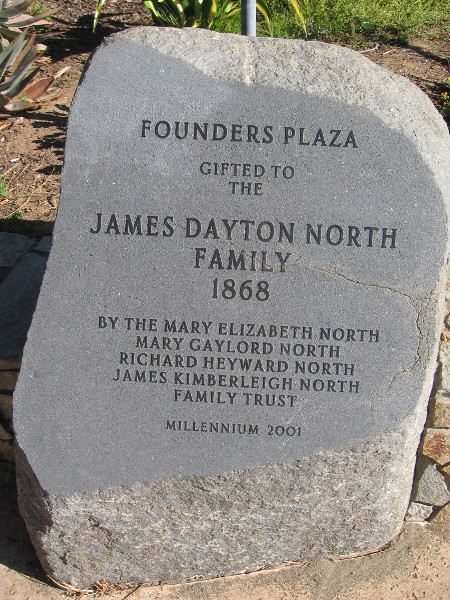
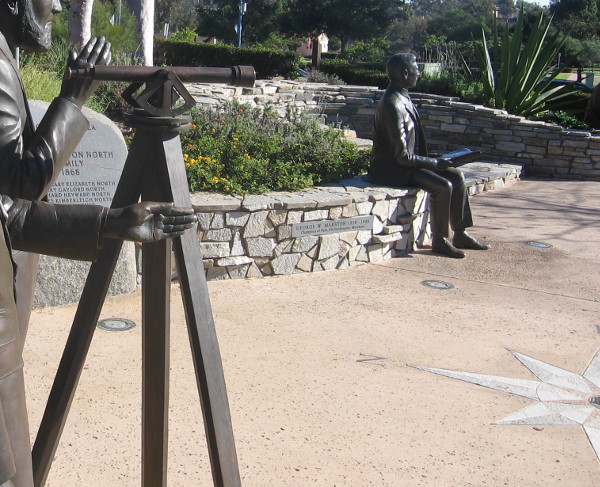
The three lifelike sculptures on the north side of Sefton Plaza, an area called Founder’s Plaza, represent Ephraim Morse, Alonzo Horton and George Marston. These three were the visionaries who orginally conceived Balboa Park, then worked tirelessly to create it.
Ephraim Morse, an early settler and promoter of San Diego, and Alonzo Horton, a land speculator responsible for downtown San Diego’s current location, proposed in 1868 that the new city park occupy 1,400 acres. The sheer size of the park was simply amazing, considering San Diego at the time had a mere 2,300 residents! George Marston, often called the Father of Balboa Park, was a prominent department store owner who personally funded the park’s design. To turn the grand vision into reality, he hired the former superintendent of New York City’s Central Park, Samuel B. Parsons Jr. The park’s construction began in 1903 at the corner of Sixth Avenue and Date Street. (Just a three minute walk from where I live! I love it!)
The four wonderfully realistic bronze sculptures were created by local artist Ruth Hayward. She intentionally made them about 10% larger than life, so they’d appear slightly imposing.
Balboa Park, which began as a grand idea in the minds of just a few people, today is the nation’s largest urban cultural park!
During her life, Kate Sessions created gardens and landscapes for all to enjoy.Kate Sessions lingers on footpath between Cabrillo Bridge and Sixth Avenue.More pine cones fill a shallow box at Kate Sessions’ booted feet.Lifelike sculptures of Ephraim Morse and Alonzo Horton in Founder’s Plaza.Two of Balboa Park’s early advocates survey their awesome creation.Founders Plaza gifted to the James Dayton North Family 1868.Near Morse and Horton, George Marston sits on a wall, enjoying the surrounding beauty.George Marston is remembered today as the Father of Balboa Park.Bronze sculpture sits comfortably next to its hat by a small pool of water.
…
To enjoy future posts, you can “like” Cool San Diego Sights on Facebook, or follow me on Twitter.


































































 Cool San Diego Sights!