The oculus at Chula Vista’s Sweetwater Park!
The newly opened Sweetwater Park on Chula Vista’s bayfront has a very unique architectural feature.

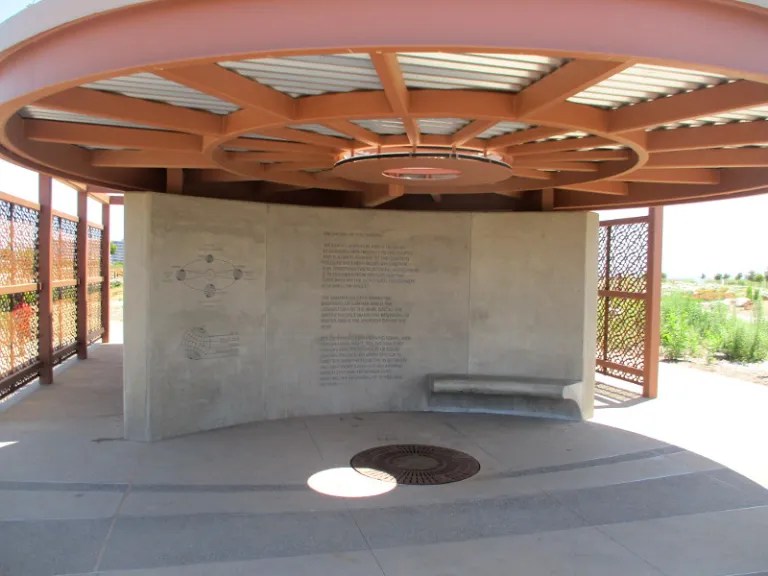
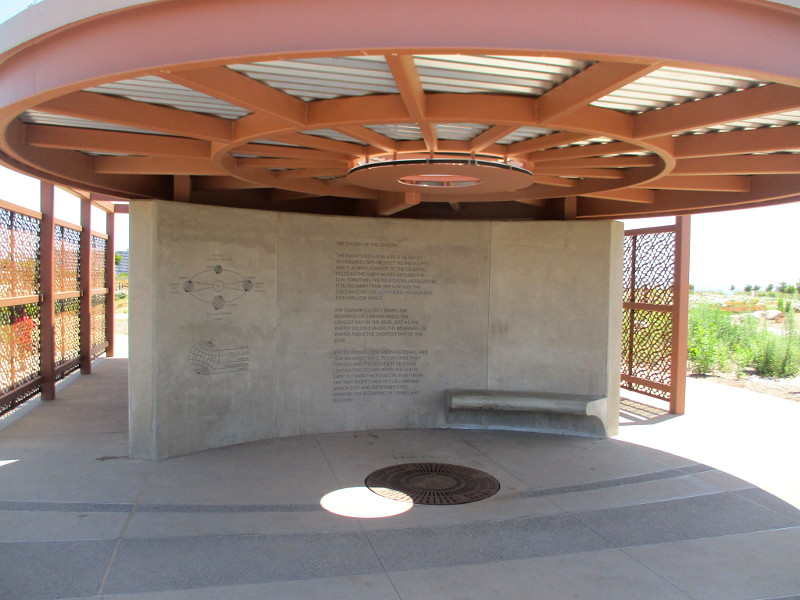
At one end of the public restrooms a sheltering roof contains an oculus. What’s an oculus? It’s a circular opening that allows natural sunlight to shine through.

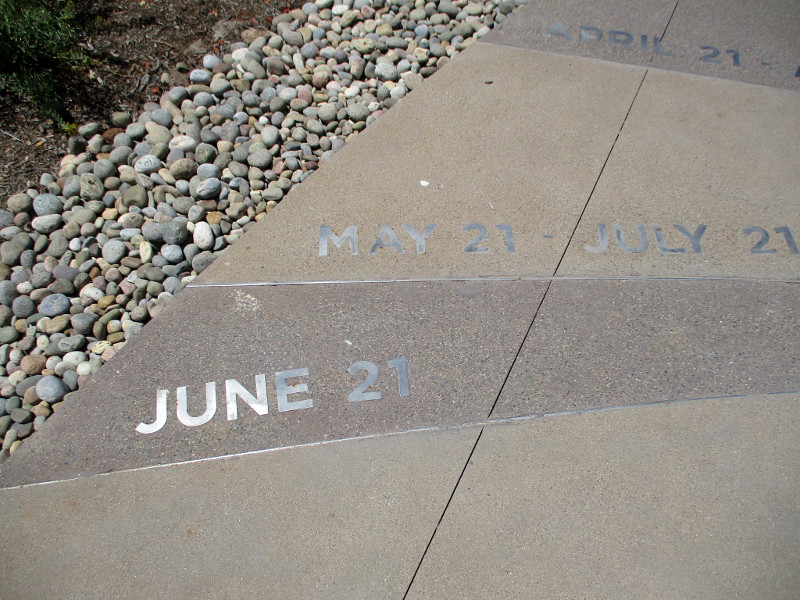
During the day, the oculus casts a circle of light on bands in the concrete underfoot. You can see those curving bands in the above photograph.

By observing the light’s movement along the bands, Earth’s rotation can be tracked, as the sun “rises” in the east and “sets” in the west. Depending on the season of year, and the angle of the sun’s path through the sky, the projected light will follow a particular band.

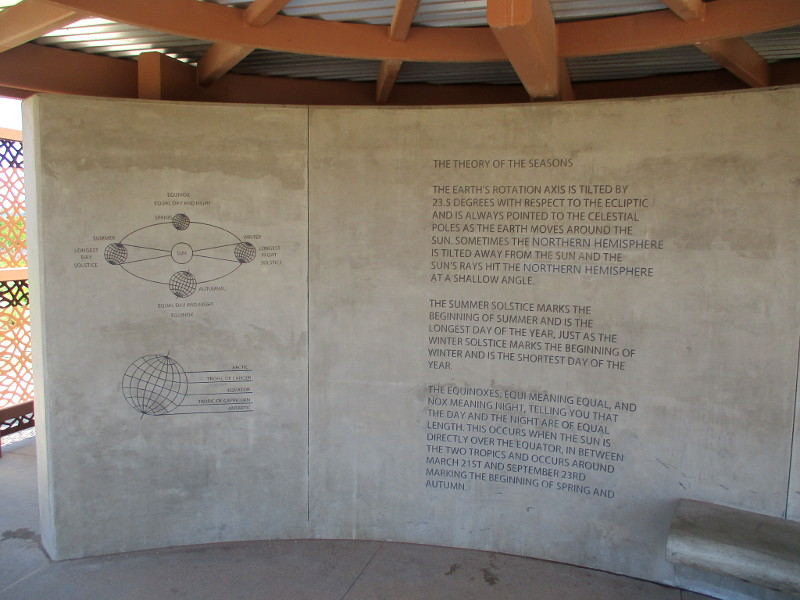
On the wall is an explanation…

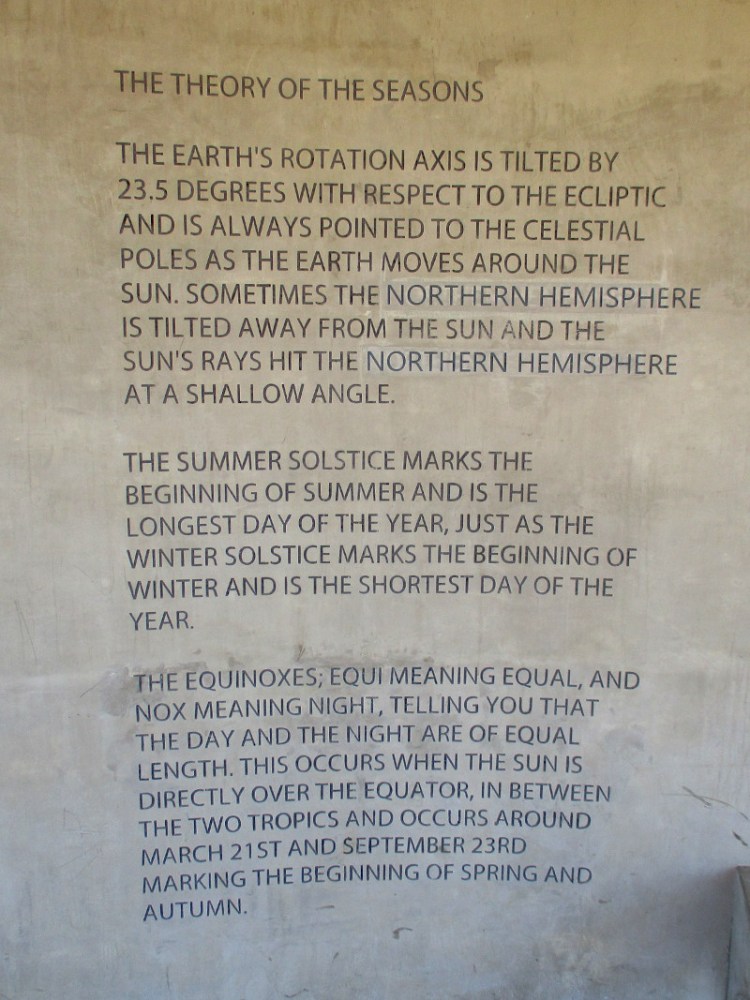
The Theory of the Seasons.

The Earth’s rotation axis is tilted by 23.5 degrees with respect to the ecliptic and is always pointed to the celestial poles as the Earth moves around the Sun. Sometimes the Northern Hemisphere is tilted away from the Sun and the Sun’s rays hit the Northern Hemisphere at a shallow angle.

The Summer Solstice marks the beginning of Summer and is the longest day of the year, just as the Winter Solstice marks the beginning of Winter and is the shortest day of the year.

The Equinoxes; Equi meaning Equal, and Nox meaning Night, telling you that the day and the night are of equal length. This occurs when the Sun is directly over the Equator, in between the two Tropics and occurs around March 21st and September 23rd marking the beginning of Spring and Autumn.

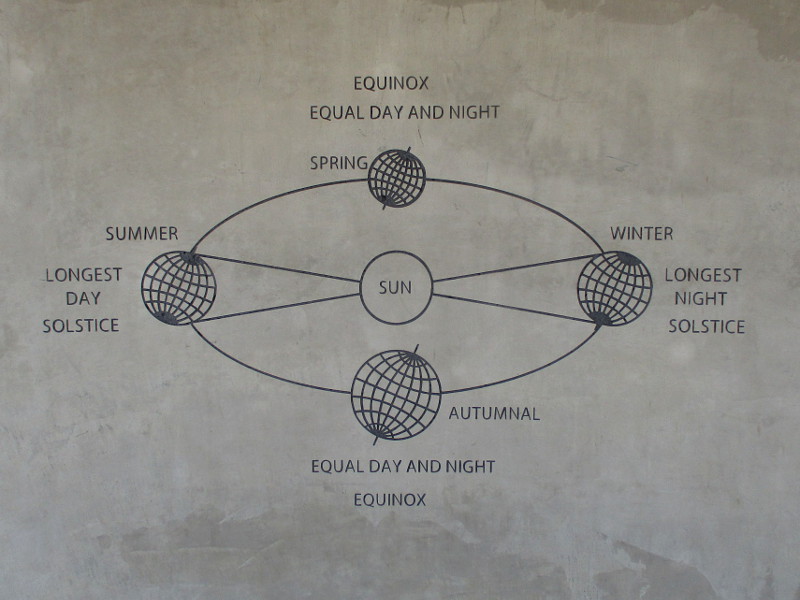
If this sounds like a whole bunch of mumbo-jumbo, fortunately there’s an illustration to help one visualize the concept…

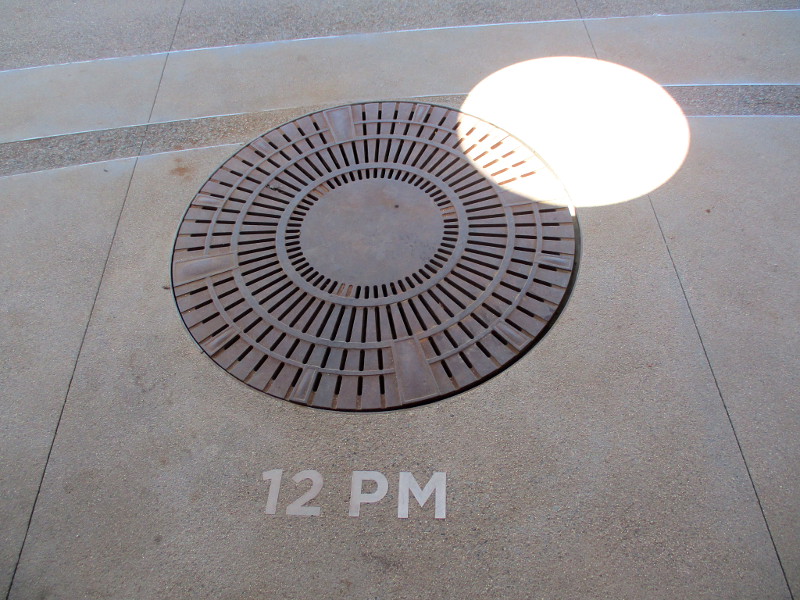
Now consider my next photograph.

On June 21, as the summer begins, the sun will be at its highest in San Diego, here in the Northern Hemisphere.

Because of this, the sun’s light projected through the oculus will come from a high angle, and follow the lower band as Earth turns and the day progresses.

It just so happened that I visited Sweetwater Park on June 18. I arrived at the oculus a little after noon.

You can see the circle of light is almost atop the June 21 band, and is now to the right of the central drain, past the 12 PM mark.

The light would continue to move right along the same band as the sun descends in the sky toward the horizon.

I post new blogs pretty often. If you like discovering new things, bookmark coolsandiegosights.com and swing on by occasionally!

I live in downtown San Diego and love to walk around with my camera! You can follow Cool San Diego Sights via Facebook or X.

Feel free to share!

Tower of Ten Billion Stars stands in San Diego!

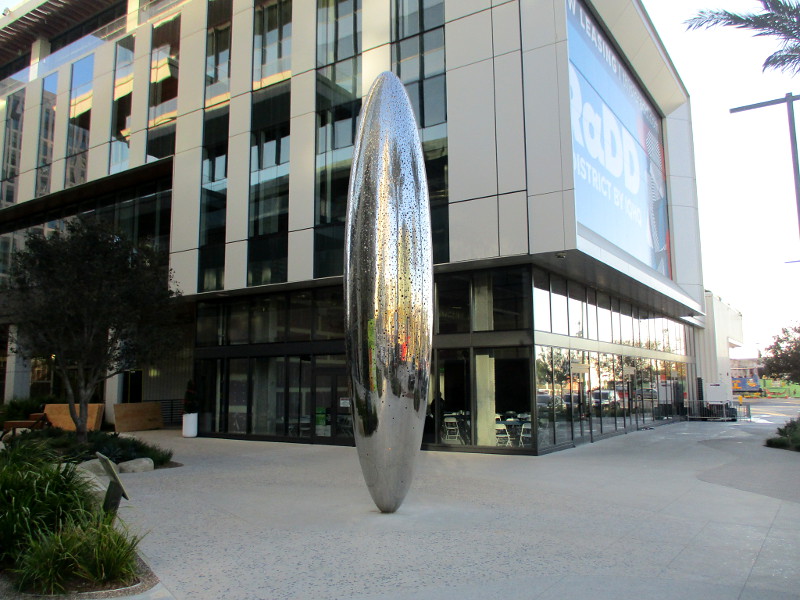
A very unique sculpture can now be approached by the public on San Diego’s waterfront. More construction fences have come down at the new Research and Development District (RaDD) complex!

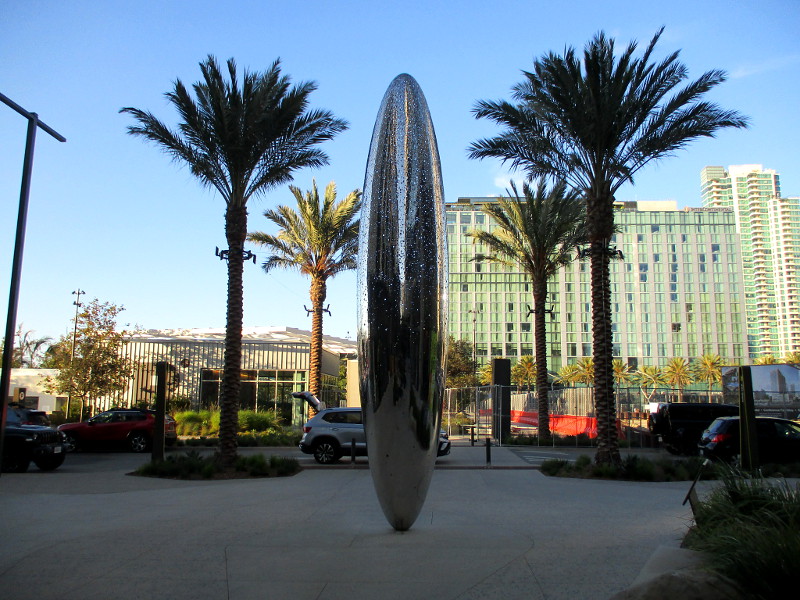
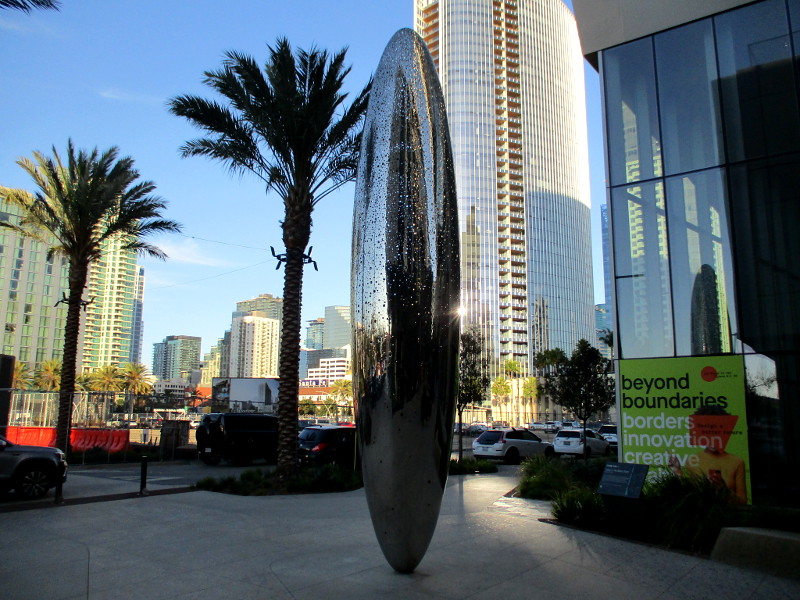
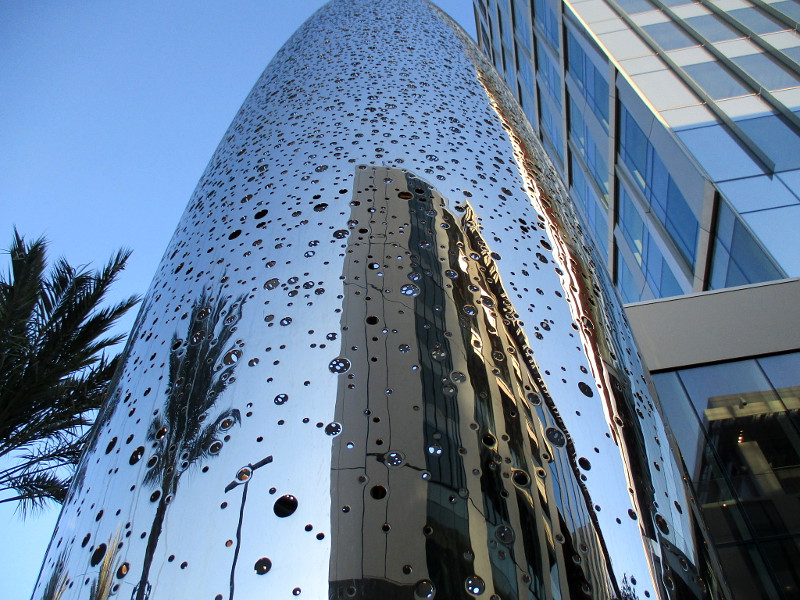
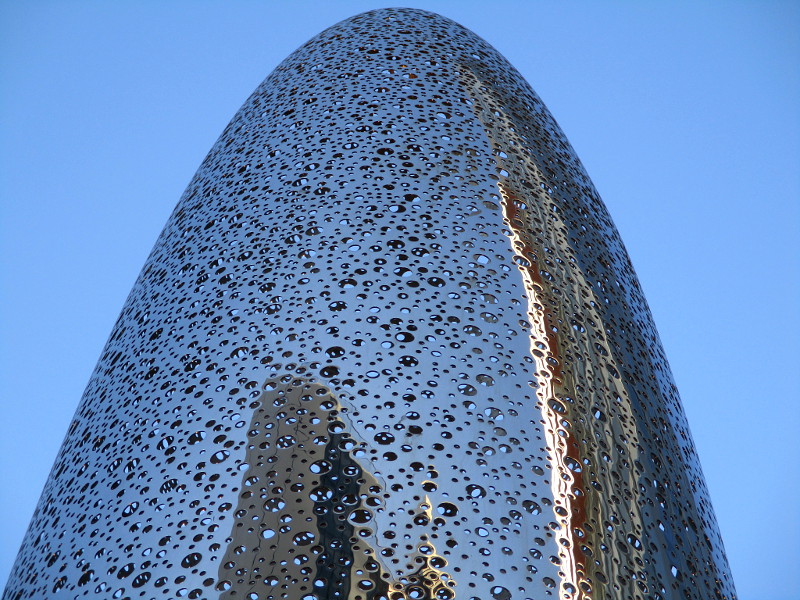
The Tower of Ten Billion Stars is another work of monumental art on what is called the RaDD Artwalk. You can spy the narrow oblong sculpture standing strangely on one end, by looking south from Broadway, east of Harbor Drive.

The creator of this shimmering “tower” is Lindy Lee, a Chinese-Australian artist. As its official description states here, it stands as both a beacon and wayfinder.

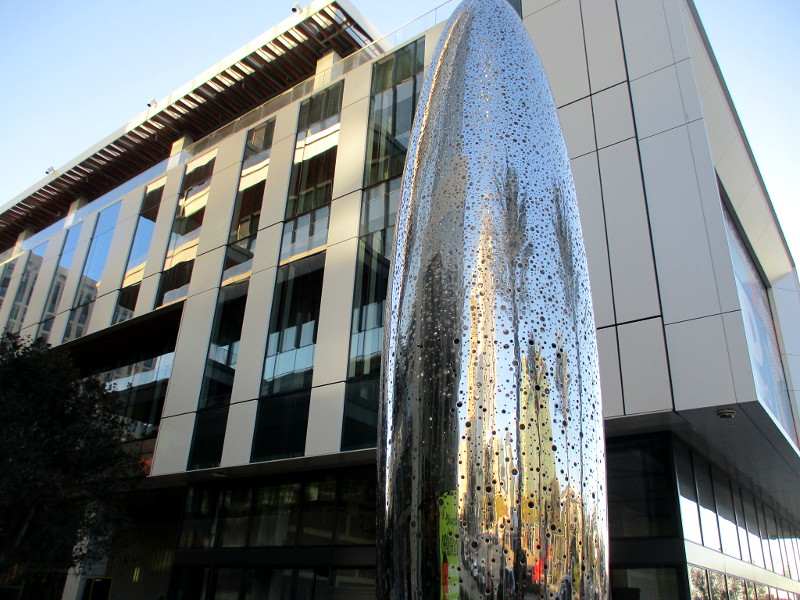
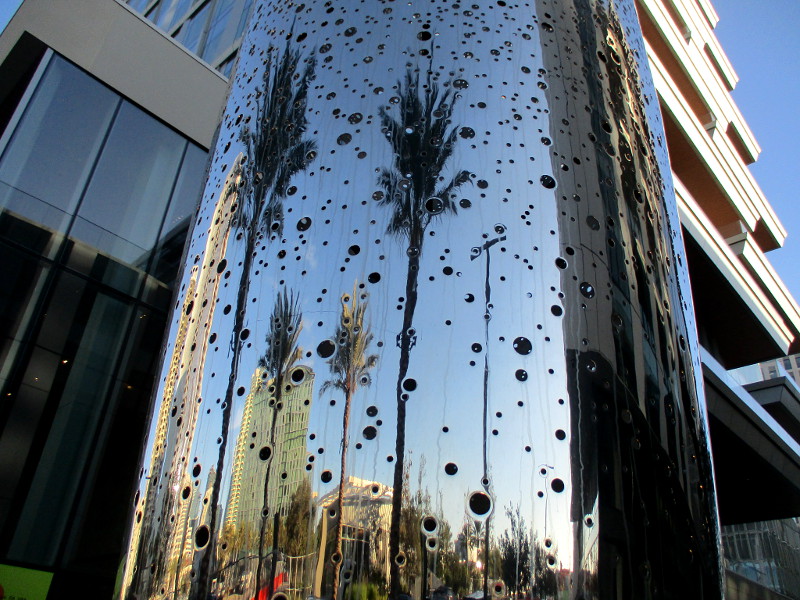
Hundreds of small holes in the sculpture’s side allow the passage of bright daylight. The holes shine like visible stars in a silvery sky. They seem to form constellations. Stars–like the North Star–have been wayfinders since ancient times, right?

I’m not sure why it’s a Tower of Ten Billion Stars. There are 100 to 400 billion stars in our own Milky Way galaxy. And there are between 100 billion and 2 trillion galaxies in the Universe.

Perhaps this curving tower is like a tiny, tiny, infinitesimal sliver of the inconceivably vast and mysterious Cosmos.

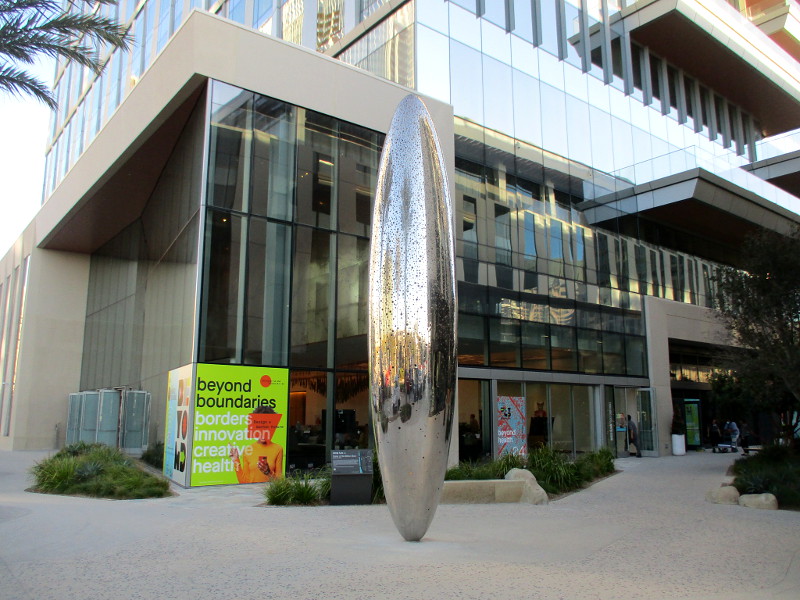
I walked around the sculpture this evening and took some photographs. I love those reflections of palm trees and nearby tall buildings!

(I also love how “beyond boundaries” can be read nearby. Astronomers can only theorize. The words are actually in reference to a World Design Capital event being held at RaDD.)

I post new blogs pretty often. If you like discovering new things, bookmark coolsandiegosights.com and swing on by occasionally!

I live in downtown San Diego and love to walk around with my camera! You can follow Cool San Diego Sights via Facebook or X.

Thank you for sharing!

Creative fun at San Diego Museum of Art!

At the San Diego Museum of Art, you can do more than walk through its amazing galleries. You can create amazing art, too!

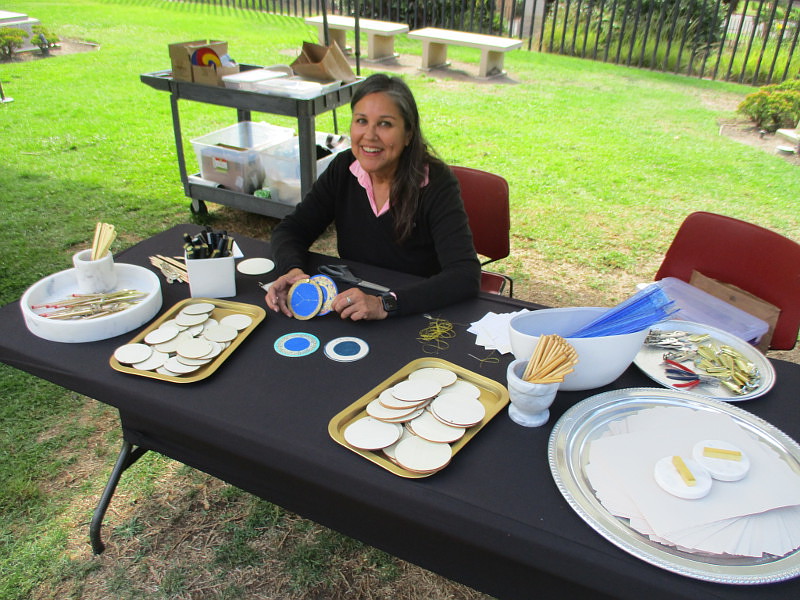
Yesterday, during my visit to Balboa Park, I stumbled upon two art-making workshops at the museum.

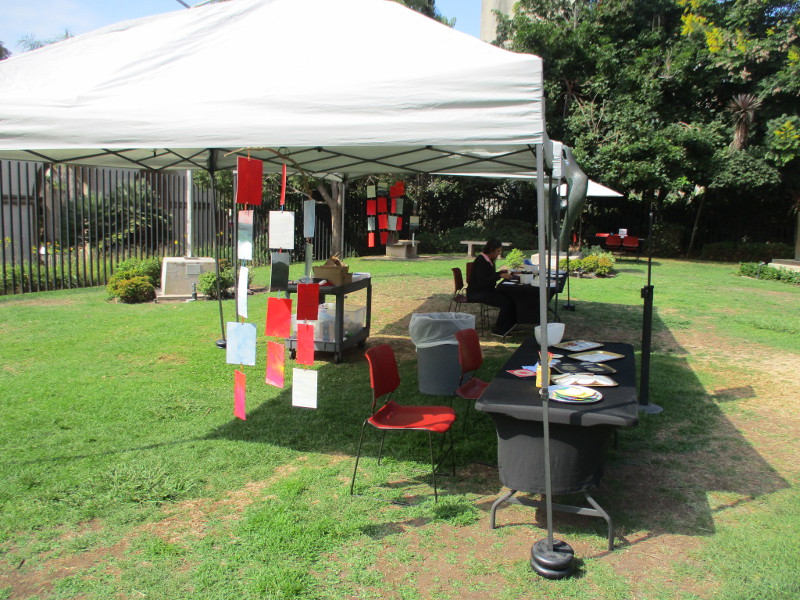
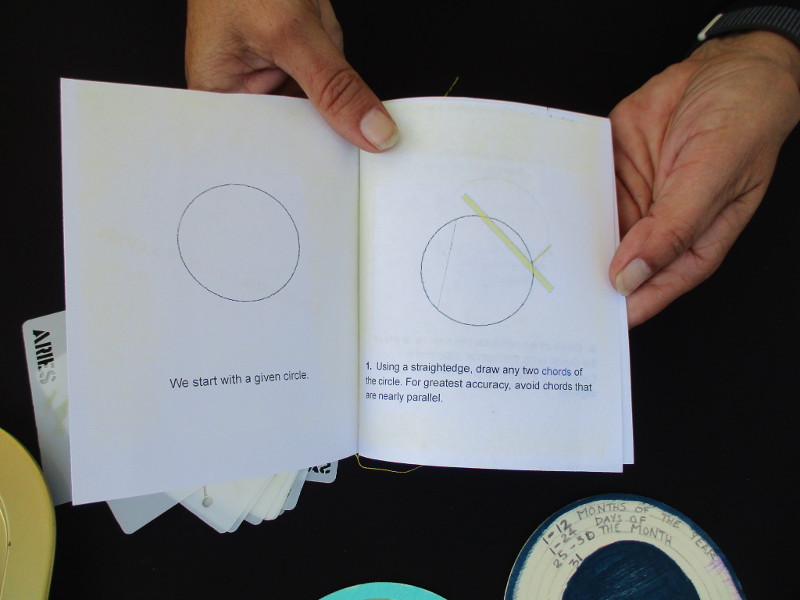
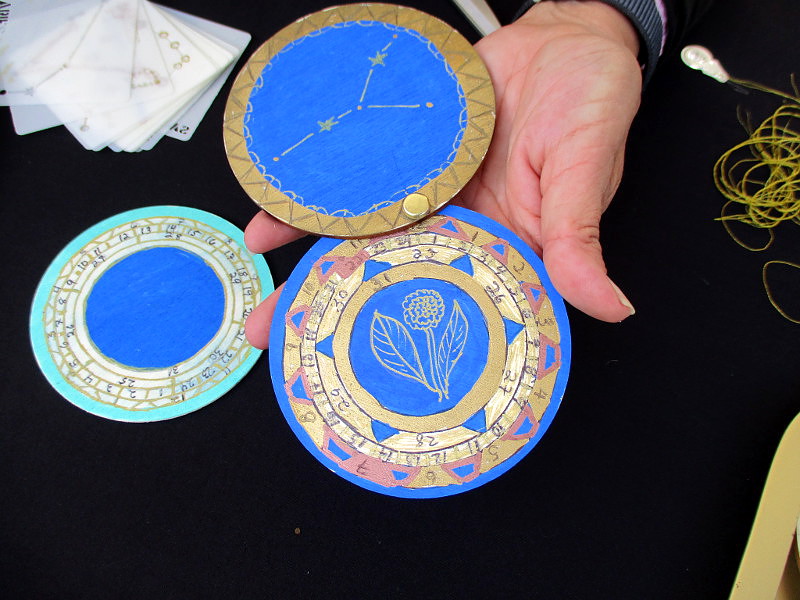
A table was set up on the grass of the museum’s outdoor sculpture garden. Participants in this Community Art Workshop would use geometry and compass to design their own birthdate star marker. The cool markers have an antique appearance, and depict a person’s birthdate and corresponding constellation.

This workshop will be repeated on Saturday, October 19th.

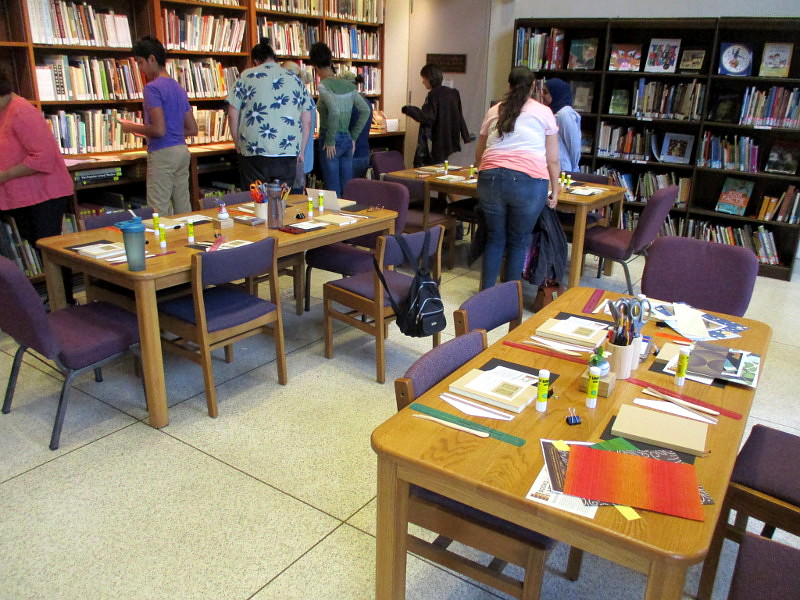
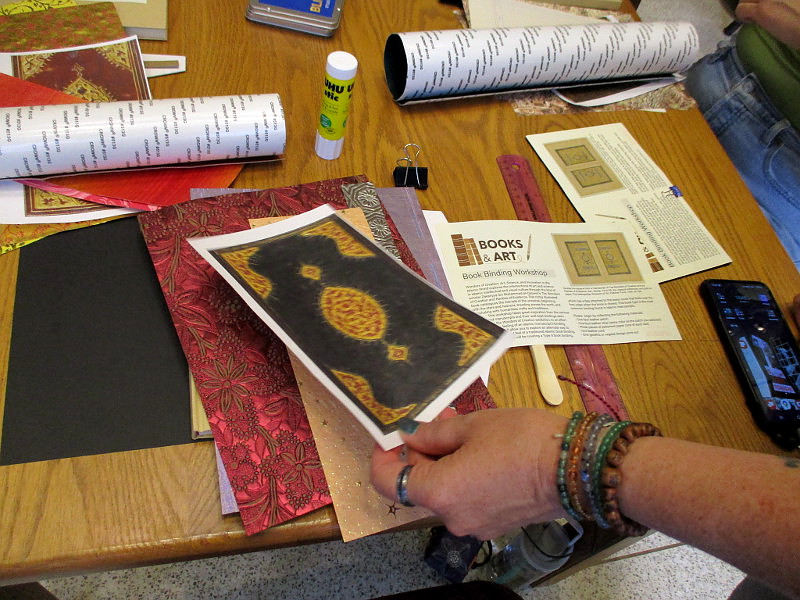
Next, I was kindly permitted to view a Book Binding activity inside the museum library.

According to the SDMA website, participants explore Islamic book binding techniques and the practices of codex creation by engaging in folding, wrapping, decorating, and binding a book.

This Community Art Workshop is inspired by the astrolabes on view in Wonders of Creation: Art, Science, and Innovation in the Islamic World, a special exhibition on view at The San Diego Museum of Art September 7, 2024–January 5, 2025.

If you’d like to create your own art at the museum, keep an eye on their event calendar here. You’ll find future opportunities!

Next month there’s a chance to create a Jasper Johns-inspired work of art!

Thanks for visiting Cool San Diego Sights!

I post new blogs pretty often. If you like discovering new things, bookmark coolsandiegosights.com and swing on by occasionally!

I live in downtown San Diego and love to walk around with my camera! You can follow Cool San Diego Sights via Facebook or X.

Observing sunspots from San Diego’s Balboa Park!

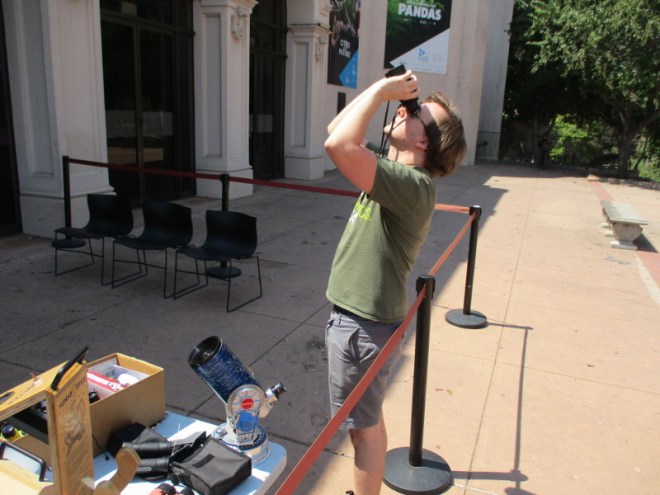
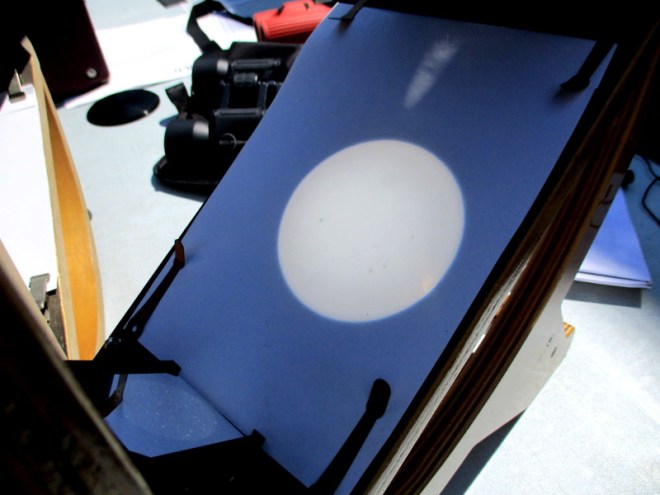
Sunspots on the surface of the sun were clearly visible today in San Diego! A sense of wonder filled me when I viewed the distant phenomenon from Balboa Park.

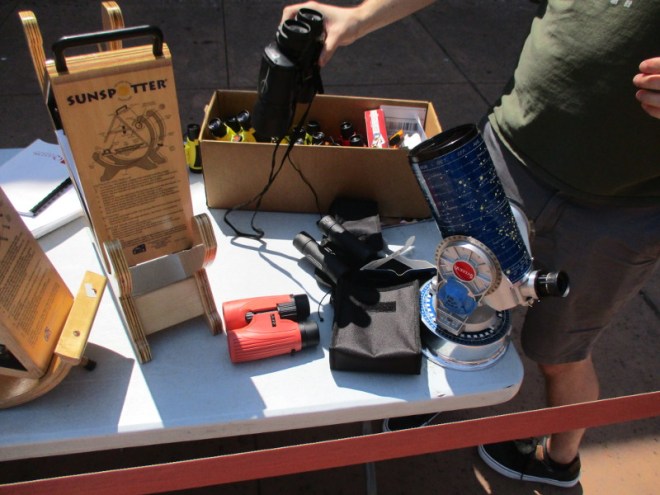
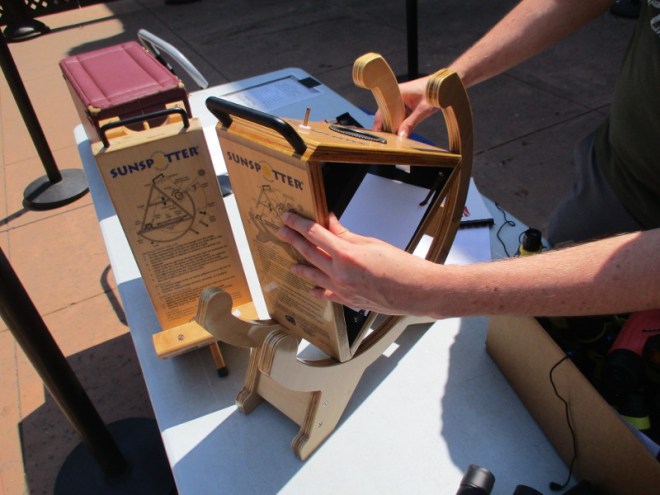
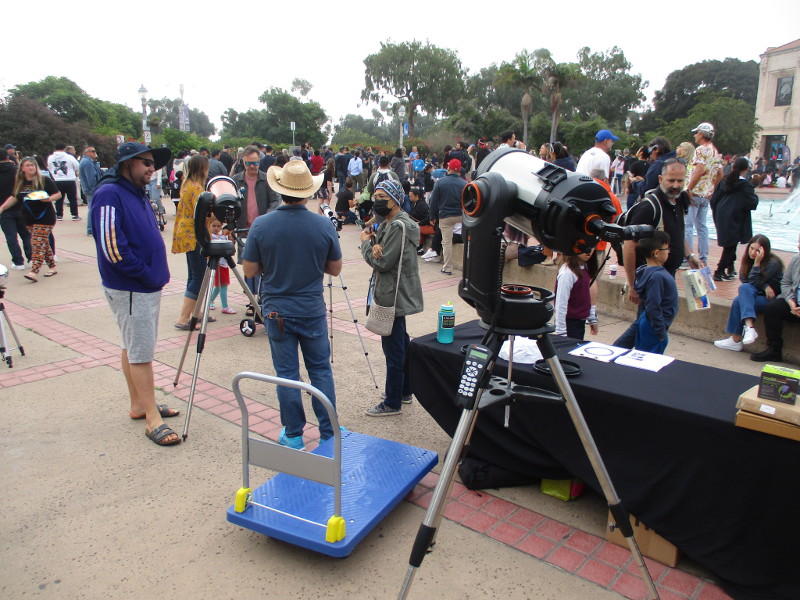
Today the Fleet Science Center had Sunspotter Solar Telescopes, solar binoculars and other instruments related to astronomy outside and ready for use.

I had stumbled upon a special event at the Fleet Science Center. They were hosting the NASA Community College Symposium, which would feature a planetarium show, educational talks, panels, and a variety of space-themed activities.

A recent graduate of SDSU’s Astronomy master’s program operated the solar telescope, and I tried to capture the tiny dark sunspots with my camera. (For my final photo, the image contrast was radically increased, bringing out the spots.)
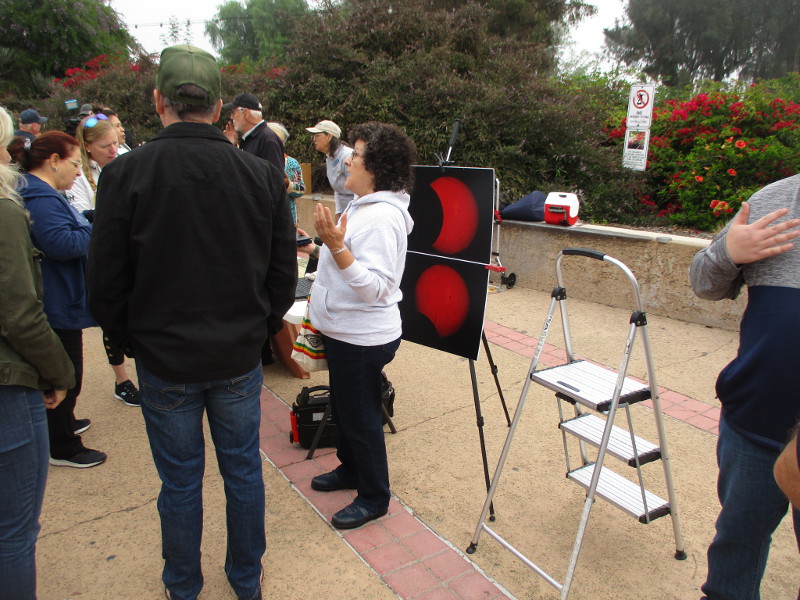
What appear to be small spots on the sun’s surface can be up to 100,000 miles in diameter! The sun itself is about 93 million miles from where you stand!

Thanks for visiting Cool San Diego Sights!

I post new blogs pretty often. If you like discovering new things, bookmark coolsandiegosights.com and swing on by occasionally!

I live in downtown San Diego and love to walk around with my camera! You can follow Cool San Diego Sights via Facebook or X.

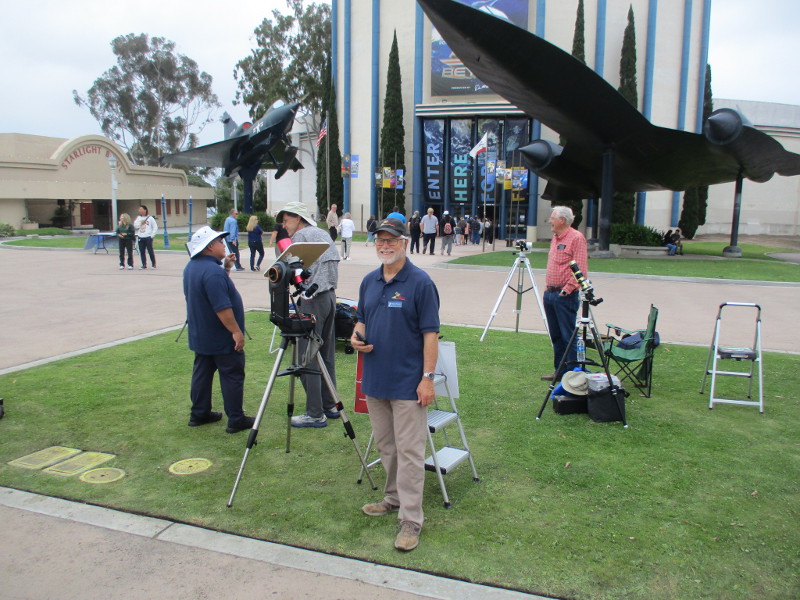
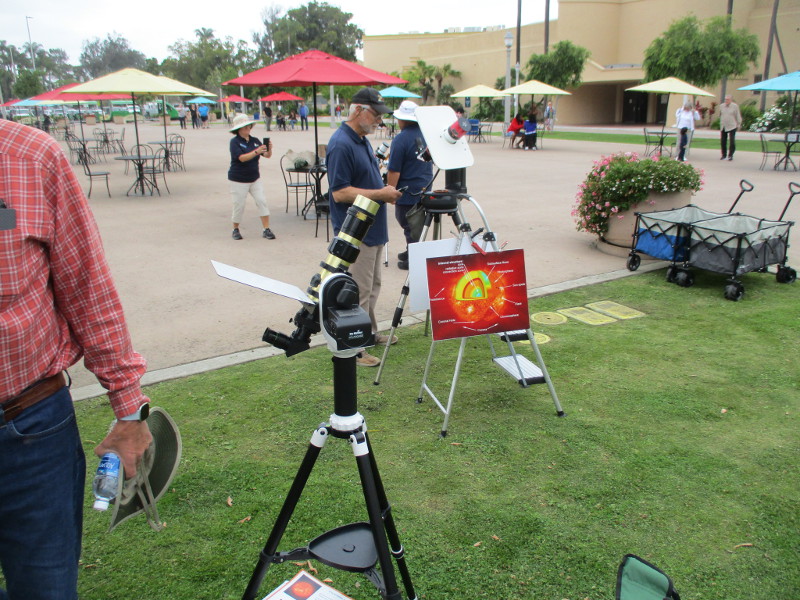
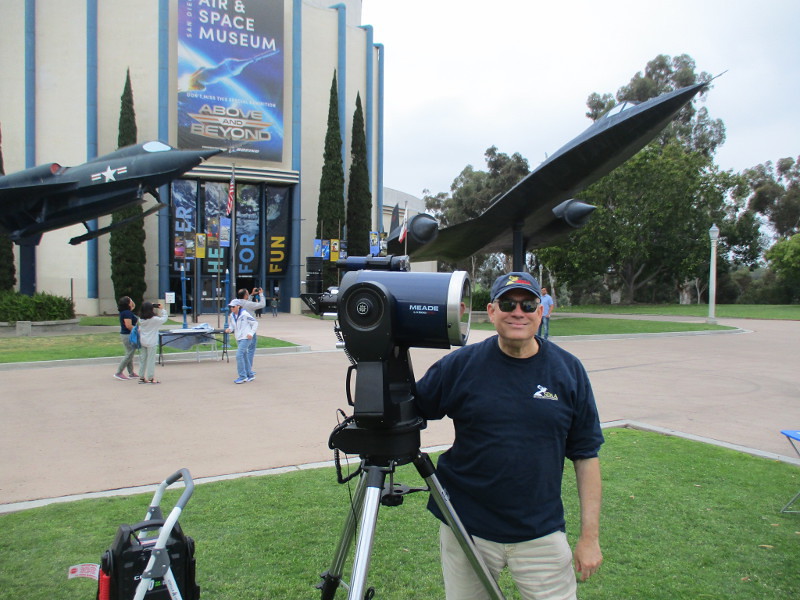
Space Day amateur astronomers in San Diego!

Members of the San Diego Astronomy Association participated today in the San Diego Air & Space Museum’s 19th Annual Space Day!

The local amateur astronomers gathered on the grass of Pan American Plaza in Balboa Park, in front of the museum, and observed our sun through a variety of telescopes.

As I walked nearby in the late morning, I spied telescopes of every size pointed skyward toward the sun, which was still hiding behind “May gray” clouds.

I paused and spoke to several of these friendly astronomy hobbyists. Solar observation was their activity on this Space Day, and telescopes fitted with special filters could provide magnified images of sunspots, the sun’s corona and solar flares!

I was told how there are thousands of amateur astronomers around the country and world, and how their efforts often help to further scientific knowledge. When distant stars are seen to slightly wobble over time, or when their light’s intensity as seen from Earth periodically changes, it can be an indication that they are orbited by planets–exoplanets very far from our own solar system!

The members of the San Diego Astronomy Association possess an enthusiasm that is infectious. I could have spent half the morning absorbing fascinating information.

How can you not be excited, peering out into the awe-inspiring Universe–a vast, vast, incredibly vast Universe that includes the nearest star: our Sun!

Thanks for visiting Cool San Diego Sights!

I post new blogs pretty often. If you like discovering new things, bookmark coolsandiegosights.com and swing on by occasionally!

I live in downtown San Diego and love to walk around with my camera! You can follow Cool San Diego Sights via Facebook or X (formerly known as Twitter)!

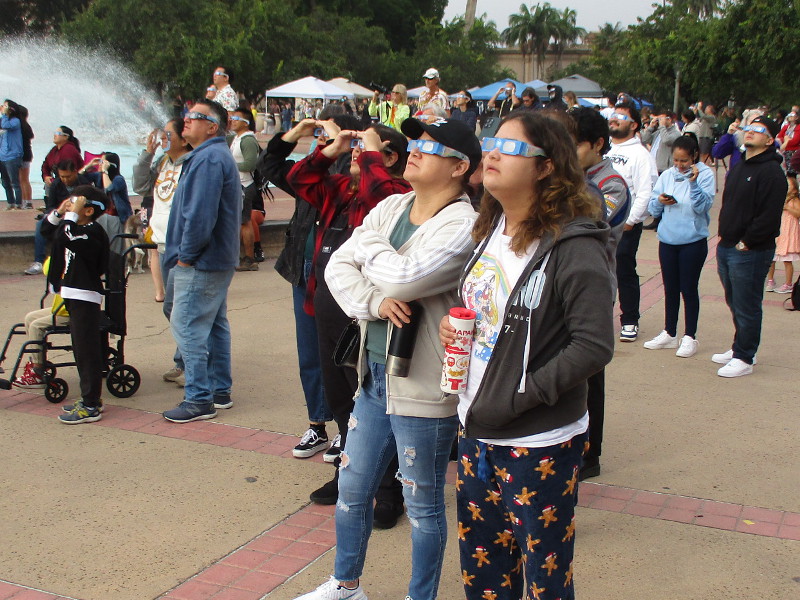
Solar eclipse breaks through in Balboa Park!

Would this morning’s solar eclipse be seen in San Diego? An overcast sky worried many who wished to observe the highly anticipated event.

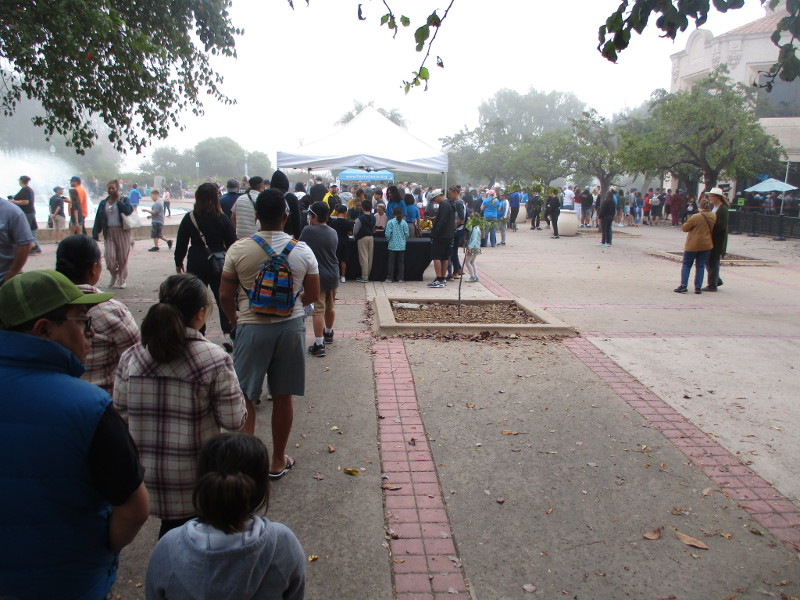
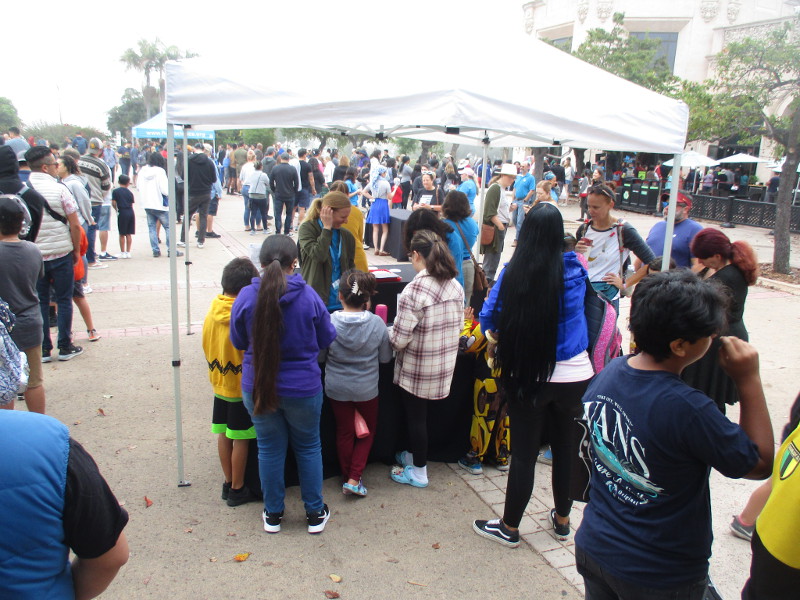
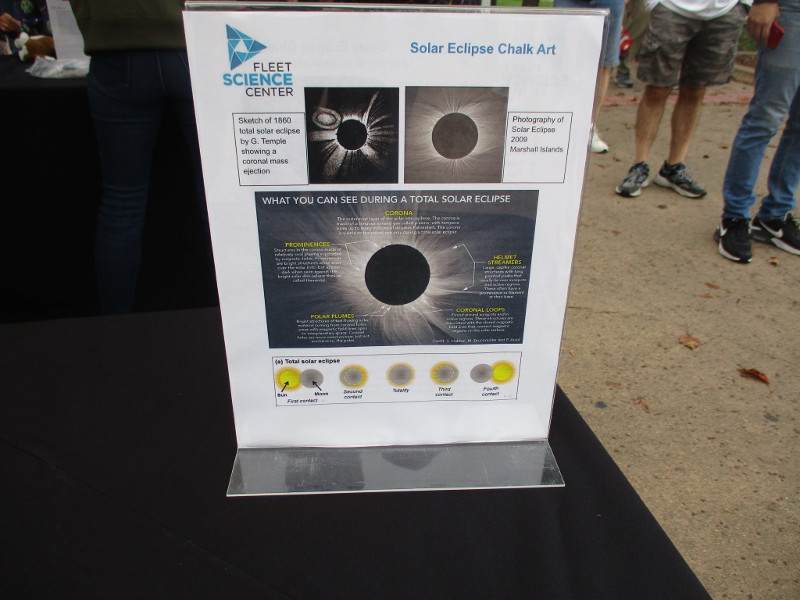
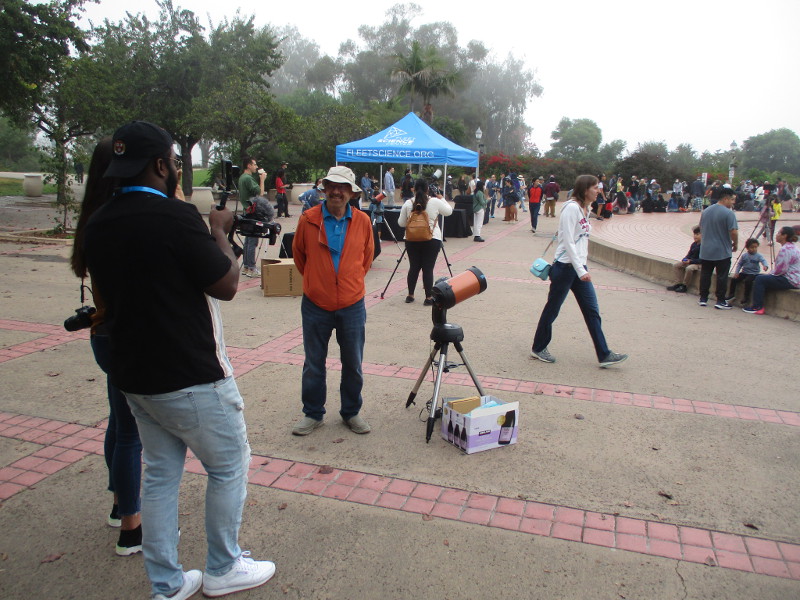
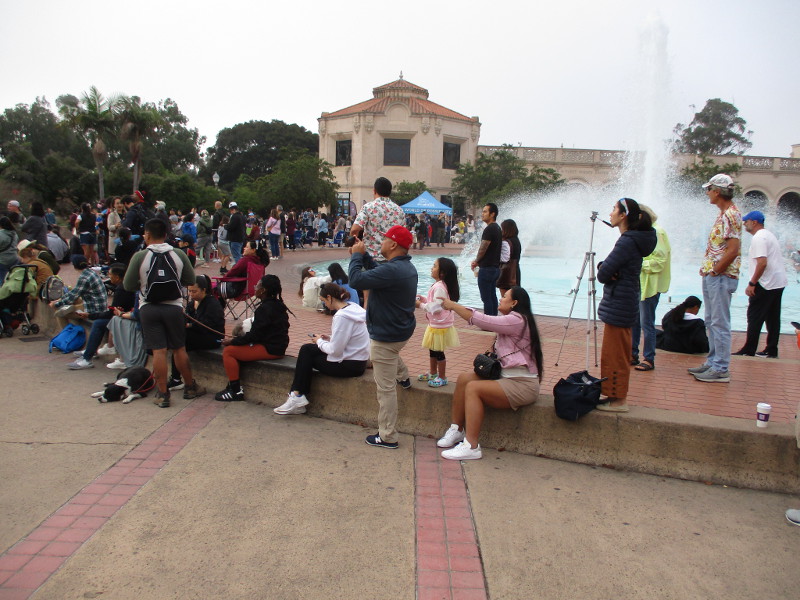
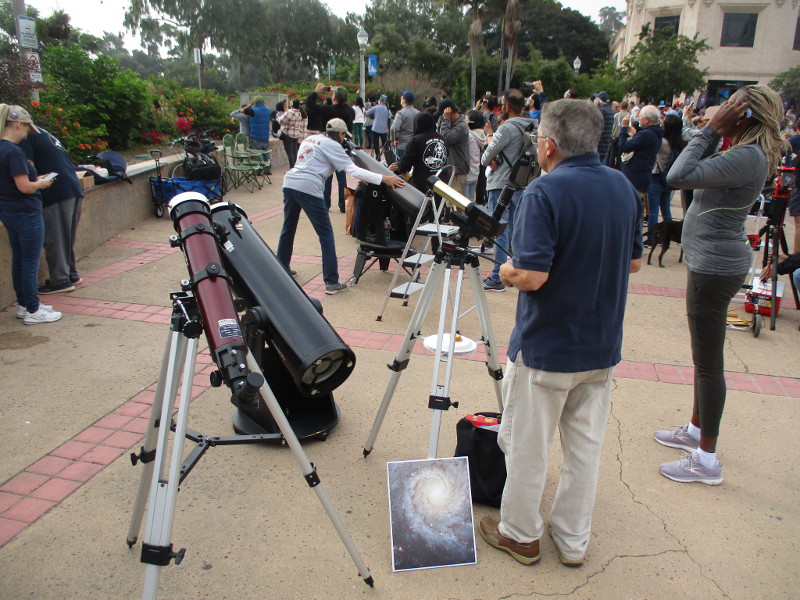
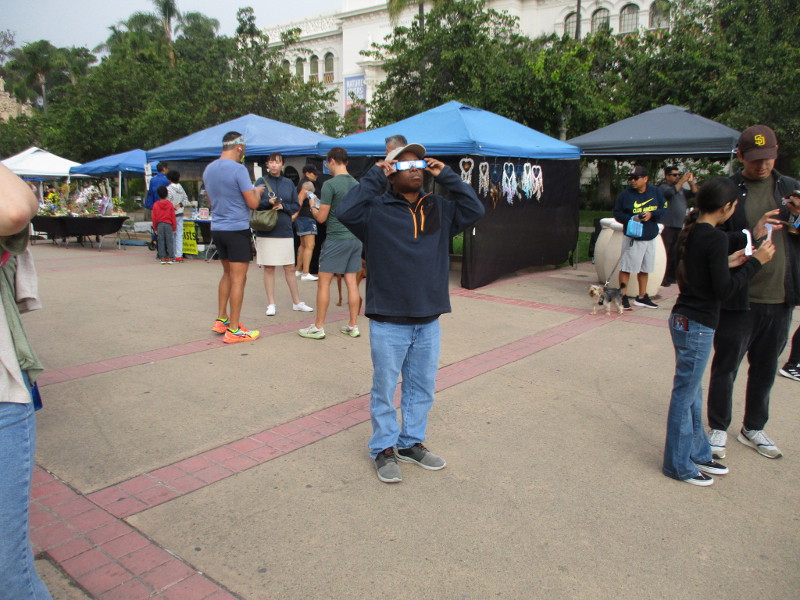
A huge crowd lined up in Balboa Park near the Fleet Science Center to obtain eclipse glasses. Amateurs set up telescopes, large and small. With the help of Fleet scientists and volunteers, kids enjoyed several fun educational activities, including the creation of pinhole boxes for safe indirect viewing of the eclipse. At one side of the plaza, a laptop showed live images of the eclipse from some cloudless location. Families sat waiting on the edge of the park’s nearby fountain. Minutes were ticking away. Would those clouds above us thin in time, as everyone hoped?

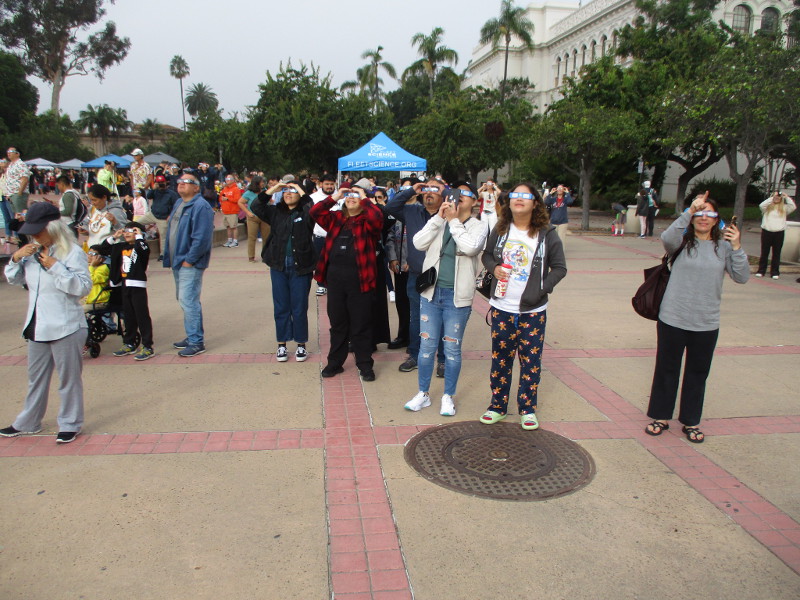
And then–there it was! The crowd cheered! The moon was glimpsed off and on as it gradually passed over the sun’s disk in an annular eclipse that would, at its maximum, obscure about 70 percent of Earth’s own life-giving star.

Several minutes later, the sky would mostly clear, and many in San Diego would take delight in the awe-inspiring spectacle.

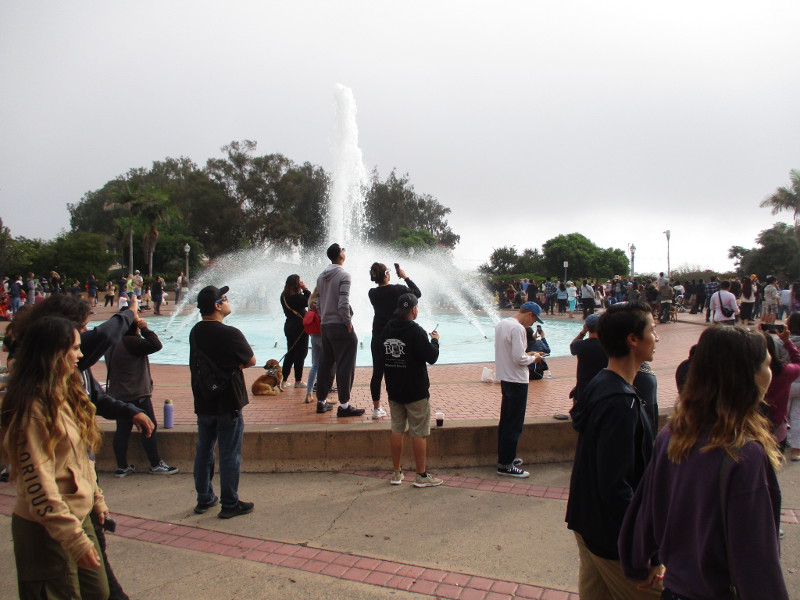
Enjoy these photographs of the big eclipse watching party in Balboa Park!

Thanks for visiting Cool San Diego Sights!

I post new blogs pretty often. If you like discovering new things, bookmark coolsandiegosights.com and swing on by occasionally!

I live in downtown San Diego and love to walk around with my camera! You can follow Cool San Diego Sights via Facebook or X (formerly known as Twitter)!

The brilliant Stellarium: 100 light-years across!

Do you know the friendly gentleman who plays the didgeridoo in Balboa Park? That’s Mitchell Walker.

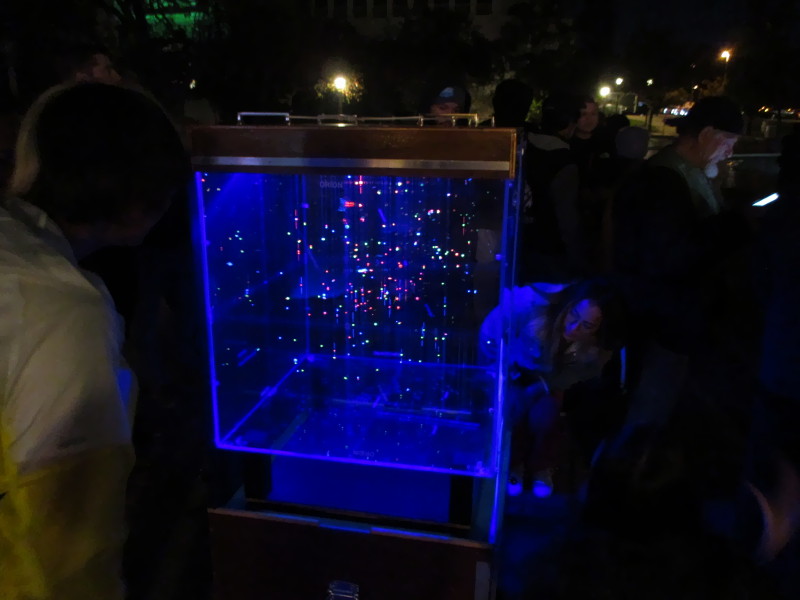
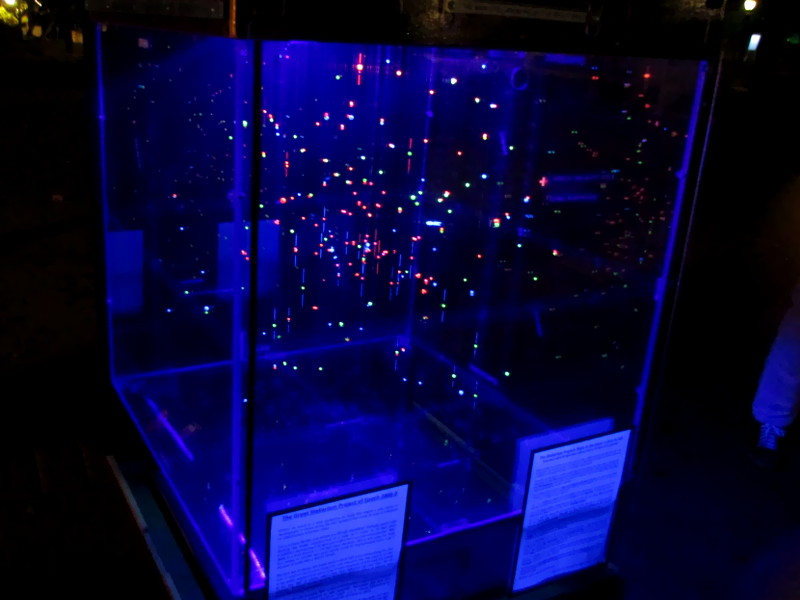
He loves astronomy. He’s super creative. He never stops dreaming. That’s how he managed to shrink a volume of space 100 light-years across and fit it inside a plexiglass cube!

Mitchell’s one-of-a-kind, incredible Stellarium shows all of the stars within 50 light-years of the sun, placed in their correct spatial positions. That makes 166 stars in our stellar neighborhood. (Mitchell is now playfully calling his unique cube SITH–Stars in the ‘Hood!)

The colors of his tiny illuminated stars are based on spectral classification: the Morgan-Keenan system. Press a button and you hear a recording made by Mitchell describing his Stellarium.

I first blogged about The Great Stellarium Project over three years ago. You can see a smiling Mitchell and learn more about his brilliant creation here.

Since then modifications have been made to the Stellarium, including a visible ultraviolet light.

Today I heard that more improvements are coming!

During Stars in the Park this evening, Mitchell showed me his detailed plan to have each star light up individually with a touch of a button. That way the position of a particular star can be seen in relation to others and to our sun.

Mitchell starts with a dream. Then he makes it come true.

What are your dreams?

Thanks for visiting Cool San Diego Sights!

I post new blogs pretty often. If you like discovering new things, bookmark coolsandiegosights.com and swing on by occasionally!

It’s easy to explore Cool San Diego Sights by using the search box on this website’s sidebar. Or click a tag. There’s a lot of stuff to share and enjoy!

I live in downtown San Diego and love to walk around with my camera! You can follow Cool San Diego Sights via Facebook or Twitter!

The planet Mars vanishes in San Diego!

The planet Mars vanished from San Diego’s night sky early this evening!

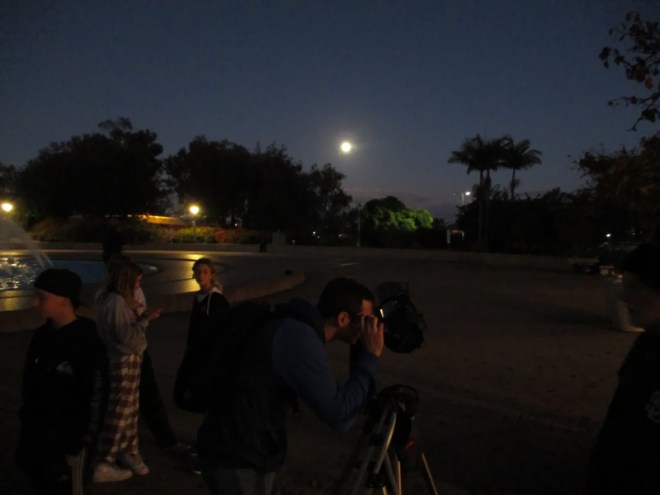
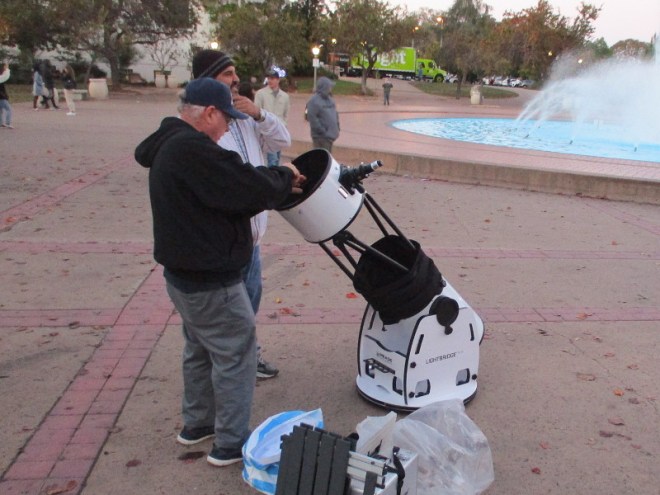
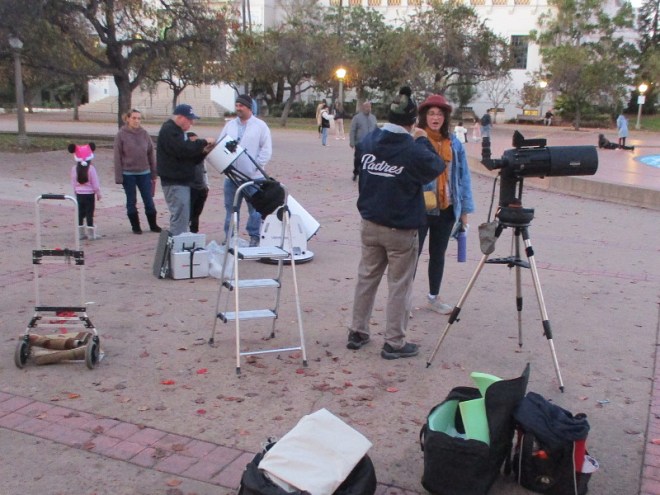
Members of the San Diego Astronomy Association had telescopes trained on the Red Planet near the Fleet Science Center in Balboa Park when it disappeared!

But nobody seemed in the least distressed.

That’s because those gazing skyward understood the moon in its orbit around the Earth had begun to pass “over” much more distant Mars, in what is called a lunar occultation of Mars.

Random people walking through Balboa Park came up and were invited to peer through the telescopes. At times the instruments were aimed at the planet Jupiter and its four largest moons that were made plainly visible: Io, Europa, Ganymede and Callisto.

Families and kids looked into space with a sense of wonder. Many then entered the Fleet Science Center to view the monthly planetarium show The Sky Tonight, where we saw the latest jaw-dropping images from the James Webb Space Telescope.

When the presentation ended an hour later, and we all went outside, Mars had returned!

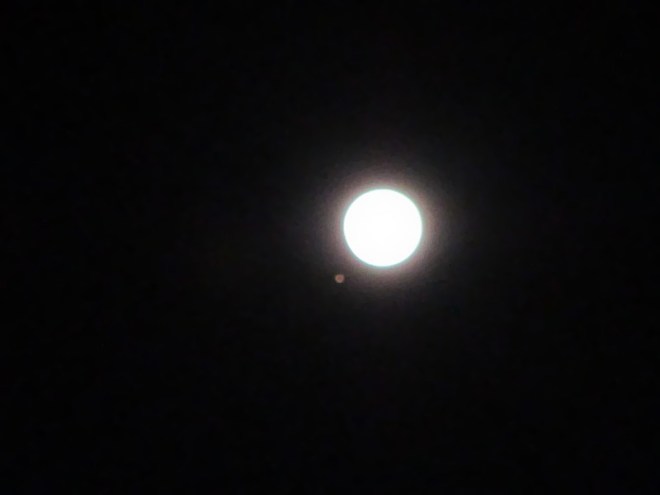
The next image was captured by my small camera a few minutes before the lunar occultation of Mars. I set it on maximum zoom.

You can’t see the moon’s craters, but you can see fuzzy little red Mars!

Thanks for visiting Cool San Diego Sights!

I post new blogs pretty often. If you like discovering new things, bookmark coolsandiegosights.com and swing on by occasionally!

It’s easy to explore Cool San Diego Sights by using the search box on this website’s sidebar. Or click a tag. There’s a lot of stuff to share and enjoy!

I live in downtown San Diego and love to walk around with my camera! You can follow Cool San Diego Sights via Facebook or Twitter!

Stars shine brightly in Balboa Park!

This evening I headed to Balboa Park to watch The Sky Tonight at the Fleet Science Center’s giant domed IMAX theater.

Every first Wednesday of the month, the Fleet’s eye-popping, jaw-dropping The Sky Tonight astronomy presentation coincides with Stars in the Park, a fun, educational outdoor event hosted by the San Diego Astronomy Association.

When I stepped out of the theater, with a sense of renewed wonder at the immensity and beauty of the universe, night had fallen, and I gazed through several telescopes at the distant stars themselves.

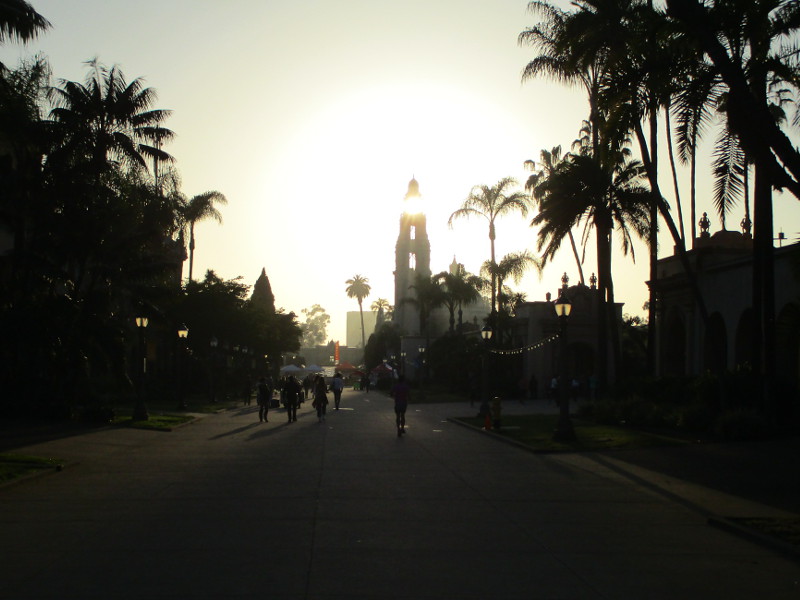
But prior to all this, well before the sun set, I saw other stars all around the park…

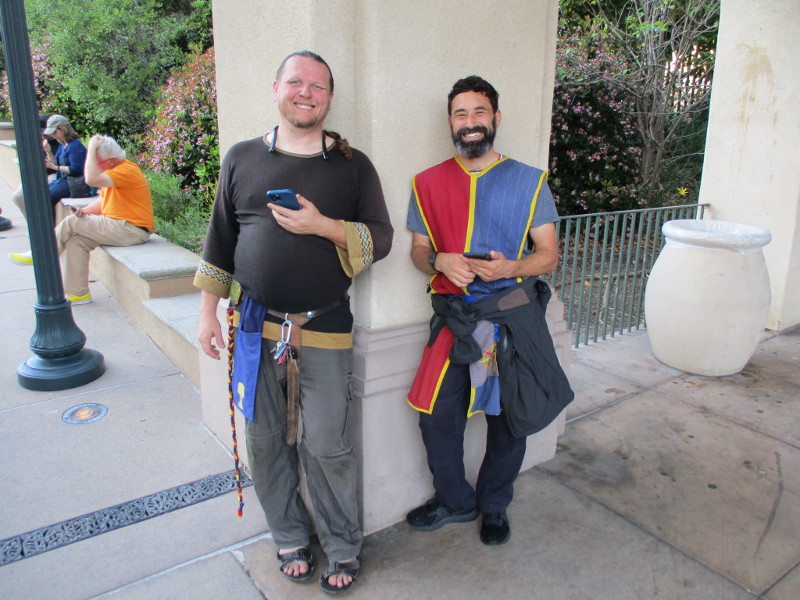
Two brightly smiling members of the Belegarth Medieval Combat Society’s Realm of Andor. They usually hang out on Sunday afternoons at Balboa Park’s Morley Field.
Indy is a shining Balboa Park star on a fine Wednesday evening.
Look! Another musical star!
Like planets orbiting the sun, kids were running around the Bea Evenson Fountain.
Another star poses and smiles on El Prado!
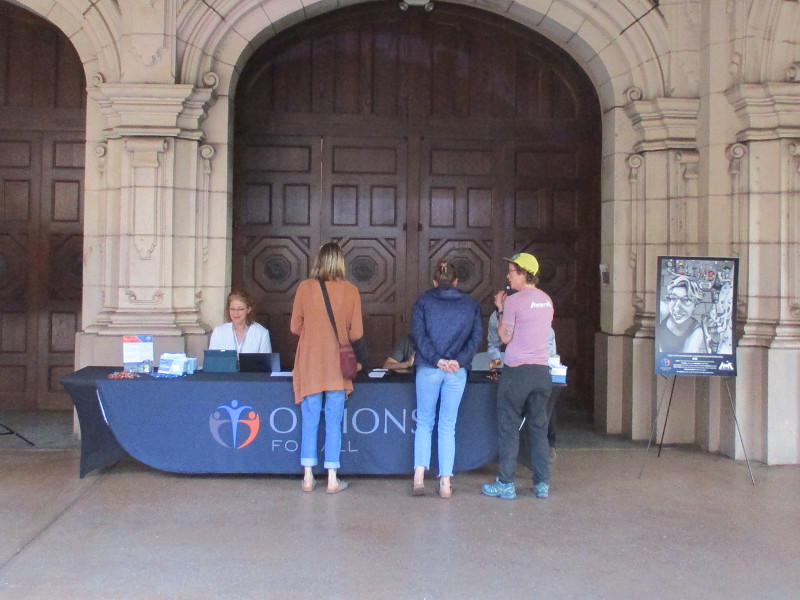
Options For All, an organization that serves adults with disabilities, welcomes those arriving for a special movie screening in Balboa Park.

A short film titled Climb premiered this evening at the Museum of Photographic Arts in Balboa Park.

According to its description, the film is based on a day in the life of the adaptive team, which consists of four rock climbers with disabilities at the Mesa Rim Climbing Center. Learn more at the Options For All organization’s Facebook page here!

One of the film’s stars smiles by the Climb movie poster. That’s her climbing in the upper left corner of the graphic!
Stars that are light-years distant from Balboa Park would become visible after nightfall. Members of the San Diego Astronomy Association set up a powerful telescope for public observation of the sky after dark!

I live in downtown San Diego and love to walk around with my camera! You can follow Cool San Diego Sights via Facebook or Twitter!

World’s longest running IMAX film projector!

The world’s longest running IMAX film projector is on display in San Diego’s Balboa Park. That’s because this venerable old projector operated for 48 years at the Reuben H. Fleet Science Center!

Tonight I headed over to the Fleet Science Center to watch The Sky Tonight, a once-a-month astronomy presentation on the giant space-like IMAX dome. As I waited in the theater lobby for the show to begin seating, I noticed the historic projector on display to one side, behind an open curtain.

A gentleman briefly explained the projector’s history. The very durable, then state-of-the-art projector was originally installed in 1973. It was the second IMAX projector made. Apparently nobody knows what became of the first!

When I got home, I found this link to a great article concerning the projector, and its replacement last year with a new, improved IMAX Laser digital video projector.

I live in downtown San Diego and love to walk around with my camera! You can follow Cool San Diego Sights via Facebook or Twitter!