Historical photos of Balboa Park a century ago.

Photograph of the Panama-California Exposition's La Puerta del Oeste (west entrance) taken from Cabrillo Bridge. Dome and bell tower of the California State Building rise into the San Diego sky.
Photograph of the Panama-California Exposition’s La Puerta del Oeste (west entrance) taken from Cabrillo Bridge. The dome and bell tower of the California State Building rise into the San Diego sky.

Balboa Park’s big Centennial celebration is approaching fast! The year-long event kicks off with the opening of December Nights on Friday, December 5th. Later this month, the celebration will continue with a grand New Year’s Eve procession and concert at the Spreckels Organ Pavilion!

The Balboa Park Centennial marks the hundred years that have passed since the opening of the Panama-California Exposition in 1915. While a large open space park near downtown San Diego (originally named City Park) was established in 1872, Balboa Park didn’t really take shape until many years later. Many of the buildings along El Prado which visitors enjoy today owe their existence to the development of the Panama-California Exposition, which covered 640 acres and promoted San Diego as the first United States port of call after a passage through the newly opened Panama Canal. Other parts of Balboa Park were created twenty years later for the California Pacific International Exposition–but that’s a different story.

In honor of the Centennial–now just two days away–I figured I’d post a bunch of historical photographs of Balboa Park as it appeared a century ago. The following black-and-white photos are from Wikimedia Commons, and provide different views of the amazing Panama-California Exposition. I had to do a little detective work with some of the images. Since I’m by no means an expert, please leave a comment if I’ve written captions that require correction.

Cover of the 1915 Official Guide Book to San Diego's Panama-California Exposition. The event celebrated the opening of the Panama Canal, and lasted through 1916.
Cover of the 1915 Official Guide Book to San Diego’s Panama-California Exposition. The event celebrated the opening of the Panama Canal, and lasted through 1916.
Aerial view from downtown San Diego of Balboa Park's 1915 Panama-California Exposition. In 1910 San Diego had a small population of only 39,578.
Aerial view from downtown San Diego of Balboa Park’s 1915 Panama-California Exposition. In 1910 San Diego had a small population of only 39,578.
La Laguna Cabrillo lake and Camino Cabrillo road beneath Cabrillo Bridge. California State Route 163, a designated scenic highway, runs beneath the historic bridge today.
Detailed 1915 map shows Panama-California Exposition ground plan in Balboa Park (originally named City Park).
Photo taken of Balboa Park in 1915 from the California Tower provides panoramic view of many exposition buildings designed in the Spanish Colonial Revival architectural style.
Looking west along El Prado through the heart of Balboa Park in 1915. At the exposition's opening ceremony, President Woodrow Wilson activated the electric street lamps with a telegraphic signal.
Looking west along El Prado through the heart of Balboa Park in 1915. At the exposition’s opening ceremony, President Woodrow Wilson activated the electric street lamps with a telegraphic signal.
Commerce and Industries Building and Foreign Arts Building stand side-by-side on the south side of tree-lined El Prado. Today, the rebuilt structures are called the Casa de Balboa and House of Hospitality.
Commerce and Industries Building. Rebuilt as Casa de Balboa, it's now home of Museum of Photographic Arts, San Diego History Center, and San Diego Model Railroad Museum.
Commerce and Industries Building. Rebuilt as Casa de Balboa, it’s now home of Museum of Photographic Arts, San Diego History Center, and San Diego Model Railroad Museum.
View of shady pergola and the iconic 208 feet tall California Tower from Los Jardines de Montezuma (Montezuma Gardens) in 1915.
Los Jardines de Montezuma (today named Alcazar Garden) at Balboa Park's Panama-California Exposition.
Los Jardines de Montezuma (today named Alcazar Garden) at Balboa Park’s Panama-California Exposition.
Spacious gardens near California State Building's landmark dome and bell tower during the Panama-California Exposition.
Spacious gardens near California State Building’s landmark dome and bell tower during the Panama-California Exposition.
U.S. Navy ambulance parked near entrance of the California State Building, today the Museum of Man.
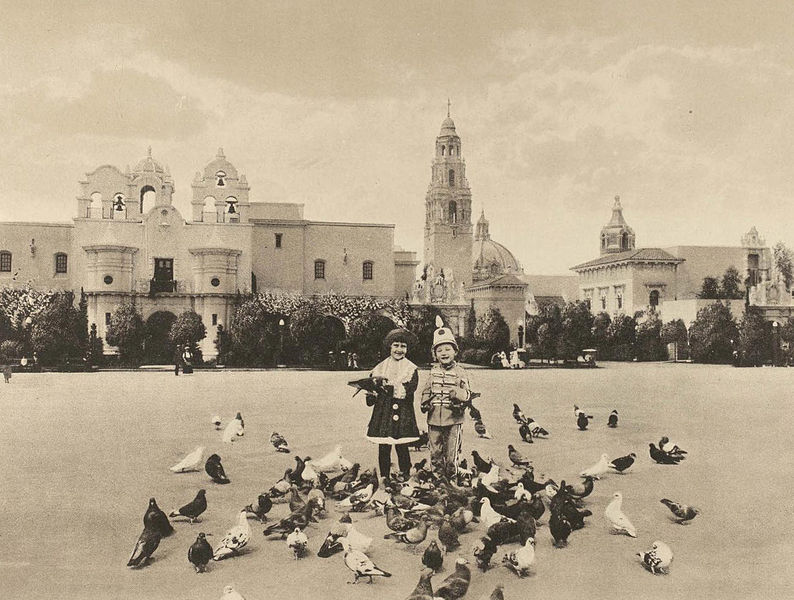
Kids feed pigeons on the central Plaza de Panama. The Indian Arts Building with mission bells on left was renamed House of Charm and reconstructed in 1996. It now contains the Mingei Museum.
Expansive gardens near the Food Products Building. Today's enormous Moreton Fig Tree was planted in 1914 near this location.
Expansive gardens near the Food Products Building. Today’s enormous Moreton Fig Tree was planted in 1914 near this location.
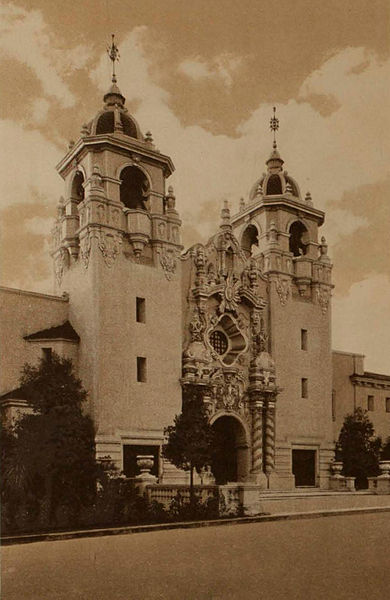
Elegant facade of Food Products Building, which was eventually reconstructed in 1971 as part of the Casa del Prado. It's now the entrance to the San Diego Junior Theatre.
Elegant facade of Food Products Building, which was eventually reconstructed in 1971 as part of the Casa del Prado. It’s now the entrance to the San Diego Junior Theatre.
View of La Laguna de las Flores, the reflecting pool (or lagoon) at the Panama-California Exposition. This area was called the Botanical Court.
The Botanical Building, then and now one of the largest lath structures in the world. In 1915 its popular name was Lath Palace.
Fountain by Botanical Building at the Panama-California Expositon in Balboa Park. The Botanical Court a hundred years later remains largely unchanged.
Gazing over reflecting pool at Commerce and Industries Building and Foreign Arts Building. A favorite photographic spot for a century in San Diego.
Food Products Building is reflected in tranquil lily pond directly in front of the large lath Botanical Building.
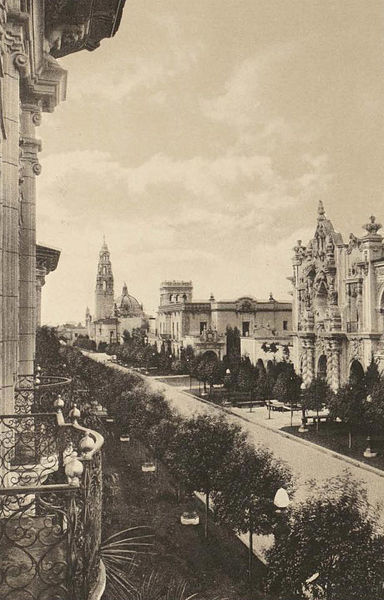
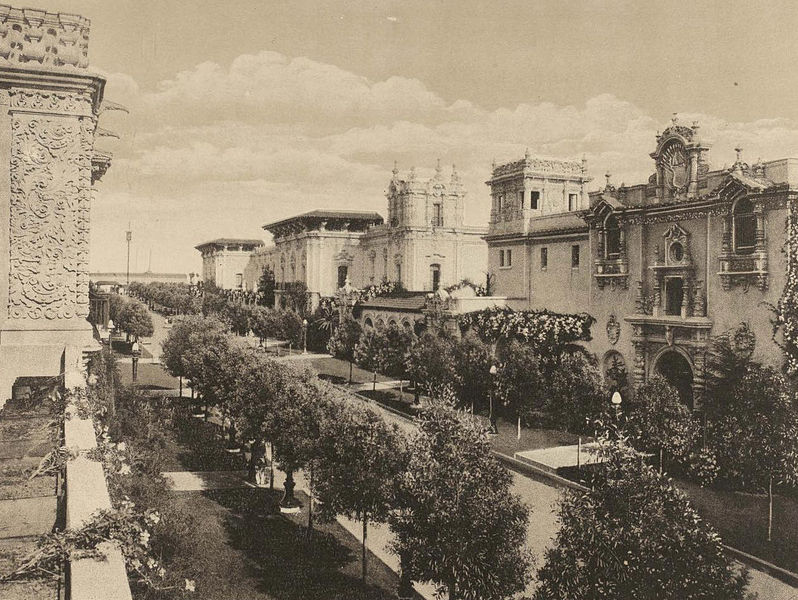
View of tree-lined El Prado from second floor of Varied Industries Building, which is now part of the Casa del Prado.
Varied Industries Building seen from the west a short distance. Rebuilt as a part of Casa del Prado, today it houses various art and botanical organizations.
Home Economy Building (left of Foreign Arts Building), site of today's Timken Museum of Art. A wicker Electriquette motor cart is visible among people in the Plaza de Panama.
Home Economy Building (left of Foreign Arts Building), site of today’s Timken Museum of Art. A wicker Electriquette motor cart is visible among people in the Plaza de Panama.
Fine photo across Esplanade of the Indian Arts Building, rebuilt in later years and renamed the House of Charm.
One of many popular recitals in the Organ Pavilion at the Panama-California Exposition. (This venue is now called the Spreckels Organ Pavilion.)
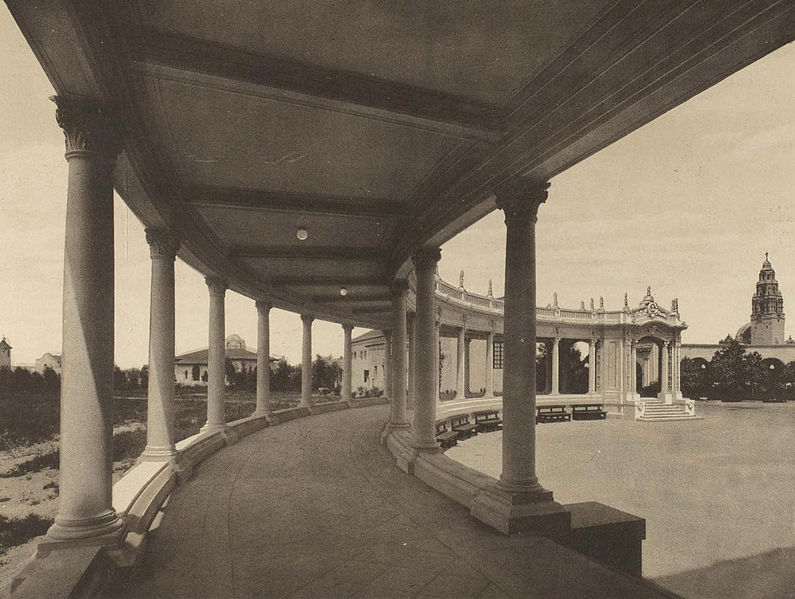
Organ Pavilion colonnade with California Bell Tower in distance. Trees and a large parking exist today on the left, behind the classic structure.
Organ Pavilion colonnade with California Bell Tower in distance. Trees and a large parking lot exist today on the left, behind the classic structure.
View of Spreckels Organ in 1915, from a shady spot in the colonnade. Those wooden benches were replaced many years ago with benches made of steel.
The distant Organ Pavilion appears in this photo between the San Joaquin Valley Building and the Kern and Tulare Counties Building.
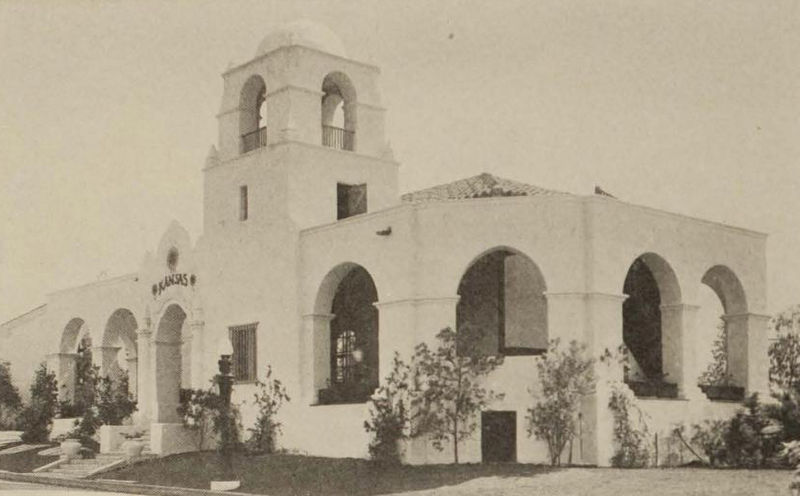
Kansas State Building at Panama-California Exposition. Most of these old state buildings no longer exist today, a hundred years later.
Montana State Building, near the site of today's International Cottages.
Montana State Building, near the site of today’s International Cottages.
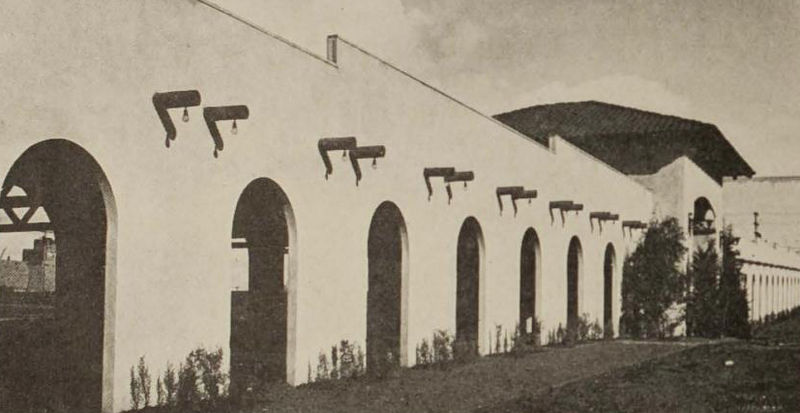
People take a stroll past a handful of state buildings at the Panama-California Exposition in Balboa Park.
Utah State Building at the Panama-California Exposition.
Washington State Building at the Panama-California Exposition.
Artillery practice at the exposition's U.S. Marine Camp, which was located near the site of today's Air and Space Museum.
Artillery practice at the exposition’s U.S. Marine Camp, which was located near the site of today’s Air and Space Museum.
Southern California Counties Building, which stood a century ago in Balboa Park at the site of today's Natural History Museum.
Southern California Counties Building, which stood a century ago in Balboa Park at the site of today’s Natural History Museum.
Visitors back in 1915 enjoy the Southern California Counties Building's elegant patio.
Visitors back in 1915 enjoy the Southern California Counties Building’s elegant patio.
Large area called the Painted Desert at the Panama-California Exposition. This unique attraction was near the site of today's Veteran's Memorial.
Large area called the Painted Desert at the Panama-California Exposition. This unique attraction was near the site of today’s Veteran’s Memorial.
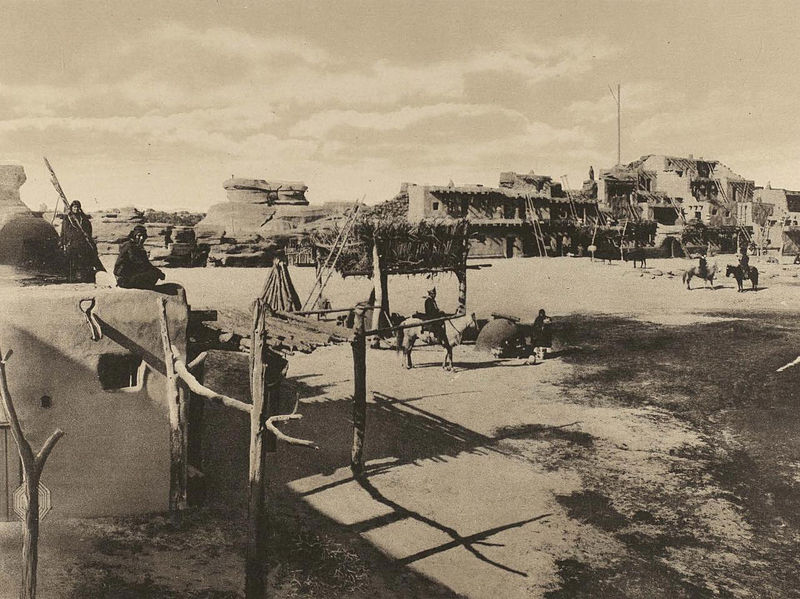
The elaborate Taos pueblo in the Painted Desert was a fantastic sight at San Diego's Panama-California Exposition.
The elaborate Taos pueblo in the Painted Desert was a fantastic sight at San Diego’s Panama-California Exposition.
Realistic exhibit shows Zuni native life at the Panama-California Exposition in San Diego's Balboa Park.
Realistic exhibit shows Zuni native life at the Panama-California Exposition in San Diego’s Balboa Park.
The Pala gem mine was one of the amusements along the Isthmus north of El Prado, near today's San Diego Zoo parking lot. It featured a 300 foot long tunnel filled with simulated gems.
The Pala gem mine was one of the amusements along the Isthmus north of El Prado, near today’s San Diego Zoo parking lot. It featured a 300 foot long tunnel filled with simulated gems.
The Cawston Ostrich Farm was an Egyptian pyramid-shaped amusement on the Isthmus, a section of the expo popularly called the fun street.
The Japanese Tea Pavilion, northeast of the Botanical Building in 1915. Today, the Japanese Tea Pavilion is located elsewhere and appears entirely different.
The Japanese Tea Pavilion, northeast of the Botanical Building in 1915. Today, the Tea Pavilion at the Japanese Friendship Garden is located elsewhere and appears entirely different.
Citrus and other gardens in a wide north section of the Panama-California Exposition. This is near the entrance of today's San Diego Zoo.
Citrus and other gardens in a wide north section of the Panama-California Exposition. This is near the entrance of today’s San Diego Zoo.
The long Tractor Buillding was located near a tractor demonstration field, just west of the Painted Desert.
The long Tractor Building was located near a tractor demonstration field, just west of the Painted Desert.
California bungalow, surrounded by model farm at the 1915 exposition. Agricultural exhibits and demonstrations were an important part of the event.
The Lipton Tea Gardens at the Panama-California Exposition, one more interesting image from San Diego's rich history.
The Lipton Tea Gardens at the Panama-California Exposition, one more interesting image from San Diego’s rich history.

To enjoy future posts, you can “like” Cool San Diego Sights on Facebook, or follow me on Twitter.

A shiny new skyscraper. A little old firehouse.

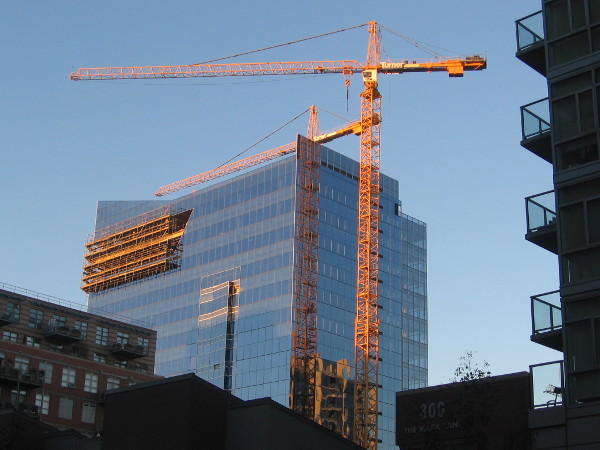
New Cisterra building rises behind Tony Gwynn statue at Petco Park in East Village.

As the local economy has improved, I’ve noticed a spate of new construction underway in downtown San Diego. Several skyscrapers are on the rise!

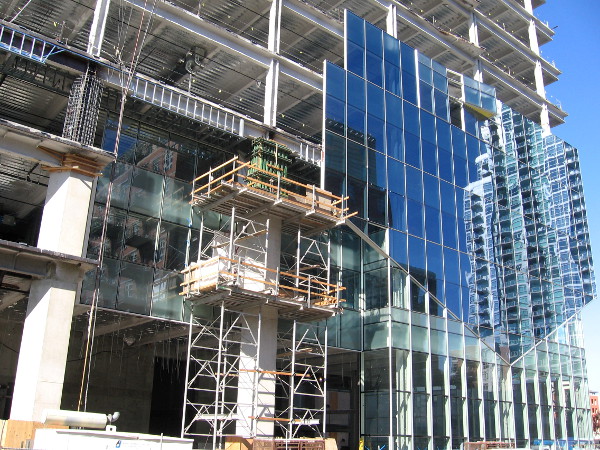
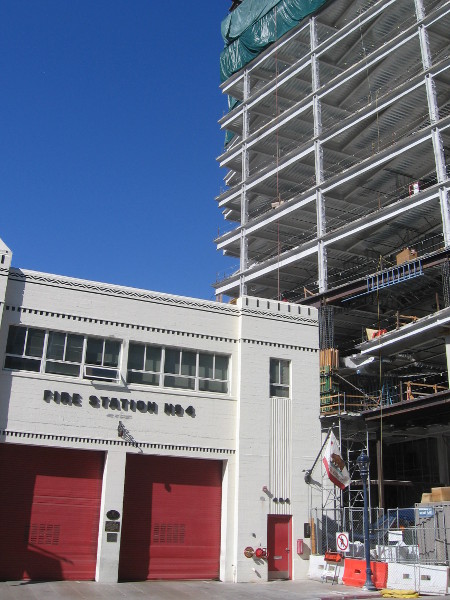
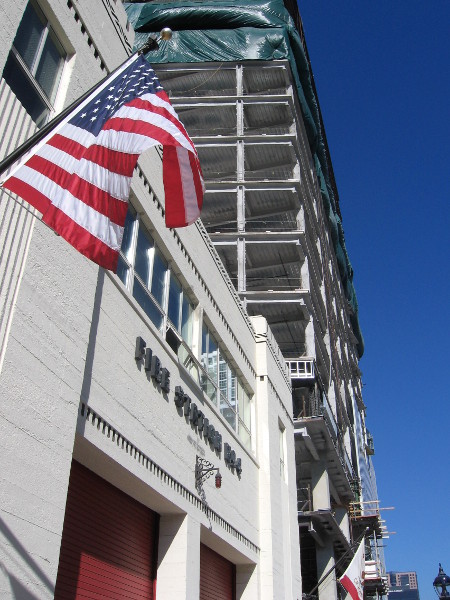
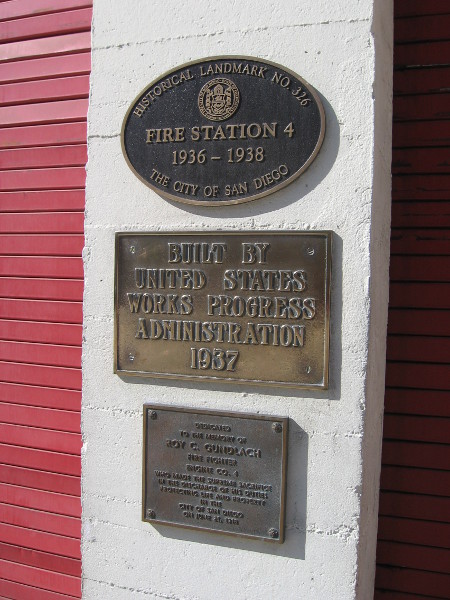
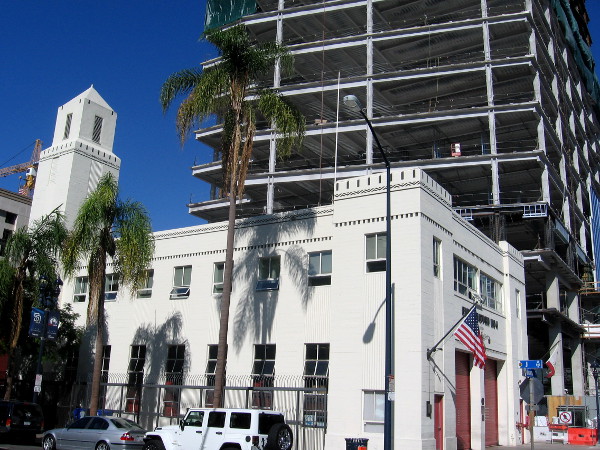
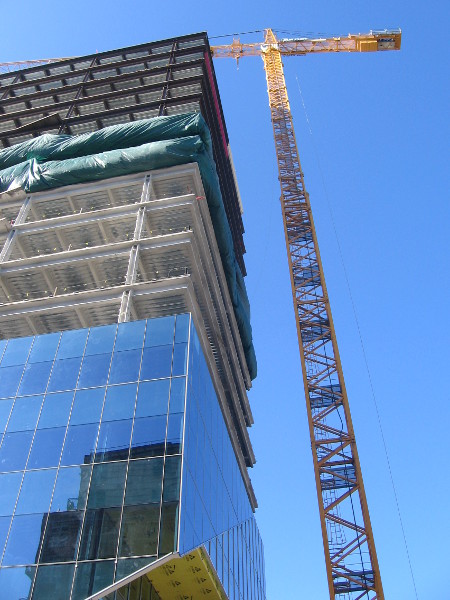
Last weekend I walked past the rapidly progressing Cisterra building which will overlook East Village. It stands just a block north of Petco’s Park at the Park. The future home of gigantic Sempra Energy, the high-rise is being built directly next to one of San Diego’s most interesting old buildings: Fire Station 4. The beautiful little firehouse is San Diego’s oldest, dating from the 1930’s. Once the shiny new skyscraper is completed, the two buildings side-by-side will create quite a contrast!

New skyscraper in San Diego to be headquarters of Sempra Energy.
Steel, glass and reflections make for interesting photos.
Steel lattice, glass grid and odd reflections make for an interesting photo.
Construction of this gleaming high-rise can be observed in downtown San Diego.
Stately little Fire Station No. 4 beside new modern skyscraper.
This is the oldest firehouse in San Diego, in service since 1938.
Fire Station 4, built as a New Deal WPA project, is a designated historical landmark.
Beautiful old San Diego firehouse at the foot of a shiny new skyscraper.
Beautiful old San Diego firehouse at the foot of what will be a shiny new skyscraper.

Here’s a bonus pic which I took on a morning in early February…

A rising skyscraper shines brightly in the early morning.

…and another I took in March…

Fire Station Number 4 at base of silvery, shiny new skyscraper.

To enjoy future posts, you can “like” Cool San Diego Sights on Facebook or follow me on Twitter.

Photos of Balboa Park’s unique magic at dusk.

Lights come on inside Casa del Prado in Balboa Park as the day ends.
Lights come on inside Casa del Prado in Balboa Park as another day ends.

Balboa Park in San Diego’s bright sunshine is wonderful. At night it becomes magical.

As darkness seeps in and night gentles the world, Balboa Park transforms into an entirely different place. Take a look…

Plaster statues of Spanish painters become shadowy in courtyard of Casa del Prado.
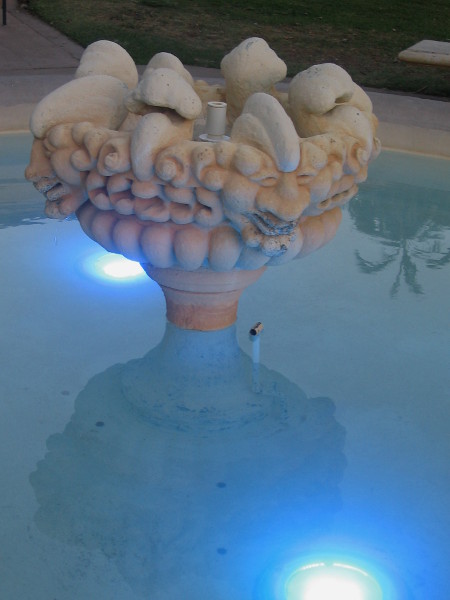
Faces above blue-lit fountain by Botanical Building.
Ornate building facades on El Prado take on new depth at dusk.
Ornate building facades on El Prado take on new, amazing depth at dusk.
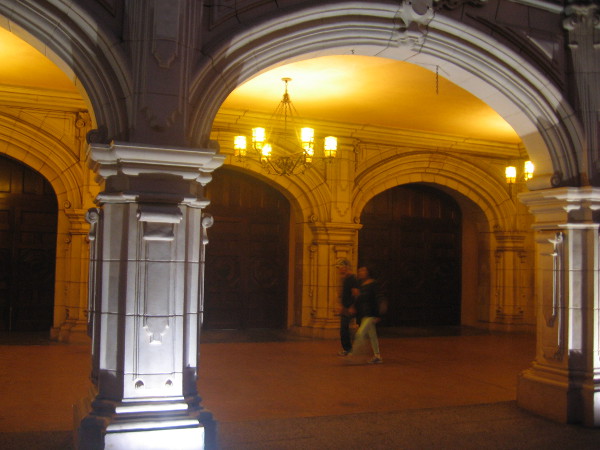
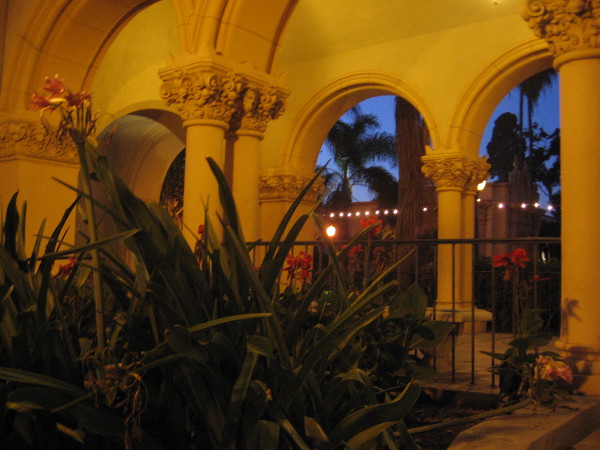
Walking down an elegant, golden corridor as night descends.
Passage along El Prado becomes mellow and mysterious.
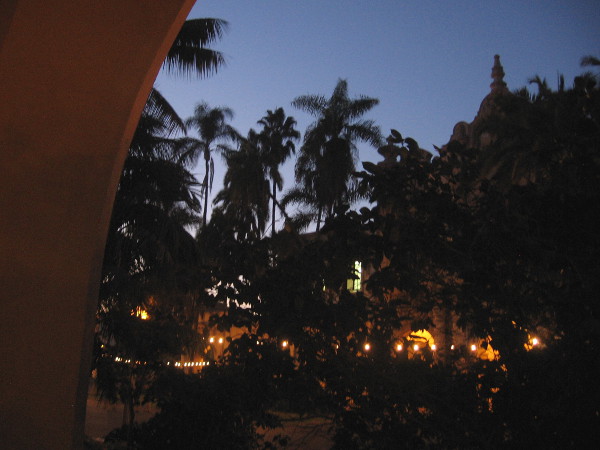
The sky becomes dark blue after sunset and faint stars slowly emerge.
Balboa Park after dark transforms into a fantastic, fairytale world.
Balboa Park after dark transforms into a fantastic, fairy tale world.
Foliate capitals on the columns of the Spreckels Organ Pavilion colonnade.
Illuminated fountain beside patio beneath The Prado restaurant in Balboa Park.
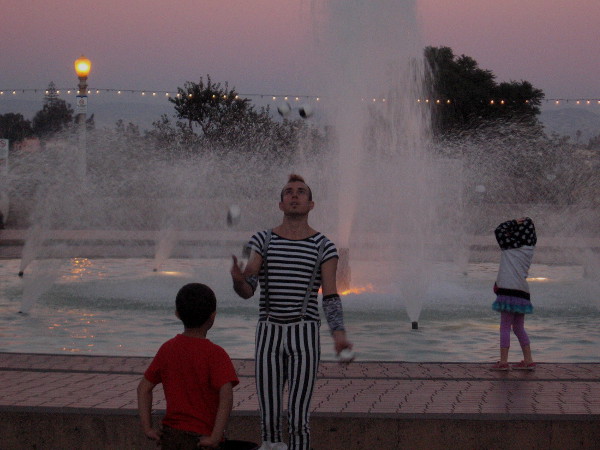
One last juggle by darkening fountain near Reuben H. Fleet Science Center.
One last juggle by the slowly darkening fountain near Reuben H. Fleet Science Center.

To enjoy future posts, you can “like” Cool San Diego Sights on Facebook, or follow me on Twitter.

Historic Balboa Theatre adds beauty downtown.

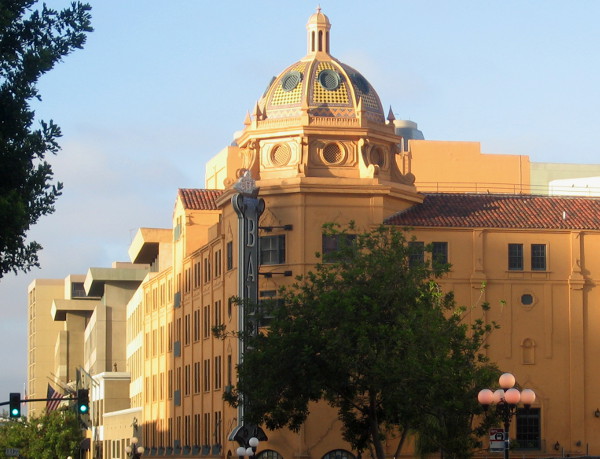
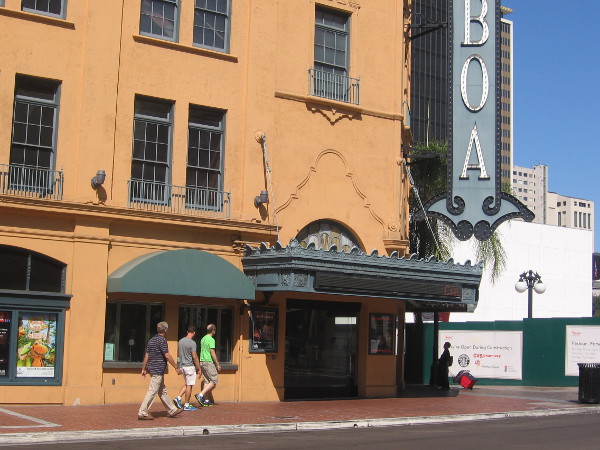
Distinctive dome of the restored Balboa Theatre seen from Broadway.

It’s going to be chilly and drizzly today, so I might not be going out for my customary walk. Instead, I thought I’d share a few photos of downtown’s beautiful Balboa Theatre that I took at various times last summer.

The Balboa Theatre has a long and interesting history. Built in 1924 as a vaudeville and movie palace, the large multi-story building containing offices overlooking Fourth Avenue has undergone a complex series of transformations. During World War II, it was used to house sailors waiting to ship out from San Diego. At one point the aging building was saved from demolition; finally it was nominated to the National Register of Historic Places. In 2008, the Balboa Theatre reopened after a thorough remodel, and it is now considered one of the foremost performance venues in the world. It was recently named by CNN Travel as one of the world’s 15 most spectacular theatres! Not bad!

Here are a few more pics of the exterior. I often steer my feet so that I walk past this beautiful building!

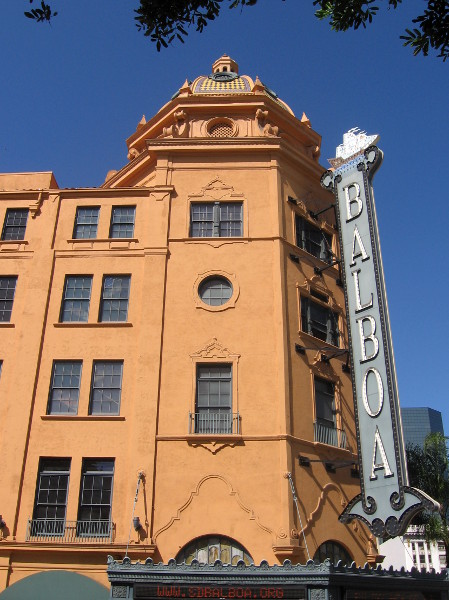
Balboa Theatre sign is a landmark in San Diego's Gaslamp.
Balboa Theatre sign is a landmark in San Diego’s Gaslamp.
People walk past box office of the historic Balboa Theatre.
Close look at artwork on Balboa Theatre's cool marquee.
Close look at artwork on Balboa Theatre’s cool marquee.
The Balboa Theatre is on the National Register of Historic Places.
The Balboa Theatre stands adjacent to downtown's equally famous Horton Plaza.
The Balboa Theatre stands next to downtown’s equally cool Horton Plaza.

One more pic I added on a later date:

Old photo and letter B from Balboa Theatre sign on display by sidewalk next to Horton Plaza.
Window display of old photograph and letter B from Balboa Theatre sign.  These can be seen a short distance down the sidewalk.

To enjoy future posts, you can “like” Cool San Diego Sights on Facebook. or follow me on Twitter.

Sunlit beauty in Balboa Park’s Alcazar Garden.

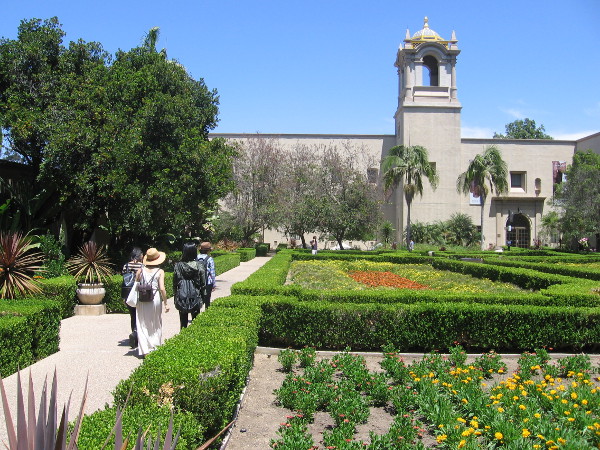
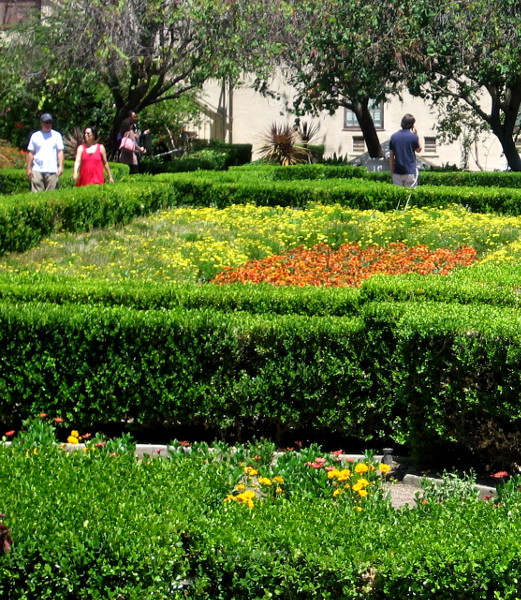
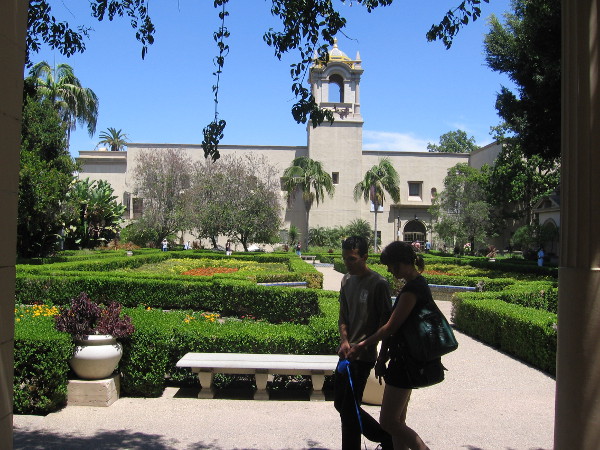
Visitors walk through Balboa Park's Alcazar Garden on a summer day.
Visitors walk through Balboa Park’s Alcazar Garden on a summer day.

There are many gardens in San Diego’s vast Balboa Park. One of the best known–and one of my favorites–is the Alcazar Garden.

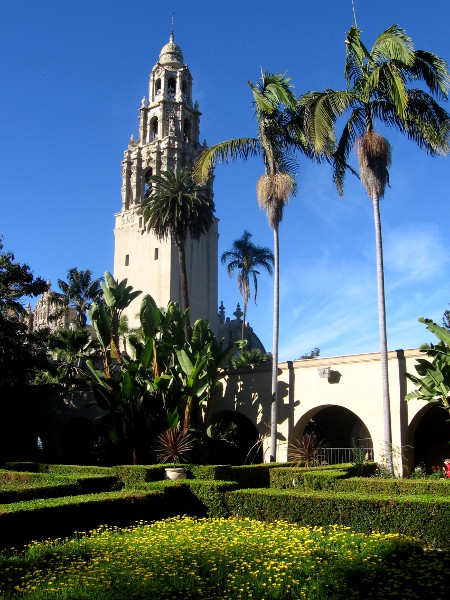
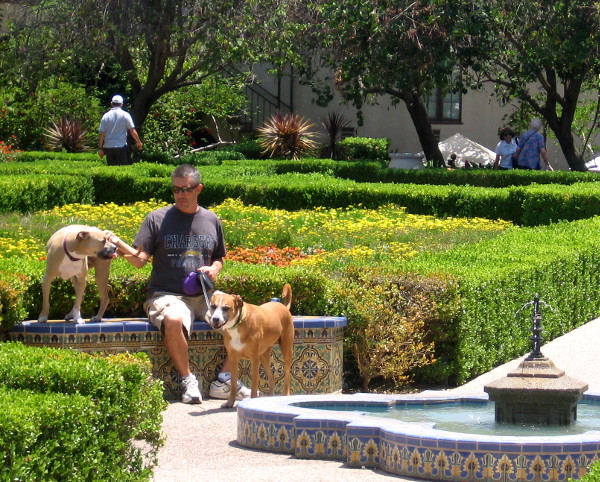
Located on the south side of El Prado between the Museum of Man and the Mingei Museum, a visit to the spacious garden is like walking through an elegant painting of towers, arches and sunlit flowers. Thousands of blooming annuals, long green hedges and colorfully tiled fountains make this the perfect place to slow down and absorb the quiet beauty. A shady pergola is ideal for rest and reflection. The Alcazar Garden is so named because it was created to resemble the formal gardens of Alcazar Castle in Seville, Spain.

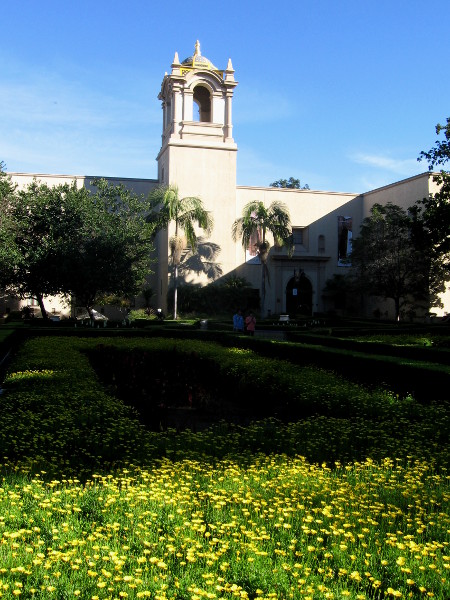
Yellow blooms beneath an elegant museum tower.
Yellow blooms beneath museum tower.  The Spanish Colonial architecture adds elegance.
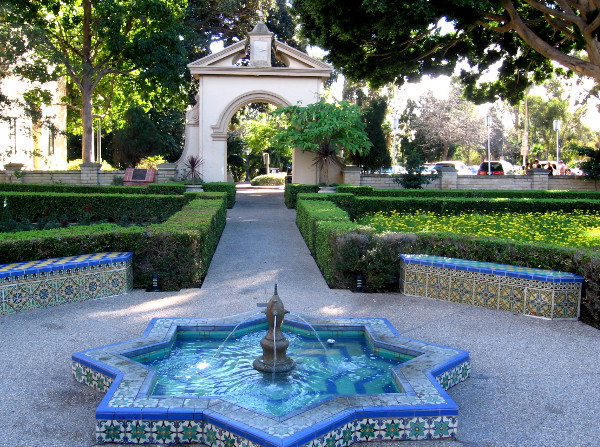
Moorish tiles on a fountain, colorful benches and an archway.
The California Tower and palm trees rise into blue sky.
The formal garden can sometimes appear a bit ragged.
The garden is not easily seen from El Prado, but many people find and enjoy it.
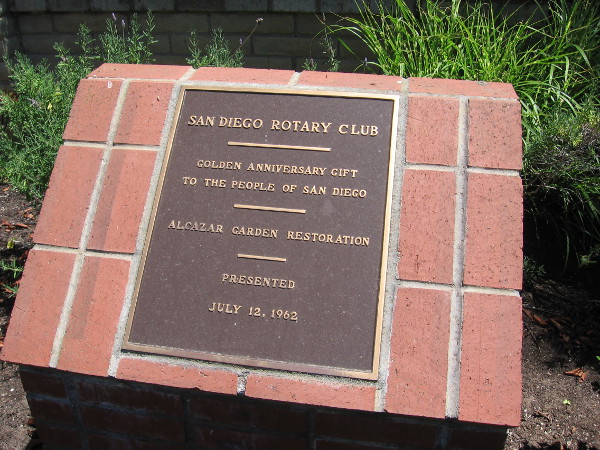
Rotary Club plaque reveals that the garden underwent a restoration.
A picture I took while sitting in the cool, shady pergola at the west end.

Here are two pics I took the following spring…

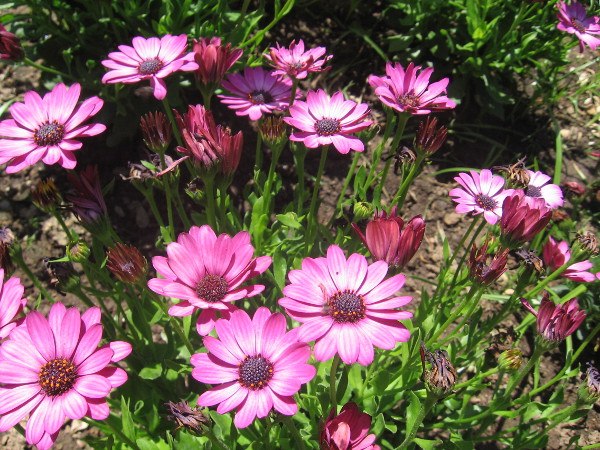
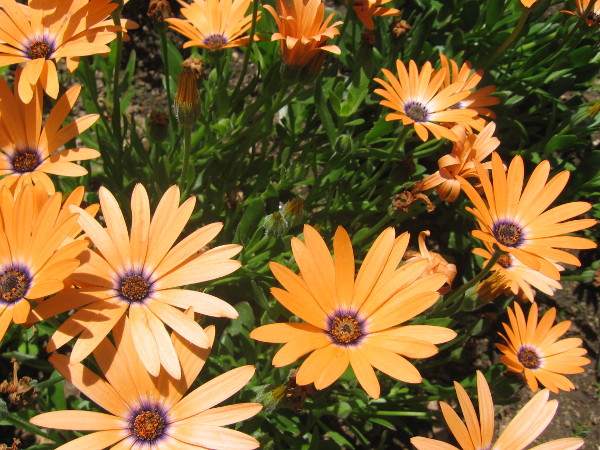
Beautiful flowers in Balboa Park.
Sunshine sprouting from the Earth.

To enjoy future posts, you can “like” Cool San Diego Sights on Facebook, or follow me on Twitter.

Photos of San Diego’s Spreckels Theater Building.

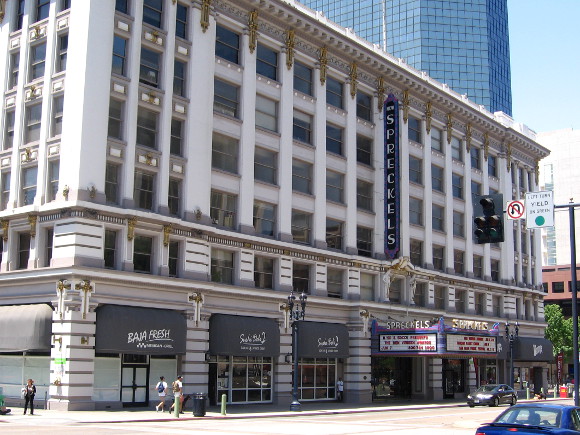
The Spreckels Theater Building was erected downtown in 1912.
The Spreckels Theater Building was erected in downtown San Diego in 1912.

I must confess I’ve never seen a show at the historic Spreckels Theatre. I do occasionally sit at a table in the building’s Grand Lobby. On a quiet Saturday I’ll eat lunch and write while watching pedestrians pass down the Broadway sidewalk, just outside the glass doors.

The mixed-use Spreckels Theater Building was built in 1912 and has been a cool sight in downtown San Diego for over a hundred years. While the upper stories are occupied by numerous small offices, the theatre itself was built as a 1,915-seat auditorium with an ornate Baroque interior. Over the decades, the theatre has also served as a vaudeville house and movie palace. Famous performers at the theatre have included Enrico Caruso, John Barrymore, Al Jolson, Will Rogers, and Abbott and Costello. In 1978, when Balboa Park’s famous Old Globe Theatre was destroyed by fire, the Spreckels was used as a temporary stage for the Globe. Today, as a live presentation venue, the Spreckels Theatre attracts many diverse attractions, including concerts, comedy shows, and dance and theatrical productions.

The six-story building, designed by Harrison Albright with influences from the Chicago School style of architecture, was built by philanthropist John D. Spreckels, a name you might have noted elsewhere on my blog. Spreckels was a wealthy sugar heir and leading San Diego entrepreneur. He wanted the building to commemorate the opening of the Panama Canal, much like the Panama-California Exposition, that would be held in Balboa Park in 1915.

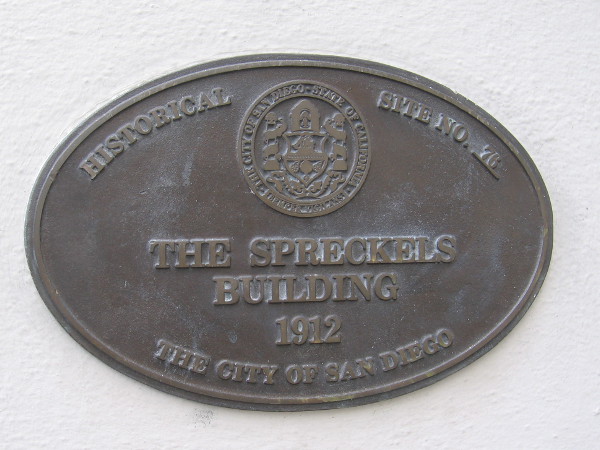
Plaque on The Spreckels Building indicates it's an historical site of the City of San Diego.
Plaque on The Spreckels Building indicates it’s an historical site of the City of San Diego.
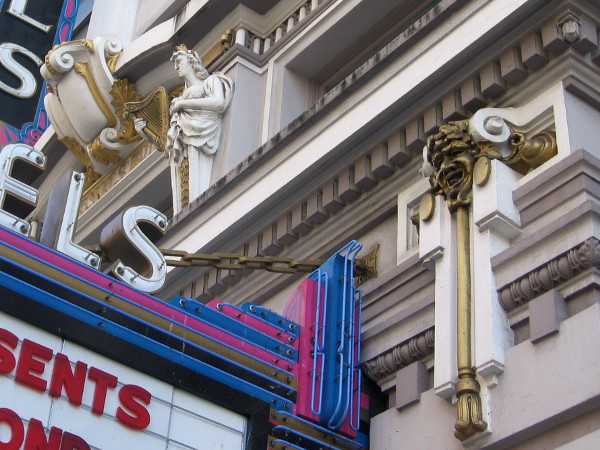
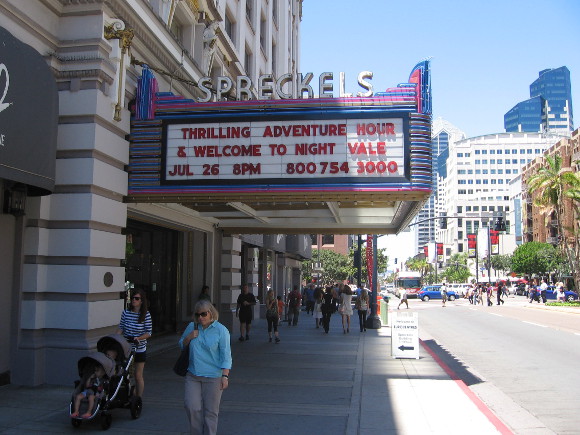
The Spreckels marquee is a cool fixture on Broadway in San Diego.
Classic theatrical figures above and beside the marquee.
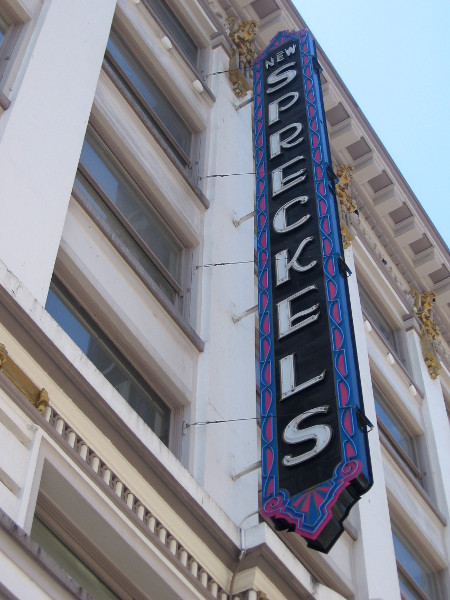
Looking up at Spreckels sign.
Looking up at the Spreckels sign.
The polished marble lobby of the Spreckels Theater Building.
The shining, polished onyx Grand Lobby of the Spreckels Theater Building.
Close look at ornate ceiling in the lobby.
Close look at the ornate old ceiling in the Grand Lobby. The building has undergone several restorations over the years, most recently in 2012.
Many-colored light above inside entrance to the historic old theatre.
A Tiffany window depicting Nine Dancing Muses was originally above the theatre’s entry. While stored during World War II due to blackout regulations in the city, the window was stolen. It was replaced in 1985 by this colorful window designed by Yaakov Agam.
Gazing west down Broadway on another sunny day.

To enjoy future posts, you can “like” Cool San Diego Sights on Facebook, or follow me on Twitter.

Historic adobe house in San Diego’s Old Town.

Approaching La Casa de Machado y Stewart Museum in Old Town.
Approaching the La Casa de Machado y Stewart Museum in Old Town.

It seems most of the tourists who visit Old Town San Diego State Historic Park enjoy the large central grassy plaza and the many interesting buildings immediately around its perimeter. Few, however, go slightly off the beaten track to investigate the several restored old structures that are scattered a few easy steps farther away.

In addition to a very cool one room schoolhouse dating from 1865 (which I remember visiting during a field trip as a child), there is a restored adobe house called Casa de Machado y Stewart which stands as an open museum to any passersby who are curious.

The Casa de Machado y Stewart dates from 1835. It was built by José Manuel Machado, a Spanish (then later Mexican) officer who served at the nearby presidio. Jack Stewart, an American shipmate of famous author Richard Henry Dana Jr., and a pilot on San Diego Bay, married Machado’s youngest daughter Rosa in 1845 and the two moved into the house. Over their many years of residence they made many improvements, including a clay tile roof and wood-paned windows. What today seems a very simple and almost primitive existence was back in those days living in the lap of luxury.

In 1932, the house became an official California Historic Landmark.

Restored 1835 adobe house in San Diego's Old Town State Historic Park.
Restored 1835 adobe house in San Diego’s Old Town State Historic Park.
Sign details history of La Casa de Machado y Stewart.
House was built by a soldier from nearby presidio.
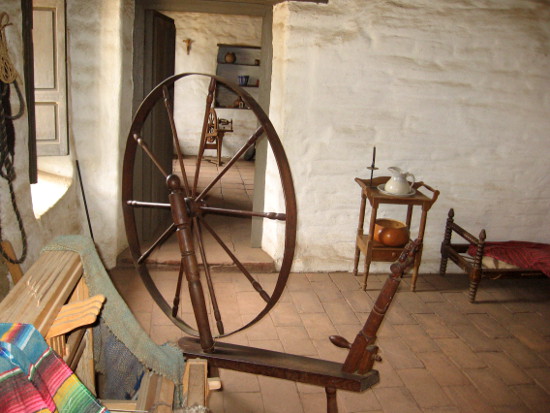
A spinning wheel in one of the simple rooms suggests what life was like.
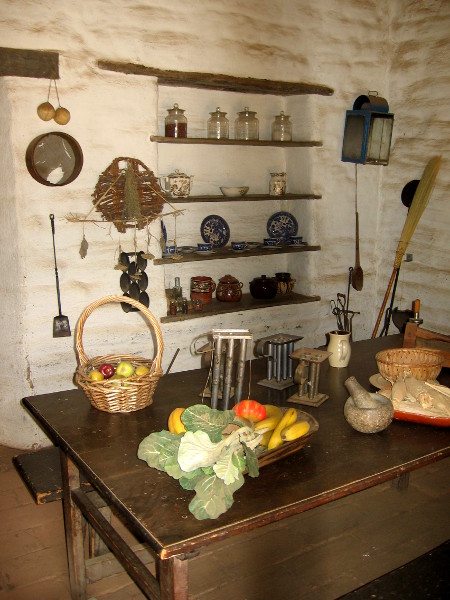
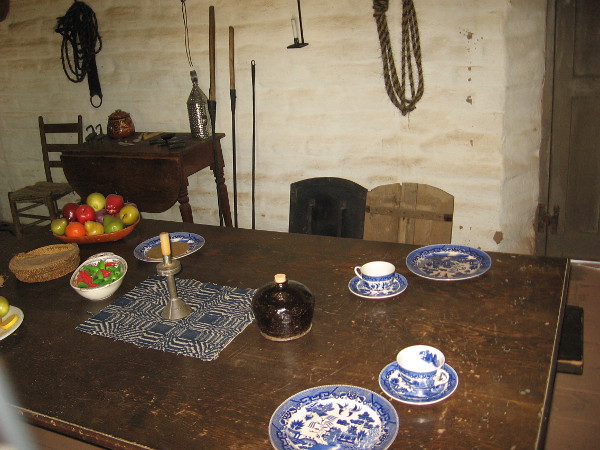
A modest dining area as it appeared long ago.

UPDATE!

I visited La Casa de Machado y Stewart again in August, 2018, and noticed the exterior had been painted white. When I looked through the front door into the main living room, I observed that new furnishings and artifacts have been added, and others moved about.

I also peered through a window into what appears to be a bedroom.

Here are photos…

IMG_4356z

IMG_4360z

IMG_4361z

IMG_4366z

IMG_4367z

To enjoy future posts, you can “like” Cool San Diego Sights on Facebook, or follow me on Twitter.

A look inside San Diego’s old Santa Fe Depot.

Approaching the front of Union Station in San Diego.
Approaching the front entrance of Union Station in San Diego.

Walking into San Diego’s Union Station, more commonly called Santa Fe Depot, is like walking into the past. Or through some airy, sacred, vaulted cathedral.

The old train station seems utterly enormous when contrasted with the actual role that it plays in modern San Diego. Sure, it’s a reasonably important transportation hub, serving two lines of the San Diego trolley, plus the Amtrak Surfliner and Coaster trains. But today it seems to me more like a living memorial to a time long ago, when trains were a central feature of American life.

Here are a few cool photos of the Santa Fe Depot’s somewhat sparse but elegant interior. I love the tile work on the walls, the huge glowing windows, the beams in the arched ceiling…but most of all the classic long polished wooden benches. Whenever I walk through I feel like sitting down with the waiting passengers and pretending I’m off on some exciting transcontinental voyage.

Many years ago the depot held a large model of the USS Midway aircraft carrier under glass; I remember seeing that it was moved over to Petco Park. If memory serves, there was also a small pinball and video game arcade off to one side, by an exit to Kettner Boulevard.

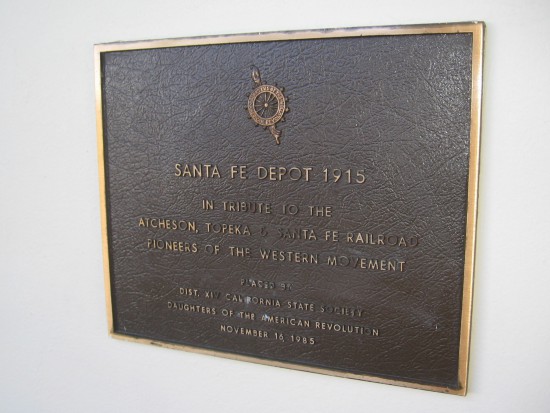
Plaque dates Santa Fe Depot from 1915.

The above plaque is just outside the main entrance.

A look inside the large train station in downtown San Diego.
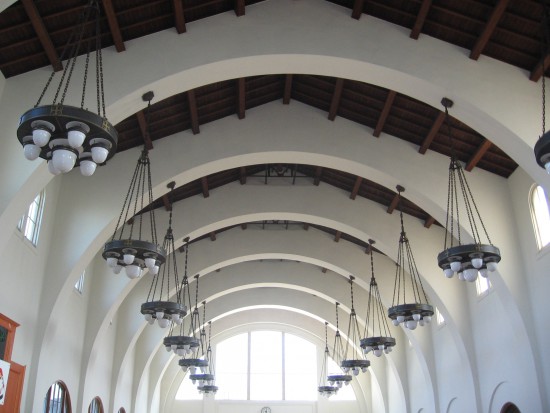
A cool photo of the arched ceiling of Union Station.
Looking back toward the front entrance from inside.
Coaster train can be seen waiting outside on one track.
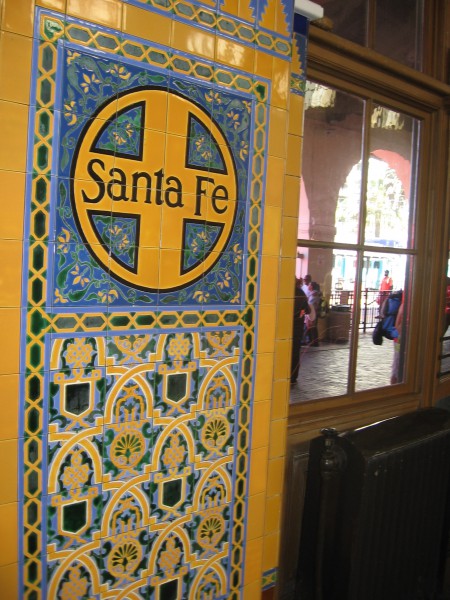
Blue and orange tiles form classic Santa Fe design.

To enjoy future posts, you can “like” Cool San Diego Sights on Facebook, or follow me on Twitter.

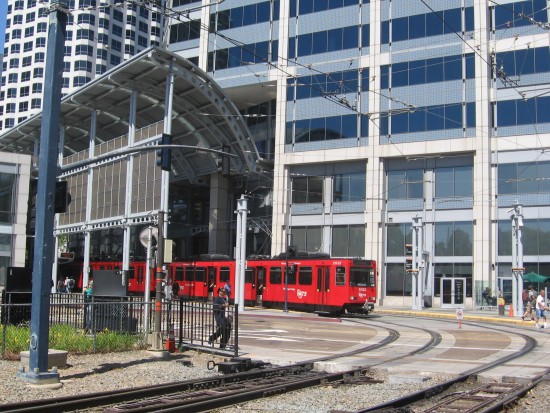
The cool America Plaza trolley station.

San Diego Trolley stops at cool America Plaza station.

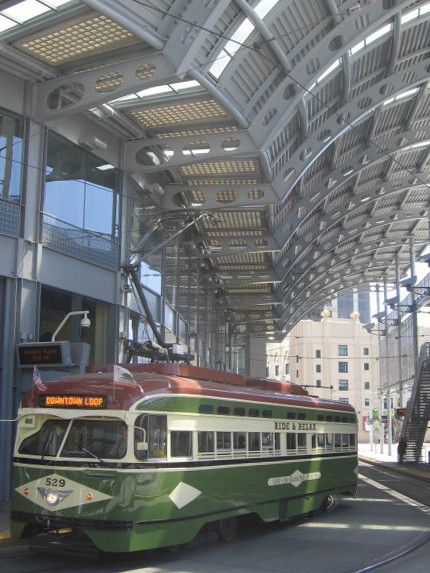
There are a few San Diego Trolley stations that are unusual and especially interesting. One is the partially enclosed station at America Plaza. Every busy day, long red trolleys snake through the skirt of the tall, glassy building. One America Plaza is the highest skyscraper downtown, and stands just across Kettner Boulevard from the Santa Fe Depot.

Looking outward from the partially enclosed trolley station.
Silver Line trolley stops at America Plaza.
Taking a walk through the shady station on a sunny day.

To enjoy future posts, you can “like” Cool San Diego Sights on Facebook, or follow me on Twitter.

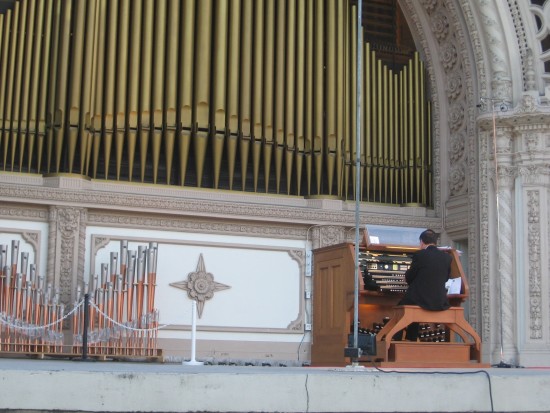
Anthony Newman plays the Spreckels Organ.

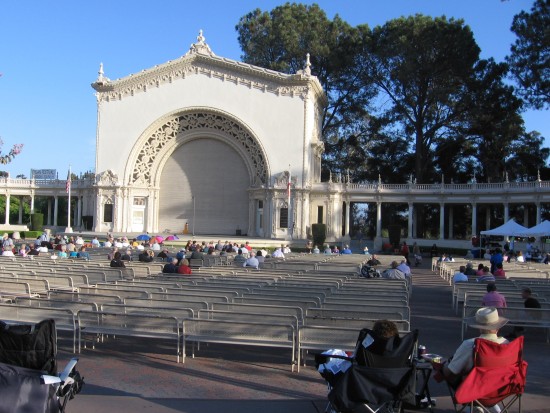
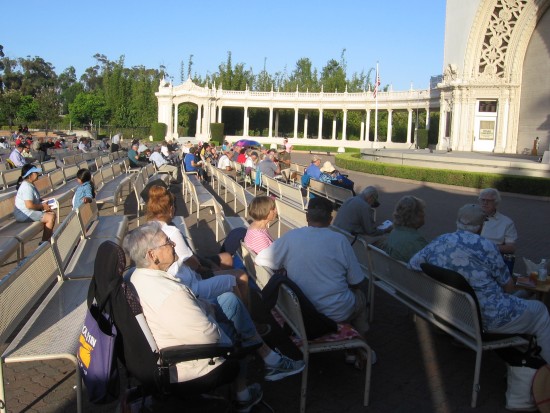
People arrive early to get good seats for tonight's organ concert.
People arrive very early to get good seats for tonight’s organ concert.

Mere pictures and words are inadequate to describe the fantastic concert I enjoyed this evening in Balboa Park. Tonight was the first Monday concert at the Spreckels Organ Pavilion of the Summer International Organ Festival.

The special guest organist was Anthony Newman, widely considered one of the foremost Baroque musicians in the United States. He’s made countless recordings, won numerous awards, performed at New York City’s prestigious Lincoln Center more than 60 times, and was described by Wynton Marsalis as “The High Priest of Bach.” Tonight’s concert, I’m glad to say, was jam packed with Johann Sebastian Bach–my absolute favorite composer!

Anthony Newman seemed superhuman at times. He played difficult pieces with ease, crispness and energy.  It was flawless poetry and simply amazing.  The concert was over much too soon!

Here are a few pics!

Spreckels Organ Society membership table and a smile.
Anticipating first concert of Summer International Organ Festival.
Anticipating first concert of the Summer International Organ Festival.
Big banner on Organ Pavilion's colonnade announces the event.
Big banner on Organ Pavilion’s colonnade announces the free event.
Rolling out the red carpet for great organist Anthony Newman.
Rolling out the red carpet for great American organist Anthony Newman.
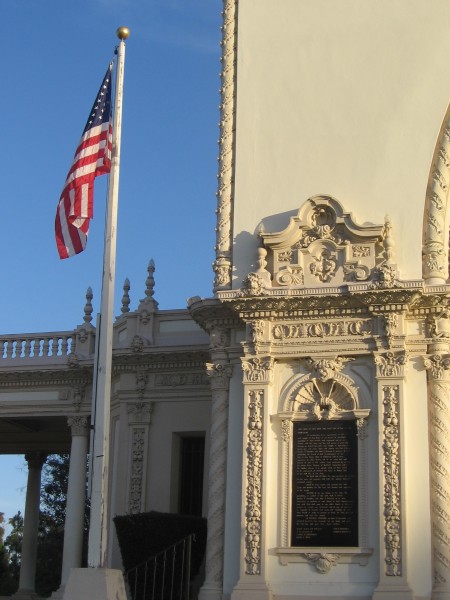
Flag and a bronze plaque of the historic pavilion.
Beautiful pavilion is a treat for the eye in changing light.
Beautiful building is a treat for the eye in changing light.
Elegant peek by organ assistant at the growing crowd.
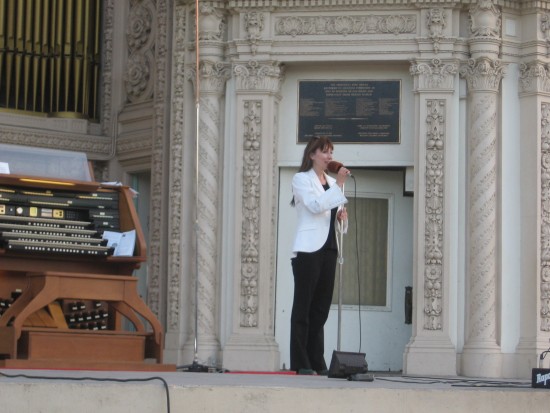
Dr. Carol Williams, civic organist, announces guest musician.
Dr. Carol Williams, San Diego’s Civic Organist, announces guest artist.
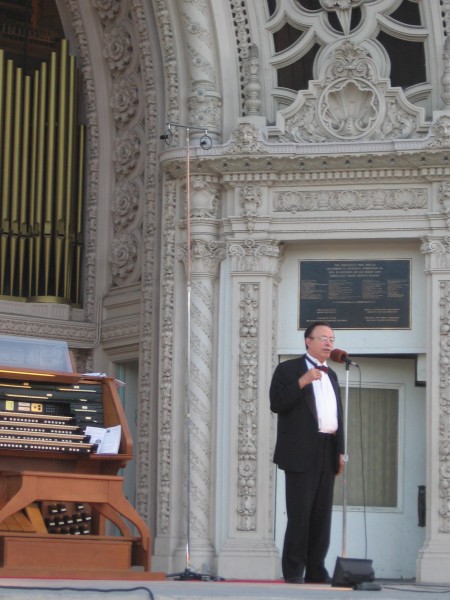
Famed Baroque organist Anthony Newman greets audience.
A masterful performance on the Spreckels Organ begins.

Those pipes you see on the left side of the stage form the new Centennial Tuba rank, soon to be added to the Spreckels Organ for its one hundredth anniversary on New Year’s Eve!

Anthony Newman acknowledges enthusiastic applause.
Anthony Newman acknowledges long, enthusiastic applause.
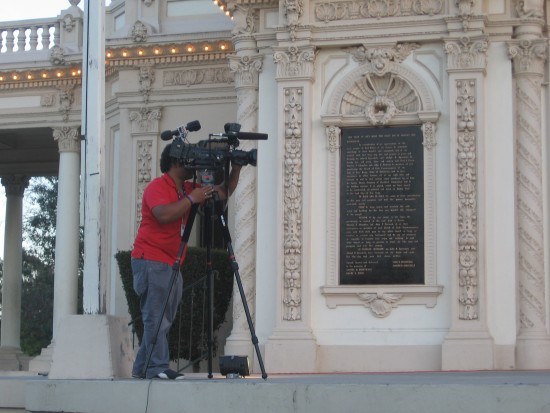
KUSI television cameraman records a portion of the event.
The lights come on in the twilight and the pavilion becomes magical.
There are 1400 embedded lights in the main structure and colonnades.

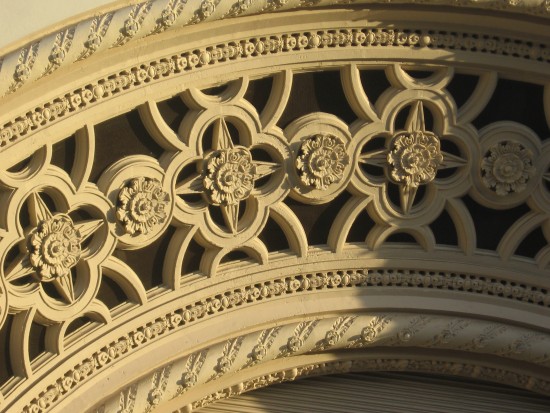
The Spreckels Organ Pavilion was built for the 1915 Panama-California Exposition. You can observe similar plaster ornamentation on the Spanish Colonial Revival style buildings that line El Prado, in the center of Balboa Park.

Night descends and people stretch their legs during intermission.

My camera is worthless at night, so I recorded only half of the evening.  But the music throughout was amazing!  What a brilliant start to the 2014 International Organ Festival!

To enjoy future posts, you can “like” Cool San Diego Sights on Facebook, or follow me on Twitter.