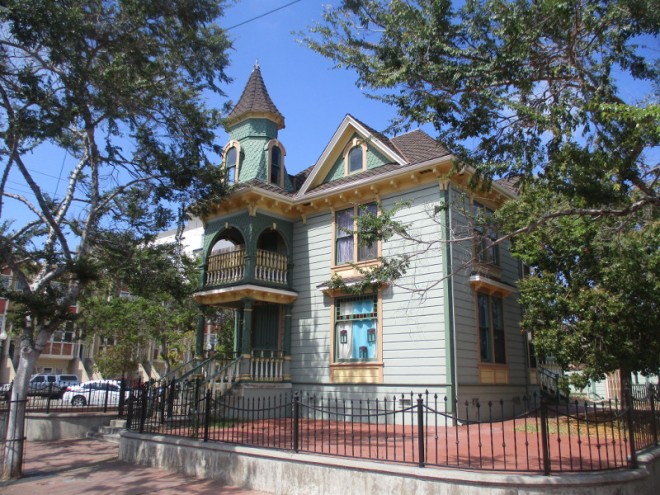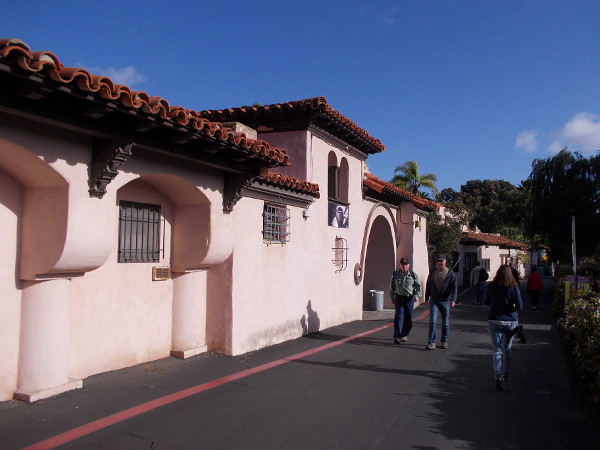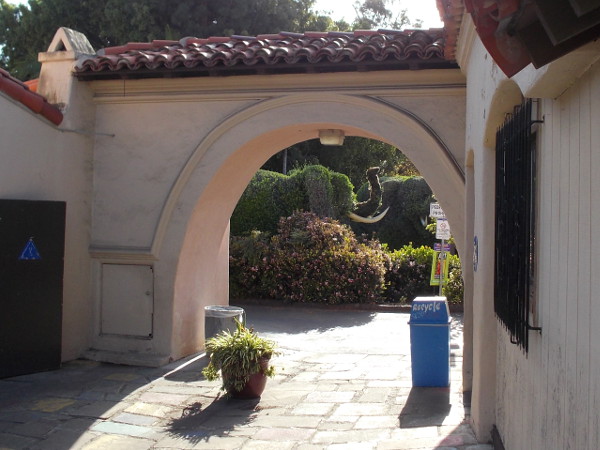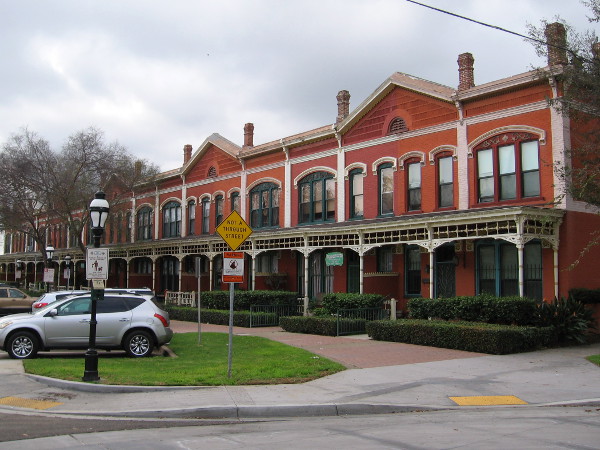
Photos of National City’s Heritage Square and Brick Row.

Brick Row at National City's Heritage Square, built by Frank Kimball in 1887.
Brick Row at National City’s Heritage Square.  The long brick two-story structure was built by Frank Kimball in 1887.

To those traveling through gritty National City, Heritage Square can be a surprising discovery. Venture into the picturesque block, just south of the intersection of East 9th Street and A Avenue, and you feel like you’ve stepped back 150 years.

National City has a fascinating history. Originally used by the Spanish to graze horses, the land in the early 1800s, after Mexican independence, was called Rancho de la Nación. In 1868, a San Francisco builder named Frank Kimball bought the rancho with an ambitious dream. He intended to turn National City into the western terminus of the Santa Fe Railway.

You might remember my photographic tour of the National City depot, built in 1882 by the Santa Fe Railroad. It became the first terminus of transcontinental rail travel in the San Diego area. You can see that fascinating blog post here.

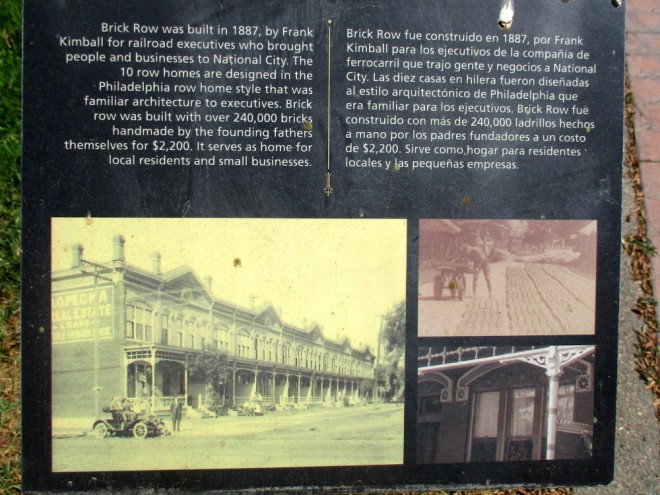
To accommodate executives of the Santa Fe Railroad and booming times caused by the arrival of rail, in 1887 Frank Kimball built Brick Row, a structure in the style of Philadelphia row house. It was designed by San Diego architect R. C. Ball. Over 240,000 bricks were used for the ten units.

Kimball’s full ambitions weren’t realized, however, when the Santa Fe Railroad soon turned their sights on Los Angeles, making that city their major center of operations in Southern California.

An early resident of the “Kimball Block” was legendary marshal Wyatt Earp, who came to Southern California after being indicted in Arizona for shooting the men who’d killed his brother. He is best known locally for opening three gambling halls in San Diego. In 1889, Wyatt Earp stayed in Brick Row when he traveled down to Tijuana, Mexico. There he famously refereed a prize fight during a fiesta that also featured cockfights, bullfights and a lassoing contest.

In the early 1970s, National City’s planning director, Malcolm C. Greschler, interested in preserving the deteriorating Brick Row, came up with the idea of creating Heritage Square, which would be a historical tourist attraction similar to San Diego’s Old Town. In 1973 Frank Kimball’s house was moved to Heritage Square.

The 1869 Kimball House has its own unique history. It was the first house built in National City. Not only did it have a bathtub, but it had hot running water, which made it the first modern house in the entire county. President Benjamin Harrison visited it in 1891 during his tour of the western United States. At the time, it was the longest journey ever made by a President while in office. President Harrison’s 9,232 mile trip by railroad took one month and three days!

In 1976 two more historical houses were moved to Heritage Square: the 1887 Stick-style Rice-Proctor House and the 1879 Steele-Blossom House, which is depicted on National City’s official logo.

A plaque that reads Heritage Square - Marked in honor of the National City Centennial by San Miguel Chapter NSDAR, 1987.
A plaque that reads Heritage Square – Marked in honor of the National City Centennial by San Miguel Chapter NSDAR, 1987.
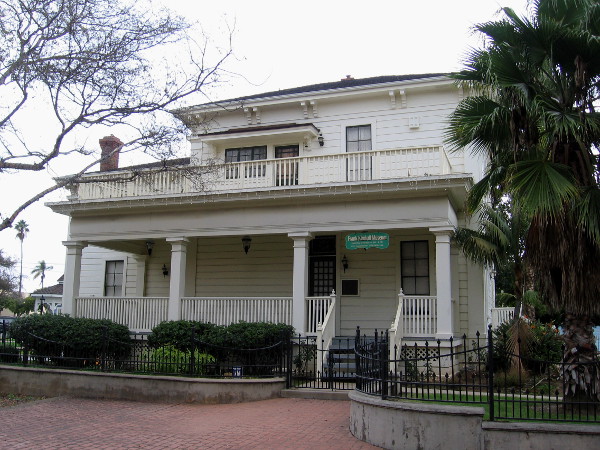
Heritage Square in National City contains several historic structures from the mid to late 19th century.
The Steele-Blossom House, built in 1879, is used by the city of National City in its official logo. Elizur Steele was real estate agent for the Frank Kimball and his enterprising brothers.
The Steele-Blossom House, built in 1879, is used by the city of National City in its official logo. Elizur Steele was real estate agent for Frank Kimball and his enterprising brothers.
The 1869 Kimball house was moved to Heritage Square in 1975. It is now the Kimball Museum operated by the National City Historical Society.
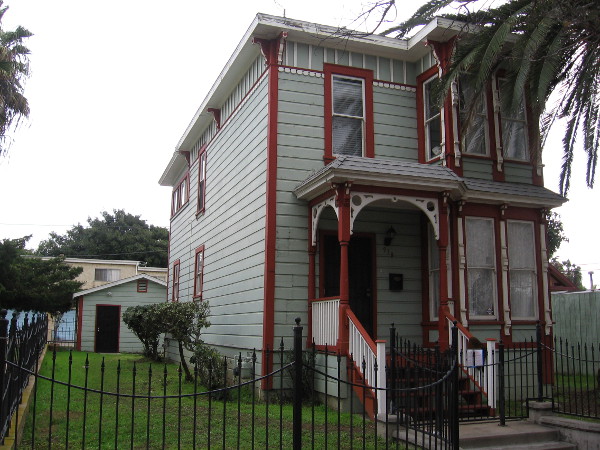
The 1887 Stick-style Rice-Proctor House in National City's Heritage Square.
The 1887 Stick-style Rice-Proctor House in National City’s Heritage Square.
The two-story Brick Row is composed of ten units with common walls.
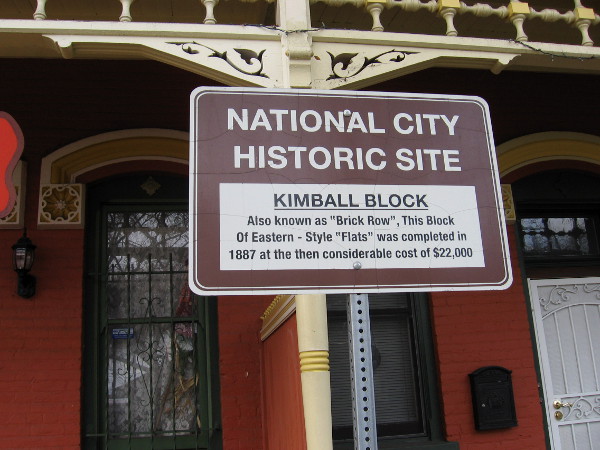
Sign reads National City Historic Site - Kimball Block - Also known as Brick Row, this block of Eastern-style flats was completed in 1887 at the then considerable cost of 22,000.
Sign reads National City Historic Site – Kimball Block – Also known as Brick Row, this block of Eastern-style flats was completed in 1887 at the then considerable cost of $22,000.
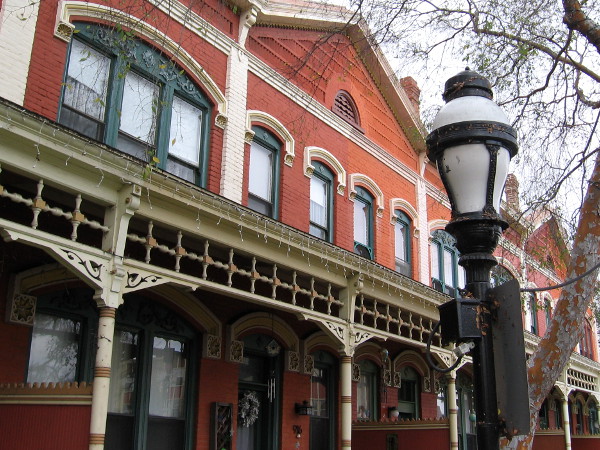
Photo of section of the handsome Brick Row in National City. The building now houses several specialty shops and the National City Historical Archive Room.
Photo of a section of the handsome Brick Row. The building now houses several specialty shops and the National City Historical Archive Room.
Walking through the historic block of Heritage Square in National City is like a voyage back in time.
Walking through the historic block of Heritage Square in National City is like a wonderful voyage back in time.

UPDATE!

I took the following three photographs in 2021 during another walk through National City.

The first photo is of a sign providing information concerning Brick Row. I cropped the top of the photo off because the outdoor sign was plastered with unsightly bird poop!

The second photo is of a sign concerning the Kimball House. I see its dates are different than what I previously wrote. I got that info from some other source. Do your own research!

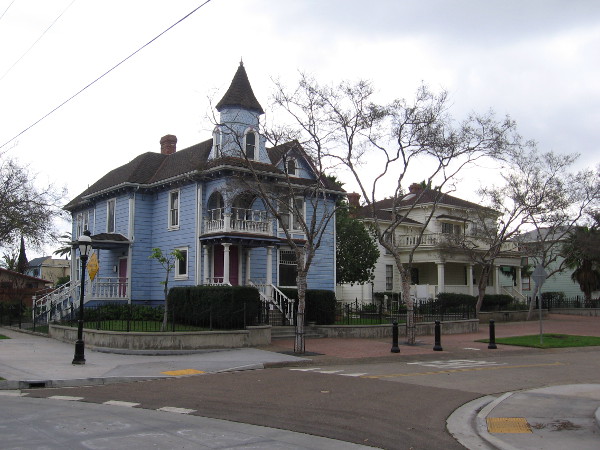
The third photo is of the Steele-Blossom House, which appears to have been repainted with different colors.
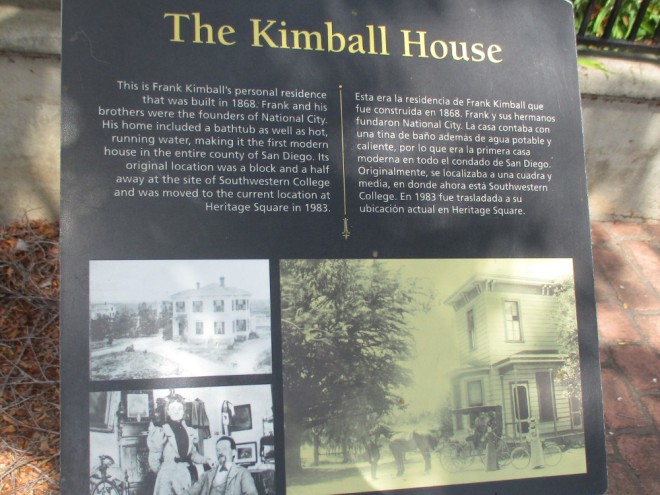
IMG_5488z

IMG_5492q

IMG_5491z

This blog now features thousands of photos around San Diego! Are you curious? There’s lots of cool stuff to check out!

Here’s the Cool San Diego Sights main page, where you can read the most current blog posts.  If you’re using a small mobile device, click those three parallel lines up at the top–that opens up my website’s sidebar, where you’ll see the most popular posts, a search box, and more!

To enjoy future posts, you can also “like” Cool San Diego Sights on Facebook or follow me on Twitter.

Salk Institute architect Louis Kahn: an amazing exhibit!

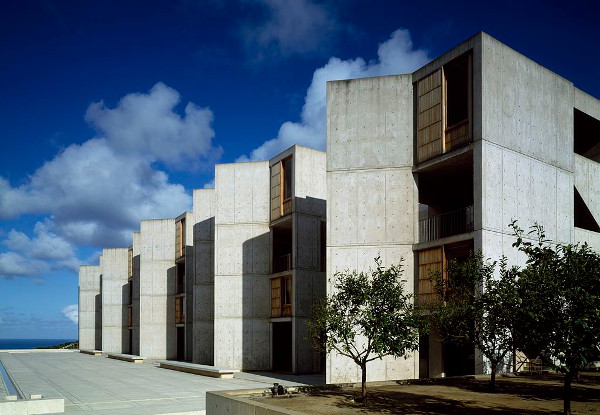
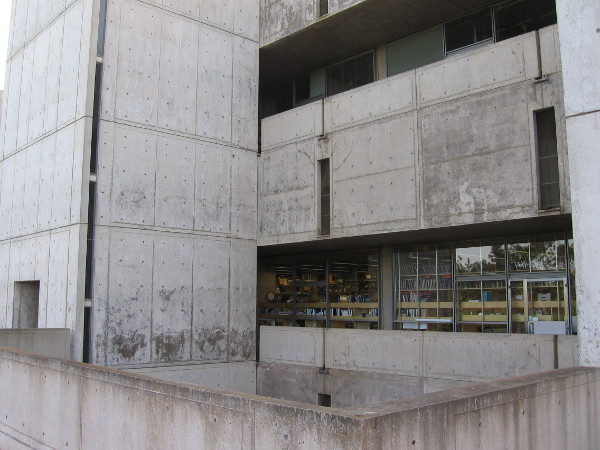
Photo of exterior of The Salk Institute for Biological Studies in La Jolla. The famous building was designed by renowned modernist architect Louis Kahn.
Photo of exterior of the Salk Institute for Biological Studies in La Jolla. The famous building was designed by renowned modernist architect Louis Kahn.

One of the world’s most famous works of modern architecture is located in San Diego.  I’m referring to the Salk Institute building in La Jolla. Its designer was Louis Kahn, considered to have been one of the most important, innovative architects of the 20th century.

An exhibition now running at the San Diego Museum of Art takes a thorough look at the remarkable life, work and genius of Louis Kahn.

Last weekend I was given a personal tour of the amazing exhibit and found myself completely blown away by its scope. The photos, films, sketches, notes and architectural models, including a life-size portion of an extraordinary house–even works of art produced by Louis Kahn himself– were too much for my mind to absorb in one visit.

Kahn was undoubtedly a genius. His unique modern structures seem like ancient timeless monuments, made beautifully functional. They are simultaneously complex and simple. They are geometric, symmetric, modular, clean. They seem solid but light-filled. They contain unusual surprises of line, curve and angle. They are iconic.

Louis Kahn had a long, prolific career.  His work can be found throughout the world, and includes the enormous, citadel-like National Assembly Building of Bangladesh. Some of his more famous creations in the United States include the Kimball Art Museum, the Yale University Art Gallery, the library at Philips Exeter Academy, the Norman Fisher House in Philadelphia, the Franklin D. Roosevelt Four Freedoms Park, and, of course, San Diego’s own remarkable Salk Institute.

There is so much to see in this impressive exhibit–there were so many amazing designs produced by Kahn during his productive lifetime–that I can’t begin to cover it all in this blog. So I must direct you to the San Diego Museum of Art’s website. To get a small hint of what you will discover at the museum, you might want to check out the Wikipedia article on Louis Kahn.

This weekend I headed up to La Jolla to see if I could snap some good photos of Louis Kahn’s very famous Salk Institute building. Walking around, I managed to photograph the exterior, but I was unable to access the interior courtyard. So I’ve included one photo from Wikimedia Commons, just to provide a quick idea. Peering through a fence, I did glimpse some scaffolding in the interior area, so I suppose that would have nullified my photographic attempts, anyway.

The Salk Institute building’s walls are made of smooth exposed concrete. While this material might appear stark, the monumental appearance, the intriguing shapes and architectural symmetry are absolutely impressive. There is a mathematical, complex interaction between shadow and light that is difficult to describe–and quite beautiful.

Want to see more of Kahn’s brilliant work? Head over to the San Diego Museum of Art in Balboa Park before this special exhibition closes on January 31, 2017.

Louis Kahn The Power of Architecture is a special exhibit showing at the San Diego Museum of Art in Balboa Park through January 31, 2017.
Louis Kahn: The Power of Architecture is a special exhibit showing at the San Diego Museum of Art in Balboa Park through January 31, 2017.
Salk Institute in La Jolla from the interior courtyard. (A cropped public domain photo from Wikimedia Commons.)
Interior section of the Salk Institute just beyond the main entrance.
Kahn's design seems both simple and futuristic. The interior space utilized by medical research scientists is said to be uniquely inspiring and functional.
Kahn’s design seems both simple and futuristic. The interior space utilized by medical research scientists is said to be intellectually inspiring and uniquely functional.
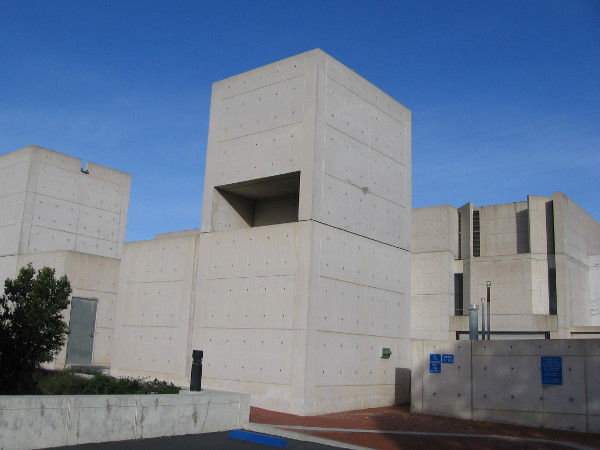
Another photo of the Salk Institute building's fascinating exterior.
Another photo of the Salk Institute building’s fascinating exterior.
A monumental building made of smooth exposed concrete with simple, clean lines, between green grass and blue San Diego sky.
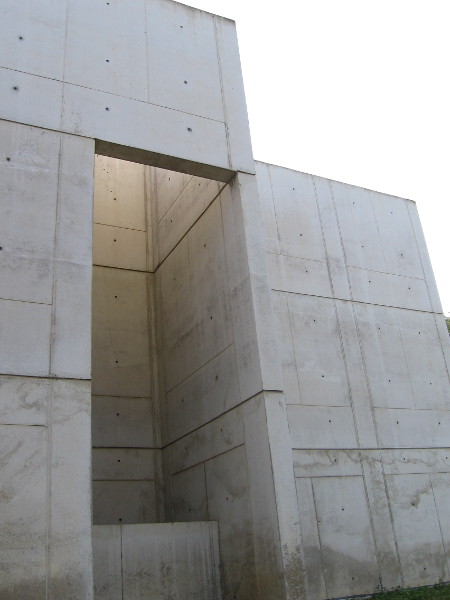
A small but interesting portion of the Salk Institute building.
The surface of the Salk Institute building is stark but surprisingly beautiful. Time has made the concrete appear more earthen and natural. Almost like marble.
Laboratory visible through one window. Jonas Salk invented the polio vaccine. Salk Institute today is a world leader in medical research.
It's a sunny day in La Jolla as someone walks toward a brilliant creation of the human mind--a building designed by famed modernist architect Louis Kahn.
It’s a sunny day in La Jolla as someone walks toward a brilliant creation of the human mind: a building designed by famed modernist architect Louis Kahn.

I live in downtown San Diego and love to walk around with my camera! You can follow Cool San Diego Sights via Facebook or Twitter!

You can easily explore Cool San Diego Sights by using the search box on my blog’s sidebar. Or click a tag! There are thousands upon thousands of interesting photos for you to enjoy!

Historical exhibit inside San Diego’s Santa Fe Depot.

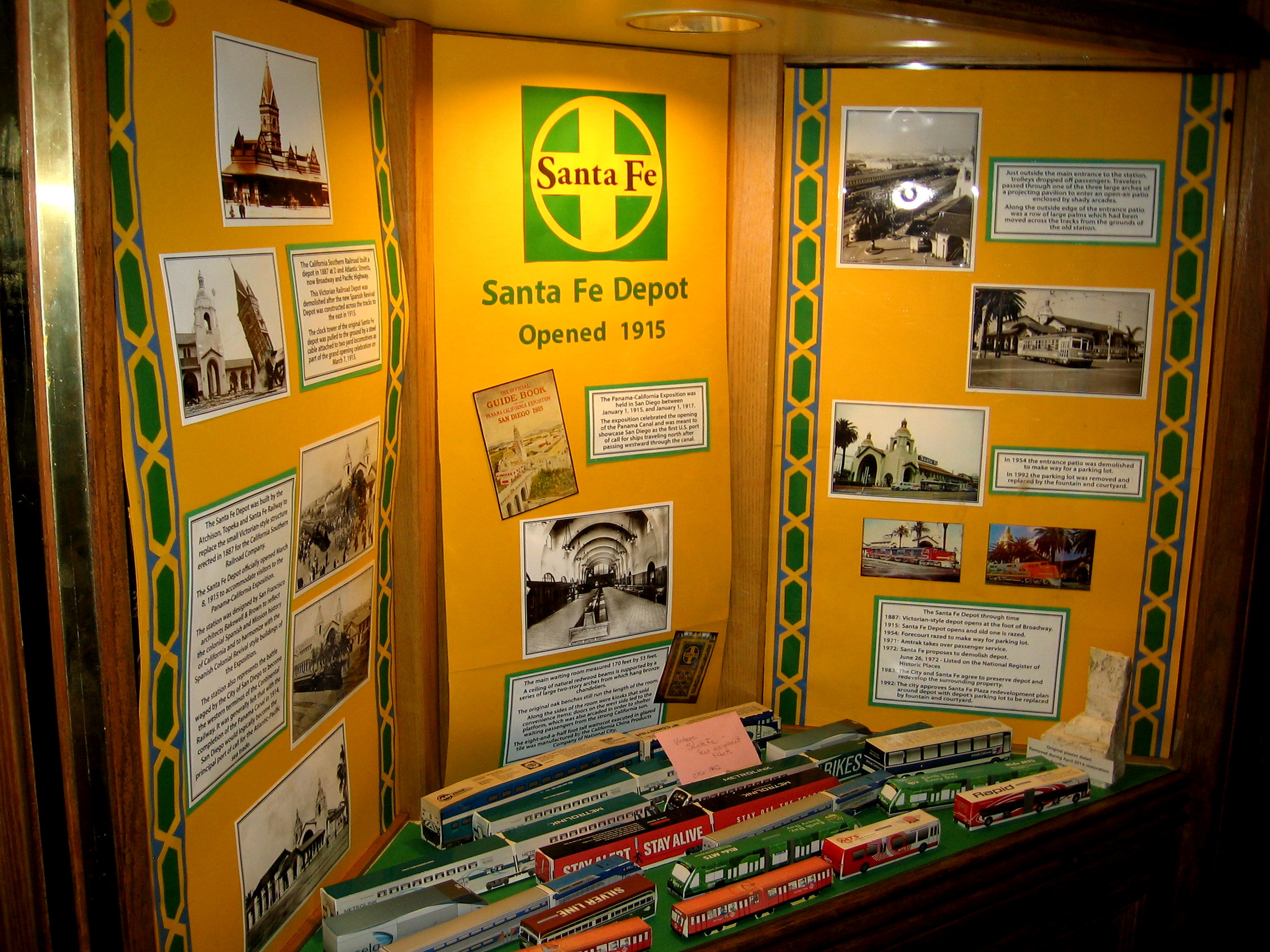
Display inside San Diego's 1915 Santa Fe Depot. Photos and words provide a glimpse of the train station's history.
Display inside San Diego’s 1915 Santa Fe Depot. Photos and words provide a glimpse of the train station’s history.

Should you ever step inside downtown San Diego’s handsome Santa Fe Depot, there’s a small exhibit at the information booth worth checking out. Two glass display cases provide a glimpse of the train station’s fascinating history.

To read the signs, click the images and they will enlarge.

Last year the Santa Fe Depot celebrated its centennial. I blogged about that here!

If you ever visit the Santa Fe Depot in downtown San Diego, swing by this information booth to check out the historical exhibit.
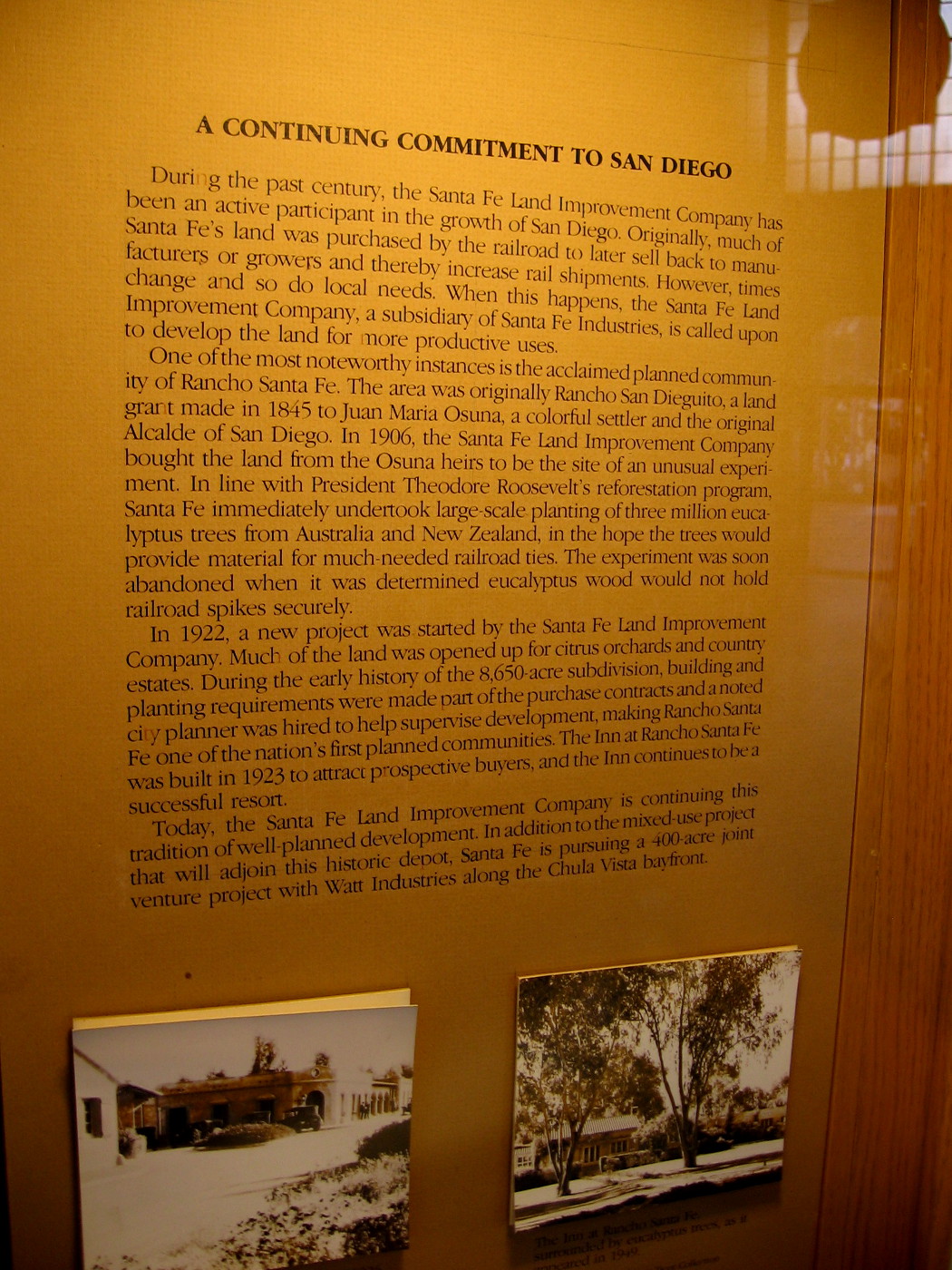
Several paragraphs recount the history of the Santa Fe Land Improvement Company and the unique origin of North County community Rancho Santa Fe. Eucalyptus trees make poor railroad ties!
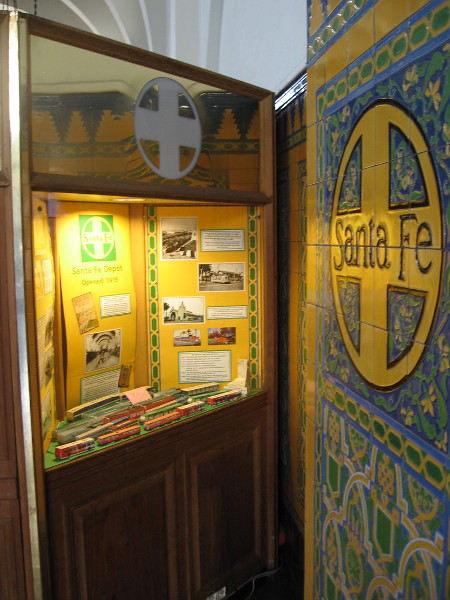
In a nook right next to the depot's wall, beside colorful Santa Fe tilework, one can discover more fascinating information.
In a nook right next to the depot’s wall, beside colorful Santa Fe tilework, one can discover more fascinating information.
Graphic shows important dates concerning the Santa Fe Depot. The 1887 Victorian-style depot was razed in 1915 after the new depot opened in time for the Panama-California Exposition in Balboa Park.
Old photos of Santa Fe Depot, accompanied by historical background. San Diego strove to become the western terminus of the Continental Railway.
The train station’s architecture reflects colonial Spanish and Mission history in California; it was designed to harmonize with the Spanish Colonial Revival-style buildings of the 1915 Panama-California Exposition in Balboa Park.  A century ago San Diego strove to become the western terminus of the Continental Railway.
More fascinating old photos of the Santa Fe Depot, today a San Diego transportation hub serving Amtrak, the Coaster, and the Orange and Green Lines of the San Diego Trolley.
Original plaster detail removed during the April 2014 restoration of the southeast tower.

I live in downtown San Diego and love to walk around with my camera! You can follow Cool San Diego Sights via Facebook or Twitter!

You can easily explore Cool San Diego Sights by using the search box on my blog’s sidebar. Or click a tag! There are thousands upon thousands of unique photos for you to enjoy!

The oldest building in San Diego is a golf Pro Shop!

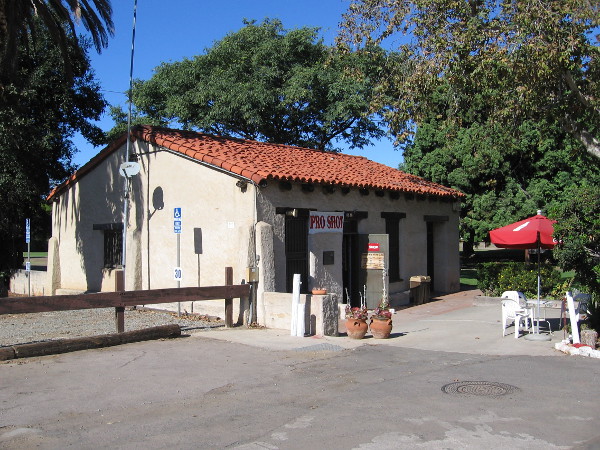
The Pro Shop at Presidio Hill Golf Course can be found inside San Diego's oldest building, La Casa de Carrillo.
The Presidio Hills Golf Course Pro Shop can be found inside San Diego’s oldest building, La Casa de Carrillo.

Believe it or not, the oldest structure that still exists in San Diego (outside of the walls of the Mission Basilica San Diego de Alcalá) contains a golf Pro Shop!

The two-century-old Casa de Carrillo, located near the base of historic Presidio Hill, was built in 1817, according to the Save Our Heritage Organisation.  (Plaques at the location provide two different years.)  It was built by the Spanish presidio’s commander, Francisco Maria Ruiz, for Joaquin Carrillo, a relative and fellow soldier stationed in San Diego. The adobe house stood beside the Comandante’s pear garden. Today the rather simple building, which was restored in 1931, is the home of the Presidio Hills Golf Course Pro Shop!

The small Presidio Hills Golf Course has its own unique history. Occupying what was once a scrubby plot of land at the foot of Presidio Hill, just east of Old Town, the pitch-and-putt golf course was developed in the early 1930s by George Marston, a visionary San Diego businessman and philanthropist who also worked to develop Balboa Park, the San Diego Public Library, and the San Diego Historical Society. Marston created the Junipero Serra Museum which rises today just above the site of the original 1769 Spanish presidio, so-called birthplace of California.

Over the years, the Presidio Hills Golf Course has hosted several world famous golfers, most notably Phil Mickelson, a resident of San Diego. When they were kids, Phil and his sister Tina would play all day at the small golf course. I was told by the super friendly young gentleman working in the pro shop that Phil Mickelson returns to visit every few years, just for old time’s sake.

A young Tiger Woods also won two Junior World trophies at Presidio Hills Golf Course!

Read the photo captions for a bit more information . . .

Photo of the small, historic adobe across the parking lot of the Presidio Hills Golf Course. Built around 1810, it's the oldest structure that is still standing in San Diego.
A photo of the small, historic adobe taken from the parking lot of the Presidio Hills Golf Course. Casa de Carrillo is the oldest structure that is still standing in San Diego.
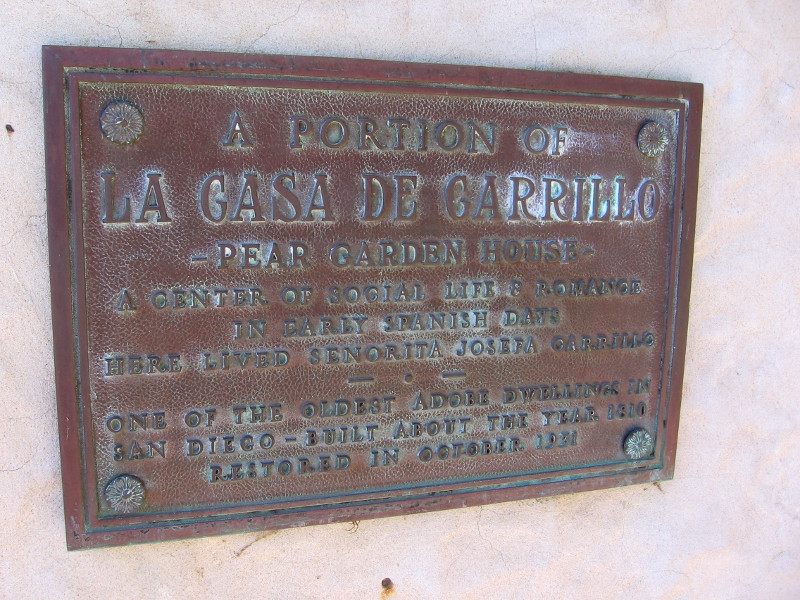
A portion of La Casa De Carrillo - Pear Garden House. A center of social life and romance in early Spanish days. Here lived Senorita Josefa Carrillo. One of the oldest adobe dwellings in San Diego. Built about the year 1810. Restored in October 1931.
Bronze plaque near the front door reads:  A portion of La Casa De Carrillo – Pear Garden House. A center of social life and romance in early Spanish days. Here lived Senorita Josefa Carrillo. One of the oldest adobe dwellings in San Diego. Built about the year 1810. Restored in October 1931.
Photo of La Casa de Carrillo taken from a golf green just east of the structure.
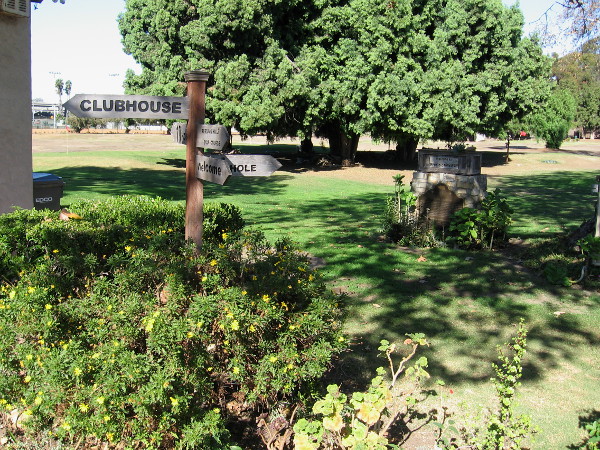
Sign near historical marker for Casa de Carrillo points to the golf course clubhouse and first hole.
Presidio Comandante Francisco Maria Ruiz built this house next to his 1808 pear garden late in 1821 for his close relative and fellow soldier, Joaquin Carrillo, and his large family.
The easy Presidio Hills Golf Course is a great place to learn golf--ideal for families and kids. And one gets a history lesson, too!
Enter the old adobe and you will find the Pro Shop.  The easy Presidio Hills Golf Course is a great place to learn golf–ideal for families and kids. And one gets a history lesson, too!
A look inside the restored adobe. I'm not sure which parts of the historically important building are original.
Another look inside the restored adobe. I’m not sure which parts of the historically important building are original.
An old newspaper article displayed in the pro shop includes a photo of 8-year-old Tiger Woods. He is showing off his Junior World trophy captured at Presidio Hills, where he won two titles.
An old newspaper article displayed in the pro shop includes a photo of 8-year-old Tiger Woods. He is showing off a Junior World trophy captured at Presidio Hills, where he won two titles.
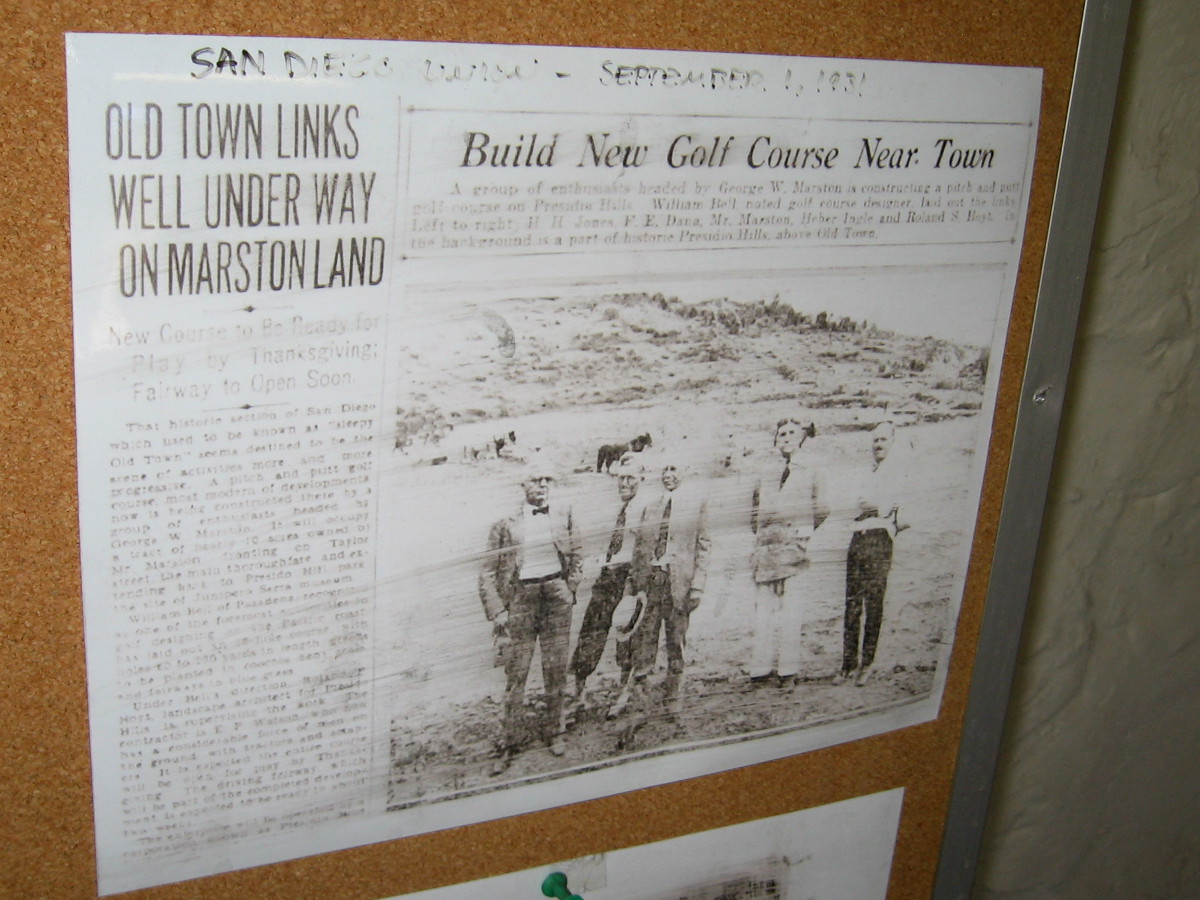
San Diego Union September 1, 1931. Old Town Links Well Under Way On Marston Land.
Various photos of Presidio Hills Golf Course history inside the Pro Shop. Phil Mickelson and Craig Stadler are two notable golfers from San Diego.
Old photo shows Don and Al Abrego Presidio Hills Tiny Tots Golf School. The school has faded into history.
Another photo shows Don and Al Abrego Presidio Hills Tiny Tots Golf School. The defunct school has faded into history.
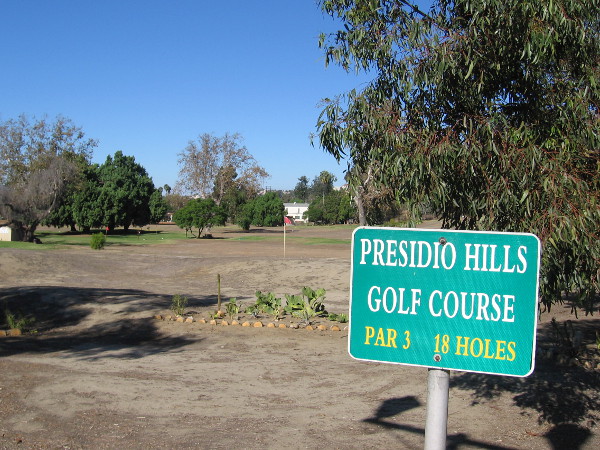
The modest Presidio Hills Golf Course is Par 3, 18 Holes. It's located at the east edge of San Diego's Old Town.
The modest Presidio Hills Golf Course is Par 3, 18 Holes. It’s located at the east edge of San Diego’s Old Town.
Another look across the small, easy golf course. The course appears to be a bit neglected. Regrettably, I saw no players out on a Sunday afternoon.
Another look across the small, easy golf course. It appears to be a bit neglected. Regrettably, I saw no players out on a Sunday afternoon.
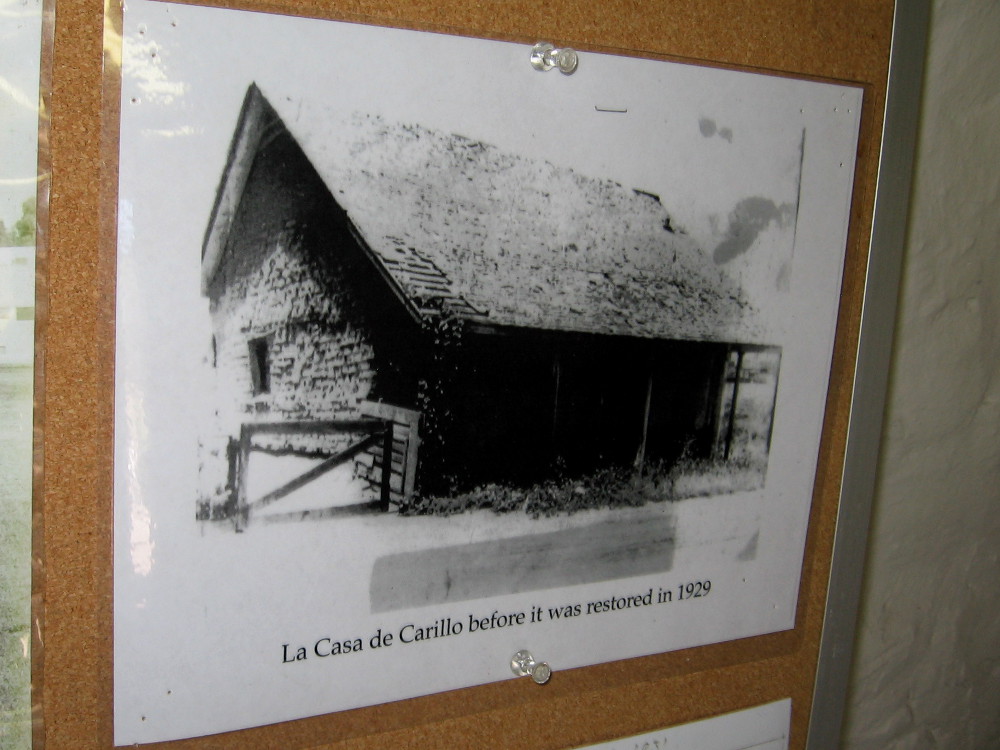
Historical photograph in the Presidio Hills Golf Course Pro Shop. La Casa de Carillo before it was restored in 1929.
Old black-and-white photograph inside the Presidio Hills Golf Course Pro Shop shows La Casa de Carillo (note the different spelling) before it was restored in 1929.

I live in downtown San Diego and love to walk! I also love history! You can follow Cool San Diego Sights via Facebook or Twitter!

Take a tour inside the amazing Villa Montezuma!

Through this door is where the tour of the Villa Montezuma begins. Once inside, visitors turn left into a reception room, then proceed into magnificent performance and drawing rooms.
Through this door is where the tour of the Villa Montezuma begins. Once inside, visitors turn left into a reception room, then proceed into truly magnificent performance and drawing rooms.

Four times a year, people are allowed inside the amazing Villa Montezuma. That’s part of the agreement between the City of San Diego Park and Recreation Department and the Friends of the Villa Montezuma, who are working hard to restore this historic gem in San Diego’s Sherman Heights neighborhood. I went on one of those half hour tours yesterday. Wow!

A couple years ago I walked past this eye-popping 1887 Queen Anne Victorian mansion, built by famed musican and spiritualist Jesse Shepard. I then posted a blog with a few outside photos. Well, guess what? All I can present today are more outside photos! Because photography isn’t allowed inside the Villa Montezuma at this time. But I can provide a little info about the tour, and try to convince you to go on one yourself.

Stepping into the Villa Montezuma is like stepping into a tiny royal palace. I’m not exaggerating. When I was young, I was fortunate to visit many of the most elegant palaces and chateaus of Europe, and the interior of Jesse Shepard’s home, which includes a splendid reception room, performance hall and drawing room, easily matches those esteemed places when it comes to lavish, luxurious decoration. Jesse Shepard (who later wrote under the pen name of Francis Grierson) was a pianist and composer who performed for many of Europe’s royalty, including the Czar of Russia and the Prince of Wales in England. So he was no stranger to a kingly lifestyle!

Should you enjoy an inside tour of the elaborate Villa Montezuma, which is built entirely of redwood, you’ll see fantastic art glass created by John Mallon of San Francisco. (Mallon also created the stained glass windows for San Diego’s 1889 courthouse, each window representing the Great Seals of the 42 states. You can see those windows today in downtown’s Hall of Justice.)

Jesse Shepard loved art, music and literature, and the stained glass windows in his mansion pay homage to his favorite artists. In the splendid room where he performed concerts for guests, windows feature the faces of Beethoven and Mozart, Raphael and Rubens; you’ll also see an expansive window devoted to Sappho, the classic Greek lyric poet, and four windows representing the four seasons. In the drawing room you can see more stained glass featuring Shakespeare, Goethe and Corneille.

The effect of these windows is truly astonishing. Their magical light shines on warm, ornate woodwork and wood floors, an embossed silvery ceiling, satin curtains, a variety of beautiful fireplaces, and artful touches that include influences from Innsbruck and Japonism. Stepping into the Villa Montezuma almost seems like falling into a dream of long ago.

Restoration of the Villa Montezuma is ongoing. The foundation was recently strengthened, along with the roof and chimneys. Still to go is the repainting of the exterior, fence restoration and landscaping the grounds. Once all is complete, it is hoped the mansion will be open full time as a permanent museum!

Meanwhile, go on a tour if you’re in San Diego. The guide was knowledgeable and entertaining. You’ll see much of the house, even some less elevated parts like the kitchen and washing room. You’ll learn all about Jesse Shepard, including strange mysteries concerning his life and the absolutely magnificent way he died!

Visit the official Villa Montezuma website!

Tours are offered of the Villa Montezuma four times every year. The upper floor isn't open to the public yet.
Folks gather for a free half hour tour.  The public can venture inside the Villa Montezuma four times every year. (The upper floor isn’t open to the public yet.)
The Friends of the Villa Montezuma is a nonprofit dedicated to restoring and maintaining the amazing Villa Montezuma mansion in San Diego.
Photo of southeast corner of the Villa Montezuma Museum. The 1887 Queen Anne Victorian mansion contains numerous beautiful stained glass windows.
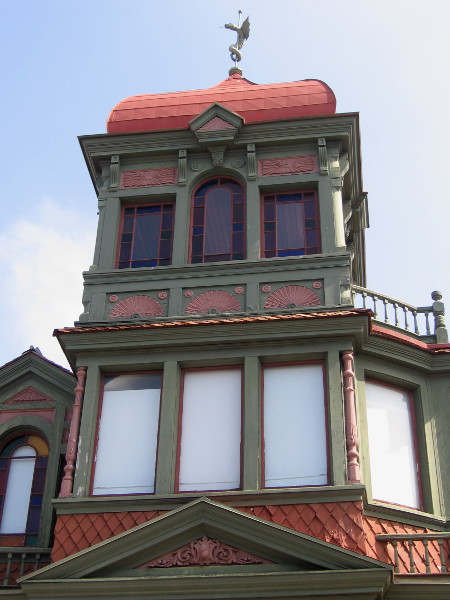
Looking upward at the elaborate tower. I was allowed to closely approach this outside part of the Villa Montezuma on a tour day.
A balcony just outside Jesse Shepard's bedroom, which is adjacent to the elegant drawing room!
A balcony just outside Jesse Shepard’s bedroom, which is adjacent to the elegant drawing room!
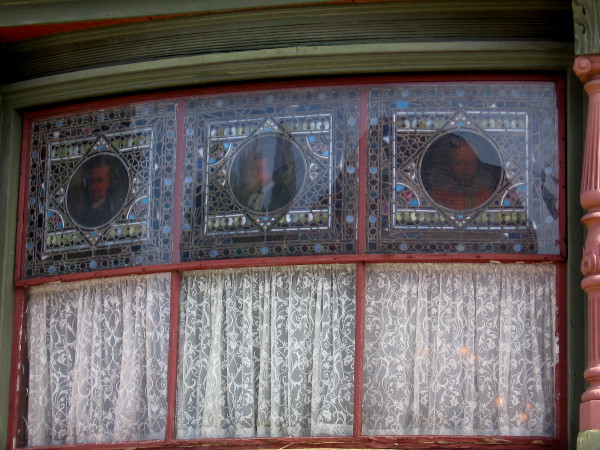
Unusual curved bay window of the drawing room features stained glass images of Shakespeare, Goethe and Corneille.
Unusual curved bay window of the drawing room features stained glass images of Shakespeare, Goethe and Corneille.  One must be inside to appreciate the grand effect.
A light-filled chapel-like nook in one corner of Jesse Shepard's performance room features stained glass depicting the four seasons.
A light-filled chapel-like nook in one corner of Jesse Shepard’s performance room features stained glass depicting the four seasons.

I live in downtown San Diego and love to walk! You can follow Cool San Diego Sights via Facebook or Twitter!

A walk up Broadway, from downtown to Golden Hill.

A large bee and the word LOVE. Street art on a fence near the top of Golden Hill.

I went on a long walk today and took many photos. Enough for several blog posts!

I’ll begin at the beginning–walking in the mid-morning from downtown San Diego to the top of Golden Hill. I headed east along Broadway, crossed Interstate 5, then began my climb up the hill, looking this way and that. Here are a few interesting things I saw, starting at the Police Headquarters located at 14th and Broadway…

Wreath in front of San Diego Police Headquarters' Wall of Honor, remnant of a recent memorial ceremony. The wall is inscribed with the names of all police officers killed in the line of duty since 1913.
A wreath in front of the San Diego Police Headquarters’ Wall of Honor is the remnant of a recent memorial ceremony. The wall is inscribed with the names of all police officers killed in the line of duty since 1913.
A prayer on Broadway. Shelter my brothers and sisters in arms who have fallen in the fight. Let their stars, lit by your love, shine brightly through the night.
A sign points to Golden Hill as I walk east up Broadway from downtown San Diego.
Looking back west toward downtown. Many jacaranda trees line San Diego's streets. A man waits at a bus stop.
Looking back west toward downtown. Many jacaranda trees line San Diego’s streets. A man waits at a bus stop.
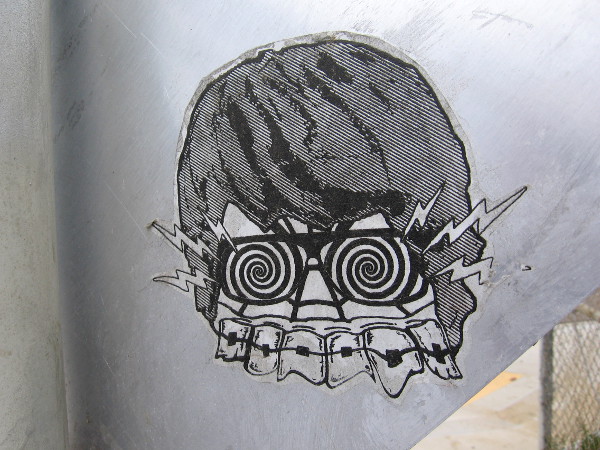
Crazy decal on the back of a stop sign.
A utility box with a bit of funny street art. This tired buffalo appears to be crunching some numbers.
A utility box with a bit of funny urban art. This tired buffalo appears to be crunching some numbers.
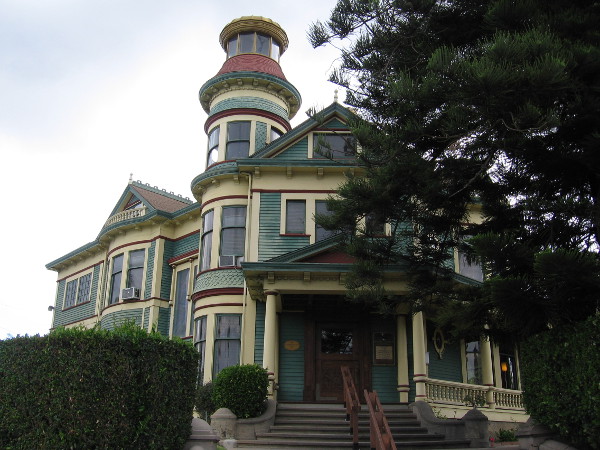
A nicely restored Victorian residence on Broadway in Golden Hill. This neighborhood contains many historic houses, and some are quite amazing. A hundred years ago, this area on a hill near downtown was quite affluent.
A nicely restored Victorian residence on sloping Broadway, photographed while heading up Golden Hill. This neighborhood contains many historic houses. A hundred years ago, this area on a scenic hill near downtown was very affluent.
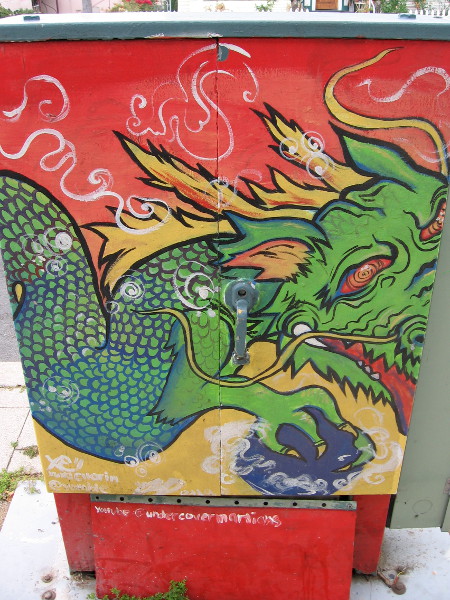
One side of a fun utility box has been boldly painted with a fiery green dragon.
One side of a utility box has been boldly painted with a fiery green dragon.
A lady and another scaly dragon on the opposite side of the box. A floral mural decorates a nearby store's wall.
A lady and a scaly dragon on the opposite side of the box. A floral mural decorates a nearby store’s wall.
The San Diego Reader is a very popular alternative weekly newspaper in our city. Their headquarters is located on Broadway in Golden Hill.
The 1896 Quartermass-Wilde House is a San Diego Historic Landmark. This elegant Victorian is an outstanding example of Queen Anne style architecture.
The 1896 Quartermass-Wilde House is a San Diego Historic Landmark. It’s difficult to miss!  This elegant Victorian is an outstanding example of Queen Anne style architecture.
Lots of balloons and flowers for sale at the corner of Broadway and 25th Street. It's Mother's Day.
Lots of balloons and flowers for sale at the corner of Broadway and 25th Street. It’s Mother’s Day.
A beautiful bit of shining art inlaid in the sidewalk. A marker at the top of Golden Hill.
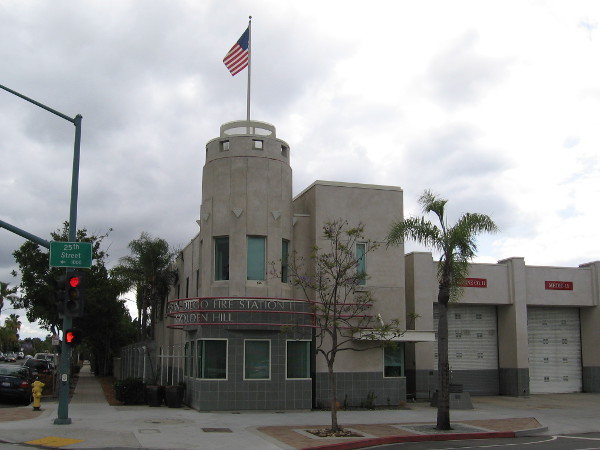
San Diego Fire Station 11, at the corner of Broadway and 25th Street. It's a perfect day for a walk!
San Diego Fire Station 11, at the corner of Broadway and 25th Street. It’s a perfect day for a walk!
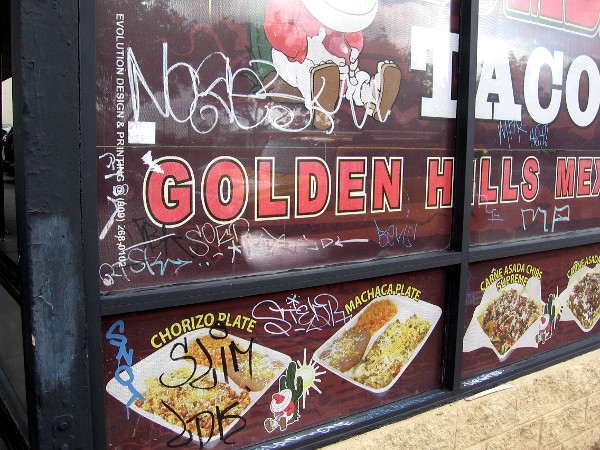
A Mexican taco shop and graffiti on the windows. The neighborhood today is a bit rundown, but sunny and pleasant.
A Mexican taco shop has graffiti on the windows. The neighborhood today is slightly neglected, but sunny and pleasant.
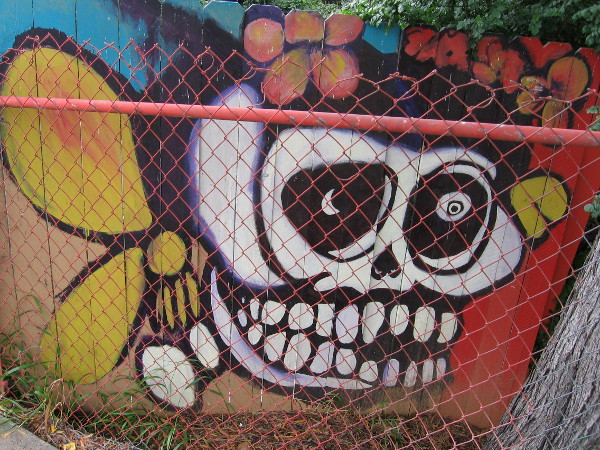
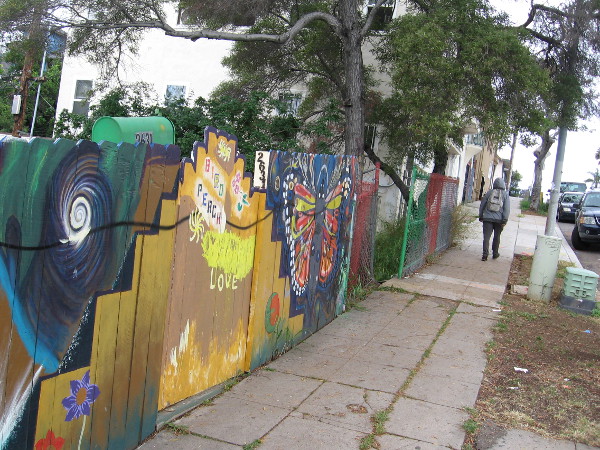
A wooden fence along the sidewalk contains amazing, colorful murals, beginning with this flowery skull.
A brilliant butterfly spotted on Broadway, near the top of Golden Hill!
A hummingbird drawn like ancient Southwest rock art.
A hummingbird drawn like ancient Southwestern rock art.
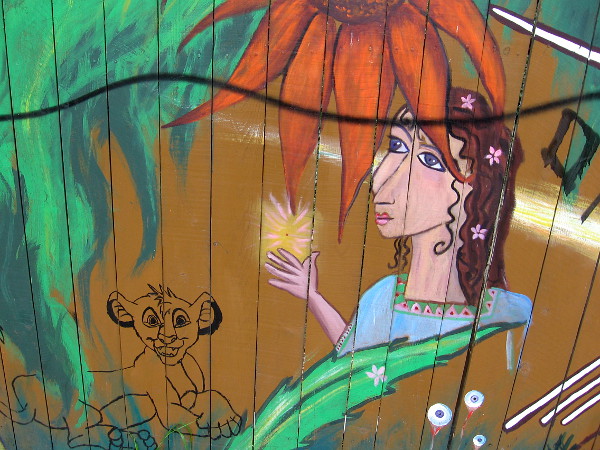
A magical lady, eyeball blooms and an unfinished Simba.
A magical lady, eyeball plants and an unfinished Simba.
Someone walks west along the Broadway sidewalk. I continued east, turned north up 28th Street and directed my feet toward South Park.

I live in downtown San Diego and love to walk! You can follow Cool San Diego Sights via Facebook or Twitter!

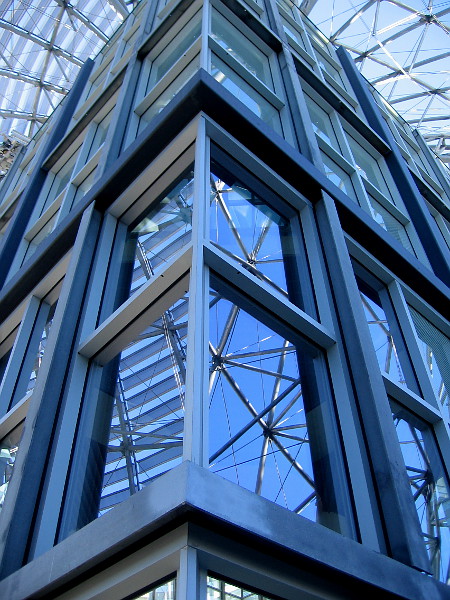
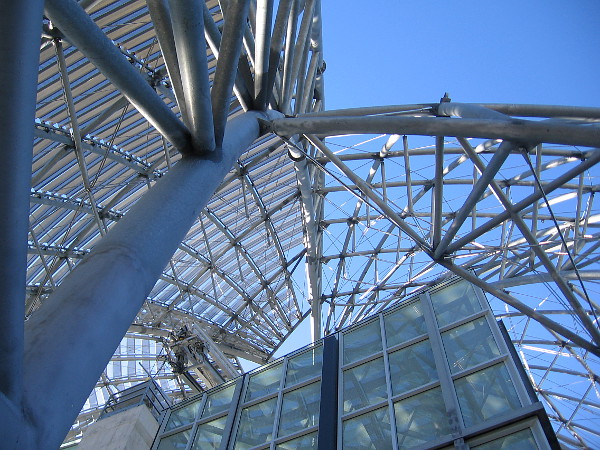
Reflection, geometry, complexity. One iconic dome.

Photo of a unique downtown landmark. The shining lattice dome of the San Diego Central Library, as seen from the ninth floor's outside deck.
Photo of a unique downtown landmark. The shining lattice dome of the San Diego Central Library, as seen from the ninth floor’s outside deck.

Many old redundant photos are being purged from my computer this weekend. But I had to definitely share these!

I’ve blogged about San Diego’s relatively new downtown library several times. I’ve posted more than a few pics of its unique lattice dome. You might recall some weirdly halo-like photos I took in the darkness early one night last year.

Well, check these out! The curving lines of steel reflected in the building’s windows look like a lesson in complex geometry. You know, in a strange way the dome reminds me of a graph or diagram demonstrating how time and space can be warped by gravity! Am I crazy? What does it look like to you?

A collection of rare books is housed in a room on the ninth floor of San Diego's public library.
A collection of rare books is housed in a room on the ninth floor of San Diego’s public library.
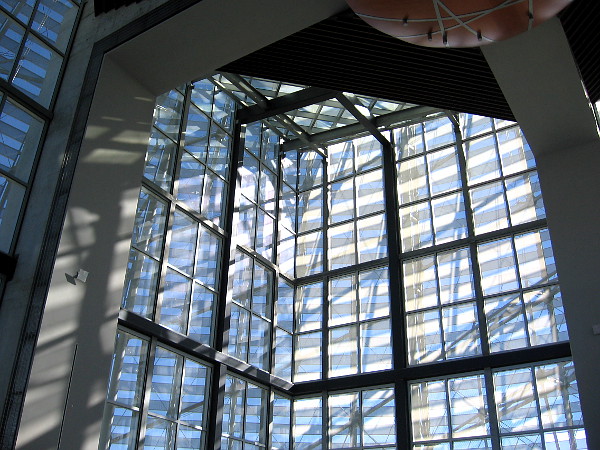
The visually impressive steel lattice dome tops an airy two-story high library reading room. An architectural marvel.
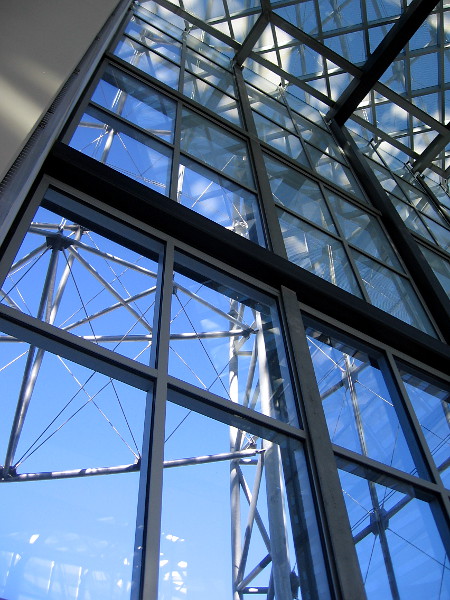
Reflections in the windows create a fantastic, mysterious image.
Looking upward at the metal dome and blue sky. Amazing views can be had of downtown from the library's ninth floor.
Looking upward at the metal dome and blue sky. Amazing views can be had of downtown from the library’s ninth floor.
Lots of geometric complexity and dazzling light for my camera's lens.
Lots of geometric complexity and dazzling light for my camera’s lens.
Peering down into the spacious reading room on a bright sunshiny day.
Filtered light and shadows form unusual grid-like patterns inside the reading room. The perfect place to study a math book, maybe.
A three-dimensional delight. Intersecting lines fascinate the eye.
One last cool photo. I feel like I'm floating through some sort of mathematical dreamscape.
One last cool photo. I feel like I’m floating through some sort of mathematical dreamscape.

I live in downtown San Diego and love to walk! You can follow Cool San Diego Sights via Facebook or Twitter!

Do you like to read short pieces of thought-provoking fiction? You might enjoy checking out Short Stories by Richard.

History comes alive during tour of Spanish Village.

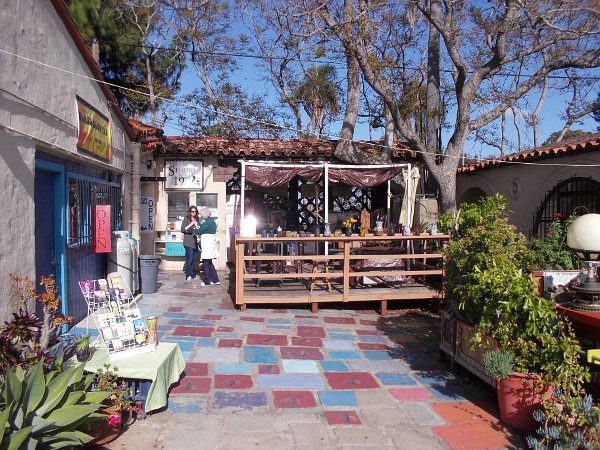
Tour guide Jeff explains that today's Studio 36 Sculpture Guild was an outdoor theatre in the early years of Spanish Village. The front was a lobby and ticket booth. Writers, actors and set designers would act out plays on the inner patio.
Tour guide Jeff explains that today’s Studio 36 Sculptors Guild was an outdoor theatre in the early years of Spanish Village. The front was a lobby and ticket booth. Writers, actors and set designers would act out plays on the inner patio.

Spanish Village Art Center, in beautiful Balboa Park, is where you’ll find the colorful studios of many fine San Diego artists. Last year I blogged about the history of this fascinating place. A small exhibit in Gallery 21 recounted how Spanish Village was created for the 1935 California Pacific International Exposition, and traced the village’s evolution over subsequent decades. Unfortunately, that exhibit no longer exists. But I did record much of it. To enjoy an overview of the history, you can revisit my old blog post by clicking here.

Last Saturday I was given a terrific tour of Spanish Village by a super friendly guy named Jeff. During the tour, Jeff showed me some unusual, unexpected features of Spanish Village and delved into its often surprising history.

(Fortunately, Jeff gave me some notes that I will reference in this blog. Should you enjoy a tour yourself, you can probably obtain your own copy!)

Please read the photo captions where I provide descriptions and very short explanations. As you’ll see, many interesting changes in Spanish Village have taken place over the years. And I’ve barely begun to scratch the surface!

If something I’ve written is inaccurate, or needs some elaboration, leave a comment! What memories do you have?

Click here to check out the Spanish Village Art Center blog! Support these great artists!

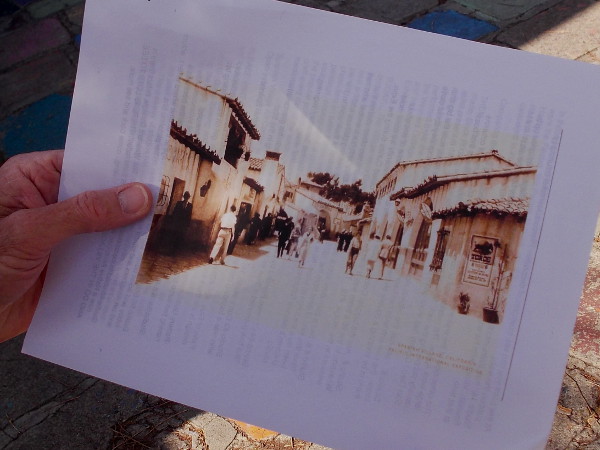
An old photograph of how Spanish Village appeared around the time of the California Pacific International Exposition of 1935.

In 1935, when Spanish Village opened, visitors strolled down simulated Old World streets, which featured restaurants and shops in picturesque, open-arched buildings. The architecture was inspired by the Andalusian region of southern Spain. In addition to wine shops, a cocktail lounge and a Chinese Bazaar, one could buy flowers and enjoy music, art . . . and even a high wire trapeze act!

You can see in the above old photograph a no-longer-existing building at the center of today’s large patio. It separated Spanish Village into two “streets” that visitors could enjoy.

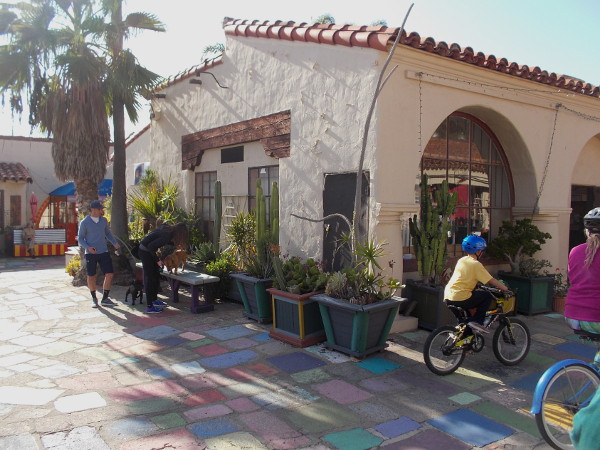
Over the years, resident artists have built out the small open air shops to create practical but unique enclosed spaces. Some of the open arches have been filled in, or can now be seen inside certain studios.

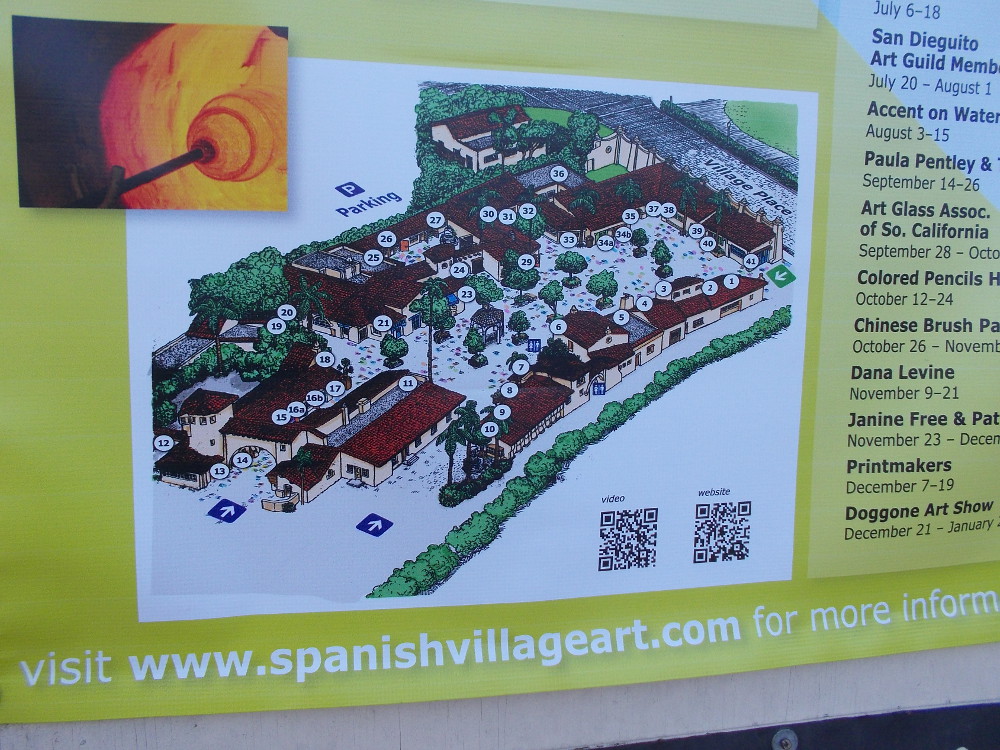
A current map of Spanish Village shows how it appears today. You can find this wonderful part of Balboa Park between the Natural History Museum and the San Diego Zoo.
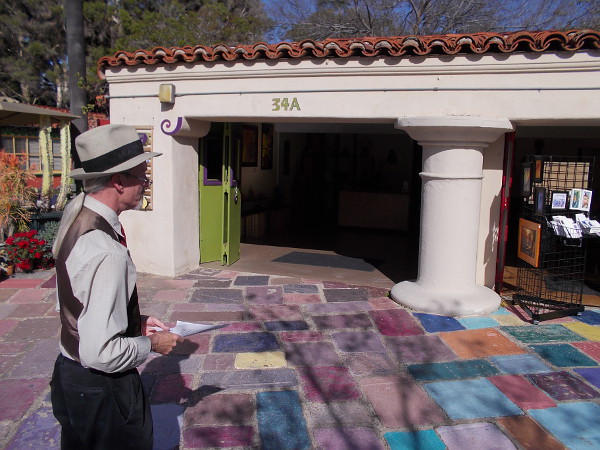
Jeff shows me Studios 34 A and 34 B, which were originally one space featuring a puppet show.
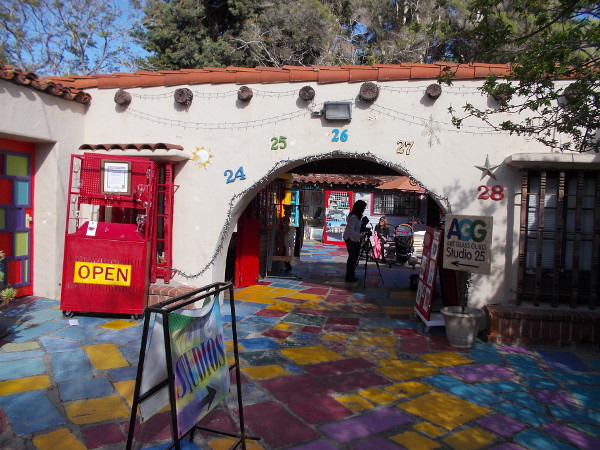
Studios 24 through 28 surround a small inner courtyard. This area in Spanish Village originally contained a wishing well and actual horse stalls!
Studio 6 has a sliding barn door! Two other studios dating from the 1935 California Pacific International Exposition have similar doors.
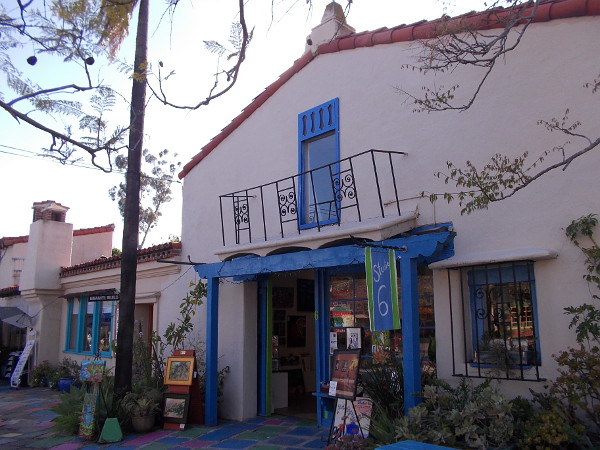
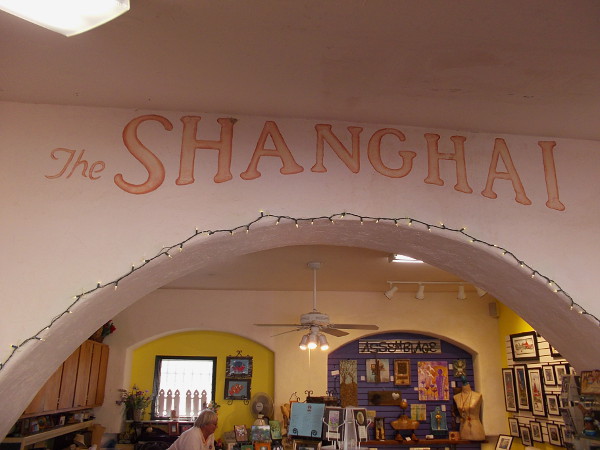
Studio 8, like many others in Spanish Village, was built out from the original open archway to provide more space for the artists. The words The SHANGHAI are from 1935. It evidently used to be a bar.
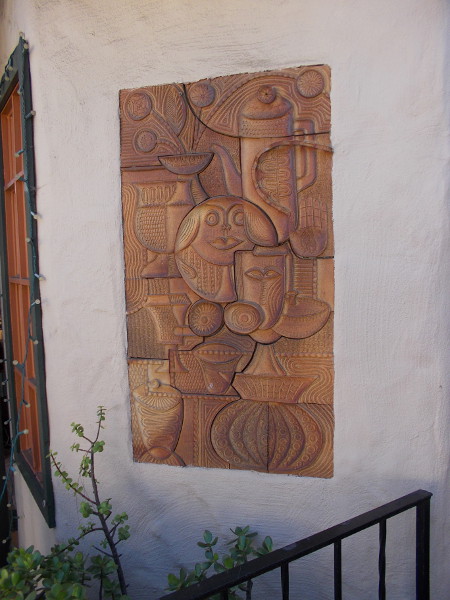
Near Studio 8's entrance are two amazing works of art. Here's one. It was created by John Novy, a potter who was a member of Spanish Village from 1969 to 1977.
Near Studio 8’s entrance are two amazing works of art. Here’s one. It was created by John Novy, a potter who was a member of Spanish Village from 1969 to 1977.
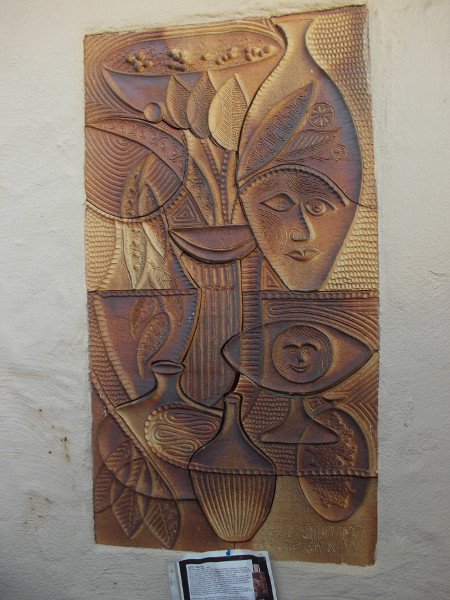
Second amazing installation of ceramic tiles on exterior of Studio 8 in Spanish Village. This art was created by professional potter John Novy.
Second installation of ceramic tiles on exterior of Studio 8 in Spanish Village. This art was created by professional potter John Novy.
This used to be the east entrance into Spanish Village. Today you'll find outdoor glassblowers creating amazing glass art while visitors gather around to watch.
This used to be the east entrance into Spanish Village. Today you’ll find outdoor glassblowers creating amazing glass pieces while visitors gather around to watch.
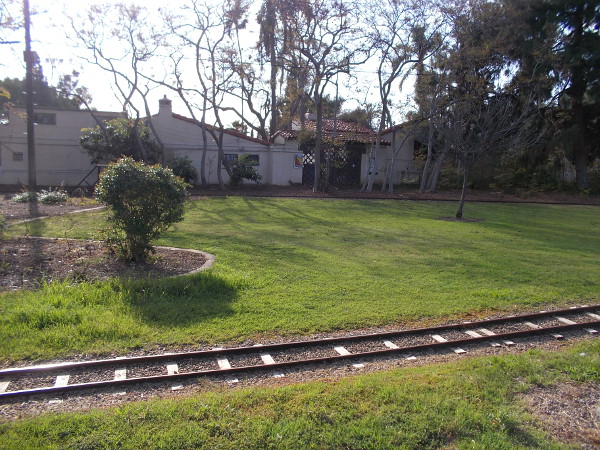
The old east entrance (under the tiles) is now blocked off. Much of the grassy area used by today's Balboa Park Miniature Railroad used to be a parking lot.
The old east entrance (under the tiles) is now blocked off. Much of the grassy area occupied by today’s Balboa Park Miniature Railroad used to be a parking lot.
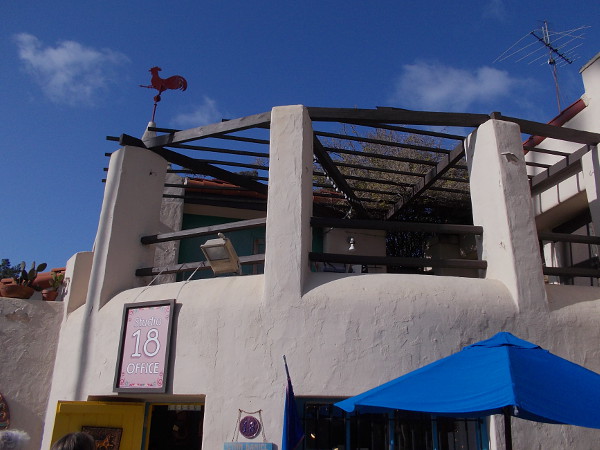
Studio 18 is now the office of Spanish Village Art Center. In the early years a caretaker lived here. That rooster weather vane can be seen in many old photographs.
The south end of the San Diego Mineral and Gem Society building used to extend a bit into today's patio area. You can see an old wooden beam on the present-day exterior.
The south end of the San Diego Mineral and Gem Society building used to extend a bit into today’s large patio area. You can see an old wooden beam on the present-day exterior.
This quaint little street, during the 1935 California Pacific International Exposition, led into the Fun Zone! Now it leads to a small parking lot.
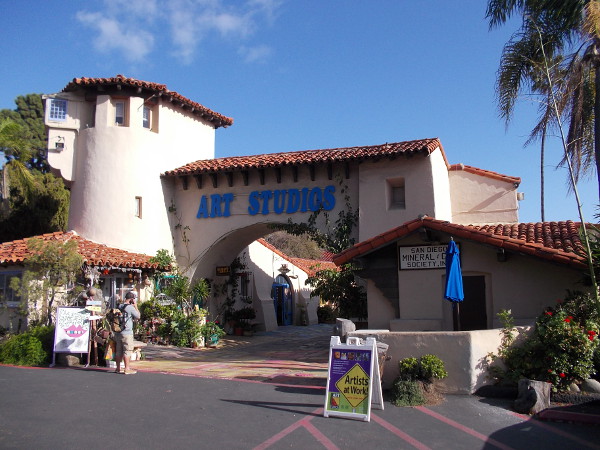
Gazing back south from the parking lot at today's Spanish Village in Balboa Park.
Gazing back south from the parking lot at today’s Spanish Village artist co-op in Balboa Park.
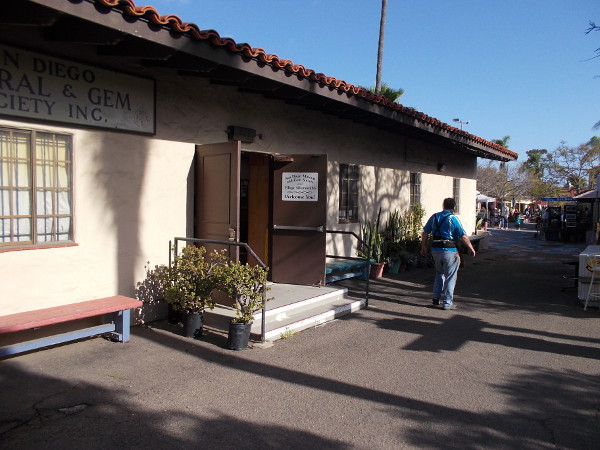
This west side of the San Diego Mineral and Gem Society building was built sometime after the 1935 Expo.
The extended west side of the San Diego Mineral and Gem Society building was built sometime after the 1935 Expo.
Originally, the building terminated where you see the arches.
Originally, the building terminated where you see the column.
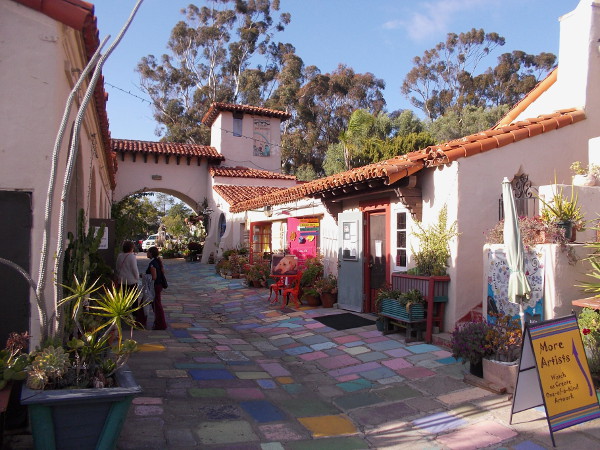
Walking along the west edge of Spanish Village. Many historic columns and arches provide this artist's co-op with unique character.
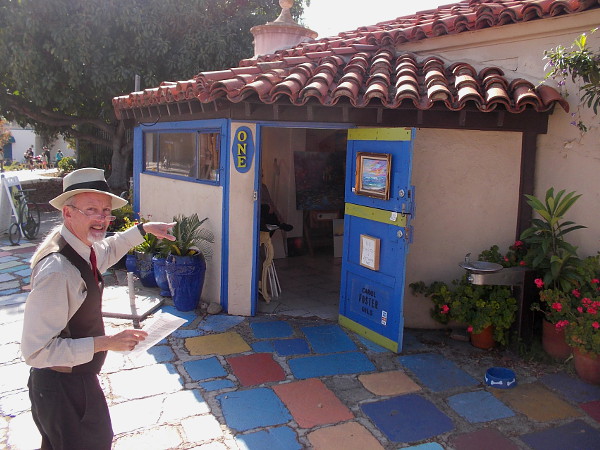
Walking along the west edge of Spanish Village. Many decorative columns and arches provide this artist’s co-op with unique character.
Looking through the west archway toward a shrub elephant, which stands on a nearby, newly improved walkway the heads north to the San Diego Zoo.
Looking through the west archway toward a shrub elephant, which stands on a nearby, newly improved walkway that heads north to the San Diego Zoo.
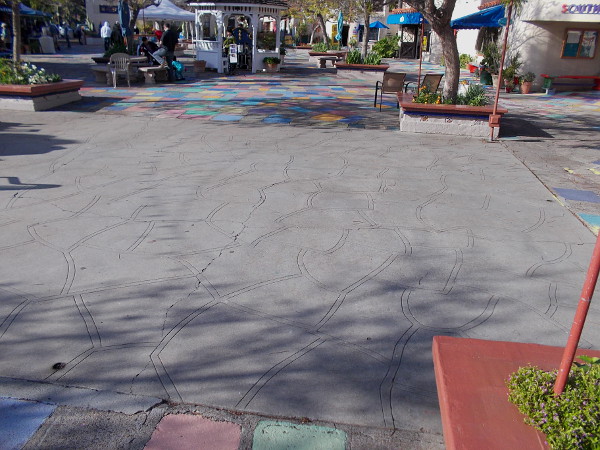
This large dance floor (and the area where I'm standing) at the center of the colorful Spanish Village patio was once occupied by a large building. It seems there is some debate what that building was, exactly.
This large dance floor (and the area where I’m standing) at the center of the colorful Spanish Village patio was once occupied by a large building. It seems there is some debate as to what that building was, exactly.
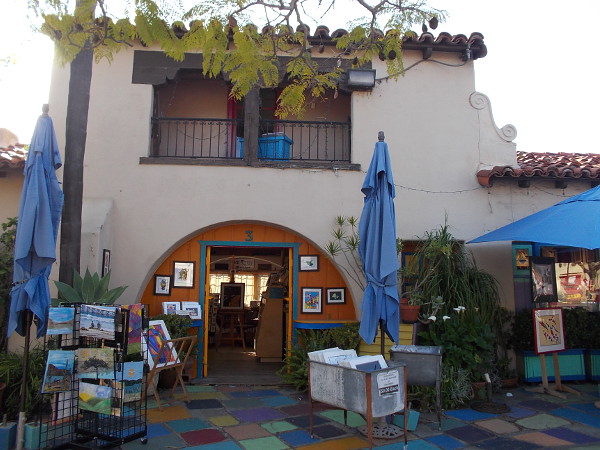
Studio 3 is occupied by artist Don Knapp. He arrived at Spanish Village as a child! His grandmother was a founding member in the 1930s.
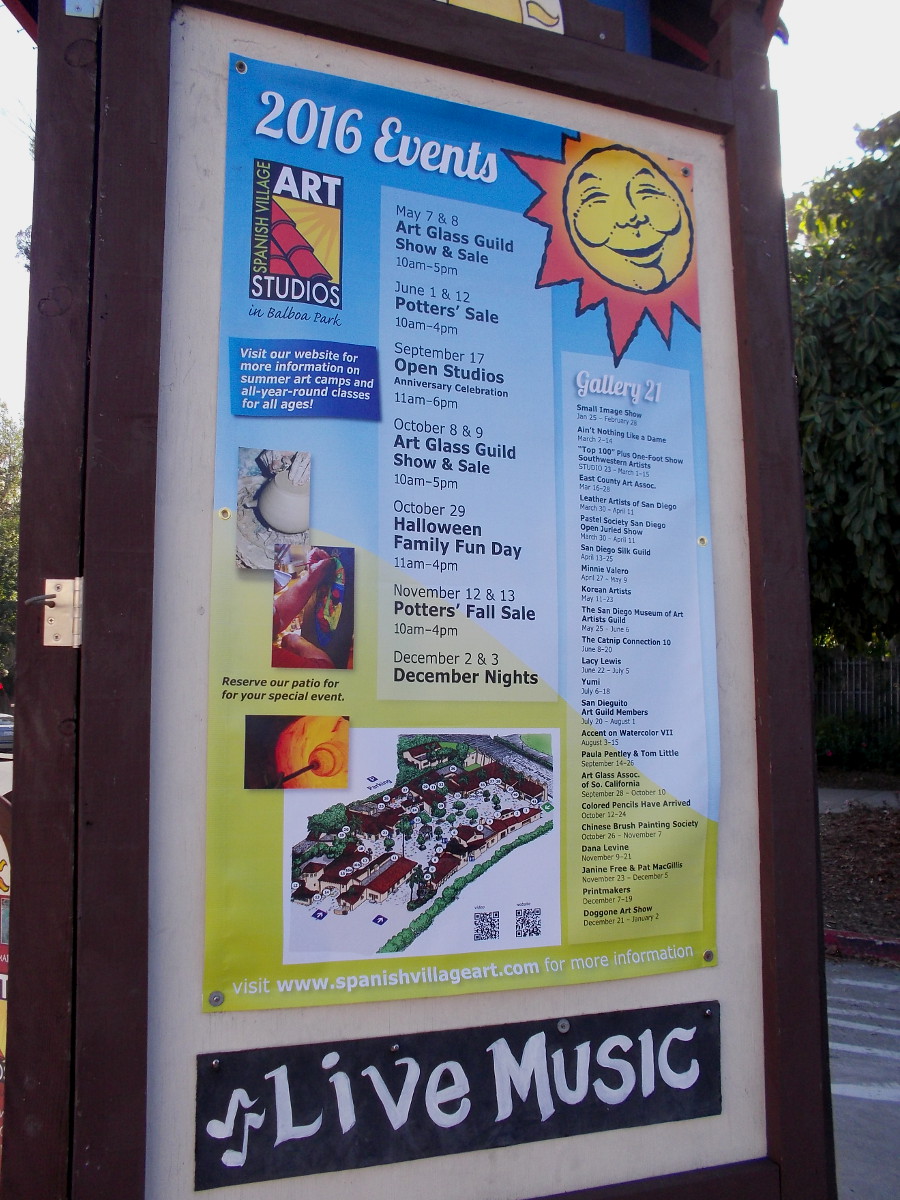
Loads of fun, creative stuff is going on in Spanish Village Art Center in 2016. Please click the image to enlarge it and then mark your calendar!
Loads of fun, creative stuff is going on in Spanish Village Art Center in 2016. Please click the image to enlarge it, and then mark your calendar!
Jeff provides a really interesting tour. Look for his friendly smile if you happen to find yourself in wonderful Spanish Village!
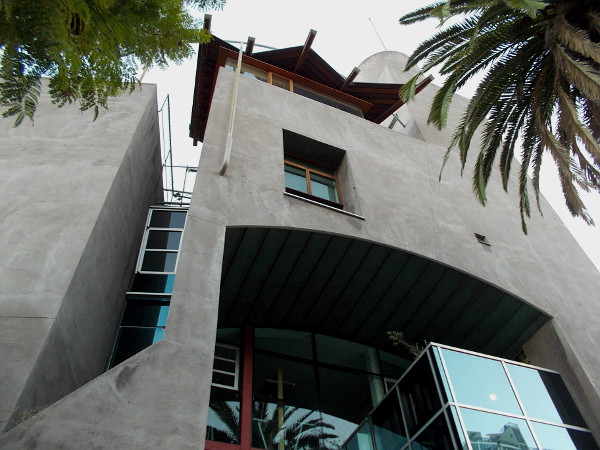
Jeff provides a really interesting tour. Look for his friendly smile if you happen to find yourself in wonderful, historic Spanish Village!

I live in downtown San Diego and walk like crazy! You can follow Cool San Diego Sights via Facebook or Twitter!

Do you like to read short pieces of thought-provoking fiction? You might enjoy checking out Short Stories by Richard.

Is Balboa Park one of your favorite places? Follow my special new blog, which I call Beautiful Balboa Park!

A delightfully unusual building in Little Italy.

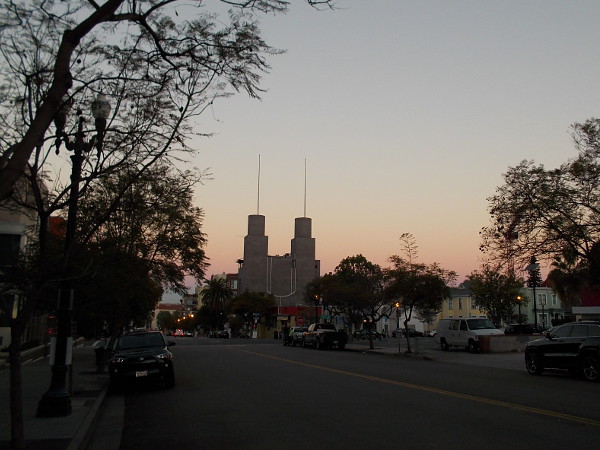
The delightfully unusual Beaumont Building rises in Little Italy at 434 West Cedar Street.

In my opinion, the most delightfully unusual building in San Diego’s Little Italy neighborhood is the Beaumont Building. The design–especially the two cylindrical towers–is both visually distinctive and impressive. Those mysterious-looking towers make me look up with fresh surprise whenever I see them.

The Beaumont Building was built in 1988. It was designed by Rob Wellington Quigley, whose architectural work can be seen in various places around San Diego. The lattice-domed San Diego Central Library and The New Children’s Museum are two well-known examples.

I often walk past this building, and have taken many photographs over the years. But none of my photos fully capture this very unique structure’s truly amazing presence.

Looking upward near the front entrance to the unique Beaumont Building.
Another photo on a different day of this very cool building in San Diego's always interesting Little Italy neighborhood.
Another photo on a different day of this very cool building in San Diego’s always interesting Little Italy neighborhood.
The two high towers of the Beaumont Building almost appear like antennas, or an over-sized science experiment.
An eye-catching sight during a morning walk!

If you enjoy my blog, you can follow Cool San Diego Sights on Facebook and Twitter!

Do you like to read original, thought-provoking fiction? Please click Short Stories by Richard.

San Diego’s early history at the Serra Museum.

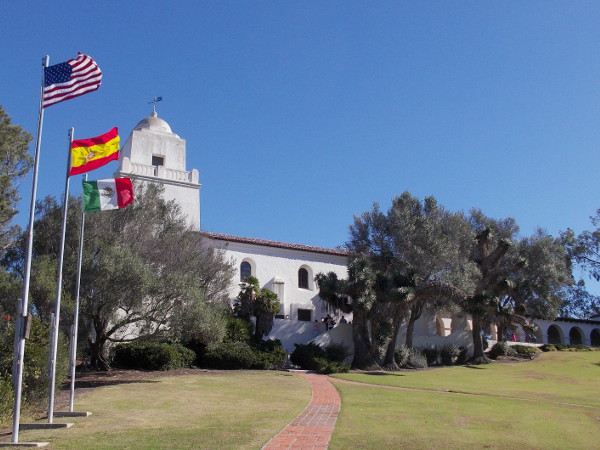
The Junipero Serra Museum of the San Diego History Center was built in 1928 on Presidio Hill, where European civilization was established in Alta California.

I recently visited one of San Diego’s most fascinating museums. The Junipero Serra Museum is located atop Presidio Hill, in a distinctive Mission Revival architectural style building overlooking San Diego Bay and the San Diego River, just east of Old Town. It stands near the site of San Diego’s historic Spanish presidio, built in 1769. The presidio was the birthplace of European civilization in Alta California.

The Serra Museum is operated by the San Diego History Center, which is headquartered today in Balboa Park. Back in 1929, when the building was dedicated, it became home of what was then called the San Diego Historical Society. The important San Diego institution was established by civic leader George W. Marston.

Can you believe it? I’ve lived in San Diego for 15 years . . . and this was the very first time I ventured into the Serra Museum. (I can thank my blog for that!)

What I discovered was an absolutely amazing place that both residents and visitors to San Diego should definitely not miss.

Here’s a sample of what you’ll see…

People arrive at the Serra Museum, where San Diego's early Spanish history comes alive.
People arrive at the Serra Museum, where San Diego’s early Spanish history comes alive.
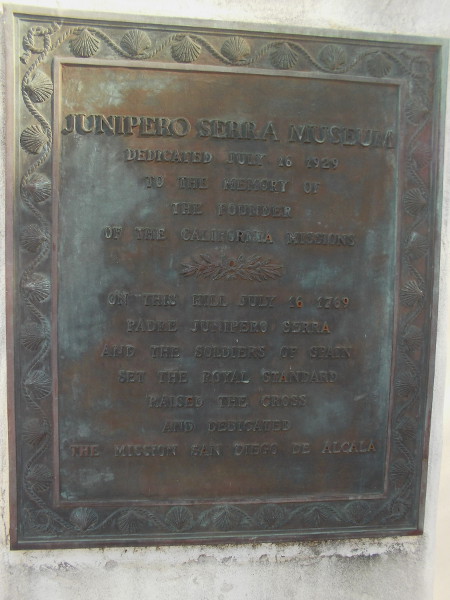
Junipero Serra Museum dedicated July 16, 1929 to the memory of the founder of the California missions. The original Mission San Diego de Alcalá was established nearby in 1769.
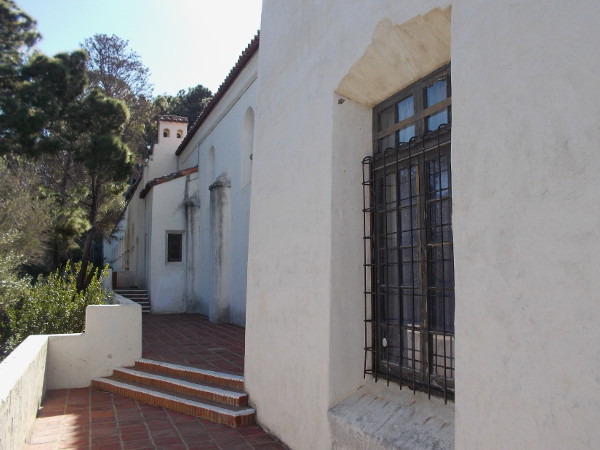
A quick look at the rear of the museum.
The Serra Museum building was designed by noted architect William Templeton Johnson. It reflects Spanish Revival architecture.
The Serra Museum building was designed by noted architect William Templeton Johnson. It reflects Mission Revival style architecture.
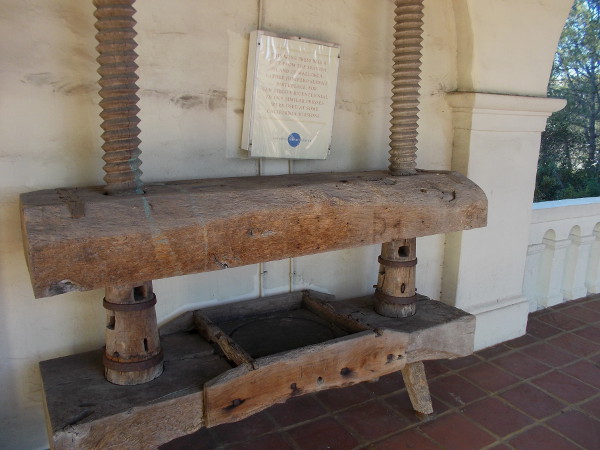
Large wine press in front of the museum was a gift from the Spanish island of Mallorca, Father Junipero Serra's birthplace.
Large wine press in front of the museum was a gift from the Spanish island of Mallorca, Father Junipero Serra’s birthplace.
Plaque near entrance reads George White Marston 1850-1946. FRIEND OF HIS FELLOW MEN - LOVER OF ALL GROWING THINGS. Piece by piece through many years he acquired these acres...
Plaque near entrance reads George White Marston 1850-1946. FRIEND OF HIS FELLOW MEN – LOVER OF ALL GROWING THINGS. Piece by piece through many years he acquired these acres…
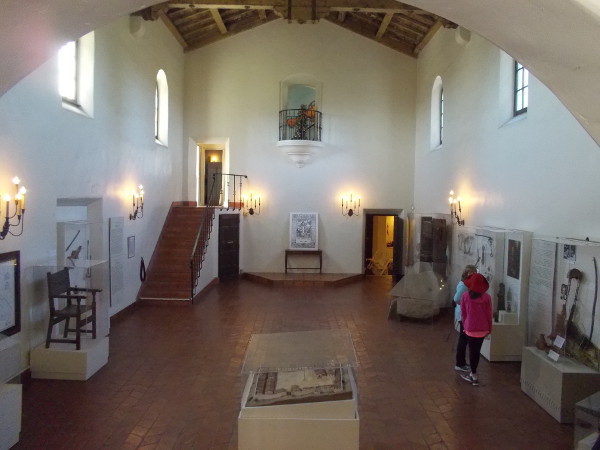
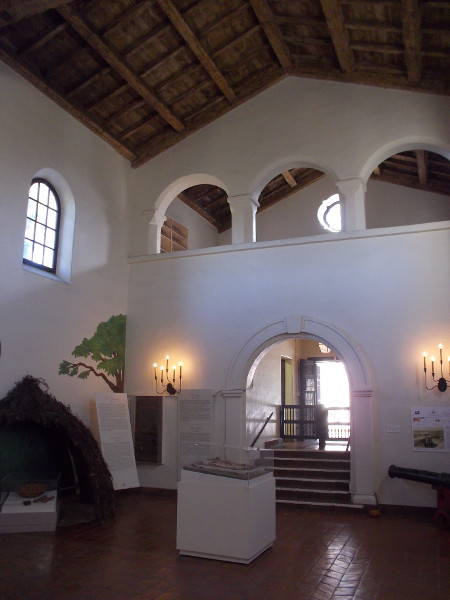
Elegant interior of the Serra Museum contains many exhibits pertaining to San Diego's early Spanish history.
Elegant interior of the Serra Museum contains many exhibits pertaining to San Diego’s early Spanish history.
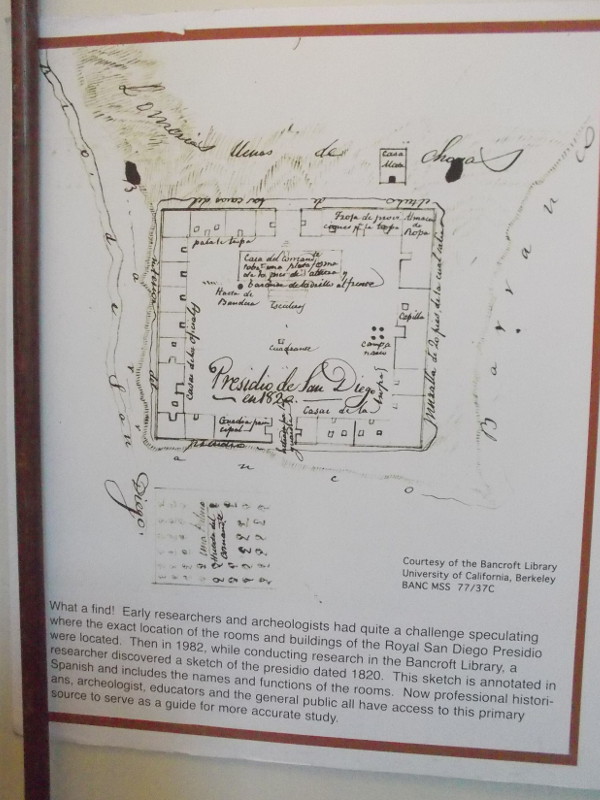
Researchers discovered this sketch of the Royal San Diego Presidio dated 1820. It shows the layout of the old buildings which no longer exist.
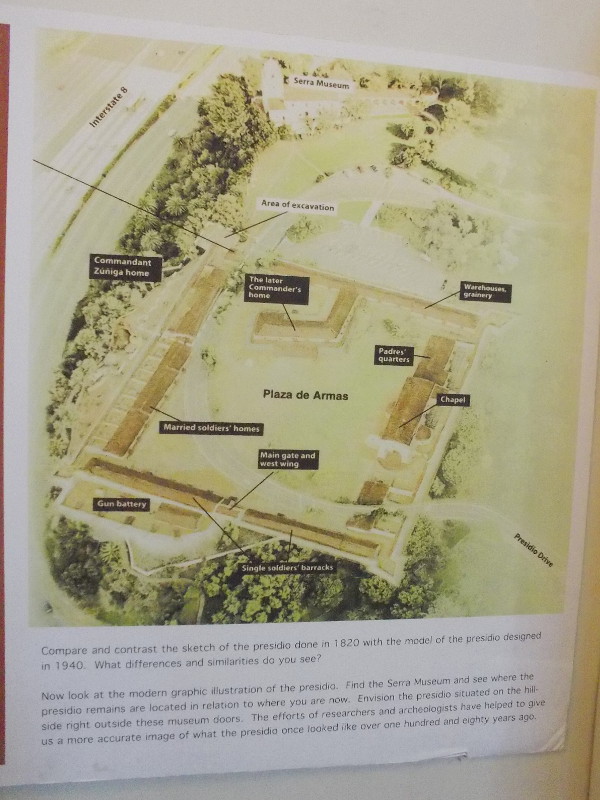
Modern graphic illustration of the fortified presidio, which was located a short distance below the Serra Museum's front entrance.
Modern graphic illustration of the fortified presidio, which was located a short distance below the Serra Museum’s front entrance.
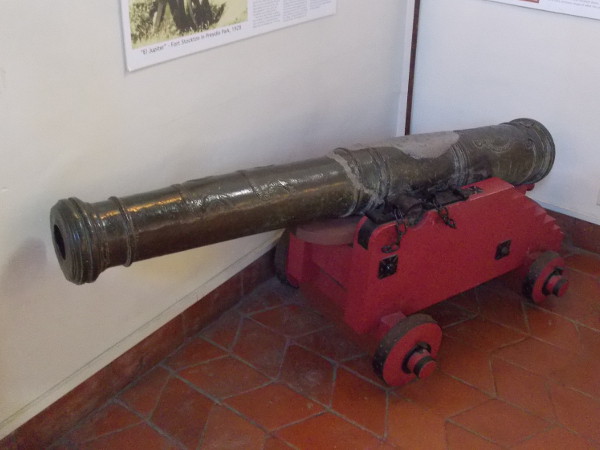
Old Spanish cannon named El Jupiter, cast in Manila in the 18th century. El Jupiter stood in Fort Guijarros at Ballast Point, the first defensive fortifications for San Diego Bay
Old Spanish cannon named El Jupiter, cast in Manila in the 18th century. El Jupiter stood in Fort Guijarros at Ballast Point, the first defensive fortifications for San Diego Bay.
Leather armchair made in Catalan, Spain in the 17th century. This "friar's chair" was part of the original Serra Museum's furnishings.
Leather armchair made in Catalan, Spain in the 17th century. This “friar’s chair” was part of the original Serra Museum’s furnishings.
Old violin with bow, a branding iron used by rancheros to identify cattle, and iron spurs are among the many historical objects on display.
Another look at the beautiful interior of the Serra Museum in San Diego.
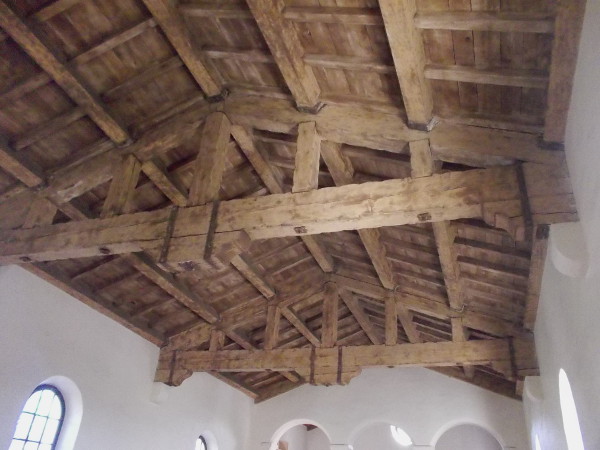
Large wooden beams in a truly amazing ceiling.
Stairs lead up to the Serra Museum's tower. Painted on the wall is a map showing the sea journey of the Spanish Expedition which founded San Diego in 1769.
Stairs lead up to the Serra Museum’s tower. Painted on the wall is a map showing the sea journey of the Spanish expedition which founded San Diego in 1769.
March 9-20, 1769. Desperate to replace drinking water which leaked from the ship's casks, Captain Vicente Vila commands the Spanish galleon San Carlos near Isla de Cedros.
March 9-20, 1769. Desperate to replace drinking water which leaked from the ship’s casks, Captain Vicente Vila commands the tacking Spanish galleon San Carlos near Isla de Cedros.
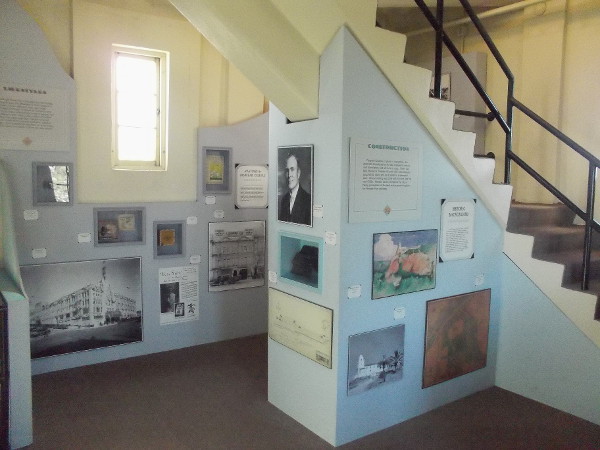
A room halfway up the tower. Numerous displays recall San Diego's history, most notably at the time when the Serra Museum was dedicated in 1929.
A room halfway up the tower. Numerous displays recall San Diego’s history, most notably around the time when the Serra Museum was dedicated in 1929.
Old photo of the crowd attending the Serra Museum's dedication ceremony on July 16, 1929.
Old photo of the crowd attending the Serra Museum’s dedication ceremony on July 16, 1929.
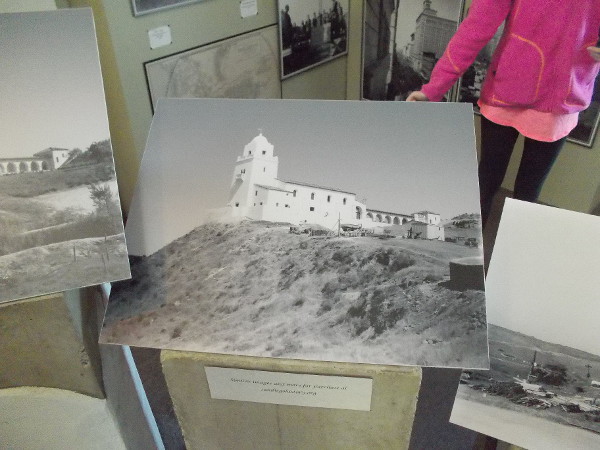
A fascinating look at Presidio Hill almost a century ago.
A lovely watercolor sketch of the Junipero Serra Museum atop Presidio Hill.
On the wall are many historical photos and artifacts, including an image from around 1930 of a cigar factory on 4th Street in San Diego.
A reproduction of the west elevation drawing of the Serra Museum by architect William Templeton Johnson.
Now we're heading up to the very top of the tower.
Now we’re heading up to the very top of the tower.
Looking west from the Serra Museum tower along Interstate 8. Point Loma is on the left and Mission Bay is to the right.
Looking east into Mission Valley.
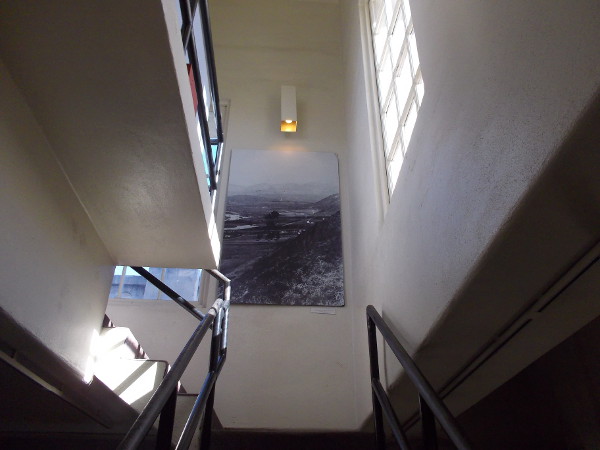
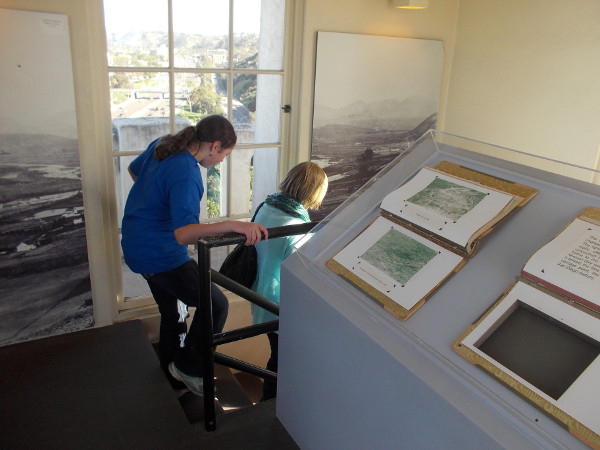
Visitors at the Serra Museum head back down from the tower, after looking at old photos which show a less-developed surrounding landscape.
Visitors at the Serra Museum head back down from the tower, after looking at old photos which show a much less-developed surrounding landscape.
A small theater in the Serra Museum contains additional exhibits about life in and around the old Presidio.
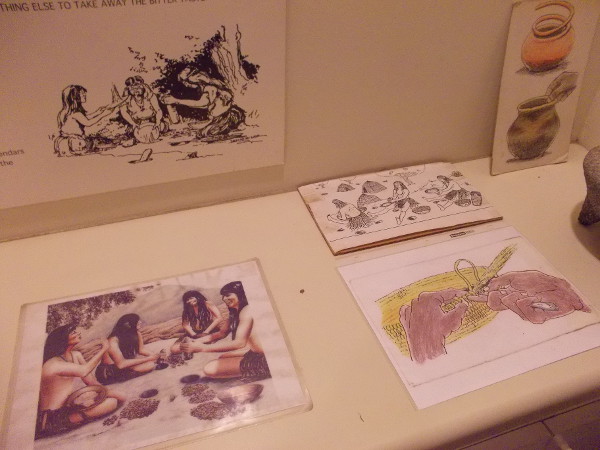
Examples of what life was like for the Native American Kumeyaay, who occupied this region long before it was discovered by the Spanish.
Stories of two people who lived on a local Rancho. Click the image to enlarge, if you'd like to read it.
Stories of two people who lived on a local Rancho. Click the image to enlarge, if you’d like to read it.
Map of the old Presidio's archaeological site. You can see where the fort was located in relation to the Serra Museum.
Map of the old Presidio’s archaeological site. You can see where the fort was located in relation to the Serra Museum.
Explanation of the excavation process utilized by researchers. Some artifacts that were unearthed are on display in the museum.
Artistic rendition of a Mexican presidio soldier circa 1830, and a horse's bit.
Artistic rendition of a Mexican presidio soldier circa 1830, and a horse bit.
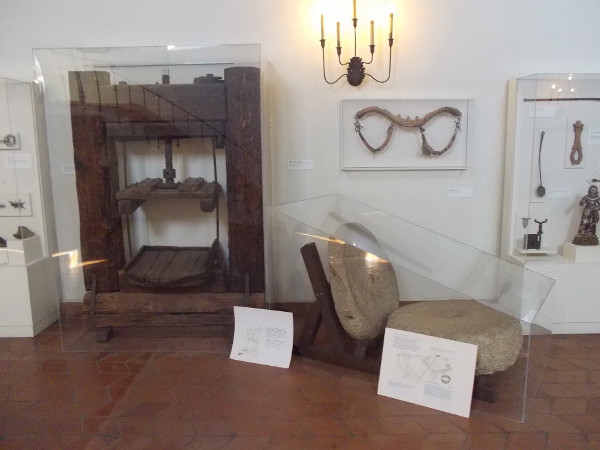
An olive press, granite mill stones, and an ox yoke.
Small artifacts include this carved polychrome wood San Diego de Alcala Santo from 18th century Spain.
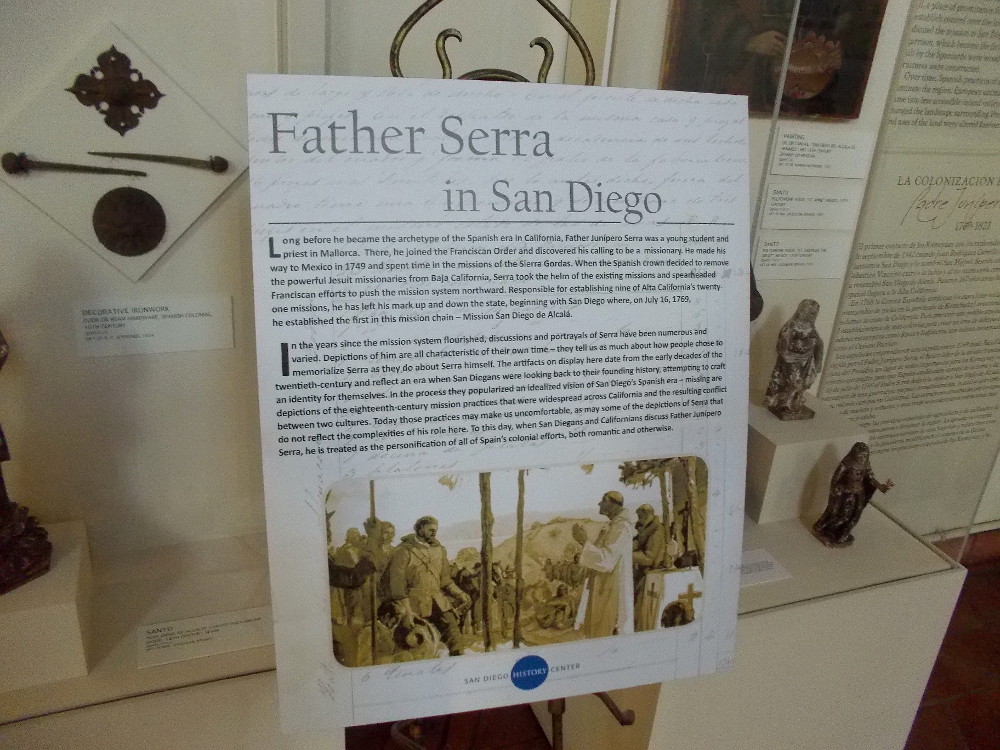
Sign describes the life of Franciscan missionary Father Junipero Serra, and his work to establish the California Missions under the flag of Spain. He was recently made a Catholic Saint.
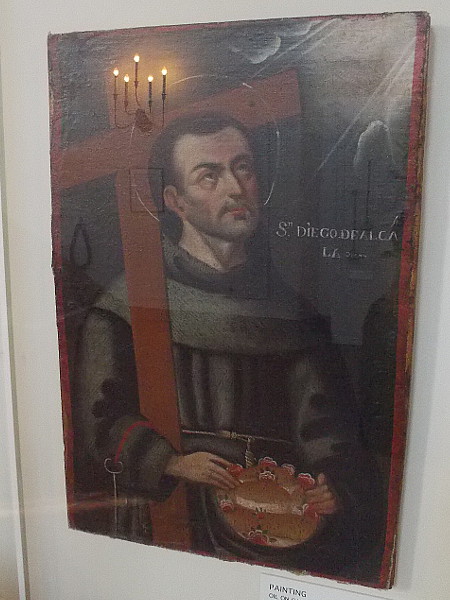
Painting. Oil on canvas. San Diego del Alcala de Henares. Mid 18th century, Spanish or Mexican.
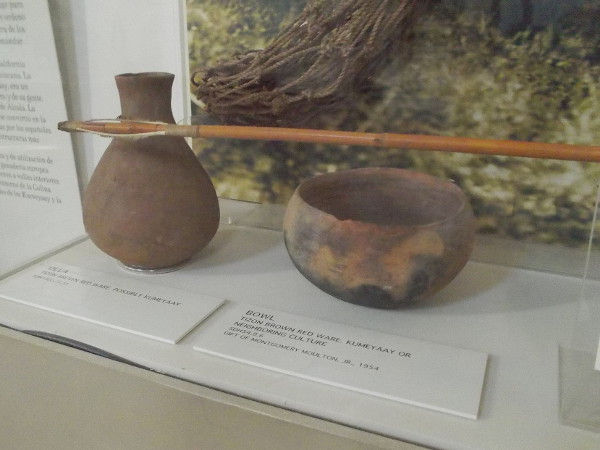
Olla and bowl. Kumeyaay or neighboring culture.
The Serra Museum in San Diego provides a fascinating look at our uniquely diverse city's very early history.
The Junipero Serra Museum in San Diego provides a fascinating look at our culturally diverse city’s very early history.

Join me for more cool sights on Facebook and Twitter!

Do you like to read original, thought-provoking fiction? Visit my Short Stories by Richard writing blog!