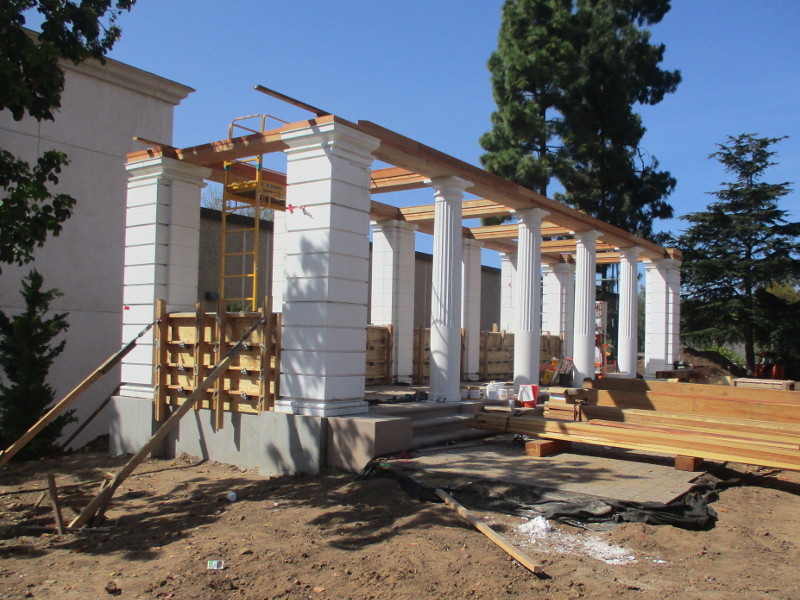
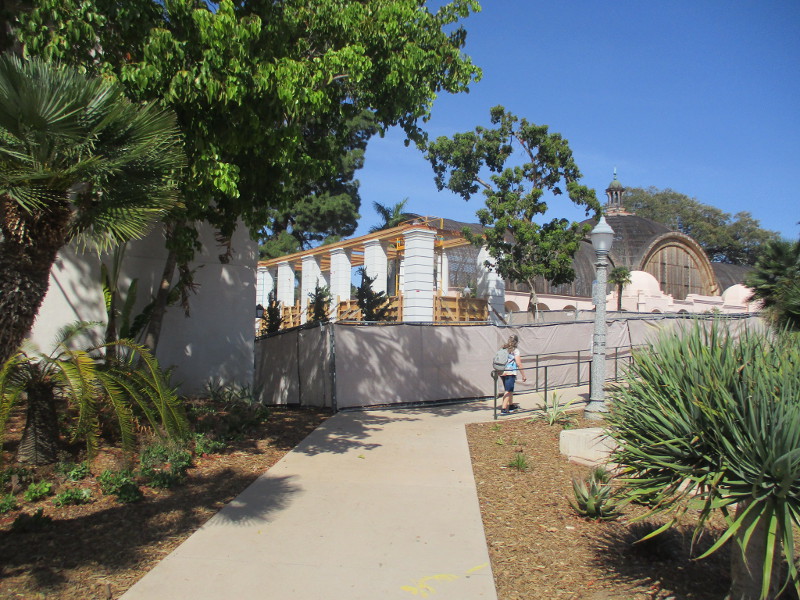
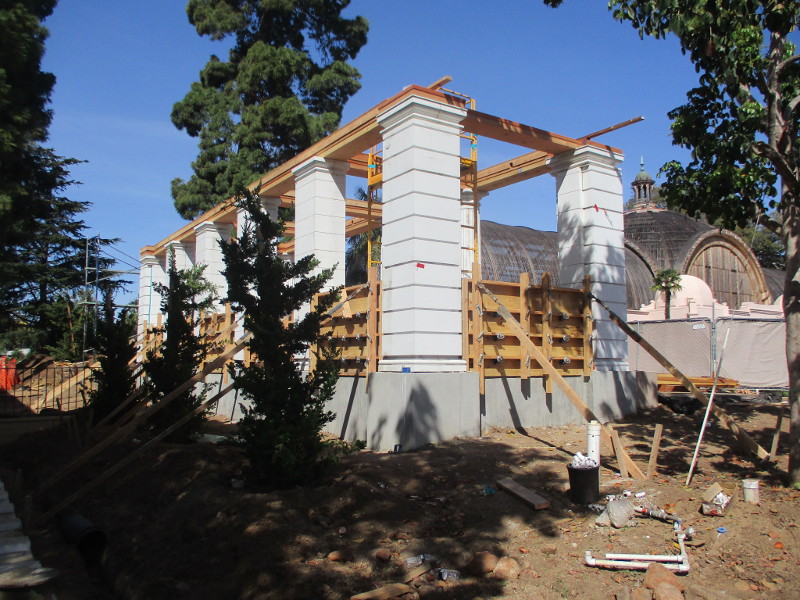
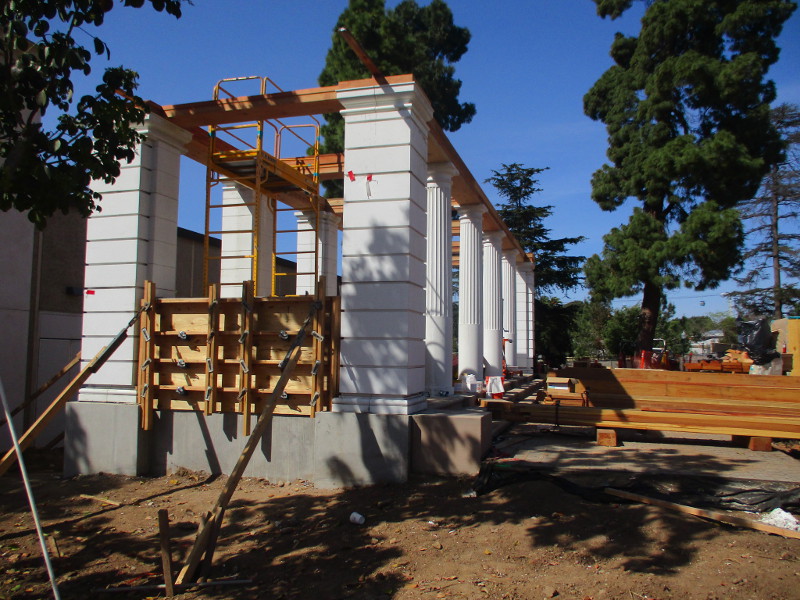
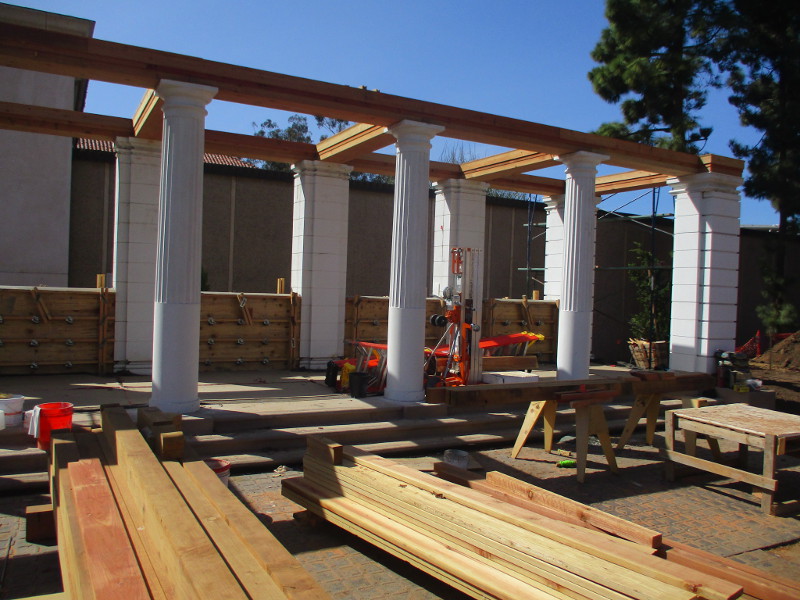
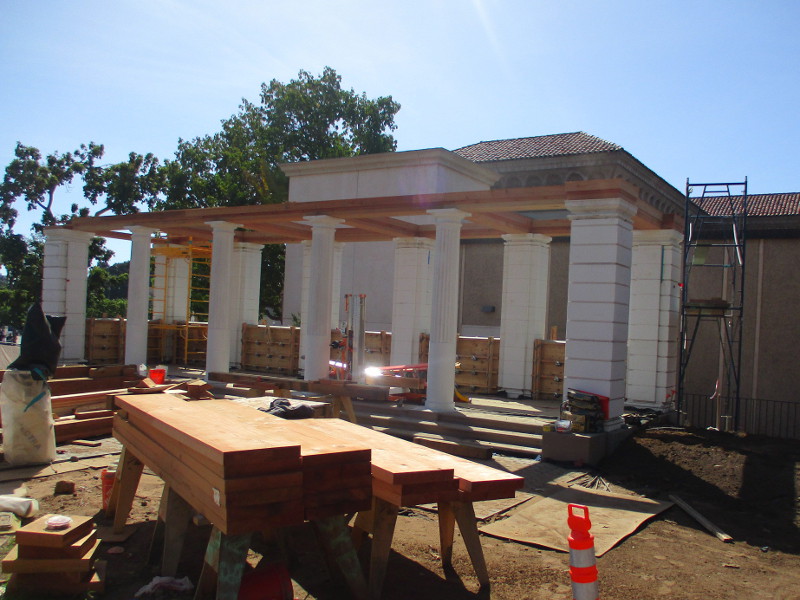
Oh my goodness! What is this impressive new structure being built in Balboa Park? With those elegant columns, is it some sort of ancient Greek temple?
No! It’s the new pergola that will stand west of the Botanical Building!
The Botanical Building Pergola recreates one of twelve pergolas that originally graced Balboa Park during the 1915 Panama-California Exposition. And you can tell already that it’s going to be amazing!
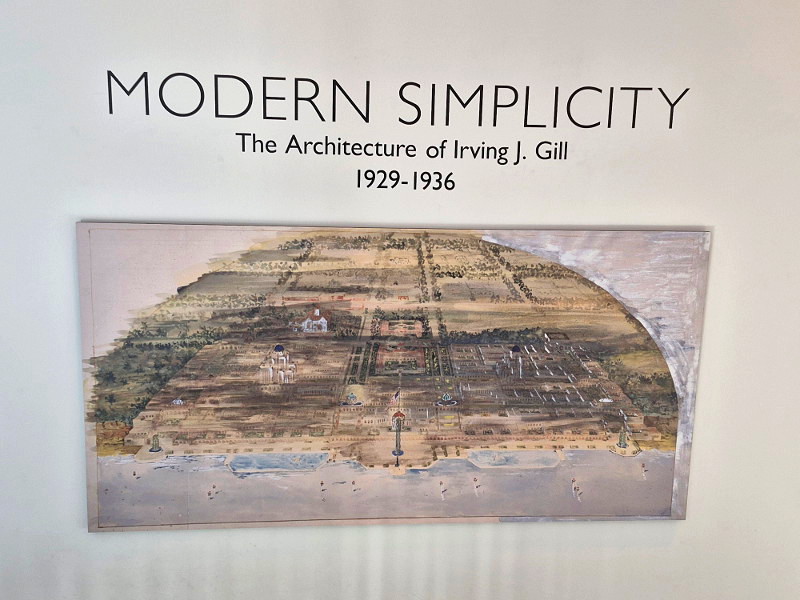
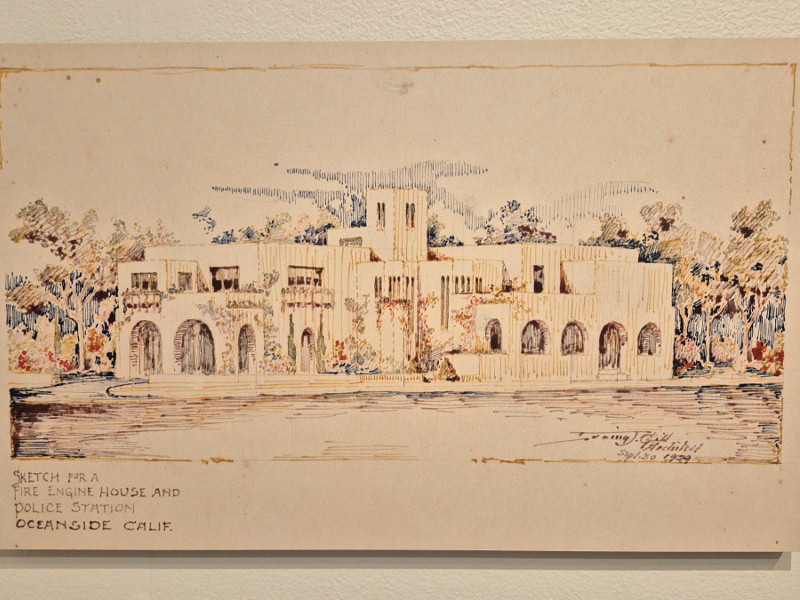
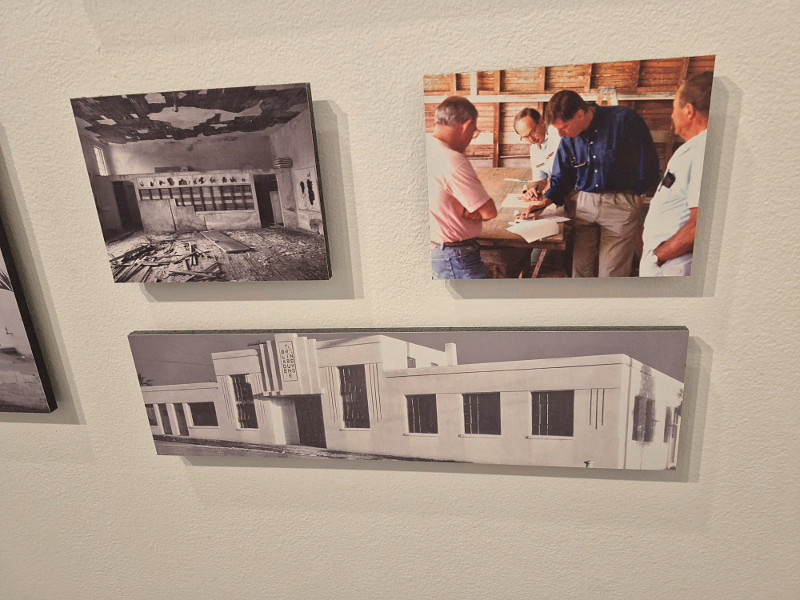
The Oceanside Museum of Art occupies a building that was designed by renowned architect Irving J. Gill. They soon will be expanding into an adjacent building also designed by Gill. So it’s appropriate museum visitors can now enjoy an exhibition titled Modern Simplicity: The Architecture of Irving J. Gill in Oceanside.
Irving Gill is a name you might recognize. His architectural work can be found all around San Diego. He’s considered a pioneer of the modern movement in architecture. Twelve of his buildings throughout Southern California are listed on the National Register of Historic Places. (In nearly thirteen years of blogging, I’ve photographed much of his work. To find those past blog posts, click here.)
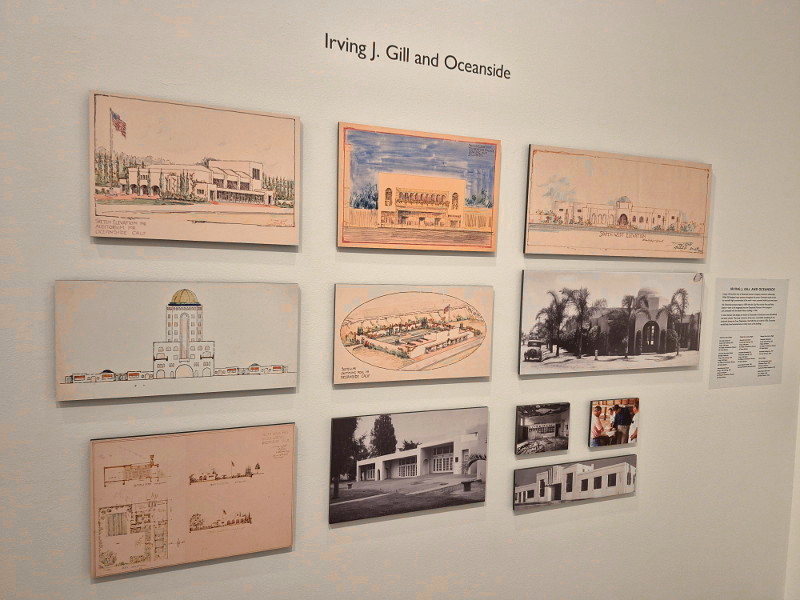
As the exhibition webpage explains: The City of Oceanside is home to several notable examples of Gill’s later work, including two landmark buildings that define the east-west axis of the Oceanside Museum of Art (OMA) campus: the former 1934 City Hall and the original [1929] Fire Station #1 and police station.
In Oceanside he also designed the Americanization School (1931), the Nevada Street Kindergarten (1931), the Blade Tribune building (1936), and several others. The exhibition documents his buildings with fascinating information and historical drawings and photographs.
The exhibition explains how Irving was inspired by Southern California’s climate and stripped architecture of unnecessary ornament and focused on pure geometric form.
People might not realize it, but many buildings and houses around San Diego were greatly influenced by the vision of one man: Irving J. Gill. In Oceanside–and now at the museum exhibition–that inspired vision comes to life.
…
To follow my blog, find the “Follow” box in this website’s sidebar. Or bookmark coolsandiegosights.com and swing on by occasionally!
(If you’re viewing this on a phone, open my website’s sidebar by tapping those three parallel lines at the top of the page.)
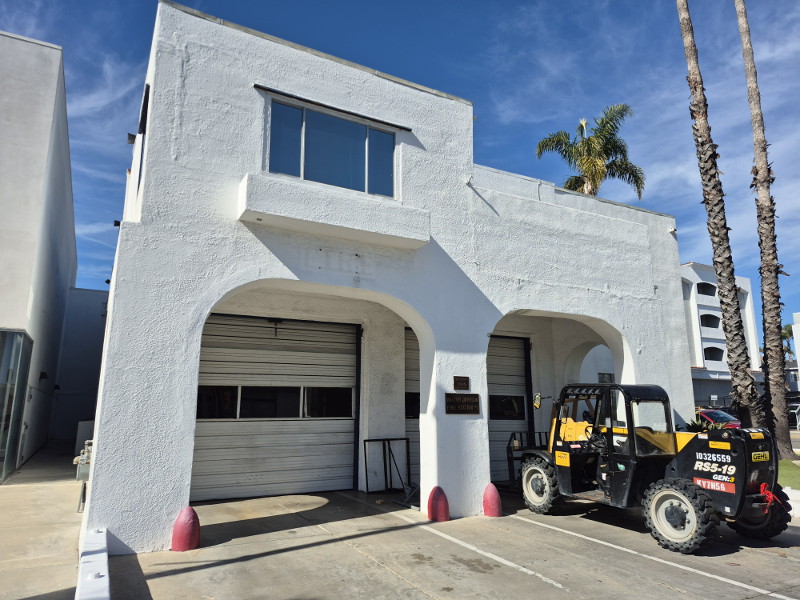
This Sunday, March 1, 2026, the public will have a rare opportunity at the Oceanside Museum of Art. During a free Open House, between noon and 4 pm, the public will enjoy a sneak peek at the museum’s planned expansion into historic Fire Station Number One!
There will also be art workshops, refreshments, and a presentation concerning architect Irving Gill, who designed the 1929/1930 fire station (also called Oceanside Engine House and Police Station), and the original 1934 City Hall and Library buildings.
(One of the museum’s current exhibitions concerns Irving Gill’s many contributions to architecture in Oceanside. I’ll be blogging about that soon.)
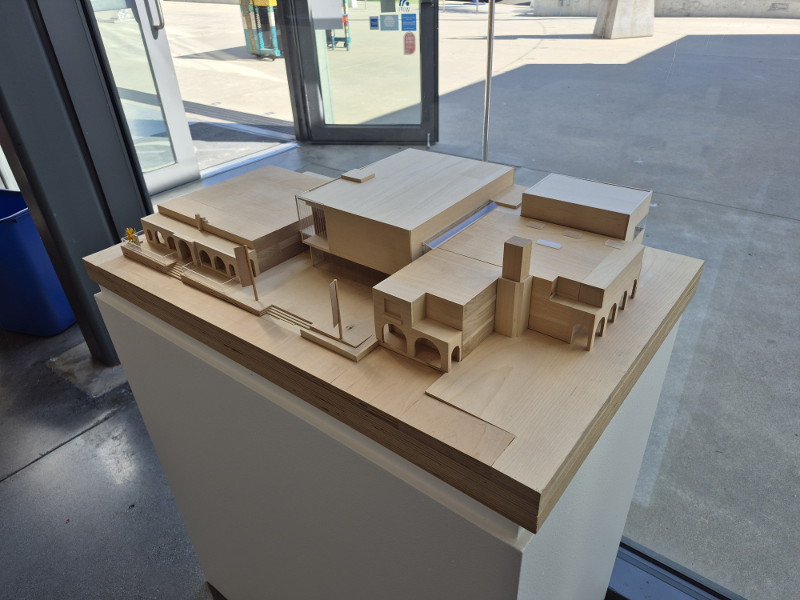
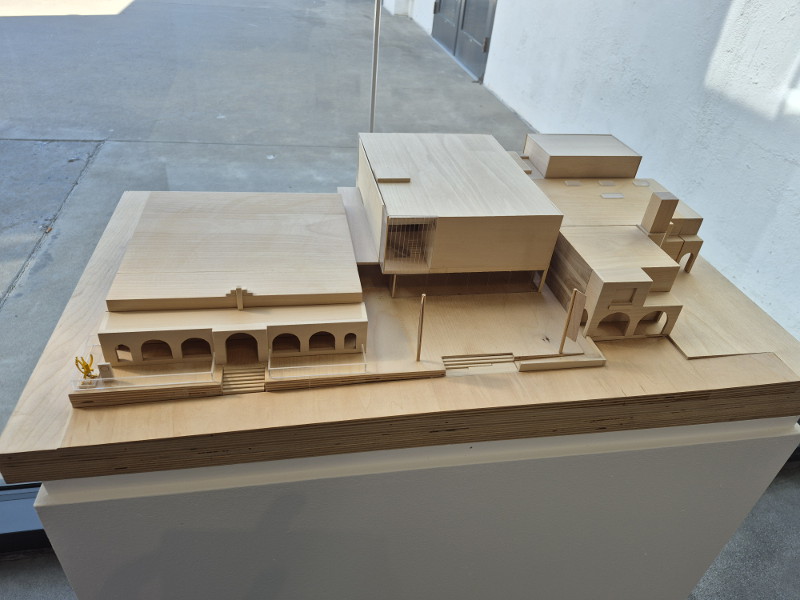
Today I was shown a model of the museum with its future expansion. The model, located near the museum’s front counter, is in my first and last photograph. One can see how the Oceanside’s old fire station and police station, adjacent to the existing museum, will become a substantial addition!
…
To follow my blog, find the “Follow” box in this website’s sidebar. Or bookmark coolsandiegosights.com and swing on by occasionally!
(If you’re viewing this on a phone, open my website’s sidebar by tapping those three parallel lines at the top of the page.)
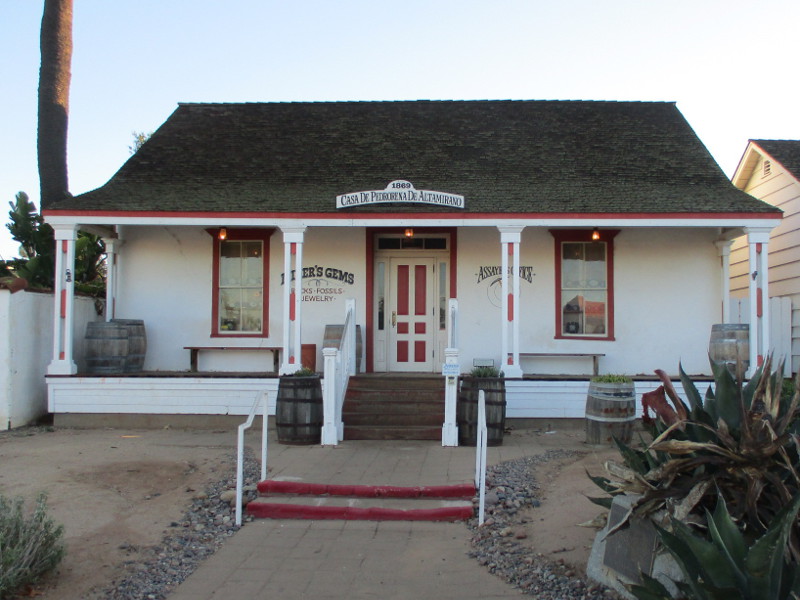
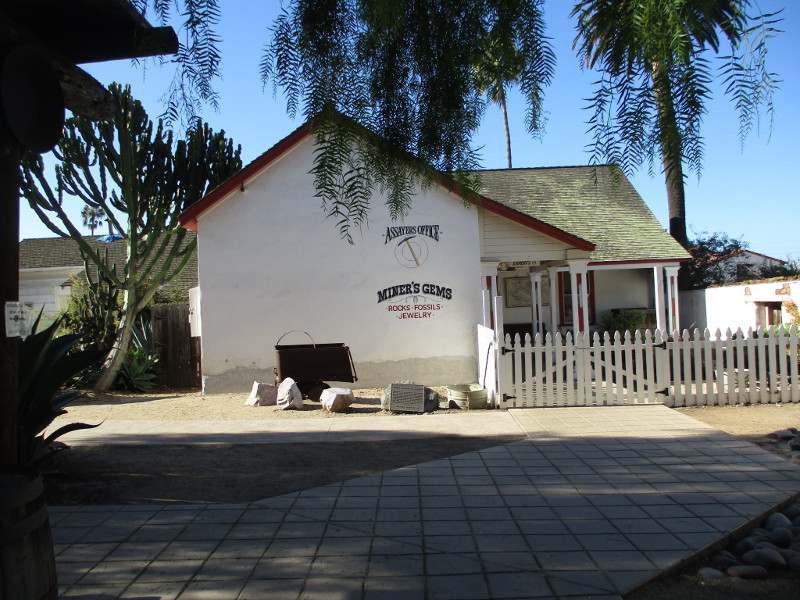
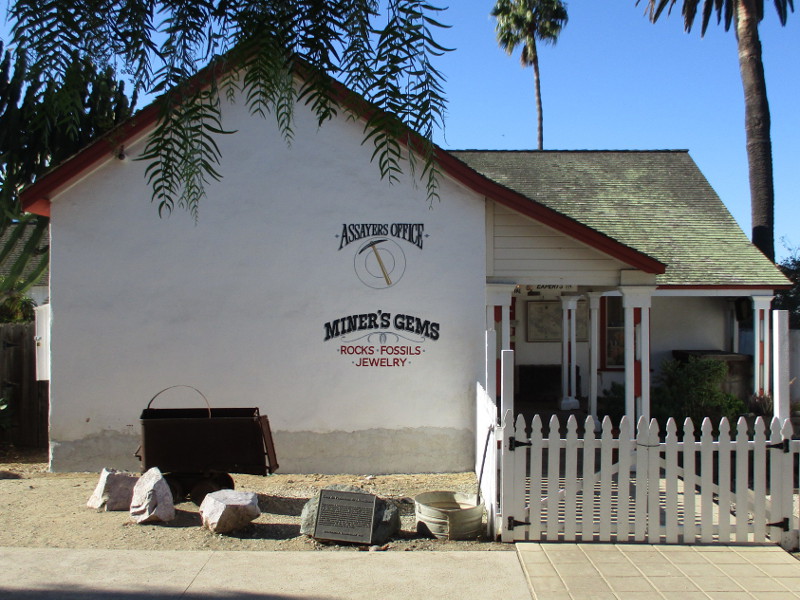
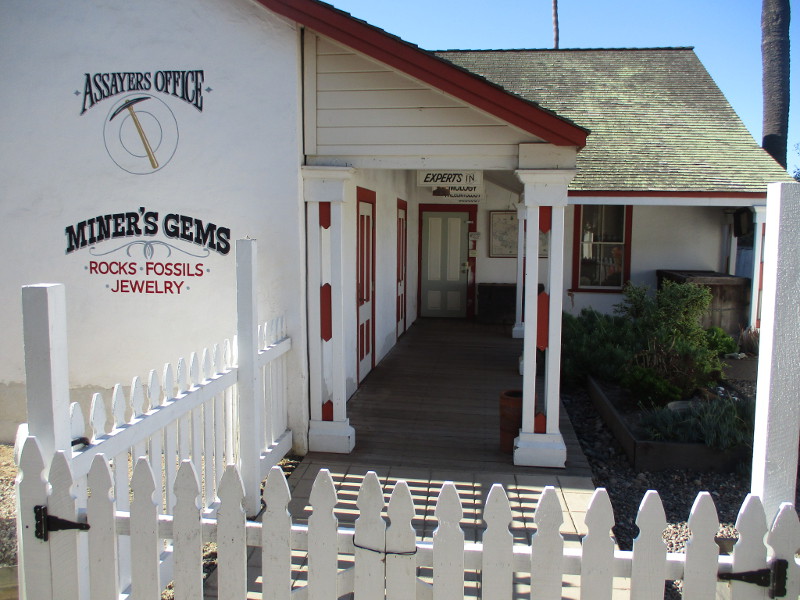
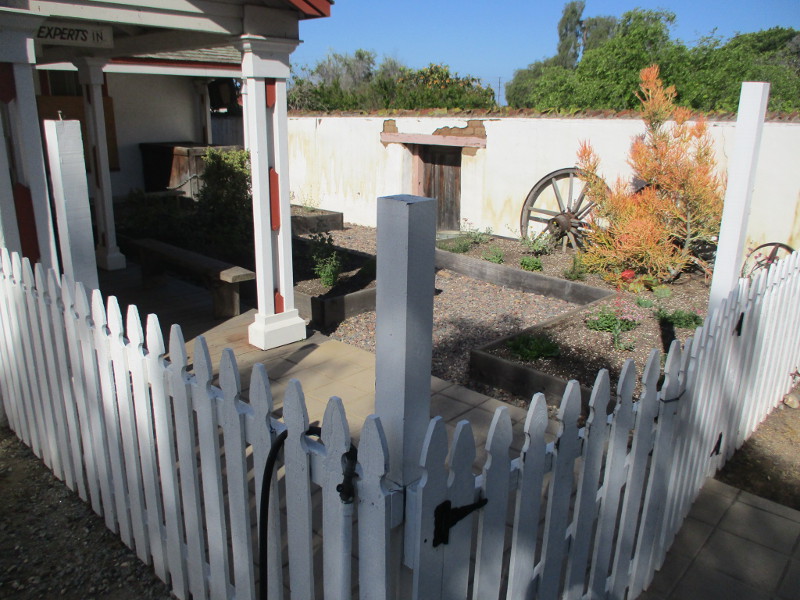
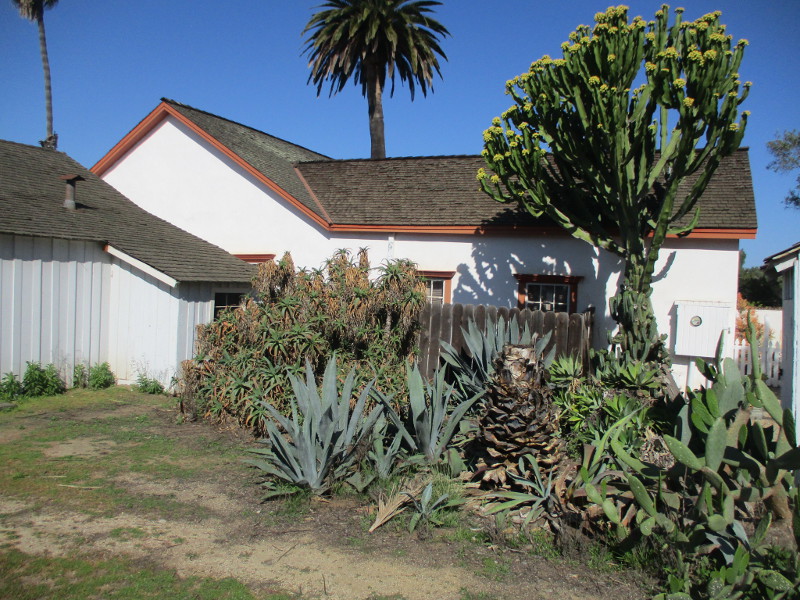
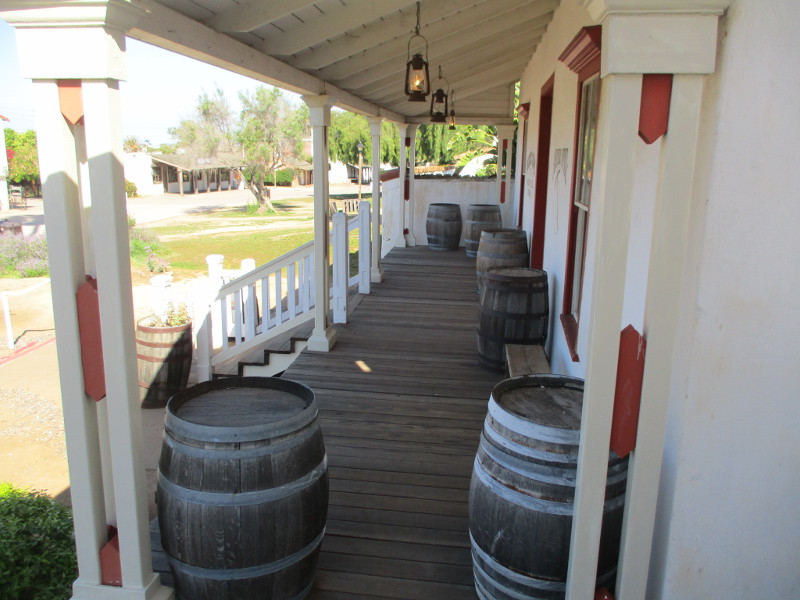
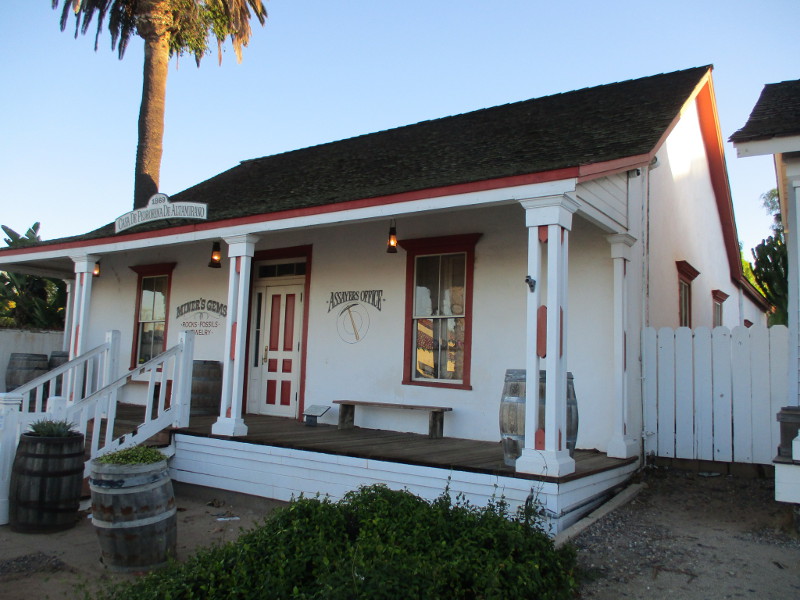
Whenever I walk through Old Town San Diego State Historic Park, I take photographs of the Pedrorena-Altamirano House. For some reason, however, I never get around to posting those photos!
Here we go, finally. These images were captured at various times under different light conditions.
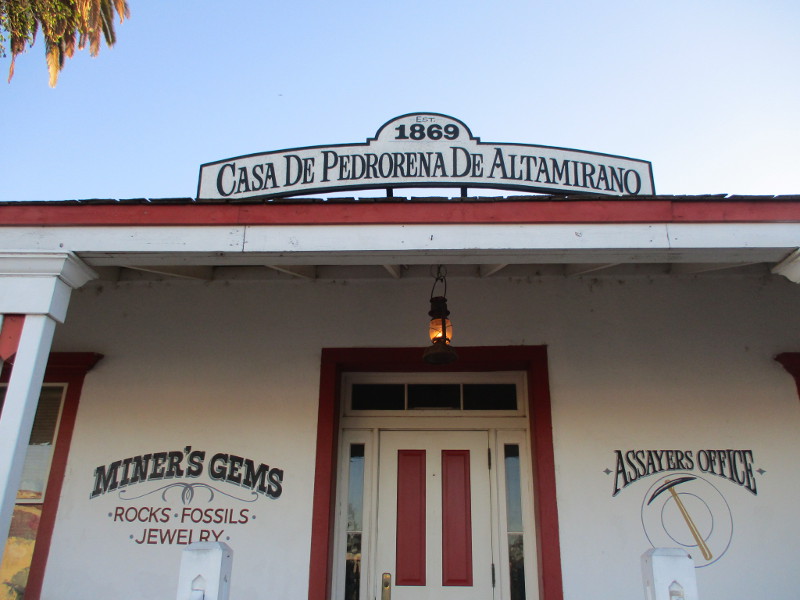
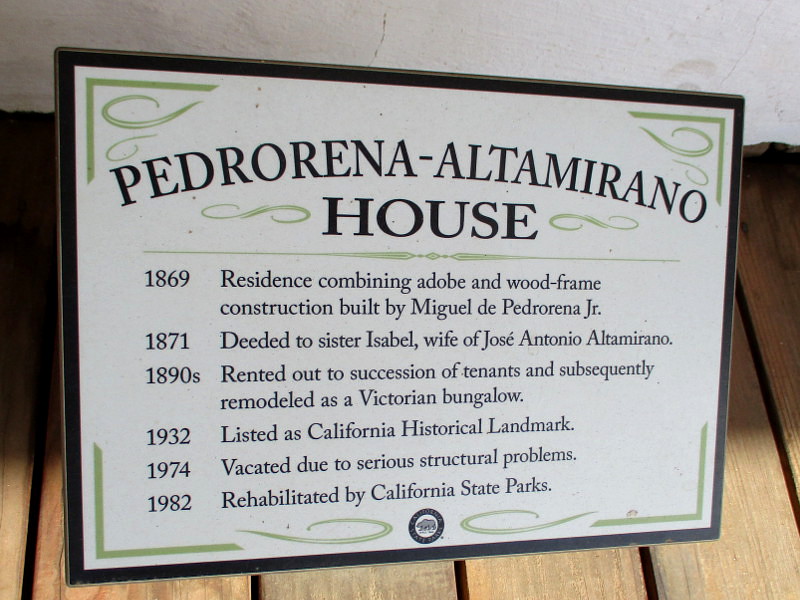
As a sign on the front porch explains, the adobe and wood frame house was built by Miguel de Pedrorena Jr. in 1869 and deeded to his sister Isabel, wife of José Antonio Altamirano, in 1871. Hence its name. In Spanish the house is called Casa de Pedrorena de Altamirano.
In the 1890s it was remodeled as a Victorian bungalow, and in 1932 the house was listed as a California Historical Landmark. California State Parks rehabilitated the structure in 1982.
Today, as you can see, it’s home of Miner’s Gems and Minerals. That explains the mining equipment visitors discover in back.
The next photos were taken behind the house…
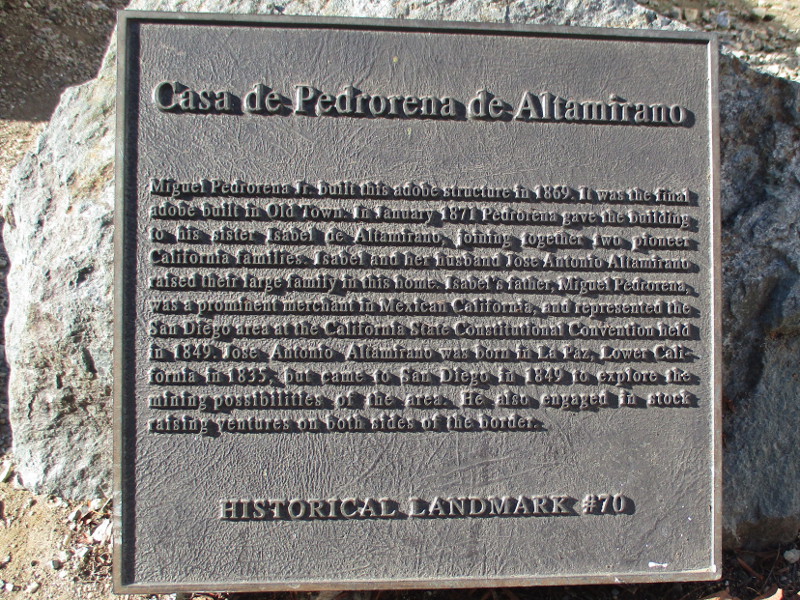
As you can see, there’s a plaque…
The plaque provides more interesting history. It reads:
Casa de Pedrorena de Altamirano
Miguel Pedrorena Jr. built this adobe structure in 1869. It was the final adobe built in Old Town. In January 1871 Pedrorena gave the building to his sister Isabel de Altamirano, joining together two pioneer California families. Isabel and her husband Jose Antonio Altamirano raised their large family in this home. Isabel’s father, Miguel Pedrorena, was a prominent merchant in Mexican California, and represented the San Diego area at the California State Constitutional Convention held in 1849. Jose Antonio Altamirano was born in La Paz, Lower California in 1835, but came to San Diego in 1849 to explore the mining possibilities of the area. He also engaged in stock raising ventures on both sides of the border.
HISTORICAL LANDMARK #70
Now let’s circle around the house and return to the front…
…
To follow my blog, find the “Follow” box in this website’s sidebar. Or bookmark coolsandiegosights.com and swing on by occasionally!
(If you’re viewing this on a phone, open my website’s sidebar by tapping those three parallel lines at the top of the page.)
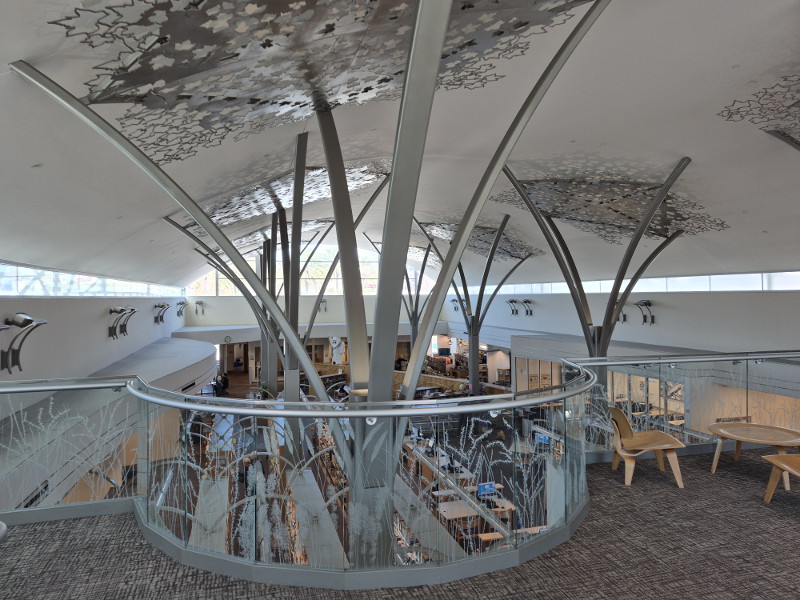
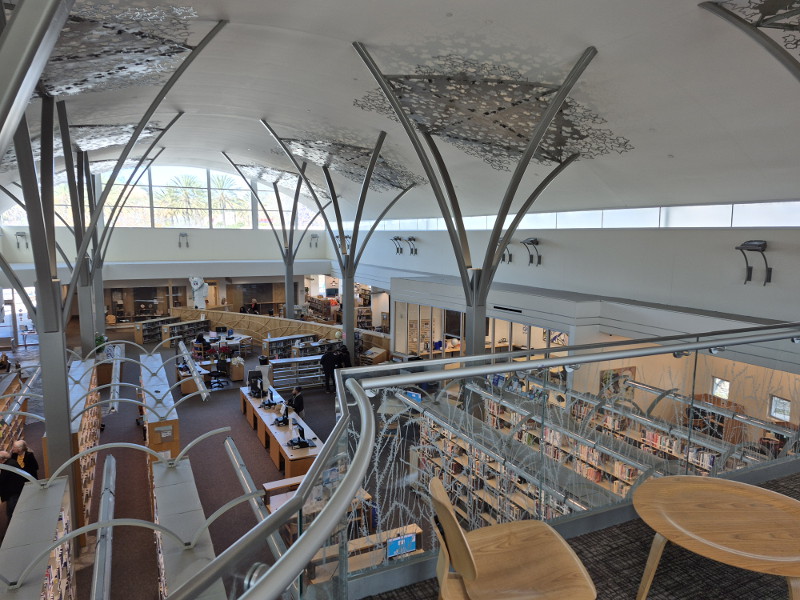
Have you been inside the San Diego Library’s branch in Mission Valley? The library offers beautiful views, particularly from the second floor mezzanine and the adjacent outdoor patio.
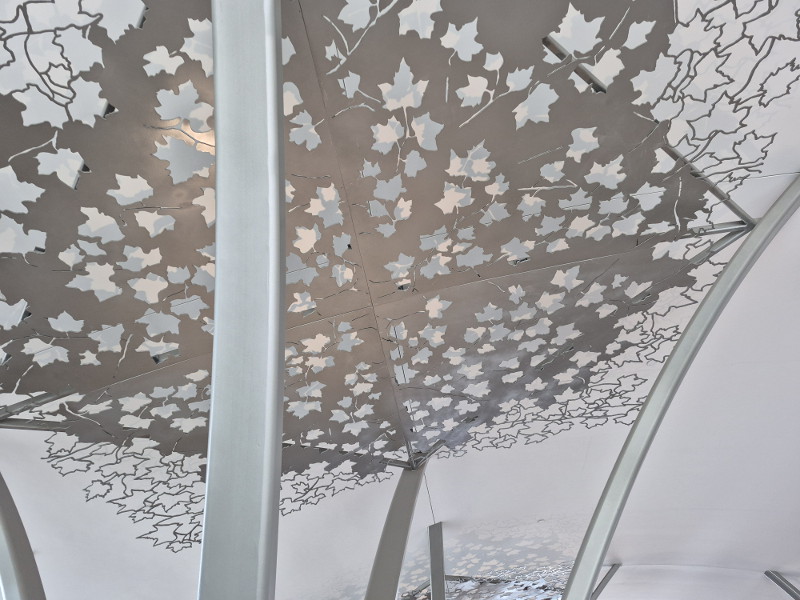
These first few photos are from the Mission Valley Library mezzanine, where there are desks perfect for quiet reading or study. Artistic ceiling supports appear like trees with spreading leafy branches.
One can gaze down at the interior of the library. Aesthetically, it’s quite pleasing. The silvery gray metal and light brown wood makes the space feel very clean, orderly and open.
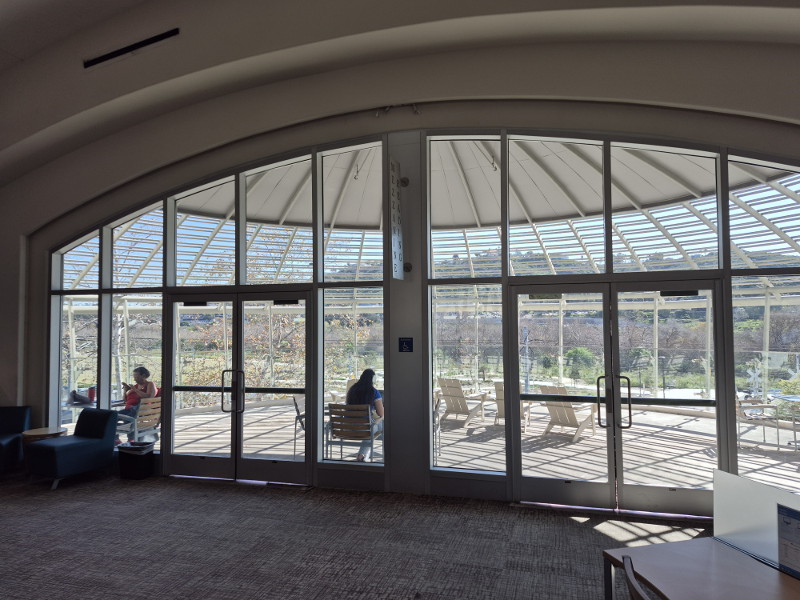
Now we’re looking from the interior mezzanine toward the outdoor patio. Much natural light comes through those windows.
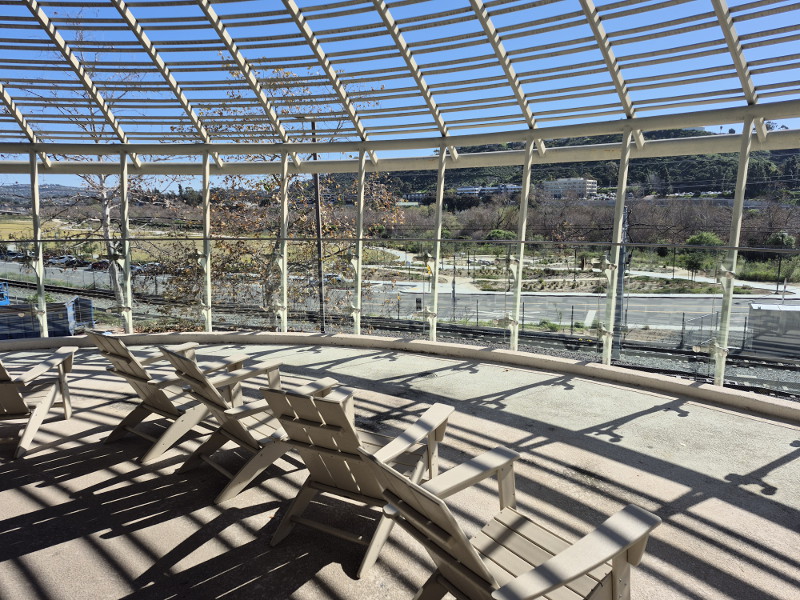
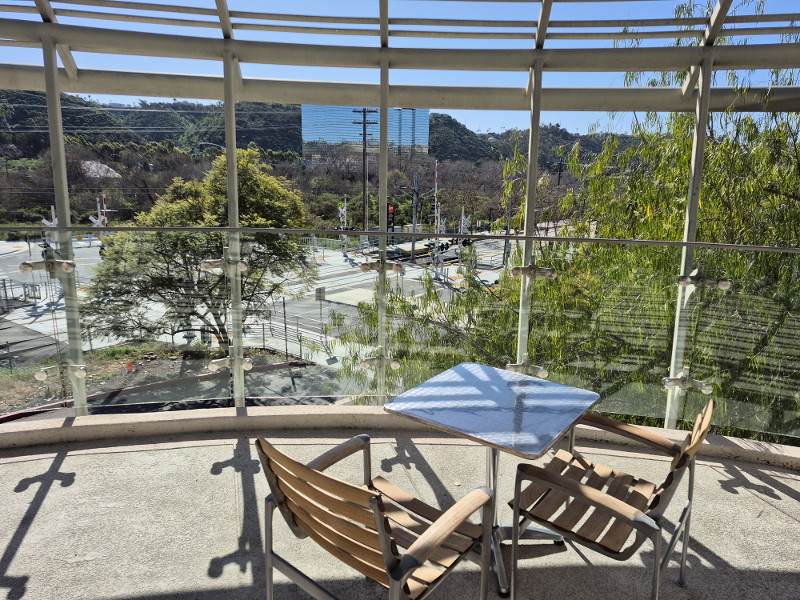
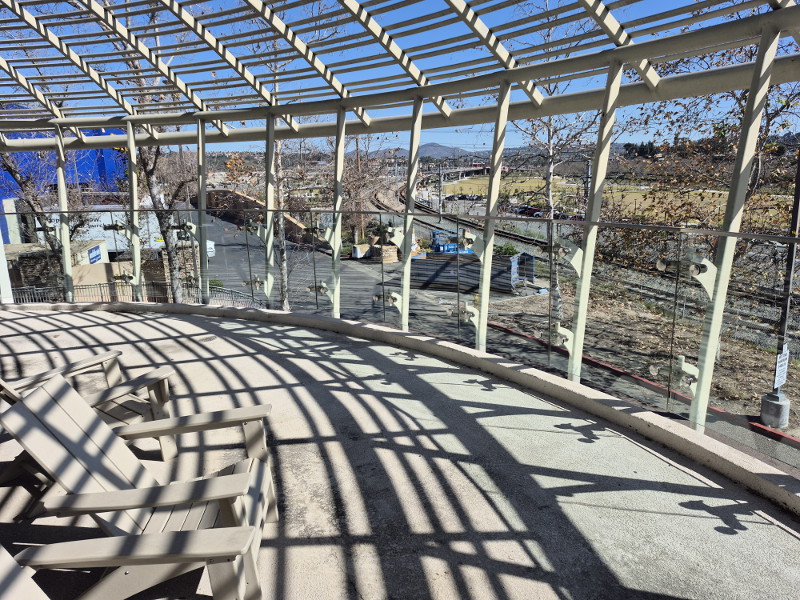
Outside, the partially enclosed patio is a wind-sheltered place where anyone can lounge in the sun, breathe fresh air, and gaze out over the trolley tracks and the Fenton Parkway Station toward trees along the San Diego River. The grassy SDSU Mission Valley river park stretches to the east, where people walk and play sports.
Wouldn’t you like to hang out here?
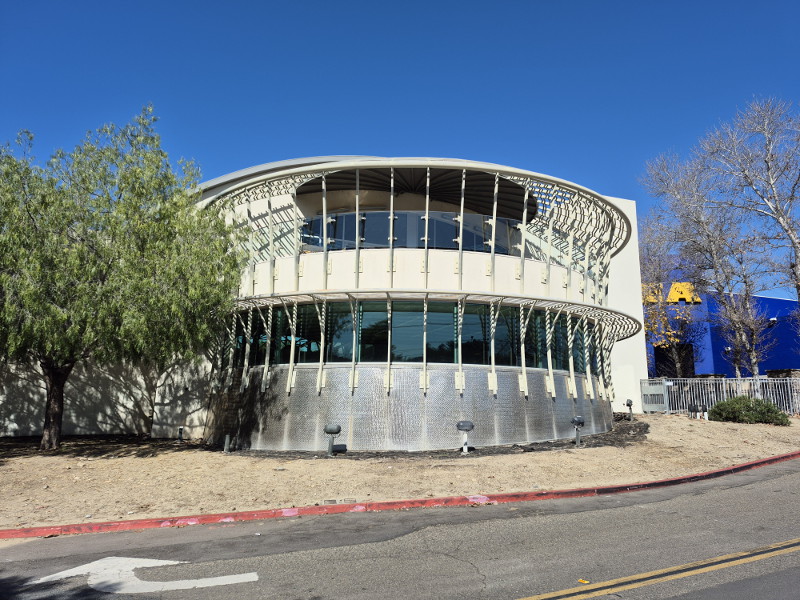
Finally, here’s what the south side of the Mission Valley Library looks like from outside. That’s the semi-circular patio up above.
The library building opened in 2002. It has received the award for Best Institutional Design from the American Institute of Architects.
…
To follow my blog, find the “Follow” box in this website’s sidebar. Or bookmark coolsandiegosights.com and swing on by occasionally!
(If you’re viewing this on a phone, open my website’s sidebar by tapping those three parallel lines at the top of the page.)
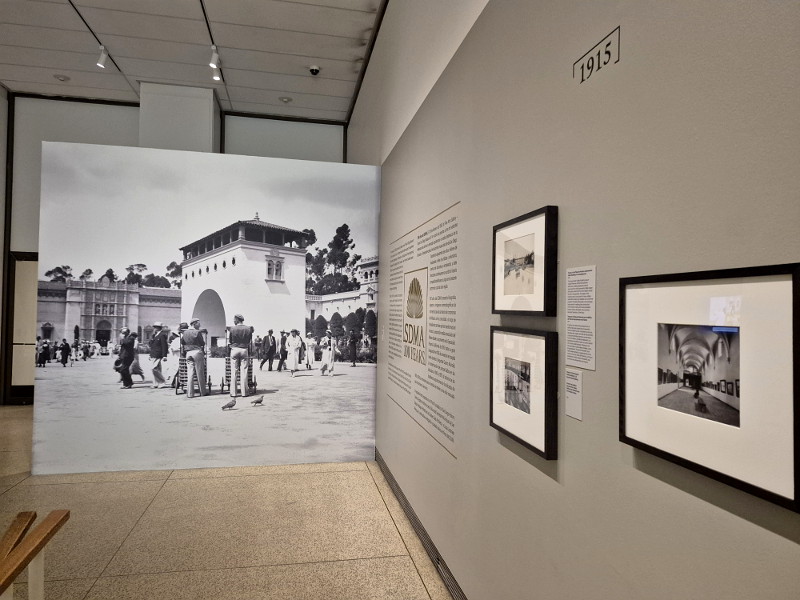
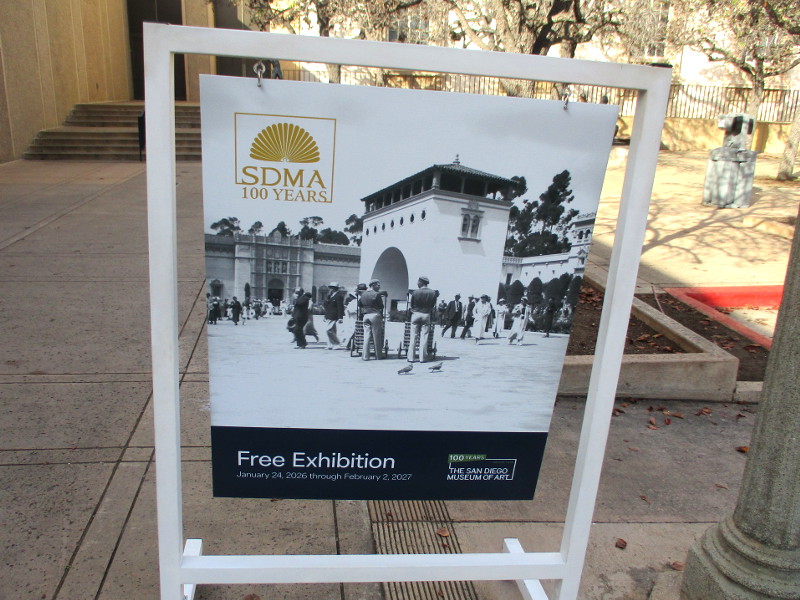
The San Diego Museum of Art is celebrating its centennial in 2026. First opening in 1926 as the Fine Arts Gallery, the world-class museum has grown and experienced many remarkable moments over the past hundred years.
That history is remembered in a free exhibition titled SDMA 100 Years. The exhibit opened yesterday in the museum’s Galleries 14/15, which are accessible to the public through a door at Panama 66 in the museum’s sculpture courtyard.
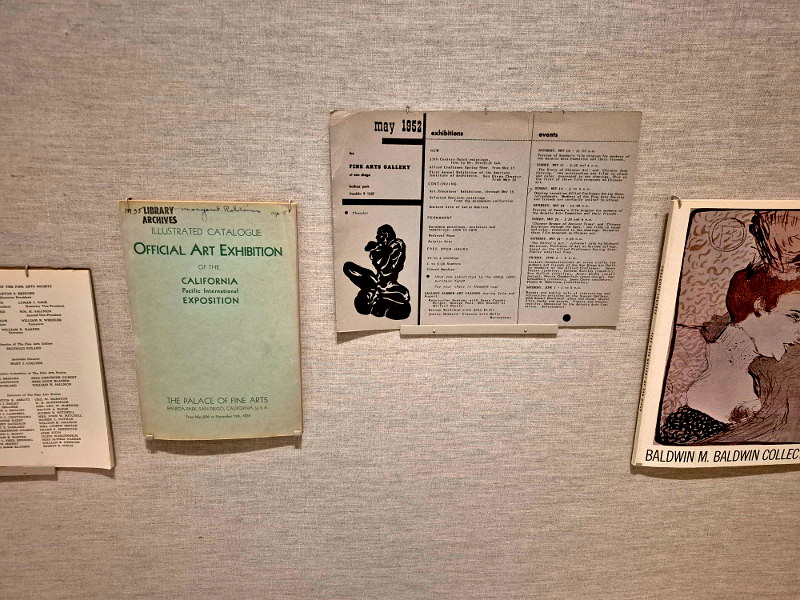
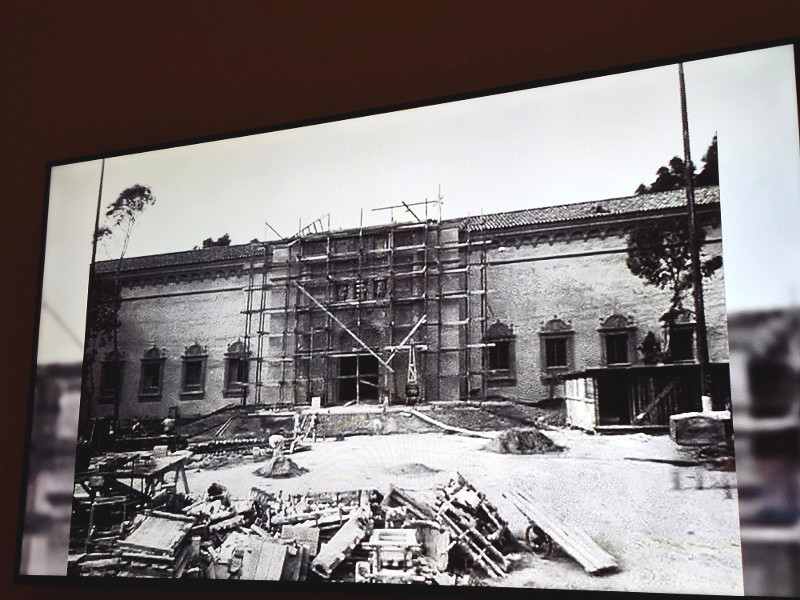
SDMA 100 Years features a timeline of photographs that document the museum’s evolution, from the building’s construction in Balboa Park right up to the present day. There’s also a short documentary video and a display case full of ephemera.
Visitors can observe how the San Diego Museum of Art had its origins in the 1915 Panama-California Exposition, had its successful grand opening in 1926, served as a naval hospital during World War II, and how west and east wings were added for significant expansions.
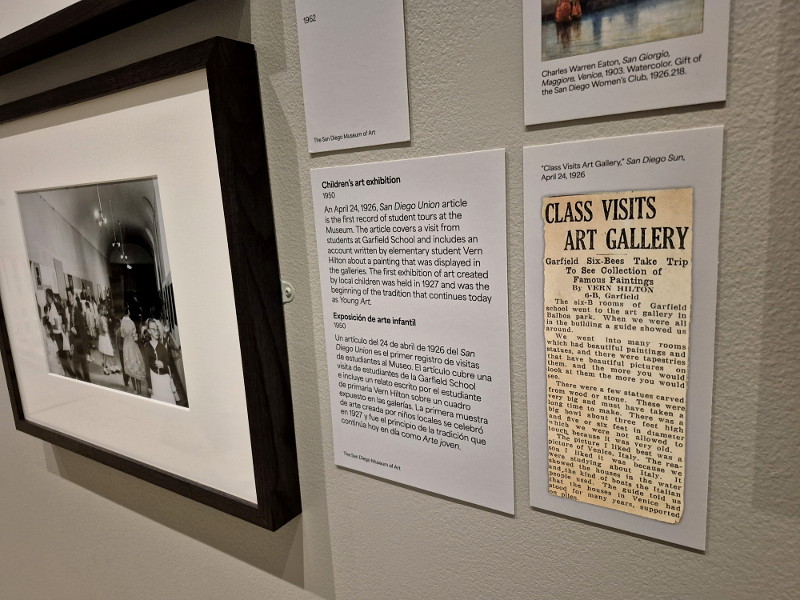
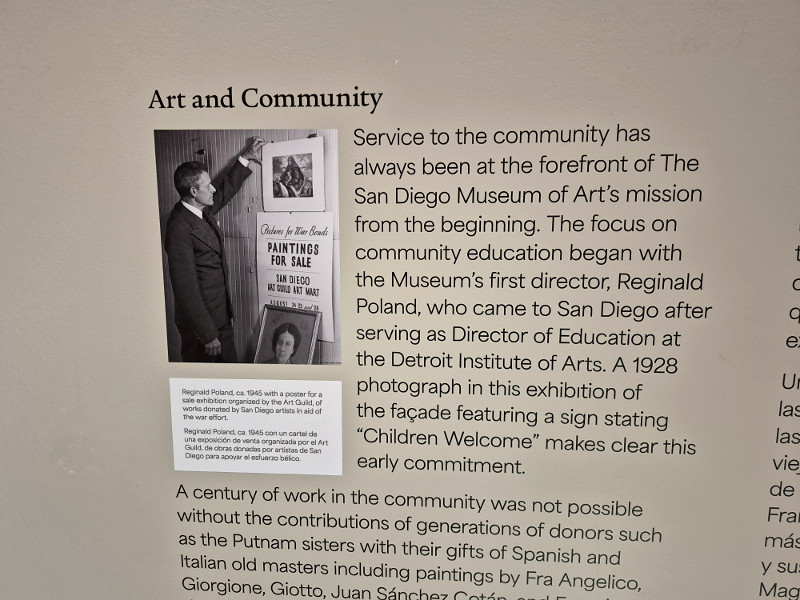
You’ll see photos showing museum contributions to art education and the San Diego community over the years. You’ll see renowned artists who’ve contributed their work, and relive major exhibitions. You’ll envision what the museum plans for their future, too!
You are invited to contribute to the exhibition! Anyone can submit their personal memories and photographs of the museum. To participate, look for the link at the bottom of this webpage!
SDMA 100 Years will be displayed through 2026, right up to February 2, 2027.
…
To follow my blog, find the “Follow” box in this website’s sidebar. Or bookmark coolsandiegosights.com and swing on by occasionally!
(If you’re viewing this on a phone, open my website’s sidebar by tapping those three parallel lines at the top of the page.)
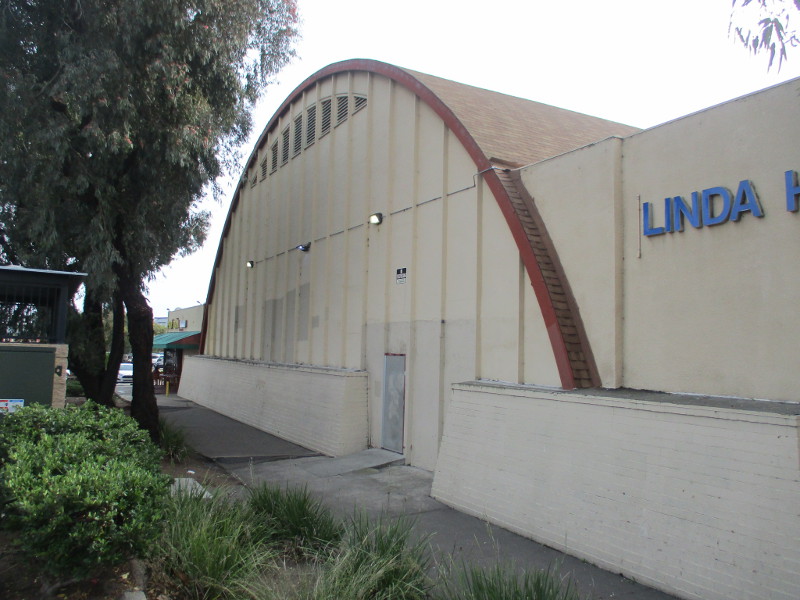
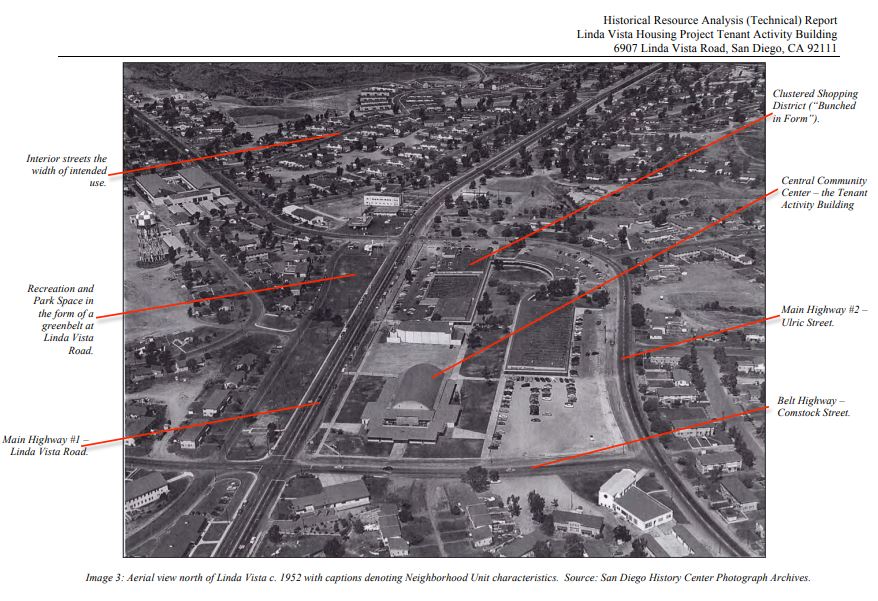
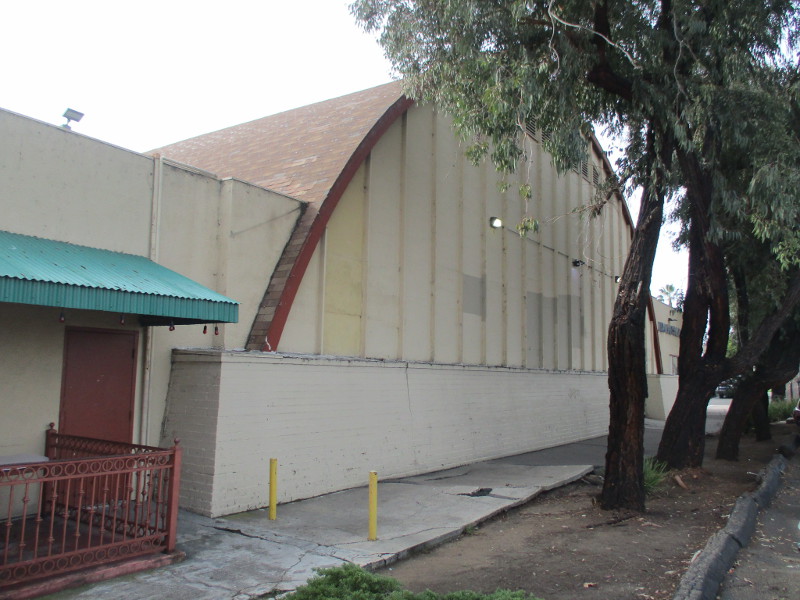
Skateworld, with a few other small businesses in Linda Vista, occupies a historically important building that was designed to be the center of community life during World War II.
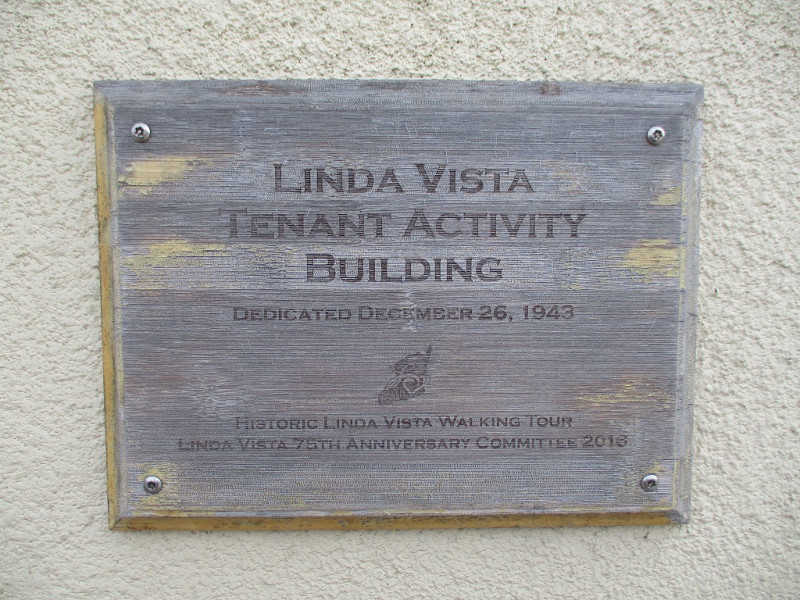
The Linda Vista Tenant Activity Building was dedicated on December 26, 1943 and stood at the center of the federally constructed Linda Vista Housing Project. The project provided 3001 dwelling units for aircraft and shipyard defense workers in San Diego during the war.
A historical plaque a short distance up Linda Vista Road provides more information about the government housing project. See past photographs of that plaque here.
The Tenant Activity Building was designed like a field house or drill hall and served as a hub for social events, clubs, and all-ages activities. It would later be considered for historic designation due to its role in supporting war-effort morale and its unique architecture.
You can read the 2011 Historical Resource Analysis (Technical) Report on the City of San Diego website by clicking here. The report contains a great deal of additional information, including photographs.
Here’s a circa 1952 aerial view of the Linda Vista House Project and its Tenant Activity Building from the report. The center of the building with its high barrel roof today provides a perfect, roomy space for roller skaters at Skateworld.
…
If you’d like to see San Diego through my lens, find the “Follow” box in the sidebar to receive new posts in your email, or bookmark coolsandiegosights.com and swing on by occasionally!
(If you’re viewing Cool San Diego Sights on a phone, you can open my website’s sidebar by tapping those three parallel lines at the top of the page.)
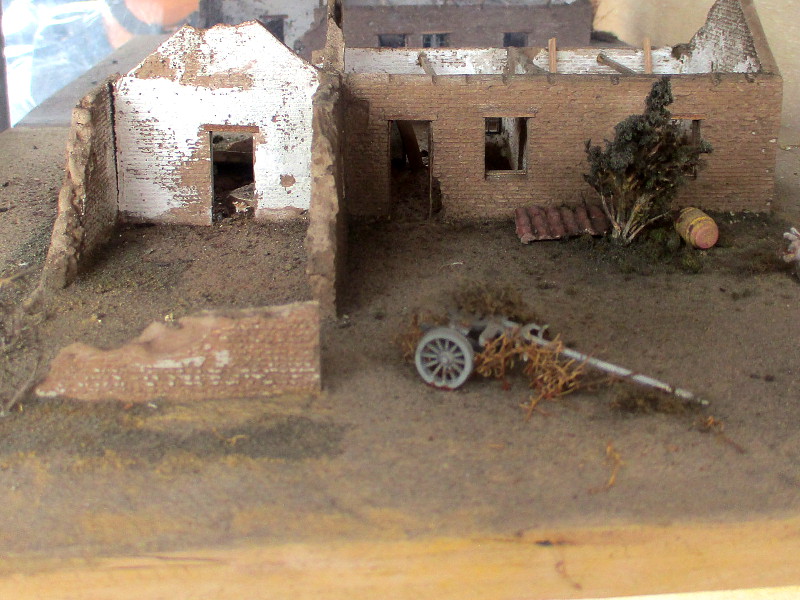
It’s unlikely you’ve seen these amazing models of buildings and life in Old Town San Diego. That’s because they’re well off the beaten track, inside slowly disintegrating displays on Conde Street, behind Cafe Coyote.
Eight years ago I blogged about the neglected display cases along the sidewalk. They contain faded, crumbling photos and other historical material. You can read my past blog post by clicking here.
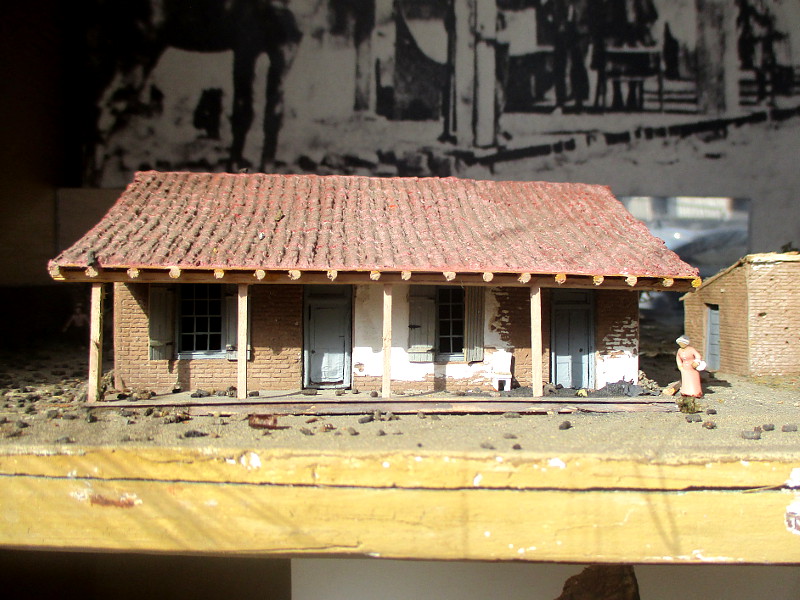
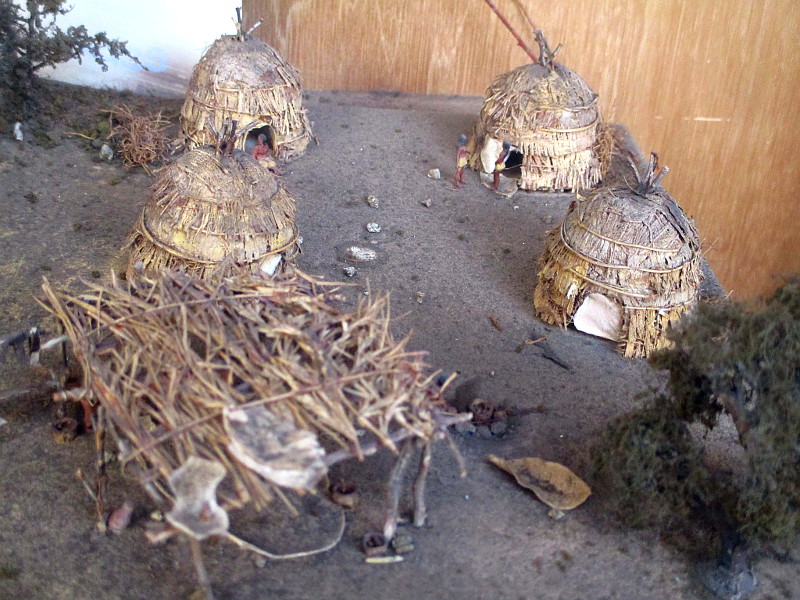
I walked by again today, and when I peered through the scratched, dirty glass I discovered several models of early structures in Old Town. They appear to contain more detail than similar models inside Old Town San Diego State Historic Park’s visitor center!
I pressed my camera right up against the glass and sharpened my blurry photos.
Do you know who created these beautiful models? Leave a comment.
The above photograph shows a model of an early Old Town adobe. I’m not sure which adobe. There are no labels.
Next, here’s a model of a Kumeyaay village–presumably Kosa’aay which was located nearby on the San Diego River. The native Kumeyaay long predated the arrival of Spanish missionaries and the establishment of Old Town…
Peering into the display case, I found another great model. This one appears to depict an adobe in decay. I had to crop the photo because a mirror behind it was showing the shirt of yours truly.
Whoever made these detailed models spent much time and care!
If you happen to walk down San Diego Avenue and come to Conde Street, turn the corner. Look for the outdoor display cases across the street from the Old Adobe Chapel.
…
If you’d like to see San Diego through my lens, find the “Follow” box in the sidebar to receive new posts in your email, or bookmark coolsandiegosights.com and swing on by occasionally!
(If you’re viewing Cool San Diego Sights on a phone, you can open my website’s sidebar by tapping those three parallel lines at the top of the page.)
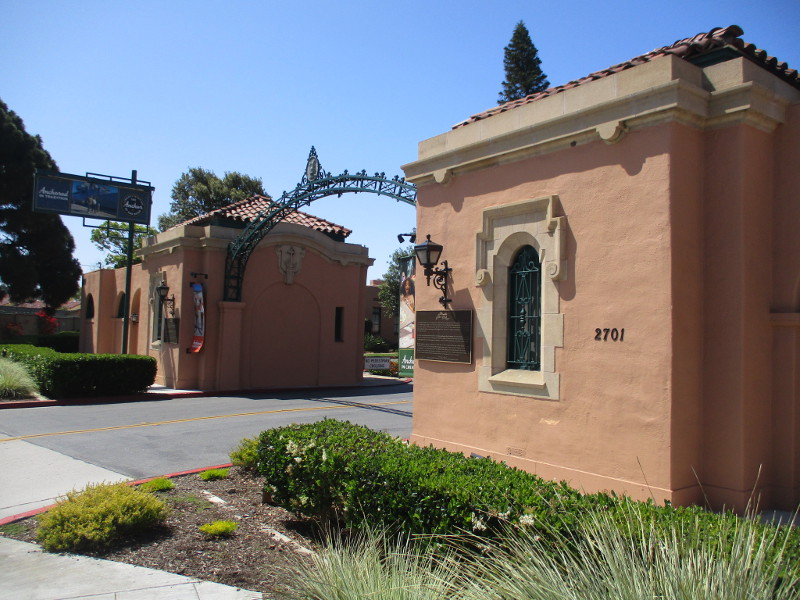
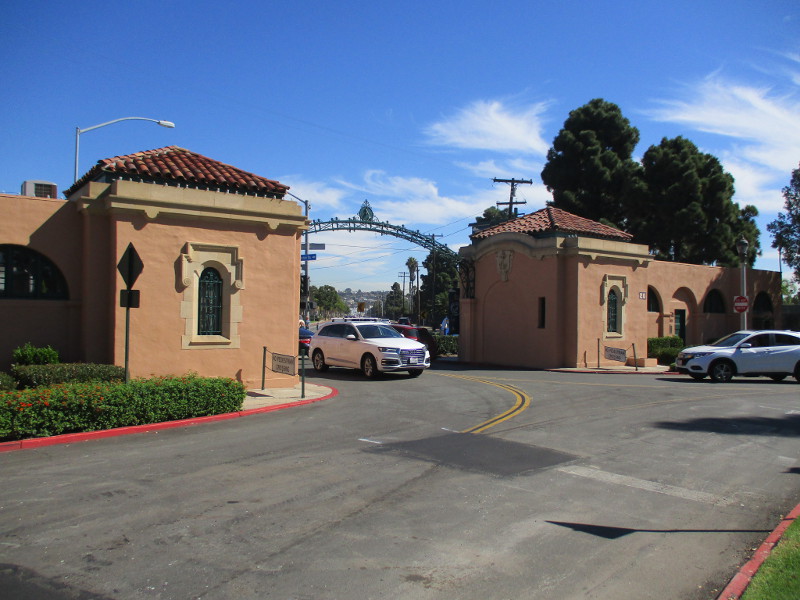
Perhaps you’ve driven through Gate One while arriving at or departing from Liberty Station. It’s the old Navy base entrance at the northeast end of Liberty Station, where Lytton Street and Barnett Avenue meet.
You might have noticed plaques on the two old guard buildings.
Curiosity getting the best of me, the last time I was in the neighborhood I walked around both historical buildings for a closer look.
Gate One was the main entrance to Naval Training Center San Diego, and the grassy area with an anchor behind it is Sellers Plaza. As this webpage explains: Named for the base’s first commander, Sellers Plaza serves as the Naval Training Center’s front door.
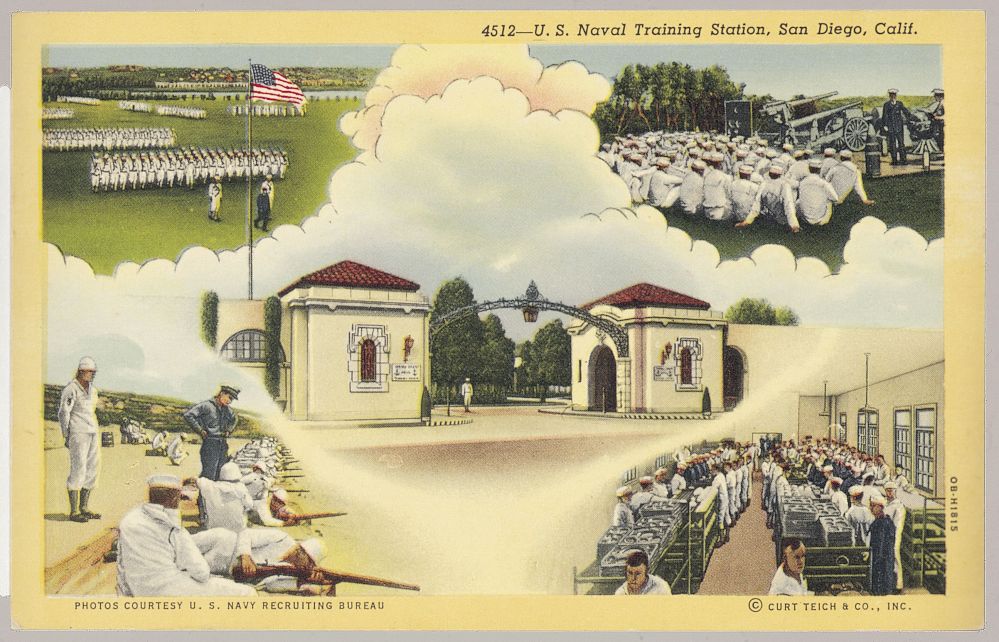
You can see Gate One in the center of this postcard:
Image courtesy Libery Station.
Here are photographs I recently took in front of Gate One…
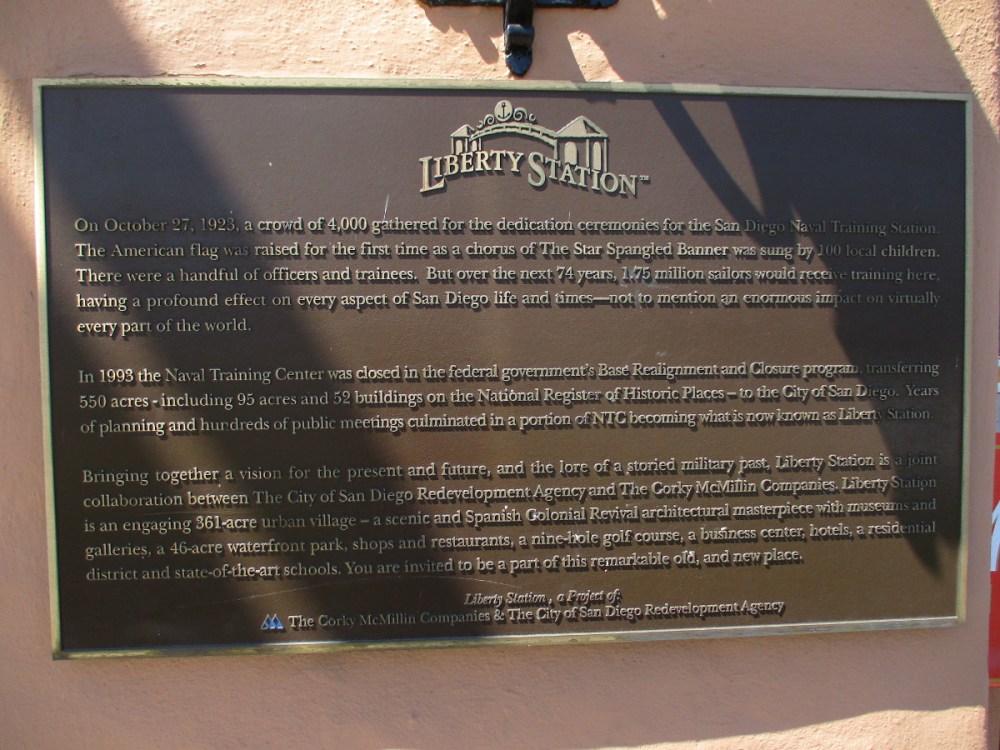
Identical plaques are mounted to the front of both buildings near the arch. The steel arch was added in 1932.
I’m now standing by Building 20. There across the road is Building 21.
The plaques summarize the history of the San Diego Naval Training Station, which opened in 1923 and was finally decommissioned in 1997. Over 1.75 million sailor recruits would receive training here.
Now I’ve walked behind Building 20…
A plaque by the door to Building 20 identifies it as Gatehouse #1, constructed 1923.
Dodging a car or two, I’m now behind Building 21…
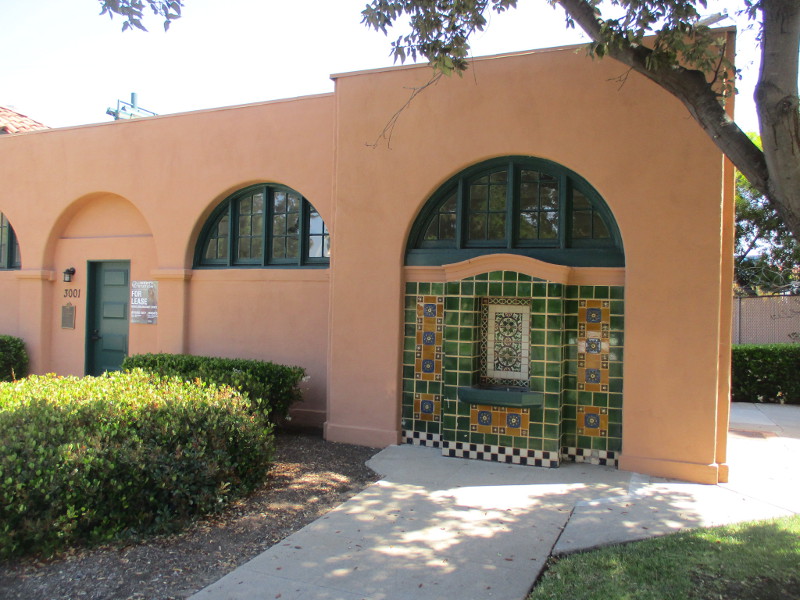
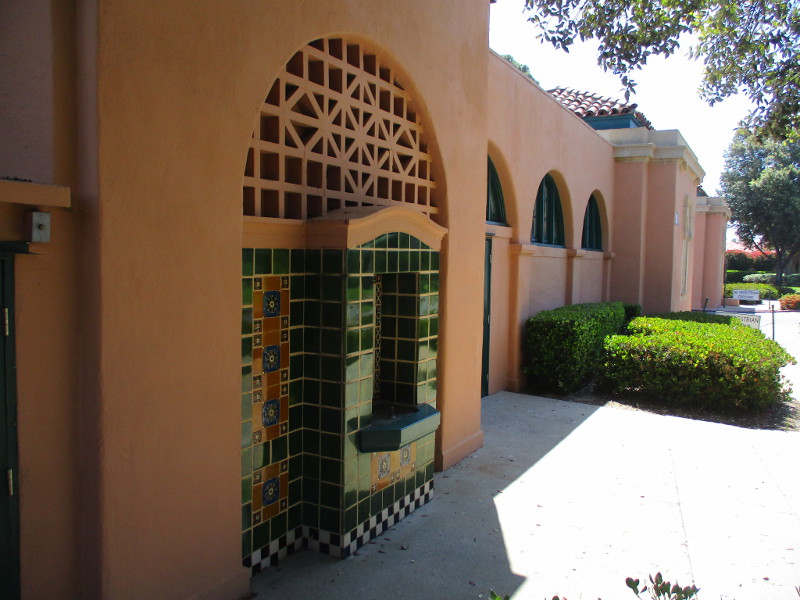
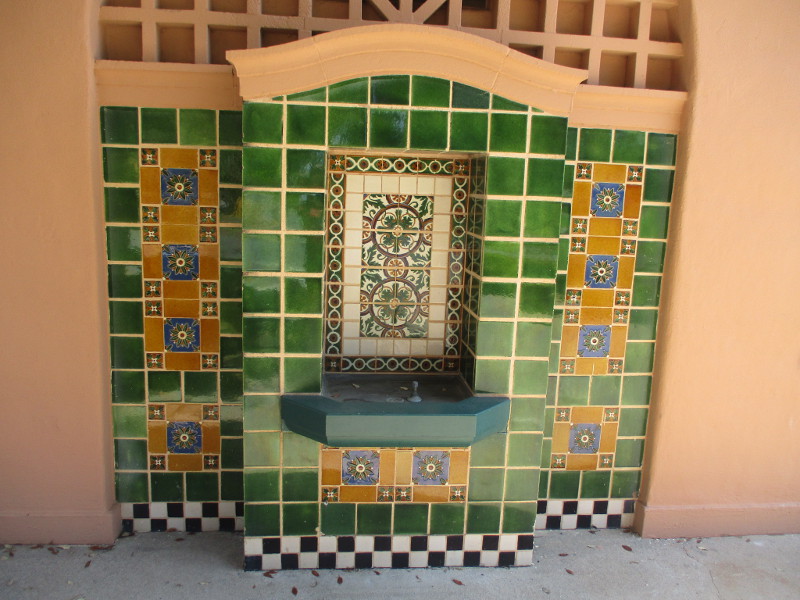
The rear of both buildings feature these beautiful tile fountains.
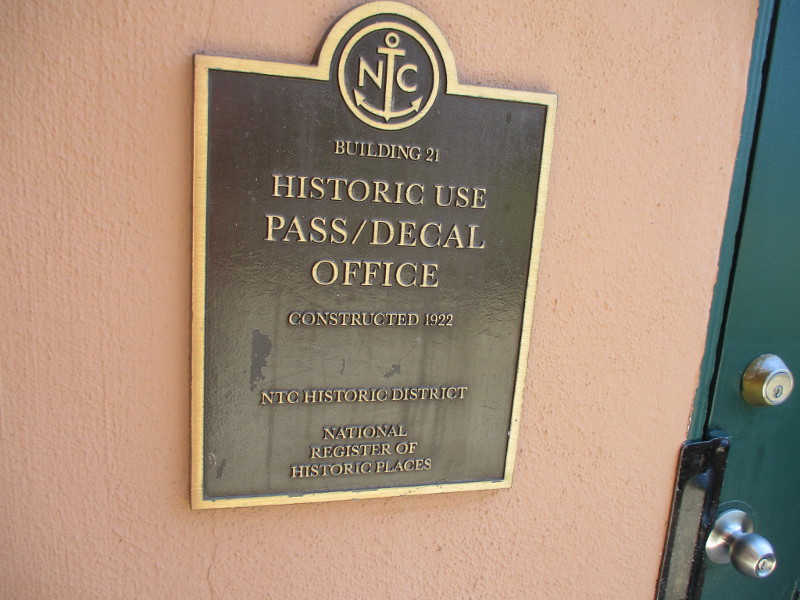
A plaque by the door of Building 21 identifies it as the Pass/Decal Office, constructed 1922.
…
If you’d like to see San Diego through my lens, find the “Follow” box in the sidebar to receive new posts in your email, or bookmark coolsandiegosights.com and swing on by occasionally!
(If you’re viewing Cool San Diego Sights on a phone, you can open my website’s sidebar by tapping those three parallel lines at the top of the page.)
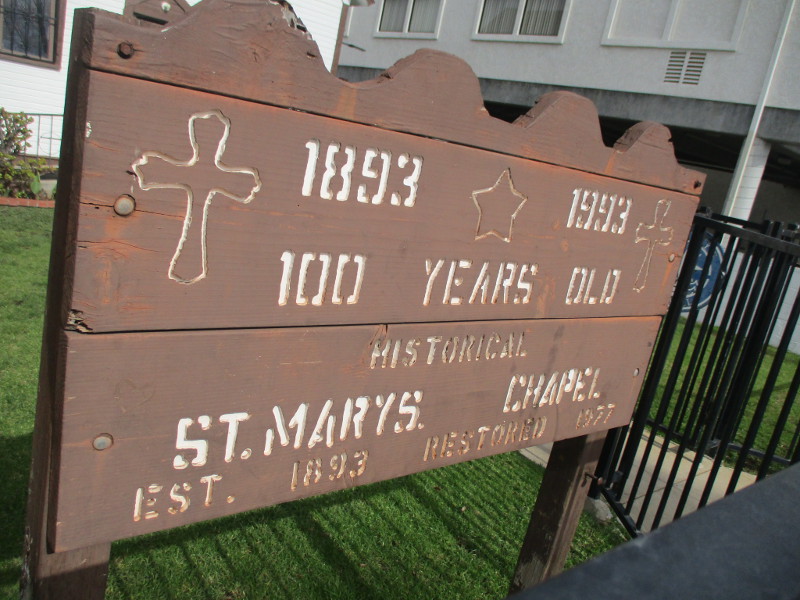
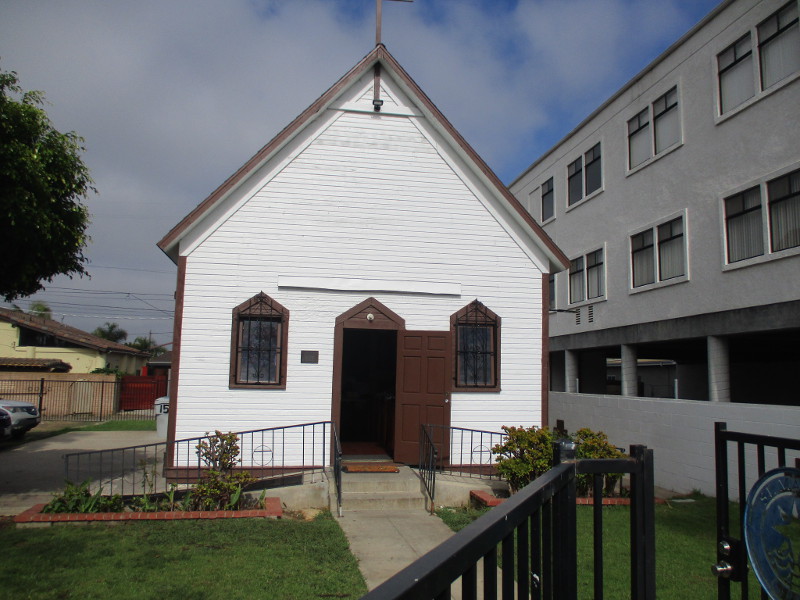
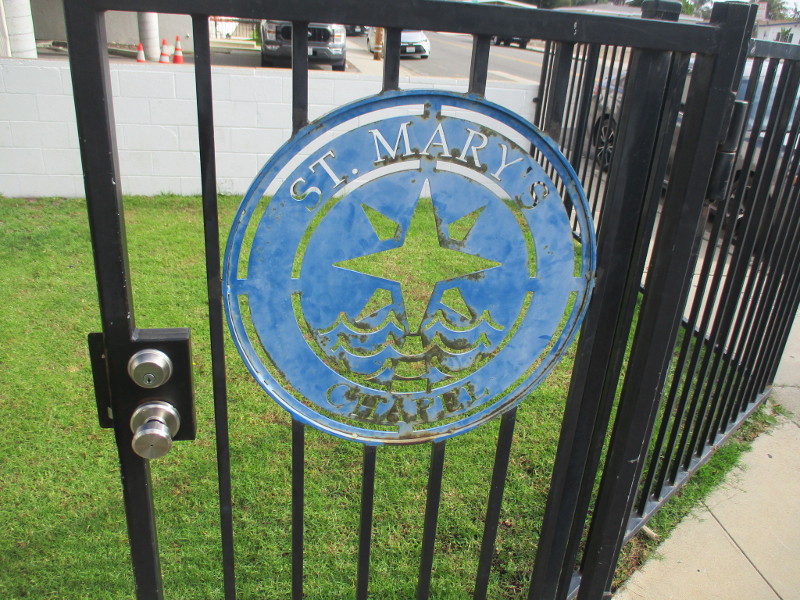
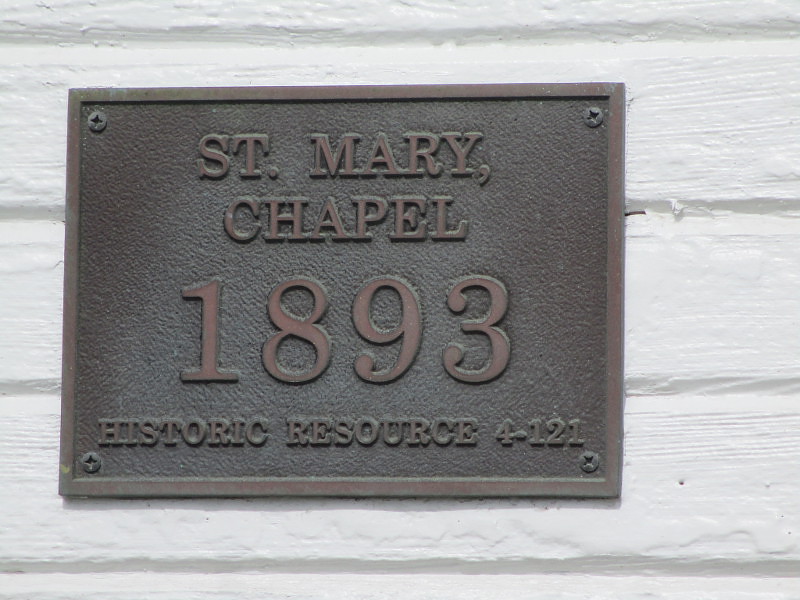
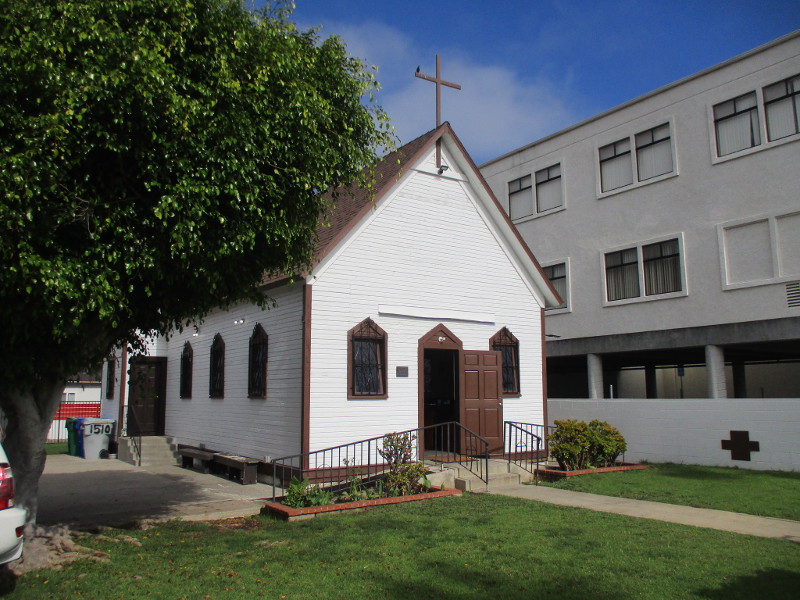
I was exploring the neighborhood near Balderrama Park in Oceanside when I spied this quaint old structure at 1510 Lemon Street. I had stumbled upon the historical 1893 St. Mary’s Chapel.
The location of today’s much larger St. Mary Star of the Sea Catholic Church, near the Oceanside Civic Center, is where this old chapel was originally built. The wooden chapel, affectionately called the Capillita, was completed in 1896.
The city of Oceanside was incorporated a few years earlier, in 1888, when its population was only 1000.
After the city had grown and a larger church was built in 1927, the chapel served as Parish Hall. The small chapel was later moved to its present location. It was restored in 1977.








 Cool San Diego Sights!