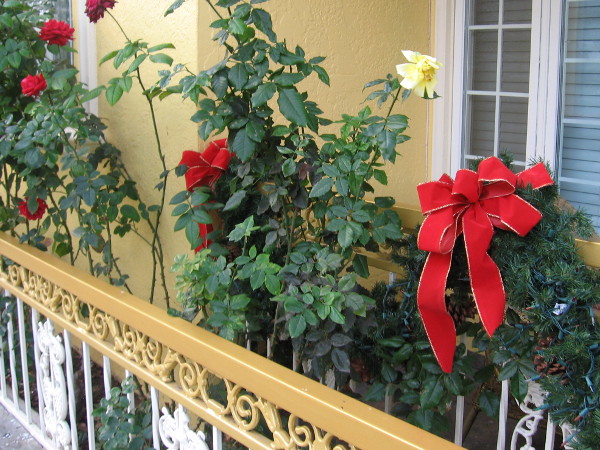
Holiday ribbons among flowers in front of a residence in Little Italy.
The holidays have ended. It’s January 2nd.
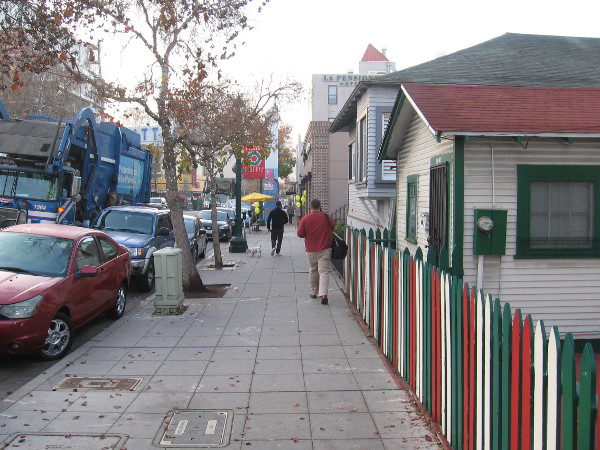
Early this morning I walked through Little Italy on my way to catch the trolley for work.
What did I see?
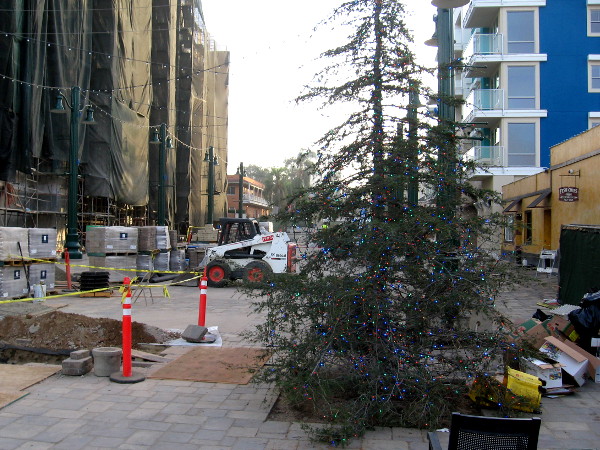
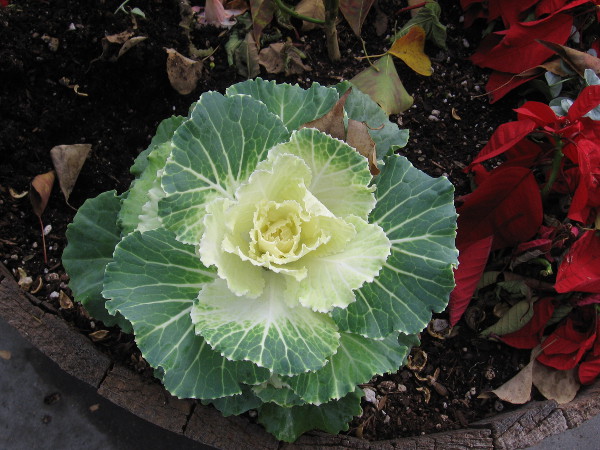
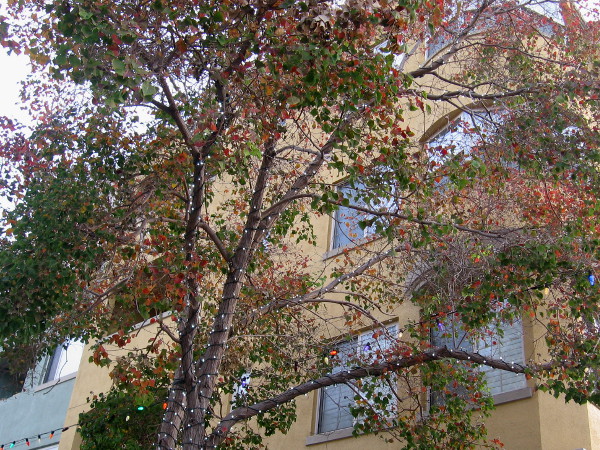
The holiday season is over in San Diego’s Little Italy neighborhood. Leaves are falling. Time to head back to work.A community Christmas tree is still lit, but abandoned. It stands behind a fence that surrounds the Piazza Famiglia construction site.Classic beauty is always abundant in Little Italy, no matter the season.Little Italy is famous for its restaurants and excellent dining. Even during winter, this establishment on India Street offers locally grown food.The poinsettias might be fading, but other greenery in planters along the sidewalk is bright and fresh.More lingering Christmas lights among colorful leaves.A funny sight in a shop window. The holidays are over! Now we must go back to work! Scream!
…
I live in downtown San Diego and love to walk around with my camera! You can follow Cool San Diego Sights via Facebook or Twitter!
I confess that I have a nefarious scheme. I have a hidden motive behind Cool San Diego Sights.
My wish is to have readers visit Short Stories by Richard. That’s where my short works of fiction are published.
Yes, I enjoy walking all around San Diego taking photographs, but there is something that I love infinitely more: writing creatively. When the muse is present, and my pen is moving, I feel that I can grasp the entire cosmos with one hand. I feel that I can clearly interpret the Ultimate for one brief instant. I have a sense of purpose. I feel completely alive.
My walks by water, past art, through parks, around hills and gardens, down busy sidewalks–my short daily journeys are a source for inspiration. Framing photographs energizes the eyes. Searching in every direction for life helps me to find it.
Writing short stories in San Diego is my passion. Even when my mind is blocked, my eyes and heart are not. There is always plenty of sunshine.
Short Stories by Richard now has thirty nine stories and two small poems. I welcome you into my private scheme. Come peer into secret places.
Abstract calligraphy panels on a wall facing E Street near 11th Avenue. This large mural was created by Brazilian multimedia artist Yomar Augusto for Design Forward San Diego.
There are two dynamic new murals in East Village. Actually one is a painted mural, and the other appears to be an enormous patchwork banner stretched upon a wall. Both face E Street in the vicinity of Park Boulevard.
The abstract calligraphy mural by Yomar Augusto was completed in October of 2017.
The dazzling artwork adorning the IDEA1 Apartments is brand new–the building had its Grand Opening in December.
Here are a couple of fun photos!
A large colorful banner stretched on the northeast corner of the new IDEA1 Apartments in East Village.
…
I live in downtown San Diego and love to walk around with my camera! You can follow Cool San Diego Sights via Facebook or Twitter!
You can easily explore Cool San Diego Sights by using the search box on my blog’s sidebar. Or click a tag! There are thousands upon thousands of photos for you to enjoy!
I spent another New Year’s Day by sparkling San Diego Bay. My feet seemed drawn to the water, as predictably as the Earth orbits the Sun. The rippling water and sea breeze always makes me feel reborn.
Today I walked from the Hilton San Diego Bayfront to a spot north of the Grape Street Pier, not quite as far as the Coast Guard Station.
Come along and we will relive the journey. Even on a relatively quiet New Year’s Day, we’ll observe fishermen, boaters, bicyclists, musicians, artists, friends and families. We will move through life.
One forward step leads to another.
…
I live in downtown San Diego and love to walk around with my camera! You can follow Cool San Diego Sights via Facebook or Twitter!
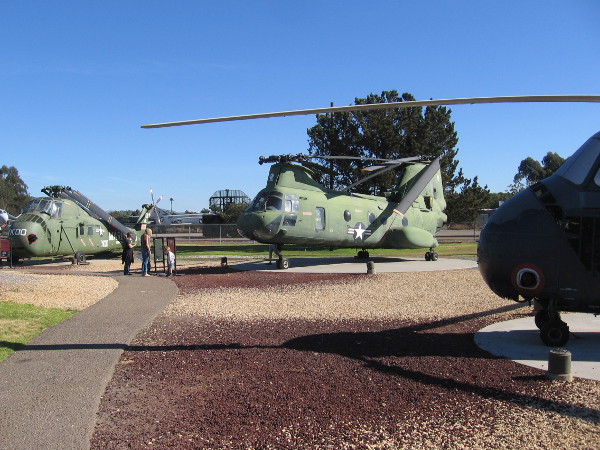
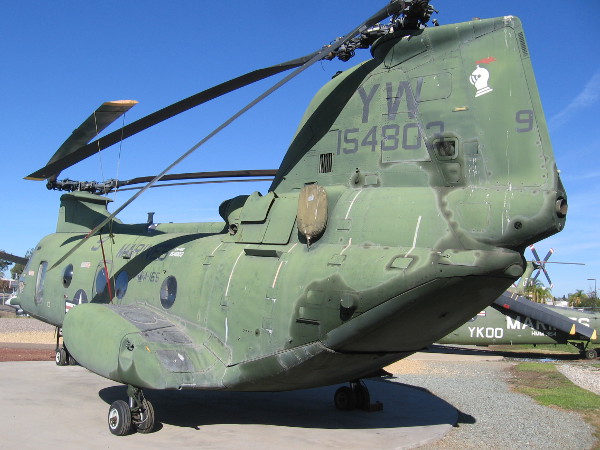
This particular Boeing Vertol CH-46D(E) Sea Knight military helicopter in San Diego is an object of great historical importance.
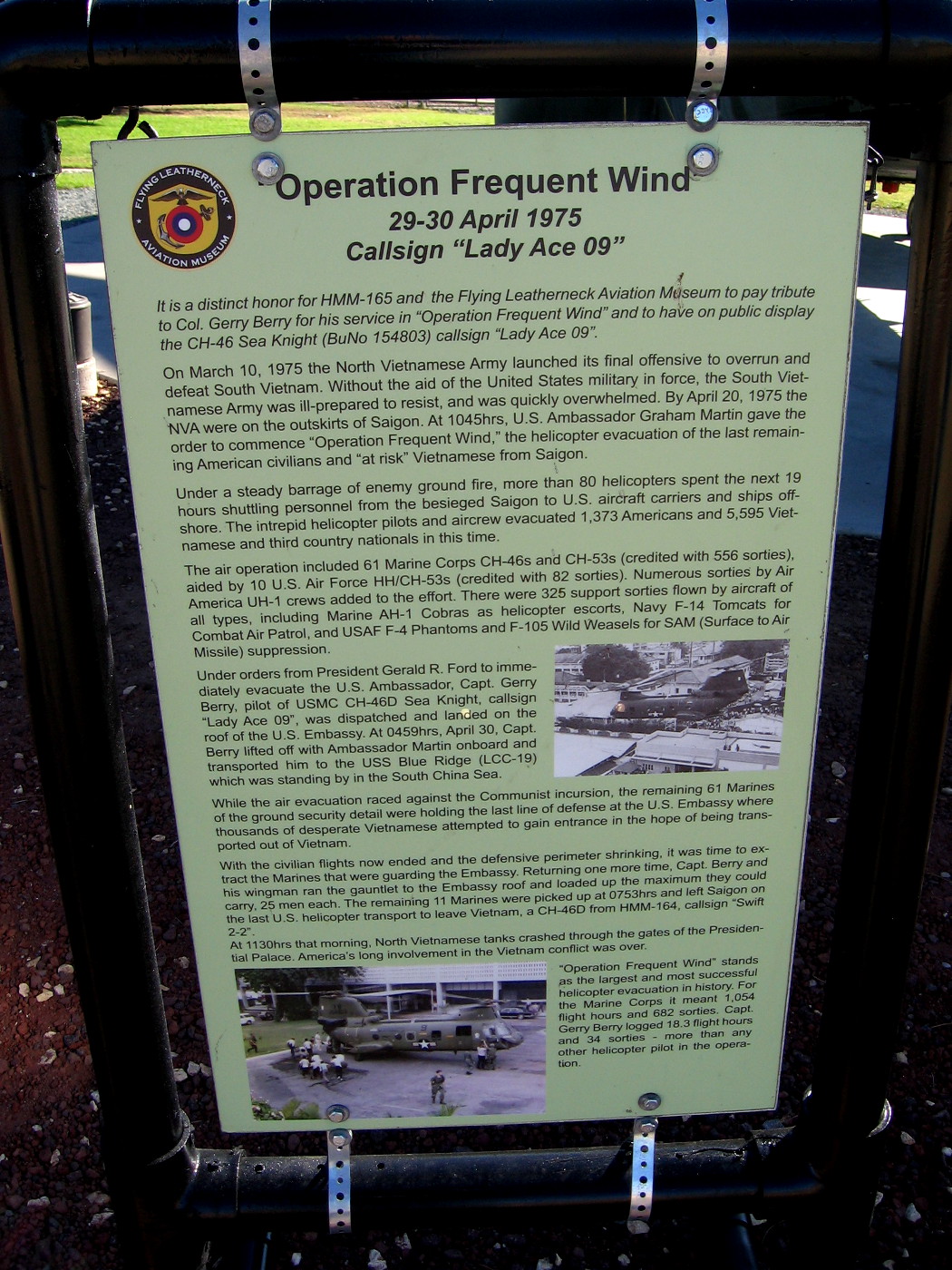
Many regard the evacuation of the United States Ambassador from Saigon as the end of the Vietnam War. On April 30, 1975, as ordered by President Gerald Ford, Ambassador Graham Martin was airlifted from the rooftop of the American Embassy. He had stepped aboard a Boeing Vertol CH-46D(E) Sea Knight military helicopter, call sign Lady Ace 09, flown by pilot Captain Gerry Berry.
While the Ambassador’s evacuation from the Embassy has provided a visual symbol of America’s departure from South Vietnam, the reality was a bit more chaotic. When Lady Ace 09 transmitted “Tiger is out,” indicating the Ambassador had been retrieved, other helicopter crews involved in the evacuation mistakenly thought the mission was completed. But Marine Security Guards on the Embassy’s rooftop would be lifted to safety hours later. Shortly thereafter, Communist forces would raise the Viet Cong flag over Saigon’s Presidential Palace.
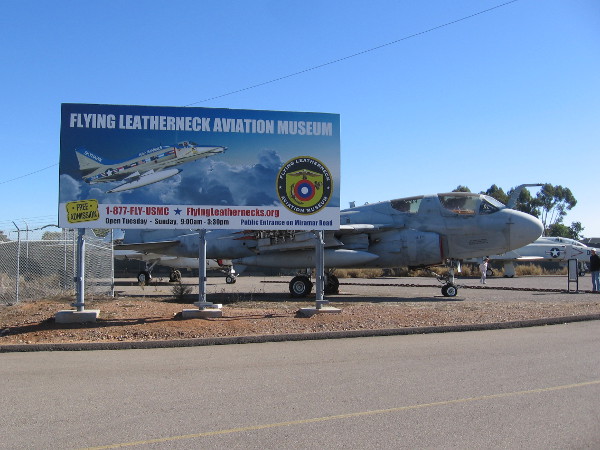
The Flying Leatherneck Aviation Museum is located at Marine Corps Air Station Miramar in San Diego. In addition to Lady Ace 09, over two dozen aircraft that have been flown by the United States Marines are on display. Admission is free.
The museum wants to expand. You can help! Learn more here.
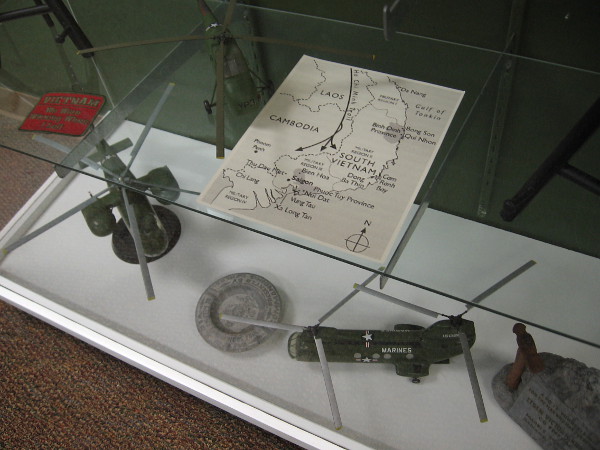
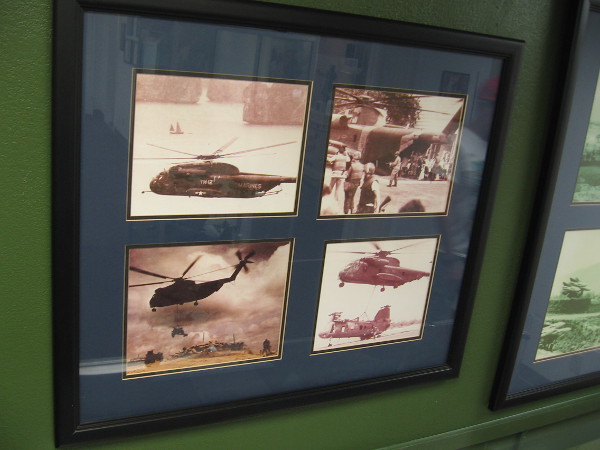
The Flying Leatherneck Aviation Museum in San Diego contains many aircraft that have been used during the history of the United States Marine Corps.At the Flying Leatherneck Aviation Museum at MCAS Miramar, the public can see the actual helicopter that evacuated the U.S. Ambassador from Saigon at the end of the Vietnam War.Operation Frequent Wind, 29-30 April 1975, call sign Lady Ace 09. This Sea Knight helicopter evacuated Ambassador Graham Martin from the U.S. Embassy in Saigon, South Vietnam. (Click photo to expand.)A look at the rear of the historic helicopter that transported U.S. Ambassador Graham Martin to the safety of USS Blue Ridge (LCC-19) standing by in the South China Sea.The fuselage of Sea Knight troop transport helicopter, call sign Lady Ace 09.At 04:58 Ambassador Martin boarded Lady Ace 09 on the rooftop of the American Embassy in Saigon. The message “Tiger is out” was transmitted, signaling the departure of the U.S. Ambassador.The nose of Lady Ace 09, which today is on display at the Flying Leatherneck Aviation Museum.Inside the the Flying Leatherneck Aviation Museum, visitors can see one section devoted to USMC aviators and aircraft that participated in the Vietnam War.One museum display case includes a map of Laos, Cambodia, and North and South Vietnam during the war.Photos of Marine helicopter operations during the Vietnam War.Boeing Vertol CH-46D(E) Sea Knight, call sign Lady Ace 09, the helicopter whose historic flight is often regarded as the conclusion of the Vietnam War.
…
I live in downtown San Diego and love to walk around with my camera! You can follow Cool San Diego Sights via Facebook or Twitter!
You can easily explore Cool San Diego Sights by using the search box on my blog’s sidebar. Or click a tag! There are thousands of interesting photos for you to check out!
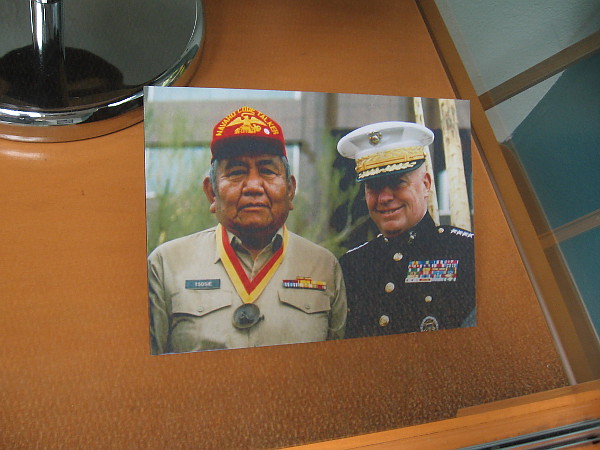
Photo of Samuel Tsosie Sr., Navajo Code Talker during World War II.
A small but fascinating exhibit remembering the Navajo Code Talkers of World War II is currently on display at the Flying Leatherneck Aviation Museum in San Diego. The exhibition, titled CELEBRATING 75 YEARS – CODE TALKERS: THE NAVAJO WEAPON, contains photos, documents, uniforms and historical artifacts that describe how the Navajo language was used to develop a code for secret tactical communication in the Pacific, in places like Iwo Jima and Okinawa. The Navajo code, which was classified until 1968, is the only spoken military code that was never deciphered.
The exhibit explains:
Many scholars credit Philip Johnston with initiating the Code Talker idea. Johnston was a Caucasian who grew up in Leupp, Arizona on the Navajo Reservation. He approached the Marine Corps in 1942 after the attack on Pearl Harbor and proposed using Native American Navajo language for combat communications.
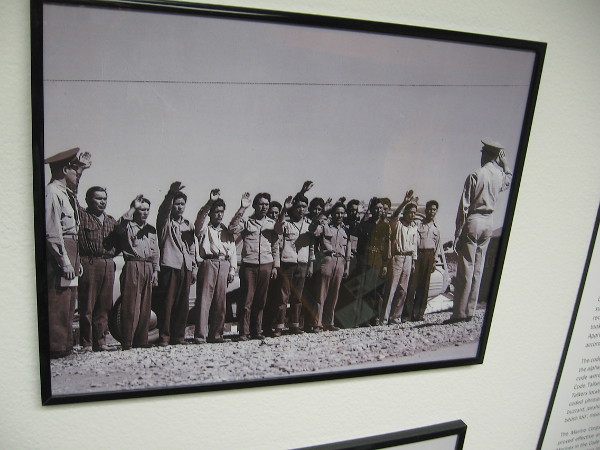
His knowledge of the Navajo culture led him to bring four Navajo volunteers to Camp Elliott in San Diego, California (an area that is now part of MCAS-Miramar) for a demonstration. Impressed with successful and efficient English and Navajo translations, the Marine Corps began recruiting Navajos. The first group of twenty-nine recruits entered boot camp, took courses in military communication procedures and developed the code. Approximately 400 Navajo recruited by the Marines learned the code.
Working around the clock during the first two days of Iwo Jima, six Navajo Code Talkers sent and received over 800 messages, all without error. According to Major Howard Connor, 5th Marine Division Signal Officer, “Were it not for the Navajos, the Marines would never have taken Iwo Jima”.
The Flying Leatherneck Aviation Museum is free and open to the public at Marine Corps Air Station Miramar. The museum grounds contains over two dozen aircraft used during the proud history of Marine Corps aviation. It has the world’s largest and most complete collection of vintage aircraft flown by United States Marine pilots.
The museum is looking to expand and I’m told they would really appreciate your help. For more info, click here.
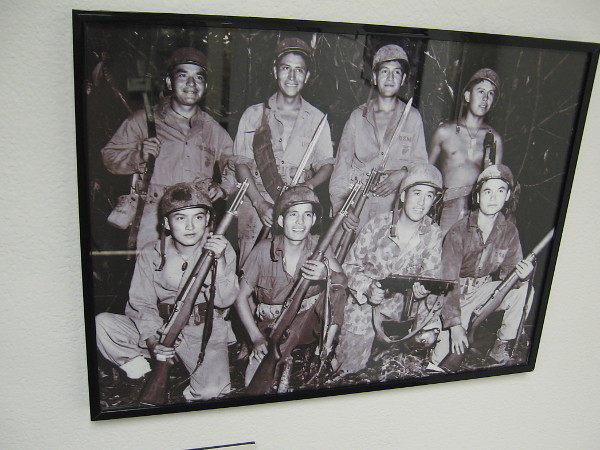
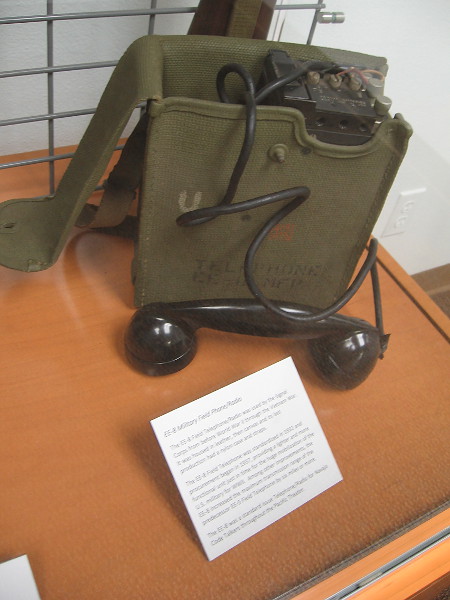
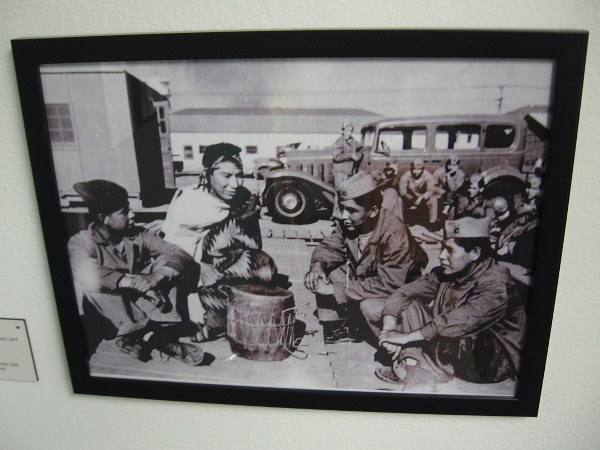
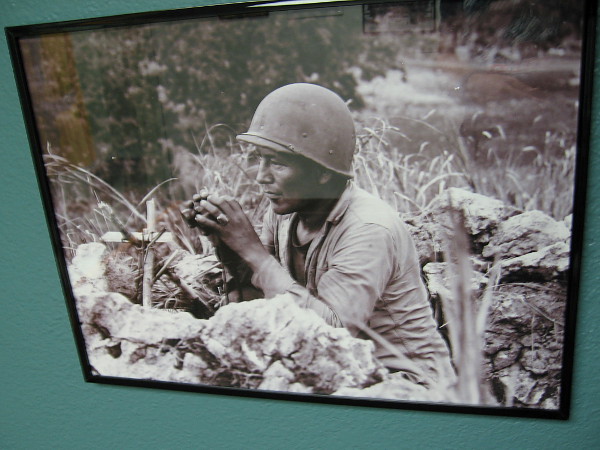
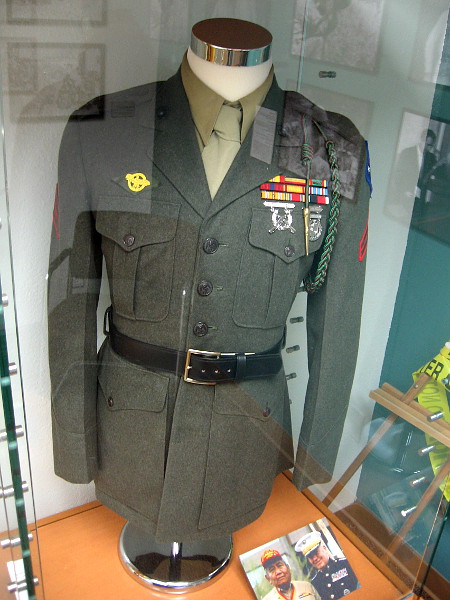
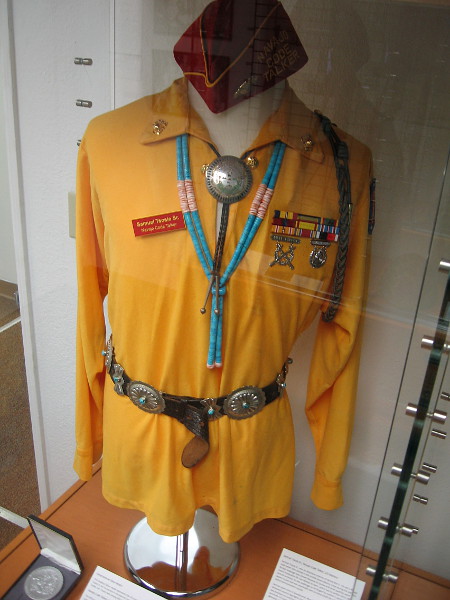
Celebrating 75 Years – Code Talkers: The Navajo Weapon. The Marine Corps deployed the Code Talkers to the Pacific, where the code proved effective and indecipherable. (Click photo to expand for easy reading.)The first 29 Code Talkers enlisting in the United States Marine Corps, 1942.First 29 Code Talkers of 382nd Platoon, 1942.Navajo Code Talkers Henry Bahe and George Kirk working their radio in the jungles of Bougainville.Eight Navajo Code Talkers on Bougainville. Most hold an M1 Garand used in combat.Display case in this special Flying Leatherneck Aviation Museum exhibit includes military field equipment used by the Navajo Code Talkers during World War II.The EE-8 Field Telephone/Radio was used by the Signal Corps from before World War II through the Vietnam War.Navajo Code Talkers share their culture at Camp Elliott, 1943.One of four creators of the code, Navajo Code Talker Chester Nez.Navajo Code Talker PFC Carl Gorman mans his observation post overlooking Garapan Saipan, 1944.This enlisted man’s uniform jacket, shirt and tie belonged to Samuel Tsosie Sr. The Guadalcanal patch was worn on discharge uniforms by all Navajo Code Talkers.Navajo Code Talker Samuel Tsosie Sr., pictured with Alfred M. Gray Jr. during an award assembly in 2009. Gray served as the 29th Commandant of the Marine Corps from 1987-1991.Official uniform of the Navajo Code Talkers includes a red cap, Navajo jewelry, gold shirt, patch on upper arm, light-colored trousers and abalone-colored shoes.
The museum exhibit explains the significance of various items worn by the Navajo Code Talkers.
The red cap indicates the United States Marine Corps. The jewelry represents the Navajo or Diné, which translates “Children of God” or “The People”. The gold shirt represents corn pollen. The light-colored trousers represent Mother Earth. The abalone-colored shoes represents the sacred mountains.
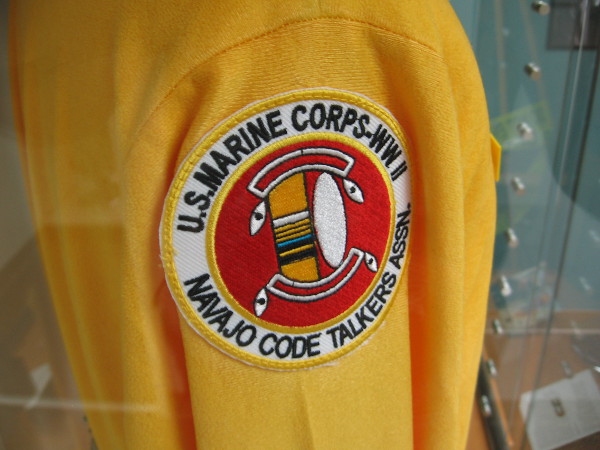
Replica of Congressional Silver Medal represents the medal received by Samuel Tsosie Sr. for his service during World War II. 300 Navajo received the Silver medal.Shoulder patch of U.S. Marine Corps–WWII Navajo Code Talkers Association.
…
I live in downtown San Diego and love to walk around with my camera! You can follow Cool San Diego Sights via Facebook or Twitter!
You can easily explore Cool San Diego Sights by using the search box on my blog’s sidebar. Or click a tag! You’ll find many interesting historical photographs!
Spaces from Yesterday is a collaborative exhibition at the SDSU Downtown Gallery featuring the art projects of three San Quentin inmates. (Click image to enlarge for easier reading.)
There’s a fascinating exhibition right now at the SDSU Downtown Gallery. It’s titled Spaces from Yesterday and features the artwork of three San Quentin inmates.
The artwork was created in collaboration with San Quentin State Prison art teacher Amy M. Ho, who also has a few related pieces in the exhibition. But the work that I found most interesting came directly from the hands of the inmates.
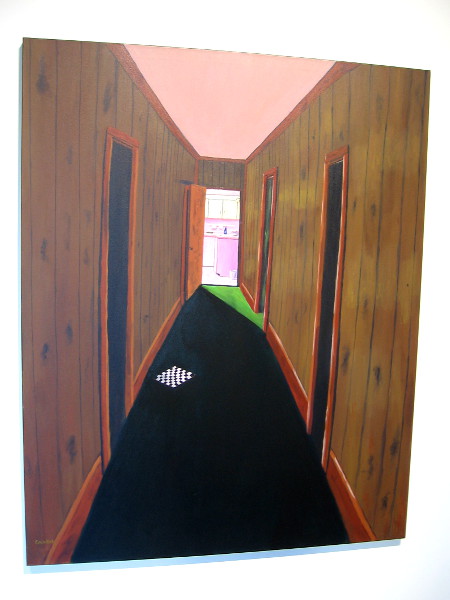
All three of the artists summon happy memories from their childhood. These images are warm, but also hard-edged and unpeopled. One work, The Hallway by Dennis Crookes, almost looks like a long, harsh, narrow prison hallway that finally leads to a home’s light-filled kitchen.
I could find no explanation why these three were incarcerated in the San Quentin correctional complex, which contains California’s only death row for male inmates. That would seem to be an essential part of the story, and might explain certain qualities of the art. But the anecdotes that are written do reveal a common yearning for a past life that is fondly remembered.
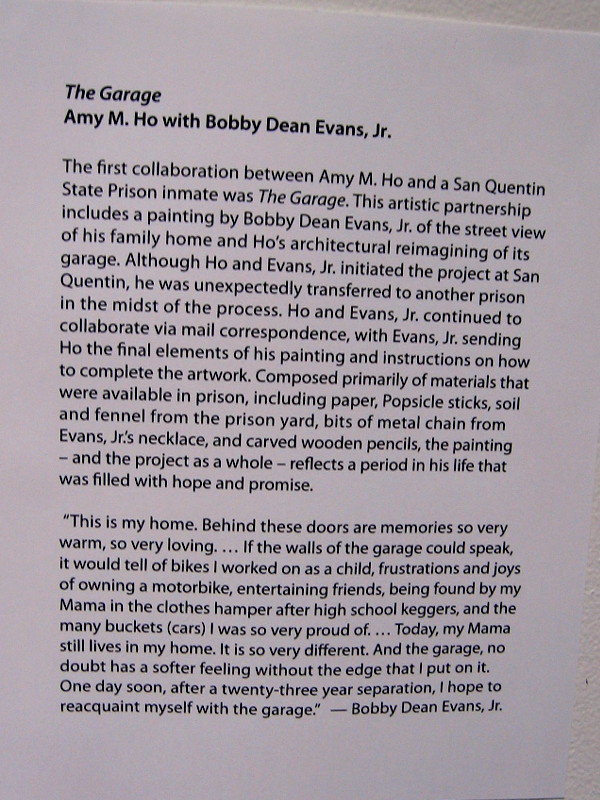
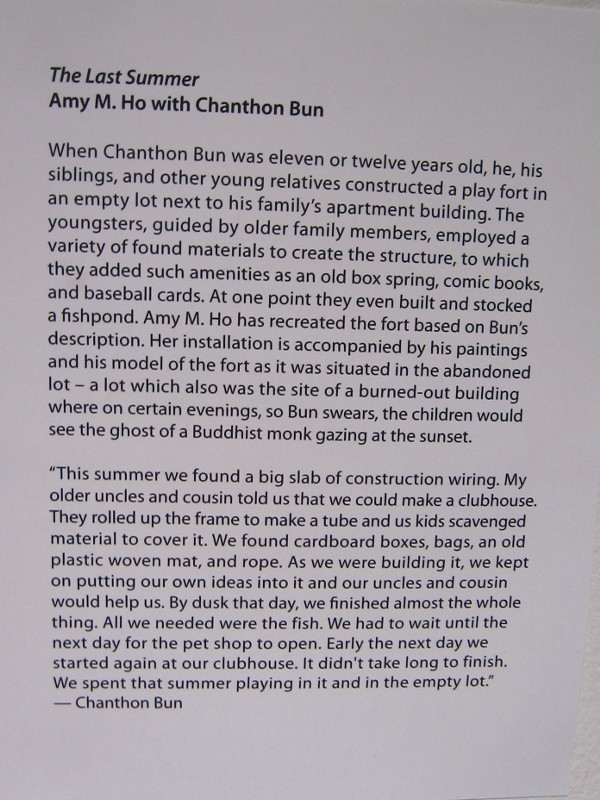
The following photos show a description of each piece, followed by the actual artwork.
Spaces from Yesterday will be on display through January 28, 2018. Those interested in art, creativity, and often hidden aspects of human life should check it out. Admission to the SDSU Downtown Gallery is free.
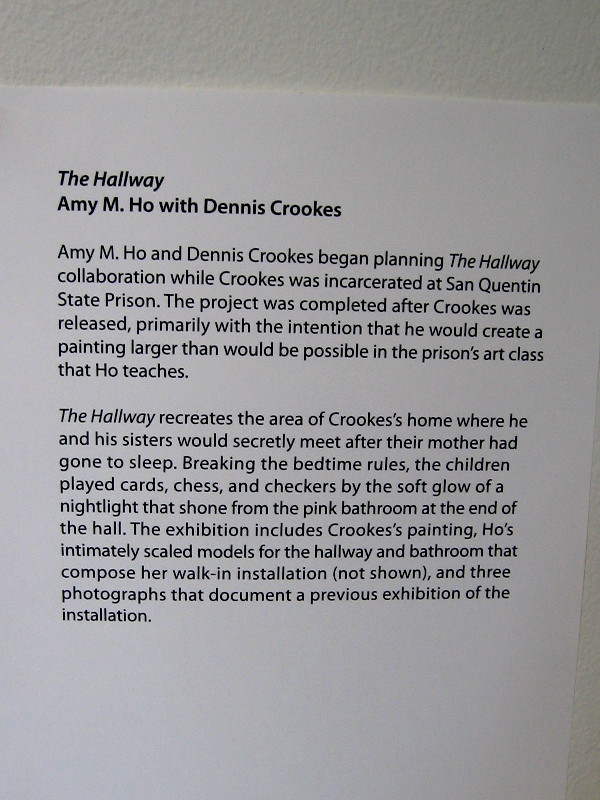
Prison art teacher Amy M. Ho and Dennis Crookes began planning The Hallway collaboration while Crookes was incarcerated at San Quentin State Prison.The Hallway, Dennis Crookes, acrylic on canvas, 2016.The Garage, a collaboration with inmate Bobby Dean Evans, Jr., contains warm memories from a playful childhood.The Garage, Bobby Dean Evans, Jr., mixed media on cardboard, 2016.Chanthon Bun painted memories from a childhood that included a play fort in an abandoned lot, comic books, baseball cards and a fish pond he created with his siblings and young relatives.The Last Summer, Chanthon Bun, acrylic on canvas, 2017.
…
I live in downtown San Diego and love to walk around with my camera! You can follow Cool San Diego Sights via Facebook or Twitter!
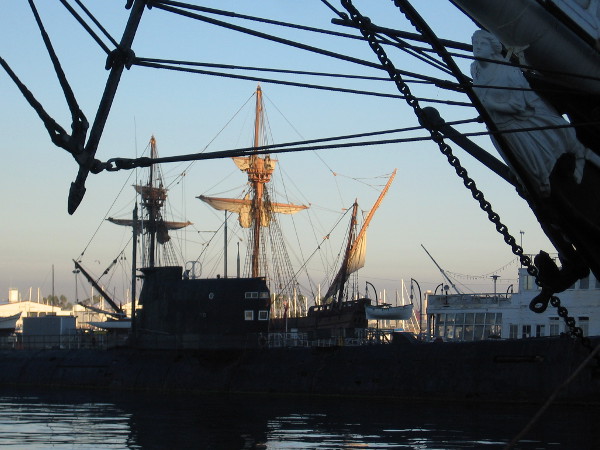
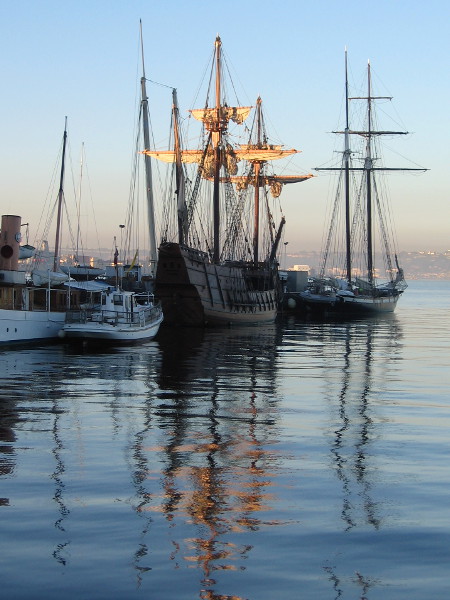
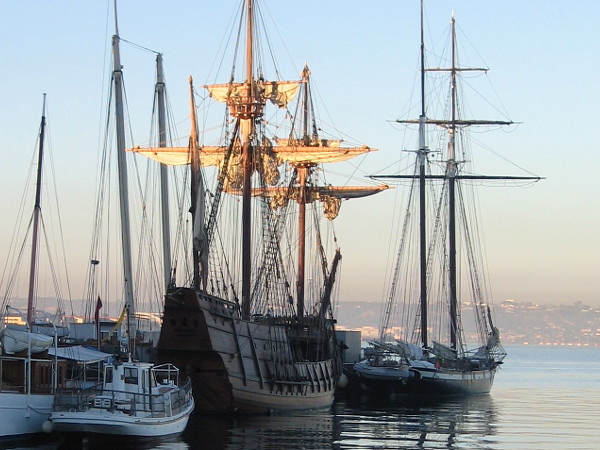
Masts and furled sails of the Spanish galleon replica San Salvador turn golden shortly after sunrise. Photo taken past the figurehead of Star of India.
I apologize, but I love tall ships so much I’m presenting another small batch of photographs.
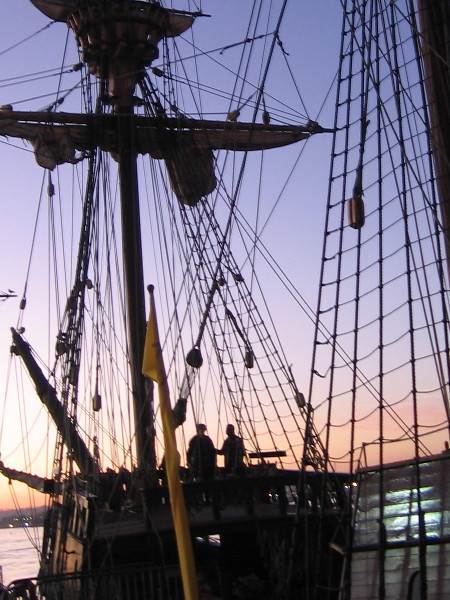
I captured these images of San Salvador at the Maritime Museum of San Diego yesterday morning and this evening. Both the early and late sunlight performed magic, transforming the furled sails into gold.
San Salvador in early morning light, and its glowing reflection in San Diego Bay.Morning magic at the Maritime Museum of San Diego.Photo of the San Salvador shortly after sunset. The amazing tall ship is a replica of the galleon commanded by explorer Cabrillo in 1542.Visitors to the Maritime Museum of San Diego pause on the beautiful ship San Salvador as evening slowly turns to night.The last golden rays of sunlight strike the furled sails of San Salvador, under a nearly full moon.
…
I live in downtown San Diego and love to walk around with my camera! You can follow Cool San Diego Sights via Facebook or Twitter!


































 Cool San Diego Sights!