Young man with skateboard paints for donations on a San Diego sidewalk.
Once in a while my walks around San Diego take me past artists painting scenes from the big city. The artists might be working outside alone in a scenic or interesting place; or I might stumble upon a small crowd of art students working on many easels in a row. I love to pause and look over a shoulder for a few moments. I’m awed by human creativity.
Here are just a few pics that you might enjoy…
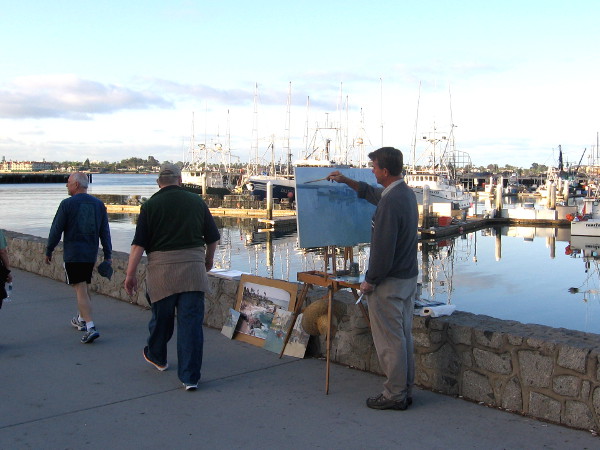
Artist in Balboa Park’s Spanish Village works on a canvas in the colorful courtyard.A painted guitarist seems to emerge from the sunny San Diego dappled brightness.An artist works next to Tuna Harbor as many people stroll past.Painter on the Embarcadero inspired by picturesque boats and reflections.Small painted boat seems to float in the nearby rippled water.
…
To enjoy future posts, you can “like” Cool San Diego Sights on Facebook. or follow me on Twitter.
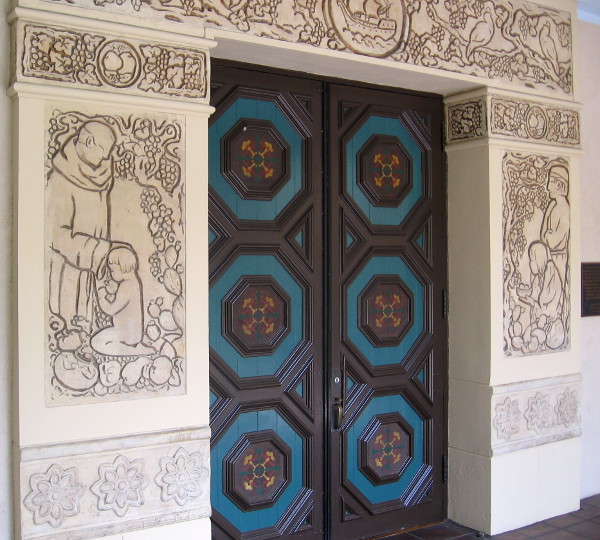
Decorative doors to La Granada Ballroom at the House of Hospitality in Balboa Park.
How many doors are waiting to be opened in one ordinary city? In San Diego, with a population that exceeds one million, there must be many millions of doors.
We take doors for granted, pushing through them like nothing, and yet there is something magical and transformational about each one. Doors represent movement through space and time, from this amazing present to a future, amazing present. As we’re propelled forward in life we pass through many doors, and like the choices we face they are found on every side. Where do we turn our feet? Which doors do we try? Every chosen door leads our restless feet into a beckoning and wonderful unknown.
So, anyway, I just love looking at endless doors. And each unique invitation they present to the eye, while concealing unseen places beyond.
Here’s a variety of doors that I’ve photographed during many walks…
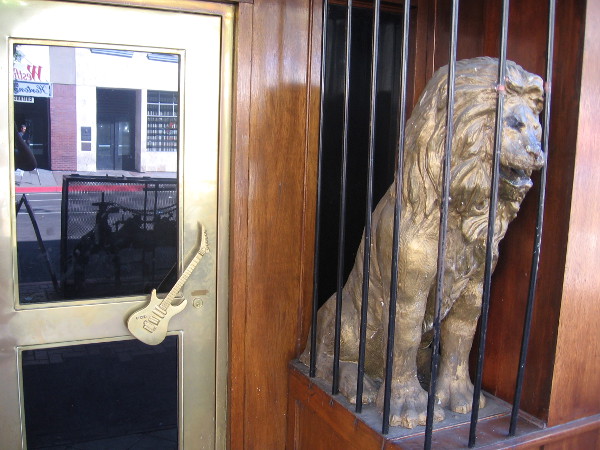
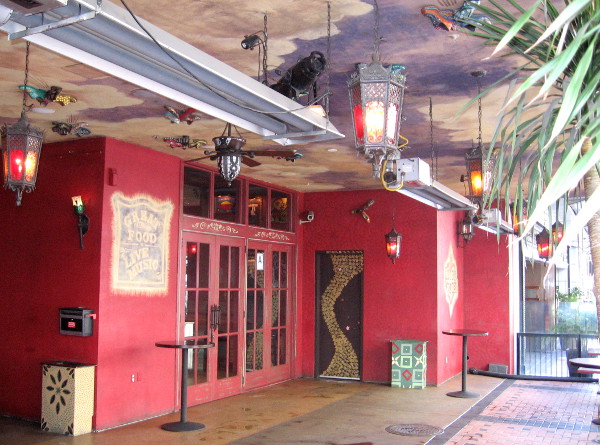
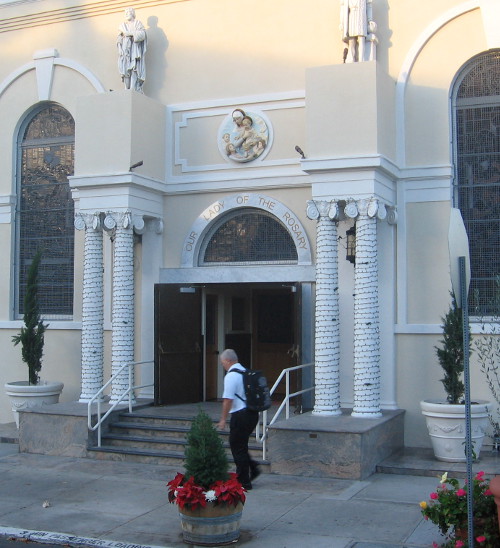
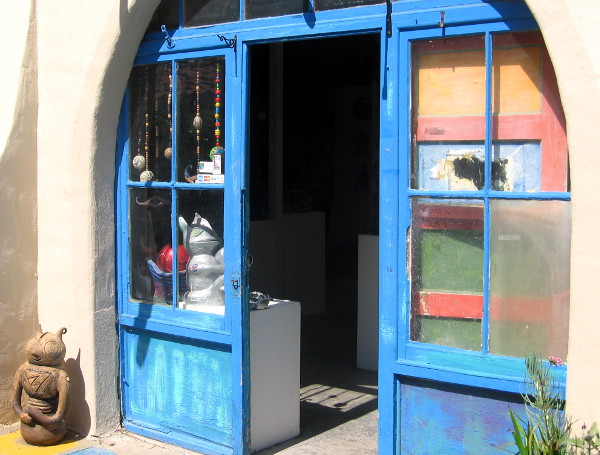
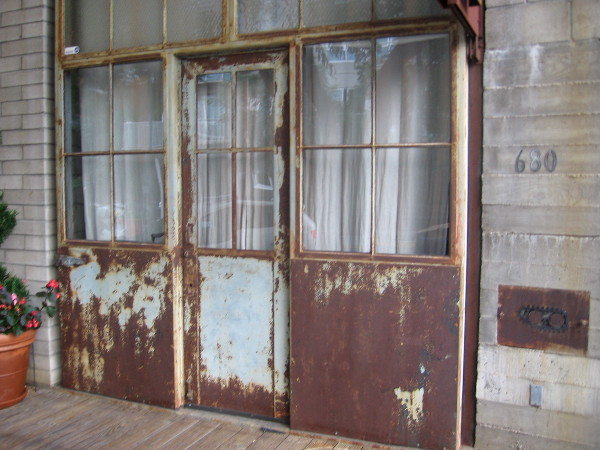
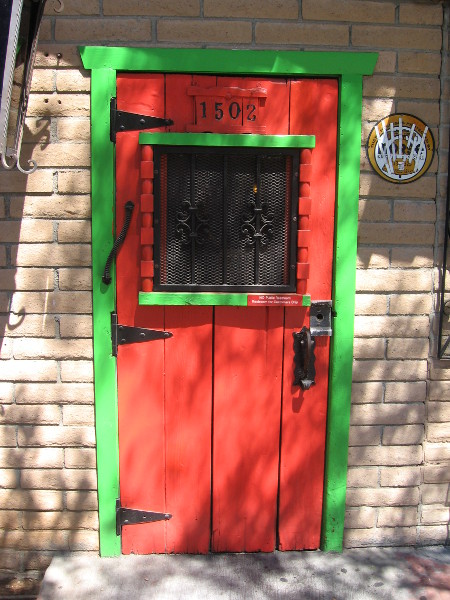
Colorful front door to a small residence in San Diego’s Little Italy.Colors of the Italian flag frame this unusual door on India Street.Imperial Beach surf shop has a door plastered with beach-themed decals and signs.Caged lion in the Gaslamp guards the Hard Rock Cafe, and a door with electric guitar handle.Funky west entrance to the House of Blues in downtown San Diego.Walking past distinctive front of Our Lady of the Rosary church in Little Italy.St. Paul’s Cathedral in Bankers Hill and an elegant red door behind rows of columns.A little shop in Sherman Heights has a plain door invitingly open beside fun pinatas.Artist studio door is wide open and welcoming in Balboa Park’s colorful Spanish Village.International Travelers House has a door that welcomes one and all.Is that a swinging saloon door in Old Town, or a painted version on an ordinary door?This rusted door makes a fashionable statement in downtown San Diego.Just a cheerful orange and bright green door in East Village!
…
To enjoy future posts, you can “like” Cool San Diego Sights on Facebook or follow me on Twitter.
Abraham Lincoln, slavery, the Constitution, dissent, the Civil War, and lingering questions.
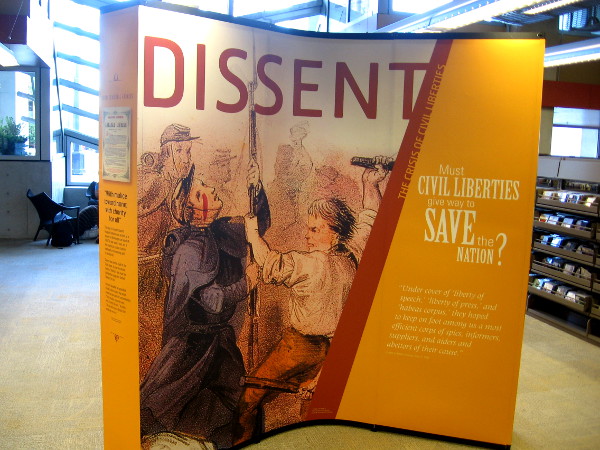
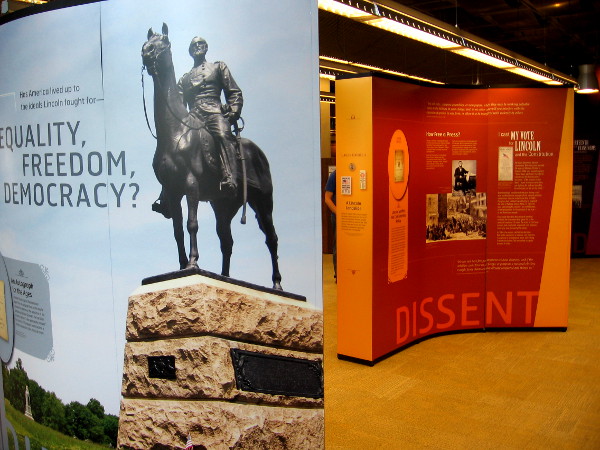
A thought-provoking historical exhibit is currently on display in downtown San Diego’s Central Library. Titled “Lincoln: The Constitution and the Civil War,” the large multi-paneled exhibit outlines and discusses a number of controversial issues that arose during the time of America’s Civil War. The exhibit, which has visited a number of different libraries, was created by the American Library Association and the National Constitution Center.
Old photos and texts help visitors to understand the election of Abraham Lincoln, the secession of the southern states, and the Civil War itself; complex topics that are explored include slavery and the plight of African Americans, the Constitution and state sovereignty, and civil liberties.
If you happen to find yourself in East Village, pop into the library. The large display is on the ground floor and very difficult to miss. The traveling exhibit will remain at this location through January 9, 2015.
Lincoln: the Constitution and the Civil War is on display in San Diego’s Central Library.Meet Mr. Lincoln. The new American president was viewed by some with uncertainty or distrust.People at San Diego’s new downtown public library check out a provocative historical exhibit.The Confederacy attacked Fort Sumter after Lincoln decided to resupply the fortification.Old envelope depicts a boxing match between Lincoln and Jefferson Davis.The Civil War, fought for complex reasons, effectively ended slavery in America.The original Constitution didn’t abolish slavery. It left the matter to the states.Exhibit examines dissent, and Lincoln’s choice to suspend the writ of habeas corpus.Traveling library exhibit asks about the state of equality, freedom and democracy today.It is for us the living…to be dedicated here to the unfinished work.
…
To enjoy future posts, you can “like” Cool San Diego Sights on Facebook. or follow me on Twitter.
House of England’s Victorian gentleman with top hot and monocle!
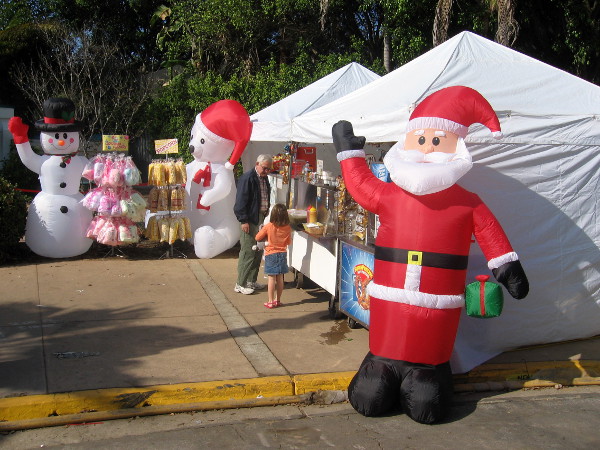
This afternoon I enjoyed several daylight hours at the 2014 December Nights event in Balboa Park! It looks like the Christmas spirit is alive in San Diego!
December Nights, which used to be named Christmas on the Prado, is an annual holiday celebration that attracts around three hundred thousand people over two absolutely amazing days. The best time to experience December Nights is after dark, when Balboa Park from end to end is lit with thousands of lights. The scene is vast and magical. Carolers and choirs seem to be everywhere you turn. There are so many jolly Santas taking pictures with families you might think you’d arrived at the North Pole! The traditional sights, yummy smells, and cheerfully lit colors of Christmas abound.
But, alas, my camera doesn’t cope well with darkness. So here are some sunny pics from a couple hours ago!
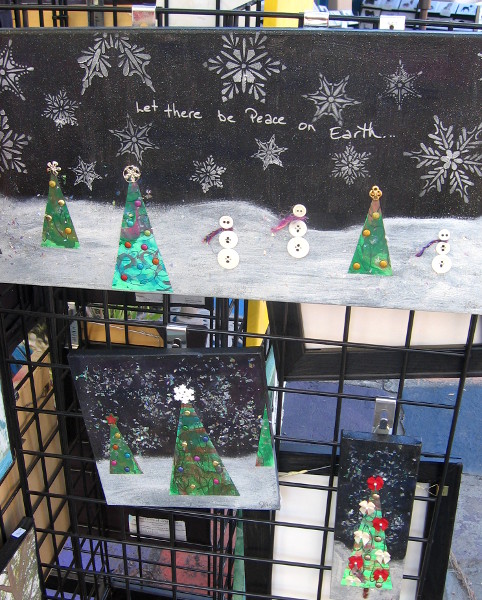
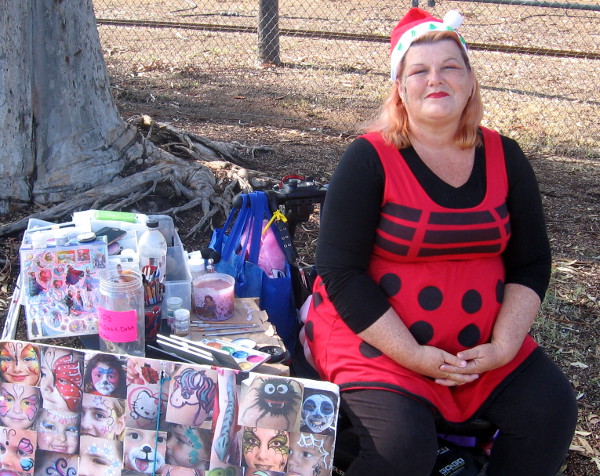
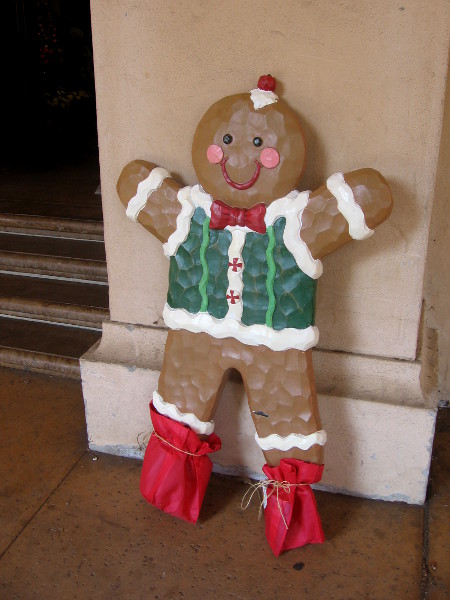
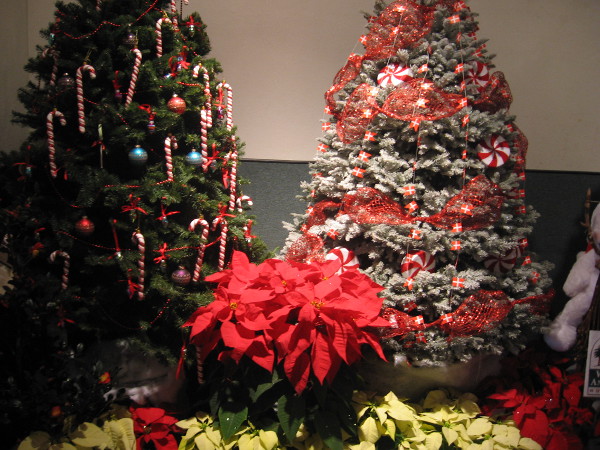
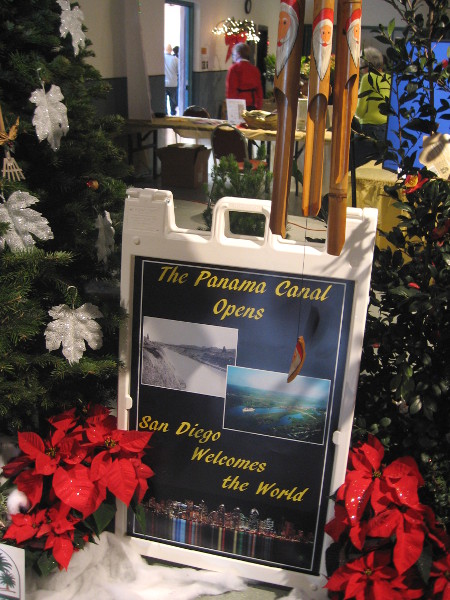
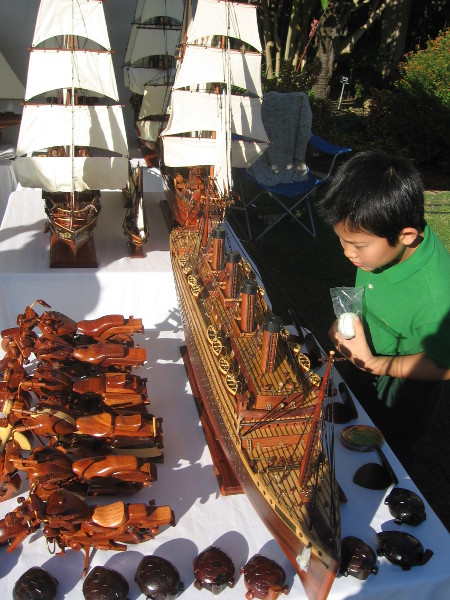
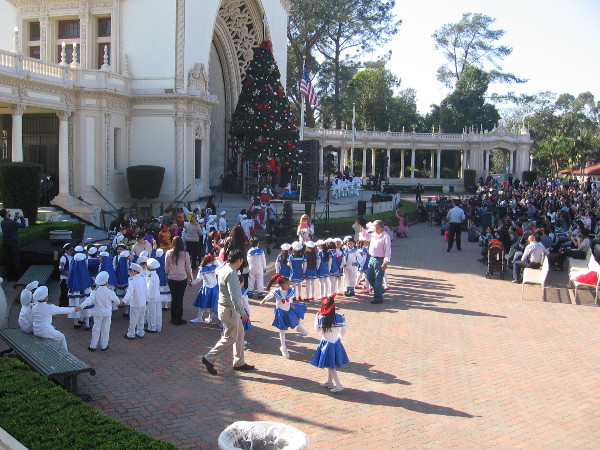
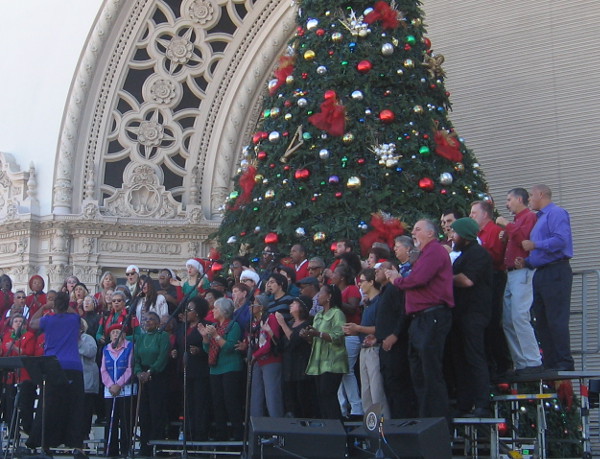
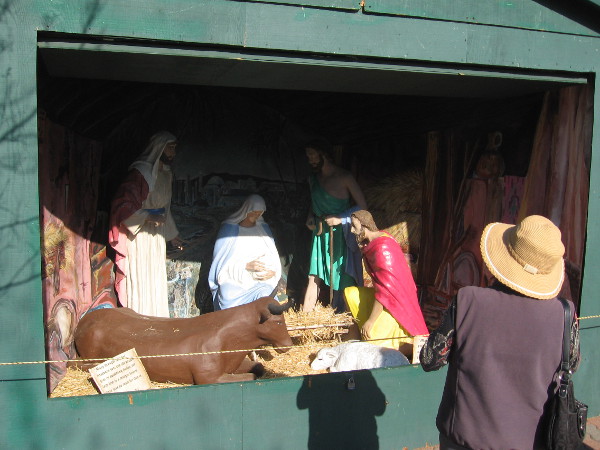
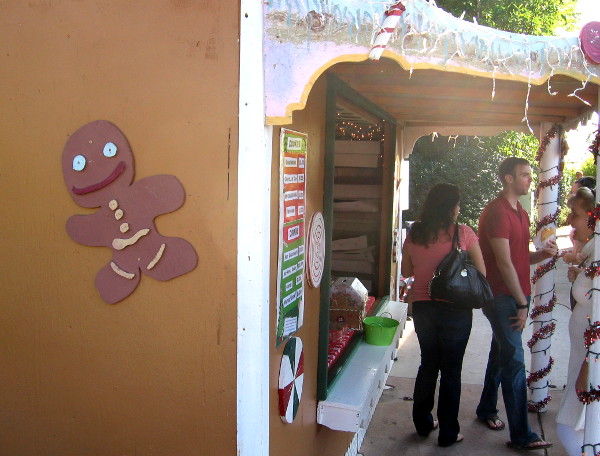
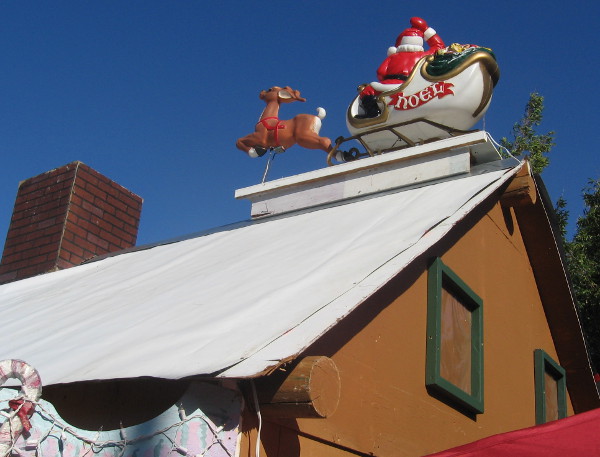
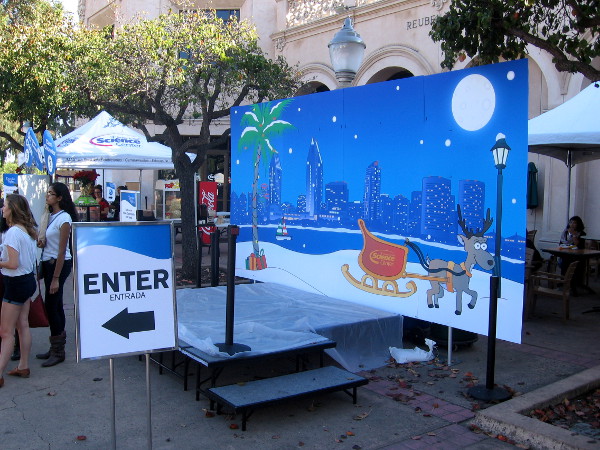
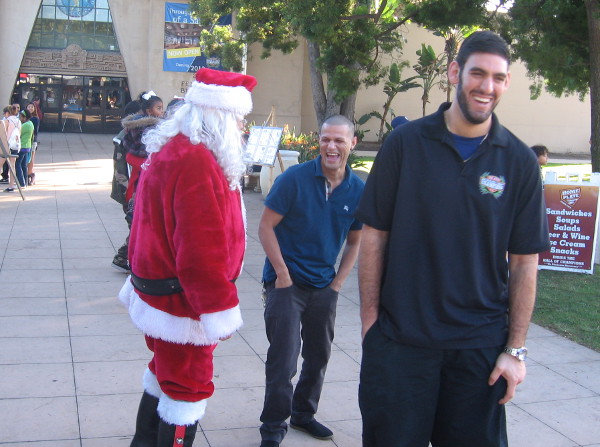
Santa, Frosty and joyful San Diegans at December Nights in Balboa Park.Presents, ornaments and cacti in Balboa Park’s Spanish Village!An artist studio in Spanish Village behind many very colorful Christmas trees.These handmade blown glass ornaments were out on display.Artist’s message: Let there be Peace on Earth…Is this face painter by the Balboa Park carousel Mrs. Claus or a ladybug?A smiling gingerbread man greets one and all to Casa del Prado.San Diego Floral Association hosted many Christmas trees created by local folk.Sign acknowledges the Balboa Park Centennial, kicking off this weekend!Lots of vendors everywhere had holiday crafts that would make great gifts.A table full of unique Christmas stocking stuffers.One table had cool model ships! I know what this kid wants for Christmas!Kids from Colegio Ingles in Tijuana, Mexico perform in the Spreckels Organ Pavilion.Martin Luther King Jr. Community Choir sings rousing gospel music!Manger scene in one of the huts along back of Spreckels Organ Pavilion.Gingerbread House in the organ pavilion sells Christmas treats to the slowly growing crowd.Santa Claus has landed with his little reindeer on a rooftop!Huge, glorious poinsettia display inside the popular Botanical Building.It’s Wendy! No, I don’t want a hamburger today. Maybe tomorrow. Thank you!Photos with Santa will take place here and elsewhere once the sun sets.Lots of people dressed for the holidays this afternoon at December Nights in San Diego.These guys were probably informed they were naughty.
…
To enjoy future posts, you can “like” Cool San Diego Sights on Facebook or follow me on Twitter.
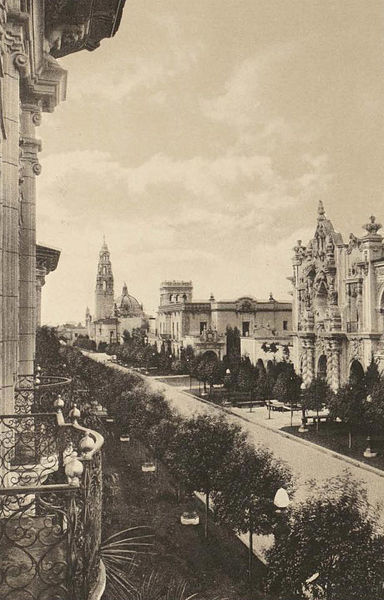
Photograph of the Panama-California Exposition’s La Puerta del Oeste (west entrance) taken from Cabrillo Bridge. The dome and bell tower of the California State Building rise into the San Diego sky.
Balboa Park’s big Centennial celebration is approaching fast! The year-long event kicks off with the opening of December Nights on Friday, December 5th. Later this month, the celebration will continue with a grand New Year’s Eve procession and concert at the Spreckels Organ Pavilion!
The Balboa Park Centennial marks the hundred years that have passed since the opening of the Panama-California Exposition in 1915. While a large open space park near downtown San Diego (originally named City Park) was established in 1872, Balboa Park didn’t really take shape until many years later. Many of the buildings along El Prado which visitors enjoy today owe their existence to the development of the Panama-California Exposition, which covered 640 acres and promoted San Diego as the first United States port of call after a passage through the newly opened Panama Canal. Other parts of Balboa Park were created twenty years later for the California Pacific International Exposition–but that’s a different story.
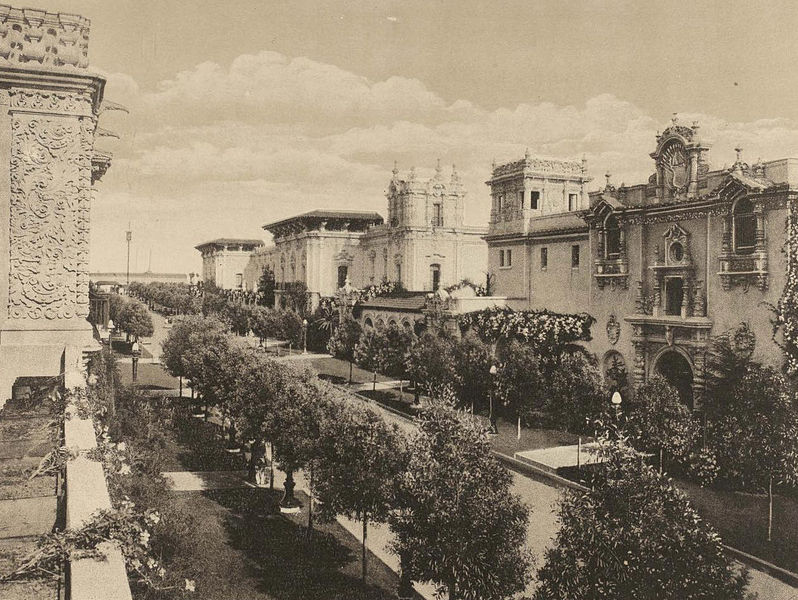
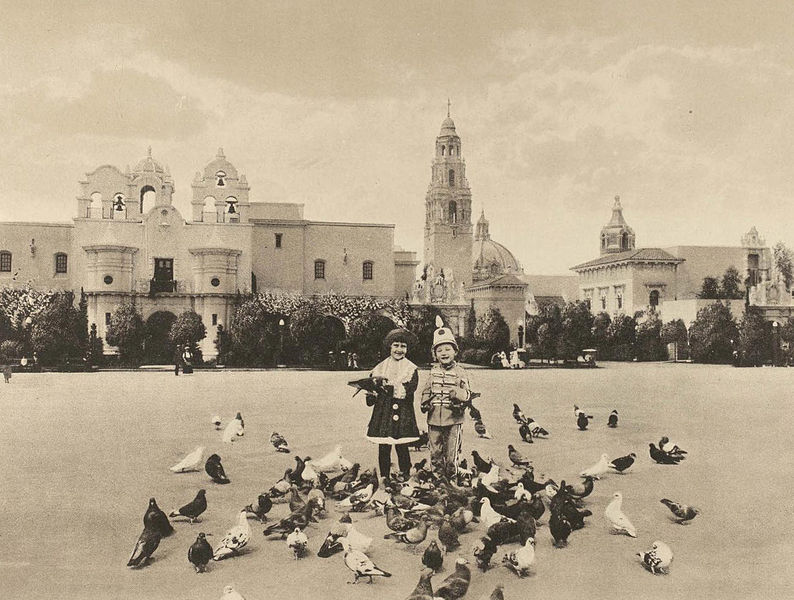
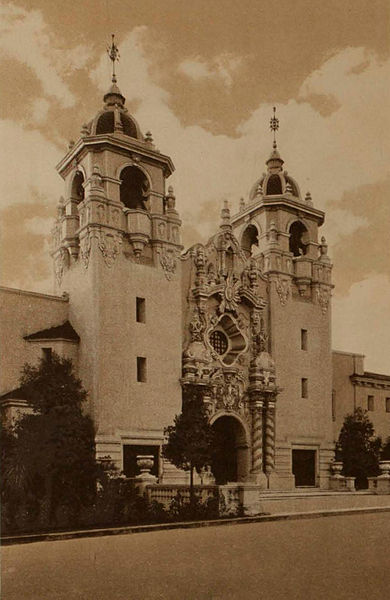
In honor of the Centennial–now just two days away–I figured I’d post a bunch of historical photographs of Balboa Park as it appeared a century ago. The following black-and-white photos are from Wikimedia Commons, and provide different views of the amazing Panama-California Exposition. I had to do a little detective work with some of the images. Since I’m by no means an expert, please leave a comment if I’ve written captions that require correction.
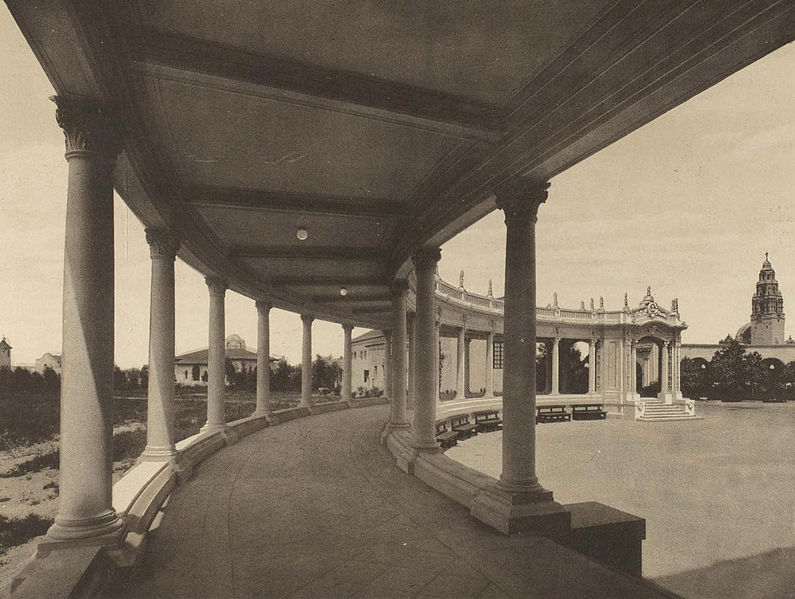
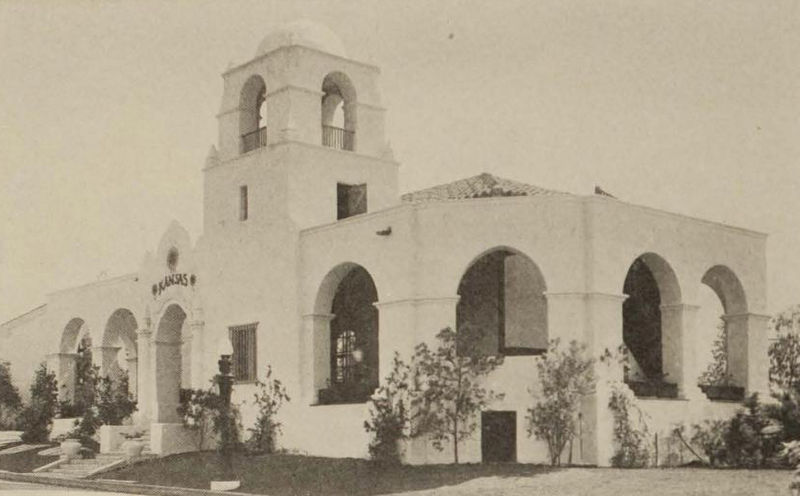
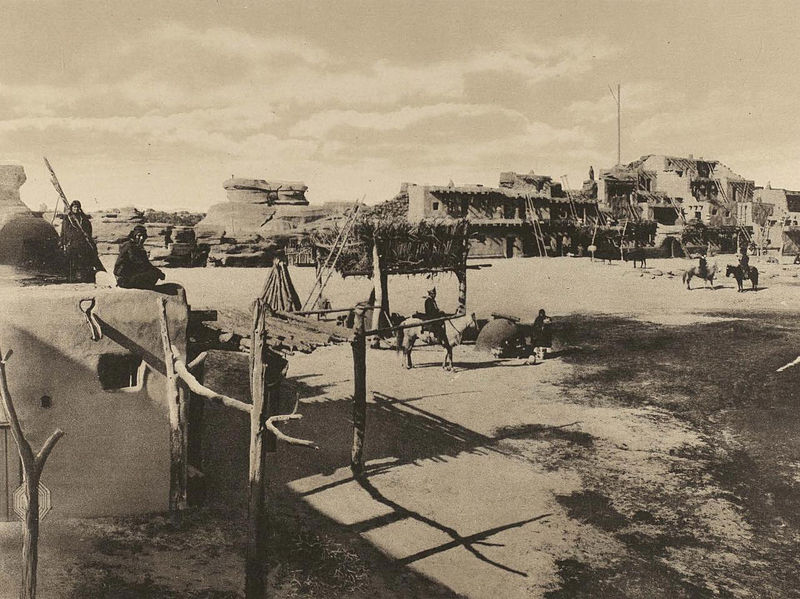
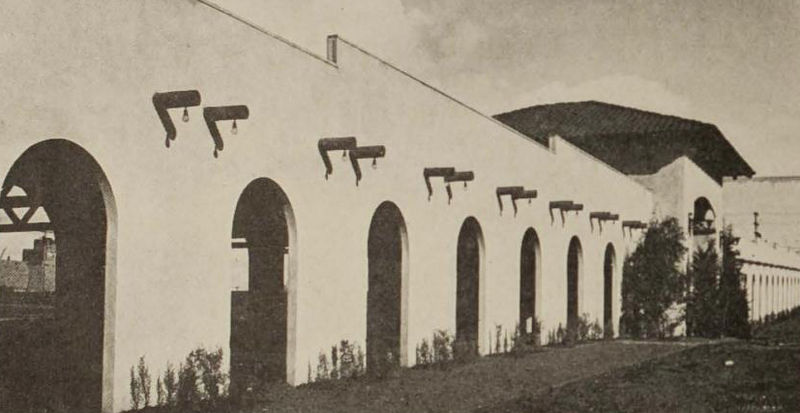
Cover of the 1915 Official Guide Book to San Diego’s Panama-California Exposition. The event celebrated the opening of the Panama Canal, and lasted through 1916.Aerial view from downtown San Diego of Balboa Park’s 1915 Panama-California Exposition. In 1910 San Diego had a small population of only 39,578.La Laguna Cabrillo lake and Camino Cabrillo road beneath Cabrillo Bridge. California State Route 163, a designated scenic highway, runs beneath the historic bridge today.Detailed 1915 map shows Panama-California Exposition ground plan in Balboa Park (originally named City Park).Photo taken of Balboa Park in 1915 from the California Tower provides panoramic view of many exposition buildings designed in the Spanish Colonial Revival architectural style.Looking west along El Prado through the heart of Balboa Park in 1915. At the exposition’s opening ceremony, President Woodrow Wilson activated the electric street lamps with a telegraphic signal.Commerce and Industries Building and Foreign Arts Building stand side-by-side on the south side of tree-lined El Prado. Today, the rebuilt structures are called the Casa de Balboa and House of Hospitality.Commerce and Industries Building. Rebuilt as Casa de Balboa, it’s now home of Museum of Photographic Arts, San Diego History Center, and San Diego Model Railroad Museum.View of shady pergola and the iconic 208 feet tall California Tower from Los Jardines de Montezuma (Montezuma Gardens) in 1915.Los Jardines de Montezuma (today named Alcazar Garden) at Balboa Park’s Panama-California Exposition.Spacious gardens near California State Building’s landmark dome and bell tower during the Panama-California Exposition.U.S. Navy ambulance parked near entrance of the California State Building, today the Museum of Man.Kids feed pigeons on the central Plaza de Panama. The Indian Arts Building with mission bells on left was renamed House of Charm and reconstructed in 1996. It now contains the Mingei Museum.Expansive gardens near the Food Products Building. Today’s enormous Moreton Fig Tree was planted in 1914 near this location.Elegant facade of Food Products Building, which was eventually reconstructed in 1971 as part of the Casa del Prado. It’s now the entrance to the San Diego Junior Theatre.View of La Laguna de las Flores, the reflecting pool (or lagoon) at the Panama-California Exposition. This area was called the Botanical Court.The Botanical Building, then and now one of the largest lath structures in the world. In 1915 its popular name was Lath Palace.Fountain by Botanical Building at the Panama-California Expositon in Balboa Park. The Botanical Court a hundred years later remains largely unchanged.Gazing over reflecting pool at Commerce and Industries Building and Foreign Arts Building. A favorite photographic spot for a century in San Diego.Food Products Building is reflected in tranquil lily pond directly in front of the large lath Botanical Building.View of tree-lined El Prado from second floor of Varied Industries Building, which is now part of the Casa del Prado.Varied Industries Building seen from the west a short distance. Rebuilt as a part of Casa del Prado, today it houses various art and botanical organizations.Home Economy Building (left of Foreign Arts Building), site of today’s Timken Museum of Art. A wicker Electriquette motor cart is visible among people in the Plaza de Panama.Fine photo across Esplanade of the Indian Arts Building, rebuilt in later years and renamed the House of Charm.One of many popular recitals in the Organ Pavilion at the Panama-California Exposition. (This venue is now called the Spreckels Organ Pavilion.)Organ Pavilion colonnade with California Bell Tower in distance. Trees and a large parking lot exist today on the left, behind the classic structure.View of Spreckels Organ in 1915, from a shady spot in the colonnade. Those wooden benches were replaced many years ago with benches made of steel.The distant Organ Pavilion appears in this photo between the San Joaquin Valley Building and the Kern and Tulare Counties Building.Kansas State Building at Panama-California Exposition. Most of these old state buildings no longer exist today, a hundred years later.Montana State Building, near the site of today’s International Cottages.People take a stroll past a handful of state buildings at the Panama-California Exposition in Balboa Park.Utah State Building at the Panama-California Exposition.Washington State Building at the Panama-California Exposition.Artillery practice at the exposition’s U.S. Marine Camp, which was located near the site of today’s Air and Space Museum.Southern California Counties Building, which stood a century ago in Balboa Park at the site of today’s Natural History Museum.Visitors back in 1915 enjoy the Southern California Counties Building’s elegant patio.Large area called the Painted Desert at the Panama-California Exposition. This unique attraction was near the site of today’s Veteran’s Memorial.The elaborate Taos pueblo in the Painted Desert was a fantastic sight at San Diego’s Panama-California Exposition.Realistic exhibit shows Zuni native life at the Panama-California Exposition in San Diego’s Balboa Park.The Pala gem mine was one of the amusements along the Isthmus north of El Prado, near today’s San Diego Zoo parking lot. It featured a 300 foot long tunnel filled with simulated gems.The Cawston Ostrich Farm was an Egyptian pyramid-shaped amusement on the Isthmus, a section of the expo popularly called the fun street.The Japanese Tea Pavilion, northeast of the Botanical Building in 1915. Today, the Tea Pavilion at the Japanese Friendship Garden is located elsewhere and appears entirely different.Citrus and other gardens in a wide north section of the Panama-California Exposition. This is near the entrance of today’s San Diego Zoo.The long Tractor Building was located near a tractor demonstration field, just west of the Painted Desert.California bungalow, surrounded by model farm at the 1915 exposition. Agricultural exhibits and demonstrations were an important part of the event.The Lipton Tea Gardens at the Panama-California Exposition, one more interesting image from San Diego’s rich history.
…
To enjoy future posts, you can “like” Cool San Diego Sights on Facebook, or follow me on Twitter.
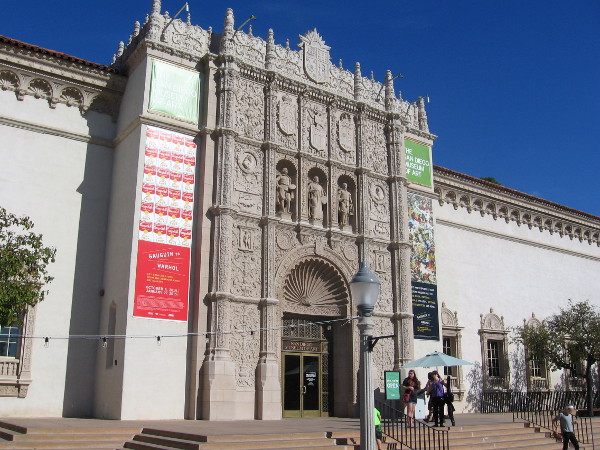
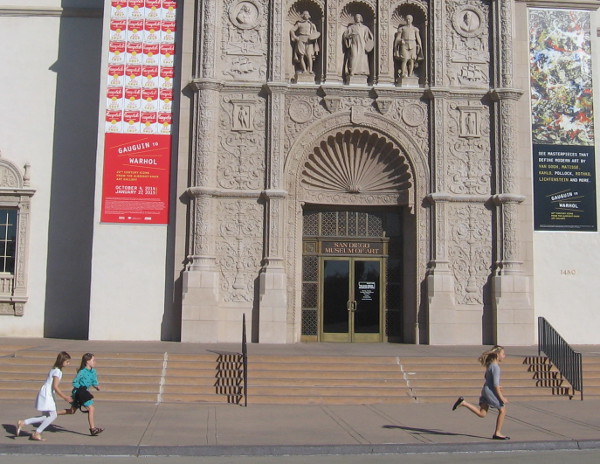
Visitors near entrance to the San Diego Museum of Art in Balboa Park.
Yesterday morning was super special. I was able to experience dozens of amazing fine art masterpieces firsthand!
My friend Catherine Jones, a docent at the San Diego Museum of Art in Balboa Park, very graciously provided me and a friend with a special tour. We were given an in-depth look at the landmark Gauguin to Warhol exhibit, being shown for a limited time in San Diego.
Follow me into the world-class San Diego Museum of Art, and we’ll check out a few of these stunning paintings together!
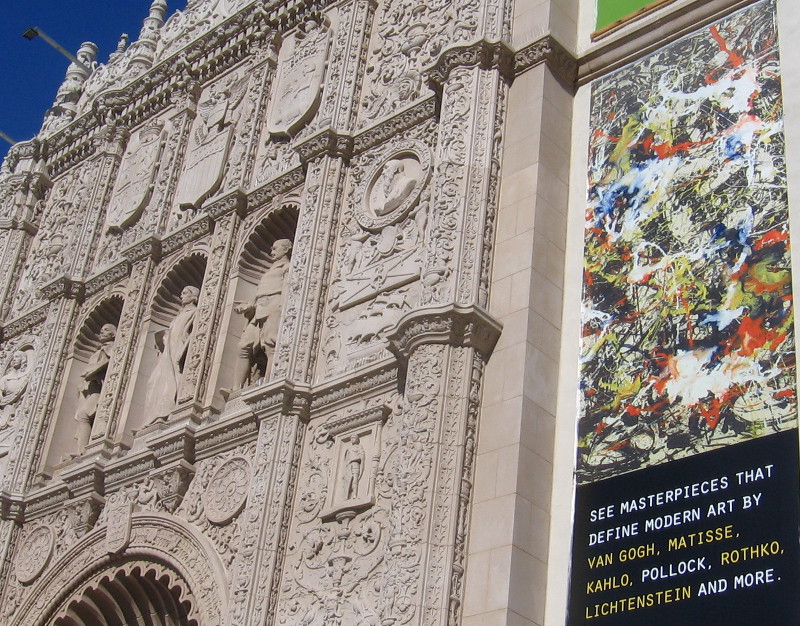
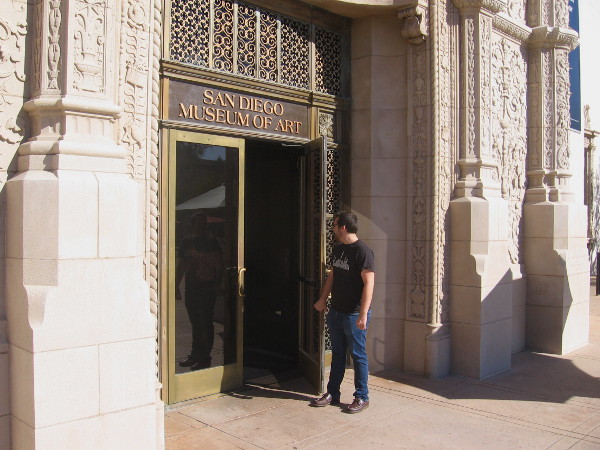
Masterpieces that define modern art by Van Gogh, Matisse, Kahlo, Pollock, and more…Step through this door to see an amazing exhibit of mind-blowing art!
Gauguin to Warhol: 20th Century Icons from the Albright-Knox Art Gallery is an exhibit containing dozens of true masterpieces from many of the world’s most famous modern painters. Artists with important pieces on display include Vincent Van Gogh, Pablo Picasso, Henri Matisse, Marc Chagall, Georgia O’Keeffe, Salvador Dalí, Frida Kahlo, Jackson Pollock and Roy Lichtenstein .
The exhibit is a whirlwind journey through time, progressing from Impressionism in the late 18th Century to Post-impressionism, Surrealism, Abstract Expressionism, Minimalism and finally Pop Art in the 1960s. One can follow the emergence and evolution of major art movements over eight decades–and observe how visual abstraction, experimentation and provocative simplicity took a greater and greater hold on the imaginations of many great artists.
These fantastic paintings all come from the Albright-Knox Art Gallery in Buffalo, New York. San Diego is the exclusive West Coast stop for this traveling exhibition.
(The following descriptions and reactions were formed in my own muddled human brain, and notes were taken only sporadically. I’m not even close to being an art expert, so take everything I say with a very large grain of salt!)
Paul Gauguin. Spirit of the Dead Watching,1892, courtesy the Albright-Knox Art Gallery.
A few steps after we admire a fine example of classic Impressionism, the 1890 Peasants in the Fields by Camille Pissarro, we are stopped in our tracks by a stunning masterpiece by Paul Gauguin. It’s the instantly recognizable Spirit of the Dead Watching, painted in 1892.
Spirit of the Dead Watching was created during Gauguin’s residence in Tahiti. It depicts his young wife Tehura, awakened by a frightening dream. A nightmarish figure with a mask-like face sits at the foot of her bed, seemingly a dark omen.
The bright, gauzy, fine daubs of paint of the earlier Impressionist movement seem to have given way to broad, unabashed swaths of rich color. The elements in this Post-Impressionist image appear two-dimensional; objects depicted seem to have become bold, emotionally colored symbols, rather than more-realistic objects given depth using traditional perspective.
The Spirit of the Dead Watching is both uniquely beautiful and disturbing, not unlike a few of the canvases to come on our tour.
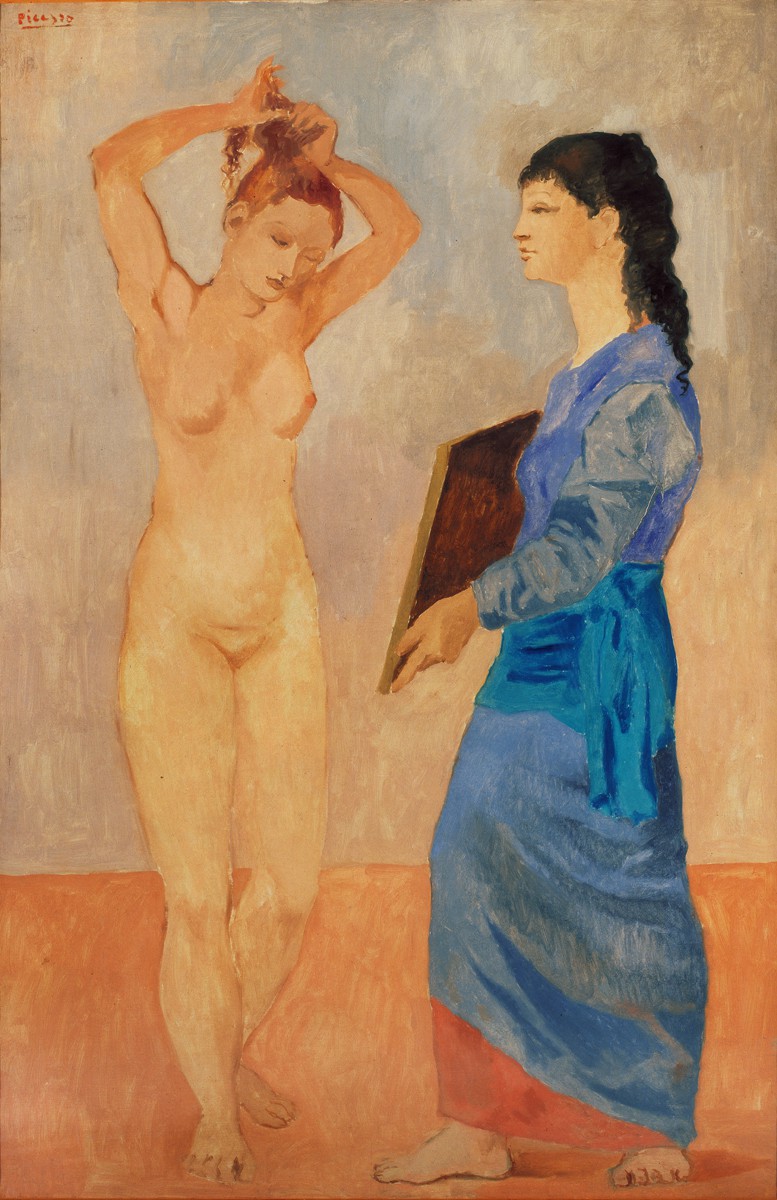
Pablo Picasso, La Toileete, 1906, courtesy the Albright-Knox Art Gallery.
Another few steps and we are looking at Pablo Picasso’s La Toilette, painted in 1906 just before his well-known innovations with Cubism.
The two women depicted are different views by Picasso of the same model. The painting seems to be mostly about lustrous, subtle color and soft, slightly angular shapes. It struck me that fusing the two figures, with their simple faces and forms, would result in a sort of Cubist composite creation. Perhaps we see the gears slowly turning in Picasso’s creative mind.
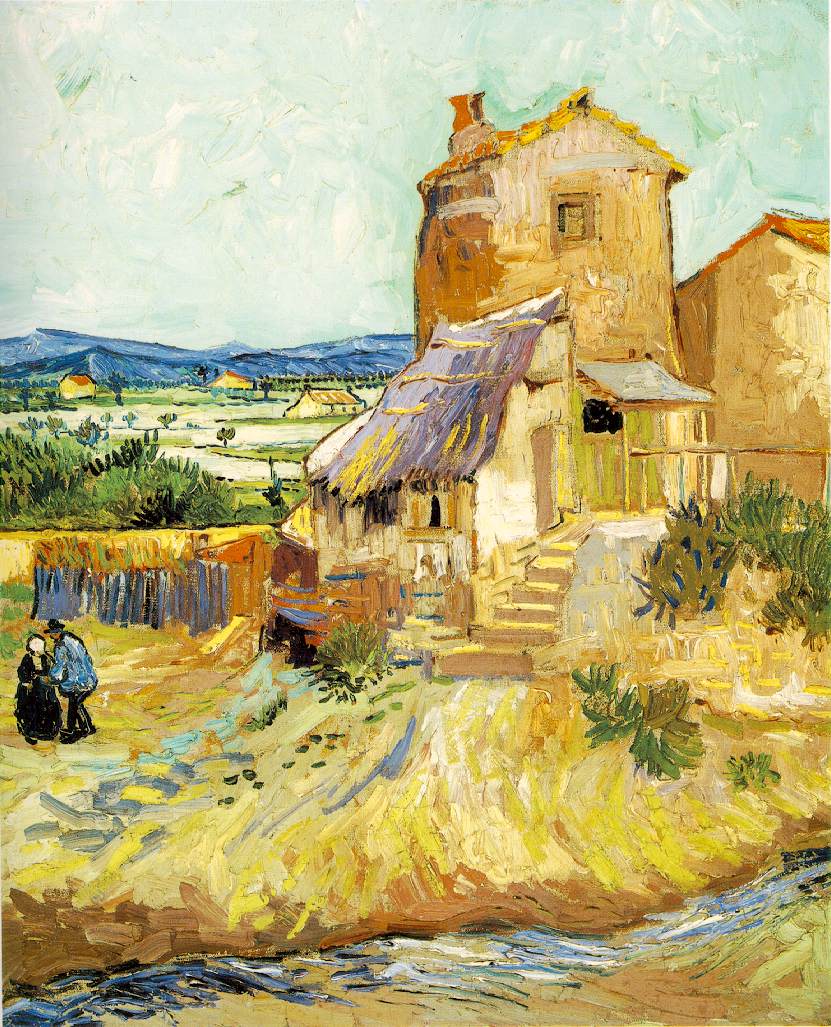
Vincent Van Gogh, The Old Mill, 1888, courtesy the Albright-Knox Art Gallery.
The masterpiece that I enjoyed most–because it’s just so indescribably magical–is Van Gogh’s The Old Mill, from 1888, another fine example of Post-Impressionism. Thick smears of paint and bold brush strokes of light give the painting strange depth and glowing solidity, in spite of its greatly simplified, almost crude representation of a country scene. I felt like I had entered a magical landscape, located somewhere between a gleaming dream and a warm, everyday experience. To me, it’s a piece of art that would never grow old.
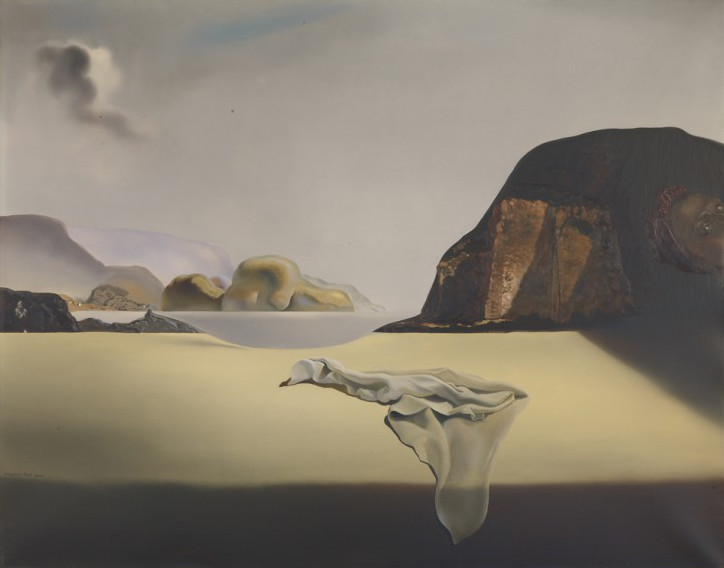
Salvador Dalí, The Transparent Simulacrum of the Feigned Image, 1938, courtesy the Albright-Knox Art Gallery.
Here we see the emergence of Surrealism. And this masterpiece is by the ever popular Salvador Dalí!
The Transparent Simulacrum of the Feigned Image, 1938, is one of Dalí’s most iconic works. It’s mysterious, strange and stimulates thought. What do the various elements in the design represent? Is that a bowl of mashed potatoes with gravy on a table with a napkin, or is that a lake nestled between mountains? The onlooker isn’t quite sure if the painting is primarily fun or symbolic, or a depiction of the unconscious, or sublime reality. Abstraction has surely taken hold of the artist’s vision, as the scene is a complete departure from ordinary experience.
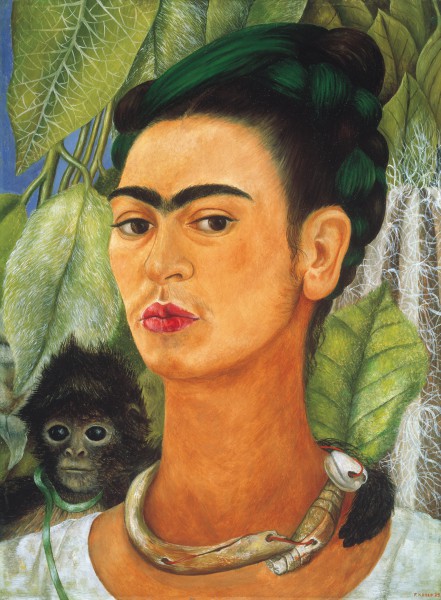
Frida Kahlo, Self-Portrait With Monkey, 1938, courtesy the Albright-Knox Art Gallery.
Mexican artist Frida Kahlo’s impressive Self-Portrait With Monkey, painted in 1938, is said to be Surrealist. To me it appears more like a beautifully colorful Post-Impressionist Gauguin. According to Wikipedia: “Frida rejected the “surrealist” label; she believed that her work reflected more of her reality than her dream.”
Gazing at this one portrait, I understand her assertion. Apart from one canvas in the exhibit, a depiction of fleshy, bloody butchered meat, this painting seems more solidly lifelike and ripe with organic truth than any other work that I recall seeing.
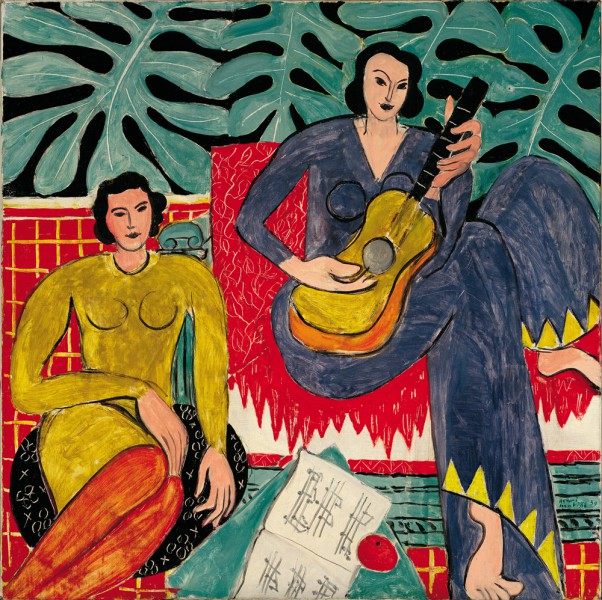
Henri Matisse, La Musique, 1939, courtesy the Albright-Knox Art Gallery.
I also love this one! La Musique, by Henri Matisse in 1939, is the sort of joyful, broadening, invigorating style of art that I personally like. Catherine pointed out that the lady on the left is very prim and composed, but the wild lady on the right is the type you’d want to date! Exactly right! The hands and feet are wonderfully twisted and elongated as if they’re swimming within splashes of swirling color and music!
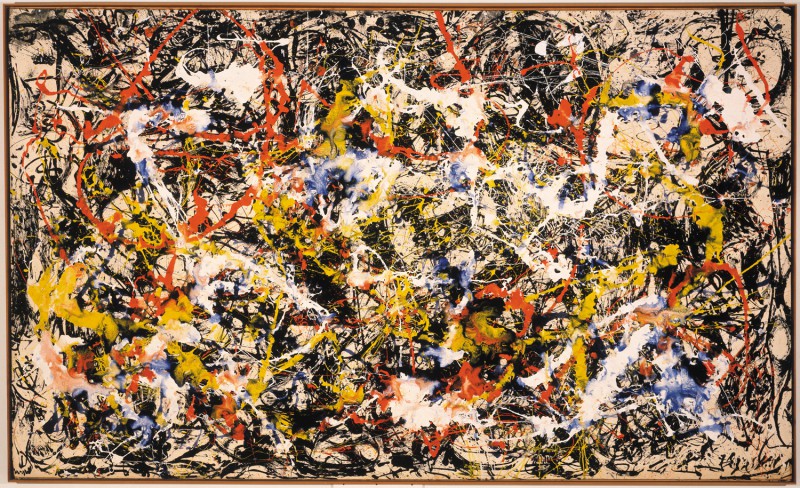
Jackson Pollock, Convergence, 1952, courtesy the Albright-Knox Art Gallery.
Jackson Pollock today is recognized as a master of Abstract Expressionism. His unique drip paintings are unmistakeable. And his Convergence from 1952 nearly covers an entire museum wall!
Okay, perhaps I’m an ignoramus and a dullard. To me this style of painting seems a bit random, cynical, and a thumb in the eye of earlier, more skillful artistic styles. Several of the canvases in this portion of gallery struck me in a similar way. The absurdly huge creations of these famous Abstract Expressionists seem more than experimental–they seem despondent, angry, nihilistic and disillusioned–perhaps a reaction to the massive chaos and inhumanity of two world wars in the early 20th Century. But I do appreciate Pollock’s artful balance, his dynamic strands of color, and the peculiar, imposing beauty that has resulted!
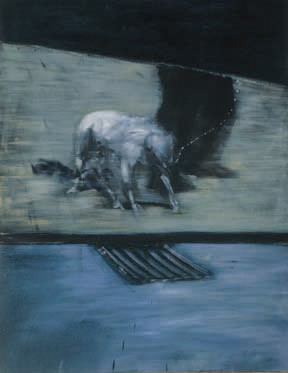
Francis Bacon, Man With Dog, 1954, courtesy the Albright-Knox Art Gallery.
Here’s one painting that is absolutely disturbing. It’s the sort of thing you’d expect to see in a short horror story by Poe, or above the mantle in a cobwebby haunted house! As if penetrating the dark recesses of the human subconscious, Francis Bacon’s unsettling Man With Dog, 1954, seems to portray the bottom of a shadowy figure being resisted by a featureless, spectral hound attracted to a sewer grate. This painting definitely succeeds in bringing out a strong feeling of unfocused loathing. If the aim of art is to stir the emotions, this piece is triumphant!
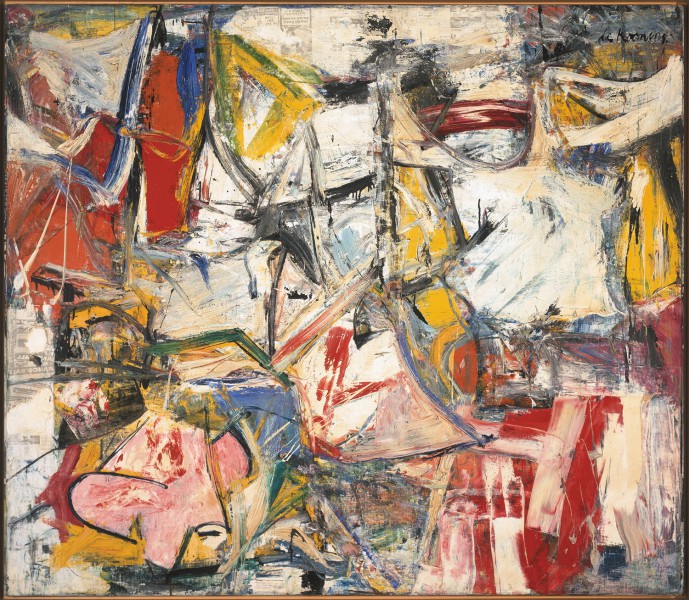
Willem de Kooning, Gotham News, 1955, courtesy the Albright-Knox Art Gallery.
A manic jumble of impulsive, uncertain emotions in two dimensions seems to compose Willem de Kooning’s Abstract Expressionist Gotham News, completed in 1955. Flesh tones and slightly organic shapes are intermixed with the angled, heavy lines of a large city’s architecture, looking to my eye like stained glass put into a blender. Energy and spasmodic randomness seem to convey no clear artistic notion, nor rouse any one particular emotion. It’s just a big mixture of complex energy! Perhaps that was the artist’s intent!
Andy Warhol, 100 Cans, 1962, courtesy the Albright-Knox Art Gallery.
An Andy Warhol response to modernism, his iconic 100 Cans was painted in 1962. Since then, the Pop Art image of multiple Campbell’s Soup cans has spread and mutated throughout the popular culture.
Is this painting a celebration of unrepentant commercialism, or a resigned condemnation? Is he asking the fundamental question: What is art? Or is it just his affirmation that an increasingly technological and global culture has changed life forever, and that art has become something of a commodity? I’ve heard arguments on every side.
The original painting is hanging on a wall at the San Diego Museum of Art! See it for yourself and decide!
The amazing Gauguin to Warhol exhibit runs in San Diego through January 27, 2015.
This truly special, eye-opening exhibit, Gauguin to Warhol, can be enjoyed at the San Diego Museum of Art through January 27, 2015.
It might be a once-in-a-lifetime opportunity to really appreciate these many great masterpieces. If you can, go see it!
…
To enjoy future posts, you can “like” Cool San Diego Sights on Facebook, or follow me on Twitter.
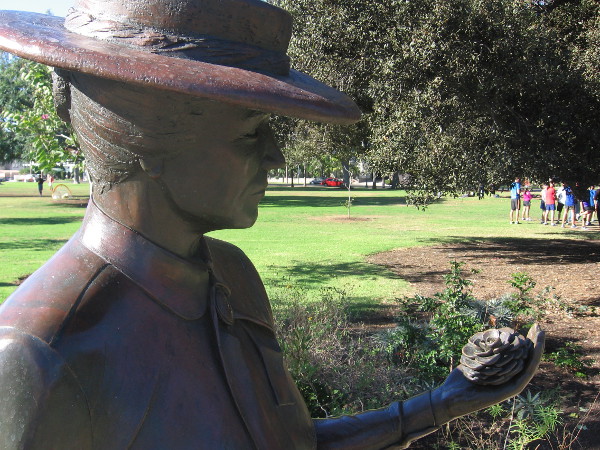
Kate Sessions, the Mother of Balboa Park, holds a pine cone by the grass.
Balboa Park is bursting with cool sights wherever you go. If you’ve ever driven or walked along El Prado a short distance west of the Cabrillo Bridge, you’ve probably seen some slightly larger than life sculptures of people standing on either side of the street. Sefton Plaza, located at the intersection of El Prado and Balboa Drive, is the location of these four bronze sculptures.
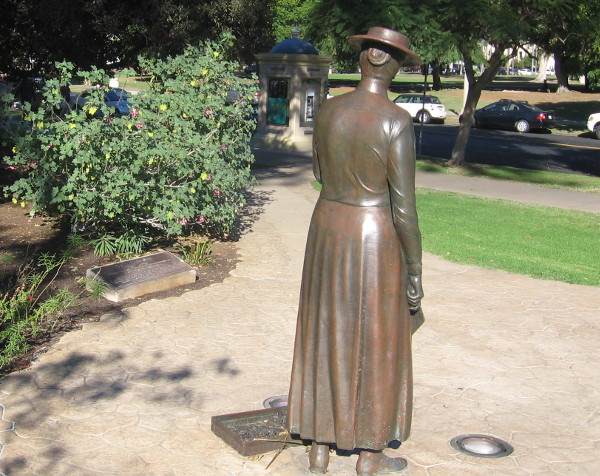
On the south side stands a representation of horticulturist Kate Sessions holding a trowel and pine cone. Often called the Mother of Balboa Park, she was instrumental in creating the park’s many lush gardens and groves of trees. The sculpture stands among a variety of beautiful plants including species she introduced in the early years of the park.
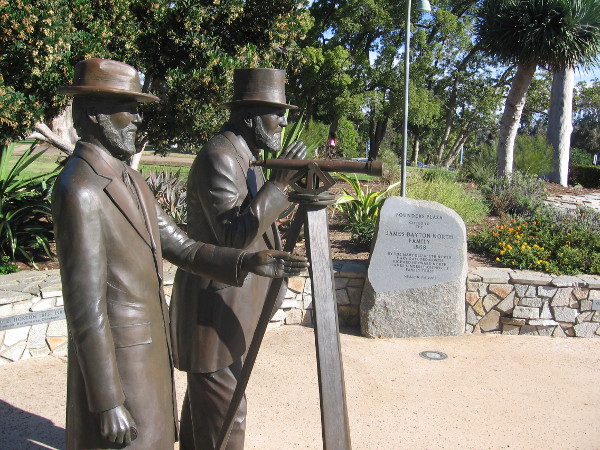
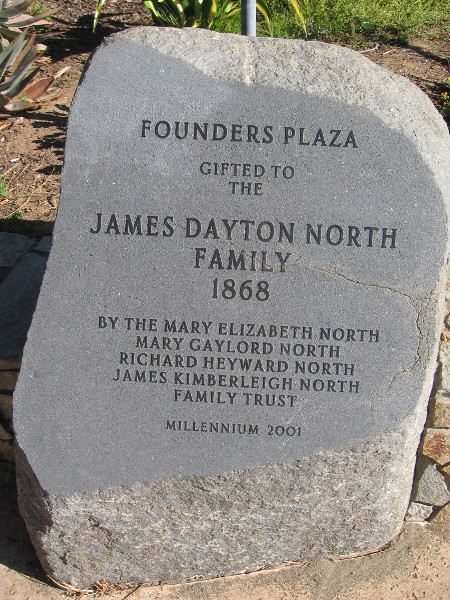
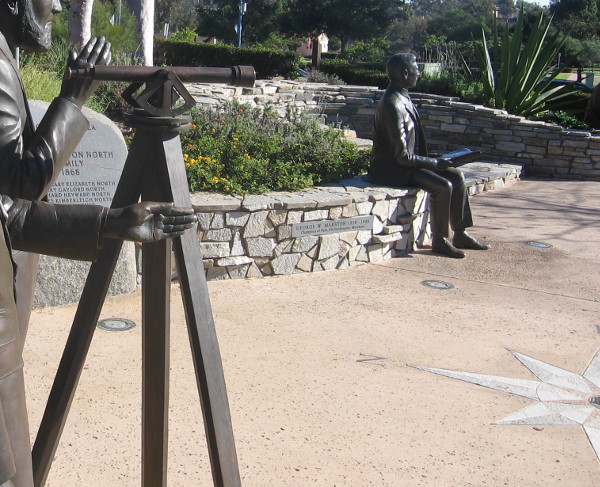
The three lifelike sculptures on the north side of Sefton Plaza, an area called Founder’s Plaza, represent Ephraim Morse, Alonzo Horton and George Marston. These three were the visionaries who orginally conceived Balboa Park, then worked tirelessly to create it.
Ephraim Morse, an early settler and promoter of San Diego, and Alonzo Horton, a land speculator responsible for downtown San Diego’s current location, proposed in 1868 that the new city park occupy 1,400 acres. The sheer size of the park was simply amazing, considering San Diego at the time had a mere 2,300 residents! George Marston, often called the Father of Balboa Park, was a prominent department store owner who personally funded the park’s design. To turn the grand vision into reality, he hired the former superintendent of New York City’s Central Park, Samuel B. Parsons Jr. The park’s construction began in 1903 at the corner of Sixth Avenue and Date Street. (Just a three minute walk from where I live! I love it!)
The four wonderfully realistic bronze sculptures were created by local artist Ruth Hayward. She intentionally made them about 10% larger than life, so they’d appear slightly imposing.
Balboa Park, which began as a grand idea in the minds of just a few people, today is the nation’s largest urban cultural park!
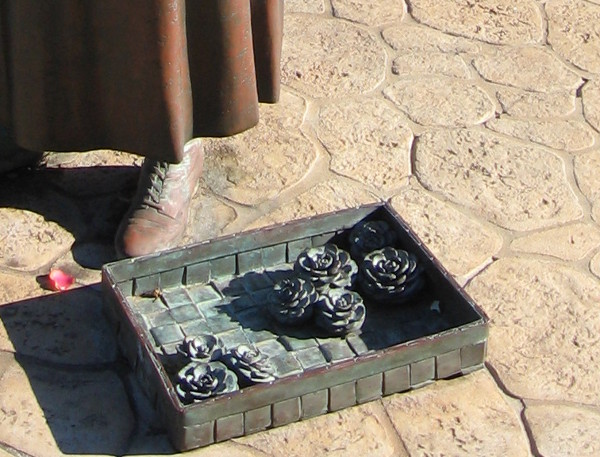
During her life, Kate Sessions created gardens and landscapes for all to enjoy.Kate Sessions lingers on footpath between Cabrillo Bridge and Sixth Avenue.More pine cones fill a shallow box at Kate Sessions’ booted feet.Lifelike sculptures of Ephraim Morse and Alonzo Horton in Founder’s Plaza.Two of Balboa Park’s early advocates survey their awesome creation.Founders Plaza gifted to the James Dayton North Family 1868.Near Morse and Horton, George Marston sits on a wall, enjoying the surrounding beauty.George Marston is remembered today as the Father of Balboa Park.Bronze sculpture sits comfortably next to its hat by a small pool of water.
…
To enjoy future posts, you can “like” Cool San Diego Sights on Facebook, or follow me on Twitter.
Participants in Susan G. Komen three day walk fighting breast cancer.
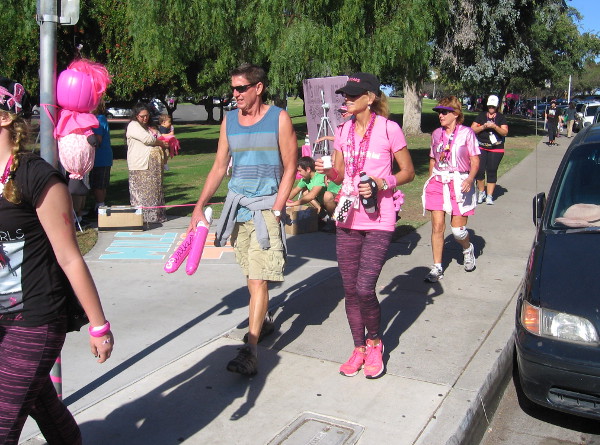
As usual, I ran into an unexpected cool sight during a walk. I was returning home from Balboa Park early this afternoon when I noticed a bunch of people wearing pink lining Park Boulevard. Sure enough! San Diego’s Susan G. Komen three day walk to raise money to fight breast cancer was underway. It was heading down the homestretch!
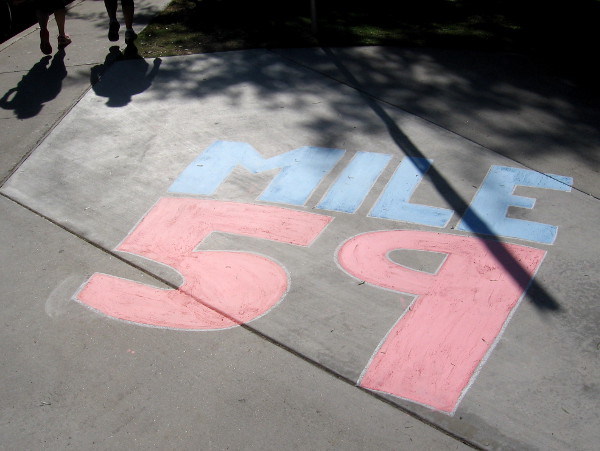
I took a bunch of pics as I continued home along the route of the walkers. They had roughly one more mile to go until the finish line at downtown’s Petco Park stadium.
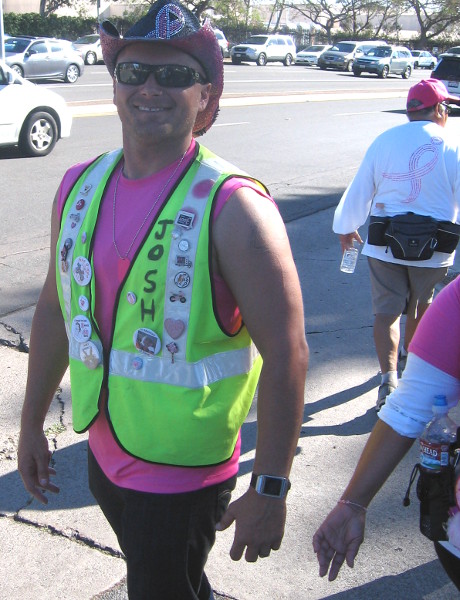
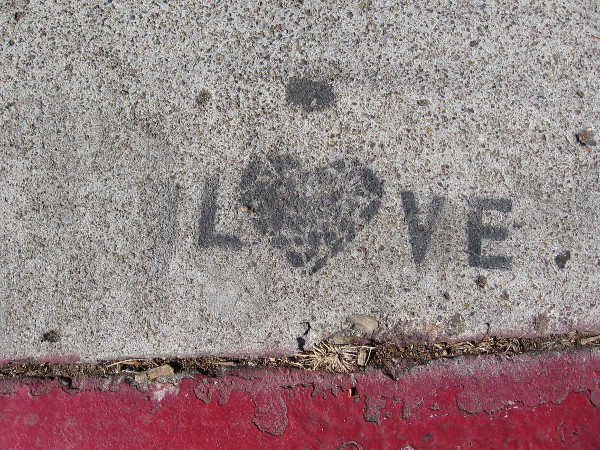
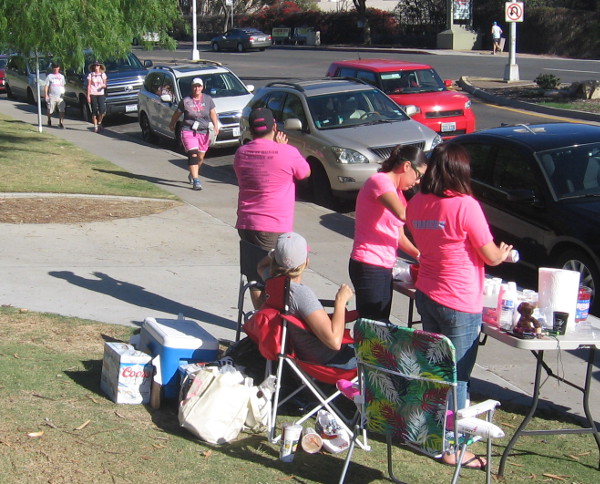
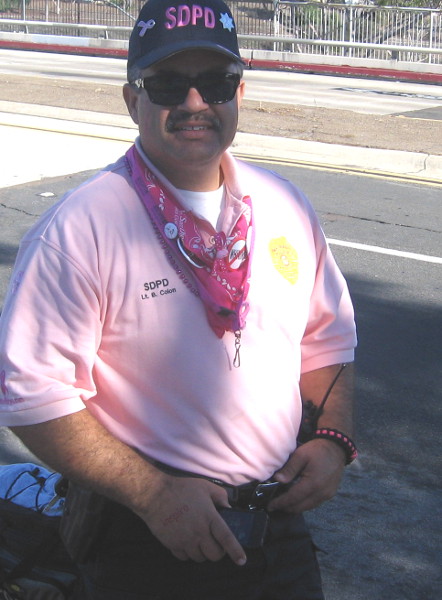
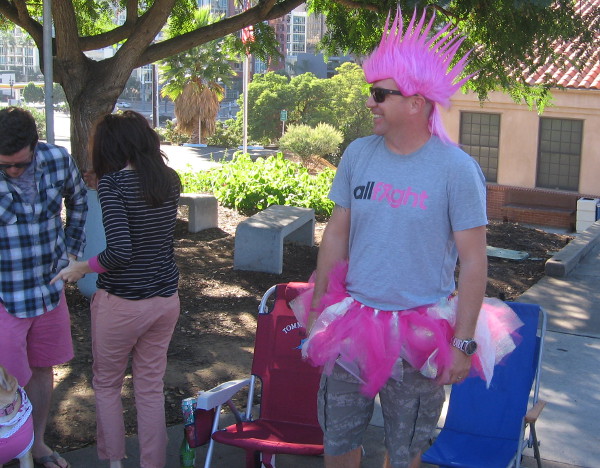
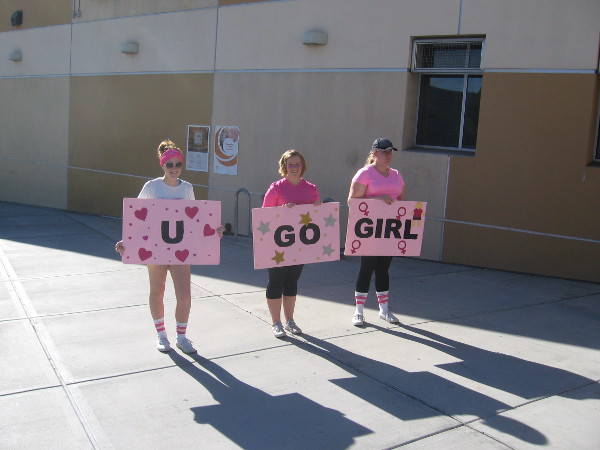
San Diego walkers cheered by pink-wearing supporters on Park Boulevard.Mile 59. Just one mile to go to the Petco Park finish!Lots of fun pink stuff greeted the walkers along their route.Guy helping with traffic wears pink and lots of pins and buttons.Encouraging signs were everywhere along this beautiful section of the San Diego route.Someone stenciled LOVE on the sidewalk.Hydration station awaits some oncoming anti-breast cancer walkers.Cars coming down the street honked and featured optimistic messages.San Diego police officer wears pink for the special occasion.Someone wrote a personal encouraging note in chalk on the sidewalk.This cool bystander guy has a pink mohawk!U GO GIRL
…
To enjoy future posts, you can “like” Cool San Diego Sights on Facebook or follow me on Twitter.
A little diving in San Diego grocery store dumpsters yielded lots of good food.
A unique event took place today. It was extremely unusual, fun and enlightening.
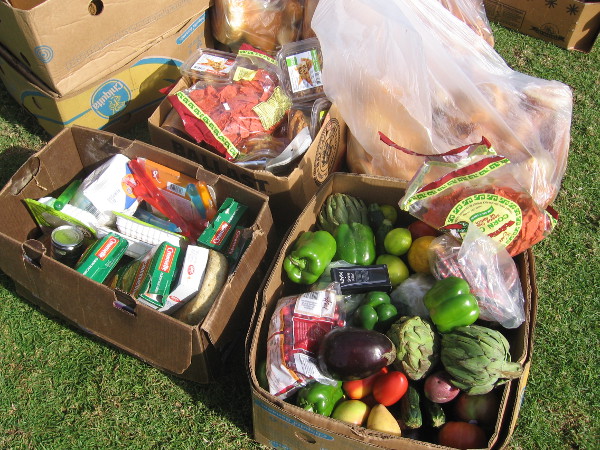
Rob Greenfield is an activist working to persuade grocery stores to donate expired foods to local food banks and hunger relief charities like Feeding America. His effort is called Donate Don’t Dump. To raise awareness, he has created unusual, colorful works of art in various cities, using perfectly good food he’s found while dumpster diving.
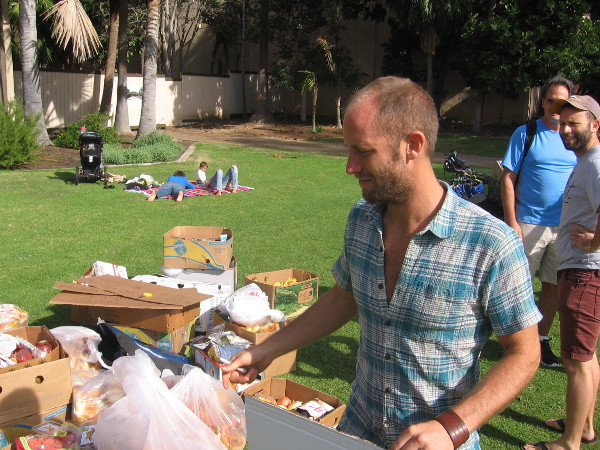
As part of my walk today, I took a few pics of Rob and his friends creating a fantastic bit of artwork on the grass in San Diego’s Balboa Park.
He told me that some grocery chains are better than others at donating their expired foods. He explained food retailers have nothing to fear from lawsuits should someone sicken from food poisoning, because of the federal Bill Emerson Good Samaritan Food Donation Act. $165 billion dollars of food is wasted each year, enough to fill two Rose Bowl stadiums every single day, according to Rob!
Once the art had been admired, bystanders were invited to eat! The food was great!
Wasted food includes vegetables, baked goods and expired packaged items.Rob Greenfield checks salvaged food to be assembled into activist art in Balboa Park.Rob Greenfield explains his goals on a bench, with Casa del Prado arches in the background.Laying out the food articles into an elaborate, very colorful design has begun!A crowd watches near the Botanical Building as the artistic food creation nears completion.Rob Greenfield explains that more needs to be done to save perfectly good food.
…
To enjoy future posts, you can “like” Cool San Diego Sights on Facebook. or follow me on Twitter.
Homeless by trolley tracks between San Diego Convention Center and Petco Park.
Living downtown, every day I see many people on the streets of San Diego who are homeless. When I take my “cool pics” I often consciously or unconsciously aim my camera lens away from less pleasant images. But the reality is, there are many urban neighbors who are in a desperate life situation. Whatever their story is, they need our help and compassion.
I’ve been walking throughout downtown for about 14 years now, and it has been a ritual of mine to reward street performers with a bit of money as I wander about. A fair number of these performers are homeless, or very needy. It just seems like a positive thing to do. When I talk a bit and get to know those who are homeless better, I realize that many are not so different than me, or anyone else. Life at times presents us all with extraordinary, seemingly impossible difficulties. A helping hand is often appreciated.
If you’ve thought of providing a helping hand to the homeless, or those at risk for homelessness, here’s a list of organizations in San Diego that could use your assistance. Check each website for opportunities to volunteer or provide a donation. Forgive me if I’ve overlooked anyone. If you can think of additions to this list, leave a comment!
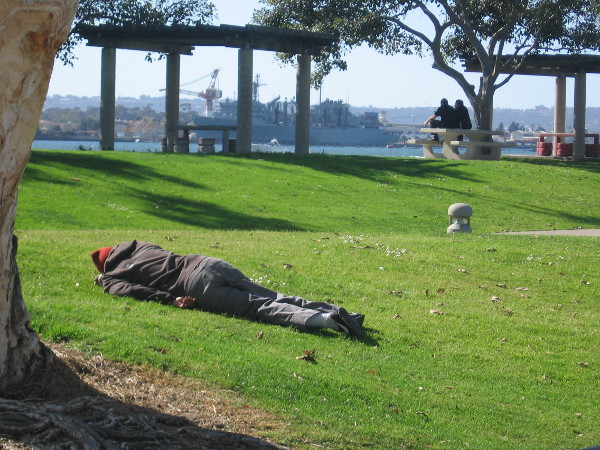
Someone lies face down on the grass in Embarcadero Marina Park North.
Alpha Project provides the homeless with affordable housing, substance abuse treatment, basic and emergency services, transportation assistance, mental health counseling, employment training and placement, emergency shelter and more.
Urban Angels‘ mission is to nourish and provide food for the homeless of San Diego. They run the kitchen at Connections Housing, a new, state-of-the-art homeless facility.
San Diego Rescue Mission provides shelter, food, education, work training, rehabilitation and long-term care programs for the homeless.
StandUP for Kids provides assistance to homeless and at-risk youth throughout San Diego County.
Veterans Village provides homeless veterans with a safe place to live, care for Post Traumatic Stress and Traumatic Brain Injury, help in overcoming addiction, and employment assistance.
The Salvation Army serves the homeless, low income individuals, and those facing difficult life challenges. Volunteers serve the homeless downtown with Thanksgiving and Christmas meals.
Father Joe’s Villages is the largest one-stop center in the region offering housing and services for the homeless. They help families with children, single women, and single men including chronically homeless individuals, veterans and people living with addiction and/or mental illness.
Interfaith Community Services empowers people in need to stabilize and improve their lives through comprehensive programs, in partnership with diverse faith communities and people of compassion.
Make Change Count meters in downtown San Diego raise money to help the homeless.
Monarch School‘s mission is to educate students impacted by homelessness and to help them develop hope for the future with the necessary skills and experiences for personal success.
San Diego Food Bank is the largest hunger-relief organization in San Diego County.
1st Saturdays are ordinary San Diegans who collect money, clothes, bedding, and other items that help those in need, to be distributed the first Saturday of every month.
Just Call Us Volunteers collaborates with other non-profits to serve free healthy meals in San Diego and teach cooking using fresh and nutritious ingredients.
Catholic Charities provides a safe, supportive, sober environment and opportunities for those with few or no resources to gather, begin, and continue self-help efforts.
PATH is a family of agencies working together to end homelessness for individuals, families, and communities throughout Southern California.
Family Health Centers of San Diego is dedicated to providing healthcare services to medically underserved persons, including homeless children and adults.
YWCA has programs that support victims of domestic violence and homeless women in their journey from homelessness to stable housing.
Regional Task Force on the Homeless conducts a physical count of the homeless in San Diego. They can always use more volunteers for the annual census. Information gathered during WeAllCount helps determine which services and programs can do the most good.
Wheels of Change provides employment for homeless people who are staying in shelters. Those who’d like to participate earn wages for work cleaning up communities–picking up trash, pulling weeds, etc. The program would appreciate your help.
Small work of art I bought from a friendly gentleman walking down the street. He was in a difficult life situation.
…
To follow Cool San Diego Sights, you can “like” my page on Facebook or follow me on Twitter.






















































 Cool San Diego Sights!