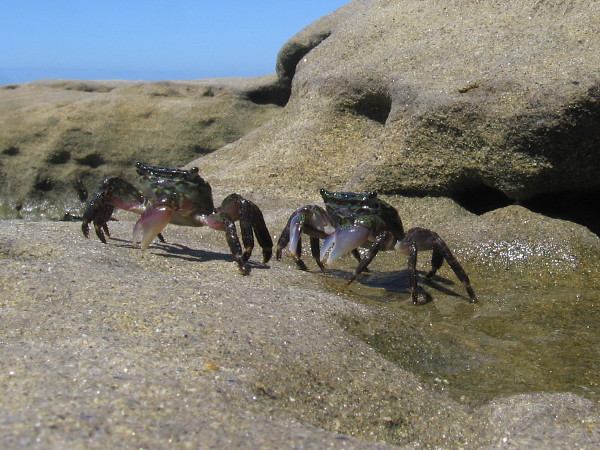
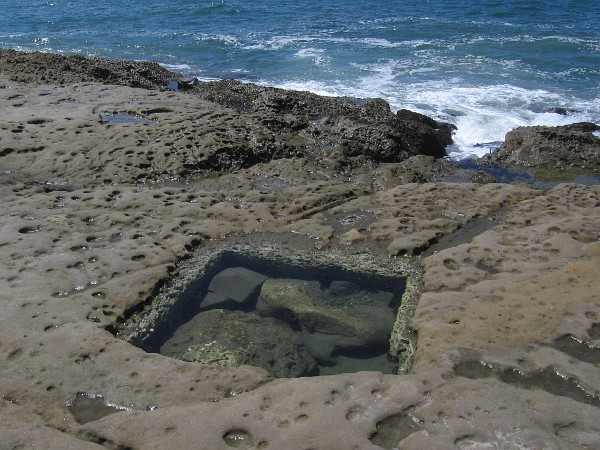
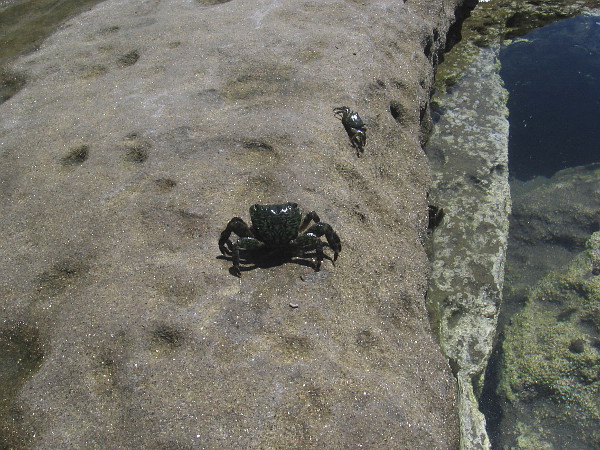
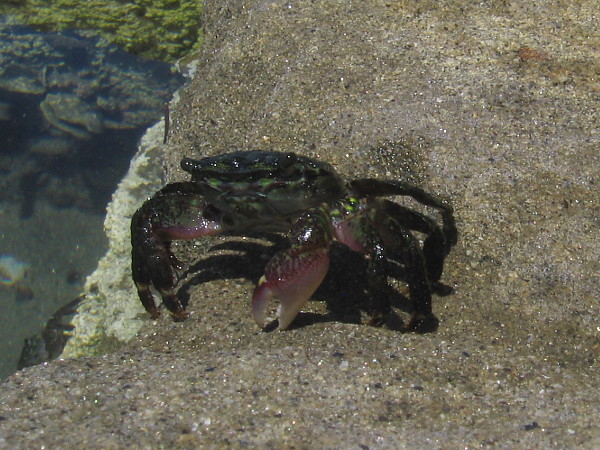
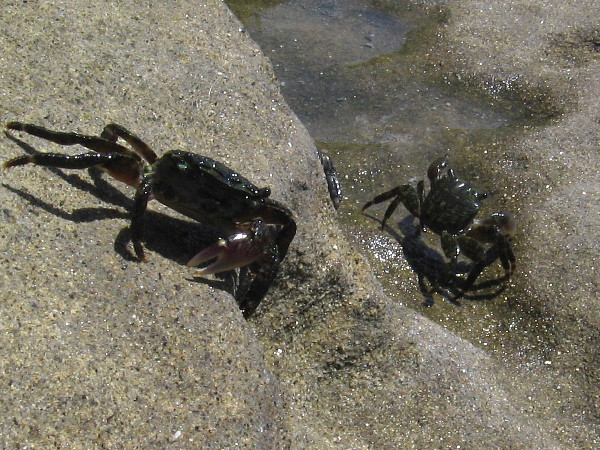
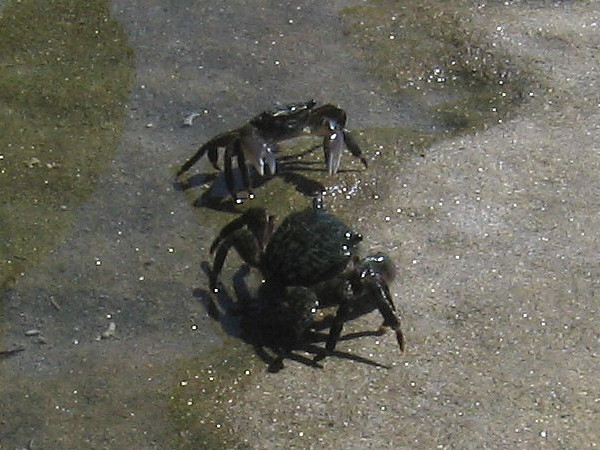
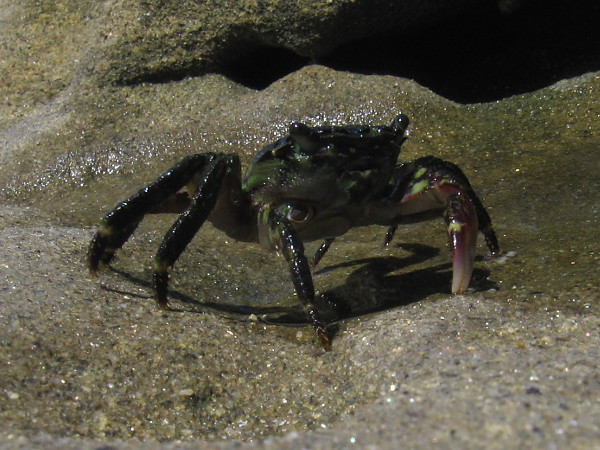
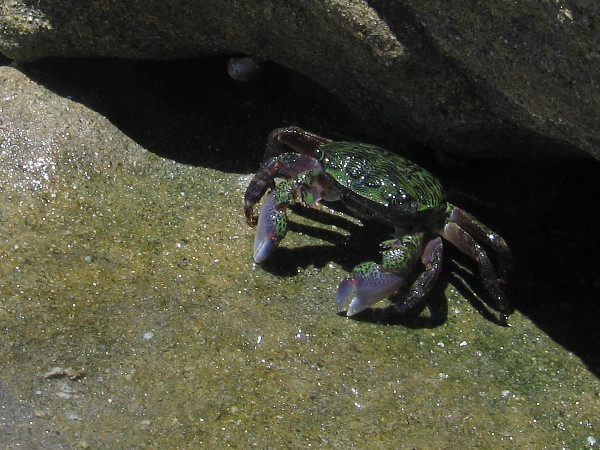
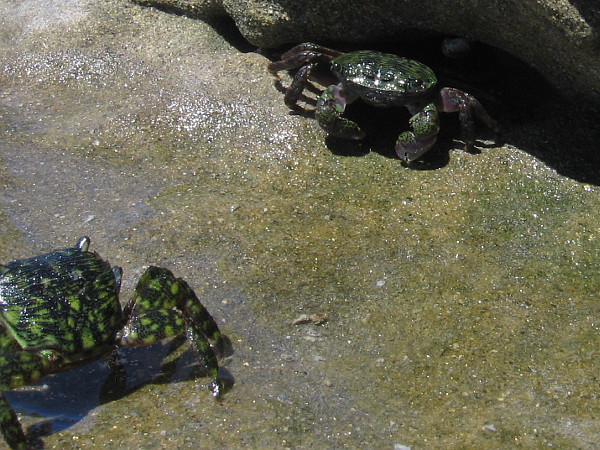
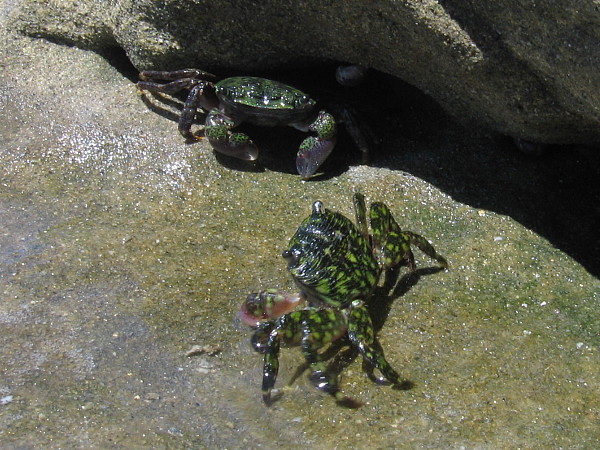
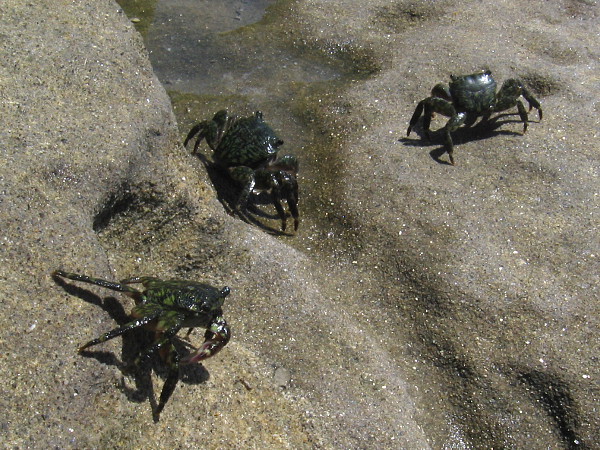
Some irritable crabs were facing off all around a watery square arena at the Ocean Beach tide pools yesterday.
Crabs small and smaller, feeling agitated, would lift their claws threateningly, scamper right up to a rival, show ’em who’s boss, then, seeming to forget everything, would bumble off in a different direction.
I can’t say there was too much actual grappling. Just a lot of showboating.
…
I live in downtown San Diego and love to walk around with my camera! You can follow Cool San Diego Sights via Facebook or Twitter!
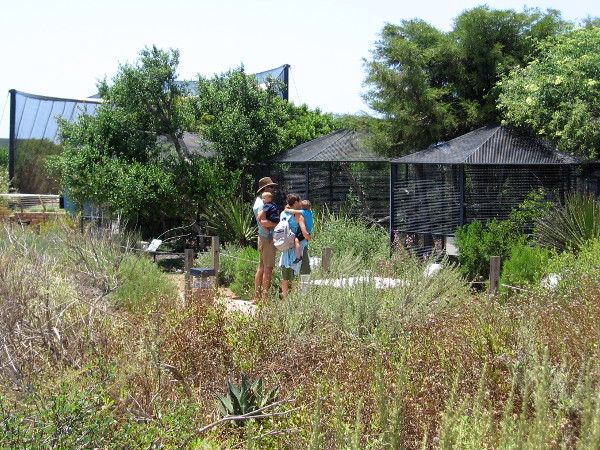
I just read an article on the KPBS website about how the Living Coast Discovery Center desperately needs donations during the coronavirus pandemic.
Most of their revenue comes from people visiting the center, which has been closed. Meanwhile, the many animals in their care–the birds, turtles, snakes, small mammals and other wild critters rescued around South Bay’s wetlands–need to eat! That requires money!
So I thought perhaps some of my San Diego readers might like to help out, too.
Have your kids taken school field trips to the Living Coast Discovery Center? Have you enjoyed a visit with your family? These deserving people really need your help!
Click here to learn more and perhaps make a donation!
…
I live in downtown San Diego and love to walk around with my camera! You can follow Cool San Diego Sights via Facebook or Twitter!
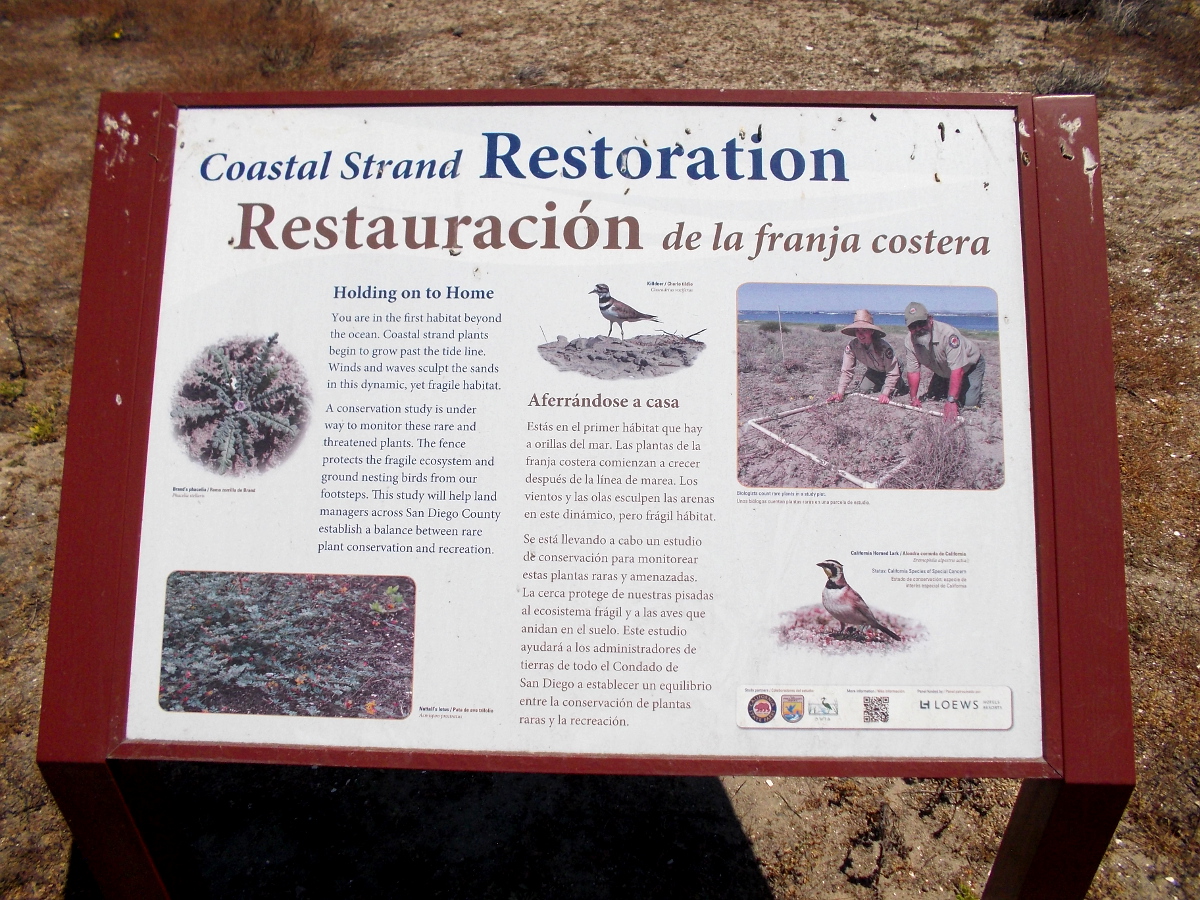
The coastal strand lies just above the high tide line of a beach. While its appearance might be sandy, dry and scraggly, look closely and you’ll find plenty of nature’s endless beauty.
Last Saturday I walked around Silver Strand State Beach.
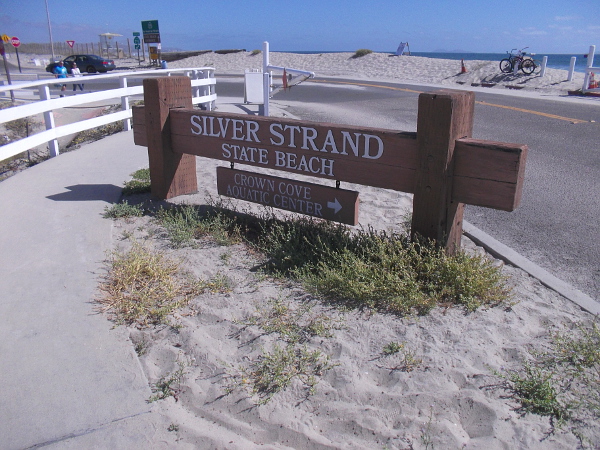
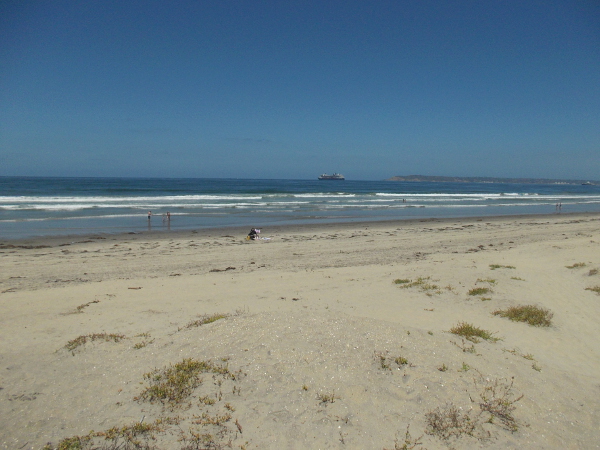
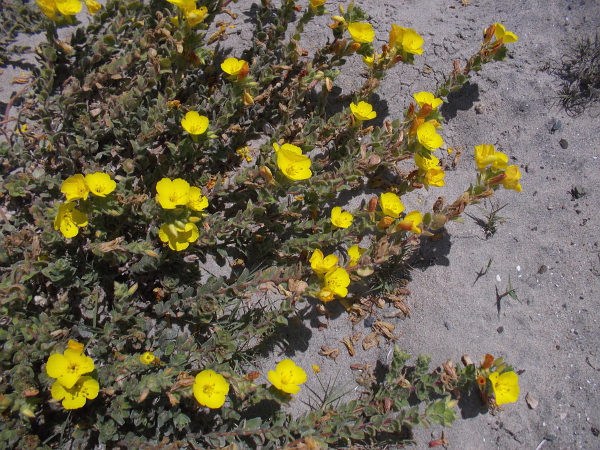
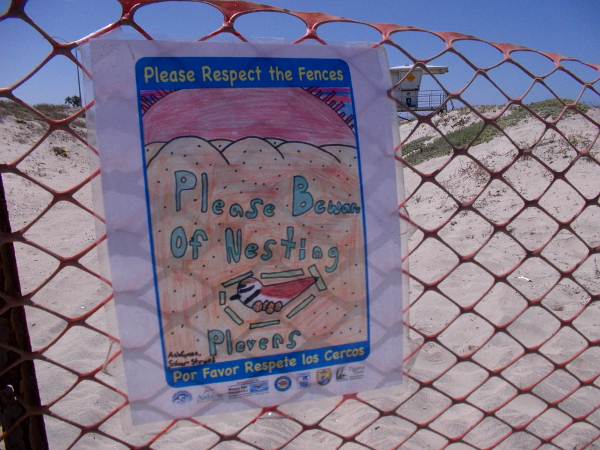
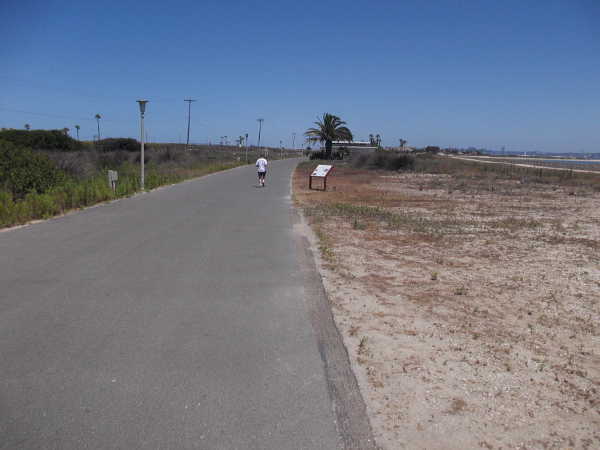
Entrance station at Silver Strand State Beach.The blue Pacific Ocean stretches beyond the seemingly barren western shore of the Silver Strand. Point Loma and a cruise ship can be seen in the distance.The flowers of beach suncup, or evening primrose, are like bright gems on the sand.The Western Snowy Plover depends on kelp and seagrass washed ashore, feeding on insects. Their young are hatched in the sand. Fences keep the feet of beachgoers away.Walking along the San Diego Bay side of the State Park.Coastal strand plants begin to grow past the tide line. Winds and waves sculpt the sands in this dynamic, yet fragile habitat.
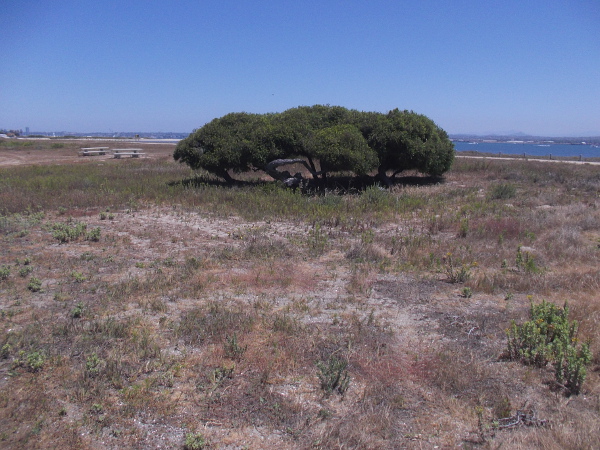
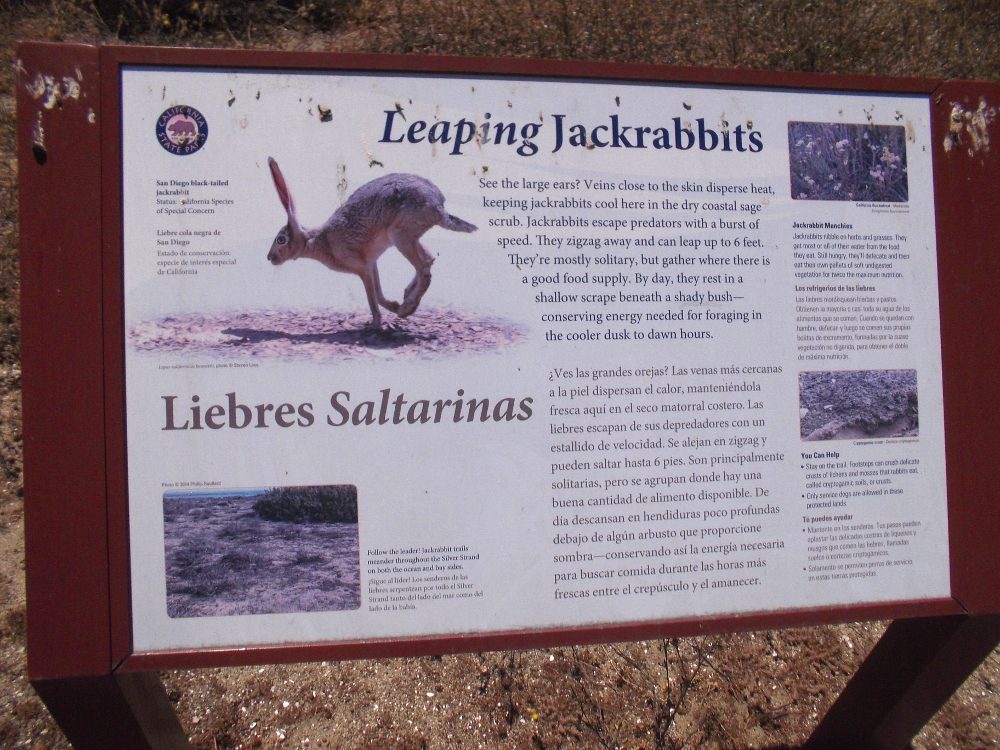
San Diego black-tailed jackrabbits are frequently seen in the dry coastal sage scrub of Silver Strand State Beach.How many rabbits can you see? They are well adapted to this environment.
…
I live in downtown San Diego and love to walk around with my camera! You can follow Cool San Diego Sights via Facebook or Twitter!
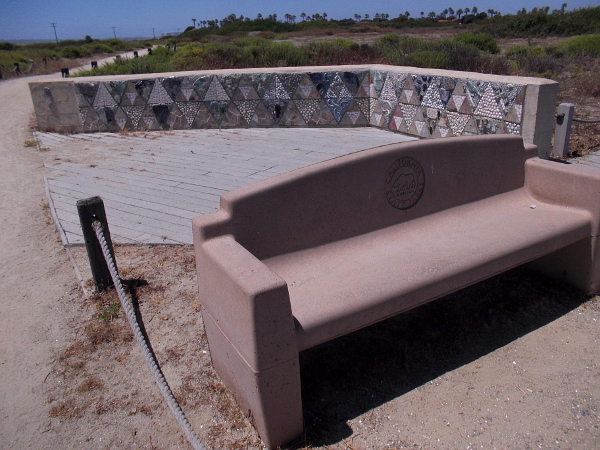
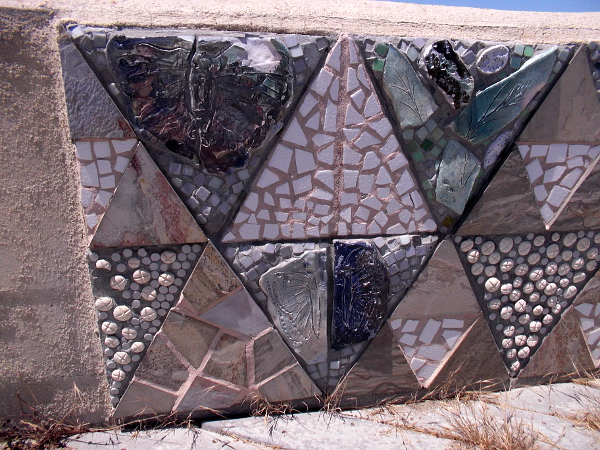
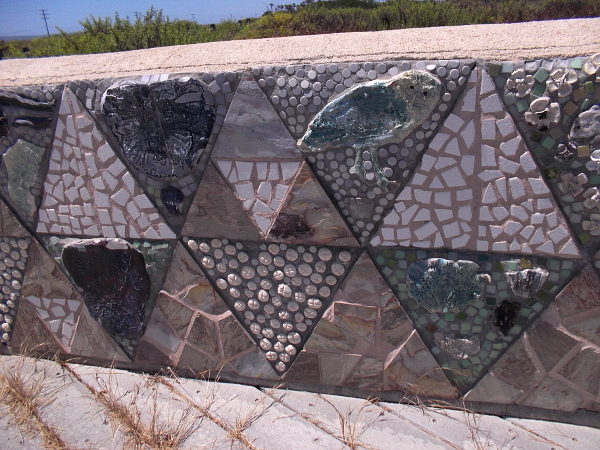
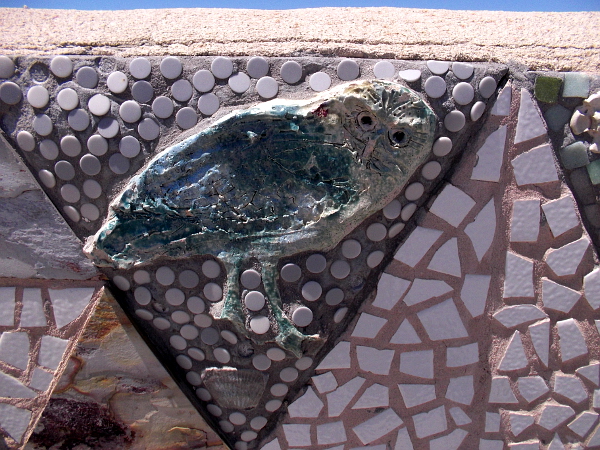
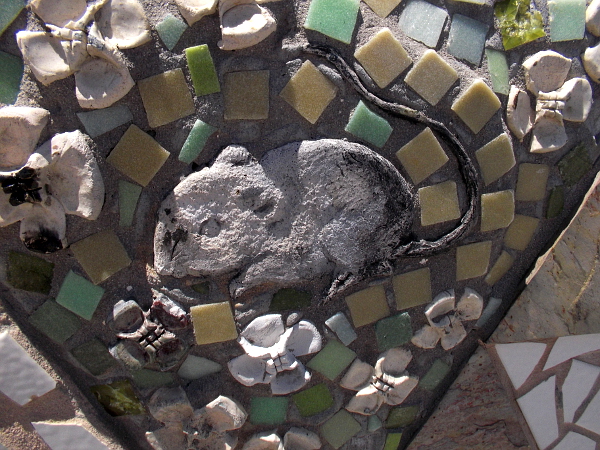
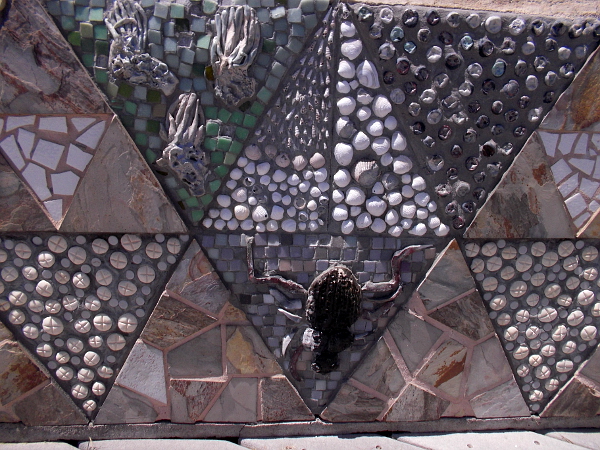
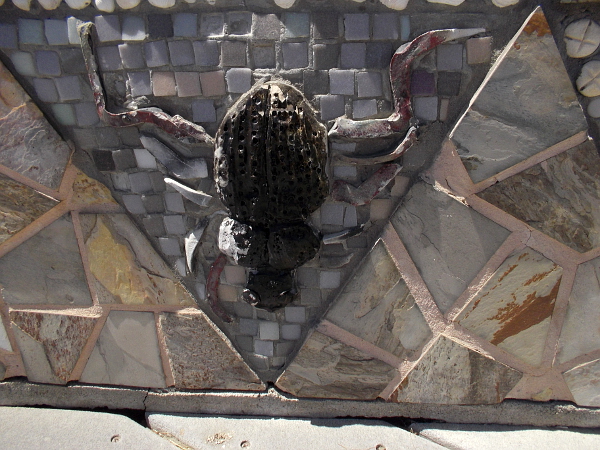
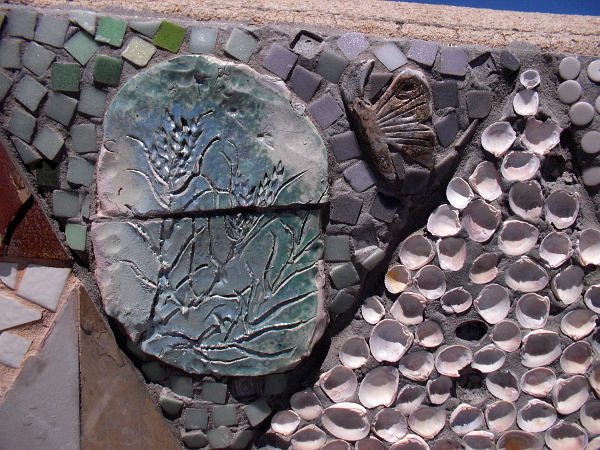
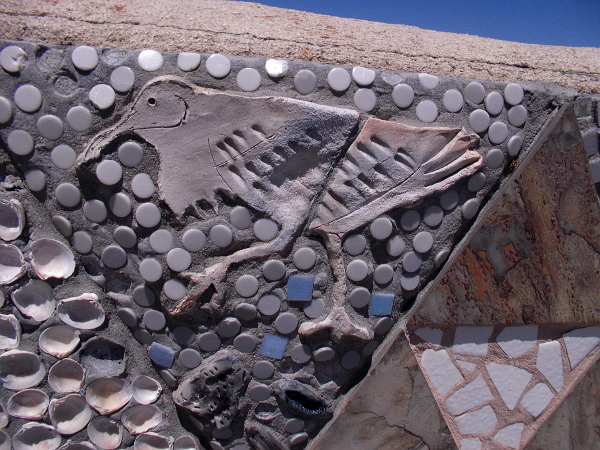
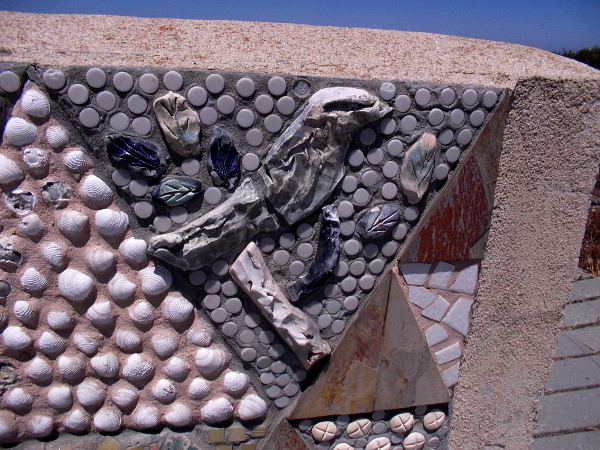
Check out this cool mosaic art at Silver Strand State Beach!
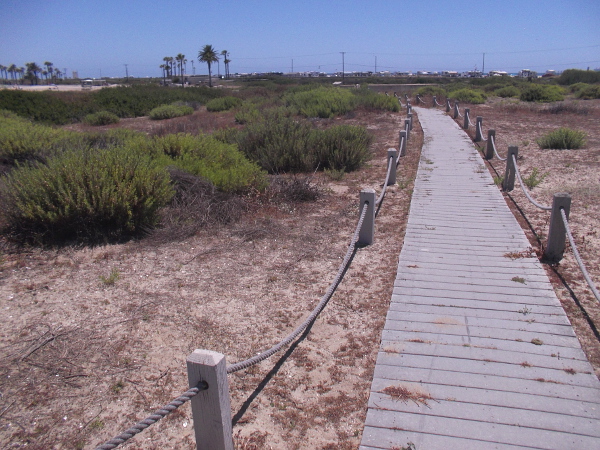
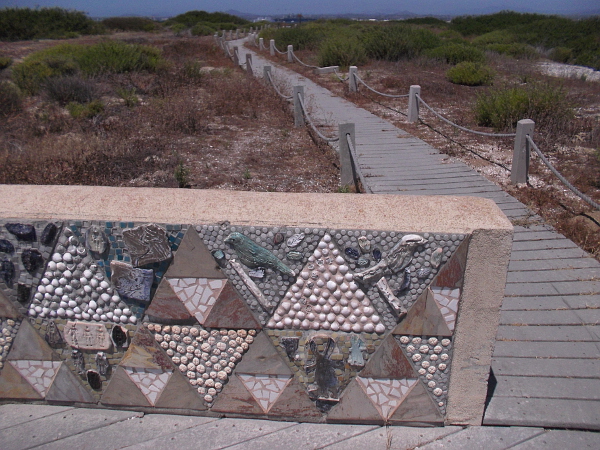
The artwork covers one side of a low wall near a California State Parks bench, where two paths in the northeast section of the park intersect. In my photos you can see a nature trail made of wood planks heading off through scrubby coastal habitat toward San Diego Bay.
To appreciate this unusual mosaic you need to view it up close. Bits of broken tiles, sea shells and other objects have been arranged into triangles. The triangles frame clay forms of native wildlife and people. In places the mosaics have broken off. The entire wall has become weathered in such a way that the organic artwork appears even more earthy.
Try as I might, I’m unable to discover any information about this public art.
Leave a comment if you know anything!
…
I live in downtown San Diego and love to walk around with my camera! You can follow Cool San Diego Sights via Facebook or Twitter!
You can easily explore Cool San Diego Sights by using the search box on my blog’s sidebar. Or click a tag! There are thousands upon thousands of photos for you to enjoy!
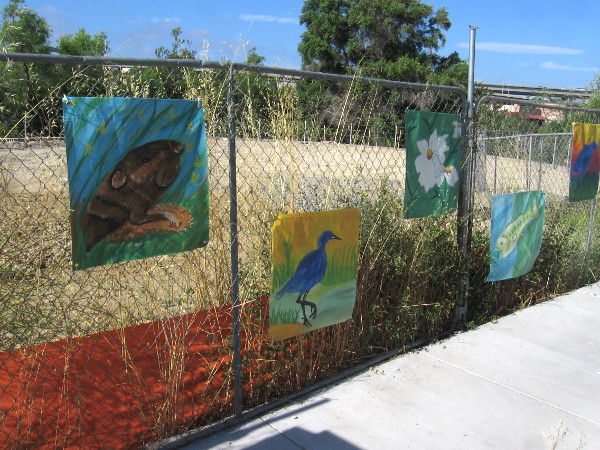
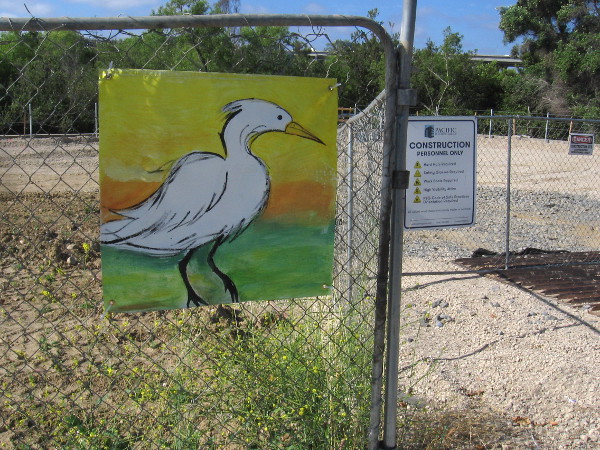
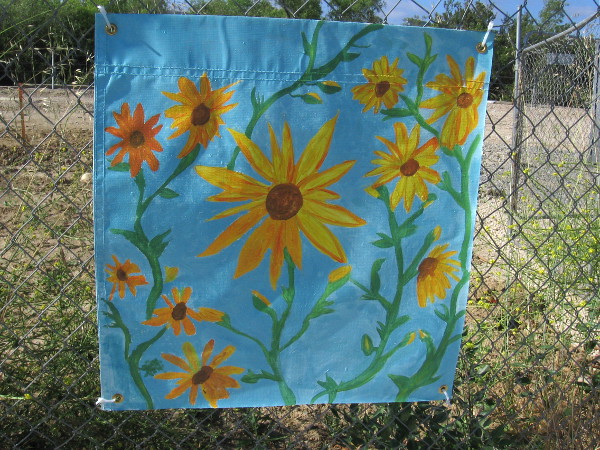
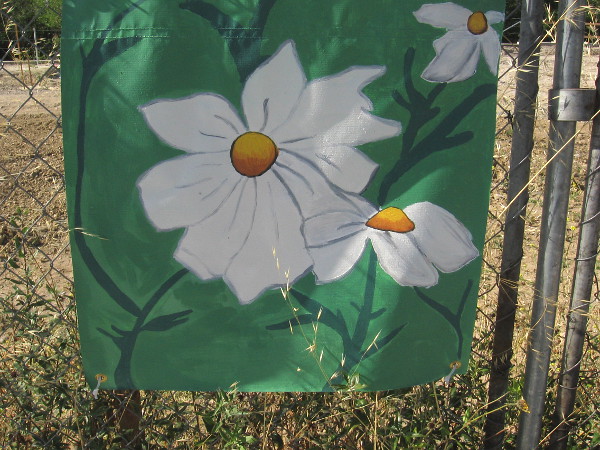
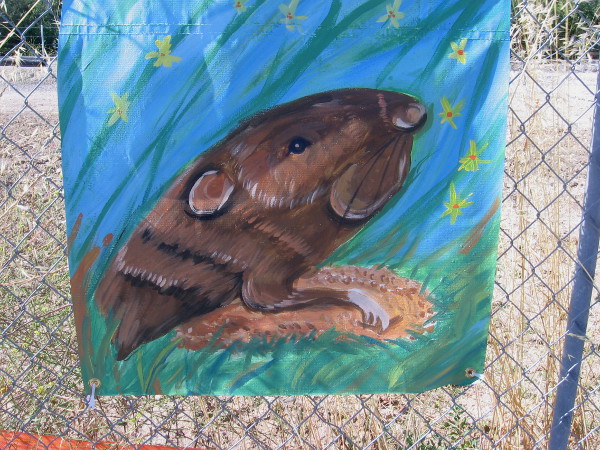
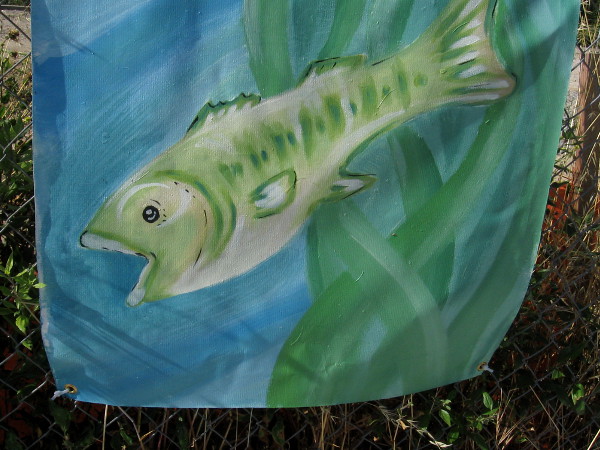
Native birds and wildlife arrived today at the San Diego River Discovery Center! Or, to be more precise, banners featuring images of river critters were hung today on a construction fence that surrounds the future nature center!
Did you know something cool is being built next to the San Diego River in Mission Valley?
The San Diego River Discovery Center at Grant Park is going to be where people of all ages gather to experience and learn about the natural environment along the San Diego River!
I blogged about this project in the past here. They’ve made progress since then, as you can see in one upcoming photo.
If you want to learn about the future nature center and how you might help make this dream a reality, visit the San Diego River Discovery Center website here!
…
I live in downtown San Diego and love to walk around with my camera! You can follow Cool San Diego Sights via Facebook or Twitter!
You can easily explore Cool San Diego Sights by using the search box on my blog’s sidebar. Or click a tag! There are thousands upon thousands of photos for you to enjoy!
A spectacular event is held every winter in Ramona, California. On Saturdays, during January and February, the public can freely enjoy an educational program called Hawk Watch.
Those who go to Hawk Watch will see birds of prey up close and in the wild. The setting is the wide, beautiful Ramona Grasslands.
Hawk Watch is an event organized by the Wildlife Research Institute. WRI, in a cooperative effort with The Nature Conservancy and San Diego County, now protects 7,000 acres of Ramona grassland. This grassland is an important natural refuge where native wildlife can not only survive, but thrive.
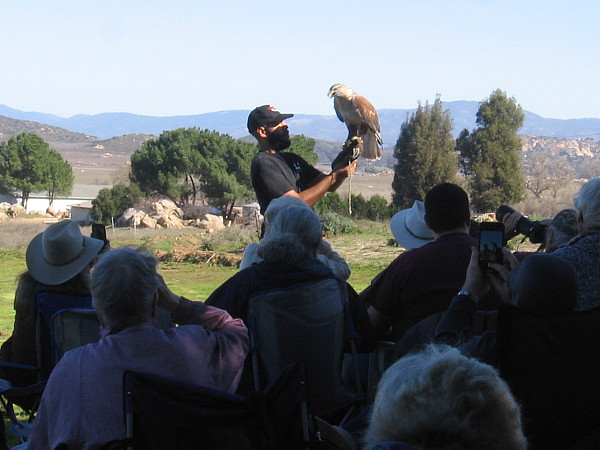
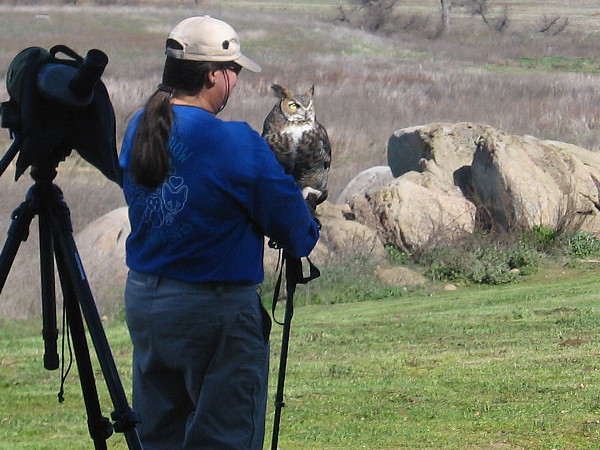
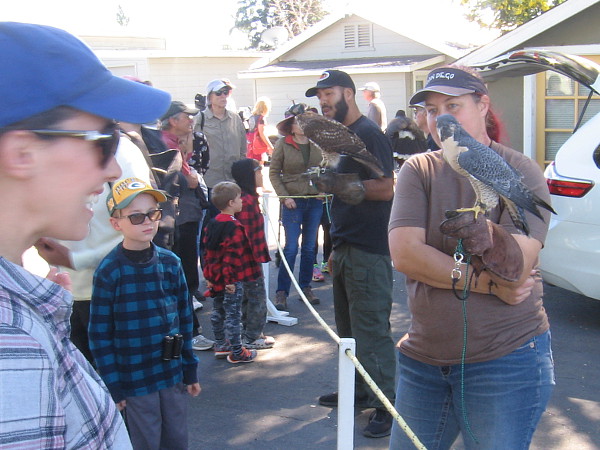
Hawk Watch features live raptors and a fascinating educational talk by biologists. The owls are introduced during the talk by representatives of Project Wildlife, which provides wildlife rescue in San Diego County. The talk is followed by demonstrations by falconry experts.
Afterward, all of the ambassador raptors can be viewed by the public up close!
Today I went to Hawk Watch!
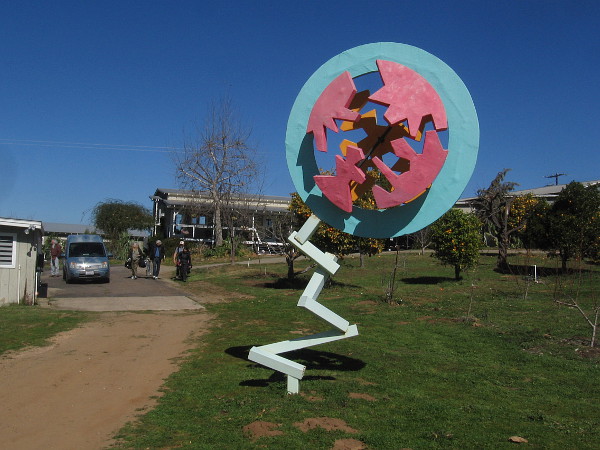
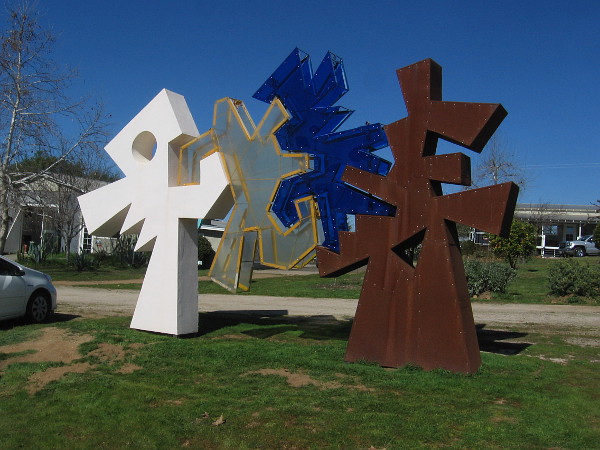
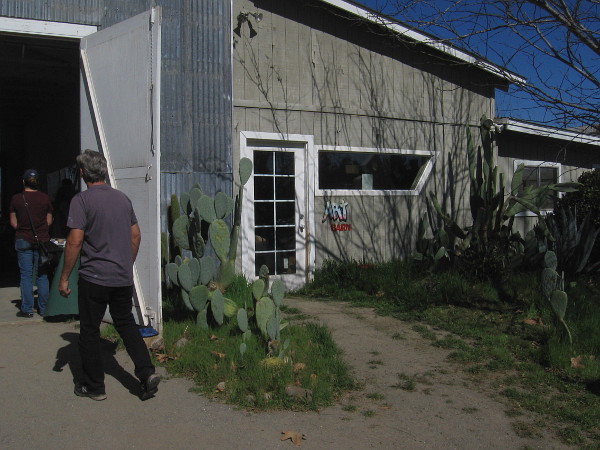
The event is held on Ramona’s private Begent Ranch, which features all sorts of cool artwork, including colorful sculptures arranged about a large dirt parking lot. After walking through a barn and looking at a variety of educational exhibits, I set up my lawn chair with other visitors at the edge of the scenic grasslands.
As we were introduced to different species of hawks, falcons and owls, and learned about their special characteristics and adaptations, we could watch wild raptors and some ravens circling in the distance above the grasslands. Birds of prey that can be spotted in the blue skies of Ramona include hawks, kites, kestrels, golden eagles, and recently bald eagles!
The event has become so beloved that visitors today came from as far away as India, China and Israel. For two hours, everyone, including many families with children, sat enchanted by all that was seen and learned. Many of the visitors had high powered photographic equipment and binoculars. I made due with my little old camera.
Here are some photos. I’m afraid they’re just adequate. I couldn’t really record the falconry demonstrations very well, which included the clever use of a drone, but they were fantastic.
I know I’ll be going to Hawk Watch again. You can learn more about this amazing event and the work of the Wildlife Research Institute at their website here.
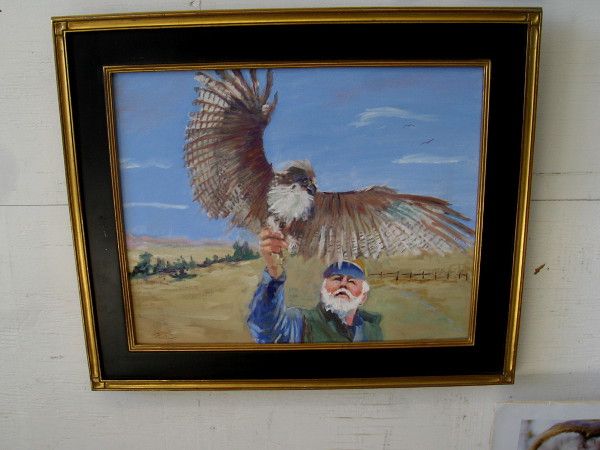
One last thing. The photo you’re about to see is a painting of WRI Director and Wildlife Biologist, co-founder of Hawk Watch, Dave Bittner. He tragically passed away about a month ago doing something he loved: tending to a camera near a golden eagle’s high cliff nest.
I was told Hawk Watch will live on.
…
I live in downtown San Diego and love to walk around with my camera! You can follow Cool San Diego Sights via Facebook or Twitter!
You can easily explore Cool San Diego Sights by using the search box on my blog’s sidebar. Or click a tag! There are thousands upon thousands of photos for you to enjoy!
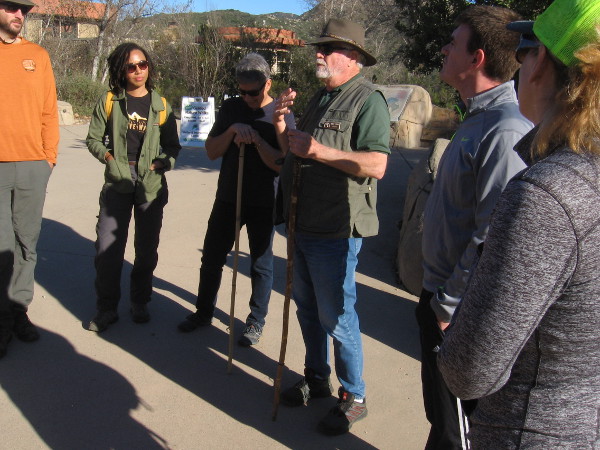
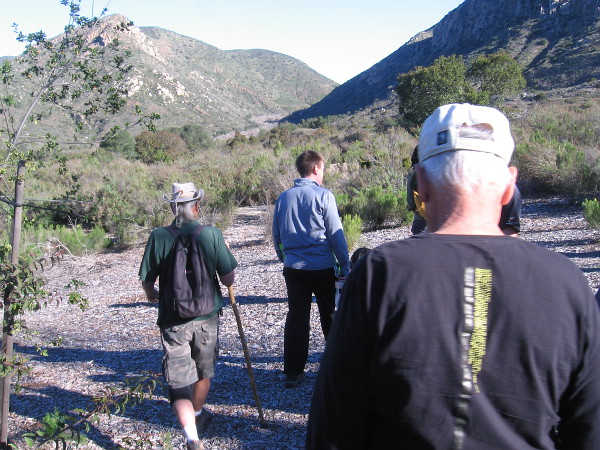
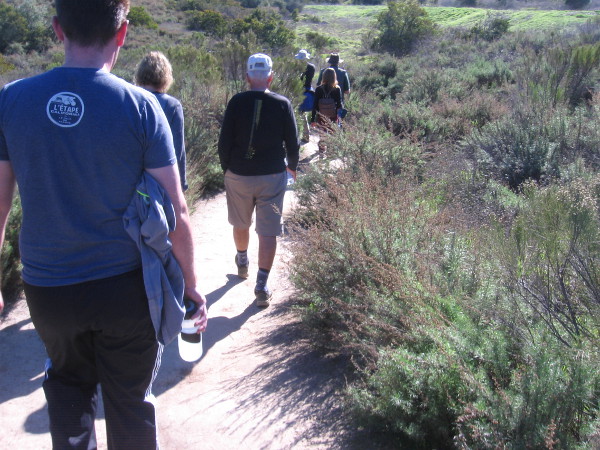
A guided group walks through Mission Trails Regional Park looking for signs of wildlife.
This morning I went on a truly extraordinary guided walk. Two expert trackers took a small group on an easy hike in Mission Trails Regional Park to search for tracks and other signs of often elusive wildlife!
The immense, mountainous Mission Trails Regional Park, located within the City of San Diego, is home to abundant wildlife. But it can be hard to spot animals in the wild during a visit to the park. Many species are nocturnal. Many tend to hide in the scrubby vegetation to avoid predators, to watch for a passing meal, or protect a nest.
This morning I and others met at the Visitor Center to set out on this special walk. While we didn’t see anything very dramatic, we did observe how the living world around us is engaged in a perpetual dance. We learned that humans with open eyes and curious minds might find signs left by rabbits, coyotes, raccoons, skunks, bobcats, deer, and even (but rarely) mountain lions!
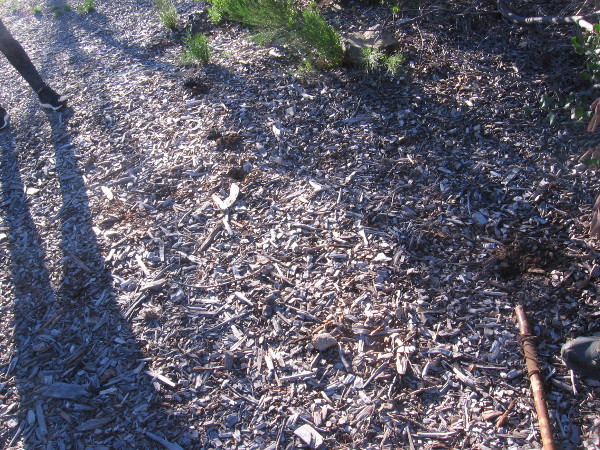
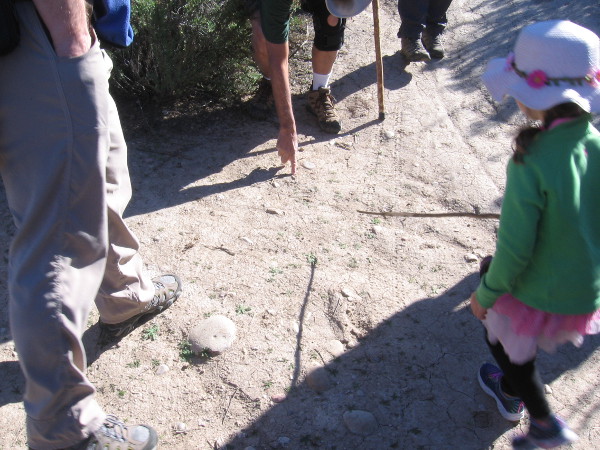
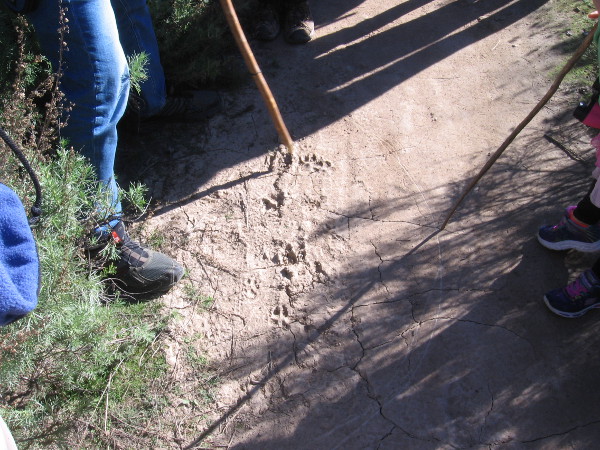
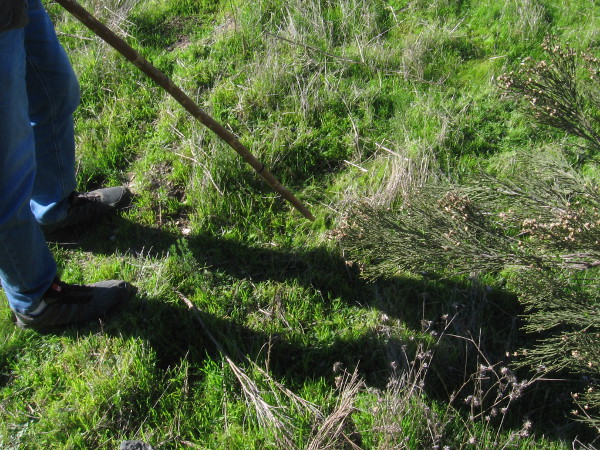
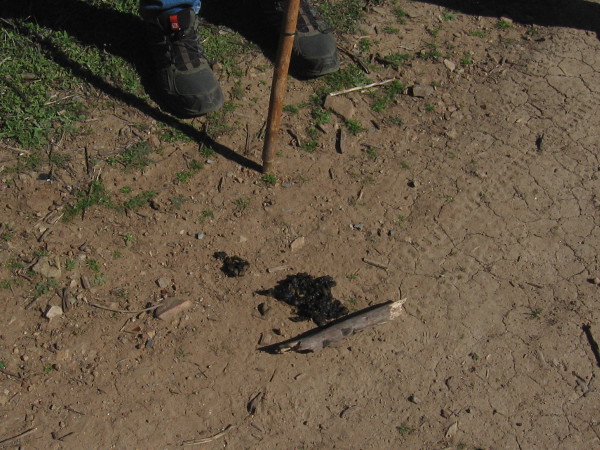
We saw several spots where a skunk dug for grubs. We saw several wood rat’s nests. We leaned down to the ground to peer at the secret trap door of a spider. We saw lots of dog tracks in dried mud, rabbit tracks in some green grass, and coyote scat. We learned what differently pressed tracks might indicate about an animal passing that way. Were they stealthily hunting? Leaning to one side? In a big hurry to avoid a predator?
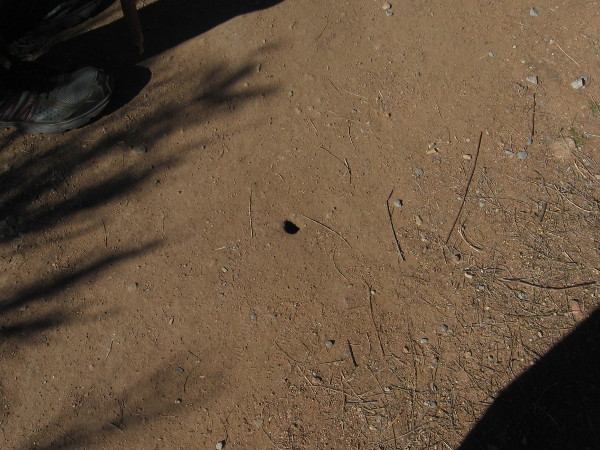
We watched birds flitting through shrubs and trees and soaring in the blue sky high above, and we learned a whole lot about crows and ravens and red-tailed hawks. We learned why coyotes howl. We saw a hummingbird. We watched a fence lizard pump itself up and down. We discovered a small, perfectly circular hole dug by a digger bee.
We learned how scent is a critically important sense for both predator and prey, and how animals in the wild are all acutely aware of each other at any given moment. And how they are confused by oddly unpredictable human behavior. We learned far too much to mention everything in this blog!
Our two super knowledgeable guides have been leading these wildlife tracking walks, which are held the first Saturday of every month, for about 11 years.
Bob MacDonald and Mike Gibbs belong to the San Diego Tracking Team, an organization of experts and enthusiasts who track wildlife in our region. They advocate for good stewardship of the natural environment and provide researchers with data from about 20 sites around San Diego County, as far away as the Anza Borrego desert.
According to their website: “San Diego County has the most biodiversity of any County in North America… Many of the plants and animals that call our region home are found nowhere else in the world… The San Diego Tracking Team (SDTT) is dedicated to preserving the wildlife habitat in the San Diego region through citizen-based wildlife monitoring and environmental education programs…”
Both Bob and Mike were super interesting and personable, and even the young kids in our group never lost interest as we learned about the endlessly amazing dance of life all around us.
I learned that Mike Gibbs was an Army Green Beret with extensive wilderness survival knowledge. He has worked in law enforcement and search and rescue as an educator and as a human and animal tracker. I’m anxious to read his book Spirit Wolf, a novel that takes place on the High Plains. (Which, by pure coincidence, is where I once lived and is the setting for a short story I’m now working on!)
But enough of that for now! On to a few photographs!
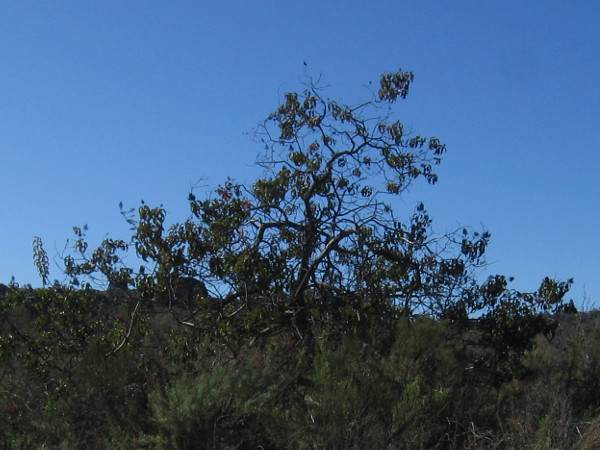
Mike Gibbs, one of two highly experienced animal trackers, addresses our group near the Mission Trails Visitor Center before we begin our adventure.Our short but super fascinating wildlife tracking walk took us up the Oak Grove Inner Trail.A hiking stick has been laid down to show where a skunk has dug small holes in the soil looking for grubs.As the skunk moved forward, nose to the ground, it dug a series of additional holes.Walking again along the trail, searching for more signs of local San Diego wildlife.One of our guides points to the lair of a trapdoor spider! They pop out to catch prey, and lay their eggs inside their smooth burrow for safety. Yes, spiders can dig!We saw lots of dog tracks in dried mud. The heavy front pads indicate a heavy breed with a forward center of gravity. Coyotes have distinctive, much straighter tracks.Way up there on top of that distant tree we spot a tiny hummingbird!Rabbits made these tracks in the bent grass as they moved forward leaving a U-shaped trail. We saw a couple of calm rabbits feeding in the distance, seemingly unconcerned about predators.A pocket gopher’s hole in the trail, long abandoned. The hole was subsequently widened by curious dogs poking in their noses, excited by an old scent.Fresh moist coyote scat. These droppings seemed to show a recent vegetable diet.But nearby, other dried, ropy coyote droppings contain rabbit fur.This small perfectly circular hole was dug by a digger bee. Yes, bees can dig, too! It seems a lot of critters dig. Snakes don’t. They like to digest their food in the safety of a wood rat’s sturdy stick nest.What will we discover next? Life continues its dance and the natural world is ever changing.
Wildlife Tracking Walks are held at Mission Trails Regional Park the first Saturday of every month, from 8:30 to 10:30 a.m. To learn more about the park’s different guided walks, click here.
…
I live in downtown San Diego and love to walk around with my camera! You can follow Cool San Diego Sights via Facebook or Twitter!
You can easily explore Cool San Diego Sights by using the search box on my blog’s sidebar. Or click a tag! There are thousands upon thousands of photos for you to enjoy!
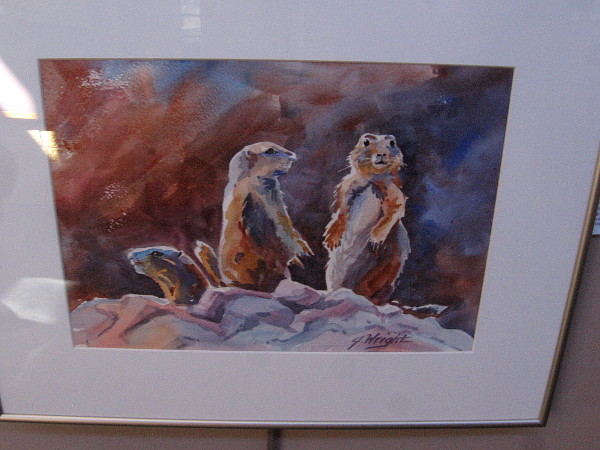
Prairie Dogs on Alert, watercolor by artist Jami Wright.
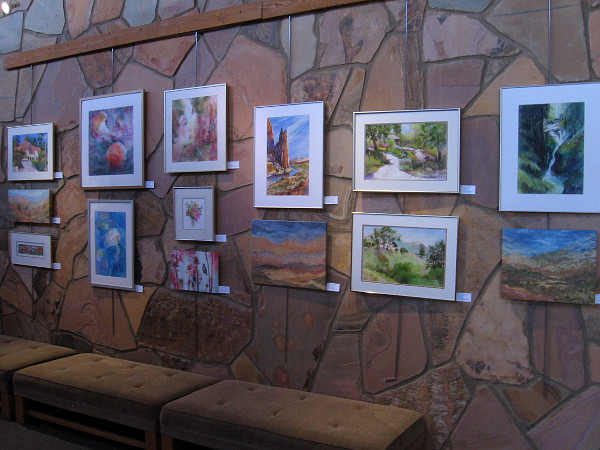
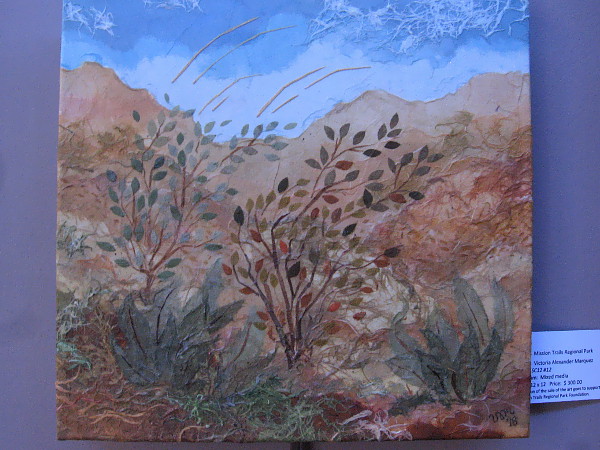
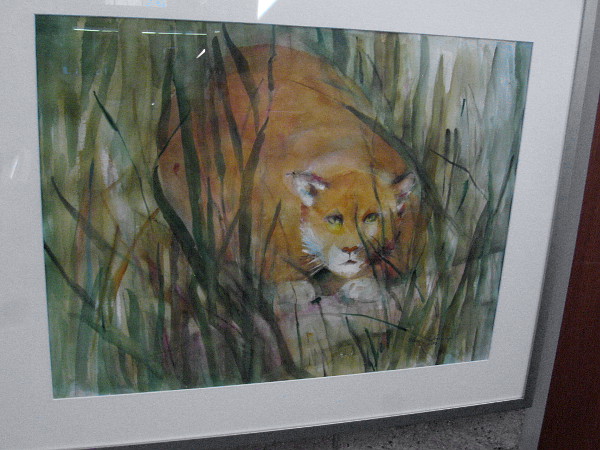
Artwork depicting nature’s awesome beauty can now be enjoyed inside the Visitor Center at Mission Trails Regional Park. The exhibition is appropriately titled: Isn’t it Amazing.
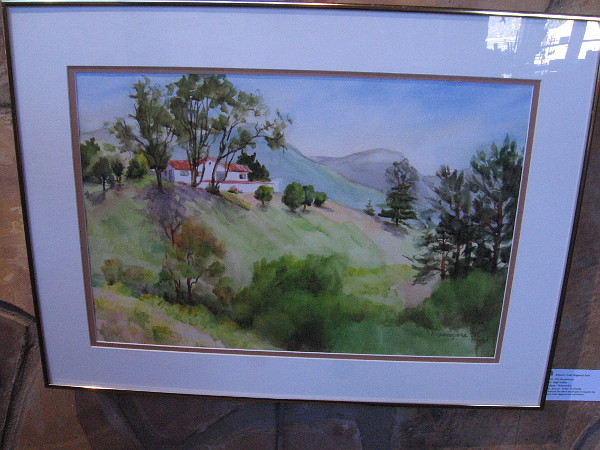
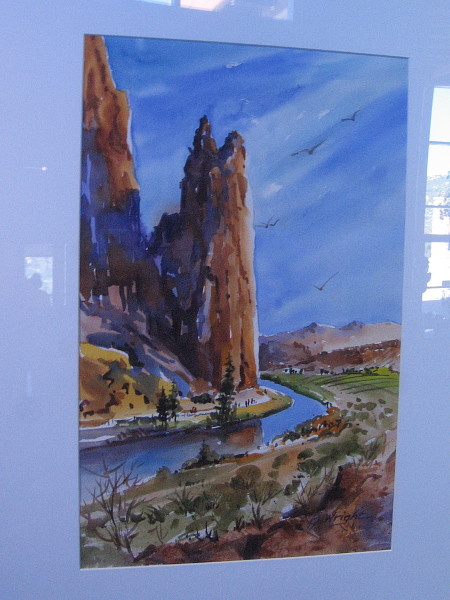
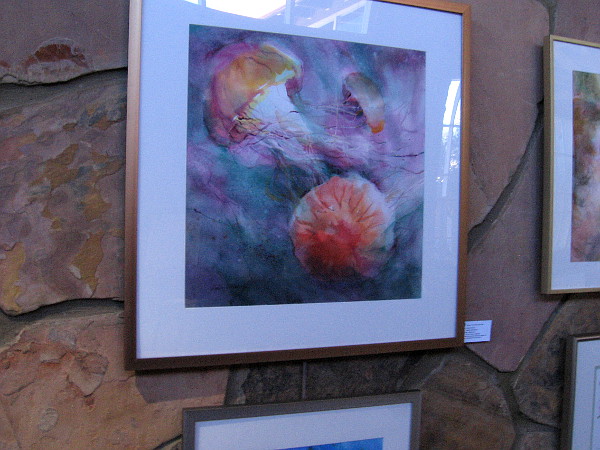
Dozens of pieces by award-winning artists Pat Dispenziere, Elaine Harvey, Otto Kruse, Victoria Alexander Marquez and Jami Wright are displayed on several walls of the Visitor Center. Through the use of watercolor, mixed media and photography, the artists have framed and realized scenes of natural beauty.
This morning, after finishing an extraordinary wildlife tracking walk (which I’ll blog about shortly), I stepped into the Visitor Center to admire the artwork. I took a few photos to provide a small taste.
Are you in San Diego? Do you appreciate excellent art? All of these pieces are available for purchase!
And guess what? Take home some collectible artwork and a portion of the sale will benefit the Mission Trails Regional Park Foundation!
Isn’t it Amazing is open free to the public and runs through February 14, 2020.
Colorful artwork depicting nature’s beauty on display in the art gallery at the Mission Trails Regional Park Visitor Center.High Valley, watercolor by artist Pat Dispenziere.Smith Rock, Central Oregon, watercolor by artist Jami Wright.Dances With Waves, watercolor by artist Elaine Harvey.Sycamore Sun, watercolor by artist Elaine Harvey.In the Forest Deep, watercolor by artist Jami Wright.SC12 #12, mixed media by artist Victoria Alexander Marquez.Seldom Seen, watercolor by artist Elaine Harvey.
…
I live in downtown San Diego and love to walk around with my camera! You can follow Cool San Diego Sights via Facebook or Twitter!
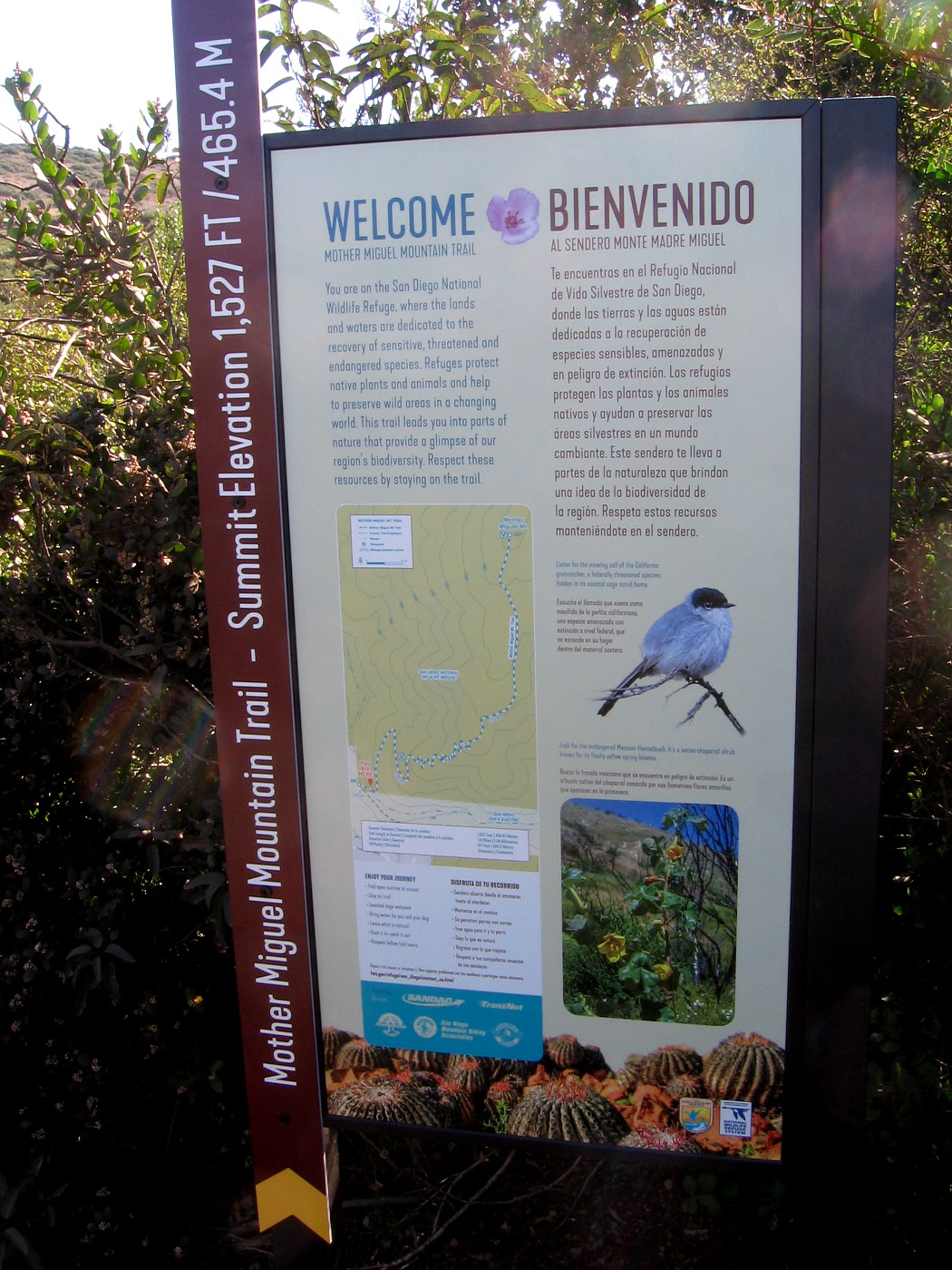
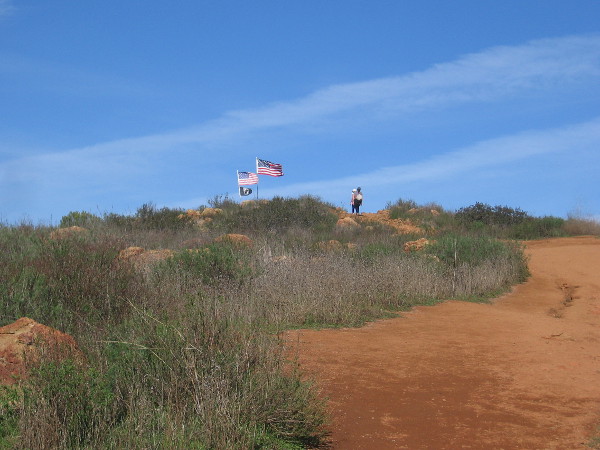
At the top of Mother Miguel Mountain you’ll find the Rock House and its flags, and a view of nearby San Miguel Mountain.
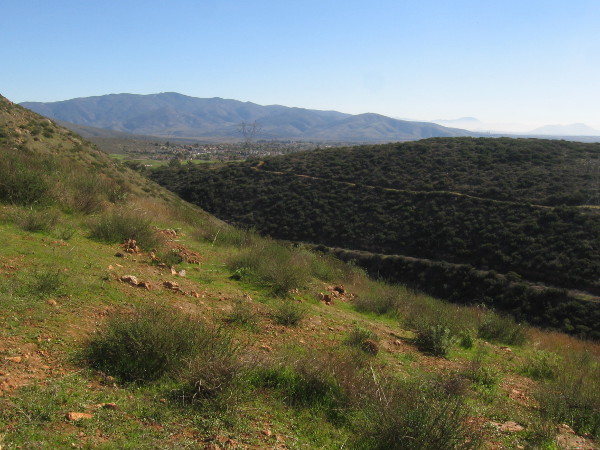
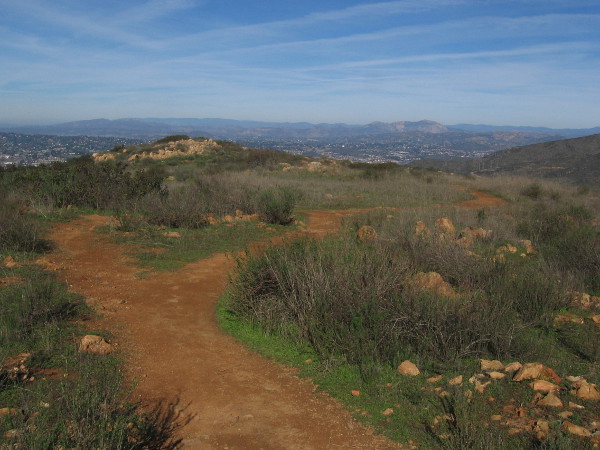
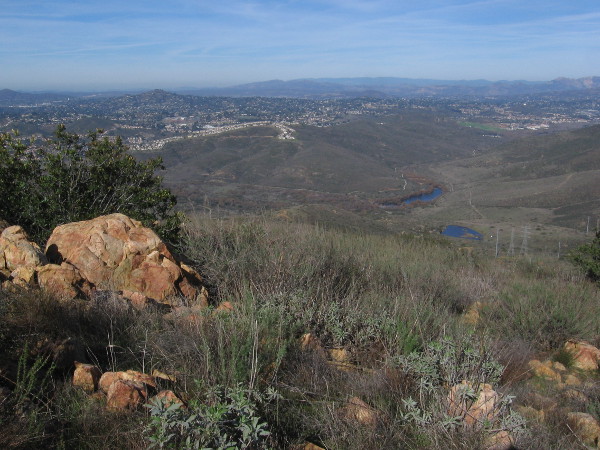
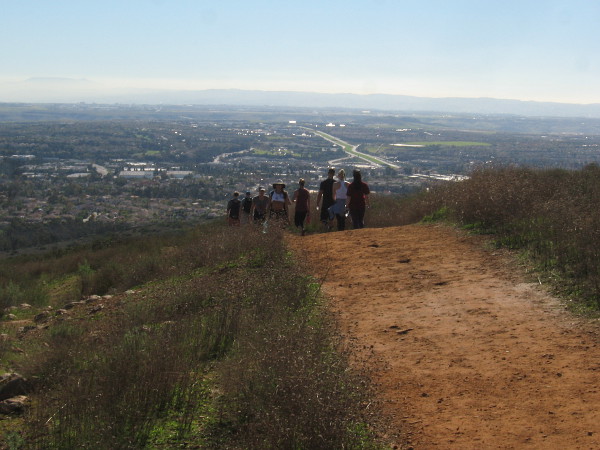
Today I enjoyed a hike to the top of Mother Miguel Mountain, just northeast of Chula Vista. While not as high as nearby San Miguel Mountain, the views of the southern part of San Diego from Mother Miguel Mountain are pretty amazing.
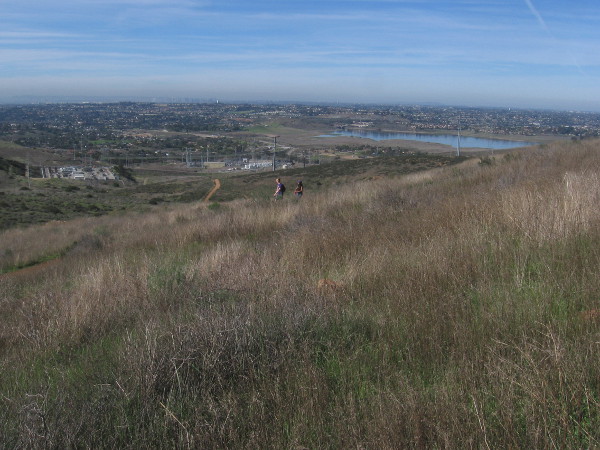
On a clear day you can see Mexico, San Diego Bay, Coronado, downtown, Point Loma, and various peaks including Otay Mountain, Mount Soledad, Cowles Mountain and Mt. Helix. Looking down to the south you can see Salt Creek Golf Course, which was closed a couple of years ago and will undergo future development.
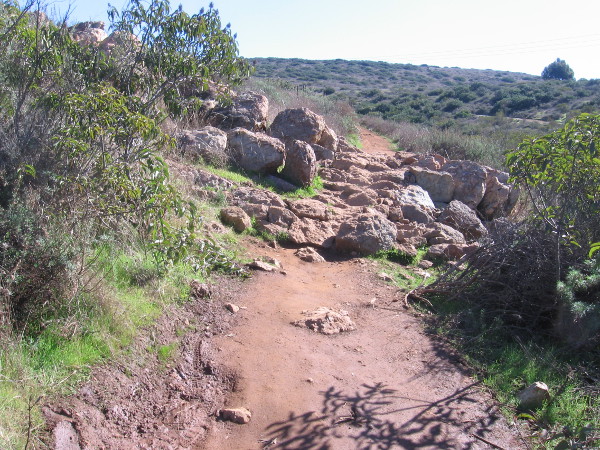
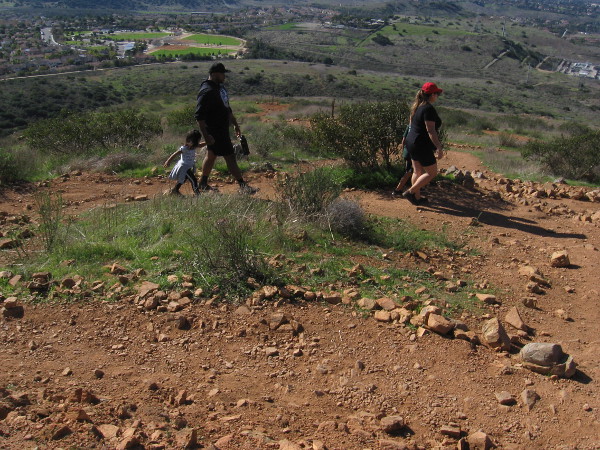
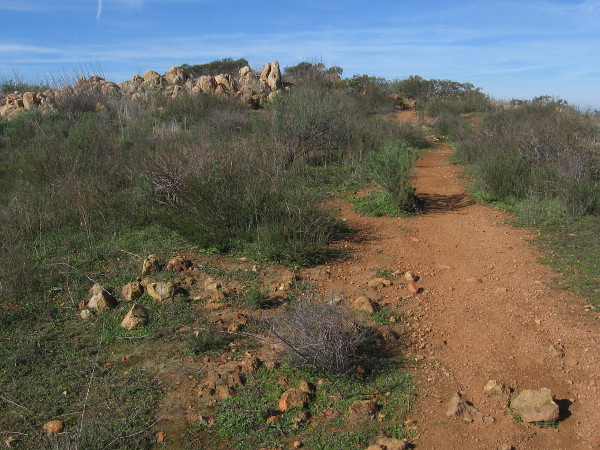
Fortunately it wasn’t very hot today, being early January. I just wore jeans, a simple shirt and some good shoes. Should you hike this steep rocky trail on a hot day, make sure to bring lots of water. There are virtually no trees and no shade. And it’s a constant very rocky climb. Pay attention to where you step and wear boots or shoes with a good grip!
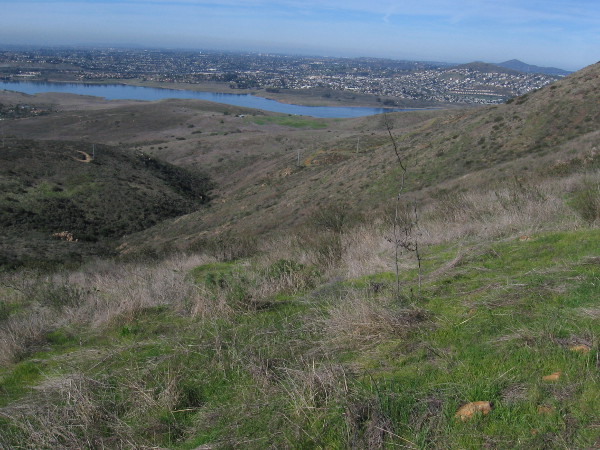
In addition to a fair number of other hikers and some mountain bikers, I saw half a dozen ravens circling above and below, a few cacti, lots of sagebrush and wild grass, and many crumbled rock outcroppings. To the northwest one can look down at Sweetwater Reservoir. And of course, there’s impressive nearby San Miguel Mountain, rising not far to the northeast.
I started at the trailhead at the corner of Paseo Veracruz and Paseo Los Gatos and started up the Rock House Trail for the peak! It’s a moderately difficult 4.3 miles round trip with a 1,171 feet elevation gain. Follow the designated trail, which has many switchbacks.
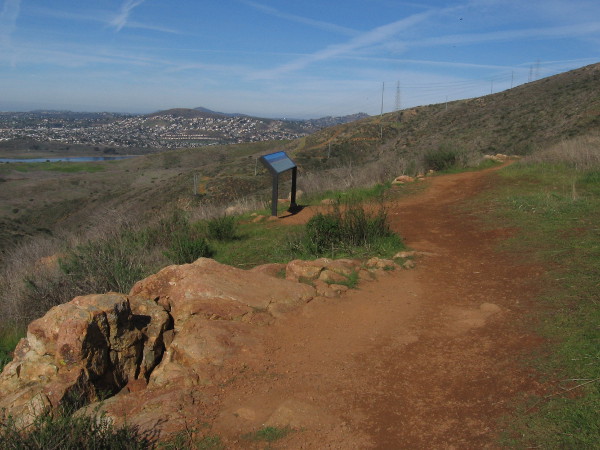
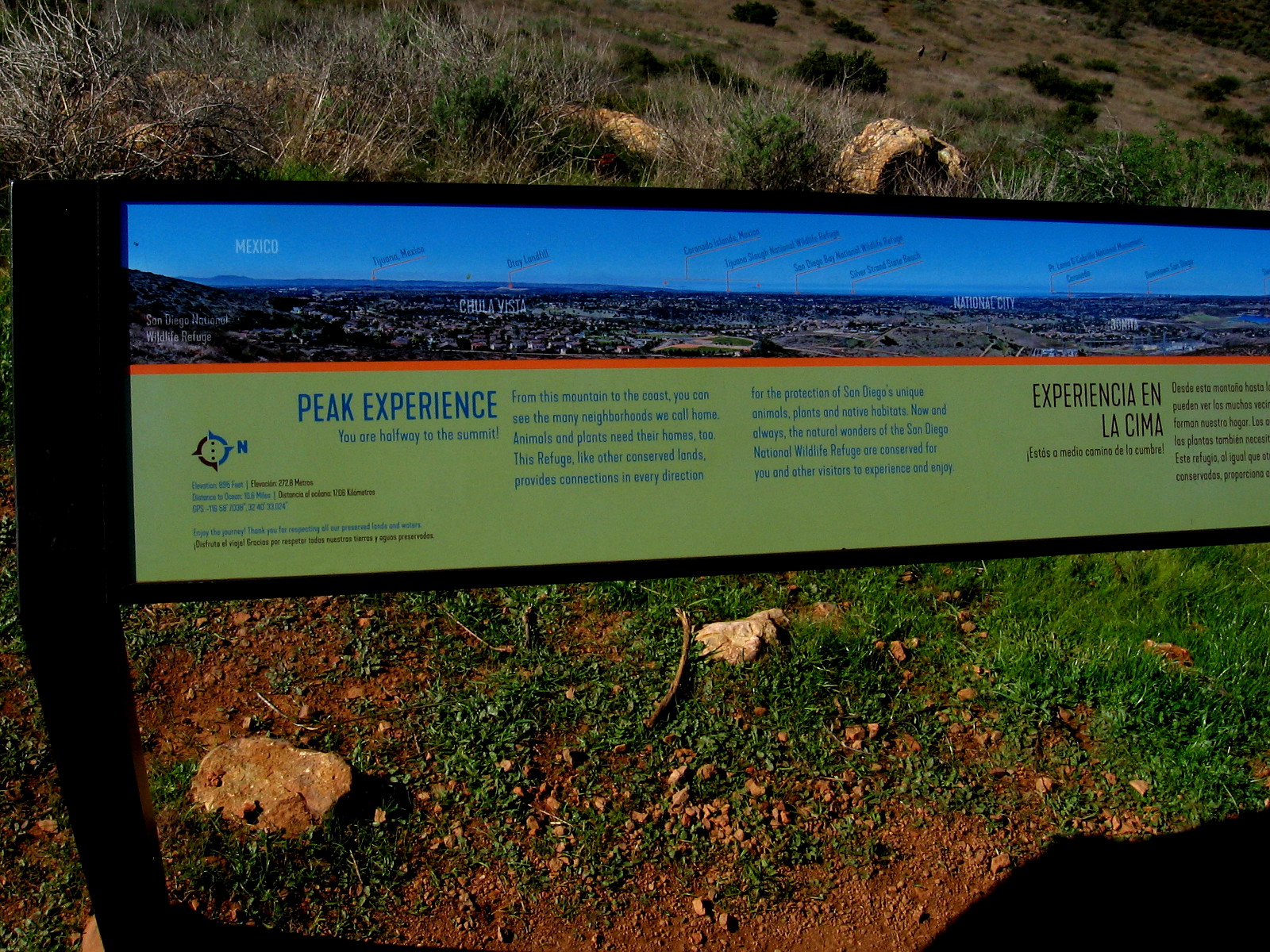
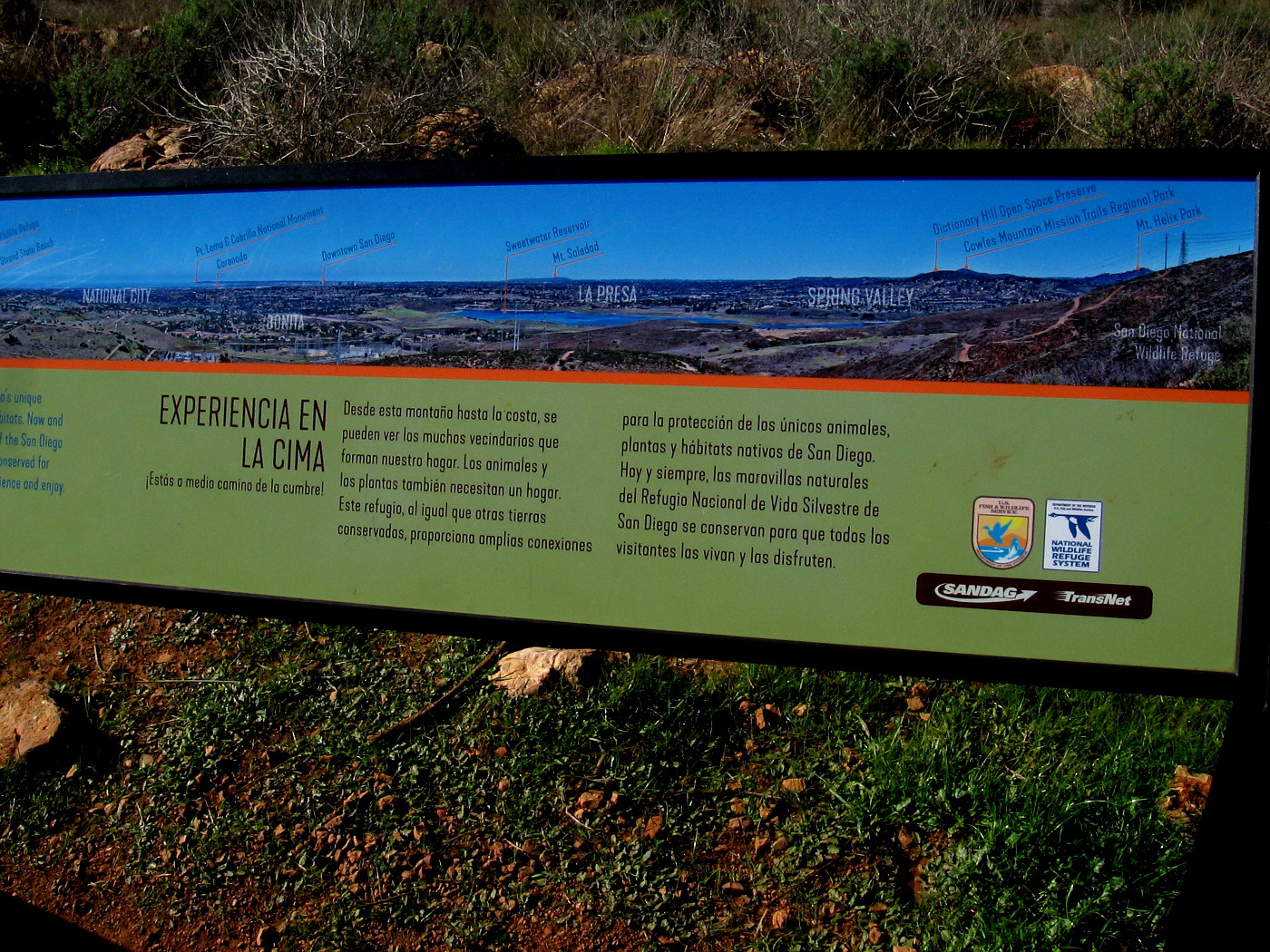
Halfway up you find a sign which points out and names many of the distant sights that are visible. From there, the trail gets steeper. (Those airplanes flying overhead are making their approach to San Diego International Airport which is near downtown!)
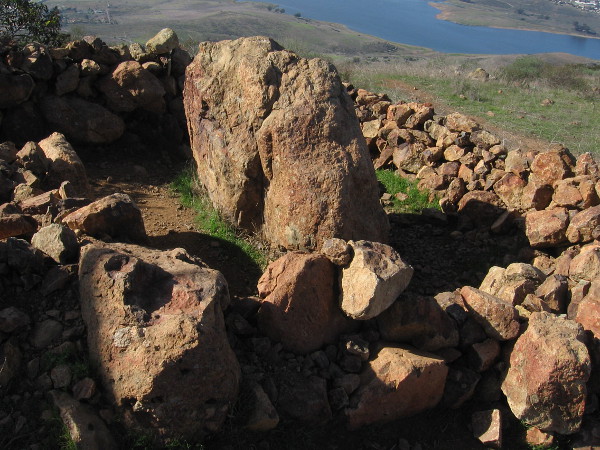
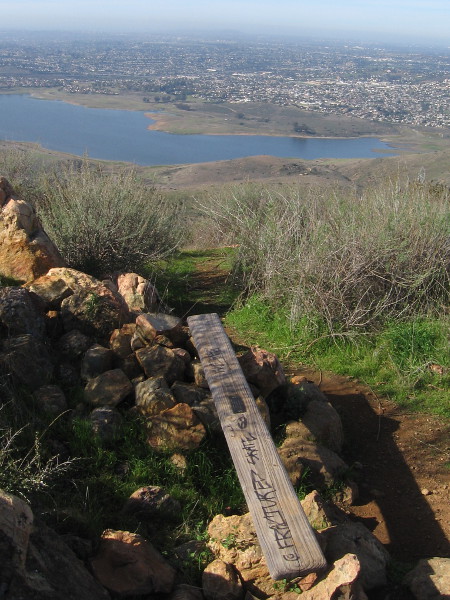
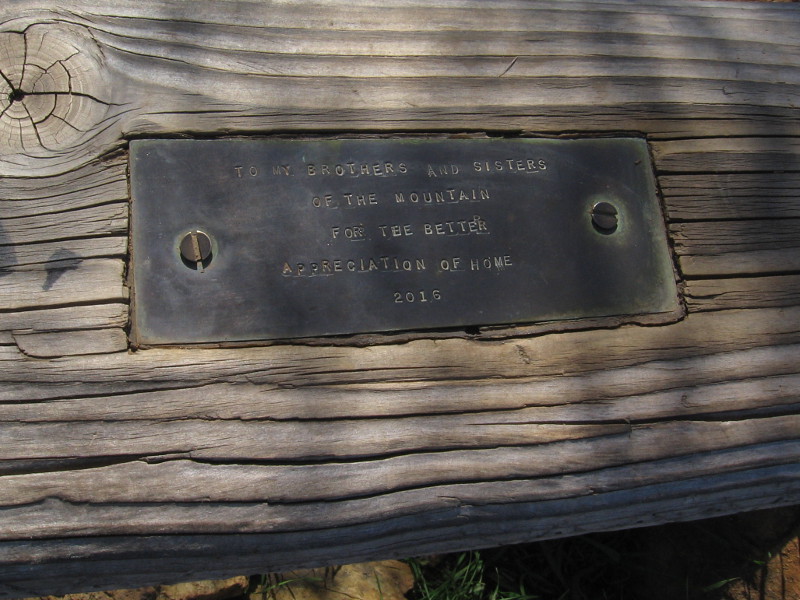
At the top of Mother Miguel Mountain is the Rock House: a large mound of rocks with several flags and an adjacent low stone open shelter. On all sides are scenic views. If you proceed a little beyond the Rock House, there’s a large outcropping and nearby crude wood bench with a small plaque. From it you can look toward the northeast and see distant El Cajon Mountain, often called El Capitan.
If you want to read the photos of signs, click the images and they will expand for easy reading.
Now come along with me and get a taste of this rewarding hike!
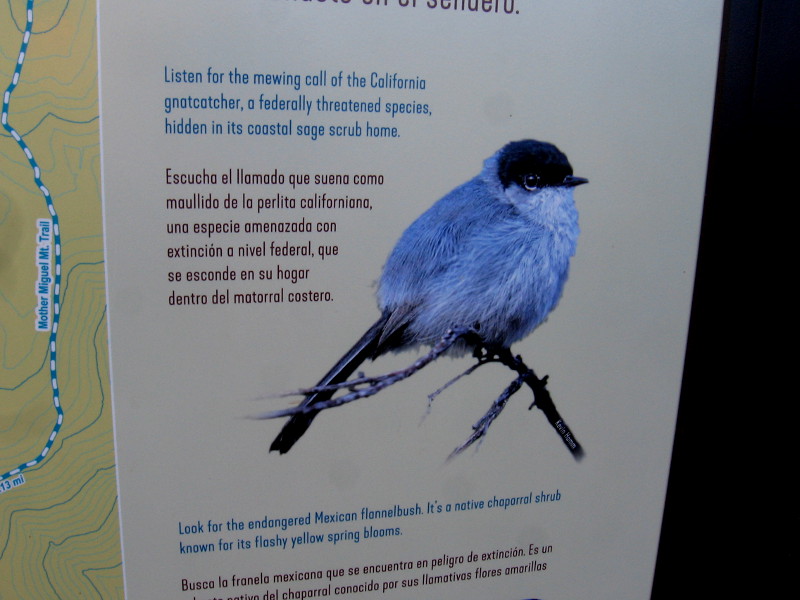
The Mother Miguel Trail Head Bulletin Board contains useful information and a topographic map for hikers.The Mother Miguel Mountain Trail is inside the San Diego National Wildlife Refuge. Stay on the designated trail to protect the habitat of many animal and plants species, some of which are endangered.Starting up the trail, which was muddy in spots. This winter it has been rainy in San Diego.One of two information signs, on opposite sides of a very small bridge spanning a tiny creek.Sign describes this part of San Diego National Wildlife Refuge and protecting natural biodiversity.The small California gnatcatcher makes its home on Mother Miguel Mountain.Second sign describes the Quino checkerspot butterfly, which is listed under the federal Endangered Species Act.A section of very rocky trail.Looking down after climbing for a bit. I could see downtown San Diego and Point Loma in the far distance.Sweetwater Reservoir appears below.
Another sign ahead.Left part of long sign, showing peaks and features from Mexico northward.Right part of sign shows sights to the northwest, as far away as Mount Soledad in La Jolla.
Looking southward toward the San Ysidro Mountains and Mexico.Looking back down the trail, you can see green Mount San Miguel Park with its sports fields, not far from the trailhead.The view of Sweetwater Reservoir keeps getting better as we climb.
You can see some of the now closed Salt Creek Golf Course to the southeast.San Miguel Mountain rises to the northeast.
Someone stands on an outcropping just below the summit of Mother Miguel Mountain.Mount San Miguel Park is now far below.Flags show we’ve almost reached the Rock House atop Mother Miguel Mountain.We made it!A couple of hikers brought a blanket to rest on the grass beneath the sky.This rocky enclosure at the Rock House might provide a little bit of shelter on a windy day.
Continuing along, we approach another rock outcropping atop Mother Miguel Mountain.The view to the northeast includes part of the Cuyamaca Mountains.A simple wood plank serves as a bench. I was surprised to see it has a plaque.TO MY BROTHERS AND SISTERS OF THE MOUNTAIN FOR THE BETTER APPRECIATION OF HOME — 2016
…
I live in downtown San Diego and love to walk around with my camera! You can follow Cool San Diego Sights via Facebook or Twitter!
You can easily explore Cool San Diego Sights by using the search box on my blog’s sidebar. Or click a tag! There are thousands upon thousands of photos for you to enjoy!
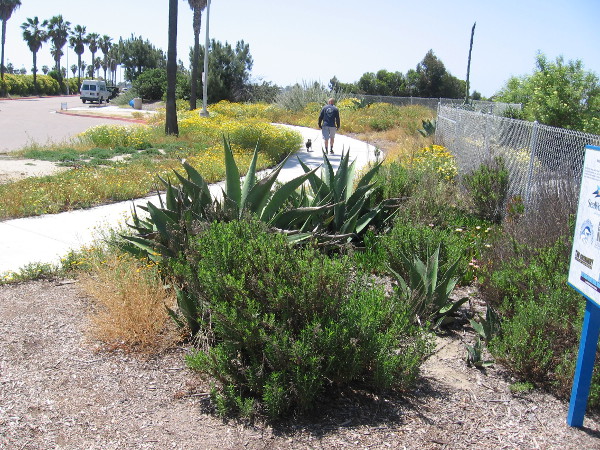
A few people walk down a dirt path next to SeaWorld. Coastal plants provide habitat for birds and wildlife.
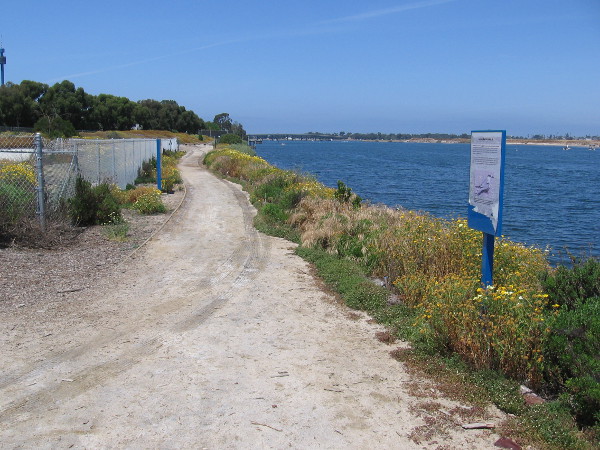
There’s a quiet, seldom visited area adjacent to SeaWorld that provides valuable habitat for both local and migratory birds. You can find this narrow strip of land directly northeast of SeaWorld, on the edge of Mission Bay, just west of South Shores Park.
Walk down the dirt path by the water and you’ll discover native plants, beautiful views, a few park benches, and a sense of wonder. This bit of land was set aside as natural coastal habitat with the help of the Audubon Society, SeaWorld San Diego, and a several other organizations who care about protecting the environment.
I walked down the path during the weekend and read a number of interesting signs. Few other people were around. I shared the warm sunshine with birds that took flight over land and water.
Click the photos of signs if you’d like to read them.
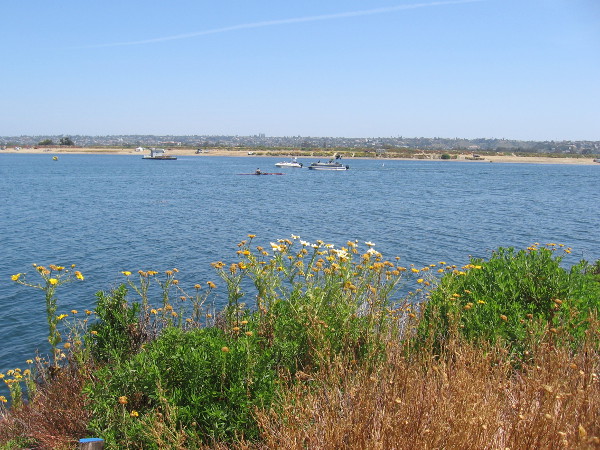
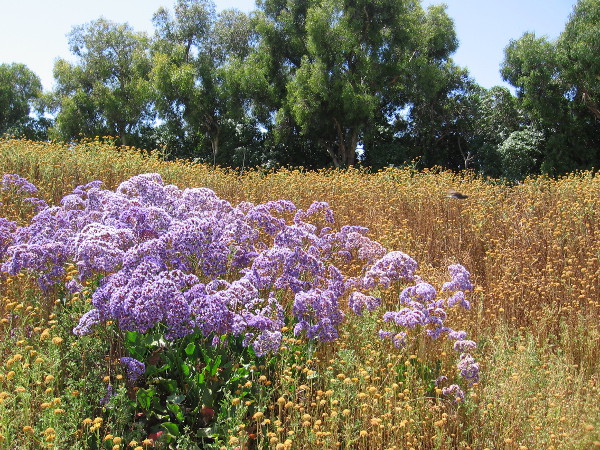
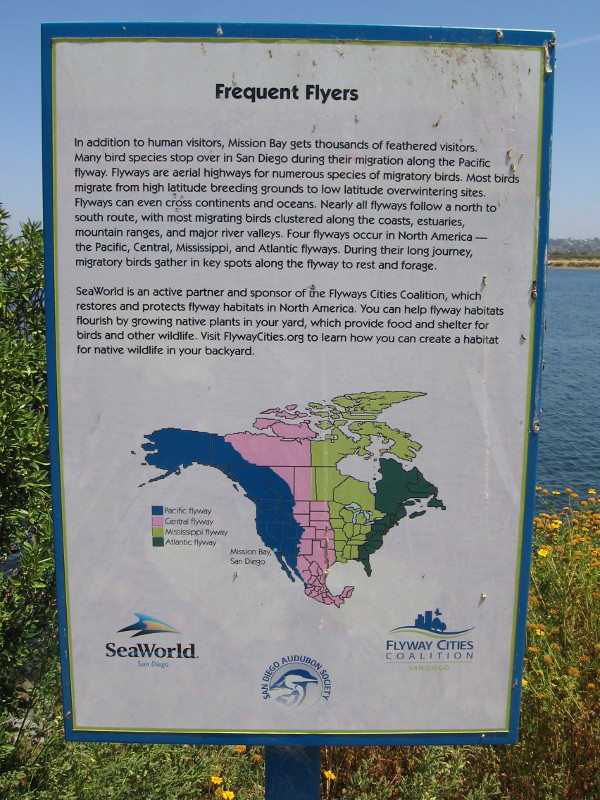
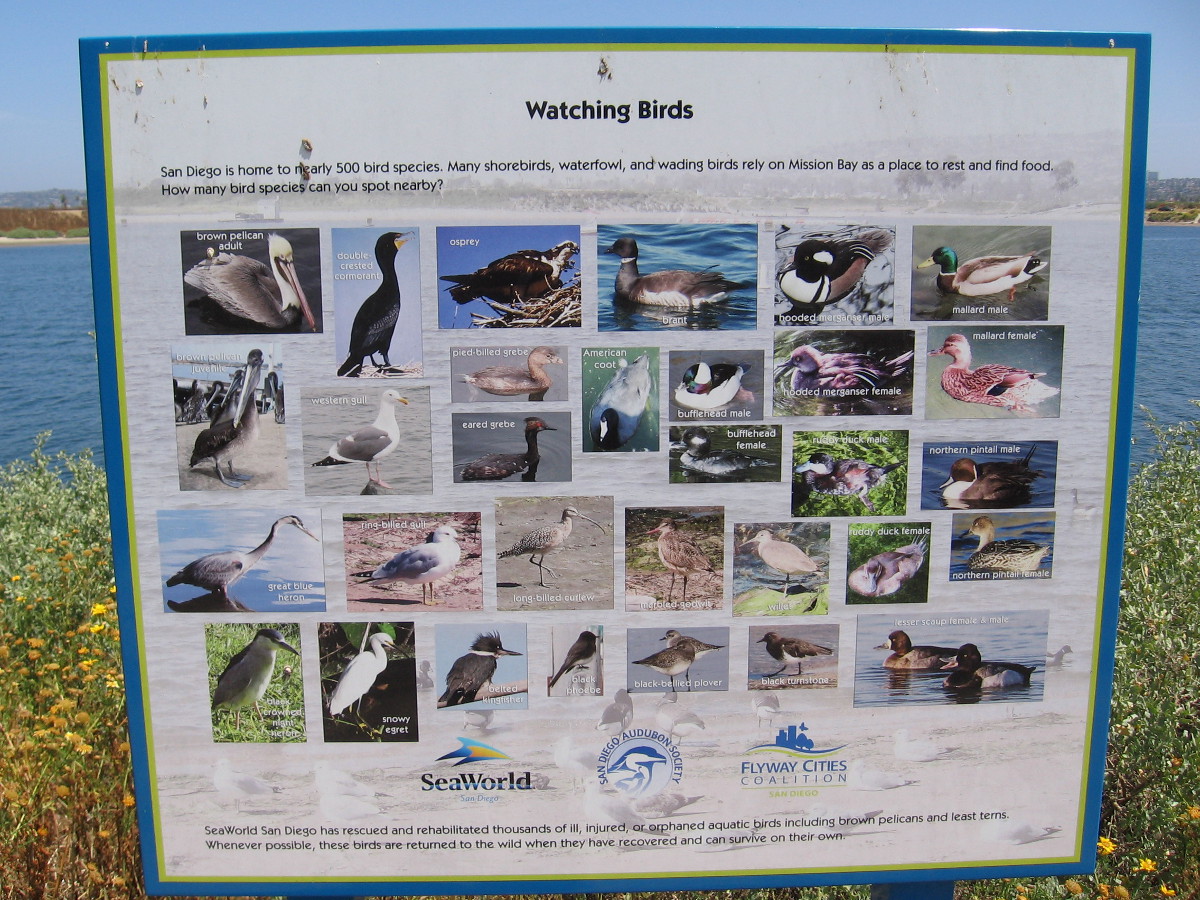
One sign displays plants that provide food and shelter for the birds and insects of Mission Bay.Heading west down the rough path, along the south shore of Mission Bay.Looking north across the water at boats, kayaks and Fiesta Island.Audubon’s Important Bird Areas (IBA) Program identifies and conserves a network of sites essential for wild bird populations. Mission Bay is one of seven IBAs in San Diego County.A patch of what I believe is Ceanothus, or California Lilac. A bird perched on some dry yellow flowers is a blur in this photograph.Mission Bay sustains thousands of birds, as many species stop over in San Diego during their migration along the Pacific flyway.Looks like a heron flying overhead, scanning the water.Sign identifies birds that might be seen here. San Diego is home to nearly 500 bird species.Some shelter by the water for birds and other small animals.More natural habitat that contains much hidden life.Another sign with more California natives, including plants and birds.Someone walks on a path that winds near the entrance to this small park-like space.
…
I live in downtown San Diego and love to walk around with my camera! You can follow Cool San Diego Sights via Facebook or Twitter!
You can easily explore Cool San Diego Sights by using the search box on my blog’s sidebar. Or click a tag! There are thousands upon thousands of photos for you to enjoy!











































 Cool San Diego Sights!