Order a Veterans Village courtyard brick or paver and help Veterans who are homeless, or at the risk of homelessness. Your donation provides real hope. The words you choose radiate compassion and understanding.
Veterans Village of San Diego provides a helping hand to those Veterans in our city who are homeless or at the risk of homelessness. This critically important organization provide housing, rehabilitation, education, job training and a safe place to regain hope and a sense of belonging.
Veterans Village also organizes the annual Stand Down, where homeless Veterans can receive a smile, a handshake, breakfast, clothing, showers, a hair cut, makeovers, plus free medical, dental and vision services. At Stand Down homeless Vets can also access court services, VA benefit and job counseling, and much more.
You can support the mission of Veterans Village by putting a special message on a brick or paver in their beautiful courtyard location. Messages of support, compassion and love will be read by many who might need a little inspiration. Your generosity makes the world better.
To learn more about Veterans Village, or if you have a question about purchasing a brick or paver, click here!
I discovered a program in San Diego that provides advice and support for Veterans. It’s a confidential peer-to-peer program, where Veteran volunteers mentor other Veterans. The program is called “Vet to Vet” for that reason.
I found out about this program while walking randomly around Balboa Park. A notice was pinned to a bulletin board and I took a photo. According to the information, the meetings of Vet to Vet are confidential and no appointment is needed. It’s a safe place to be for a couple hours a week. All the info you need is right here–click the photo and it will enlarge:
Click this photo and it will expand in size for easy reading. You’ll find important information on meeting places and a few phone numbers.
If you’re a Vet who’d like to volunteer, or if you’re a Vet who’d like a little support or someone to talk to, or you’re just curious and want to learn more, give that phone number on the flyer a call! And if you know a Veteran in San Diego who might appreciate a helping hand from someone who has walked in their shoes, why not pass along the info?
A unique work of urban art on a car wash in Normal Heights. It speaks to the struggles of combat veterans.
Painful. Hopeful.
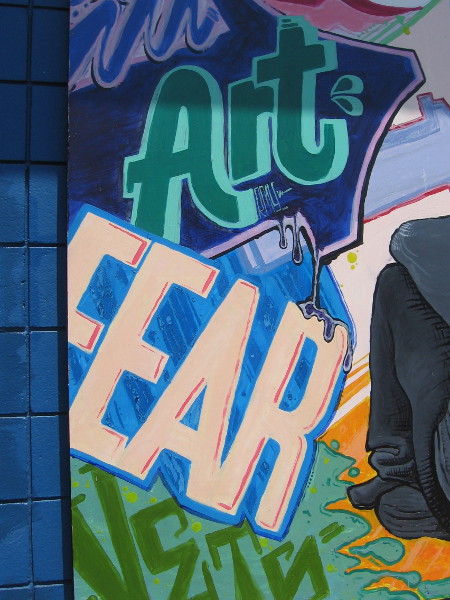
Those two words might describe some artwork on the side of a car wash in Normal Heights. You can find this thought-provoking mural near the corner of 33rd Street and Adams Avenue.
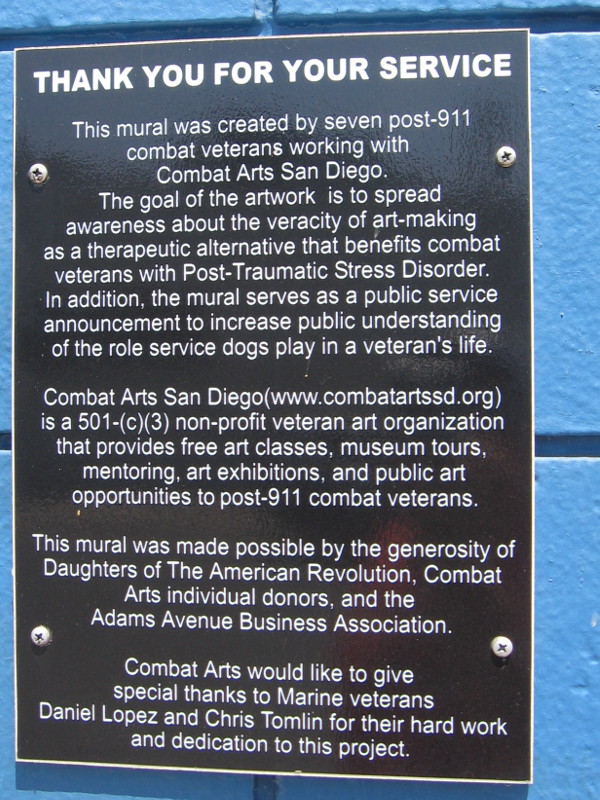
A nearby plaque invites curious eyes. Thank you for your service, it reads.
The mural is the work of seven post-911 combat veterans. A project of Combat Arts San Diego, it helps to spread awareness about the therapeutic benefit of creating art. And it shows the unconditional love that is provided by service dogs.
Creating art helps us to sort through conflicting thoughts and emotions. Art is an outlet for pent up pain. Art connects people. Art stirs the heart. Art provides meaning. Art offers hope.
This mural was created by seven combat veterans working with Combat Arts San Diego. Art-making benefits those with Post-Traumatic Stress Disorder.Art over fear.A warrior. A jumble of emotions. Isolation. A true best friend. Hope.
UPDATE!
Wow! Shortly after posting this I received additional info concerning this great project and a group photograph of those responsible!
I learned:
“There are hidden things in the art piece. If you look hard enough you can see Army written and Navy and others… If you look at ART in the middle on the left you will see from the A…rmy attached to it. Then on the right towards the bottom you will see the N in friends…you will see Navy… In (the word) Isolation – the A..ir Force is on the A. Just below the O in Isolation you will see some letters D E S P..if you look close at the S you will see a U in the bottom of the S and then the MC on the other side of the S. Look close.”
I also learned that the San Diego Chapter of the Daughters of the American Revolution raised funds for the project from their National Society.
The following photo includes Elizabeth Washburn, the leader of Combat Arts, two Vets who worked on the mural, and a few smiling local members of the D.A.R.
Group picture with artists, Elizabeth Washburn, and San Diego Chapter of Daughters of the American Revolution members. Photo provided by Kathleen Winchester.
…
I live in downtown San Diego and love to walk around with my camera! You can follow Cool San Diego Sights via Facebook or Twitter!
Mormon Battalion flag flies during a special event in Old Town San Diego.
I was invited to a unique event that took place yesterday. A special Flag Day Ceremony was held at the Mormon Battalion Historic Site in San Diego’s Old Town. The event remembered World War I and saluted all American veterans.
During the ceremony five veterans from different military services were made honorary members of the Mormon Battalion. A cake was cut with a military saber and an American flag that has been flown over the U.S. Capital and over Fort Leavenworth (where the historic Mormon Battalion originated) was raised.
The patriotic ceremony was organized by The Church of Jesus Christ of Latter-day Saints, whose members composed the Mormon Battalion, the only religiously based unit in United States military history. Commanded by regular U.S. Army officers, members of the battalion marched almost 2,000 miles from Council Bluffs, Iowa, to San Diego, California to help secure the region during the Mexican–American War. Much of the difficult march was over mountains and through desert. They saw no fighting.
I have noticed that Mormons treasure liberty–religious freedom in particular. I’m not a Mormon–very far from it–but I do happen to be a strong believer in personal liberty. That’s because I’m a writer. Also, as a child I traveled with my family behind the Iron Curtain twice. I have briefly seen how dark life is without liberty.
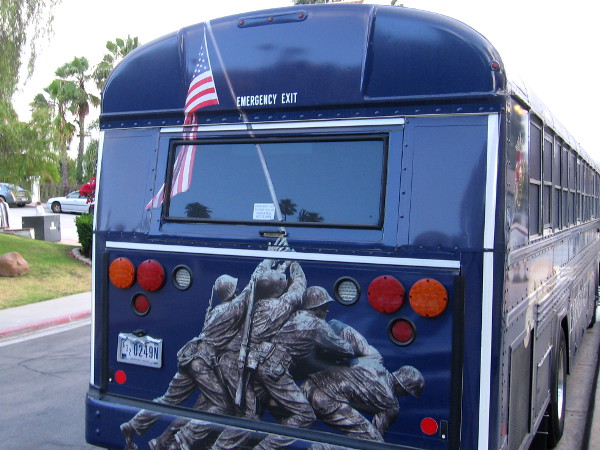
A friendly Mormon lady in pioneer dress welcomes guests to the Flag Day Celebration.This 2017 celebration of Flag Day honored veterans who served with distinction.Guests are welcomed by Director of the San Diego Mormon Battalion Historic Site, Elder Michael Hemingway.The United States flag is posted after the National Anthem.Folding of the flag. Each of the thirteen folds is invested with a special meaning.Four American veterans on stage are applauded and made honorary members of the Mormon Battalion.Keynote speaker General Bruce Carlson, USAF, Ret. talks about liberty. He is also made an honorary member of the Mormon Battalion.Many voices sing God Bless America.Young members of Marine Band San Diego after the ceremony.The United States Marine Corps bus contains an image of the flag being raised during the Battle of Iwo Jima.Pageantry and remembrance at a Flag Day Ceremony in Old Town San Diego.
…
I live in downtown San Diego and love to walk around with my camera! You can follow Cool San Diego Sights via Facebook or Twitter!
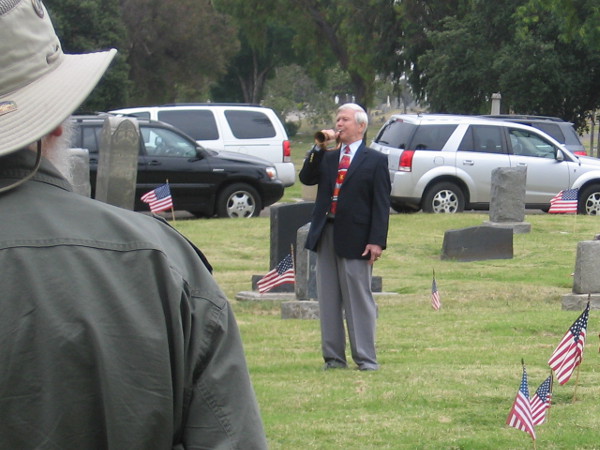
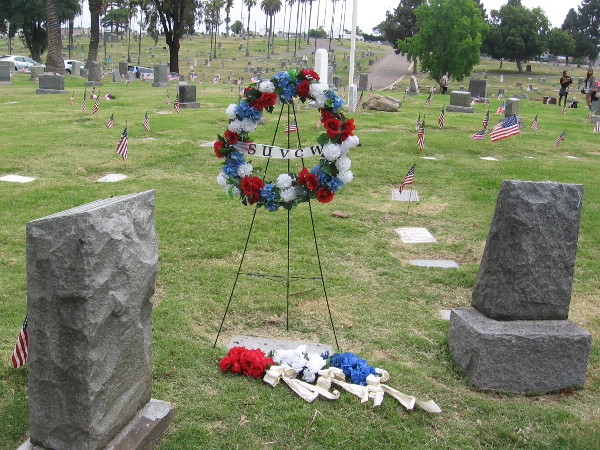
San Diegans gather for a Memorial Day ceremony at Mount Hope Cemetery.
The second Memorial Day event that I attended yesterday took place at Mount Hope Cemetery. I had never before visited this history-filled municipal cemetery.
Mount Hope is where many of San Diego’s early residents are buried. It’s hilly and sprawling, with thousands of scattered headstones and monuments. Thousands of names are eternally engraved.
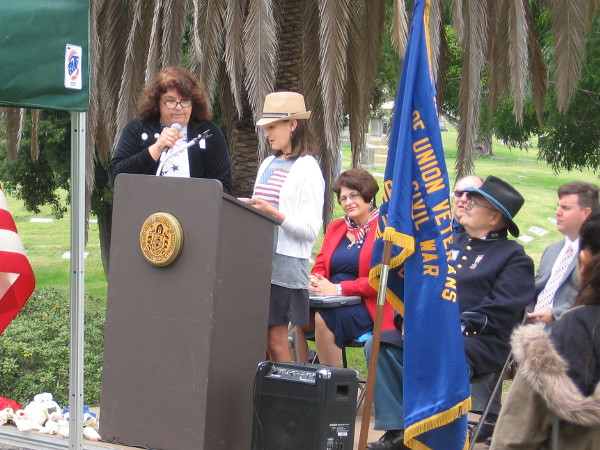
The dignified Memorial Day ceremony was held atop GAR Hill. I learned that G.A.R. stands for Grand Army of the Republic. The fraternal organization is composed of veterans who fought on the Union side during the American Civil War. On grassy GAR Hill rest many Union soldiers who fought bravely.
The annual event, I also learned, is organized by both the Sons and Daughters of Union Veterans, and Sons and Daughters of the Confederacy. Over a thousand Civil War veterans are buried at Mount Hope Cemetery.
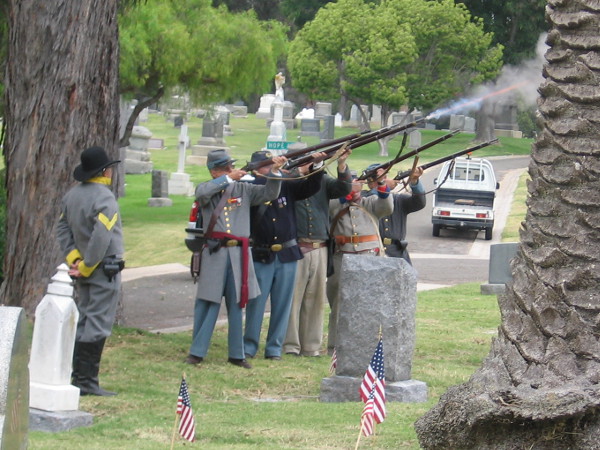
Yesterday afternoon I stood and watched a moving tribute to those who had fought in the war that ended slavery. Some of the participants wore Civil War uniforms and period dress. History came to life with eloquent words of remembrance, and the singing of The Battle Hymn of the Republic and Amazing Grace. Several speakers recalled the men who fought, their sacrifices, and the triumph of liberty. Our current times were also addressed. It is necessary to stay firm in the defense of freedom.
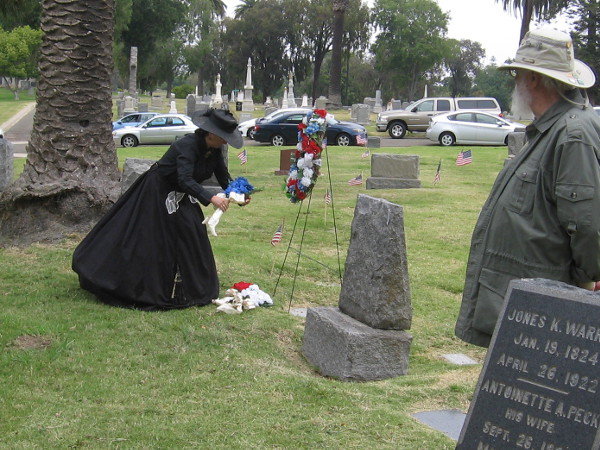
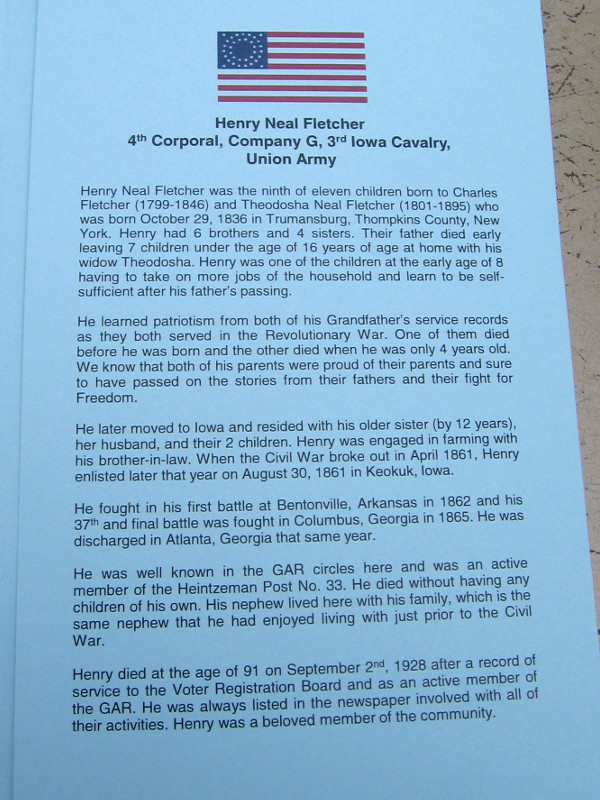
This year the ceremony honored one Civil War soldier in particular: Henry Neal Fletcher, 4th Corporal, Company G, 3rd Iowa Cavalry. He fought for the Union. Both of his grandfathers fought in the Revolutionary War. From them he learned how freedom was won. He died a beloved member of the San Diego community.
The idea for Memorial Day is thought to have come from the tradition of decorating soldier’s graves in late spring with flowers, a custom that predated the Civil War. During the war, with so many dead, the practice became very common. The tradition finally became formalized, and known as Decoration Day.
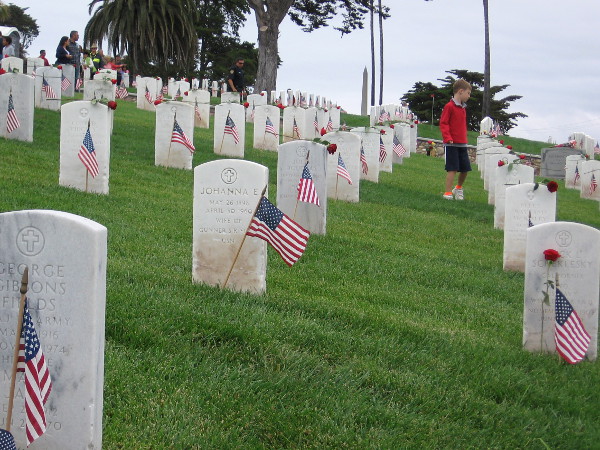
On this Memorial Day, atop a quiet hill, I saw many flags decorating the graves of soldiers.
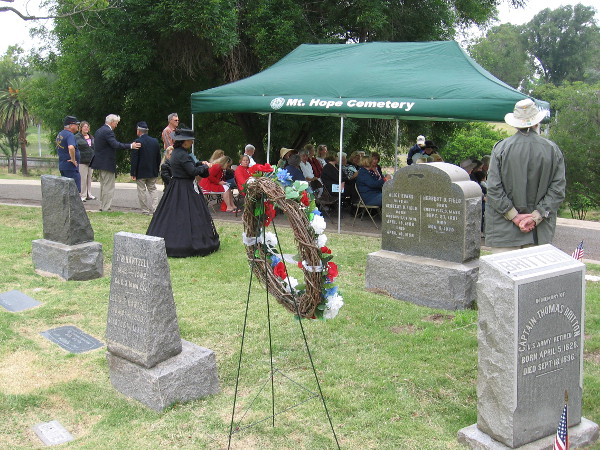
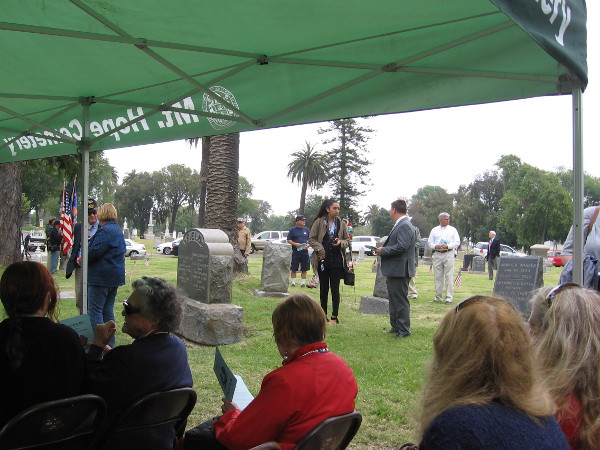
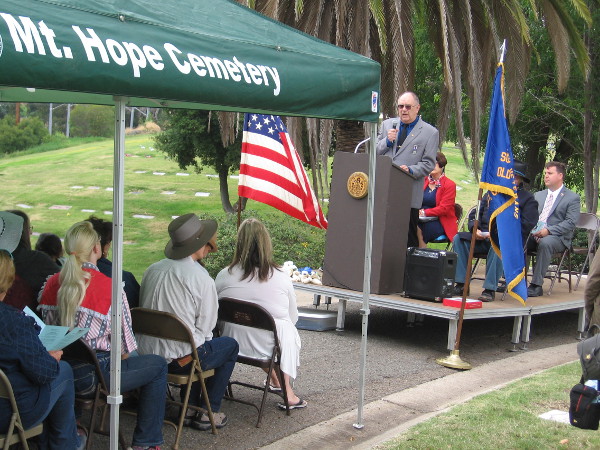
While some prepare for the ceremony, others read the nearby gravestones and wonder at the sacrifices made long ago.American flags decorate the graves of fallen soldiers.This grave marker design was established by the Grand Army of the Republic. Here lies a Union soldier. Sergeant Francis E. Webster, 10th U.S. Infantry.Some participants wore Civil War uniforms–both blue and gray. They posted the flags and provided a musket salute.This restored mortar dates from the American Civil War. It stands on GAR Hill at Mount Hope Cemetery.One of many old gravestones. Here lies P.W. Bradbury, a scout under General Fremont.Honor guards perform March On The Colors.Thoughtful speeches follow an Invocation and Pledge of Allegiance.Holly Kirkman of John Muir School reads her inspirational, award-winning essay “What Memorial Day Means to Me.”Dedication Of Flowers. Red, then white, then blue flowers are placed by the grave marker of Henry Neal Fletcher.The program included a short biography of Henry Neal Fletcher, who fought in the Union Army. (Click image to read.)Musket Salute.Taps.Remembering the fallen on Memorial Day, at Mount Hope Cemetery in San Diego.
…
I live in downtown San Diego and love to walk around with my camera! You can follow Cool San Diego Sights via Facebook or Twitter!
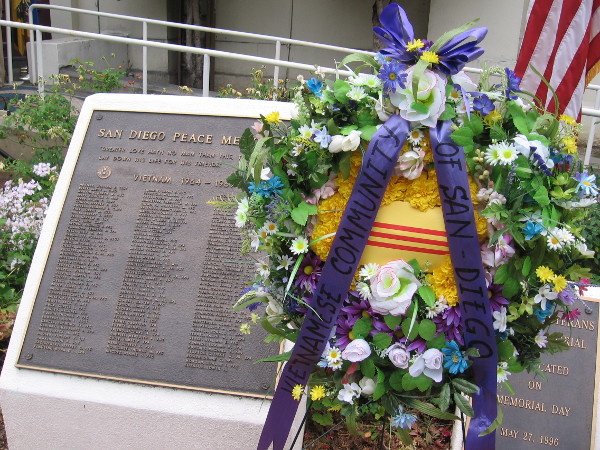
Vietnamese Community of San Diego wreath stands by Peace Memorial.
Today I attended two Memorial Day ceremonies.
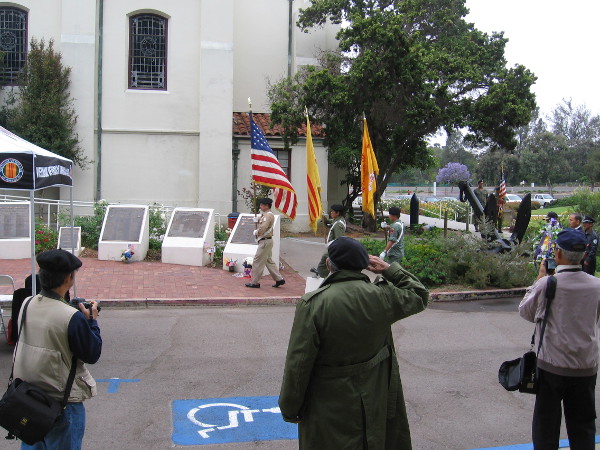
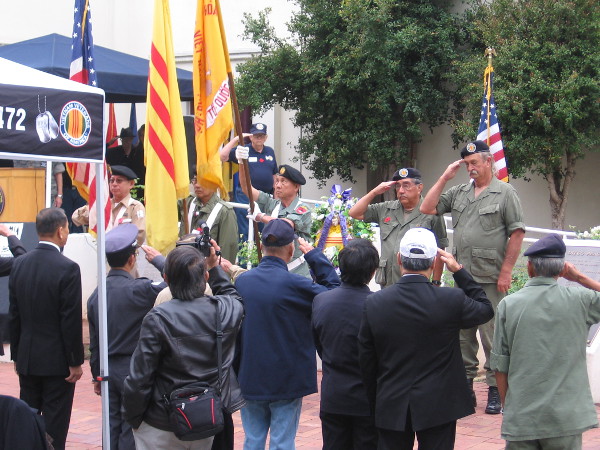
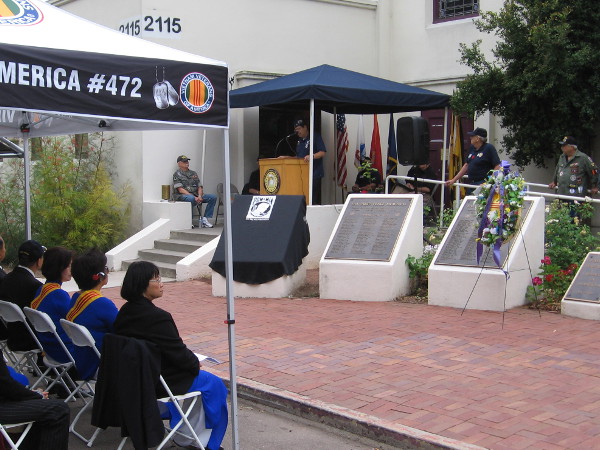
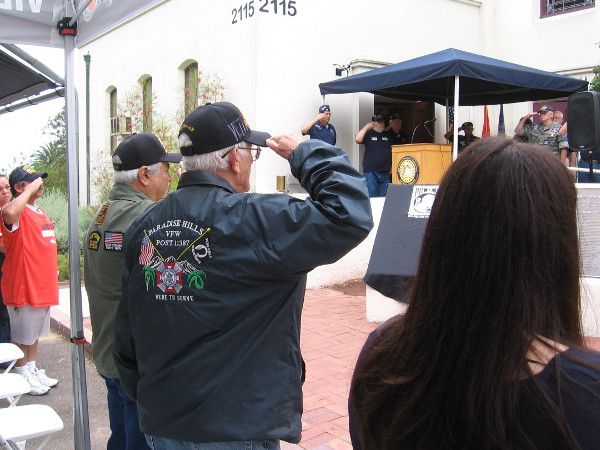
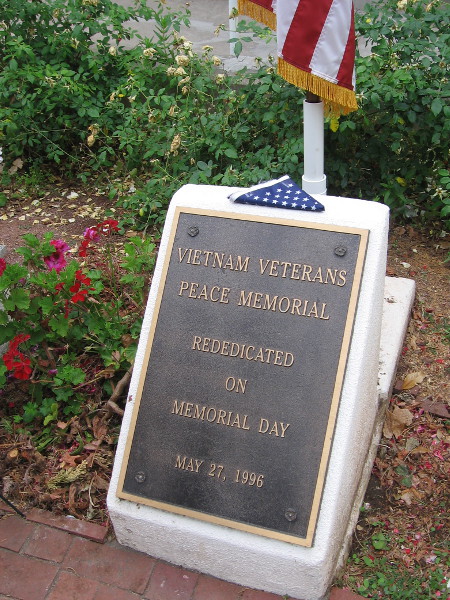
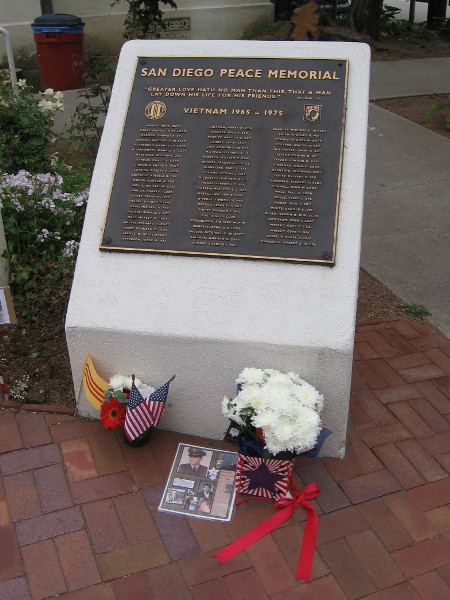
First, in the morning, I walked up to Balboa Park. There I joined others in remembering those who’d lost their lives in a terrible war. An emotional ceremony was held at the San Diego Vietnam Peace Memorial, which is located right next to The Veterans Museum. Special attention was given during this event to those who died serving their country during the Vietnam War.
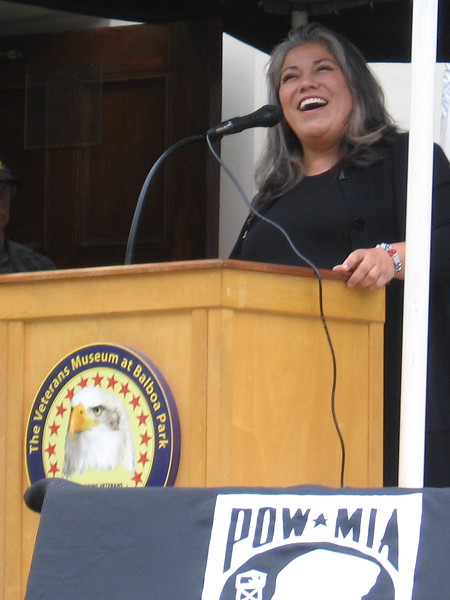
Please forgive me. When I arrived I was in a quiet mood. I stood off to the side mostly, took no notes, snapped a photo now and then. I mostly just absorbed the speeches, the music, the flowers, so many names on bronze plaques and proud salutes by veterans in attendance. I felt a bit shy and didn’t grab a program. I regret that now. I forget the names of the speakers, and the lady who sang so beautifully.
Members of Vietnam Veterans of America, 472, were present. Before the morning program commenced, they had read names of the fallen–the Calling of the Names.
Many from the local Vietnamese community also attended. Some among them had fought in the war.
I remember that the keynote speech was very clear and very powerful. It was about service, and courage, and liberty, and friendship, and pain, and sacrifice, and history. It acknowledged the horror of war. Those who fought would rather have been at home in peace. All gave some; some gave all.
Those whose names are eternally engraved on the Peace Memorial have earned the gratitude of many.
Here are a few photos.
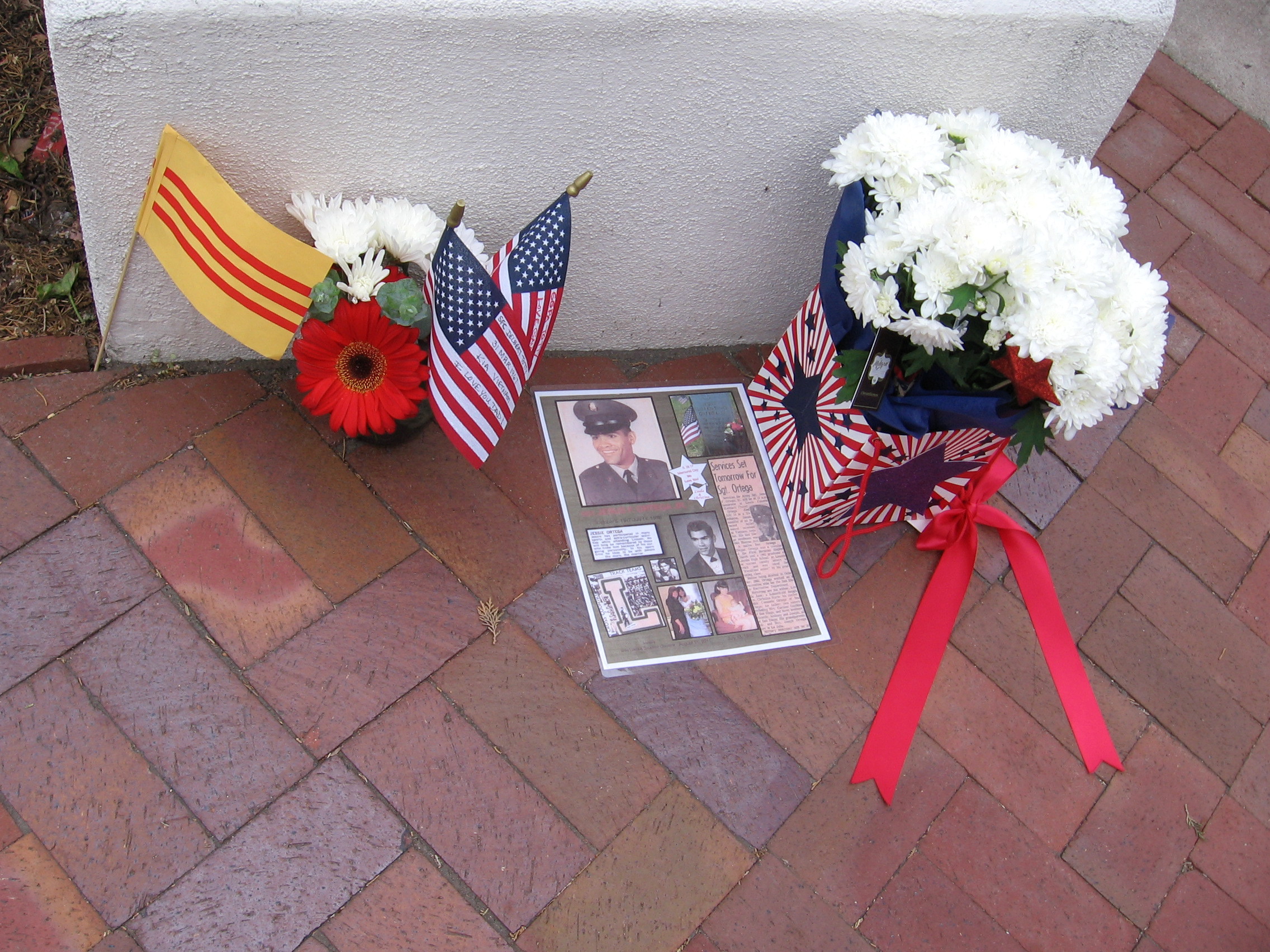
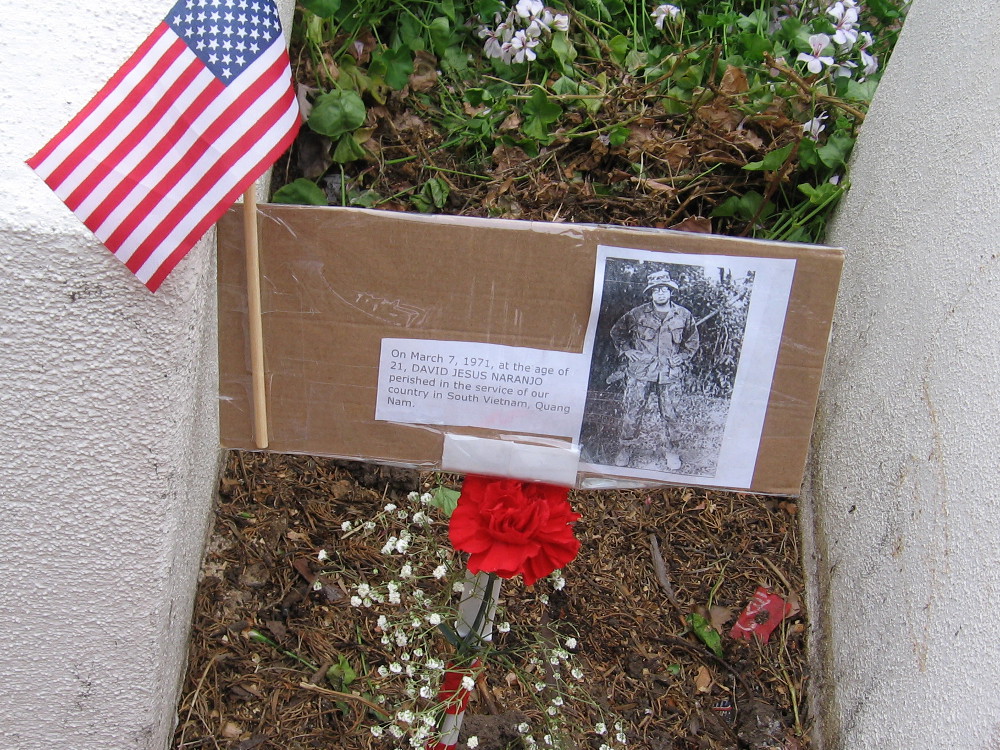
Flags are readied.Salutes.A dignified program commences. The Vietnam War is remembered, and those who fell during the conflict are honored.Speeches recall the harsh realities of war, and the democratic ideals many fought to defend.All quietly listen, some remember.Joyful, triumphant singing. America the Beautiful.Love for country. Young and old salute.A folded flag above the plaque marking the Vietnam Veterans Peace Memorial in Balboa Park.Names of San Diegans who were killed or designated missing in action during the Vietnam War fill half a dozen bronze plaques.Flags, flowers and photos. A loved family member.On March 7, 1971, at the age of 21, David Jesus Naranjo perished in the service of our country in South Vietnam, Quang Nam.
…
I live in downtown San Diego and love to walk around with my camera! You can follow Cool San Diego Sights via Facebook or Twitter!
To the Brink of WAR. A sound and light exhibit at the Maritime Museum of San Diego based on a true Cold War event during the Cuban Missile Crisis.
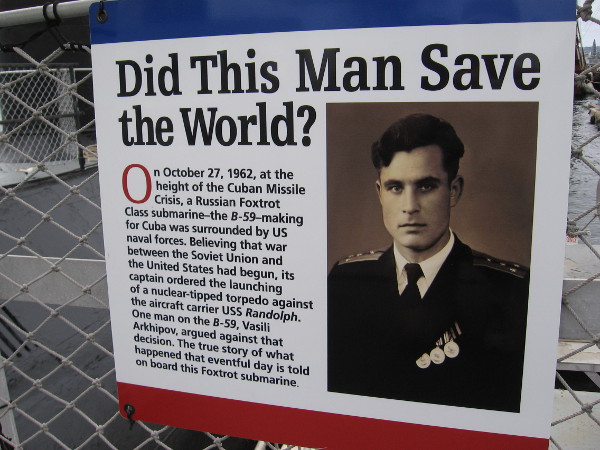
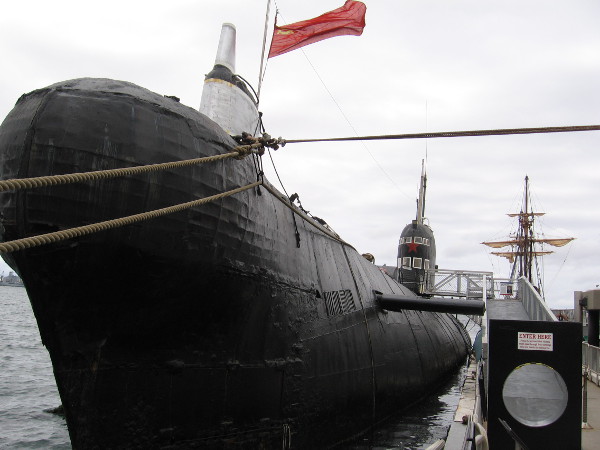
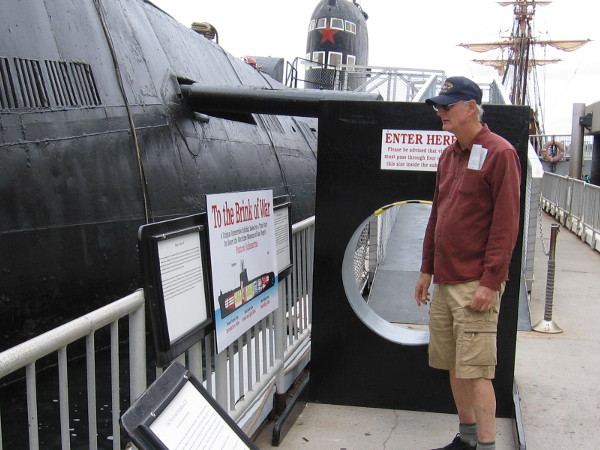
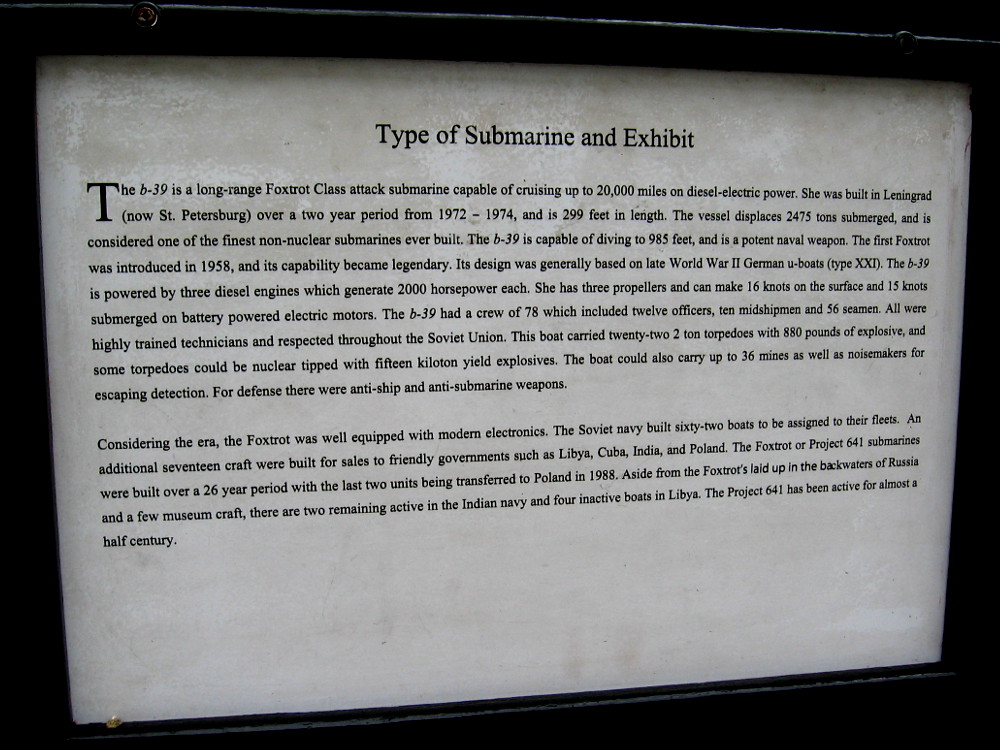
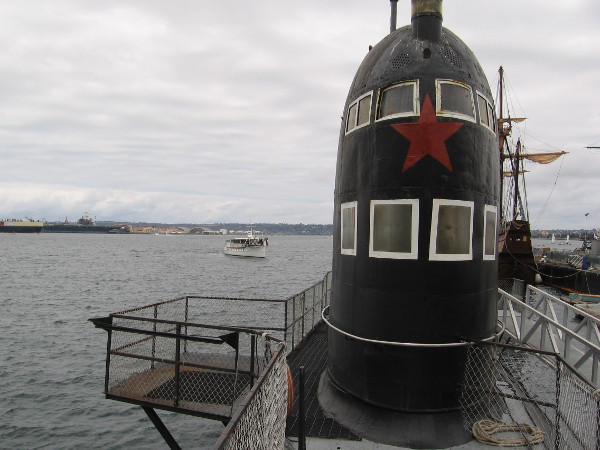
A fantastic exhibit recently opened at the Maritime Museum of San Diego. You’ll find it aboard their B-39 Foxtrot-class Soviet submarine. The exhibit, using videos, a light show and other exciting effects, tells the story of how one man likely saved the world.
At the height of the Cold War, during the Cuban Missile Crisis in 1962, a Soviet commander on the B-59, another Foxtrot-class submarine, spoke a few cautious words. Those words might have averted World War III and worldwide nuclear destruction.
The B-59 was one of four Soviet submarines that were sent to the Caribbean Sea to support ships delivering arms to Cuba. In October of 1962 the B-59 was detected by the United States, and Navy destroyers began dropping the sort of depth charges that are used for training–practice depth charges with very little explosive impact. It was the US Navy’s intention to have the sub surface in order to gain positive identification.
Aboard the B-59, however, batteries were running critically low, the air-conditioning had ceased working, and if the submarine didn’t surface eventually the crew would perish. They hadn’t had radio communication with Moscow for several days. The captain of the submarine, Valentin Grigorievitch Savitsky, believed that war had probably begun. He wanted to launch their T-5 nuclear torpedo at the USS Randolph aircraft carrier.
The exhibit inside the Maritime Museum of San Diego’s Foxtrot-class Soviet submarine allows visitors to relive those tense moments. They’ll hear how sub-flotilla commander Vasili Arkhipov, also on the B-59, reasoned that a conflict might not have started, and that firing their “Special Weapon” nuclear torpedo would certainly result in World War III. His calm words of council prevailed, the sub surfaced peacefully, and today visitors to the museum can appreciate his level-headed wisdom, and the extreme pressure that the crew of the B-59 felt on that fateful day.
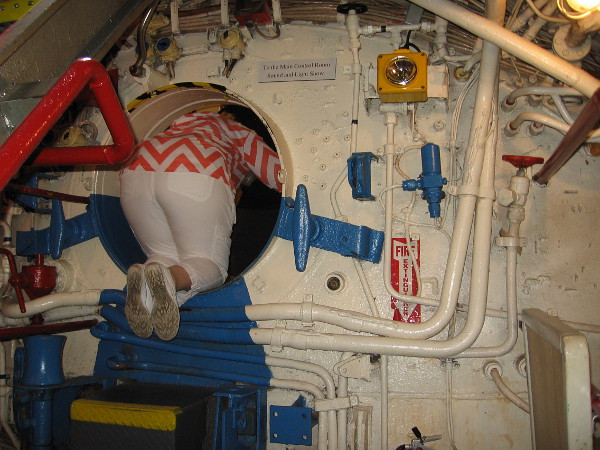
Anyone visiting the exhibit should be prepared for very close quarters. Ducking and engaging in a variety of pretzel-like contortions while moving along the length of the submarine, one can appreciate how life must have been as a crewmember, even under normal circumstances. It’s definitely not a place for those who have claustrophobia!
Here are a few photos that give you a taste of what you’ll experience. Of course, enjoying the exhibit in person is a thousand times more interesting!
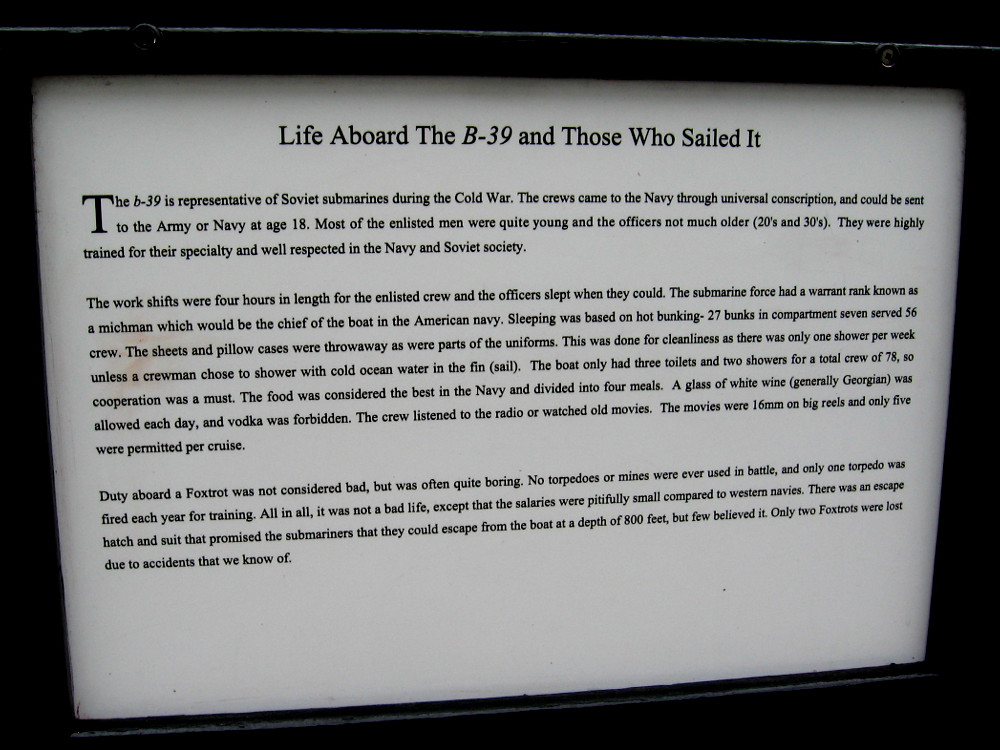
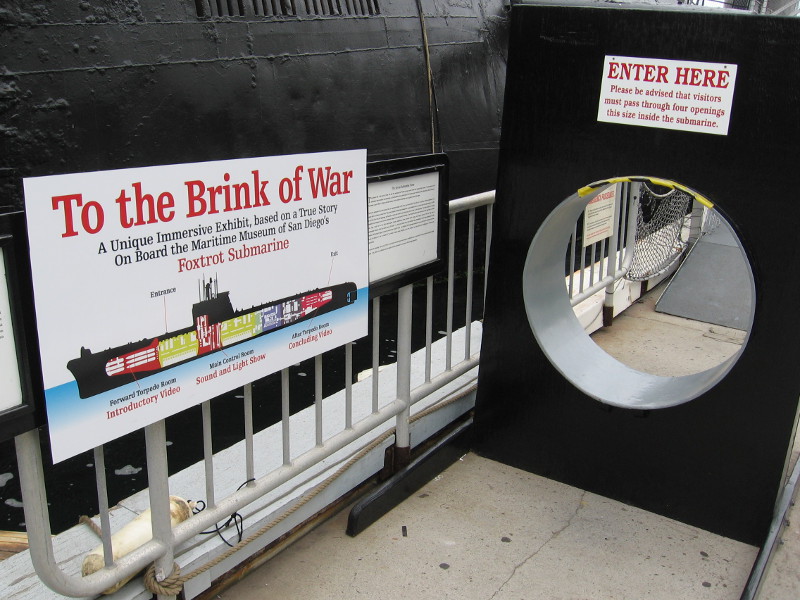
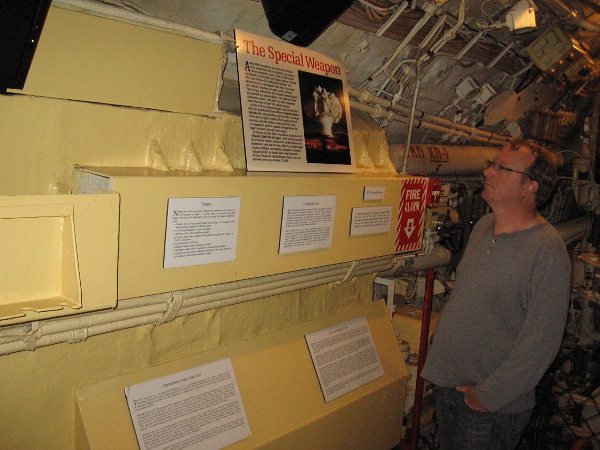
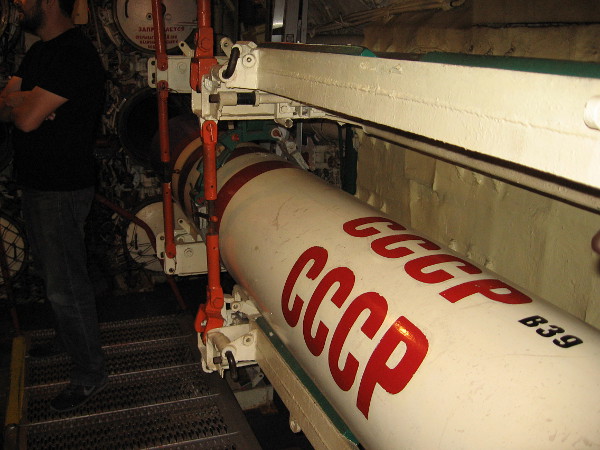
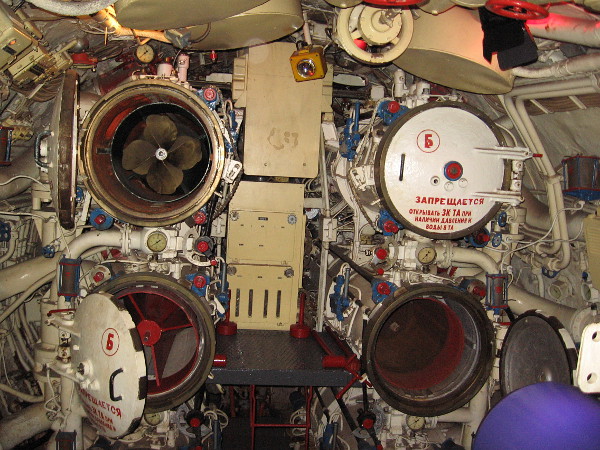
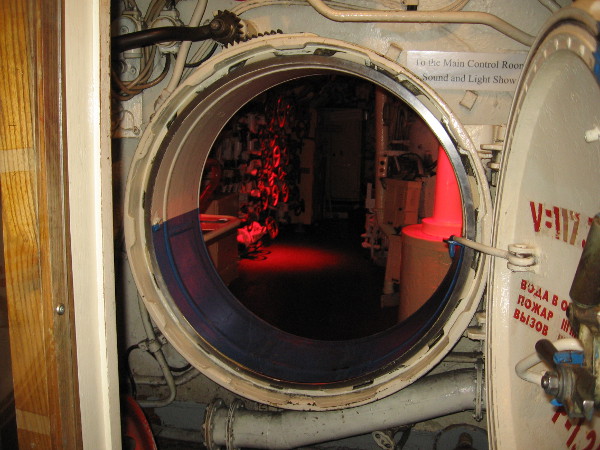
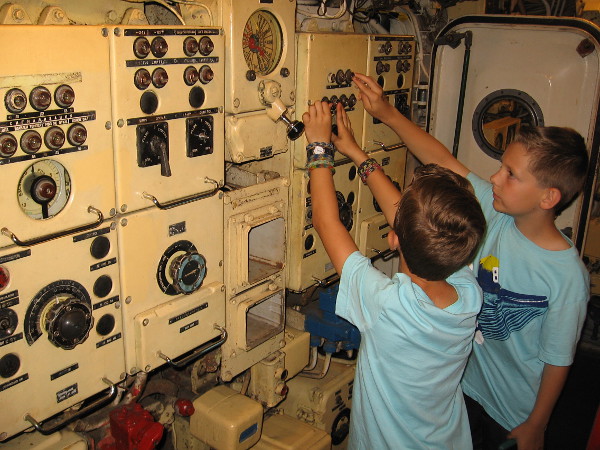
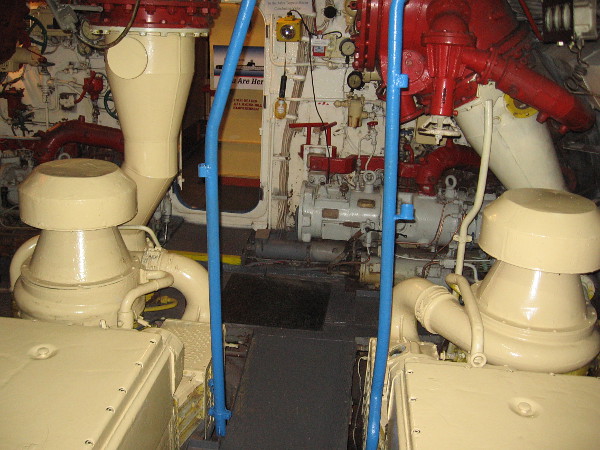
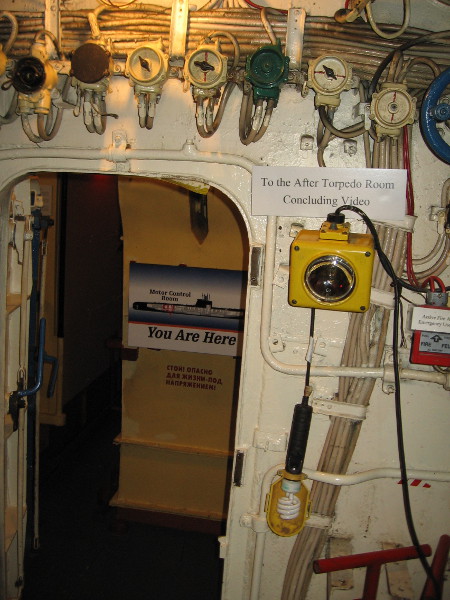
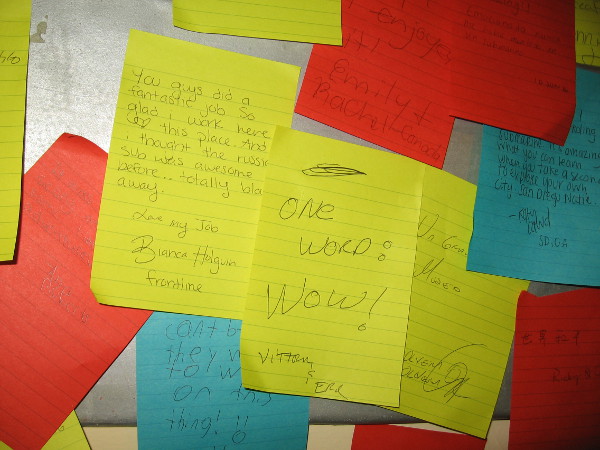
This man might have literally saved the world. Vasili Arkhipov argued against the B-59 captain’s determination to fire a nuclear torpedo against the U.S. aircraft carrier USS Randolph.Today, the Maritime Museum of San Diego’s B-39 Foxtrot-class Soviet submarine allows visitors to see what sub warfare was like during the Cold War, and to relive the crisis.Many signs containing interesting info can be read before boarding the B-39.Sign provides some details about the B-39. It could cruise 20,000 miles on diesel-electric power. It was built in Leningrad. It’s design was generally based on late World War II German u-boats.Life aboard a Foxtrot-class Soviet submarine is briefly described. Duty aboard a Foxtrot was not considered bad, but was often quite boring.Sign shows main parts of the museum’s current Cuban Missile Crisis exhibit. Inside the sub, one must nimbly climb through rather small circular openings!I’ve ascended the gangway and I’m standing forward of the submarine’s sail (or fin). I’ll enter the forward torpedo room via some steps behind me.Enter Here! And prepare to relive a tense moment in history, when the future of humankind teetered on the brink.Just inside the old Soviet sub. There’s a video explaining the Cold War and beginning of the Cuban Missile Crisis, and many signs nearby. The B-59 was armed with a Special Weapon: one nuclear torpedo.This museum torpedo represents what the B-59 Foxtrot carried back in 1962. A purple tip meant a particular torpedo had a nuclear warhead.You might note this torpedo has a purple tip! To fire a nuclear weapon during the Cuban Missile Crisis would have certainly resulted in World War III.A Hair’s Breadth from Nuclear War. President John F. Kennedy dealt with an extremely difficult crisis. Common sense, decisive action–and possibly some luck–helped the world avoid catastrophe.It’s no easy feat going from one section of the sub to another! A visitor is about to head into a narrow corridor en route to the Control Room.Heading through the Foxtrot-class Soviet submarine. Tiny rooms on either side include the Captain’s Cabin, the Officer’s Wardroom, and Medical Exam Room.A look into the Electronic Officer Cabin.The sonar room was critical to the safety of the submarine. Without sonar, the underwater vessel had no eyes.A photo of equipment in one corner of the sonar room.Into the Main Control Room we go, the scene of a sound and light show reenacting those tense minutes before the B-59 chose to surface peacefully without firing their nuclear torpedo.Signs throughout the Maritime Museum of San Diego’s Cuban Missile Crisis exhibit help visitors understand their position in the Foxtrot submarine.Photo includes the Foxtrot’s helm, where a Soviet sailor steered the submarine by moving a lever left and right.Visitor inside the Maritime Museum of San Diego’s B-39 submarine looks through the periscope. Red lights come on as depth charges are heard. A fateful decision must be quickly made.Voices from nearby speakers reenact tense discussions, then orders to the crew. The submarine captain wished to fire a nuclear torpedo; the level-headed flotilla commander convinced him not to.We’ve left the Control Room and are continuing along the center of the submarine. Here’s part of the galley. The crew ate well by Soviet standards–better than most ordinary citizens.More knobs, switches, levers, buttons, dials, gauges and whatnot on the way to the Engine Room.The engine room contains three turbo diesel engines that each put out 2000 horsepower. They drove three shafts connected to six-blade propellers.Another photo inside the museum’s B-39 engine room. During the 1962 events, the B-59’s batteries were low and the air conditioning had failed. Their hot engine room must have been intolerable.Now we’re heading to the Motor Control Room.Bunks for Enlisted Ratings line the corridor. These were shared by the crew and in constant use. No room to spare!A very tight squeeze!And finally we’ve made our way into the After Torpedo Room, where visitors can watch a concluding video documentary. After surfacing peacefully, the B-59 eventually re-submerged and vanished.School students left notes. It seems most really liked the tour! It’s not every day one can see the interior of a Cold War Soviet submarine!Climbing back out of the B-39 Foxtrot-class Soviet submarine, one of many historic vessels that are part of the Maritime Museum of San Diego.
…
I live in downtown San Diego and love to walk! You can follow Cool San Diego Sights via Facebook or Twitter!
You can easily explore Cool San Diego Sights by using the search box on my blog’s sidebar. Or click a tag! There are thousands upon thousands of fun photos for you to enjoy!
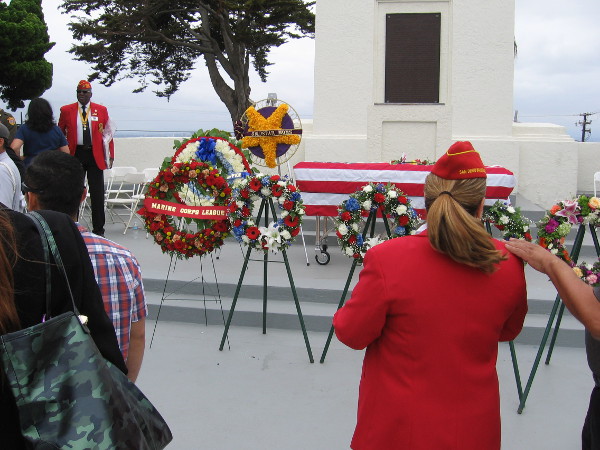
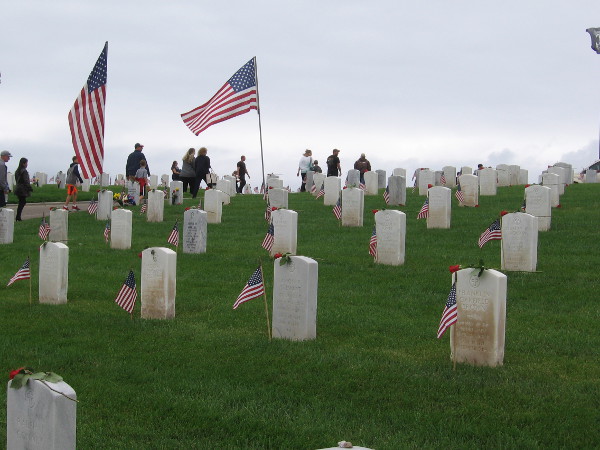
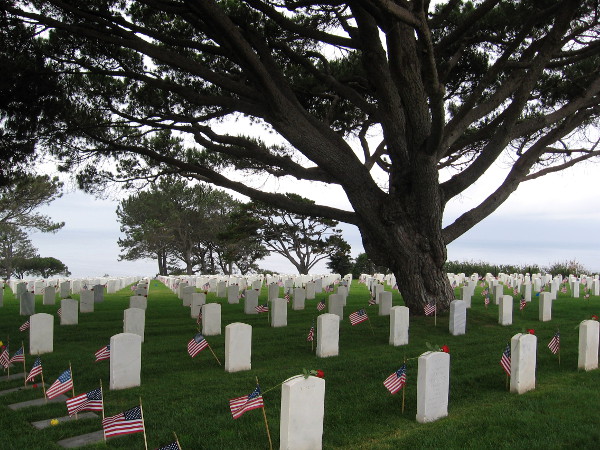
Flags and flowers are placed where the fallen now rest.
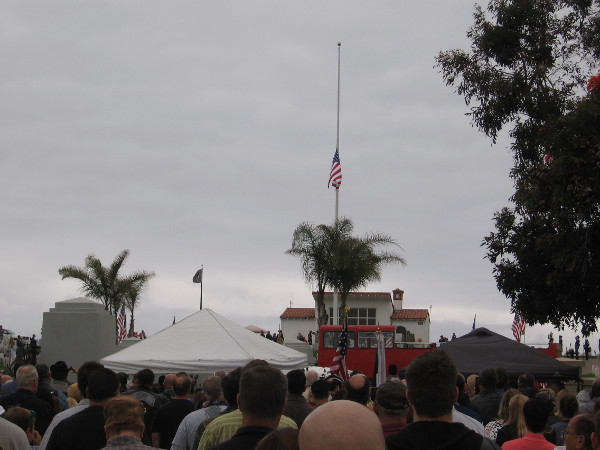
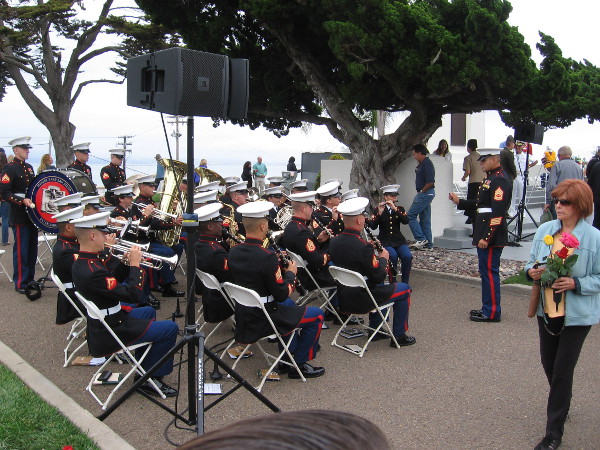
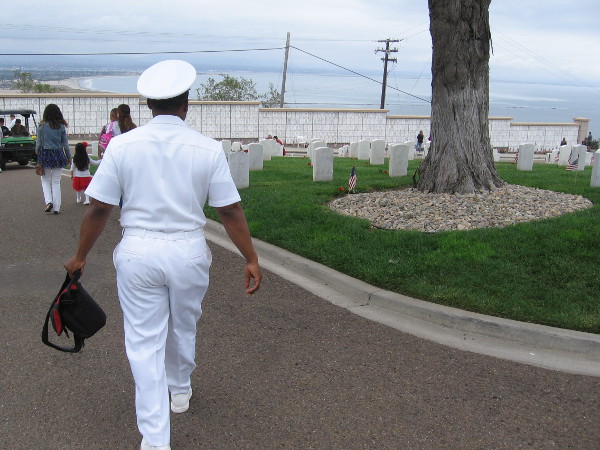
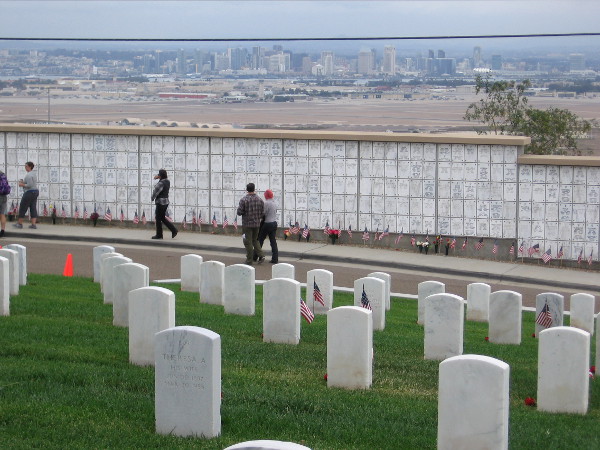
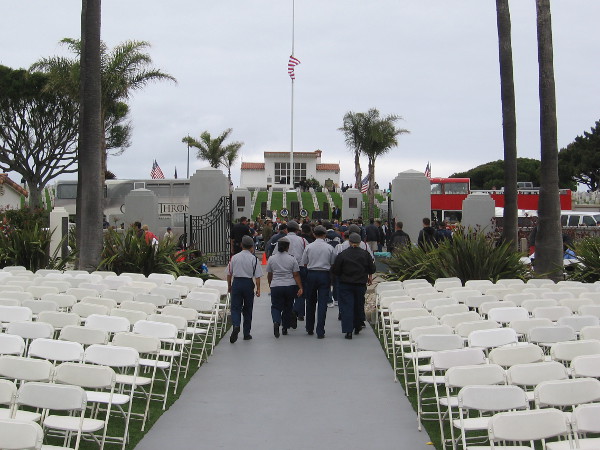
Today there was a moving Memorial Day ceremony at Fort Rosecrans National Cemetery. I attended.
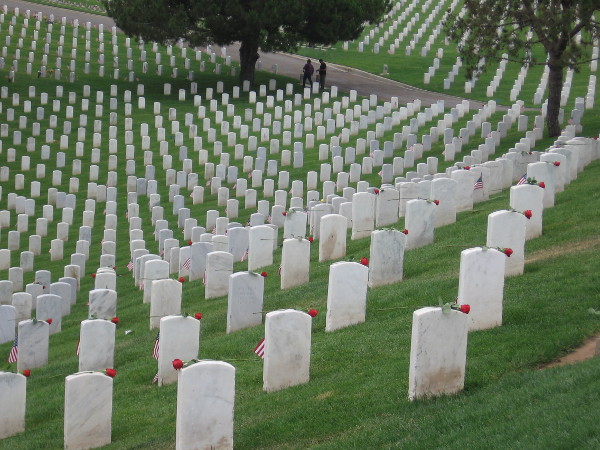
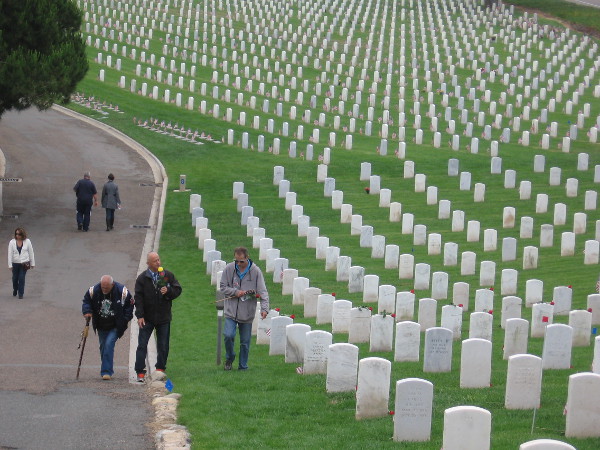
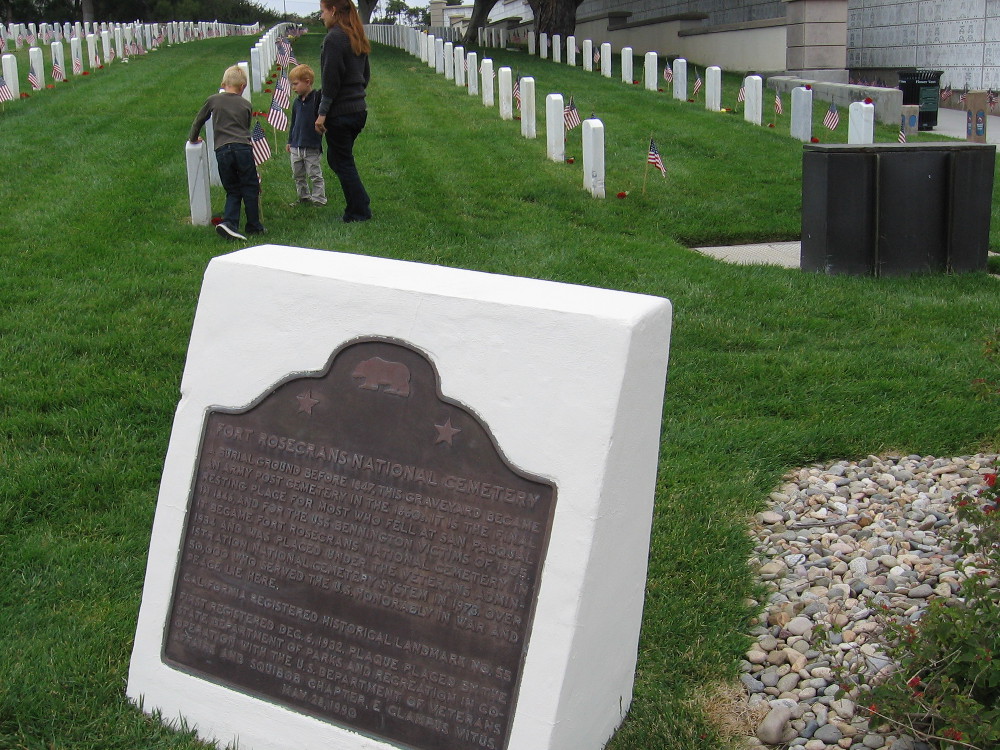
Here are some photos. Fort Rosecrans National Cemetery, located on Point Loma high above the Pacific Ocean and San Diego Bay, is the final resting place of thousands of American soldiers, sailors, airmen and Marines, and their families, who served their country with courage and honor. Many who are buried in this hallowed place fought in different conflicts spanning our nation’s history, right up to the present-day War on Terrorism. Because of its amazing natural setting, many say Fort Rosecrans is more beautiful than even Arlington or Normandy. As you can see, it’s a special place.
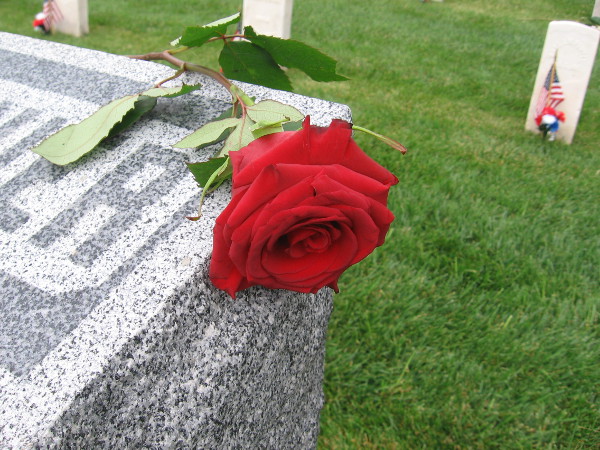
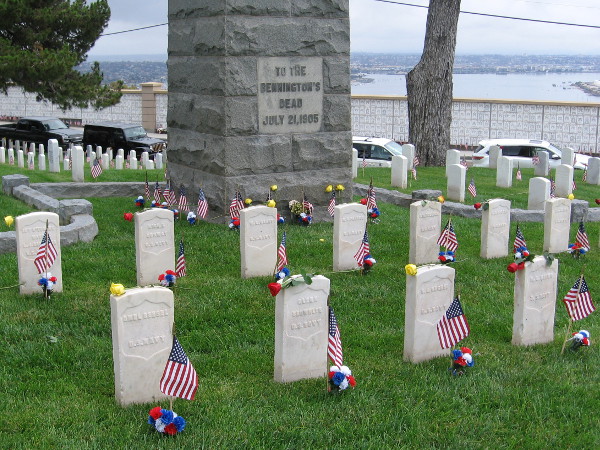
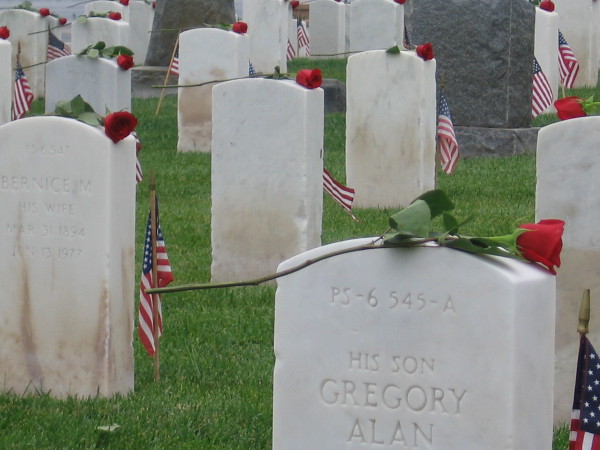
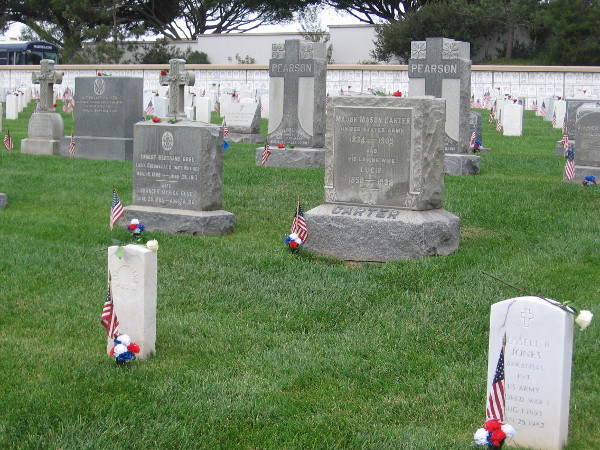
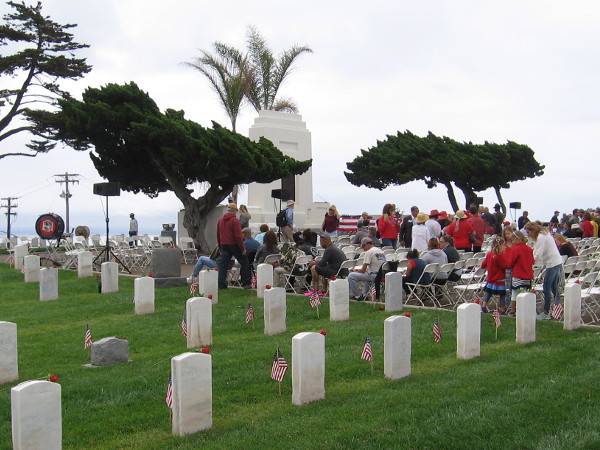
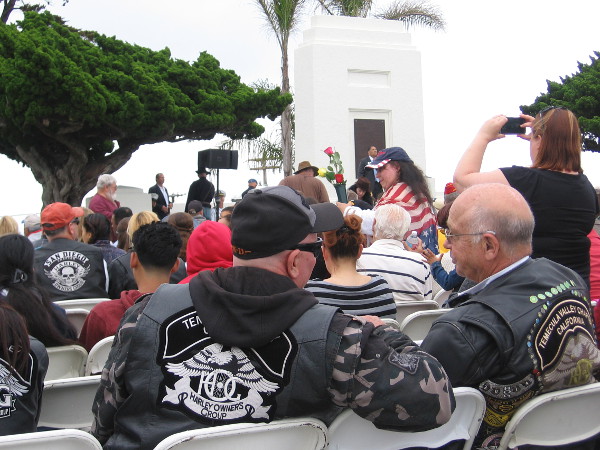
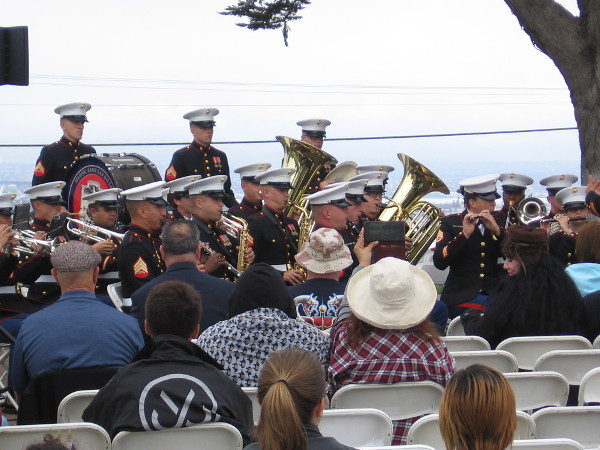
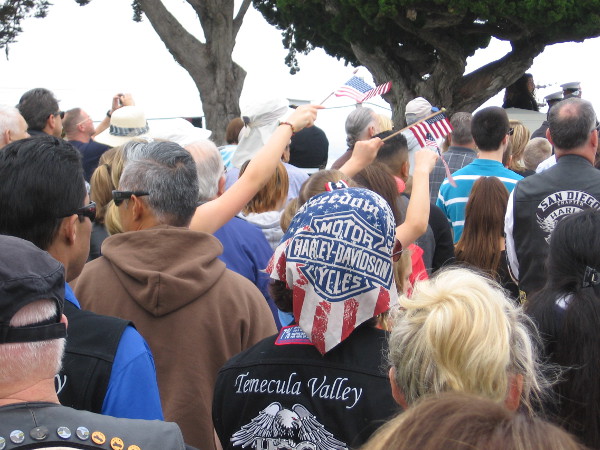
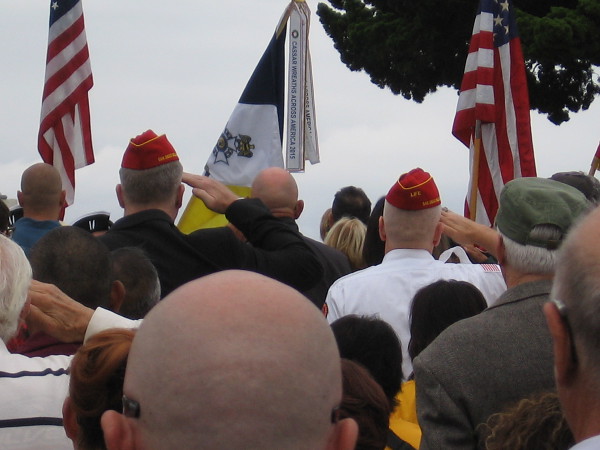
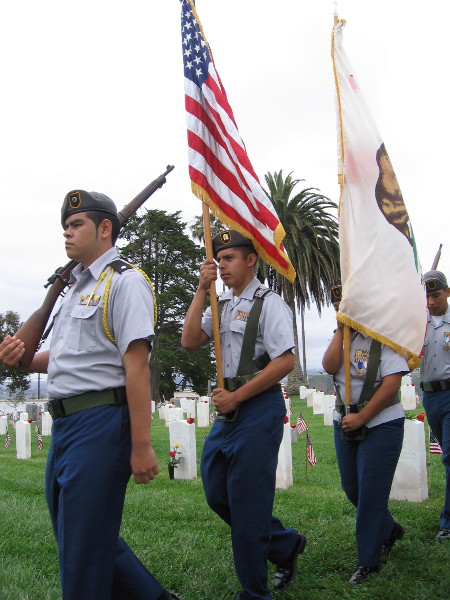
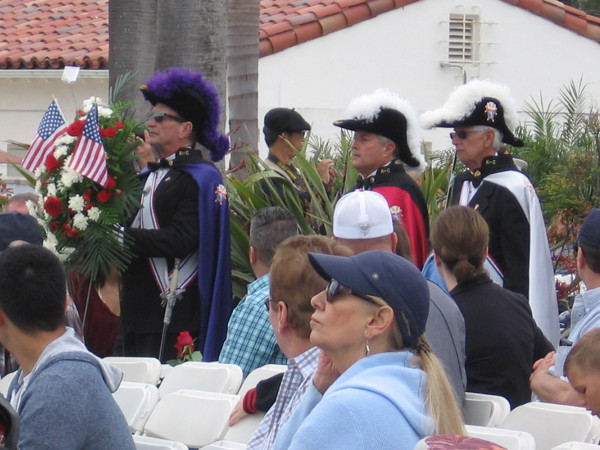
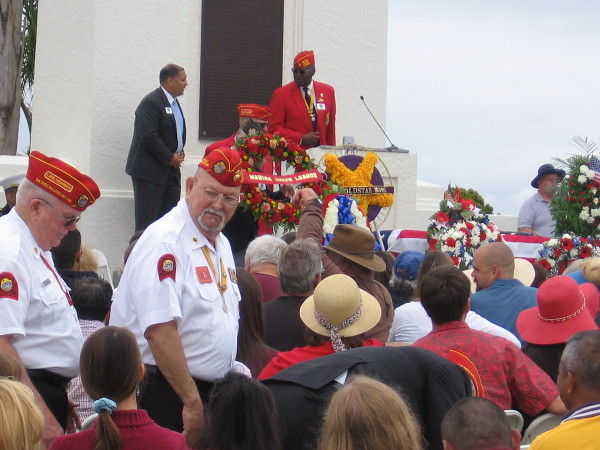
A Memorial Day rose adorns a solemn grave marker at Fort Rosecrans National Cemetery.American flags at the grave markers around the USS Bennington Monument. The granite obelisk remembers those sailors who lost their lives when the warship’s boiler exploded in San Diego Bay in 1905.Love and respect are shown for those in the military who pledged to protect their countrymen, and defend freedom. They are honored on Memorial Day.Walking among silent rows of white. Many gave the ultimate sacrifice for their nation.Many old granite markers at Fort Rosecrans National Cemetery recall decades and centuries of history.A marker reads: “Lydia Hunter died from complications resulting from the birth of her only child, a son named Diego Hunter, the first American born in San Diego. Diego was born 20 April 1847, Lydia died 6 days later. May we honor her and each of those women who served with the Mormon Battalion.” Members of the Mormon Battalion made the longest military march in U.S. history. They marched over 2000 miles from Iowa to San Diego in 1847.People assemble in front of the rostrum where the Memorial Day service will be conducted at Fort Rosecrans National Cemetery.People from all walks of life have gathered together to honor those who died while serving in the United States Armed Forces.While people take their seats before the opening and introduction, Marine Band San Diego provides music.The color guard comes forward. Those attending the ceremony sing the Star Spangled Banner and recite the Pledge of Allegiance.Some patriots in the crowd wave small flags.Veterans salute. Respect is shown for the flag.The color guard exited along the side where I sat, allowing me to take a couple of good photographs.Members of a high school ROTC program carry the United States and California flags.Folded flags are presented to families of fallen heroes. Everyone watching was very attentive and quiet.An address about different forms of love during Memorial Day. The moving speech was given by Major General O’Donohue of the 1st Marine Division in Camp Pendleton.Ceremonial wreaths approach the rostrum. Many organizations presented wreaths, including the Knights of Columbus shown here.Various ceremonial wreaths are displayed in front of the assembled people. Tokens of love, gratitude and respect.Finally, taps is played while the cemetery flag is lowered to half staff. Salutes included three rifle volleys, a musket volley, and a cannon.A bagpiper, after playing Lament for a Soldier, exits across the green grass, where the fallen lie eternally.The ceremony is over, and those visiting the cemetery fan out to pay their respects. The Marine Band remained seated for a bit of concluding music.A Navy officer walks down a cemetery driveway, which overlooks the channel entrance to San Diego Bay.Walls around the cemetery contain columbarium niches for cremated remains. Naval Air Station North Island and downtown San Diego are visible in the background.Walking along the columbarium. Its plaques identify loved ones.These two guys had bouquets in their backpacks. They are gazing along the Point Loma peninsula in the direction of Cabrillo National Monument.A deeply moving sight. Solemn rows of white on rolling green hills. Volunteers have provided every grave with an American flag and rose.Member of the next generation among those who came before.The living walk thoughtfully through Fort Rosecrans National Cemetery in San Diego.More grave markers and a small plaque nearby.The markers in this memorial area honor veterans whose remains have not been recovered or identified, were buried at sea, donated to science, or cremated and the ashes scattered.After the Memorial Day ceremony, some people linger to view the floral tributes and the flag-draped Casket of the Unknown Soldier. The plaque behind the rostrum contains President Lincoln’s famed Gettysburg Address.And now almost everyone has departed.Plaque near Fort Rosecrans National Cemetery entrance has lines from The Bivouac of the Dead, a poem by Theodore O’Hara.The main entrance plaque at Fort Rosecrans National Cemetery. The flag flies at half staff.Fort Rosecrans National Cemetery is also a California Registered Historical Landmark.Several monuments near the cemetery entrance memorialize tragic events in U.S. military history, including ships lost in action.Flags in the breeze. A cloudy day. People atop the hill gaze down at the eternal ocean.Looking beyond grave markers toward a hazy blue horizon.A beautiful old tree rises from the Earth. Life persists.A slow, thoughtful walk.Youth replaces a red rose that was blown by the wind to the ground. He doesn’t realize that someone is watching.
…
I live in downtown San Diego and love to walk! You can follow Cool San Diego Sights via Facebook or Twitter!
Do you like to read short pieces of thought-provoking fiction? You might enjoy checking out Short Stories by Richard.
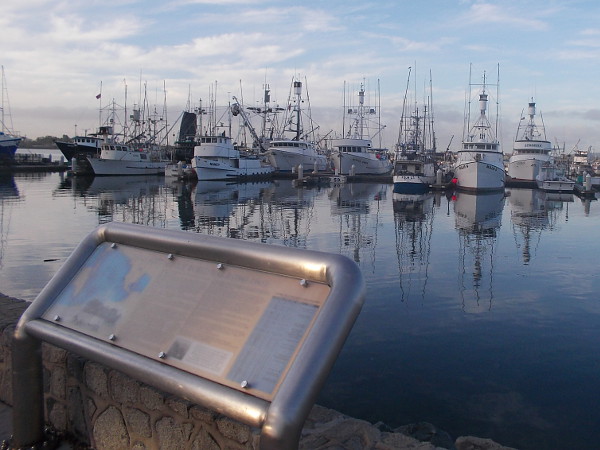
Information sign beside Tuna Harbor, in downtown San Diego, describes how local tuna boats were utilized in the Pacific Ocean theater of World War II.
Some fascinating historical information can be found on San Diego’s Embarcadero, right next to Tuna Harbor where many commercial fishing boats dock downtown. The sign, erected by the San Diego Port Commission in 2008, is titled Tuna Fleet Service World War II (1941-1945). It provides a glimpse of how dozens of San Diego-based Tuna Clippers joined the American war effort during the Second World War.
Here is the text on the sign:
During World War II, 600 fishing vessels were taken by the Navy, Army, and Coast Guard, including 52 “Tuna Clippers”.
On Pearl Harbor Day, the U.S. canned tuna industry was located almost exclusively in Southern California, and canners received most of their tunas from “baitboats”. Fishermen on these boats chum live bait (sardines, anchovies) to attract the tunas into a feeding frenzy and then use rigged bamboo poles to pull the hooked tunas aboard. Dating from 1924, a fleet of large “baitboats” was developed and became know as “Tuna Clippers”. These large ships, equipped with powerful diesel engines and newly developed brine refrigeration, fished for tunas found migrating thousands of miles from San Diego on trips of 90 days or more. During the 1930s, this San Diego high seas fleet was studies by the U.S. Navy, resulting in wartime plans that included the conversion of Tuna Clippers to minesweepers.
At the time Pearl Harbor was attacked, there were 90 vessels in the California baitboat fleet, including 76 Tuna Clippers plus 3 under construction. The 49 Tuna Clippers taken by the Navy and 3 by the Army represented about 55% of the fish carrying capacity of the entire baitboat fleet.
After war was declared, the Government ordered the Tuna Fleet to make port in California or Panama. Ten of the Tuna Clippers entering the Canal Zone in December 1941, were immediately taken for temporary patrol duty. The U.S. Army took three Clippers for use in the Panama Sea region, the SHASTA and CAPE HORN as tugs and the INVADER as a supply ship.
On February 16, 1942, tuna fishermen attended a meeting conducted by Commander W. J. Morcott, USN (Ret.) at the Naval Reserve Armory. 600 tuna fishermen signed up, with Skippers and Engineers receiving warrant ratings, and others given petty officer ratings according to age and experience. Within 10 days, a fleet of 16 Tuna Clippers, painted gray and marked with YP number designations as Yard Patrol vessels, left San Diego harbor on February 25, 1942. Their destination was the “Panama Sea Frontier” for picket duty to protect the Canal.
In May 1942, a convoy of six YP Clippers left San Diego for the “Hawaiian Sea Frontier”. These YPs transported supplies to French Frigate Shoals, the islands of Midway, Johnston, Fanning, Christmas, Palmyra, and Canton. In June 1942, seven YP Clippers left San Diego, for service at Efate Island or Samoa, or Auckland, New Zealand. In November 1942, another group of five headed for the U.S. Naval base at Tutuilla, Samoa. As the conflict moved towards Japan, YP Tuna Clippers were sent on missions to other Islands and Atolls of the Western Pacific.
The Navy discovered that “Yippies” were able to transport troops, gasoline, ammunition, and refrigerated cargoes and capable of navigation within shallow atolls and over minefields, of towing damaged warships, and rescuing downed pilots. This is why “Yippies” were also called the “Pork Chop Express” or “Errand Boys of the Pacific” or the “Solomon Island Ferry”. During the Solomon Island Campaign in 1942, the PARAMOUNT (YP 289) and the PICOROTO (YP 290) delivered frozen turkeys and all the fixings for a traditional holiday feast at Guadalcanal Island. In 1943, frozen turkeys were also delivered to the Marines fighting on Bougainville in time for Thanksgiving by the AMERICAN BEAUTY (YP-514).
“Yippies” were equipped with CW radios, fathometers, Navy radar and Navy sonar. Armament included machineguns, and other gun gear to fire Depth charges. The YP crew of tuna fishermen and regular Navy ran from 4 to 20 men.
Two YPs were destroyed in the Solomon Islands campaign by enemy surface ships: On 9 September 1942, off Tulagi Island, the PROSPECT (YP-346), and on 25 October 1942, off Guadalcanal Island, the ENDEAVOR (YP-284). The number of casualties sustained is unknown.
Two YPs were lost in the Midway region: On 23 May 1942, the TRIUNFO (YP 277) was destroyed by fire and explosions enroute to French Frigate Shoals (North of Hawaii), and then scuttled to avoid enemy capture. Only two crewmembers survived. During October 1942, the YANKEE (YP-345), with 17 crewmembers, on a voyage from Pearl Harbor to Midway Island via French Frigate Shoals, was “lost without a trace from causes unknown”.
Four YPs were lost at sea: CALIFORNIA (YP-235) on 1 April 1943, after fire and beaching in the Gulf of Mexico from an explosion of undetermined origin; NAVIGATOR (YP-279), 5 September 1943, foundered in heavy weather enroute to Townsville, Australia; CAPE SAN VINCENT (YP-280), on 24 April 1946, sank near Saipan Island; SAN SALVADOR (YP-281) on 9 January 1944, was destroyed after the foundering in Force 9 storm, with crew of 19 and one dog rescued, near Wallis Island, South Pacific. After transfer to the U.S. Army in July, 1943 the SEA TERN (ex YP-269) was lost at sea off Baja California.
Three YPs were destroyed during October 1945, because of a typhoon off Okinawa: PARAMOUNT (YP-289); CONTE GRANDE (YP-520) and CHALLENGER (YP-239).
The Navy destroyed 7 YPs after the War during 1946 and 1947: AMERICAN VOYAGER (YP-287), CIPANGO (YP-504), EUROPA (YP-236), FALCOM (YP-515), QUEEN AMELIA (YP-516), QUEEN ELIZABETH (YP-519), and YVONNE LOUISE (YP-282).
The successful wartime experience of the “Yippies” caused the Navy to build 30 wood-hull vessels patterned on the Tuna Clipper design. Each of 30 newly constructed wood hull Navy YPs was of 128 in length, of 14 feet draft, and powered with a 500 H.P. diesel main engine. They were built during 1945, two each by 15 different shipyards located in California, Oregon, and Washington.
Commencing in 1947, 24 of these YPs were added to the U.S. Tuna Fleet.
After the war, the Navy and Army transferred 33 surviving former Tuna Clippers to the War Shipping Administration (WSA) for buy-back by the previous owners. Three of these surviving vessels never returned to the U.S. tuna fishery: CABRILLO, FISHERMAN II, AND THEODORE FOSS.
Additional information on the sign:
Tuna clippers joined the navy too and were painted a dull slate grey, while the stalwart Portuguese descendants learned to fire the guns that were mounted upon the deck. Equipped with the finest refrigeration systems, these trim craft became “errand boys” of the Pacific, delivering food and fuel to the fronts. One day these tunaboats will be convoying a fleet of small ships to Panama. Next month, perhaps, they’ll be off to Midway Island with gasoline for navy PBYs. Two months later, they’ll be down in the Solomons running the “milk route” between Guadalcanal and Tulagi with supplies – part of the saga of men and boats.
excerpt from San Diego Union
July 23, 1943
Scores of converted tuna clippers slipped out of San Diego bay on their way to do valiant work in Pacific battle areas. First boats sailed from here Feb. 25, 1942. These small, sturdy diesel-powered boats are ideal for convoying and patrolling as well as for transporting needed war supplies to defeat the Japanese.
excerpt from San Diego Union
July 23, 1943
Today’s commercial fishing fleet in San Diego includes picturesque boats that provide fresh seafood for restaurants and a Saturday dockside market. (The USS Midway aircraft carrier, now a popular museum) is visible in the background of this photograph.)Someone walking down the Embarcadero near Tuna Harbor pauses to read a bit of fascinating information concerning the Second World War.Left part of the sign depicts map of the Pacific theater of World War II in relation to San Diego. Pictured are some vessels that participated.A detailed description of how the local Tuna Fleet served in various capacities during World War II.California Tuna Clippers: Military Service World War II. (Click the image to enlarge.)Commercial fishing vessel Dalena in San Diego’s present-day Tuna Harbor.
…
I live in downtown San Diego and love to walk! You can follow Cool San Diego Sights via Facebook or Twitter!
You can easily explore Cool San Diego Sights by using the search box on my blog’s sidebar. Or click a tag! There are thousands upon thousands of unique photos for you to enjoy!
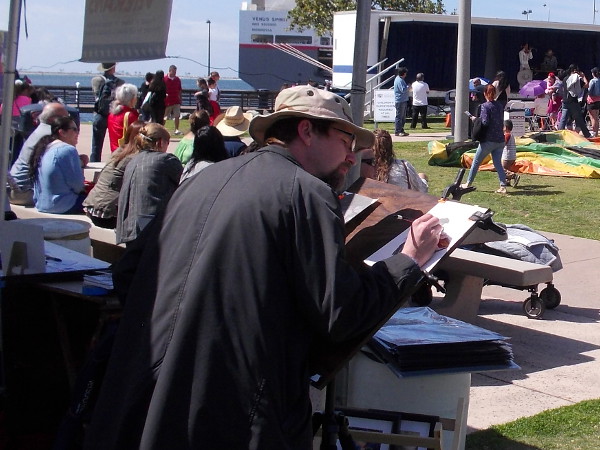
A U.S. military veteran creates art while watching folklorico dancing at a popular festival in San Diego’s South Bay.
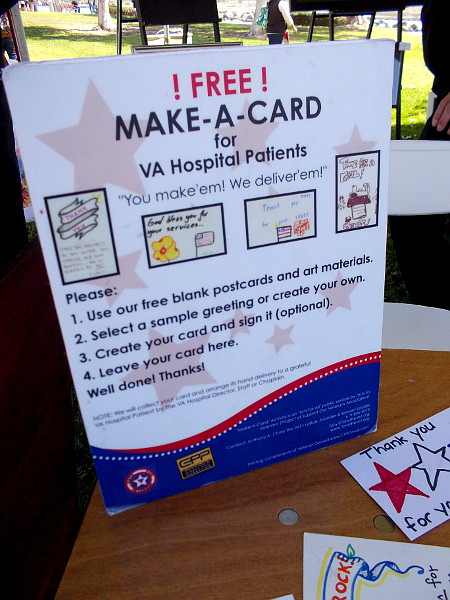
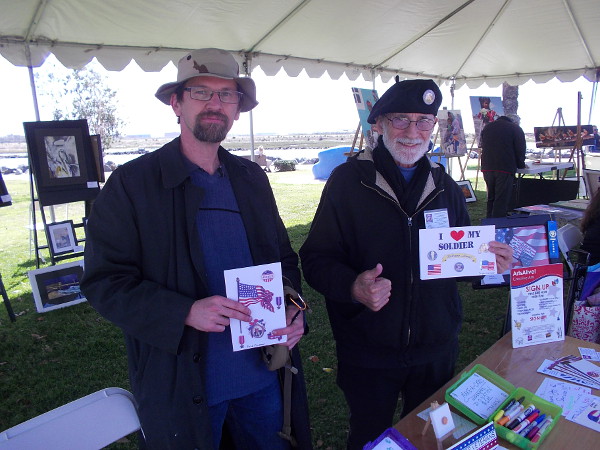
Today I met Anthony A. LoBue for the second time. With a great big smile, he was manning his Arts For Veterans tent at the International Mariachi Festival and Competition in National City. (I chatted briefly with him once before at the Spreckels Organ Pavilion, during a special concert raising funds for Operation Rebound.)
“Tony the Vet” helps other veterans heal through creative art. He’s the founder of Support Our Veterans Association and the Arts for Veterans Project. The latter organization’s purpose is to: Engage, Educate, Employ and Empower Veterans in the Creative Arts. He provides art classes for military veterans at the Veterans Museum in Balboa Park, Veterans Village, and other places where healing, hope, wholeness and art education are welcome.
He believes the healing power of art dramatically changes lives. It’s an enormous benefit for those returning from war with psychological trauma. Art provides connection, joy, self-empowerment. Art literally saves lives.
Tony has a huge positive vision. He wants to expand his Arts for Veterans program so that it might benefit as many people as possible.
Would you please visit his website and see it you can help in some way?
Art heals. Art provides joy, connection, hope. Art helps to give life meaning and purpose.
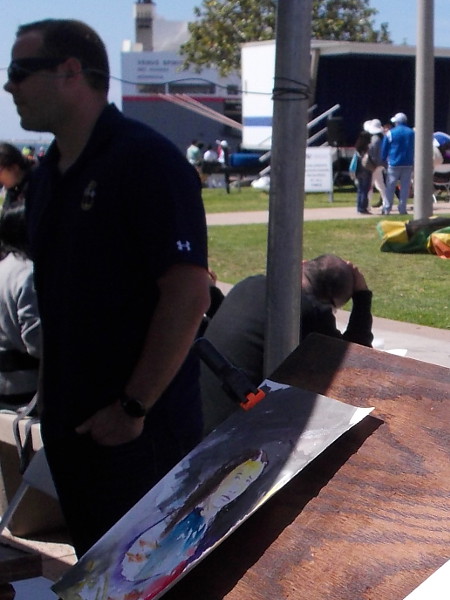
Brian Meyer was painting at the Arts For Veterans tent. I spoke to him. He’s a veteran of Desert Storm. He’s a super guy and deeply thoughtful. And his watercolors are amazing. That’s a glimpse of a work-in-progress above. He frequently paints the live musicians at Panama 66 next to the San Diego Museum of Art. Please check out his website!
Hand-drawn art cards with hearts and flags thank service members for their sacrifice.People at the International Mariachi Festival and Competition in National City were making special greeting cards for patients at the VA Hospital.Gifted watercolor painter Brian Meyer, and Anthony A. LoBue of Arts For Veterans.
…
I live in downtown San Diego and love to walk! You can follow Cool San Diego Sights via Facebook or Twitter!










































 Cool San Diego Sights!