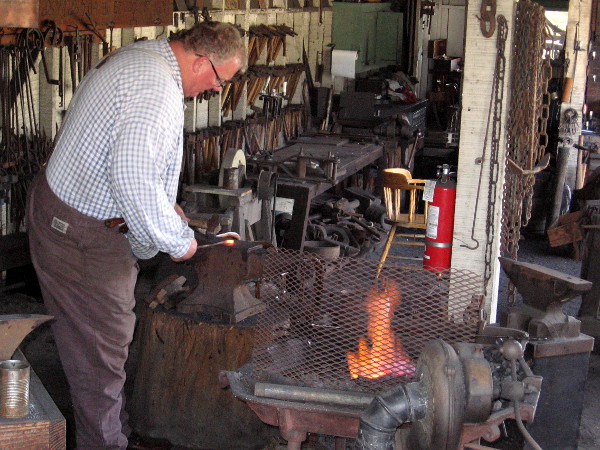
A blacksmith shapes red hot iron at a forge in San Diego’s historic Old Town.
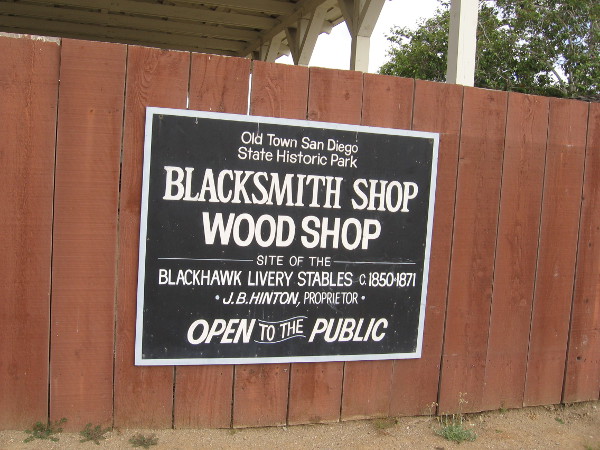
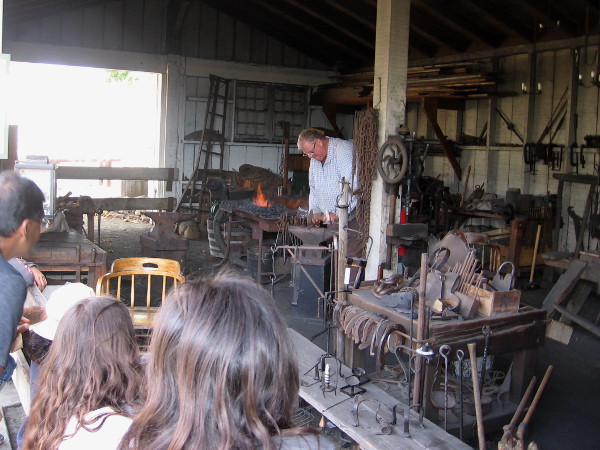
Yesterday I lingered for a few minutes at the Blacksmith Shop in Old Town San Diego State Historic Park. Two forges were operating. I watched as hammers swung, making sparks fly. It was fascinating to learn about blacksmithing and its vital role in San Diego’s history.
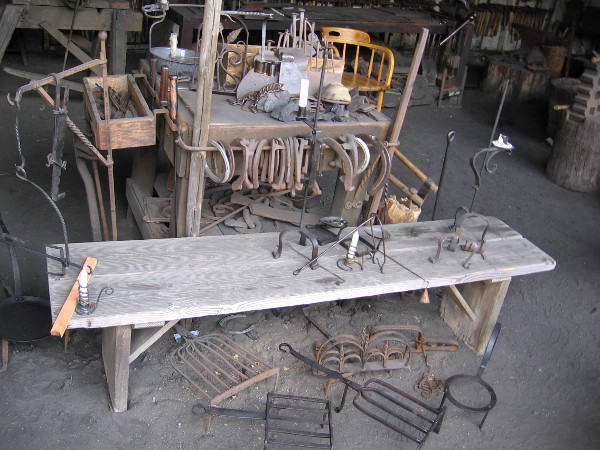
I chatted for a bit with one of the friendly gentlemen working in the Blacksmith Shop. These days the shop is used by a handful of skilled smiths to make all sorts of ornamental and useful metal items. They’ve made objects used for display elsewhere in the State Park. They make everything but horseshoes–and that’s because none of them know how to shoe a horse!
I was told that in 19th century San Diego there were several blacksmiths; this shop now in Old Town was probably located a bit to the east, on the outskirts of town (near today’s Presidio Hills Golf Course) because of the fire danger it presented to other buildings. No blacksmith shop back then would have been as large as the one visitors see today. A blacksmith would most likely do their work in the corner of a livery stable, using one modest forge.
Please read the photo captions to learn more!
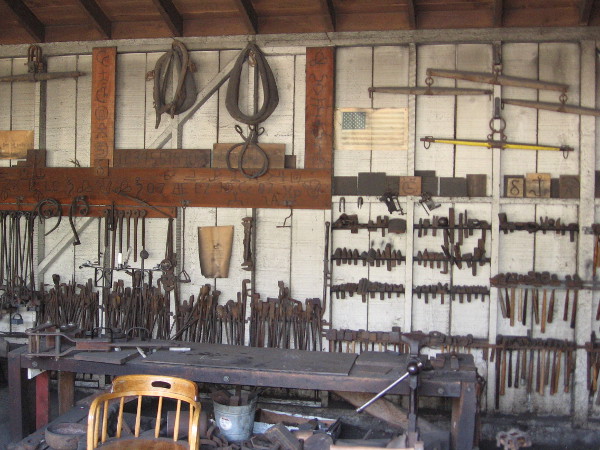
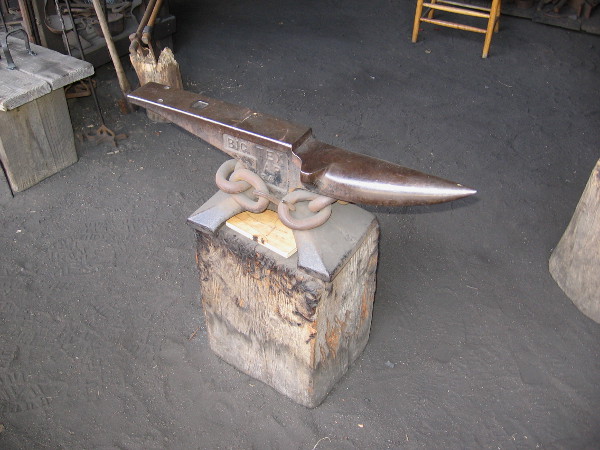
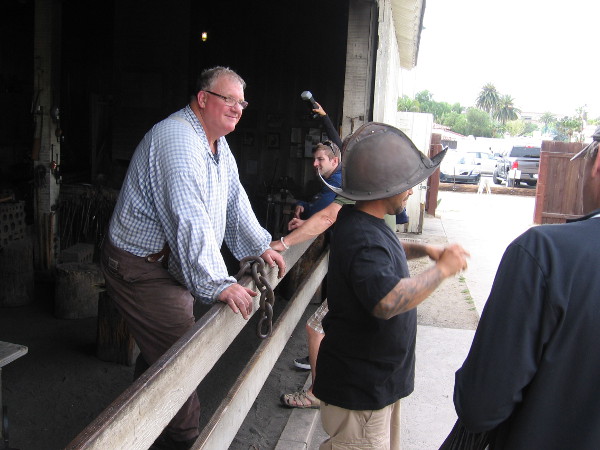
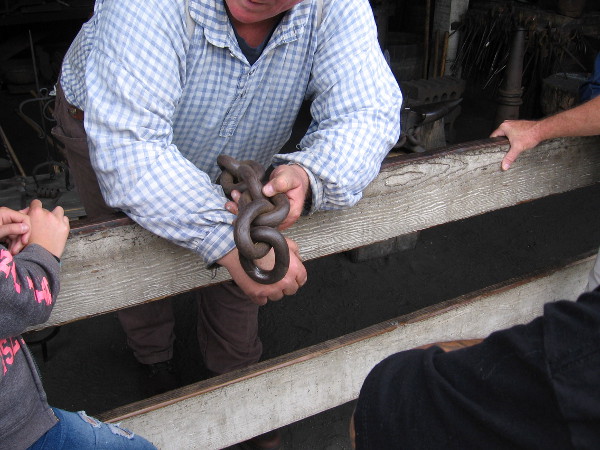
Old Town San Diego State Historic Park’s Blacksmith Shop and Wood Shop at the site of the Blackhawk Livery Stables, circa 1850-1871.Visitors to Old Town learn a little about life in San Diego during the mid 1800s. Blacksmiths created assorted metal objects, made repairs and shoed horses.This friendly blacksmith provided lots of fascinating information. Visitors watch with interest as he works to create a pot holder.I learned that in early San Diego blacksmiths typically burned charcoal in their forge, as coal was usually of poor quality and difficult to obtain in Southern California.A huge bellows provides oxygen for this brick furnace. A good working temperature is about 1800 degrees Fahrenheit.Products that were fashioned include iron grills, traps, candle holders, fish roasters, knives, shovels, chains, hinges, nails, cooking ladles and horseshoes.Hammers, bars, wrenches and various blacksmithing tools hang from the rear wall, in addition to harnesses and other items one might find in a livery stable.The gentleman showed me some devices used to suspend pots over a fire. Everything on this wall was made by local smiths in this shop.A shiny anvil.This wide grassy area behind nearby Seeley Stable was once used for anvil shoots. Gunpowder was placed in a hollow indentation between two anvils and ignited, sending one anvil high into the air with a loud bang! Anvils that did not shatter were considered sound.Old Town visitor tries on a Spanish conquistador helmet made in the Blacksmith Shop.A heavy anchor chain is shown. The welds must be as strong as the iron links themselves.A photo of living history. Skilled artisans used muscle, fire, metal and sweat to make everyday life easier for the early residents of San Diego.
…
I live in downtown San Diego and love to walk around with my camera! You can follow Cool San Diego Sights via Facebook or Twitter!
You can easily explore Cool San Diego Sights by using the search box on my blog’s sidebar. Or click a tag! There are thousands upon thousands of fun photos for you to share and enjoy!
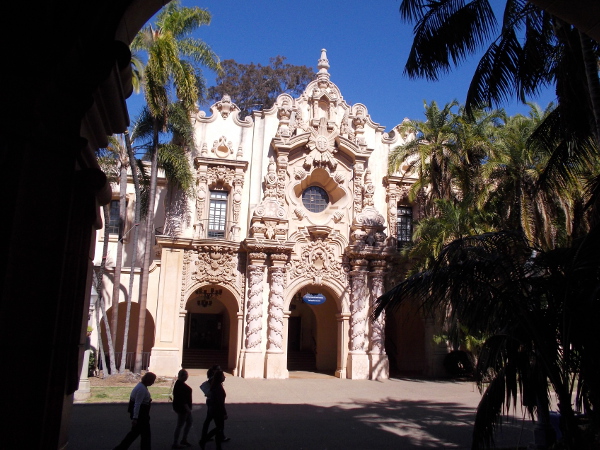
The facade of the Casa del Prado is just one of many wonders in Balboa Park.
Balboa Park is one of the most magical places in the world. Spells are cast, revealing life and wonder.
Please enjoy a few photos.
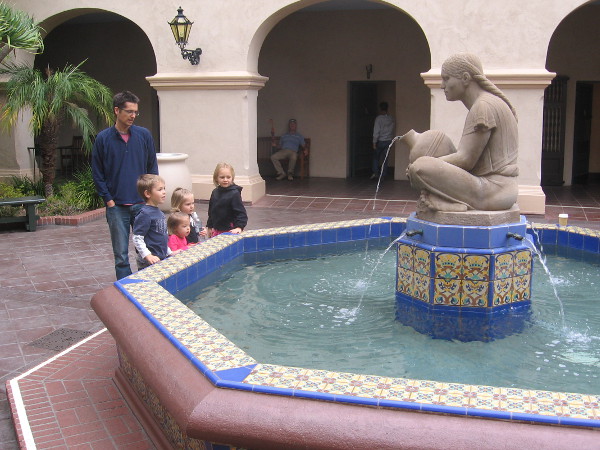
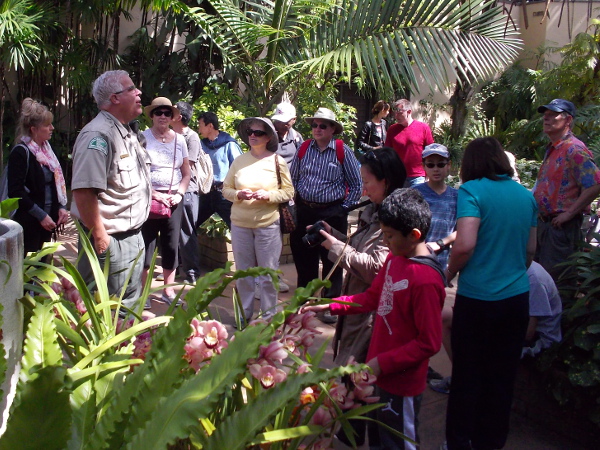
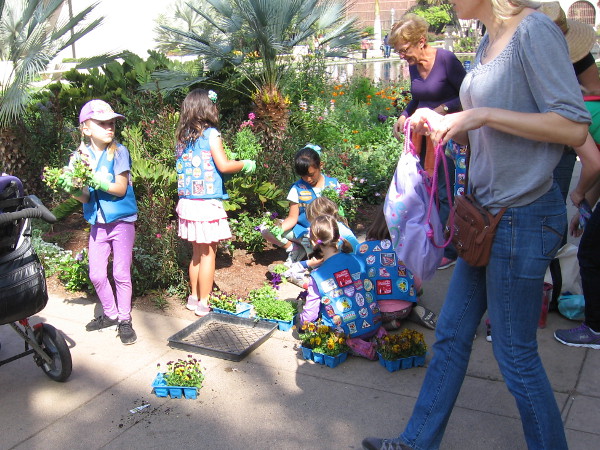
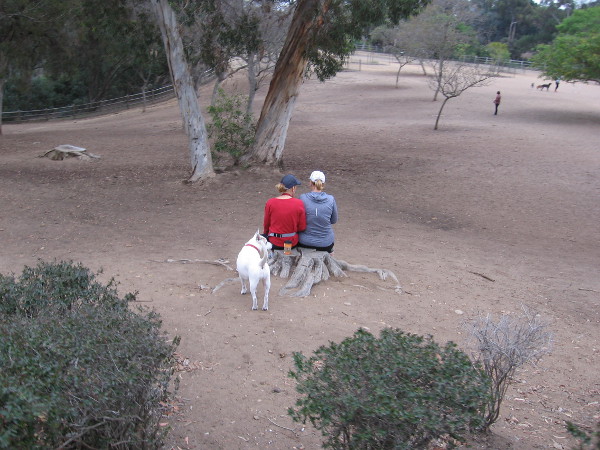
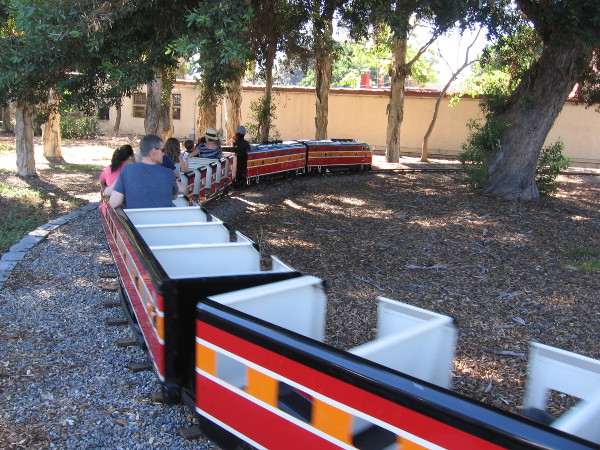
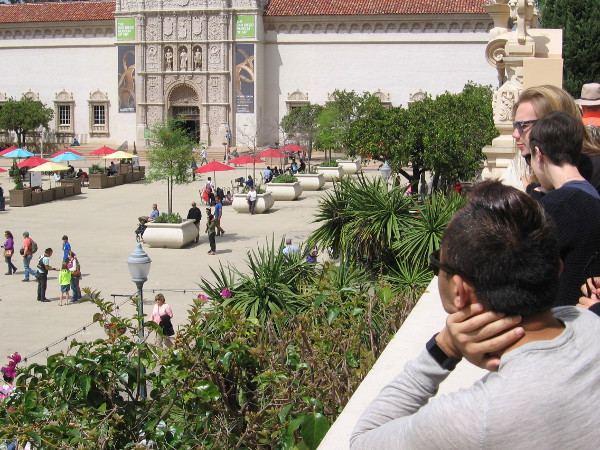
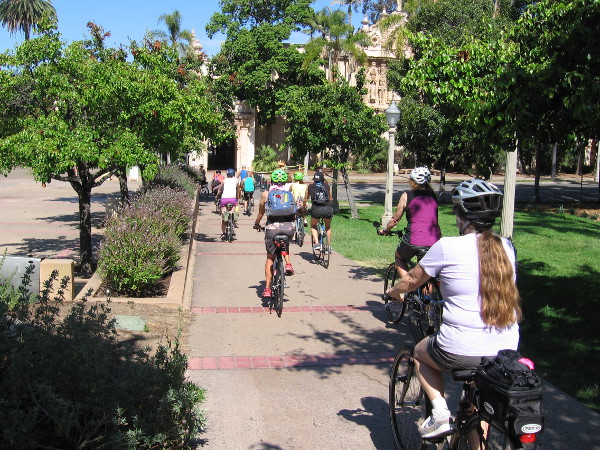
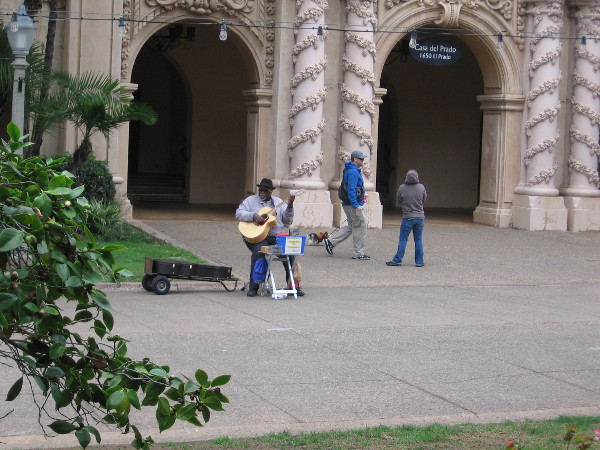
Another magical day in the park. The California Tower rises in the distance.Spirits are lifted by the Woman of Tehuantepec in the courtyard of the House of Hospitality.Ranger Kim relates the history of Balboa Park to a tour group. They stand by the original Administration Building, which was the first building erected for the 1915 Panama-California Exposition.Ranger Kim talks about the historic Botanical Building and its rich collection of beautiful flowers and plants.A wicker Electriquette slowly moves through the wonderful park.Daisy Girl Scouts plant living flowers by the reflecting pool.Photo from the Alcazar Garden of the House of Charm’s tower.Learning to tap dance at the Spreckels Organ Pavilion.Three life friends together at Nate’s Point Dog Park.A short but magical excursion on the Balboa Park Miniature Railroad.A view across El Prado of the San Diego Natural History Museum.The splashing Bea Evenson Fountain in the Plaza de Balboa attracts young and old.Gazing from a balcony of the House of Hospitality down at the life-filled Plaza de Panama and the San Diego Museum of Art.Bicycles and sunshine along El Prado.Big Slim plays guitar by the Casa del Prado.A musician strums in Spanish Village.A magic trick produces many smiles.
…
I live in downtown San Diego and love to walk around with my camera! You can follow Cool San Diego Sights via Facebook or Twitter!
I learned a past visitor to the Whaley House photographed these old dolls and was surprised to see the eyes–which are painted–closed!
Did I see any ghosts inside the Whaley House?
During my recent visit to Old Town San Diego, I ventured into the unknown. I took my very first look inside the Whaley House, widely considered to be the most haunted house in America. I also took lots of photographs, which you are about to see!
The Whaley House has been the subject of many serious paranormal investigations, and has appeared on many television programs. It was featured on Syfy Channel’s Fact or Faked: Paranormal Files, the Travel Channel’s episode America’s Most Haunted on Ghost Adventures, and the Biography Channel’s show The Haunting of Regis Philbin. The house’s reputation for supernatural activity has been discussed widely in the media and adopted by the popular culture.
LIFE magazine, a serious publication, has stated that the Whaley House is “the most haunted house in America.” The Travel Channel has agreed with that conclusion.
So, did I see any ghosts, spirits or apparitions–any spooky or weird stuff?
As I took the self-guided tour and peered into the various rooms, my eyes were primarily searching for ideal shots for my camera. But in the back of my mind, I also anticipated perhaps glimpsing something unusual.
Perhaps I’d see the ghost of Yankee Jim, who was hanged in a particularly gruesome way in 1852, on the same plot of land where the Whaley House was built in 1857. The Whaley’s youngest daughter Lillian was absolutely convinced that he haunted their home.
Or I might see the ghosts of Thomas or Anna Whaley who built the house when they came to San Diego from San Francisco. Thomas is said to appear in the parlor or on the upper landing; Anna in the downstairs rooms or outside garden.
Or perhaps I might get a ghostly glimpse of someone or something else…
Three of the docents I spoke to during my recent visit related their own bizarre experiences. Two docents once saw a gilded cup in a display case begin to vibrate for no apparent reason. Nothing had shaken the house or case. No other artifacts near the cup moved. The cup’s peculiar motion continued for 30 to 45 seconds, they attested. Another docent told me that she twice smelled lavender perfume inexplicably while sitting near a window in the upstairs theater. Nobody was nearby.
Several years ago, when I passed the Whaley House and spoke to a docent standing outside the front door, they told me they’d heard inexplicable footsteps in the theater and had seen a strange shadow moving on an upstairs wall. The cashier in the gift shop next door had seen the same weird shadow. I blogged about that here.
Okay. So what exactly did I see? Look at the photographs! And read the captions for more history concerning this fascinating and historically important house.
If I experienced anything unusual inside the Whaley House, it was that I felt a bit like a time traveler. A tour through this historic house is like stepping back into another time, when day-to-day life was both simpler and in many ways more dangerous, unpredictable and difficult. In my mind’s eye I could almost see the people of that era moving about the house–performing ordinary tasks–people who really weren’t that different than you or me. I could almost put myself in their shoes. In my imagination.
Take a look at these photographs and what do you see? If a few images seem to contain glare or strange effects of light, it was probably caused by my camera’s flash and the necessity of taking some photos through glass. The photo of the children’s bedroom, for example, was taken through a glass pane.
The only adjustments I made to these photos were cropping, brightness, contrast and the GIMP filter for sharpness. And the photos I altered were changed just slightly to make them appear a little bit nicer on your screen!
Leave a comment if you see something ghostly!
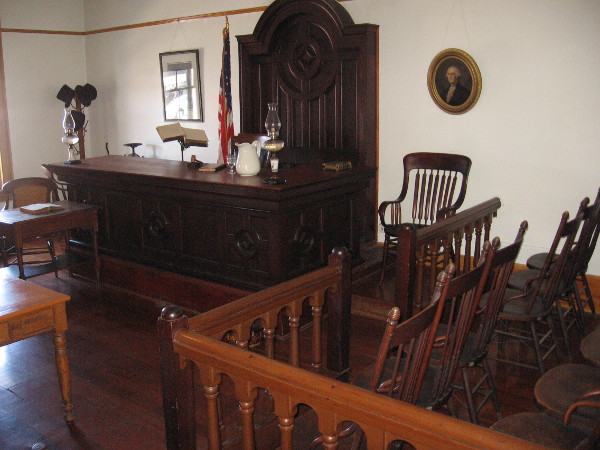
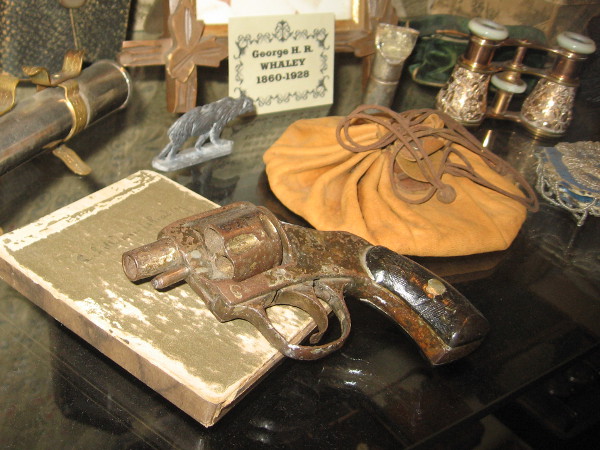
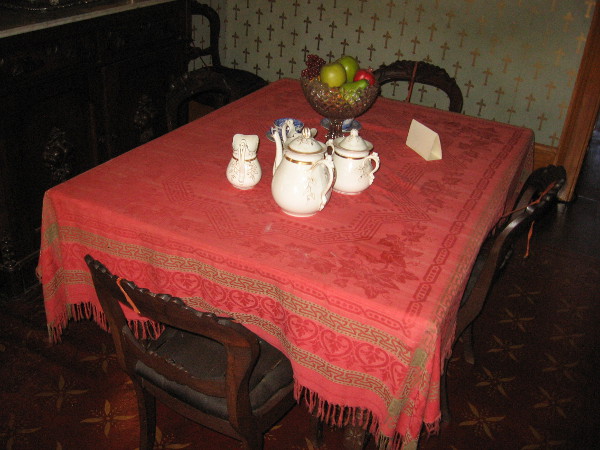
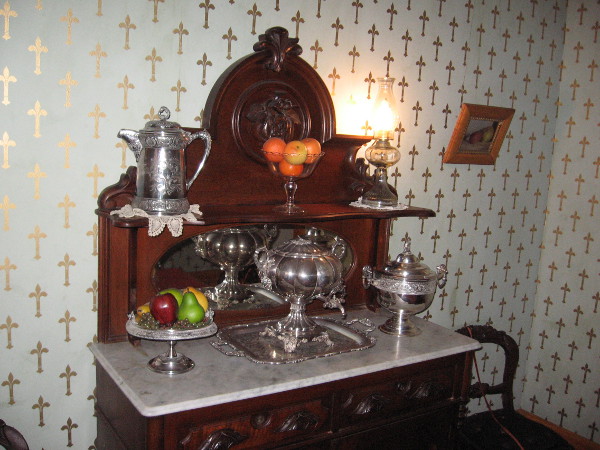
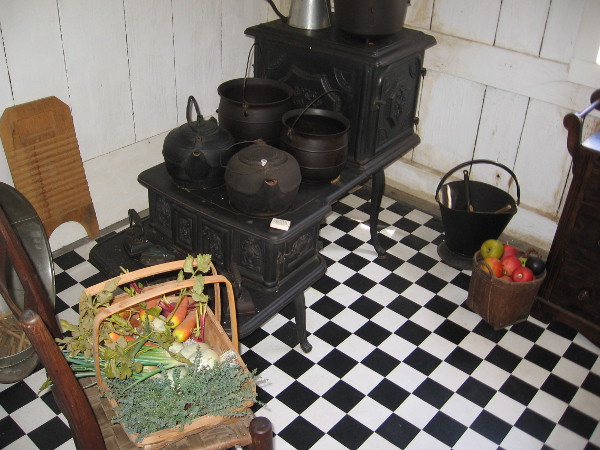
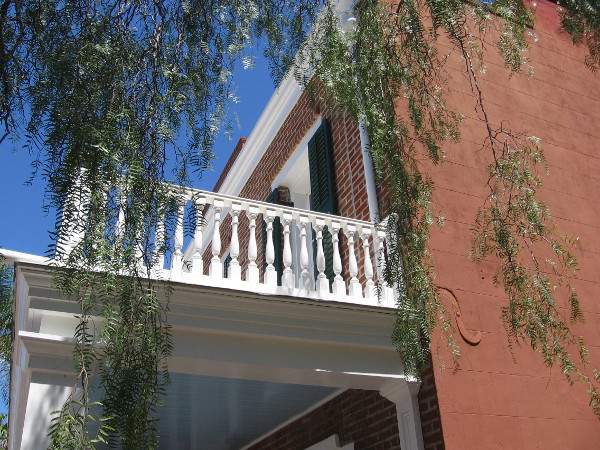
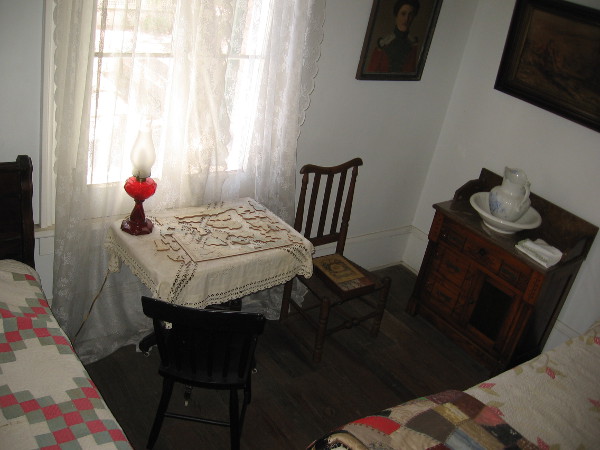
Sign in front of America’s most haunted Whaley House. Like various other historic structures in San Diego, the house is preserved by SOHO–the Save Our Heritage Organisation.Photo of the 1857 Greek Revival-style Whaley House from across San Diego Avenue. The famous house is located in Old Town, the birthplace of San Diego.The Whaley House, once designated an official haunted house by the United States Commerce Department, has appeared on many television programs, including the Travel Channel’s show America’s Most Haunted.The Whaley house is the oldest brick building in Southern California. It served as home, granary, store, courthouse, school and theater. It was the most luxurious residence in early San Diego.Visitors to Old Town San Diego peer into the Whaley House window just left of the front door. That is where the Whaley and Crosthwaite General Store was located.The self-guided tour begins in the courtroom, which is located directly behind the store. Originally a granary whose brick walls failed to stop rats, at different times the room served as school, church, ballroom and billiard hall.Photograph on the courtroom’s back wall shows the Whaley House on the outskirts of tiny San Diego. It stands alone in a barren place. It was built on a hanging ground not far from old El Campo Santo Cemetery.Another photo inside the courtroom. This served as the second County Courthouse in San Diego, in operation from 1869 to 1871.Inside the courtroom you’ll find the Centennial Cannon. It was cast in 1876 and was used for various ceremonies before being moved to Horton Plaza.Another photo in the courtroom shows San Diego’s old stone jail in a crumbling state. It stands next to the chapel cabin and the old graveyard.The Whaley and Crosthwaite General Store. Many items available for purchase included whiskey, wine, buckwheat, macaroni, codfish, pickles, catsup, tin ware, hardware, stationery, clothing and shoes.Shelves behind the store’s counter contain products one might buy in the mid to late 1800’s in San Diego. Goods that arrived by ship around Cape Horn were later obtained via transcontinental railroad.A nearby display case contains items belonging to various members of the Whaley family, including engraved silverware and china.Inside the display case one can see an old photograph of George H. R. Whaley, one of the six children of Thomas and Anna Whaley.Two docents told me how they were both present when the gilded cup began to vibrate without explanation. It did so for about 30 to 45 seconds. No other objects moved.More historical objects that belonged to the Whaley family, including a small snubnosed revolver.Next on the self-guided tour is the circa 1860s dining room. The chairs are upholstered with woven horse hair. They’ve survived a century and a half in pretty good condition.The wallpaper with fleur-de-lis patterns reflects light like a sky full of shining, golden stars. The furnishings and silver are original.The tour proceeds to the reconstructed kitchen, which seeks to replicate the original board and batten structure. The checked floor is typical of the era.Many of the dishes and utensils are original. Prepared food would be passed through a window (that we are looking through) to the adjacent dining room.Photo of rear of Whaley House. The white detached room is the kitchen. In case of fire, the burning walls of the kitchen would be pulled away from the main building by horse. This type of construction was common in those days.These stairs lead up to the second floor of the Whaley House museum, where there is a theater and three bedrooms.A docent explains the history of this first commercial theater in San Diego. The Tanner Troupe performed here from October 1868 to January 1869. The first performance reportedly attracted an audience of 150. The docent thought this number was improbable–for just one performance in this rather small room!The painted backdrop of the stage, an original family trunk, and a raven, recalling the famous poem of Victorian-era American horror writer Edgar Allan Poe.Another photo showing painted curtains. On two occasions, a docent was sitting to the left of this stage by one of the second floor windows when she smelled sudden, mysterious lavender perfume. Nobody was nearby, she told me.Advertisement framed on theater wall. Admission to see the Tanner Troupe perform was 50 cents. Audiences saw moral, chaste and versatile entertainments–drama, farce, comedy, singing and dancing.Print in a gilded frame in the upstairs theater. It’s from a painting depicting Shakespeare’s Romeo and Juliet. On the opposite wall hangs similar artwork depicting Othello.Outdoor stairs back then ascended to this outside balcony. Audiences entered the theater that way, without disturbing the Whaley House living quarters.Photo of Thomas and Anna Whaley’s master bedroom. According to the self-guided tour info, the walnut bedroom set is in the Renaissance Revival style. The writing desk was Anna’s.A visitor gazing into the children’s bedroom said the dolls seemed very creepy. The crib just visible was used by four generations. An 18-month old Thomas Whaley Jr. died here from scarlet fever.Visitors look for ghosts in the children’s bedroom. The theater is straight ahead.The rear bedroom could be used by up to four children and multiple visitors. The washbowl and pitcher were used for bathing.Now we are back downstairs. This is part of the elegant guest chamber in the southeast corner of the Whaley House. Important people stayed here, including General Thomas Sedgewick.The study with desk and bookcase. During his time in San Diego, Thomas Whaley held many positions, including merchant, city clerk, notary public, realtor and railroad secretary. That sword was actually a prop used by the Tanner Troupe during their performances in the theater upstairs.Looking from the study into the Rococo Revival Style parlor. The Whaleys were much wealthier than most San Diego residents at the time. The room is full of art, paintings and splendid decorative objects.There’s no guarantee you will see a ghost at the Whaley House. But you will definitely observe a good deal of history and learn about San Diego’s fascinating past.
…
I live in downtown San Diego and love to walk around with my camera! You can follow Cool San Diego Sights via Facebook or Twitter!
You can easily explore Cool San Diego Sights by using the search box on my blog’s sidebar. Or click a tag! There are thousands upon thousands of fun photos for you to share and enjoy!
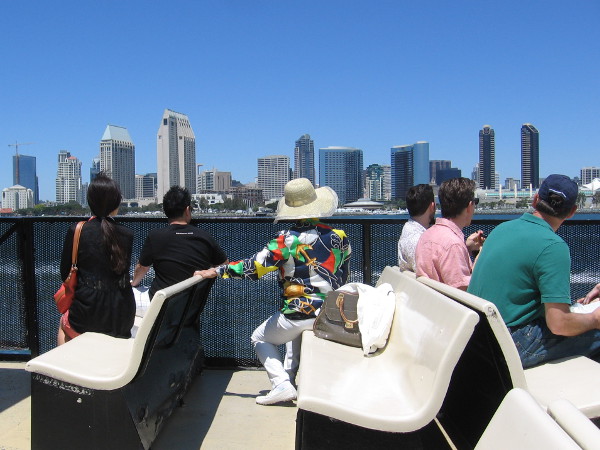
Curious tourists take the Coronado ferry across the bay to downtown San Diego. What will they see?
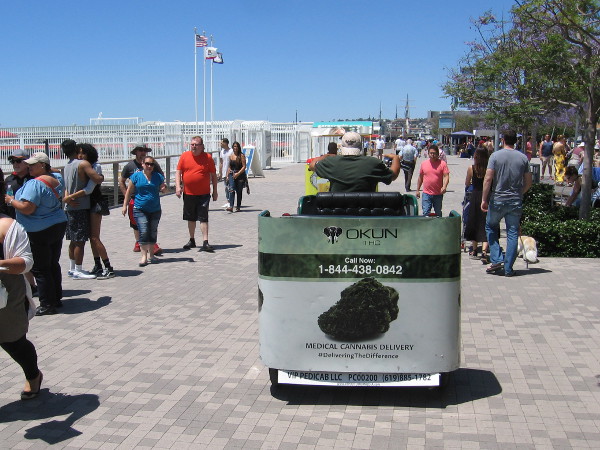
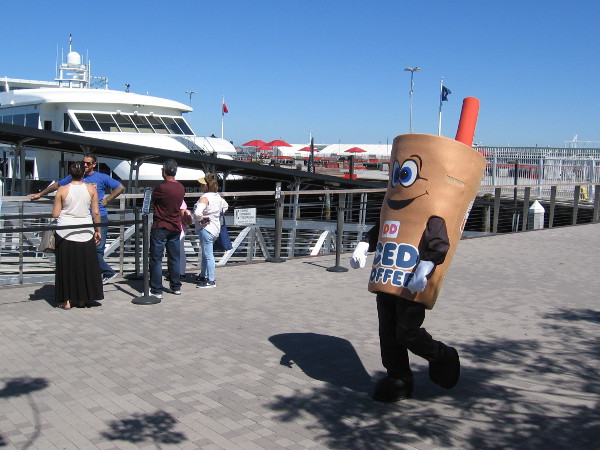
Yesterday I bumped into a few unexpected sights. No different than any other day. A walk through the world with open eyes can tickle both one’s funny bone and heart.
A pedicab advertising marijuana delivery!A walking, smiling iced coffee!Upside down visitor information!A heartfelt welcome on the bow of the USS Midway. Welcome home to the troops.
…
I live in downtown San Diego and love to walk around with my camera! You can follow Cool San Diego Sights via Facebook or Twitter!
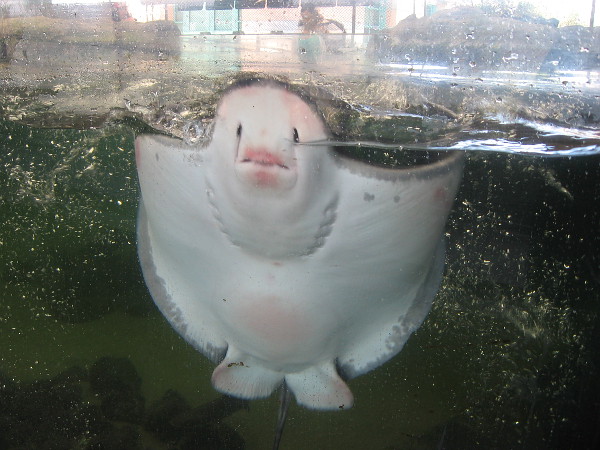
Bat ray rises against glass of an outdoor tank at the Living Coast Discovery Center in Chula Vista.
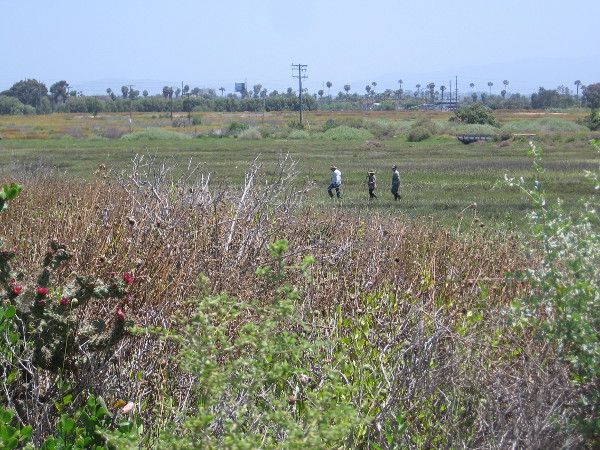
Before my hike through Sweetwater Marsh, I enjoyed a visit to the Living Coast Discovery Center, which is located inside the San Diego Bay National Wildlife Refuge. Exhibits inside the center and clusters of wildlife tanks and enclosures outside allow visitors to see and learn about the animals that make this refuge their home. The place is just right for families, with kid-size educational displays, short, easy paths, and even some picnic tables. If I were a young kid, having a birthday party here would be really cool!
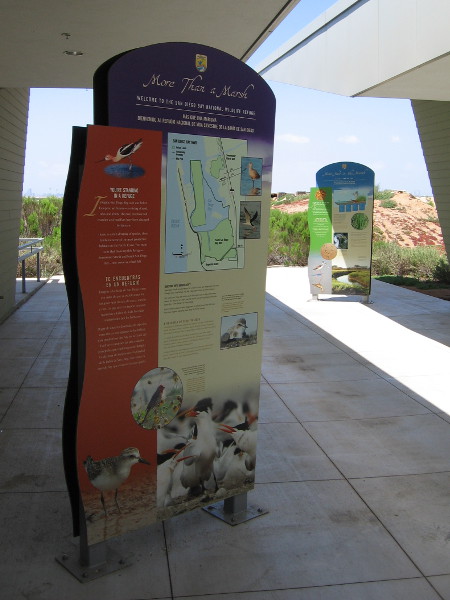
After checking out the exhibits at the Living Coast Discovery Center, I ventured over to an adjacent building that is the San Diego National Wildlife Refuge Complex headquarters. Some great displays outside provide more information about the unique and beautiful wetland that stretches in all directions. Not far from this building, one can easily find a hiking trail that leads across the marsh to San Diego Bay.
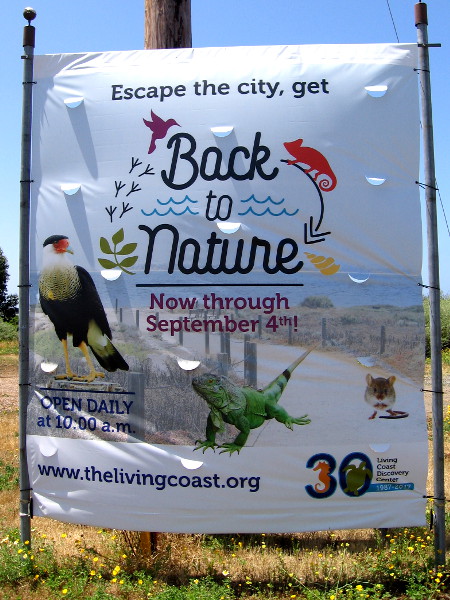
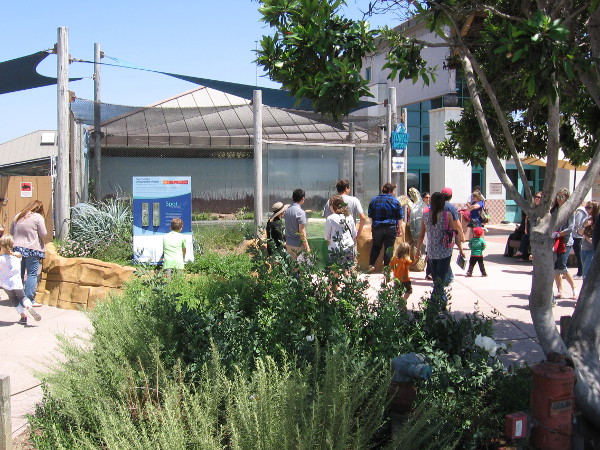
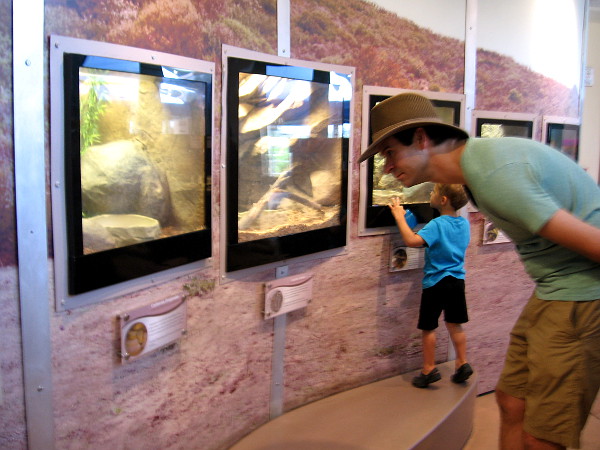
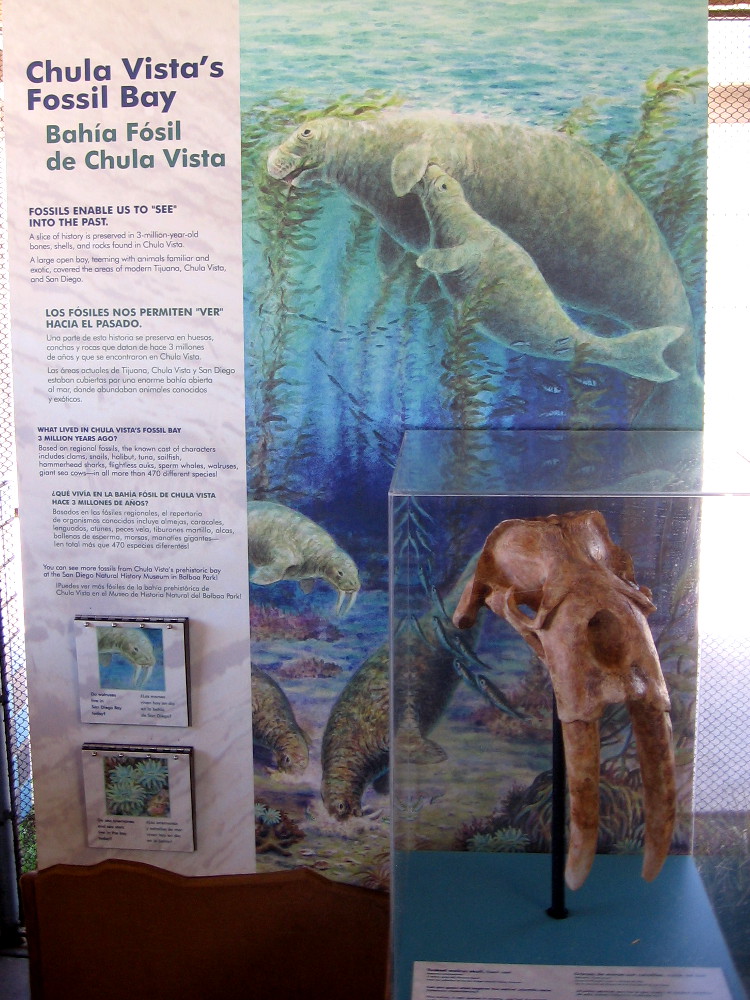
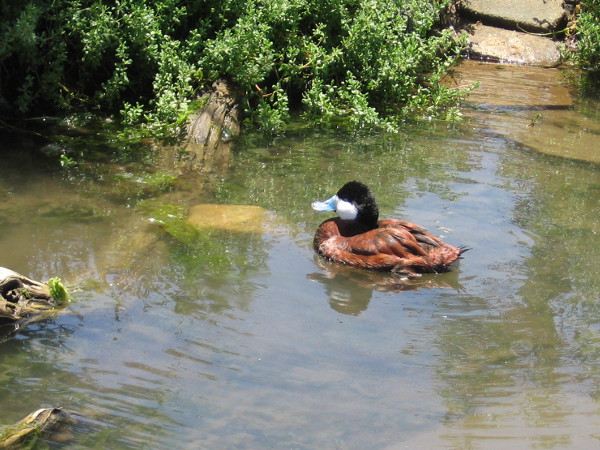
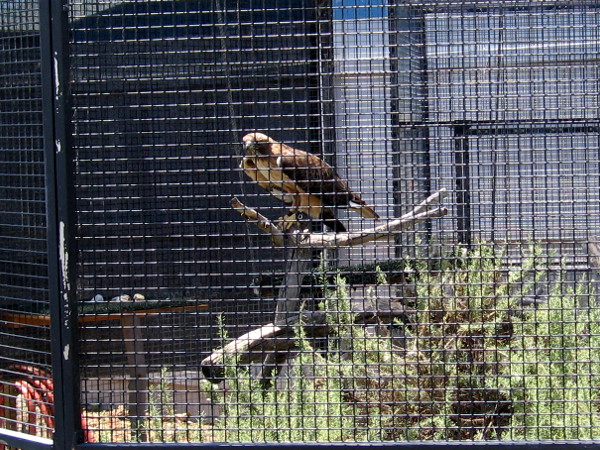
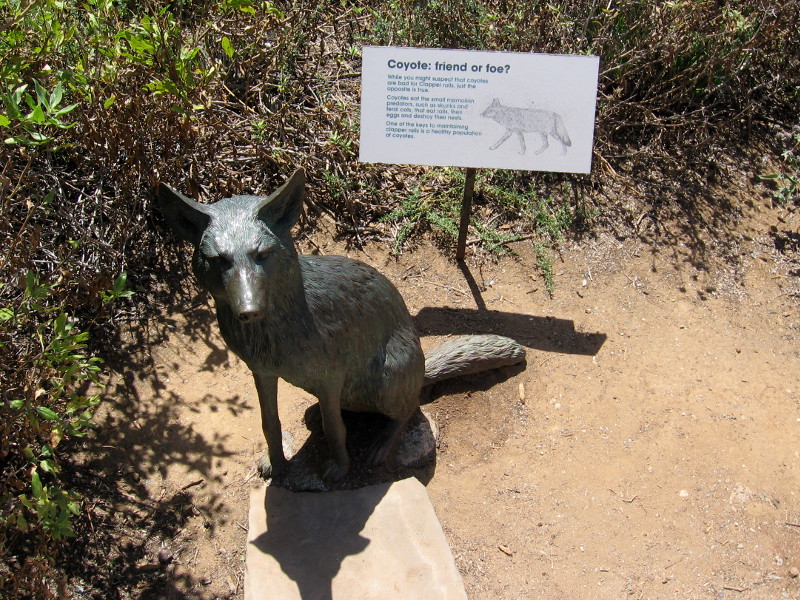
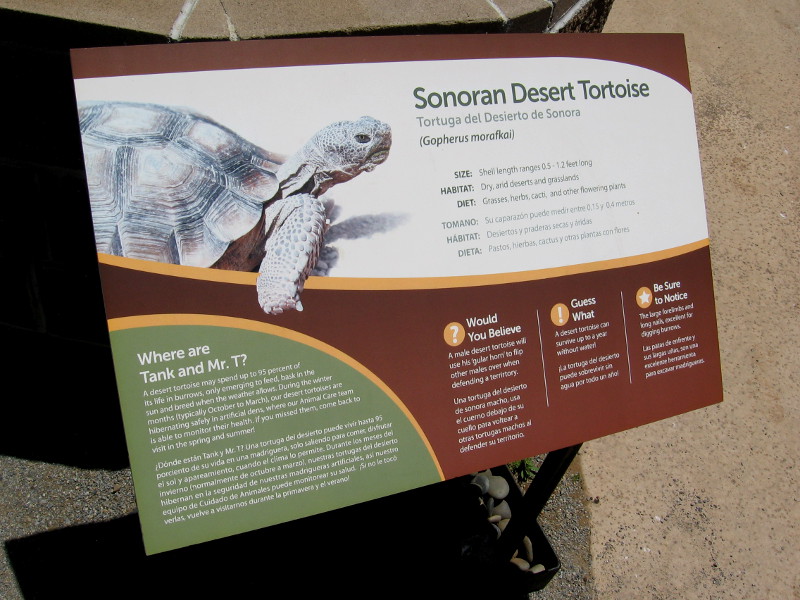
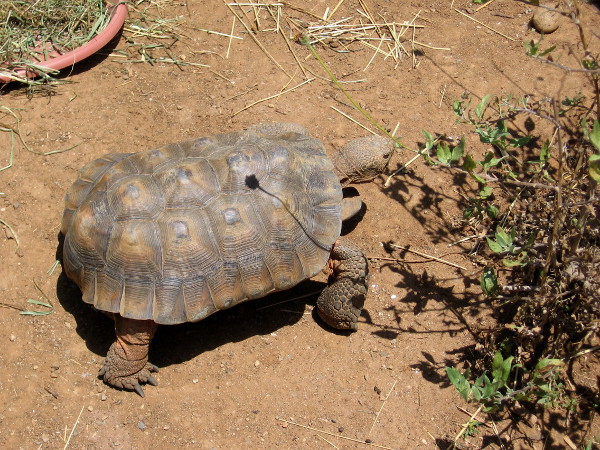
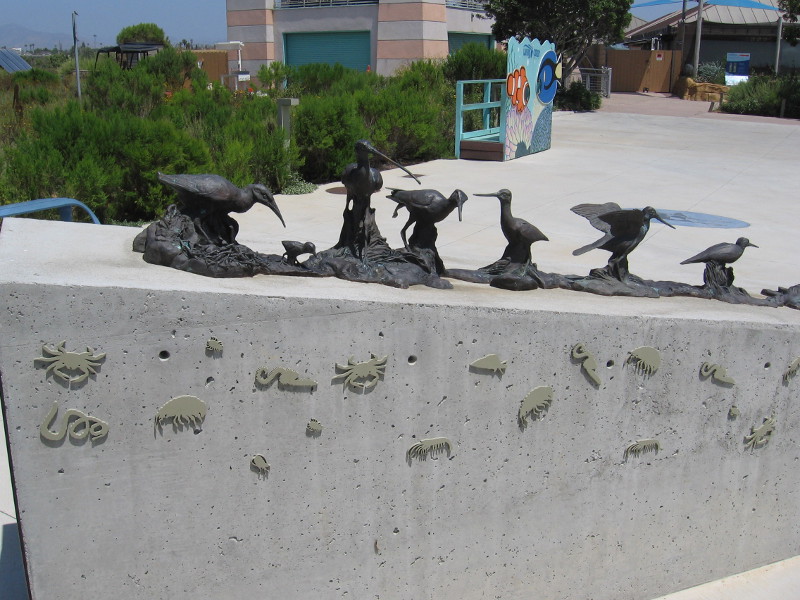
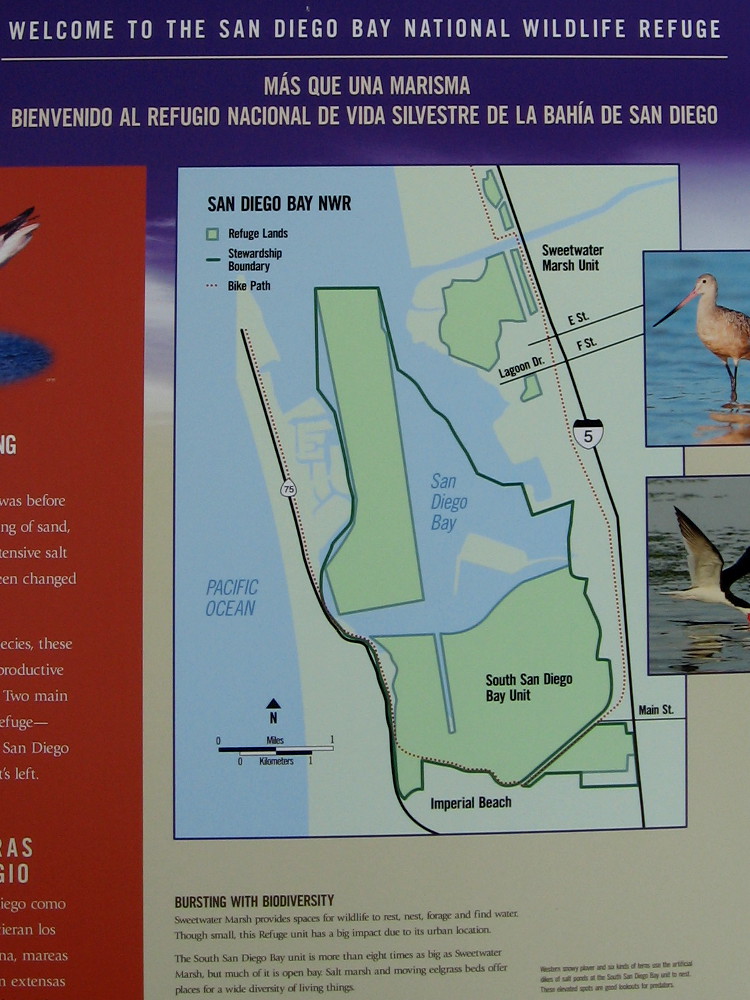
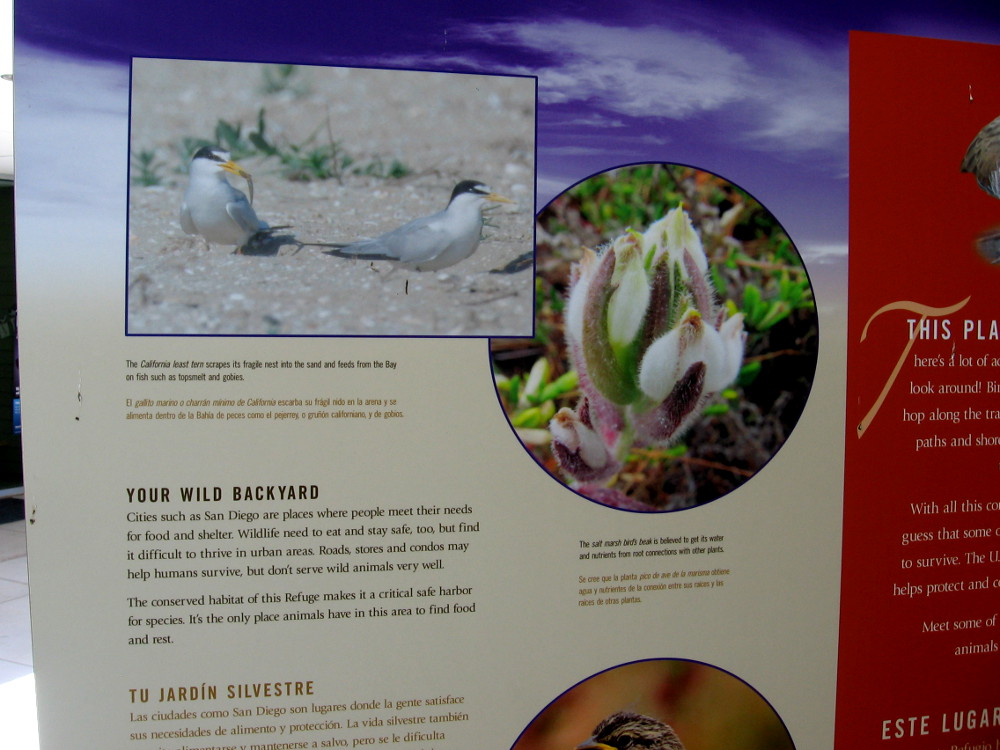
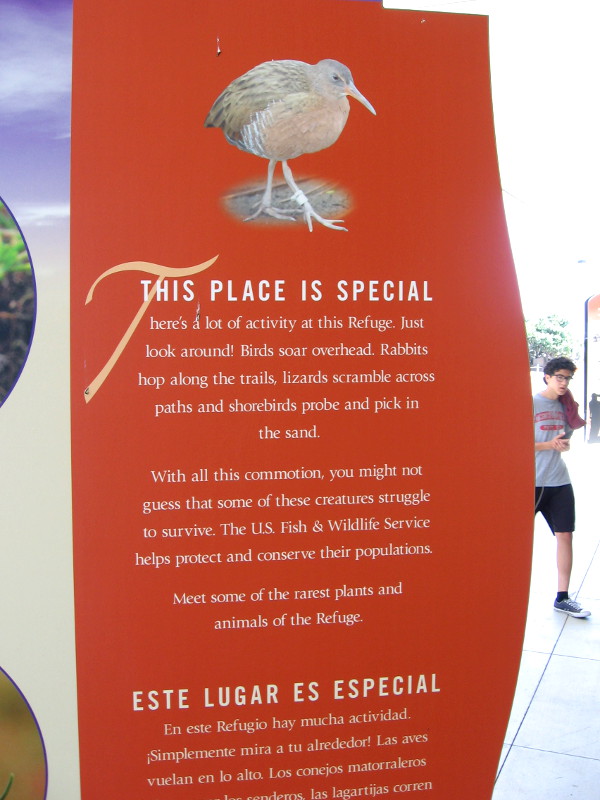
The Living Coast Discovery Center, located in the Sweetwater Marsh Unit of the San Diego National Wildlife Refuge, is where to get Back to Nature.A short bus ride takes one from the parking lot near Interstate 5 through the protected Sweetwater Marsh to the kid-friendly education center.People near the green sea turtle exhibit at the front of the Living Coast Discovery Center.Many species of reptiles, amphibians, invertebrates and fish are on display inside the small center. There’s even a mouse house popular with kids.Outside, visitors can explore exhibits featuring sharks, rays, birds and tortoises. One can also look across the surrounding Sweetwater Marsh.Actions on land affect San Diego Bay. Pollution runoff flows via creeks, rivers and storm drains into the marsh then out to the ocean.A leopard shark. They are plentiful in the waters off San Diego.This 3-million-year-old fossilized tusked walrus skull was found in the area. 470 different species have been found as fossils here, including sperm whales and now extinct flightless auks!Enclosures in the aviary area contain clapper rails, shorebirds and ducks.A blue-billed ruddy duck swims in a pool of water at the Living Coast Discovery Center.In other parts of the aviary area one can see vultures, hawks, eagles and owls.A red-tailed hawk.Beautiful artwork on one building’s side shows a beach and birds in flight. Swallows have built nests above it near the roof.Bronze sculpture of a coyote. Many other works of wildlife art can be viewed around the center.Sign near an enclosure describes the Sonoran desert tortoise.A tortoise take a slow stroll outside the Living Coast Discovery Center.This amazing art depicting marshland birds is just outside the entrance to the San Diego National Wildlife Refuge Complex headquarters.Large signs explain the role of a wildlife refuge.National Wildlife Refuges are safe havens for species. The first one, at Pelican Island in Florida, was created in 1903 by Theodore Roosevelt.Map of the extensive San Diego Bay National Wildlife Refuge.The wildlife refuge contains great biodiversity. The animals and plants are all parts of a complex and sensitive ecosystem.Different forms of life can be found in subtidal channels, mudflats, the low marsh and high marsh. The changing tide allows birds to feed and variously adapted species to thrive.Wildlife can find it hard to thrive in urban areas. The conserved habitat of this refuge is a critical safe harbor for many native species.This place is special. The U.S. Fish and Wildlife Service helps to protect its wild residents.A green sea turtle, one of those residents of San Diego Bay!
…
I live in downtown San Diego and love to walk around with my camera! You can follow Cool San Diego Sights via Facebook or Twitter!
You can easily explore Cool San Diego Sights by using the search box on my blog’s sidebar. Or click a tag! There are thousands upon thousands of fun photos for you to share and enjoy!
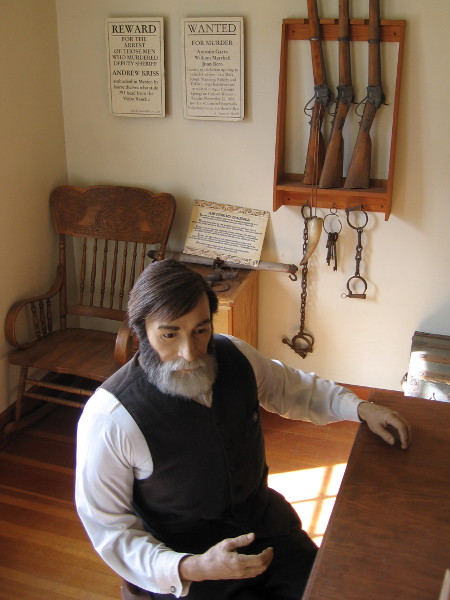
Likeness of Agoston Haraszthy, first Sheriff of the County of San Diego. He was elected in 1850 and served one term. He was a pioneer when it came to growing grapes and became known as the Father of California Wine.
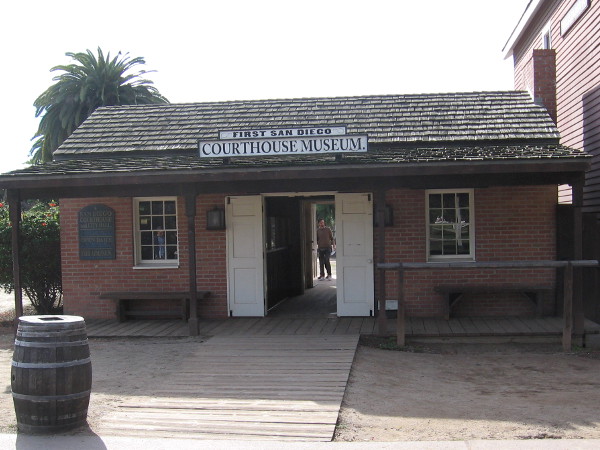
Visitors to Old Town San Diego State Historic Park can get a taste of the city’s early history when they step into the First San Diego Courthouse Museum.
One of many free attractions that can be found around Old Town’s central Plaza de Las Armas, the First San Diego Courthouse Museum is a recreation of our city’s first fired-brick structure, built in 1847 by members of the Mormon Battalion.
From 1847 to 1850 the original building served as the office of el Alcalde (Mexican mayor) of San Diego. Beginning in 1850 it contained the office of San Diego Mayor and City Clerk, and was used for meetings of the San Diego Common Council. The building was also used as a city and county courthouse and First District Court beginning in 1850.
Other uses for the building would include a meeting place for Masonic Lodge No. 35, headquarters of the U.S. Boundary Commission, office of the San Diego County Board of Supervisors, and a place of worship for San Diego’s first Protestant church.
Come with me inside the museum. Let’s have a peek at a few very small rooms and their fascinating exhibits.
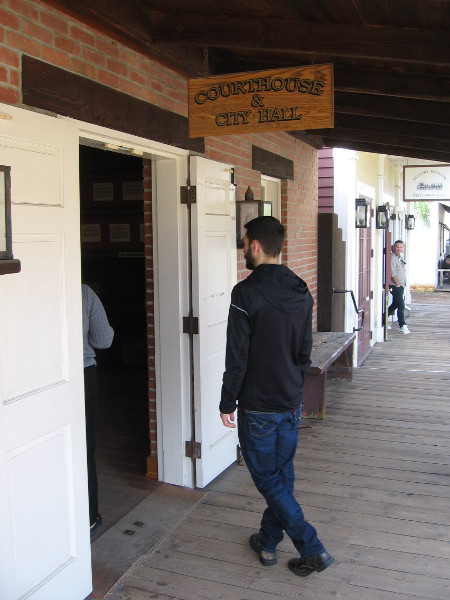
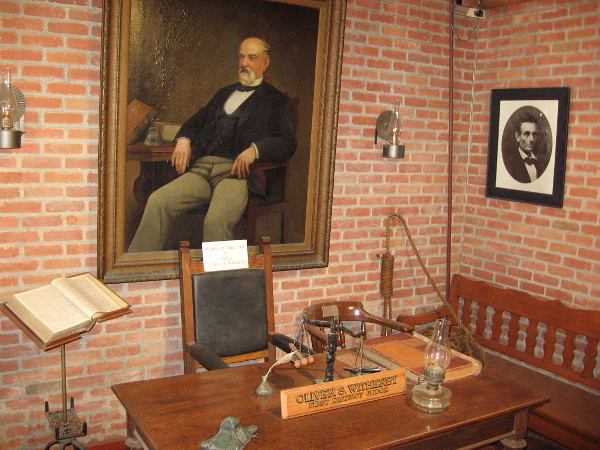
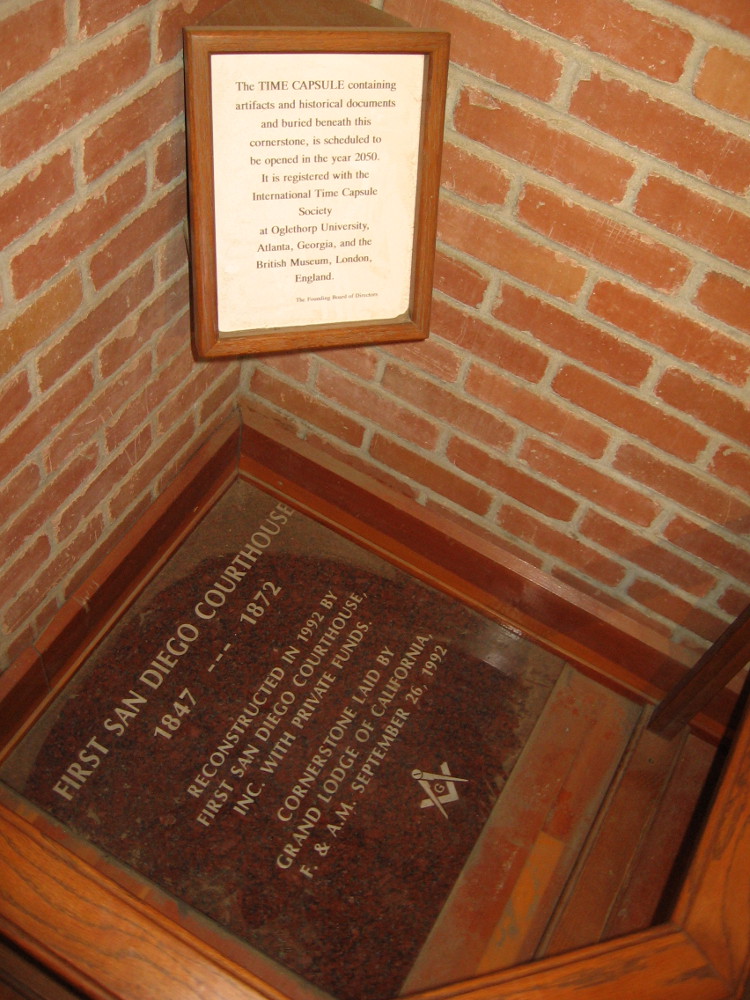
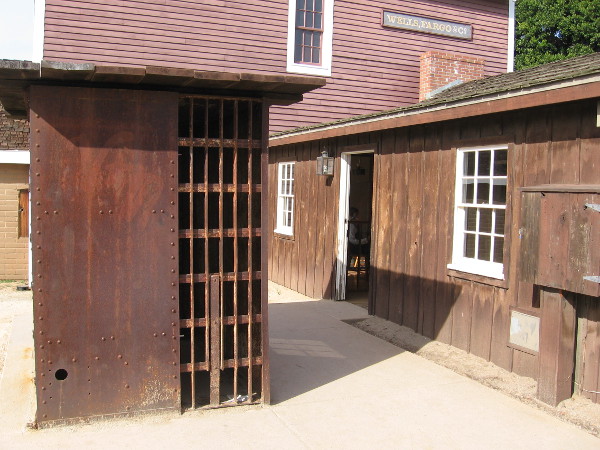
Photo of the modest brick First San Diego Courthouse Museum in Old Town, a recreation of San Diego’s first courthouse and city hall.In 1847, the Mormon Battalion built the first fired-brick structure in San Diego. For over two decades it would serve as courthouse.Visitor to Old Town San Diego State Historic Park enters a fascinating recreation of the city’s first courthouse and city hall.The portrait is of Oliver S. Witherby, He was appointed First District Judge in 1850. He served for 3 years. He is considered the Father of San Diego Jurisprudence.A time capsule lies under this cornerstone of the first San Diego courthouse. It is scheduled to be opened in 2050.A display case in San Diego’s first courthouse contains artifacts from the 19th century, including old pipe bowls and an antique lawyer’s briefcase.In 1872 a fire destroyed the San Diego courthouse. The fire burned a large part of Old Town’s business section.Sign explains the first California courts. The district court convened here, and acted as the highest court in the state.This room in the small building was the mayor’s office. Portraits of some early San Diego mayors are on the wall. Joshua H. Bean was San Diego’s first mayor, elected in 1850.A peek into the adjacent sheriff’s office. I see rifles, handcuffs and keys to the outdoor jail cell.This iron jail cell was the size and construction of the original courthouse jail from 1850.Break the law, and you might end up in here!A small museum depicting the first San Diego Courthouse and City Hall in Old Town is open free to the public every day.
…
I live in downtown San Diego and love to walk around with my camera! You can follow Cool San Diego Sights via Facebook or Twitter!
You can easily explore Cool San Diego Sights by using the search box on my blog’s sidebar. Or click a tag! There are thousands upon thousands of fun photos for you to share and enjoy!
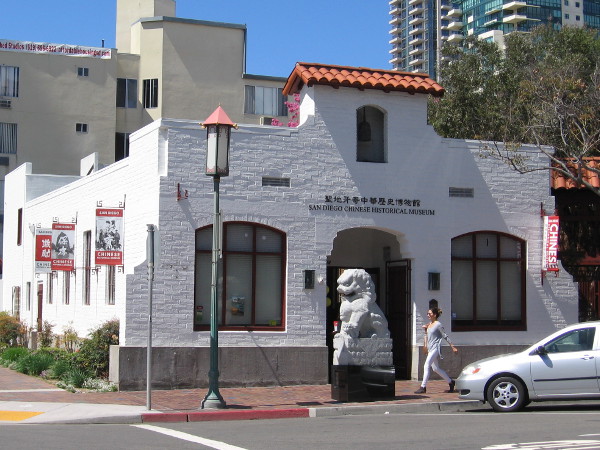
The San Diego Chinese Historical Museum is a cultural gem in downtown’s small Chinatown.
I recently enjoyed a visit to the San Diego Chinese Historical Museum. It’s located downtown in San Diego’s Asian Pacific Historic District. I was graciously allowed to take some photos of the indoor exhibits and the peaceful outdoor garden.
Built in 1927, this Mission Revival style building was originally the Chinese Community Church in San Diego’s Chinatown. It was saved from demolition in the 1990’s, and relocated to its present location.
The museum might be small, but it overflows with an important slice of San Diego history. Its many colorful artifacts representing Chinese culture will fascinate your eyes at every turn! I recommend a visit!
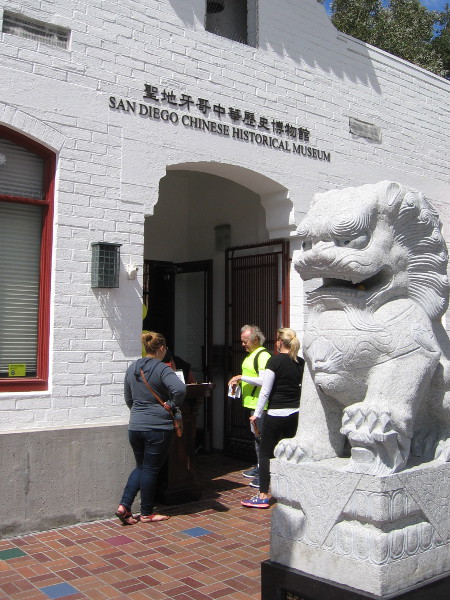
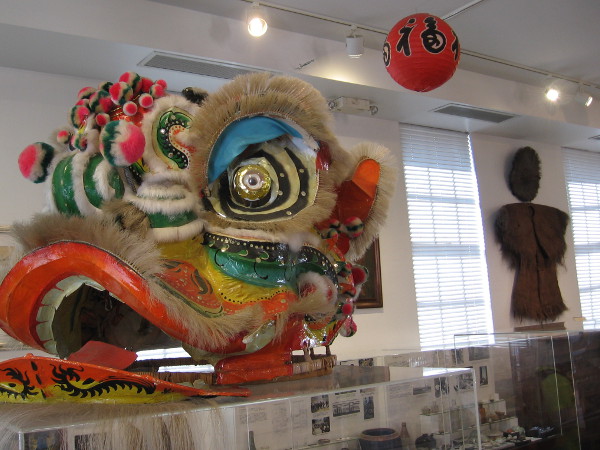
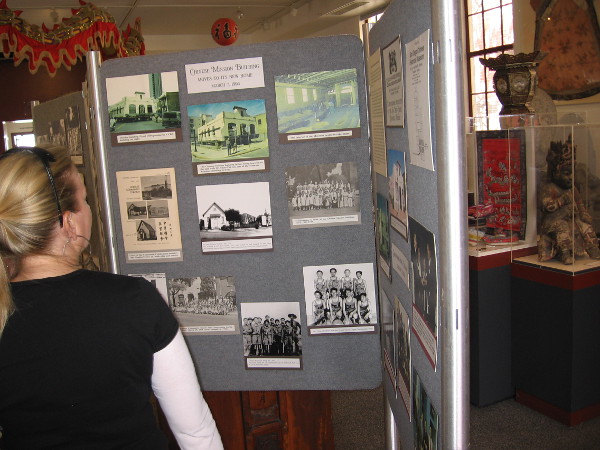
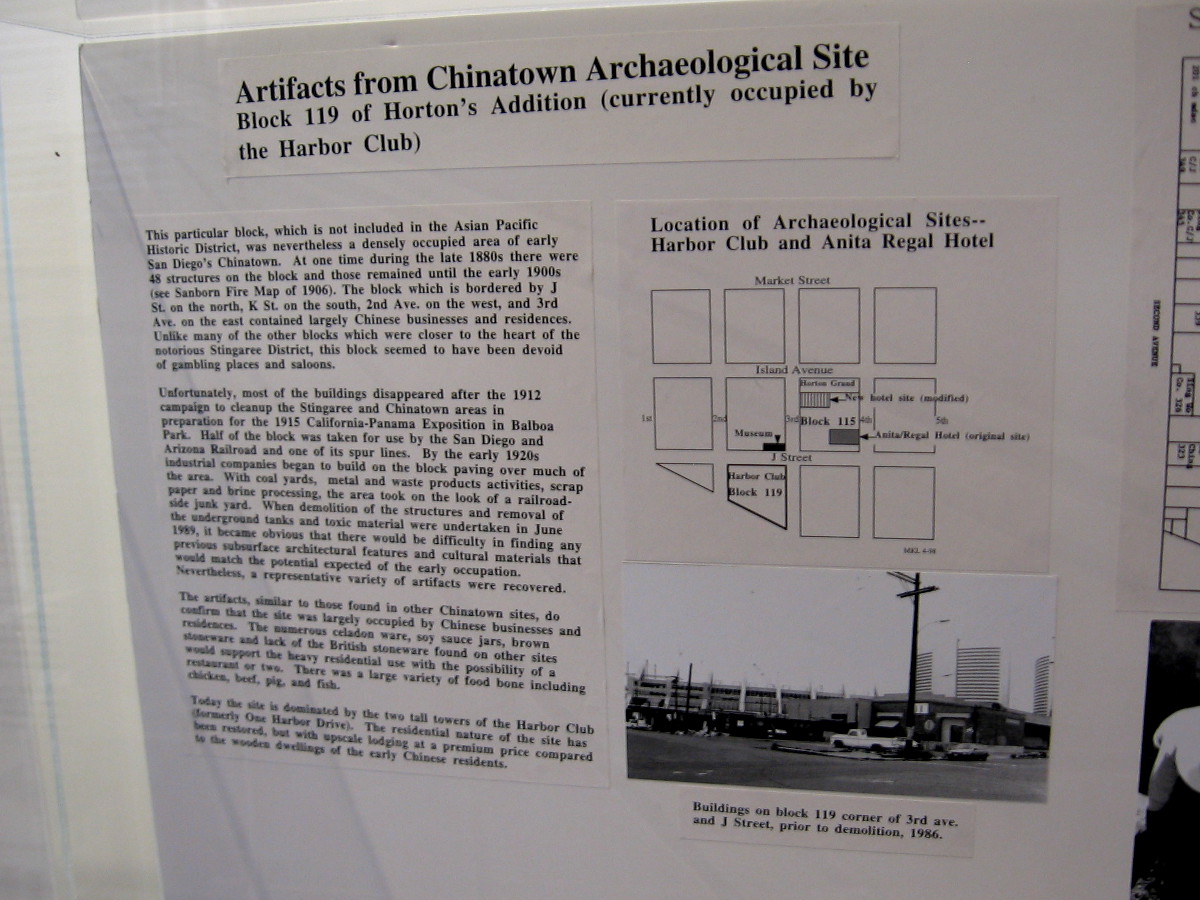
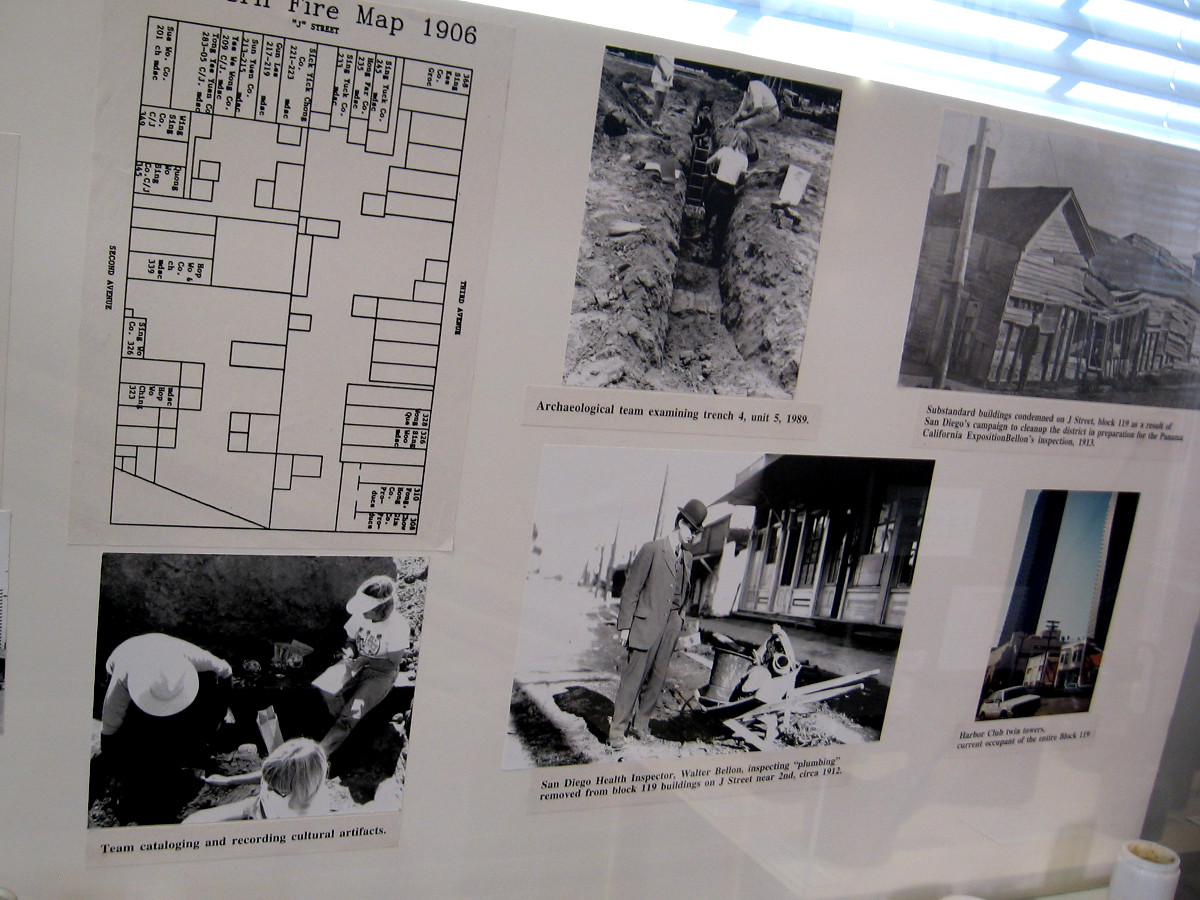
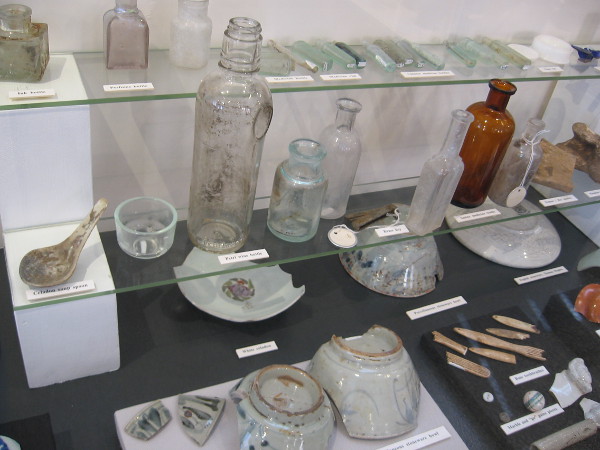
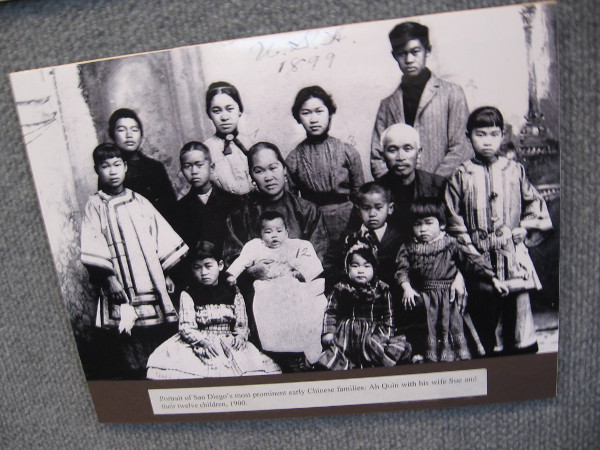
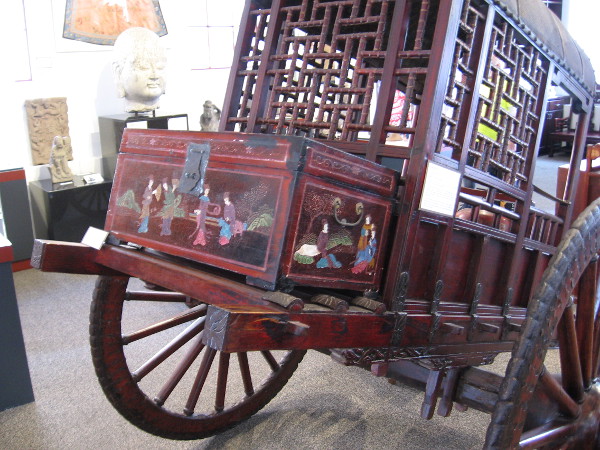
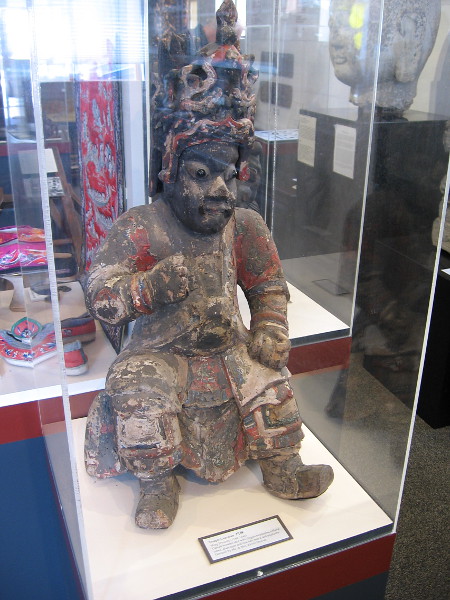
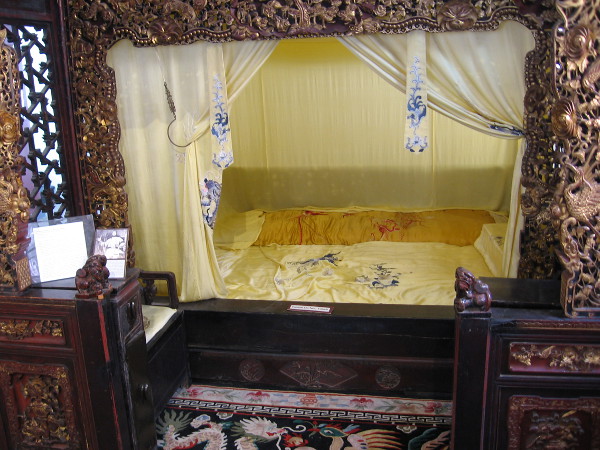
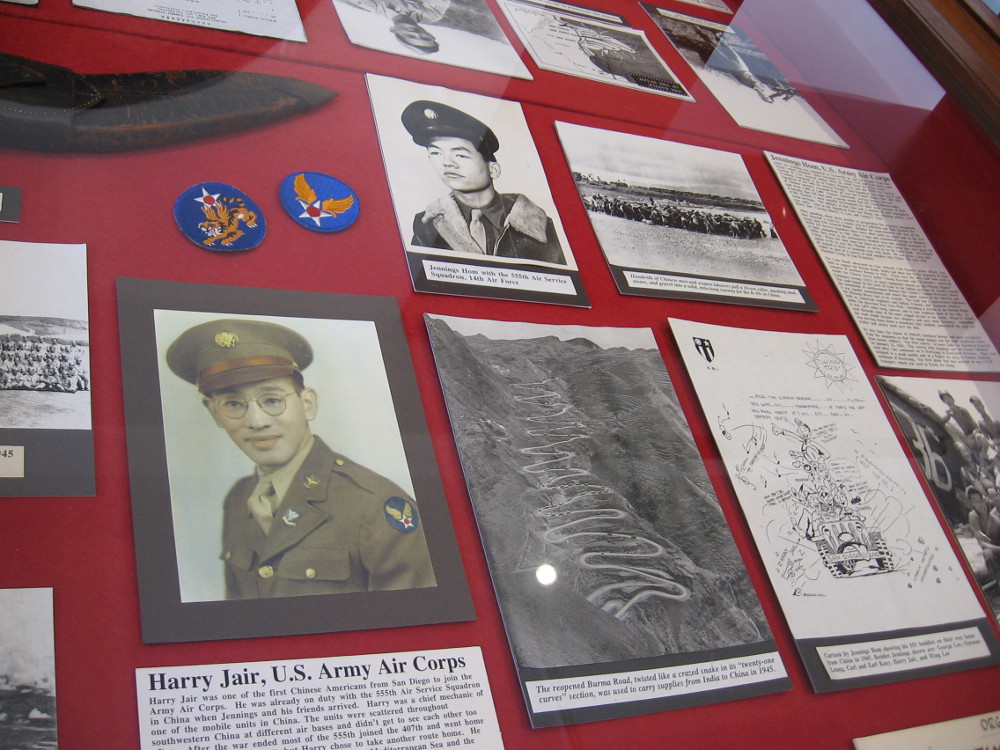
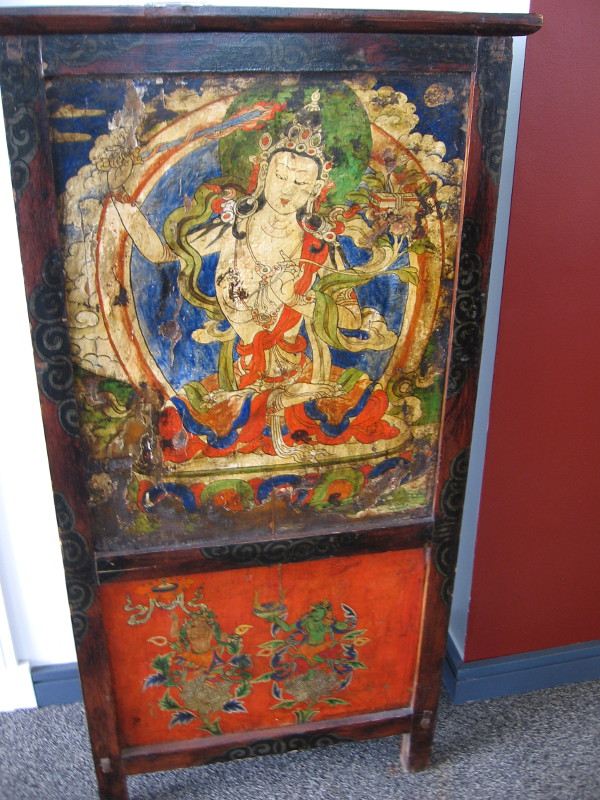
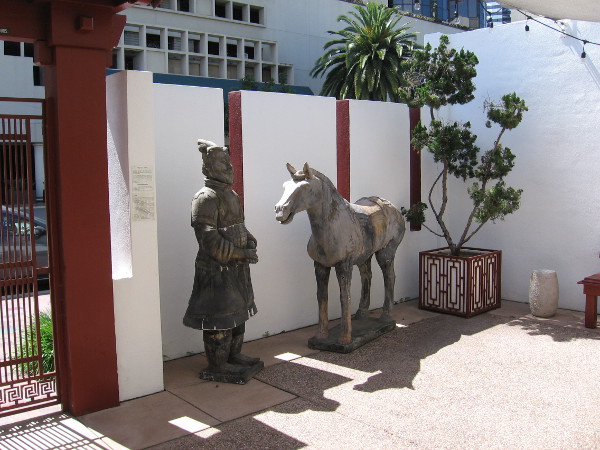
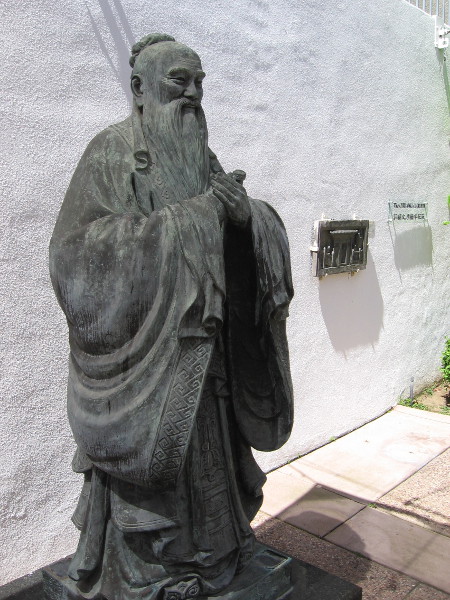
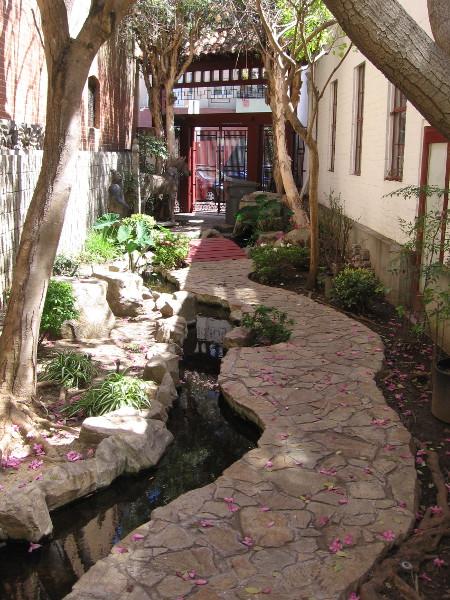
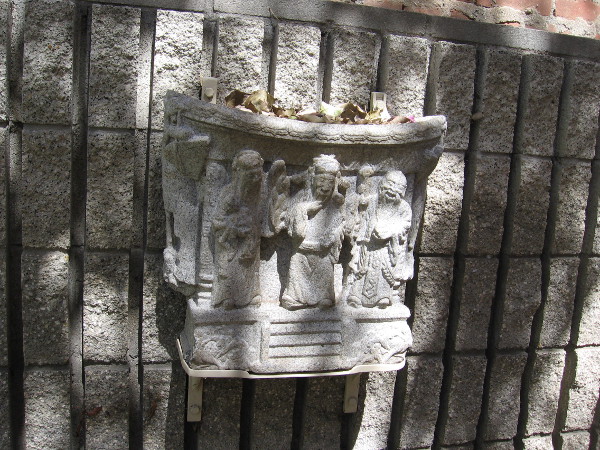
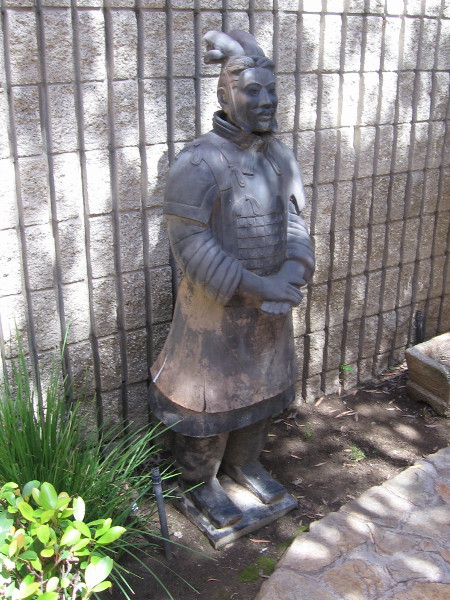
Visitors enter the San Diego Chinese Historical Museum during the San Diego Architectural Foundation’s OPEN HOUSE 2017.Many colorful sights await inside the small historical and cultural museum.Someone looks at old photos of San Diego and Chinese residents who helped to build and grow our city.The museum building was originally a mission, which was moved to its present location in San Diego’s Asian Pacific Historic District.Extensive archaeological work has been performed in this area, including the block south of the museum. Many artifacts from old Chinatown have been recovered.Old photos show archaeological digs in the neighborhood.Some of many artifacts recovered include glass bottles, ceramic bowls, utensils.Objects used in everyday life include a rubber ball, marbles, mahjong tile, Chinese dice and go pieces.Historical photograph of Chinese fishing junks anchored in San Diego Harbor around 1887.Portrait of the Ah Quin family, one of the most prominent, influential early San Diego Chinese families.Chinese laundries in San Diego utilized irons, counter bells, an abacus, and other useful objects.A bridal carriage from the late 1800s made of rosewood, found in Yun Cheng.The limestone Buddha head of the Northern Qi Dynasty, was originally carved into a cave in Shanxi Province.A temple guardian, from Ming Dynasty. The carved wooden idol has a dragon headdress, robes, glass eyes and a real hair beard and mustache.A palm raincoat, called so yee, worn by fishermen and farmers for centuries in China.Colorful woven art, and Chinese shoes and slippers for bound feet.Looking past the Buddha head at a fantastic, ornate alcove bed.The gilt red-lacquered alcove bed, or babu chuang, was made of southern elm in the Sichuan province in the late 19th century.Clay Chinese opera figurines represent different scenes. The characters are from local theatrical traditions, and utilize a complicated set of symbolic gestures.Display case contains memories of military service.Punching devices used for the Chinese Lottery of San Diego, which was popular in the red-light Stingaree District and Chinatown. Technically illegal, the lottery was tolerated by the authorities.A scene from the Romance of the Three Kingdoms. The elaborate wood carving depicts the battle that Zhao Yun fought to save the sun of Liu Bei.Manjusri altar table, from the late 19th century. Manjusri is the Bodhisattva of wisdom–he holds a sword that cuts through ignorance and illusion.Terracotta horse and general are replicas from the Terracotta Army unearthed at Xian, China. They occupy a corner of the museum’s outdoor Chuang Garden.Statue of Confucius, donated by the generosity of the Ministry of Education, Taiwan, Republic of China.A granite courtyard scene, 1800-1840. In this wall panel, three children representing prosperity, peer out at the street.A tranquil path runs beside water along the north side of the San Diego Chinese Historical Museum.Ornamental carving along the peaceful path.Another warrior statue in the cool shade.Behind the horse is a tombstone made in 1796, the inaugural year of the Jia Qing Emperor. It lacks in inscription, perhaps expressing a power that no words can describe.
…
This blog now features thousands of photos around San Diego! Are you curious? There’s lots of cool stuff to check out!
Here’s the Cool San Diego Sights main page, where you can read the most current blog posts. If you’re using a small mobile device, click those three parallel lines up at the top–that opens up my website’s sidebar, where you’ll see the most popular posts, a search box, and more!
To enjoy future posts, you can also “like” Cool San Diego Sights on Facebook or follow me on Twitter.
The south side of the historic U.S. Grant Hotel, as seen from an upper level of Horton Plaza. The 1910 Broadway Fountain is visible in Horton Plaza Park.
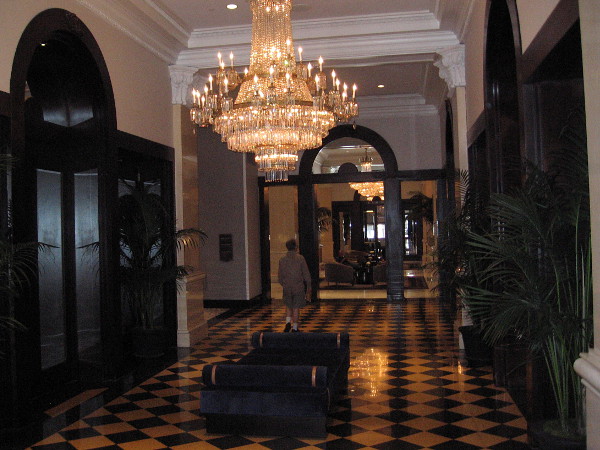
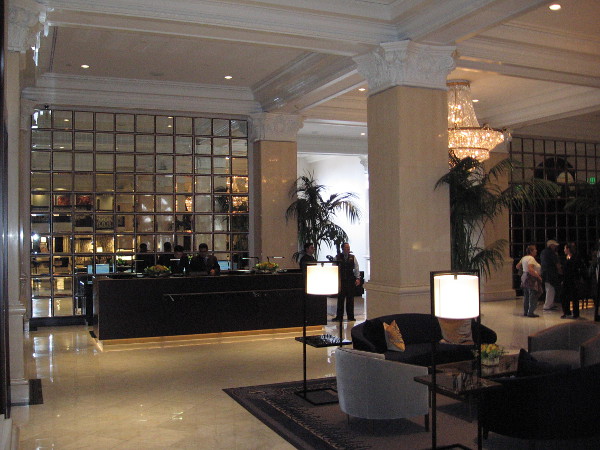
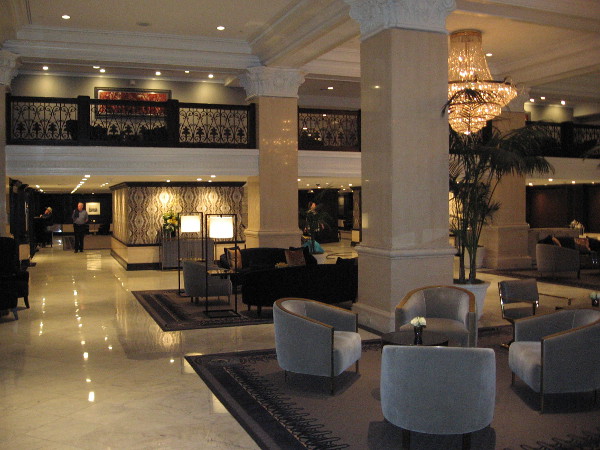
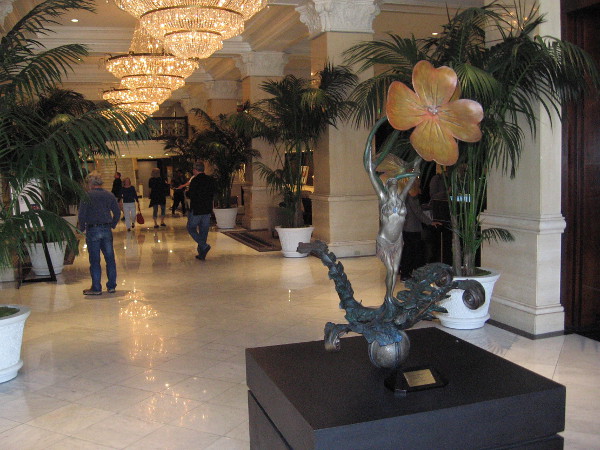
During last weekend’s San Diego Architectural Foundation’s OPEN HOUSE 2017, I ventured into one of the event’s featured downtown locations: the historic U.S. Grant Hotel. I was able to get some photos of the hotel’s elegant interior!
The U.S. Grant was built by Ulysses S. Grant, Jr., the son of American President Ulysses S. Grant. The building was designed by architect Harrison Albright and built in the same spot where Alonzo Horton had his 1870 Horton House Hotel, which was demolished.
The U.S. Grant Hotel opened in 1910. It featured a steel and reinforced concrete framework to counter the threats of fire and California earthquakes. For over a hundred years the grand old hotel has stood prominently at the center of downtown San Diego. Notable guests have included 15 United States Presidents (there are 3 different presidential suites), Albert Einstein and Charles Lindbergh.
It’s also interesting to note the very first San Diego Comic-Con was held in the U.S. Grant, back in 1970.
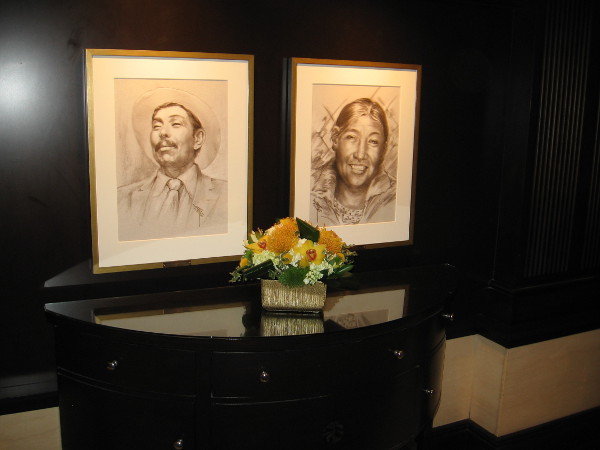
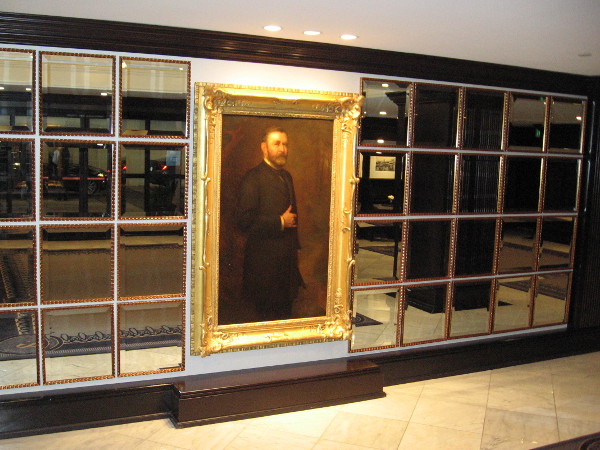
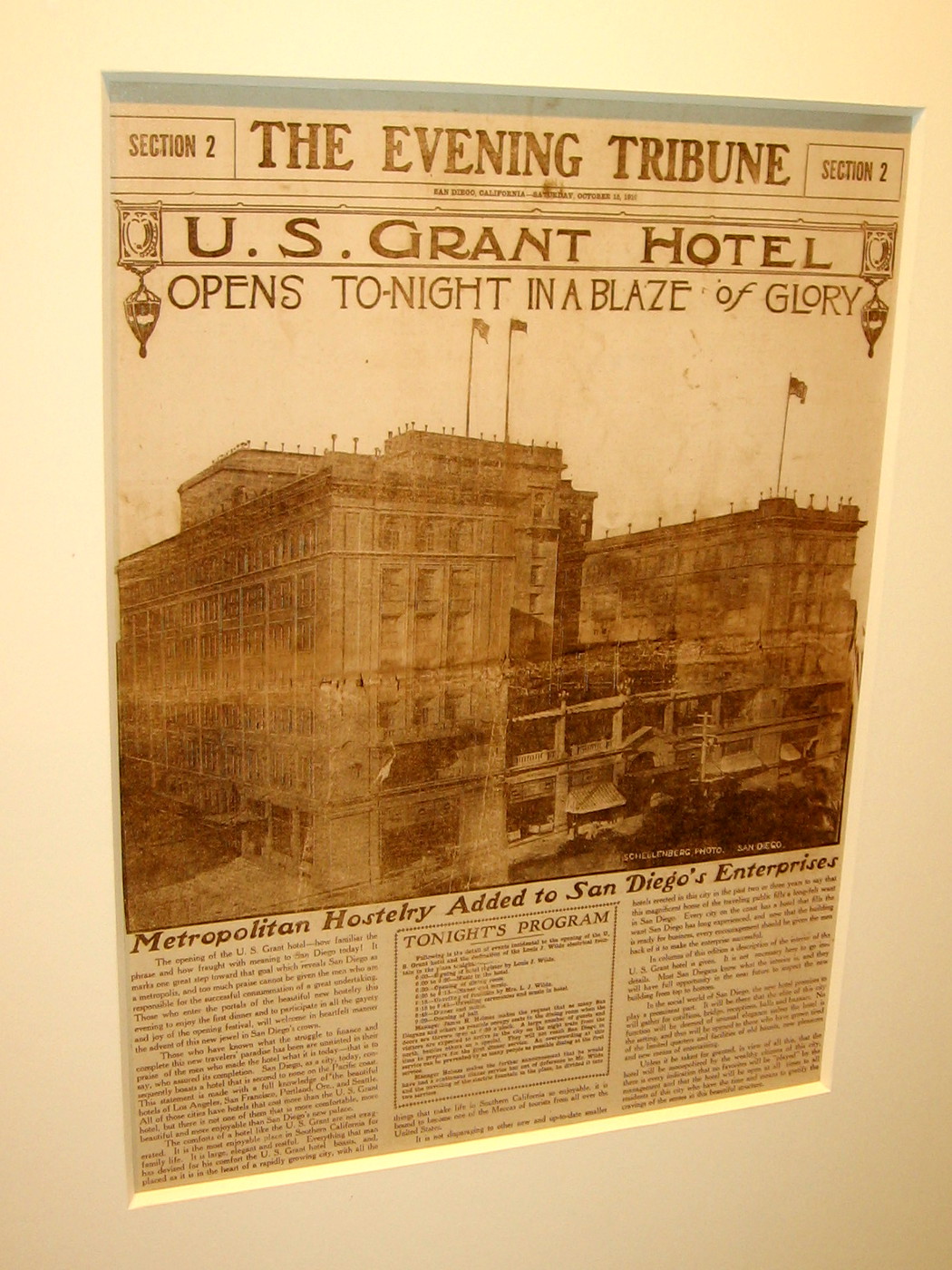
The east side entrance of the elegant U.S. Grant Hotel on Fourth Avenue in downtown San Diego.I entered the hotel from the east entrance, where many guests arrive.The elegant interior just inside the east entrance.Large glittering chandeliers add a glamorous touch throughout the posh hotel.Some beautiful artwork above stairs descending to the Crystal Ballroom.Standing in the grand lobby, looking south toward the U.S. Grant Hotel’s entrance on Broadway.The U.S. Grant Hotel’s front desk.The beautiful lobby, fit for royalty.A small sculpture near the Broadway entrance is titled Sweet Dreams, by artist David A. Montour.Even the hotel elevators are beautiful.A sitting area near the bank of elevators.Portraits along this wall include Native Americans. The U.S. Grant Hotel was bought by the Sycuan Band of the Kumeyaay Nation in 2003. It is operated by Starwood Hotels and Resorts.North of the elevators is this large Presidential Portrait of Ulysses S. Grant.Old photo of the Horton House, which stood at this downtown San Diego location before its demolition.Headline of The Evening Tribune announces the opening of the U.S. Grant Hotel on October 15, 1910.On display is a 1910 US Grant Hotel door knob.A look across the U.S. Grant Hotel lobby from the mezzanine level. Pure elegance.
…
I live in downtown San Diego and love to walk around with my camera! You can follow Cool San Diego Sights via Facebook or Twitter!
You can easily explore Cool San Diego Sights by using the search box on my blog’s sidebar. Or click a tag! There are thousands upon thousands of fun photos for you to share and enjoy!
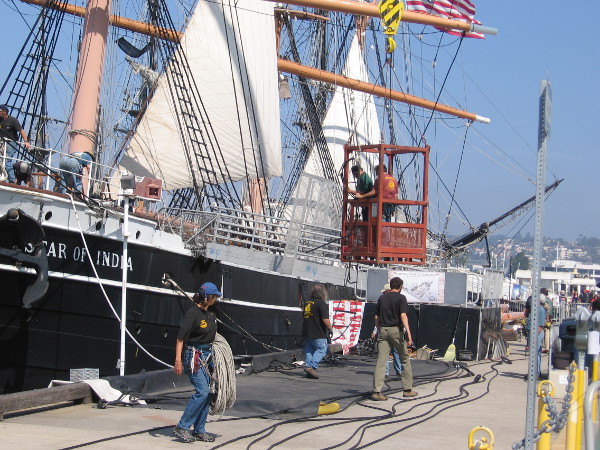
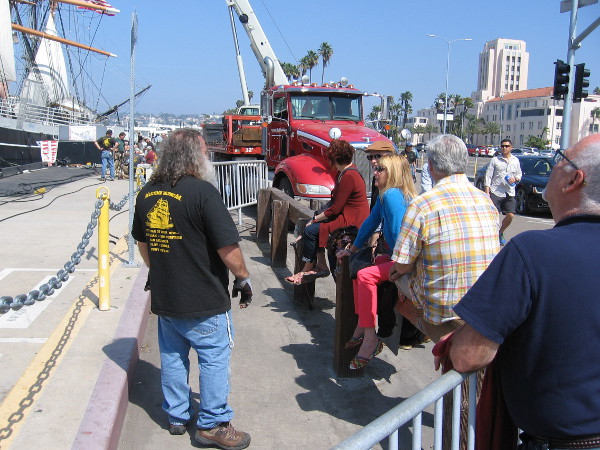
Member of the Maritime Museum of San Diego points to work being done on the Star of India while passersby watch with interest.
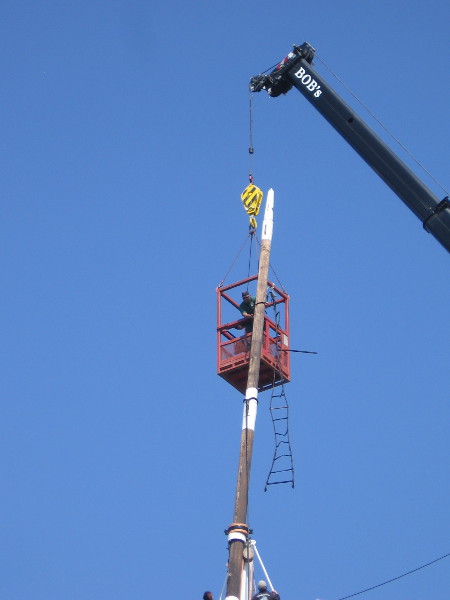
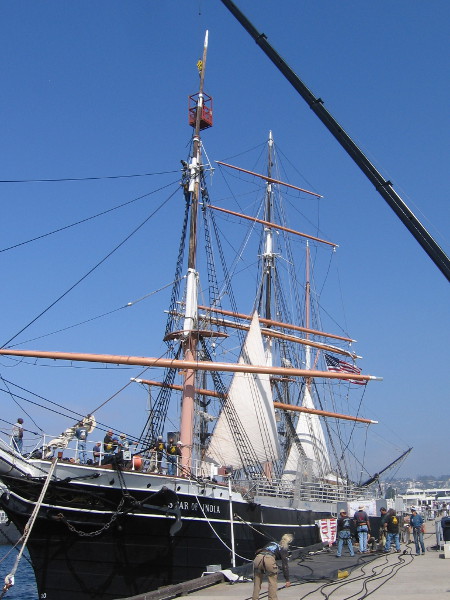
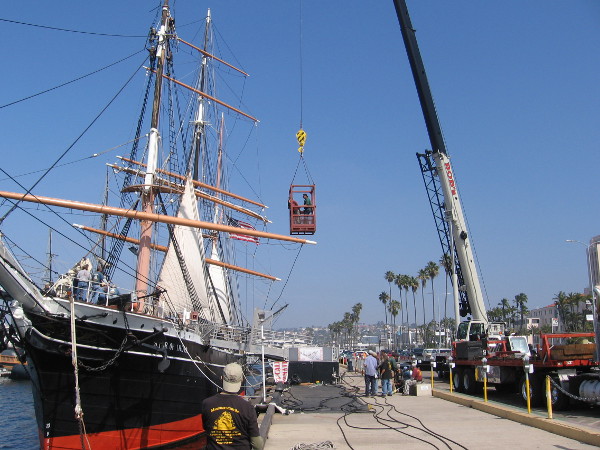
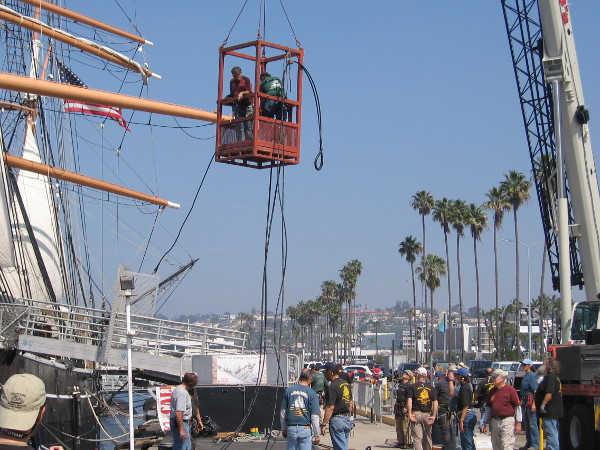
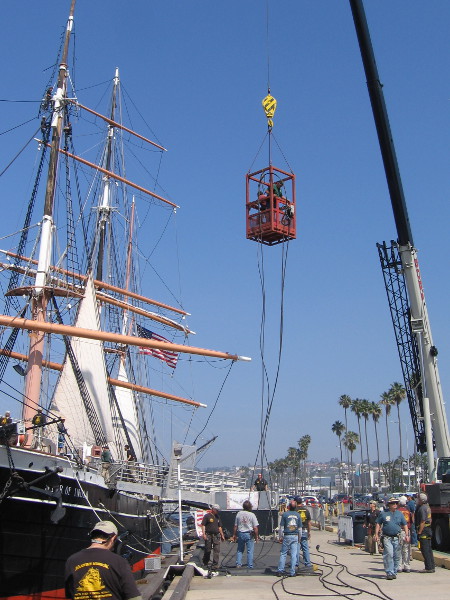
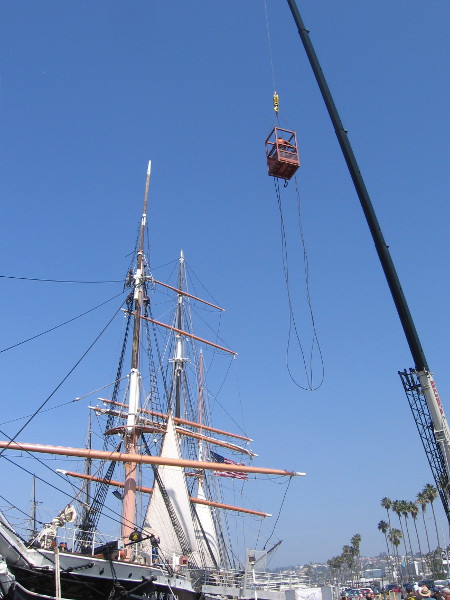
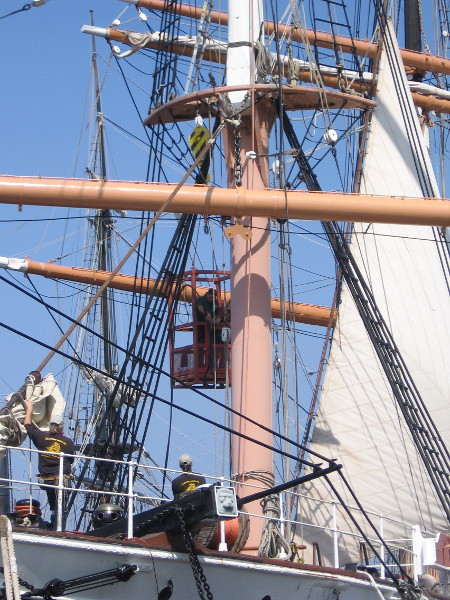
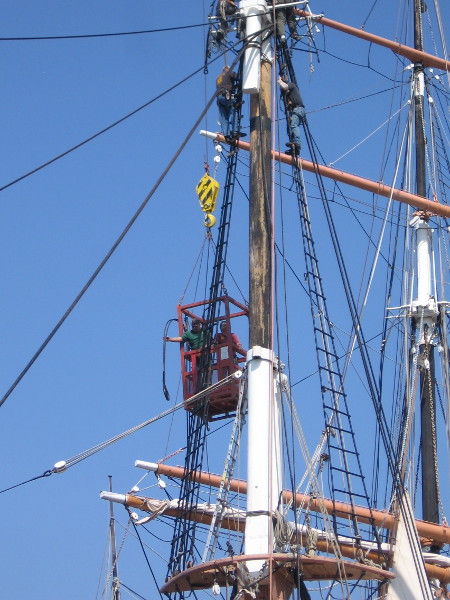
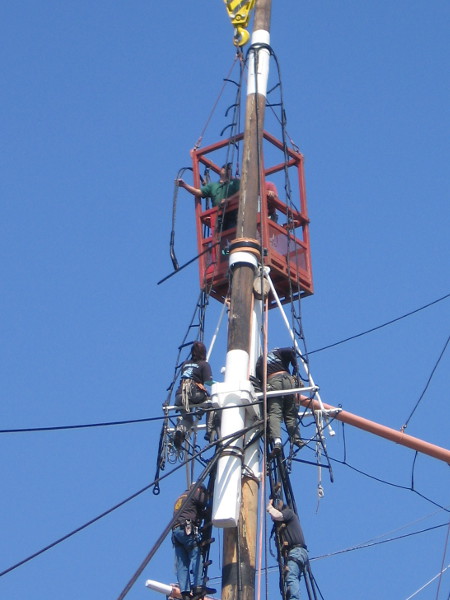
Look what I chanced upon today. As I approached the Embarcadero, I noticed a huge crane next to the Star of India. The restored top third of the foremast had just been installed! (You might recall from an earlier blog post this wooden section had suffered from rot and needed some work.)
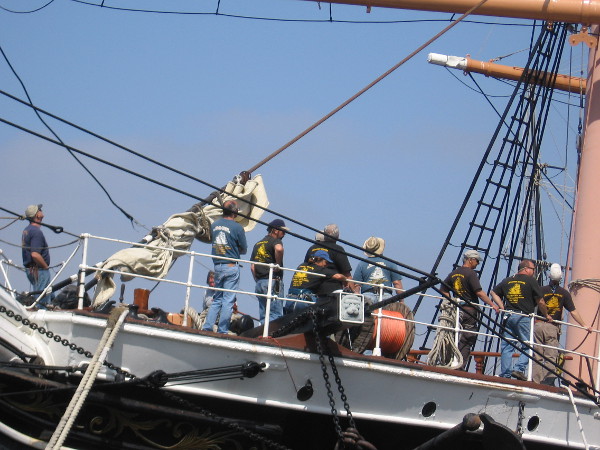
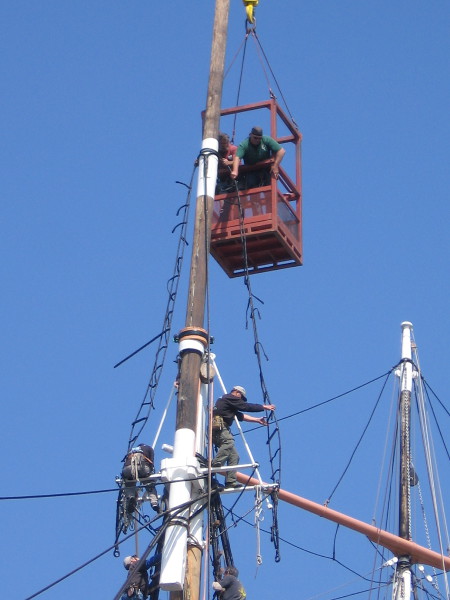
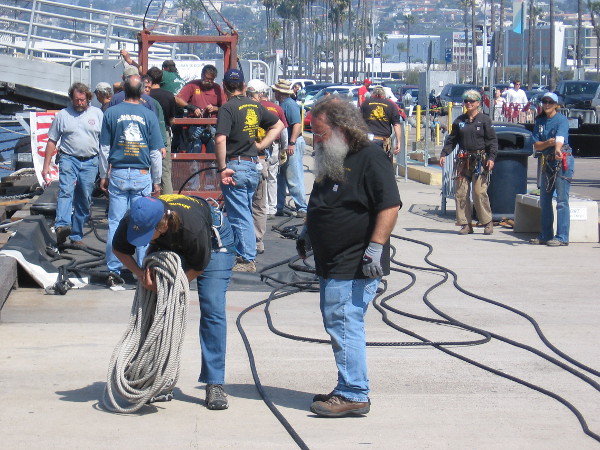
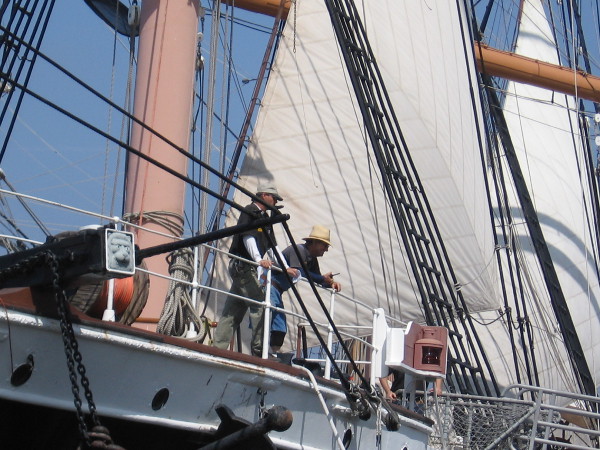
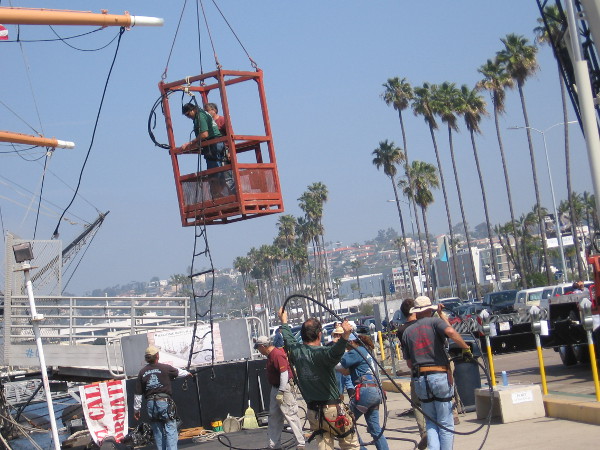
While I stood and watched, the crane lifted two shrouds, one after another, to be attached to the foremast. Then came several cables! The activity above and below was fascinating to watch. I wish I had a more thorough understanding of all that I saw. Volunteers and employees of the Maritime Museum of San Diego were using their knowledge and skills to help preserve an important part of San Diego and world history!
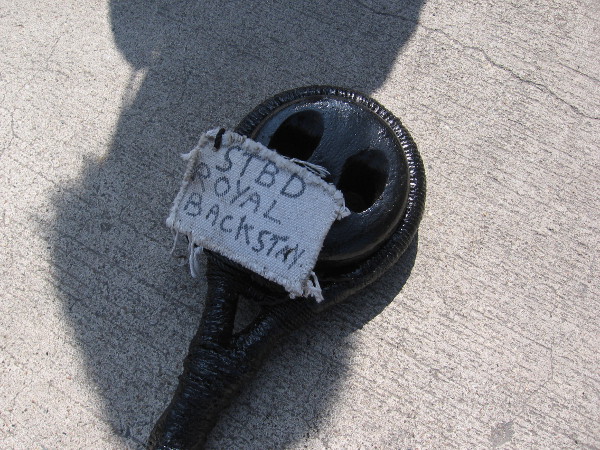
Crane lifts up guys with a shroud, part of the ship’s standing rigging, to be attached to the starboard side of the newly installed, refurbished top third of the foremast.The ladder-like shroud dangles in the air, near the top of the foremast.Volunteers and employees of the Maritime Museum of San Diego watch from the deck below.Working high in the San Diego sky, above the oldest active sailing ship in the world. The beautiful Star of India was built in 1863.That first shroud is done. Those working on the Embarcadero beside the ship prepare the second shroud to be hoisted.Now it’s time to attach the second shroud to the port side.A worker on the foremast grabs hold.Back down again to solid ground!Lots of cables still need to be attached to the foremast, to help it resist the force of the wind, plus gravity and inertia when the tall ship pitches and rolls.One super strong, tarred cable awaiting installation is the starboard royal backstay. It will be attached to the masttop.Guys watch from the historic ship’s rail.Up goes one of the many cables that are part of Star of India’s rigging.A small bit of history in San Diego.Up they go! I bet the view is great!The bottom end of the cable is in place, now back up to the top of the foremast…Up, up…Higher…Intrigued by the operation, people watch from below. A member of the Maritime Museum of San Diego explains the proceedings.Another photo of one shroud being hoisted. I was told this work began early in the morning. As much work will be done today as possible!
…
This blog now features thousands of photos around San Diego! Are you curious? There’s lots of cool stuff to check out!
Here’s the Cool San Diego Sights main page, where you can read the most current blog posts. If you’re using a small mobile device, click those three parallel lines up at the top–that opens up my website’s sidebar, where you’ll see the most popular posts, a search box, and more!
To enjoy future posts, you can also “like” Cool San Diego Sights on Facebook or follow me on Twitter.
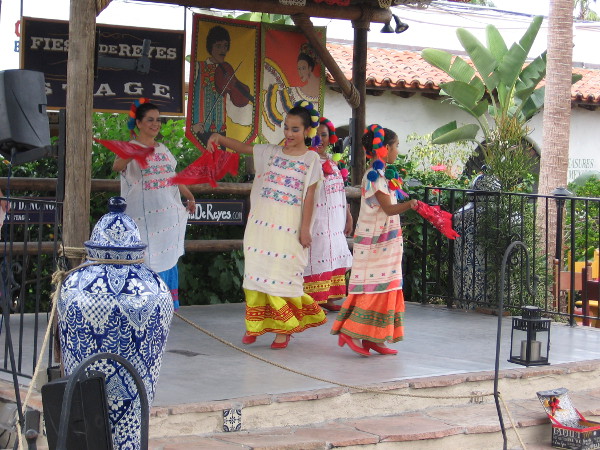
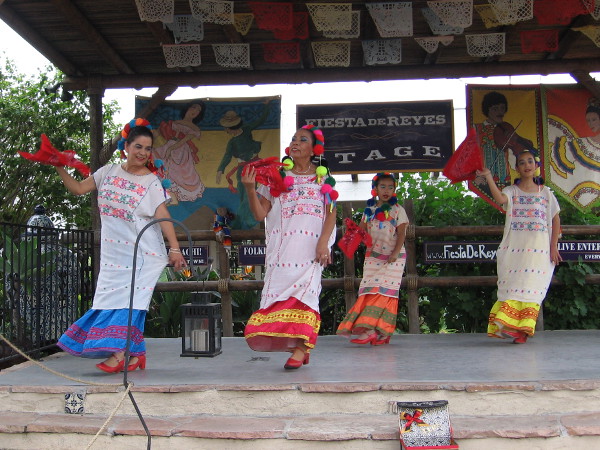
Fiesta de Reyes in Old Town San Diego State Historic Park features a stage with live folklorico dancing!
Whenever I visit Old Town San Diego State Historic Park, I poke my head into Fiesta de Reyes. The Mexican-themed shops and restaurants are always lively and cheerful, but what I really hope to see is the folklorico dancing!
The colorful dancing takes place daily. Take a look at these photos and smile!
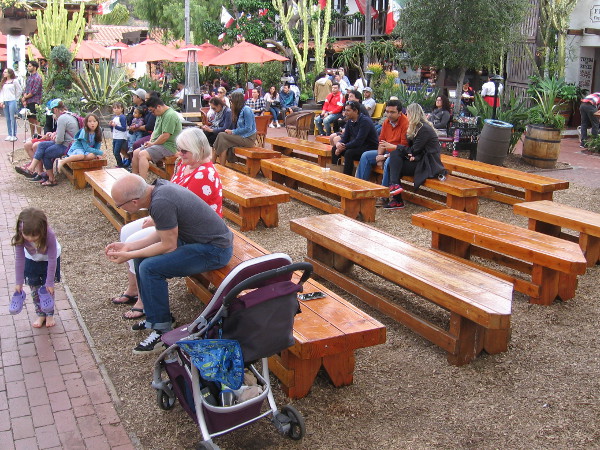
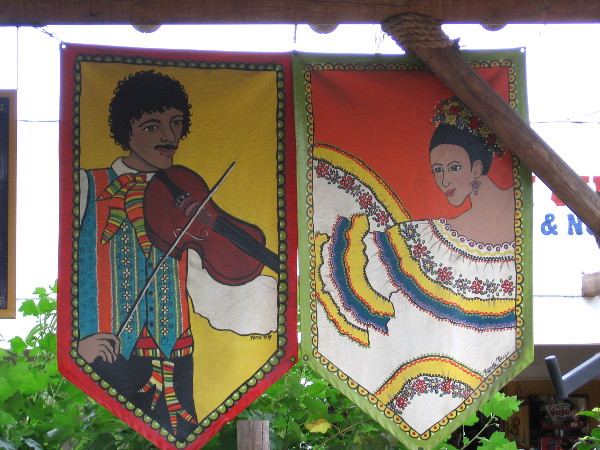
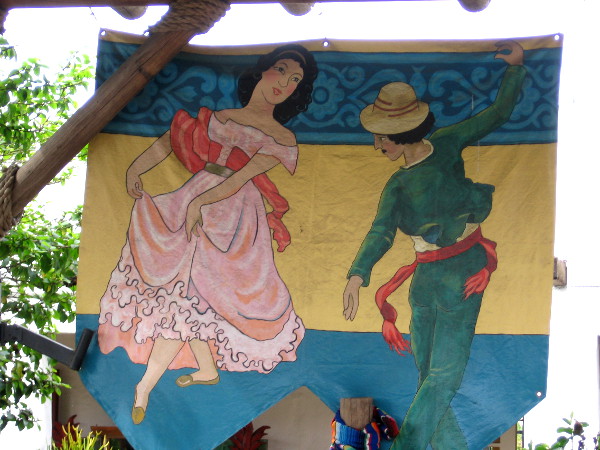
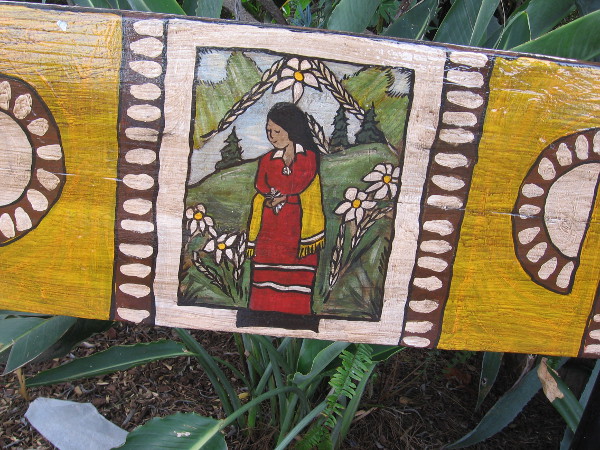
The outdoor stage is located near the Mexican-themed shops and restaurants of Fiesta de Reyes. Daily dancing is a popular attraction.Traditional Mexican dance includes colorful dresses and big smiles.Outdoor benches at Fiesta de Reyes allow visitors to relax and watch the free entertainment.Some performers in costume wait off to the side of the stage.Colorful banners behind the stage.A joyful scene of traditional Mexican folk dance.Between the stage and nearby outdoor restaurant is this stunning dancer. Art made entirely of succulents.Benches facing the stage include bits of cheerful folk art.An image of two smiling youth, holding hands.Fun mariachi sculptures on a wagon just inside the entrance to Fiesta de Reyes.Mexican culture on a sunny San Diego day.
…
I live in downtown San Diego and love to walk around with my camera! You can follow Cool San Diego Sights via Facebook or Twitter!
You can easily explore Cool San Diego Sights by using the search box on my blog’s sidebar. Or click a tag! There are thousands upon thousands of fun photos for you to share and enjoy!






































































 Cool San Diego Sights!