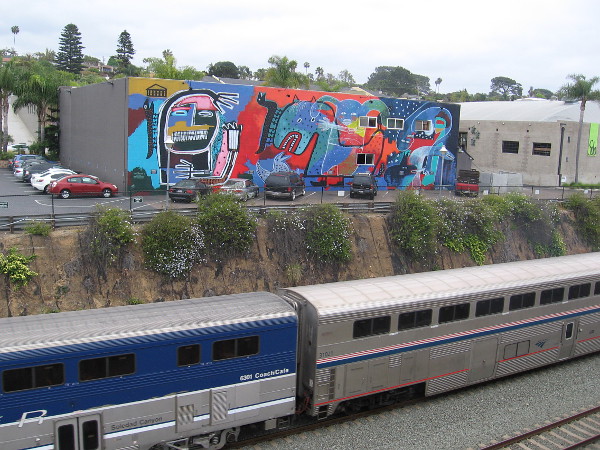
An Amtrak Pacific Surfliner train heads south, passing a cool mural titled Myths at Play, which can be seen just south of the Solana Beach station.
Yesterday I observed that a super cool mural overlooks the train tracks near the Solana Beach station. Before walking to Fiesta del Sol, I headed a couple blocks south on Pacific Coast Highway in order to take photos.
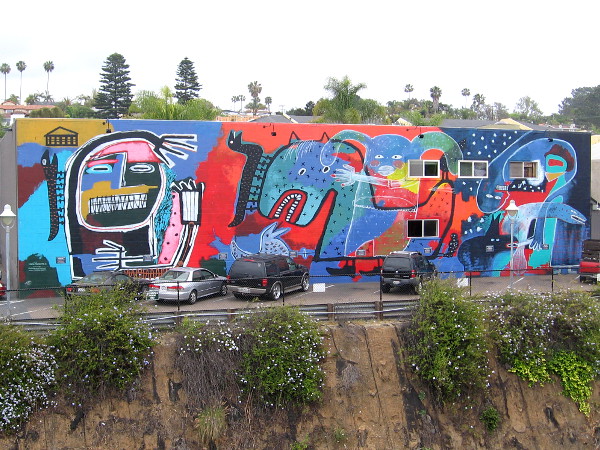
A little internet research revealed this colorful mural was painted by artist Lindu Prasekti. The building is the David Alan Collection gallery in the Cedros Avenue Design District. The giant mural painted on the building’s west side is titled Myths at Play. It appears to playfully incorporate designs and symbols representing primitive art.
A photo of the colorful Myths at Play mural, painted by Lindu Prasekti.
…
I live in downtown San Diego and love to walk around with my camera! You can follow Cool San Diego Sights via Facebook or Twitter!
You can easily explore Cool San Diego Sights by using the search box on my blog’s sidebar. Or click a tag! There are thousands upon thousands of photos for you to enjoy!
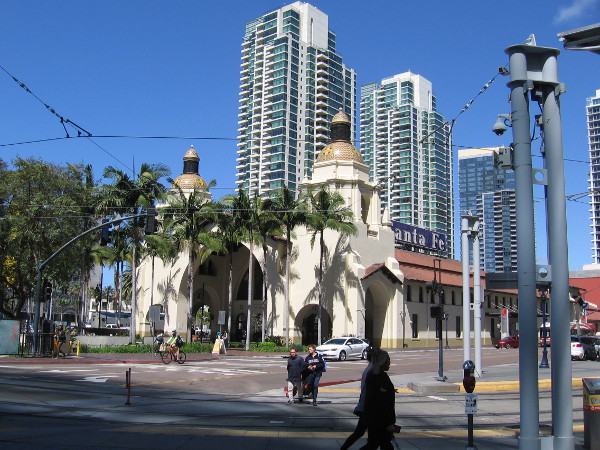
Photo of Santa Fe Depot as it appears today. Some changes to the historic building are possibly in its future.
I went on a short tour of the Santa Fe Depot last week during the San Diego Architectural Foundation 2018 OPEN HOUSE event.
I’ve posted about the depot several times in the past. One fact-filled post concerned an historical exhibit inside the waiting room; another shared hundred year old photos of the building. During our tour I learned even more and enjoyed looking at additional old images.
This downtown San Diego landmark was designed by Bakewell and Brown to welcome the many anticipated visitors to the 1915 Panama-California Exposition in Balboa Park. The depot’s construction began on May 28, 1914. The building officially opened on March 7, 1915. Materials that were used include a steel frame with wood trusses, concrete slabs, brick arcades and hollow clay tile infill walls. The architects Bakewell and Brown also designed San Francisco City Hall, the Coit Tower and Pasadena City Hall.
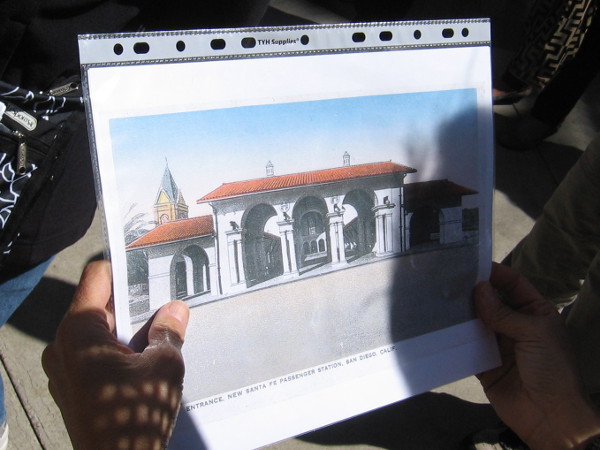
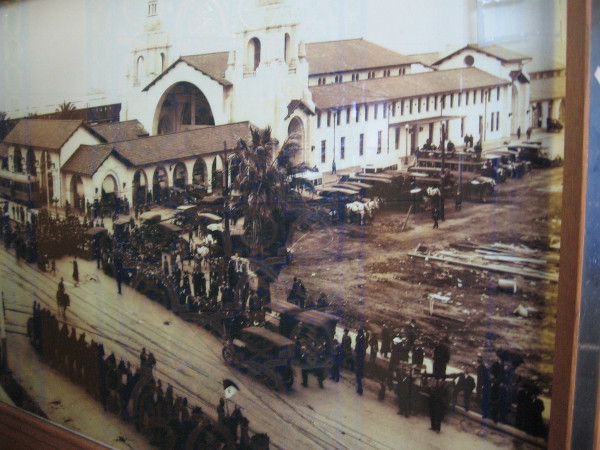
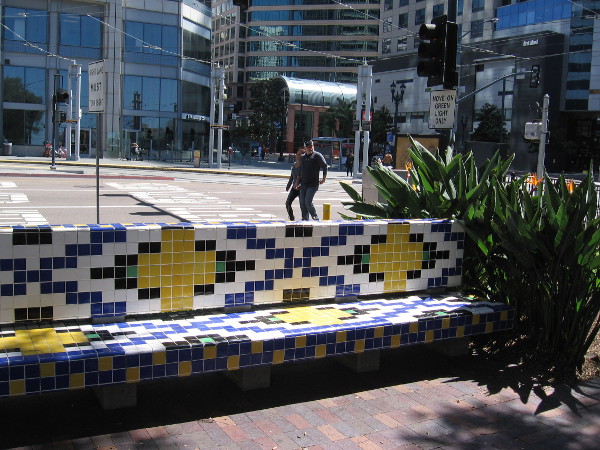
During the course of its history, there have been various changes to the building and its forecourt. The original arched forecourt, pictured in some of the following photos, was demolished in 1954 to make way for a parking lot. The current outdoor plaza featuring a fountain and colorful tiled benches replaced the parking lot in the 1980s.
The gentleman providing the tour indicated that recent new ownership of the Santa Fe Depot has opened up the possibility of future development. I learned an unused second story of the depot, once containing a manager’s apartment, telegraph room and railroad worker bedrooms, might be converted into office spaces, but an elevator, heating and electricity are now lacking.
I learned that the fountain in the forecourt’s plaza is leaking and permanently turned off. This valuable property between the main depot building and Broadway might be developed into a space for downtown eateries.
I also learned the large iconic Santa Fe sign atop the depot dates from the mid 50’s, and that there are plans to light it up at night using LED lighting.
Read the captions for some additional fascinating facts about this architectural marvel!
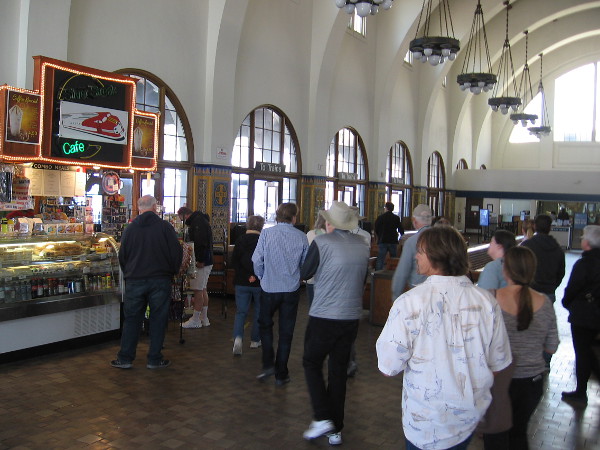
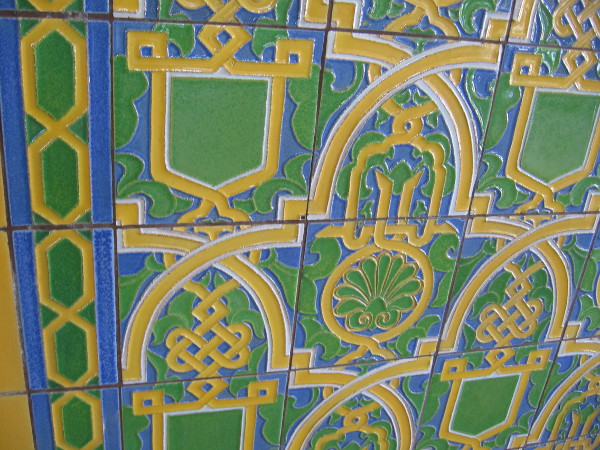
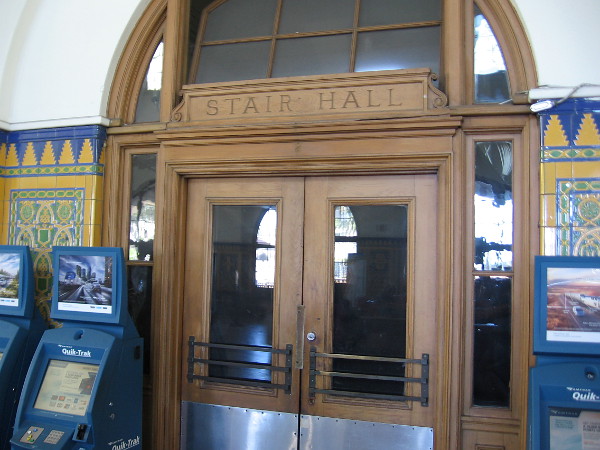
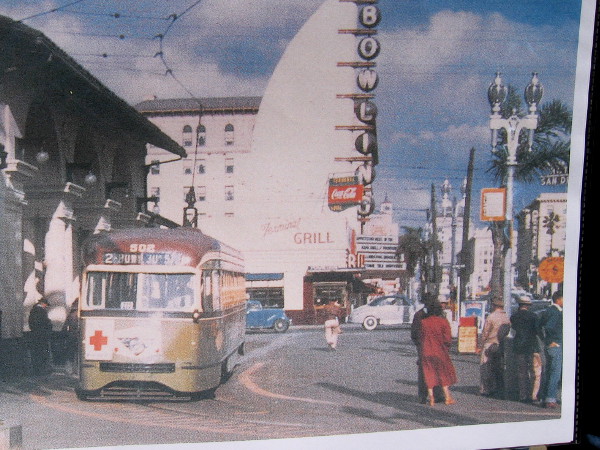
Looking up at one tile-domed tower. The black material is holding together cracked terracotta columns on chicken wire. The 1915 depot was built for the Panama-California Exposition in Balboa Park.Our tour group and a few Amtrak passengers move through the Santa Fe Depot’s large waiting room. The building’s architecture is in the Mission Revival style with Spanish Colonial Revival influences.We learn about the beautiful tilework throughout the depot.The depot’s glazed Kaospar tiling was created by California China Products Co. of National City, the same company that produced all of the tile for Balboa Park’s 1915 exposition.Raised levels of these gorgeous tiles each feature a different color!We’re shown an old postcard image of the original Main Waiting Room. Ticket and vending kiosks lined the west side of the depot’s interior. There used to be a Fred Harvey lunch room near the current ticket area at the building’s north end.Looking up at the amazing ceiling. Most of the woodwork has never been painted. The original bronze light fixtures have an appearance that is masculine and sturdy.More handsome woodwork around a door that leads to an old Stair Hall on the waiting room’s east side.Our group heads outside to the forecourt’s sunny plaza.Looking at the south side of the depot. Sadly, the fountain leaks and is turned off.We are shown more old images. This is an illustration of the original arched forecourt structure on Broadway. I also see the tower of the original 1887 Victorian station to the west (the other side of the tracks) before it was demolished.Here’s the old parking lot. (I see the distinctive County Administration Building to the left.)Streetcars used to run along Broadway right up to the old forecourt!A photo of the now unused second floor of the Santa Fe Depot.Another historical photo. This can be found on one side of the information kiosk presently inside the depot.Our tour guide collects old postcards. Here’s another that shows the arched west side of the depot, beside the railroad tracks.Information sheet shows map of the Santa Fe System and the San Diego Depot. Today the depot is the 3rd-busiest train station in California and 13th-busiest in the Amtrak system. (Click image to enlarge it.)Gazing from the forecourt’s plaza over a tiled bench toward America Plaza and buildings along Broadway. This area might soon undergo changes!
…
I live in downtown San Diego and love to walk around with my camera! You can follow Cool San Diego Sights via Facebook or Twitter!
You can easily explore Cool San Diego Sights by using the search box on my blog’s sidebar. Or click a tag! There are thousands upon thousands of photos for you to enjoy!
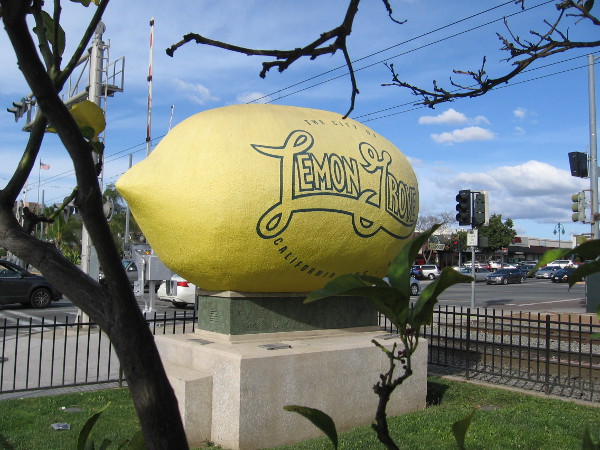
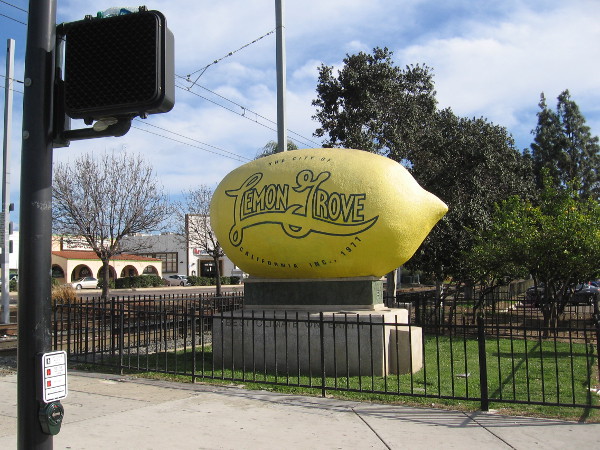
An enormous yellow lemon welcomes travelers passing through the heart of Lemon Grove, a community east of downtown San Diego.
Step off an Orange Line trolley at the Lemon Grove Trolley Depot and you’re in for a surprise! On either side of the trolley station are several fun installations of public art. Signs also describe the unique agricultural history of Lemon Grove, which today is a sunny suburban community east of downtown San Diego.
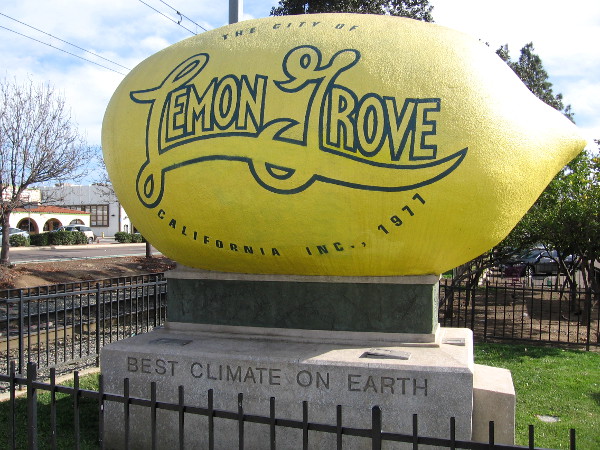
I cruised into the trolley station last weekend to explore the immediate area. Of course, I had to direct my feet toward the big iconic lemon, which stands directly across the street from the depot, at the intersection of Broadway and Lemon Grove Avenue. The 3000 pound lemon was originally created in 1928 as a proud civic float for San Diego’s big Fourth of July parade. It was afterward turned into a permanent monument with a generous application of plaster!
Read the photo captions to learn a little bit more about fascinating Lemon Grove!
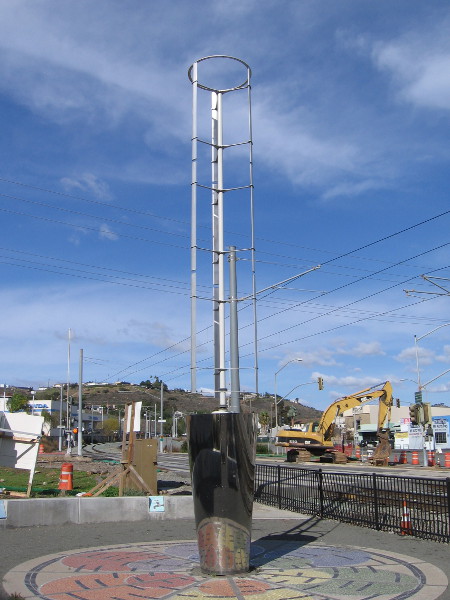
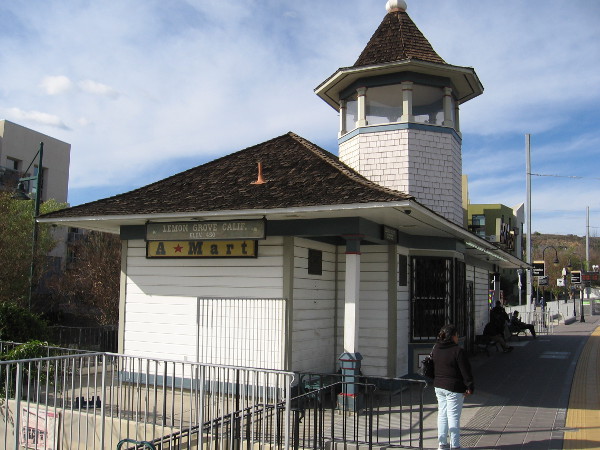
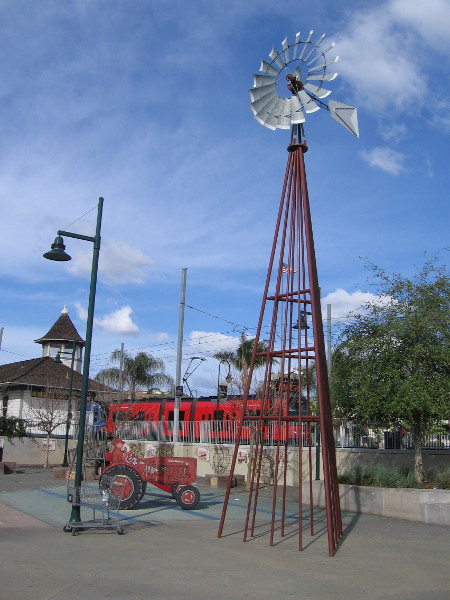
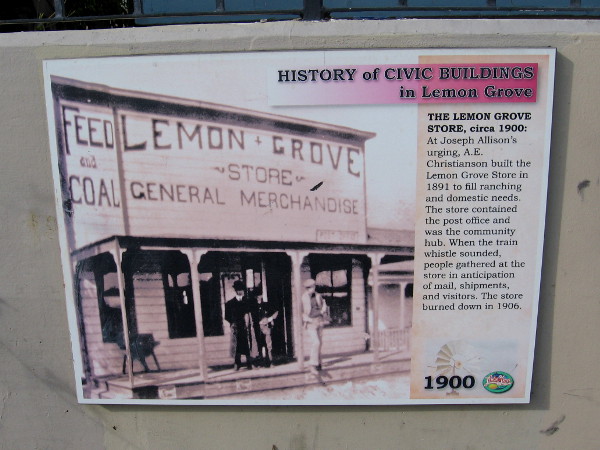
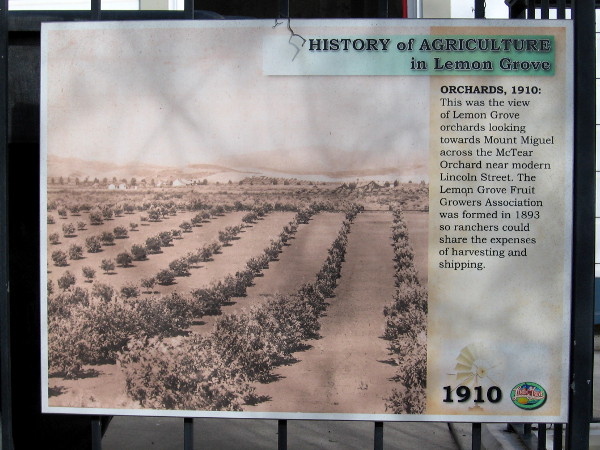
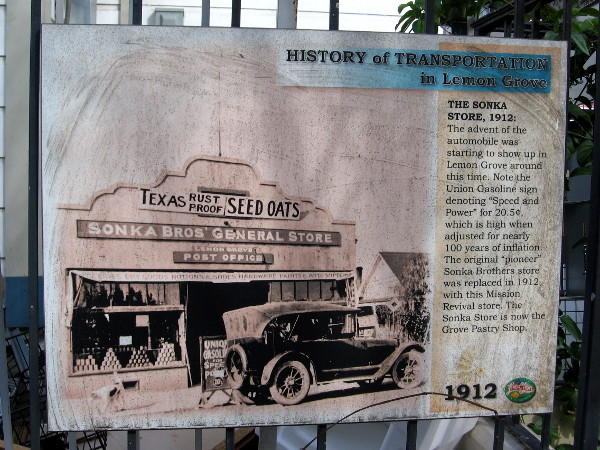
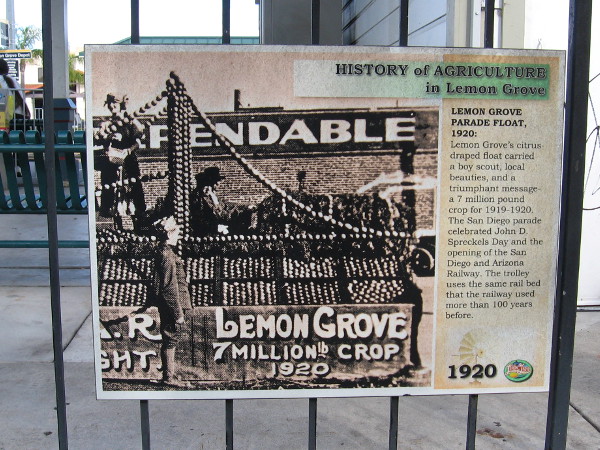
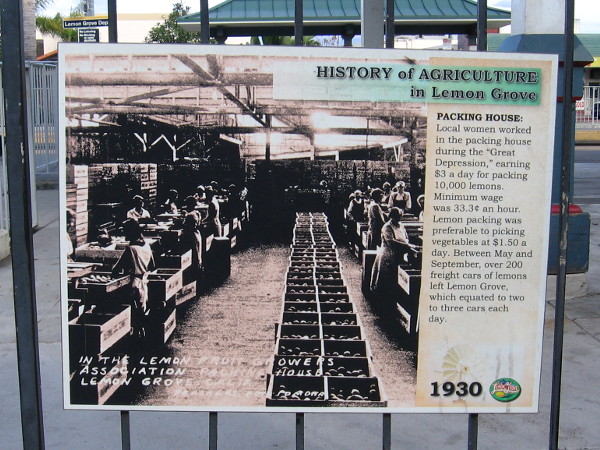
The Lemon Grove Trolley Depot is a 1986 replica of the original 1895 train depot, which stood near the Lemon Grove Store and a fruit-packing shed.The city of Lemon Grove boasts the Best Climate on Earth! I spotted this sign at a nearby bus stop.Fun street art near the Lemon Grove Trolley Depot provides tasty advice for those times when life gives you lemons……make lemonade!Or a lemon cupcake!A walkway between the Celsius residential building and the Lemon Grove Trolley Depot contains tile mosaic lemon slices!What appears to be a tall, shiny sculpture near Celsius and the trolley station rotates in the wind and generates electricity.Colorful tiles radiate at the base of the rotating windmill.People wait for an Orange Line trolley at the Lemon Grove station. The original structure had an open cupola so the depot agent could wave signal flags at oncoming trains.A farm’s windmill and tractor are artistic reminders of an agricultural past. They stand in the promenade beside the Lemon Grove Trolley Depot.Both sides of this fun public art tractor are composed of small tiles.A creative bench in the public promenade. It appears like crates that were used by the Lemon Grove Fruit Growers Association!A sign near the depot shows the old Lemon Grove Store, circa 1900. The store provided supplies for nearby ranches, contained the post office, and was a community gathering place.Another sign contains a view of Lemon Grove orchards looking towards Mount Miguel across the McTear Orchard in 1910.Old photo of the Sonka Store in 1912. The building eventually became the Grove Pastry Shop.Old photo shows the Lemon Grove float during the San Diego parade in 1920. The parade celebrated the opening of John D. Spreckels’ railway, which existed where the trolley runs today.Another sign features a photo of local women working in the packing house during the Great Depression. During peak season, two or three railroad cars would be loaded full of lemons per day.The historical legacy of Lemon Grove is remembered around the site of the old train depot, which is now a stop of the San Diego Trolley.Lemons have a history of thriving in Lemon Grove, a community that claims to have the Best Climate on Earth!
UPDATE!
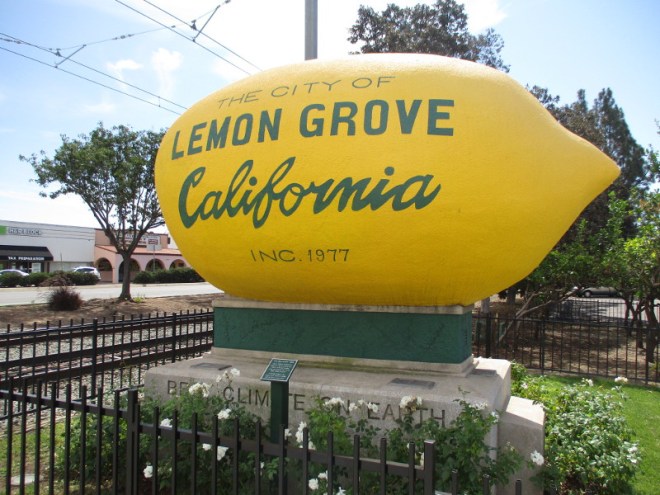
I took the following photos several years later, after the lemon had been repainted and a plaque had been installed in front of it.
The plaque reads: The Big Lemon 1928. Alberto Treganza designed the Lemon as a July 4th parade float. Today it is the City’s symbol of its noble agrarian past and its “Best Climate on Earth.” A Heritage Project of the Lemon Grove Historical Society and the City of Lemon Grove.
…
I live in downtown San Diego and love to walk around with my camera! You can follow Cool San Diego Sights via Facebook or Twitter!
You can easily explore Cool San Diego Sights by using the search box on my blog’s sidebar. Or click a tag! There are thousands upon thousands of photos for you to enjoy!
The jaw-dropping night scene of a gigantic model train layout in Old Town San Diego!
During my walk through Old Town San Diego today, I stepped through an ordinary door into a fantastic dream! Before me stretched a positively enormous model train layout!
The Old Town Model Railroad Depot is a truly amazing attraction that anyone would enjoy seeing. The gigantic layout features O-Scale model trains, and as you can see in these photos, just lots of fun buildings, landscapes, moving figures and special effects.
I must say, in my opinion this layout even beats the two awesome O-Scale layouts at the San Diego Model Railroad Museum in Balboa Park. Now that really took some doing!
And the two guys I spoke to at the Old Town Model Railroad Depot were really friendly! Next time I walk past, you can be sure I’ll venture inside again!
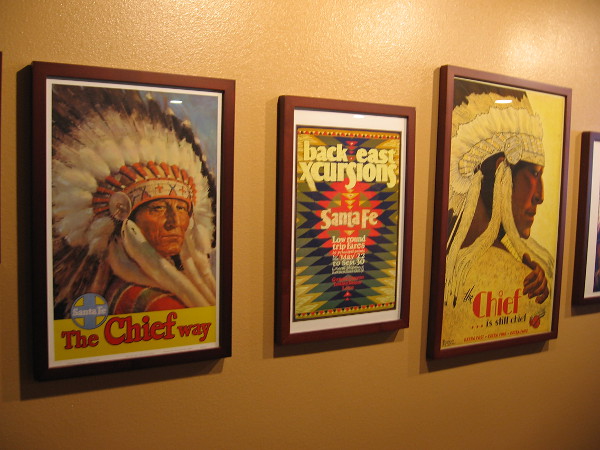
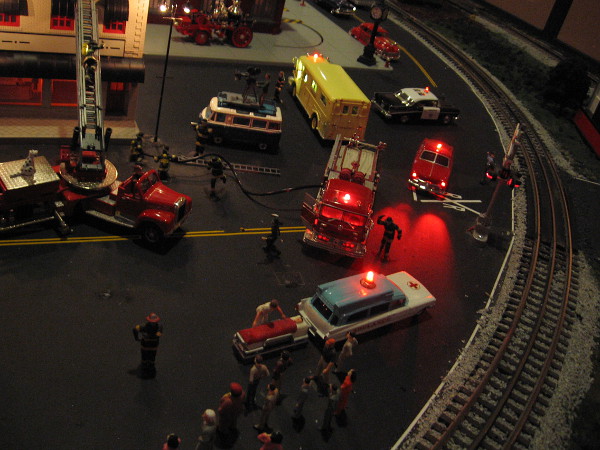
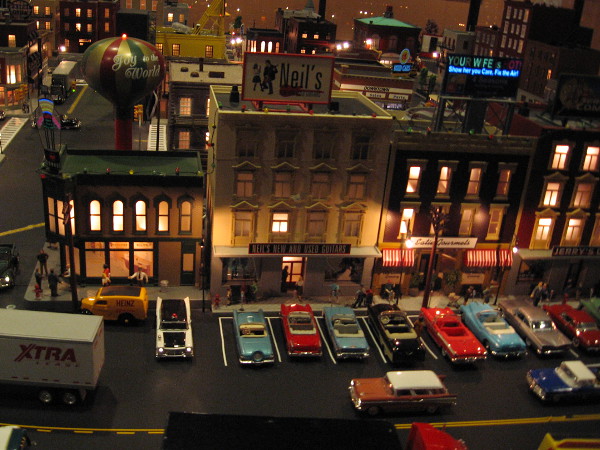
The Old Town Model Railroad Depot is a cool attraction featuring a gigantic room full of working model trains! It’s one of the largest O-Scale layouts in the country!Fun gifts, artwork and items for model train hobbyists can also be purchased at San Diego’s unique Old Town Model Railroad Depot.A locomotive for sale among other unique and fascinating stuff.Lots of nostalgic historical railway posters decorate one wall.The huge train layout has two halves–one represents daytime, the other night. Kids can stand on platforms to see–and hear–all of the exciting action.Many model buildings populate the O-Scale train layout. It’s the same scale used by classic Lionel Trains.Tiny human figures and vehicles can be spotted everywhere one looks on the realistic layout.I really enjoyed the night side of the layout. It seemed even more realistic and dynamic. Special lighting effects include fireworks bursting over a stadium and lightning stabbing down from clouds!A tiny mechanic works in a tiny garage at night on a tiny truck.A detailed scene recreates firemen fighting a fire at night. I see miniature police, an ambulance, reporters and a small crowd of evacuated people!Your kids will go crazy. You have to see it to believe it. And it’s free! But leave a donation!
UPDATE!
I stepped into the Old Town Model Railroad Depot a second time! And I loved it even more than my first visit!
I met Gary Hickok, the creator of this stupendous layout, and learned he has been collecting the various pieces you see for 15 years. There are hundreds of tiny unique human figures, and they all seem to tell a story. Their unique poses are all part of a huge, bustling scene. The stories are often humorous!
Here are some more random photos that came out okay. These were all taken on the “day side” of the O-Scale model train layout. I hope you enjoy them!
…
I live in downtown San Diego and love to walk around with my camera! You can follow Cool San Diego Sights via Facebook or Twitter!
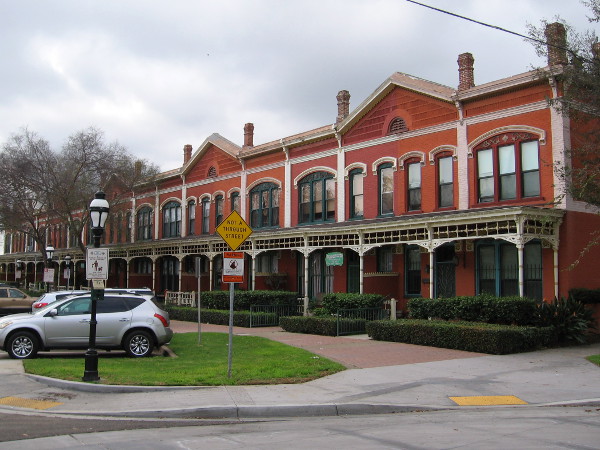
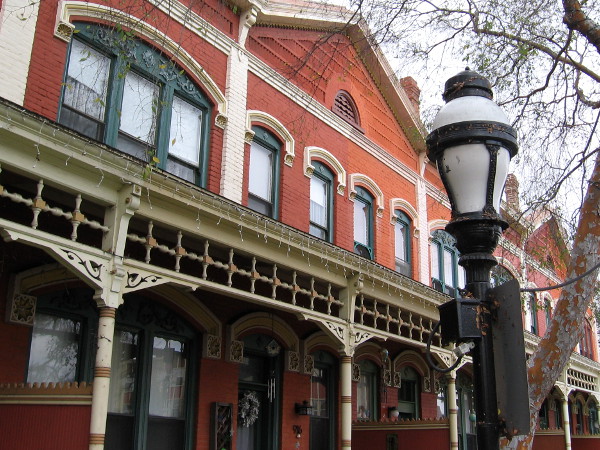
Brick Row at National City’s Heritage Square. The long brick two-story structure was built by Frank Kimball in 1887.
To those traveling through gritty National City, Heritage Square can be a surprising discovery. Venture into the picturesque block, just south of the intersection of East 9th Street and A Avenue, and you feel like you’ve stepped back 150 years.
National City has a fascinating history. Originally used by the Spanish to graze horses, the land in the early 1800s, after Mexican independence, was called Rancho de la Nación. In 1868, a San Francisco builder named Frank Kimball bought the rancho with an ambitious dream. He intended to turn National City into the western terminus of the Santa Fe Railway.
You might remember my photographic tour of the National City depot, built in 1882 by the Santa Fe Railroad. It became the first terminus of transcontinental rail travel in the San Diego area. You can see that fascinating blog post here.
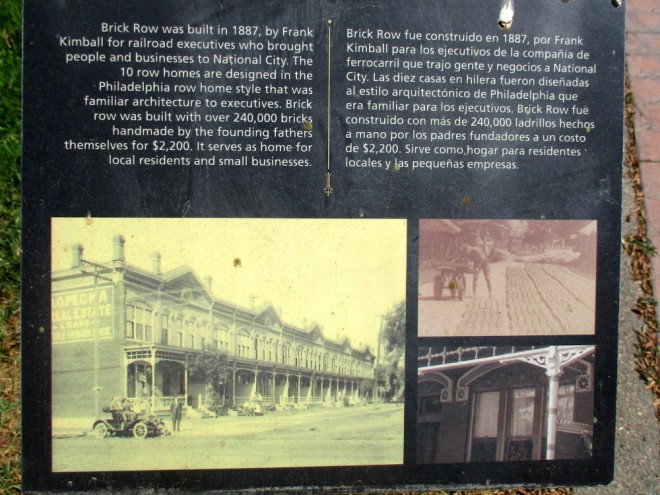
To accommodate executives of the Santa Fe Railroad and booming times caused by the arrival of rail, in 1887 Frank Kimball built Brick Row, a structure in the style of Philadelphia row house. It was designed by San Diego architect R. C. Ball. Over 240,000 bricks were used for the ten units.
Kimball’s full ambitions weren’t realized, however, when the Santa Fe Railroad soon turned their sights on Los Angeles, making that city their major center of operations in Southern California.
An early resident of the “Kimball Block” was legendary marshal Wyatt Earp, who came to Southern California after being indicted in Arizona for shooting the men who’d killed his brother. He is best known locally for opening three gambling halls in San Diego. In 1889, Wyatt Earp stayed in Brick Row when he traveled down to Tijuana, Mexico. There he famously refereed a prize fight during a fiesta that also featured cockfights, bullfights and a lassoing contest.
In the early 1970s, National City’s planning director, Malcolm C. Greschler, interested in preserving the deteriorating Brick Row, came up with the idea of creating Heritage Square, which would be a historical tourist attraction similar to San Diego’s Old Town. In 1973 Frank Kimball’s house was moved to Heritage Square.
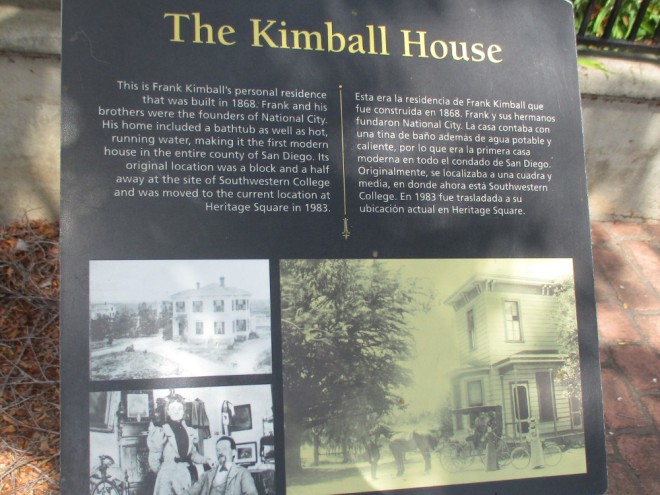
The 1869 Kimball House has its own unique history. It was the first house built in National City. Not only did it have a bathtub, but it had hot running water, which made it the first modern house in the entire county. President Benjamin Harrison visited it in 1891 during his tour of the western United States. At the time, it was the longest journey ever made by a President while in office. President Harrison’s 9,232 mile trip by railroad took one month and three days!
In 1976 two more historical houses were moved to Heritage Square: the 1887 Stick-style Rice-Proctor House and the 1879 Steele-Blossom House, which is depicted on National City’s official logo.
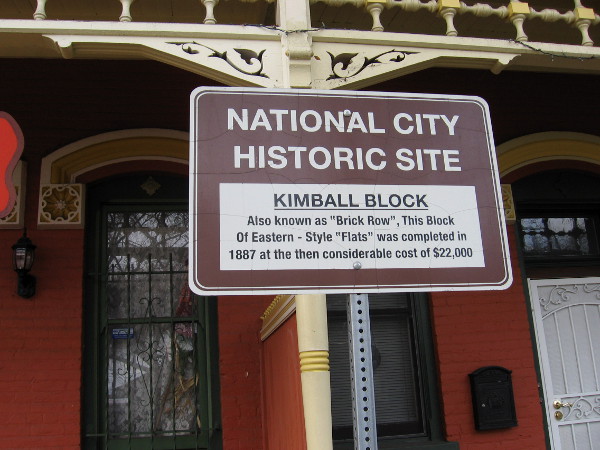
A plaque that reads Heritage Square – Marked in honor of the National City Centennial by San Miguel Chapter NSDAR, 1987.Heritage Square in National City contains several historic structures from the mid to late 19th century.The Steele-Blossom House, built in 1879, is used by the city of National City in its official logo. Elizur Steele was real estate agent for Frank Kimball and his enterprising brothers.The 1869 Kimball house was moved to Heritage Square in 1975. It is now the Kimball Museum operated by the National City Historical Society.The 1887 Stick-style Rice-Proctor House in National City’s Heritage Square.The two-story Brick Row is composed of ten units with common walls.Sign reads National City Historic Site – Kimball Block – Also known as Brick Row, this block of Eastern-style flats was completed in 1887 at the then considerable cost of $22,000.Photo of a section of the handsome Brick Row. The building now houses several specialty shops and the National City Historical Archive Room.Walking through the historic block of Heritage Square in National City is like a wonderful voyage back in time.
UPDATE!
I took the following three photographs in 2021 during another walk through National City.
The first photo is of a sign providing information concerning Brick Row. I cropped the top of the photo off because the outdoor sign was plastered with unsightly bird poop!
The second photo is of a sign concerning the Kimball House. I see its dates are different than what I previously wrote. I got that info from some other source. Do your own research!
The third photo is of the Steele-Blossom House, which appears to have been repainted with different colors.
…
This blog now features thousands of photos around San Diego! Are you curious? There’s lots of cool stuff to check out!
Here’s the Cool San Diego Sights main page, where you can read the most current blog posts. If you’re using a small mobile device, click those three parallel lines up at the top–that opens up my website’s sidebar, where you’ll see the most popular posts, a search box, and more!
To enjoy future posts, you can also “like” Cool San Diego Sights on Facebook or follow me on Twitter.
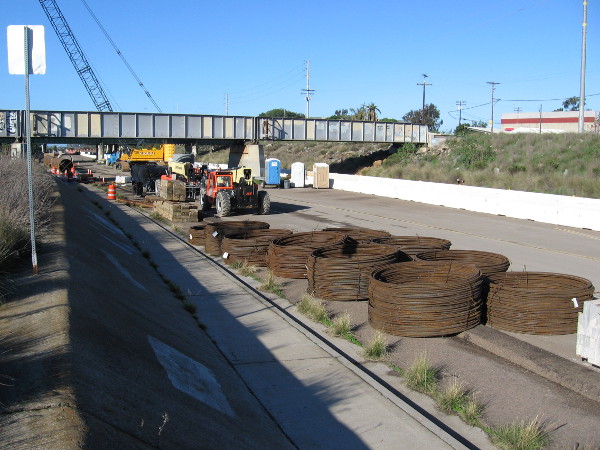
A crane and huge pipes on Friars Road near the site of the San Diego River Double Track (SDRDT) project.
Here are some interesting photos! A new railroad bridge is being installed across the San Diego River just north of the Old Town Transit Station, allowing the Coaster and Pacific Surfliner trains to run faster and more reliably. This work is called the San Diego River Double Track (SDRDT) project. I’ve watched the progress for several months during my daily trolley commute. This construction is being done ahead of another project to install trolley tracks across the river for the Mid-Coast Trolley Project, which will extend Blue Line service up to UCSD and University Towne Center (UTC) in La Jolla.
I took these photos last Saturday during my walk along Friars Road approaching the San Diego River Estuary. I’m no expert on this construction–I’m just an ordinary citizen who was fascinated by what I saw!
A series of three big storms is beginning in San Diego as I post this. Hopefully the flooding in Mission Valley where I work doesn’t get completely out of hand! I might post photos!
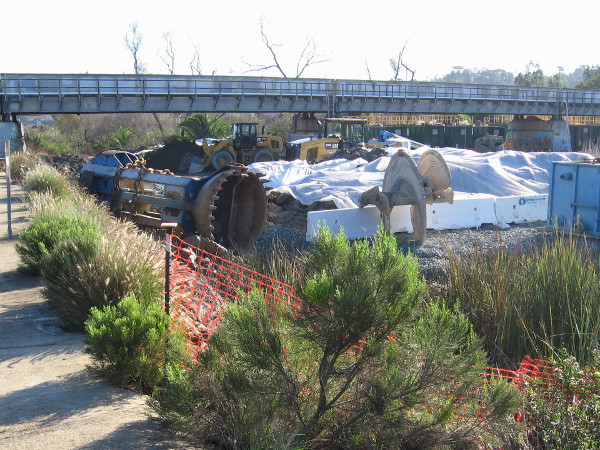
I noticed these huge green tanks along Friars Road.I also saw these huge coils of steel cable.A big pile of dirt by the railroad bridge over the San Diego River where the double track work is taking place.I believe new train tracks will be on the other side of the existing bridge you see in this photo.Passing under the train tracks as I walk along a raised area beside Friars Road.Now I’m looking east at all sorts of construction equipment, gravel and other material.This thing looks like a huge drill! Perhaps its used for boring through the ground, but I’m not sure. If you know anything, leave a comment!
…
I live in downtown San Diego and love to walk around with my camera! You can follow Cool San Diego Sights via Facebook or Twitter!
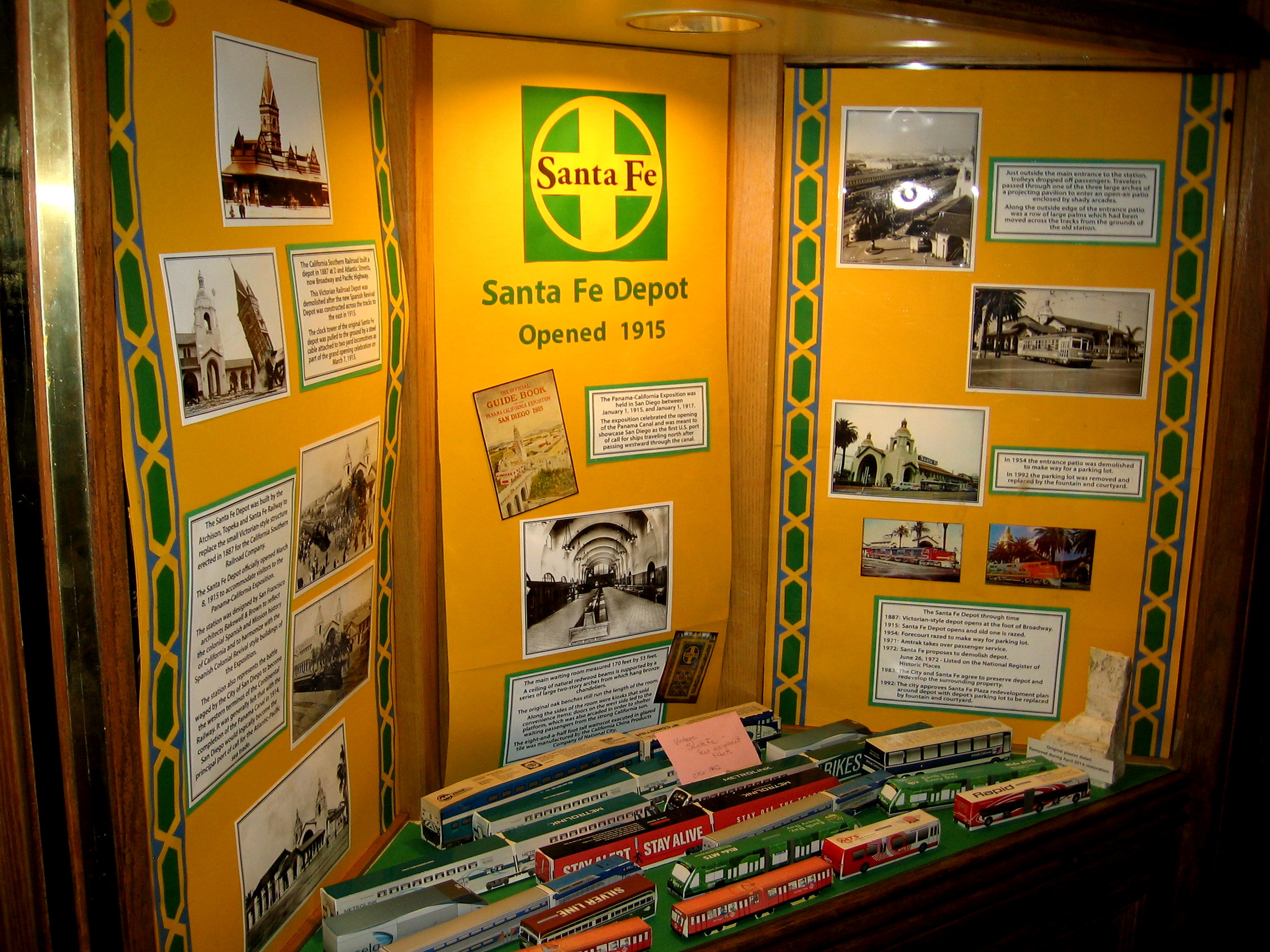
Display inside San Diego’s 1915 Santa Fe Depot. Photos and words provide a glimpse of the train station’s history.
Should you ever step inside downtown San Diego’s handsome Santa Fe Depot, there’s a small exhibit at the information booth worth checking out. Two glass display cases provide a glimpse of the train station’s fascinating history.
To read the signs, click the images and they will enlarge.
Last year the Santa Fe Depot celebrated its centennial. I blogged about that here!
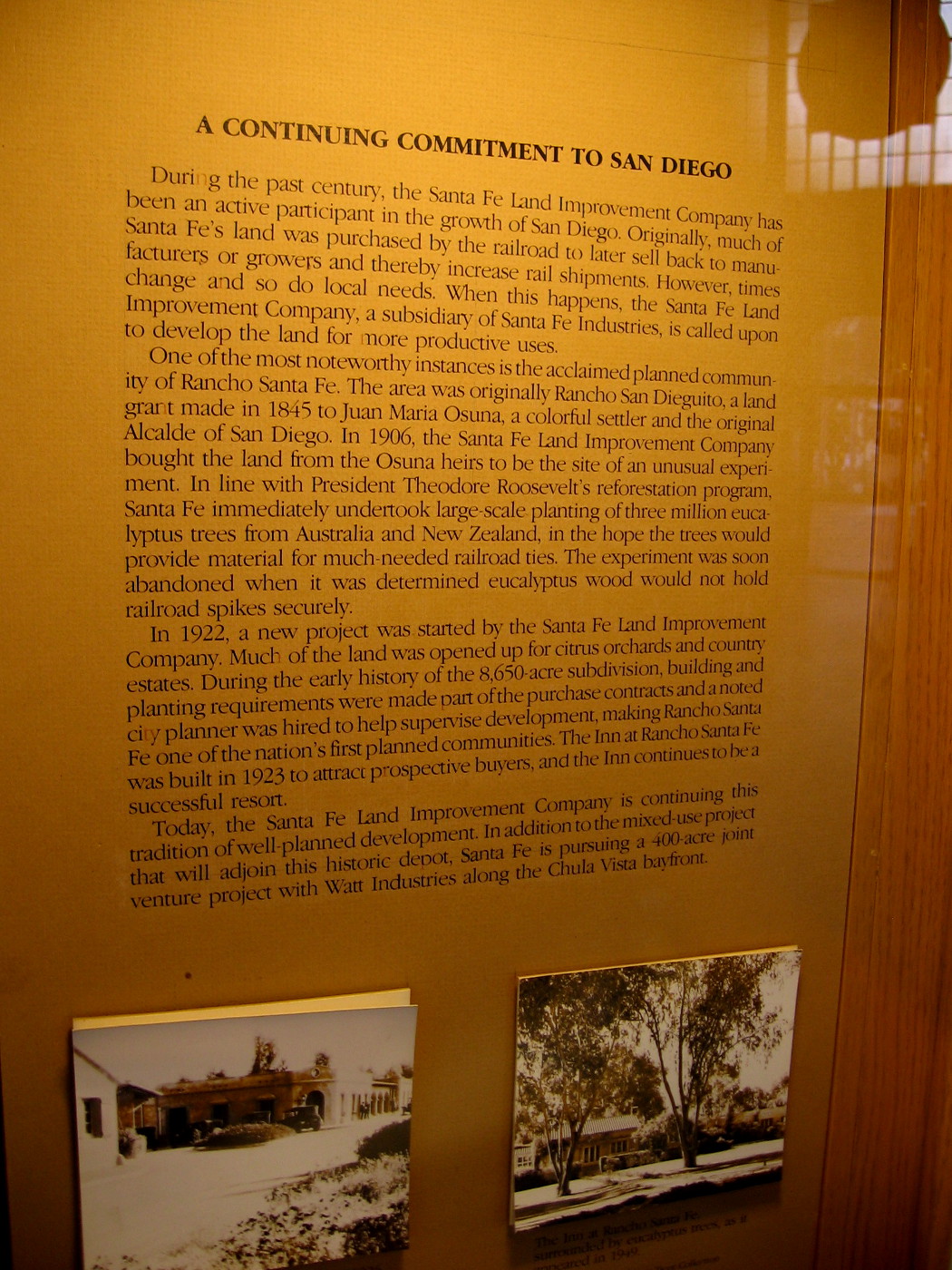
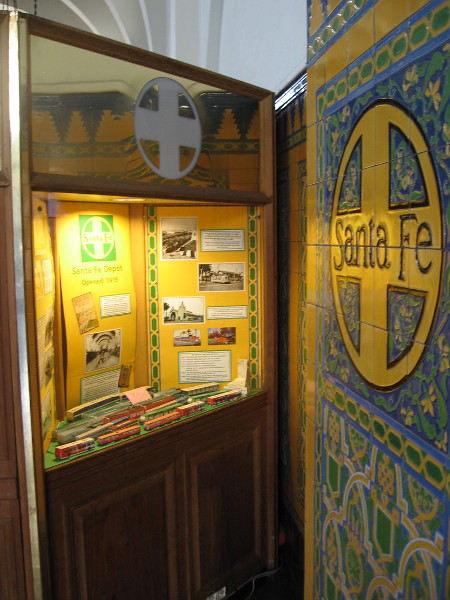
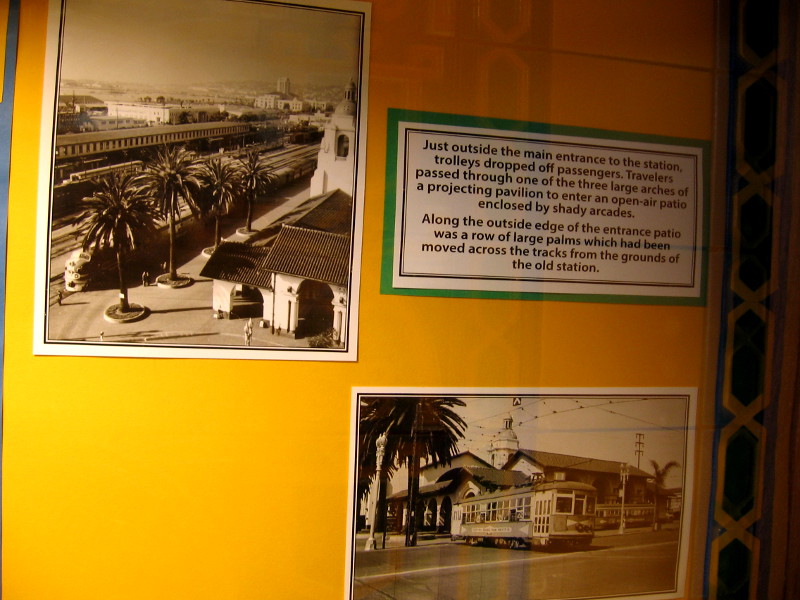
If you ever visit the Santa Fe Depot in downtown San Diego, swing by this information booth to check out the historical exhibit.Several paragraphs recount the history of the Santa Fe Land Improvement Company and the unique origin of North County community Rancho Santa Fe. Eucalyptus trees make poor railroad ties!In a nook right next to the depot’s wall, beside colorful Santa Fe tilework, one can discover more fascinating information.Graphic shows important dates concerning the Santa Fe Depot. The 1887 Victorian-style depot was razed in 1915 after the new depot opened in time for the Panama-California Exposition in Balboa Park.The train station’s architecture reflects colonial Spanish and Mission history in California; it was designed to harmonize with the Spanish Colonial Revival-style buildings of the 1915 Panama-California Exposition in Balboa Park. A century ago San Diego strove to become the western terminus of the Continental Railway.More fascinating old photos of the Santa Fe Depot, today a San Diego transportation hub serving Amtrak, the Coaster, and the Orange and Green Lines of the San Diego Trolley.Original plaster detail removed during the April 2014 restoration of the southeast tower.
…
I live in downtown San Diego and love to walk around with my camera! You can follow Cool San Diego Sights via Facebook or Twitter!
You can easily explore Cool San Diego Sights by using the search box on my blog’s sidebar. Or click a tag! There are thousands upon thousands of unique photos for you to enjoy!
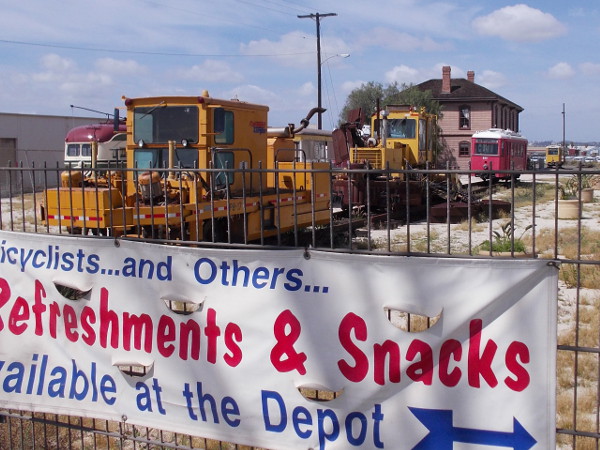
There’s more than refreshments and snacks at the National City Depot. There’s a huge, cool collection of local railroad and trolley history!
If you’re a train or streetcar lover, prepare to go nuts! The friendly guys at the National City Depot, which is home to the Trolley and Railroad Museum operated by the San Diego Electric Railway Association, allowed me to take loads of photographs a couple weekends ago! The place is so crammed with cool stuff, I hardly know where to start!
(Before I get started, however, I learned the National City Depot is in desperate need of volunteer docents and cashiers. So if you live around San Diego and have some free time, please consider this opportunity. Railroading enthusiasts would be in heaven. If you’d like, you might actually roll up your sleeves and help work to revitalize several vintage streetcars. You can have a great time preserving and enlivening our local history of trolleys by explaining exhibits and sharing knowledge with curious visitors, tourists and school students. SDERA’s stated mission is to restore and preserve the history of electric railways and trolleys in the San Diego region. Click here for more info.)
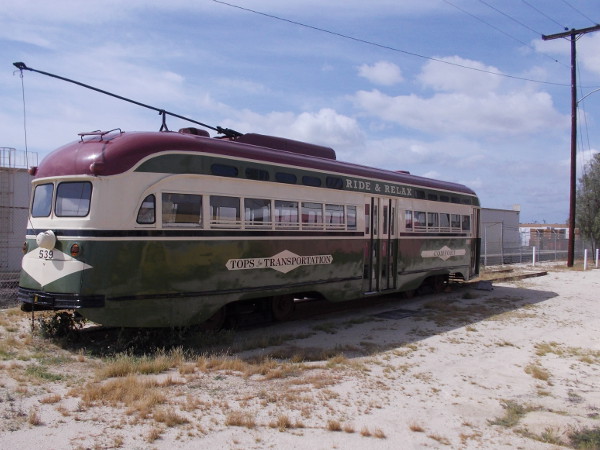
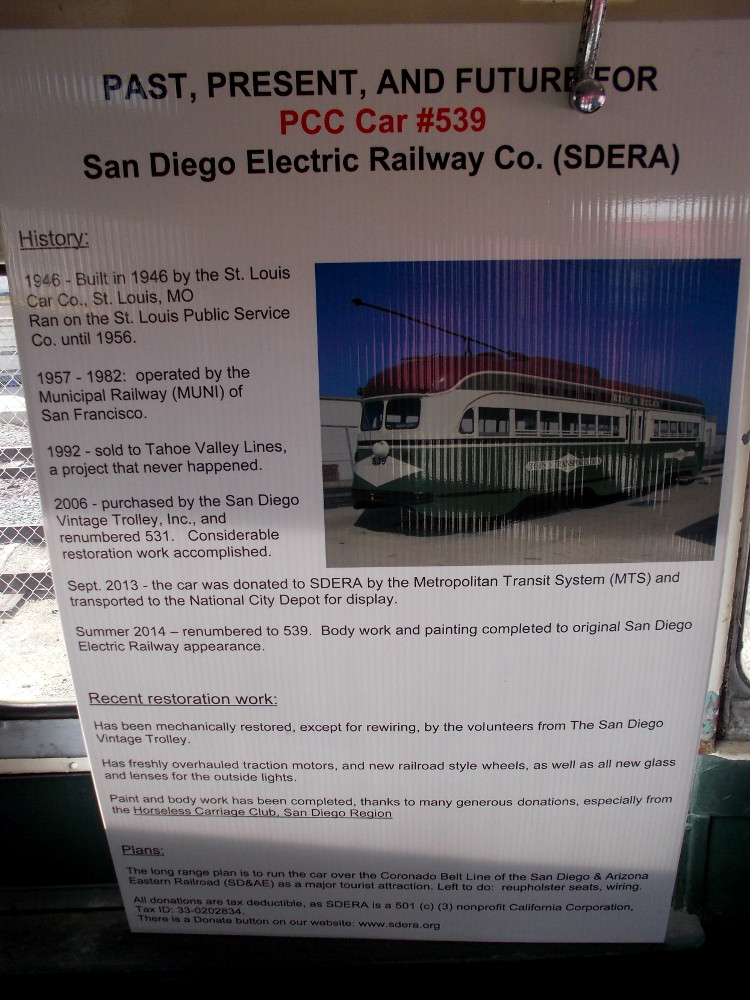
As you can see from the first photo, the depot has a number of old railroad cars and streetcars sitting outside on either side of it. The San Diego Metropolitan Transit System, MTS, has provided the private association with three old Vienna streetcars and one Presidents Conference Committee (PCC) streetcar. The latter is undergoing restoration, and will eventually be used as a cool tourist attraction, running over the Coronado Belt Line of the San Diego and Arizona Eastern Railroad!
You might recognize the name San Diego Electric Railway. It was the mass transit system built by locally famous “sugar heir” and entrepreneur John D. Spreckels. His network of railroads was established in 1892, and active streetcars served a large area of the city for many decades. The San Diego Electric Railway Association proudly displays some examples of the rolling stock that were utilized in those glory years of electric streetcars.
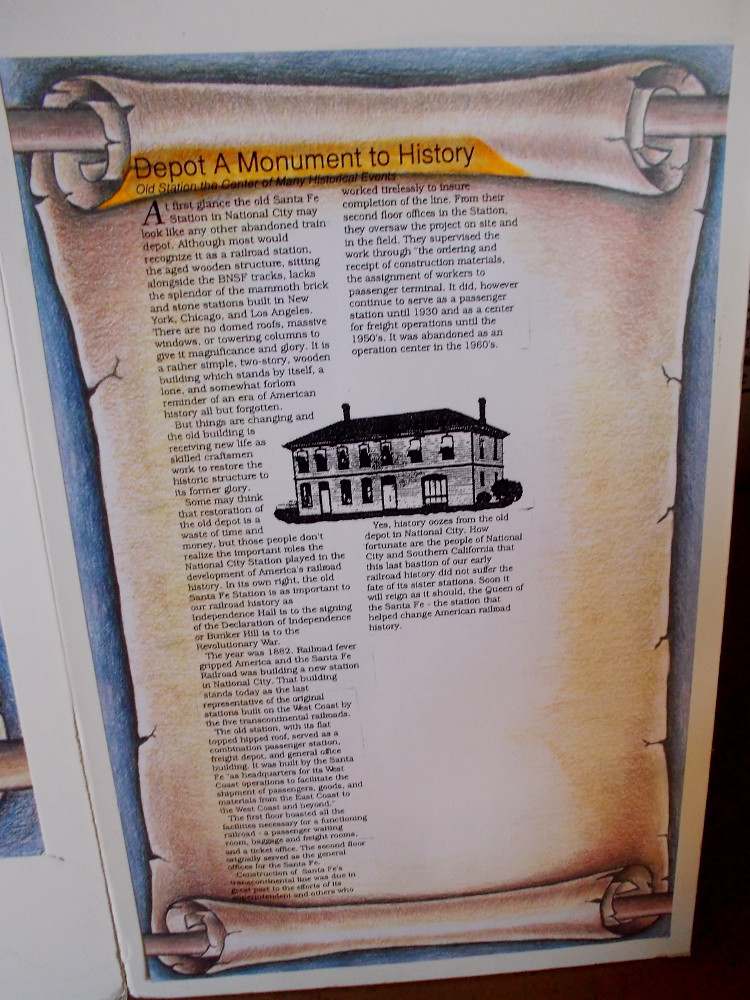
The National City Depot has its own fascinating history. It was built in 1882 by the Santa Fe Railroad, and became the first Pacific Coast terminus station of their transcontinental line. Today, it’s the last representative of the original stations built on the West Coast by the five different transcontinental railroads. After various changes in its operations over the decades, the depot was abandoned in the 1960s and suffered severe neglect. Before finally reopening as a museum, it was also used as a unique building for a couple of restaurants. It’s now owned by the city of National City.
I learned so much during my visit, my brain is still whirling. If I’ve captioned the photos incorrectly, or have made some sort of factual error, please leave a comment!
Here come the photos, just a taste of what you might see should you swing on by. Enjoy!
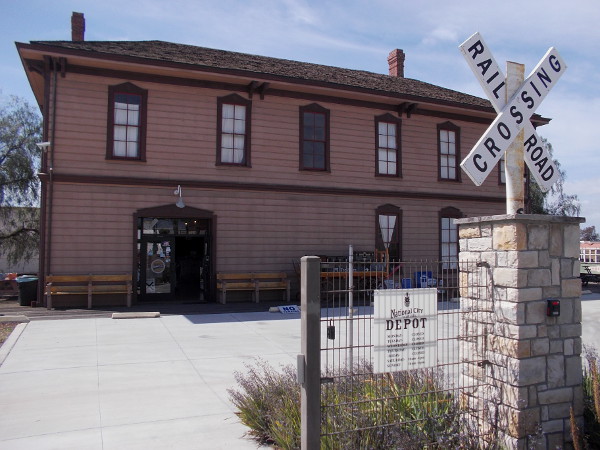
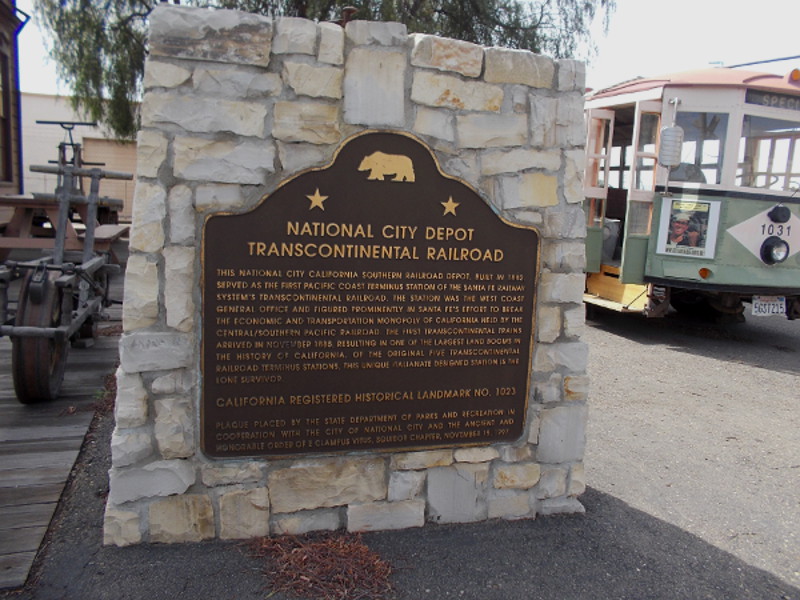
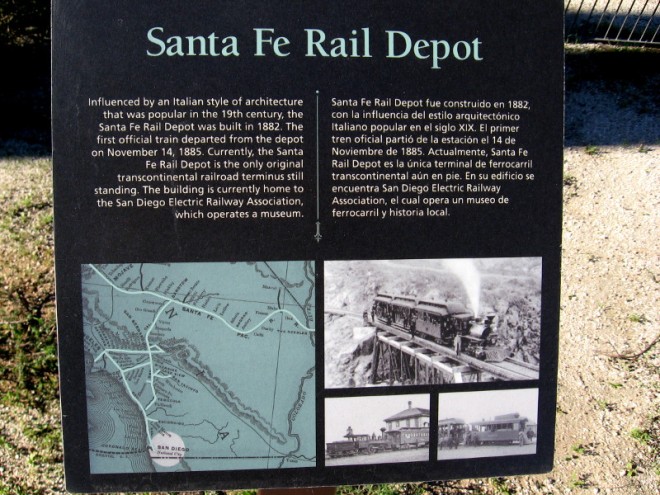
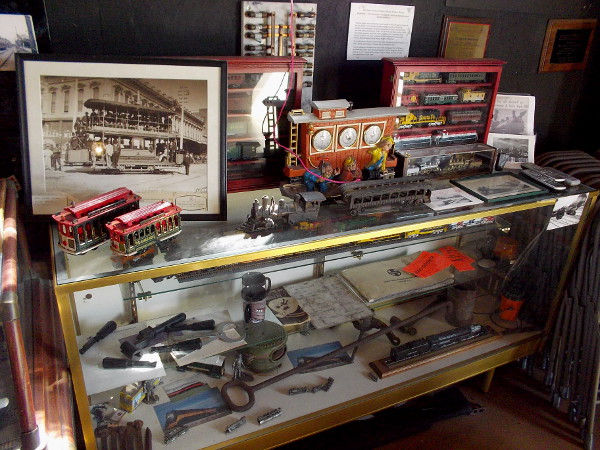
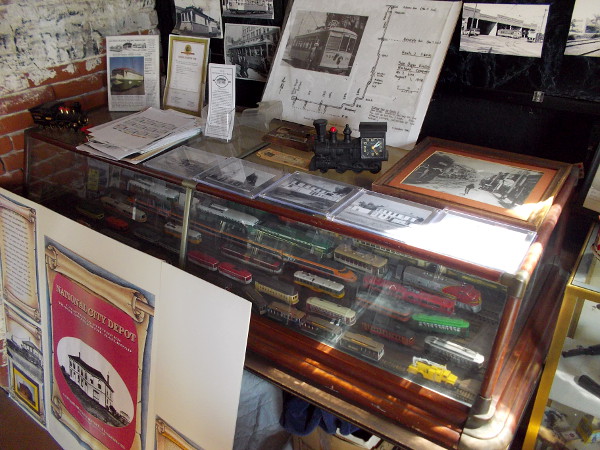
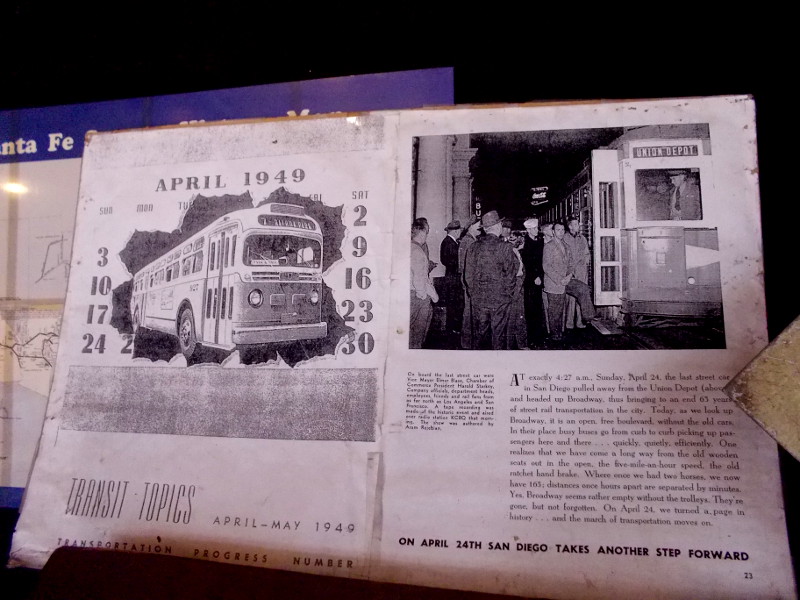
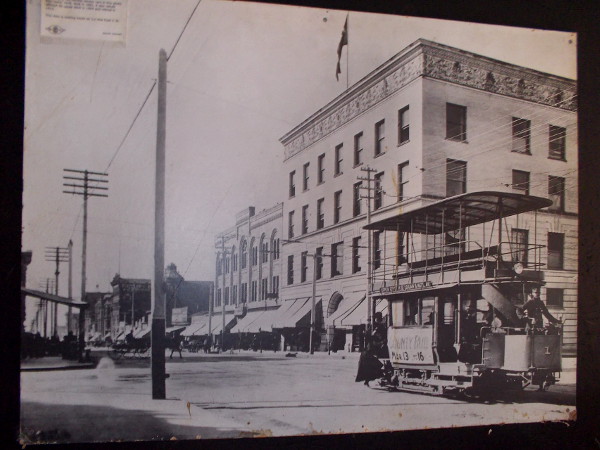
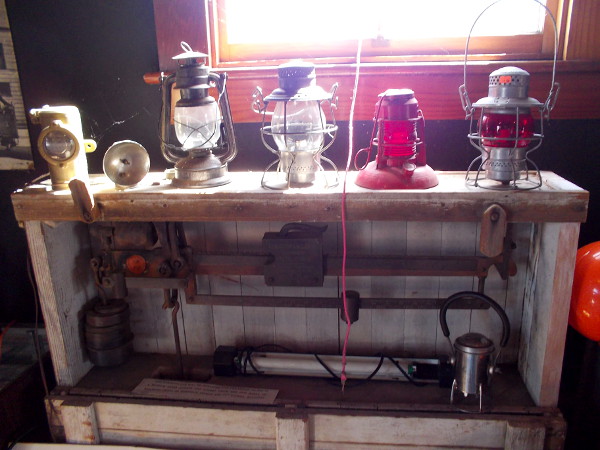
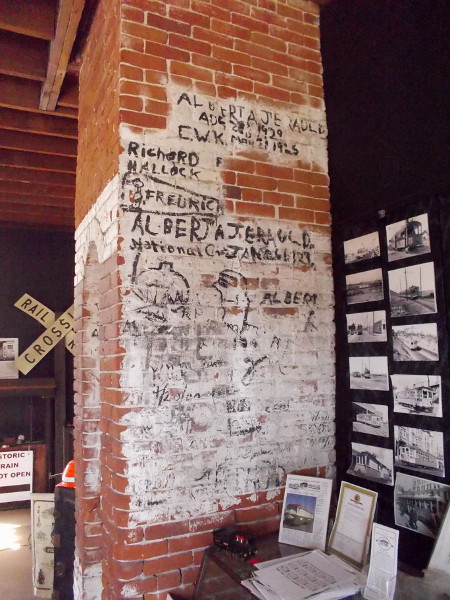
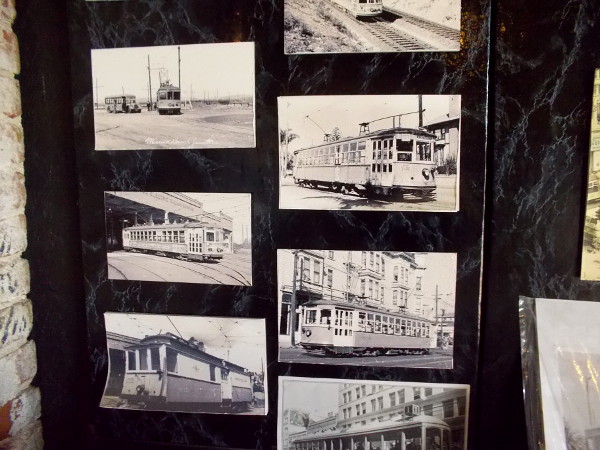
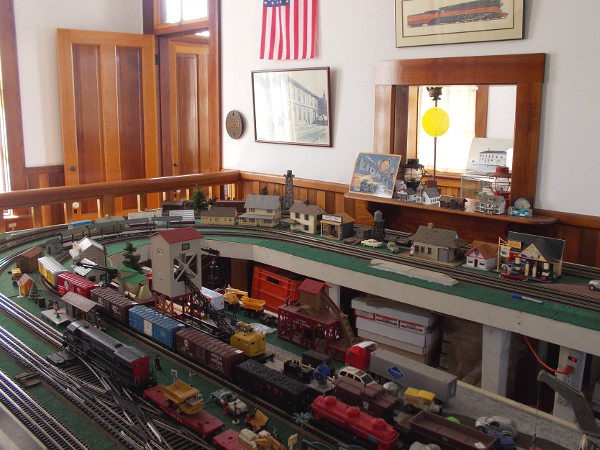
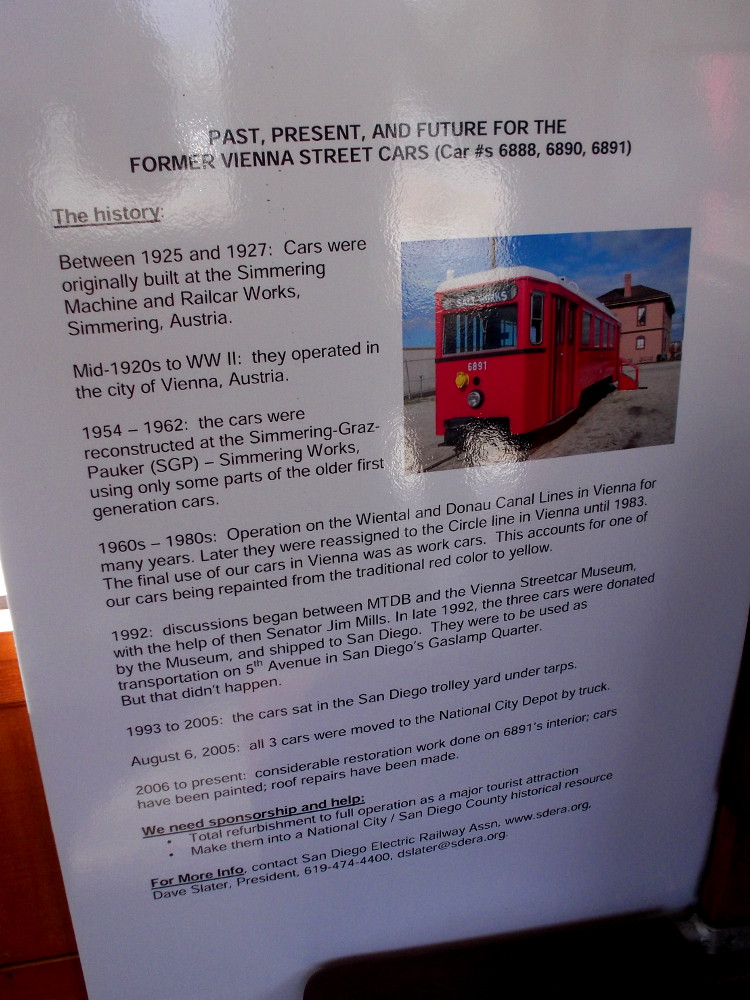
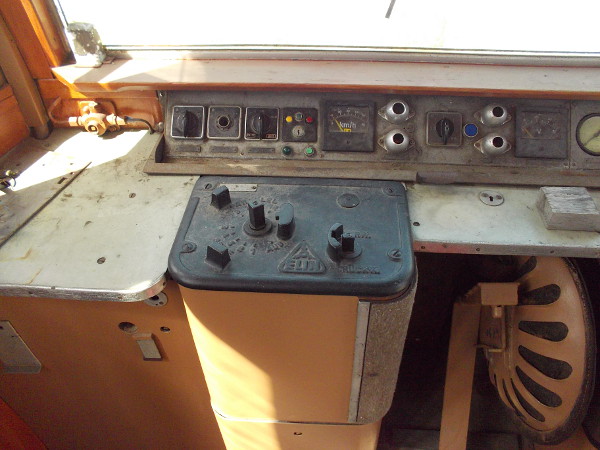
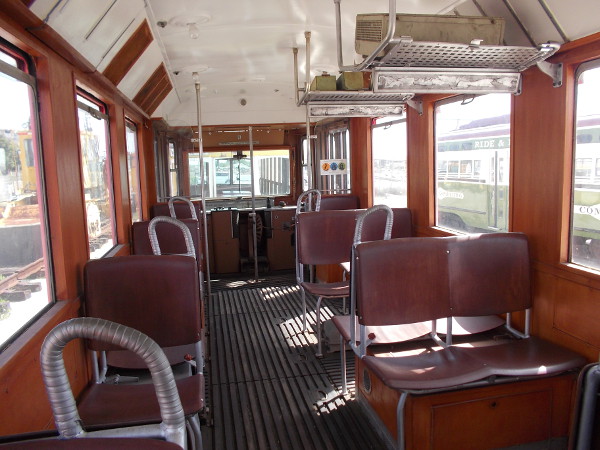
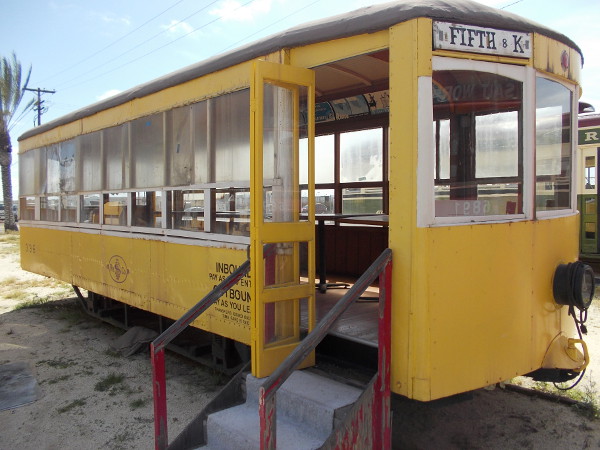
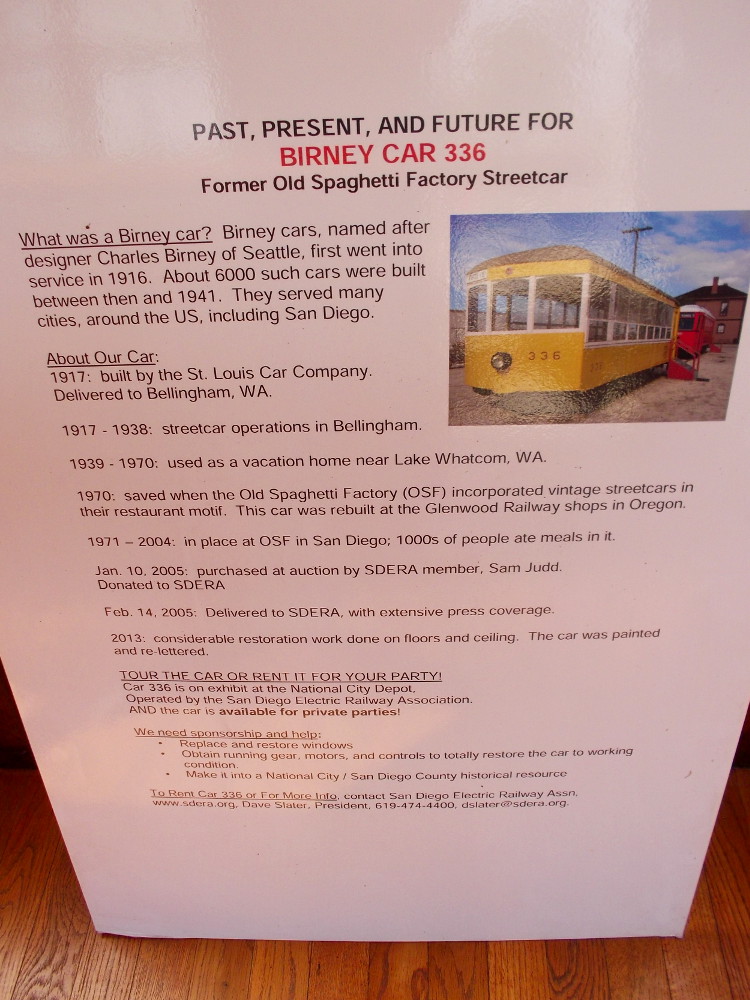
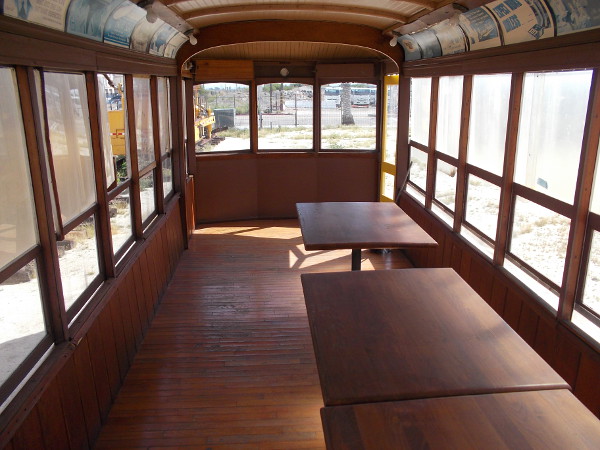
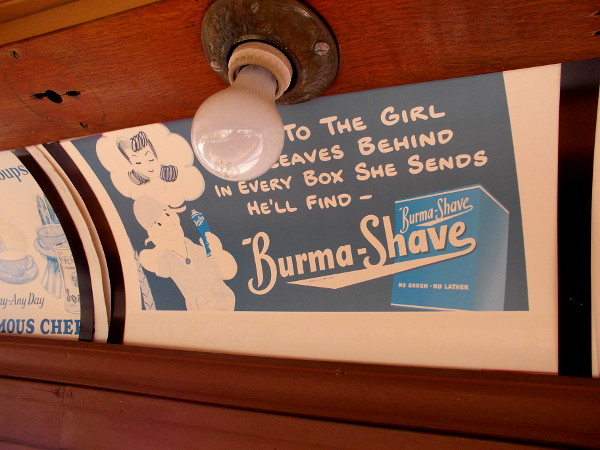
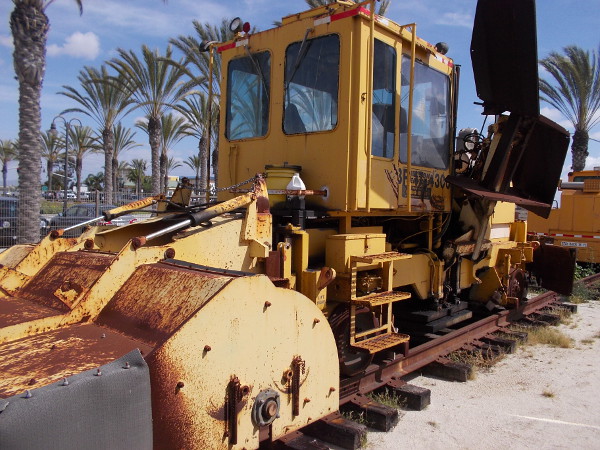
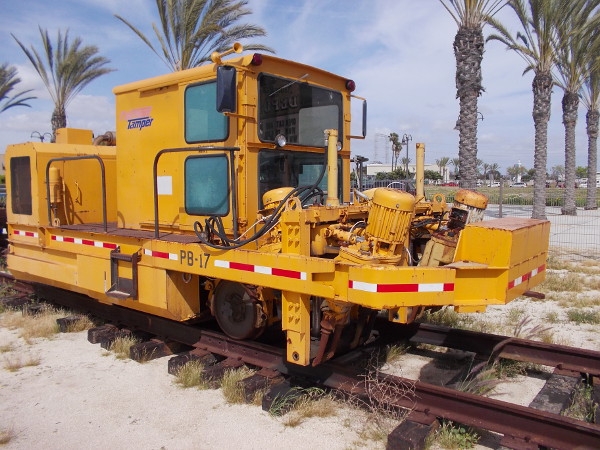
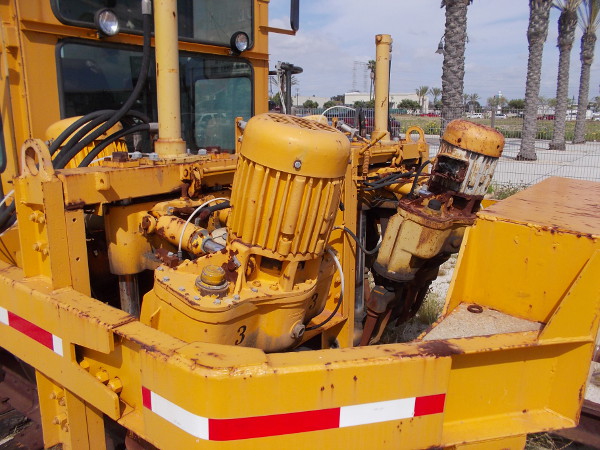
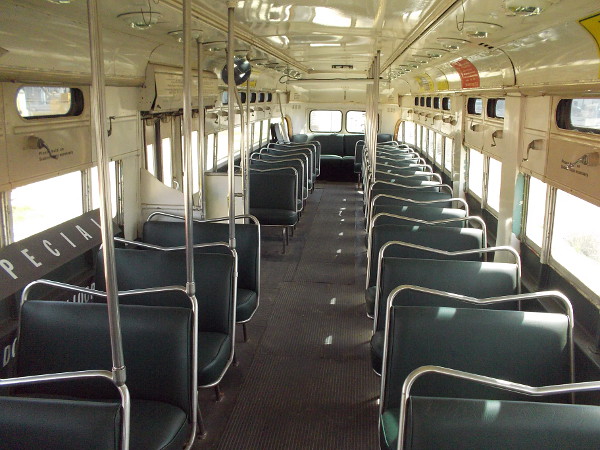
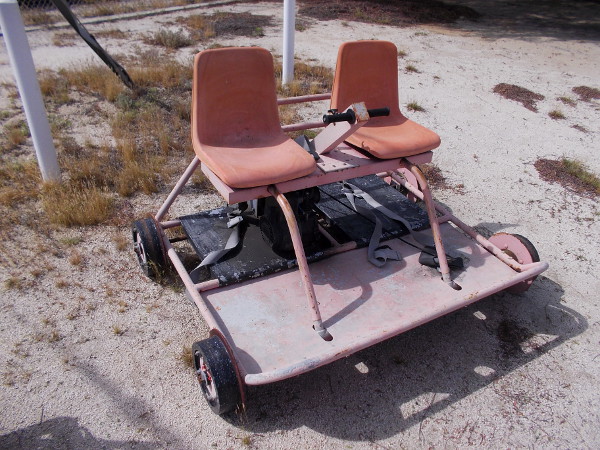
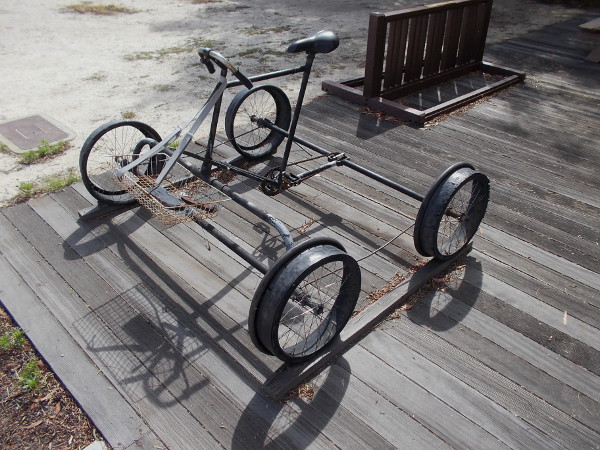
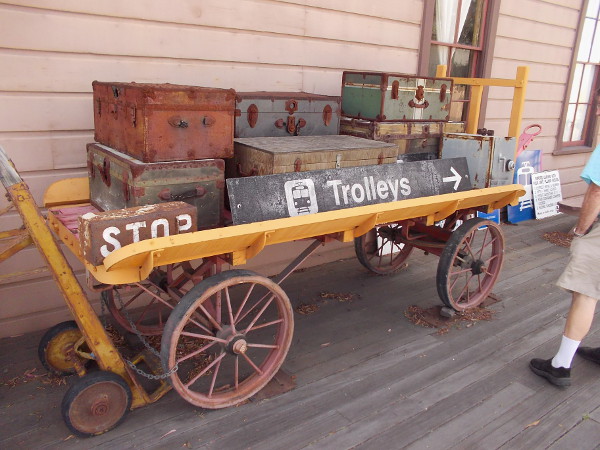
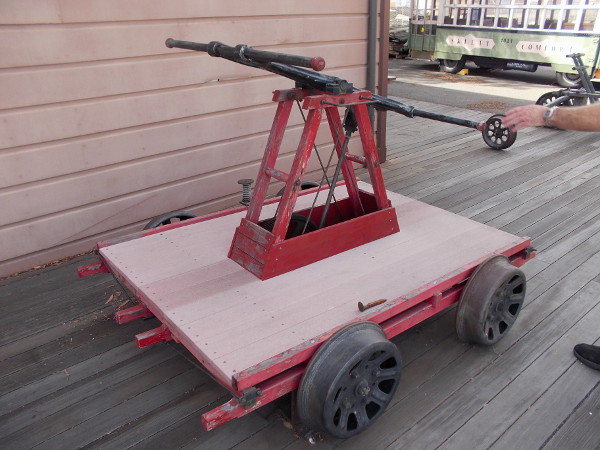
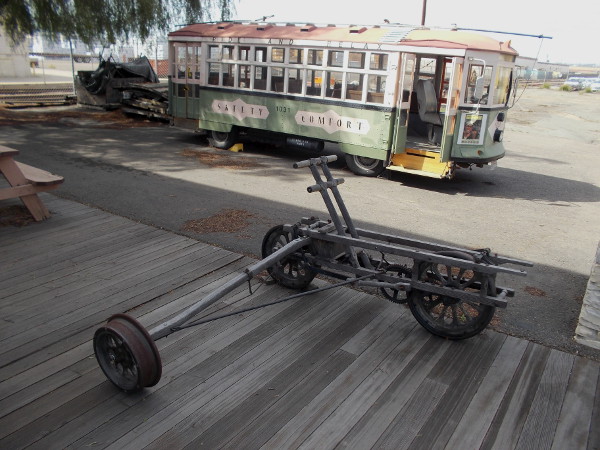
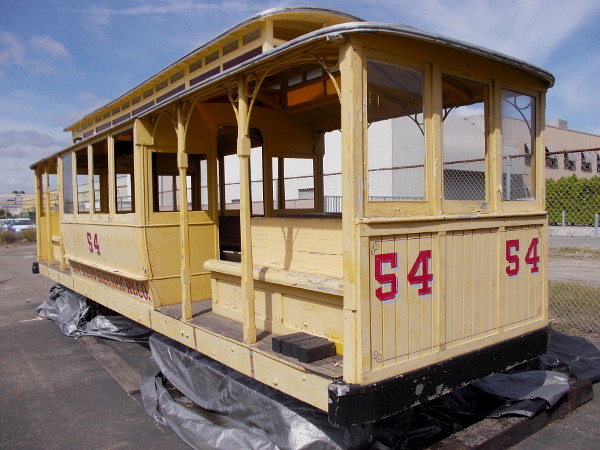
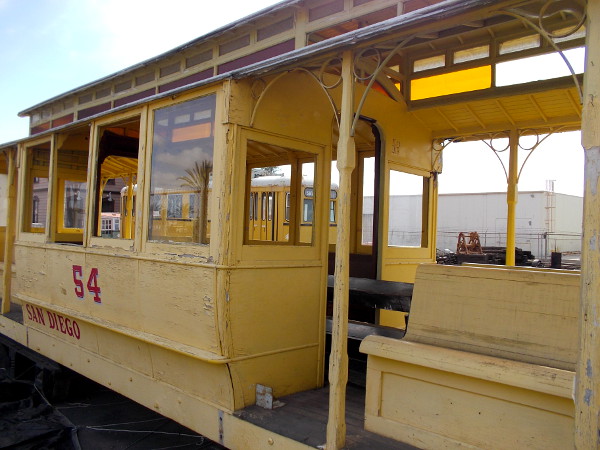
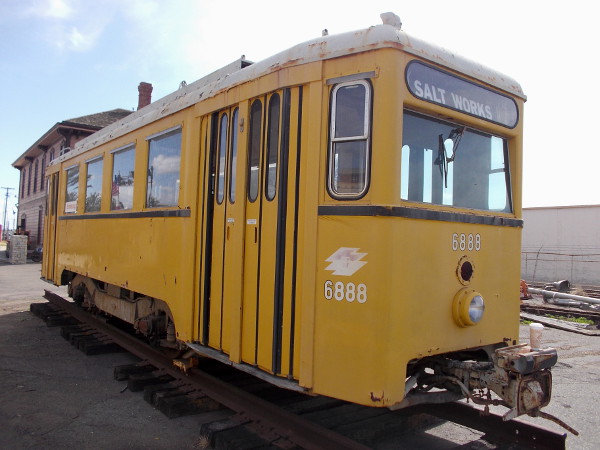
The National City Depot was built in 1882. It was the first Pacific Coast terminus station of the Santa Fe Railroad’s transcontinental line.Plaque in front of National City Depot, the first Pacific Coast terminus station of Santa Fe’s transcontinental railroad. California Registered Historical Landmark No. 1023.Sign describes Santa Fe Rail Depot in National City. It’s the only original transcontinental railroad terminus still standing.Inside the small depot are display cases full of model trains and streetcars, plus artifacts and memorabilia. The walls are covered with old photos and historical information.The famous old train station sits alongside BNSF tracks which are still active. The National City Depot played in instrumental role in American railroad history.There’s so much cool stuff crammed inside the museum, a railfan could spend hours closely examining all of it!A magazine article on display for train buffs and history enthusiasts to check out. Buses finally replaced the old network of San Diego trolleys in 1949.One of many old photos in the museum depicting San Diego’s very rich electric streetcar history.A collection of old lanterns. Everything imaginable concerning San Diego railroads and trolleys can be found inside the National City Depot.Faded writing on the brick fireplace recalls when the eventually abandoned depot was used as a restaurant. Black panels on the walls cover graffiti.One section of a wall has lots of photos of vintage streetcars and trolleys.A second room inside the National City Depot contains a huge model train layout! The exhibit is run when the depot is open Thursdays to Sundays from 9am to 5pm. It appears that SDERA members have a lot of fun!The best photo I could get of a big antique Raymond and Wilshire safe in the historic transcontinental depot. I had to squeeze up against the model train layout.Now we’re outside beside the depot at a picnic bench! I like these two planters in the shape of steam locomotives!Two of National City Depot’s three old Austrian streetcars. These were going to be used by MTS for the San Diego Trolley in the Gaslamp Quarter, but couldn’t meet ADA standards, as I understand it.Sign inside one Vienna street car details the history. They were originally built at the Simmering Machine and Railcar Works, Simmering, Austria.Now we’re stepping like a passenger into one of the old Austrian streetcars!The controls used by this electric streetcar’s operator. Notice a seat that folds under the dashboard.Looking back where passengers would sit. There didn’t seem to be much capacity in the small cars.Now we’re checking out Birney Car 336, out in the open lot beside the National City Depot. This is one type of streetcar that transported people in San Diego decades ago.Birney Car 336 was built by the St. Louis Car Company in 1917, and first served in Bellingham, WA. It later was used for dining inside the Old Spaghetti Factory in San Diego, from 1971 to 2004!Inside the old Birney Car. I’m hungry for some spaghetti! Where are the chairs?Cool vintage advertisements along the car’s ceiling include this one for Burma-Shave.A big, heavy tamping machine used for maintaining railroad tracks and placing them more firmly onto packed ballast.A second ballast tamper outside the National City Depot. I always wondered what these unusual machines that you see on train tracks are for.Part of the machinery that pushes down on the steel rails and ties. This makes sure train tracks are solidly in place and level.Gazing back north past various rail exhibits outside the National City Depot. Isn’t this fun?Now we’ll check out PCC Car 539, which was donated to SDERA by the Metropolitan Transit System.PCC Car 539 was built in 1946 by the St. Louis Car Company. It served as a streetcar in St. Louis until 1956. Restoration is underway. One day it might run nearby as a tourist attraction.Inside the fabulous PCC car. The San Diego Trolley now has two completely restored cars of this type, running in a downtown loop called the Silver Line.I believe this is a Fairmont Speeder Car. Tiny crew cars were used to transport a few individual workers up and down tracks. I’d love to ride one!Oh, man! I bet you’d love to sit in one of these seats and ride the rails! Just turn the throttle to go!Seriously? This one is basically a bicycle for train tracks! Except it has four wheels! And a bike chain, of course!This luggage cart near the entrance to the National City Depot was donated by the Maritime Museum of San Diego–it evidently was aboard the steam ferry Berkeley at one time.One of several cool vintage handcars. Just like you see in those old Western movies.This unusual three-wheeled handcar reminds me of a canoe outrigger!San Diego Electric Railway Association’s fun Herbie is a Brill streetcar replica. A parade and car show’s popular Streetcar on Wheels!An antique open air streetcar at the National City Depot. This a grip car, like the cable cars in San Francisco. Few people realize that San Diego had a cable car line that briefly ran from the Gaslamp to University Heights in the early 1890s!Elegant number 54 is a unique composite, built using two different San Diego Cable Railway cars. I see panes of stained glass. The yellow paint is peeling.The third Vienna streetcar in the National City Depot’s collection, number 6888, is yellow.There’s a ton of very cool stuff to see at the National City Depot, in San Diego’s South Bay!
…
I live in downtown San Diego and walk all over the place! You can follow Cool San Diego Sights via Facebook or Twitter!
You can easily explore Cool San Diego Sights by using the search box on my blog’s sidebar. Or click a tag. There are thousands upon thousands of fun images (including lots of model and historical train photographs) for you to enjoy! Feel free to share! Have some fun!
National City’s unique Historic Railcar Plaza. One can peek inside the barn and see a few exhibits that recall 19th century rail service in San Diego’s South Bay.
During my excursion last weekend to National City, I saw several very cool sights. Here’s one!
Those interested in San Diego’s rich history of trains and streetcars should visit the Historic Railcar Plaza, which is located at the intersection of Bay Marina Boulevard and Harrison Avenue. (It’s right across from National City’s awesome Old Depot museum, which I’ll blog about as soon as my photos are ready!)
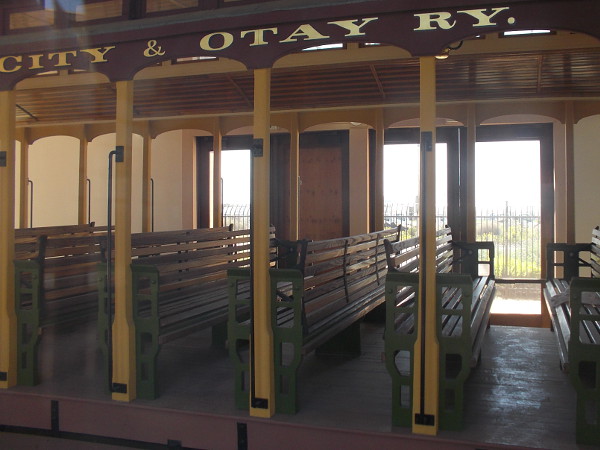
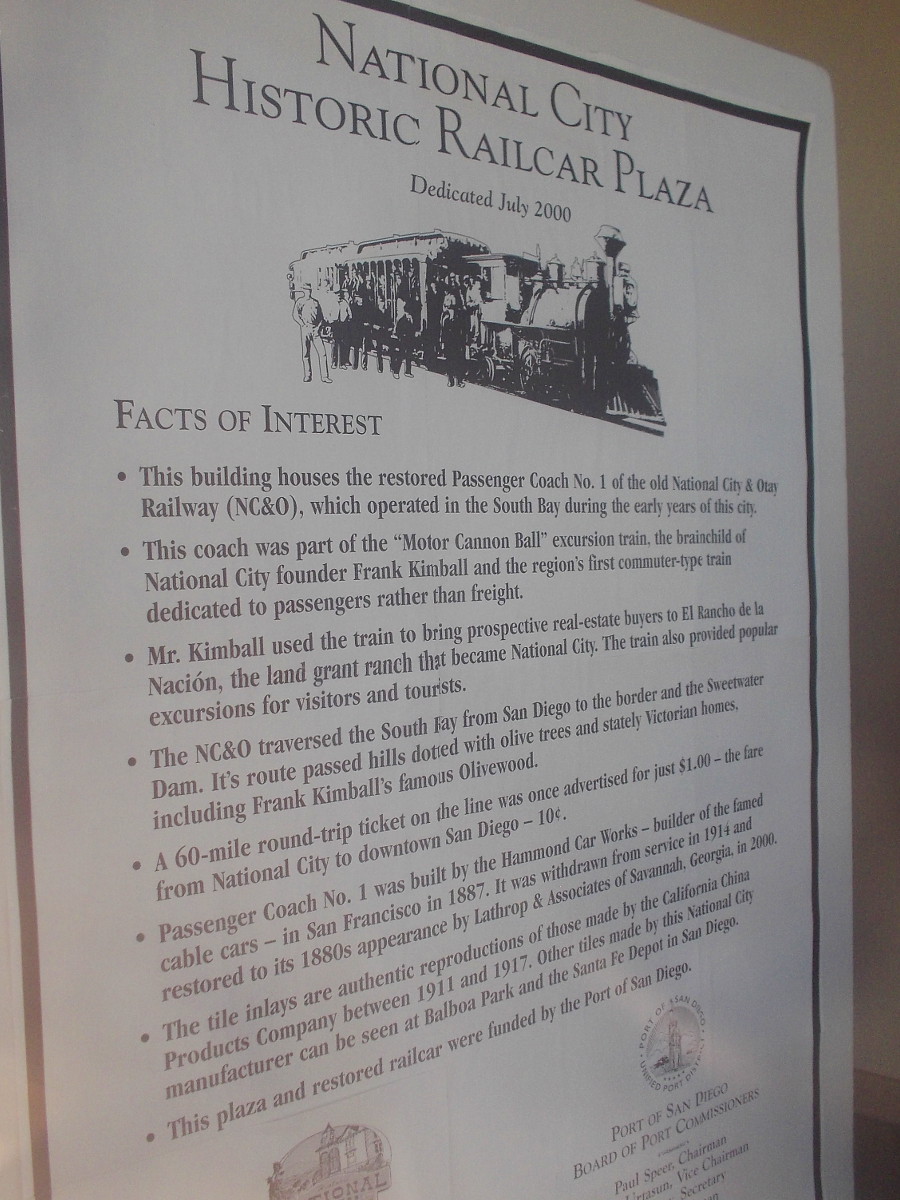
In addition to several displays dedicated to past railroads that serviced San Diego’s South Bay, the Historic Railcar Plaza features the fantastic, restored Passenger Coach No. 1. The old coach can be rolled outside of a small train barn on special occasions. Passenger Coach No. 1 was originally built in 1887 and carried passengers up and down the National City and Otay Railway (NC&O) until 1914. The beautiful open railcar used to seat up to 58 passengers in varnished redwood splendor.
The Historic Railcar Plaza’s small barn was built in 2000. The day I peeked through the windows it was padlocked shut. The windows were rather dirty and a few of the displays within had toppled over, which seems to indicate a degree of neglect. Apparently the cool car is rolled outside on the short track from time to time. I hope to see that one day!
Many of my photos were through those dirty windows. I did my best to adjust the images for clarity.
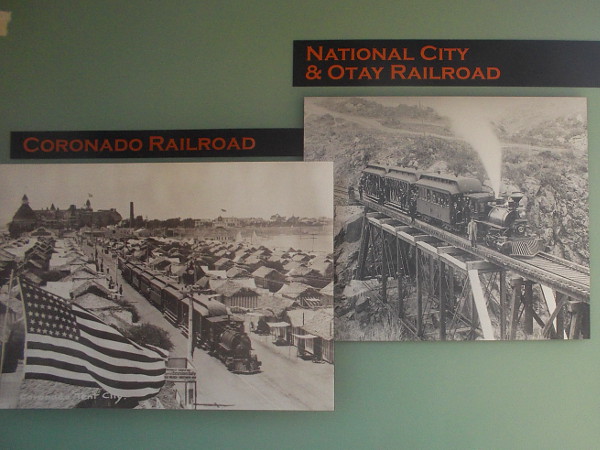
Mysterious stretch of train track emerges from the barn’s door. A very cool bit of history can be rolled outdoors during special occasions.That bit of history is the restored Passenger Coach No. 1, of the long-defunct National City and Otay Railway.The restored coach features outdoor bench seating and beautiful woodwork. Passengers could ride this car from San Diego through National City and Chula Vista to the Mexican border.A mannequin inside the Historic Railcar Plaza depicts the legendary Millionaire Hobo, J.B. King, Esq. His one burning ambition was to write his name on every car of every train in the country!A century ago, a ticket for the sixty mile round trip on the National City and Otay Railway could be purchased for just one dollar.Two old photographs. On the left, the old Coronado Railroad traveled through Imperial Beach and up the Silver Strand to Tent City in Coronado. One can see the splendid Hotel del Coronado in the distance!Map inside the Historic Railcar Plaza shows the various railways that once serviced San Diego, when transportation by train was extremely popular.Key to the above map includes the region’s evolving railroads: the California Southern, the National City and Otay, the Coronado, the San Diego Southern, the San Diego and Southeastern. and the San Diego and Arizona.
I live in downtown San Diego and love to walk! You can follow Cool San Diego Sights via Facebook or Twitter!
You can easily explore Cool San Diego Sights by using the search box on my blog’s sidebar. Or click on a tag! There are thousands upon thousands of fun photos for you to enjoy!
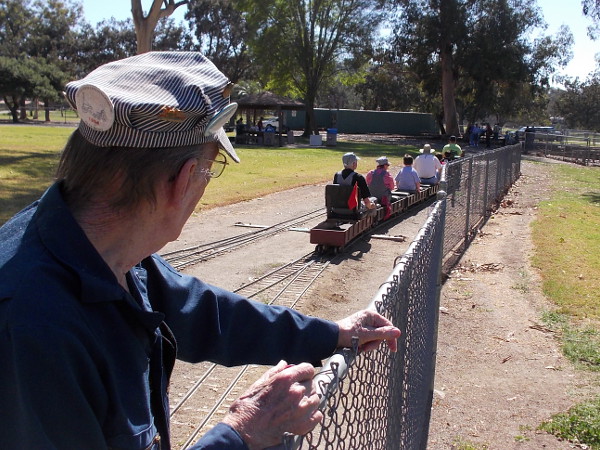
A “live steam” enthusiast watches families ride a small train through Rohr Park, in San Diego’s South Bay.
This is beyond cool!
The Chula Vista Live Steamers is a club in San Diego’s South Bay. Members build and operate their own small “live steam” trains that people can actually ride!
These friendly hobbyists utilize an elaborate network of miniature train tracks in a public park; the layout is called the Sweetwater and Rohr Park Railroad. During public run days, which take place in Bonita’s grassy Rohr Park one Saturday and Sunday of each month, anyone can watch or ride the small trains! Or if you’re inclined, join and become a member! If you have kids, visit their website, and you can schedule birthday parties!
Today I spotted one steam and one diesel locomotive (which is actually powered by gasoline). It’s winter, so things are bit slow. On Labor Day, I was told, a gigantic railroading extravaganza takes places, with many different trains running simultaneously! If you’re a kid (or a kid at heart), I can only imagine how utterly fantastic it would be!
Whether you’re a railfan, a model train enthusiast, a maker, a dreamer, or just like to see something really unique and fun, head down to join in the action and you’ll have a great time!
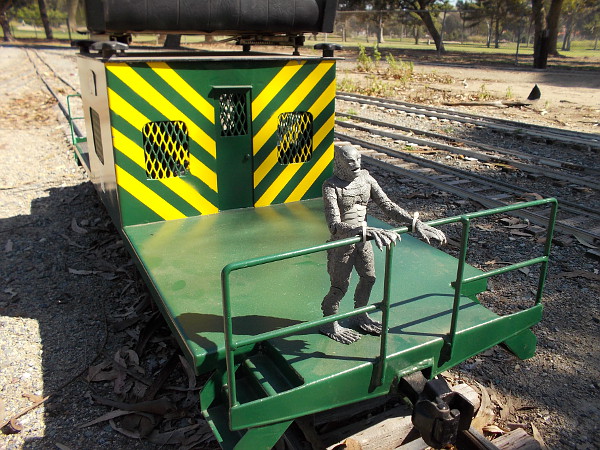
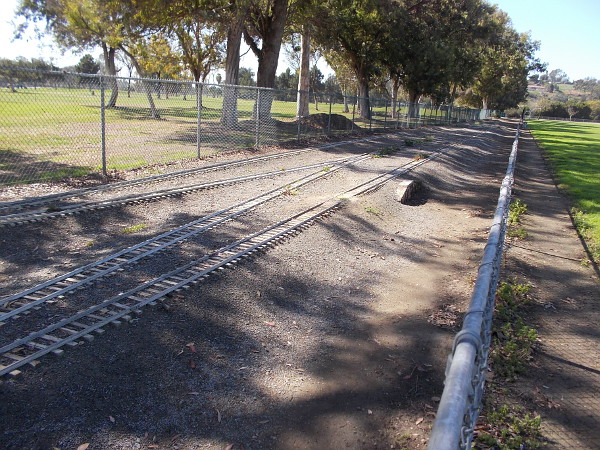
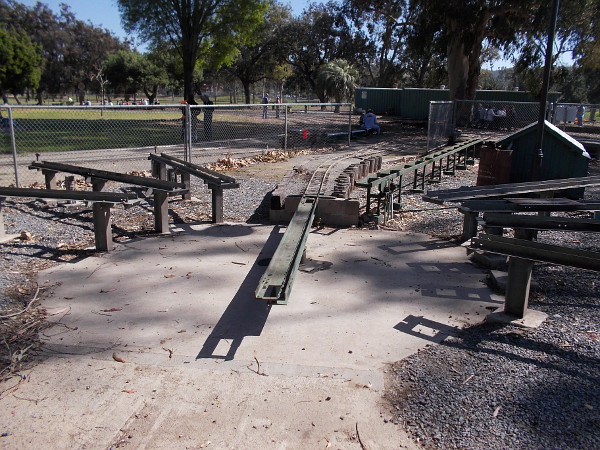
Should you walk down this path through Rohr Park in Bonita, you’ll eventually come upon something really cool and amazing.Run days for The Chula Vista Live Steamers are usually the 2nd Saturday and Sunday of each month. On Labor Day there’s a huge event with many trains operating.Adults love riding the trains just as much as kids. Hobbyists build and maintain the rail cars and working locomotives, and haul them to the park for some fun.Thrilled kids ride behind a small “diesel locomotive”, which is actually powered by gasoline. The tracks looping through the park provide a fun, scenic ride.Here comes the same train. The Bonita Golf Course is in the distance, beyond the tracks.This working steam locomotive is a very cool sight. But it’s so small that folks at a nearby picnic table seem to be giants.This tiny train is part of the National City and Otay Railway!A close-up photo of the live steam locomotive. In every detail, it seems a perfect reproduction of a full-size engine.Dedicated train hobbyists have gathered on the surprisingly large rail yard to enjoy the steam locomotive.This caboose in the rail yard seems to be occupied by the Creature from the Black Lagoon!A pair of tracks head for a good quarter mile along the edge of the Bonita Golf Course. You can see railroad crossings and a few small bridges!Occasionally, trains will run down the side of the golf course to another loop.An actual working railway turntable! This area is where steam locomotives build up steam pressure before running. The turntable is very busy on Labor Day!Checking out a super cool locomotive operated by a member of the Chula Vista Live Steamers!
…
Follow along on some unique adventures! You can enjoy future Cool San Diego Sights via Facebook or Twitter!



















































 Cool San Diego Sights!