Join me as we walk east through Balboa Park. Having passed the Museum of Man, we now turn north to peer through an archway that leads to three of San Diego’s most prominent theatres. They are the Sheryl and Harvey White Theatre, the outdoor Lowell Davies Festival Theatre, and the world-famous, much celebrated Old Globe Theatre. The latter is modeled after the original Globe Theatre in London, where William Shakespeare saw many of his own plays performed. Just a sliver is visible in this photo, on the left.
In the next blog post we will proceed through the archway…
Another pic taken from an archway on the opposite side of El Prado.
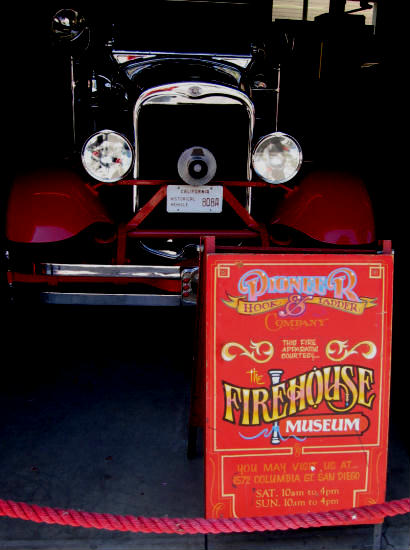
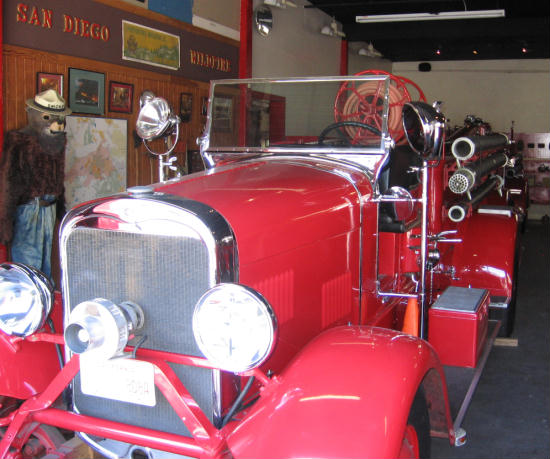
If you’re ever in the Little Italy neighborhood in downtown San Diego, you might want to check out the small but jam-packed Firehouse Museum.
Shiny red fire trucks, interesting historical photos, old fire fighting apparatus, memorabilia and even Smokey Bear are on display. And excited kids can climb into one of the cool fire engines!
This sign by the sidewalk invites tourists and passersby to take a peek into the firehouse.
I took a photo from outside, aiming left.
And then the above photo aiming right.
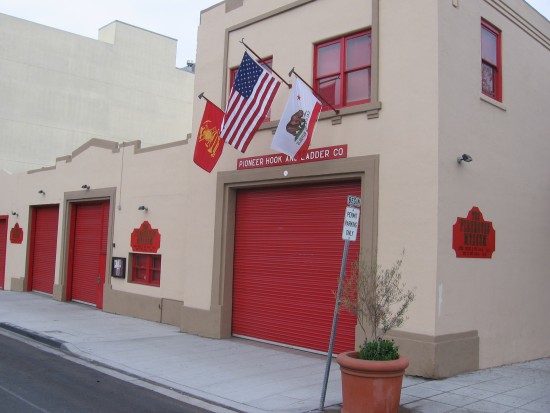
The next pic was taken on a later day, in the early morning when the museum was still closed…
The San Diego Firehouse Museum in the early morning.
A plaque appeared on the museum’s exterior in mid to late 2015!
Old Fire Station Number Six. From 1915 to 1970, San Diego Fire Department’s original Fire Station 6 proudly served the community of Little Italy.
The plaque includes this fascinating information:
In the workshop on this site some of America’s most significant fire service innovations were created by the specialty trade-skilled firefighters who worked here, including the world’s first gas engine powered fireboat, the Bill Kettner. In 1963 the National Fire Protection Association declared the national standard thread the official fire hose thread of the United States of America. The machine which enabled this federal legislation was invented here six years earlier by inventor and battalion chief Robert Ely. The common thread allowed thousands of American firefighters to connect their fire hoses together, allowing them to work as one. As a result, countless lives and priceless amounts of property and the environment have been saved.
…
Follow this blog for more photos of cool stuff! Join me on Facebook or Twitter.
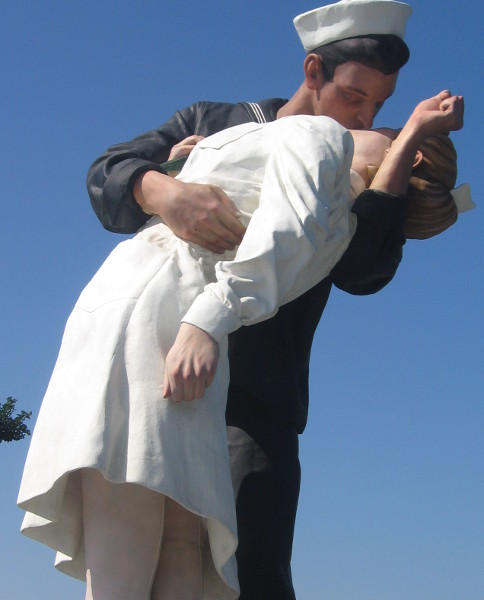
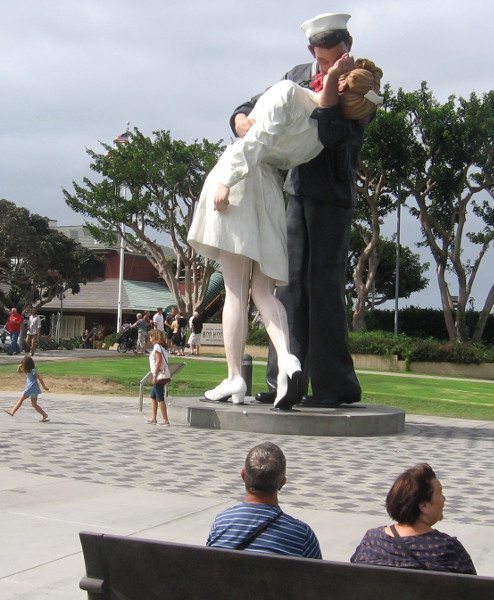
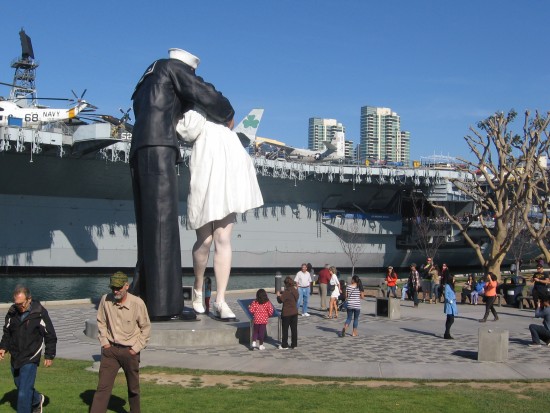
Unconditional Surrender statue on San Diego’s Embarcadero near the USS Midway Museum.
This large statue is amazingly popular with tourists visiting San Diego’s Embarcadero. Tour buses park in the nearby parking lot and throngs of people stand beneath the kissing sailor and nurse, snapping photos. Many couples joyfully imitate the dramatic pose. Critics say the statue is too kitsch, but I disagree! It perfectly represents a moment in time: the end of the Second World War.
Referred to by many as The Kiss, this huge sculpture was created by the artist Seward Johnson. Its proper name is Unconditional Surrender. It’s based on a photograph taken during V-J day in New York’s Times Square. An American sailor, overjoyed at the news of the war’s end, grabbed a random nurse nearby and gave her a spontaneous kiss. The photograph became world famous.
A temporary Unconditional Surrender statue was originally placed at this site, but it was replaced with a permanent bronze version in 2012. Unlike most other monuments and memorials located on the Greatest Generation Walk, just south of the USS Midway, this statue is so enormous it can be glimpsed from several points on San Diego Bay.
Sailor overjoyed that war is over plants a big kiss!Sailor applies The Kiss to a nurse at the end of World War II.Sitting on nearby bench on a cloudy day.People gather about Seward Johnson’s Unconditional Surrender.
Lounging and enjoying a stunning view of San Diego.
People gravitate toward water. Water sparkles, soothes, delights, attracts the eye and invites reflection. I love the opening to Moby Dick, where Melville says: “Let the most absent-minded of men be plunged in his deepest reveries–stand that man on his legs, set his feet a-going, and he will infallibly lead you to water . . . ”
Look at these folks just gazing at the water!
The Ferry Landing in Coronado offers amazing views of San Diego Bay. Stand out on the pier, splash on the small beach, sit on the grass or on the patio of a restaurant, and just gaze in a quiet reverie at the passing boats and the gleaming San Diego skyline. Call me crazy, but I could linger here for hours.
That’s one reason why I love to take the ferry to Coronado!
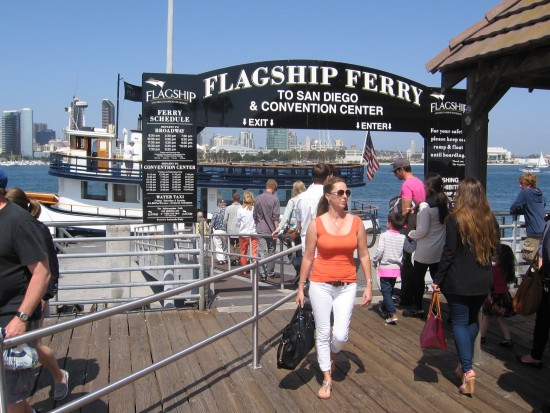
The second pic shows people on the Coronado Ferry Landing pier. During the day, San Diego’s downtown skyline is a beautiful sight. At night, all lit up, it’s like a glowing dream. If you were turn to the left, you’d see a whole bunch of people fishing.
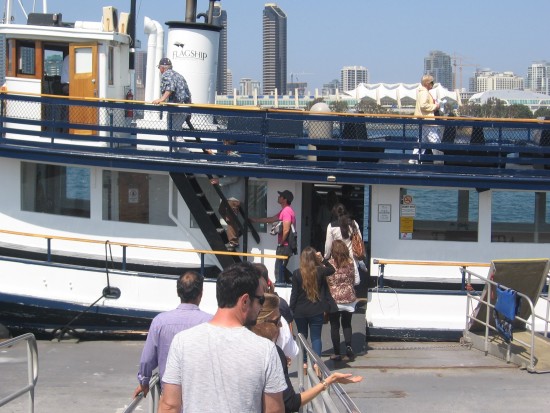
Fishing from the small Coronado Ferry Landing pier.People board the Silvergate ferry for downtown San Diego.
Next we see people filing from the pier down to the float where the ferry ties up. During the tourist season, the Silvergate ferry takes people to the Convention Center; a larger ship takes people to the Broadway Pier. You can bring your bicycle on board (or rent one at the Ferry Landing) and bike across the island to the ocean side, where you’ll find the Hotel del Coronado.
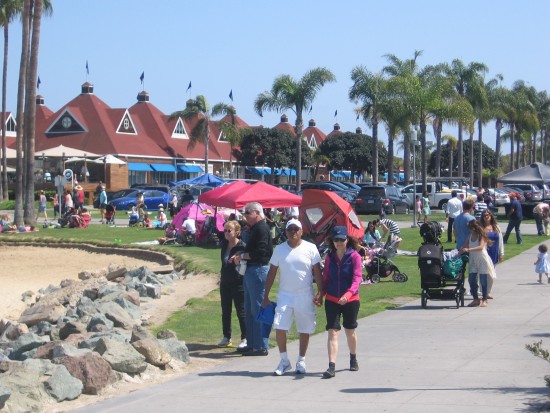
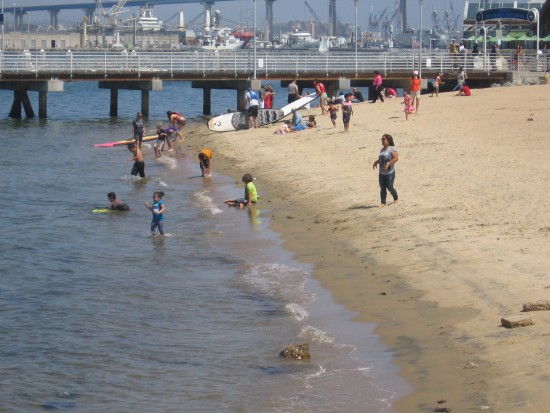
The Coronado ferry is great short cruise on the bay.Silvergate docked at Coronado with San Diego skyline.Visitors to the island of Coronado arrive and depart.People stroll down a path near the ferry landing.Kids play on the beach next to the ferry landing pier.Paddleboarding just off the Coronado Ferry Landing.Amazing view of a beautiful sunlit city.
The Hotel Del Coronado is one of my favorite places for a stroll. The beautiful architecture, the white sandy beach, the rich history, the sunshine and leisurely vibe, all combine for a wonderful experience.
The Del’s unique appearance makes it an unmistakeable landmark in San Diego. It’s a classic Victorian beach resort, and one of the largest wooden structures in California. In 1888, when it opened, it was the largest resort hotel in the world!
Today, the spacious beach that it overlooks is routinely considered a top beach in the United States.
Sixteen different American presidents have been guests at the Del, as well as numerous celebrities. These include royalty from many nations, Thomas Edison, Babe Ruth, and loads of Hollywood movie stars: Charlie Chaplin, Clark Gable, Errol Flynn, Vincent Price, James Stewart, Bette Davis and Katharine Hepburn, to name just a few.
L. Frank Baum, author of The Wonderful Wizard of Oz, did much of his writing at the Hotel Del Coronado.
Numerous movies have been filmed at the hotel, most notably Some Like It Hot, which starred Marilyn Monroe, Jack Lemmon, and Tony Curtis.
Many photos and signs throughout the amazing hotel remind visitors of its rich past history!
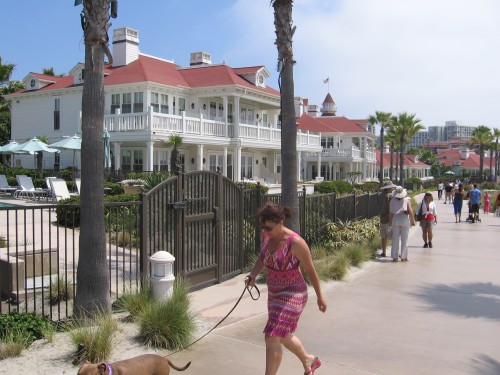
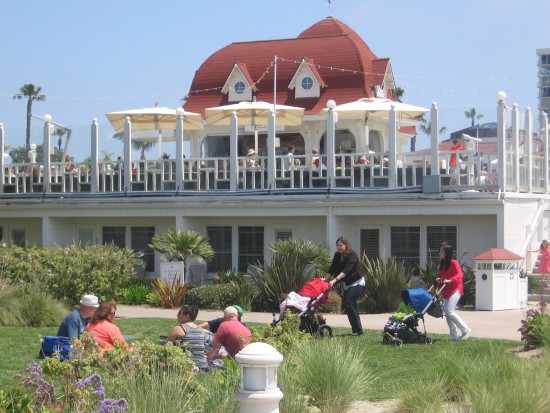
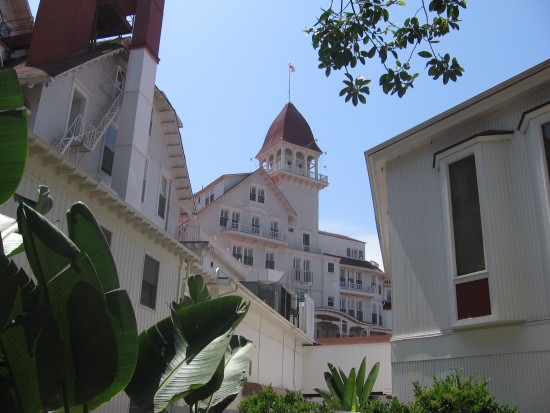
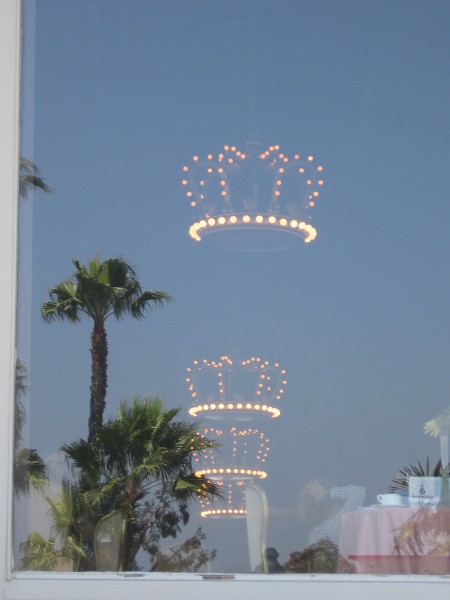
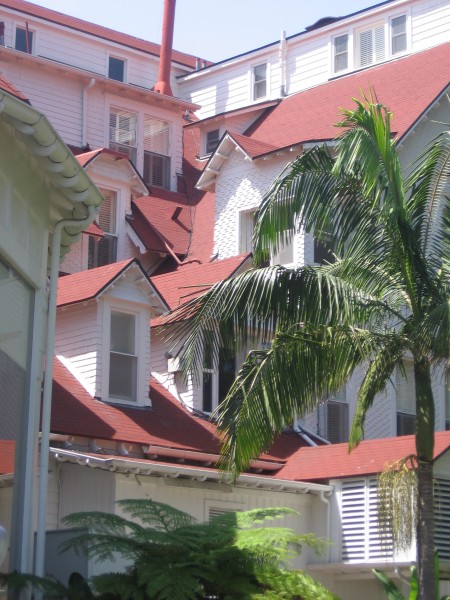
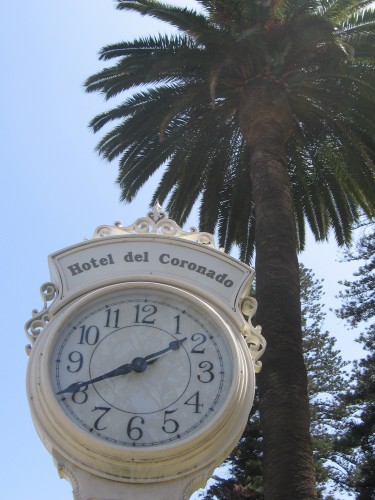
Walkway winds past elegant cottages north of the Del.People enjoy the grassy area in front of the famous beach resort.Just relaxing and talking near the beach.Pushing strollers past some outdoor dining.This herb garden is used for the hotel restaurant.The immense hotel has all sort of angles and contours.Chandeliers in the famous Crown Room were designed by Wizard of Oz author.An interesting study in complex architecture.Old clock stands on sidewalk among palm trees in front of hotel.The iconic Hotel del Coronado is unbelievably gorgeous.
Here are three more pics that I took on a somewhat more cloudy day!
View of Hotel del Coronado near the front entrance.The Hotel del Coronado is a California registered historical landmark.During the summer facilities are set up for guests right on the beach!
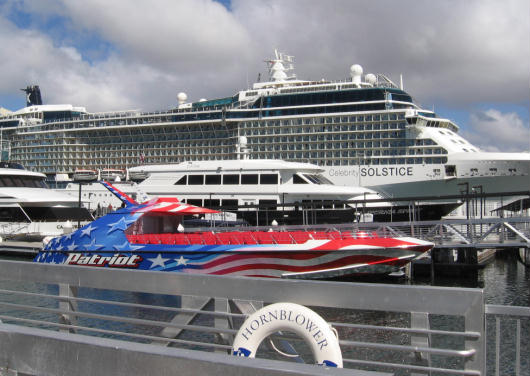
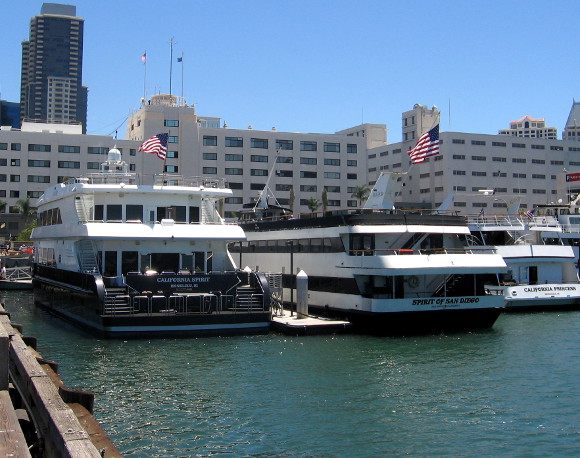
This photo was taken from Navy Pier just south of the Broadway Pier. It shows a cluster of Hornblower and Flagship harbor excursion boats, plus the big Celebrity Solstice cruise ship at the San Diego cruise ship terminal. If you were to turn to the right, you’d see the historic Santa Fe train depot and shining downtown skyline closeby.
The red, white and blue Patriot speed boat is a new addition to the growing fleet of tour and charter boats seen daily on our beautiful Big Bay!
The following pics were taken on another day:
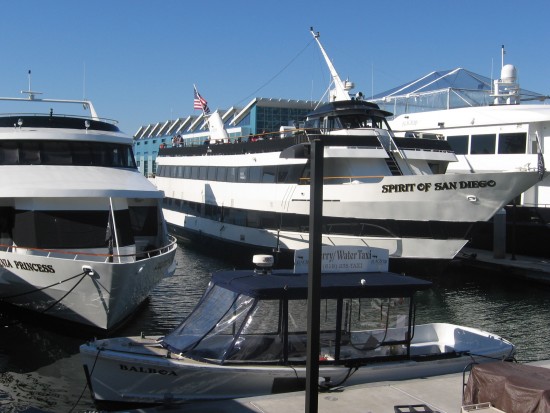
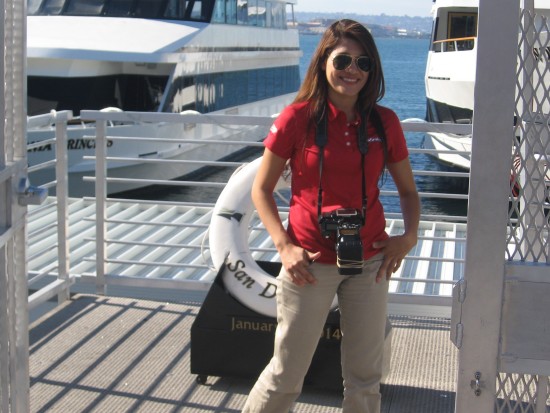
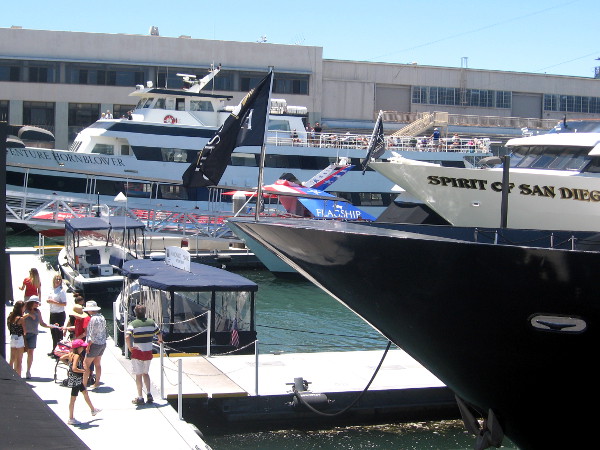
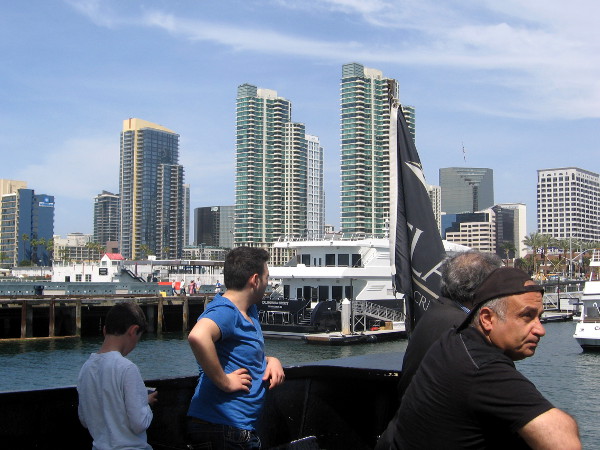
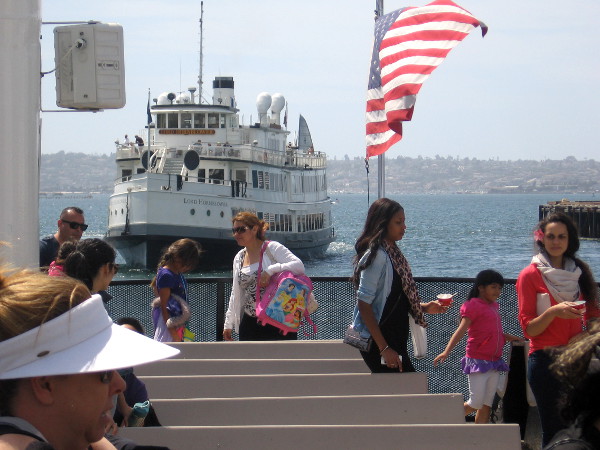
Harbor tour ships and a Water Taxi next to Broadway Pier.Harbor tour photographer gets photographed!People linger on dock near water taxis.Harbor cruise ships with Navy Broadway Complex in the background.A view of downtown and harbor cruise ships from approaching ferry.The Lord Hornblower approaches as people disembark from Coronado ferry.Patriot speed boat leaves dock, passing USS Midway.
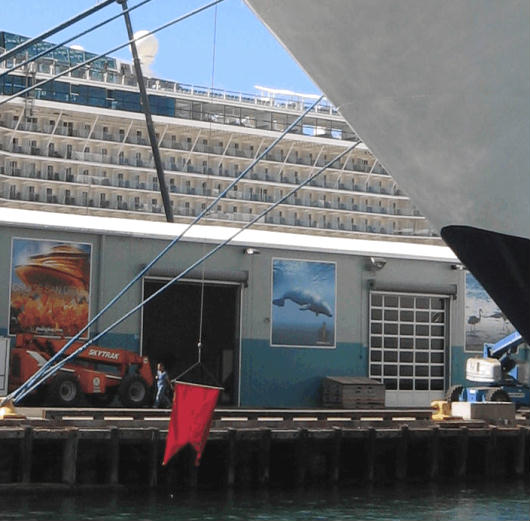
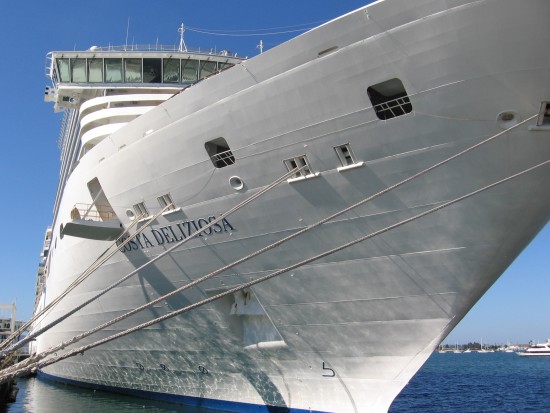
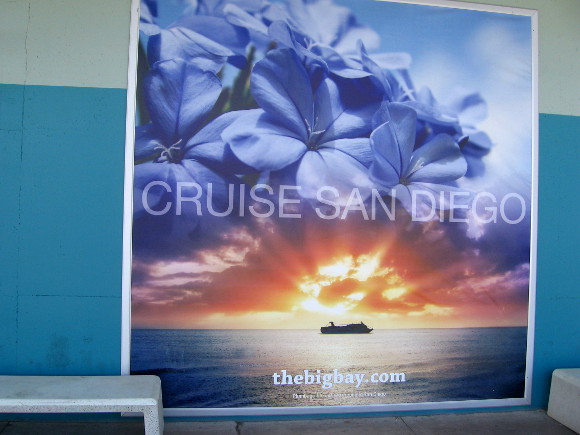
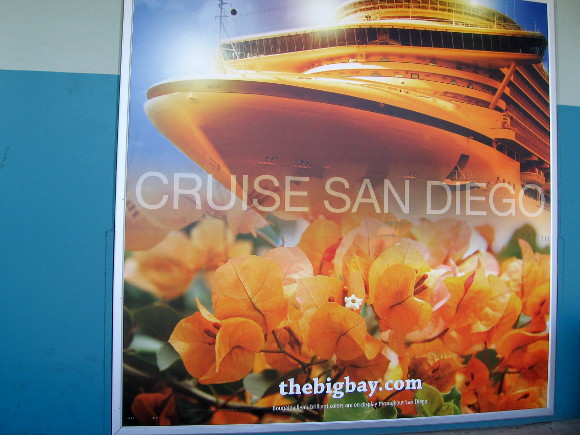
Here’s a photograph showing several of the murals on the north side of the cruise ship terminal, in downtown San Diego. These colorful new murals show cruise ships, marine life and other sea-related imagery. Last weekend two large ships were visiting, one docked on either side of the terminal. I believe it’s that time of the year when many ships visit San Diego as they transition from summer Alaska cruises and head down the coast to Mexico or the Panama Canal on their way to the Caribbean.
Here are some cruise ship pics taken on a later date:
Costa Deliziosa docked in San Diego.Cruise ship Arcadia rises beyond tourists and pedicab.
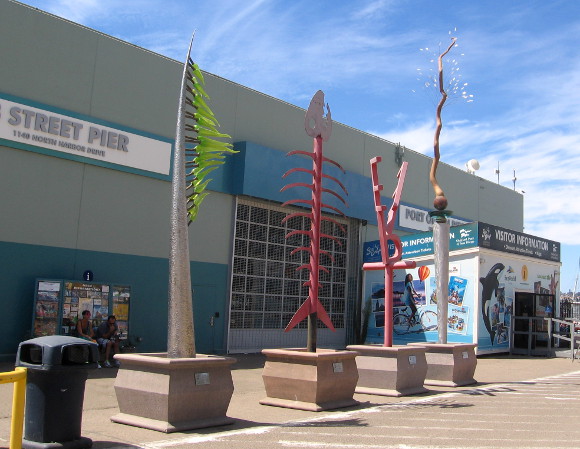
More assorted pics of public art at the cruise ship terminal:
One of several promotional signs on the parking lot side of terminal.Tourists are encouraged to cruise San Diego!Clock on street side of cruise ship terminal resembles ship’s wheel.These sculptures were part of past Urban Trees exhibitions on the Embarcadero.
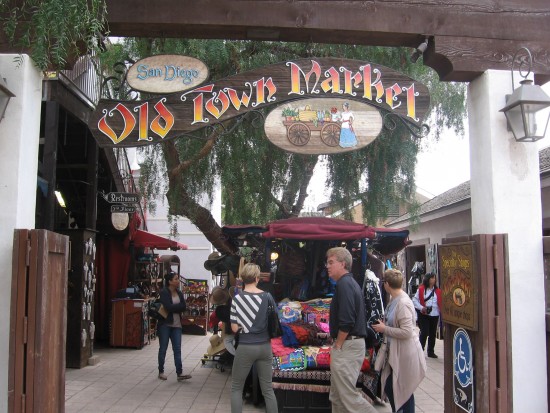
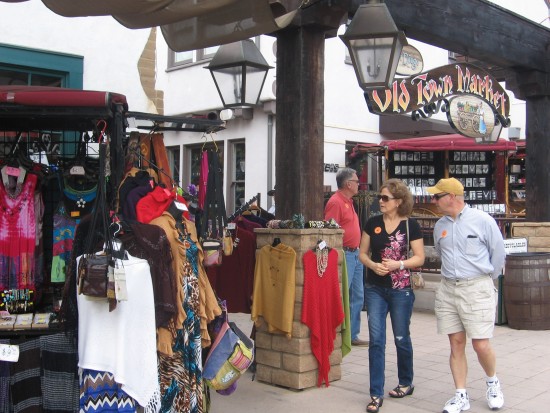
The Old Town Market is one very popular destination.
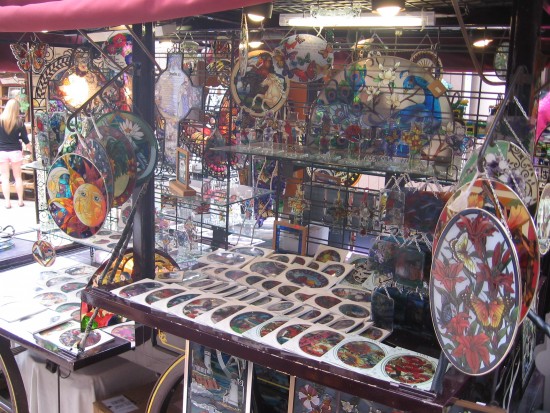
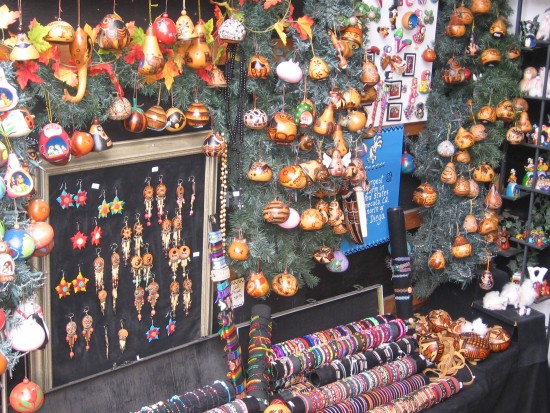
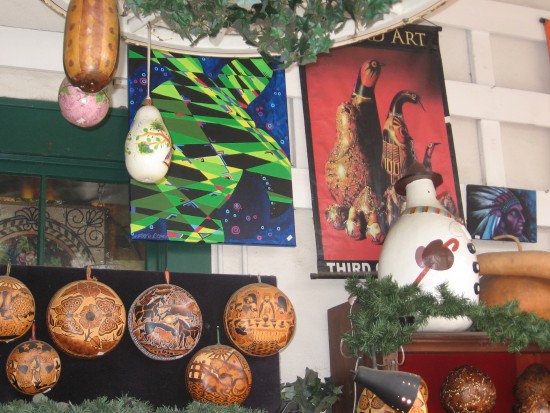
Little shops selling all sorts of colorful souvenirs, curios and crafts can be found everywhere in Old Town, both in the State Park and in the touristy area just to the south. Many of the items for sale are Mexican in origin or style. You can find pottery, painted tiles, jewelry, maracas, pinatas, lucha libre masks, and all sorts of unique leather and wood-carved crafts. A few stores have a Western theme and sell cowboy hats, boots, Native American art and other stuff related to the American frontier experience. It’s fun just to browse and soak it all in!
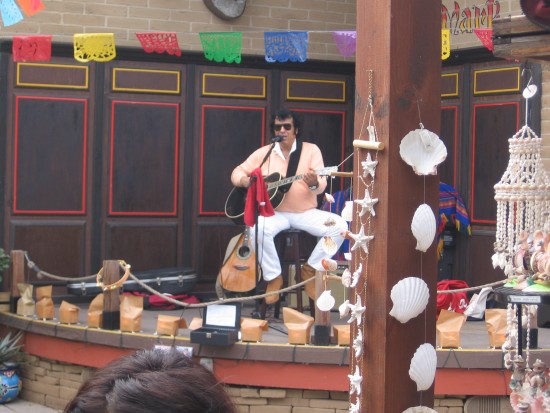
Kid checks out a bunch of Mexican Lucha Libre masks.Tourists take a stroll through the colorful Old Town Market.Very colorful pottery can be found everywhere.Painted tiles for sale hang on an orange wall.Vendor at Old Town Market at work with a power drill.Painted plates for sale in a corner of Old Town.Many Western items on display in an Old Town shop.Hundreds of Mexican ornaments and trinkets.Colorfully painted gourds and posters.A guitarist performs for shoppers.
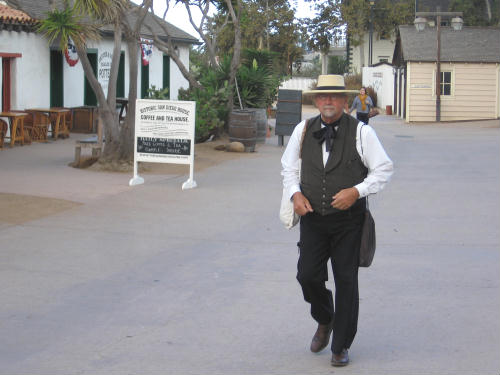
No, that isn’t really a ghost. At least, I don’t think so!
This cool photo shows a fellow dressed like an early resident of San Diego. I spotted him walking through Old Town first thing in the morning, before the daily throng of tourists began to filter in.
You can walk with a costumed tour guide and learn all about the early history of San Diego, back when the tiny, seldom-visited town belonged to Spain, then Mexico, then finally the United States. The hour-long walking tour is free and begins at the Robinson-Rose House at the northwest end of the large central plaza. Several historic buildings and interesting museums are visited during the leisurely tour. Whether or not you see a ghost might depend on your imagination! The walking tours begin at 11 am and 2 pm.
Tour guide shows native Lemonade Berry near Casa de Estudillo in Old Town.Friendly volunteer tour guide sums up San Diego’s early history at end of a fascinating one hour tour.
One of my favorite areas in San Diego is Old Town. There’s so much to see and enjoy wherever you turn. For lovers of history, it’s a treasure trove of discoveries.
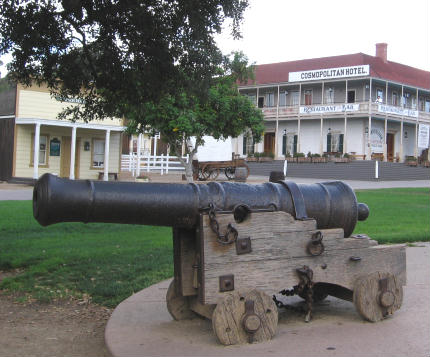
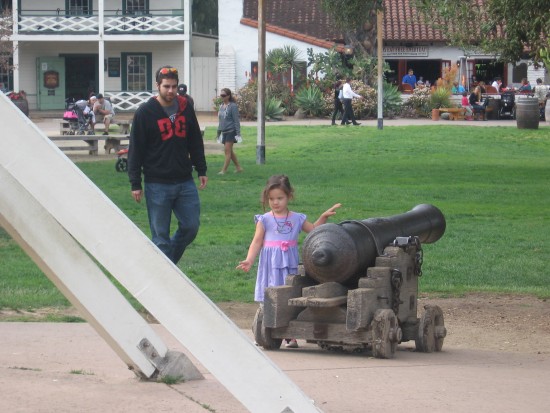
Here’s a photo taken inside the central Plaza de las Armas, the heart of Old Town San Diego State Historic Park. This old Spanish cannon is called El Capitan. It was one of ten cannons that long ago protected Fort Guijarros near the entrance to San Diego Bay. The Spanish fort was built in 1797 on Ballast Point out of adobe.
El Capitan was likely fired during the Battle of San Diego in 1803, when the Spanish attacked the American brig Lelia Byrd which was smuggling otter skins. This cannon was likely fired again at the American smuggler ship Franklin in 1828, when the fort was under Mexican control. The only other surviving cannon from Fort Guijarros is called El Jupiter, and can be seen in the Serra Museum atop nearby Presidio Hill.
Old Town is all about history. The grassy plaza, containing the cannon, historical plaques, a high flagpole and picnic benches, is surrounded by old adobe buildings preserved and recreated from the early 1800’s. San Diego originated right here, at the base of a bluff where a Spanish military outpost stood. The outpost, called the Presidio, was built by Gaspar de Portola in 1769. That same year, Mission San Diego de Alcala was founded on Presidio Hill by the ambitious Spanish Franciscan friar, Father Junipero Serra. This made Old Town the site of the very first European settlement in California.
Around the Plaza de las Armas visitors can check out numerous interesting small museums, including the original one-room schoolhouse, an old blacksmith shop, San Diego’s very first newspaper office, an early courthouse, and a stable with a large collection of antique wagons and stagecoaches. Tourists can find gifts and souvenirs in a smattering of craft-filled shops. Families can dine at several colorful restaurants. Plus, there are many additional historical and commercial attractions along San Diego Avenue to the south of the plaza.
Can you guess another thing I like? Admission to Old Town San Diego State Historic Park and all of its museums is free!
Girl walks past a cannon named El Capitan in Old Town San Diego State Historic Park.


























 Cool San Diego Sights!