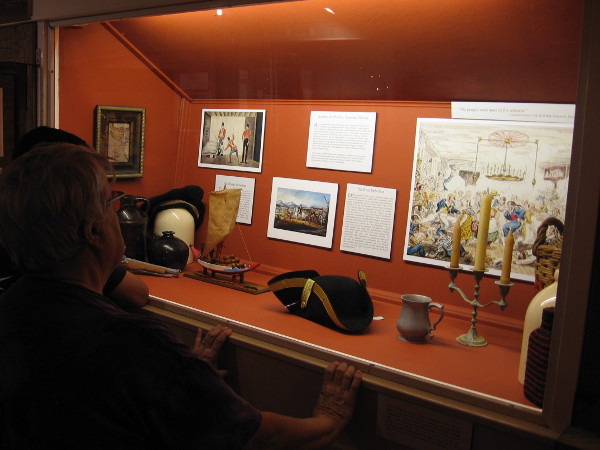
Visitors to the Maritime Museum of San Diego view a display concerning the history of rum.
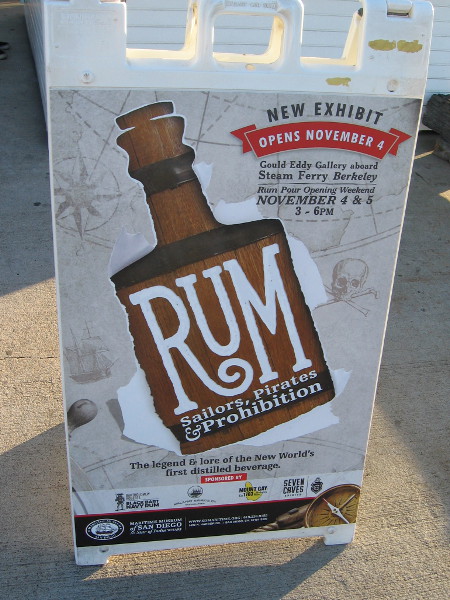
A cool new exhibit opened this weekend at the Maritime Museum of San Diego. Rum: Sailors, Pirates and Prohibition follows the colorful history of rum, from its origin to the present day, with a focus on its surprising history in San Diego.
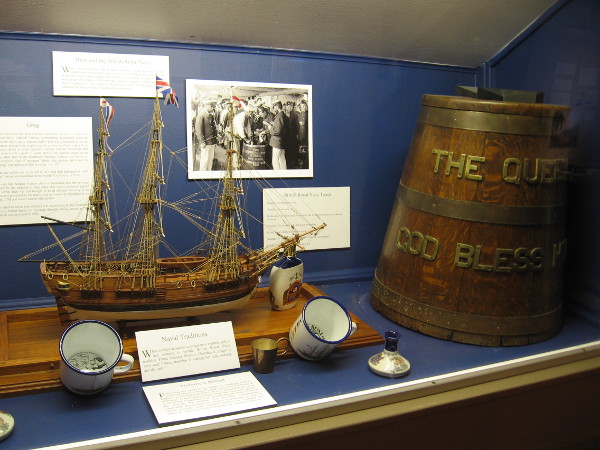
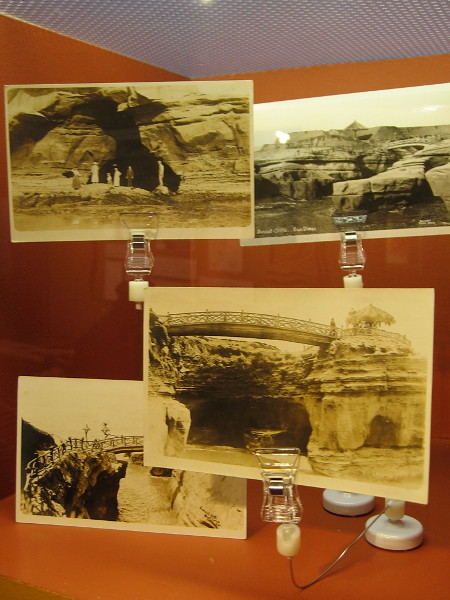
There are all sorts of interesting artifacts, old photographs and displays, as you can see from the few photos I took this afternoon. Among other things, visitors to the exhibition can learn how rum is made, about the use of rum by sailors, including those of the British Royal Navy, and how rum runners used sea caves in San Diego during Prohibition.
Anyone with a love for history should check it out!
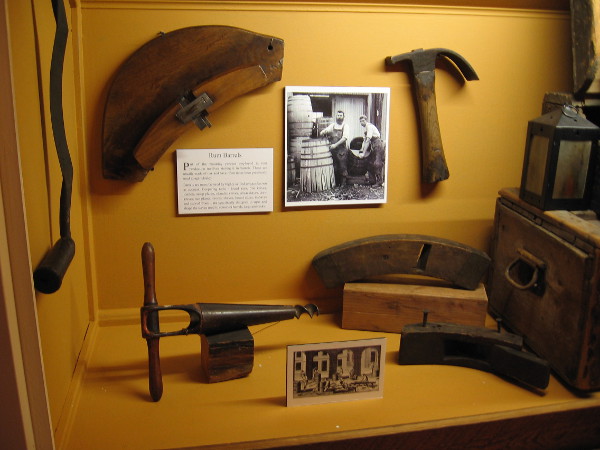
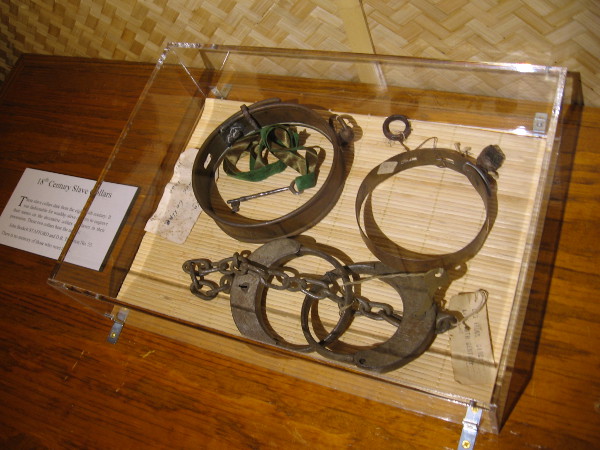
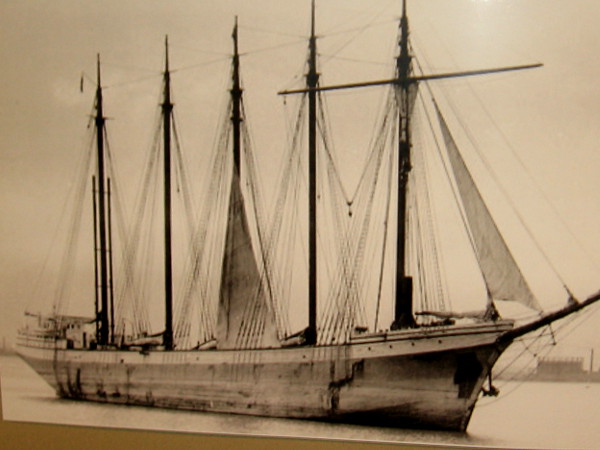
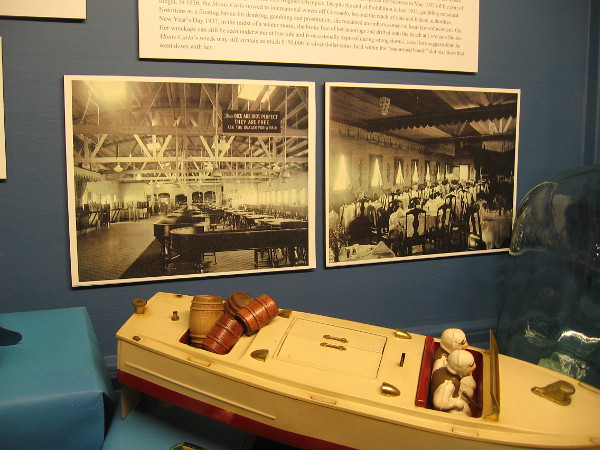
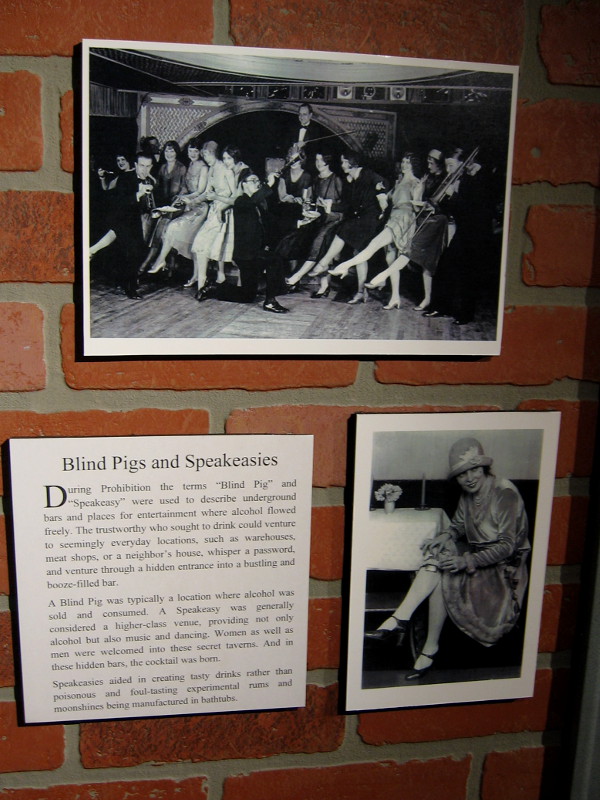
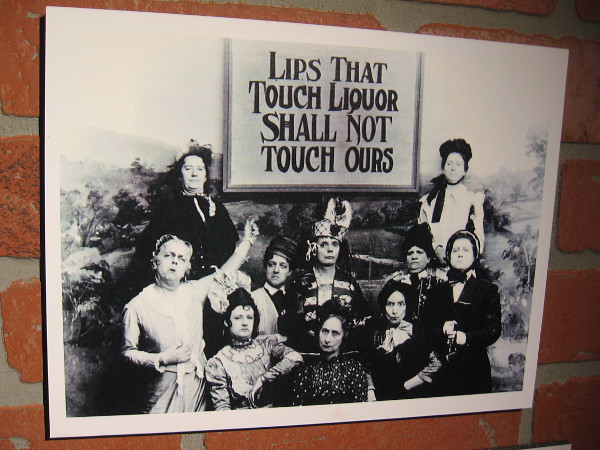
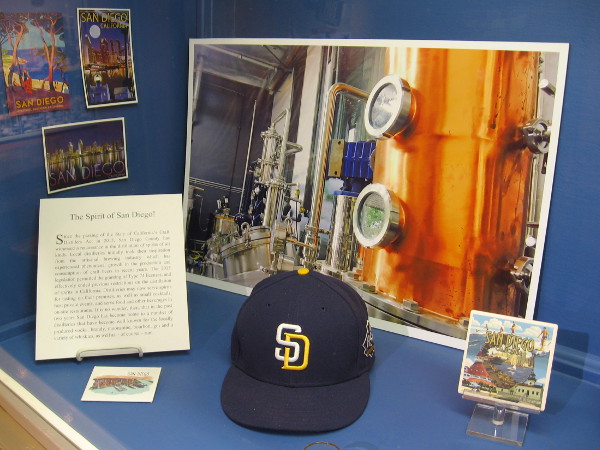
Rum: Sailors, Pirates and Prohibition is a cool new exhibit inside the Steam Ferry Berkeley, at the Maritime Museum of San Diego!A display in the Gould Eddy Gallery shows some of the coopering tools used in making oak rum barrels.Slave collars from the 18th century. Some believe African slaves in the Caribbean discovered the process of distilling the residue of sugar refining–molasses and sugarcane juice–into alcohol.A display features an explanation of grog and rum on British Royal Navy ships. Grog was rum diluted with water to prevent drunkenness. The grog ration was abolished in 1970.Old photo of the Malahat, the Queen of Rum Row. The five-masted schooner successfully delivered rum and other spirits along the West Coast during Prohibition.Local sea caves and coves in La Jolla and Sunset Cliffs were used at hideouts for rum runners arriving from Mexico during Prohibition.Photos of the Monte Carlo, San Diego’s Prohibition era floating casino. In 1937 it became beached on Coronado during a winter storm. Her wreckage can still be seen underwater at low tide.Blind Pigs and Speakeasies. A secretive Speakeasy sold alcohol during Prohibition, plus provided its guests with entertainment. Drinks were tastier than the poisonous rums and moonshines concocted in bathtubs.A photograph of anti-alcohol activists taken during Prohibition. Lips that touch liquor shall not touch ours!Display celebrates the rise of local San Diego distilleries. Our dynamic city is now considered the craft beer capital of the United States.
…
I live in downtown San Diego and love to walk around with my camera! You can follow Cool San Diego Sights via Facebook or Twitter!
You can easily explore Cool San Diego Sights by using the search box on my blog’s sidebar. Or click a tag! There are thousands upon thousands of photos for you to share and enjoy!
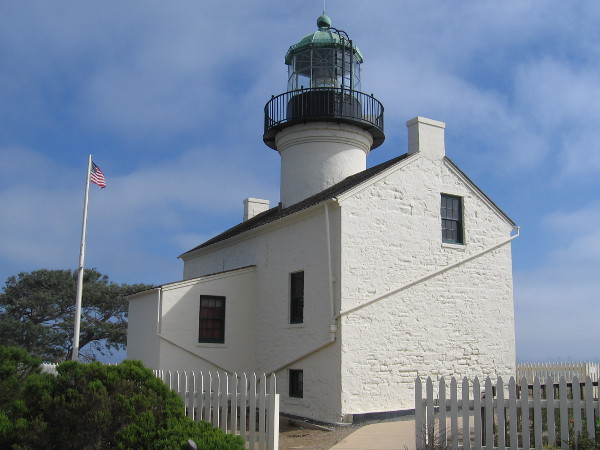
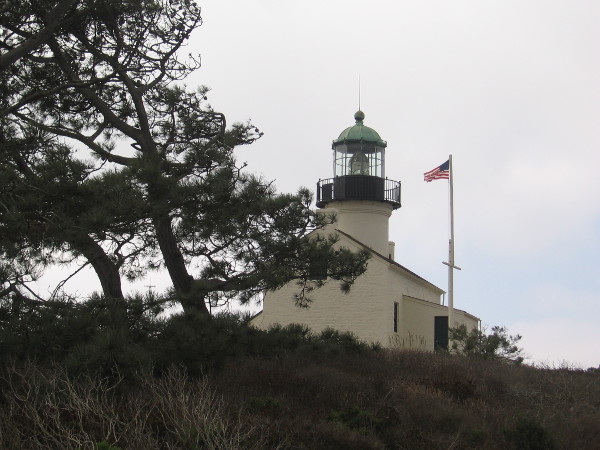
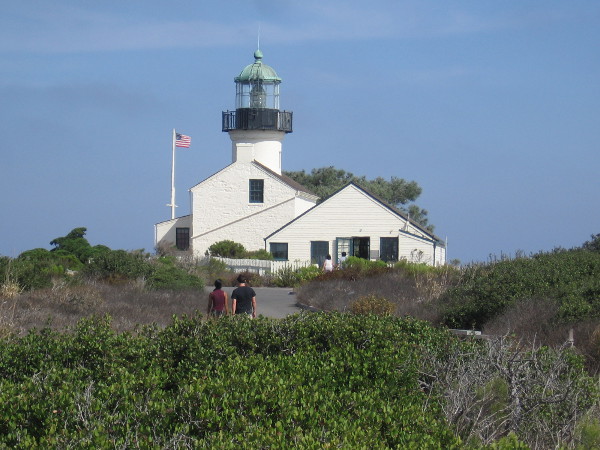
The beautiful Old Point Loma Lighthouse and the nearby Assistant Keepers Quarters building at Cabrillo National Monument.
I’ve visited Cabrillo National Monument many times over the years. I’ve blogged about it on several occasions. It’s one of the most wonderful places in San Diego.
Today, September 30, is National Public Lands Day, so admission to Cabrillo National Monument was free all day.
I grabbed my camera, jumped into my car and drove this morning to the tip of the Point Loma peninsula. Once again, I wanted to enjoy some amazing views and a pleasant walk above the Pacific Ocean and San Diego Bay. Most of my time was spent around the Old Point Loma Lighthouse.
To see and learn more about the lighthouse, including its interior and the adjacent museum, and to enjoy other fascinating aspects of Cabrillo National Monument, please feel free to explore Cool San Diego Sights.
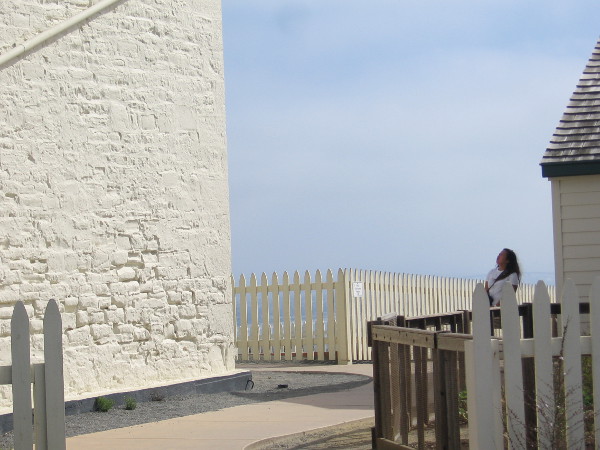
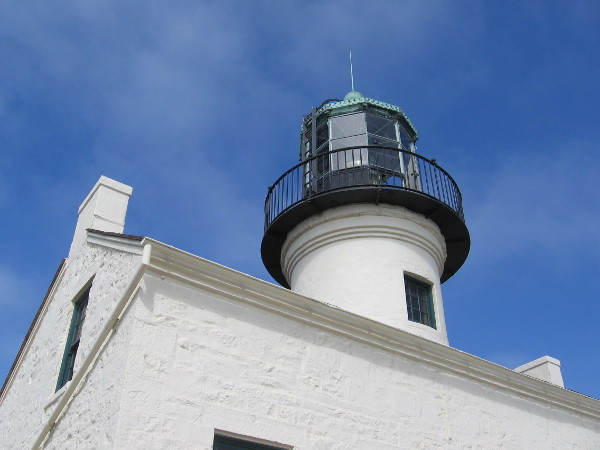
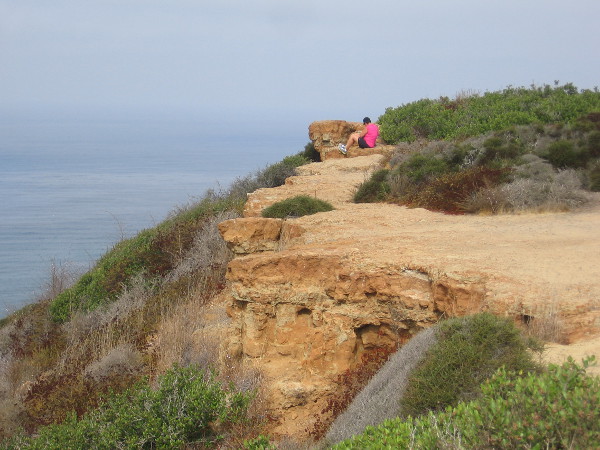
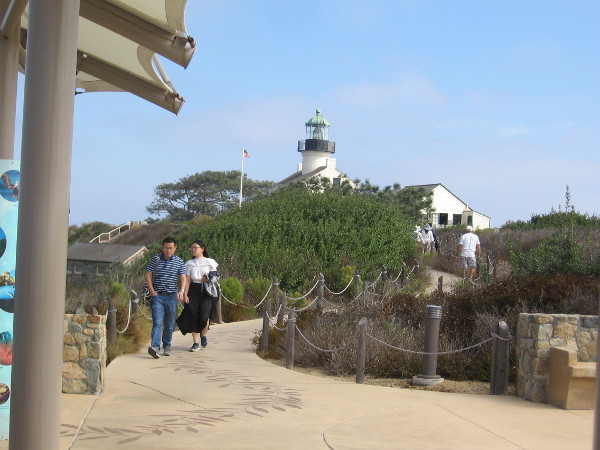
The historic Old Point Loma Lighthouse is a major attraction at Cabrillo National Monument in San Diego.Visitor to Cabrillo National Monument looks up at the lighthouse.Built in 1855 at the end of the Point Loma peninsula, above the entrance to San Diego Bay, the old lighthouse used to guide sailors to safety with a powerful fresnel lens.Walking around the old lighthouse is a wonderful experience, with amazing views in all directions.The cluster of trees near the Old Point Loma Lighthouse are rare Torrey pines, which are native to this region.Walking along the cliffside trail north of the lighthouse.Someone sits high above the blue Pacific Ocean enjoying the cool breeze and natural beauty.South of the lighthouse, people walk toward the gray whale migration overlook.Visitors to Cabrillo National Monument scan the watery horizon for ships and whales.A park ranger and volunteers were removing non-native plants among dry stalks of California sunflower and buckwheat. Invasive species can crowd out native species.People approach the handsome lighthouse from the south.Photo of Old Point Loma Lighthouse, the small museum beside it and the large Rain Catchment Basin.Visitors to San Diego are strongly encouraged to enjoy some time at Cabrillo National Monument. It’s a very special place, with many paths to walk.
…
I live in downtown San Diego and love to walk around with my camera! You can follow Cool San Diego Sights via Facebook or Twitter!
You can easily explore Cool San Diego Sights by using the search box on my blog’s sidebar. Or click a tag! There are thousands upon thousands of fun photos for you to share and enjoy!
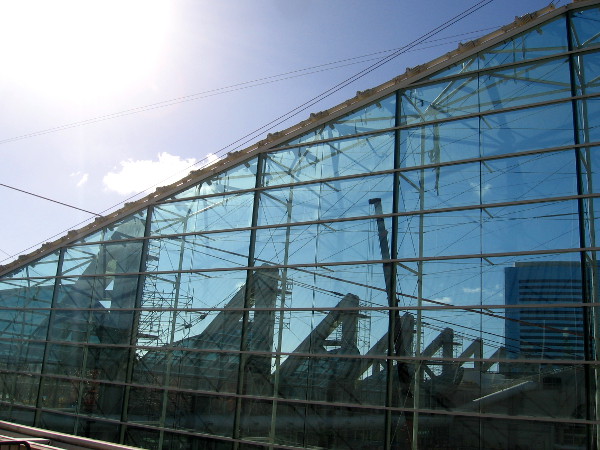
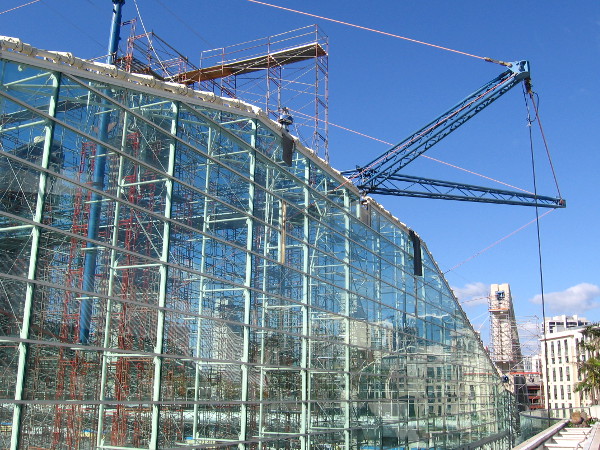
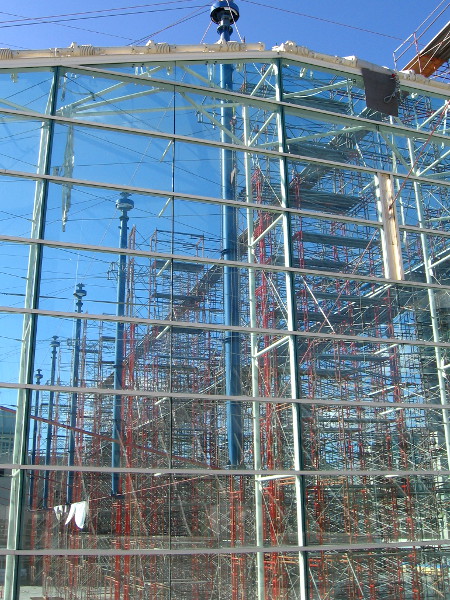
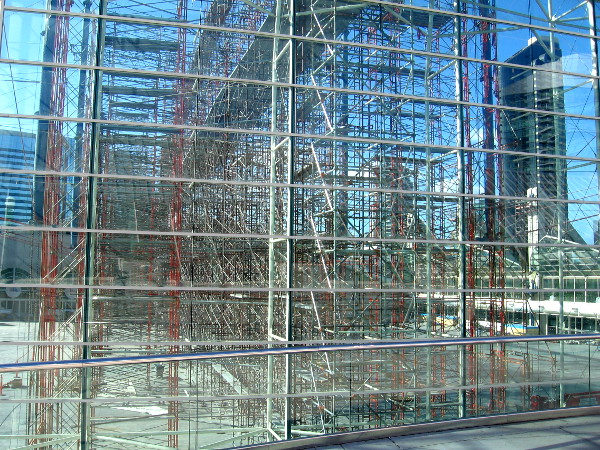
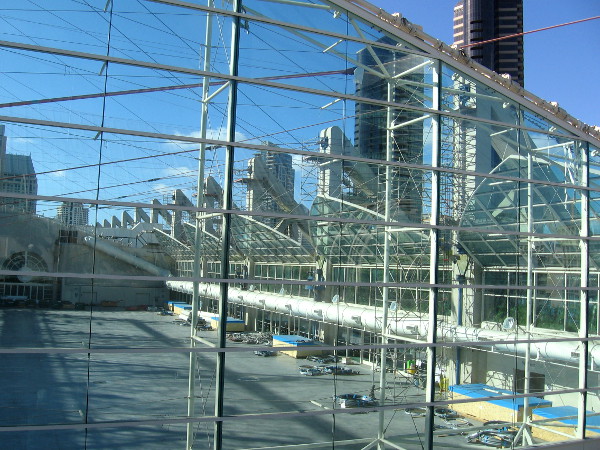
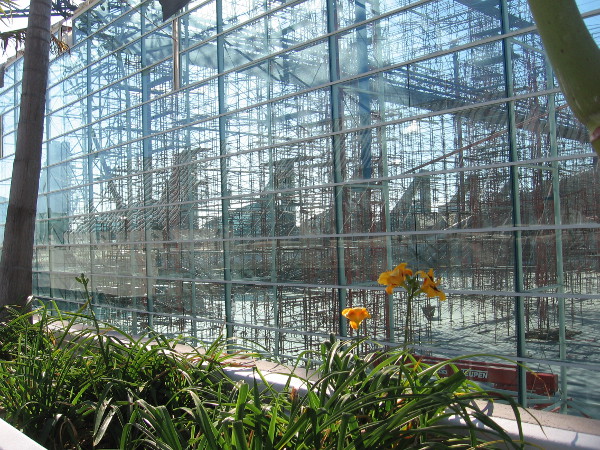
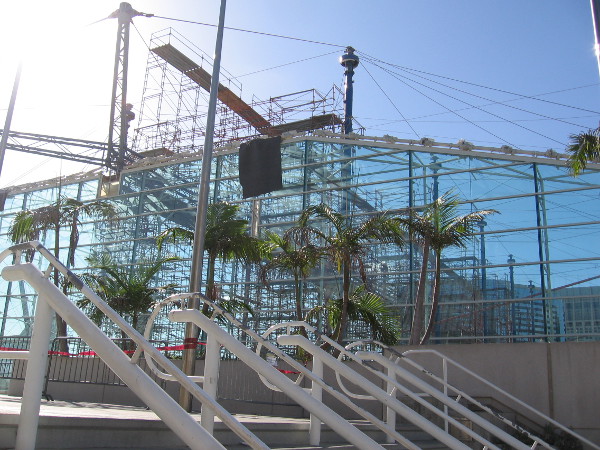
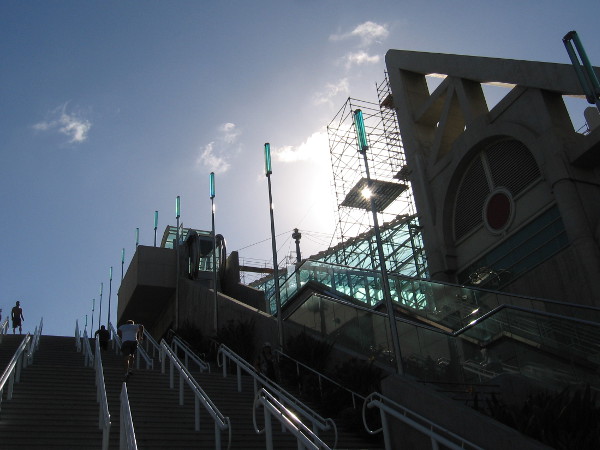
Replacement of the San Diego Convention Center’s white “sails” is underway. The old fiberglass sails, dating from the time when the beautiful convention center debuted in 1989, have been removed.
Without the Sails Pavilion’s roof, which shelters the enormous 90,000 square foot exhibit space below, the glass walls, the supporting structures and crisscrossing cables combine with levels of scaffolding to form something that resembles an unusual crystal lattice. Which makes for intriguing photographs!
This afternoon I walked across the top of the San Diego Convention Center and took a close look for myself. As you can see, one can discern all sorts of unique patterns. The geometric complexity is a delight for the eye.
If you find yourself in downtown San Diego, check it out for yourself!
…
I live in downtown San Diego and love to walk around with my camera! You can follow Cool San Diego Sights via Facebook or Twitter!
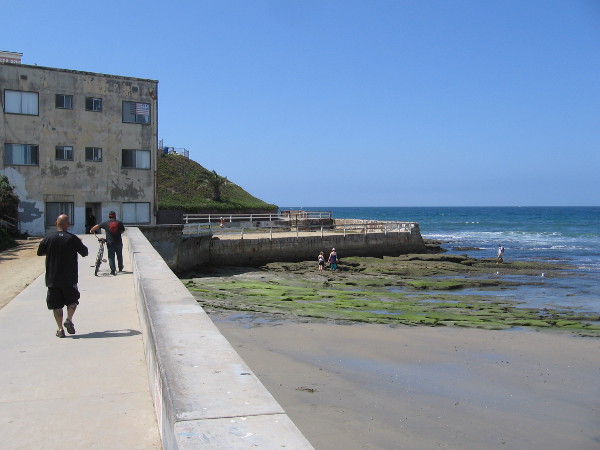
Walking south along the Ocean Beach boardwalk near the foot of the OB Pier, toward the old Silver Spray Apartments and Plunge.
Let’s take a walk along the shore! We’re going to start at the boardwalk near the foot of the Ocean Beach Municipal Pier, pass quickly around the historic, ruin-like Plunge, then head along a rocky trail between cliffs and the crashing ocean.
We’ll see tide pools, tiny pocket beaches and amazing scenery. Many refer to this stretch as a part of San Diego’s Sunset Cliffs, even though the official Sunset Cliffs neighborhood lies farther south down the Point Loma peninsula.
Ready to go exploring? Let’s start!
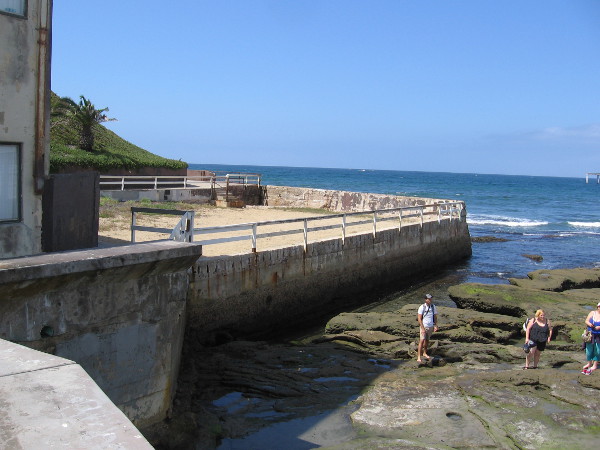
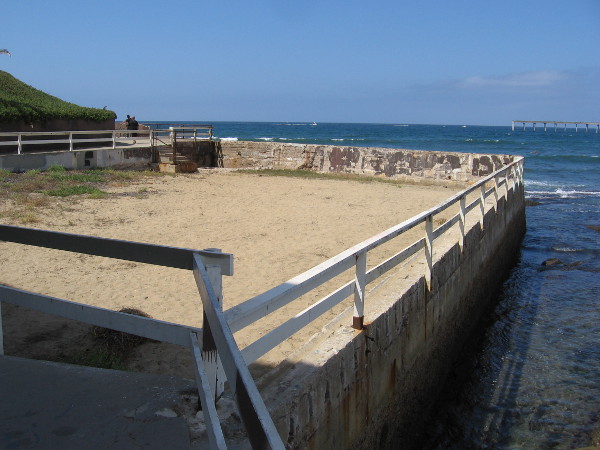
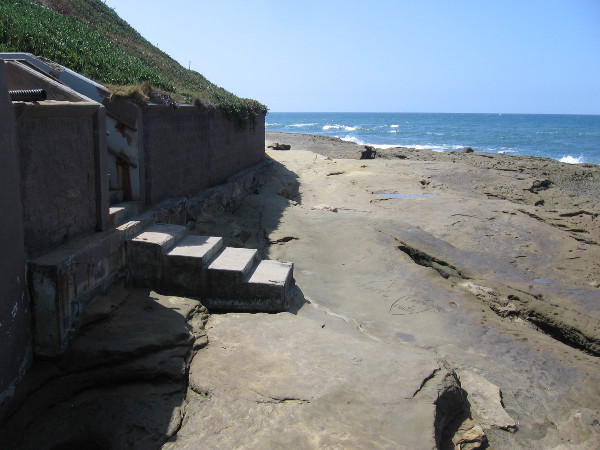
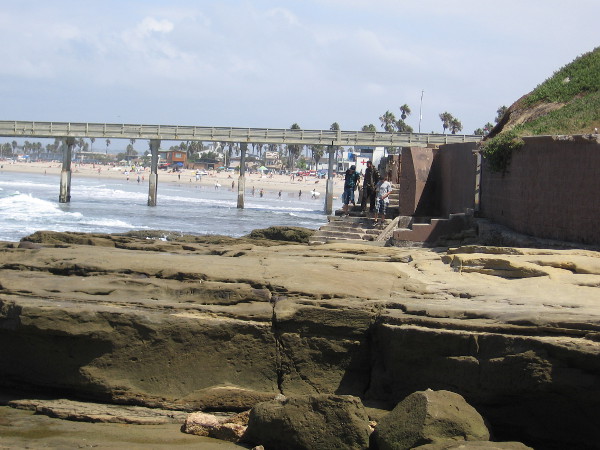
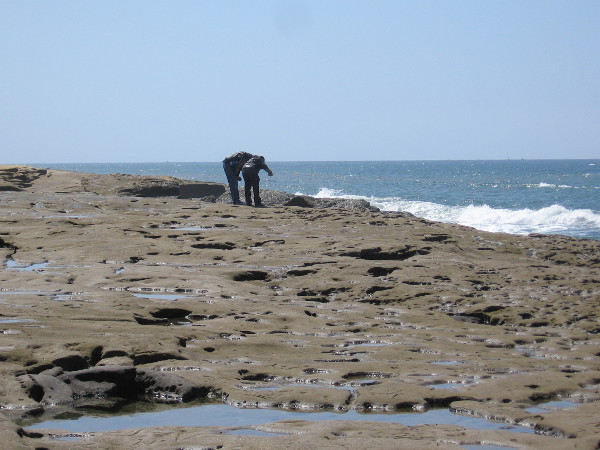
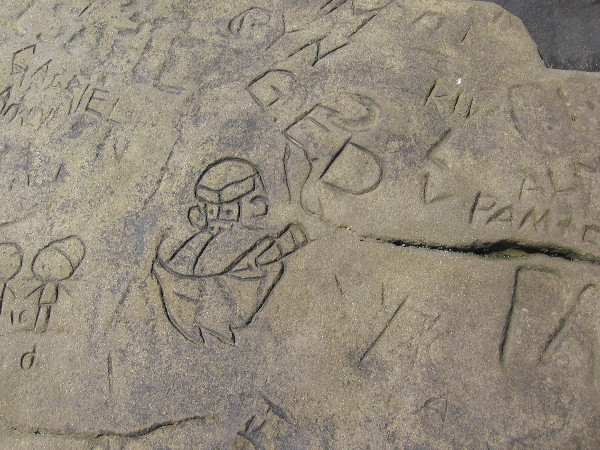
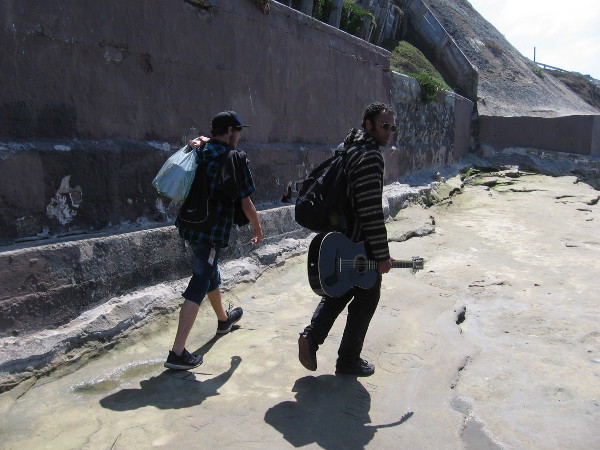
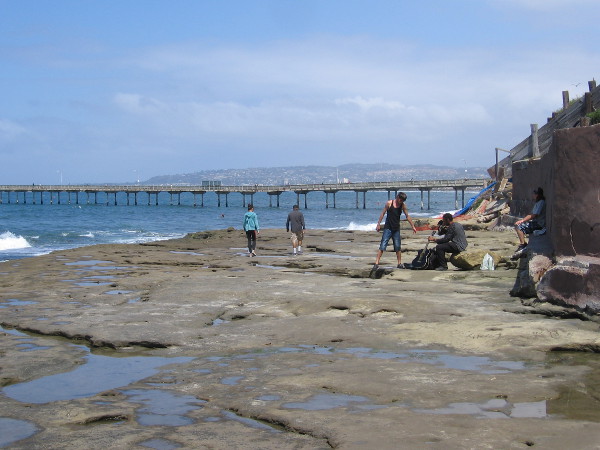
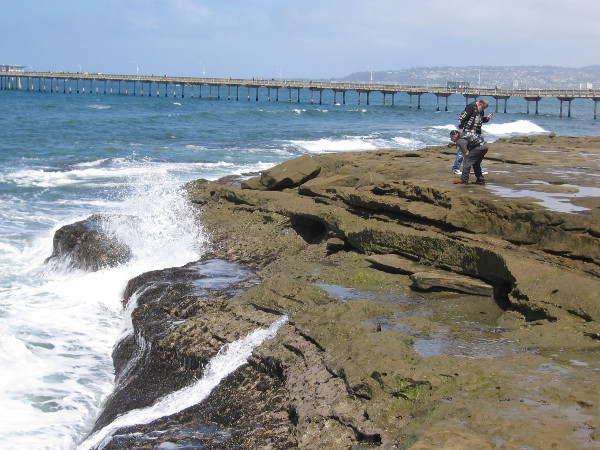
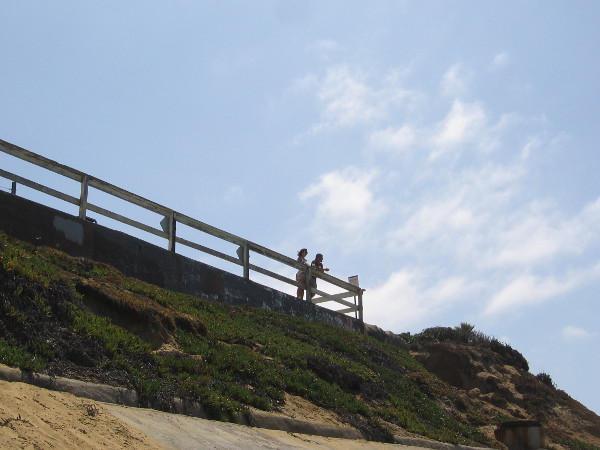
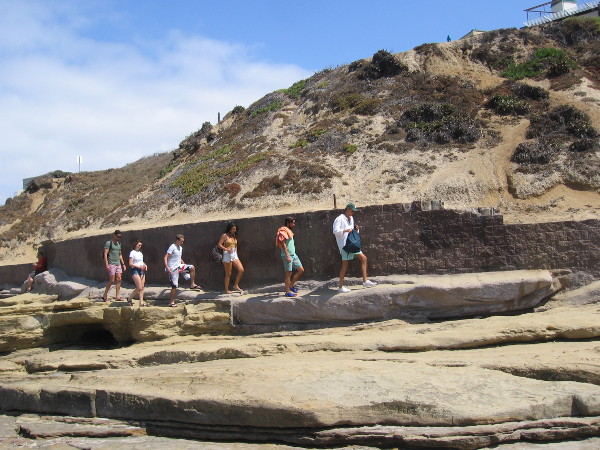
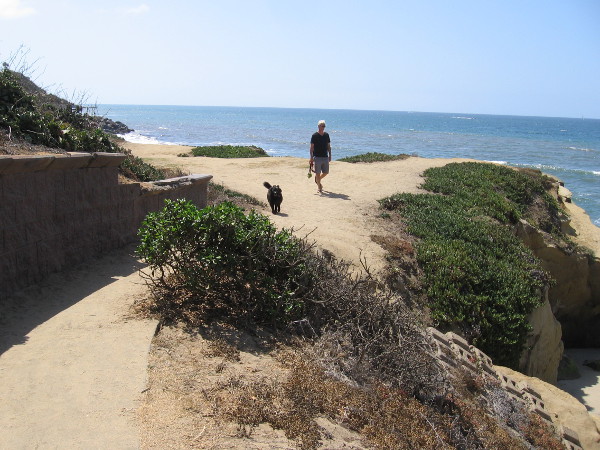
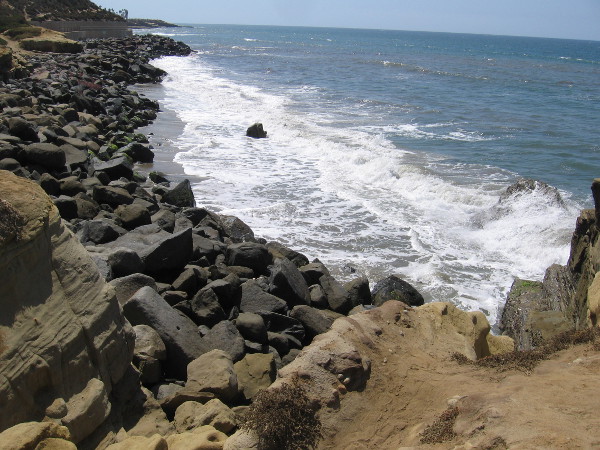
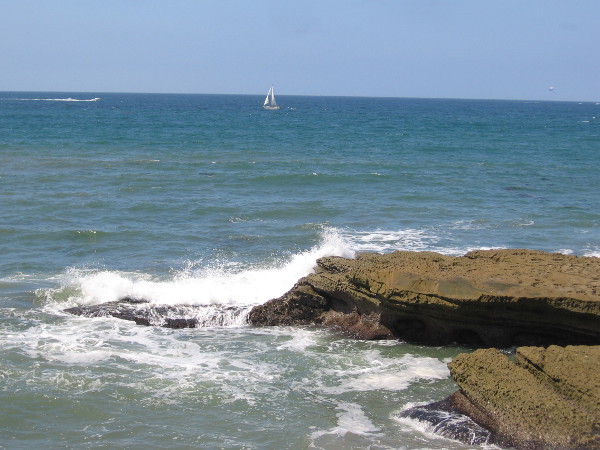
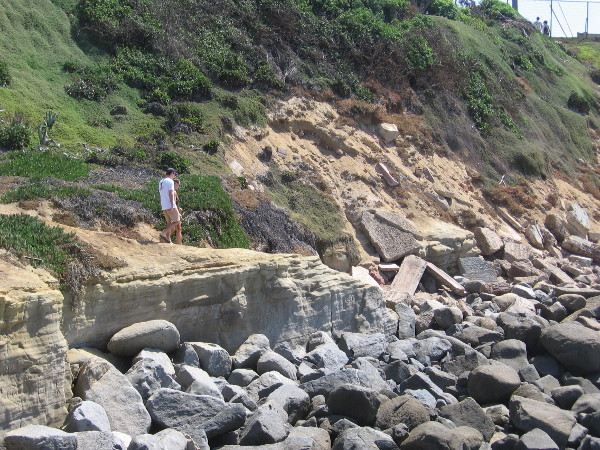
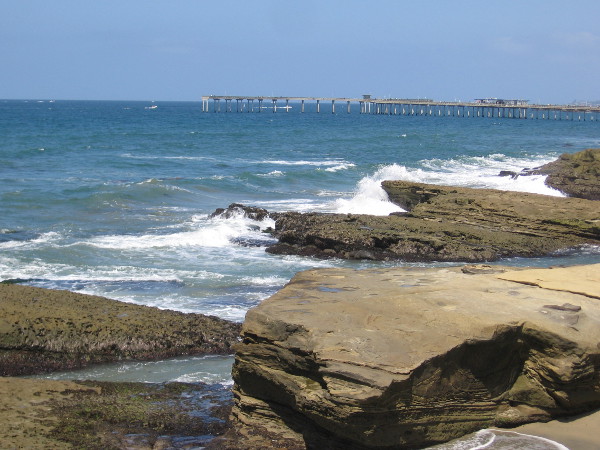
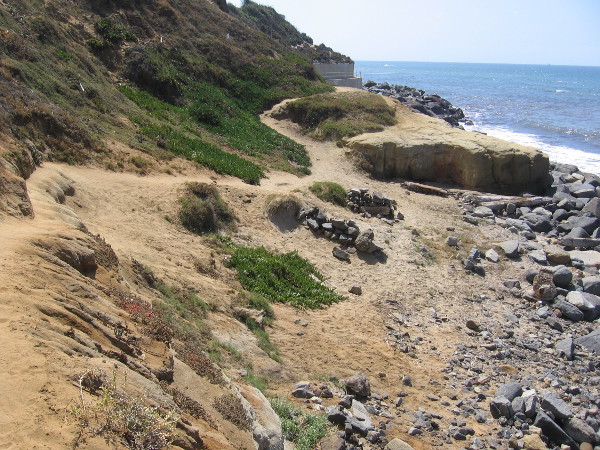
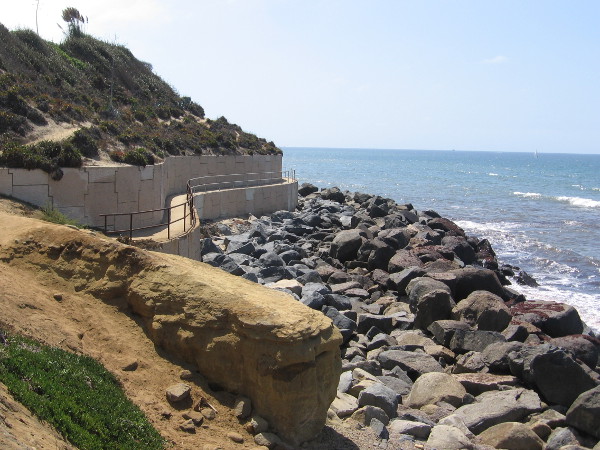
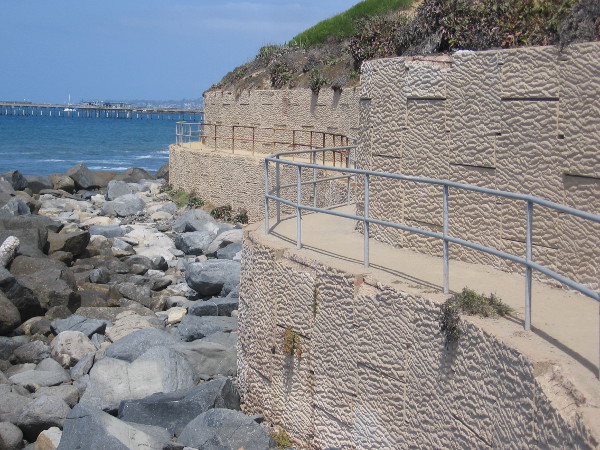
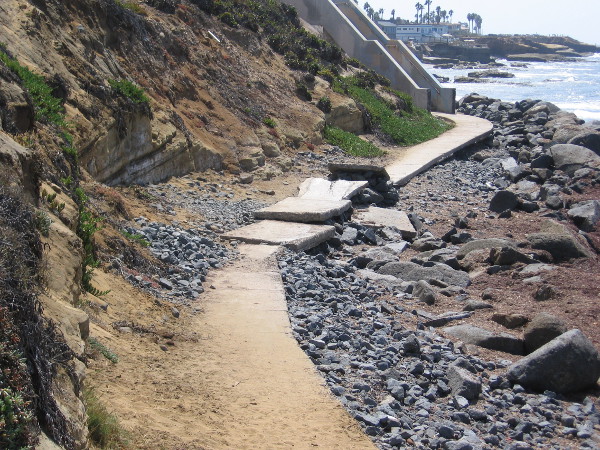
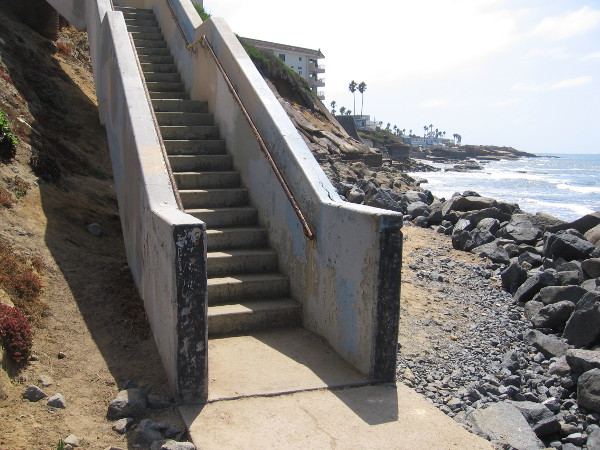
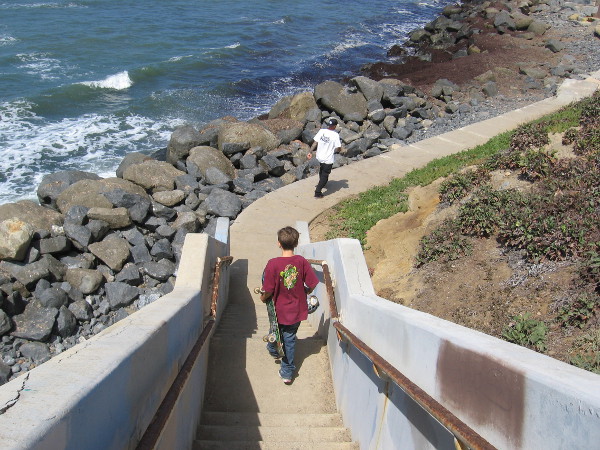
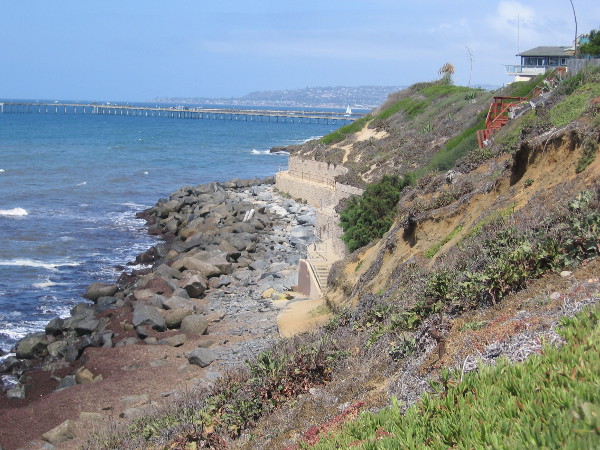
People explore tide pools between the sand-filled, long-defunct Plunge and the OB Pier.The saltwater Plunge, now often called the Sandbox, was built in 1917. Famous English Channel swimmer Florence Chadwick, who grew up in San Diego, trained in this historic pool.We’ve passed the Plunge, which is officially part of the beach, and are now carefully traversing sandstone rocks along the base of cliffs. It can be very slippery.Looking back north we see the Ocean Beach Municipal Pier and beach.People enjoy looking into small tide pools in the eroded sandstone. I occasionally saw some small crabs.The easily carved sandstone is like a book containing years of names and often humorous images.OB is a place for free spirits, and the rocks along the water attract many.Looking north again. I see Pacific Beach and La Jolla in the distance.Splashing water and curious eyes.People peer down at us from the street level above.A small group walks along the crude trail.A perfect day to explore nature’s many wonders beside the ocean.Someone heads toward one of the small pocket beaches tucked between rocky outcrops.Standing on a tiny beach at the water’s edge.The sandstone cliffs are unstable and sometimes you hear of people accidentally falling and needing rescue.Here comes a guy and his dog.As we continue to walk south, we can see the coast vanishing into the distance. The actual Sunset Cliffs neighborhood is farther down the Point Loma peninsula.A white sailboat out on the wide blue Pacific Ocean.In places the rocky and slippery sand footing is a bit difficult to navigate, even on the trail. Wear good shoes!Looking north. Spectacular scenery.More natural beauty.The rough trail continues south. Fewer people seem to be in this section.Now we’re approaching an interesting part of the walk, with a short, undulating path along a sea wall.Looking back.We’ve almost reached the end of our walk. The concrete pathway ahead has either been undermined by water, or intentionally made into a ramp for thrill seekers.At the foot of old stairs that climb up to Orchard Avenue.As we head up, someone begins down.Two people begin their own adventure along the rocks.Looking back north at the short stretch we just finished.Someone gets exercise on the steps. At the top there is some fun artwork.Relaxing on a unique surfboard bench, gazing across the magical blue ocean.
…
I live in downtown San Diego and love to walk around with my camera! You can follow Cool San Diego Sights via Facebook or Twitter!
You can easily explore Cool San Diego Sights by using the search box on my blog’s sidebar. Or click a tag! There are thousands upon thousands of fun photos for you to share and enjoy!
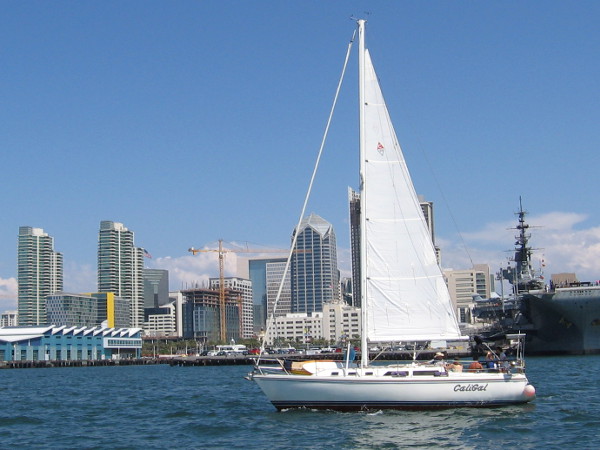
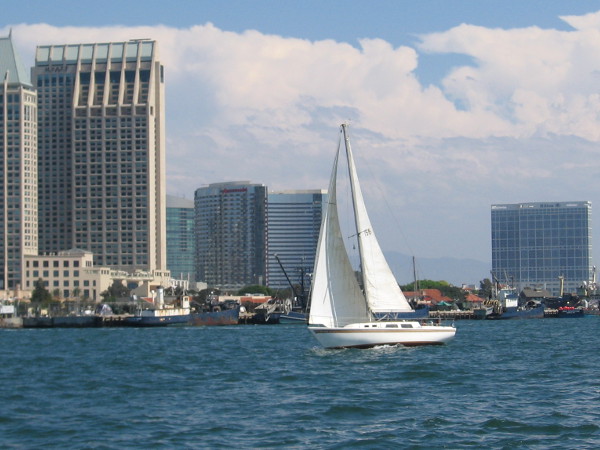
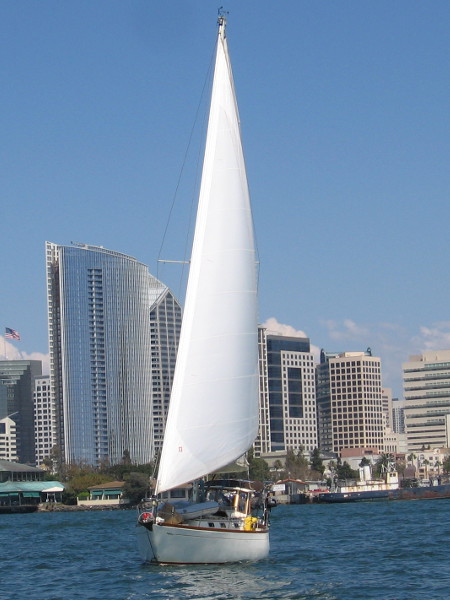
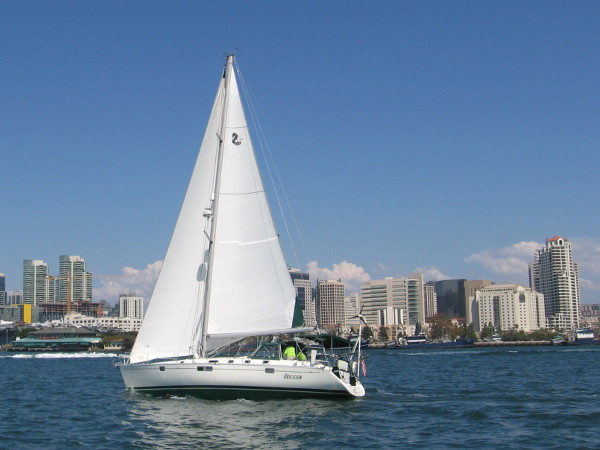
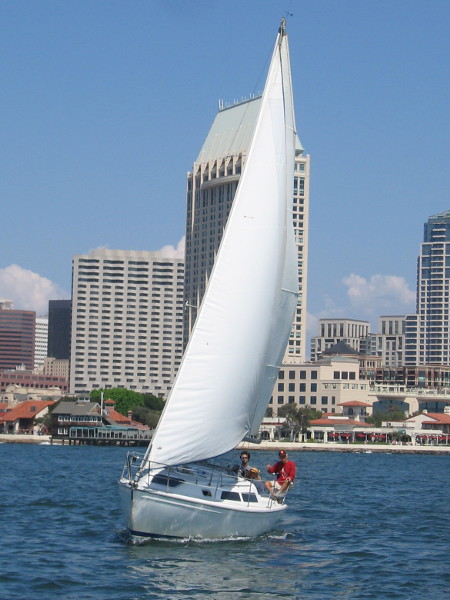
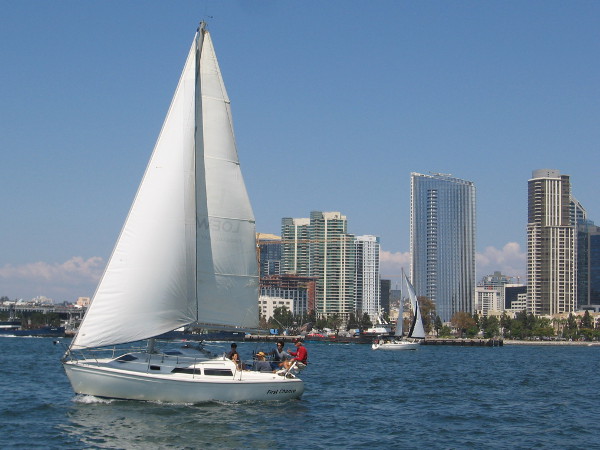
Please enjoy these photos of beautiful sails out on San Diego Bay.
During my busy weekend I went on a harbor cruise aboard the Maritime Museum of San Diego’s historic Pilot boat. (Become a member of the museum and you get all sorts of complimentary tickets!)
I saw dozens of white-winged sailboats soaring across blue water.
It seemed like a dream.
…
I live in downtown San Diego and love to walk around with my camera! You can follow Cool San Diego Sights via Facebook or Twitter!
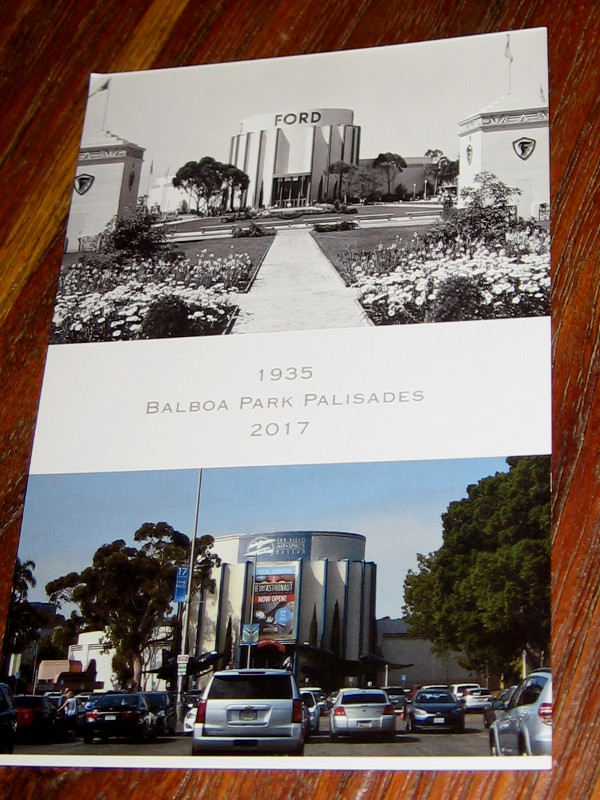
Some supporters of Balboa Park, including The Committee of One Hundred, would like to restore the Palisades area of the park to its former glory. I learned about this visionary effort on Labor Day while grabbing some napkins at the cafe inside the Casa de Balboa. A stack of postcards had been placed nearby. I picked one up. Here’s a photo:
A postcard created by The Committee of One Hundred shows Balboa Park’s Palisades area in 1935 and 2017.
As you can see, in 1935, during the California Pacific International Exposition, the Palisades contained spacious lawns, flowers and benches where today you’ll find a large ugly parking lot.
Sounds familiar? For decades the Plaza de Panama on El Prado contained a similarly ugly parking lot. But after that parking lot’s removal and replacement with tables, umbrellas, potted greenery and public art, the Plaza de Panama has become a bustling hub of activity full of people enjoying the sunny San Diego outdoors, as was originally intended.
Now back to the Palisades area. After a little more research, I’ve learned The Committee of One Hundred is already working to replace the four long-lost murals that used to be above the entrance of the 1935 California State Building, which is home to the San Diego Automotive Museum. To see more about that project, check out The Committee of One Hundred’s 2017 newsletter.
Given what I’ve read and know, I must say I’m in full agreement with the idea of restoring the Palisades. The parking lot is an absolute eyesore and many of the surrounding buildings appear bare and decayed. Most people who park here don’t linger. They immediately head in the direction of El Prado.
The Palisades parking lot seems completely unnecessary. Today, without spending a penny in construction, it appears to me there’s already plenty of parking across Park Boulevard south of the Veterans Museum–that huge lower lot is usually mostly empty. Simply add signage and one or two more stops for the parking shuttle.
When San Diego Comic-Con eventually opens their new museum in the Federal Building, I imagine many more visitors will be drawn into the Palisades area. It seems to me the energetic people at Comic-Con International and other museums who would greatly benefit from a revitalization of the Palisades–the San Diego Air and Space Museum in particular–could use their considerable combined influence to help speed a beautiful restoration.
And why must it be an exact restoration? Why not add more flowers, some new outdoor art, and even a lively, splashing fountain? Why not both restore history and make history? Balboa Park should be forward-looking, optimistic, alive! San Diego’s world-renowned gem could shine even more brightly! Just imagine!
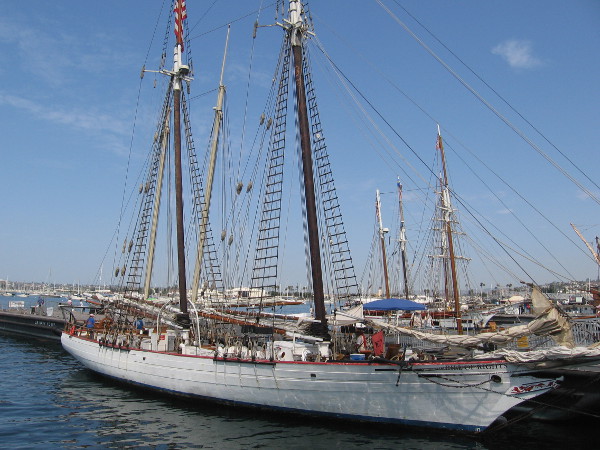
The beautiful tall ship Bill of Rights is participating in the 2017 Festival of Sail in San Diego.
Yesterday I stepped aboard the beautiful Bill of Rights. The tall ship, based in San Diego’s South Bay city of Chula Vista, is participating this Labor Day weekend in the Festival of Sail.
The crew of the Bill of Rights were all very nice to some silly blogger guy asking a few questions. I did learn that Bill of Rights, a two-masted gaff rigged schooner, was built in 1971 based on drawings of Wanderer, an 1856 ship that transported cargo from New Orleans to New York.
I learned Bill of Rights can be chartered for a variety of unique adventures on San Diego Bay or the Pacific Ocean. How exciting would it be to sail on her? The ship will also be used this year for Sea Cadet sailing voyages to Catalina.
Finally, I learned that Bill of Rights is about to have its mandatory every-ten-year Coast Guard inspection, which involves removing the rigging and unstepping the masts. It’s an operation that is quite expensive for a non-profit, requiring hiring a crane, etc. I was told any donations would be really appreciated! Visit their webpage here.
Come aboard and let’s look around just a little bit…
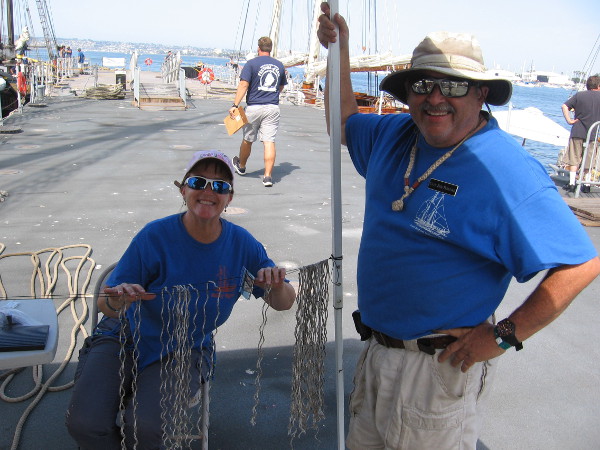
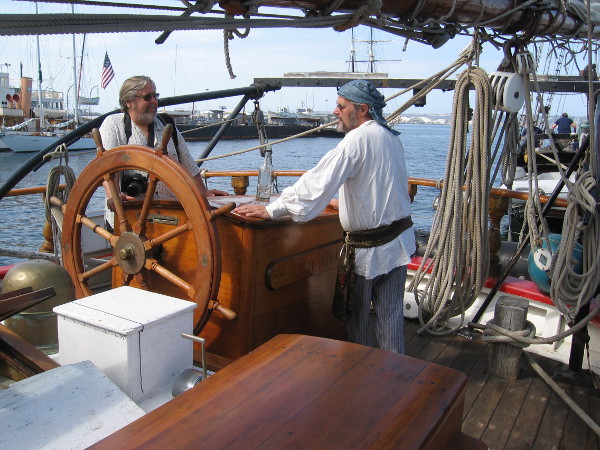
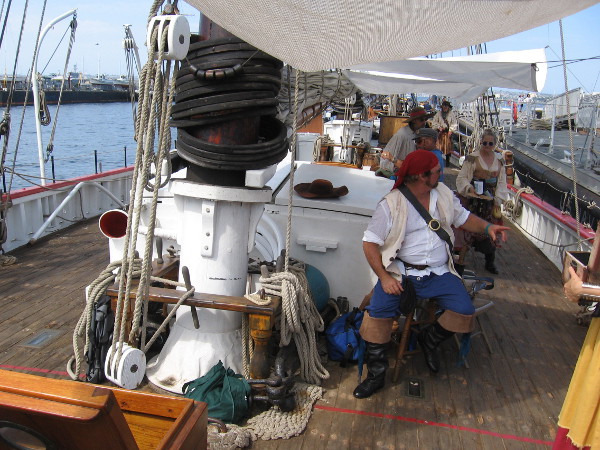
Bill of Rights is a schooner whose design is based on an 1856 ship, Wanderer.A crew member was at work in some shade near the ship.She and the captain give me a friendly greeting.Some Festival of Sail visitors were already onboard, walking about the deck.Interesting people, a fantastic ship, good times.More friendly crewmembers in seafaring costumes chatting by the wheel.Once the sails are raised, Bill of Rights can take to the sea like those tall ships of old.Looking along the wooden deck.Looking down at the main deck of Bill of Rights, a very cool tall ship based in Chula Vista.Smiles and good times at the Festival of Sail!
…
I live in downtown San Diego and love to walk around with my camera! You can follow Cool San Diego Sights via Facebook or Twitter!
You can easily explore Cool San Diego Sights by using the search box on my blog’s sidebar. Or click a tag! There are thousands upon thousands of fun photos for you to share and enjoy!
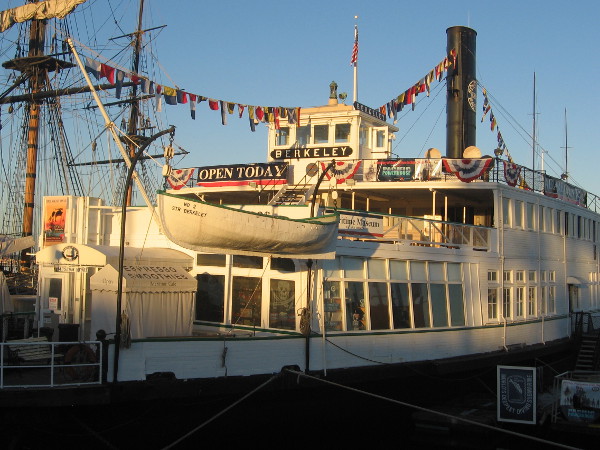
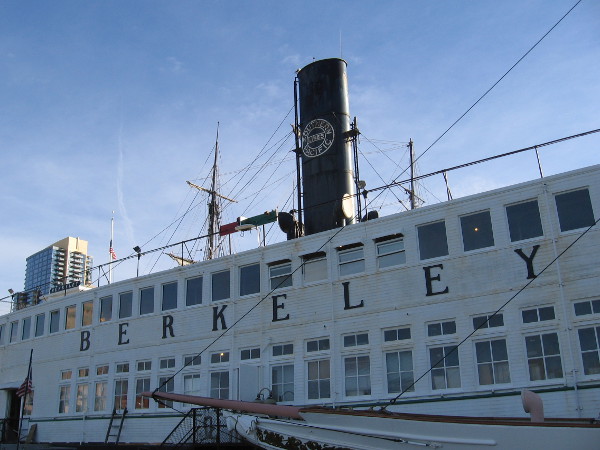
Golden light on the steam ferryboat Berkeley, hub of the Maritime Museum of San Diego. I believe I took this photo a year or two ago.
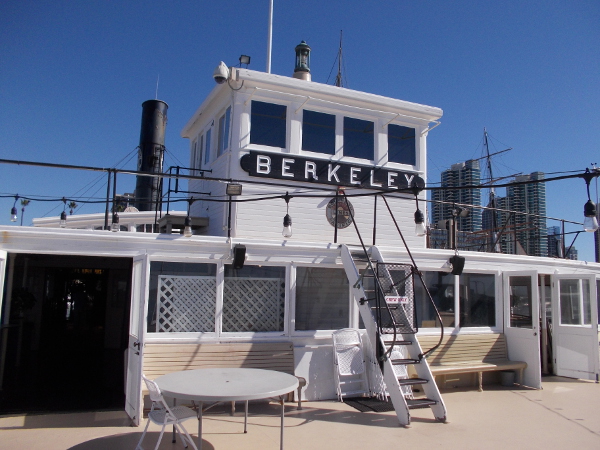
Over the years, I’ve taken many photos around and aboard the historic steam ferryboat Berkeley. The beautiful old ship is the hub of the Maritime Museum of San Diego. I thought you might enjoy seeing some of these photographs. Read the captions to learn a little about the Berkeley’s fascinating history.
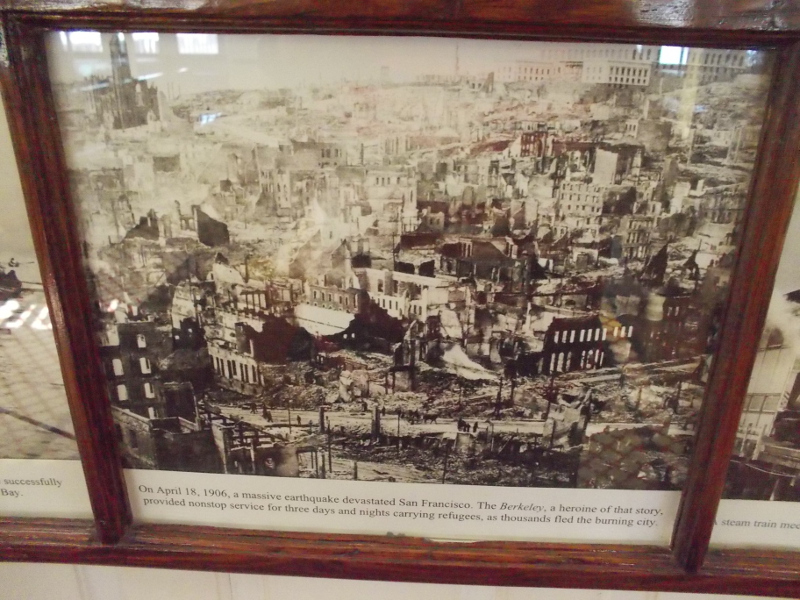
Berkeley, built in 1898, was originally operated by the Southern Pacific Railroad on San Francisco Bay. It was used to ferry up to 1700 passengers per trip between the transcontinental train terminus at the Oakland Pier and the San Francisco Ferry Building across the bay. The Berkeley was also used after the 1906 San Francisco earthquake to rescue thousand of refugees, which were brought out of the fire-devastated city safely over to Oakland.
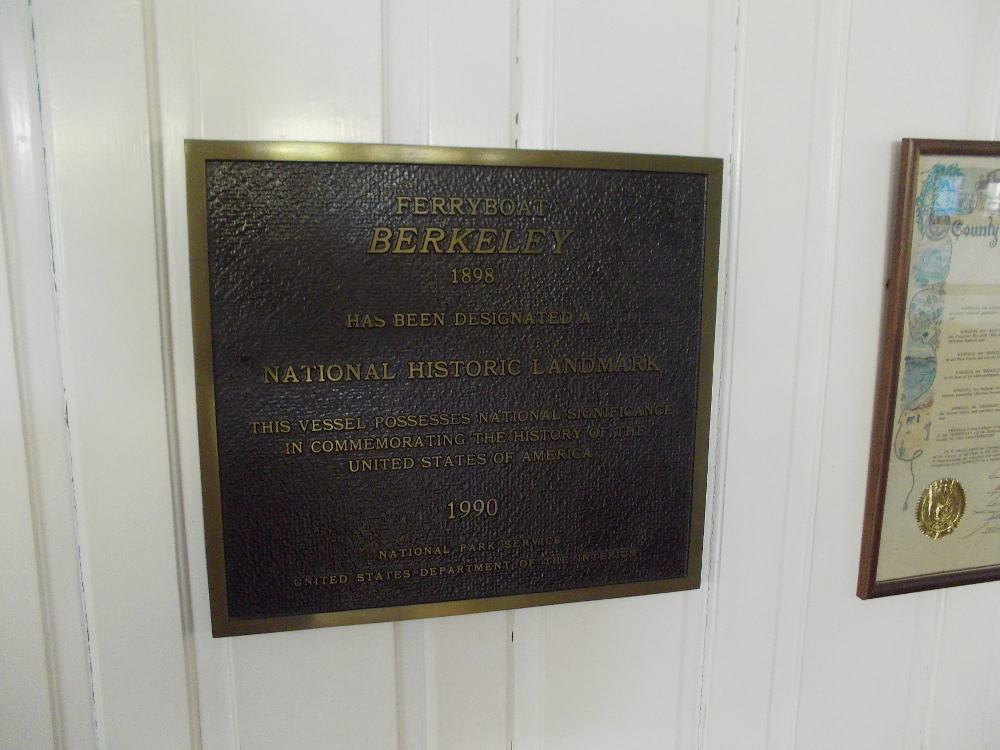
Berkeley was acquired by the Maritime Museum of San Diego in 1973, and today she houses a large number of fascinating historical exhibits on her lower deck. She is both a National Historic Landmark and California State Historical Landmark, and a cool sight that many like to visit on San Diego’s Embarcadero.
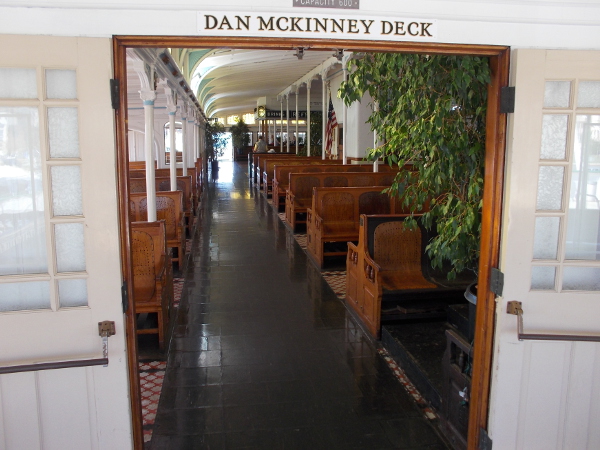
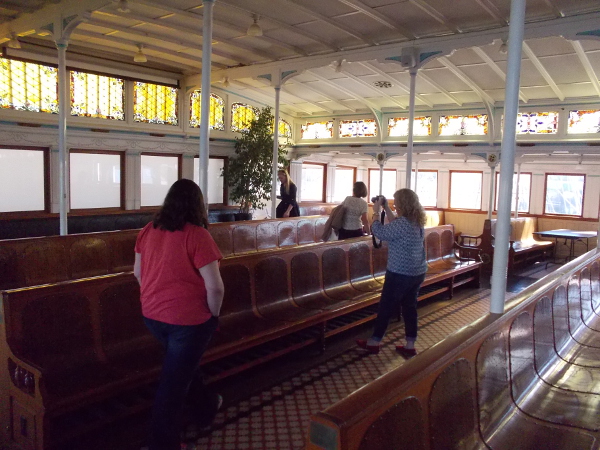
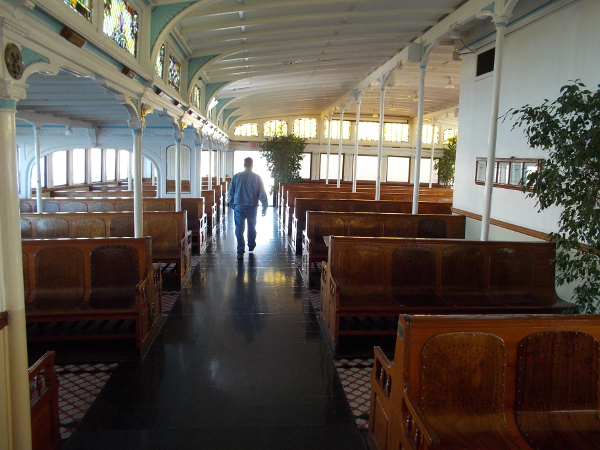
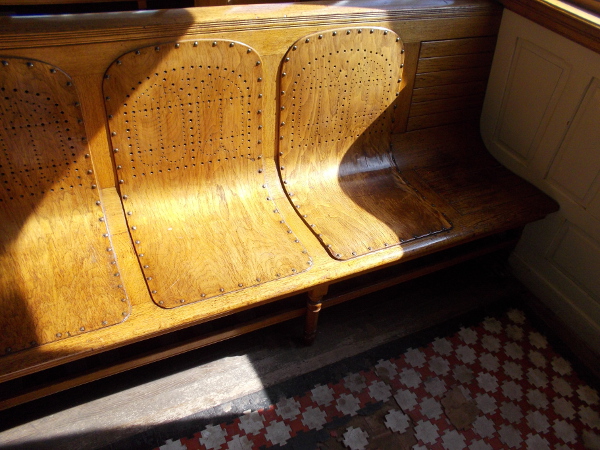
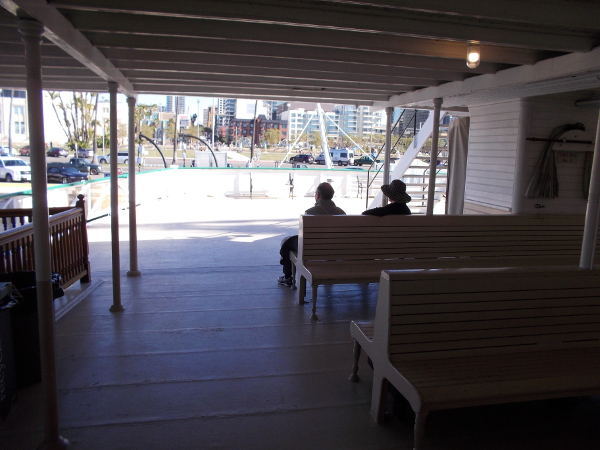
Personally, I love to head up the stairs to the McKinney Deck, where passengers used to cross the water in elegance. I have often seen ferry visitors and members of the Maritime Museum of San Diego sitting on the beautiful wooden benches simply reading or enjoying a relaxing moment. It’s like being transported back into another era. The atmosphere is quite amazing, as you will see…
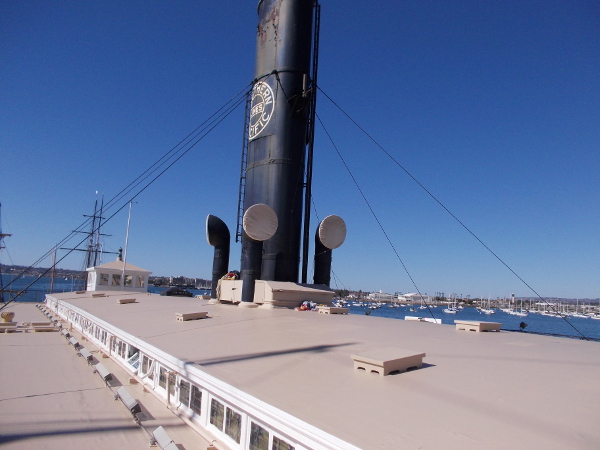
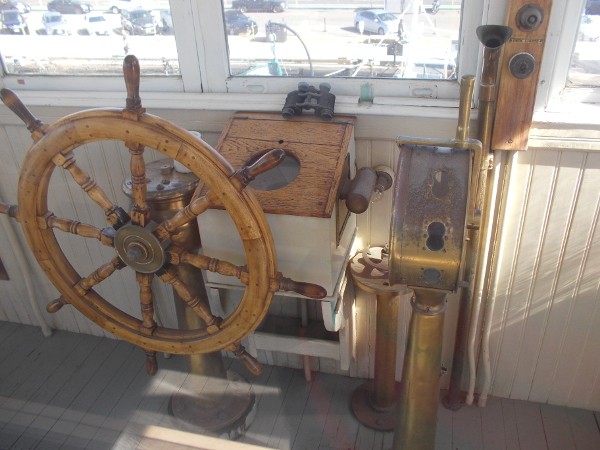
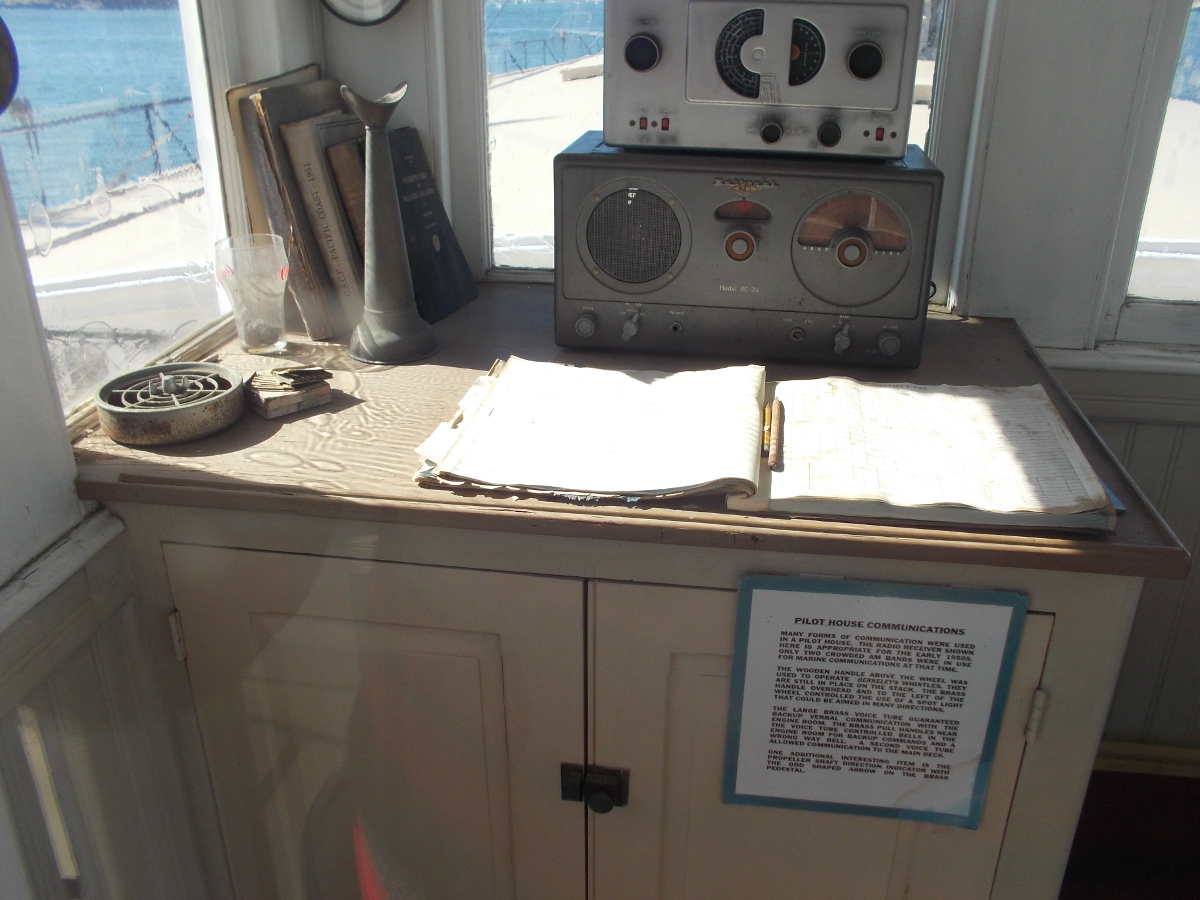
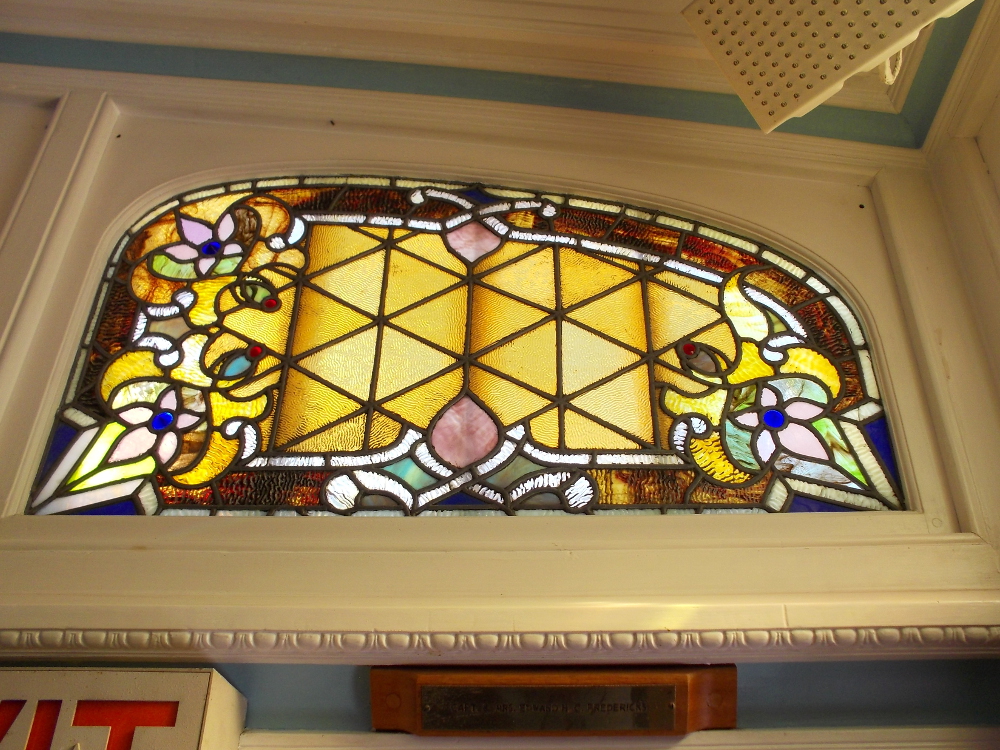
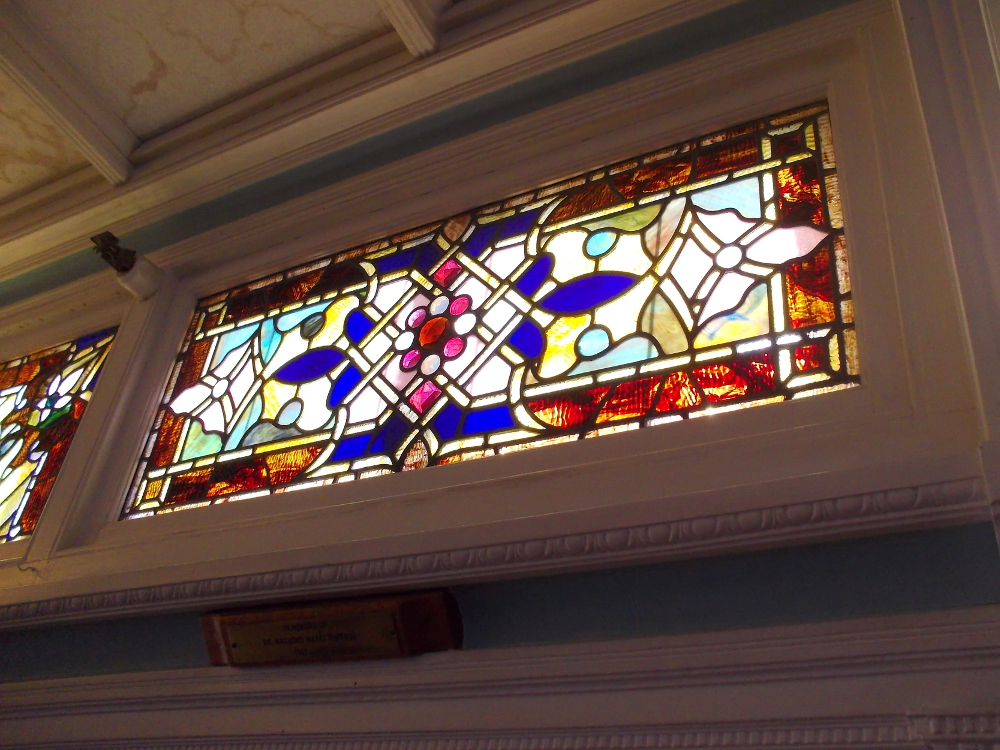
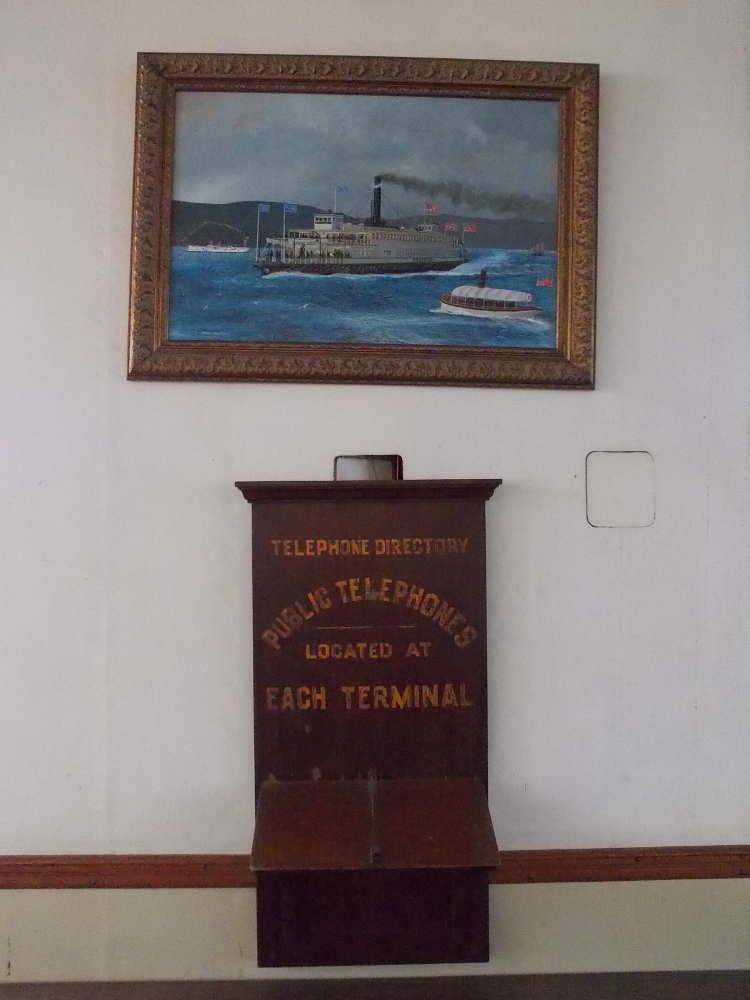
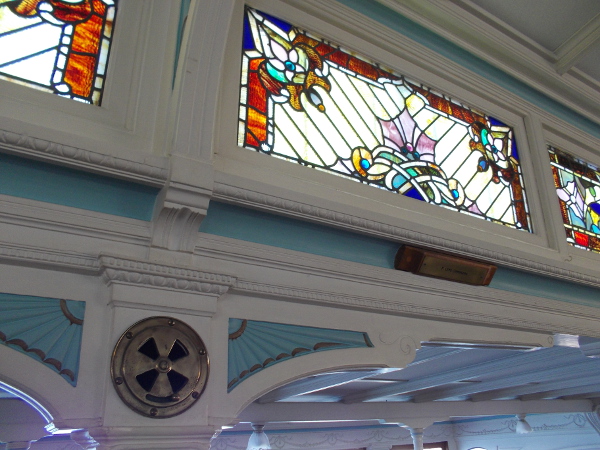
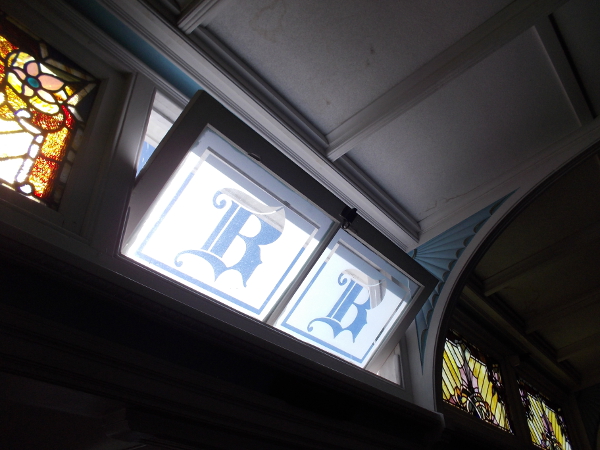
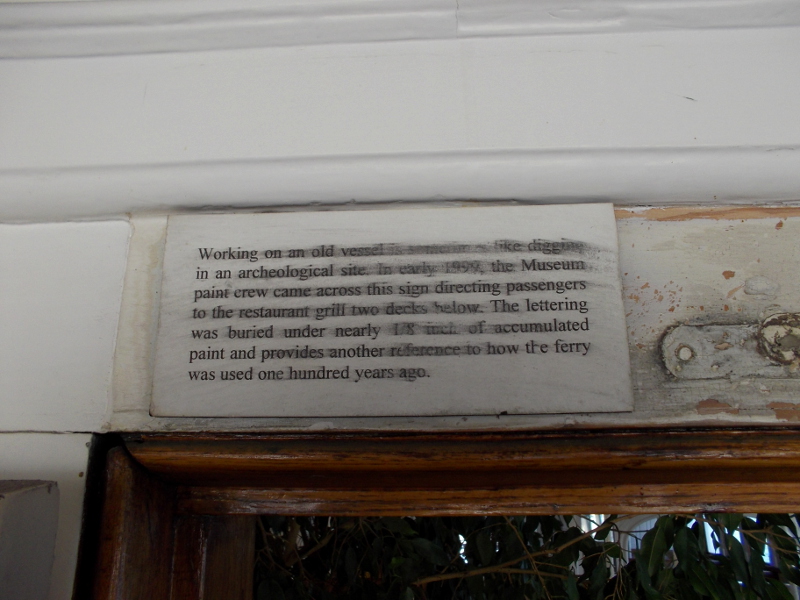
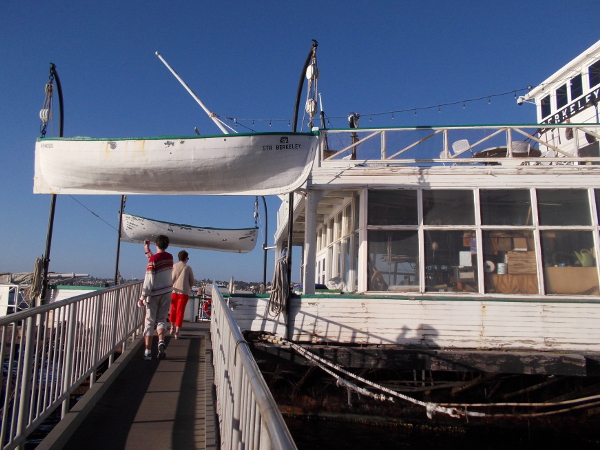
Plaque in front of the ferryboat Berkeley, which was the first successful West Coast-built ferry to be driven by a screw propeller as opposed to side wheels.Downtown San Diego skyscrapers and masts of museum ships HMS Surprise and Star of India can be seen in this photo of the Berkeley’s upper passenger deck and one of two pilot houses.Southern Pacific Lines logo on one pilot house.Photo over the roof of the ferryboat, with a black funnel projecting into the blue San Diego sky.I’m getting ready to look inside the pilot house on the east end of the Berkeley. I see the County Administration Building.The wooden wheel, binoculars and other instruments used to pilot the ferry.Many forms of communication were used during ferry operation. The Berkeley’s pilot houses contained radio receivers, the ship’s whistle, and two voice tubes.Standing outside, peering into the elegant Dan McKinney Deck of the Berkeley.Visitors aboard the Berkeley look at the beautiful long wooden benches and art glass windows of the upper passenger deck.Different art glass windows on the ship fill the passenger deck with many-colored light.More exquisite art glass. Passengers would cross San Francisco Bay in style.Walking through the passenger deck.Sunlight on one comfortable, warm wood bench. Wouldn’t you like to sit here?A painting of the ferry Berkeley and a relic from its history.More beauty aboard the old ship, which is now docked in San Diego Bay.I assume the fancy B is for Berkeley, but I’m not sure.Refreshments used to be purchased here during bay crossings. Today the Berkeley is often used for special events and drinks are still served.Over the years, countless thousands of passengers were served.Ferryboat Berkeley,1898, has been designated a National Historic Landmark. This vessel possesses national significance in commemorating the history of the United States of America.One of four old photos on the passenger deck. Berkeley was launched on San Francisco Bay on October 18, 1898.Berkeley was never a car ferry. The open deck below carried luggage carts for passengers transiting between the end of the railroad at Oakland and San Francisco across the bay.The Berkeley was heroine of the 1906 San Francisco earthquake story. She carried refugees to safety nonstop for three days and nights.In 1973, Berkeley was towed down the coast to San Diego to begin a second life as floating museum.And what a beautiful museum she is! I haven’t included them in this particular blog post, but many cool exhibits can be seen on the lower deck, where ferry passengers used to park their luggage carts.Gazing down some steps at a museum workshop aboard the Berkeley.Gazing from the passenger deck outside toward San Diego Bay. Other museum ships, including Californian and San Salvador, are docked along a float west of the Berkeley.One of the ferry’s old lifeboats.Looking up at the pilot house on the steam ferry’s bay-facing end.Some folks on the other end looking out at downtown San Diego and the Waterfront Park.An old sign above one doorway says Lunch and Grill Room on Lower Deck.That old sign was uncovered beneath accumulated paint. Working on an old vessel is a bit like an archaeological dig.Looking from the Embarcadero at the Berkeley, over the Maritime Museum of San Diego’s deep diving submarine USS Dolphin.The handsome steam ferryboat Berkeley now greets visitors on San Diego Bay.People walk through history aboard a beautiful old vessel.
…
I live in downtown San Diego and love to walk around with my camera! You can follow Cool San Diego Sights via Facebook or Twitter!
You can easily explore Cool San Diego Sights by using the search box on my blog’s sidebar. Or click a tag! There are thousands upon thousands of fun photos for you to share and enjoy!







































 Cool San Diego Sights!