More welcome rain has begun this morning on Cortez Hill!
A large storm cell is passing through downtown this morning!
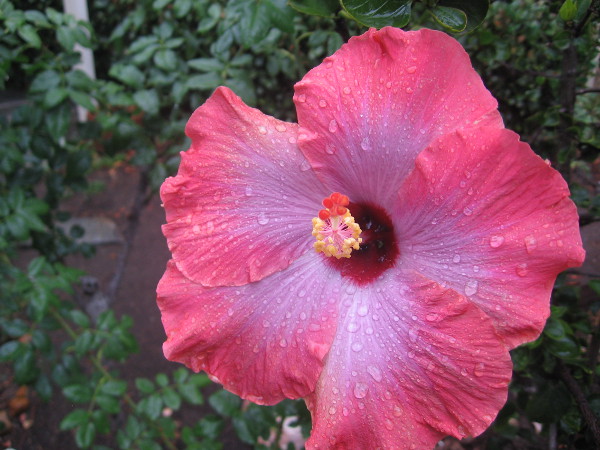
Rain is such a rare and beautiful thing in San Diego I had to jump outside with my camera for a couple quick pics! At the time, a few drops had just begun to fall.
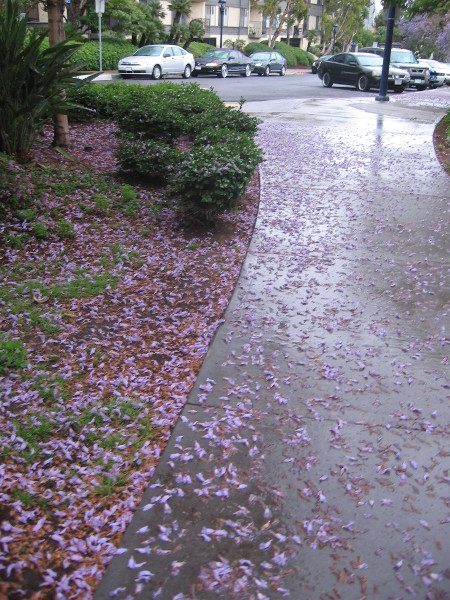
Night showers have scattered jacaranda blooms on the sidewalk in Tweet Street park.
…
To enjoy future posts, you can “like” Cool San Diego Sights on Facebook. or follow me on Twitter.
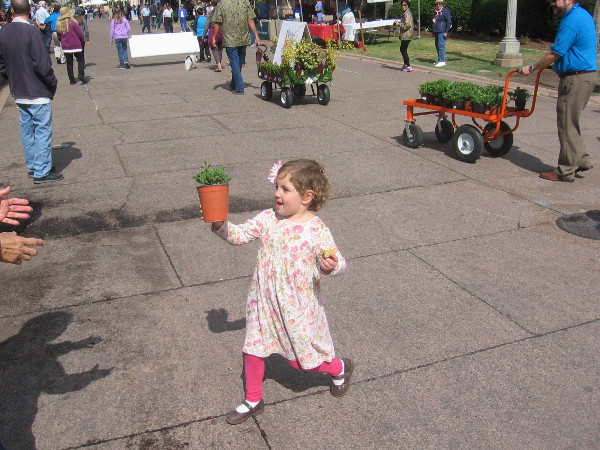
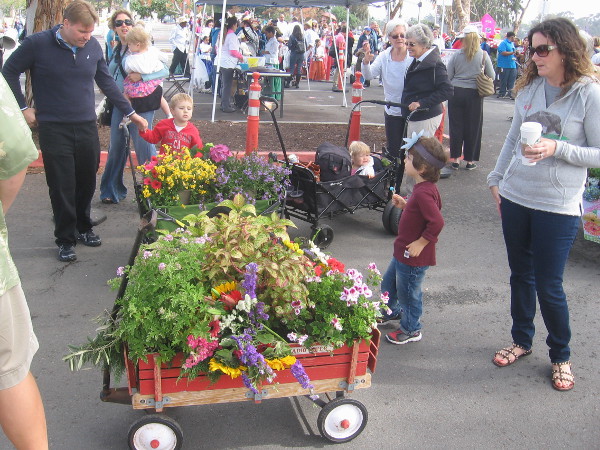
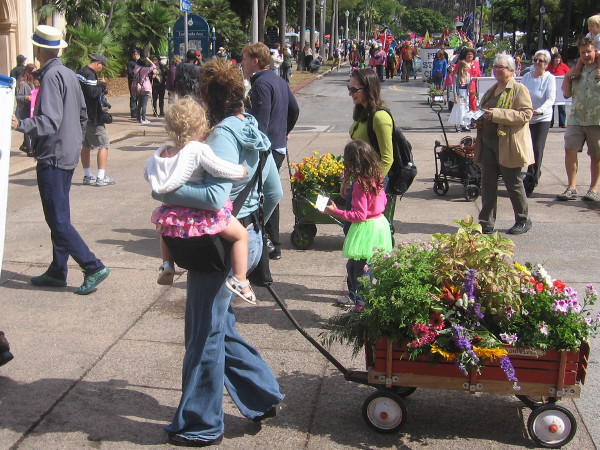
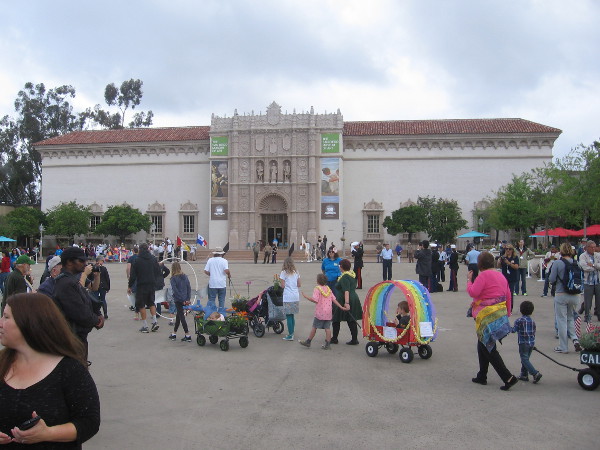
Child gives potted plant to spectator during floral wagon parade in Balboa Park.
It was a memorable day in Balboa Park!
To celebrate its centennial, San Diego’s historic Balboa Park is throwing a number of special events this year. Today our beautiful park was the scene of the Garden Party of the Century. And what a party it was!
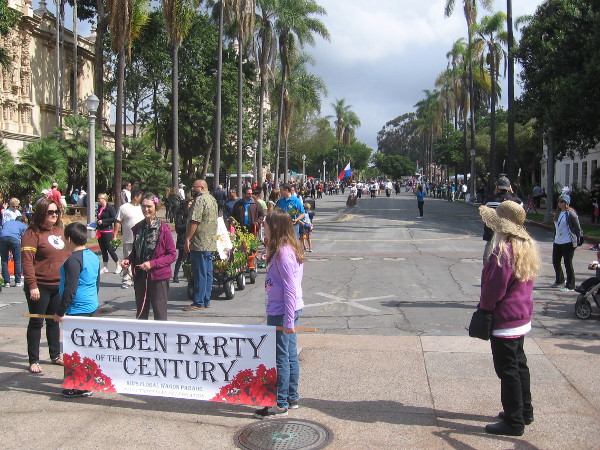
As the title suggests, the emphasis was on gardening and the many incredible gardens of our world-class urban park. Spring flowers filled every corner, and lots of people came out to enjoy excellent exhibits. A unique parade also took place, as you’ll see in the following photographs.
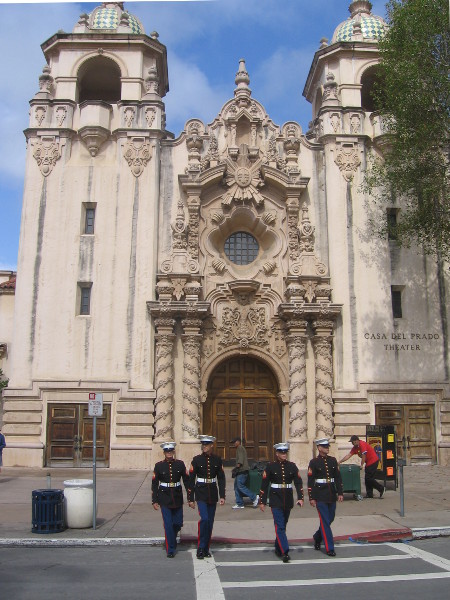
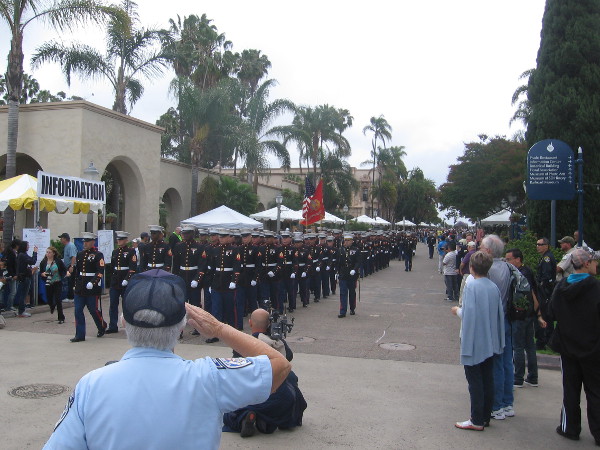
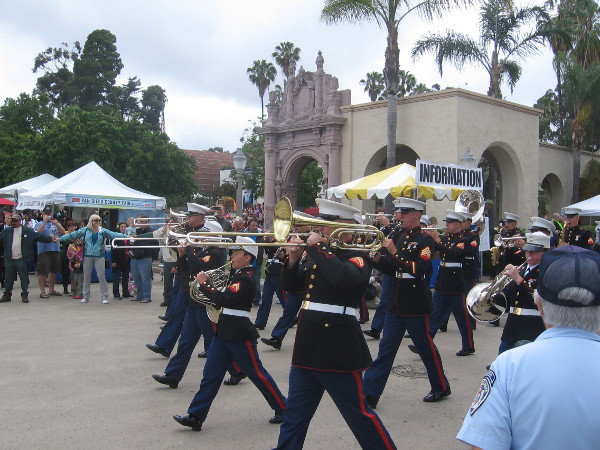
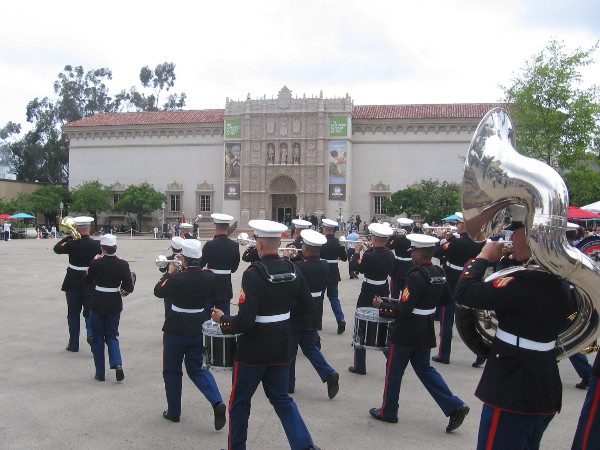
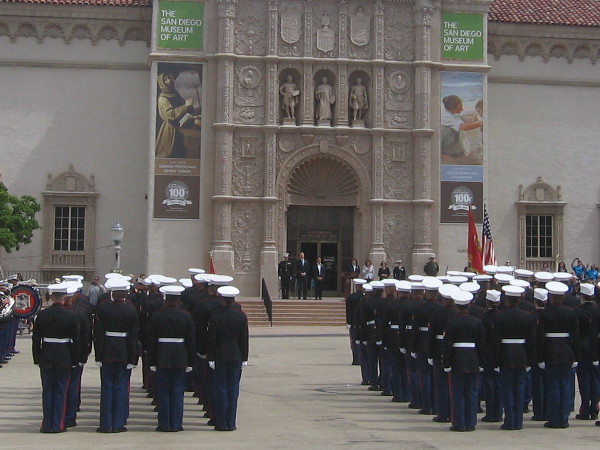
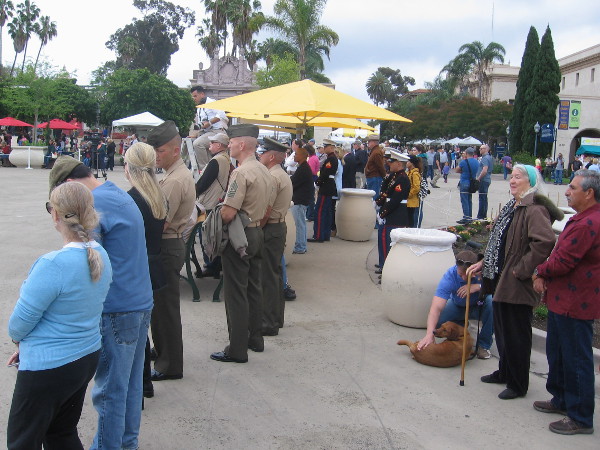
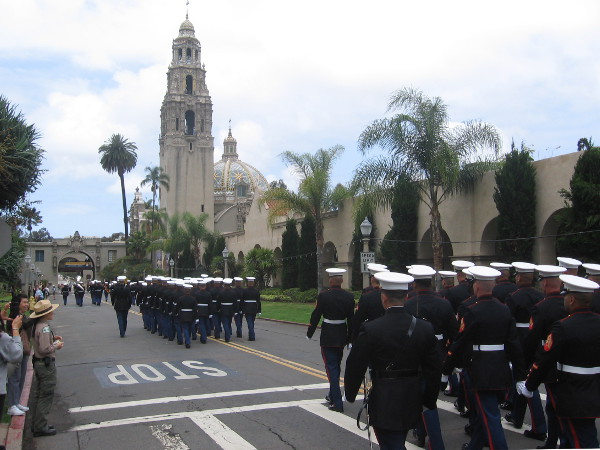
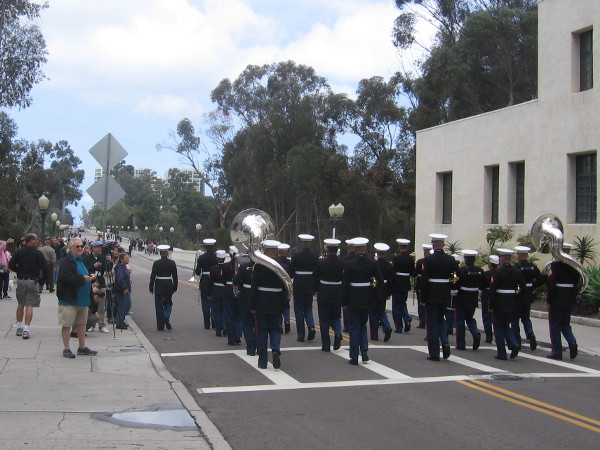
The event’s main ceremony involved Marines from San Diego’s Marine Corps Recruit Depot, which is perhaps a mile (or two) from the park. The Marines played an instrumental role during the early days of Balboa Park, which was created for the 1915 Panama-California Exposition. The mere presence of a Marine camp inside the large park back then eventually helped to preserve many of the wonderful old Spanish Colonial Revival-style buildings visitors marvel at today.
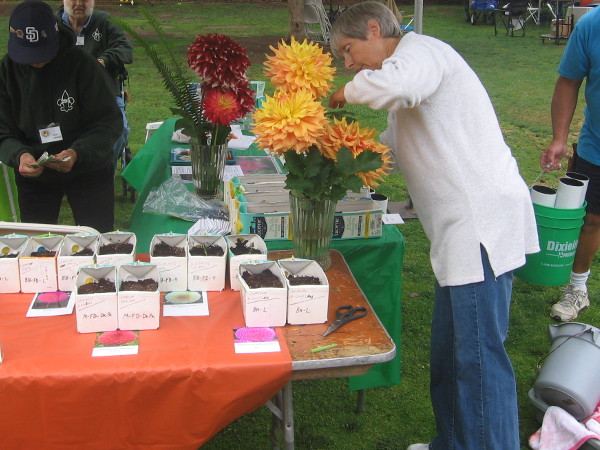
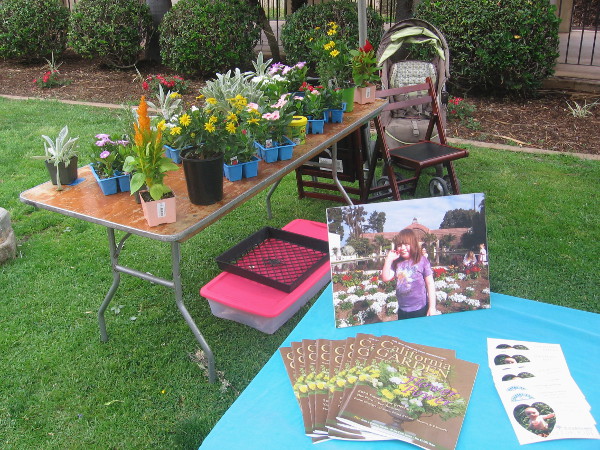
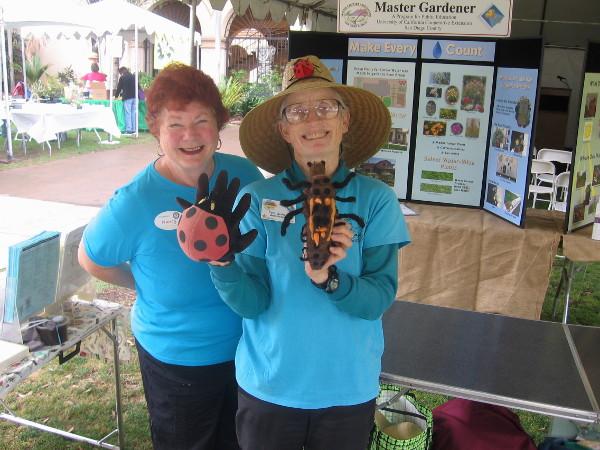
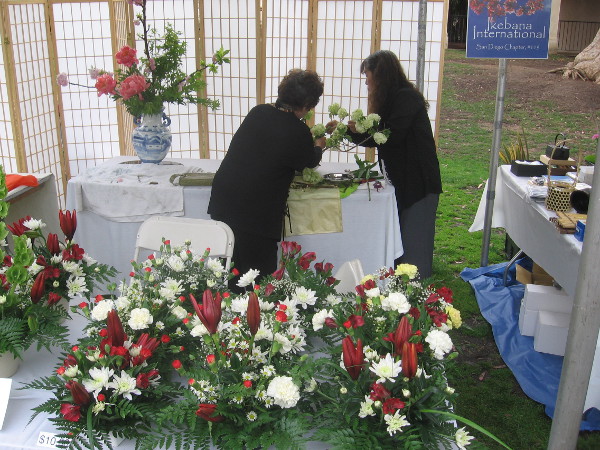
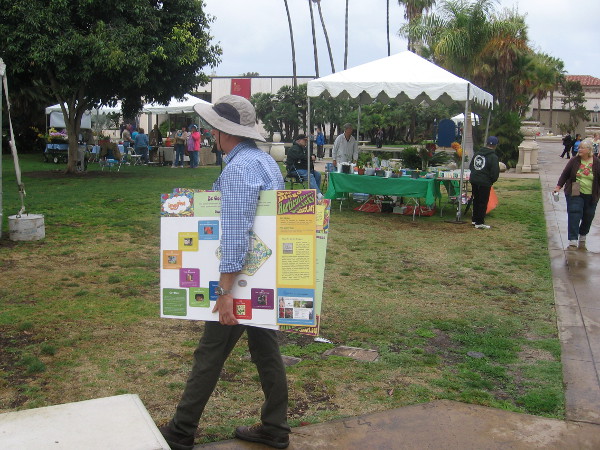
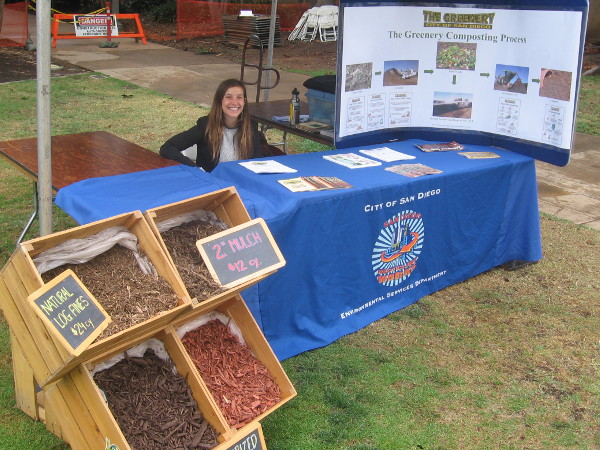
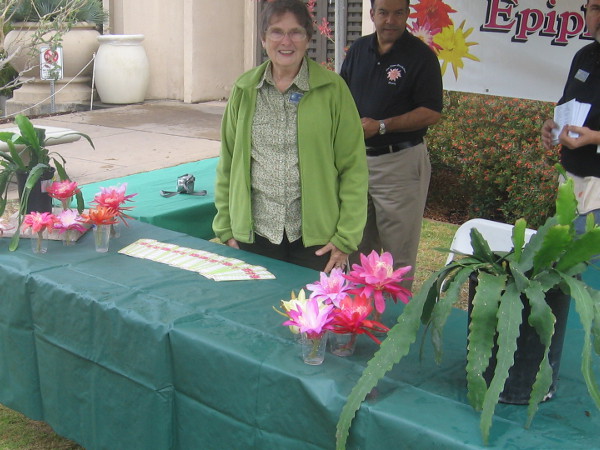
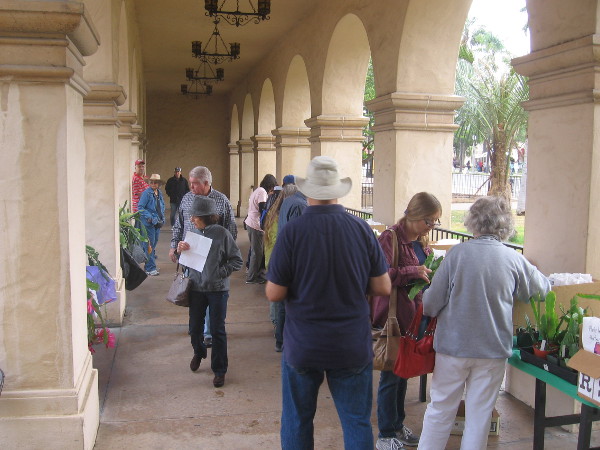
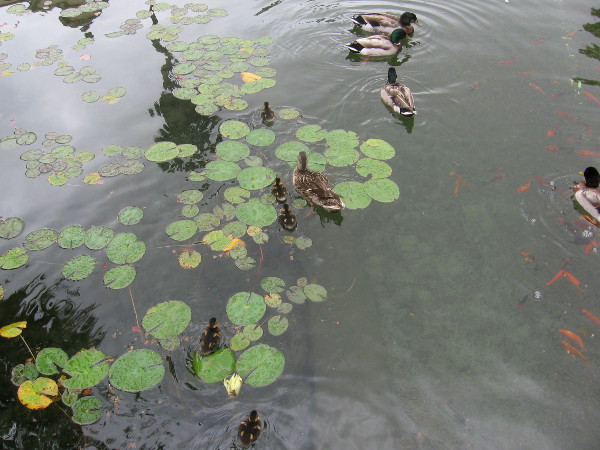
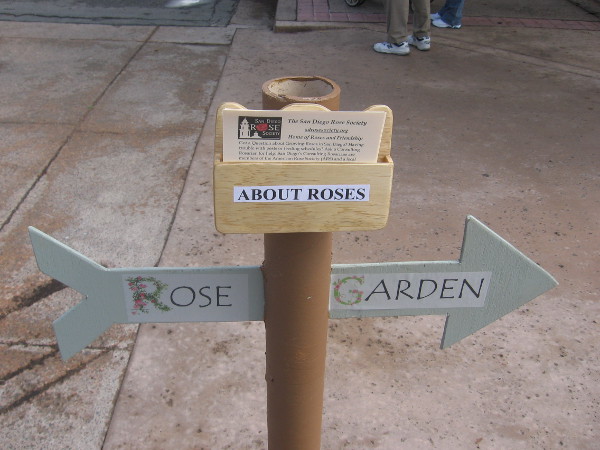
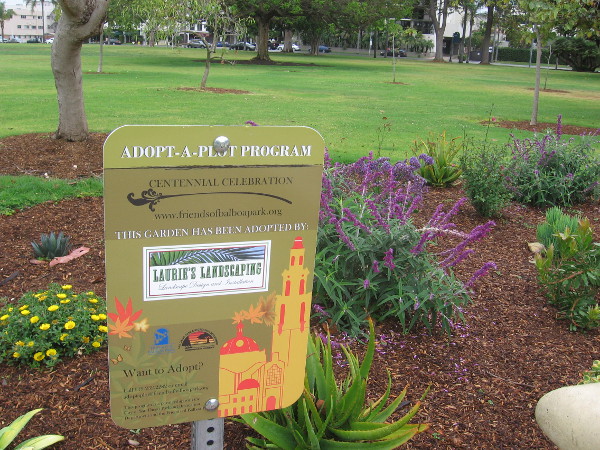
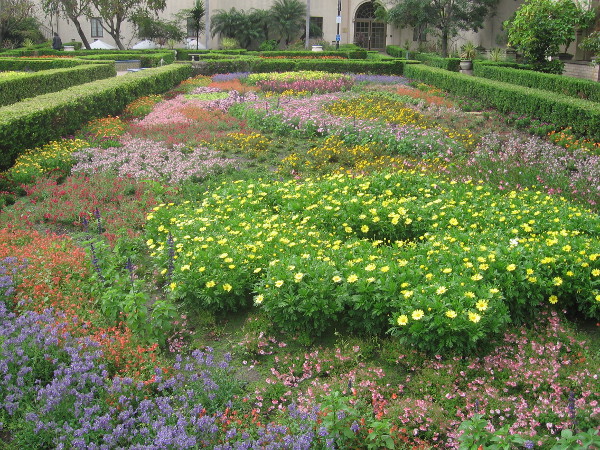
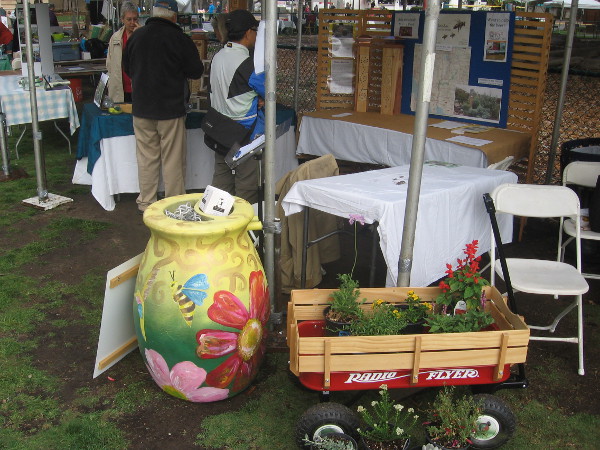
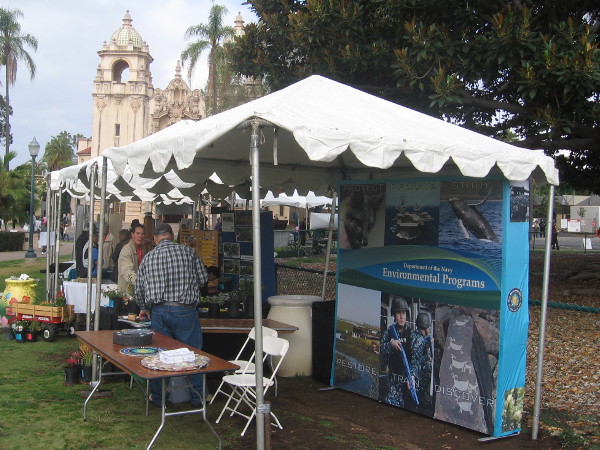
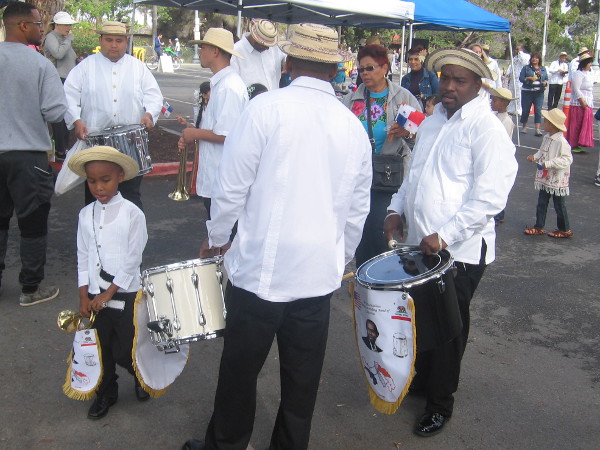
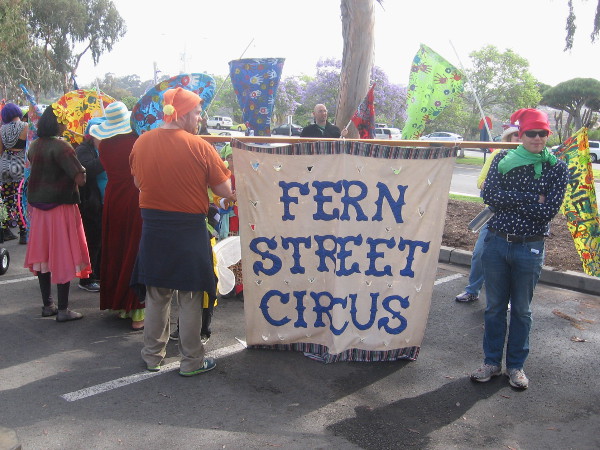
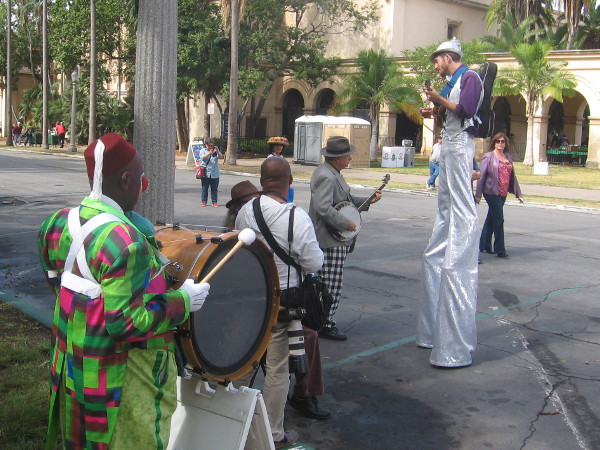
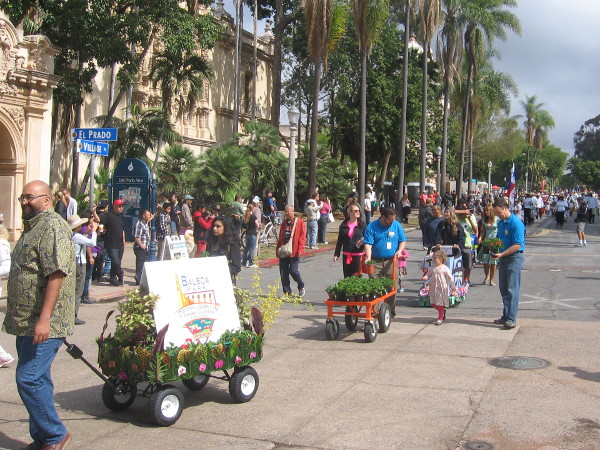
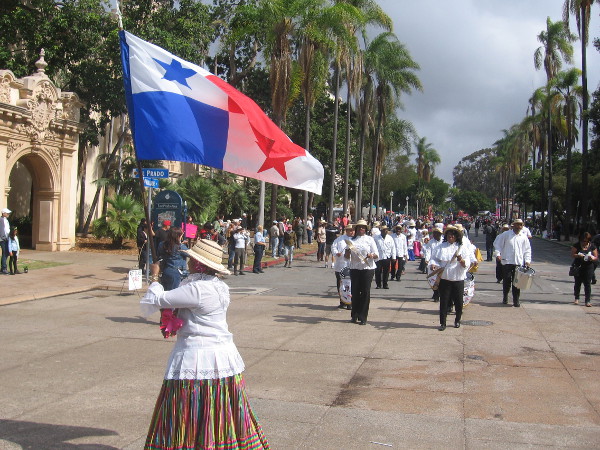
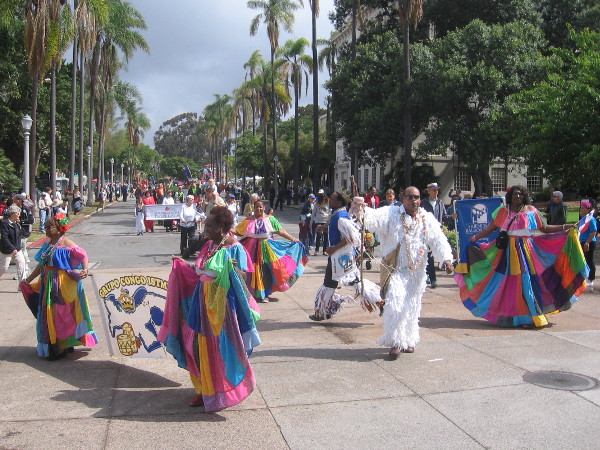
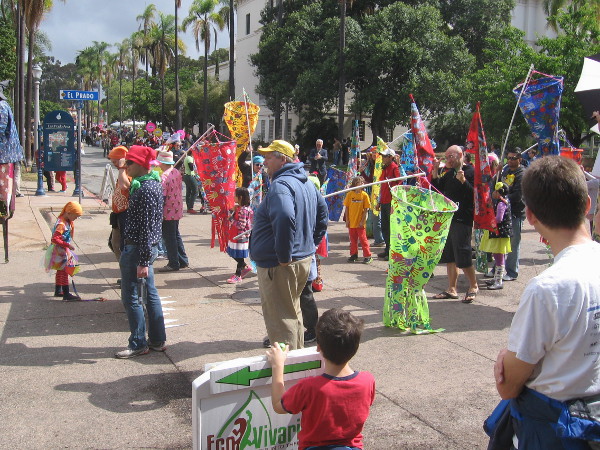
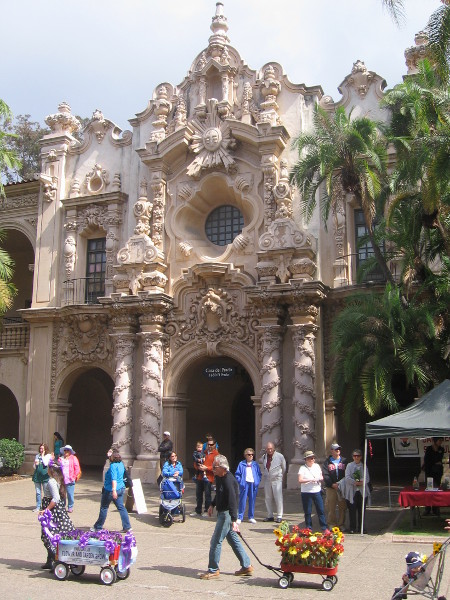
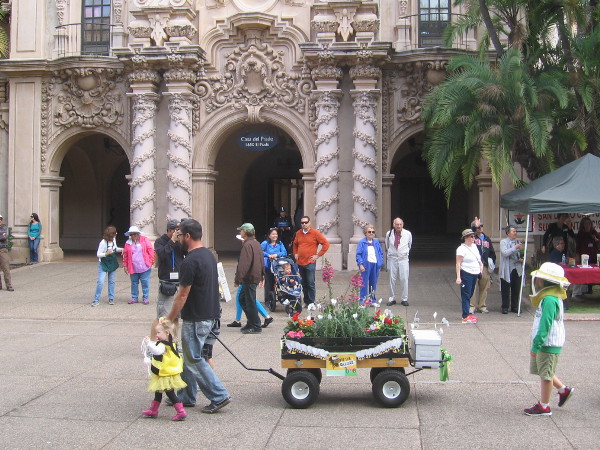
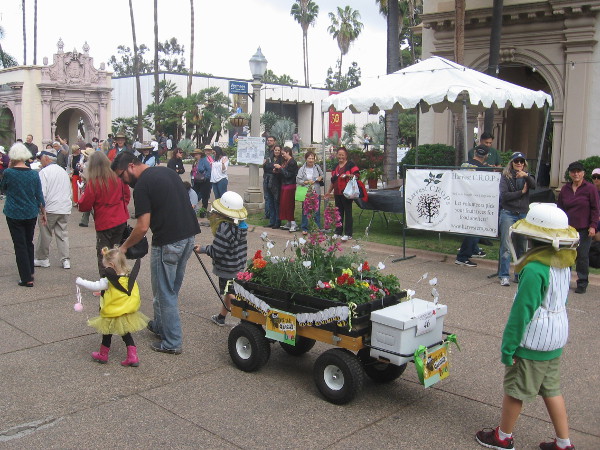
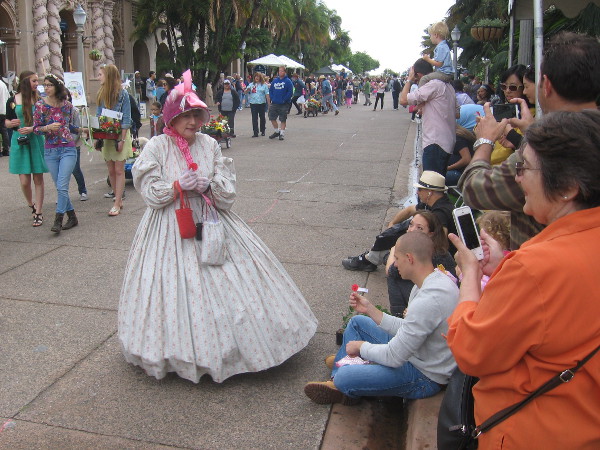
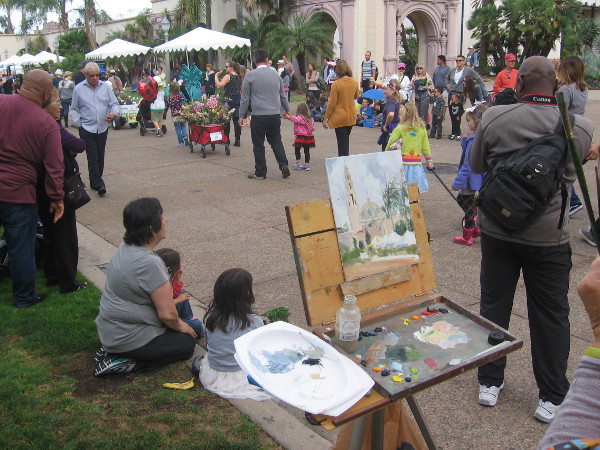
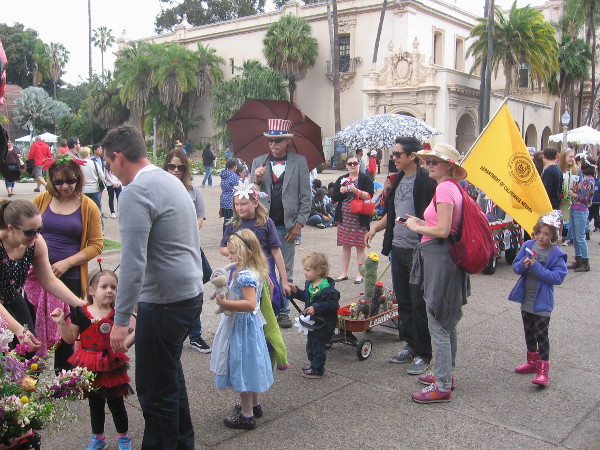
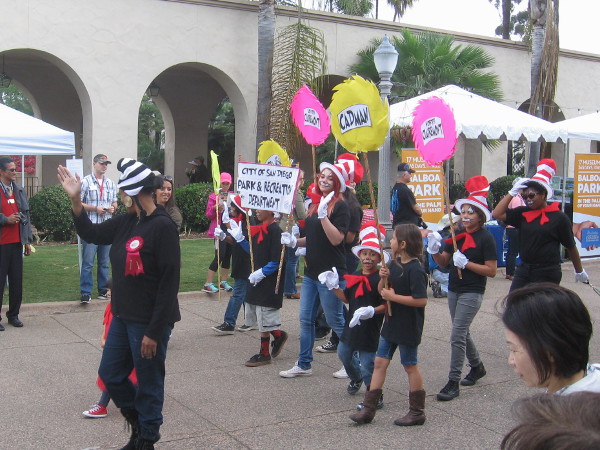
Many tents with horticulture exhibits were around Balboa Park for the Garden Party of the Century. Some can be seen next to the Botanical Building.These friendly folks explained that dahlia blooms can be as large as fourteen inches!Displays concerning gardening were front and center during the special Balboa Park Centennial event.These master gardeners showed me what a ladybird larva looks like! (It’s the critter on the right.)There were lots of flower arrangements and botany-themed art throughout the park!It’s still early in the morning, so some exhibitors are still setting up near the reflecting pool.This super cool lady talked to me about the work of the City of San Diego Environmental Services Department.Smiling lady from the San Diego Epiphyllum Society.Lots of plants were for sale in the park, including on the Casa del Prado patio.Ducks and baby ducklings were swimming about the lily pads in the Balboa Park reflecting pool!Sign shows the way to the Rose Garden across Park Boulevard.One example of Balboa Park’s Adopt-A-Plot volunteer gardening program. This plot is in Sefton Plaza.A photo I took this morning of beautiful flower beds in the Alcazar Garden.Another exhibitor near the huge Moreton Bay Fig Tree and Natural History Museum has a cool trash can painted with flowers and a bee.The Navy was showcasing its environmental programs.Marines cross street in front of the Casa del Prado Theater.The floral wagon parade was staged in a parking lot by the Balboa Park carousel.Musicians stand ready for the beginning of the big parade through Balboa Park.San Diego’s own Fern Street Circus has gathered for the parade holding colorful banners.Other performers from the Fern Street Circus wait a bit further down the parade route for the spectacle to begin.The Garden Party of the Century Parade is underway and turning onto El Prado!Kids, families, wagons and flowers. An overcast day after our recent stormy weather.Here come drummers and a flag down the festive parade route!Look at the boldly colored dresses and fantastic costumes!Here come some lush, wonderful floral wagons.Garden Party of the Century parade turns the corner and heads down El Prado toward Plaza de Panama.Flower-laden wagons pass in front of ornate Casa del Prado facade.A bee is followed by a beekeeper!The parade approaches the reflecting pool as it passes booths that line El Prado.This lady in an elegant old-fashioned dress was handing out goodies to the watching crowd.A painter in Balboa Park gets an eyeful as the parade passes by.Uncle Sam and lots of other happy San Diegans.Dr. Seuss seems to be a favorite author of the City of San Diego Park and Recreation Department!The cool parade finally reaches the spacious Plaza de Panama in front of the San Diego Museum of Art.A second parade nears! Marines from San Diego’s MCRD march down El Prado for a special ceremony.The band leads the way as marchers from the Marine Corps Recruit Depot enter Plaza de Panama.The Marines played an important role in Balboa Park’s beginning, and are duplicating their march from 100 years ago!Marines stand at attention. The San Diego mayor, MCRD commandant and other dignitaries spoke during the special Balboa Park Centennial event.Civilian and military bystanders look on as a memorable San Diego event is taking place.Proudly marching Marines head west down El Prado toward California Tower and Museum of Man.Marines start across the Cabrillo Bridge to reproduce a famous photograph from one hundred years ago!
…
To enjoy future posts, you can “like” Cool San Diego Sights on Facebook or follow me on Twitter.
The roots were almost completely torn out of the ground, but the stubborn tree in spring has green leaves!
Perhaps you read my blog post about the violent microburst that tore through San Diego’s Mission Valley on September 16, 2014. Along with photos of the aftermath, I described the tornado-like winds of the freak weather phenomenon.
A microburst is a localized downdraft of wind that can occur under unstable weather conditions. Several areas around San Diego were struck by a microburst that day, and the resulting damage was stunning. Small airplanes at an airport were tossed through the air. Along the banks of the San Diego River, hundreds of trees were torn to shreds and uprooted.
This morning, 7 months later, I walked along the river path where I had scrambled over thickly fallen trees right after the natural disaster.
Many of the uprooted trees were removed by crews with chainsaws in the days that followed the microburst. But some were not. Check out a few pics from my walk this spring morning! Like the famous quote from the movie Jurassic Park, life finds a way!
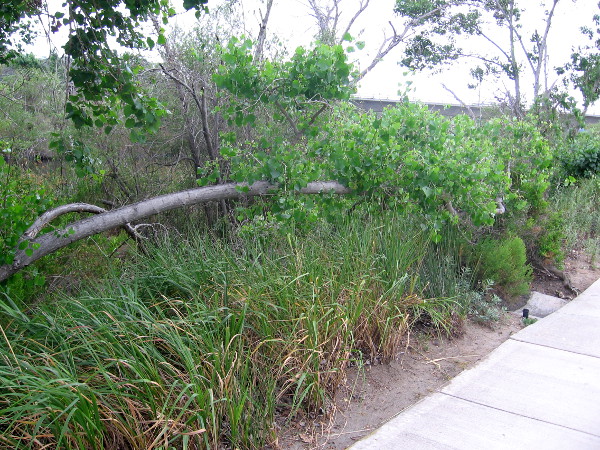
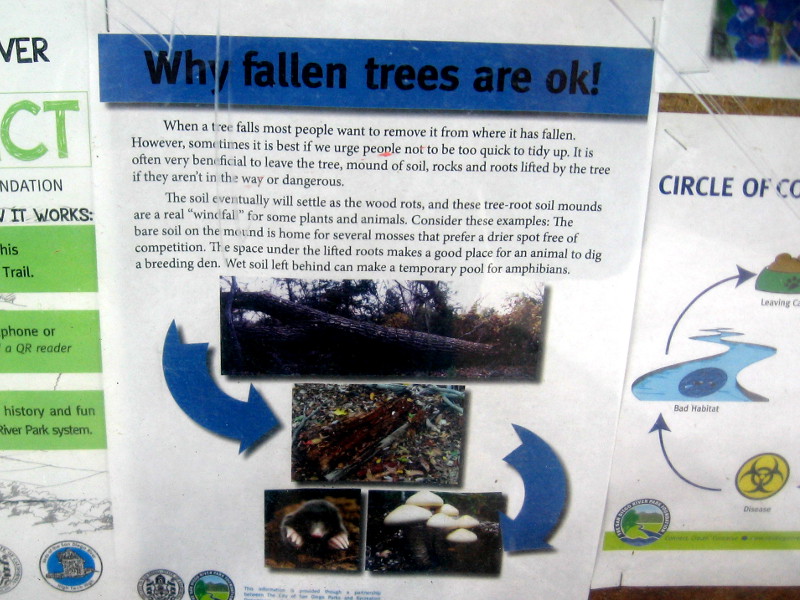
One of hundreds of trees that were uprooted during the super violent microburst last September. Amazingly, this one still flourishes!This fallen tree is now growing horizontally like a hedge along a Mission Valley sidewalk!Sign beside the San Diego River Trail. Why fallen trees are okay! There are important benefits to the soil, flora and fauna.
The sign reads:
When a tree falls most people want to remove it from where it has fallen. However, sometimes it is best if we urge people not to be too quick to tidy up. It is often very beneficial to leave the tree, mound of soil, rocks and roots lifted by the tree if they aren’t in the way or dangerous.
The soil eventually will settle as the wood rots, and these tree-root soil mounds are the real “windfall” for some plants and animals. Consider these examples: The bare soil on the mound is home for several mosses that prefer a drier spot free of competition. The space under the lifted roots makes a good place for an animal to dig a breeding den. Wet soil left behind can make a temporary pool for amphibians.
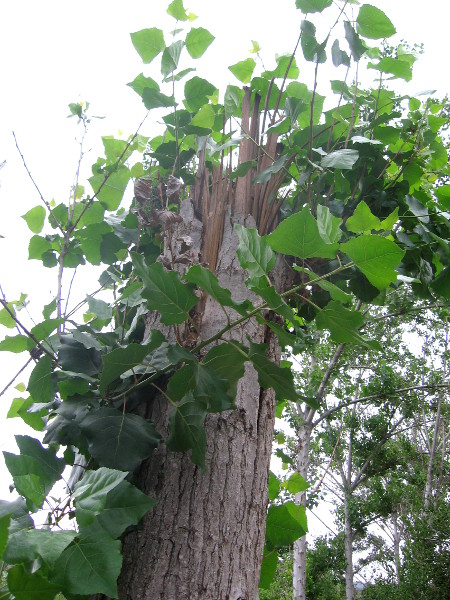
Green shoots look unusual on this violently torn tree trunk. I believe this is a Fremont Cottonwood.Life springs forth from a broken stump months after a devastating natural disaster.
…
To enjoy future posts, you can “like” Cool San Diego Sights on Facebook or follow me on Twitter.
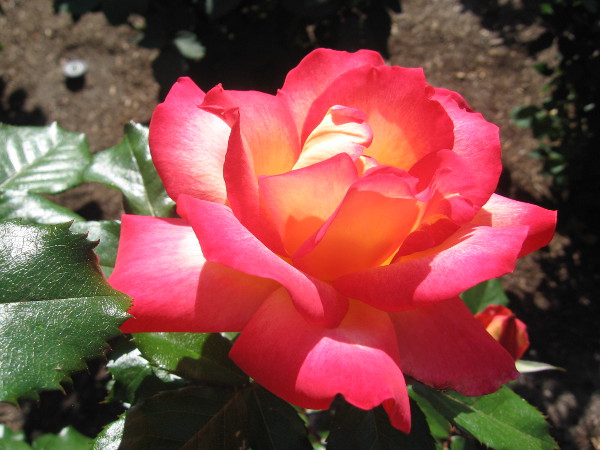
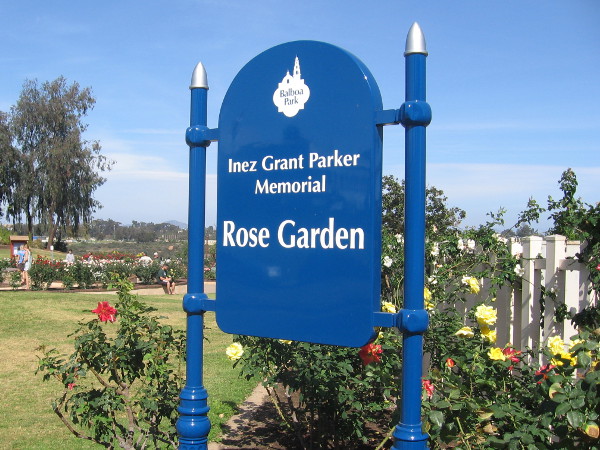
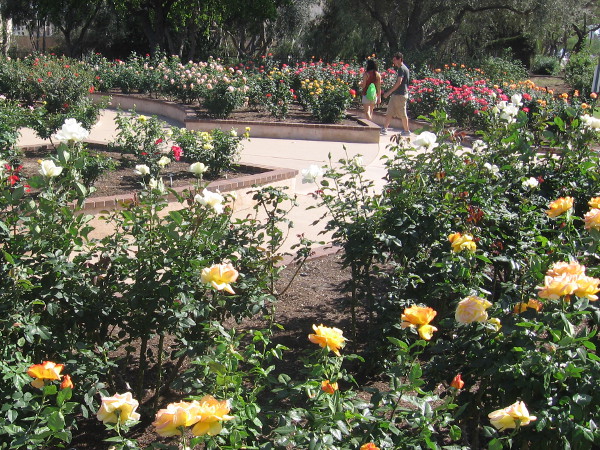
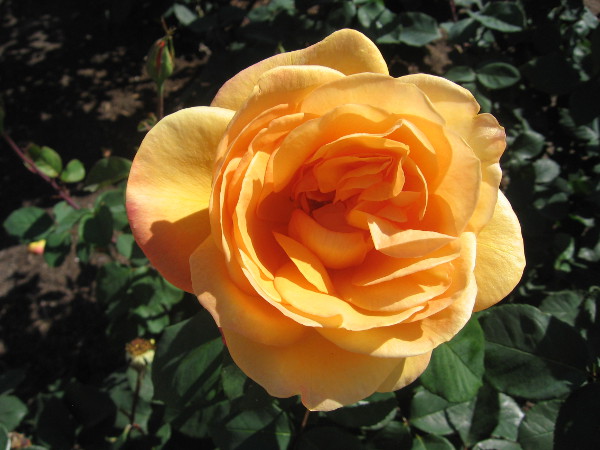
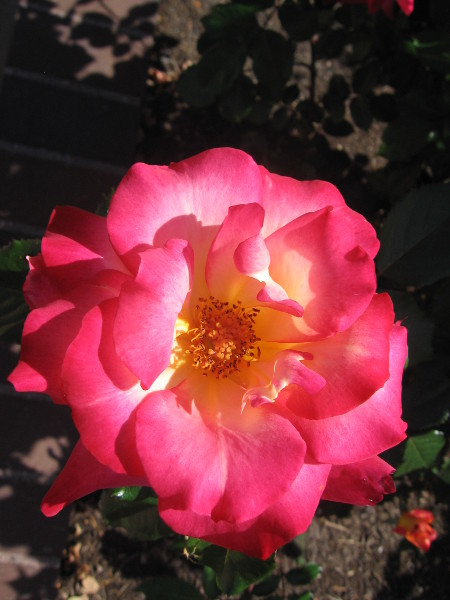
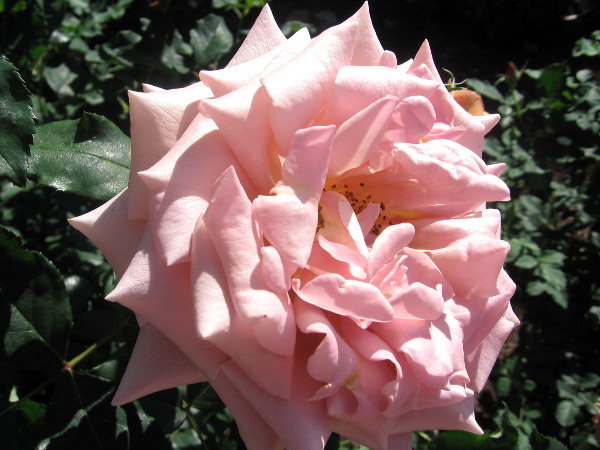
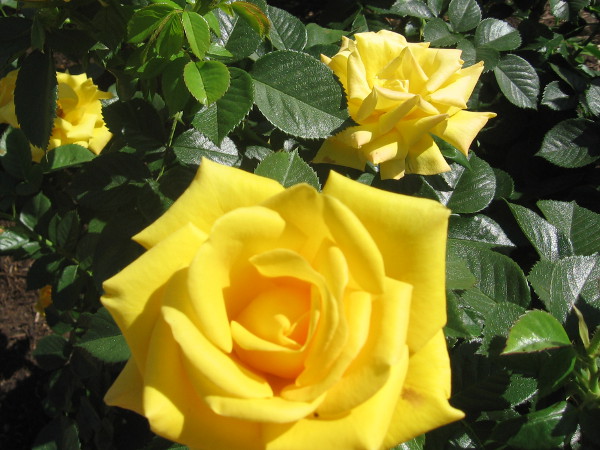
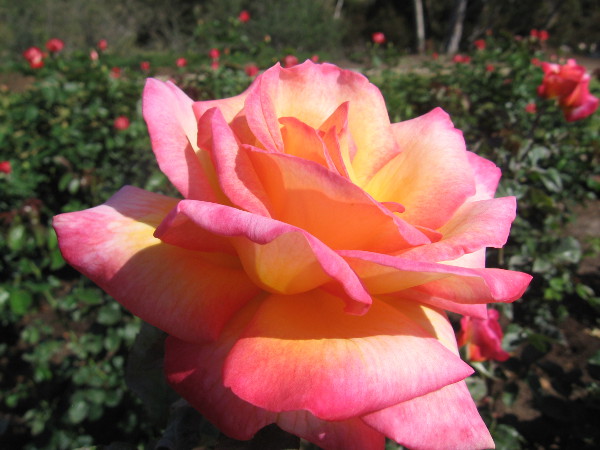
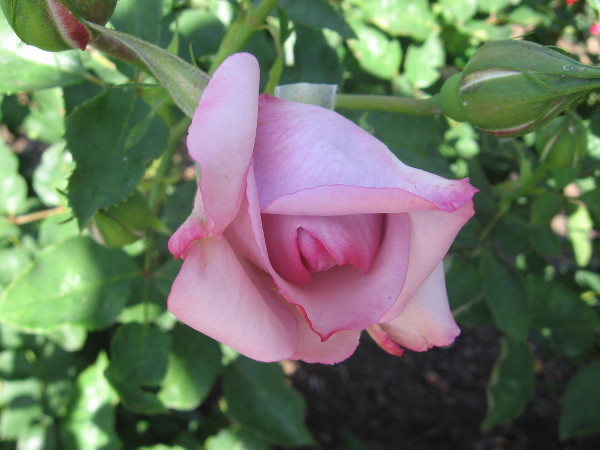
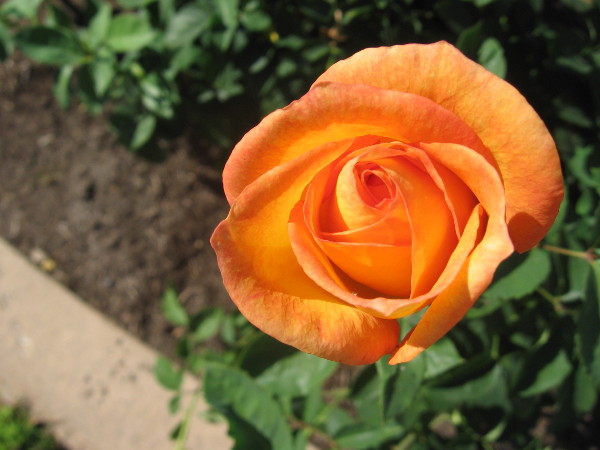
Spring is only a few days old and flowers are blooming everywhere. The gardens in Balboa Park are fairly exploding with dazzling color. This weekend my feet directed me through the bright, sprawling rose garden along Park Boulevard. Using my camera’s macro setting, I took some close up photographs that you might enjoy! The rose variety is shown in each caption.
The Inez Grant Parker Memorial Rose Garden contains hundreds of brightly colored blooms!On a sunny Spring Sunday, a couple walks slowly through south part of beautiful Balboa Park rose garden, next to Park Boulevard.Strike It RichRainbow SorbetKoko LokoShockwaveSheila’s PerfumeLove SongGold Medal
…
To enjoy future posts, you can “like” Cool San Diego Sights on Facebook or follow me on Twitter.
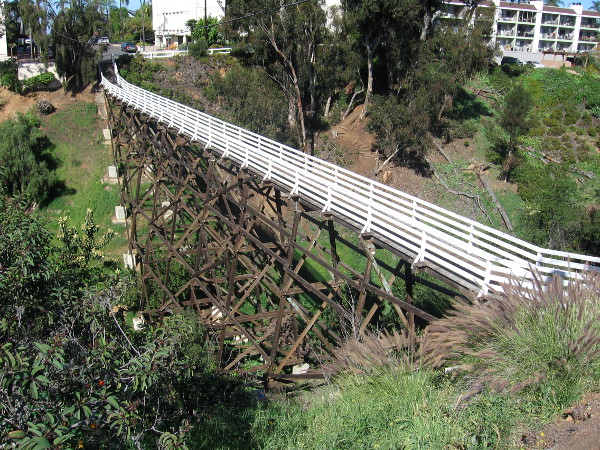
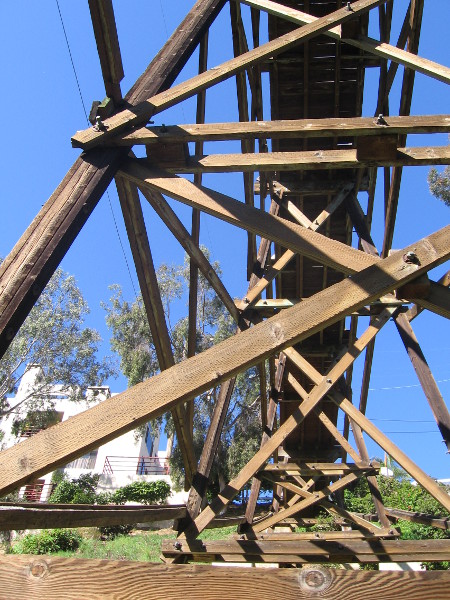
View of the Quince Street Trestle from a spot on Fourth Avenue.
Many nature hikes can be enjoyed in Balboa Park. But there’s another beautiful, quiet hike through date palms and eucalyptus trees and bright spring flowers that anyone can enjoy just a few blocks north of downtown San Diego.
The Maple Canyon Trail stretches from a trailhead near Quince Street and Third Avenue on Bankers Hill to a second trailhead at Maple Street and Dove Street in Middletown. It often seems that the only people who use the trail are dog walkers and joggers who live nearby. Those who haven’t hiked this easy trail are missing out on a unique experience. The Maple Canyon Trail passes under two cool historic bridges!
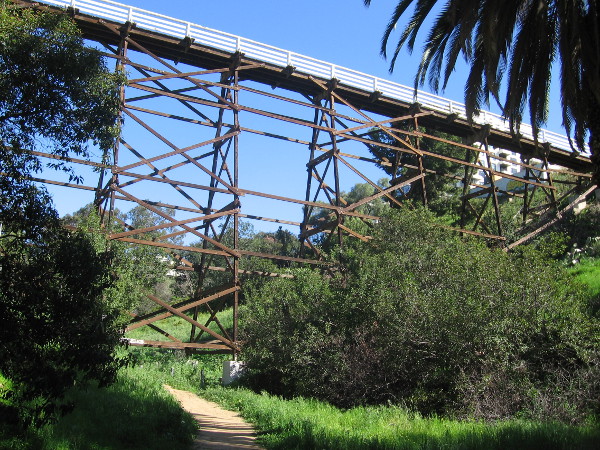
The Quince Street Trestle is a visually interesting wooden footbridge that was built in 1905. Back then streetcars ran up Fourth Avenue, and the trestle allowed pedestrians to cross the steep canyon from the west. A quarter century ago the bridge, weakened by termites and rot, was closed and almost demolished. Local residents took up the cause of saving the bridge, which was finally declared a historic site.
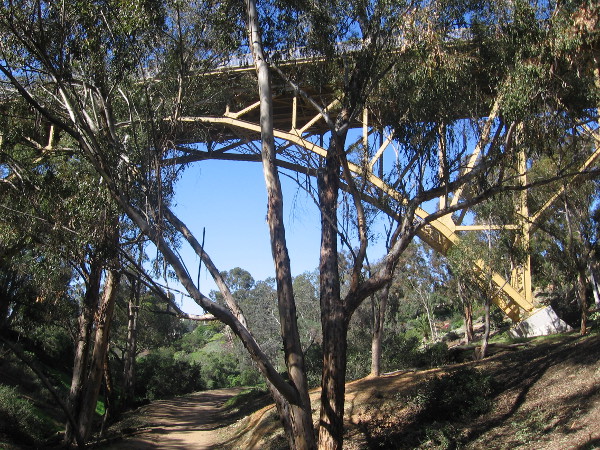
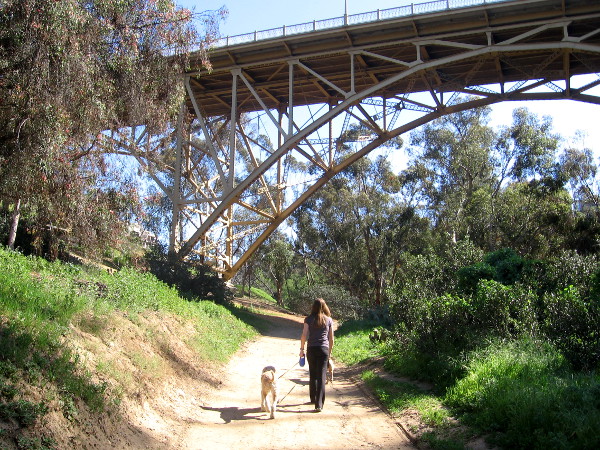
The Maple Canyon Trail also passes beneath the impressive First Avenue Bridge. The arched steel bridge was built in 1931 and was originally known as the Peoples Bridge. Its astonishing height above the trail is a reminder of San Diego’s unique geology. Southern California’s coastal region is crisscrossed in many places by deep, narrow canyons, which often serve as undeveloped habitat for native species of plant and animal life.
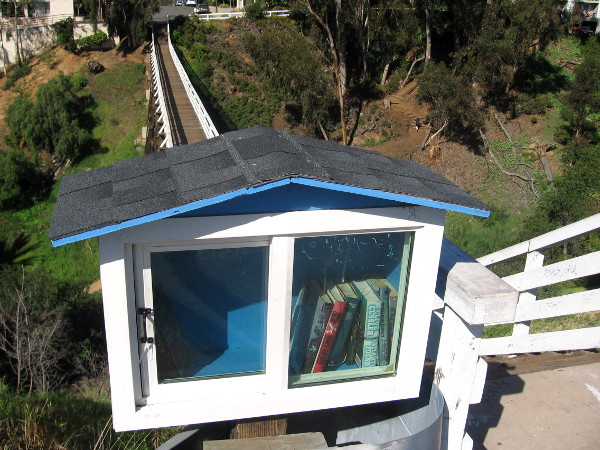
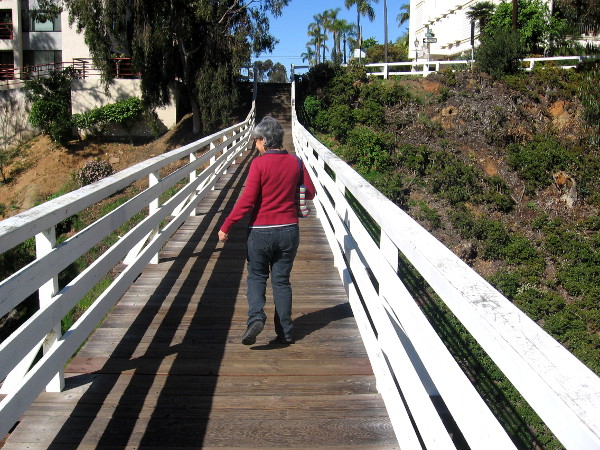
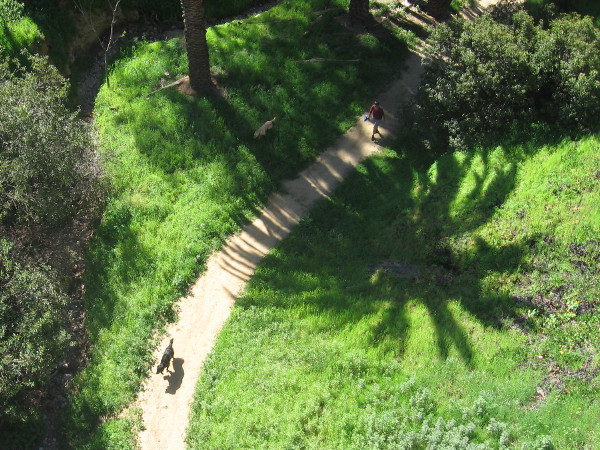
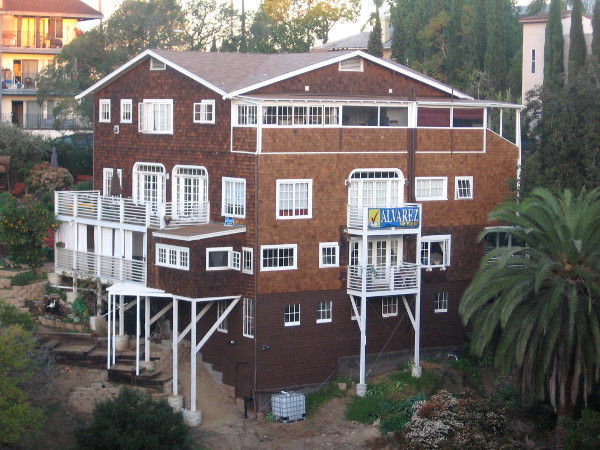
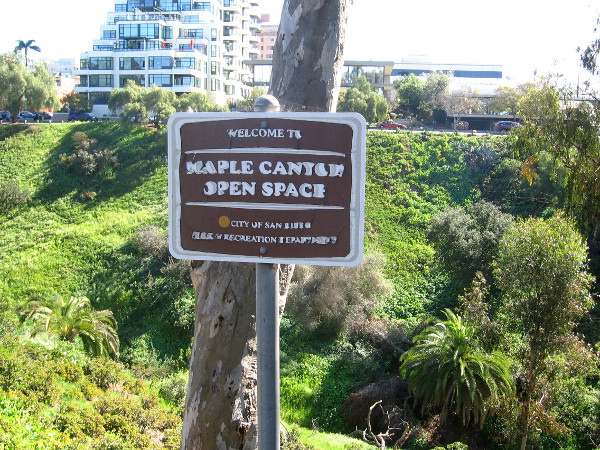
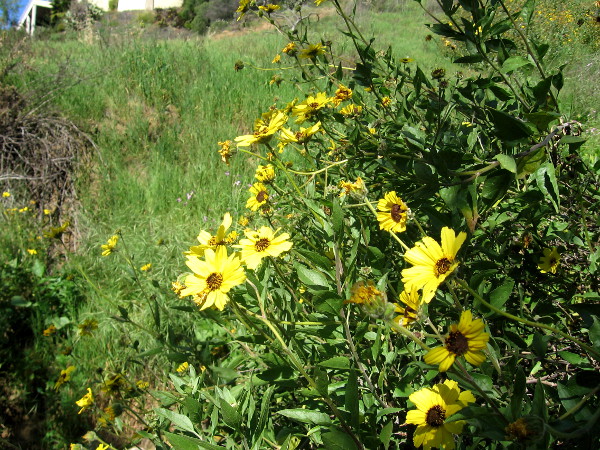
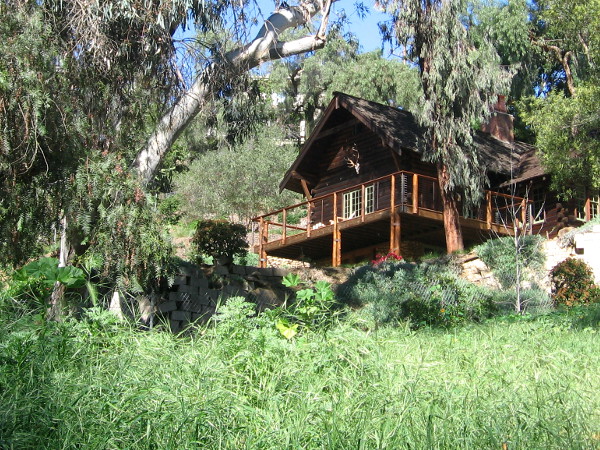
Small cabinet at end of footbridge contains books that people can freely borrow!Walking across the very cool historic trestle on Bankers Hill.Looking down from trestle at dogs and walker passing through the canyon below.This super cool condo is located near the Third Avenue trailhead.Maple Canyon Open Space sign near trailhead on Bankers Hill.Looking up at the wooden footbridge from the quiet footpath on a sunny day.Wood beams compose the high trestle.Grass and spring flowers line the Maple Canyon Trail.Some interesting houses can be seen up on the hillsides.Here comes the First Avenue Bridge beyond a eucalyptus tree.This elegant old steel bridge has very limited motor traffic.
…
To enjoy future posts, you can “like” Cool San Diego Sights on Facebook or follow me on Twitter.
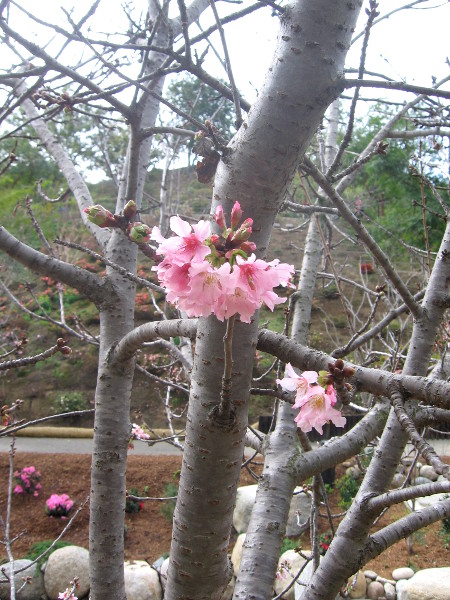
Beautiful cherry blossoms have opened at the Japanese Friendship Garden!
Because a big storm is on its way into Southern California, I got my weekend walk in this morning. I didn’t want to venture too far and get caught in the rain, so I decided to head up to Balboa Park to check out the cherry blossoms at the Japanese Friendship Garden!
Next weekend is the big, super popular Cherry Blossom Festival. I don’t like crowds generally, so my small adventure today was just perfect! Relatively few people were visiting the quiet Friendship Garden. I guess other folks, like me, were worried about getting caught in a chilly shower. Turns out most of my walk was in sunshine!
Not long ago the Japanese Friendship Garden occupied just a small narrow spot in Balboa Park, and visitors could see and enjoy everything with a very short visit. No longer! The spectacular expansion into the canyon and additional coming expansions promise to make this a truly world-class garden.
In addition to traditional Japanese garden features and the cherry blossoms, one can walk among many beautiful trees and down shady hillsides of flowers, which include azaleas, camellias and hydrangeas. Anyone with an interest in gardening must go see this incredible place!
A shout out to the friendly folks at the garden!
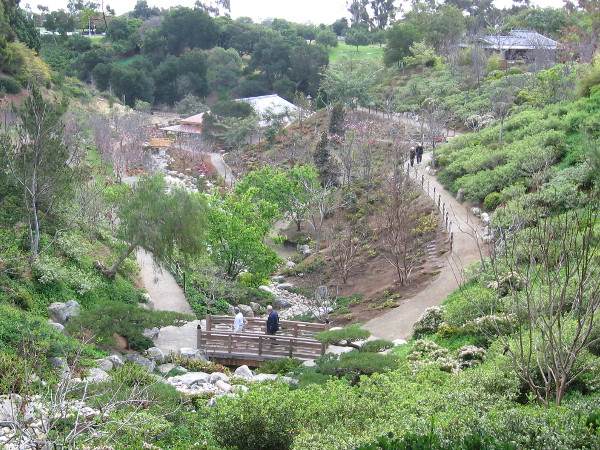
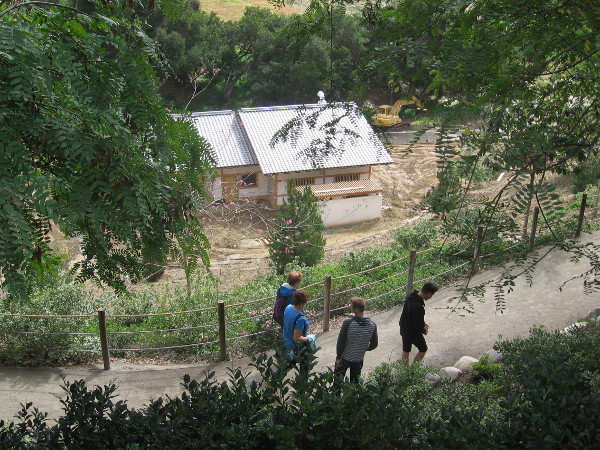
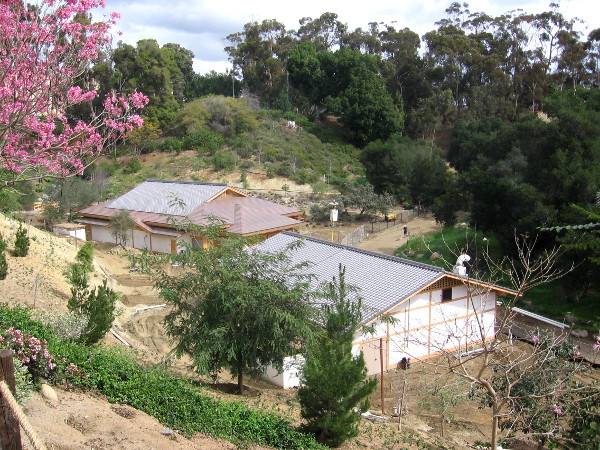
View of the Japanese Friendship Garden expansion in Balboa Park canyon.
The above pic was taken from a viewing deck between the House of Hospitality and the Tea Pavilion. We’ll be heading down there in a bit!
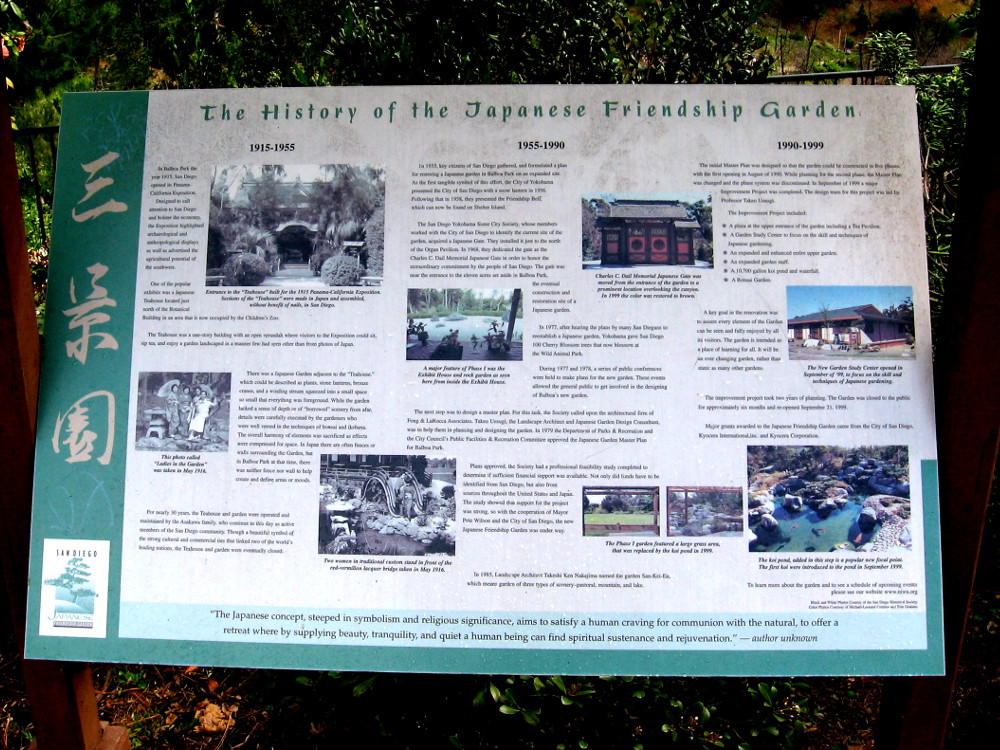
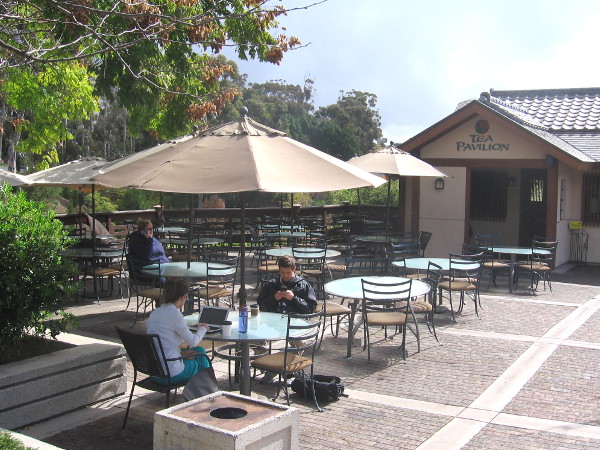
Sign near entrance explains history of the garden. In 1915 a Japanese tea house was built at another location in Balboa Park for the Panama-California Exposition.Today’s Japanese Tea Pavilion is next to the Friendship Garden and offers many choices of tea and great food.
If you’ve ever been to the Spreckels Organ Pavilion, you’ve surely seen the Japanese Tea Pavilion right next door. Next time you enjoy a concert, grab a bite here!
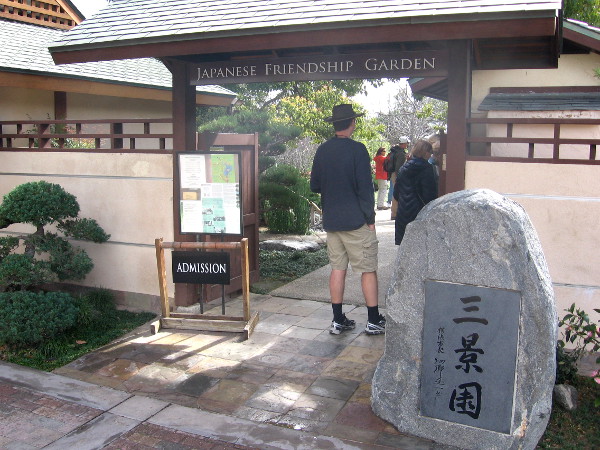
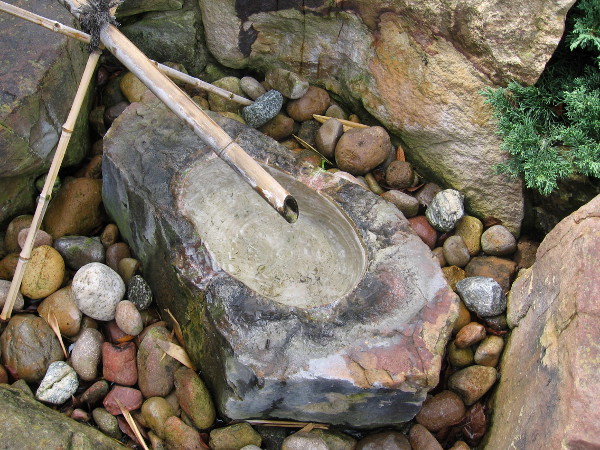
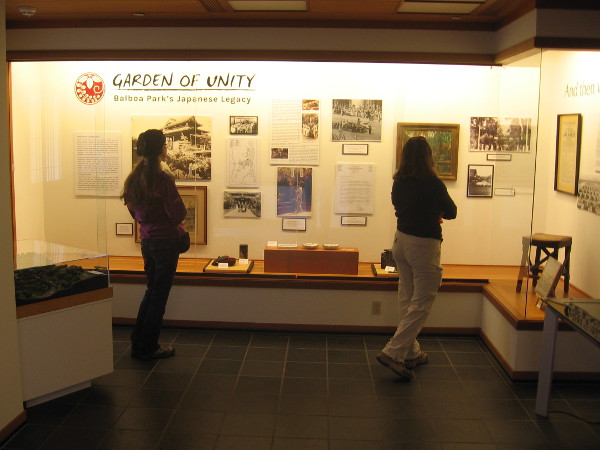
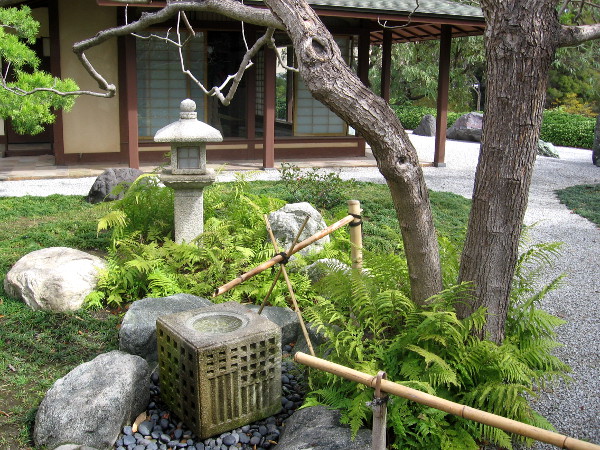
People enter Japanese Friendship Garden. The San-Kei-En entrance stone, gift from San Diego’s sister city Yokohama, translates Three Scene Garden–Water, Pastoral and Mountain.Water gently drips from hollow bamboo, inviting meditation.Visitors check out thought-provoking historical and cultural displays in the Exhibit Hall.
The Exhibit Hall includes a room with benches that look out a big window at the Dry Stone Garden. The gravel is raked into simple patterns for meditation. I didn’t want to disturb people, so no photos of that.
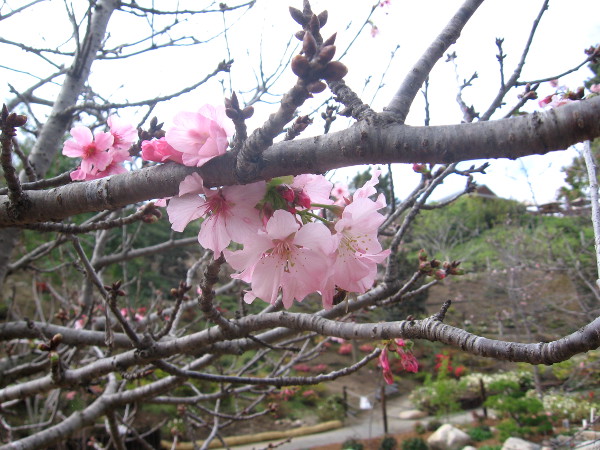
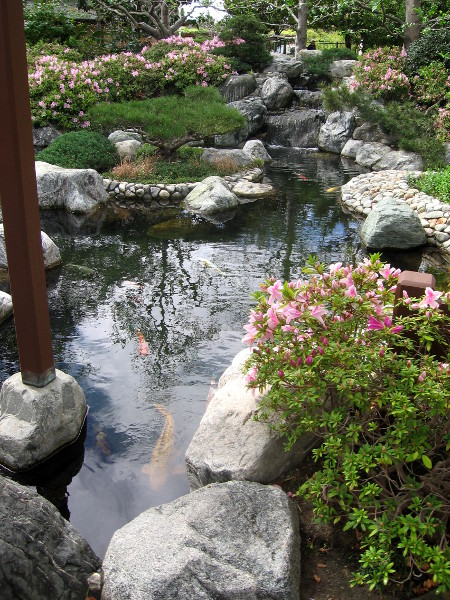
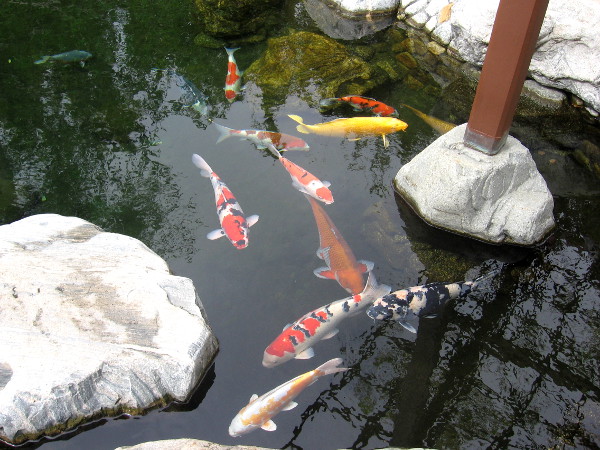
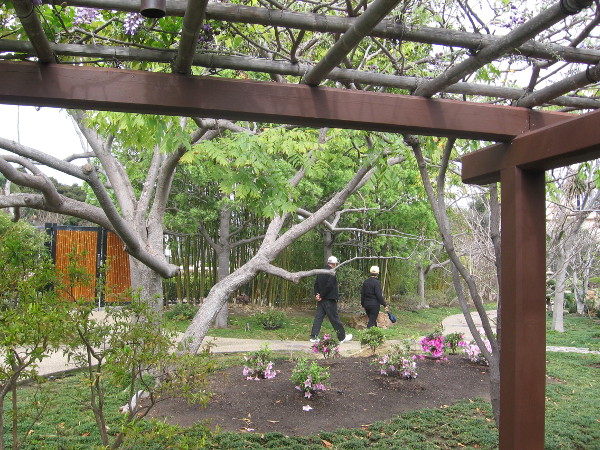
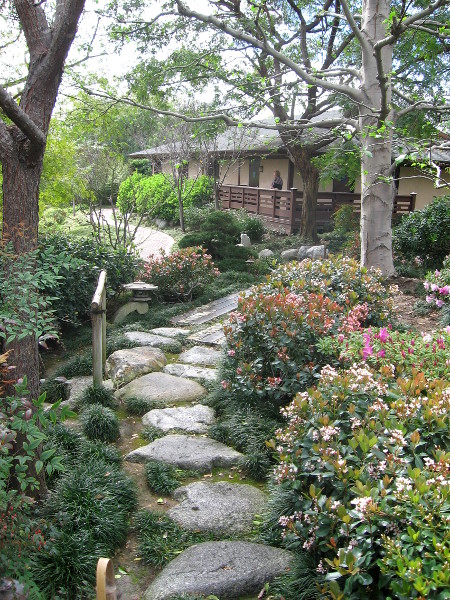
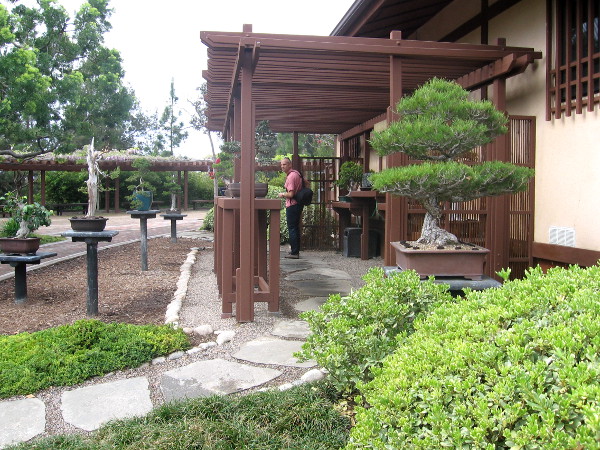
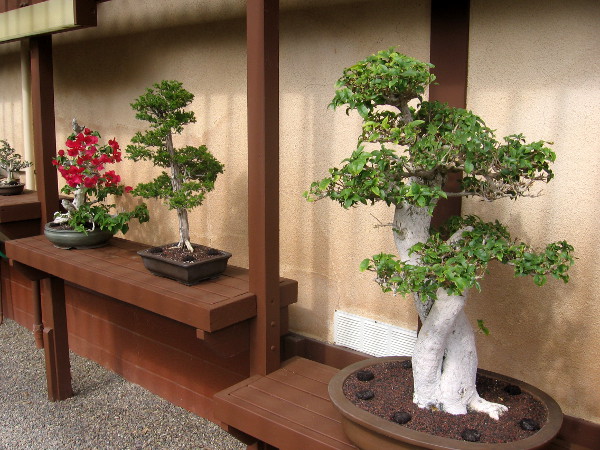
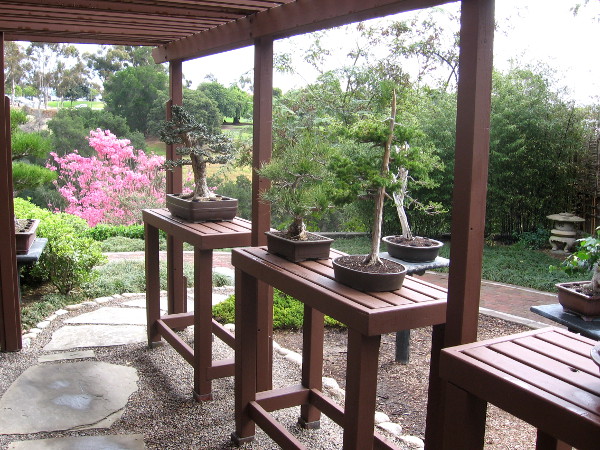
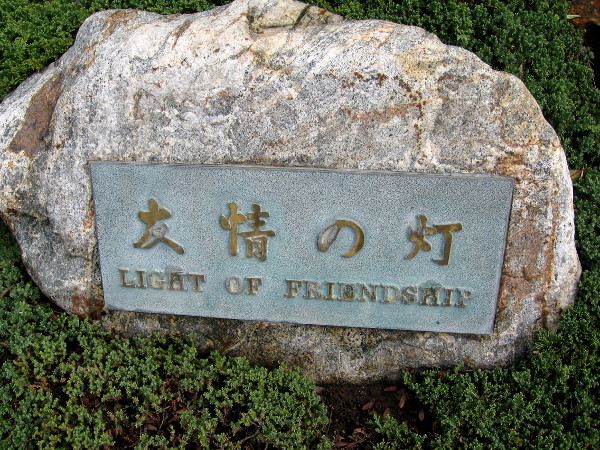
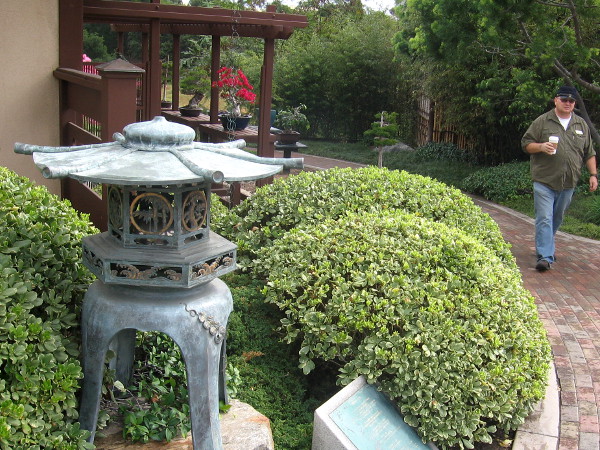
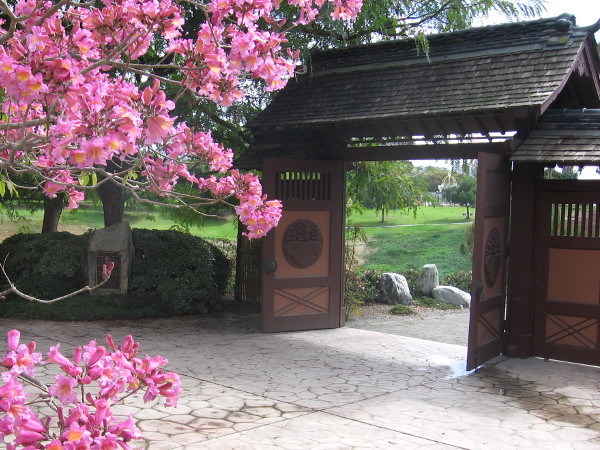
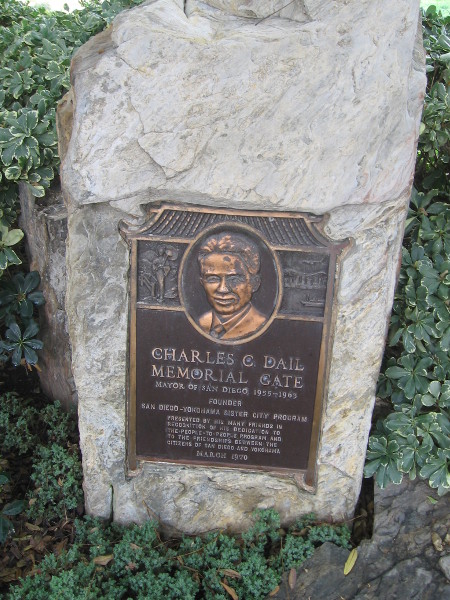
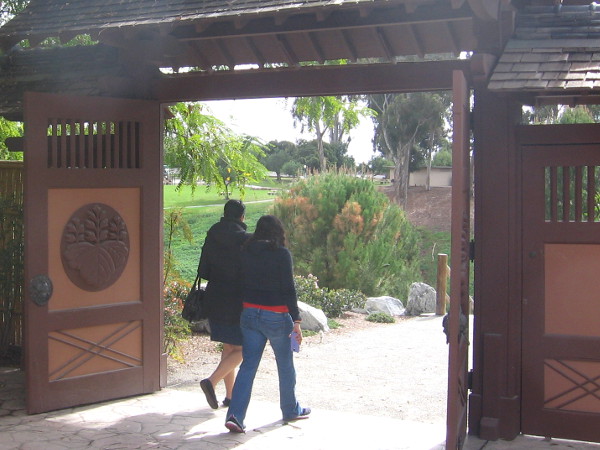
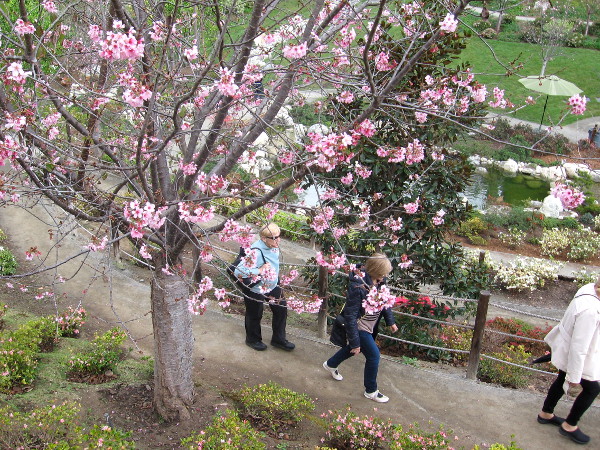
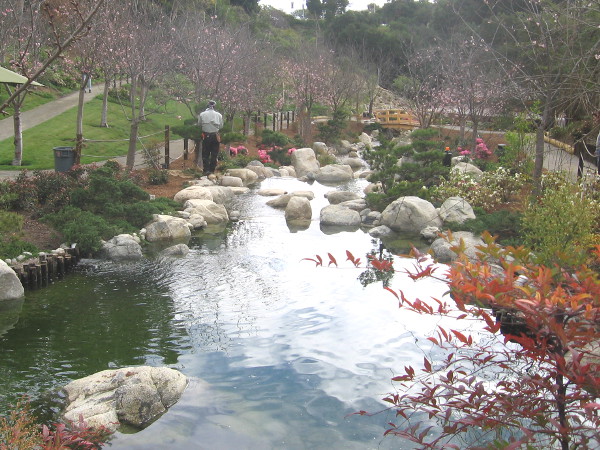
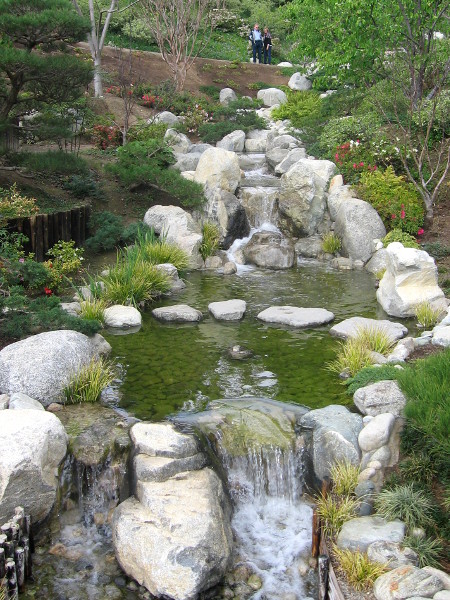
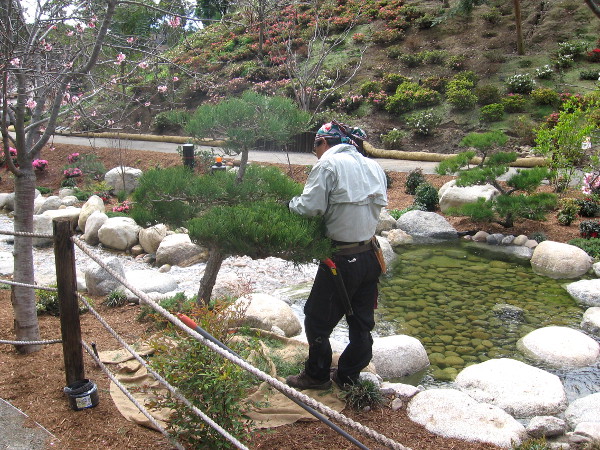
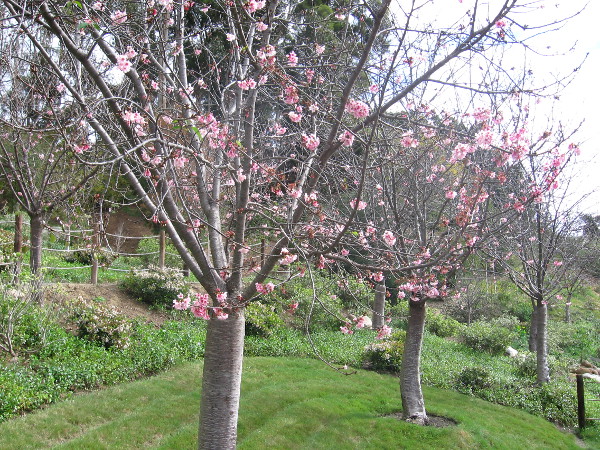
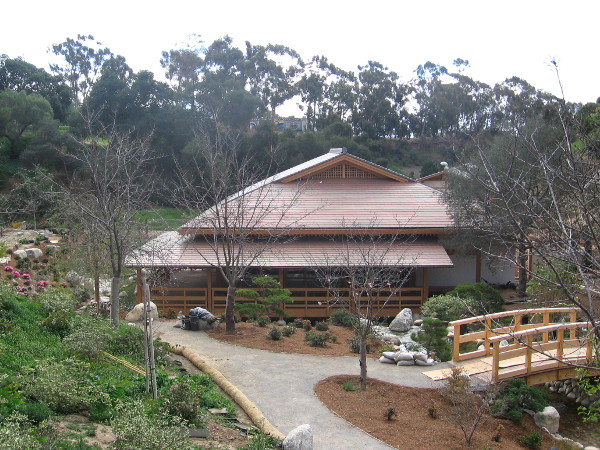
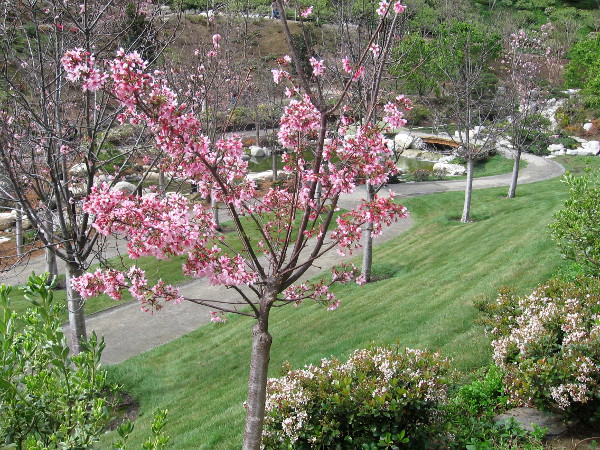
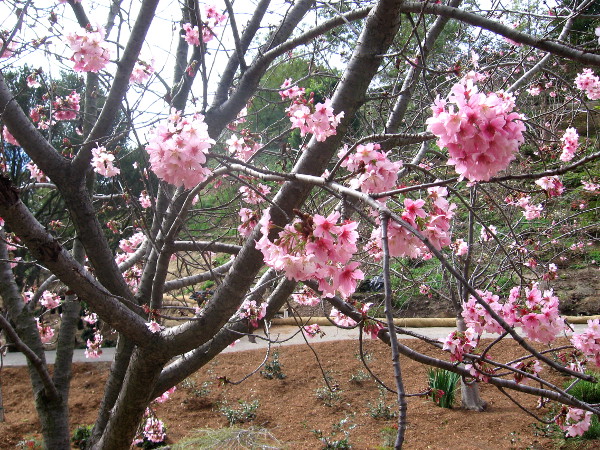
Oribe-doro lantern. Exhibit Hall with views of Karesansui (Dry Stone Garden) in background.The amazing Koi Pond is a favorite spot to relax and feel alive.The koi are colorful and curious. They seemed interested in my camera!People stroll along a tranquil path in one of San Diego’s most beautiful gardens.Stepping stones lead toward the Activity Room, where various Japan-related clubs meet.Looking down at a path that leads into canyon. New construction is a large pavilion that will open later this year.A special Bonsai Exhibit area.Perfectly pruned bonsai includes a bright red bougainvillea!That bright tree in the distance is a pink trumpet tree.Light of Friendship.Walking down a path through a scene of carefully maintained beauty.The Charles C. Dail Memorial Gate leads into the canyon, where the Japanese Cherry trees await. That’s another pink trumpet tree!Former San Diego mayor Charles Dail created the Sister City Association with Yokohama.Visitors head down an easy hiking trail to see cherry blossoms and other flowers.Another look at the large canyon pavilion buildings, which will be finished soon.Here are some cherry blossoms! Many are blooming, even though it isn’t spring quite yet!A sparkling man-made river runs through the canyon bottom, surrounded by a gorgeous landscape.A waterfall and gurgling, bubbling water put me in a thoughtful mood.A steady-handed expert gardener tends to one of the many shrubs and plants in the garden. I envy him!Delicate pink cherry blossoms hover over lush green grass.Gauzy pink blooms seem so new and promising.One last photo of the new pavilion under construction. Looks inviting!There are about 160 ornamental cherry trees in this grove. I think I’ll be going here more often!The Japanese Friendship Garden in San Diego’s Balboa Park is a place of beauty.
…
To enjoy future posts, you can “like” Cool San Diego Sights on Facebook, or follow me on Twitter.



 Cool San Diego Sights!