Temperatures are dropping. It’s starting to feel a bit more like winter. Nights in downtown are chilly. Our first storm is coming.
This morning I left home while it was still dark and headed to a stretch of the San Diego River in Mission Valley. After the sun rose, I walked along the river from Qualcomm Way to Mission Center Road.
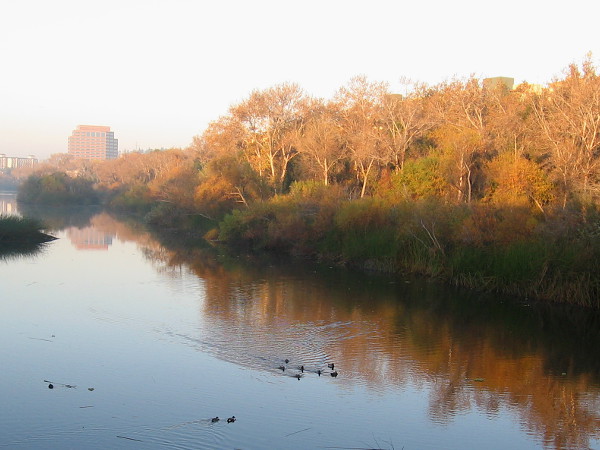
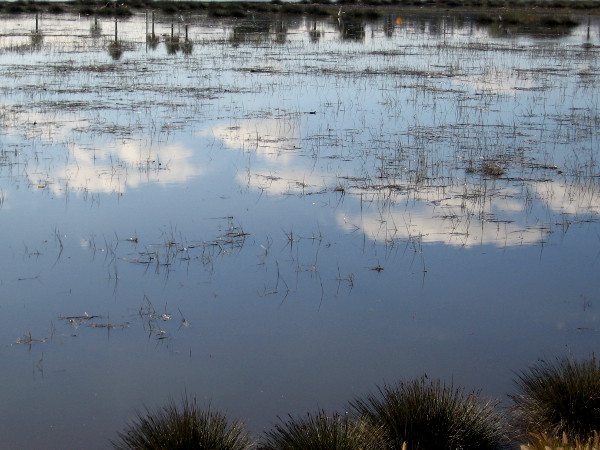
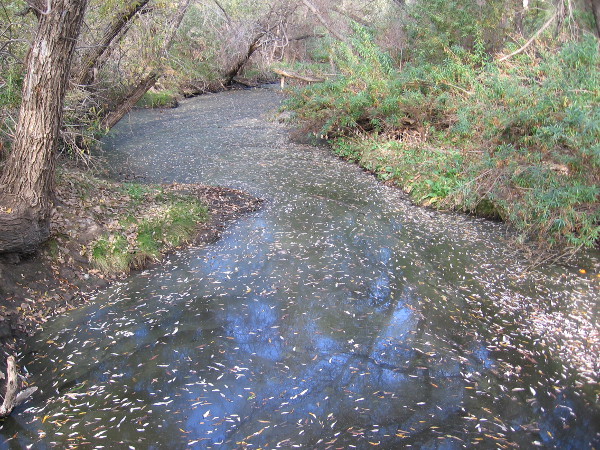
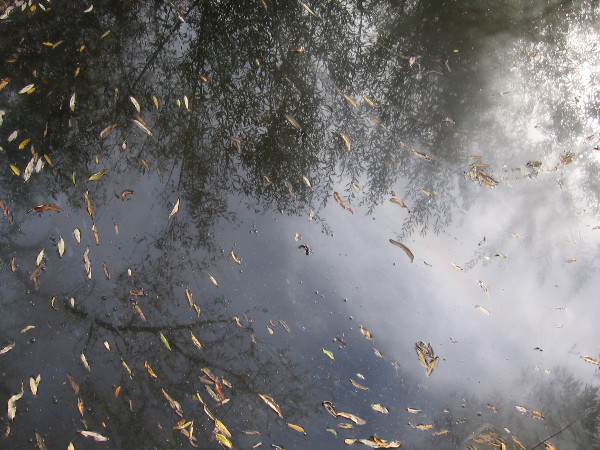
Ducks were feeding. The slanting morning light brightened yellow leaves. Farther to the east, a thin layer of fog hovered above smooth water. You can see it in the beautiful photograph that I saved for last.
…
I live in downtown San Diego and love to walk around with my camera! You can follow Cool San Diego Sights via Facebook or Twitter!
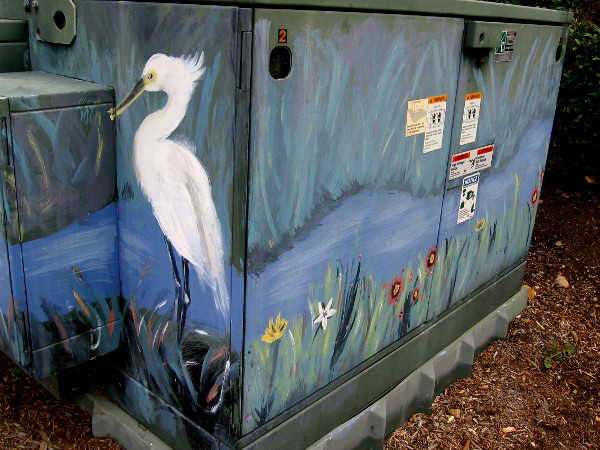
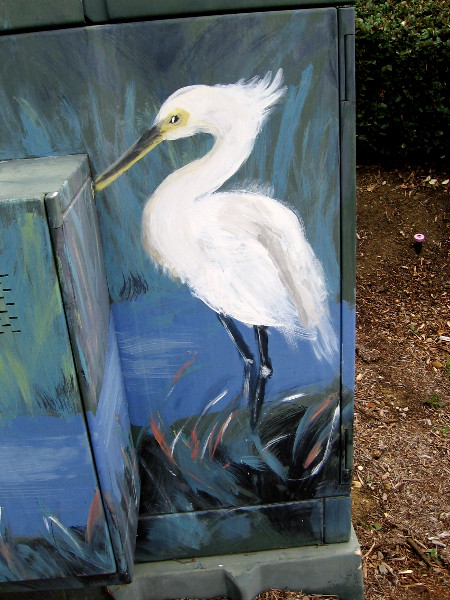
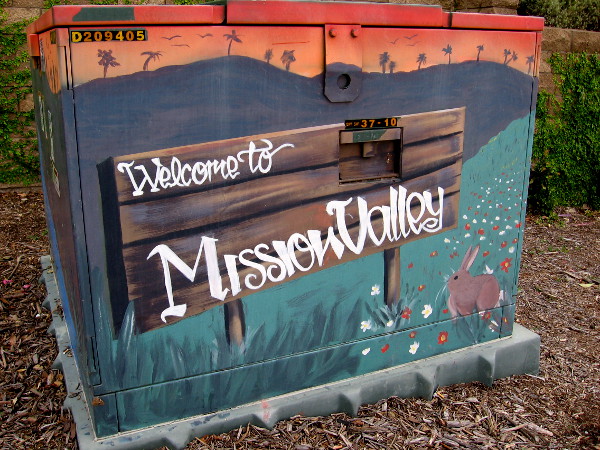
Street art on Mission Center Road north of Friars Road depicts wildlife along the nearby San Diego River.
Several electrical boxes on Mission Center Road just north of Friars Road have been painted with fun street art. This morning I took a small detour while walking to work to snap a few photos.
A snowy egret beautifully painted on a Mission Valley transformer.A mallard and three ducklings in some grass near the San Diego River.A funny sketch on an electrical box. A gull is carrying away a bag of chips!Welcome to Mission Valley. A rabbit greets drivers heading along Mission Center Road.This historic old building is located a few miles to the east. Mission Basilica San Diego de Alcala, founded in 1769, first Spanish mission in Alta California.
…
I live in downtown San Diego and love to walk around with my camera! You can follow Cool San Diego Sights via Facebook or Twitter!
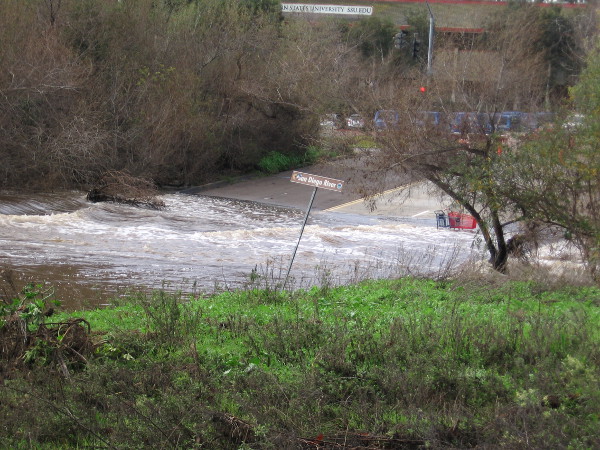
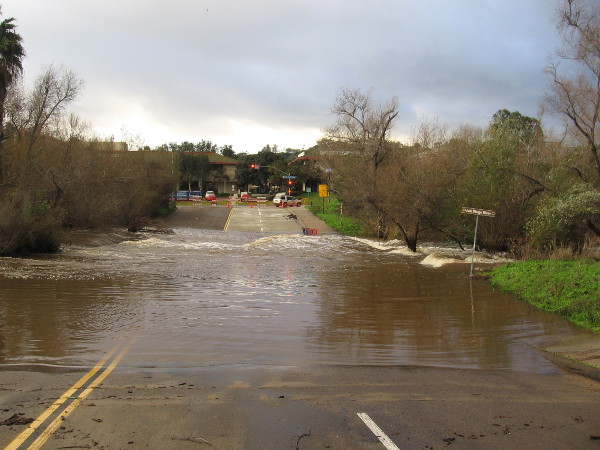
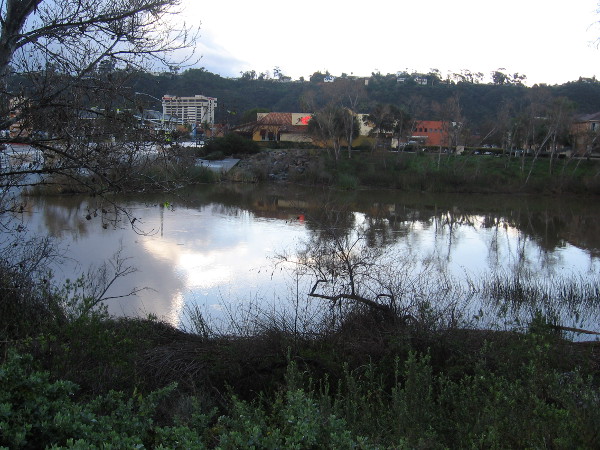
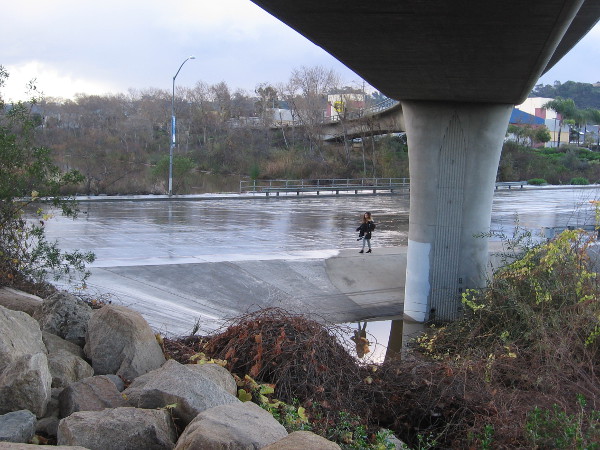
The swollen San Diego River after three winter storms in six days. A gauge beside the water shows the river has subsided to about the 8 foot mark, after reaching a high level–I believe–of around 11 feet.
I did some walking in a drizzle this morning before work.
I got off the trolley at the Fashion Valley station and proceeded to investigate the San Diego River in a section of Mission Valley that is often hit with flooding. Three very rainy winter storms were finally coming to an end. What did I see?
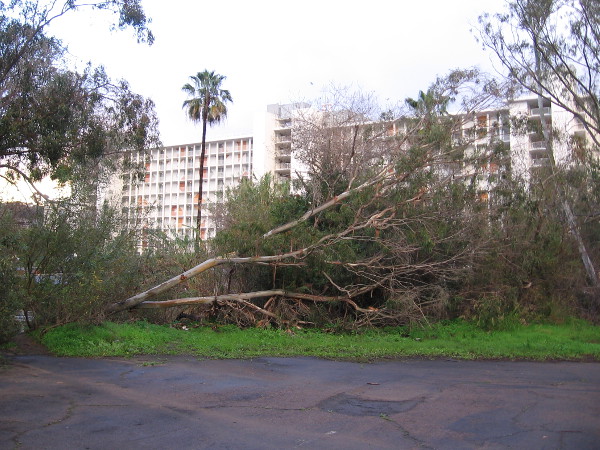
Palm trees surrounded by flowing river water. Photo taken from the pedestrian bridge between the Fashion Valley Transit Center and the Town and Country Resort and Convention Center.A tall, shallow-rooted eucalyptus tree knocked over by the gusty winter storms. A common sight around San Diego.Fashion Valley Road this morning was still blocked off from traffic, even though the San Diego River’s water had subsided to street level.A friendly San Diego Lifeguard makes the rounds to make sure nobody needs a swift water rescue. My photo just missed his wave!The parking structures at Fashion Valley Mall that are susceptible to flooding were definitely well underwater. Thank goodness, I saw no submerged cars.Bright green grass and dark clouds. I was sheltered from raindrops by the trolley tracks overhead.As usual, the San Diego River was flooding Avenida del Rio just south of the mall. The short, dipping street is appropriately named!Yesterday someone foolishly trying to walk through this powerful moving water had to be rescued. They got washed away. A helicopter was even brought in.No worries about flooding for the trolley–at least right here!The Highway 163 underpass was flooded and muddy. I had to walk another way around to reach work. Good thing I got an early start!Sign by the San Diego River. The low rainfall and the geologic composition historically allowed the river to run below ground much of the year, hence the nickname: the Upside Down River.The beautiful river this morning through leaves.Morning sky and clouds through bare winter trees.The San Diego River is unusually wide in its swollen state after the storms. It looks like an honest-to-goodness actual river!Walking along Mission Center Road in the rain by the San Diego River.
…
I live in downtown San Diego and love to walk around with my camera! You can follow Cool San Diego Sights via Facebook or Twitter!
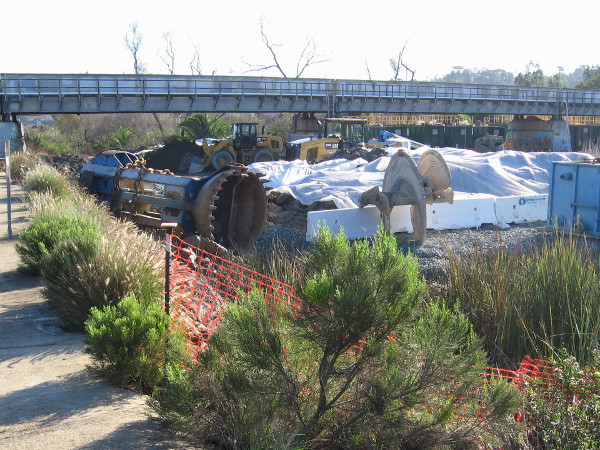
A crane and huge pipes on Friars Road near the site of the San Diego River Double Track (SDRDT) project.
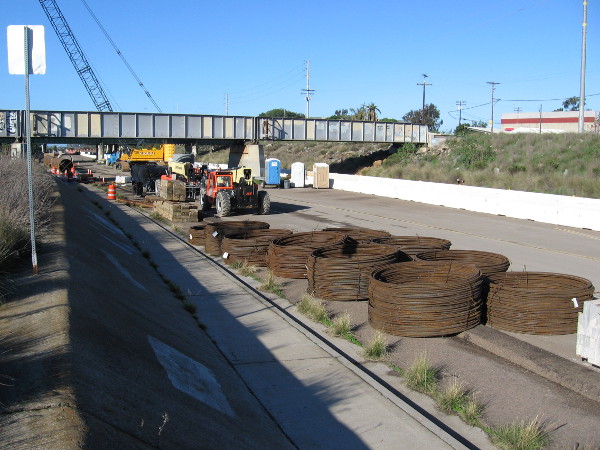
Here are some interesting photos! A new railroad bridge is being installed across the San Diego River just north of the Old Town Transit Station, allowing the Coaster and Pacific Surfliner trains to run faster and more reliably. This work is called the San Diego River Double Track (SDRDT) project. I’ve watched the progress for several months during my daily trolley commute. This construction is being done ahead of another project to install trolley tracks across the river for the Mid-Coast Trolley Project, which will extend Blue Line service up to UCSD and University Towne Center (UTC) in La Jolla.
I took these photos last Saturday during my walk along Friars Road approaching the San Diego River Estuary. I’m no expert on this construction–I’m just an ordinary citizen who was fascinated by what I saw!
A series of three big storms is beginning in San Diego as I post this. Hopefully the flooding in Mission Valley where I work doesn’t get completely out of hand! I might post photos!
I noticed these huge green tanks along Friars Road.I also saw these huge coils of steel cable.A big pile of dirt by the railroad bridge over the San Diego River where the double track work is taking place.I believe new train tracks will be on the other side of the existing bridge you see in this photo.Passing under the train tracks as I walk along a raised area beside Friars Road.Now I’m looking east at all sorts of construction equipment, gravel and other material.This thing looks like a huge drill! Perhaps its used for boring through the ground, but I’m not sure. If you know anything, leave a comment!
…
I live in downtown San Diego and love to walk around with my camera! You can follow Cool San Diego Sights via Facebook or Twitter!
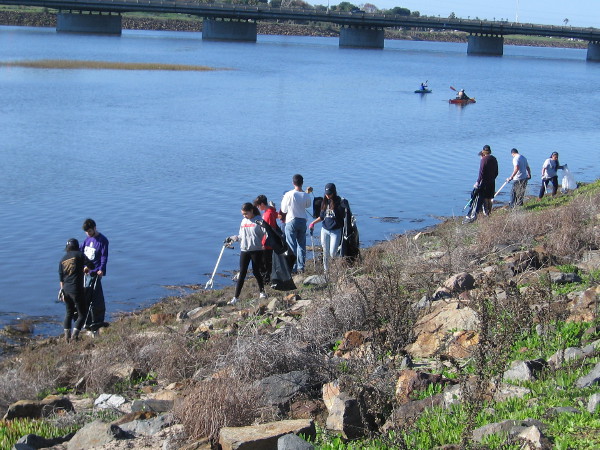
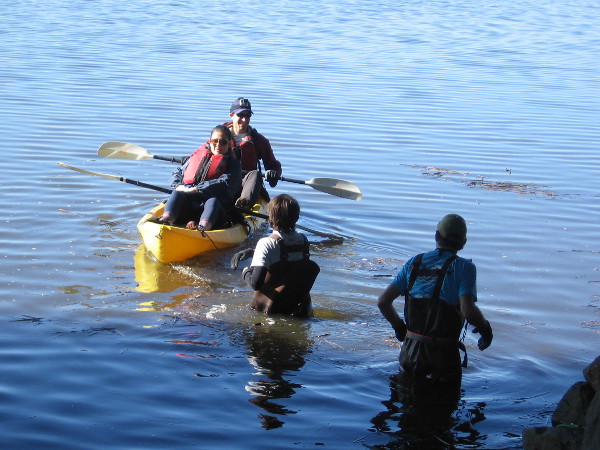
Many ordinary people came out today to help clean up the San Diego River Estuary.
Lots of good people volunteered to clean up the San Diego River Estuary today. Some took to kayaks, others walked along the shoreline, filling bags with nasty litter and debris. The river estuary, emptying into the Pacific Ocean between Mission Bay and Ocean Beach, is a very important wetland in this region, and millions of birds rely on it during their migrations. Small bits of trash ingested by birds and other wildlife can be fatal.
The estuary cleanup was organized by The San Diego River Park Foundation. Kayakers are permitted to enter the San Diego River Estuary only one time every year–during this special event. I walked along the river and saw what ordinary people can achieve when working unselfishly for the good of our world.
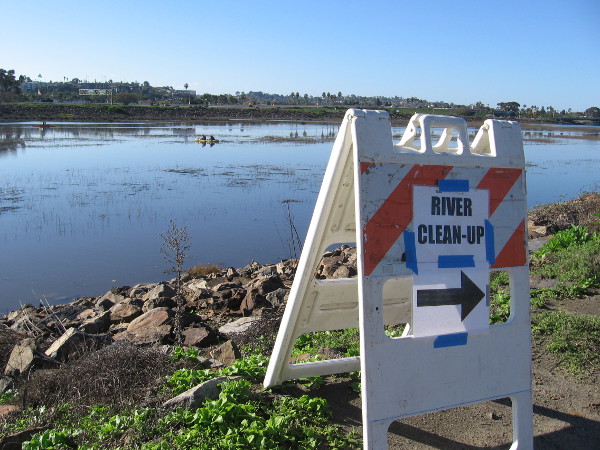
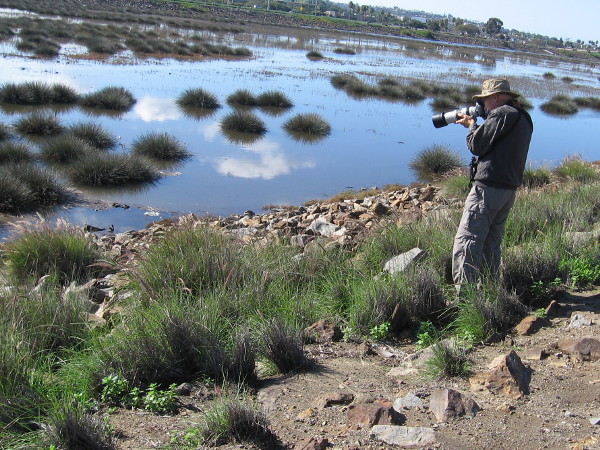
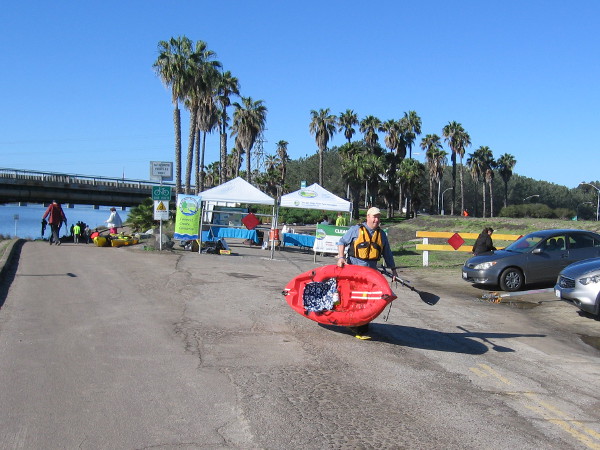
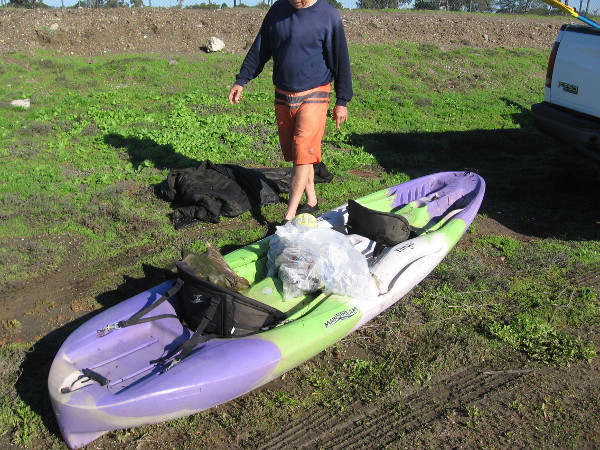
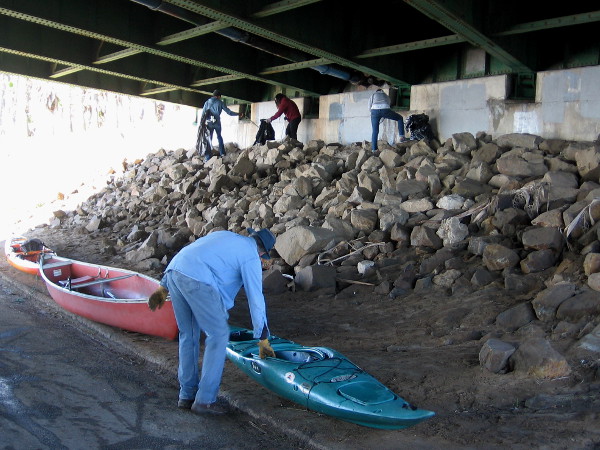
A sign directs people to the river cleanup.Beautiful white clouds are reflected in the calm water of the San Diego River as it approaches the ocean.Many birds make the river and its mud flats their home, including ducks, herons and egrets.A photographer captures images of waterfowl swimming through grass down the river.My camera isn’t quite so fancy, but I did get an okay photo of this snowy egret!As I walked west along the San Diego River, I noticed a number of kayaks out on the water.A sign by the river describes the problem of stormwater pollution. During rains, a good deal of runoff enters the estuary, carrying all sorts of pollutants and trash. (I had to really alter this photograph so we could make out what the old sign says. Click the image to enlarge it.)A cleanup volunteer with a kayak is arriving!Plastic bags in these kayaks have been filled with garbage found in the river. I learned much of it was snagged in the grass.Dozens of caring people were on the rocky river shore, looking for trash.San Diego is fortunate to have many thoughtful people, concerned about our environment.Volunteering is often a family affair, teaching the next generation about generosity and responsibility.This guy was carrying his kayak back to his car.Another guy showed me the trash he collected. He said he found a variety of garbage. Some flows downstream. Some of it is windblown. Some comes from Interstate 5 and other bridges which cross the river nearby.A tent where people can sign up to volunteer and learn more about The San Diego River Park Foundation.From the mountains to the ocean, we care for the San Diego River!Sadly, the river isn’t healthy. A grade is assigned each year based upon trash, water quality and the extent of invasive plants.Sign shows volunteering possibilities. (Click these sign images to read–they will enlarge.)Picking up garbage and readying kayaks underneath the West Mission Bay Bridge.Collected trash was placed in a nearby dumpster.Smiles in the San Diego sunlight. A perfect day to make our world cleaner, healthier and more beautiful.Kayakers launch into the San Diego River during a special event to clean the estuary.
…
I live in downtown San Diego and love to walk around with my camera! You can follow Cool San Diego Sights via Facebook or Twitter!
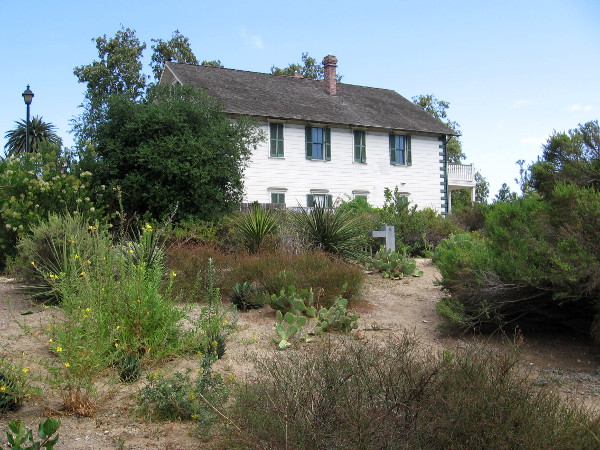
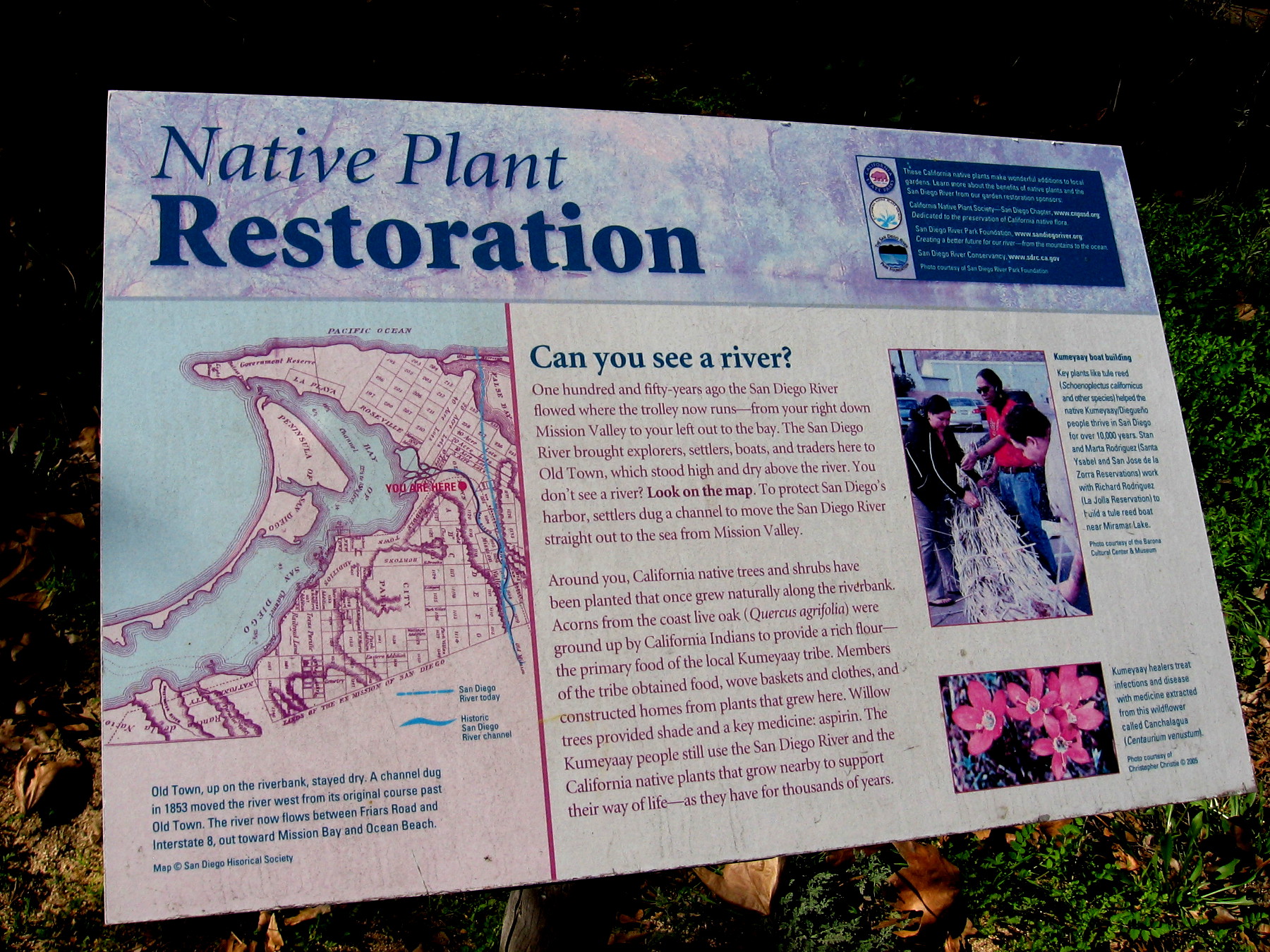
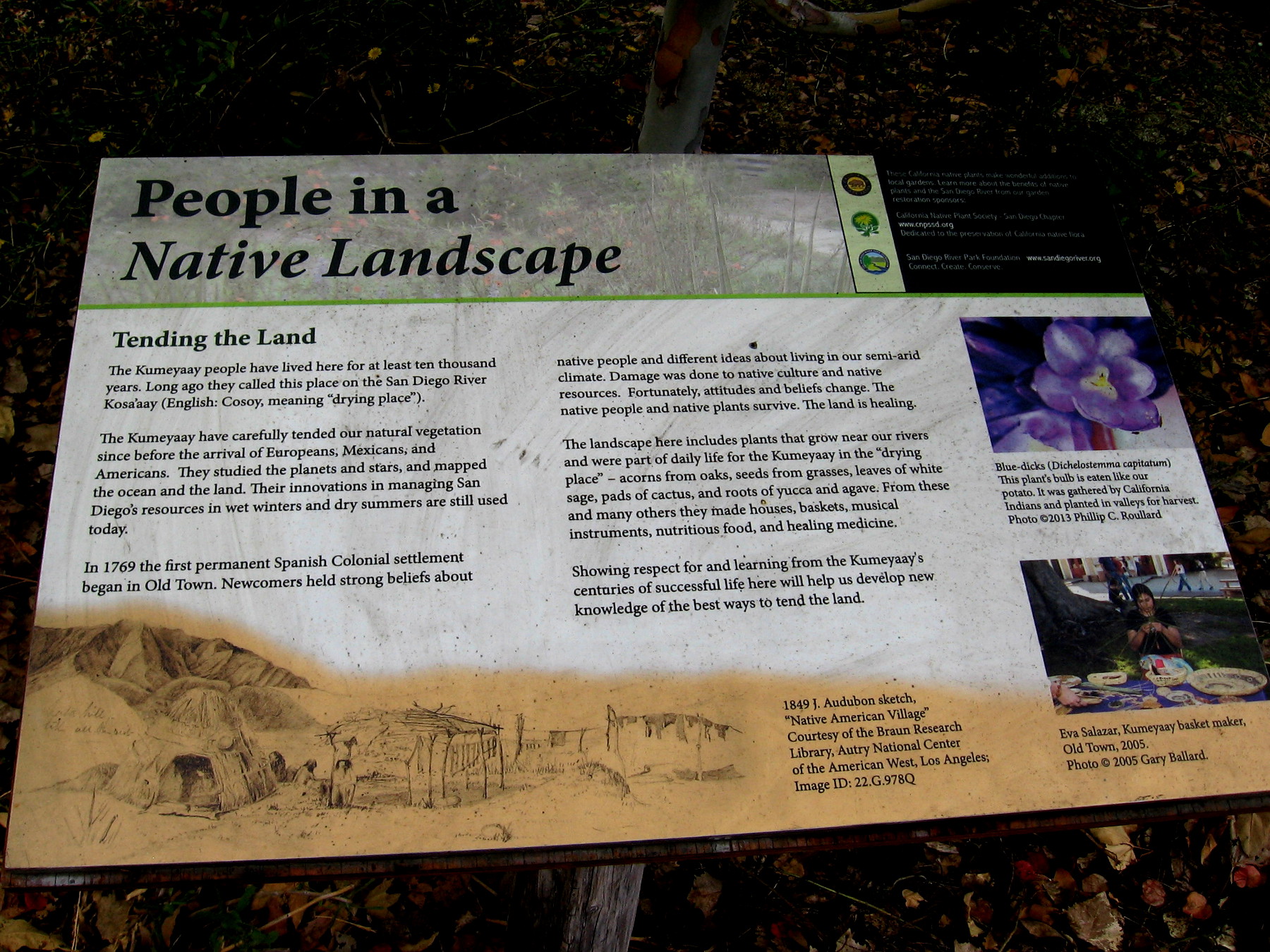
Photo of historic McCoy House in Old Town San Diego from the Native Garden. Today’s garden is located in a spot that was once very close to the San Diego River, before the river was diverted to the north, through Mission Valley.
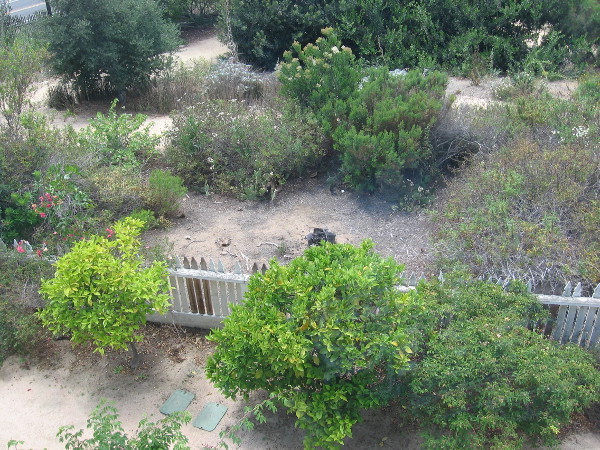
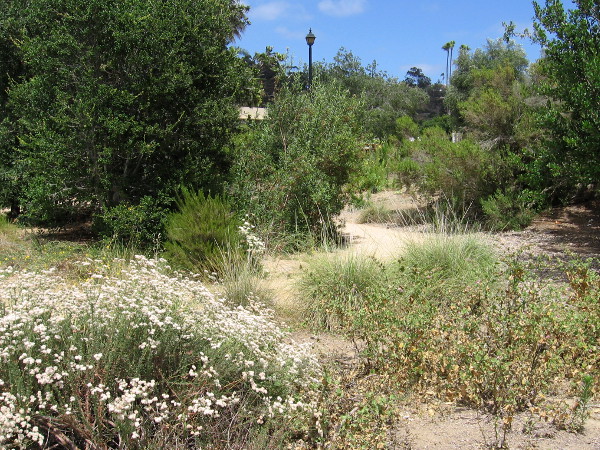
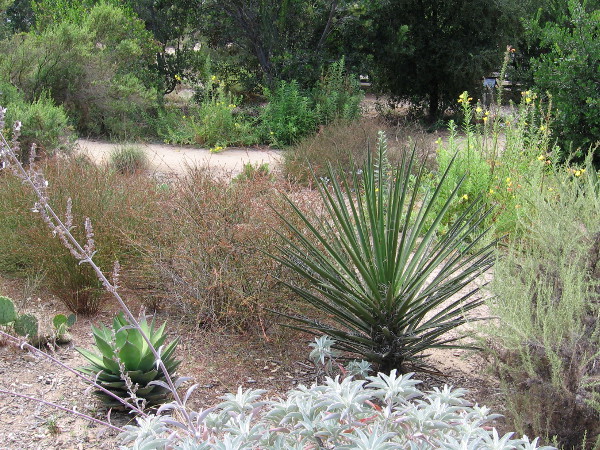
A small, ragged but beautiful native garden can be found in the northwest corner of San Diego’s Old Town, next to the McCoy House Museum. The Native Plant Garden contains vegetation that grows naturally along the rivers of our semi-arid region.
Long before Europeans arrived in Southern California, the Native American Kumeyaay lived where Old Town was eventually established; the Kumeyaay village at the base of Presidio Hill was called KOSA’AAY, or Cosoy. Many of the plants in the garden were used by the Kumeyaay people in everyday life.
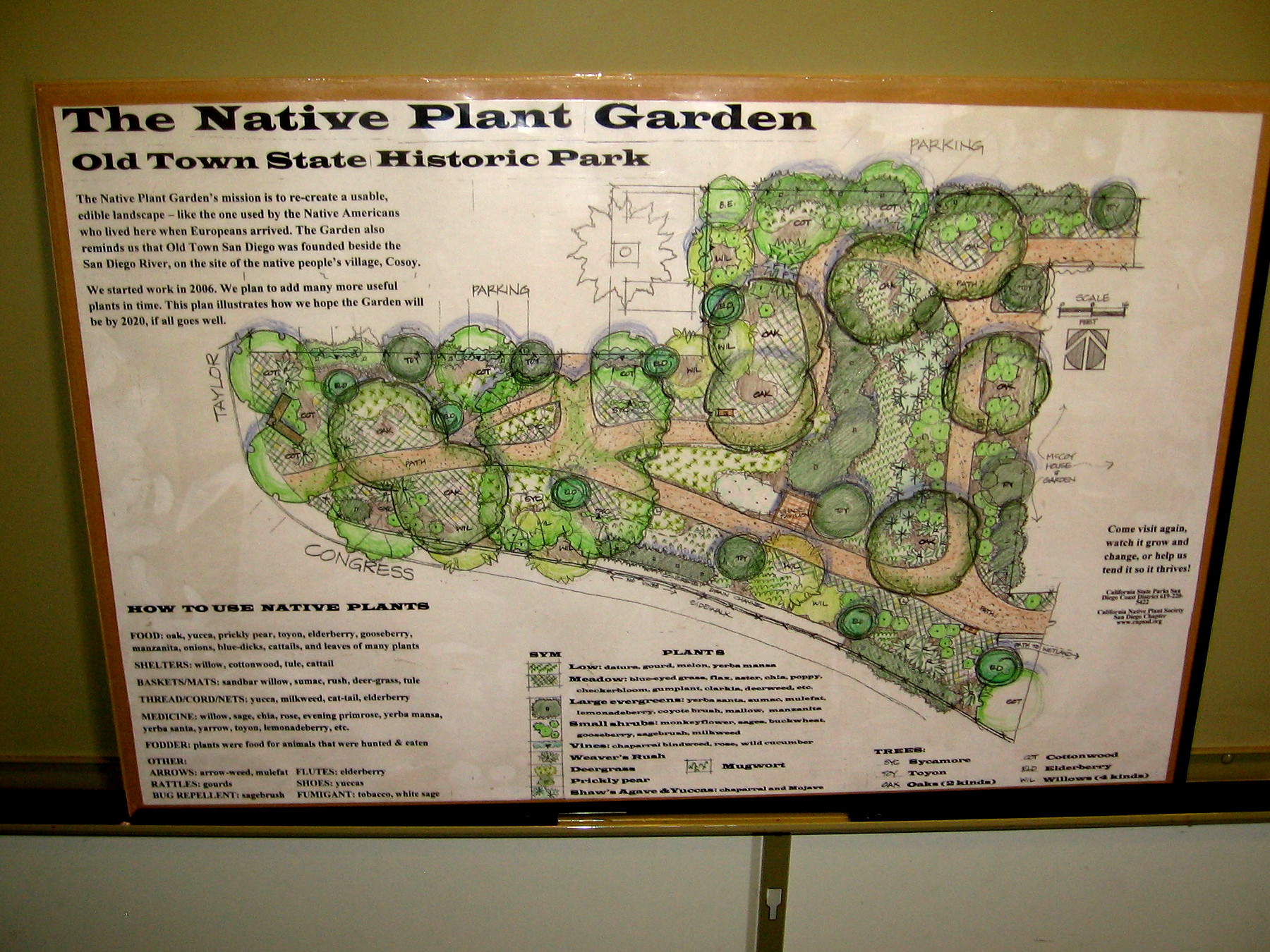
Read the photo captions to learn much more. Click the garden plans and the two signs, and those images will expand providing additional information!
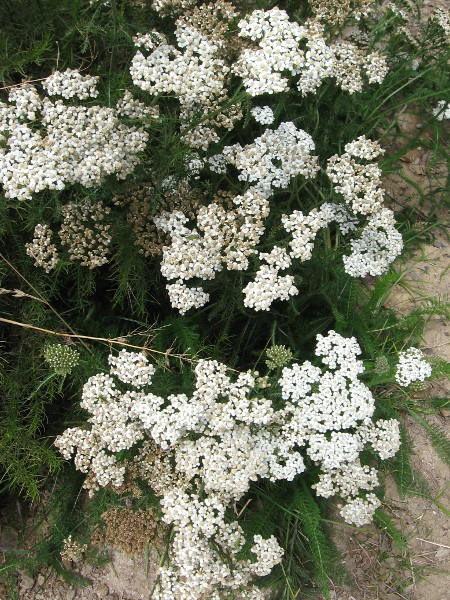
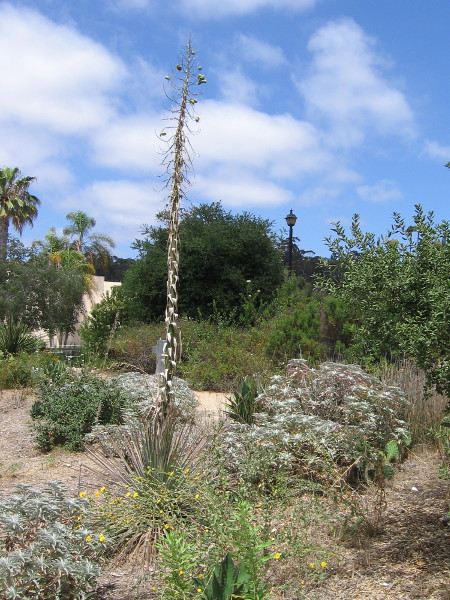
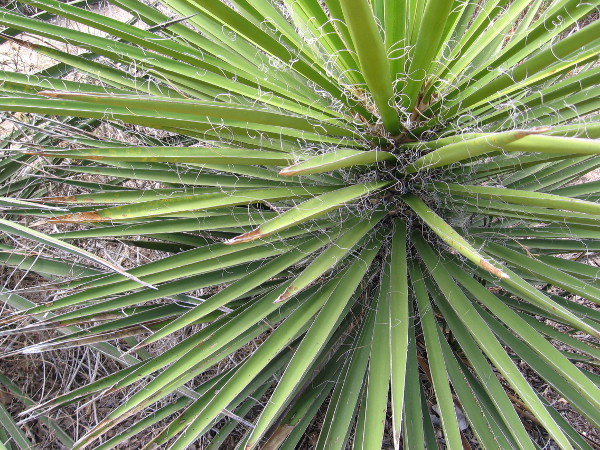
Plans of the Native Plant Garden in Old Town San Diego State Historic Park. Included are species used by the Native American Kumeyaay for food, shelter and medicine. Their village Cosoy was located here.Looking northwest from the second floor of the McCoy House Museum in Old Town San Diego. The Native Garden beyond the fence is a bit dry and scraggly–but that’s how local vegetation naturally appears.150 years ago the San Diego River flowed nearby, bringing explorers, settlers, boats and traders to Old Town. California native trees and shrubs have been planted that once grew along the riverbank.Dirt walking paths meander through the small Native Garden at the northwest corner of Old Town San Diego State Historic Park.Yarrow was used by the Kumeyaay as a treatment for various medical conditions, including burns, inflammation, and pain from toothache, headache and arthritis.Tall stalk of a yucca that already flowered still juts into the sky in Old Town San Diego.The Kumeyaay people have lived here for at least ten thousand years. Their innovations in managing San Diego’s resources in wet winters and dry summers are still used today.A variety of native plants found naturally in coastal San Diego’s semi-arid climate, including sages and prickly pear cactus.Fibers from the yucca were used by the Kumeyaay to produce cords, nets, shoes and other useful items.
…
I live in downtown San Diego and love to walk around with my camera! You can follow Cool San Diego Sights via Facebook or Twitter!
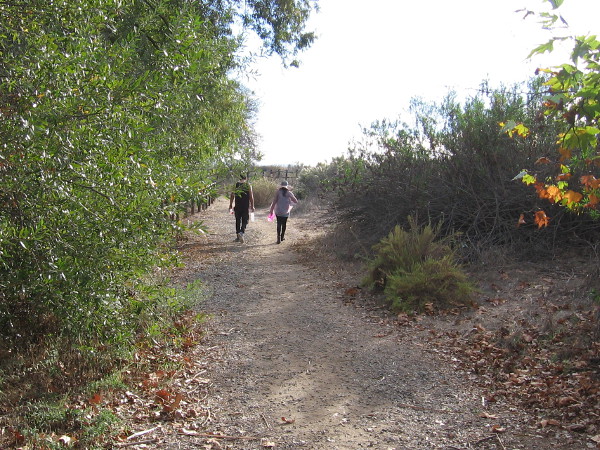
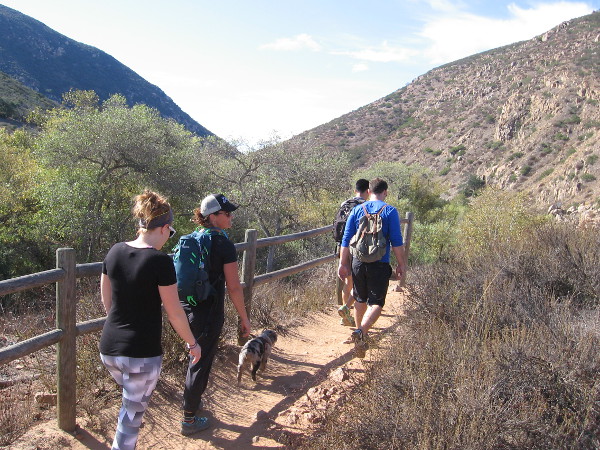
Hikers head from the Kumeyaay Campground at Mission Trails Regional Park toward a shady nature trail that runs beside Kumeyaay Lake.
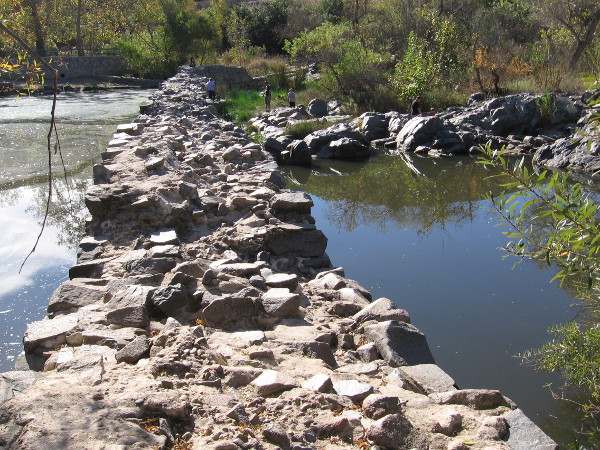
I enjoyed an amazing walk last weekend at Mission Trails Regional Park. The guided hike met under the flagpoles of the Kumeyaay Campground, and started down a pleasant nature trail at nearby Kumeyaay Lake. The hike then proceeded at a leisurely, easy pace along several trails by the San Diego River, ending up at the Old Mission Dam.
Every month, anyone can go on a variety of free interpretative nature walks at Mission Trails Regional Park. The walks are led by experienced trail guides, who point out the native flora and fauna, and relate the fascinating history of this mountainous wilderness in the city. To learn more check out the park’s website.
Please enjoy my photos and read the descriptive captions to join me on a virtual hike. Not only will you experience natural beauty, but you’ll learn a bit about early San Diego history!
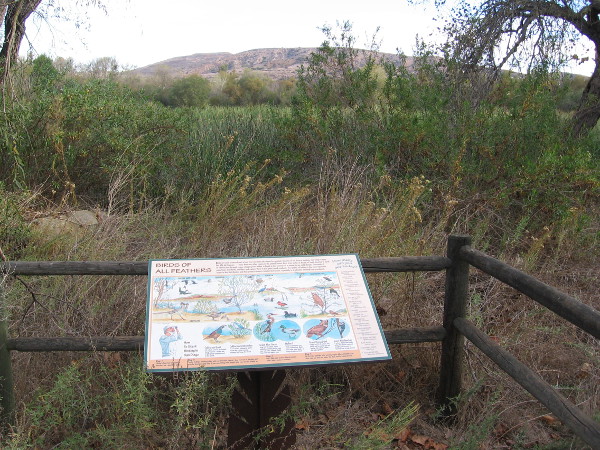
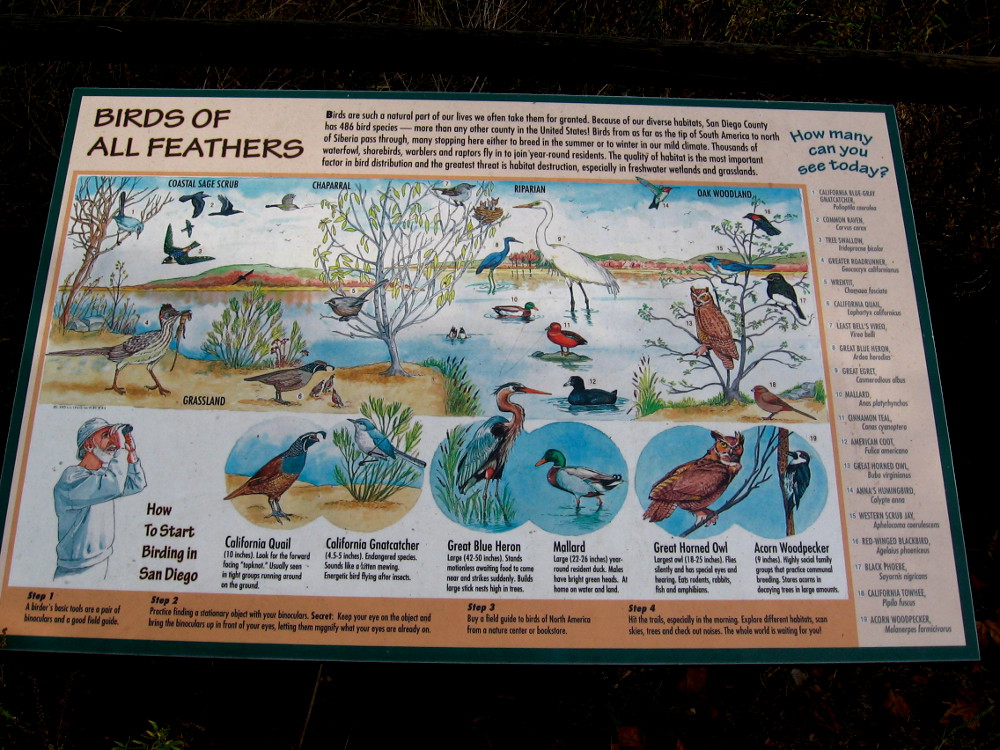
A couple walks slowly along the Kumeyaay Nature Trail, enjoying a beautiful November day.Signs along the nature trail include descriptions of wildlife that can be found around Kumeyaay Lake (once called Hollins Lake). Open water can be glimpsed beyond cattails.At Mission Trails Regional Park, birds of all feathers include quail, gnatcatchers, herons, egrets, ducks, woodpeckers, scrub jays, owls, and the endangered least Bell’s vireo!
The sign includes the following: “Because of our diverse habitats, San Diego County has 486 bird species–more than any other county in the United States! Birds from as far as the tip of South America to north of Siberia pass through, many stopping here either to breed in the summer or to winter in our mild climate.”
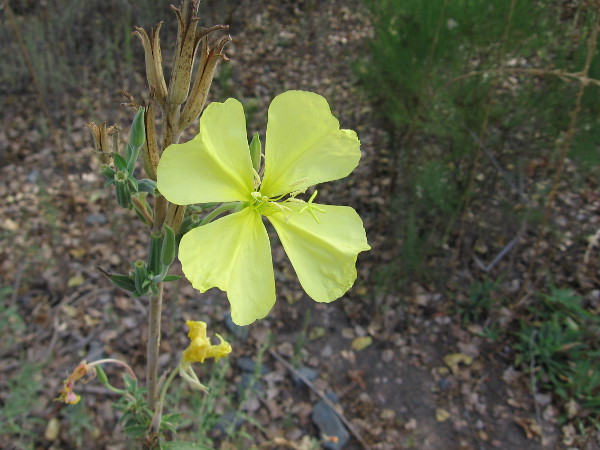
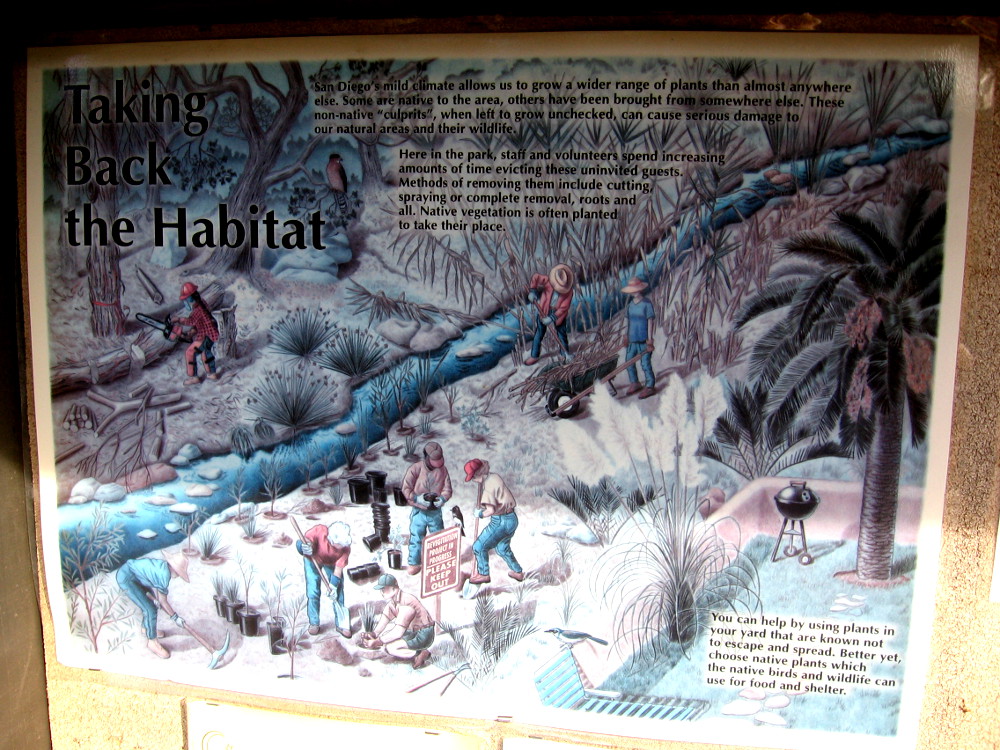
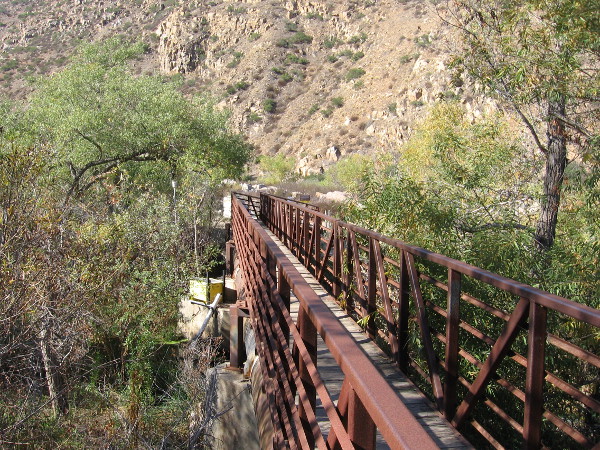
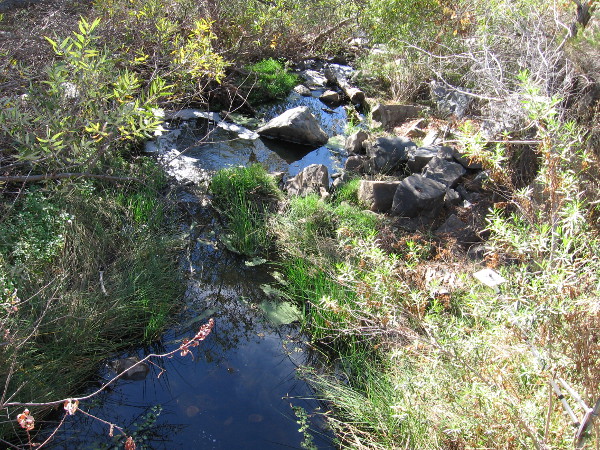
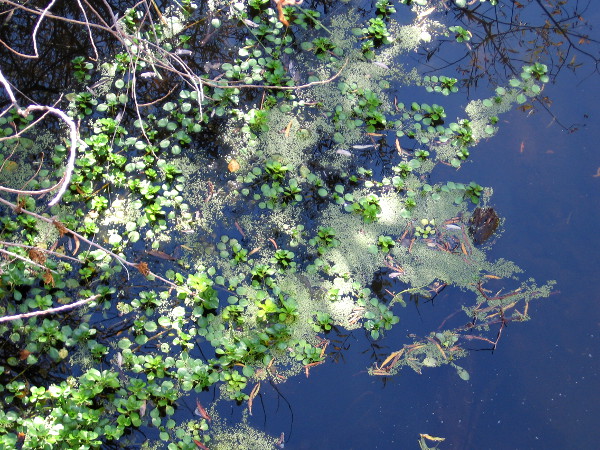
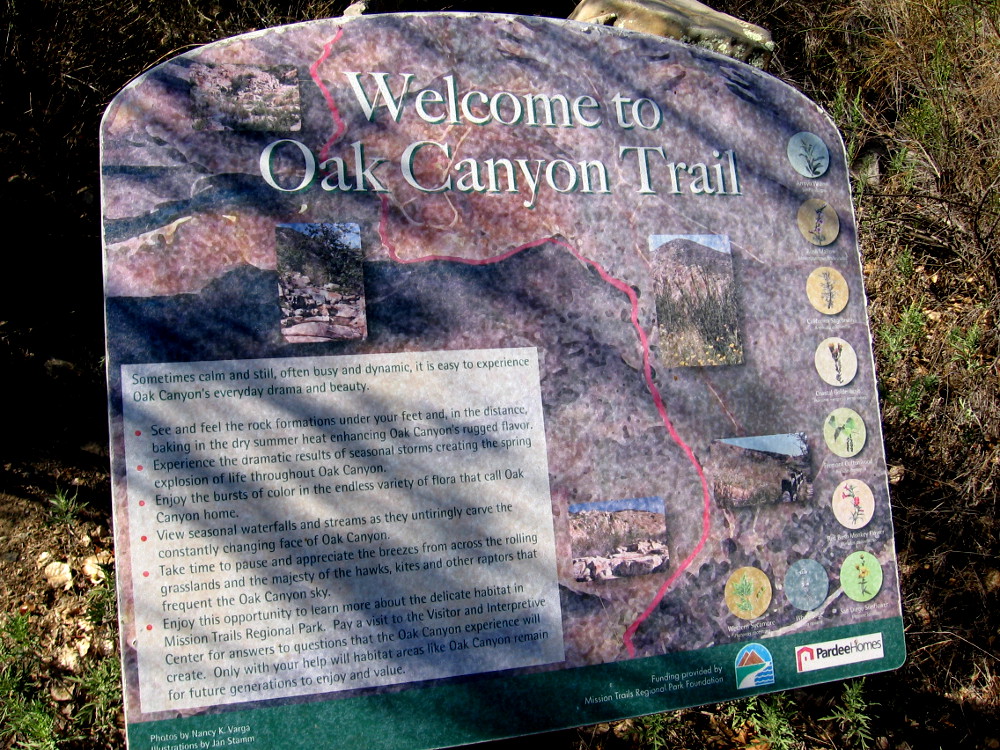
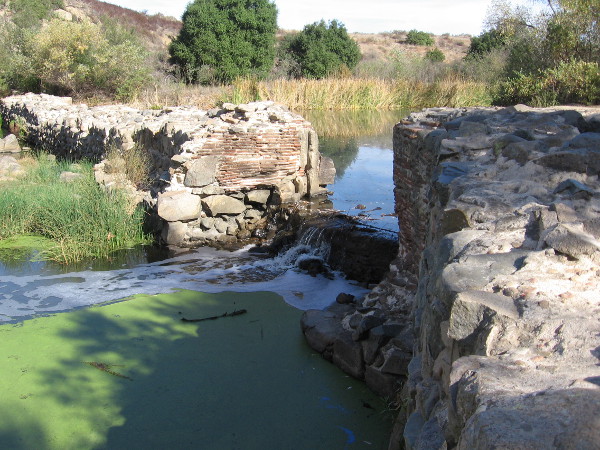
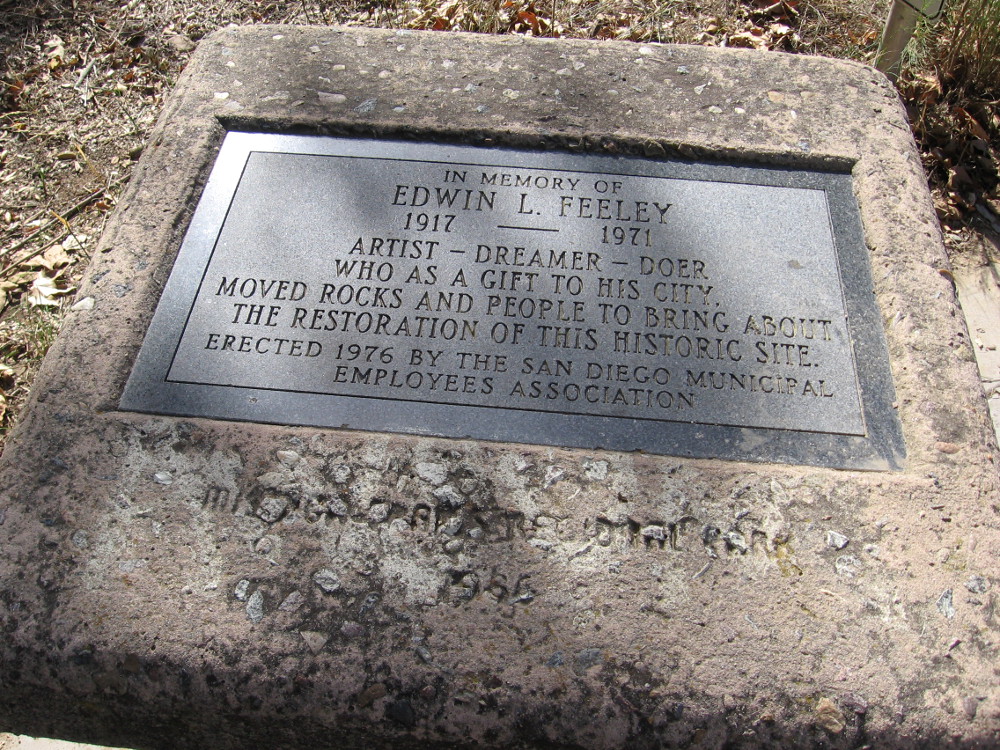
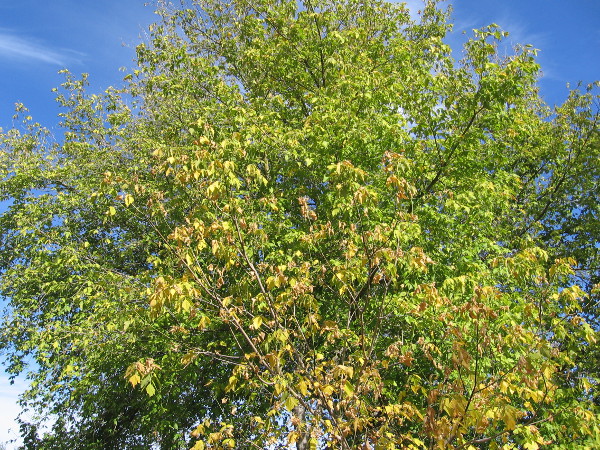
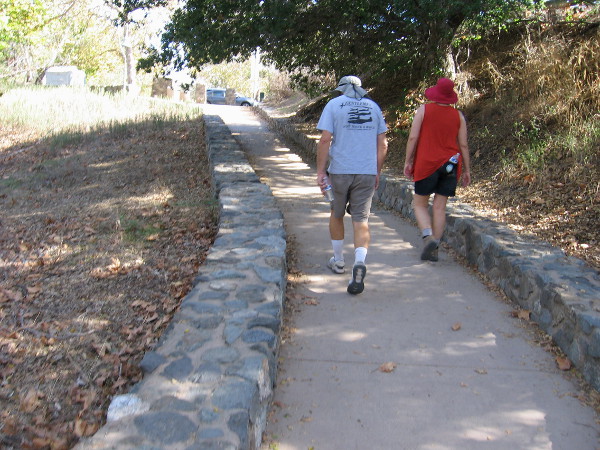
Photo of the San Diego River emerging from Kumeyaay Lake. This is near an outdoor amphitheater and fire pit. The park is a perfect place to learn about nature from rangers, and for stargazing at night!An Autumn wildflower at Mission Trails Regional Park.We head from the lake back toward the campground. Our pleasant hike has just begun.Non-native plants can cause serious damage to natural areas and wildlife. Park staff and volunteers work to protect the natural ecosystems.Hiking down the Grasslands Crossing Trail, my guide and I pass over the San Diego River. It has been a typically dry summer, and the pooled water here is still.Leaves and reflections of trees in the quiet water.We spied a wood rat’s nest of twigs and branches near the hiking trail. I learned these nests contain several rooms with different functions, not unlike a human home.Larry the trail guide showed me a photo of a wood rat.Now we are heading along the easy Grasslands Loop Trail, following the north bank of the San Diego River. Riparian trees such as willows, sycamores and cottonwoods thrive along the river.Mountain bikers enjoy a warm, sunny morning at Mission Trails Regional Park.Approaching an overlook of the Old Mission Dam.Photo of the Old Mission Dam from the north. The dam was built around 1813 and powered a water wheel that drove a grist mill. A tiled flume brought water to Mission San Diego de Alcala, about five miles away.Families play on the rocks near the Old Mission Dam at Mission Trails Regional Park.Lush trees along the San Diego River. Autumn leaves have yellowed a bit.We have descended onto Oak Canyon Trail, and are working our way down to the river and the historic dam.Standing on the north end of the Old Mission Dam. Materials used in constructing the dam include abundant volcanic rock found in this area.A slot in the dam wall where a water wheel was located. The river water, after driving the wheel, flowed along a tile-lined aqueduct south to the mission, where it was used to grow crops.Walking along the Oak Canyon Trail. Mission Trails Regional Park is like a small wilderness inside the city of San Diego. At 5,800 acres, it’s the largest city park in California.Riparian plants recover quickly after a fire because all are vigorous resprouters as long as they have a steady water supply.Granitic rocks seen along the trail.South Fortuna Mountain, elevation 1094 feet, rises to the south. Its sides are covered with native chaparral and sage scrub.Crossing the San Diego River via a steel footbridge.Looking down at the San Diego River. During rains, the river swells. The water runs down into Mission Valley and finally to the Pacific Ocean, sustaining an estuary near Mission Bay.Larry, my knowledgeable trail guide, informed me that the tiny green vegetation is duckweed, an aquatic plant that floats on the water’s surface.Sign at one end of the Oak Canyon Trail, near the Old Mission Dam.A cool 3-D model of the Old Mission Dam beside the trail. The dam was constructed from granite boulders and limestone mortar. At the gap there was a 12-foot wide floodgate.It’s possible to walk out onto the old dam, but one must be careful!A vertical groove in the dam wall shows where the floodgate used to exist. The dam was completed around 1813, and the long flume to Mission San Diego was completed several years later.Inscription in a boulder dated 1941, by the Daughters of the American Revolution. OLD MISSION DAM. Built 1813-1816. A part of the first permanent irrigation project by Padres and Indians in California.A plaque by the old dam. In memory of Edwin L. Feeley. 1917 – 1971. Artist – Dreamer – Doer who as a gift to his city, moved rocks and people to bring about the restoration of this historic site.Bright fluttering leaves of a river tree growing beside the Father Junipero Serra Trail, a road that leads past the Old Mission Dam.Walking to the parking lot by the Old Mission Dam, also called the Padre Dam.The site is a California historical landmark. A dam and flume system was finished between 1813 and 1816 by Indian laborers and Franciscan missionaries. It provided a reliable source of water for crops and livestock for Mission San Diego de Alcala. The system continued until 1831 when it fell into final disrepair.Beautiful hiking trails, and a fascinating look back at early San Diego and California history await at Mission Trails Regional Park.
…
I live in downtown San Diego and love to walk! You can follow Cool San Diego Sights via Facebook or Twitter!
You can easily explore Cool San Diego Sights by using the search box on my blog’s sidebar. Or click a tag! There are thousands upon thousands of fun photos for you to enjoy!
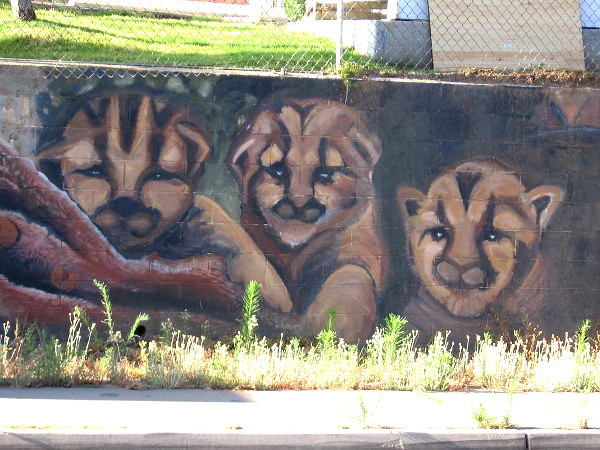
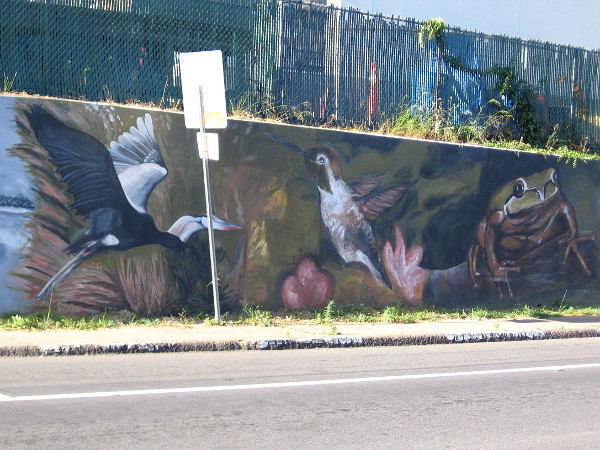
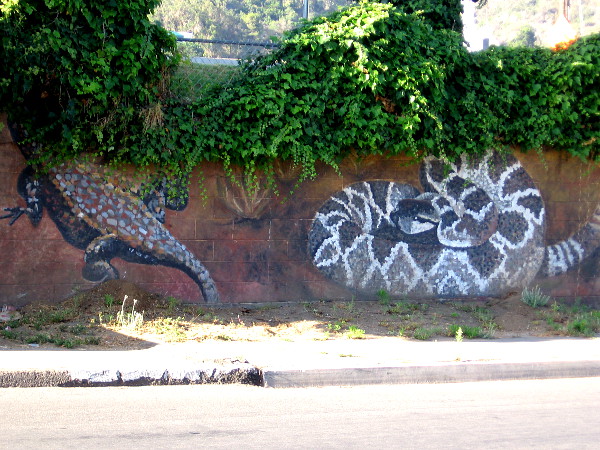
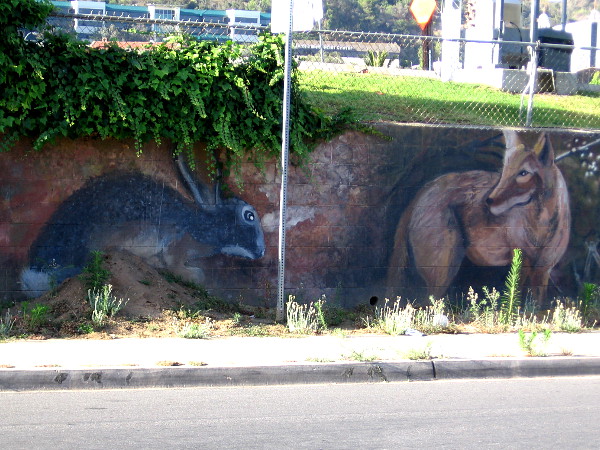
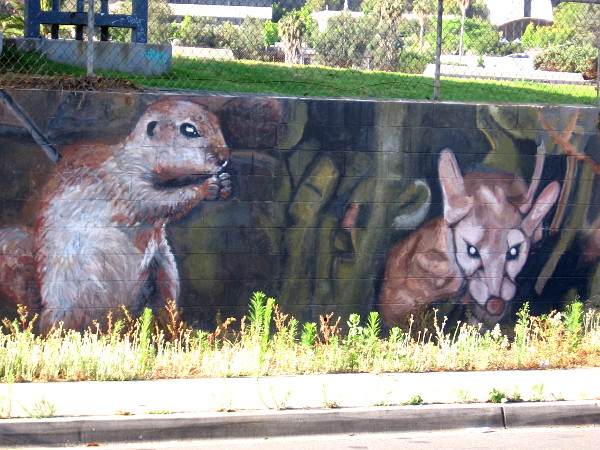
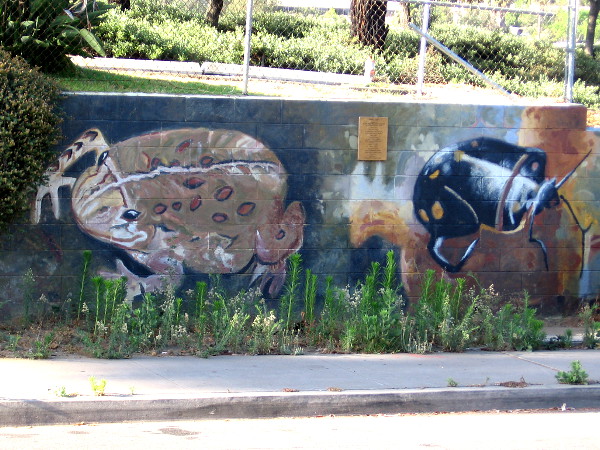
Faces peer from a wall near the San Diego River. The very long mural, titled River Life, contains images of wildlife one might find here–or have found here before urban development.
I love this mural in Mission Valley. I remember driving through the intersection at Qualcomm Way and Camino de la Reina years ago, and seeing a whole bunch of people painting wild river animals along the ugly low wall. A little research today tells me that memory was from late 2009.
“River Life” was completed by almost 200 volunteers over four days. The design came from artist Lori Escalera. It’s one of of six murals (so far) that the San Diego River Park Foundation has helped to create. I’ve featured others on my blog. Here are some links if you want to check out more of the beautiful San Diego River murals…
The left end of a long, colorful mural in Mission Valley. Birds of the air and water are featured here. The art was designed by Lori Escalera in 2009.A heron, hummingbird and frog. Down by the beautiful River Trail, just north of where we stand, many different birds can be spotted on the quiet surface of the San Diego River, and in thick reeds and overhanging tree branches.A butterfly, a fox (peeking from behind a transformer box on Camino de la Reina) and a raccoon.Some sort of lizard–perhaps a Gila monster–is half hidden by leaves, while a rattlesnake coils nearby!A jackrabbit and wild coyote.A skunk and perhaps kitten bobcats.I recognize a squirrel, but I’m not sure about the other animal whose eyes seem to be glowing in the dark.I believe that’s a Red-winged Blackbird and a moth.Looks to me like a toad and a beetle. If you can accurately identify these creatures, feel free to leave a quick comment!That looks to me like a turtle–or a tortoise! It’s obvious this blogger still has a whole lot to learn!
…
I live in downtown San Diego and love to walk! You can follow Cool San Diego Sights via Facebook or Twitter!
You can easily explore Cool San Diego Sights by using the search box on my blog’s sidebar. Or click a tag! There are thousands upon thousands of fun photos for you to enjoy!
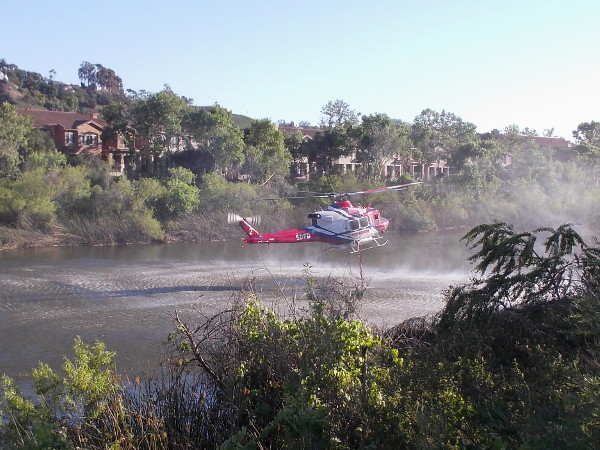
One of the San Diego Fire Department’s two firefighting helicopters fills its water tank using a hose lowered into the San Diego River in Mission Valley.
I was lucky late this afternoon to capture some cool action pics! After work, I was eating at Jack in the Box in Hazard Center when I saw a helicopter swooping rapidly down toward the nearby San Diego River. A hose was dangling underneath, so I knew it was a firefighting helicopter arriving to suck up some river water!
I hurried down to the center of the action to watch and snap a few photographs. It’s the first time I’ve witnessed this activity up close.
Someone on the river path said there was a fire to the northwest in Linda Vista, but I couldn’t see any smoke. I watched five different instances of helicopters filling their tanks, then the action ceased. The fire must’ve been quickly contained.
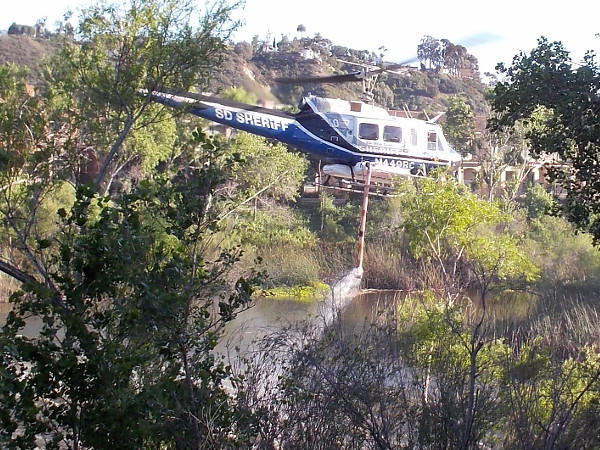
A wildfire must be nearby because here comes a firefighting helicopter swooping rapidly down over Mission Center Road and the raised trolley tracks toward a wide spot in the San Diego River!The chopper slows and carefully makes its descent in order to suck water into its belly tank to eventually drop on a wildfire.The air from the rotor blades causes spray to fly up from the surface of the San Diego River. Several joggers and walkers on the nearby paths stopped to watch.The long hose quickly sucks a good quantity of water from the river. The pilot is highly skilled, hovering the helicopter close above the water, steady as a rock.A couple minutes later one of the San Diego County Sheriff’s three firefighting helicopters arrives! You can see the external belly tank underneath the chopper’s body!This firefighting helicopter got so close to the water I had to hold my breath. These brave hero pilots are amazingly precise.ASTREA is the Sheriff’s Department aviation unit. Up their aircraft goes, quickly swinging overhead and heading to the northwest. Someone thought there was a fire in Linda Vista, but I didn’t see smoke from the bottom of Mission Valley in any direction.A San Diego Fire Department chopper has sucked up more water from the river and flies in a big hurry again toward the northwest! The fire must have been small, because the action above the river didn’t seem to last for more than 15 minutes.
…
I live in downtown San Diego and love to walk! Sometimes I randomly stumble upon fascinating, newsworthy events! You can follow Cool San Diego Sights via Facebook or Twitter!
















































 Cool San Diego Sights!