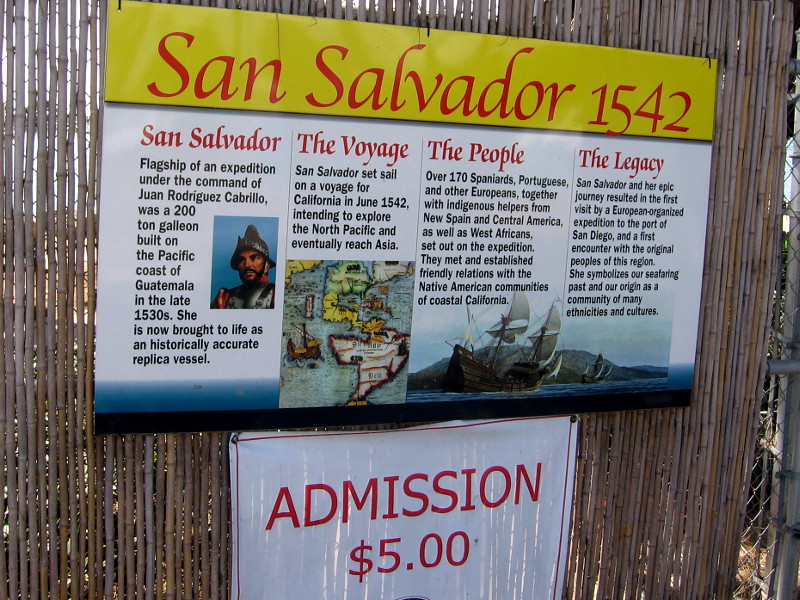
Sign at entrance to San Salvador build site. You have a couple more weeks to visit before the replica galleon’s historic launch into San Diego Bay.
Yesterday I enjoyed a tour of something so unbelievably cool it almost defies description. Along with my photographs I took some notes, but what I’m about to write might not be perfectly accurate. I’m relying to an extent on memory, which with my advancing age isn’t quite what it used to be. So if anyone reading my captions spots an error, PLEASE write a comment at the bottom of this blog post!
Later this month, the Maritime Museum of San Diego will be launching its absolutely fantastic, historically accurate, seaworthy replica of the galleon San Salvador. The original San Salvador was the ship that Portuguese explorer Juan Rodriguez Cabrillo sailed in during his voyage of discovery up the California coast on behalf of Spain. The famous galleon entered San Diego Bay in 1542, making Cabrillo the first European to visit the large, natural harbor. What we call San Diego today he named San Miguel.
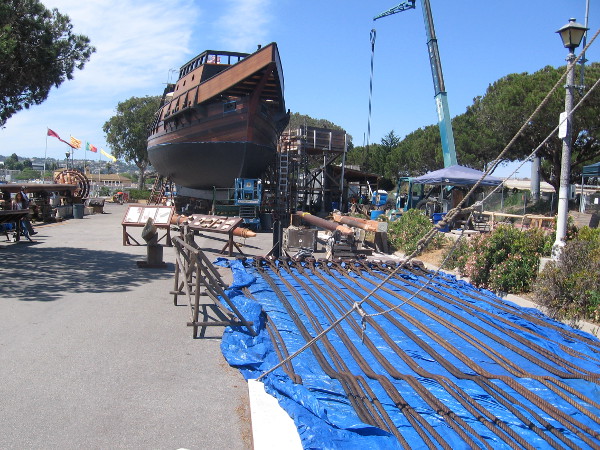
Today, the full-size working replica of Cabrillo’s ship is being built at the west end of Spanish Landing, in an area called San Salvador Village, between Harbor Island and San Diego International Airport. The finished ship will be 92 feet long with a beam of 24 feet. As I understand it, construction has been underway for about four years, and for a variety of reasons has taken a couple years longer than originally projected. But once the decks are re-caulked, the shrouds tarred, and a few other things finished, the ship’s exterior will finally be ready for its imminent introduction into San Diego Bay!
The galleon, which without ballast weighs about 130 tons, will be slowly towed to the Broadway Pier downtown, then lifted by a huge crane into the bay. While docked beside the other ships of the Maritime Museum, the interior will be finished, about 60 more tons of lead ballast added, and the vessel’s ability to remain upright thoroughly tested by the Coast Guard.
(Don’t quote me on the 130 tons and 60 tons. Those figures came entirely from my leaky memory.)
There’s simply too much awesome stuff to describe in a few paragraphs, so let me now show you my photographs and I’ll include in the captions some of the cool stuff I learned or observed…
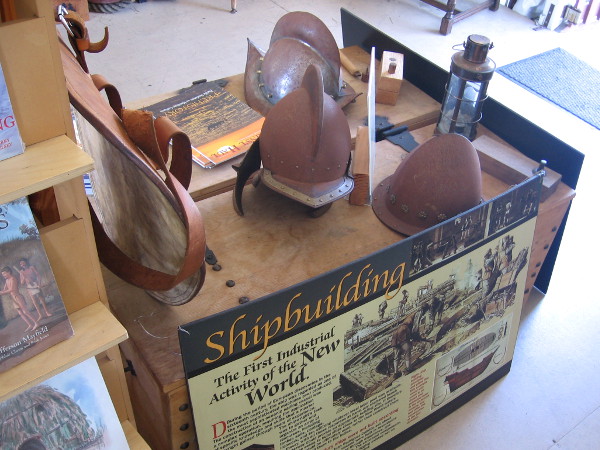
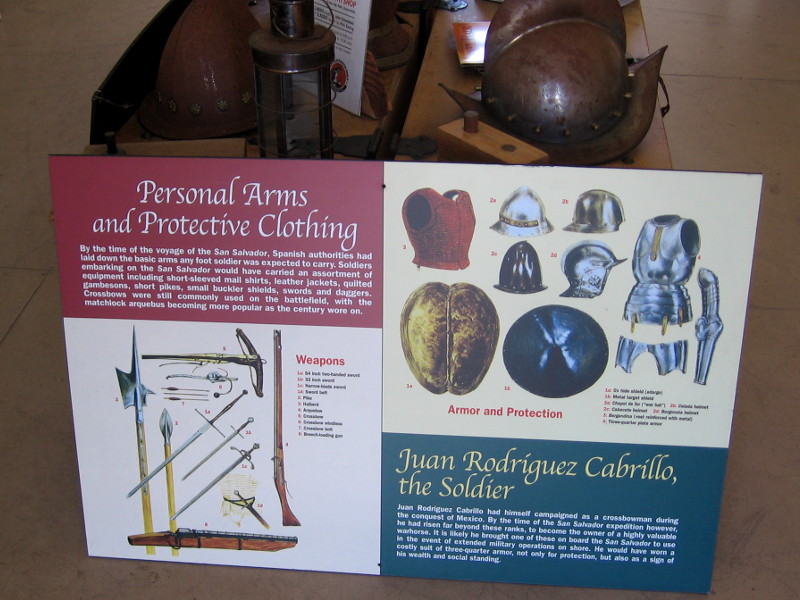
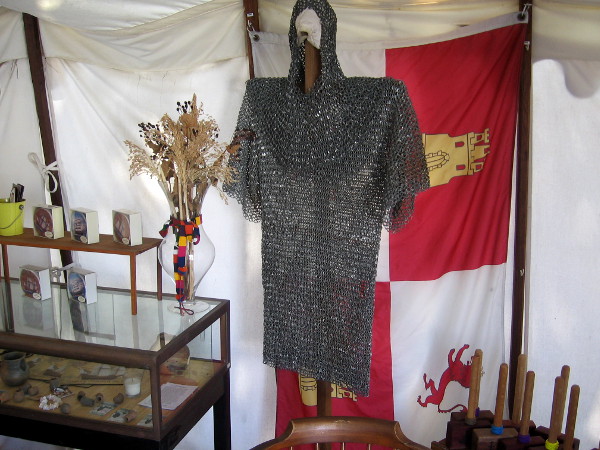
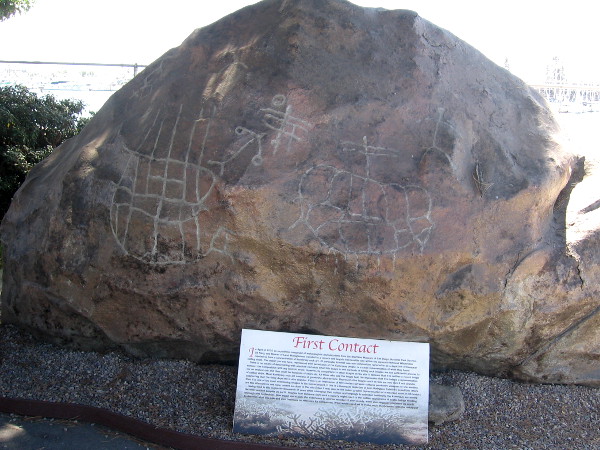
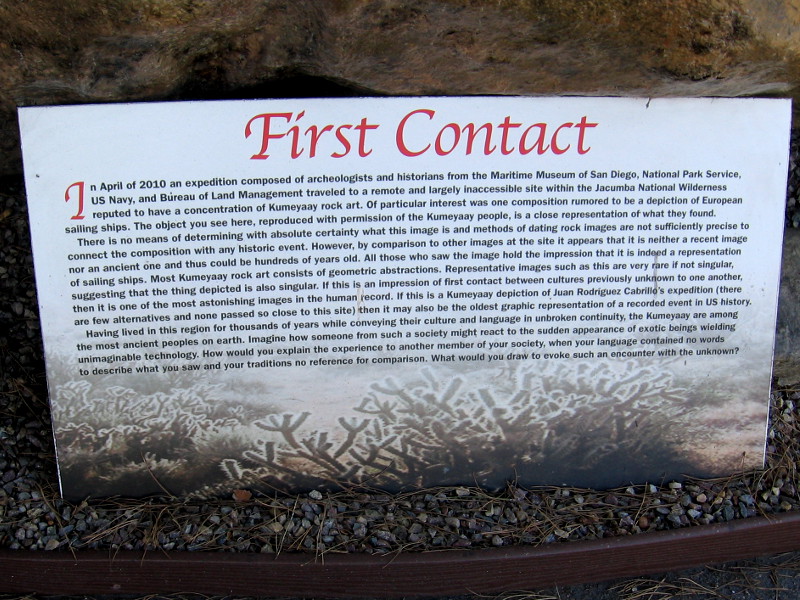
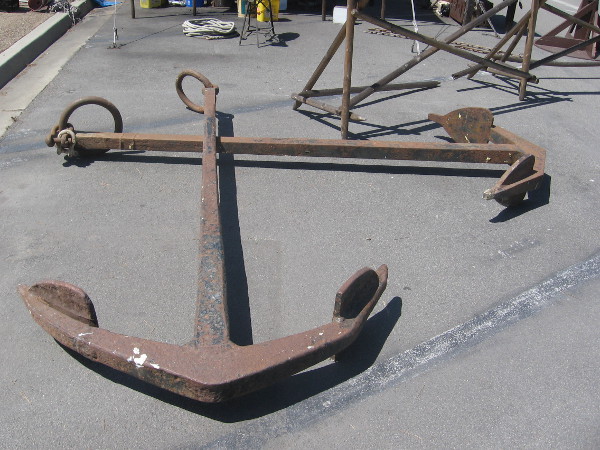
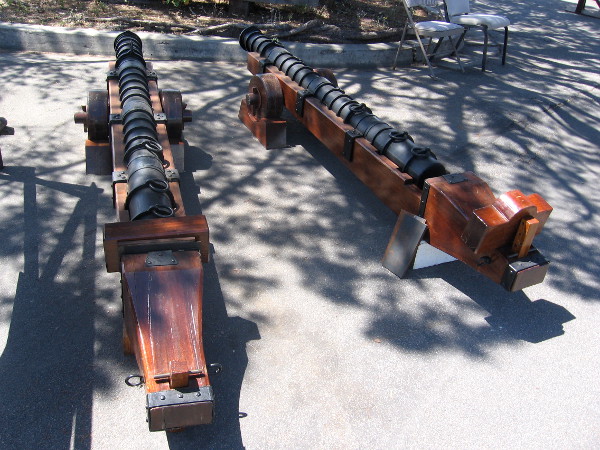
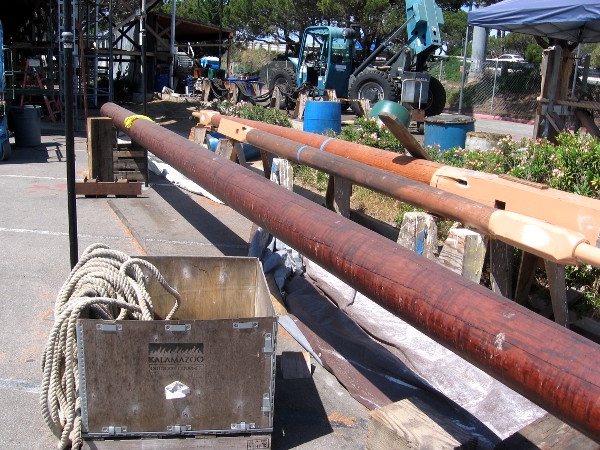
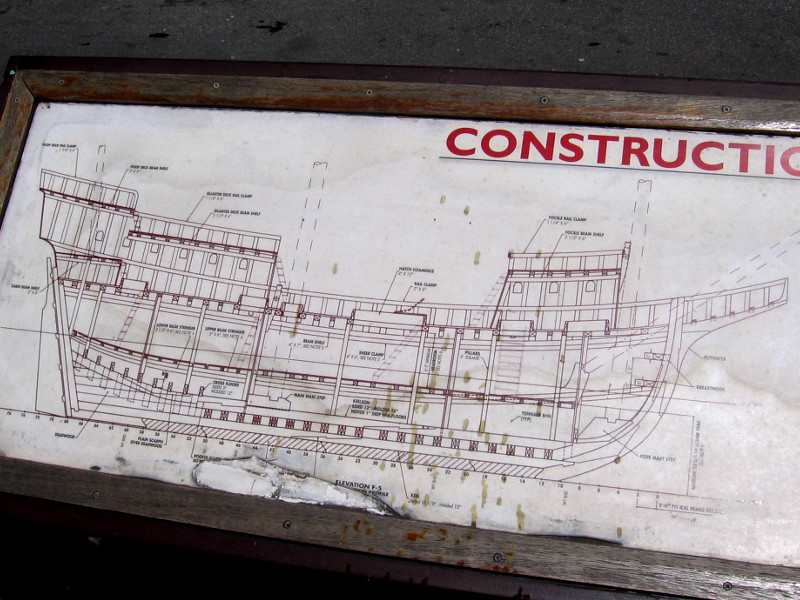
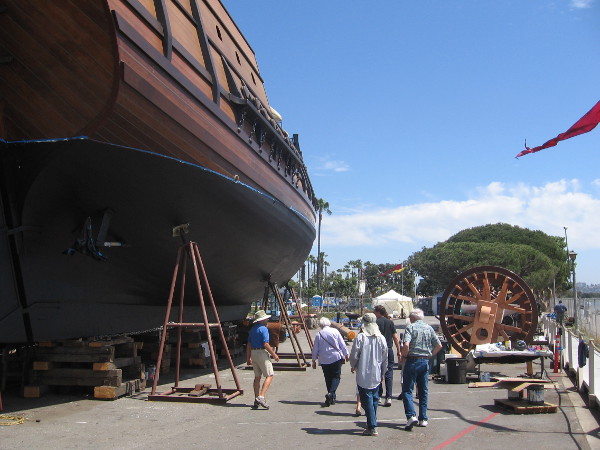
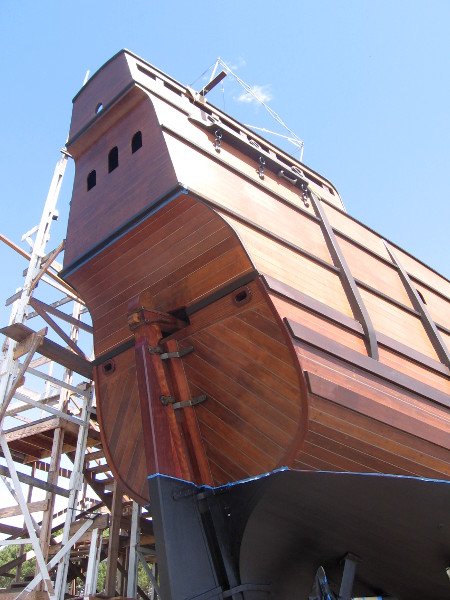
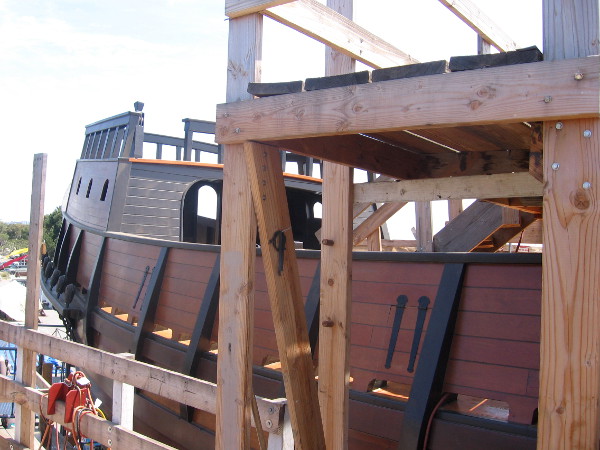
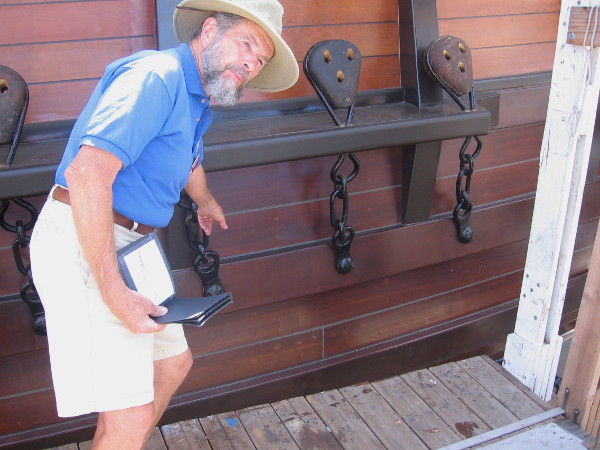
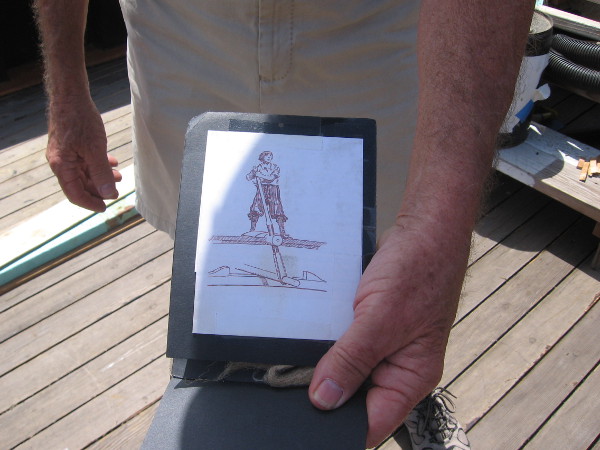
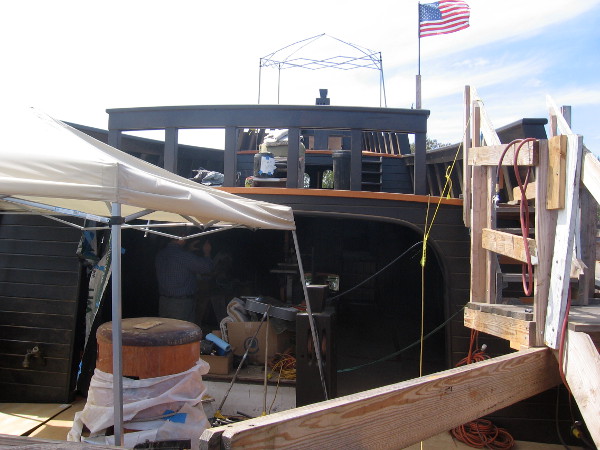
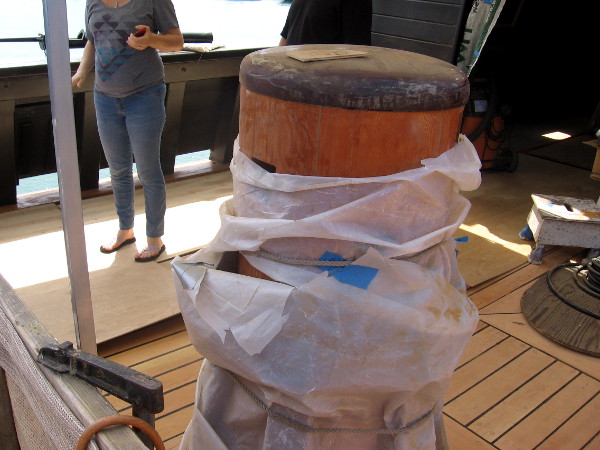
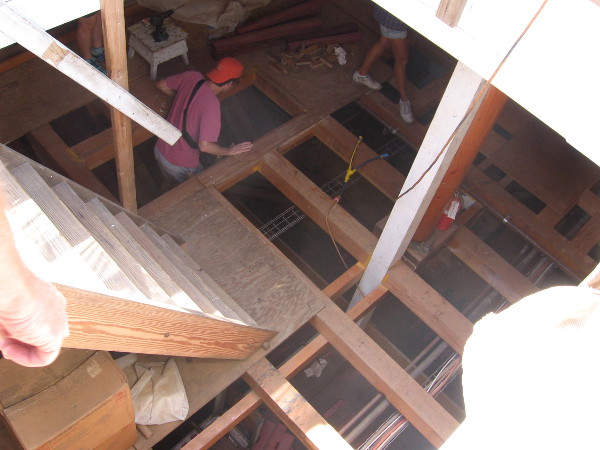
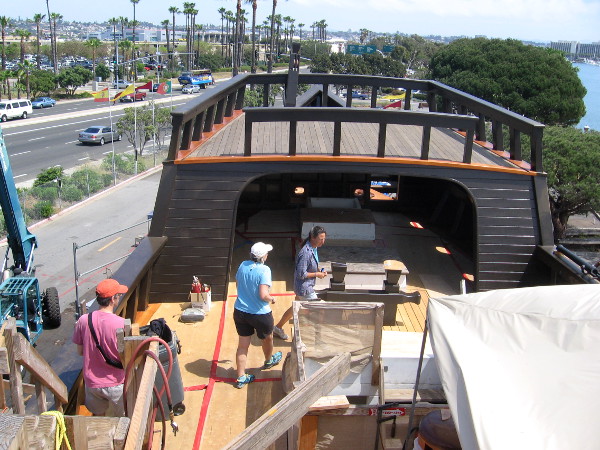
Shipbuilding was the first industrial activity of the New World. Gift shop at site entrance includes Spanish conquistador helmets and breastplate.Poster shows personal arms and protective clothing used by the men who sailed with Juan Rodriguez Cabrillo five centuries ago.A small museum and gift shop includes many interesting sights, including a shirt of chain mail and flag of the Spanish Empire.Diagram shows the sail plan for historic galleon San Salvador.Various items on display include lantern, candle, bottle, ship’s food and native Kumeyaay artifacts.Outside, at the build site, there are many more exhibits. This reproduction of found rock art seems to show sailing ships. The native Kumeyaay people often visited San Diego Bay.First Contact. If this rock art is a Kumeyaay depiction of Cabrillo’s expedition, it might be the oldest graphic representation of a recorded event in American history.Here’s a huge anchor! I didn’t ask, but I assume it will be used by the San Salvador.San Salvador carries six sails totaling a little less than 5000 square feet. The sails are not only used to propel the ship, but exert a larger influence on steering than the rudder.View of a small sail suspended from a yard, with Harbor Drive in the background north of the build site.Suspended from a crane is a shroud (rigging that helps hold a mast) that’s being tarred. The bow of the galleon comes to a sharp point at its beak.Iron in an undeveloped region of the New World was a precious commodity. Imported ingots were often used to forge various fittings and hardware.Hooks, chain links and other iron instruments were crucial to sail and maintain a large ship.The San Salvador carried armament to defend the expedition from potential threats. The cannon-like bombard and swivel gun could be fired from the deck.Two bombards on display at the San Salvador build site. They could fire shot about five pounds in weight and were mounted on wheels.Detailed map of Cabrillo’s route up the California coast. He found neither treasure, nor a passage to the Atlantic.There are no blueprints for the galleon San Salvador. To reconstruct the 16th century ship, the Maritime Museum of San Diego used scarce historical clues.It was difficult to find the right kinds of wood for different parts of the vessel. Both old and modern shipbuilding techniques were used.Wood mast segments and yards are coasted with linseed oil, I believe. They’ll be installed once the ship is afloat in San Diego Bay.Approaching the impressive reproduction of the historic galleon. Just imagine going for an ocean sail in this!Detailed schematic shows framework and beams that support decking and hull.The master builder sets up keel, stem, sternpost and deadwood, locked together with long iron drifts. The master frame is then built.I believe these are the lower halves of two masts (main and fore), each ending in a crow’s nest.A look at the super hard wood hull of the galleon San Salvador at Spanish Landing.Volunteer tour guide shows how six segments of heavy lead are attached to the keel.Each piece of lead weighs over 6000 pounds. The lead was originally used for the drop hammers of Rohr Industries in Chula Vista to form aircraft parts.A small tour group investigates the amazing galleon on a sunny San Diego day!The high stern of San Salvador. The rudder is attached to a tiller. That propeller below (and an eventual engine) is a modern convenience unknown by Cabrillo!Our group climbed the steps of scaffolding to check out the hull, upper deck and aftcastle.We’re shown where a shroud connects to the ship’s side. The darker looking lower portion of the hull is made of hard wood, which is heavier than water.We’re almost on top!View of the San Salvador galleon while standing atop the aftcastle. Work to finish the vessel’s deck and interior is underway.This deck will be re-caulked soon using cotton, hemp rope and synthetic tar. Earlier caulking with less modern materials was unsuccessful, if I recall correctly.Sketch of helmsman steering the galleon with a vertical lever attached to the rudder’s tiller. He had a window to look through in the aftcastle.Looking back at the aftcastle and rearmost poop deck from the center of the upper deck. You can see the window through which the helmsman peered.Capstan is a revolving vertical timber that projects through the deck. Bars will be inserted and used by sailors to turn the capstan, hauling ropes or chains.This is one of five separate water-tight compartments being worked on below. Bunks will be contained here, for journeys out to the Channel Islands eventually.Under the forecastle, looking toward the bow’s beak. The two holes beside the rectangular chain locker are hawseholes, through which the anchor chain is lifted or lowered.Looking straight down here you can see where the foremast and bowsprit are seated.Wow! Is this cool! How often does one get to walk around an actual honest-to-goodness working galleon!
…
To enjoy future posts, you can “like” Cool San Diego Sights on Facebook or follow me on Twitter.
A kite is flying above the grassy Embarcadero Marina Park North near Seaport Village. Just another typical day.
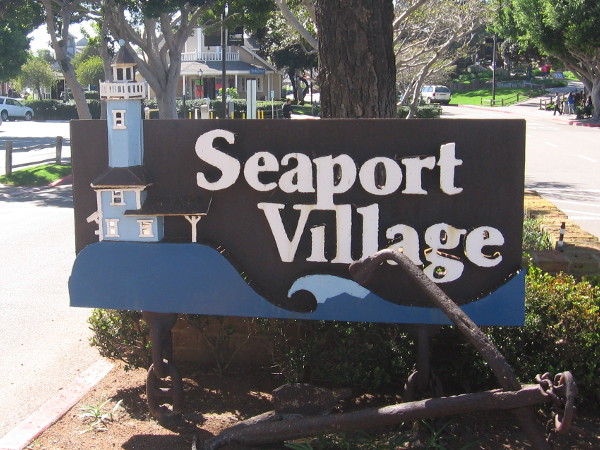
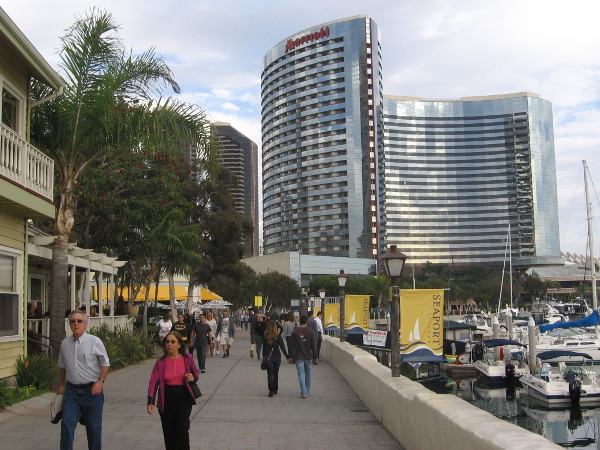
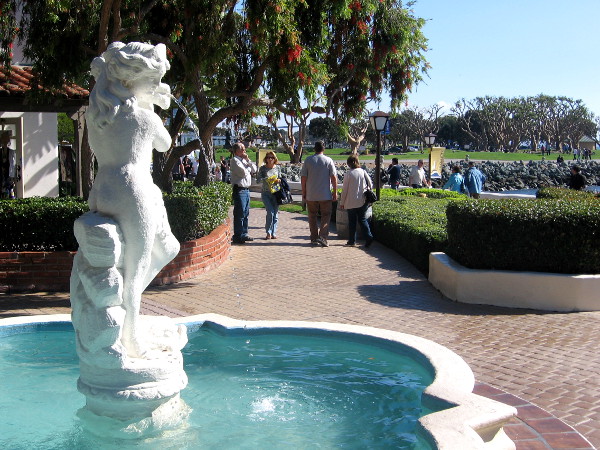
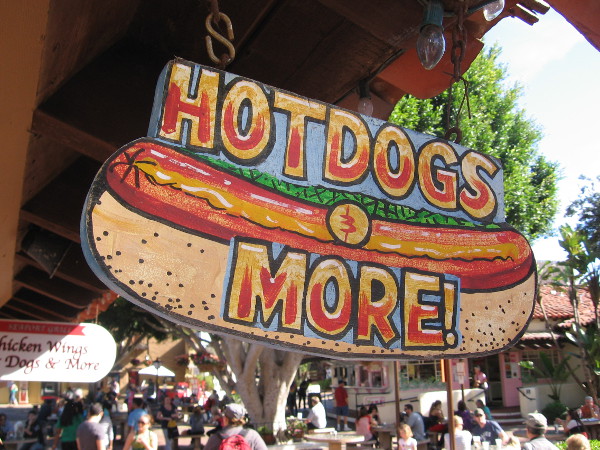
I looked through a bunch of old photos on my hard drive recently and found some fun random pics of Seaport Village. Here they are!
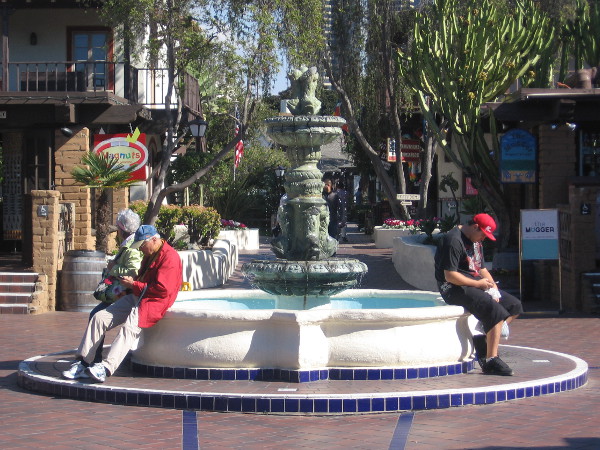
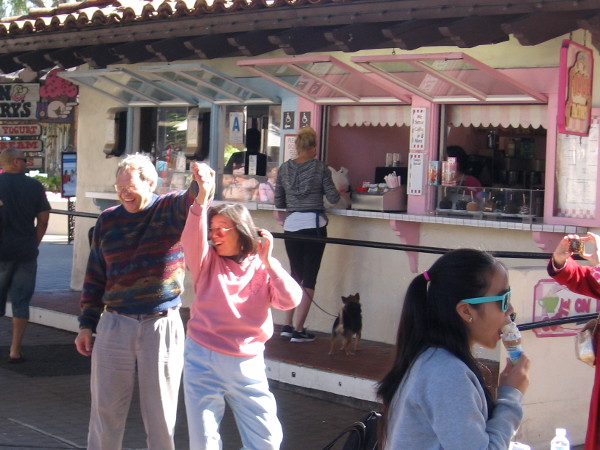
Seaport Village is a tourist destination on San Diego Bay that many locals also enjoy.People walk near the Marriott Marina on the sun-drenched Embarcadero.One of the fountains at Seaport Village, a popular San Diego attraction.Colorful, playful buildings contain specialty shops and places to eat.Scrumptious hot dogs are easy to find at the food court!Carefree, simple fun at every turn. These guys are by the Seaport Village carousel.Surrounded by a multitude of delights, some people look at cell phones.These people are living! Laughing with arms high and licking ice cream!A cow rests in the shade. It’s been a busy day!
…
To enjoy future posts, you can “like” Cool San Diego Sights on Facebook or follow me on Twitter.
Derek McAlister prepares to open his amazing act with some fire juggling at Seaport Village beside the Marriott Marina.
Rubber chickens were flying this afternoon. There seemed to be a whole flock of them at the Seaport Village Spring Busker Festival! The event continues into this evening, and then more acts follow tomorrow. If you’re in San Diego, check it out!
My favorite performer was Murrugun the Mystic. This is why.
All of the buskers were fantastic! Many of these pics were taken from a bit of a distance, but they provide a taste of the fun…
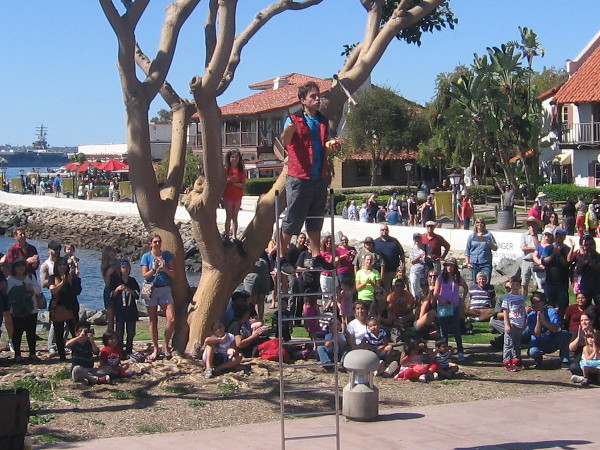
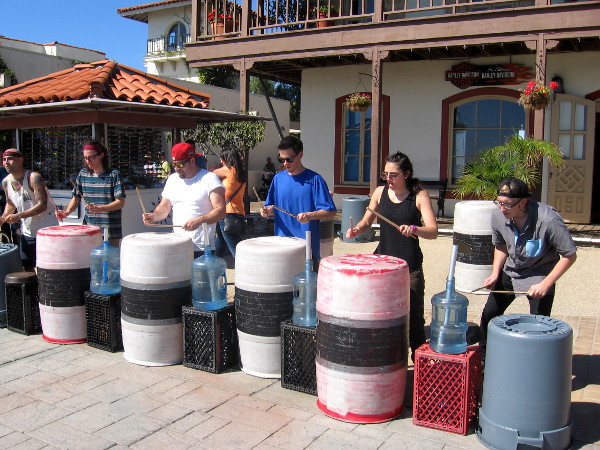
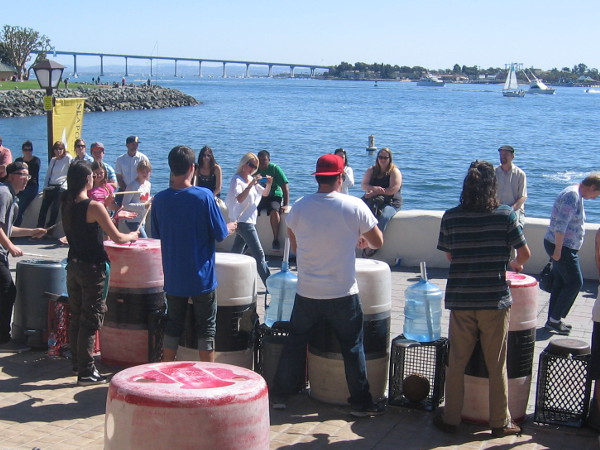
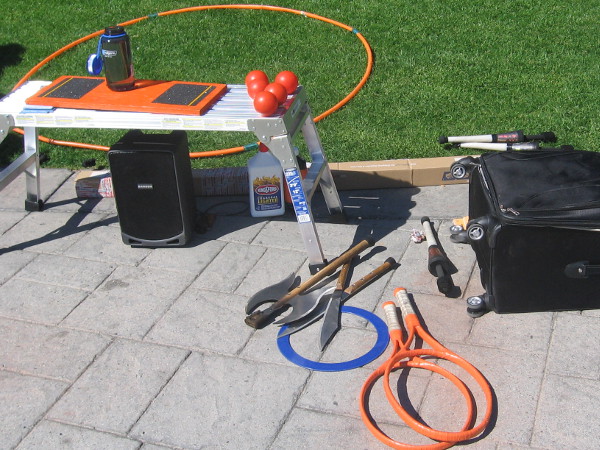
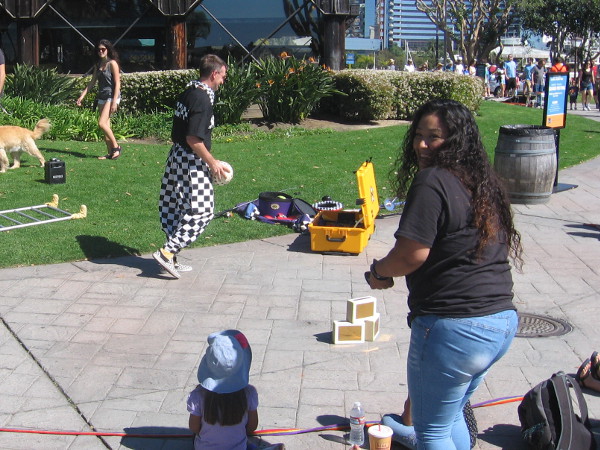
Derek McAlister climbs a 20-foot Chinese pole and performs fantastic aerial acrobatics at the Spring Busker Festival.Street performers had exciting shows all day at two plazas in Seaport Village. Tomorrow, too!Alex Clark, with training from Cirque Du Soleil, balances atop ladder while juggling knives.Girl throws rubber chicken up to plunger-headed, unicycle-riding “Groovy” Guy Collins, who has starred on the Travel Channel.The Frisbee Show featured juggler and comedian Greg Frisbee.Boy volunteer balances two spinning balls atop two rubber chickens!CREW is a San Diego-based percussion group that creates super cool music with everyday objects.Unusual instruments produce fun beats as busker festival visitors sit in sunshine by San Diego Bay.Some important tools of the busker trade.The Checkerboard Guy David Aiken had everyone laughing with his funny antics!
…
To enjoy future posts, you can “like” Cool San Diego Sights on Facebook or follow me on Twitter.
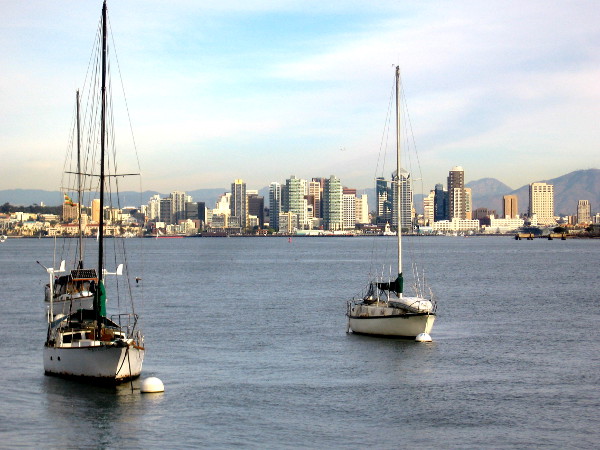
Sailboats moored near Shelter Island, downtown San Diego in the background.
Anyone who tries to write soon realizes a daunting truth. There are countless possible stories to tell, and numberless ways to tell each one. Infinity multiplied by infinity amounts to a whole lot of indecision!
Last weekend I stood on a patch of beach on Shelter Island. A sailboat moored nearby fascinated my eye, and I puzzled over its profound complexity for several minutes. How could I accurately paint that sailboat with words? How could I phrase the most perfect description? Is it even possible? With a million words is it possible?
As I watched the bobbing boat and struggled to sequence potent adjectives, a sudden thought shook me: Writing’s purpose, like art’s purpose, isn’t to replicate the world. It’s to stretch our minds. That is all.
Words are limitless. As limitless as the universe. They allow us to travel anywhere, in any direction.
A few well-directed words can focus our minds (for a moment) on overlooked things; they can help us see vague things more vividly. Words can seek and memorialize those things that seem important. Words tossed about can provoke hidden feeling and allow us to draw nearer to others. Words, when magical, can help us to discern whispers of meaning in the echoing vastness around us.
Our lives are finite. But the infinity that is contained in words can expand our lives. That is their purpose.
…
To enjoy future posts, you can “like” Cool San Diego Sights on Facebook or follow me on Twitter.
Fiery sunset in late February behind figurehead of Star of India.
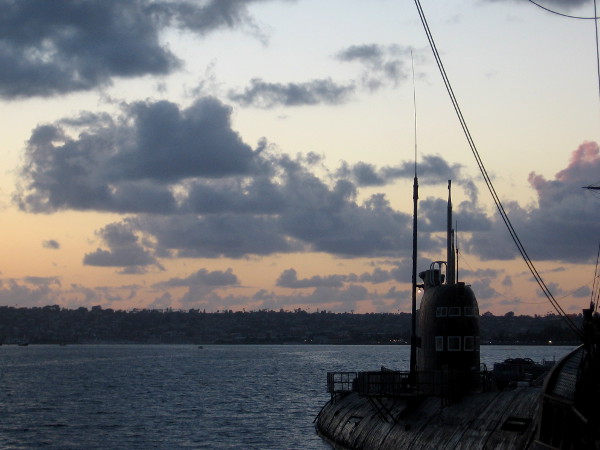
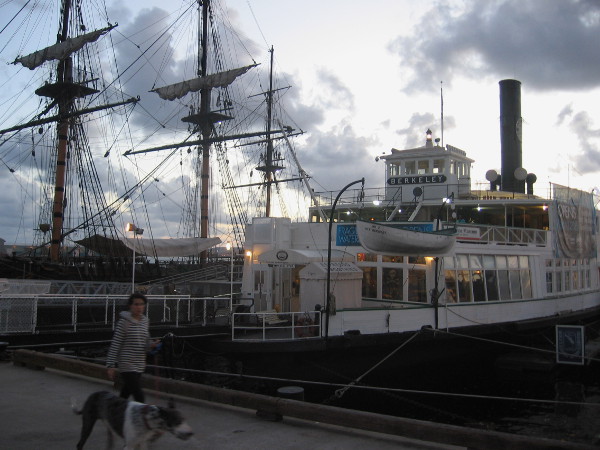
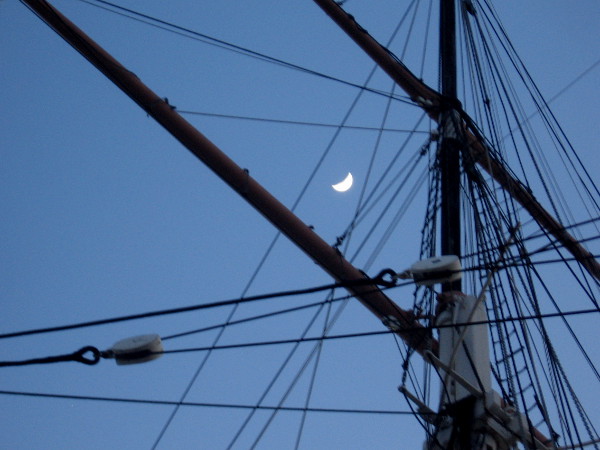
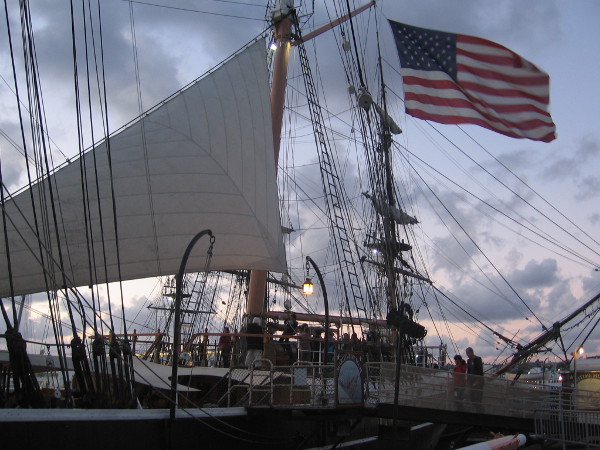
I was fortunate to capture some wonderful photographs this evening. I was walking along the beautiful Embarcadero near the Maritime Museum of San Diego as the sun set. Sky and clouds turned for a moment into flame.
Puffy clouds emblazoned by setting sun, and the rigging of glorious tall ships.Maritime Museum of San Diego’s B-39 Soviet submarine is dark under tinted sky.HMS Surprise and steam ferryboat Berkeley at nightfall on the Embarcadero.Students hauling a rope learn about sailing and seamanship on Star of India.Moon behind a mast and yards of San Diego’s historic 1863 bark Star of India.Turning eastward as day ends. Amazing glowing color above downtown buildings.Museum visitors seem to cross into a romantic, windswept dream.
…
To enjoy future posts, you can “like” Cool San Diego Sights on Facebook or follow me on Twitter.
People on patio behind Visitor Center take in a breathtaking panorama.View from Cabrillo National Monument Visitor Center scenic overlook. Downtown San Diego is visible to the east.
Last Sunday, after I checked out the new Yankee Baleeiros whaling exhibit in the Visitor Center, I wandered about Cabrillo National Monument and took in the many beautiful views. My camera was very busy!
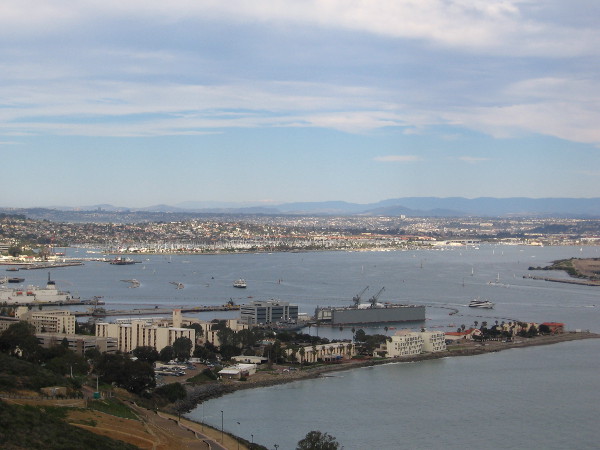
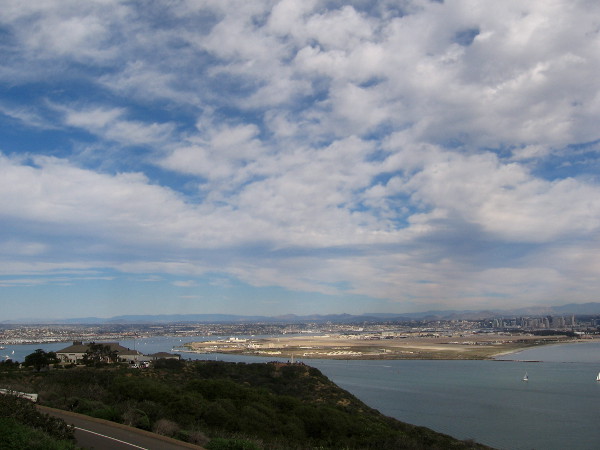
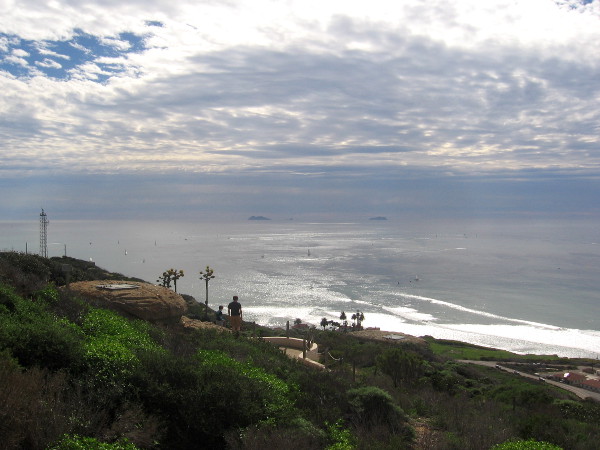
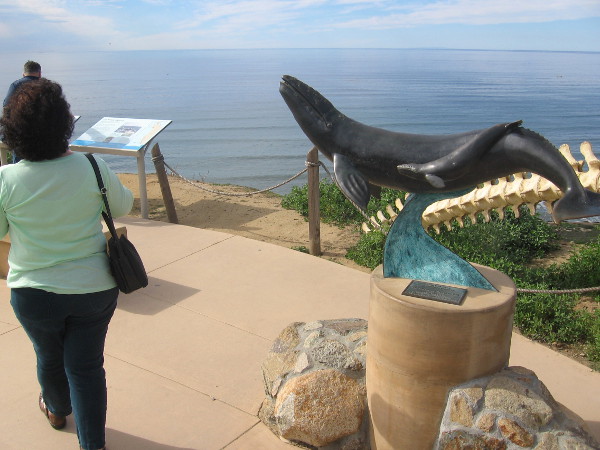
Tall ship America sails south down the channel out of the bay and into the open ocean.Looking out over San Diego Bay. Shelter Island lies in the distance beyond Naval Base Point Loma.One of many interesting signs. This one shows typical commercial and pleasure craft seen on the water below.Statue of explorer Juan Rodriguez Cabrillo at a popular lookout spot.Naval Air Station North Island seems to glow beyond the Cabrillo National Monument Visitor Center building.I took lots of photographs while climbing up through native coastal vegetation toward the beautiful Old Point Loma Lighthouse.Looking southwest over two World War II bunkers toward the distant Coronado Islands, which are a part of Tijuana, Mexico. The new lighthouse is down by the water.People gaze out at the beautiful sky and ocean from a popular whale-watching point.Gray whales migrate past Cabrillo National Monument from December through April. Spouts are often seen from here!Sculpture of a gray whale and a cetacean’s vertebrae along walkway that leads from the old lighthouse.Looking northwest toward the tidepools below and Pacific Ocean breakers.
…
To enjoy future posts, you can “like” Cool San Diego Sights on Facebook or follow me on Twitter.
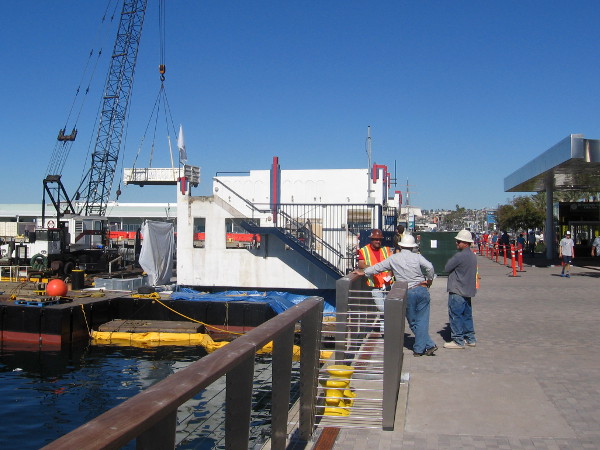
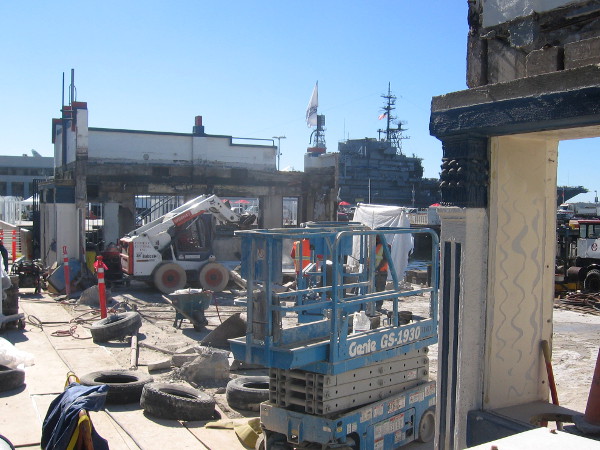
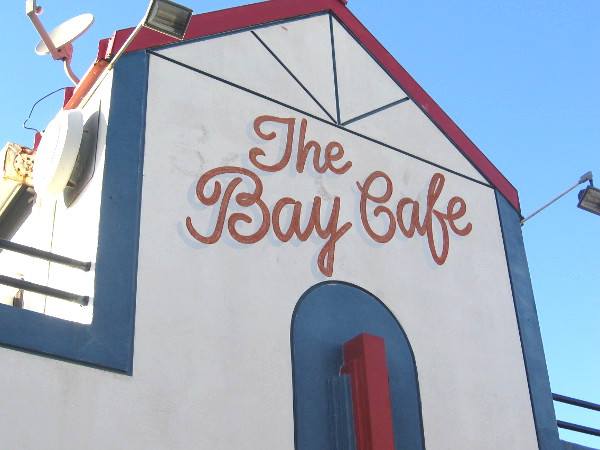
The Bay Cafe is making way for an observation platform on San Diego Bay.
The Bay Cafe is almost gone.
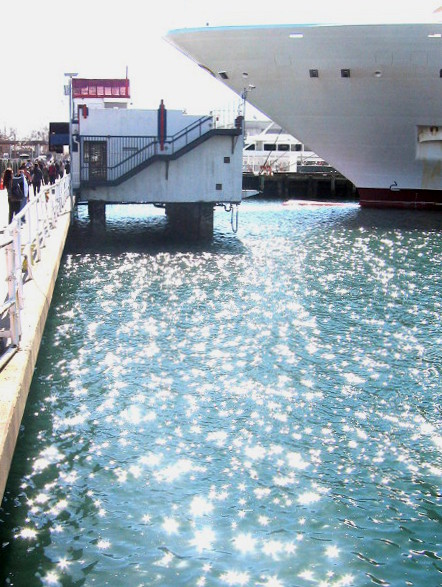
Many years ago, I loved to grab some food in the small waterfront cafe and bring it up onto the rooftop. From a table beneath an umbrella, I’d gaze out at the sparkling water. I’d observe passing sailboats, people on the Broadway Pier, and cruise ships docked at the nearby terminal. When two or more huge cruise ships were in port, I’d watch with interest as the departing Coronado ferry and harbor tour boats navigated the narrow space between them. In those days, the Bay Cafe also served as an embarkation hub for San Diego Harbor Excursion, now called Flagship. A ramp from inside the deli plunged down to a floating dock, where a gift shop was housed in a special boat. On this small dock a harbor cruise photographer asked guests to pose by a life preserver.
Up on the roof, if I wanted a change of view, I’d grab another table where I could gaze back toward downtown and watch tourists flow along Harbor Drive. There were almost always several empty tables. Few people seemed to realize the rooftop was open.
The Bay Cafe’s roof was also used for many years by broadcasters covering parades down Harbor Drive. From up there you could see everything.
My walk this morning brought back those memories. And a bit of sadness. The Bay Cafe is being demolished as I type these very words. The structure will be removed, but the concrete pad and pilings will remain, as part of an observation platform jutting over the water. It’s just one small part of the Embarcadero’s recent renovation. I’m sure the change will be great. I believe there are supposed to be benches where folks can just sit and enjoy the views. If there are, I’ll surely enjoy them. But time and progress march on. The Bay Cafe is almost just a memory.
Demolition of the old waterfront cafe and harbor tour embarkation hub is underway.Many years ago dining could be enjoyed on the sunny roof, with views of the water, sailboats and downtown skyscrapers.Improvements on the Embarcadero consign this wonderful place to memory.
…
To enjoy future posts, you can “like” Cool San Diego Sights on Facebook or follow me on Twitter.
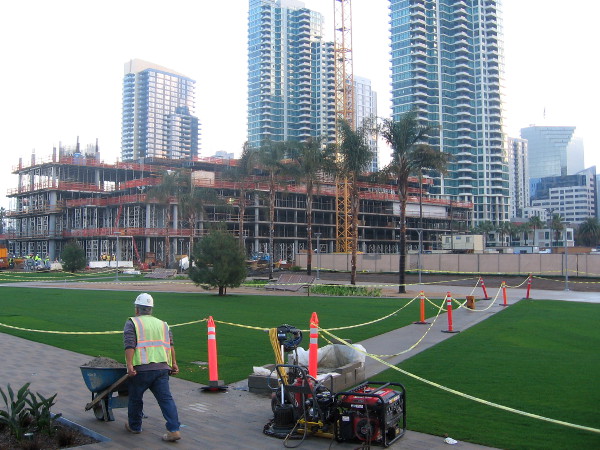
Lanefield Park under construction at corner of Broadway and Harbor Drive.
This morning I walked past a huge project under construction at the corner of Broadway and Harbor Drive. I’m a tall guy, so I could easily peer over the surrounding fence.
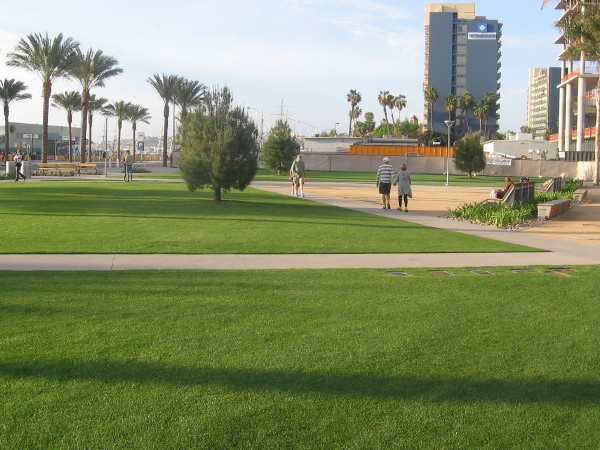
The site of historic Lane Field is green with beautiful new grass!
It’s been many years since this hallowed spot in downtown San Diego needed a periodic mowing. I don’t recall ever seeing anything here but a large ugly asphalt parking lot. But once upon a time, half a century ago, this corner on San Diego’s waterfront featured a ballpark where the Pacific Coast League Padres played to large, enthusiastic crowds.
In 1925 the site was established as a Navy athletic field; it was also used for motorcycle and auto races. In 1936 the Works Progress Administration rebuilt the field to accommodate baseball. On March 31 of that year the first game was played, and the Padres beat Seattle 6-2. Lane Field would remain open for 22 exciting seasons.
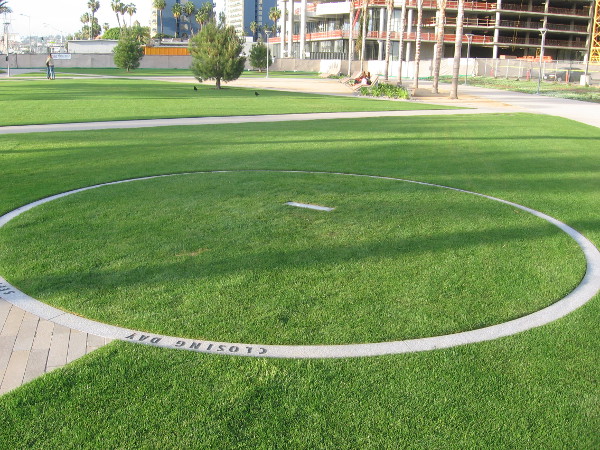
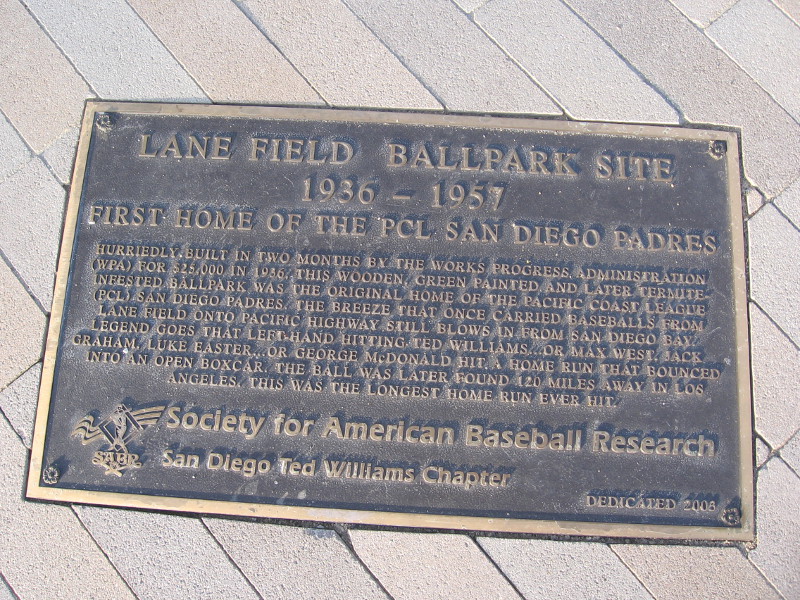
Today, the old location of Lane Field is undergoing another transformation. It soon will feature a new hotel and public park. The 2-acre Lanefield Park includes a small grassy area shaped like a baseball diamond. As I gazed and took photos over the fence, I also noted a monument at home plate and a nearby plaque. Check out the above pic!
Here are two more pics I snapped early this morning…
New grassy park at site of Lane Field, where Pacific Coast League baseball Padres played.Hotel being built next to Lanefield Park on San Diego’s Embarcadero.
Lastly, here’s a pic of a cool mural on 11th Avenue not far from Petco Park, the present home of the Padres. The photo mural shows the construction of Lane Field in 1936. As you can see, the ballfield was located right next to the bay!
East Village street mural shows photo of Lane Field under construction in 1936.
UPDATE! The park, which now seems to be officially called Lane Field Park, is open! Here are some pics…
Lane Field Park is now open on San Diego’s Embarcadero.A small part of the park resembles a baseball diamond with flat pitcher’s mound.Monument and plaque commemorate original Lane Field in downtown San Diego.Legendary player Ted Williams of the Padres advises hitters to get mad.Lane Field Ballpark Site 1936-1957. First home of the PCL San Diego Padres.
…
To enjoy future posts, you can “like” Cool San Diego Sights on Facebook or follow me on Twitter.
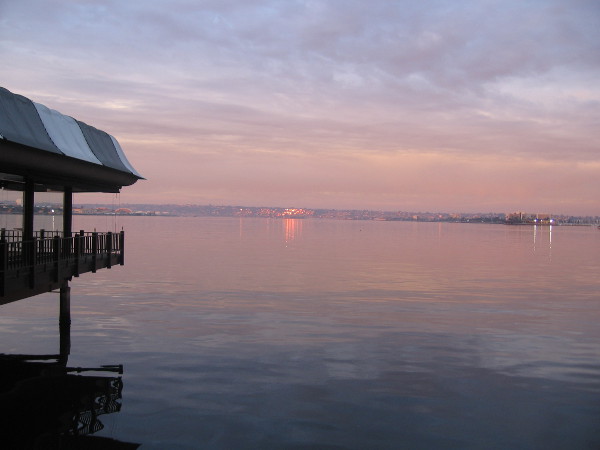
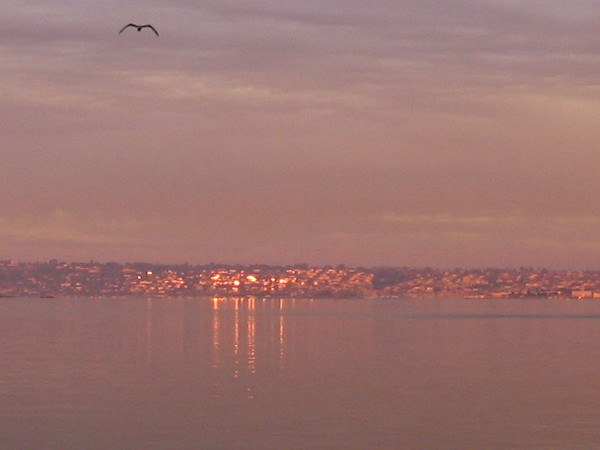
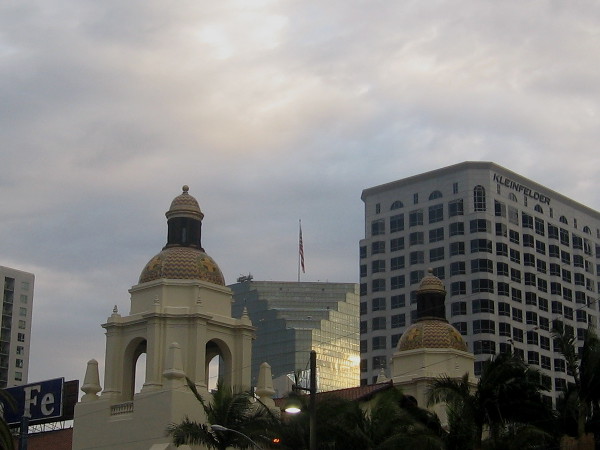
January sunrise tints smooth water of San Diego Bay.
I feel so fortunate to live where I do. Early this morning I walked from Cortez Hill down to the water just to see, feel and breathe in the sunrise.
Morning light reflected jewel-like from many Point Loma windows across San Diego Bay.Sun is about to rise beyond the sleepy USS Midway. Photo taken from the Broadway Pier.Newborn daylight reflects from silvery skyscraper beyond domes of the Santa Fe Depot.As the sun lifts into the sky, birds take flight above palm trees in downtown San Diego.
…
To enjoy future posts, you can “like” Cool San Diego Sights on Facebook, or follow me on Twitter.
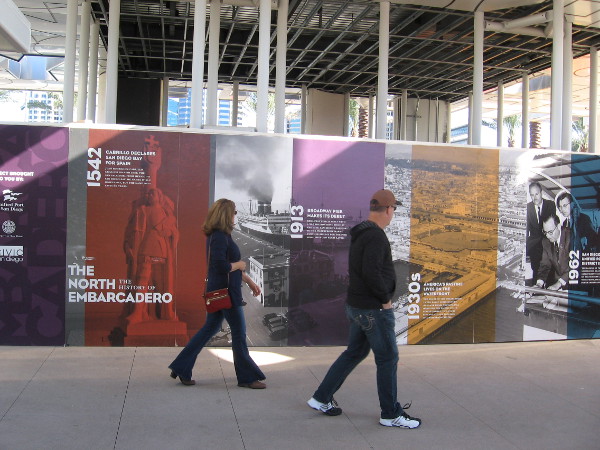
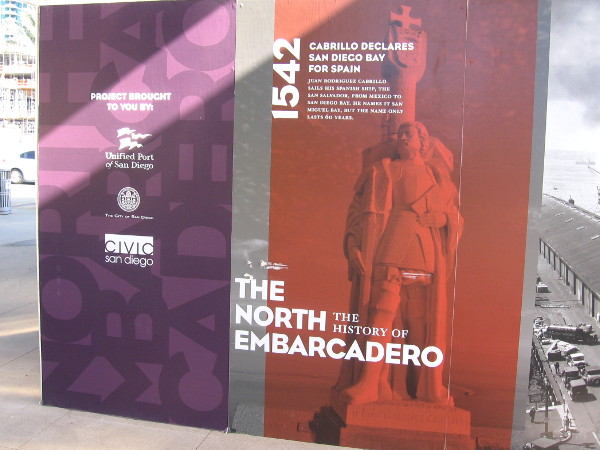
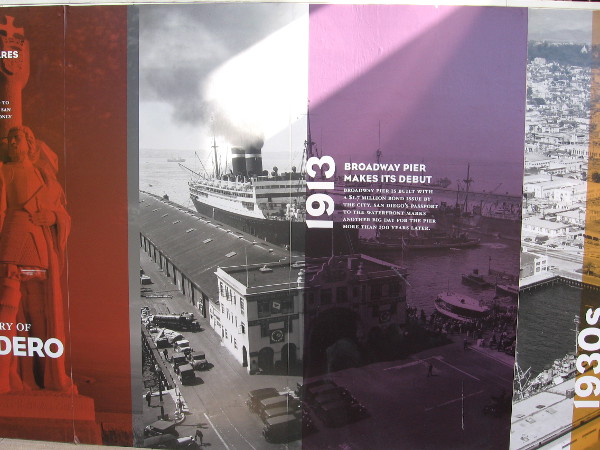
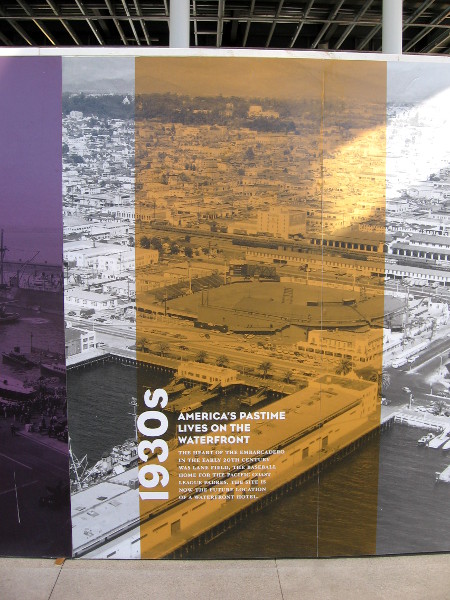
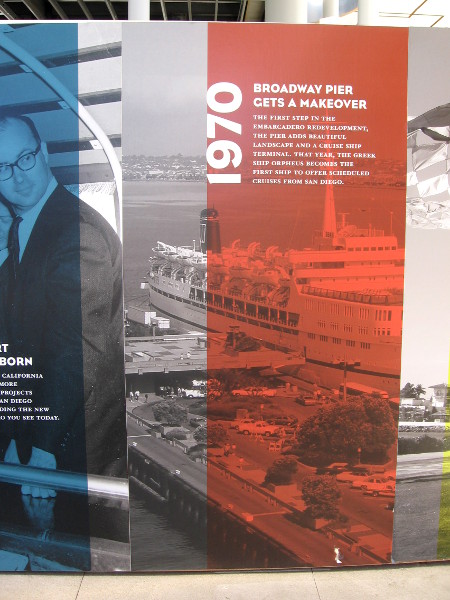
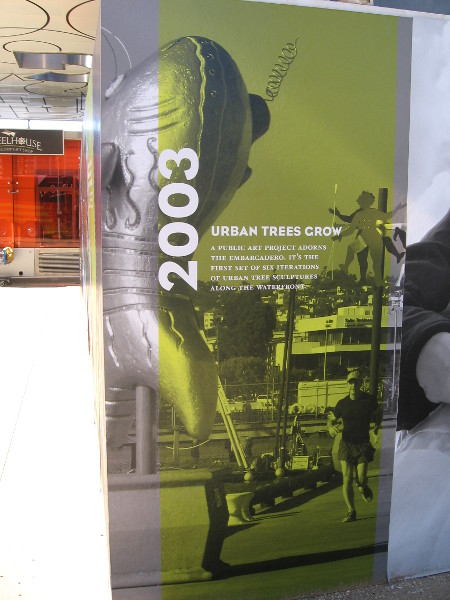
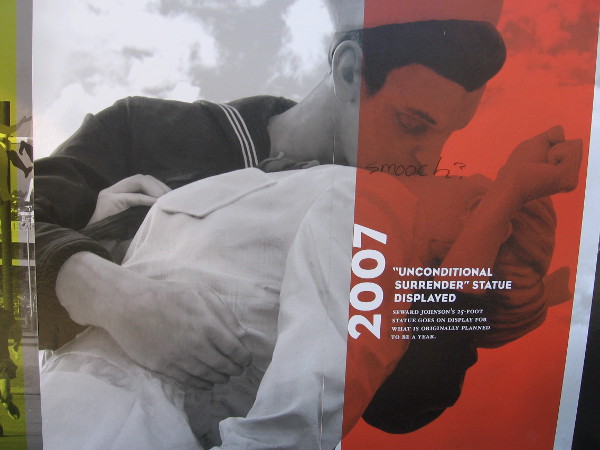
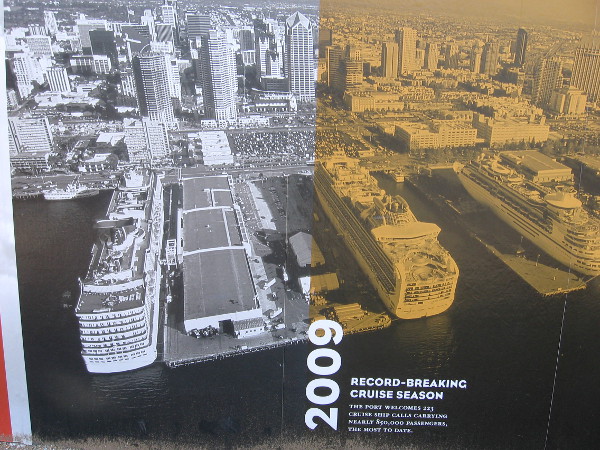
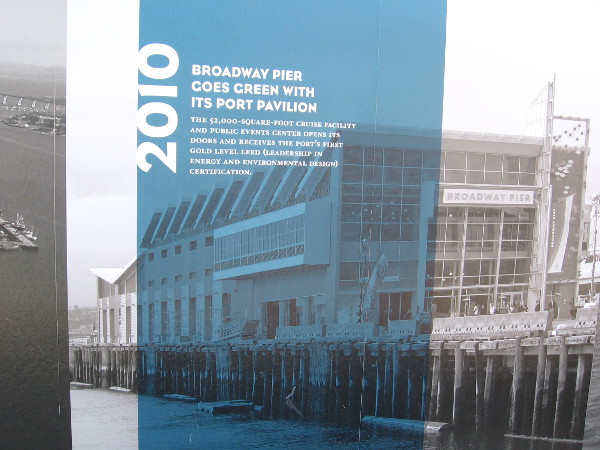
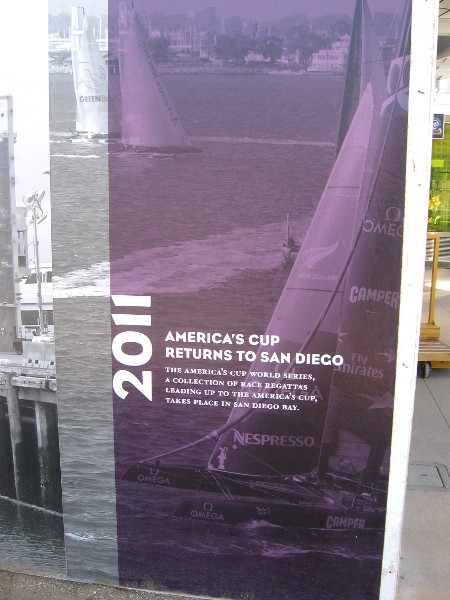
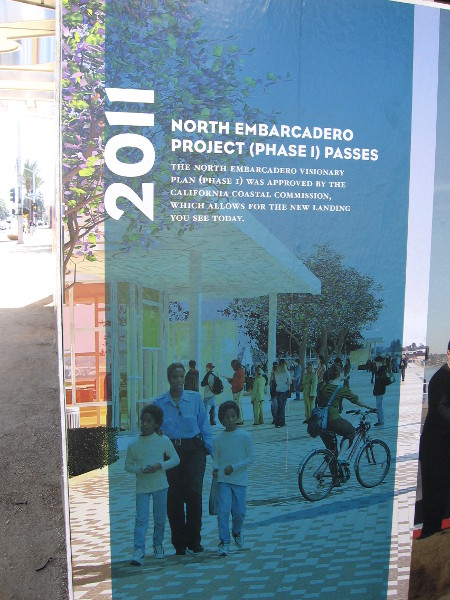
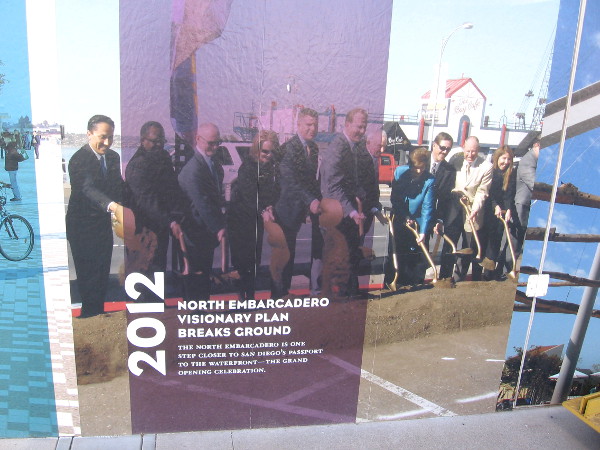
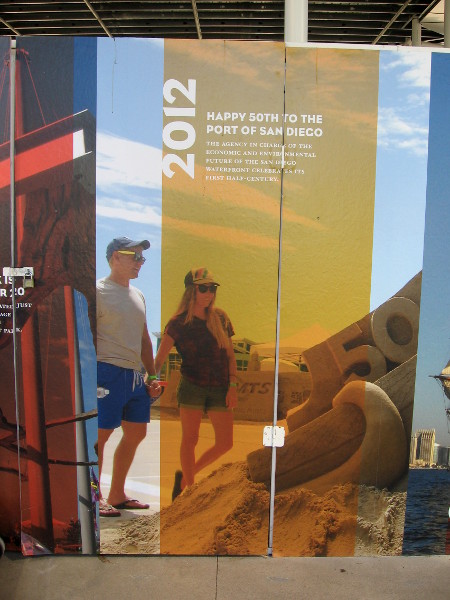
Images around a new pavilion near Broadway Pier show history of the Embarcadero.
San Diego’s Embarcadero has undergone some major renovations. One of the new pavilions still under construction near the Broadway Pier features a large display that provides a timeline of the area’s history. Notable developments along the waterfront through the passing years are documented with historical photographs.
While many of these images concern more recent events, it still makes a fascinating visual time capsule. Here are some pics that I took!
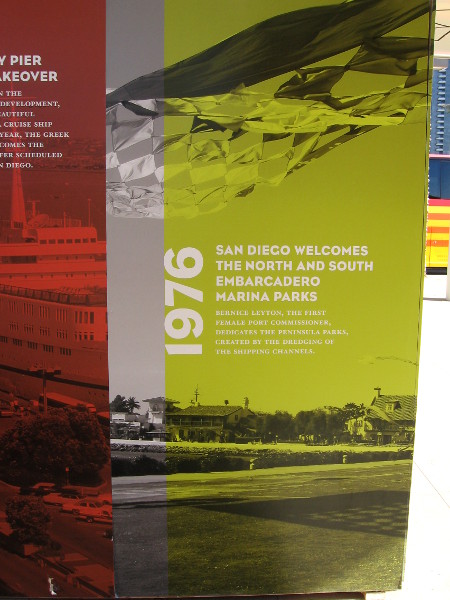
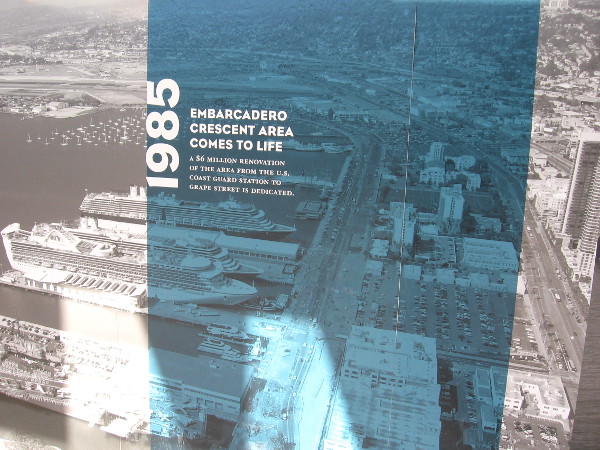
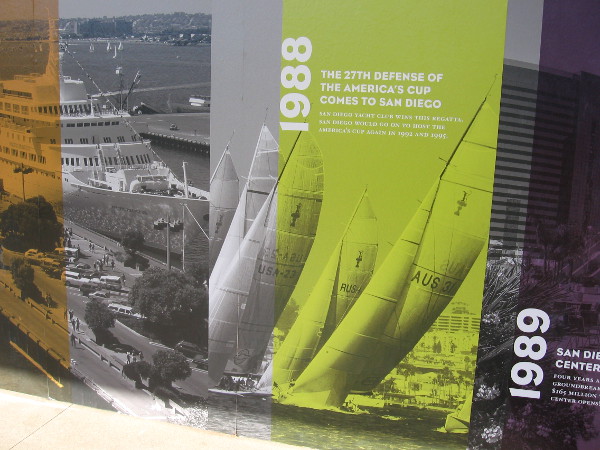
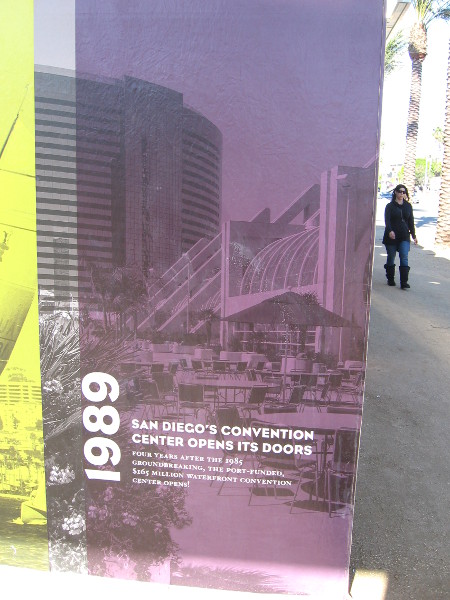
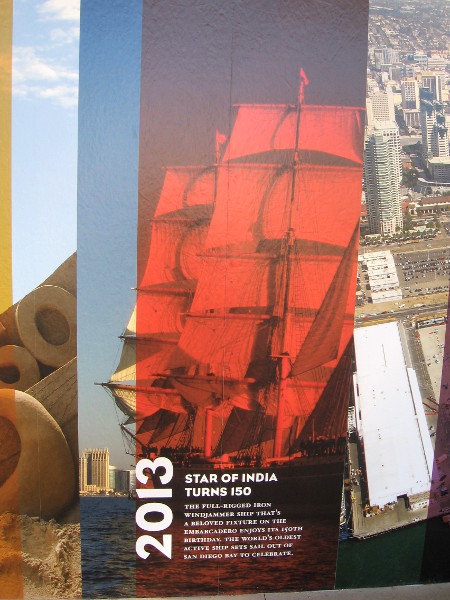
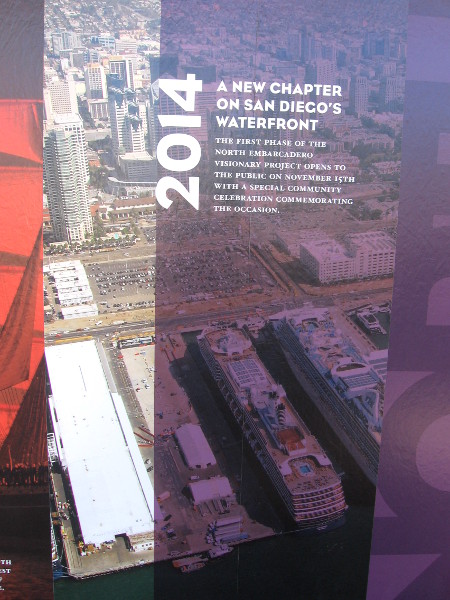
1542: Juan Rodriguez Cabrillo claims San Diego Bay for Spain. He named it San Miguel Bay.1913: San Diego’s Broadway Pier makes its debut. It certainly looks different today!1930s: Baseball played across street. Lane Field was home of Pacific Coast League Padres.1962: San Diego Unified Port District is established.1970: Broadway Pier gets a makeover. A cruise ship terminal is added.1976: North and South Embarcadero Marina Parks are dedicated.1980: Seaport Village becomes the newest San Diego attraction.1985: North Embarcadero’s Crescent area renovated.1985: Princess Cruises bases its “Love Boat” in San Diego.1988: San Diego Yacht Club successfully defends America’s Cup.1989: San Diego Convention Center opens.2003: First of six Urban Trees art exhibits along the Embarcadero.2007: Seward Johnson’s Unconditional Surrender statue goes on display near USS Midway.2009: A record-breaking cruise ship season!2010: Port Pavilion opens on Broadway Pier. It’s been over four years already? Time flies!2011: America’s Cup World Series regatta takes place on San Diego Bay.2011: North Embarcadero Project (Phase 1) passes.2012: North Embarcadero Visionary Plan breaks ground nearby.2012: Ruocco Park immediately north of Seaport Village is dedicated.2012: Port of San Diego is 50 years old.2013: San Diego’s historic Star of India tall ship turns 150 years old.2014: Lots of cool waterfront improvements opened, including this pavilion!
…
To enjoy future posts, you can “like” Cool San Diego Sights on Facebook, or follow me on Twitter.













































 Cool San Diego Sights!