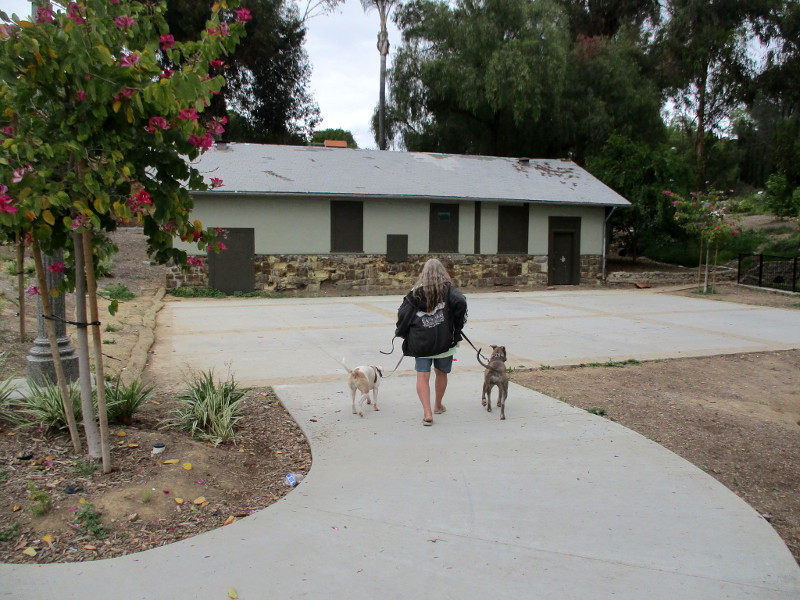
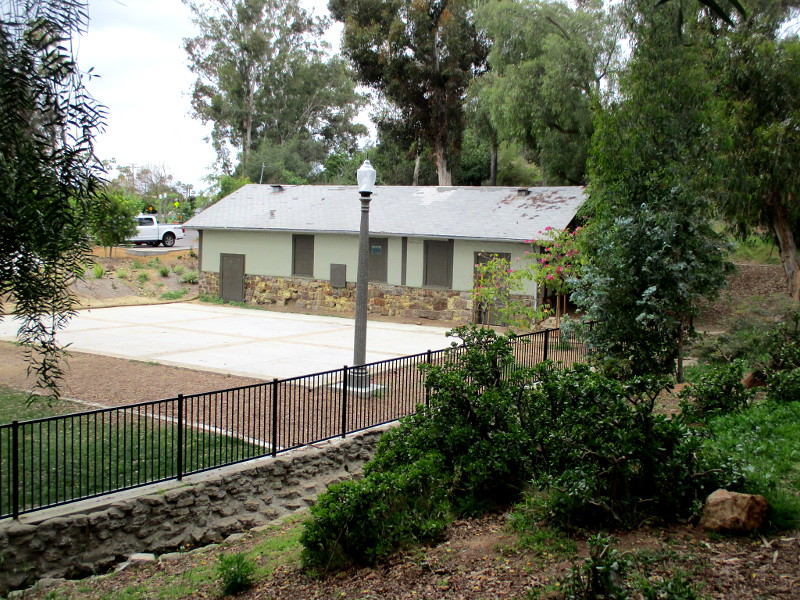
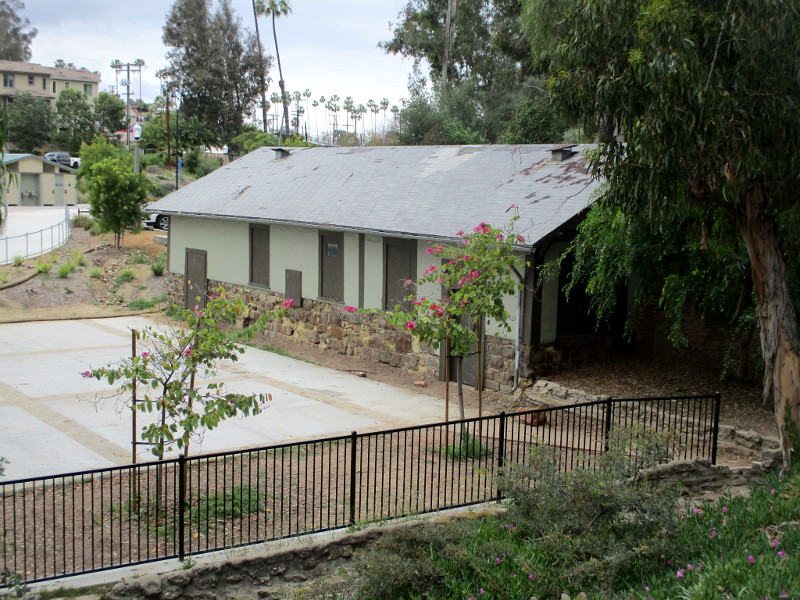
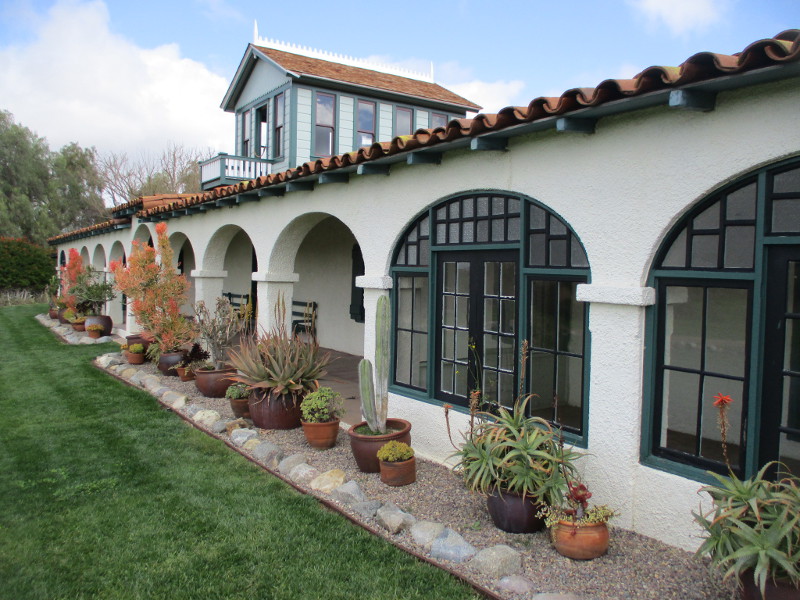
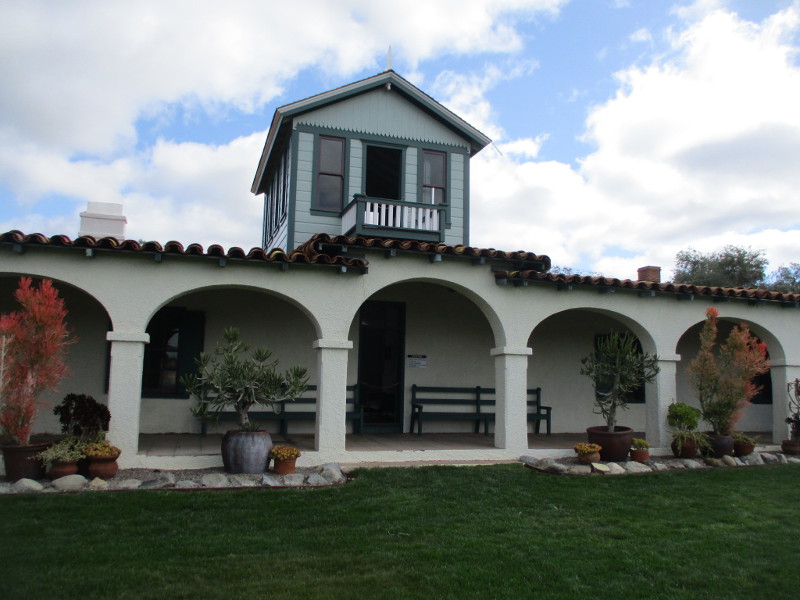
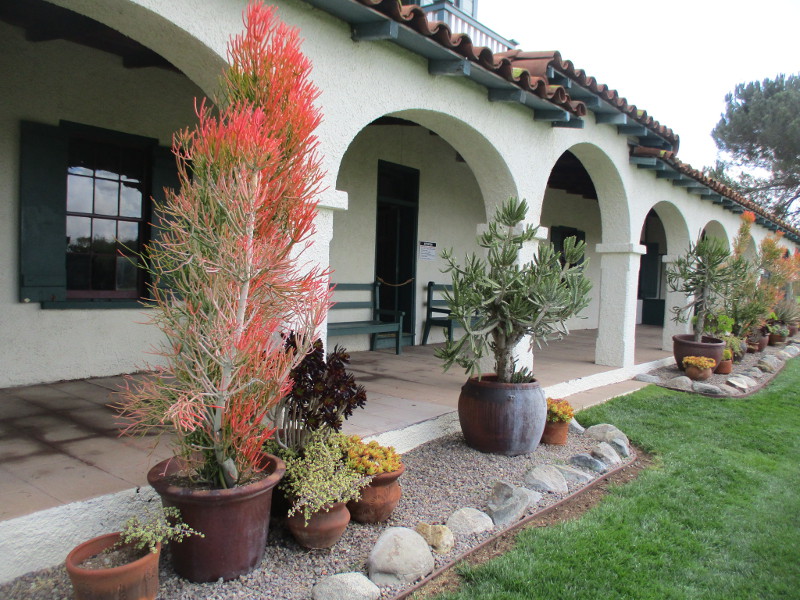
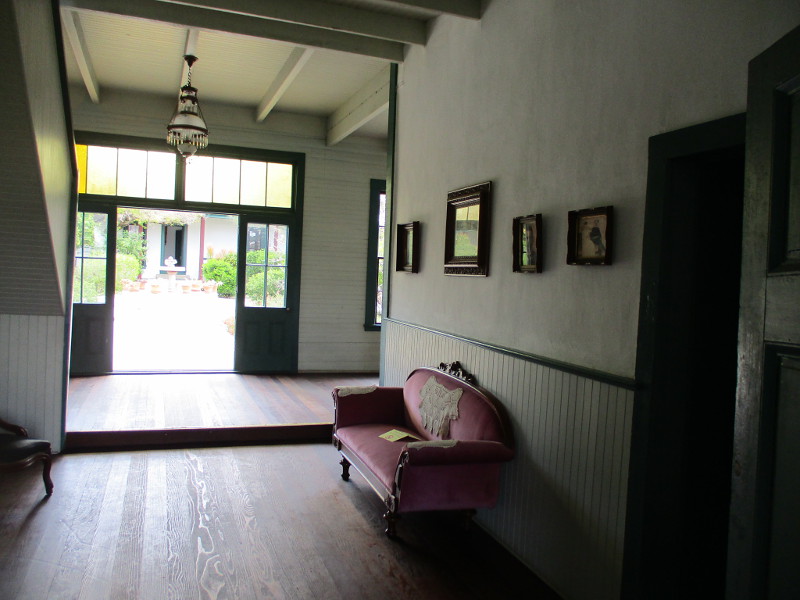
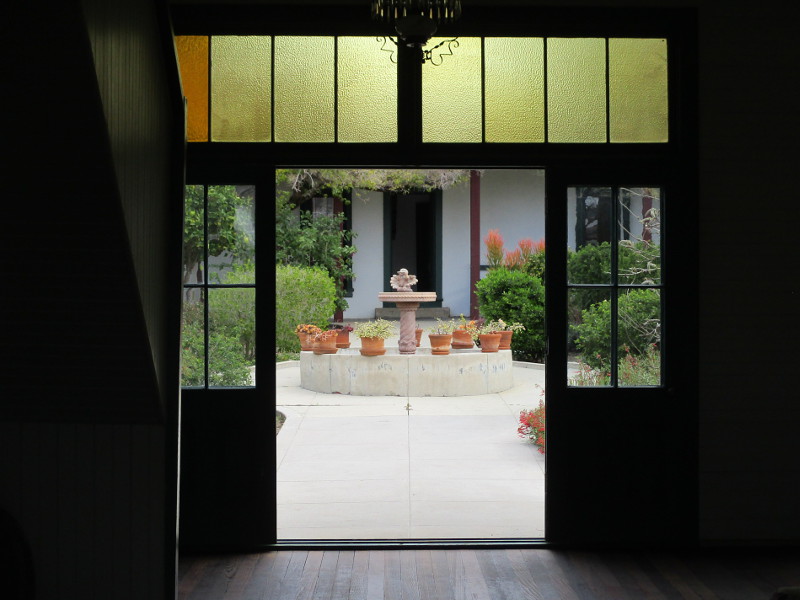
I asked a gentleman at the La Mesa Community Center if there were interesting places to visit in the neighborhood, and was told about Collier Park and its Spring House. He told me the historical house was undergoing restoration. Curious, I headed over to investigate.
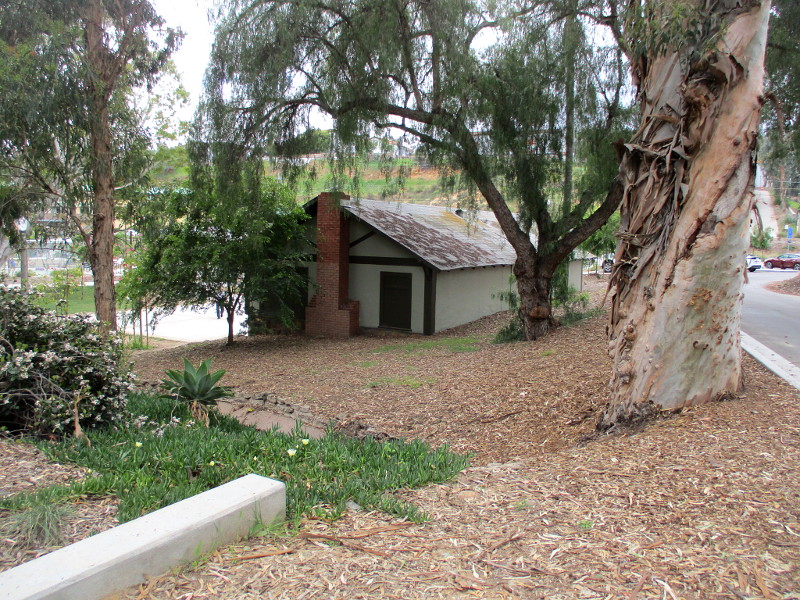
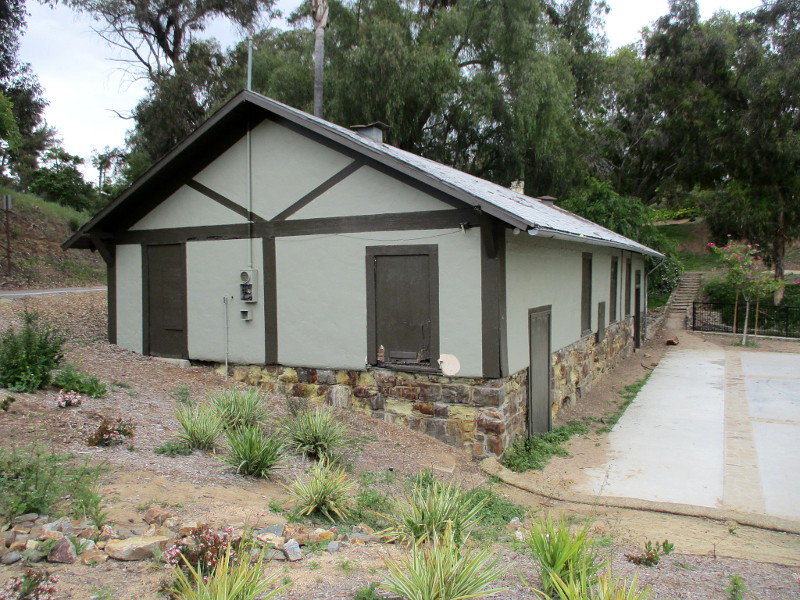
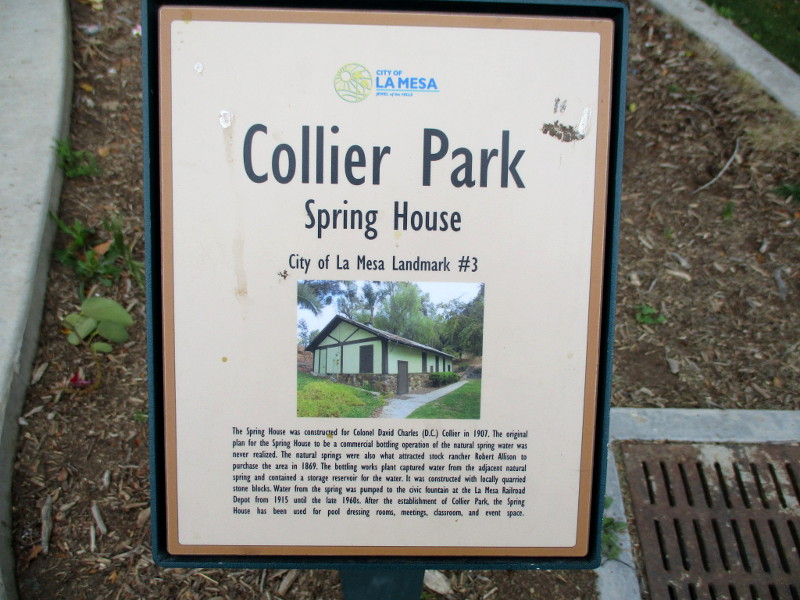
I walked around the somewhat dilapidated old Spring House and found a sign that describes its history. I was surprised to learn about the origin of the name Spring Street–an important nearby street that runs through downtown La Mesa.
Collier Park – Spring House – City of La Mesa Landmark #3
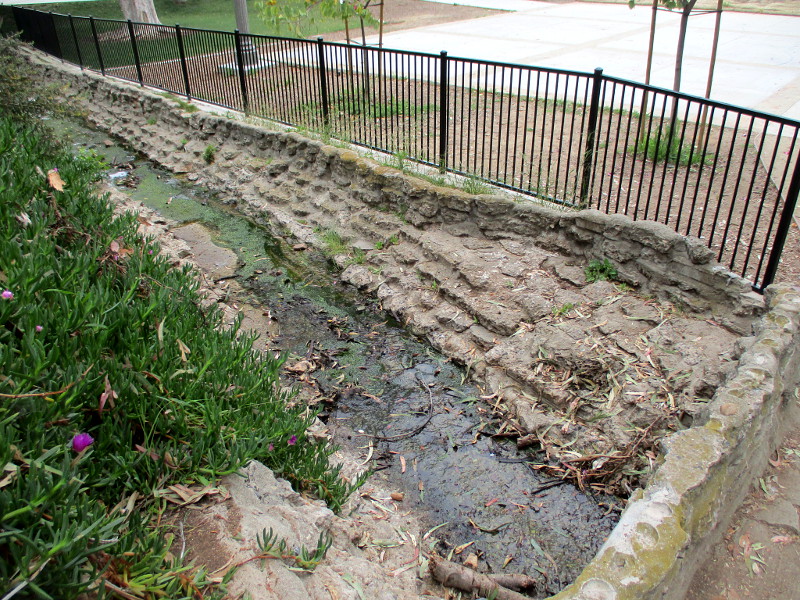
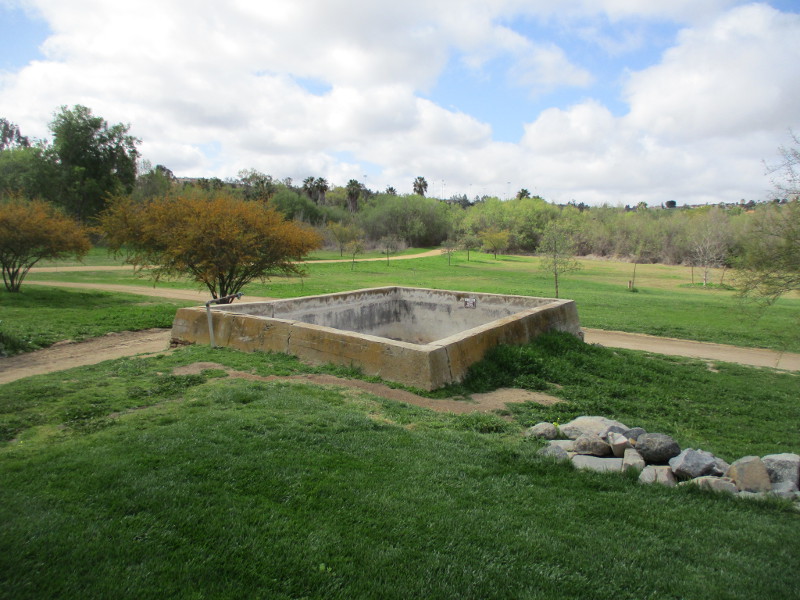
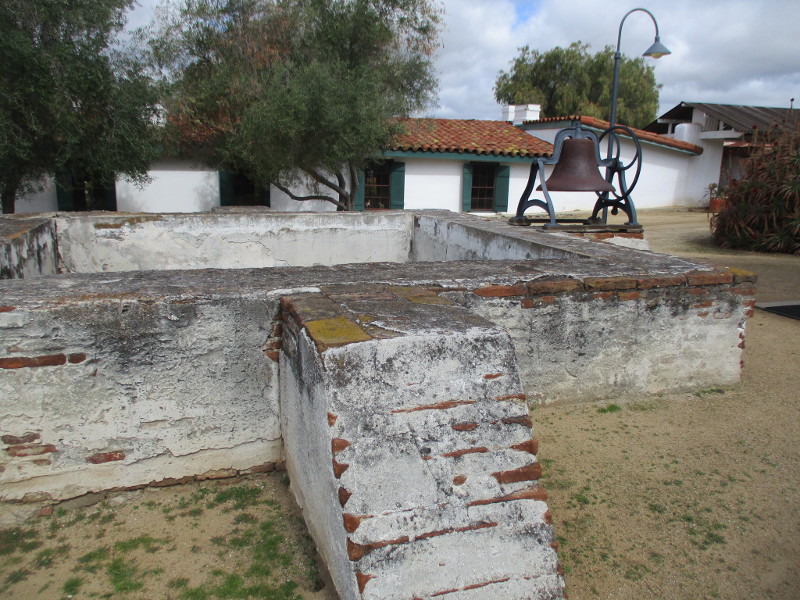
The Spring House was constructed for Colonel David Charles (D.C.) Collier in 1907. The original plan for the Spring House to be a commercial bottling operation of the natural spring water was never realized. The natural springs were also what attracted stock rancher Robert Allison to purchase the area in 1869. The bottling works plant captured water from the adjacent natural spring and contained a storage reservoir for the water. It was constructed with locally quarried stone blocks. Water from the spring was pumped to the civic fountain at the La Mesa Railroad Depot from 1915 until the late 1960s. After the establishment of Collier Park, the Spring House has been used for pool dressing rooms, meetings, classroom and event space.
…
I post new blogs pretty often. If you like discovering new things, bookmark coolsandiegosights.com and swing on by occasionally!
I live in downtown San Diego and love to walk around with my camera! You can follow Cool San Diego Sights via Facebook or X.
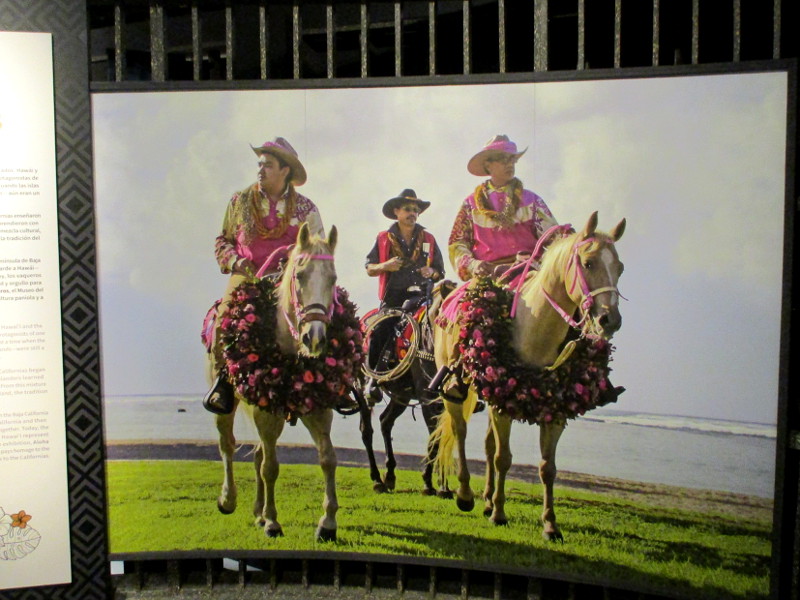
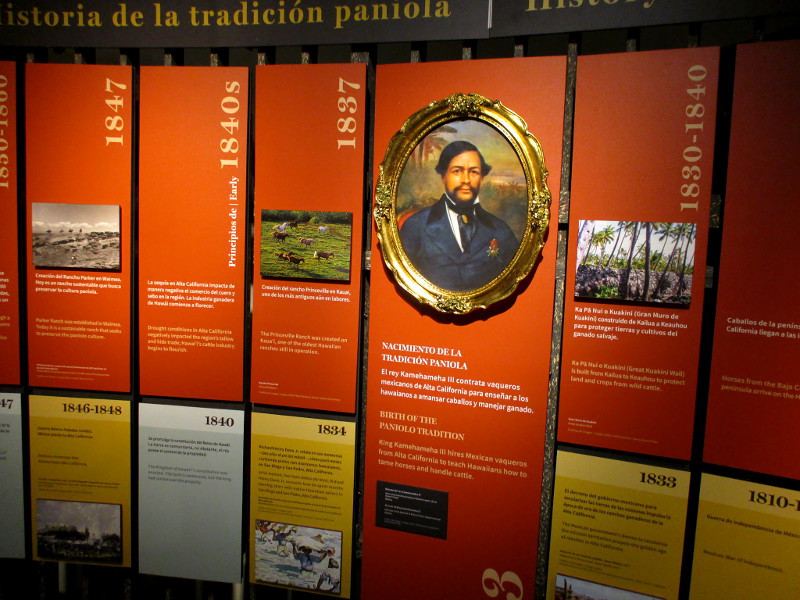
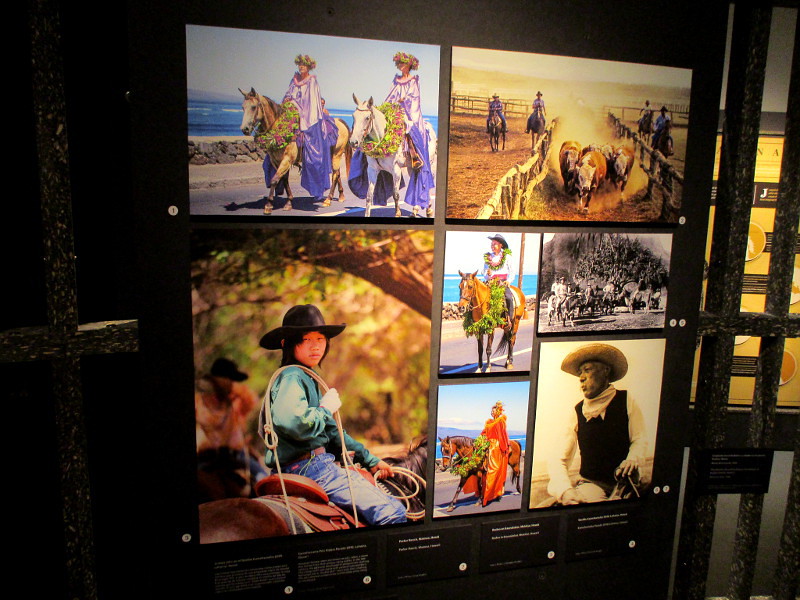
Did you know Hawaii has it own unique cowboy culture? Hawaiian cowboys are called paniolos. You might be surprised to learn that the origin of paniolos in Hawaii has a direct connection to San Diego’s early history, when our nascent city was part of Mexico and cattle ranches flourished!
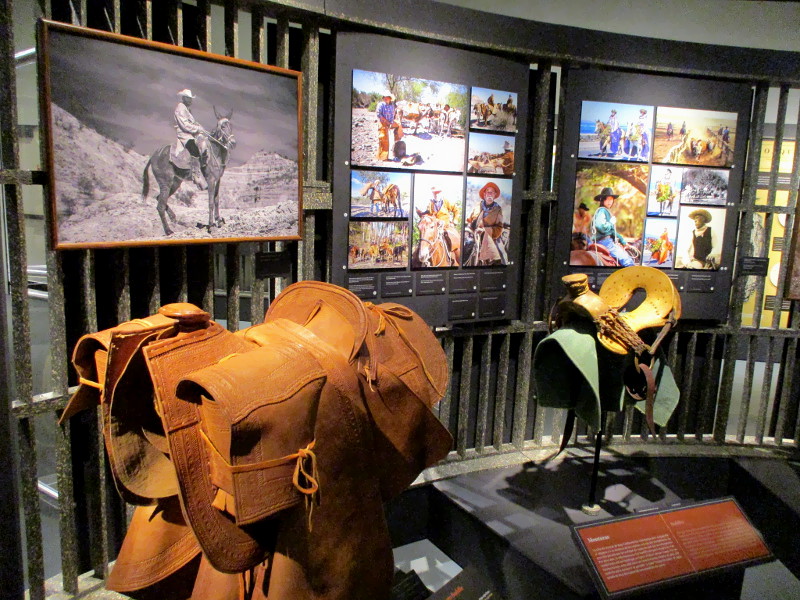
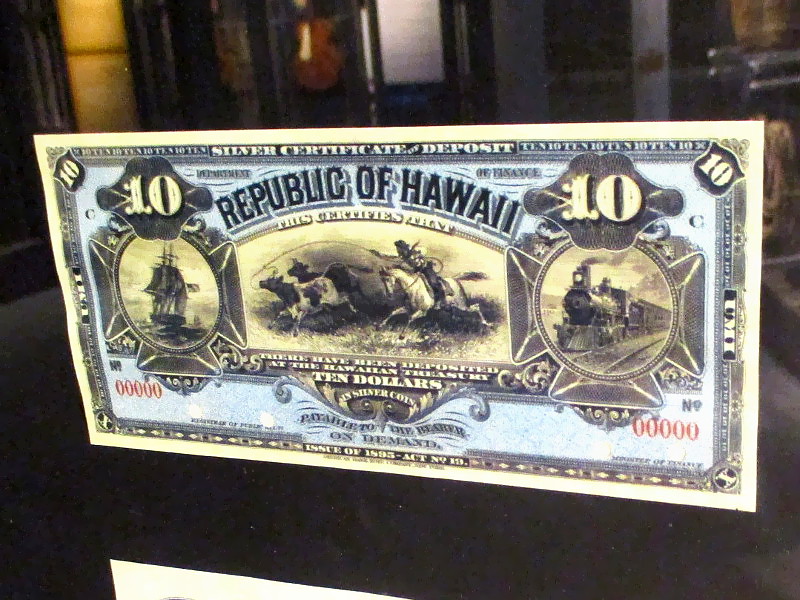
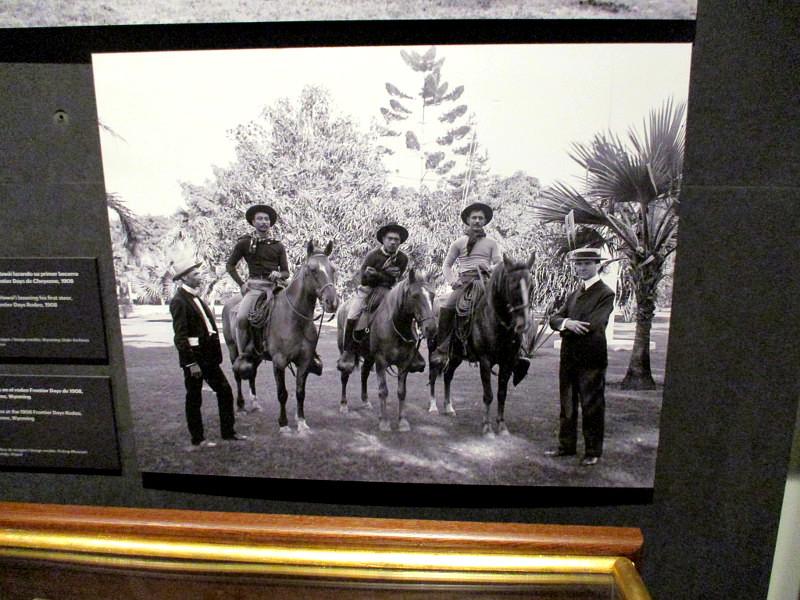
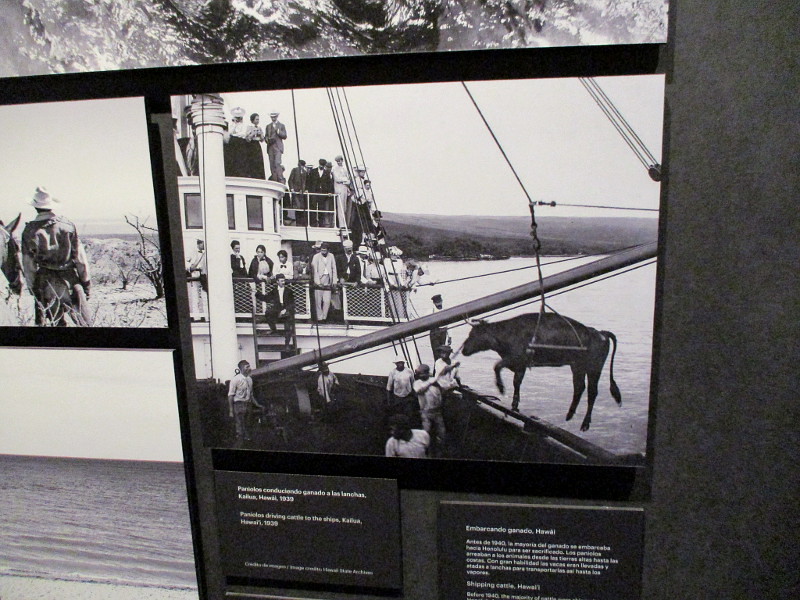
An extensive new exhibit at the San Diego History Center in Balboa Park has the unusual title Aloha Vaqueros. It recalls how several Mexican vaqueros (cowboys) from San Diego moved to Hawaii to help control an exploding population of cattle!
I’ve read Richard Henry Dana Jr.’s Two Years Before the Mast, and I do remember how sailors from the Sandwich Islands (later called Hawaii) participated in the cattle hide trade up and down California’s coast. Several Sandwich Islanders also lived on the beach near the hide houses in Point Loma at La Playa.
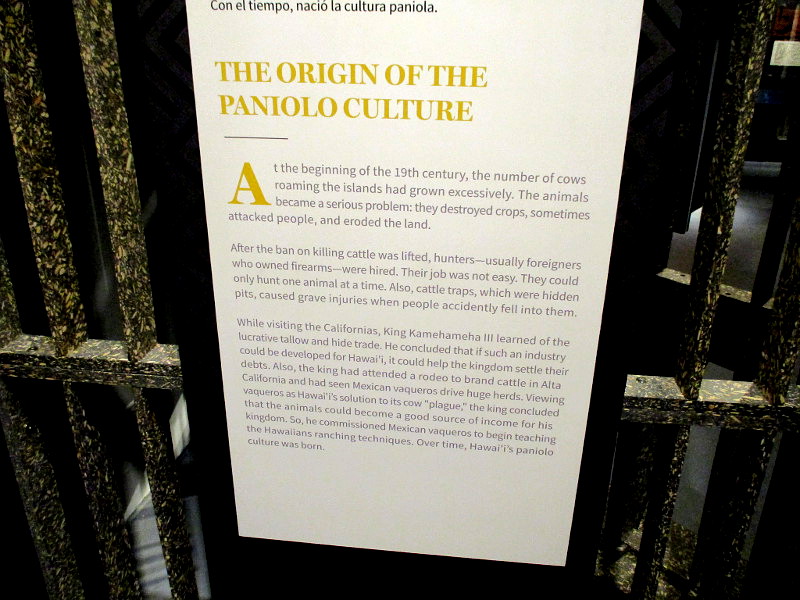
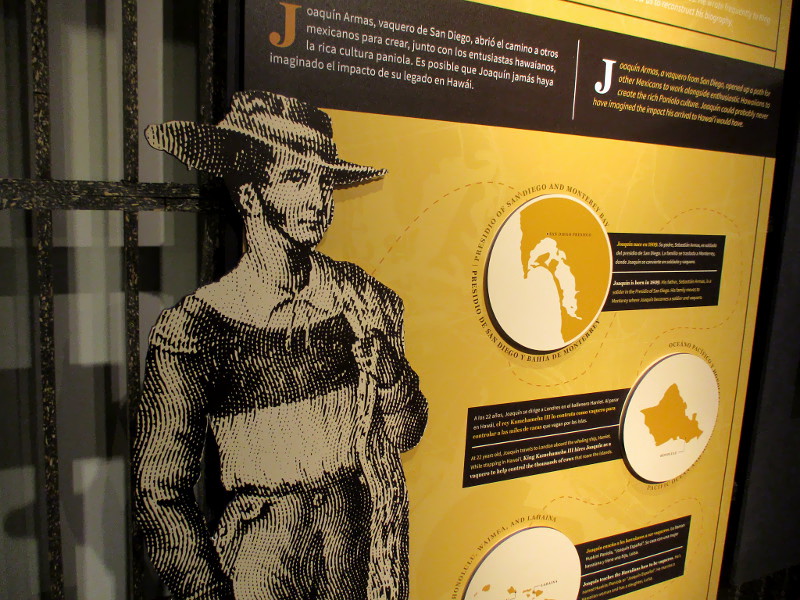
I was unaware, however, that in the early 1830s, Joaquín Armas, a soldier and vaquero born at Mission San Diego de Alcalá, was hired by Hawaiian King Kamehameha III as an advisor on how to control thousands of wild cattle that had multiplied on the islands. Armas would then recruit three other Mexican vaqueros from the San Diego region, helping to establish vaquero traditions in Hawaii!
The thousands of environmentally destructive wild cattle had descended from long-horned cattle that were given by British Captain George Vancouver to King Kamehameha I in 1793. The wild cattle, evading hunters and traps, came under control about half a century later as vaquero-inspired ranches popped up on Hawaii’s islands. The cattle were valuable for the tallow and hide trade. Skilled ropers and riders were in demand, so many native Hawaiians would learn cowboy skills!
The paniolo experience would eventually become ingrained in Hawaiian culture. Take music, for example. One important development was Hawaiian open-tuning for the guitar called kihoʻalu, or slack-key.
Why are Hawaiian cowboys called paniolos? One theory is that the word is derived from español–the language spoken by the Mexican vaqueros.
If this very unique history fascinates you, go visit the San Diego History Center!
A few photos to provide a taste…
…
I post new blogs pretty often. If you like discovering new things, bookmark coolsandiegosights.com and swing on by occasionally!
I live in downtown San Diego and love to walk around with my camera! You can follow Cool San Diego Sights via Facebook or X.
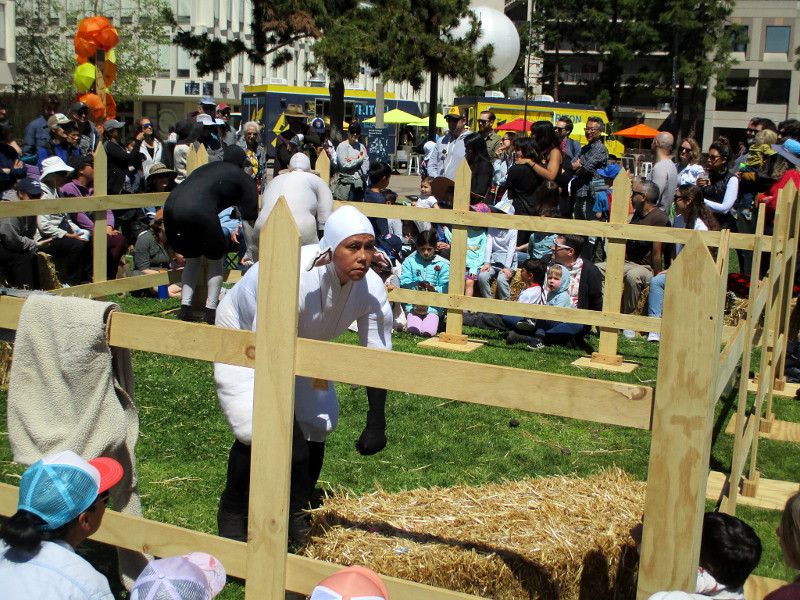
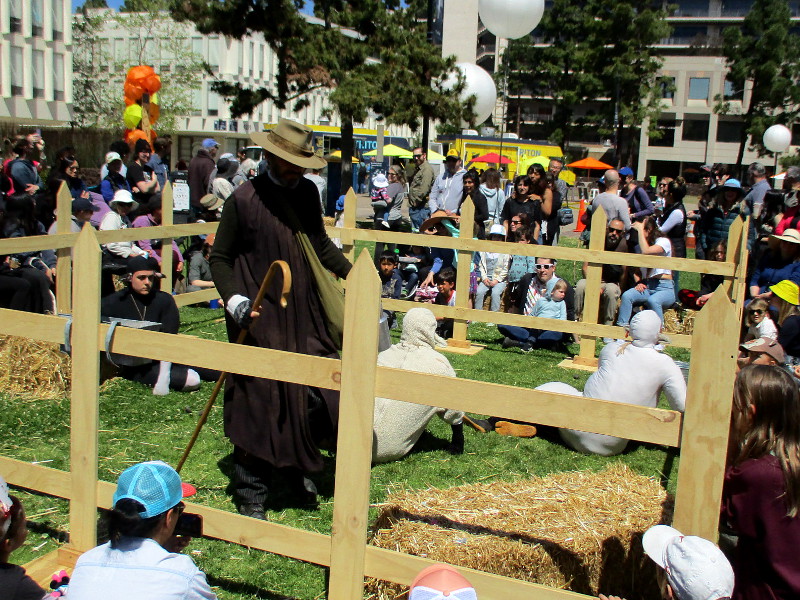
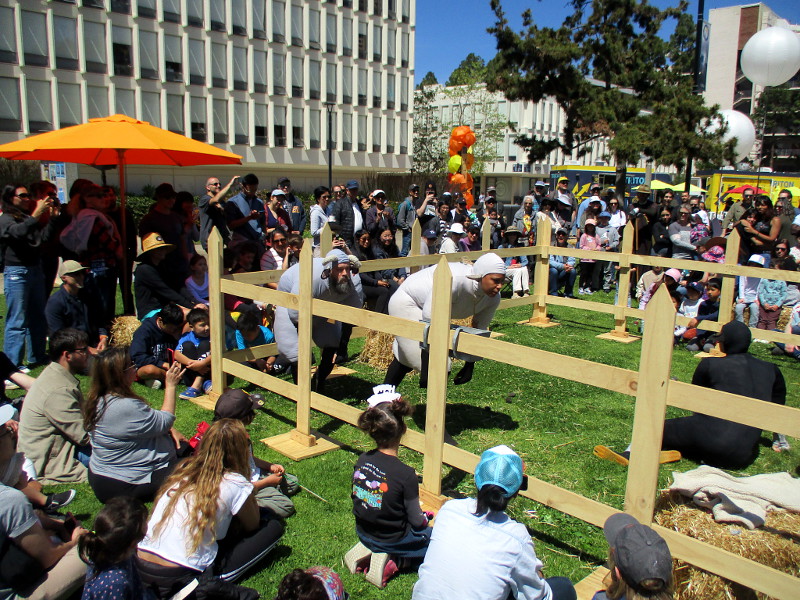
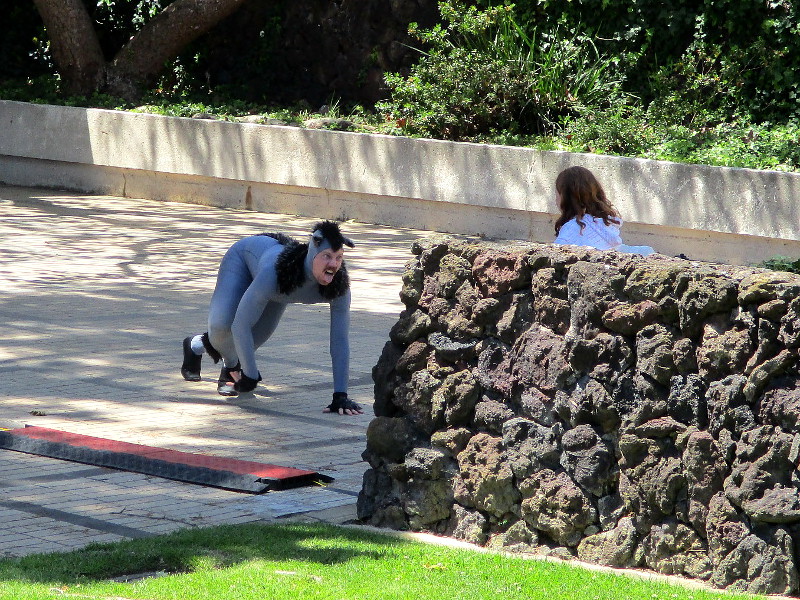
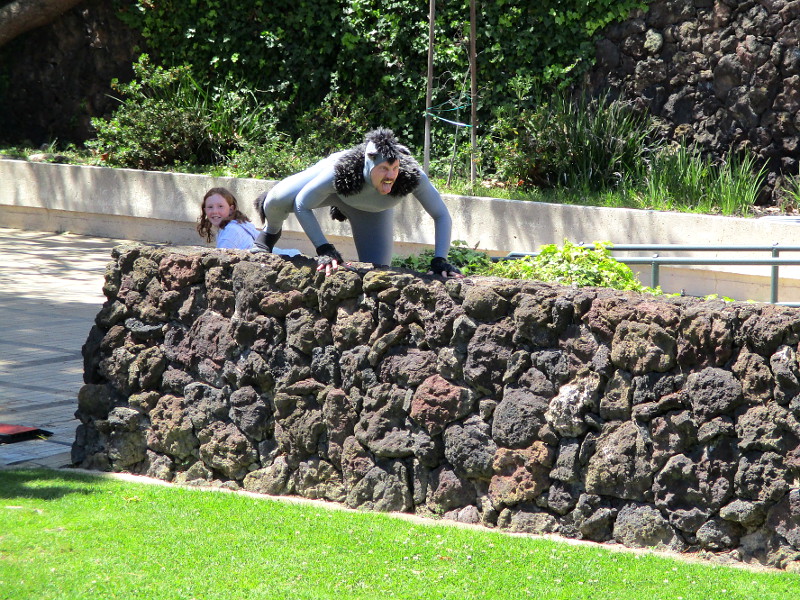
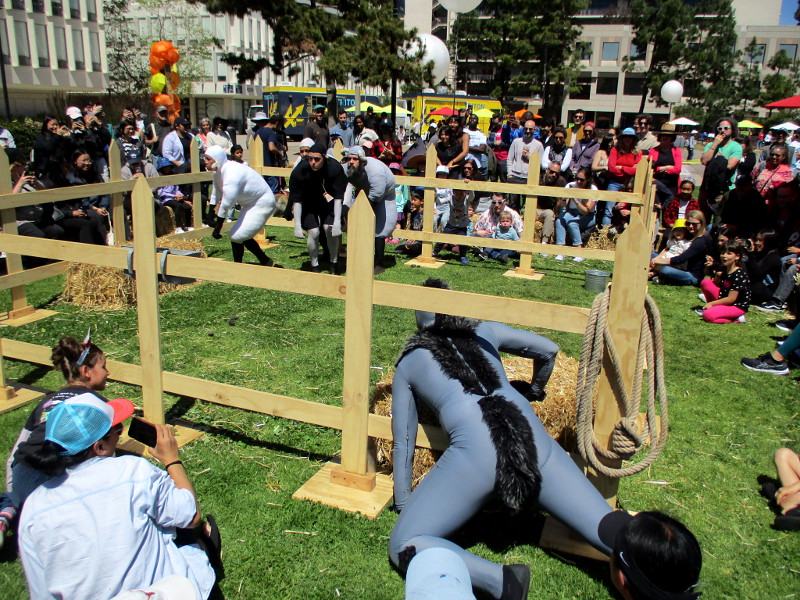
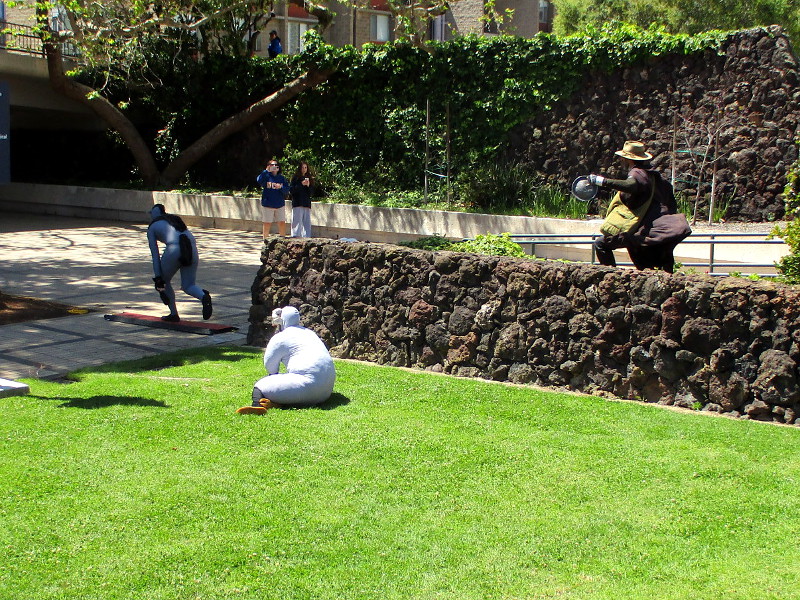
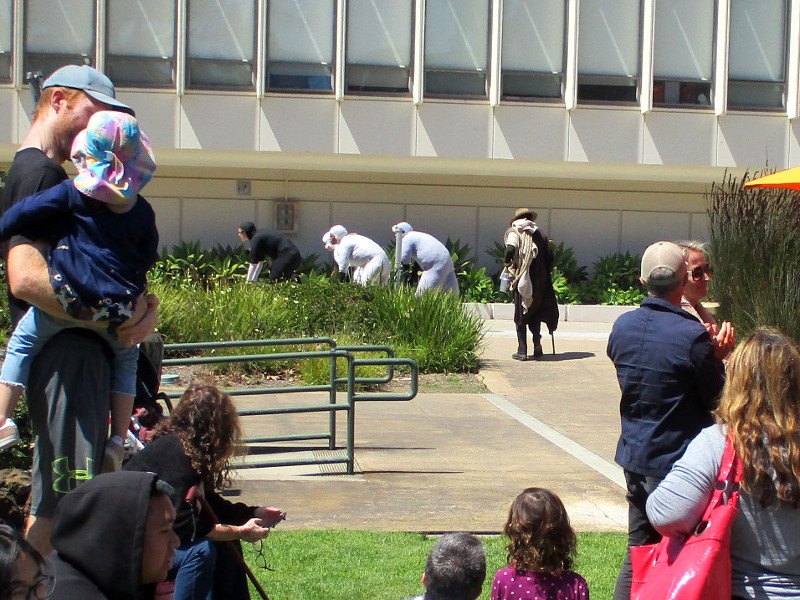
A pen full of vulnerable sheep was attacked today in La Jolla. A wolf somehow infiltrated the UC San Diego campus and made its way to the small sheep pen at Revelle Plaza, where the terrified, trembling sheep were saved by a shepherd, who chased the wolf away.
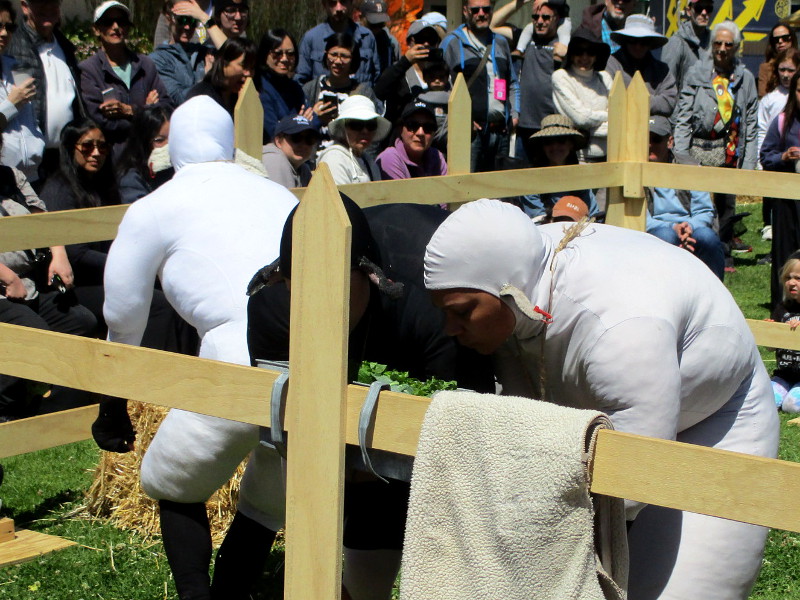
Onlookers clapped as the wolf slinked away. That’s because they’d just witnessed a unique, often funny performance of Les moutons by Canadian company CORPUS. The strange act was part of this weekend’s La Jolla Playhouse 2024 WOW Festival!
The sheep might have been sheepish, but they did entertain the crowd with their dull stares, herd mentality, their shearing, milking and feeding sessions, and a couple of natural but unspeakable animal behaviors!
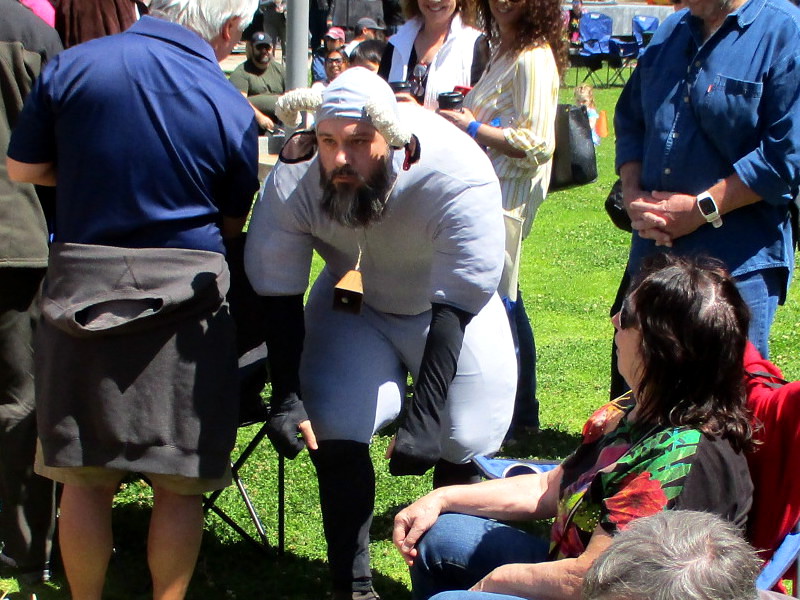
Here comes a ram through the astonished crowd? What does it want?
A howl was heard in the distance. Then…
Panic! Chaos! (My camera wasn’t fast enough.)
…
Thanks for visiting Cool San Diego Sights!
I post new blogs pretty often. If you like discovering new things, bookmark coolsandiegosights.com and swing on by occasionally!
I live in downtown San Diego and love to walk around with my camera! You can follow Cool San Diego Sights via Facebook or X (formerly known as Twitter)!
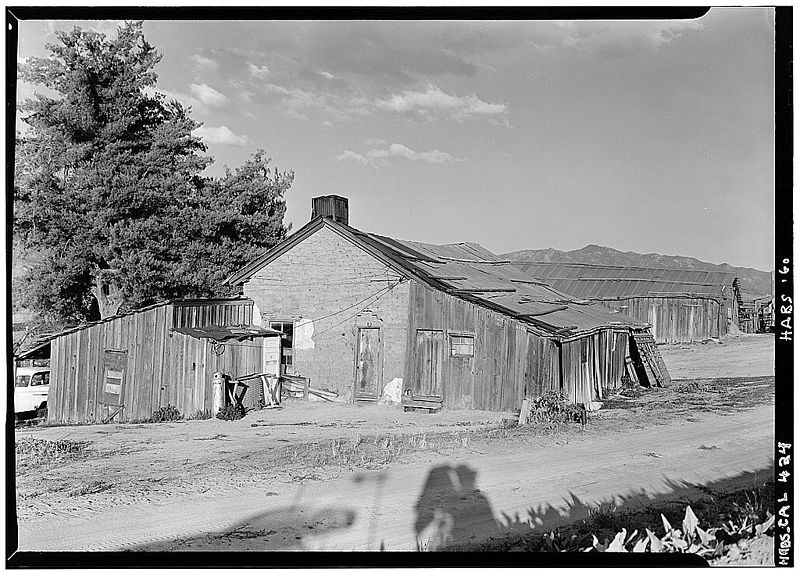
Warner’s Ranch — West Elevation of Ranch House. 1960. Historic American Buildings Survey. Public domain image courtesy Wikimedia Commons.
Anyone interested in the history of San Diego and the surrounding region should visit the Warner-Carrillo Ranch House near Warner Springs. If you can’t, there’s an online exhibit filled with photographs and detailed information concerning this National Historic Landmark, including its construction in 1857, its fascinating history and restoration.
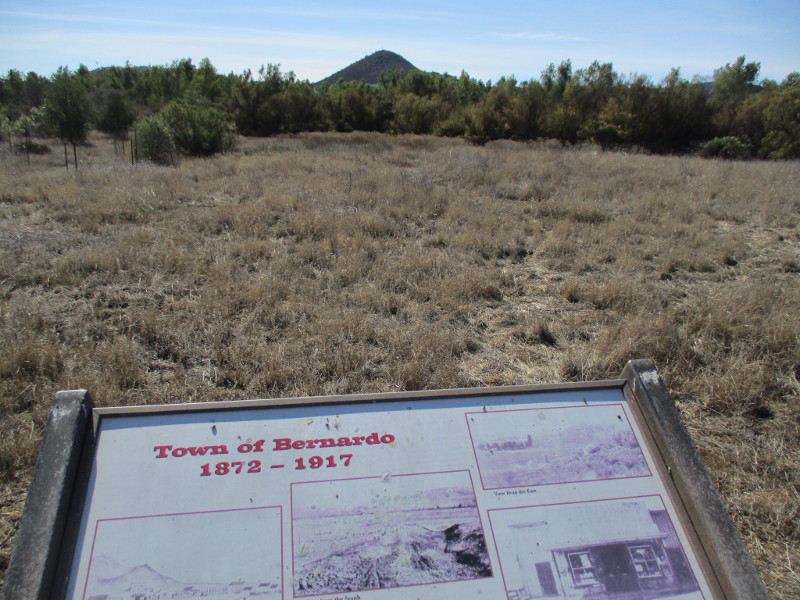
Did you know there used to be a town named Bernardo in what is now San Diego’s North County?
Bernardo was a tiny town between Escondido and Rancho Bernardo, where Lake Hodges is located today.
The creation of Lake Hodges in 1918, accomplished by damming the Bernardo River (now called San Dieguito River), put a definite end to little Bernardo. But today people hiking the Mule Hill Trail can see several information signs that recall the history of the now vanished town.
If you’d like to walk down the Mule Hill Trail yourself, take Interstate 15 to Bear Valley Parkway at the south end of Escondido. The wide dirt trail can be found about a quarter mile east of the freeway, leading south. (You’ll see it right before Beethoven Drive.)
Before reaching the site of old Bernardo, this very easy trail passes Mule Hill, where a skirmish took place during the Mexican-American War. I’ll be blogging about that coming up.
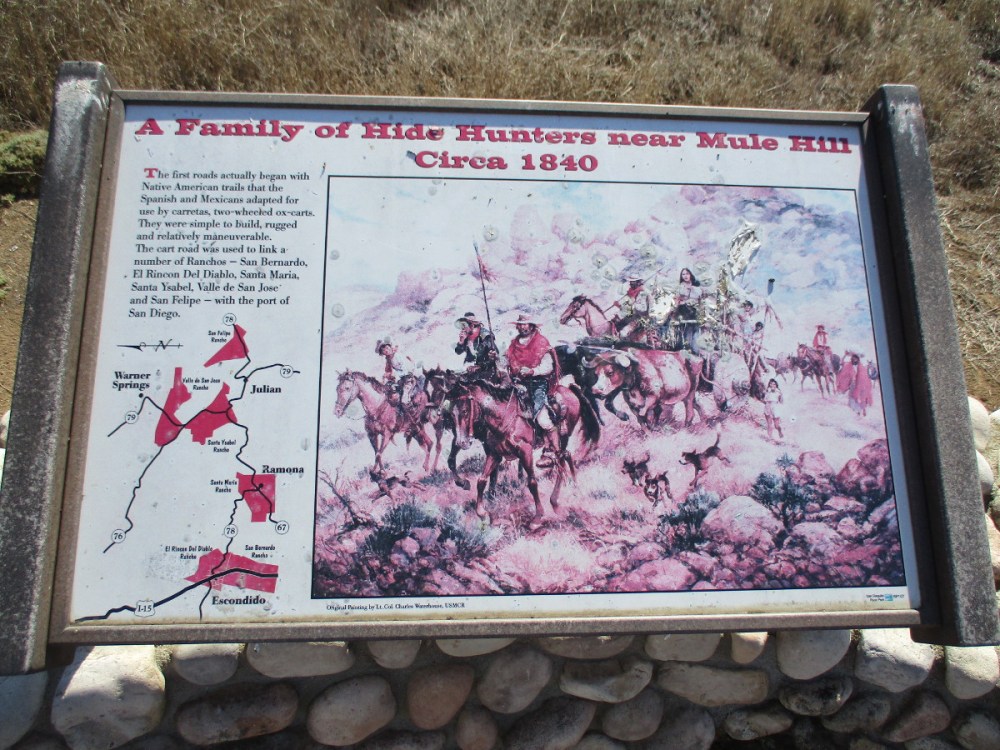
Cart roads used by the Spanish and Mexicans before the appearance of Bernardo linked a number of Ranchos–San Bernardo, El Rincon, Del Diablo, Santa Maria, Santa Ysabel, Valle de San Jose and San Felipe–with the port of San Diego.
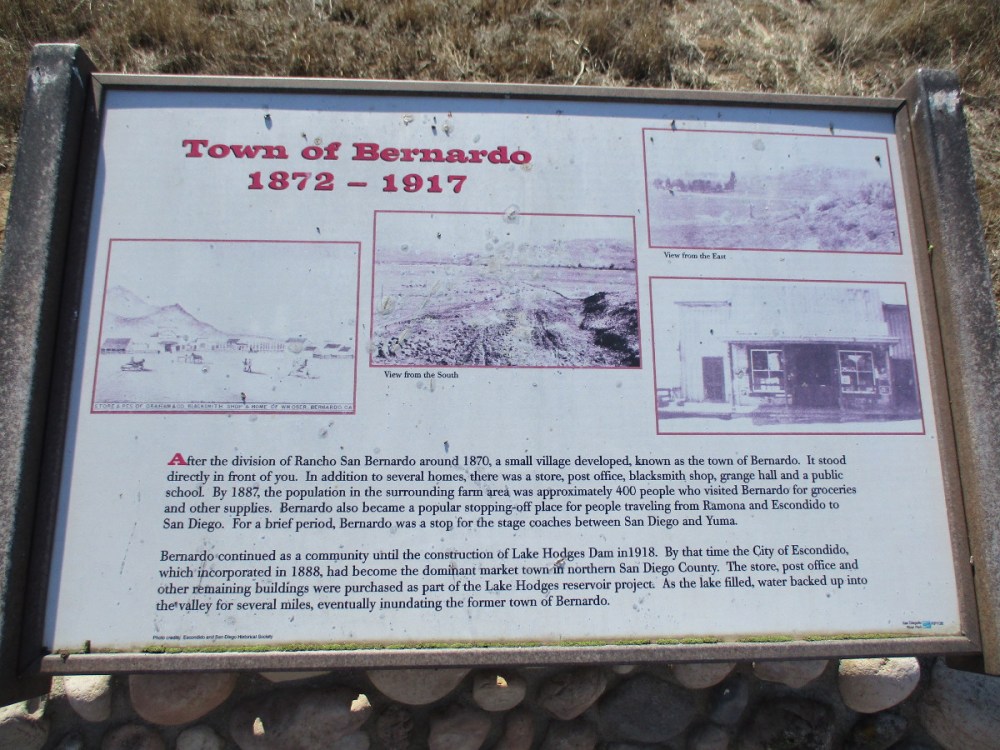
After the division of Rancho San Bernardo around 1870, a small village developed, known as the town of Bernardo. In addition to several houses, there was a store, post office, blacksmith shop, grange hall and public school. By 1887, the population in the surrounding farm area was approximately 400 people…
For a brief period, Bernardo was a stop for the stagecoaches between San Diego and Yuma.
The San Diego to Yuma Road was an overland trail in the mid-1800s. It was used by the Army of the West in 1846 and gold rush immigrants from 1848 through 1851. It passed through tiny Bernardo as it led northeast from Peñasquitos to Ramona, eventually connecting with the Butterfield Stage Route at Warner Springs.
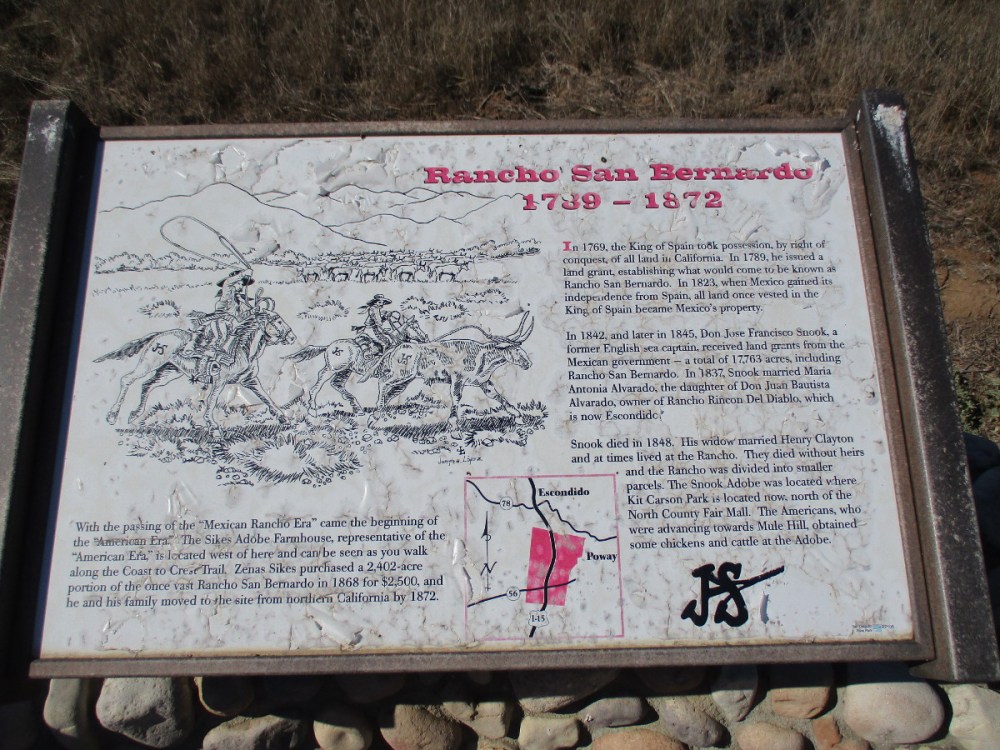
The history of Rancho San Bernardo began in the late 18th century when the King of Spain took possession of all land in California. In 1823, when Mexico gained its independence, the land became Mexico’s property. Don Jose Francisco Snook, a former English sea captain, received land grants from the Mexican government, including Rancho San Bernardo…
With the passing of the Mexican rancho era came the beginning of the American era, which is represented by the nearby Sikes Adobe Farmhouse. The restored farmhouse is a historic site that one can visit a short distance down the Coast to Crest Trail. (The Mule Hill Trail is a segment of the Coast to Crest Trail.)
…
Thanks for visiting Cool San Diego Sights!
I post new blogs pretty often. If you like discovering new things, bookmark coolsandiegosights.com and swing on by occasionally!
I live in downtown San Diego and love to walk around with my camera! You can follow Cool San Diego Sights via Facebook or Twitter!
At first glance, you might not believe this building is almost 130 years old. That’s because it appears much different today than it did originally.
During my last walk around La Mesa, I learned this is La Mesa’s oldest standing commercial building!
It’s interesting to compare the old photograph on the La Mesa Historical Society plaque with the building one sees today.
The La Mesa Lemon Company Store building is located at the corner of La Mesa Boulevard and Nebo Drive.
La Mesa Lemon Company Store, circa 1895
Opened adjacent to the La Mesa Springs rail station in 1895, the Lemon Company’s impressive building was the first to supply local settlers and ranchers. La Mesa’s oldest standing commercial building, it was expanded south in 1912. Charter La Mesa Rotary Club member Lawrence Washburn remodeled the building for the city’s first Ford automobile dealership in 1923.
Take a close look at the signs in the photos. “Dealers in everything used on a ranch” is now ballet and clothing!
…
I live in downtown San Diego and love to walk around with my camera! You can follow Cool San Diego Sights via Facebook or Twitter!
One of San Diego County’s most important historical sites can be visited in Warner Springs. The Warner-Carrillo Ranch House, built in 1857, is a National Historic Landmark maintained by SOHO, the San Diego-based Save Our Heritage Organisation.
The “Ranch House at Warner’s” preserves centuries of history. You can read a bit about the site and see some old photographs at this SOHO web page.
The adobe ranch house “represents Mexican and American culture contact during the Mexican Republic; the Frontier period of the westward migration; and the Gold Rush and the cattle ranching industry from 19th century Californio to 20th century to today.” Built beside the emigrant trail, many early settlers wrote about their experiences here.
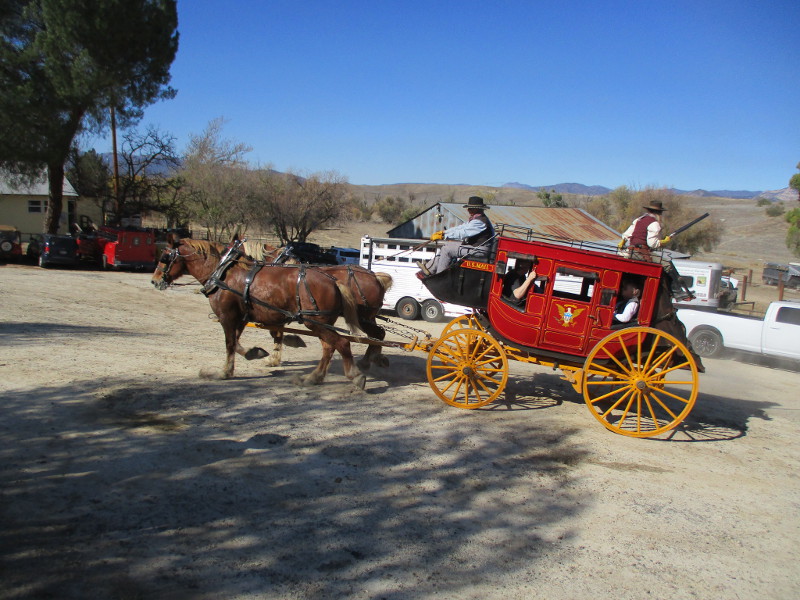
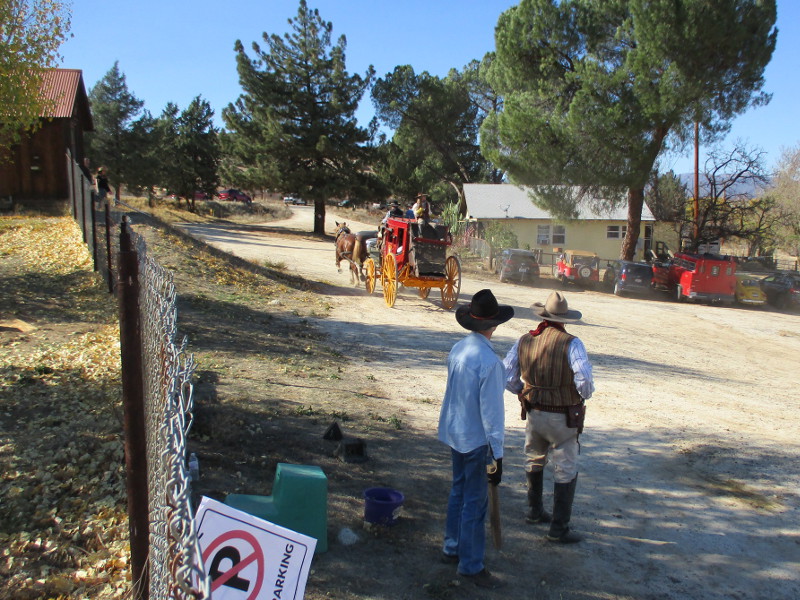
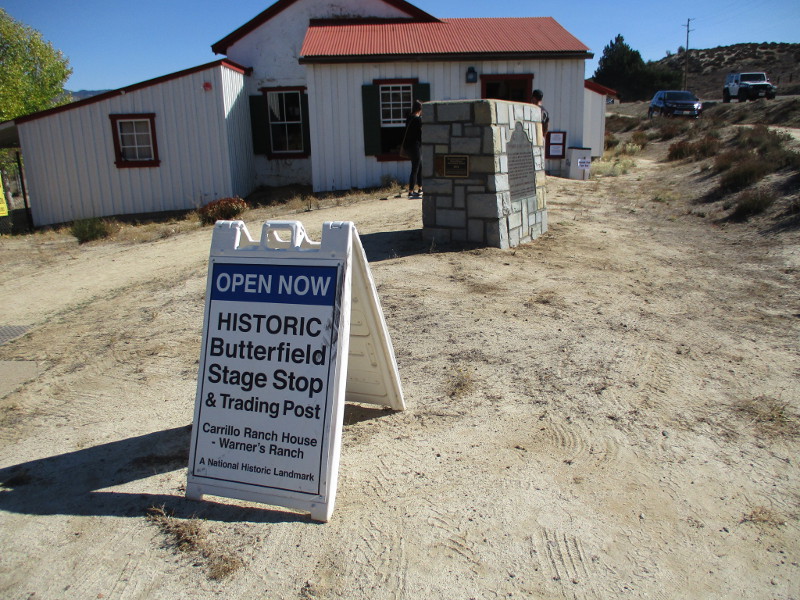
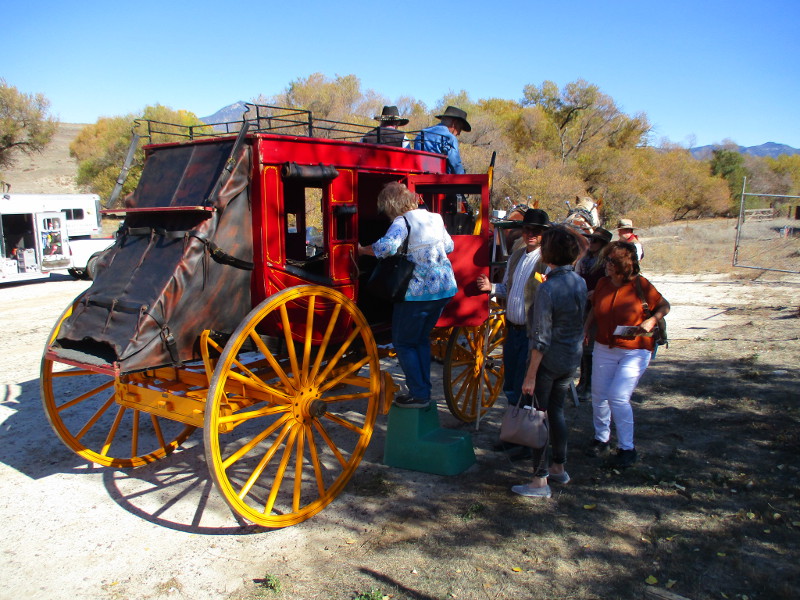
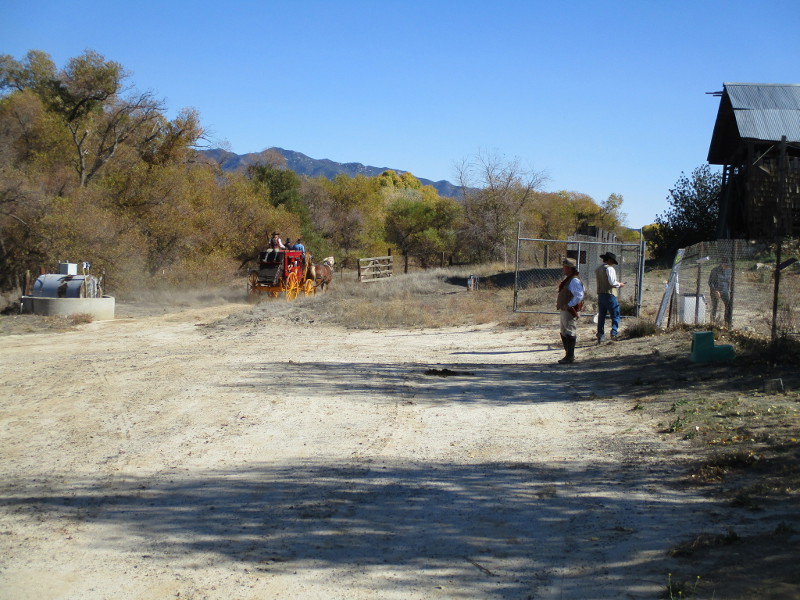
Last weekend I visited the restored adobe. I went for a special reason. One day every year at Warner’s Ranch, visitors can ride an authentic Concord stagecoach down a short stretch of the old Overland Trail. For several years, from 1858 to 1861, the ranch house served as a Butterfield Overland Stage Station. Thousands of passengers stopped for a few minutes at this swing station as they travelled through the region. If you’d like to see photos from my fun stagecoach ride, click here!
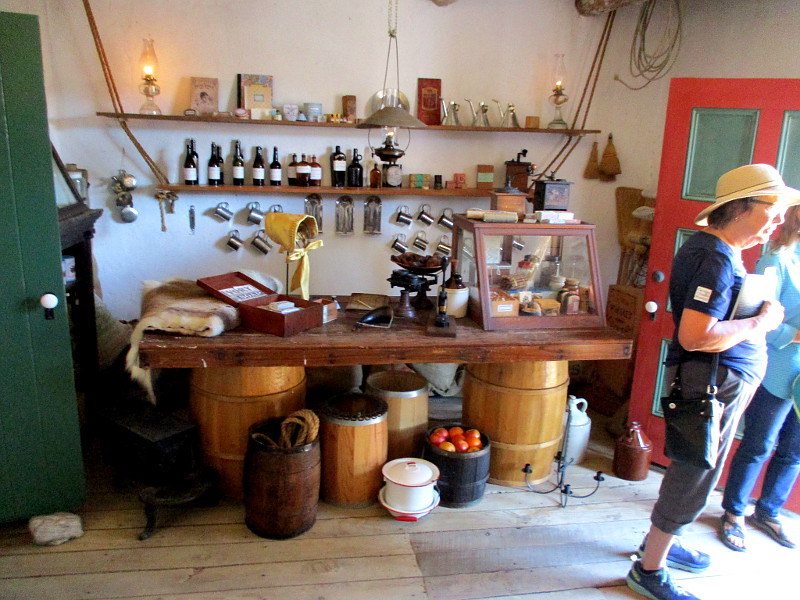
The present structure, maintained today as a museum, was built by Doña Vicenta Sepúlveda de Carrillo, an early Californio woman rancher. It consists of two main rooms and several adjacent smaller rooms that were added in later years. One of the main rooms was the sala, or living room. The other served as a trading post–a small store where travelers could purchase necessities during their brief stopover.
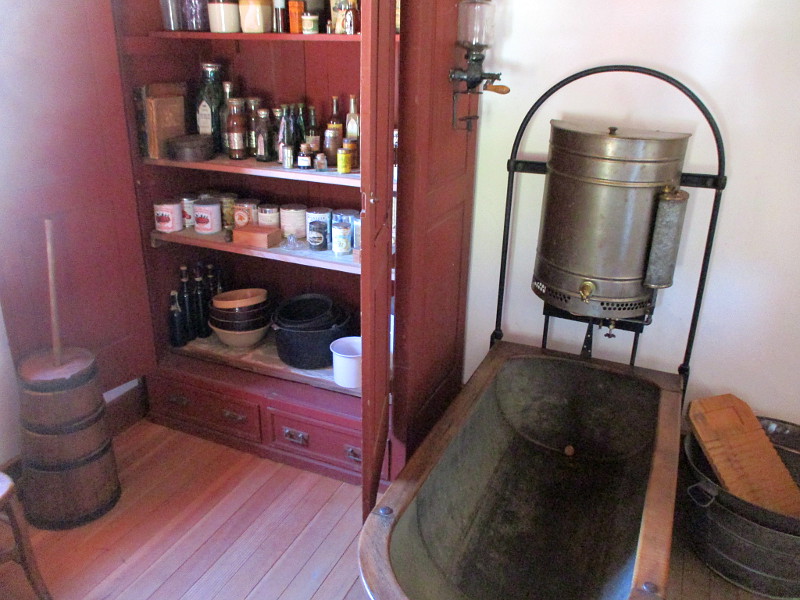
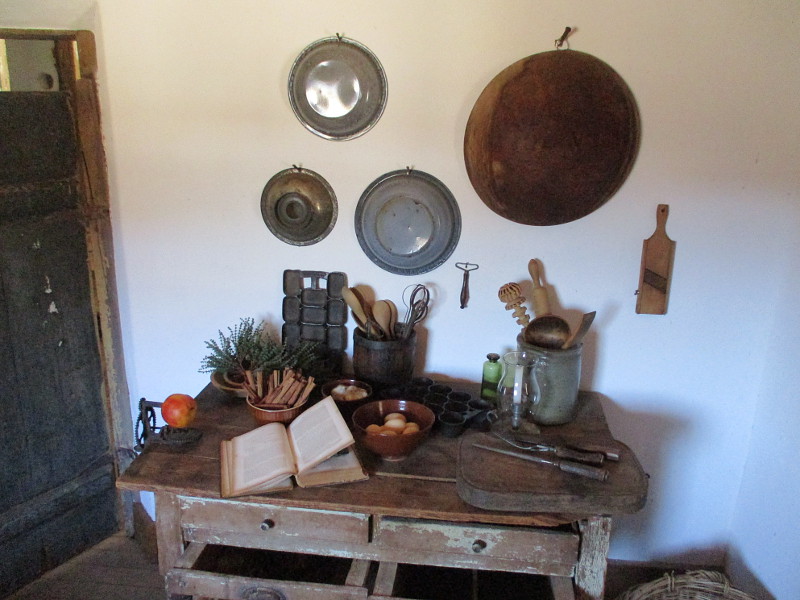
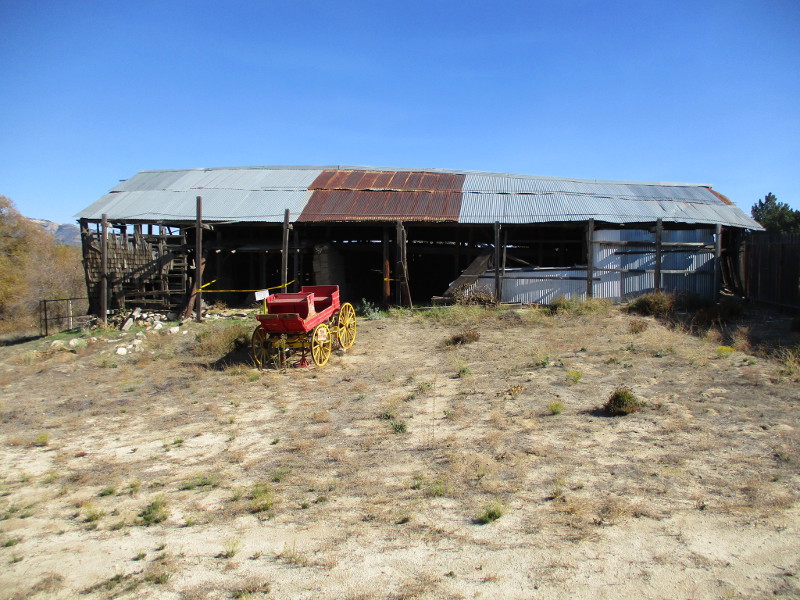
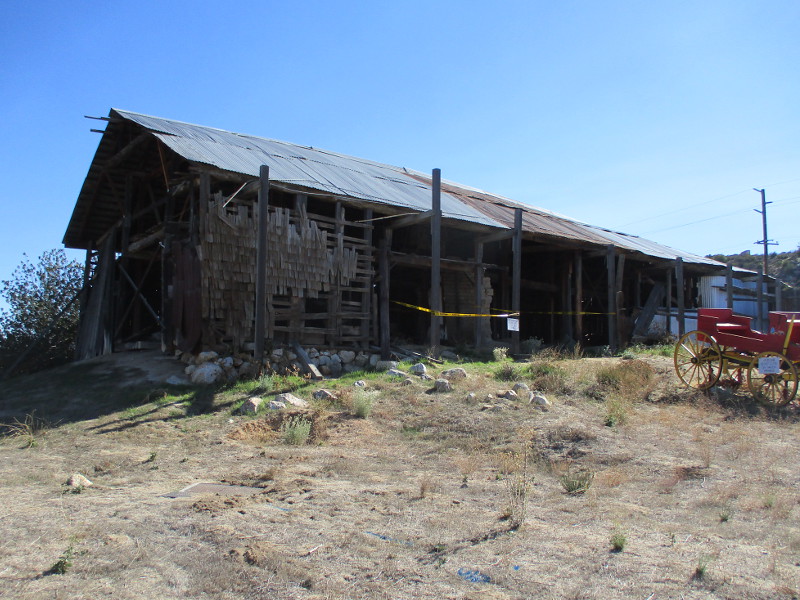
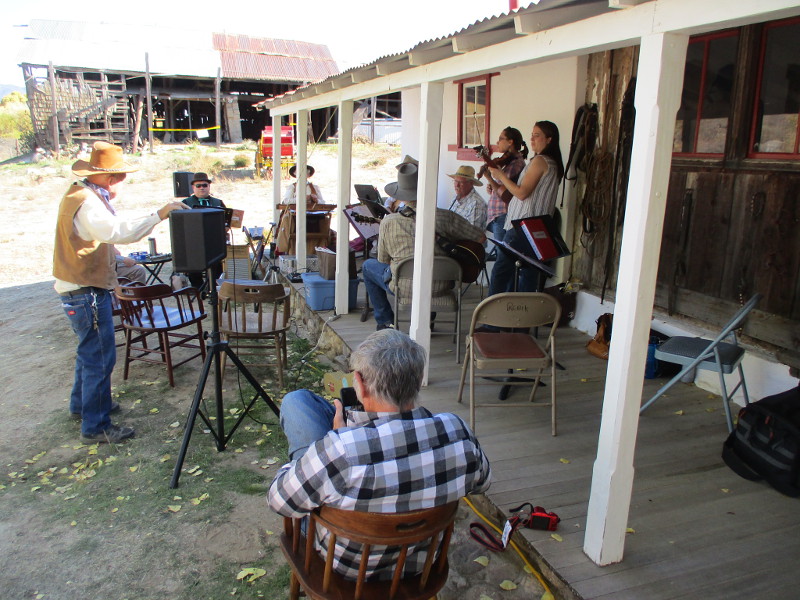
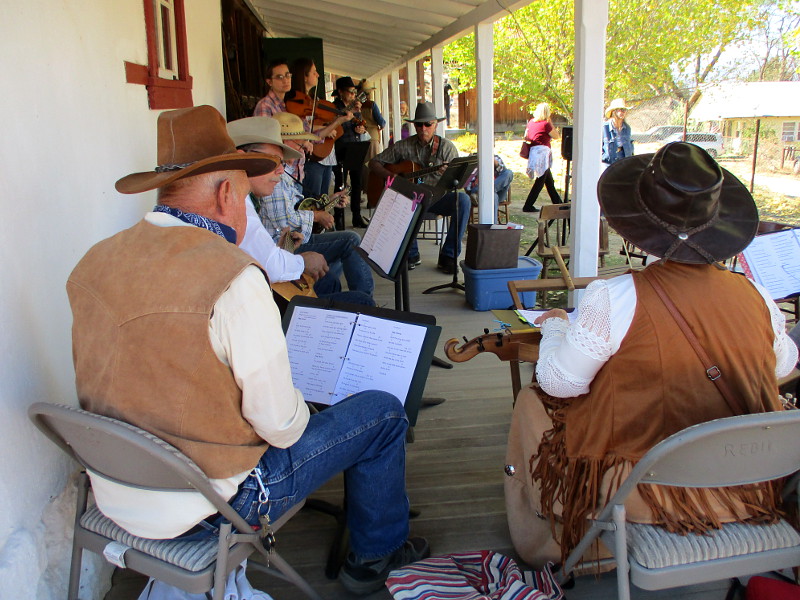
Some of the smaller rooms include bedrooms and a kitchen, which featured a family bathtub, as you’ll see in my photos! The adobe walls are 18 inches thick, providing a cool inside temperature on a hot day. There’s also a pleasant veranda, where musicians were playing the day I visited. The veranda was built at the front of the ranch house, which faced the old stage route. As I understand it, the nearby barn, which SOHO also plans to restore, was for ranch horses and carriages.
Please enjoy these photos. I took few notes, and I’m no expert, so please don’t rely on anything I’ve written here as absolute fact. Do your own research. The history of the ranch is complex. Over the years it had many different owners.
So why is the ranch house named Warner-Carrillo? The original Warner’s Ranch, whose buildings no longer exist, was established here on a Mexican land grant given to Jonathan Trumbull Warner, an American-Mexican citizen and former California State Senator who changed his name to Juan José Warner. His ranch, a camping stop on the Gila Overland Trail to California, was attacked during the Garra Uprising of 1851 and burned down. I photographed the burial site of Antonio Garra in Old Town San Diego and provided a brief description of the Native American Cupeño revolt due to unfair taxation here.
The Warner-Carrillo Ranch House is open year-round on Saturday and Sundays from 12 to 4 pm. If you’re ever in the area, make sure to stop by. Not only will you learn much, but you’ll feel the rich history!
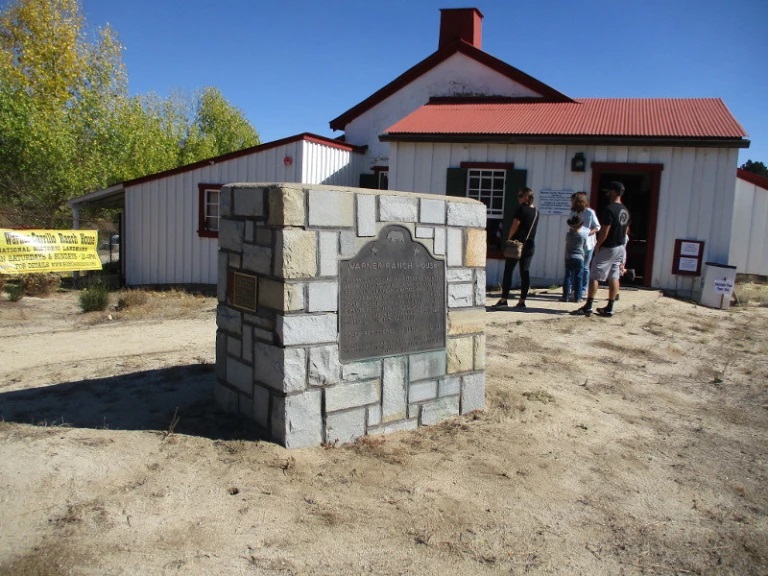
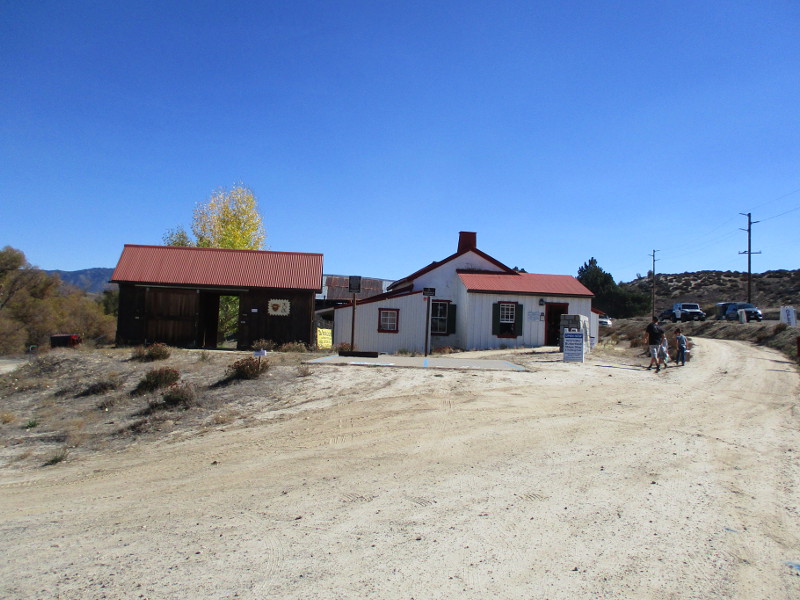
Approaching the restored Warner-Carrillo Ranch House. (Interesting note: that brown modern structure to the left of the old ranch house contains visitor restrooms. I learned from Christopher Pro of SOHO that the restroom building design was copied from the historic Stein Family Farm in National City!)
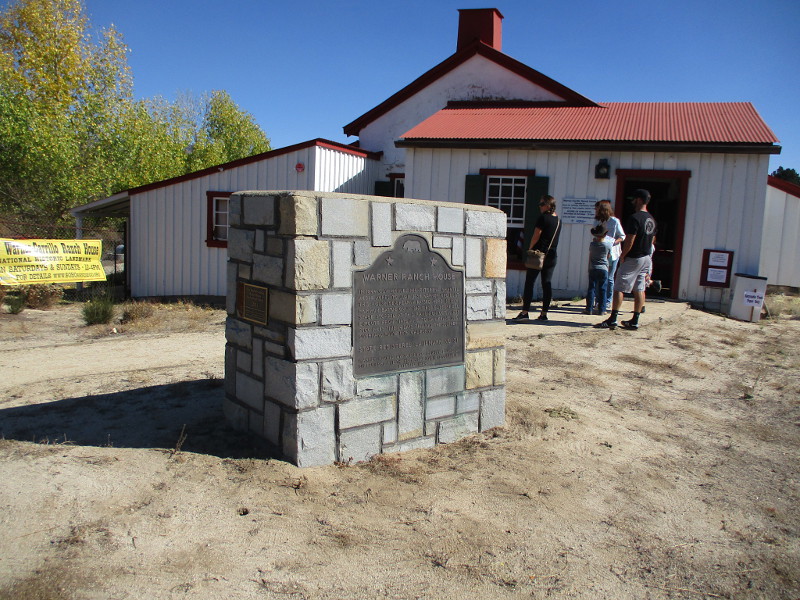
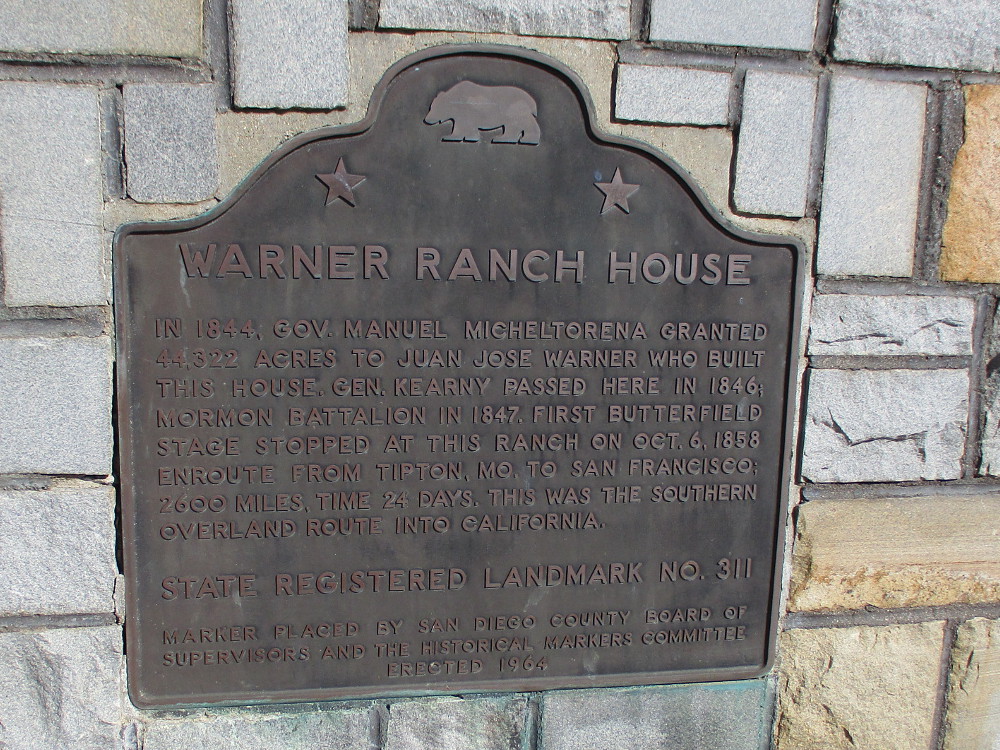
The historical plaque near the museum entrance reads:
WARNER RANCH HOUSE
IN 1844, GOV. MANUEL MICHELTORENA GRANTED 44,322 ACRES TO JUAN JOSE WARNER WHO BUILT THIS HOUSE. GEN. KEARNY PASSED HERE IN 1846; MORMON BATTALION IN 1847. FIRST BUTTERFIELD STAGE STOPPED AT THIS RANCH ON OCT. 6, 1858 ENROUTE FROM TIPTON, MO. TO SAN FRANCISCO; 2600 MILES, TIME 24 DAYS. THIS WAS THE SOUTHERN OVERLAND ROUTE INTO CALIFORNIA.
STATE REGISTERED LANDMARK NO. 311
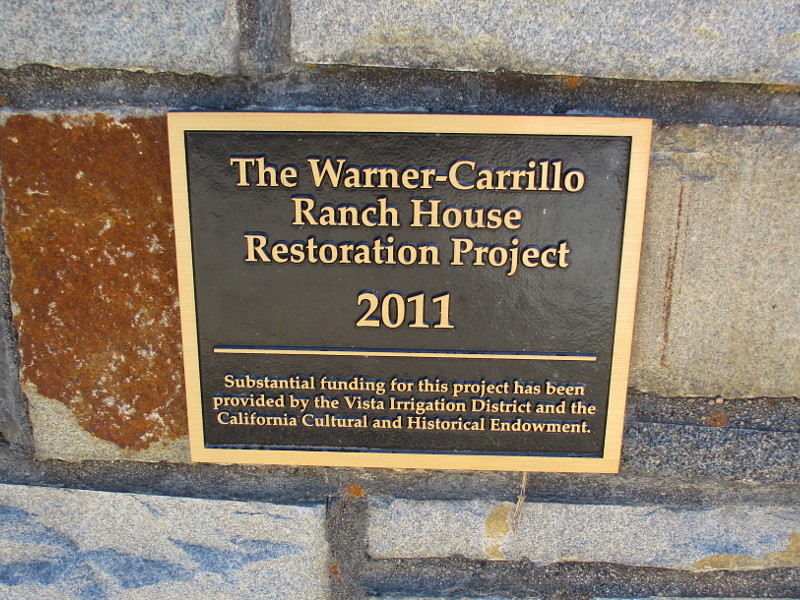
A major restoration of the Warner-Carrillo Ranch House was completed in 2011. The ranch stands on land owned by the Vista Irrigation District.
The Vista Irrigation District has a really good web page concerning the ranch house and its history here.
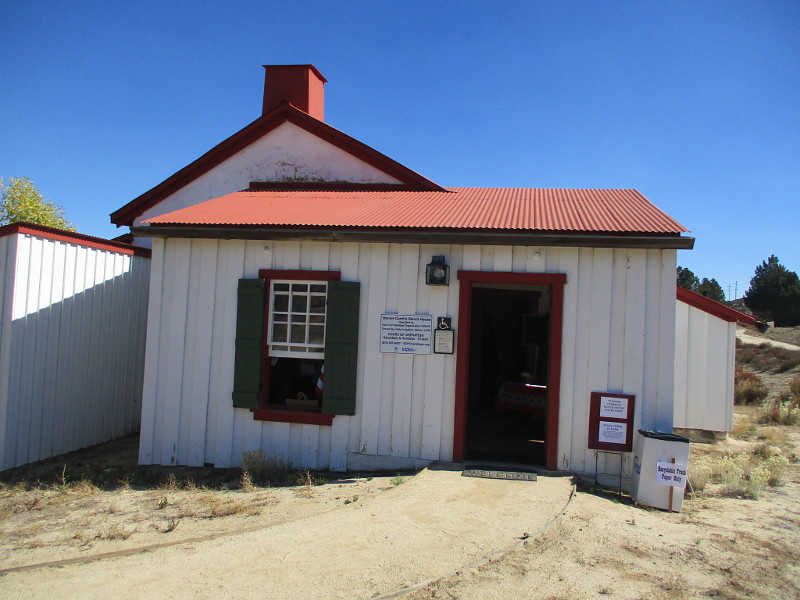
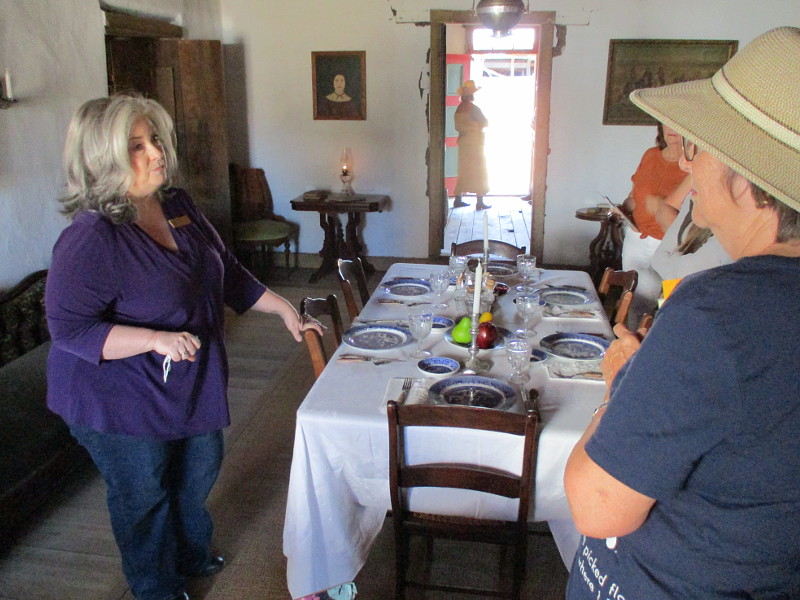
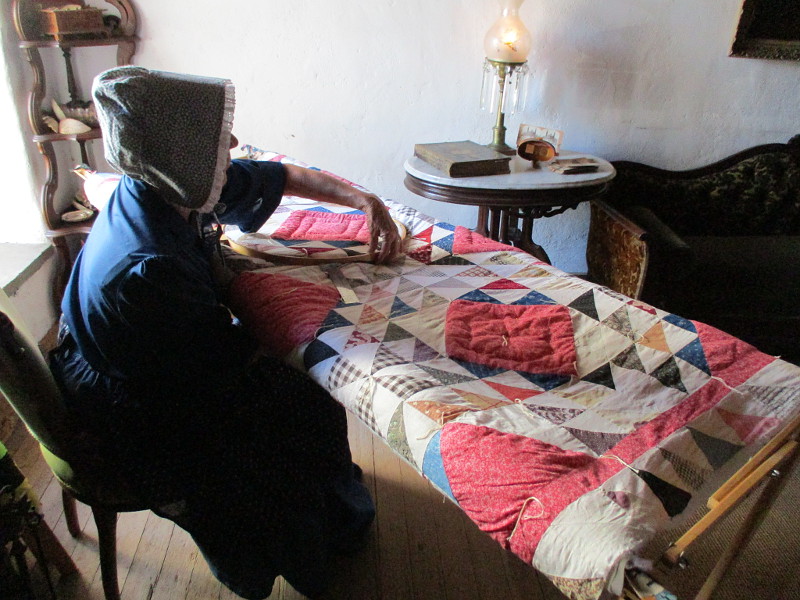
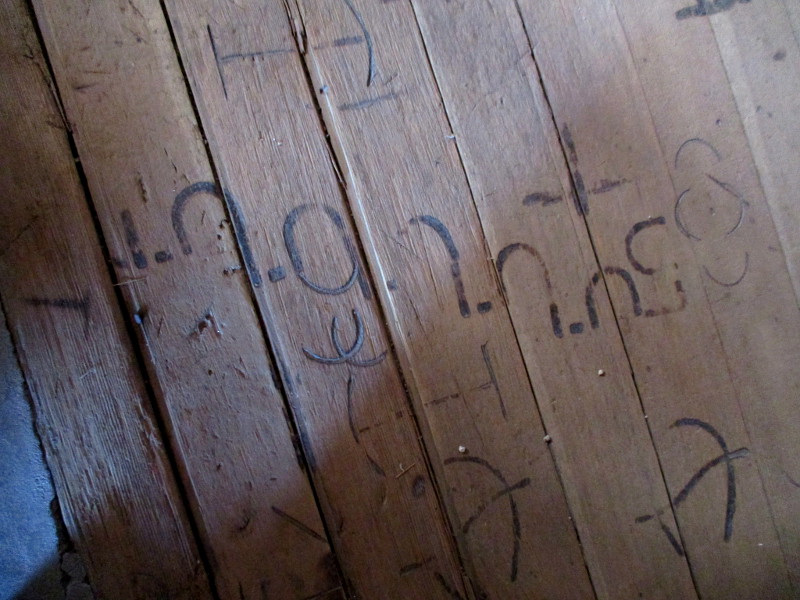
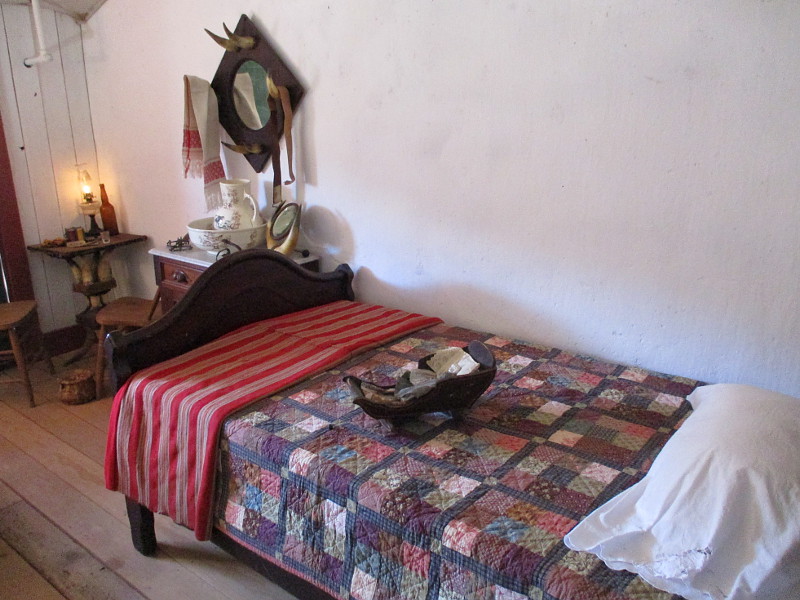
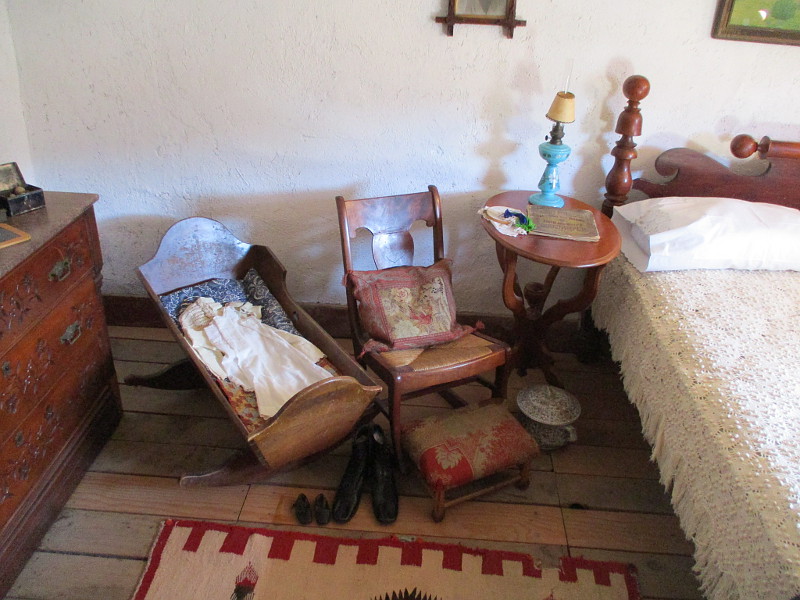
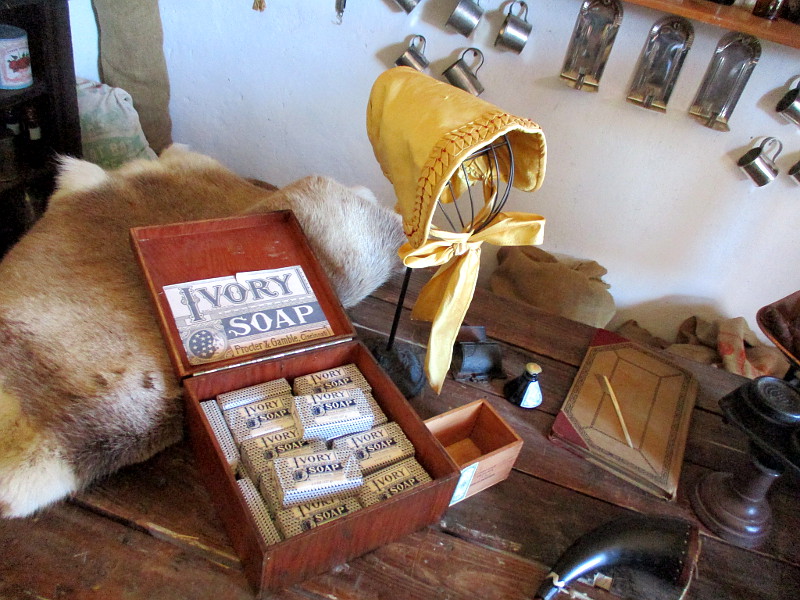
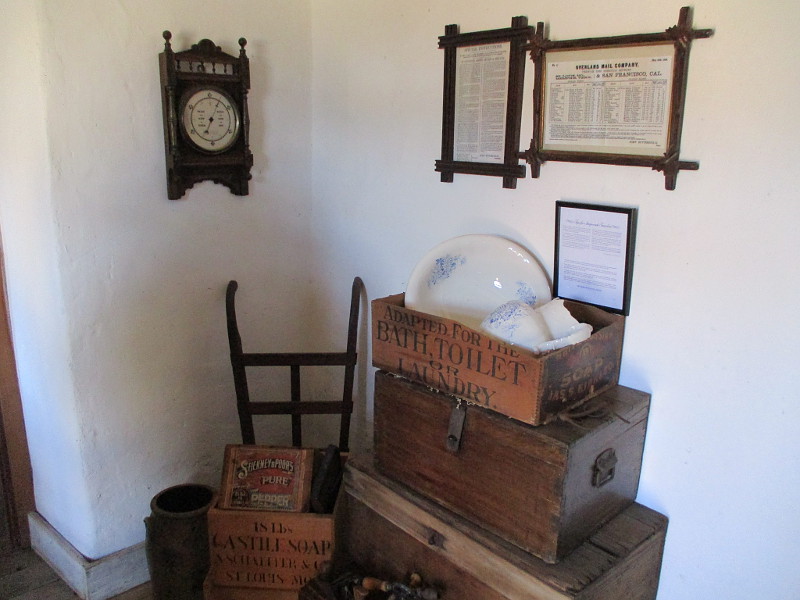
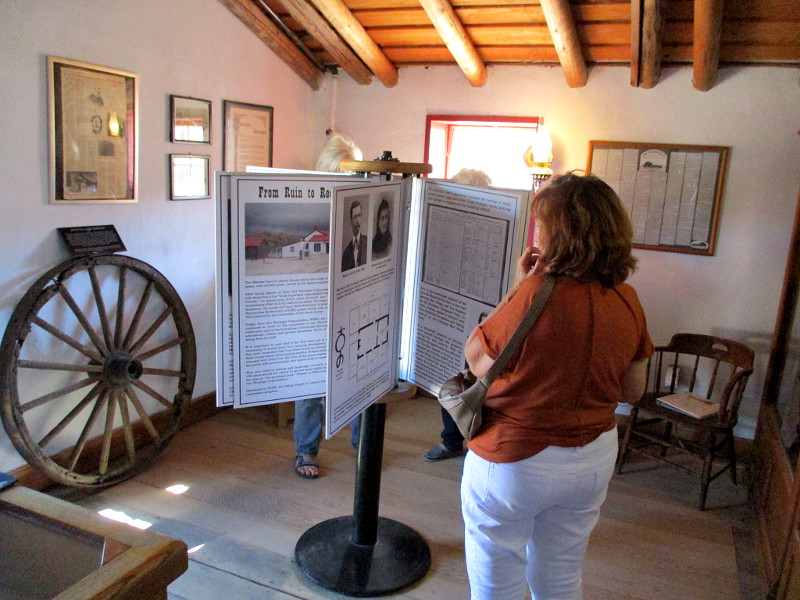
Inside the sala, or living room, with its dining table. Some of the elegant furniture was obtained from William Heath Davis, who helped to establish “New Town” (present day downtown) San Diego.A quilt being made in one corner of the sala.The sala in later years became a ranch bunkhouse, which explains why the wood floor is branded!A work room between the sala and veranda.A bedroom.A look inside the kitchen.How’d you like to take a bath here?!A look inside the children’s bedroom.The trading post offered goods to stagecoach travelers, who’d enter from a side door, which is located opposite the old barn.Soap, a bonnet, and other useful items.One small room contains information displays and archaeological artifacts from the ranch.A look at the old barn, which is presently in a state of arrested decay.On this special once-a-year stagecoach riding day, musicians were out on the veranda playing popular tunes from the Old West. The group is called Jugless Jug Band.Some visitors enjoying a short ride on the authentic Concord stage.
…
I live in downtown San Diego and love to walk around with my camera! You can follow Cool San Diego Sights via Facebook or Twitter!
You can easily explore Cool San Diego Sights by using the search box on my blog’s sidebar. Or click a tag! There are thousands upon thousands of photos for you to enjoy!
Today I had the opportunity to experience something amazing in Warner Springs.
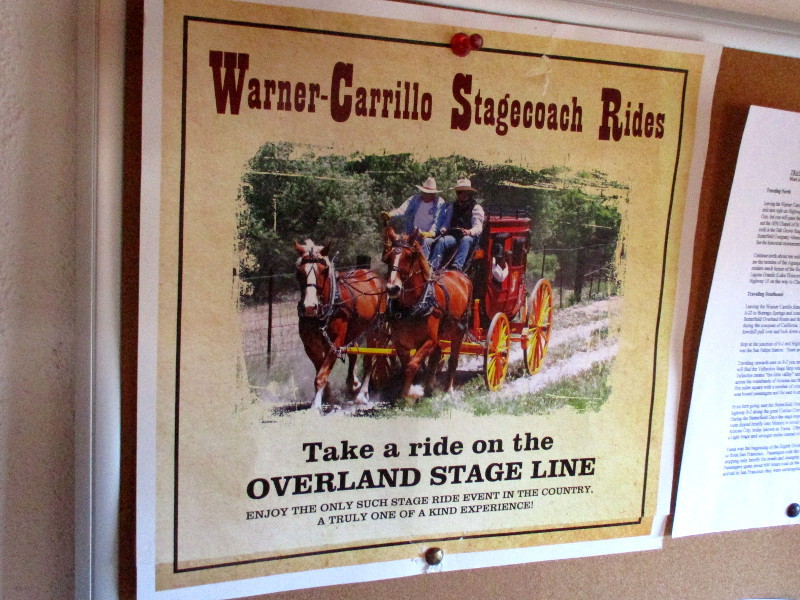
Once a year, at the Warner-Carrillo Ranch House, people can ride an authentic stagecoach a short distance down an actual, historic stage line route!
Such a ride can be experienced nowhere else in the entire country!
I purchased a ticket for a stagecoach ride a couple weeks ago before it sold out, then drove up to the Warner-Carrillo Ranch House in Warner Springs this morning to enjoy the short but memorable adventure!
Warner’s Ranch back in the 19th century was a swing stop for the Butterfield Overland Mail stage line. According to the event website, “The Butterfield Overland stage transported thousands of passengers across the United States years prior to the Civil War as California’s first regular overland stage connection with St. Louis.“
Travelers, packed elbow to elbow in solidly-built, relatively “elegant” Concord Coaches, would stop at the ranch house to rest and stretch their legs and sore bodies for a few minutes while new horses were brought up from the nearby barn. Passengers could buy useful items in the ranch’s one-room trading post before resuming their dusty, bumpy journey.
This afternoon I and other excited passengers got to actually experience a few minutes of that dusty, very bumpy overland journey!
If you live in Southern California, or plan to visit, I highly recommend going on this once-every-year stagecoach ride. You’ll also enjoy an in-depth tour of the Warner-Carrillo Ranch House, which is operated by the Save Our Heritage Organisation. SOHO’s mission in San Diego County is the “preservation of architecturally and historically significant structures, sites, and cultural landscapes.”
Okay! You want to see what the ride is like? Here we go!
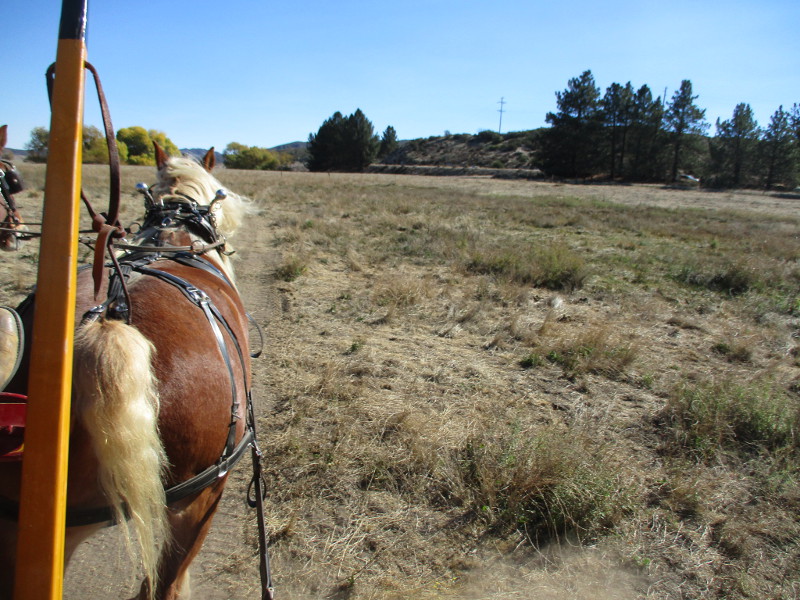
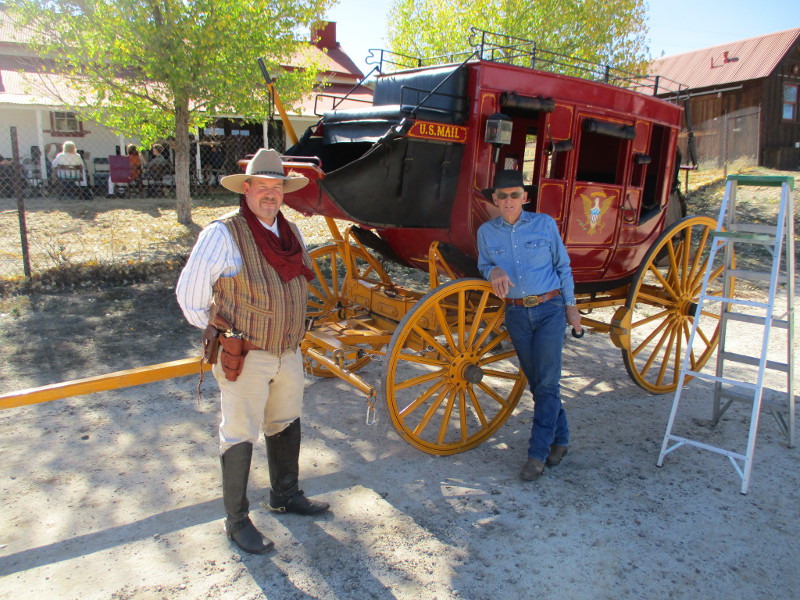
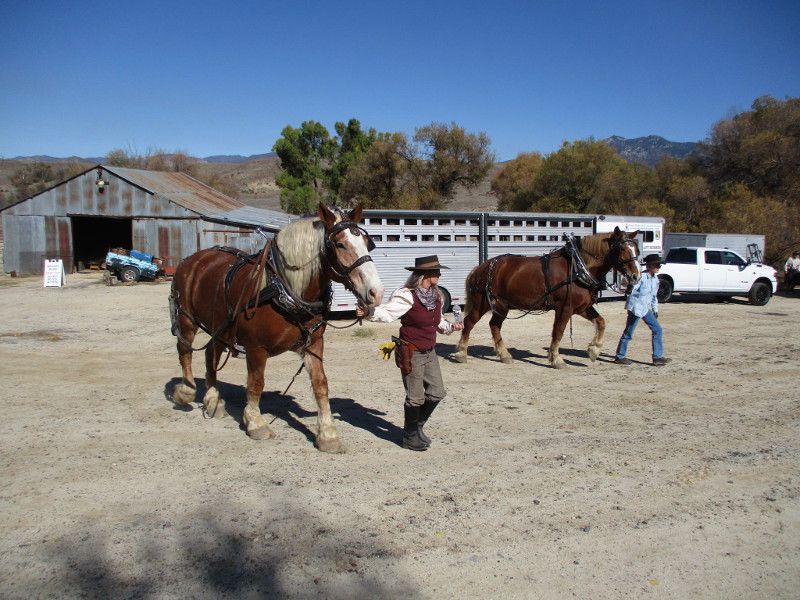
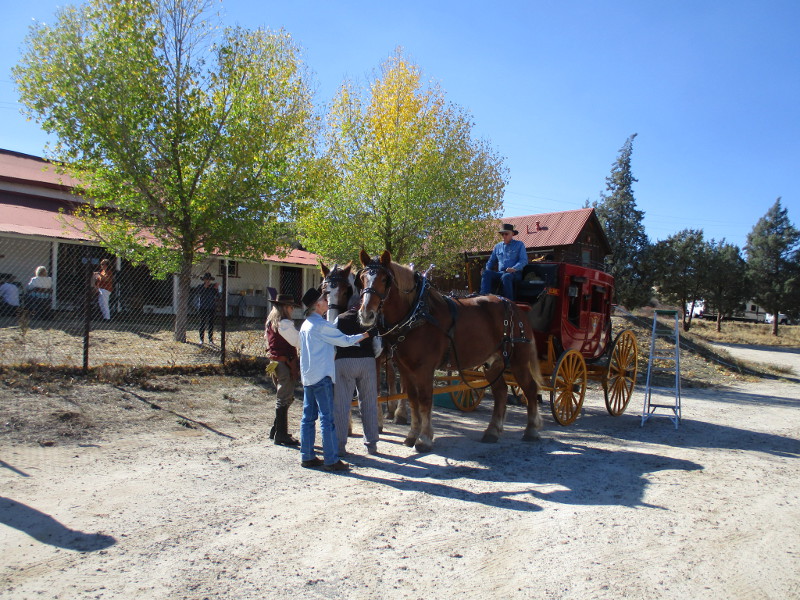
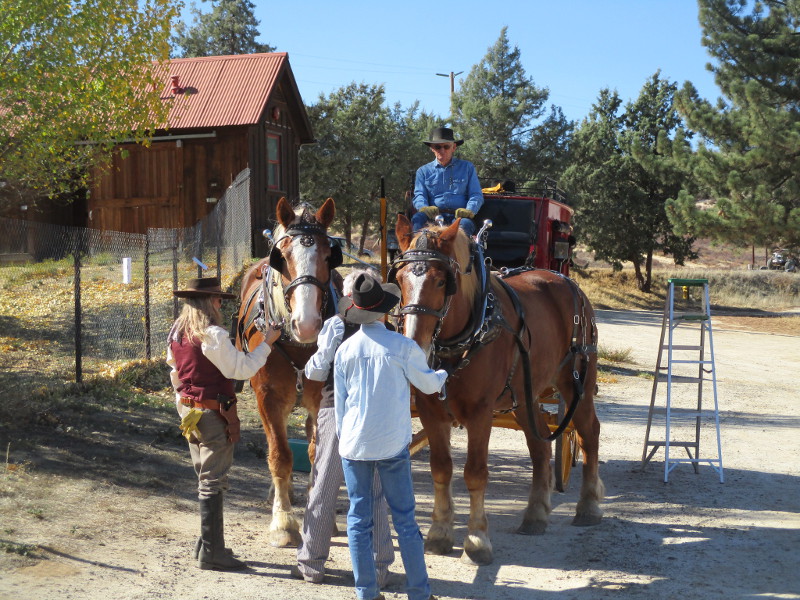
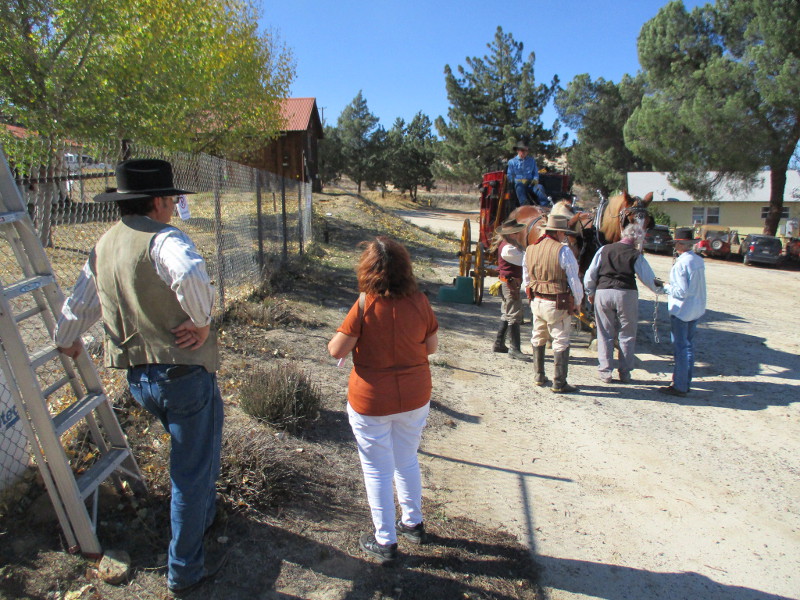
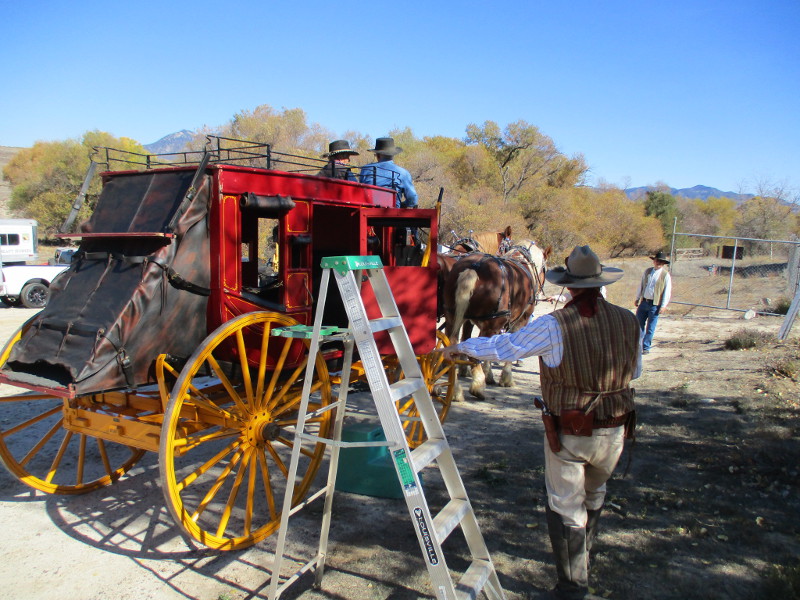
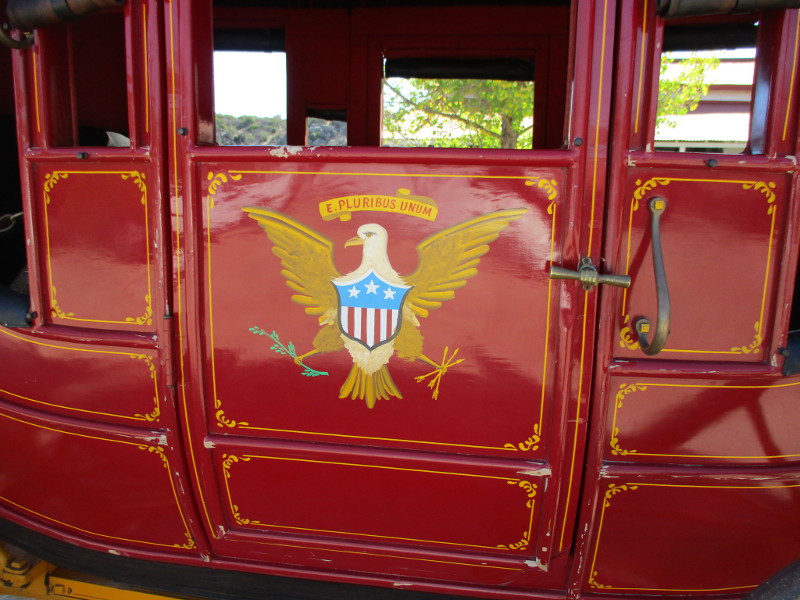
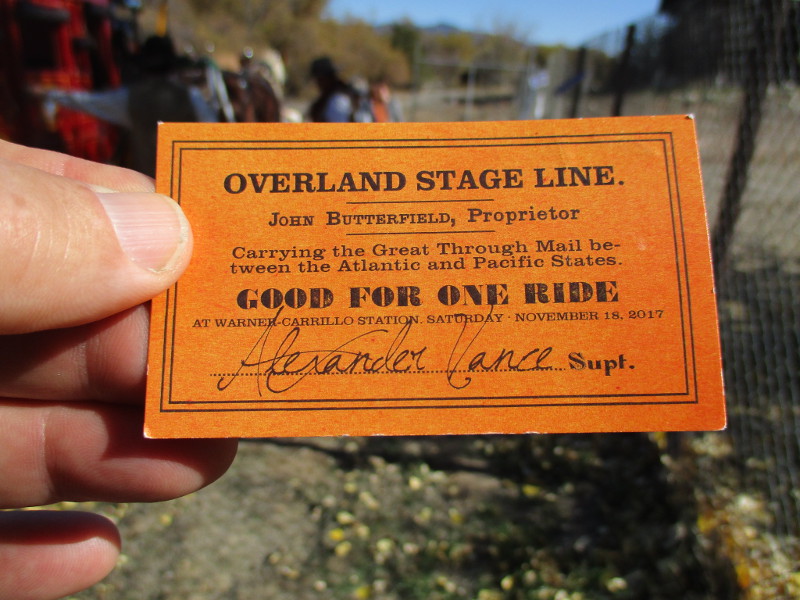
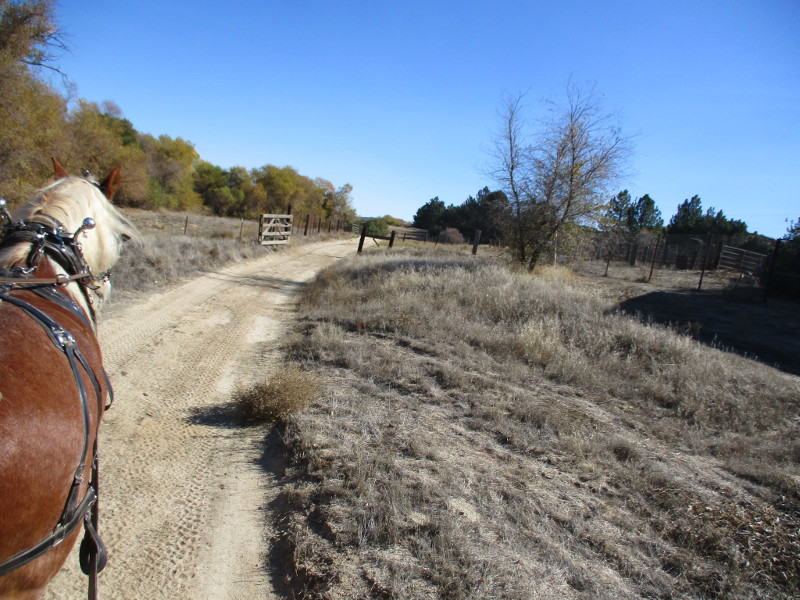
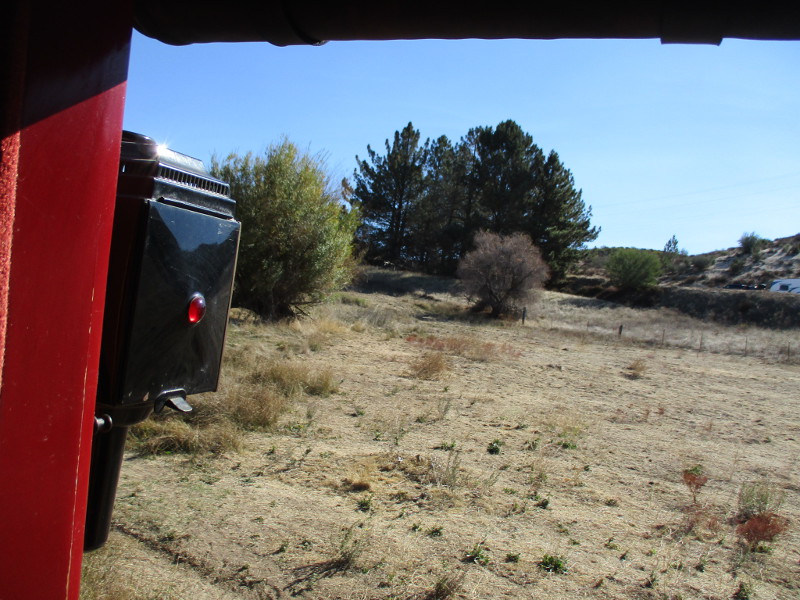
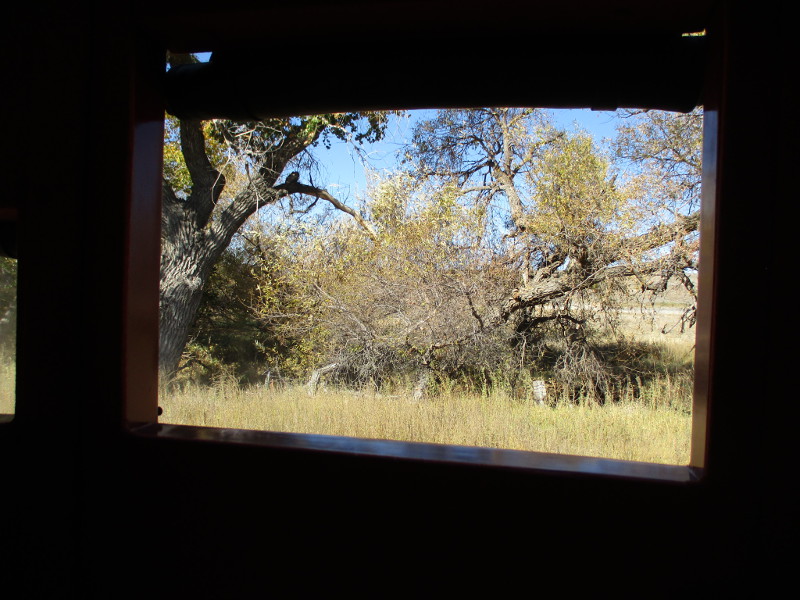
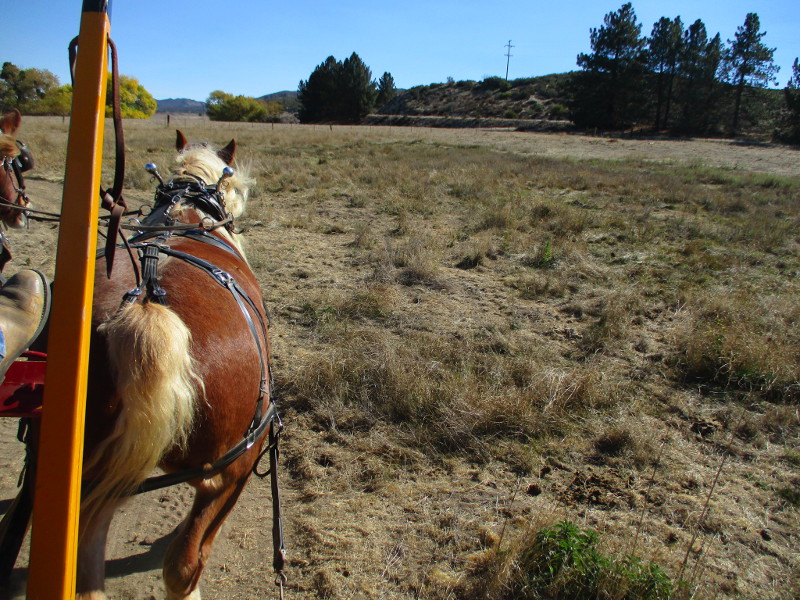
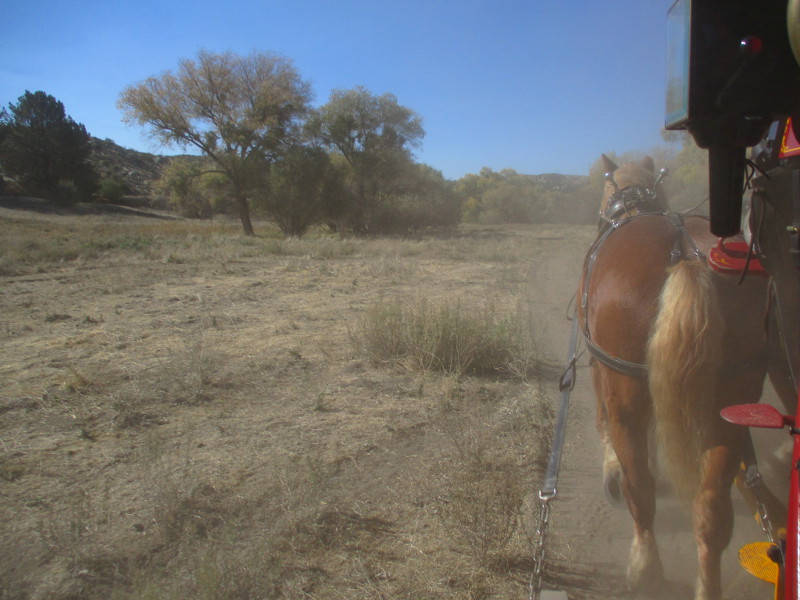
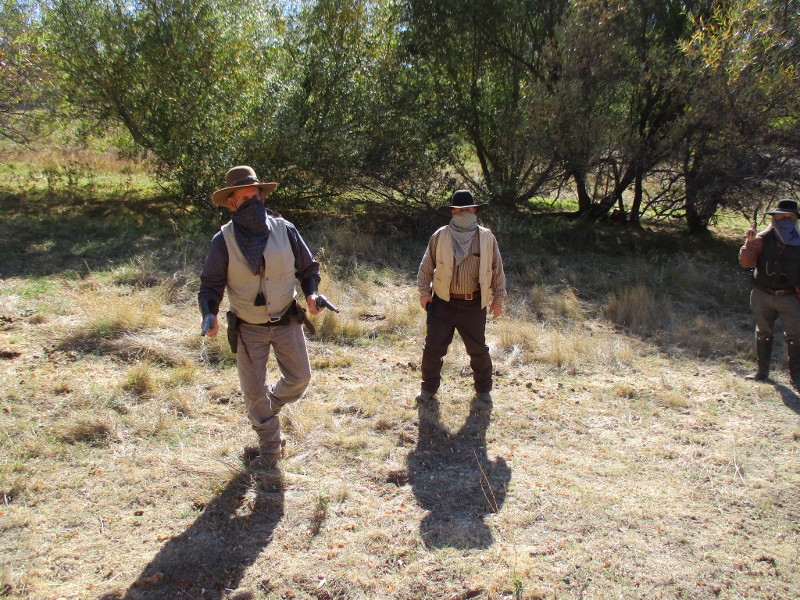
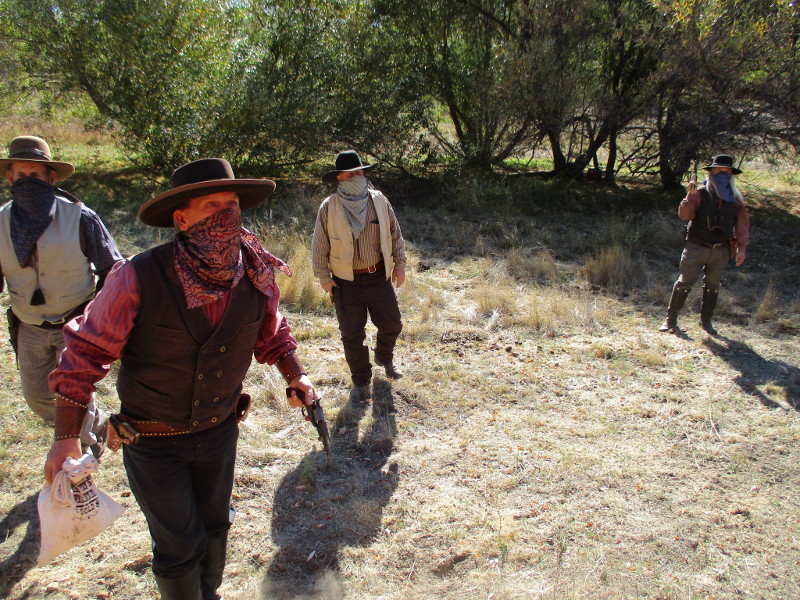
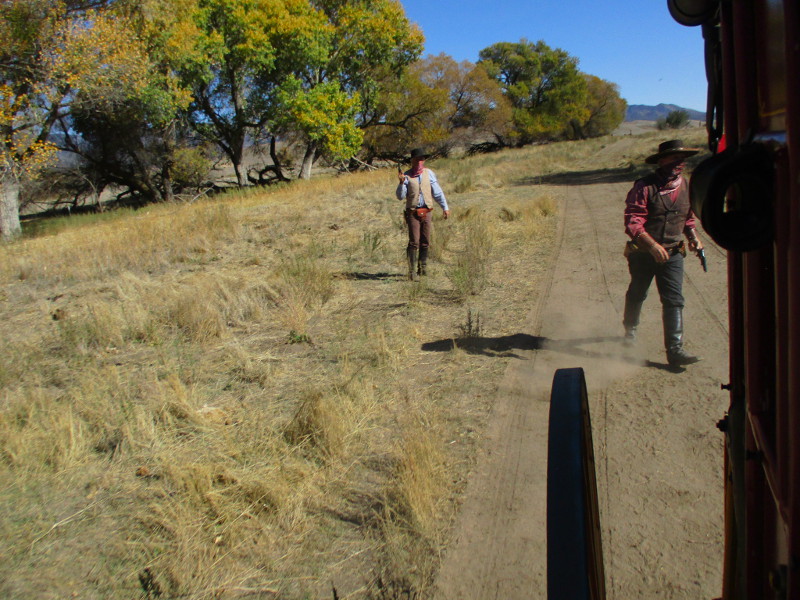
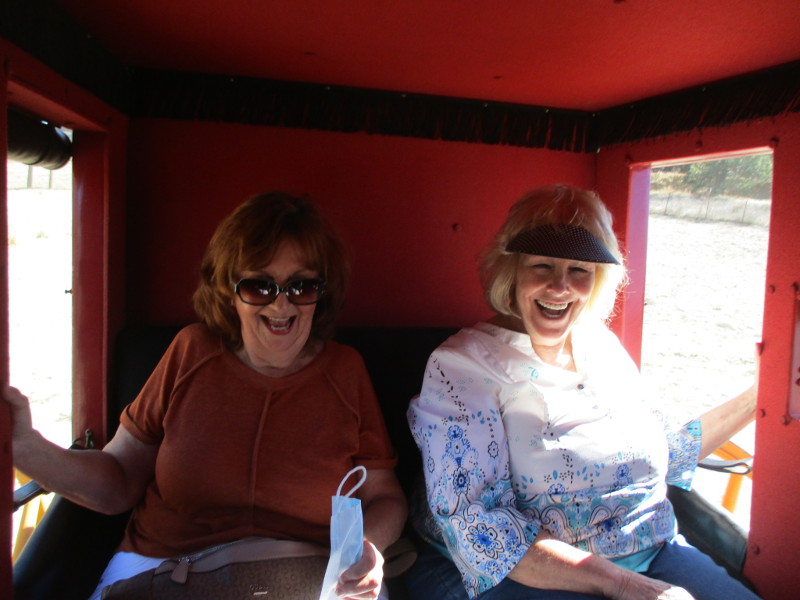
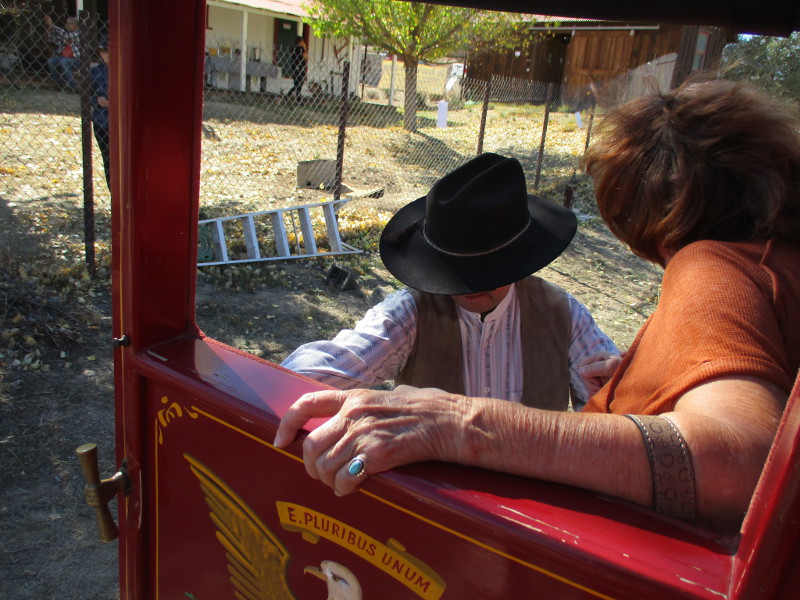
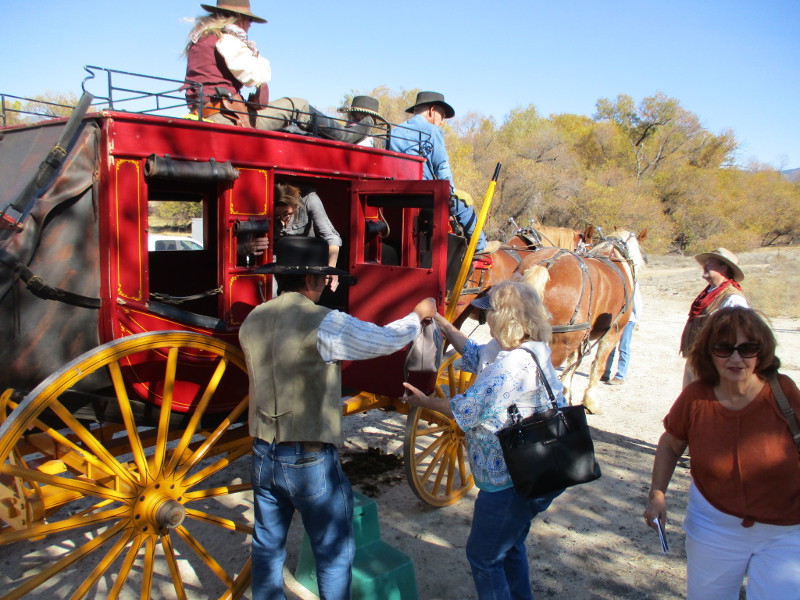
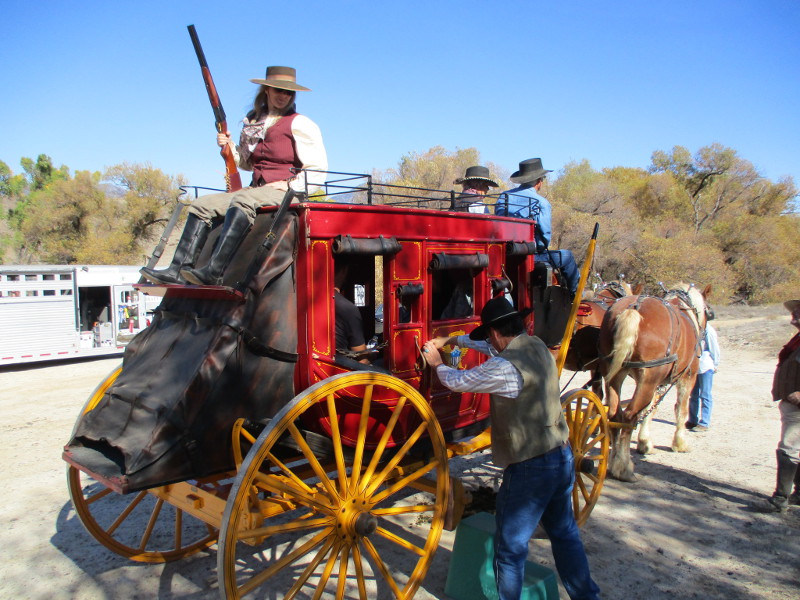
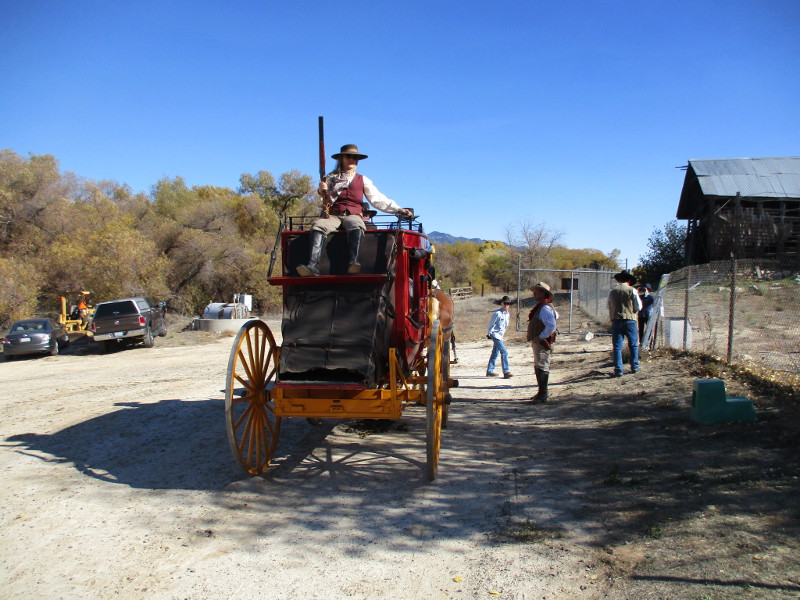
Approaching the entrance of the historic Carrillo Ranch House at Warner’s Ranch, a National Historic Landmark.I arrived early and will be on the first ride of the day. But no horses yet.Here they come!Two beautiful horses will pull the genuine Concord Coach, which is owned by the Save Our Heritage Organisation. I believe I heard the horses are Clydesdales. (UPDATE! I see on the SOHO website these were Belgian Draft horses.)Another passenger waits as the horses are hooked up.I’m pretty sure they didn’t have aluminum ladders like this a century and a half ago!American eagle on side of the historic red Concord Coach, with E. Pluribus Unum.Four passengers will sit inside the coach for this short journey.Here’s my ticket!We managed to squeeze into the small coach and here we go!Looking at the countryside beyond an outside stagecoach lantern.Looking out the other window at oak trees.Were going down the actual historic stage route. It’s dusty and bumpy! A few sudden lurches took me by surprise–like some sort of amusement park ride!Mountains and cattle in the distance.I did say dusty!What’s this? Armed robbers!The stagecoach driver threw down the Army payroll. The passengers got off easy.We are allowed to continue back to our stage stop.Yes, the experience is fun!It’s over far too soon.Another group of passengers is ready to go!There they go!
…
I live in downtown San Diego and love to walk around with my camera! You can follow Cool San Diego Sights via Facebook or Twitter!
You can easily explore Cool San Diego Sights by using the search box on my blog’s sidebar. Or click a tag! There are thousands upon thousands of photos for you to enjoy!
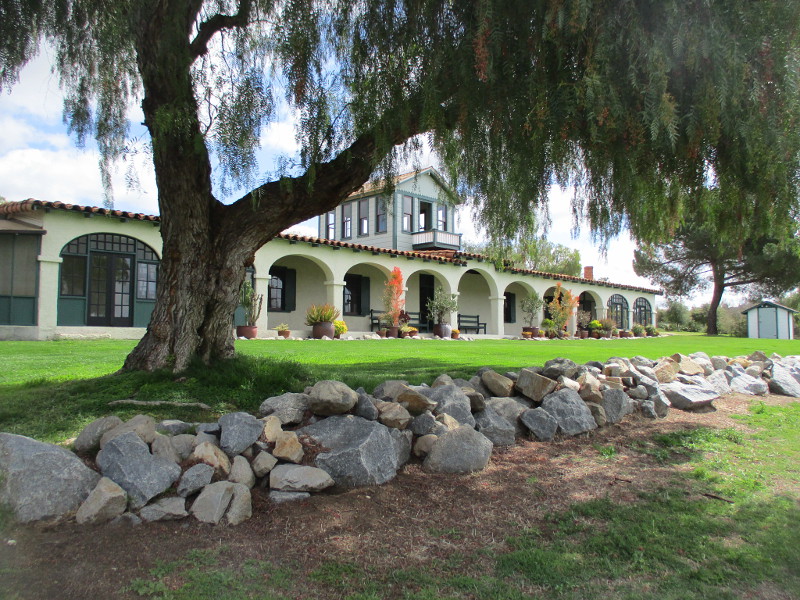
The Rancho Guajome Adobe is an architecturally and historically important 19th century ranch house located in Vista, California. I visited it a little over a week ago and walked around the grounds, learning about the fascinating history of the place while taking a few photographs.
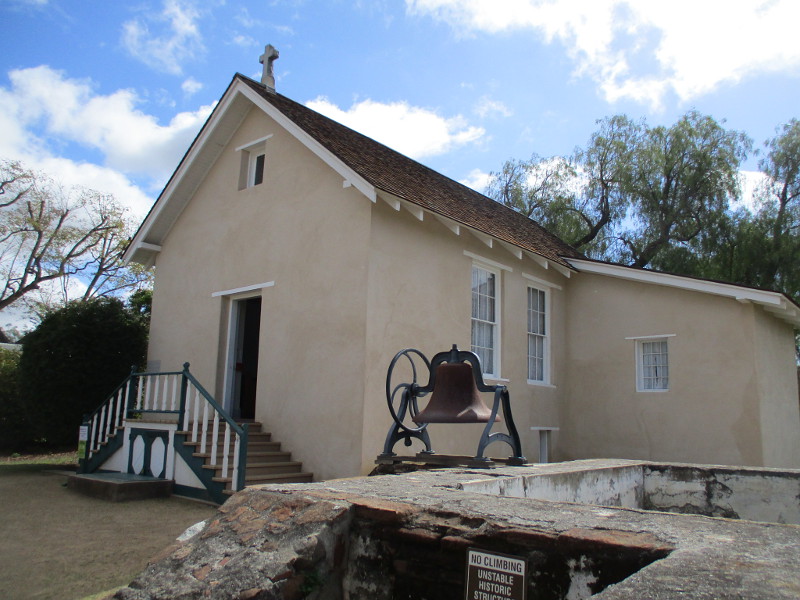
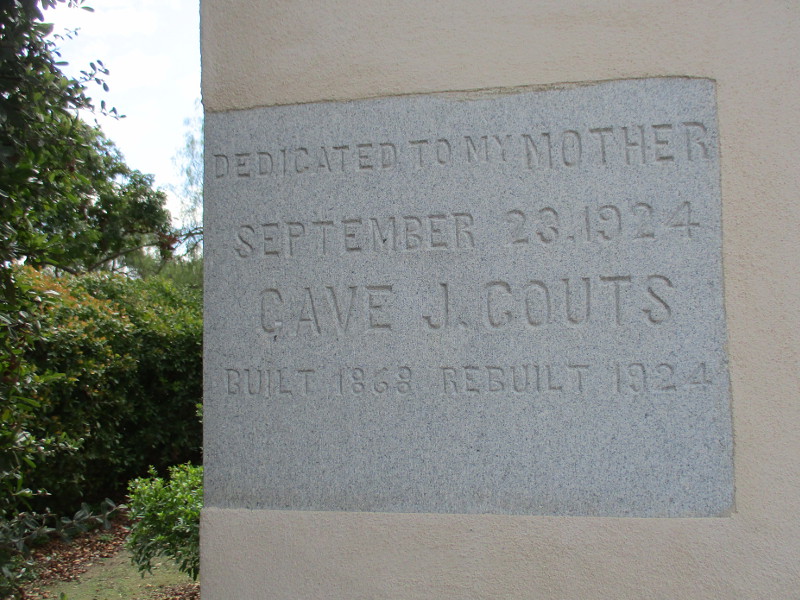
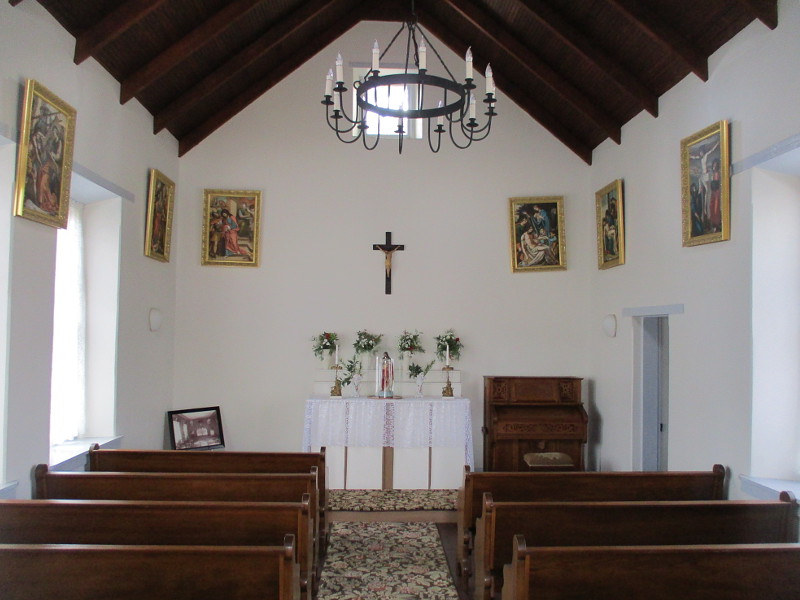
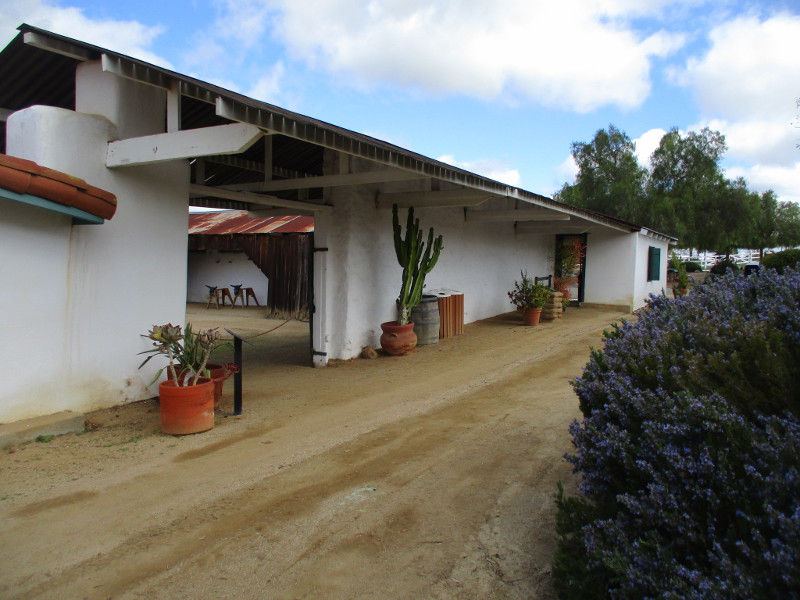
I approached the Guajome Ranch House from the Santa Fe Trail to its south, then circled counterclockwise around the complex, viewing the beautiful arcaded veranda, several cisterns fed by wells, the chapel, and other outbuildings. I spotted various signs and plaques relating the history of the ranch, which was once the home of prominent early San Diego resident Cave Johnson Couts and his wife Maria Ysidora Barbara Bandini.
As you can see, I also stepped into a small museum. That’s where you can purchase tickets to guided and self-guided house tours.
According to Wikipedia: “The adobe was built in 1852 and served as the headquarters of Rancho Guajome, a Mexican land grant. Abel Stearns had given the rancho to Ysidora Bandini (sister of his wife Arcadia Bandini), as a wedding gift when she married Lieutenant Cave Johnson Couts in 1851. It was built with the profits from the cattle boom of the 1850s, when many California ranchos supplied the Gold Rush miners and associated new American immigrants with meat and leather. Couts was appointed sub-agent for the native Luiseño people (San Luis Rey Mission Indians) in 1853. He used their labor to improve his properties in the area, including this one and nearby Rancho Buena Vista and Rancho Vallecitos de San Marcos…”
I didn’t venture inside the 22-room hacienda, but I most likely will at some future time. The old ranch house is located in Rancho Guajome Adobe County Park. Check out the parks website here to learn more.
The following photos provide a taste of what you’ll see should you visit this historic place.
Peering from the veranda through an open door…
The sign reads:
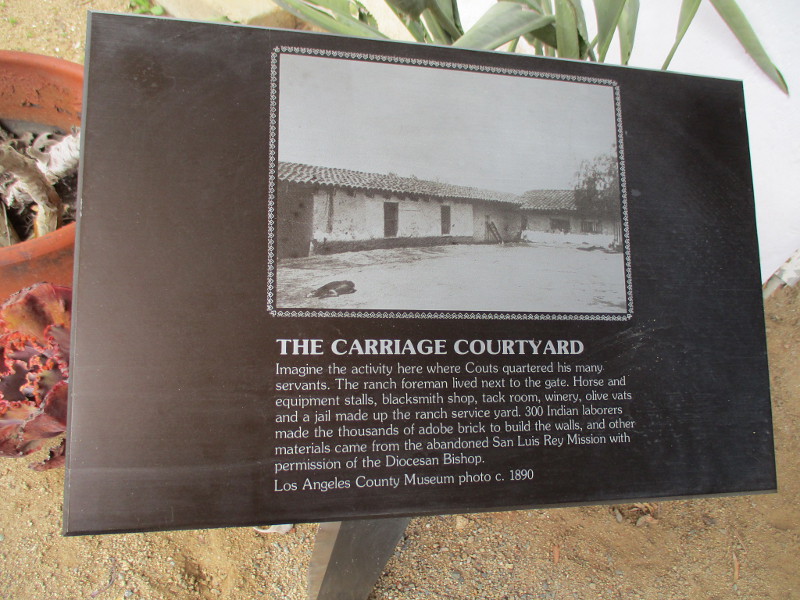
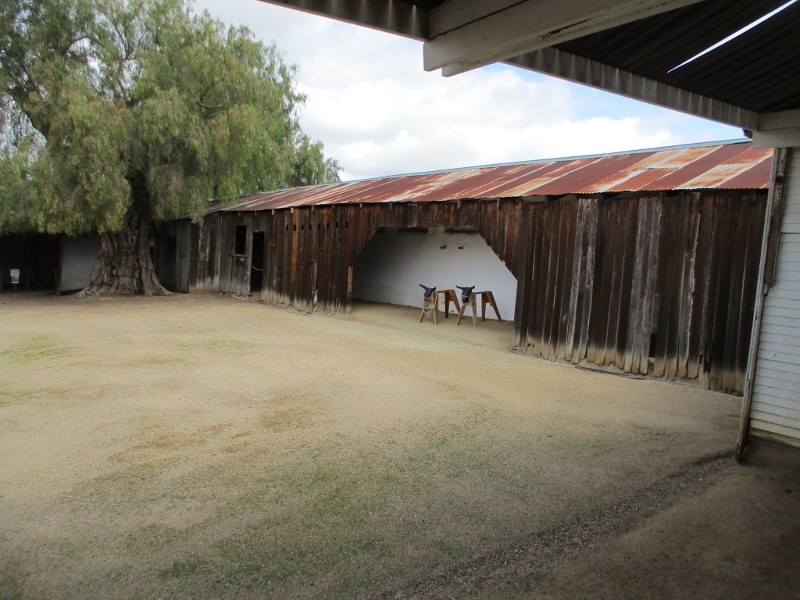
The Carriage Courtyard.
Imagine the activity here where Couts quartered his many servants. The ranch foreman lived next to the gate. Horse and equipment stalls, blacksmith shop, tack room, winery, olive vats and a jail made up the ranch service yard. 300 Indian laborers made the thousands of adobe brick to build the walls, and other materials came from the abandoned San Luis Rey Mission with permission of the Diocesan Bishop.
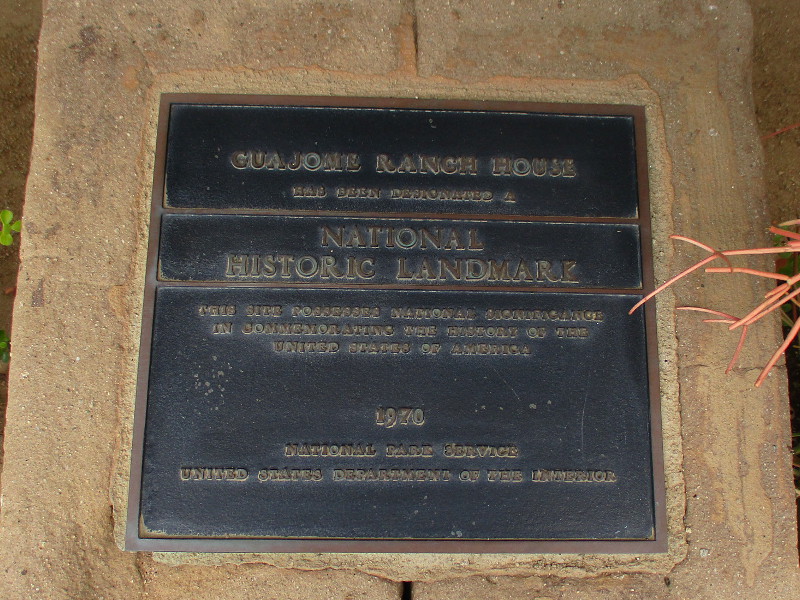
Guajome Ranch House has been designated a National Historic Landmark
This site possesses national significance commemorating the history of the United States of America
1970
National Park Service
United States Department of the Interior
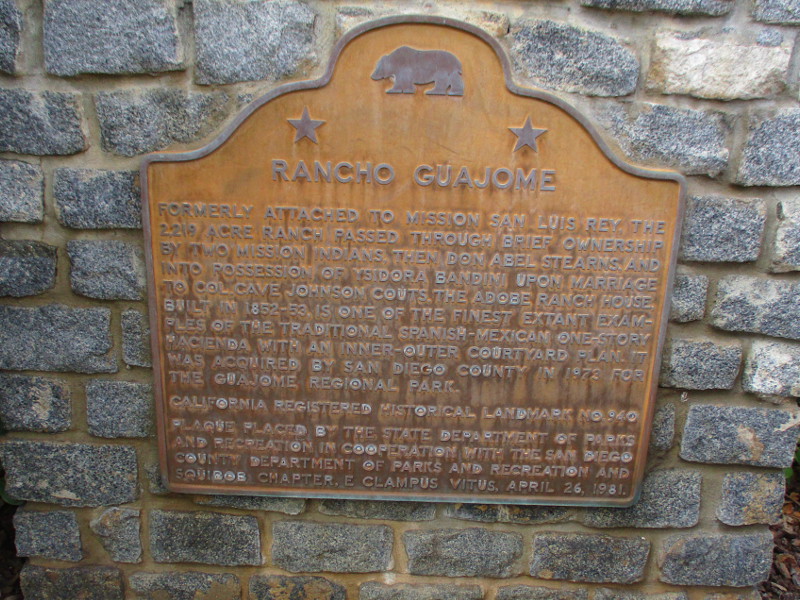
Rancho Guajome
Formerly attached to Mission San Luis Rey, the 2,219 acre ranch passed through brief ownership by two mission Indians, then Don Abel Stearns, and into possession of Ysidora Bandini upon marriage to Col. Cave Johnson Couts. The adobe ranch house built in 1852-53, is one of the finest extant examples of the traditional Spanish-Mexican one-story hacienda with an inner-outer courtyard plan. It was acquired by San Diego County in 1973 for the Guajome Regional Park.
California registered Historical Landmark No. 940
Plaque placed by the State Department of Parks and Recreation in cooperation with the San Diego County Department of Parks and Recreation and Squibob Chapter, E Clampus Vitus, April 26, 1981.
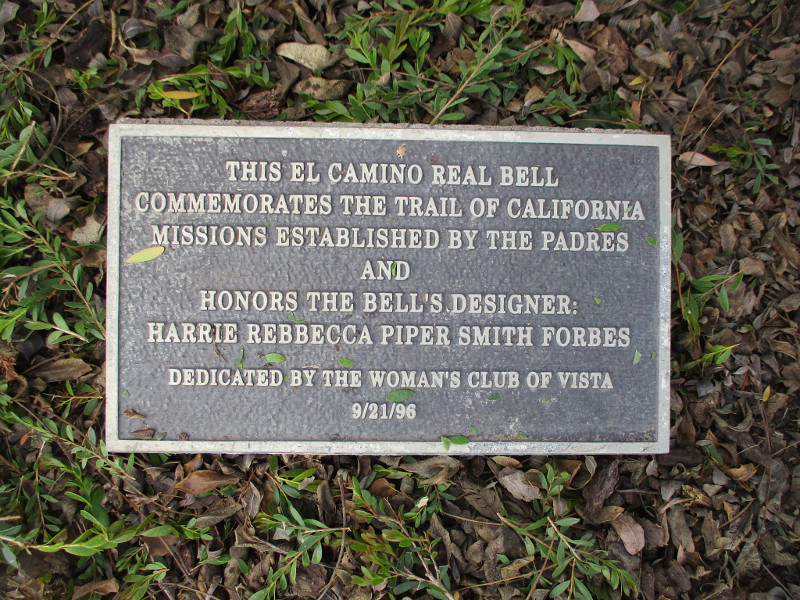
This El Camino Real Bell commemorates the trail of California missions established by the padres and honors the bell’s designer: Harrie Rebbecca Piper Smith Forbes
Dedicated by the Woman’s Club of Vista
9/21/96
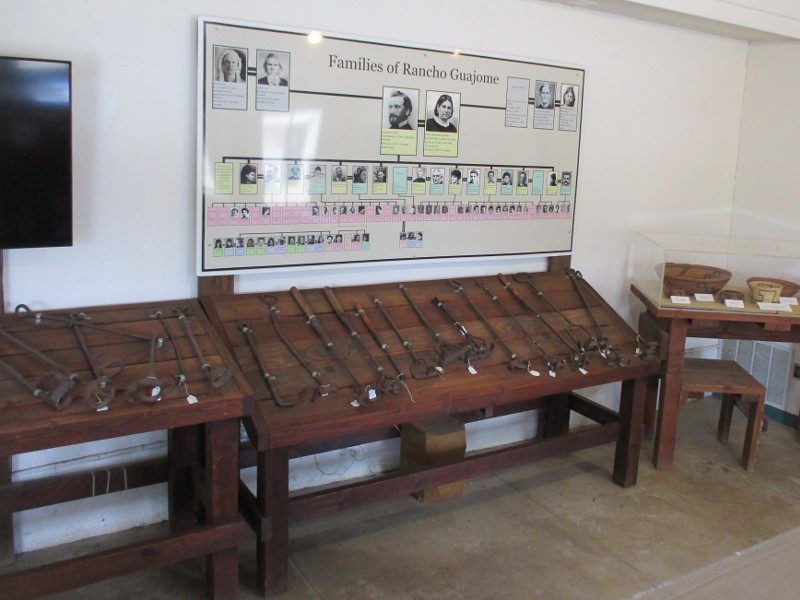
At its beginning, Rancho Guajome was a working cattle ranch. Because the West was dry, cattle owners like Cave Couts would turn their cattle out on unfenced pastures. However, during this “open range” period, sometimes cattle from different ranchos intermixed, making it difficult to determine which cattleman owned which cattle. The branding iron was invented as a solution…
Cave Johnson Couts was born in 1821 in Springfield, Tennessee, and died in 1874 in San Diego at the Horton House. His wife Maria Ysidora Barbara Bandini was born in 1828 in San Diego, was married in 1851 at the Casa de Bandini in Old Town (now the Cosmopolitan Hotel), and died in 1897 in Los Angeles.
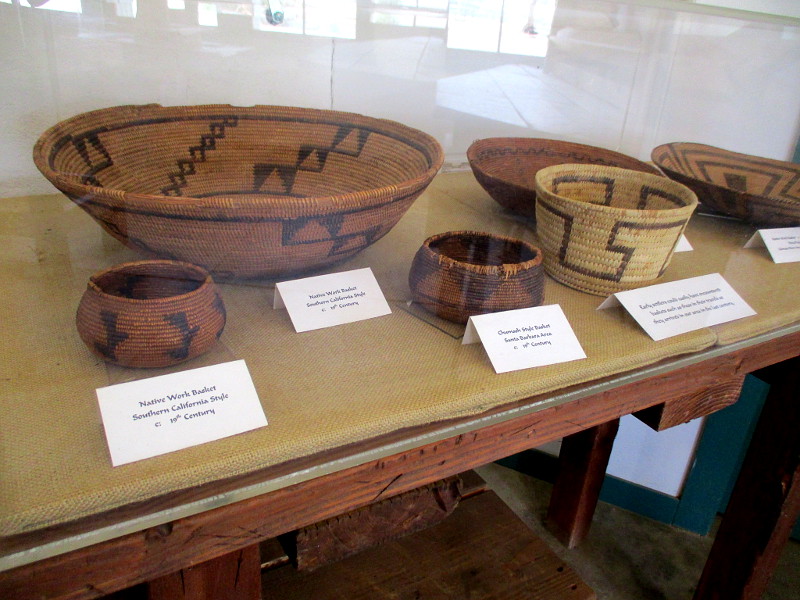
Included in the museum display are Native work baskets, Southern California style, circa 19th century.
Rancho Guajome Adobe farm equipment included a farm wagon, breaking carts for training horses, a broadcast seeder, a sulky used for racing horses, and a four-bottom Stockton plow used to turn soil to prepare fields for planting.
In the past I blogged about the Colorado House, a two-story hotel that was built in Old Town San Diego in 1851 by the very same Cave Couts. Today it serves as the Wells Fargo History Museum. Read that here.
I’ve also blogged about the El Campo Santo cemetery grave of Juan Mendoza, who was shot in the back by Cave Couts. See that here. (During one walk I spotted another mysterious wooden tombstone with the name Juan Mendoza by a parking lot, across the San Diego River from Old Town. Read that here!)
…
I live in downtown San Diego and love to walk around with my camera! You can follow Cool San Diego Sights via Facebook or Twitter!
You can easily explore Cool San Diego Sights by using the search box on my blog’s sidebar. Or click a tag! There are thousands upon thousands of photos for you to enjoy!
I first saw the El Cuervo adobe ruins years ago. That was during a guided nature hike at the west end of Los Peñasquitos Canyon Preserve. But I haven’t been back down that trail in a very long time.
Yesterday the cool spring weather was perfect for a hike in the canyon, so I decided to once again visit the historic ruins.
In 1823 a large portion of Peñasquitos Canyon was granted to Francisco María Ruiz, the Commandante of San Diego’s presidio. It was the first Mexican land grant in this area. You can learn more of the history, and see photos of his original 1824 adobe ranch house and its later modifications by clicking here.
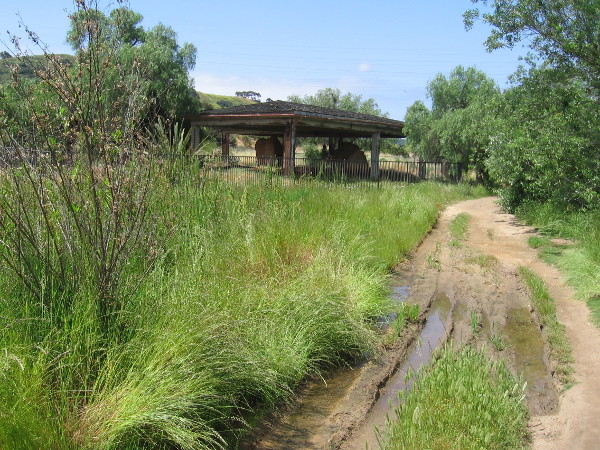
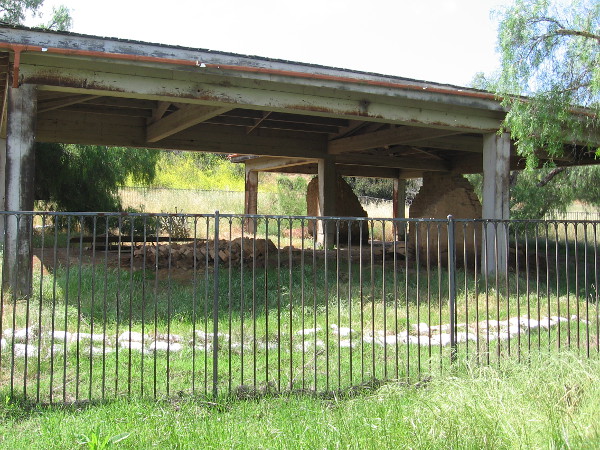
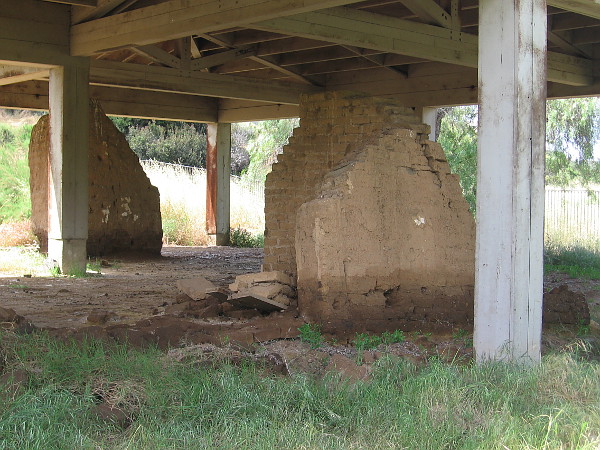
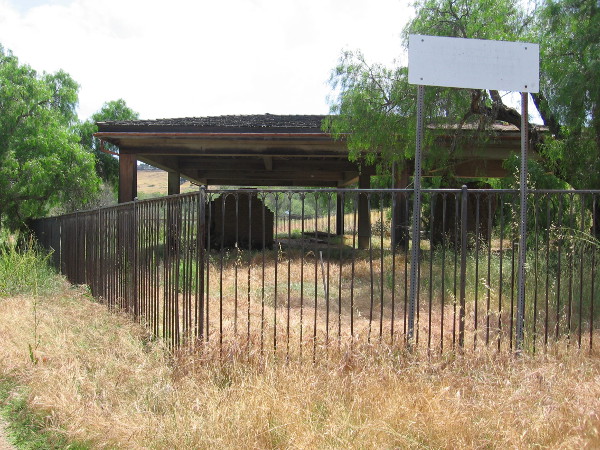
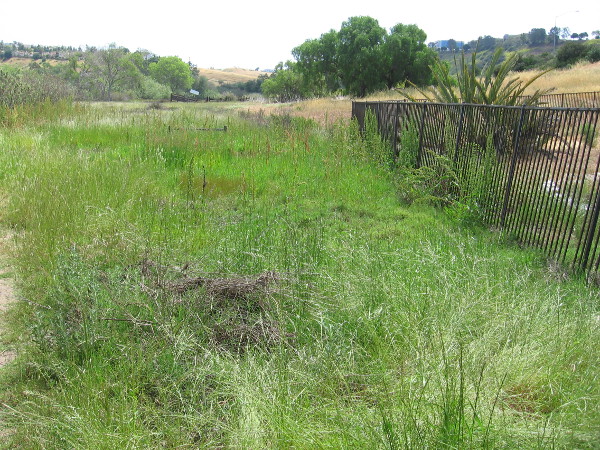
In 1834, Ruiz was granted additional land to the west for cattle grazing. This area of Peñasquitos Canyon was named El Cuervo. He built another adobe house near the place where Lopez Creek runs into Peñasquitos Creek.
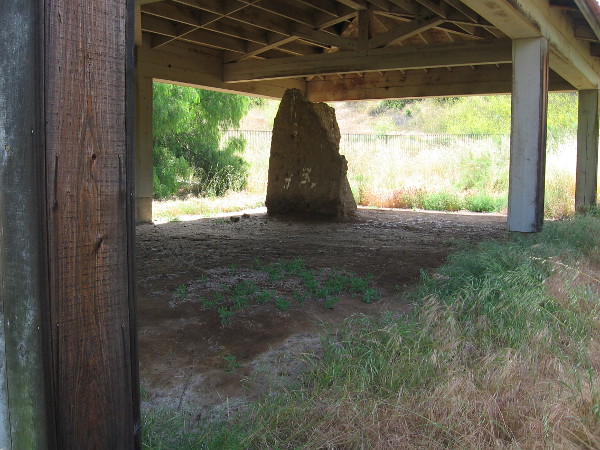
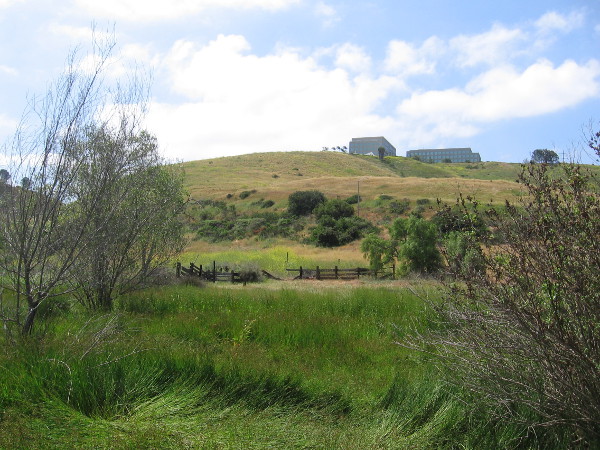
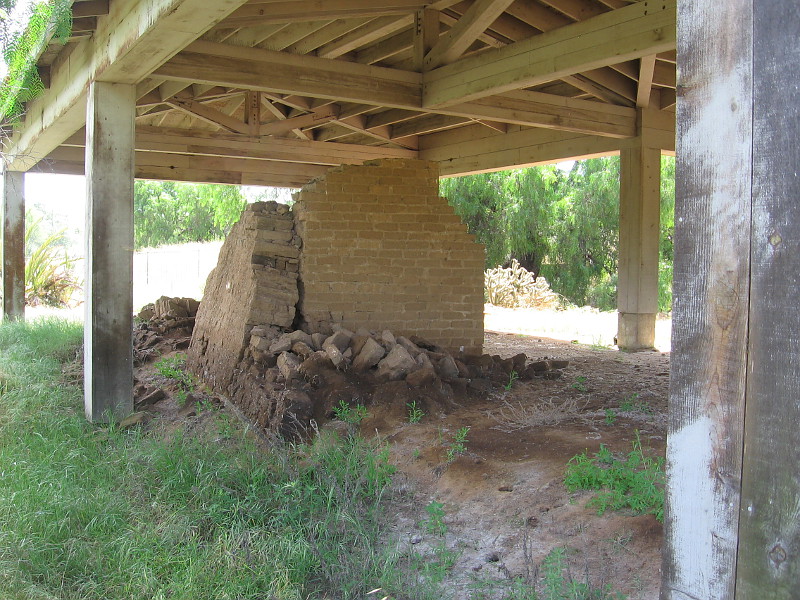
That second house today is in ruins. The crumbled adobe walls are protected by a steel fence and sheltering roof. A broken down corral can still be observed in the field to the east, as you can see in a couple of my photographs.
…
I live in downtown San Diego and love to walk around with my camera! You can follow Cool San Diego Sights via Facebook or Twitter!
You can easily explore Cool San Diego Sights by using the search box on my blog’s sidebar. Or click a tag! There are thousands upon thousands of photos for you to enjoy!


























 Cool San Diego Sights!