A new flag is raised for San Diego’s 250th Anniversary!

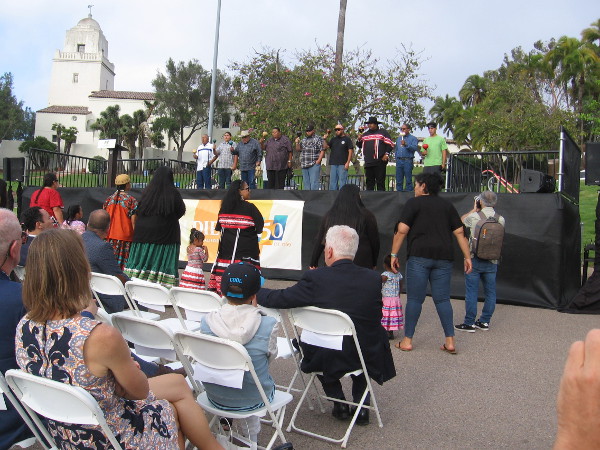
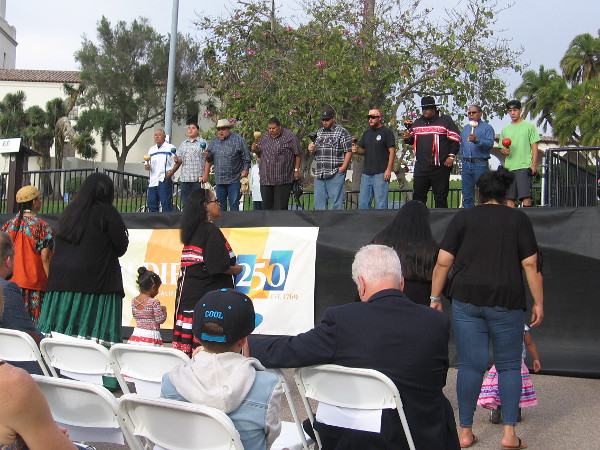
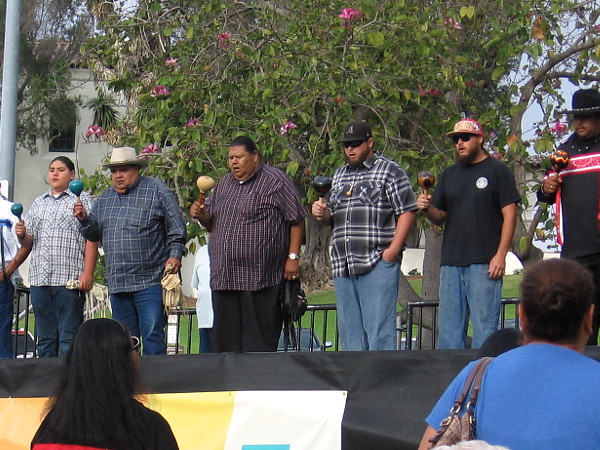
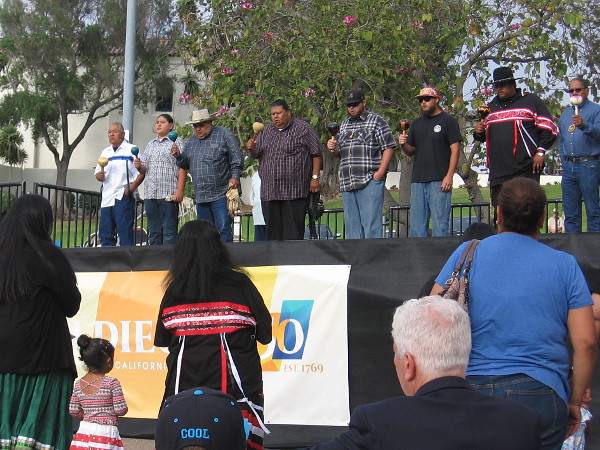
Kumeyaay bird songs are performed on stage during the San Diego 250 Civic Commemoration Ceremony.
Kumeyaay traditional Bird Songs are performed during the San Diego 250 Civic Commemoration Ceremony.

This evening a very special event was held in San Diego.

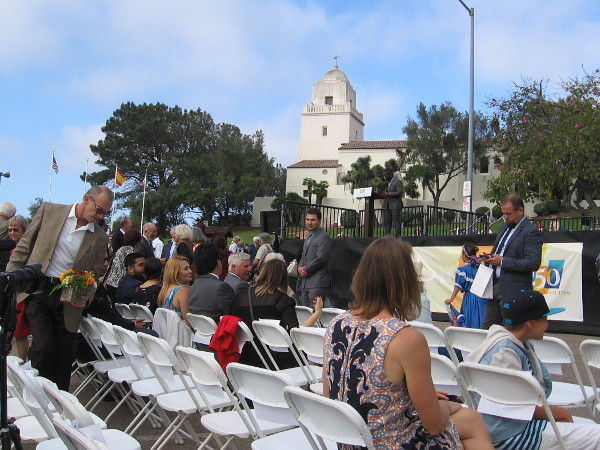
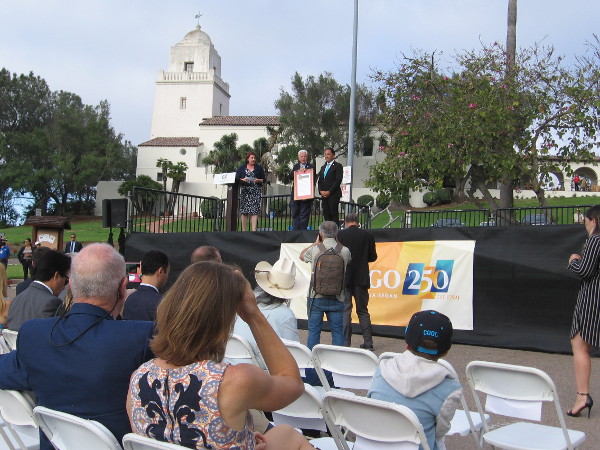
A crowd gathered near the top of Presidio Hill, in the parking lot just below the Serra Museum, to take part in the San Diego 250 Civic Commemoration Ceremony.

The historic event was staged in the same spot overlooking San Diego Bay where a Spanish mission and presidio were built in 1769. It is where San Diego began 250 years ago.

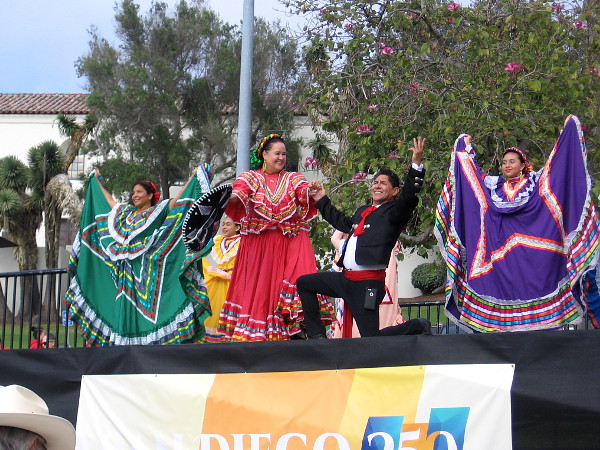
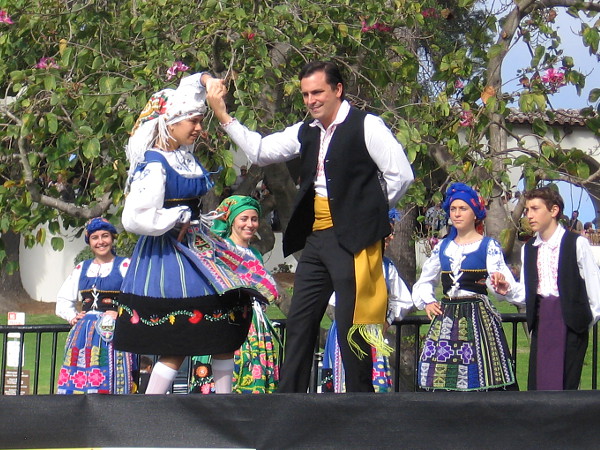
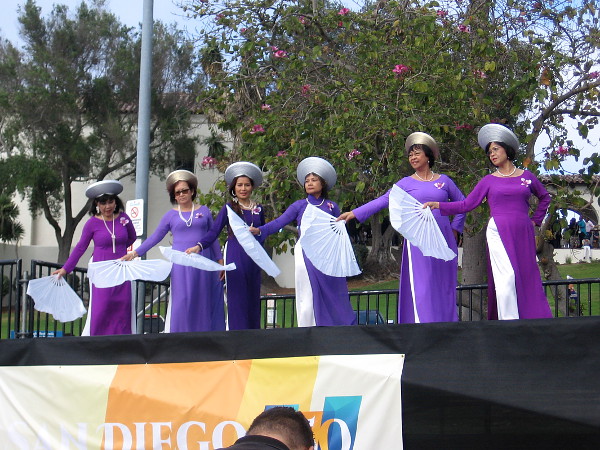
The first part of the San Diego 250 Civic Commemoration Ceremony featured cultural entertainment representing our remarkably diverse city. Several colorful dances were followed by speeches by politicians, dignitaries and diplomats, plus several leaders of the Native American Kumeyaay people–those who have lived in this region many thousands of years before the arrival of Europeans. The audience experienced a Kumeyaay blessing and traditional Bird Songs. With sincere words past injustices and the suffering of the Kumeyaay were acknowledged, and optimism was expressed that our city’s future will be inclusive and bright.

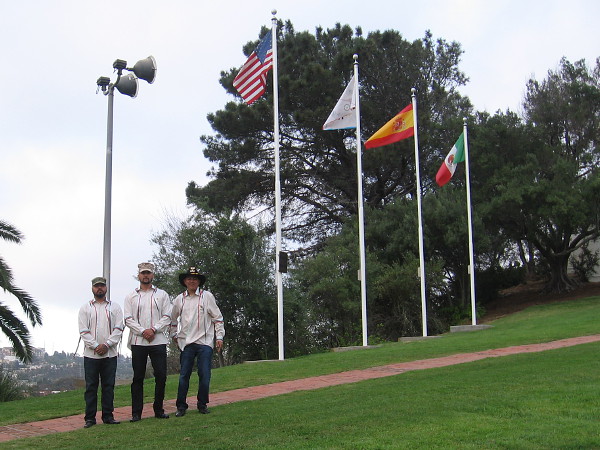
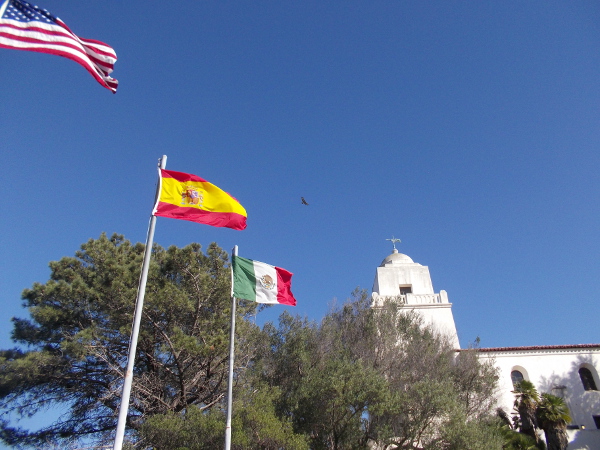
For as long as I can remember, three flagpoles have stood at this place where the Spanish built their first outpost in California. Three banners have flown representing the history of San Diego: the flags of Spain, Mexico and the United States.

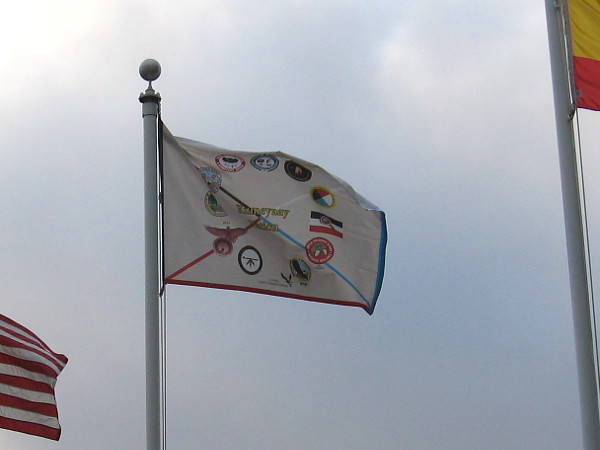
A fourth flagpole was recently installed. Today, at the close of the ceremony, a flag incorporating the different tribes of the Kumeyaay Nation was blessed with white sage smoke–to purify minds and hearts-and raised proudly, acknowledging and honoring San Diego’s first people.

I took some photographs of this important historical event.
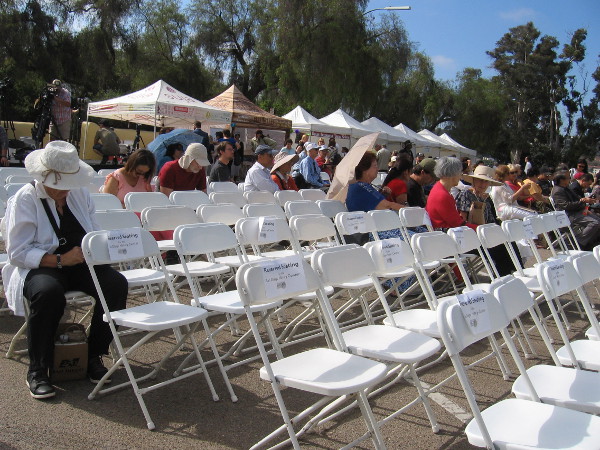
Early arrivals for San Diego's big 250th Anniversary event claim a seat and await some cultural entertainment.
Early arrivals for San Diego’s big 250th Anniversary event claim a seat and await some cultural entertainment.
A variety of tents could be visited for food, drink and information about San Diego and its history.
Kumeyaay tools and crafts are on display at one table.
Map shows the different Kumeyaay villages of our region. The village of Cosoy was located near the base of Presidio Hill, where Old Town is located today.
Prior to the ceremony, I walked a bit through Presidio Park. I took a photograph of VIPs arriving by Old Town Trolley at the Serra Museum.
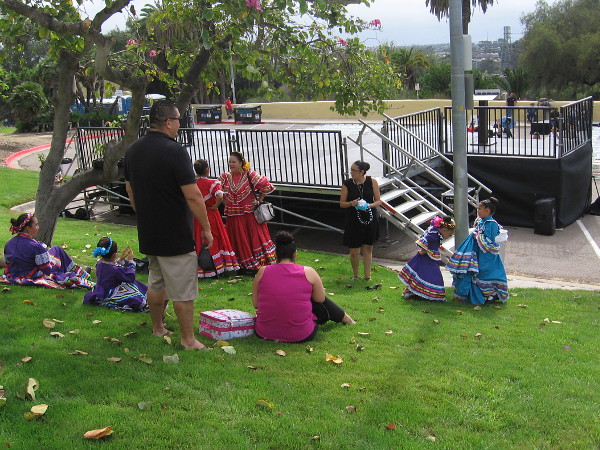
Performers lounge on grass behind the stage before the program begins.
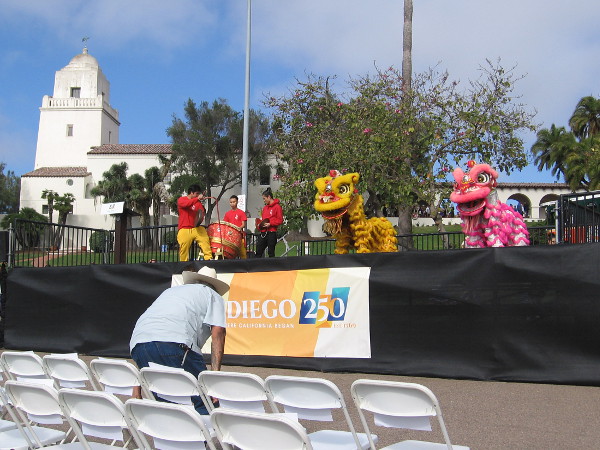
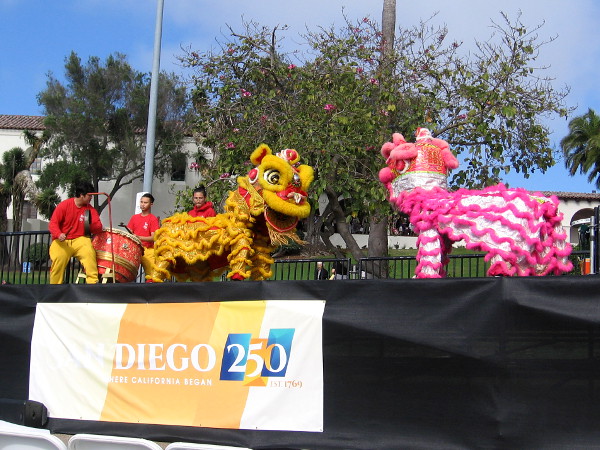
Someone takes a seat in the VIP section as Lion Dancers begin the multicultural entertainment.

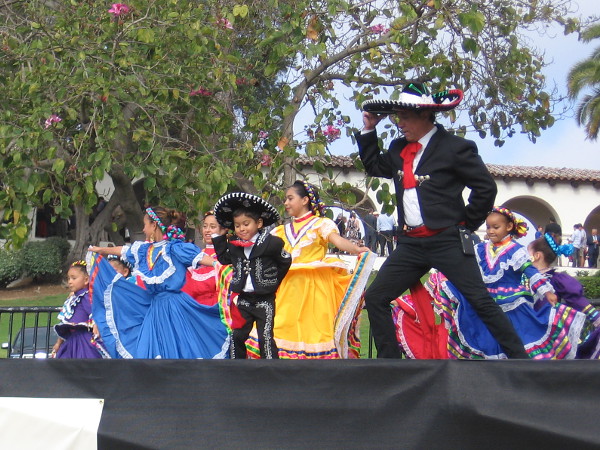
The ballet folklorico dancing that followed was enthusiastic, colorful and loudly applauded.
The ballet folklorico dancing that followed was enthusiastic, joyous and loudly applauded.

Dancers representing San Diego's Portuguese community take the stage.
Dancers representing San Diego’s Portuguese community take the stage.

A dance followed that represented San Diego's Vietnamese community.
A dance followed that represented San Diego’s Vietnamese community.

The VIPs take their seats as speeches are about to commence.
There are four flagpoles, but only three flags are flying.
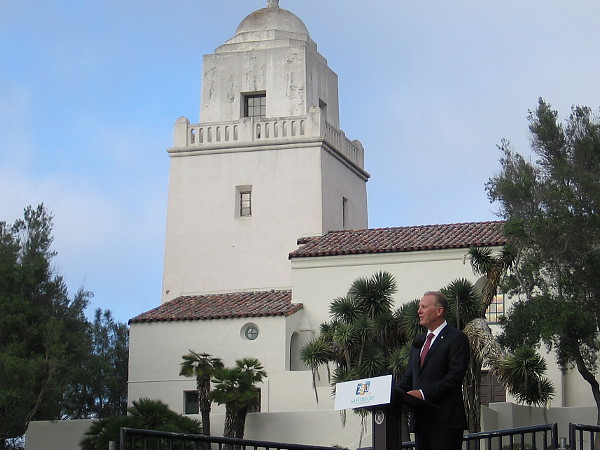
Mayor Faulconer addresses the crowd, urging unity and a positive future for all.
Mayor Faulconer addresses the crowd, urging unity and a positive future for all who live in San Diego.
A leader of the Kumeyaay Nation addresses those assembled.
Kumeyaay women sway in front of the stage as the men perform traditional bird songs.
Kumeyaay women sway in front of the stage as the men perform traditional Bird Songs.

A presentation is made to the San Diego History Center, which operates the Serra Museum and helped to arrange this special ceremony.
A presentation is made to the San Diego History Center, which operates the Junipero Serra Museum and helped to arrange this special ceremony.
Before the event concludes, everybody's attention turns to the flagpoles.
Before the event concludes, everyone’s attention is directed to the four flagpoles.
The Kumeyaay color guard stands ready.
The flag of the Kumeyaay Nation is unfolded and blessed.
It is raised.
It is raised.
The Kumeyaay color guard poses proudly for a photograph.
The Kumeyaay color guard poses with pride for a photograph.
The flag of the Kumeyaay Nation now flies on historic Presidio Hill, in a place of honor.

I live in downtown San Diego and love to walk around with my camera! You can follow Cool San Diego Sights via Facebook or Twitter!

You can easily explore Cool San Diego Sights by using the search box on my blog’s sidebar. Or click a tag! There are thousands upon thousands of photos for you to enjoy!
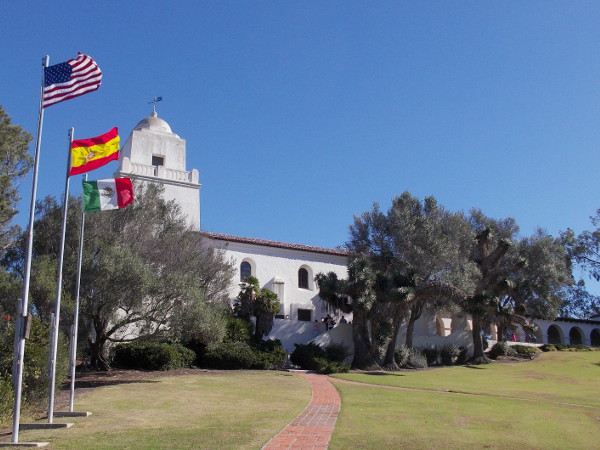
Revisiting history on San Diego’s 250th Anniversary.

An event of great historical importance is scheduled for this evening.

At five o’clock, on Presidio Hill near the Serra Museum, a ceremony will be held to mark the 250th Anniversary of San Diego. I plan to be there.

To remember the birth of our city (which began precisely where the above photo was taken), I’ve decided to revisit that history and provide links to various past blog posts.

If you plan to attend today’s event, there’s a trail to the top of Presidio Hill that starts near the small golf course east of Old Town. Today my feet will again follow that path.

The following photo of a display inside the Serra Museum shows the location of the original Spanish presidio, now a ruin hidden beneath grassy mounds.

The following blog posts contain a great deal of information about San Diego’s early history.

Here are the links:

Walk from Old Town to the San Diego Presidio.

Photos of historical plaques on Presidio Hill.

Photos of The Padre sculpture in Presidio Park.

San Diego’s early history at the Serra Museum.

I live in downtown San Diego and love to walk around with my camera! You can follow Cool San Diego Sights via Facebook or Twitter!

Huge banner celebrates San Diego’s birthday!

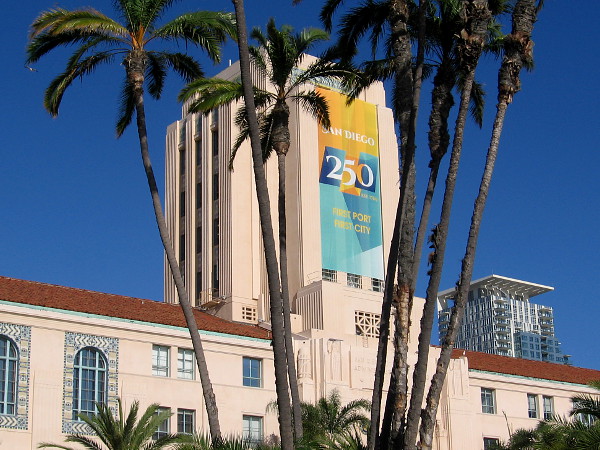
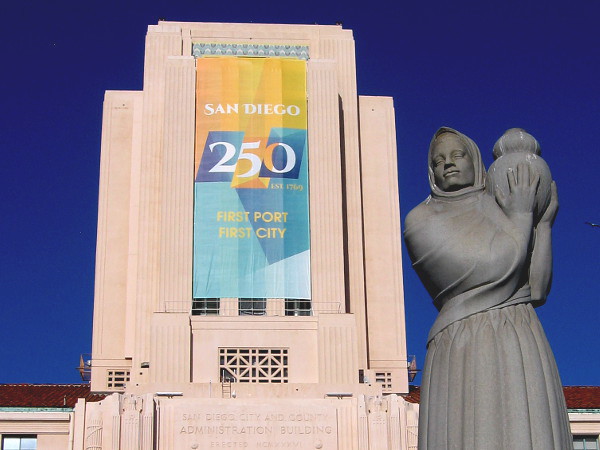
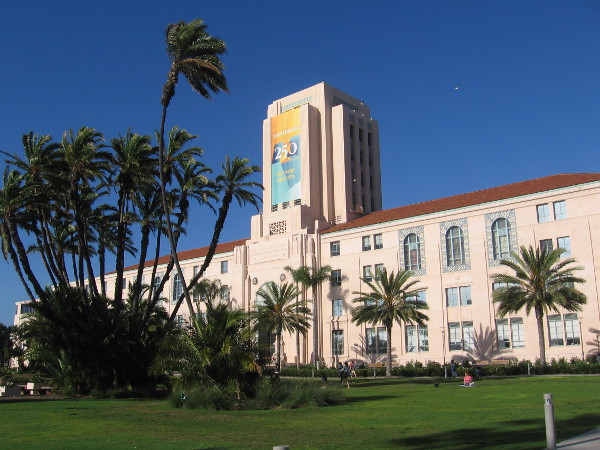
The County Administration Building in downtown San Diego got a gigantic new banner today! It celebrates the 250th Anniversary of San Diego’s founding!

Those who look up at the banner from the Embarcadero are reminded that San Diego–which started very modestly back in 1769 with the construction of a Spanish mission and presidio–was California’s first port and first city!

I live in downtown San Diego and love to walk around with my camera! You can follow Cool San Diego Sights via Facebook or Twitter!

You can easily explore Cool San Diego Sights by using the search box on my blog’s sidebar. Or click a tag! There are thousands upon thousands of photos for you to enjoy!

Banner celebrates San Diego’s 250th Anniversary!

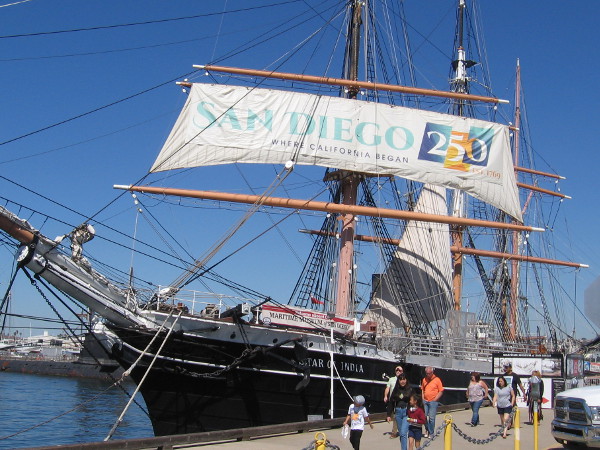
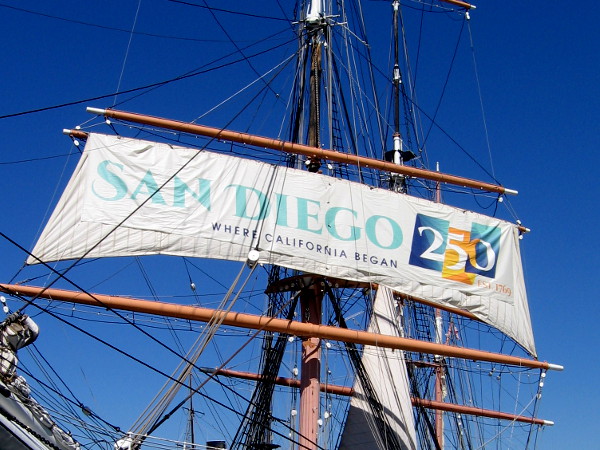
Huge banner on sail of Star of India celebrates the 250th Anniversary of San Diego!

The City of San Diego has placed an enormous banner on a sail of the historic tall ship Star of India. Its bold message can be seen from many spots downtown. The banner celebrates San Diego’s 250th Anniversary!

In 1769, on the hill that overlooks what would eventually become Old Town, Spain began its settlement of the region by building El Presidio Reál de San Diego. Attached to the fort, the original Mission San Diego de Alcalá was established by Junípero Serra in the same year.

Back then the land was wide open and mostly wilderness. The mountains, hills, rivers and coast were home to the Native American Kumeyaay. European settlement brought about an abrupt change in the region’s history. For better or worse, 250 years later San Diego is quite a bit different!

What will San Diego look like in another 250 years? As our civilization evolves, and as technological breakthroughs accelerate, can anyone possibly imagine?

Together we sail into the future!

SAN DIEGO 250 - EST. 1769 - WHERE CALIFORNIA BEGAN
SAN DIEGO 250 – EST. 1769 – WHERE CALIFORNIA BEGAN

I live in downtown San Diego and love to walk around with my camera! You can follow Cool San Diego Sights via Facebook or Twitter!

San Diego’s 250th Anniversary coming in 2019!

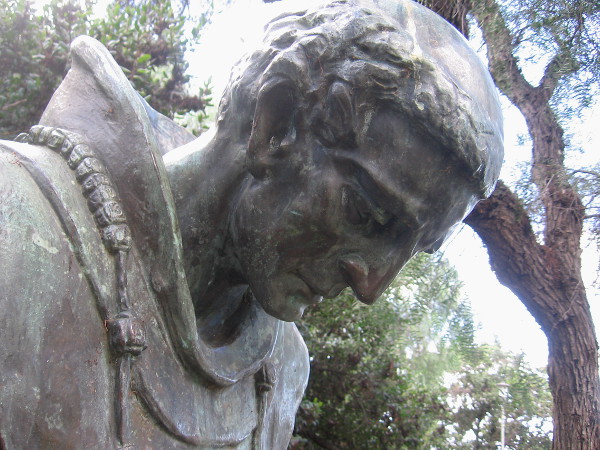
Close photo of bowed head of The Padre on Presidio Hill.
Arthur Putnam’s sculpture The Padre on Presidio Hill.

If one considers San Diego’s founding to have occurred in 1769, the year both Mission San Diego de Alcalá and the El Presidio Reál de San Diego were established on Presidio Hill, then 2019 will be our city’s 250th Anniversary!

That’s no small thing! One would suppose that huge celebrations are being planned!

Well, when I perform an internet search, I can find no plans for celebrations mentioned, apart from Mission Basilica San Diego de Alcalá’s announced church events, and a Founders’ Day Festival in Old Town.

It’s hard to believe, but I find almost no discussion of the city’s upcoming 250 year anniversary.

Unfortunately, as many of you might remember, the occasion of Balboa Park’s Centennial in 2015 was not celebrated with the fanfare that would have been appropriate.

I do hope that behind the scenes serious plans are being made for the appropriate celebration of San Diego’s 250th birthday! Or that plans will be made!

Just a thought from a silly blogger who loves San Diego!

UPDATE!

The City of San Diego has placed a huge 250th Anniversary banner on a sail of Star of India. You can see photos here!

UPDATE!

The City of San Diego has created a website dedicated to its 250th Anniversary. It lists several events that commemorate this special year. Visit the website here!

UPDATE!

In May, 2019, I noticed San Diego 250 banners have appeared along streets all over downtown!

IMG_5747z

UPDATE!

On July 1, 2019, a gigantic 250th anniversary banner appeared on the County Administration Building.

It celebrates the fact that San Diego was California’s first port and first city! I posted several photos of the banner here!

Photos of The Padre sculpture in Presidio Park.

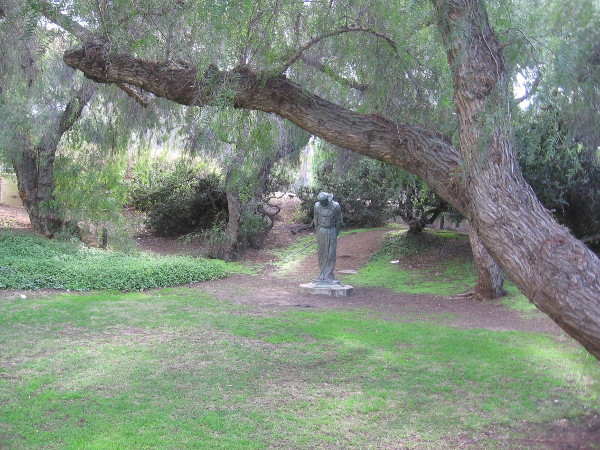
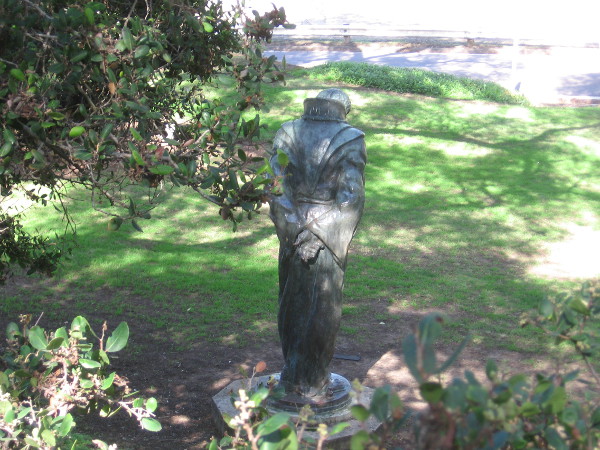
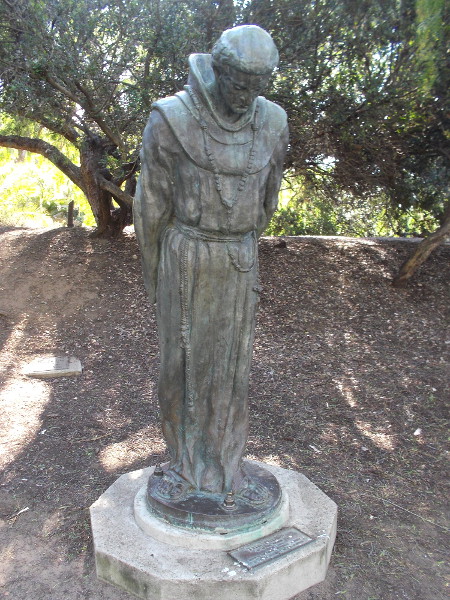
The Padre, by Arthur Putnam, 1908. The public artwork stands on a patch of grass among trees on Presidio Hill.

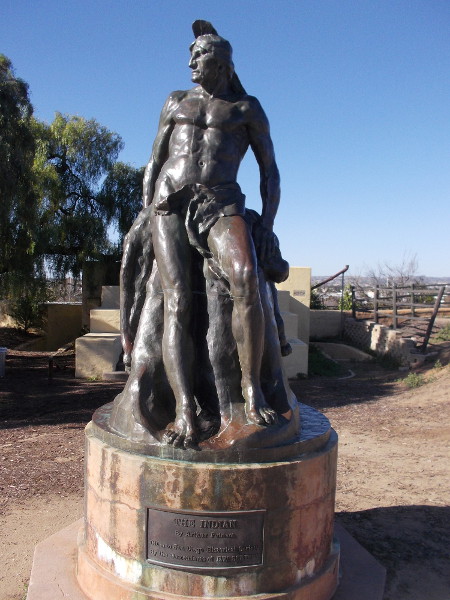
Walk up to the top of Presidio Park from Old Town and you’ll discover a variety of fascinating, historical sights. Possibly the most amazing, apart from the impressive Serra Museum building, are two extraordinary bronze sculptures, The Indian and The Padre, by renowned sculptor Arthur Putnam.

The Padre was cast in 1908. The figure of a Spanish friar stands in a small, quiet space among trees, not far from the spot where Junípero Serra founded Mission San Diego de Alcalá in 1769, which began as a temporary church at the Spanish presidio. Five years later the mission would be moved a few miles east up the San Diego River to its present location.

Here are photos of The Padre which show the sculpture’s quiet beauty.

The Padre stands alone in a green, gentle place.
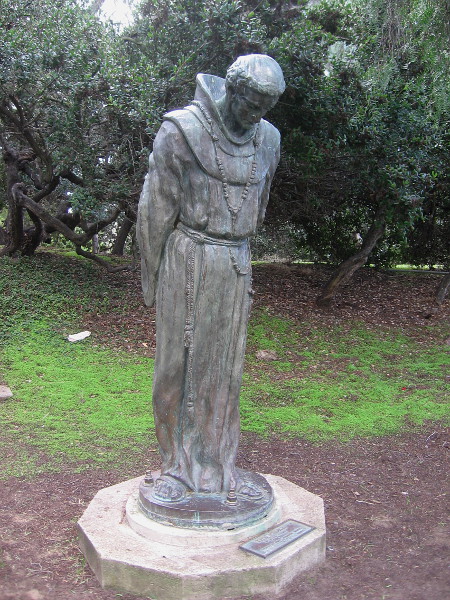
A Spanish friar seems to walk out of San Diego's very early history.
A Spanish friar seems to walk out of San Diego’s very early history.
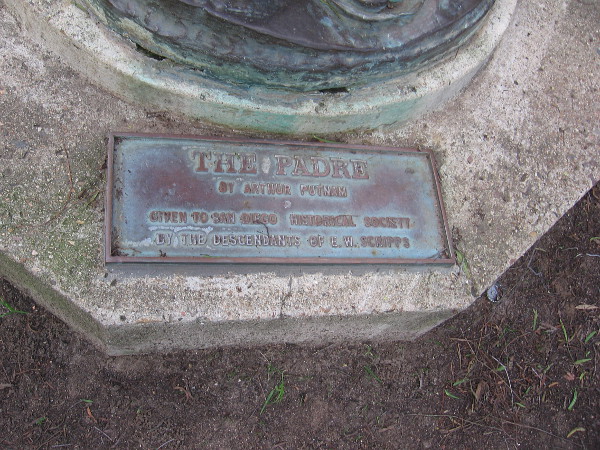
The Padre by Arthur Putnam. Given to San Diego Historical Society by the descendants of E.W. Scripps.
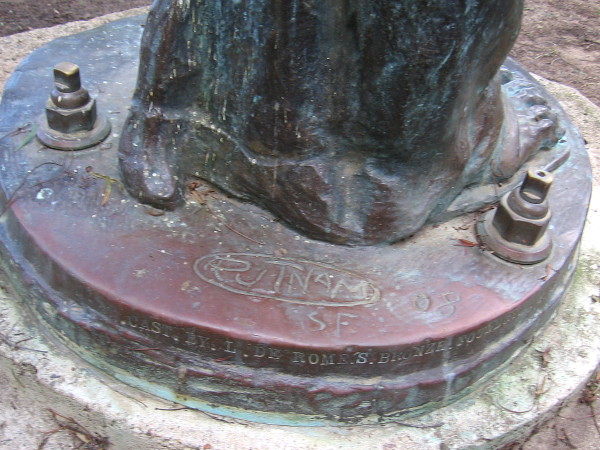
Markings at the sculpture's base indicated it was cast by Louis de Rome's bronze foundry in San Francisco, the city where Arthur Putnam lived for many years.
Markings at the sculpture’s base indicated it was cast by Louis de Rome’s bronze foundry in San Francisco, the city where Arthur Putnam lived for many years.
A quiet bronze statue among trees near San Diego's now ruined and vanished Presidio.
A quiet bronze statue among trees near San Diego’s now ruined and vanished Presidio.
A spider's web and small fallen leaves above folded hands.
A spider’s web and small fallen leaves above folded hands.
The Padre seems to be lost in prayer or silent contemplation.
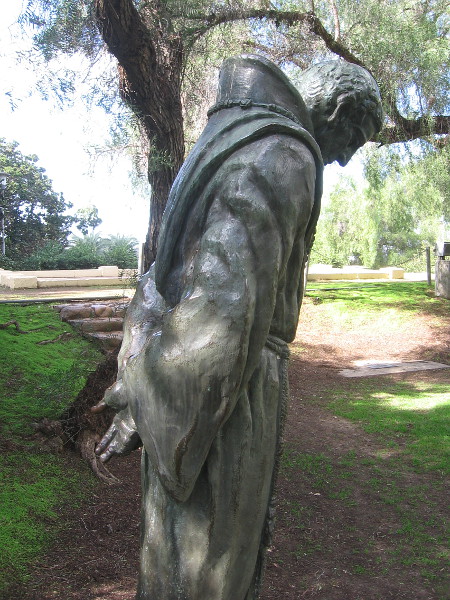
Close photo of bowed head of The Padre on Presidio Hill.

I live in downtown San Diego and love to walk around with my camera! You can follow Cool San Diego Sights via Facebook or Twitter!

You can easily explore Cool San Diego Sights by using the search box on my blog’s sidebar. Or click a tag! There are thousands upon thousands of photos for you to enjoy!
Photos of historical plaques on Presidio Hill.

View of the Serra Museum through trees atop Presidio Hill, near the spot where European civilization first took root in California in 1769.

A few years ago I walked from Old Town San Diego up to the top of Presidio Hill and wrote a simple blog about what I saw. You can revisit that post here.

What I failed to do at the time was photograph many of the historically important plaques that can be found around various sites and monuments, so I thought it would be proper to finally correct that omission.

I’ve included one informative sign which stands near the ruins of the old Spanish presidio’s chapel, and a variety of plaques. One of the plaques is at the base of the Padre Cross; two are near The Padre sculpture; one is on an observation structure near the Junipero Serra Museum parking lot; and several others are found at Fort Stockton, where the Mormon Battalion camped after their 2000-mile march from Iowa to San Diego.

Click the photos and they will enlarge for easier reading.

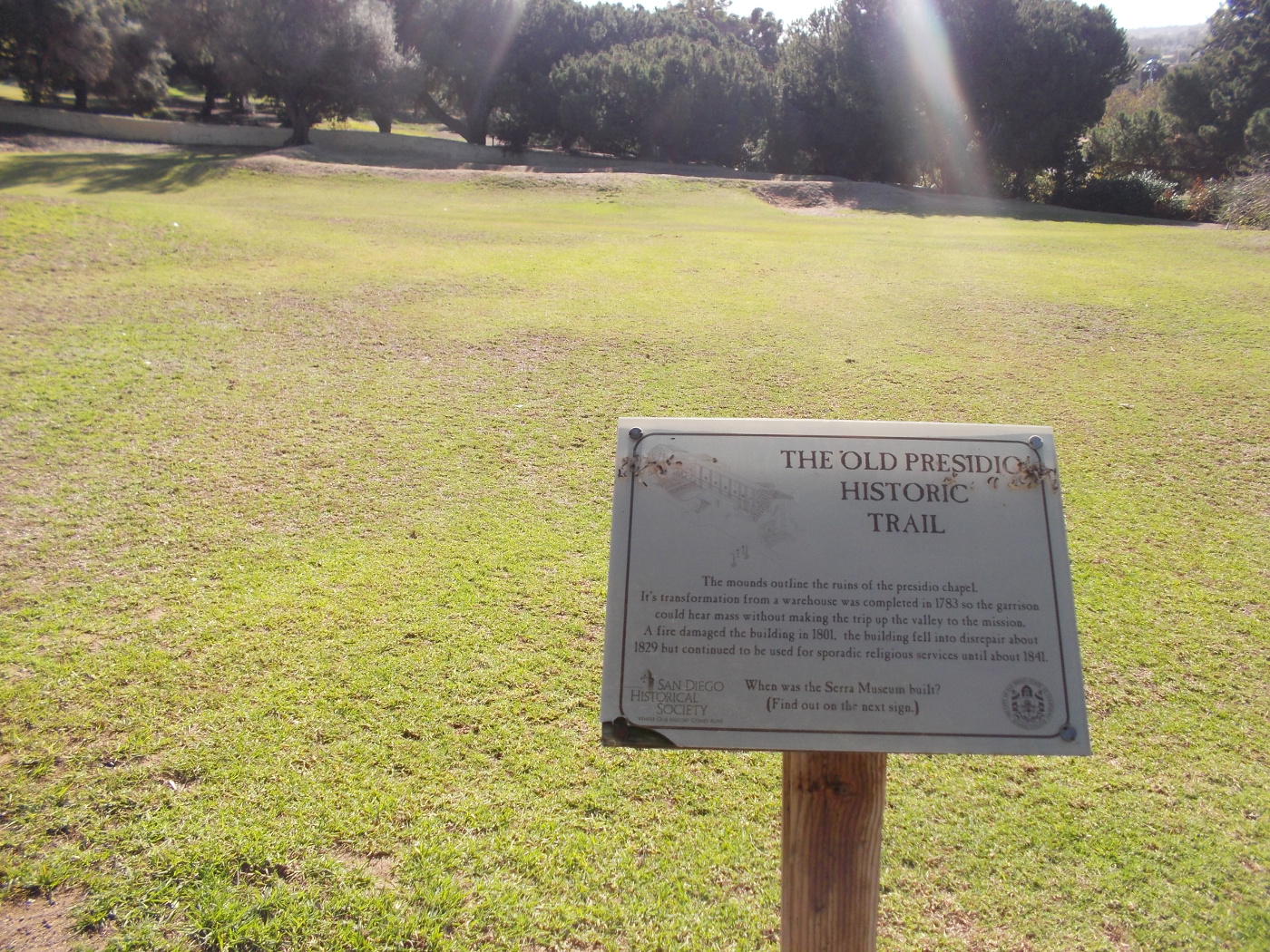
Sign marks the Old Presidio Historic Trail. Grassy mounds on the hill below the Serra Museum are the ruins of the old presidio chapel.
Sign marks the Old Presidio Historic Trail. Grassy mounds on the hill below the Serra Museum are the ruins of the old presidio chapel. It was built for the garrison’s soldiers after the original Spanish mission was relocated up the valley.
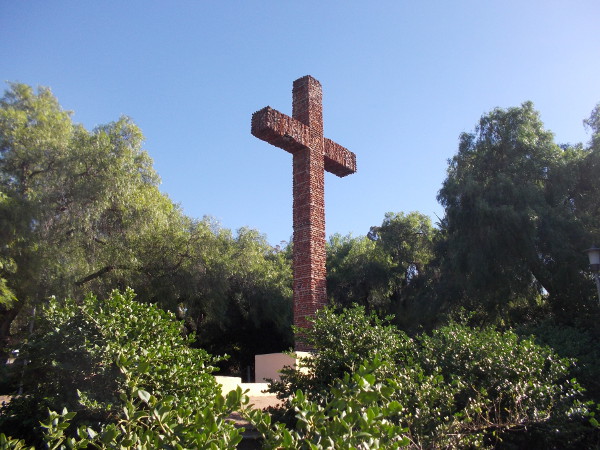
A large cross marks the location of the first Spanish mission in Alta California, established by Junipero Serra.
The large Padre Cross, made in 1913 of tiles from the Presidio ruins, marks the location of the first Spanish mission in Alta California, established in 1769 by Junipero Serra.
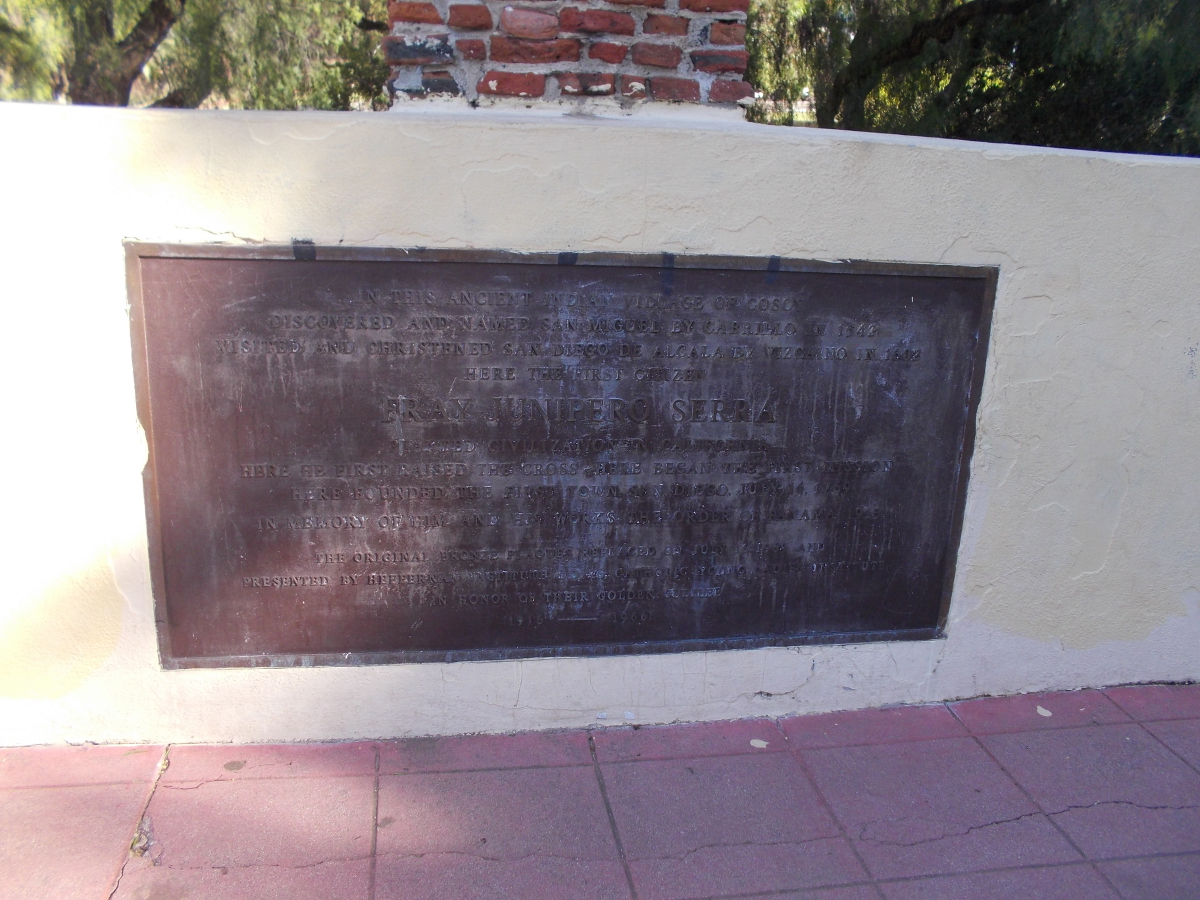
Plaque at base of cross remembers the Indian village of Cosoy, named San Miguel by Cabrillo in 1542, then San Diego de Alcala by Vizcaino in 1602.
Plaque at base of the Padre Cross remembers the Indian village of Cosoy, named San Miguel by Cabrillo in 1542, then San Diego de Alcala by Vizcaino in 1602.
Near the Padre Cross, a plaque covers a time capsule that was created two centuries after the establishment of Mission San Diego de Alcala. It is to be opened on July 16, 2069.
Between the Padre Cross and The Padre sculpture, a plaque covers a time capsule that was created two centuries after the establishment of Mission San Diego de Alcala. It is to be opened on July 16, 2069.
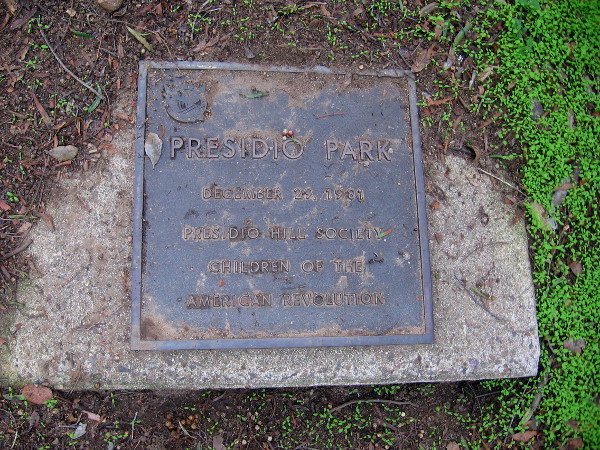
A plaque behind The Padre sculpture, placed on December 29, 1981 by the Presidio Hill Society Children of the American Revolution.
A plaque in the ground behind The Padre sculpture, placed on December 29, 1981 by the Presidio Hill Society Children of the American Revolution.
Photo taken behind The Padre on Presidio Hill. The 1908 bronze sculpture is by Arthur Putnam.
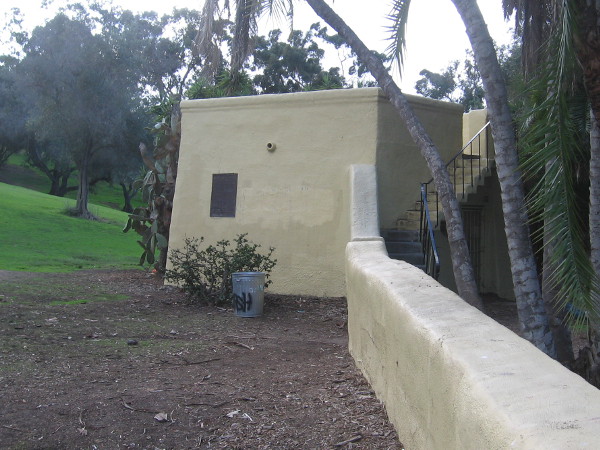
A plaque can be seen on the observation structure near one corner of the Serra Museum parking lot.
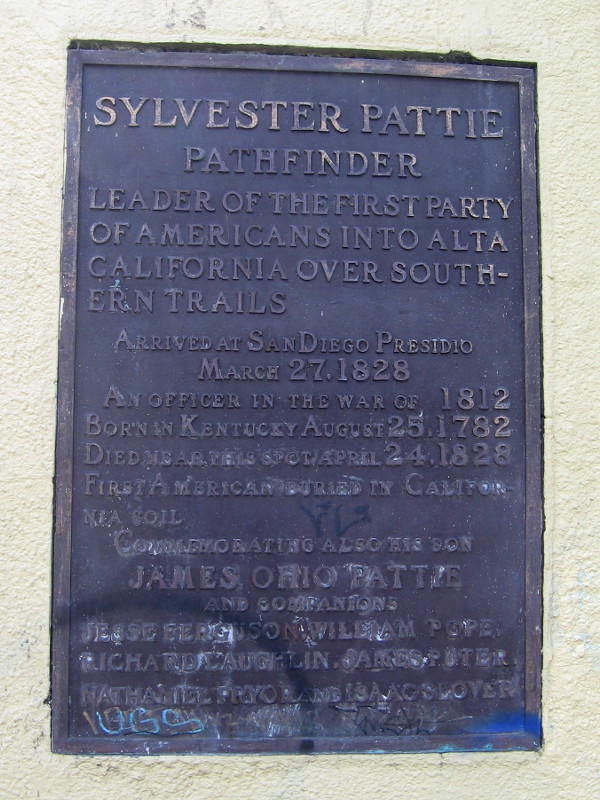
The plaque begins: Sylvester Pattie, pathfinder, leader of the first party of Americans into Alta California over Southern trails. Arrived at San Diego Presidio March 27, 1828.
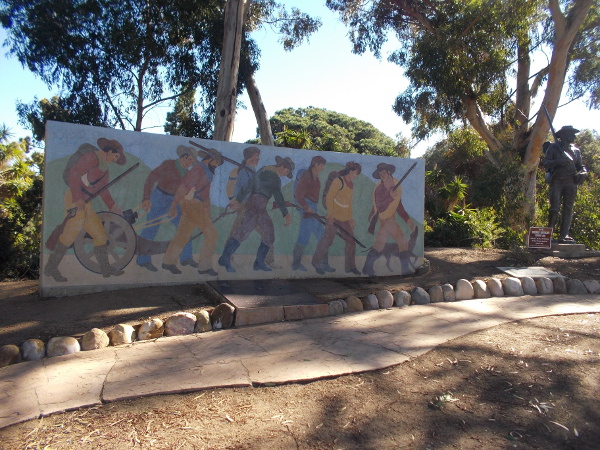
Mural at Fort Stockton depicts the long march of the Mormon Battalion.
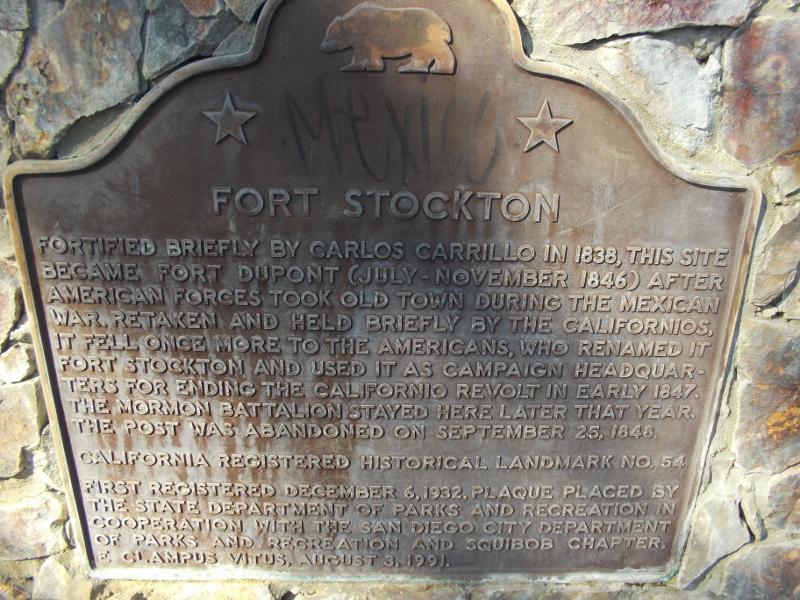
California Historical Landmark plaque at Fort Stockton. The top of Presidio Hill was fortified by Carlos Carrillo in 1838. From July to November 1846 the fortification was called Fort Dupont when American forces temporarily held Old Town.
California Historical Landmark plaque at Fort Stockton. The top of Presidio Hill was first fortified by Carlos Carrillo in 1838. From July to November 1846 the site was called Fort Dupont when American forces temporarily held Old Town.


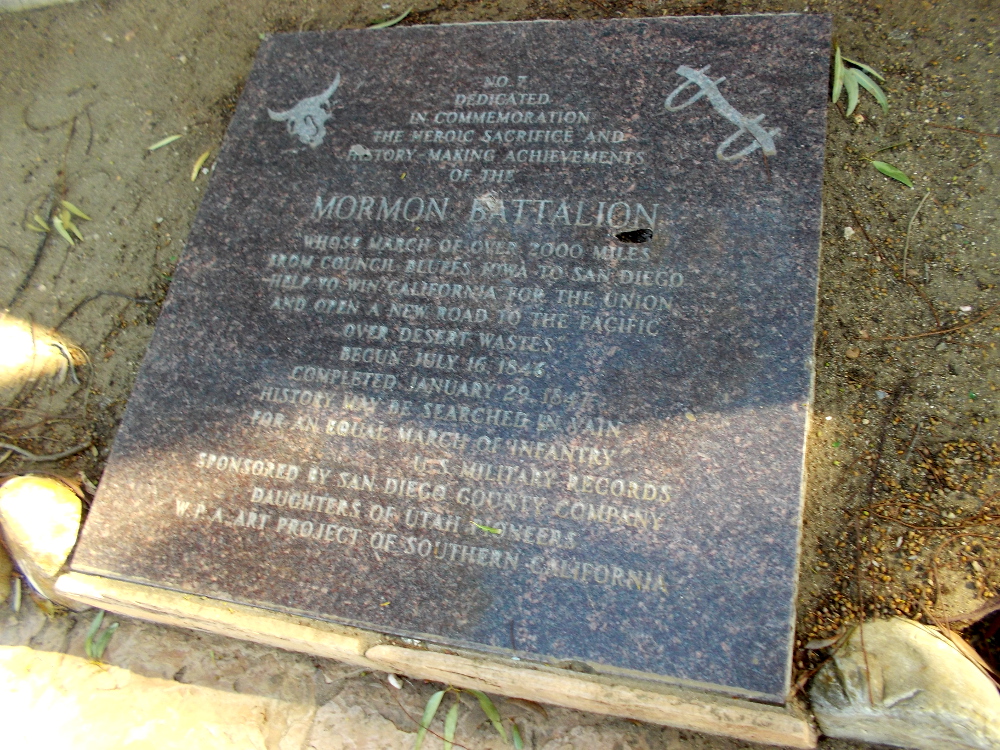
Plaque by mural, commemorating the heroic sacrifice and history-making achievements of the Mormon Battalion.
More plaques nearby explain the history of the Mormon Battalion, which blazed the first wagon trail to the Pacific over the southern route.
Members of the Mormon Battalion worked to improve San Diego by making the first kiln in California, the first pumps to draw water, and the first blacksmith shop and bakery.
The two plaques depicted above are near the Mormon Battalion Monument, a bronze sculpture by Edward J. Fraughton.
The two plaques described above can be found near the Mormon Battalion Monument, a bronze sculpture created by Edward J. Fraughton.
Another nearby plaque explains the history of the sculpture. It was a gift to the City of San Diego in 1969 by the National Society of the Sons of Utah Pioneers.
Another nearby plaque explains the history of the statue. It was a gift to the City of San Diego in 1969 by the National Society of the Sons of Utah Pioneers.
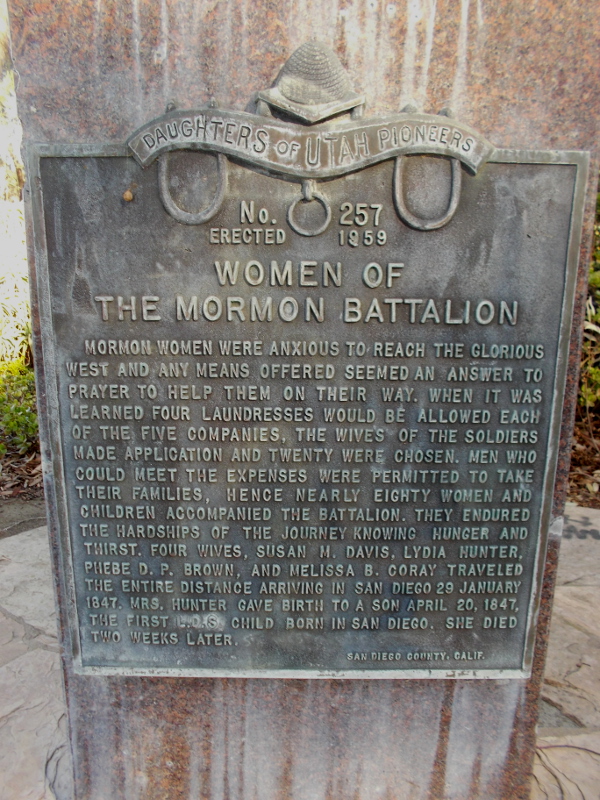
A plaque by the Daughters of Utah Pioneers also stands at the site of old Fort Stockton.
Women of the Mormon Battalion. Almost eighty women and children accompanied the soldiers during the long march. Four wives traveled the entire distance to San Diego.
Flags of the United States, Spain and Mexico fly atop Presidio Hill, birthplace of California. Here many chapters of history are remembered.

This blog now features thousands of photos around San Diego! Are you curious? There’s lots of cool stuff to check out!

Here’s the Cool San Diego Sights main page, where you can read the most current blog posts.  If you’re using a small mobile device, click those three parallel lines up at the top–that opens up my website’s sidebar, where you’ll see the most popular posts, a search box, and more!

To enjoy future posts, you can also “like” Cool San Diego Sights on Facebook or follow me on Twitter.

The oldest building in San Diego is a golf Pro Shop!

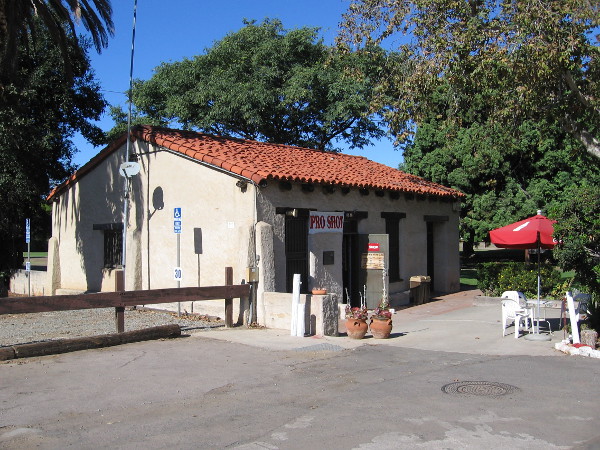
The Pro Shop at Presidio Hill Golf Course can be found inside San Diego's oldest building, La Casa de Carrillo.
The Presidio Hills Golf Course Pro Shop can be found inside San Diego’s oldest building, La Casa de Carrillo.

Believe it or not, the oldest structure that still exists in San Diego (outside of the walls of the Mission Basilica San Diego de Alcalá) contains a golf Pro Shop!

The two-century-old Casa de Carrillo, located near the base of historic Presidio Hill, was built in 1817, according to the Save Our Heritage Organisation.  (Plaques at the location provide two different years.)  It was built by the Spanish presidio’s commander, Francisco Maria Ruiz, for Joaquin Carrillo, a relative and fellow soldier stationed in San Diego. The adobe house stood beside the Comandante’s pear garden. Today the rather simple building, which was restored in 1931, is the home of the Presidio Hills Golf Course Pro Shop!

The small Presidio Hills Golf Course has its own unique history. Occupying what was once a scrubby plot of land at the foot of Presidio Hill, just east of Old Town, the pitch-and-putt golf course was developed in the early 1930s by George Marston, a visionary San Diego businessman and philanthropist who also worked to develop Balboa Park, the San Diego Public Library, and the San Diego Historical Society. Marston created the Junipero Serra Museum which rises today just above the site of the original 1769 Spanish presidio, so-called birthplace of California.

Over the years, the Presidio Hills Golf Course has hosted several world famous golfers, most notably Phil Mickelson, a resident of San Diego. When they were kids, Phil and his sister Tina would play all day at the small golf course. I was told by the super friendly young gentleman working in the pro shop that Phil Mickelson returns to visit every few years, just for old time’s sake.

A young Tiger Woods also won two Junior World trophies at Presidio Hills Golf Course!

Read the photo captions for a bit more information . . .

Photo of the small, historic adobe across the parking lot of the Presidio Hills Golf Course. Built around 1810, it's the oldest structure that is still standing in San Diego.
A photo of the small, historic adobe taken from the parking lot of the Presidio Hills Golf Course. Casa de Carrillo is the oldest structure that is still standing in San Diego.
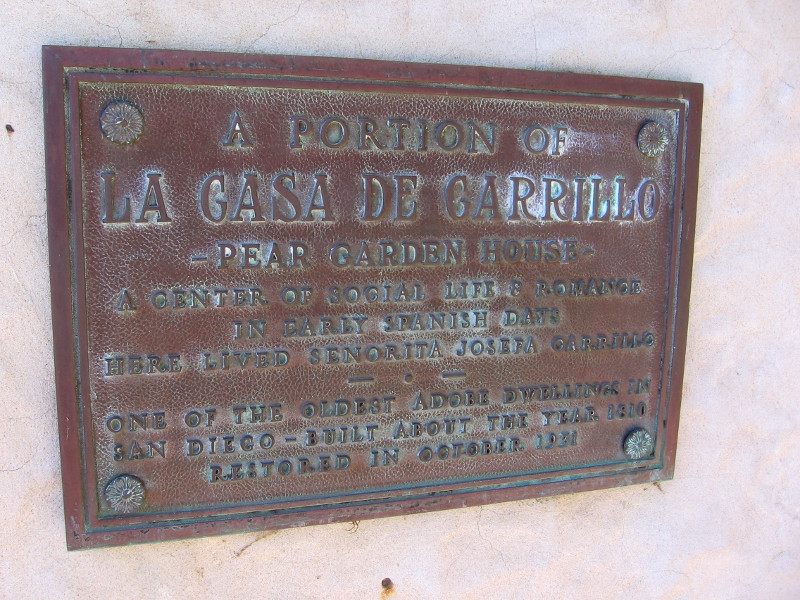
A portion of La Casa De Carrillo - Pear Garden House. A center of social life and romance in early Spanish days. Here lived Senorita Josefa Carrillo. One of the oldest adobe dwellings in San Diego. Built about the year 1810. Restored in October 1931.
Bronze plaque near the front door reads:  A portion of La Casa De Carrillo – Pear Garden House. A center of social life and romance in early Spanish days. Here lived Senorita Josefa Carrillo. One of the oldest adobe dwellings in San Diego. Built about the year 1810. Restored in October 1931.
Photo of La Casa de Carrillo taken from a golf green just east of the structure.
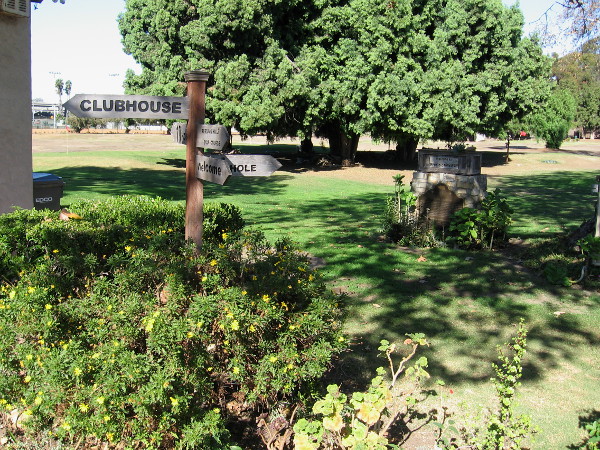
Sign near historical marker for Casa de Carrillo points to the golf course clubhouse and first hole.
Presidio Comandante Francisco Maria Ruiz built this house next to his 1808 pear garden late in 1821 for his close relative and fellow soldier, Joaquin Carrillo, and his large family.
The easy Presidio Hills Golf Course is a great place to learn golf--ideal for families and kids. And one gets a history lesson, too!
Enter the old adobe and you will find the Pro Shop.  The easy Presidio Hills Golf Course is a great place to learn golf–ideal for families and kids. And one gets a history lesson, too!
A look inside the restored adobe. I'm not sure which parts of the historically important building are original.
Another look inside the restored adobe. I’m not sure which parts of the historically important building are original.
An old newspaper article displayed in the pro shop includes a photo of 8-year-old Tiger Woods. He is showing off his Junior World trophy captured at Presidio Hills, where he won two titles.
An old newspaper article displayed in the pro shop includes a photo of 8-year-old Tiger Woods. He is showing off a Junior World trophy captured at Presidio Hills, where he won two titles.
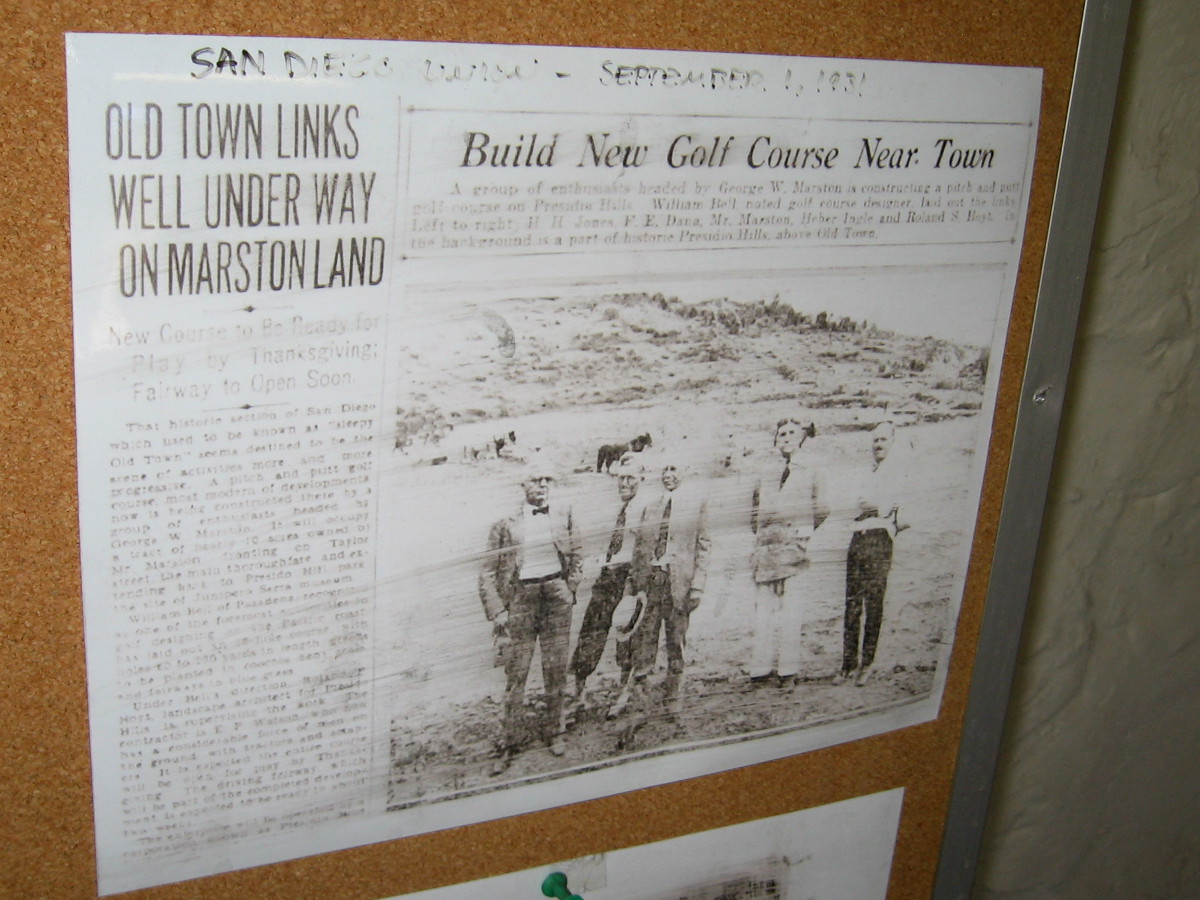
San Diego Union September 1, 1931. Old Town Links Well Under Way On Marston Land.
Various photos of Presidio Hills Golf Course history inside the Pro Shop. Phil Mickelson and Craig Stadler are two notable golfers from San Diego.
Old photo shows Don and Al Abrego Presidio Hills Tiny Tots Golf School. The school has faded into history.
Another photo shows Don and Al Abrego Presidio Hills Tiny Tots Golf School. The defunct school has faded into history.
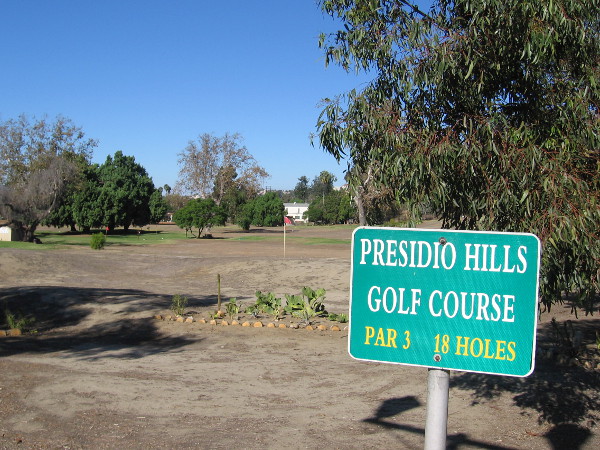
The modest Presidio Hills Golf Course is Par 3, 18 Holes. It's located at the east edge of San Diego's Old Town.
The modest Presidio Hills Golf Course is Par 3, 18 Holes. It’s located at the east edge of San Diego’s Old Town.
Another look across the small, easy golf course. The course appears to be a bit neglected. Regrettably, I saw no players out on a Sunday afternoon.
Another look across the small, easy golf course. It appears to be a bit neglected. Regrettably, I saw no players out on a Sunday afternoon.
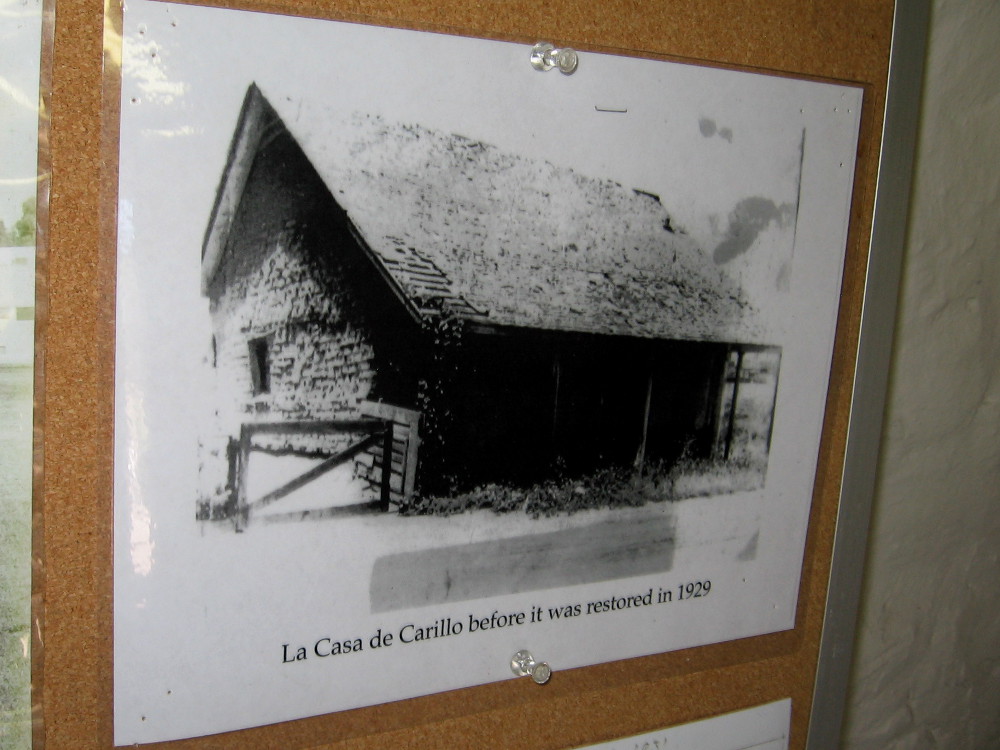
Historical photograph in the Presidio Hills Golf Course Pro Shop. La Casa de Carillo before it was restored in 1929.
Old black-and-white photograph inside the Presidio Hills Golf Course Pro Shop shows La Casa de Carillo (note the different spelling) before it was restored in 1929.

I live in downtown San Diego and love to walk! I also love history! You can follow Cool San Diego Sights via Facebook or Twitter!

Amazing animal bronzes at San Diego Museum of Art!

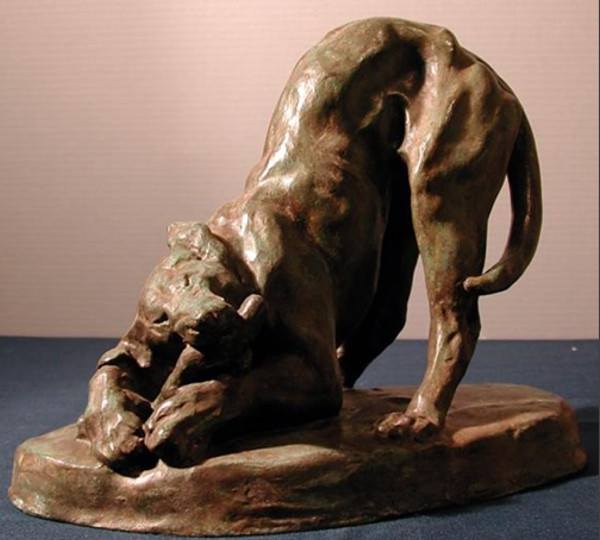
Dog Gnawing Bone, Arthur Putnam, 1904. Photo courtesy San Diego Museum of Art.

Wow! I enjoyed another awesome visit to the San Diego Museum of Art last weekend, courtesy of my docent friend Catherine! She provided a spellbinding tour of several exhibits!  The one I liked most–possibly because I love animals and because the artist has a San Diego connection–concerned the bronze sculptures of Arthur Putnam.

The exhibition, titled Ferocious Bronze, features artwork so utterly amazing that Arthur Putnam has been called the American Rodin. He was such a gifted sculptor that his pieces have sometimes been mistaken for those of Frederic Remington. Most of his bronzes depict animals in the wild:  hunting, in mortal combat, at play or at rest.

Arthur Putnam lived from 1873–1930 and was considered one of the greatest sculptors of his era. At the 1915 Panama-Pacific International Exposition in San Francisco he won a coveted Gold Medal.  During his lifetime his work was exhibited in major cities, including New York, Chicago, Paris and Rome. Many of his monumental public sculptures still stand in San Francisco, Monterey and San Diego.

Check out these photos! They provide a small taste of what you’ll experience should you visit Ferocious Bronze. You can get an idea of Putnam’s tremendous artistry. The superb realism is partly due to the fact that he personally loved the outdoors, and spent many days observing animals in the wild and at zoos. A mostly self-taught artist, Putnam even worked for a brief time at a slaughterhouse. (Yuck!)

Did I mention Arthur Putnam’s unique San Diego connection? His very first commission was from newspaper magnate E. W. Scripps, which he received at the Scripps Ranch located in Miramar. In addition, two of Putnam’s monumental works stand today near the spot where San Diego was founded–the very place where European civilization took root in California.

(I’ve included my own photos of the two large bronze sculptures that stand on San Diego’s Presidio Hill.  I wrote a blog several years ago that concerned an interesting walk past these sculptures.)

Ferocious Bronze, curated by Dr. James Grebl, showcases 28 of Putnam’s amazing animal pieces.  They were selected from the over 100 pieces that the San Diego Museum of Art has in their collection. This special exhibit was inspired by another Balboa Park institution: the world famous San Diego Zoo! They are now celebrating their centennial year!

If you happen to be in San Diego, and if you love fine art or have a special place in your heart for wild animals, I recommend that you head over to see Ferocious Bronze at the San Diego Museum of Art in Balboa Park! This very cool exhibition runs through October 11, 2016.

Big Combat, Arthur Putnam, undated. Photo courtesy San Diego Museum of Art.
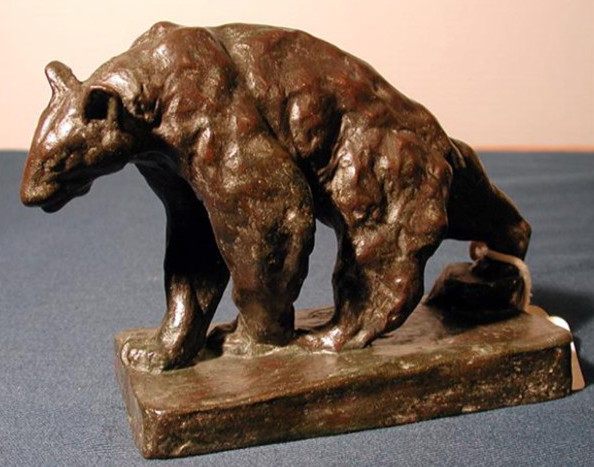
Ambling Bear, Arthur Putnam, 1910. Photo courtesy San Diego Museum of Art.
Fighting Buffalo, Arthur Putnam, 1900. Photo courtesy San Diego Museum of Art.
Lynx Ready to Spring, Arthur Putnam, 1909. Photo courtesy San Diego Museum of Art.
The Indian, Arthur Putnam, 1905. This amazing sculpture stands today on San Diego's Presidio Hill beneath the Serra Museum.
The Indian, Arthur Putnam, 1905. This amazing sculpture stands on San Diego’s Presidio Hill beneath the Serra Museum.
The Padre, Arthur Putnam, 1908. This sculpture stands among some trees on San Diego's Presidio Hill beneath the Serra Museum.
The Padre, Arthur Putnam, 1908. This sculpture stands among some trees on San Diego’s Presidio Hill beneath the Serra Museum.
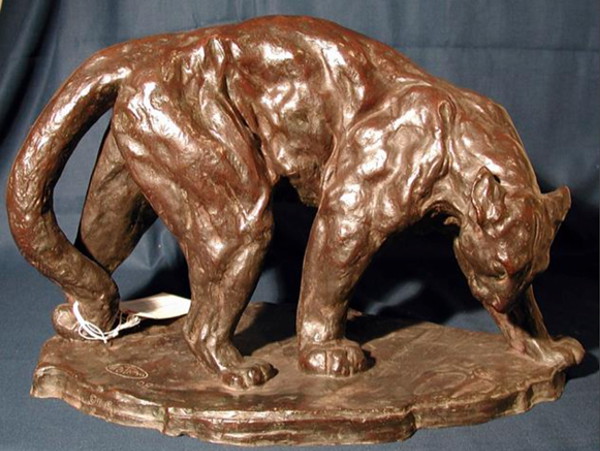
Wild Cat, Arthur Putnam, 1908. Photo courtesy San Diego Museum of Art.

I live in downtown San Diego and love to walk! You can follow Cool San Diego Sights via Facebook or Twitter!

You can easily explore Cool San Diego Sights by using the search box on my blog’s sidebar. Or click a tag! There are thousands upon thousands of fun photos for you to enjoy!
Do you like to read short pieces of thought-provoking fiction? You might enjoy checking out Short Stories by Richard.

San Diego’s early history at the Serra Museum.

The Junipero Serra Museum of the San Diego History Center was built in 1928 on Presidio Hill, where European civilization was established in Alta California.

I recently visited one of San Diego’s most fascinating museums. The Junipero Serra Museum is located atop Presidio Hill, in a distinctive Mission Revival architectural style building overlooking San Diego Bay and the San Diego River, just east of Old Town. It stands near the site of San Diego’s historic Spanish presidio, built in 1769. The presidio was the birthplace of European civilization in Alta California.

The Serra Museum is operated by the San Diego History Center, which is headquartered today in Balboa Park. Back in 1929, when the building was dedicated, it became home of what was then called the San Diego Historical Society. The important San Diego institution was established by civic leader George W. Marston.

Can you believe it? I’ve lived in San Diego for 15 years . . . and this was the very first time I ventured into the Serra Museum. (I can thank my blog for that!)

What I discovered was an absolutely amazing place that both residents and visitors to San Diego should definitely not miss.

Here’s a sample of what you’ll see…

People arrive at the Serra Museum, where San Diego's early Spanish history comes alive.
People arrive at the Serra Museum, where San Diego’s early Spanish history comes alive.
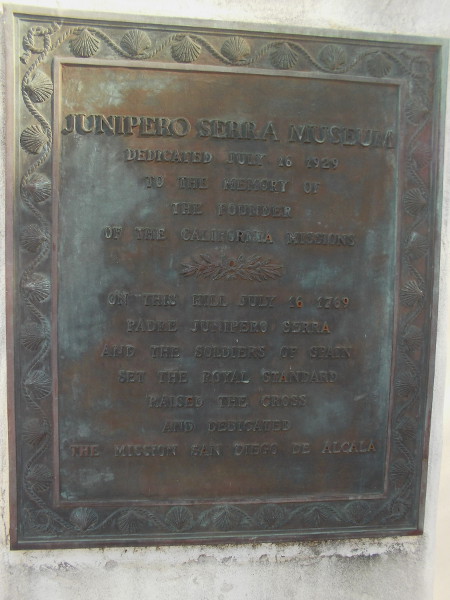
Junipero Serra Museum dedicated July 16, 1929 to the memory of the founder of the California missions. The original Mission San Diego de Alcalá was established nearby in 1769.
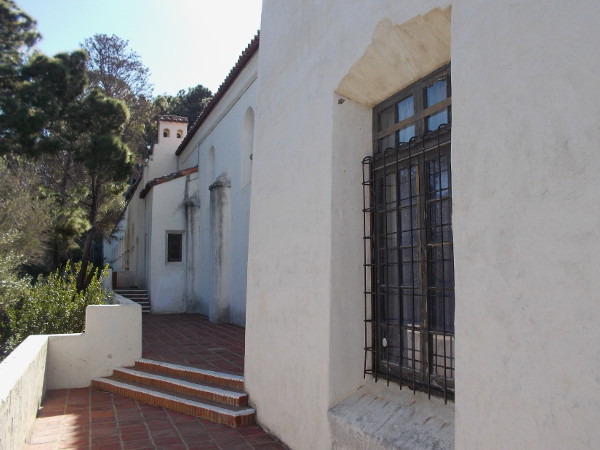
A quick look at the rear of the museum.
The Serra Museum building was designed by noted architect William Templeton Johnson. It reflects Spanish Revival architecture.
The Serra Museum building was designed by noted architect William Templeton Johnson. It reflects Mission Revival style architecture.
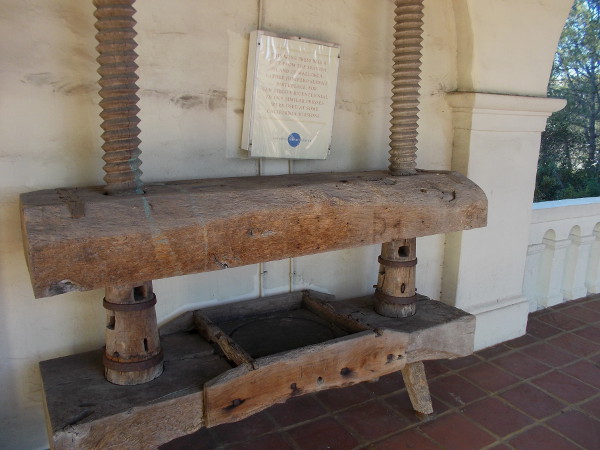
Large wine press in front of the museum was a gift from the Spanish island of Mallorca, Father Junipero Serra's birthplace.
Large wine press in front of the museum was a gift from the Spanish island of Mallorca, Father Junipero Serra’s birthplace.
Plaque near entrance reads George White Marston 1850-1946. FRIEND OF HIS FELLOW MEN - LOVER OF ALL GROWING THINGS. Piece by piece through many years he acquired these acres...
Plaque near entrance reads George White Marston 1850-1946. FRIEND OF HIS FELLOW MEN – LOVER OF ALL GROWING THINGS. Piece by piece through many years he acquired these acres…
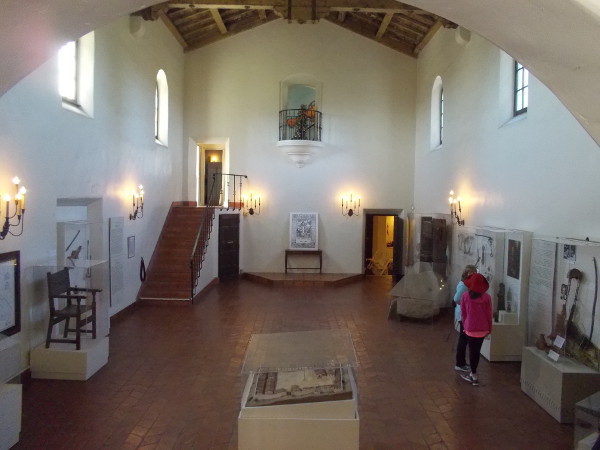
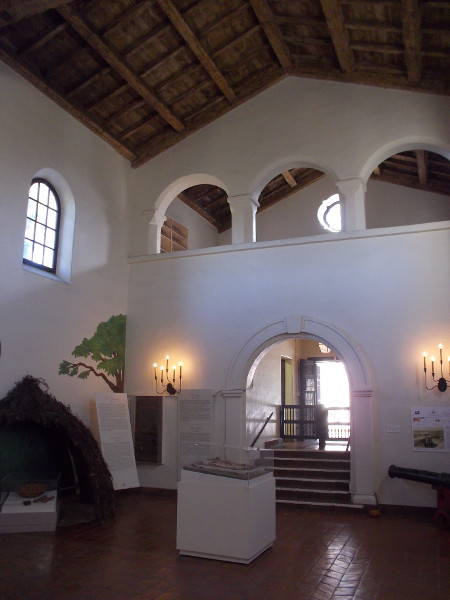
Elegant interior of the Serra Museum contains many exhibits pertaining to San Diego's early Spanish history.
Elegant interior of the Serra Museum contains many exhibits pertaining to San Diego’s early Spanish history.
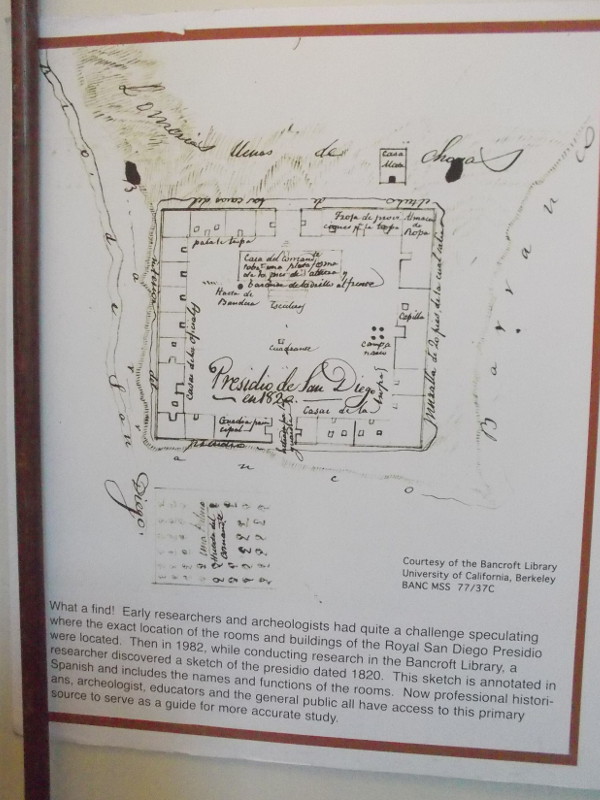
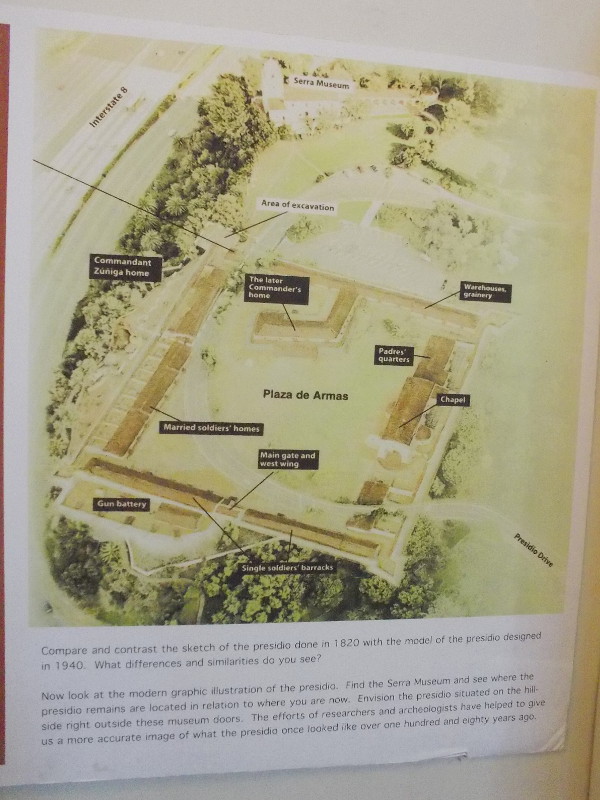
Researchers discovered this sketch of the Royal San Diego Presidio dated 1820. It shows the layout of the old buildings which no longer exist.
Modern graphic illustration of the fortified presidio, which was located a short distance below the Serra Museum's front entrance.
Modern graphic illustration of the fortified presidio, which was located a short distance below the Serra Museum’s front entrance.
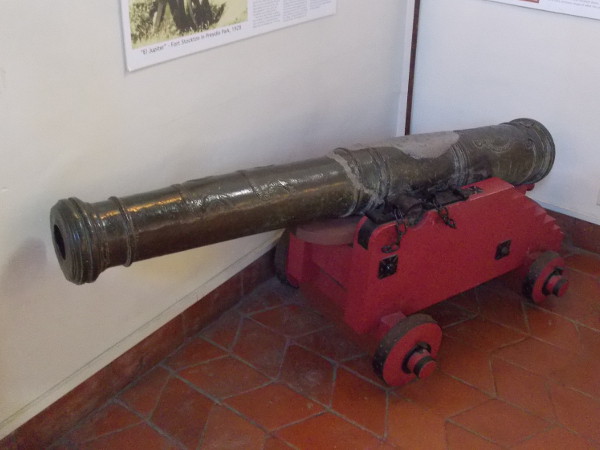
Old Spanish cannon named El Jupiter, cast in Manila in the 18th century. El Jupiter stood in Fort Guijarros at Ballast Point, the first defensive fortifications for San Diego Bay
Old Spanish cannon named El Jupiter, cast in Manila in the 18th century. El Jupiter stood in Fort Guijarros at Ballast Point, the first defensive fortifications for San Diego Bay.
Leather armchair made in Catalan, Spain in the 17th century. This "friar's chair" was part of the original Serra Museum's furnishings.
Leather armchair made in Catalan, Spain in the 17th century. This “friar’s chair” was part of the original Serra Museum’s furnishings.
Old violin with bow, a branding iron used by rancheros to identify cattle, and iron spurs are among the many historical objects on display.
Another look at the beautiful interior of the Serra Museum in San Diego.
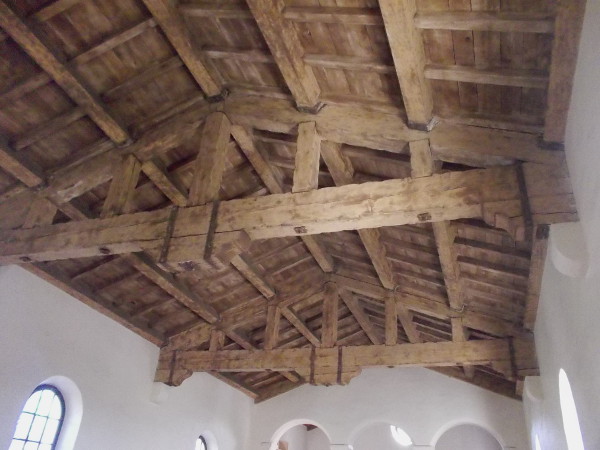
Large wooden beams in a truly amazing ceiling.
Stairs lead up to the Serra Museum's tower. Painted on the wall is a map showing the sea journey of the Spanish Expedition which founded San Diego in 1769.
Stairs lead up to the Serra Museum’s tower. Painted on the wall is a map showing the sea journey of the Spanish expedition which founded San Diego in 1769.
March 9-20, 1769. Desperate to replace drinking water which leaked from the ship's casks, Captain Vicente Vila commands the Spanish galleon San Carlos near Isla de Cedros.
March 9-20, 1769. Desperate to replace drinking water which leaked from the ship’s casks, Captain Vicente Vila commands the tacking Spanish galleon San Carlos near Isla de Cedros.
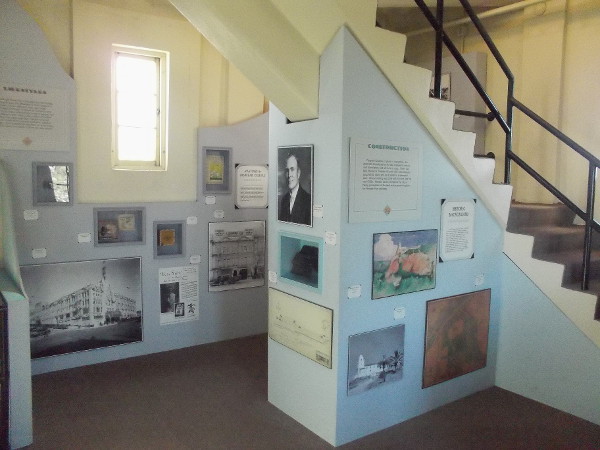
A room halfway up the tower. Numerous displays recall San Diego's history, most notably at the time when the Serra Museum was dedicated in 1929.
A room halfway up the tower. Numerous displays recall San Diego’s history, most notably around the time when the Serra Museum was dedicated in 1929.
Old photo of the crowd attending the Serra Museum's dedication ceremony on July 16, 1929.
Old photo of the crowd attending the Serra Museum’s dedication ceremony on July 16, 1929.
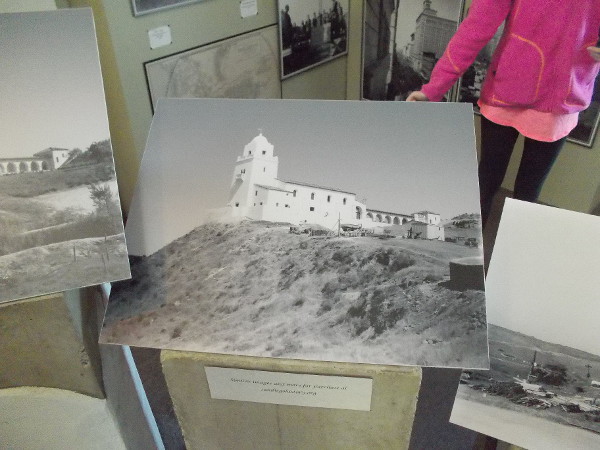
A fascinating look at Presidio Hill almost a century ago.
A lovely watercolor sketch of the Junipero Serra Museum atop Presidio Hill.
On the wall are many historical photos and artifacts, including an image from around 1930 of a cigar factory on 4th Street in San Diego.
A reproduction of the west elevation drawing of the Serra Museum by architect William Templeton Johnson.
Now we're heading up to the very top of the tower.
Now we’re heading up to the very top of the tower.
Looking west from the Serra Museum tower along Interstate 8. Point Loma is on the left and Mission Bay is to the right.
Looking east into Mission Valley.
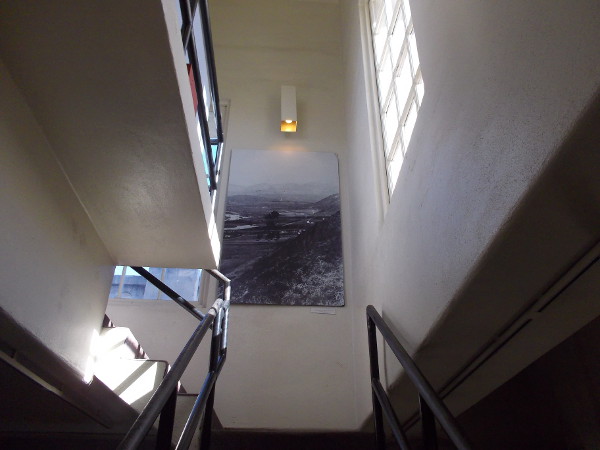
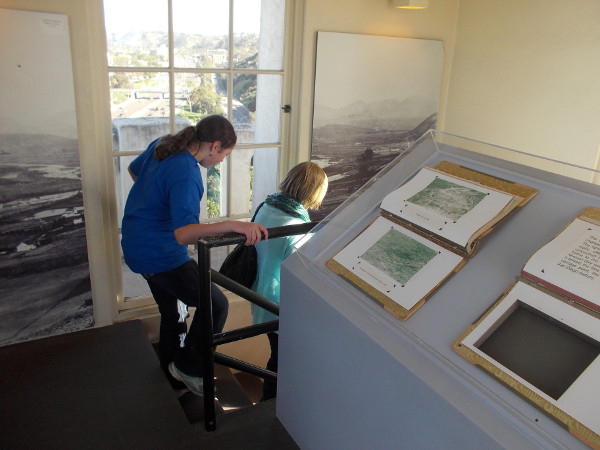
Visitors at the Serra Museum head back down from the tower, after looking at old photos which show a less-developed surrounding landscape.
Visitors at the Serra Museum head back down from the tower, after looking at old photos which show a much less-developed surrounding landscape.
A small theater in the Serra Museum contains additional exhibits about life in and around the old Presidio.
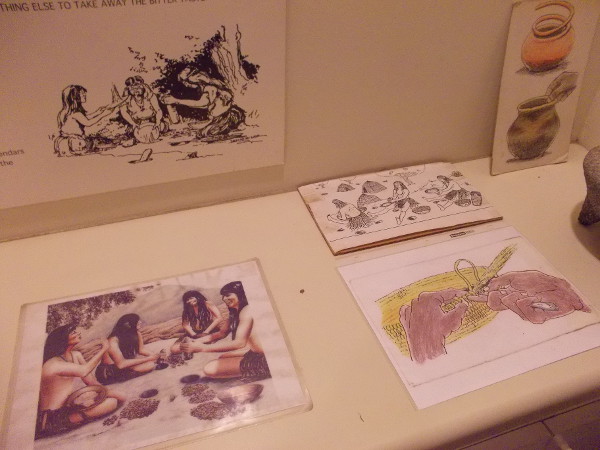
Examples of what life was like for the Native American Kumeyaay, who occupied this region long before it was discovered by the Spanish.
Stories of two people who lived on a local Rancho. Click the image to enlarge, if you'd like to read it.
Stories of two people who lived on a local Rancho. Click the image to enlarge, if you’d like to read it.
Map of the old Presidio's archaeological site. You can see where the fort was located in relation to the Serra Museum.
Map of the old Presidio’s archaeological site. You can see where the fort was located in relation to the Serra Museum.
Explanation of the excavation process utilized by researchers. Some artifacts that were unearthed are on display in the museum.
Artistic rendition of a Mexican presidio soldier circa 1830, and a horse's bit.
Artistic rendition of a Mexican presidio soldier circa 1830, and a horse bit.
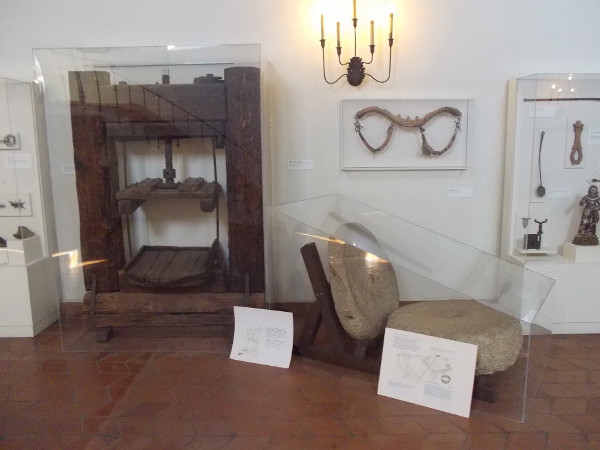
An olive press, granite mill stones, and an ox yoke.
Small artifacts include this carved polychrome wood San Diego de Alcala Santo from 18th century Spain.
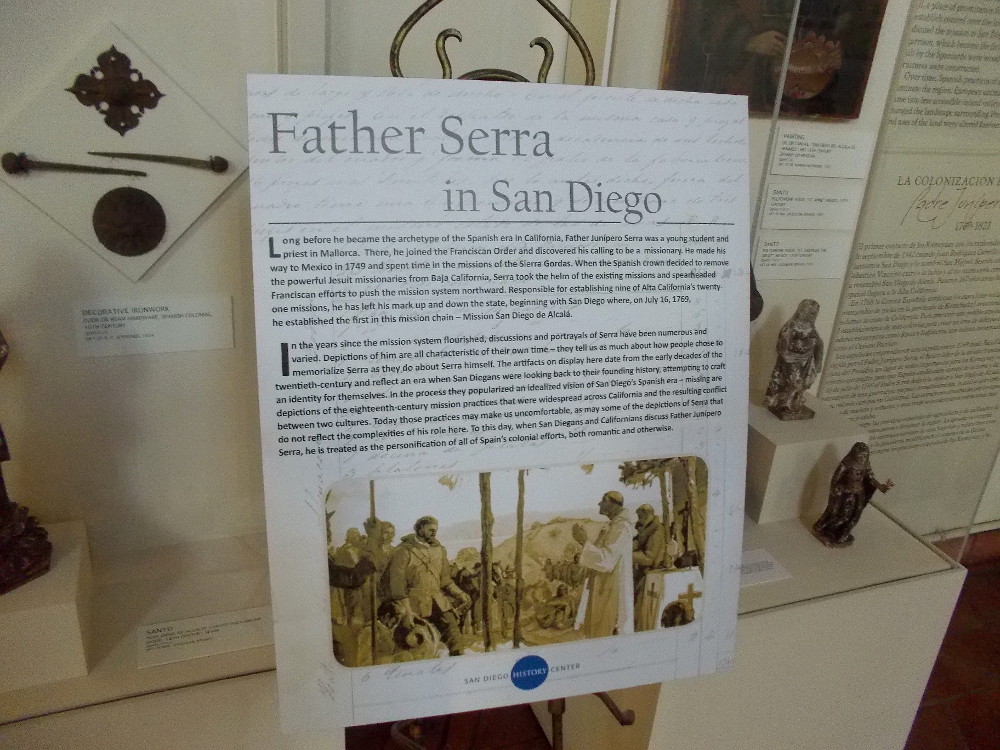
Sign describes the life of Franciscan missionary Father Junipero Serra, and his work to establish the California Missions under the flag of Spain. He was recently made a Catholic Saint.
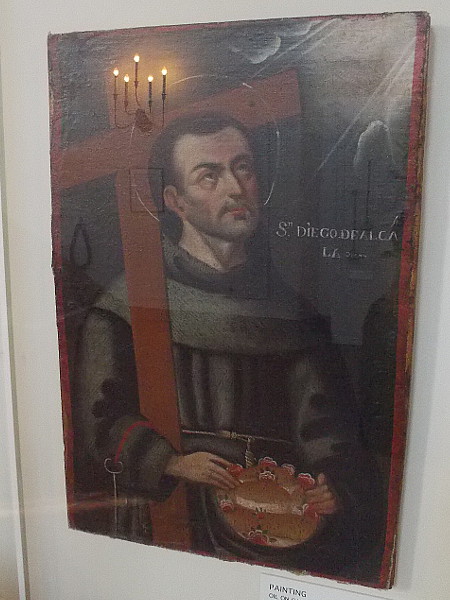
Painting. Oil on canvas. San Diego del Alcala de Henares. Mid 18th century, Spanish or Mexican.
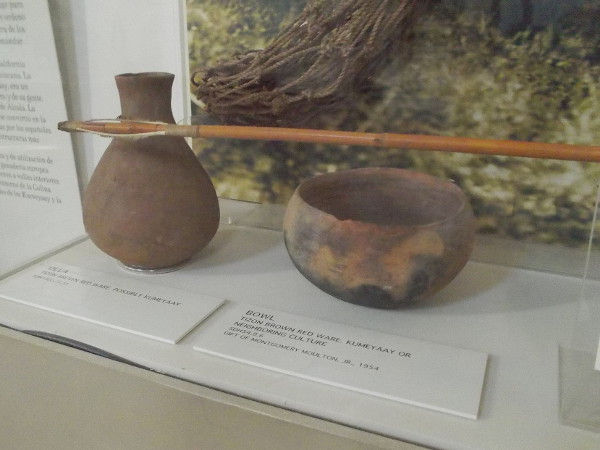
Olla and bowl. Kumeyaay or neighboring culture.
The Serra Museum in San Diego provides a fascinating look at our uniquely diverse city's very early history.
The Junipero Serra Museum in San Diego provides a fascinating look at our culturally diverse city’s very early history.

Join me for more cool sights on Facebook and Twitter!

Do you like to read original, thought-provoking fiction? Visit my Short Stories by Richard writing blog!