San Diego assisted the American Revolution?

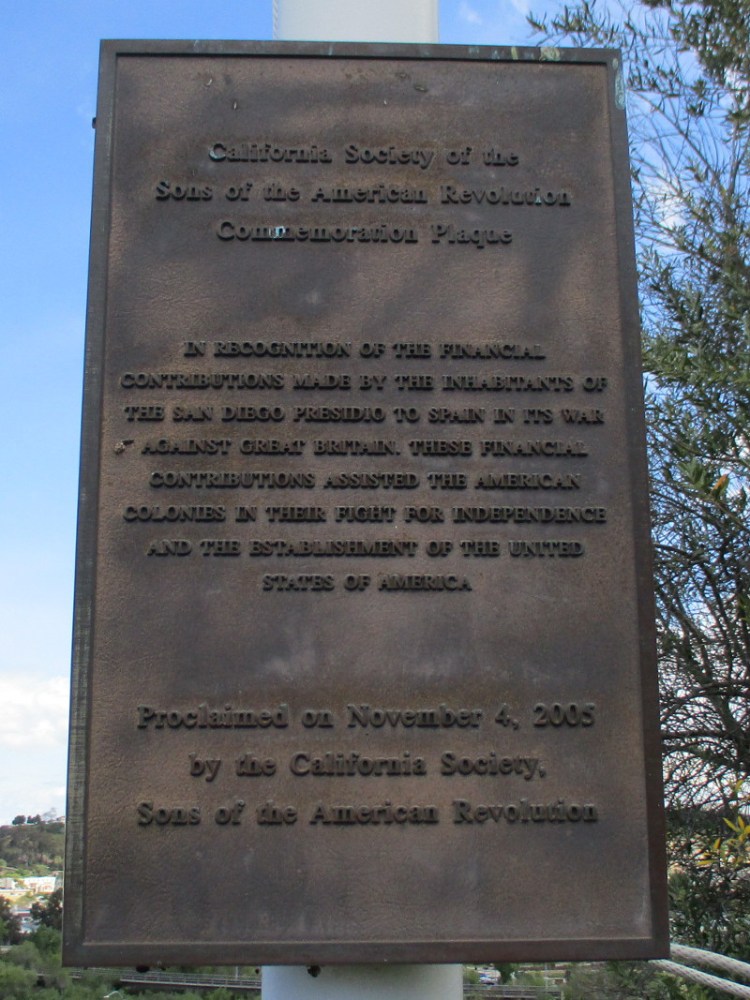
I’m not a historian. If you are, perhaps you might leave a comment concerning a plaque that is mounted to a flagpole on San Diego’s Presidio Hill, near the ruins of the old Spanish Presidio.

The plaque states:

California Society of the Sons of the American Revolution Commemoration Plaque

IN RECOGNITION OF THE FINANCIAL CONTRIBUTIONS MADE BY THE INHABITANTS OF THE SAN DIEGO PRESIDIO TO SPAIN IN ITS WAR AGAINST GREAT BRITAIN. THESE FINANCIAL CONTRIBUTIONS ASSISTED THE AMERICAN COLONIES IN THE FIGHT FOR INDEPENDENCE AND THE ESTABLISHMENT OF THE UNITED STATES OF AMERICA

Proclaimed on November 4, 2005 by the California Society, Sons of the American Revolution

The Presidio of San Diego was established in 1769, seven years before the adoption of the United States Declaration of Independence in 1776. The American Revolution saw its ultimate success in 1783 when the British signed the Treaty of Paris.

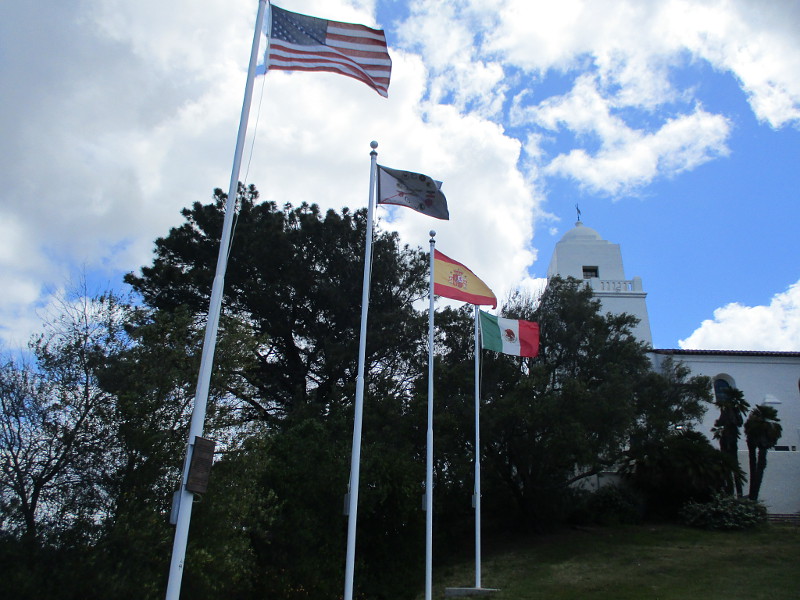
Today four flagpoles stand on Presidio Hill. The four flags represent the United States, the Kumeyaay Nation, Spain and Mexico. They demonstrate that San Diego’s history is both diverse and complex.

How significant were these financial contributions made by inhabitants of the Presidio to Spain? In what form were the contributions? Were they obtained through the labor of indigenous Kumeyaay on the land taken by Spanish missions? San Diego in its very early years was sparsely populated and relatively poor. How, specifically, did these financial contributions help Spain in its war against Great Britain?

Clearly, I’m no historian! If you know more about this, please leave a comment!
UPDATE!

On July 6, 2024 I came across more information concerning this.

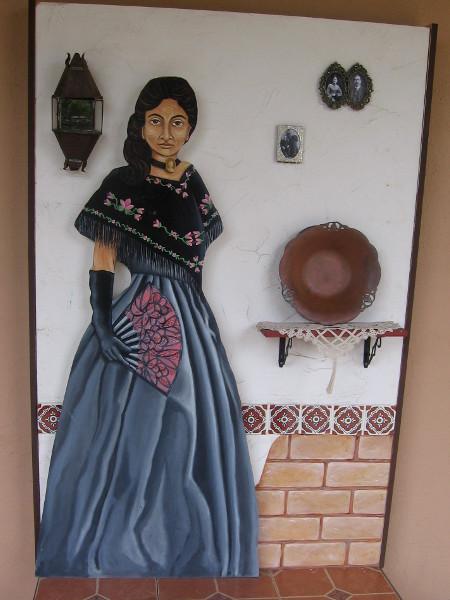
During the Independence Day celebration at the International Cottages in Balboa Park, the House of Spain had an elaborate display in front of their cottage, explaining how Spain helped the United States win the Revolutionary War against Great Britain.

An emphasis was placed on the Spanish General Bernardo de Galvez, who provided patriots with money, medicines, arms, and key wartime information. He was a hero at the Battles of Mobile and Pensacola.

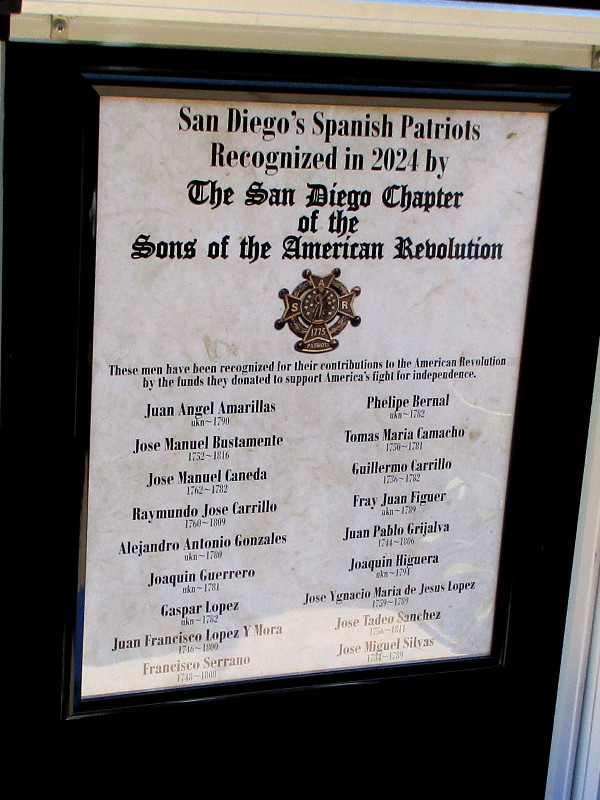
One display explained how the Spanish living in distant San Diego contributed, too. “San Diego’s Spanish Patriots” were soldiers at the old Presidio, who provided funds from their own pockets to support America’s fight for independence.
I was told by a gentleman who sounded knowledgeable that in addition to soldiers and others associated with the newly established Spanish Missions, Native Americans up and down California within the Spanish sphere of influence were also “persuaded” to make monetary contributions, albeit in lesser amounts.

Apparently all of these contributions were provided at the request of Junípero Serra. Collected funds then made their way to the opposite coast of America, where they bolstered the efforts of Galvez.

If my understanding of this history isn’t correct, or you know more about the subject, please leave a comment!

Thanks for visiting Cool San Diego Sights!

I post new blogs pretty often. If you like discovering new things, bookmark coolsandiegosights.com and swing on by occasionally!

I live in downtown San Diego and love to walk around with my camera! You can follow Cool San Diego Sights via Facebook or X.
Life and death at the San Diego Presidio.

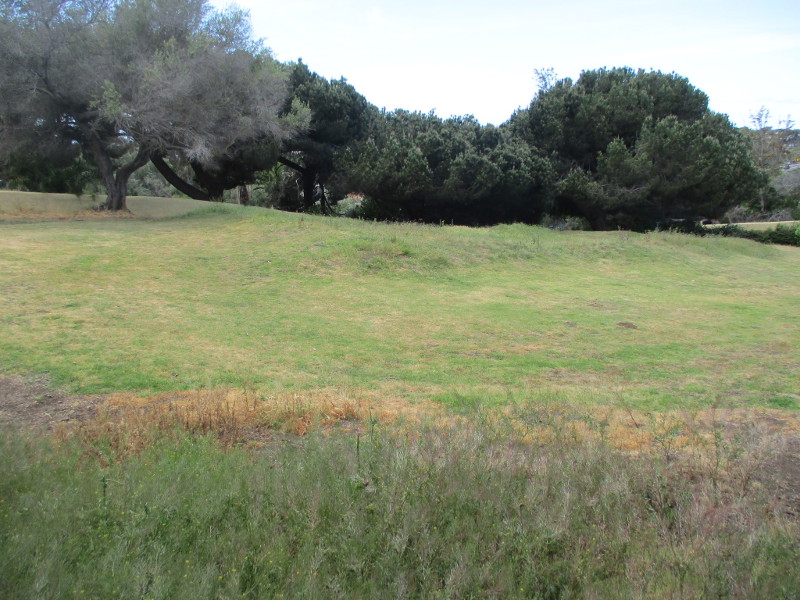
Spain’s first outpost in Southern California, the 1769 Royal Presidio of San Diego, is long gone. Its ruins are buried on Presidio Hill just beneath the Junípero Serra Museum. Grassy mounds and bits of old brick can still be found as one walks about.

This historical site is a place where very diverse stories were lived. It’s a place were many were buried when life finally ended.

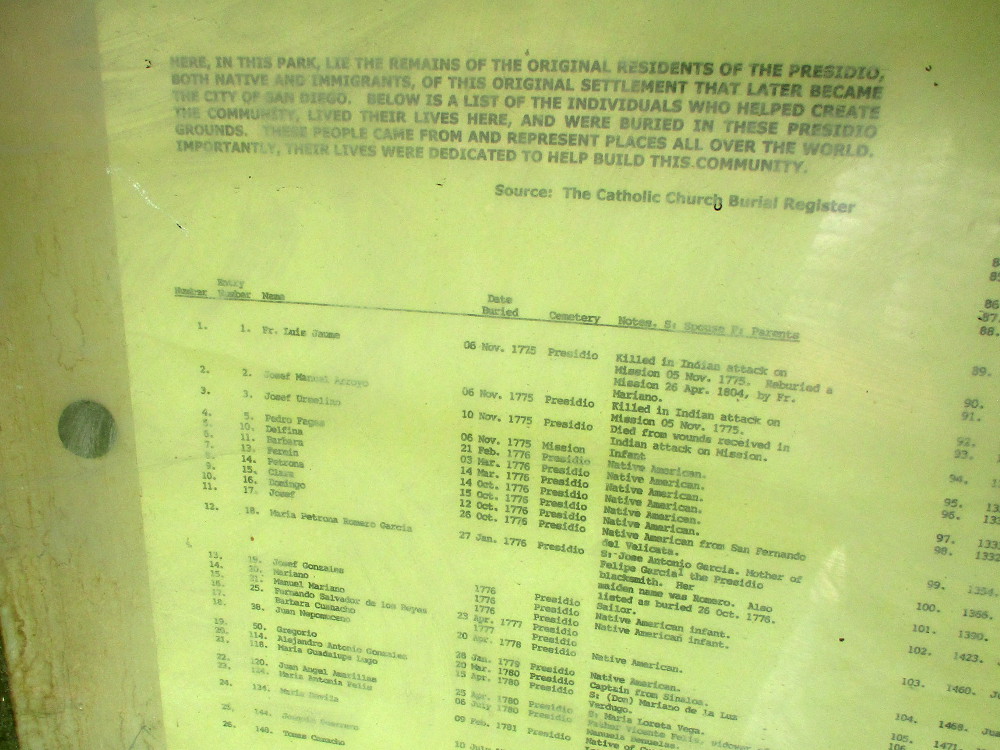
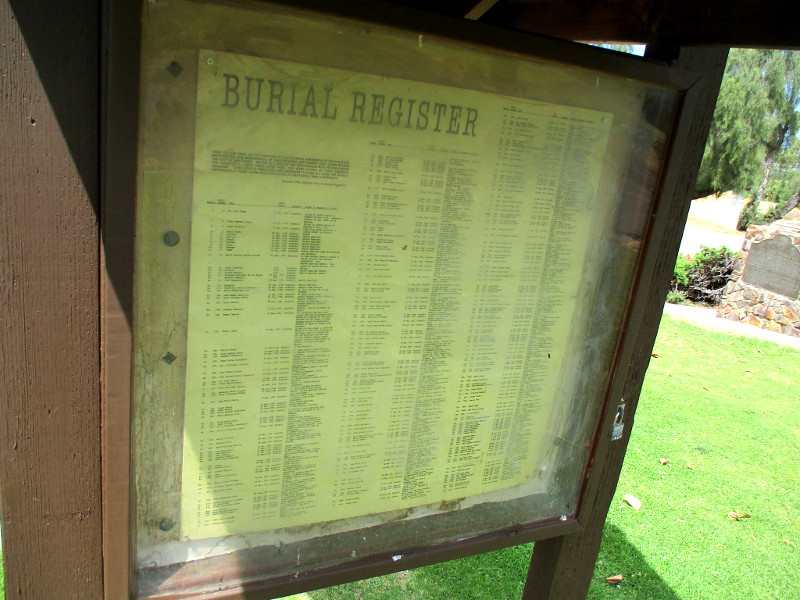
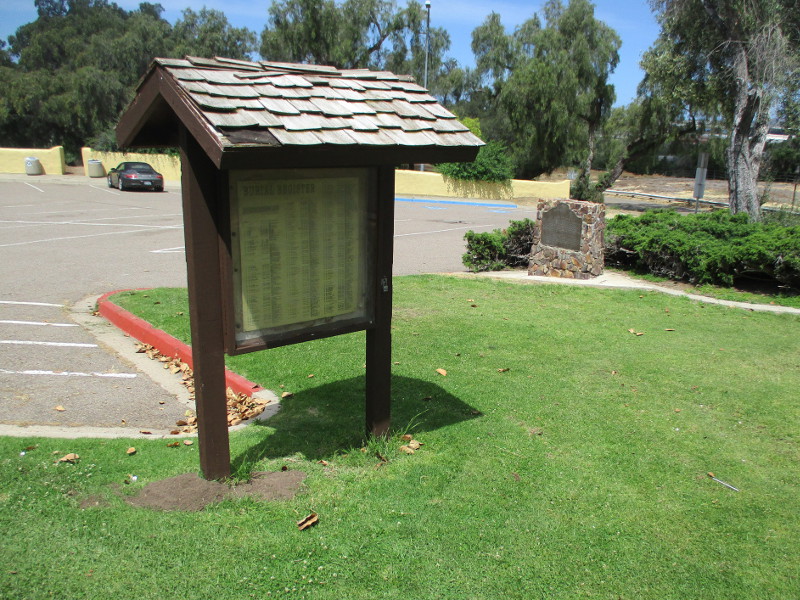
At the corner of the main visitor’s parking lot one can find an historical marker. On the rear of a nearby kiosk is a faded Burial Register.

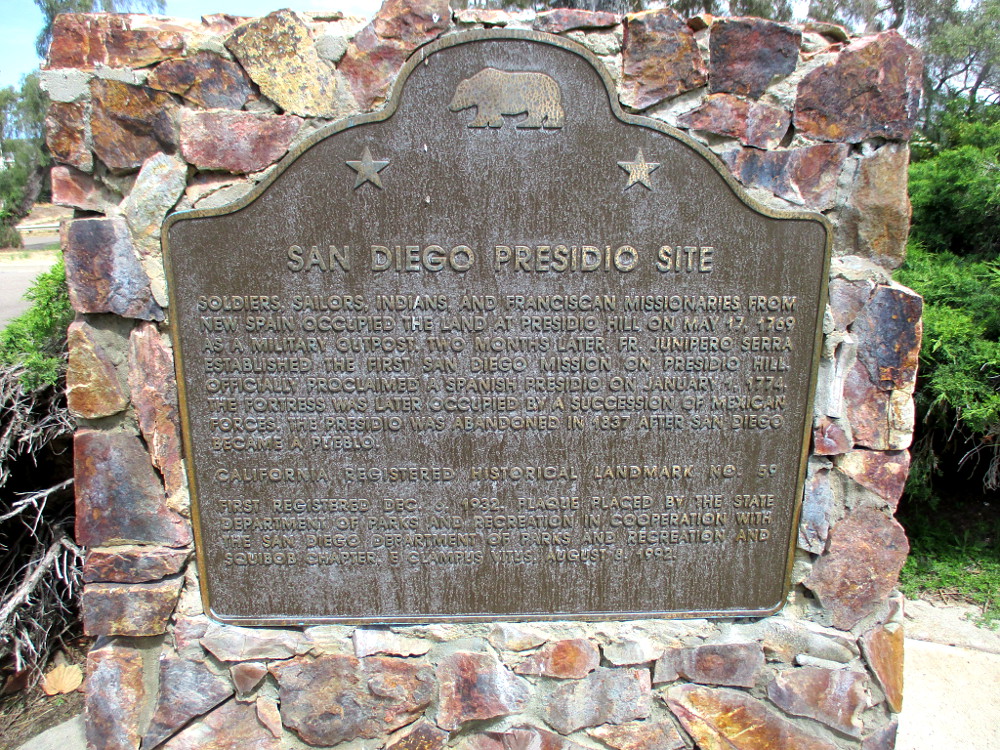
SAN DIEGO PRESIDIO SITE

SOLDIERS, SAILOR, INDIANS, AND FRANCISCAN MISSIONARIES FROM NEW SPAIN OCCUPIED THE LAND AT PRESIDIO HILL ON MAY 17, 1769 AS A MILITARY OUTPOST. TWO MONTHS LATER FR. JUNIPERO SERRA ESTABLISHED THE FIRST SAN DIEGO MISSION ON PRESIDIO HILL. OFFICIALLY PROCLAIMED A SPANISH PRESIDIO ON JANUARY 1, 1774, THE FORTRESS WAS LATER OCCUPIED BY A SUCCESSION OF MEXICAN FORCES. THE PRESIDIO WAS ABANDONED IN 1837 AFTER SAN DIEGO BECAME A PUEBLO.

CALIFORNIA REGISTERED HISTORICAL LAND MARK NO. 59

HERE, IN THIS PARK, LIE THE REMAINS OF THE ORIGINAL RESIDENTS OF THE PRESIDIO, BOTH NATIVE AND IMMIGRANTS, OF THIS ORIGINAL SETTLEMENT THAT LATER BECAME THE CITY OF SAN DIEGO. BELOW IS A LIST OF THE INDIVIDUALS WHO HELPED CREATE THE COMMUNITY, LIVED THEIR LIVES HERE, AND WERE BURIED IN THESE PRESIDIO GROUNDS. THESE PEOPLE CAME FROM AND REPRESENT PLACES ALL OVER THE WORLD. IMPORTANTLY, THEIR LIVES WERE DEDICATED TO HELP BUILD THIS COMMUNITY.

Source: The Catholic Church Burial Register

During past walks, I’ve photographed other historical plaques and signs on Presidio Hill. See many of them here and here.

Thanks for visiting Cool San Diego Sights!

I post new blogs pretty often. If you like discovering new things, bookmark coolsandiegosights.com and swing on by occasionally!

I live in downtown San Diego and love to walk around with my camera! You can follow Cool San Diego Sights via Facebook or Twitter!

San Diego Riverview exhibit at Serra Museum.

The history of human activity beside the life-giving San Diego River can be viewed from the outdoor terrace of the Junípero Serra Museum.

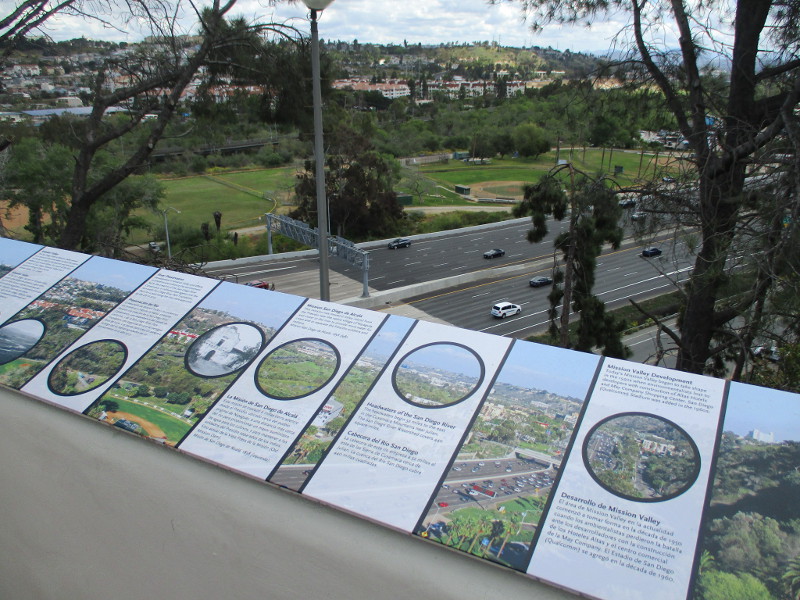
The museum’s scenic San Diego Riverview exhibit helps visitors visualize the where and when of various important developments in the area. Historical images from the San Diego History Center Photo Collection can be compared to present-day sights in nearby Mission Valley and beyond.

I walked up Presidio Hill today to check out this relatively new exhibit.

As I write this, I can still remember my first visit to the Junípero Serra Museum. The landmark building stands high atop Presidio Hill overlooking Old Town and the west end of Mission Valley. Revisit those old photographs here.

Years ago I also posted a blog about climbing Presidio Hill, where Europeans first settled in California. See that here. Since then I’ve walked around Presidio Park many times and have shared all sorts of photographs. You can find many of them by using this website’s search box.

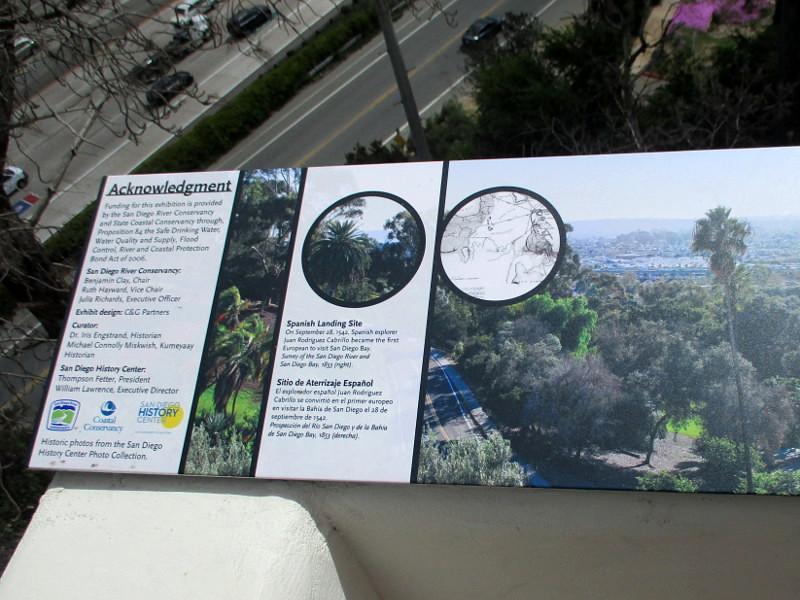
A plaque by the outdoor terrace acknowledges those who helped with the Serra Museum’s recent restorations.

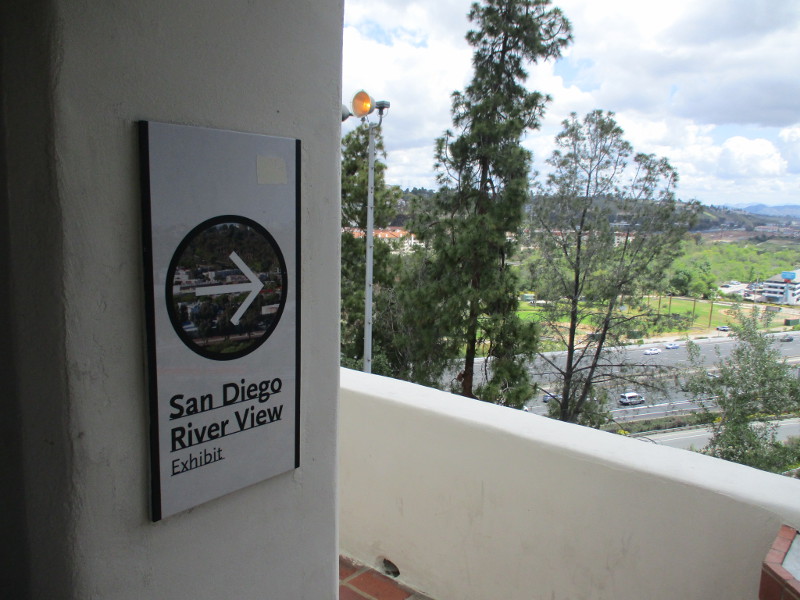
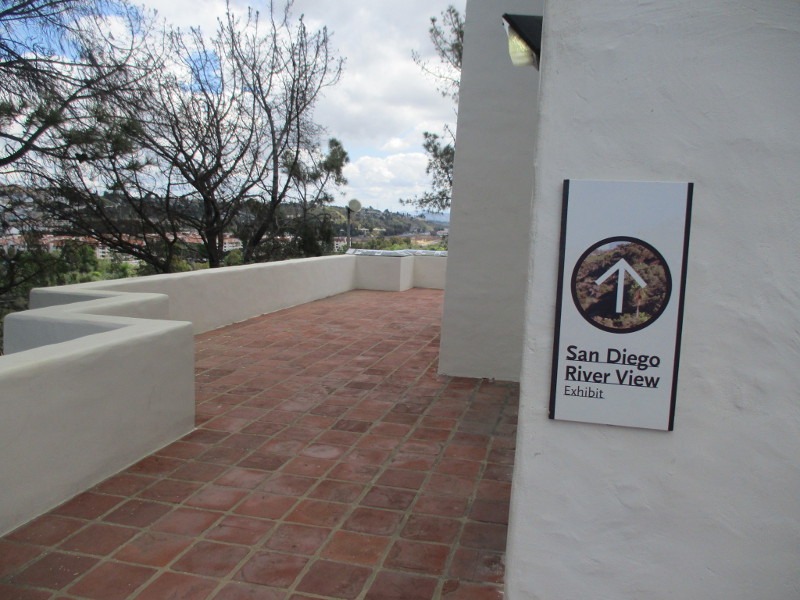
Look for several of these signs outside the Junípero Serra Museum.

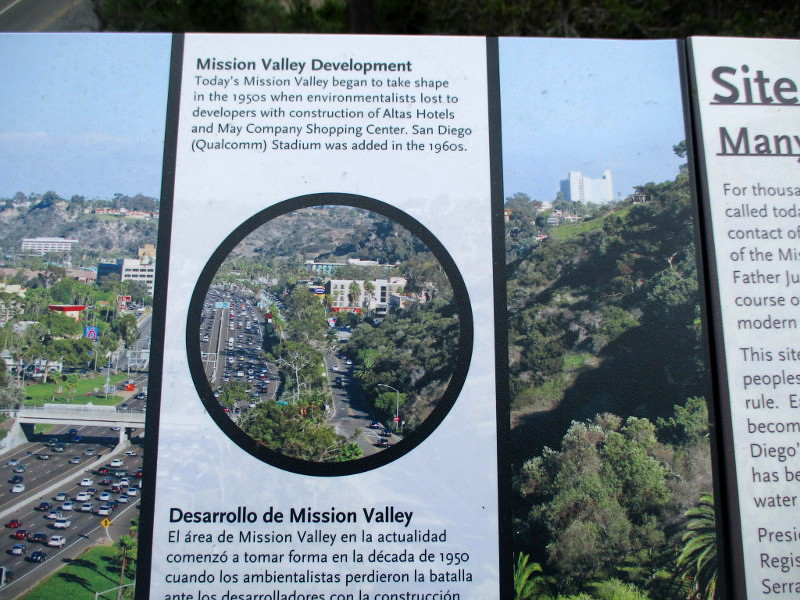
Interstate 8 runs through Mission Valley just below Presidio Hill.

Historical photos and information await visitors at the northeast corner of the Serra Museum’s outdoor terrace.

If you peer to the west beyond some trees, you can see San Diego Bay, which explorer Cabrillo discovered for Spain in 1542.

Survey of the San Diego River and San Diego Bay, 1853.

The Native American Kumeyaay lived in a village called Cosoy at the base of Presidio Hill near the San Diego River.

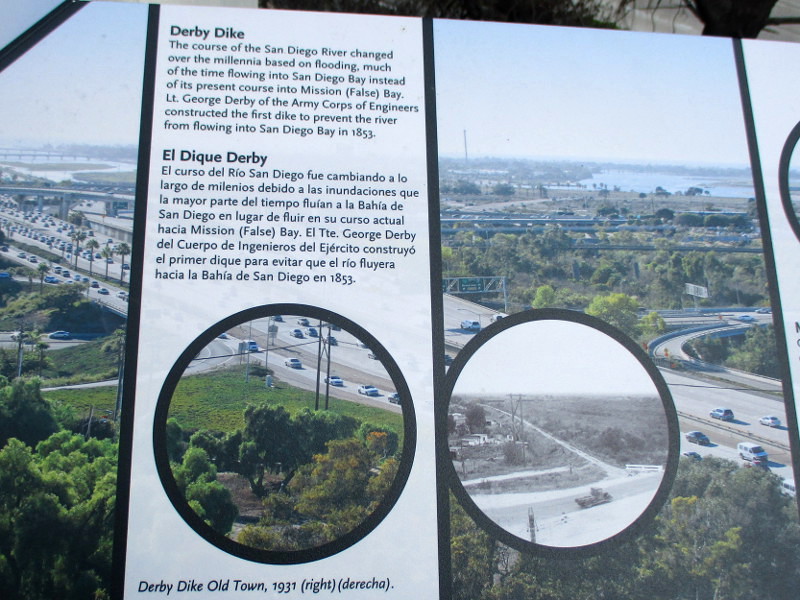
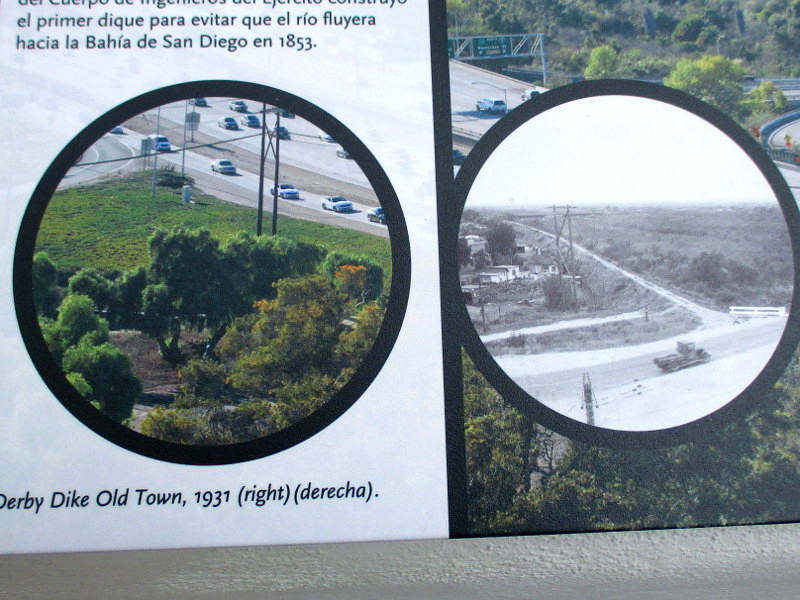
Derby Dike was built in 1853 by Lt. George Derby of the Army Corps of Engineers. The dike altered the course of the San Diego River, which periodically flooded Old Town, into False Bay–now called Mission Bay.

To see a historical plaque which marks the approximate location of old Derby Dike, click here.

Believe it or not, dike engineer Lieutenant George Horatio Derby was also a humorist who inspired Mark Twain! His pen name was Squibob. You can still see where he lodged while working in San Diego. Read about that here!

Photo of rebuilt Derby Dike in 1931.

Mission Bay can be spied to the northwest. The natural marsh and tidelands were enlarged by dredging from 1949 through the 1960s.

By looking from the Serra Museum’s terrace beyond nearby trees, you can glimpse La Jolla’s Mount Soledad to the northwest.

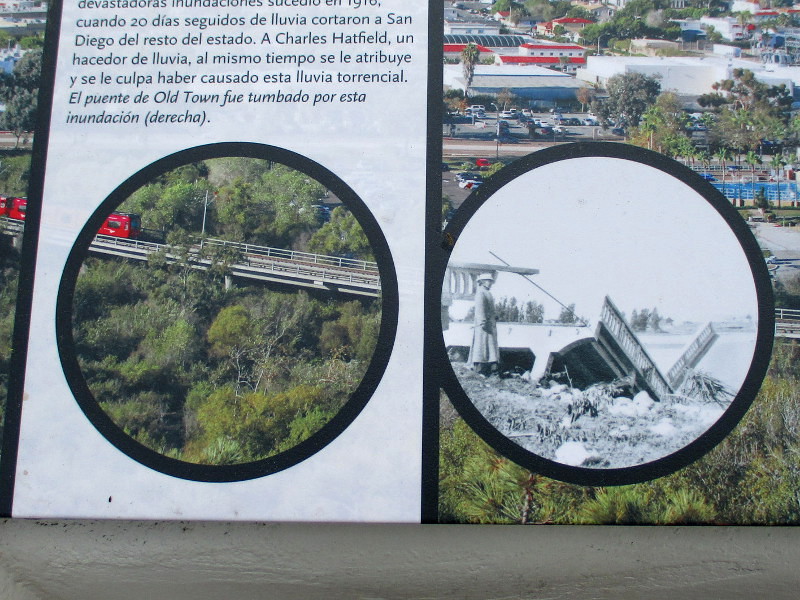
Photo of Old Town bridge washed out in 1916 flood. Rainmaker Charles Hatfield was both credited and blamed for the 20 day downpour!

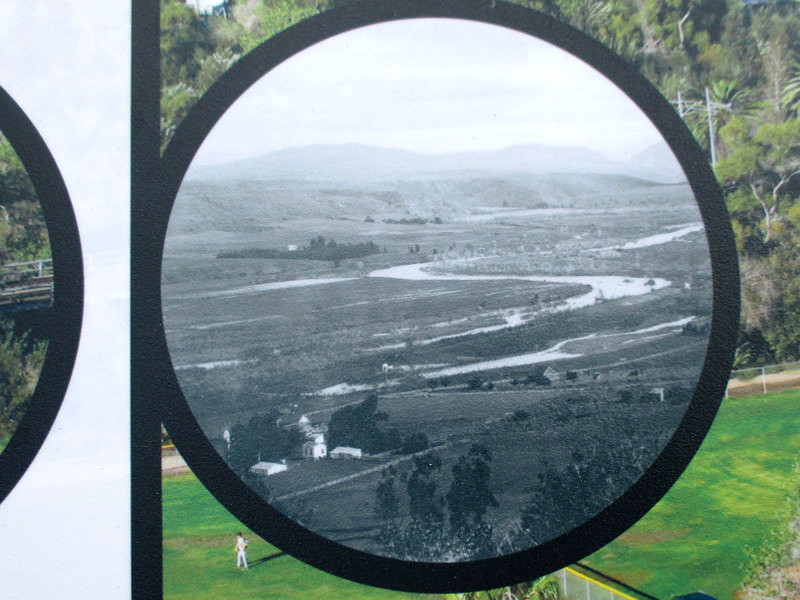
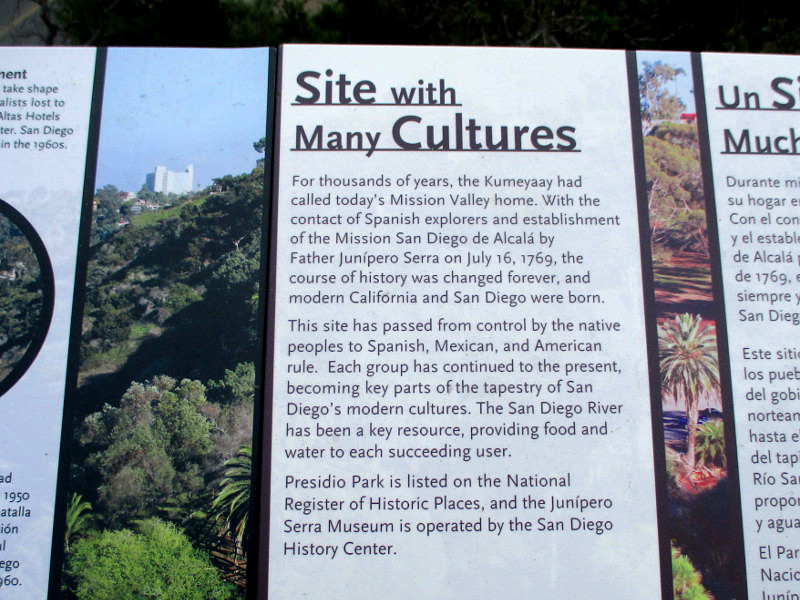
The San Diego River in Mission Valley has been a source of food and water for the Kumeyaay, Spanish, Mexicans and Americans over the years. Before its urban development, many dairy farms could be found in Mission Valley.

Photo of Mission Valley from 1915.

Display concerns efforts for environmental preservation, and the history Mission San Diego de Alcalá. In 1774 the Spanish mission moved 6 miles inland from its original 1769 location on Presidio Hill.

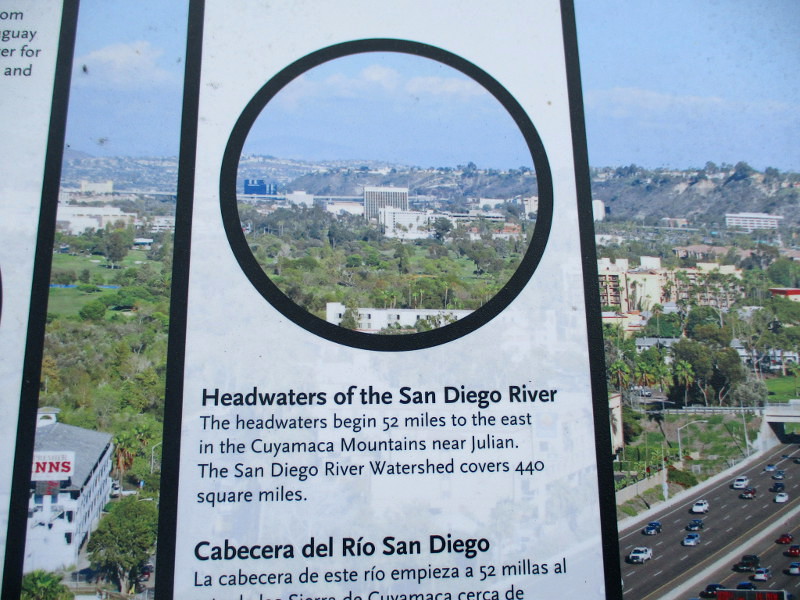
On a very clear day you can barely see the Cuyamaca Mountains to the east. That’s where the San Diego River begins.

Mission Valley’s development began in earnest in the 1950s, with the construction of Atlas Hotels and May Company Shopping Center. San Diego Stadium arrived in the 1960s.

Over the centuries, many people from diverse cultures have contributed to the history of this dynamic place. At the center of it all runs the San Diego River.

Thanks for visiting Cool San Diego Sights!

I post new blogs pretty often. If you like discovering new things, bookmark coolsandiegosights.com and swing on by occasionally!

I live in downtown San Diego and love to walk around with my camera! You can follow Cool San Diego Sights via Facebook or Twitter!

Hidden historical markers around San Diego.

Walk around the city and you’ll discover surprising things. Once in a while, if you’re lucky, you might stumble upon an historical marker in a hidden or unexpected place!

Over the years I’ve happened upon a number of these historical plaques and markers. I’ve seen them by shopping centers, by apartment buildings, on hilltops, beside trails, and tucked away in odd places off the beaten track.

I thought that perhaps you’d enjoy reading a few of them.

Here are a few of the more interesting markers I’ve found….

To read a plaque in Linda Vista about one of the first planned shopping centers in the United States, click here.

To read a plaque in National City about a “miraculous” well dug for Mount Paradise Sanitarium, click here.

To read numerous historical plaques on the top of Presidio Hill, where Fort Stockton once was, click here.

To read an historical marker in the middle of UC San Diego in La Jolla, click here.

To read a plaque marking the location of Kate Sessions’ nursery in Pacific Beach, click here.

To read a plaque near old Mission San Diego de Alcalá, marking the location of Padre Luis Jayme’s death during a Native American uprising, click here.

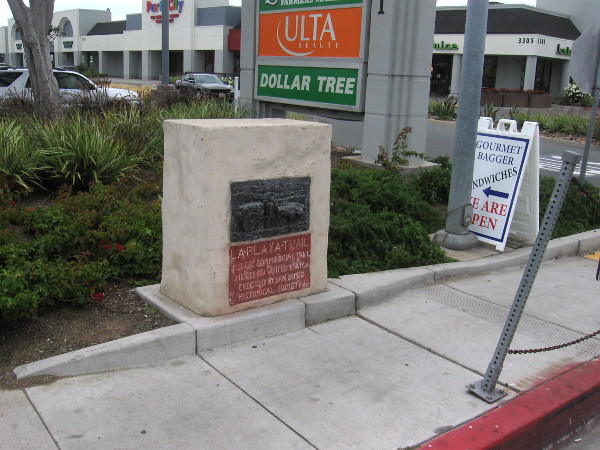
To see a fascinating marker recalling the historic La Playa Trail which passed through present-day Point Loma, near Midway and Rosecrans, click here.

To read several historical markers that are easily overlooked near an entrance to Presidio Park, click here.

To read a plaque in Coronado that concerns the birthplace of naval aviation, click here.

To read a marker that recalls a long vanished Chinese shipbuilding site in Point Loma, click here.

To read a marker in Chula Vista that commemorates Japanese immigrant farmers in the South Bay, click here.

To read plaques and inscriptions near the Old Mission Dam in Mission Trails Regional Park, click here.

Finally, to read a marker at the edge of a golf course near Old Town, detailing the history of San Diego’s oldest surviving structure, click here.

This blog now features thousands of photos around San Diego! Are you curious? There’s lots of cool stuff to check out!

Here’s the Cool San Diego Sights main page, where you can read the most current blog posts.  If you’re using a phone or small mobile device, click those three parallel lines up at the top–that opens up my website’s sidebar, where you’ll see the most popular posts, a search box, and more!

To enjoy future posts, you can also “like” Cool San Diego Sights on Facebook or follow me on Twitter.

More discoveries on historic Presidio Hill.

Last weekend I walked all over Presidio Park. Looking around, I noticed several historical plaques, benches and signs on Presidio Hill that I hadn’t seen or observed closely before.

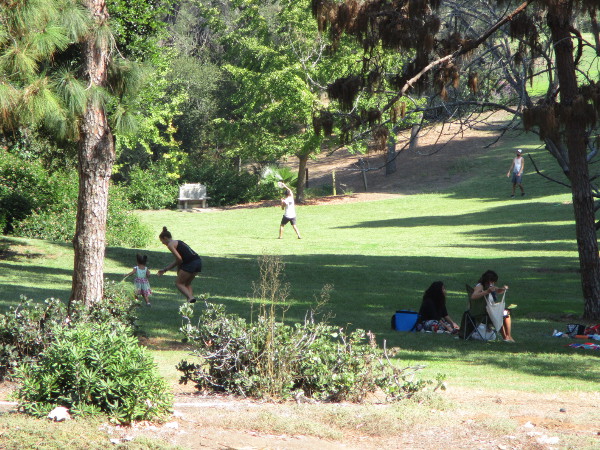
After wandering around Inspiration Point and taking in the view of Mission Valley here, and checking out the park’s little known monument to a White Deer here, I headed down one of the park’s canyon trails and soon arrived at the expanse of grass enclosed by Cosoy Way, where families were picnicking on the green slope above a bench…

The inscription on the bench reads:

THIS MEMORIAL TO

TOMMY GETZ

PLACED HERE BY HIS FRIENDS. JULY. 1935.

After taking a few photos, I crossed Presidio Drive and climbed the short distance to the site of old Fort Stockton, where I looked again at the historical markers and public artwork that I once photographed here and here.

Then I began down Presidio Hill toward the site of the centuries-old, long-vanished Spanish presidio, the “birthplace” of California.

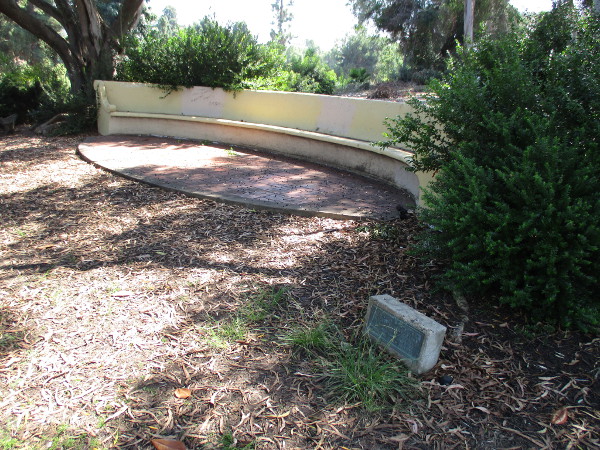
As I slowly wound between trees I came upon the following bench, and a small nearby plaque…

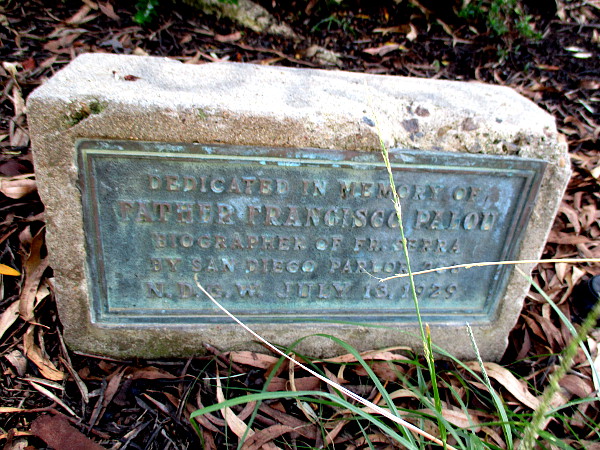
The plaque reads:

DEDICATED IN MEMORY OF

FATHER FRANCISCO PALOU

BIOGRAPHER OF FR. SERRA

BY SAN DIEGO PARLOR 208

N.D.G.W. JULY 13, 1929.

(A little research reveals N.D.G.W. means Native Daughters of the Golden West, and their Parlor 208 represents San Diego County.)

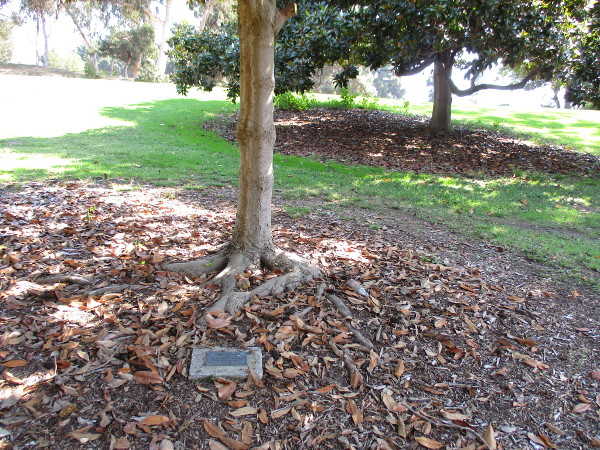
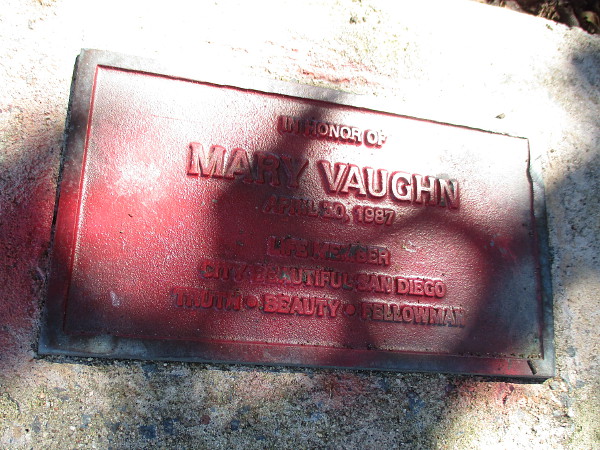
A little farther down I found two more plaques by two trees. Sadly, the second tree and its plaque had been vandalized with red spray paint…

CONGRESSMAN JIM BATES

SAN DIEGO

CITY BEAUTIFUL OF SAN DIEGO

TRUTH- BEAUTY- FELLOWMAN

MARCH 30, 1984

IN HONOR OF

MARY VAUGHN

APRIL 20, 1987

LIFE MEMBER

CITY BEAUTIFUL SAN DIEGO

TRUTH – BEAUTY – FELLOWMAN

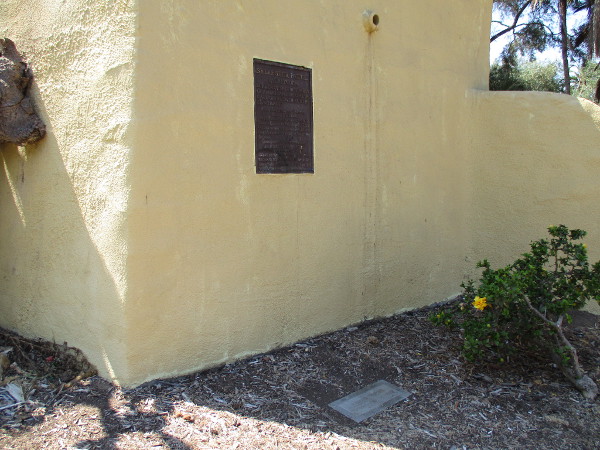
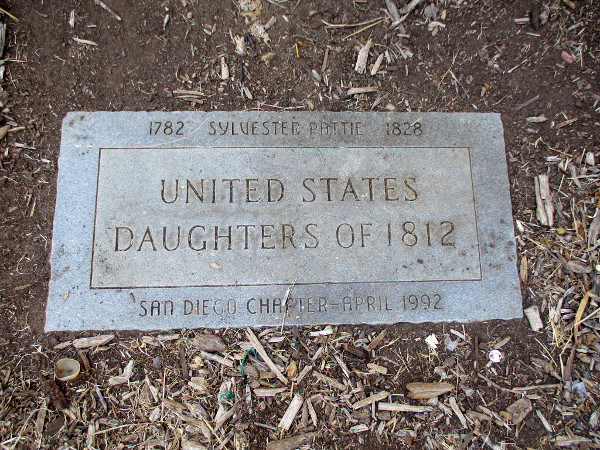
When I arrived at the old observation structure in a corner of the parking lot below the Junipero Serra Museum, I discovered a plaque on the ground that I hadn’t seen before. To read the larger plaque affixed to the wall, you can click here.

1782 SYLVESTER PATTIE 1828

UNITED STATES

DAUGHTERS OF 1812

SAN DIEGO CHAPTER – APRIL 1992

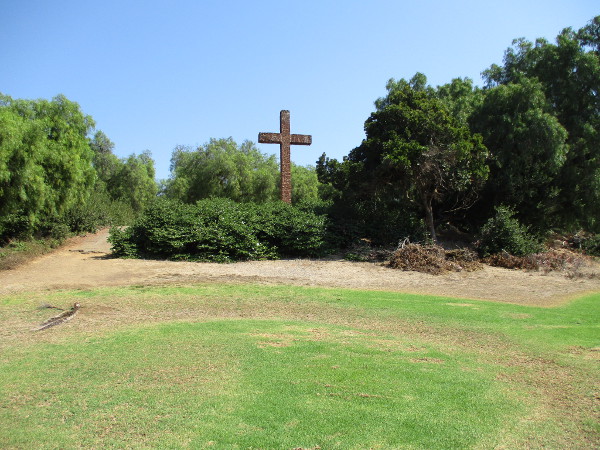
Then I walked down to the grassy area where San Diego’s 1769 presidio and original mission stood. You can learn more about the big Padre Cross here.

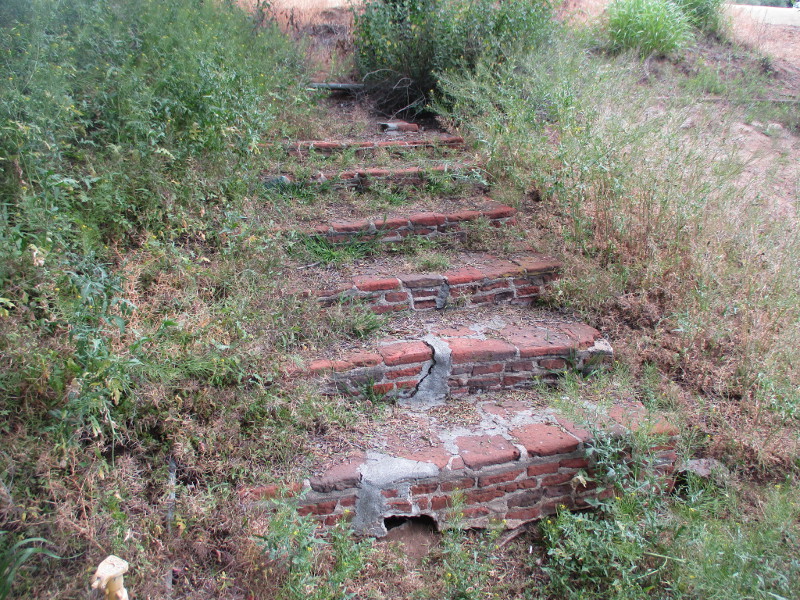
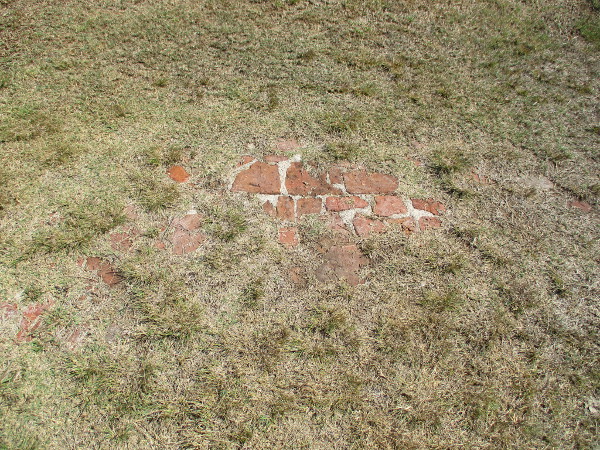
The above tiles I believe were part of the old Presidio and its chapel, whose ruins are now covered by grassy mounds.

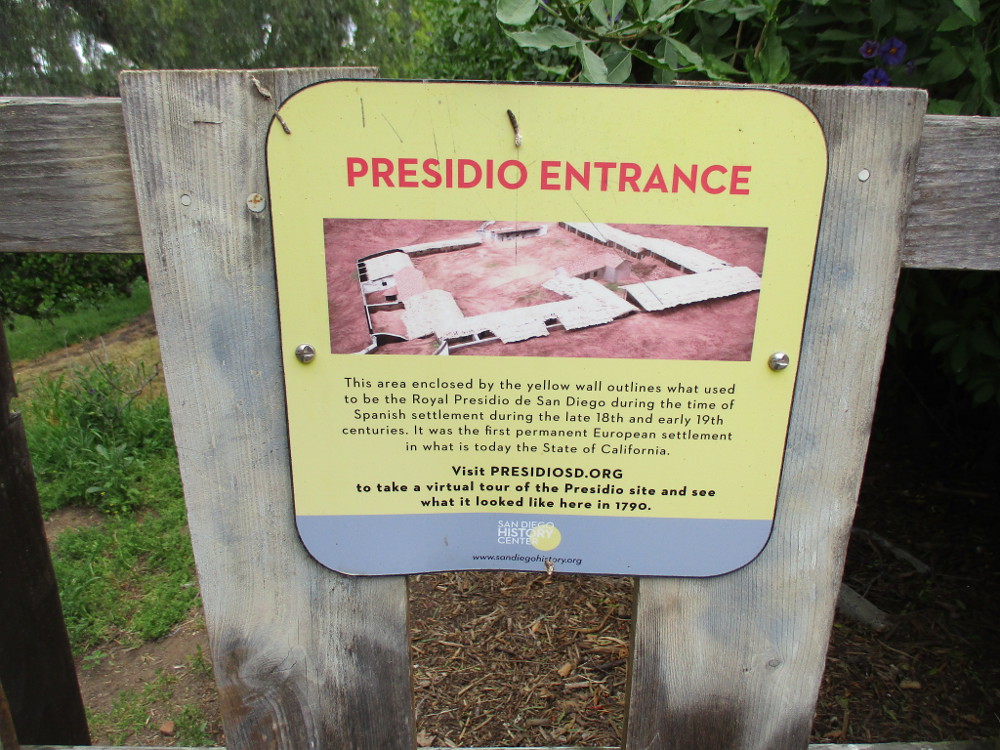
This nearby sign explains how this was the site of the Royal Presidio de San Diego during the time of Spanish settlement during the late 18th and early 19th centuries. It was the first permanent European settlement in what is today the State of California.

Grassy mounds now cover what remains of the Presidio ruins.

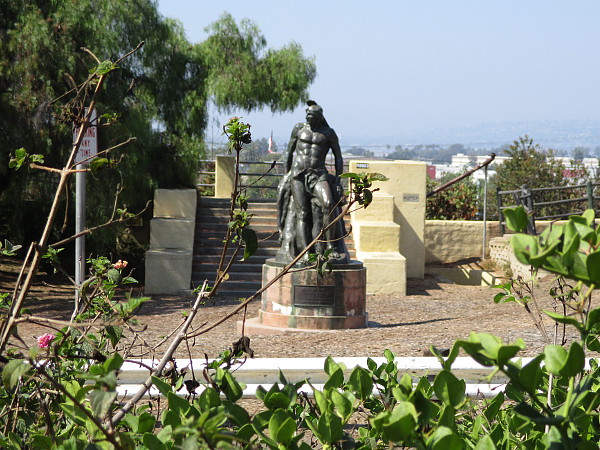
Finally, I gazed across Presidio Drive at The Indian, a sculpture by renowned artist Arthur Putnam. Learn more and see a closer photo here!

I live in downtown San Diego and love to walk around with my camera! You can follow Cool San Diego Sights via Facebook or Twitter!

You can easily explore Cool San Diego Sights by using the search box on my blog’s sidebar. Or click a tag! There are thousands upon thousands of photos for you to enjoy!

Monument to a White Deer in Presidio Park.

A little known monument stands in a remote corner of San Diego’s Presidio Park. It remembers a white deer that once lived there.

From an article in the PRESIDIO PARK RANGER REPORT, QUARTERLY: SEPTEMBER 2006-NOVEMBER 2006…

WHITE DEER

This female white fallow deer roamed the hills of Mission Valley, Mission Hills, and Presidio Park. This doe escaped from the San Diego Zoo around 1965 and wandered free in Presidio Park for the next ten years.

The deer was spotted attempting to cross the I-8 freeway, and some locals reported seeing the deer get hit by a vehicle. Tragically, in the effort to catch the deer, Animal Control used a tranquilizer dart, which ultimately led to the deer’s death in December, 1975.

This treasured deer had been something of a community mascot. This incident led to an outpouring of community grief.

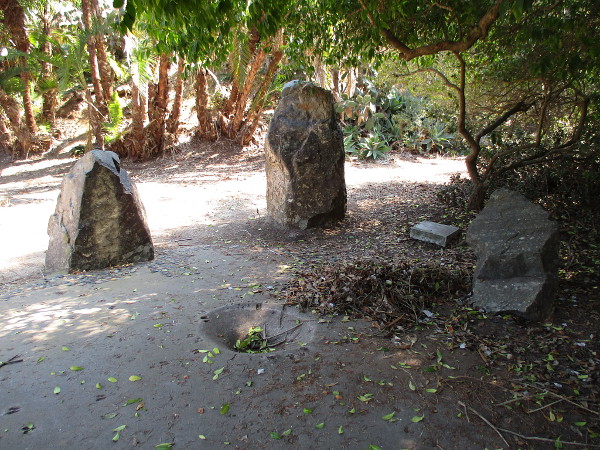
As a result, a citizen’s committee was formed to promote a suitable memorial for the gravesite. In 1976, a monument was placed at the top of the hill at Inspiration Point for the most cherished White deer named “Lucy”. A free standing monument of three native stones designed by San Diego Artist Charles Faust, sits on the hill top for all to remember the White Deer.

Margaret Price (1911-) a local artist involved in converting Spanish Village in Balboa Park to an artists enclave, truly worked diligently to establish the monument for the White deer. Many community members wrote to Price, hoping to have their poem or saying put onto the monument.

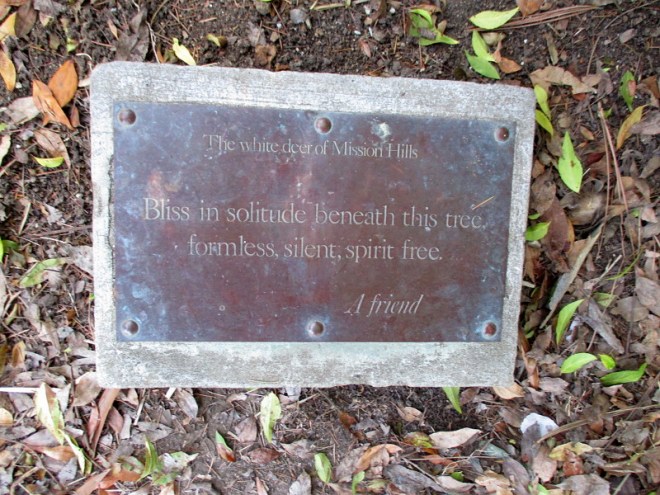
A bronze plaque beside the three standing stones reads: Bliss in solitude beneath this tree, formless, silent, spirit free. A Friend

About to head up the hill from the small Inspiration Point parking lot.
Heading up under shady trees.
Approaching a park bench, and three vertical stones near it.
Public art in Presidio Park remembers a White Dear named Lucy that escaped from the San Diego Zoo.
Public art in Presidio Park remembers a White Deer named Lucy that escaped from the San Diego Zoo.
A monument atop a green hill honors natural things.
Deer tracks approach the sculpted water hole, among the tracks of other wild animals.
A plaque is nearby.
A plaque is nearby.
The white deer of Mission Hills. Bliss in solitude beneath this tree, formless, silent, spirit free. A friend
Monument to a White Deer in San Diego's Presidio Park.
Monument to a White Deer in San Diego’s Presidio Park.

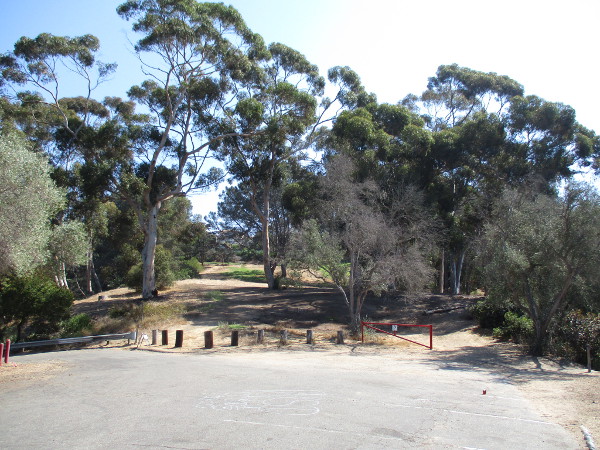
To see this simple but very beautiful monument, turn up the steep driveway off Taylor Street, just east of Presidio Park’s main entrance. The driveway leads to the Inspiration Point parking lot.

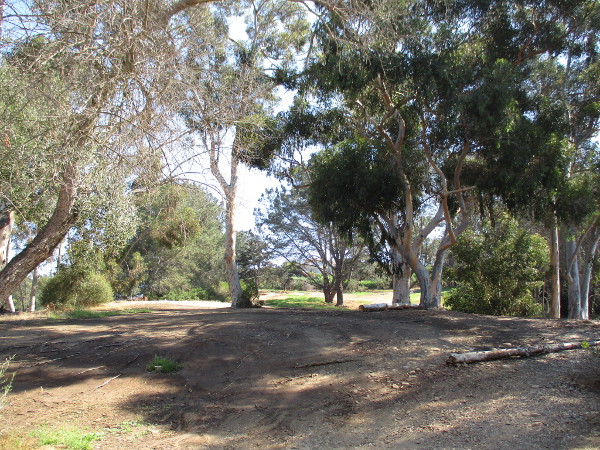
Then walk up the nearby hill.

This monument is very close to some homes in Mission Hills, so be quiet and respectful.

UPDATE!

During a visit to the San Diego History Center in early 2024, I learned that an exhibit concerning Lucy the White Deer has been created at the Junipero Serra Museum in Presidio Park. I’ll have to go check it out!

Alex of the history center searched their archives to create the new exhibit. Here’s one web page that provides more info. It includes this additional information: The zoo was overpopulated with deer at the time, so she was sold along with a buck to an individual in Mission Hills. The deer soon escaped their confines. The buck was never seen again, but Lucy became a local celebrity for the next 10 years.

This blog now features thousands of photos around San Diego! Are you curious? There’s lots of cool stuff to check out!

Here’s the Cool San Diego Sights main page, where you can read the most current blog posts.  If you’re using a phone or small mobile device, click those three parallel lines up at the top–that opens up my website’s sidebar, where you’ll see the most popular posts, a search box, and more!

To enjoy future posts, you can also “like” Cool San Diego Sights on Facebook or follow me on Twitter.

Views from Presidio Park’s Inspiration Point.

View of the Junipero Serra Museum from Presidio Park's Inspiration Point.
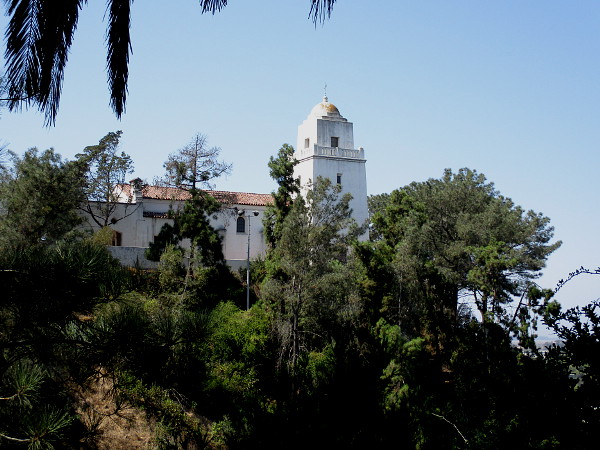
View of the Junipero Serra Museum from Presidio Park’s Inspiration Point.

Today I walked around Presidio Park, including a seldom visited area called Inspiration Point. I wanted to be inspired! I also wanted to see the little known monument to a White Deer in one far corner of the park–which I’ll blog about shortly!

If you’ve ever seen a steep, winding driveway that heads up the hill east of the park’s Taylor Street entrance, that way leads to Inspiration Point. There’s a small parking lot and some picnic benches up on top.

You can also reach the area from various parts of Presidio Park via several unmarked dirt trails, which is what I did. If you take any of these trails, wear good shoes and use your eyes. You can easily navigate with Google Maps and common sense. No matter which way you go, there are fairly steep short climbs. You can’t really get too lost, but you might run into people who hang out in the dense vegetation who you’d rather avoid.

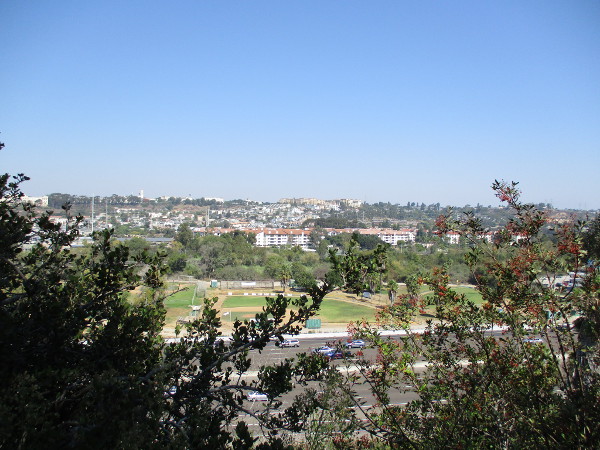
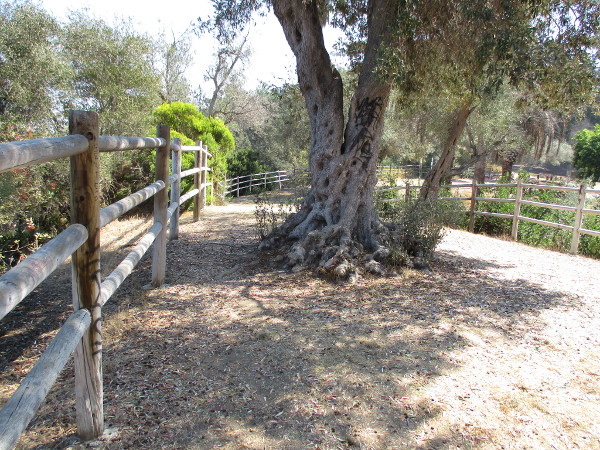
A short walk north of the small Inspiration Point parking lot, views can be enjoyed of Mission Valley from northwest to northeast, and you can see the Mission Revival-style Serra Museum building rising above trees to the west. The viewpoint amounts to a short path along a wooden fence. You can see it in my photos.

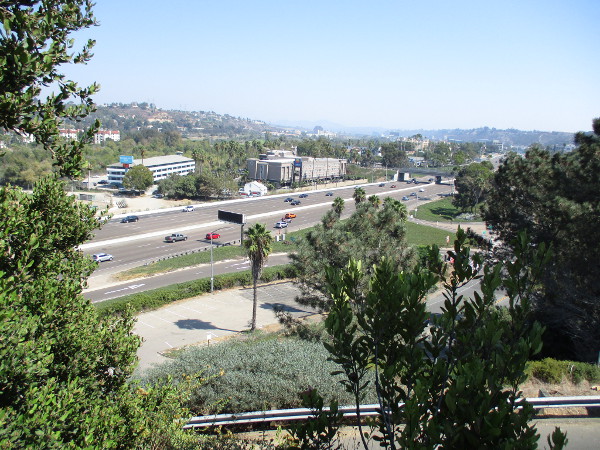
I must say much of what you see below is Interstate 8. I suppose before there was a freeway, and all the development built along it, the views of Mission Valley were much more green, open and natural.

Just beyond Interstate 8 you can see the nearby Presidio Little League ball fields, some motels, and far across the valley, up on the facing hill, Linda Vista and the distinctive buildings of the University of San Diego. If you really peer into the hazy northwest, you can glimpse Soledad Mountain.

Note: If Cool San Diego Sights now appears a little different, that’s because WordPress has forced everyone to use the new block editor. Which requires some changes. I’m doing my best!

Walking up a short path to the viewpoint.
Between the Inspiration Point parking lot and the viewpoint are some picnic tables. Various canyon trails connect this area with other parts of Presidio Park.
A bit of a view opens between trees.
Looking north into Mission Valley. Beyond lanes of Interstate 8, I see a baseball diamond used by the Presidio Little League.
A big old tree at the scenic viewpoint.
Gazing northwest.
Gazing northwest.
Gazing northeast.
Gazing northeast.
Turning south, I take a photo of the lush vegetation in this part of Presidio Park.
My camera zooms west. Another look at the Mission Revival-style Junipero Serra Museum, a well known San Diego landmark high atop Presidio Hill.

I live in downtown San Diego and love to walk around with my camera! You can follow Cool San Diego Sights via Facebook or Twitter!

You can easily explore Cool San Diego Sights by using the search box on my blog’s sidebar. Or click a tag! There are thousands upon thousands of photos for you to enjoy!

Historical markers at entrance to Presidio Park.

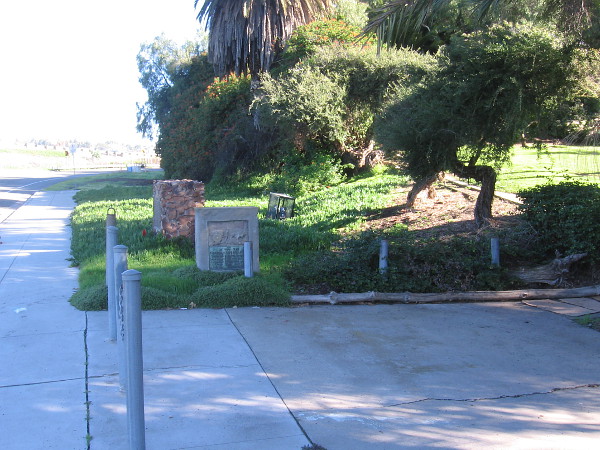
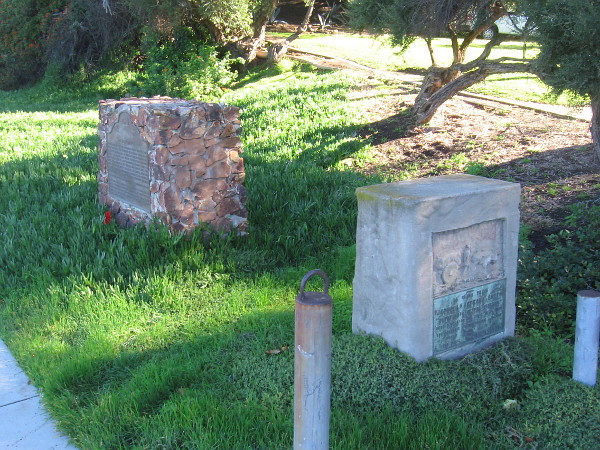
Several historical markers can be found near the northwest entrance to Presidio Park. If you’ve ever driven along Taylor Street just past Morena Boulevard and the Presidio Recreation Center, you might’ve glimpsed them. They stand beside a sidewalk that comes to an abrupt end, in a place where almost nobody walks.

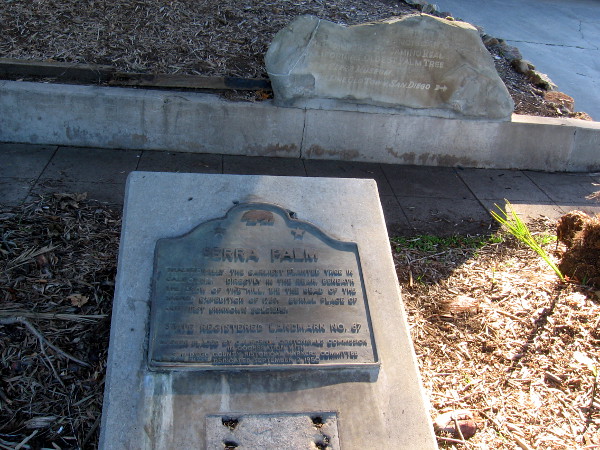
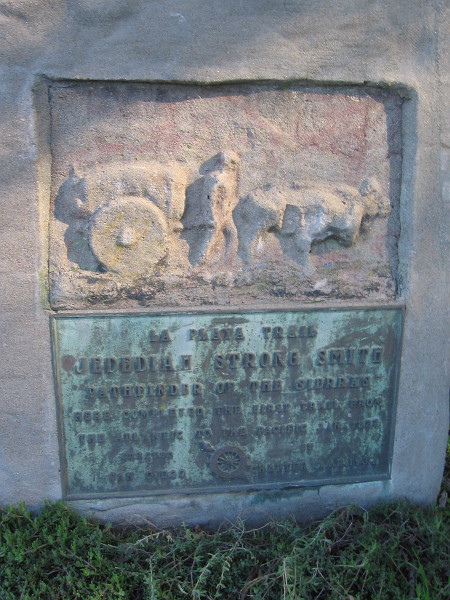
The three markers were placed years ago near three sites of historical importance: the Serra Palm, Derby Dike, and the La Playa Trail.

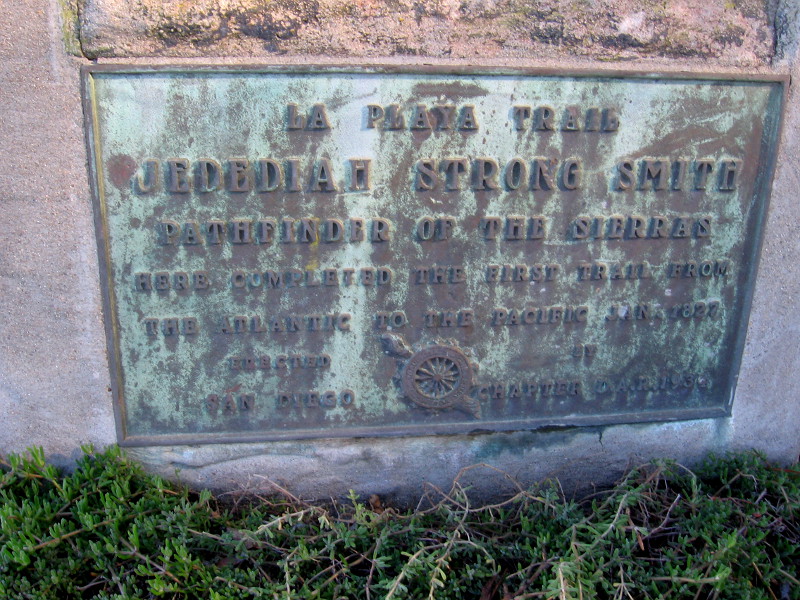
I’ve transcribed the words on each plaque.

I was told by a park ranger who happened to be parked nearby that the Serra Palm is long gone. He said it was probably blown over in a windstorm, and pointed out a pine tree that was toppled by our most recent storms.

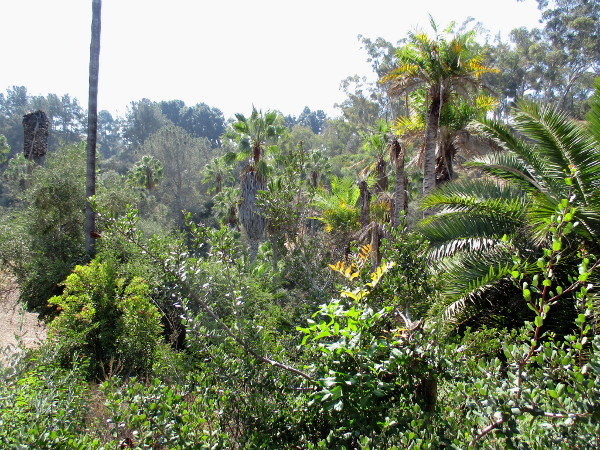
The Serra Palm was planted in 1769 by Padre Junípero Serra, and marked the beginning of El Camino Real.

I’ve photographed a similar La Playa Trail marker near Mission San Diego de Alcalá. To view that photo, click here.

According to Wikipedia: “In 1934, six commemorative terra cotta plaques were placed along the length of the trail by the local chapter of the Daughters of the American Revolution and other groups, based on a relief designed by sculptor Rose M. Hanks. The original six were located at Mission San Diego de Alcala; at the foot of Presidio Hill in Old Town; near the intersection of Rosecrans St. and Midway Blvd. in the Midway area; at the corner of Rosecrans and Lytton streets in Loma Portal, across from the Naval Training Center San Diego golf course; at the corner of Rosecrans and Byron streets in Roseville; and at the site of the fuel depot at Naval Base Point Loma…”

SERRA PALM

TRADITIONALLY THE EARLIEST PLANTED TREE IN
CALIFORNIA. DIRECTLY IN THE REAR, BENEATH
THE BROW OF THE HILL, LIE THE DEAD OF THE
SACRED EXPEDITION OF 1769, BURIAL PLACE OF
OUR FIRST UNKNOWN SOLDIERS.
STATE REGISTERED LANDMARK NO. 67
MARKER PLACED BY CALIFORNIA CENTENNIALS COMMISSION
IN COOPERATION WITH
SAN DIEGO COUNTY HISTORICAL MARKERS COMMITTEE
DEDICATED SEPTEMBER 2, 1950

DERBY DIKE

UNTIL 1853 THE ERRATIC SAN DIEGO RIVER DUMPED TONS
OF DEBRIS INTO THE HARBOR OR POURED INTO FALSE
BAY, NOW MISSION BAY. AT TIMES IT THREATENED TO DE-
STROY OLD TOWN SAN DIEGO. LIEUTENANT GEORGE
HORATIO DERBY, U.S. TOPOGRAPHICAL CORPS, BUILT A
DIKE THAT DIVERTED THE WATERS INTO FALSE BAY. THIS
WAS THE FIRST EFFORT TO TAME THE RIVER, AND ONE
OF THE FIRST U.S. GOVERNMENT PROJECTS IN CALIFOR-
NIA. THE RIVER WAS NOT FULLY HARNESSED UNTIL THE 1950s.
CALIFORNIA REGISTERED HISTORICAL LANDMARK NO. 244
FIRST REGISTERED JUNE 10, 1936. PLAQUE PLACED BY THE
STATE DEPARTMENT OF PARKS AND RECREATION IN CO-
OPERATION WITH THE SAN DIEGO DEPARTMENT OF PARKS
AND RECREATION AND SQUIBOB CHAPTER, E CLAMPUS
VITUS, AUGUST 4, 1990.

LA PLAYA TRAIL
JEDEDIAH STRONG SMITH
PATHFINDER OF THE SIERRAS
HERE COMPLETED THE FIRST TRAIL FROM
THE ATLANTIC TO THE PACIFIC JAN. 1827
ERECTED BY
SAN DIEGO CHAPTER D.A.R. 1937

This blog now features thousands of photos around San Diego! Are you curious? There’s lots of cool stuff to check out!

Here’s the Cool San Diego Sights main page, where you can read the most current blog posts.  If you’re using a phone or small mobile device, click those three parallel lines up at the top–that opens up my website’s sidebar, where you’ll see the most popular posts, a search box, and more!

To enjoy future posts, you can also “like” Cool San Diego Sights on Facebook or follow me on Twitter.

Cultural diversity in San Diego’s history.

The 250th Anniversary of San Diego is being celebrated this year.

In 1769 a Spanish expedition established El Presidio Reál de San Diego atop a hill near the San Diego River, along with the original Mission San Diego de Alcalá.

San Diego, however, didn’t become a city of any real significance until the late 19th century.

For a city that is relatively young, San Diego today enjoys remarkable cultural diversity. Much of this diversity is due to our close ties and overlapping history with Mexico. Much also comes from the variety of immigrants who have settled in and helped to build our growing city.

In the past, Cool San Diego Sights has featured many posts about cultural diversity in San Diego’s history.

Here are some links that you can explore…

A new flag is raised for San Diego’s 250th Anniversary!

Exhibit shows Kumeyaay history in the South Bay.

Festival recreates landing of explorer Cabrillo.

San Diego’s early history at the Serra Museum.

San Diego history in Old Town’s McCoy House.

History at the Los Peñasquitos adobe ranch house.

Days of the Vaqueros in Old Town San Diego!

Gravestones tell stories of early San Diego history.

Photos inside the San Diego Chinese Historical Museum.

Local history excavated, displayed at Petco Park.

Historical exhibit at Women’s Museum of California.

African-Americans helped to build San Diego.

Culture and history celebrated at Festa in San Diego!

Mural in Cesar Chavez Park depicts local history.

A look inside the Portuguese Historical Center.

San Diego history: World War II and the Tuna Fleet.

I live in downtown San Diego and love to walk around with my camera! You can follow Cool San Diego Sights via Facebook or Twitter!

You can easily explore Cool San Diego Sights by using the search box on my blog’s sidebar. Or click a tag! There are thousands upon thousands of photos for you to enjoy!

City Clerk’s Archives Month: Hidden Treasures!

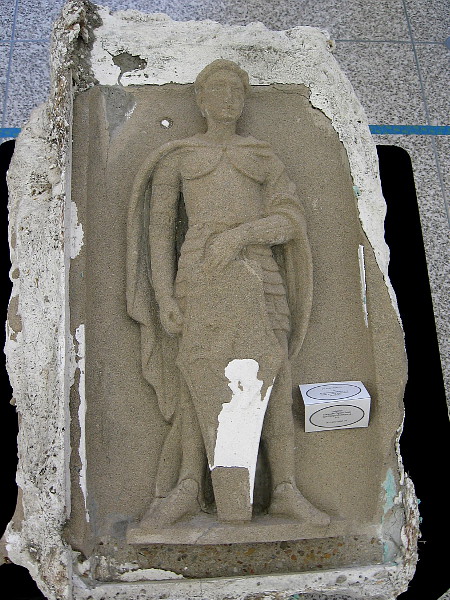
Original concrete figure from San Diego Museum of Art, 1915-1916.

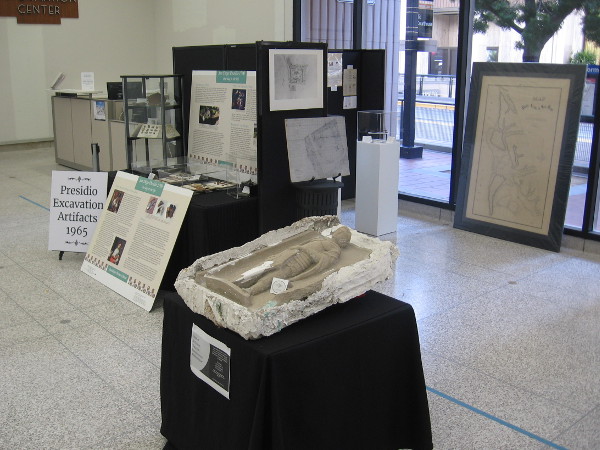
Today I walked to the City Administration Building in downtown San Diego to view a unique historical exhibit. During City Clerk’s Archives Month, from September 30th to October 31st, the public can step inside the lobby of City Hall and discover Hidden Treasures!

The San Diego City Clerk has partnered with the San Diego History Center to display a variety of documents and artifacts from our city’s past. In addition to this exhibit, Archives Month features many free educational events including lectures, movies and workshops.

(I attended one of the lectures today, and took a tour behind the scenes in the City Administration Building’s basement, where the City Archives are safely preserved. I’ll be blogging about that awesome experience shortly!)

2019 Archives Month Lecture and Tour Schedule. (Click image to enlarge.)
Sign shows 2019 Archives Month Lecture and Tour Schedule. (Click photo to enlarge for easy reading.)

City Clerk Archives Month in 2019 features an exhibit of Hidden Treasures in the lobby of the City Administration Building.

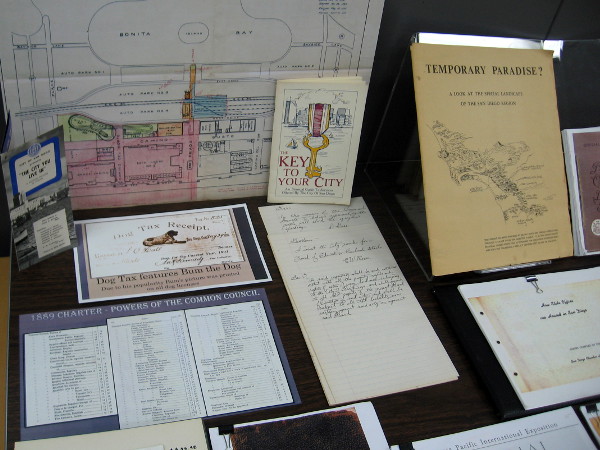
Many historical documents in the exhibit provide fascinating glimpses into San Diego's past.
Many historical documents in the exhibit provide fascinating glimpses into San Diego’s past. (I was pleased to see a Dog Tax Receipt featuring San Diego’s famous town dog, Bum.)

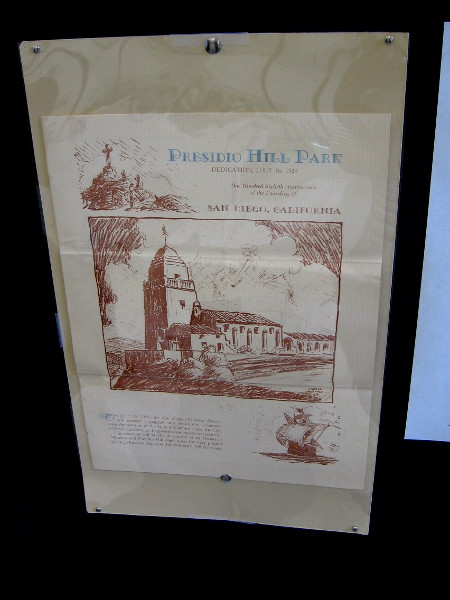
Historical documents on display includes an announcement for the Presidio Hill Park dedication in 1929.
Documents on display include an announcement for the Presidio Hill Park dedication in 1929. Pictured is the Junípero Serra Museum, original home of the San Diego Historical Society.

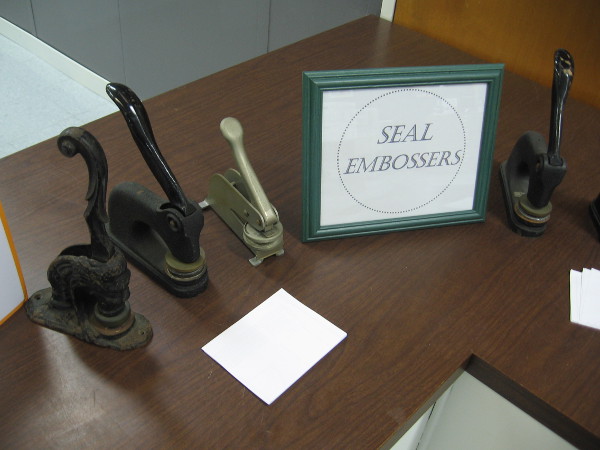
A collection of old City Clerk seal embossers.

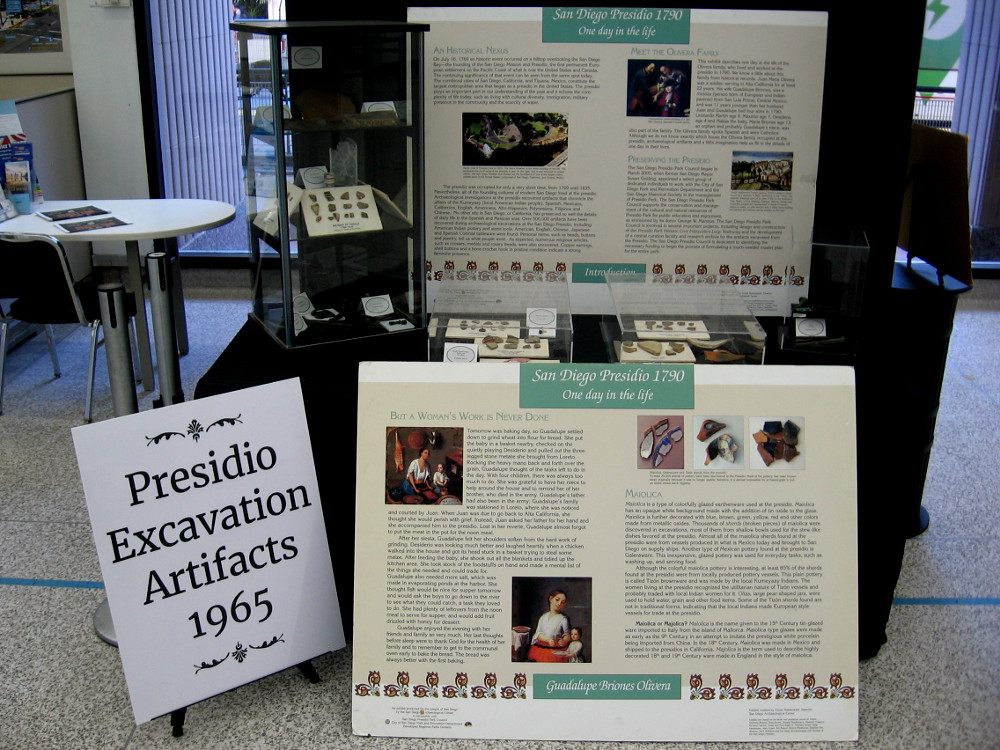
Posters describe 18th century San Diego and Presidio Excavation Artifacts from 1965.
Posters describe life in 18th century San Diego. Nearby are Presidio Excavation Artifacts from 1965.

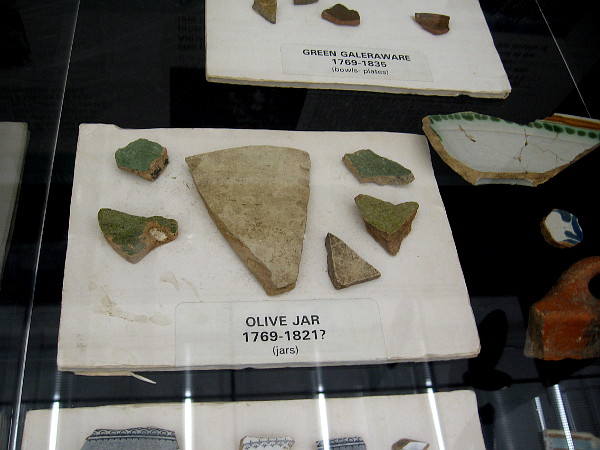
These fragments from an olive jar might date as far back as 1769.

The exhibit includes fragments of bottles, jars, bowls and plates from early San Diego.

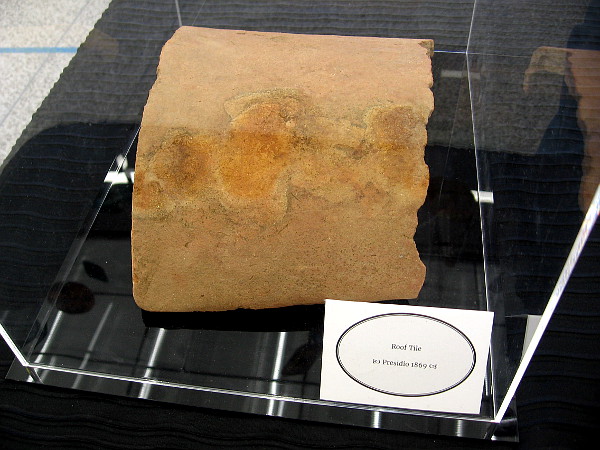
Roof Tile, Presidio, 1869.
Roof tile from the Presidio.

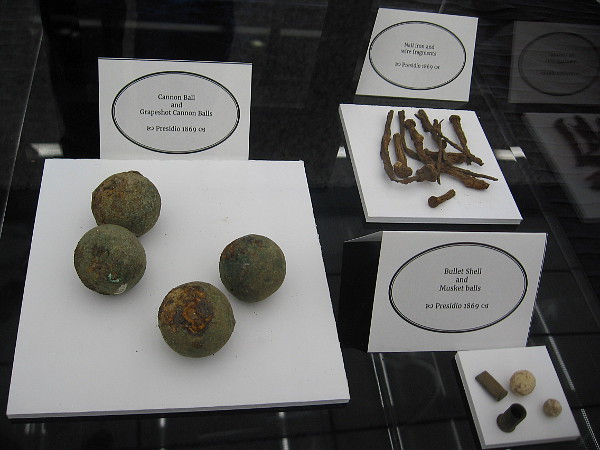
Presidio artifacts include cannon and musket balls.

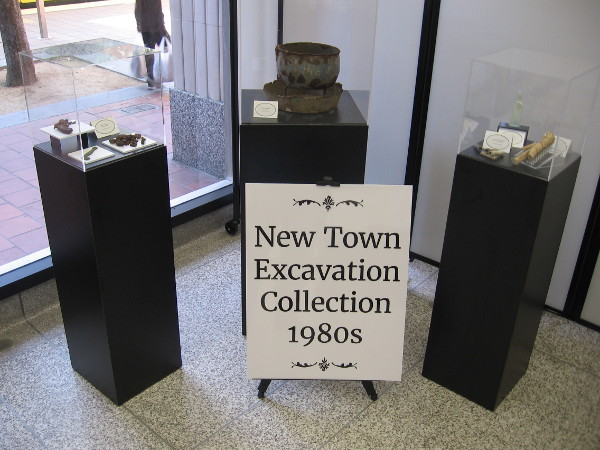
Artifacts on display include the New Town Excavation Collection from the 1980s.
Other artifacts on display include the New Town Excavation Collection from the 1980s.

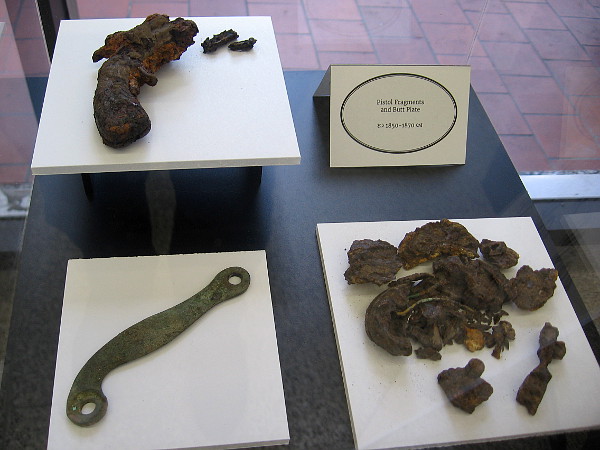
New Town artifacts include pistol fragments, 1850-1870.

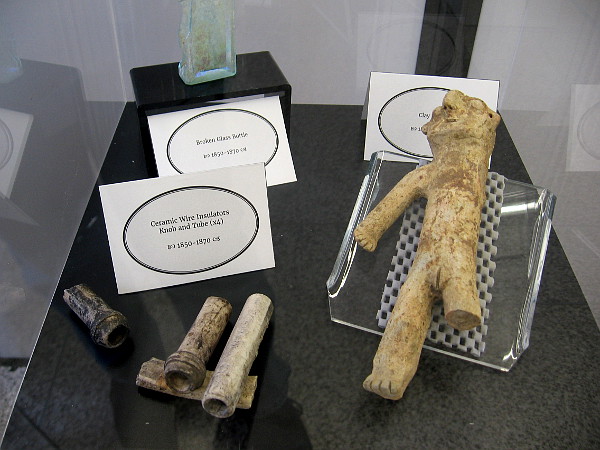
Other early artifacts from New Town include a broken bottle, ceramic wire insulators and a clay effigy.
Other artifacts from 19th century New Town include a broken bottle, ceramic wire insulators and a clay effigy.

I live in downtown San Diego and love to walk around with my camera! You can follow Cool San Diego Sights via Facebook or Twitter!

You can easily explore Cool San Diego Sights by using the search box on my blog’s sidebar. Or click a tag! There are thousands upon thousands of photos for you to enjoy!