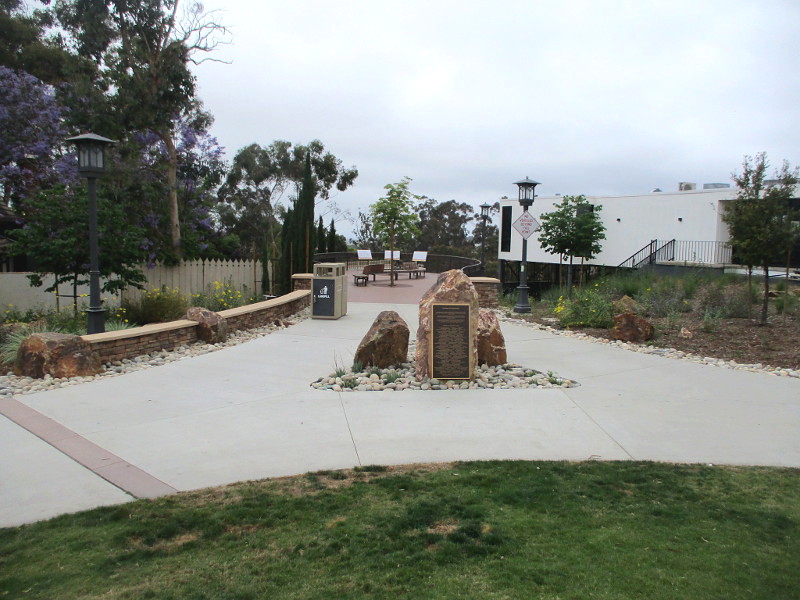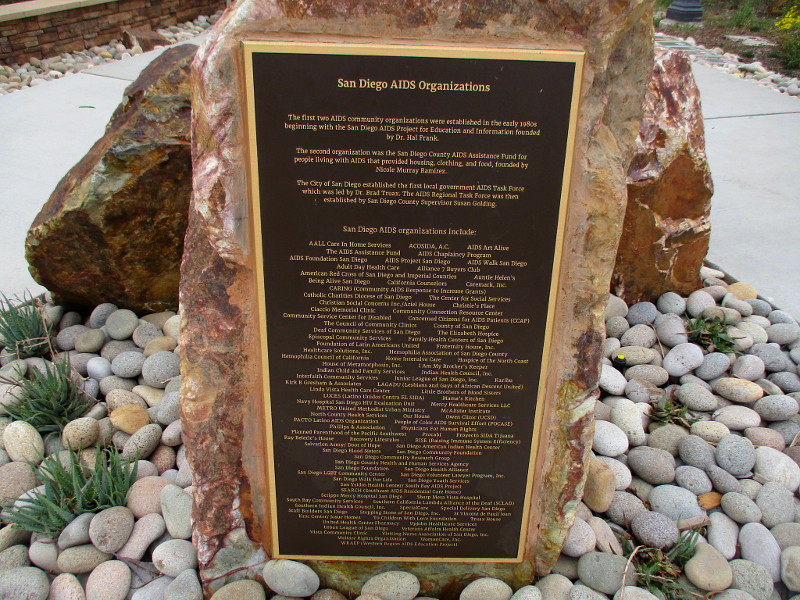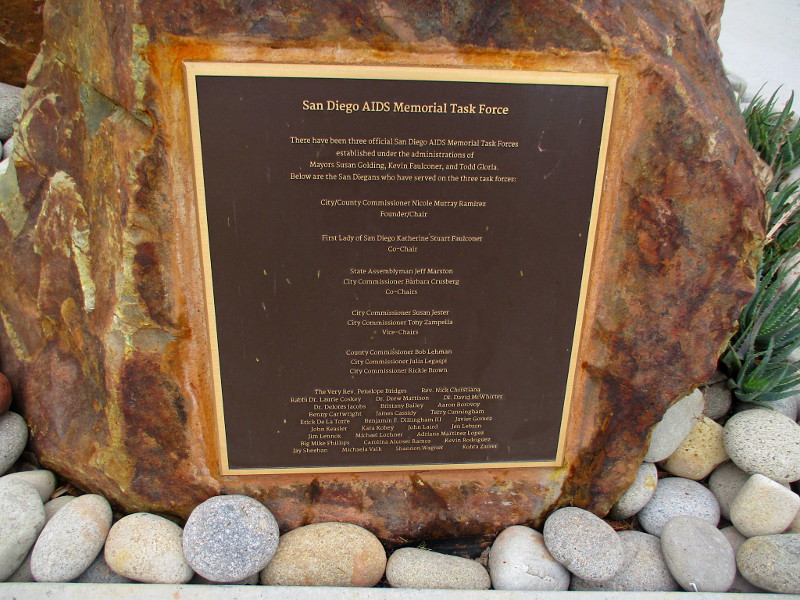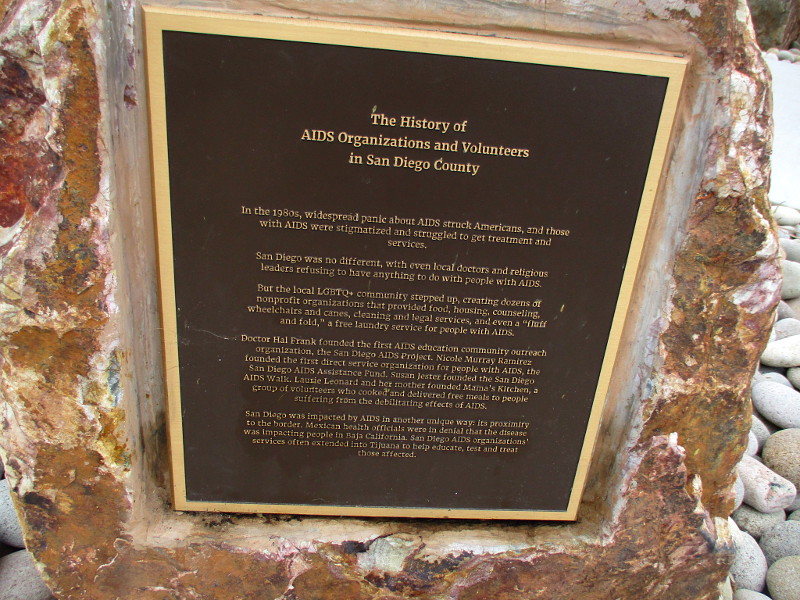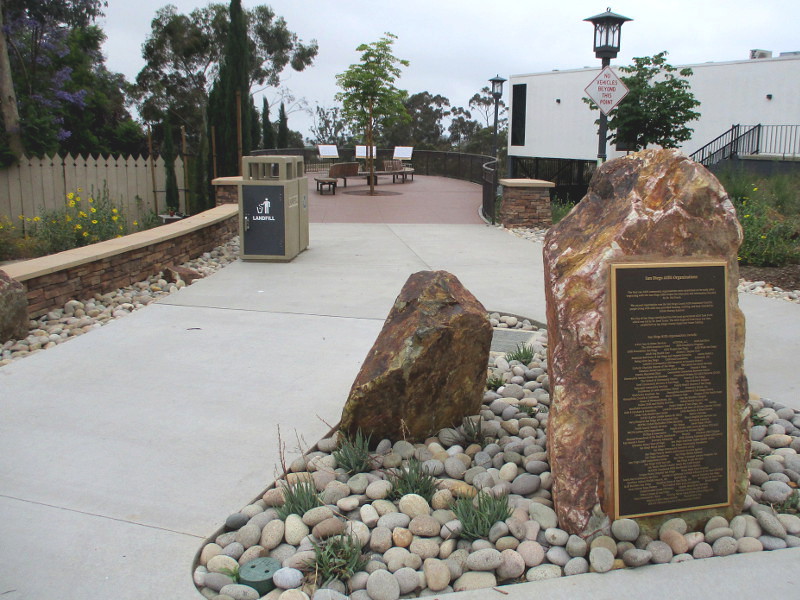
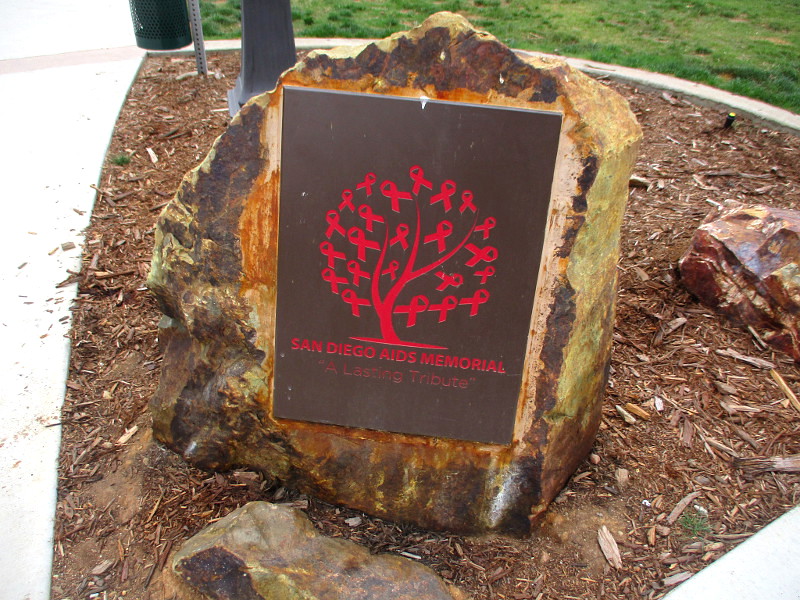
San Diego AIDS Memorial at Olive Street Park.

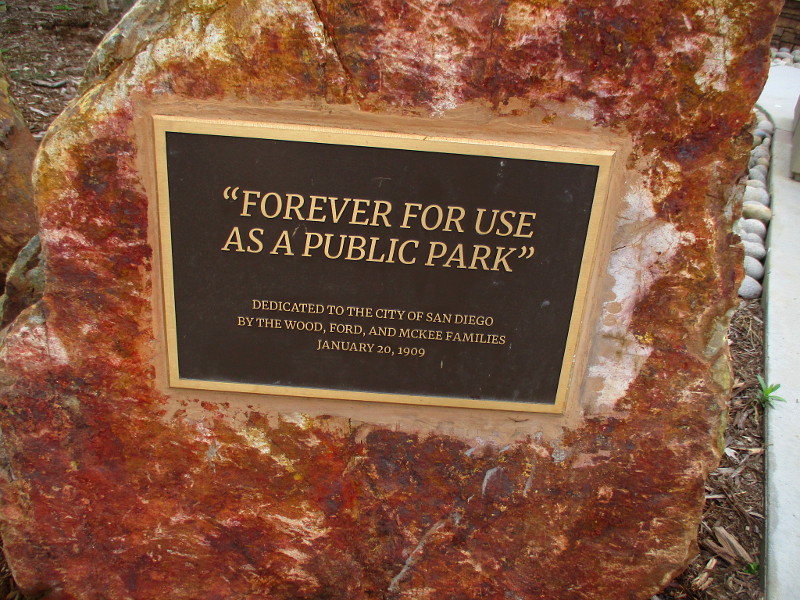
You might remember how, years ago, KUSI television consumer advocate Michael Turko sought to develop a neglected plot of land on Olive Street in Bankers Hill into a city park. According to this webpage, in 1909, the Ford, McKee, and Woods families generously donated the 0.6-acre property to the city for the specific purpose of creating a public park for the community to enjoy.

I posted a blog that included the still undeveloped park back in 2015. See that old post here.

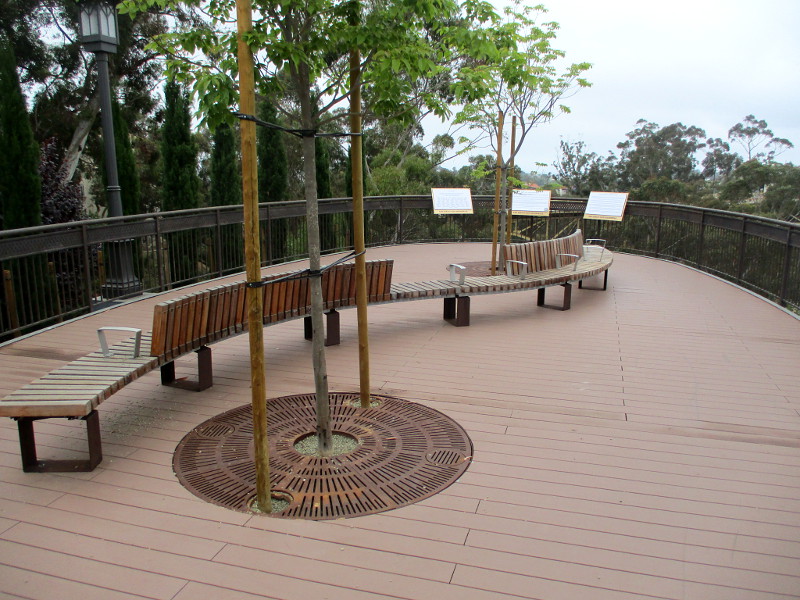
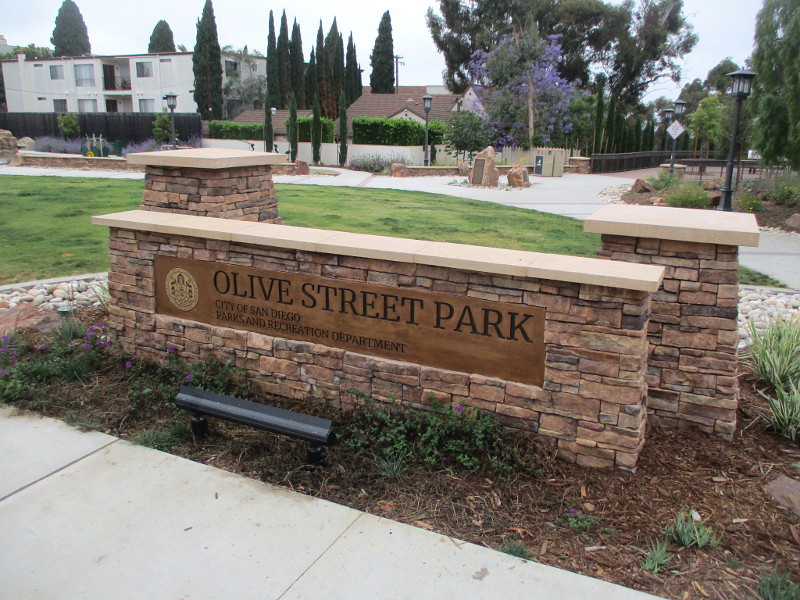
Today Olive Street Park welcomes one and all. It is also the site of the San Diego AIDS Memorial, which opened on World AIDS Day, Sunday, December 1, 2024.

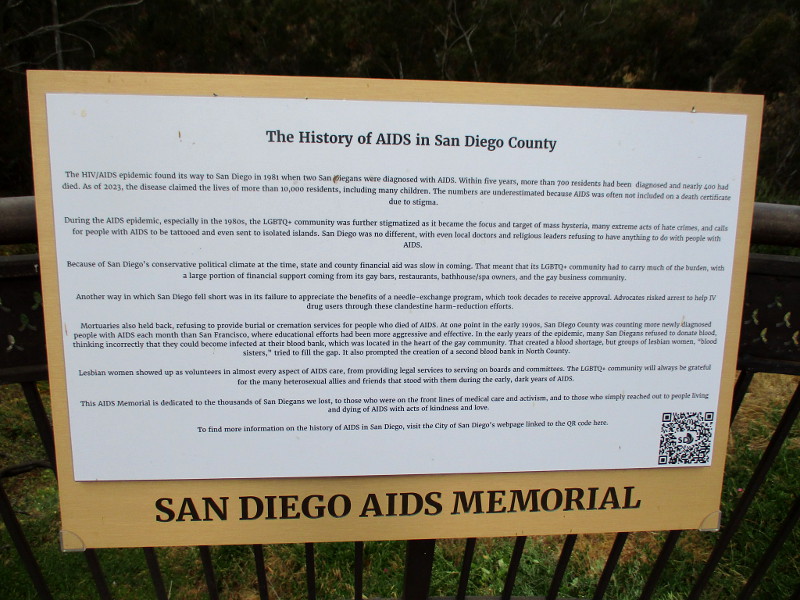
With various plaques and signs, the memorial remembers the over 8,000 San Diegans who have lost their lives to HIV/AIDS, and honors those who’ve supported them and have worked to defeat the devastating disease. Many compassionate people and organizations throughout San Diego County are recognized.

The neighborhood park is a grassy oasis with flowers and beautiful views, where people can play or relax and reflect.
To follow my blog, find the “Follow” box in this website’s sidebar. Or bookmark coolsandiegosights.com and swing on by occasionally!

(If you’re viewing this on a phone, open my website’s sidebar by tapping those three parallel lines at the top of the page.)
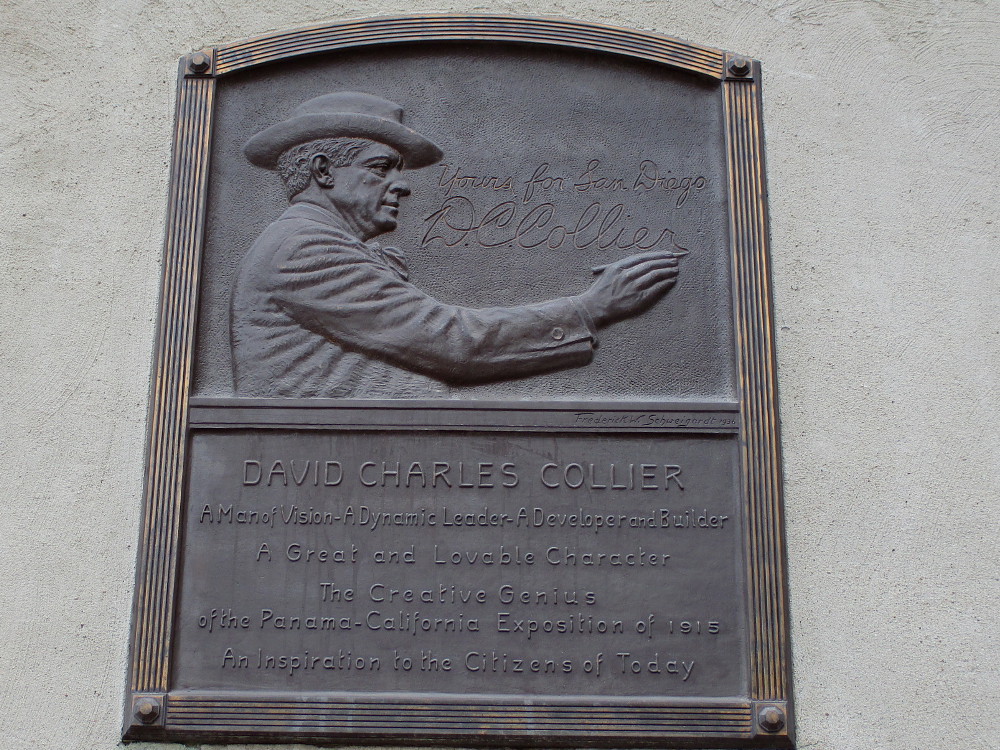
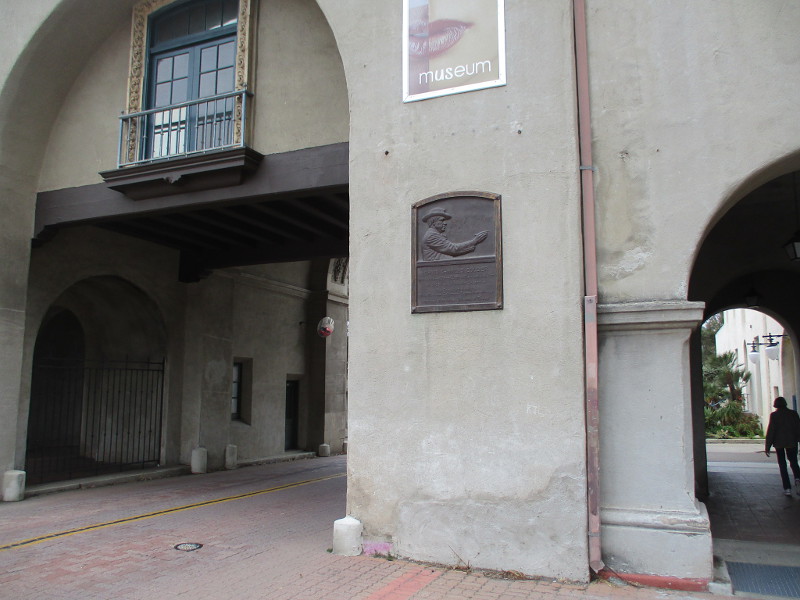
Plaque honors creative genius of Balboa Park.

Have you seen this plaque in Balboa Park and wondered about it? Located on the west wall of the California Quadrangle near the Museum of Us, it honors David Charles Collier, the prime mover behind San Diego’s 1915-1916 Panama–California Exposition.

The plaque reads:

DAVID CHARLES COLLIER

A Man of Vision–A Dynamic Leader–A Developer and Builder

A Great and Lovable Character

The Creative Genius of the Panama-California Exposition of 1915

An Inspiration to the Citizens of Today

The plaque was installed on October 11, 1936, in the second year of the California Pacific International Exposition.

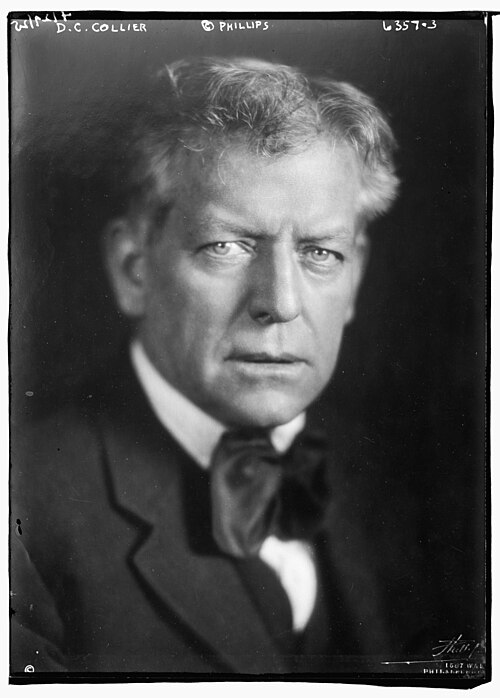
David Charles Collier, often called D. C. Collier, was a real estate developer and philanthropist. He is considered the founder of Ocean Beach, where he built his home and lived for many years. He also helped to develop Point Loma, Pacific Beach, University Heights, Normal Heights, North Park, East San Diego, and Encanto.

He made many of the decisions concerning the Panama-California Exposition, including its location and style of architecture. He served as Director General of the Panama California Exposition from 1909 to 1912, and president of the Exposition from 1912 to 1914He also chose “human progress” to be the Exposition’s cultural theme. The theme exhibit, particularly focused on the anthropology of the Southwestern United States, later became the San Diego Museum of Man, of which he was a founder.

The Museum of Man is now called the Museum of Us. It’s appropriate the plaque is located nearby.

Here’s a public domain photo of D. C. Collier from the United States Library of Congress’s Prints and Photographs division:

If you’d like to learn more about David Charles Collier, here’s an extensive article about the life of this fascinating man, published in The Journal Of San Diego History.

To follow my blog, find the “Follow” box in this website’s sidebar. Or bookmark coolsandiegosights.com and swing on by occasionally!

(If you’re viewing this on a phone, open my website’s sidebar by tapping those three parallel lines at the top of the page.)
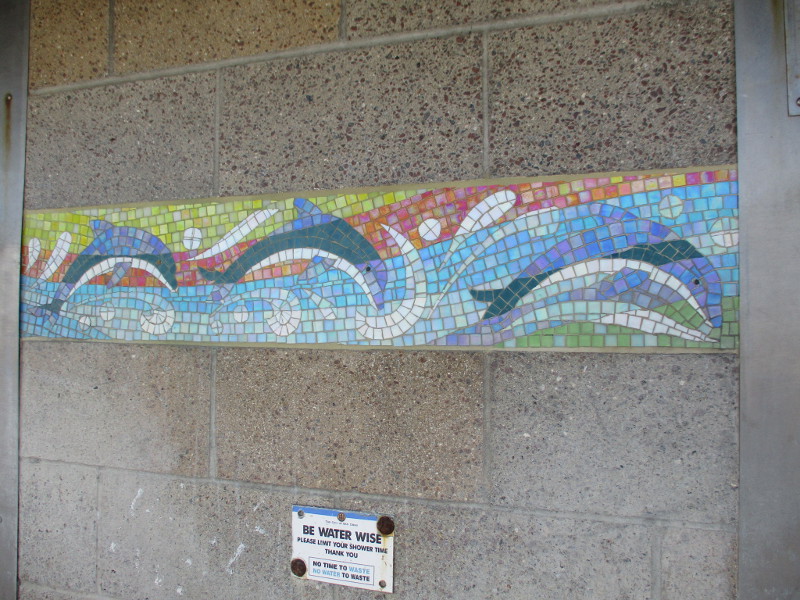
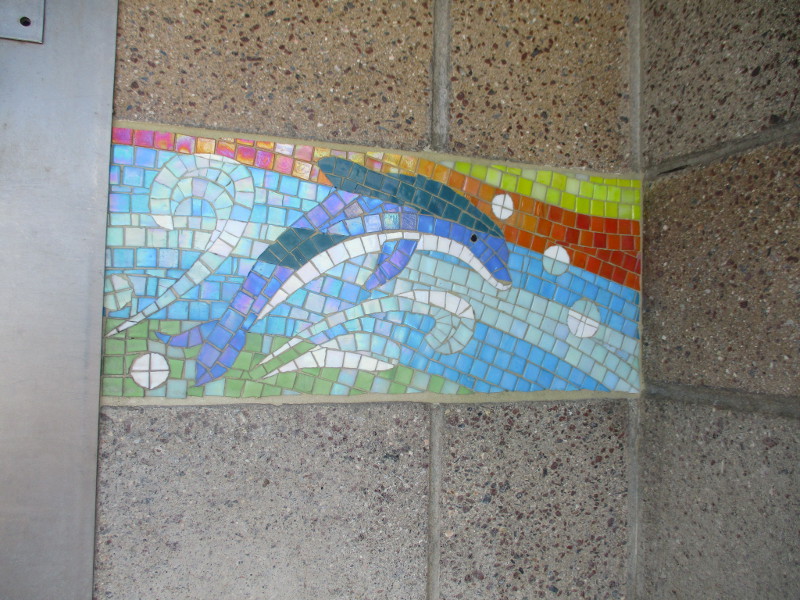
Dolphin mosaics at La Jolla Shores beach restrooms.

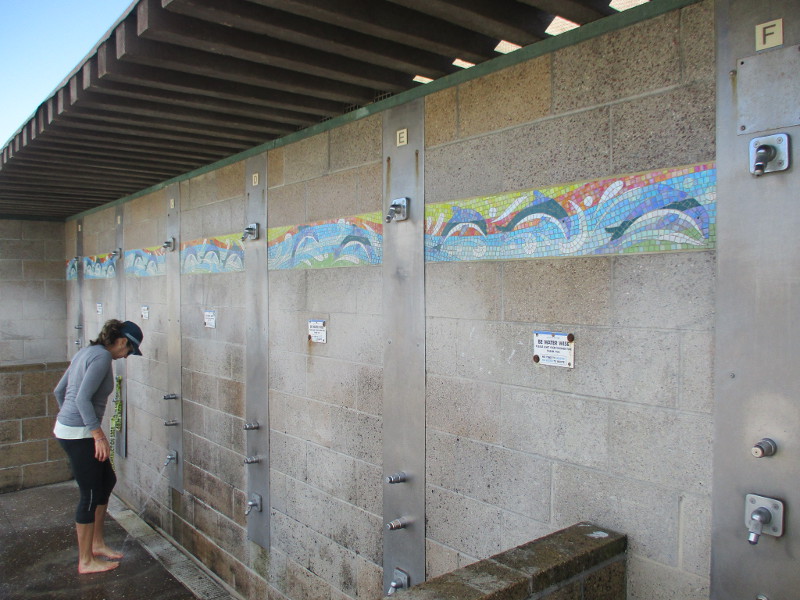
I really love these dolphin mosaics at the Kellogg Park North Comfort Station in La Jolla Shores. They’re so lively and colorful!

I had to take some photos during my latest walk along the beach there.

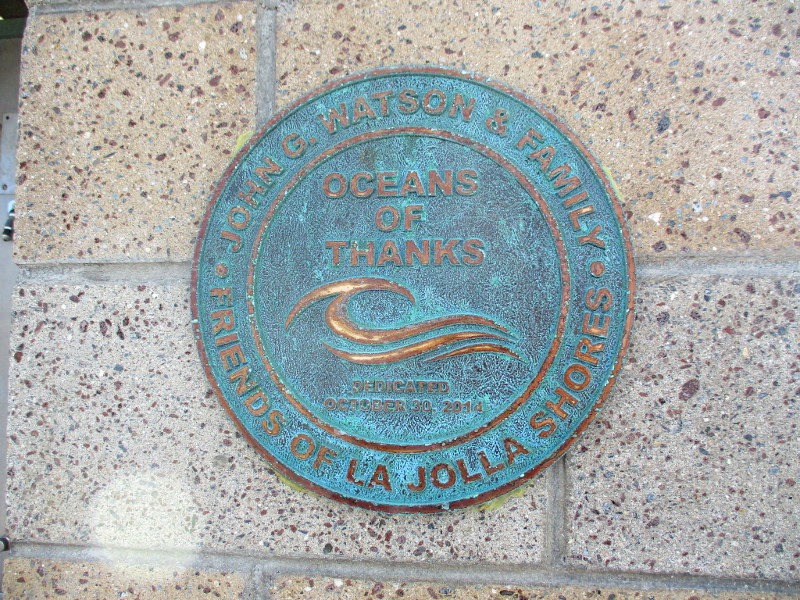
A circular plaque in the structure, to the right of the showers, recalls how construction of the comfort station and its restrooms was primarily funded by the John G. Watson Foundation and supported by Friends of La Jolla Shores.

“Oceans of Thanks” is a phrase used by the Walter Munk Foundation for the Oceans to express gratitude to supporters, donors, and the community, particularly during annual celebrations like Walter Munk Day.

Walter Munk was a world-renowned oceanographer at Scripps Institution of Oceanography. He was often called the Einstein of the Oceans. The efforts of his wife Mary Coakley Munk were instrumental in creating the new comfort station.

The Kellogg Park North Comfort Station and its mosaics were dedicated on October 30, 2014.

To follow my blog, find the “Follow” box in this website’s sidebar. Or bookmark coolsandiegosights.com and swing on by occasionally!

(If you’re viewing this on a phone, open my website’s sidebar by tapping those three parallel lines at the top of the page.)
Time capsule at Cabrillo National Monument.

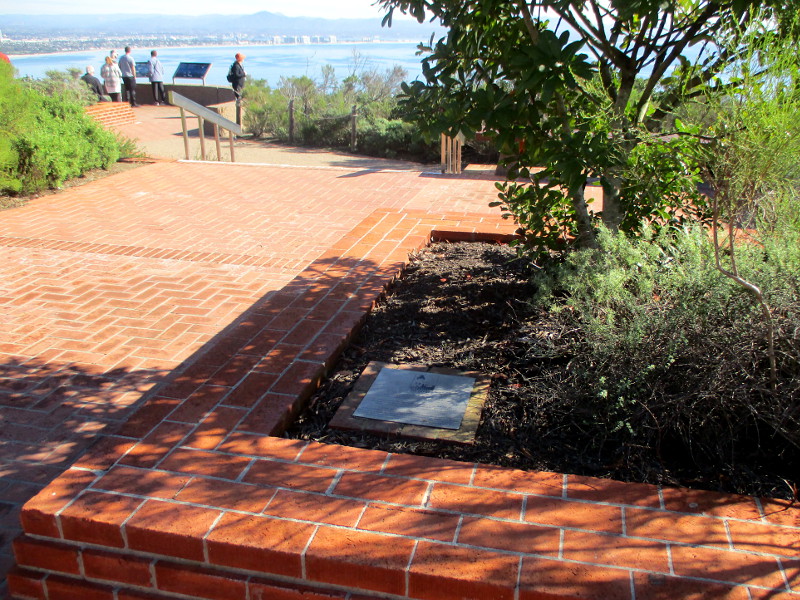
A time capsule was created during the Cabrillo National Monument centennial in Point Loma. It’s buried beneath a plaque in a brick planter near the entrance to the Visitor Center.

The plaque reads:

Beneath this sign lies a time capsule preserved in commemoration and celebration of the Cabrillo National Monument centennial, October 14, 1913-2013.

The contents inside this capsule are a collection of our first 100 years as San Diego’s only National Park unit. Its contents shall remain sealed for the next 100 years, not to be opened before October 14, 2113.

A message from the 2013 centennial employees: All that stand here before this plaque reading the words like so many who came before you; you are the future stewards of the National Park Service and we hope you continue to honor the tradition of protecting and preserving our most precious national treasures during this 2nd century of stewardship in our National Parks.

If you’d like to view an online “time capsule” of sorts, you can see photographs I took during the Cabrillo National Park centennial celebration back in 2013.

To see those photos click here!

To follow my blog, find the “Follow” box in this website’s sidebar. Or bookmark coolsandiegosights.com and swing on by occasionally!

(If you’re viewing this on a phone, open my website’s sidebar by tapping those three parallel lines at the top of the page.)
Morning views from the Cliffhanger Café.

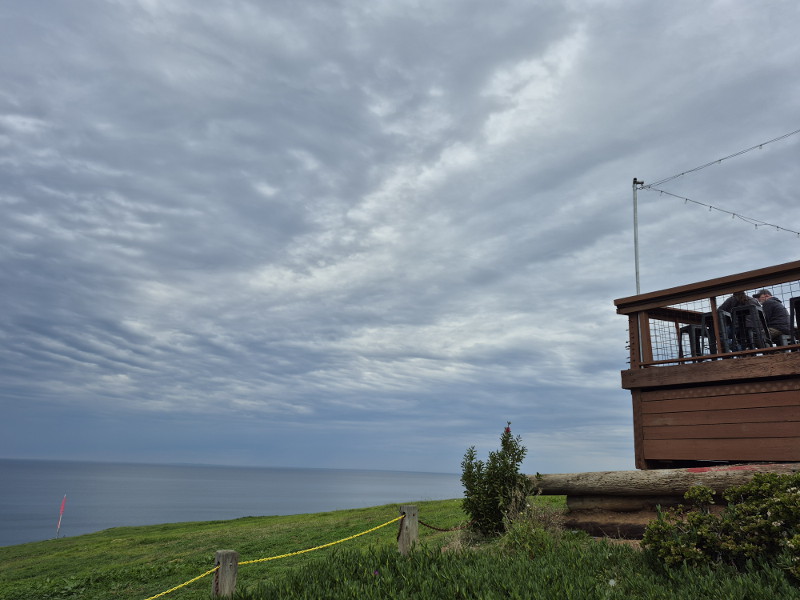
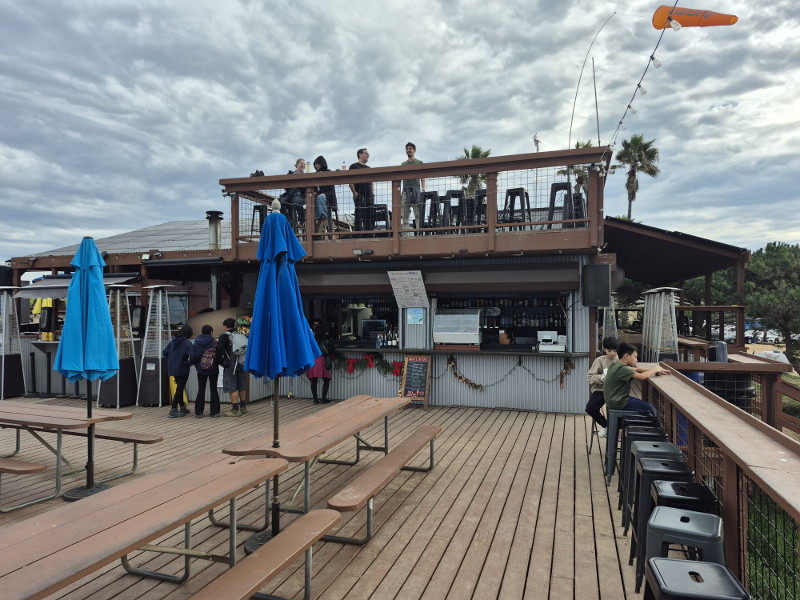
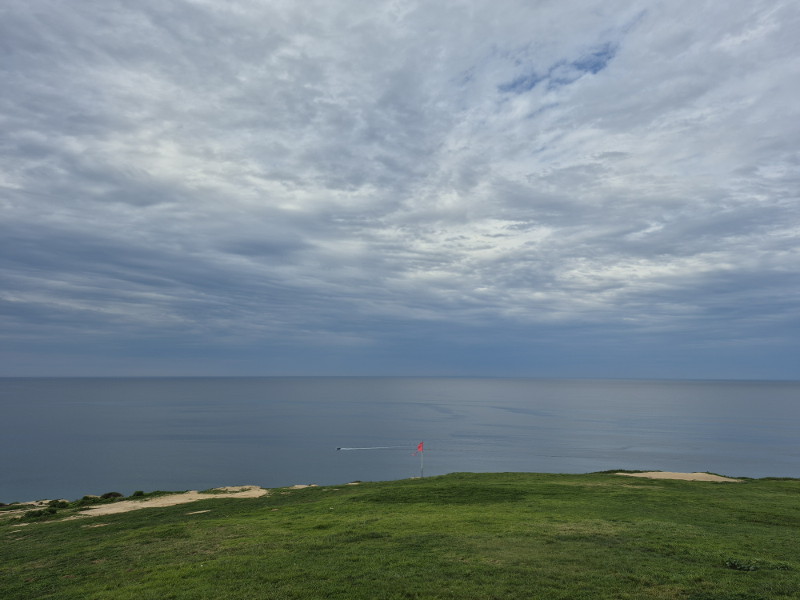
These photographs were taken this morning. I found myself at the Cliffhanger Café and Bar, overlooking the ocean at the Torrey Pines Gliderport in La Jolla.

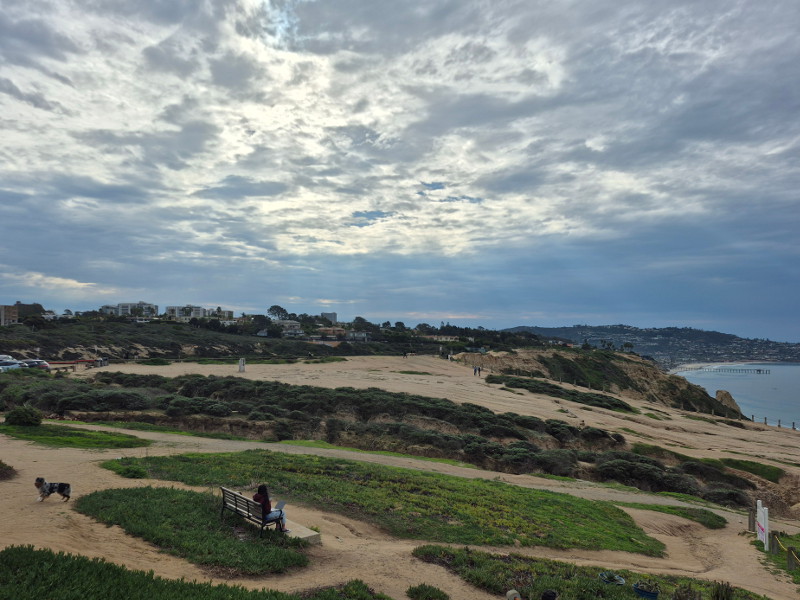
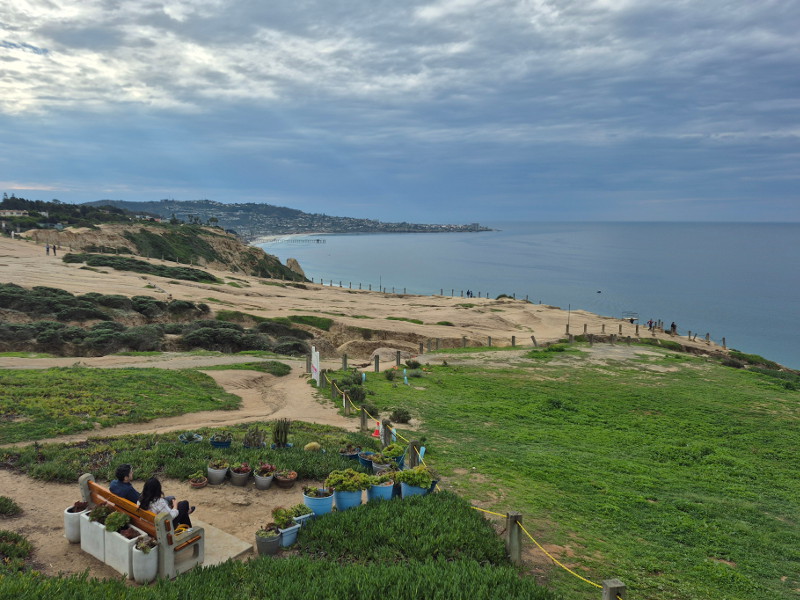
It was cloudy but predictably beautiful. The wide Pacific Ocean and sky above was painted with complex light and subtle variations of color. Green grass in the foreground, below the deck of the café, produced a stunning contrast. No gliders were up yet. A happy dog was running about.

In all of San Diego, is there a more amazing place to sit outdoors, eating a bite? Take a look at the scenery! Imagine a typically sunny day.

I posted an elaborate blog concerning the Torrey Pines Gliderport almost ten years ago. (Time flies.) From what I observed today, not a whole lot has changed. Just as amazing. See those many past photographs here.

After finishing a snack on the deck, I wandered down to the bench you see in the above photo…

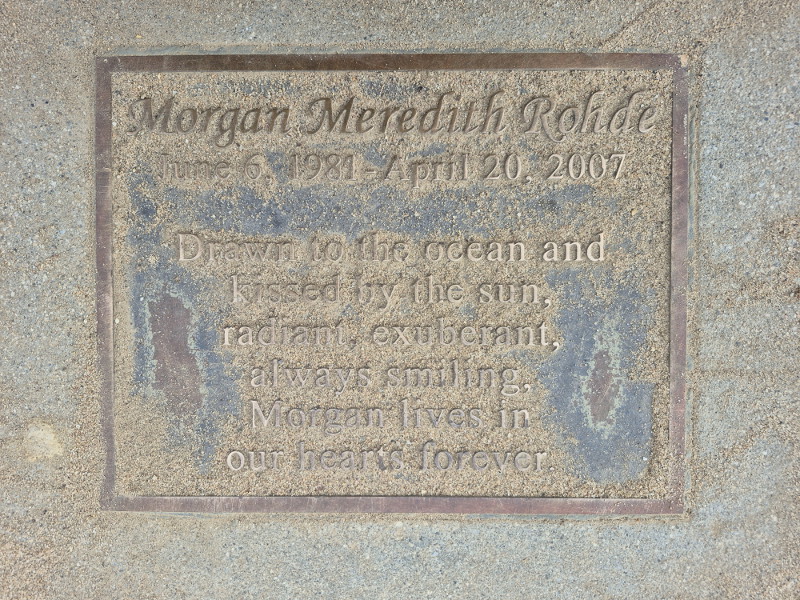
This bench with an amazing view beyond many potted plants has a plaque…

Morgan Meredith Rohde… Drawn to the ocean and kissed by the sun, radiant, exuberant, always smiling, Morgan lives in our hearts forever.

To follow my blog, find the “Follow” box in this website’s sidebar. Or bookmark coolsandiegosights.com and swing on by occasionally!

(If you’re viewing this on a phone, open my website’s sidebar by tapping those three parallel lines at the top of the page.)
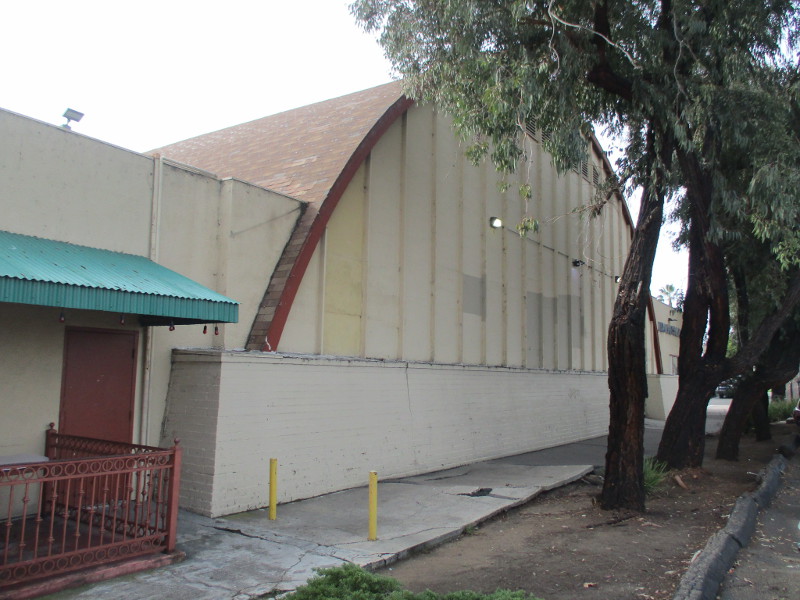
Skateworld’s historical World War II building.

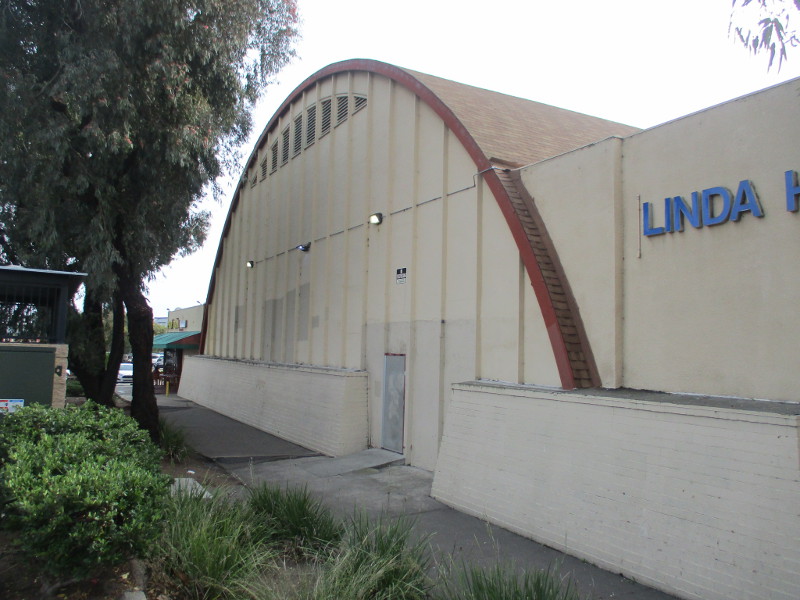
Skateworld, with a few other small businesses in Linda Vista, occupies a historically important building that was designed to be the center of community life during World War II.

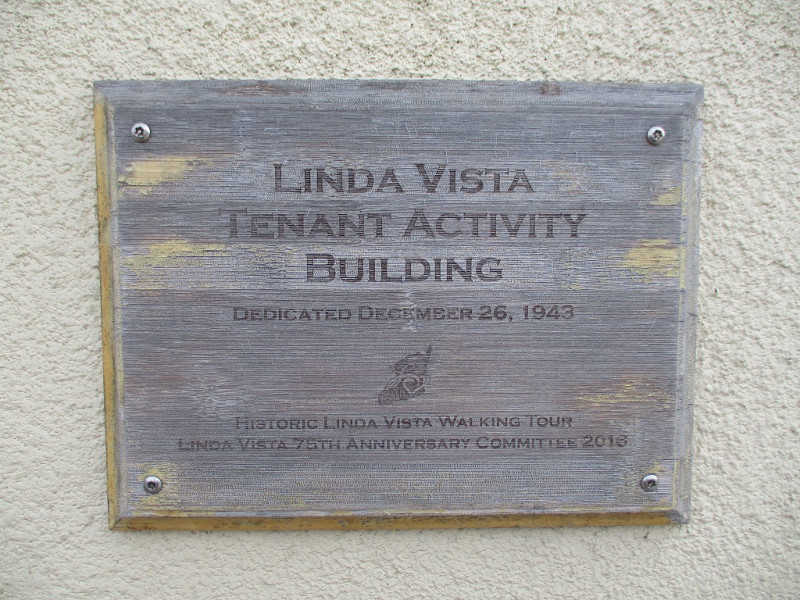
The Linda Vista Tenant Activity Building was dedicated on December 26, 1943 and stood at the center of the federally constructed Linda Vista Housing Project. The project provided 3001 dwelling units for aircraft and shipyard defense workers in San Diego during the war.

A historical plaque a short distance up Linda Vista Road provides more information about the government housing project. See past photographs of that plaque here.

The Tenant Activity Building was designed like a field house or drill hall and served as a hub for social events, clubs, and all-ages activities. It would later be considered for historic designation due to its role in supporting war-effort morale and its unique architecture.

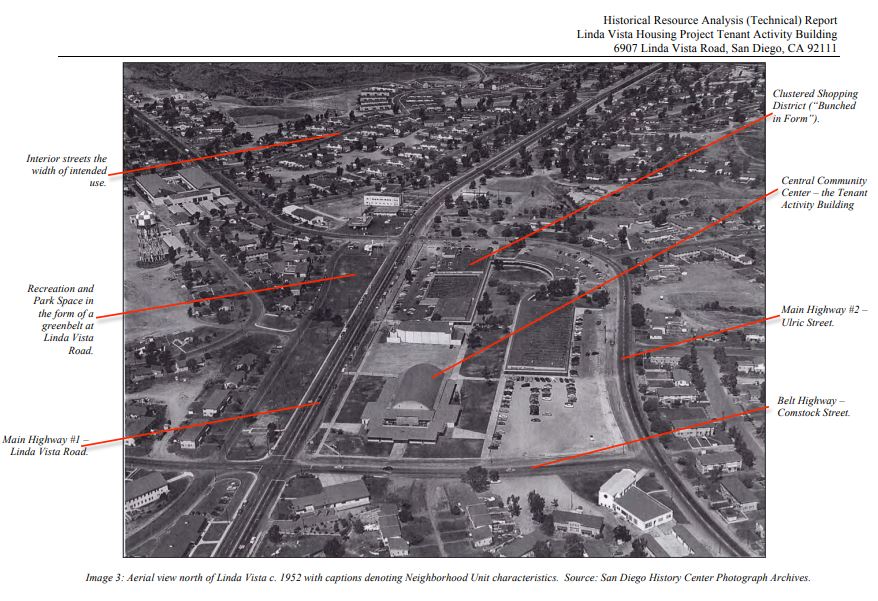
You can read the 2011 Historical Resource Analysis (Technical) Report on the City of San Diego website by clicking here. The report contains a great deal of additional information, including photographs.

Here’s a circa 1952 aerial view of the Linda Vista House Project and its Tenant Activity Building from the report. The center of the building with its high barrel roof today provides a perfect, roomy space for roller skaters at Skateworld.

If you’d like to see San Diego through my lens, find the “Follow” box in the sidebar to receive new posts in your email, or bookmark coolsandiegosights.com and swing on by occasionally!

(If you’re viewing Cool San Diego Sights on a phone, you can open my website’s sidebar by tapping those three parallel lines at the top of the page.)
The Economy of the Absurd at Museum of Us!

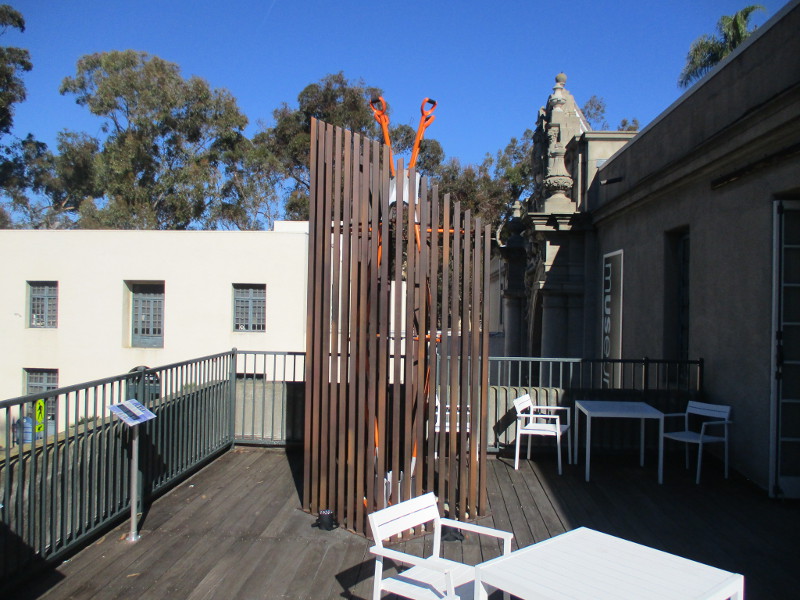
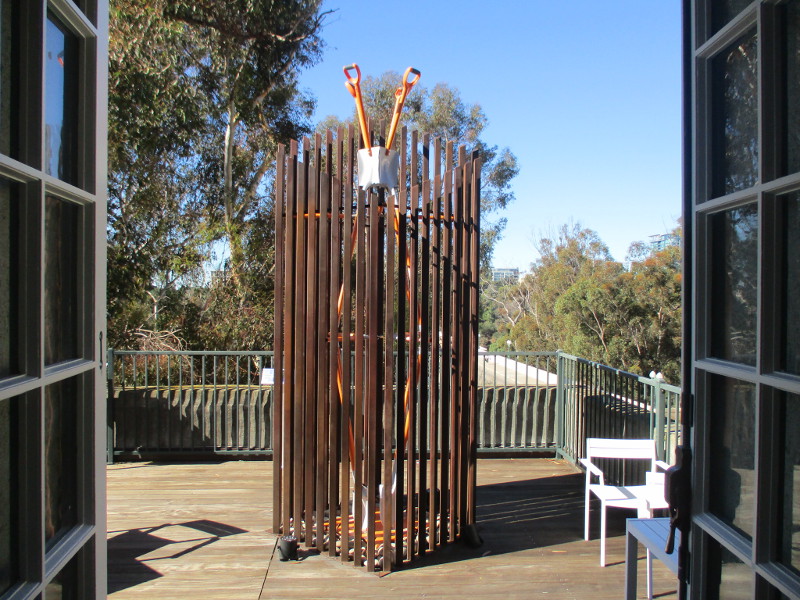
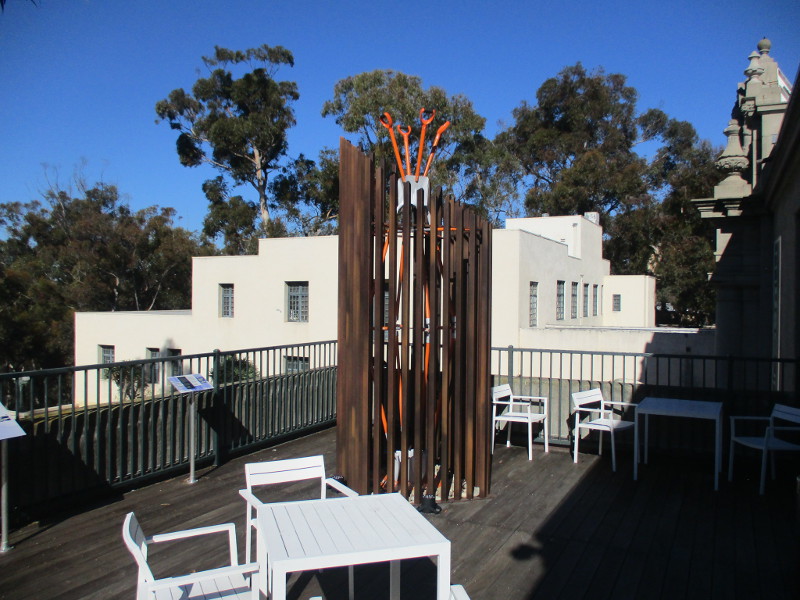
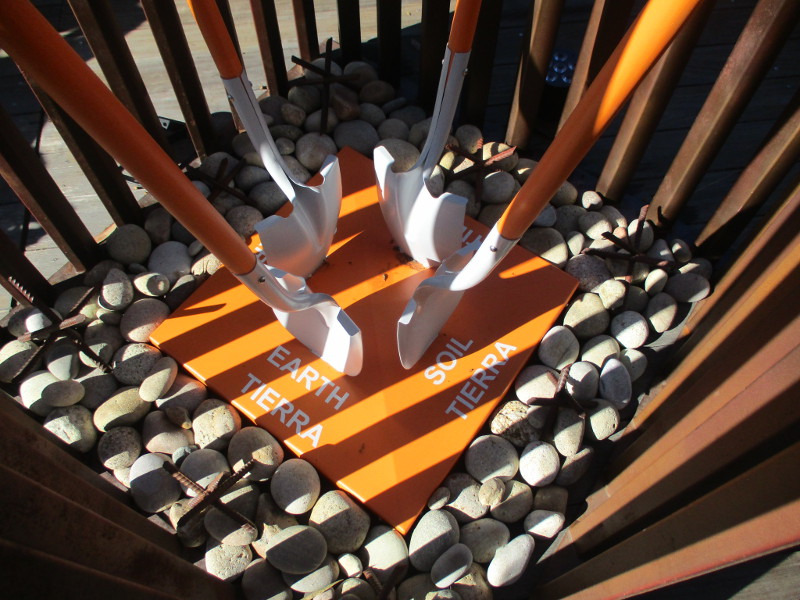
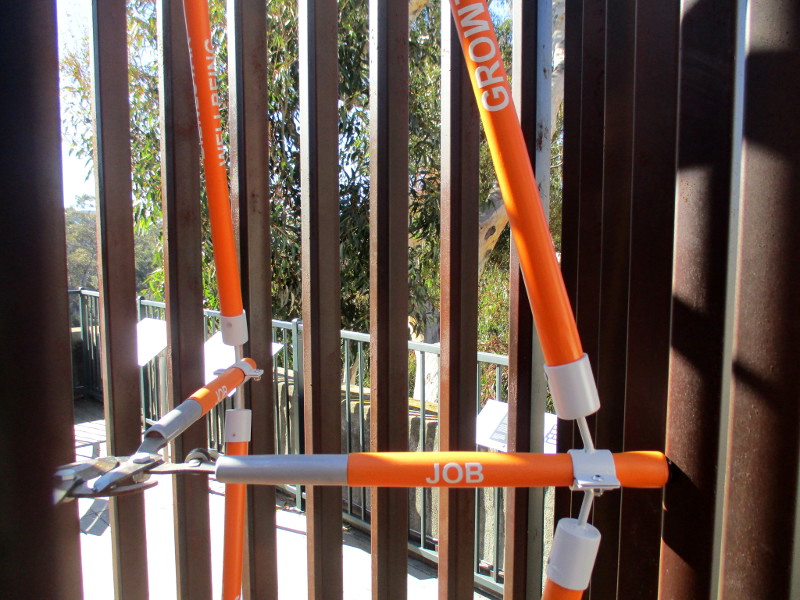
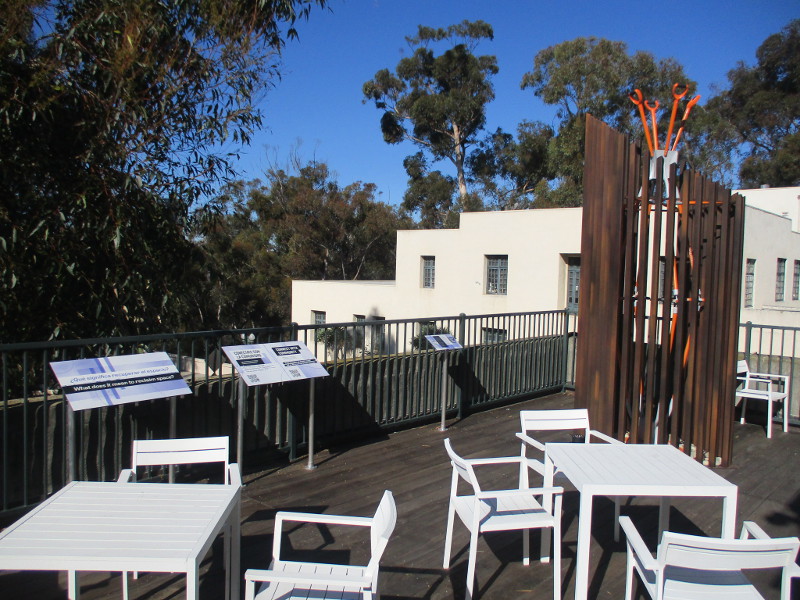
A sculpture was recently installed at the Museum of Us in Balboa Park. You can see the new artwork when crossing the Cabrillo Bridge, about to enter the west archway of the California Quadrangle. Look up toward the second floor’s outdoor balcony!

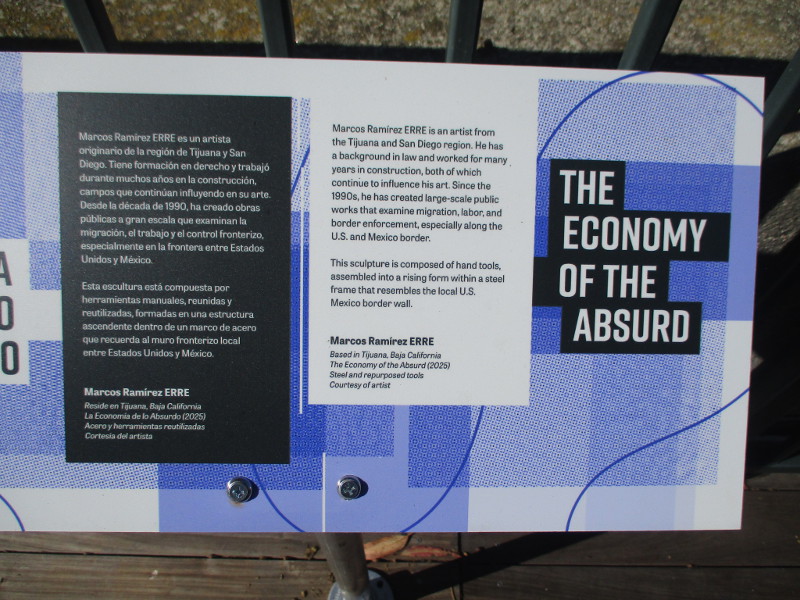
The sculpture is titled The Economy of the Absurd. It was created by Marcos Ramírez ERRE, an artist from the Tijuana and San Diego region who has created large-scale public works since the 1990s. It’s part of the newly opened Museum of Us exhibition Race: Power, Resistance & Change.

The museum’s About the Exhibit page explains: The exhibition Race: Power, Resistance & Change shares stories of how the construction of race has shaped laws, institutions, and daily life in San Diego and the broader multinational region.

As a plaque on the balcony near The Economy of the Absurd explains: This sculpture is composed of hand tools, assembled into a rising form within a steel frame that resembles the local U.S. Mexico border wall.

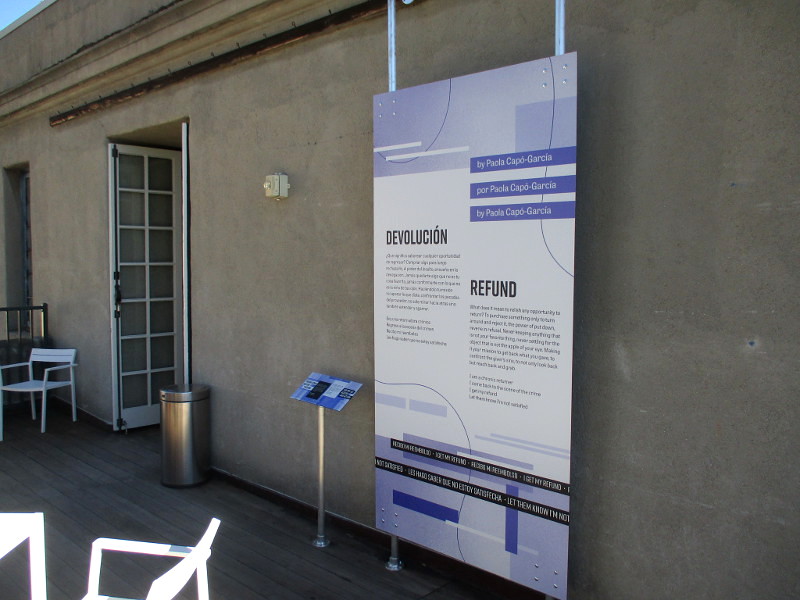
A number of other plaques are also located on the balcony, including one featuring the poem Refund by past San Diego Poet Laureate Paola Capó-Garcia. It is all part of the overall exhibition.

When I spied the new sculpture yesterday while walking through Balboa Park, I had to go check it out!

Here I am proceeding out onto the Museum of Us balcony…

(Photographs of views from the balcony before installation of this exhibit can be found by clicking here.)

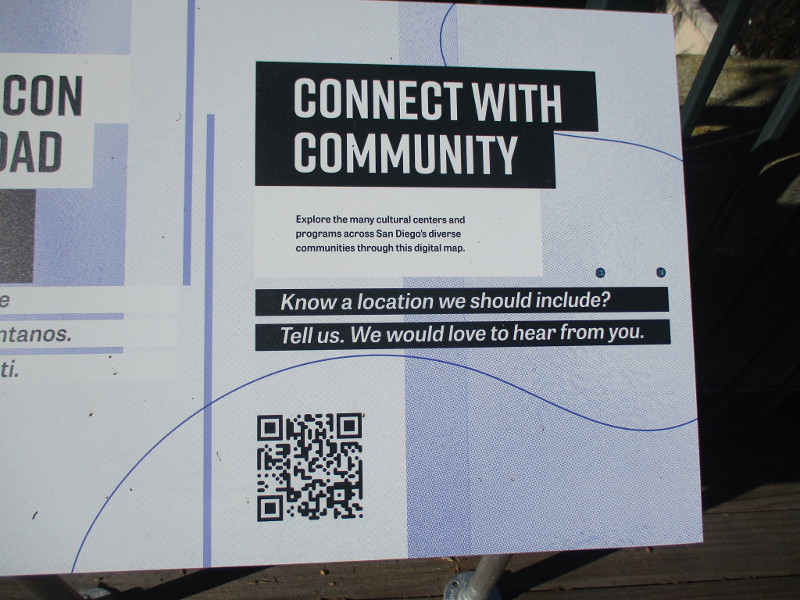
Visitors are encouraged to contribute to a digital map. The map is of cultural centers and programs across San Diego’s diverse communities. You can participate by clicking here!

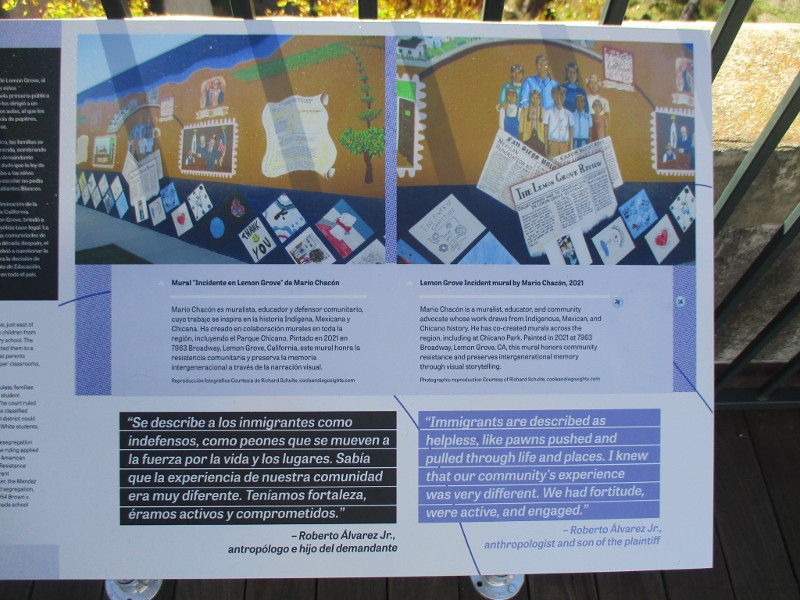
Imagine my excitement when I found that one of the plaques, concerning the public mural in Lemon Grove of the “Lemon Grove Incident,” features two photographs that I took for Cool San Diego Sights and a mention of my website!

Finally, here’s the short poem Refund

If you’d like to see San Diego through my lens, find the “Follow” box in the sidebar to receive new posts in your email, or bookmark coolsandiegosights.com and swing on by occasionally!

(If you’re viewing Cool San Diego Sights on a phone, you can open my website’s sidebar by tapping those three parallel lines at the top of the page.)

A close look at Liberty Station’s Gate One.

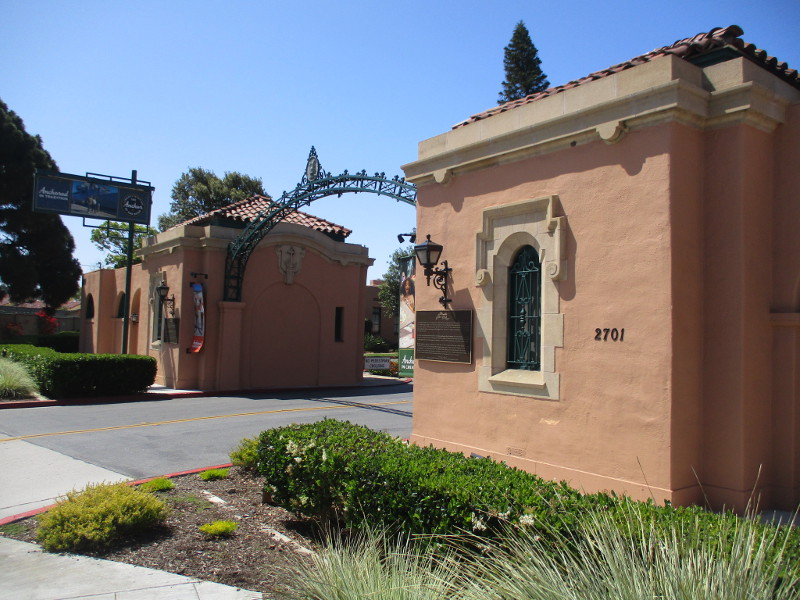
Perhaps you’ve driven through Gate One while arriving at or departing from Liberty Station. It’s the old Navy base entrance at the northeast end of Liberty Station, where Lytton Street and Barnett Avenue meet.

You might have noticed plaques on the two old guard buildings.

Curiosity getting the best of me, the last time I was in the neighborhood I walked around both historical buildings for a closer look.

Gate One was the main entrance to Naval Training Center San Diego, and the grassy area with an anchor behind it is Sellers Plaza. As this webpage explains: Named for the base’s first commander, Sellers Plaza serves as the Naval Training Center’s front door.

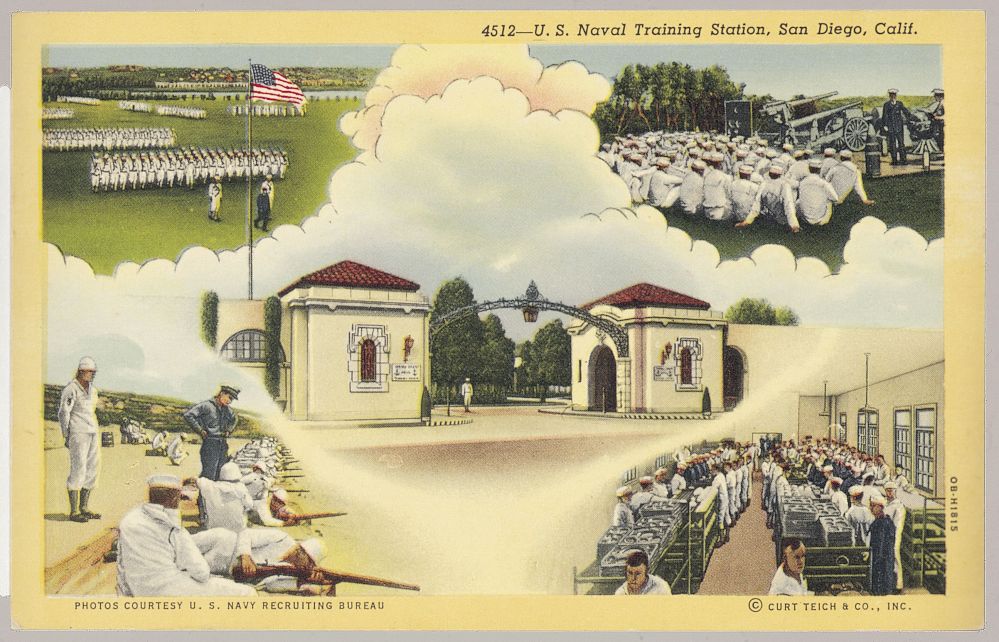
You can see Gate One in the center of this postcard:

Image courtesy Libery Station.

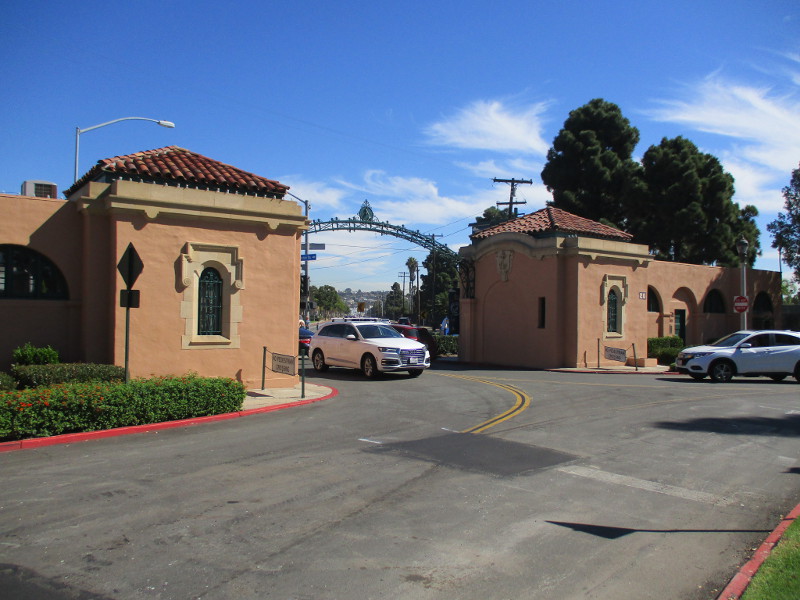
Here are photographs I recently took in front of Gate One…

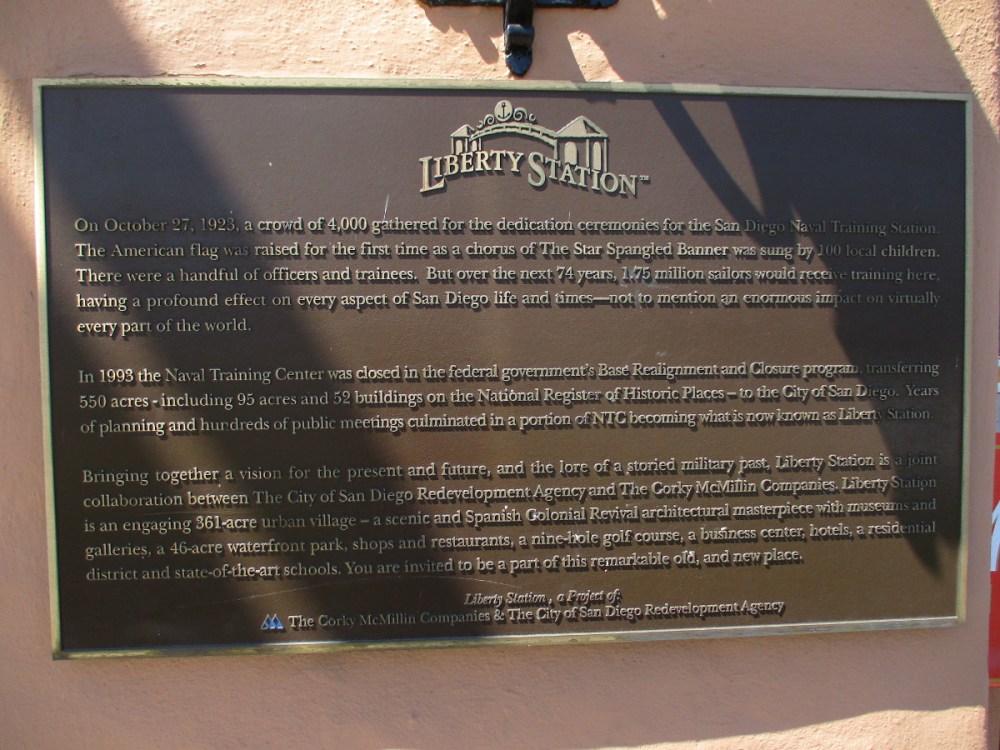
Identical plaques are mounted to the front of both buildings near the arch. The steel arch was added in 1932.

I’m now standing by Building 20. There across the road is Building 21.

The plaques summarize the history of the San Diego Naval Training Station, which opened in 1923 and was finally decommissioned in 1997. Over 1.75 million sailor recruits would receive training here.

Now I’ve walked behind Building 20…

A plaque by the door to Building 20 identifies it as Gatehouse #1, constructed 1923.

Dodging a car or two, I’m now behind Building 21…

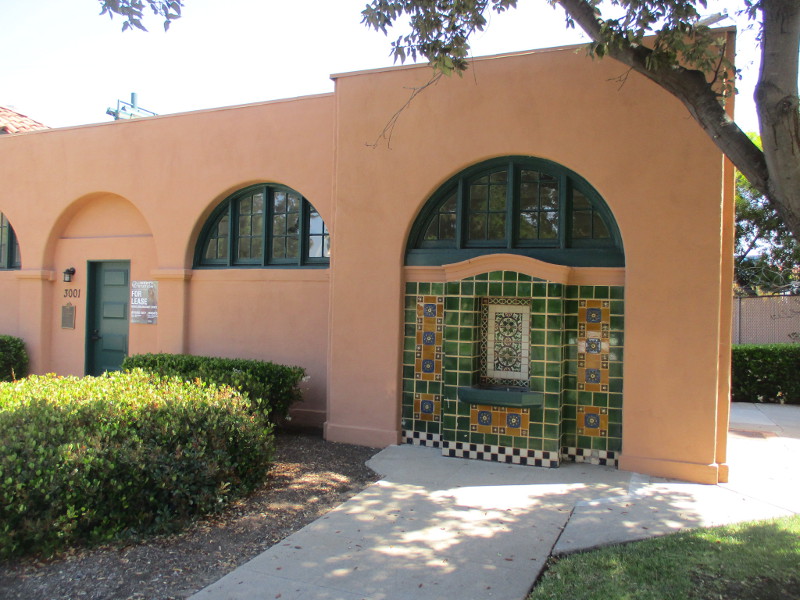
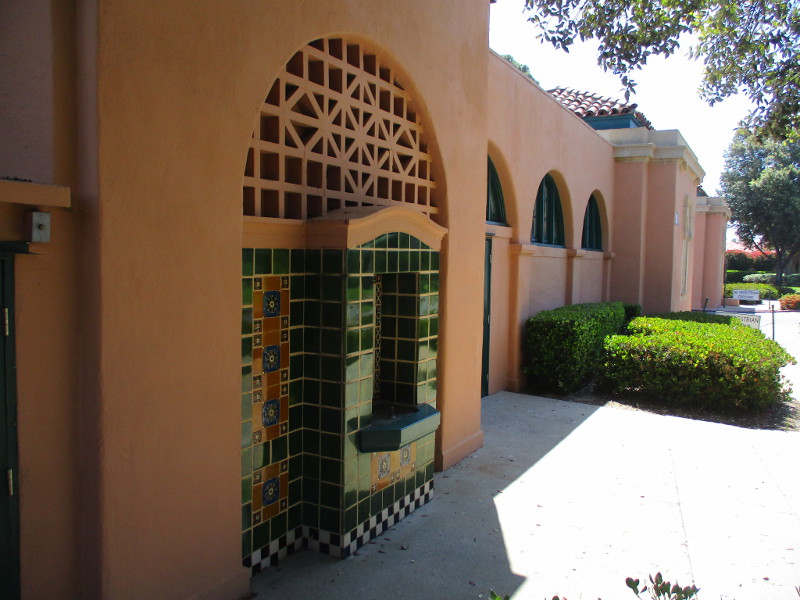
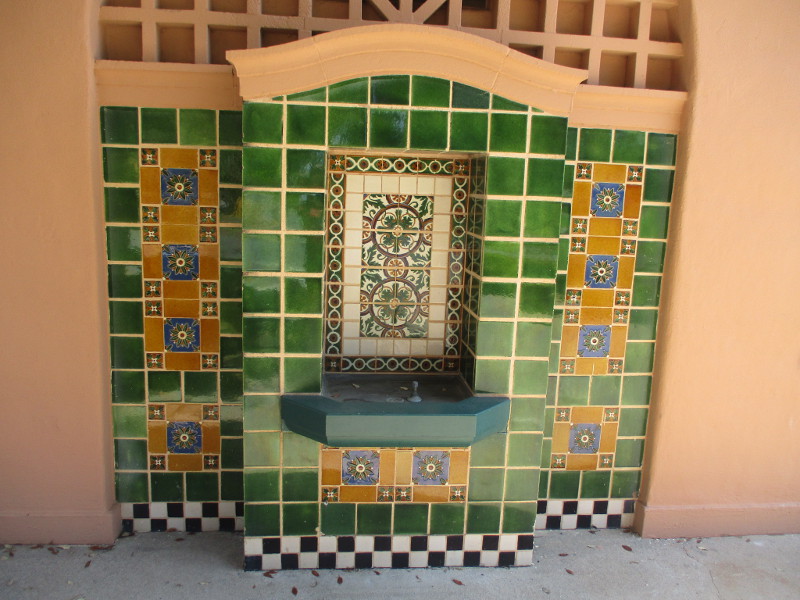
The rear of both buildings feature these beautiful tile fountains.

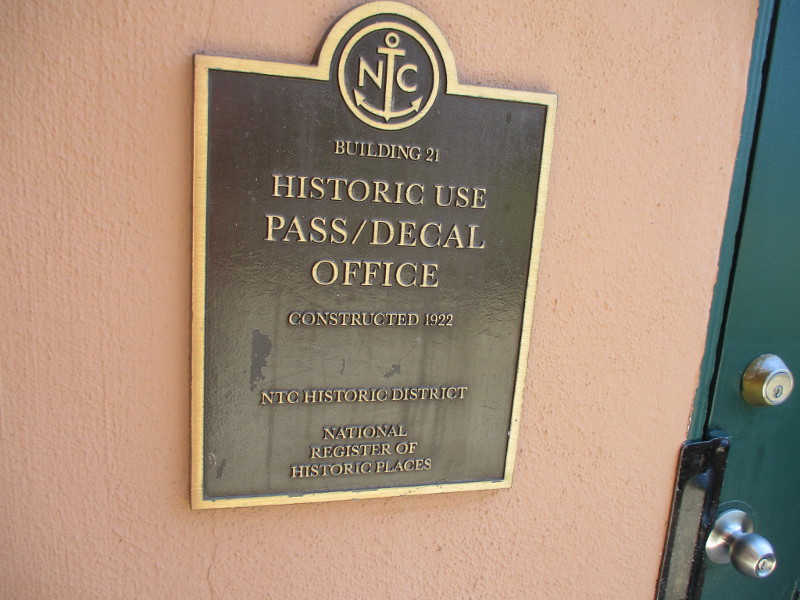
A plaque by the door of Building 21 identifies it as the Pass/Decal Office, constructed 1922.

If you’d like to see San Diego through my lens, find the “Follow” box in the sidebar to receive new posts in your email, or bookmark coolsandiegosights.com and swing on by occasionally!

(If you’re viewing Cool San Diego Sights on a phone, you can open my website’s sidebar by tapping those three parallel lines at the top of the page.)
Coronado lifeguard tower honors hometown hero.

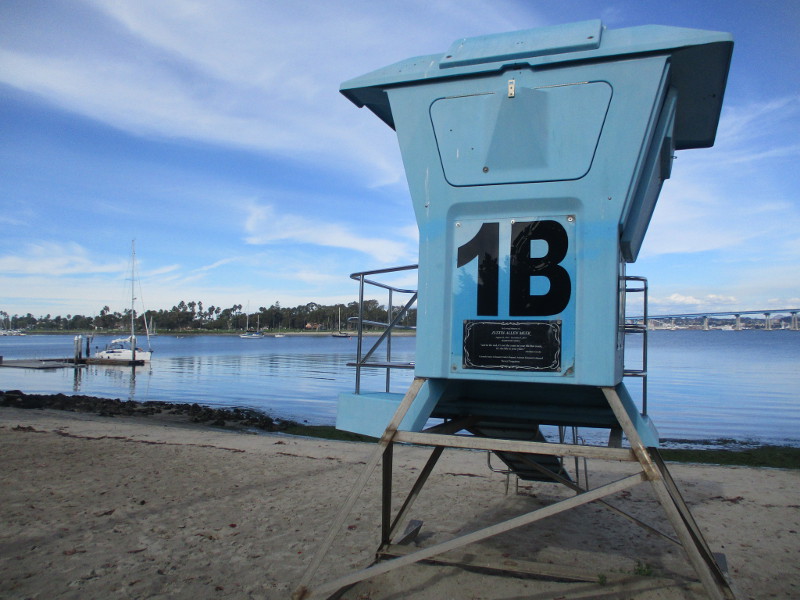
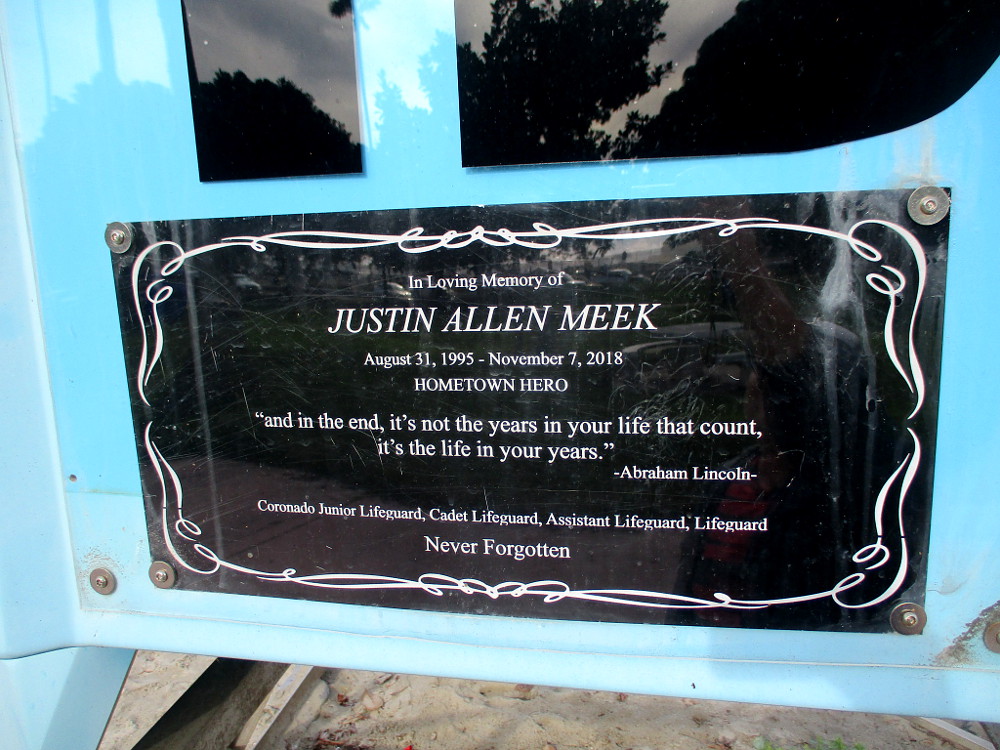
In Coronado, Lifeguard Tower 1B on the beach of Glorietta Bay Park honors a hometown hero. A plaque on the tower is In Loving Memory of Justin Allen Meek.

I noticed the plaque during a walk. Wanting to learn more about Justin Allen Meek, I found this article.

Justin, who grew up in Coronado, not only became a lifeguard, but he lived a remarkable life. He was a hero in many respects to those in Coronado and beyond. There were numerous accomplishments. He became an Eagle Scout at a young age. Through the years he actively worked to help the community in a wide variety of ways. He wanted to unselfishly serve others.

Tragically, he perished at age 23 while trying to protect others during a mass shooting at Borderline Bar and Grill in Thousand Oaks.

If you’d like to see this plaque for yourself, walk down toward the water at Glorietta Bay Park in Coronado, then pause on the sand at the lifeguard tower.

I post new blogs pretty often. If you like discovering new things, bookmark coolsandiegosights.com and swing on by occasionally!

I live in downtown San Diego and love to walk around with my camera! You can follow Cool San Diego Sights via Facebook or X.

Feel free to share!

La Jolla’s historic Post Office and the New Deal.

In ten years the historic post office in the Village of La Jolla will celebrate its 100th anniversary.

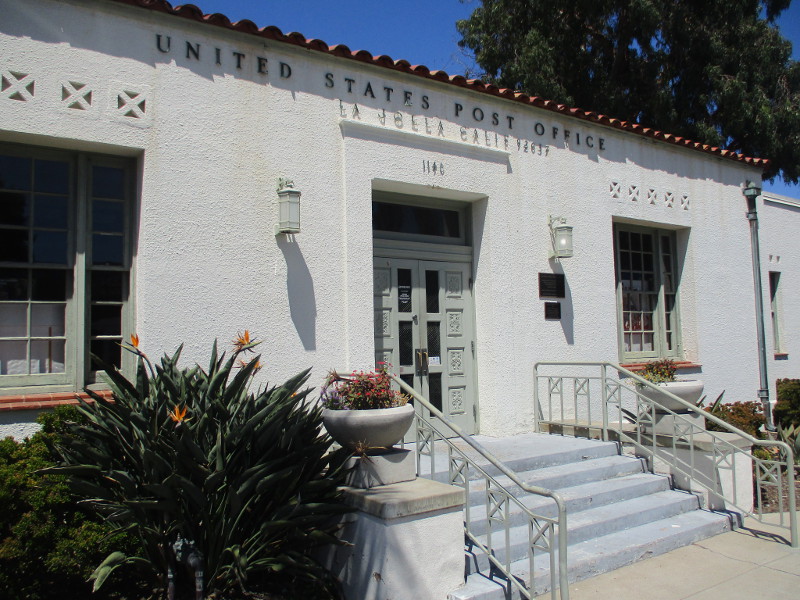
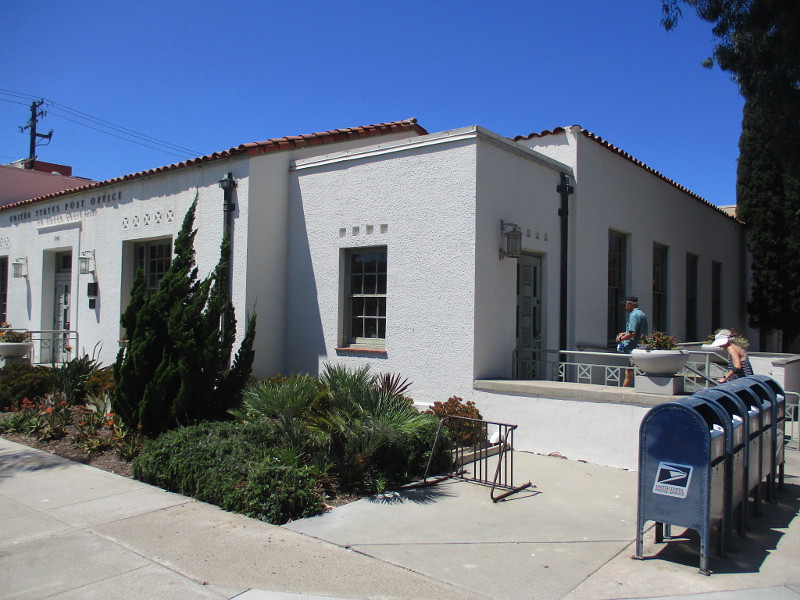
It’s very fortunate the 1935 building has been preserved. The result of a Great Depression-era works program, the post office was threatened by a planned U.S. Postal Service downsizing in 2011. The historic building was saved by an outpouring of community activism.

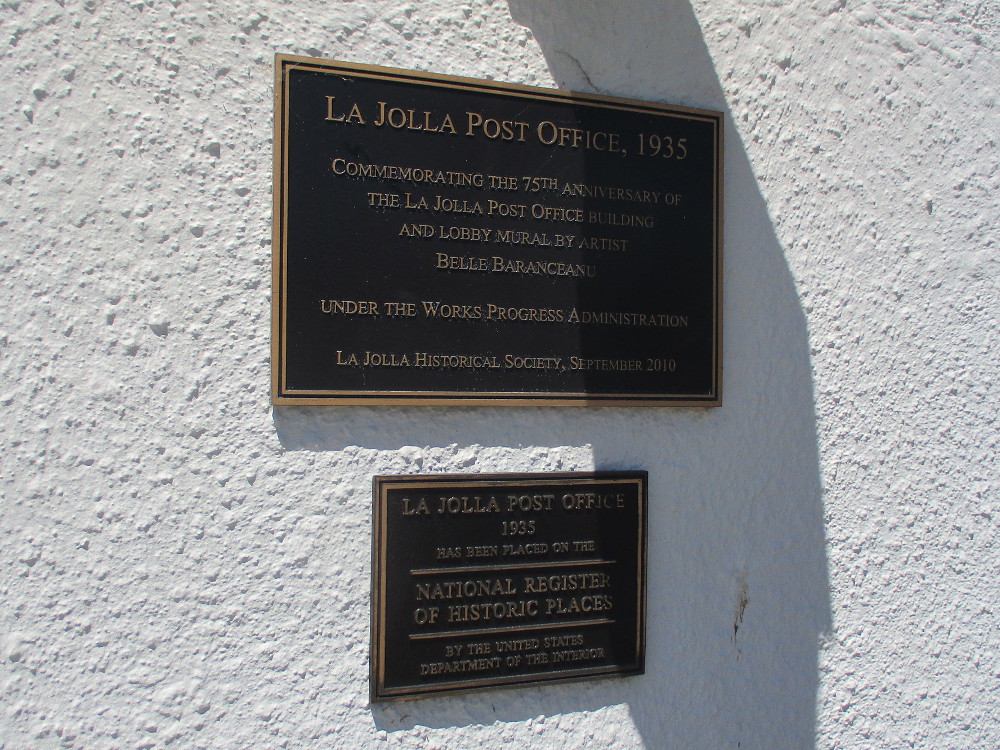
The handsome La Jolla Post Office was placed on the National Register of Historic Places in 2013 and remains a beloved landmark in La Jolla at 1140 Wall Street.

The architectural style is considered Mission Revival. You can read about its construction and history on the Living New Deal website here.

It’s interesting to note the building’s plaque states the La Jolla Post Office’s creation was the result of the Works Progress Administration (WPA). The Living New Deal website, however, states it was the Public Works Administration (PWA). The two were separate programs.

Inside the post office lobby, a beautiful New Deal-era mural was painted by renowned local artist Belle Baranceanu. The art shows a hilly panorama of La Jolla and the Pacific Ocean. If you’d like to see photos of the mural, click here!

I post new blogs pretty often. If you like discovering new things, bookmark coolsandiegosights.com and swing on by occasionally!

I live in downtown San Diego and love to walk around with my camera! You can follow Cool San Diego Sights via Facebook or X.

Feel free to share!