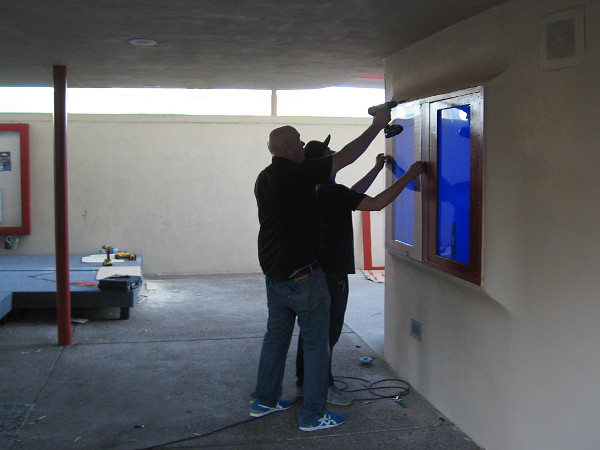
Guys work on an interactive kiosk that will be at the entrance to the renovated Starlight Bowl in Balboa Park!
I was pleasantly surprised during my walk through Balboa Park today to see progress is being made in renovating the Starlight Bowl!
A couple of super cool guys from Save Starlight were installing an interactive kiosk at the outdoor amphitheater’s entrance. I learned that some events for the outdoor venue are already planned for early this year! How awesome is that?
If you are like me, you might have watched musicals performed in the Starlight Bowl under twinkling stars, before the San Diego Civic Light Opera went bankrupt in 2011. My memories from years ago are still vivid in my mind’s eye. I remember laughing as a young man at the humor of Kiss Me, Kate and The Pirates of Penzance.
I’ve blogged about the effort to save the Starlight Bowl on several occasions, and took a couple of photographs after a new paint job and clean up early last year. I posted those photos on my Beautiful Balboa Park blog here.
If you want to learn more about the Starlight Bowl’s history, challenges, rehabilitation and eventual reopening, visit this website. You can make a donation to help with the effort, or perhaps volunteer!
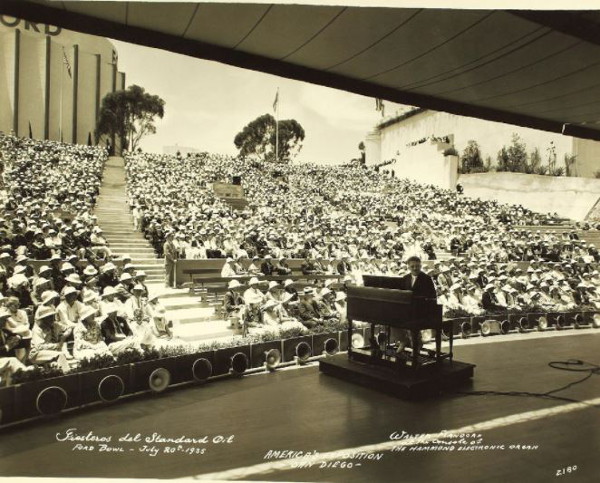
A performance in the Ford Bowl–now the Starlight Bowl–during the 1935 California Pacific International Exposition in Balboa Park. (This no known copyright restrictions image is from Flickr.)Save Starlight is making great progress bringing the famous and beloved Starlight Bowl back to life!
…
I live in downtown San Diego and love to walk around with my camera! You can follow Cool San Diego Sights via Facebook or Twitter!
You can easily explore Cool San Diego Sights by using the search box on my blog’s sidebar. Or click a tag! There are thousands upon thousands of photos for you to enjoy!
People walk past the Museum of Contemporary Art San Diego’s building at America Plaza.
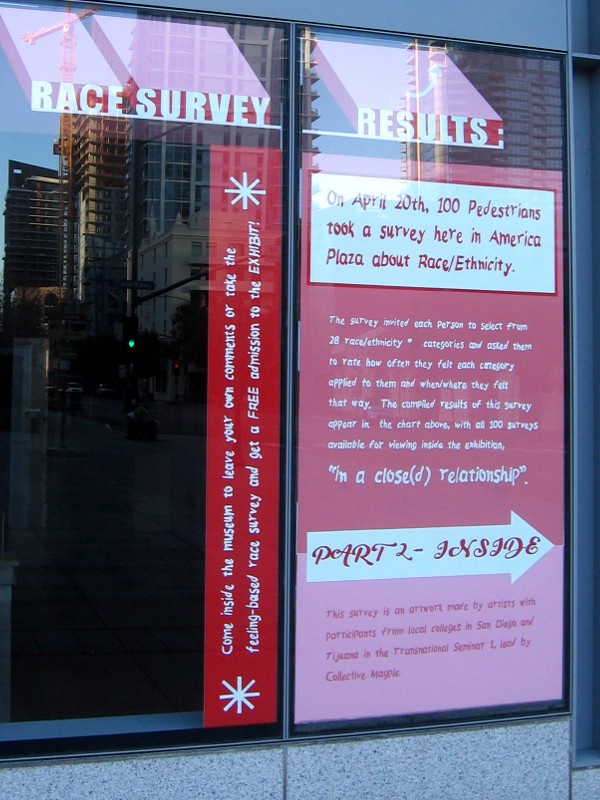
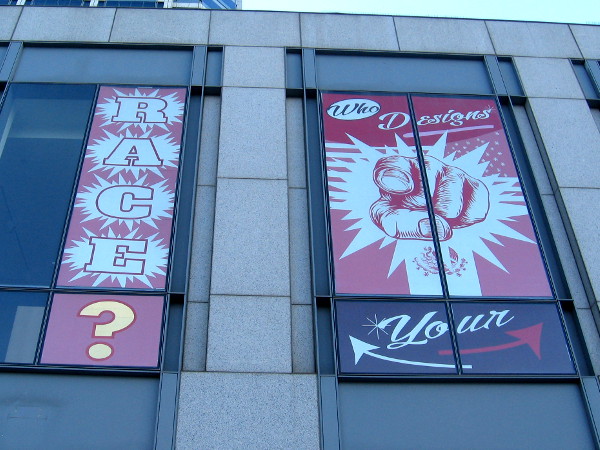
I recently noticed new thought-provoking graphics in the windows of the MCASD building at America Plaza.
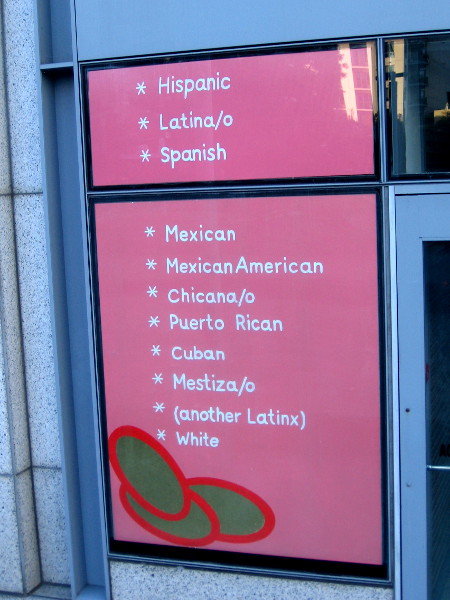
Last year, a survey was taken of 100 people passing through America Plaza. Questions were asked about racial and ethnic identity. Today an outdoor display at downtown’s Museum of Contemporary Art San Diego expands on the results and explores the complicated subject.
The window graphics are designed to catch the eye and draw visitors into the nearby gallery.
This project was produced by artists with students from local colleges in San Diego and Tijuana who participated in Transnational Seminar 1, lead by Collective Magpie.
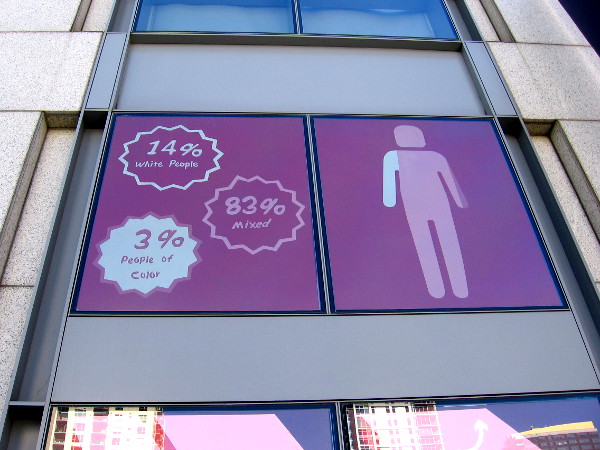
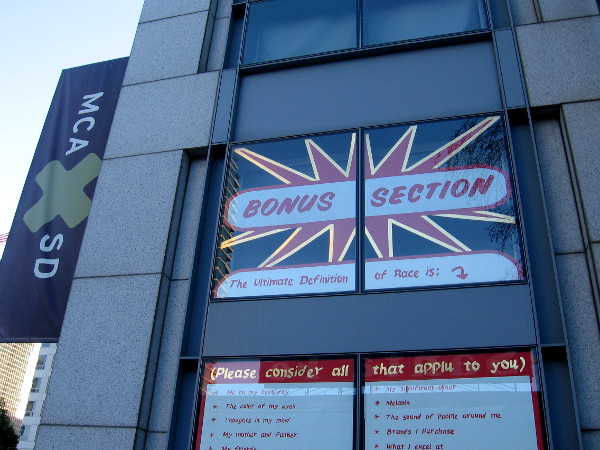
On April 20th, 100 pedestrians took a survey here in America Plaza about race and ethnicity. Self-classification data was compiled.Of the 100 surveyed, 83 answered mixed race; 14 white people; 3 people of color.Feelings about racial identity can differ from person to person.One of two panels containing some of the racial and ethnic categories that a person might choose.A splash of words, asking people walking down Kettner Boulevard what the ultimate definition of race is…People might feel differently about their racial identity depending on a range of factors and circumstances, from their appearance…to their dreams…to their immediate environment…to the way they live.Thought-provoking graphics concerning race in the windows of MCASD’s building at America Plaza.
…
I live in downtown San Diego and love to walk around with my camera! You can follow Cool San Diego Sights via Facebook or Twitter!
You can easily explore Cool San Diego Sights by using the search box on my blog’s sidebar. Or click a tag! There are thousands upon thousands of photos for you to enjoy!
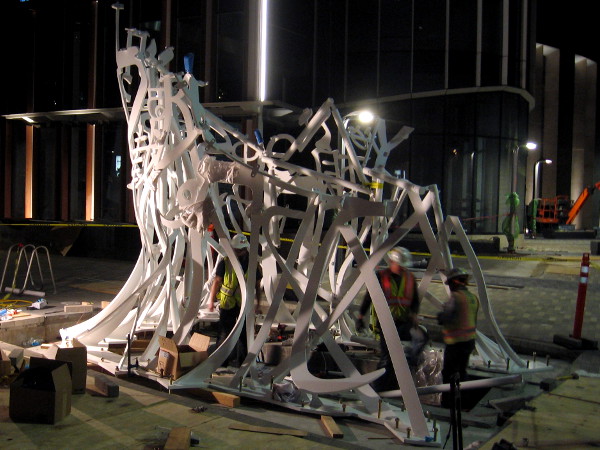
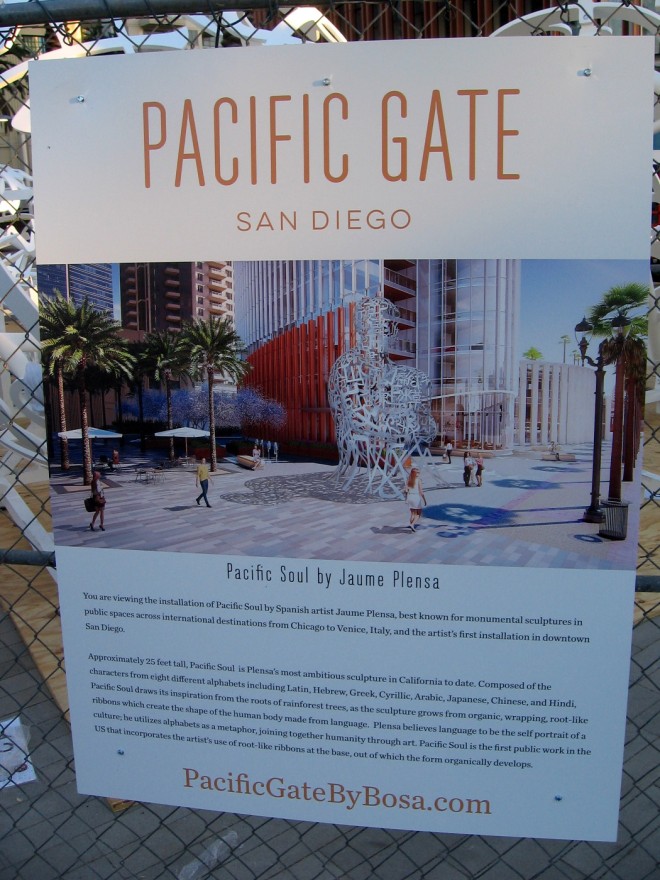
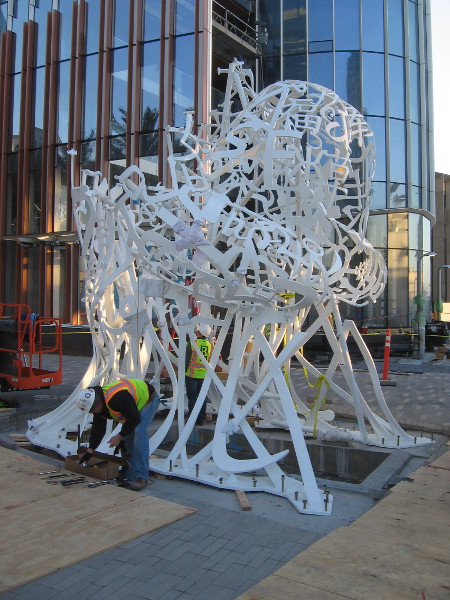
Workers install Jaume Plensa’s new sculpture Pacific Soul in the public plaza by the Pacific Gate condominium tower in San Diego.
This evening, after dark, I walked past the nearly completed Pacific Gate by Bosa condo tower and noticed an elaborate sculpture is being installed in the building’s public plaza near the corner of West Broadway and Pacific Highway.
I asked one of the workers about the artist and learned this new public art installation is the work of Jaume Plensa, the renowned Spanish artist whose monumental sculptures can be found in major cities and museums around the world. He designed the Crown Fountain in Chicago’s Millennium Park.
This new sculpture, which is titled Pacific Soul, looks intriguingly complex. According to one article I found, it’s inspired by the tangled roots of rainforest trees and is composed of stylized characters from diverse alphabets. When finished it will be about 25-feet tall and appear like a seated person gazing west toward the Pacific Ocean.
I think it’s going to be amazing! I can’t wait to see the finished work!
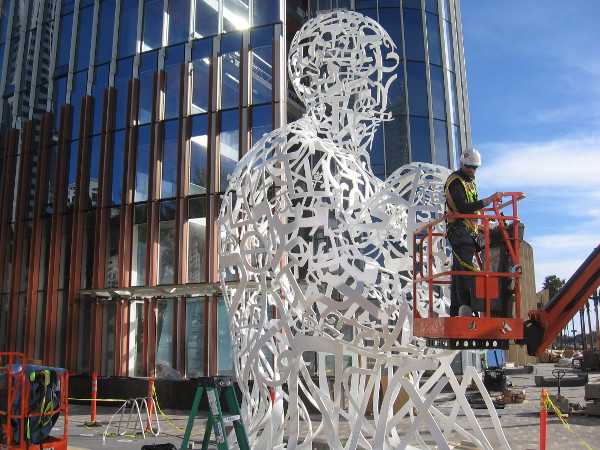
Pacific Soul by Spanish artist Jaume Plensa, when completed, will be about 25-feet tall and appear like a seated person gazing west toward the ocean.
UPDATE!
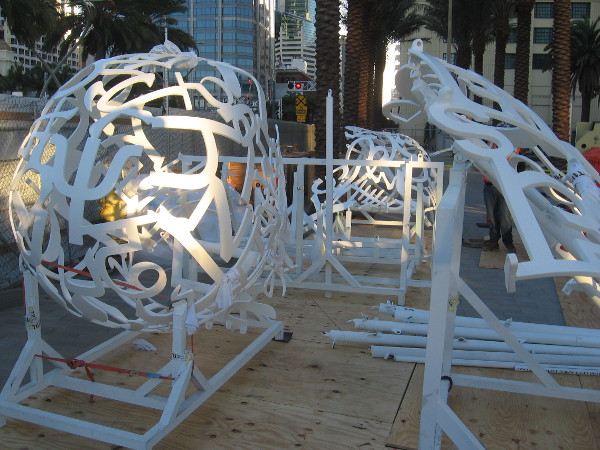
I walked down Broadway to see what progress had been made on Friday morning–about two days later. Workers were getting ready to assemble large sections of the monumental sculpture. Here are some photos…
Sign explains that you are viewing the installation of Pacific Soul by Spanish artist Jaume Plensa. (Click image to enlarge the sign for easy reading.)Worker installs Pacific Soul in the public plaza by the new Pacific Gate high-rise condos in San Diego.
ANOTHER UPDATE!
On Saturday the several sections of Pacific Soul had been pieced together. I was told the sculpture will be lit at night from below, and that people will be able to walk through it!
More photos…
…
I live in downtown San Diego and love to walk around with my camera! You can follow Cool San Diego Sights via Facebook or Twitter!
You can easily explore Cool San Diego Sights by using the search box on my blog’s sidebar. Or click a tag! There are thousands upon thousands of photos for you to enjoy!
San Diego’s historic Navy Bicentennial Commemorative Plaque has been cleaned!
Look what I spotted recently during a walk along the Embarcadero. The historic Navy Bicentennial Commemorative Plaque, part of the Greatest Generation Walk near the USS Midway Museum, has been beautifully cleaned. The corrosion is gone!
Whoever is responsible–it looks great!
The fascinating origin of this once mysterious Navy plaque, forged in 1975 on fleet repair ship USS Ajax, was revealed here.
In that blog post you can see a photo of the old corrosion, which has now been removed!
Please help the Save Our Heritage Organisation gather artifacts and memories to preserve a part of San Diego history. (Click this photo to enlarge the flyer for easy reading.)
I recently tood a photo of a flyer that I spotted in the Senior Lounge in Balboa Park. Please click the above image and read it.
Save Our Heritage Organisation (SOHO) is seeking memorabilia, ephemera, merchandise and memories from Marston’s Department Store, which for nearly a century was the most elegant place to shop in San Diego. The department store was founded by George Marston, who is often referred to as San Diego’s First Citizen. As a civic leader and philanthropist, he was instrumental in creating Balboa Park, Presidio Park and the San Diego Historical Society.
Marston began as a clerk at the Horton House Hotel and eventually built the Marston Company, which ran a department store in San Diego. When earlier locations became outgrown, the large, elegant Marston’s Department Store on C Street, between 5th and 6th Street, built in the Renaissance Revival architectural style, opened in 1912 and became a popular downtown shopping destination. In 1961 it was sold by his family to The Broadway, which has since closed.
Artifacts related to Marston’s Department Store will be used by SOHO in a permanent exhibit inside their Marston House Museum in Balboa Park. Items that you contribute can be sent or delivered to the SOHO offices in Old Town. Recorded memories are also sought. The 2018 exhibit celebrates the 140th anniversary of the store’s founding!
Do you know anyone who shopped at Marston’s Department Store those many years ago? Perhaps they can help the Save Our Heritage Organisation with this very cool project!
George Marston, circa 1907-1908, San Diego businessman, civic leader and philanthropist. Public domain photo from Wikimedia Commons.Photo of San Diego Union newspaper from Monday morning, January 1, 1912. Depicted is a brand new Marston Department Store. The headline reads: Modern Mercantile Emporium One of Best Three on Coast.
…
I live in downtown San Diego and love to walk around with my camera! You can follow Cool San Diego Sights via Facebook or Twitter!
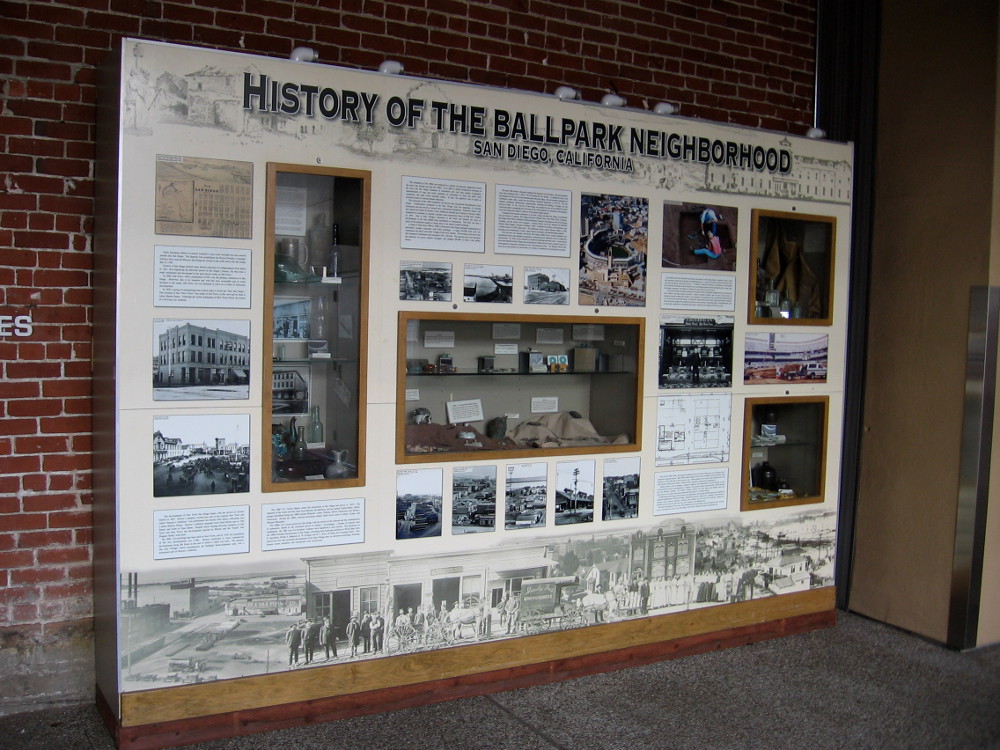
An exhibit in Petco Park shows the History of the Ballpark Neighborhood, San Diego, California.
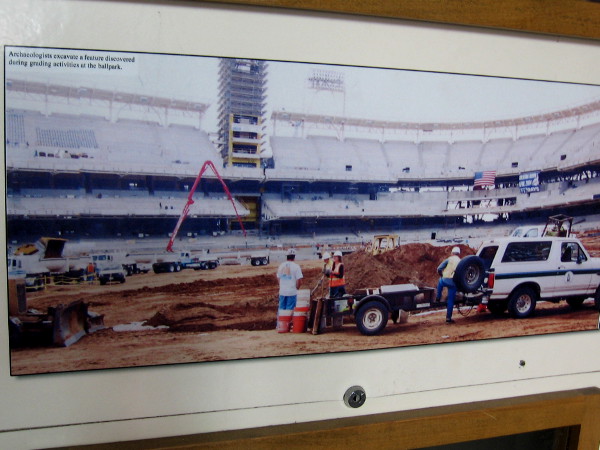
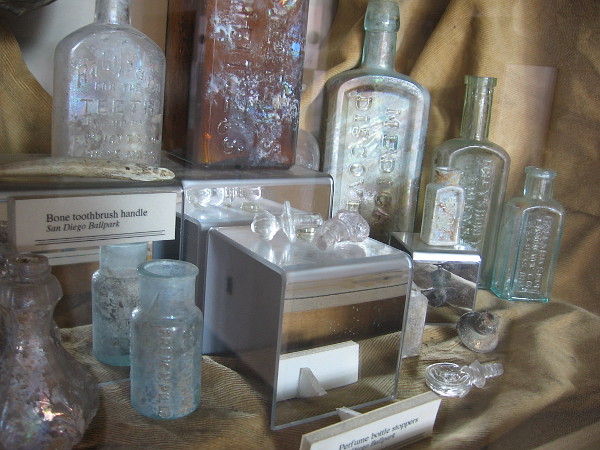
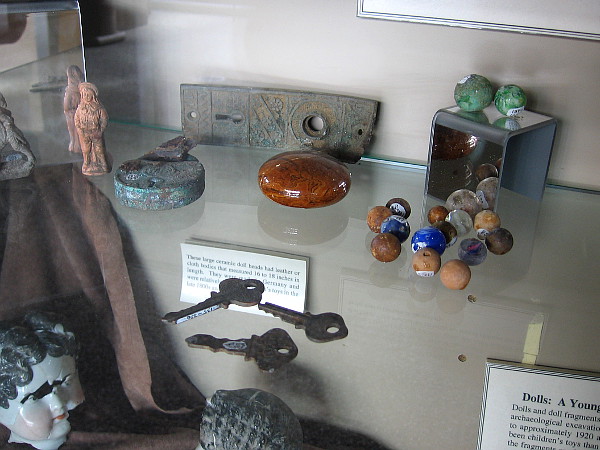
There’s a small but very cool exhibit at Petco Park that depicts the early history of East Village and nearby blocks in downtown San Diego. During the baseball stadium’s construction, a number of fascinating artifacts were recovered by archaeologists. Each object was carefully recorded in order to preserve aspects of our city’s diverse history.
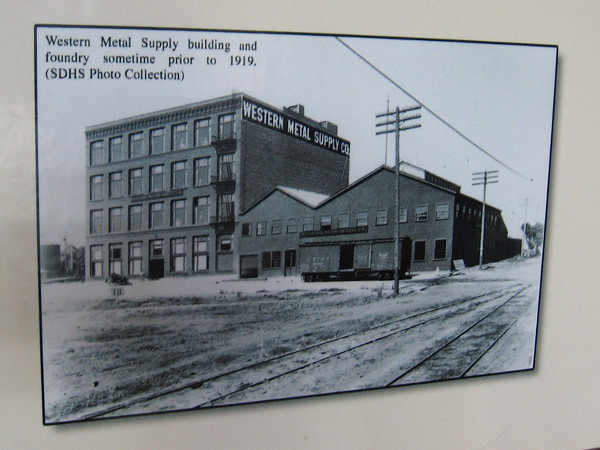
Here are some of the old photographs and artifacts that are on public display. You can find this exhibit near the San Diego Padres Hall of Fame, just to the right of the north entrance to the Padres Team Store. I learned this exhibit used to be on the third floor of the Western Metal Supply building, at the top of the escalators. But the area was rather dark and so it was moved to its present location.
Please read the captions to learn more about what was unearthed during the grading of the ballpark, and what everyday life was like in San Diego over a century ago.
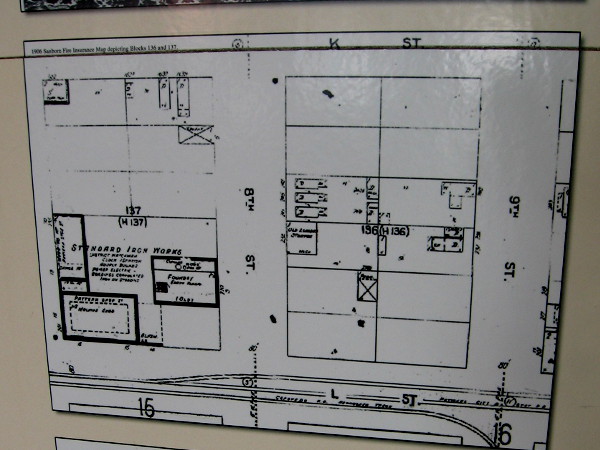
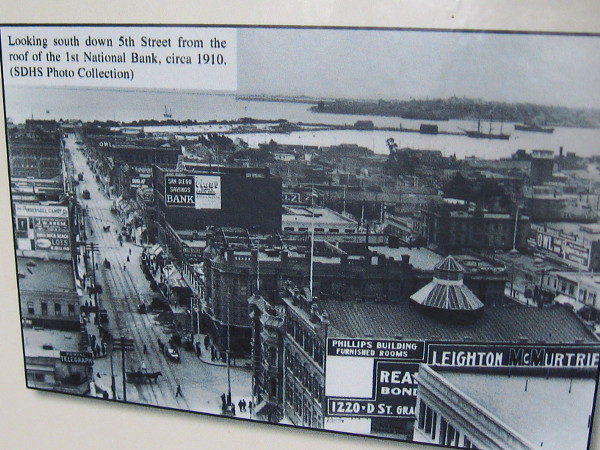
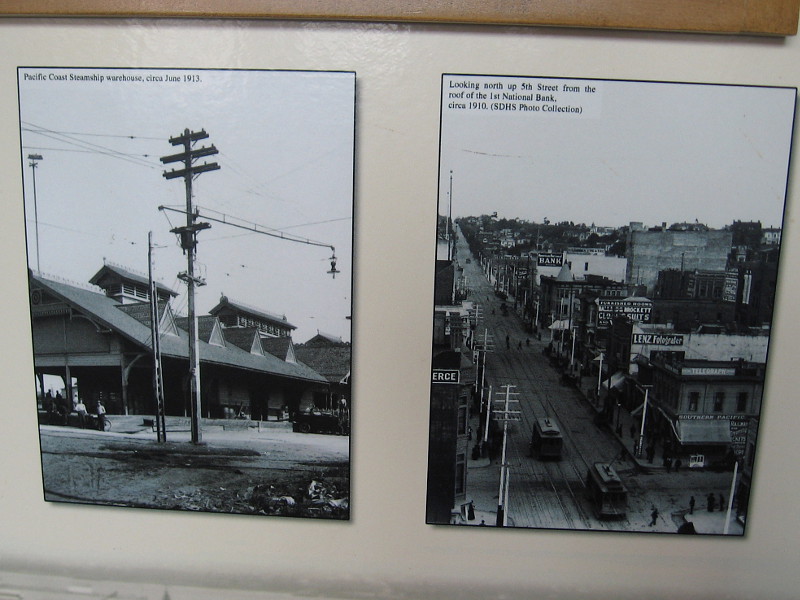
Photo taken during construction of Petco Park baseball stadium in East Village. Archaeologists excavate a feature discovered during grading activities at the ballpark.After researching the immediate area’s history, the grading of the future ballpark was environmentally monitored. Artifacts that were recovered reveal everyday life in San Diego’s past.Excavated objects include jars, bottles, glass stoppers and a bone toothbrush handle. Names of medical remedies on bottles include Hamlin’s Wizard Oil and Dr. J.H. McLean’s Volcanic Oil.1906 Sanborn Fire Insurance Map depicting Blocks 136 and 137, part of the footprint of today’s Petco Park, home of the baseball Padres.From the late 1800s to the 1930s, most residents of East Village appear to have been of moderate to lower economic status, employed at blue collar jobs downtown.Other artifacts recovered during Petco Park’s construction include dolls, toys, marbles and keys.Old photograph shows East Village as it was in 1914, looking west from the 10th Street terminal.Looking south down 5th Street (now Fifth Avenue) from the roof of the 1st National Bank, circa 1910. The area is heart of the Gaslamp Quarter.Two historical photos. To the left: Pacific Coast Steamship warehouse, circa 1913. To the right: looking north up 5th Street circa 1910.Old photo of Western Metal Supply building and foundry sometime prior to 1919. The preserved brick building is now a unique part Petco Park’s structure.Fragments of earthenware jars and Chinese and Japanese ceramic tableware show Asian culture thrived in the neighborhood’s past.
…
This blog now features thousands of photos around San Diego! Are you curious? There’s lots of cool stuff to check out!
Here’s the Cool San Diego Sights main page, where you can read the most current blog posts. If you’re using a phone or small mobile device, click those three parallel lines up at the top–that opens up my website’s sidebar, where you’ll see the most popular posts, a search box, and more!
To enjoy future posts, you can also “like” Cool San Diego Sights on Facebook or follow me on Twitter.
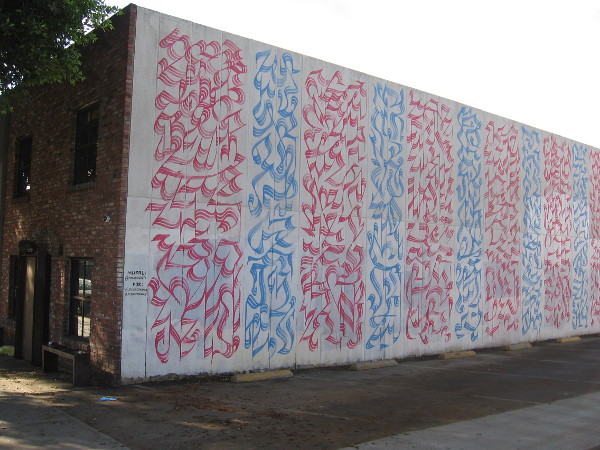
Abstract calligraphy panels on a wall facing E Street near 11th Avenue. This large mural was created by Brazilian multimedia artist Yomar Augusto for Design Forward San Diego.
There are two dynamic new murals in East Village. Actually one is a painted mural, and the other appears to be an enormous patchwork banner stretched upon a wall. Both face E Street in the vicinity of Park Boulevard.
The abstract calligraphy mural by Yomar Augusto was completed in October of 2017.
The dazzling artwork adorning the IDEA1 Apartments is brand new–the building had its Grand Opening in December.
Here are a couple of fun photos!
A large colorful banner stretched on the northeast corner of the new IDEA1 Apartments in East Village.
…
I live in downtown San Diego and love to walk around with my camera! You can follow Cool San Diego Sights via Facebook or Twitter!
You can easily explore Cool San Diego Sights by using the search box on my blog’s sidebar. Or click a tag! There are thousands upon thousands of photos for you to enjoy!
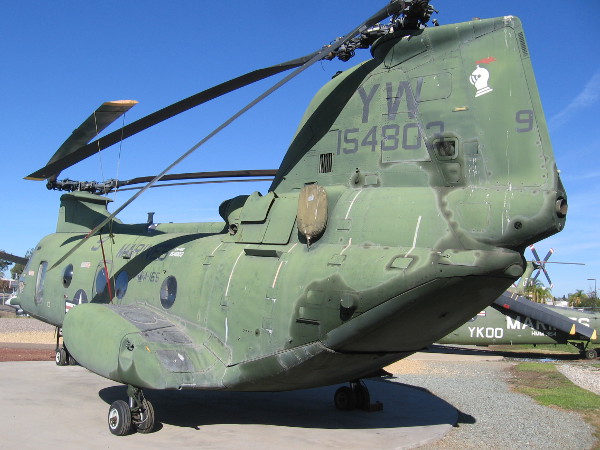
This particular Boeing Vertol CH-46D(E) Sea Knight military helicopter in San Diego is an object of great historical importance.
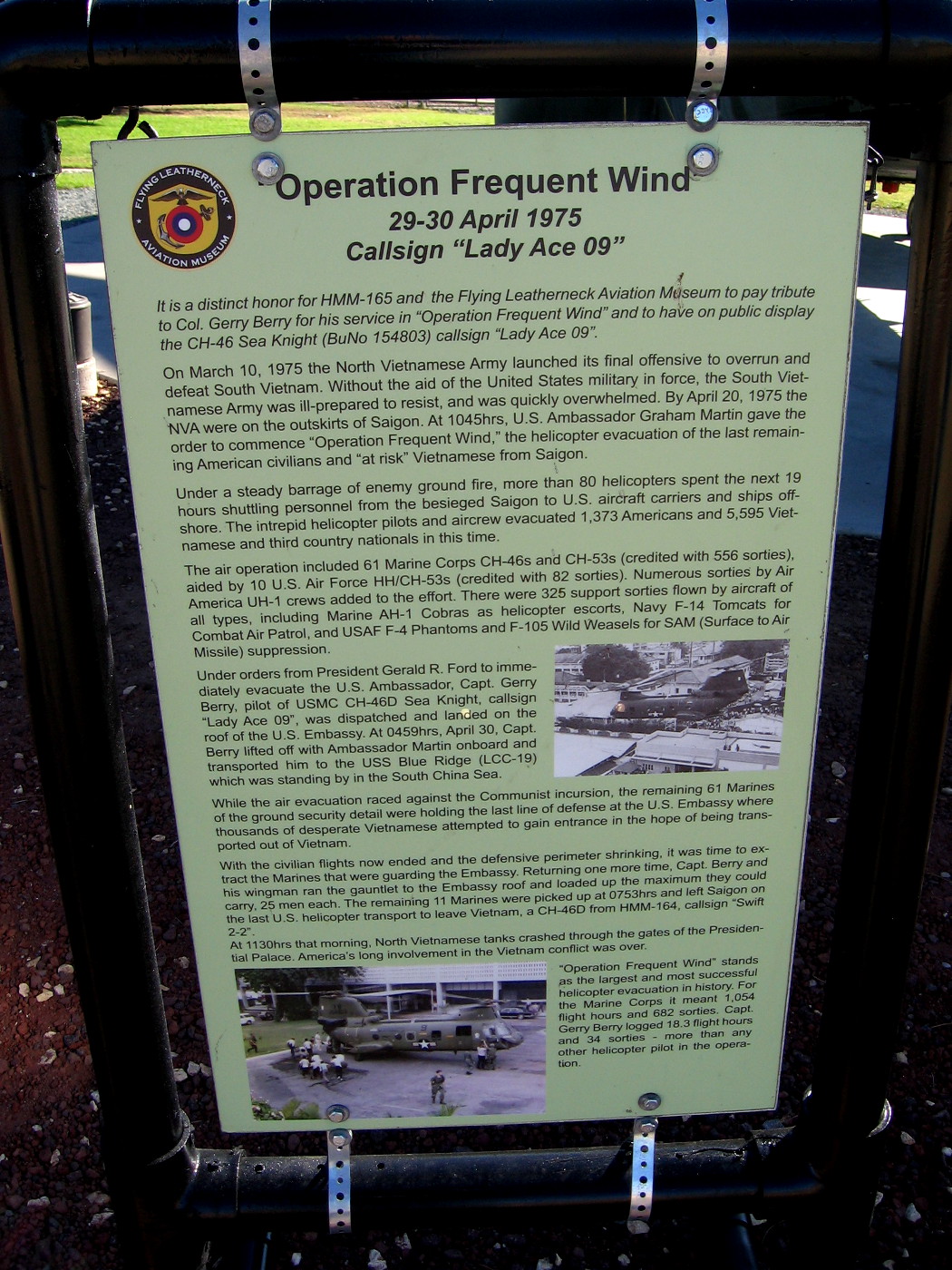
Many regard the evacuation of the United States Ambassador from Saigon as the end of the Vietnam War. On April 30, 1975, as ordered by President Gerald Ford, Ambassador Graham Martin was airlifted from the rooftop of the American Embassy. He had stepped aboard a Boeing Vertol CH-46D(E) Sea Knight military helicopter, call sign Lady Ace 09, flown by pilot Captain Gerry Berry.
While the Ambassador’s evacuation from the Embassy has provided a visual symbol of America’s departure from South Vietnam, the reality was a bit more chaotic. When Lady Ace 09 transmitted “Tiger is out,” indicating the Ambassador had been retrieved, other helicopter crews involved in the evacuation mistakenly thought the mission was completed. But Marine Security Guards on the Embassy’s rooftop would be lifted to safety hours later. Shortly thereafter, Communist forces would raise the Viet Cong flag over Saigon’s Presidential Palace.
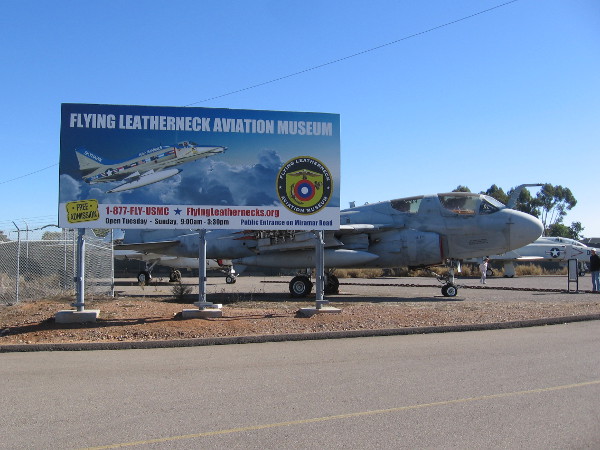
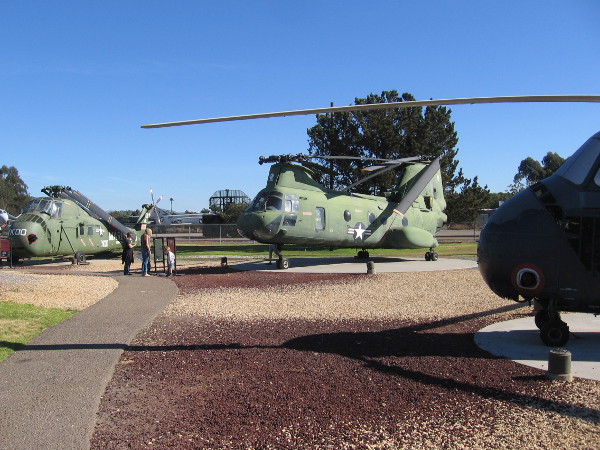
The Flying Leatherneck Aviation Museum is located at Marine Corps Air Station Miramar in San Diego. In addition to Lady Ace 09, over two dozen aircraft that have been flown by the United States Marines are on display. Admission is free.
The museum wants to expand. You can help! Learn more here.
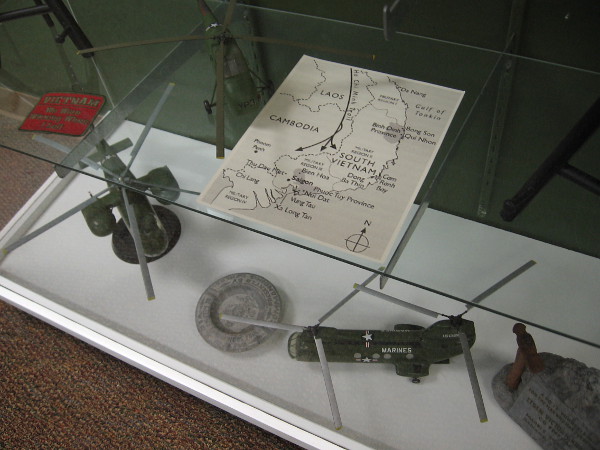
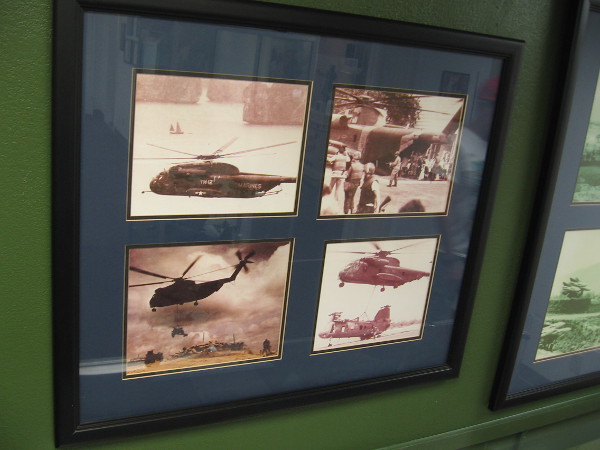
The Flying Leatherneck Aviation Museum in San Diego contains many aircraft that have been used during the history of the United States Marine Corps.At the Flying Leatherneck Aviation Museum at MCAS Miramar, the public can see the actual helicopter that evacuated the U.S. Ambassador from Saigon at the end of the Vietnam War.Operation Frequent Wind, 29-30 April 1975, call sign Lady Ace 09. This Sea Knight helicopter evacuated Ambassador Graham Martin from the U.S. Embassy in Saigon, South Vietnam. (Click photo to expand.)A look at the rear of the historic helicopter that transported U.S. Ambassador Graham Martin to the safety of USS Blue Ridge (LCC-19) standing by in the South China Sea.The fuselage of Sea Knight troop transport helicopter, call sign Lady Ace 09.At 04:58 Ambassador Martin boarded Lady Ace 09 on the rooftop of the American Embassy in Saigon. The message “Tiger is out” was transmitted, signaling the departure of the U.S. Ambassador.The nose of Lady Ace 09, which today is on display at the Flying Leatherneck Aviation Museum.Inside the the Flying Leatherneck Aviation Museum, visitors can see one section devoted to USMC aviators and aircraft that participated in the Vietnam War.One museum display case includes a map of Laos, Cambodia, and North and South Vietnam during the war.Photos of Marine helicopter operations during the Vietnam War.Boeing Vertol CH-46D(E) Sea Knight, call sign Lady Ace 09, the helicopter whose historic flight is often regarded as the conclusion of the Vietnam War.
…
I live in downtown San Diego and love to walk around with my camera! You can follow Cool San Diego Sights via Facebook or Twitter!
You can easily explore Cool San Diego Sights by using the search box on my blog’s sidebar. Or click a tag! There are thousands of interesting photos for you to check out!
Photo of Samuel Tsosie Sr., Navajo Code Talker during World War II.
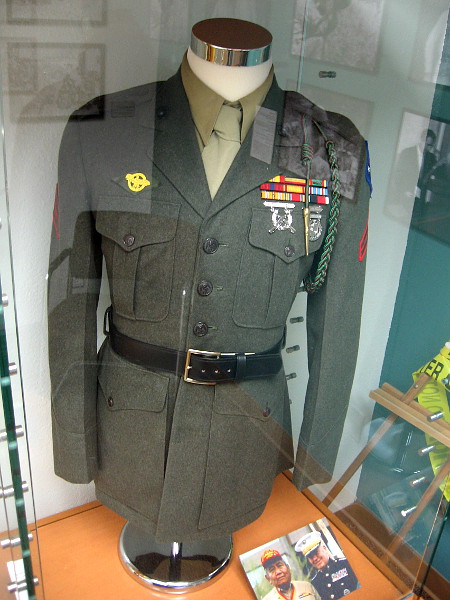
A small but fascinating exhibit remembering the Navajo Code Talkers of World War II is currently on display at the Flying Leatherneck Aviation Museum in San Diego. The exhibition, titled CELEBRATING 75 YEARS – CODE TALKERS: THE NAVAJO WEAPON, contains photos, documents, uniforms and historical artifacts that describe how the Navajo language was used to develop a code for secret tactical communication in the Pacific, in places like Iwo Jima and Okinawa. The Navajo code, which was classified until 1968, is the only spoken military code that was never deciphered.
The exhibit explains:
Many scholars credit Philip Johnston with initiating the Code Talker idea. Johnston was a Caucasian who grew up in Leupp, Arizona on the Navajo Reservation. He approached the Marine Corps in 1942 after the attack on Pearl Harbor and proposed using Native American Navajo language for combat communications.
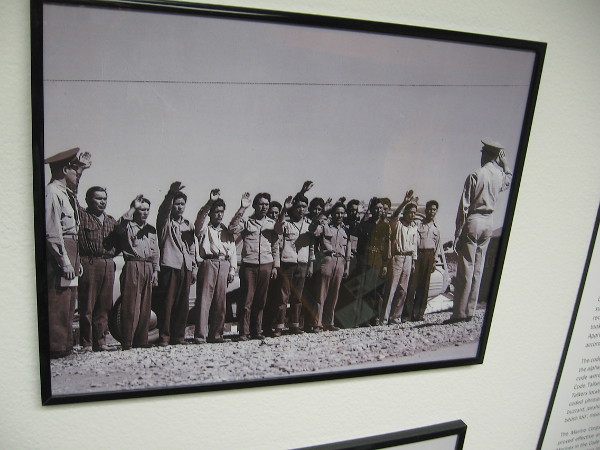
His knowledge of the Navajo culture led him to bring four Navajo volunteers to Camp Elliott in San Diego, California (an area that is now part of MCAS-Miramar) for a demonstration. Impressed with successful and efficient English and Navajo translations, the Marine Corps began recruiting Navajos. The first group of twenty-nine recruits entered boot camp, took courses in military communication procedures and developed the code. Approximately 400 Navajo recruited by the Marines learned the code.
Working around the clock during the first two days of Iwo Jima, six Navajo Code Talkers sent and received over 800 messages, all without error. According to Major Howard Connor, 5th Marine Division Signal Officer, “Were it not for the Navajos, the Marines would never have taken Iwo Jima”.
The Flying Leatherneck Aviation Museum is free and open to the public at Marine Corps Air Station Miramar. The museum grounds contains over two dozen aircraft used during the proud history of Marine Corps aviation. It has the world’s largest and most complete collection of vintage aircraft flown by United States Marine pilots.
The museum is looking to expand and I’m told they would really appreciate your help. For more info, click here.
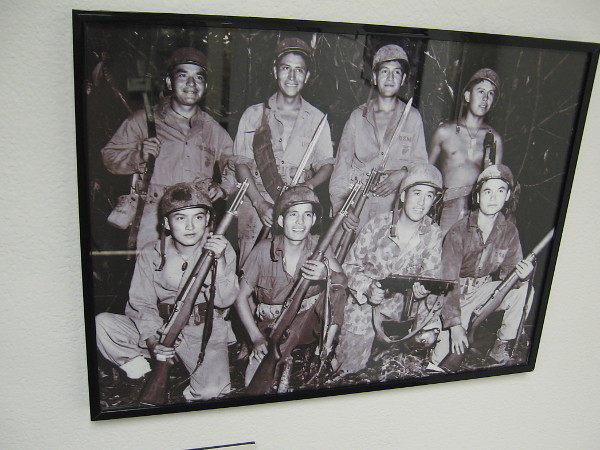
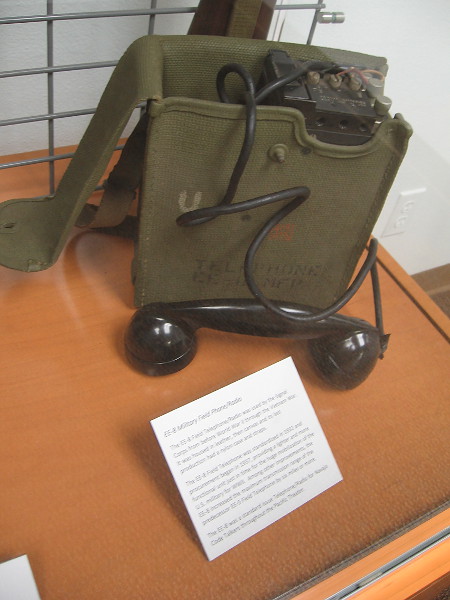
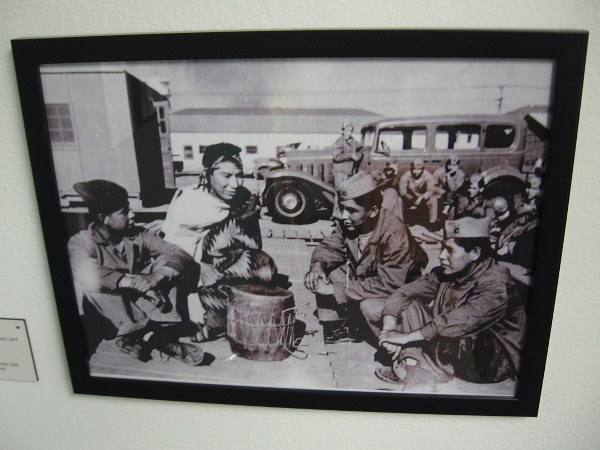
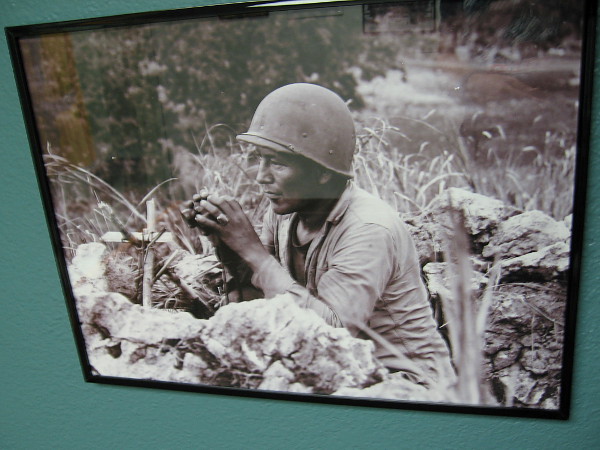
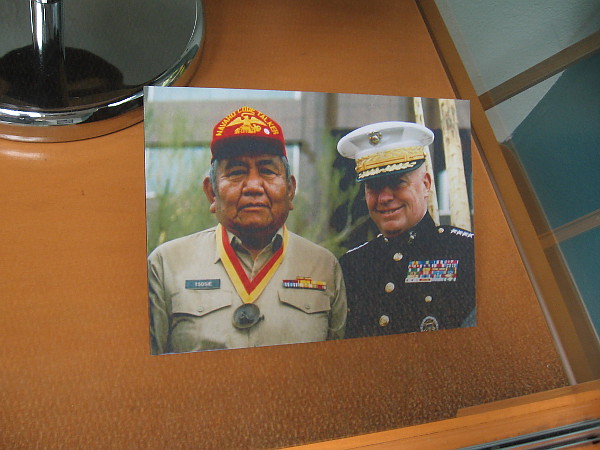
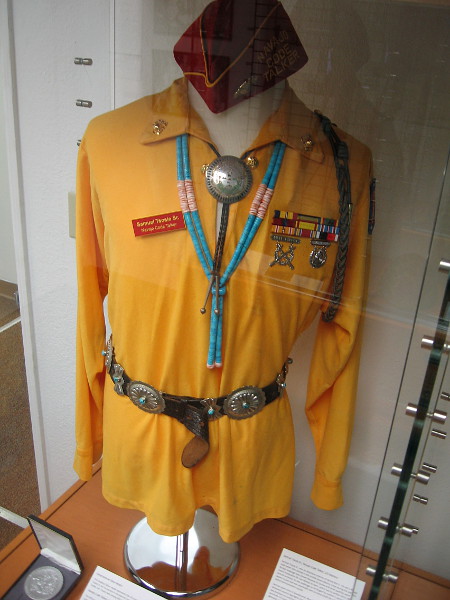
Celebrating 75 Years – Code Talkers: The Navajo Weapon. The Marine Corps deployed the Code Talkers to the Pacific, where the code proved effective and indecipherable. (Click photo to expand for easy reading.)The first 29 Code Talkers enlisting in the United States Marine Corps, 1942.First 29 Code Talkers of 382nd Platoon, 1942.Navajo Code Talkers Henry Bahe and George Kirk working their radio in the jungles of Bougainville.Eight Navajo Code Talkers on Bougainville. Most hold an M1 Garand used in combat.Display case in this special Flying Leatherneck Aviation Museum exhibit includes military field equipment used by the Navajo Code Talkers during World War II.The EE-8 Field Telephone/Radio was used by the Signal Corps from before World War II through the Vietnam War.Navajo Code Talkers share their culture at Camp Elliott, 1943.One of four creators of the code, Navajo Code Talker Chester Nez.Navajo Code Talker PFC Carl Gorman mans his observation post overlooking Garapan Saipan, 1944.This enlisted man’s uniform jacket, shirt and tie belonged to Samuel Tsosie Sr. The Guadalcanal patch was worn on discharge uniforms by all Navajo Code Talkers.Navajo Code Talker Samuel Tsosie Sr., pictured with Alfred M. Gray Jr. during an award assembly in 2009. Gray served as the 29th Commandant of the Marine Corps from 1987-1991.Official uniform of the Navajo Code Talkers includes a red cap, Navajo jewelry, gold shirt, patch on upper arm, light-colored trousers and abalone-colored shoes.
The museum exhibit explains the significance of various items worn by the Navajo Code Talkers.
The red cap indicates the United States Marine Corps. The jewelry represents the Navajo or Diné, which translates “Children of God” or “The People”. The gold shirt represents corn pollen. The light-colored trousers represent Mother Earth. The abalone-colored shoes represents the sacred mountains.
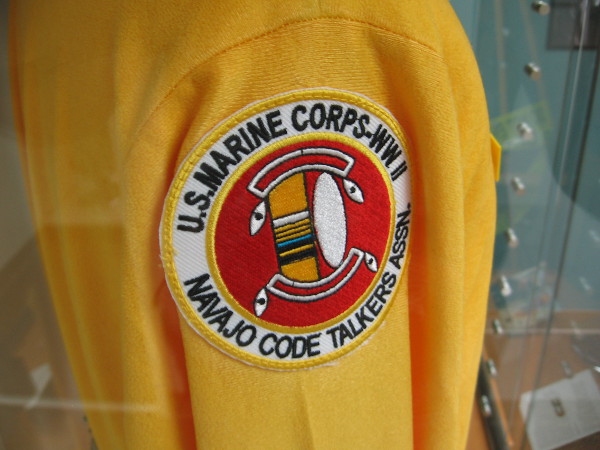
Replica of Congressional Silver Medal represents the medal received by Samuel Tsosie Sr. for his service during World War II. 300 Navajo received the Silver medal.Shoulder patch of U.S. Marine Corps–WWII Navajo Code Talkers Association.
…
I live in downtown San Diego and love to walk around with my camera! You can follow Cool San Diego Sights via Facebook or Twitter!
You can easily explore Cool San Diego Sights by using the search box on my blog’s sidebar. Or click a tag! You’ll find many interesting historical photographs!
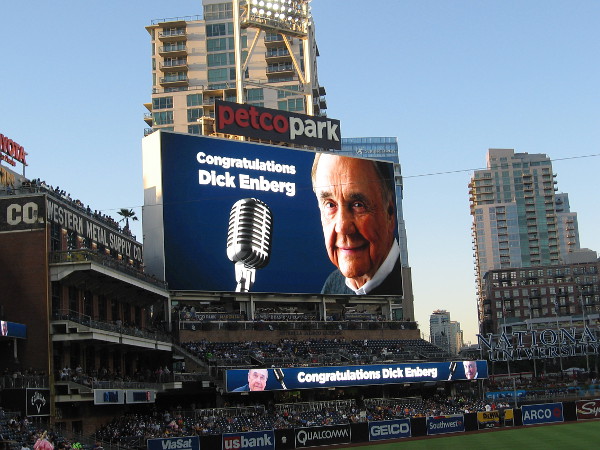
Beloved, legendary sports broadcaster Dick Enberg has passed away in his La Jolla home. Many in San Diego and around the world are heartbroken.
On September 29, 2016, the final home game of that Padres baseball season, I was privileged to see retiring Dick Enberg’s public celebration at Petco Park.
If you’d like to see a few images from that day, here is that blog post.

























 Cool San Diego Sights!