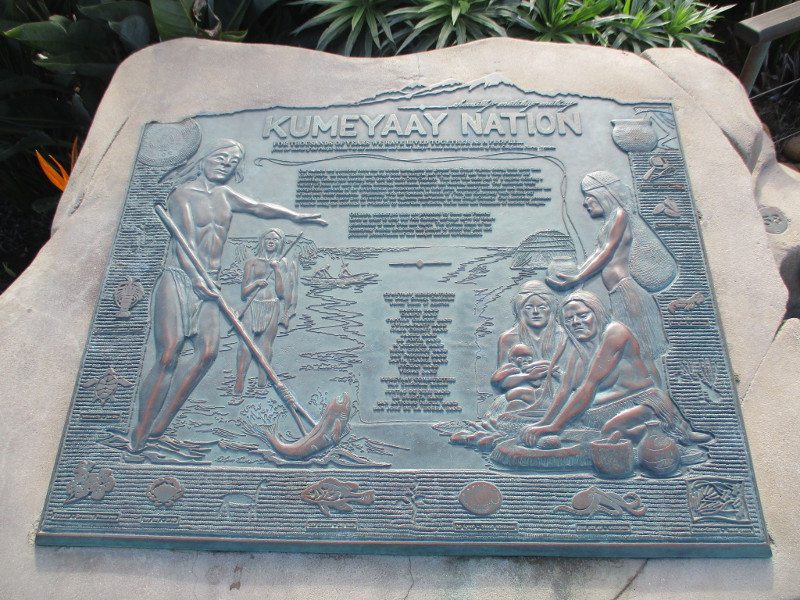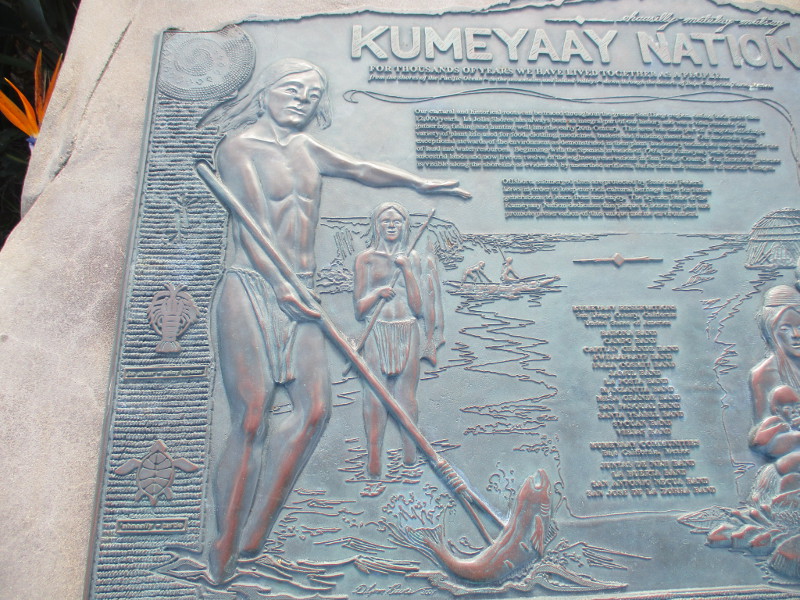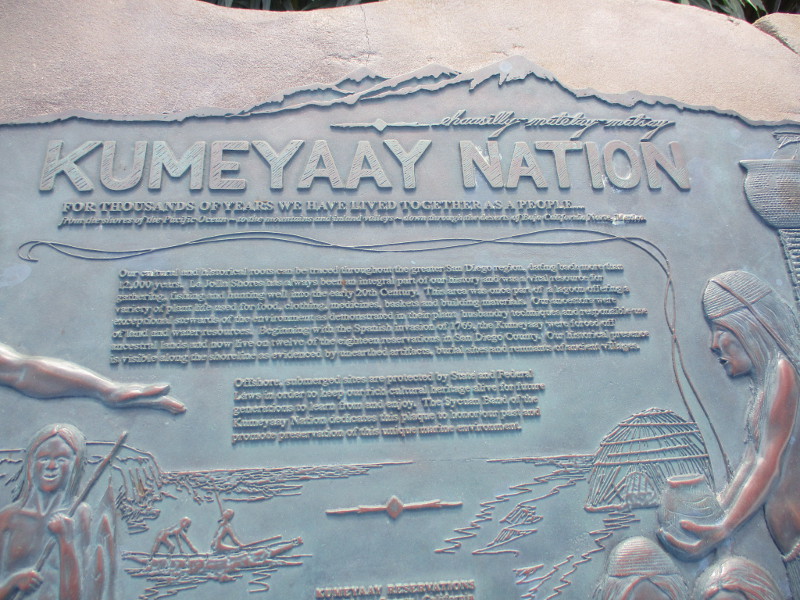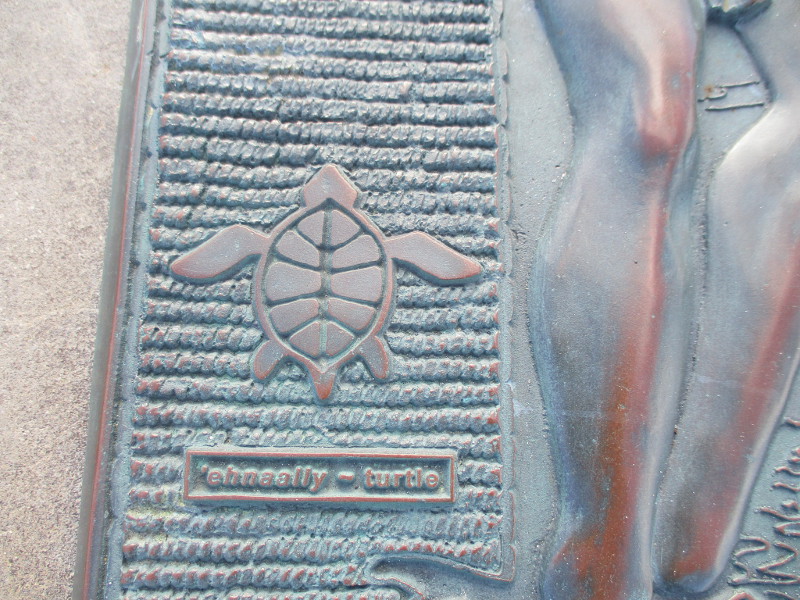
Kumeyaay Nation plaque at La Jolla Shores.

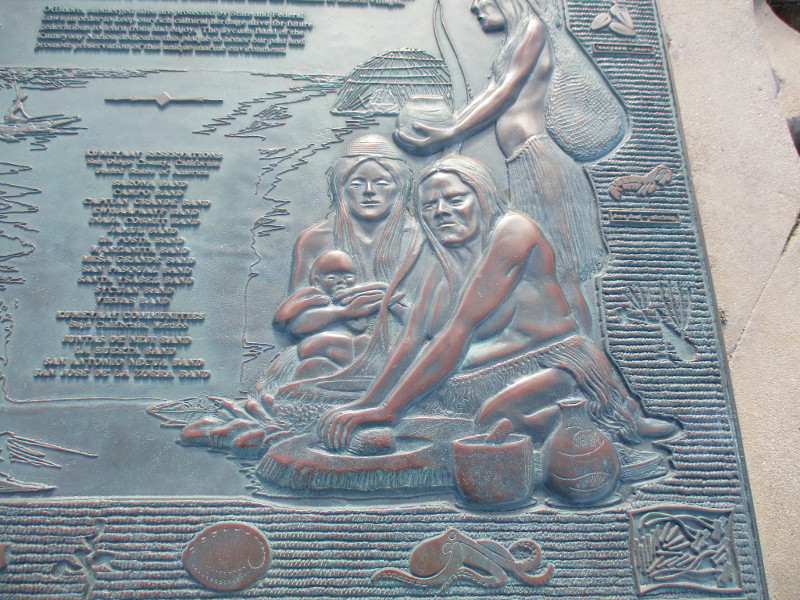
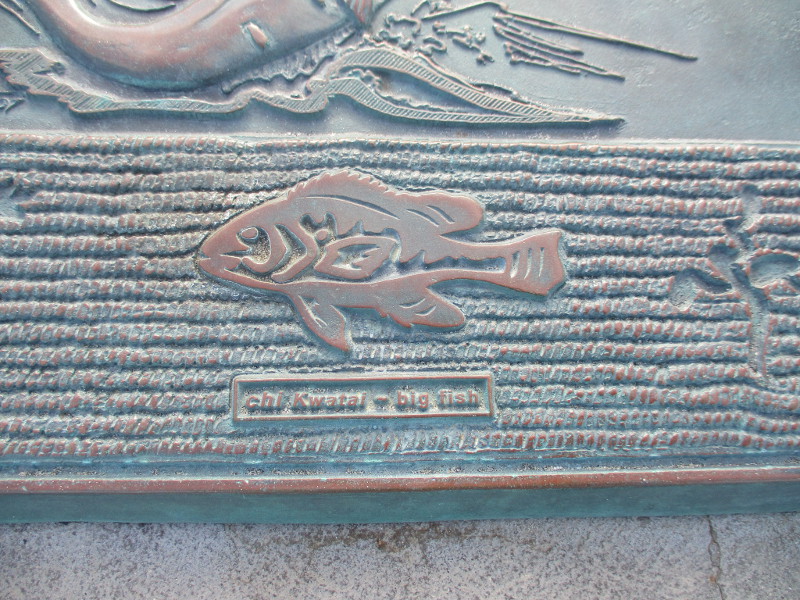
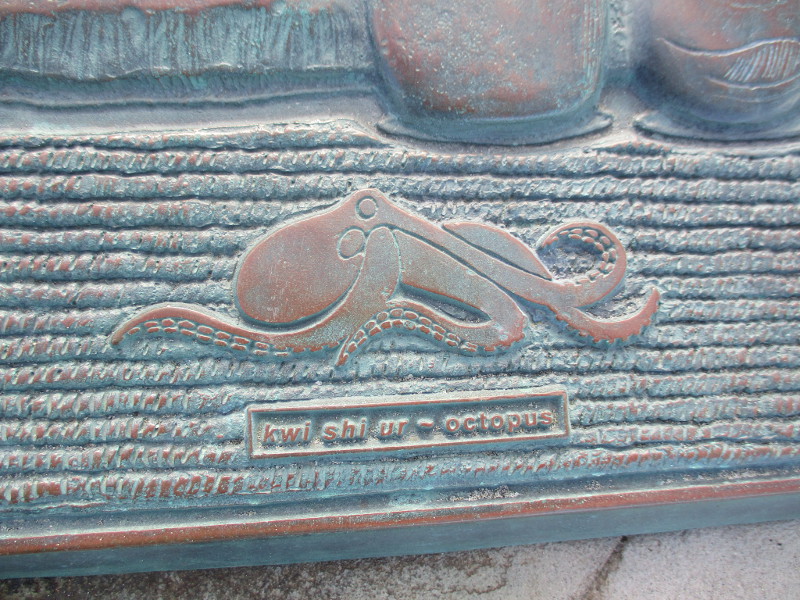
This very beautiful plaque near the beach in La Jolla Shores is dedicated to the Kumeyaay Nation, whose people have lived in our region for thousands of years.

I took these photos of the plaque a while back, during my last walk along the boardwalk near Kellogg Park. You can find the plaque inside the Grand Canyons of La Jolla Educational Plaza.

(To learn more about the plaza, check out a blog I posted a few years ago here.)
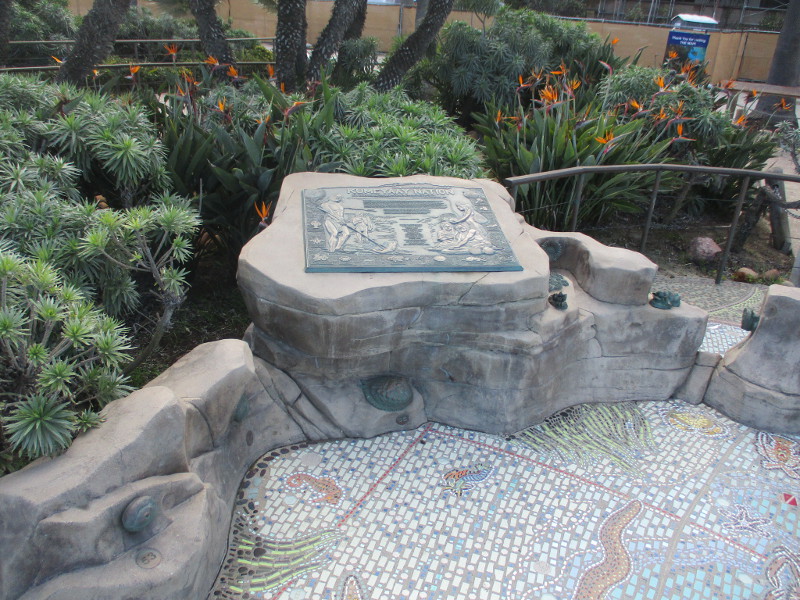
Text on the plaque includes:

KUMEYAAY NATION

FOR THOUSANDS OF YEARS WE HAVE LIVED TOGETHER AS A PEOPLE…from the shores of the Pacific Ocean ~ to the mountains and inland valleys ~ down through the deserts of Baja California Norte, Mexico.

Our cultural and historical roots can be traced throughout the greater San Diego region, dating back more than 12,000 years. La Jolla Shores has always been an integral part of our history and was a vital resource for gathering, fishing and hunting well into the early 20th Century. This area was once part of a lagoon offering a variety of plant life used for food, clothing, medicines, baskets and building materials. Our ancestors were exceptional stewards of the environment as demonstrated in their plant husbandry techniques and responsible use of land and water resources. Beginning with the Spanish invasion of 1769, the Kumeyaay were forced off ancestral lands and now live on twelve of the eighteen reservations in San Diego County. Our historical presence is visible along the shoreline as evidenced by unearthed artifacts, burial sites and remnant of ancient villages.

Offshore, submerged sites are protected by State and Federal Laws in order to keep our rich cultural heritage alive for future generations to learn from and enjoy. The Sycuan Band of the Kumeyaay Nation dedicates this plaque to honor our past and promote preservation of this unique marine environment.
To follow my blog, find the “Follow” box in this website’s sidebar. Or bookmark coolsandiegosights.com and swing on by occasionally!

(If you’re viewing this on a phone, open my website’s sidebar by tapping those three parallel lines at the top of the page.)
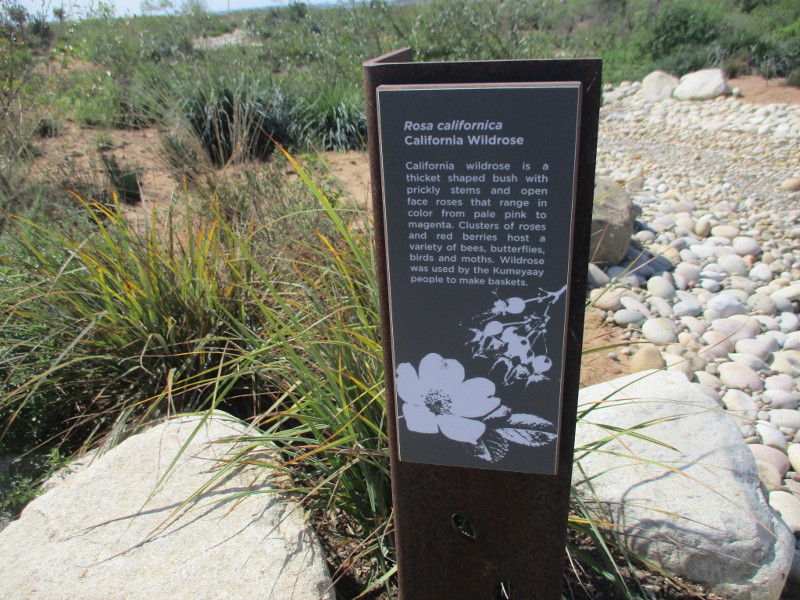
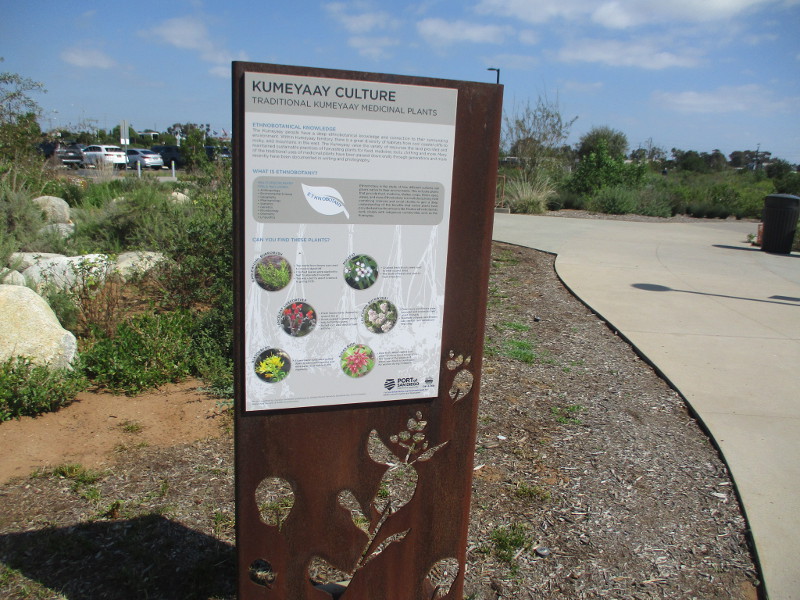
Sweetwater Park native garden teaches ethnobotany.

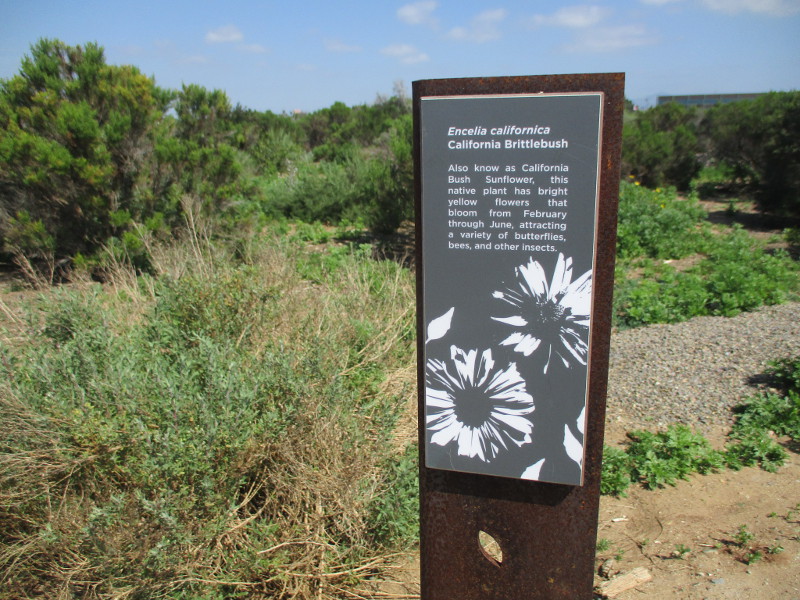
Chula Vista’s new Sweetwater Park on San Diego Bay is a place where our natural environment is protected and celebrated. Visitors can enjoy long walking trails that wind among native plants.

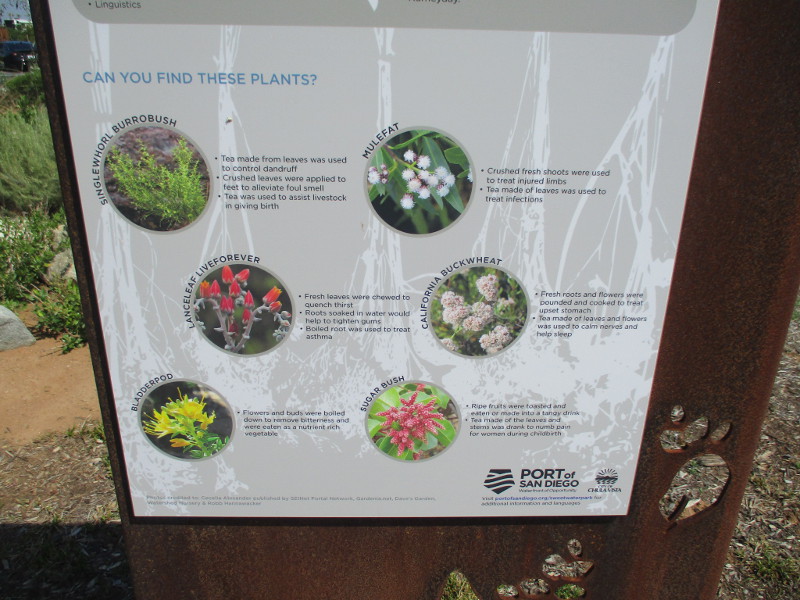
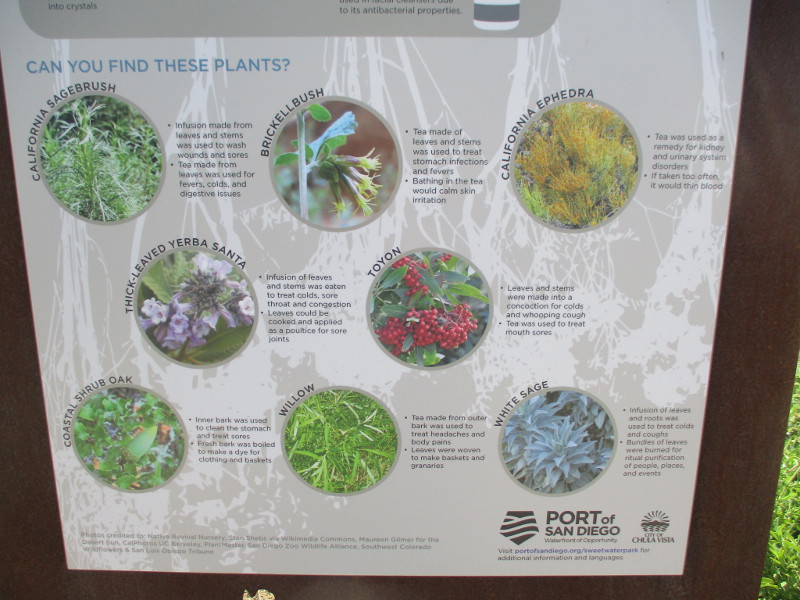
In the Council Ring near the restrooms and parking lot, an easy circular path features many such plants, and two informative signs explain how these plants were an important part of Kumeyaay culture.

Ethnobotany is explained as the study of how different cultures use plants native to their environments. This includes plants that provide food, medicine, shelter, soaps, fibers, dyes, waxes and more. The Kumeyaay people, who have lived in the San Diego region for thousands of years, have a deep ethnobotanical knowledge and connection to their surrounding environment.

Visitors are invited to look for certain plants, such as Sugar Bush, California Buckwheat, Mulefat and Bladderpod. Did you know that tea made from Singlewhorl Burrobush has been used to control dandruff? Or that boiled root of Lanceleaf Liveforever has been used to treat asthma?

Pause at these signs during your visit to Sweetwater Park and learn more about the history of our region, and the native inhabitants the natural environment has supported.

Look for other signs around the park identifying plants, too!

To follow my blog, find the “Follow” box in this website’s sidebar. Or bookmark coolsandiegosights.com and swing on by occasionally!

(If you’re viewing this on a phone, open my website’s sidebar by tapping those three parallel lines at the top of the page.)
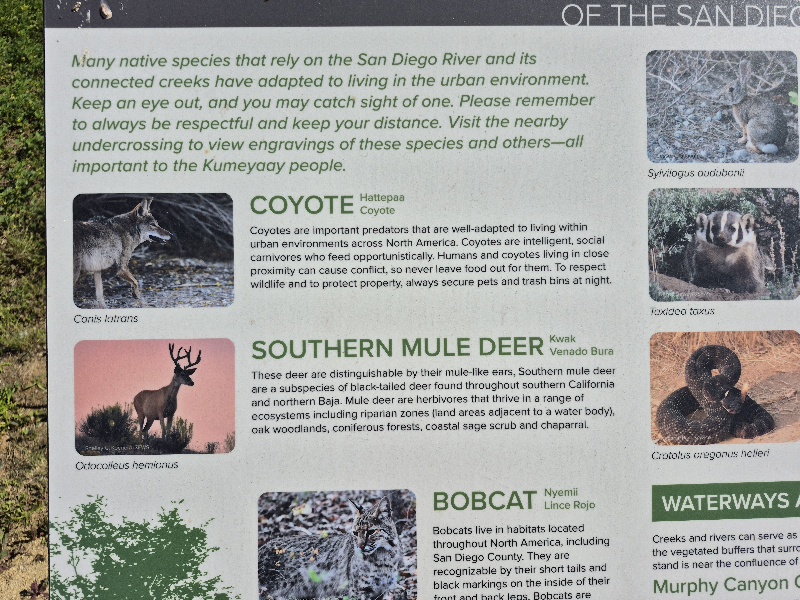
San Diego River wildlife in the city!

Have you spotted native wildlife in the city near the San Diego River? It’s possible to sight unexpected wild animals in our urban environment!

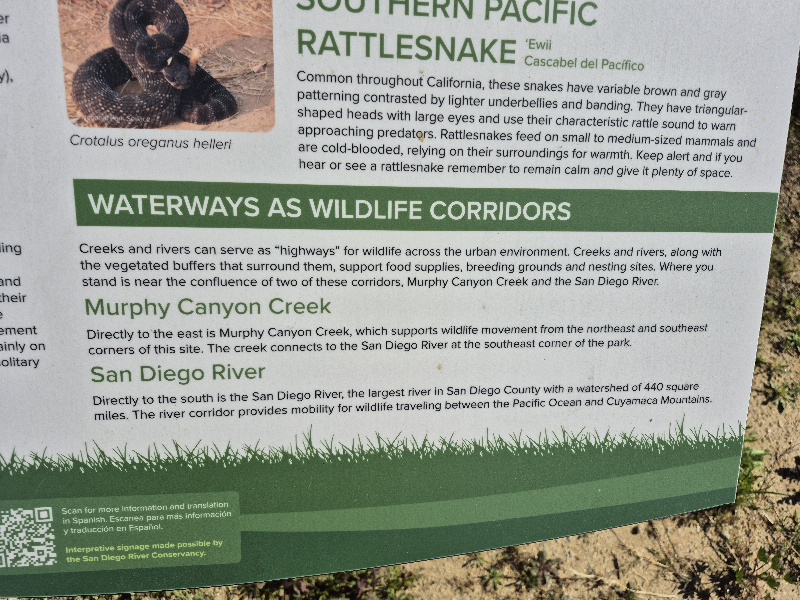
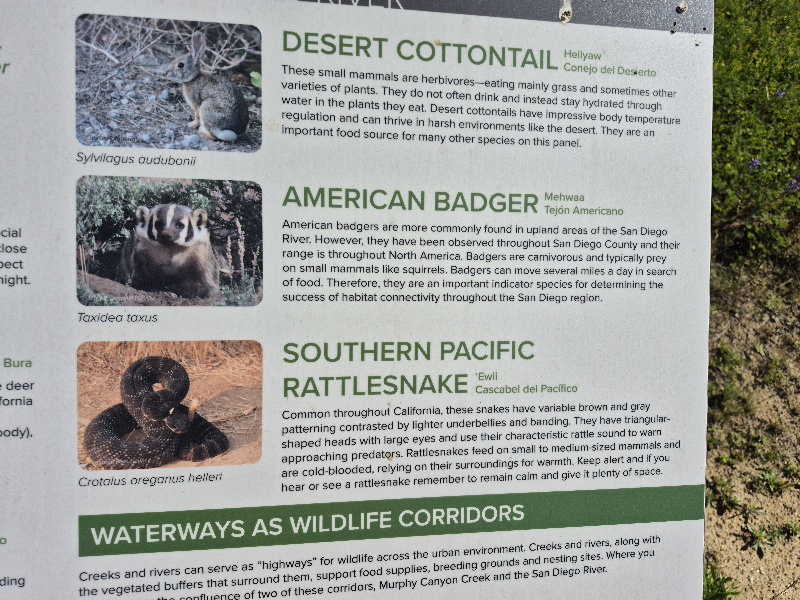
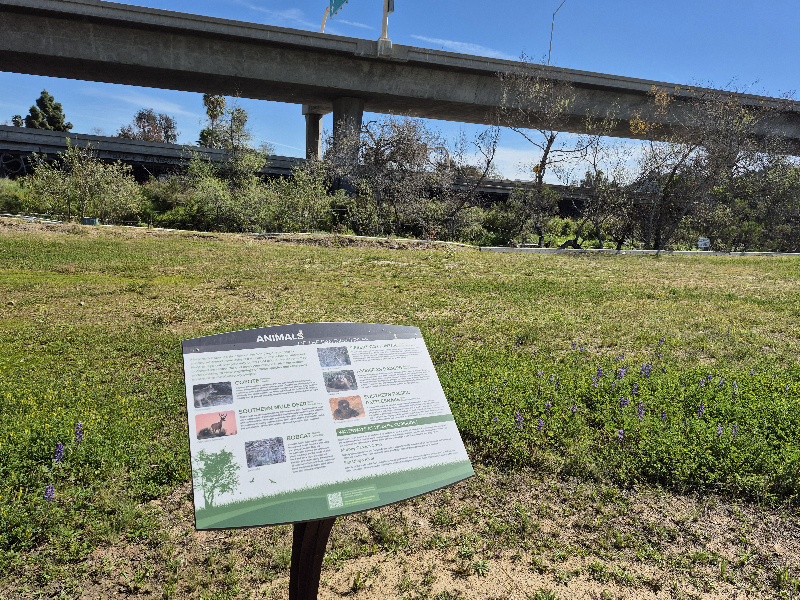
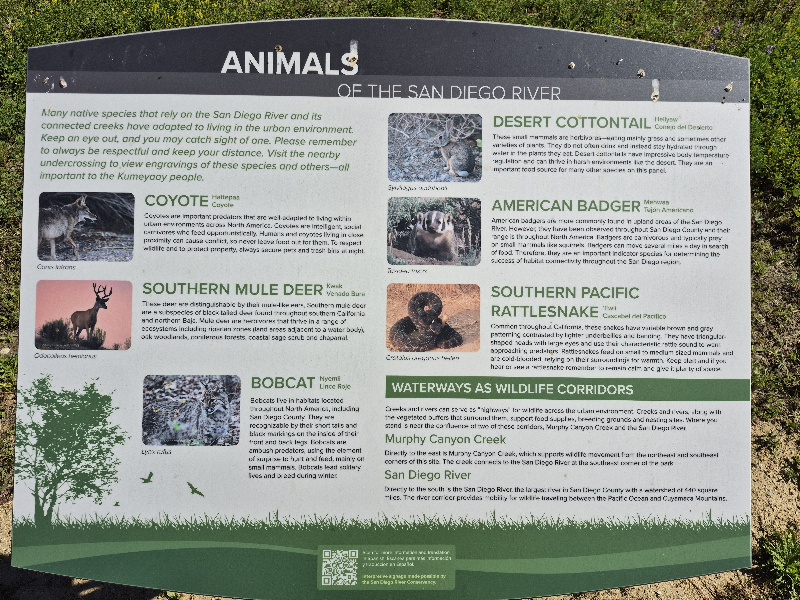
At the east end of the SDSU Mission Valley river park, near Murphy Canyon Creek, beside Interstate 15, a sign shows some of the Animals of the San Diego River.

Featured on the sign are: Coyote, Southern Mule Deer, Bobcat, Desert Cottontail, American Badger and Southern Pacific Rattlesnake.

There’s a good chance you’ve observed coyotes, cottontails and even rattlesnakes, but how about those other critters?

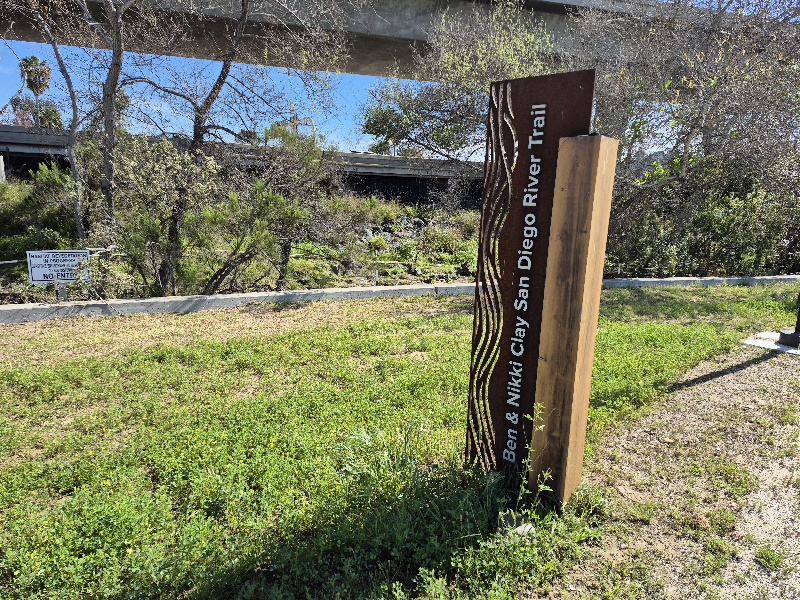
Walk near this sign along the Ben & Nikki Clay San Diego River Trail, and you might experience an unexpected wildlife sighting!

A legacy of creating beauty in San Diego.

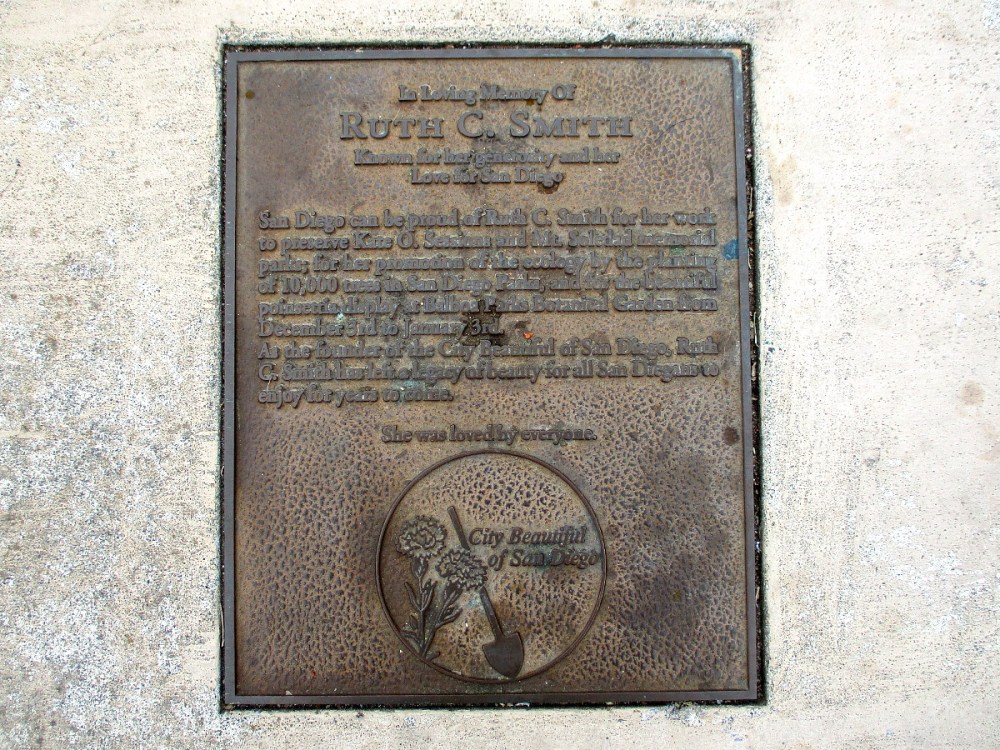
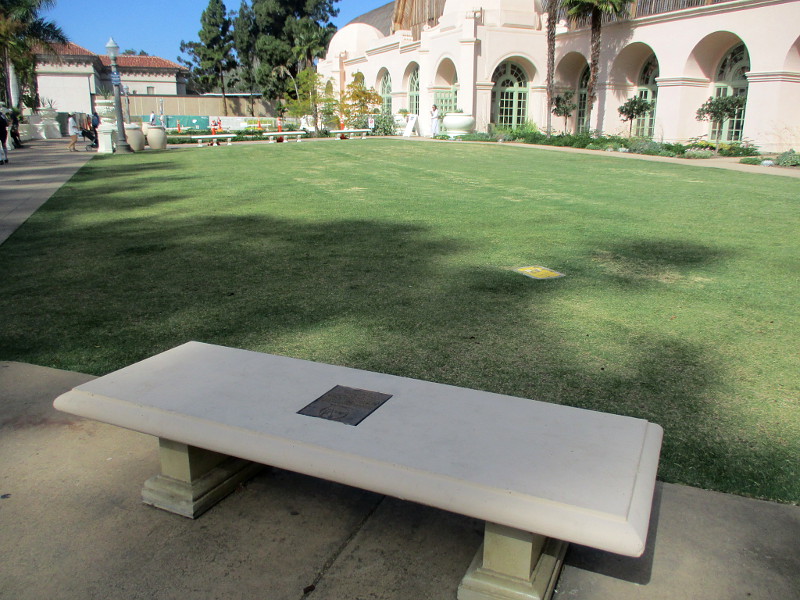
This memorial plaque should be read by all who love beautiful San Diego. It’s set in a bench by the fountain east of Balboa Park’s Botanical Building.

Here’s what it says:

In Loving Memory Of RUTH C. SMITH

Known for her generosity and her Love for San Diego

San Diego can be proud of Ruth C. Smith for her work to preserve Kate O. Sessions and Mt. Soledad memorial parks; for her promotion of the ecology by the planting of 10,000 trees in San Diego Parks, and the beautiful poinsettia display at Balboa Park’s Botanical Garden from December 3rd to January 3rd.

As the founder of the City Beautiful of San Diego, Ruth C. Smith has left a legacy of beauty for all San Diegans to enjoy for years to come.

She was loved by everyone.

Will you have a similar legacy?

To follow my blog, find the “Follow” box in this website’s sidebar. Or bookmark coolsandiegosights.com and swing on by occasionally!

(If you’re viewing this on a phone, open my website’s sidebar by tapping those three parallel lines at the top of the page.)
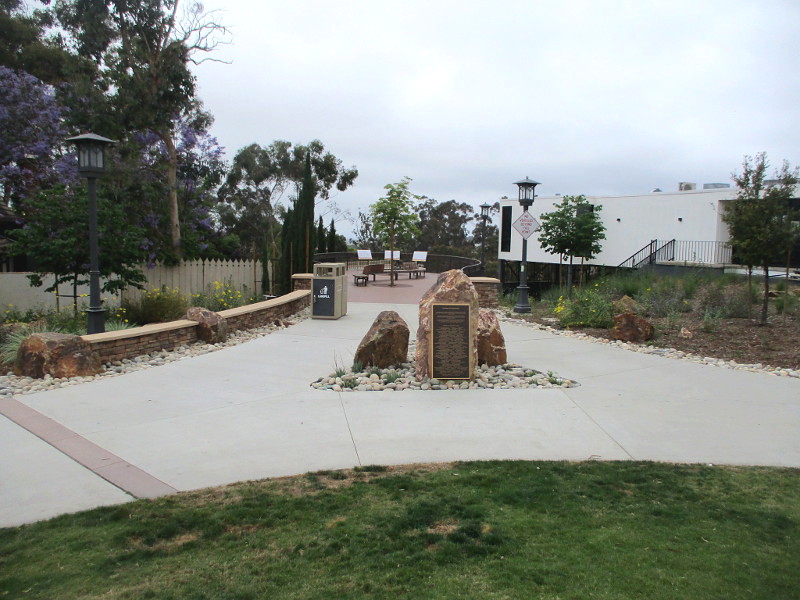
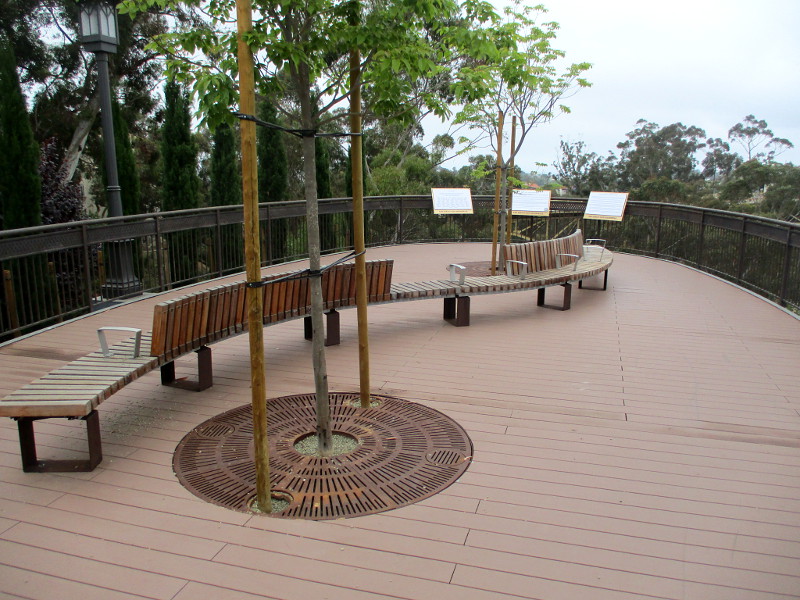
San Diego AIDS Memorial at Olive Street Park.

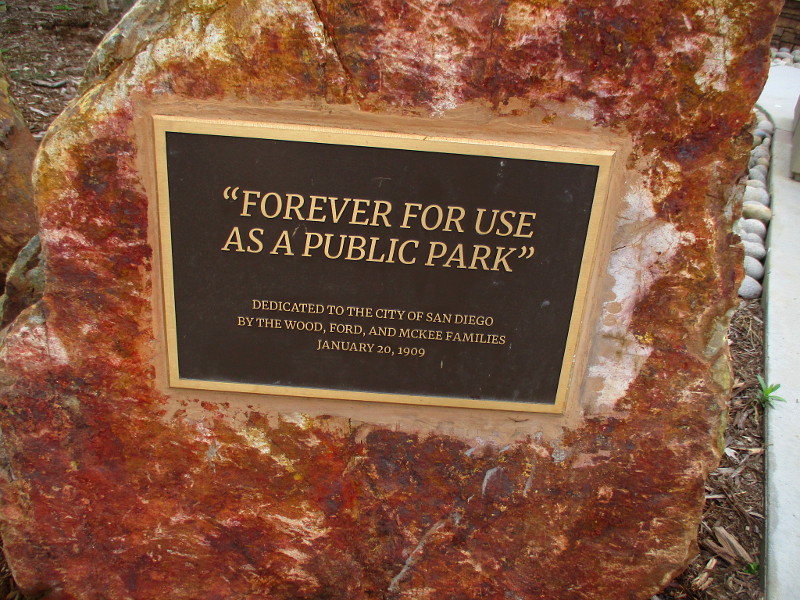
You might remember how, years ago, KUSI television consumer advocate Michael Turko sought to develop a neglected plot of land on Olive Street in Bankers Hill into a city park. According to this webpage, in 1909, the Ford, McKee, and Woods families generously donated the 0.6-acre property to the city for the specific purpose of creating a public park for the community to enjoy.

I posted a blog that included the still undeveloped park back in 2015. See that old post here.

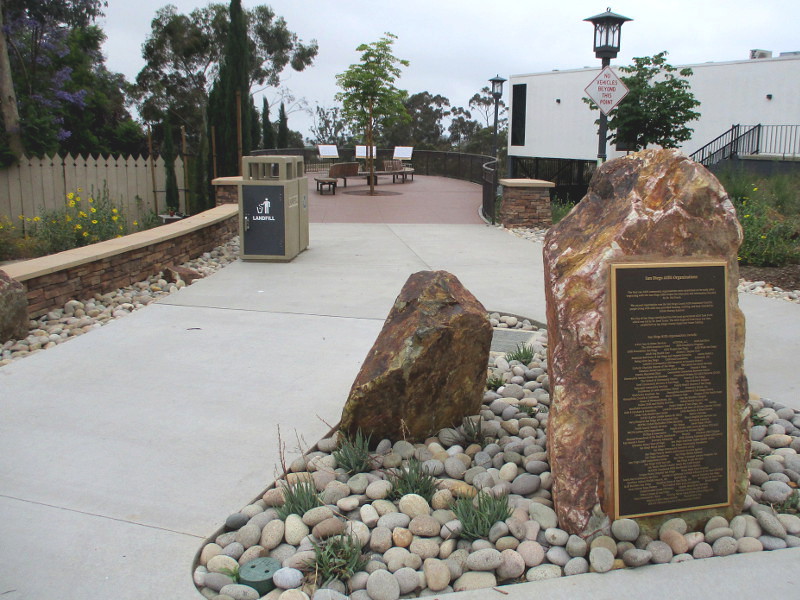
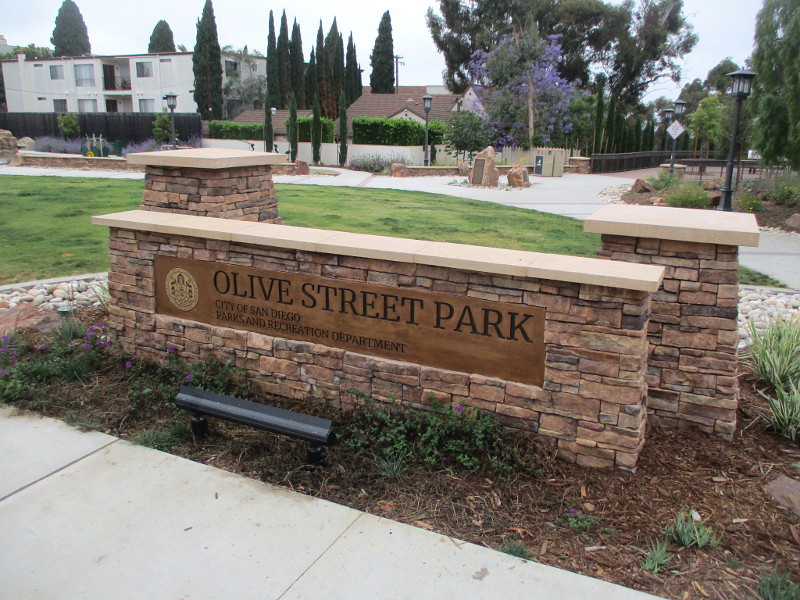
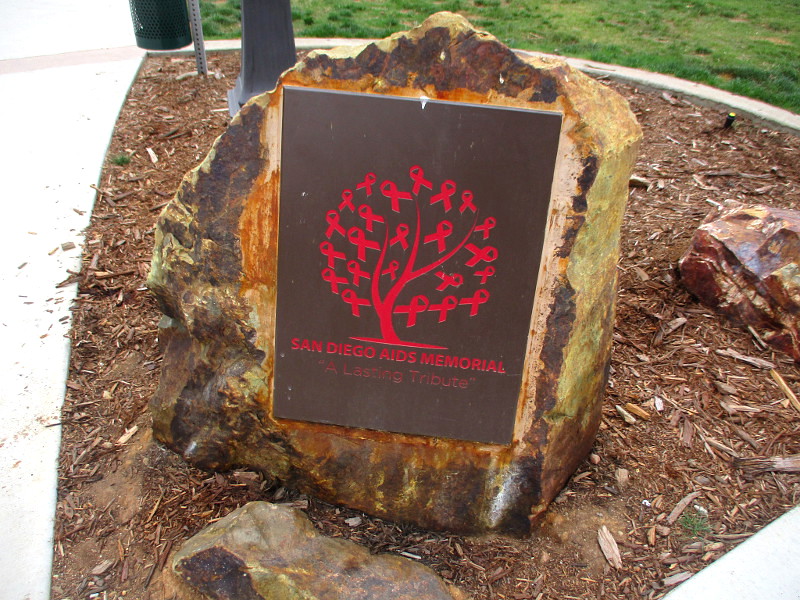
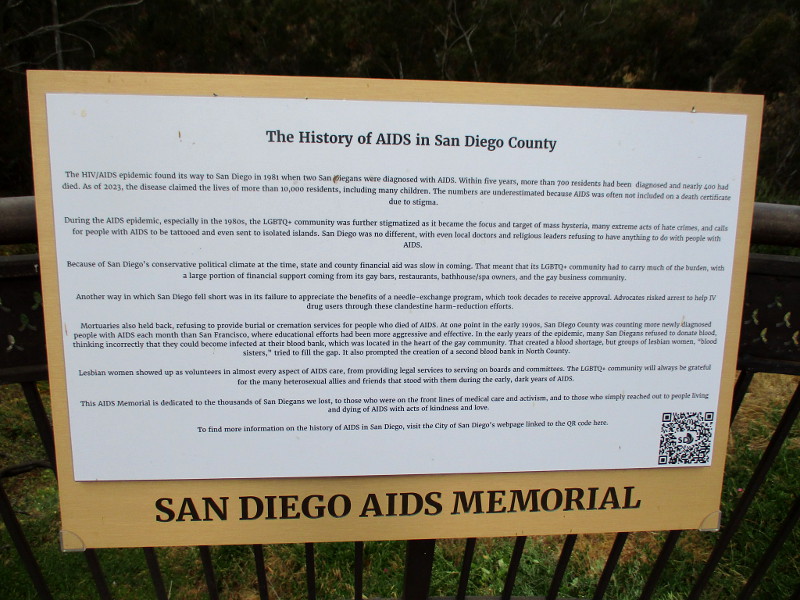
Today Olive Street Park welcomes one and all. It is also the site of the San Diego AIDS Memorial, which opened on World AIDS Day, Sunday, December 1, 2024.

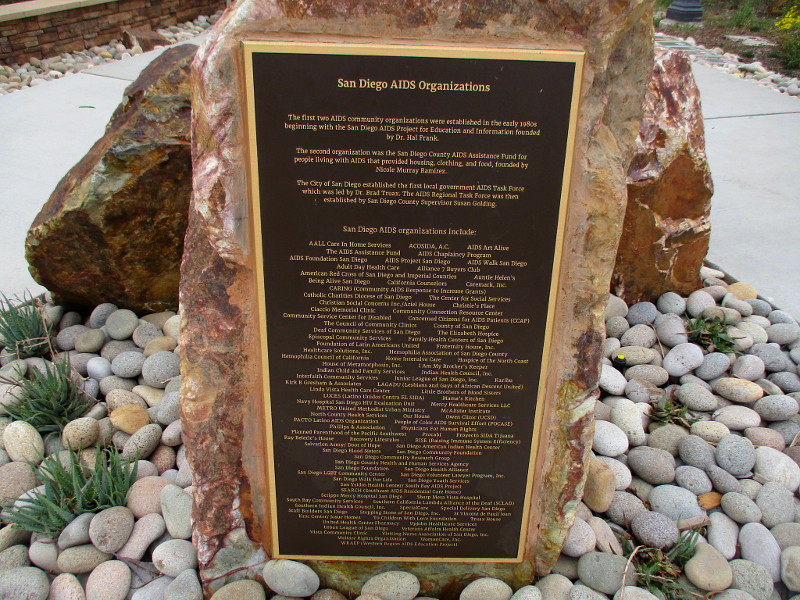
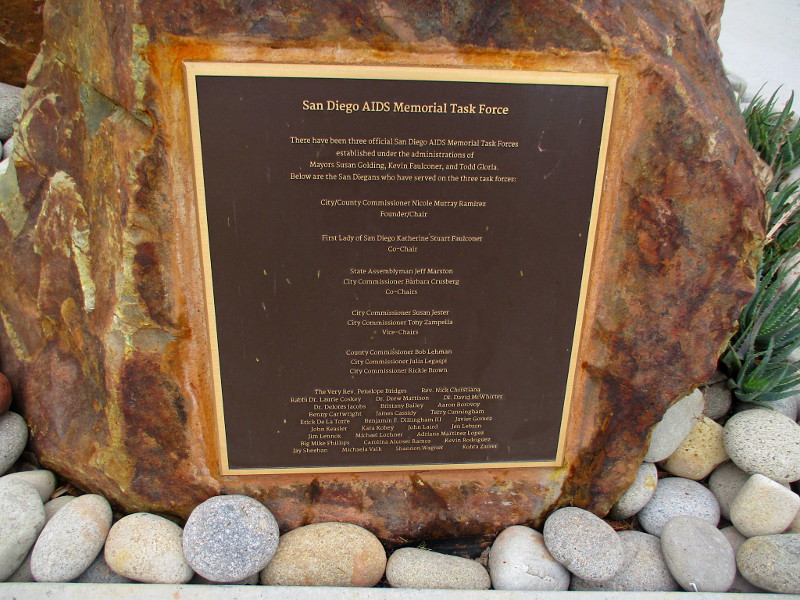
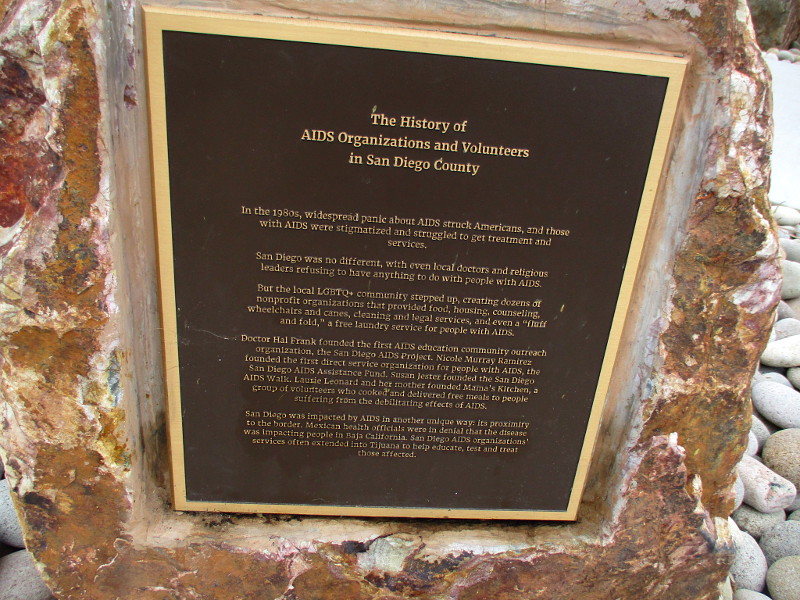
With various plaques and signs, the memorial remembers the over 8,000 San Diegans who have lost their lives to HIV/AIDS, and honors those who’ve supported them and have worked to defeat the devastating disease. Many compassionate people and organizations throughout San Diego County are recognized.

The neighborhood park is a grassy oasis with flowers and beautiful views, where people can play or relax and reflect.

To follow my blog, find the “Follow” box in this website’s sidebar. Or bookmark coolsandiegosights.com and swing on by occasionally!

(If you’re viewing this on a phone, open my website’s sidebar by tapping those three parallel lines at the top of the page.)
Reflection pergola at Stadium trolley plaza.

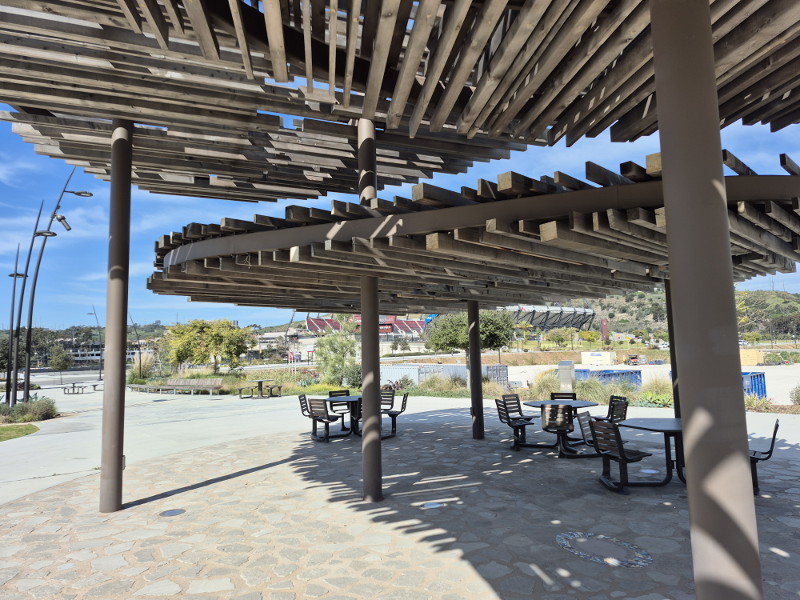
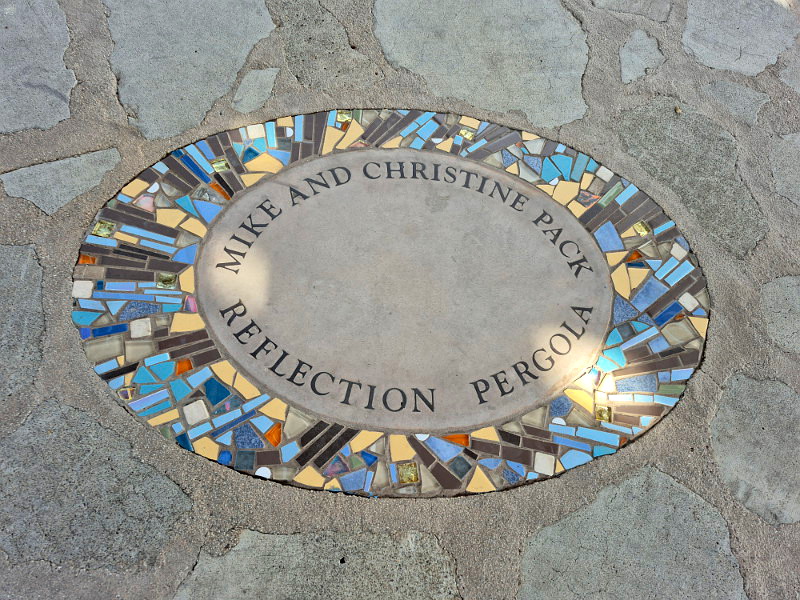
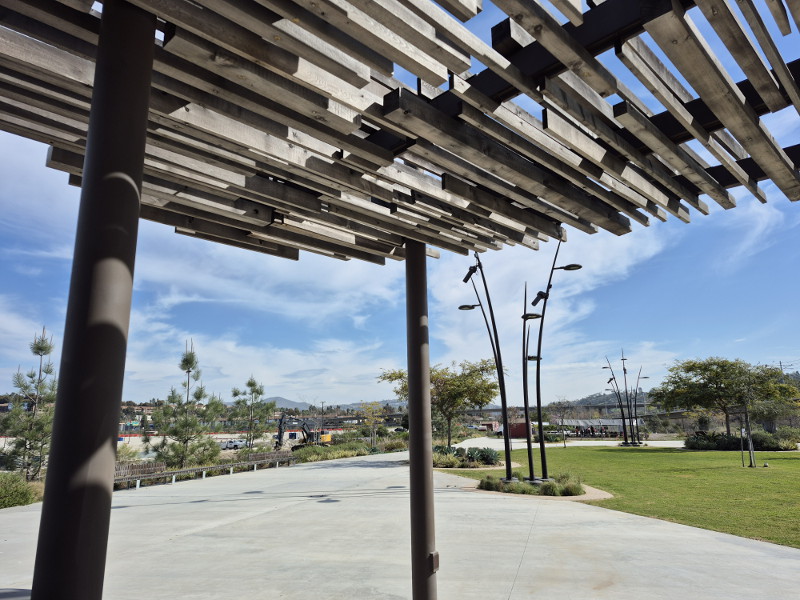
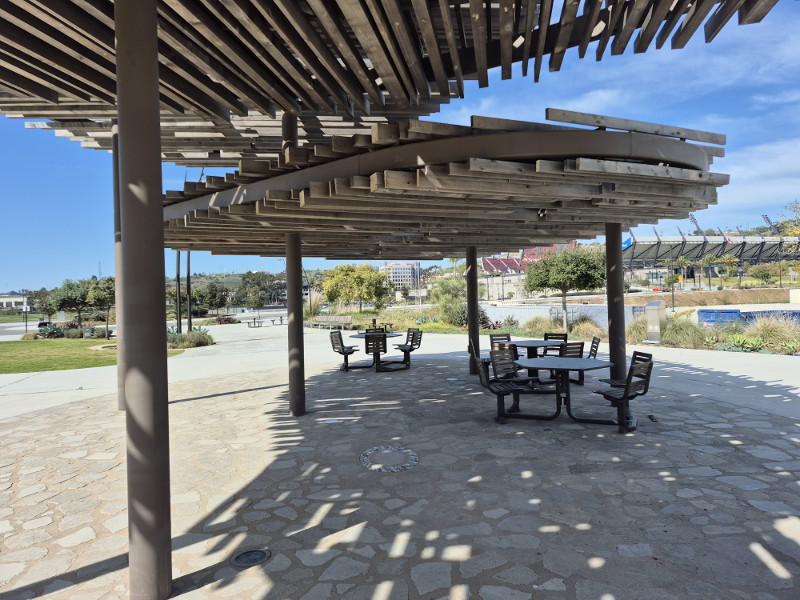
Walking from the Stadium trolley station to Snapdragon Stadium, you might have noticed this distinctive structure. It has a name. The Mike and Christine Pack Reflection Pergola offers several tables and a shady resting place in the wide plaza north of the trolley station.

This article, which concerns the SDSU Mission Valley river park, contains a description of the pergola:

The central focal point of the trolley plaza is the Mike and Christine Pack Reflection Pergola, which draws inspiration from the river and ewaa (dome-shaped shelters) used by the early Kumeyaay. These shelters were built from branches and covered with leaves from willow, tule or other plants.

I was surprised to discover a small but beautiful mosaic near one table!

I love how the lighting structures in my next photograph appear organic–like tall grass bending in the wind, or trees with slender stems.

The SDSU Mission Valley river park has become a favorite place to walk on a sunny San Diego day.

To follow my blog, find the “Follow” box in this website’s sidebar. Or bookmark coolsandiegosights.com and swing on by occasionally!

(If you’re viewing this on a phone, open my website’s sidebar by tapping those three parallel lines at the top of the page.)
Year of the Horse charges into San Diego!

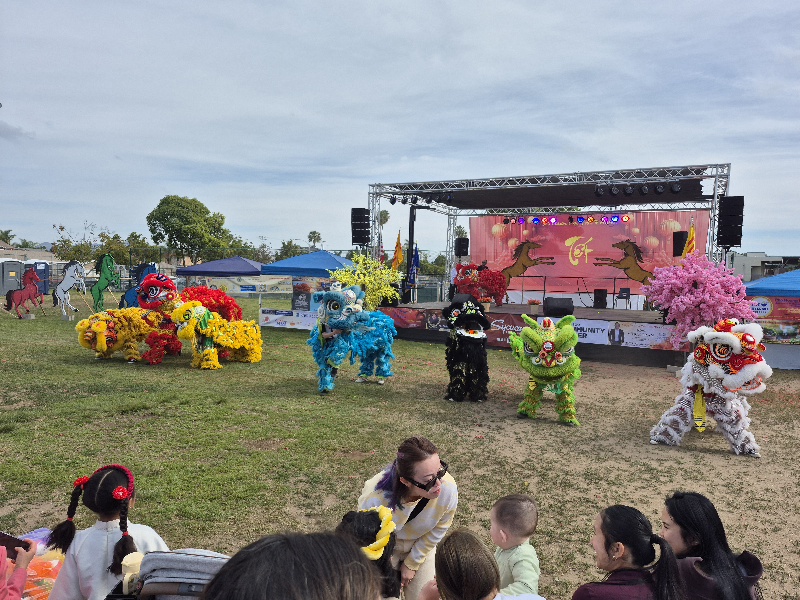
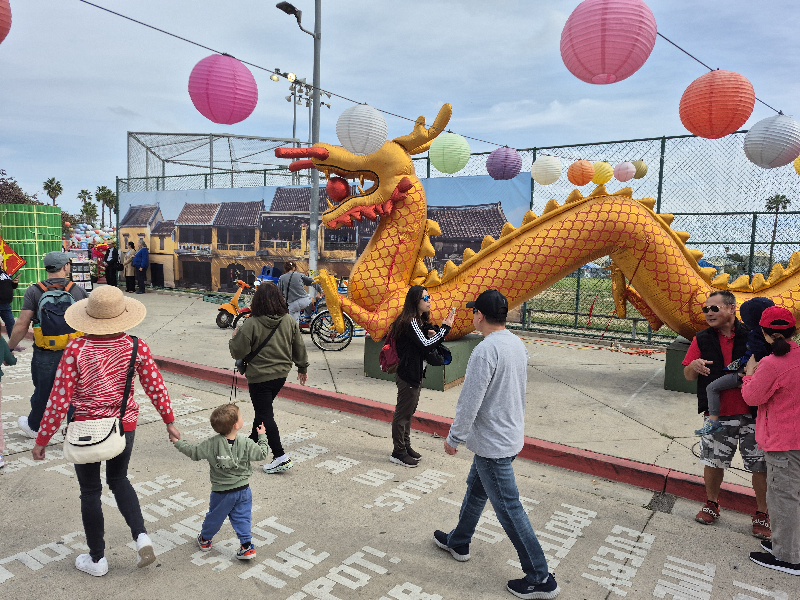
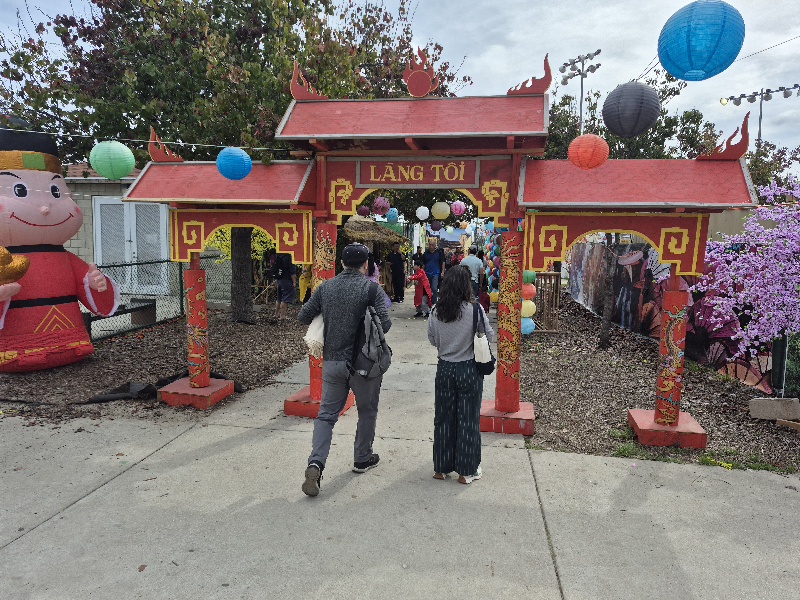
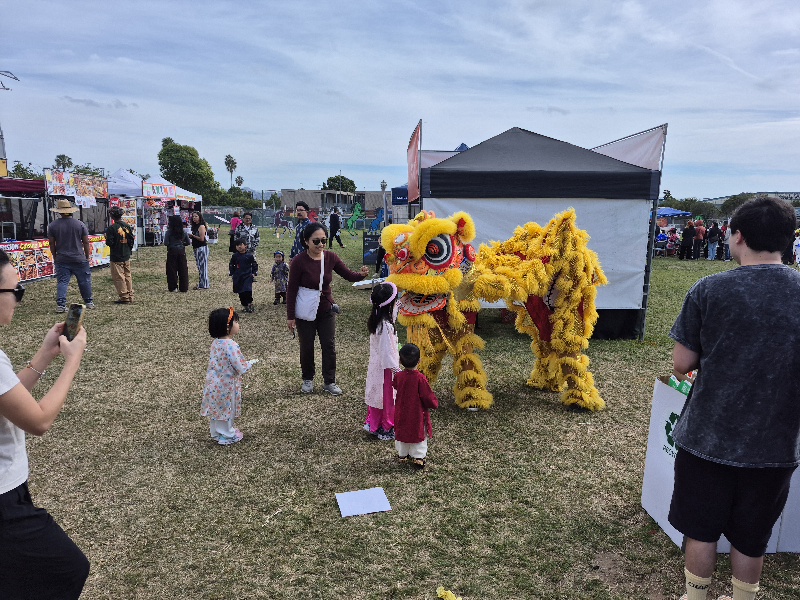
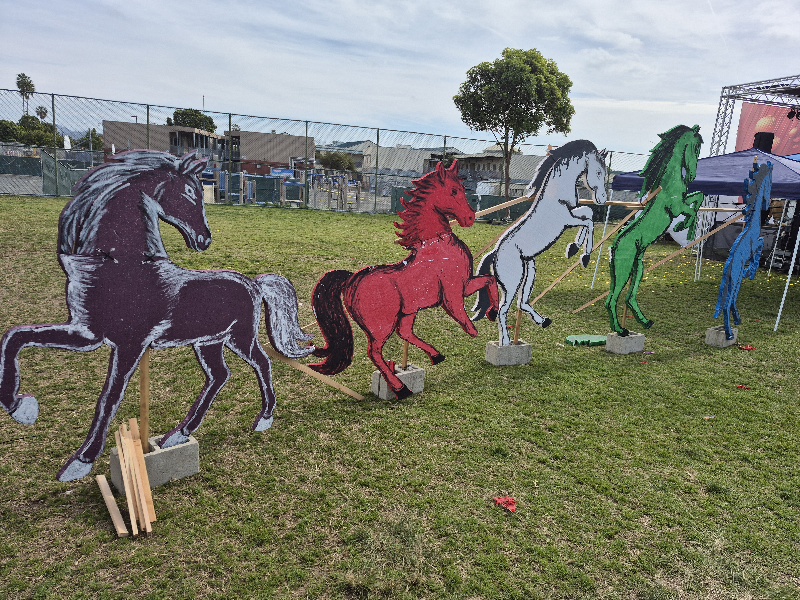
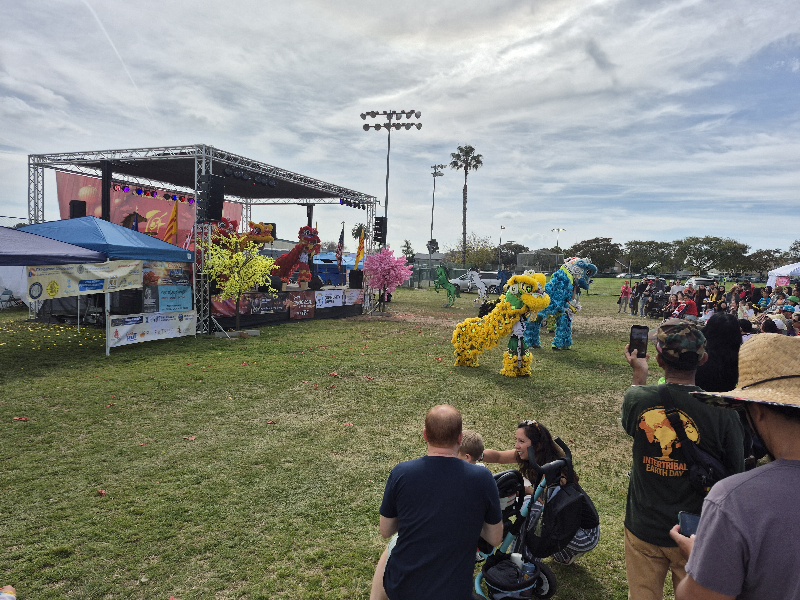
A big Lunar New Year celebration is taking place this weekend in City Heights. The Year of the Horse–Fire Horse to be exact–is charging into San Diego!

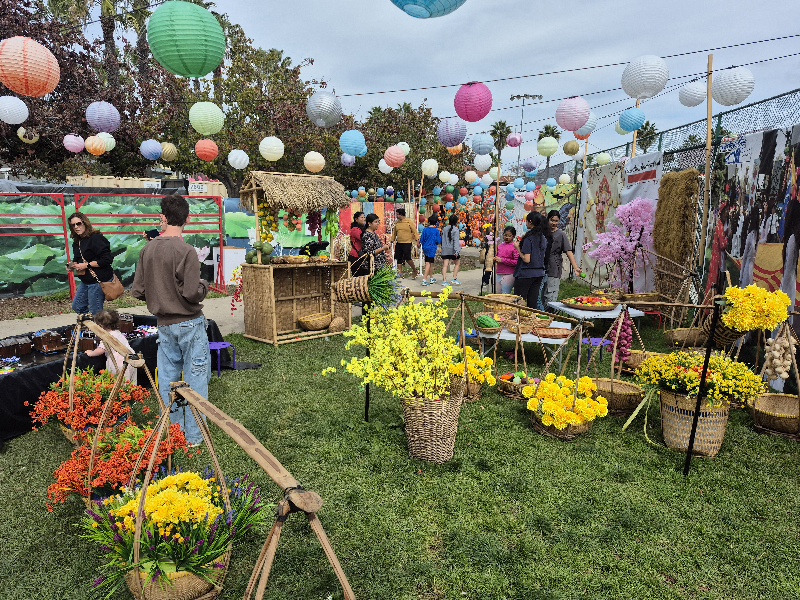
The Fire Horse in the Chinese zodiac represents energy, excitement. Walking through the event as it got underway today, I could feel the energy. It would be a very fun day for many families!

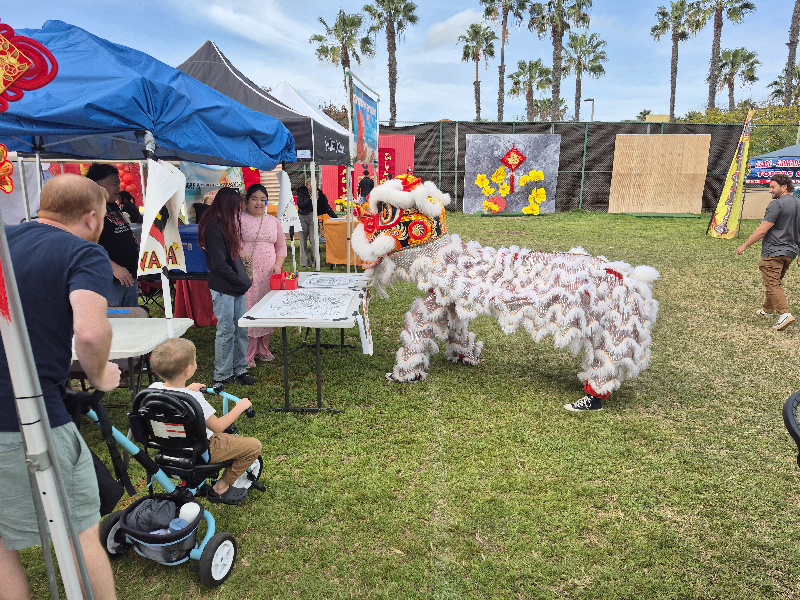
Lion dancers were already performing to the delight of kids. Many booths, displays and food vendors were set up and ready.

The event is being held at Officer Jeremy Henwood Memorial Park. For more info concerning the free festival, a celebration of San Diego’s Little Saigon, read the banner in my next photo…

Riverwalk San Diego development seen from trolley.

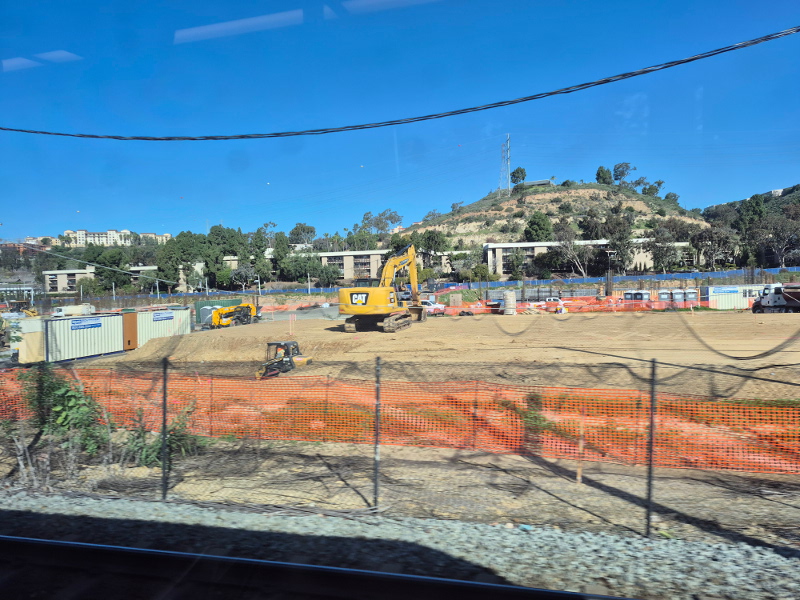
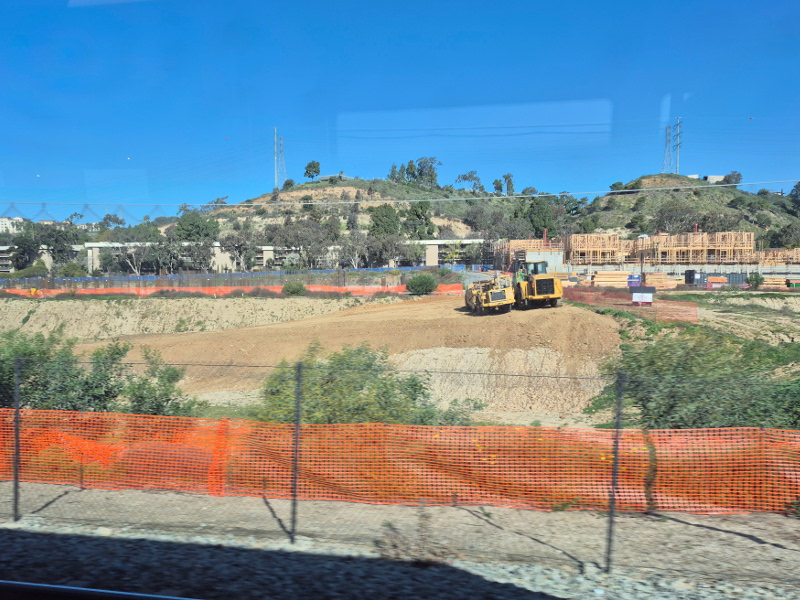
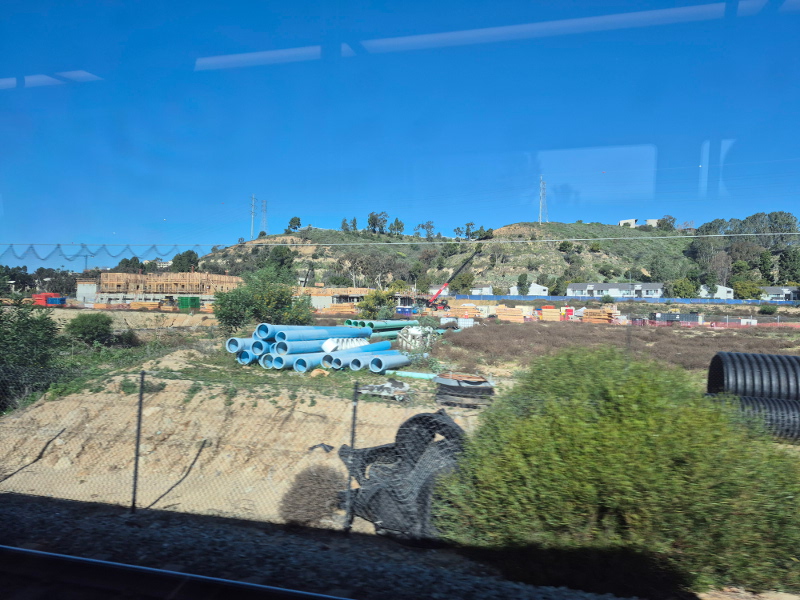
If you’ve recently traveled on the Green Line of the San Diego Trolley between the Morena/Linda Vista and Fashion Valley stations, you’ve seen renewed construction activity to the north of the tracks. That half of the old Riverwalk golf course is being replaced by Riverwalk San Diego, a massive project now under development!

I saw all this activity through the trolley window a couple days ago and took several photos.

If, like me, you’re curious about this project in the heart of Mission Valley, check out their website here and see a map of what is coming. Riverwalk San Diego will include 4,300 homes (including 430 affordable homes), 152,000 square feet of retail, one million square feet of office, and 97 acres of parks and open space, including a restored San Diego River and a 55-acre regional park.

You might notice there will be a new trolley station, too!

This webpage includes a project update.

I look forward to watching everything come together as I ride the Green Line and walk around in the many days to come. I’ll likely post more photos.

To follow my blog, find the “Follow” box in this website’s sidebar. Or bookmark coolsandiegosights.com and swing on by occasionally!

(If you’re viewing this on a phone, open my website’s sidebar by tapping those three parallel lines at the top of the page.)
SDSU Aztecs Rugby Club plays UC Davis.

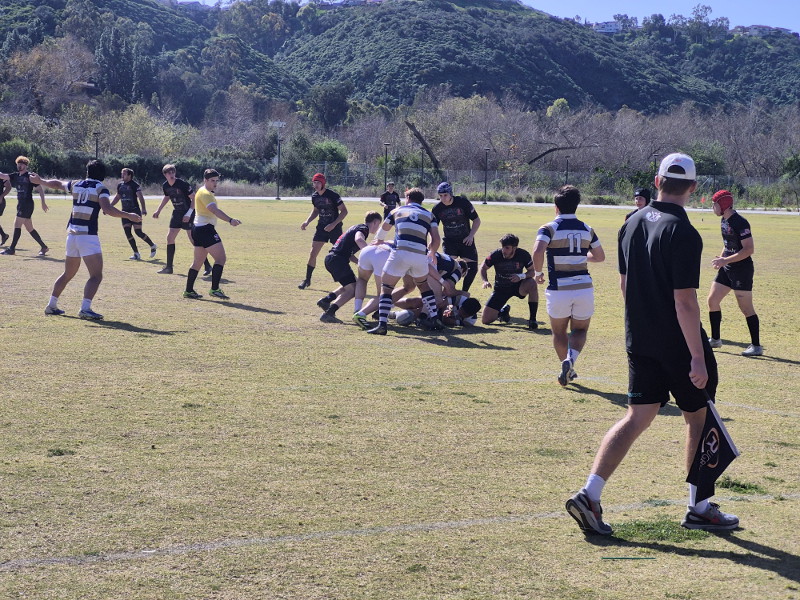
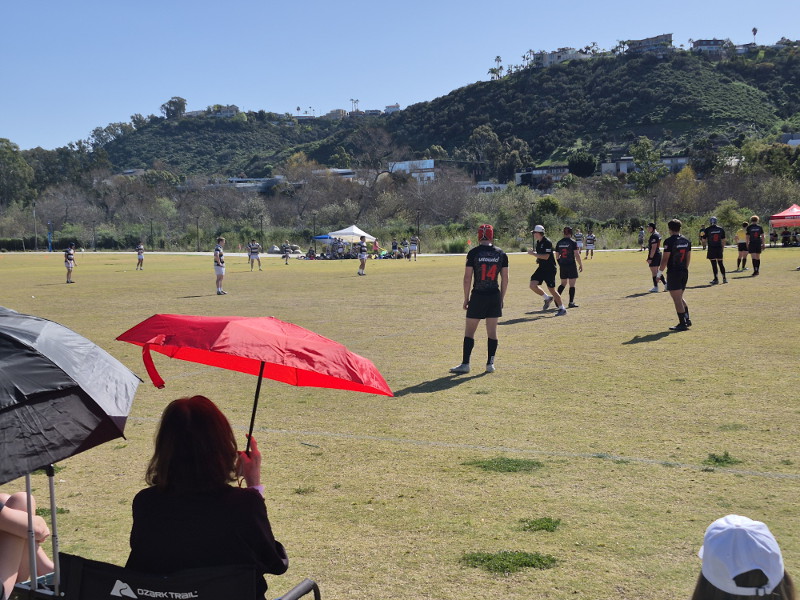
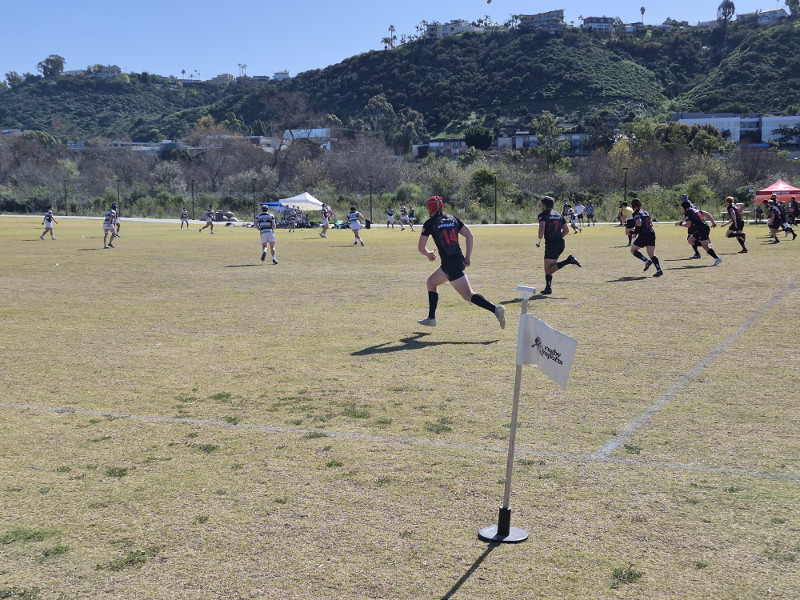
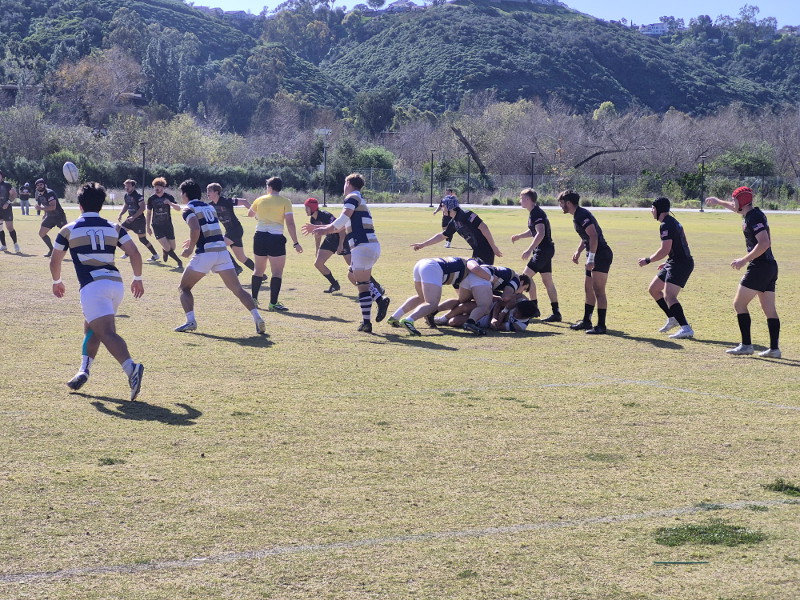
During my walk yesterday through SDSU Mission Valley River Park, I was surprised to see members of San Diego State Aztecs Rugby Club getting ready for a game. They would be playing UC Davis out on a wide swath of the park’s grass. It was the second game of their 2026 season.

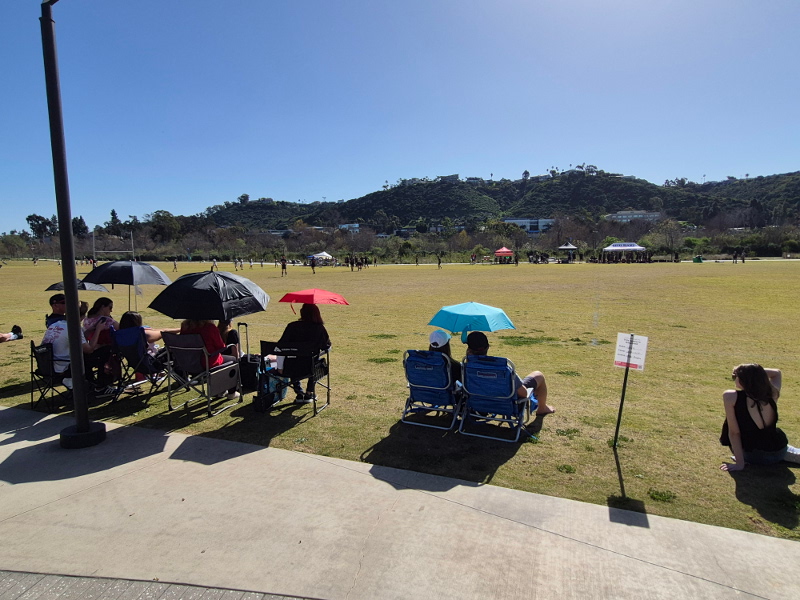
I remained at the sidelines for a while to watch the beginning of play. Other fans would gradually gather with their lawn chairs and umbrellas.

SDSU Aztecs Rugby Club competes in Division 1-A in the California Conference. Founded in 1958, the team has a long and proud history. They won the 1987 National Collegiate Rugby Championship.

The action I observed was fast and exciting! I don’t know too much about rugby, but perhaps I’ll have to become a fan! The Aztecs would go on to win 31-38.

If you’d like to watch this victory on YouTube, click here.

To go to a future game, you can follow SDSU Aztec Rugby at this website.

To follow my blog, find the “Follow” box in this website’s sidebar. Or bookmark coolsandiegosights.com and swing on by occasionally!

(If you’re viewing this on a phone, open my website’s sidebar by tapping those three parallel lines at the top of the page.)
Orphan baby whale sculpture at La Jolla Shores!

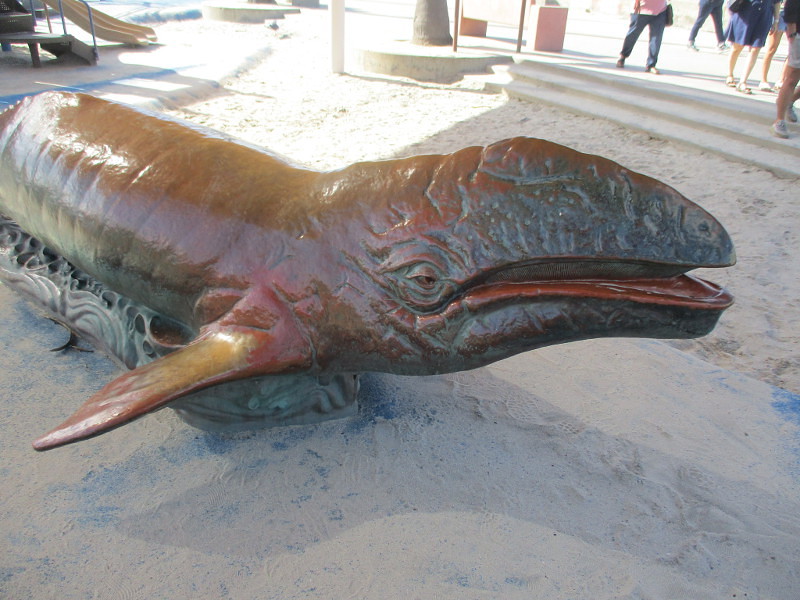
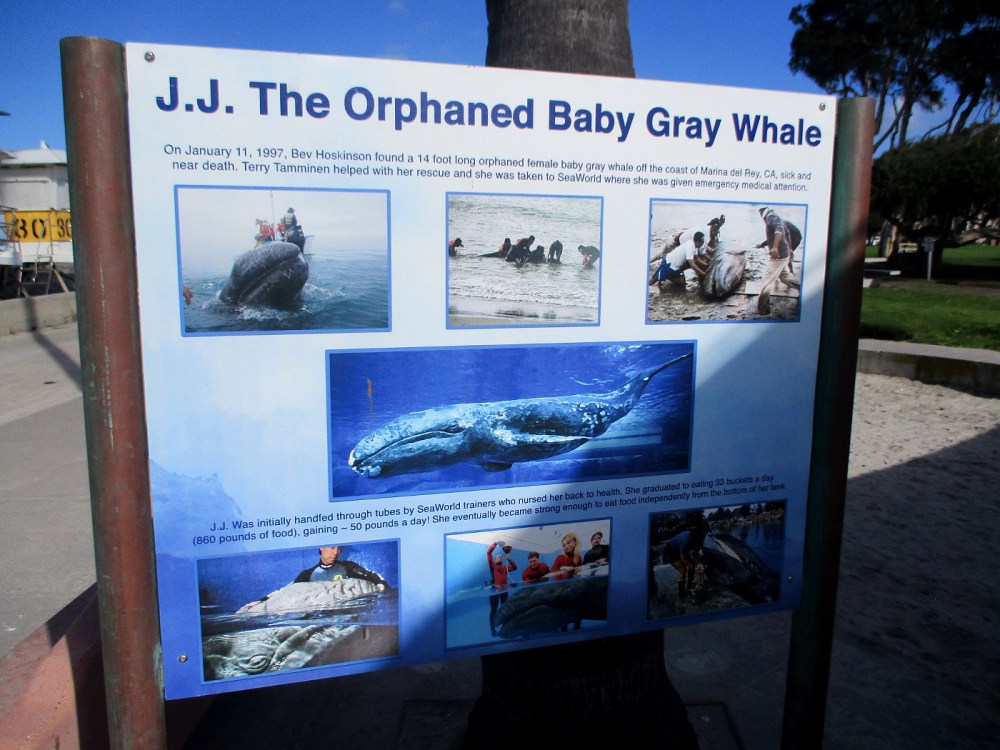
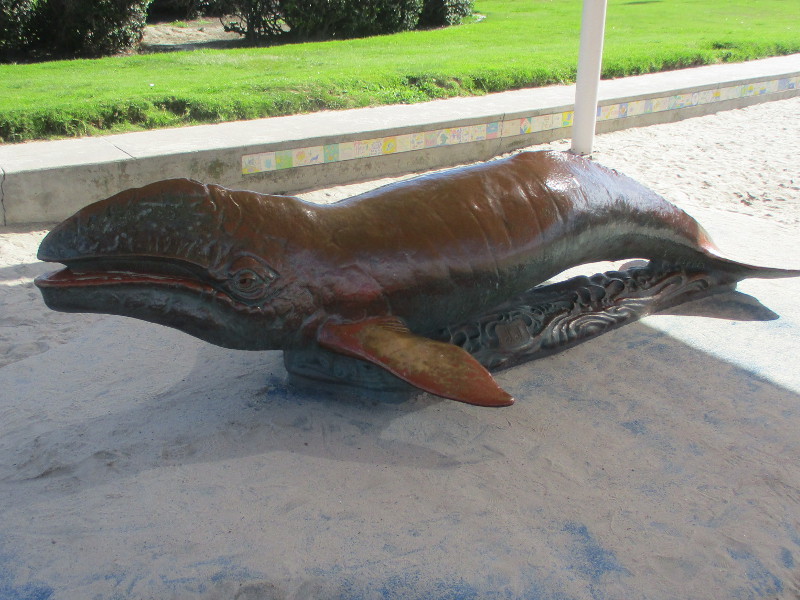
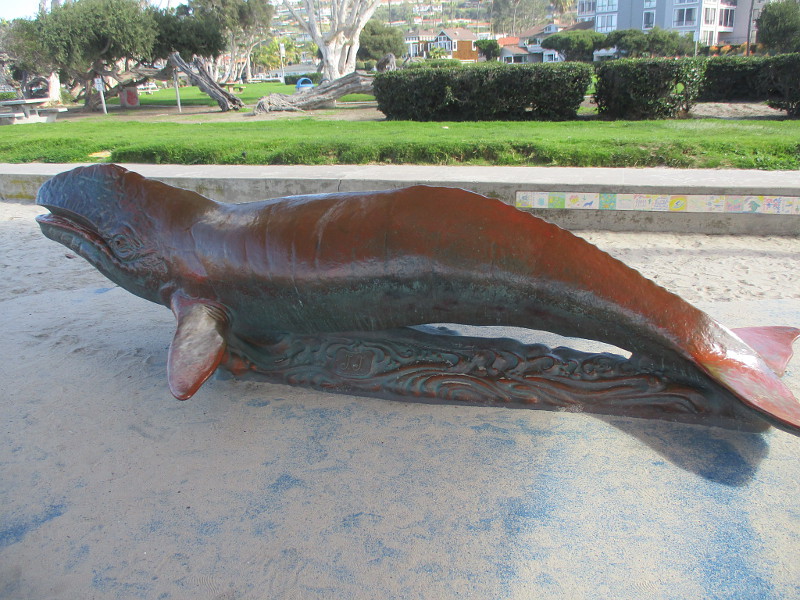
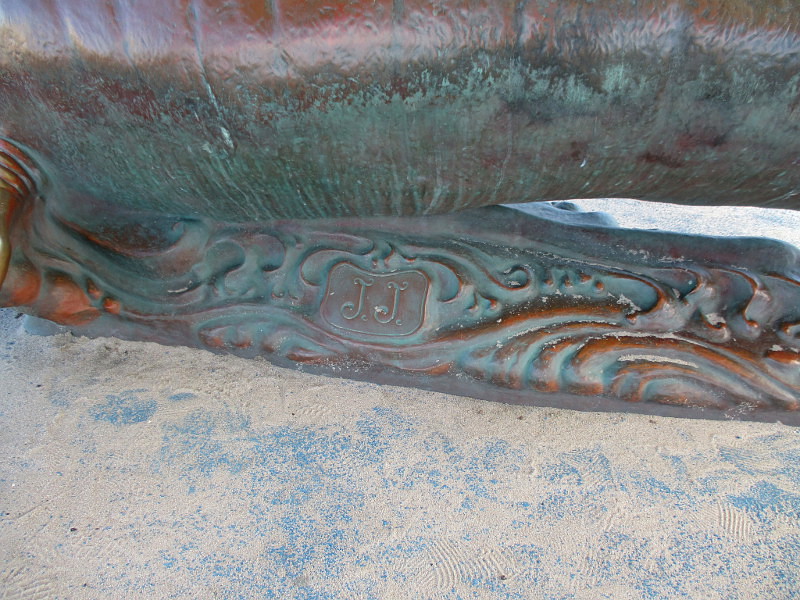
These photographs were taken during a recent walk through La Jolla Shores, at the Kellogg Park playground. What you see is the 16-foot-long life-size bronze sculpture of J.J., an orphaned baby California gray whale.

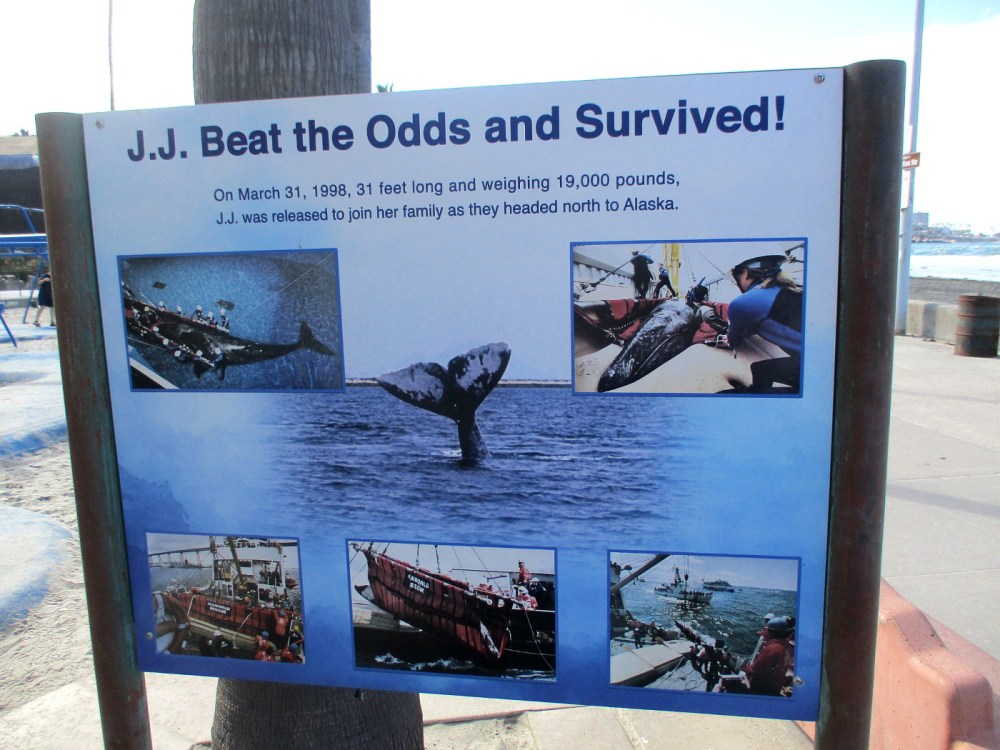
The malnourished baby whale, near death, was rescued off the coast of Marina del Rey in 1997, and nursed back to health at SeaWorld. She would ultimately be released back into the Pacific Ocean to resume her migration to Alaska.

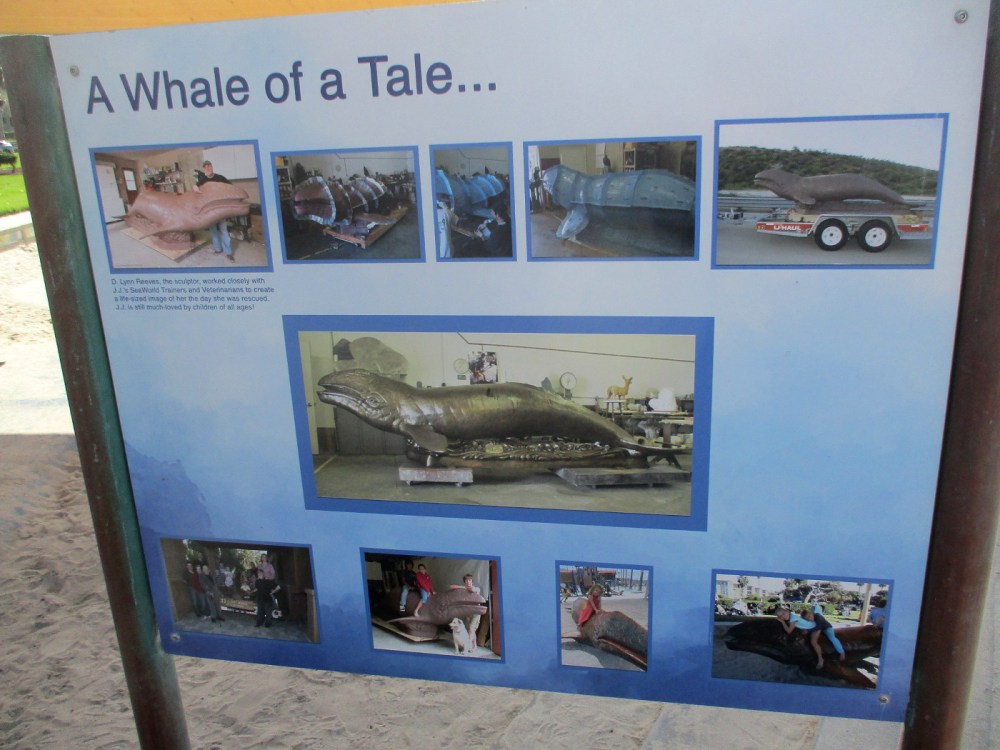
The sculpture of J.J., which children love to ride and play on, was created by sculptor D. Lynn Reeves. It was commissioned by Friends of La Jolla Shores and was installed at the Kellogg Park playground next to the beach boardwalk in 2011.

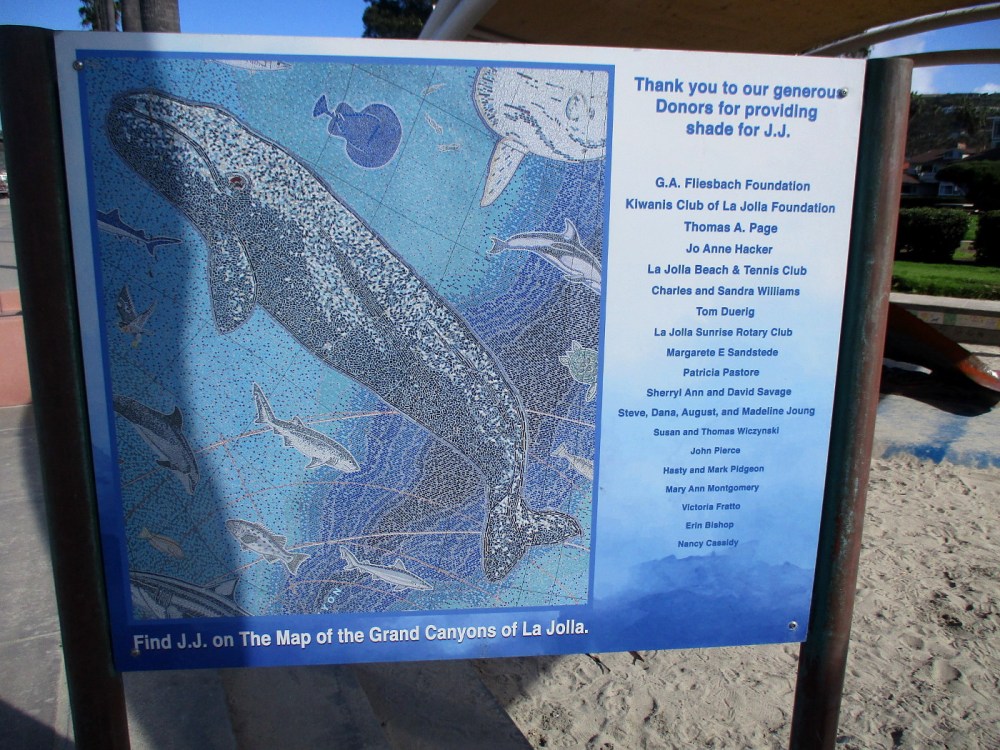
Signs posted beside J.J. tell the tale of her rescue and of the creation of her beautiful sculpture.

The image of J.J. also appears in the nearby mosaic Map of the Grand Canyons of La Jolla.

To follow my blog, find the “Follow” box in this website’s sidebar. Or bookmark coolsandiegosights.com and swing on by occasionally!

(If you’re viewing this on a phone, open my website’s sidebar by tapping those three parallel lines at the top of the page.)