San Diego history buffs know that the San Diego River, where it approaches the Pacific Ocean, is not located where it flowed originally.
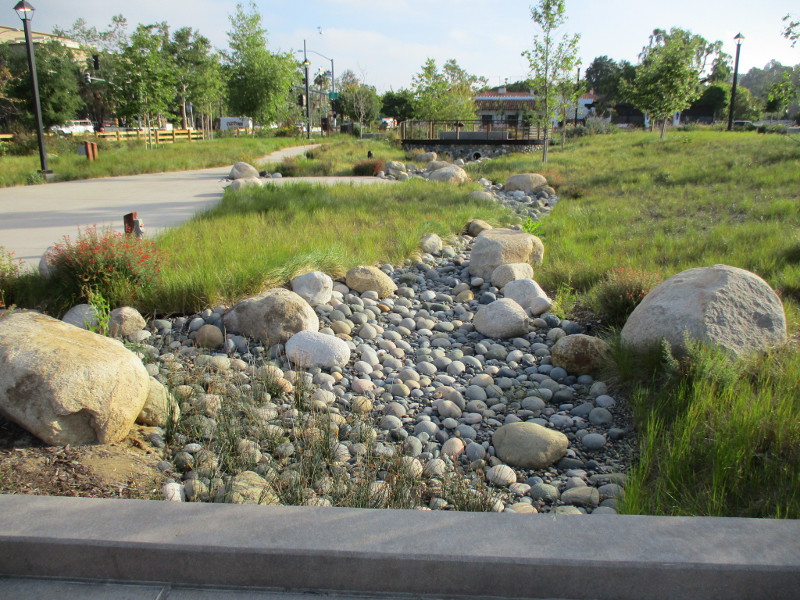
A cobblestone filled channel in Old Town San Diego State Historic Park is a visual reminder that the river once flowed directly next to our city’s birthplace.
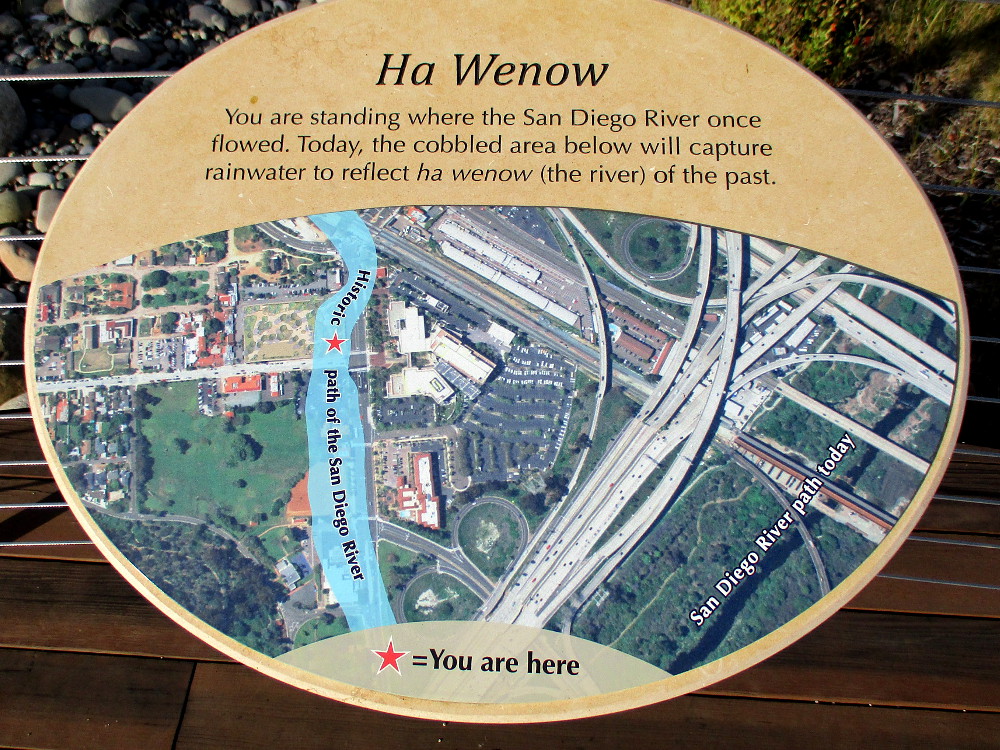
In 1853, to prevent flooding in Old Town and the build-up of sediment in San Diego Bay, the Derby Dike was built, diverting the river into False Bay–today’s Mission Bay.
A sign by a footbridge over the modest cobblestone channel shows where the San Diego River was originally located in relation to the park and nearby Taylor Street. You can find this sign in the beautiful outdoor Iipay – Tipai Kumeyaay Mut Niihepok Land of the First People, at the northwest corner of the State Park.
Long before the arrival of explorer Juan Rodríguez Cabrillo in 1542, and the establishment of the nearby Spanish Presidio in 1769, the Native American Kumeyaay lived here on the banks of the life-sustaining river in a village called Kosa’aay. They called the river ha wenow.
…
I live in downtown San Diego and love to walk around with my camera! You can follow Cool San Diego Sights via Facebook or Twitter!
You can easily explore Cool San Diego Sights by using the search box on my blog’s sidebar. Or click a tag! There are thousands upon thousands of photos for you to enjoy!
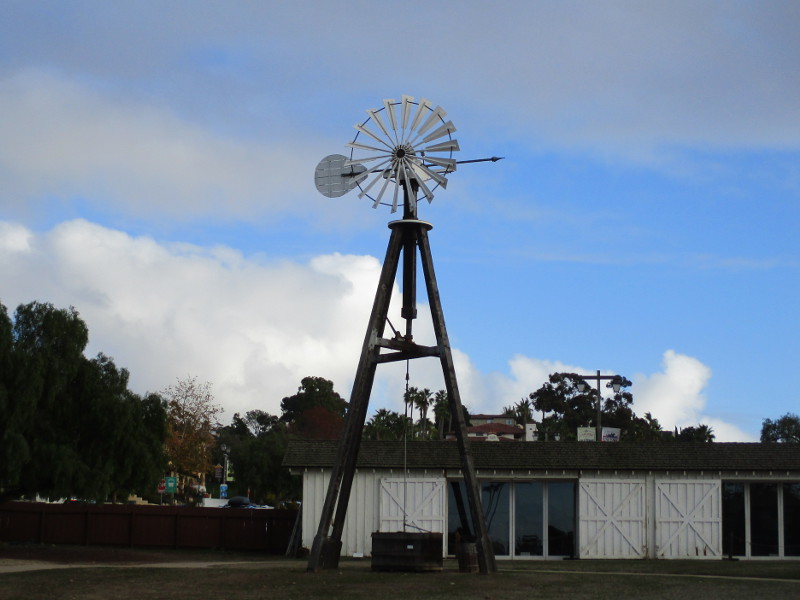
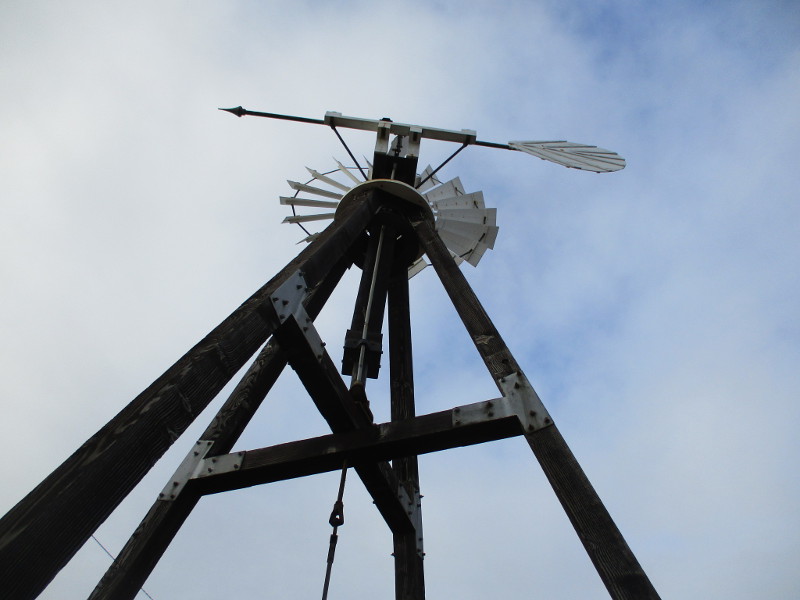
This might surprise you, but the windmill that stands in Old Town San Diego State Historic Park is the only windmill of its kind in the entire world!
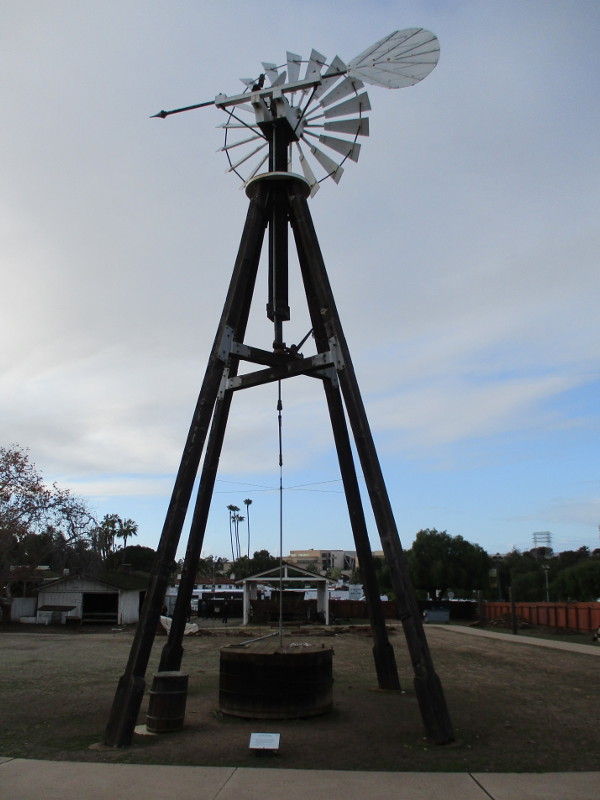
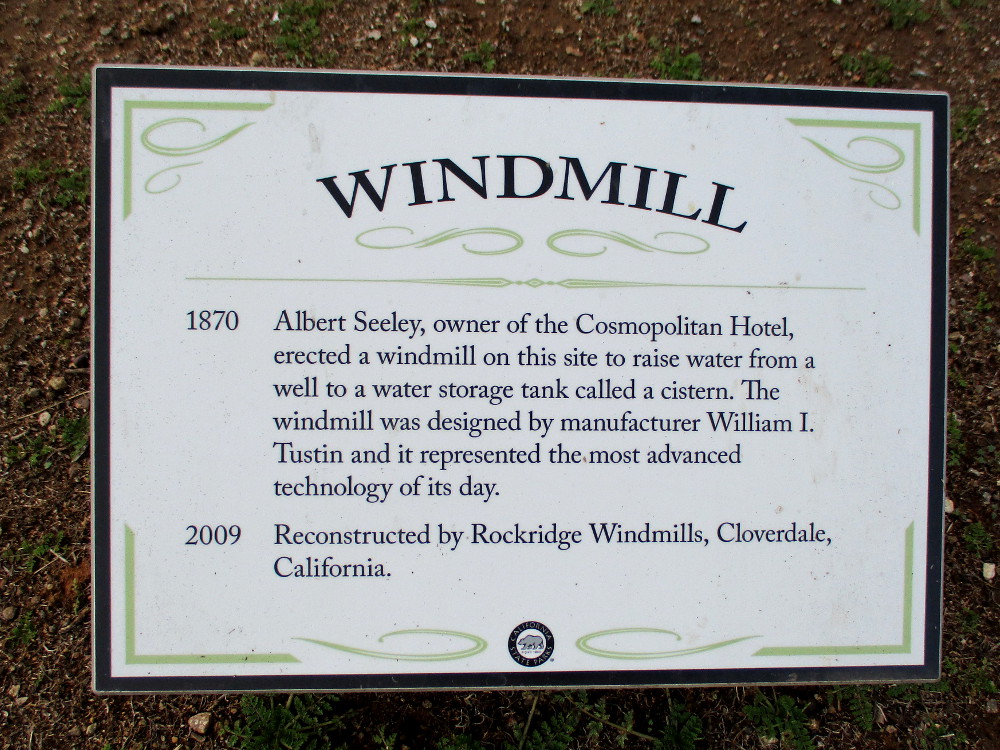
The tall Tustin style windmill located in the yard behind Seeley Stable is an accurate 2009 reconstruction of the one built in 1870 for Albert Seeley’s Cosmopolitan Hotel. Back then, its design represented the latest in windmill technology.
The Tustin style windmill was invented by pioneering manufacturer William Isaac Tustin, who came to California in a wagon train in 1845. His first job was working for John A. Sutter before the discovery of gold several years later at Sutter’s Mill.
Tustin claimed that he built California’s very first windmill, in Benica in 1849.
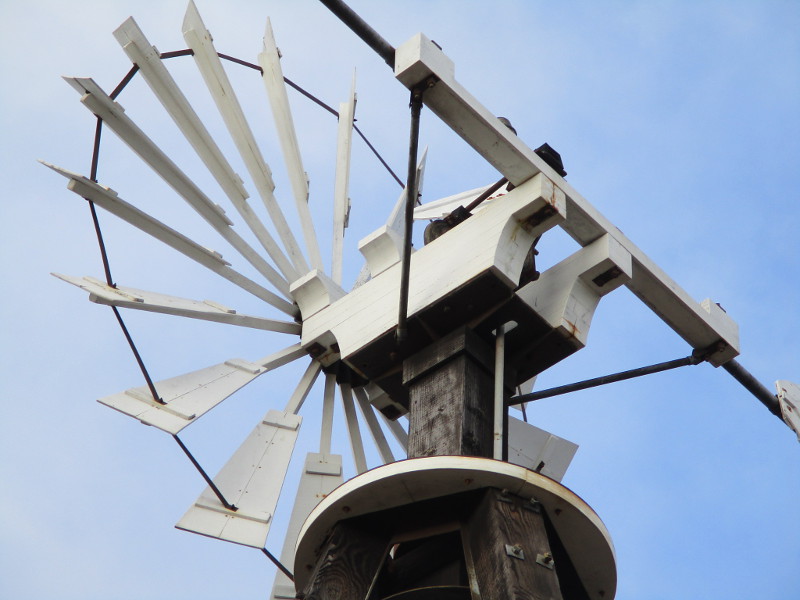
The unique Tustin style windmill is self-regulating, with a wheel that turns to face the wind at variable angles, controlling the speed of the blades’ rotation.
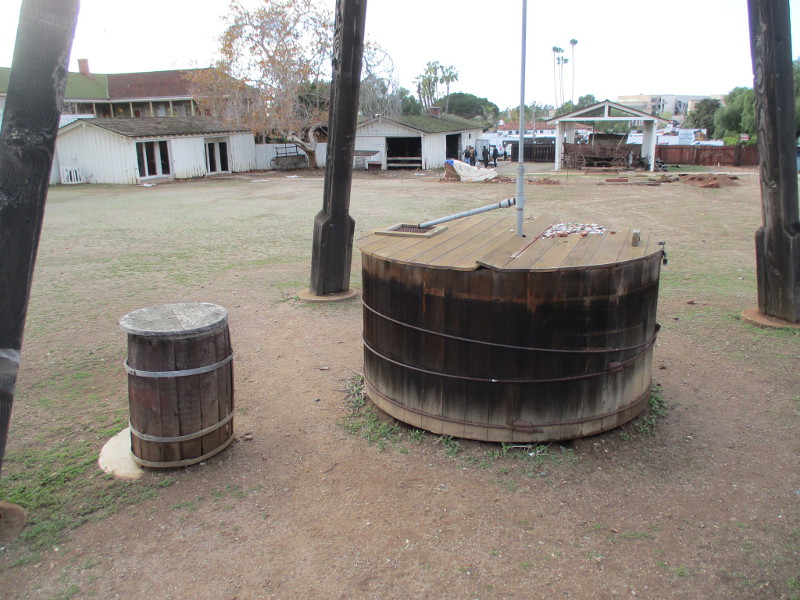
Originally, this windmill was erected to raise water from a well and store it in a wooden cistern, which you can see in my photos.
And it still works today!
Old Town’s one-of-a-kind, historic windmill is usually disabled, however, because the noise it makes when operating is quite loud!
…
I live in downtown San Diego and love to walk around with my camera! You can follow Cool San Diego Sights via Facebook or Twitter!
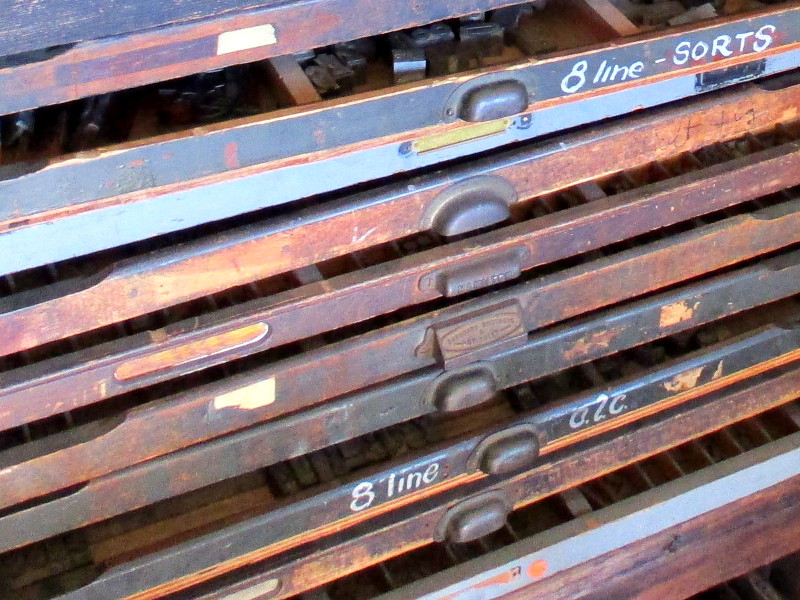
I learned yesterday during a visit to the San Diego Union Building in Old Town San Diego State Historic Park that these expressions are believed to come from days long past.
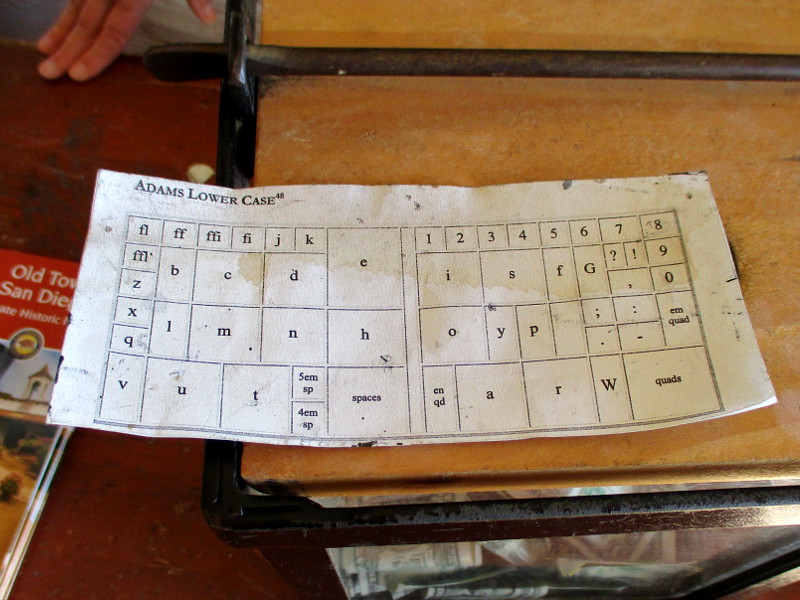
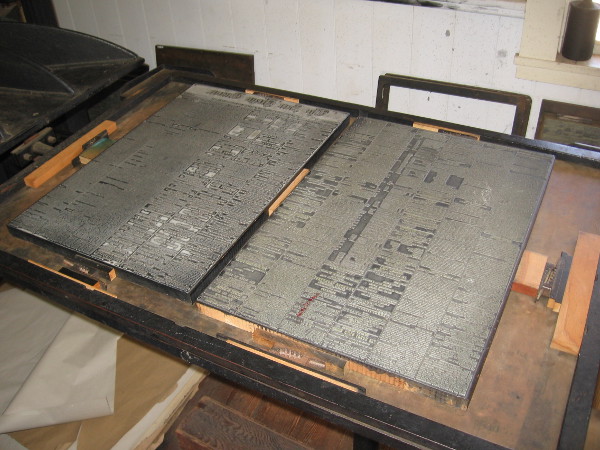
There was a period in history when printing was a tedious operation requiring a hand operated press. To print pages, small cast metal blocks that imprint individual characters were manually assembled into words and sentences. These physical types were set into printable forms by the skilled, quick fingers of print shop compositors.
See all those drawers in the above photo? Each drawer is a type case containing sorts, the particular letters and other characters that are “sorted” into the forms.
Somewhere along the line, capital letters were arranged in an upper drawer: the upper case. Compositors rushing to print a newspaper would sometimes confuse the similar appearing p’s and q’s. Or accidentally choose the wrong sort. Or become disconcerted when they ran out of sorts.
And that how these peculiar expressions are said to have originated!
…
I live in downtown San Diego and love to walk around with my camera! You can follow Cool San Diego Sights via Facebook or Twitter!
You can easily explore Cool San Diego Sights by using the search box on my blog’s sidebar. Or click a tag! There are thousands upon thousands of photos for you to enjoy!
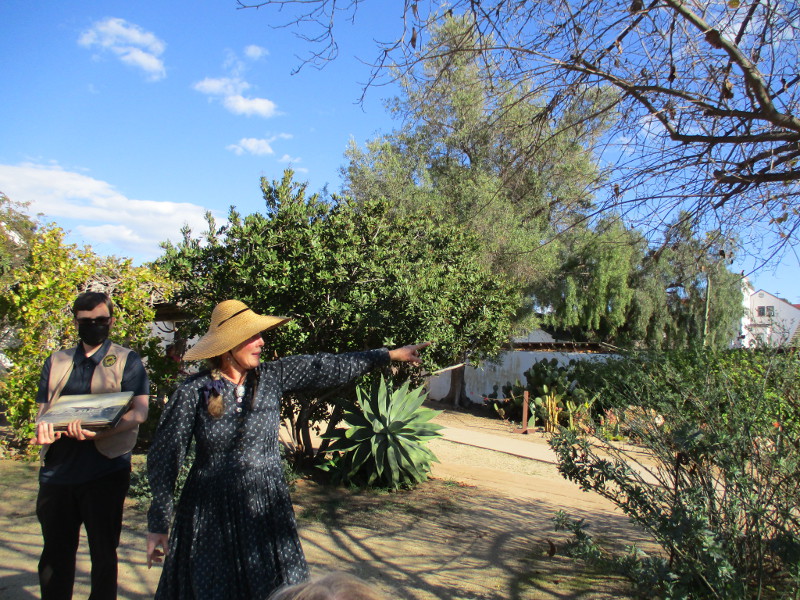
During the ups and downs of this long COVID-19 pandemic, Old Town San Diego State Historic Park’s indoor museums have been mostly closed. But I learned today that outdoor “Hidden History Talks” are now being held free to the public on Fridays, Saturdays and Sundays at 2 pm.
There are several interesting locations in the State Park where the talks might be held, including the courtyard of the Casa de Estudillo and the donkey pen behind Seeley Stable. Visitors to the park should watch for signs indicating where that day’s free history talk will be.
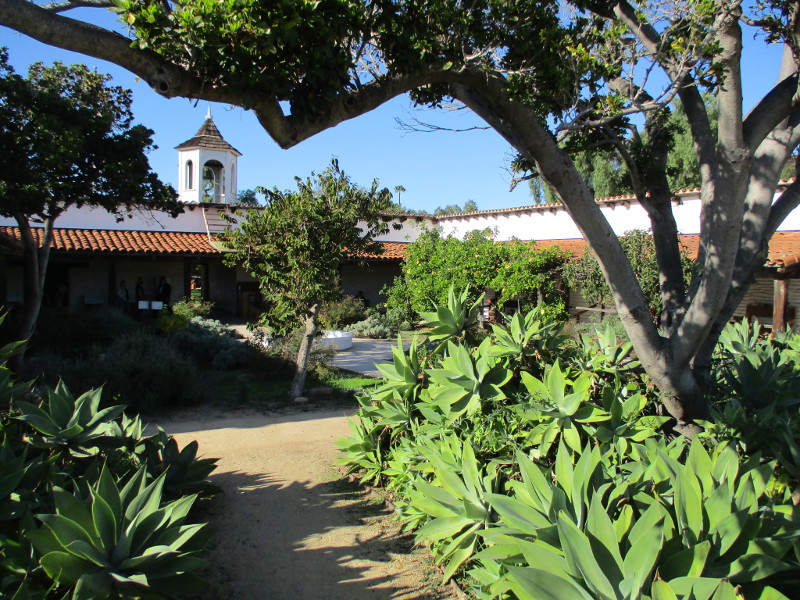
Today I sat on a bench in the beautiful Casa de Estudillo garden and listened to a California State Parks employee talk about the remarkable biodiversity in San Diego, which is partly attributed to the importation of plants and trees by Spanish missionaries, settlers, traders, and early civic visionaries like Kate Sessions.
The garden at the Casa de Estudillo is a sort of microcosm of this biodiversity.
Trees and shrubs were pointed out on all sides, and explanations were made of why they had been planted here–many a century and a half ago. Curious eyes turned this way and that at the mention of pepper and olive trees, pomegranates, and loquat, mulberry, pecan and walnut trees. And many others!
Among the things we learned was that small pepper trees from Spain, newly planted around Old Town’s plaza, had to be protected from roaming cattle. A century and a half later those pepper trees are huge and beautiful!
Everything we learned was fascinating.
I was told that eventually the normal walking tours should return to Old Town San Diego State Historic Park, but it all depends on the COVID-19 pandemic’s trajectory and public health orders.
If you’d like an idea of what the regular one hour walking tours are like, click here!
…
I live in downtown San Diego and love to walk around with my camera! You can follow Cool San Diego Sights via Facebook or Twitter!
Events that I recorded five years ago seem to have happened yesterday. It’s time to review some of the more interesting things I photographed back in January 2017!
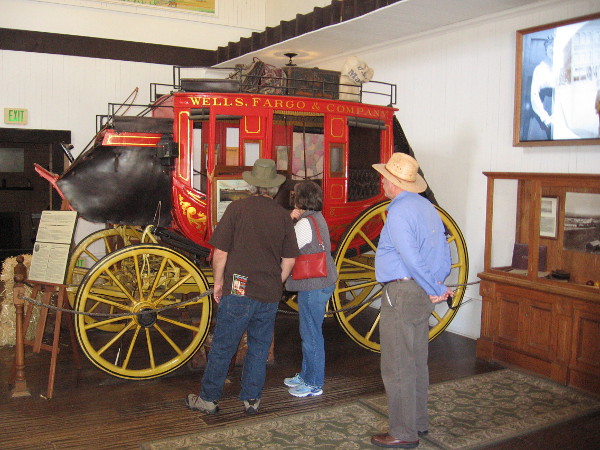
I documented a visit to the Well Fargo History Museum in Old Town. Unfortunately, this museum was closed down by Wells Fargo. I’m told the Colorado House building which the museum occupied will be repurposed–possibly to showcase clothing worn during the early days of San Diego. I’m looking forward to that!
I also took photos of several festive events, including that year’s MLK Day Parade, Mormon Battalion Commemoration Day, and San Diego Tet Festival in Mira Mesa.
If you’d like to revisit fascinating old posts on Cool San Diego Sights, click the upcoming links!
This blog now features thousands of photos around San Diego! Are you curious? There’s lots of cool stuff to check out!
Here’s the Cool San Diego Sights main page, where you can read the most current blog posts. If you’re using a phone or small mobile device, click those three parallel lines up at the top–that opens up my website’s sidebar, where you’ll see the most popular posts, a search box, and more!
To enjoy future posts, you can also “like” Cool San Diego Sights on Facebook or follow me on Twitter.
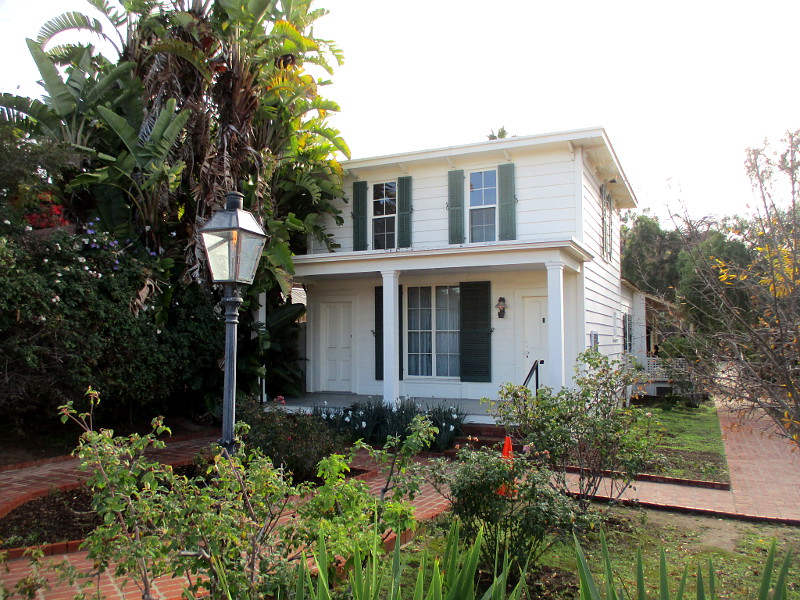
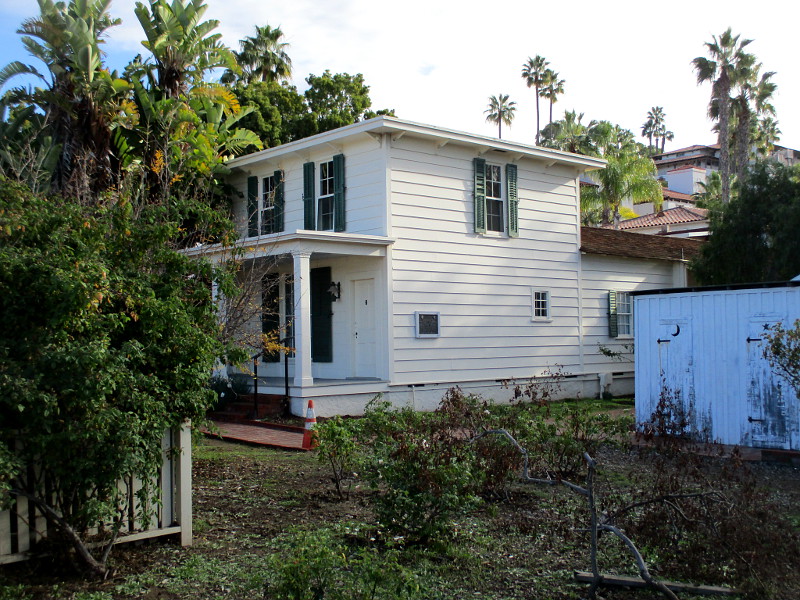
One of San Diego’s most famous houses stands in Old Town at 4015 Harney Street. It’s a modest little structure that you might easily pass by without a second glance.
For a couple of years, 1853-1854, the Derby-Pendleton House was the home of Lieutenant George Horatio Derby, an American humorist who wrote articles for California newspapers, including the San Diego Herald, under the pseudonyms Squibob and John Phoenix. It is said his style of writing, employing absurdity, exaggeration, irreverence and good fun, inspired Mark Twain, Artemus Ward, Bret Harte and others.
Derby’s Wikipedia page states: According to the newly (2010) published Autobiography of Mark Twain, Vol. One, Ulysses S. Grant was a classmate of “Squibob’s” and the General told Twain some stories of Squibob at West Point.
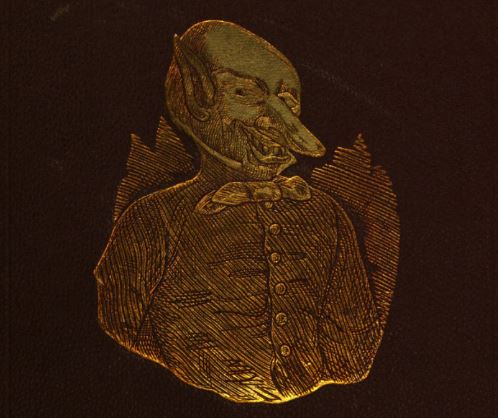
In 1856 Derby’s immensely popular book Phoenixiana was published. It contains many of his humorous pieces, including articles he wrote concerning San Diego. I like the gentle humor of his description of Old Town’s Fourth of July in 1854. It is found on page 123: At 9 A.M. precisely, the San Diego Light Infantry, in full uniform, consisting of Brown’s little boy, in his shirt-tail, fired a national salute with a large bunch of fire-crackers. This part of the celebration went off admirably; with the exception of the young gentleman having set fire to his shirt tail, which was fortunately immediately extinguished without incident.
Why was Lt. George H. Derby, a West Point graduate and engineer of the United States Topographical Corps, in San Diego? To survey the San Diego River and build a dike that would divert its water into False Bay–now Mission Bay.
While in San Diego, he and his wife rented a prefabricated house that was originally brought by ship around Cape Horn. Learn all about the Derby-Pendleton House’s complex history here. It has had many owners, including William Heath Davis and Don Juan Bandini, and has been moved repeatedly.
You can see an historical marker concerning Derby Dike here. You might note that the marker was placed by Squibob Chapter, E Clampus Vitus.
The San Diego chapter of E Clampus Vitus, “a fraternal organization dedicated to the preservation of the heritage of the American West,” is named after Derby’s pseudonym, Squibob. The motto of Clampers is Credo Quia Absurdum, which purportedly means “I believe it because it is absurd.”
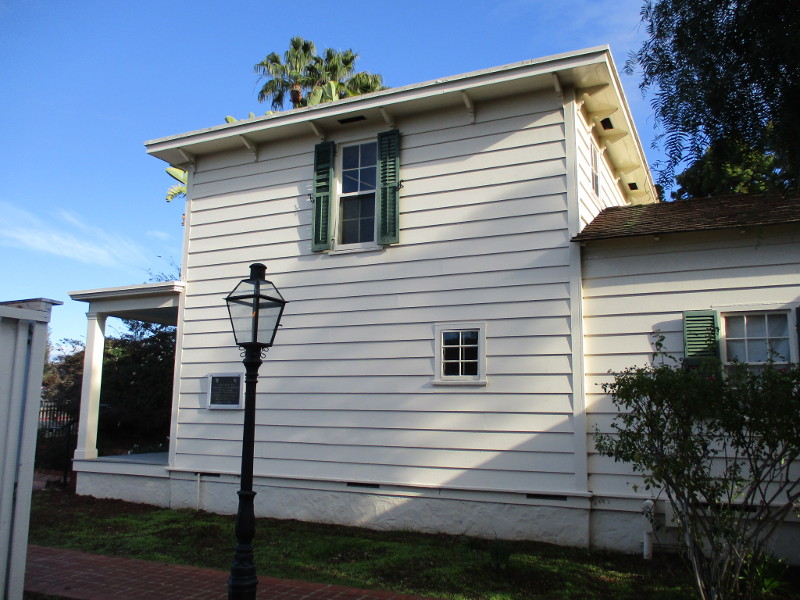
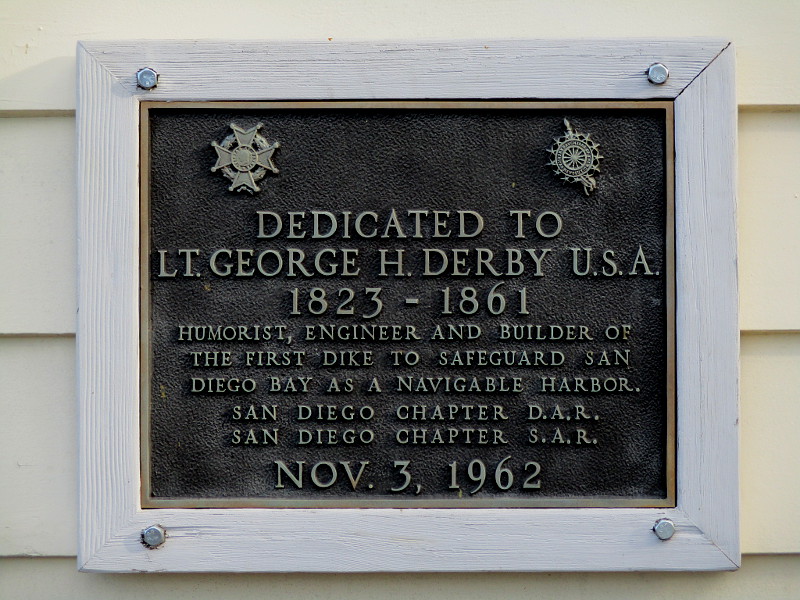
In 1962 an historical plaque was placed on The Derby-Pendleton House by the San Diego chapters of the Sons of the American Revolution and Daughters of the American Revolution. I took a photo of it yesterday.
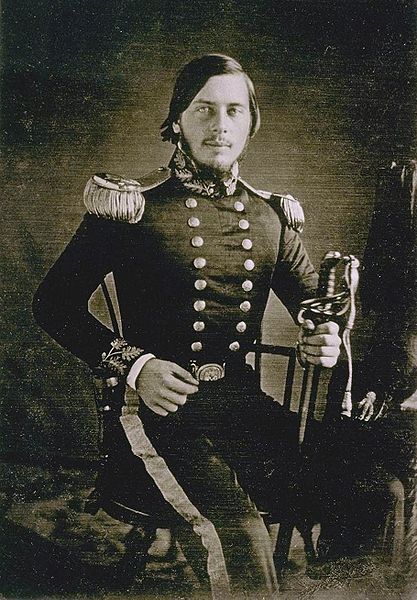
Public domain photo of Lieutenant George Horatio Derby.
From the book cover of Phoenixiana.
…
I live in downtown San Diego and love to walk around with my camera! You can follow Cool San Diego Sights via Facebook or Twitter!
You can easily explore Cool San Diego Sights by using the search box on my blog’s sidebar. Or click a tag! There are thousands upon thousands of photos for you to enjoy!
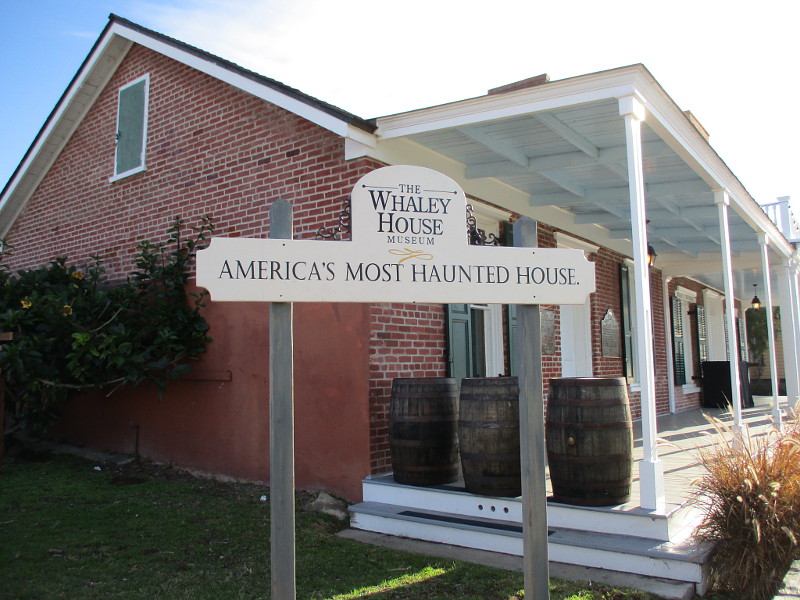
The Whaley House in San Diego’s historic Old Town is widely considered to be America’s most haunted house.
I found out today that even a world-famous haunted house can be greatly improved!
As I walked around The Whaley House Museum, I noticed workers constructing new outdoor pathways. When I asked, I was told the improved paths will now be ADA compliant. I also learned the historic structure has a new coat of paint and that several of the exhibits inside, including the kitchen, have been recently altered and made even more intriguing! And, yes, that sign in the above photo is new, too!
Sounds like another visit is required!
Over four years ago I took a tour of the Whaley House, whose rich history might actually be more interesting than all the supposed ghost sightings. If you’d like to see inside photos and learn more about the Whaley House, including why it is so famous, check out that old blog post here!
…
I live in downtown San Diego and love to walk around with my camera! You can follow Cool San Diego Sights via Facebook or Twitter!
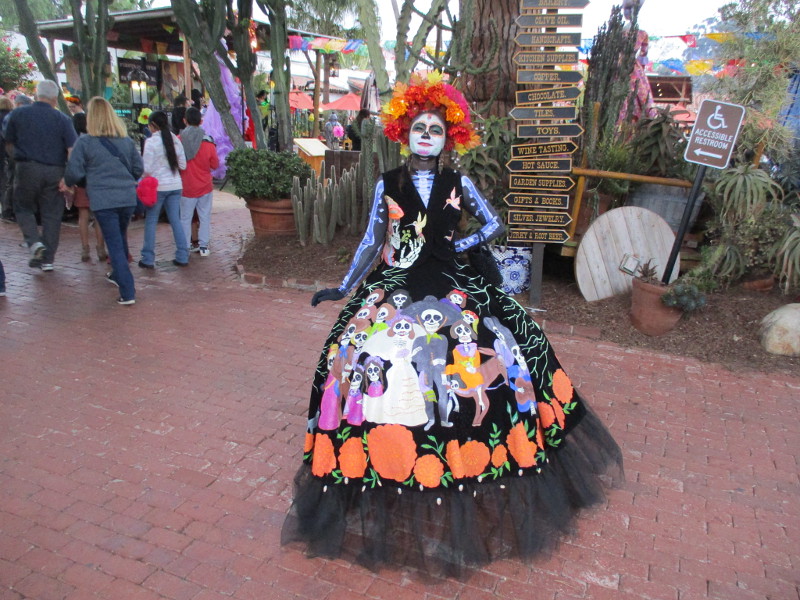
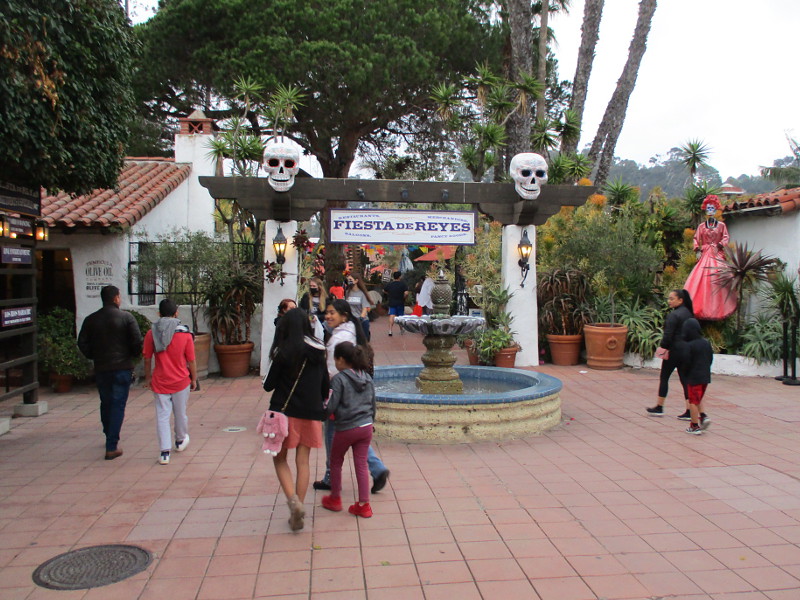
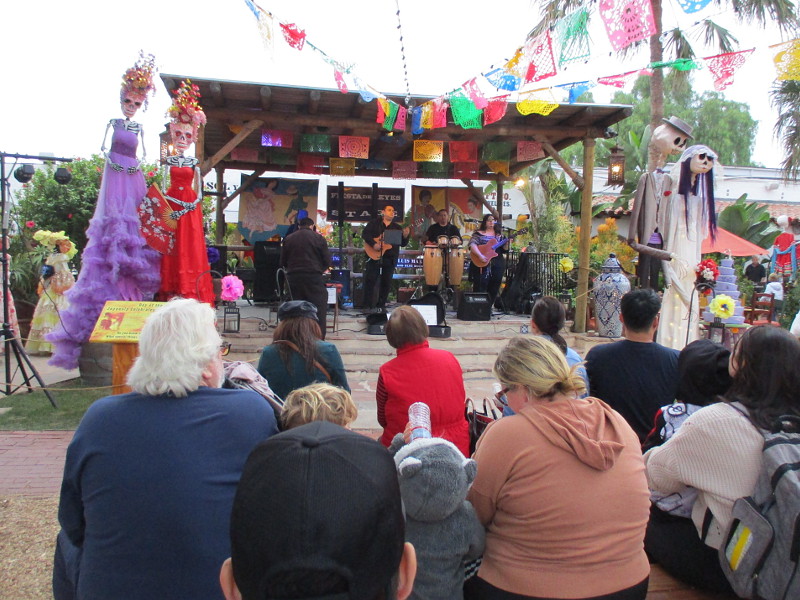
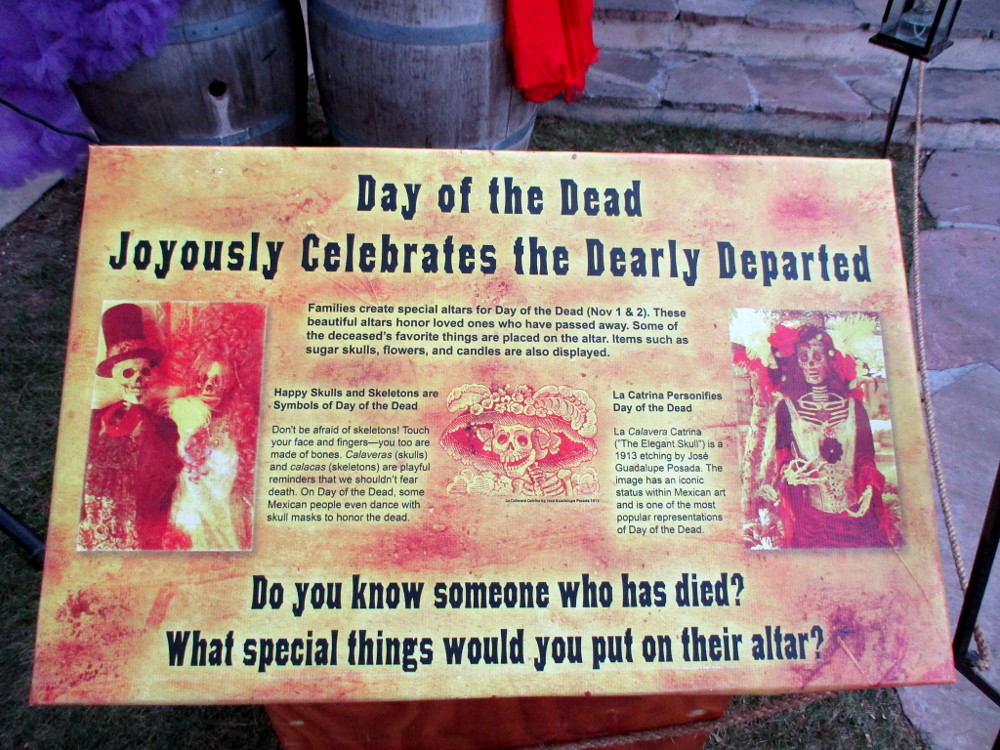
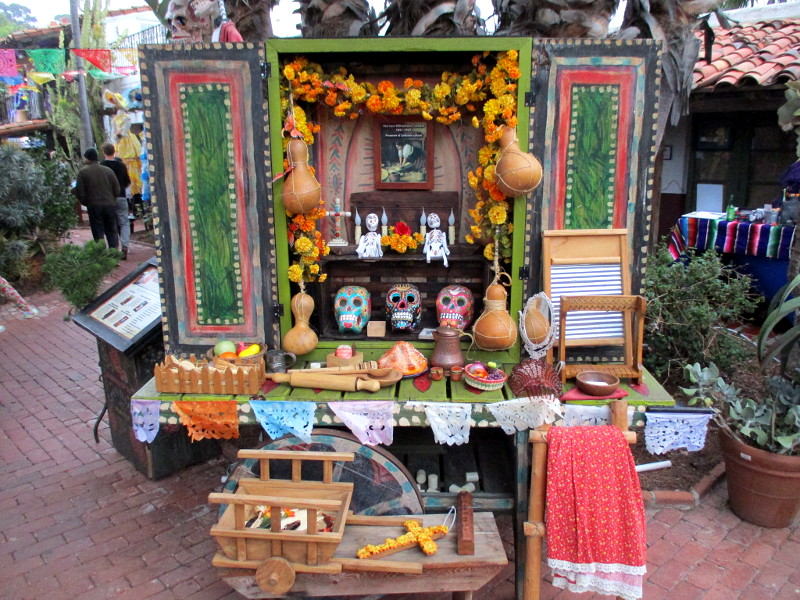
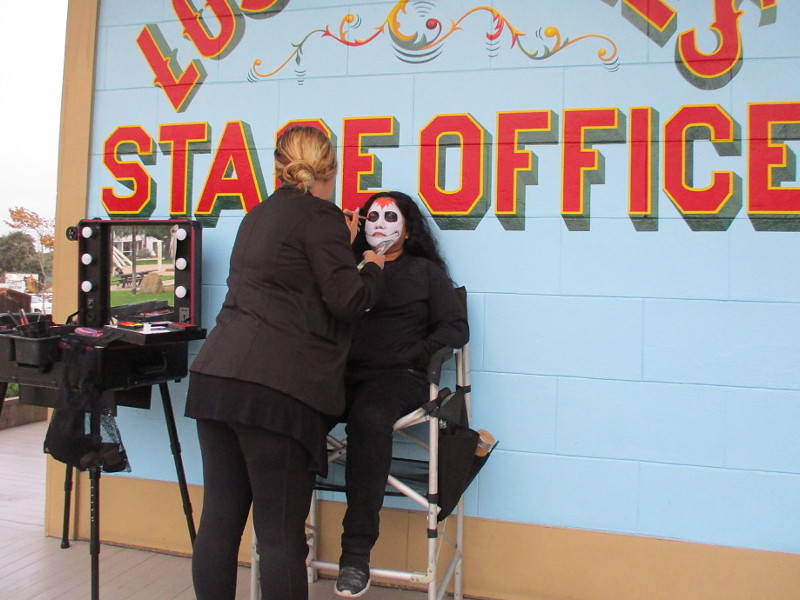
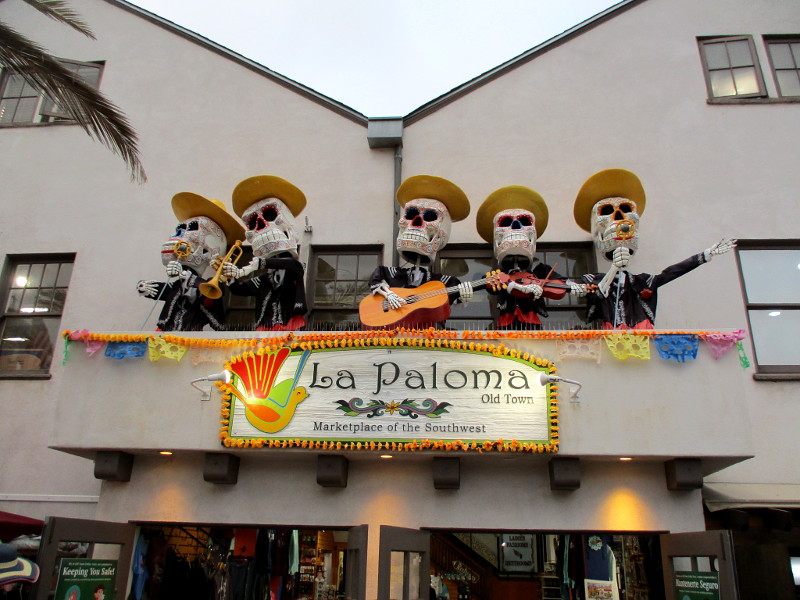
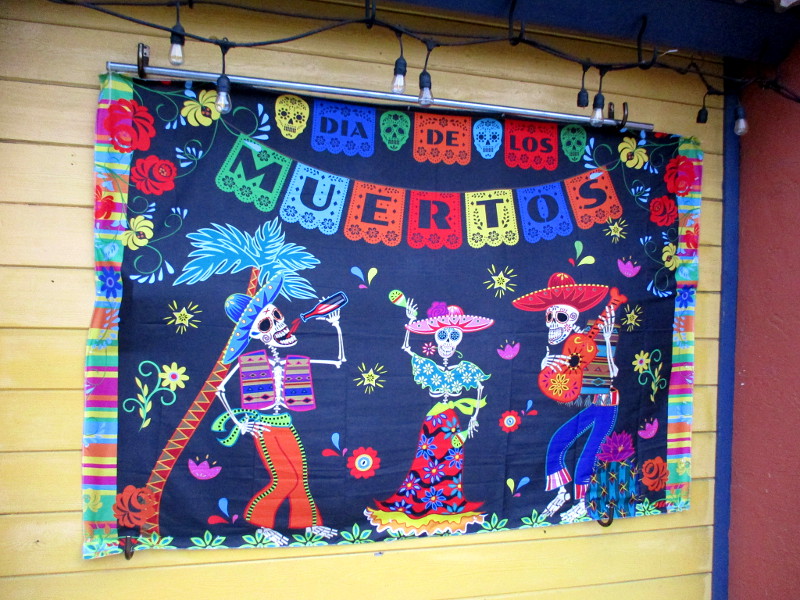
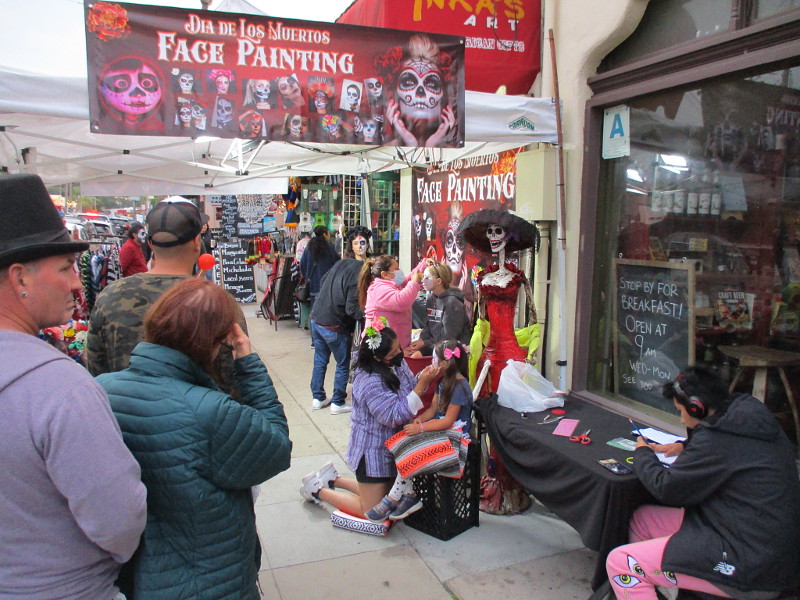
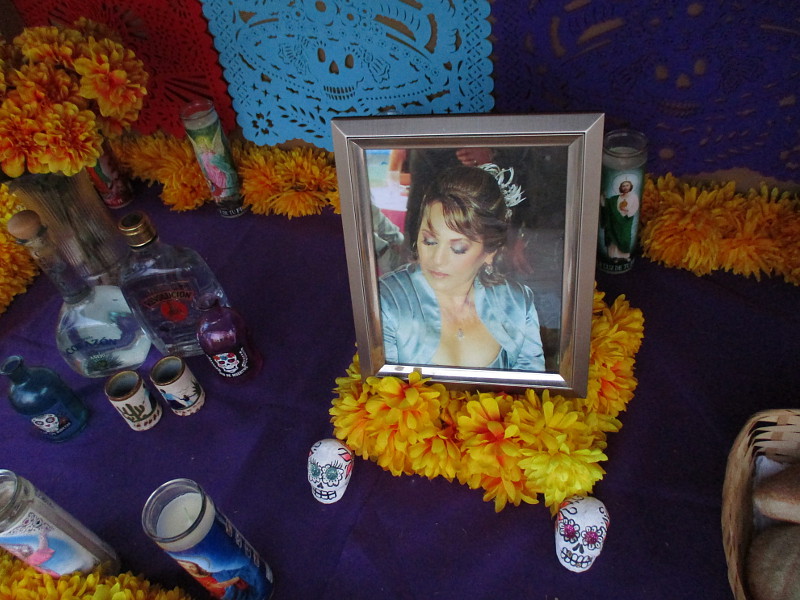
Today many are celebrating Día de los Muertos–Mexico’s traditional Day of the Dead. It is a time when departed loved ones are remembered and honored.
Early this evening I took a short walk around Old Town San Diego to see what I might see.
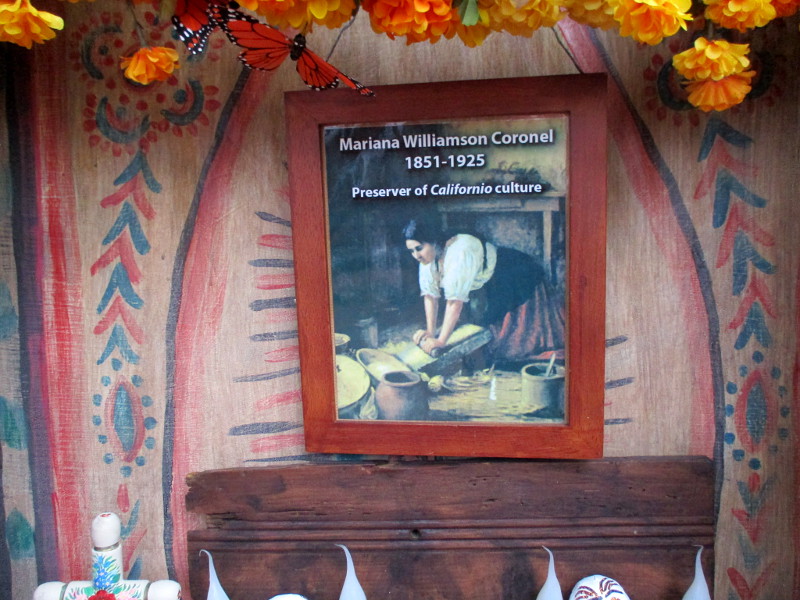
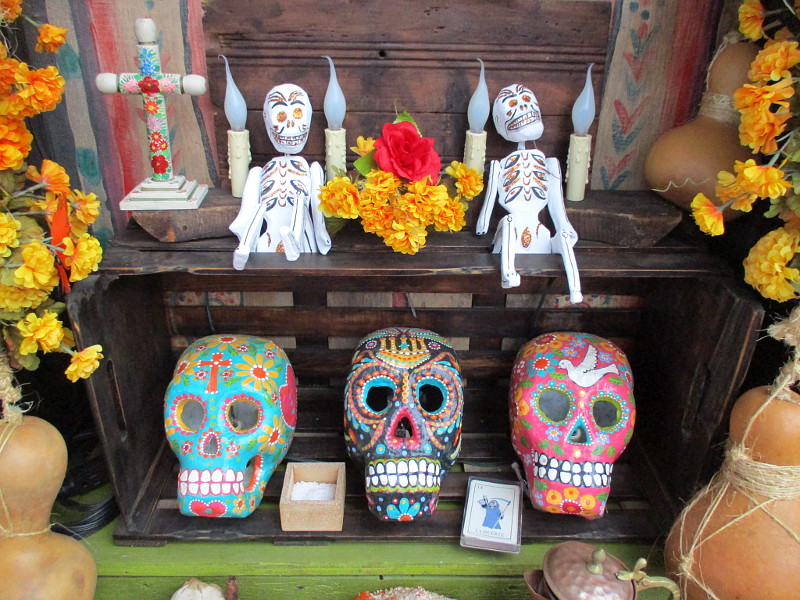
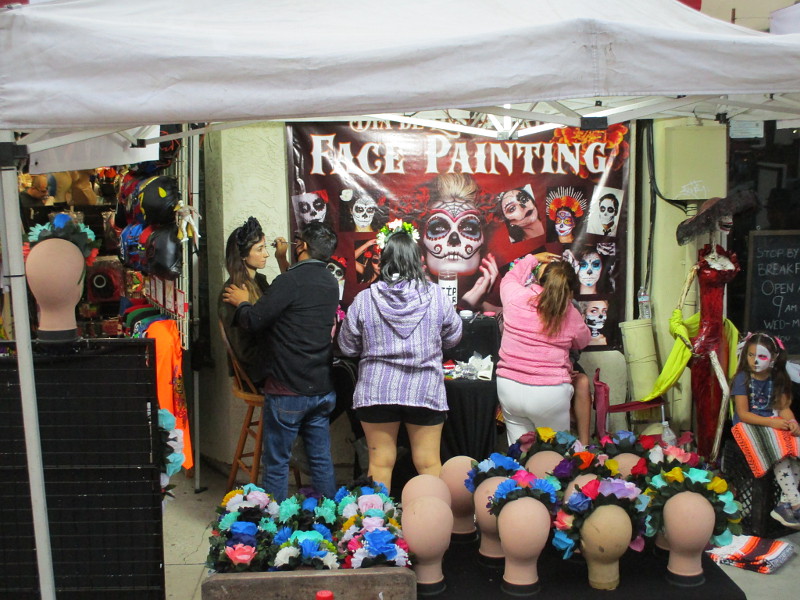
Many are still cautious because of the COVID-19 pandemic, so there wasn’t the usual crowd and activities. But I did find music and colorful Catrinas at Fiesta de Reyes, and sugar skull face painting at a few spots in the State Park and along San Diego Avenue. I also came across a couple of Día de los Muertos altars.
These are my photos…
…
I live in downtown San Diego and love to walk around with my camera! You can follow Cool San Diego Sights via Facebook or Twitter!
You can easily explore Cool San Diego Sights by using the search box on my blog’s sidebar. Or click a tag! There are thousands upon thousands of photos for you to enjoy!
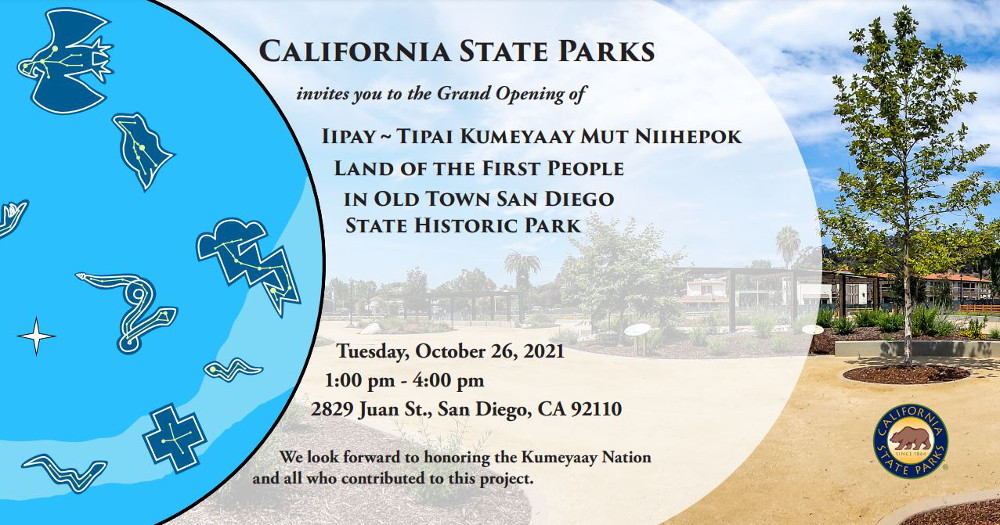
I just received the above information. There will be a Grand Opening of Old Town San Diego State Historic Park’s recently completed expansion!
The new outdoor interpretive area, which I visited yesterday and blogged about here, is called Iipay ~ Tipai Kumeyaay Mut Niihepok, Land of the First People. It’s a beautiful place, with winding walkways and public art and displays concerning the history and culture of the Native American Kumeyaay. These First People have lived in our region for thousands of years, long before European explorers arrived.
The big Grand Opening is scheduled for Tuesday, October 26, 2021, and will take place between 1 pm and 4 pm.
Kumeyaay bird singers will perform during the historic Grand Opening ceremony!
If you plan to go, look for the large park-like space full of trees and native greenery, at the corner of Taylor Street and Juan Street!
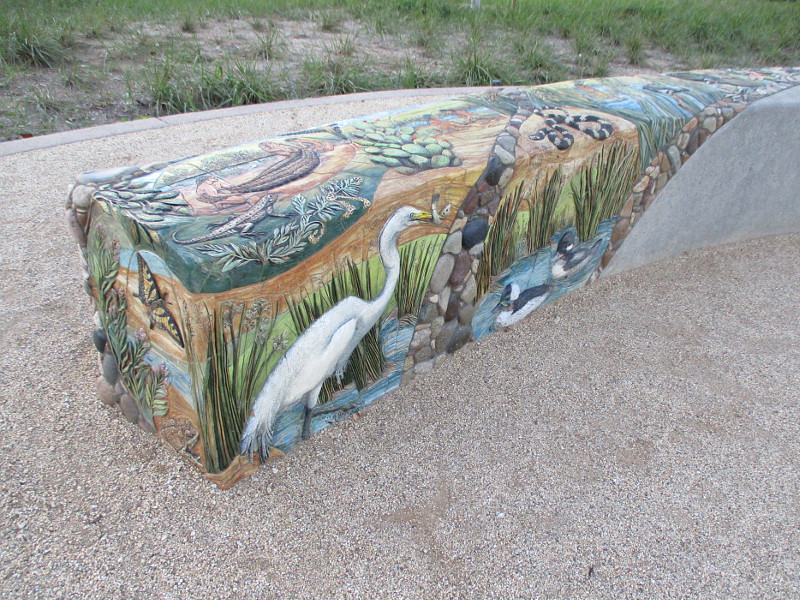
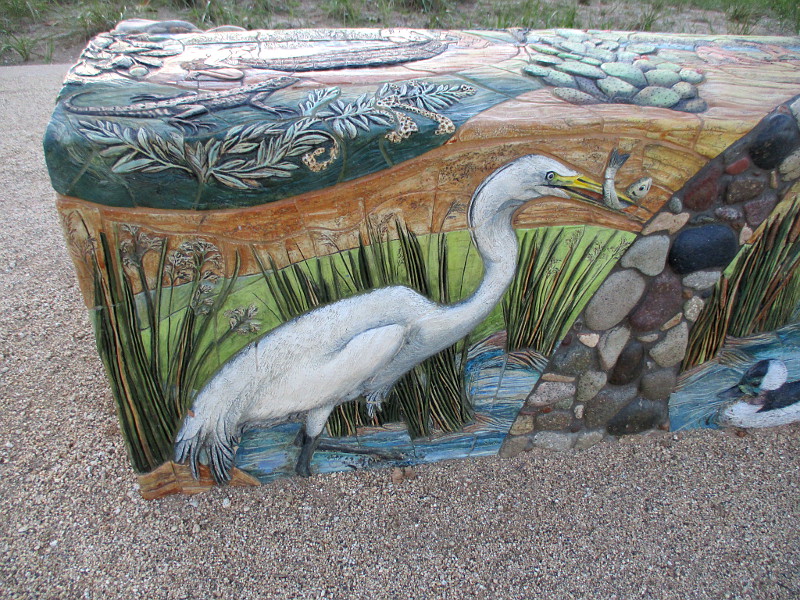
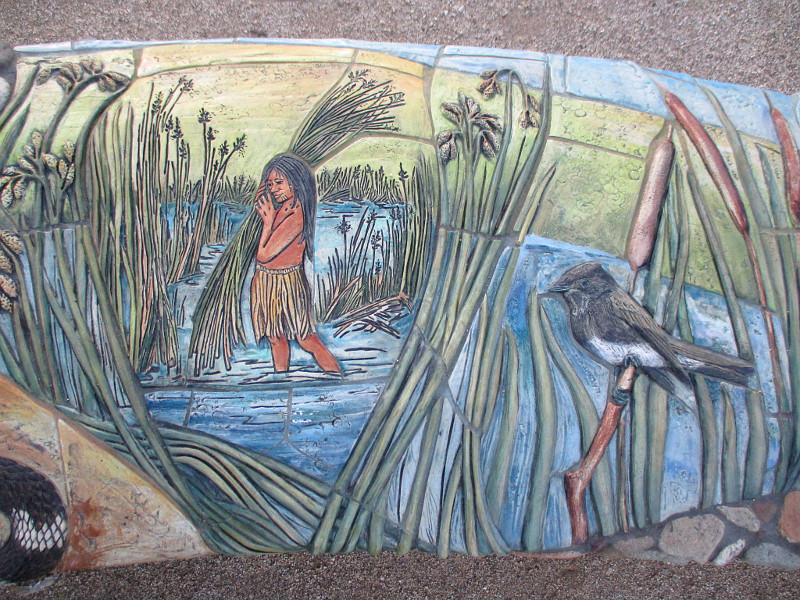
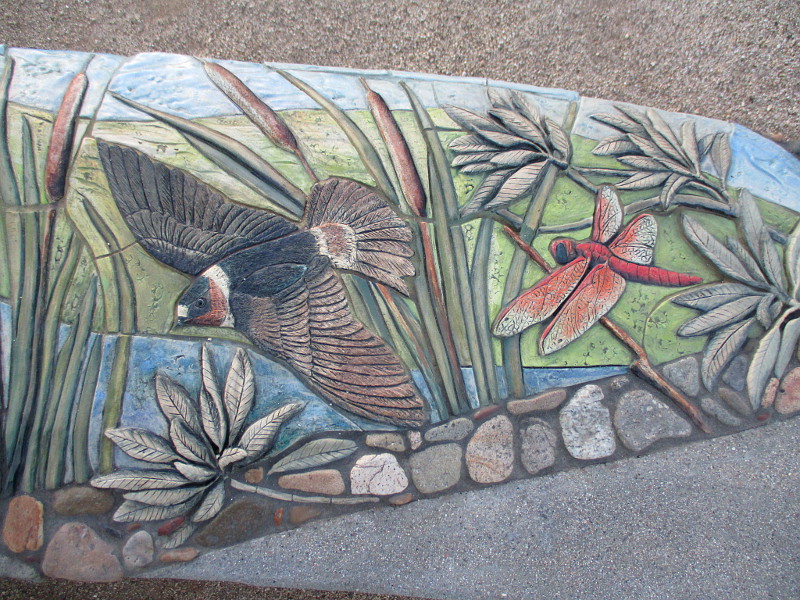
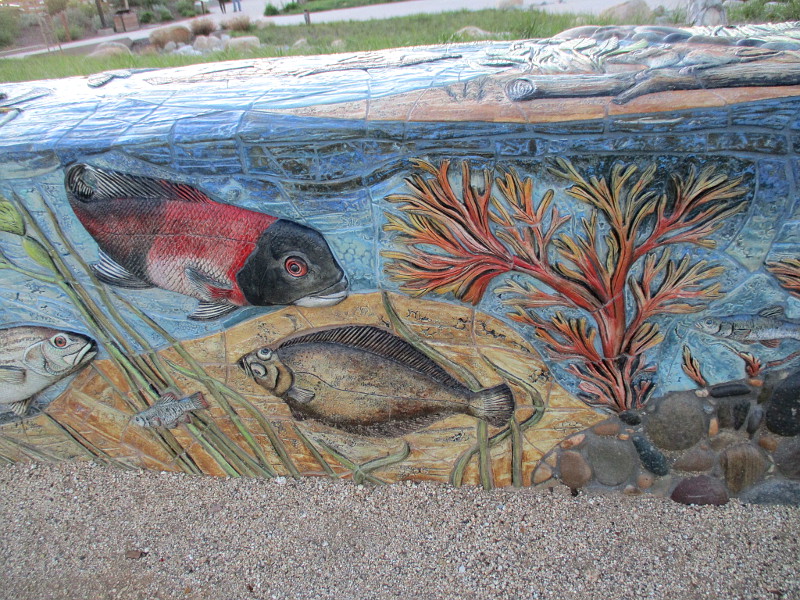
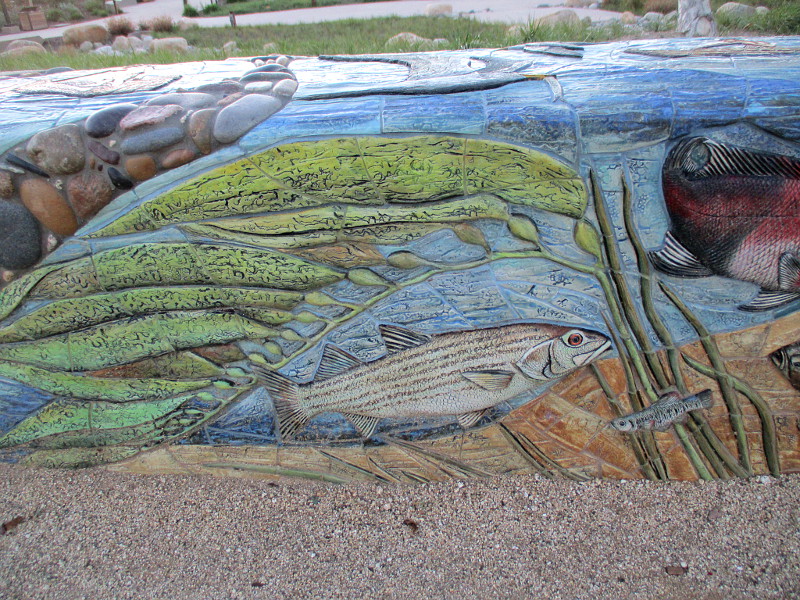
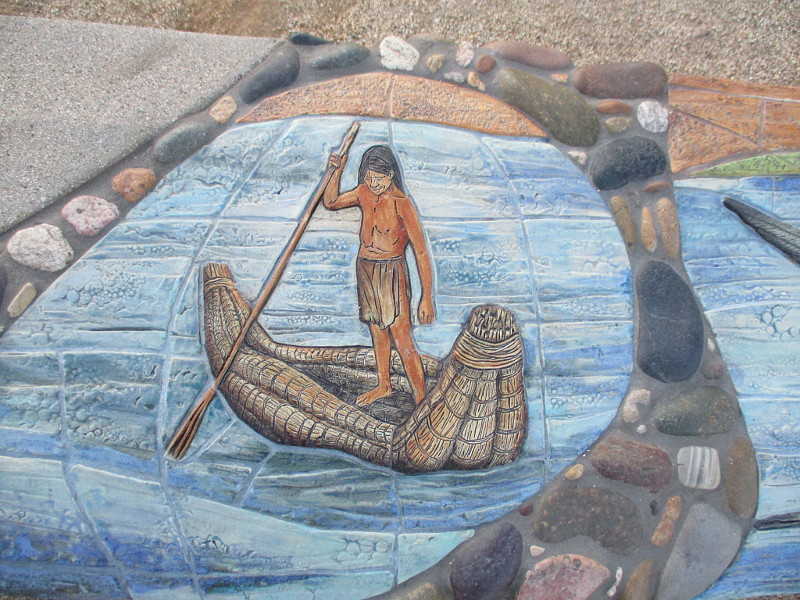
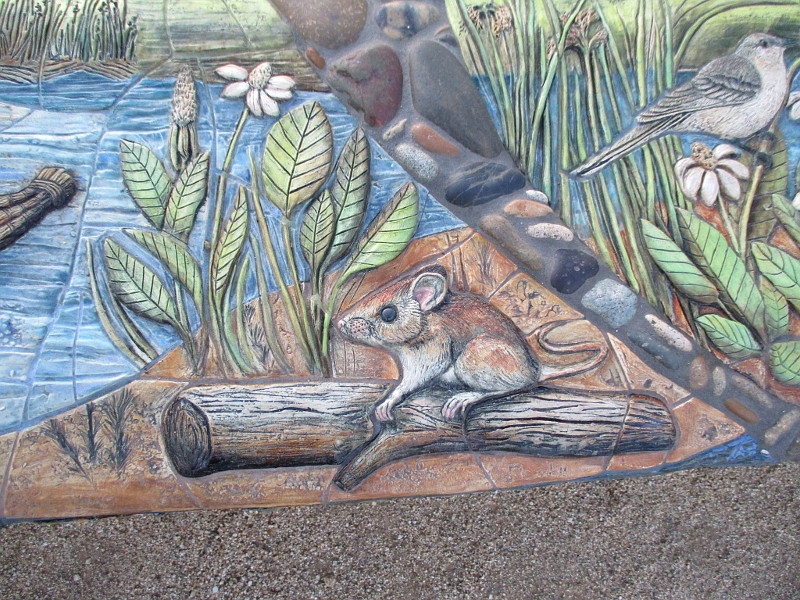
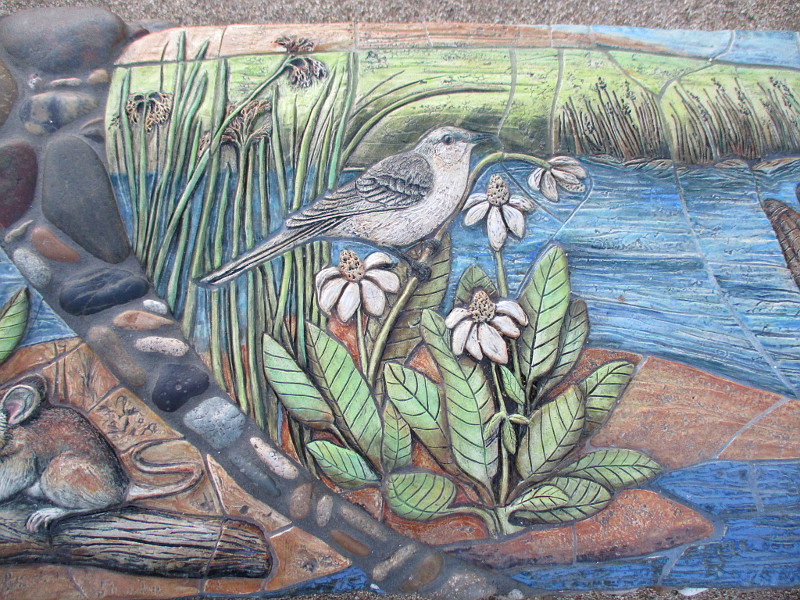
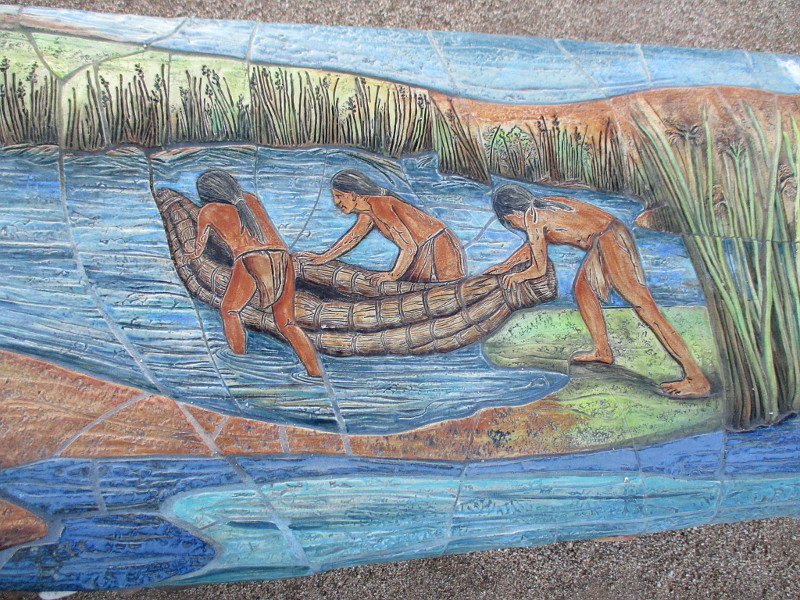
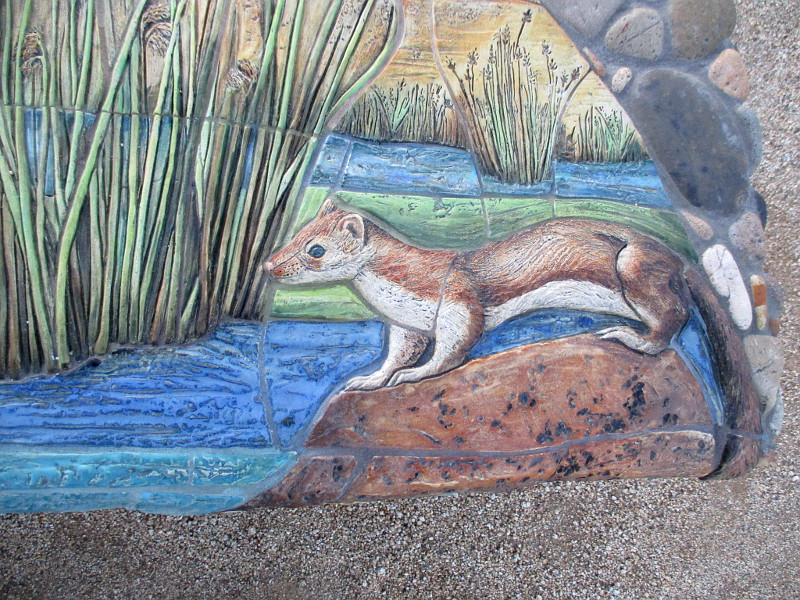
Extraordinary new public art has been unveiled in Old Town San Diego State Historic Park!
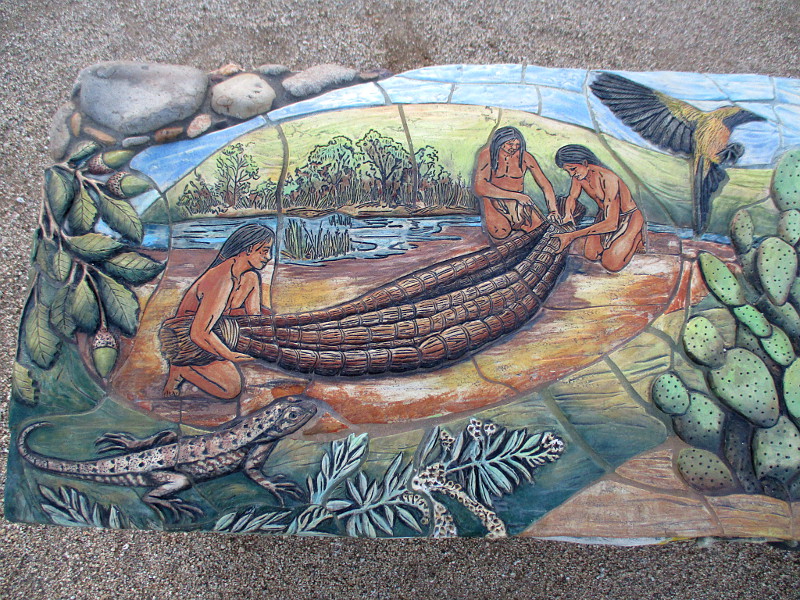
Two benches in the park’s recently opened outdoor expansion, which is called Land of the First People, feature beautiful mosaics that honor the Native American Kumeyaay and the world of nature.
Once you look at the following photographs, you’ll likely agree these ceramic mosaics are exceptional. They were created by local artist Betsy K. Schulz.
The two interpretive benches contain images of the Kumeyaay people in our region, fishing, collecting reeds, paddling boats and living by a river, among birds, fish and other native wildlife.
If you’d like to see more stunning public art around San Diego that was created by Betsy K. Schulz, click here.
These images were captured yesterday evening just before nightfall. I took additional photographs of this newly opened area of Old Town San Diego State Historic Park, and posted them here.
…
I live in downtown San Diego and love to walk around with my camera! You can follow Cool San Diego Sights via Facebook or Twitter!
You can easily explore Cool San Diego Sights by using the search box on my blog’s sidebar. Or click a tag! There are thousands upon thousands of photos for you to enjoy!



















 Cool San Diego Sights!