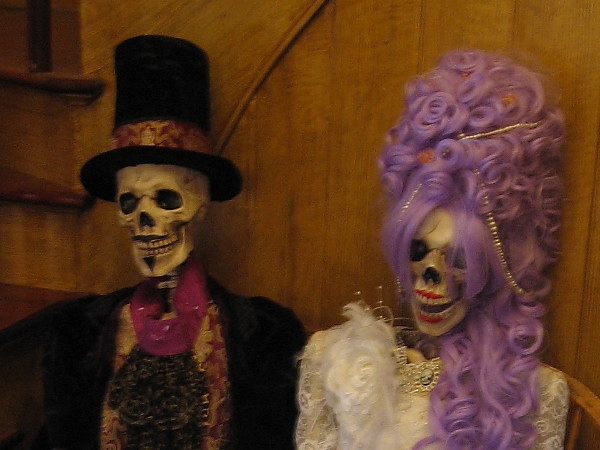
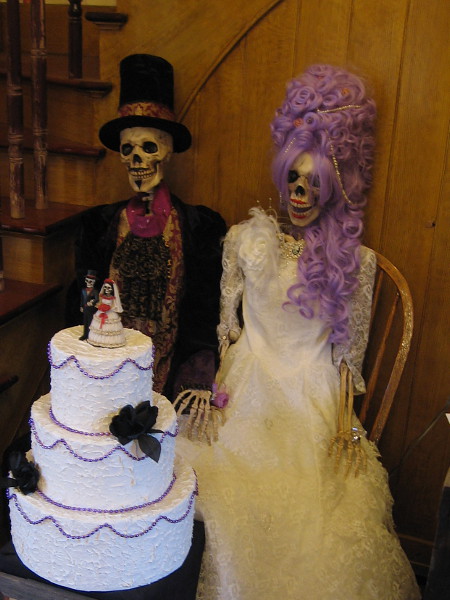
Two elegantly dressed skeletons have been discovered seated inside the front entrance of the Cosmopolitan Hotel in Old Town.
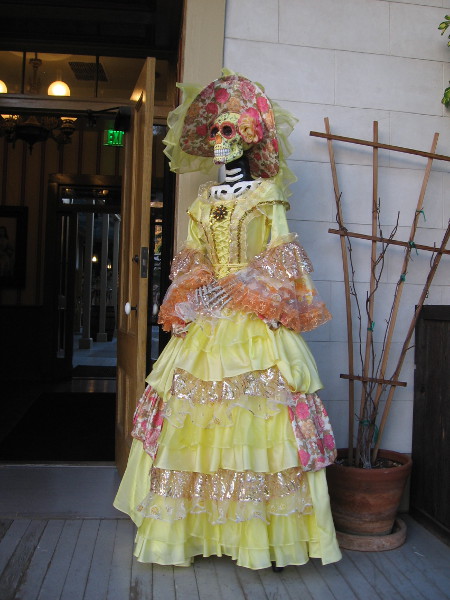
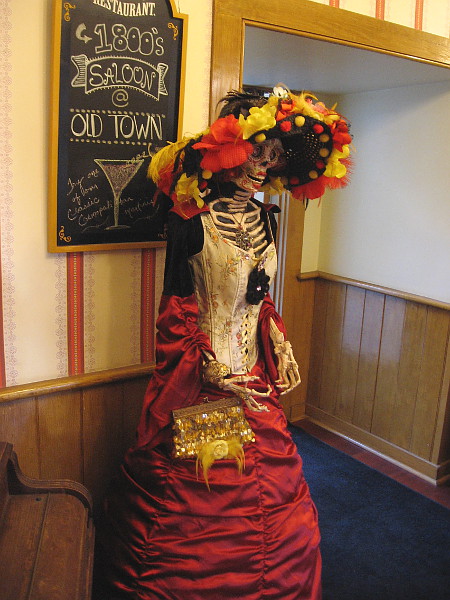
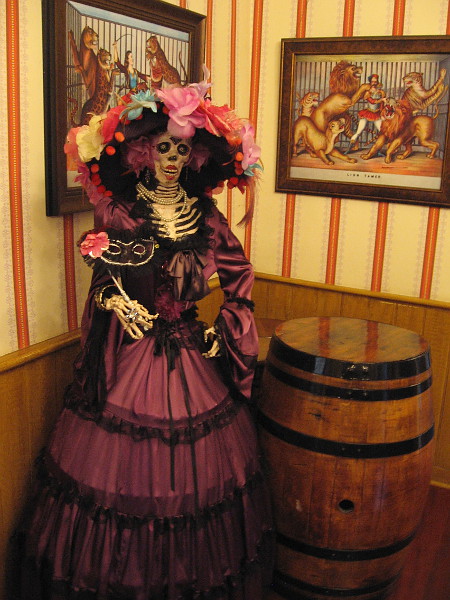
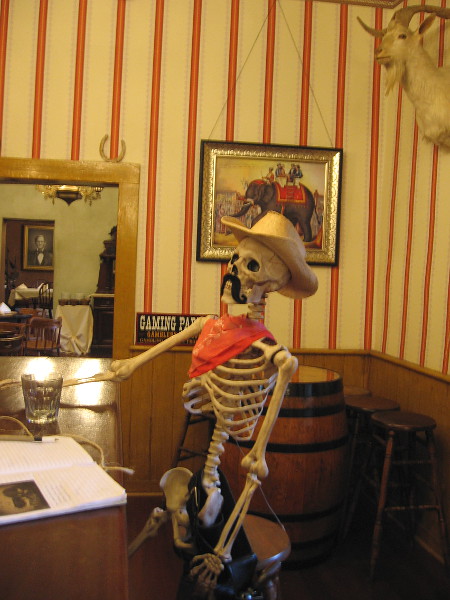
I was stunned to observe that a large number of skeletons have been discovered in an old San Diego hotel. The Cosmopolitan Hotel, to be exact. The elegantly dressed skeletons, wearing frilly dresses or top hats, were seen standing about the hotel’s entrance, in the saloon, even seated on chairs behind a large wedding cake.
Huh?
I’m just having a bit of fun! The Cosmopolitan Hotel is part of Old Town, and dozens of elegantly dressed skeletons appear in Old Town San Diego State Historic Park every year as Día de los Muertos approaches.
Día de los Muertos, or Day of the Dead, is actually a celebration of ancestors and loved family members who have passed away. In Mexico, the deceased are remembered and prayed for, and certain joyful traditions are observed. One unusual tradition is derived from La Calavera Catrina, a famous etching by Mexican artist José Guadalupe Posada, which depicts a female skeleton dressed in a fancy hat. Even though the image was originally created as satire, the Catrina has become a familiar sight in many places where Día de los Muertos is observed.
I snapped these photos at the historic Cosmopolitan Hotel in Old Town. The original building dates back to the late 1820s, when the wealthy Californio cattle rancher Juan Bandini built a “mansion” among the simple adobes in Old Town. When Bandini’s fortunes faded, he sold the house to Albert Seeley in 1869, who built a second story and converted the house into a hotel for a new San Diego stagecoach stop, which he also built nearby.
I believe I photographed a couple of the same skeletons a year or two ago, but I simply couldn’t help myself. They’re so much fun!
A covered wagon in front of the Cosmopolitan Hotel in Old Town San Diego State Historic Park.In celebration of Día de los Muertos, or Day of the Dead, two lady skeletons wearing frilly dresses greet visitors to the Cosmopolitan Hotel. Here’s one!Here’s the other!Inside the Cosmopolitan Hotel’s saloon, another lavishly elegant but skeletal customer is observed.A shy skeleton in very fancy attire stands silently in the corner of the Old West 1800s saloon.A bony customer at the bar. That must have been a stiff drink.A wedding cake for a skeleton bride and groom! Día de los Muertos is a joyful holiday that celebrates the past lives of loved ones.
…
I live in downtown San Diego and love to walk! You can follow Cool San Diego Sights via Facebook or Twitter!
You can easily explore Cool San Diego Sights by using the search box on my blog’s sidebar. Or click a tag! There are thousands upon thousands of fun photos for you to enjoy!
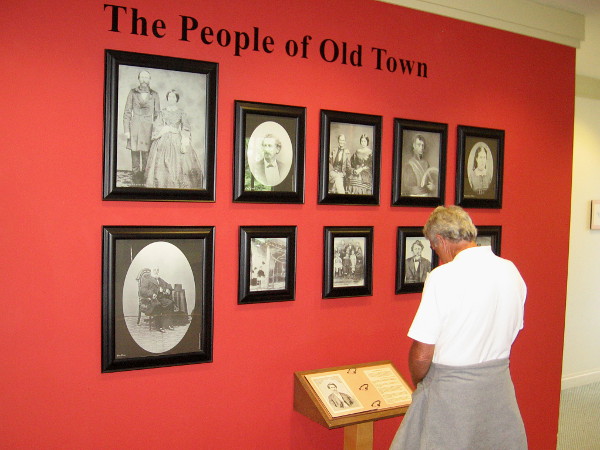
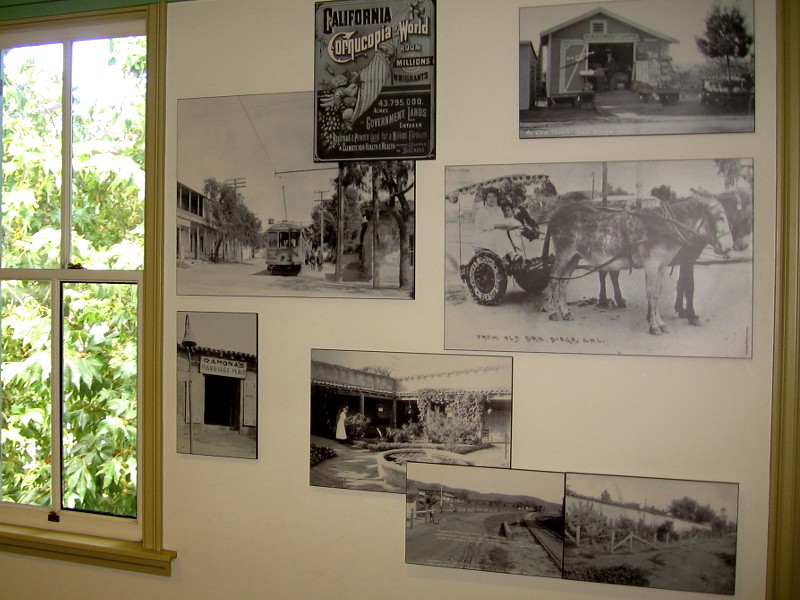
Visitor to the second floor of the McCoy House Museum learns about some notable early residents of Old Town San Diego.
Should you visit the McCoy House Museum in Old Town San Diego State Historic Park, be sure to venture up the stairs to the second floor. There you’ll discover several fascinating exhibits. In addition to old photographs of notable early residents of San Diego, you’ll find an explanation of Old Town’s gradual decline as competing New Town (the site of modern downtown San Diego) grew and became the center of government and commerce. You will also learn about Old Town’s continuing legacy, including the events that led to the creation of Old Town San Diego State Historic Park in 1968.
If you’d like to read the displays, click the images to enlarge them.
From a window on the museum’s second floor one can also look down upon the scraggly native plant garden just northwest of the McCoy House. A map near the window shows the location of Sycamore, Toyon, Oak, Cottonwood, Elderberry and Willow trees. Other native plants include Yerba Mansa, Datura, Aster, Poppy, Deerweed, Sumac, Lemonadeberry, Manzanita, Monkeyflower, different Sages, Deergrass, Prickly Pear and Yucca. Many of these plants were used by the Native American Kumeyaay in their daily lives long before explorer Juan Rodriguez Cabrillo discovered San Diego Bay in 1542.
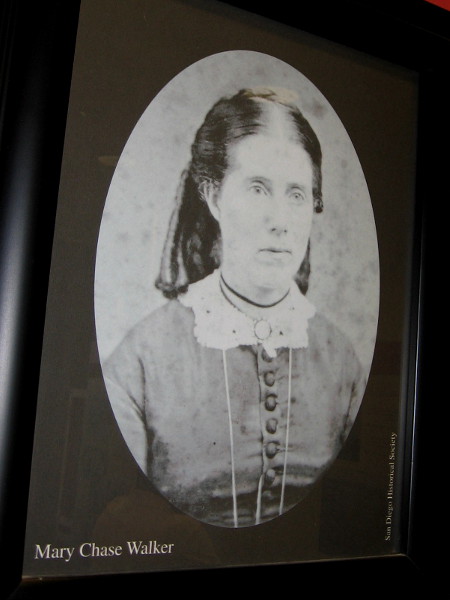
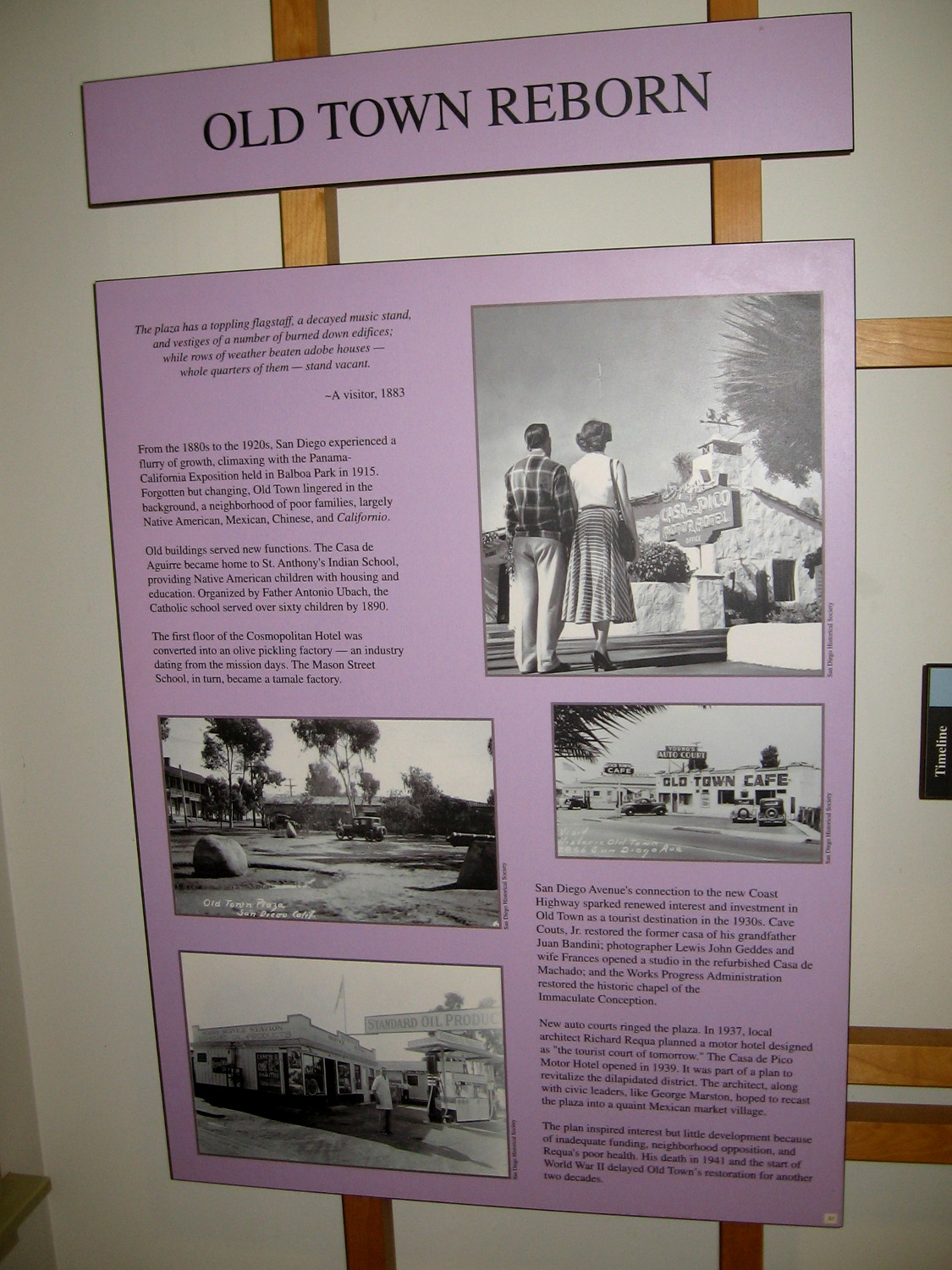
Pio Pico settled in San Diego in 1819 after the death of his father, a soldier assigned to the Presidio. Merchant and rancher, he later lived in Los Angeles and became the last governor of Mexican Alta California.In 1865, Mary Chase Walker became Old Town’s first school teacher. She taught at the one room Mason Street schoolhouse and described early San Diego as a desolate place. She went on to join the suffragette movement.Agoston Haraszthy, born in Hungary, led a fascinating life. As an American pioneer, businessman and wine expert, he became San Diego’s first town marshal and the first county sheriff.Fire devastated Old Town in 1872. At the time only one water pump existed, and it was broken. Firefighters watched helplessly. The fire and many other factors helped to bring about the rise of competing New Town.Various fascinating historical exhibits can be explored on the second floor of the McCoy House Museum in Old Town San Diego State Historic Park.In the early 20th century, neglected, ruined buildings in Old Town were fixed up and converted into tourist attractions. Entrepreneur John D. Spreckels extended his streetcar line to Old Town.Artifacts found under the rebuilt McCoy House date from the 1830’s to 1850’s. They include fragments of daily life from that eraArchaeologists analyze each find, record every detail. These objects probably came from the time when Eugenia Silvas owned this site. Family descendants still live in San Diego and are involved in Old Town’s activities.Archaeologist’s tools on display in the McCoy House Museum.Once again, Old Town became a tourist destination in the 1930’s when San Diego Avenue became connected to the new Coast Highway.Old Town languished during World War II. After the war, some suggested setting aside Old Town as a historic community. In 1968, Old Town San Diego became a state historic park.Photographs in the McCoy House Museum recall Old Town San Diego’s colorful past.
…
I live in downtown San Diego and love to walk! You can follow Cool San Diego Sights via Facebook or Twitter!
You can easily explore Cool San Diego Sights by using the search box on my blog’s sidebar. Or click a tag! There are thousands upon thousands of unique photos for you to enjoy!
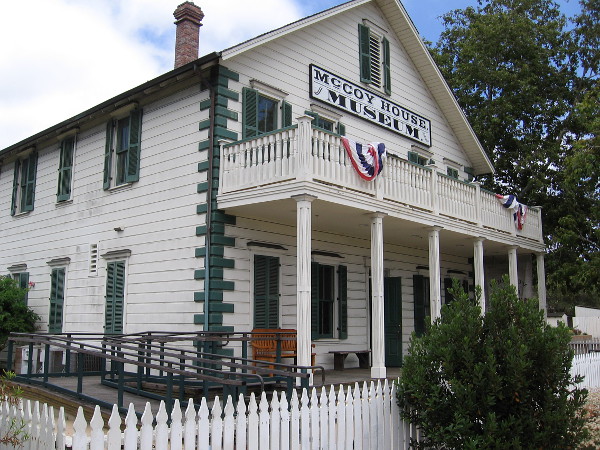
The McCoy House Museum, in Old Town San Diego State Historic Park, is a reconstruction of a home built in 1869 for Sheriff James McCoy.
While there are many small museums and historical attractions that visitors can enjoy in Old Town San Diego State Historic Park, the McCoy House Museum is the best place to see an extensive series of interpretive displays that describe the complete history of early San Diego.
The McCoy House, standing on the north end of Old Town, is a reconstruction of a home built in 1869 for Sheriff James McCoy and his family. James McCoy, who lived from 1821 to 1895, like many early San Diego residents was an ambitious man, working diverse jobs, filling many roles. At the age of 21 he sailed from Ireland to America seeking opportunity. He became a soldier, then a stagehand, then San Diego county assessor, then county sheriff in 1861. He acquired substantial real estate holdings and finally won election to the state senate in 1871.
The interpretive displays in the McCoy House Museum provide a good look back at San Diego’s formative years. They detail the life of the Native American Kumeyaay who’ve lived in the region for thousands of years, the first Spanish explorers, the establishment of the Spanish mission, the Mexican period and the subsequent American period.
If you’d like to read the displays, click my photographs to enlarge them.
This blog post covers the first floor of the museum. I’ll cover the second floor exhibits in a later post. After heading up some stairs, one can find information about the more prominent residents of Old Town, plus the town’s later history as it competed with New Town, which eventually rose to become downtown San Diego as we know it today.
Anyone who is a history buff must visit the McCoy House Museum. You’ll be transported back in time and see how life was exciting, difficult, and altogether different many, many years ago in San Diego.
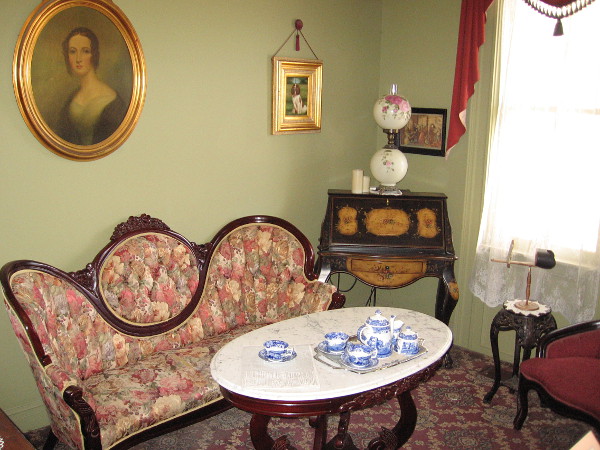
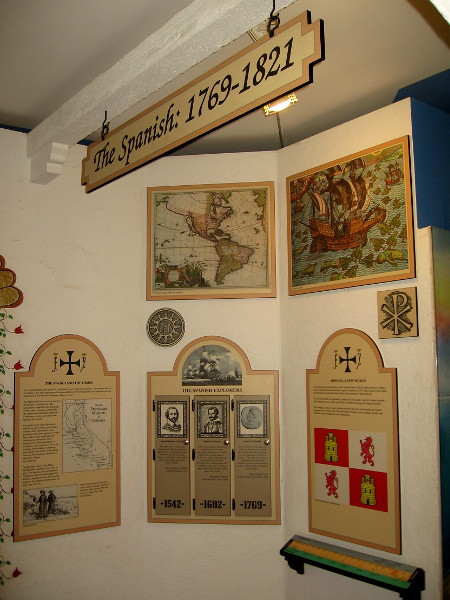
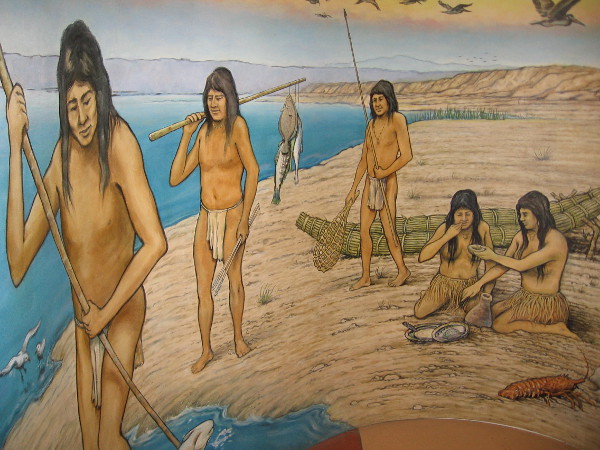
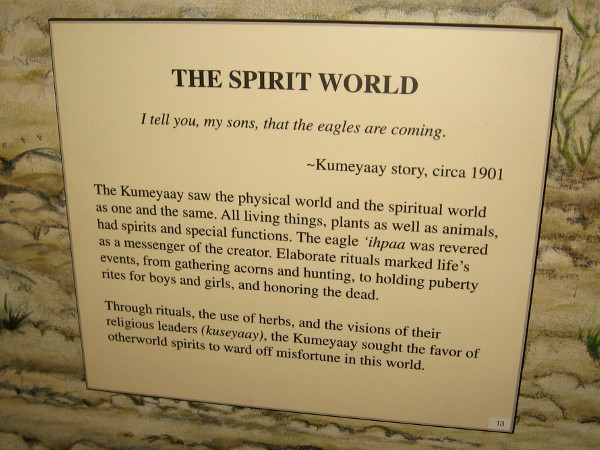
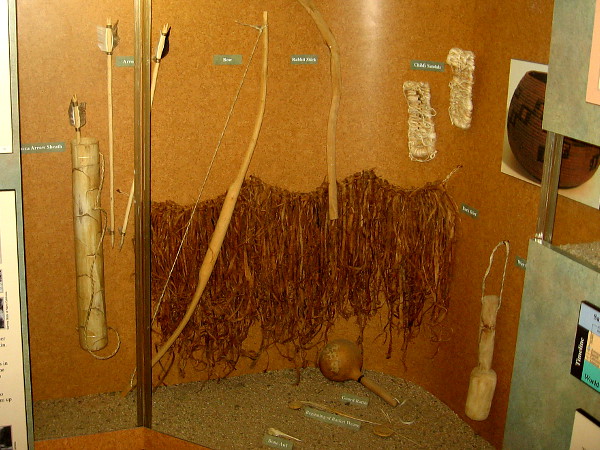
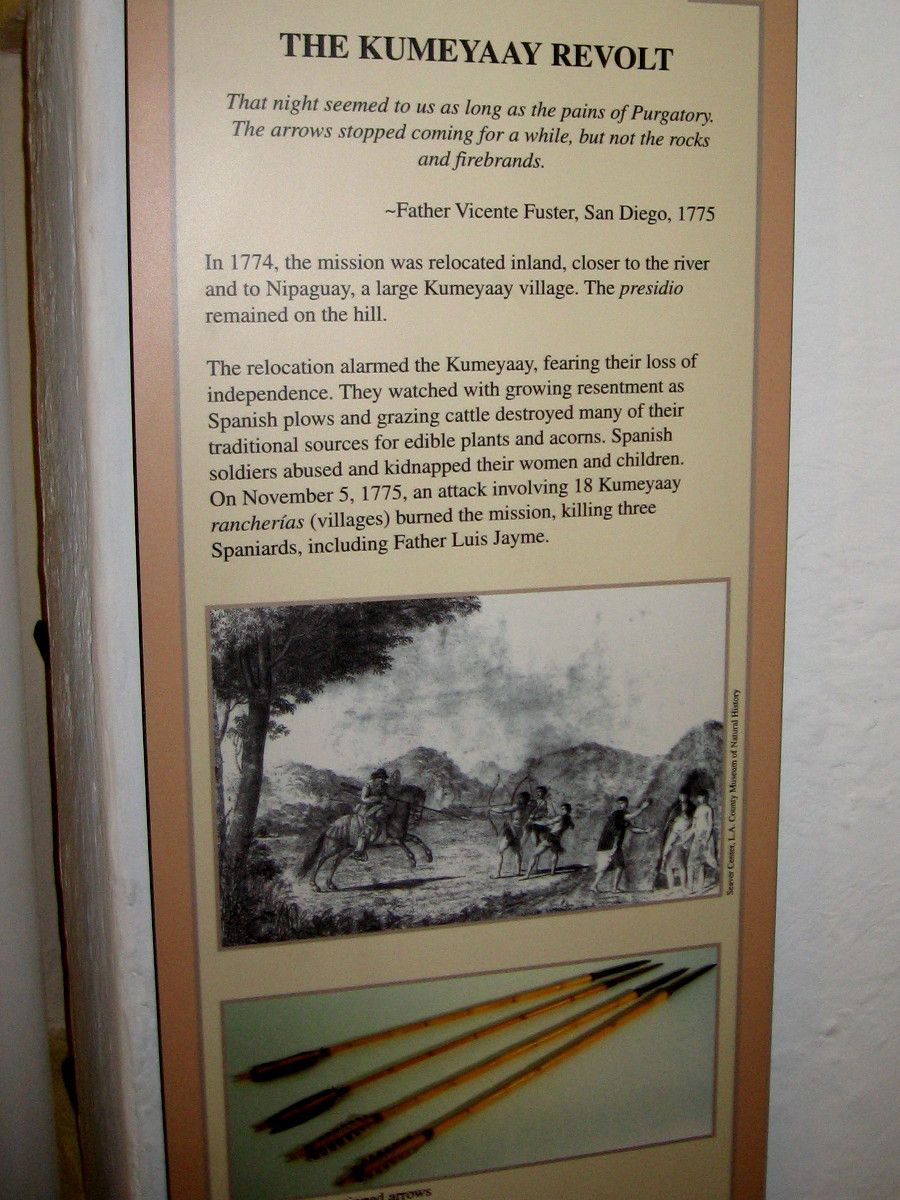
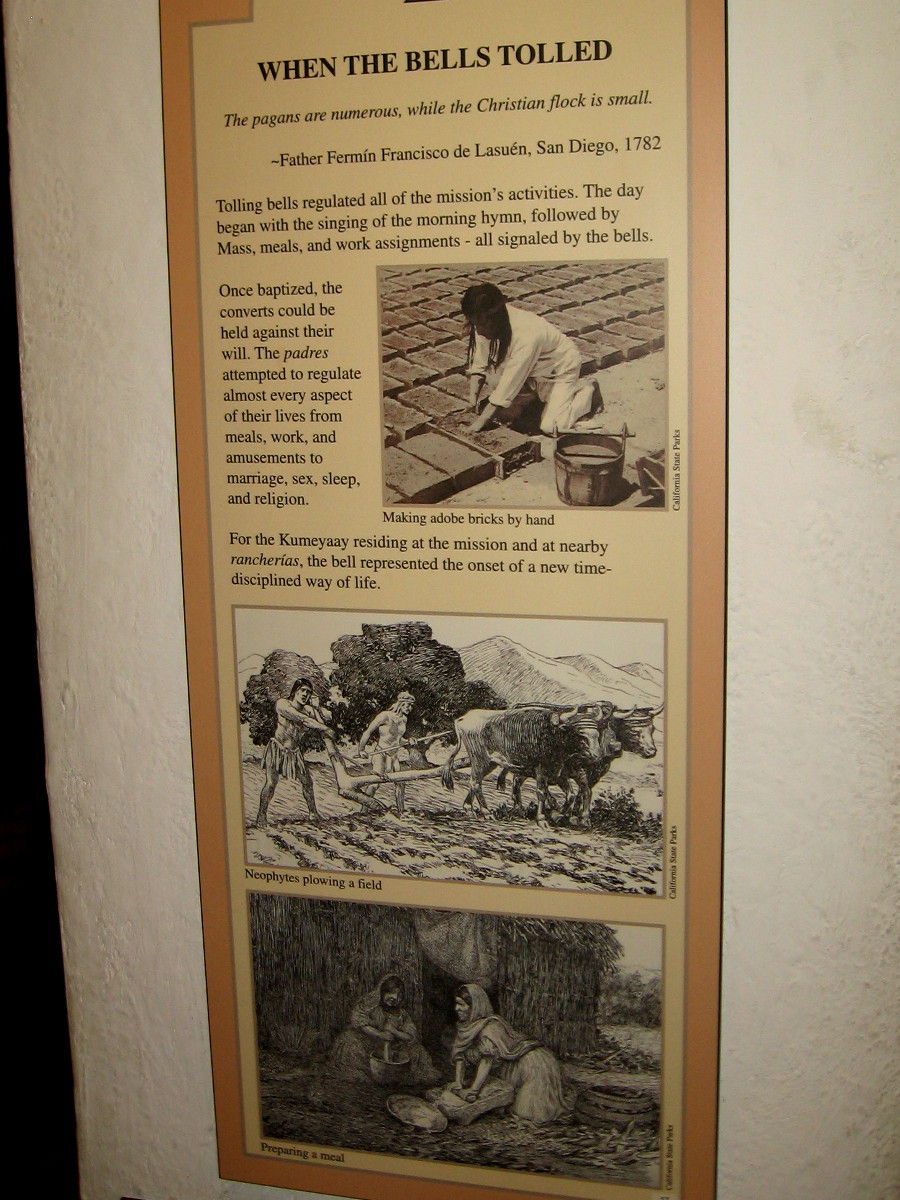
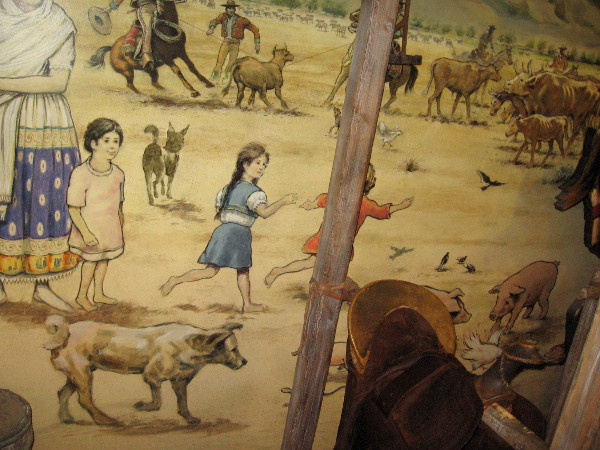
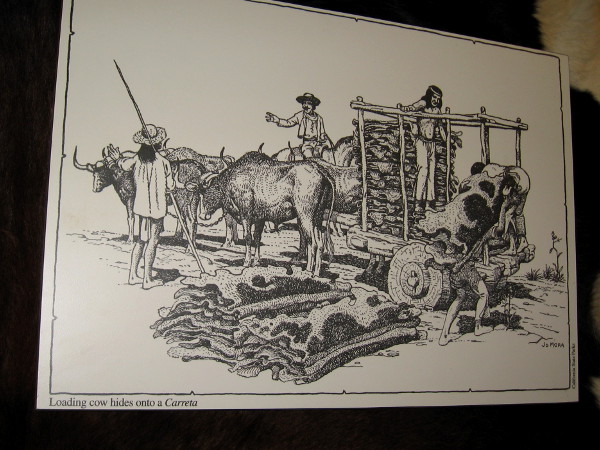
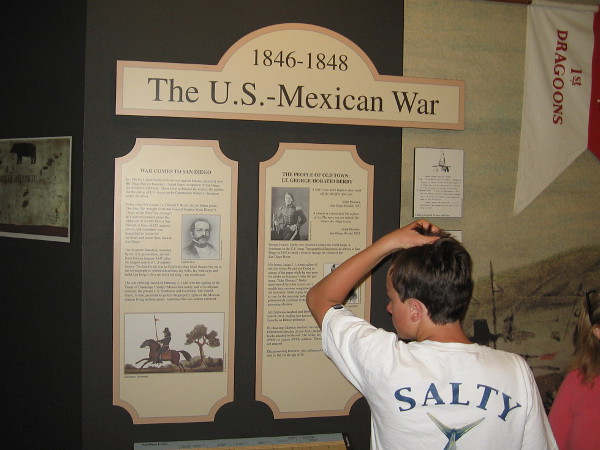
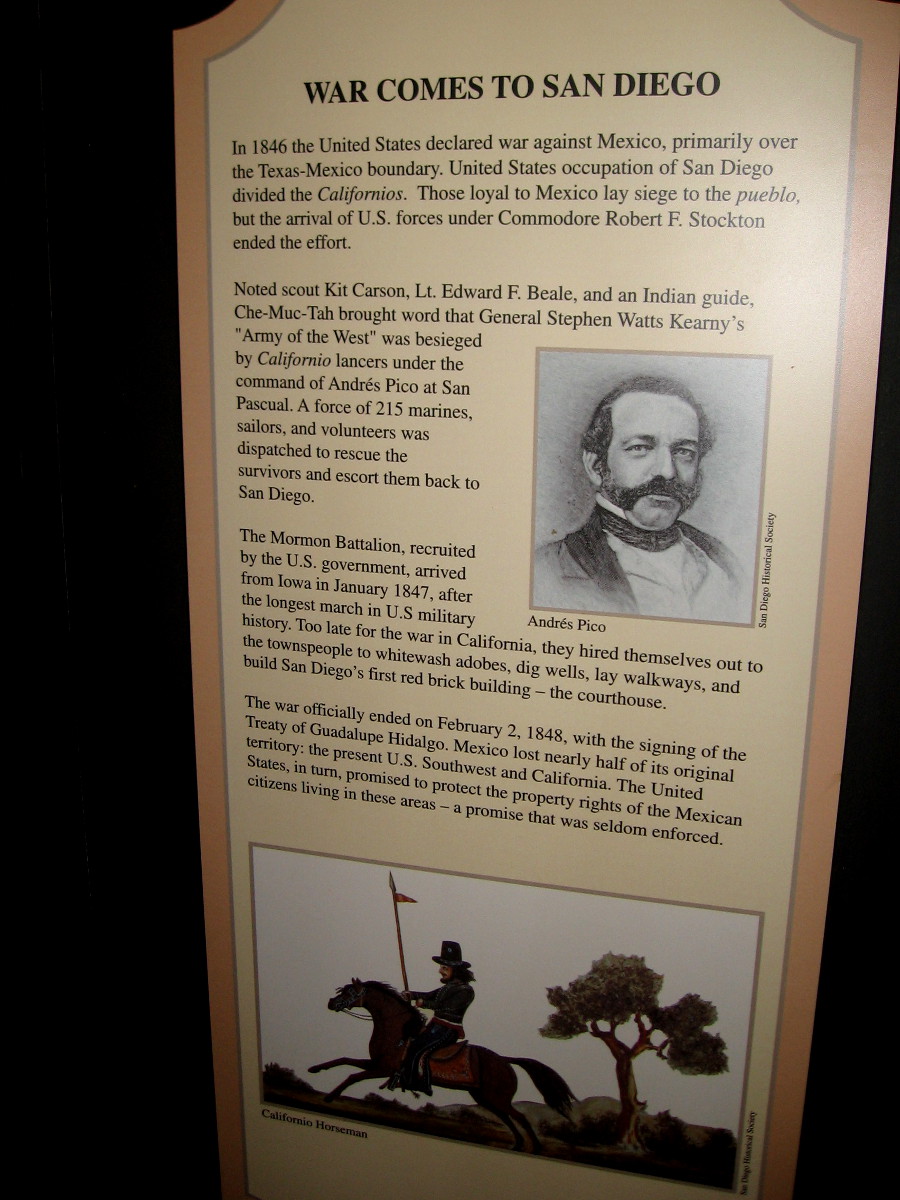
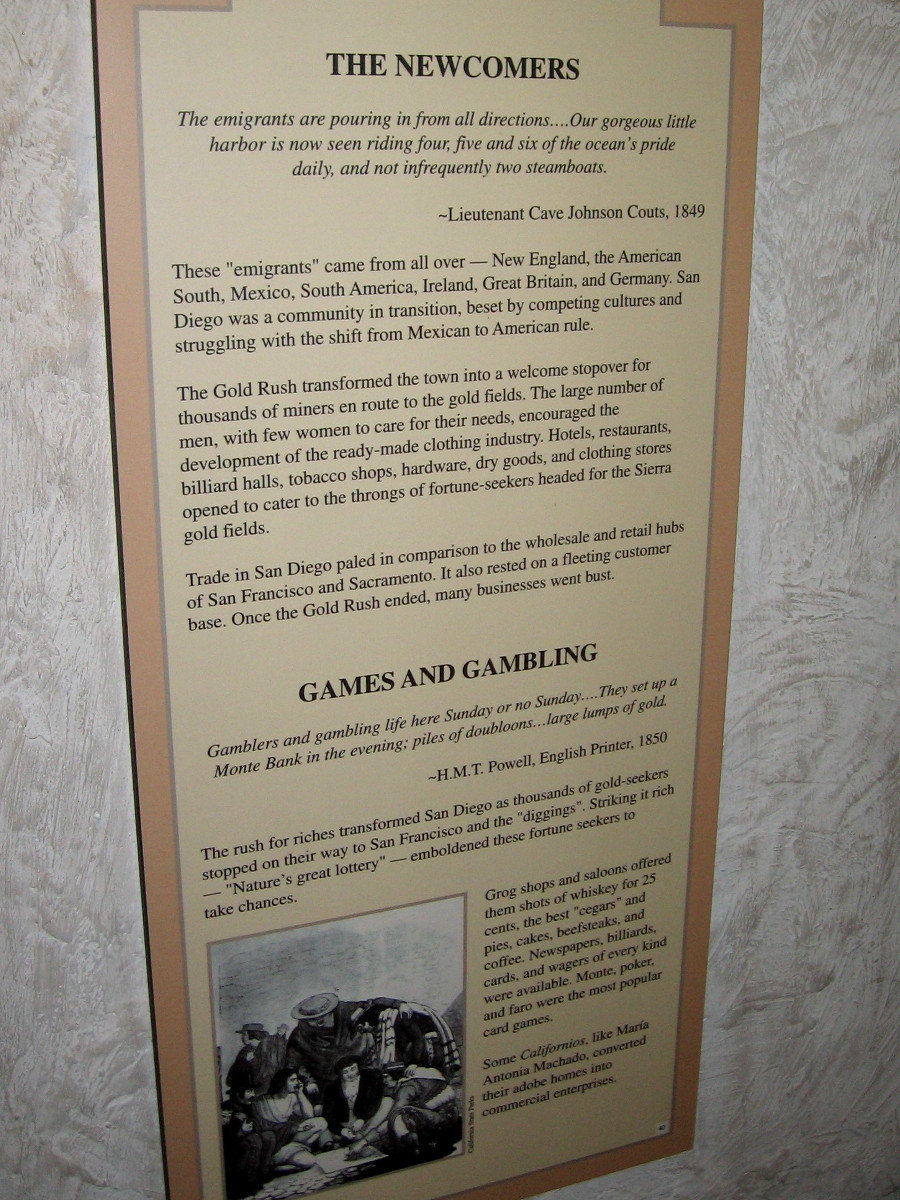
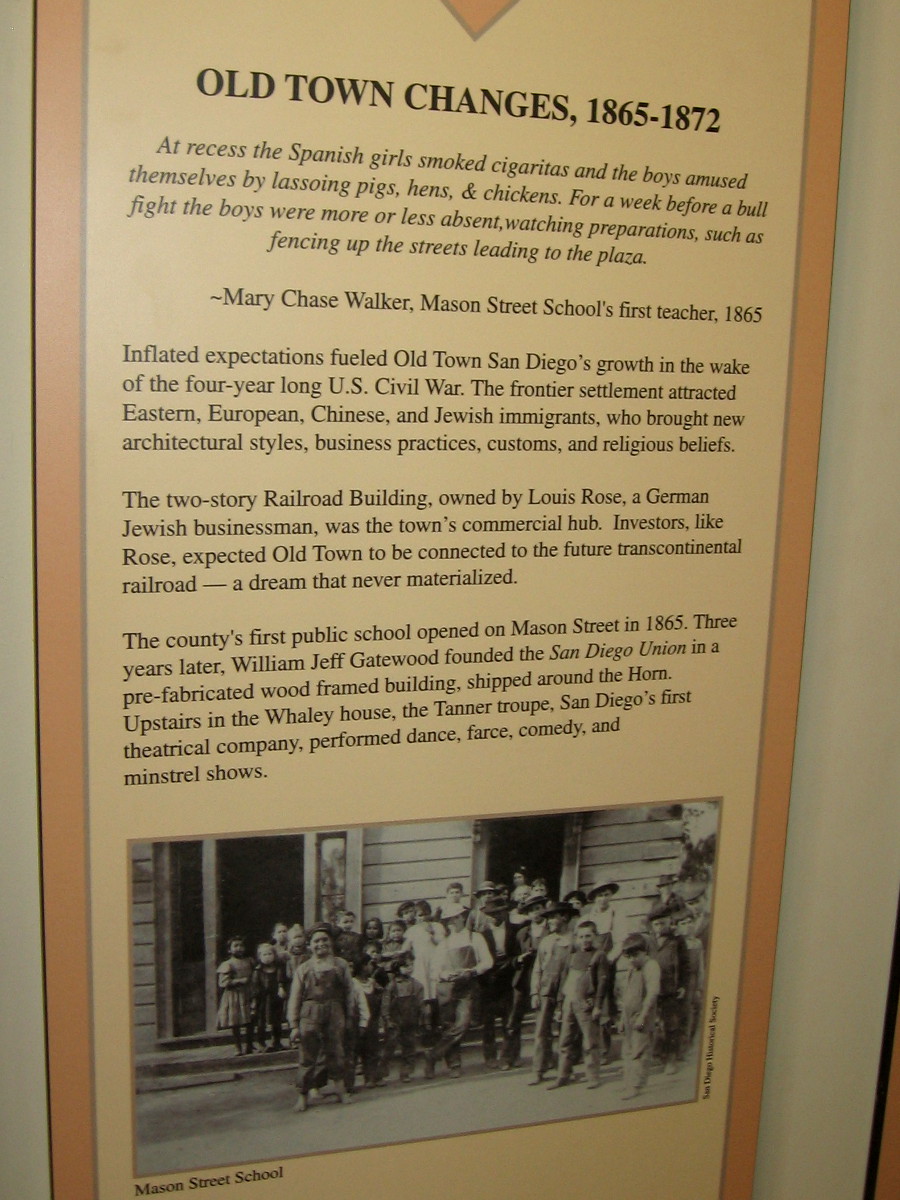
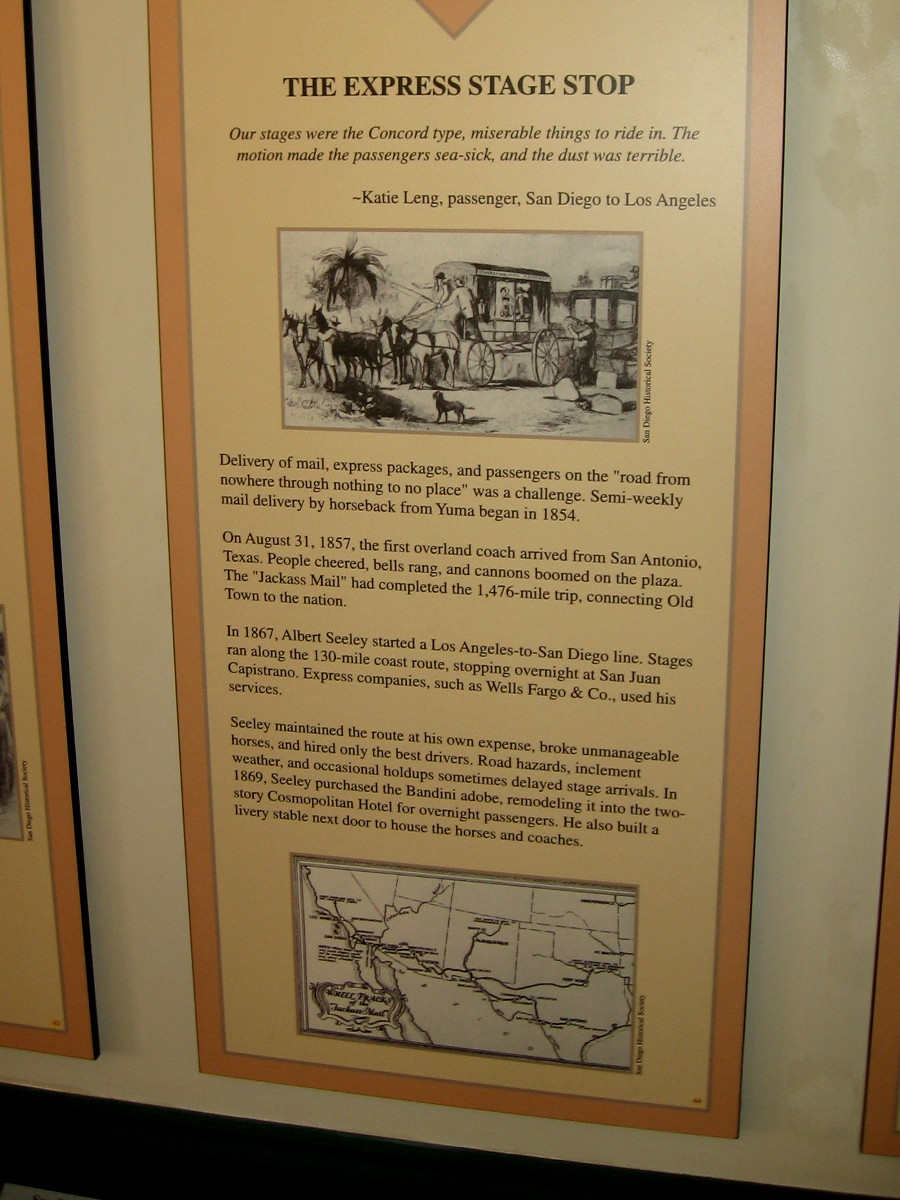
Sign lists important dates concerning the McCoy House. Today it’s a museum containing exhibits that explain the fascinating history of Old Town San Diego.Just inside the front door, this might have resembled the parlor of the original McCoy House, occupied by an upper middle class family in San Diego’s Old Town.Framed photo on one wall from the San Diego Historical Society shows the original McCoy House.Interpretive exhibits inside the McCoy House Museum begin with the Spanish period of San Diego, from 1769 to 1821.Quotes from the journeys of Juan Rodriguez Cabrillo, Sebastian Vizcaino and Gaspar de Portola.A string of missions was created by Spain in California to secure its claim to new territory. The first mission, in San Diego, was originally established on Presidio Hill near the native Kumeyaay village of Cosoy.An artistic representation of life among the Kumeyaay people. They often visited the nearby coast to hunt and gather food.For thousands of years, the Kumeyaay lived along the coast and interior valleys of what is now San Diego County. They moved with the seasons to take advantage of available resources.The Kumeyaay built dome-shaped houses from oak, willow or sycamore branches. The simple structures were called ee-wahs.The Kumeyaay saw the physical and spiritual world as one and the same.Exhibit in the McCoy House Museum shows artifacts associated with the Kumeyaay, including a bark skirt, arrows, rabbit stick, child’s sandals, gourd rattle and war club.The Kumeyaay revolted against the Spanish missionaries in 1775, a year after the San Diego mission was relocated inland very close to a large Kumeyaay village.Once baptized, converted Kumeyaay followed a strict life. Mission bells signaled the day’s activities, including the singing of hymns, Mass, meals and work assignments.Mexico gained its independence from Spain in 1821 after a decade of bloodshed. Changes included a decline in support for the presidio and freedom from Spain’s trade regulations.After the breakup of the Spanish missions, the era of the great ranchos began. Californios were often racially mixed descendants of soldier-settler families.Vaqueros were the original cowboys. They worked on the extensive ranches and handled the large herds of stock.A fanciful picture of life on a rancho, with vaqueros at work and children at play.The Californios loved to celebrate feast days, weddings and religious festivals.Cattle by the thousands roamed San Diego’s hills. Their dried hides were used in trade and were sometimes referred to as California banknotes.Illustration of loading cow hides onto a carreta. Hides were gathered by ships along the coast to be transported around Cape Horn to the eastern United States.Exhibit inside the McCoy House Museum recreates the small shop of a Boston trader. The brig Pilgrim of Two Years Before the Mast brought people aboard to buy wares and finished goods that weren’t available in San Diego.Illustrations of cow hides being cured. This activity took place at La Playa, a point on San Diego Bay near Ballast Point in Point Loma.Diagram of the brig Pilgrim, made famous in Richard Henry Dana Jr.’s classic Two Years Before the Mast. As an ordinary seaman, Dana collected cattle hides up and down the California coast.Exhibit in the McCoy House Museum details local history during the Mexican–American War from 1846 to 1848.During the war, U.S. occupation of San Diego divided the loyalty of the Californios. The two sides fought briefly at the Battle of San Pasqual.Around the time of the Gold Rush, San Diego saw an influx of emigrants from all over, including New England, the American South, Mexico, South America, Ireland, Great Britain and Germany.Old Town tales include the construction of the first jail in 1850. The walls were so poorly made, the first prisoner, Roy Bean, easily dug himself out, then celebrated at a nearby saloon!Grog shops became popular gathering places. They were a social hub of San Diego life, providing customers with news and provisions.A recreated Old Town grog shop can be found inside the McCoy House Museum.After the California Gold Rush of 1849, San Diego became more developed. A courthouse and newspaper were established. Transportation included clipper ships, stage lines and steamships.Poster advertises a new clipper ship route. A very quick trip may be relied upon!Between 1865 and 1872, Old Town San Diego continued to grow. The first public school opened, and the town welcomed its first theatrical company in the Whaley house.The first overland coach to San Diego began service in 1854. Additional stage lines came into existence, allowing for the delivery of mail, express packages and passengers.Visitors to the McCoy House Museum can step into a replica stage stop and see what life was like in Old Town during San Diego’s rugged early history.
…
I live in downtown San Diego and love to walk! You can follow Cool San Diego Sights via Facebook or Twitter!
You can easily explore Cool San Diego Sights by using the search box on my blog’s sidebar. Or click a tag! There are thousands upon thousands of interesting photos for you to enjoy!
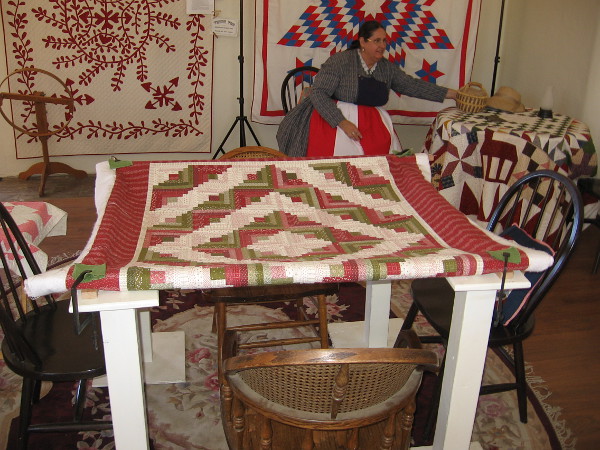
These beautiful quilts are on public display at Threads of the Past, in Old Town San Diego State Historic Park.
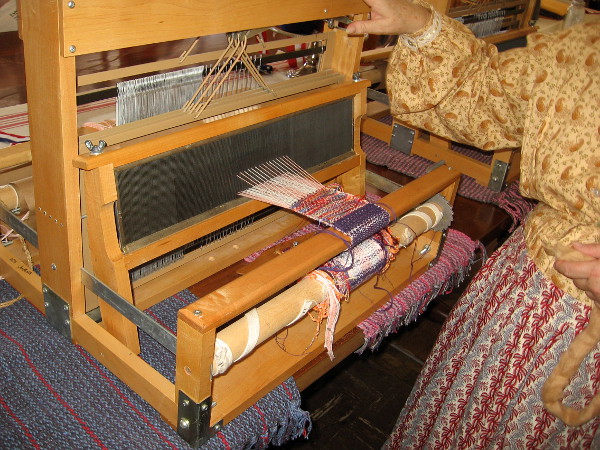
I recently visited Threads of the Past, a living history exhibition in Old Town San Diego State Historic Park. Not only did I see a number of beautiful quilts, but I learned about spinning and weaving. I was even able to watch a skilled artisan work an old-fashioned loom!
Here are some fascinating photos that I took inside Threads of the Past. I know very little about weaving and needlework, so I’m afraid I can’t provide much commentary. I do know that I really enjoyed looking at all the colors and patterns. I also learned a bit about San Diego’s past from the friendly members of Old Town’s Historic Quilt Guild and Fiber Arts Guilds. They’re keeping history alive! With great skill, they have produced beautiful textile artwork that visitors to Old Town can appreciate with their own eyes!
Threads of the Past is located near San Diego’s first courthouse. You can find it among the many other museums and historical attractions in Old Town San Diego State Historic Park.
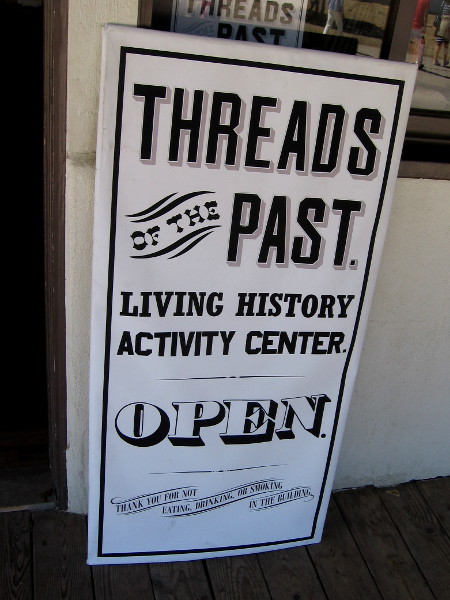
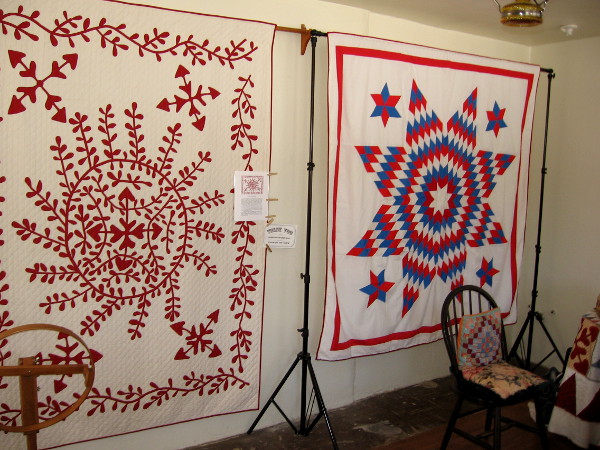
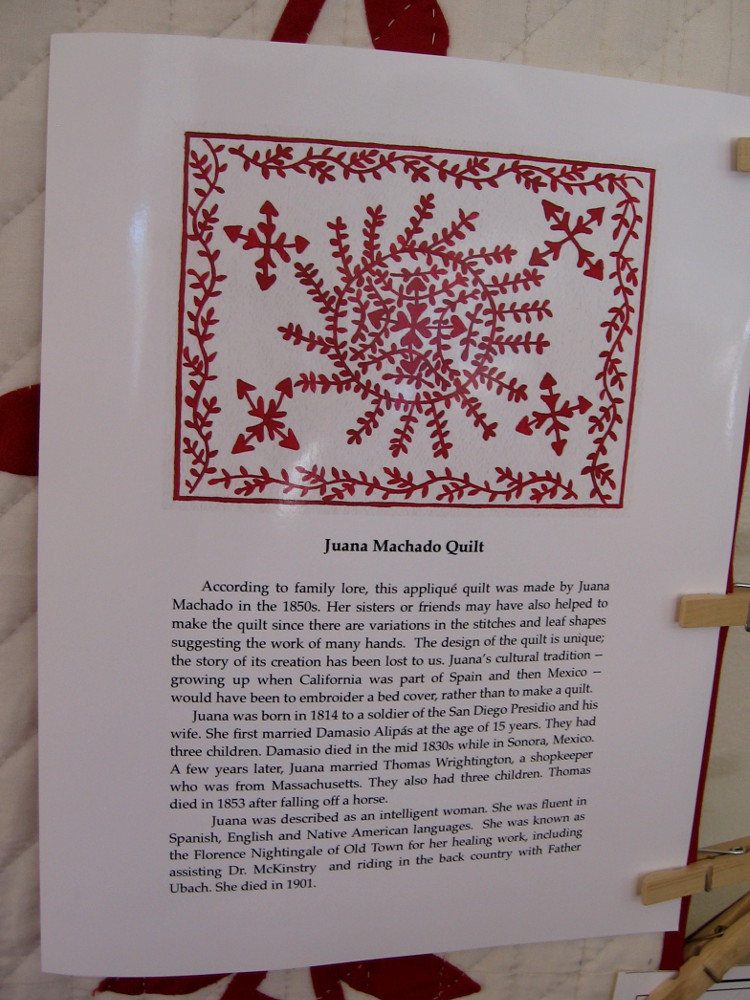
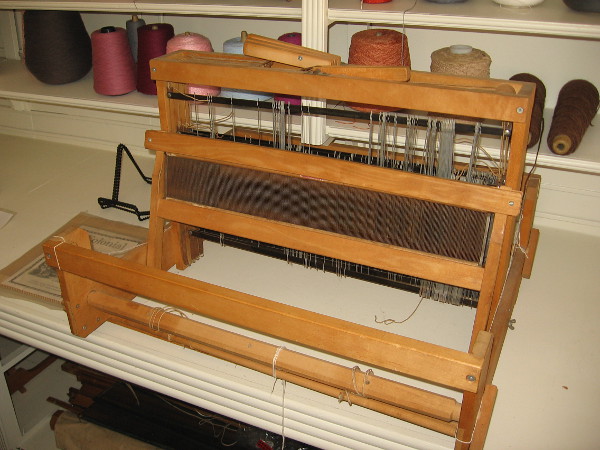
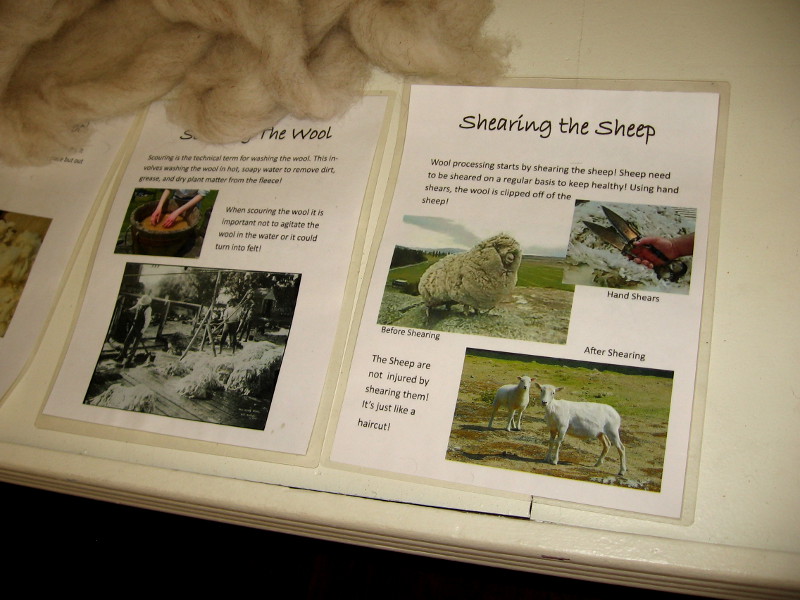
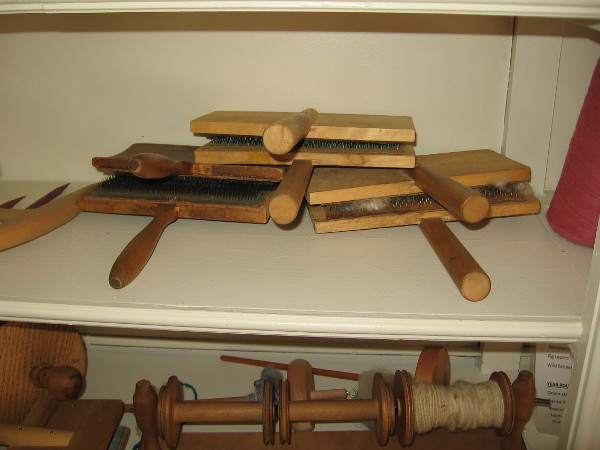
Should you visit San Diego’s Old Town, look for this sign outside the Threads of the Past living history activity center.Shelves full of colorful fabric woven with geometric patterns.Two quilts on one wall greet visitors as they enter Threads of the Past. On the left is a modern version of the 1850s Juana Machado Quilt.According to family lore, this applique quilt was made by Juana Machado in the 1850s. Juana was born in 1814 to a soldier of the San Diego Presidio and his wife.Threads of the Past contains several small looms and a variety of educational displays.Some colorful fabric circles arranged on a table.As you can see, this Inkle Loom is quite narrow. It’s used to make woven bands for belts and straps.A rather simple wood Colonial Loom on display in Threads of the Past.One display explains shearing sheep for wool, then carding, combing, and spinning wool.Several hand carders. Carding is gently spreading washed and dried wool in preparation for future processing, like spinning.All sorts of very colorful threads!A living demonstration of an old-fashioned hand loom at Threads of the Past, in Old Town San Diego State Historic Park.
…
I live in downtown San Diego and love to walk! You can follow Cool San Diego Sights via Facebook or Twitter!
You can easily explore Cool San Diego Sights by using the search box on my blog’s sidebar. Or click a tag! There are thousands upon thousands of fun photos for you to enjoy!
American flags lead a Fourth of July parade in Old Town San Diego State Historic Park.
Here come oodles of fun photos! I took them during the first two hours of Old Town San Diego’s Fourth of July celebration! (Sorry, but I missed the pie eating contest!)
I’ve captioned the photos with descriptions. If you’ve never enjoyed Independence Day at Old Town San Diego State Historic Park, you’re missing out on a very colorful and patriotic event! And there’s a lot of fascinating history that you can absorb, as well!
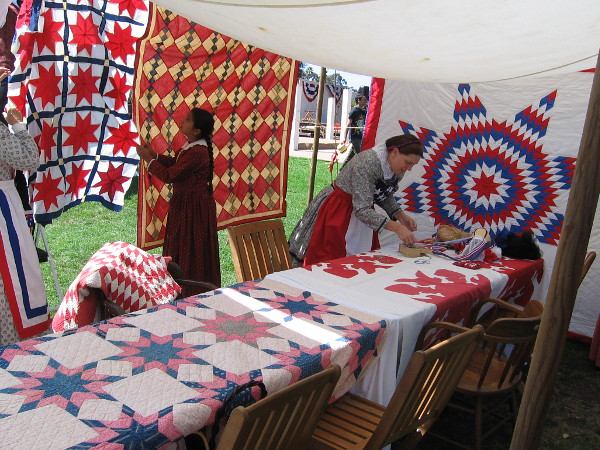
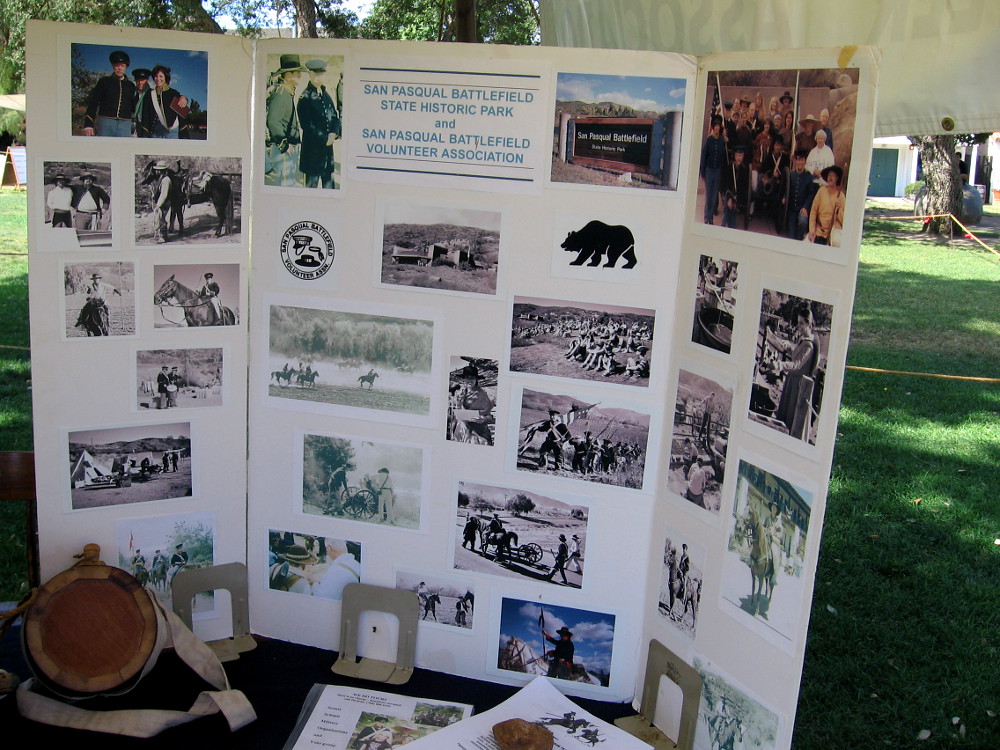
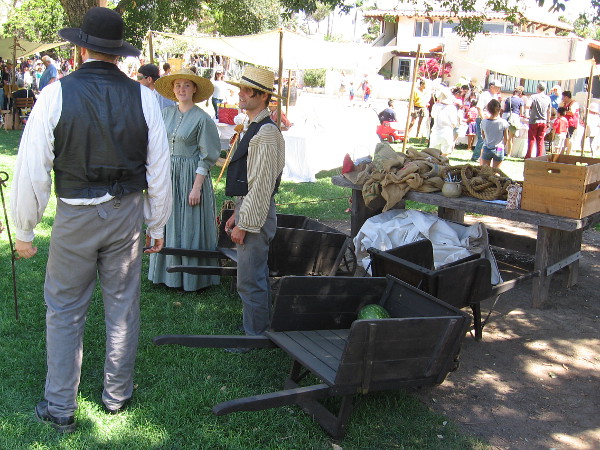
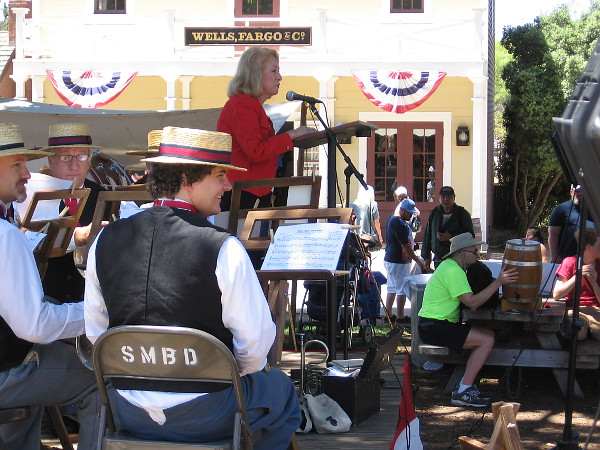
During the Independence Day celebration in Old Town San Diego, there were all sorts of fun and educational activities. Musical entertainment could be heard at the main stage.The Armory Band played music popular in America long ago–patriotic tunes that citizens in San Diego would have enjoyed during the mid 1800s.Los Bailadores, performers in period costume, sing vintage patriotic songs like The Battle Hymn of the Republic inside Old Town’s historic La Casa de Estudillo.Los Bailadores then lived up to their name and began a few social dances that folks would have enjoyed in the 1850s and 1860s. Their first dance was the Virginia reel.During the Fourth of July, there were many historical demonstrations in Old Town’s central square, which was originally called La Plaza de Las Armas.A lady in a bonnet at a spinning wheel was making wool yarn.Quilters were getting their tent displays ready as Old Town San Diego’s Fourth of July events got underway.These guys were playing the old Victorian Game of Graces. A small hoop is shot into the air by pushing apart two rods. The hoop is then caught by one’s partner. Winner catches the hoop ten times first.The San Pasqual Battlefield Volunteer Association had an interesting display, including ammunition that was used in old cannons.A poster has photos of reenactments of the Battle of San Pasqual, which took place northeast of San Diego during the Mexican-American War.Of course, you need some tasty watermelon during a traditional Fourth of July!The middle of the plaza became a center of attention as various tug of wars were contested by young and old alike.These ladies vied for tug of war glory!Later games would include wheelbarrow races.A cakewalk. Stop on the winning number and you receive a cake! This simple game was common in mid 19th century San Diego.Several speeches included one by Connie Gunther, a descendant of early San Diego. The legacy of those early Californios, townspeople, settlers and immigrants live on.
Are you a descendant of early San Diego? Do you think you might be? There’s a website I learned about that you ought to visit. Here it is. Those with family trees that reach back into early San Diego history can relate their knowledge for posterity and the benefit of others; those who think they might be related to an early resident of San Diego can perform searches and do extensive research. Check it out!
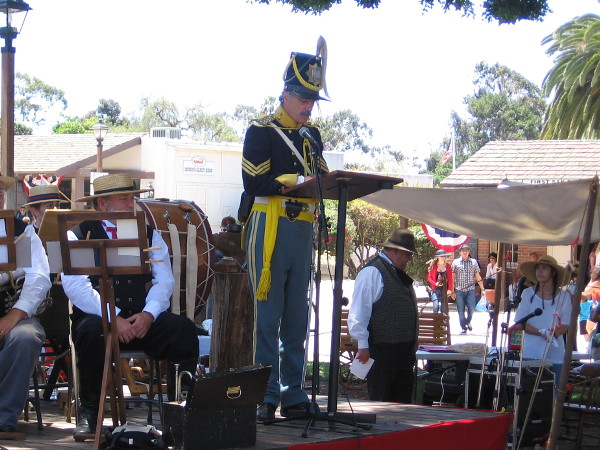
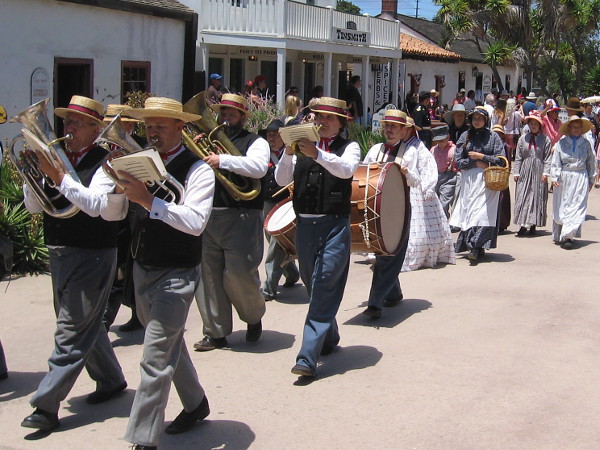
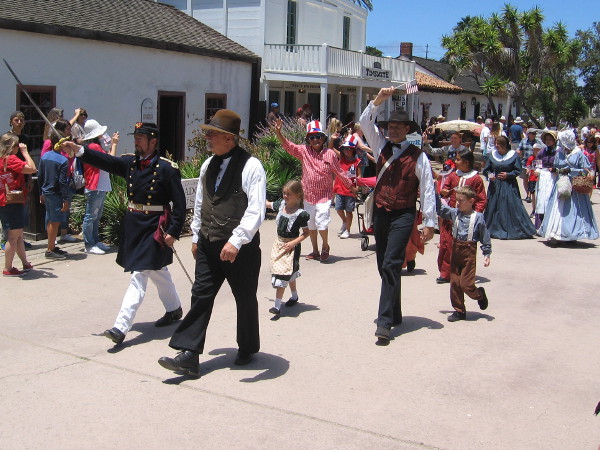
Kids listening to the speeches wave American flags.The keynote speech was by Tom Vilicich, portraying a first sergeant, Company K, 1st U.S. Dragoons, who fought in the Battle of San Pasqual.After the speeches, there was a Flag Raising Ceremony. People removed their hats as Old Glory was hoisted up Old Town’s high flagpole.Salutes as the Star and Stripes ascends into the San Diego sky.A billowing American flag rises on Independence Day!The musicians left the stage to make way for a special public reading of the Declaration of Independence.Diverse folk representing San Diego in the mid 19th century take turns reading the Declaration of Independence. Ordinary citizens in the crowd also took part!An ordinary American young person reads a few lines from the Declaration of Independence, on the Fourth of July in Old Town San Diego State Historic Park.And then the parade began! It wound around the plaza twice. Ordinary Americans were invited to join in!Represented in the small patriotic parade were Old Town volunteers, boosters, and descendants of early San Diego.Here comes the old-fashioned marching band!People in the parade wore every sort of period costume–even red, white and blue attire from our own modern period!That’s because ordinary American citizens joined in the fun!This photo shows the good crowd that converged on Old Town San Diego for the Fourth of July!A scene from the colorful American Independence Day parade in Old Town San Diego State Historic Park.
…
This blog now features thousands of photos around San Diego! Are you curious? There’s lots of cool stuff to check out!
Here’s the Cool San Diego Sights main page, where you can read the most current blog posts. If you’re using a small mobile device, click those three parallel lines up at the top–that opens up my website’s sidebar, where you’ll see the most popular posts, a search box, and more!
To enjoy future posts, you can also “like” Cool San Diego Sights on Facebook or follow me on Twitter.
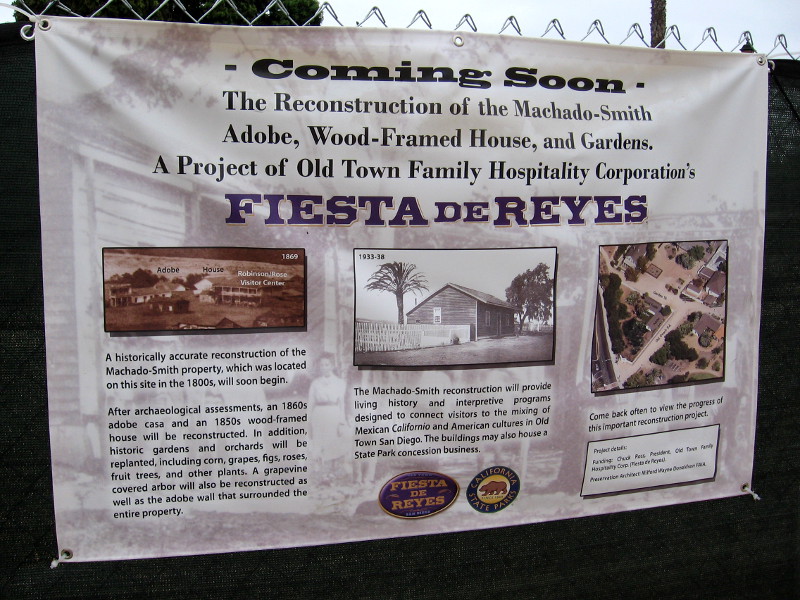
An area beside a popular entrance to Old Town San Diego State Historic Park, near the McCoy House Museum, will be the site of an historical reconstruction.
There are plans to bring more history to life in Old Town San Diego State Historic Park! A reconstruction of the Machado-Smith adobe and wood-framed house, including gardens and orchards, will greet future visitors to San Diego’s birthplace!
According to a sign that I read, after archaeological assessments (which appear to be underway right now), the Machado-Smith 1860s adobe casa and 1850s wood-framed house will be built near the main walkway that leads visitors from the Old Town Trolley Station into the California State Park. Also planned is a grapevine covered arbor and gardens and orchards with corn, grapes, figs, roses and fruit trees!
According to some research and a State Park employee that I spoke to, the house was built for American Albert Benjamin Smith and his Mexican wife María Guadalupe Yldefonsa Machado de Wilder who together raised nine children. The property remained with the family until 1929. Eventually the house fell into disrepair.
It is uncertain when the new construction will begin, but I’ll keep my eyes open!
Once completed, the Machado-Smith reconstruction will offer interpretive programs concerning Old Town San Diego’s unique mixture of Mexican Californio and American cultures! Very cool!
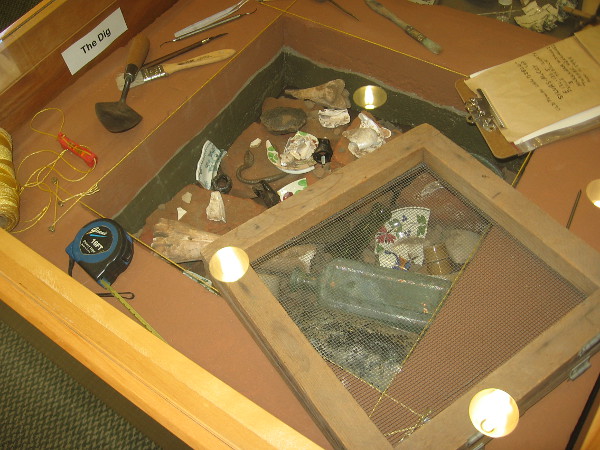
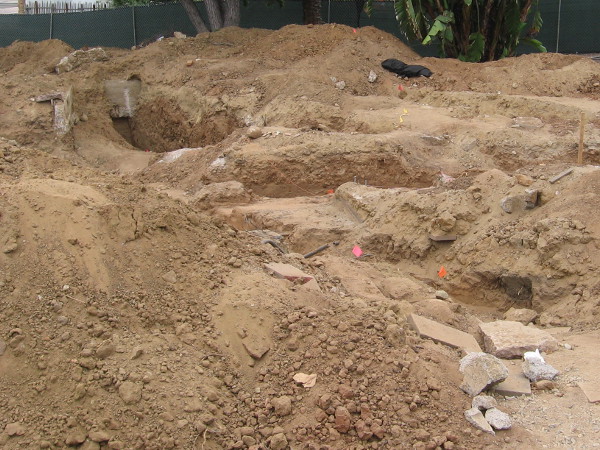
I was told by a California State Park employee that bits of pottery and other interesting objects have been found at this site.An historically accurate reconstruction of the mid 1800’s Machado-Smith property will be built in Old Town San Diego. Included will be an adobe casa, wood-framed house and gardens.
…
I live in downtown San Diego and love to walk! You can follow Cool San Diego Sights via Facebook or Twitter!
You can easily explore Cool San Diego Sights by using the search box on my blog’s sidebar. Or click a tag! There are thousands upon thousands of fascinating photos for you to enjoy!
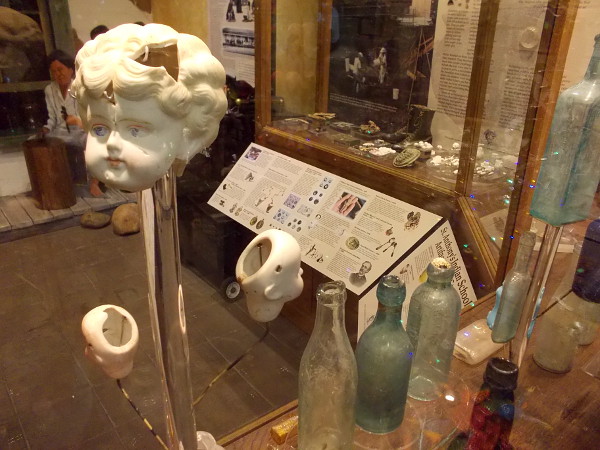
Fascinating exhibits inside the Casa de Aguirre Museum in Old Town San Diego State Historic Park.
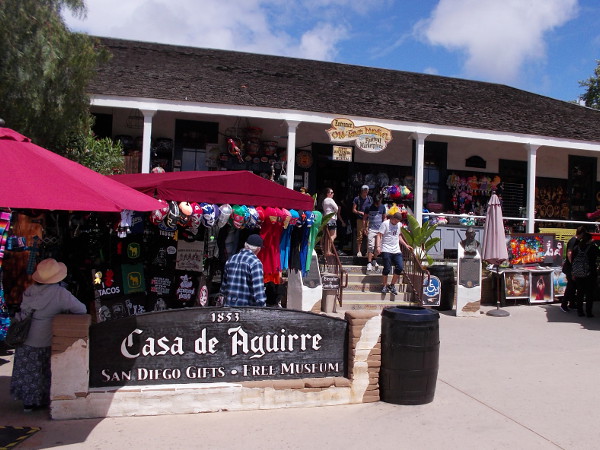
Many visitors to Old Town San Diego State Historic Park might think the Casa de Aguirre is just a shop brimming with colorful crafts and wares. But a closer look reveals that a small museum is located inside.
Here are some photos which provide a glimpse of what you’ll discover should you step into the museum. Read the captions, and you’ll learn how Casa de Aguirre is one of the most important sites in Old Town, and how its occupants shaped San Diego’s early history.
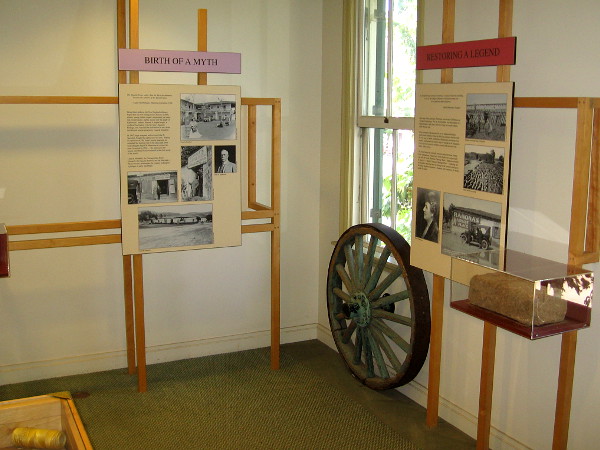
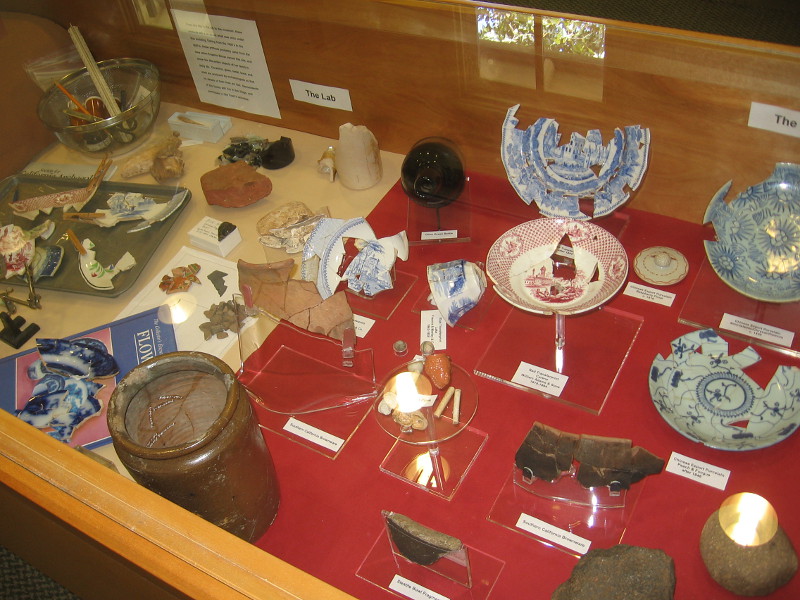
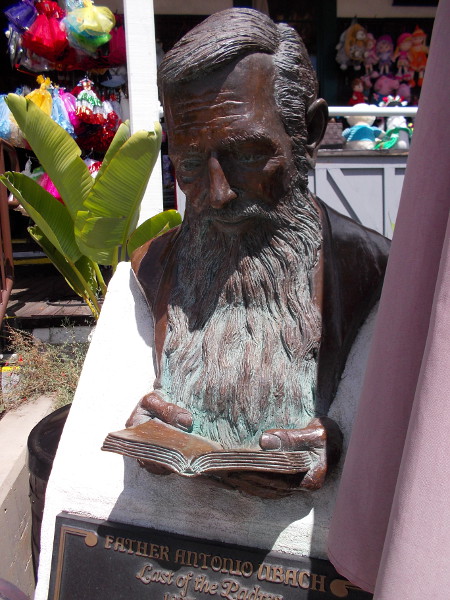
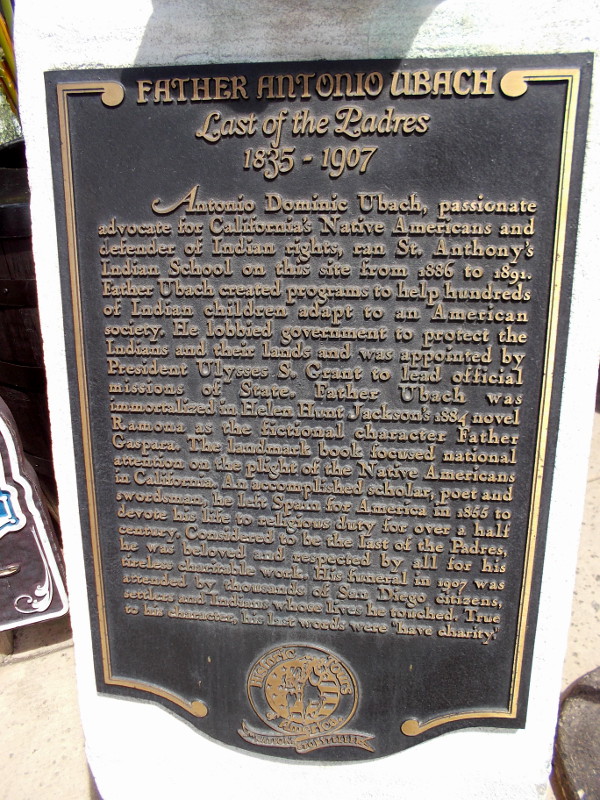
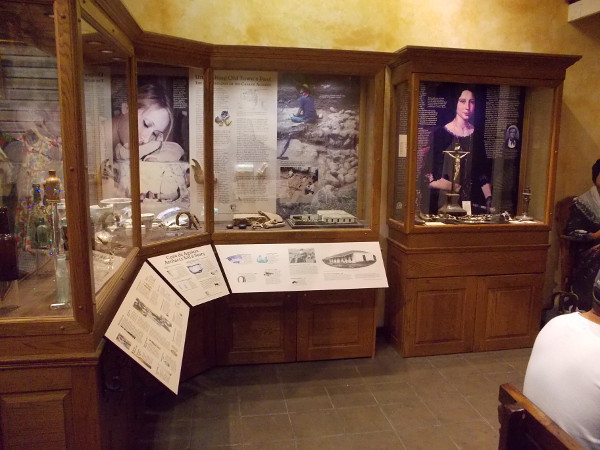
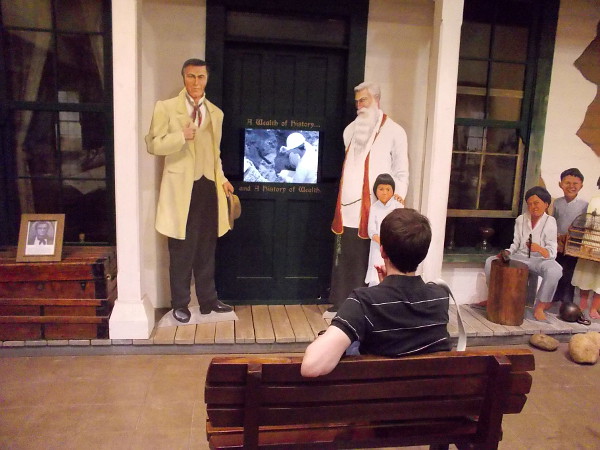
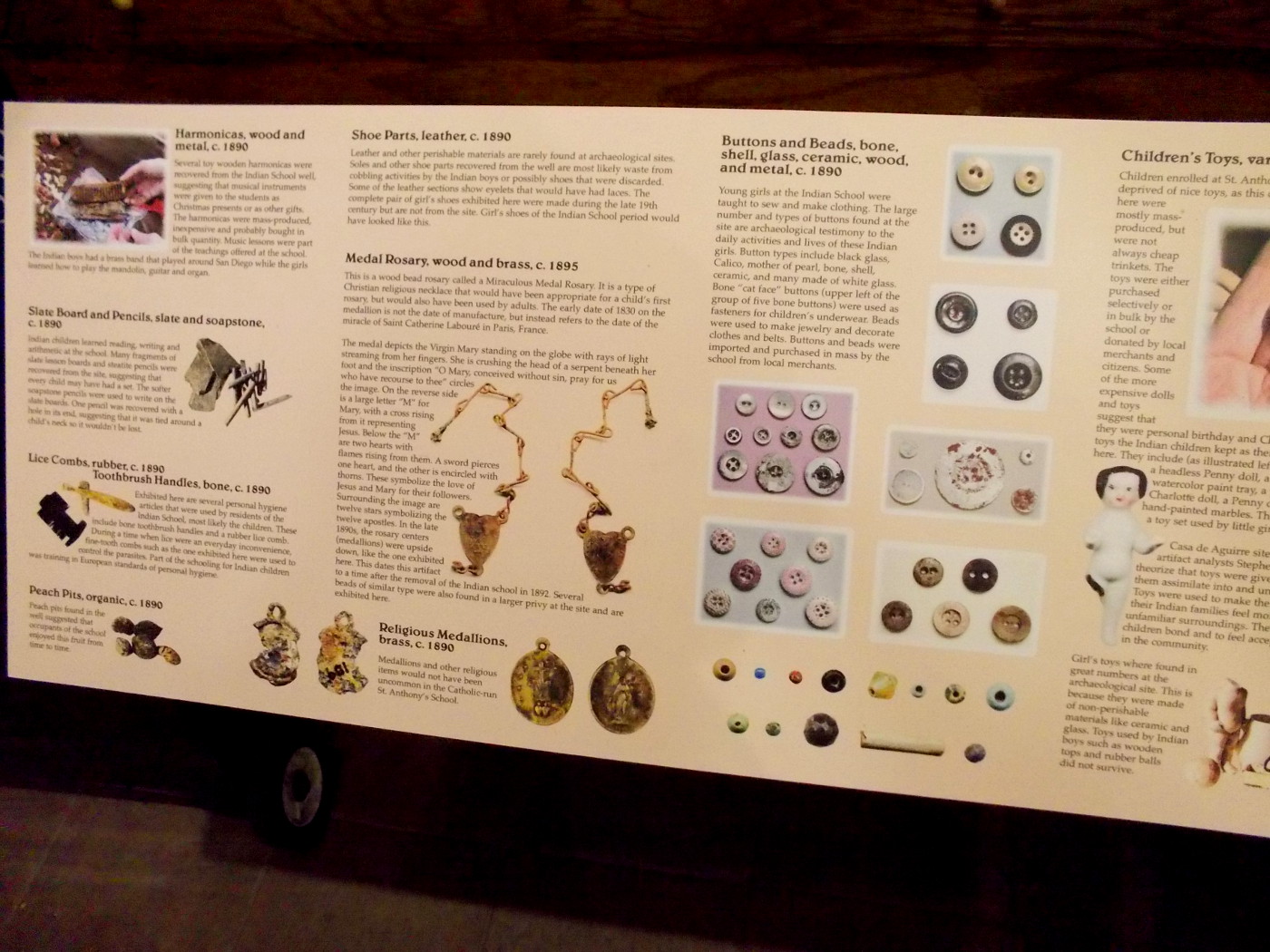
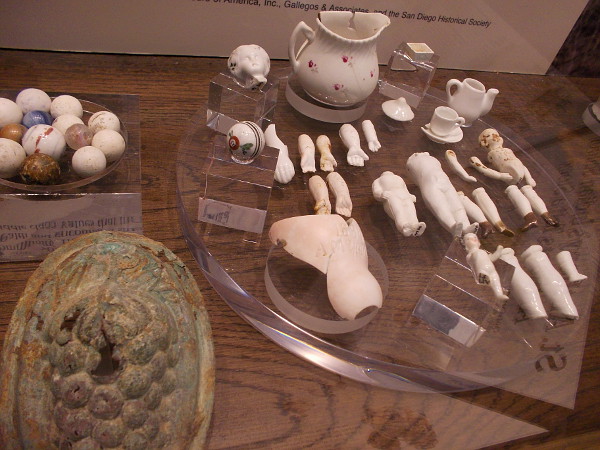
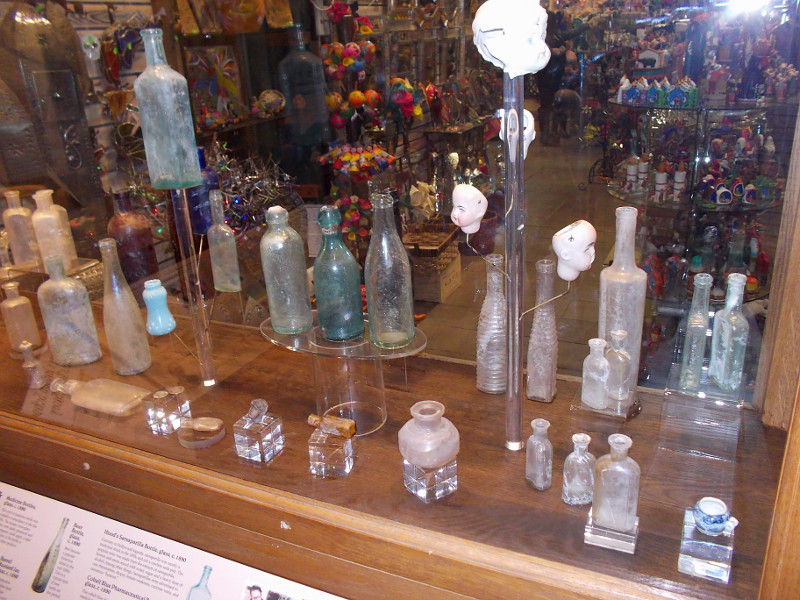
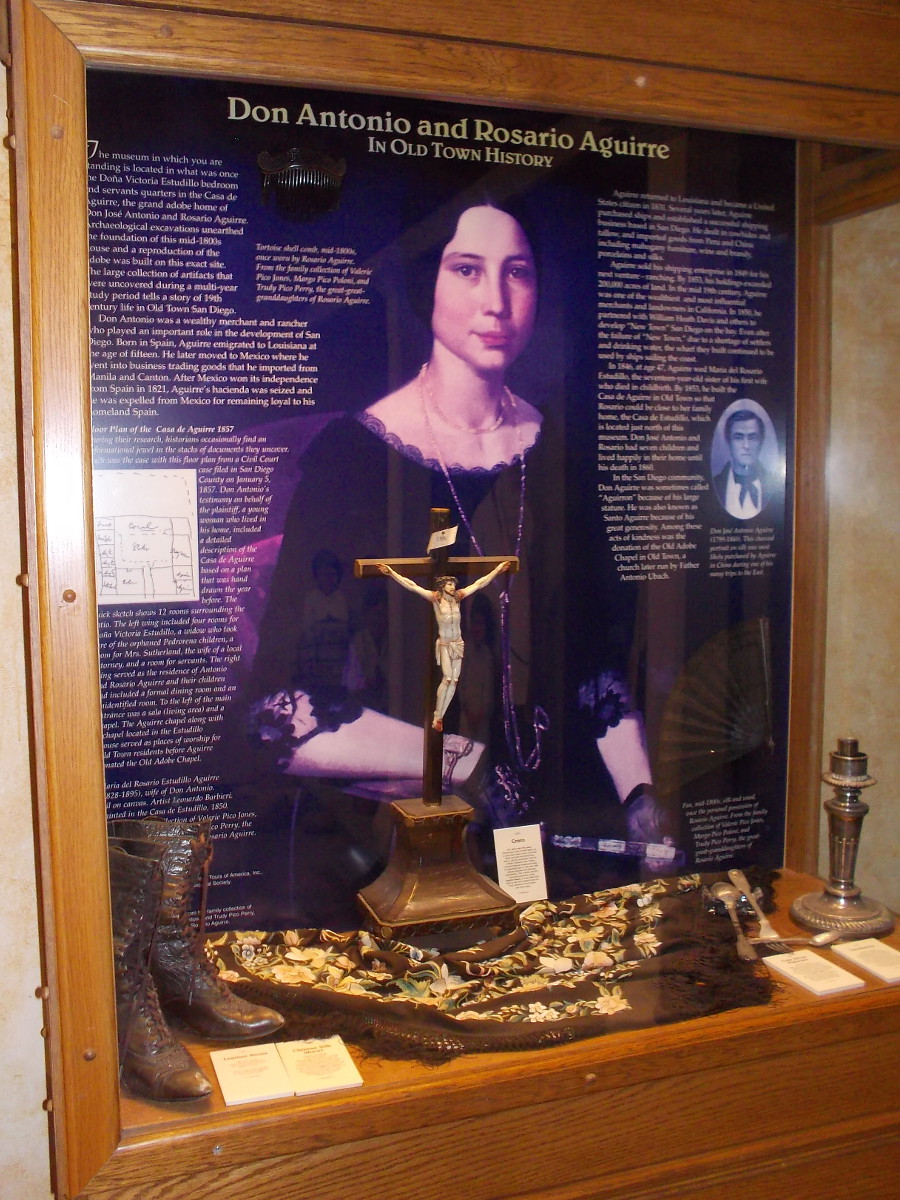
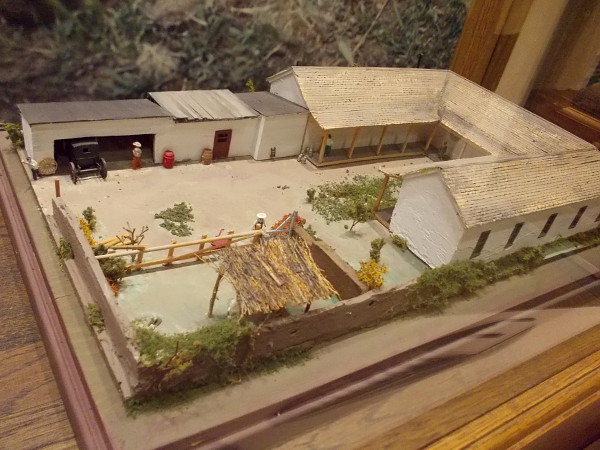
Casa de Aguirre in Old Town was originally built around 1853. The adobe mansion was one of the first houses in San Diego, owned by Don Jose Antonio Aguirre, a prosperous merchant and rancher. The present building is a reproduction.Bronze bust of Don Jose Antonio Aguirre, near entrance to Casa de Aguirre. Born in Spain, he owned several ships and warehouses and imported goods from Peru and China to trade for cowhides and tallow.Don Jose Antonio Aguirre was known for his charity and funded many projects in early San Diego. He, his wife and children are considered to be one of our city’s founding families.Bust of Father Antonio Ubach, Last of the Padres, 1835-1907. Antonio Dominic Ubach ran St. Anthony’s Indian School on this site from 1886 to 1891.Plaque describes how Father Ubach advocated for California’s Native Americans and lobbied government to protect the Indians and their lands. He was loved by many. His last words were: “Have charity.”Casa de Aguirre in Old Town San Diego today contains a shop visited by many tourists and a small museum in back.One side of El Museo Casa de Aguirre. Excavated artifacts are on display, recalling what life was like here in the mid to late 19th century.Visitor to the small museum watches a video which includes information about archaeological discoveries, the history of the casa and the lives of those who were sheltered here.St. Anthony’s Indian School Artifacts Tell a Story. Many objects on display include porcelain cups, goblets, bottles, a saltshaker and beer mug.Sign describes additional historical finds, including buttons, toys, harmonicas, slate board and pencils, lice combs, toothbrush handles, shoe parts, medal rosary and religious medallions.Marbles, doll parts and tiny children’s tea sets, recovered from San Diego’s past.Dozens of buttons on display. They were fastened by living fingers, now long gone.Two old pipes.Numerous bottles and jars are exhibited in the Casa de Aguirre Museum. They were used for medicine, mustard, chemicals, perfume, whiskey, beer, sarsaparilla…People interested in collecting antique bottles would be mesmerized by the large assortment on display.Don Antonio and Rosario Aguirre in Old Town History. The museum is located in what was once the bedroom and servants quarters in the Casa de Aguirre. The present-day adobe is a reproduction.Don Antonio Aguirre, 1799-1860, was one of San Diego’s most important figures back when our burgeoning Southern California city was just a very, very small town.A model of how the Casa de Aguirre appeared a century and a half ago.
…
I live in downtown San Diego and love to walk! You can follow Cool San Diego Sights via Facebook or Twitter!
You can easily explore Cool San Diego Sights by using the search box on my blog’s sidebar. Or click a tag! There are thousands upon thousands of fascinating photos for you to enjoy!
Making fresh tortillas for people walking down the sidewalk. Eat these hot with melted butter and you’re in heaven.
I enjoyed an exhilarating walk through Old Town today.
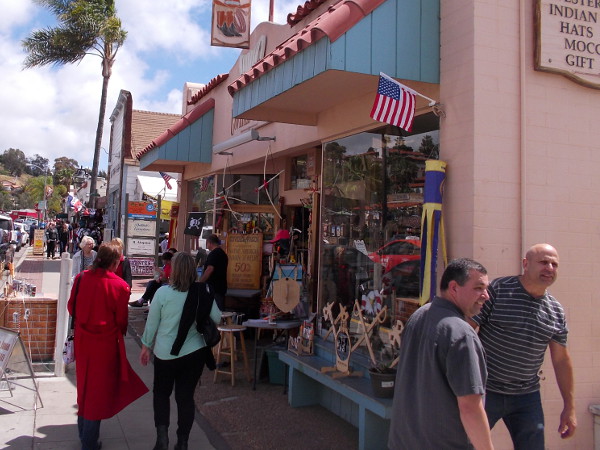
Here are some colorful photos of what you might discover while strolling down San Diego Avenue, just south of Old Town San Diego State Historic Park.
You’ll find all sorts of shops, Mexican restaurants and cantinas, a few historical sights, and sidewalks full of smiling tourists and locals enjoying one of San Diego’s favorite destinations.
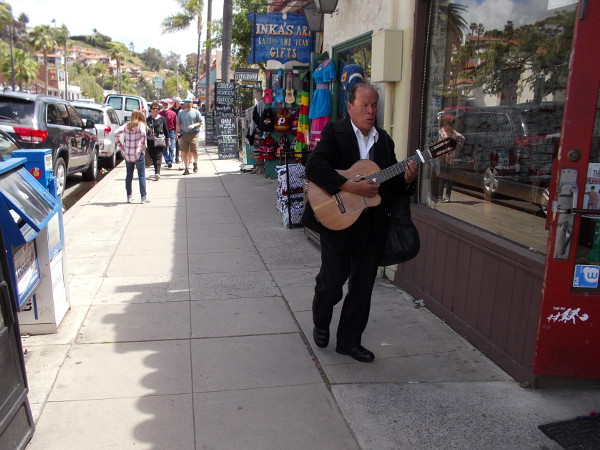
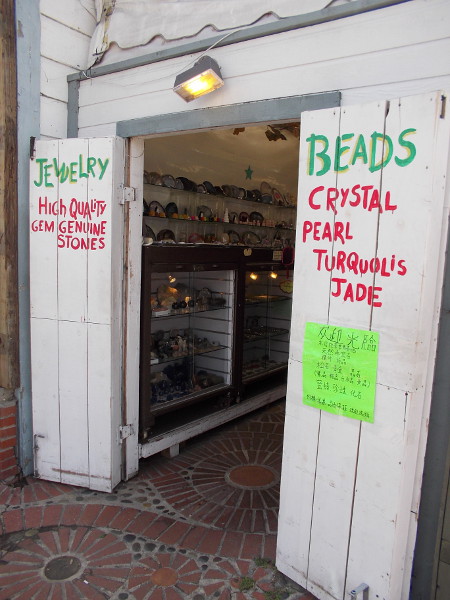
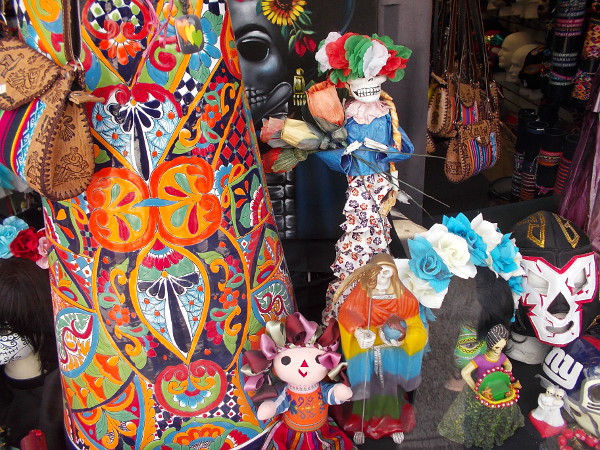
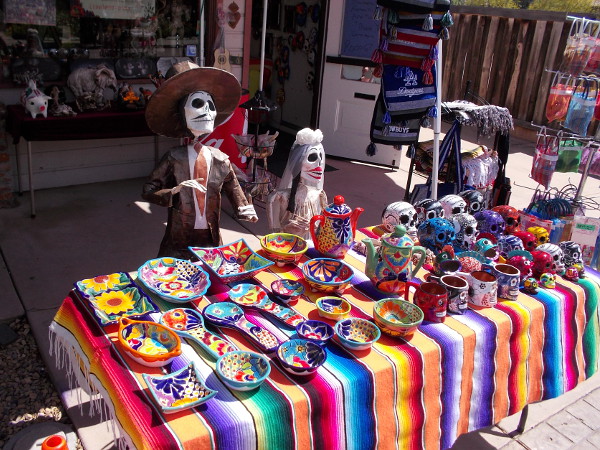
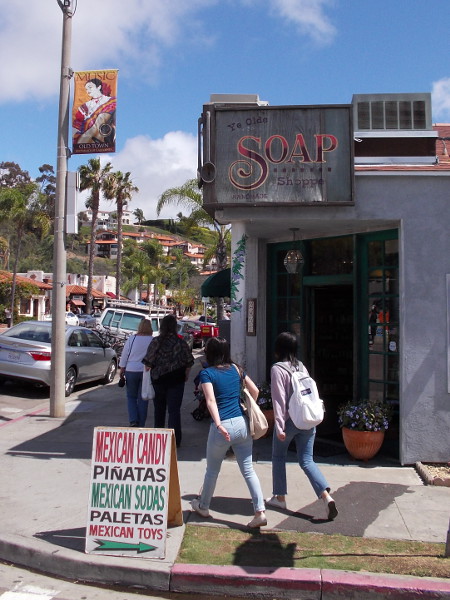
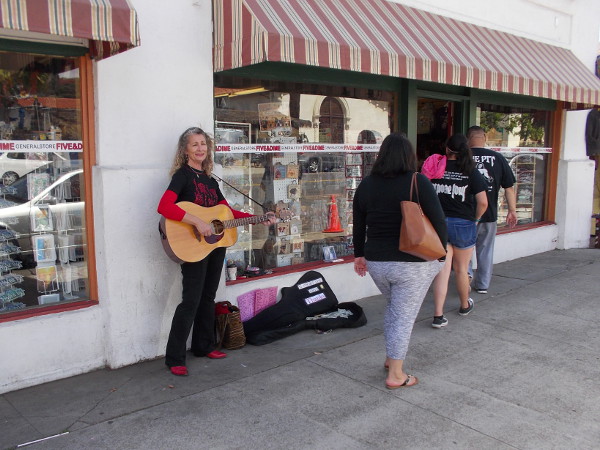
A guitarist walks down a sidewalk in Old Town. You’ll find plenty of music and energy up and down San Diego Avenue.There are tantalizing sights everywhere you turn. The commercial part of Old Town is a popular destination for tourists visiting San Diego.Many colorful items for sale at shops up and down San Diego Avenue are from Mexico, or have a Mexican theme.I love rocks and minerals, so of course I had to poke my nose in here.Just a riot of color in one window! Mexican culture adds a great deal of life to San Diego and this region.I blogged about this public art a while back. Beyond the crazy cowboy shootout is the entrance to the Old Town Chamber of Commerce.
I stepped inside the Old Town Chamber of Commerce Information Center and checked out a few cool exhibits. In the event you ever visit Old Town, make sure to stop here to grab a map, brochures, and a bunch of valuable coupons for nearby restaurants and businesses!
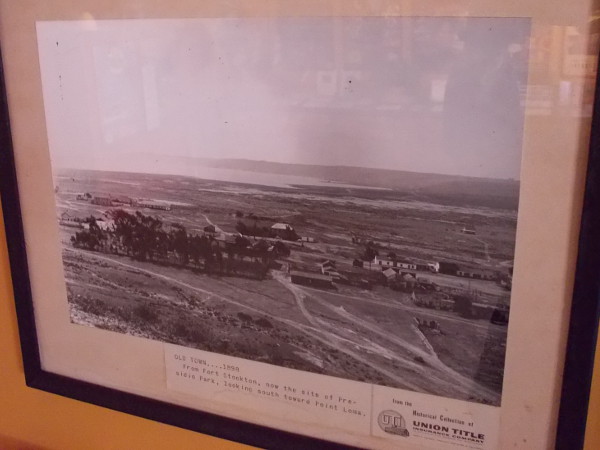
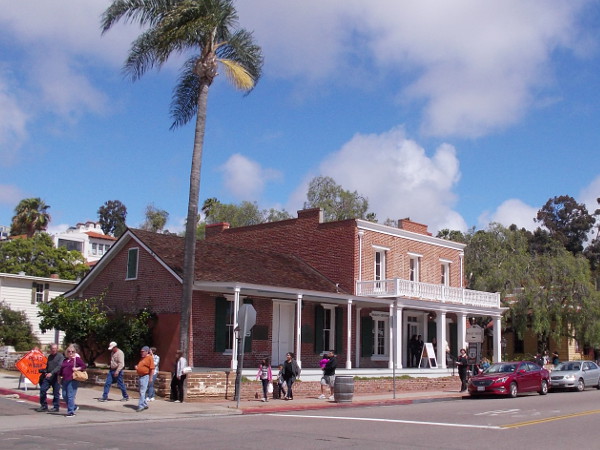
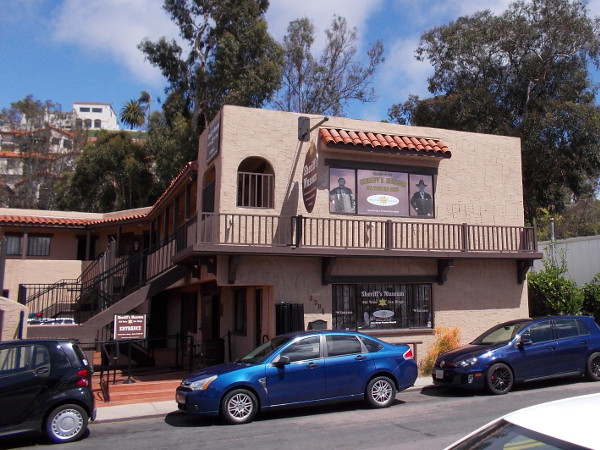
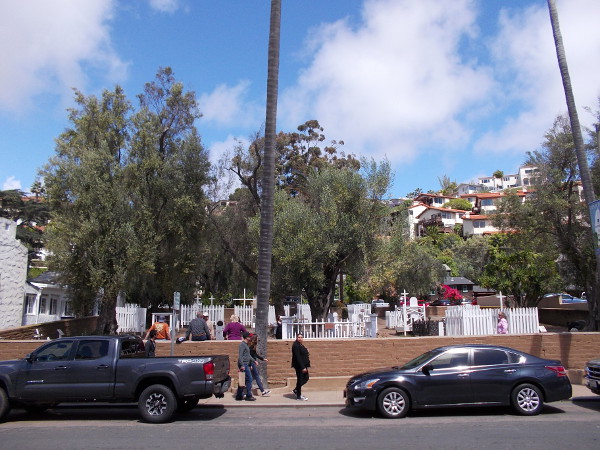
A cool model of a Spanish galleon (I believe) and some useful free literature inside the Visitor Information center.Several interesting historical photographs can be found inside the Old Town Chamber of Commerce. This one from 1898 shows tiny Old Town San Diego at the base of Presidio Hill.Vintage photo of the famous Whaley House, the oldest brick house in California, built in 1854. (That’s what it reads. Every source I’ve seen says the house was actually built in 1857.)The Whaley House as it appears today on San Diego Avenue. It’s reputed to be the most haunted place in America! (Just to be careful, I stayed across the street. Those spooks didn’t have a ghost of a chance!)The Sheriff’s Museum on San Diego Avenue. I’ve yet to visit this place! So much still to do!The El Campo Santo Cemetery in Old Town is where many of San Diego’s earliest residents are buried.Many curios and crafts for sale in Old Town shops are related to Mexico’s traditional Día de Muertos, or Day of the Dead.A festive banner in a perfect San Diego sky.Rounding a corner, searching for more unique discoveries!This shop contains all sorts of Old West-themed stuff for sale. There’s so much on display, it boggled my mind!A walk down San Diego Avenue in Old Town San Diego is never dull!
…
I live in downtown San Diego and love to walk! You can follow Cool San Diego Sights via Facebook or Twitter!
You can easily explore Cool San Diego Sights by using the search box on my blog’s sidebar. Or click a tag! There are thousands upon thousands of fun photos for you to enjoy!
Two rugged mountain men, one with a fiddle, hang out behind Seeley Stable in Old Town San Diego State Historic Park.
Here are some cool photos of what life was like back in the Old West. I snapped these last weekend behind Seeley Stable at Old Town San Diego State Historic Park. Some mountain men, a gunsmith and blacksmith were showing visitors a few aspects of frontier life long ago.
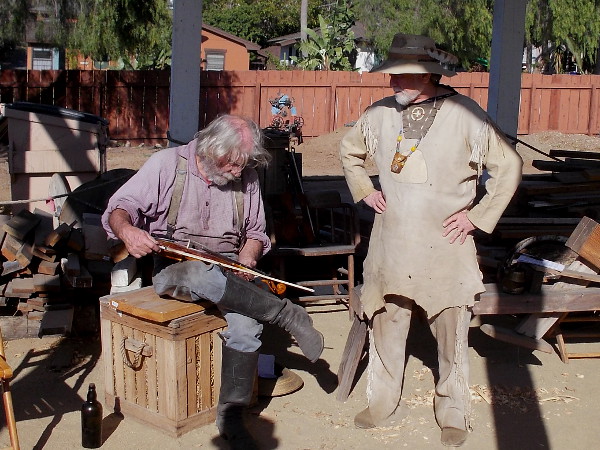
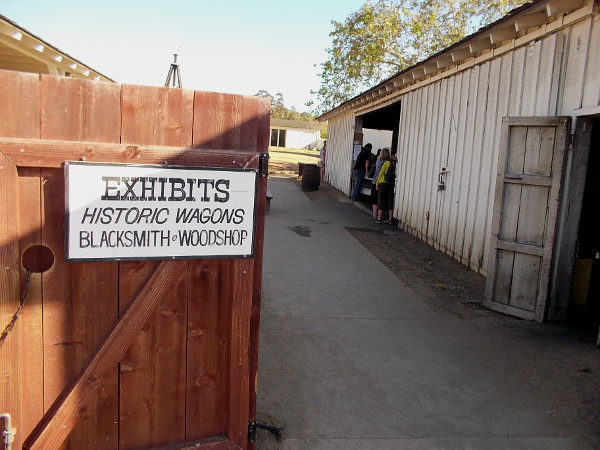
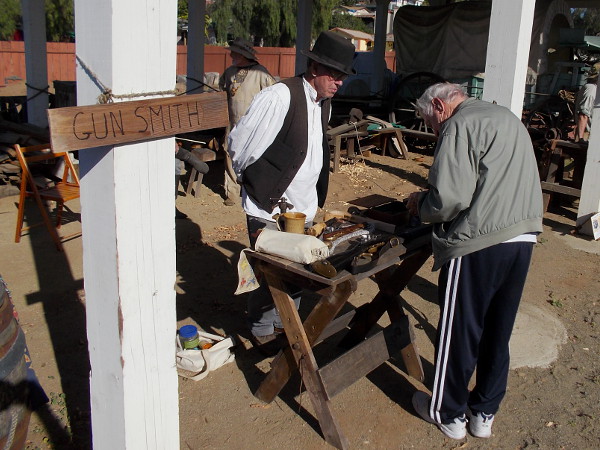
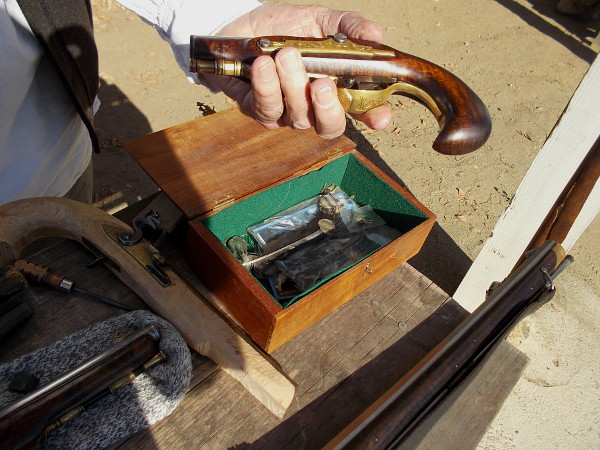
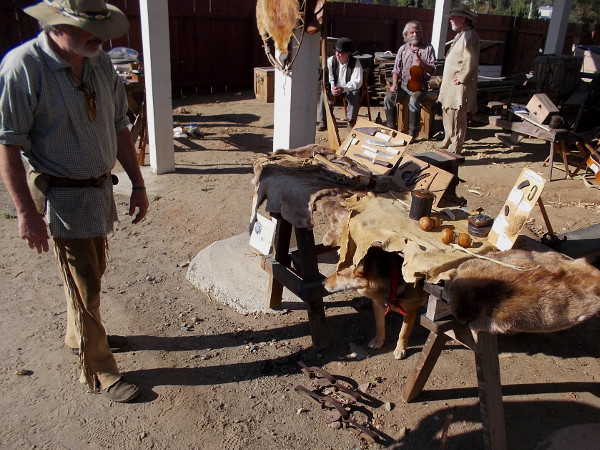
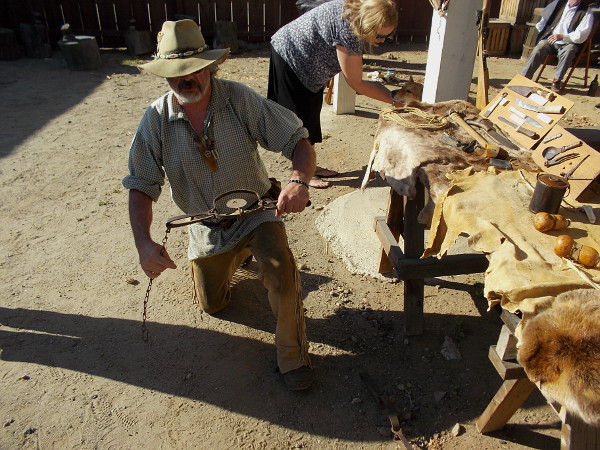
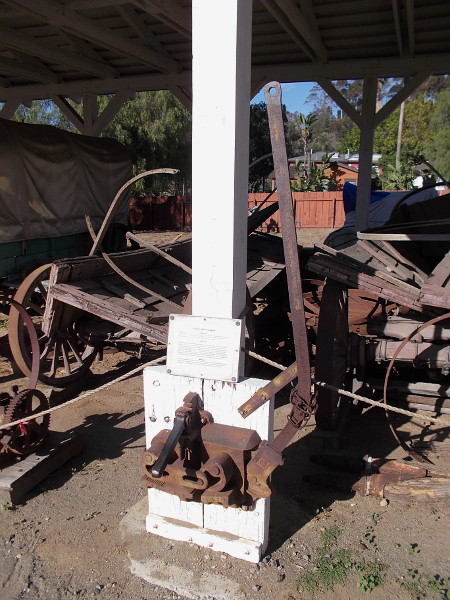
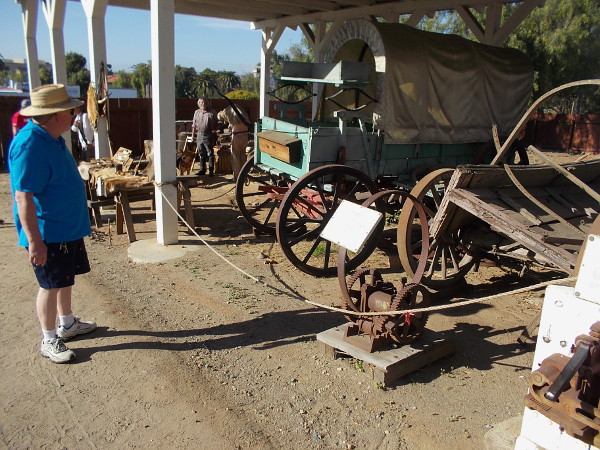
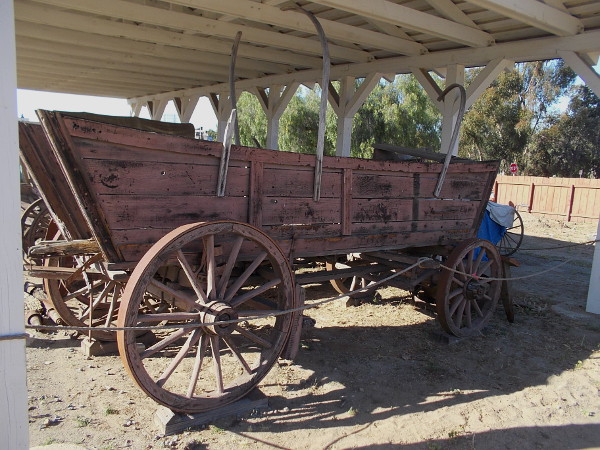
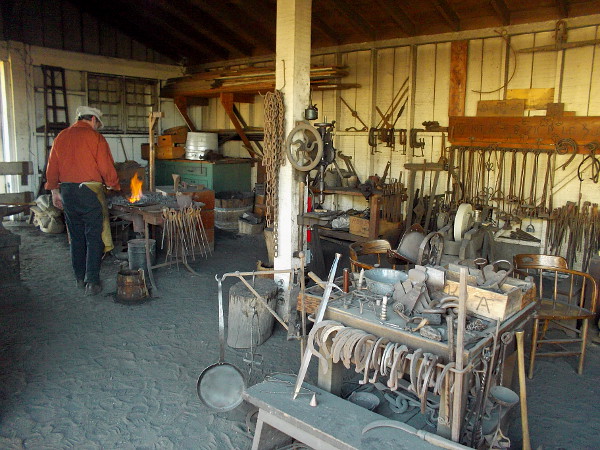
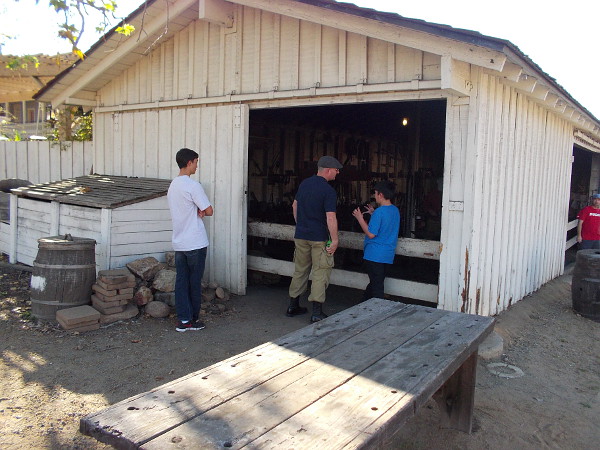
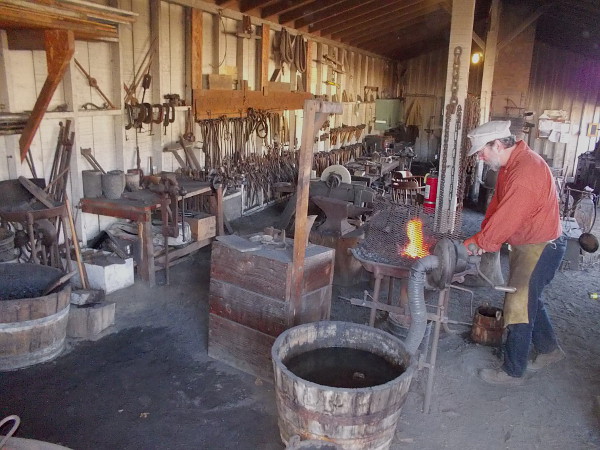
Beyond this gate just off La Plaza de Las Armas is the yard behind Seeley Stable. Here you’ll find outdoor exhibits, including old wagons and a blacksmith and woodshop.A gunsmith who assembles his own old-fashioned rifles and firearms shows a visitor some examples in San Diego’s historic Old Town.This antique flintlock pistol would have been used in past centuries for personal protection at close range.A friendly mountain man had a table full of skins, knives and other objects associated with frontier life in the Old West.A demonstration of how trappers in the Old West would set a beaver trap by a river and anchor it to a strong stick in the mud.This rusty tool with a long handle is a tyre shrinker. It was used for routine maintenance in the olden days–reducing the diameter of the iron tyres found on wooden wagon, cart and buggy wheels.Someone reads a sign near a tyre bender. This device was used to send long, flat bars of iron or steel into a smooth circle that would become an iron tyre.An old covered wagon on display behind Seeley Stable. They were typically sturdy farm wagons with a canvas top. Covered wagons were used on trail drives and cross-country treks.Photo inside the well-equipped blacksmith shop. It’s located behind Seeley Stable in Old Town San Diego State Historic Park.Some park visitors look into the small blacksmith building.A blacksmith removes red hot iron from the fire. He was demonstrating how to make hinges today!
…
I live in downtown San Diego and love to walk! You can enjoy more Cool San Diego Sights via Facebook or Twitter!
Do you like to read short pieces of thought-provoking fiction? Please click Short Stories by Richard.
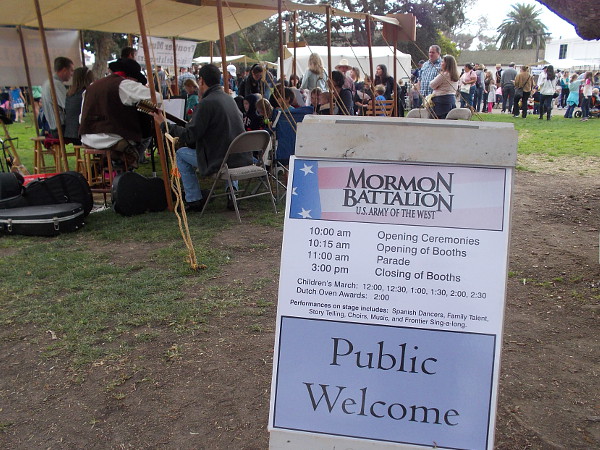
Lots of music was being played during today’s Mormon Battalion Commemoration event in Old Town San Diego.
I love history. So I was thrilled to stumble upon a special event today in Old Town San Diego!
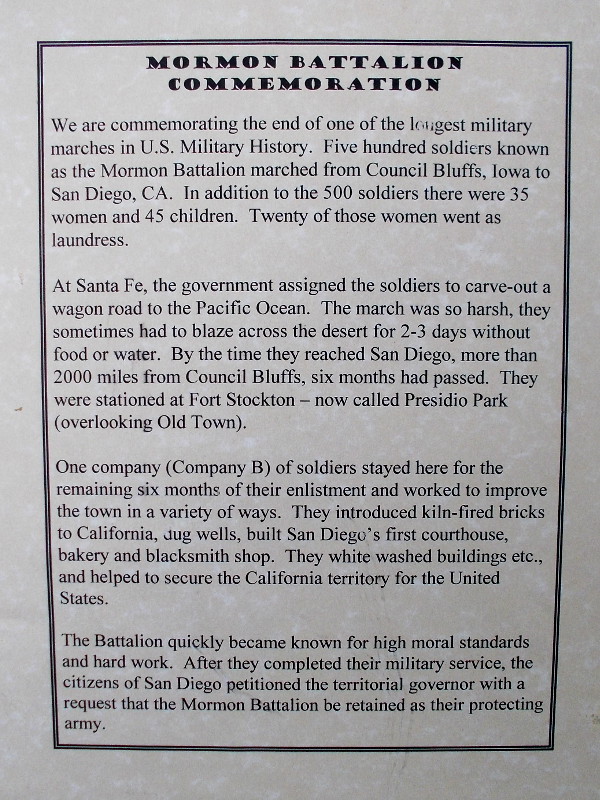
The Mormon Battalion Commemoration is an annual celebration that recalls a part of San Diego’s diverse, often surprising history. The battalion was formed in 1846. Composed of members of the Latter Day Saints and led by regular U.S. Army officers, over 500 men and several dozen women and children set out from Council Bluffs, Iowa and endured an almost 2,000 mile march to San Diego. Their presence in San Diego and several other locations in Southern California helped to support the eventual cession of much of the American Southwest from Mexico to the United States. Many members of the Mormon Battalion went on to play leading roles in the settlement of the West.
Of course, history–like life itself–is a complex thing that can be told and interpreted from many differing viewpoints. Happy reenactments don’t tell the entire story. But among so many costumes and demonstrations, one can start to imagine what life appeared like in San Diego over a century and a half ago.
I ambled around Old Town’s central plaza, spoke to some very friendly folks and took a few photos.
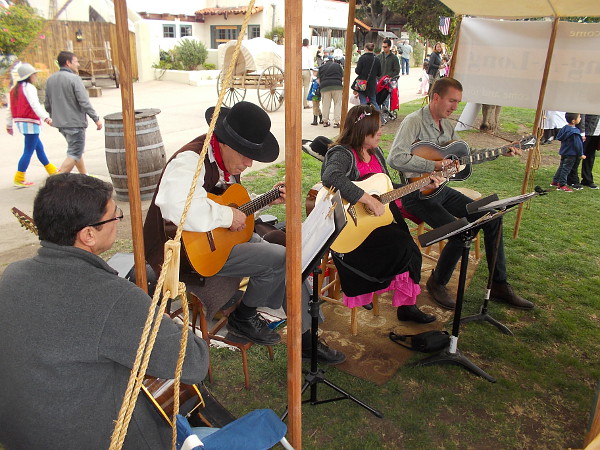
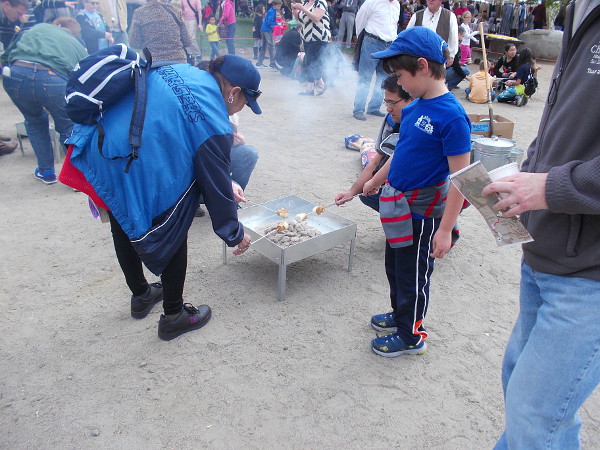
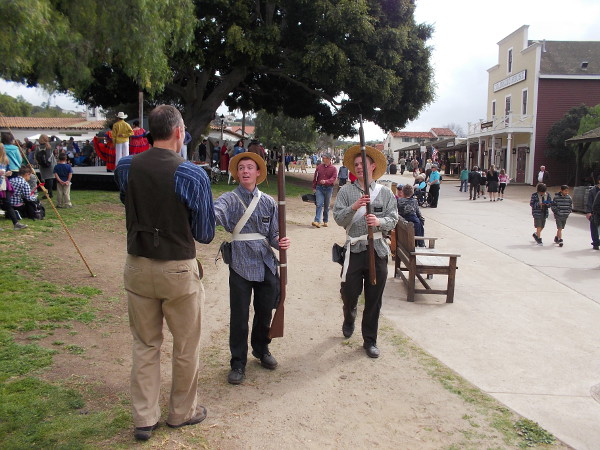
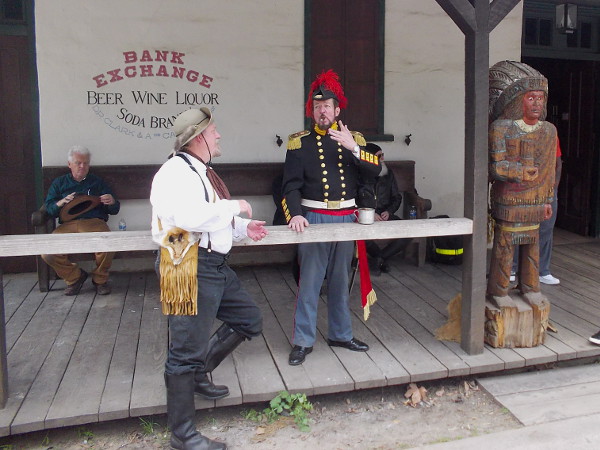
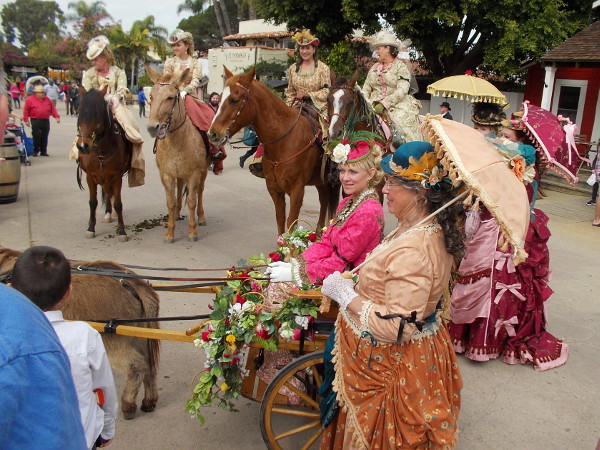
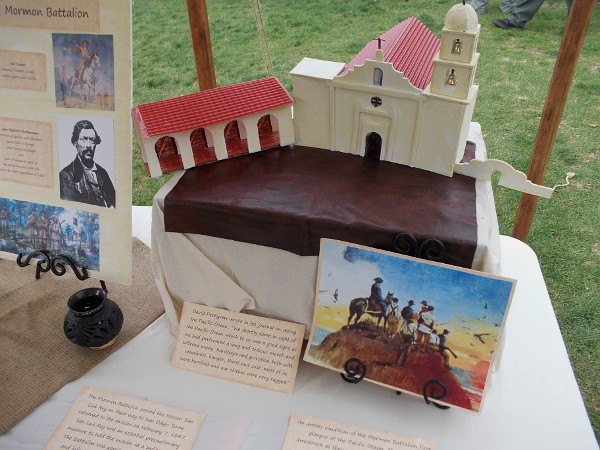
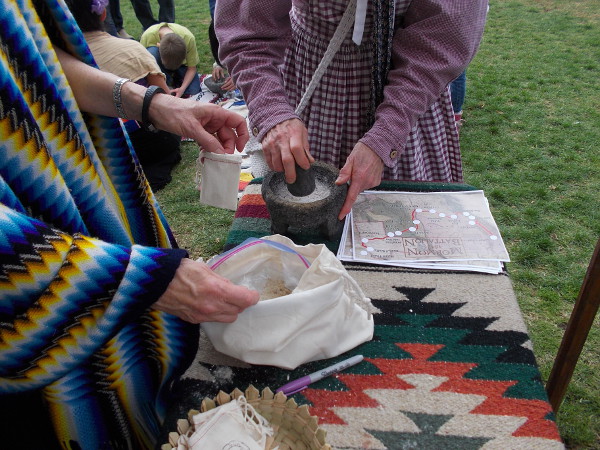
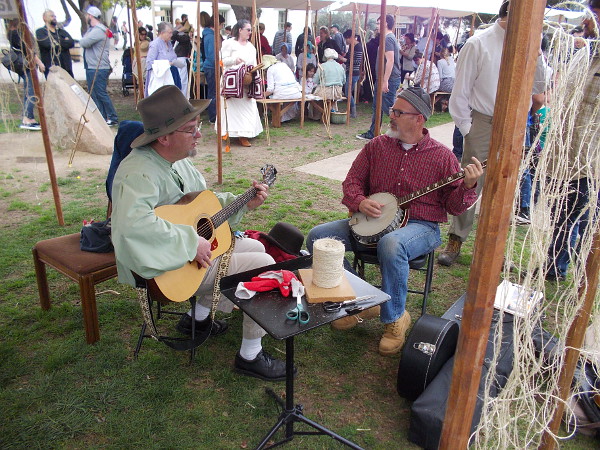
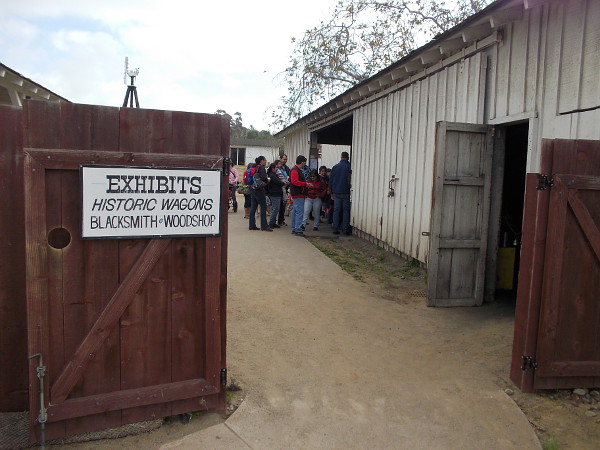
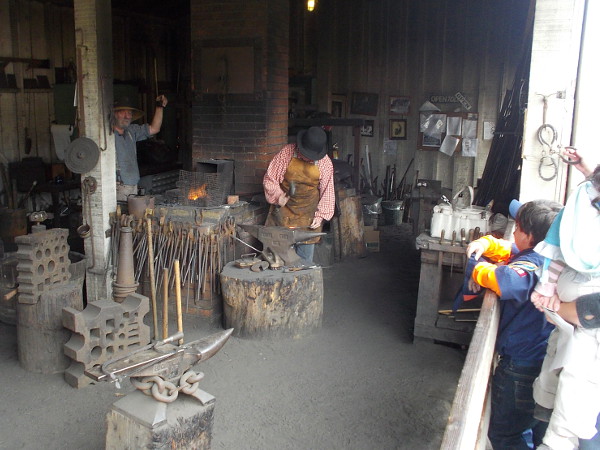
When I saw this rider on horseback as I entered Old Town this afternoon, I knew something special was going on!The public was welcome to this celebration of the Mormon Battalion. It included a parade, which I unfortunately missed.I saw kids in covered wagons, folks on horseback, and just a big whirl of activity all around Old Town today!We are commemorating the end of one of the longest military marches in U.S. Military History. Five hundred soldiers known as the Mormon Battalion marched from Council Bluffs, Iowa to San Diego, CA. In addition…there were 35 women and 45 children.Various exhibits recreated aspects of camp life, and life in San Diego during the mid-19th century.Treats on a stick. Lots of families were present for the very popular history-based event.One tent explained the hardships of women settling the West, and what life was like as a laundress.Lots of folks were about Old Town San Diego State Historic Park in period costume. Many people participating in the event were themselves Mormons.More unique and colorful costumes worn to help reenact a fascinating period of local history.Traditional folklorico dancing on a stage in Old Town. A strong Mexican heritage is a vibrant part of San Diego history.During the festivities, a large crowd enjoyed music, dance, food and all sorts of interesting sights.Contestants in a Dutch Oven Bake Off prepare their tasty concoctions for the judges.Young people were shown how clay bricks were made in the early days of San Diego.I was told this fabric would be used in the making of dolls.These ladies on horseback and in a fancy miniature donkey-driven cart were being photographed right and left. Wearing elegant frilly dresses and holding parasols, they delighted everybody!One booth in Old Town’s central plaza had a quilt-making demonstration, where kids could learn about the craft.Of course, there were many historical exhibits that told the Mormon Battalion’s story and described their contributions to San Diego’s early life and culture.The Liberty Stand explained how Mormons believe in the vision of America’s founding fathers, and their belief in values delineated by the U.S. Constitution.Another demonstration had folks grinding nuts and seeds, a skill adapted from Native American Kumeyaay who lived in this region long before Europeans.A guitar and a banjo create upbeat frontier-style music.This nice lady at an information stand gave the thumbs up for my camera!I wandered behind Seeley Stable because I noticed their famous blacksmith demonstration was open today!This lady was hammering glowing red hot iron while kids watched.A miniature donkey pulls an elegant cart!
…
Join me for more fascinating sights on Facebook and Twitter!































































 Cool San Diego Sights!