Learn about nature at Torrey Pines trailhead!

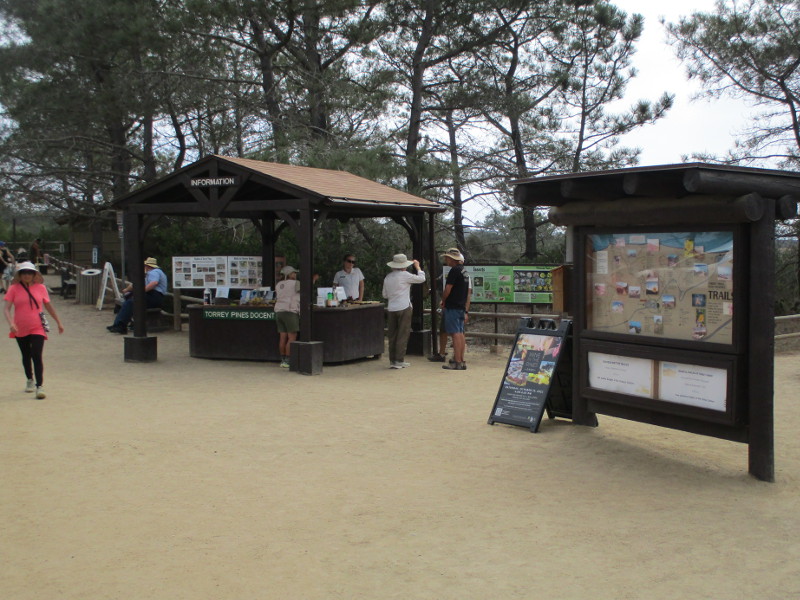
At Torrey Pines State Natural Reserve, several popular trails (including the Beach Trail and Razor Point Trail) can be accessed from a small parking lot south of the Visitor Center.

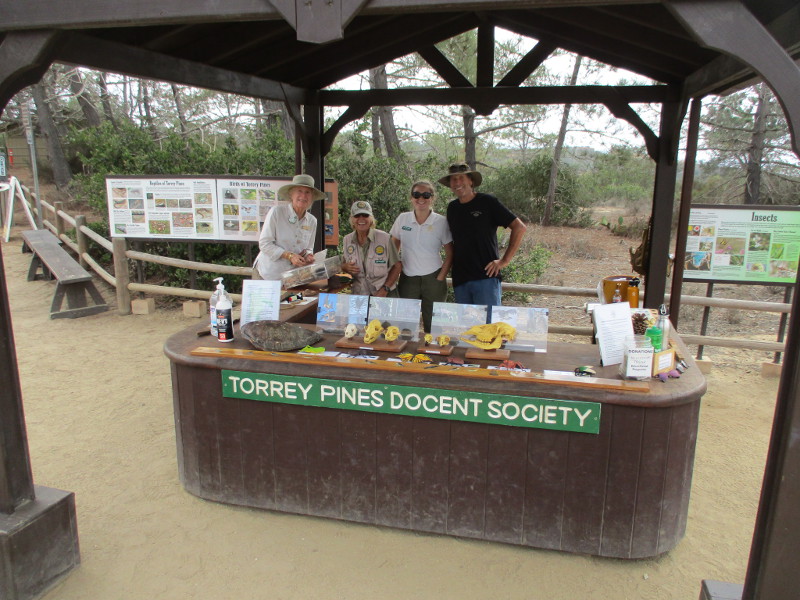
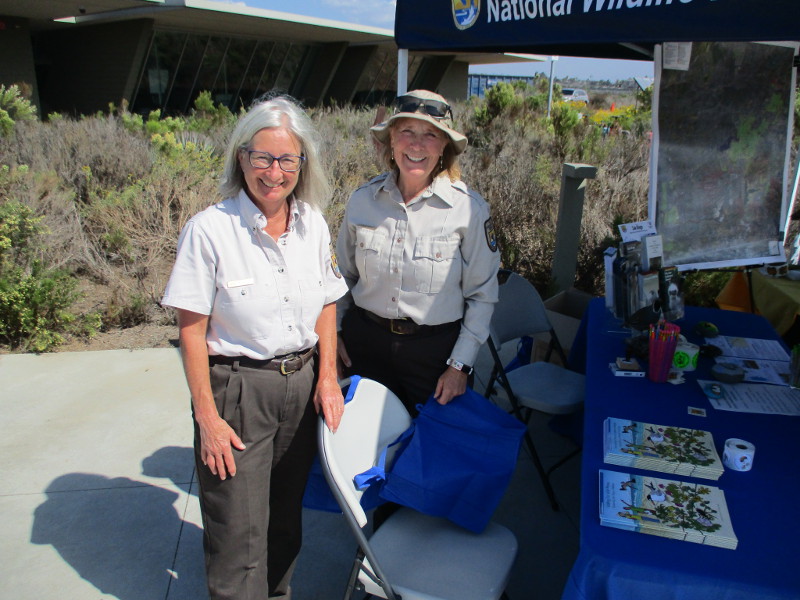
At the trailhead visitors will see a wooden structure, the words Torrey Pines Docent Society, and many smiling volunteers who are happy to provide information or explain interpretative displays before you begin your hike. The structure is called the Trailhead Information Kiosk, or TIK for short. Docents greeting visitors here are called TIK Talkers!

I remember how, many years ago, this trailhead “kiosk” was nothing more than a portable table and EZ Up canopy. Today’s handsome, sturdy structure is a testament to what volunteer hands can create!

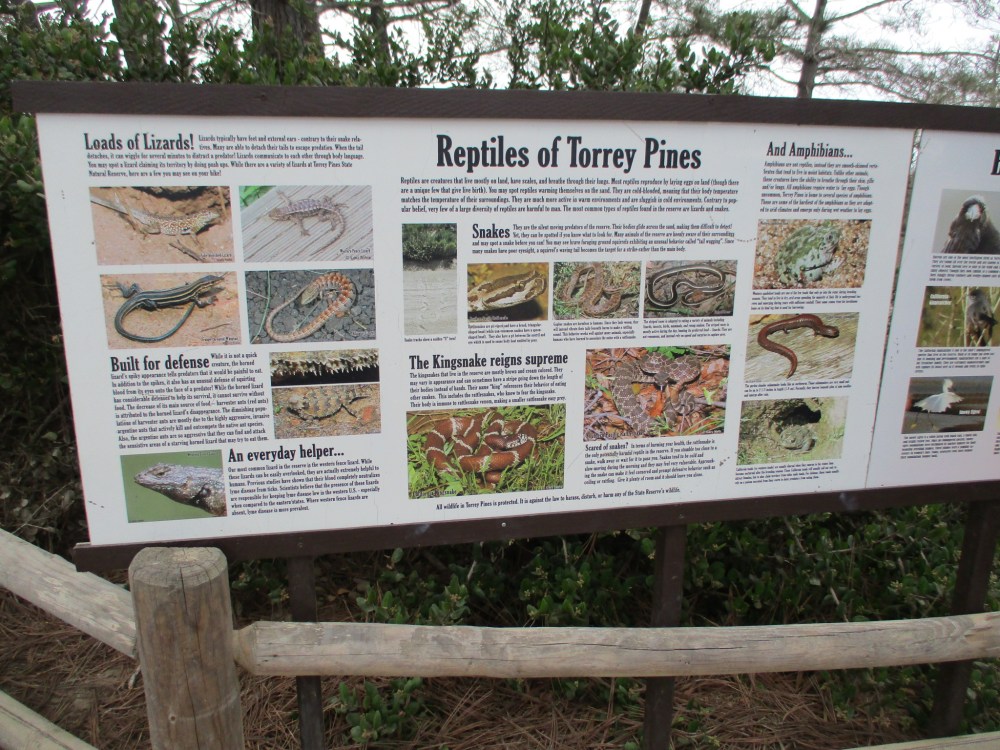
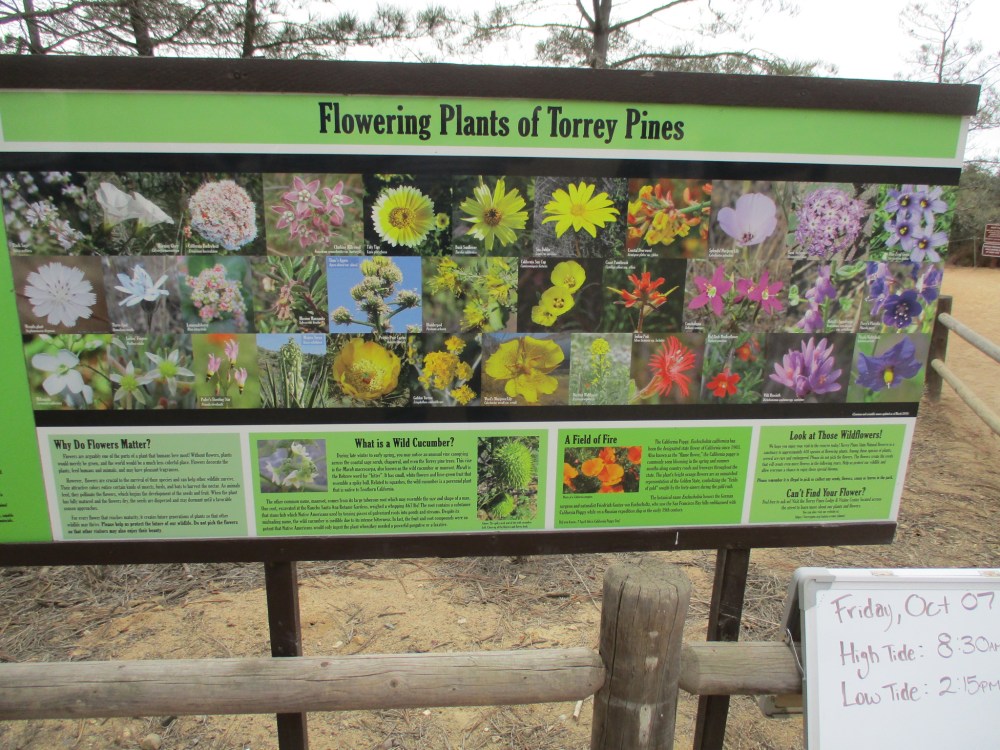
The Trailhead Information Kiosk is a great place to learn about Torrey Pines’ native plants and animals. There are signs detailing what hikers might encounter, photographs of wildlife, and cool models of insects, snakes and other animals.

Before beginning a short hike the other day, I paused at the TIK to absorb a little knowledge.
Reptiles of Torrey Pines

Birds of Torrey Pines

Insects

Flowering Plants of Torrey Pines

Thank you for visiting Cool San Diego Sights!

I post new blogs pretty often, so you might want to bookmark coolsandiegosights.com and check back from time to time.

You can explore Cool San Diego Sights by using the search box on this website’s sidebar. Or click a tag! There’s a lot of stuff to share and enjoy!

I live in downtown San Diego and love to walk around with my camera! You can follow Cool San Diego Sights via Facebook or Twitter!
National Wildlife Refuge Week in San Diego!

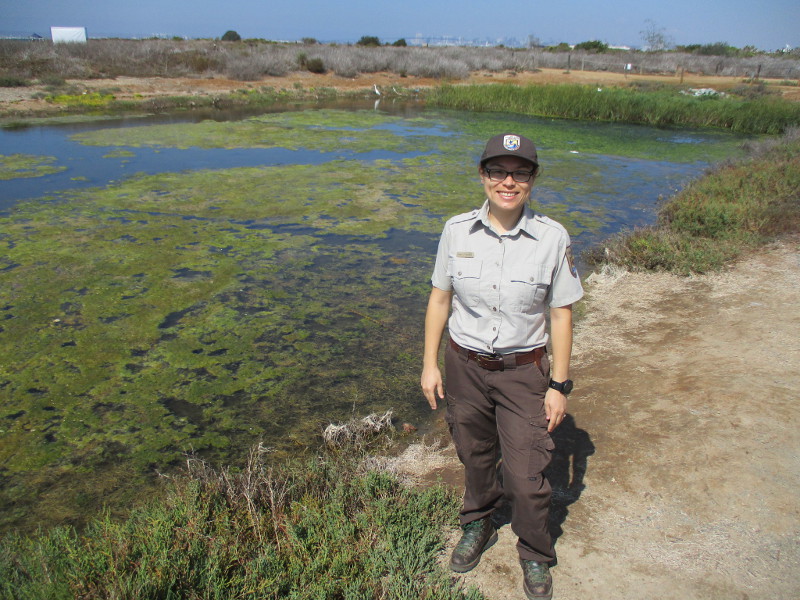
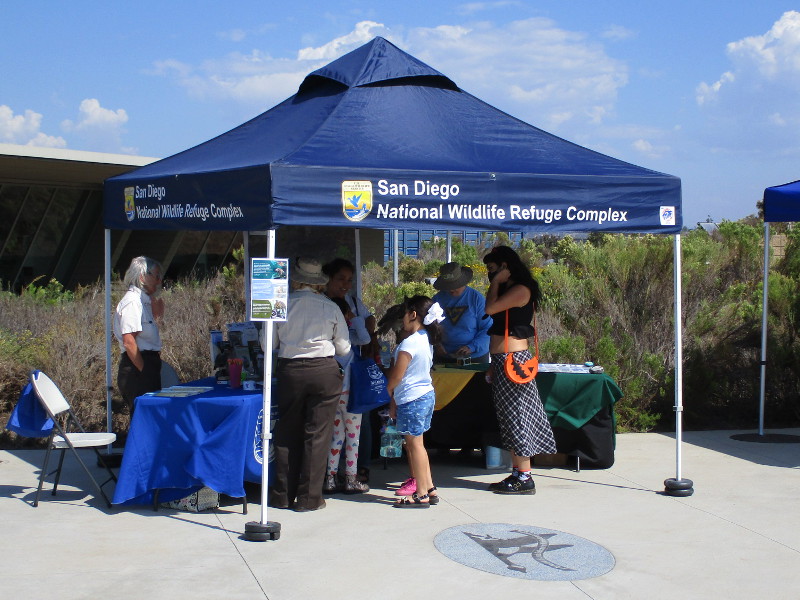
A very special event was held today at the Sweetwater Marsh National Wildlife Refuge. National Wildlife Refuge Week was celebrated! And the public was freely invited!

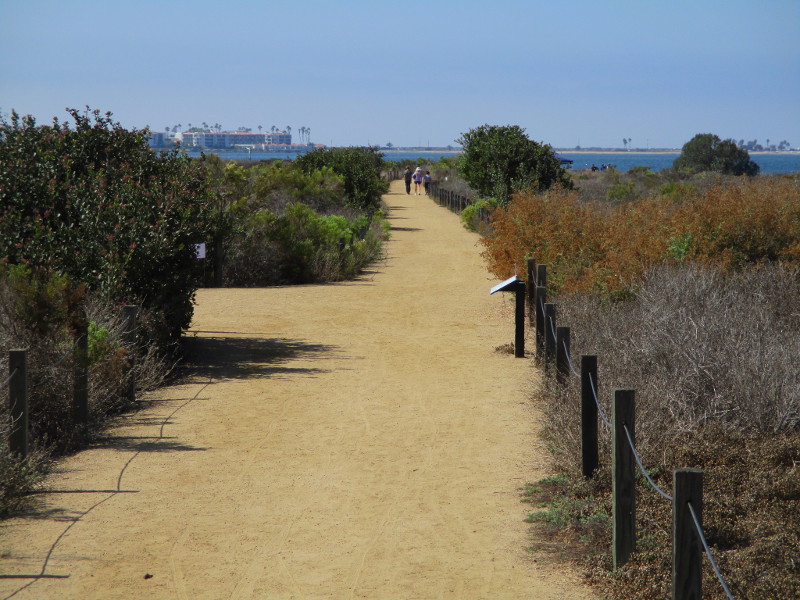
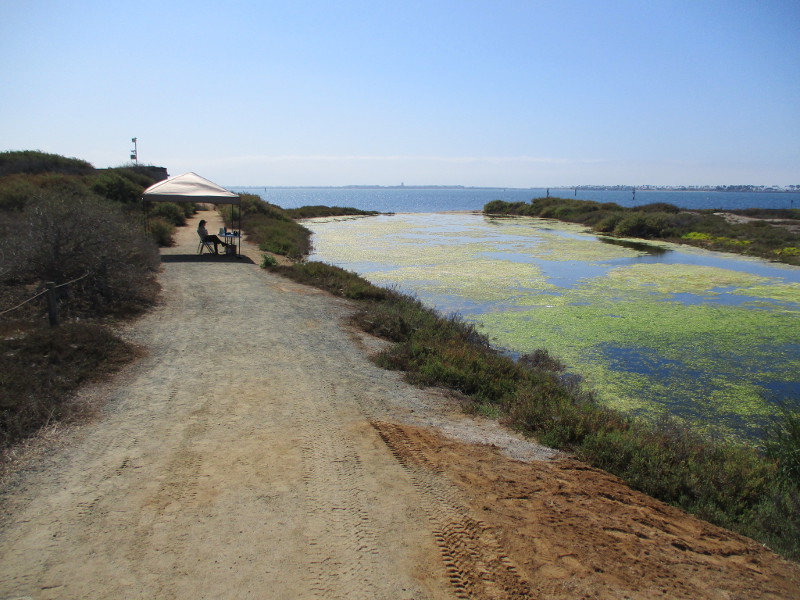
I arrived around noontime and started down the refuge’s nature paths toward San Diego Bay.

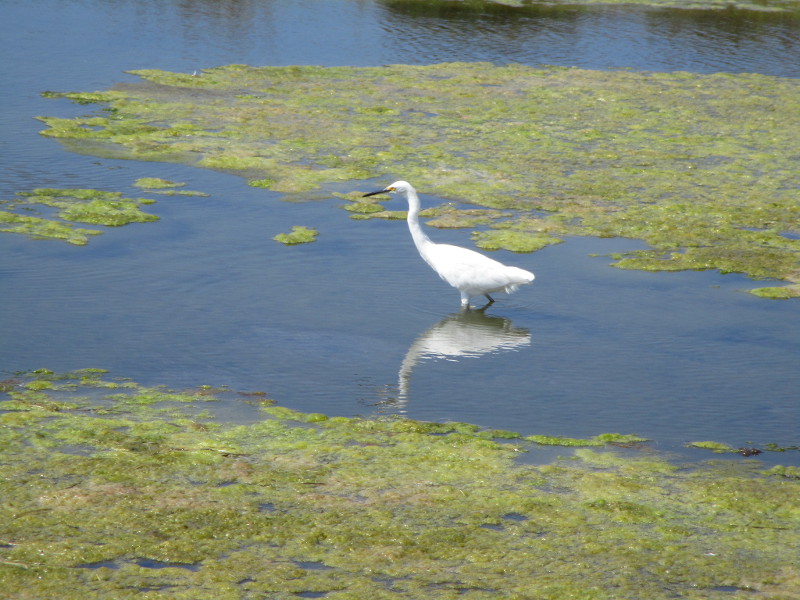
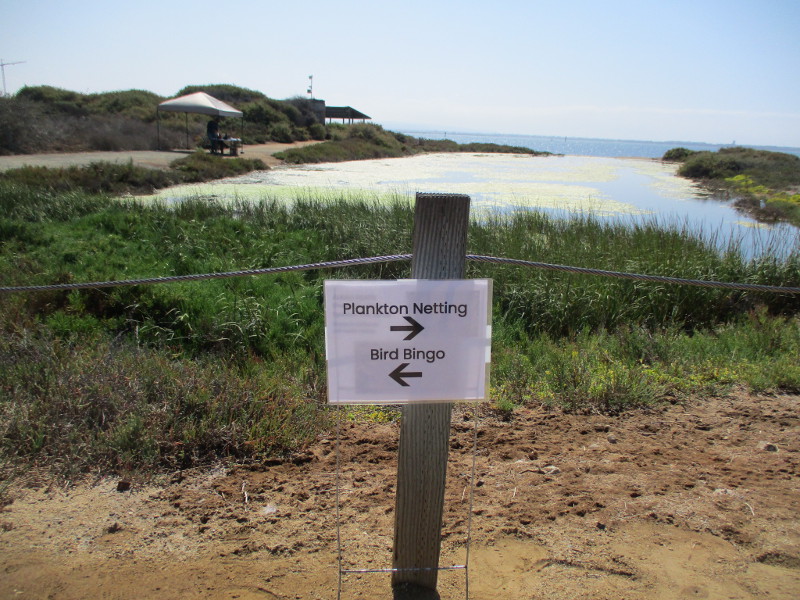
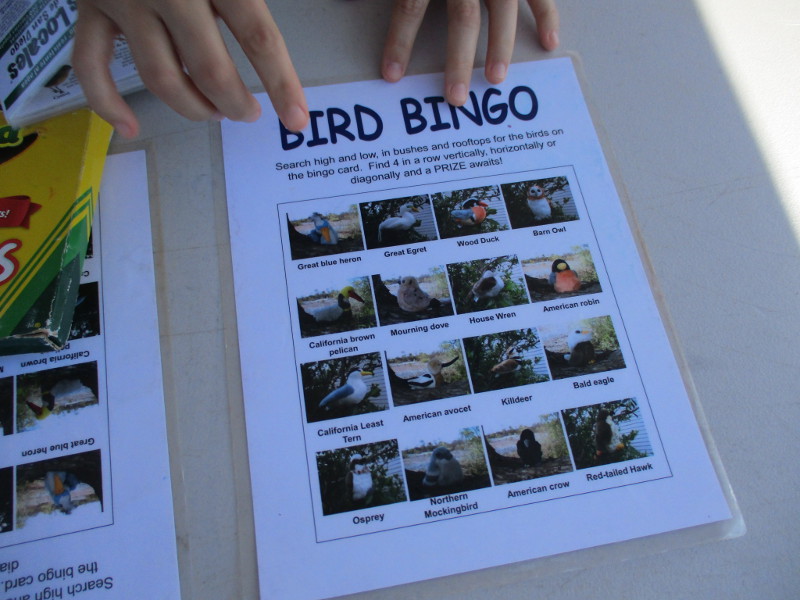
At one station near a brackish wetland pond, a friendly ranger was inviting kids (and curious adults) to play Bird Bingo! How many wild birds could visitors spot? I saw a beautiful Snowy Egret.

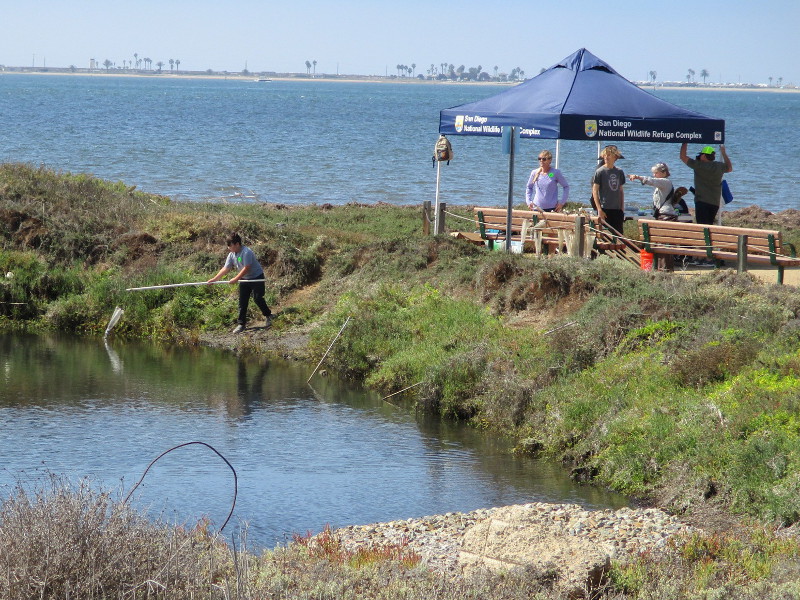
At a second station, rangers were encouraging people to dip a net into the nearby water. Netted plankton was then observed under magnification!

The event was a fun opportunity to learn about the value of wildlife refuges, where animal and plant life–some of which is endangered–can thrive undisturbed. And where we humans can reconnect with nature, absorbing all that goodness that awaits us in wild places.

San Diego Bay National Wildlife Refuge consists of the Sweetwater Marsh and South San Diego Bay Units, preserving coastal salt marsh and intertidal mudflat habitat.

What’s in here?

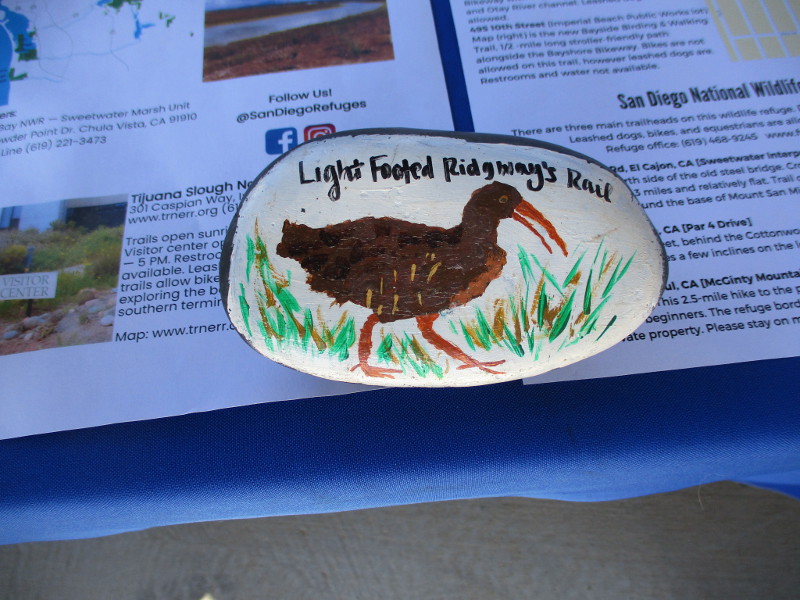
The U.S. Fish & Wildlife Service, Living Coast Discovery Center, SeaWorld San Diego, San Diego Zoo Safari Park, and the California Department of Fish & Wildlife are working together on a captive propagation program to rear the endangered light-footed Ridgway’s rail…

I checked out the Bird Bingo first.

A Snowy Egret hunts for food in the pond.

Now heading through the wildlife refuge toward the Plankton Netting activity. I see downtown San Diego in the distance.

A curious kid was netting microscopic specimens.

At the Sweetwater Marsh National Wildlife Refuge today, there was much to experience and learn!

I live in downtown San Diego and love to walk around with my camera! You can follow Cool San Diego Sights via Facebook or Twitter!
Planting rare trees at Torrey Pines State Reserve.

An important reforestation effort is underway at Torrey Pines State Natural Reserve.

In recent years the critically endangered Torrey pine population has been reduced significantly by bark beetles, particularly in the park’s North Grove. So over 450 Torrey pine seedlings and 581 native shrubs grown in the nursery at the San Diego Safari Park are being planted in different locations around the Reserve.

You can read more about the project, an effort of California State Parks, the San Diego Zoo Wildlife Alliance, and the U.S. Forest Service, by clicking here.

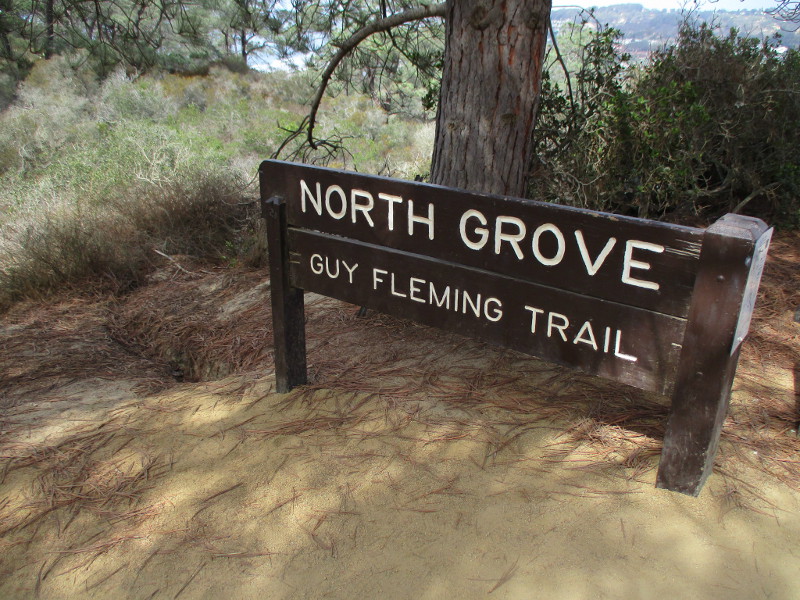
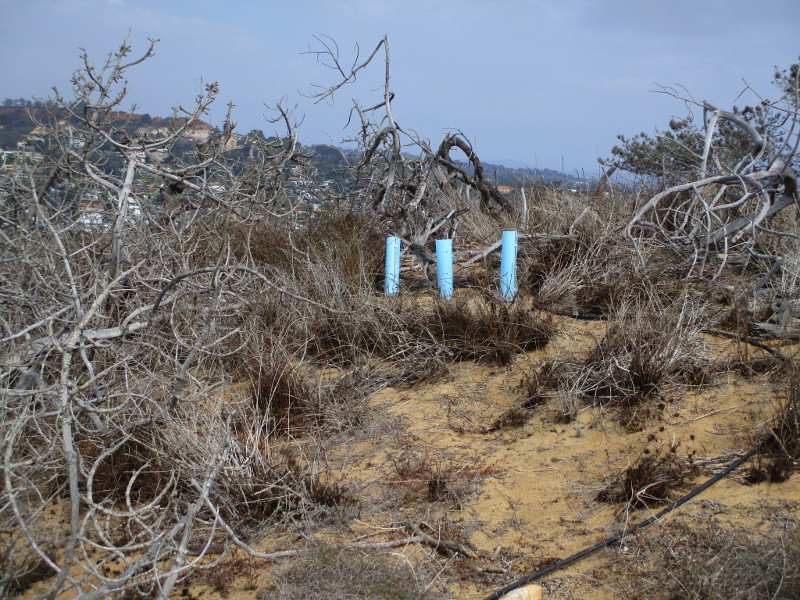
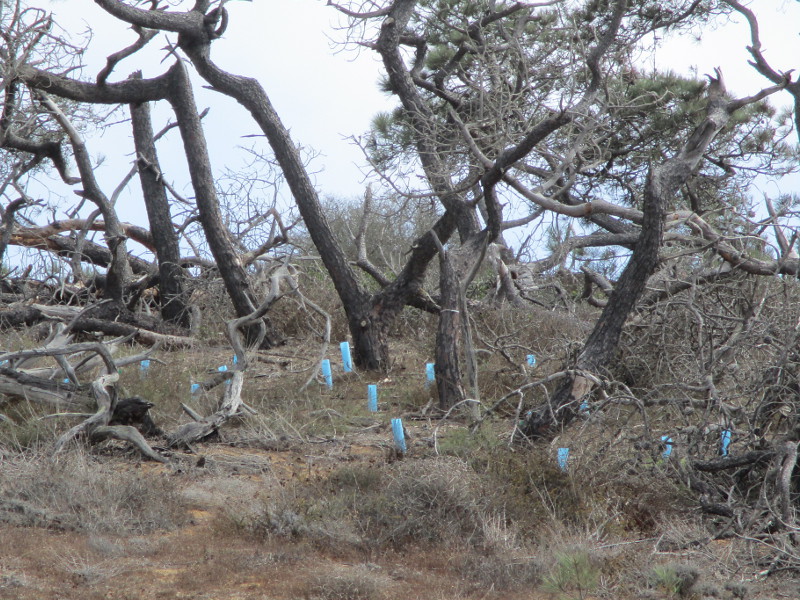
I walked the loop of the Guy Fleming Trail yesterday, where visitors can see many of the dead Torrey pines. Among dead trees, clustered close to the ground, stand strange blue tubes. These plastic protectors shield growing trees and other plants from animals and drying winds.

Native shrubs that have also been planted, mostly above the west-facing bluffs facing the Pacific Ocean, include sea dahlia, jojoba, lanceleaf liveforever, fingertips (San Diego dudleya), lemonade berry, coast lilac, and San Diego mountain mahogany.

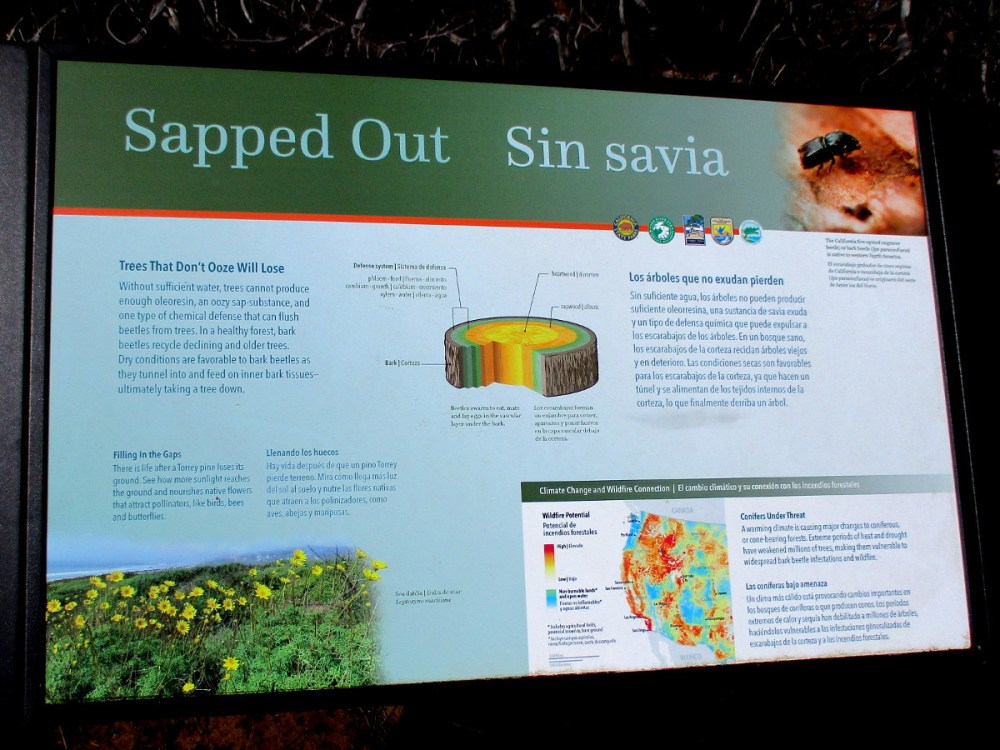
As I walked along, observing all those blue tubes, I paused to read signs that explain how bark beetles kill the rare and beautiful Torrey pine. This tree’s natural protection against beetle infestation is sap. During drought trees produce less sap than usual and become especially vulnerable.

Without sufficient water, trees cannot produce enough oleoresin, an oozy sap-substance, and one type of chemical defense that can flush beetles from trees…

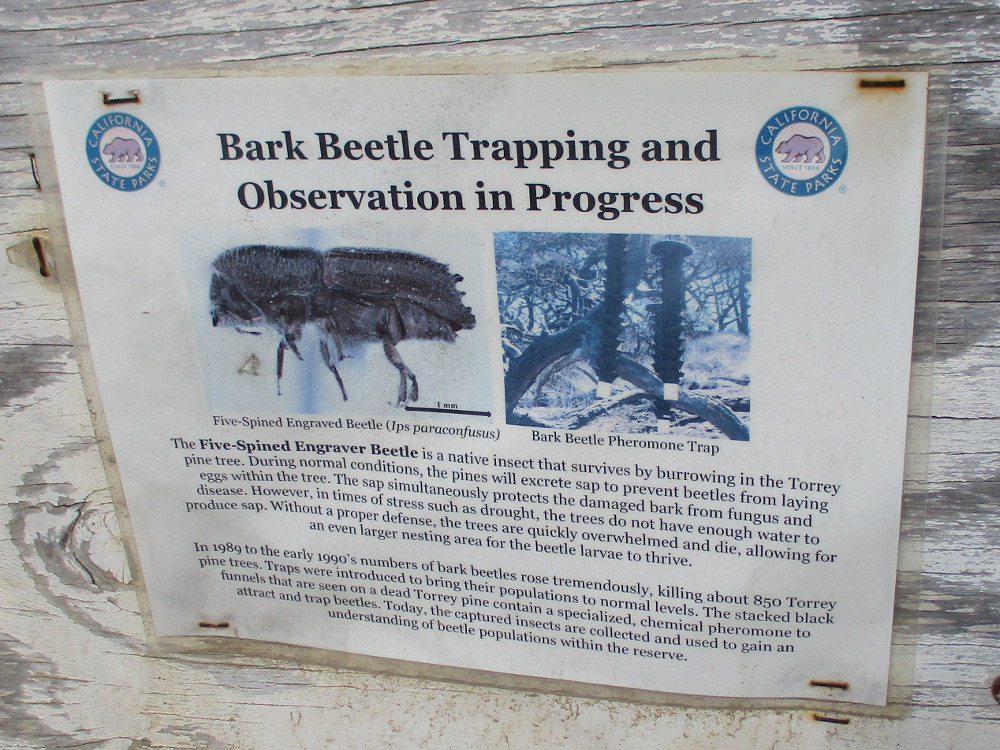
Bark Beetle Trapping and Observation in Progress.

The Five-Spined Engraver Beetle is a native insect that survives by burrowing in the Torrey pine tree. During normal conditions, the pines will excrete sap to prevent beetles from laying eggs within the tree. The sap simultaneously protects the damaged bark from fungus and disease…

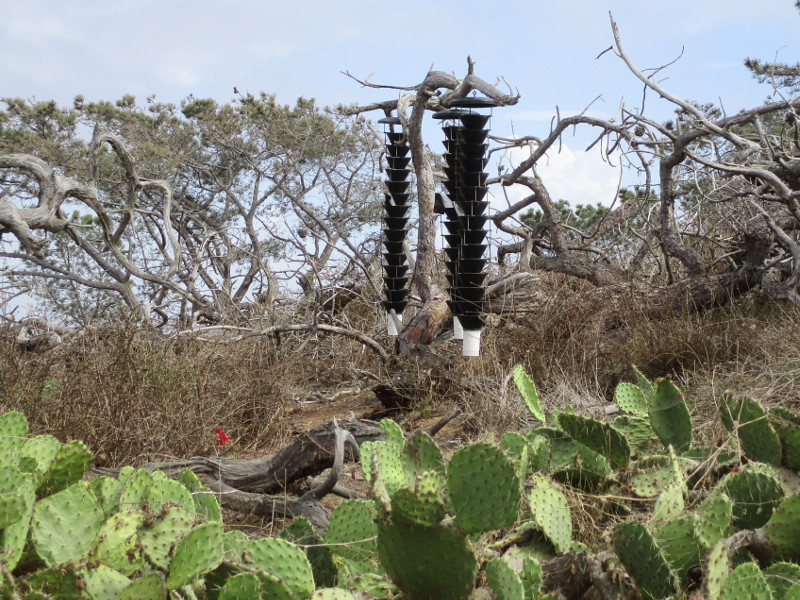
…The stacked black funnels that are seen on a dead Torrey pine contain a specialized chemical pheromone to attract and trap beetles…

I live in downtown San Diego and love to walk around with my camera! You can follow Cool San Diego Sights via Facebook or Twitter!
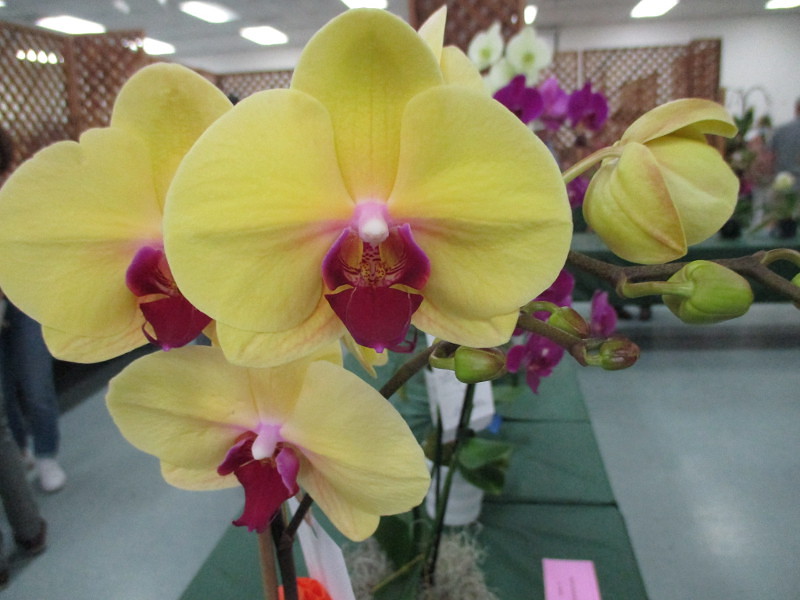
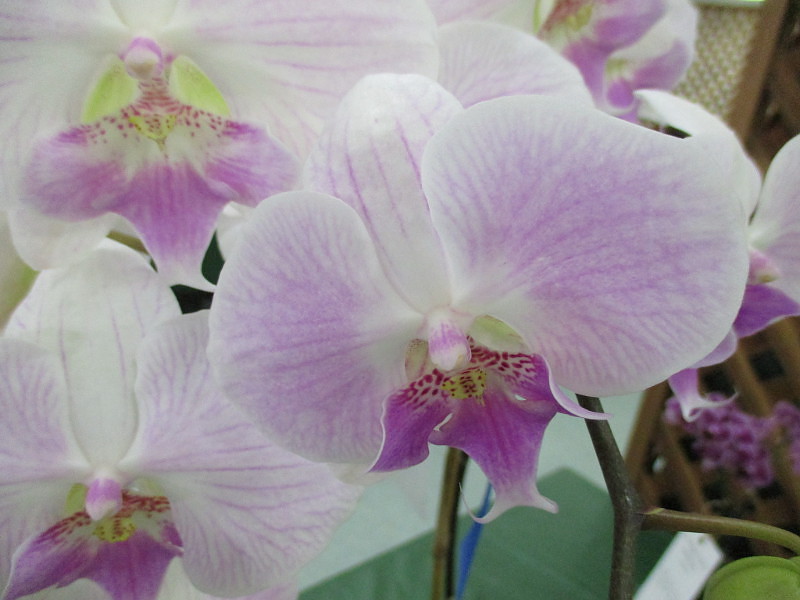
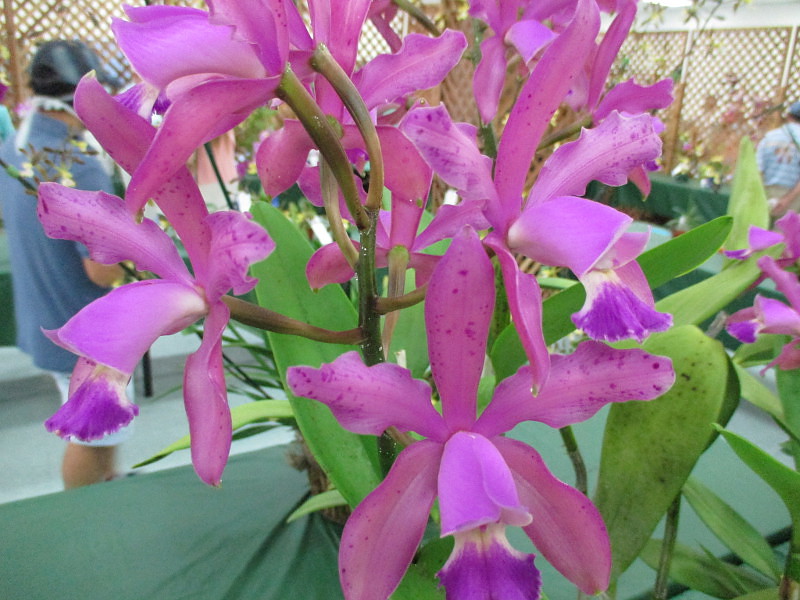
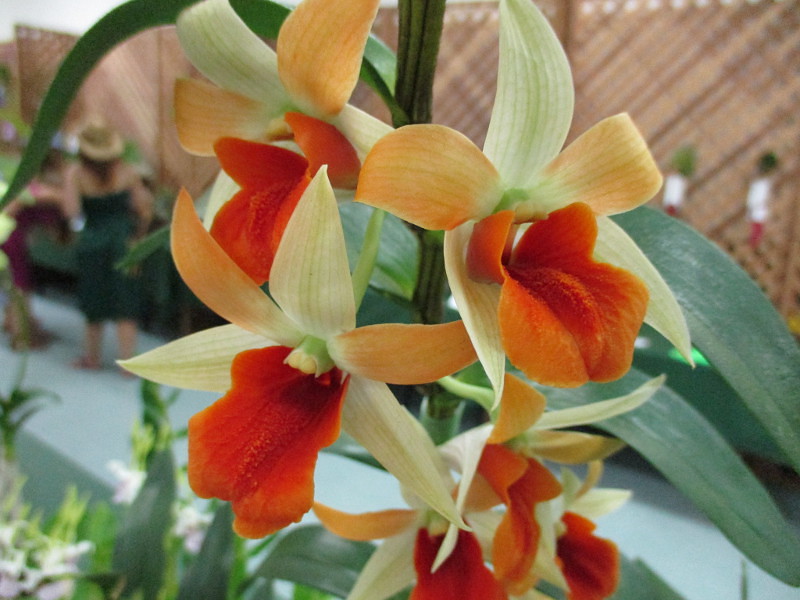
Orchids in the Park returns to San Diego!

The San Diego County Orchid Society is hosting their summer Orchids in the Park show and sale in Balboa Park this weekend!

I was drawn to Room 101 in the Casa del Prado once I saw a sign pointing to the popular free event.

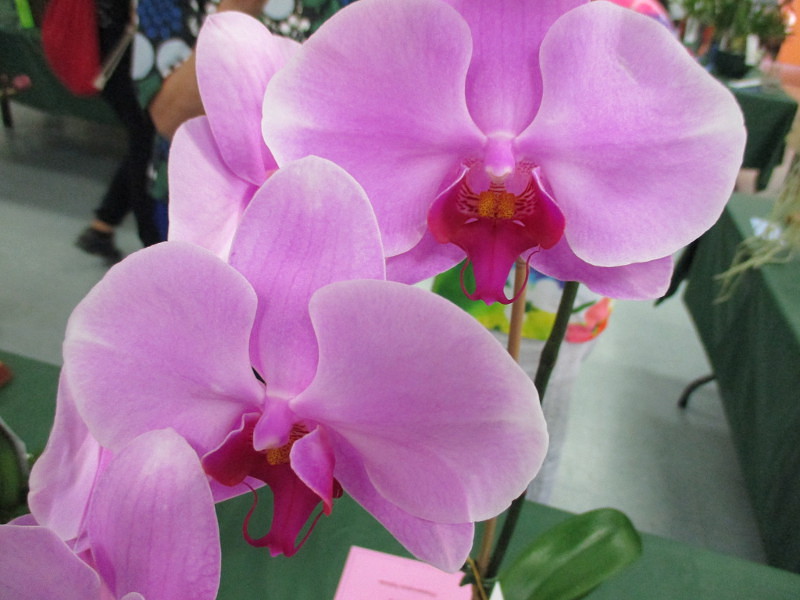
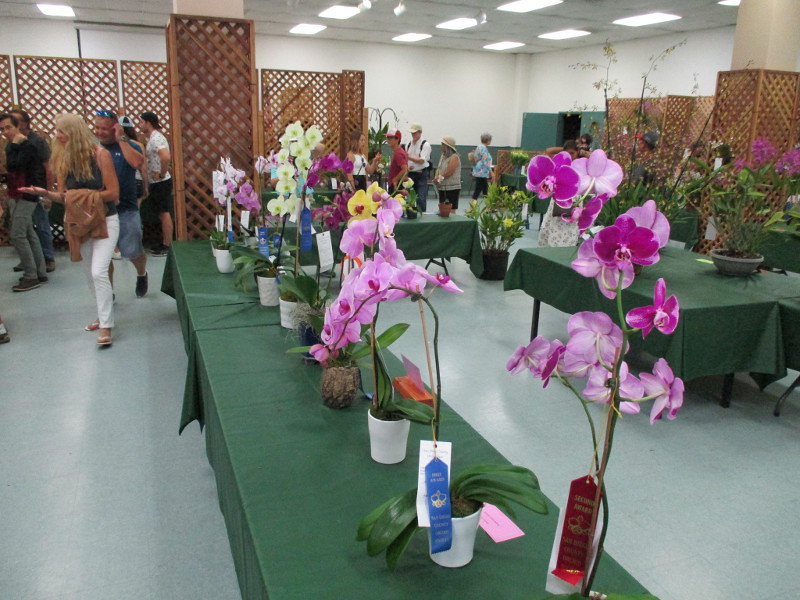
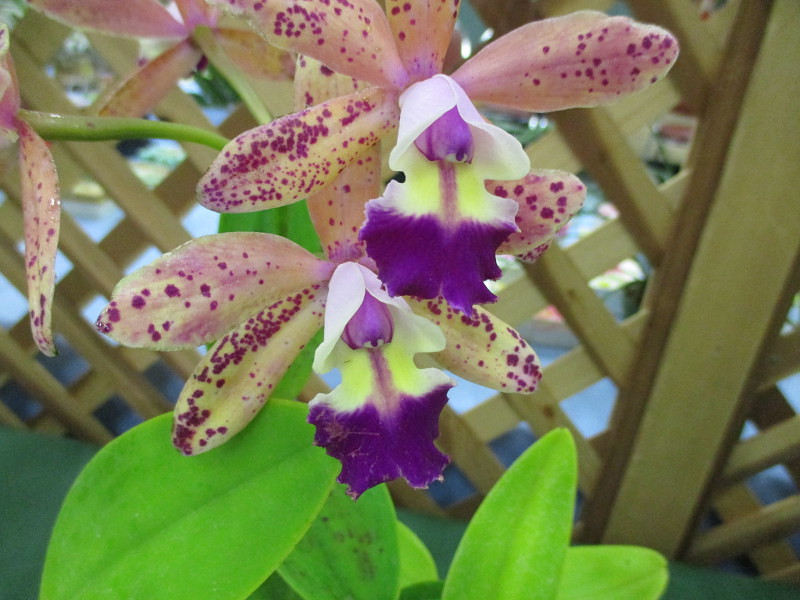
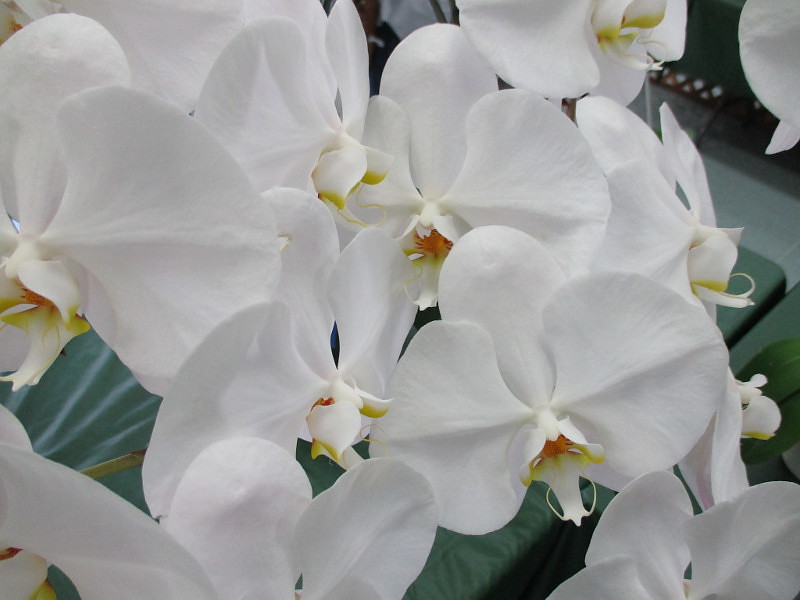
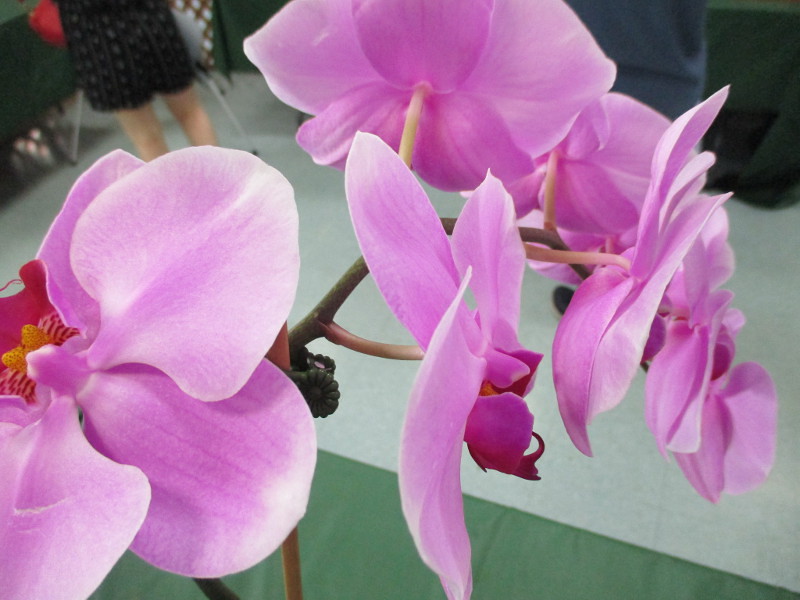
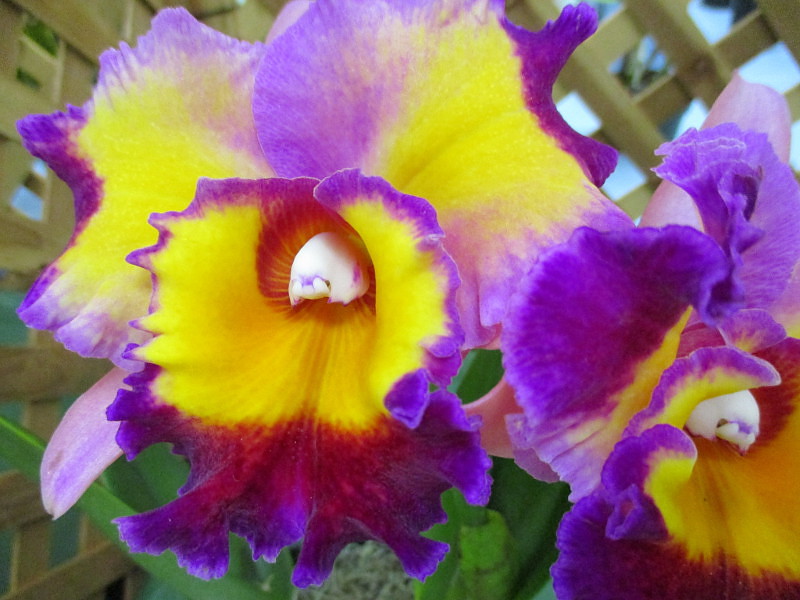
The show’s many tables were overflowing with orchids in many shapes, sizes and colors. Every flower was like a perfect jewel.

I found so many examples of nature’s beauty (tended by the caring hands of society members), that I had to capture a little bit of it with my camera…

I live in downtown San Diego and love to walk around with my camera! You can follow Cool San Diego Sights via Facebook or Twitter!

You can easily explore Cool San Diego Sights by using the search box on my blog’s sidebar. Or click a tag! There are thousands upon thousands of photos for you to enjoy!

Bones, stones, and ancient history in San Diego.

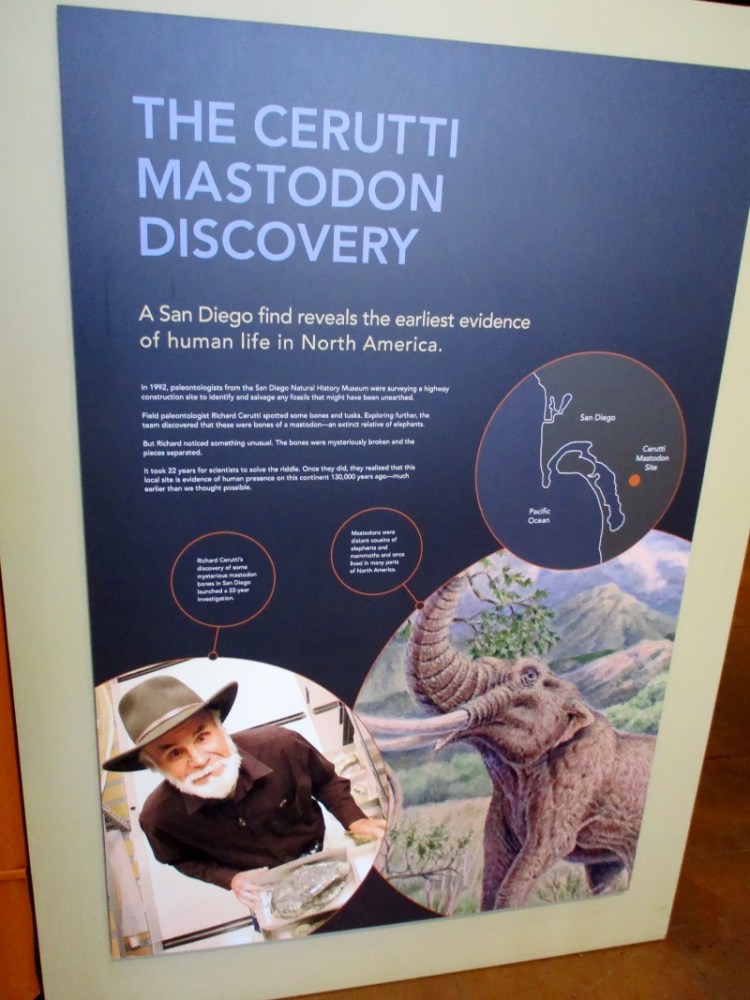
Did you know humans might have been living in your neighborhood 130,000 years ago?

I was visiting the San Diego Natural History Museum when my eyes fell upon an interesting display concerning the Cerutti Mastodon site.

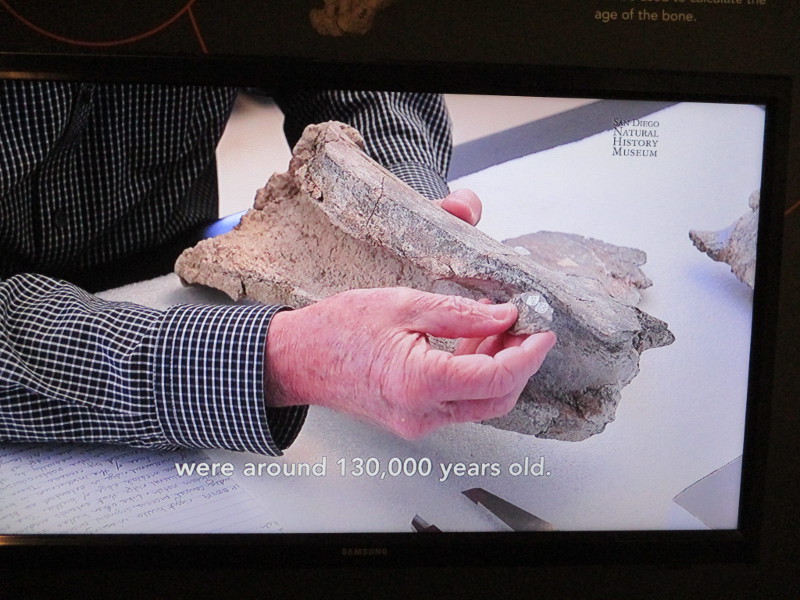
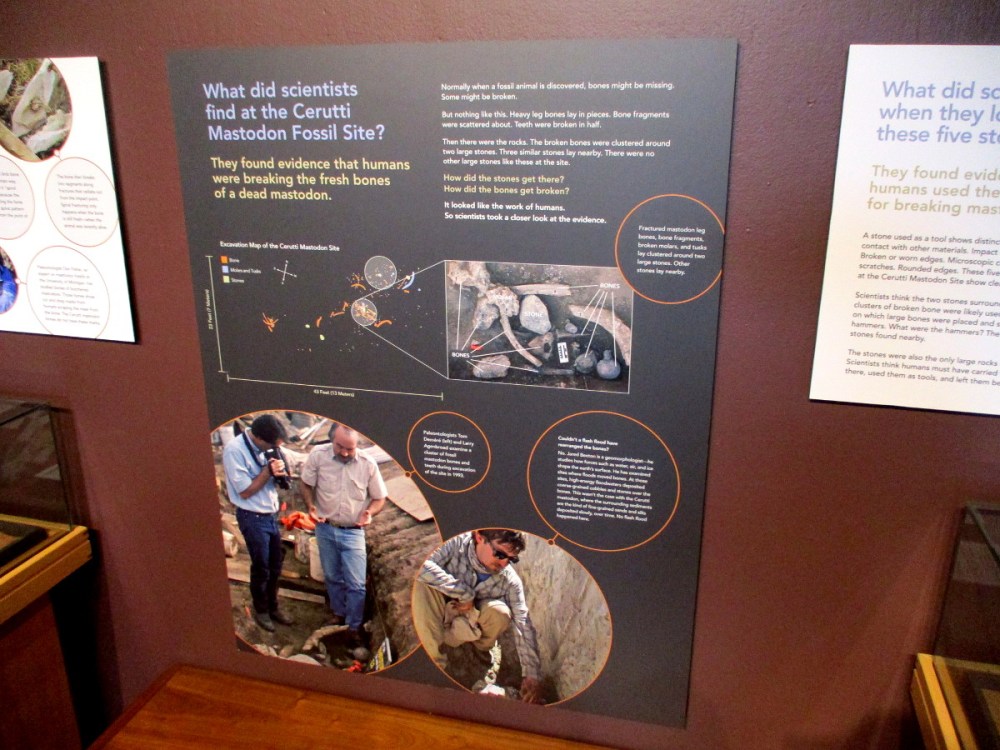
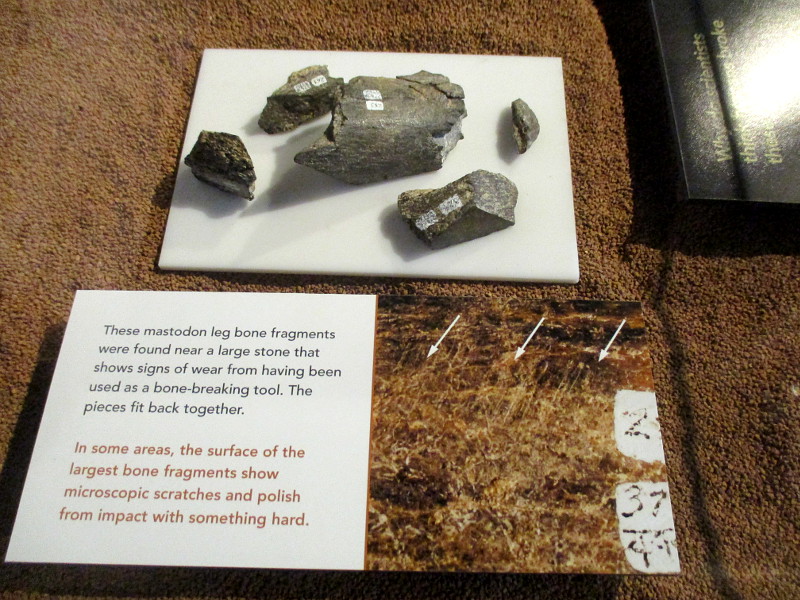
Thirty years ago, during the expansion of State Route 54 in the South Bay, a team of researchers from the San Diego Natural History Museum discovered mastodon bones among cobbles. The bones appeared to have been intentionally broken. It was believed the stones, which had impact marks, had been used by humans to fracture the mastodon bones to extract marrow.

Using radiometric dating, the bones were found to be about 130,000 years old. If, indeed, early humans had worked these bones, that would mean humans were in North America about 100,000 years earlier than previously thought!

Many experts asserted the bones were broken due to the heavy machinery used for freeway construction. Two years ago, however, more evidence was obtained. Bone micro-residues were observed on the cobbles, which seems to confirm that ancient inhabitants of San Diego did indeed hammer at fresh, tasty mastodon bones!

If all of this excites your curiosity, the Wikipedia article concerning San Diego’s scientifically important Cerutti Mastodon site can be found here.

And here’s a detailed article about the discovery written in 2017.

I live in downtown San Diego and love to walk around with my camera! You can follow Cool San Diego Sights via Facebook or Twitter!
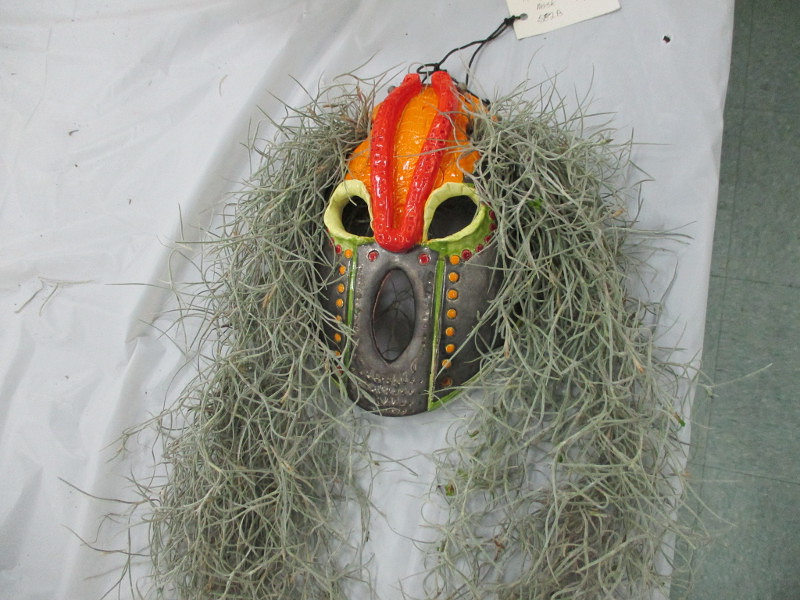
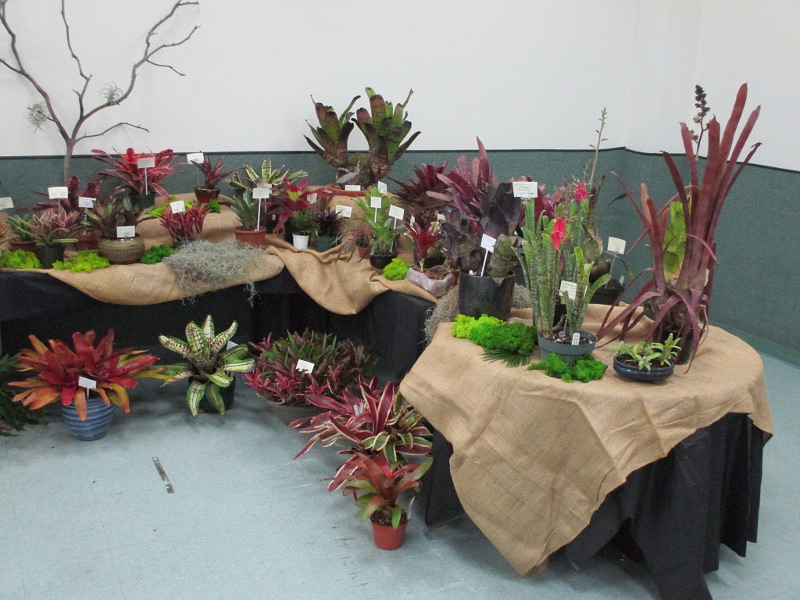
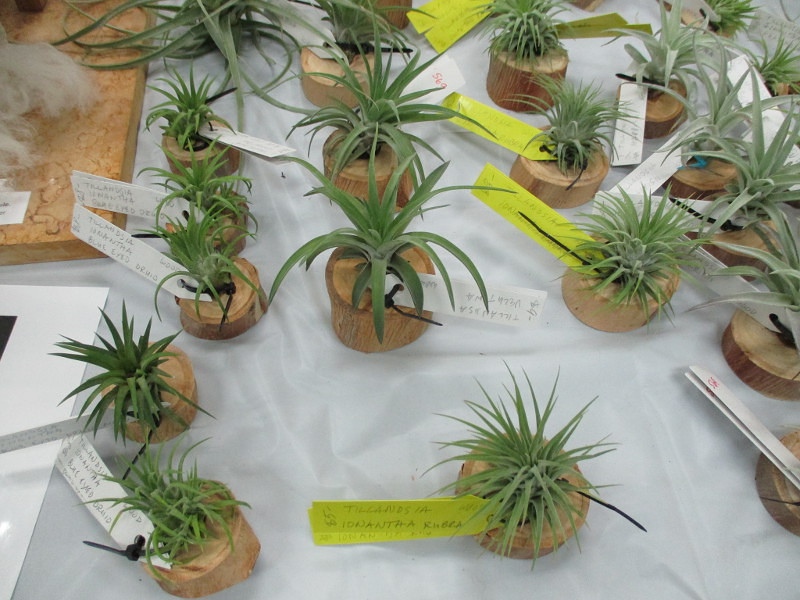
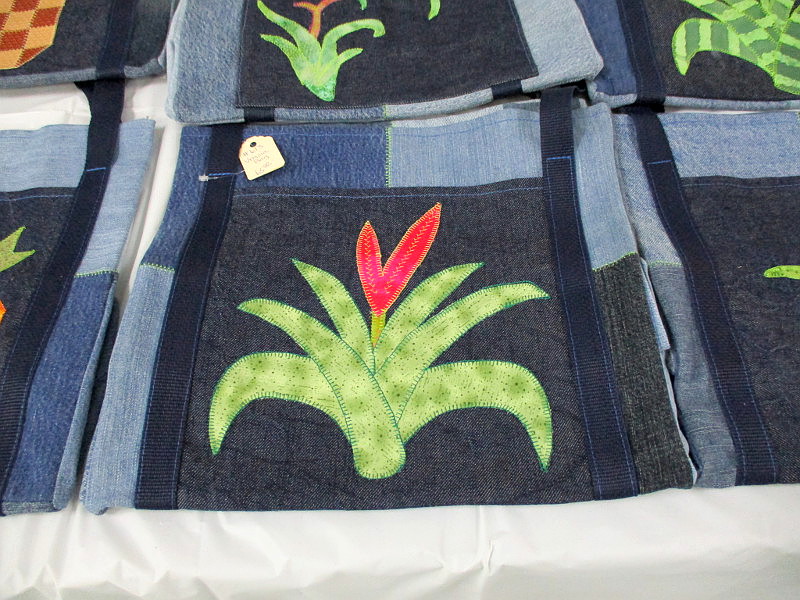
Natural beauty and art at the Bromeliad Show!

Did you know pineapples are bromeliads?

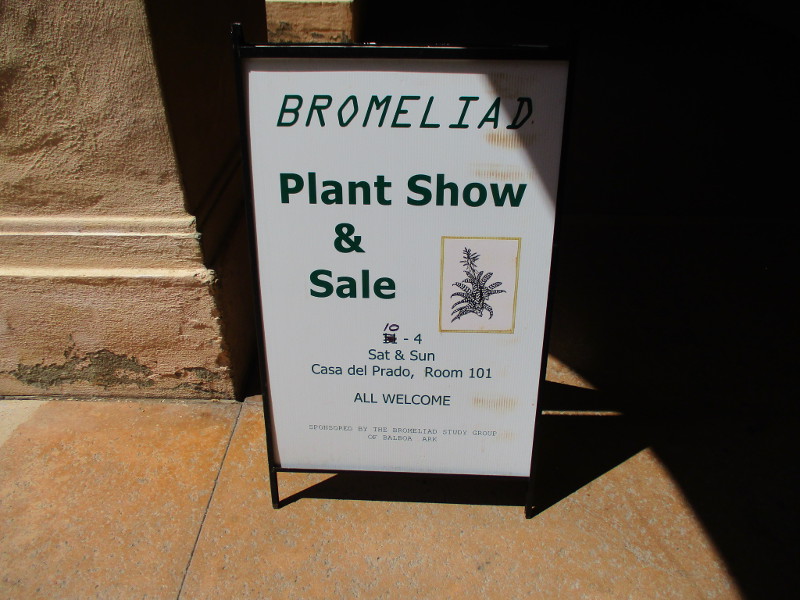
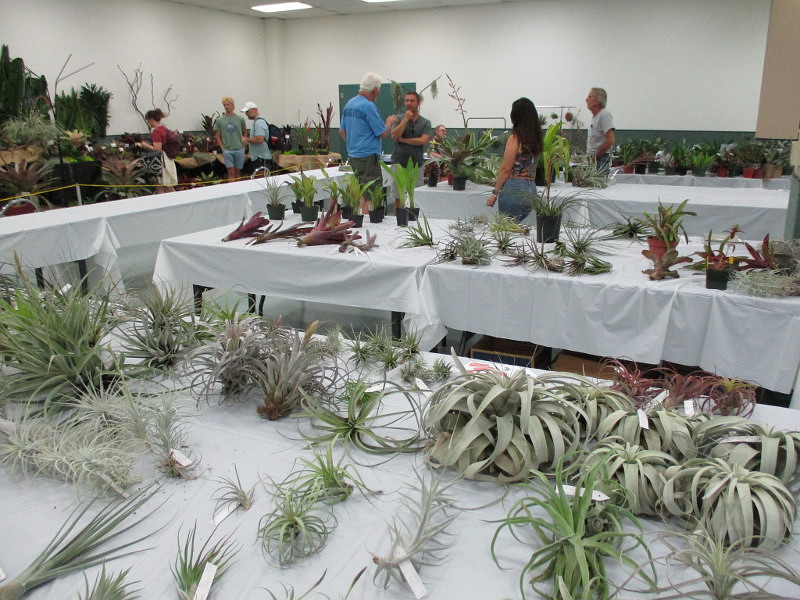
I had no idea until I checked out the Bromeliad Plant Show and Sale in Balboa Park today. It was the second day of a weekend event held at the Casa del Prado.

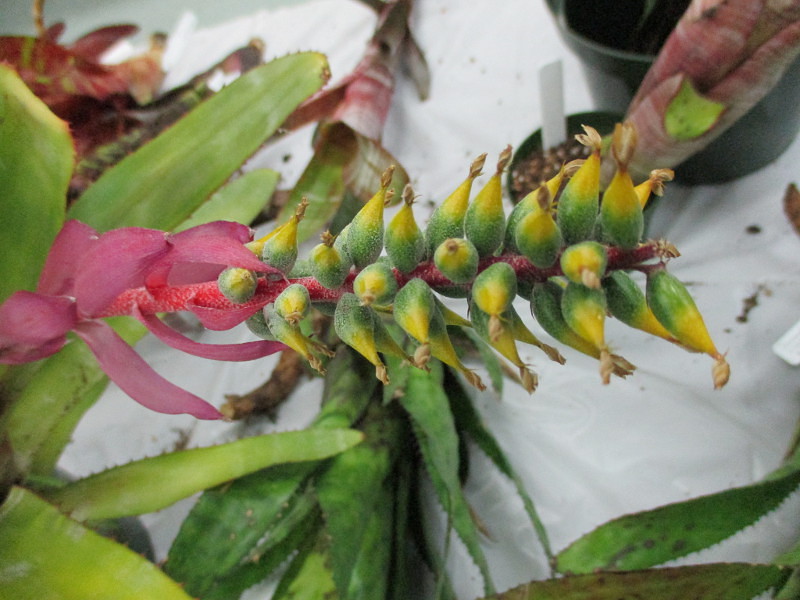
A friendly gentleman answered all sorts of odd questions that popped into my mind concerning bromeliads. They’re distinguished from other similar-appearing plant types primarily by their flowers. Many bromeliads are found naturally at higher elevations and are pollinated by hummingbirds, that tolerate colder temperatures than bees. And . . . and . . . I already forgot half of what I was told!

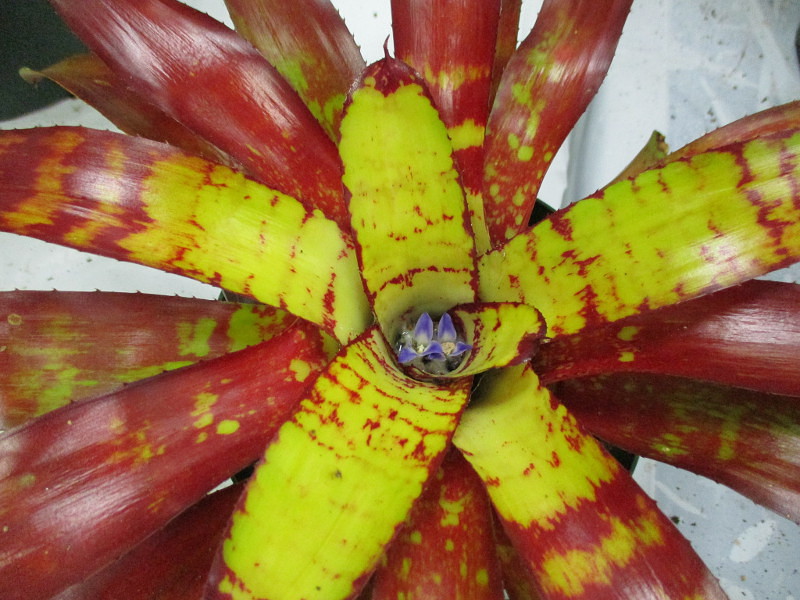
I did notice some tiny, beautiful purplish flowers, and all sorts of fun artwork and crafts at several tables.

The San Diego Bromeliad Society, who hosted the show, has many enthusiastic members. Perhaps you’d like to join!

I live in downtown San Diego and love to walk around with my camera! You can follow Cool San Diego Sights via Facebook or Twitter!

Become a citizen scientist in San Diego!

Would you like to make contributions to science? But you’re not a trained scientist?

You can easily become a citizen scientist!

Opportunities are available for ordinary people who’d like to use their passion or particular talents to help broaden our understanding of the natural world.

I discovered several great ideas while visiting the San Diego Natural History Museum recently. Signs spotted around the exhibition Extraordinary Ideas from Ordinary People: A History of Citizen Science provide details.

Most of the following ideas apply not just to San Diego residents, but to anyone anywhere. Here they are:

Become a member of iNaturalist and post photographs you’ve taken of living things in nature. Scientists will identify what you recorded. Nature lovers around the world can discuss your observations. You’ll contribute to our shared understanding of biodiversity. To learn more click here.

Participate in the Audubon Society’s annual Christmas Bird Count or Great Backyard Bird Count. Critically important data collected during these events is used by scientists to study bird populations across the country. To learn more click here.

Participate in the Celebrate Urban Birds project. Spend ten minutes helping scientists understand how common birds are doing in urban settings. More than a quarter of a million ordinary people have already made observations! To learn more click here. (Balboa Park’s own WorldBeat Center has participated in this project. Read about that here!)

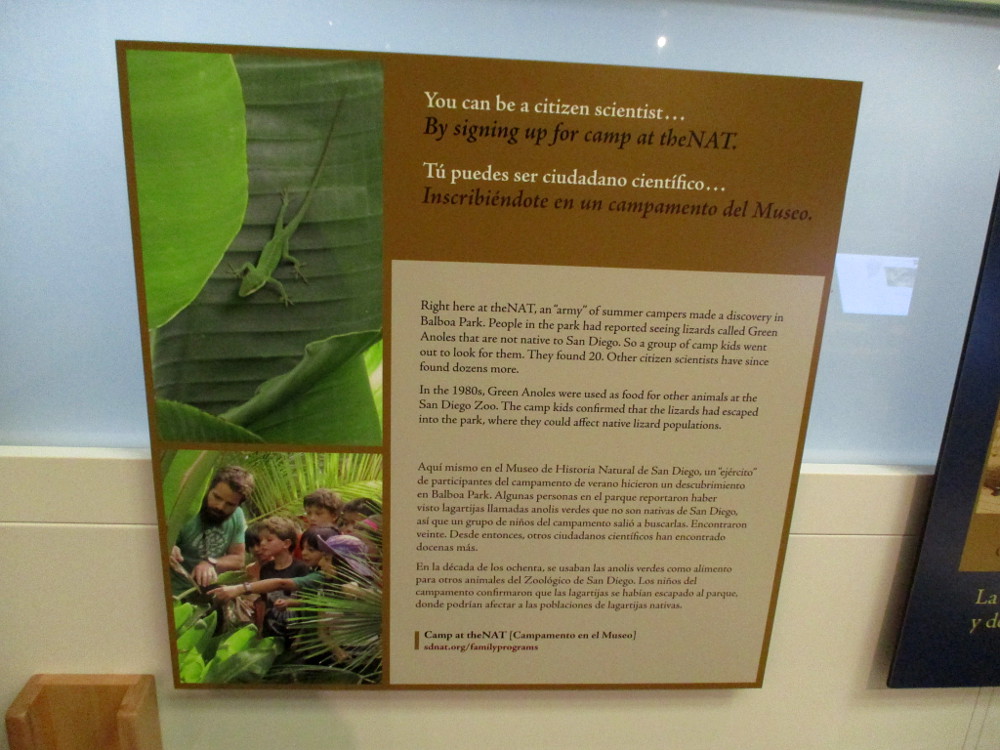
Become a summer camper at the San Diego Natural History Museum in Balboa Park. Over the years, people walking around Balboa Park have observed green anole lizards, which aren’t native to San Diego. It was determined by the museum’s young summer campers that the green anoles were the descendants of escapees. These lizards had once been used as food for other animals at the San Diego Zoo! To learn more about attending summer camp at theNAT, click here. (Scholarships are available!)

I live in downtown San Diego and love to walk around with my camera! You can follow Cool San Diego Sights via Facebook or Twitter!
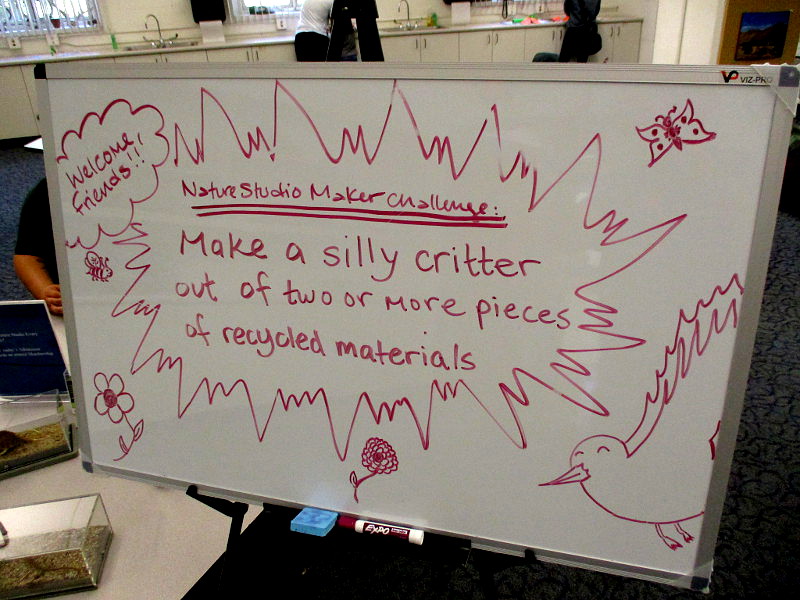
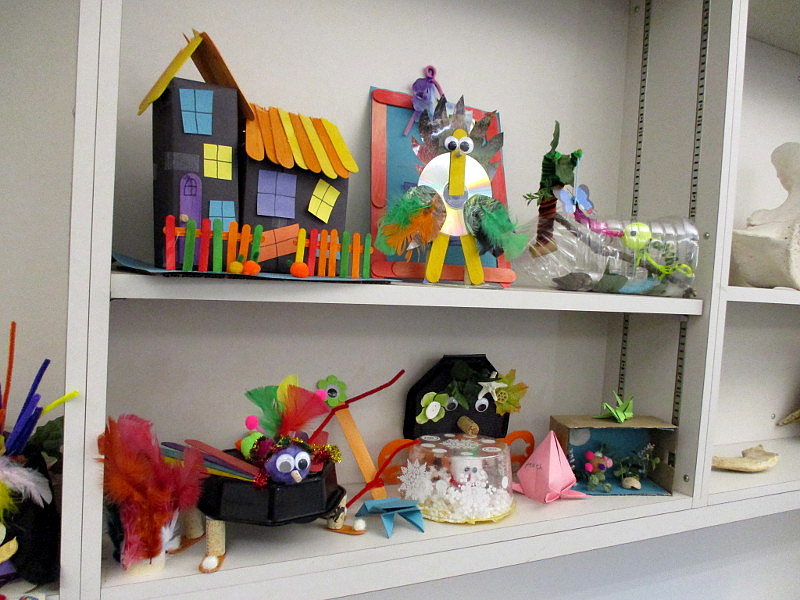
Kids make silly critters at Natural History Museum!

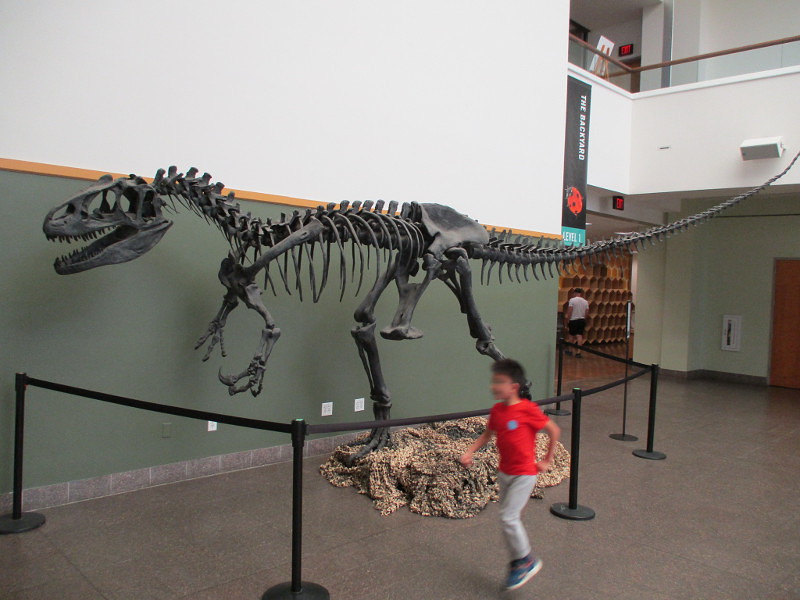
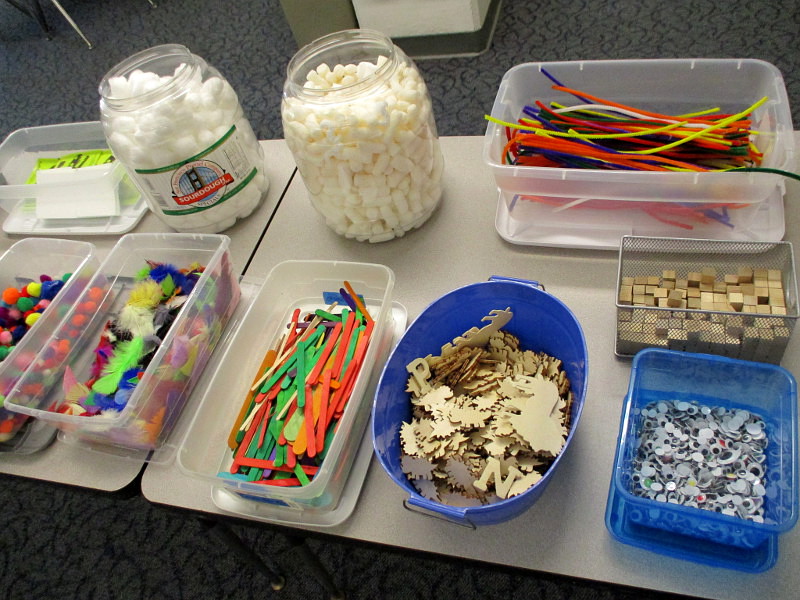
Kids always have lots of fun at the San Diego Natural History Museum! They can check out cool dinosaurs and even living animals. And they can make silly critters out of recycled materials!

The creative activity takes place inside the NAT’s Nature Lab, which is open on Saturdays from 10 to 2. The Nature Lab also hosts school children during field trips to the museum and Balboa Park. It has a natural history library, too!

Have you ever poked your nose into this cool Nature Lab, which is located on the first level of the museum? I did last Saturday!

I live in downtown San Diego and love to walk around with my camera! You can follow Cool San Diego Sights via Facebook or Twitter!
Giant lizards escape from Natural History Museum?

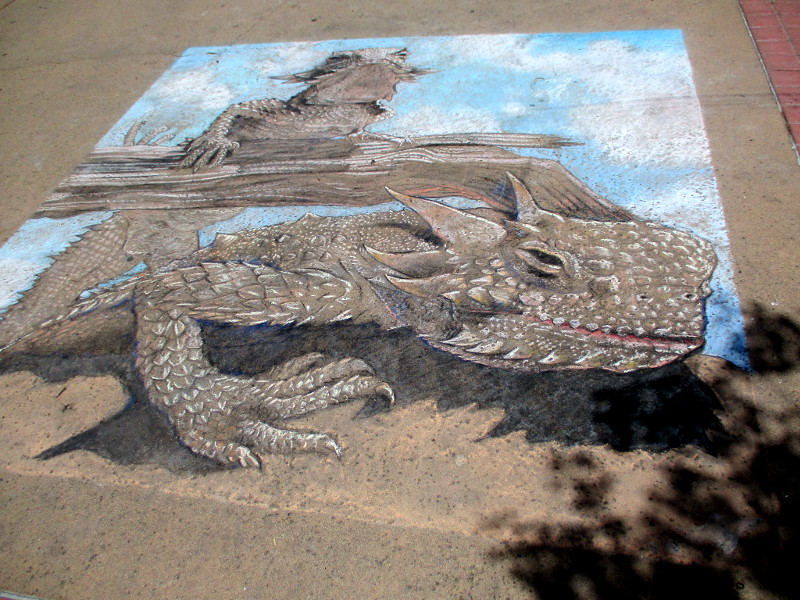
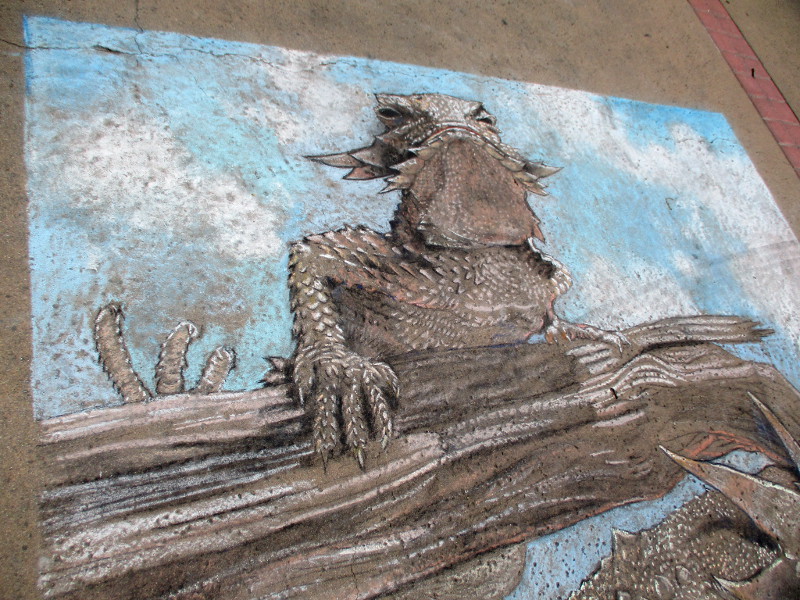
Did these two giant Flat-tailed Horned Lizards escape from the San Diego Natural History Museum in Balboa Park? At first glance, one might think so!

On second glance, it’s apparent this great chalk art, below the steps of the Natural History Museum’s south entrance, is a rather realistic depiction of Phrynosoma mcallii, and is super cool!

I learned that this artwork was created several weeks ago during the big EarthFair event in the park. It has survived quite well so far!

The two immense reptiles, which I spotted by chance today, were the production of @sidewalk_chalk_dad. I’ve seen his great chalk art in Balboa Park during other past events.

I live in downtown San Diego and love to walk around with my camera! You can follow Cool San Diego Sights via Facebook or Twitter!
Kumeyaay words for native animals, plants.

The rich culture of our region’s Native American Kumeyaay is honored at Old Town San Diego State Historic Park.

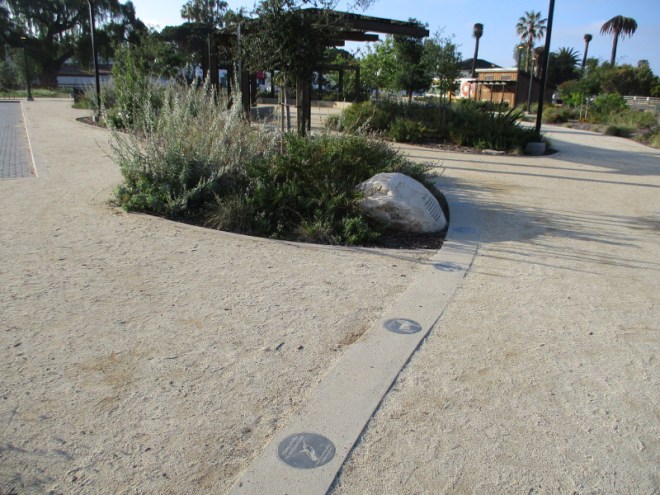
Near the corner of Juan Street and Taylor Street, the beautiful Iipay ~ Tipai Kumeyaay Mut Niihepok Land of the First People outdoor interpretive area teaches interested visitors a little of the Kumeyaay language. Kumeyaay words for many native animals and plants can be read along the edge of walkways.

During my last visit, I photographed many of the engraved artworks representing wild mammals, birds, reptiles, insects, cacti and trees, and the corresponding Kumeyaay and Spanish words.

If you want to see more of the surrounding area, the Land of the First People opened last year, and soon thereafter I took these photographs.

Incidentally, today there will be a special event held in this corner of Old Town San Diego State Historic Park. Earth Day will be celebrated! So if you read this in time, and you’re in the area, you might want to come on by!

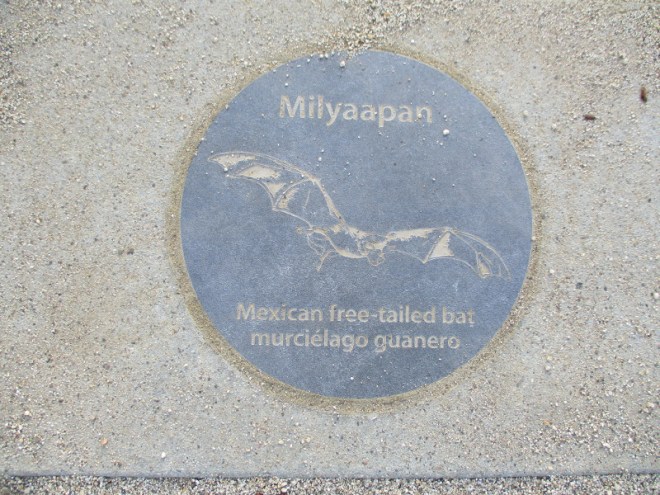
Milyaapan. Mexican free-tailed bat.
Sha-ii. Turkey vulture.
Meshalyaap. Monarch butterfly.
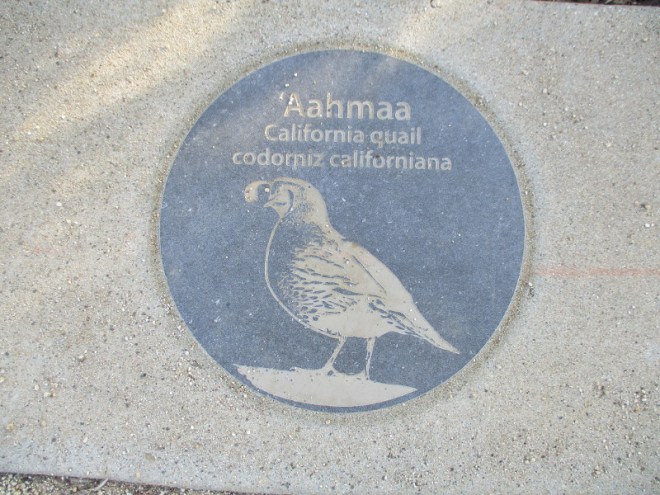
‘Aahmaa. California quail.
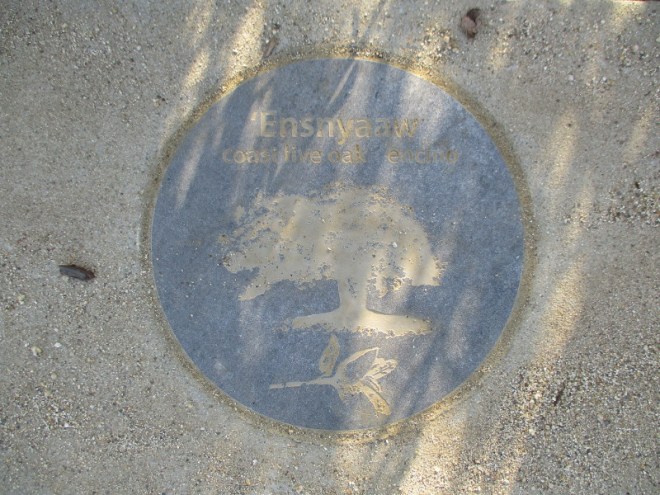
‘Ensnyaaw. Coast live oak.
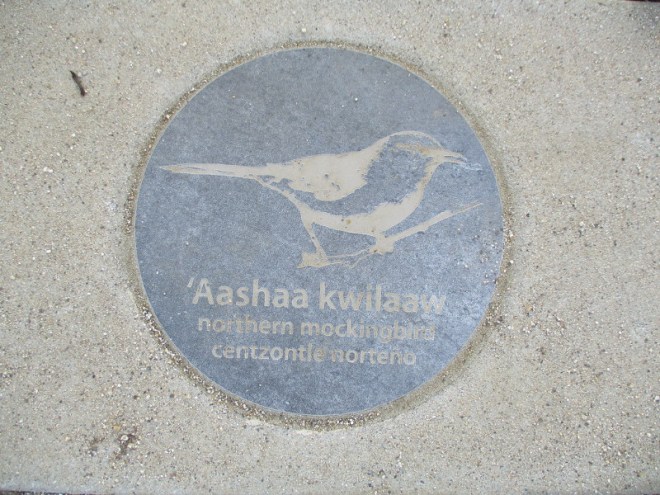
‘Aashaa kwilaaw. Northern mockingbird.
Hatepull. Nuttall’s woodpecker.
Kekhuu. Northern flicker.
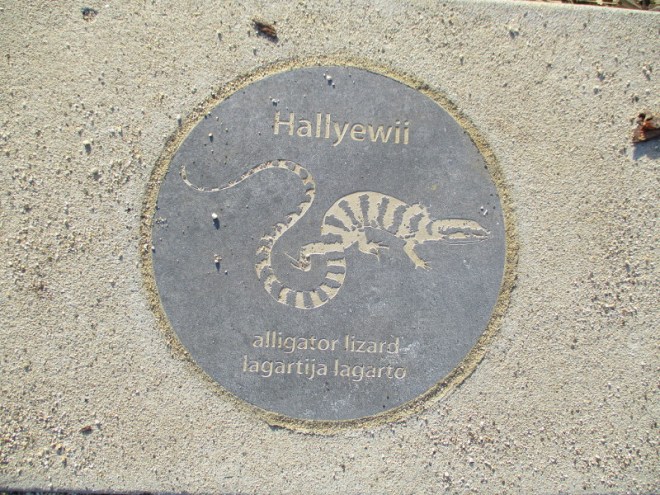
Hallyewii. Alligator lizard.
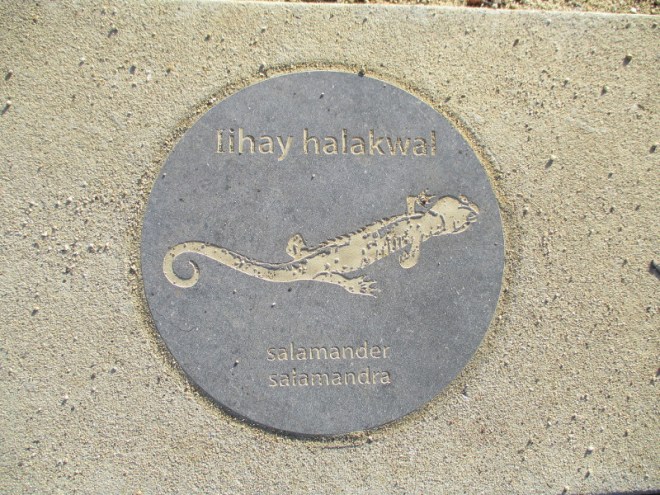
Iihay halakwal. Salamander.
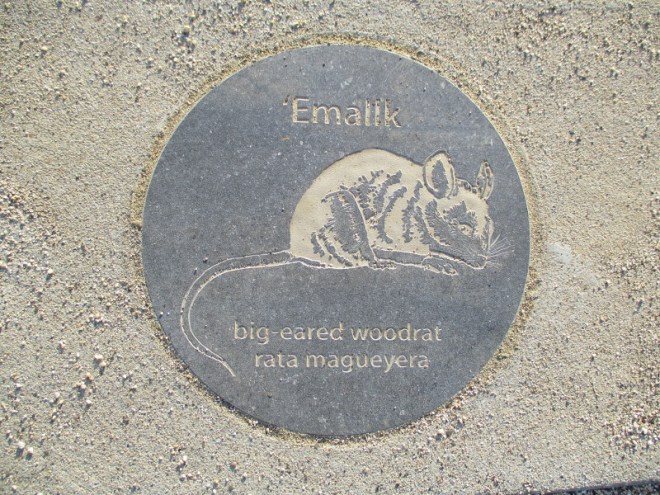
‘Emallk. Big-eared woodrat.
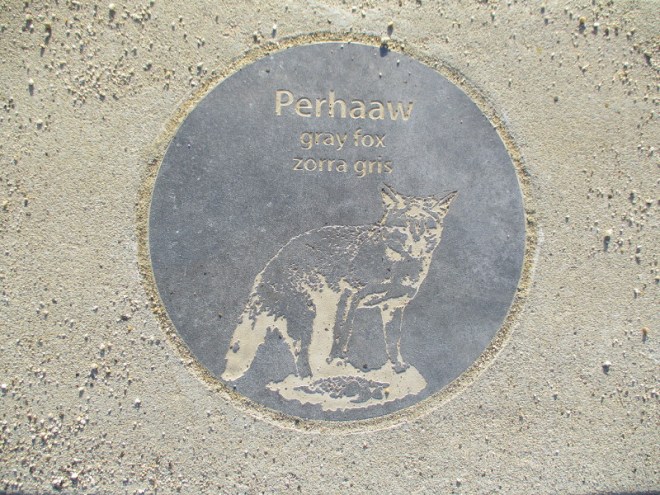
Perhaaw. Gray fox.
Kwak. Mule deer.
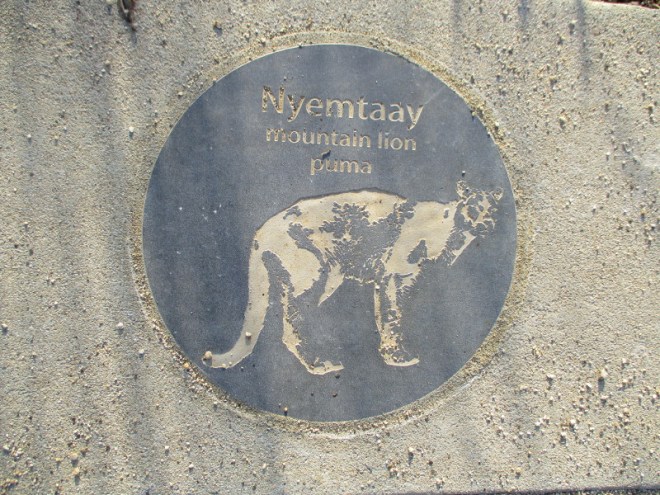
Nyemtaay. Mountain lion.
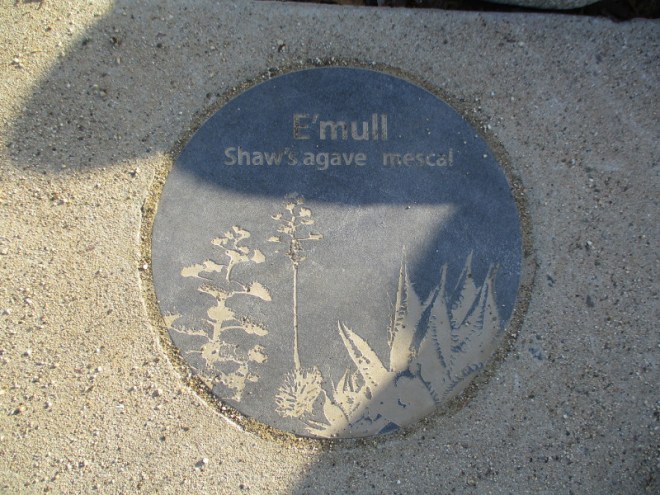
E’mull. Shaw’s agave.
Ehmaall. Ground squirrel.
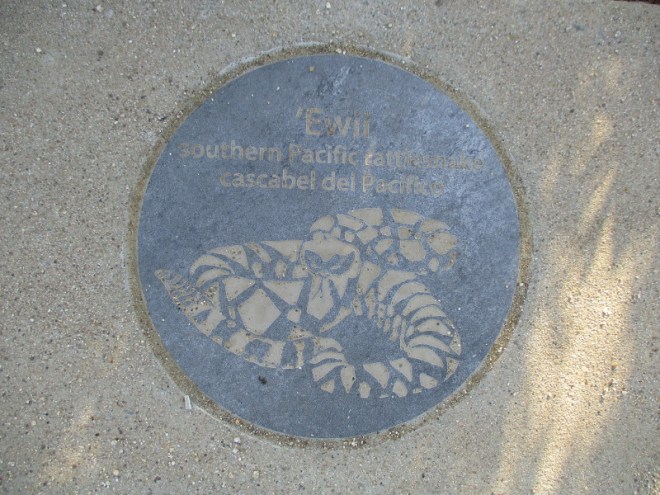
‘Ewii. Southern Pacific rattlesnake.
Waipuk. California kingsnake.
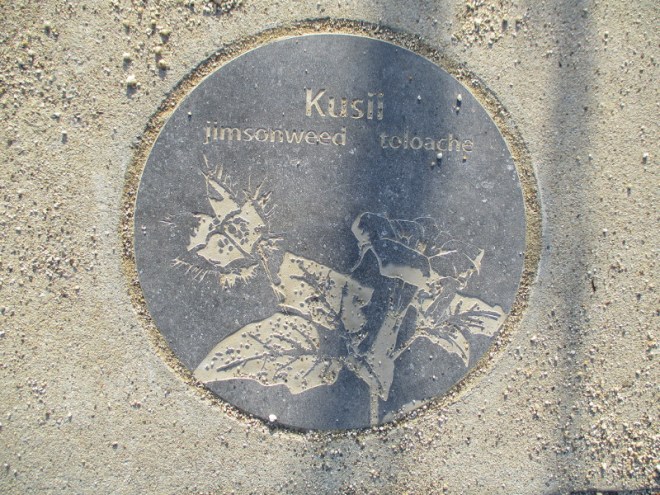
Kusii. Jimsonweed.
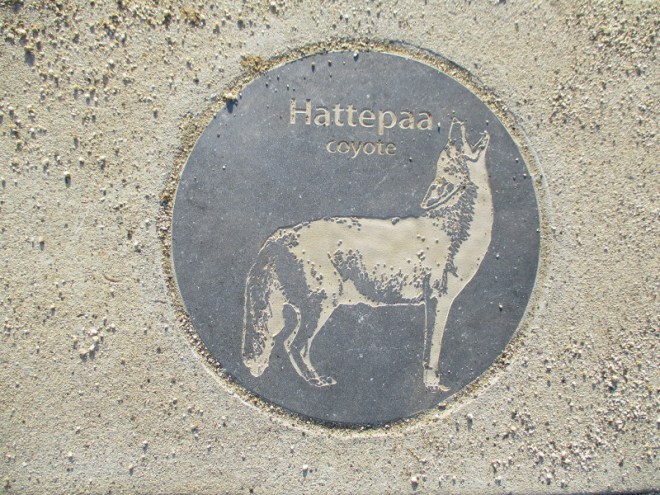
Hattepaa. Coyote.
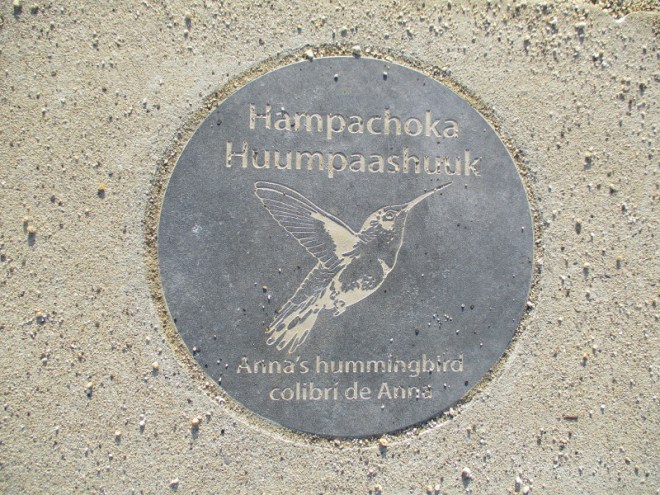
Hampachoka Huumpaashuuk. Anna’s hummingbird.
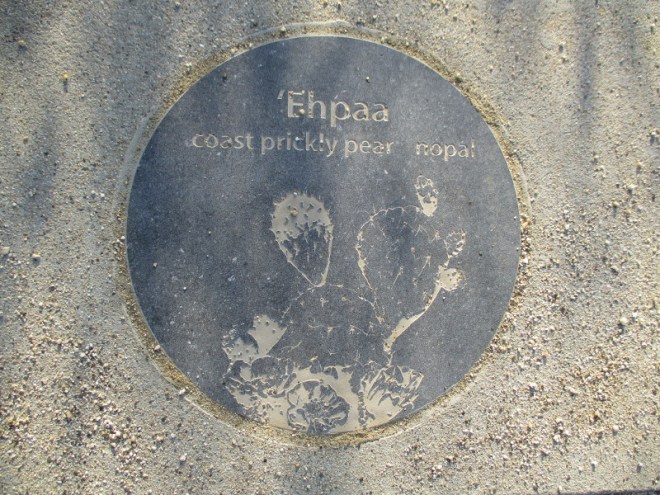
‘Ehpaa. Coast prickly pear.
Ashaa hahpaa. Cactus wren.
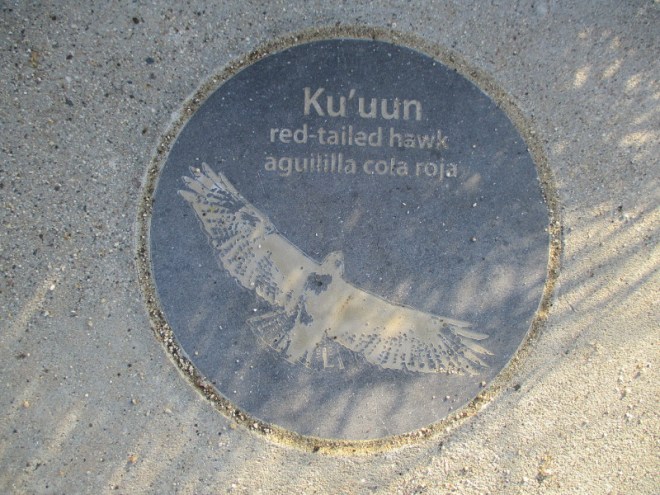
Ku’uun. Red-tailed hawk.
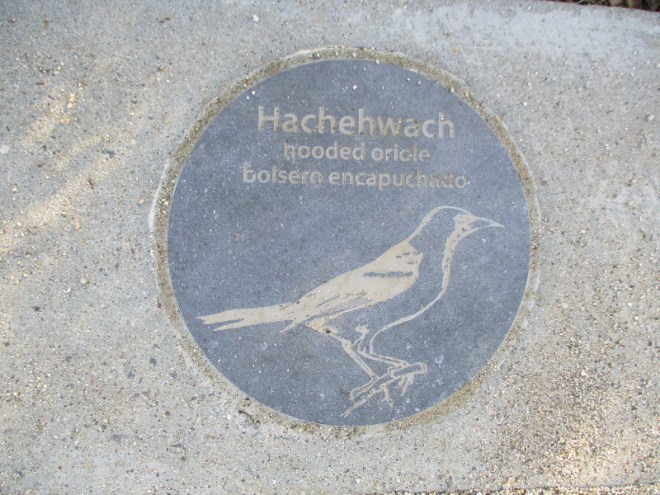
Hachehwach. Hooded oriole.
Kupally. Blue elderberry.
Nyemii. Bobcat.
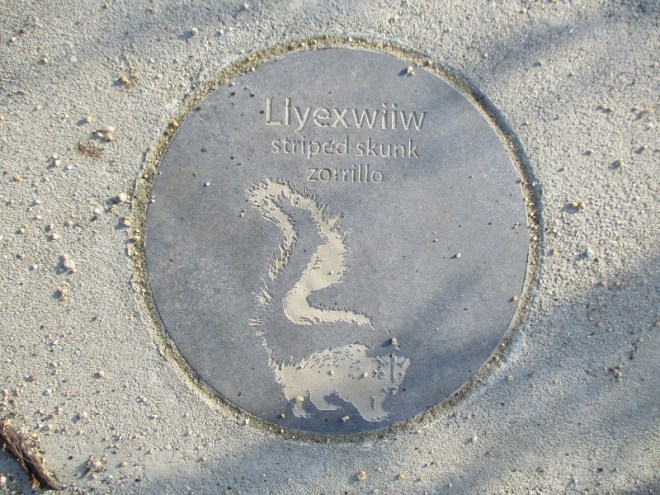
Llyexwiiw. Striped skunk.
Para ak hepeshu. Great blue heron.
Hantak. Treefrog.
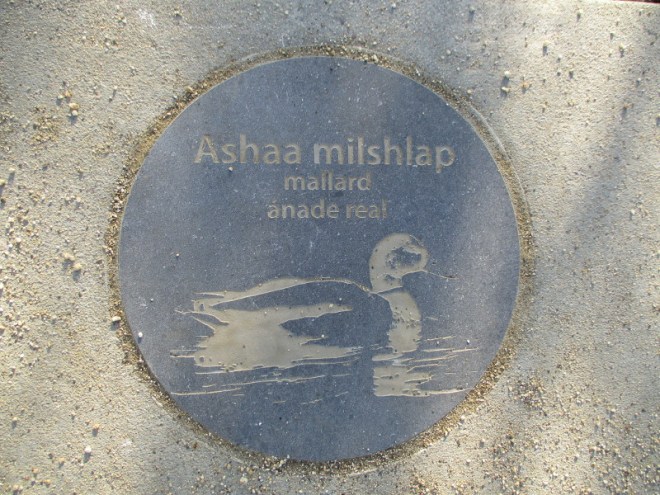
Ashaa milshlap. Mallard.

UPDATE!

I took photographs of more words during a later visit…

Hantak sa-ai. California toad.
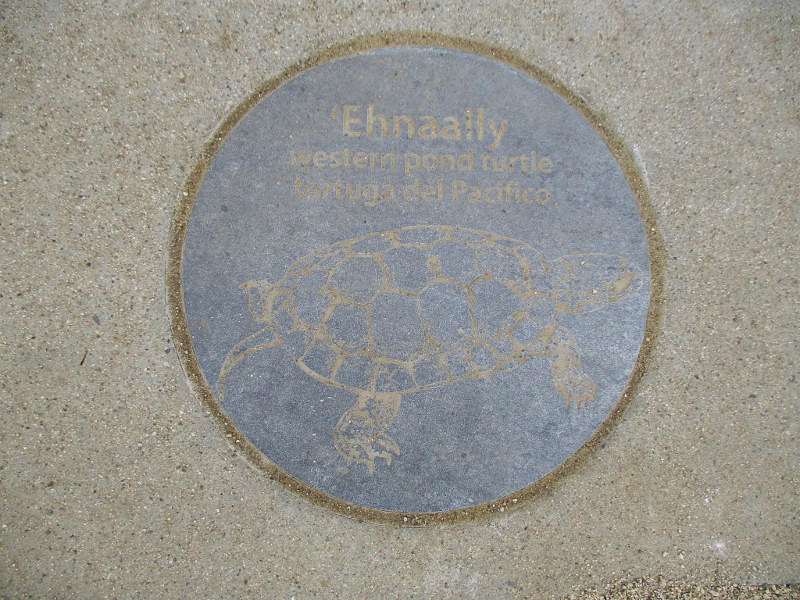
‘Ehnaally. Western pond turtle.
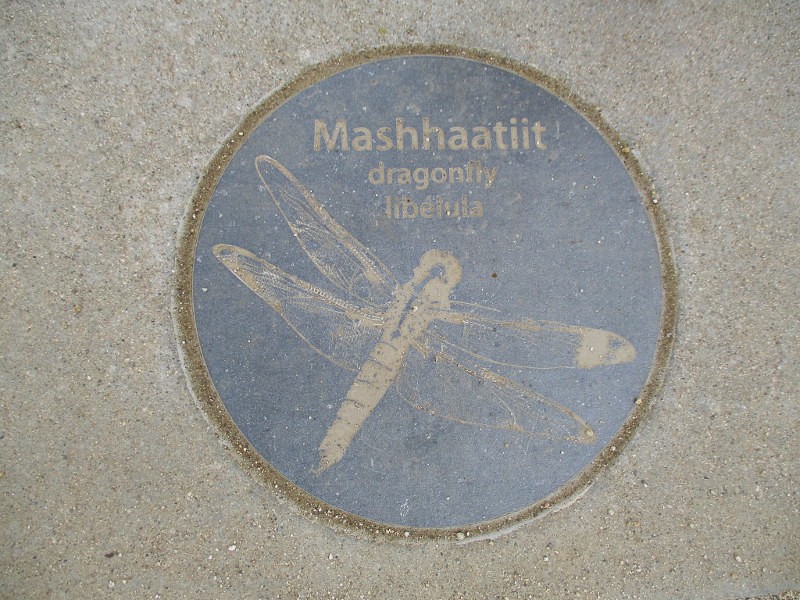
Mashhaatiit. Dragonfly.
E’pilly. Southern cattail.
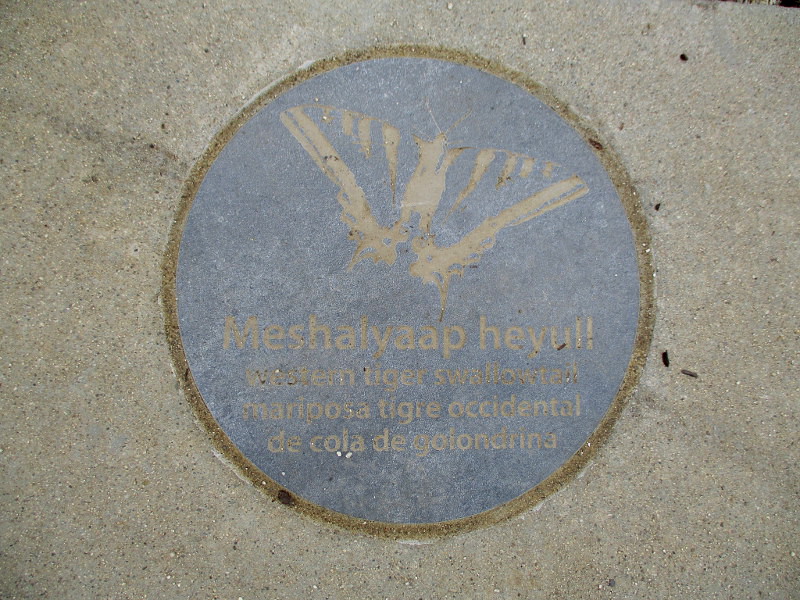
Meshalyaap heyull. Western tiger swallowtail.
Para ak nemeshap. Great egret.
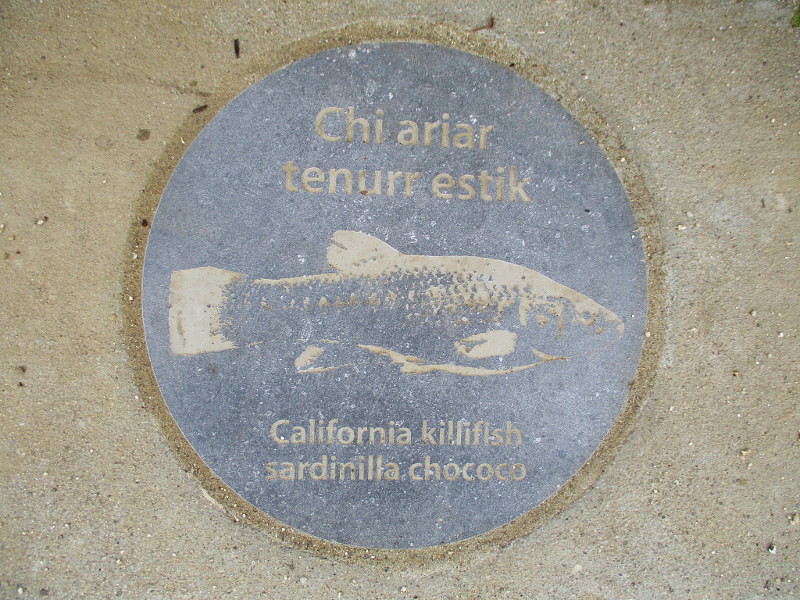
Chi ariar tenurr estik. California killifish.
‘U’uu. Great horned owl.
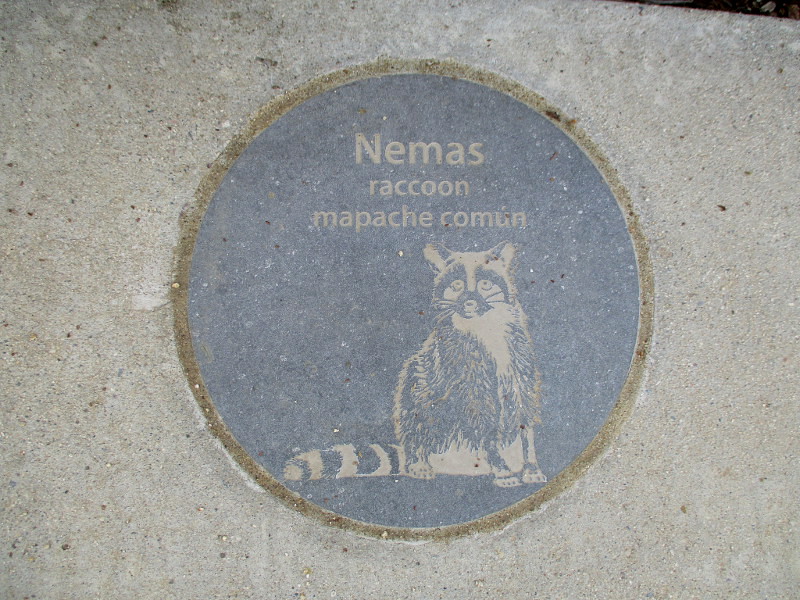
Nemas. Raccoon.
Miskenan. Stink beetle.
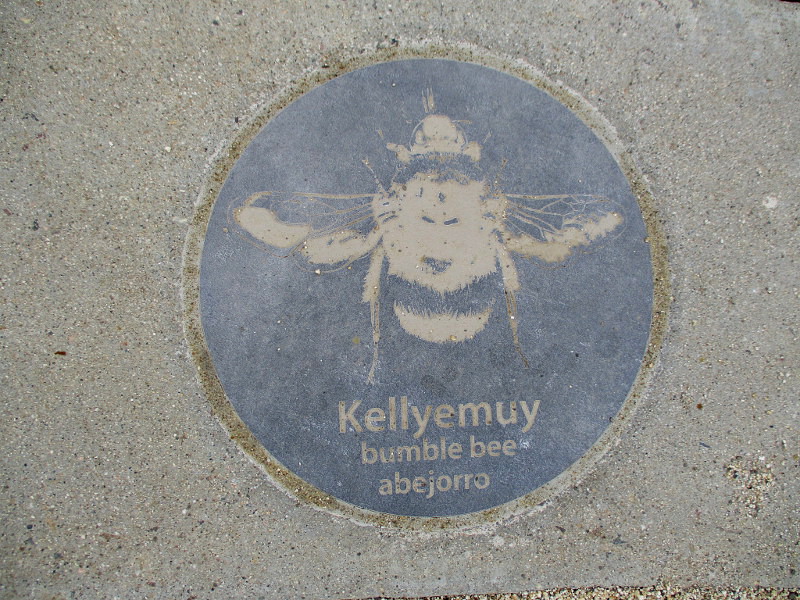
Kellyemuy. Bumble bee.
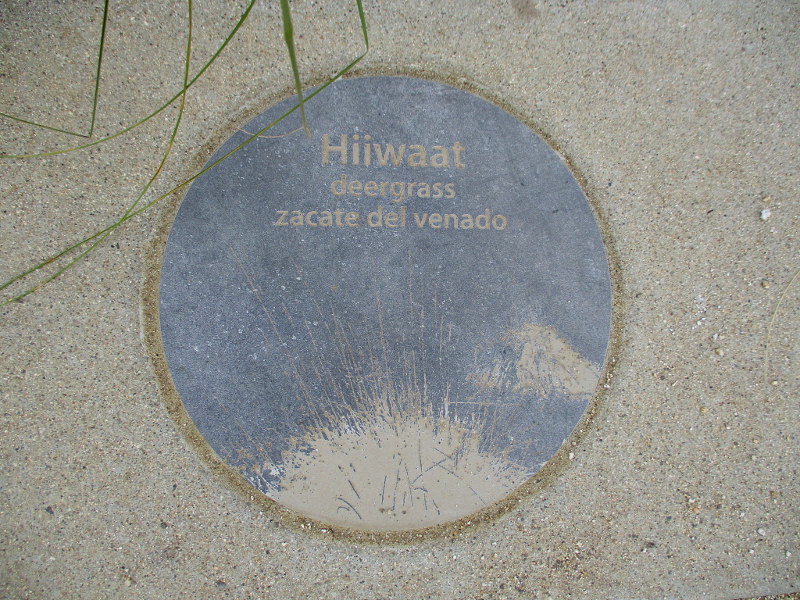
Hiiwaat. Deergrass.
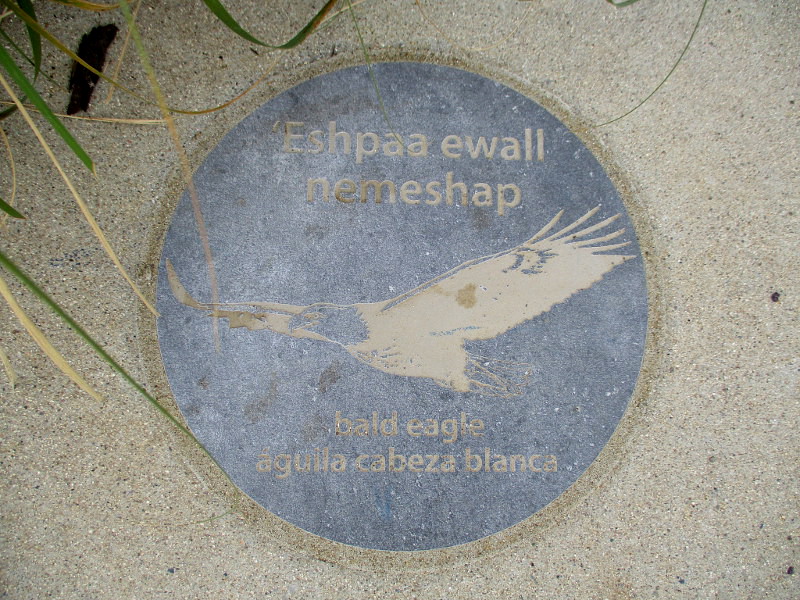
‘Eshpaa ewall nemeshap. Bald eagle.
Kilyaahwii. Mourning dove.
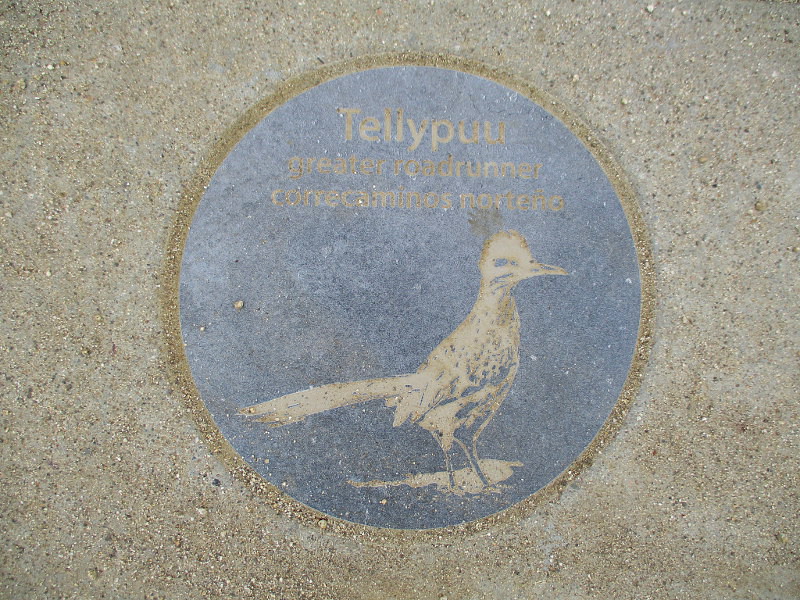
Tellypuu. Greater roadrunner.
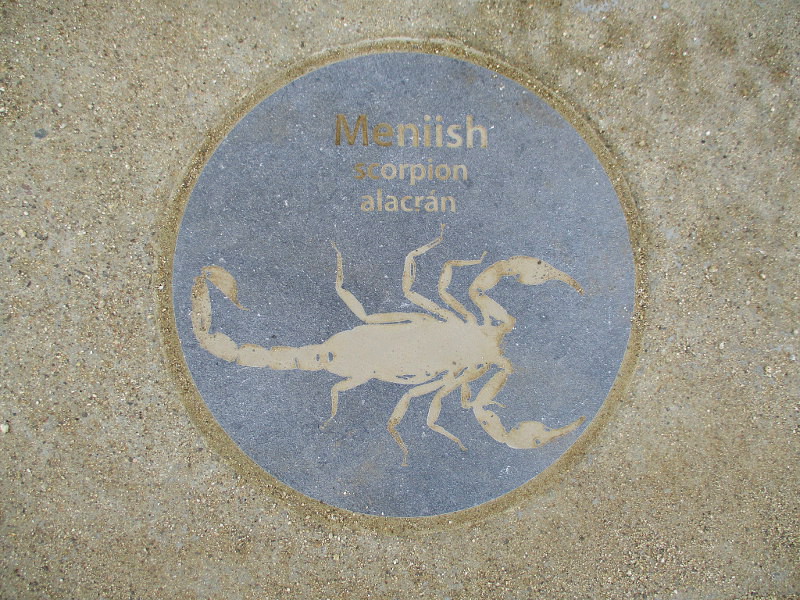
Meniish. Scorpion.
‘Aanall. Honey mesquite.
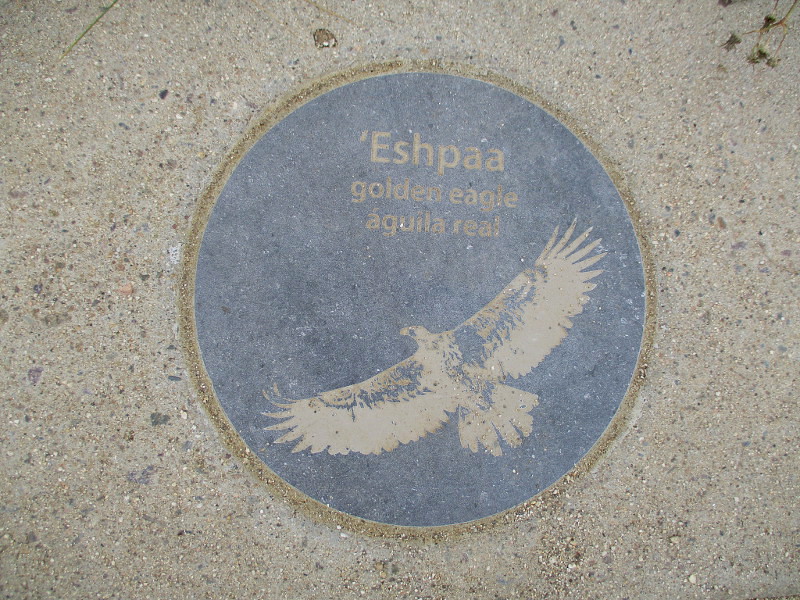
‘Eshpaa. Golden eagle.
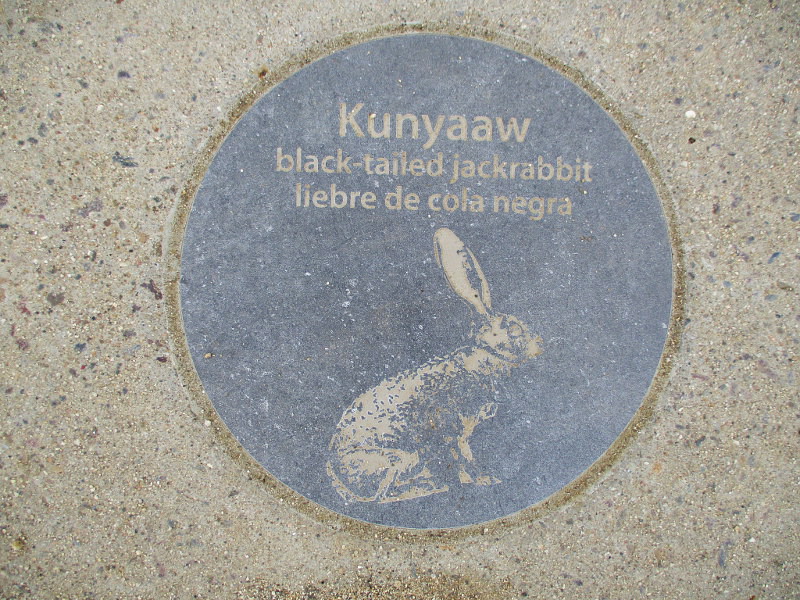
Kunyaaw. Black-tailed jackrabbit.
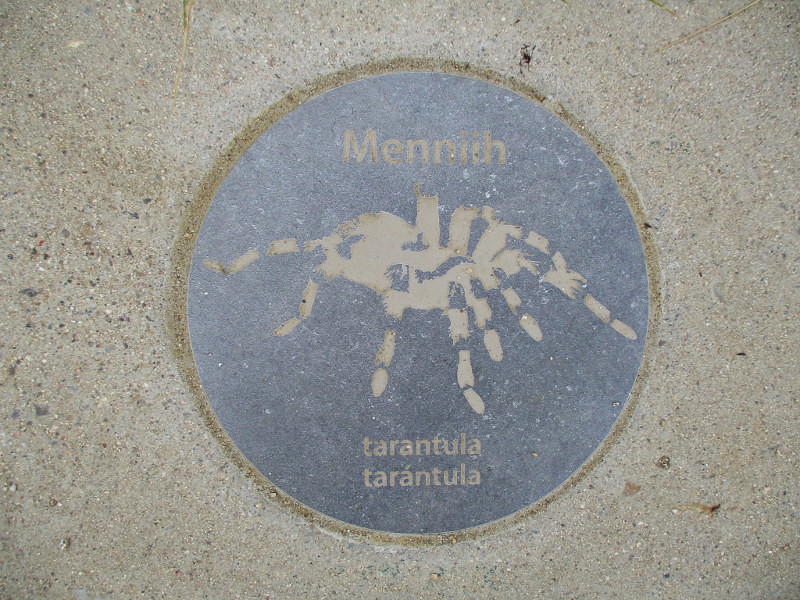
Menniih. Tarantula.
Muu. Bighorn sheep.

The following are animals that are extinct or no longer found in the area around San Diego…

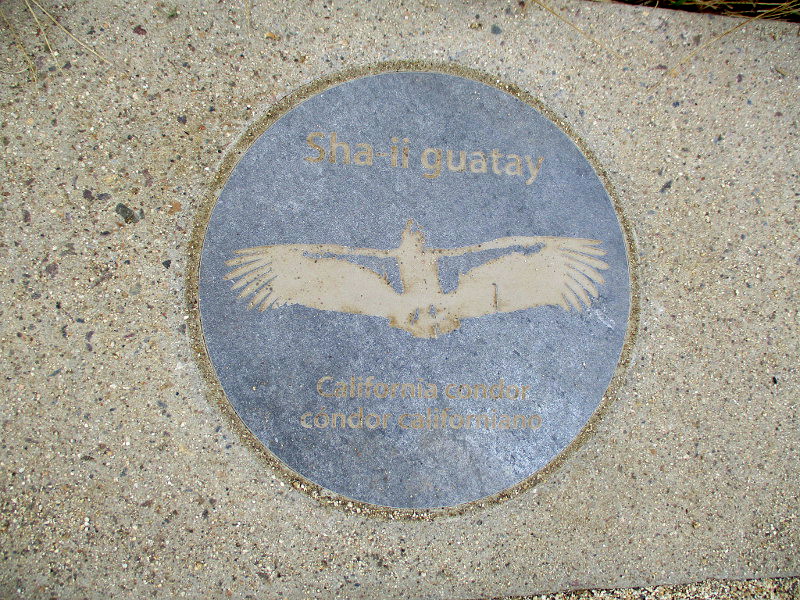
Sha-ii guatay. California condor.
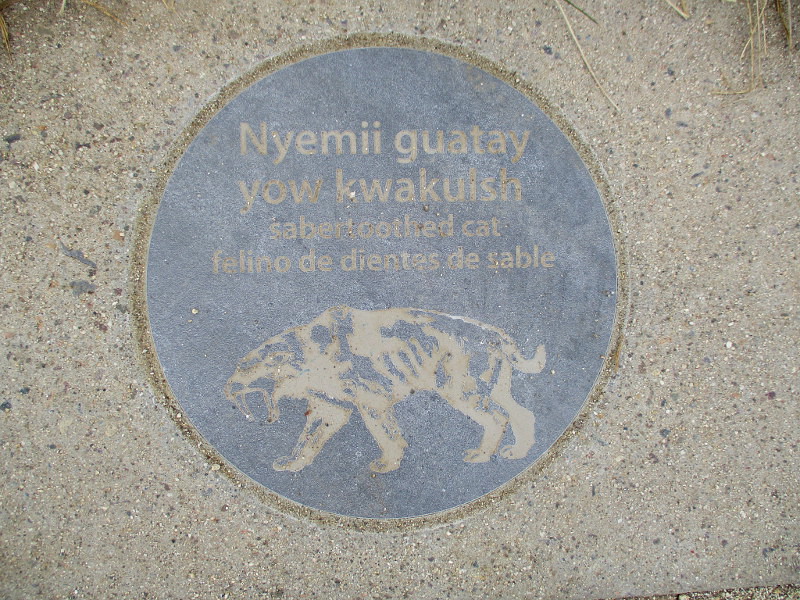
Nyemii guatay yow kwakulsh. Sabertoothed cat.
Nemuuly. Grizzly bear.
Kwa nyilly. Pronghorn.

I live in downtown San Diego and love to walk around with my camera! You can follow Cool San Diego Sights via Facebook or Twitter!
You can easily explore Cool San Diego Sights by using the search box on my blog’s sidebar. Or click a tag! There are thousands upon thousands of photos for you to enjoy!