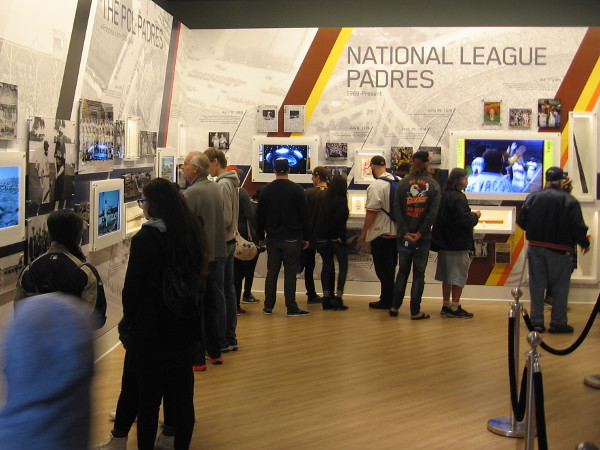
Baseball fans check out cool historical exhibits inside the San Diego Padres Hall of Fame at Petco Park.
Lovers of baseball history and fans of the San Diego Padres would definitely enjoy visiting the new Padres Hall of Fame at Petco Park. Inside, one can see many great exhibits concerning baseball in San Diego.
I checked out the Padres Hall of Fame last weekend during the Celebrate San Diego event. Here’s just a small preview of what you’ll see…
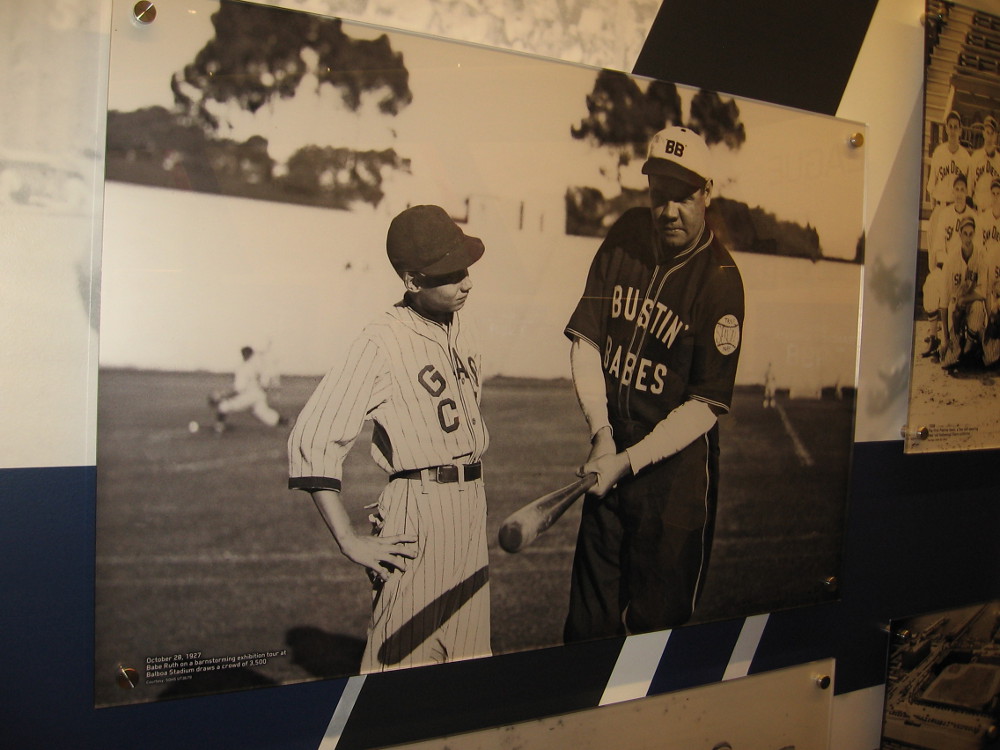
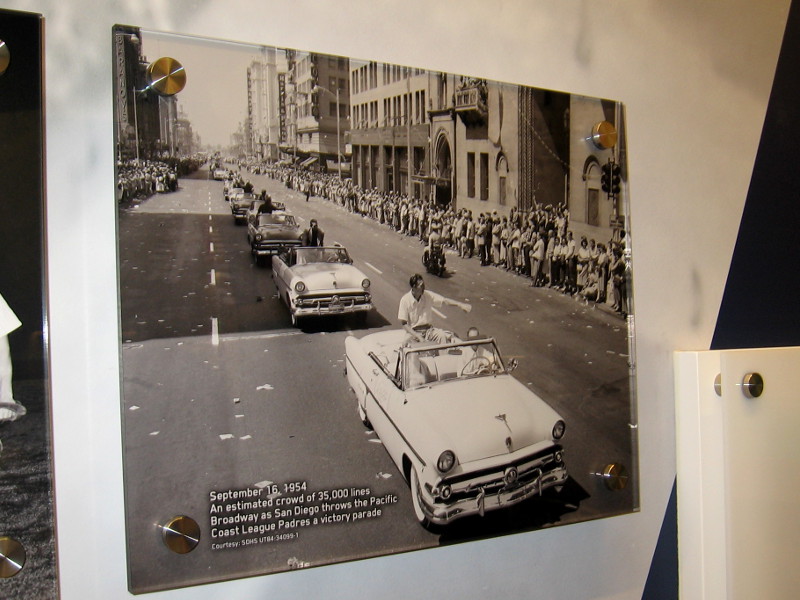
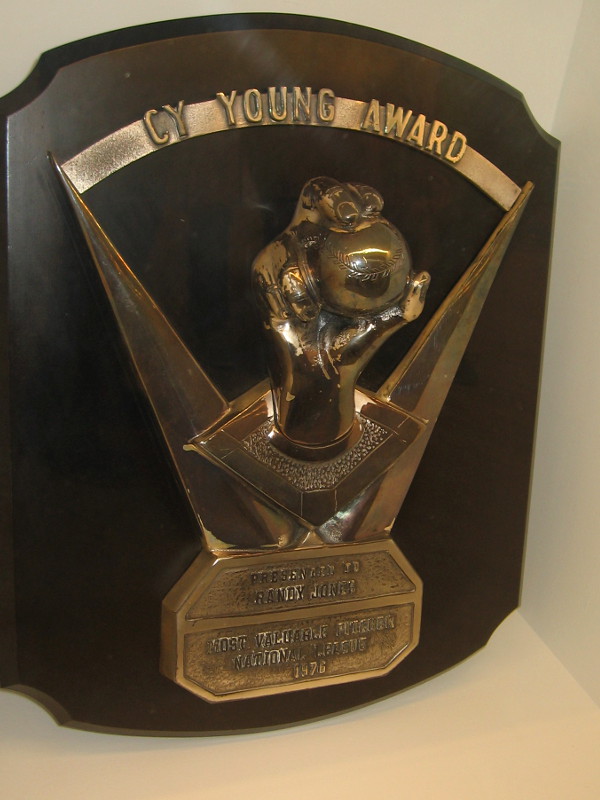
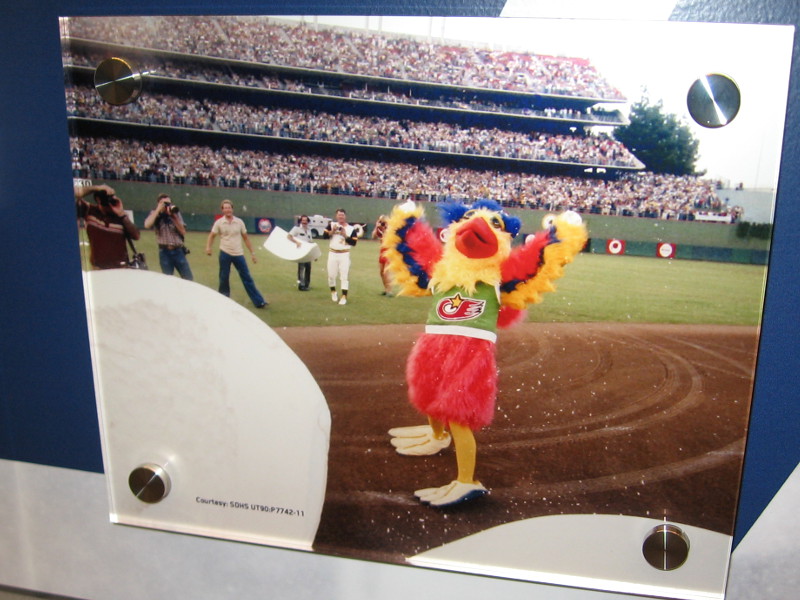
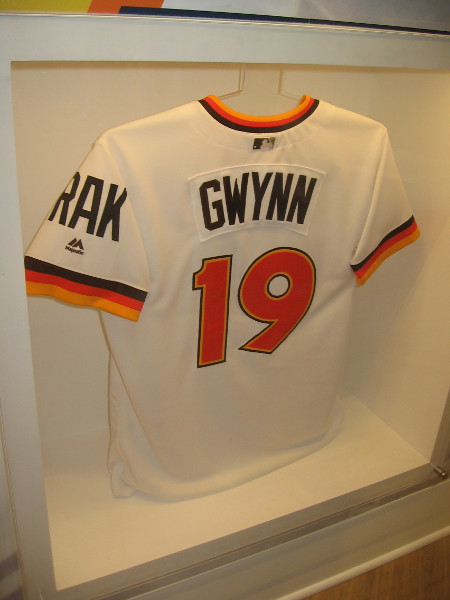
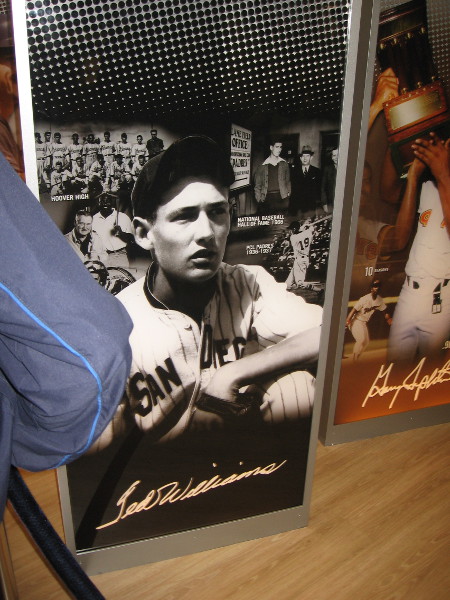
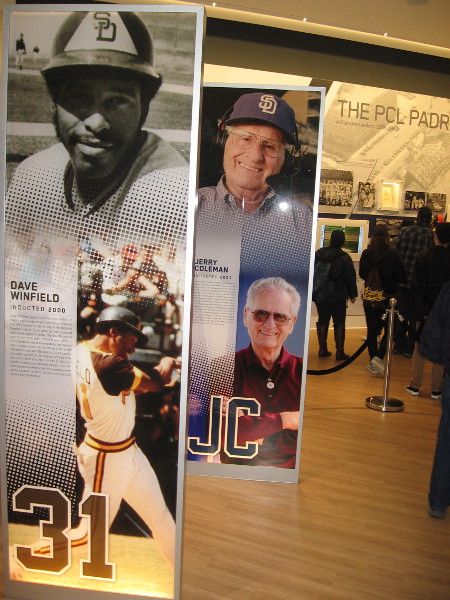
Historical photo shows first recorded game of baseball in San Diego. It took place on May 6, 1871.The first box score in the San Diego Union in 1874, and a 1907 photo showing local team posing in front of the Pickwick Theatre in downtown San Diego.Old photo of baseball game being played in 1910 at Athletic Park near the shipyards.Babe Ruth poses with a bat during an exhibition tour at Balboa Stadium in 1927.Padres fans check out lots of photos and cool artifacts which recall the history of baseball in San Diego. On the left are photos of the first Padres team in 1936, and Lane Field.Photo of young Ted Williams, who joined the Padres after graduating from Hoover High School. He helped the Padres win the Pacific Coast League title in 1937.Souvenir program for the opening game of the 1939 season in the Pacific Coast League. San Diego Padres versus Oakland Oaks.1954 photo of big celebration parade along Broadway in downtown San Diego. The Padres finished first that year in the Pacific Coast League.Autographed Padres team ball from 1954, and the home run ball smashed by Bill Elliot in the one game playoff to win the PCL championship.Old baseball program from the 1959 Pacific Coast League All Star Game.Photos of legendary radio broadcaster Jerry Coleman, who began a 42-year career in 1972, and Nate Colbert who that year hit five home runs in a Padres baseball double header.The National League Cy Young Award, presented to Padres pitcher Randy Jones in 1976.Souvenir program for the 1978 All-Star Game played in San Diego Stadium.It’s the world famous mascot, the San Diego Chicken!1981 photo shows future superstar Tony Gwynn signing with the San Diego Padres.Memories from the 1984 season. I was a young man, who was very excited watching the Padres defeat the Chicago Cubs to win the National League pennant.Tony Gwynn baseball jersey that honored Ray Krok, beloved Padres owner, who passed away in 1984.1987 Rawlings Gold Glove Award, presented to Tony Gwynn, The Finest in the Field.In 1994 Tony Gwynn won the Silver Slugger Award. He batted .394 in a season cut short by a player strike.In 1996 Ken Caminiti was voted National League MVP and Gwynn hit .353 to win a seventh batting title.Legendary reliever Trevor Hoffman’s jersey on display in the Padres Hall of Fame at Petco Park. He helped the Padres win the 1998 National League pennant.Trevor Hoffman becomes the all-time Major League Baseball saves leader in 2006.Photo of Ted Williams, member of the PCL San Diego Padres.Photos of two Padres legends. Dave Winfield and Jerry Coleman.A display board inside the Padres Hall of Fame shows the team’s all-time leaders in various categories.The San Diego Padres Hall of Fame at Petco Park will rekindle warm memories for dedicated hometown baseball fans.
…
I live in downtown San Diego and love to walk around with my camera! You can follow Cool San Diego Sights via Facebook or Twitter!
You can easily explore Cool San Diego Sights by using the search box on my blog’s sidebar. Or click a tag! There are thousands upon thousands of fun photos for you to share and enjoy!
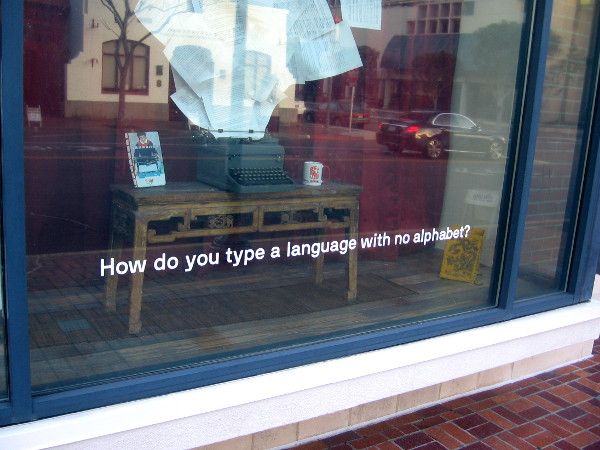
Outdoor display window near the San Diego Chinese Historical Museum asks: How do you type a language with no alphabet?
I was walking through San Diego’s small Chinatown yesterday morning when I spied something really interesting. In a window near the San Diego Chinese Historical Museum a special exhibit is being promoted. The exhibit is titled Radical Machines – Chinese in the Information Age.
How do you type a language with no alphabet? Good question!
I’ll probably check this exhibit out in the next couple months. It runs through April 16, 2017.
A special exhibit titled Radical Machines – Chinese in the Information Age can be seen at the San Diego Chinese Historical Museum.Gazing past stone lions at the entrance of the San Diego Chinese Historical Museum.A manual typewriter whose keys type Western Civilization’s adopted Latin alphabet seems to magically produce sheets of paper containing Chinese characters.
…
I live in downtown San Diego and love to walk around with my camera! You can follow Cool San Diego Sights via Facebook or Twitter!
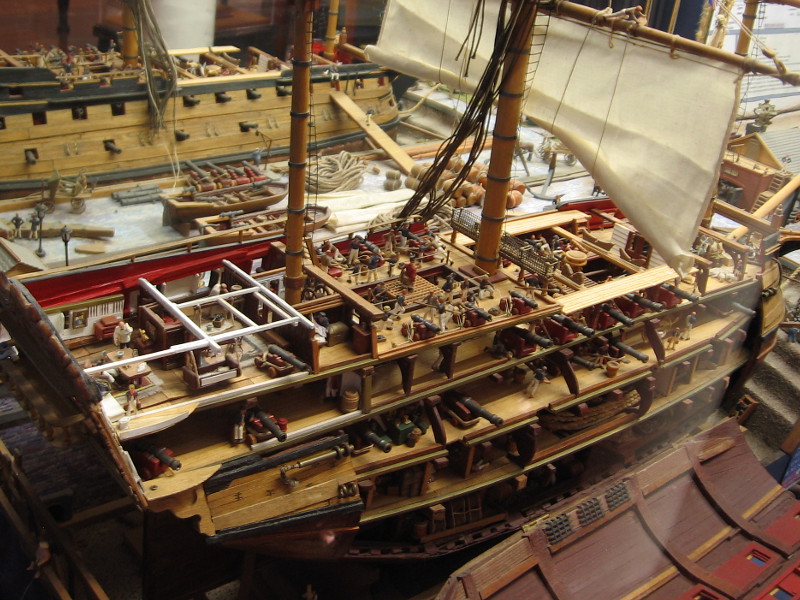
An amazing ship model by artist Joe Frangiosa, Jr. One of many fantastic examples in an extensive, special exhibition at the Maritime Museum of San Diego.
The Maritime Museum of San Diego currently has an exhibit that’s a lot of fun. It concerns collecting model ships and model ship building! Anyone interested in the hobby or nautical history in general should check it out!
I took a few photos to provide just a taste of what you’ll see. Bring your kids! They’ll love it!
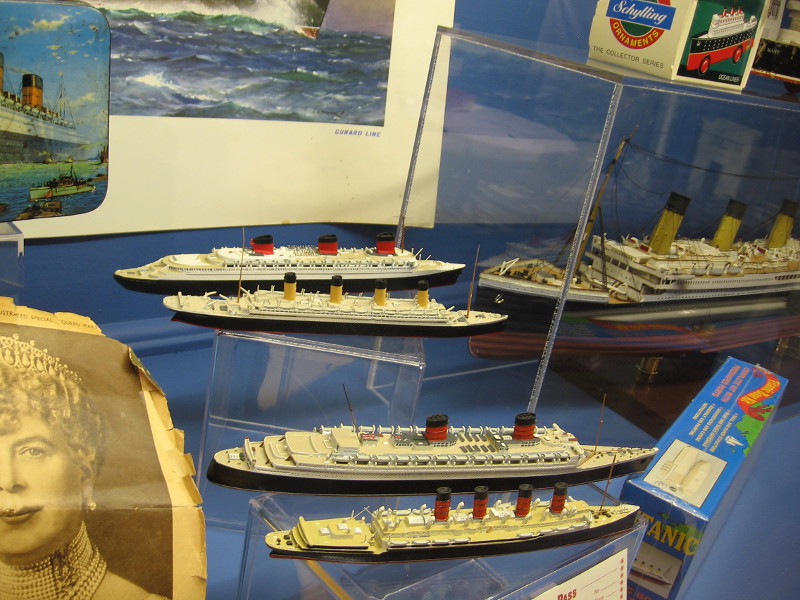
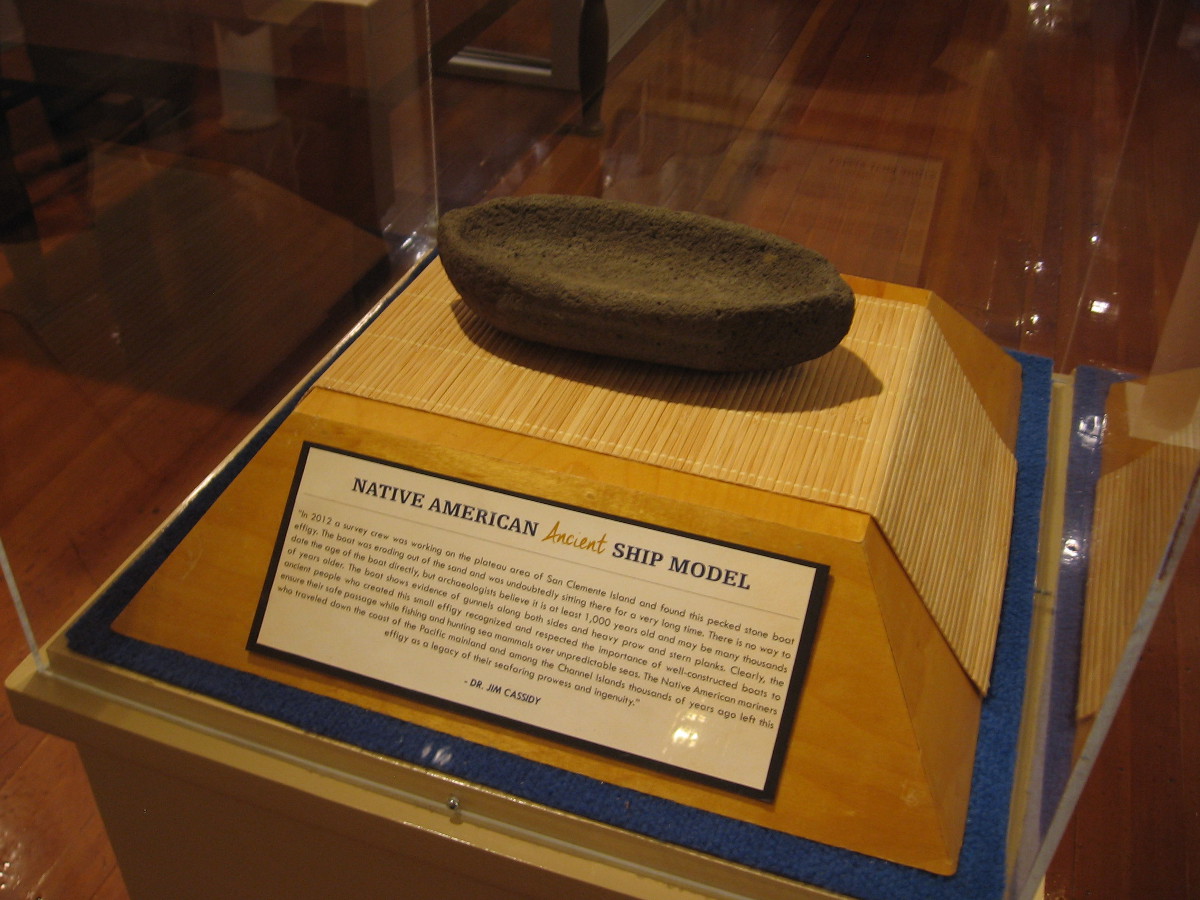
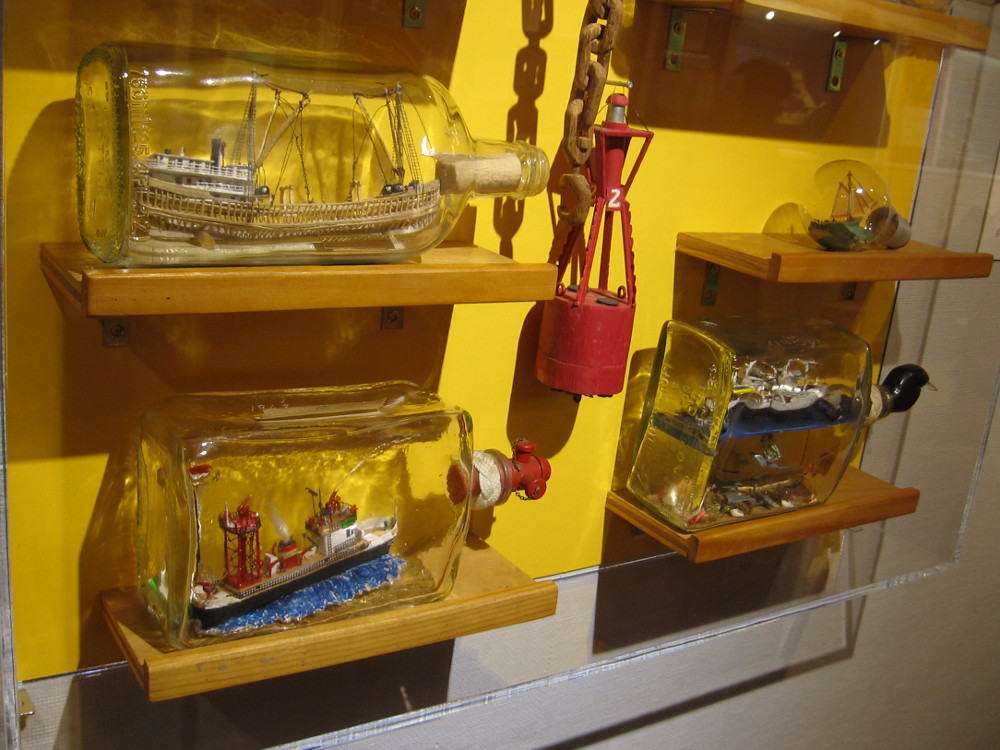
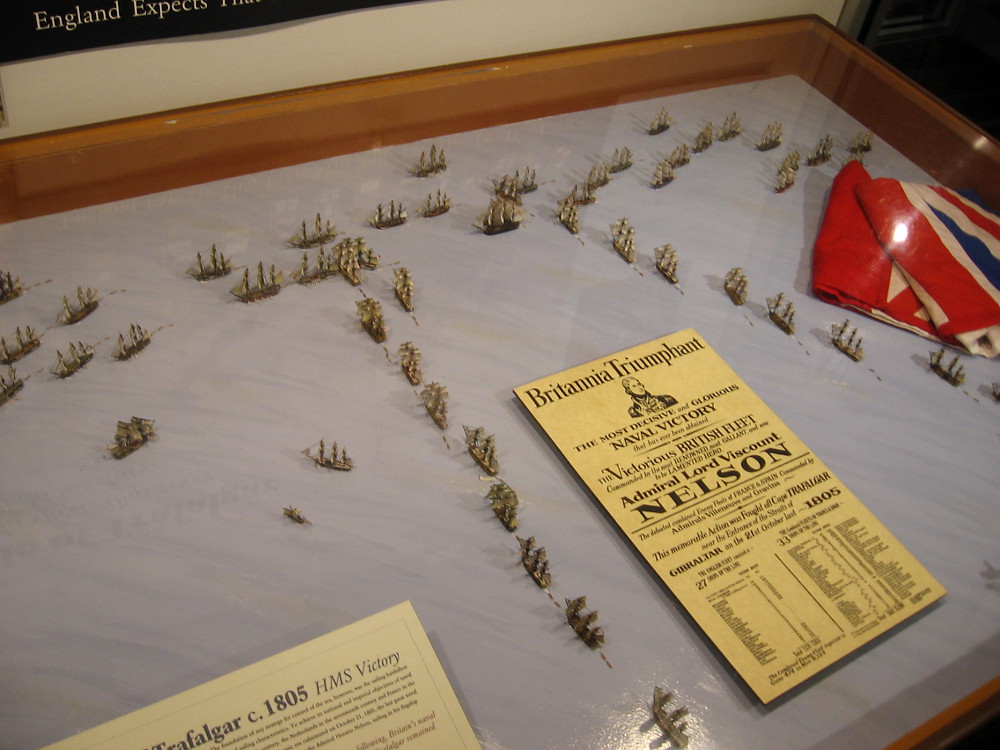
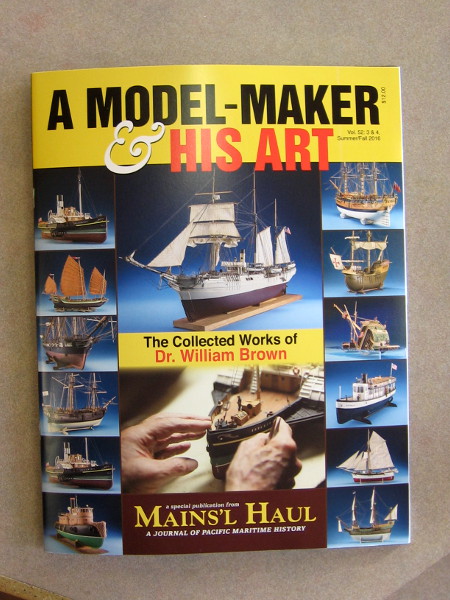
Detailed model of a 74 gun two-decker British Ship of the Line, circa 1800. By artist Joe Frangiosa, Jr.Half a dozen ship models in different scales of the San Salvador, historic galleon of explorer Juan Rodriguez Cabrillo, who discovered San Diego Bay for Spain in 1542.Tiny models of classic cruise ships, including the famous Titanic.A Native American ancient ship model. This pecked stone boat effigy was found in 2012 on San Clemente Island. It’s at least 1000 years old.Just a few of the many ships in bottles on display now at the Maritime Museum of San Diego.Tiny model ships recreate the Battle of Trafalgar between the British Royal Navy and the Spanish fleet in 1805. Outnumbered, British Admiral Nelson sailed two columns directly into the opposing line of ships.The Cutter Bear, by famous ship modeler Dr. William Brown, a local artist. His amazing work appears in prestigious museums around the world, including Mystic Seaport and the Smithsonian Institution.A Model-Maker and His Art. The collected works of Dr. William Brown. Any serious model ship maker, collector or hobbyist must have this fine publication.
As a member of the Maritime Museum I recently received the latest publication of Mains’l Haul, titled A Model-Maker and His Art. It features the collected works of one of the world’s most famous model ship builders: Dr. William Brown. It’s really amazing! Any serious model ship hobbyist must have a copy of this fine publication in their library. The many photos are extremely detailed–much better than my few, which were taken in dim light through glass!
Hopefully you’ll soon be able to buy A Model-Maker and His Art online here. Or look for it at the museum’s gift shop!
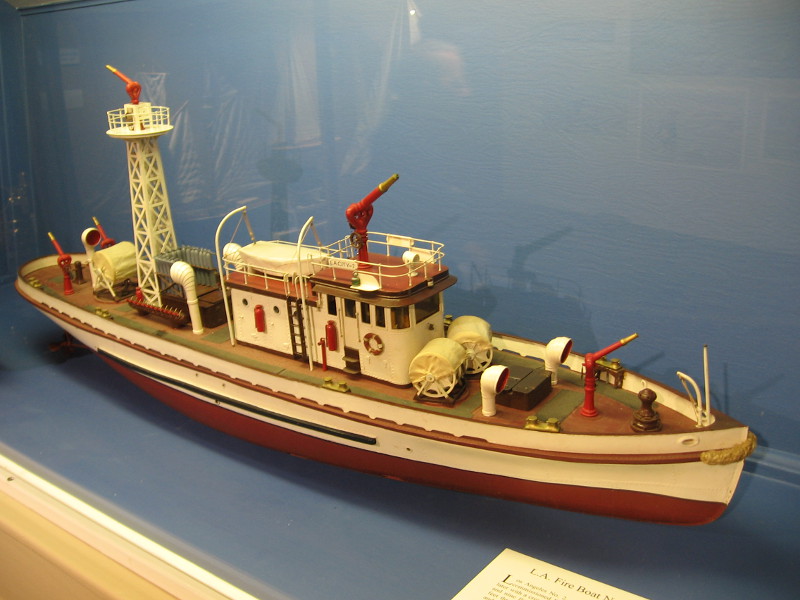
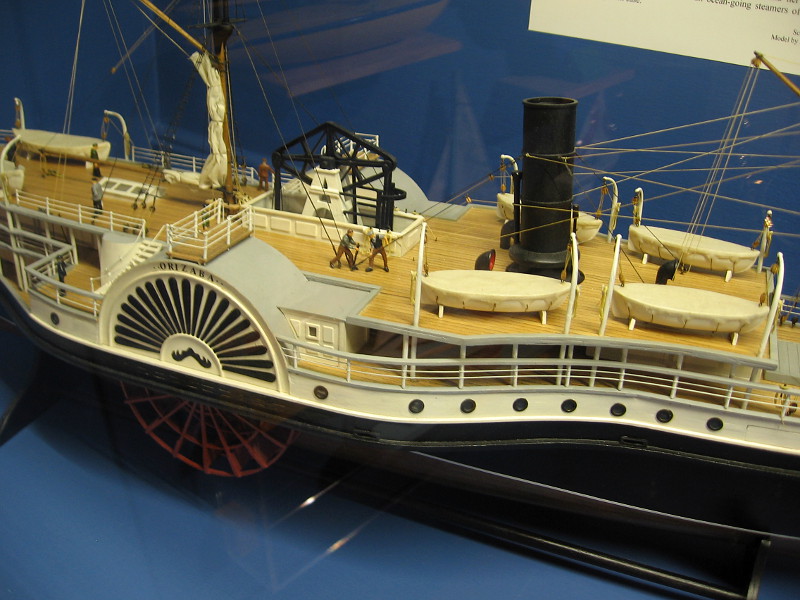
Dr. William Brown produced models of ordinary working boats and ships, as well as historically important vessels. This is L.A. Fire Boat No. 2 which was launched in 1925.Close look at Orizaba, a merchant vessel instrumental in San Diego’s early history. Dr. William Brown has produced dozens of models specifically for the Maritime Museum of San Diego.
…
I live in downtown San Diego and love to walk around with my camera! You can follow Cool San Diego Sights via Facebook or Twitter!
You can easily explore Cool San Diego Sights by using the search box on my blog’s sidebar. Or click a tag! There are thousands upon thousands of fun photos for you to share and enjoy!
Gaslamp Museum at the William Heath Davis House and Park, 1850. Home of the Gaslamp Quarter Historical Foundation.
These photos inside the historic William Heath Davis House Museum were taken a few months ago. I toured the fascinating house during the Fall Back Festival, which is held every year in San Diego’s Gaslamp Quarter.
Dated 1850, the William Heath Davis House, like a number of other structures in early San Diego, was built on the East Coast and shipped around Cape Horn. At the time San Diego simply didn’t have the resources and tools required to build a fine wooden house. Various rooms inside the museum show what life was like in New Town a century and a half ago. It was a much simpler time. The small museum now sits in the middle of a gigantic, bustling metropolis.
Please read the photo captions for more info, and click the signs to read them.
Photo of the William Heath Davis House Museum taken from across Island Avenue.Tours of the historic house are available. A museum store contains fascinating gifts.The William Heath Davis House, built in 1850, is the oldest surviving structure from San Diego’s New Town. It is a prefabricated “salt-box” style home, shipped from Portland, Maine around Cape Horn.The 1850 Davis-Horton House was used as a military barracks, county hospital, and was home to New Town’s founder Alonzo Horton and several other families over the years.Looking down the stairs from the second floor. A lady in Victorian attire welcomes visitors to the museum during the Fall Back Festival in November.A look at the first floor living room where family and guests would gather.A small piano, sheet music, teacup and candle. Entertainment in the olden days was simple.The dining table is set for a grand meal in what was then a sparsely populated New Town San Diego.An old sewing machine can be found by a window upstairs.The nursery, with crib, chest and small bed.Three beds for the children have colorful quilts.A desk in the study, framed photos, and a cabinet full of books. No internet back then!An old-fashioned penny-farthing bicycle reminds visitors to the William Heath Davis House Museum of what life was like a century and a half ago in San Diego.
…
I live in downtown San Diego and love to walk around with my camera! You can follow Cool San Diego Sights via Facebook or Twitter!
You can easily explore Cool San Diego Sights by using the search box on my blog’s sidebar. Or click a tag! There are thousands upon thousands of fun photos for you to share and enjoy!
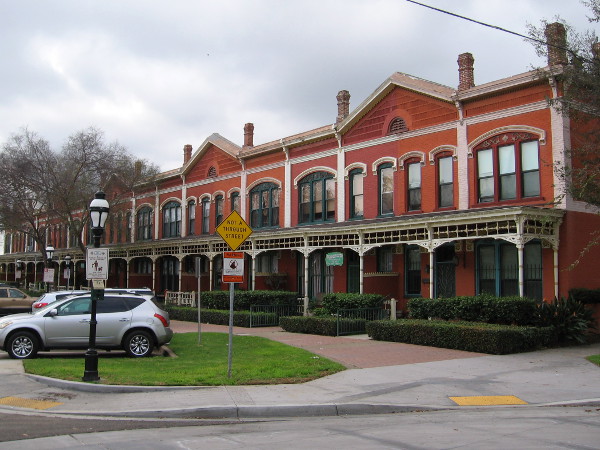
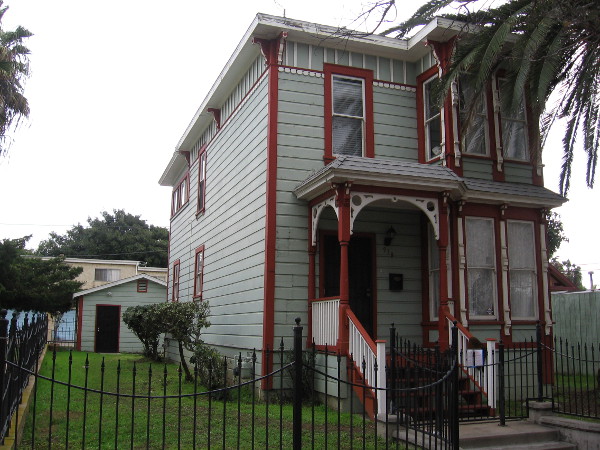
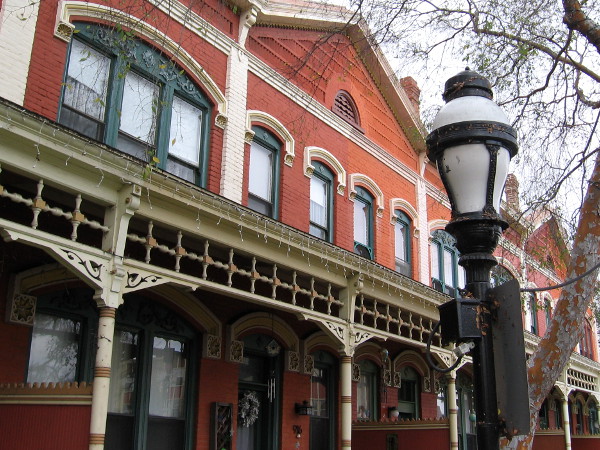
Brick Row at National City’s Heritage Square. The long brick two-story structure was built by Frank Kimball in 1887.
To those traveling through gritty National City, Heritage Square can be a surprising discovery. Venture into the picturesque block, just south of the intersection of East 9th Street and A Avenue, and you feel like you’ve stepped back 150 years.
National City has a fascinating history. Originally used by the Spanish to graze horses, the land in the early 1800s, after Mexican independence, was called Rancho de la Nación. In 1868, a San Francisco builder named Frank Kimball bought the rancho with an ambitious dream. He intended to turn National City into the western terminus of the Santa Fe Railway.
You might remember my photographic tour of the National City depot, built in 1882 by the Santa Fe Railroad. It became the first terminus of transcontinental rail travel in the San Diego area. You can see that fascinating blog post here.
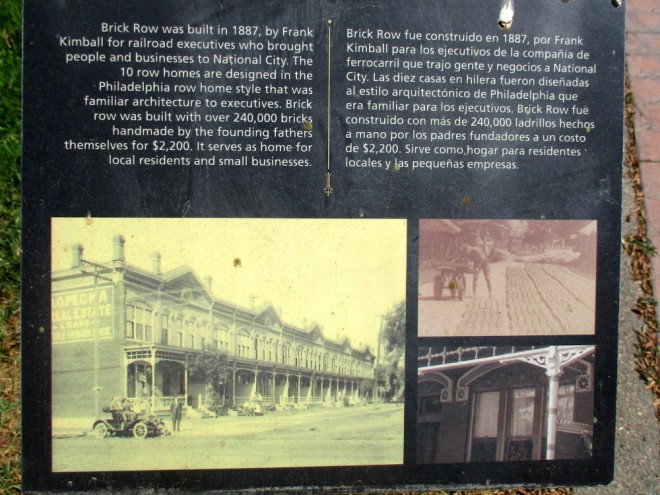
To accommodate executives of the Santa Fe Railroad and booming times caused by the arrival of rail, in 1887 Frank Kimball built Brick Row, a structure in the style of Philadelphia row house. It was designed by San Diego architect R. C. Ball. Over 240,000 bricks were used for the ten units.
Kimball’s full ambitions weren’t realized, however, when the Santa Fe Railroad soon turned their sights on Los Angeles, making that city their major center of operations in Southern California.
An early resident of the “Kimball Block” was legendary marshal Wyatt Earp, who came to Southern California after being indicted in Arizona for shooting the men who’d killed his brother. He is best known locally for opening three gambling halls in San Diego. In 1889, Wyatt Earp stayed in Brick Row when he traveled down to Tijuana, Mexico. There he famously refereed a prize fight during a fiesta that also featured cockfights, bullfights and a lassoing contest.
In the early 1970s, National City’s planning director, Malcolm C. Greschler, interested in preserving the deteriorating Brick Row, came up with the idea of creating Heritage Square, which would be a historical tourist attraction similar to San Diego’s Old Town. In 1973 Frank Kimball’s house was moved to Heritage Square.
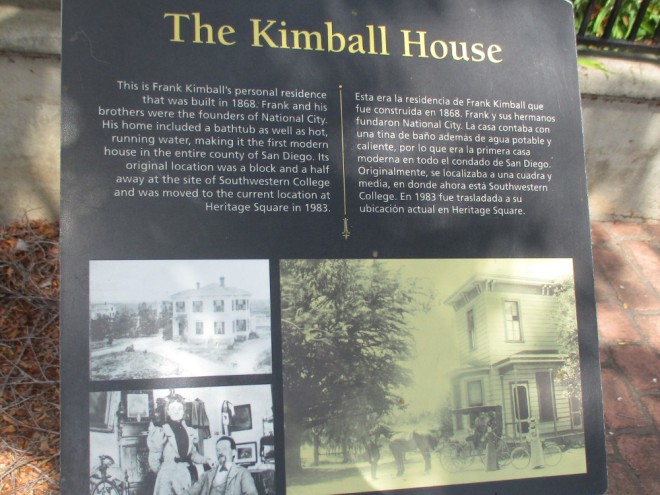
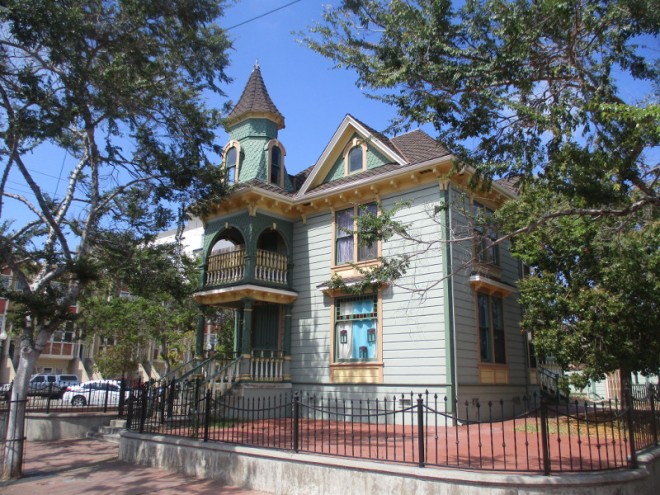
The 1869 Kimball House has its own unique history. It was the first house built in National City. Not only did it have a bathtub, but it had hot running water, which made it the first modern house in the entire county. President Benjamin Harrison visited it in 1891 during his tour of the western United States. At the time, it was the longest journey ever made by a President while in office. President Harrison’s 9,232 mile trip by railroad took one month and three days!
In 1976 two more historical houses were moved to Heritage Square: the 1887 Stick-style Rice-Proctor House and the 1879 Steele-Blossom House, which is depicted on National City’s official logo.
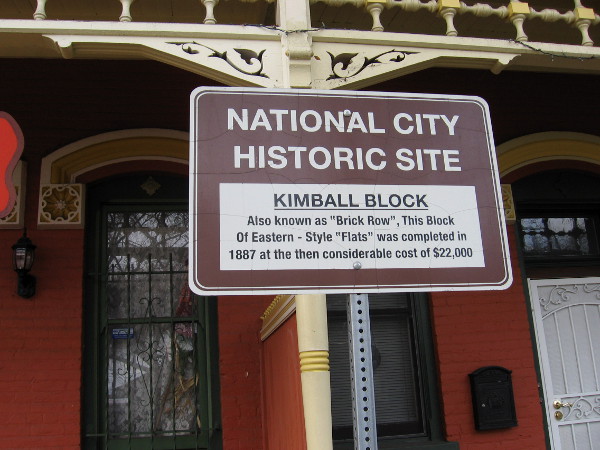
A plaque that reads Heritage Square – Marked in honor of the National City Centennial by San Miguel Chapter NSDAR, 1987.Heritage Square in National City contains several historic structures from the mid to late 19th century.The Steele-Blossom House, built in 1879, is used by the city of National City in its official logo. Elizur Steele was real estate agent for Frank Kimball and his enterprising brothers.The 1869 Kimball house was moved to Heritage Square in 1975. It is now the Kimball Museum operated by the National City Historical Society.The 1887 Stick-style Rice-Proctor House in National City’s Heritage Square.The two-story Brick Row is composed of ten units with common walls.Sign reads National City Historic Site – Kimball Block – Also known as Brick Row, this block of Eastern-style flats was completed in 1887 at the then considerable cost of $22,000.Photo of a section of the handsome Brick Row. The building now houses several specialty shops and the National City Historical Archive Room.Walking through the historic block of Heritage Square in National City is like a wonderful voyage back in time.
UPDATE!
I took the following three photographs in 2021 during another walk through National City.
The first photo is of a sign providing information concerning Brick Row. I cropped the top of the photo off because the outdoor sign was plastered with unsightly bird poop!
The second photo is of a sign concerning the Kimball House. I see its dates are different than what I previously wrote. I got that info from some other source. Do your own research!
The third photo is of the Steele-Blossom House, which appears to have been repainted with different colors.
…
This blog now features thousands of photos around San Diego! Are you curious? There’s lots of cool stuff to check out!
Here’s the Cool San Diego Sights main page, where you can read the most current blog posts. If you’re using a small mobile device, click those three parallel lines up at the top–that opens up my website’s sidebar, where you’ll see the most popular posts, a search box, and more!
To enjoy future posts, you can also “like” Cool San Diego Sights on Facebook or follow me on Twitter.
Stagecoach on display at the Wells Fargo History Museum in Old Town San Diego State Historic Park.
I recently visited the Wells Fargo History Museum in Old Town. The exhibits inside concern early San Diego history. When our city was in its infancy, Wells Fargo ran a stagecoach line, and their Express Office was an essential part of local business life.
I took loads of photos in this very cool museum. Read the captions to learn much more!
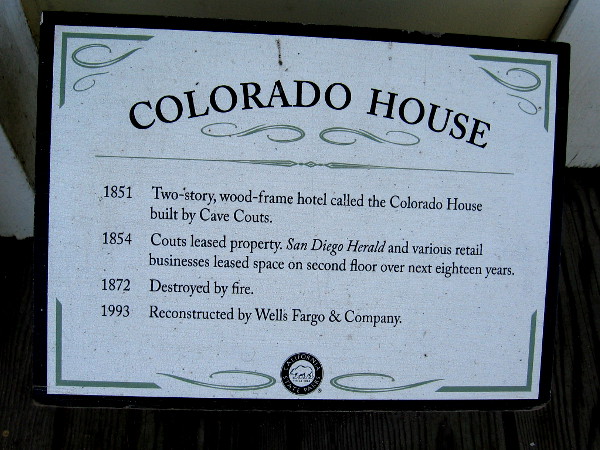
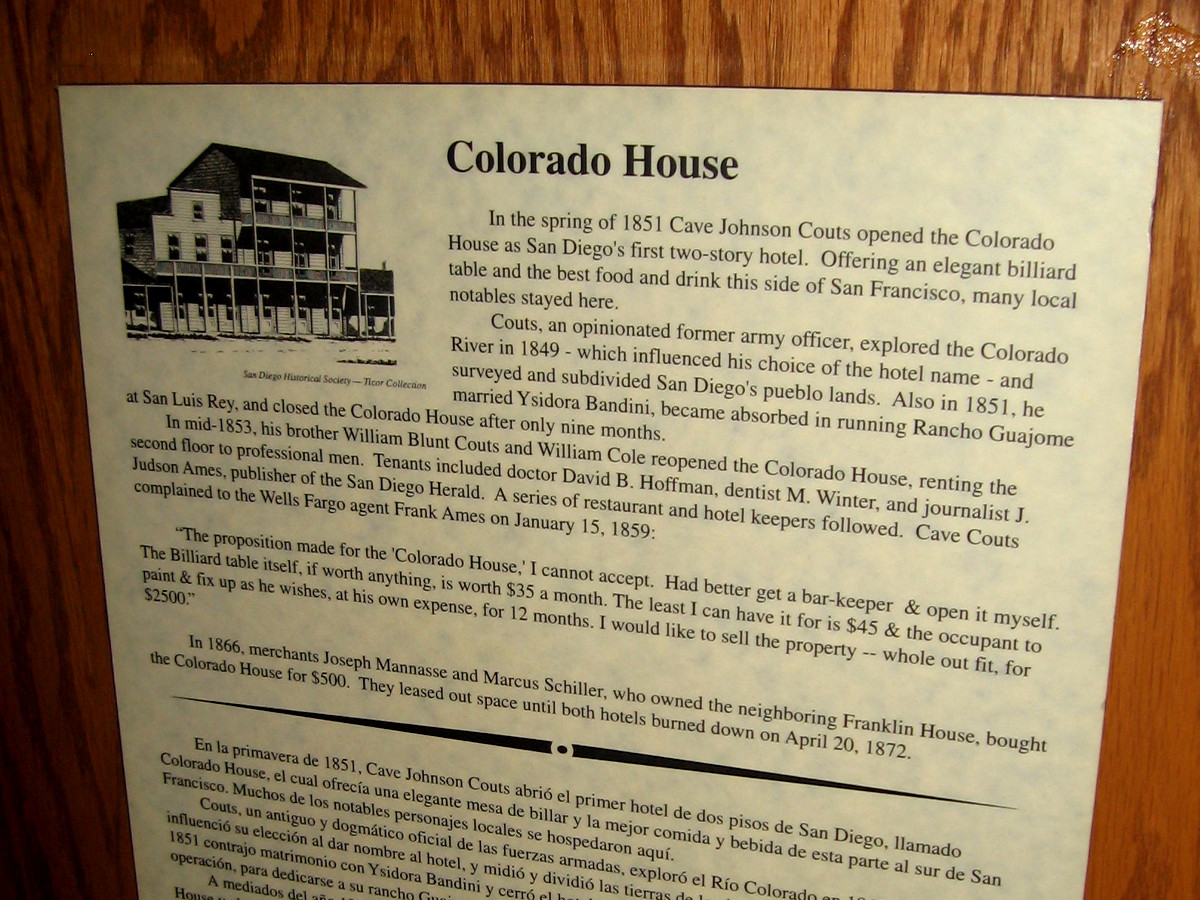
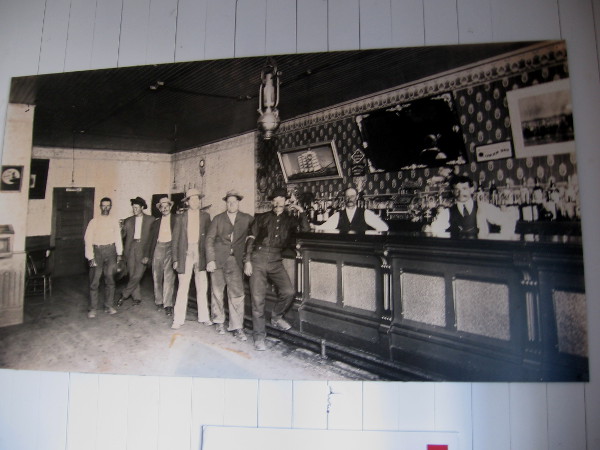
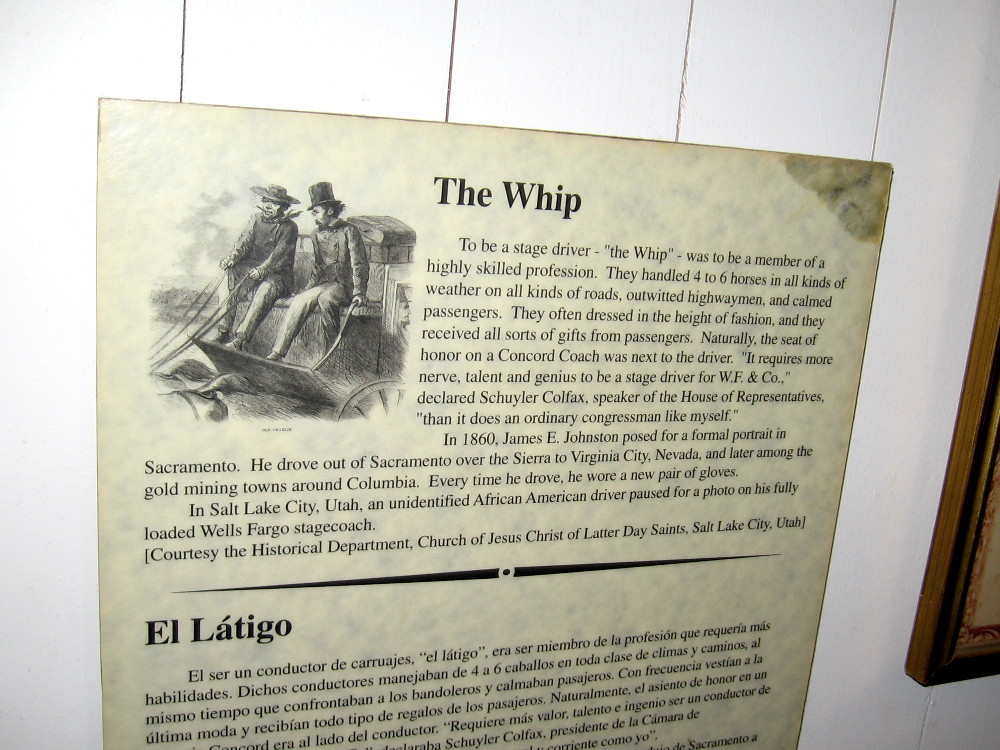
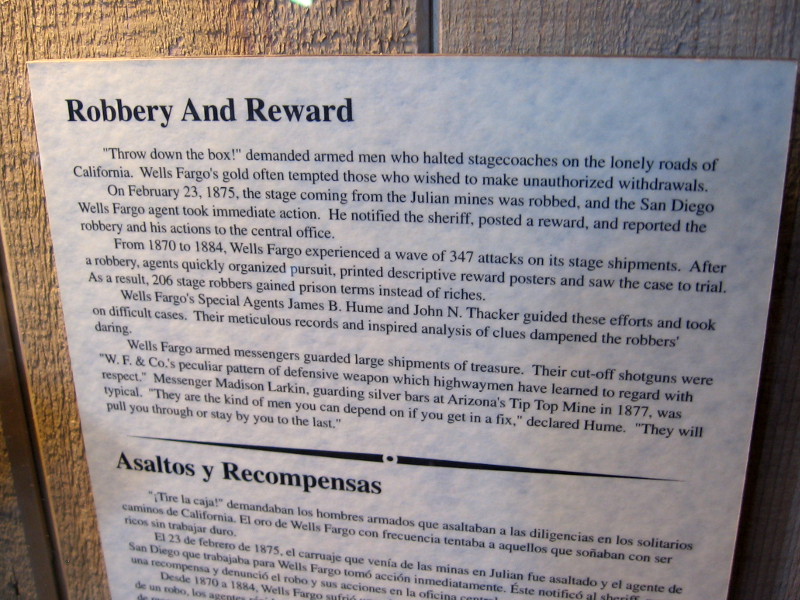
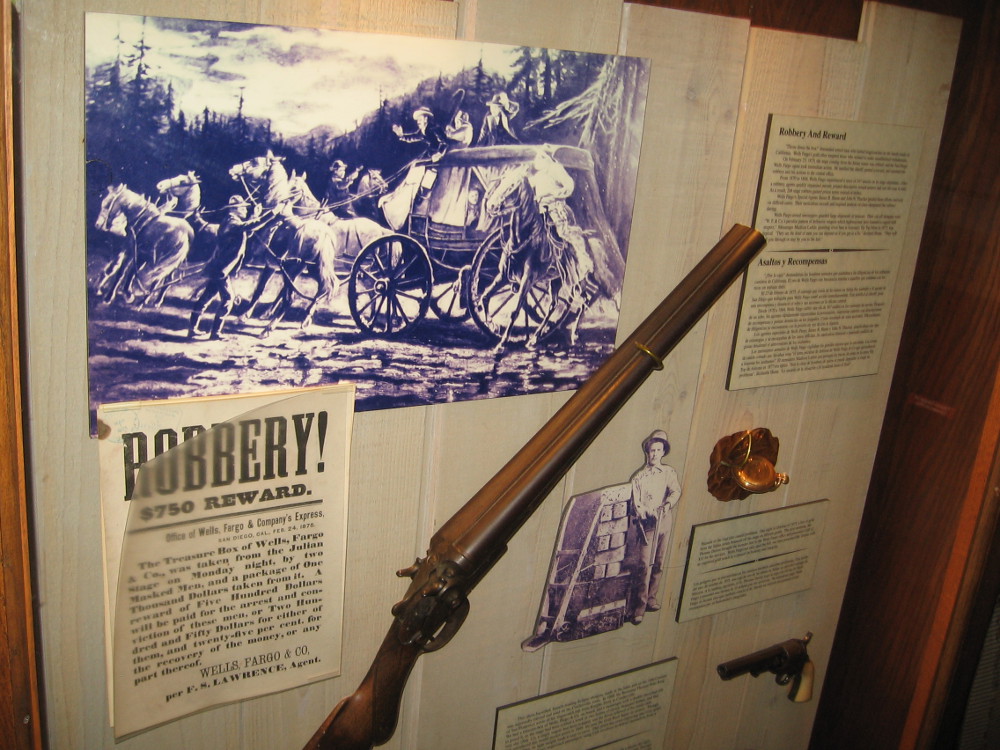
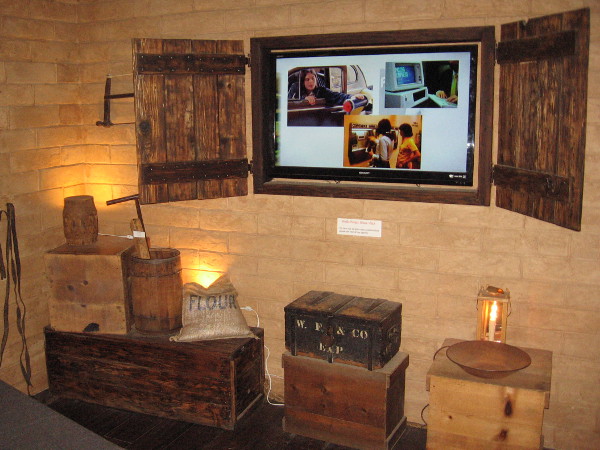
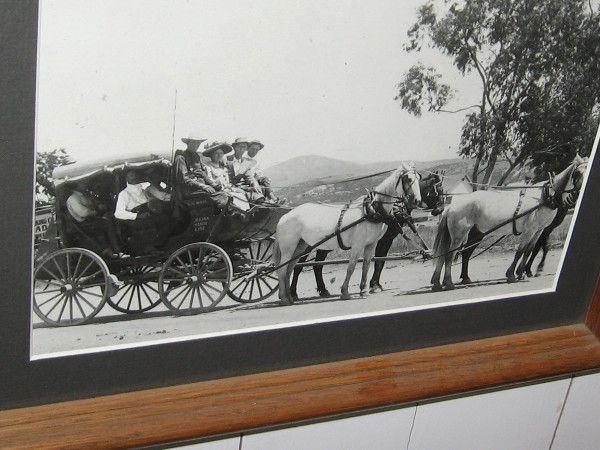
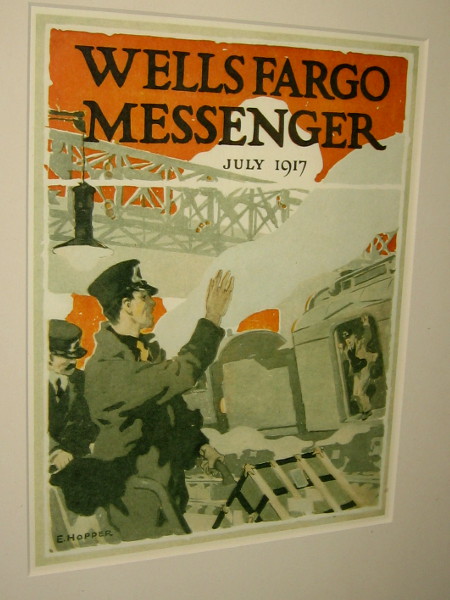
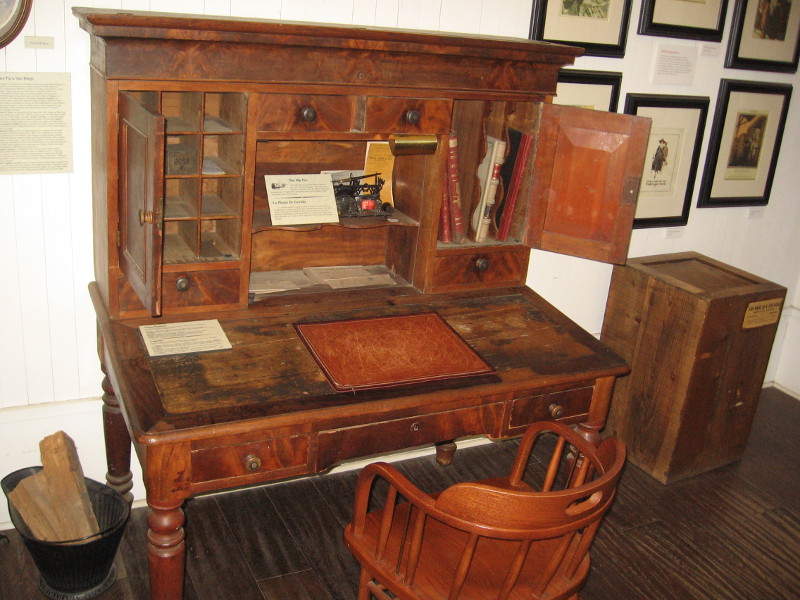
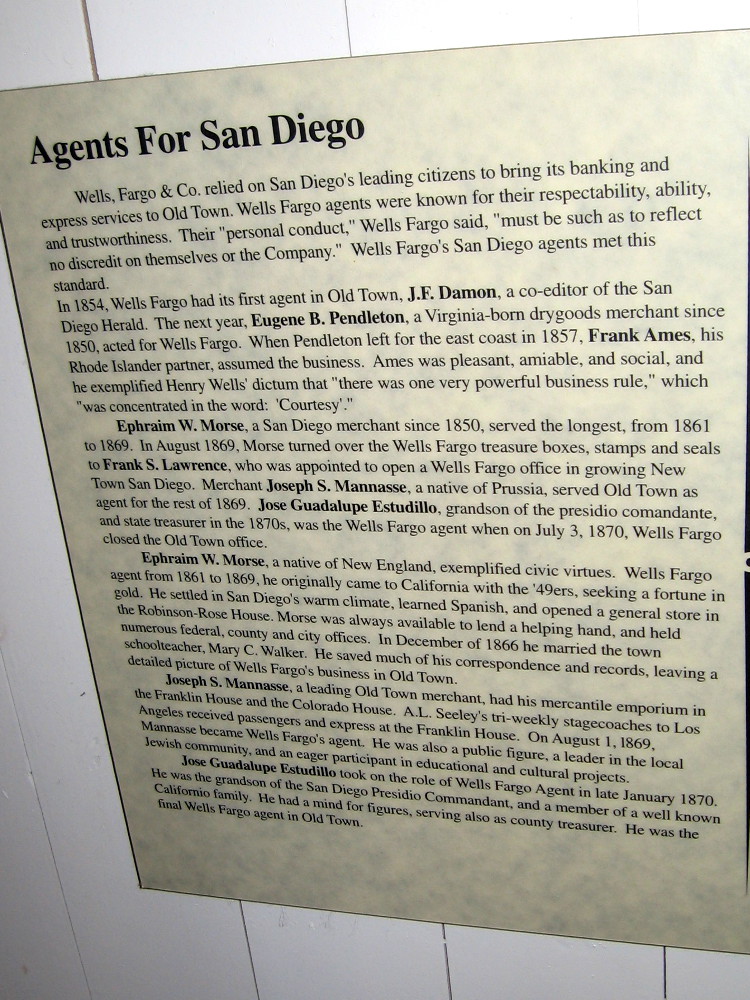
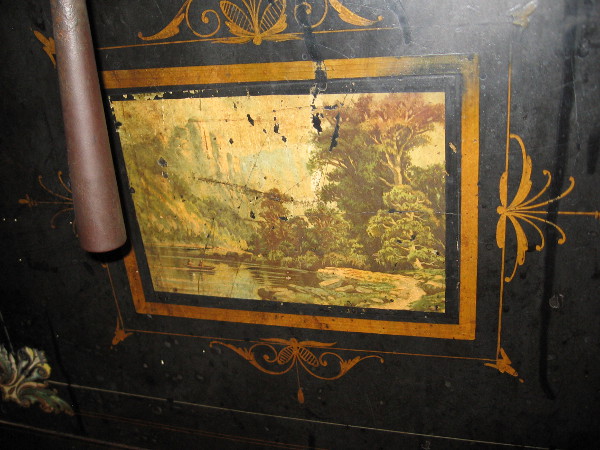
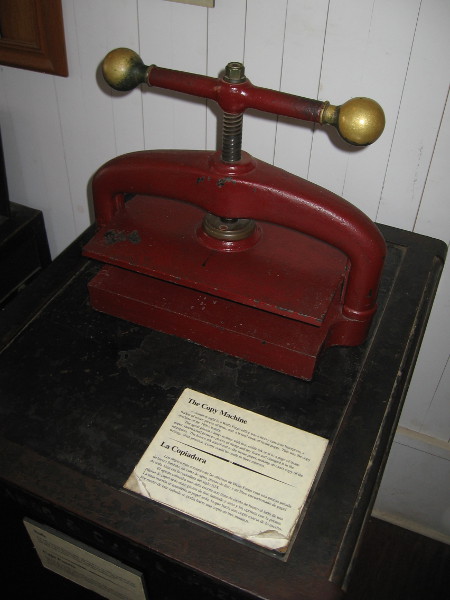
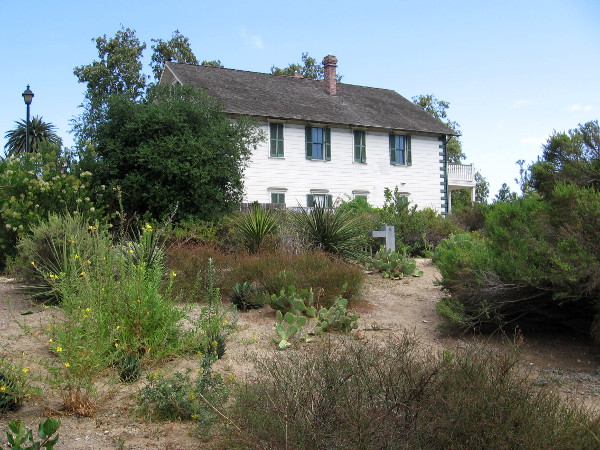
The restored Colorado House in Old Town San Diego is home to a fascinating Wells Fargo museum.The two-story, wood frame hotel called the Colorado House was built in Old Town San Diego in 1851 by Cave Couts. The original building was destroyed by fire in 1872.The Wells Fargo History Museum in San Diego is open daily from 10-5. Admission is free!Tourists in Old Town check out an iconic red Wells Fargo stagecoach, which transported mail, gold, goods and passengers in the Old West.Old photo on video screen shows the Wells, Fargo and Co’s Express Office in downtown San Diego, in 1911.Historical artifacts in a glass display case include books, bottles and a photo of Cave J. Couts.In the spring of 1851 Cave Johnson Couts opened the Colorado House as San Diego’s first two-story hotel. It had an elegant billiard table and fine food.Old photograph shows bar and patrons in Colorado House.Antique telegraph key once used to send messages and money across the continent.Colorful mural high on one wall shows a small town by a blue bay. I believe I recognize many buildings in Old Town.Article from the Omaha Herald published in 1877 provides Hints for Plains Travelers. When the driver asks you to get off and walk, do it without grumbling!Old plaque in the museum: Silas St. John carried the first eastbound overland mail out of San Diego, from Carrizo Creek to Fort Yuma, November 16, 1857. On September 9, 1858, in a lone-handed defense of the Butterfield-Wells Fargo Overland Stage station at Dragoon, Arizona, St. John was horribly wounded and lost his left arm. He recovered to continue in Wells Fargo service. Of his stuff the West was made.To be a stage driver–the Whip–was to be a member of a highly skilled profession. They handled 4 to 6 horses in all kinds of weather on all kinds of roads, outwitted highwaymen, and calmed passengers.Passengers on board the Overland Mail Company stages were allowed 40 pounds of baggage.Advertisement shows Ladies’ and Gentlemen’s traveling trunks and valises, also packing trunks of every description.Map shows the historic Butterfield Overland Mail Route. Wells Fargo’s experience in Western transportation led it to finance and eventually run the Butterfield stage line’s operations in the west. (Click image to enlarge.)On February 23, 1875, the stage coming from the Julian mines was robbed, and the San Diego agent took action. He immediately notified the sheriff, posted a reward, and reported the robbery and his actions to the central office.Cool display inside the Wells Fargo History Museum in Old Town San Diego shows how stagecoaches and their cargo were protected from bandits.The most infamous stage robber was Black Bart. He left bits of poetry and called himself the “Po8” to distance himself from the common thief. He robbed 28 stagecoaches from 1875 to 1883. Once identified, authorities learned he was actually Charles E. Boles, a “respectable” mine owner!A museum recreation of the Vallecito Stage Station, a stop on the Overland Mail Company’s southern route, 1858-1861. Thick adobe walls provided relief from desert heat.Table in the stage station used for rest, serving food and games of cards to pass the time.Gold was discovered at Julian in San Diego’s mountains, triggering a small rush into the area.Miners from placer diggings on the Colorado River and hard-rock mines at Julian brought their gold dust and bars to the Wells, Fargo and Co. agency in Old Town San Diego.The Julian Stage Line carried miners and other passengers to this gold mining town in east San Diego County.Cover of the Wells Fargo Messenger, dated July 1917.Wells Fargo published a monthly magazine calls the Wells Fargo Messenger between September 1912 and June 1918. Edward Hopper, an illustrator, went on to become a famous American realist painter.On her travels she uses Wells Fargo Checks.Cover of the Wells Fargo Messenger, dated April 1918.Antique desk used by a Wells Fargo agent.During a typical day, a Wells Fargo agent saw many types of business, reflecting the Company’s varied and essential services.Nooks in this desk hold dip pens, receipts, letters and accounting ledgers.Wells Fargo agents were known for their respectability, ability, and trustworthiness. The first Old Town agent was J.F. Damon, co-editor of the San Diego Herald.Wells Fargo agent William A. Biglow works in his express office which included an agent’s cabinet and iron safe.A large old letterpress sits atop a cast iron safe. The safe, made by Herring, Hall, Marvin and Co. in 1885, is filled with concrete and weighs over a ton.Some pastoral art on the face of the safe door.The copy machine of the 19th Century. Pressure from this heavy cast-iron letterpress transferred brown ink to tissue paper.A collection of old letters, certificates and small packages exhibited at the Wells Fargo History Museum in San Diego.If you ever visit Old Town San Diego State Historic Park, check out the interesting Wells Fargo History Museum in the Colorado House!
…
I live in downtown San Diego and love to walk around with my camera! You can follow Cool San Diego Sights via Facebook or Twitter!
You can easily explore Cool San Diego Sights by using the search box on my blog’s sidebar. Or click a tag! There are thousands upon thousands of fun photos for you to enjoy!
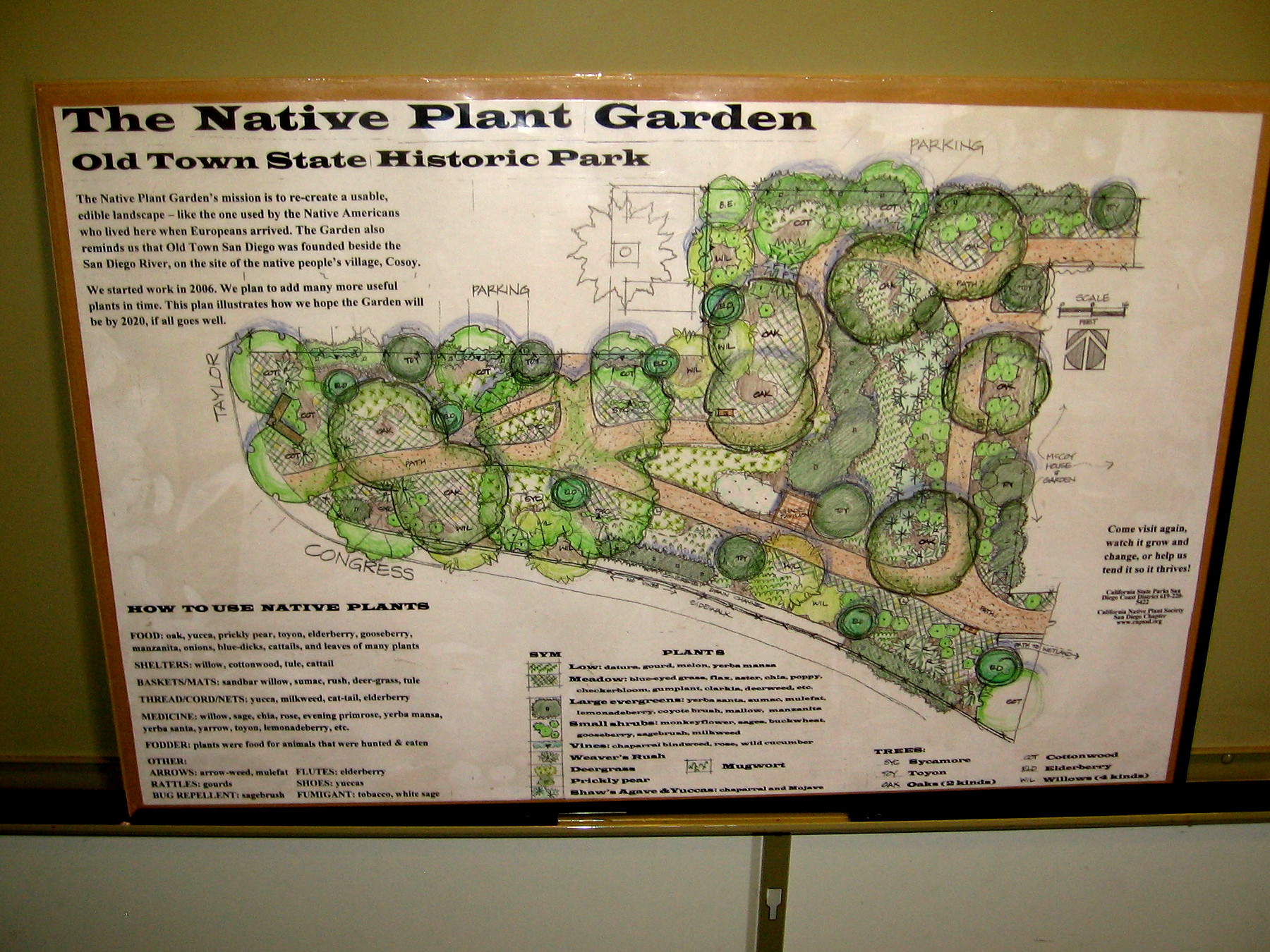
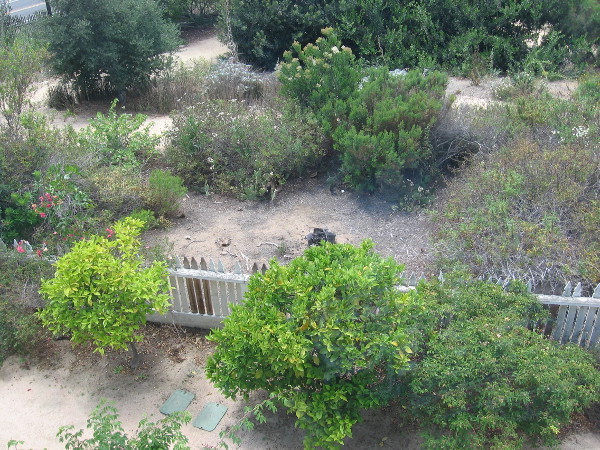
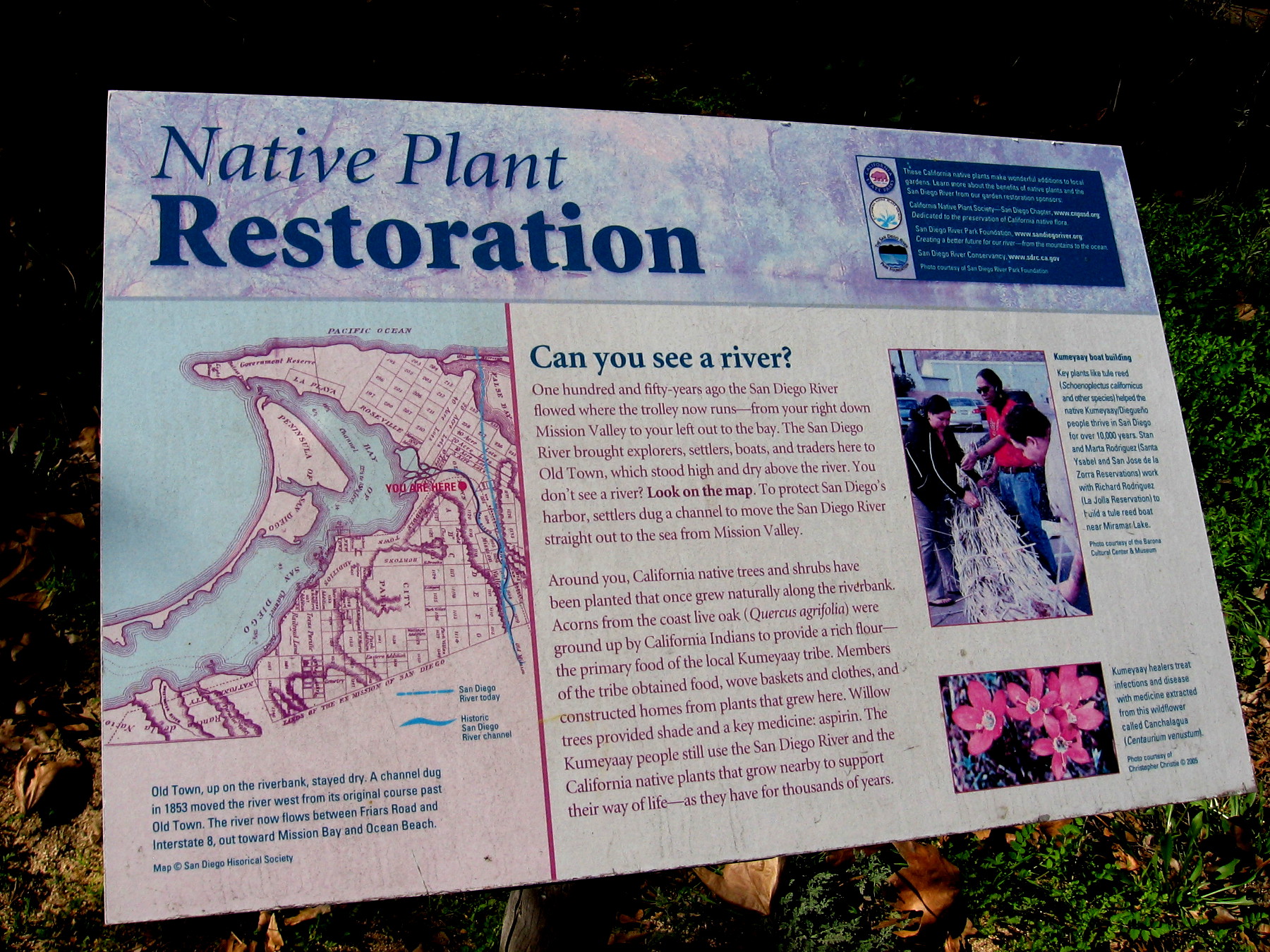
Photo of historic McCoy House in Old Town San Diego from the Native Garden. Today’s garden is located in a spot that was once very close to the San Diego River, before the river was diverted to the north, through Mission Valley.
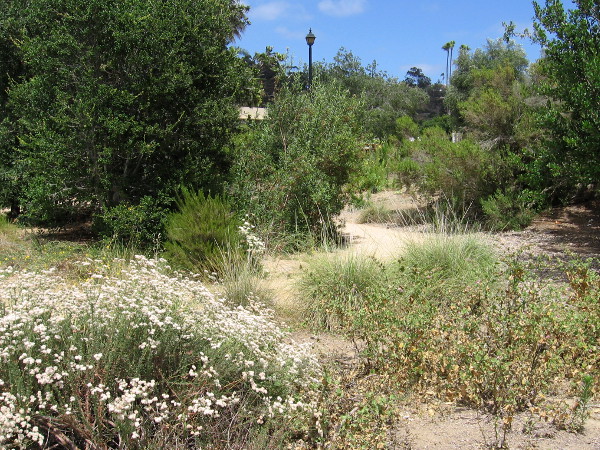
A small, ragged but beautiful native garden can be found in the northwest corner of San Diego’s Old Town, next to the McCoy House Museum. The Native Plant Garden contains vegetation that grows naturally along the rivers of our semi-arid region.
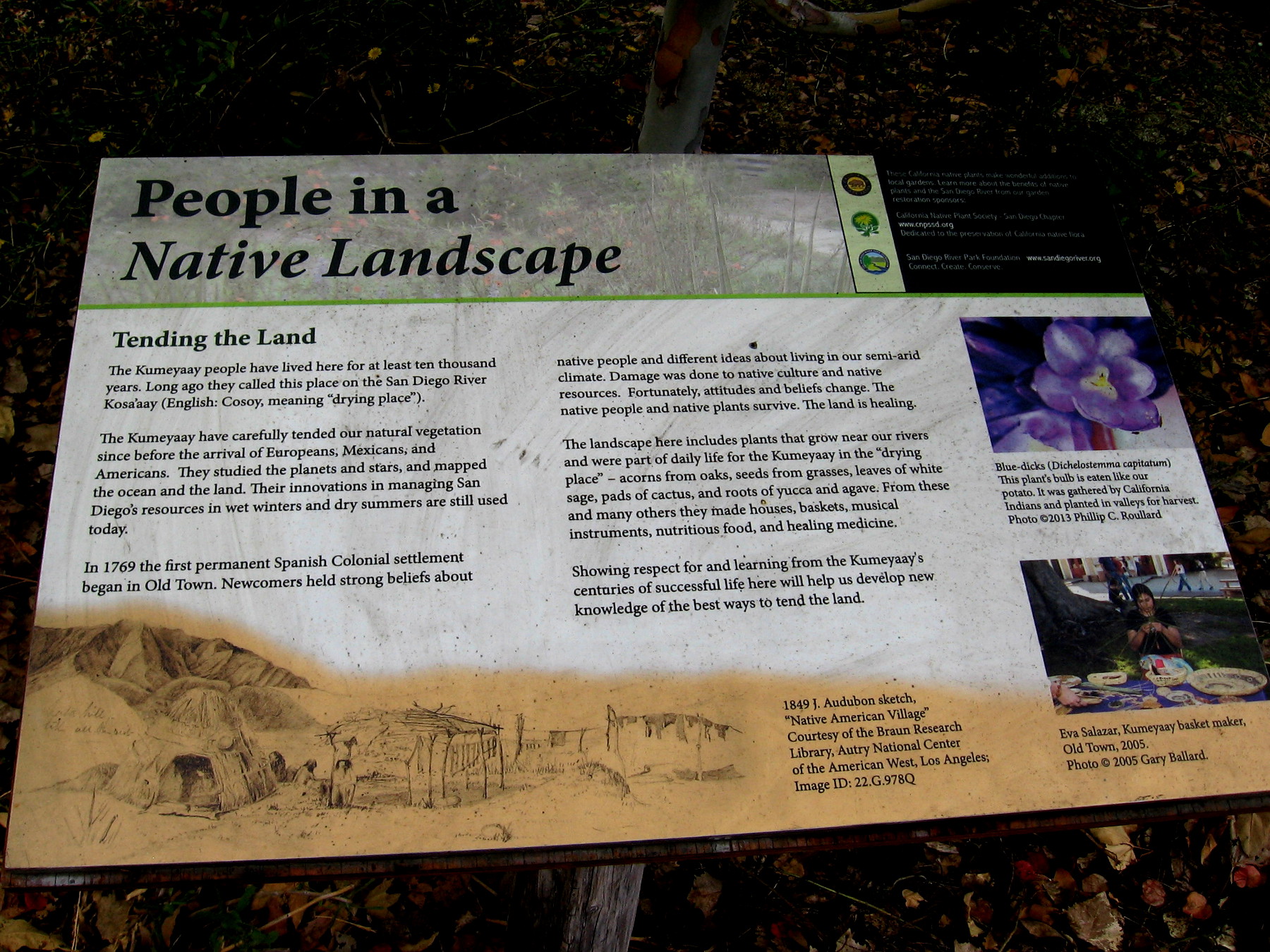
Long before Europeans arrived in Southern California, the Native American Kumeyaay lived where Old Town was eventually established; the Kumeyaay village at the base of Presidio Hill was called KOSA’AAY, or Cosoy. Many of the plants in the garden were used by the Kumeyaay people in everyday life.
Read the photo captions to learn much more. Click the garden plans and the two signs, and those images will expand providing additional information!
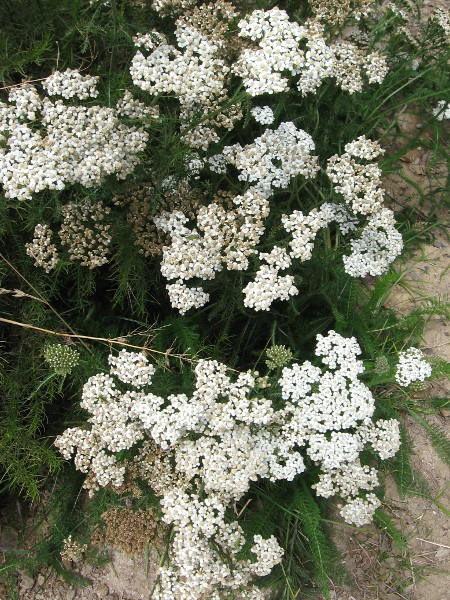
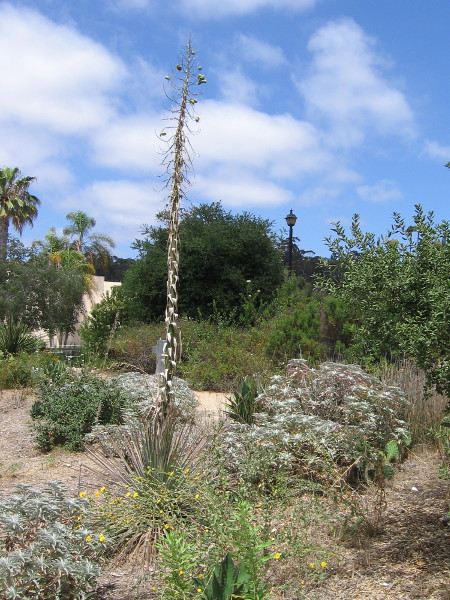
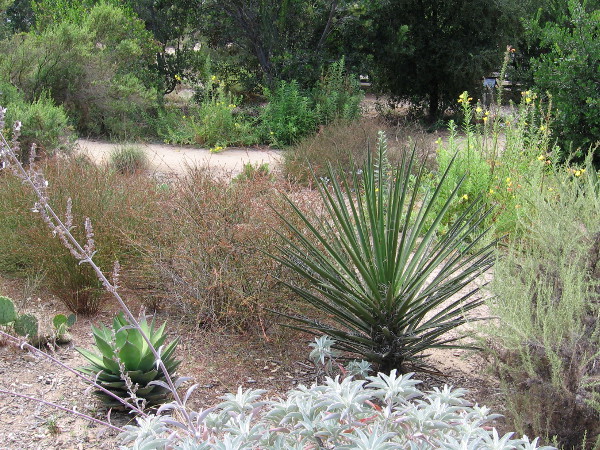
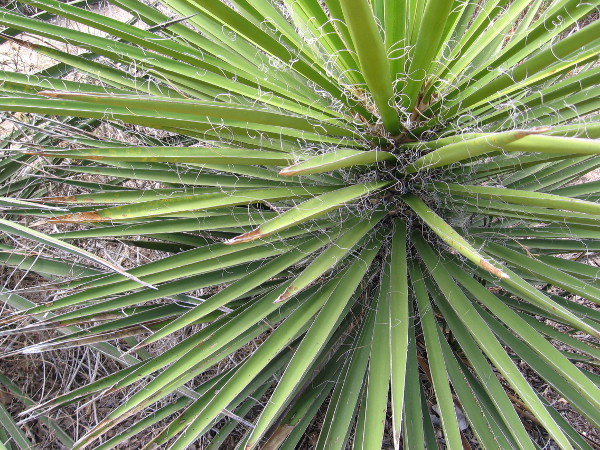
Plans of the Native Plant Garden in Old Town San Diego State Historic Park. Included are species used by the Native American Kumeyaay for food, shelter and medicine. Their village Cosoy was located here.Looking northwest from the second floor of the McCoy House Museum in Old Town San Diego. The Native Garden beyond the fence is a bit dry and scraggly–but that’s how local vegetation naturally appears.150 years ago the San Diego River flowed nearby, bringing explorers, settlers, boats and traders to Old Town. California native trees and shrubs have been planted that once grew along the riverbank.Dirt walking paths meander through the small Native Garden at the northwest corner of Old Town San Diego State Historic Park.Yarrow was used by the Kumeyaay as a treatment for various medical conditions, including burns, inflammation, and pain from toothache, headache and arthritis.Tall stalk of a yucca that already flowered still juts into the sky in Old Town San Diego.The Kumeyaay people have lived here for at least ten thousand years. Their innovations in managing San Diego’s resources in wet winters and dry summers are still used today.A variety of native plants found naturally in coastal San Diego’s semi-arid climate, including sages and prickly pear cactus.Fibers from the yucca were used by the Kumeyaay to produce cords, nets, shoes and other useful items.
…
I live in downtown San Diego and love to walk around with my camera! You can follow Cool San Diego Sights via Facebook or Twitter!
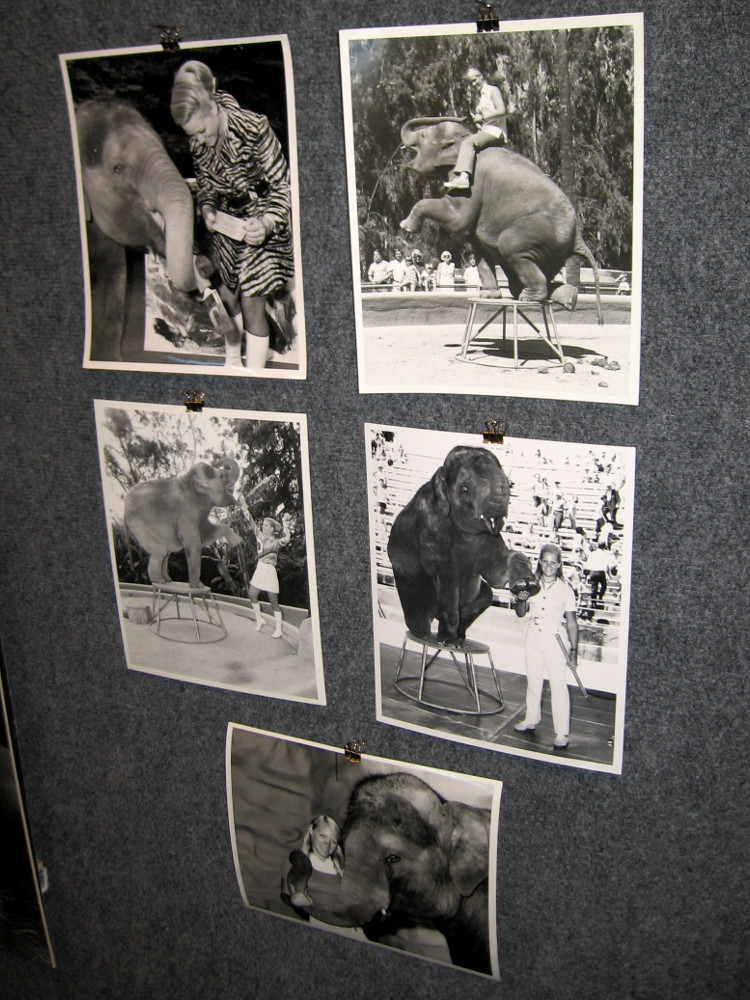
Joan Embery appears with Johnny Carson on the Tonight Show. Carol the Elephant paints on a canvas for the national television audience.
Who doesn’t know Joan Embery? As a frequent guest on the Tonight Show with Johnny Carson, as Goodwill Ambassador for the San Diego Zoo, and as an international spokesperson for animal conservation, Joan Embery is loved by people all around the world. She is truly a San Diego legend.
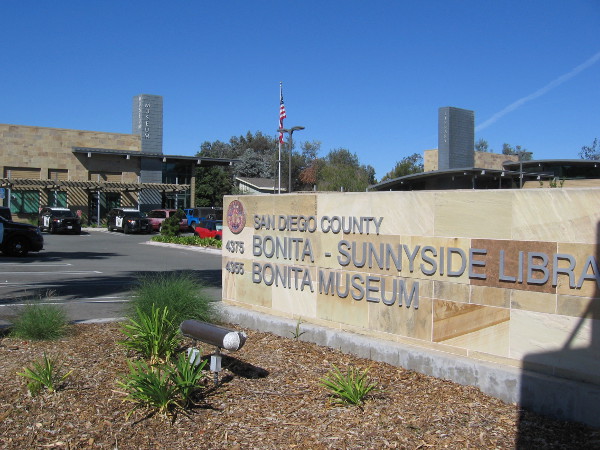
So it’s fitting that the Bonita Museum and Cultural Center is now showing an exhibition about her life and career, titled Joan Embery’s My Animal World.
It was my first visit to this museum, and I was surprised to discover such a fine exhibition. Viewing all the displays gave me a great deal of pleasure. They brought back so many San Diego memories.
These few photographs only provide a small taste of what you will see at the museum. If you’re in San Diego, you really ought to head over to Bonita and check it out. The exhibition runs through December 3, 2016.
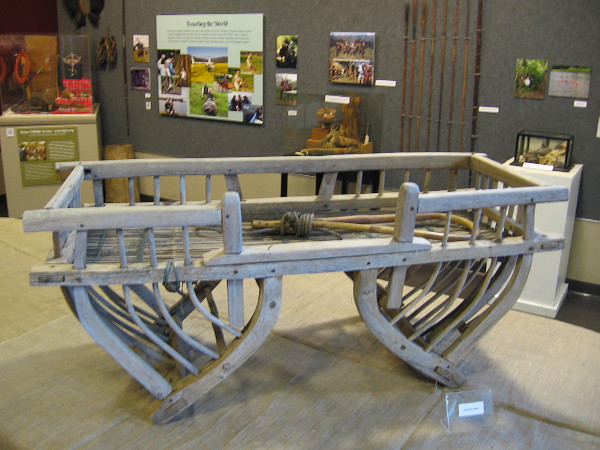
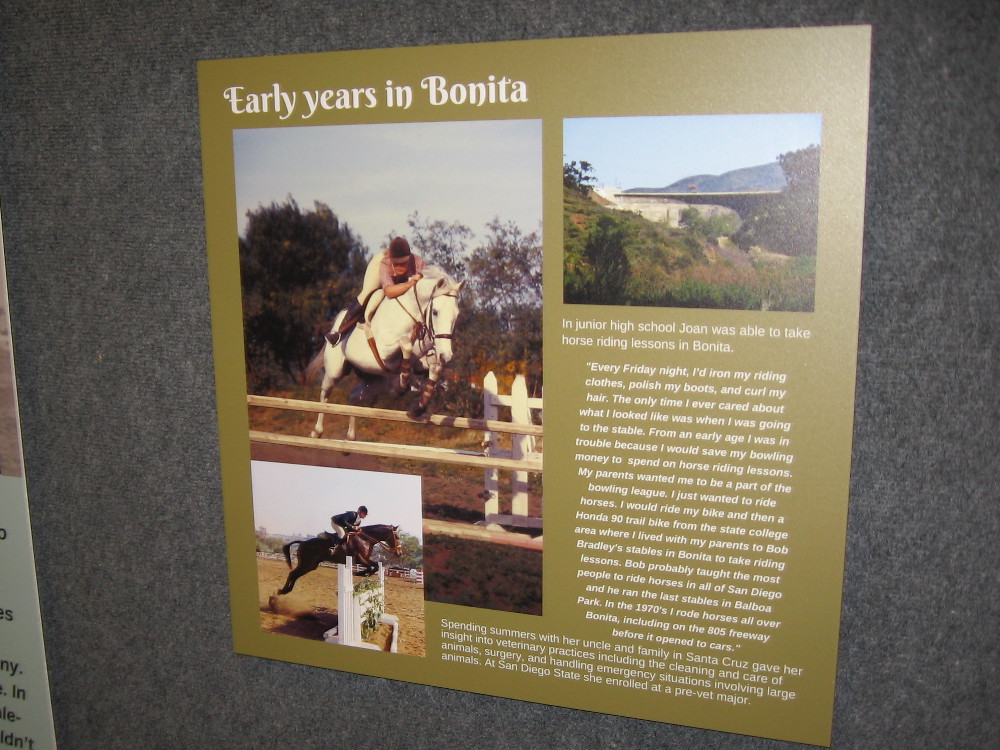
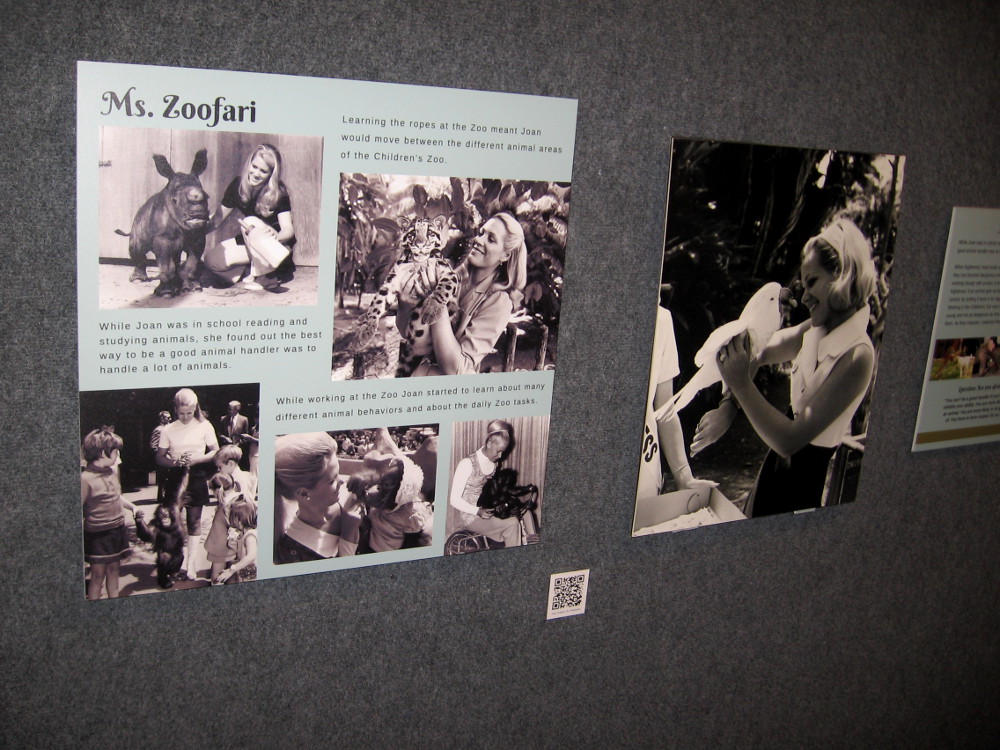
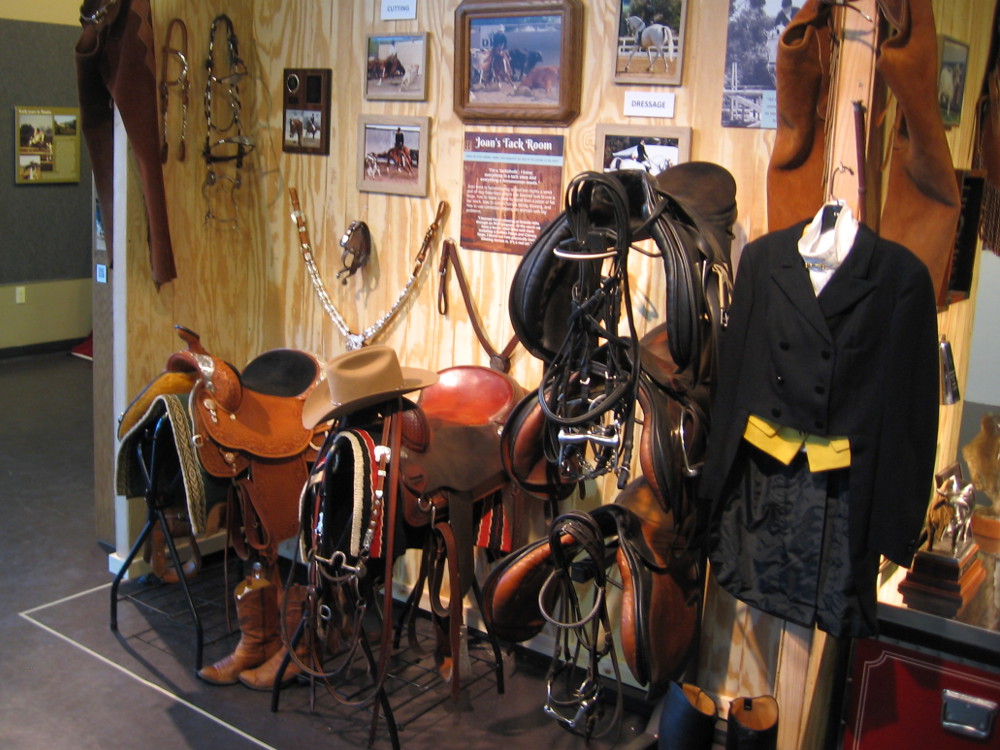
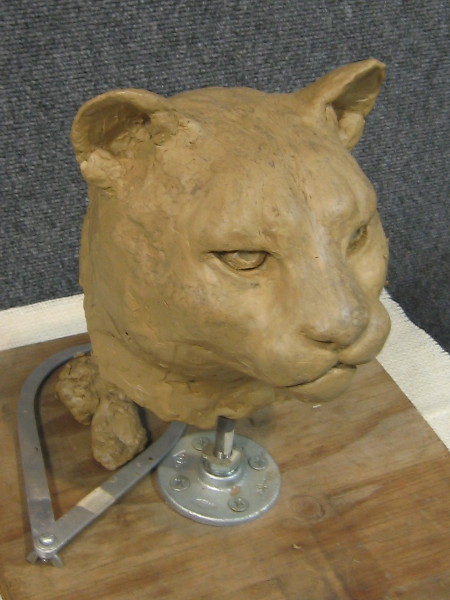
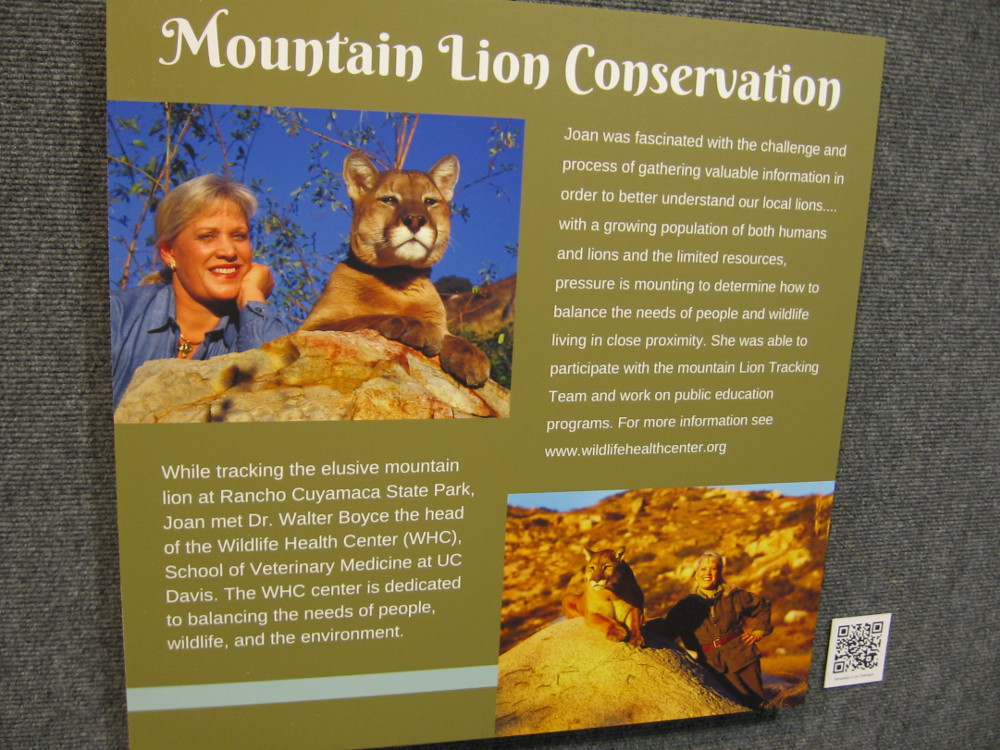
The Bonita Museum and Cultural Center is hosting a great exhibition about San Diego legend Joan Embery through December 3, 2016.An elephant saddle is one of many cool artifacts on display at the Joan Embery’s My Animal World exhibition.Many photos show Joan Embery through the years–in Bonita, at the San Diego Zoo and Wild Animal Park, travelling the world, and on the Pillsbury Ranch.Joan Embery was born in San Diego and was raised by a family who loved animals. As a kid, she never could get enough pets.In Junior High School, Joan Embery took horse riding lessons in Bonita. From an early age she dreamt of having her own horse.Wonderful photos of Joan Embery with Carol the Elephant. The two became good friends when Joan worked at the San Diego Zoo. She would become the zoo’s world-famous Goodwill Ambassador.Display at the Bonita Museum and Cultural Center documents a moment in the life and career of Joan Embery.Ms. Zoofari. While working at the San Diego Zoo, Joan learned about different animal behaviors and about daily zoo tasks.Today, the 50-acre Pillsbury Ranch is the home of Joan Embery and her husband Duane Pillsbury. Students visiting the ranch learn about the many different exotic animals that live there.Joan Embery’s Tack Room with many related photographs can be found at her museum exhibit in Bonita. Above all, she loves riding horses.Joan oversees The Embery Institute for Wildlife Conservation. She has been involved with many programs dedicated to animal and habitat conservation.Mountain lion head sculpted by Joan Embery’s talented artist husband, Duane Pillsbury.Joan Embery participated on a mountain lion tracking team at Rancho Cuyamaca State Park east of San Diego.Joan Embery is a San Diego legend loved by many around the world. She has appeared on numerous book covers, magazines and television shows.
…
I live in downtown San Diego and love to walk! You can follow Cool San Diego Sights via Facebook or Twitter!
You can easily explore Cool San Diego Sights by using the search box on my blog’s sidebar. Or click a tag! There are thousands upon thousands of fun photos for you to enjoy!
The Recruit story is one of personal transformation and maturity. A display explains how sailors were made at Naval Training Center San Diego.
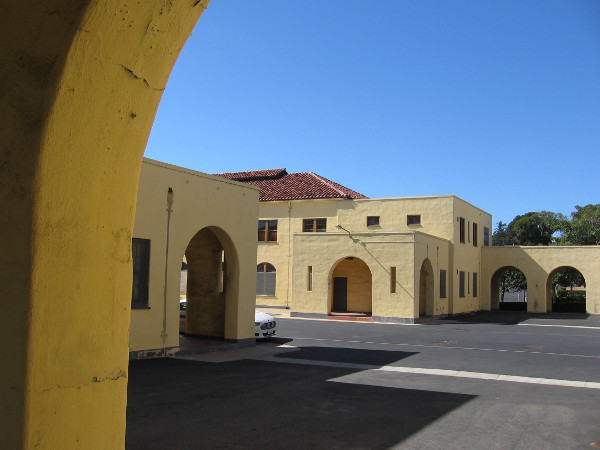
Over a span of 74 years, Naval Training Center San Diego in Point Loma graduated over 2 million recruits. Most went on to serve as sailors in the United States Navy.
A fascinating historical exhibit in the NTC Command Center at Liberty Station provides visitors with a glimpse of what life was like as a naval recruit. Photographs recall how young men were transformed at Naval Training Center San Diego and prepared for service on a ship at sea, far from home.
If you’d like to read some of these displays, click the photos and they will enlarge.
To those of you leaving comments concerning memories–thank you for your service!
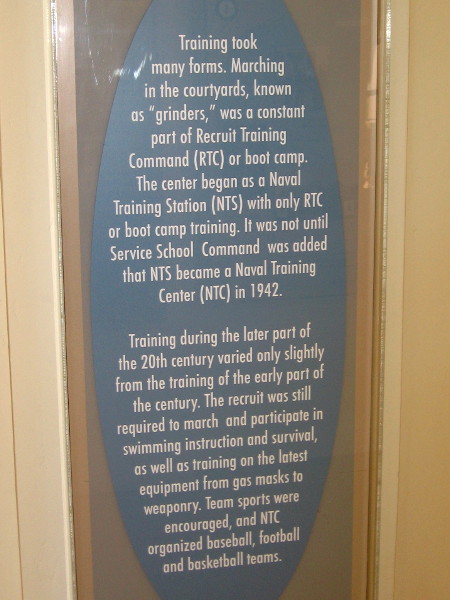
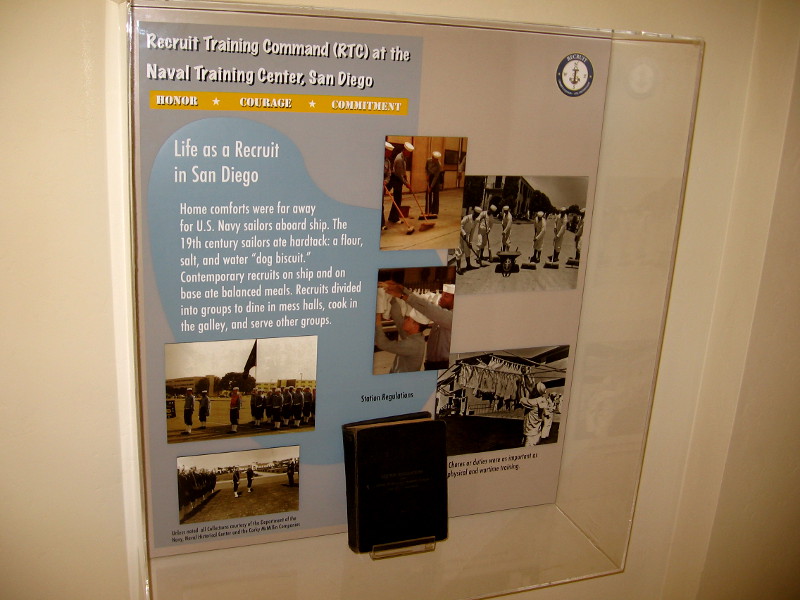
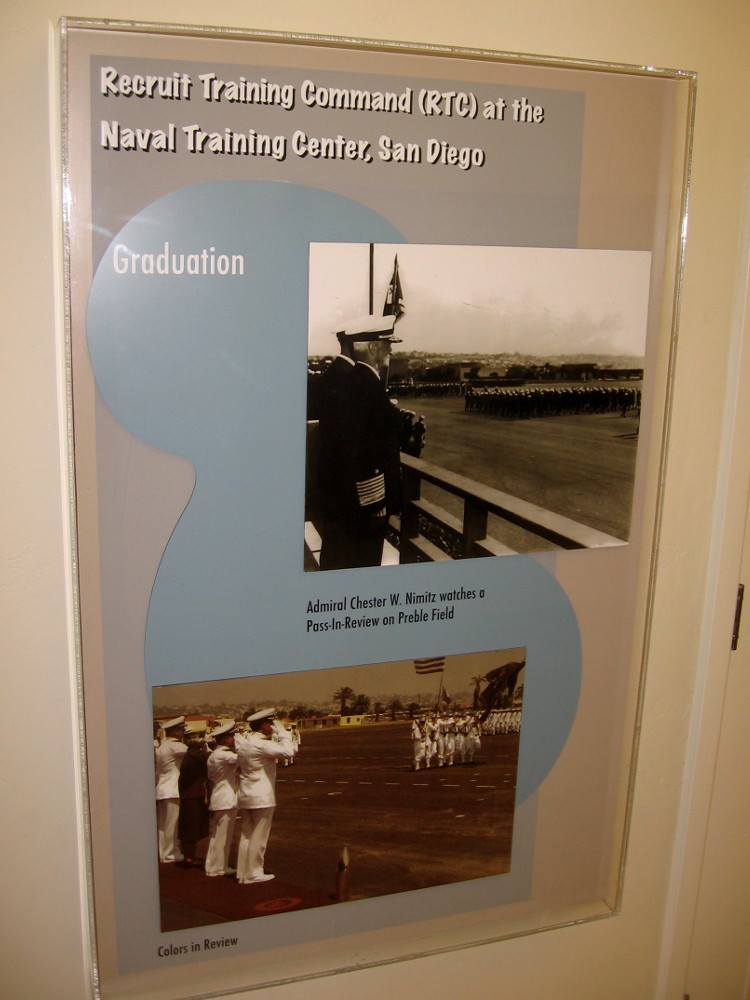
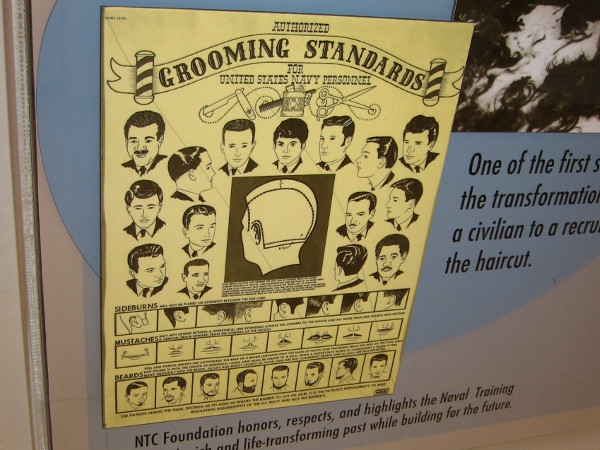
The Dick Laub NTC Command Center at Liberty Station has a fascinating exhibit about the training of naval recruits at this location years ago.The Admiral Stockdale Wing of the NTC Command Center has a corridor lined with historical photos, Navy artifacts and interesting information.Marching in the courtyards, known as grinders, was a constant part of Recruit Training Command or boot camp.Home comforts were far away for U.S. Navy sailors aboard ship. A display shows sailors training in San Diego.The USS Recruit–a model Training Destroyer Escort–is where most men experienced their first duty aboard ship.The USS Recruit is landlocked permanently at Liberty Station. Fondly called the USS Neversail, this ship set in concrete was used for training new Navy sailors.Graduation at Naval Training Center San Diego. One photo shows Admiral Nimitz watching a Pass-In-Review at Preble Field.A large map of the old Naval Training Center San Diego, which today has been transformed into Liberty Station, featuring shopping, parks, museums and more.Photo of vacant old Naval Training Center buildings waiting to be restored and put to use commercially at Liberty Station.During training, recruits were divided into companies of 100 men. Teamwork was promoted.Homecooked meals were prepared by NTC’s Chef and Mess School, which was one of the best in the country.NTC grew in size over the years, expanding across the boat channel. A march over Nimitz Bridge was a rite of passage. (I blogged recently that a new public park will be opening east of the channel.)An old poster depicts authorized grooming standards for United States Navy Personnel.Photos of graduation from San Diego’s NTC include the final 1993 ceremony before the base closed.The official program for the 2082nd and Final Recruit Pass-In-Review, Friday, November 19, 1993.NTC San Diego graduated over 2 million recruits over its 74 year history!Welcome aboard!
…
I live in downtown San Diego and love to walk! You can follow Cool San Diego Sights via Facebook or Twitter!
You can easily explore Cool San Diego Sights by using the search box on my blog’s sidebar. Or click a tag! There are thousands upon thousands of fun photos for you to enjoy!
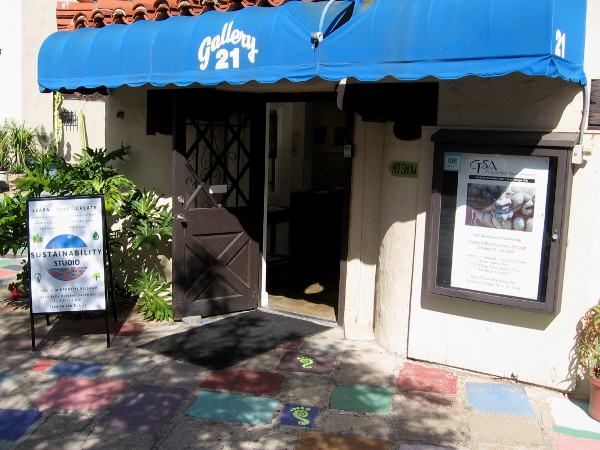
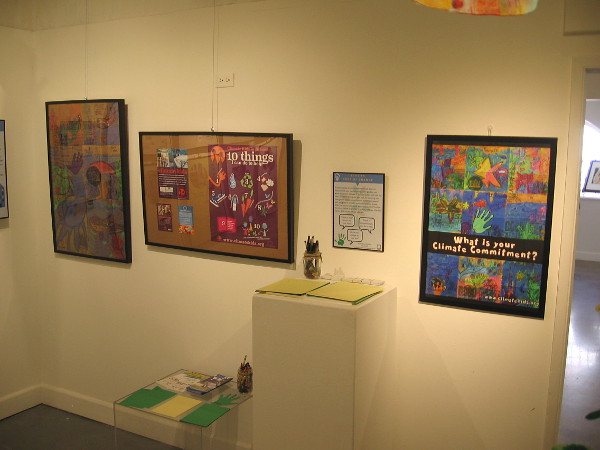
Gallery 21 in Balboa Park’s Spanish Village features a special environmental exhibit called Sustainability Studio!
I discovered a fascinating environmental exhibit in Balboa Park this weekend. The Sustainability Studio is located in Gallery 21 near the center of the Spanish Village Art Center.
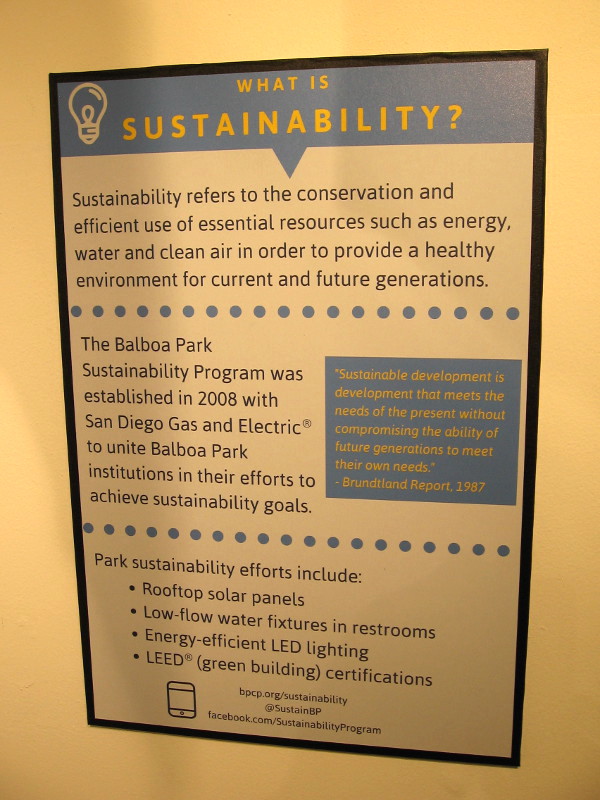
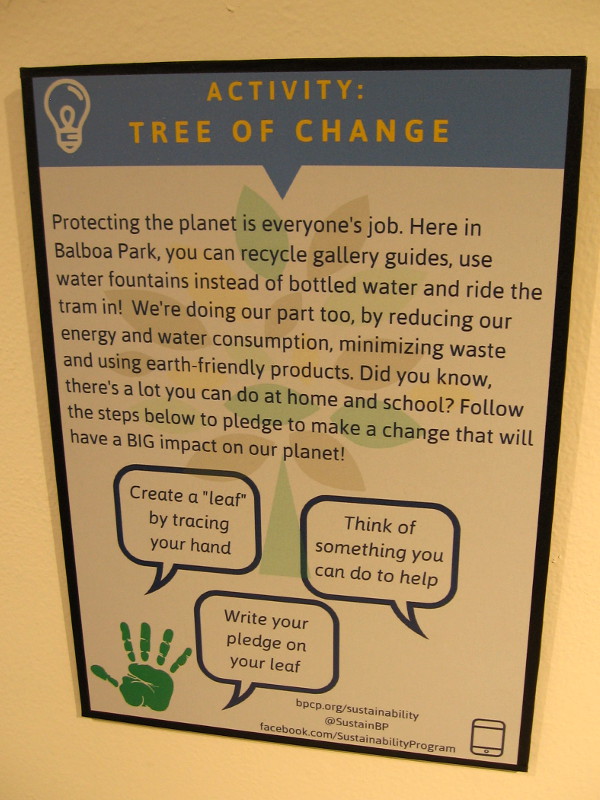
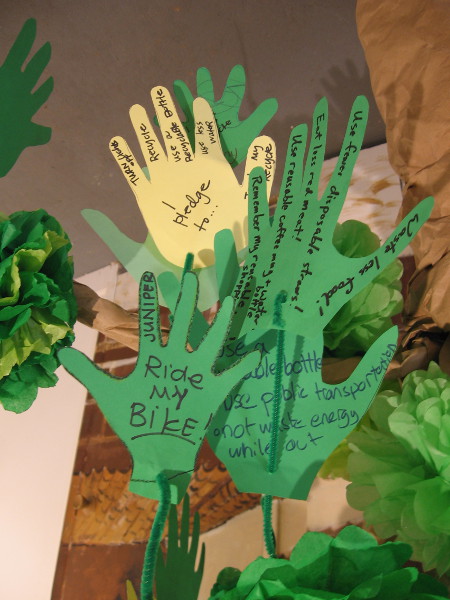
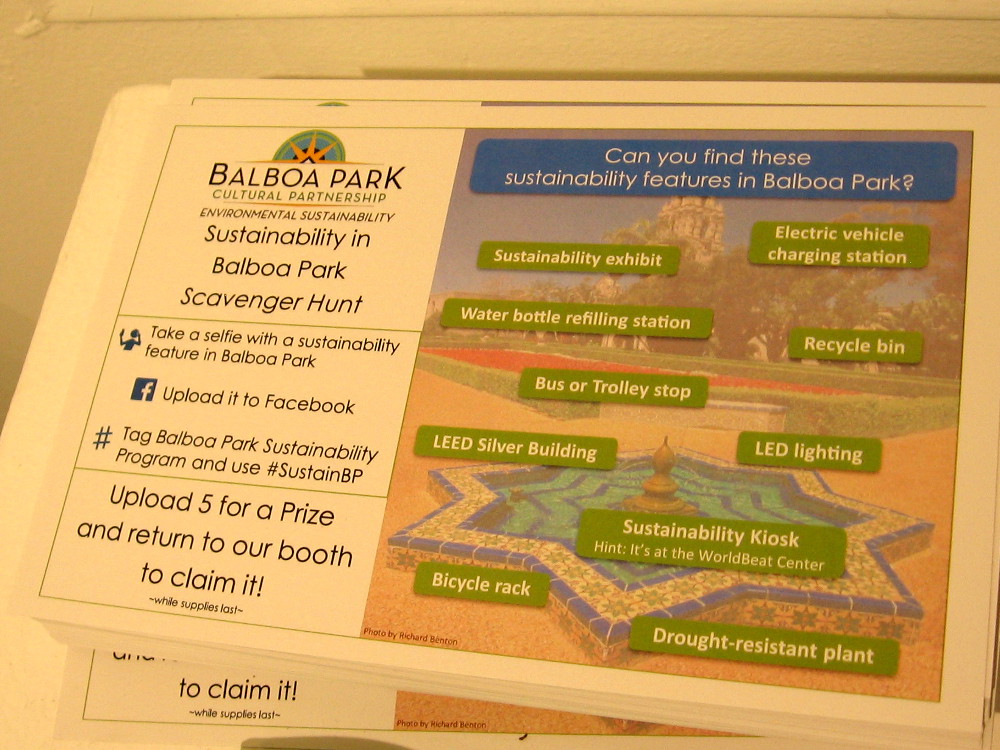
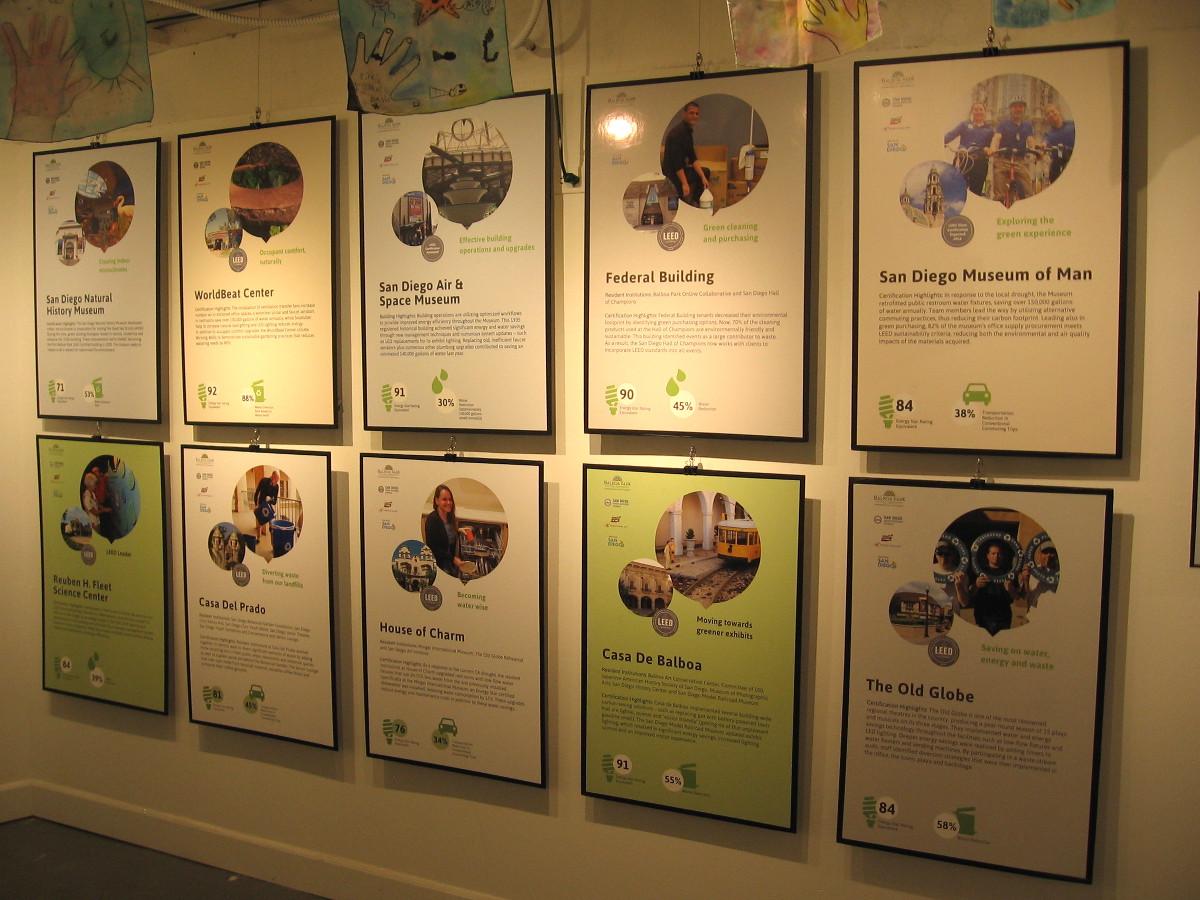
This small but information-packed exhibit discusses how various museums and buildings in Balboa Park are engaging in conservation efforts, by using solar panels, low-flow water fixtures, LED lighting, and the intelligent use of resources. The exhibit also encourages kids to think about the environment and pledge to protect it. Fun activities include making leaves for the Tree of Change and a Balboa Park scavenger hunt!
To read the signs, click the images and they will enlarge.
The Sustainability Studio will remain open to the public through December. Bring the kids! They can learn something new, create some fun art, and engage in the easy scavenger hunt and win a cool prize!
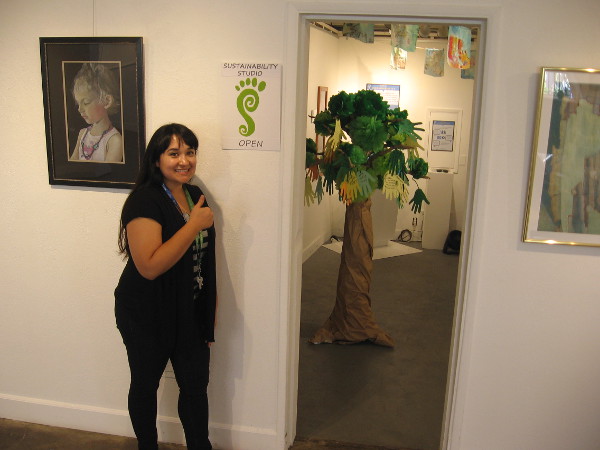
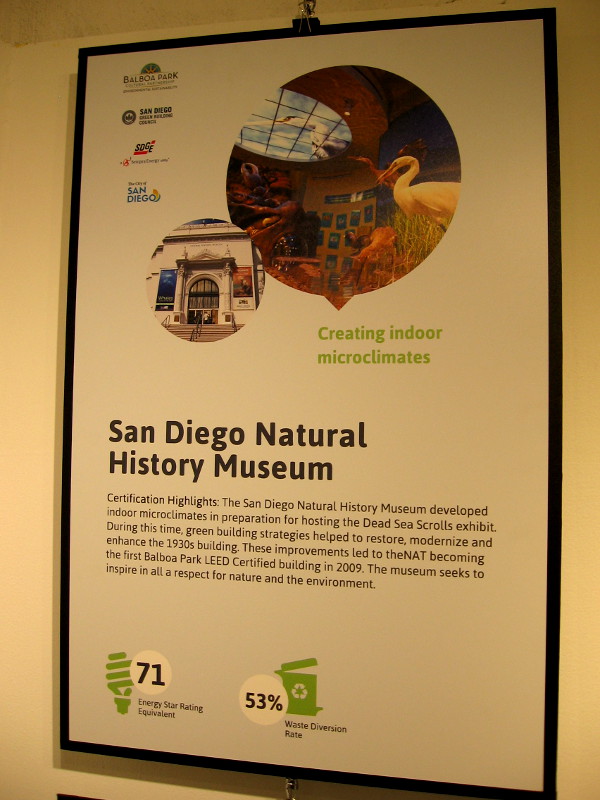
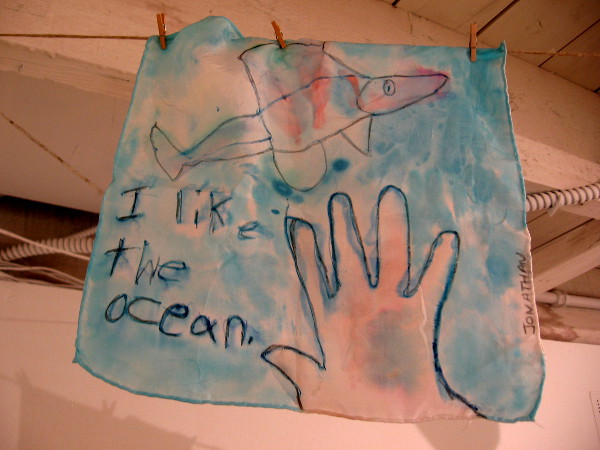
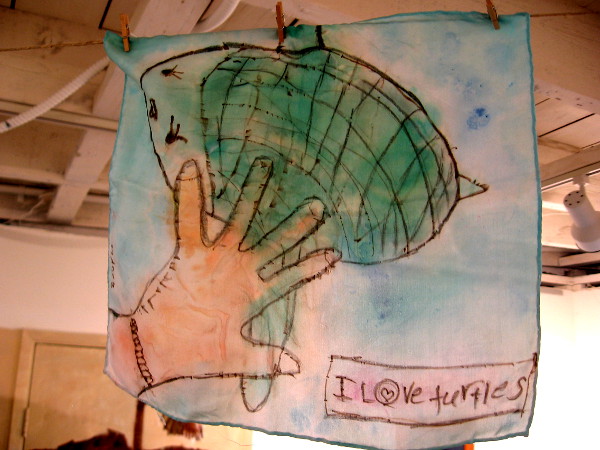
Rubi welcomes visitors into the Sustainability Studio, where one can learn about the conservation efforts of various organizations in Balboa Park.Signs and posters in the special exhibit raise awareness about various important environmental issues. Kids are provided with fun activities that promote activism and conservation.Sustainability refers to the conservation and efficient use of essential resources. Balboa Park’s efforts include solar panels, low-flow water fixtures and LED lighting.Kids visiting the exhibit are encouraged to make a leaf with a hand tracing, then inscribe it with an environmental pledge.Leaves on the Tree of Change. Kids pledge to ride bikes, turn off lights, recycle, use less water . . .A scavenger hunt is described on this flyer. Upload 5 selfies to Facebook that include a Balboa Park sustainability feature and claim a great prize!Various museums and buildings in Balboa Park are working to become more environmentally friendly.The San Diego Natural History Museum became the first Balboa Park LEED Certified building in 2009.The San Diego Air and Space Museum has increased energy efficiency and achieved significant water savings.Fun works of art produced by creative kids hang from the ceiling. I like the ocean!I love turtles!
I live in downtown San Diego and love to walk! You can follow Cool San Diego Sights via Facebook or Twitter!


























































 Cool San Diego Sights!