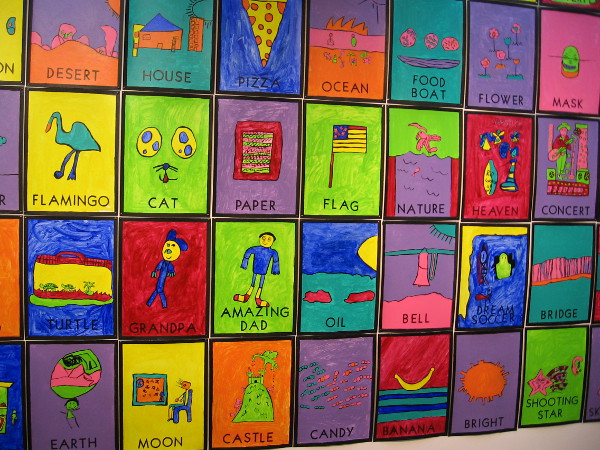
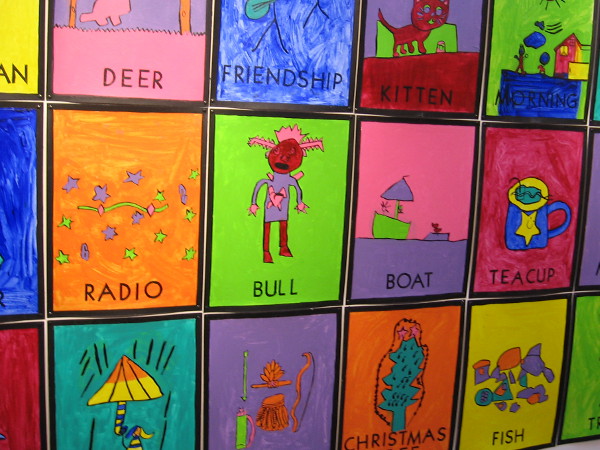
A wall inside the San Diego Art Institute features artwork by 3rd and 4th grade students at San Miguel Elementary School.
Check out some fun artwork at the San Diego Art Institute in Balboa Park!
Inside the museum-like gallery you’ll find a wall splashed with a large grid of images created by 3rd and 4th grade students at San Miguel Elementary School. The project is called Loteria Reinvented.
Loteria is a Mexican game of chance similar to bingo. Loteria utilizes a tabla–a random grid of pictures–and matching images that are drawn from a deck of cards. The students were introduced to the game’s history, then made versions of the game unique to San Miguel Elementary School. Each student reinterpreted an original Loteria card, drawing their version on a 17 by 23 inch panel!
The colorful wall can be seen at the San Diego Art Institute until late May. The student artwork will then be displayed at Museo El Trompo in Tijuana.
Each panel is a student’s reinterpretation of a Loteria card. Loteria is a Mexican game of chance similar to bingo.Cupcake. Dragon. Face. Glasses. Tree.Kitten. Fish. Teacup. Boat. Bull.Flag. Bridge. Dream Soccer. Lion. Shooting Star.Flower. Flying Girl.Visitor at San Diego Art Institute in Balboa Park checks out Loteria Reinvented!
UPDATE!
I’ve learned that this was a project of Collective Magpie. They were the artists who developed “Loteria Reinvented” as a 3-month residency at San Miguel Elementary School. They worked with the students to create this collaborative participatory art!
…
I live in downtown San Diego and love to walk around with my camera! You can follow Cool San Diego Sights via Facebook or Twitter!
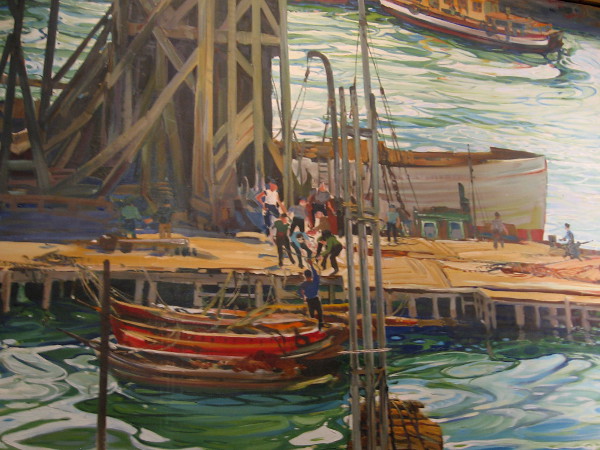
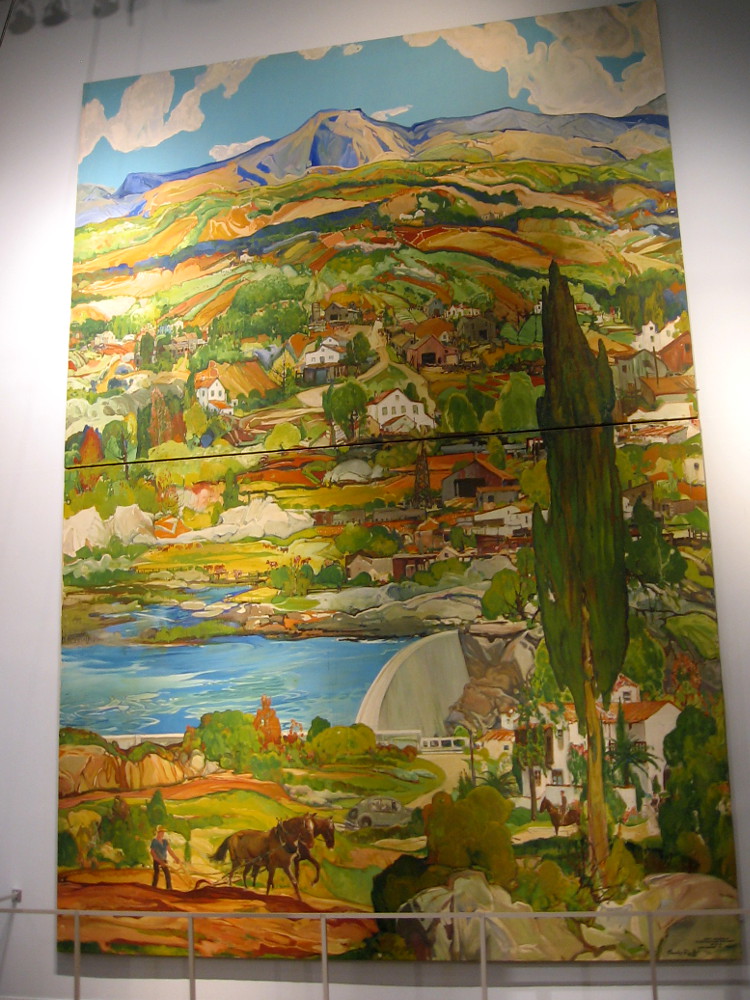
A small part of a large, dynamic painting of San Diego’s working waterfront.
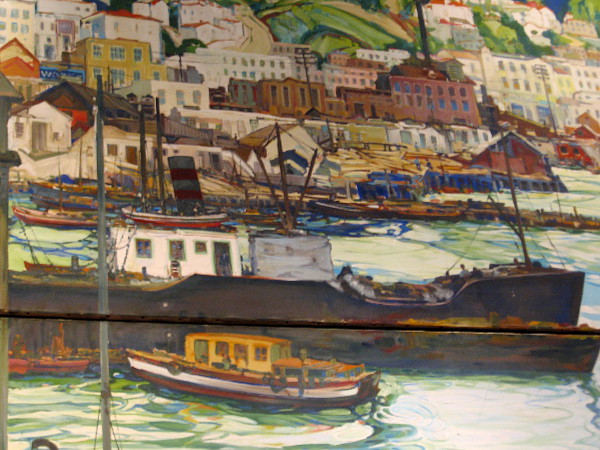
Yesterday I enjoyed a visit to the San Diego History Center in Balboa Park. In addition to checking out various fascinating exhibits, I paused for a moment to gaze upon two large murals on display that were painted in 1936 by Charles Reiffel.
Charles Reiffel was a renowned Post-Impressionist landscape painter who was sometimes referred to as the American Van Gogh. Looking at these truly impressive paintings, one can understand why! The viewer enters his color-splashed, dreamy world and simply wants to linger.
Two more wonderful Reiffel paintings can be seen in Balboa Park inside the Casa de Balboa. I have photos of them here!
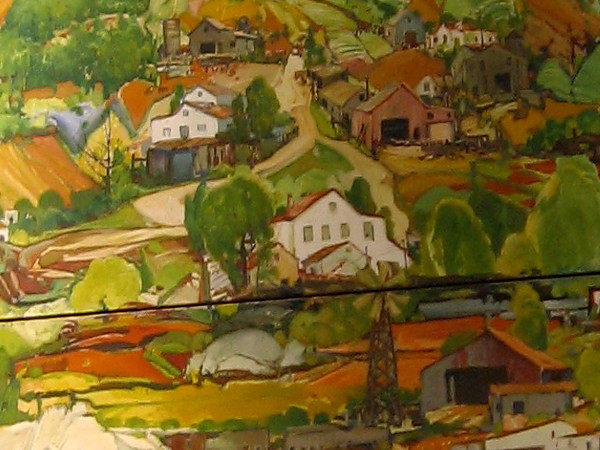
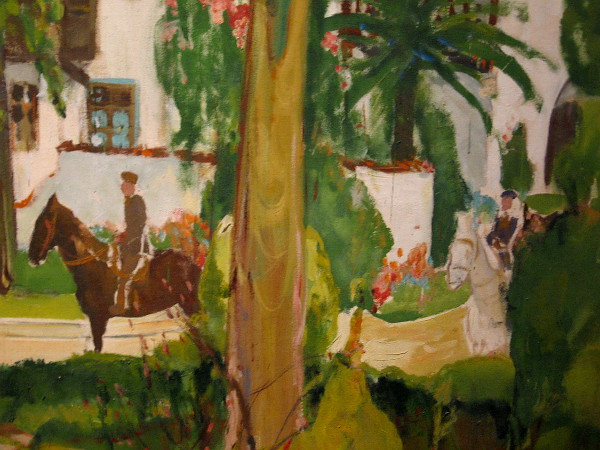
Charles Reiffel, San Diego Harbor, 1936. Oil on canvas. WPA mural inside the San Diego History Center that was originally commissioned for San Diego High School.This part of the fantastic oil painting depicts a pier and activity on San Diego Bay.Boats and buildings along San Diego’s colorful harbor.Charles Reiffel, San Diego Backcountry, 1936. Oil on canvas. WPA mural inside the San Diego History Center that was originally commissioned for San Diego High School.This part of the oil painting shows homes in the hills of San Diego.First introduced by Spanish explorers and missionaries, horse riding has become a popular activity in the country surrounding San Diego.A farmer plows a field somewhere in beautiful San Diego.
…
I live in downtown San Diego and love to walk around with my camera! You can follow Cool San Diego Sights via Facebook or Twitter!
You can easily explore Cool San Diego Sights by using the search box on my blog’s sidebar. Or click a tag! There are thousands upon thousands of fun photos for you to share and enjoy!
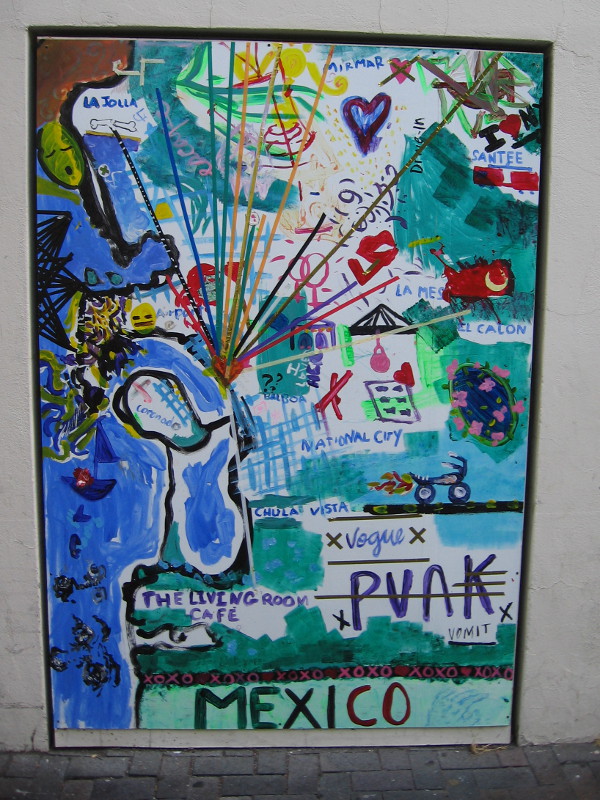
Art on a wall in the breezeway between the Museum of Contemporary Art San Diego and the Santa Fe Depot.
This morning I walked past the downtown location of the Museum of Contemporary Art San Diego. In a hurry to catch the trolley for work, I passed through the breezeway between the museum and the Santa Fe Depot. And look what I discovered! I was pleased to encounter some new art on a wall that I hadn’t seen before!
I didn’t see any plaques, signs or explanations. I assume this artwork originated at MCASD.
Take a look and interpret as you wish!
Someone was walking the opposite direction through the breezeway, toward Kettner Boulevard.Creatively drawn map includes parts of San Diego County and the Mexican border. A variety of messages can be seen and read.This panel of artwork contains bold strokes of color.Inside all of that color is a complex, detailed collage including abstract faces.
…
This blog now features thousands of photos around San Diego! Are you curious? There’s lots of cool stuff to check out!
Here’s the Cool San Diego Sights main page, where you can read the most current blog posts. If you’re using a small mobile device, click those three parallel lines up at the top–that opens up my website’s sidebar, where you’ll see the most popular posts, a search box, and more!
To enjoy future posts, you can also “like” Cool San Diego Sights on Facebook or follow me on Twitter.
Likeness of Agoston Haraszthy, first Sheriff of the County of San Diego. He was elected in 1850 and served one term. He was a pioneer when it came to growing grapes and became known as the Father of California Wine.
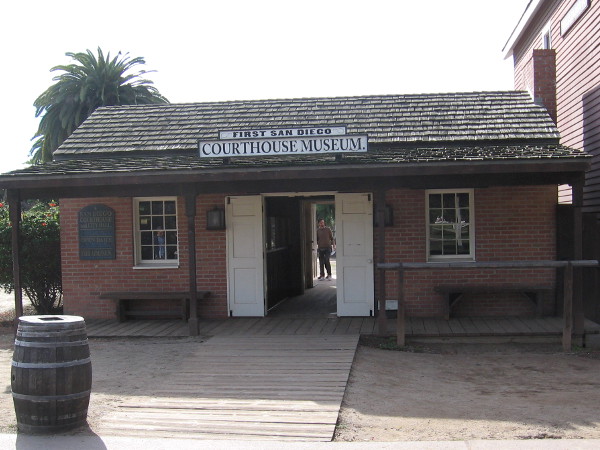
Visitors to Old Town San Diego State Historic Park can get a taste of the city’s early history when they step into the First San Diego Courthouse Museum.
One of many free attractions that can be found around Old Town’s central Plaza de Las Armas, the First San Diego Courthouse Museum is a recreation of our city’s first fired-brick structure, built in 1847 by members of the Mormon Battalion.
From 1847 to 1850 the original building served as the office of el Alcalde (Mexican mayor) of San Diego. Beginning in 1850 it contained the office of San Diego Mayor and City Clerk, and was used for meetings of the San Diego Common Council. The building was also used as a city and county courthouse and First District Court beginning in 1850.
Other uses for the building would include a meeting place for Masonic Lodge No. 35, headquarters of the U.S. Boundary Commission, office of the San Diego County Board of Supervisors, and a place of worship for San Diego’s first Protestant church.
Come with me inside the museum. Let’s have a peek at a few very small rooms and their fascinating exhibits.
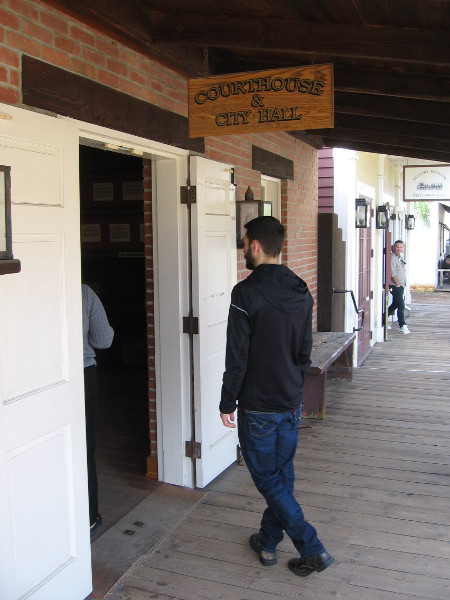
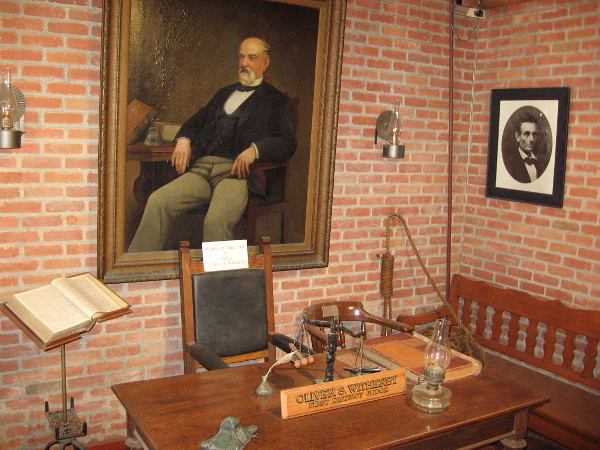
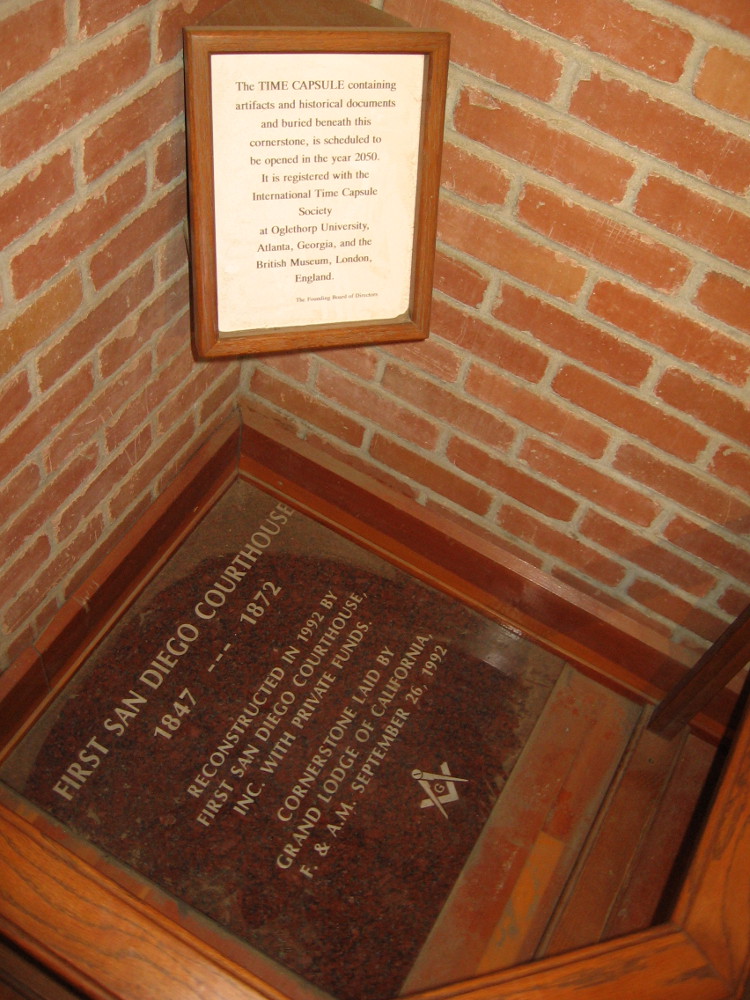
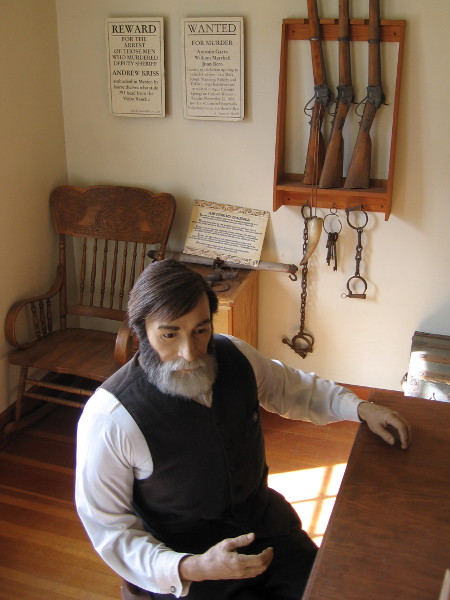
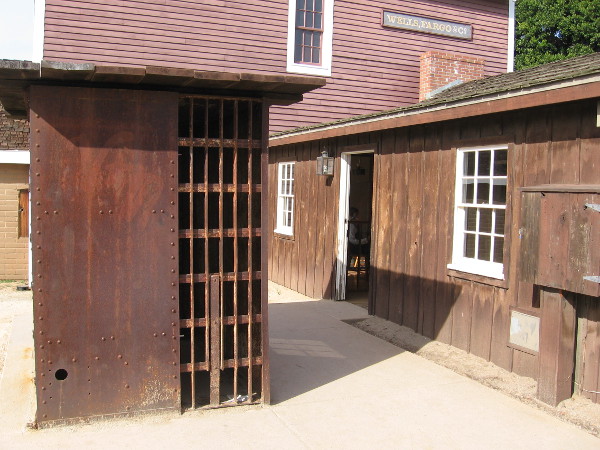
Photo of the modest brick First San Diego Courthouse Museum in Old Town, a recreation of San Diego’s first courthouse and city hall.In 1847, the Mormon Battalion built the first fired-brick structure in San Diego. For over two decades it would serve as courthouse.Visitor to Old Town San Diego State Historic Park enters a fascinating recreation of the city’s first courthouse and city hall.The portrait is of Oliver S. Witherby, He was appointed First District Judge in 1850. He served for 3 years. He is considered the Father of San Diego Jurisprudence.A time capsule lies under this cornerstone of the first San Diego courthouse. It is scheduled to be opened in 2050.A display case in San Diego’s first courthouse contains artifacts from the 19th century, including old pipe bowls and an antique lawyer’s briefcase.In 1872 a fire destroyed the San Diego courthouse. The fire burned a large part of Old Town’s business section.Sign explains the first California courts. The district court convened here, and acted as the highest court in the state.This room in the small building was the mayor’s office. Portraits of some early San Diego mayors are on the wall. Joshua H. Bean was San Diego’s first mayor, elected in 1850.A peek into the adjacent sheriff’s office. I see rifles, handcuffs and keys to the outdoor jail cell.This iron jail cell was the size and construction of the original courthouse jail from 1850.Break the law, and you might end up in here!A small museum depicting the first San Diego Courthouse and City Hall in Old Town is open free to the public every day.
…
I live in downtown San Diego and love to walk around with my camera! You can follow Cool San Diego Sights via Facebook or Twitter!
You can easily explore Cool San Diego Sights by using the search box on my blog’s sidebar. Or click a tag! There are thousands upon thousands of fun photos for you to share and enjoy!
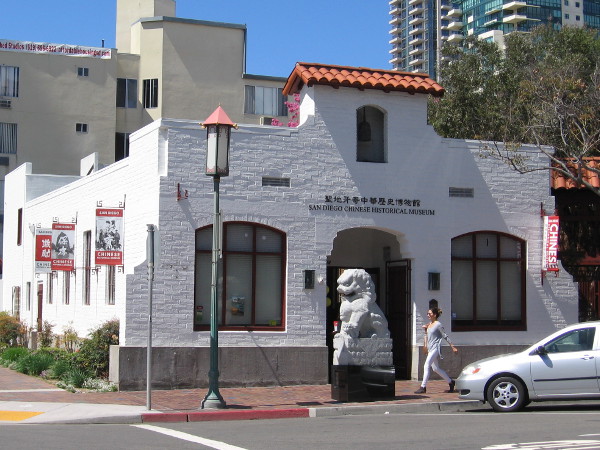
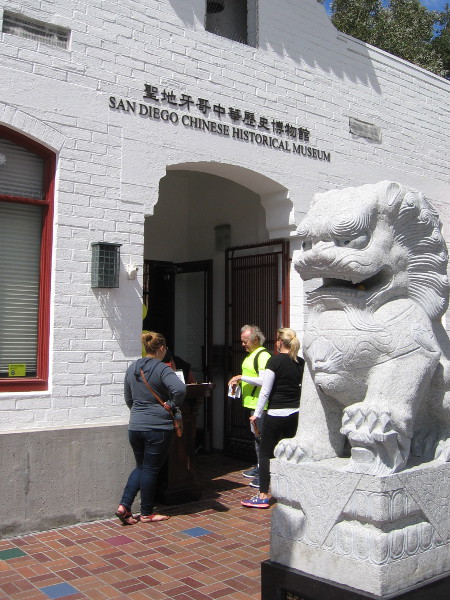
The San Diego Chinese Historical Museum is a cultural gem in downtown’s small Chinatown.
I recently enjoyed a visit to the San Diego Chinese Historical Museum. It’s located downtown in San Diego’s Asian Pacific Historic District. I was graciously allowed to take some photos of the indoor exhibits and the peaceful outdoor garden.
Built in 1927, this Mission Revival style building was originally the Chinese Community Church in San Diego’s Chinatown. It was saved from demolition in the 1990’s, and relocated to its present location.
The museum might be small, but it overflows with an important slice of San Diego history. Its many colorful artifacts representing Chinese culture will fascinate your eyes at every turn! I recommend a visit!
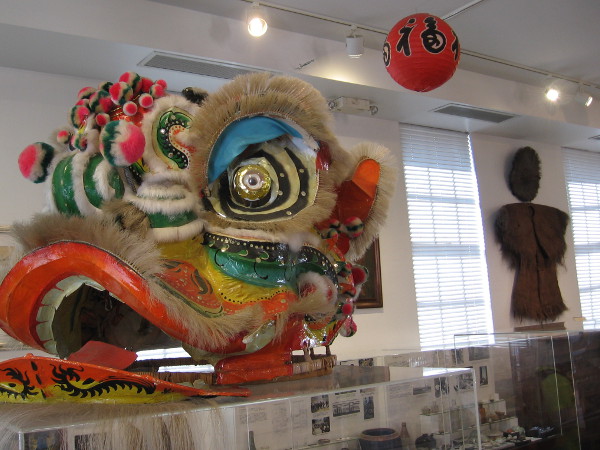
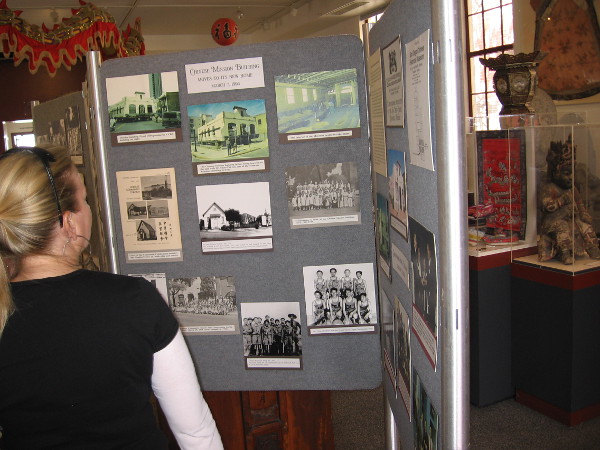
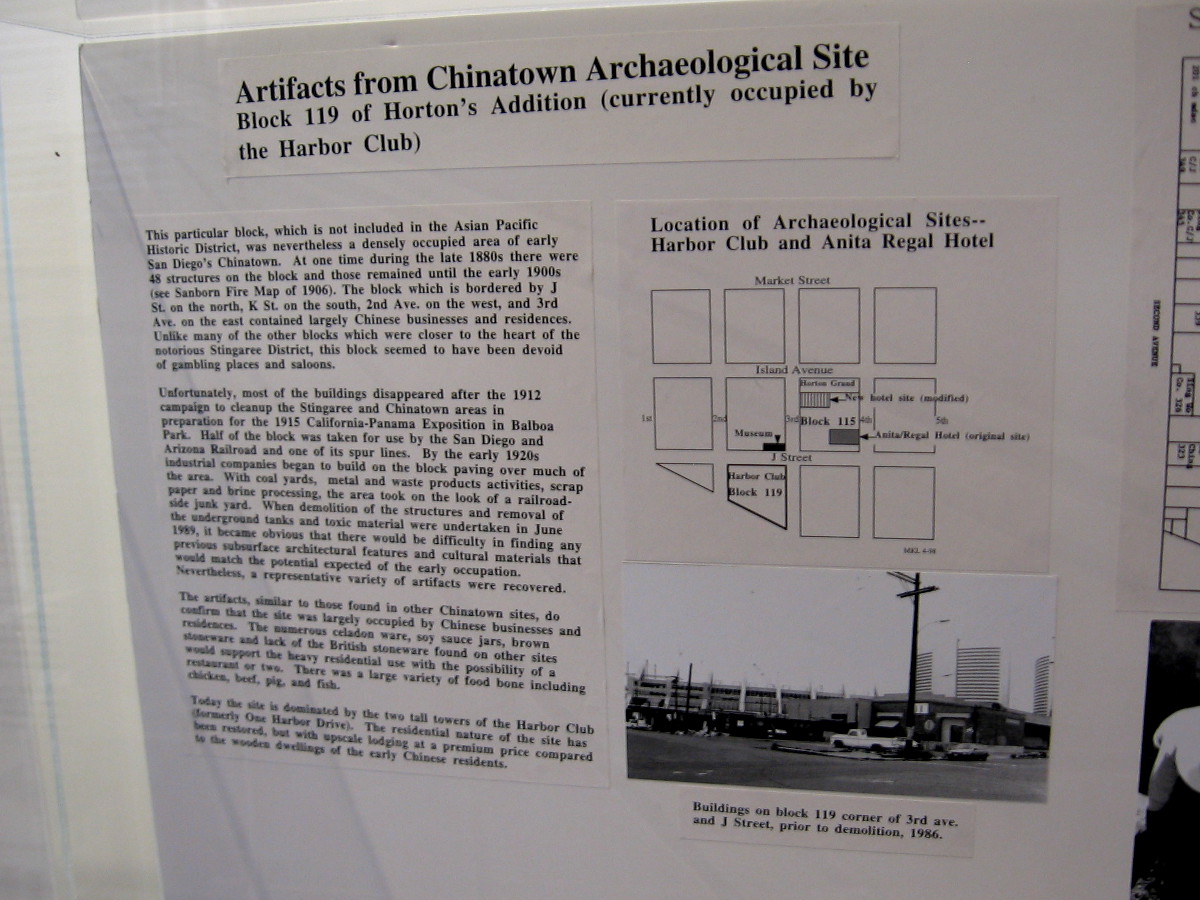
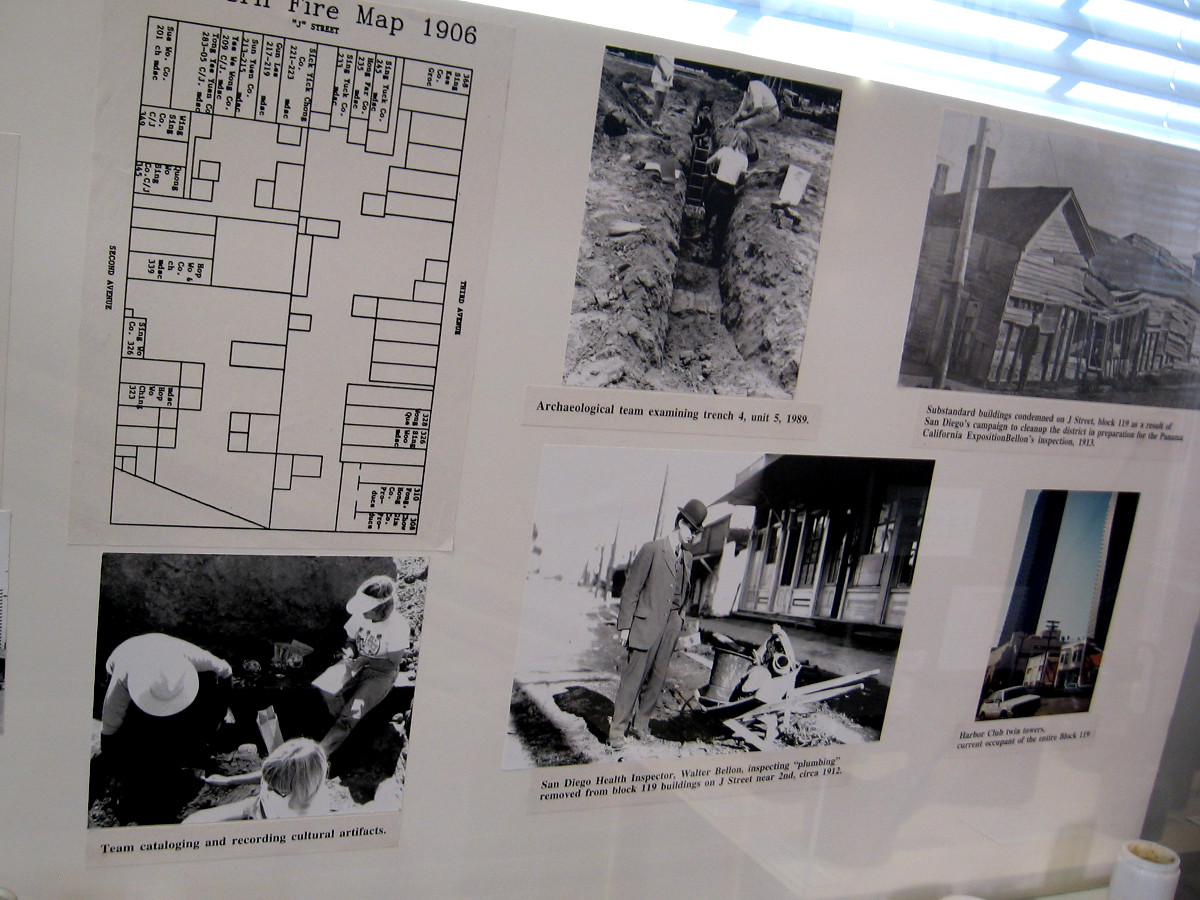
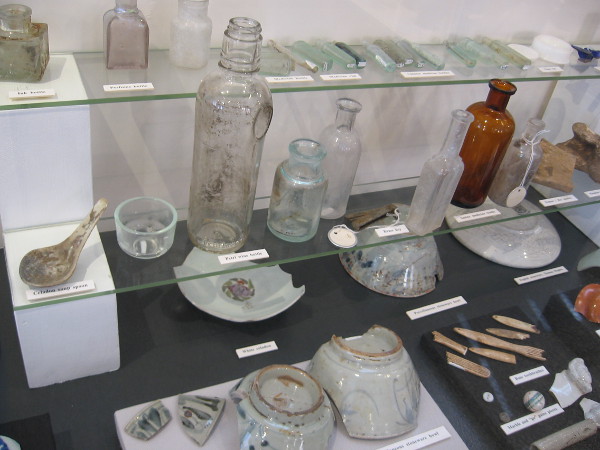
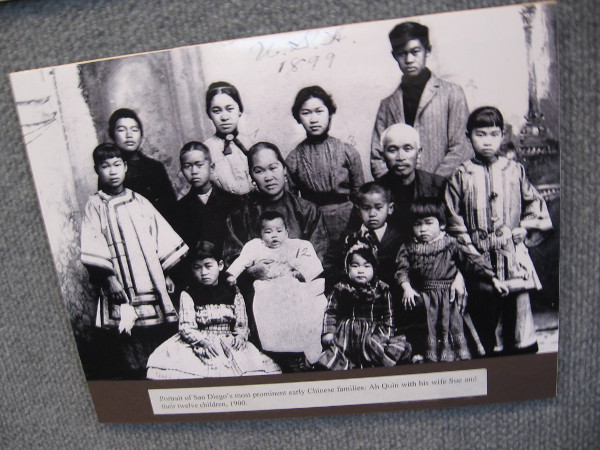
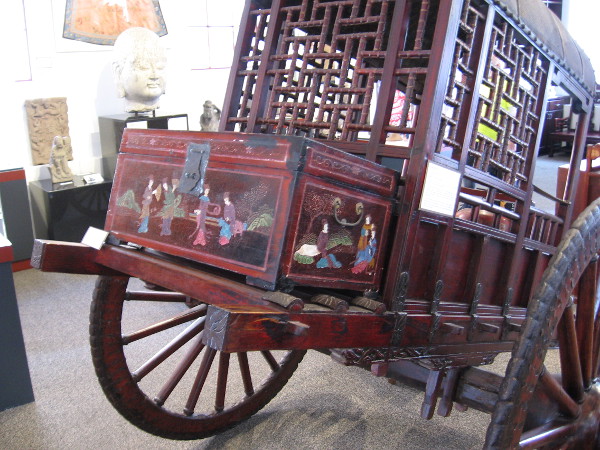
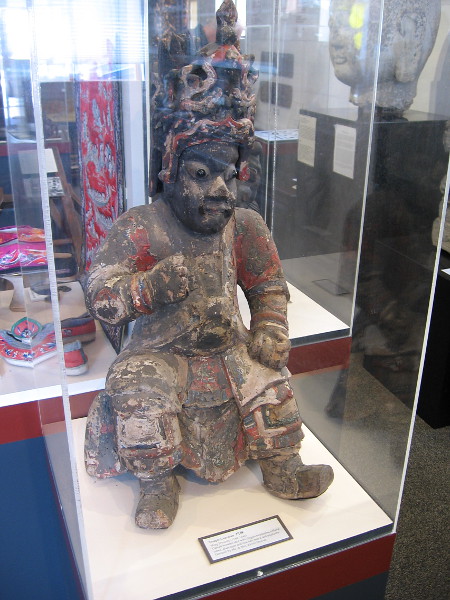
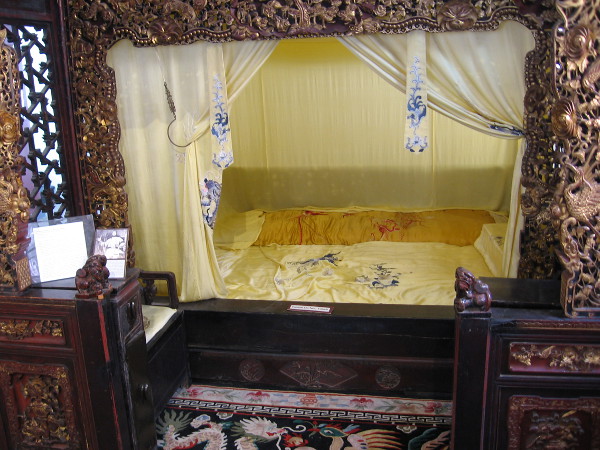
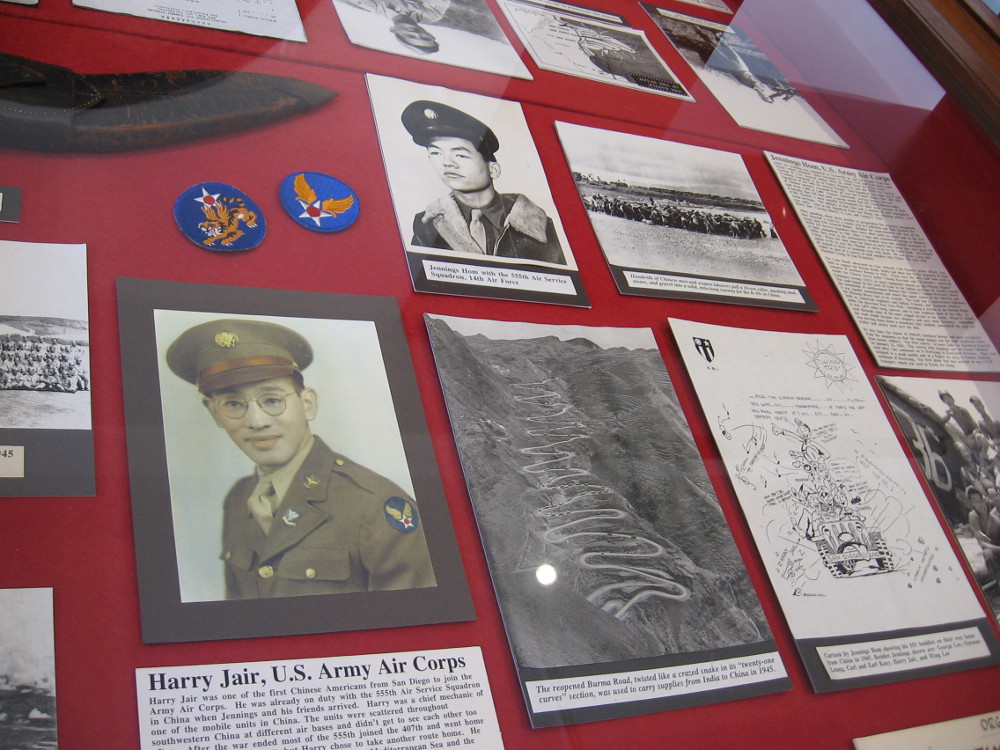
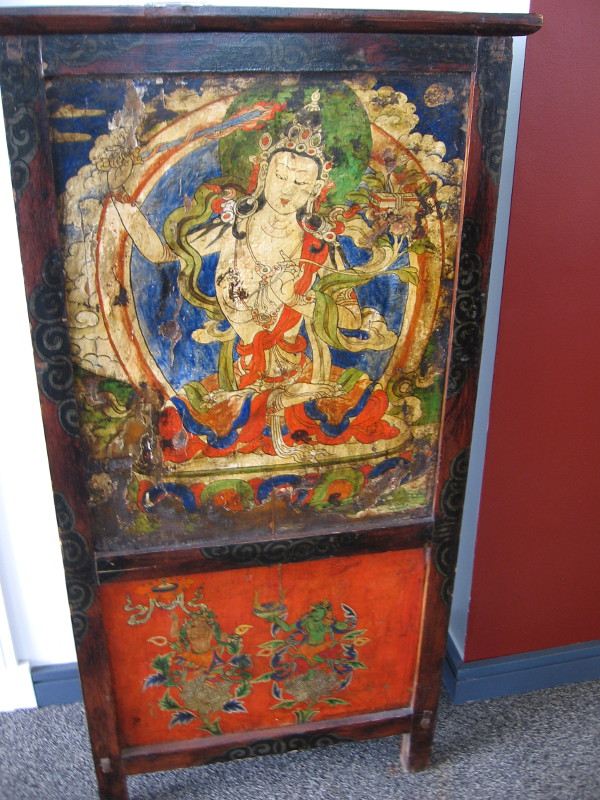
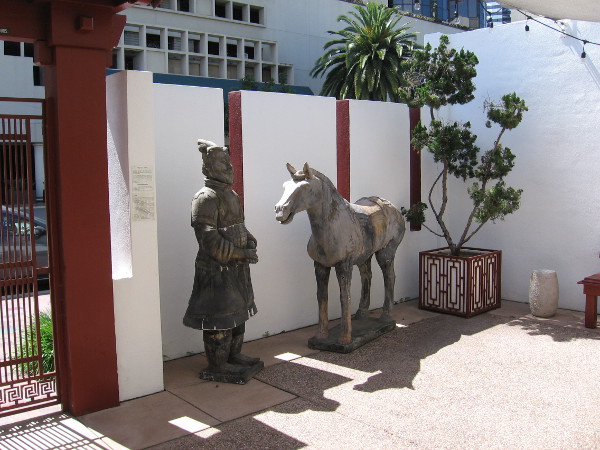
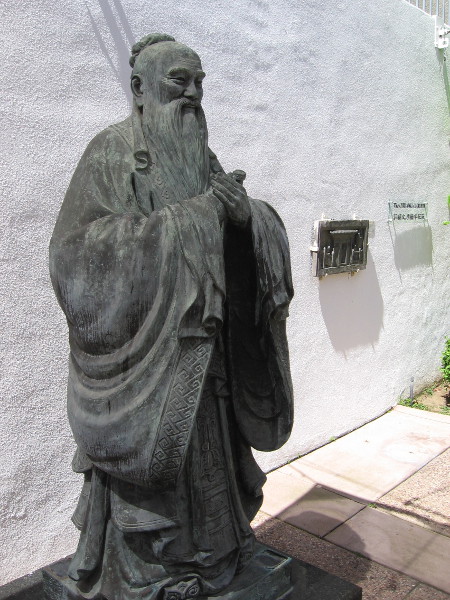
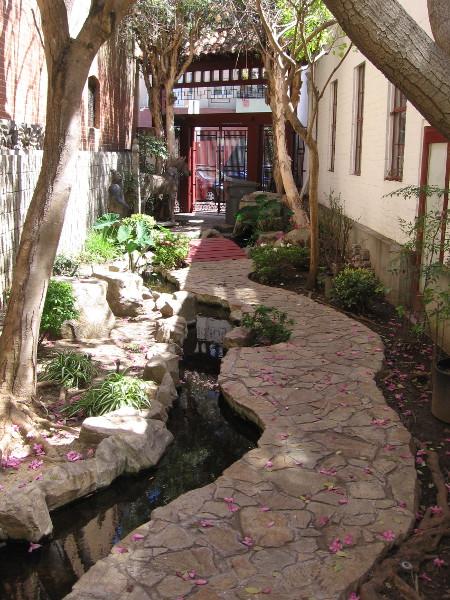
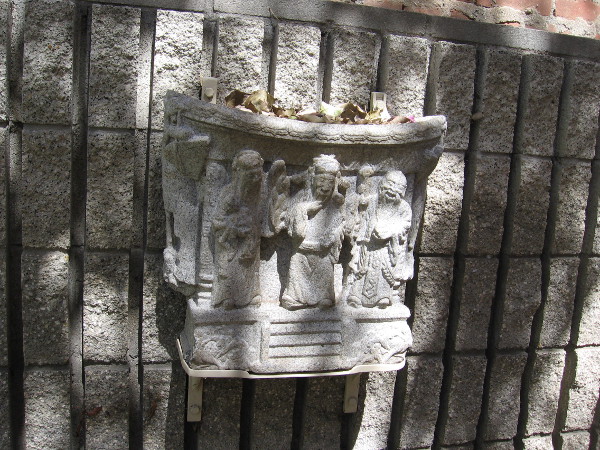
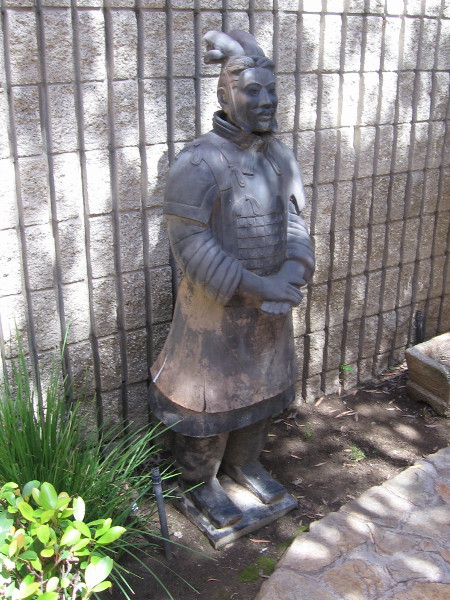
Visitors enter the San Diego Chinese Historical Museum during the San Diego Architectural Foundation’s OPEN HOUSE 2017.Many colorful sights await inside the small historical and cultural museum.Someone looks at old photos of San Diego and Chinese residents who helped to build and grow our city.The museum building was originally a mission, which was moved to its present location in San Diego’s Asian Pacific Historic District.Extensive archaeological work has been performed in this area, including the block south of the museum. Many artifacts from old Chinatown have been recovered.Old photos show archaeological digs in the neighborhood.Some of many artifacts recovered include glass bottles, ceramic bowls, utensils.Objects used in everyday life include a rubber ball, marbles, mahjong tile, Chinese dice and go pieces.Historical photograph of Chinese fishing junks anchored in San Diego Harbor around 1887.Portrait of the Ah Quin family, one of the most prominent, influential early San Diego Chinese families.Chinese laundries in San Diego utilized irons, counter bells, an abacus, and other useful objects.A bridal carriage from the late 1800s made of rosewood, found in Yun Cheng.The limestone Buddha head of the Northern Qi Dynasty, was originally carved into a cave in Shanxi Province.A temple guardian, from Ming Dynasty. The carved wooden idol has a dragon headdress, robes, glass eyes and a real hair beard and mustache.A palm raincoat, called so yee, worn by fishermen and farmers for centuries in China.Colorful woven art, and Chinese shoes and slippers for bound feet.Looking past the Buddha head at a fantastic, ornate alcove bed.The gilt red-lacquered alcove bed, or babu chuang, was made of southern elm in the Sichuan province in the late 19th century.Clay Chinese opera figurines represent different scenes. The characters are from local theatrical traditions, and utilize a complicated set of symbolic gestures.Display case contains memories of military service.Punching devices used for the Chinese Lottery of San Diego, which was popular in the red-light Stingaree District and Chinatown. Technically illegal, the lottery was tolerated by the authorities.A scene from the Romance of the Three Kingdoms. The elaborate wood carving depicts the battle that Zhao Yun fought to save the sun of Liu Bei.Manjusri altar table, from the late 19th century. Manjusri is the Bodhisattva of wisdom–he holds a sword that cuts through ignorance and illusion.Terracotta horse and general are replicas from the Terracotta Army unearthed at Xian, China. They occupy a corner of the museum’s outdoor Chuang Garden.Statue of Confucius, donated by the generosity of the Ministry of Education, Taiwan, Republic of China.A granite courtyard scene, 1800-1840. In this wall panel, three children representing prosperity, peer out at the street.A tranquil path runs beside water along the north side of the San Diego Chinese Historical Museum.Ornamental carving along the peaceful path.Another warrior statue in the cool shade.Behind the horse is a tombstone made in 1796, the inaugural year of the Jia Qing Emperor. It lacks in inscription, perhaps expressing a power that no words can describe.
…
This blog now features thousands of photos around San Diego! Are you curious? There’s lots of cool stuff to check out!
Here’s the Cool San Diego Sights main page, where you can read the most current blog posts. If you’re using a small mobile device, click those three parallel lines up at the top–that opens up my website’s sidebar, where you’ll see the most popular posts, a search box, and more!
To enjoy future posts, you can also “like” Cool San Diego Sights on Facebook or follow me on Twitter.
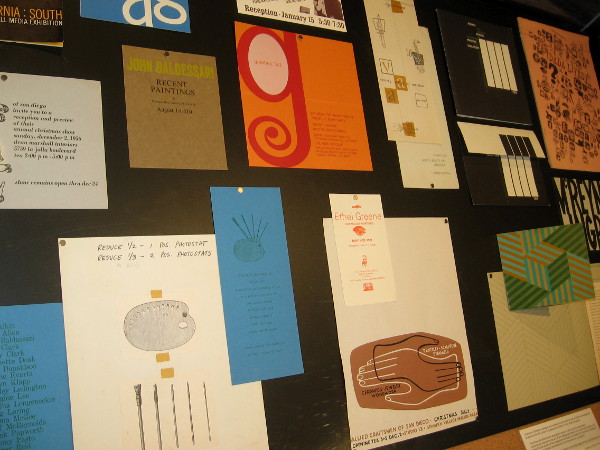
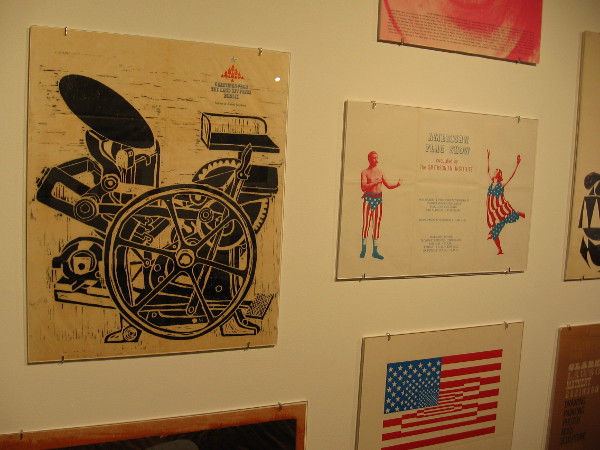
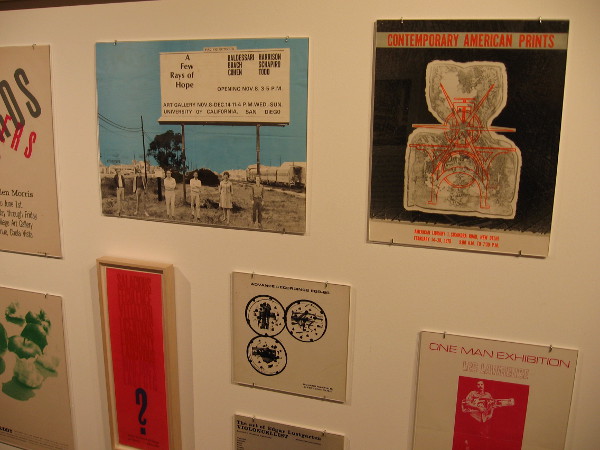
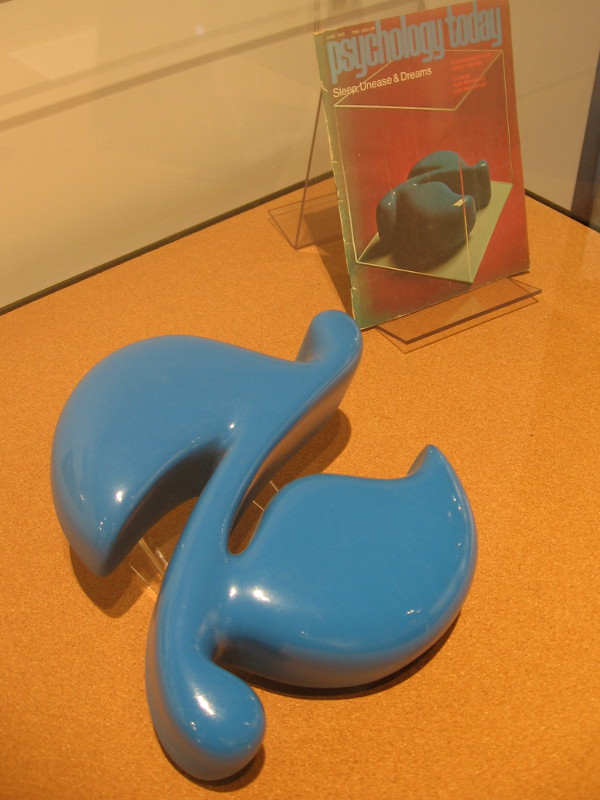
A special exhibit at the public library in downtown San Diego showcases modern graphic design from the mid-twentieth century.
A fascinating exhibition at the San Diego Central Library will be running through May 7, 2017. You can find it on the 9th floor in the library’s Art Gallery. The exhibition, titled Print Culture: Midcentury Modern Graphic Design in San Diego, concerns artistic expression and the evolution of printing technology during the mid-20th century. Emphasis is placed on San Diego-based independent artists and local businesses, particularly defense contractors.
Artists, graphic designers, printers and those who enjoy learning about San Diego’s history and culture really should pay a visit to the gallery. Here are some photos which provide a taste of what you’ll see.
Print Culture: Midcentury Modern Graphic Design in San Diego is an exhibition now showing through May 7, 2017. The work of local designers, illustrators and artists is on display.Many images created locally for various purposes are shown in the gallery. A uniquely bold style of graphic design emerged in the 1950’s and evolved over the ensuing decades.I was interested to see an image of Donal Hord’s sculpture Aztec. A few days ago I posted several photographs that I took of this iconic work of art.More examples of graphic design from this sometimes overlooked period. Many creative artists produced their own printed material.The defense industry in San Diego produced many posters, drawings, charts, presentations and signs in the mid-20th century. Printing machines evolved which facilitated their production.More interesting examples of printed artwork and ephemera.Small-scale press operations created many types of colorful printed material, including greeting cards.A display case in the Central Library’s gallery contains more unique examples of printed art from the mid-twentieth century.This special exhibition contains many pieces that one can study and admire.Colorful posters, invitations and cards were popular in the mid-1900’s.Graphics designed specifically for fine art galleries are also on display.Some graphics produced by San Diego-based companies for the military.The U.S. Navy’s large presence in San Diego required the production of many pamphlets, charts and other printed documents.One display explains how physical art was first conceptualized and created before finally being printed on a magazine cover.A fascinating look at another era’s artistic expression through graphic design. It’s apparent that our culture has been greatly influenced by the evolution of printing technology.
…
Writing is a struggle. After revising my latest short story over and over again, I believe that I finally have it right. This story is so short you’ll be able to read it in less than one minute! It’s called The Piano Player Sat Down.
A shiny PT-22 military trainer aircraft from the World War II era is about to be towed from the San Diego Air and Space Museum to their annex at Gillespie Field!
Another unexpected cool sight! I was walking around the San Diego Air and Space Museum in Balboa Park this morning when I spied a mysterious airplane wing being carried into the rear of the museum’s historic Ford Building! What was it?
I spoke to a nice guy overseeing the movement of two museum aircraft and found out!
The museum’s Boeing P-26 “Peashooter” had just returned from a year-long stint in Seattle, where it was featured in the Boeing Centennial. And to make room, a vintage PT-22 military trainer was being sent to Gillespie Field. The San Diego Air and Space Museum has an annex at Gillespie Field, which I suppose I’ll have to visit someday. (Yes, it was a PT-22 that Harrison Ford was flying when he crashed a couple years ago at a golf course!)
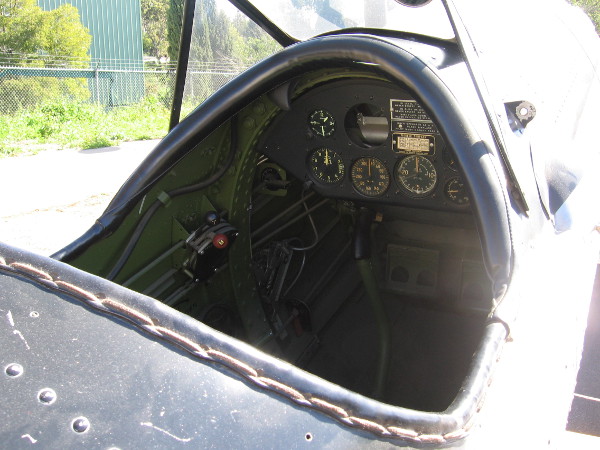
As I walked through Balboa Park, I spied a wing vanishing into the San Diego Air and Space Museum. It belongs to a Boeing P-26 “Peashooter”, which was on loan for a year in Seattle for the Boeing Centennial.These yellow wings in the San Diego Air and Space Museum truck are heading to Gillespie Field in East County. In preparation for land transport, they have been detached from a PT-22 airplane.The PT-22 is almost ready to be towed. The plane was gleaming in the sunlight and I had to take a closer look.Photo of the cockpit of the San Diego Air and Space Museum’s PT-22.A cool, unexpected sight in the parking lot behind the San Diego Air and Space Museum!
…
I live in downtown San Diego and love to walk around with my camera! You can follow Cool San Diego Sights via Facebook or Twitter!
You can easily explore Cool San Diego Sights by using the search box on my blog’s sidebar. Or click a tag! There are thousands upon thousands of fun photos for you to share and enjoy!
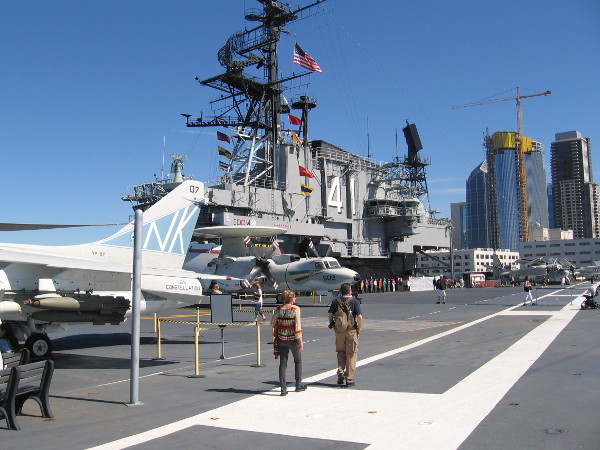
A self-guided tour of the USS Midway Museum often includes aircraft that are undergoing maintenance or restoration. Three helicopter rotors are being reconstructed here.
I love visiting the USS Midway Museum because there’s always something new to see. During my visit today I was intrigued by some of the aircraft restoration work that I observed.
The many different airplane and helicopter exhibits, representing different eras of naval aviation history, are already in pretty good condition when they are lifted aboard the aircraft carrier museum, but there’s always work to do. Time and the elements take their toll.
The USS Midway Museum is fortunate to have a small army (or should I say fleet) of skilled and knowledgeable volunteers. Many are retired Navy, with first-hand experience of the history and technical aspects of these aircraft. All are very friendly and welcome questions from museum visitors!
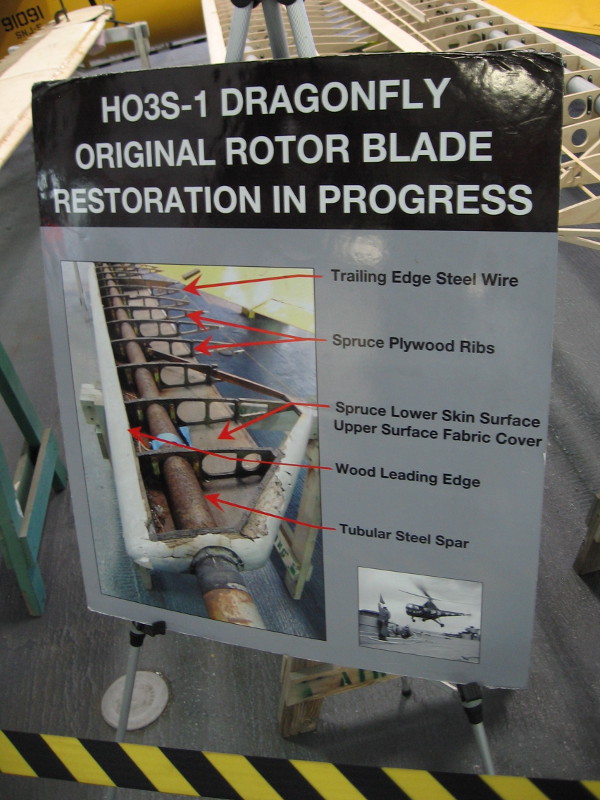
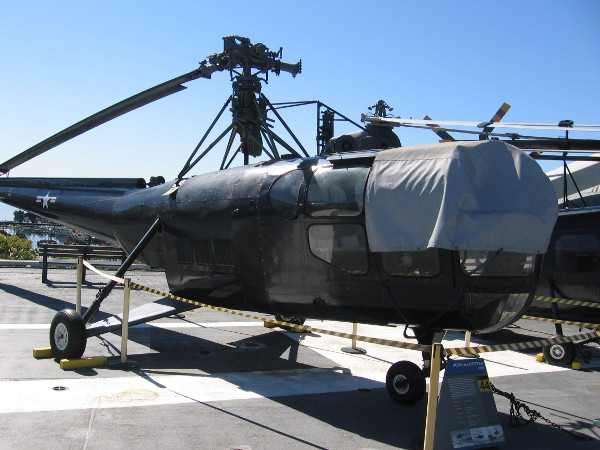
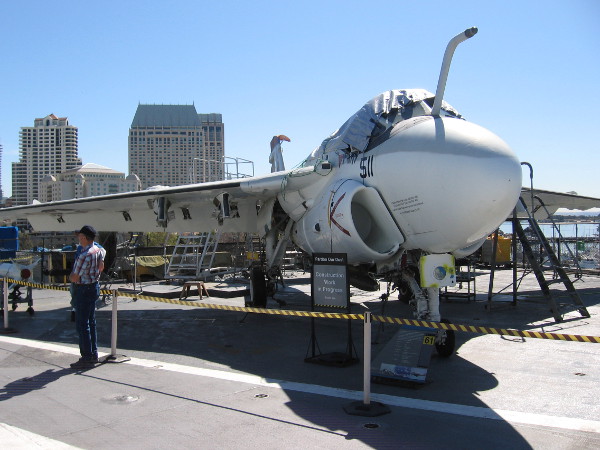
Sign on hangar deck of USS Midway describes the HO3S-1 Dragonfly’s original rotor blade restoration, which is in progress.A closer look at the spruce plywood ribs, which are spaced on the tubular steel spar.This rotor is a bit further along. It appears part of the rotor’s new surface is being cemented in place.Here’s the HO3S-1 Dragonfly helicopter up on the flight deck of USS Midway. Notice three of four rotors are missing.The aptly named Dragonfly began service in 1946. You might recognize the design if you’ve seen the film The Bridges at Toko-Ri.Part of the Dragonfly’s engine is exposed beneath the rotors.This USS Midway volunteer is grinding away rust from the museum’s A-6 Intruder bomber. He said it’s the type of work that is done between larger projects.The tail of the A-6 Intruder is being restored to look like new, too.Many skilled volunteers at the USS Midway Museum work continuously to keep the many aircraft exhibits in great condition!
…
I live in downtown San Diego and love to walk around with my camera! You can follow Cool San Diego Sights via Facebook or Twitter!
You can easily explore Cool San Diego Sights by using the search box on my blog’s sidebar. Or click a tag! There are thousands upon thousands of interesting photos for you to enjoy!
A kid visiting the USS Midway Museum with family checks out the dizzying view from the end of one of the aircraft carrier’s projecting horns.
This morning I paid a visit to San Diego’s amazing USS Midway Museum.
During my short visit I ascended to the flight deck and walked around a bit. I couldn’t resist walking out to the end of one of the aircraft carrier’s bridle-arrest horns. The two downward sloping projections at the bow of the USS Midway allow visitors to stand high over San Diego Bay, with wide views across the water.
I took some photos!
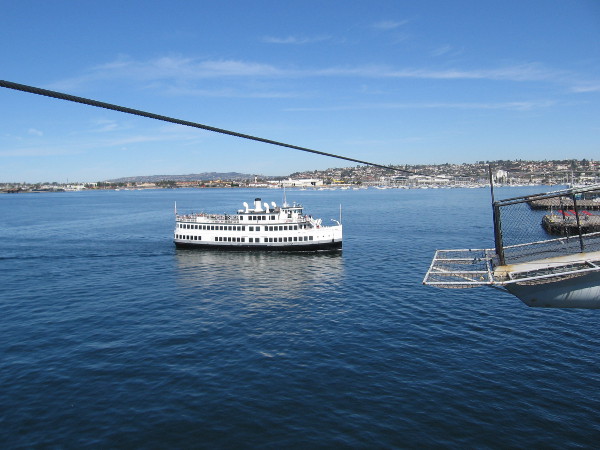
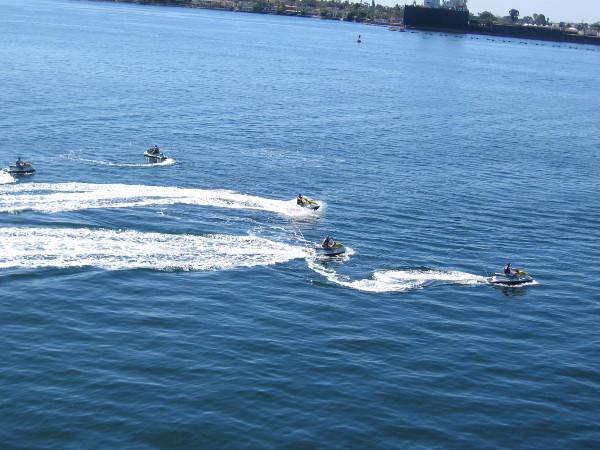
Sign at bow of USS Midway aircraft carrier explains the function of bridle-arrest horns. They were used until the 1980’s. They are a vestige of an earlier era in carrier aviation.People walk down one horn for an amazing view of San Diego Bay.The Admiral Hornblower, beyond the second bridle-arrest horn, is heading in toward the Embarcadero after completing a harbor tour.And here comes the Spirit of San Diego right behind! Now I’m standing at the end of one horn, which hangs high over the blue water below!Five people were jetting around the bay on some fun personal watercraft.Photo aiming south from the end of the horn shows the Fish Market Restaurant, Tuna Harbor, a bit of Seaport Village and the San Diego–Coronado Bridge.A helicopter passes overhead. Active aircraft are a frequent sight near the four large Navy bases on San Diego Bay: Naval Base San Diego, Naval Air Station North Island, Naval Amphibious Base Coronado and Naval Base Point Loma.Looking back up toward the flight deck of the USS Midway. Some visitors are reading signs which describe the history of naval aviation–a history that originated at North Island across San Diego Bay.Looking down through safety nets fringing the carrier at sparkling water far below.After drinking in the incredible views, I headed back onto the flight deck.I noticed some school kids learning about the Midway from a docent.A look from the bow of the USS Midway back toward the aircraft carrier’s Island superstructure and downtown San Diego skyscrapers.Someone else walks out to the end of one horn. Across the water at North Island I see the active aircraft carrier USS Theodore Roosevelt (CVN-71).
…
I live in downtown San Diego and love to walk around with my camera! You can follow Cool San Diego Sights via Facebook or Twitter!
If victory is your destination, make excellence your governing value and perform the work necessary to become great. Wisdom on a plaque outside Olympic archery training range in Chula Vista.
It’s not often you get to visit where Olympic athletes train!
Today, my favorite part of the Celebration of Champions event at the Chula Vista Elite Athlete Training Center was checking out where Olympic archers hone their skills. There was more to see than the immense indoor and outdoor archery ranges. My eyes and mind were captivated by a large museum-like display of the history of archery at the Olympic Games.
Please enjoy the following photos. To learn more, read the captions!
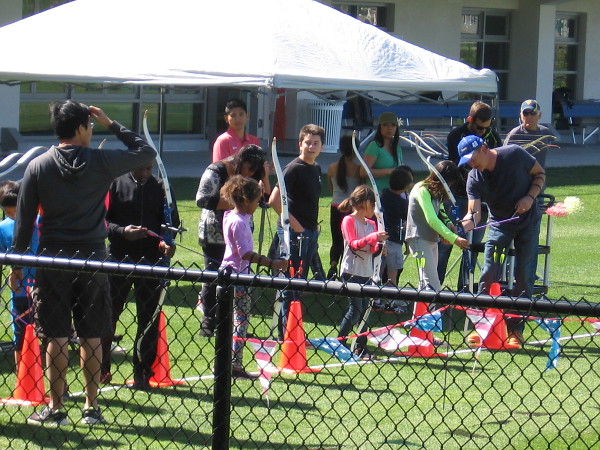
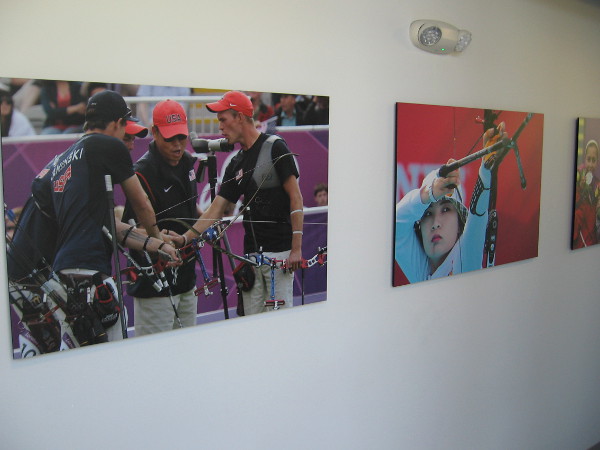
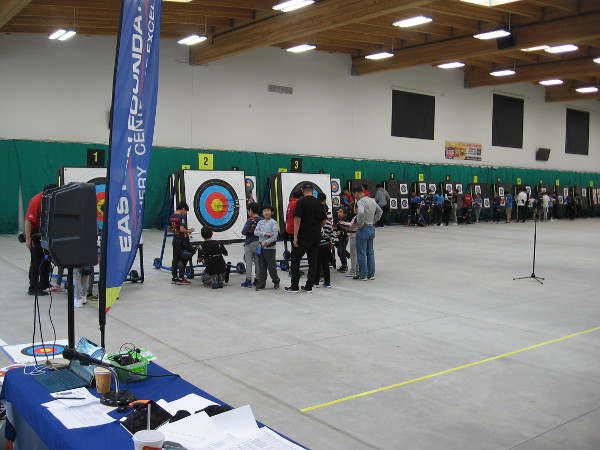
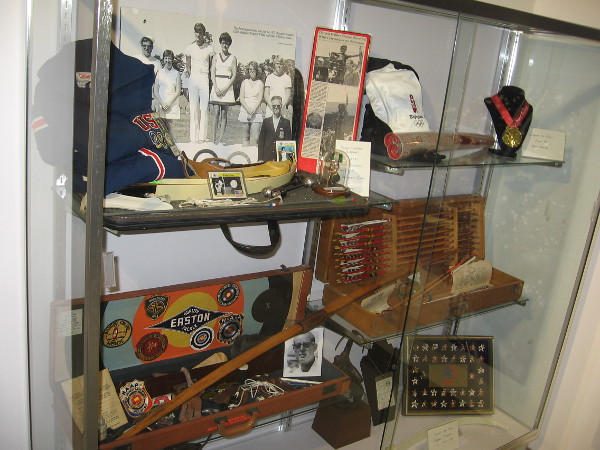
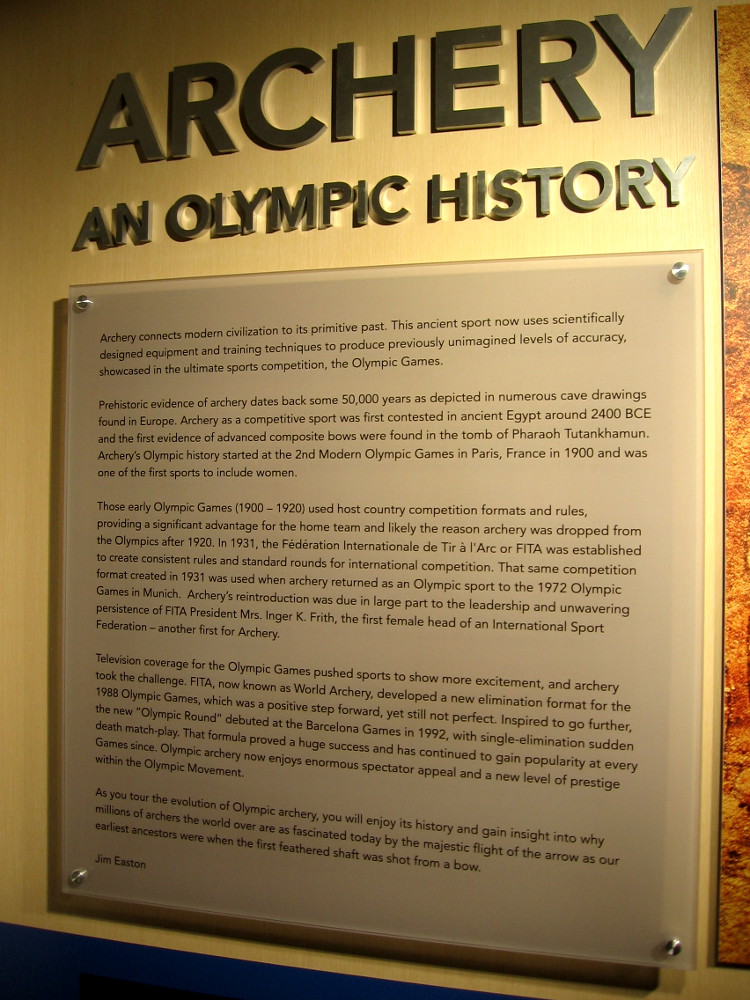
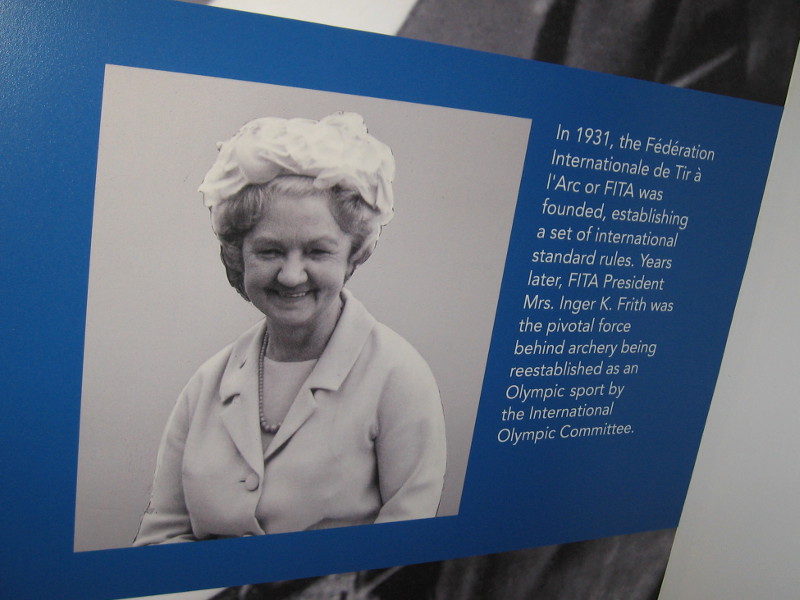
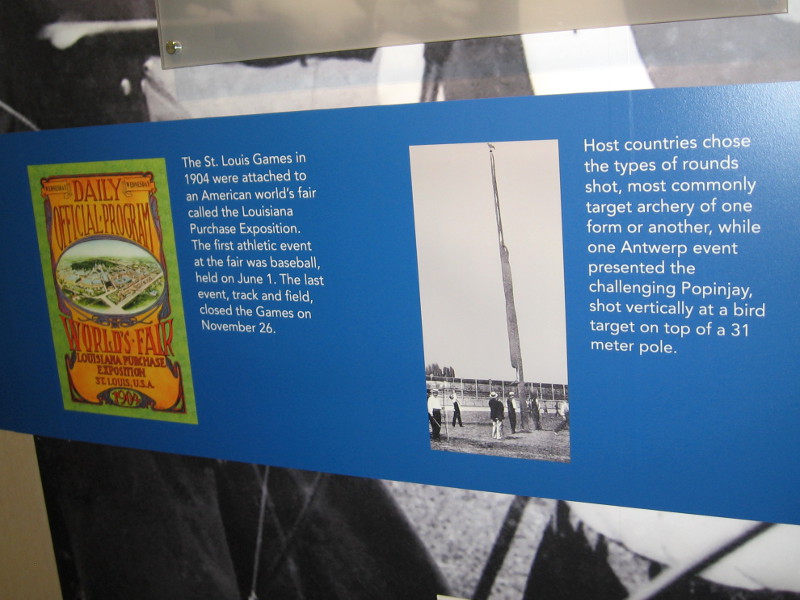
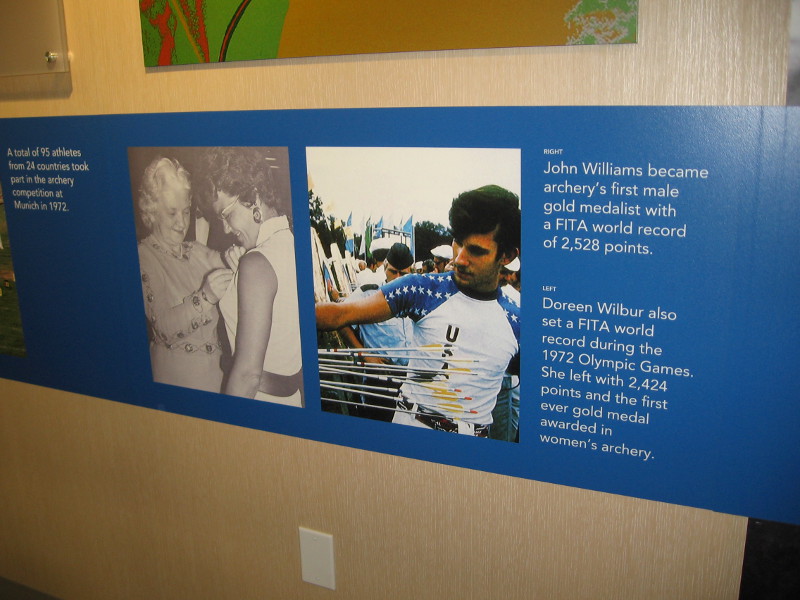
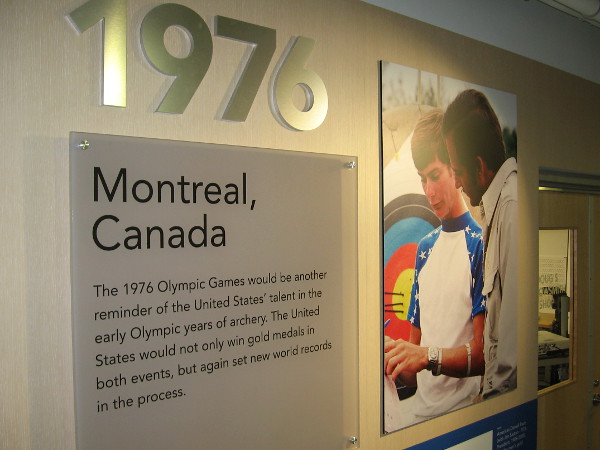
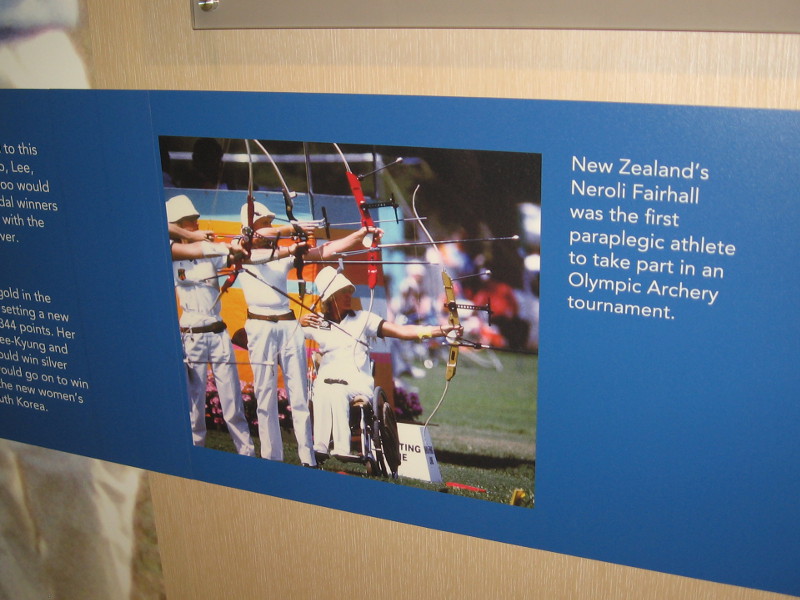
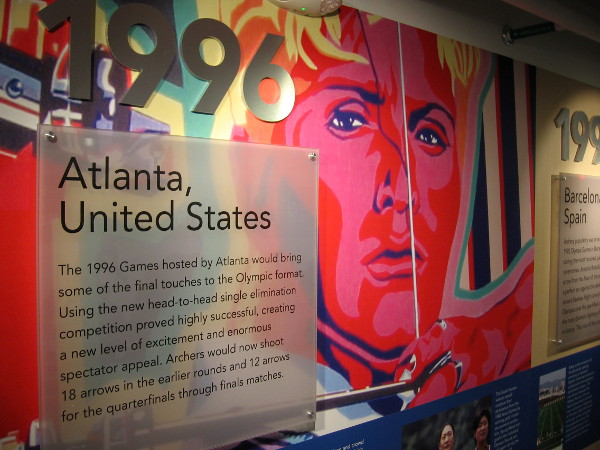
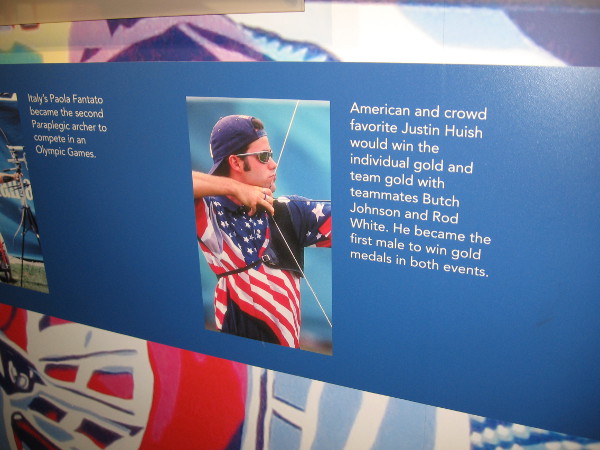
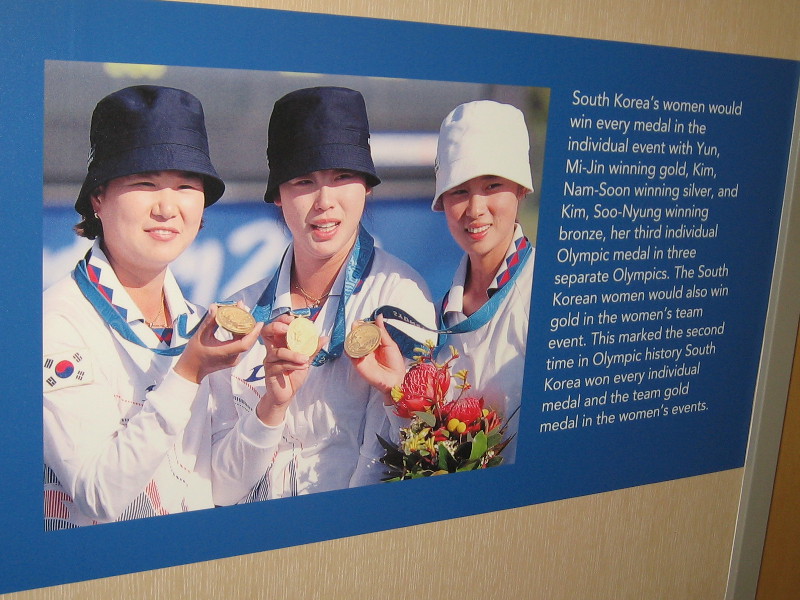
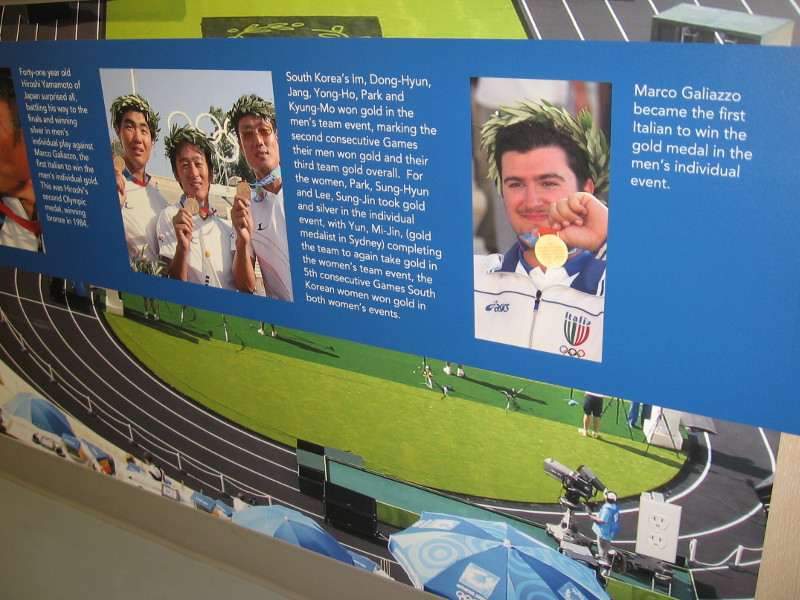
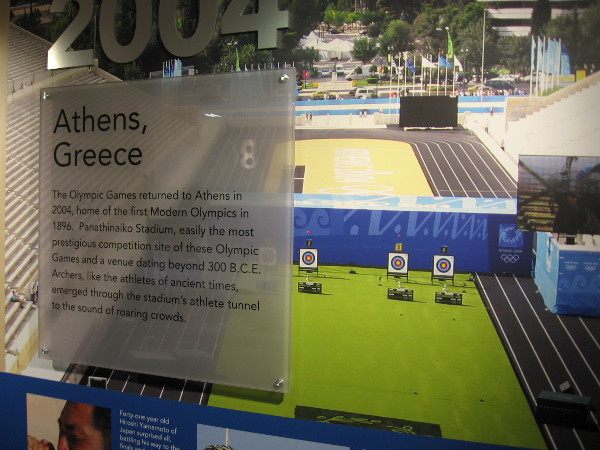
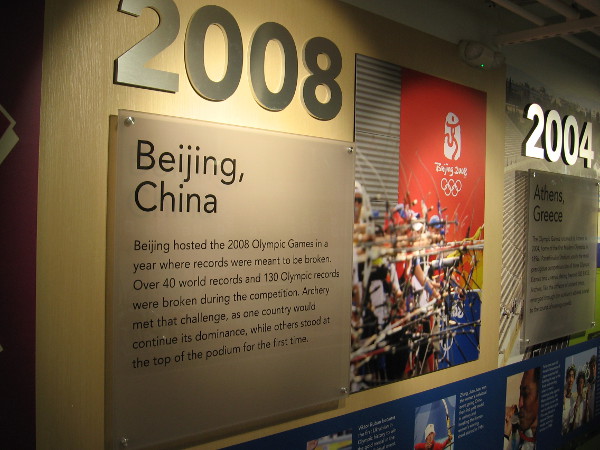
A special public event is held at the Easton Foundations Archery Center of Excellence, part of the U.S. Olympic Training Center, which is now called the Chula Vista Elite Athlete Training Center.Kids see what Olympic-level archery is like during the Celebration of Champions event.Outdoor archery targets in a row. Some of the world’s greatest athletes take aim at these!Words inside the archery building at the Chula Vista Elite Athlete Training Center. To be disciplined athletes of great character; challenging ourselves to achieve excellence in the pursuit of glory.Photos on the wall inside the front door show Olympic archers together and in competition.Bows await inside the immense indoor archery range at the Chula Vista Elite Athlete Training Center.Participants and spectators against the back wall of the indoor archery range.Youth learning archery skills check arrow positions on targets after a period of shooting.An Easton arrow flying through the air lit the Olympic flame at the 1992 Summer Games.A display case shows artifacts relating to the history of organized archery and Easton bows and arrows.Along a corridor running the length of the Archery Center of Excellence are museum-like displays concerning archery during past Olympic Games. (Click image to enlarge.)The first modern Olympic Games took place in Athens, Greece in 1896. Archery was featured in some of the early years.Photo of FITA President Mrs. Inger K. Frith who helped archery to become reestablished as an Olympic sport by the International Olympic Committee.Early year displays include a 1904 program for the Louisiana Purchase Exposition and an early version of archery competition where the bird target sat atop a 31 meter pole.As one proceeds down the hallway, time moves forward. In 1972 John Williams became archery’s first male gold medalist and Doreen Wilbur won the first gold for women’s archery.Walk down this hallway and you might rub shoulders with Olympic athletes!The 1972 Olympic Games in Montreal, Canada saw the United States set new archery records.In 1984, at the Los Angeles games, New Zealand’s Neroli Fairhall was the first paraplegic athlete to compete in Olympic archery.The 1996 Olympic Games in Atlanta based the competition on head-to-head single elimination, a change that proved very popular.In 1996 American and crowd favorite Justin Huish became first male to win individual and team gold.In 2000 South Korea’s women dominated archery at the Sydney Summer Olympic Games.More fascinating Olympic Games history on display at the indoor archery range at the Chula Vista Elite Athlete Training Center.In 2004 the Olympic Games returned to its birthplace: Athens, Greece. The archers competed in the marble Panathinaiko Stadium which is about 2300 years old!Beijing, China hosted the 2008 Olympic Games where many records were broken.And perhaps, one day, these young people will break world archery records!
…
I live in downtown San Diego and love to walk around with my camera! You can follow Cool San Diego Sights via Facebook or Twitter!
























































 Cool San Diego Sights!