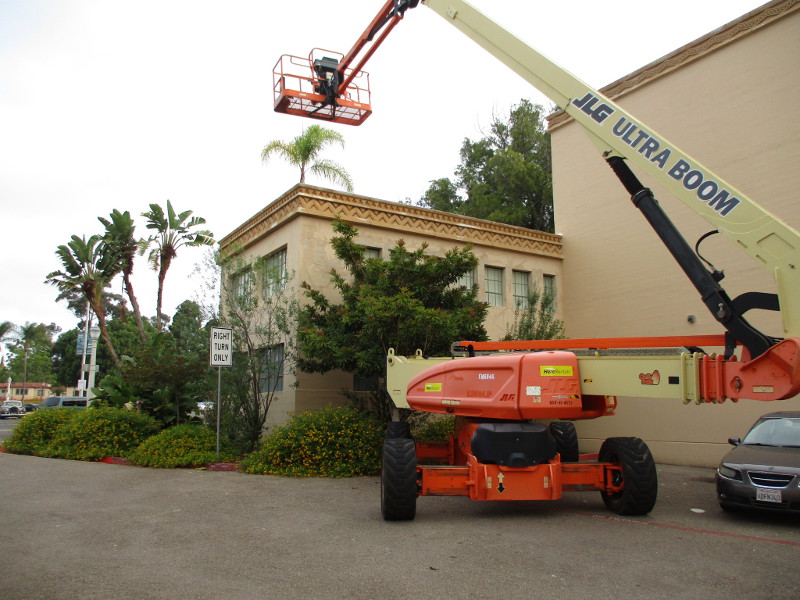
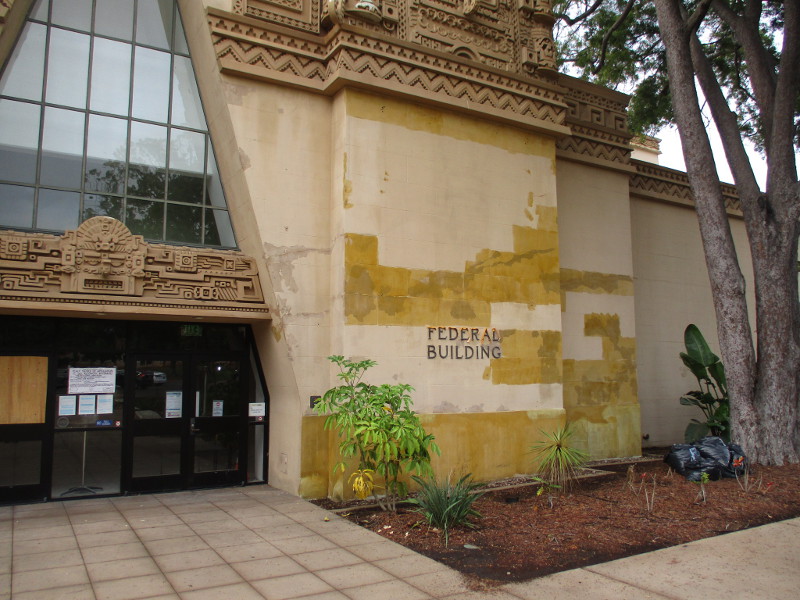
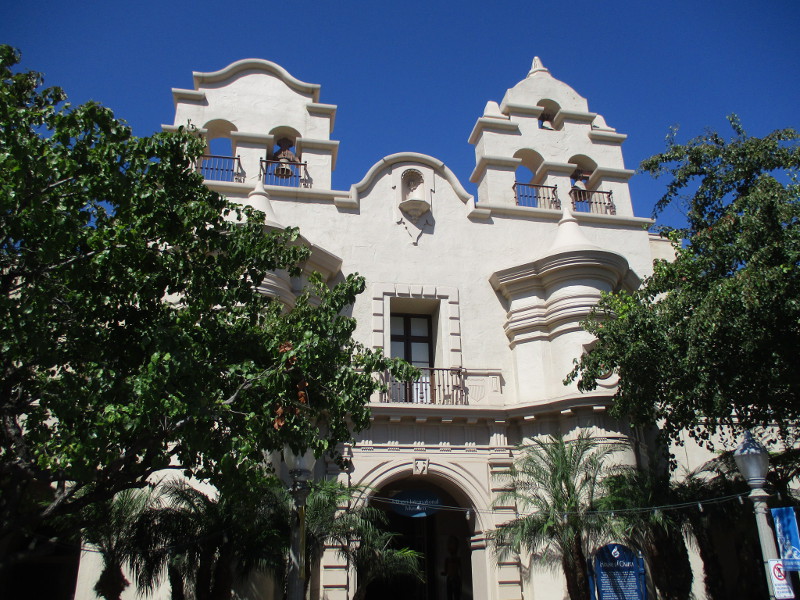
The exterior of the historic Federal Building in Balboa Park, future home of the Comic-Con Museum, is currently being restored!
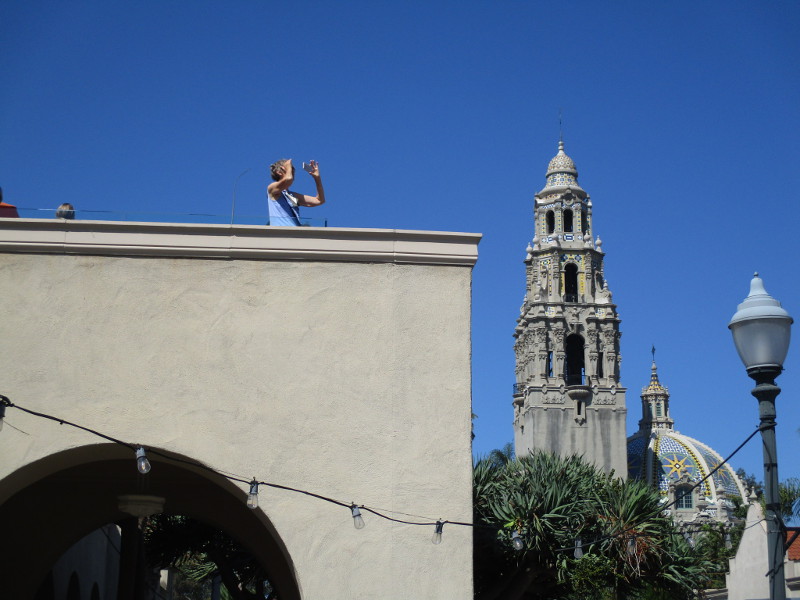
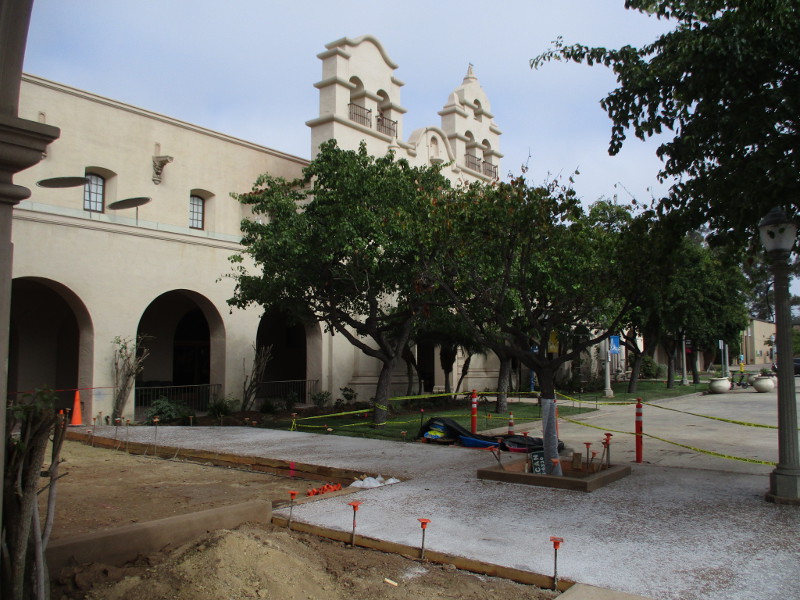
During my walk today I noticed the unique building, built in 1935 for the California Pacific International Exposition, is being patched up and painted to match several principal buildings in the Palisades area of the Balboa Park.
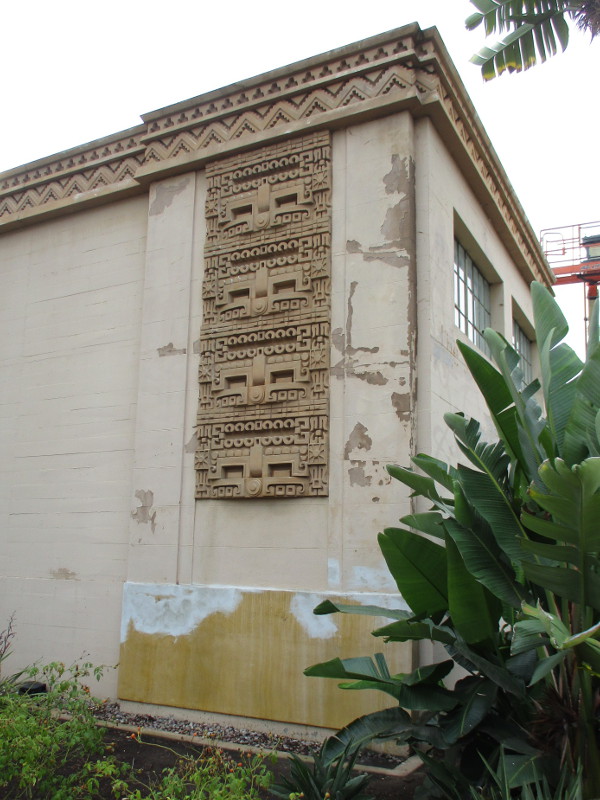
The Federal Building was designed by architect Richard Requa, who gave this and other nearby buildings a pre-Columbian appearance. According to this article, the ornamental detailing on the main entrance was unquestionably derived from the Palace of the Governor in Uxmal, Yucatan.
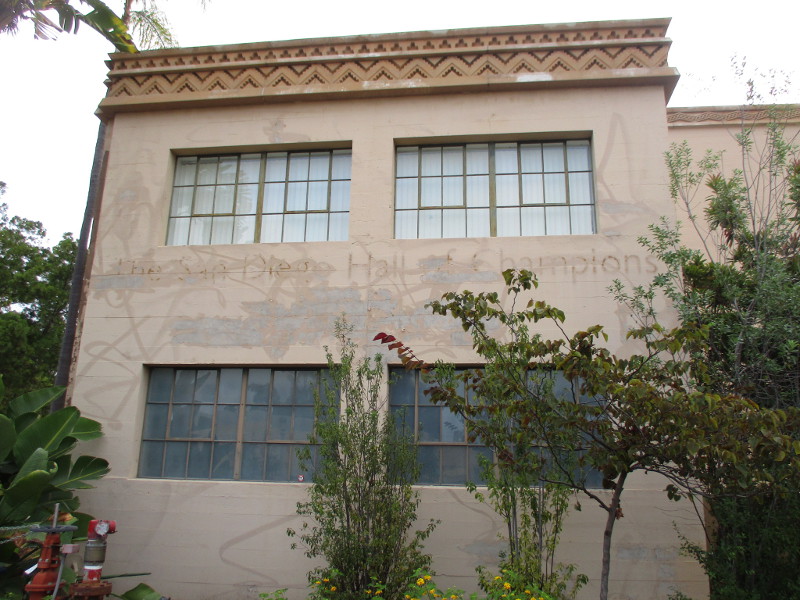
In one photograph you can see how the Federal Building was once home of the San Diego Hall of Champions.
The Comic-Con Museum will be opening this Thanksgiving weekend, in conjunction with the 2021 Comic-Con Special Edition to be held at the San Diego Convention Center.
After taking these photos I peered through the front windows, and I could see some preliminary construction going on inside.
The Comic-Con Museum already has 15,000 members. And I’m one.
I can’t wait for it to open!
…
I live in downtown San Diego and love to walk around with my camera! You can follow Cool San Diego Sights via Facebook or Twitter!
You can easily explore Cool San Diego Sights by using the search box on my blog’s sidebar. Or click a tag! There are thousands upon thousands of photos for you to enjoy!
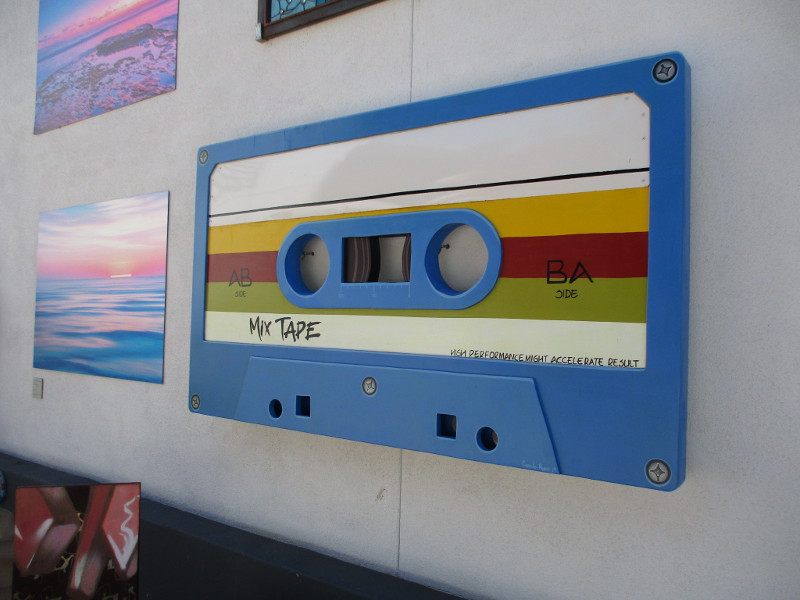
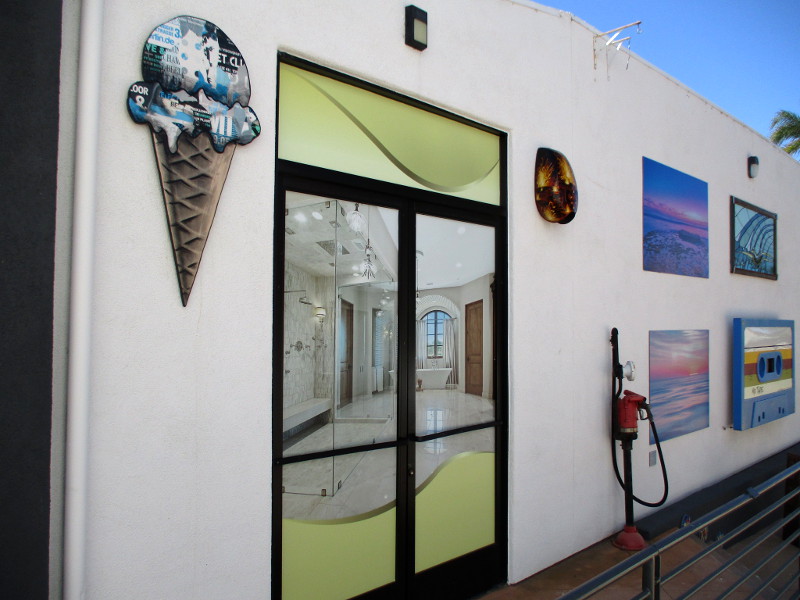
In Solana Beach, at 320 Cedros Avenue, there’s a surprising art museum . . . outdoors! I just happened to discover the Art Alley on Cedros during my recent walk through the very hip Cedros Avenue Design District.
Anybody can freely wander off the street and into the alley to experience a motley collection of colorful (and groovy) artwork!
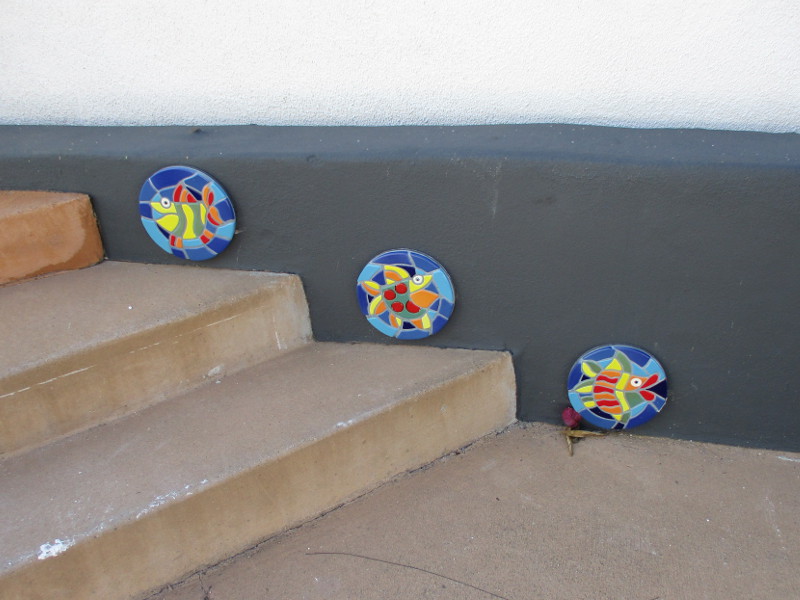
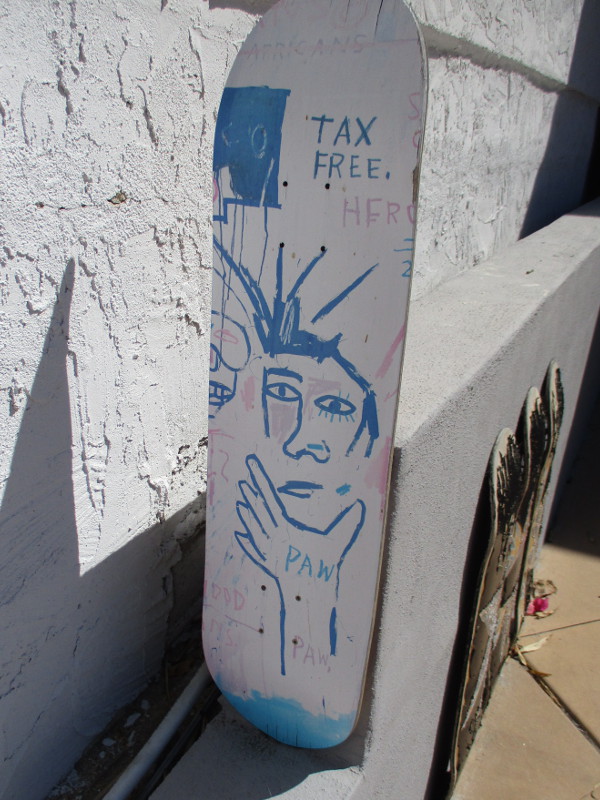
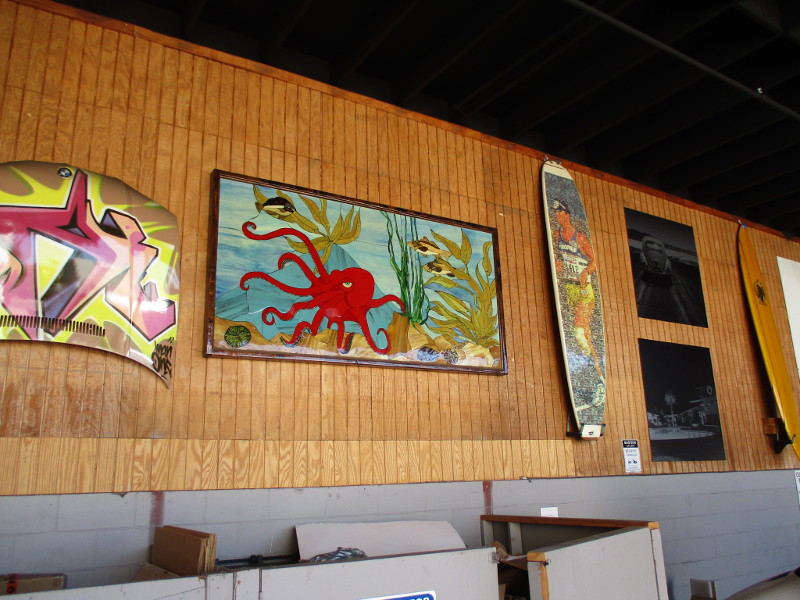
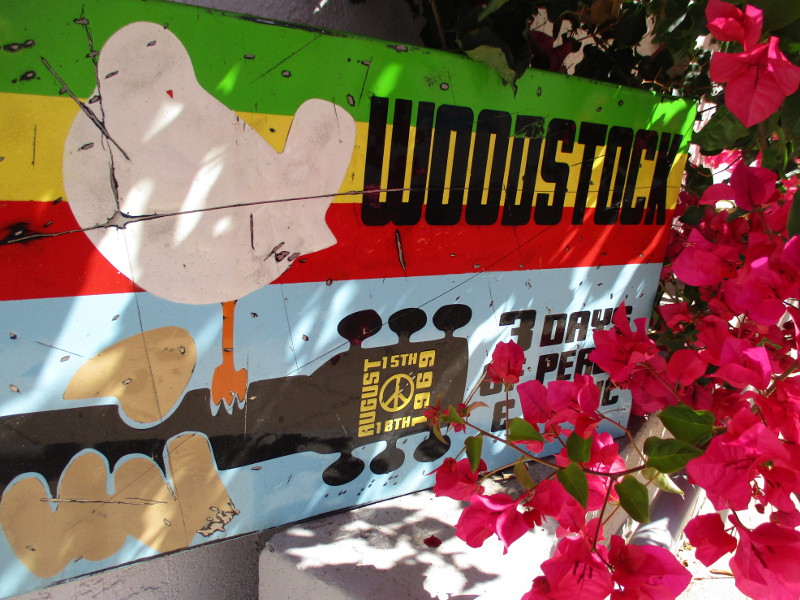
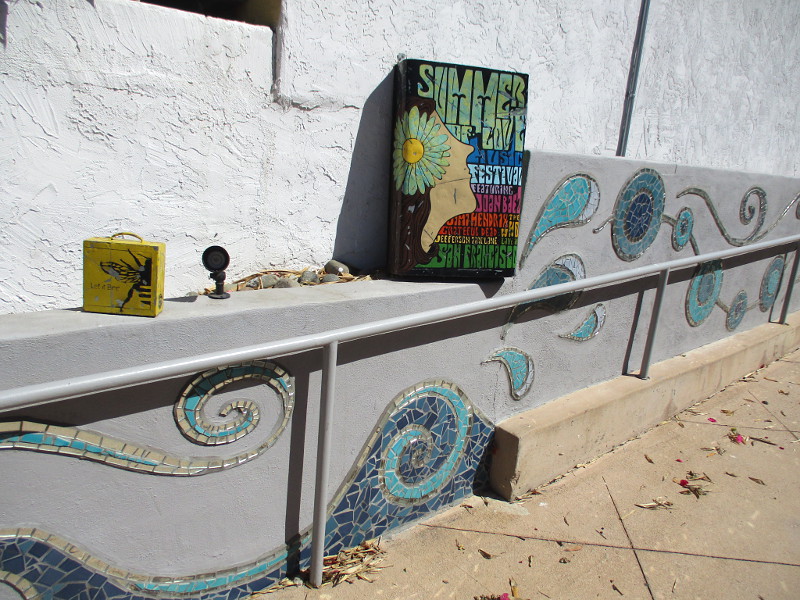
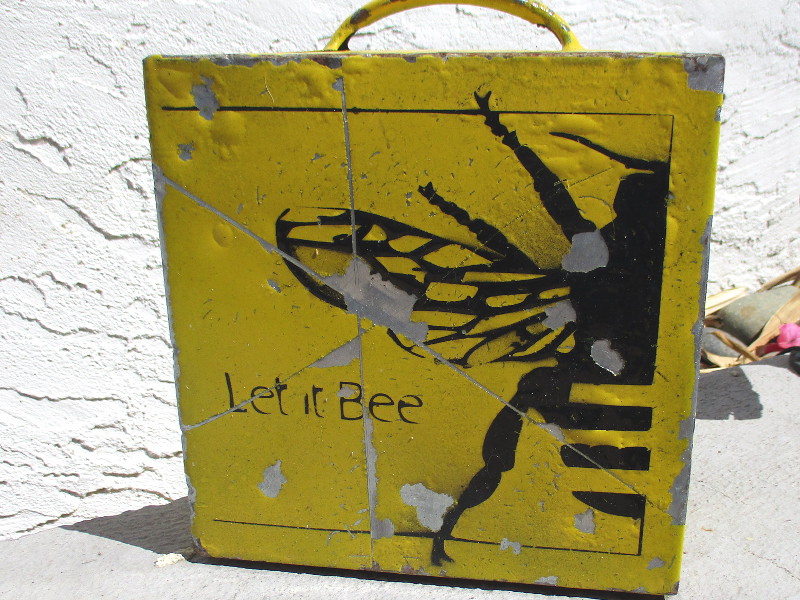
I walked the length of the alley and discovered a variety of painted “canvases” including car hoods, skateboards and surfboards, beautiful photographs, unique objects and sculptures, a watery blue mosaic along one alley wall, and many fun, nostalgic pieces that celebrate popular music from the past.
It looks like the Art Alley on Cedros has a Facebook page.
This is some of what I observed…
…
I live in downtown San Diego and love to walk around with my camera! You can follow Cool San Diego Sights via Facebook or Twitter!
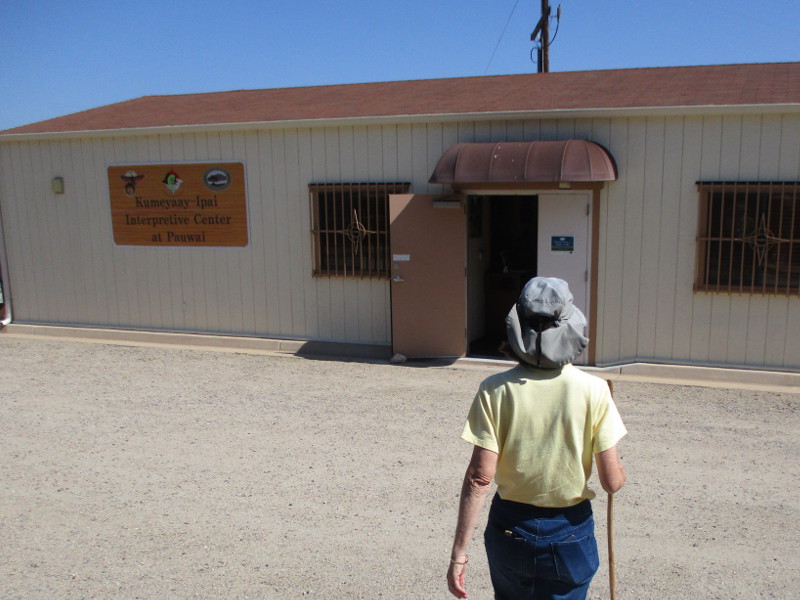
Once a month, every third Saturday, the Kumeyaay-Ipai Interpretive Center in Poway opens to the public.
Today I enjoyed a tour of the archaeological site and its educational visitor center. I was surprised to find so much history preserved in this small island of natural beauty just off Poway Road.
Poway is derived from the Native American Kumeyaay word Pauwai, which means the shape of an arrowhead or the merging of two creeks. A short distance to the south is Poway Creek.
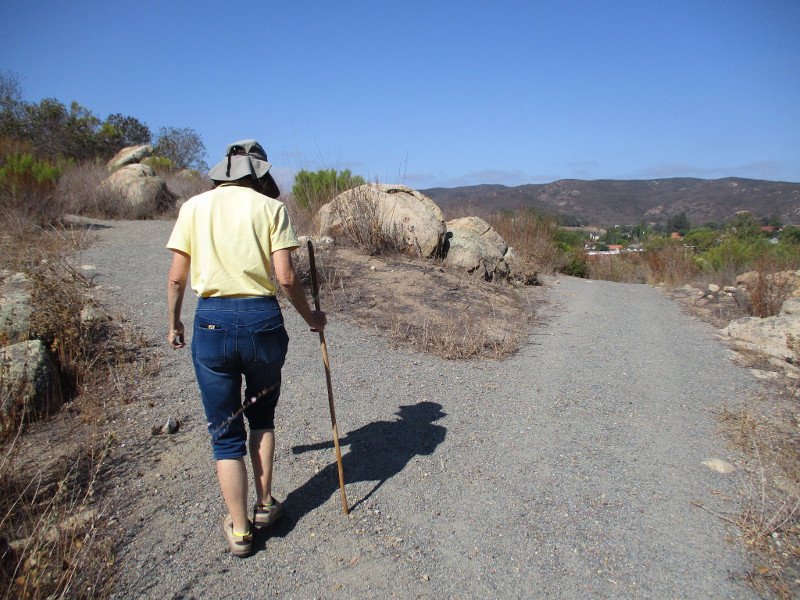
As you will see in the following photographs, a small Kumeyaay village of approximately 20 families once lived on the hill that I and my docent tour guide, Heidi, explored.
The Kumeyaay people have lived in this region for at least 10,000 years. These first people had their lives severely disrupted with the arrival of Europeans in 1769. Today, descendants of those who lived in Pauwai are members of the San Pasqual Band of Mission Indians.
Please enjoy the following photos to get a taste of what you might discover when you visit. Read the captions for a few of the things I learned.
Are you a local history or anthropology enthusiast? Or a community-minded person who loves the outdoors? The Kumeyaay-Ipai Interpretive Center is always looking for volunteers!
Check out their Facebook page and learn about the special days and hours when you can visit here.
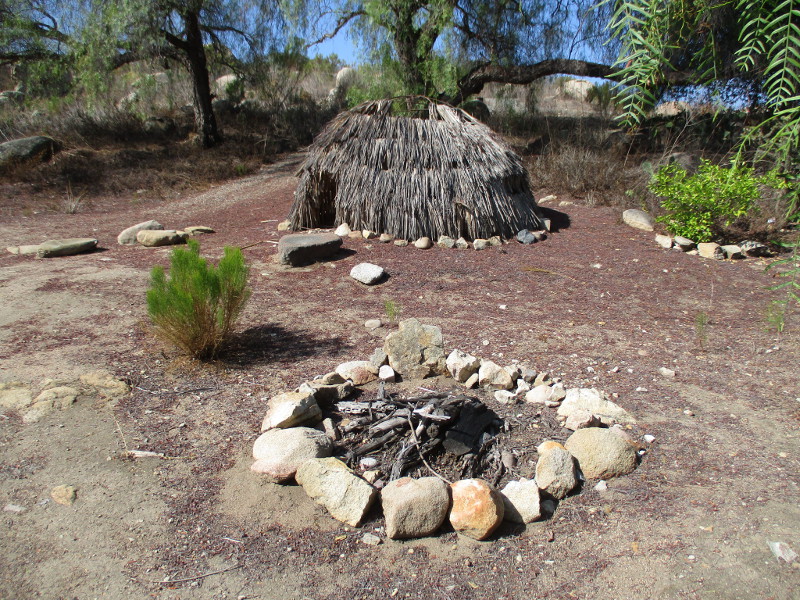
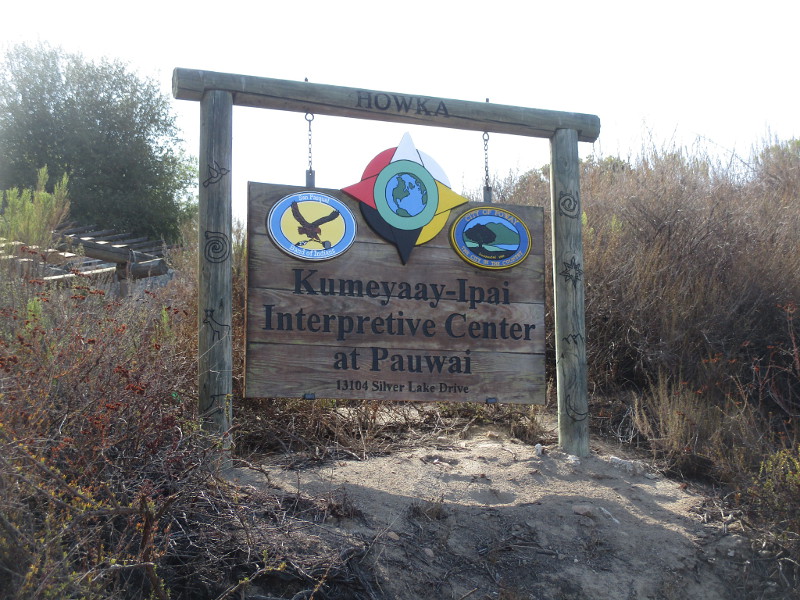
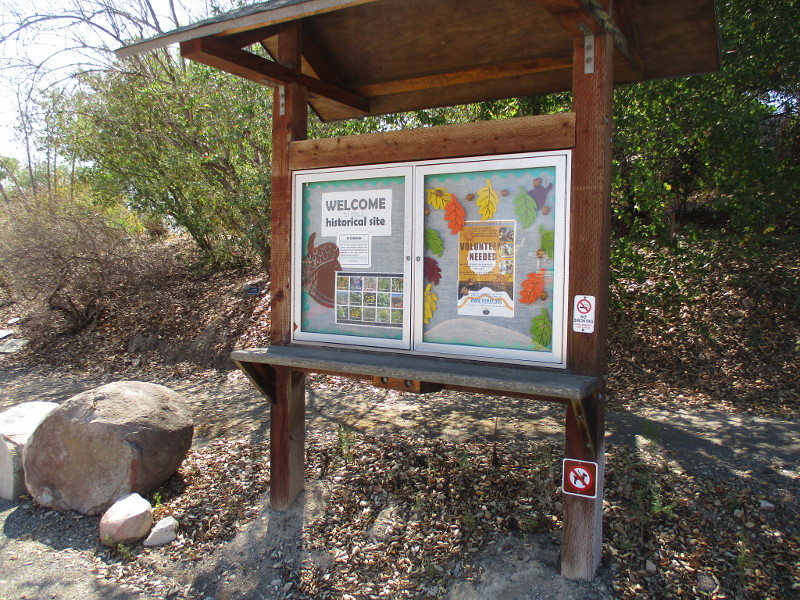
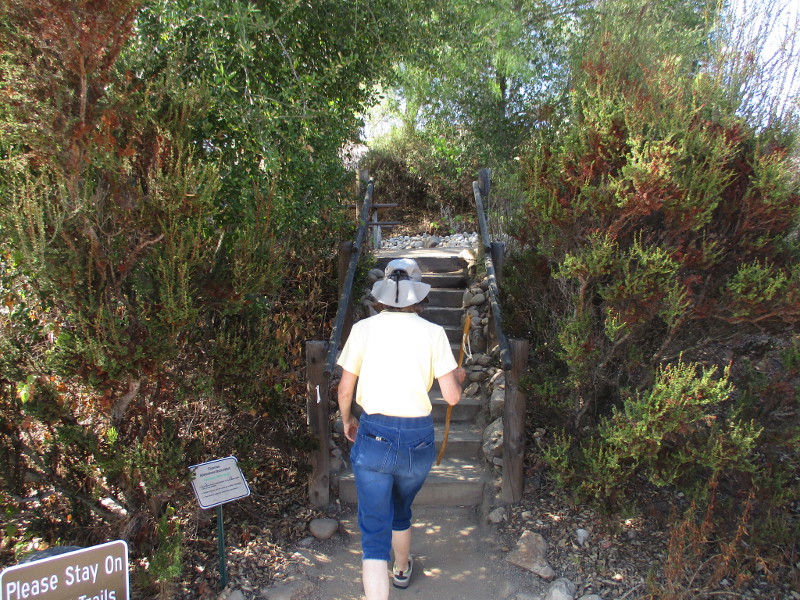
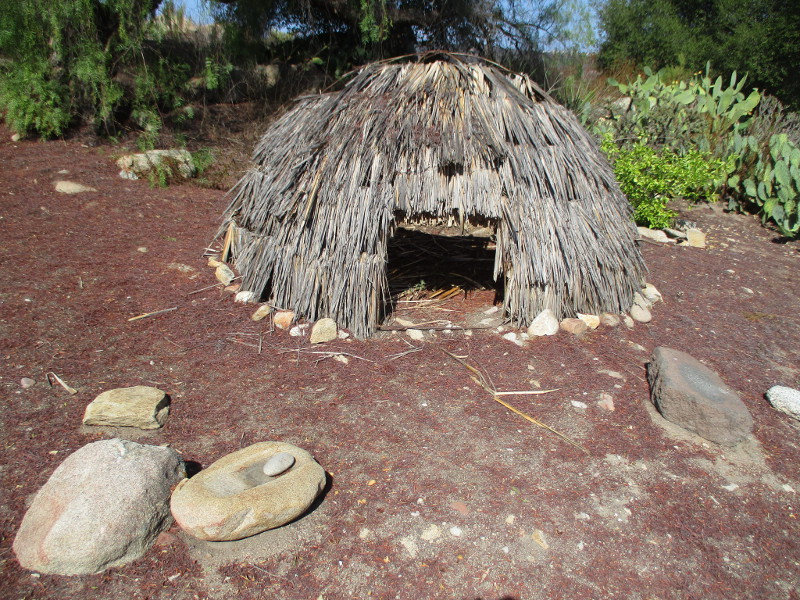
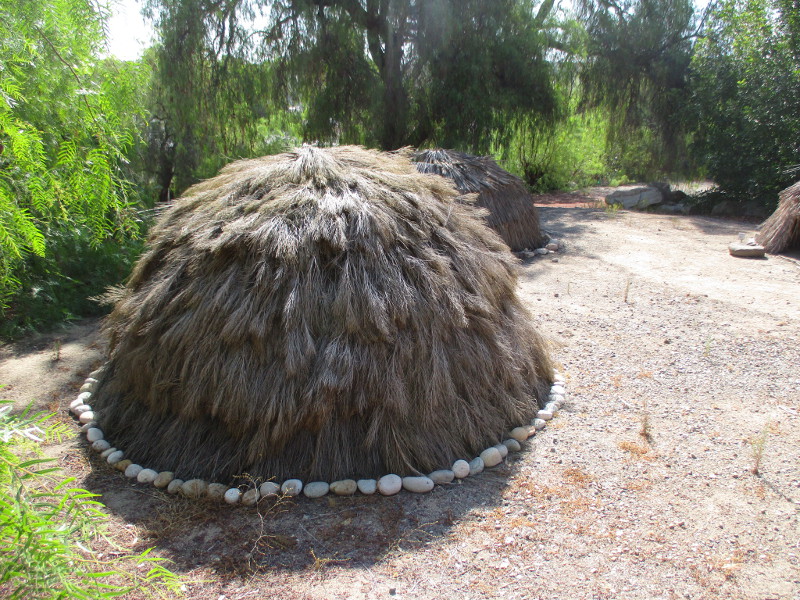
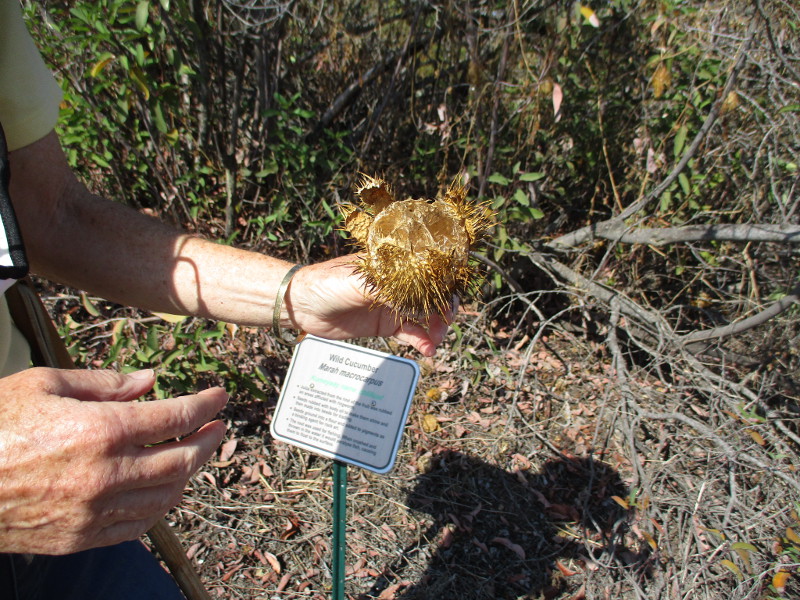
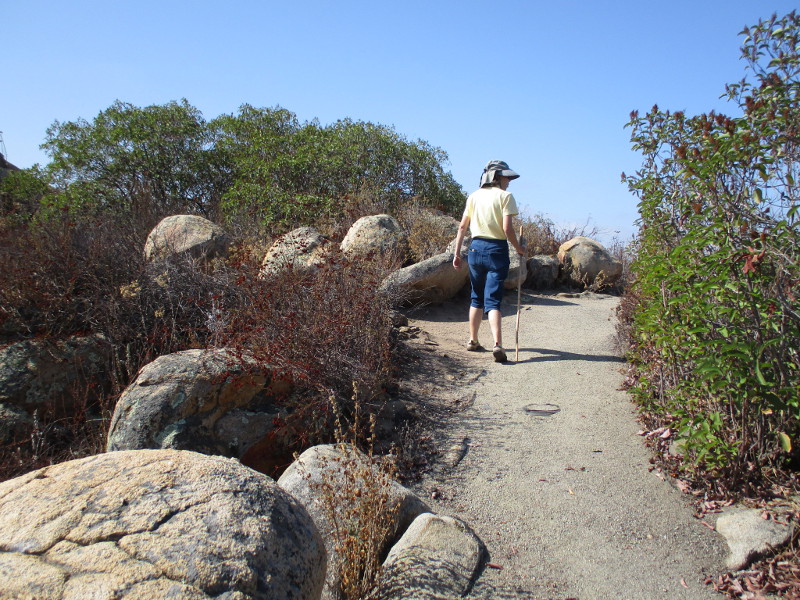
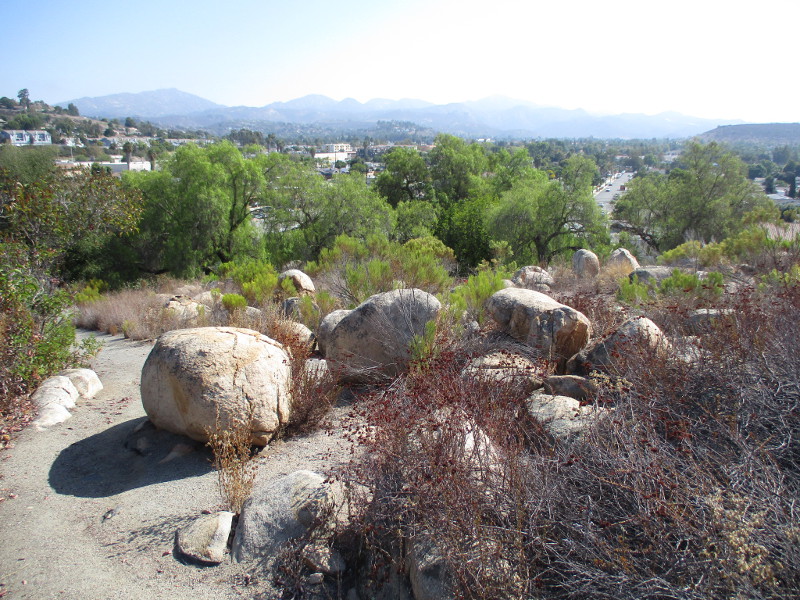
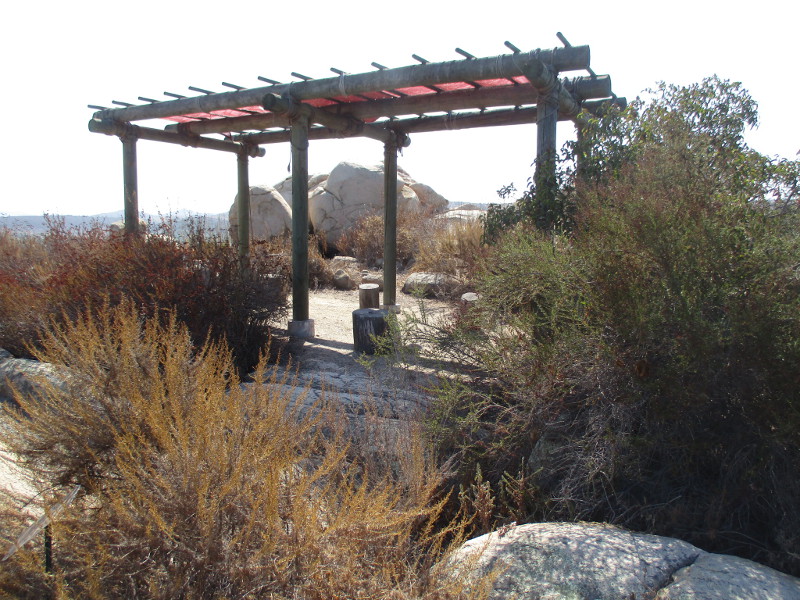
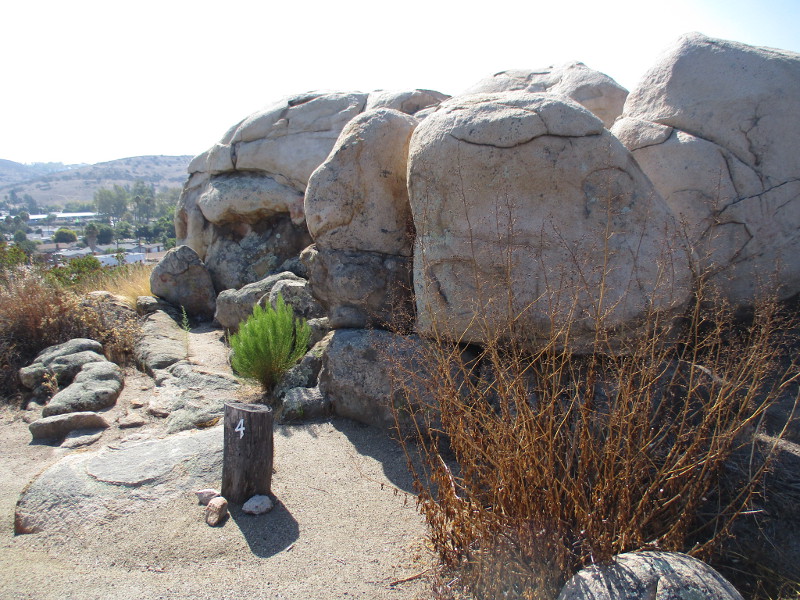
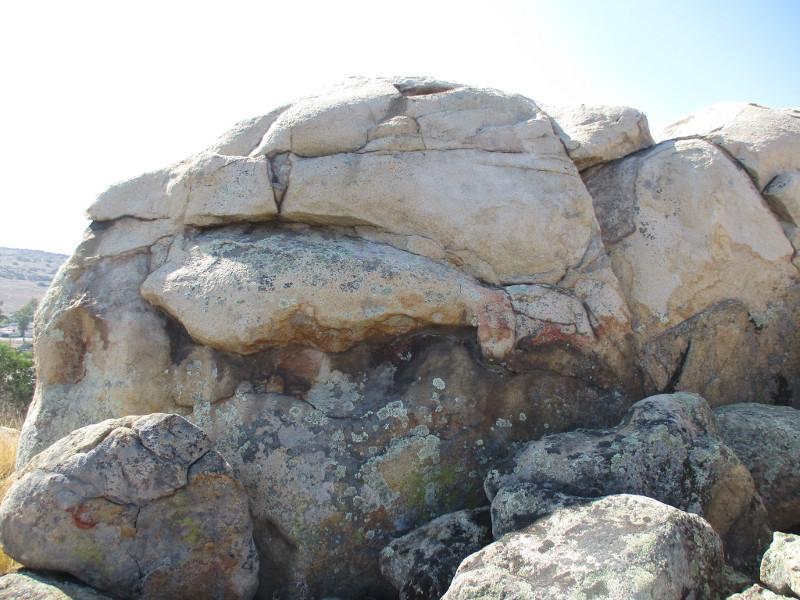
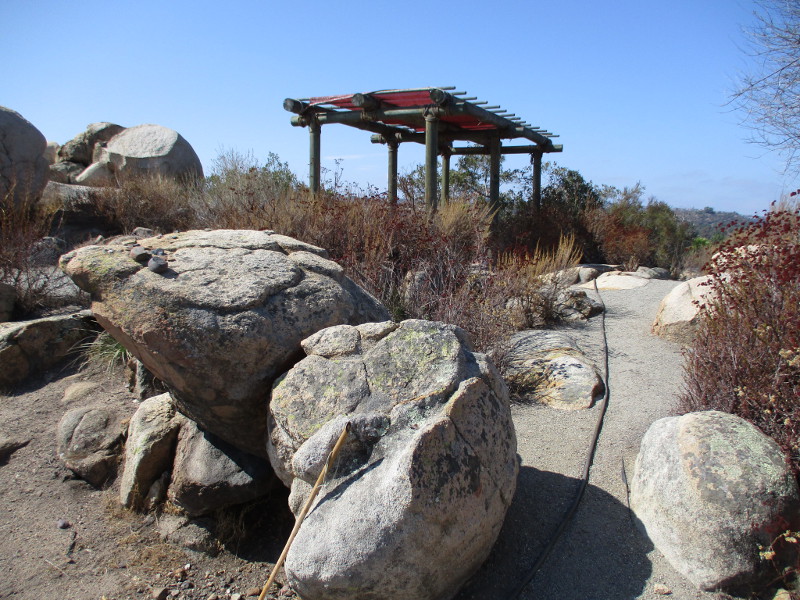
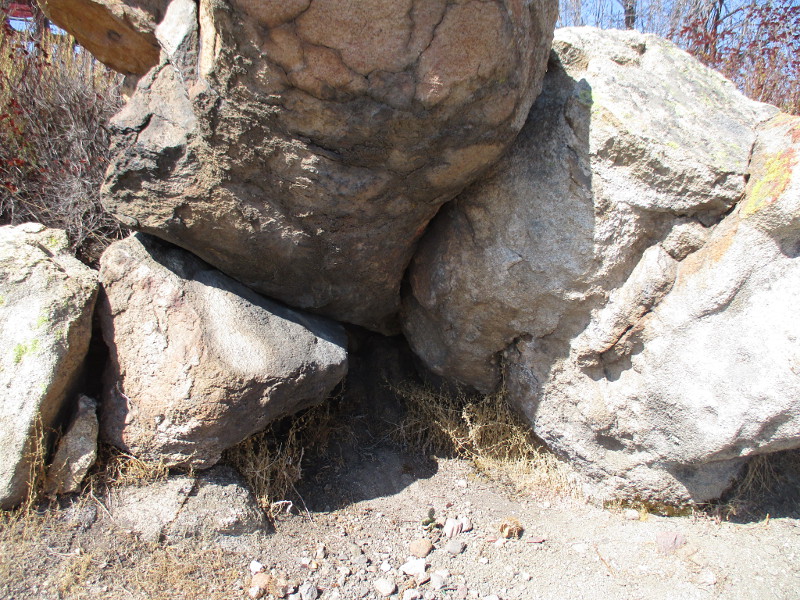
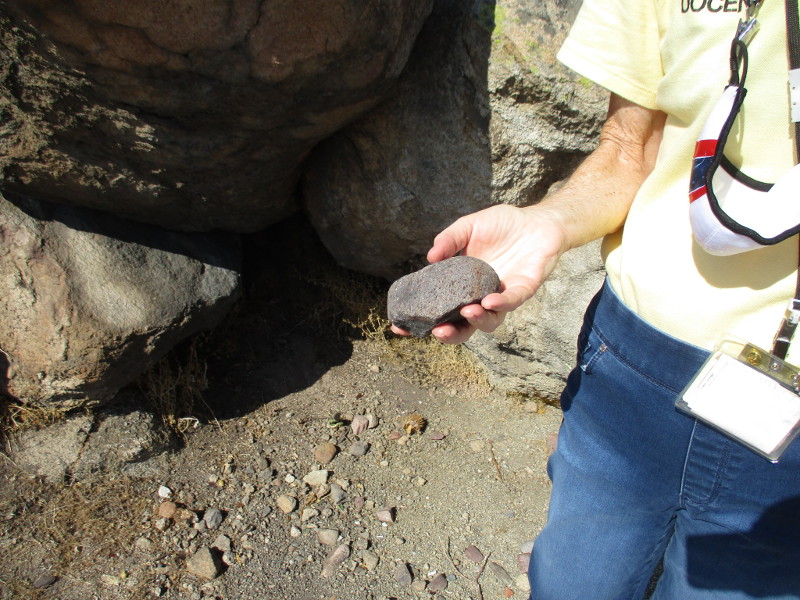
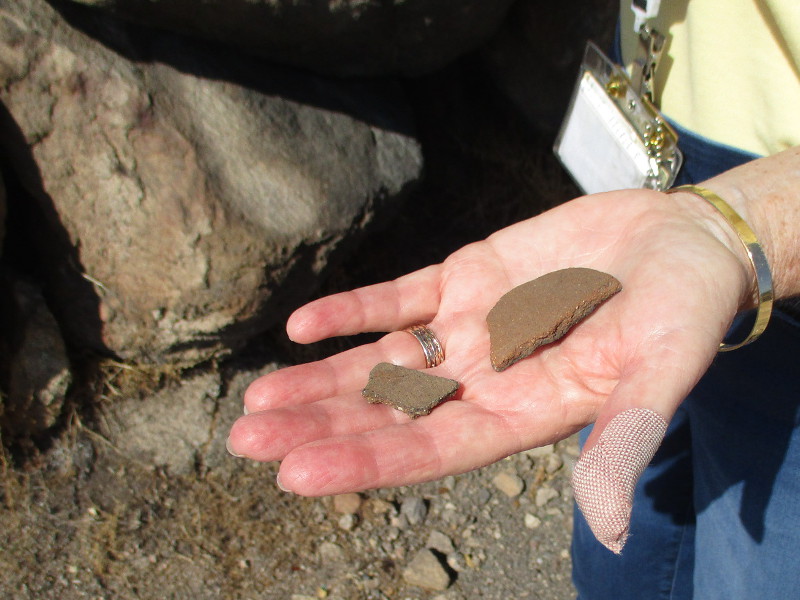
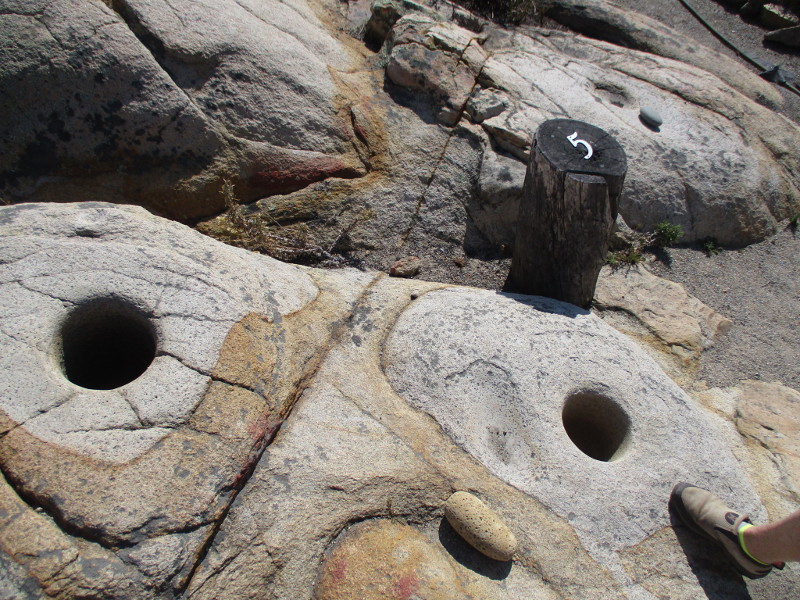
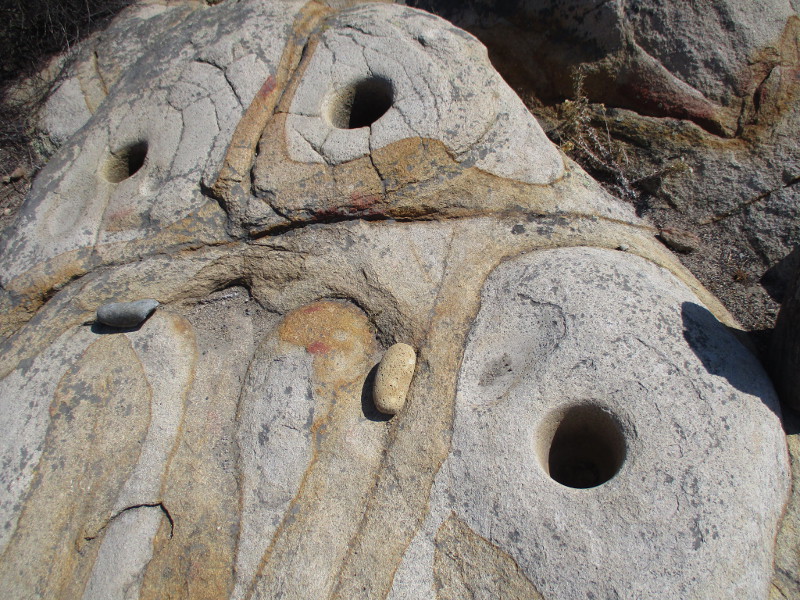
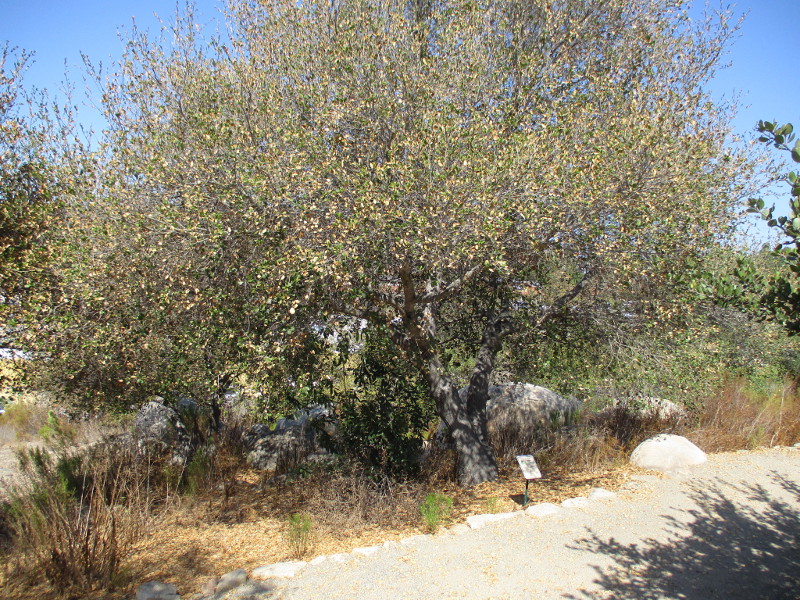
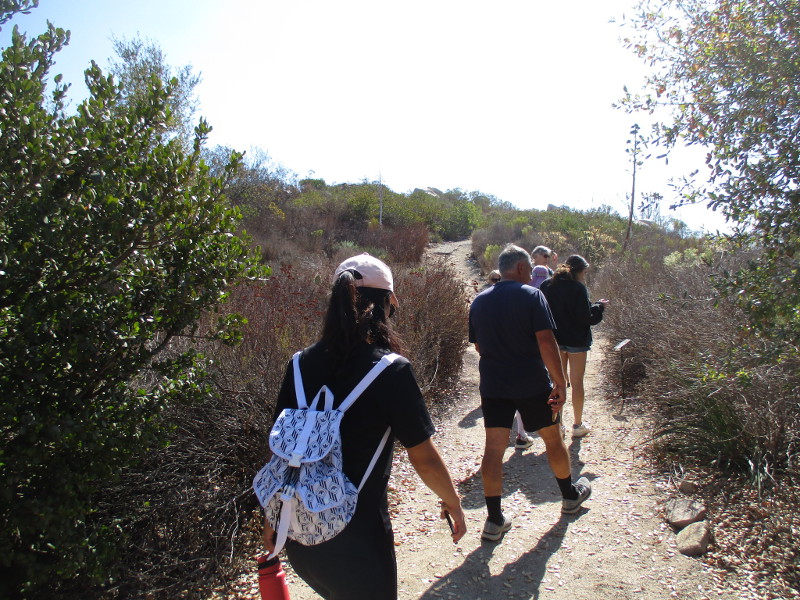
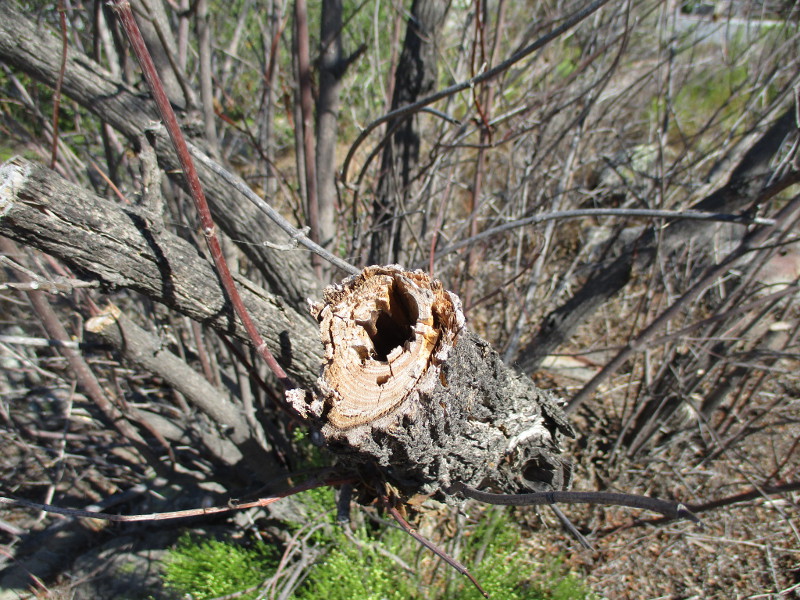
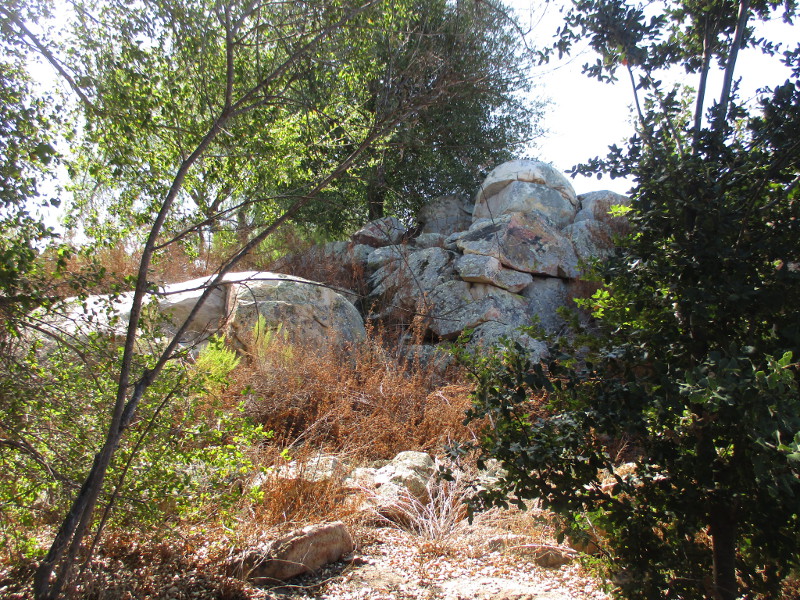
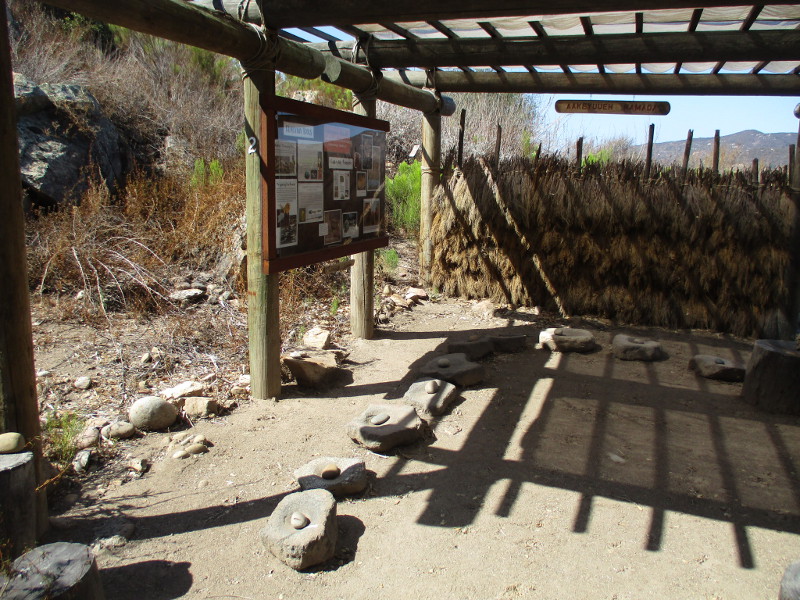
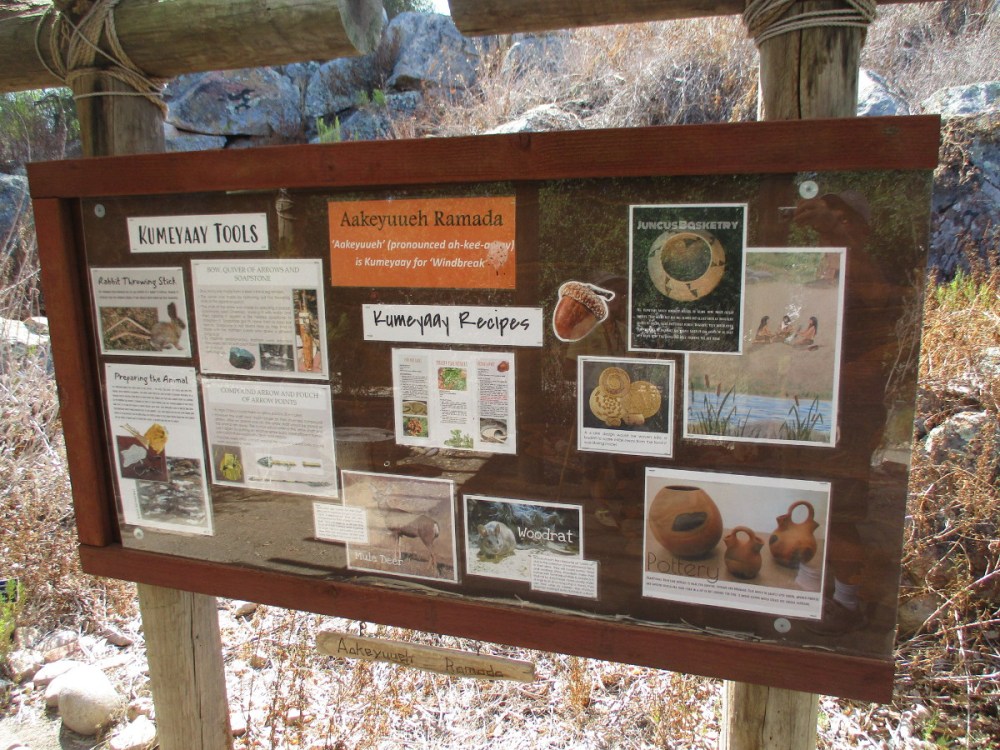
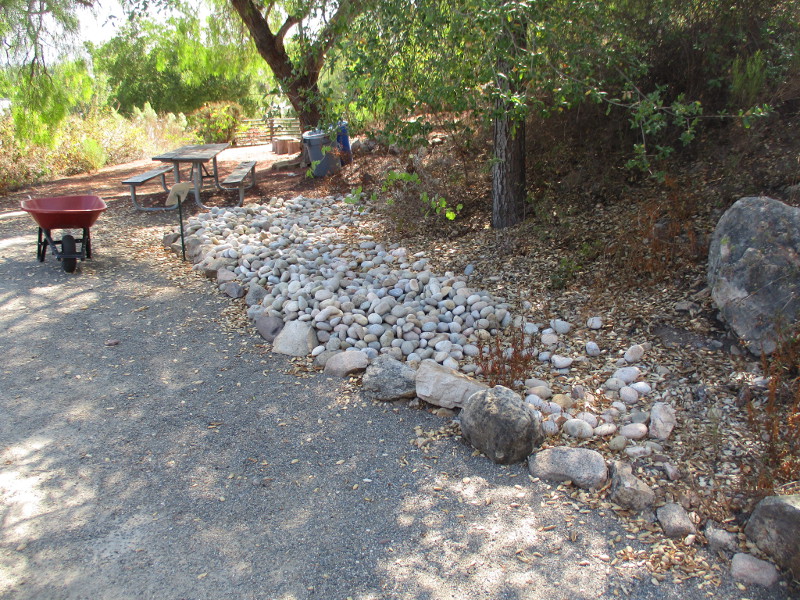
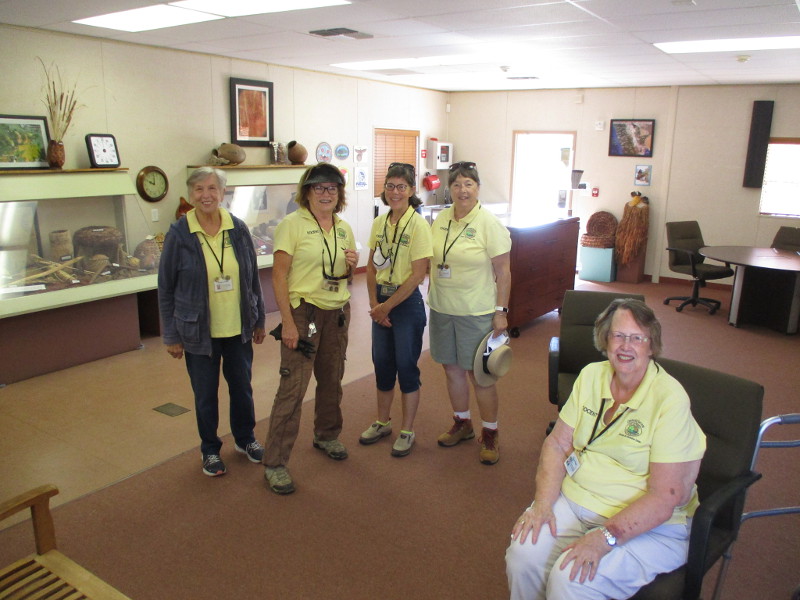
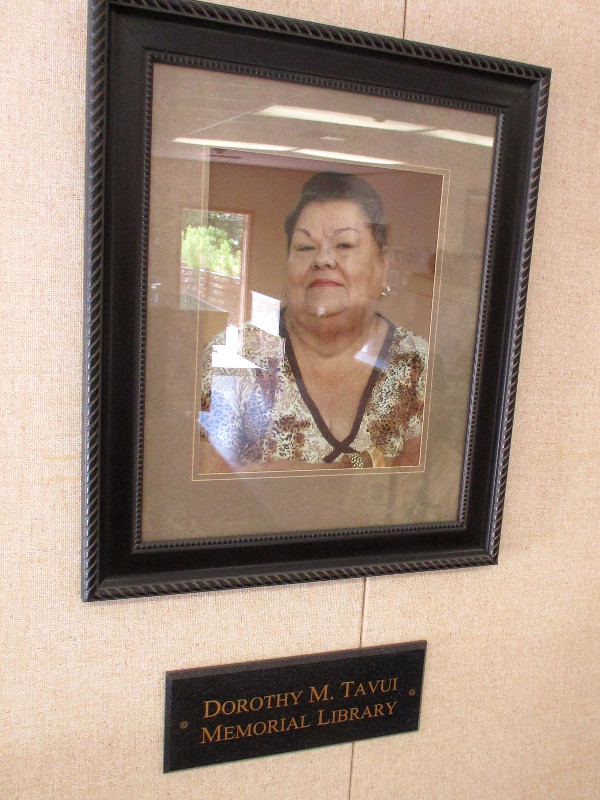
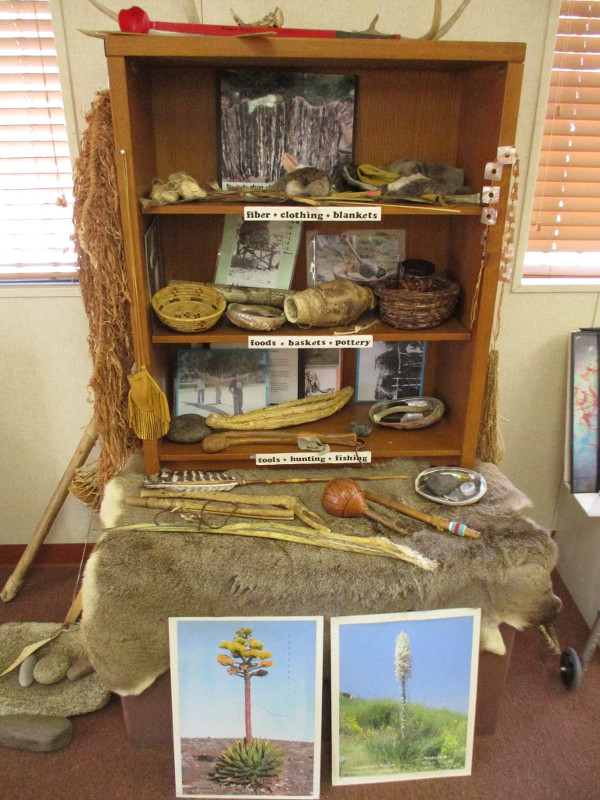
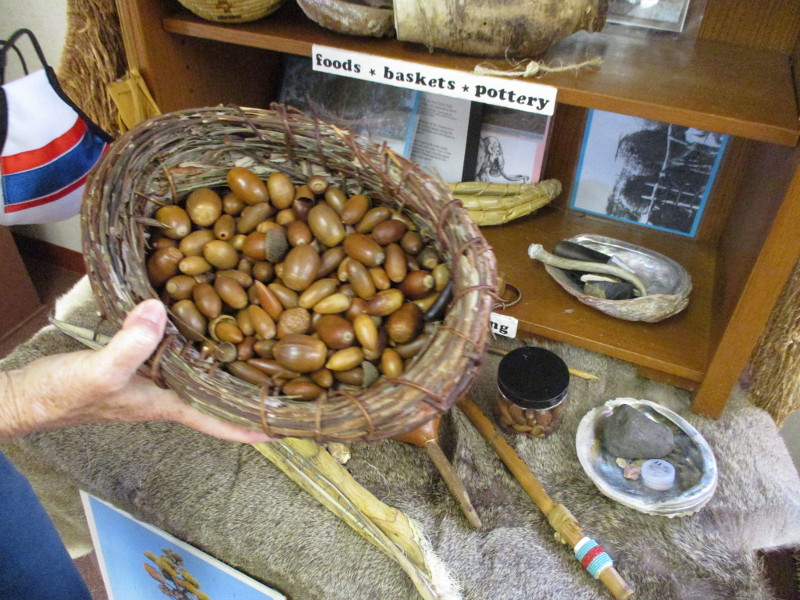
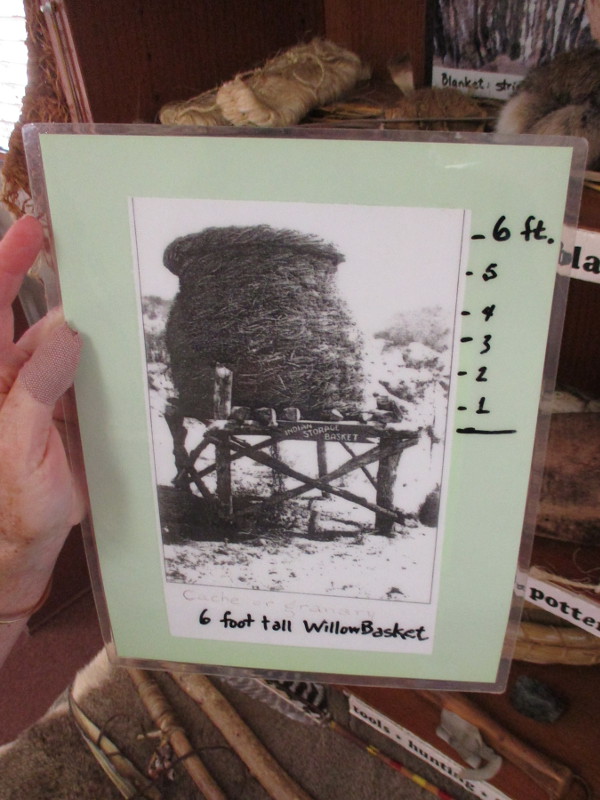
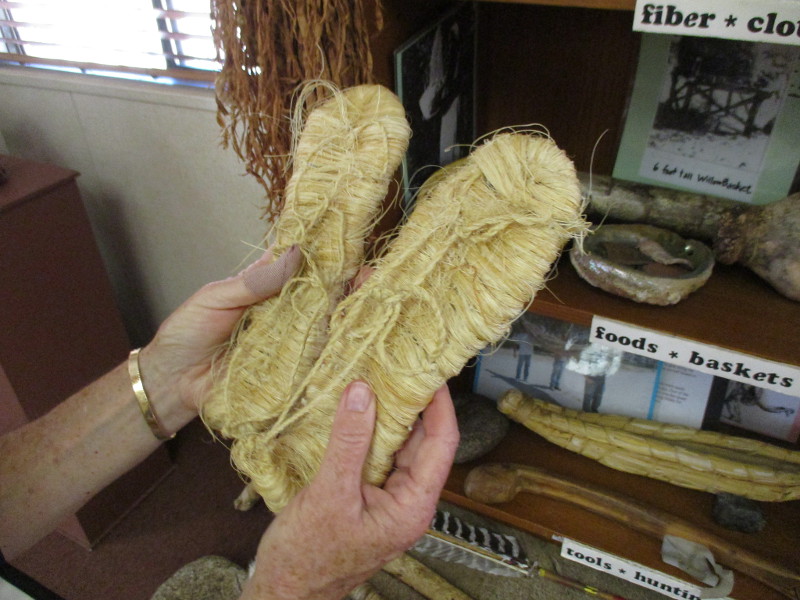
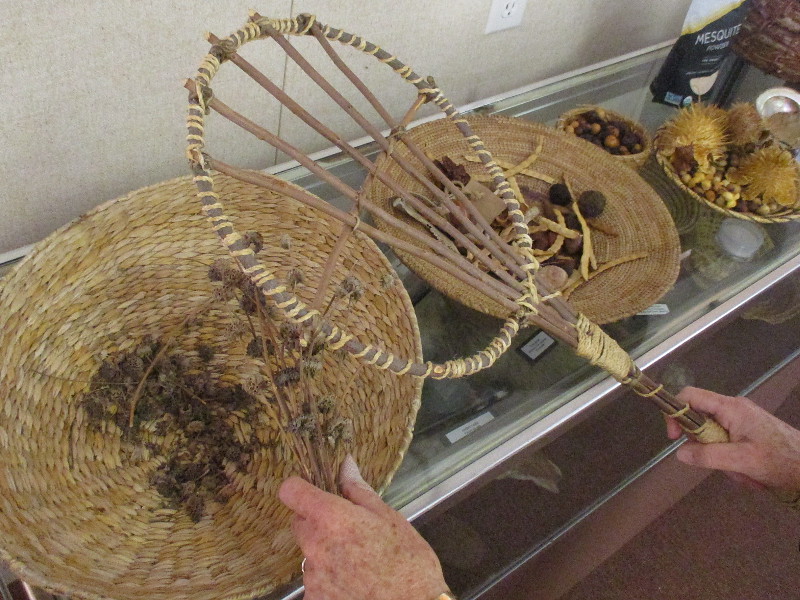
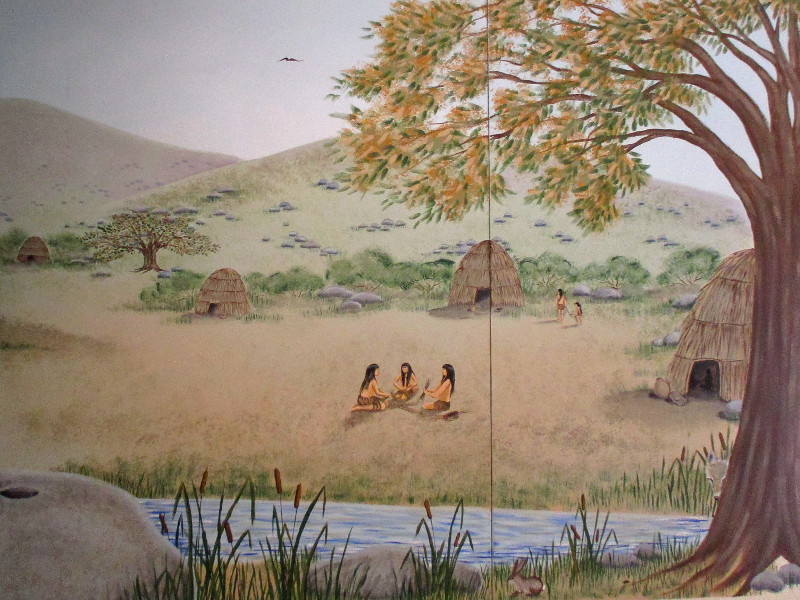
Sign at the end of Ipai Waaypuk Trail, south of Poway Road, where there is parking.Kiosk welcomes visitors to an important historical site.My tour guide Heidi starts up stairs that lead to short looping trails.At the Replica Village in a clearing stand several recreated Kumeyaay ewaas. These are shelters made of sycamore or willow tree branches, covered with cattails or baccharis, and tied with yucca or agave fiber string. These replica ewaas are old and need to be refurbished. The Kumeyaay would refresh their watertight ewaas regularly. A grinding stone, or metate, lies nearby.This nearest ewaa was recently reconstructed. Volunteers who’d like to maintain this special place are welcome!Heading up to the top of the hill along a very short, moderately steep section of trail.I’m shown Wild Cucumber. Like many native plants, it had various practical uses. Seeds ground into a powder by the Kumeyaay were added to pigments to create rock art. The crushed roots, when tossed into water, would paralyze fish!In the distance we could see Mt. Woodson, Iron Mountain, and Cuyamaca Peak. Depending on the season, the Kumeyaay would migrate east to the mountains or west to the Pacific Ocean coast.One of several outdoor ramadas built for visitors to the Interpretive Center. Historical ramadas erected by the Kumeyaay were shady places for village activities and ceremonies.It was thought that rock art might be found on these monumental boulders crowning the hilltop, but a thorough study using modern technology detected no traces.A wise Kumeyaay observer found in this rock formation a whale, a turtle, and the head of a dolphin. Do you see them?A nearby fire pit once used by the Kumeyaay villagers.Soot remains in this natural rocky oven. A crack in the rear conveniently served as a flue for smoke.Cooking stones would be heated in the fire, then placed in baskets to prepare food.Many small broken pottery sherds have been found near this primitive kitchen.At the top of the hill are very deep grinding holes, or morteros, where acorns were ground for thousands of years. After being reduced to powder, the acorns would be leached of tannic acid and cooked into a mush called shawii.A important cultural site representing thousands of years of indigenous history in Poway.A Coast Live Oak beside the trail. One of several types of oak trees in the San Diego region. Acorns were a staple of the Kumeyaay diet.As I and my tour guide walk back down the trail, another group heads up toward the hilltop.A hollow Elderberry branch. Not surprisingly, these were used to make musical instruments such as flutes.Some of the rugged natural beauty that we enjoyed.At another ramada replica, we saw a series of genuine metates that Third Grade students can use during educational field trips! These metates were rescued during road construction many years ago and were donated to the Interpretive Center.There is much to learn about Kumeyaay tools, food, basket weaving, pottery and more!Third Grade students use these small stones to paint their own rock art!We head into the building at the Kumeyaay-Ipai Interpretive Center to learn even more!Look at all the smiling docents!Dorothy M. Tavui was a Kumeyaay friend who helped to establish the Interpretive Center in Poway.Shelves full of artifacts that kids can explore and handle to learn about Kumeyaay life.A willow basket full of acorns. The long conical acorns are from Coast Live Oaks. The big acorns are from Black Oaks in the Cuyamaca Mountains. They were the largest and tastiest! The abalone shells you also see were obtained from the coast and often used as trade items.Old photo of a 6 foot tall willow basket! Acorns would be gathered in season to last the entire year.Sandals made of natural plant fibers.I learned this is a seed beater! It’s being demonstrated on dried blooms of sage.A beautiful mural inside the Kumeyaay-Ipai Interpretive Center in Poway shows what village life was like here for many thousands of years. By artist Brigitte Lopez, 2012.
…
I live in downtown San Diego and love to walk around with my camera! You can follow Cool San Diego Sights via Facebook or Twitter!
Whenever I walk through Balboa Park, I almost always spend some time at the Japanese Friendship Garden, even if it’s only for a few minutes.
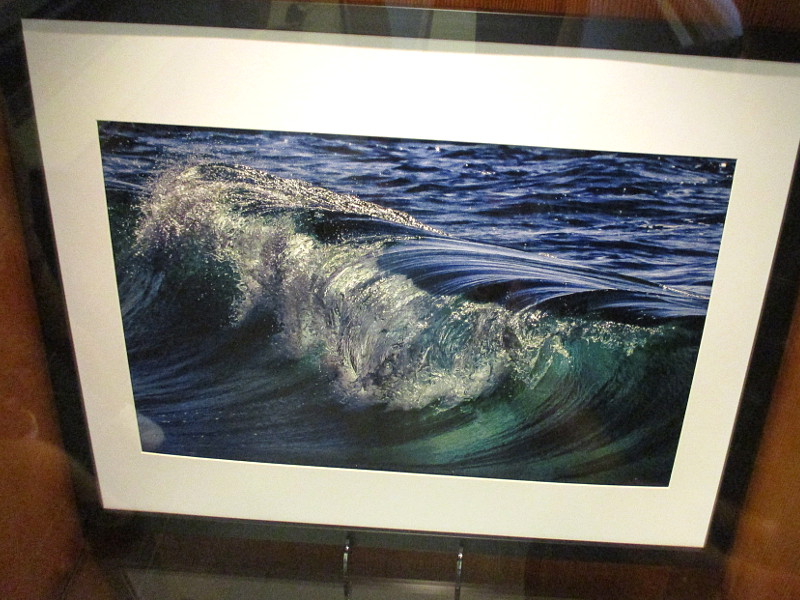
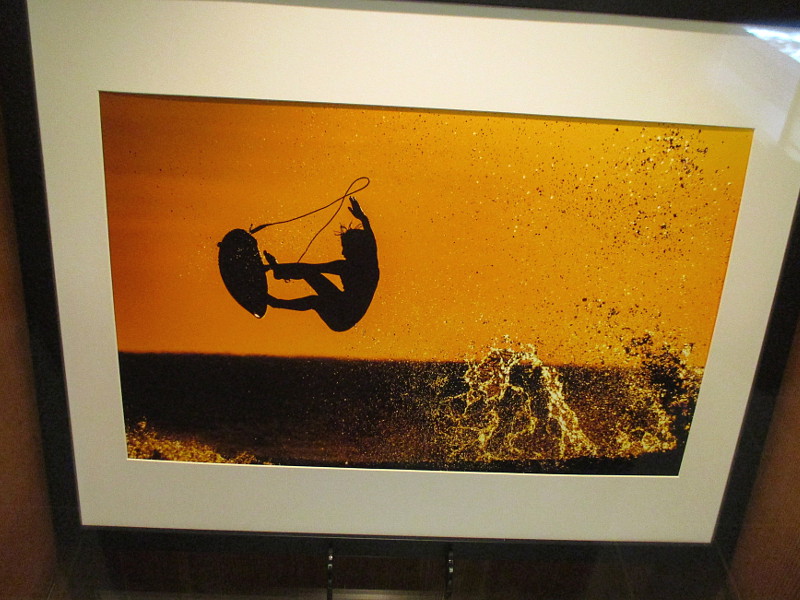
Today I noticed there’s new artwork on display in the Exhibit Hall. It concerns breaking ocean waves, and includes many images of surfers on surfboards. The art is so vivid and unique, it’s hard to describe.
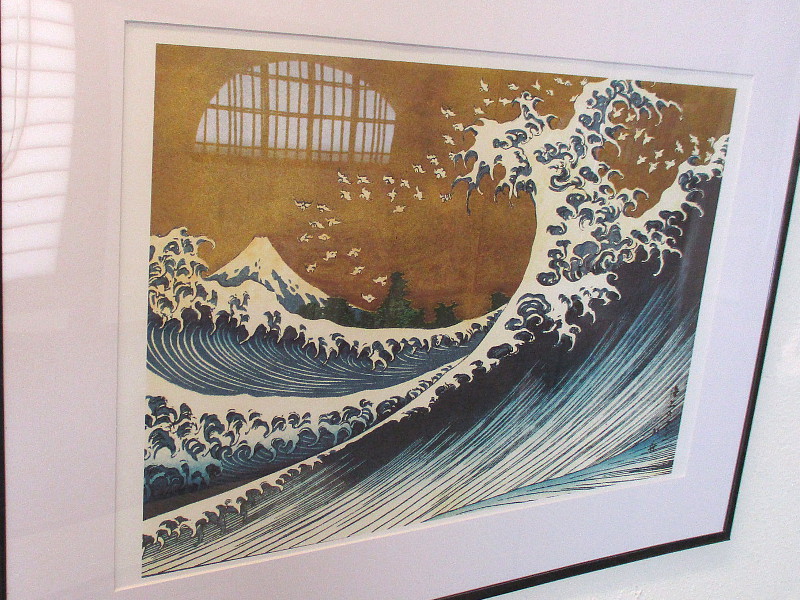
The exhibition is titled Hokusai Waves. It showcases the work of San Diego photographer Kotaro Moromura, whose images are inspired by Japanese Ukiyo-e painter and printmaker Katsushika Hokusai.
Powerfully curling water and flying droplets, captured with a high camera shutter speed, seem to leap right out of the display cases. The images are not unlike the impressively crashing waves created by artist Katsushika Hokusai.
As you can see from a couple of my photos, the wave images that include surfers are dynamic and definitely very cool!
Anyone visiting San Diego for the next several days for the international World Surf League Championship event up at Trestles might enjoy a peek at these!
I was walking through San Ysidro today when I noticed The FRONT Arte Cultura gallery was open. So I walked in!
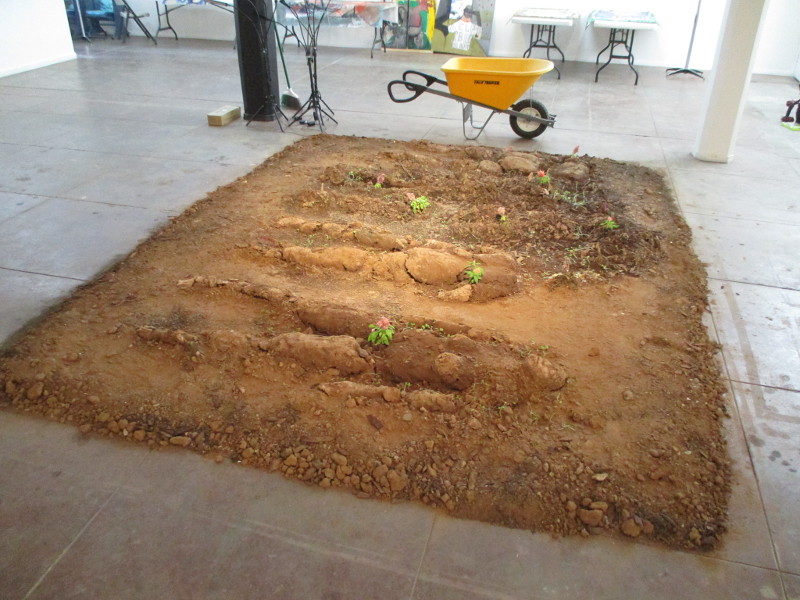
Francisco Morales, Gallery Director of The FRONT Arte Cultura, showed me the above artwork, which remains from the recently closed And We Will Sing in the Tall Grass Again exhibition. The powerful piece is titled A Poetic of Living and was created by artist Larissa Rogers.
As I gazed down at human forms made of crumbling soil, with flowers cropping up, I could see the theme had something to do with decay and regeneration. Death and birth.
The artwork, according to a long description I read, also concerns human trauma, amnesia, confrontation and persistence. “Soil holds trauma, displacement, memory, and history but is also a place of regeneration, possibility…The viewer is prompted to walk over the soil. In this action, they no longer become a spectator without agency, but rather, have to confront the soil to continue…”
It seems to me this art reminds us of one unifying truth. A truth many would rather forget or deny. That we are all made of the same earth…and that we are mortal.
It also shows that seeds planted in life continue.
…
I live in downtown San Diego and love to walk around with my camera! You can follow Cool San Diego Sights via Facebook or Twitter!
Three years of construction at Balboa Park’s House of Charm is completed. The reimagined, redesigned, greatly enlarged Mingei International Museum, which occupies most of the historic building, has finally reopened!
The multicultural Mingei Museum, whose focus is crafts and design, opened its doors to the public yesterday. To celebrate, admission to the upstairs galleries will be free during Labor Day weekend through Monday, September 6.
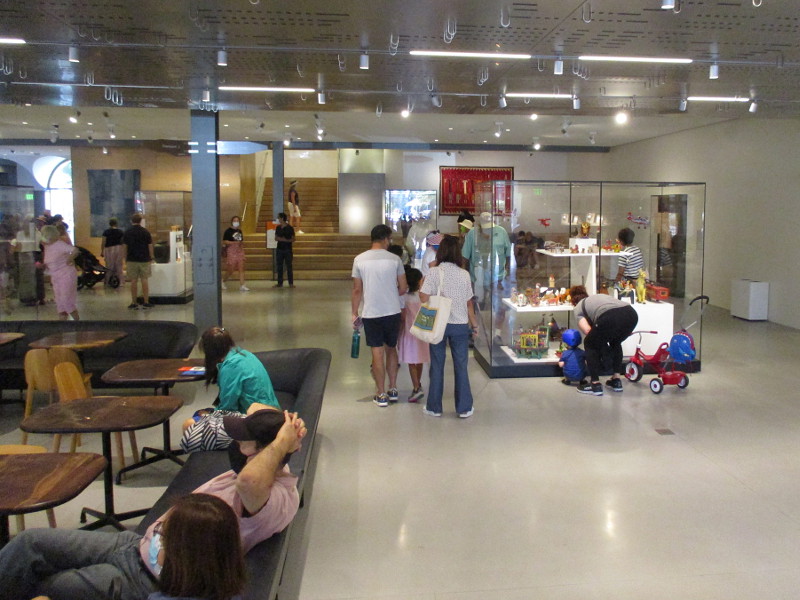
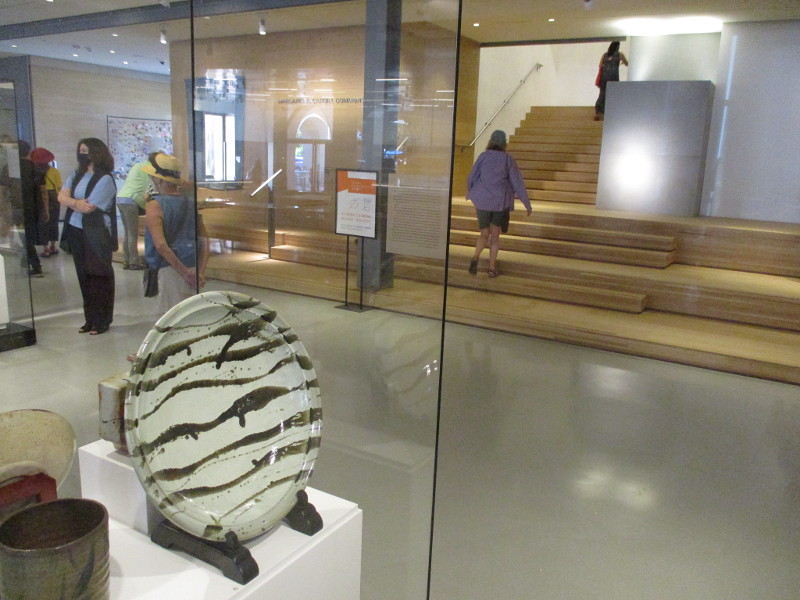
I slowly walked through the new spacious indoor pavilion that occupies the ground level. The ground floor will always be free to the public.
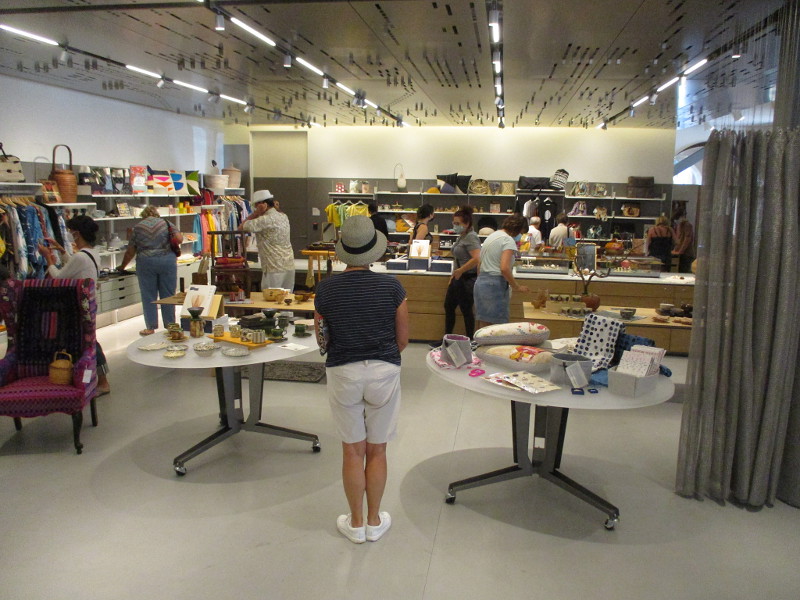
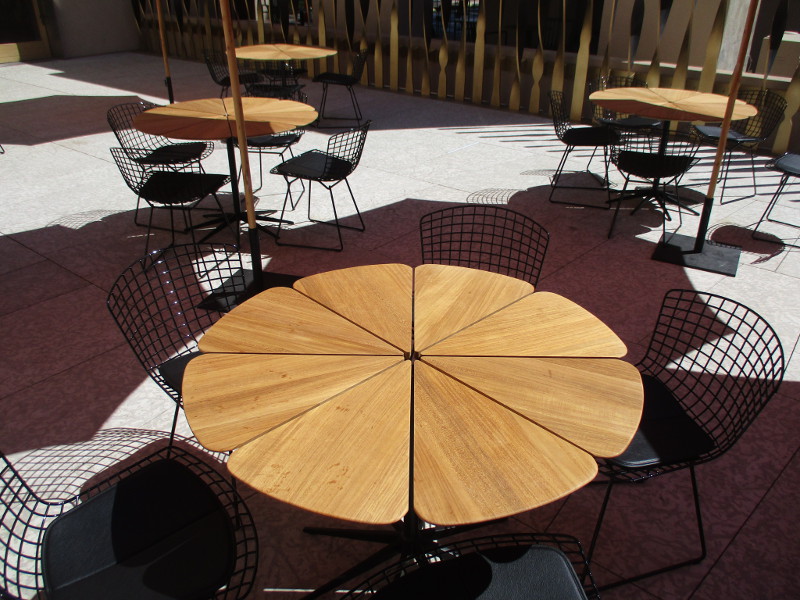
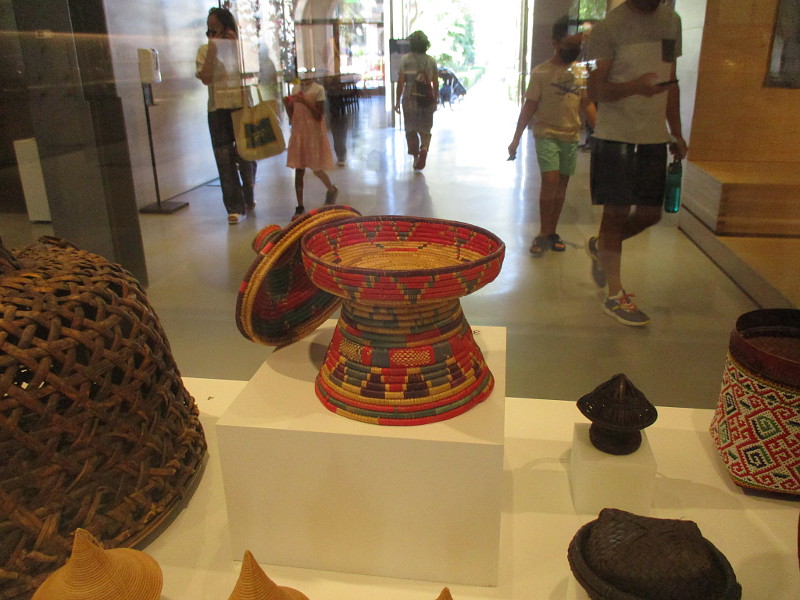
A big seating area invites visitors to relax. Several large glass cases display colorful museum pieces. There’s a nearby gift shop and café, too. Through one door anybody can go outside to sit in a beautiful courtyard at tables under shady umbrellas. (That might become a favorite place to read and write!)
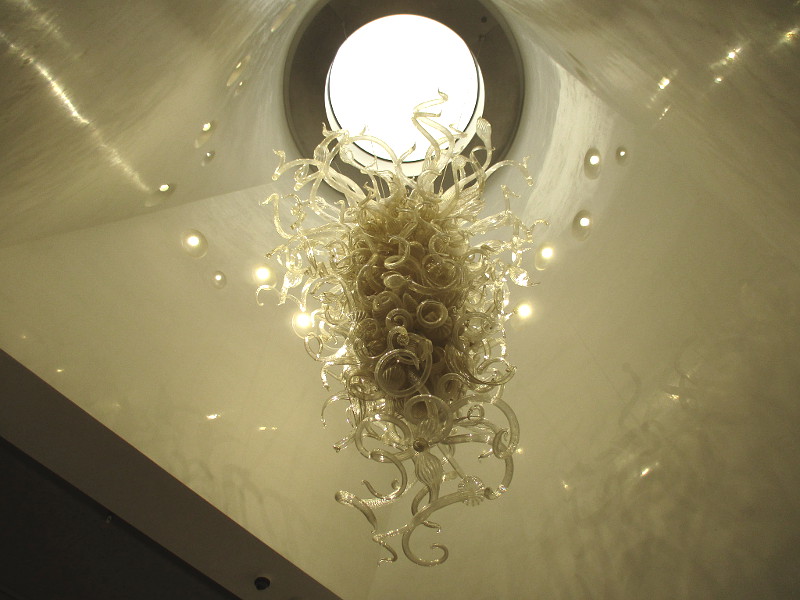
The second floor’s main galleries are approached up stairs through the House of Charm’s tower. As you head up the steps, look up. You’ll be wowed by renowned artist Dale Chihuly’s glass sculpture chandelier! (Lights in the stairwell walls cast intricate shadows, which one guide at the museum said he really likes!)
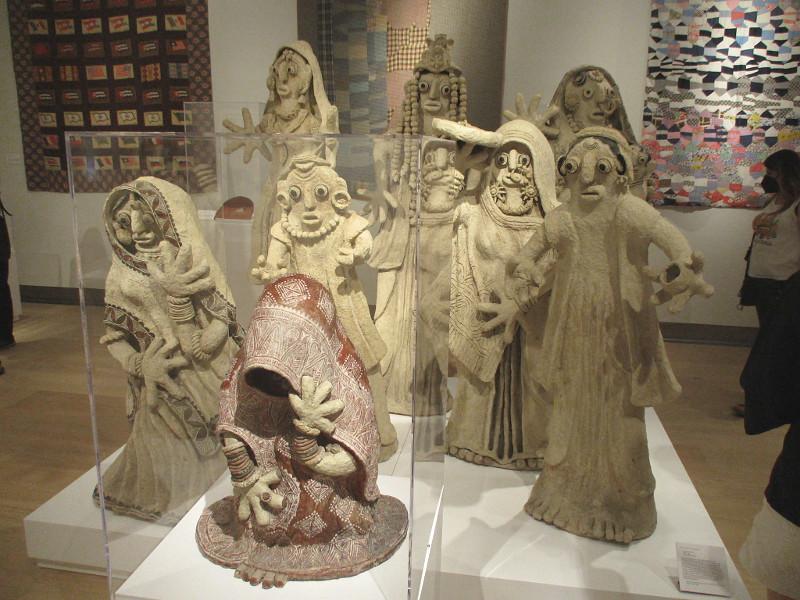
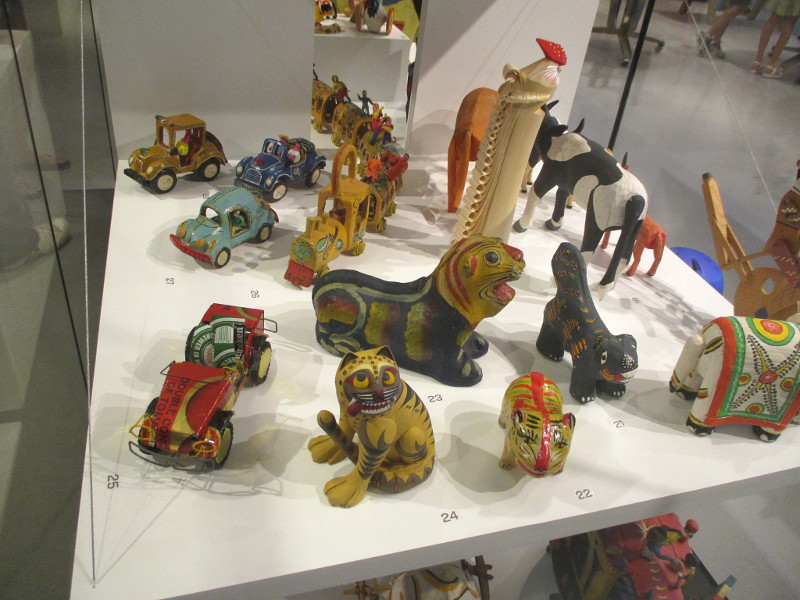
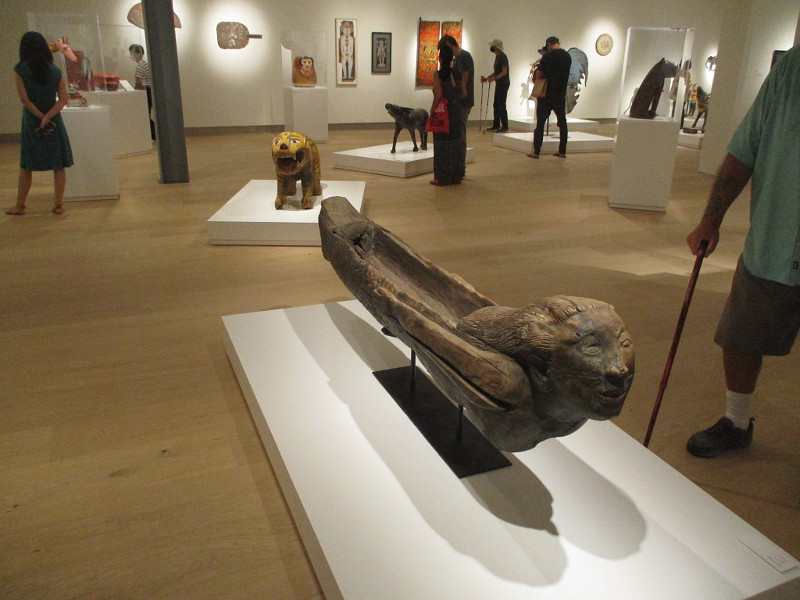
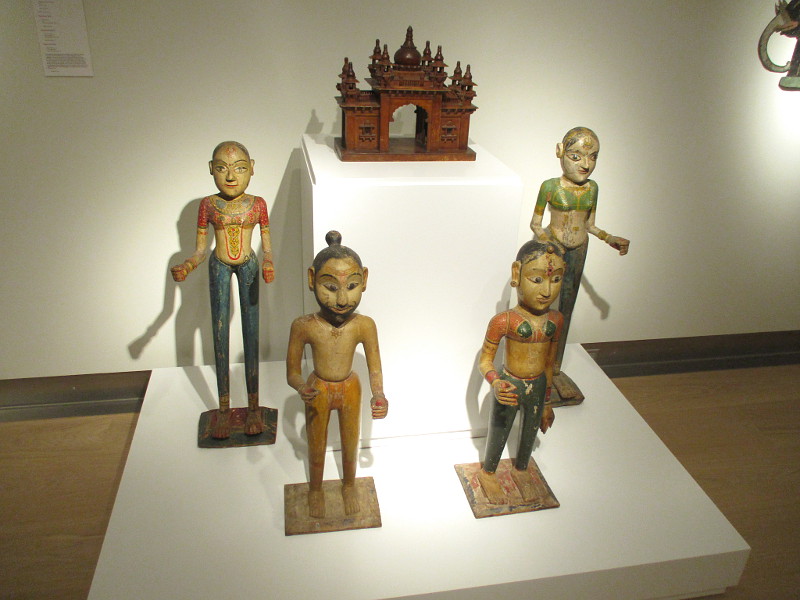
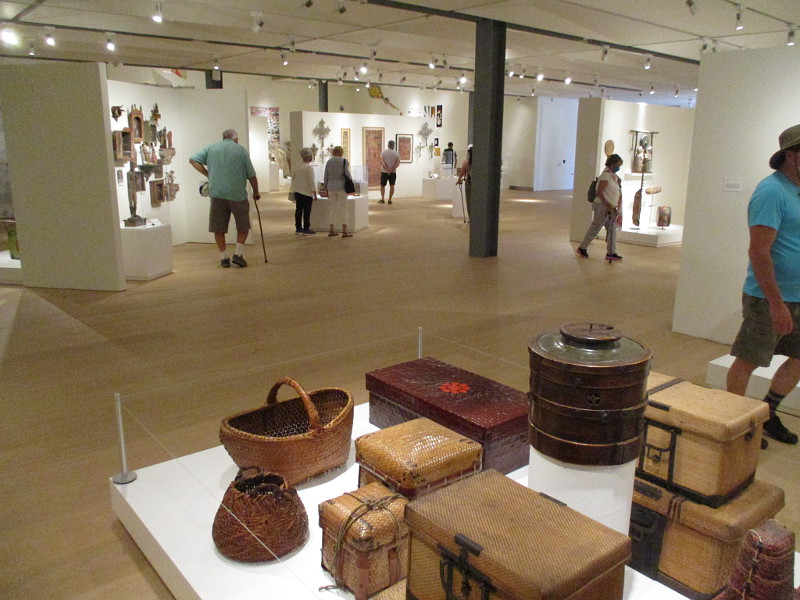
I walked about the upstairs galleries and admired the many exhibits. I particularly like folk art. I laughed at some pieces, stood in wonder before others.
Artwork handcrafted by “ordinary” folk from all around the world often feels more powerful and authentic than so-called fine art. Because its creation typically flows from human experiences that are unique but universal. Folk art represents what day-to-day people consider desirous or meaningful in life.
By the way, if you’re an artist in San Diego seeking inspiration, or if you want to do some art research, there’s a huge library on the second floor! The Frances Hamilton White Art Reference Library features a specialized collection of over 12,000 books!
I took some photos to provide a taste of the new, more-extraordinary-than-ever Mingei International Museum.
Next time you’re in Balboa Park, you definitely need to check it out! And make sure to venture outside on the second floor, to enjoy amazing views of the Plaza de Panama!
…
I live in downtown San Diego and love to walk around with my camera! You can follow Cool San Diego Sights via Facebook or Twitter!
The long absent Poet and Muse has reappeared in Balboa Park!
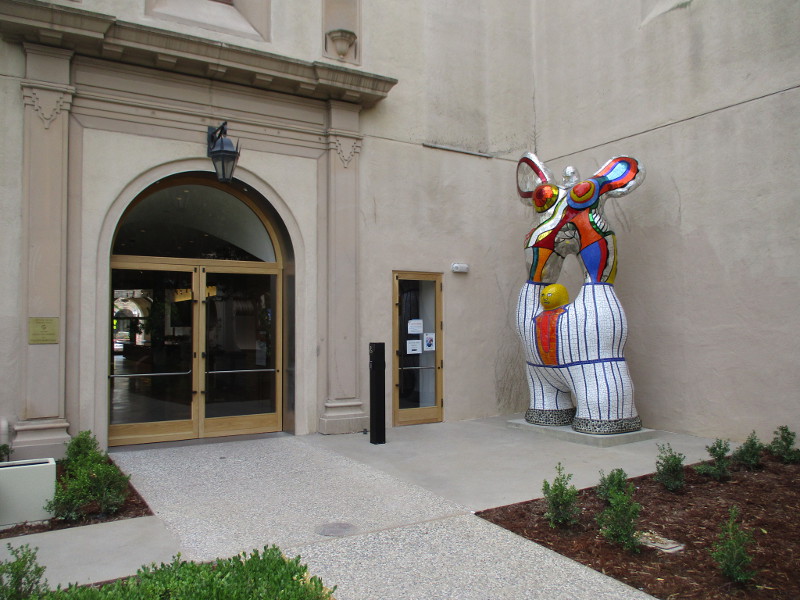
Le Poète et sa Muse–Poet and Muse–by Franco-American artist Niki de Saint Phalle, used to stand near the Mingei International Museum’s main entrance. Now, as the Mingei is almost ready to reopen after a major renovation and expansion, the sculpture has returned to public view. It has been placed in a corner of the Alcazar Garden, near the House of Charm’s tower and a new public entrance to the museum!
The beloved Nikigator is also returning to Balboa Park! The fun sculpture, also by Niki de Saint Phalle, will again welcome kids near the Plaza de Panama entrance to the Mingei. I saw today that preparation is underway to move Nikigator back from Liberty Station, where it has been located temporarily during the museum’s renovation.
The redesigned, even more amazing Mingei International Museum will open to the public on September 3, 2021!
Preparing for the return of Nikigator…
…
I live in downtown San Diego and love to walk around with my camera! You can follow Cool San Diego Sights via Facebook or Twitter!
You can easily explore Cool San Diego Sights by using the search box on my blog’s sidebar. Or click a tag! There are thousands upon thousands of photos for you to enjoy!
Magee Park in Carlsbad is a special place where both history and beauty thrive.
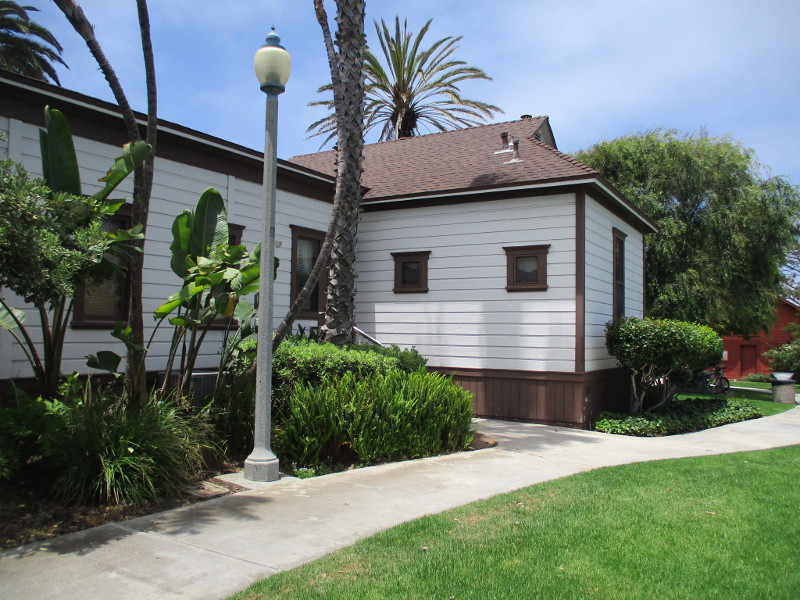
I enjoyed a walk through the park recently, pausing frequently to admire its several historical structures.
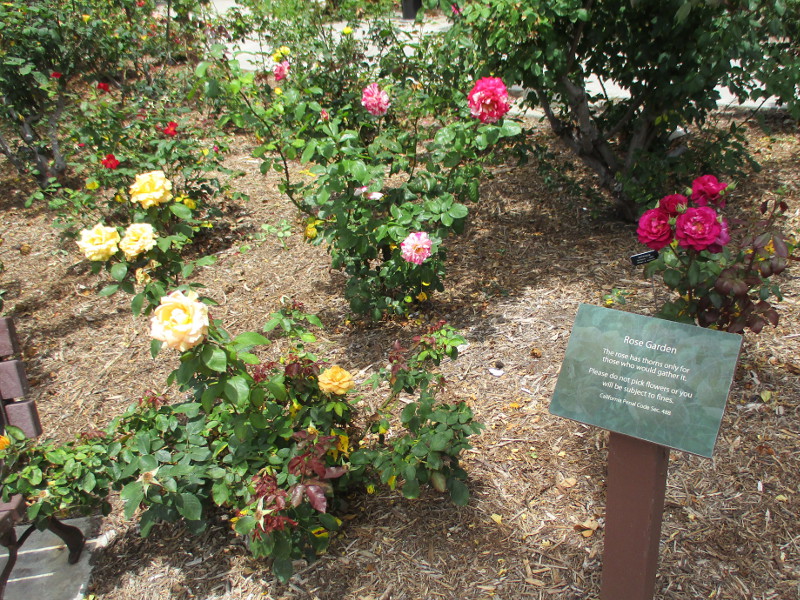
Everywhere I walked, it seemed, beds of roses greeted me. Magee Park’s rose garden is so beautiful and extensive that the American Rose Society called Carlsbad “An American Rose City” in 2002.
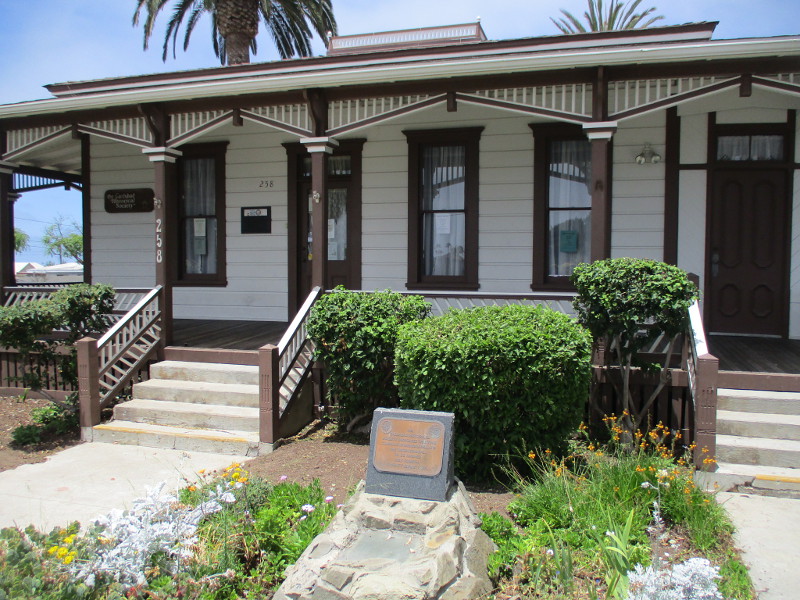
The centerpiece of the park is the 1887 Magee House, a handsome Craftsman-style house built by Samuel Church Smith, one of the founders of Carlsbad Land and Water Company. Today it is home to the Carlsbad Historical Society and their museum. Unfortunately, the museum was closed when I walked past. Read more about the Magee House’s history here.
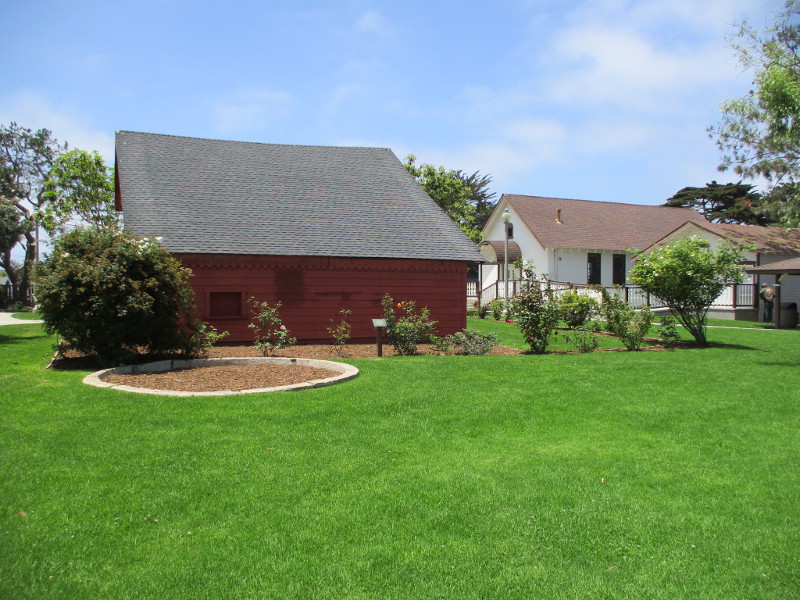
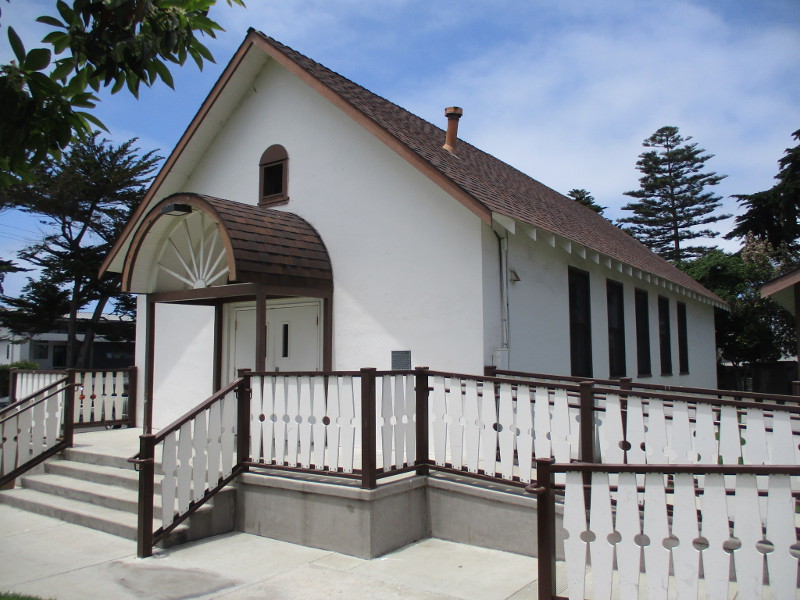
Other historic structures in Magee Park include the Shipley-Magee Barn, Heritage Hall, the Twin Inns Granary and the Twin Inns Gazebo.
During my meandering walk, I photographed many of the informative signs and plaques that I came upon.
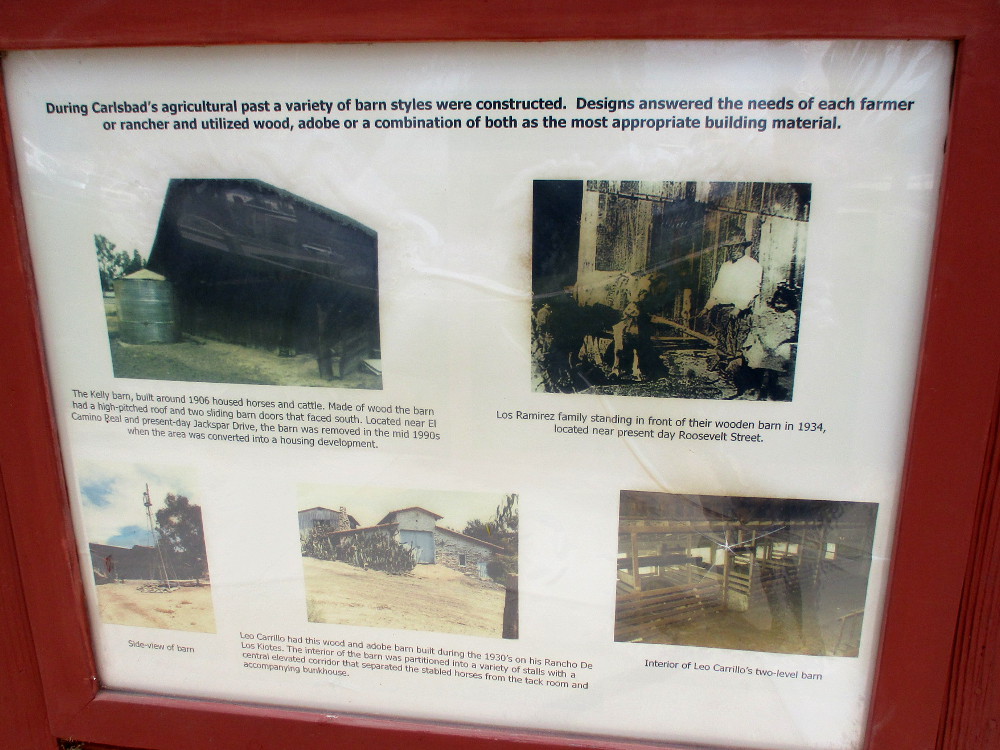
During Carlsbad’s agricultural past a variety of barn styles were constructed.The barn at Magee Historical Park is the oldest Carlsbad barn in existence. This sign on the barn’s side details its history, and tells a little about the life of Florence Shipley and her husband Hugh Magee.Vast areas of present day Carlsbad were once used to raise cattle and horses.Heritage Hall in Carlsbad, California.
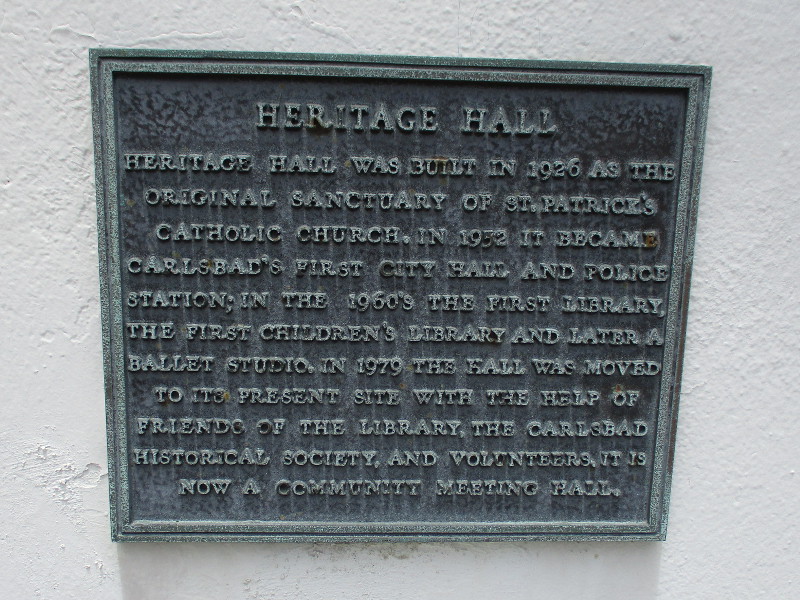
HERITAGE HALL
HERITAGE HALL WAS BUILT IN 1926 AS THE ORIGINAL SANCTUARY OF ST. PATRICK’S CATHOLIC CHURCH. IN 1952 IT BECAME CARLSBAD’S FIRST CITY HALL AND POLICE STATION; IN THE 1960’S THE FIRST LIBRARY, THE FIRST CHILDREN’S LIBRARY AND LATER A BALLET STUDIO. IN 1979 THE HALL WAS MOVED TO ITS PRESENT SITE WITH THE HELP OF FRIENDS OF THE LIBRARY, THE CARLSBAD HISTORICAL SOCIETY, AND VOLUNTEERS. IT IS NOW A COMMUNITY MEETING HALL.
The Twin Inns Granary.
THE TWIN INNS GRANARY
ORIGINALLY BUILT BY EDDIE KENTNER, PROPRIETOR OF THE WORLD FAMOUS CARLSBAD TWIN INNS, THIS GRANARY WAS DONATED TO THE CITY OF CARLSBAD BY NEIMAN’S VILLAGE FAIRE AND MOVED TO MAGEE PARK IN 1985. IT WAS RESTORED THROUGH THE GENEROUS ASSISTANCE OF THE CARLSBAD EVENING ROTARY CLUB.
Now I’ve begun to walk around the Magee House…
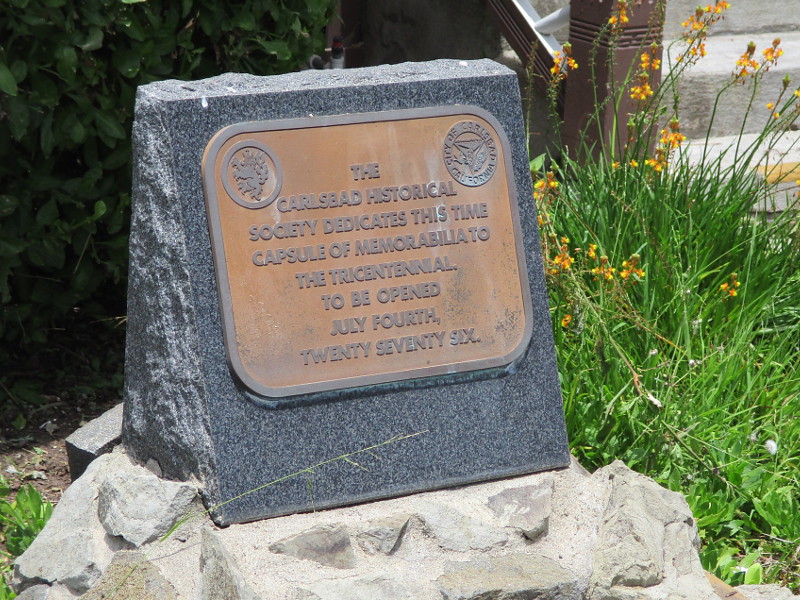
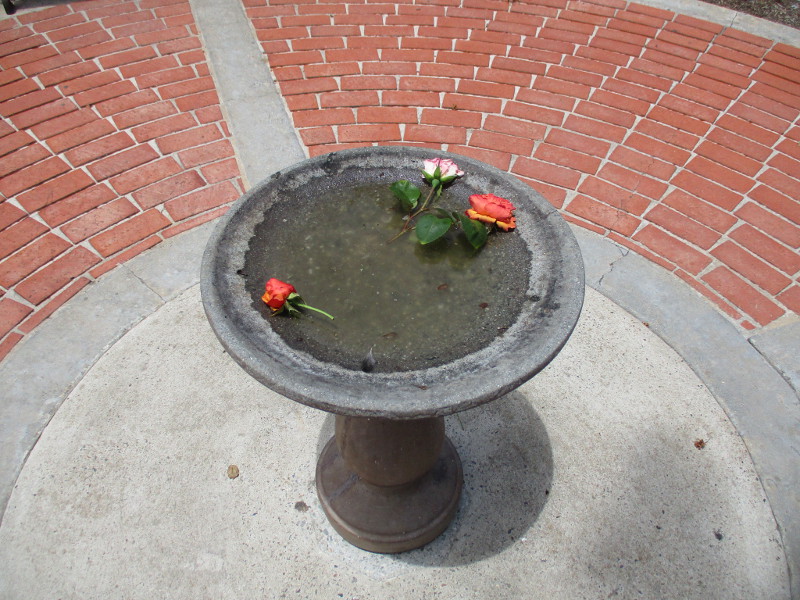
A time capsule in front of the Magee House placed by the Carlsbad Historical Society. It will be opened July 4, 2076, our nation’s Tricentennial.Roses by the Magee House’s welcoming veranda.Circular patio with birdbath beside the Magee House. More roses.The old Twin Inns Gazebo nearby.Continuing my walk around the Magee House.
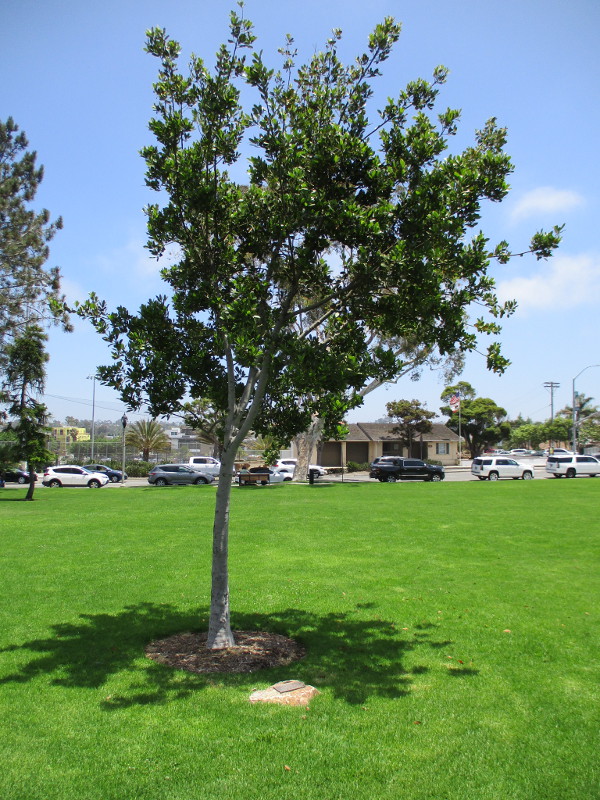
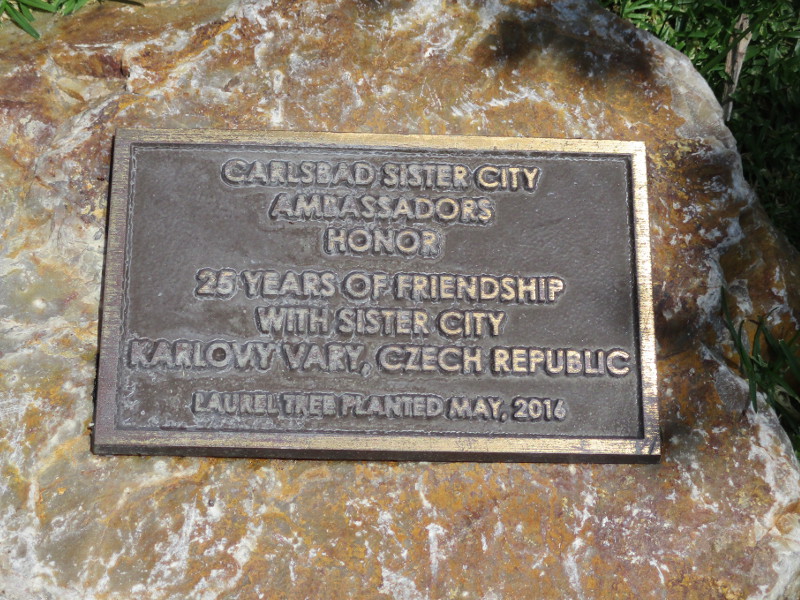
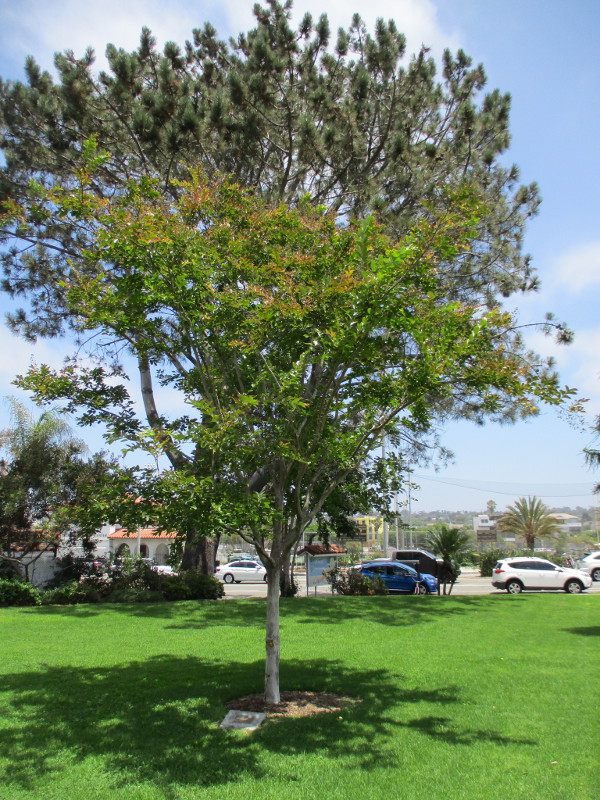
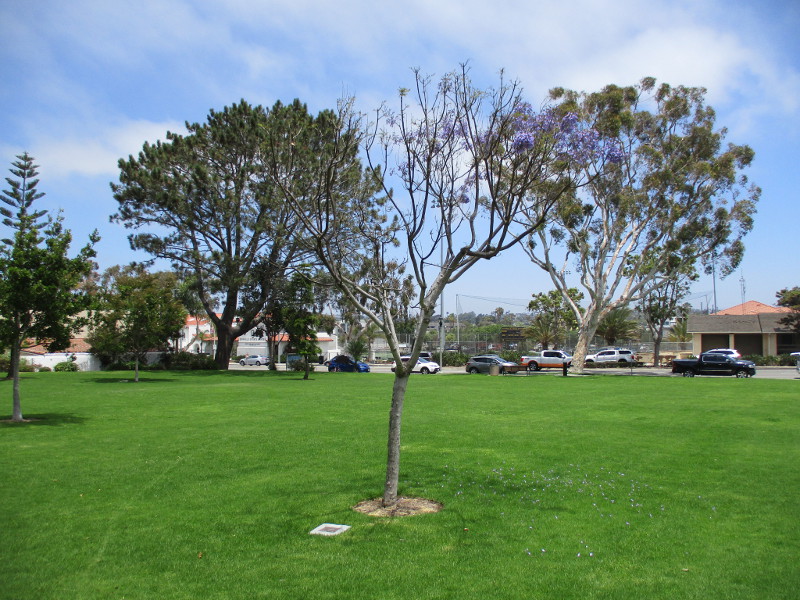
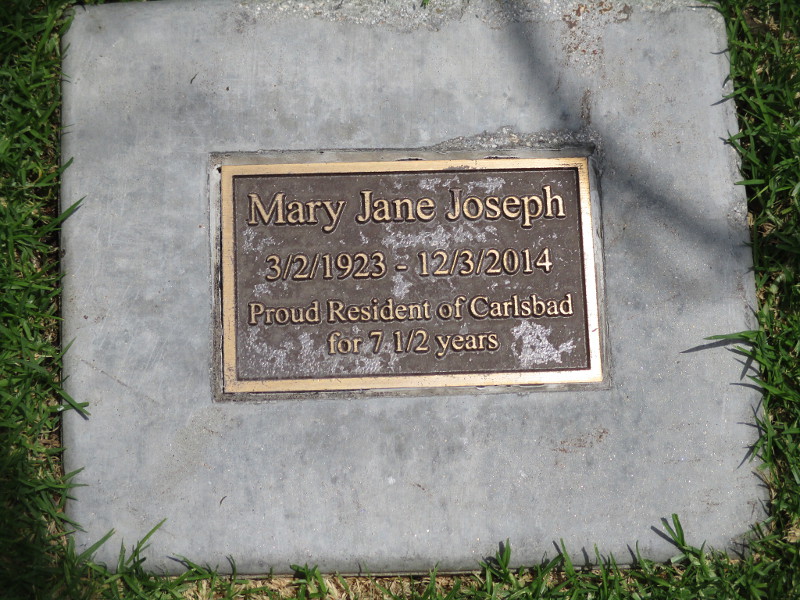
As I walked through wide, grassy Magee Park, I noticed it has several trees with dedication plaques.
I found three of them…
25 years of friendship with sister city Karlovy Vary, Czech Republic.In loving memory of Doris A. Gordon.Mary Jane Joseph. Proud resident of Carlsbad.
…
I live in downtown San Diego and love to walk around with my camera! You can follow Cool San Diego Sights via Facebook or Twitter!
You can easily explore Cool San Diego Sights by using the search box on my blog’s sidebar. Or click a tag! There are thousands upon thousands of photos for you to enjoy!
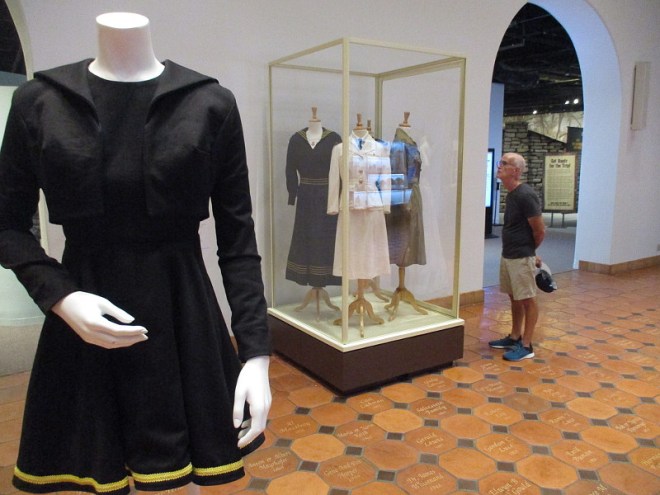
Anyone in San Diego who is interested in history, fashion, or the evolution of fashion should visit the San Diego History Center in Balboa Park.
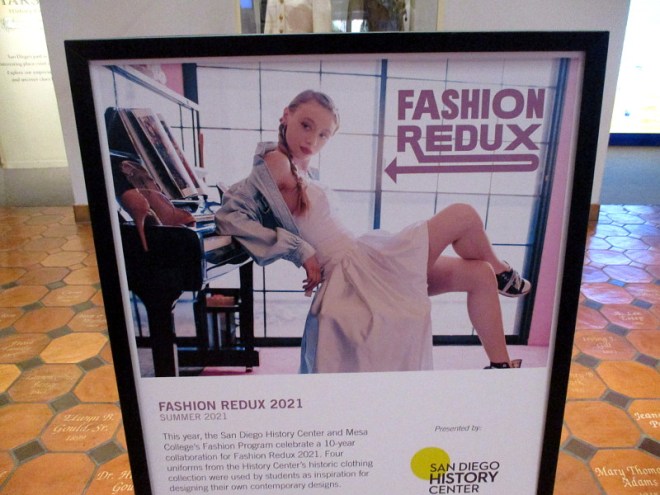
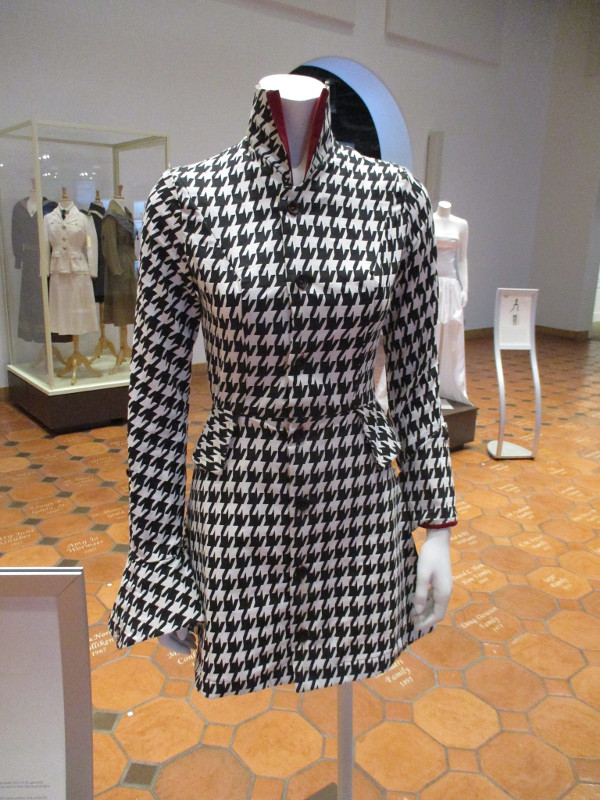
A new exhibit opened on Sunday titled Fashion Redux 2021. Collaborating with the History Center, inspired by four plain-looking late 19th to mid 20th century woman’s uniforms, students from Mesa College’s Fashion Program have designed similar but more contemporary clothing!
The four articles of clothing in the museum’s collection that were considered by the students are: a WWII Uniform, Navy Nurse Corps, c. 1940s; a ZLAC Rowing Uniform, c. 1895; a Girl Scout Uniform, c. 1919; and a Knights of Columbus Uniform, c. late 19th or early 20th century.
Just seeing those old uniforms in the San Diego History Center is interesting in itself, but to see how fashion design students have chosen to alter century-old styles provides a glimpse into the creative human mind, and perhaps a sense of our culture’s present day aesthetic tastes.
The exhibit allows visitors to compare the different clothing in detail, and learn about the talented students who are participating in this Fashion Redux.
Here is some of what you’ll see…
…
I live in downtown San Diego and love to walk around with my camera! You can follow Cool San Diego Sights via Facebook or Twitter!
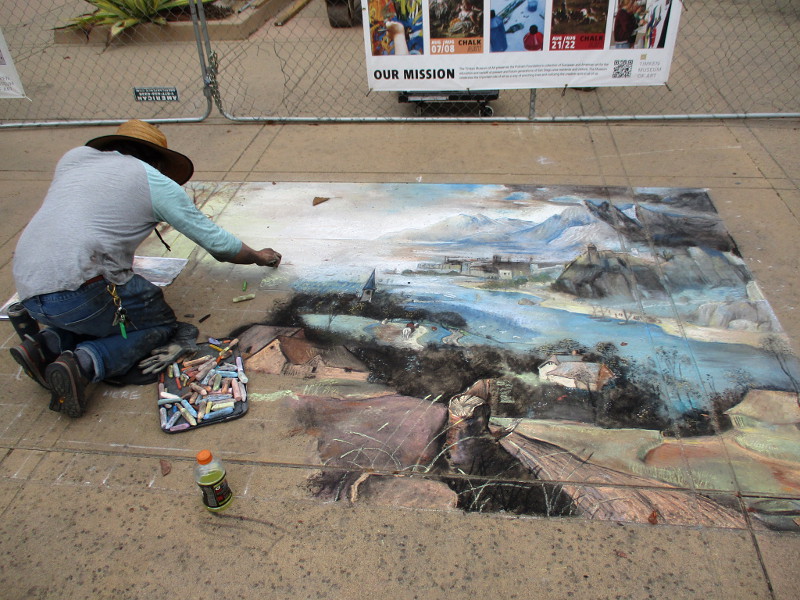
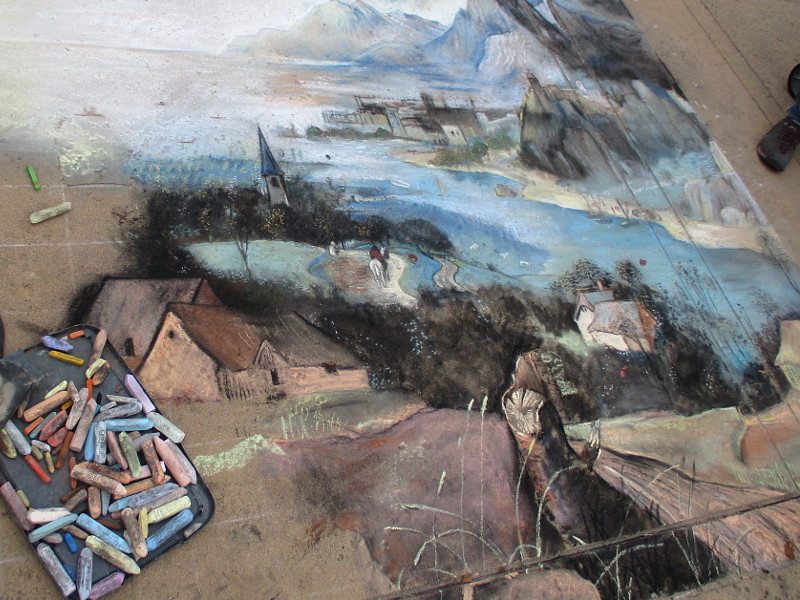
This afternoon a famous painting displayed in the Timken Museum of Art was turned to chalk! I witnessed part of the transformation myself, right in front of the museum in Balboa Park!
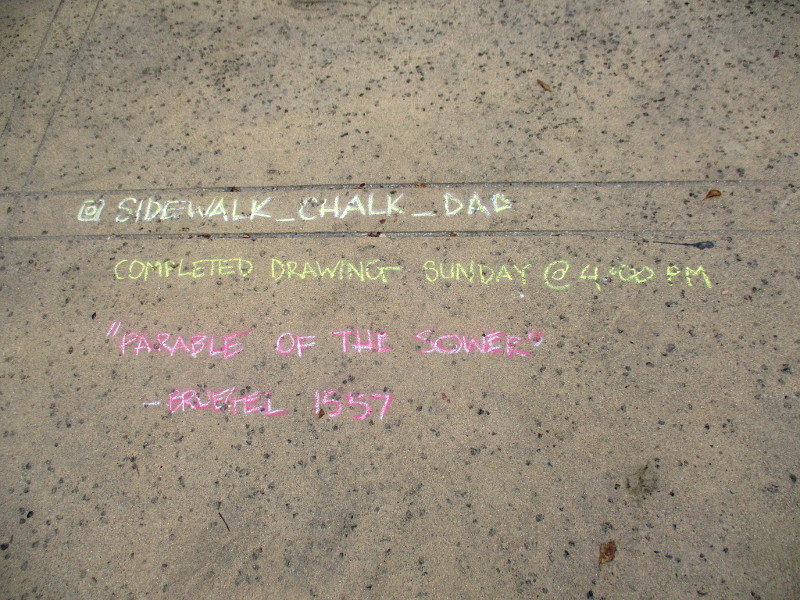
The Timken Museum’s summer weekend Creation Station event continued today. Part of the fun was a chalk art recreation of the 1557 painting Parable of the Sower, by Pieter Bruegel the Elder. Anybody walking through the Plaza de Panama could watch the chalk artist at work. If you want to compare the chalk art I photographed with the actual oil painting, click here!
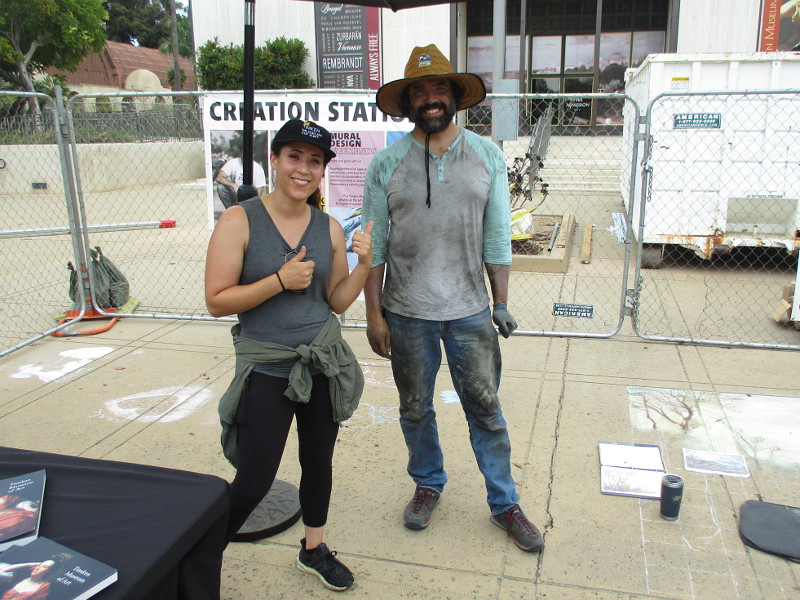
The outdoor Creation Station’s amazing chalk art flows from the talented hands of @sidewalk_chalk_dad.
Unfortunately, I didn’t walk by after the artwork was completed. Use your imagination!
You can see another chalk art recreation of a painting in the Timken’s fine art collection by clicking here!
That smiling guy covered with chalk? The artist, of course!
…
I live in downtown San Diego and love to walk around with my camera! You can follow Cool San Diego Sights via Facebook or Twitter!




































 Cool San Diego Sights!