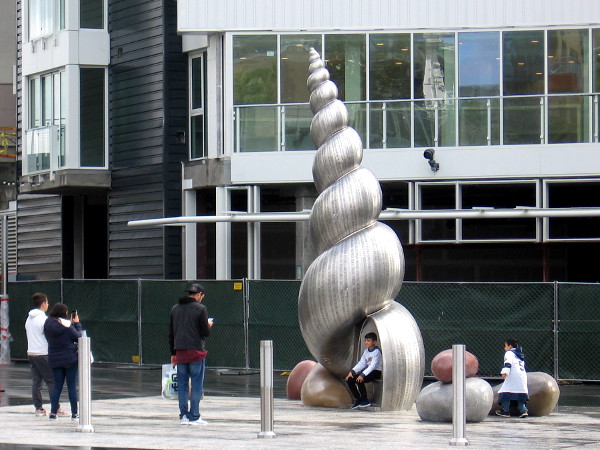
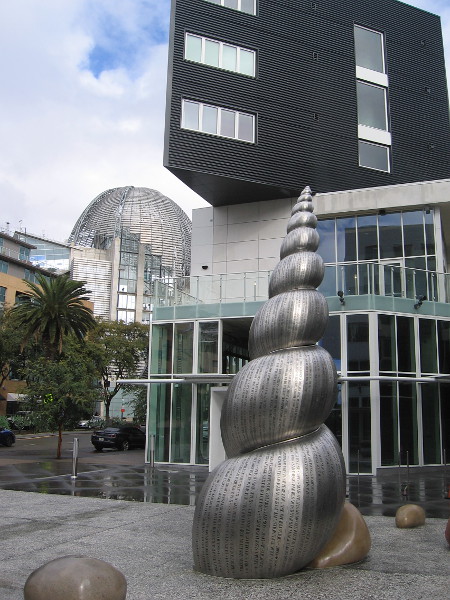
A child of San Diego sits in an enormous sculpture of a living seashell, a Growing Home.
Some amazing public art was installed in East Village about a week ago!
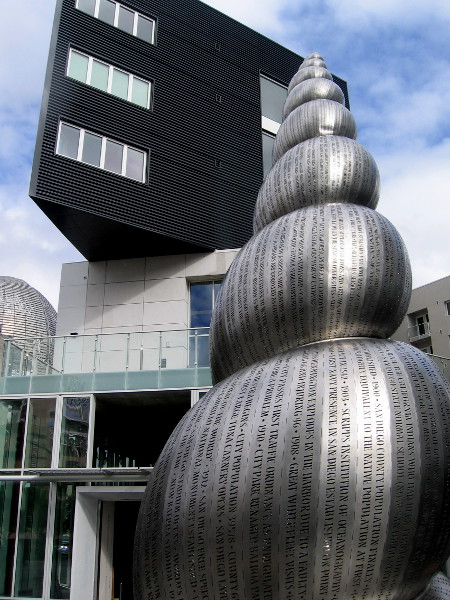
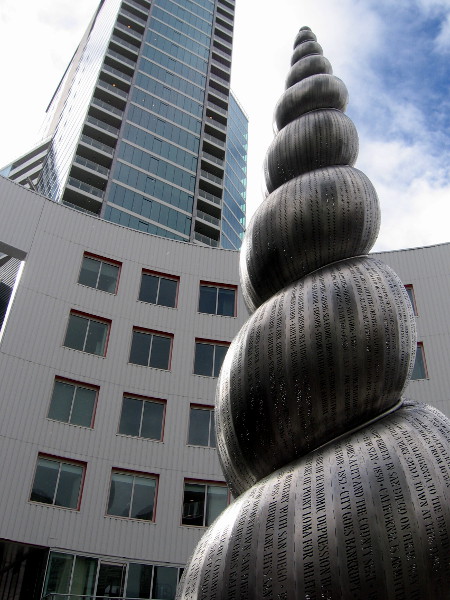
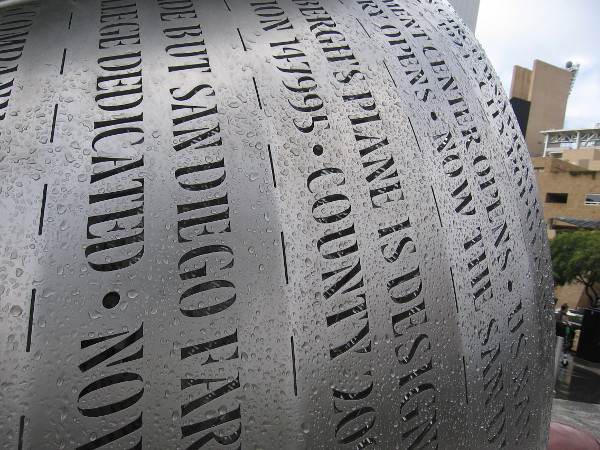
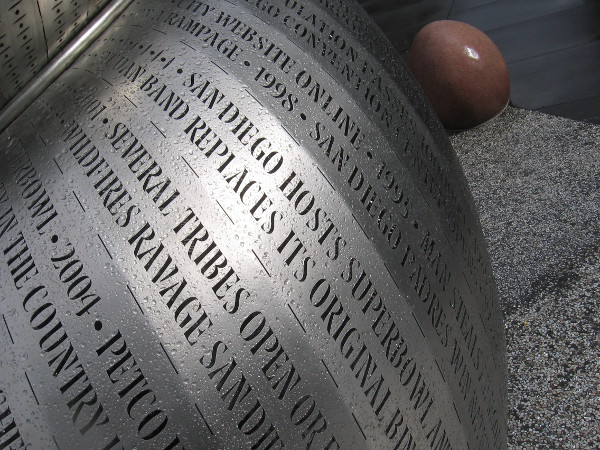
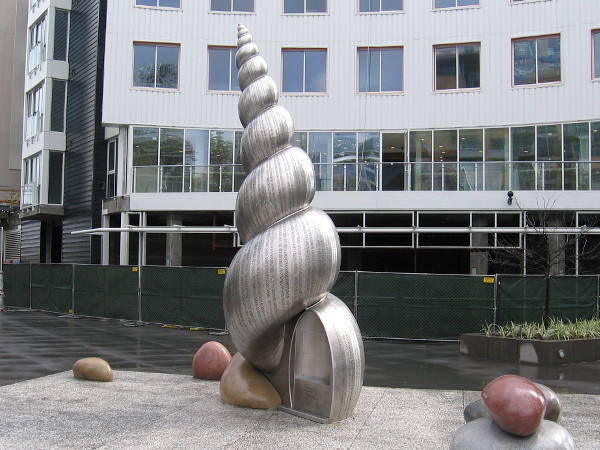
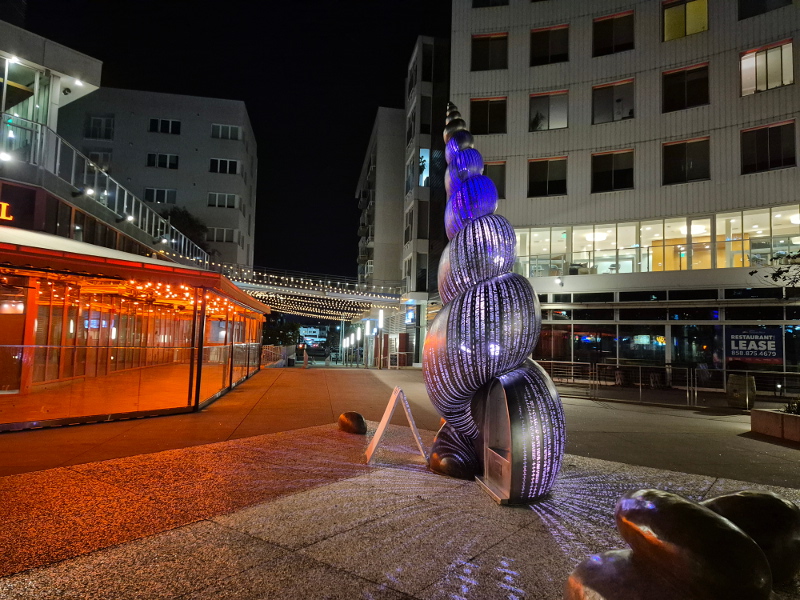
Growing Home is an enormous stainless steel sculpture of a sea snail’s living shell. Laser-cut into the upward coiling shell are notable events from San Diego’s history. The sculpture can be found on the east side of Park Boulevard near Petco Park and the downtown Central Library. It stands at the new Park 12 – The Collection luxury apartments.
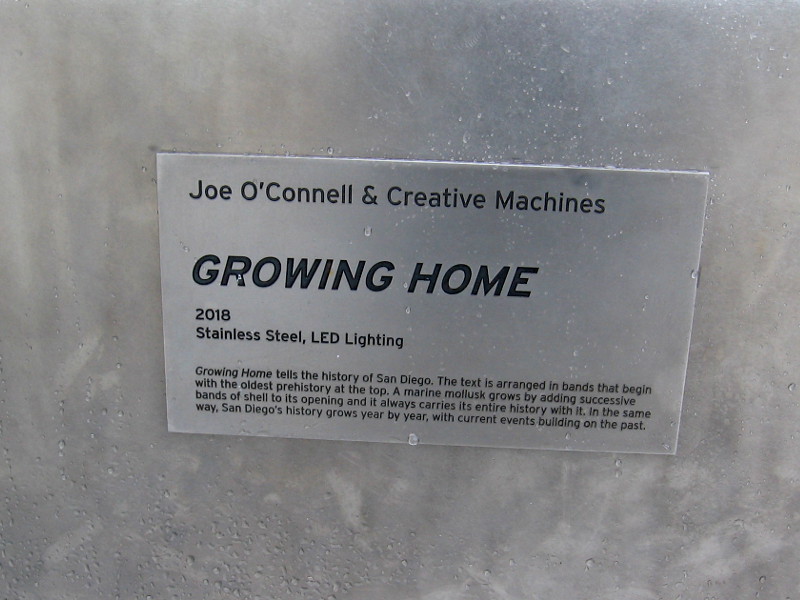
Growing Home was created by Joe O’Connell and Creative Machines and is made of stainless steel with LED lighting. Creative Machines produces interactive and monumental art for clients around the world. They are based in Tucson, Arizona.
The shell represents the ever-growing city in which we live. As history has progressed, the shell has grown and grown.
I took these photos after a rain shower, so the large wet stones arranged next to the seashell seem to lie glistening on a beach!
Growing Home rises as public art at Park 12 – The Collection, new luxury apartments in San Diego’s East Village.Growing Home, 2018, Joe O’Connell and Creative Machines, stainless steel and LED lighting. A city’s history grows like the shell of a marine mollusk.History becomes an essential part of an ever-growing city–a city that is home to many.Growing Home features headlines of events that have shaped San Diego history.The lattice dome of the San Diego Central Library rises beyond Park Boulevard.Moments in history are preserved as words written in the growing shell.San Diego history become part of our lives. The city is our home.The coiled, elongated shell of a sea snail. Sit inside on a small bench for a fun photo!Growing Home rises at Park 12 – The Collection, in San Diego’s East Village.
UPDATE!
Seven years later(!) I took a photo at night…
…
I live in downtown San Diego and love to walk around with my camera! You can follow Cool San Diego Sights via Facebook or Twitter!
You can easily explore Cool San Diego Sights by using the search box on my blog’s sidebar. Or click a tag! There are thousands upon thousands of photos for you to enjoy!
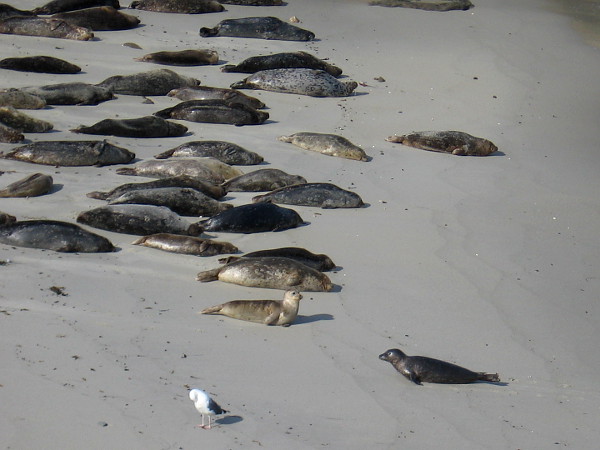
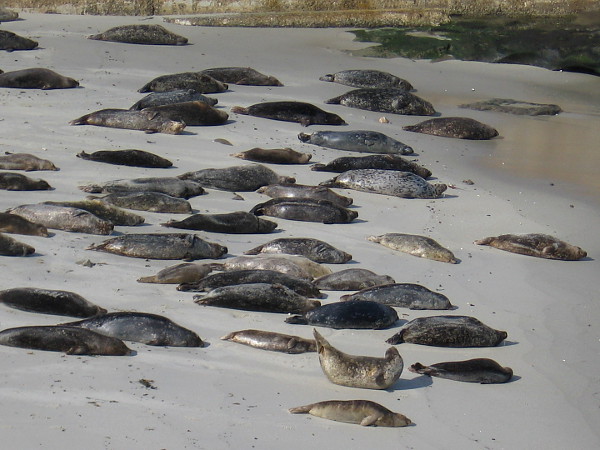
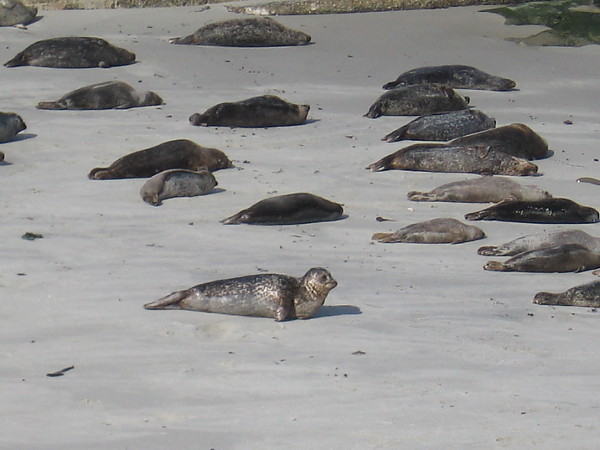
Harbor seals lie in the sun on Children’s Pool Beach. The Children’s Pool is closed to the public during pupping season.
Every so often I have to walk by the water in La Jolla. It’s one of the most beautiful places in the world.
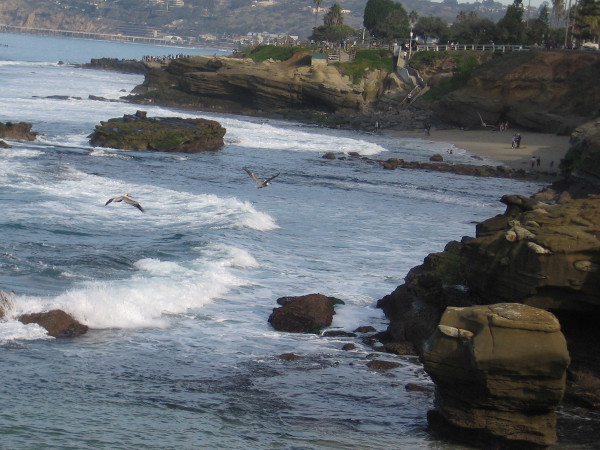
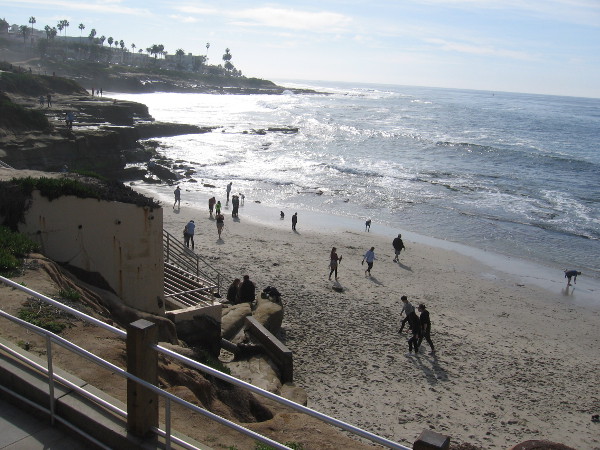
Today I headed to The Children’s Pool to enjoy harbor seals, pelicans in flight, the mighty ocean, the rocky shoreline and blue sky. Pupping season has just begun (December 15 through May 15) and so Children’s Pool Beach is closed to the public.
The Children’s Pool was the gift of local philanthropist Ellen Browning Scripps in 1931. A concrete seawall was built to make the beach safe for public swimming.
Harbor seals began to use the beach in the 1990’s and over time sand has filled the swimming area. There has been a long running legal battle over the use of the beach.
The Children’s Pool also happens to be a popular destination of scuba divers because of nearby reefs.
Today people flock from far and wide to watch the seals from a safe distance.
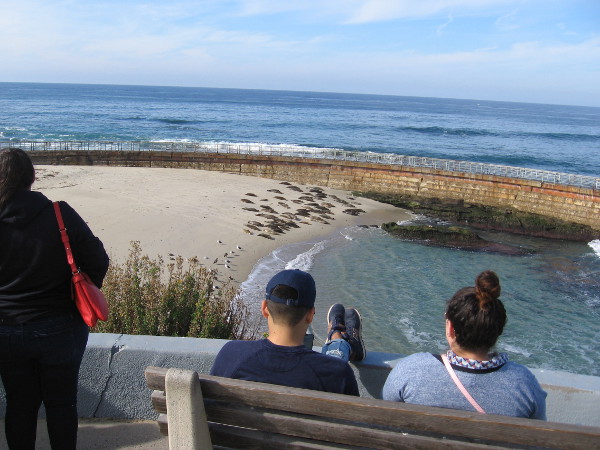
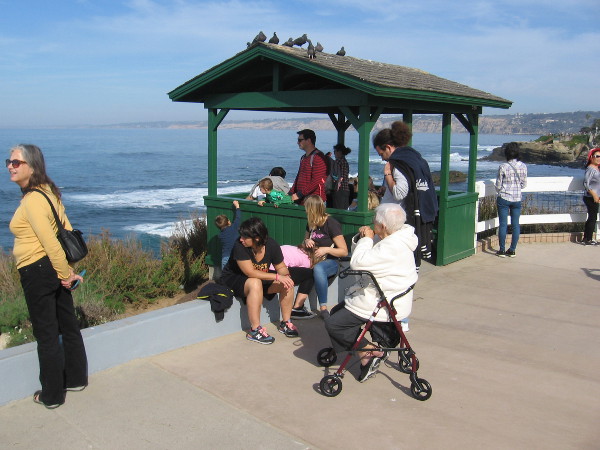
Sitting on a bench overlooking The Children’s Pool, observing the resident colony of harbor seals.People look toward Children’s Pool from the shady green gazebo.People along the wall near the lifeguard station. Many tourists now travel to La Jolla just to see the local colony of harbor seals.The Children’s Pool breakwater was built in 1931. It was a gift to La Jolla by journalist and philanthropist Ellen Browning Scripps.A colony of harbor seals suns on the sand near the seawall, which like the beach is off limits during pupping season.The seals move about from time to time. They turn on their sides, raise their heads and hind flippers, and inch forward on their stomachs.A lone harbor seal heads across the sand to the water’s edge by wriggling awkwardly on its belly.It swims out toward a nearby rock.With difficulty, a harbor seal inches up onto the large rock that lies just off the beach. (Sea lions, which sometimes share the beach, are much better climbers.)The perfect place for a peaceful nap!Looking west from the closed Children’s Pool toward the broad Pacific Ocean and gently breaking waves.Pelicans fly north. Scripps Pier and the scenic cliffs just south of Torrey Pines lie in the distance.The pelicans fly toward Seal Rock and Shell Beach, and distant jutting rocks west of La Jolla Cove.Looking west. Perhaps you can see why I love this place.Looking south toward Wipeout Beach.Another photo of the colony of harbor seals at The Children’s Pool in La Jolla.A young harbor seal enjoys a fine day on the beach.
…
This blog now features thousands of photos around San Diego! Are you curious? There’s lots of fun stuff to check out!
Here’s the Cool San Diego Sights main page, where you can read the most current blog posts. If you’re using a phone or small mobile device, click those three parallel lines up at the top–that opens up my website’s sidebar, where you’ll see the most popular posts, a search box, and more!
To enjoy future posts, you can also “like” Cool San Diego Sights on Facebook or follow me on Twitter.
Visitors to Cabrillo National Monument investigate the tidepools.
Cabrillo National Monument at the end of San Diego’s Point Loma peninsula is a place of many wonders.
Visitors can enjoy breathtaking views of San Diego, its big, beautiful bay, Coronado’s North Island and the Pacific Ocean. They can enter the Old Point Loma Lighthouse which was built in 1855 to guide ships into San Diego’s harbor. They can see the iconic statue dedicated to Juan Rodríguez Cabrillo, the explorer who discovered San Diego Bay in 1542 on behalf of Spain. They can watch the migration of gray whales, move through native flora on the Bayside Trail, and check out bunkers that were erected as a coastal defense during World War II.
And by heading a little off the beaten track, visitors can also explore amazing tidepools!
Where are they?
Shortly after passing the park’s Entrance Station, turn right on Cabrillo Road and drive down the hill to the Point Loma Tide Pools.
Make sure to arrive around the time of low tide. Wear sturdy shoes with good traction. Then carefully walk from the parking lot down a short path to the sandstone cliffs and slippery intertidal zone rocks. That’s where you’ll find abundant sea life.
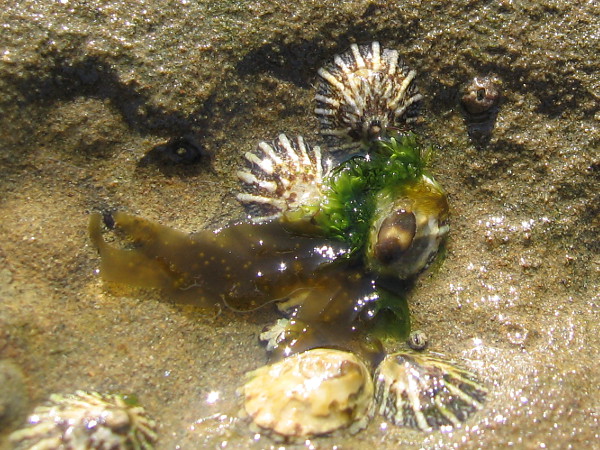
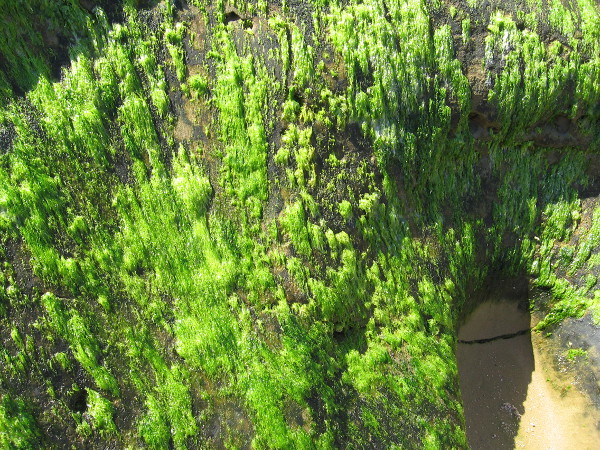
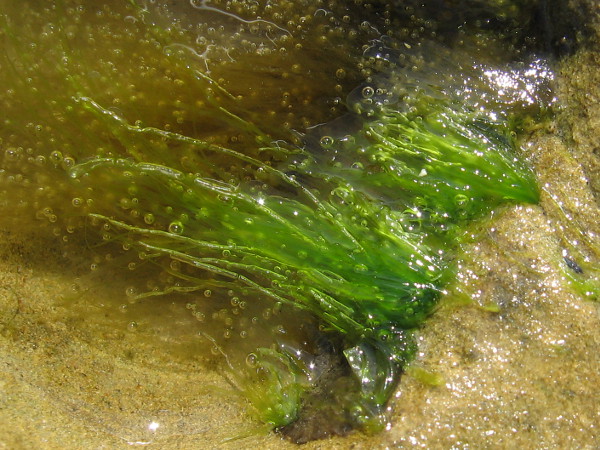
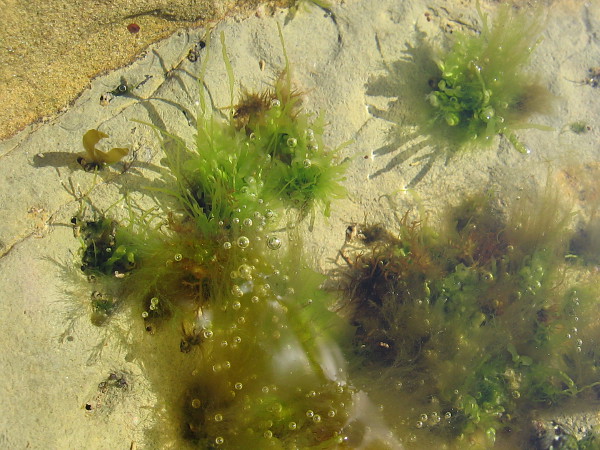
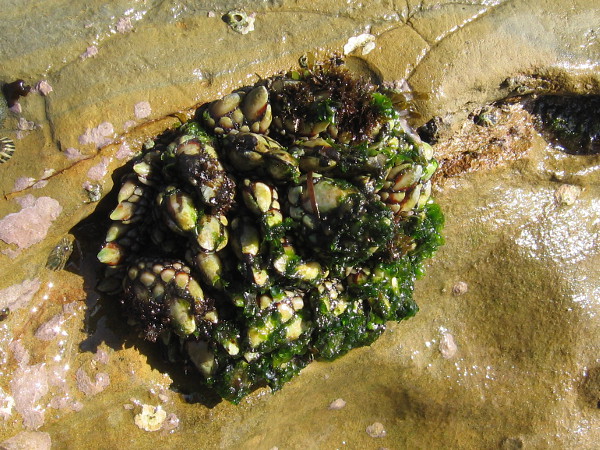
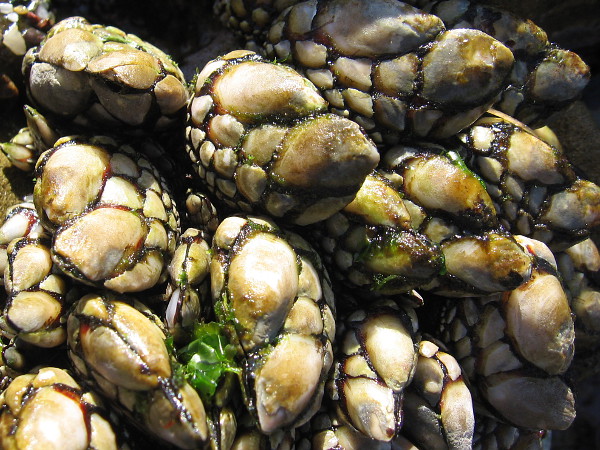
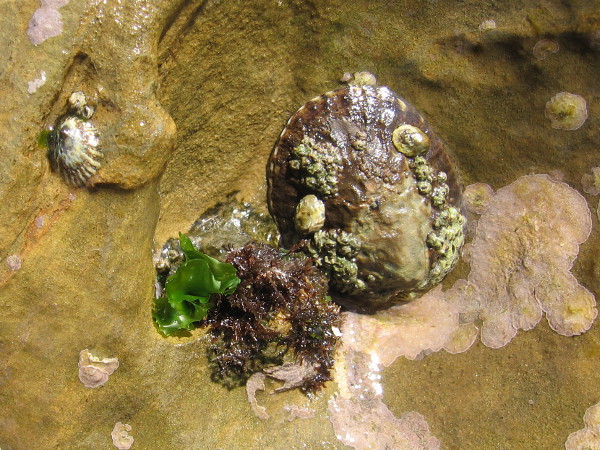
It’s easy to spot all sorts of diverse marine animals, invertebrates and plants at the ocean’s edge. One can find surf grass, sea lettuce, dead man’s fingers, sea hares, lined shore crabs, bat stars, aggregating anemones, sea urchins, limpets, chitons, periwinkle snails, California mussels, lobsters and even small octopuses!
I took some photographs about two hours before low tide!
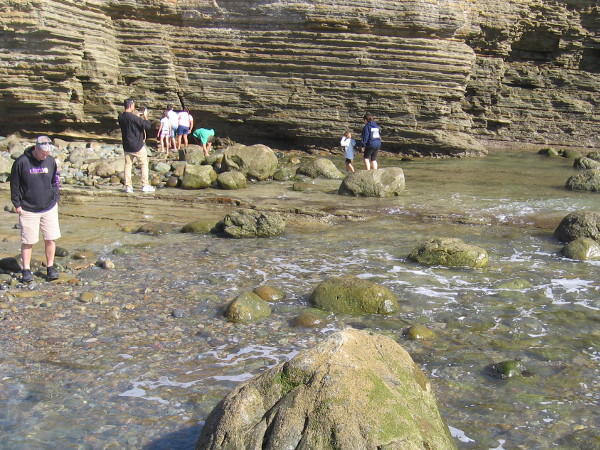
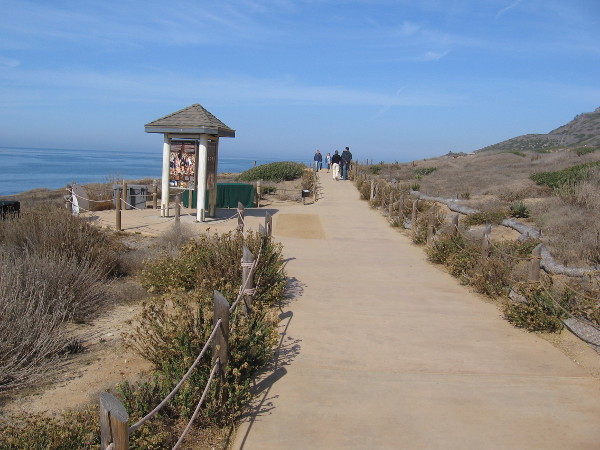
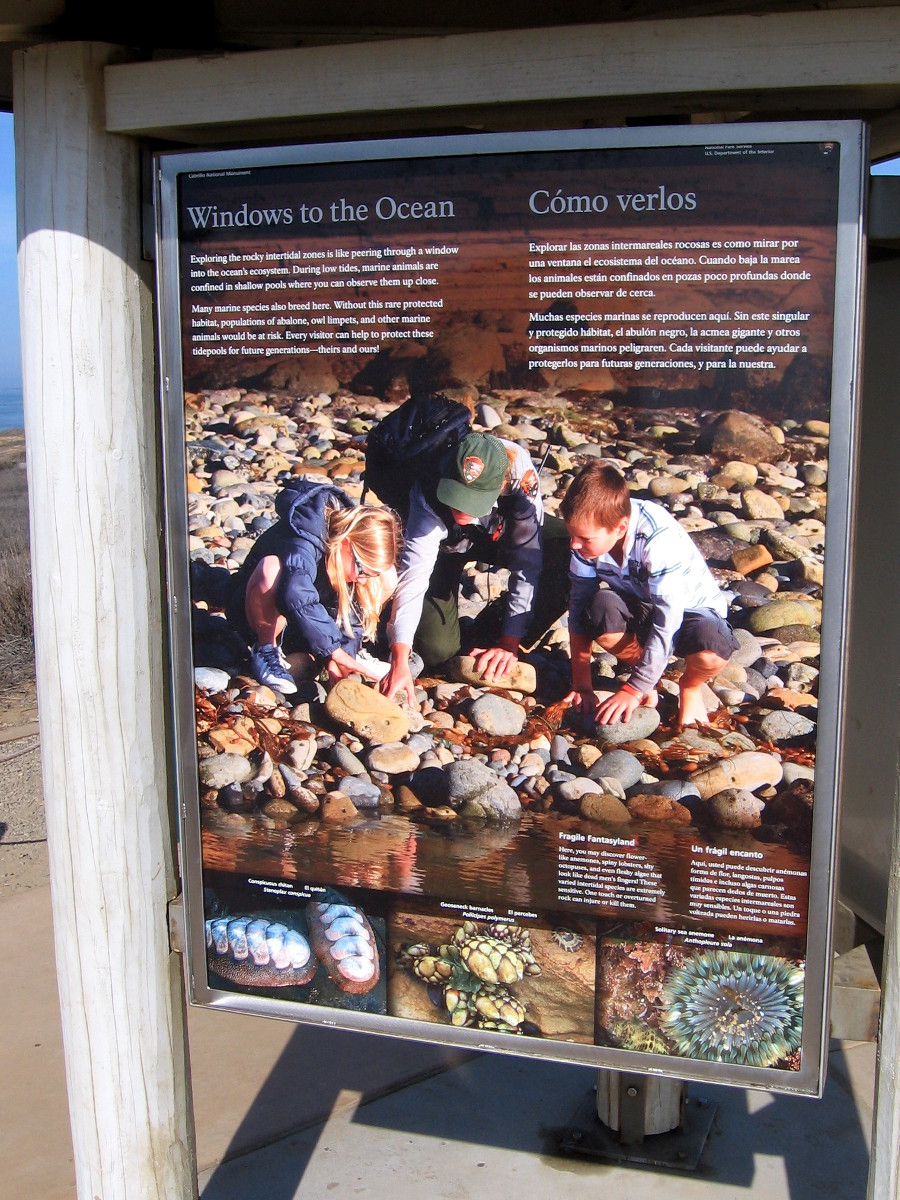
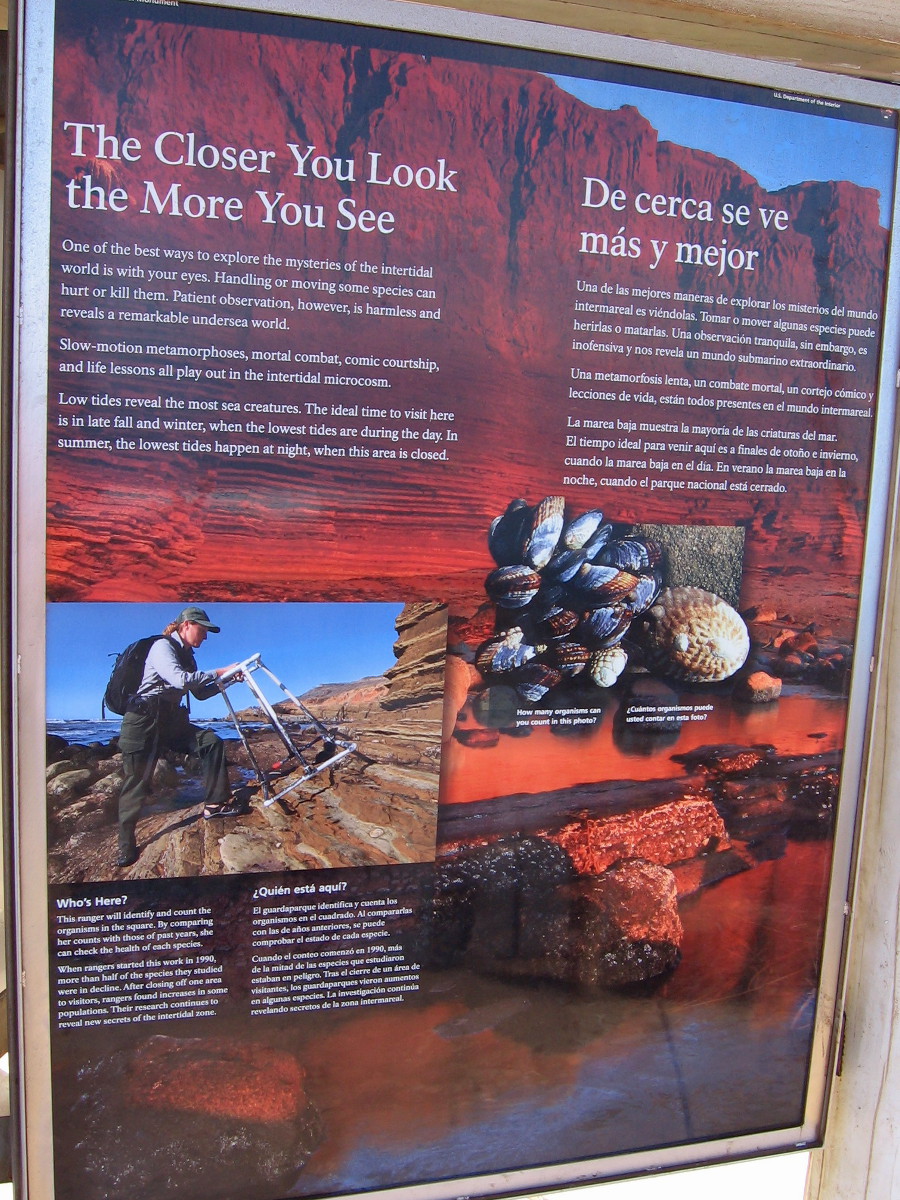
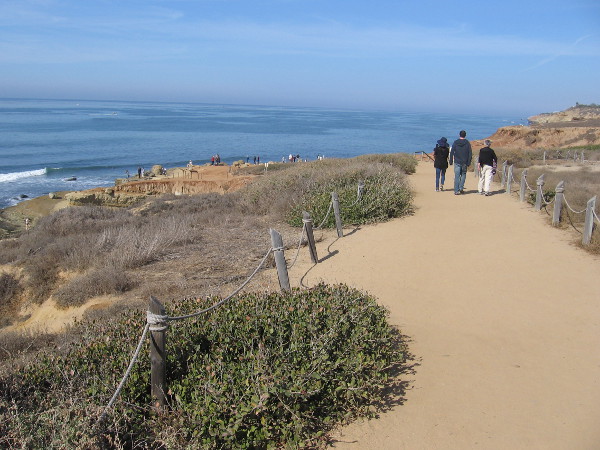
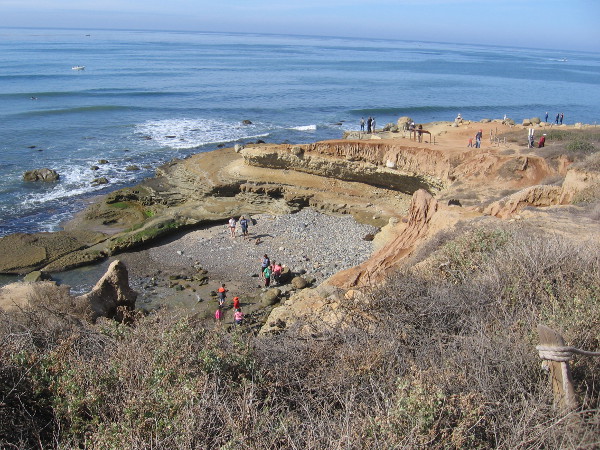
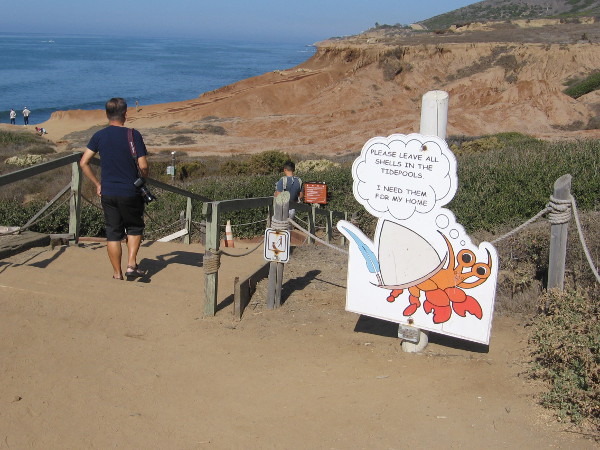
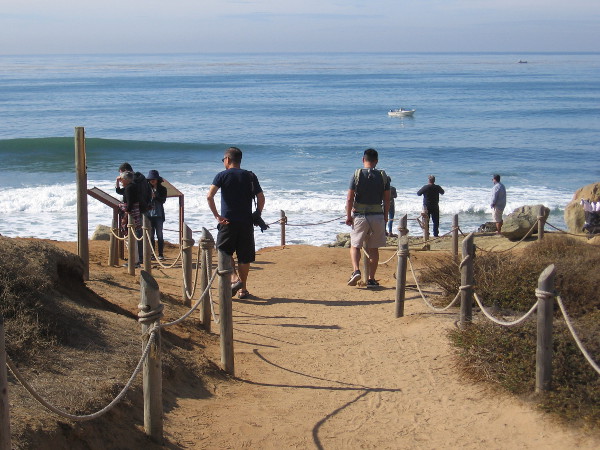
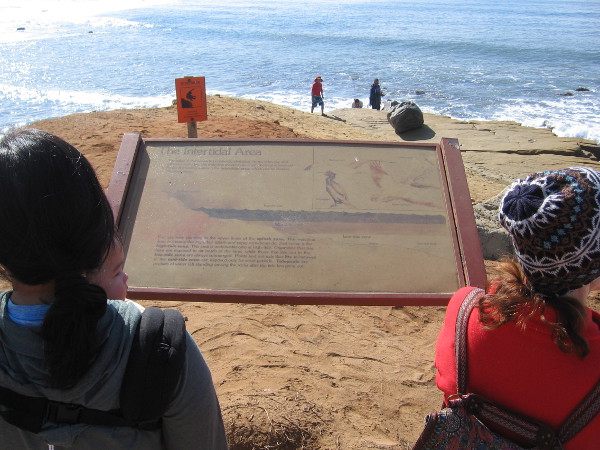
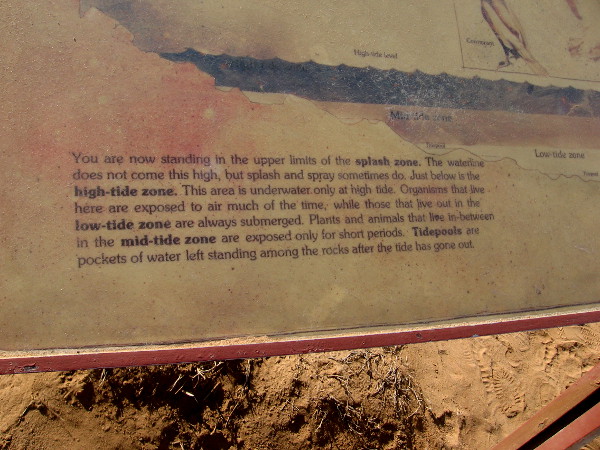
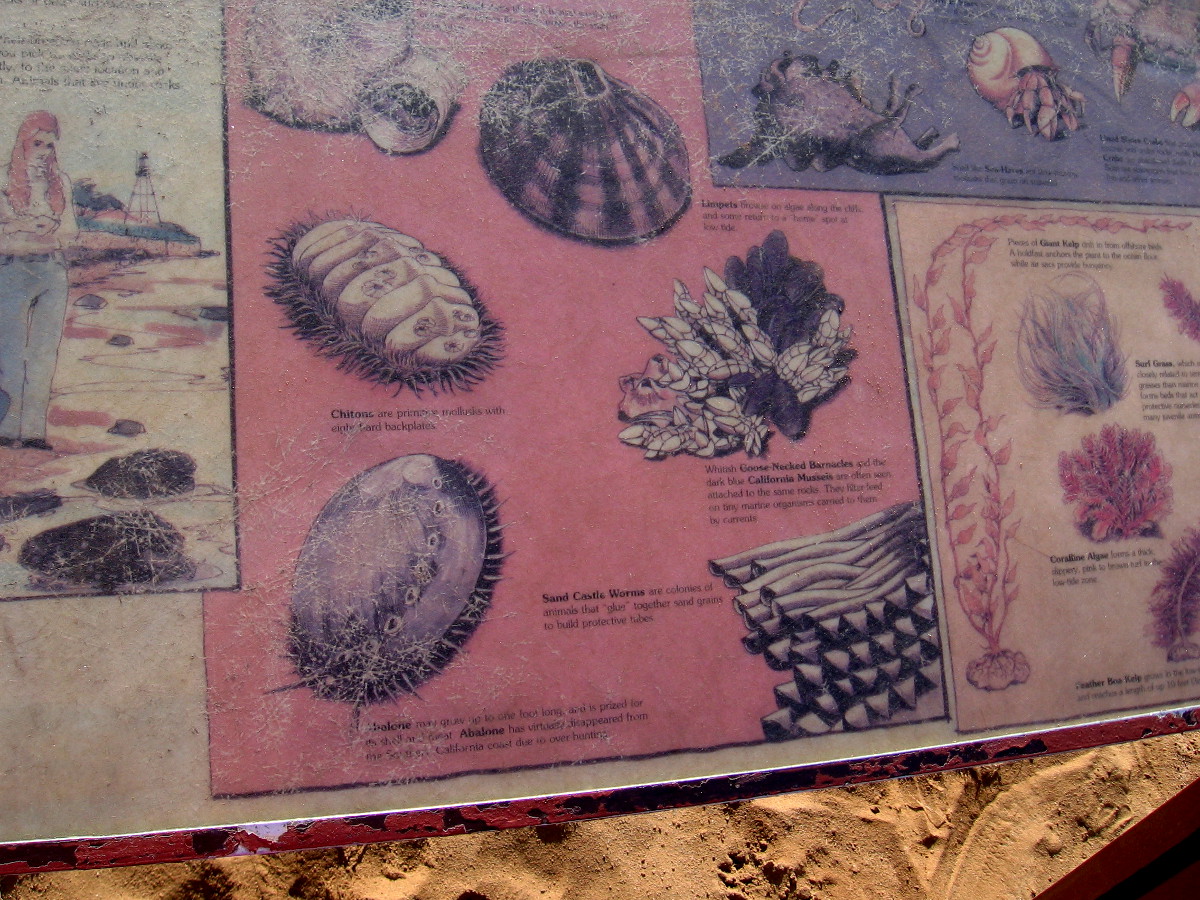
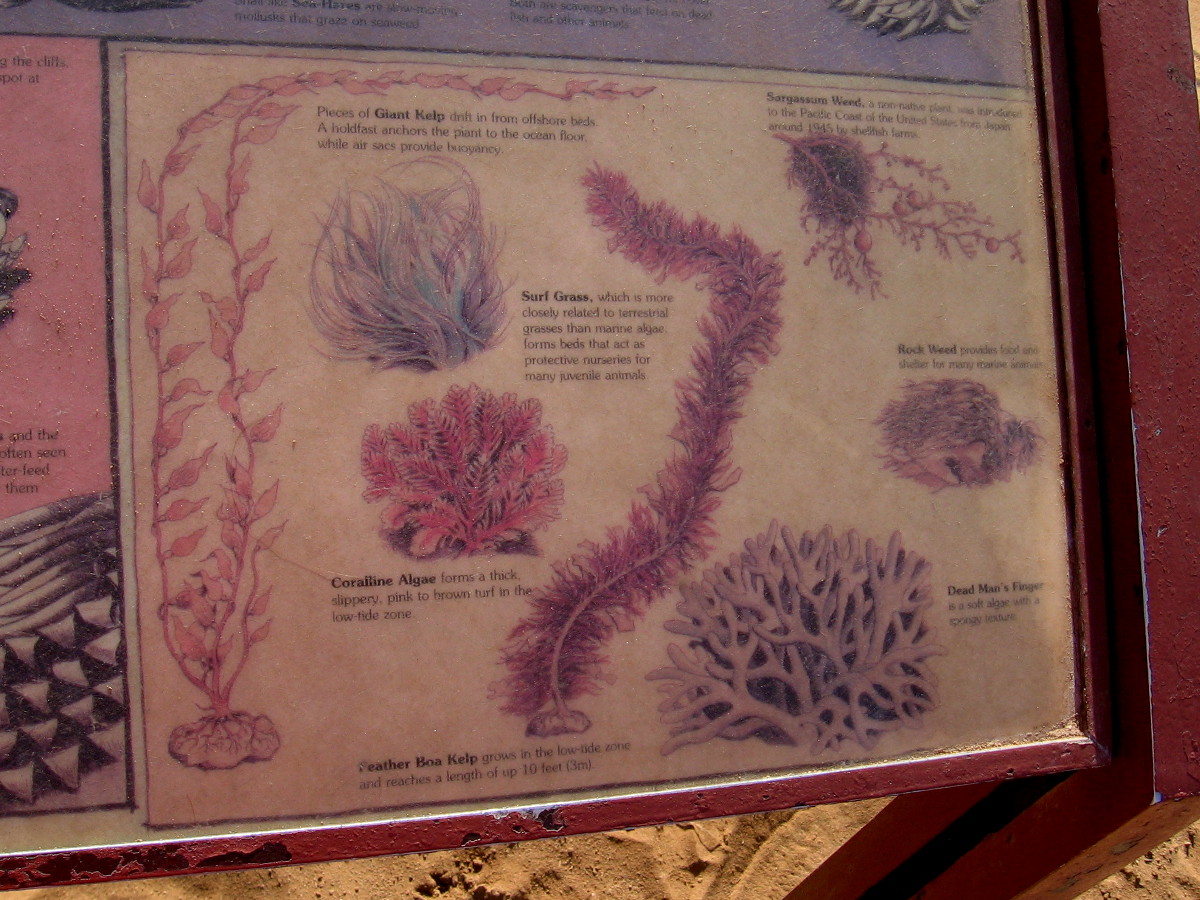
As low tide nears, people look about the rocks and shallow water for signs of sea life.Amazing beauty awaits curious eyes.Starting down the path from a parking lot to the Point Loma Tide Pools at Cabrillo National Monument.A sign by the path. Exploring the rocky intertidal zones is like peering through a window into the ocean’s ecosystem. During low tide, marine animals in shallow pools can be closely observed.The closer you look, the more you see. Park rangers periodically identify and count the organisms to monitor the health of each species.As we head down the dirt path, the tide pool overlook comes into view.The tide pool area is active with curious visitors. Only two hours until low tide this afternoon.A funny crab asks visitors to please leave all shells in the tidepools.Approaching a pair of information signs atop the overlook. Pacific Ocean waves curl smoothly below.These old signs are very faded, but let’s take a look anyway.You are now standing in the upper limits of the splash zone. The waterline does not come this high, but splash and spray sometimes do. Just below is the high-tide zone.Some organisms pictured are limpets, chitons, sand castle worms, goose-necked barnacles and abalone.Plant life includes giant kelp, surf grass, coraline algae, rock weed, feather boa kelp and dead man’s finger.Families enjoy the warm sunshine and smell of the ocean. This photo looks north along the sandstone cliffs of Point Loma.A few rocks stick out of the surf. Fishing boats lie in the water beyond.A gull stands upon one of the larger rocks.A lone surfer has caught a good wave!As we head down a short dirt path from the overlook to the tidepool area, we take a closer look at the eroded sandstone cliffs and water-smoothed stones on the narrow beach below.
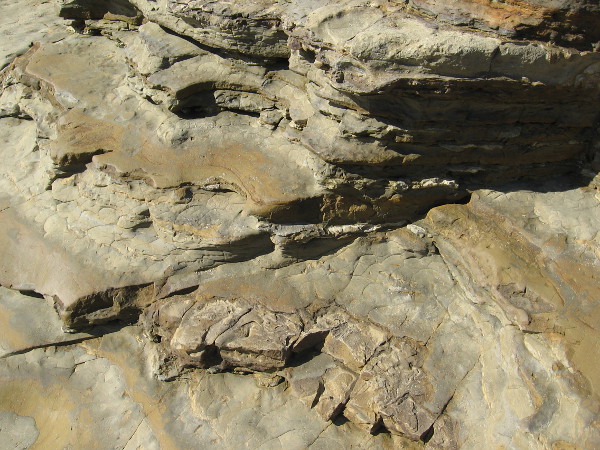
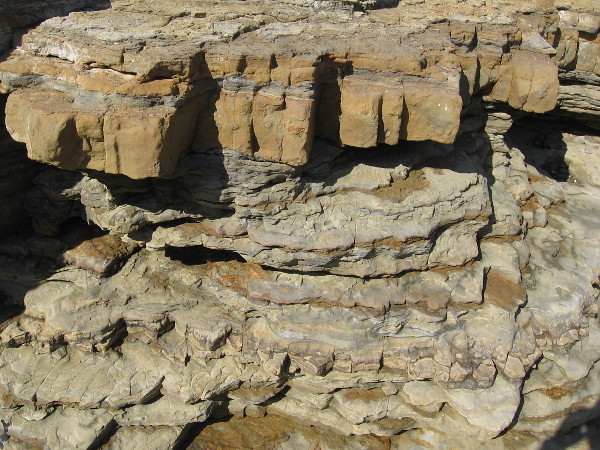
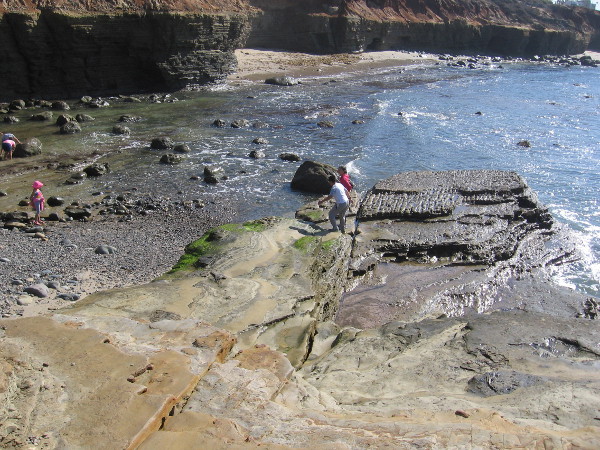
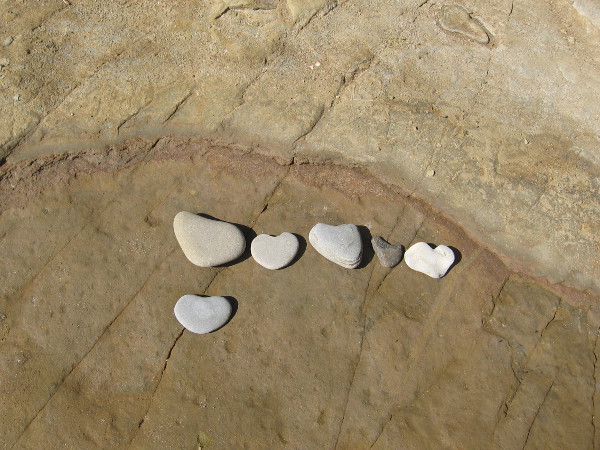
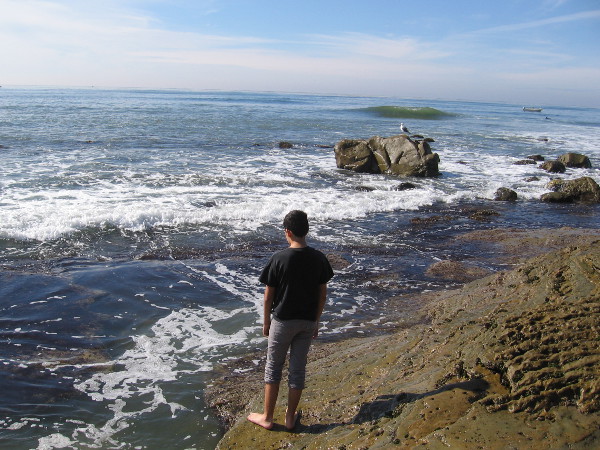
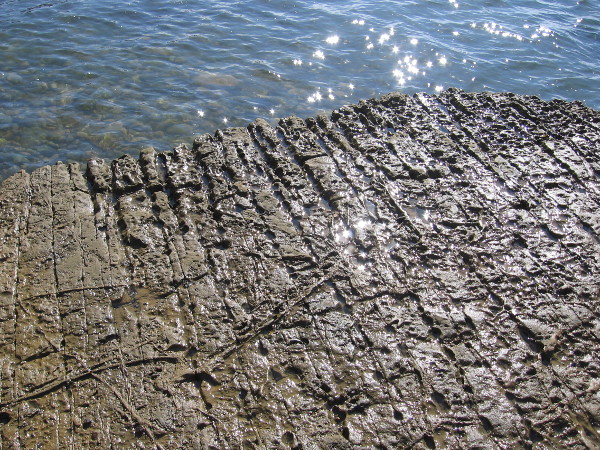
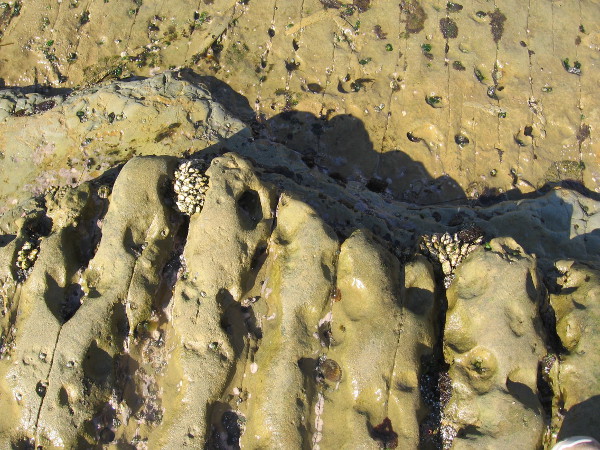
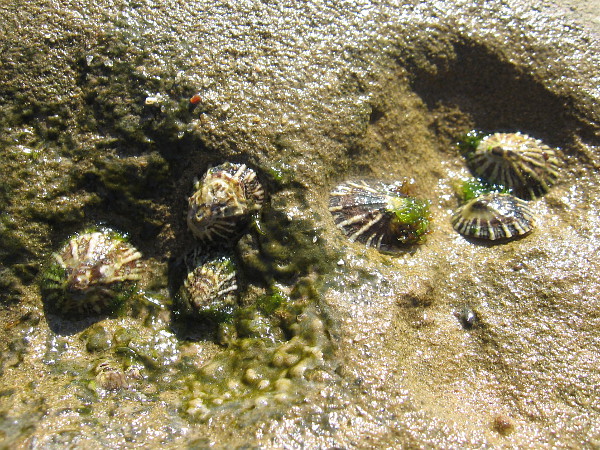
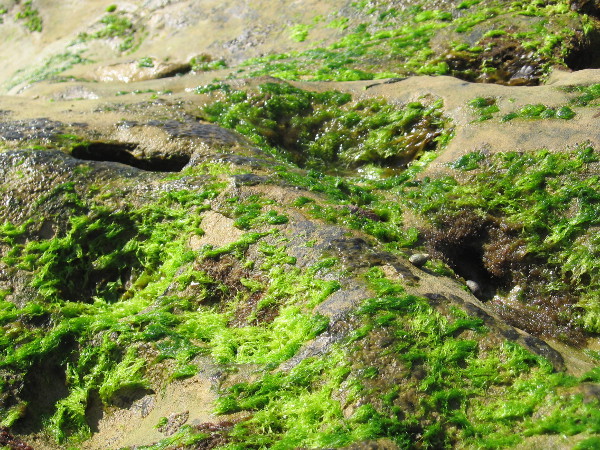
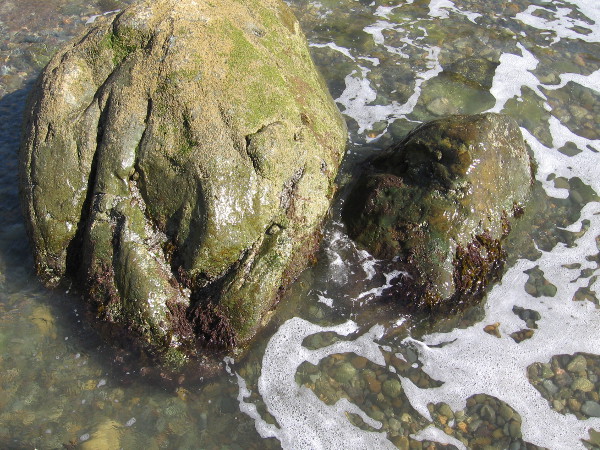
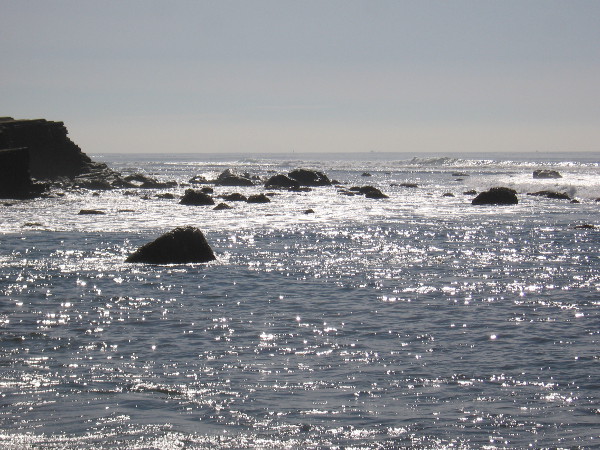
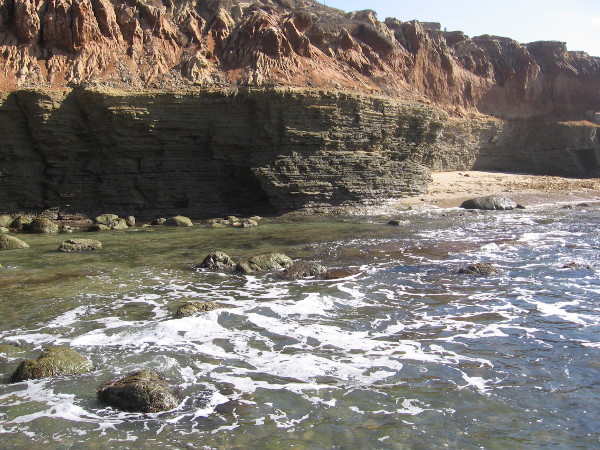
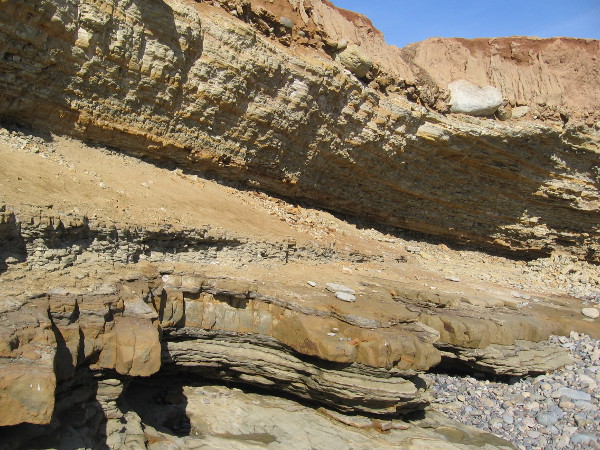
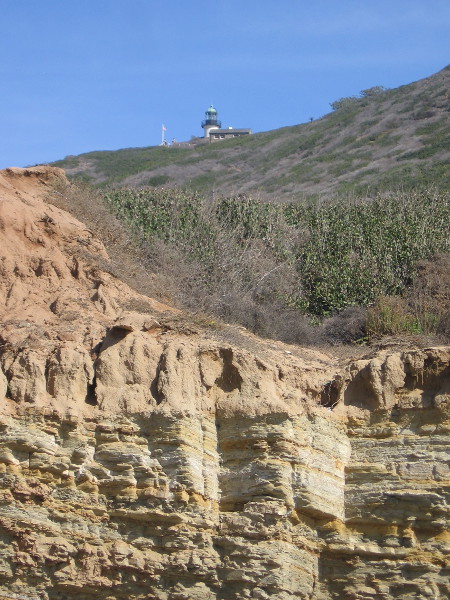
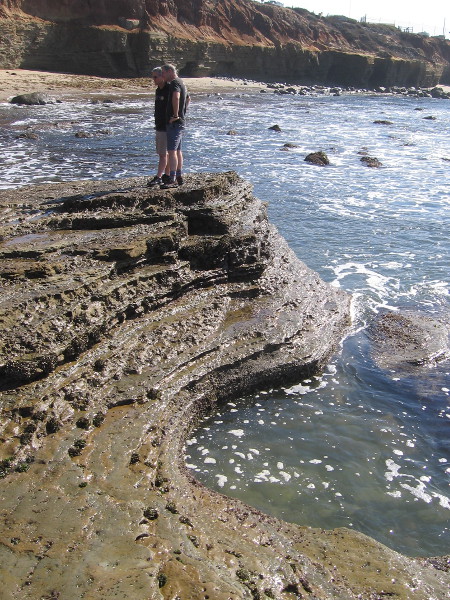
A wide flat rock dips dips toward the ocean at one end of the tidepools, making a perfect platform for exploration when the tide goes out.In a couple hours even more tidepools will appear. Low tide is the best time to explore the rocky pools of captured water.Someone peers down into the shallow water, perhaps looking for an octopus or fish.Someone–a young person most likely–searched for heart-shaped stones on the rocky beach and lined them up for all to see.People explore a smooth bowl-like pit in the eroded, layered, tilted sandstone.So much wild natural beauty. So much to contemplate.The rock shelf contains parallel fissures and oddly eroded patterns. Over many years the rock is weathered, strangely changes.I see some of those whitish goose-necked barnacles. Many of the tiny pits are home to troglodyte chitons.I found some limpets clinging to the wet rock.Bright green algae grows on the exposed intertidal rock’s surface.Beauty that defies adequate description.The patient sea washes against these rocks, doing its slow work over the course of countless lifetimes.Looking south at light on the water and dark, broken rocks.The uplifted then eroded sandstone cliffs tell a story in their book-page-layers about the passage of time.Little piles of sand and stone collect where the cliffs crumble.High above, atop Point Loma, I see the Old Point Loma Lighthouse, now a part of human history.Gazing at the sublime work of nature.
No human artist could possibly paint this.
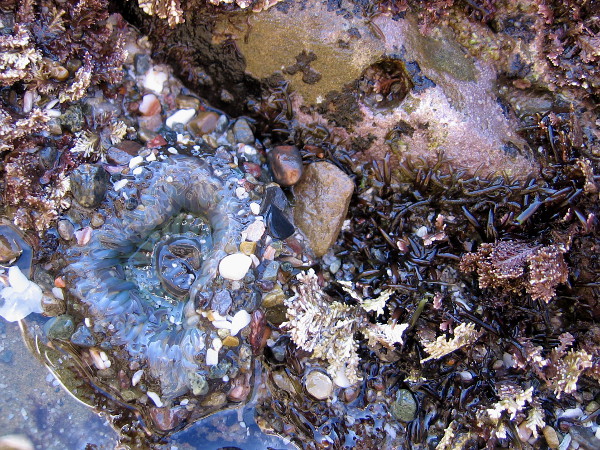
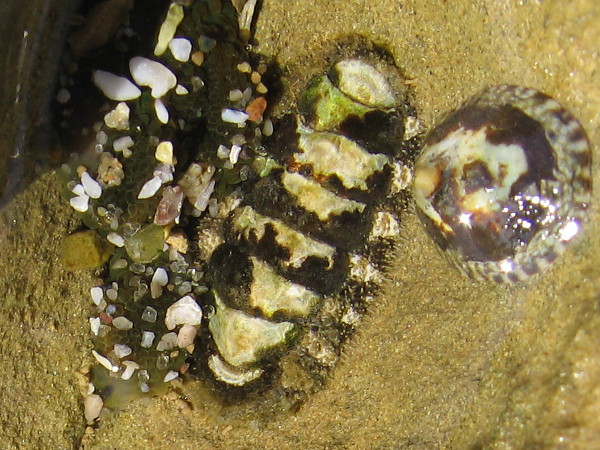
I see a small leaf of sea lettuce!An aggregating anemone has collected fragments of shell and grains of sand.A young boy walked up to me as I photographed this small scene and said that it looks like a volcano. On the surface of Mars, I thought to myself.Like a glittering hidden treasure.A chiton between an anemone and a limpet. Another close look at nature’s awesome and infinite beauty.
…
This blog now features thousands of photos around San Diego! Are you curious? There’s lots of cool stuff to check out!
Here’s the Cool San Diego Sights main page, where you can read the most current blog posts. If you’re using a phone or small mobile device, click those three parallel lines up at the top–that opens up my website’s sidebar, where you’ll see the most popular posts, a search box, and more!
To enjoy future posts, you can also “like” Cool San Diego Sights on Facebook or follow me on Twitter.
An amazing, gigantic mural by the renowned artist Wyland cruised into San Diego this morning! The mural, titled Cruising with the Whales, is painted on the bow of the positively enormous cruise ship Norwegian Bliss, which was diverted into San Diego due to Hurricane Willa off Mexico.
Robert Wyland, who is based in Laguna Beach and Hawaii, has several works of marine art on display around San Diego. I’ve photographed a few of them, which can be spotted here, here and here.
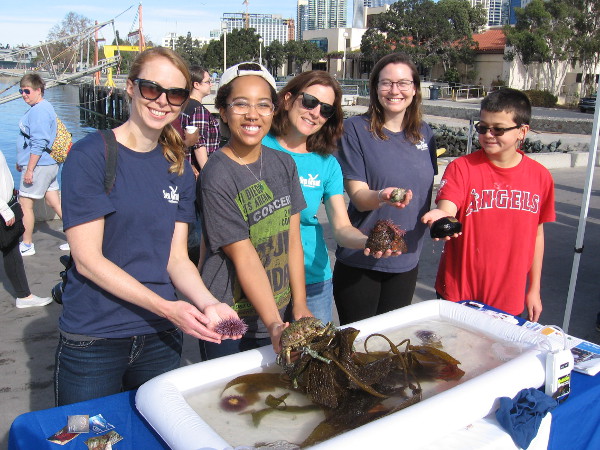
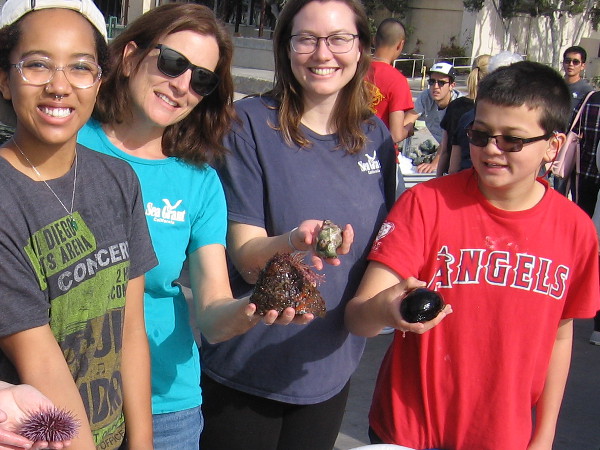
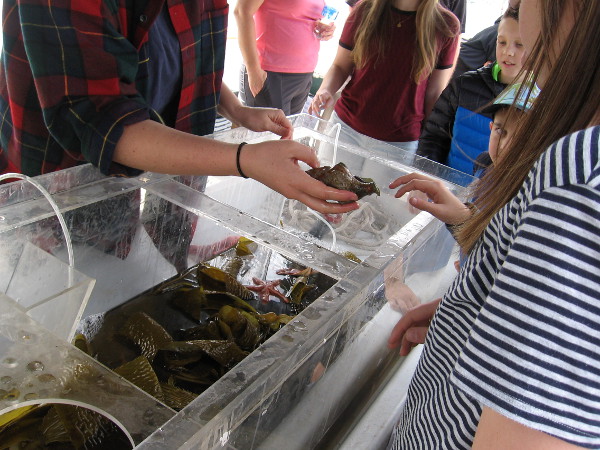
These friendly people with Sea Grant California showed me all sorts of fascinating creatures that thrive off our coast! They encourage using locally sourced food.
During a walk last weekend, I headed out onto the pier just north of Seaport Village where the ever-growing Tuna Harbor Dockside Market is held on Saturday mornings. In addition to the local fishermen selling a wide variety of freshly caught seafood, I noticed one table with an interesting exhibit. Folks were demonstrating a few of the many different sea creatures that can be caught off San Diego’s coast.
I learned this display was created by Sea Grant California, an organization that connects government agencies, California universities, nonprofit organizations, local businesses and residents in our coastal community. Their mission is to conduct impartial research, disseminate knowledge, encourage best practices for environmental stewardship and optimize sustainable economic development.
Lots of people on the pier were checking out the live marine creatures on display, and learning which species are most common in the Pacific Ocean off our coast. I was told that most of San Diego’s commercial fishermen are conscientious and highly responsible. There are about 131 commercial fishing vessels licensed in the county. Many are based in Tuna Harbor, which occupies a picturesque stretch of San Diego’s Embarcadero.
In addition, I learned that the Port of San Diego is testing an aquaculture project at the end of one of Tuna Harbor’s docks. The port’s Oyster Nursery Research Project is part of an expanding effort to try out new Blue Economy technologies in San Diego Bay. The concept of a Blue Economy is to use innovative methods to maximize resources that are locally available in a sustainable and environmentally friendly way.
Very cool!
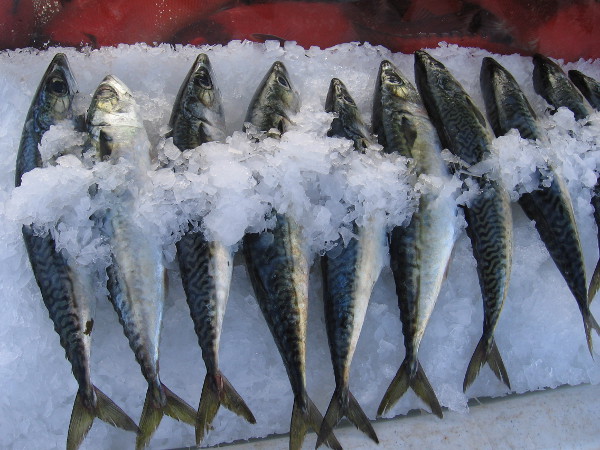
Fresh locally caught fish on ice for sale at San Diego’s Tuna Harbor Dockside Market.The Port of San Diego’s Oyster Nursery Research Project at the end of a dock inside Tuna Harbor.What’s for dinner?
…
I live in downtown San Diego and love to walk around with my camera! You can follow Cool San Diego Sights via Facebook or Twitter!
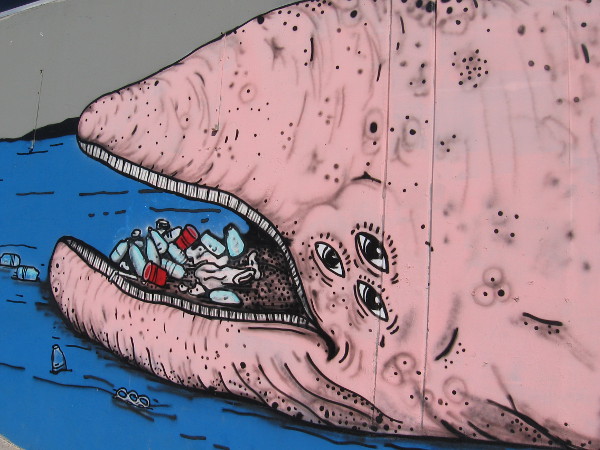
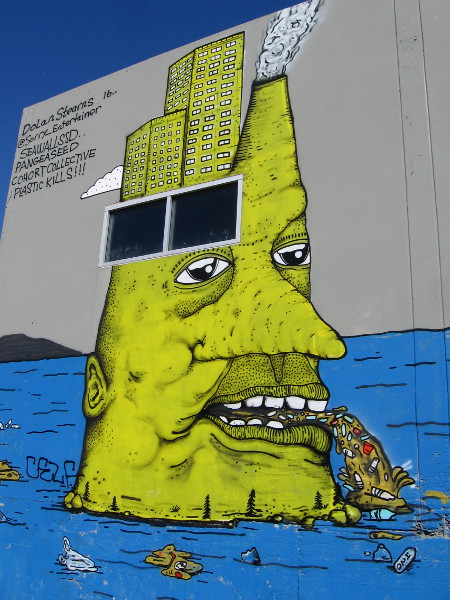
Cool artwork painted by Dolan Stearns for the PangeaSeed Sea Walls: Murals for Oceans project in 2016 depicts the harmful presence of non-biodegradable plastic trash in the oceans.
I got off the Orange Line trolley the other day to capture photos of some cool street art on Commercial Street just east of 20th Street.
Like many other PangeaSeed Sea Walls: Murals for Oceans artwork that one can spot around San Diego, this one has an environmental message about taking care of the ocean. The mural, which illustrates the harmful effects of plastic pollution on marine life, was painted in 2016 by Dolan Stearns.
The left side of the mural shows a big, ugly yellow head spewing pollution into the water.The right side of the mural features a large pink whale.The three-eyed whale has a mouthful of plastic bags, bottles, cups and junk.The yellow human head, topped by city buildings and a smokestack, vomits disgusting waste into the blue ocean.
…
I live in downtown San Diego and love to walk around with my camera! You can follow Cool San Diego Sights via Facebook or Twitter!
You can easily explore Cool San Diego Sights by using the search box on my blog’s sidebar. Or click a tag! There are thousands upon thousands of fun photos for you to share and enjoy!
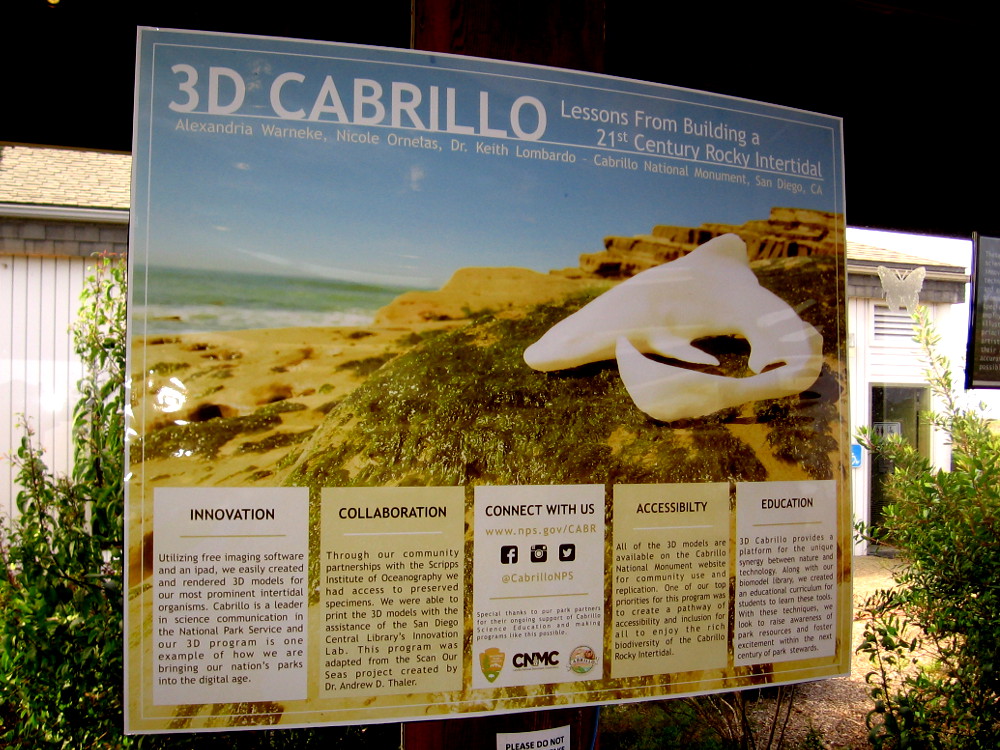
Sign inside Visitor Center at Cabrillo National Monument describes the fascinating 3D Cabrillo project.
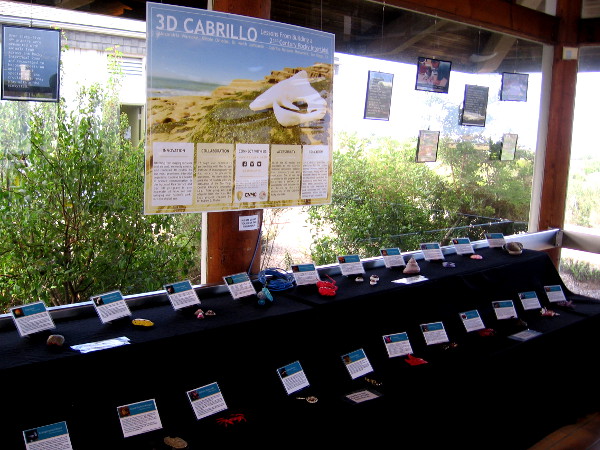
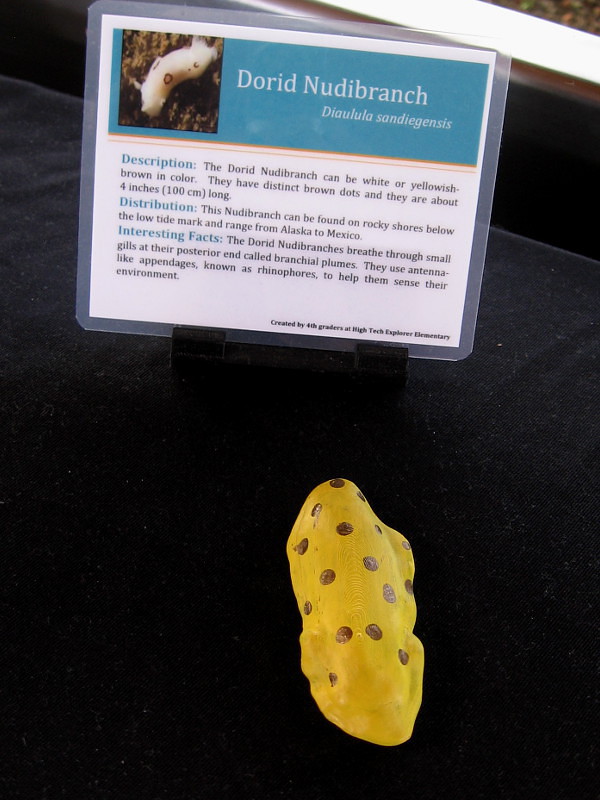
The Visitor Center at Cabrillo National Monument has a cool exhibit of 3D printed intertidal organisms. An explanation is provided of how the tide pool animal models were created, and shows how the general public and interested educators can easily access essential resources via a dedicated website!
Student curriculum, simple instructions and the 3D Cabrillo biomodel .STL files library (and a link to raw Autodesk files) are all found here.
For 3D Cabrillo and the particular models seen in this exhibit, free imaging software and an iPad were used to capture images of intertidal organisms preserved by La Jolla’s world-renowned Scripps Institute of Oceanography. After models were edited on a computer using design software, they were sent to a 3D printer at the San Diego Central Library’s Innovation Lab.
This program was adapted from the Scan Our Seas project created by Dr. Andrew D. Thaler.
Do you know of any school students who’d like to learn more about marine biology, the environment and technology? This is definitely a very cool (and fun) project!
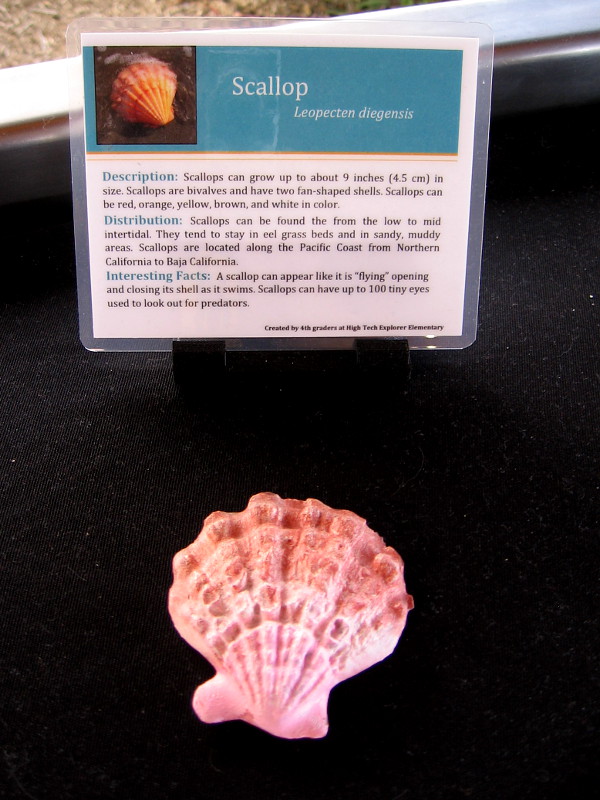
Many colorfully painted 3D printed models of intertidal organisms are on display inside the Visitor Center.3D printed Starburst Sea Anemone.3D printed Dorid Nudibranch.A video shows the 3D printing process, including editing the tidepool animals.3D printed Wavy Turban Snail.3D printed Ochre Sea Star.Students are encouraged to create nature journals. Writing is fun, too!3D printed Scallop.3D printed Garibaldi.
…
I live in downtown San Diego and love to walk around with my camera! You can follow Cool San Diego Sights via Facebook or Twitter!
You can easily explore Cool San Diego Sights by using the search box on my blog’s sidebar. Or click a tag! There are thousands upon thousands of interesting photos for you to share and enjoy!
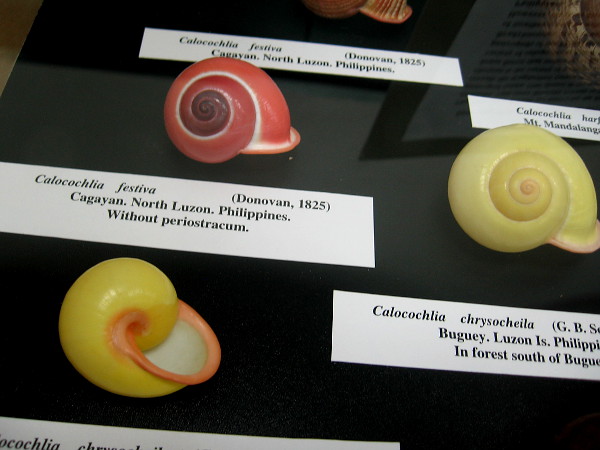
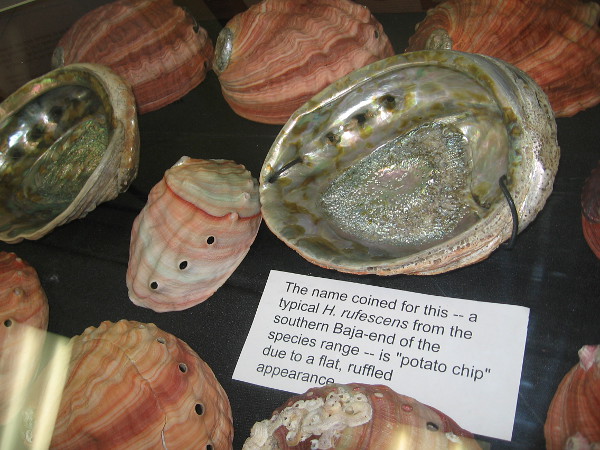
Colorful snail shells on display at the West Coast Shell Show.
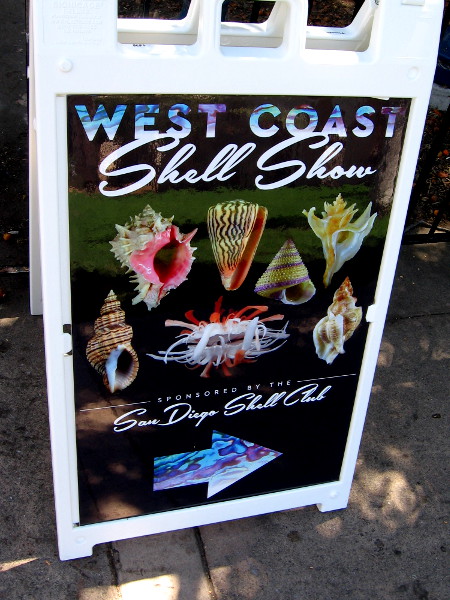
On Sunday I peered into Balboa Park’s Casa del Prado and discovered a surprising exhibition open free to the public. It was the San Diego Shell Club’s amazing West Coast Shell Show!
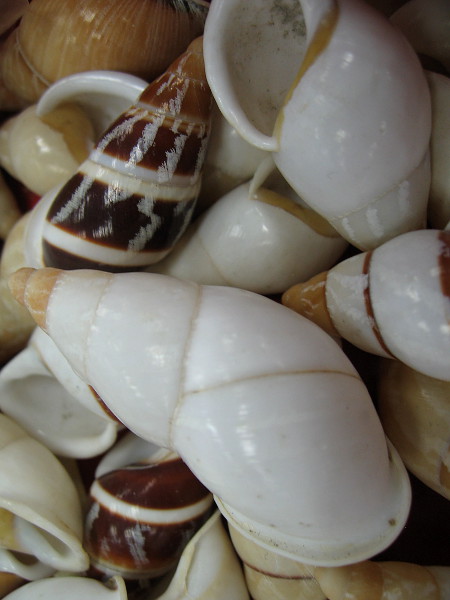
There were so many beautiful shells covering table after table it blew my mind. Every shell, I noted, was unique and interesting, and many that I saw seemed like exquisite works of art. Nature’s abundant beauty was spread throughout the room. It seemed I had blundered into a vast treasure of spilled jewels.
When I walk along a beach, I like to search the sand for bright or colorful objects washed up by the tide. But I honestly know next to nothing about shells from molluscs on land or in the sea. So I learned a few fascinating facts during my short conversations with a friendly hobbyist and a dealer.
Among other things, I learned some shells are highly prized for their rarity and apparent perfection, and that a few can fetch many thousands of dollars. I also learned there are relatively few serious shell collectors worldwide. But those who have a passion for shells have a hobby that promises new discoveries at every turn and inexhaustible wonder.
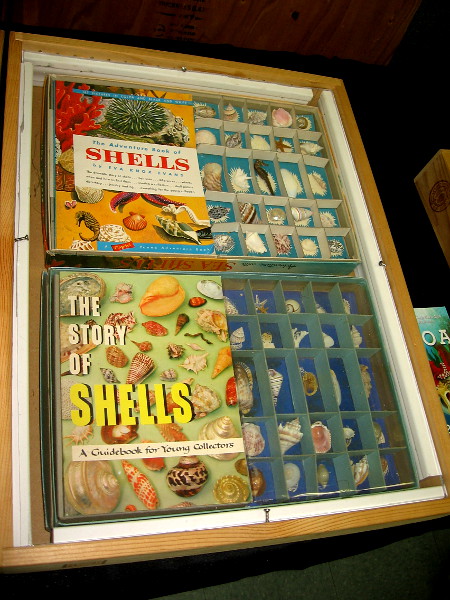
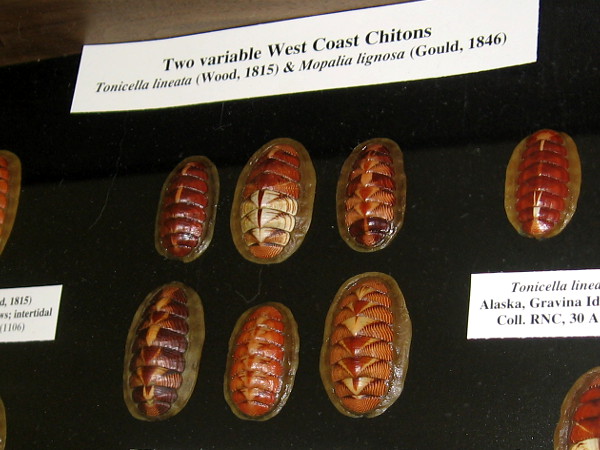
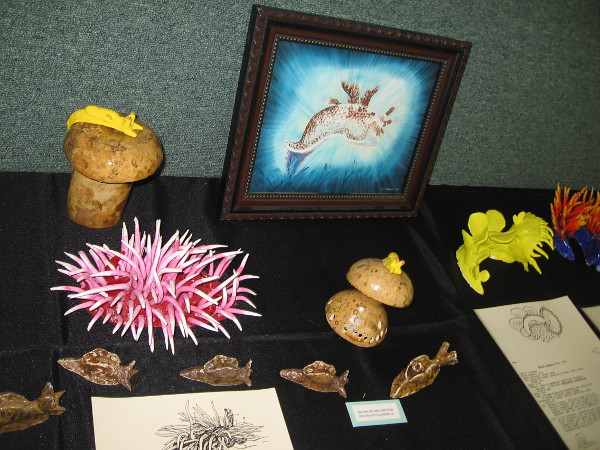
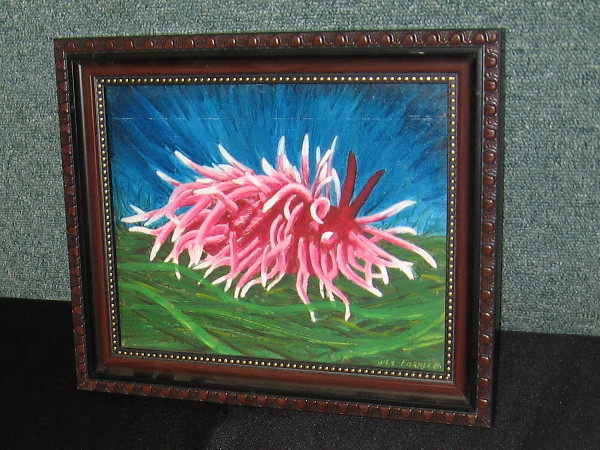
The West Coast Shell Show was presented in Balboa Park by the San Diego Shell Club.Beautiful shells of all types could be enjoyed–and purchased–inside the Casa del Prado over the weekend.A variety of different colored abalone shells were on display at the show.A wide variety of beautiful cowries. They almost look like polished agates to me. The cowry is a type of sea snail.The Story of Shells appears to have many chapters and pages.The shells seemed like exotic jewelry or small works of art, no two exactly alike.One display case showed a large collection of fantastic chitons. To me these almost look like varnished wood!Dr. Wesley M. Farmer had a table full of scientific books, plus lots of unique art he’d created concerning nudibranchs, a type of sea slug. They shed their shells after their larval stage.All sorts of fascinating mollusc art created by Wes Farmer, including specimens made with colored oven bake clay.The public could enjoy many fantastic displays at the West Coast Shell Show!
…
I live in downtown San Diego and love to walk around with my camera! You can follow Cool San Diego Sights via Facebook or Twitter!
You can easily explore Cool San Diego Sights by using the search box on my blog’s sidebar. Or click a tag! There are thousands upon thousands of fun photos for you to share and enjoy!
Shoppers at the Tuna Harbor Dockside Market learn about whelks and other food from the sea.
Late yesterday morning I revisited the Tuna Harbor Dockside Market. It’s a place whirling with human activity, fascinating sights, and fishy, oceany smells. The fresh seafood market spontaneously appears on the pier between Seaport Village and Tuna Harbor every Saturday morning. It features the catch of local fishermen. And lots of shoppers, should you arrive early.
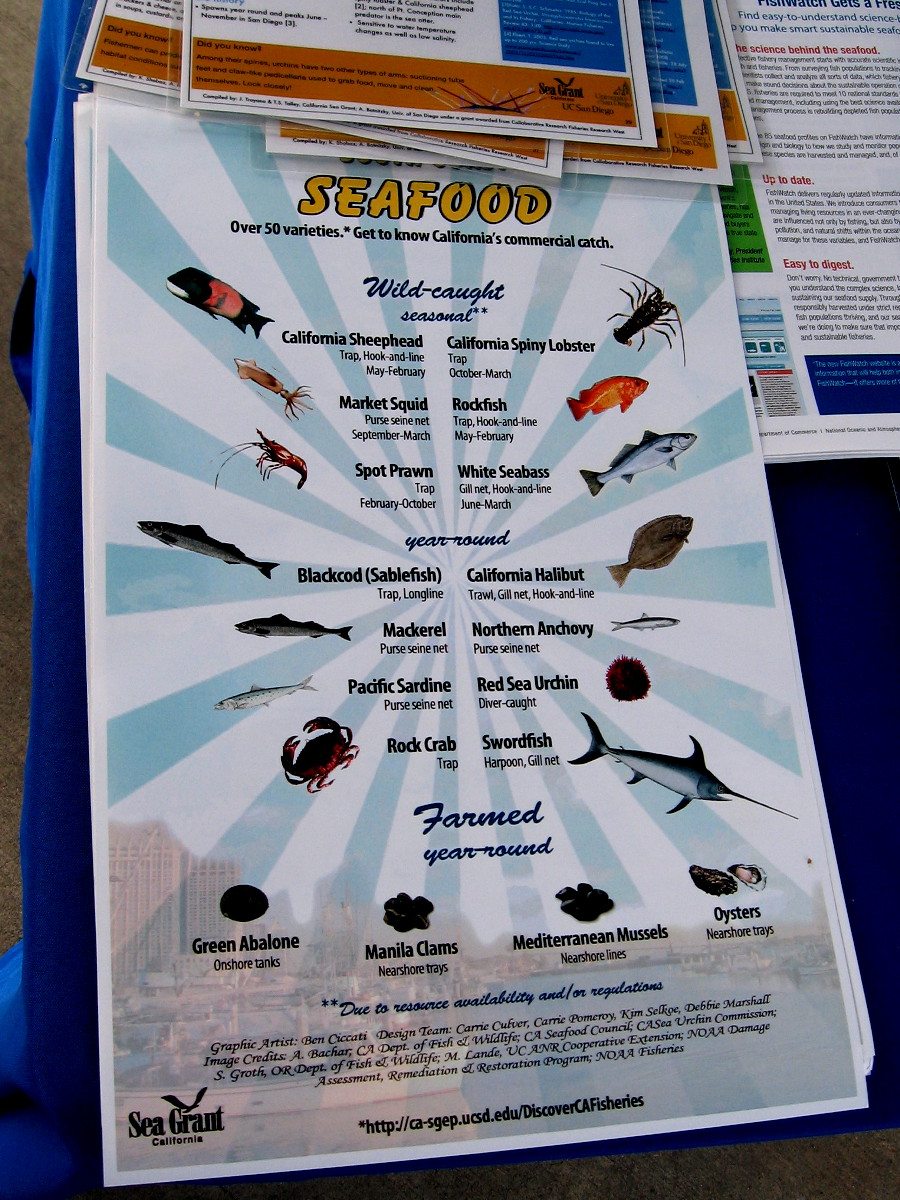
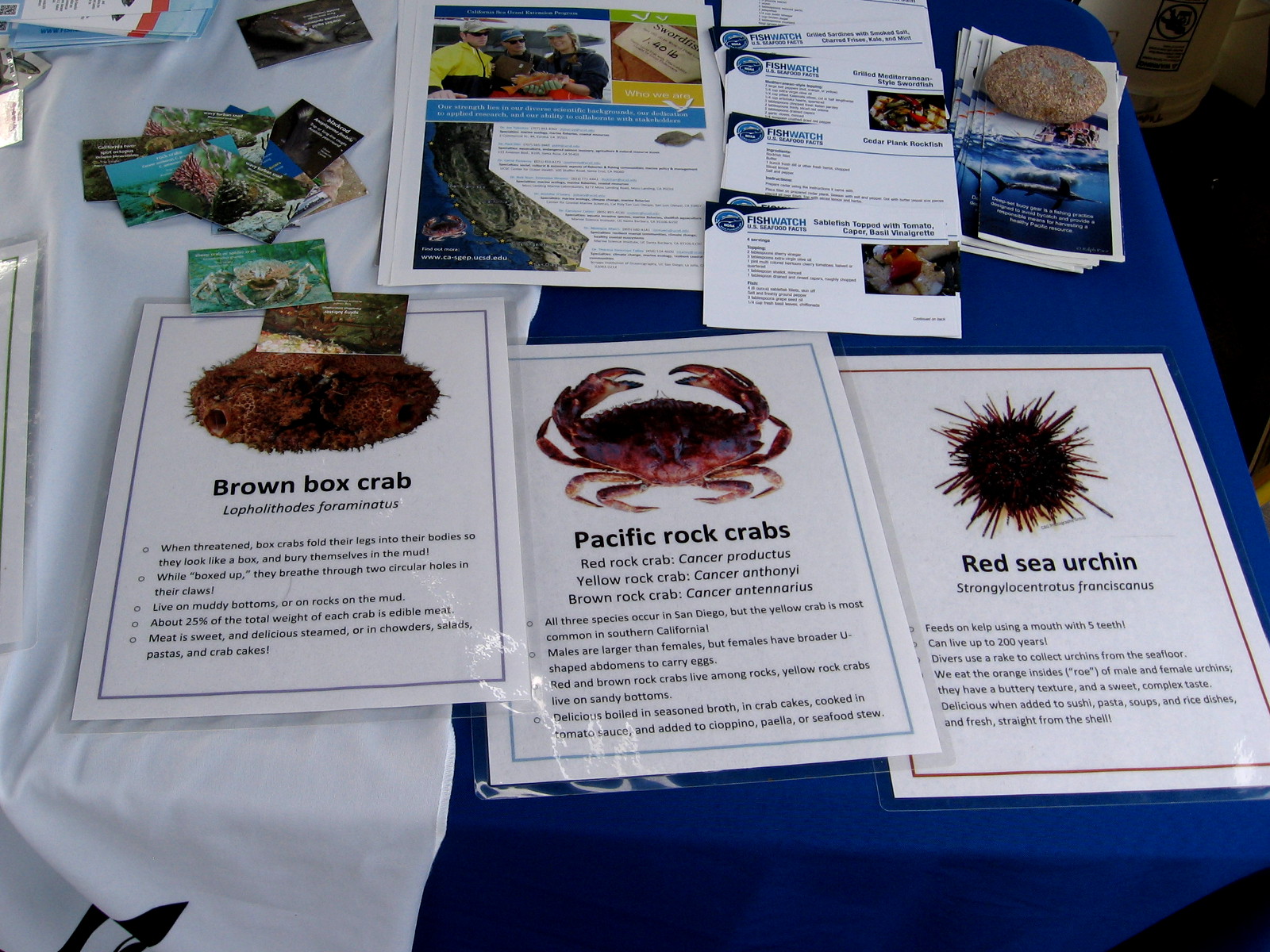
During my casual visit I noticed some interesting information on a table that described what our local fishermen catch. So I took some pics. I also enjoyed being shown various species of edible sea creatures by a few of the friendly vendors, though I’m afraid I purchased nothing. My cooking skills amount to pushing buttons on the microwave. I admit it.
If you’d like to read some of the literature I spotted on a table, click the images.
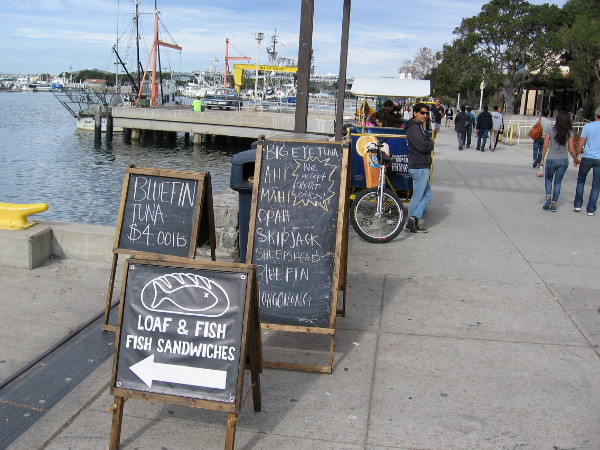
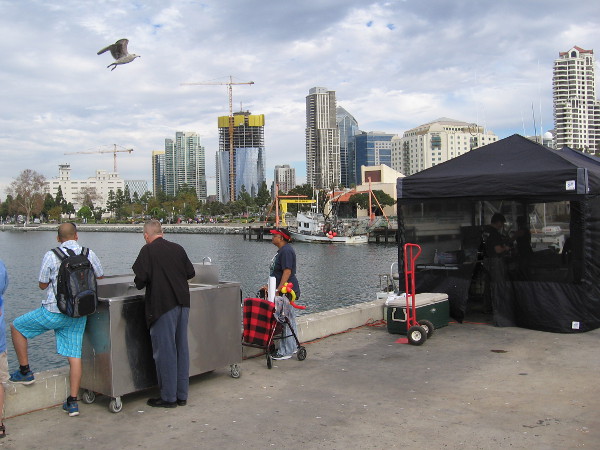
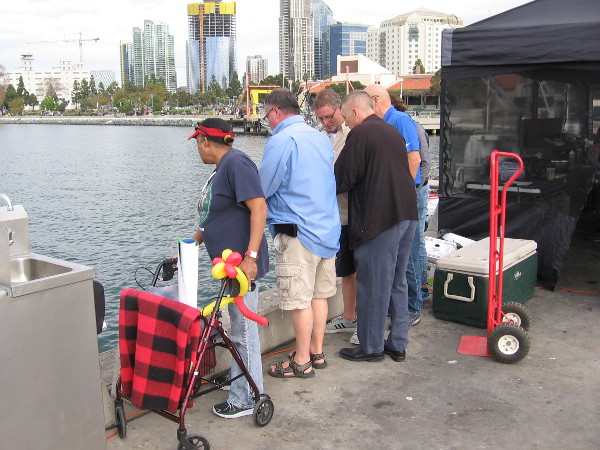
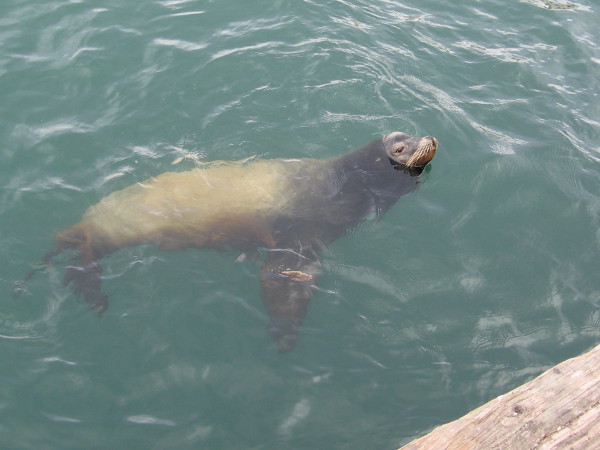
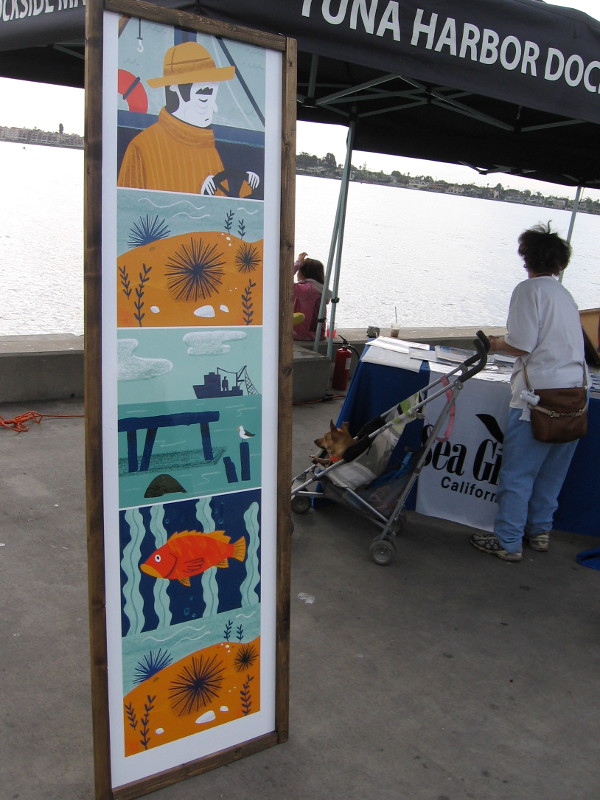
Sidewalk signs try to lure people out onto a pier near Seaport Village. Fresh seafood caught by local fishermen is sold here every Saturday morning.I arrived at the Tuna Harbor Dockside Market at about eleven o’clock, after the usual early morning crowd of fresh fish shoppers had departed.Some freshly caught silvery Pacific bluefin tuna on ice for sale. That’s a lot of eating!I noticed people by the edge of the pier looking across the water toward downtown San Diego.Something below in the water has caught their attention…It’s a sea lion just hanging out, probably hoping for a handout!The Mary Beth docked nearby appears equipped and ready to go out for more fish.Some colorful artwork at the fresh fish market depicts a fisherman and scenes from above and beneath the ocean.Meet your meal! At one table I discovered some interesting photos and literature, including a diagram of deep-set buoy gear used to catch swordfish.This poster shows the most common seafood commercially harvested in California. Many of these species can be purchased at Tuna Harbor Dockside Market.More info on the table describes the wavy turban snail and Kellet’s whelk, which I’m told make for good eating.I believe I’ve seen brown box crabs, Pacific rock crabs, and red sea urchins at this very market! The latter can live up to 200 years, and is considered a delicacy.Some guys cut up a huge fish, making steaks. Customers can have their purchase cleaned on the pier.A big pile of whelks. To cook these, boil!Look at all the seafood one can choose from at this one tent. The Tuna Harbor Dockside Market continues to grow and now occupies about half of the pier.Fresh fish! Lots of tuna!I’m shown a spiky sea urchin. The kelp and starfish are just for show–they aren’t normally eaten!
…
I live in downtown San Diego and love to walk! You can follow Cool San Diego Sights via Facebook or Twitter!
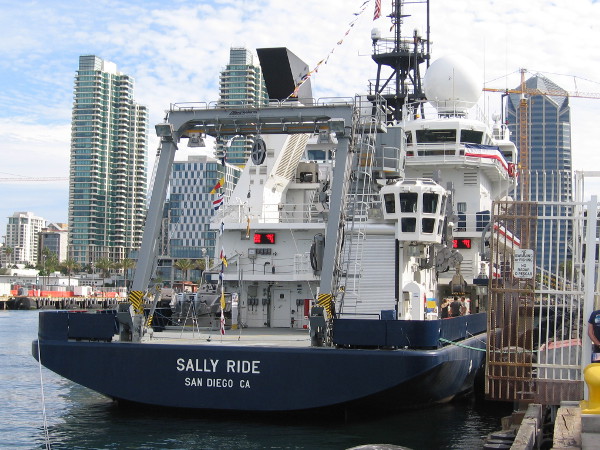
Scripps Institution of Oceanography’s new Research Vessel Sally Ride welcomes the public at San Diego’s Broadway Pier.
If you love science, technology and the study of our planet’s oceans, please enjoy the following photo tour of a very special ship. In this blog post we will visit the newest, most highly advanced oceanographic research ship in the world!
The world-famous Scripps Institution of Oceanography, a part of UC San Diego located in La Jolla, debuted their new research vessel Sally Ride this weekend at the Broadway Pier. Today the public was invited to come aboard and learn about the future work of scientists at sea.
The R/V Sally Ride is equipped with technologically advanced equipment, sensors, labs and computer systems. In the years ahead, it will be tasked with learning about and preserving the oceans, studying and protecting the environment, and inspiring the next generation. Using satellite communication and the scientists aboard, students and teachers throughout the world will actively participate in ocean exploration.
Except in documentary films, the public seldom sees the interior of an ocean-going research vessel. So today was an opportunity not to be missed!
Please read the photo captions where I’ve tried, to the best of my knowledge, to provide accurate details. But I’m no expert. If you’d like to leave a correction or useful information in a comment, please do!
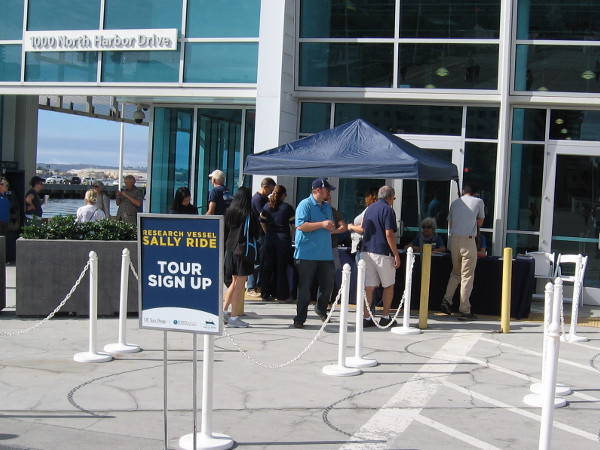
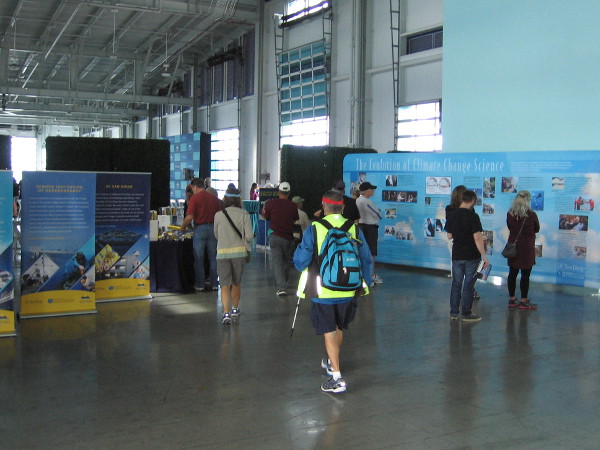
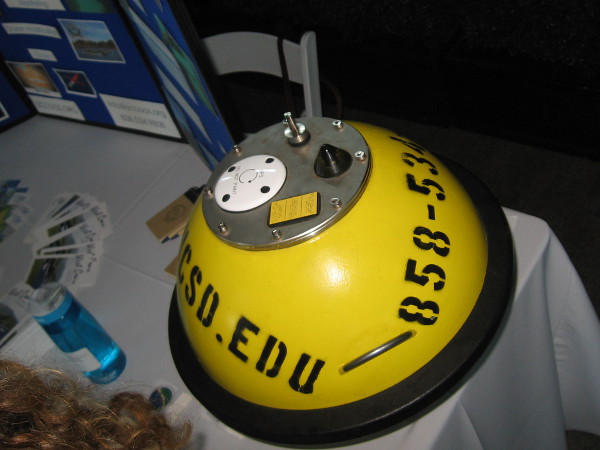
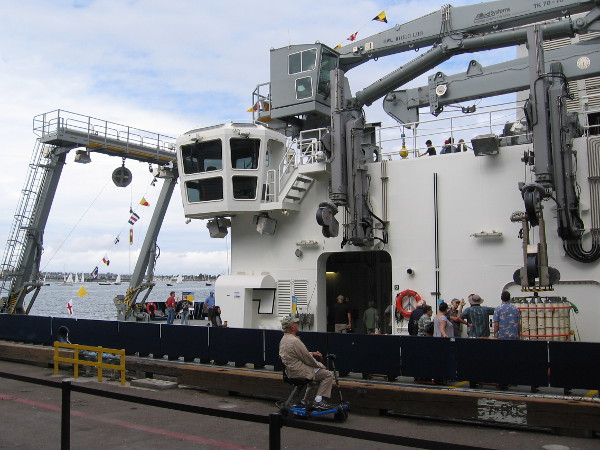
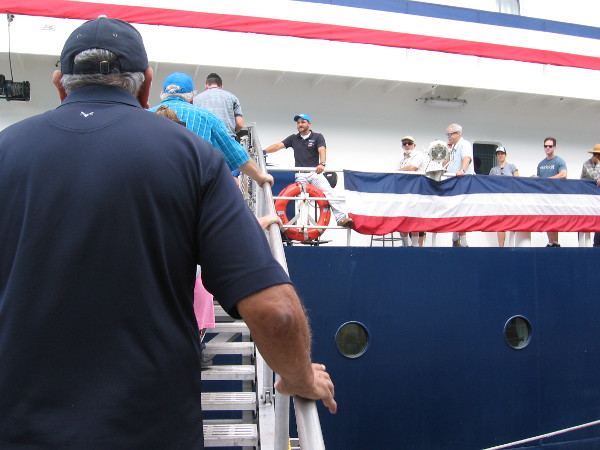
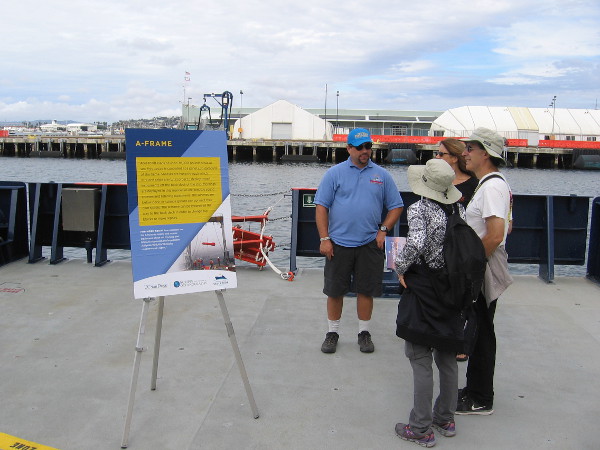
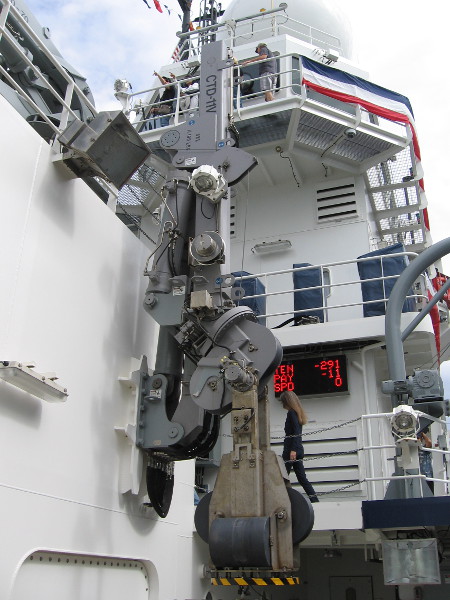
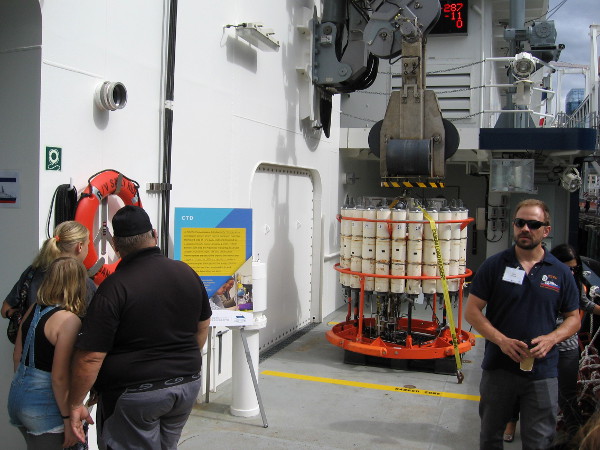
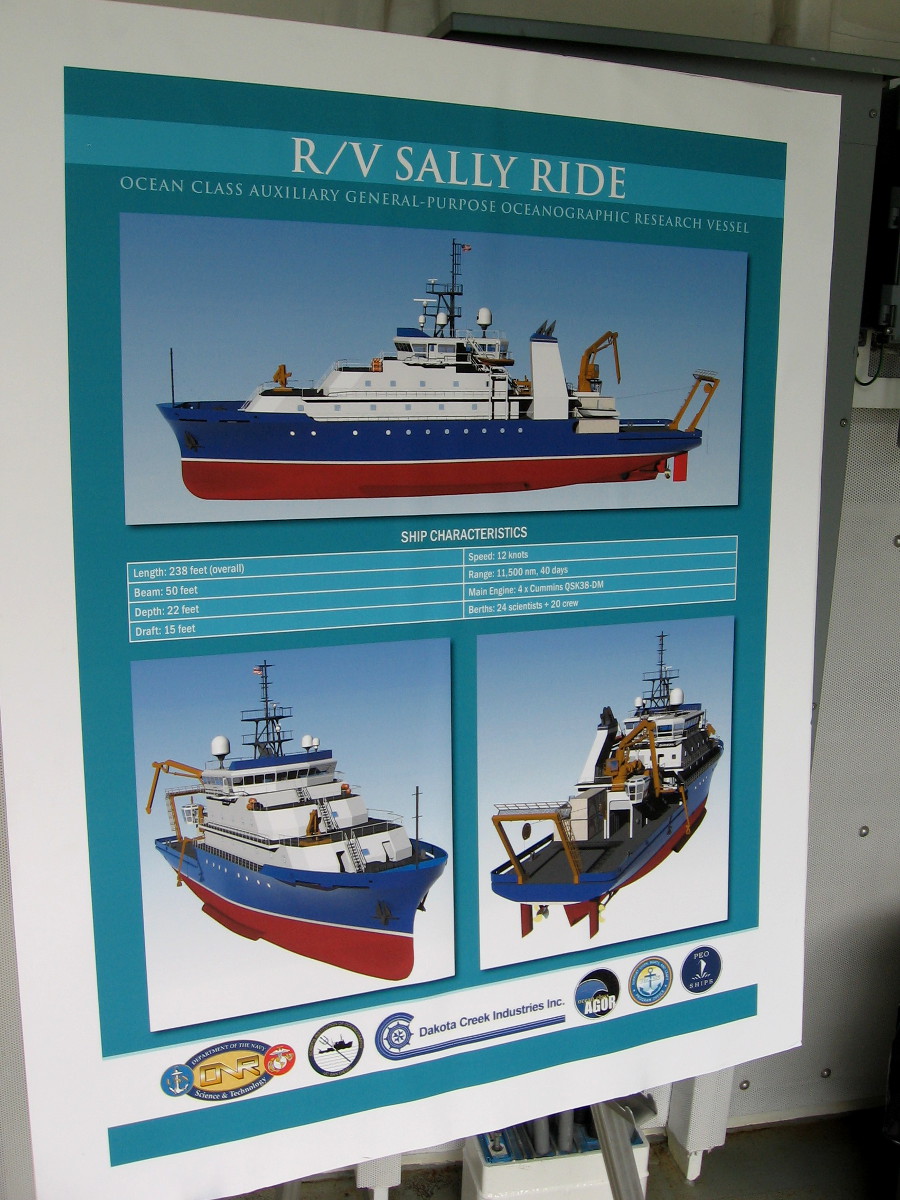
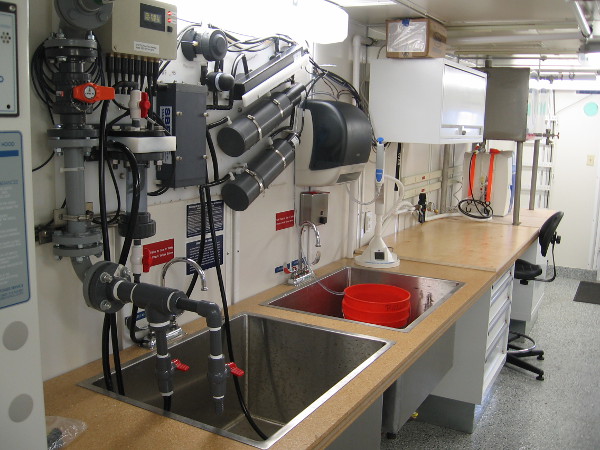
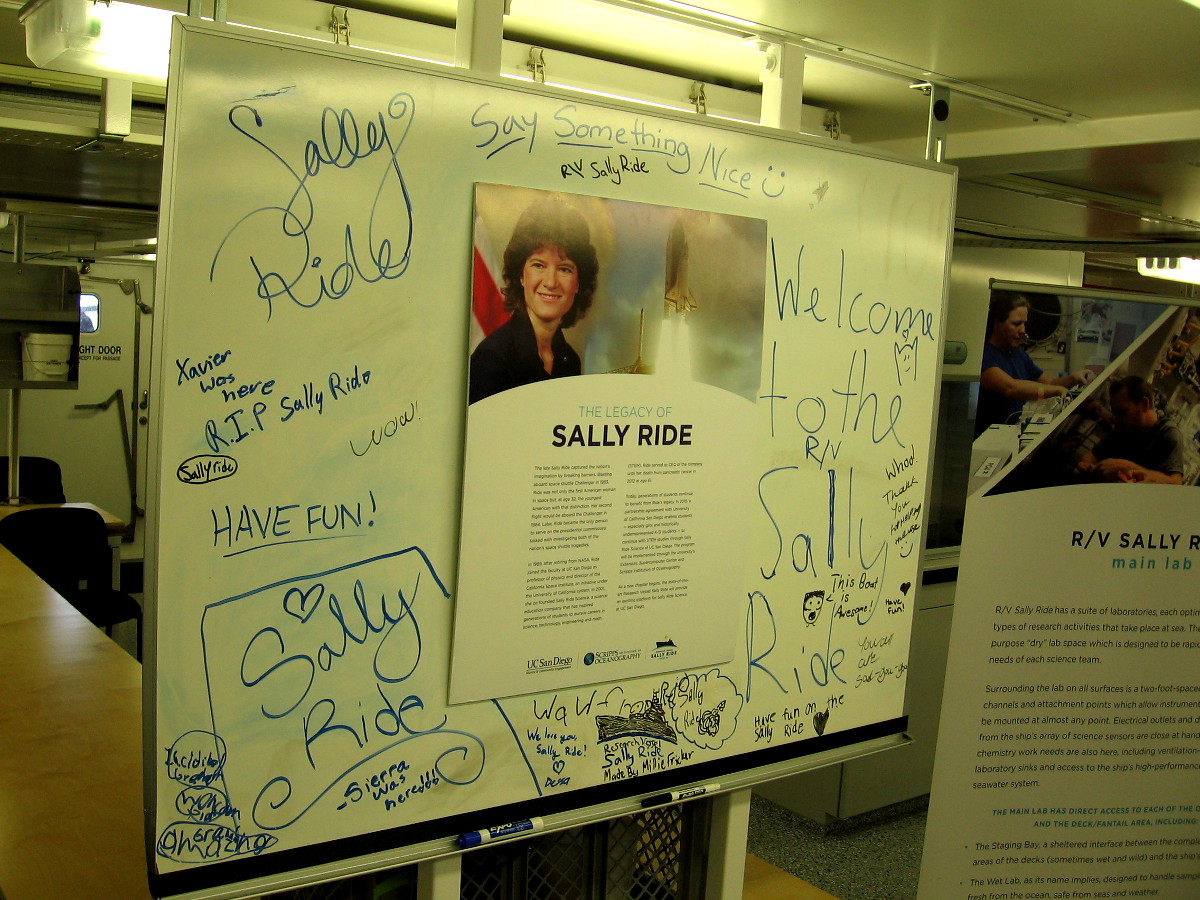
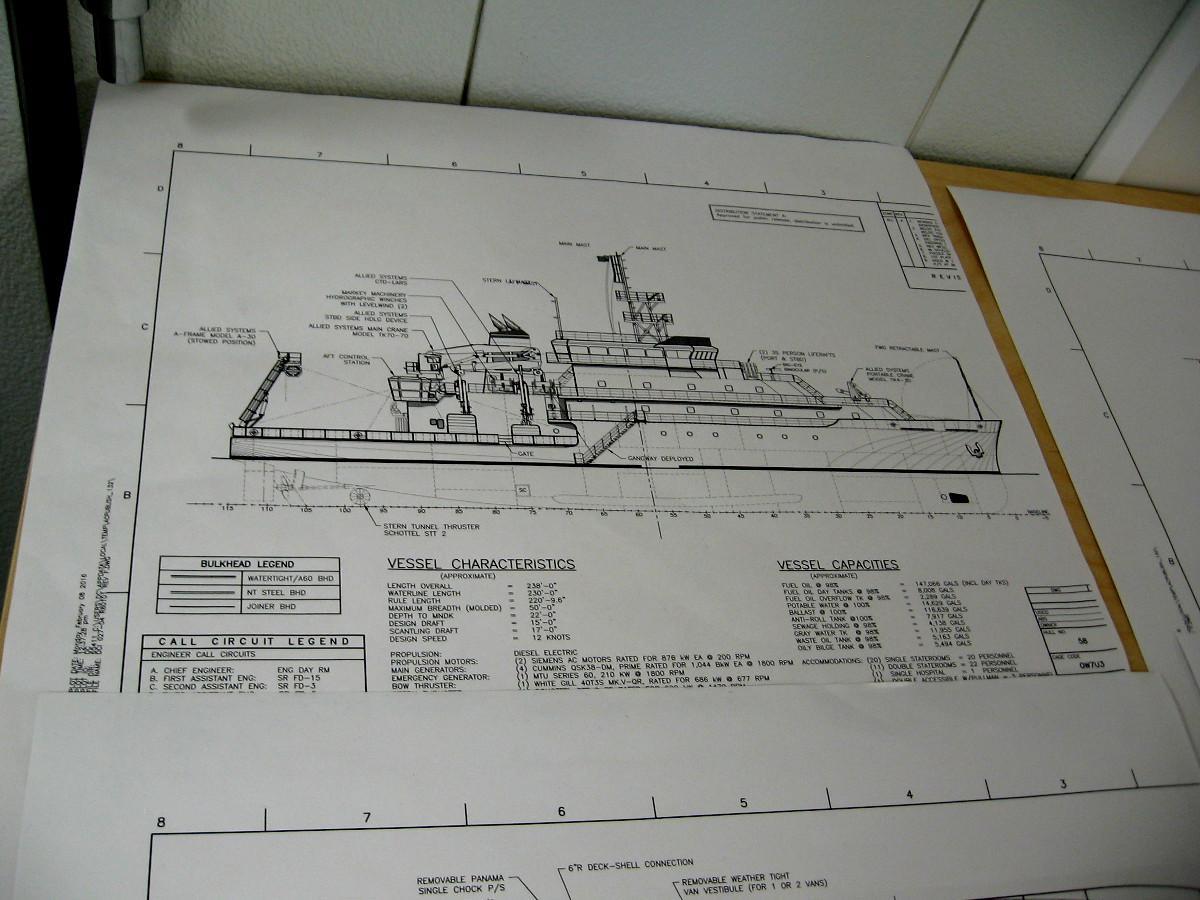
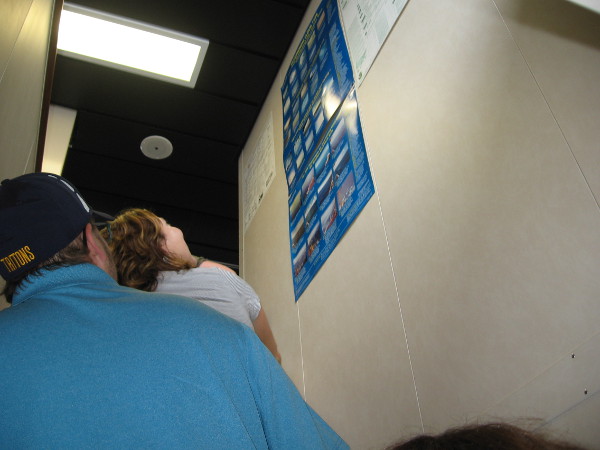
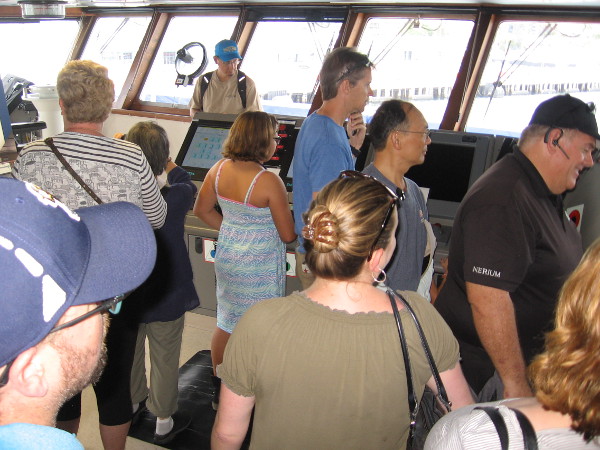
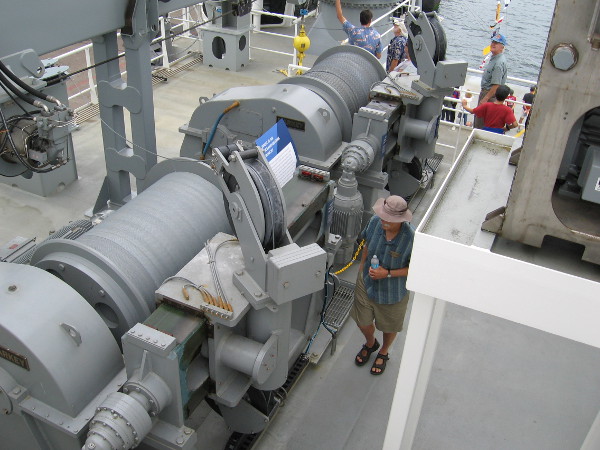
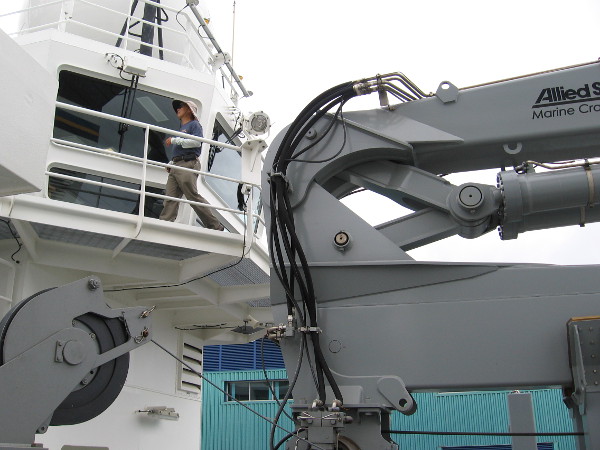
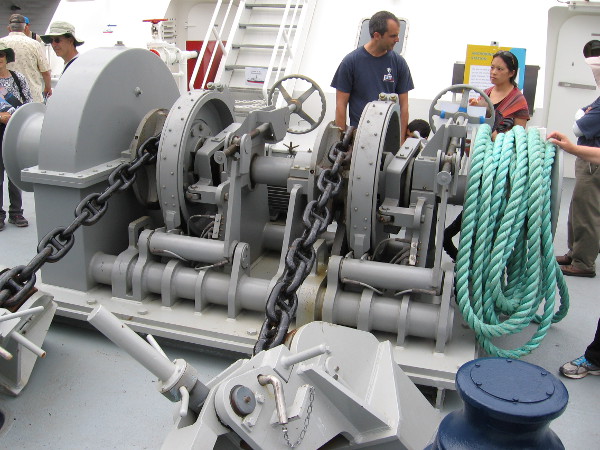
The public was invited to tour the new research ship Sally Ride. It was a rare opportunity to see how high tech exploration is carried out by UCSD Scripps scientists and oceanographers.The free public tours of R/V Sally Ride drew a good crowd on a Sunday in October, 2016. These people smartly arrived an hour early to reserve a time slot.The tour began inside the Port Pavilion on Broadway Pier. Many displays highlighted the work of UCSD’s Scripps Institution of Oceanography.UC San Diego embarks upon a new journey of exploration and boundary breaking with America’s newest research vessel R/V Sally Ride. Sally Ride was the first American woman in space.A large display goes over the history of The Evolution of Climate Change Science. UCSD scientists have made important contributions in this field.People inside the Port Pavilion learn about science and technology related to the understanding of planet Earth’s oceans.These examples of what is found when taking sediment cores on the ocean floor include tiny elegant Radiolaria.The Autonomously Deployed Deep-Ocean Seismic System’s Wave Glider is powered by solar and wave energy. It links with satellites and ocean bottom seismometers to help predict earthquakes and tsunamis.Some advanced visual equipment on display during the public debut of Research Vessel Sally Ride in San Diego. Multiple underwater photos can be taken in quick succession to form a 3-D model.Scripps Institution of Oceanography in La Jolla monitors climate variability and change, coastal hazards, marine operations, and ecosystems, fisheries and water quality.Floating device used to measure ocean wave characteristics.Peering out of the Port Pavilion at the R/V Sally Ride, docked at San Diego’s Broadway Pier.Photo aiming toward the stern of R/V Sally Ride. The big A frame, winch shack, extending crane, and two retractable arms on the starboard side of the ship are visible.Visitors eagerly head up the gangplank to explore America’s newest, most advanced research ship.Here we go!Looking down to our left.This rosette frame can be lowered into the water with a variety of mounted sensors. We’ll see it again in a bit.Heading down steep steps to the research ship’s fantail and work deck.We are halfway down. Many distant sailboats can be seen on San Diego Bay this beautiful but mostly overcast Sunday.R/V Sally Ride is equipped with shops, labs, winches, launch frames, booms and the newest scientific instruments and communication gear. The busy fantail and work deck are where science meets the sea.The gigantic A-Frame at the stern of RV Sally Ride can lift loads up to 30,000 pounds! Wire and cable deploy towed instruments. Moorings and acoustic equipment are also deployed in this manner.Visitors on the rear deck of R/V Sally Ride learn about science on the sea from a crewmember.Looking forward and up, we see several levels to the ship. If I understand correctly, the electronic display indicates a cable’s tension, payout and speed.Turning a bit to the right, we see the big crane atop a staging bay that is sheltered from the weather. Inside, equipment can be carefully prepared before deployment out in the elements.Now we are heading toward the windowed winch shack, along the starboard side of the ship toward the two retractable arms.One of two mechanical arms used to lower sensors, nets, and other oceanographic equipment into the water. They are called LARS, which stands for launch and recovery systems.A member of the public reads a sign explaining that the LARS are controlled from the winch shack. Wire or cable is used to lower equipment overboard.This rosette frame is holding a CTD, or conductivity, temperature and depth sensor. It can be lowered to a depth of nearly 4 miles! Niskin bottles attached to the frame can capture samples to be analyzed on the ship or at a later time.A poster inside the R/V Sally Ride’s staging bay details the ship’s main characteristics.Heading through a watertight door into the Wet Lab. Water samples are brought here for storage and analysis. There are drains in the floor!Another poster contains photos taken during RV Sally Ride’s construction. (Click image to enlarge.)A look inside the Wet Lab.R/V Sally Ride is the newest member of the Office of Naval Research’s fleet. These ships are owned by the U.S. Navy, but operated by university employees and professional mariners. Science teams rotate on a regular basis every two or three weeks.Heading from the Wet Lab into the Main Lab.Lab stations on the R/V Sally Ride are optimized for the different types of research activities that take place at sea.Visitors have written comments near a sign that describes the legacy of Sally Ride, our country’s first female astronaut. Sally was on the faculty of UC San Diego.A diagram of R/V Sally Ride with detailed information about the ship.Now we’ve arrived at the ship’s nerve center, the control station for CTD operations. Here scientists monitor ship location, sensor readouts, and trip bottles to collect samples.After quickly passing the no-nonsense mess deck and through two rather bare state rooms, visitors head up stairs to check out the pilot house.The high tech pilot house, or bridge, attracted a big crowd of curious visitors!One of the seats where the ship’s captain can place himself. When at sea or holding station, a deck officer is present on the bridge at all times.The huge computerized control console looks like it belongs on a spaceship!Aft of the starboard side of the bridge is the chart room, where navigational plans are made for each expedition. Old-fashioned maps are still used as an emergency backup!Heading around the pilot house, back toward the stern of R/V Sally Ride.Looking down at the telescoping knuckleboom crane and other outdoor machinery used to carry out research on the often stormy ocean.People examine an oceanographic winch. Drums can have upwards of 10,000 meters of wire or cable spooled on them.As I understand it, this sturdy telescoping knuckleboom crane can be extended in all directions for multiple purposes, including lifting the gangplank!Two impressive winches aboard R/V Sally Ride.Looking back up toward the rear of the pilot house.One last look at the aft deck and impressive A-Frame of the amazing new Research Vessel Sally Ride.I’m not the only one who is impressed.Heading forward along the ship’s port side. Downtown San Diego buildings rise across the water.We’ve arrived at the ship’s bow, just below the pilot house, where we find the anchoring station. The big windlass mechanism lowers and raises an anchor.R/V Sally Ride has three anchors, each weighing 5,000 pounds. Two are on either side of the bow and the third is a spare. Each anchor is connected to 720 feet of chain, which is stored below decks.An orange life ring reads R/V Sally Ride, San Diego.One last photo of R/V Sally ride during her debut at San Diego’s Broadway Pier. She begins her first research expedition in a matter of days!
…
I live in downtown San Diego and love to walk! You can follow Cool San Diego Sights via Facebook or Twitter!
You can easily explore Cool San Diego Sights by using the search box on my blog’s sidebar. Or click a tag! There are thousands upon thousands of fun photos for you to enjoy!























































 Cool San Diego Sights!