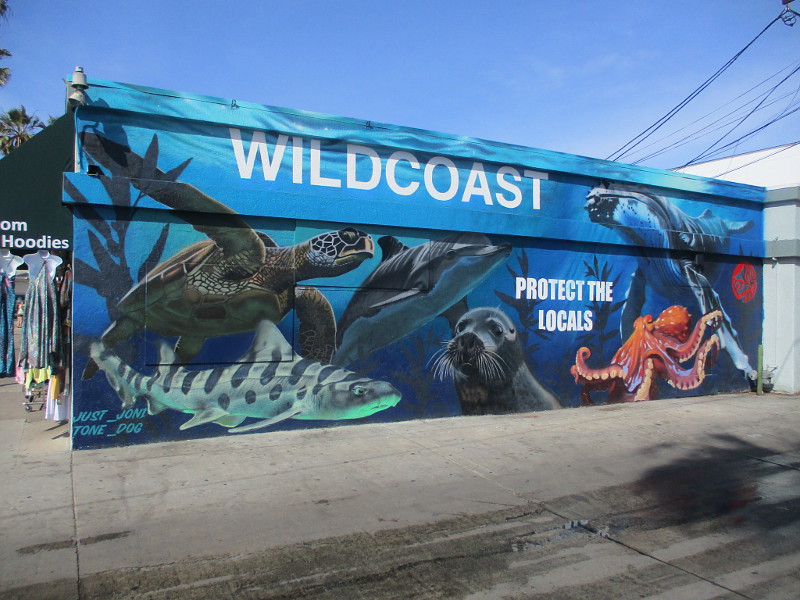
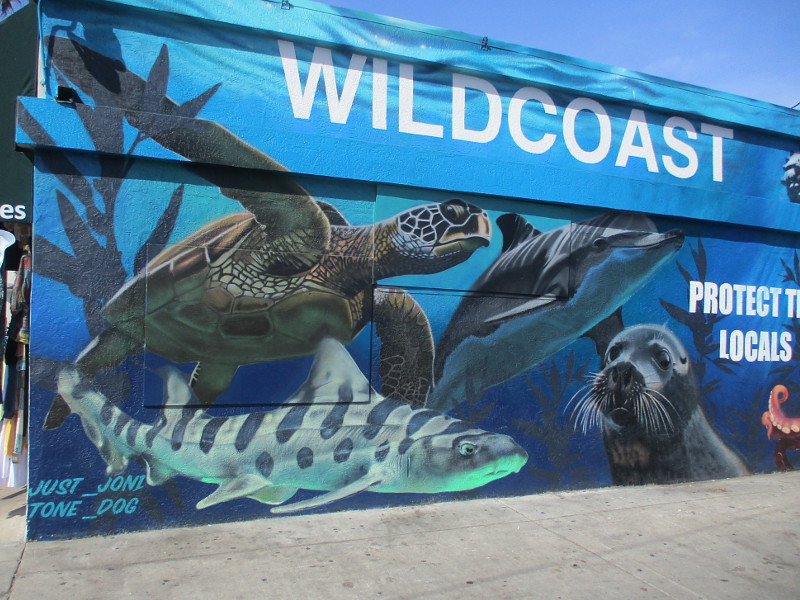
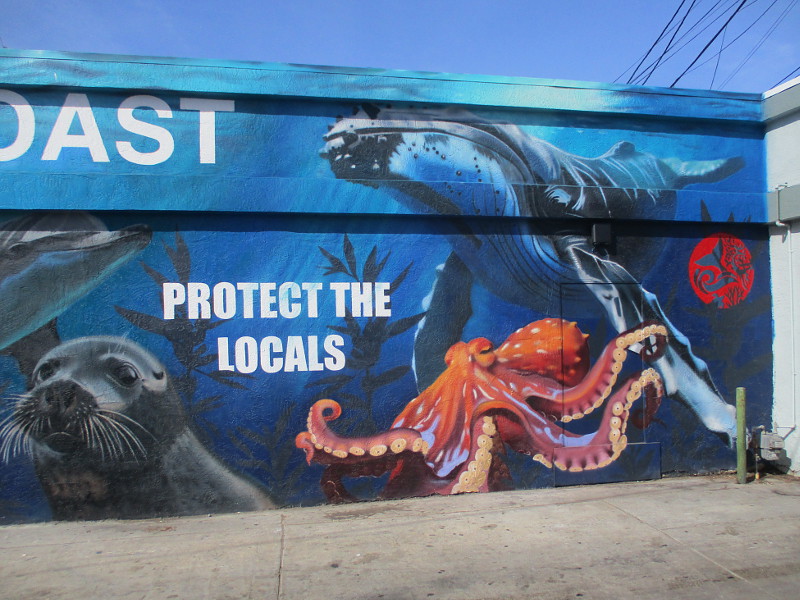
Several months ago this beautiful mural was unveiled in Pacific Beach. Featuring marine life such as a sea turtle, leopard shark and gray whale, it promotes the message Protect the Locals.
The organizations WILDCOAST and BeautifulPB teamed up with artists Jon Hamrick (@just_jon1) and Victor Rodriguez (@tone__dog) to celebrate 25 years of marine conservation with this wall. The artwork is painted on Garnet Avenue one block east of Crystal Pier, on the side of Ananas Pacific Beach.
…
To follow my blog, find the “Follow” box in this website’s sidebar. Or bookmark coolsandiegosights.com and swing on by occasionally!
(If you’re viewing this on a phone, open my website’s sidebar by tapping those three parallel lines at the top of the page.)
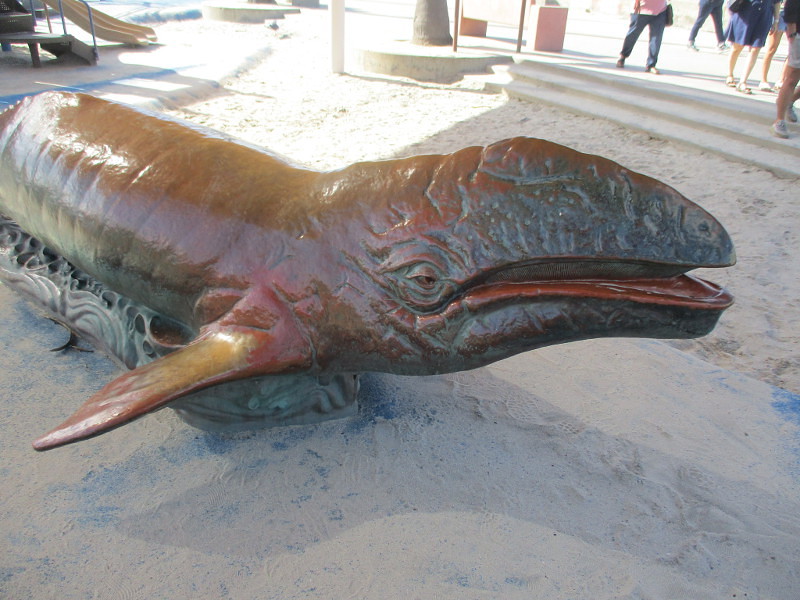
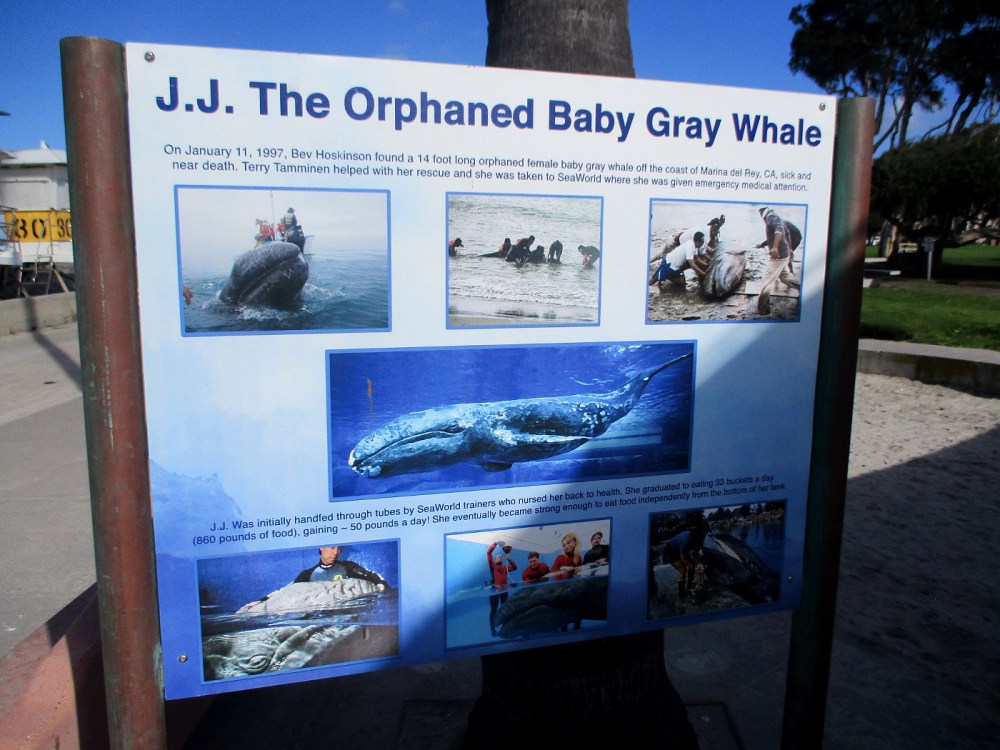
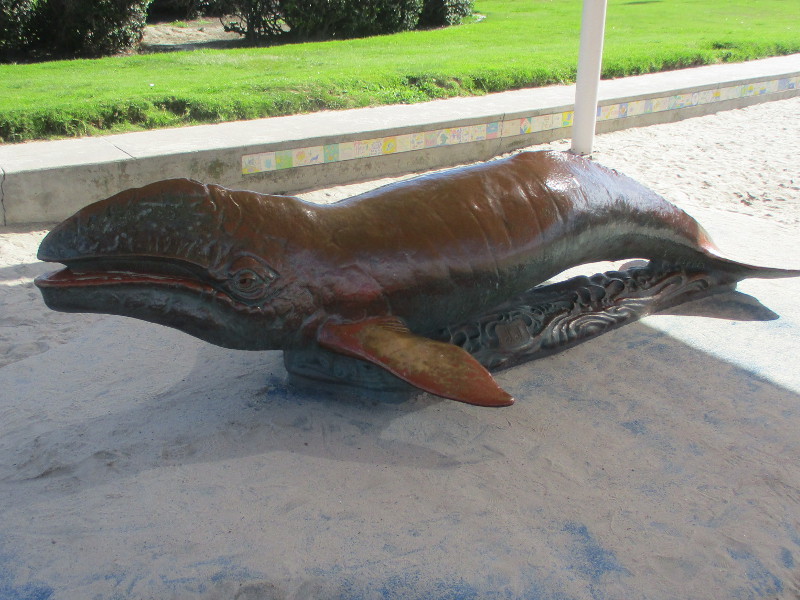
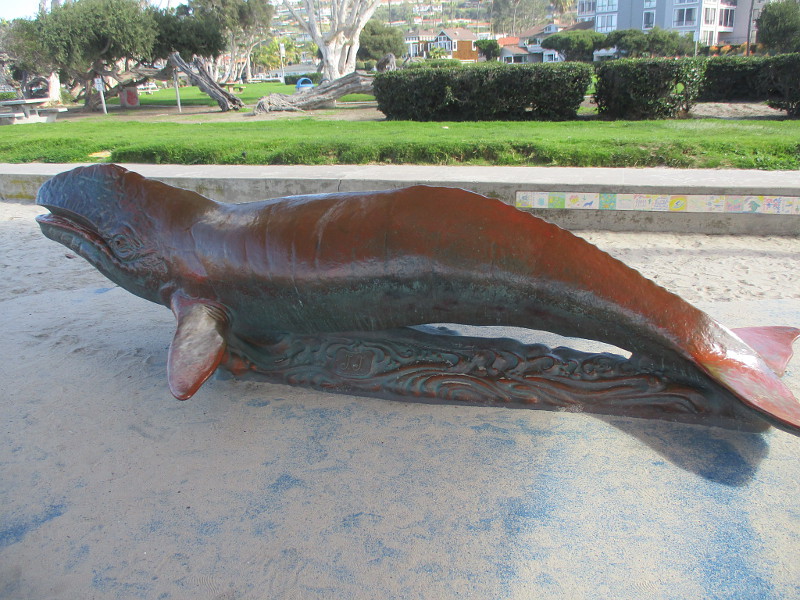
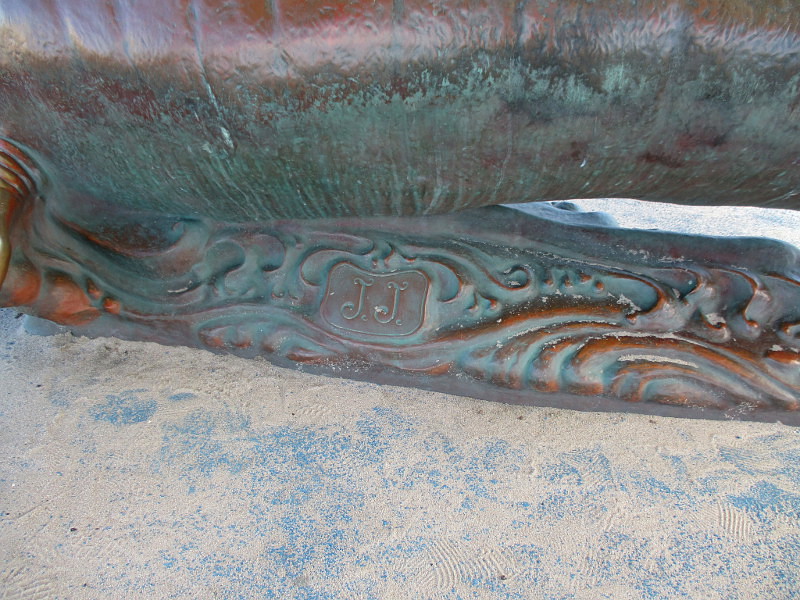
These photographs were taken during a recent walk through La Jolla Shores, at the Kellogg Park playground. What you see is the 16-foot-long life-size bronze sculpture of J.J., an orphaned baby California gray whale.
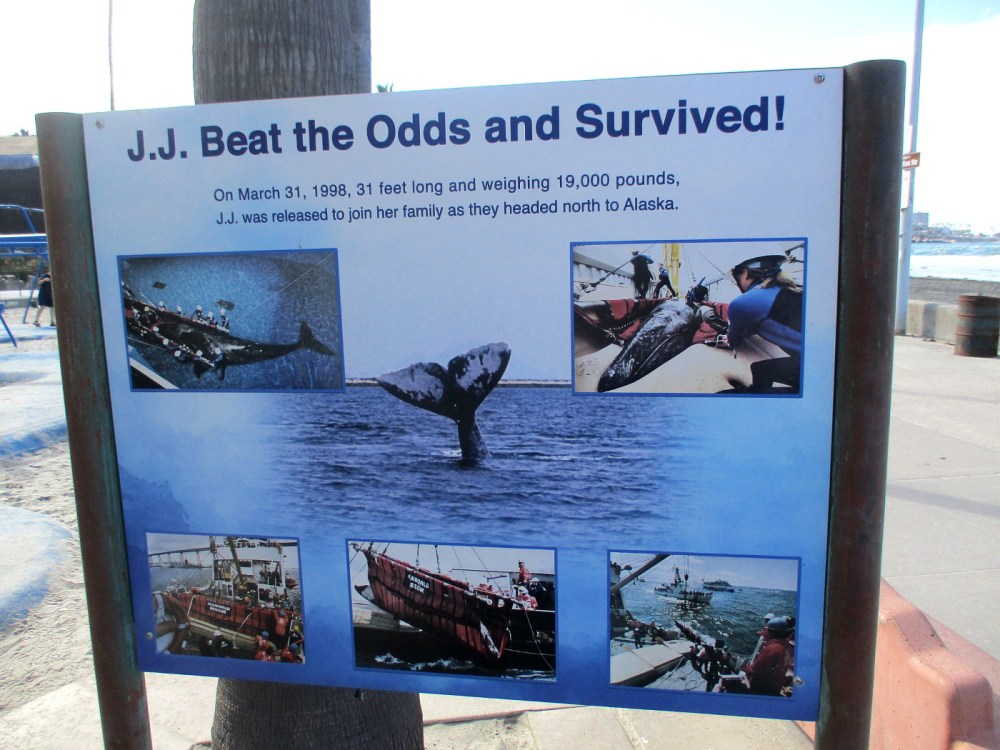
The malnourished baby whale, near death, was rescued off the coast of Marina del Rey in 1997, and nursed back to health at SeaWorld. She would ultimately be released back into the Pacific Ocean to resume her migration to Alaska.
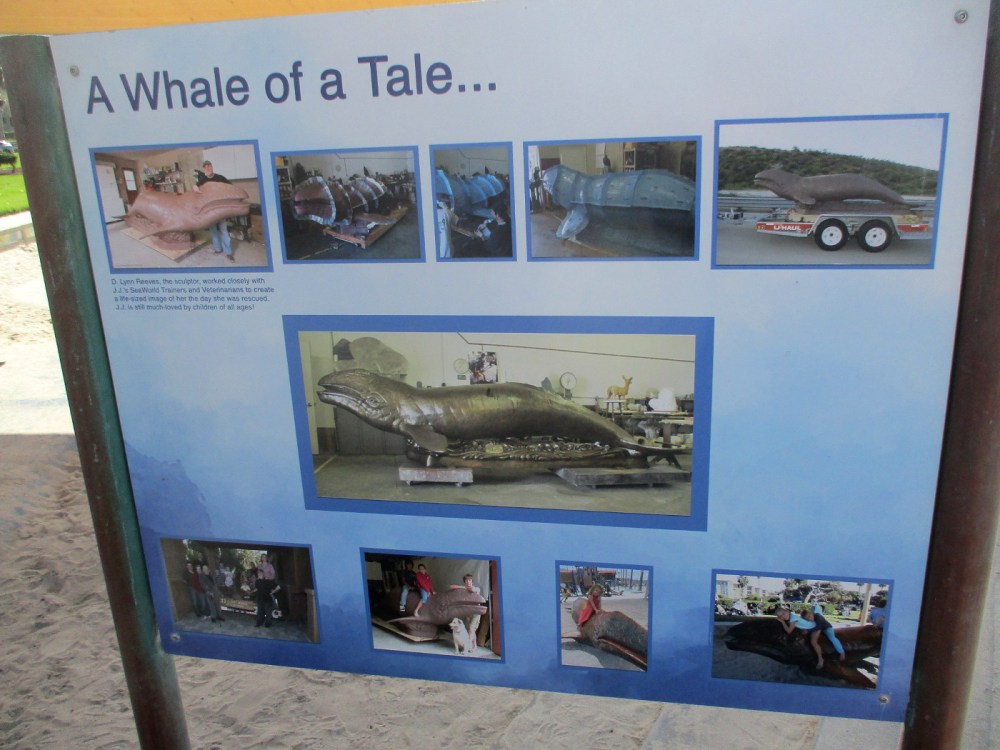
The sculpture of J.J., which children love to ride and play on, was created by sculptor D. Lynn Reeves. It was commissioned by Friends of La Jolla Shores and was installed at the Kellogg Park playground next to the beach boardwalk in 2011.
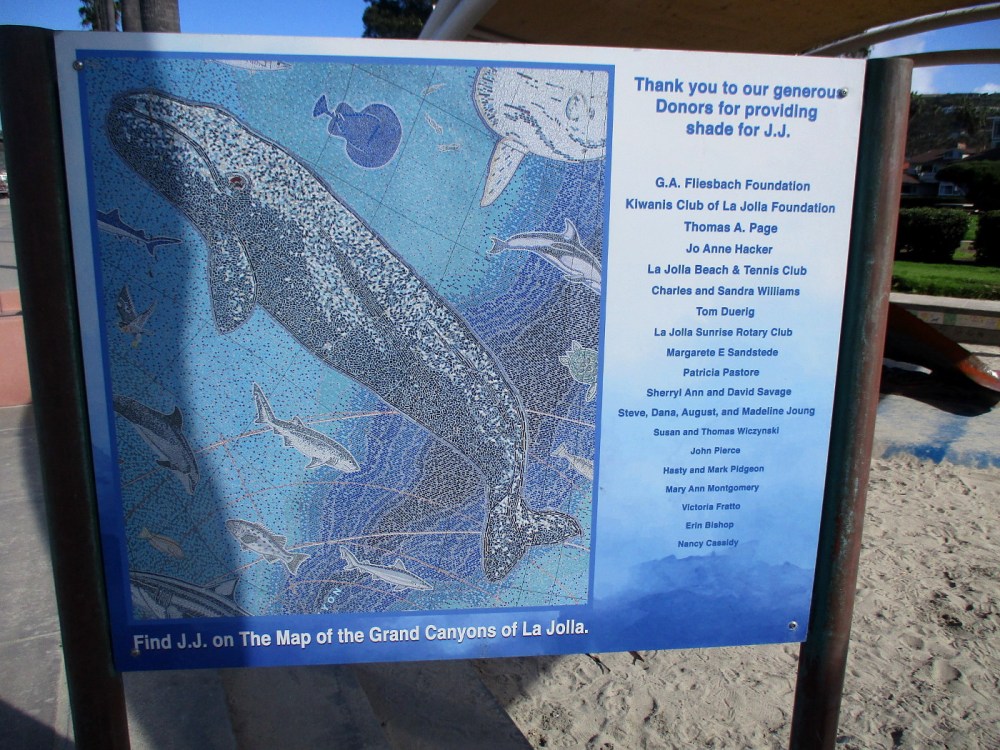
Signs posted beside J.J. tell the tale of her rescue and of the creation of her beautiful sculpture.
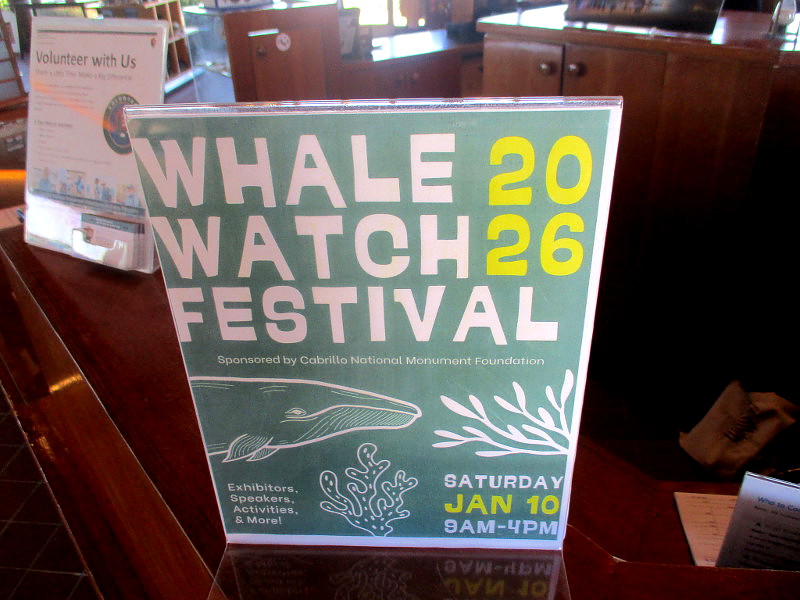
Whale Watch Festival 2026 will be held tomorrow at Cabrillo National Monument, Saturday, January 10th, 9 am to 4 pm.
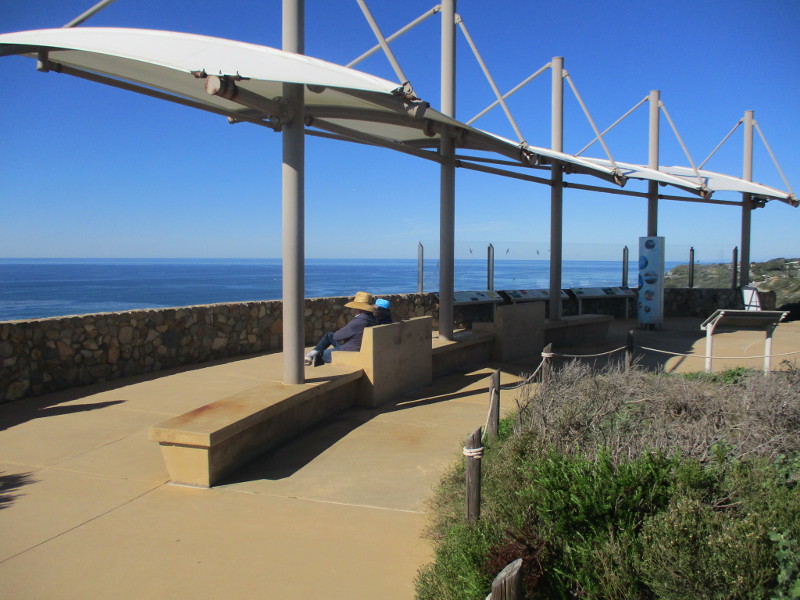
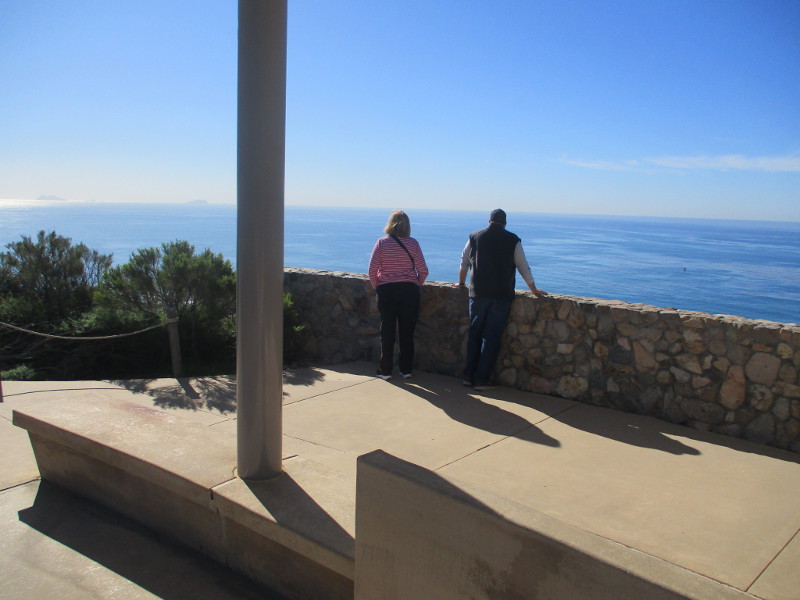
Visitors to the National Park will have panoramic views of passing whales from the high Kelp Forest and Whale Overlook. During the day there will be exhibitors, speakers and activities, and people with good eyes pointing out distant spouts and flukes.
It’s now the peak of the winter migration of gray whales from Alaska to Baja California. I’ve heard reports of many sightings off our coast.
I’ll be busy elsewhere tomorrow, so I headed to Cabrillo National Monument today to see what I might see.
I noticed the tall ship America out on the wide Pacific Ocean. Assuming it was on a whale watching excursion, I watched the water in its vicinity for a while. I think I glimpsed a spout. An expert at my elbow would’ve helped me with sightings!
It was a beautiful sunny day and the weather should be the same for the festival. If you go, have fun!
…
To follow my blog, find the “Follow” box in this website’s sidebar. Or bookmark coolsandiegosights.com and swing on by occasionally!
(If you’re viewing this on a phone, open my website’s sidebar by tapping those three parallel lines at the top of the page.)
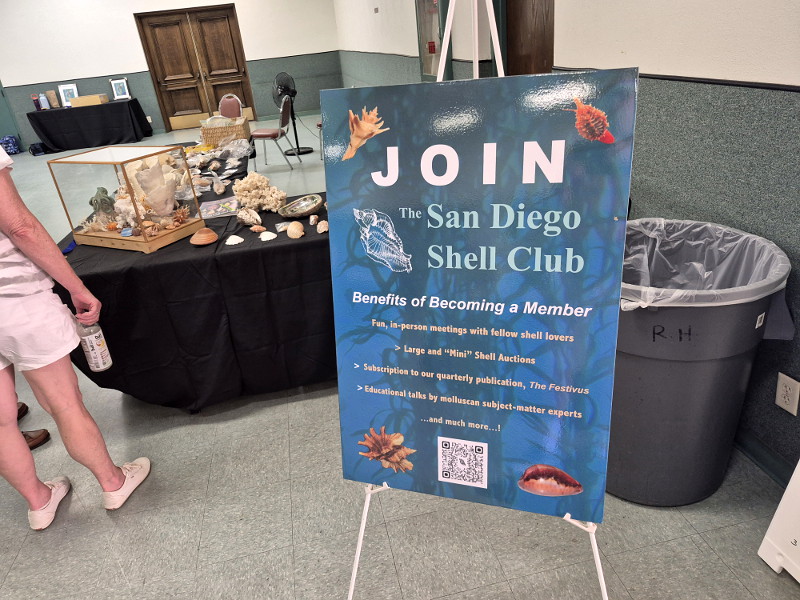
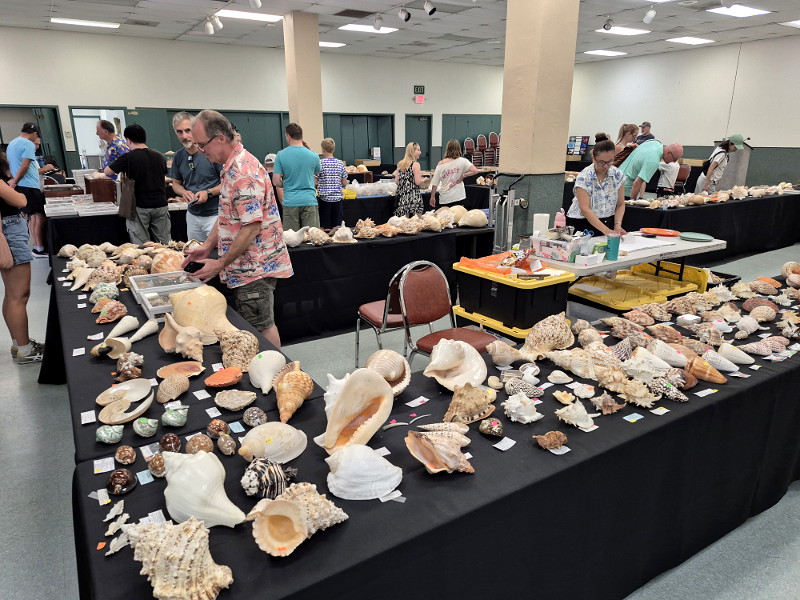
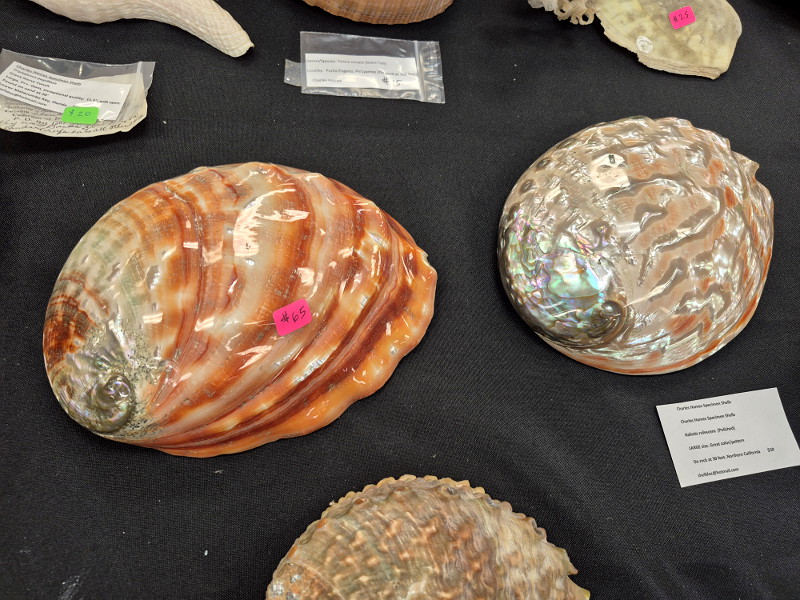
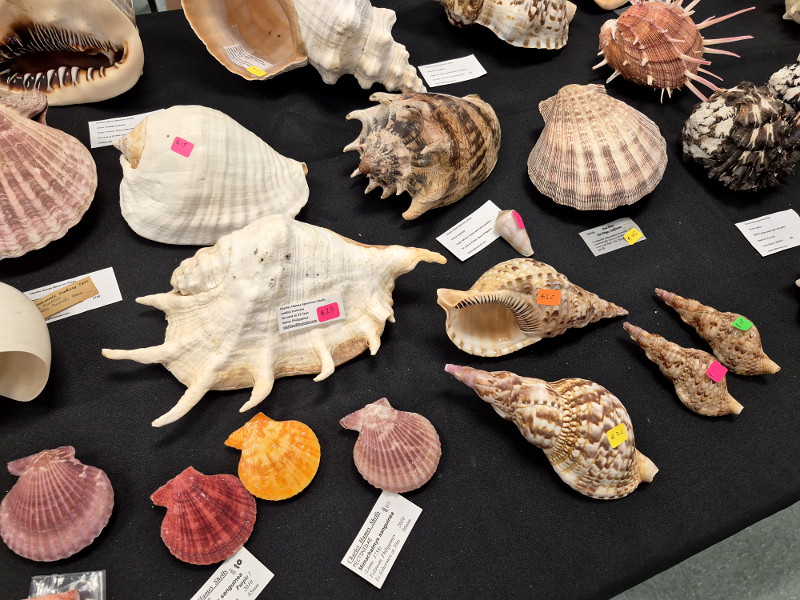
Eight years ago I posted the blog Natural beauty at the West Coast Shell Show. Today, while walking through Balboa Park, I noticed the West Coast Shell Show was being held again in the Casa del Prado, so I checked it out!
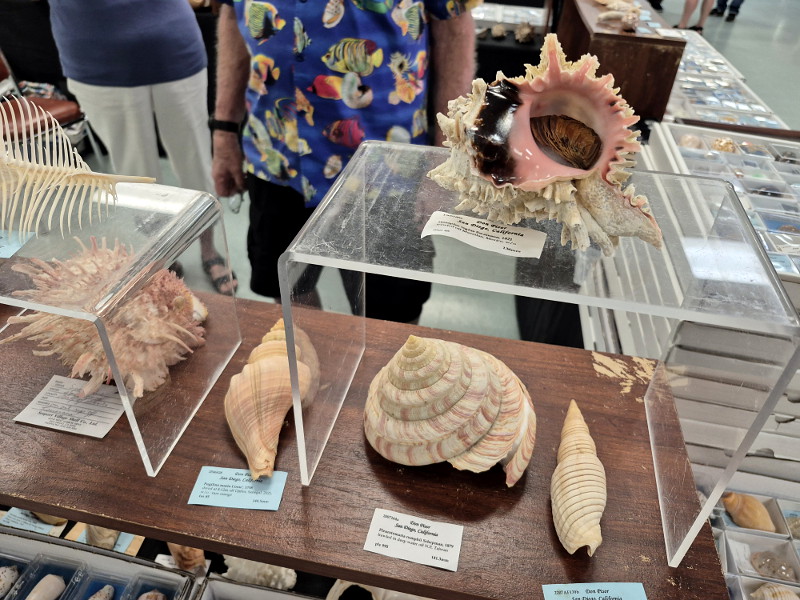
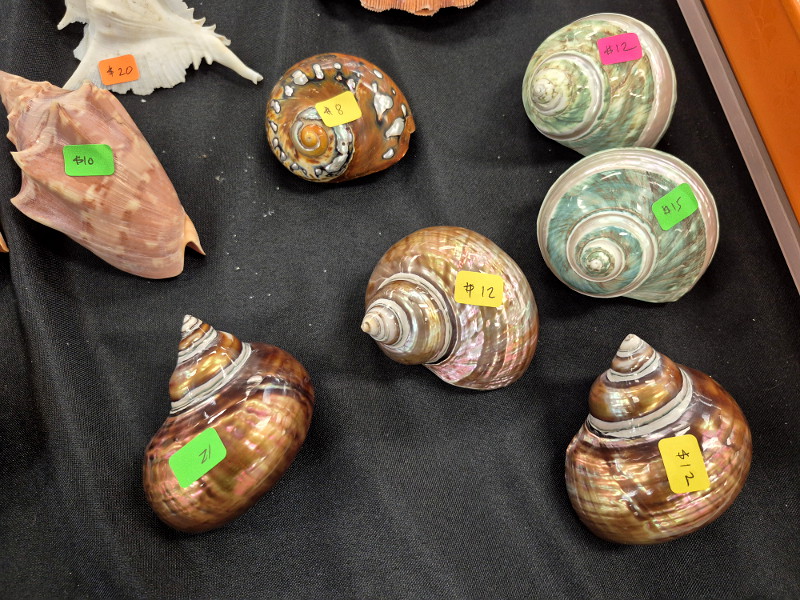
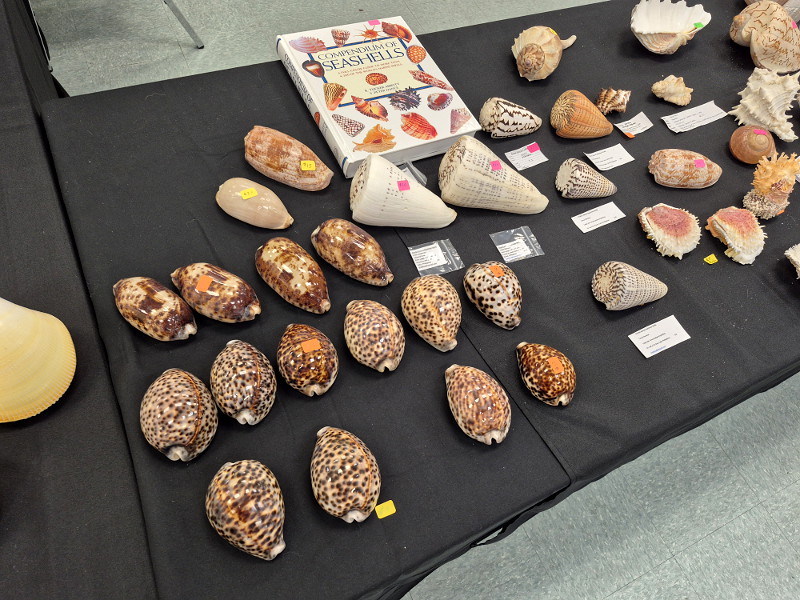
Yes, there were hundreds of amazing shells. All types! I’m no expert when it comes to seashells or marine organisms–all I know is that these jewels from the ocean can be indescribably beautiful. I can see why people collect them.
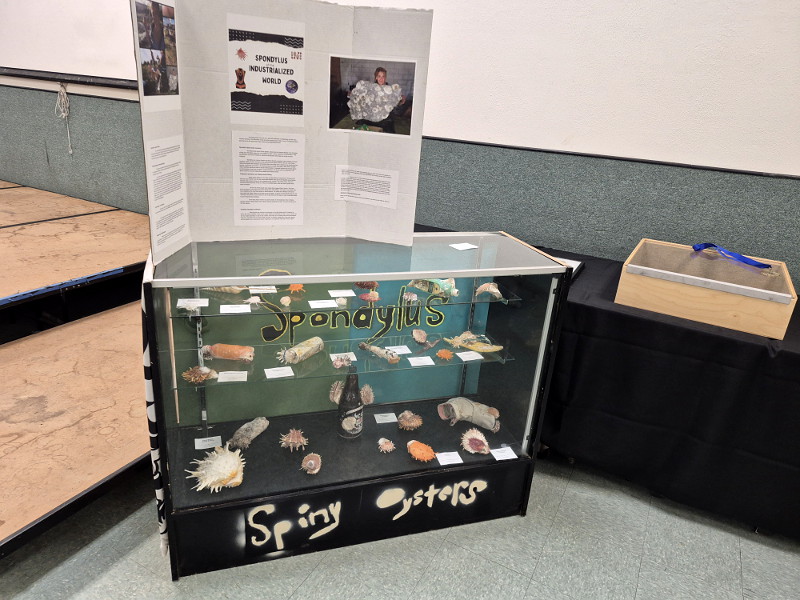
Dealers had tables full of specimens and there were educational displays to read, too. I learned these shells were gathered from all around the world. One gentleman told me that collecting shells at protected San Diego beaches is illegal.
I must admit that while walking along the sand I’ve never seen anything that approaches these perfect specimens at the Shell Show. When lucky, I might observe very tiny polished shells underfoot, or an occasional sand dollar, or a broken abalone piece glinting in the sun.
Searching for what the vast ocean has churned up is instinctive, I suppose. The sudden discoveries–even shells that are broken–invite a closer look. They’re small hints of our planet’s immense magnificence.
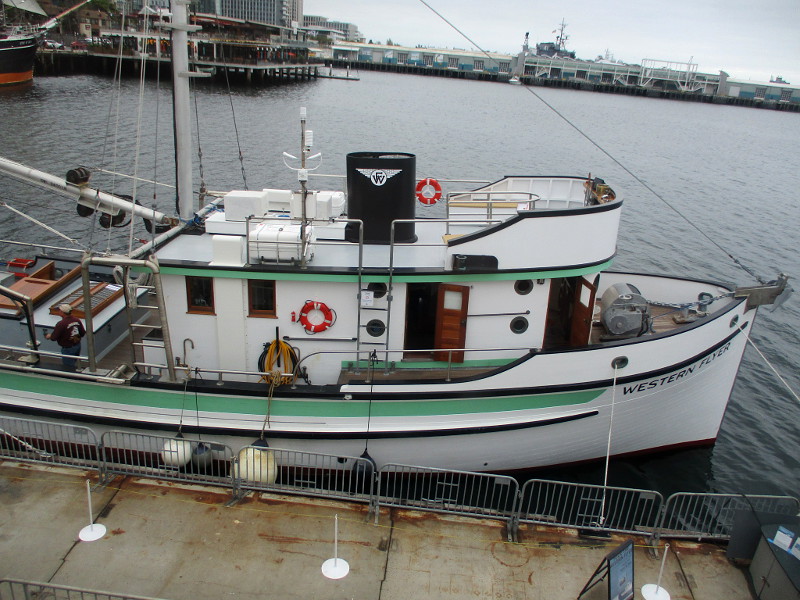
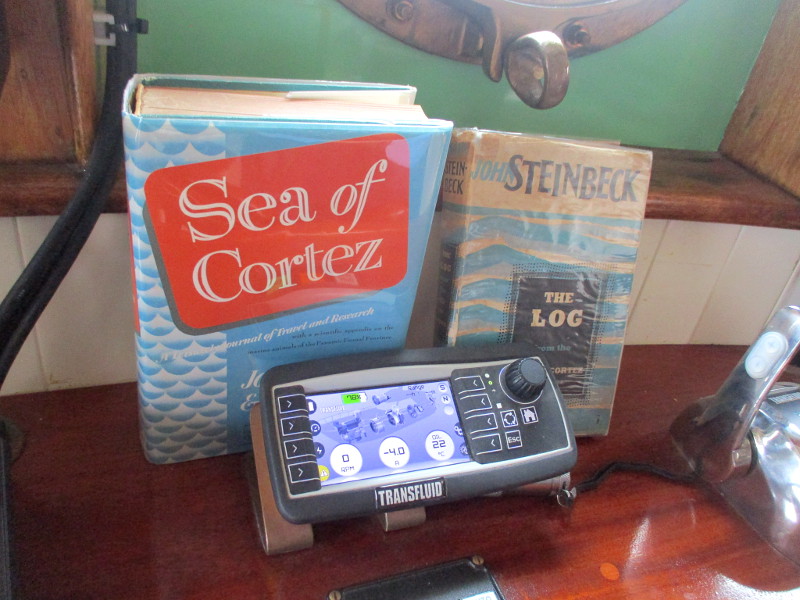
In 1940, a year after publishing his masterpiece The Grapes of Wrath, John Steinbeck went on a scientific expedition to the Sea of Cortez with marine biologist Ed Ricketts. The 4000 mile, six week journey, made famous in Steinbeck’s books Sea of Cortez and The Log from the Sea of Cortez, utilized the Monterey fishing boat Western Flyer, a 77-foot purse seiner that had been used in the sardine fishery.
On their way to Baja California, Steinbeck, Ricketts and the small crew of the Western Flyer visited San Diego. Eighty five years later, the storied fishing boat returned!
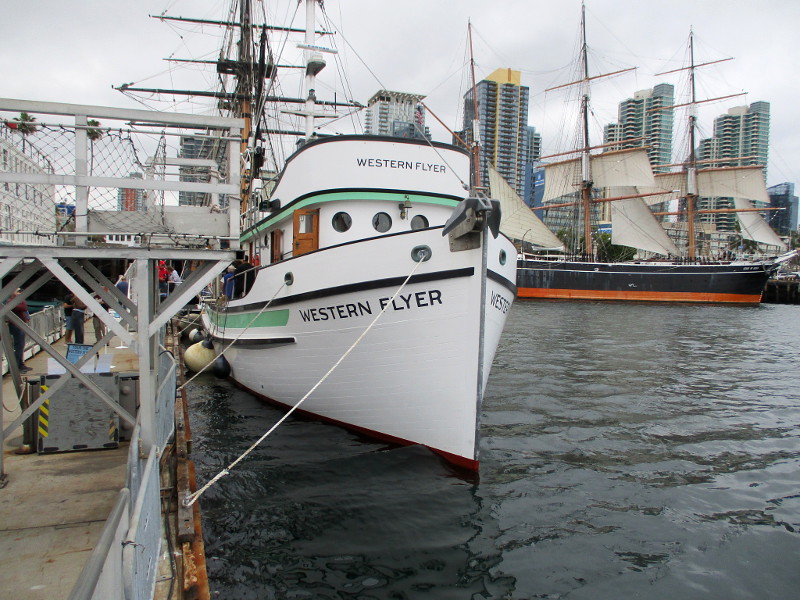
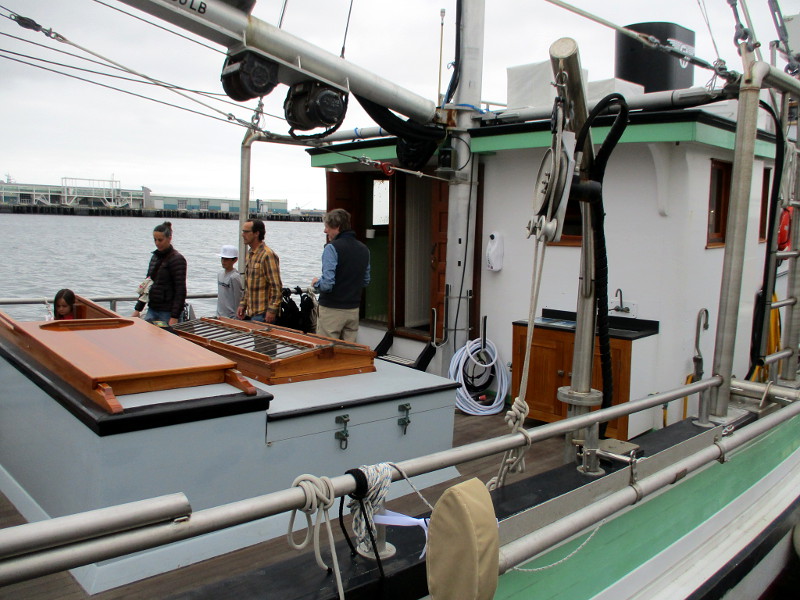
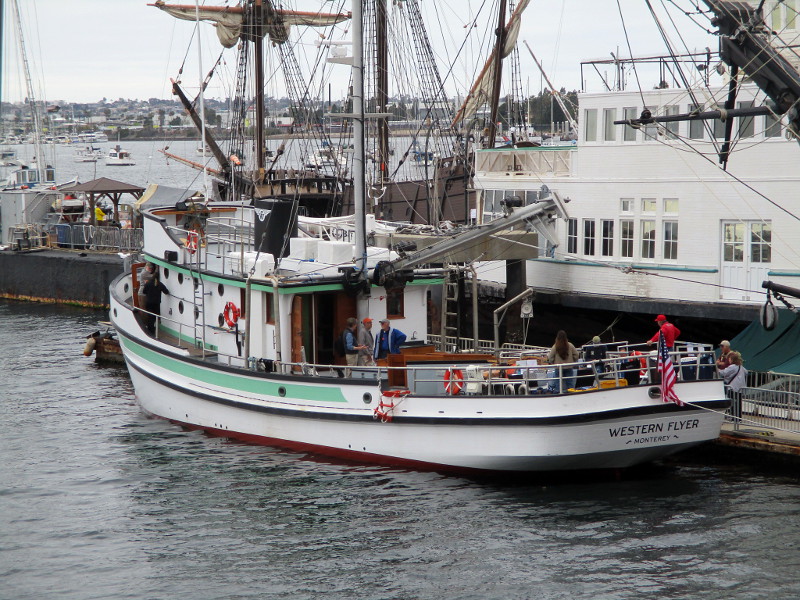
Yesterday the Western Flyer was docked at the Maritime Museum of San Diego and museum visitors had the opportunity to tour her!
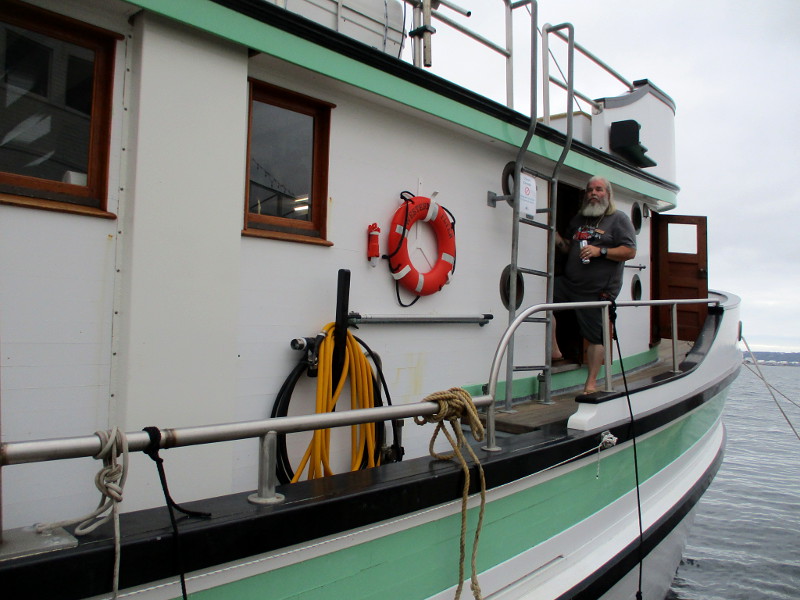
I was one of many who stepped aboard the historic vessel that is called the most famous fishing boat in the world. I took photographs, of course!
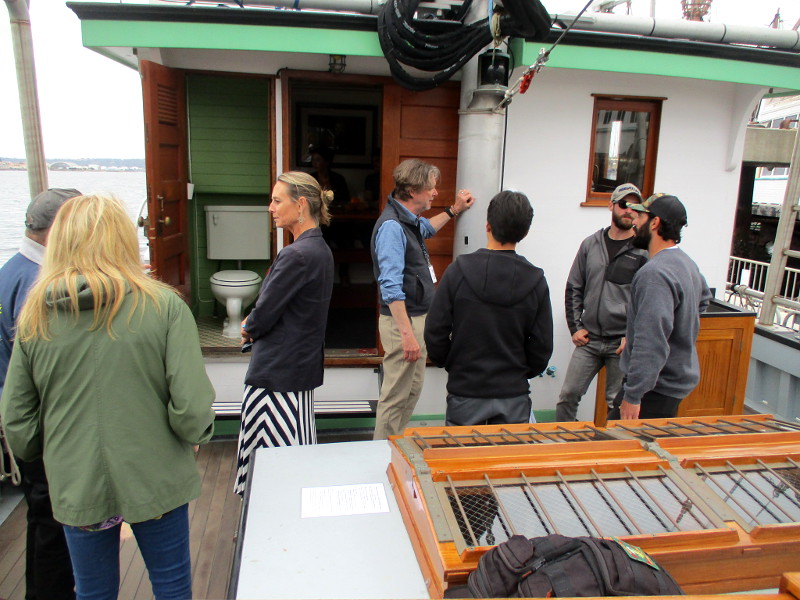
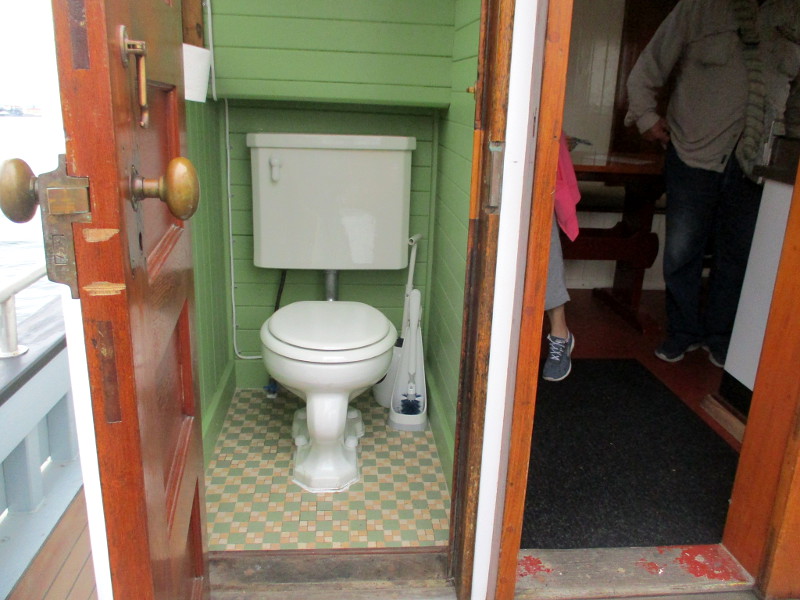
The first thing we were shown was the head! Yes, what you see in the next photograph is where John Steinbeck himself sat! During the Sea of Cortez expedition, he developed the idea for his future novels Cannery Row and The Pearl. Perhaps he did some brainstorming here…
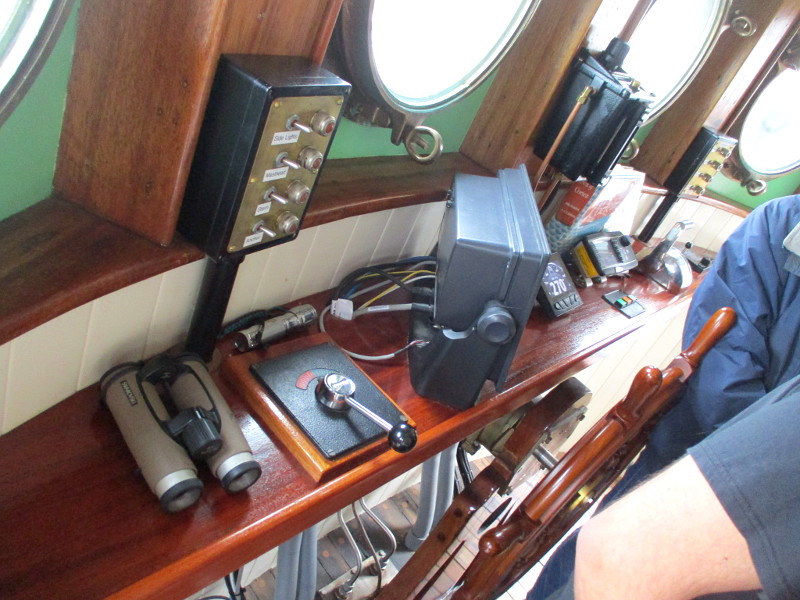
We then went forward to the pilot house…
All the instruments are modern–the Western Flyer during its long complex history sank and was submerged for six months. The boat was restored to look and feel as it did originally. Ninety percent of the hull and ten percent of the wheelhouse was replaced.
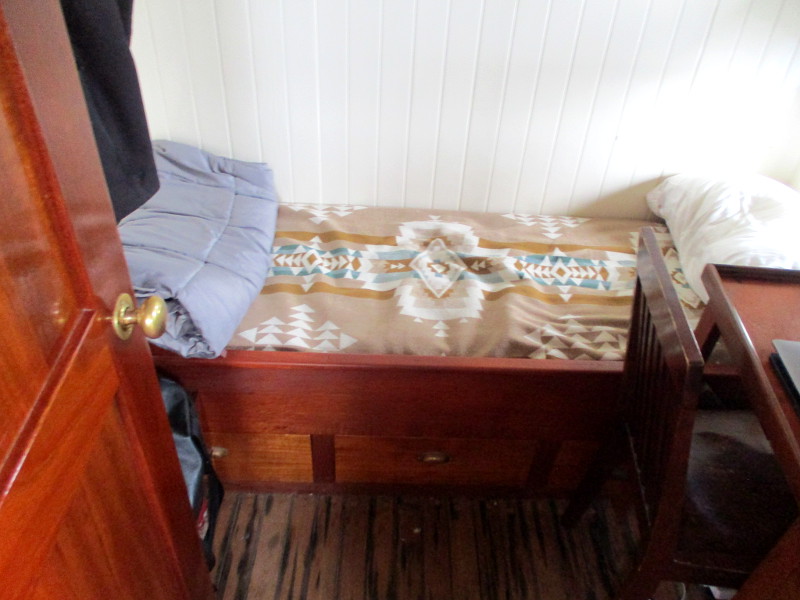
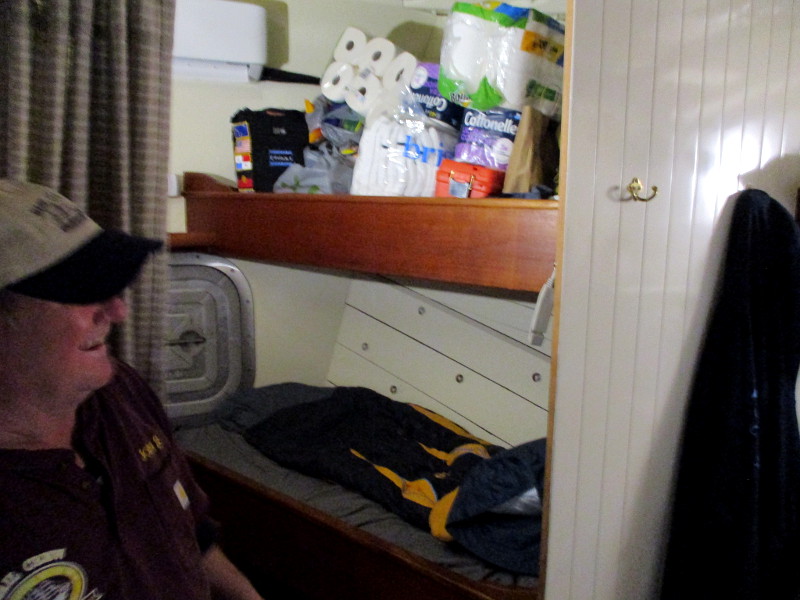
When we turned around, we discovered a small room with a single bed. This is where Steinbeck’s wife, Carol, slept. Even though she was part of the marine specimen collecting expedition, she was never mentioned in Steinbeck’s books concerning it.
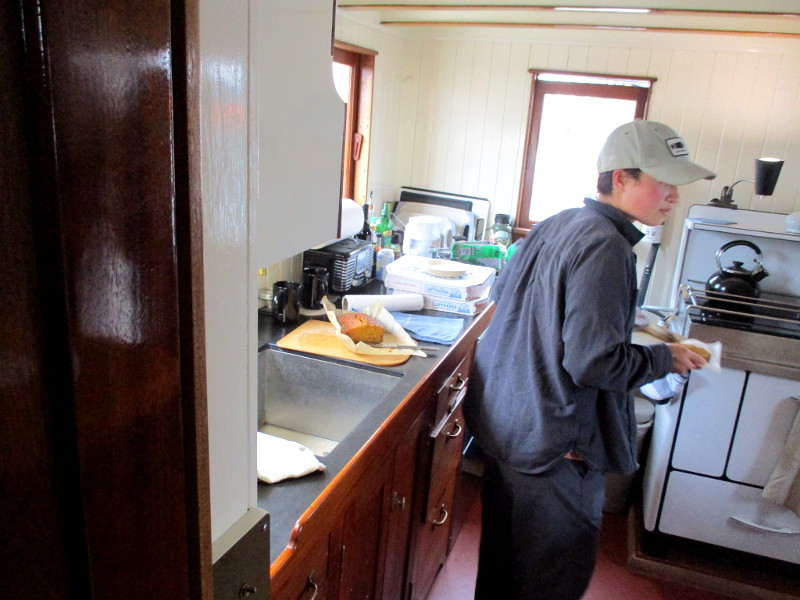
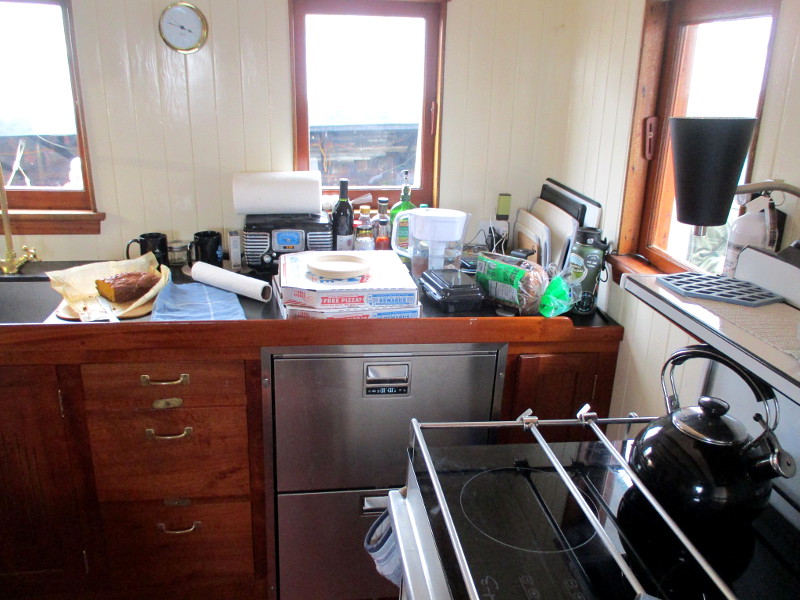
We then proceeded down through the deckhouse past more equipment and bunks and entered the galley. The Western Flyer Foundation takes students out on educational trips, performing ocean research. The young people are privileged to gather around a table where Steinbeck and his friends sat…
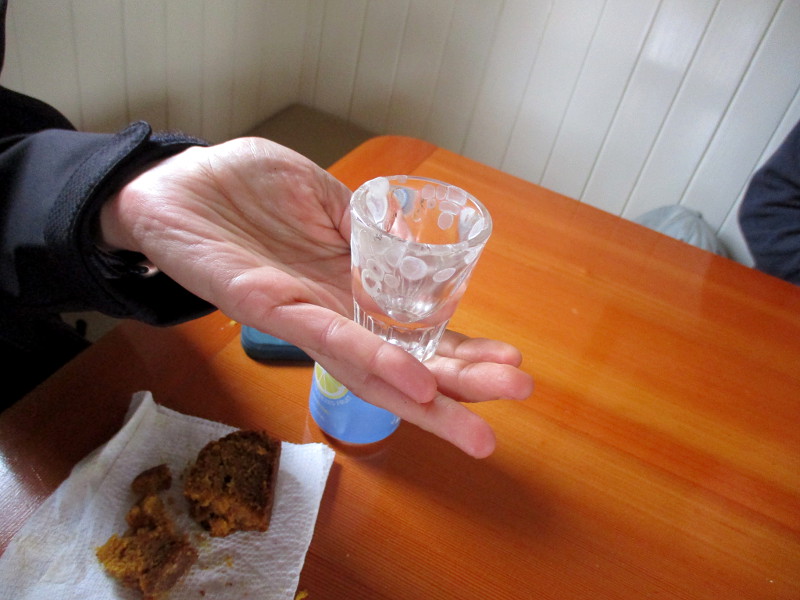
At the table, I was shown a remarkable shot glass. It retains marking from barnacles that attached to it while the boat was submerged. The shot glass is dated from the 1930s. It’s quite likely that John Steinbeck drank from it!
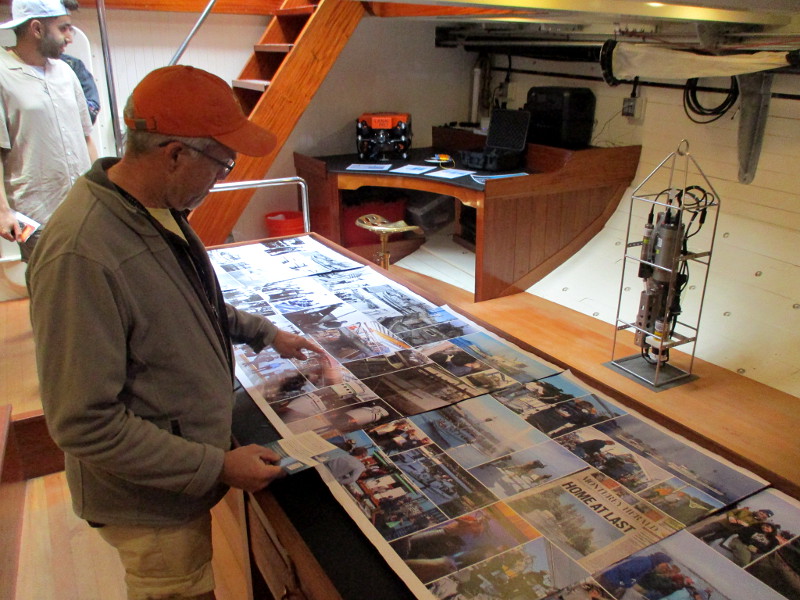
Back out on the boat’s weather deck, we descended into what originally had been the vessel’s fish hold. It was converted for the Sea of Cortez expedition into a laboratory, where small marine specimens–urchins, crabs, chitons, snails, clams, starfish and more, gathered mostly from the intertidal zone–were preserved using formaldehyde and other chemicals. Steinbeck and Ricketts discovered that the old fish hold was so damp that it quickly corroded much of their equipment.
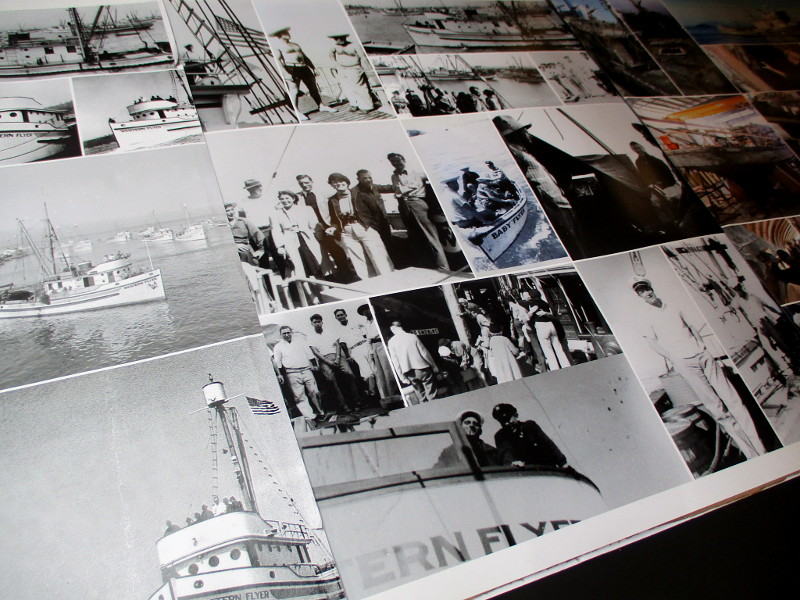
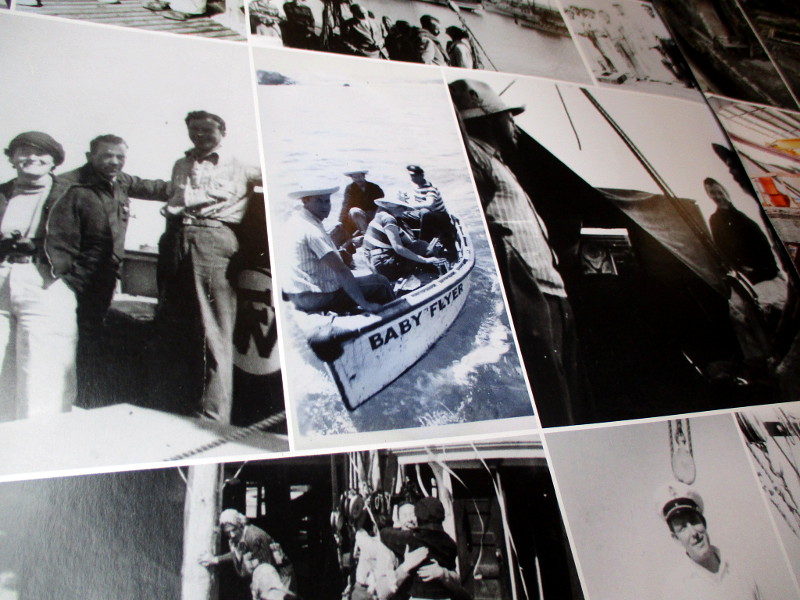
Historical photographs of Western Flyer, and from the Sea of Cortez expedition, cover the large table for our tour. You can see in the next photo some of the modern research equipment used by ocean-going college students today…
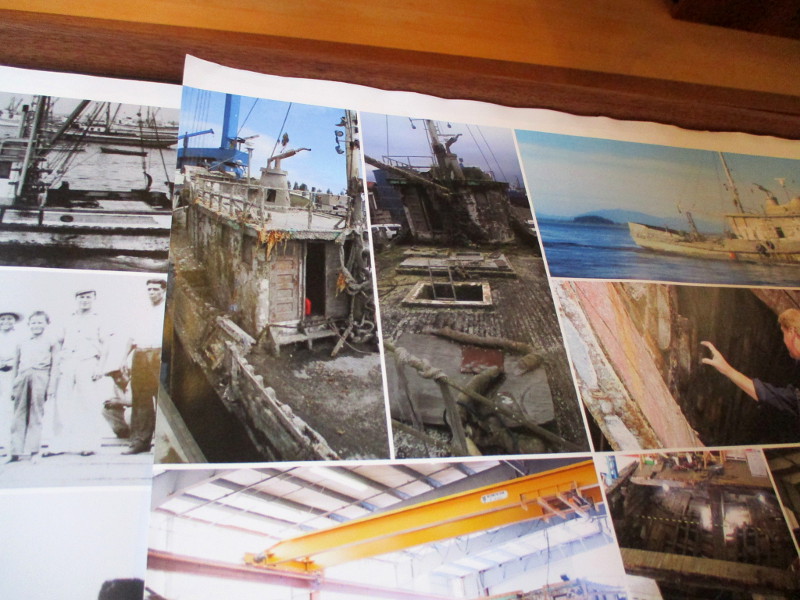
This is how Western Flyer looked before its 7 million dollar restoration by Port Townsend Shipwrights Co-Op…
The image of the Baby Flyer is one of only two known photographs showing Steinbeck and Ricketts together. John Steinbeck is in the striped shirt, and Ed Ricketts is sitting next to him…
We then proceeded through the crowded engine room. You can learn about the Western Flyer’s original Atlas-Imperial diesel engine here. Today’s diesel/electric engine is quite useful for scientific research, allowing the boat to maneuver silently. I took no photographs of it–sorry.
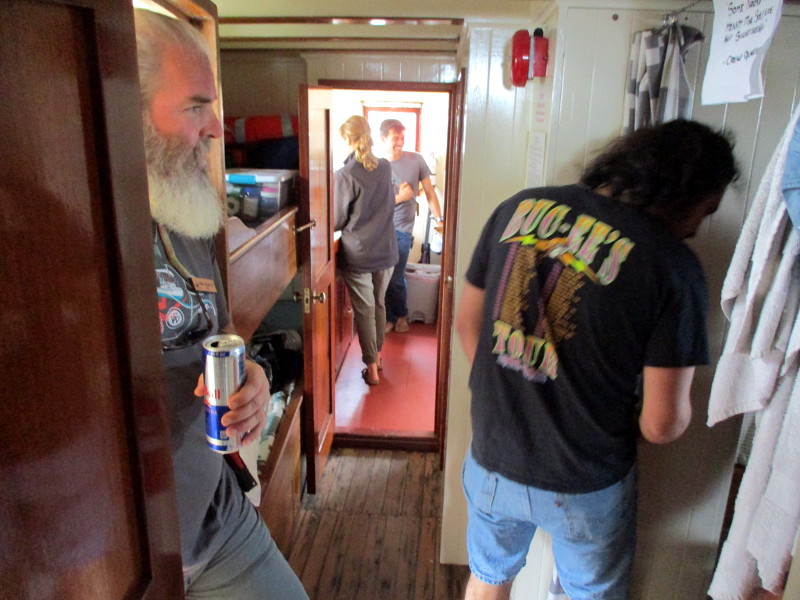
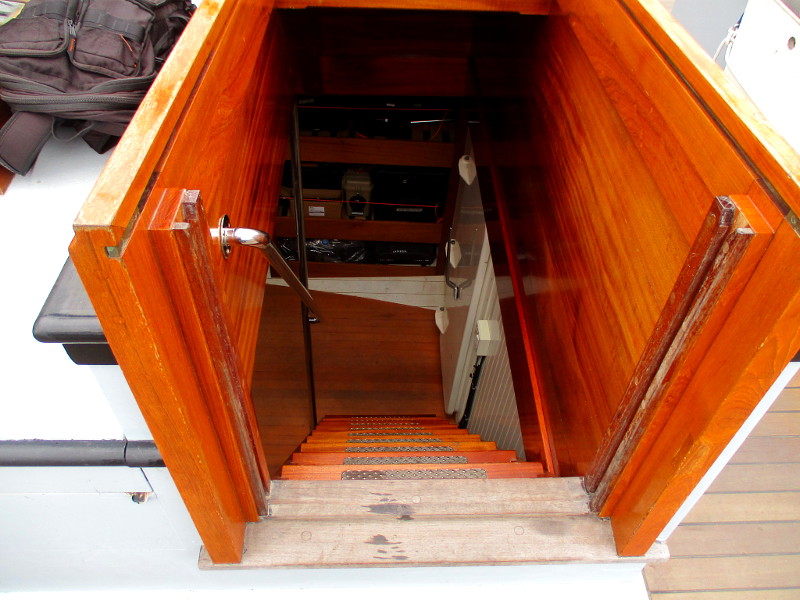
We then peeked into the boat’s forepeak, where there are more bunks. John Steinbeck and the Western Flyer’s engineer Tex slept here and certainly held many interesting conversations.
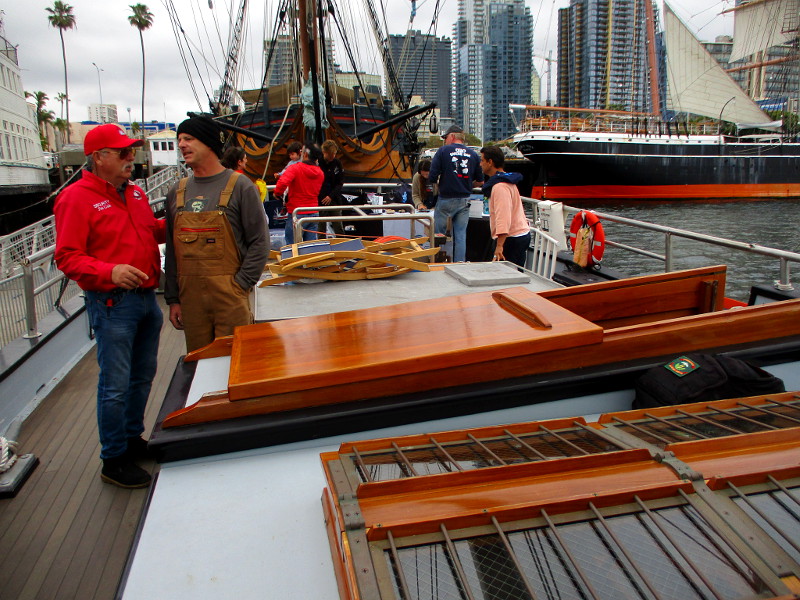
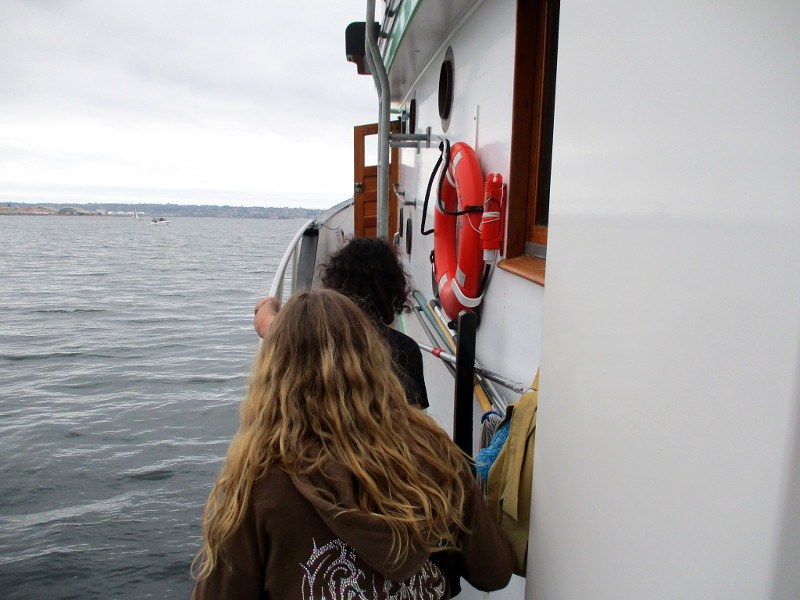
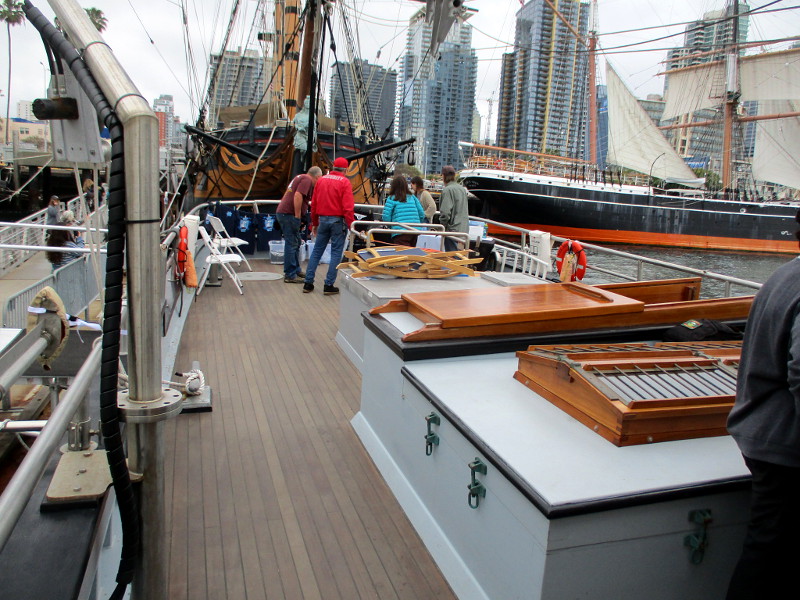
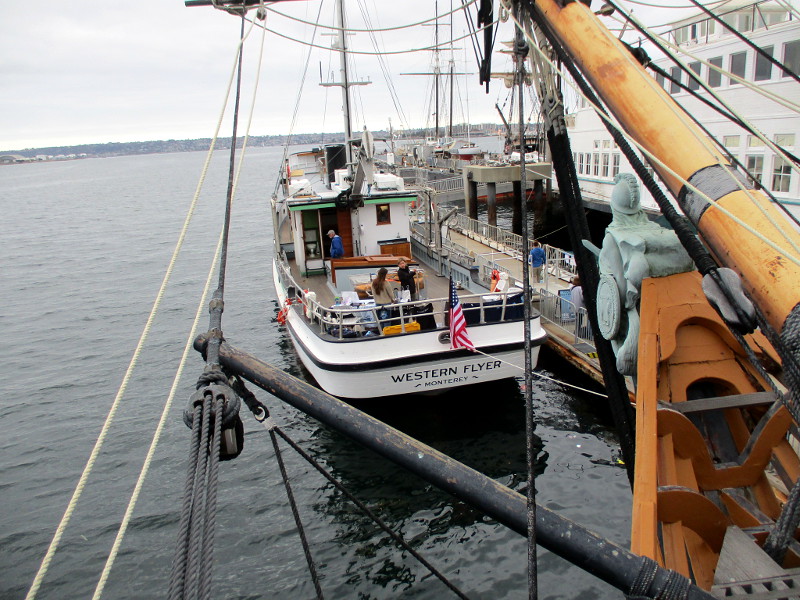
Up some steep steps and we’re back out on the main deck. That is HMS Surprise of the Maritime Museum of San Diego straight ahead, and their iconic Star of India–oldest active sailing ship in the world–to the right.
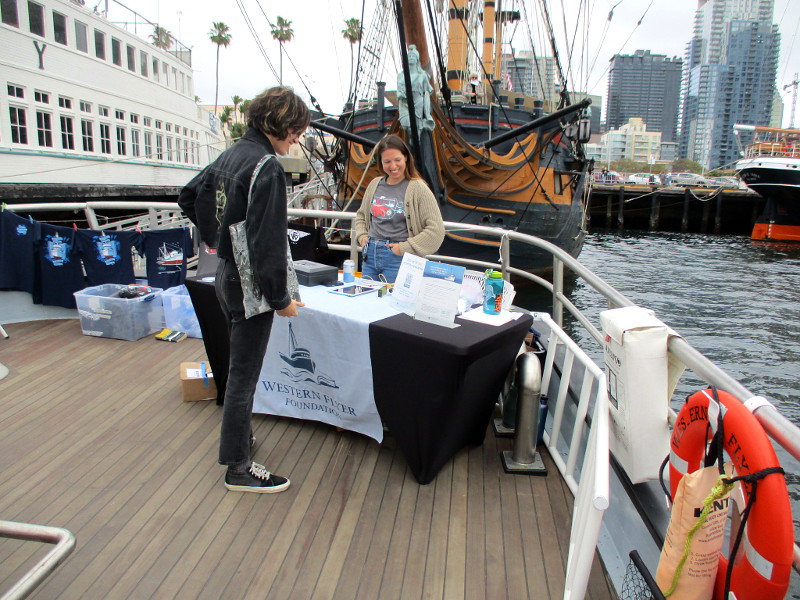
The Western Flyer Foundation had hats, shirts and stickers available for purchase. They are a nonprofit and would appreciate your donation!
Some more looks…
After departing the Maritime Museum of San Diego, the restored Western Flyer heads south to Ensenada, Mexico. They’re embarking on a recreation of the historic Sea of Cortez expedition. Instead of collecting marine specimens, however, they will be making new friends and educating the curious.
Follow the Western Flyer’s journey online! Experience it all virtually on the Western Flyer Foundation’s Facebook page here, and their Instagram page here!
…
I post new blogs pretty often. If you like discovering new things, bookmark coolsandiegosights.com and swing on by occasionally!
I live in downtown San Diego and love to walk around with my camera! You can follow Cool San Diego Sights via Facebook or X.
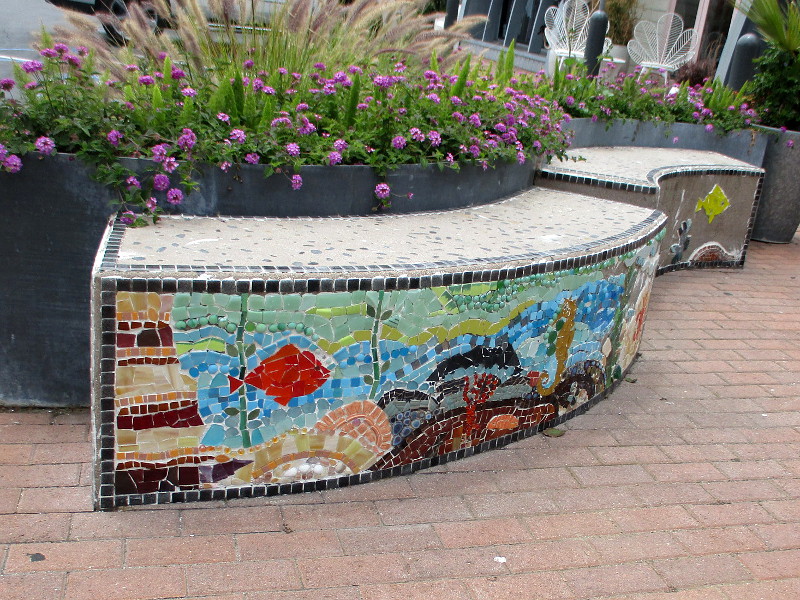
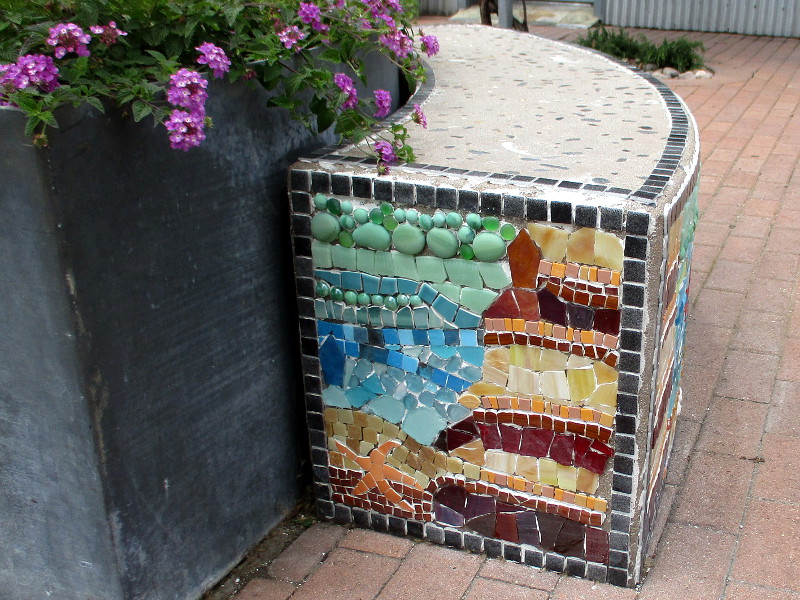
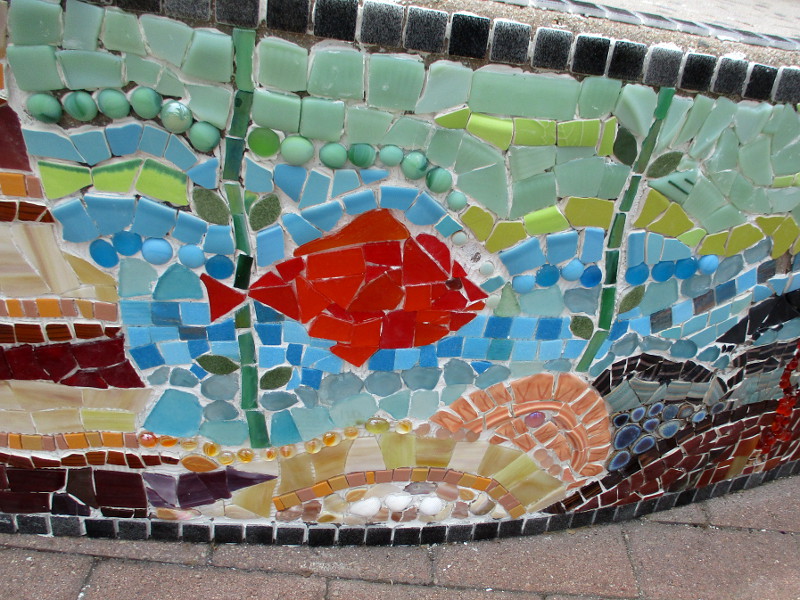
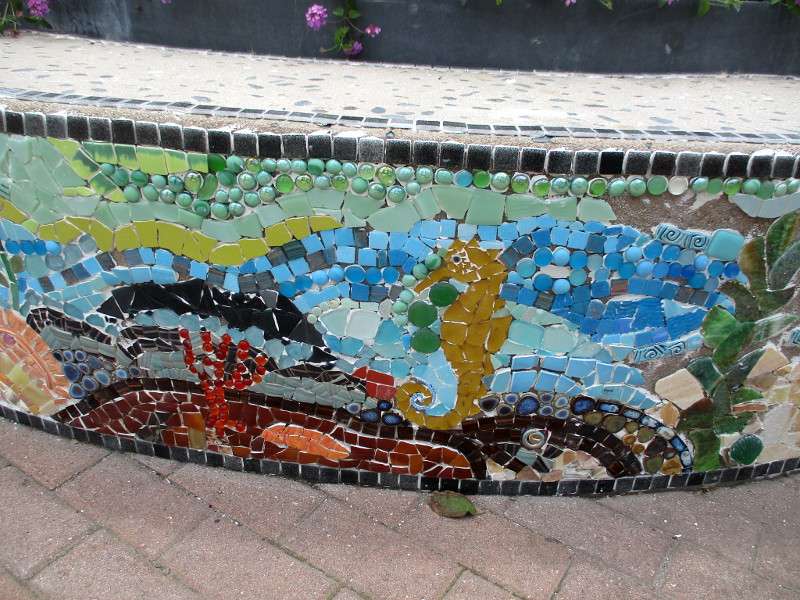
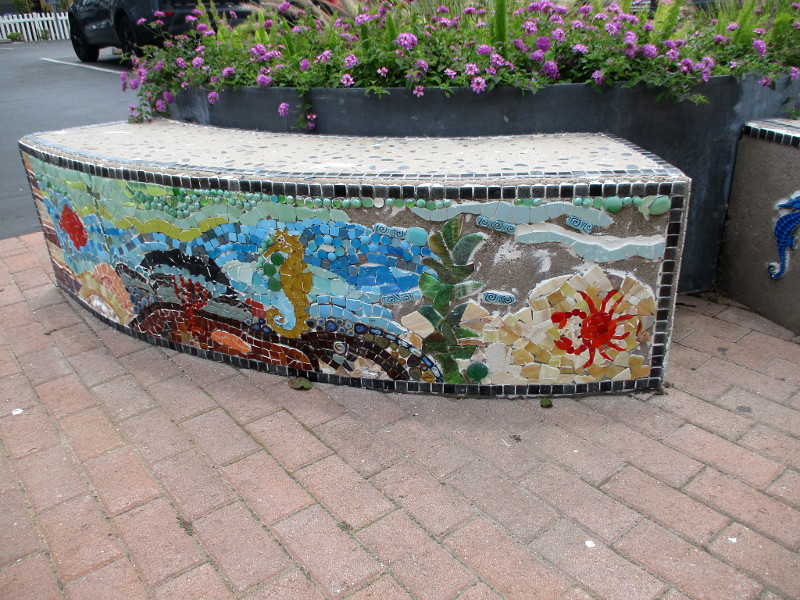
This bench decorated with tile mosaics adds beauty to the edge of a parking lot south of the Belly Up Tavern in Solana Beach.
I saw the artwork yesterday during a leisurely walk down South Cedros Avenue. It was one of many new discoveries that I made in the very colorful Cedros Avenue Design District!
I believe I see a starfish, garibaldi, seahorse and crab. The curving bench appears to show an underwater ocean scene. What do you see?
…
Thanks for visiting Cool San Diego Sights!
I post new blogs pretty often. If you like discovering new things, bookmark coolsandiegosights.com and swing on by occasionally!
I live in downtown San Diego and love to walk around with my camera! You can follow Cool San Diego Sights via Facebook or X.
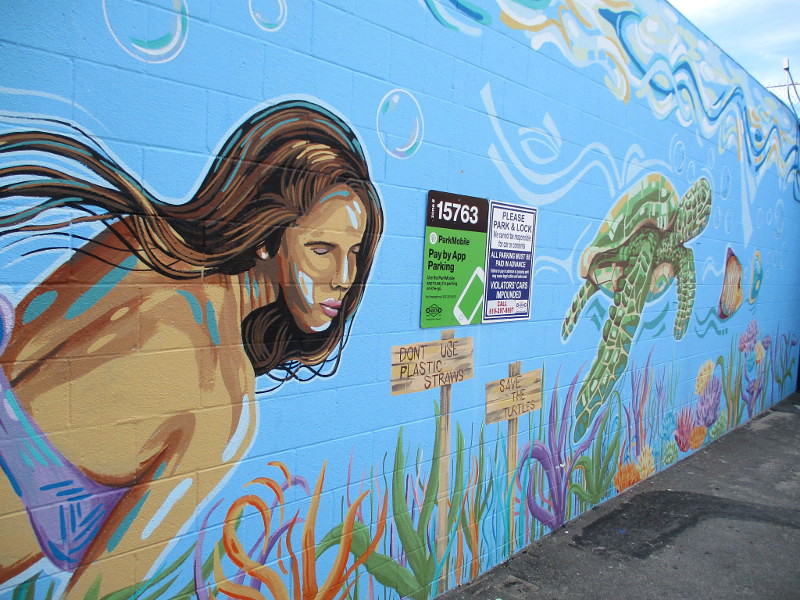
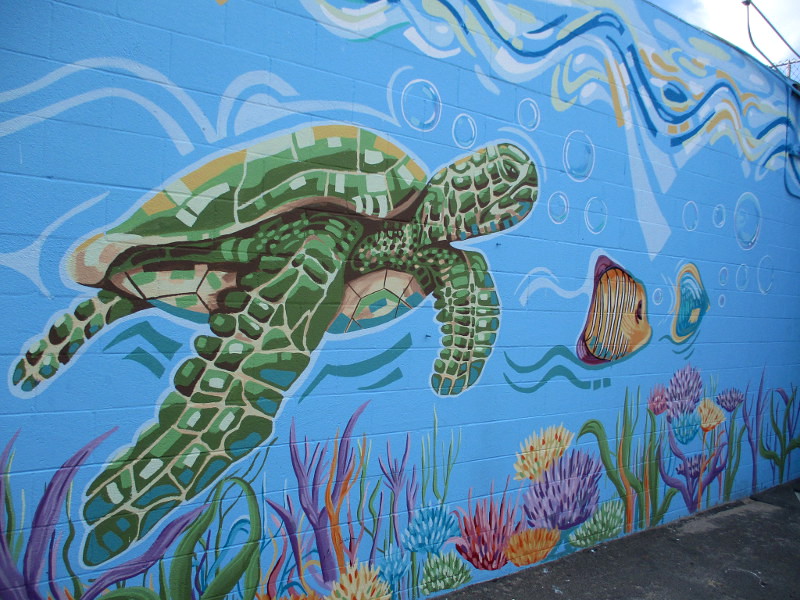
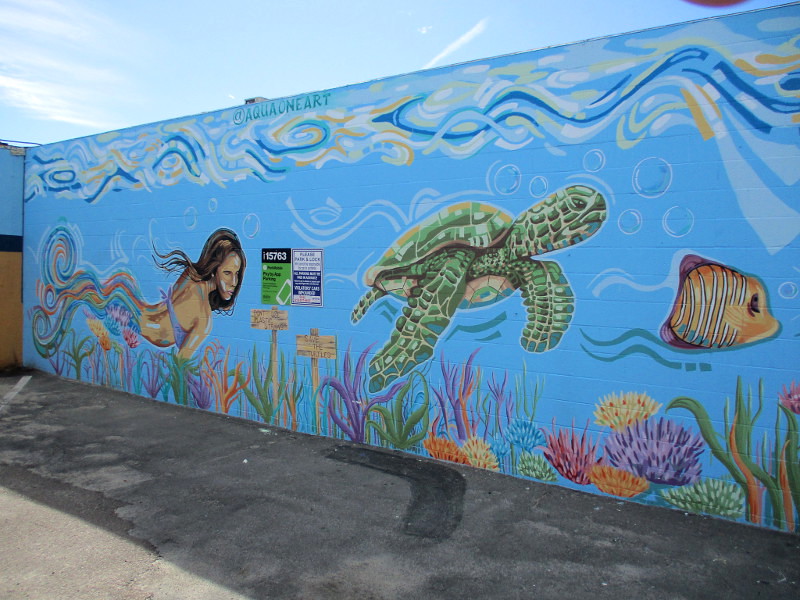
Last June this beautiful environmental mural was painted in Pacific Beach. You can find it on the west side of Mission Boulevard, a block south of Grand Avenue. (It’s on a wall next to the anti-cigarette butt “Bunny Kitty” mural by Persue that you can see here.)
I took these photos into the afternoon sun, but with a little contrast tweaking they appear pretty good. The watery mural features a mermaid, sea turtle, tropical fish, and the two messages: DON’T USE PLASTIC STRAWS and SAVE THE TURTLES.
The artist is Aqua One (@aquaoneart), who describes himself as a Modern Chicano Graffiti Artist. If you check out his Instagram page, you’ll notice his other artwork has a very different look!
…
Thanks for visiting Cool San Diego Sights!
I post new blogs pretty often. If you like discovering new things, bookmark coolsandiegosights.com and swing on by occasionally!
I live in downtown San Diego and love to walk around with my camera! You can follow Cool San Diego Sights via Facebook or X (formerly known as Twitter)!
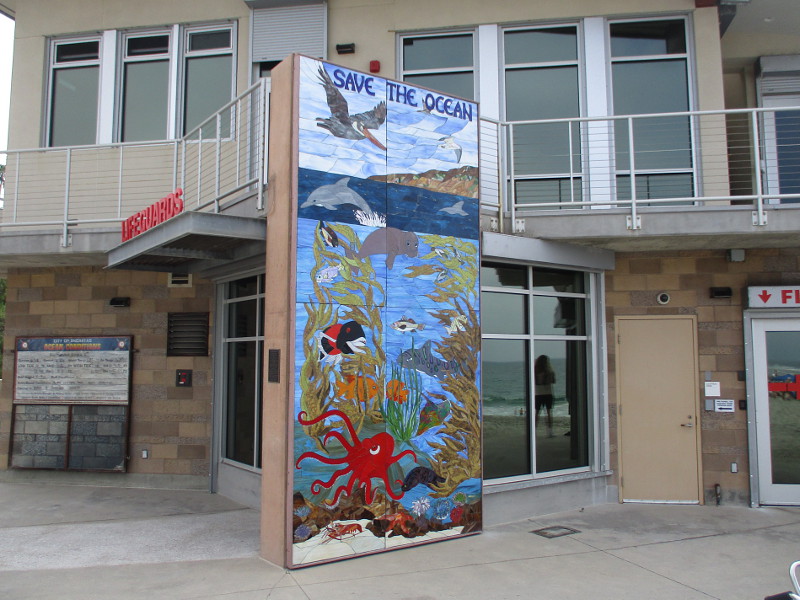
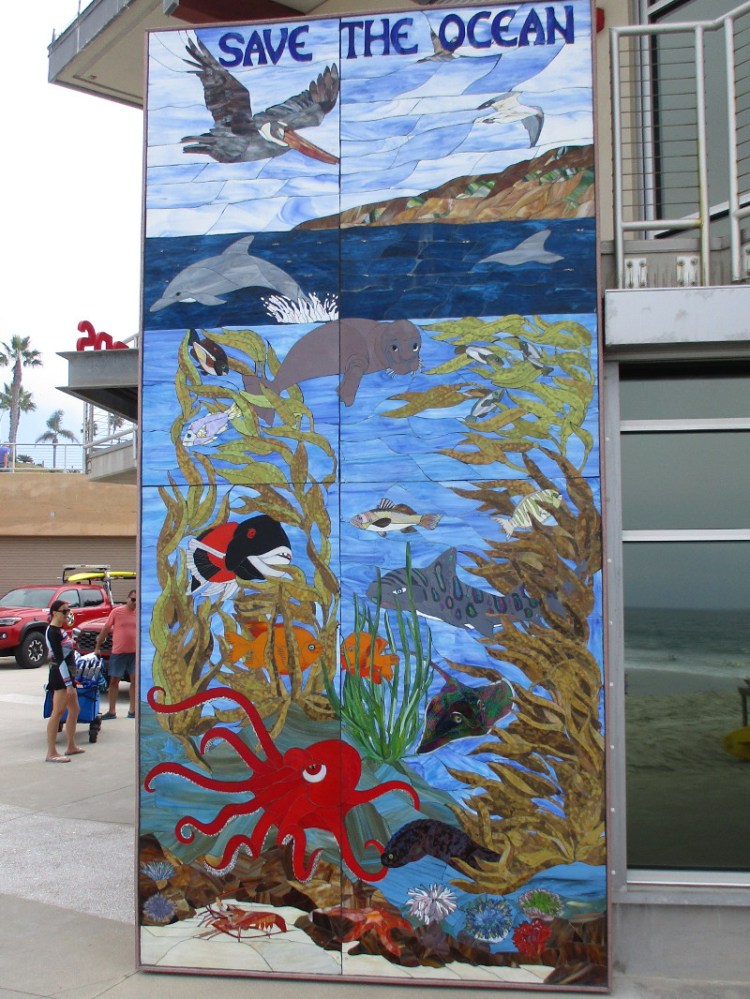
An extraordinary mural depicting life in (and above) the ocean can be found on Moonlight Beach in Encinitas. Titled The Pacific Playground, the mural, composed of stained glass, stands next to the Moonlight Beach Marine Safety Center tower where lifeguards are stationed.
The 7 1/2 foot-by-15-foot mural was made possible by the Surfing Madonna Oceans Project and installed in 2018. The original design was conceived by artist Peggy Sue Zepeda; the mural was built by Don Myers and Manny Corona with the help of hundreds of volunteers from the community. Here’s an article about The Pacific Playground, published shortly after its installation.
The stained glass shines brightly in the Southern California sunshine. The words SAVE THE OCEAN crown colorful images of sea life. This inspired public art makes Moonlight Beach even more special.
I thought you might enjoy a few photographs…
…
Thanks for visiting Cool San Diego Sights!
I post new blogs pretty often. If you like discovering new things, bookmark coolsandiegosights.com and swing on by occasionally!
I live in downtown San Diego and love to walk around with my camera! You can follow Cool San Diego Sights via Facebook or X (formerly known as Twitter)!
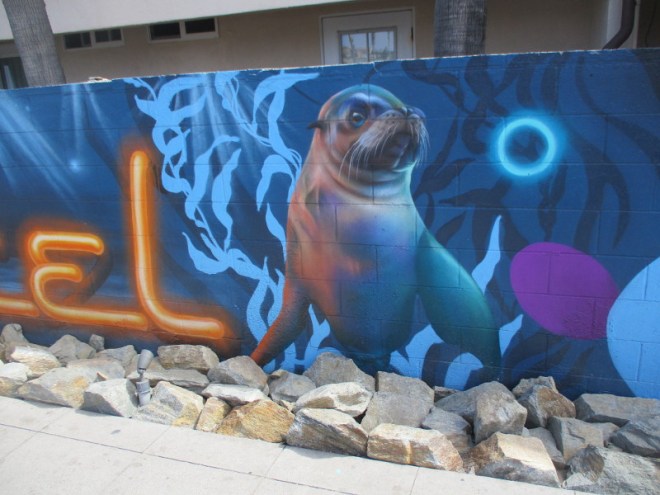
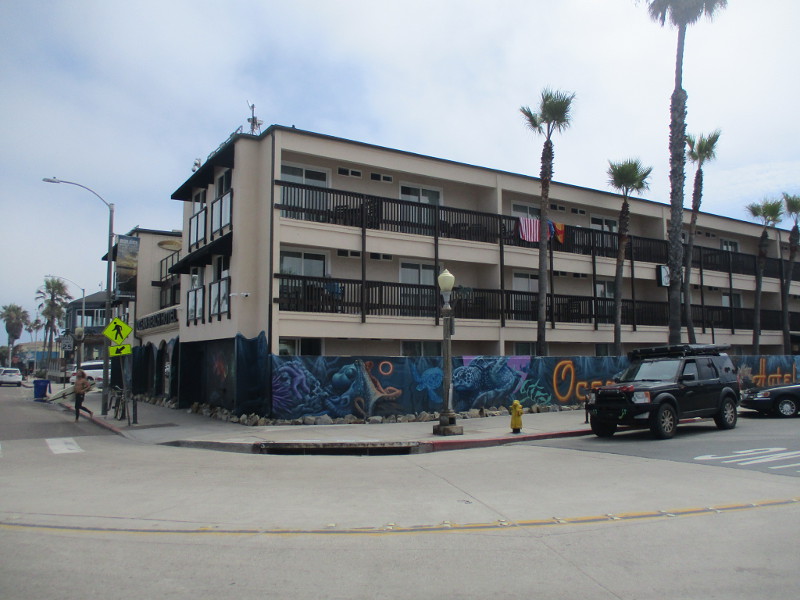
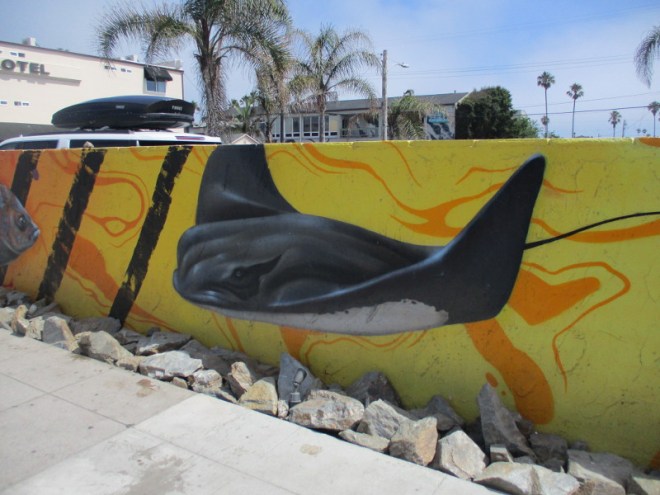
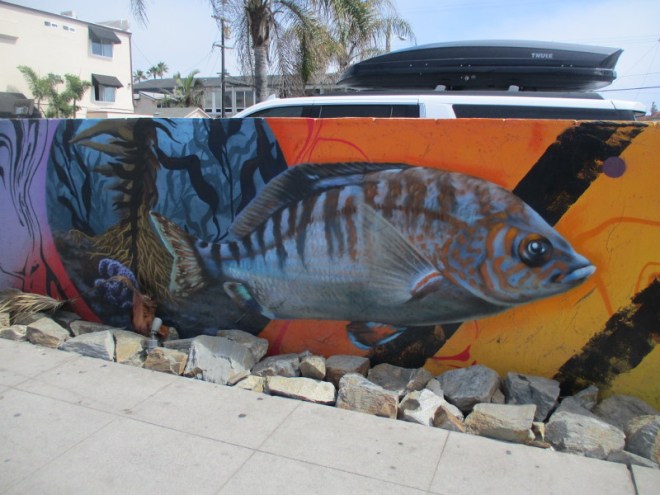
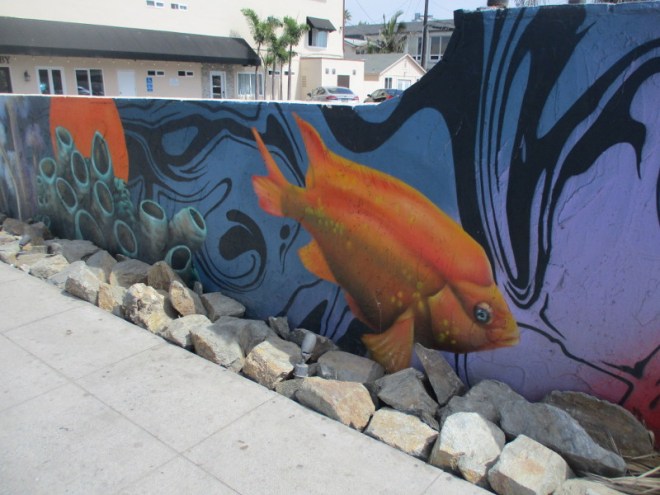
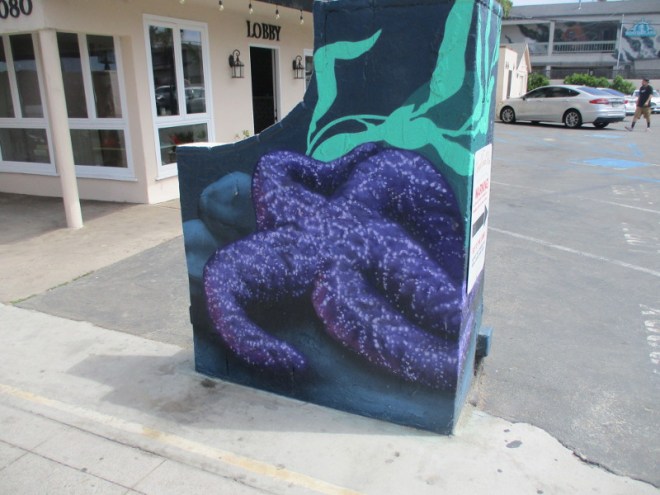
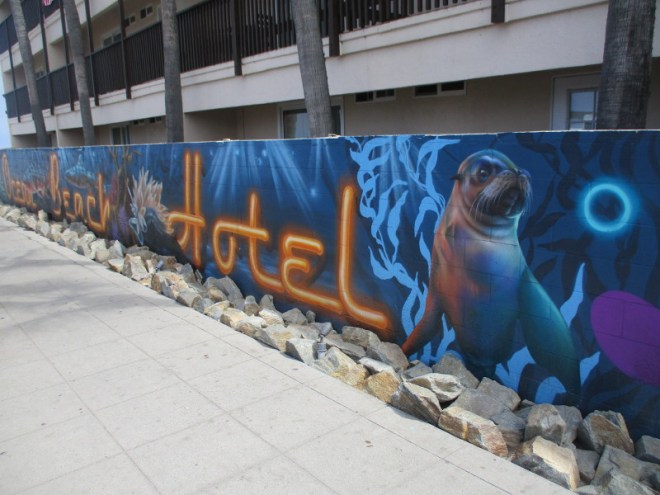
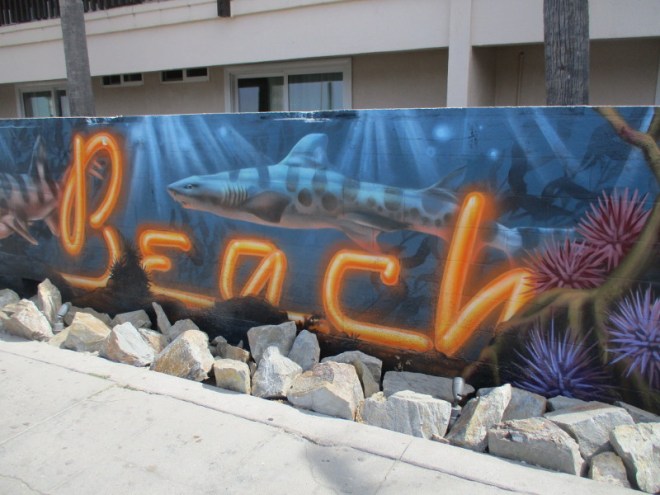
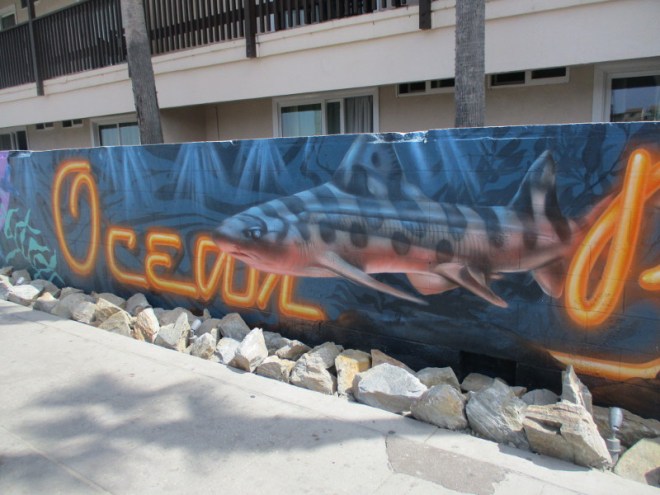
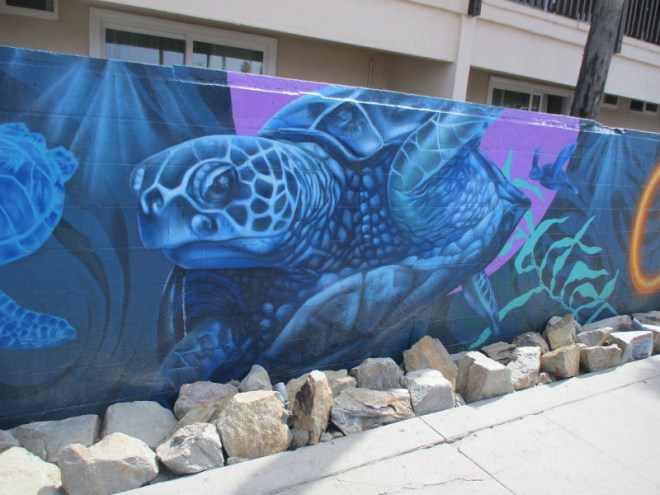
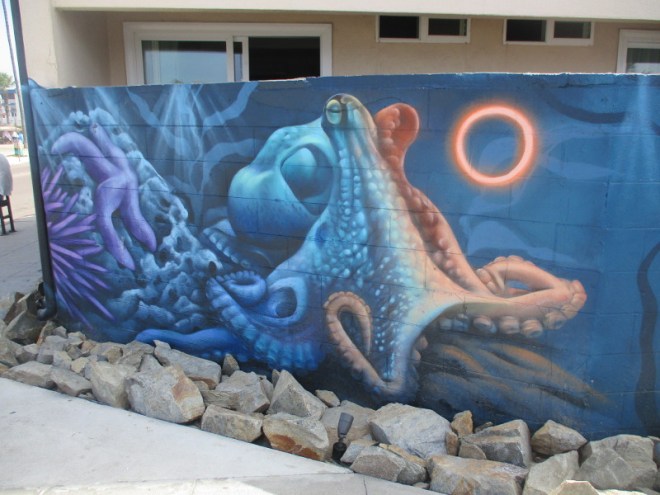
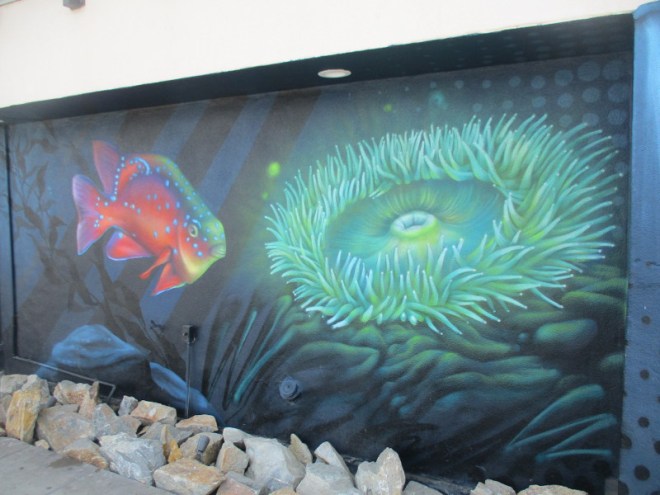
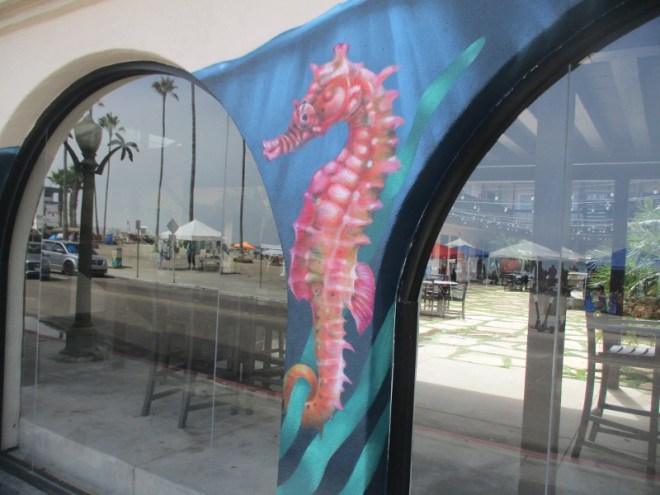
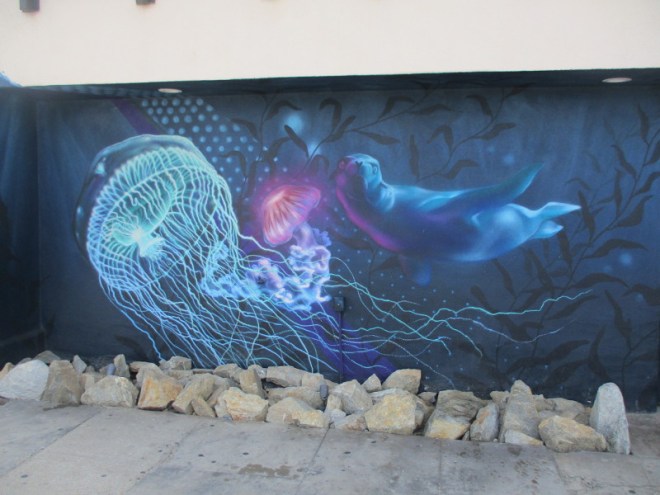
Beautiful murals depicting sea life surround the base of the Ocean Beach Hotel and its parking lot. Painted this year by local artists Carly Ealey and Christopher Konecki, the artwork stretches along Newport Avenue and Abbott Street.
The other day I walked beside long, low walls and the hotel building itself taking these photographs. You might enjoy them!
…
Thanks for visiting Cool San Diego Sights!
I post new blogs pretty often. If you like discovering new things, bookmark coolsandiegosights.com and swing on by occasionally!
I live in downtown San Diego and love to walk around with my camera! You can follow Cool San Diego Sights via Facebook or Twitter!
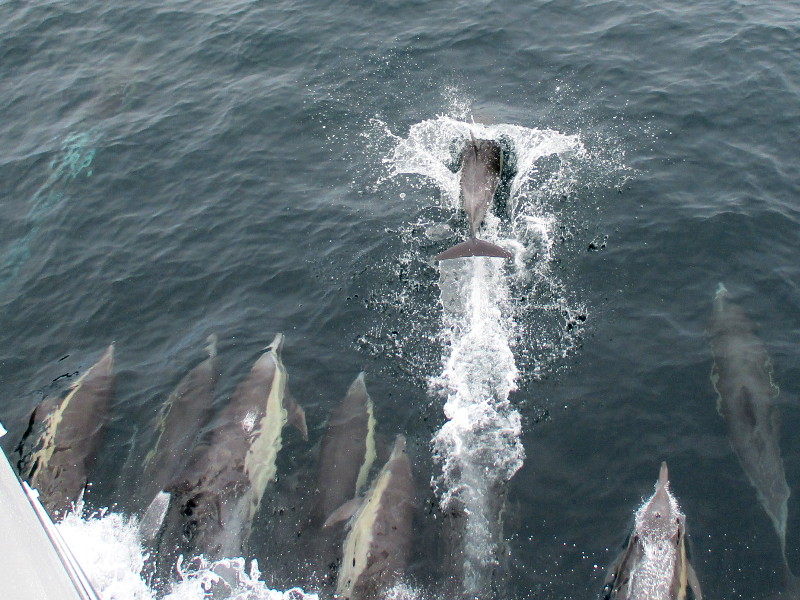
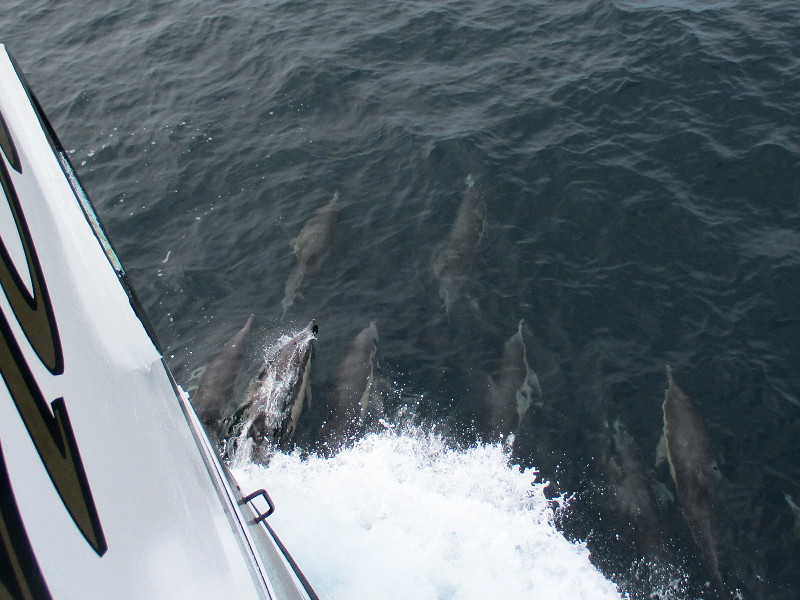
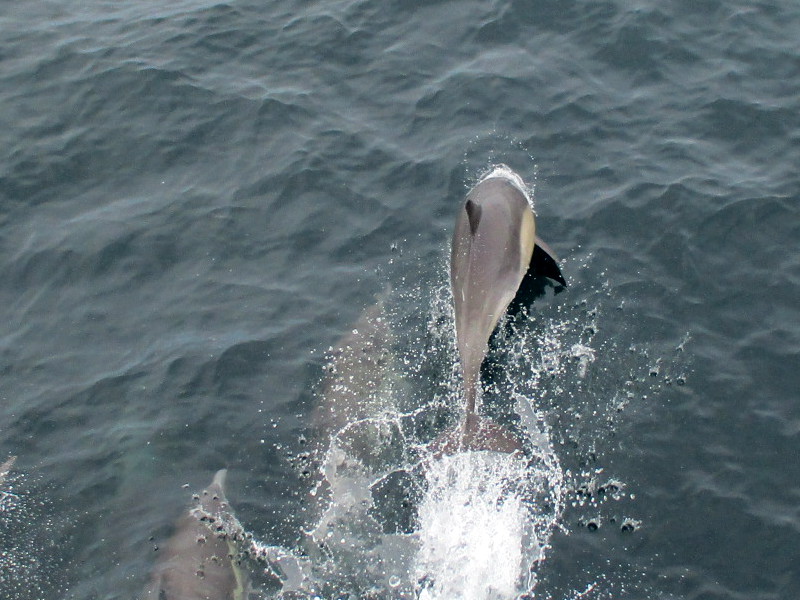
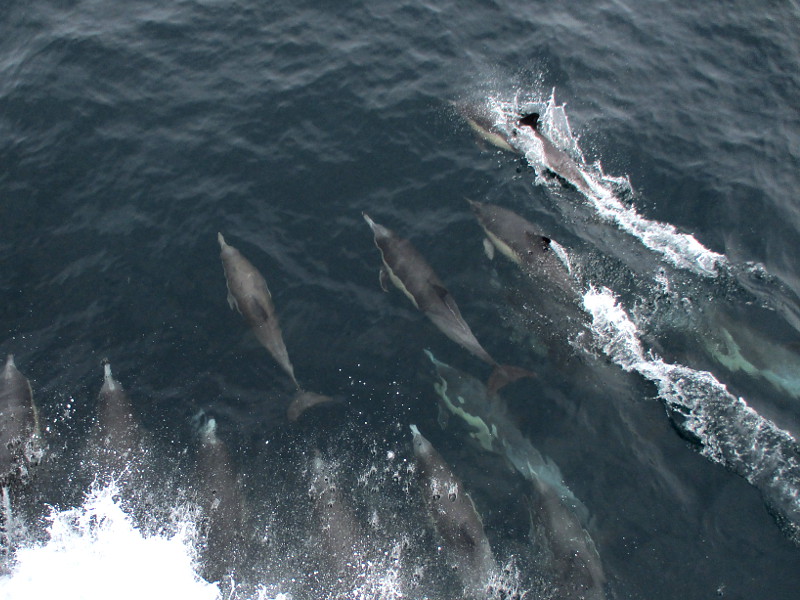
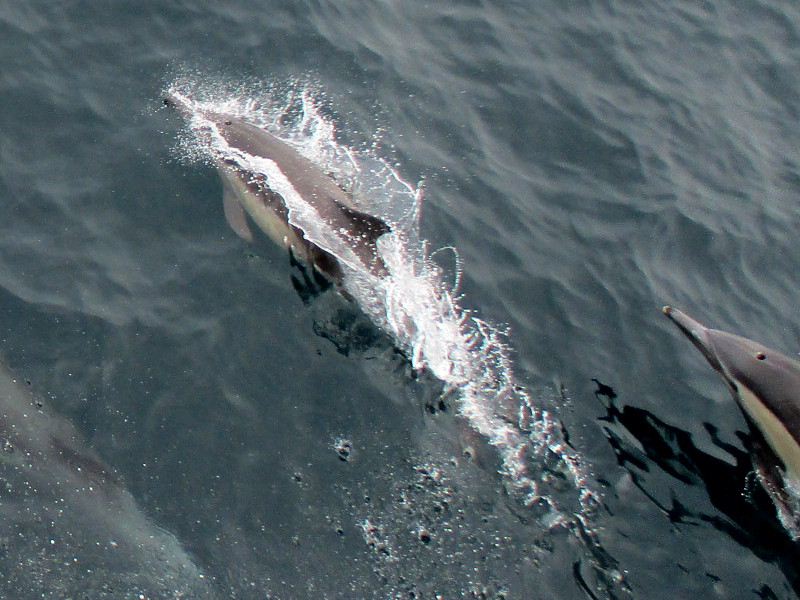
This morning a whale watching excursion off the coast of San Diego intercepted an unusually large pod of 200-300 dolphins.
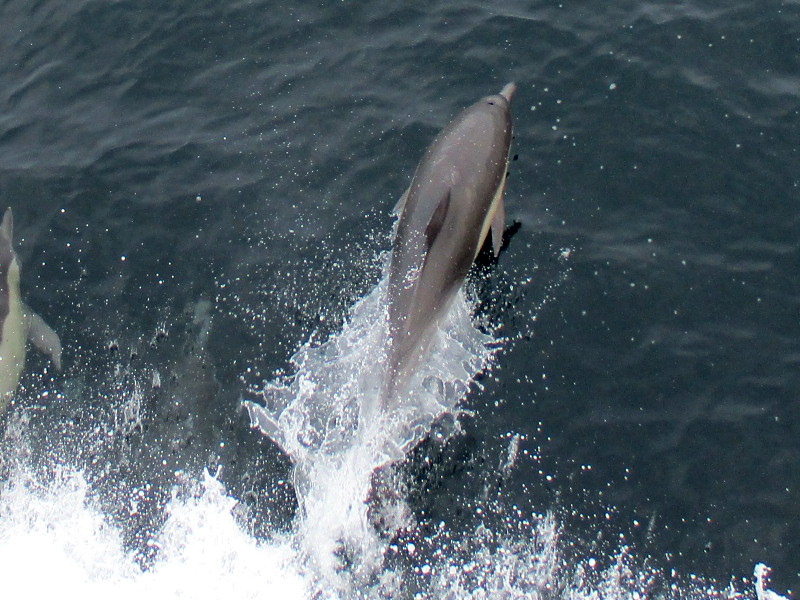
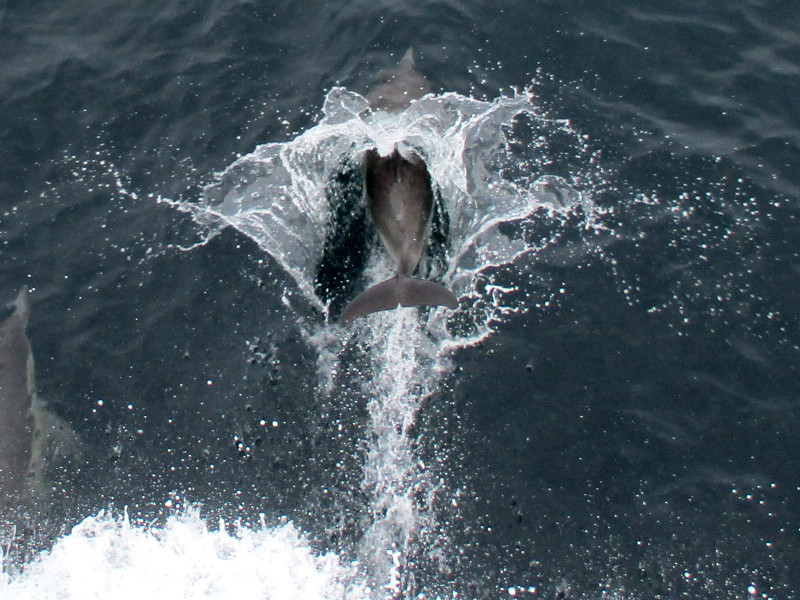
I stood at the bow of Flagship’s vessel Marietta and marveled at how the Pacific white-sided dolphins raced before us, conveniently riding the water pushed forward by our ship.
A crew member aboard Marietta explained we were traveling 10 miles per hour. The dolphins are capable of going four times that speed!
Pods of dolphins are frequently encountered during trips in the ocean beyond Point Loma. Every time I’ve gone whale watching, no matter the season, we’ve spotted them.
The tightly knit pods move about while using their echo location ability to search for schools of fish. Adult dolphins have to eat about 5% of their body weight in food every day!
We were fortunate to be accompanied by such an unbelievably huge pod.
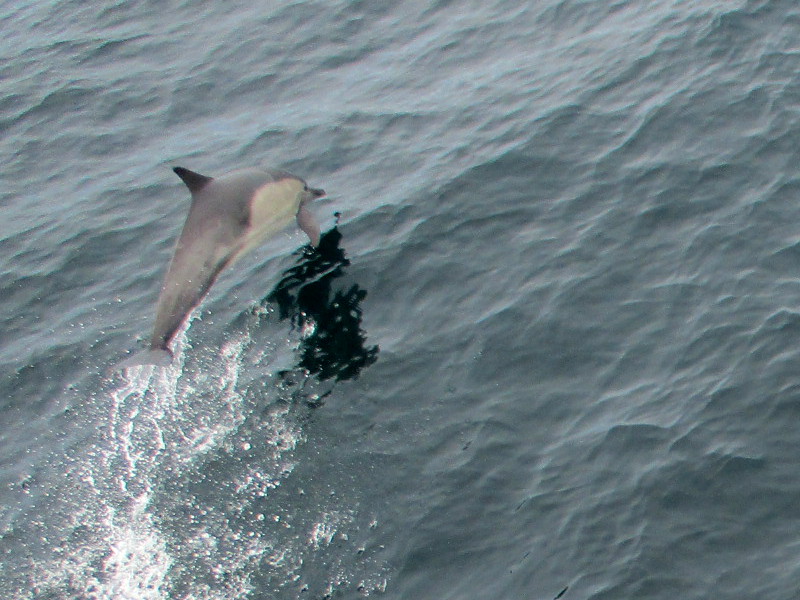
Every so often dolphins would playfully leap through the air in front of our ship!
Thanks for visiting Cool San Diego Sights!
I post new blogs pretty often. If you like discovering new things, bookmark coolsandiegosights.com and swing on by occasionally!
I live in downtown San Diego and love to walk around with my camera! You can follow Cool San Diego Sights via Facebook or Twitter!





 Cool San Diego Sights!