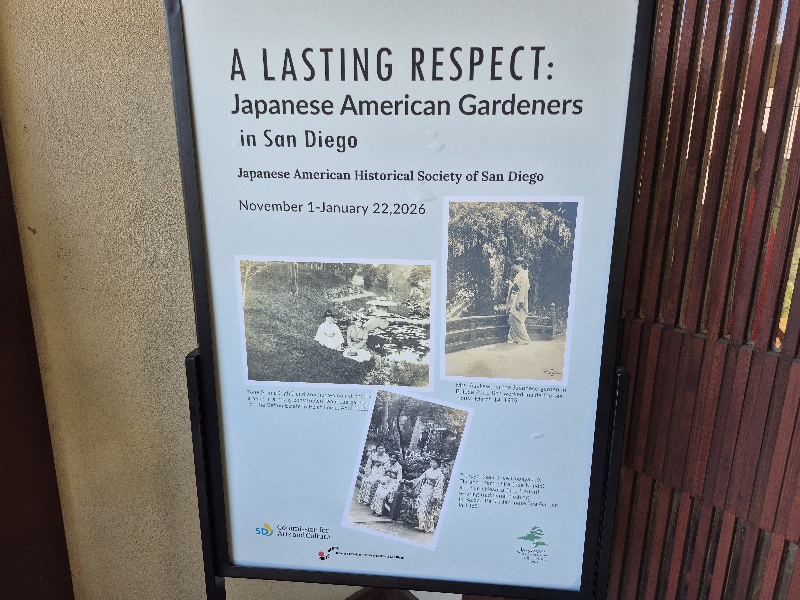
A fascinating exhibit at Balboa Park’s Japanese Friendship Garden will soon be ending. It concerns the history of Japanese American gardeners in San Diego. You can view the exhibit through Thursday, January 22, 2026.
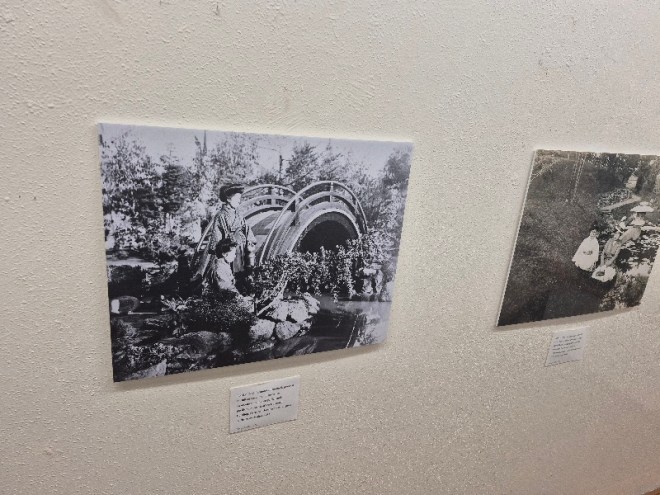
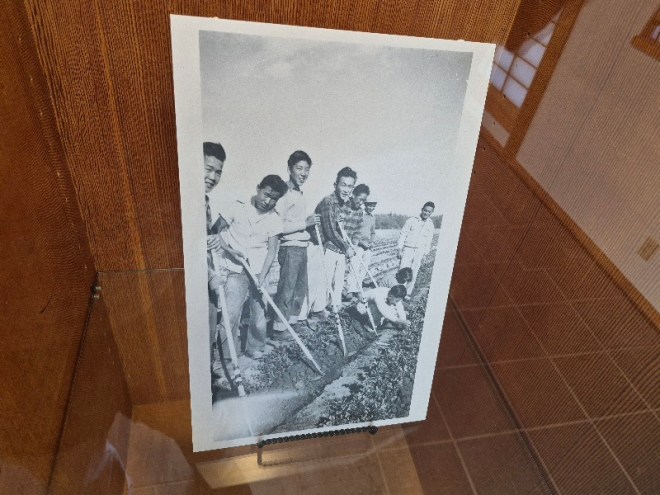
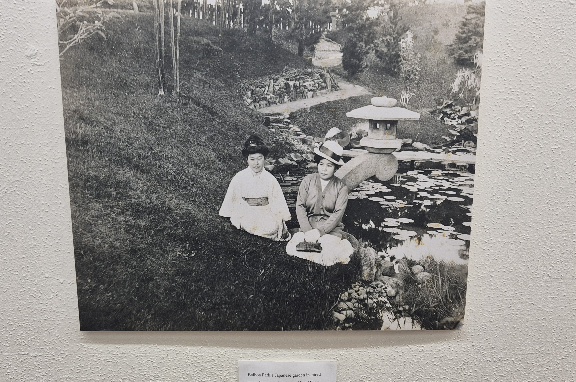
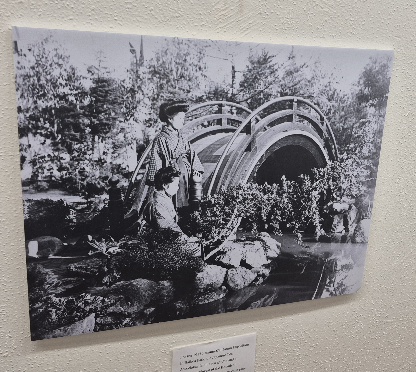
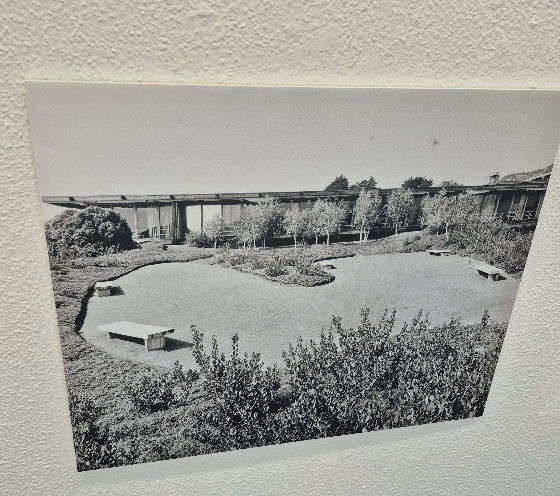
Composed primarily of historical photographs from the early 20th century through World War II and beyond, the exhibit shows how first generation Japanese immigrants, with limited opportunities, brought beauty to San Diego through gardening.
It includes a look at Japanese Americans held as prisoners in Poston, Arizona during the war and their efforts to bring beauty into an ugly situation.
Photographs take the viewer into the present with amazing gardens in Balboa Park and Japanese inspired landscapes in San Diego.
The exhibit is made possible by the Japanese American Historical Society of San Diego.
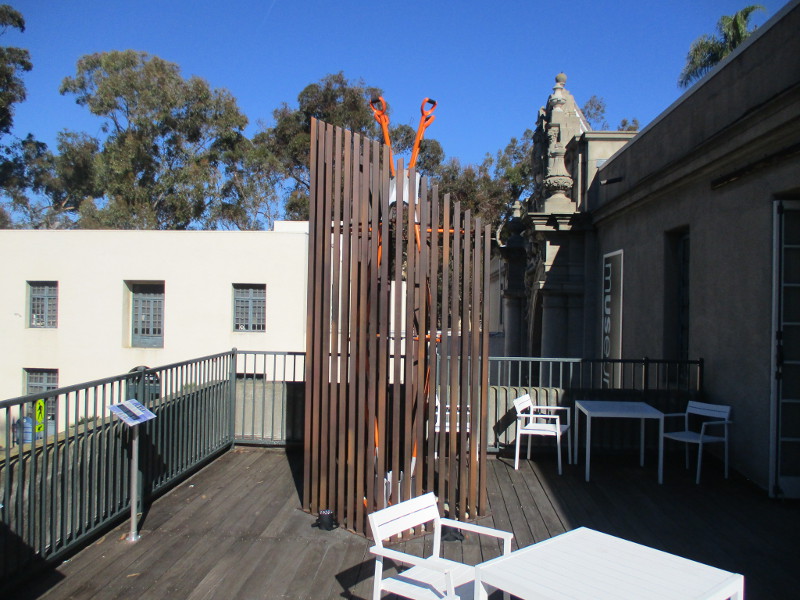
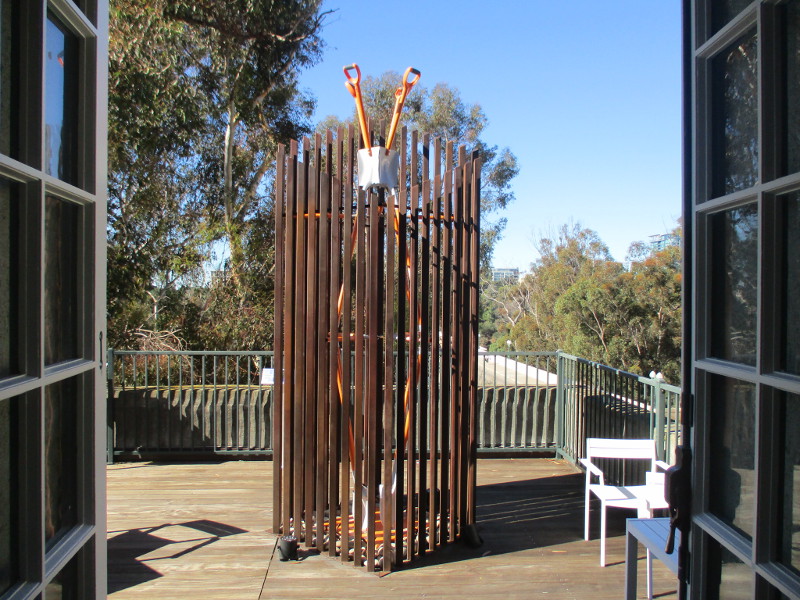
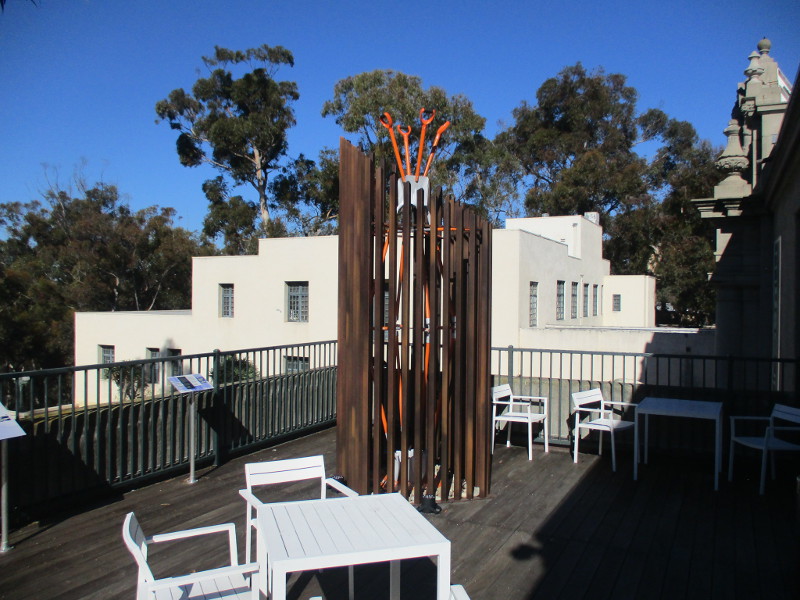
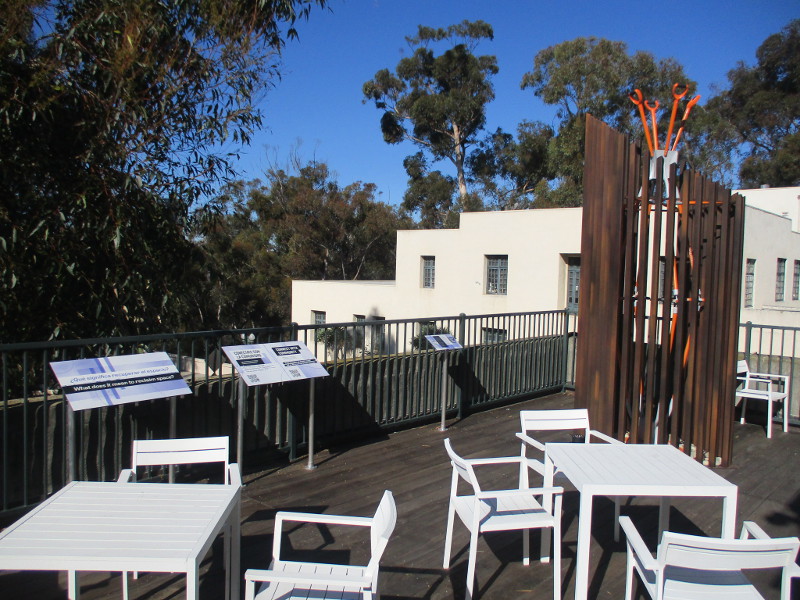
A sculpture was recently installed at the Museum of Us in Balboa Park. You can see the new artwork when crossing the Cabrillo Bridge, about to enter the west archway of the California Quadrangle. Look up toward the second floor’s outdoor balcony!
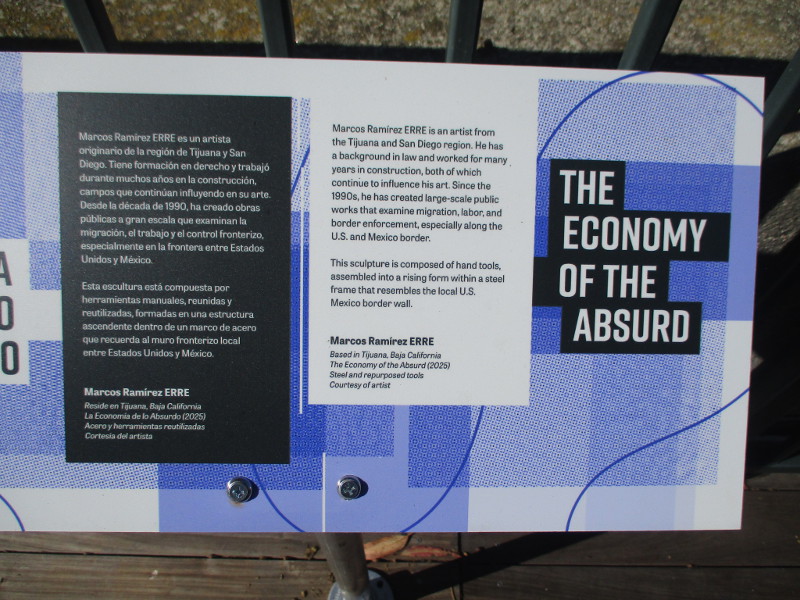
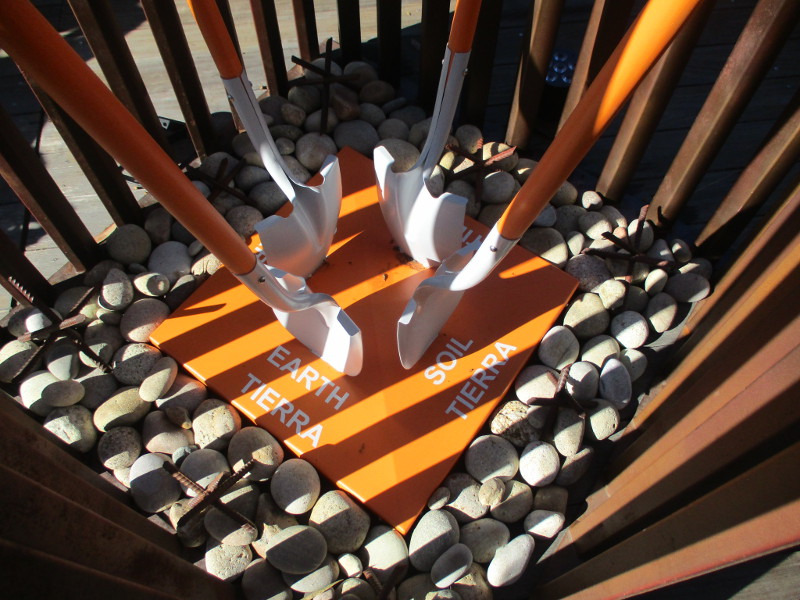
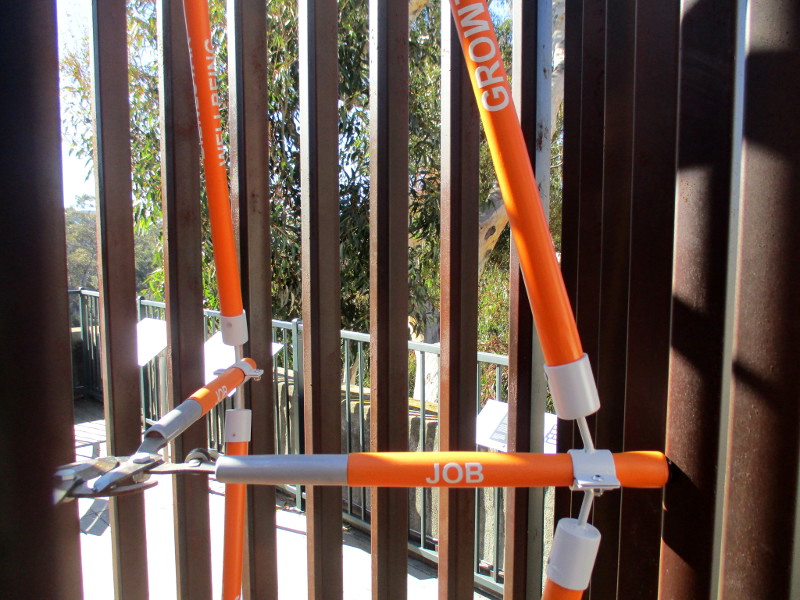
The sculpture is titled The Economy of the Absurd. It was created by Marcos Ramírez ERRE, an artist from the Tijuana and San Diego region who has created large-scale public works since the 1990s. It’s part of the newly opened Museum of Us exhibition Race: Power, Resistance & Change.
The museum’s About the Exhibit page explains: The exhibition Race: Power, Resistance & Change shares stories of how the construction of race has shaped laws, institutions, and daily life in San Diego and the broader multinational region.
As a plaque on the balcony near The Economy of the Absurd explains: This sculpture is composed of hand tools, assembled into a rising form within a steel frame that resembles the local U.S. Mexico border wall.
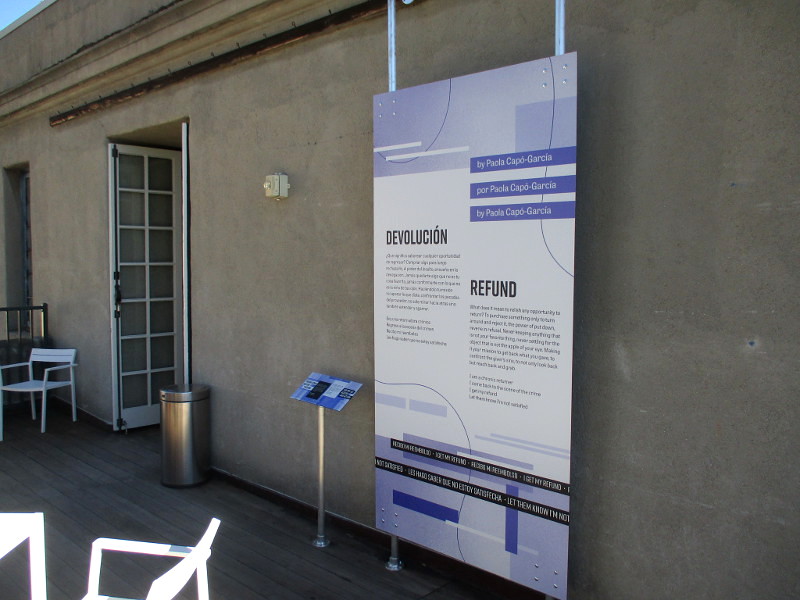
A number of other plaques are also located on the balcony, including one featuring the poem Refund by past San Diego Poet Laureate Paola Capó-Garcia. It is all part of the overall exhibition.
When I spied the new sculpture yesterday while walking through Balboa Park, I had to go check it out!
Here I am proceeding out onto the Museum of Us balcony…
(Photographs of views from the balcony before installation of this exhibit can be found by clicking here.)
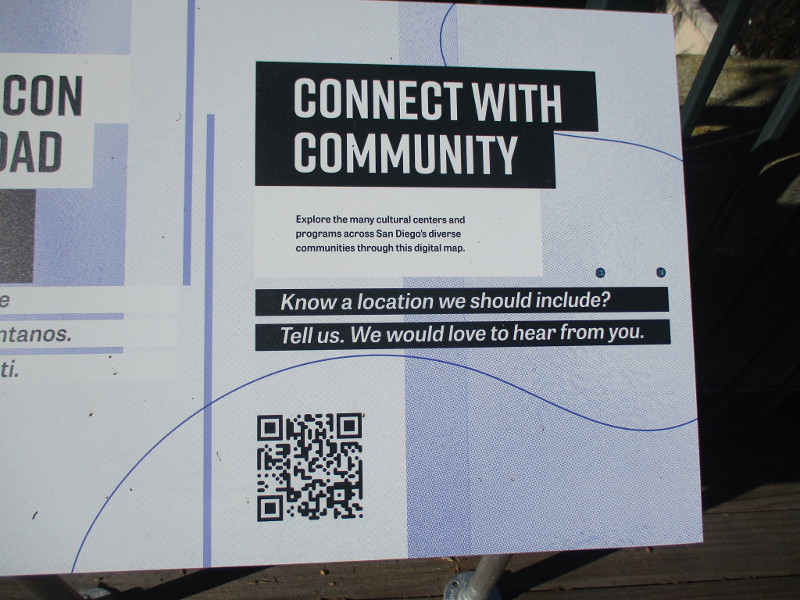
Visitors are encouraged to contribute to a digital map. The map is of cultural centers and programs across San Diego’s diverse communities. You can participate by clicking here!
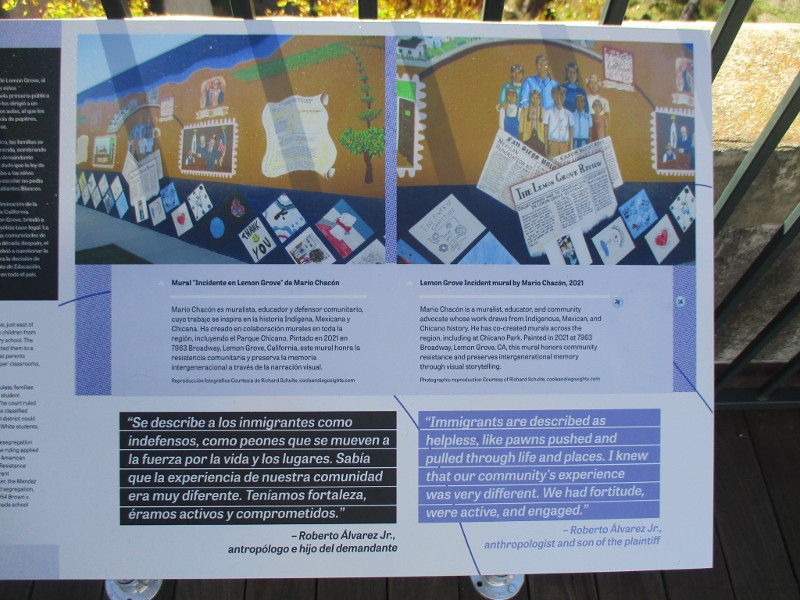
Imagine my excitement when I found that one of the plaques, concerning the public mural in Lemon Grove of the “Lemon Grove Incident,” features two photographs that I took for Cool San Diego Sights and a mention of my website!
Finally, here’s the short poem Refund…
…
If you’d like to see San Diego through my lens, find the “Follow” box in the sidebar to receive new posts in your email, or bookmark coolsandiegosights.com and swing on by occasionally!
(If you’re viewing Cool San Diego Sights on a phone, you can open my website’s sidebar by tapping those three parallel lines at the top of the page.)
During my recent visit to the Lemon Grove Historical Society’s newly renovated headquarters–the Parsonage Museum–I learned something extraordinary. Last year two high school students who attend Canyon Crest Academy, Sarah and William Gao, won a statewide contest for their outstanding video concerning the Lemon Grove Incident.
The contest had the theme Turning Points in History.
Their extremely well done documentary concerns the fight that led up to the landmark court order in 1931 that ended school segregation in Lemon Grove. View their excellent video on YouTube by clicking here.
This is such a great achievement that I thought it deserved additional recognition. Their video concerns history that everyone should know. Let’s run up the views, comments and likes on YouTube and give their video more traction!
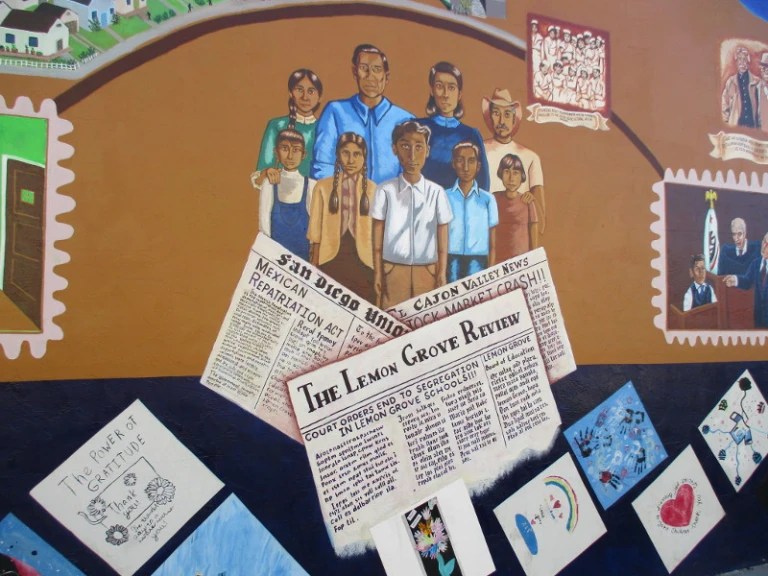
The Lemon Grove Incident was the United States’ first successful school desegregation case. It was a pivotal event in our nation’s history. For the longest time I myself hadn’t known that.
Back in 2022 I took photographs of a mural in Lemon Grove that celebrates the Lemon Grove Incident and those who courageously fought for the victory against segregation. My first photograph above shows part of the mural. See the other photos here!
…
I post new blogs pretty often. If you like discovering new things, bookmark coolsandiegosights.com and swing on by occasionally!
I live in downtown San Diego and love to walk around with my camera! You can follow Cool San Diego Sights via Facebook or X.
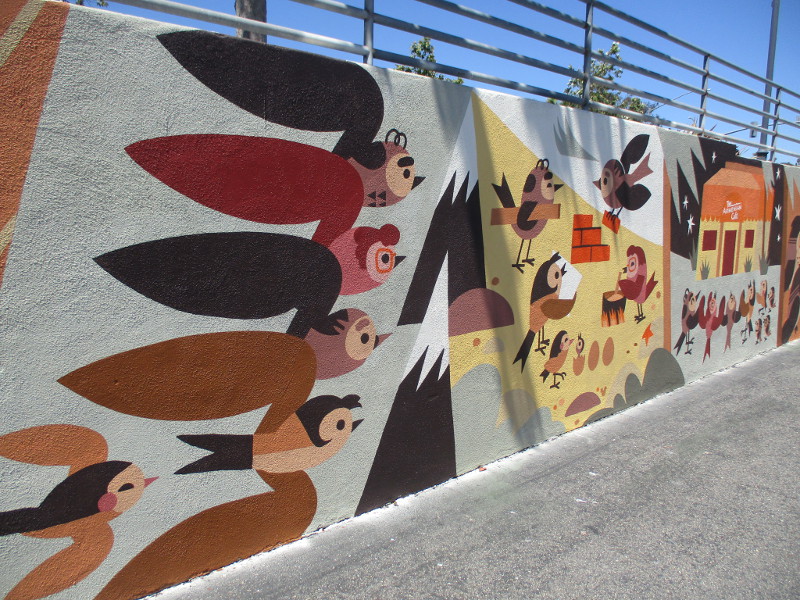
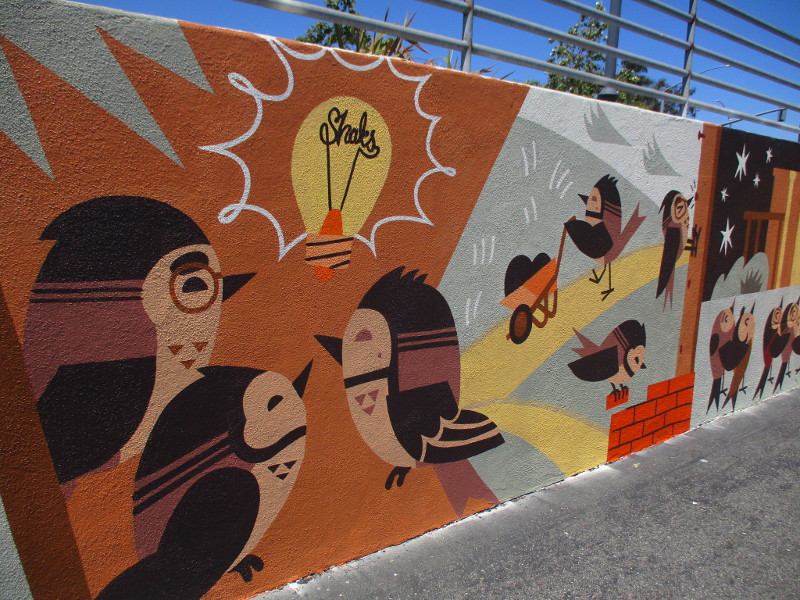
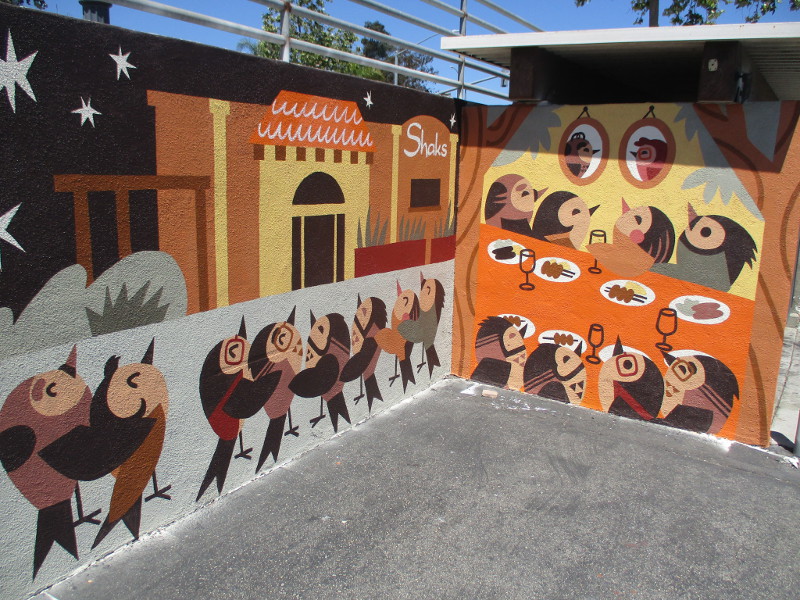
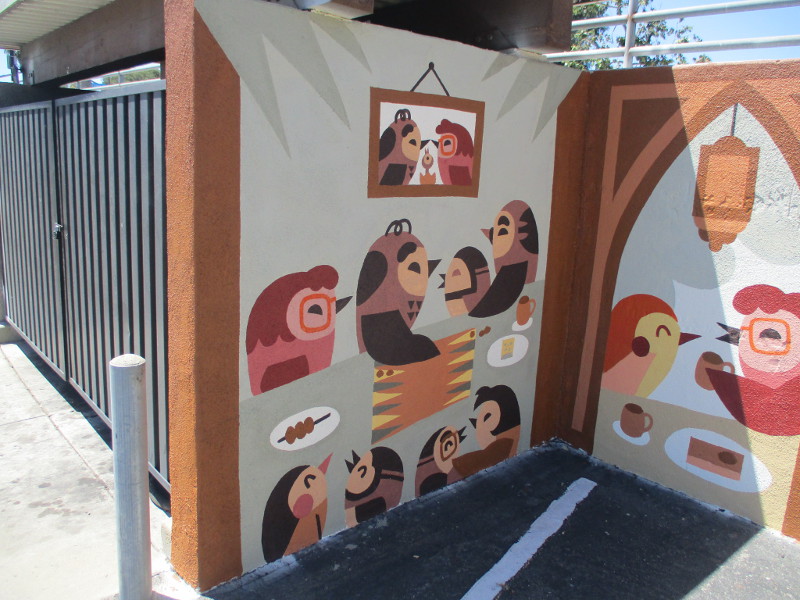
A fantastic new mural was painted recently in the City of Vista behind Shaks Mediterranean Bistro. I happened to come upon it a few days ago.
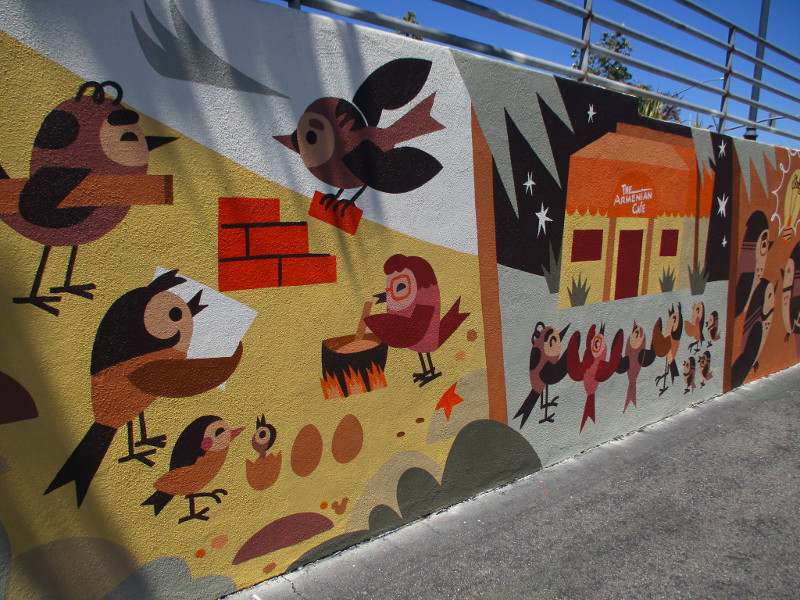
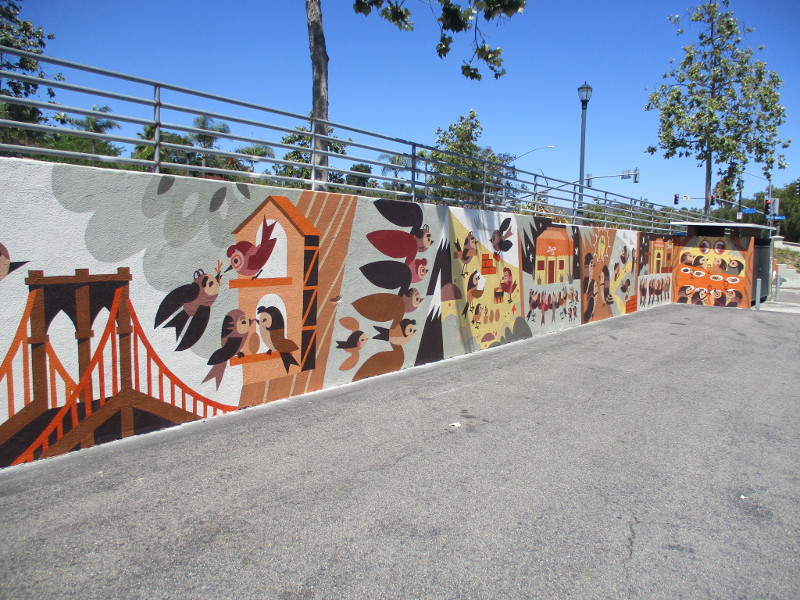
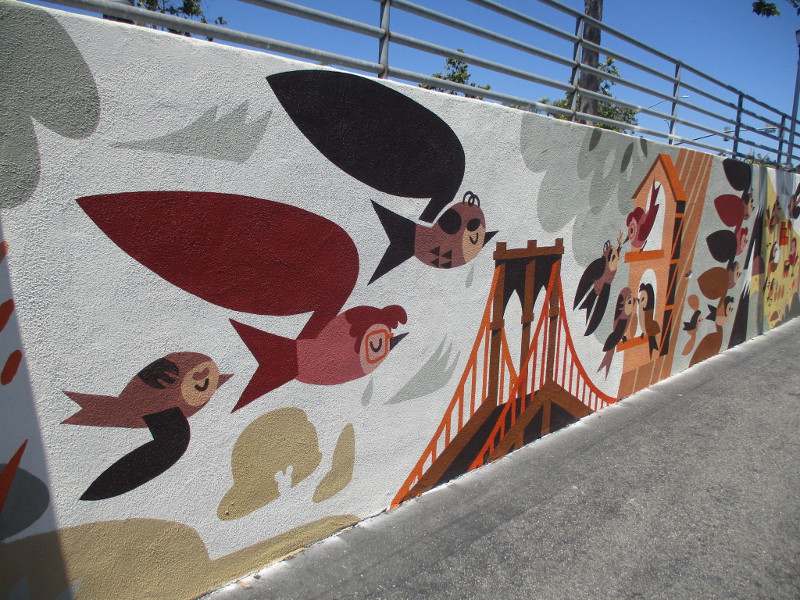
The long wall behind the restaurant is like an illustrated story, peopled with birds. The birds are migrating, building, cooking, celebrating. The mural, according to the Shaks Instagram, is a tribute to our roots, our recipes, and the generations that came before us.
The mural’s joyful design is by @48savvysailors and the installation was completed by @clayton.sign.painting.
As you can see from my photographs, this long mural is another great addition to the many works of public art sprinkled throughout downtown Vista!
The happy story unfolds moving left to right:
…
I post new blogs pretty often. If you like discovering new things, bookmark coolsandiegosights.com and swing on by occasionally!
I live in downtown San Diego and love to walk around with my camera! You can follow Cool San Diego Sights via Facebook or X.
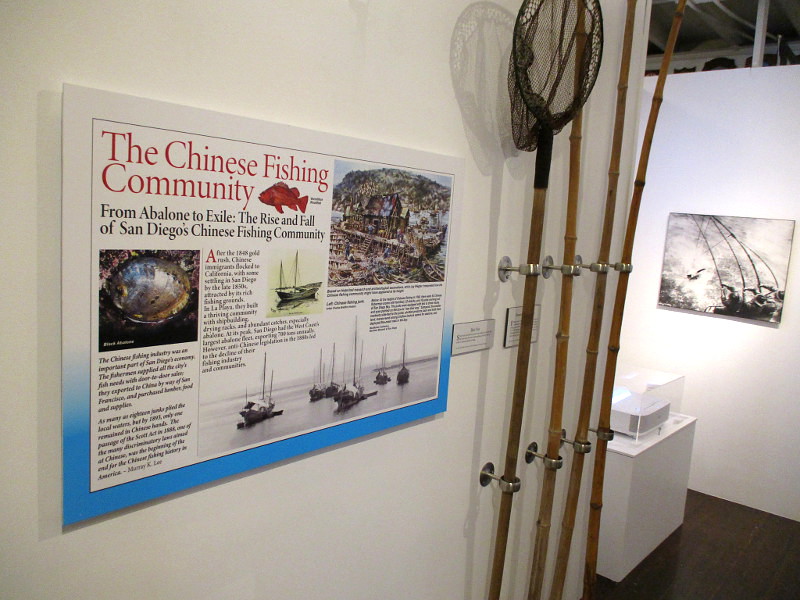
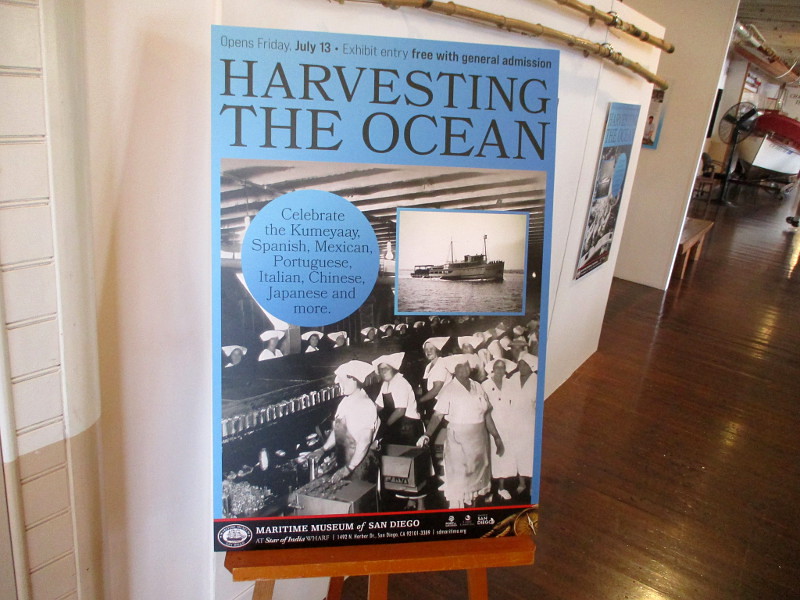
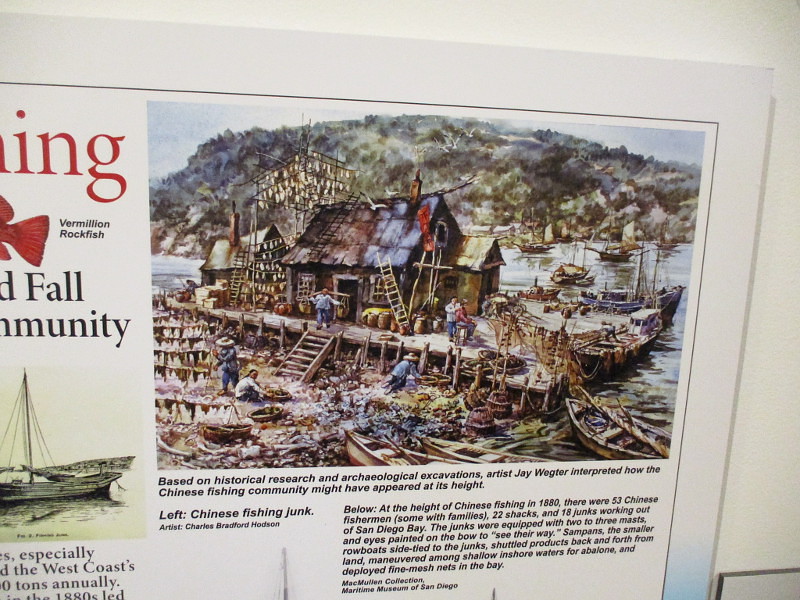
An exhibit about the history of fishing in San Diego opens today at the Maritime Museum of San Diego.
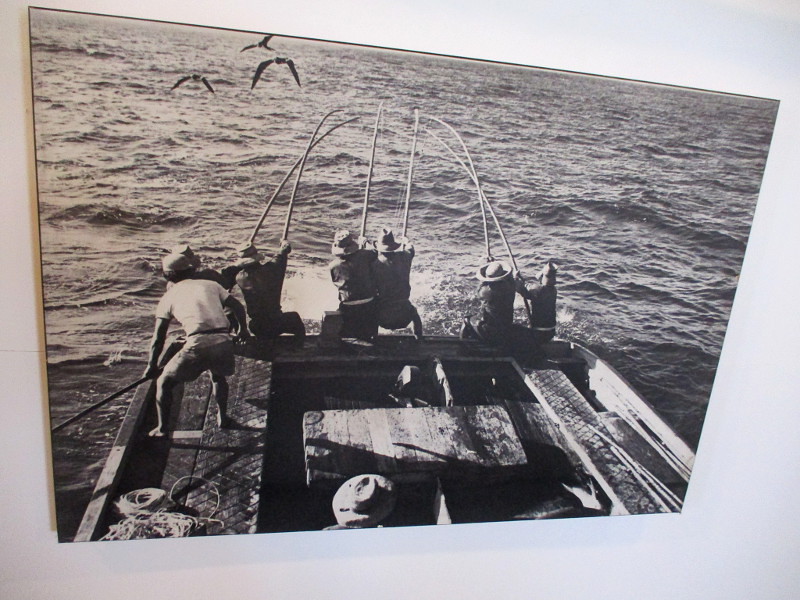
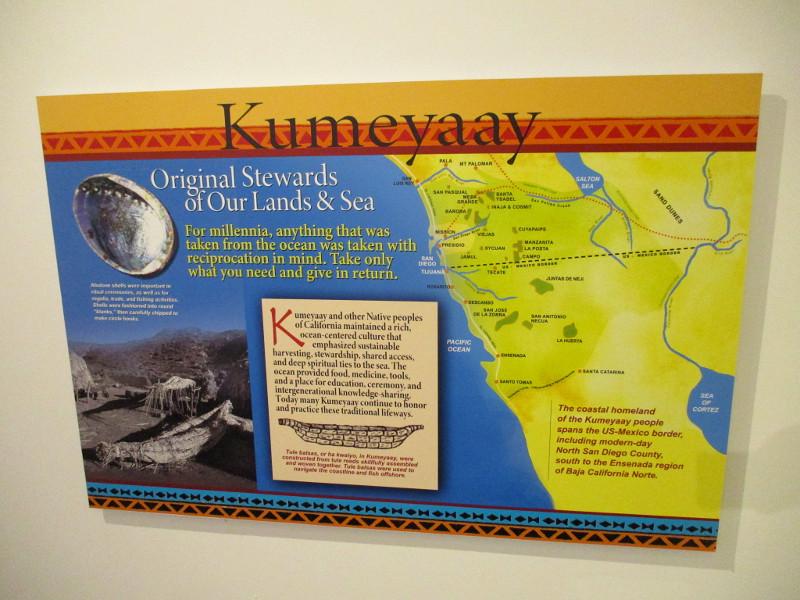
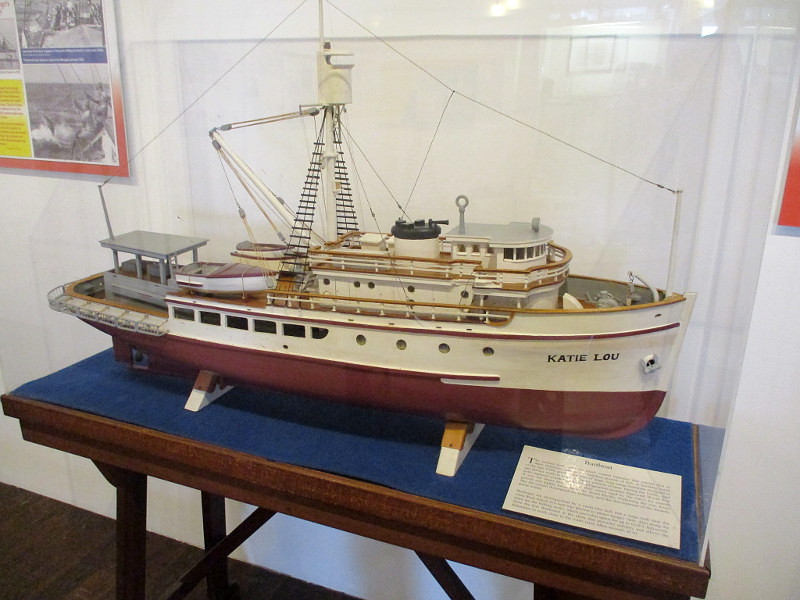
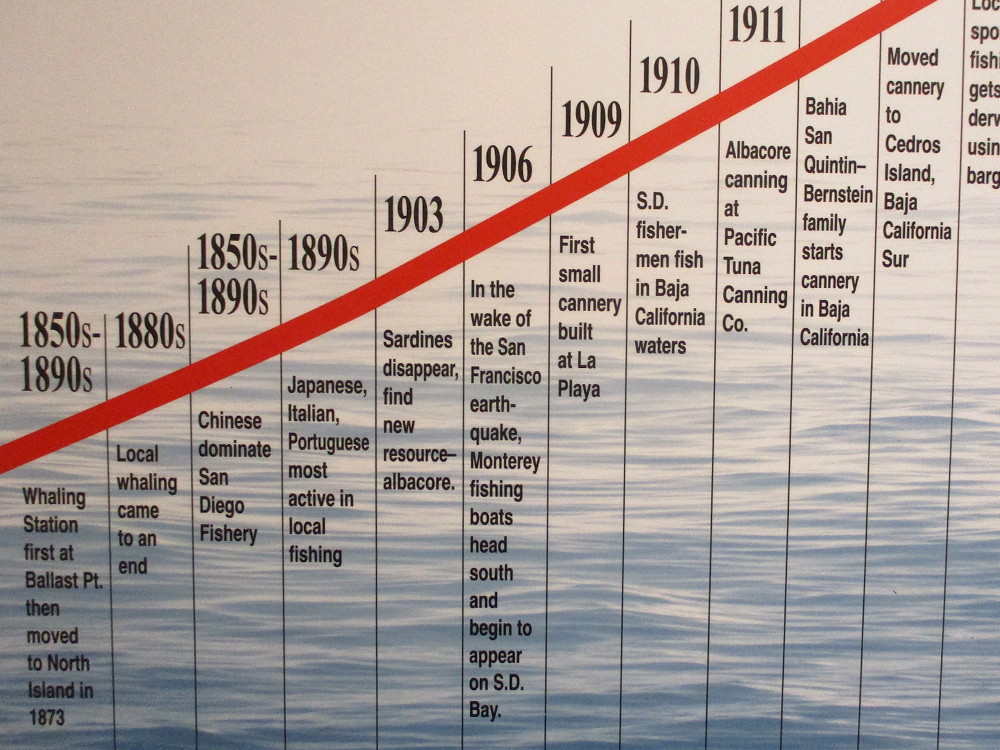
Harvesting the Ocean expands upon pre-existing displays in the museum. The new exhibit follows the rise and fall of our city’s commercial fishing industry, and celebrates contributions by native people, immigrants and resilient fishing families to that rich history.
In addition to informative signs containing historical photographs, the exhibit includes artifacts used by fishermen who’ve harvested the ocean over the years.
I enjoyed an early look at the exhibit. If you’re interested in this very important aspect of San Diego history, you need to experience it, too.
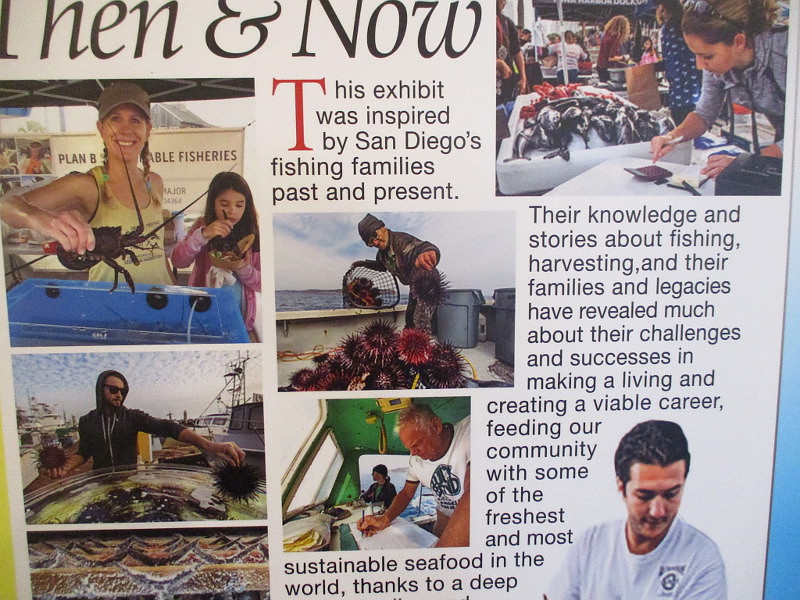
The opening of this exhibit corresponds with the launch of a new seafood cookbook created by over a hundred contributors from the San Diego community. San Diego Seafood: Then & Now is available at the Maritime Museum’s gift shop. It contains over 75 recipes and includes essays, stories and photographs that bring our city’s extensive and diverse fishing history to life.
…
I post new blogs pretty often. If you like discovering new things, bookmark coolsandiegosights.com and swing on by occasionally!
I live in downtown San Diego and love to walk around with my camera! You can follow Cool San Diego Sights via Facebook or X.
Hungry during your weekend visit to Balboa Park? Do you love Filipino food, such as pancit and lumpia?
Head over to the San Diego History Center, where they’re serving up authentic Filipino food and culture!
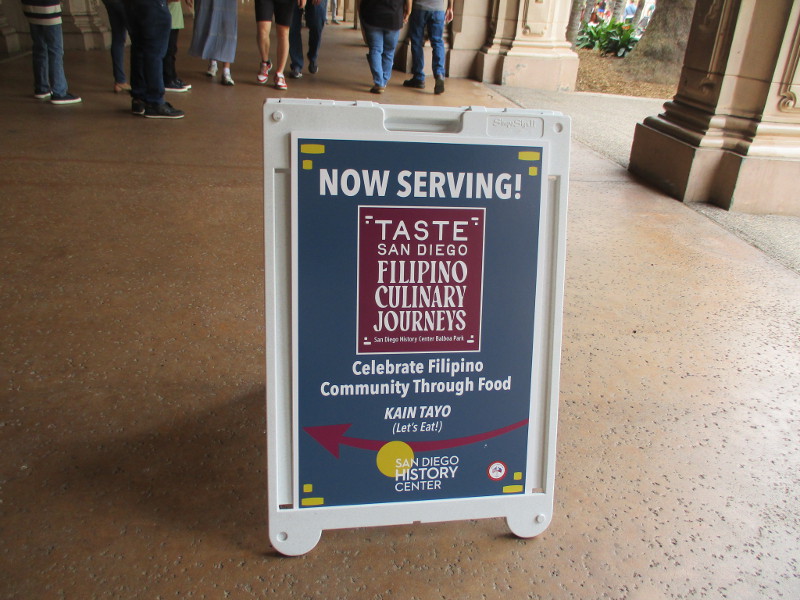
Taste San Diego: Filipino Culinary Journeys is the name of the museum’s free exhibition, where displays tell the story of Filipino-American identity through the rich flavors of cuisine. It’s also where, on Saturdays and Sundays, tasty food is available for purchase at the Bataan Café!
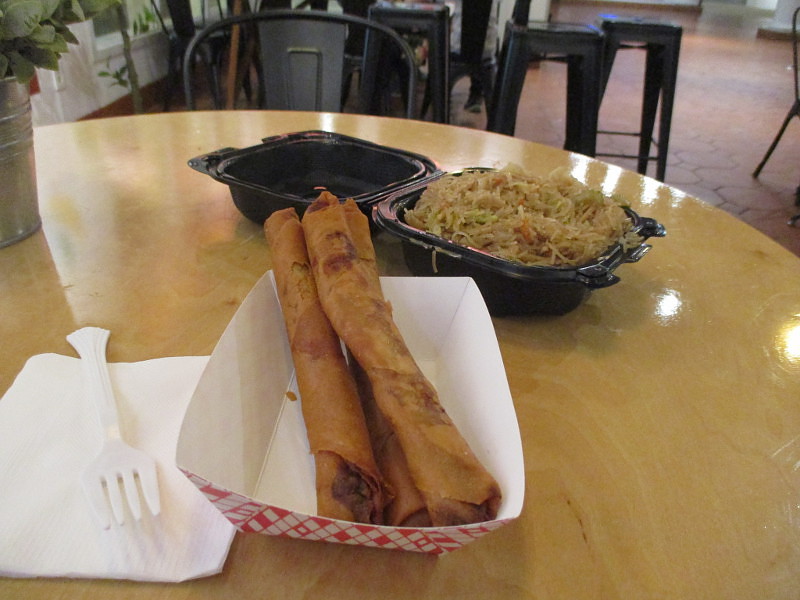
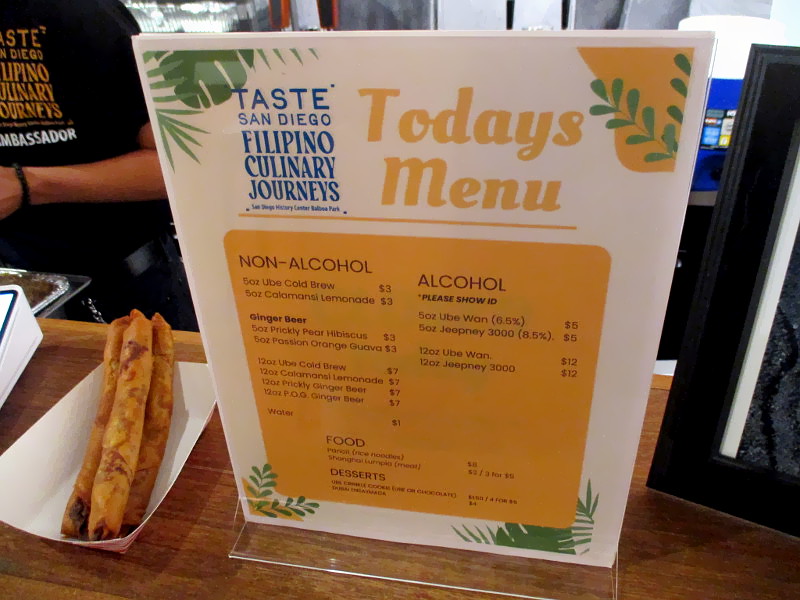
What’s on the menu? Pancit, Shanghai Lumpia, and for dessert, Ube Crinkle Cookies and Dubai Ensaymada. Beverages include Ube Cold Brew, Calamansi Lemonade, Ginger Beer, and alcoholic Ube Wan and Jeepney.
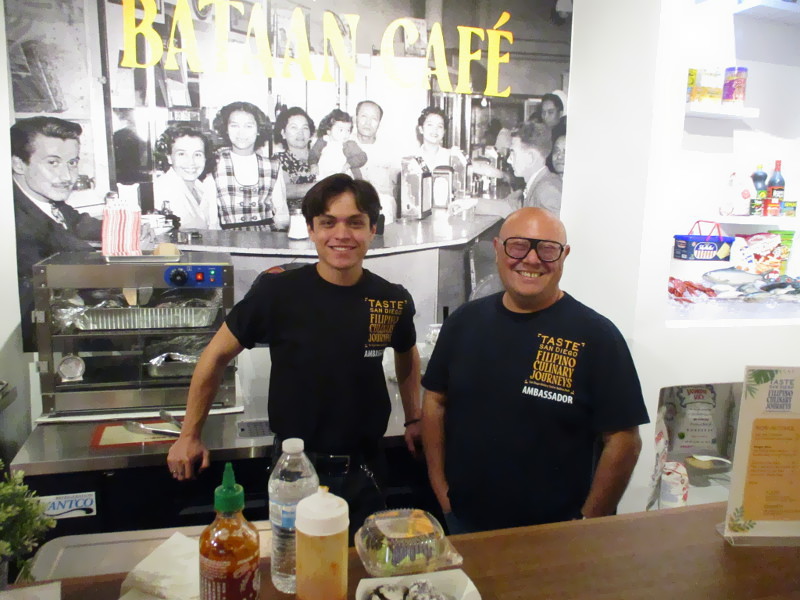
When I swung by for lunch on Saturday, I was met by smiles and a neighborly vibe.
A family was enjoying their meal at a very special table. The table’s surface is actually a large video screen. Its looping video shows a Filipino boodle fight: a communal Filipino meal where food is placed directly on the table and eaten with bare hands. (My own table had me eating delicious lumpia by hand, but the pancit noodles made their way into my mouth by fork.)
I recommend you visit Taste San Diego: Filipino Culinary Journeys at the San Diego History Center. In addition to the great food served on weekends, there are walls full of heartwarming displays. They tell stories of Filipino family life and culture in San Diego.
Service with a smile!
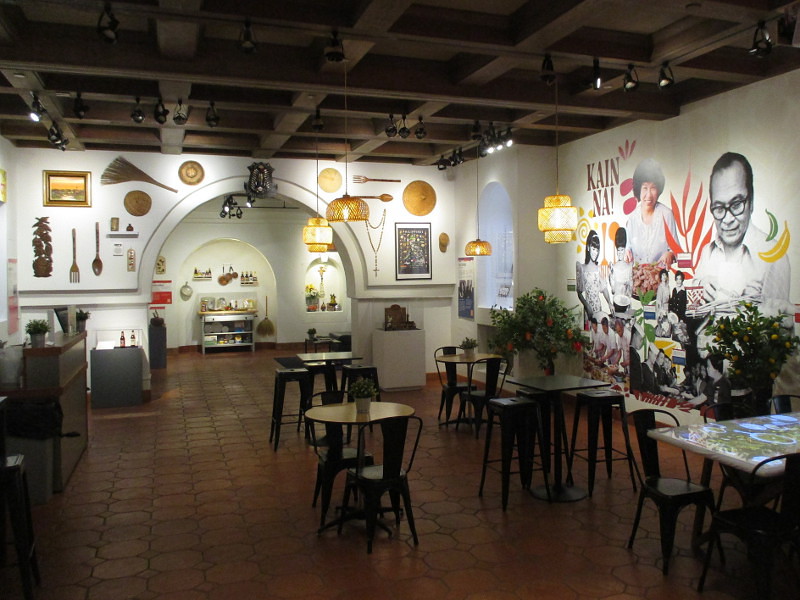
I took the next photograph on a weekday, when the café is closed. My photo shows the scale of this exhibition at the San Diego History Center.
On weekends you’ll find people at the tables enjoying Filipino food!
The museum exhibit includes many displays.
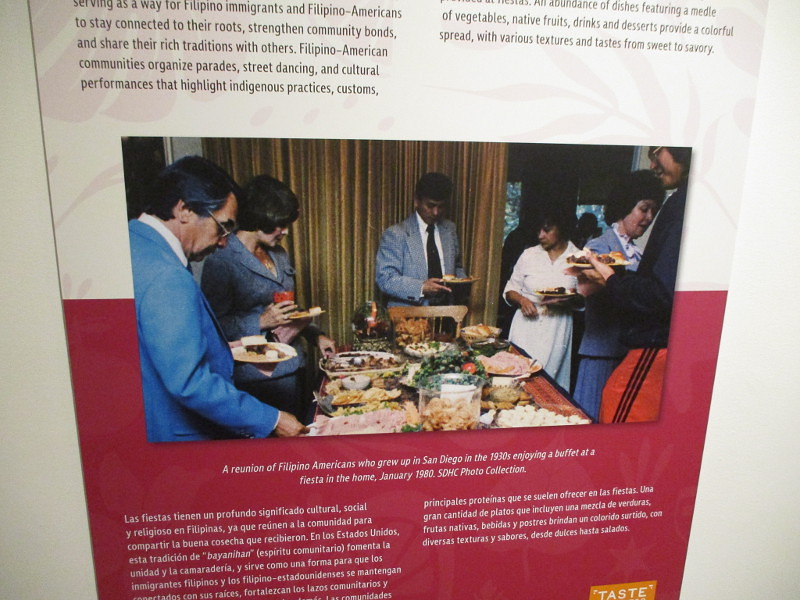
This historical photograph shows how social fiestas help Filipino immigrants and Filipino-Americans stay connected to their roots and share rich traditions…
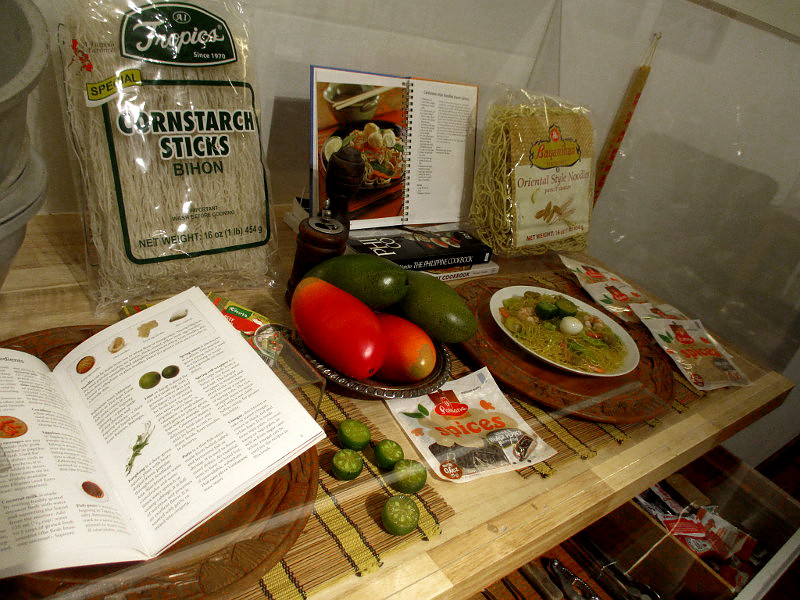
One display shows ingredients that are often used in the making of Filipino food…
Okay! It’s now the weekend and I’m hungry!
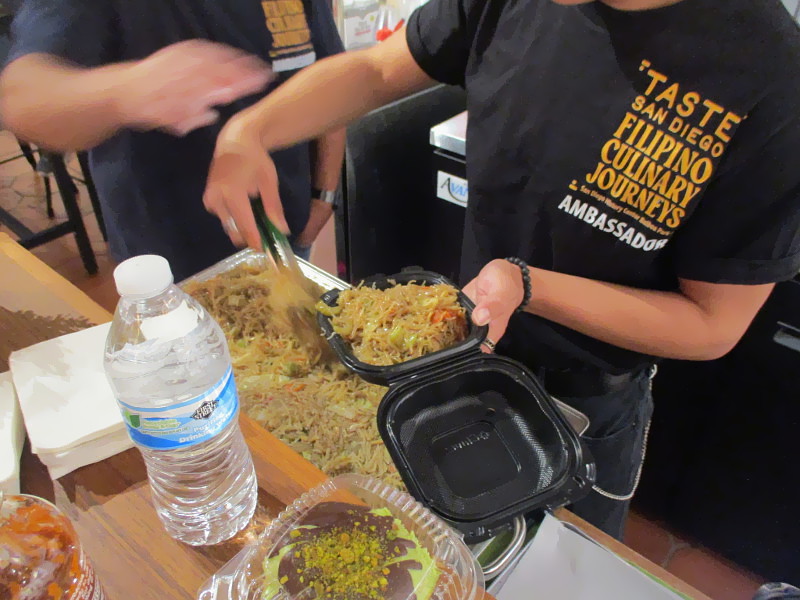
Time to eat!
…
I post new blogs pretty often. If you like discovering new things, bookmark coolsandiegosights.com and swing on by occasionally!
I live in downtown San Diego and love to walk around with my camera! You can follow Cool San Diego Sights via Facebook or X.
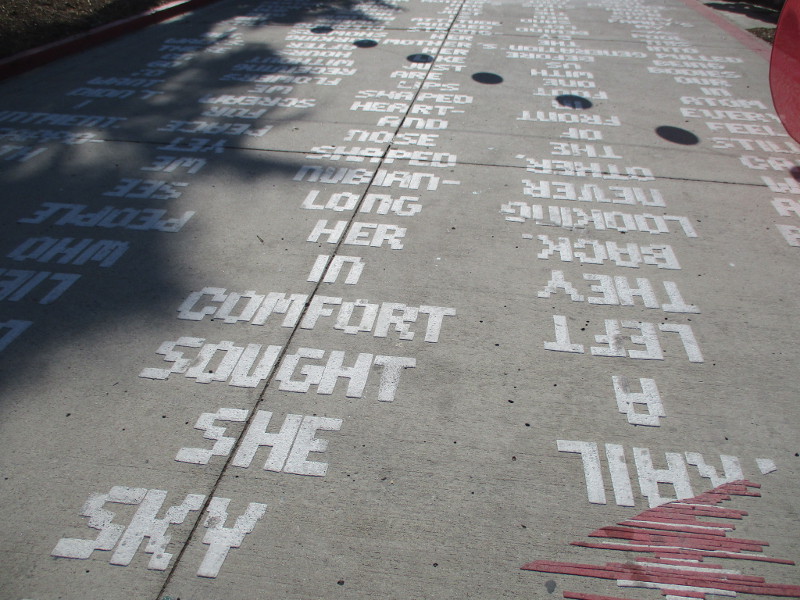
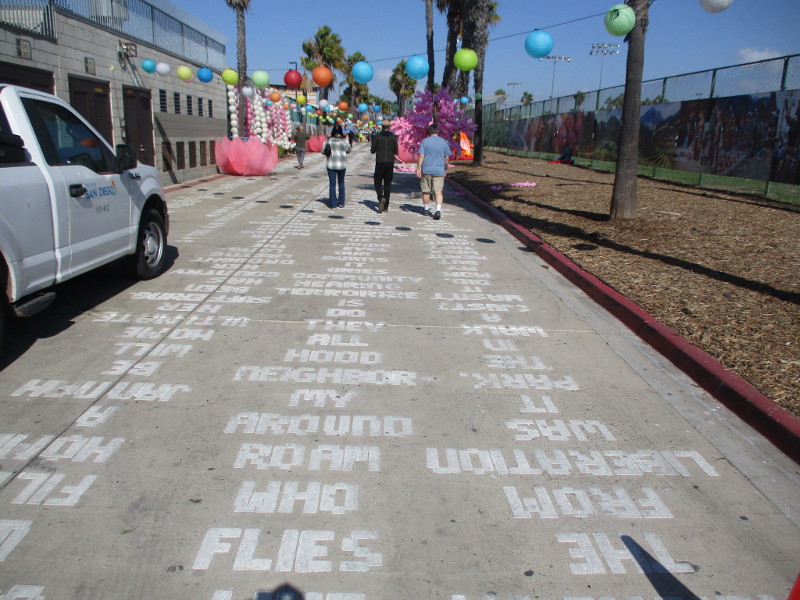
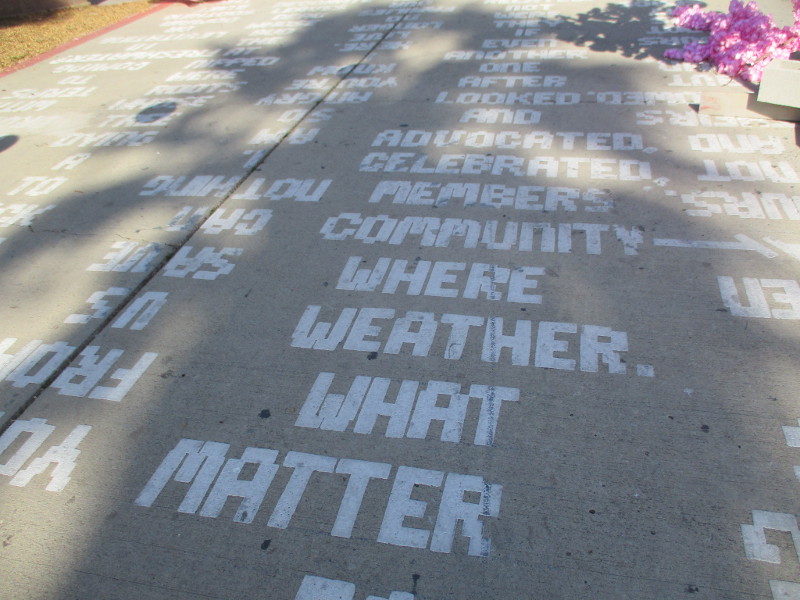
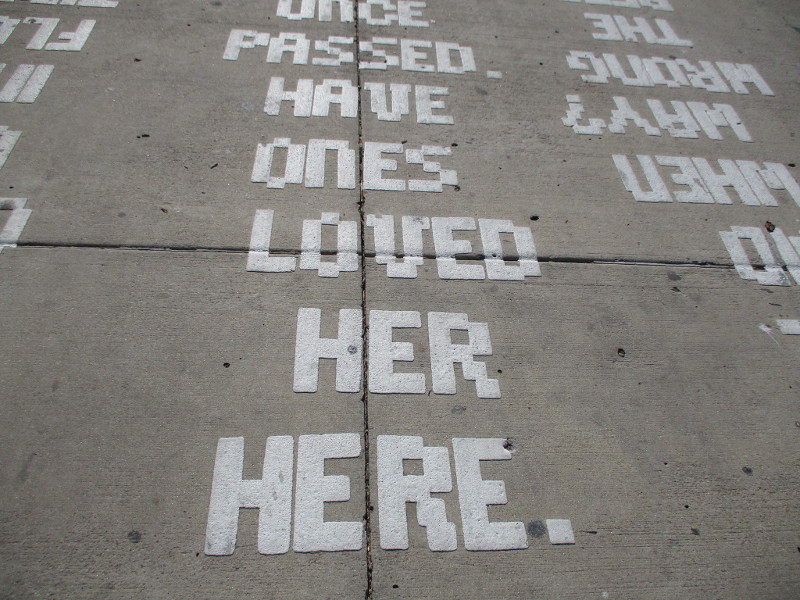
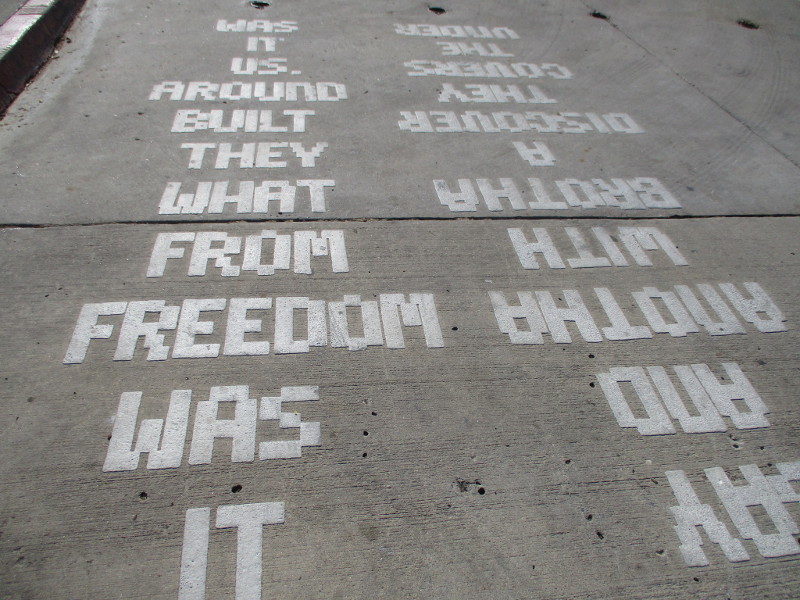
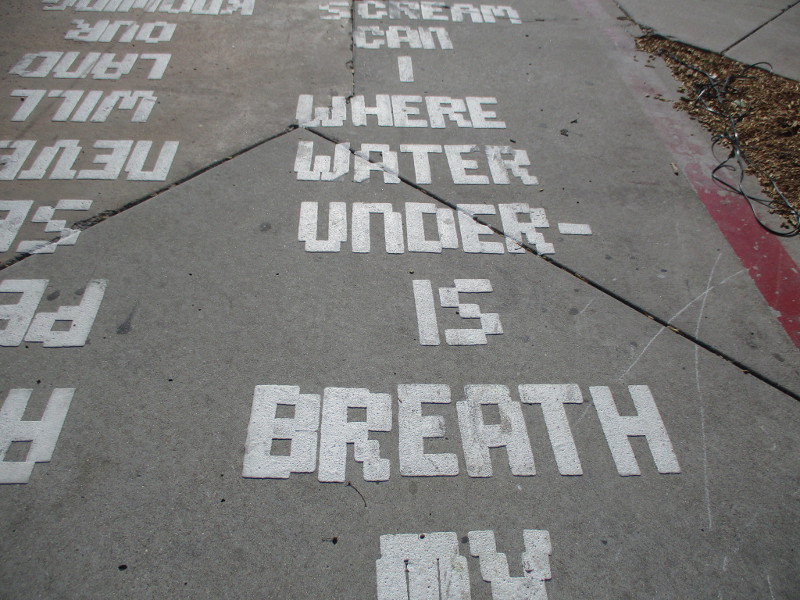
When I visited the Lunar New Year celebration in City Heights last weekend, I was surprised to find hundreds of words affixed to a stretch of 44th Street behind Officer Jeremy Henwood Memorial Park. (It’s the alley-like street between the City Heights Library and Recreation Center, and the sports fields of City Heights Park to the east.)
I hadn’t recalled seeing this public art before.
I found a detailed article concerning the unique outdoor installation. The project is titled Memoria Terra and is intended to last for five years. The art debuted last summer.
Artist Shinpei Takeda and five young writers composed poems that tickle passing feet. The poems regard the history of this very diverse community (with its substantial immigrant and refugee population), social issues and gentrification.
As residents make their personal journey, they are also encouraged to gaze down at the abundant words to create their own poem.
…
I post new blogs pretty often. If you like discovering new things, bookmark coolsandiegosights.com and swing on by occasionally!
I live in downtown San Diego and love to walk around with my camera! You can follow Cool San Diego Sights via Facebook or X.
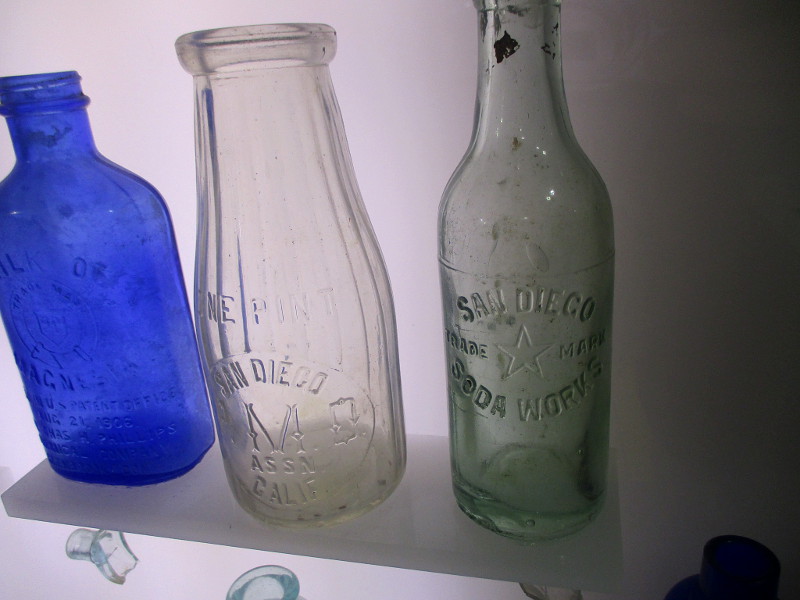
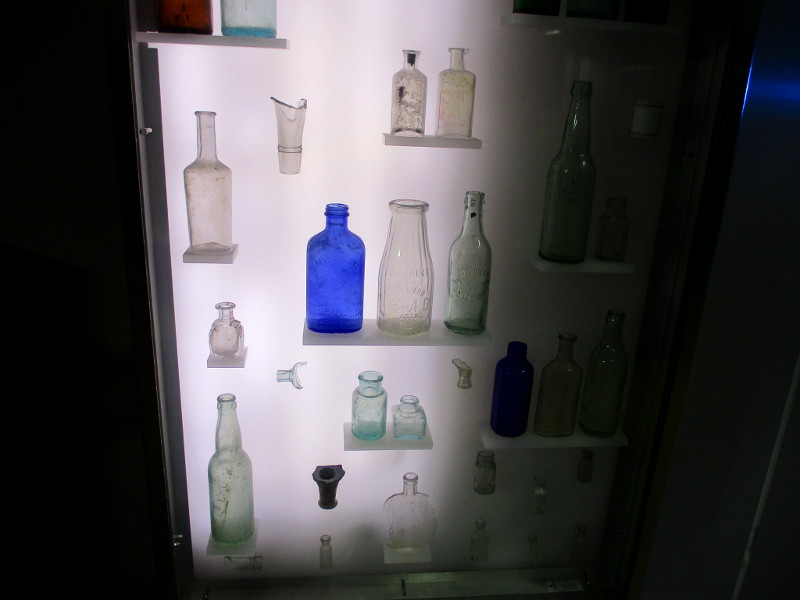
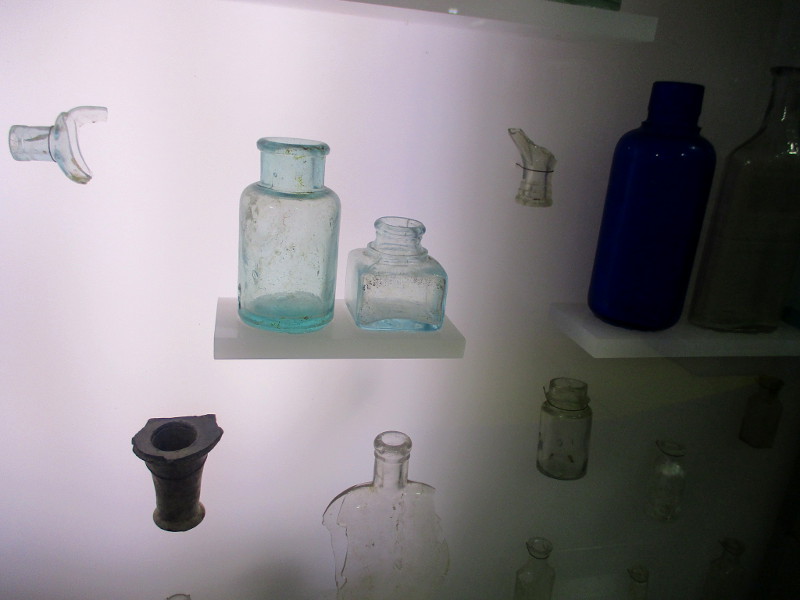
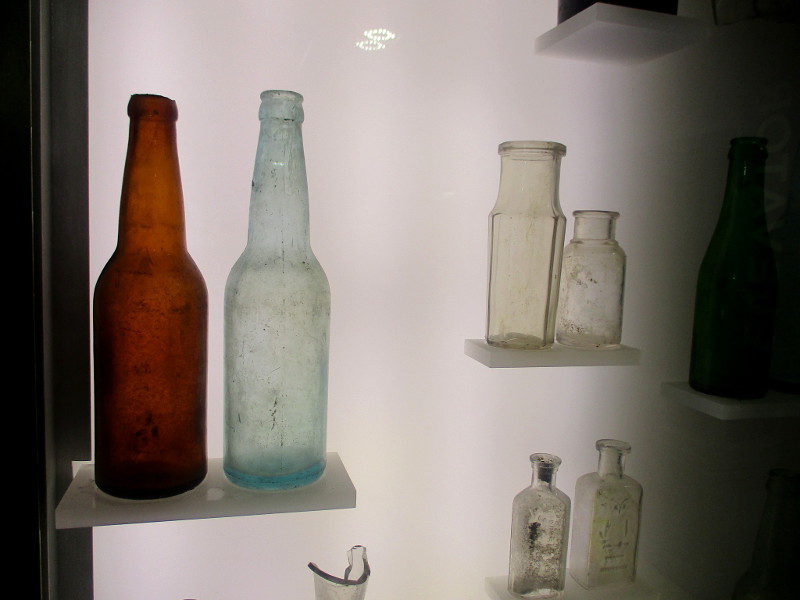
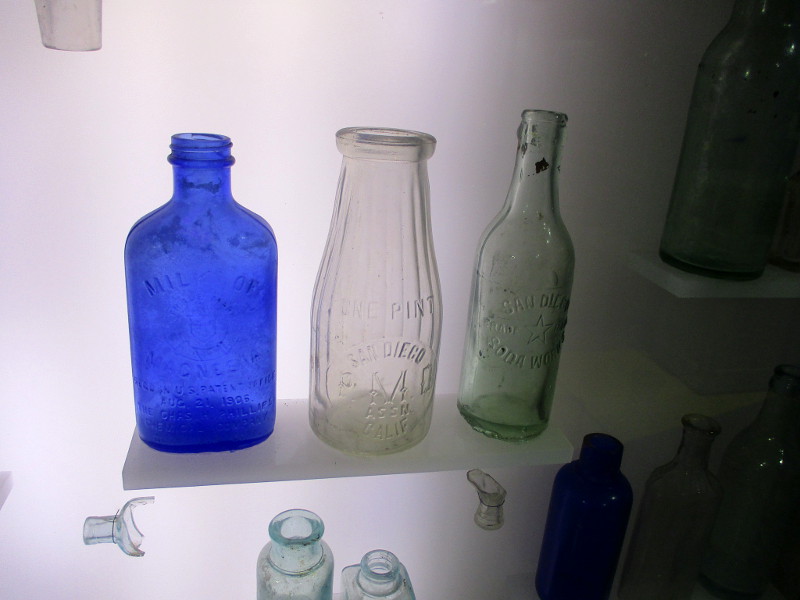
The parking structure that stands beside the County Center/Little Italy trolley station contains a fascinating exhibit. Just inside the Cedar Street door, a glass display case holds rows of antique bottles. These old bottles were discovered in 2014 during the early stages of the building’s construction.
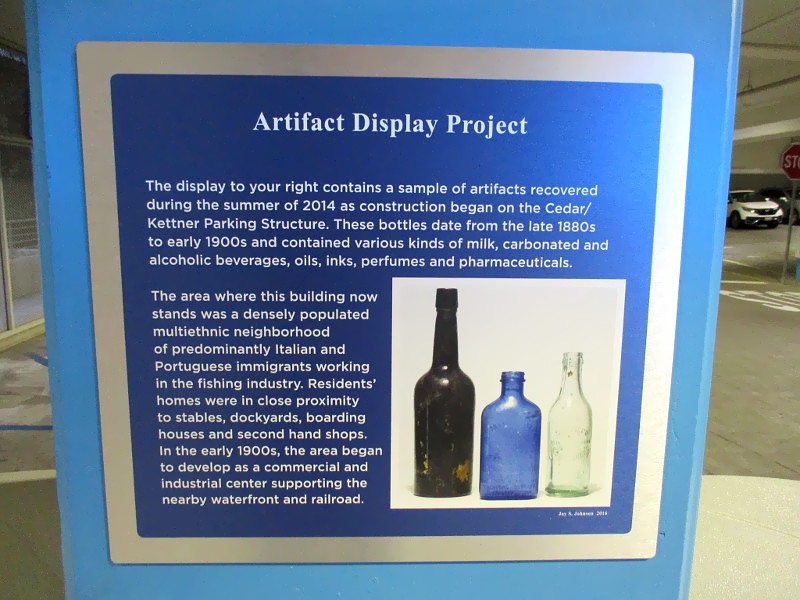
A nearby sign explains why these bottles are on public display…
Artifact Display Project
The display to your right contains a sample of artifacts recovered during the summer of 2014 as construction began on the Cedar/Kettner Parking Structure. These bottles date from the late 1880s to early 1900s and contained various kinds of milk, carbonated and alcoholic beverages, oils, inks, perfumes and pharmaceuticals.
The area where this building now stands was a densely populated multiethnic neighborhood of predominantly Italian and Portuguese immigrants working in the fishing industry. Residents’ homes were in close proximity to stables, dockyards, boarding houses and second hand shops. In the early 1900s, the area began to develop as a commercial and industrial center supporting the nearby waterfront and railroad.
…
I post new blogs pretty often. If you like discovering new things, bookmark coolsandiegosights.com and swing on by occasionally!
I live in downtown San Diego and love to walk around with my camera! You can follow Cool San Diego Sights via Facebook or X.
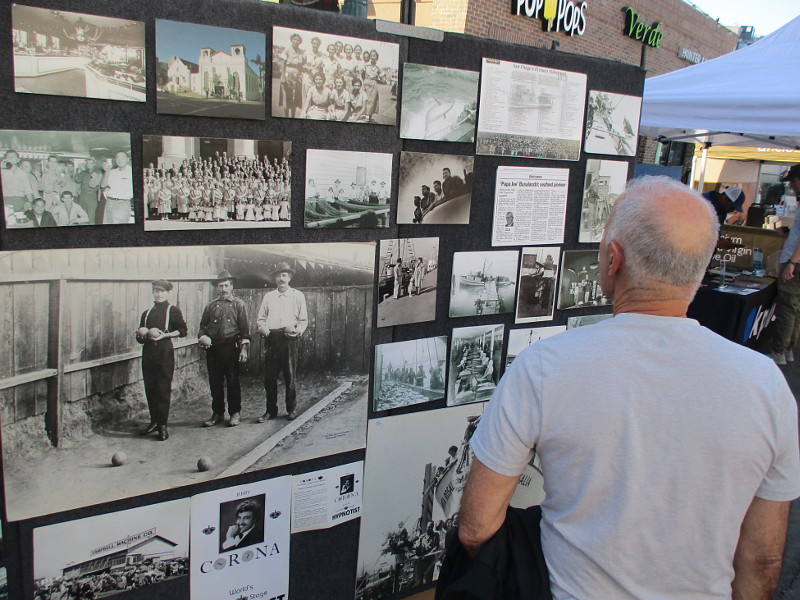
Over the weekend, as I walked through the Bella Vita Fest in San Diego’s Little Italy neighborhood, I noticed a large display of fascinating old photographs.
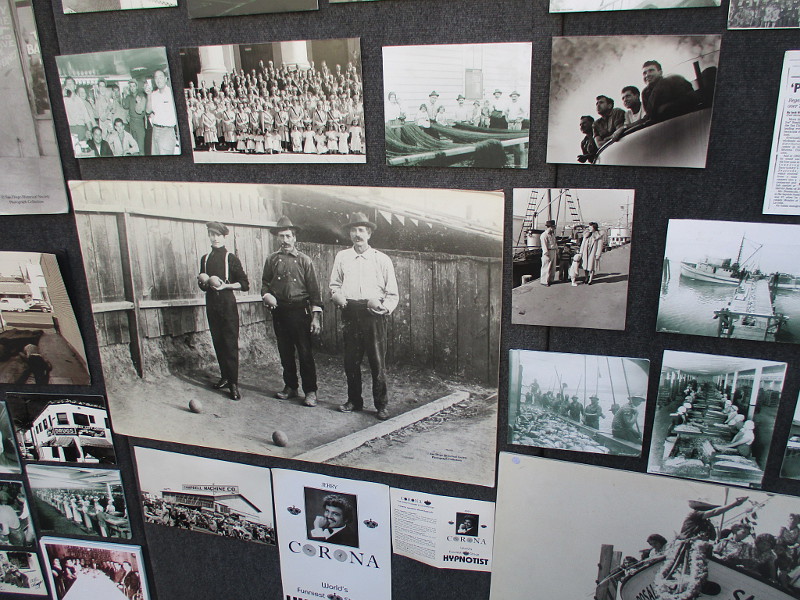
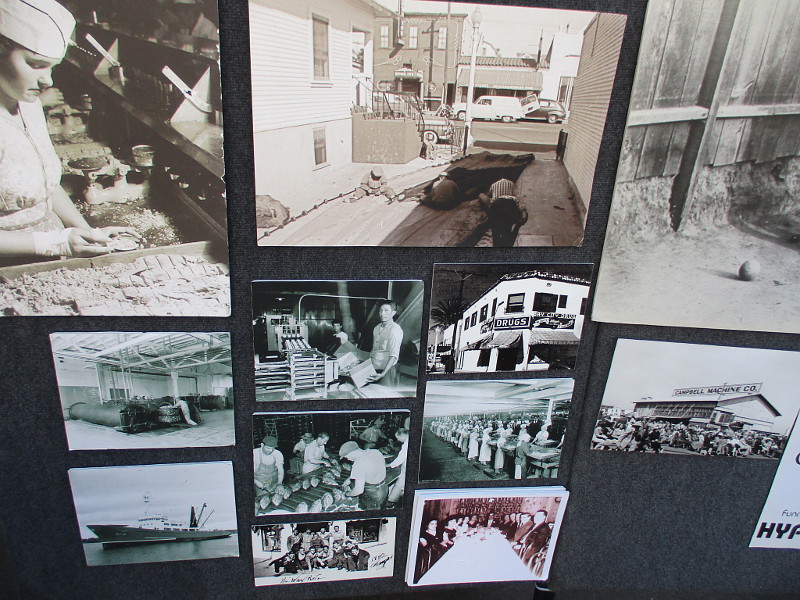
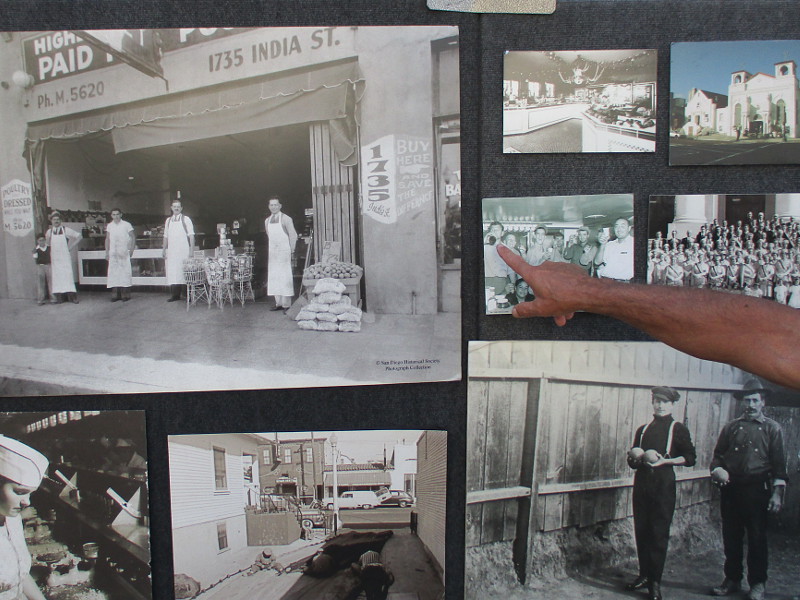
Convivio, a cultural organization that works to preserve the Italian community’s history in San Diego, was showing images from our city’s past!
There were photographs of tuna fishermen and boats and cannery workers, old restaurants and businesses on India Street, Our Lady of the Rosary Parish, Washington Elementary School, families, neighbors playing bocce…
It was pointed out to me that many of the houses and buildings that were photographed generations ago can still be recognized on the present-day streets of Little Italy!
Checking out the Convivio website, I see they are undertaking an important history preservation project. Their Italian Digital History Initiative hopes that residents of San Diego will contribute to a growing archives full of memories. The current cornerstone of Convivio’s preservation focus is the Italian Digital History Initiative, established in 2006, which preserves the local Italian community’s heritage through photographs, documents, oral histories, and other new-media resources.
If you have interesting material that helps tell the story of Italian immigrants in San Diego, you can bring it down to the AMICIBAR (the historical Amici House) next to the Little Italy Dog Park on Sundays, between 10 am and 2 pm. They’ll digitize photos, documents (marriage, birth certificates), awards/certificates of recognition, personal letters, permits and licenses (fishing or retail industries, for example), and whatever tells THE STORY OF YOUR FAMILY HERITAGE!
Learn more about this important project by clicking here.
Several detailed scale models at the San Diego Chinese Historical Museum show what life was like for the Chinese inhabitants of early San Diego. Visitors can peer at these meticulously constructed scenes and imagine walking through the city over a century ago. San Diego’s Chinatown is historically bounded by Second and Fourth Avenues.
After entering the museum, the first model I noticed was of a Chinese fishing village that once existed where today’s San Diego Convention Center stands. The fishing village included small shanties, drying racks and salting tanks. Here it is:
The next two photos show a model of San Diego’s old Chinatown along Third Avenue, between Island Avenue and J Street. This amazing model, which represents the years 1910 to 1920, is based on photos, documents and former residents’ descriptions.
A sign in the museum explains: Notice the red batik wall… That building was an opium den according to the 1890 city directory. The large building with an awning a few doors down were the Woo Chee Chong and Gim Wing stores. The two story building on the other side of the street was Chinatown patriarch Ah Quin’s house, where he and his wife raised 12 children.
Next is a model depicting the back of the Woo Chee Chong Company at 450 Third Avenue. Like other Chinese stores in early San Diego, groceries and various goods were sold downstairs, and the upstairs rooms were available for let.
Finally, visitors can peer down into a very detailed model of a Chinese laundry in San Diego.
Between 1886 and 1970, there were over 100 Chinese laundries in San Diego… Opening a laundry was the quickest way for Chinese immigrants to become their own boss without needing to speak much English or having much money. All it took was a little soap, water, and hard work.
Apart from the model, this exhibit includes artifacts like old irons. There is also a map of the known laundry locations and various historical descriptions.
Anyone interested in the important role the Chinese played in our city’s history, including aspects of their life, work and culture, really should visit the small but excellent San Diego Chinese Historical Museum!
…
Thanks for visiting Cool San Diego Sights!
I post new blogs pretty often. If you like discovering new things, bookmark coolsandiegosights.com and swing on by occasionally!
I live in downtown San Diego and love to walk around with my camera! You can follow Cool San Diego Sights via Facebook or X.


 Cool San Diego Sights!