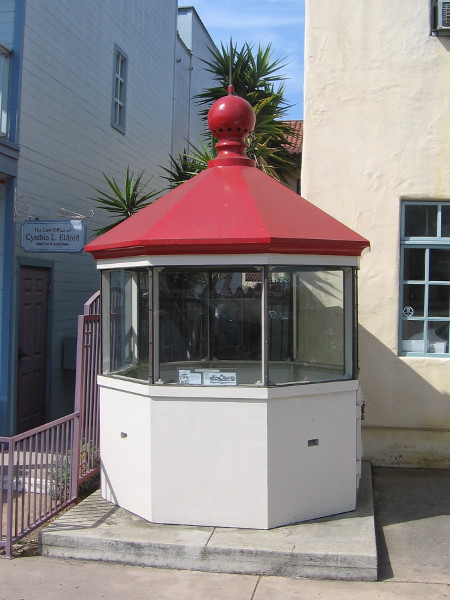
The top section of a historically important lighthouse now stands on a sidewalk in Old Town San Diego!
A lighthouse that once guided ships into San Diego Bay now stands on an Old Town sidewalk? How strange is that?
Well, not an entire lighthouse–just the lantern room of the 1890 Ballast Point Light Station!
The other day while walking down Congress Street, a few steps southeast of Harney Street, I paused to more carefully examine this mystery. (I’ve driven past the kiosk-like structure often, without really giving it a second thought.)
First, you should note Ballast Point is about 6 miles southwest of Old Town. The spit of land juts down into San Diego Bay from Point Loma; it’s where tall ships used to load ballast stones for their return trip around Cape Horn to the East Coast. Today it is part of Naval Base Point Loma.
So how did this top section of Ballast Point’s historic lighthouse end up on an Old Town sidewalk?
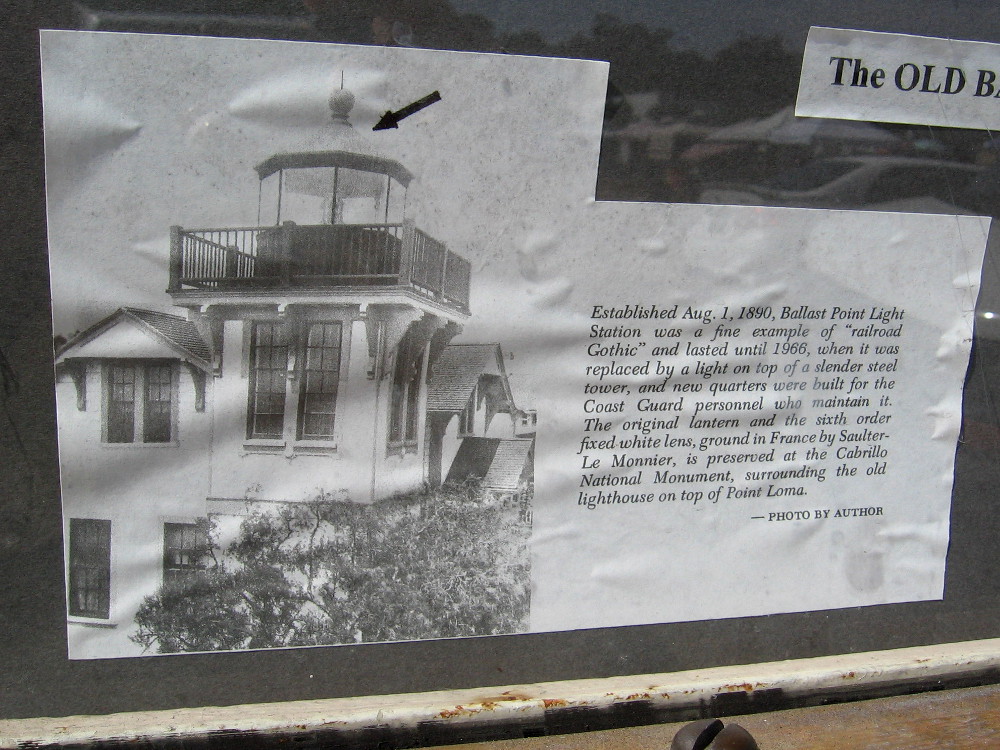
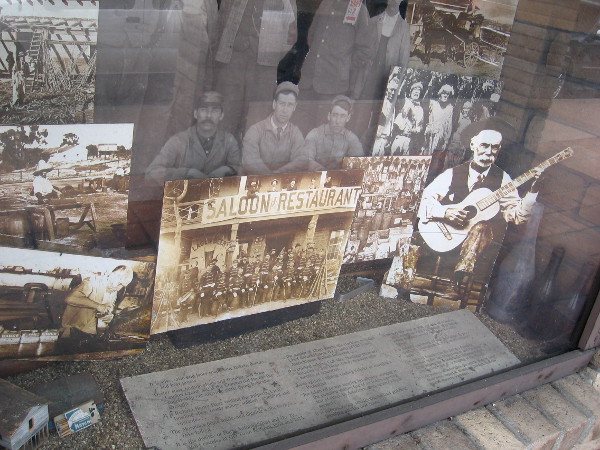
Some interesting photos behind a glass pane provided me with a few clues. The Ballast Point Light Station was built in 1890 and eventually dismantled in 1960. (Click the images and they will expand so you can read much more.)
After doing a little research, I learned the lantern room was found in 1998 by the owner of an Old Town nautical antiques store–West Sea Company–in a classified ad. At the time the Ballast Point lantern room was located at someone’s Bonita residence! Purchased and transported by flatbed truck to Old Town, it was placed on a cement pad near West Sea Company–and here it “mysteriously” remains today!
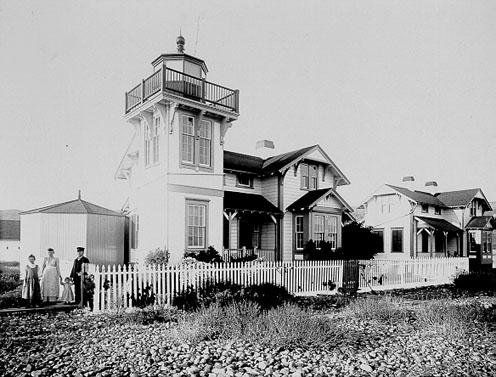
The 1890 Ballast Point Light Station was an example of Railroad Gothic. Its sixth order lens can be seen today at Cabrillo National Monument, in a museum beside the Old Point Loma Lighthouse.Historical photo and some words explain the light at Ballast Point. It guided sailors past Middle Ground Shoal and into San Diego’s harbor.A public domain photo of the Ballast Point Light Station, courtesy Wikimedia Commons.This lantern room housed a light that guided ships into San Diego Bay. It can now be seen on Congress Street in Old Town!
…
I live in downtown San Diego and love to walk around with my camera! You can follow Cool San Diego Sights via Facebook or Twitter!
You can easily explore Cool San Diego Sights by using the search box on my blog’s sidebar. Or click a tag! There are thousands upon thousands of fun photos for you to share and enjoy!
Image on tiles indicates Portuguese American Social and Civic Club.
The history of the Portuguese community in Point Loma is fascinating. During a walk along a block of Avenida de Portugal, I got just a small glimpse of it.
Many have heard of Little Italy in San Diego, but I suspect few have heard of a neighborhood that some call Little Portugal. It can be found near the entrance to Shelter Island, an area settled by many families of Portuguese fishermen when the tuna industry flourished in our city. The neighborhood was once called Tunaville. Two landmarks that were built by the Portuguese almost a century ago still exist today: the United Portuguese S.E.S. Hall where the community gathers and a small Catholic chapel beside it.
I spotted some round plaques in the sidewalk and images on tile on the hall’s exterior during my walk beside these two buildings. They provide a small taste of Little Portugal’s history. I thought you might enjoy taking a look at a few of them.
Small Catholic chapel in Point Loma, in a neighborhood sometimes referred to as Little Portugal.Front of the United Portuguese S.E.S. Hall on a sunny San Diego day.Plaque in the sidewalk is a Tribute to our Immigrants. Determination, hard work and strength of character are only a few of the gifts you have given us.In admiration of their loyalty and commitment to the Fishing Industry and never ending support of our Portuguese Community.Age of Exploration. In thoughtful memory of God and our parents who so successfully contributed to our Festas do Espirito Santo, the tuna industry and our lives in America.The flag of Portugal flies proudly in San Diego near Shelter Island.Map of the island of Madeira and image of Santo Amaro.Image of Juan Rodriguez Cabrillo’s galleon San Salvador and his statue at Cabrillo National Monument, a gift from the government of Portugal. Exploring on behalf of Spain, Cabrillo was Portuguese.
…
I live in downtown San Diego and love to walk around with my camera! You can follow Cool San Diego Sights via Facebook or Twitter!
You can easily explore Cool San Diego Sights by using the search box on my blog’s sidebar. Or click a tag! There are thousands upon thousands of fun photos for you to share and enjoy!
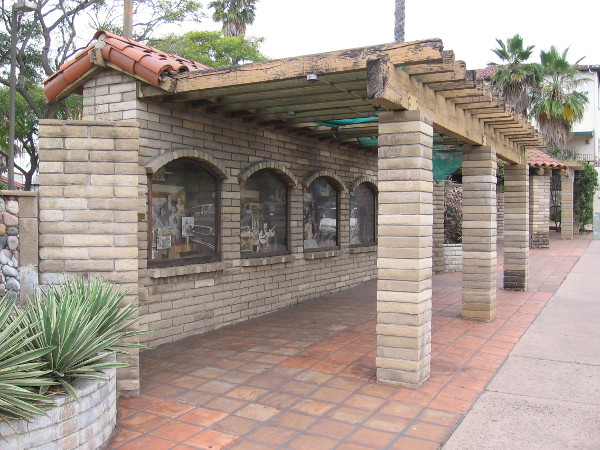
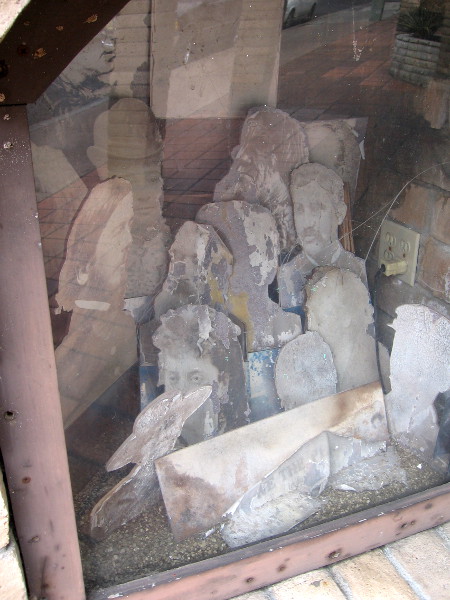
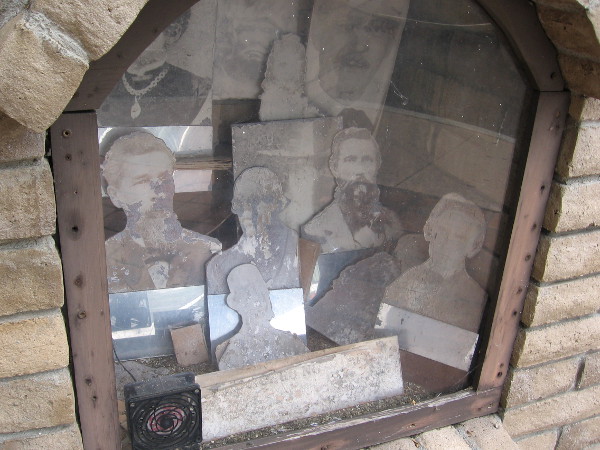
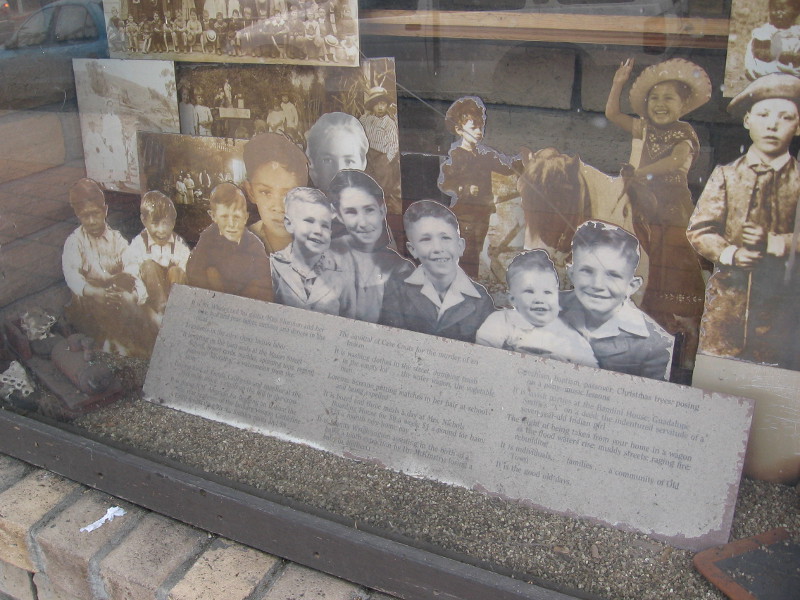
Photographs of Old Town’s history slowly fade with the passage of time.
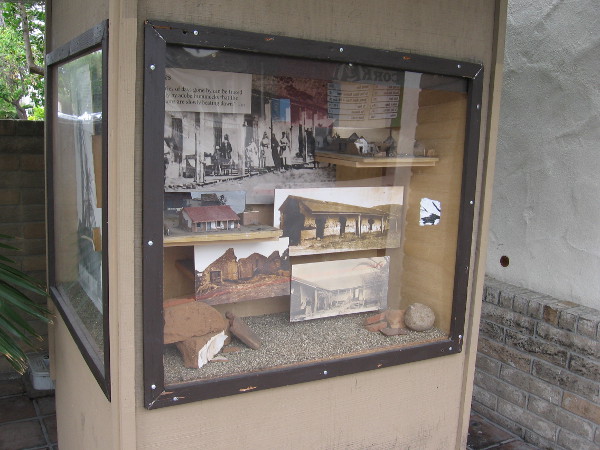
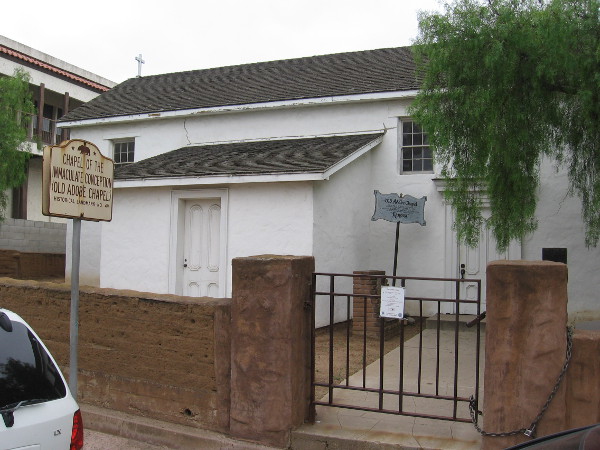
I recently walked down a few streets in Old Town that are seldom visited by tourists. After taking photographs of the Old Adobe Chapel, I noticed that across Conde Street there was some sort of structure containing glass display cases.
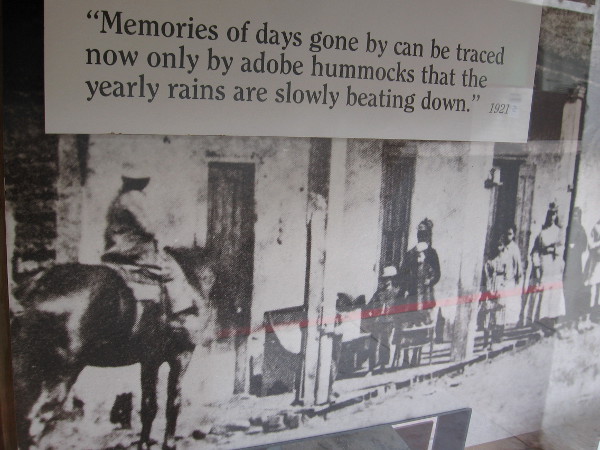
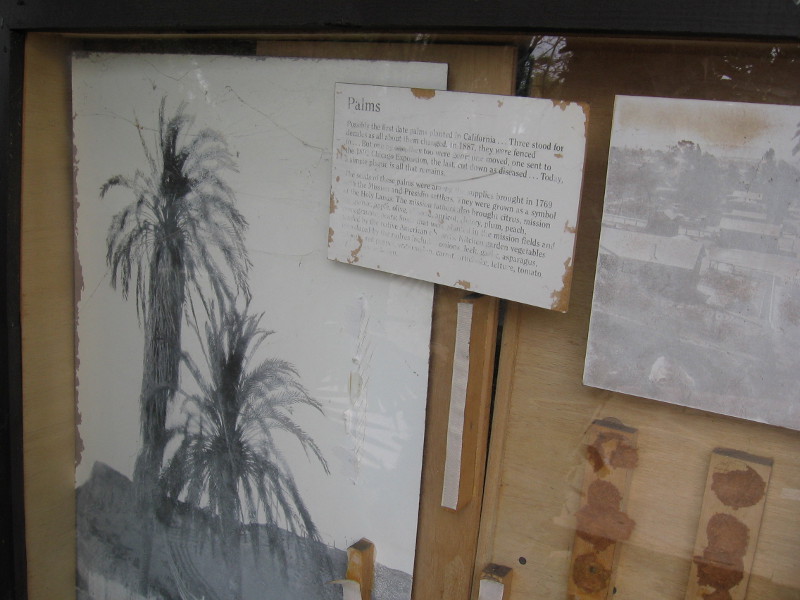
Upon closer inspection, I saw this was an outdoor exhibit concerning San Diego’s early history. And that its contents were in a sad state of decay.
No one seemed to know who’d created this exhibit until I spoke to a cashier in Old Town San Diego State Historic Park’s visitor center, inside the Robinson Rose House. She told me the structure had been built decades ago for the Old Town Mexican Cafe and that the displays had been designed by a woman who loved history. But she had gone blind.
Time moves incessantly forward.
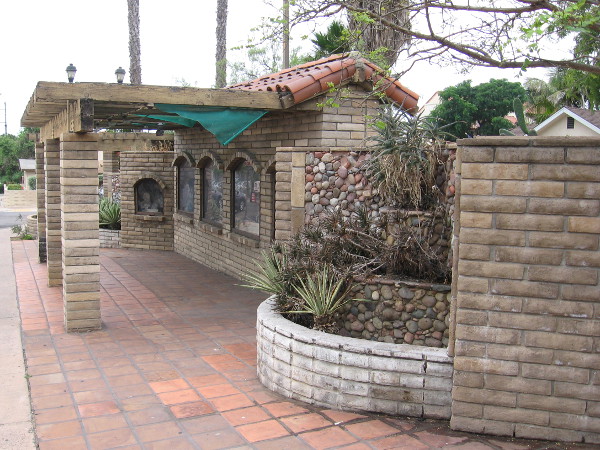
You can find this fascinating but faded exhibit on Conde Street, behind Cafe Coyote.
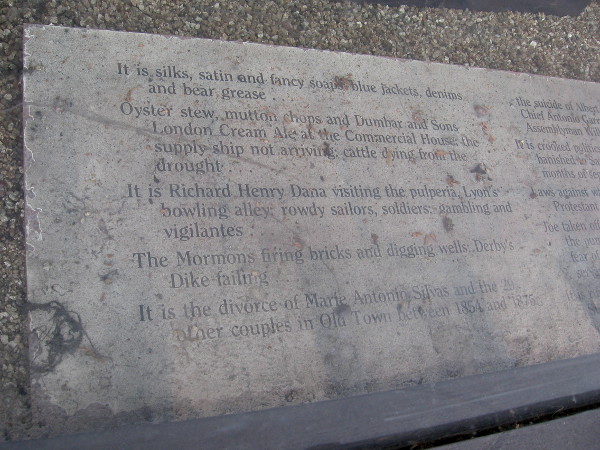
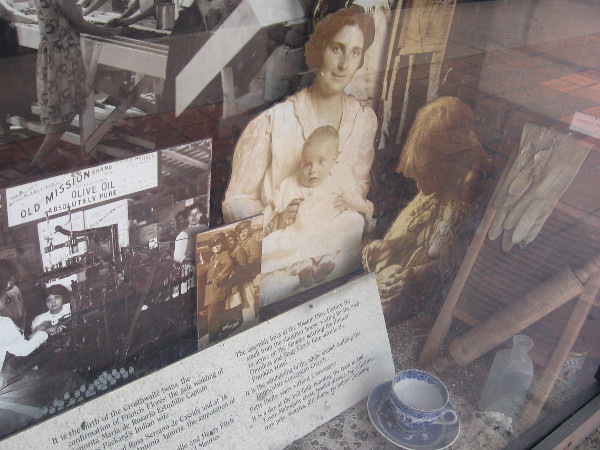
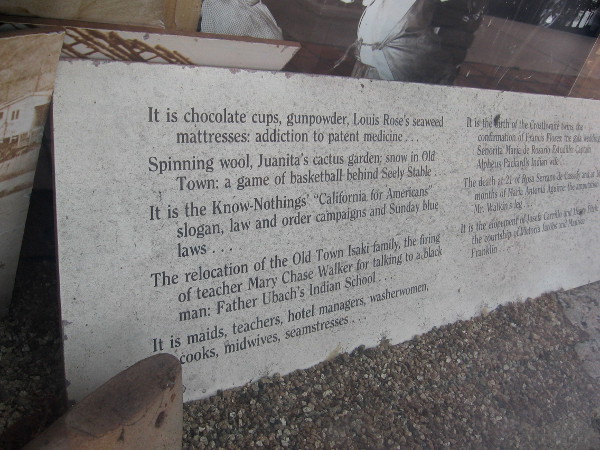
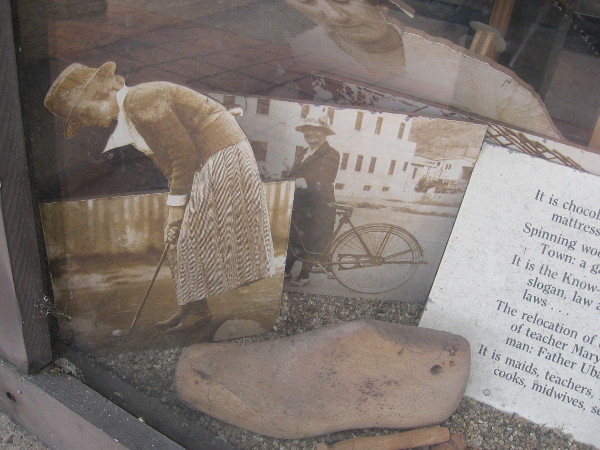
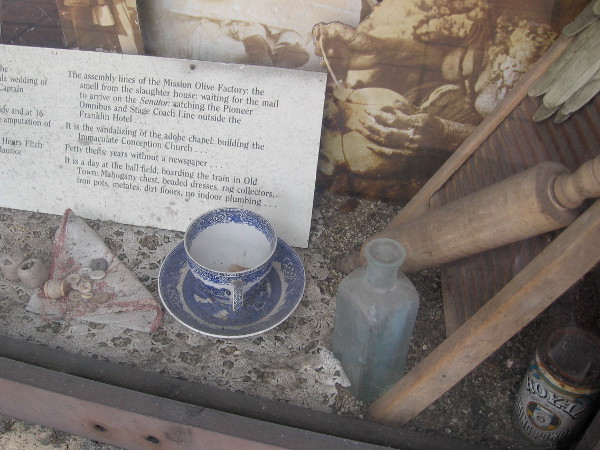
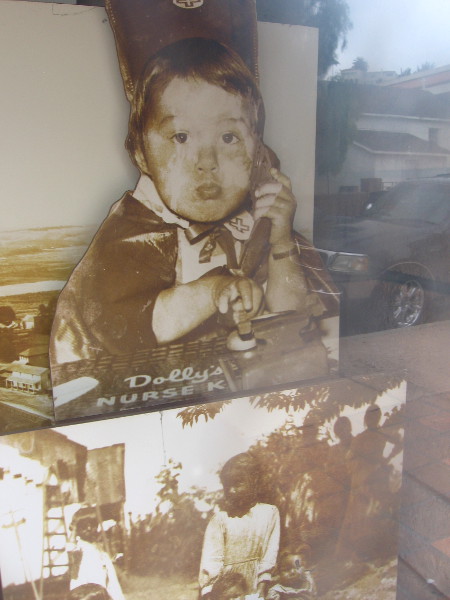
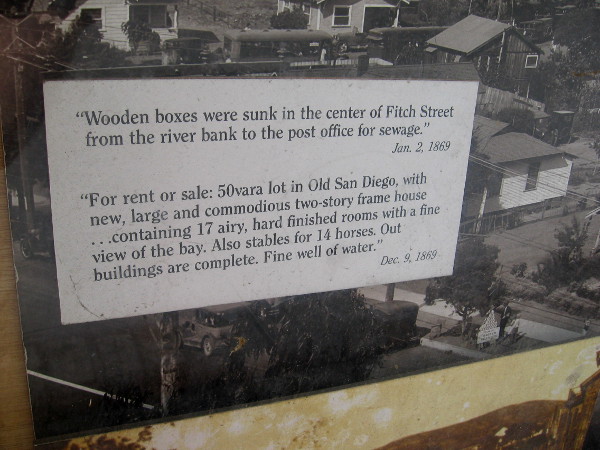
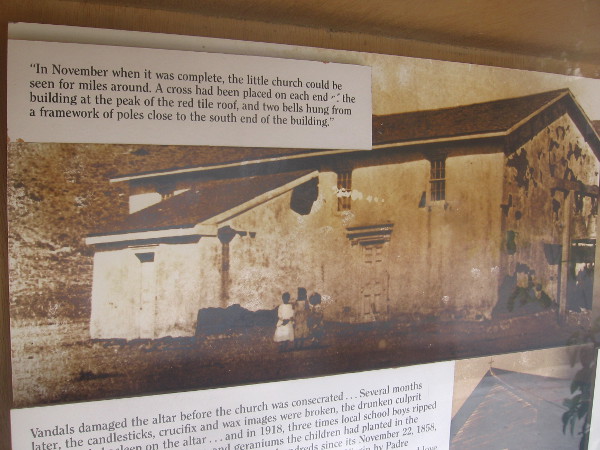
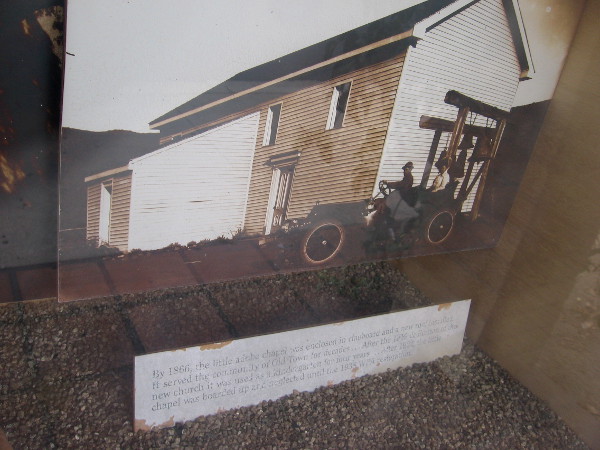
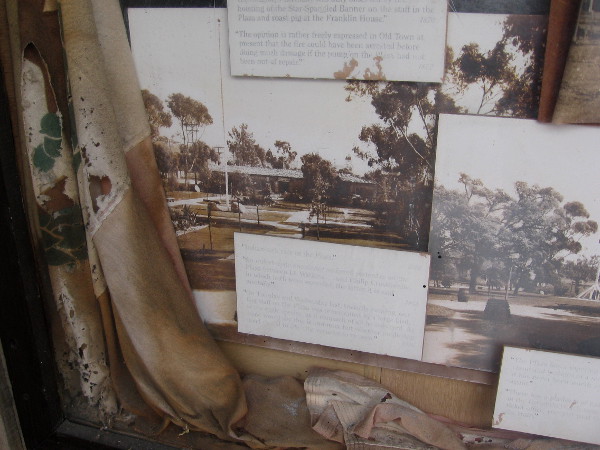
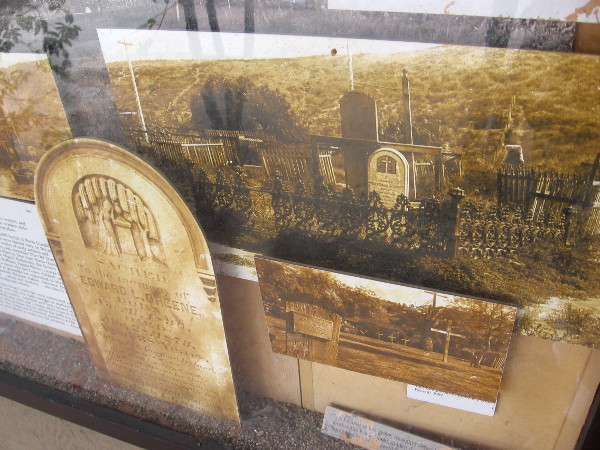
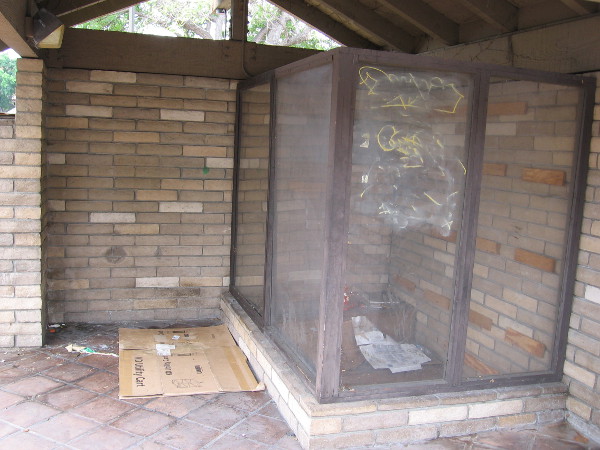
Displays behind glass windows include old photos and historical artifacts. This was created many years ago, I was told, for the nearby Old Town Mexican Cafe.It is silks, satin and fancy soaps, blue jackets, denims and bear grease… It is Richard Henry Dana visiting the pulperia…rowdy sailors, soldiers; gambling and vigilantes…Early residents of Old Town, fading away.A collection of photos show life as it was in Old Town San Diego.It is chocolate cups, gunpowder, Louis Rose’s seaweed mattresses… Spinning wool, Juanita’s cactus garden…a game of basketball behind Seeley Stable…More old photos. Life remembered here as it once was…A few household objects in one display case. Perhaps life those many years ago wasn’t so very different…Youthful faces.Faded by time, now ghostlike.Memories of days gone by can be traced now only by adobe hummocks that the yearly rains are slowly beating down.History captured, for those who might pass down the sidewalk.Palms grow. Some words fade.Wooden boxes were sunk in the center of Fitch Street from the river bank to the post office for sewage.Photo of the Old Adobe Chapel. In November when it was complete, the little church could be seen for miles around…By 1866, the little adobe chapel was enclosed in clapboard and a new roof was installed. It served the community of Old Town for decades…The Old Adobe Chapel has been preserved. Now a historical landmark, it stands across Conde Street.Decayed flag, and old photos of flagpole at center of La Plaza de Las Armas.Old photos of the Campo Santo Cemetery. Words describe: A mingling of men, women, and children from places and lives so different…One empty display case, graffiti and a hard place for the homeless.A monument to the human desire to remember.Many years, many faces.
…
This blog now features thousands of photos around San Diego! Are you curious? There’s lots of interesting stuff to check out!
Here’s the Cool San Diego Sights main page, where you can read the most current blog posts. If you’re using a small mobile device, click those three parallel lines up at the top–that opens up my website’s sidebar, where you’ll see the most popular posts, a search box, and more!
To enjoy future posts, you can also “like” Cool San Diego Sights on Facebook or follow me on Twitter.
Photo taken from the intersection of La Mesa Boulevard and Spring Street shows a small stretch of The Village.
On Sunday morning I took a short walk in the heart of La Mesa. The most fascinating stretch was through the historic area of the city known as The Village. I walked up La Mesa Boulevard from Spring Street to Legacy Park, then back down along the opposite sidewalk.
Not only is this stretch full of local history, but it’s home to the La Mesa Walk of Fame, which honors individual contributions to the city by accomplished and generous residents. In my photos I’ve included a few notable plaques.
The Village on a Sunday morning was very quiet, with a smattering of locals eating breakfast or an early lunch in the small eateries that I passed. The Village, with its plain, practical buildings from a bygone era, feels very modest. It doesn’t strike me as a place that attracts hipsters–more a cherished place for families and ordinary folk and people like me who enjoy a slow Sunday stroll.
I took photos. Please read the captions for a few explanations of what I saw.
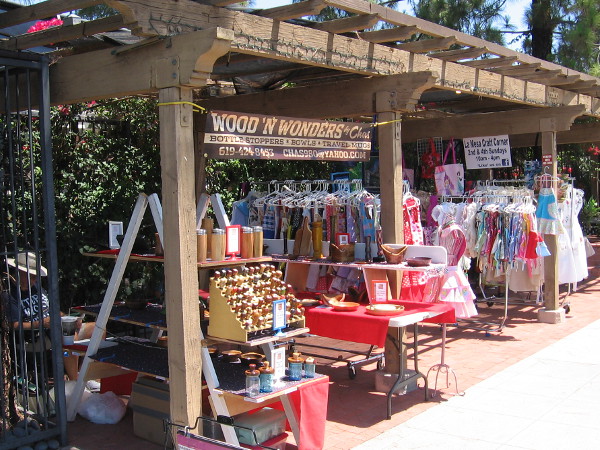
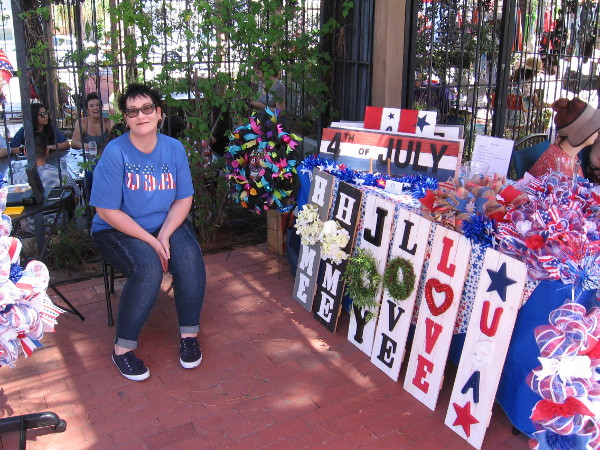
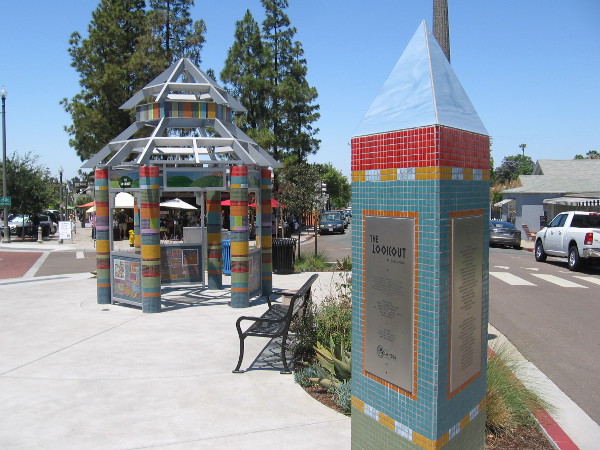
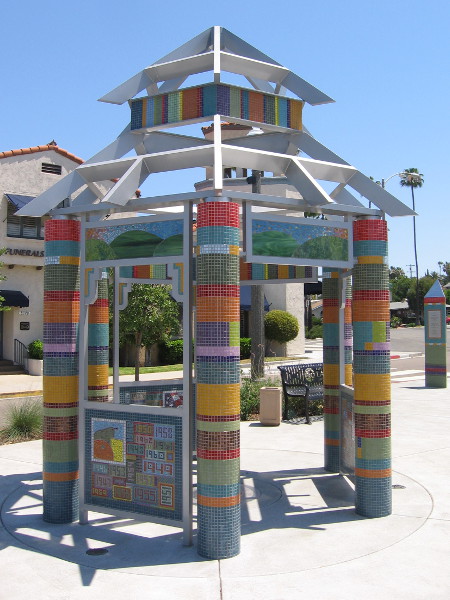
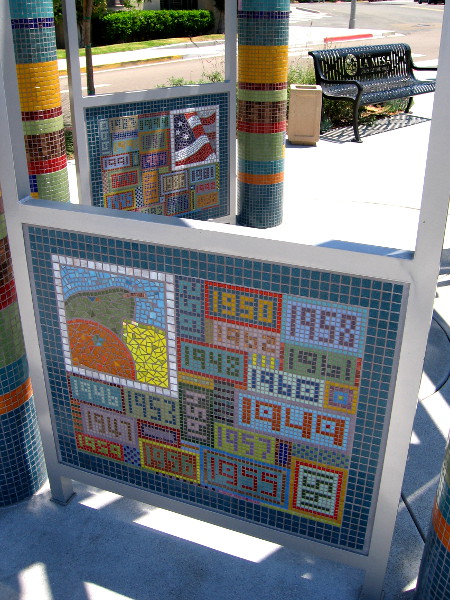
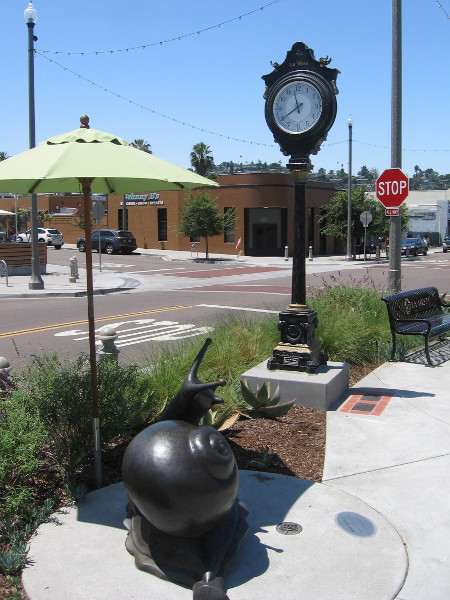
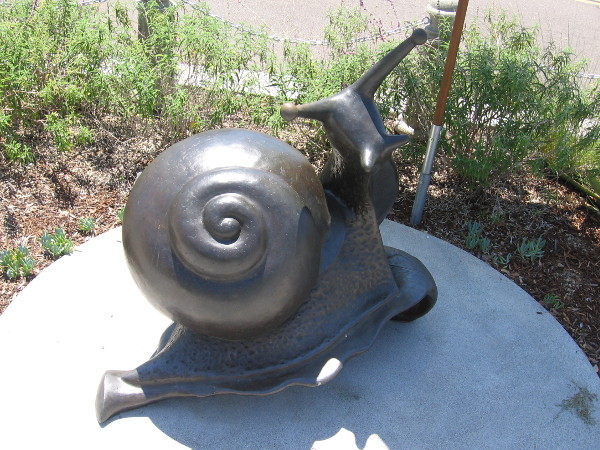
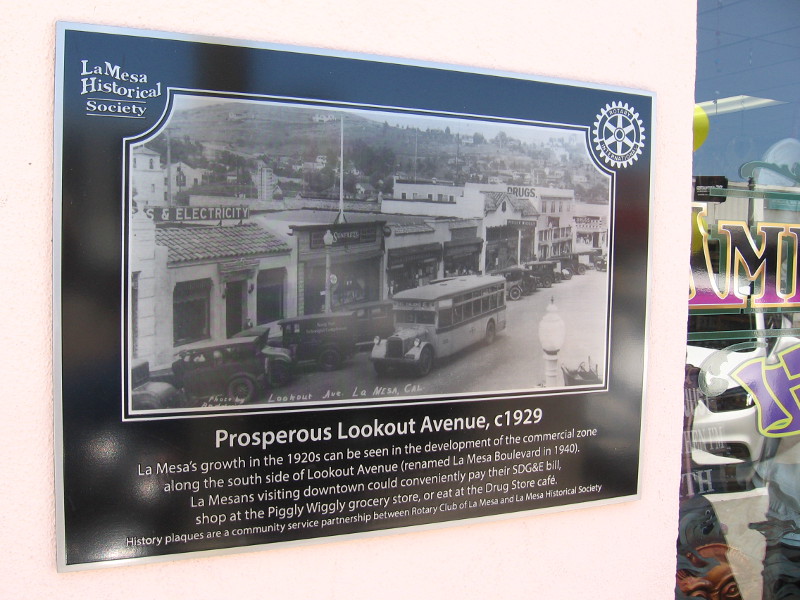
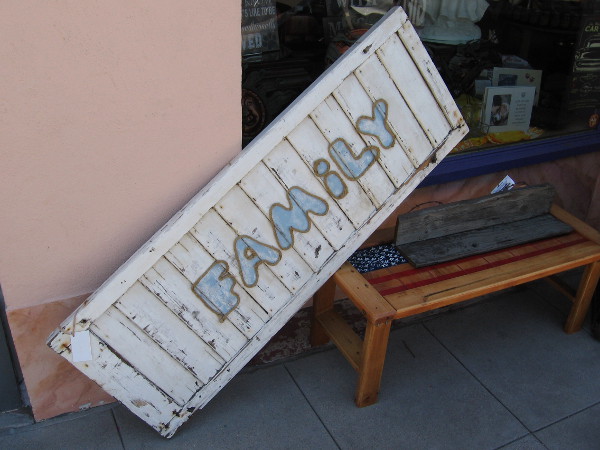
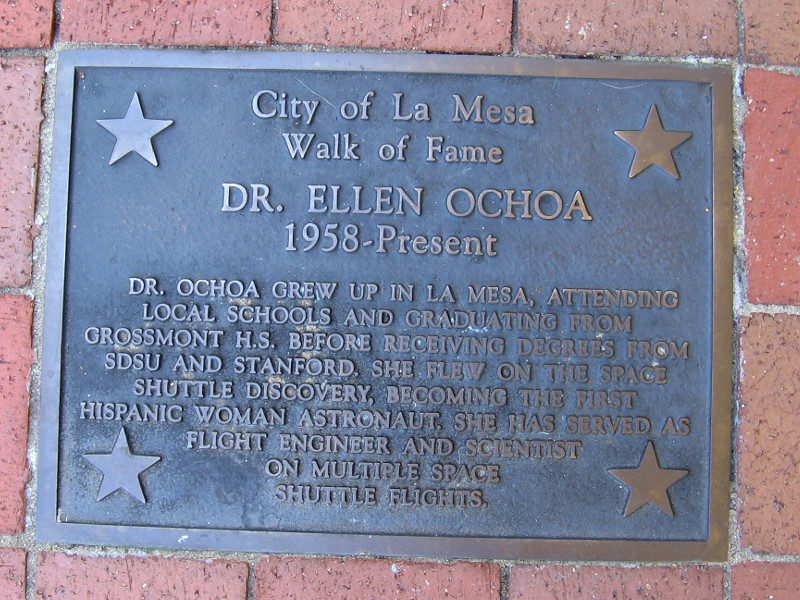
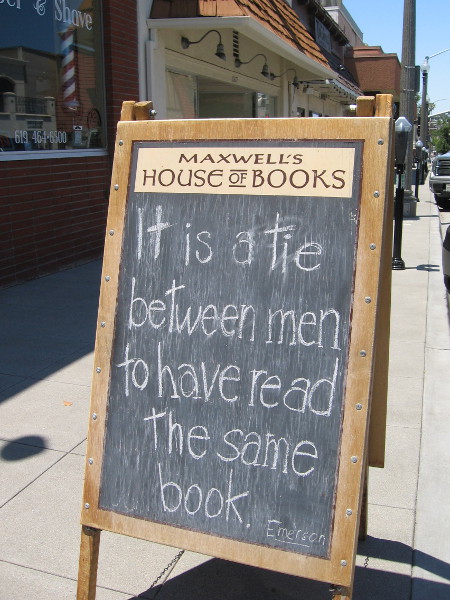
The City of La Mesa Walk of Fame can be experienced on both sidewalks along La Mesa Boulevard, between Spring Street and 4th Street.Bill Walton graduated from La Mesa’s Helix High School. He was inducted into the NBA basketball Hall of Fame as one of the greatest players of all time.Walking through the Village up La Mesa Boulevard. The buildings are modest but retain local history and many memories.The La Mesa Craft Corner on a quiet Sunday morning.A nice lady with some Fourth of July crafts smiles for my blog about San Diego.The Lookout is public art project in Legacy Park, the small triangle where La Mesa Boulevard, 4th Street and Allison Avenue meet.The Lookout was created by a family of artists–Jesus Dominguez, Mary Lynn Dominguez and Amy Dominguez. It depicts the colorful history of La Mesa.Closer photo of The Lookout at Legacy Park. Eight mosaic panels made of tile show historical events in La Mesa from 1912 to 2012.At the center of The Lookout is the John B. Reed Centennial Time Capsule, to be opened in 2062.Legacy Park also includes a memorial clock and a bronze sculpture of the Helix snail. The 1939 U.S. Post Office Building is seen in the background.Children are encouraged to ride this fun bronze snail!Felix the Helix. The story goes that Rufus King Porter named Mount Helix after the Helix aspersa, a European garden snail that was discovered locally.Now I’m walking back down La Mesa Boulevard on the other side of the street. A small slice of Americana. The modest shops and buildings recall a simpler time.La Mesa Historical Society plaque shows a prosperous Lookout Avenue circa 1929. The street was renamed La Mesa Boulevard in 1940.Family and a flag bench in front of Amethyst Moon, a specialty gift shop in The Village of La Mesa.The are many plaques in the City of La Mesa Walk of Fame. This one celebrates James Culbert, inductee into the National Sprint Car Racing Hall of Fame.Another plaque celebrates Dr. Ellen Ochoa, graduate of La Mesa’s Grossmont High School and the first Hispanic woman astronaut.A photo of the Heller Building, now home of an escrow company.La Mesa Historical Society photo of the Heller Building in the 1940s. It has housed many businesses including Gilbert’s five and dime and Culver’s drugstore.Maxwell’s House of Books adds life to The Village.It is a tie between men to have read the same book. Ralph Waldo EmersonOld photo on AT&T building appears to show telephone company worker in the undeveloped hills of La Mesa many years ago.The Village is a modest few blocks in the city. Full of history and memory, it provides a taste of days when La Mesa was a small American town.
…
I live in downtown San Diego and love to walk around with my camera! You can follow Cool San Diego Sights via Facebook or Twitter!
You can easily explore Cool San Diego Sights by using the search box on my blog’s sidebar. Or click a tag! There are thousands upon thousands of fun photos for you to share and enjoy!
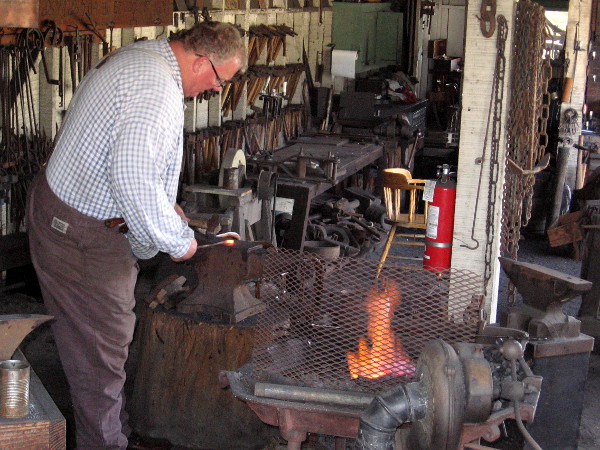
A blacksmith shapes red hot iron at a forge in San Diego’s historic Old Town.
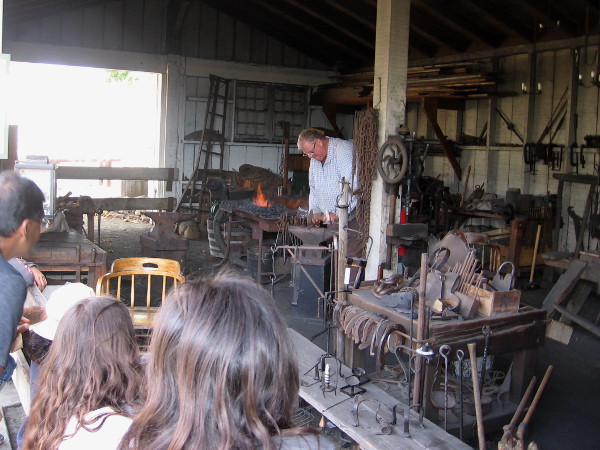
Yesterday I lingered for a few minutes at the Blacksmith Shop in Old Town San Diego State Historic Park. Two forges were operating. I watched as hammers swung, making sparks fly. It was fascinating to learn about blacksmithing and its vital role in San Diego’s history.
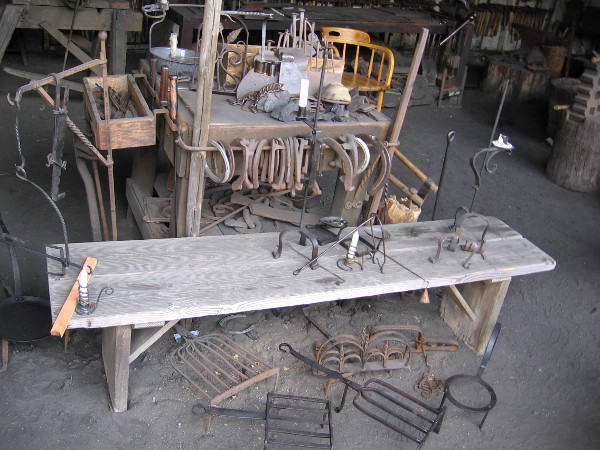
I chatted for a bit with one of the friendly gentlemen working in the Blacksmith Shop. These days the shop is used by a handful of skilled smiths to make all sorts of ornamental and useful metal items. They’ve made objects used for display elsewhere in the State Park. They make everything but horseshoes–and that’s because none of them know how to shoe a horse!
I was told that in 19th century San Diego there were several blacksmiths; this shop now in Old Town was probably located a bit to the east, on the outskirts of town (near today’s Presidio Hills Golf Course) because of the fire danger it presented to other buildings. No blacksmith shop back then would have been as large as the one visitors see today. A blacksmith would most likely do their work in the corner of a livery stable, using one modest forge.
Please read the photo captions to learn more!
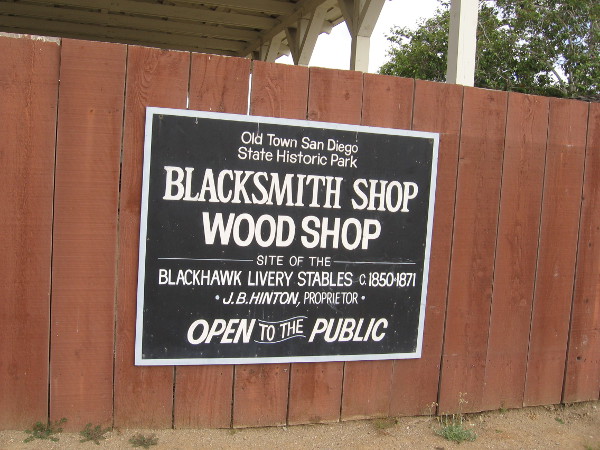
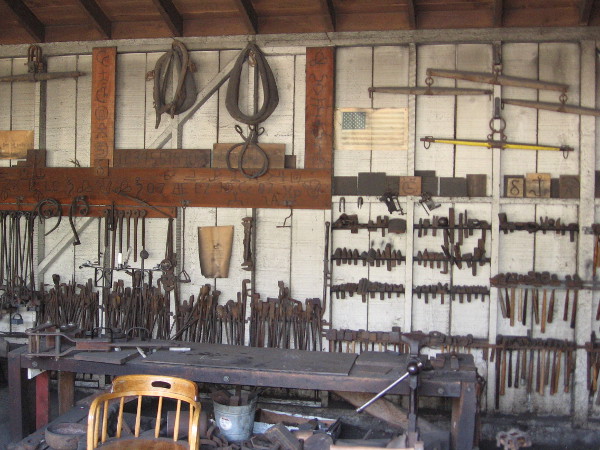
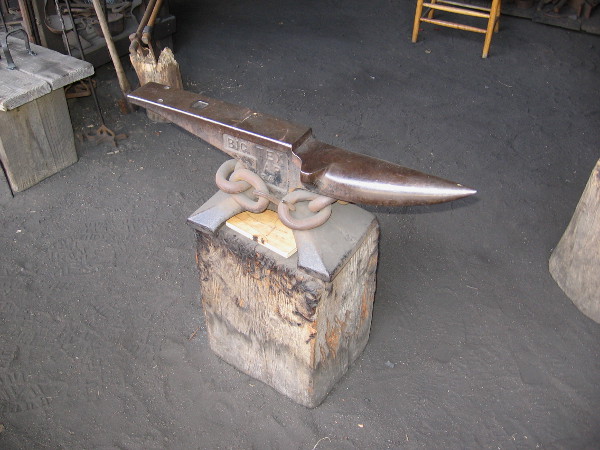
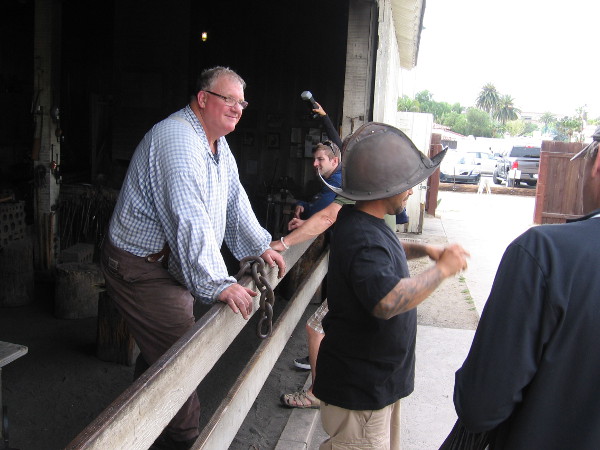
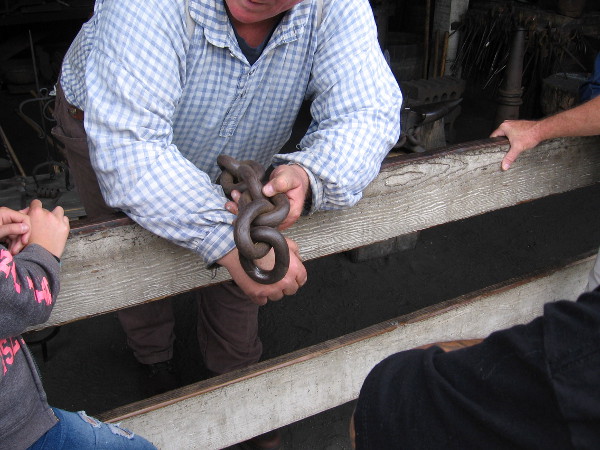
Old Town San Diego State Historic Park’s Blacksmith Shop and Wood Shop at the site of the Blackhawk Livery Stables, circa 1850-1871.Visitors to Old Town learn a little about life in San Diego during the mid 1800s. Blacksmiths created assorted metal objects, made repairs and shoed horses.This friendly blacksmith provided lots of fascinating information. Visitors watch with interest as he works to create a pot holder.I learned that in early San Diego blacksmiths typically burned charcoal in their forge, as coal was usually of poor quality and difficult to obtain in Southern California.A huge bellows provides oxygen for this brick furnace. A good working temperature is about 1800 degrees Fahrenheit.Products that were fashioned include iron grills, traps, candle holders, fish roasters, knives, shovels, chains, hinges, nails, cooking ladles and horseshoes.Hammers, bars, wrenches and various blacksmithing tools hang from the rear wall, in addition to harnesses and other items one might find in a livery stable.The gentleman showed me some devices used to suspend pots over a fire. Everything on this wall was made by local smiths in this shop.A shiny anvil.This wide grassy area behind nearby Seeley Stable was once used for anvil shoots. Gunpowder was placed in a hollow indentation between two anvils and ignited, sending one anvil high into the air with a loud bang! Anvils that did not shatter were considered sound.Old Town visitor tries on a Spanish conquistador helmet made in the Blacksmith Shop.A heavy anchor chain is shown. The welds must be as strong as the iron links themselves.A photo of living history. Skilled artisans used muscle, fire, metal and sweat to make everyday life easier for the early residents of San Diego.
…
I live in downtown San Diego and love to walk around with my camera! You can follow Cool San Diego Sights via Facebook or Twitter!
You can easily explore Cool San Diego Sights by using the search box on my blog’s sidebar. Or click a tag! There are thousands upon thousands of fun photos for you to share and enjoy!
Mormon Battalion flag flies during a special event in Old Town San Diego.
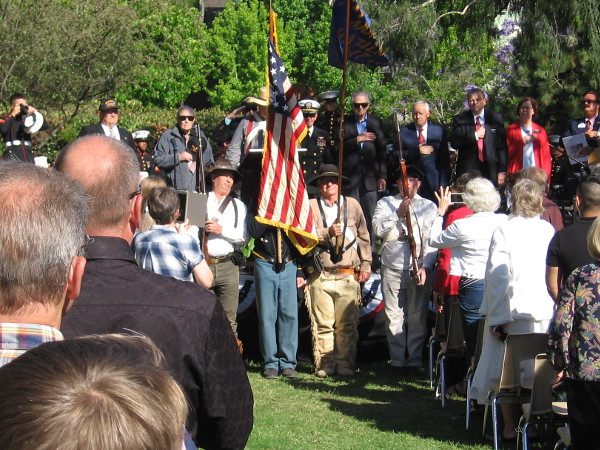
I was invited to a unique event that took place yesterday. A special Flag Day Ceremony was held at the Mormon Battalion Historic Site in San Diego’s Old Town. The event remembered World War I and saluted all American veterans.
During the ceremony five veterans from different military services were made honorary members of the Mormon Battalion. A cake was cut with a military saber and an American flag that has been flown over the U.S. Capital and over Fort Leavenworth (where the historic Mormon Battalion originated) was raised.
The patriotic ceremony was organized by The Church of Jesus Christ of Latter-day Saints, whose members composed the Mormon Battalion, the only religiously based unit in United States military history. Commanded by regular U.S. Army officers, members of the battalion marched almost 2,000 miles from Council Bluffs, Iowa, to San Diego, California to help secure the region during the Mexican–American War. Much of the difficult march was over mountains and through desert. They saw no fighting.
I have noticed that Mormons treasure liberty–religious freedom in particular. I’m not a Mormon–very far from it–but I do happen to be a strong believer in personal liberty. That’s because I’m a writer. Also, as a child I traveled with my family behind the Iron Curtain twice. I have briefly seen how dark life is without liberty.
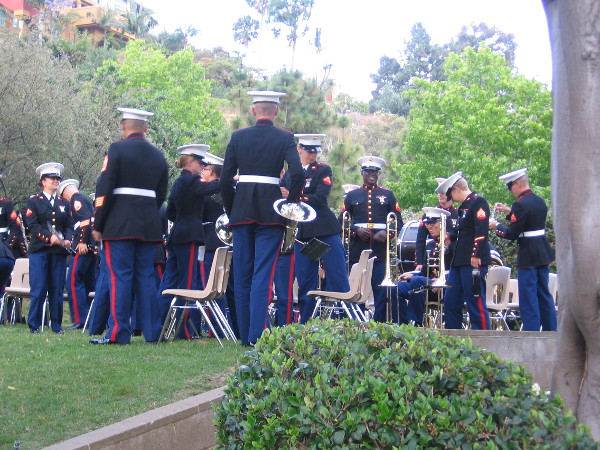
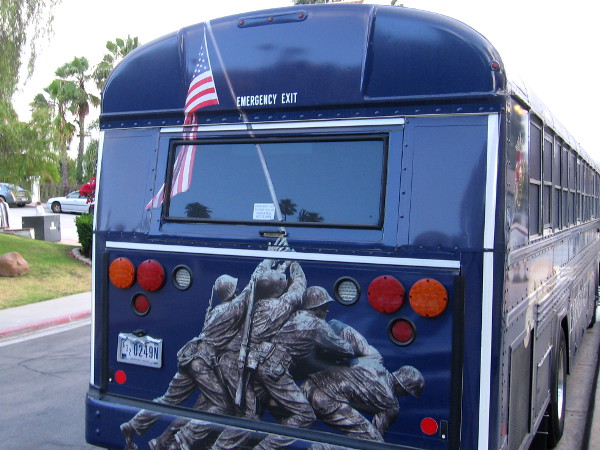
A friendly Mormon lady in pioneer dress welcomes guests to the Flag Day Celebration.This 2017 celebration of Flag Day honored veterans who served with distinction.Guests are welcomed by Director of the San Diego Mormon Battalion Historic Site, Elder Michael Hemingway.The United States flag is posted after the National Anthem.Folding of the flag. Each of the thirteen folds is invested with a special meaning.Four American veterans on stage are applauded and made honorary members of the Mormon Battalion.Keynote speaker General Bruce Carlson, USAF, Ret. talks about liberty. He is also made an honorary member of the Mormon Battalion.Many voices sing God Bless America.Young members of Marine Band San Diego after the ceremony.The United States Marine Corps bus contains an image of the flag being raised during the Battle of Iwo Jima.Pageantry and remembrance at a Flag Day Ceremony in Old Town San Diego.
…
I live in downtown San Diego and love to walk around with my camera! You can follow Cool San Diego Sights via Facebook or Twitter!
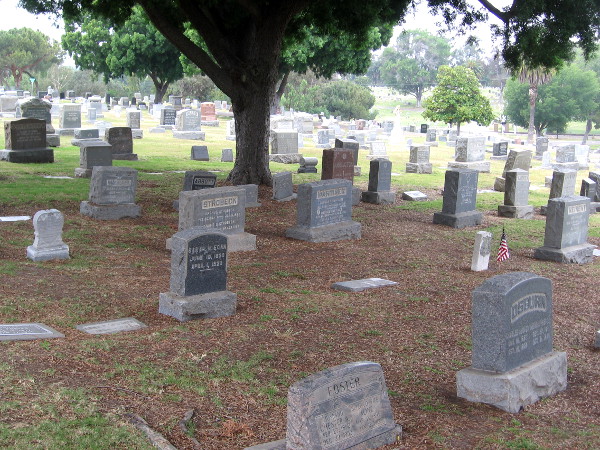
I happened upon a few notable names during a walk through Mount Hope Cemetery. I had over an hour before the Memorial Day ceremony would begin, so I just wandered down winding roads through fields of headstones.
Many early residents of San Diego are buried at Mount Hope. Among the jumble of names engraved in stone, one can find some of the city’s most influential citizens. Like Alonzo Horton, Kate Sessions, George Marston, Thomas Whaley, Ah Quin, E. S. Babcock, and Robert Waterman. (Not to mention the famous author Raymond Chandler!) But I didn’t have a map. So I just meandered through the hilly cemetery and gazed.
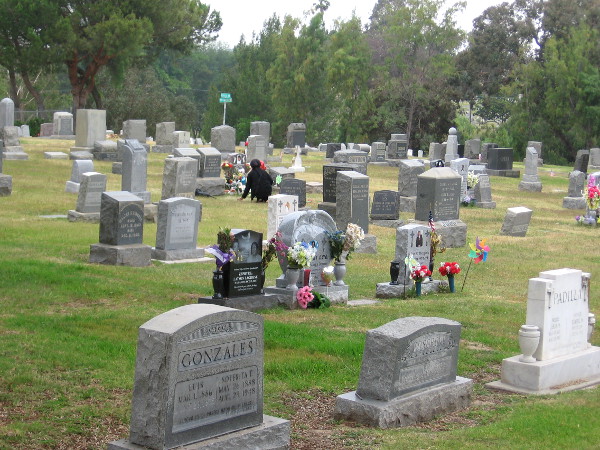
Thousands of gravestones.
Every life different. Every life important in its own way.
Some of the dates indicate long lives, others short. But isn’t it true that all of our lives are short?
Someone asked about my visit–if the cemetery felt spooky. No. The best word that comes to mind is bittersweet. A feeling of both joy and sadness.
Every single name has become a part of San Diego history.
(I did a bit of research for this blog post. Hopefully I got the following information right. If not, leave a comment!)
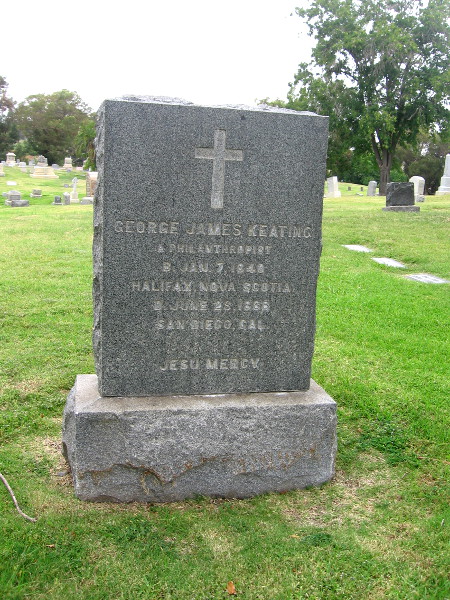
George James Keating
George James Keating was born in Halifax, Nova Scotia in 1840. He and his wife Fannie, owners of a farming company, eventually moved to San Diego in 1886. Keating made large investments in the city’s booming real estate market. After his death, Fannie oversaw the construction of the five-story Keating Building, which I blogged about several years ago here.
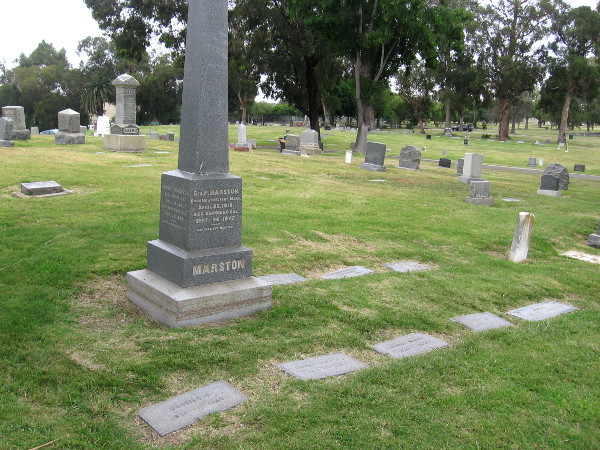
Graves of the Marston family.George White Marston
George W. Marston was often referred to as “San Diego’s First Citizen.”
A successful department store owner, he founded the San Diego Historical Society and was a prominent advocate for and planner of Balboa Park. He was a critical force in the establishment of the San Diego Public Library System and Presidio Park.
You can see a sculpture of George Marston on my blog here, and the garden of his beautiful, historic house, which is located in the northwest corner of Balboa Park, here.
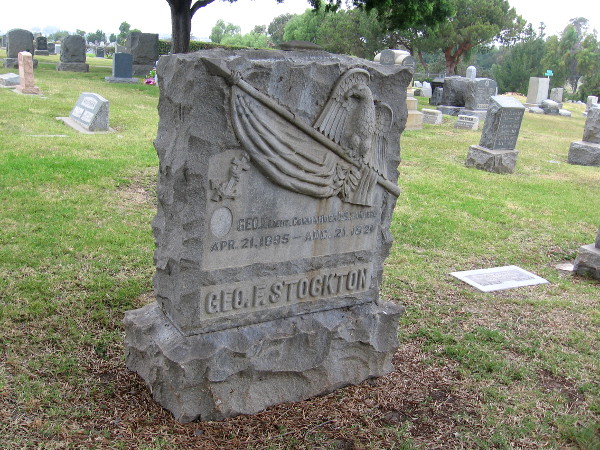
George F. Stockton
Lt. George F. Stockton’s tragic drowning on August 21, 1921 prompted the creation of the City of Oceanside Lifeguard Service. He was pulled out to sea by a rip current. He had served on the World War I ship USS San Diego.
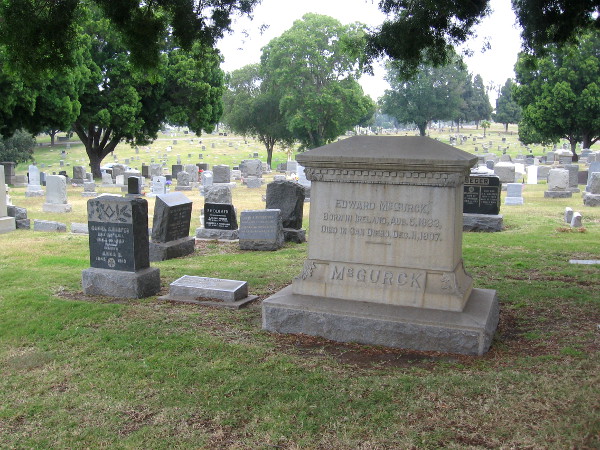
Edward McGurck
Col. Edward McGurck was born in Ireland. He purchased property on the northeast corner of Fifth Avenue and Market Street in 1876 for $50. In 1887 he developed the McGurck Block Building at that location.
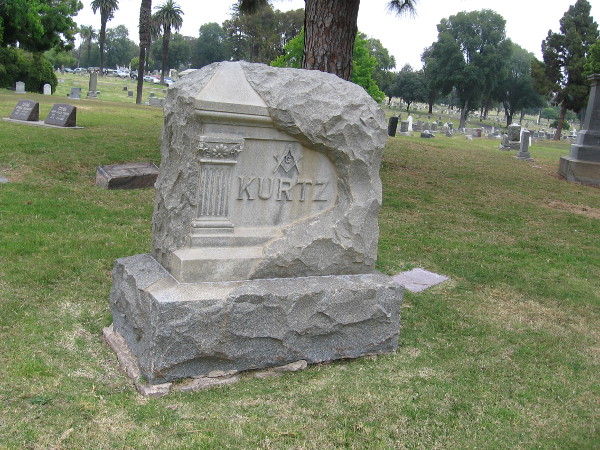
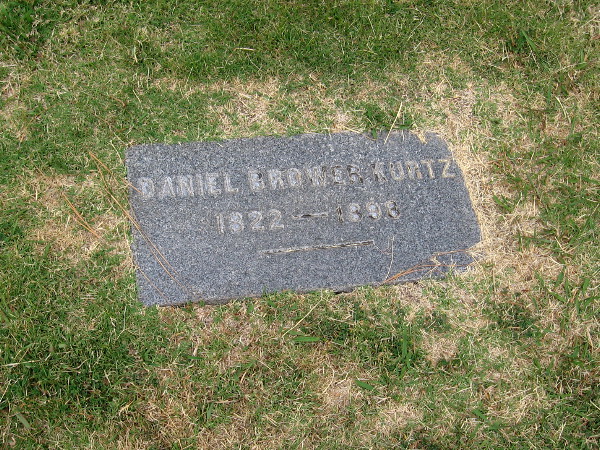
Monument to the Kurtz family.Daniel Brower Kurtz
Daniel Brower Kurtz has an important San Diego street named after him. He arrived in San Diego in 1850 and was elected second city mayor in 1851. He also served as a state senator, county judge, and assemblyman.
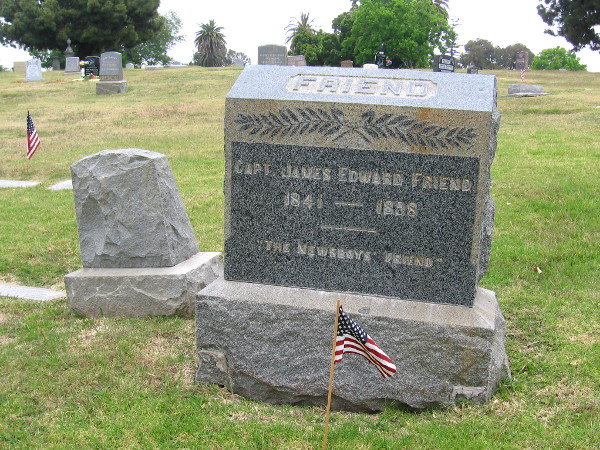
James Edward Friend
James Edward Friend was an enterprising reporter and newspaper publisher in the early days of San Diego.
Seeing his name brought a smile to my face. He was a good friend of Bum, San Diego’s Town Dog, and figured prominently in the wonderful book titled The Dog That Belonged to No One. Any young person living in San Diego should read this short book. It’s quite enjoyable, full of history and good humor.
Captain James Friend was also known as a friend and benefactor to San Diego’s newsboys.
You can read about Bum, San Diego’s lovable Town Dog, and see his sculpture in my blog post here.
…
I live in downtown San Diego and love to walk around with my camera! You can follow Cool San Diego Sights via Facebook or Twitter!
You can easily explore Cool San Diego Sights by using the search box on my blog’s sidebar. Or click a tag! There are thousands upon thousands of photos for you to share and enjoy!
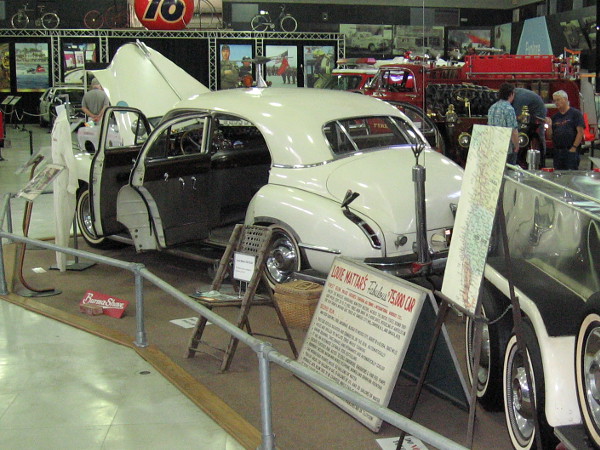
This 1947 Cadillac was transformed into an amazing cross-country contraption! The unusual car drove from San Diego to New York and back–without stopping!
Have you heard of the amazing car that features a toilet, washing machine, ironing board, shower, and even a kitchen sink?
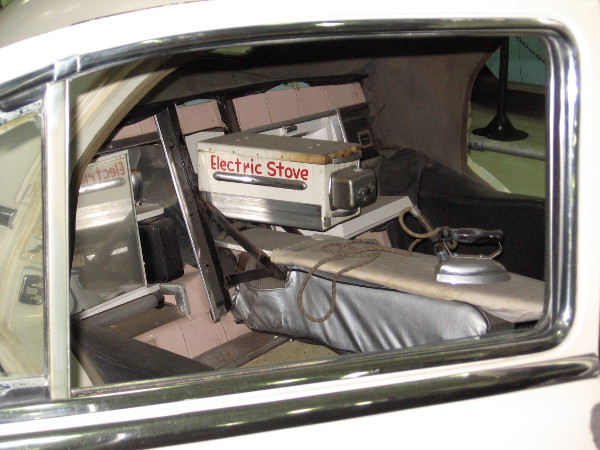
Did you know this amazing car also has an electric stove, refrigerator, medicine cabinet, and drinking fountain?
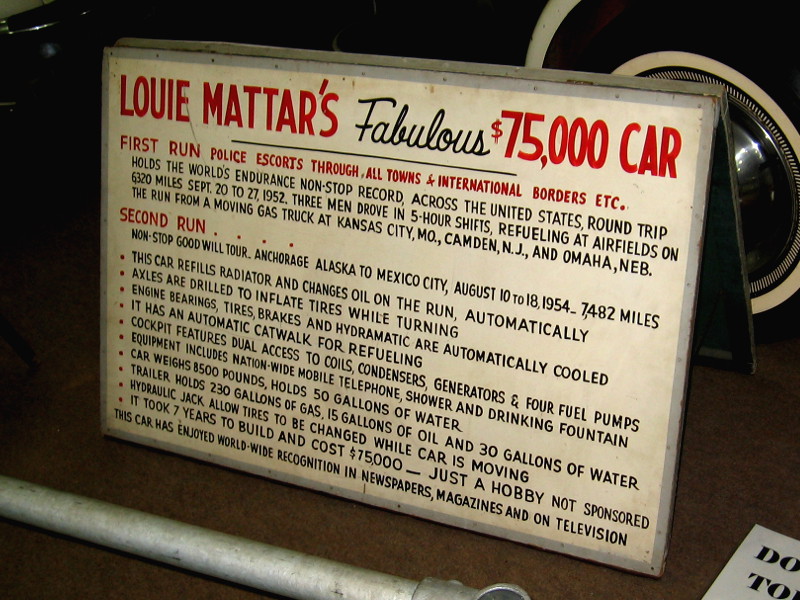
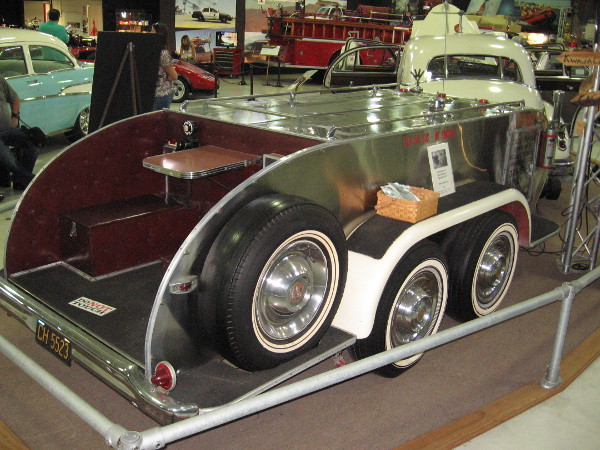
And that this particular car holds the cross-country driving endurance record? In 1952, three men drove the car 6,320 miles nonstop–literally without stopping–from San Diego to New York and back, accompanied by a police escort the entire way! They refueled from a moving gas truck!
What else can this amazing car do?
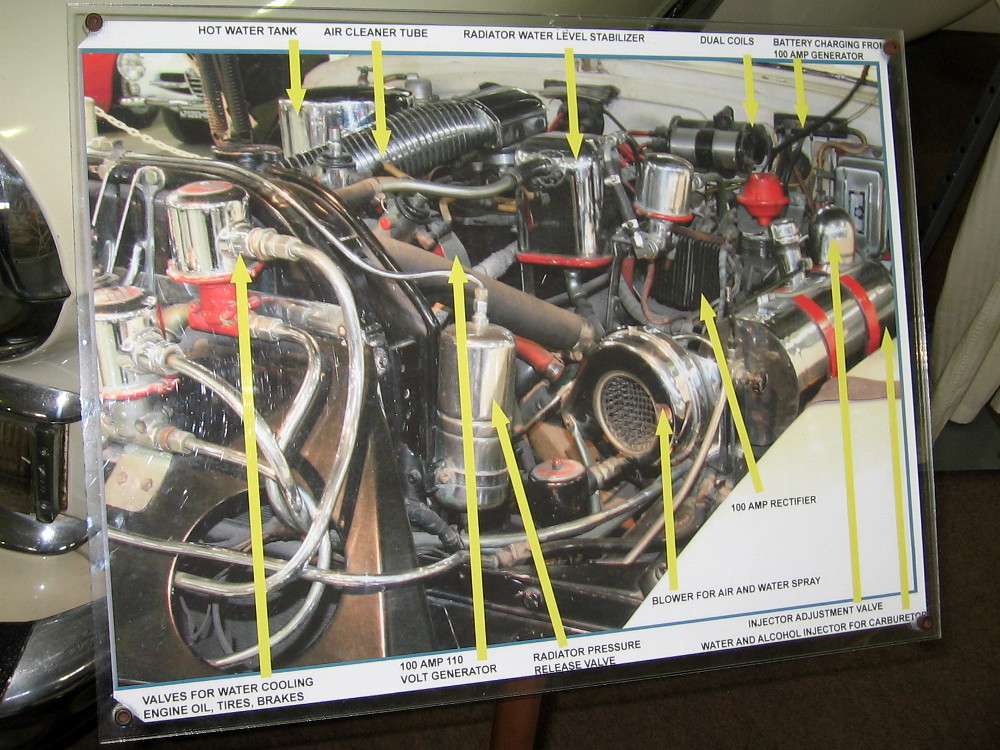
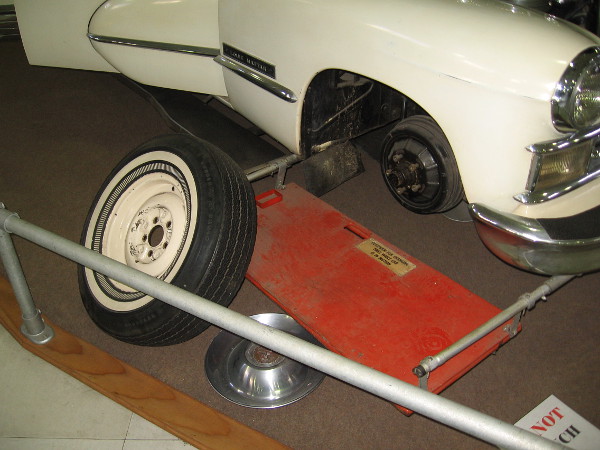
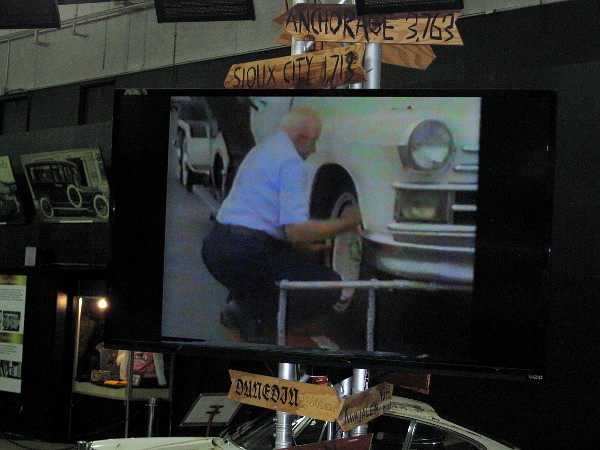
The car automatically changes oil and refills the radiator. Movable platforms and hydraulic jacks allow any tire to be changed without stopping the car. And repairs to the engine can be made while driving. The hood, when open, has transparent panels that allow the driver to see the road!
A shower and drinking fountain! Why not? The shower is on the right running board and the drinking fountain can be accessed at a rear taillight! The back seat conveniently contains several household necessities, including a refrigerator, stove, small washing machine, chemical toilet, and, of course . . . that kitchen sink!
Never heard of this crazy car? It once was quite famous, widely appearing on television, in magazines and newspapers. But that was decades ago.
Today you can see Louie Mattar’s extensively modified 1947 Cadillac for yourself. It’s on display at the San Diego Automotive Museum in Balboa Park!
Here’s to the dreamers. And here’s to the actual doers. It took Louie Mattar five years to transform his amazing dream into reality!
Louie Mattar’s car was driven 6320 miles without ever stopping. Refueling, tire changes and even engine repairs are done on the run!You can see the most amazing car in the world at the San Diego Automotive Museum in Balboa Park!The car tows a trailer, which stores gasoline, water and oil. At the rear is an outdoor dining area complete with dial telephone!When the car was in motion, a passenger in swim trunks could stand on a narrow platform outside and take a shower!A look at the complicated dashboard. I’m reminded of an airplane’s cockpit.Diagram shows the many gauges and switches available to the driver. A bar and hookah are within easy reach of the front seat passenger!Another look inside the amazing car through the front passenger side door.A crazy tangle under the hood. It looks like a dish of spaghetti!Diagram shows numerous modifications and additions to the 1947 Cadillac’s original stock engine.A passenger in the moving car could stand on this projecting platform to change a tire! The axles are drilled, so tires can be inflated while they are turning!A video in the San Diego Automotive Museum shows the amazing car in action!How many cars in the world are equipped with an electric stove and ironing board?
…
I live in downtown San Diego and love to walk around with my camera! You can follow Cool San Diego Sights via Facebook or Twitter!
You can easily explore Cool San Diego Sights by using the search box on my blog’s sidebar. Or click a tag! There are thousands upon thousands of fun photos for you to share and enjoy!
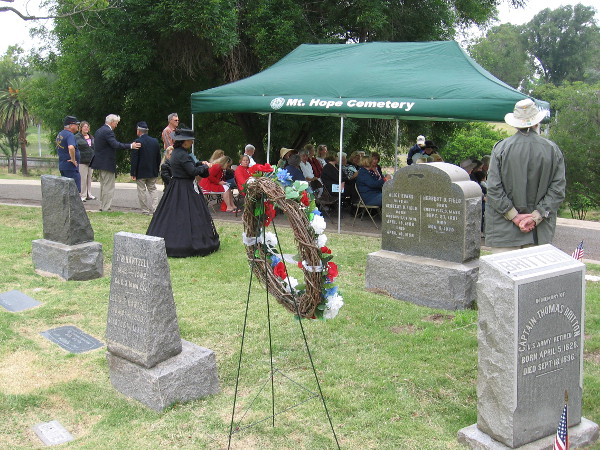
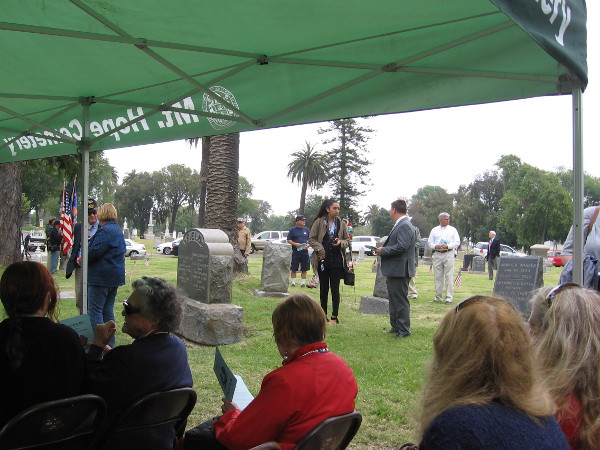
San Diegans gather for a Memorial Day ceremony at Mount Hope Cemetery.
The second Memorial Day event that I attended yesterday took place at Mount Hope Cemetery. I had never before visited this history-filled municipal cemetery.
Mount Hope is where many of San Diego’s early residents are buried. It’s hilly and sprawling, with thousands of scattered headstones and monuments. Thousands of names are eternally engraved.
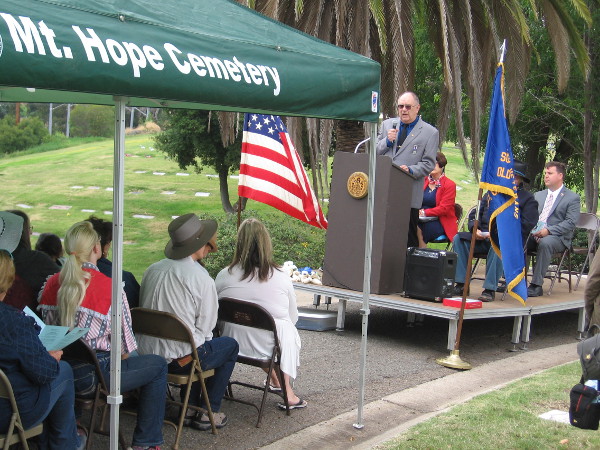
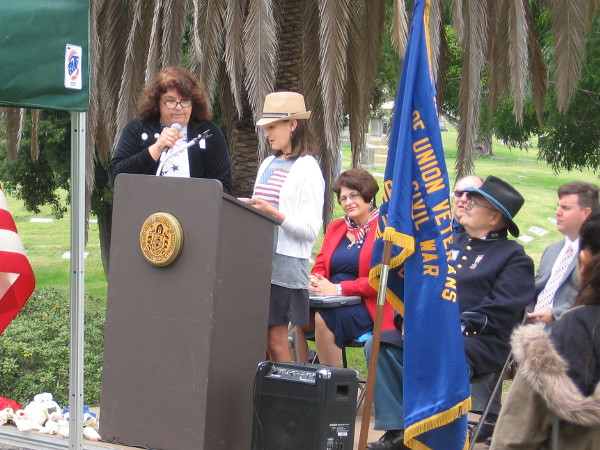
The dignified Memorial Day ceremony was held atop GAR Hill. I learned that G.A.R. stands for Grand Army of the Republic. The fraternal organization is composed of veterans who fought on the Union side during the American Civil War. On grassy GAR Hill rest many Union soldiers who fought bravely.
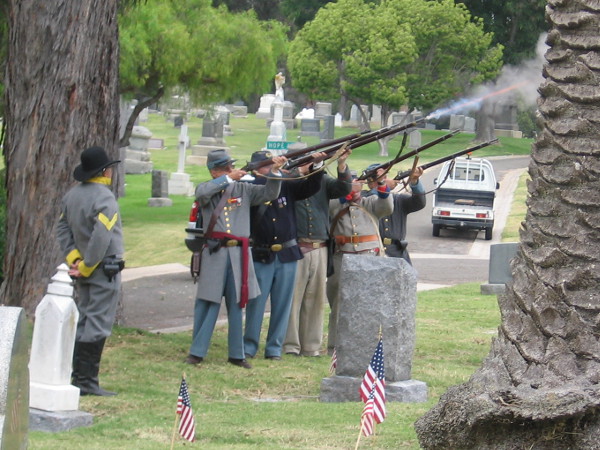
The annual event, I also learned, is organized by both the Sons and Daughters of Union Veterans, and Sons and Daughters of the Confederacy. Over a thousand Civil War veterans are buried at Mount Hope Cemetery.
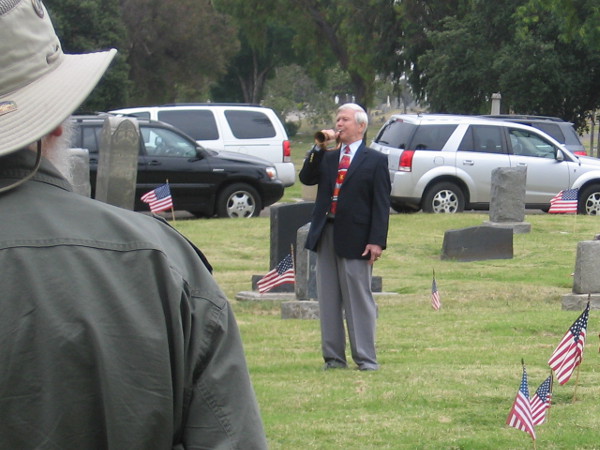
Yesterday afternoon I stood and watched a moving tribute to those who had fought in the war that ended slavery. Some of the participants wore Civil War uniforms and period dress. History came to life with eloquent words of remembrance, and the singing of The Battle Hymn of the Republic and Amazing Grace. Several speakers recalled the men who fought, their sacrifices, and the triumph of liberty. Our current times were also addressed. It is necessary to stay firm in the defense of freedom.
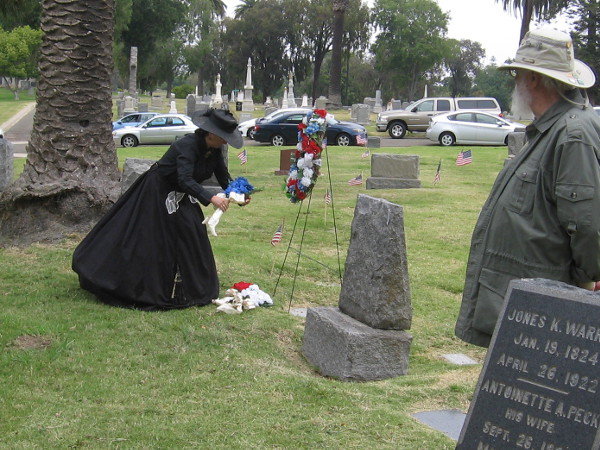
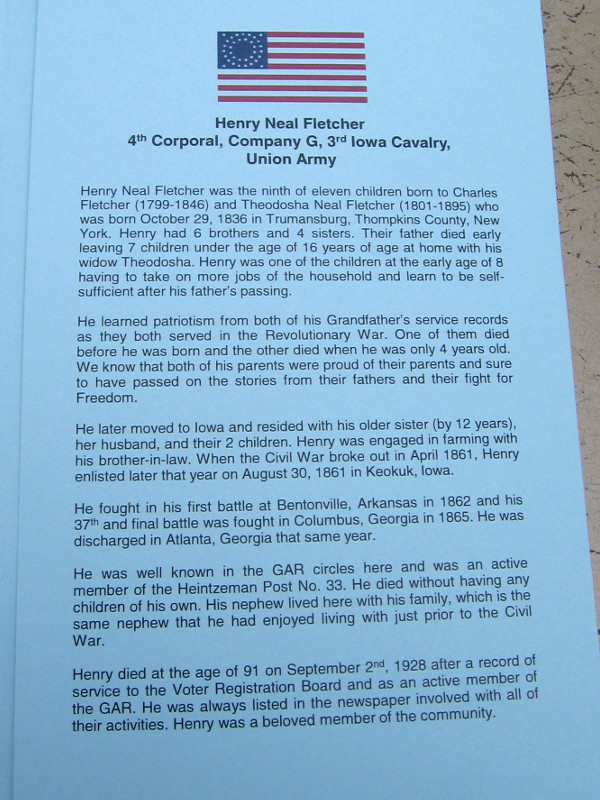
This year the ceremony honored one Civil War soldier in particular: Henry Neal Fletcher, 4th Corporal, Company G, 3rd Iowa Cavalry. He fought for the Union. Both of his grandfathers fought in the Revolutionary War. From them he learned how freedom was won. He died a beloved member of the San Diego community.
The idea for Memorial Day is thought to have come from the tradition of decorating soldier’s graves in late spring with flowers, a custom that predated the Civil War. During the war, with so many dead, the practice became very common. The tradition finally became formalized, and known as Decoration Day.
On this Memorial Day, atop a quiet hill, I saw many flags decorating the graves of soldiers.
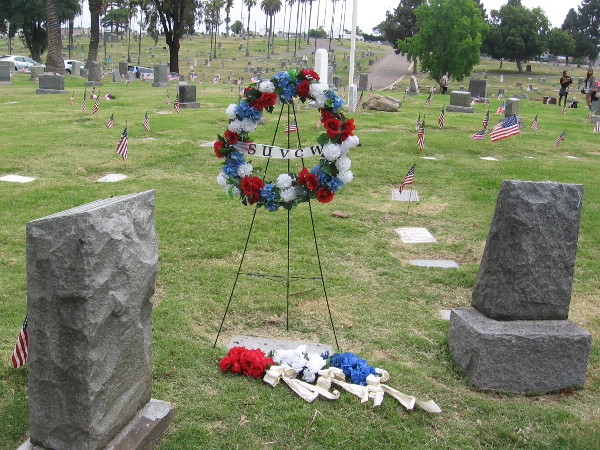
While some prepare for the ceremony, others read the nearby gravestones and wonder at the sacrifices made long ago.American flags decorate the graves of fallen soldiers.This grave marker design was established by the Grand Army of the Republic. Here lies a Union soldier. Sergeant Francis E. Webster, 10th U.S. Infantry.Some participants wore Civil War uniforms–both blue and gray. They posted the flags and provided a musket salute.This restored mortar dates from the American Civil War. It stands on GAR Hill at Mount Hope Cemetery.One of many old gravestones. Here lies P.W. Bradbury, a scout under General Fremont.Honor guards perform March On The Colors.Thoughtful speeches follow an Invocation and Pledge of Allegiance.Holly Kirkman of John Muir School reads her inspirational, award-winning essay “What Memorial Day Means to Me.”Dedication Of Flowers. Red, then white, then blue flowers are placed by the grave marker of Henry Neal Fletcher.The program included a short biography of Henry Neal Fletcher, who fought in the Union Army. (Click image to read.)Musket Salute.Taps.Remembering the fallen on Memorial Day, at Mount Hope Cemetery in San Diego.
…
I live in downtown San Diego and love to walk around with my camera! You can follow Cool San Diego Sights via Facebook or Twitter!
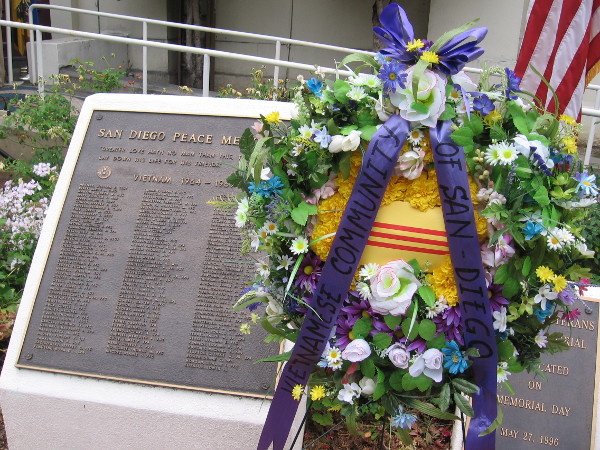
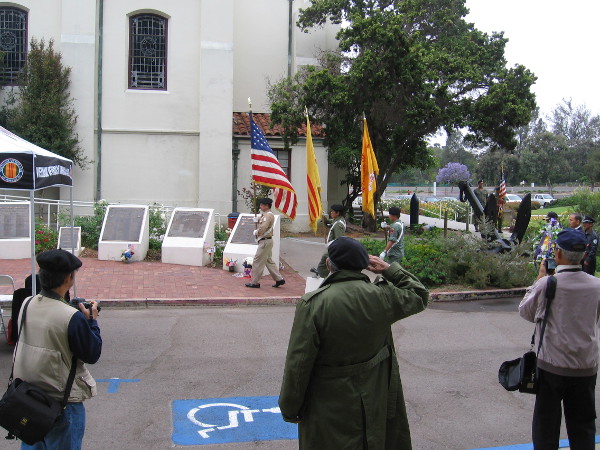
Vietnamese Community of San Diego wreath stands by Peace Memorial.
Today I attended two Memorial Day ceremonies.
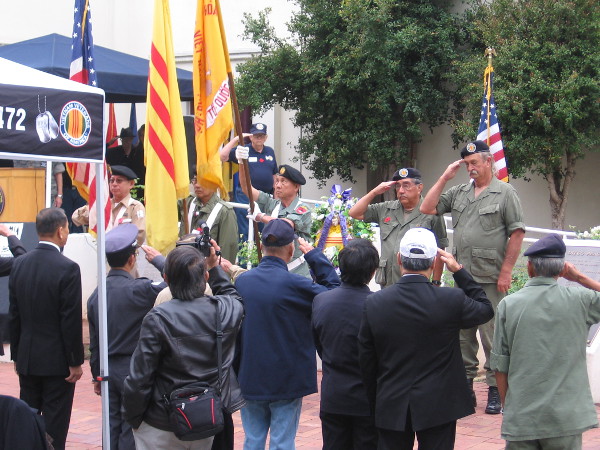
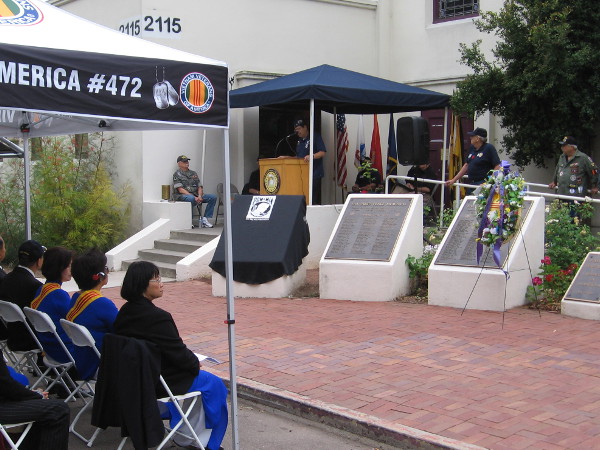
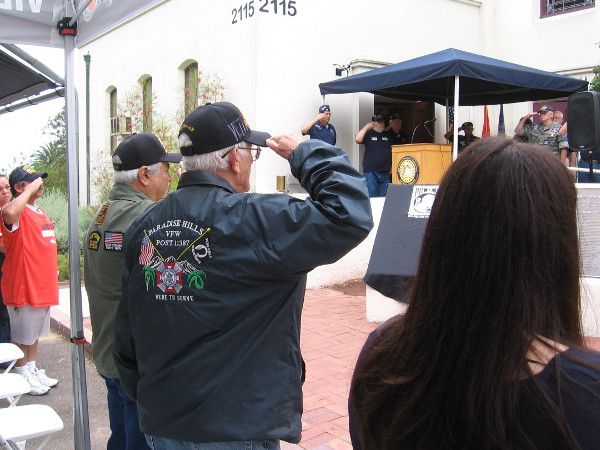
First, in the morning, I walked up to Balboa Park. There I joined others in remembering those who’d lost their lives in a terrible war. An emotional ceremony was held at the San Diego Vietnam Peace Memorial, which is located right next to The Veterans Museum. Special attention was given during this event to those who died serving their country during the Vietnam War.
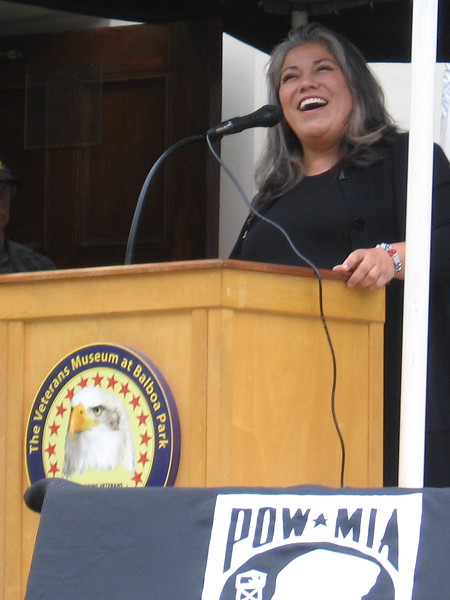
Please forgive me. When I arrived I was in a quiet mood. I stood off to the side mostly, took no notes, snapped a photo now and then. I mostly just absorbed the speeches, the music, the flowers, so many names on bronze plaques and proud salutes by veterans in attendance. I felt a bit shy and didn’t grab a program. I regret that now. I forget the names of the speakers, and the lady who sang so beautifully.
Members of Vietnam Veterans of America, 472, were present. Before the morning program commenced, they had read names of the fallen–the Calling of the Names.
Many from the local Vietnamese community also attended. Some among them had fought in the war.
I remember that the keynote speech was very clear and very powerful. It was about service, and courage, and liberty, and friendship, and pain, and sacrifice, and history. It acknowledged the horror of war. Those who fought would rather have been at home in peace. All gave some; some gave all.
Those whose names are eternally engraved on the Peace Memorial have earned the gratitude of many.
Here are a few photos.
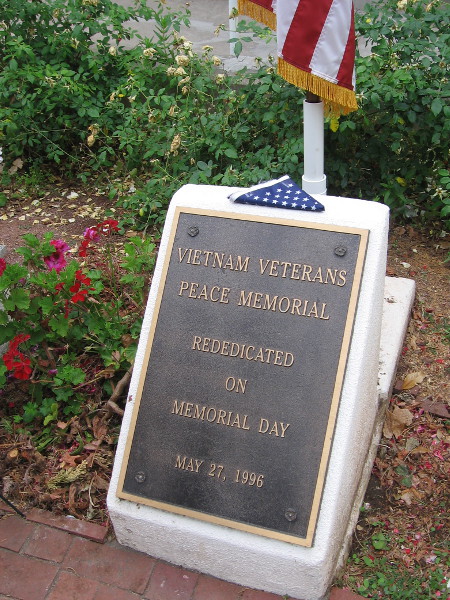
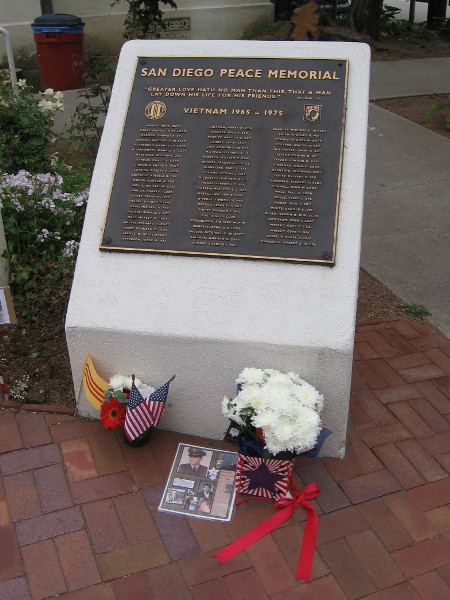
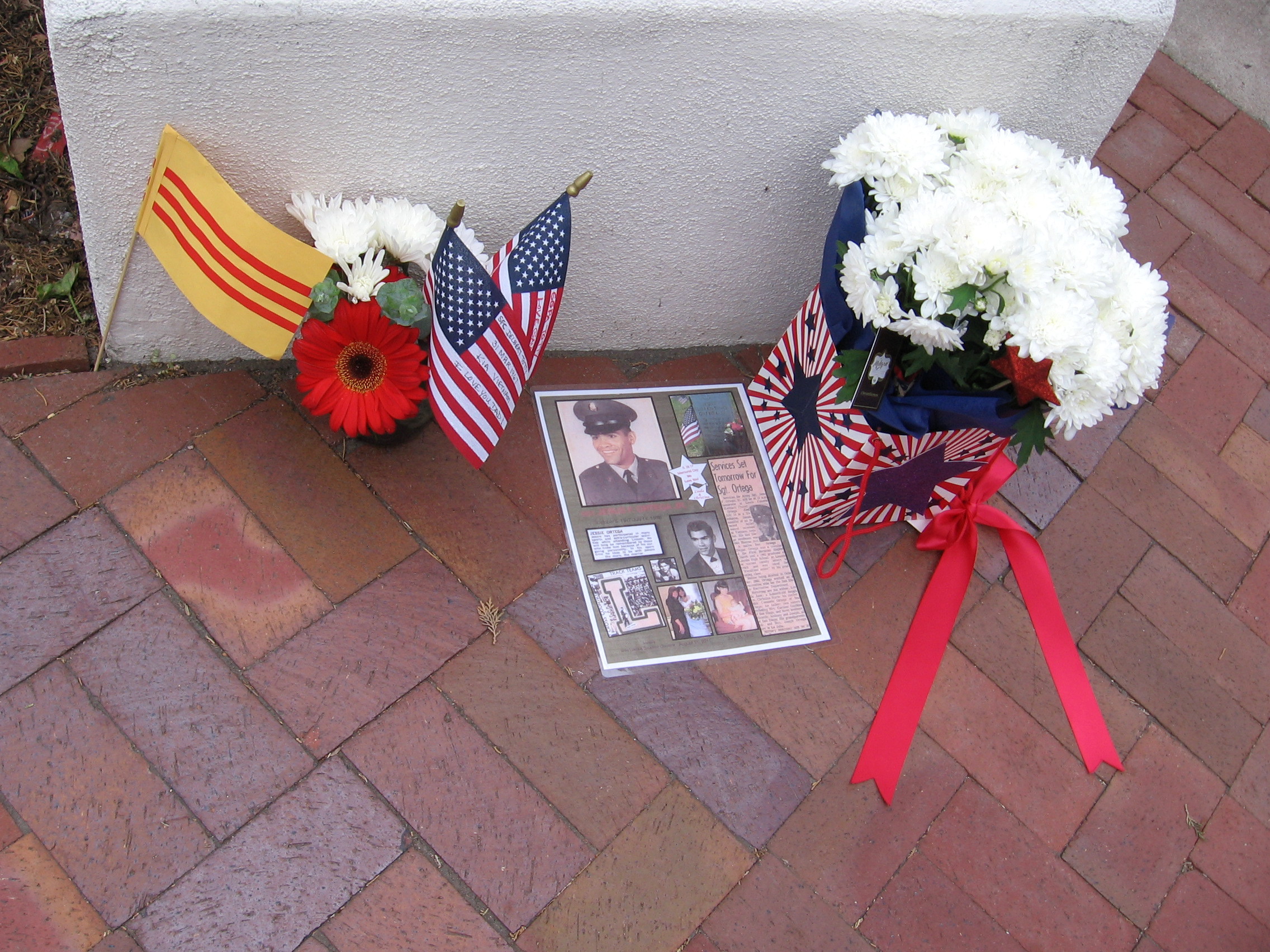
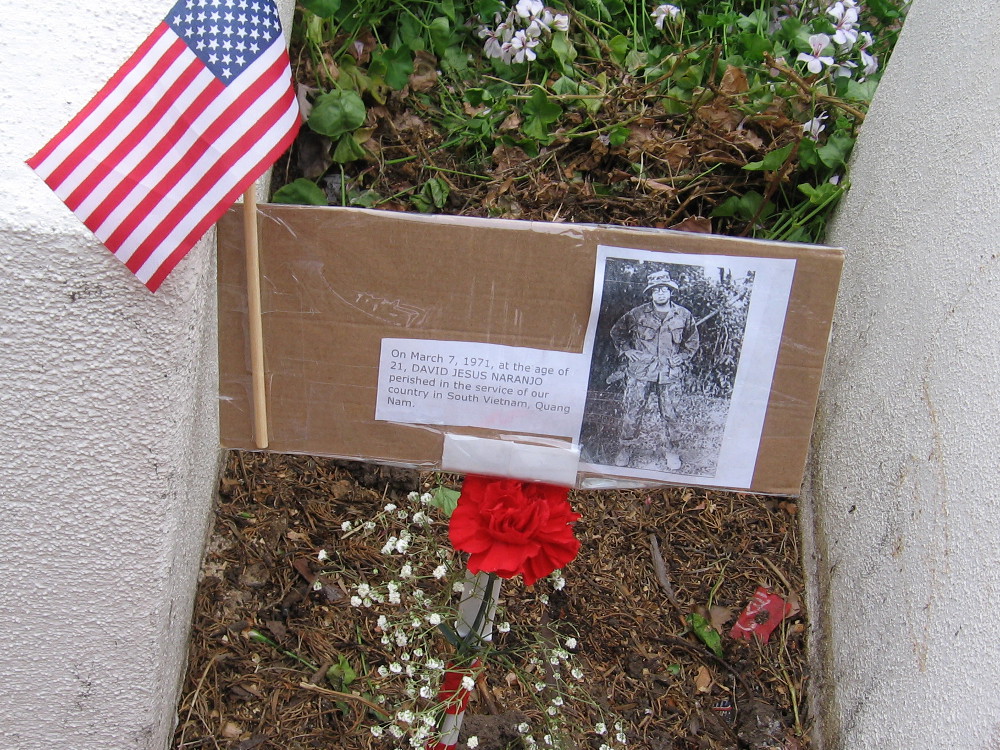
Flags are readied.Salutes.A dignified program commences. The Vietnam War is remembered, and those who fell during the conflict are honored.Speeches recall the harsh realities of war, and the democratic ideals many fought to defend.All quietly listen, some remember.Joyful, triumphant singing. America the Beautiful.Love for country. Young and old salute.A folded flag above the plaque marking the Vietnam Veterans Peace Memorial in Balboa Park.Names of San Diegans who were killed or designated missing in action during the Vietnam War fill half a dozen bronze plaques.Flags, flowers and photos. A loved family member.On March 7, 1971, at the age of 21, David Jesus Naranjo perished in the service of our country in South Vietnam, Quang Nam.
…
I live in downtown San Diego and love to walk around with my camera! You can follow Cool San Diego Sights via Facebook or Twitter!






























 Cool San Diego Sights!