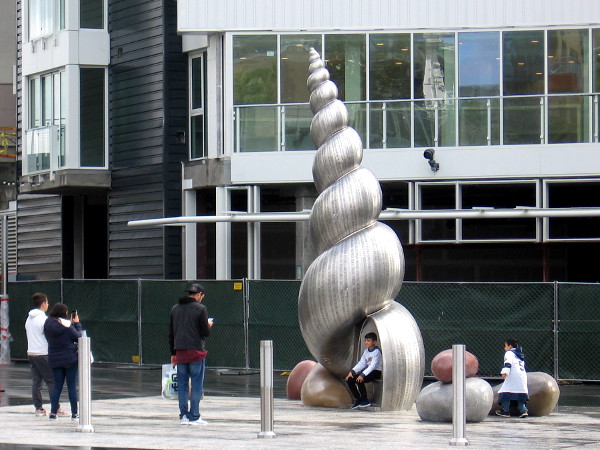
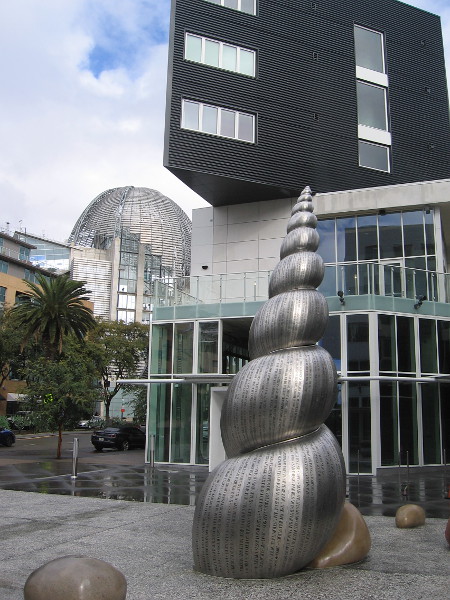
A child of San Diego sits in an enormous sculpture of a living seashell, a Growing Home.
Some amazing public art was installed in East Village about a week ago!
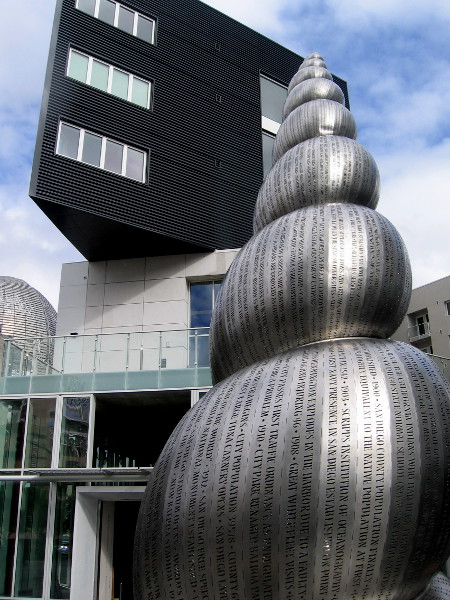
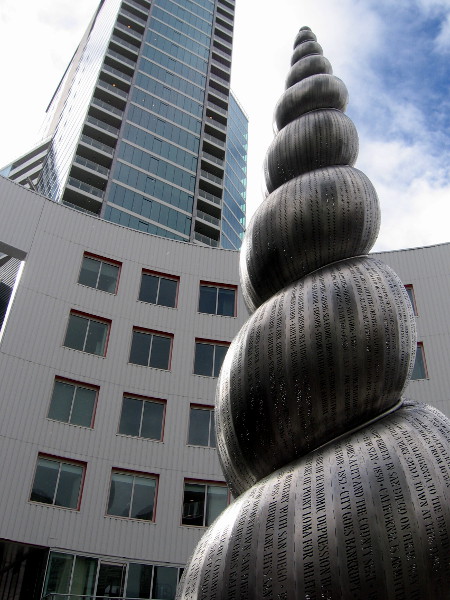
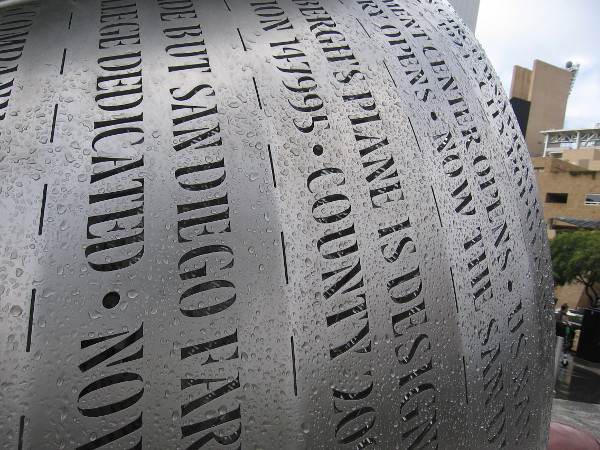
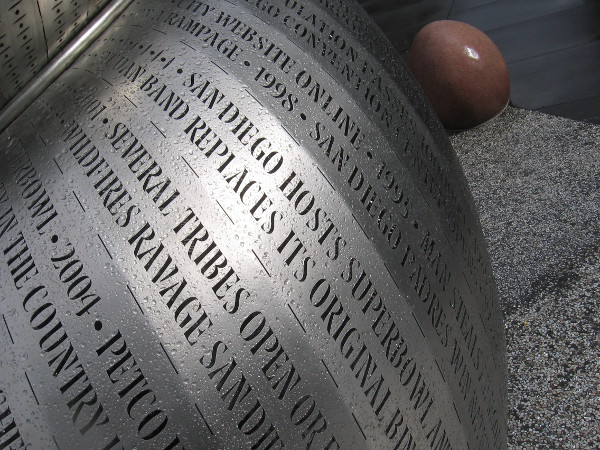
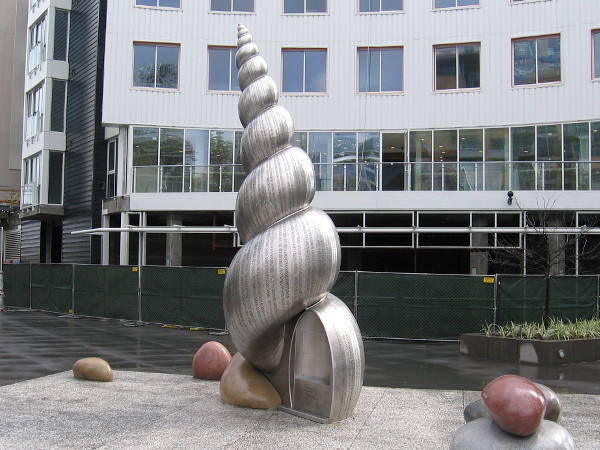
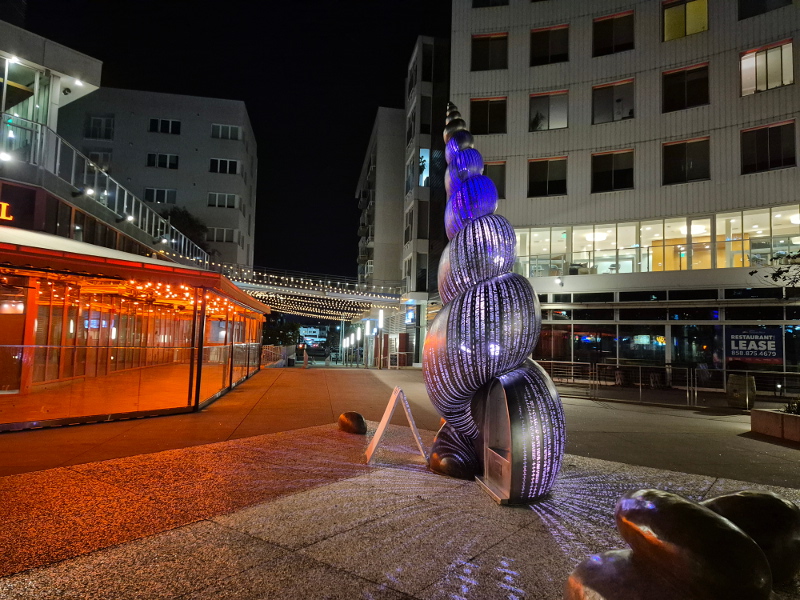
Growing Home is an enormous stainless steel sculpture of a sea snail’s living shell. Laser-cut into the upward coiling shell are notable events from San Diego’s history. The sculpture can be found on the east side of Park Boulevard near Petco Park and the downtown Central Library. It stands at the new Park 12 – The Collection luxury apartments.
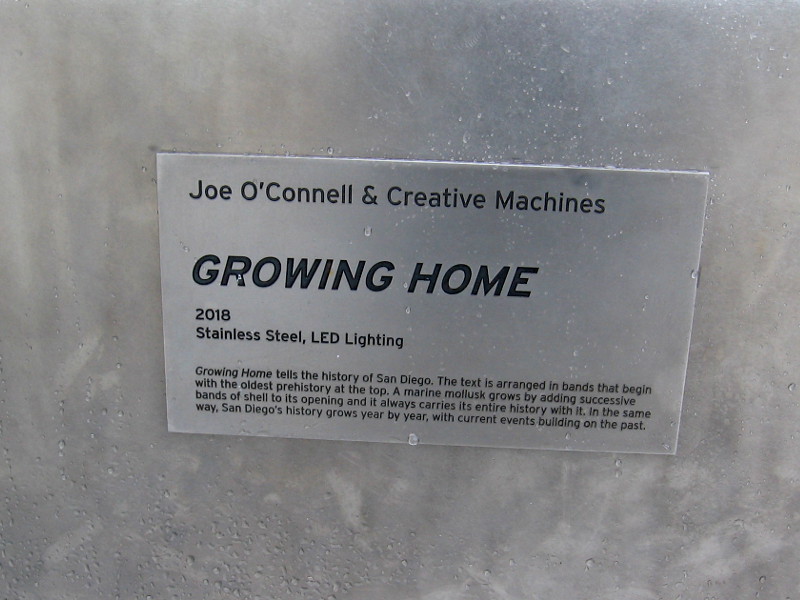
Growing Home was created by Joe O’Connell and Creative Machines and is made of stainless steel with LED lighting. Creative Machines produces interactive and monumental art for clients around the world. They are based in Tucson, Arizona.
The shell represents the ever-growing city in which we live. As history has progressed, the shell has grown and grown.
I took these photos after a rain shower, so the large wet stones arranged next to the seashell seem to lie glistening on a beach!
Growing Home rises as public art at Park 12 – The Collection, new luxury apartments in San Diego’s East Village.Growing Home, 2018, Joe O’Connell and Creative Machines, stainless steel and LED lighting. A city’s history grows like the shell of a marine mollusk.History becomes an essential part of an ever-growing city–a city that is home to many.Growing Home features headlines of events that have shaped San Diego history.The lattice dome of the San Diego Central Library rises beyond Park Boulevard.Moments in history are preserved as words written in the growing shell.San Diego history become part of our lives. The city is our home.The coiled, elongated shell of a sea snail. Sit inside on a small bench for a fun photo!Growing Home rises at Park 12 – The Collection, in San Diego’s East Village.
UPDATE!
Seven years later(!) I took a photo at night…
…
I live in downtown San Diego and love to walk around with my camera! You can follow Cool San Diego Sights via Facebook or Twitter!
You can easily explore Cool San Diego Sights by using the search box on my blog’s sidebar. Or click a tag! There are thousands upon thousands of photos for you to enjoy!
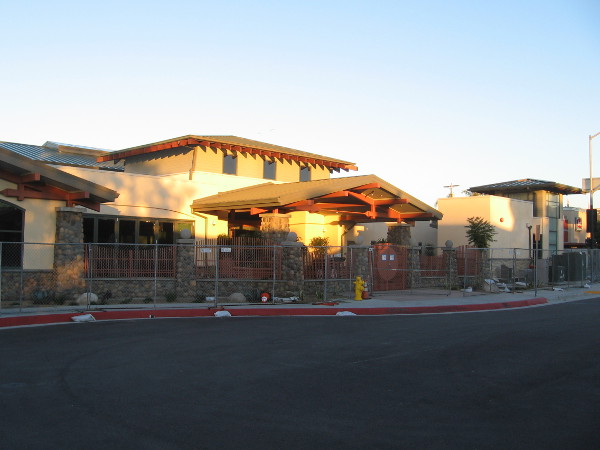
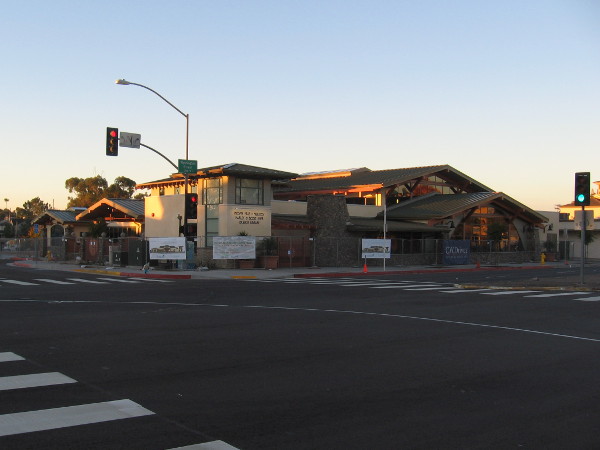
Early sunshine on the handsome new Mission Hills-Hillcrest Branch Library. It will be completed and open to the public in a little over two weeks!
If you live in Mission Hills or Hillcrest, or simply love the San Diego Public Library , you have the opportunity to take part in a unique and historic ceremony!
On February 26, 2019, members of the community will participate in a unique “Book Pass” to celebrate the grand opening of the new Mission Hills-Hillcrest/Harley & Bessie Knox Branch Library!
Sign up for this event and you’ll be one of many who line the West Washington Street sidewalk symbolically passing a few books from the old branch library to the beautiful, much larger new building!
According to the website: “We will line streets from the current library to the new location to pass along select books as part of a grand opening party. Each book passer will receive a free scarf and other promotional items to commemorate this historic day. The Book Pass will take place from 9 to 10 am. Registration, Donuts, & Coffee, will be at 8:00 am at the new library, 215 West Washington Street.”
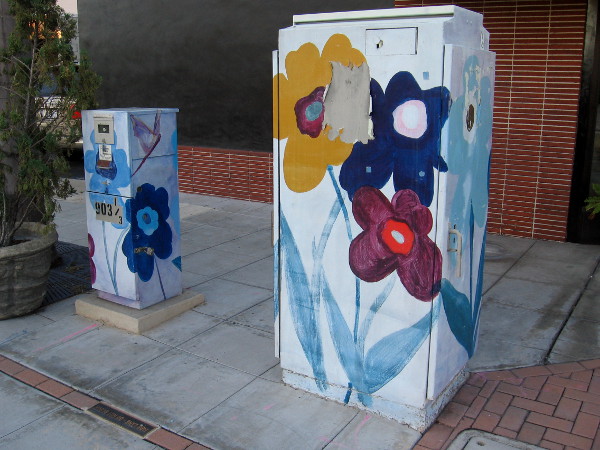
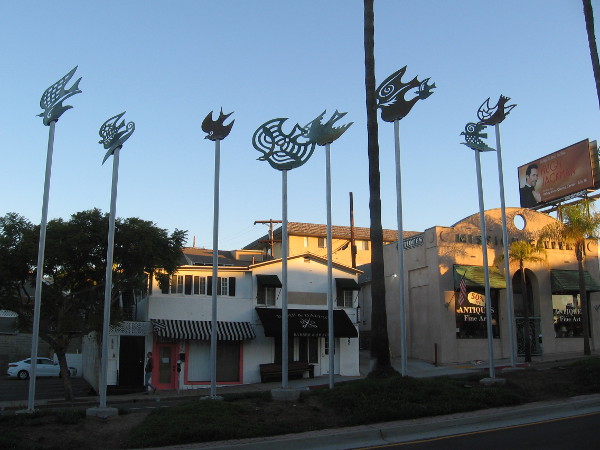
Photo of the old, now permanently closed Mission Hills Branch Public Library.Fall was followed by the dead of winter at the closed old library building. But spring always follows winter…The ceremonial “Book Pass” from the old branch library to the new branch library will carry books east along the West Washington Street sidewalk past these flowers.Books used for the symbolic opening ceremony, as they are carried to the new branch library, will pass by this flock of birds!And the books will finally arrive at their much larger, very beautiful new home.The new Mission Hills-Hillcrest/Harley & Bessie Knox Branch Library opens on January 26, 2019! You can participate in its opening and become part of history!
…
I live in downtown San Diego and love to walk around with my camera! You can follow Cool San Diego Sights via Facebook or Twitter!
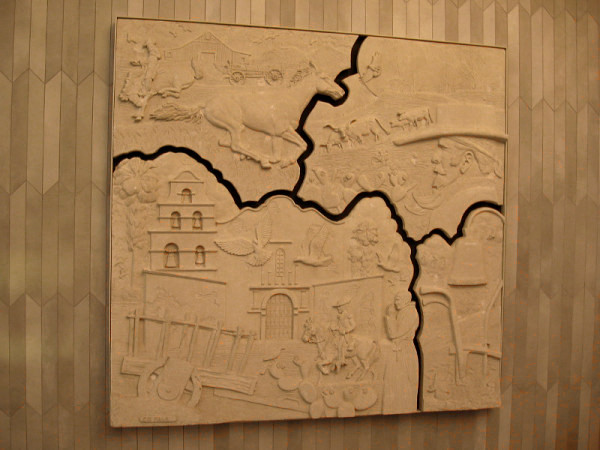
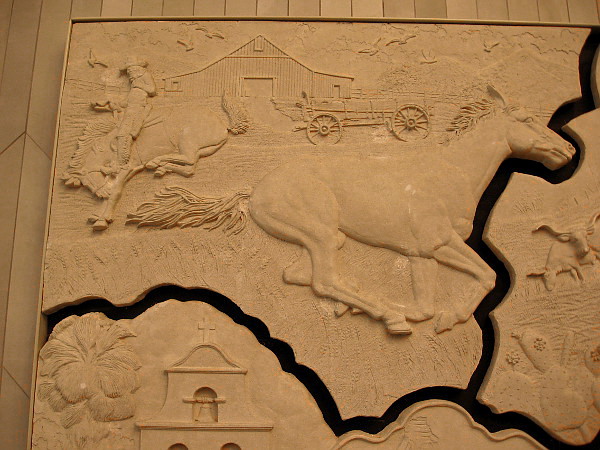
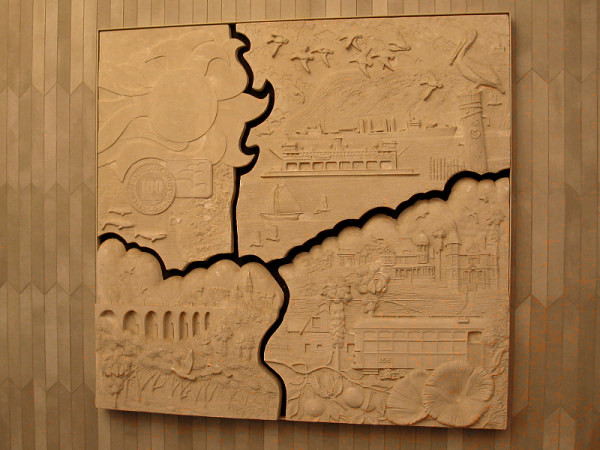
Two bas-relief sand sculpture panels by renowned artist Charles R. Faust in the lobby of 2550 Fifth Avenue in San Diego.
Two amazing works of art can be viewed inside an office building in Bankers Hill. The small murals–sculptures made of sand that appear as bas-relief panels–decorate a wall in the lobby of 5th & Laurel, the building best known as the home of Mister A’s restaurant.
Commissioned by the now defunct Great American First Savings Bank to celebrate their Centennial in 1985, the two panels depict important San Diego landmarks and aspects of local history.
The two sand cast panels were created by Charles R. Faust (1922 – 2000), a prolific artist who for many years worked as the director of architectural design at the San Diego Zoo. His invention of moated animal enclosures in the mid-1950’s revolutionized how the world famous zoo and their Wild Animal Park near Escondido exhibited animals. He also designed the San Diego Zoo’s huge walk-in aviary–the first of its kind in the world.
After retiring from that job, Charles opened Faust Sand Casting in Ocean Beach with his son. Over his creative lifetime the art of Charles Faust would also include fine drawings, watercolors and oil paintings, many of which depicted life in the Old West, a theme he loved.
His sand sculpture murals have added beauty to many locations around San Diego. I photographed a couple of these murals in the past for Cool San Diego Sights, without realizing at the time they were created by Charles Faust. You can spot them here and here!
Yesterday morning I spoke to a security guard in the lobby of 5th & Laurel, and he said these two “sand art” panels were moved from a suite in the building where there used to be a bank. I believe they were in Suite 120, once the home of Pacific Premier Bank, and the future home of an upscale Italian restaurant. But I’m not sure about the exact history of these particular panels. If you know anything more about them, please leave a comment!
(Please note these photographs make the panels seem more yellowish than they are in reality, due to the indoor lighting and my modest camera.)
The panel on the left. It depicts early San Diego history, including Mission San Diego de Alcalá and the ranchos.A friar outside the Spanish mission. The man on horseback might be a soldier from the old presidio.The bells of Mission San Diego de Alcalá, first Spanish mission in Alta California.Scenes from the Old West in San Diego, including an old wagon and a ride on a bucking horse.A rancher or vaquero, and a herd of cattle.The panel on the right. It depicts many later San Diego landmarks. Images include Balboa Park, a streetcar, Coronado ferry, naval ship, farm and Victorian houses.GREAT AMERICAN CENTENNIAL – 100 YEARS – 1885-1985A sailboat and birds share San Diego Bay with a pre-bridge Coronado ferry and an early 20th century Navy warship. In the upper right corner I spy a tiny Old Point Loma Lighthouse!I recognize the Cabrillo Bridge and the California Building and Tower of Balboa Park.I think I recognize the historic Long-Waterman House of Bankers Hill. The house to the right of it might be a south view of the Britt-Scripps House, but it appears a bit different.
…
This blog now features thousands of photos around San Diego! Are you curious? There’s lots of cool stuff to check out!
Here’s the Cool San Diego Sights main page, where you can read the most current blog posts. If you’re using a phone or small mobile device, click those three parallel lines up at the top–that opens up my website’s sidebar, where you’ll see the most popular posts, a search box, and more!
To enjoy future posts, you can also “like” Cool San Diego Sights on Facebook or follow me on Twitter.
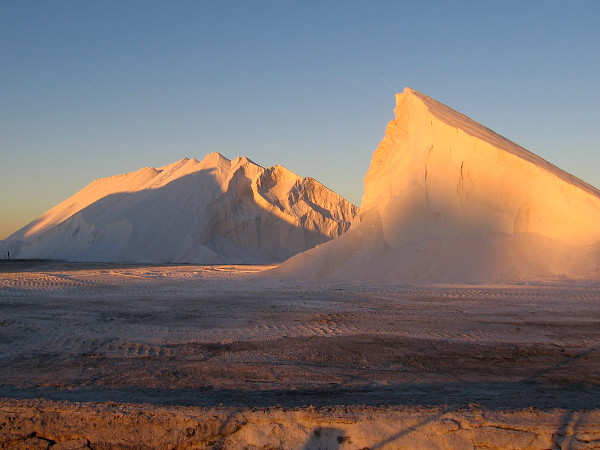
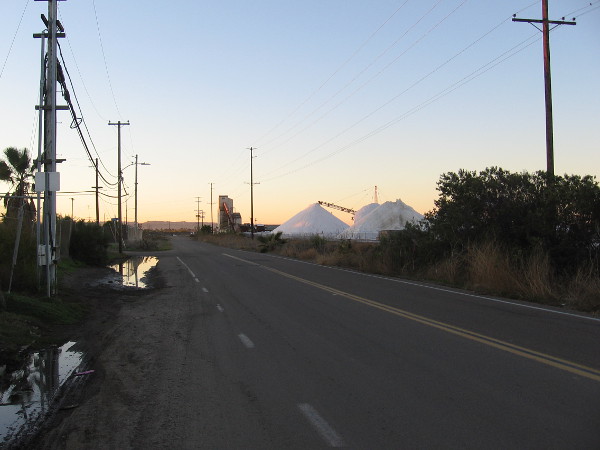
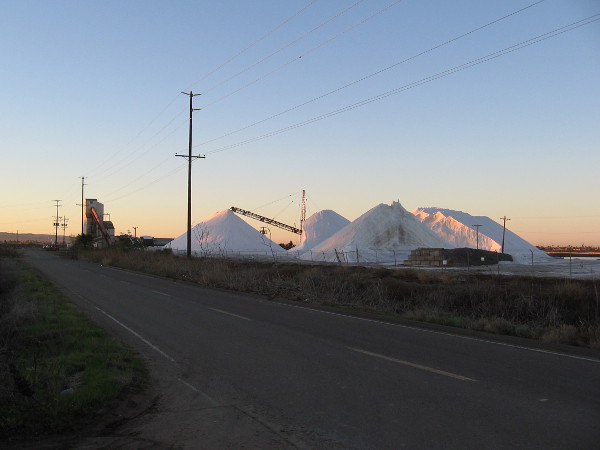
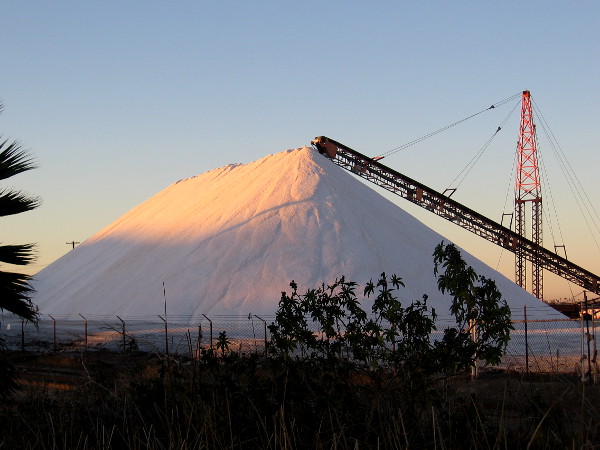
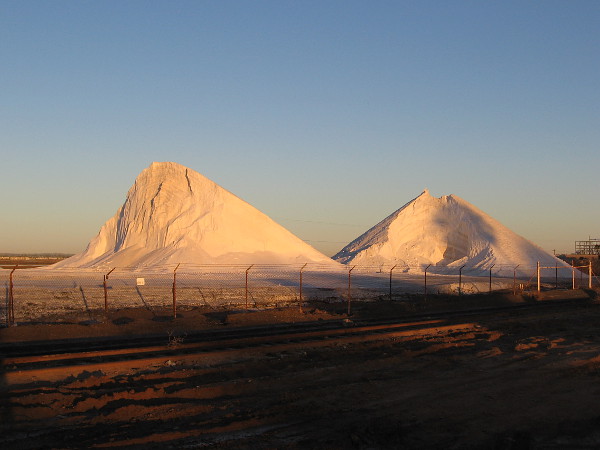
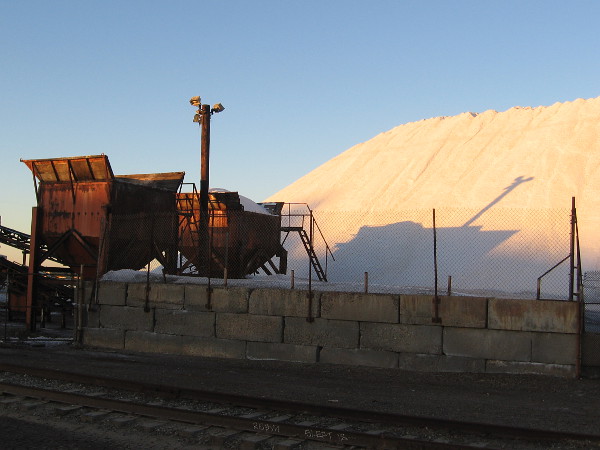
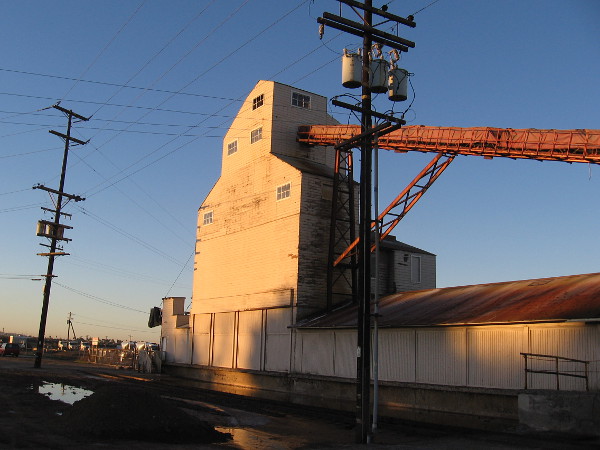
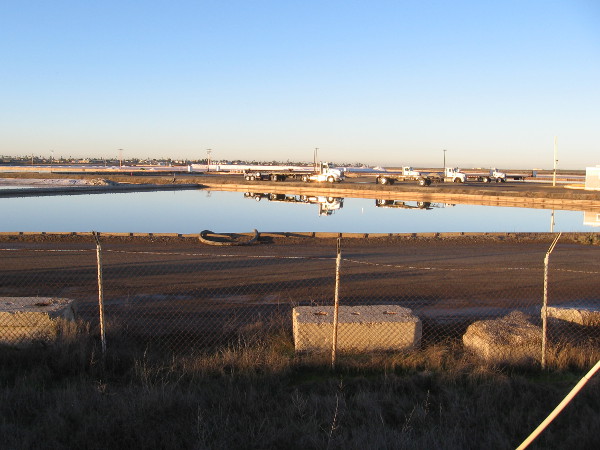
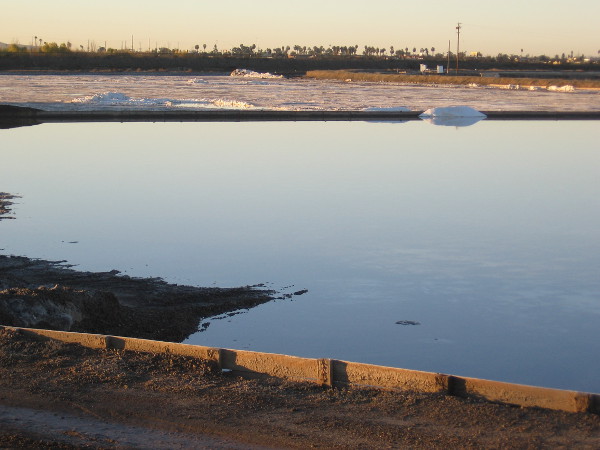
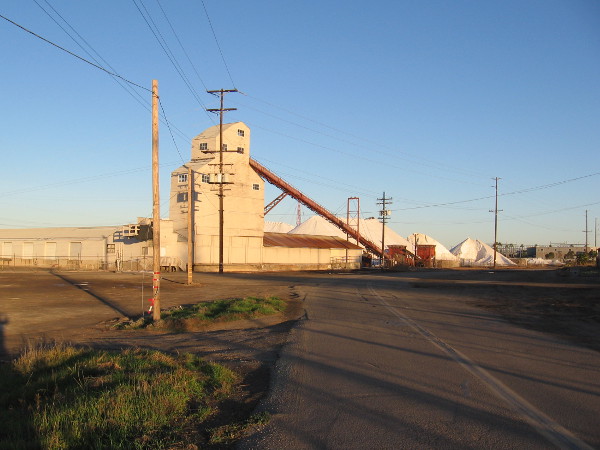
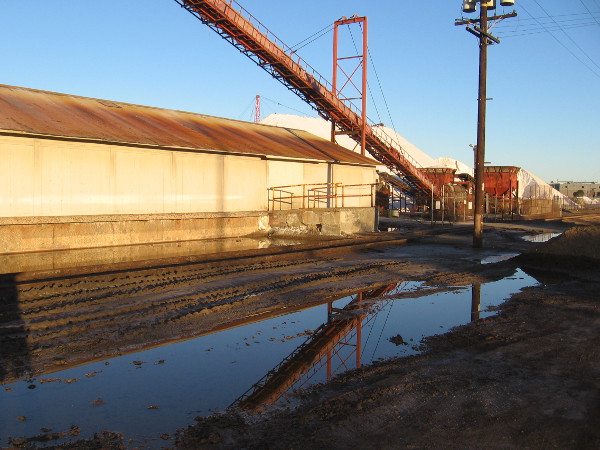
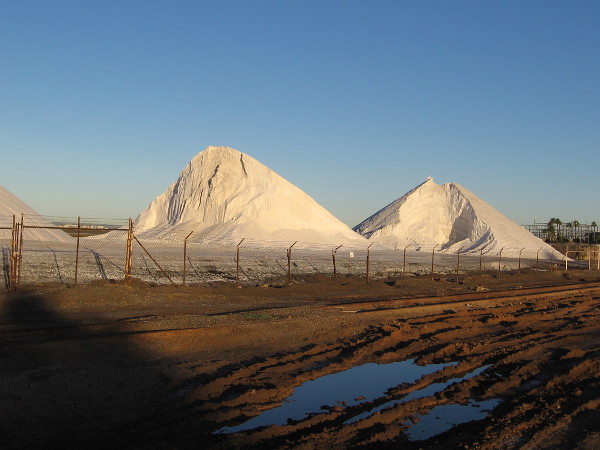
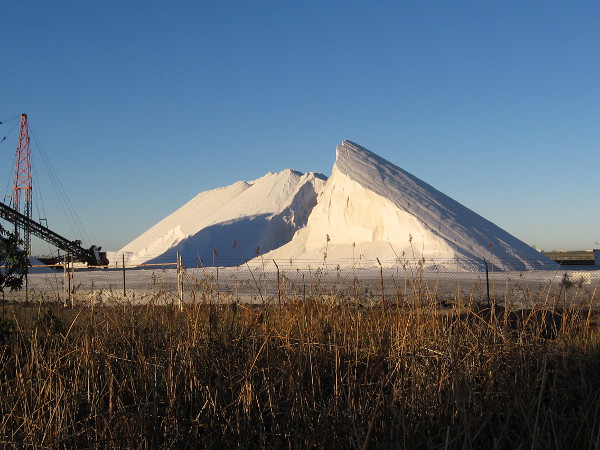
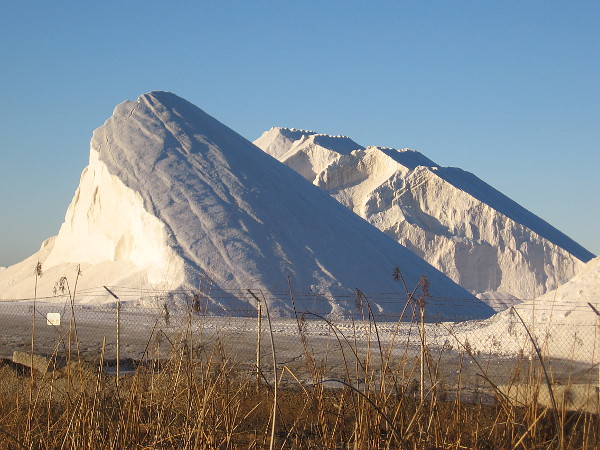
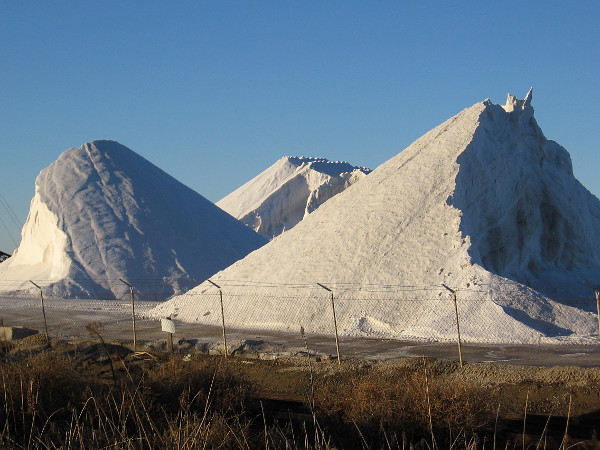
Sunrise at South Bay Salt Works is a spectacle that’s hard to describe. The sun’s first rays tint the dunelike mounds of pure white salt with a golden glow, creating an effect that is otherworldly and strangely beautiful.
Yesterday as the sun cleared the horizon I approached South Bay Salt Works to experience the magic. I took many photographs!
Wikipedia has an extensive article about South Bay Salt Works, which is located near Chula Vista, in the tiny Fruitdale section of San Diego’s Otay Mesa-Nestor community. I was interested to learn it’s the second longest running business in San Diego after the San Diego Union Tribune newspaper. The salt factory began as La Punta Salt Company sometime before 1872.
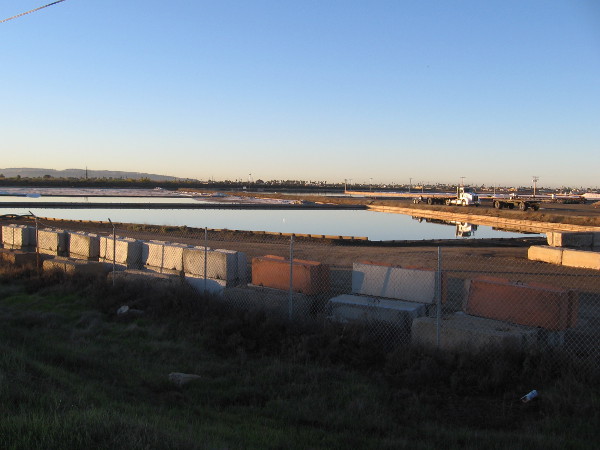
Large evaporation ponds at the southern end of San Diego Bay are the source of the salt, but the water comes directly from the Pacific Ocean. South Bay Salt Works produces about 75,000 tons of salt every year from ponds that cover over a thousand acres. For decades is was the sole supplier of salt for Southern California.
Many migrating birds are attracted to the evaporation ponds. The salinity of the water supports an abundance of brine flies and brine shrimp. Today, even as salt harvesting operations continue, the ponds are officially part of the San Diego Bay National Wildlife Refuge.
I was once told by someone who knows a little about South Bay Salt Works that the salt is shipped from San Diego to places with freezing winters, where it’s used on roads and highways to melt the ice.
Enjoy these photographs!
…
I live in downtown San Diego and love to walk around with my camera! You can follow Cool San Diego Sights via Facebook or Twitter!
You can easily explore Cool San Diego Sights by using the search box on my blog’s sidebar. Or click a tag! There are thousands upon thousands of photos for you to enjoy!
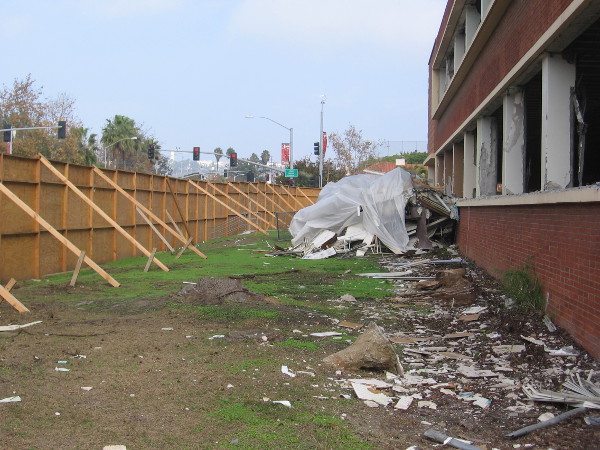
The former Caltrans building at Taylor Street and Juan Street is being torn down, to make room for the expansion of Old Town San Diego State Historic Park.
One of the most visited state parks in California will soon undergo a major expansion!
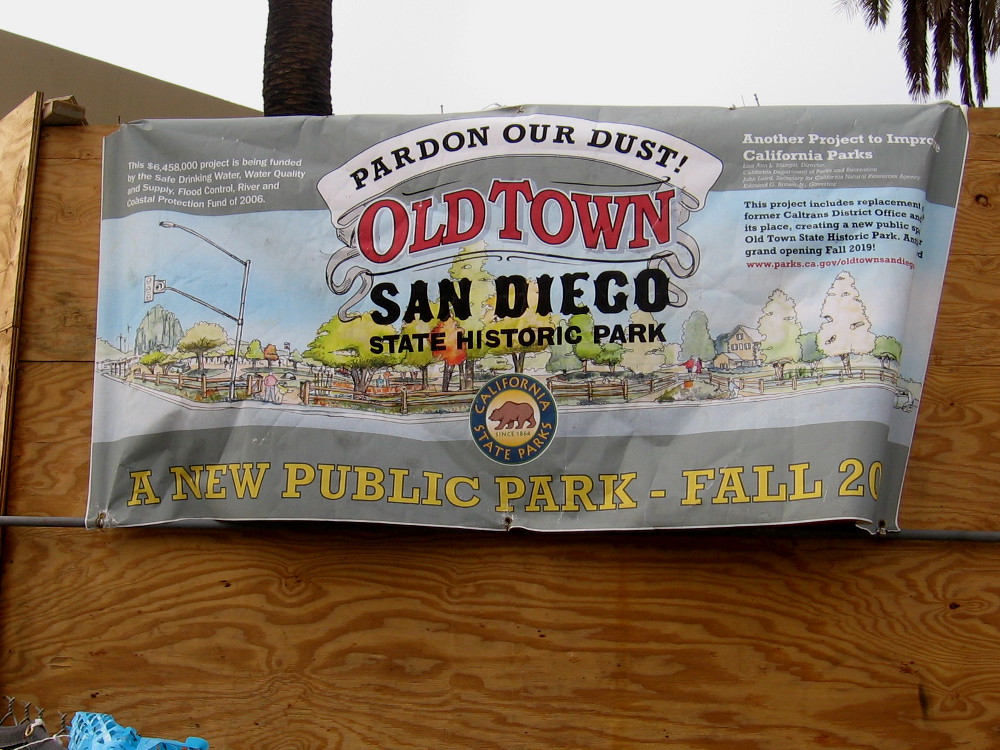
I noticed during a recent walk that the old Caltrans building, located at the corner of Taylor Street and Juan Street, is being demolished. A banner hanging at the construction site informs passersby that this land will be added to Old Town San Diego State Historic Park, and will open to the public in Fall 2019!
I spoke to a state park employee and learned that initially the expansion will feature trees and benches. There are plans to eventually have interpretive exhibits or structures in this area that help visitors understand what life was like for the Native American Kumeyaay people, who inhabited this area for thousands of years before European explorers arrived. According to this informative web page, California State Parks is now working with tribal members representing the Kumeyaay Nation to “interpret their culture and their connections to the San Diego River and Old Town San Diego”.
I can’t wait to see the completed expansion!
Banner at demolition site. The former Caltrans District Office will be replaced with a new outdoor public space for Old Town San Diego State Historic Park in Fall 2019.
…
I live in downtown San Diego and love to walk around with my camera! You can follow Cool San Diego Sights via Facebook or Twitter!
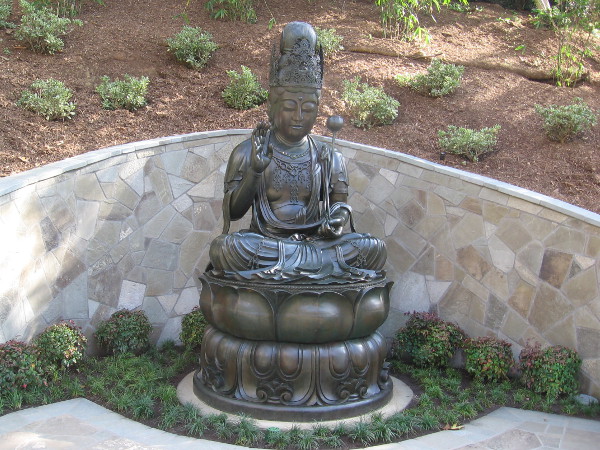
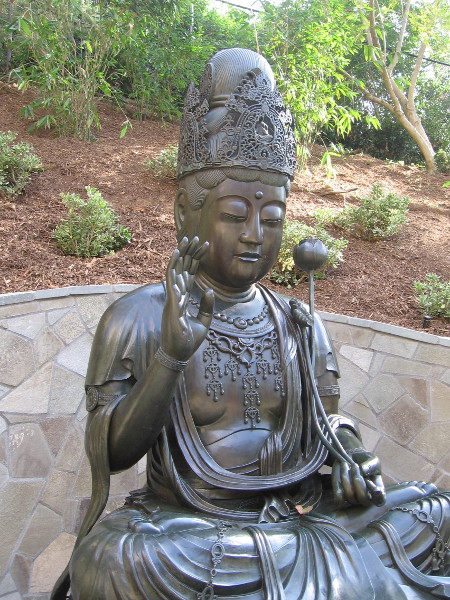
Visitors to the Japanese Friendship Garden gaze at Kannon Bosatsu, a nearly three century old 5750 pound bronze statue recently installed in the Lower Garden!
Several days ago an astonishing 5750 pound bronze statue, created in 1735 by Takumi Obata, was installed by crane at the Japanese Friendship Garden!
I must apologize, because up until now I have been referring to the new statue as a Great Buddha. After seeing the magnificent sculpture firsthand today, and reading more about it, I’ve learned that it’s actually a kannon statue, representing Kannon Bosatsu, a Buddhist goddess of mercy that is popular in Japan. The deity is called Guanyin in other parts of Asia, and has its origin in India in the 1st or 2nd century.
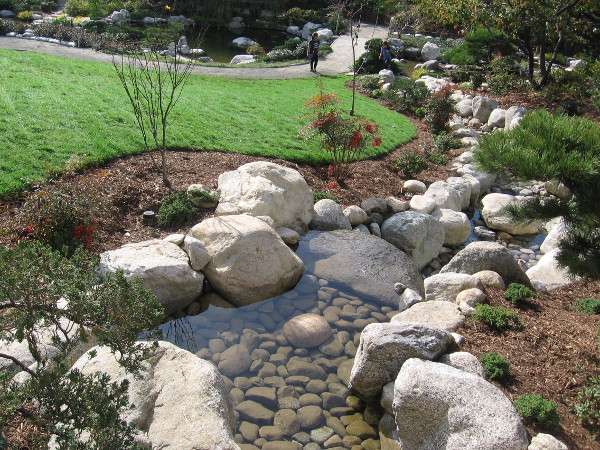
The amazing, nearly 300 year old cast bronze statue sits beside the Japanese Friendship Garden’s new stream in the Lower Garden, among peaceful trees that invite meditation.
Originally this Kannon Bosatsu was located at the Middlegate Japanese Garden in Pass Christian, Mississippi. When Hurricane Katrina destroyed that garden, the damaged statue was acquired by Mr. and Mrs. Gabrych, who later donated it to San Diego’s Japanese Friendship Garden in Balboa Park.
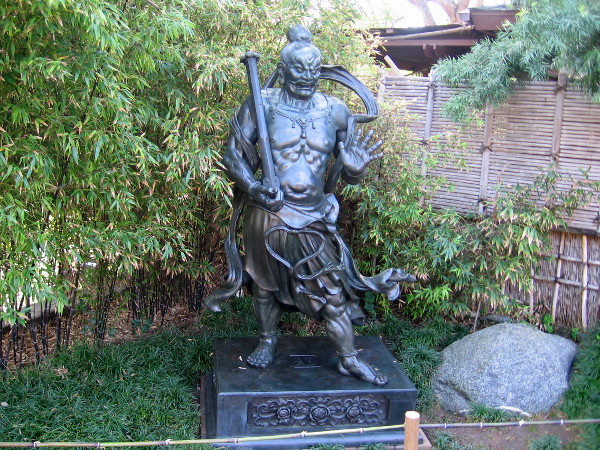
A second statue that was donated to JFG also was installed several days ago. The large guardian deity stands in the Upper Garden, opposite the bonsai collection. I’m told that less is known about the exact history of this particular sculpture. I believe it represents Kongorikishi, one of the two Nio guardians of Buddha who stand at the entrance of many Buddhist temples.
Enjoy these photos, then head over to the Japanese Friendship Garden in Balboa Park for the full experience!
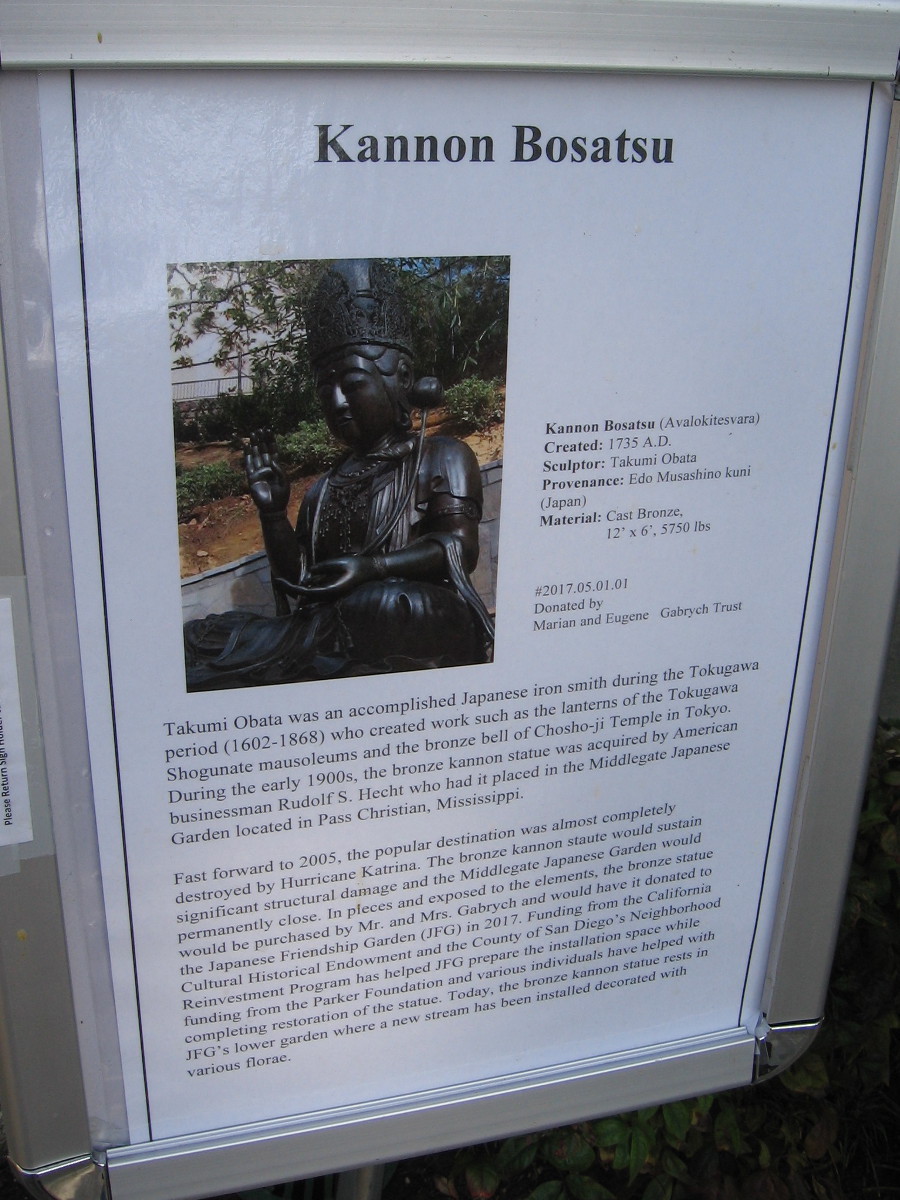
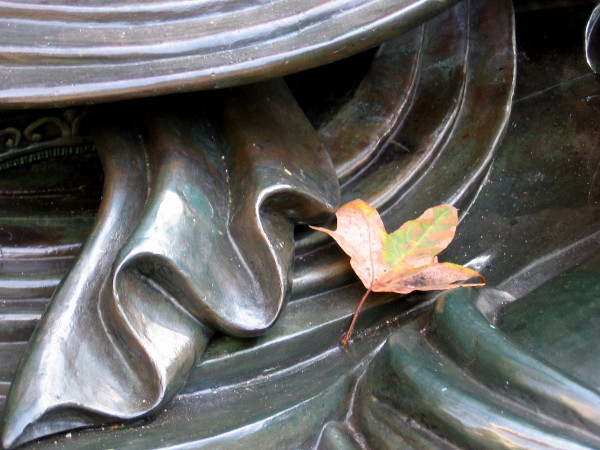
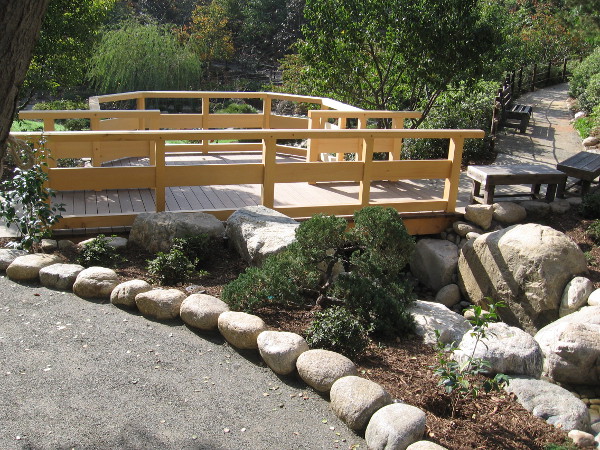
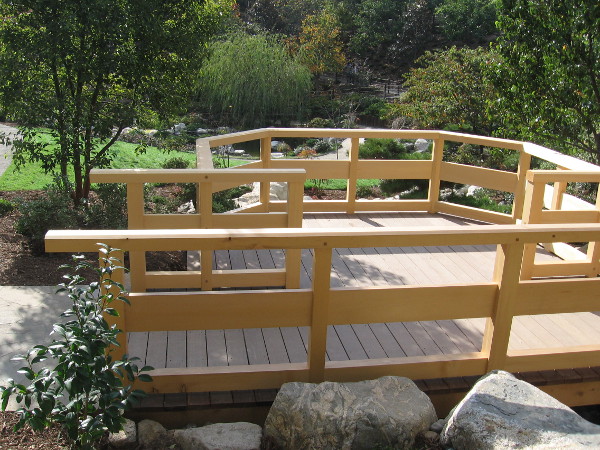
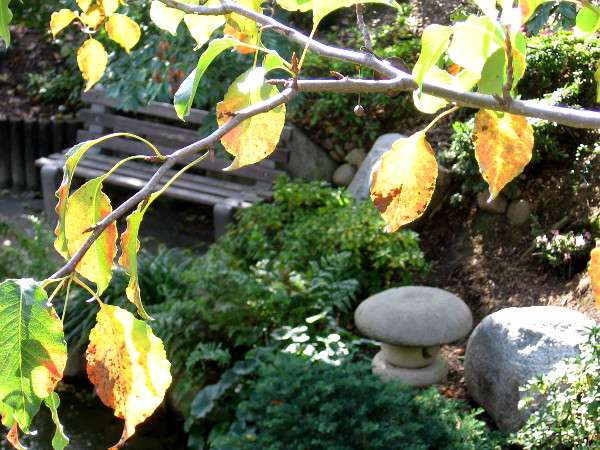
Kannon Bosatsu sits tranquilly in a beautiful corner of the Japanese Friendship Garden near the source of a new stream.Nearby sign describes Kannon Bosatsu, created in 1735 by Japanese sculptor Takumi Obata, an accomplished iron smith during to Tokugawa period. (Click photo to enlarge image.)The large bronze Kannon Bosatsu represents the Japanese goddess of mercy.A closer photo of the serene Kannon Bosatsu.A leaf has turned and fallen into the lap of a merciful deity.Gazing from the statue down the new stream toward a new bare wood observation platform.A simple, elegant wooden platform straddles the new stream in the Japanese Friendship Garden.Nature’s elements will make this structure more beautiful over time.Gazing from the platform down at the second half of the new stream, to where it joins the Lower Garden’s main river.The new stream is already very beautiful.It’s now winter in the Japanese Friendship Garden, and great beauty is everywhere.The guardian deity statue that now stands opposite the bonsai collection in the Upper Garden.I believe this statue represents Kongorikishi, one of the guardians of Buddha who stand at the entrance of many Buddhist temples.The Japanese Friendship Garden in Balboa Park is a place to find peace, wisdom and healing.An historic addition to an already very special place.
To see photos that I took as the stream and observation platform were under construction, click here.
…
I live in downtown San Diego and love to walk around with my camera! You can follow Cool San Diego Sights via Facebook or Twitter!
You can easily explore Cool San Diego Sights by using the search box on my blog’s sidebar. Or click a tag! There are thousands upon thousands of photos for you to enjoy!
Visitors to Cabrillo National Monument enter the restored Base End Station and Battery Commander’s bunker, north of the Old Point Loma Lighthouse. Battery Ashburn can be seen in the distance.
The surprise attack on Pearl Harbor on December 7, 1941 caused many to fear that the Imperial Japanese Navy might attack the mainland United States.
Coastal defenses were rapidly built up at strategic points along the West Coast, including Point Loma, the peninsula that overlooks the narrow entrance to San Diego Bay. Many of the United States Navy’s remaining ships were homeported in San Diego and had to be protected at all costs.
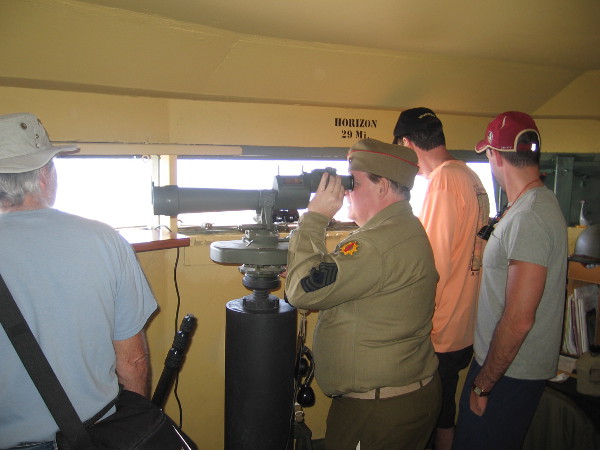
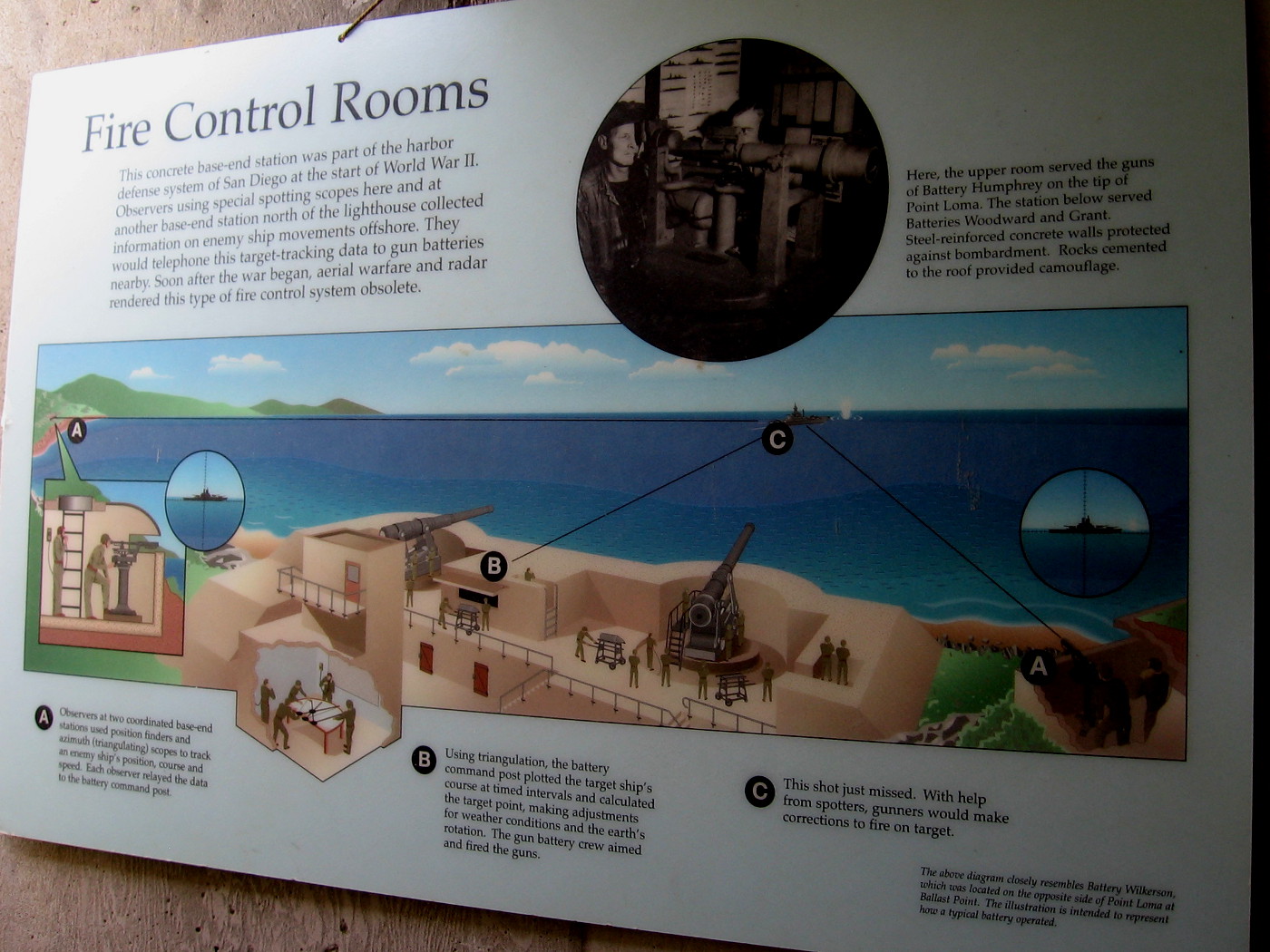
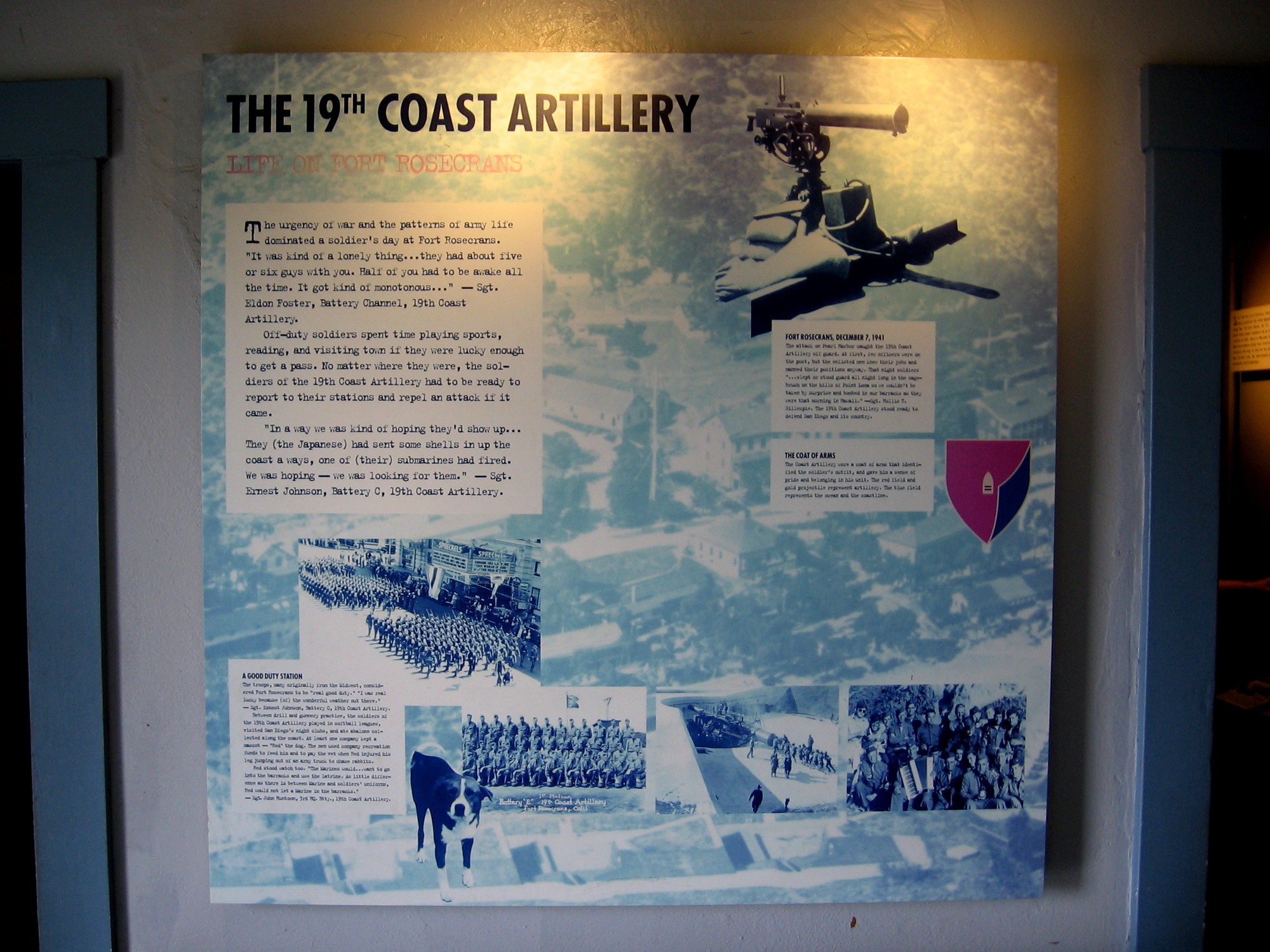
During World War II, Point Loma’s Fort Rosecrans was the home of the U. S. Army 19th Coast Artillery Regiment. Soldiers manned steel-reinforced concrete bunkers containing Base End Stations, and scanned the horizon for enemy vessels. Should the enemy be sighted, they relayed their information to a Battery Commander, who precisely calculated the enemy’s position, then issued orders to various gun batteries that guarded the approach to San Diego.
Today, almost a century later, the general public can enter one of those old bunkers overlooking the Pacific Ocean.
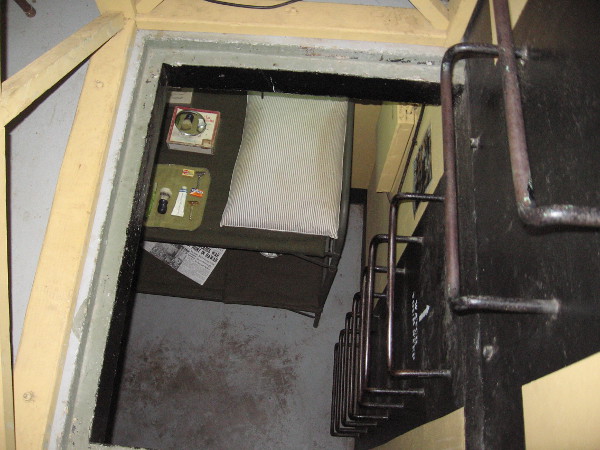
During my recent Saturday visit to Cabrillo National Monument, I was excited to see that the park’s restored bunker, designated Battery E Control Station, was open. I descended the steep steps into a small underground world, and experienced what life was like for those who stood watch over the wide ocean day and night during the war.
I then checked out a small museum near the bunker to learn a little more about San Diego’s coastal defenses during World War II.
Here are photographs that I took. Read the captions for more fascinating information. Click the signs and they will enlarge.
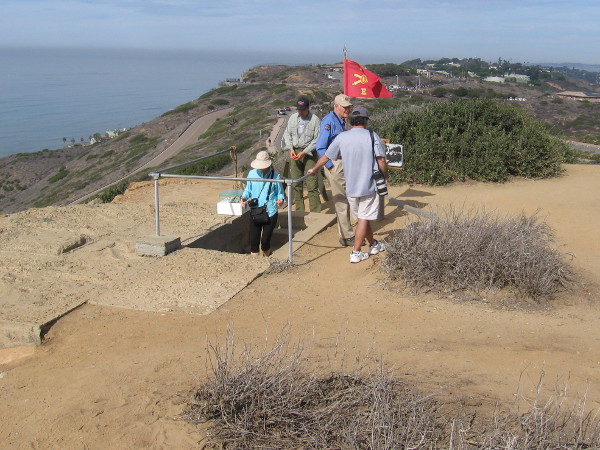
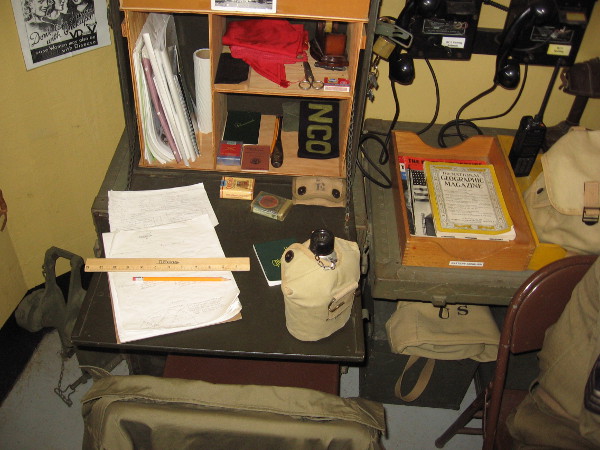
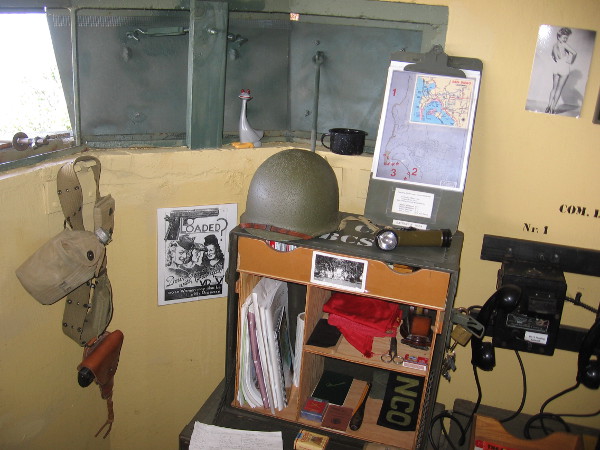
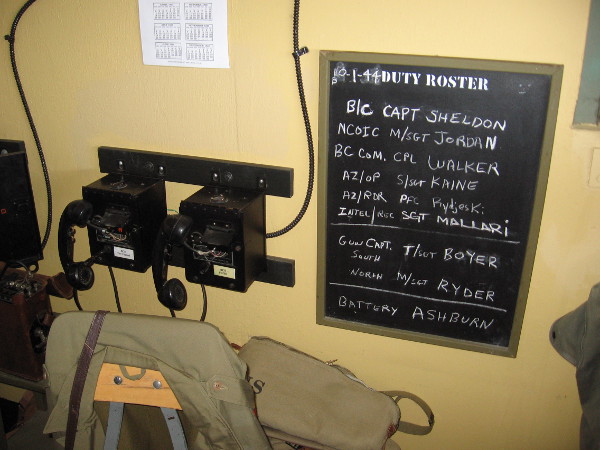
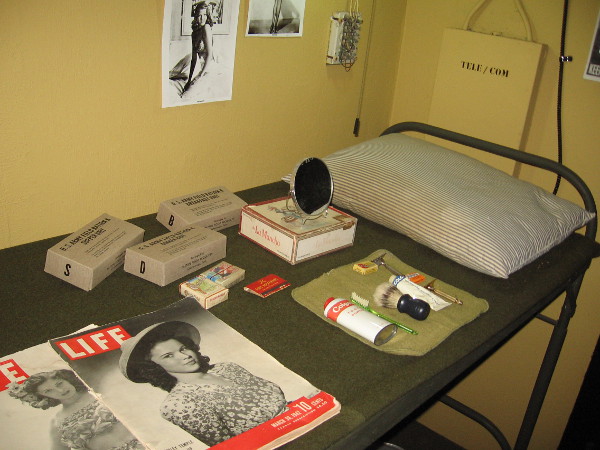
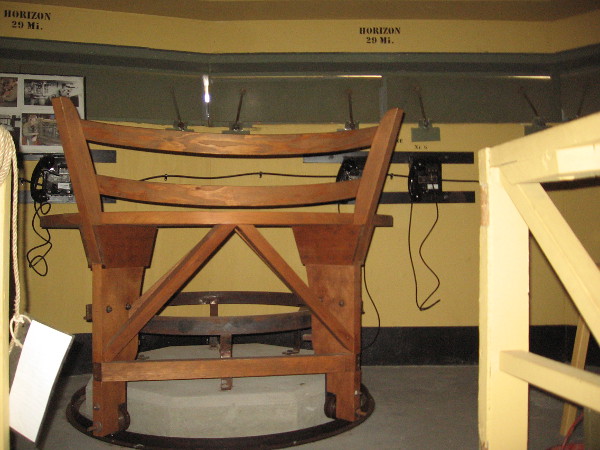
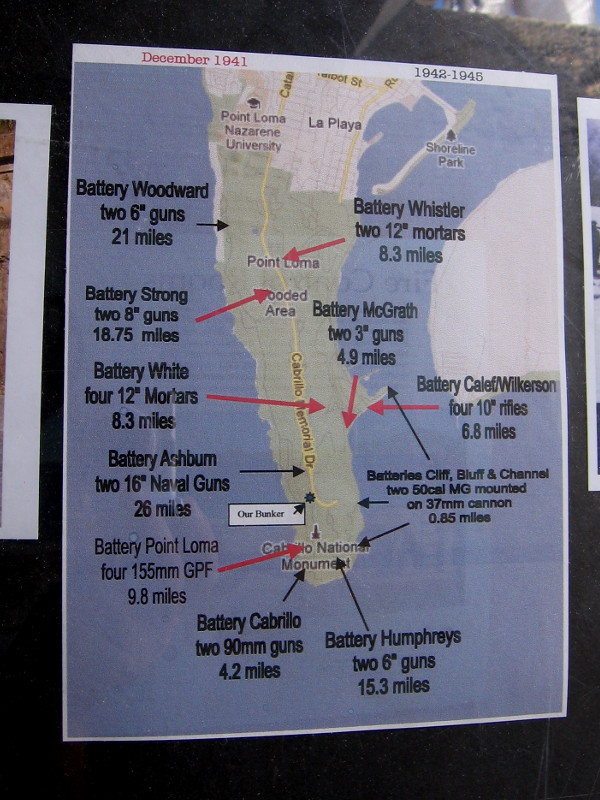
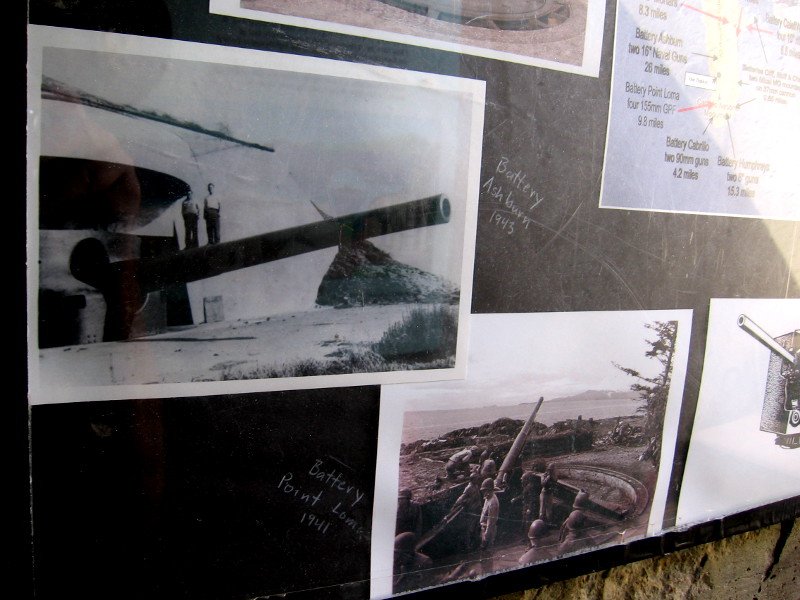
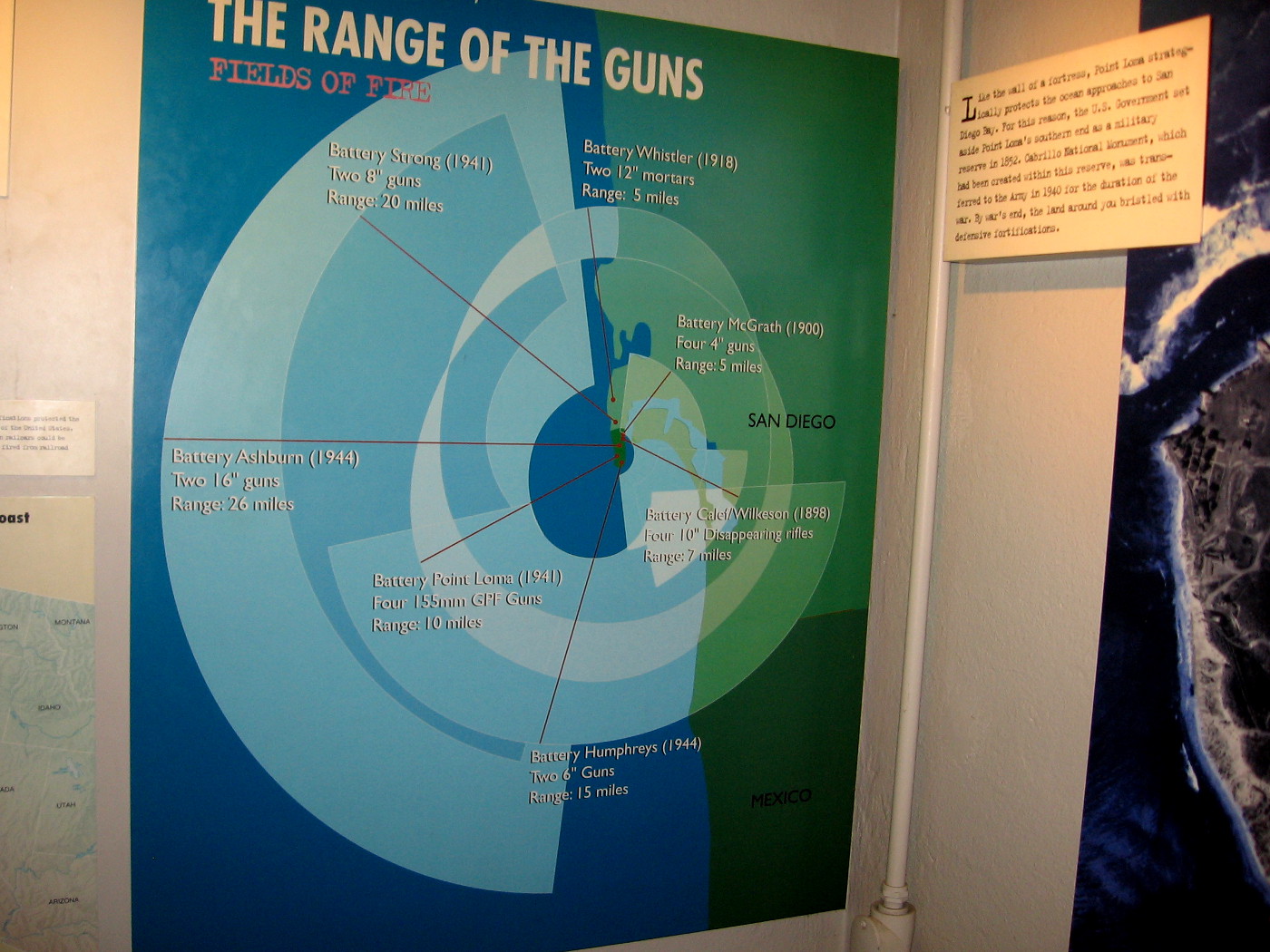
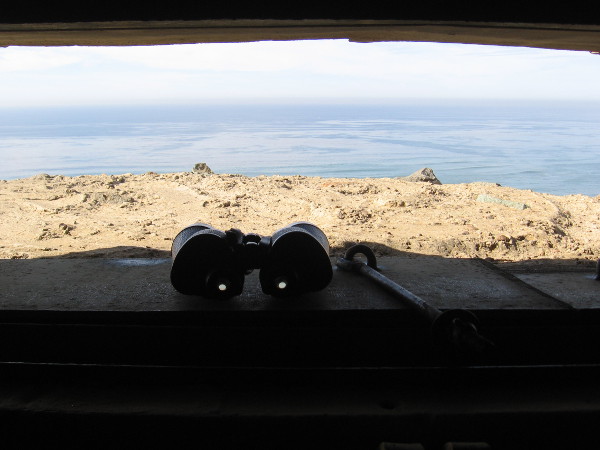
The Battery E Control Station can be entered on many weekend days. Tours are provided by volunteer docents who are members of the San Diego Military History Association.Walking down steps into the two-level, steel-reinforced concrete bunker is like stepping back in time. The 19th Coast Artillery Regiment manned multiple Point Loma bunkers during World War II.A docent in a World War II era uniform demonstrates the use of an azimuth scope. These spotting scopes gave accurate readings of target positions.A photograph inside the top level of the bunker, which served as the Battery Commander Station for nearby Battery Ashburn.Objects displayed include a map, helmet, canteen and pin-up girl on the wall. A WWII veteran who served at Fort Rosecrans helped to make the bunker’s interior appear historically accurate.Diagram on a wall identified Japanese Naval Vessels during World War II.Marks show the direction and distance to South and North Coronado Islands, which lie in the Pacific Ocean off Mexico.Phones on the wall beside a small Duty Roster chalkboard. The Battery Commander would calculate and communicate accurate information to nearby Battery Ashburn.Metal rungs descend into the lower level of the bunker, where visitors can see the small bunkroom and a typical Base End Station.A friendly docent shows me the bunkroom, where those who manned the bunker took turns sleeping.Objects in the bunkroom include toiletries, U. S. Army rations, cigarettes, magazines and pin-ups on the wall.Next to the bunkroom is a Base End Station, where soldiers continuously scanned the ocean horizon. It is one of five Base End Stations that were assigned to the Battery Commander Station directly above.Old photos above two phones show the operation of azimuth scopes in a Base End Station.A sign describes Fire Control Rooms. A pair of Base End Stations would track an enemy ship’s position, course and speed. Distance to an enemy vessel was determined through triangulation.Sign shows the different battery positions on Point Loma during World War II. Battery Ashburn’s two 16 inch naval guns had a range of 26 miles.Old photos include Battery Ashburn in 1943 and Battery Point Loma in 1941.A sign in the nearby museum shows the ranges of Point Loma’s many defensive gun batteries.During World War II, Fort Rosecrans on Point Loma was garrisoned by the 19th Coast Artillery Regiment. Troops assigned to Fort Rosecrans in San Diego thought it a good duty station, with pleasant weather.Binoculars at the ready. Enter a coastal defense bunker at Cabrillo National Monument to experience a bit of what it was like during World War II in San Diego.
…
I live in downtown San Diego and love to walk around with my camera! You can follow Cool San Diego Sights via Facebook or Twitter!
You can easily explore Cool San Diego Sights by using the search box on my blog’s sidebar. Or click a tag! There are thousands upon thousands of photos for you to enjoy!
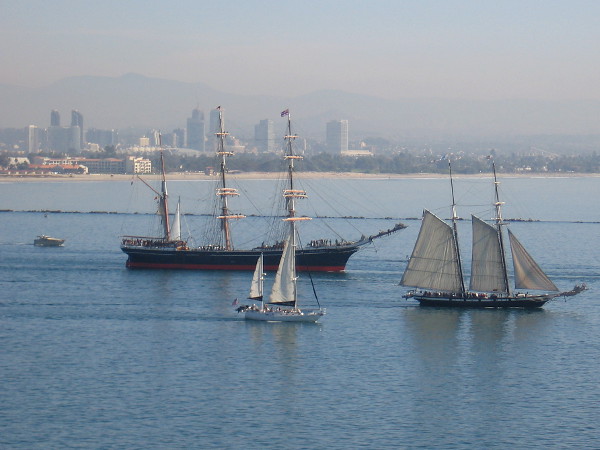
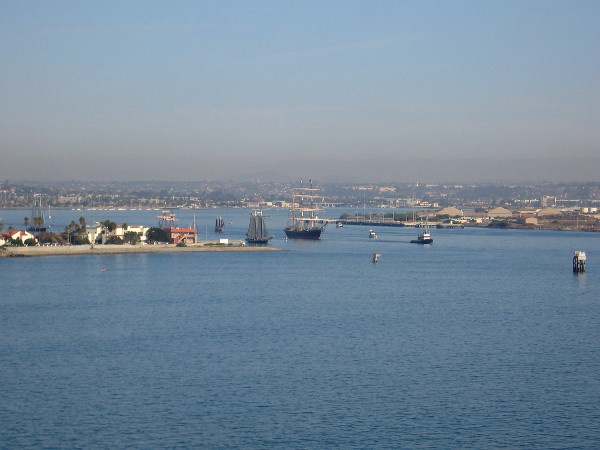
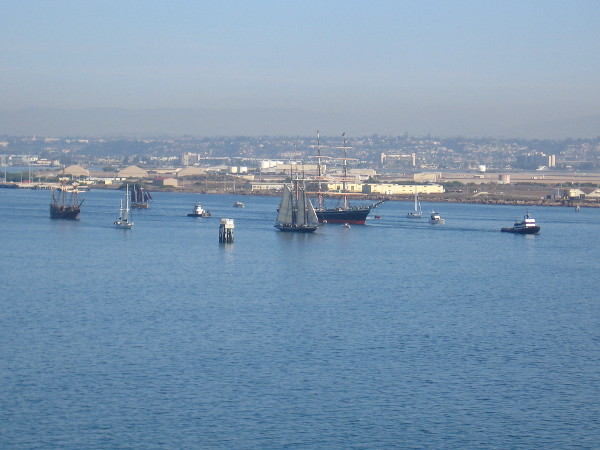
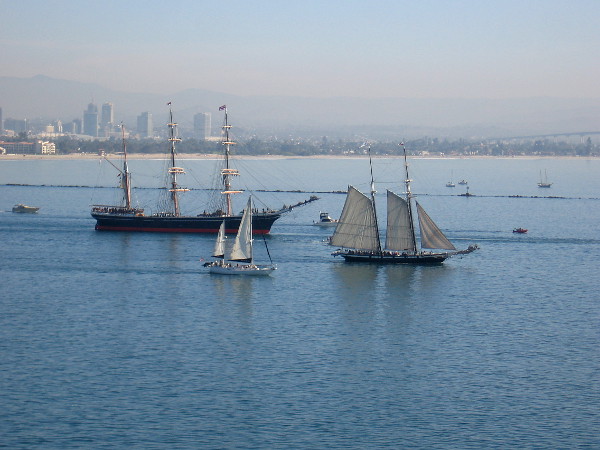
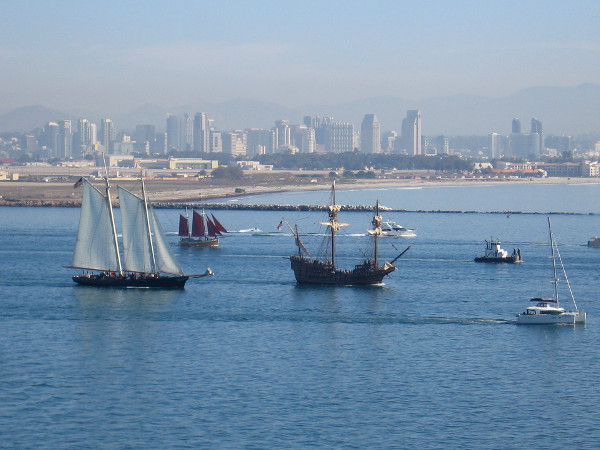
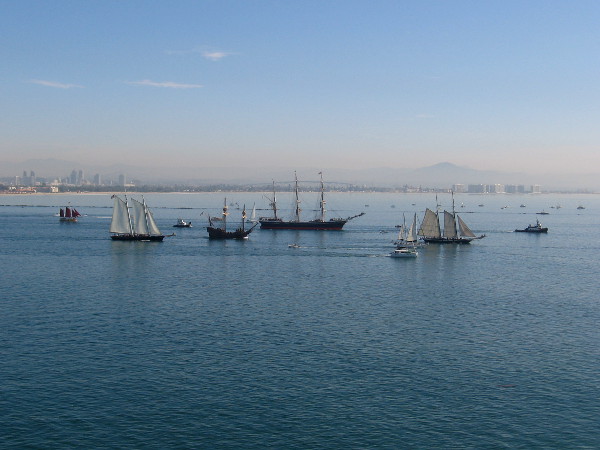
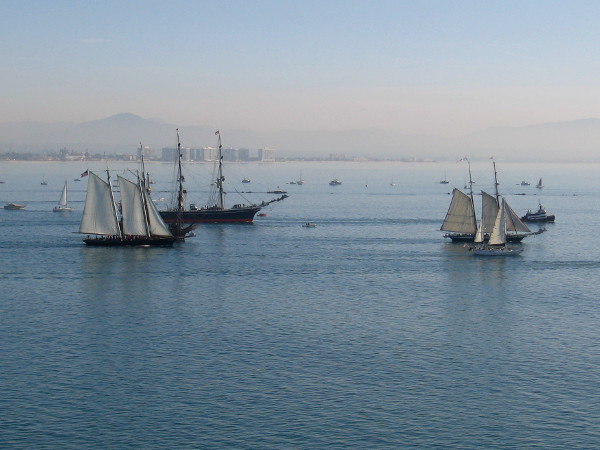
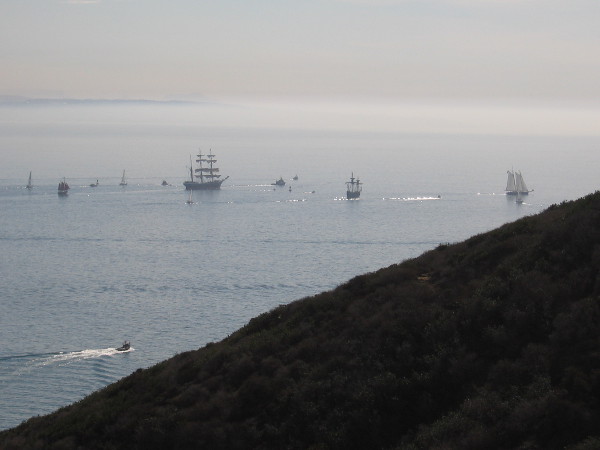
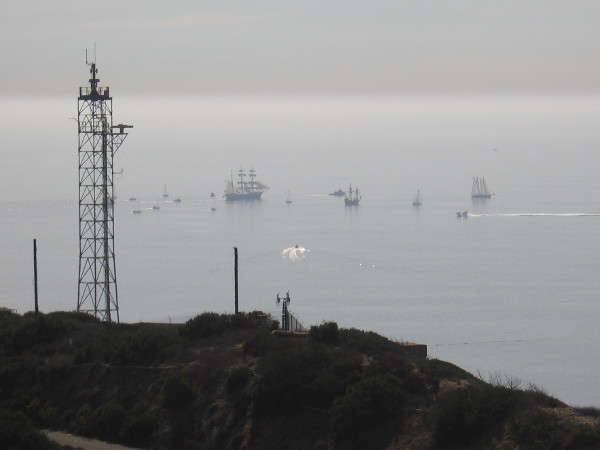
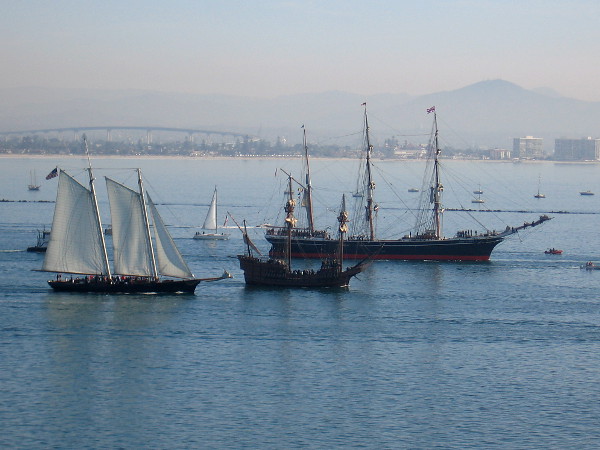
Star of India and Californian navigate south down the channel of San Diego Bay, heading out into the Pacific Ocean.
I will remember this amazing morning for the rest of my life.
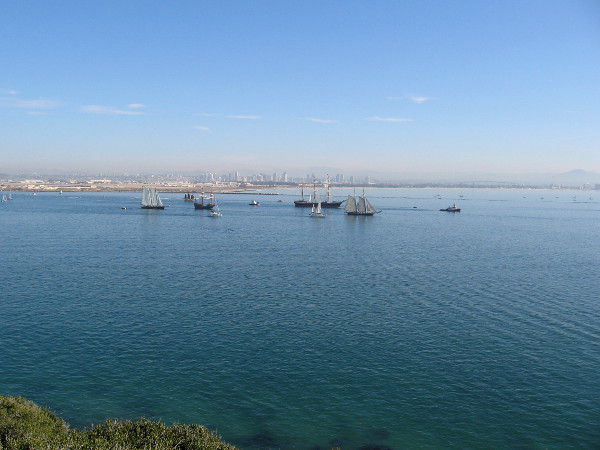
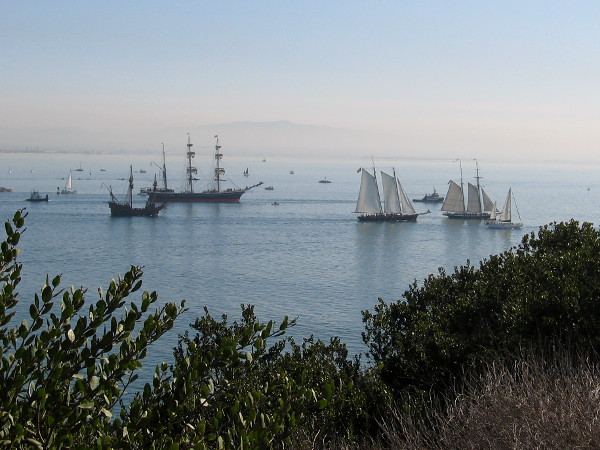
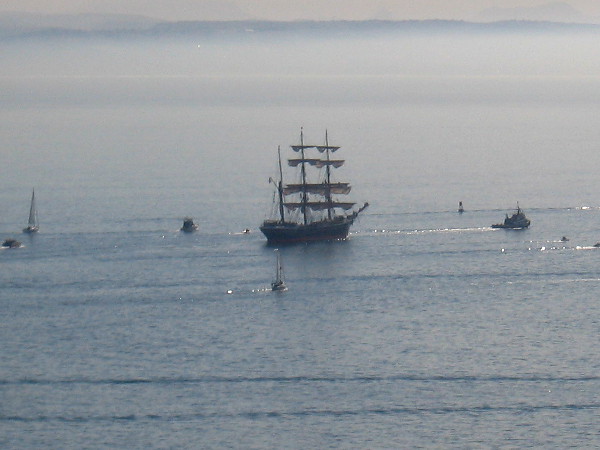
Standing on the Bayside Trail of Cabrillo National Monument, near the end of the Point Loma peninsula, I watched as Star of India, oldest active sailing ship in the world, headed out of San Diego Bay into the wide blue Pacific Ocean.
It was a truly historic moment, and magical.
The Star of India, now 155 years old, is sailing this weekend for the first time in five years.
Tall ships Californian and San Salvador, which also belong to the Maritime Museum of San Diego, accompanied the Star of India, as did two other tall ships based in San Diego: America and Cloudia. I saw Bill of Rights, a tall ship that makes its home in Chula Vista, heading out of the channel a bit later in the morning.
Please enjoy these photos.
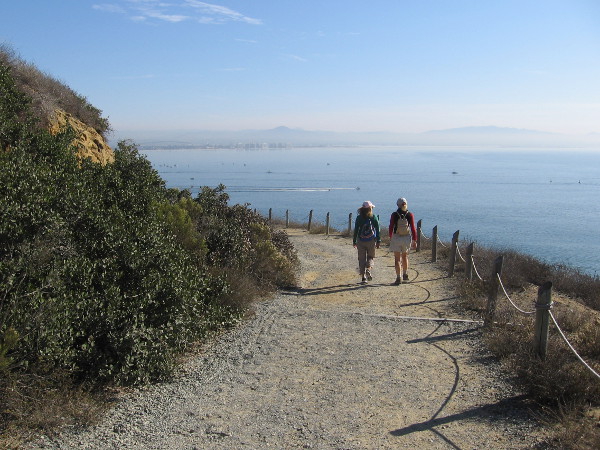
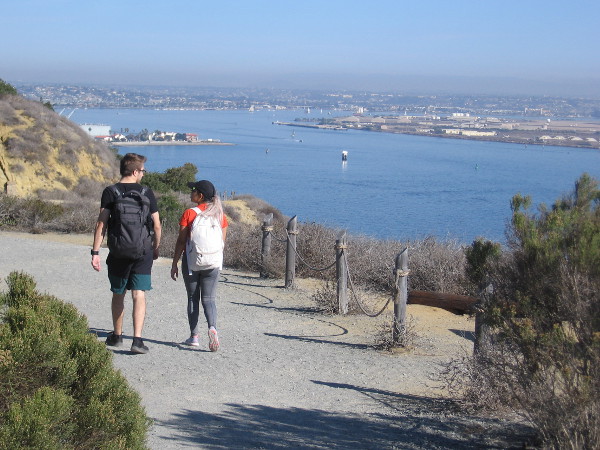
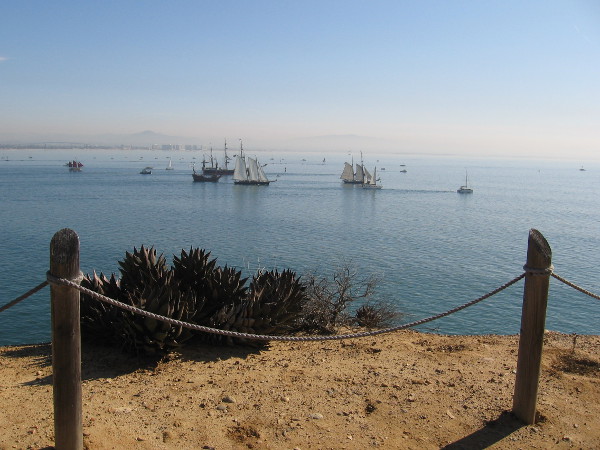
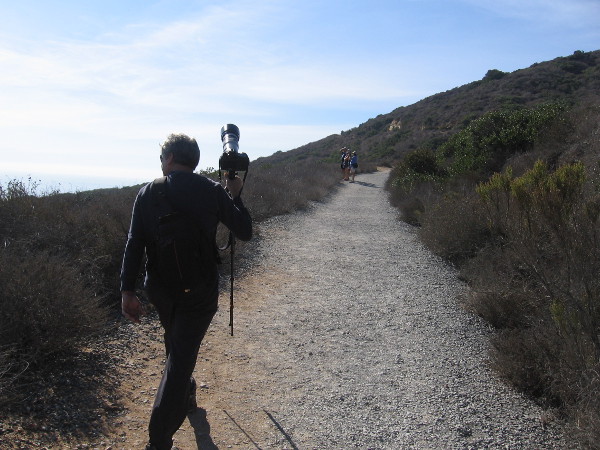
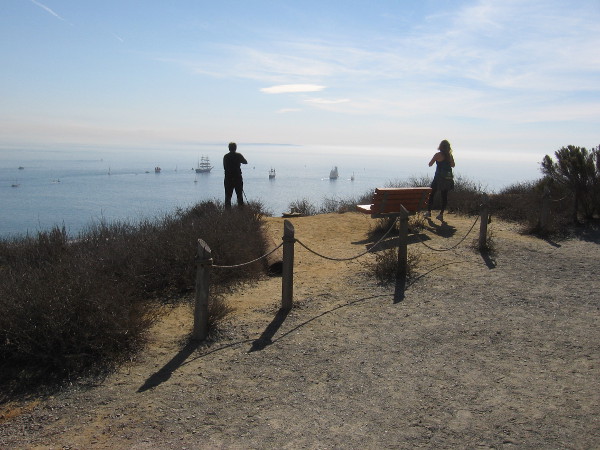
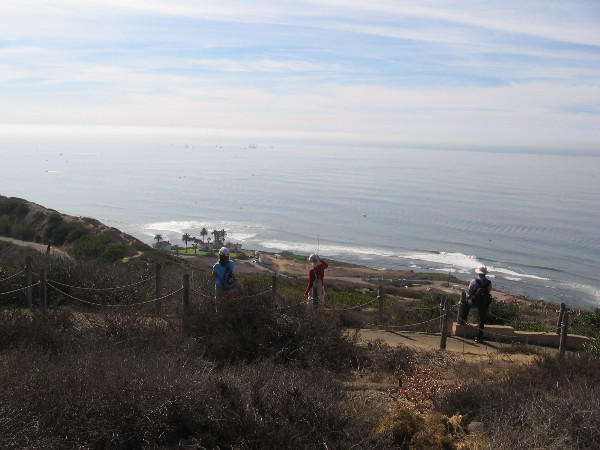
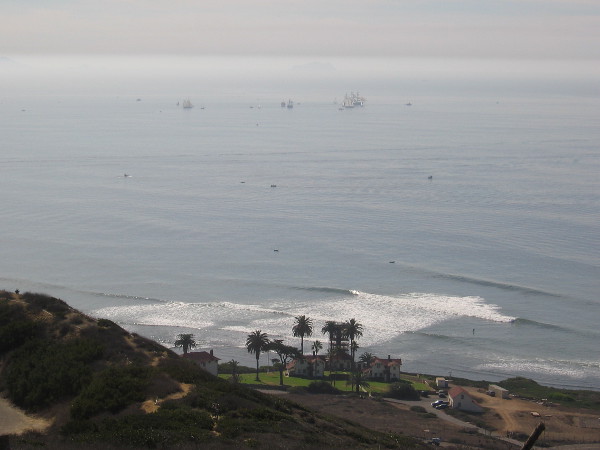
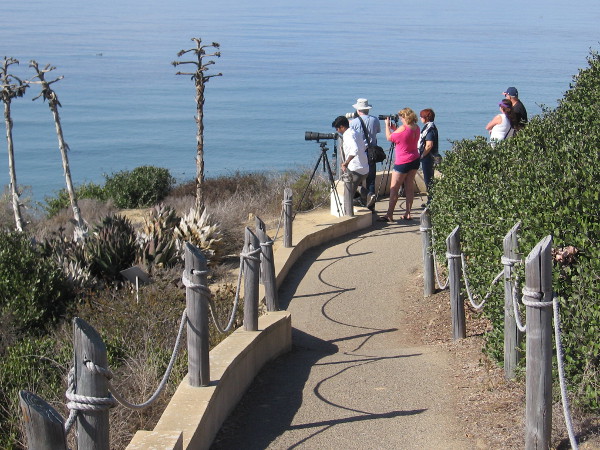
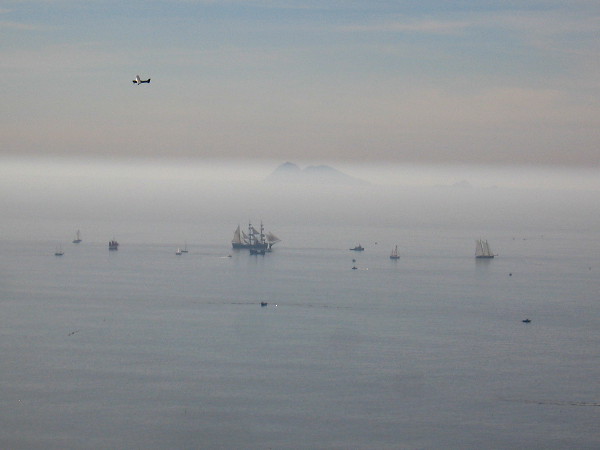
People walk down Cabrillo National Monument’s Bayside Trail in order to watch a bit of sailing history.The north part of San Diego Bay is visible from the Bayside Trail. In the distance, with other tall ships, Star of India makes its way around Coronado.Star of India is towed past Naval Base Point Loma as it heads out of San Diego’s harbor toward the open ocean.Star of India is accompanied during its historic sail by Californian, San Salvador, America and Cloudia. Bill of Rights would leave the channel a bit later in the morning.Californian and Star of India pass Naval Air Station North Island.The downtown San Diego skyline behind Star of India and Californian.Two beautiful tall ships of the Maritime Museum of San Diego, Star of India and Californian, head out into the Pacific Ocean.The amazing group of tall ships is almost out of the channel and into the wide open ocean.Star of India, oldest active sailing ship in the world, and Californian enter the Pacific Ocean together.Behind come America, Cloudia and the Spanish galleon replica San Salvador.Pure magic. Like a dream.The beautiful tall ships continue past Point Loma, making their way south.A view of the tall ships from Cabrillo National Monument’s sunny Bayside Trail.155 year old Star of India and its companion tall ships sail across the water on an historic weekend in November, 2018.I and a few other photographers head back up the Bayside Trail to get more photos as the ships head out to sea.Californian and America on the distant water. Mexico lies on the horizon.Five fantastic tall ships together on the peaceful, blue Pacific Ocean.A magical vision of historic tall ships seen from the end of Point Loma. Time’s curtain seems to open for a moment, and we peer into the past.People enjoy the magic near a bench on the Bayside Trail.Star of India crew members can be seen upon its yards. The sails will soon billow in the wind.The ships sail past the end of Point Loma. My old camera can barely photograph them at this distance.Out into the wide, hazy Pacific Ocean.People just below the whale watching overlook of Cabrillo National Monument watch the ships. They gaze past the New Point Loma Lighthouse, which is down by the water’s edge.Among smaller boats, the tall ships are just visible in the hazy distance.Photographers with powerful cameras do their best to get good photos of the tall ships that are now very far away.Light reflects from a passing plane. The distant Coronado Islands poke out of the haze. And the Star of India sails proudly upon the Pacific Ocean.A vision I will remember for the rest of my life.
…
I live in downtown San Diego and love to walk around with my camera! You can follow Cool San Diego Sights via Facebook or Twitter!
You can easily explore Cool San Diego Sights by using the search box on my blog’s sidebar. Or click a tag! There are thousands upon thousands of photos for you to enjoy!
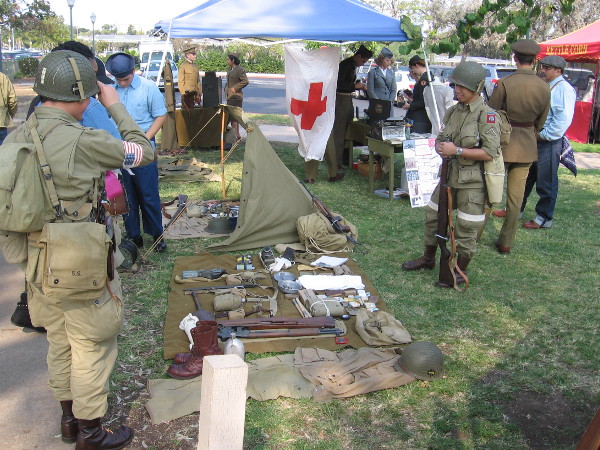
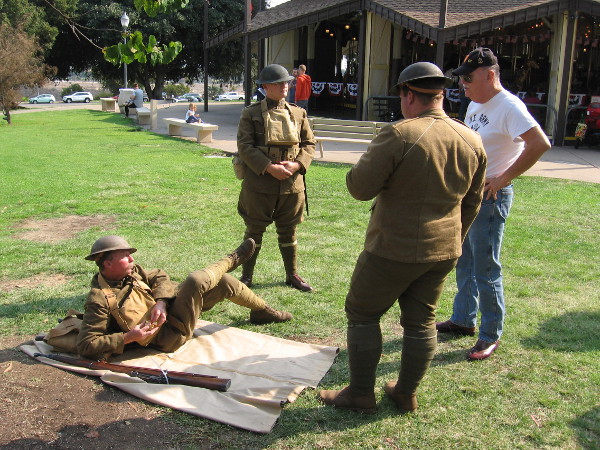
The Historical Unit of Southern California held an event on Veterans Day near the Balboa Park Carousel.
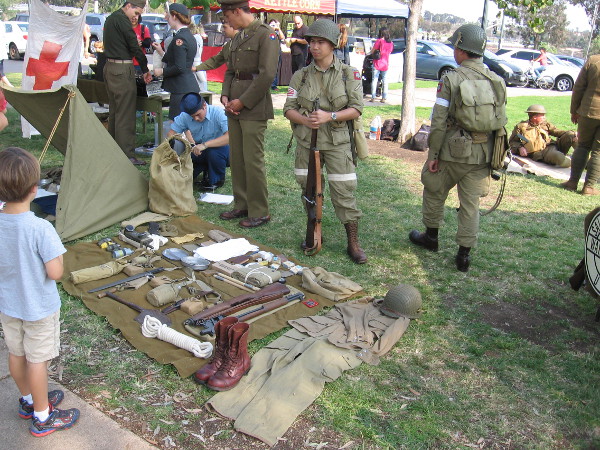
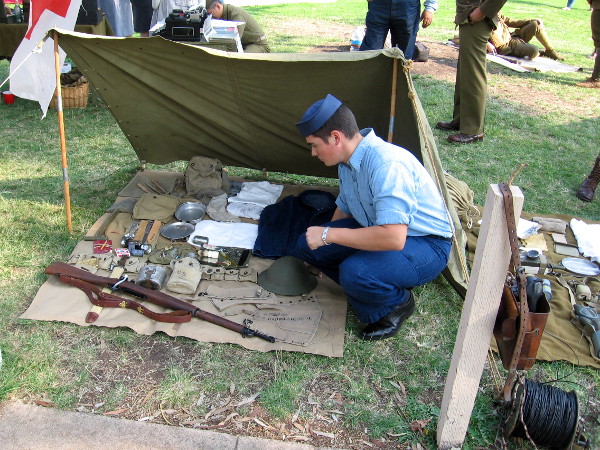
On Sunday the Historical Unit of Southern California provided a reenactment of two World Wars near the Balboa Park Carousel. Their fascinating Veterans Day event coincided with the 100th anniversary of Armistice Day, the end of the World War One.
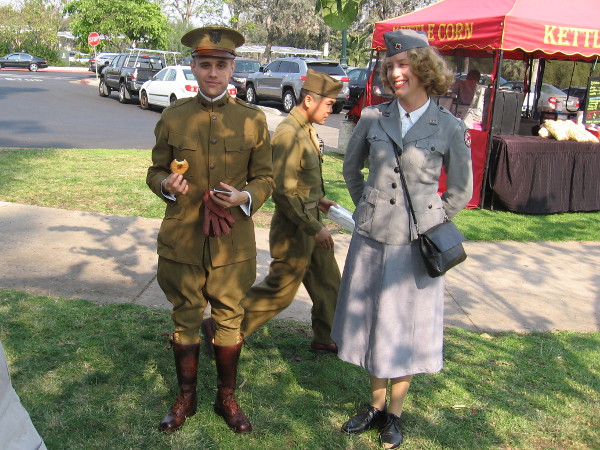
Smiling members of the group, wearing historical military uniforms, explained exhibits on the grass that primarily concerned World War I.
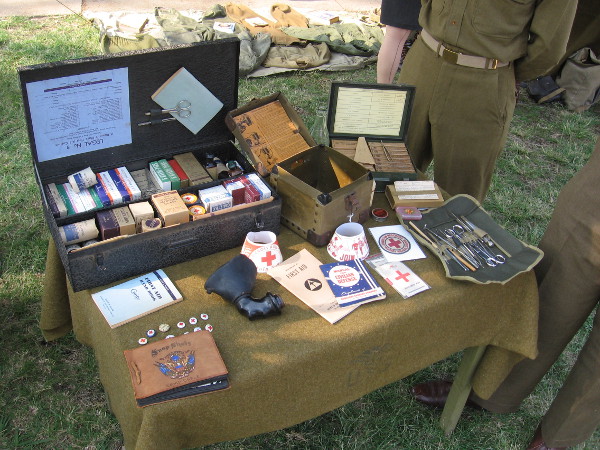
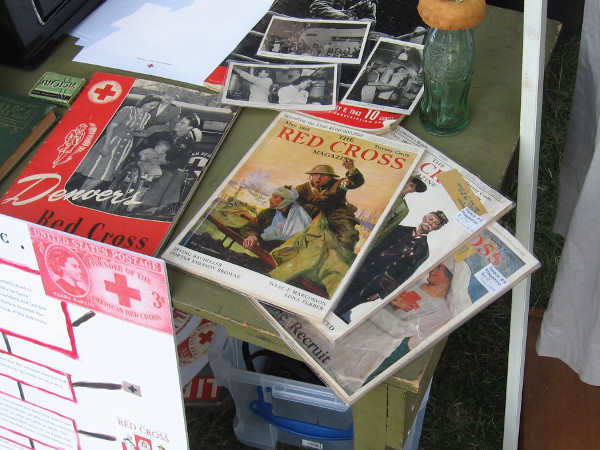
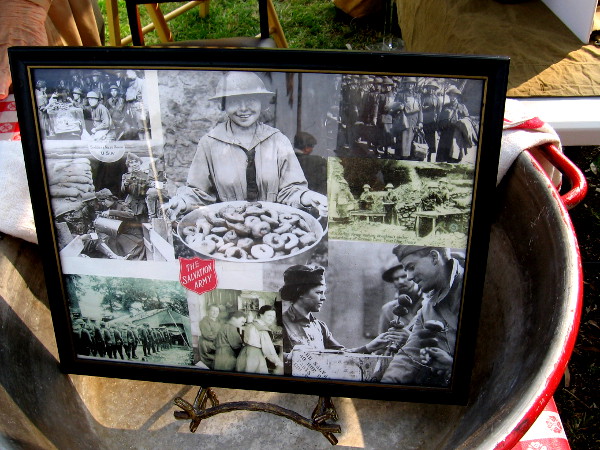
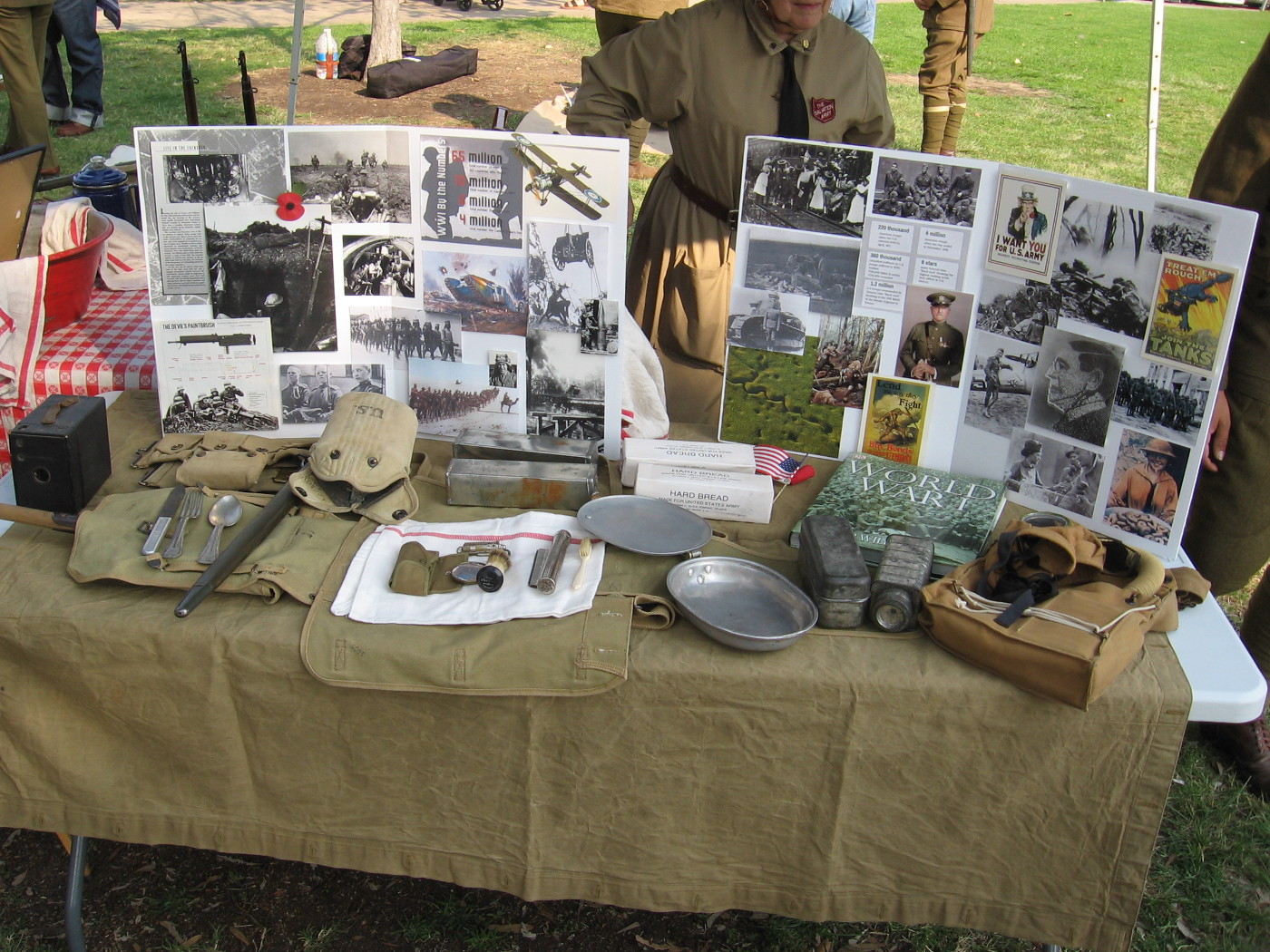
In addition to equipment used by soldiers on the battlefield, displays included photographs and objects pertaining to the Red Cross and Salvation Army, organizations that worked to provide care and comfort for those who fought.
Members of the reenactment group displayed artifacts from past wars, and wore historical military uniforms.Member of the American Red Cross Club of Southern California, a World War Two reenactment group founded in 2018. This was their first public event.Medical items used by the American Red Cross, who aided suffering soldiers during the wars of the 20th century.Interesting objects on display include old issues of The Red Cross Magazine.A timeline depicts the history of the American Red Cross through World War Two. The organization was established in 1881 by Clara Barton. (Click photo to enlarge it.)Guys dressed as soldiers hang out on the grass by the Balboa Park Carousel, which itself is over a hundred years old.A rifle, canteen, helmet, and other equipment from the battlefield displayed on a blanket.This friendly lady’s display concerned the Salvation Army. A sign shows some basic facts about World War I.In 1917, Helen Purviance, an ensign in the Salvation Army, was in France with the American First Division. Soldiers asked: Can’t you make a doughnut with a hole in it? The rest is history.I believe these photos and artifacts are from World War I.A doughnut with a convenient hole is enjoyed in the park a hundred years later!
…
I live in downtown San Diego and love to walk around with my camera! You can follow Cool San Diego Sights via Facebook or Twitter!
You can easily explore Cool San Diego Sights by using the search box on my blog’s sidebar. Or click a tag! There are thousands upon thousands of photos for you to enjoy!
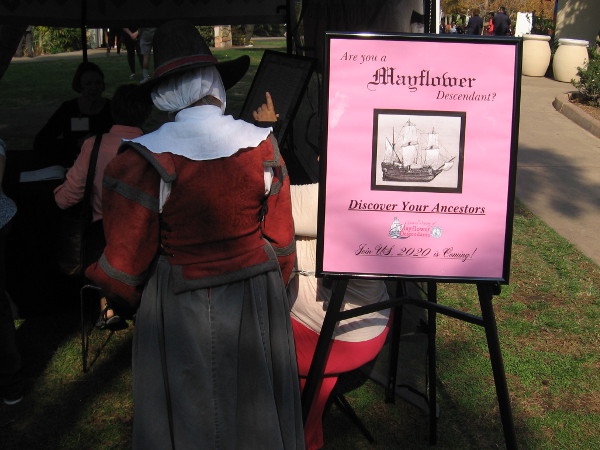
I’m welcomed to Plimoth Plantation West in Balboa Park by two descendants of Mayflower Pilgrims!
Yesterday I swung by the International Cottages in Balboa Park to check out an absolutely unique event!
The Mayflower Society’s San Diego Colony had created Plimoth Plantation West, a representation of Pilgrim history and life, focusing on the arrival of the Pilgrims in the New World and their establishment of Plymouth Colony. The colorful event was organized in anticipation of an important day that will arrive in two years: the 400th Anniversary of the Mayflower Landing in 1620.
I’m no expert when it comes to the history of the Pilgrims, so I was fascinated by many of the displays.
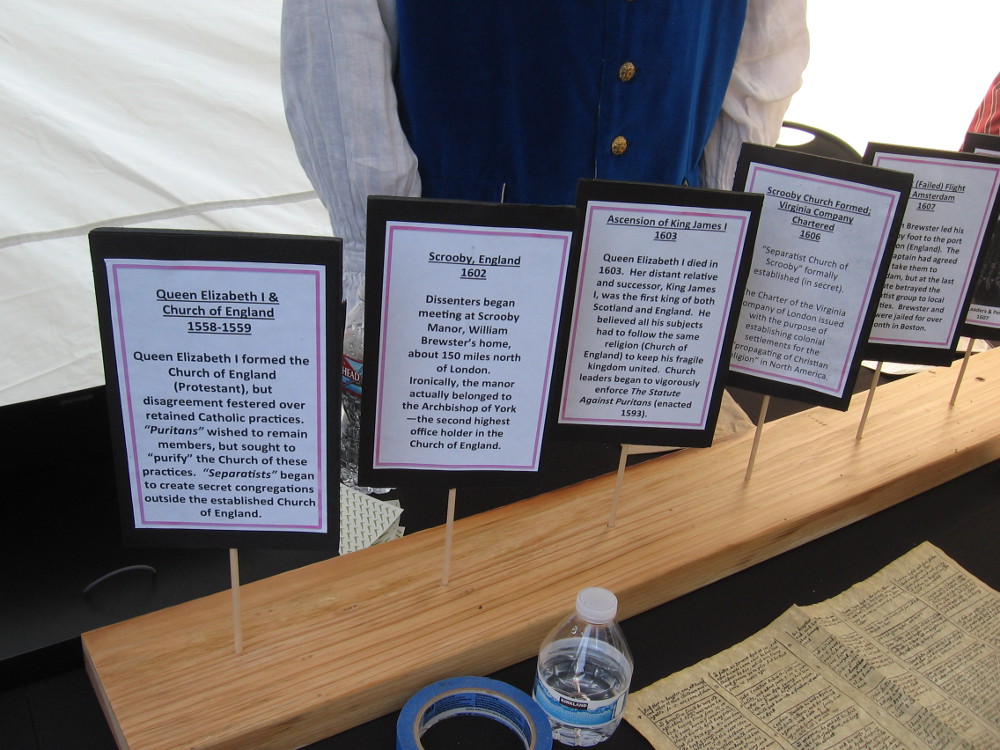
I learned about the Pilgrims’ various reasons for departing England, their journey across the Atlantic, the signing of the Mayflower Compact, the eventual anchoring off Cape Cod, the extreme hardships and many deaths during that first harsh winter, their friendly and not-so-friendly relations with several Native American tribes who lived in the region . . . even the sorts of games Pilgrim children enjoyed playing.
Many members of the Society of Mayflower Descendants were at the event in period costume, celebrating their ancestors and an important chapter in America’s early history. One gentleman I spoke to had descended directly from William Bradford, the governor of Plymouth Colony!
Here are a few photos of Plimoth Plantation West!
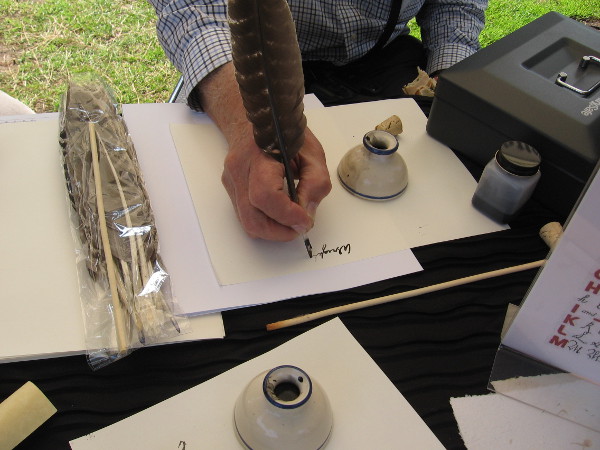
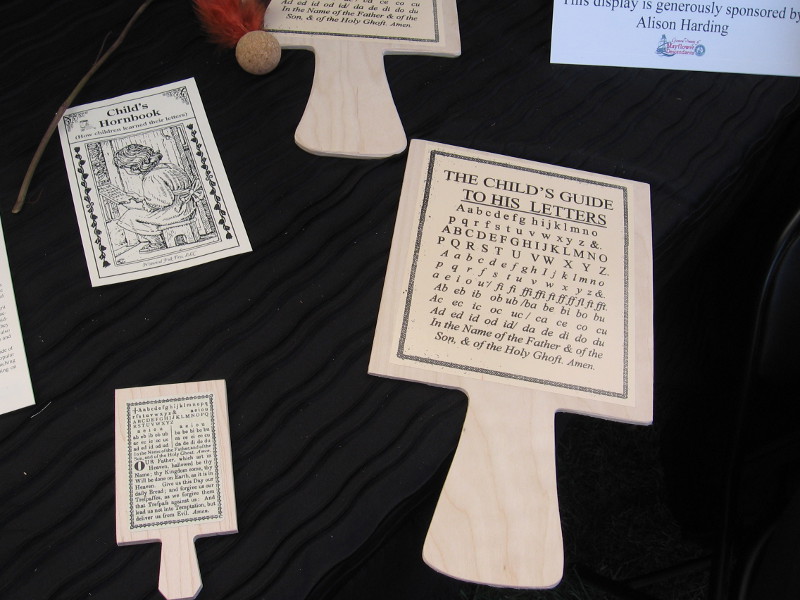
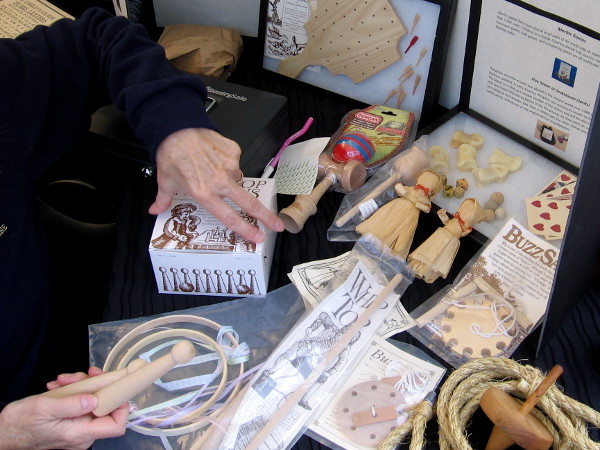
If you are one of the 31 million possible Mayflower descendants worldwide, you can join the General Society of Mayflower Descendants!Someone points to a chart showing the original Mayflower passengers. Less than half survived and made it to the first Thanksgiving in 1621.The Mayflower Compact, signed aboard ship, was the first governing document of Plymouth Colony. It specified basic laws and social rules for the new colony.This friendly gent was dressed like religious separatist William Brewster, a respected elder and leader of Plymouth Colony.A timeline of Pilgrim history begins with the formation of the Church of England. Puritans sought to eliminate retained Catholic practices. Separatists created secret congregations.One gentleman was demonstrating the use of a quill and inkwell. I learned ink was often made from berry juices, and turkey and goose feathers were primarily used for quills.Educational tools used by the Pilgrims included a Child’s Hornbook, a form of children’s primer containing the letters of the alphabet.Pilgrim children enjoyed simple games and toys, like spinning tops, and small crudely made dolls.The descendants of the Mayflower Pilgrims gather for a special event in San Diego’s always lively Balboa Park!
…
I live in downtown San Diego and love to walk around with my camera! You can follow Cool San Diego Sights via Facebook or Twitter!
You can easily explore Cool San Diego Sights by using the search box on my blog’s sidebar. Or click a tag! There are thousands upon thousands of photos for you to enjoy!



















































 Cool San Diego Sights!