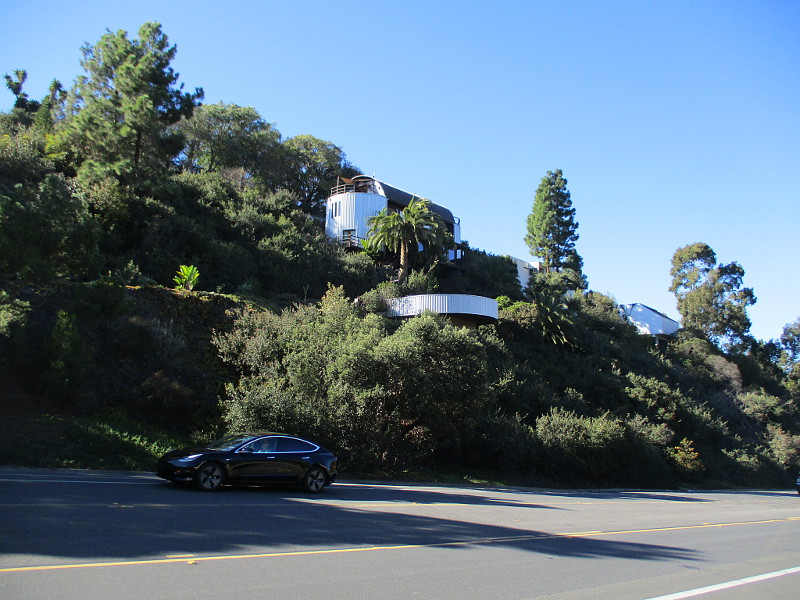
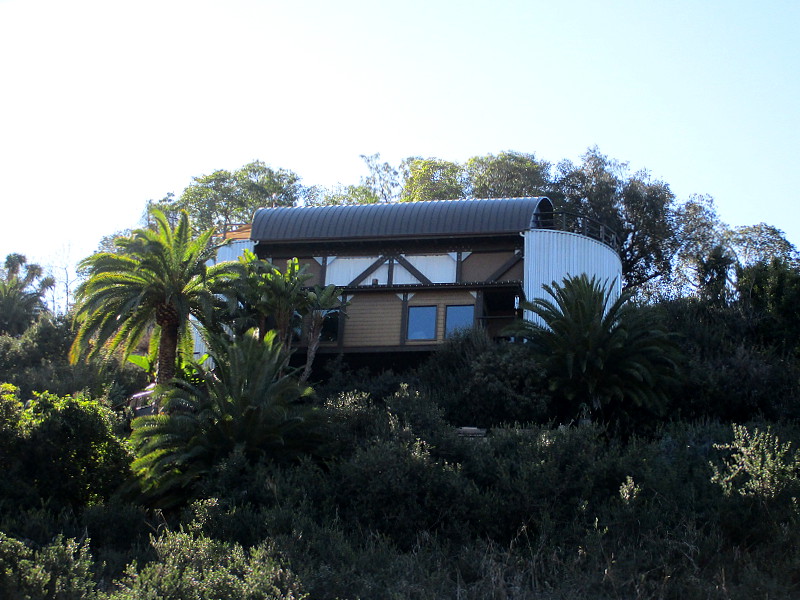
Perhaps you’ve seen that very unusual house perched high on a hillside in La Jolla. You can’t miss it when you drive west down Nautilus Street.
It was designed by Eugene Ray, a San Diego State University professor who taught Environmental Design from 1969 to 1996. He found his inspiration from UFOs and natural, organic shapes!
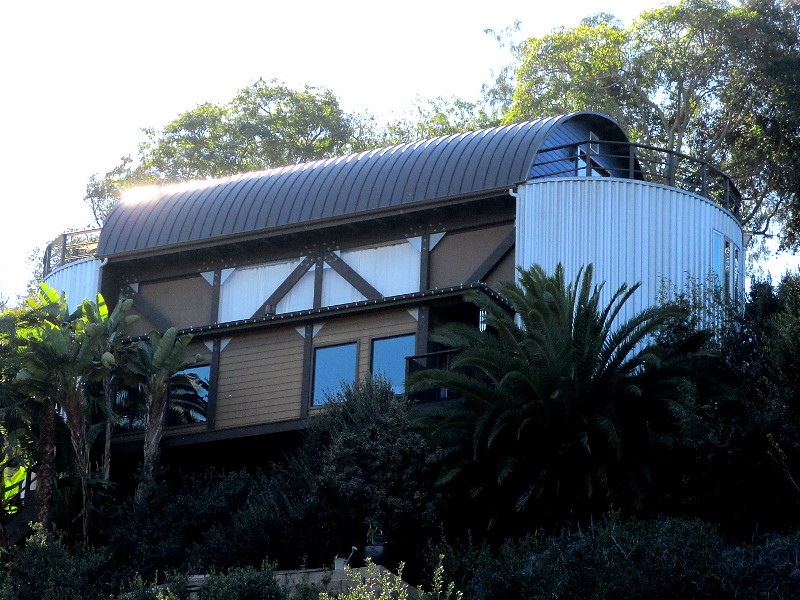
The house is called the Silver Ship.
Back in 1978, five SDSU students set to work building the unique structure. You can read about the project and see photographs of the construction on Eugene Ray’s blog here. For years it was his La Jolla home and studio.
I first learned about the Silver Ship in 2019 at an exhibition of Eugene Ray’s work at the SDSU Downtown Gallery. Like many of his designs, it’s form is simple and symmetric and consequently unusual. He observed a UFO in his youth, and it influenced his architectural concepts throughout his life. See more of his groundbreaking designs, learn more of his unique story, and see blueprints of the fantastic Silver Ship by visiting my old blog post here!
When you compare these to the original photographs, you can see how the Silver Ship appears different today. If I recall correctly, a new owner redesigned the house somewhat. Interesting that now it appears a little more like a . . . silver ship!
…
I live in downtown San Diego and love to walk around with my camera! You can follow Cool San Diego Sights via Facebook or Twitter!
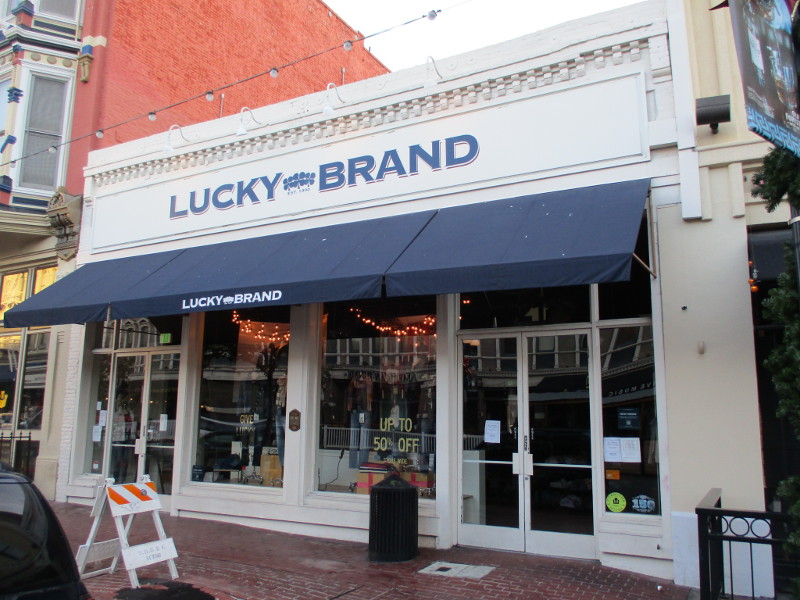
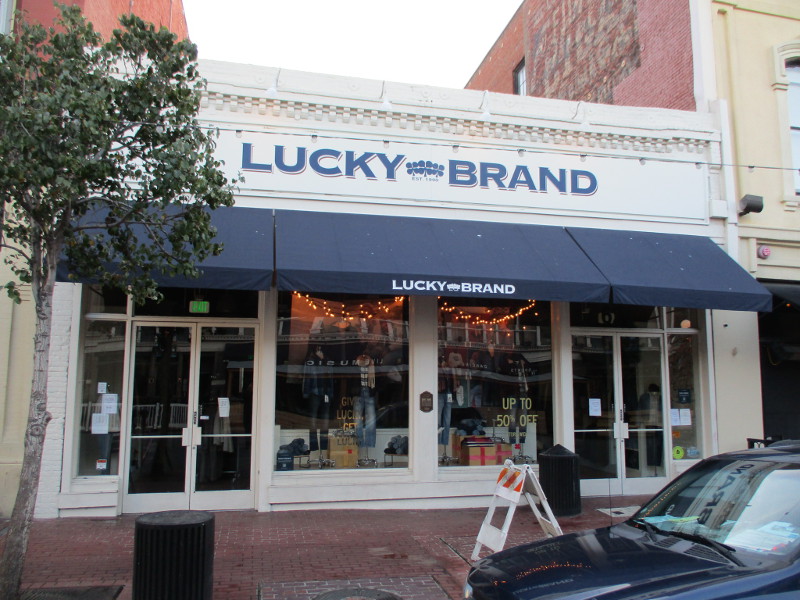
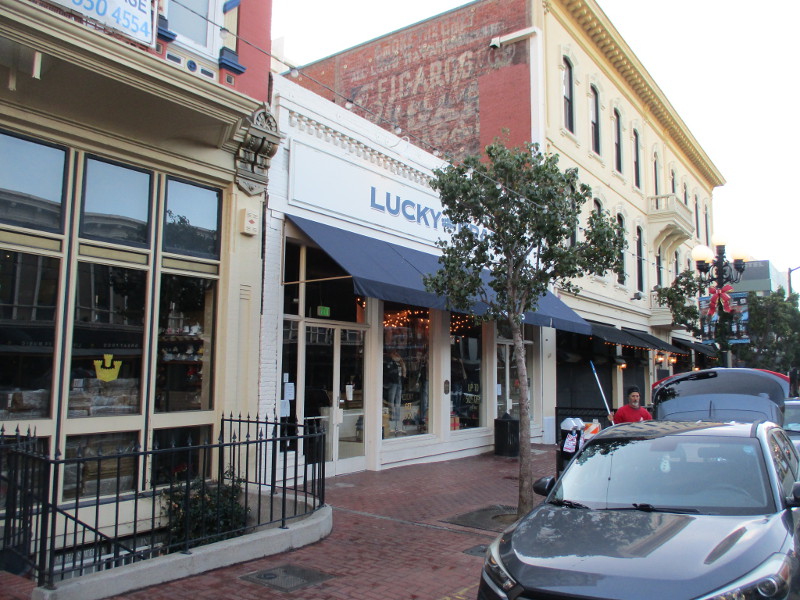
A small, unremarkable brick structure in the Gaslamp Quarter is actually one of downtown San Diego’s oldest buildings!
You could easily walk past the current home of Lucky Brand and not realize this modest building has almost a century and a half of history.
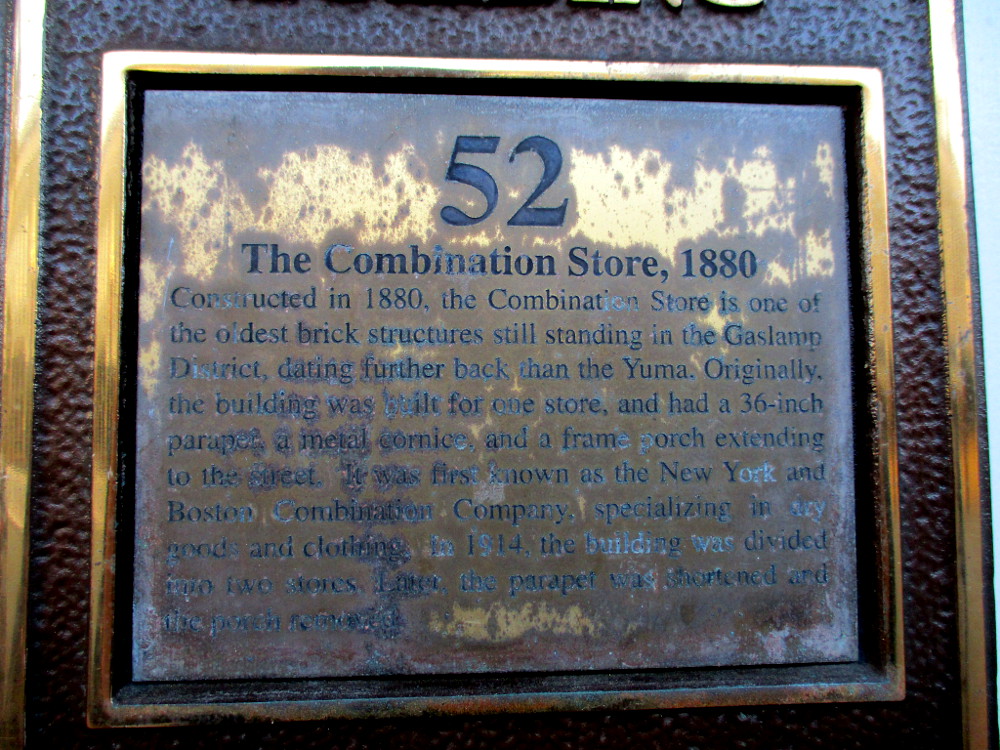
I looked at its historical plaque yesterday to learn more about it. As you can see, the plaque is now very corroded and not easily read, so I took a photograph and enhanced the image by increasing the contrast.
The Combination Store, 1880.
Constructed in 1880, the Combination Store is one of the oldest brick structures still standing in the Gaslamp District, dating further back than the Yuma. Originally, the building was built for one store, and had a 35-inch parapet, a metal cornice, and a frame porch extending to the street. It was first known as the New York and Boston Combination Company, specializing in dry goods and clothing. In 1914, the building was divided into two stores. Later, the parapet was shortened and the porch removed.
…
I live in downtown San Diego and love to walk around with my camera! You can follow Cool San Diego Sights via Facebook or Twitter!
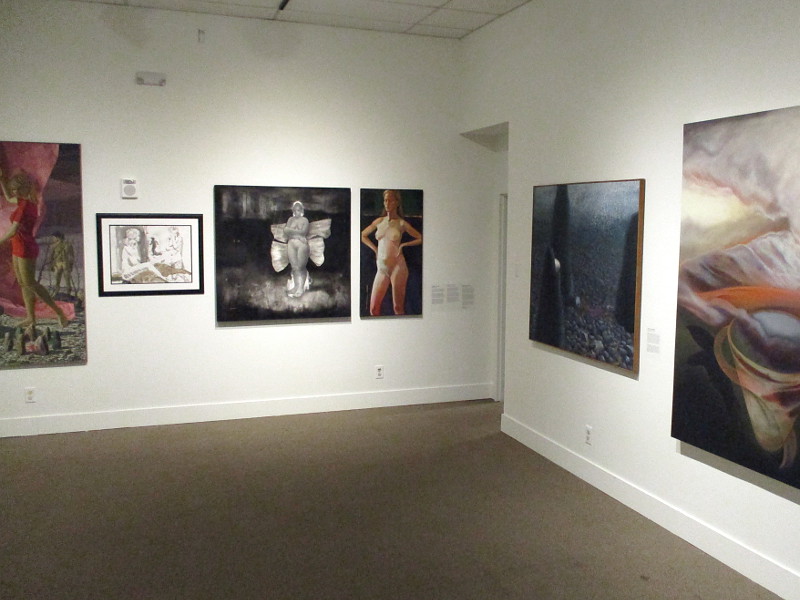
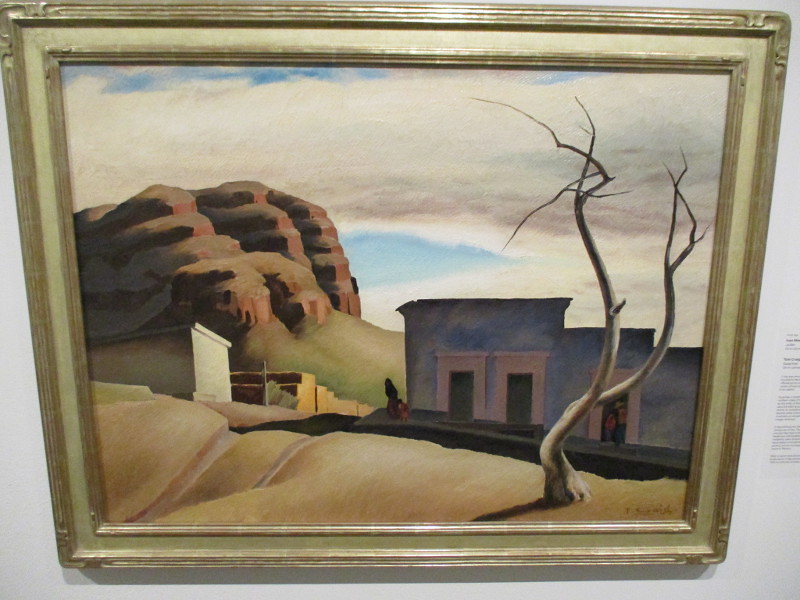
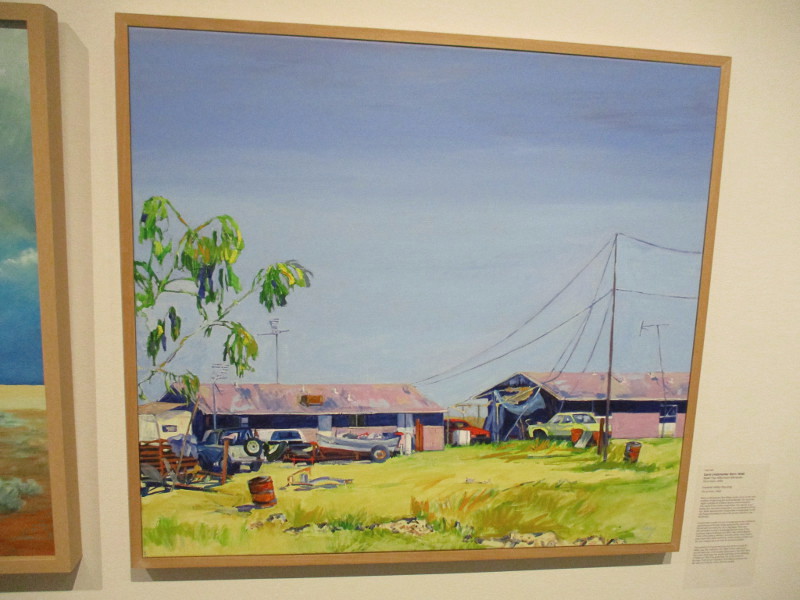
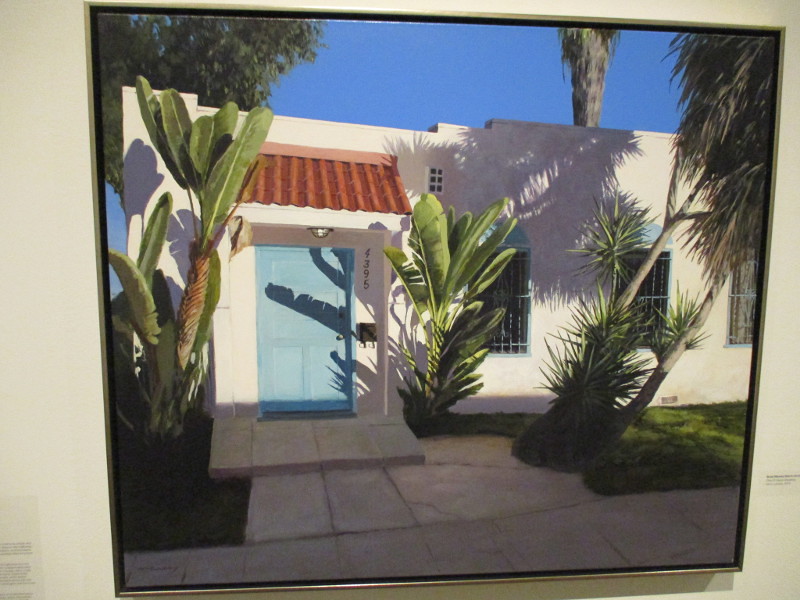
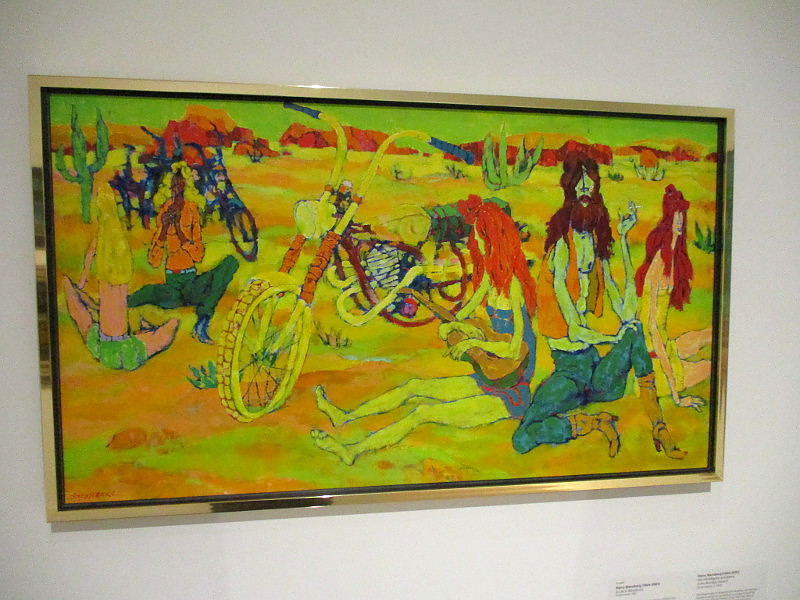
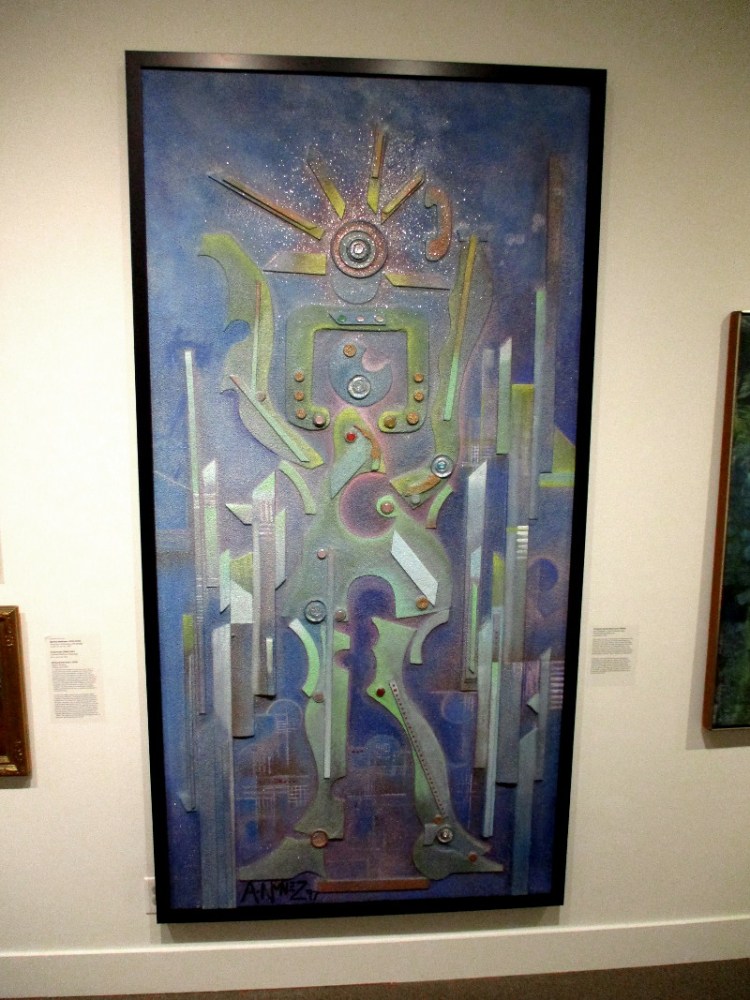
A new exhibition recently opened in a gallery at the San Diego History Center. It’s titled Collecting San Diego, Selections from the Dijkstra Fine Art Collection.
Collecting San Diego is a special initiative by the History Center that shines a spotlight on fine art collections containing works by regional artists.
I noticed that many of the pieces on display depict places in and around San Diego, and paint aspects of our region’s history using color and brush.
These particular pieces in the ongoing Collecting San Diego series were discovered by North County art collectors Sandra and Bram Dijkstra. Over many years they have acquired art that moves them, whomever the artist might be. Consequently, you too might be moved by the unique qualities of these pieces. I personally enjoyed all of them. (But I’m very easy to please!)
Anyone reading this who loves art should consider a visit to Balboa Park and the San Diego History Center. You’ll feast your eyes on dozens of fine paintings. In addition to this new Collecting San Diego exhibition, you’ll discover a second large gallery full of art. That exhibit, titled Be Here Now, also displays the work of regional artists, many of whom have achieved national prominence.
These are just a few examples from Collecting San Diego, Selections from the Dijkstra Fine Art Collection…
Guaymas, Tom Craig, circa 1937. Oil on canvas.Imperial Valley Housing, Carol Lindemulder, 2002. Oil on linen.Five O’clock Shadow, Brad Maxey, 2013. Oil on canvas.Hair #9 (Hippies and Bikers in the Borrego Desert), Harry Sternberg, circa 1970. Oil on board.Sun Goddess of the Computer Age, Armando Nuñez, 1997. Mixed media and acrylic on wood panel. (Armando Nuñez helped paint the first mural in Chicano Park, The Historical Wall, in 1973. He was co-founder of Centro Cultural de la Raza and designed the Barrio Logan gateway sign.)
…
I live in downtown San Diego and love to walk around with my camera! You can follow Cool San Diego Sights via Facebook or Twitter!
These photos might stir up some nostalgic San Diego memories.
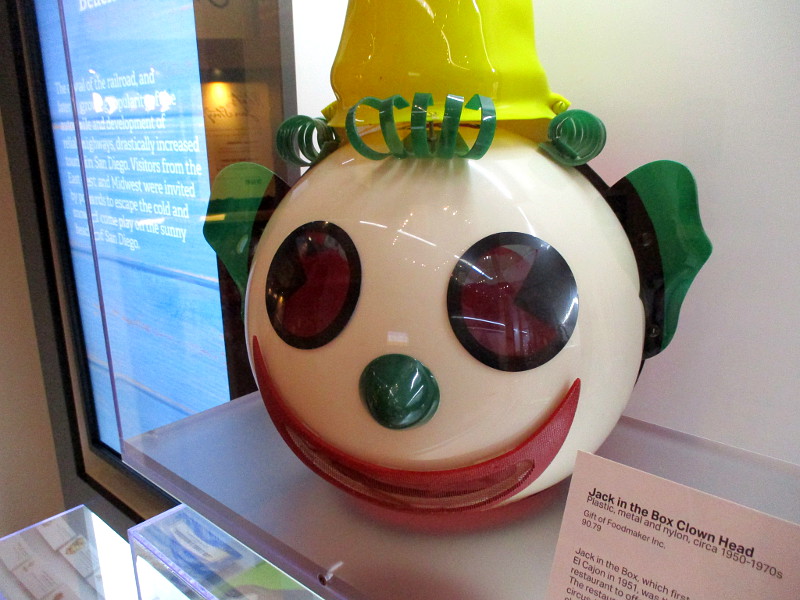
How many of you used to pull through Jack in the Box half a century ago, when happy clown heads decorated the fast food restaurant’s roofs and served as the drive-thru speaker box? I remember it from my own childhood.
Last weekend, when I saw this Jack in the Box Clown Head (circa 1950’s to 1970’s) in a display case at the San Diego History Center, I had to smile.
What memories do you have?
…
I live in downtown San Diego and love to walk around with my camera! You can follow Cool San Diego Sights via Facebook or Twitter!
You can easily explore Cool San Diego Sights by using the search box on my blog’s sidebar. Or click a tag! There are thousands upon thousands of photos for you to enjoy!
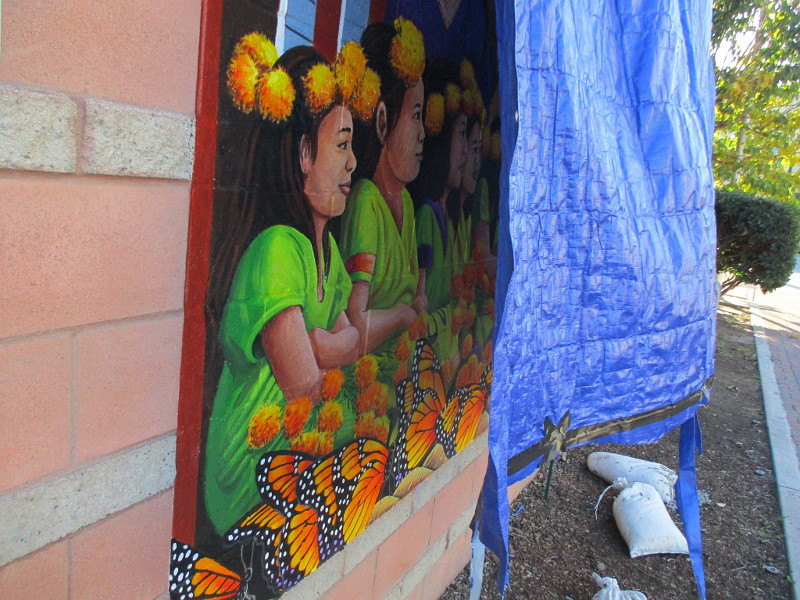
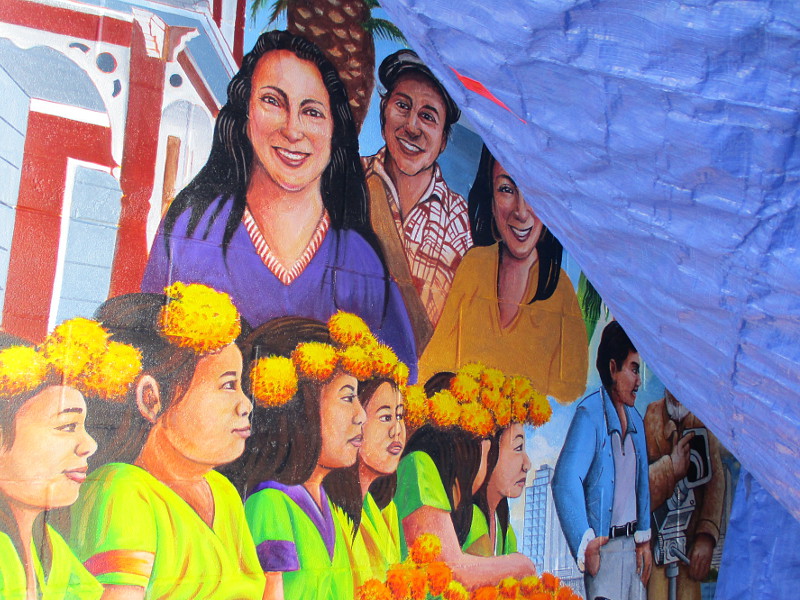
A beautiful new mural is set to make its debut in National City this week. The artwork has been painted on one side of the National City Chamber of Commerce and faces Morgan Square Plaza with its many arches.
I was walking through National City yesterday when I noticed a blue tarp flapping in the wind on the wall. Bright color was peeking out from one corner!
The mural memorializes “the life of Manuel “Memo” Cavada, a longtime community photographer who passed away in 2020 after having captured 50 years of local history.” It was painted by artists Guillermo Aranda, Sal Barajas and David Avalos.
The mural will make its debut during an unveiling on December 15.
Next time I walk this way, I’ll take pics!
UPDATE!
Two weeks later, I walked past the Chamber of Commerce again, and I took photos of the revealed mural! See it in all its glory here!
…
I live in downtown San Diego and love to walk around with my camera! You can follow Cool San Diego Sights via Facebook or Twitter!
One of the most fascinating museums in San Diego County is located in the city of Lemon Grove.
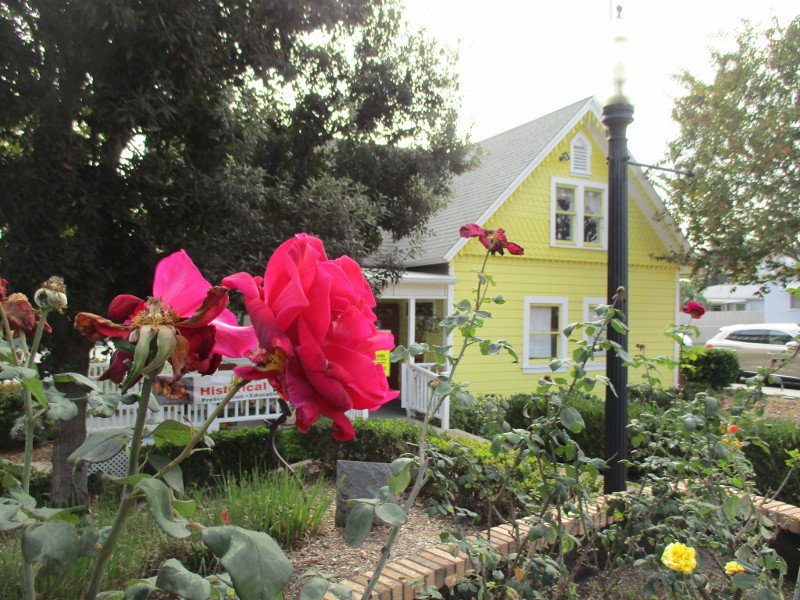
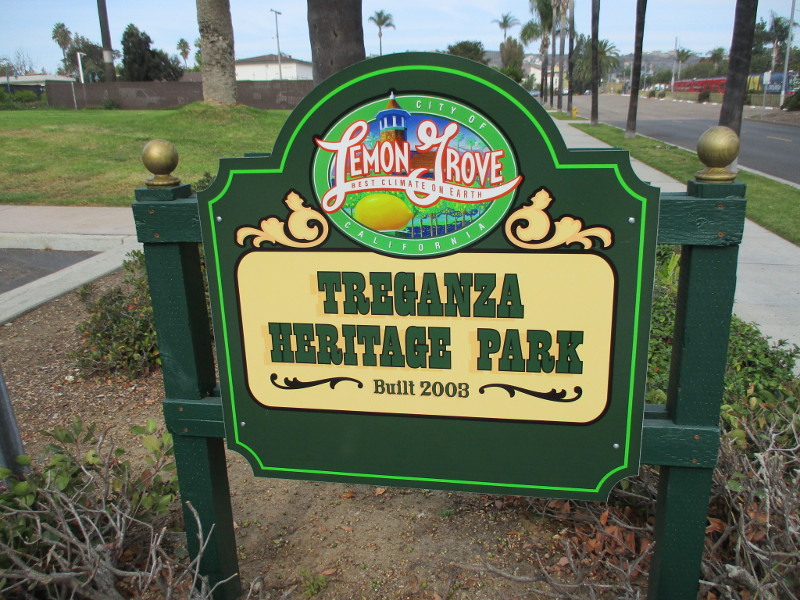
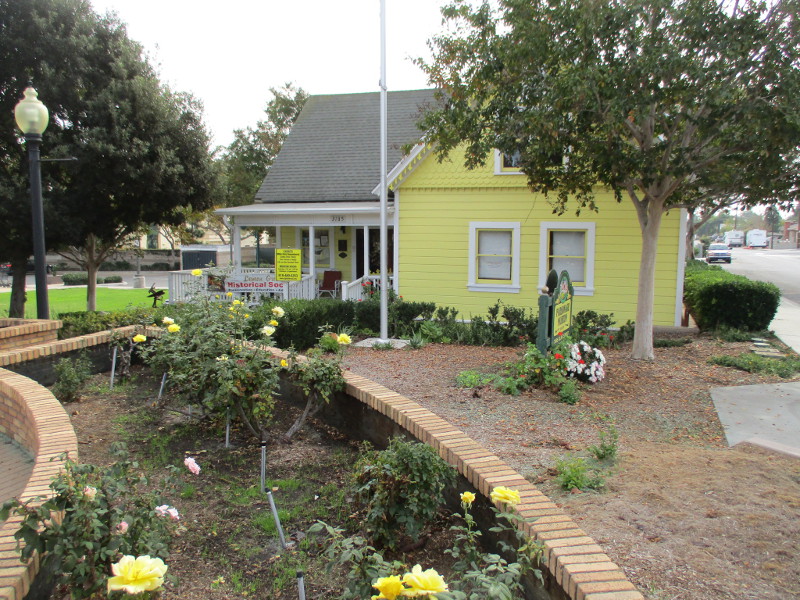
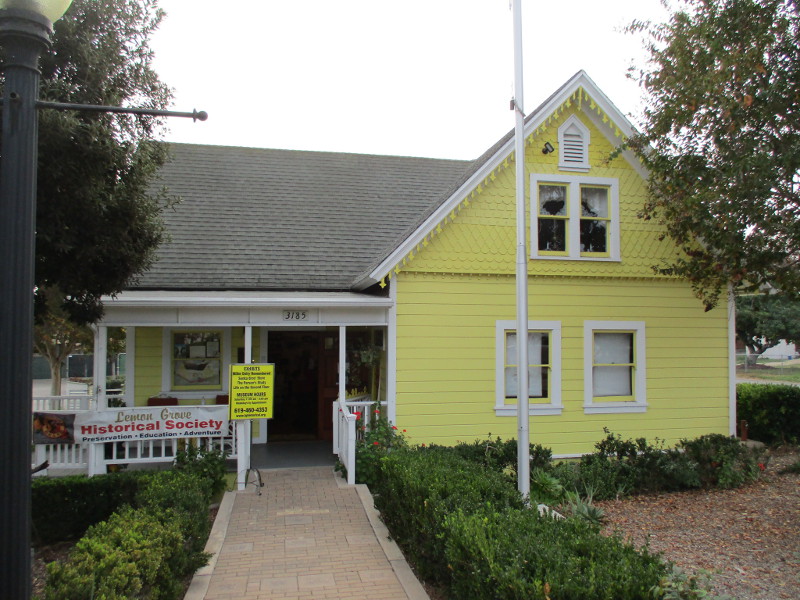
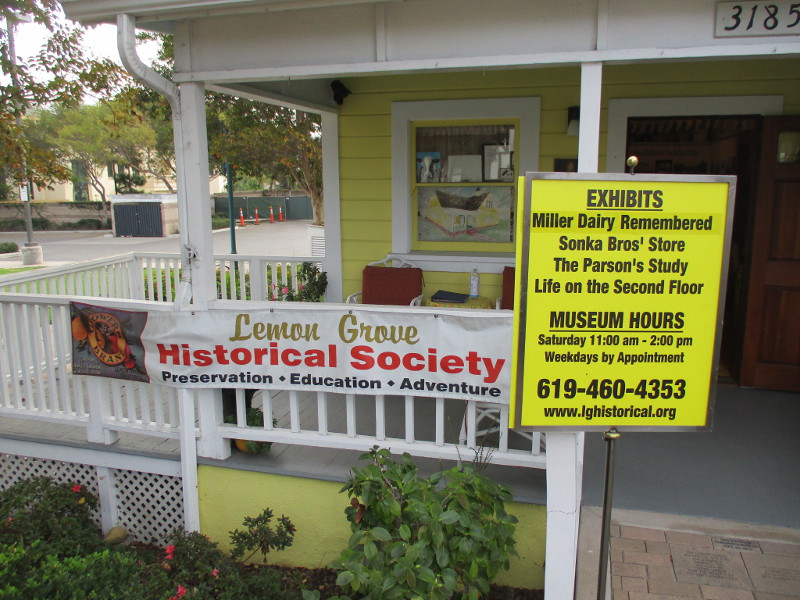
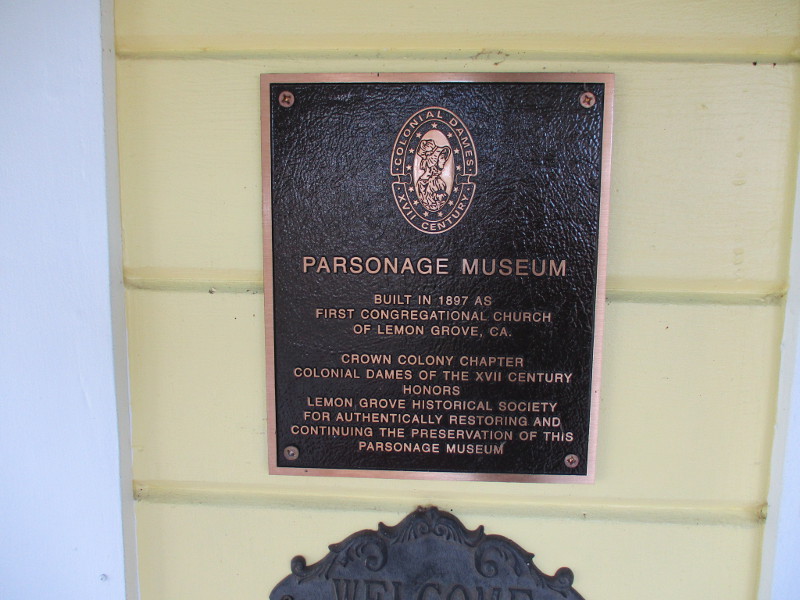
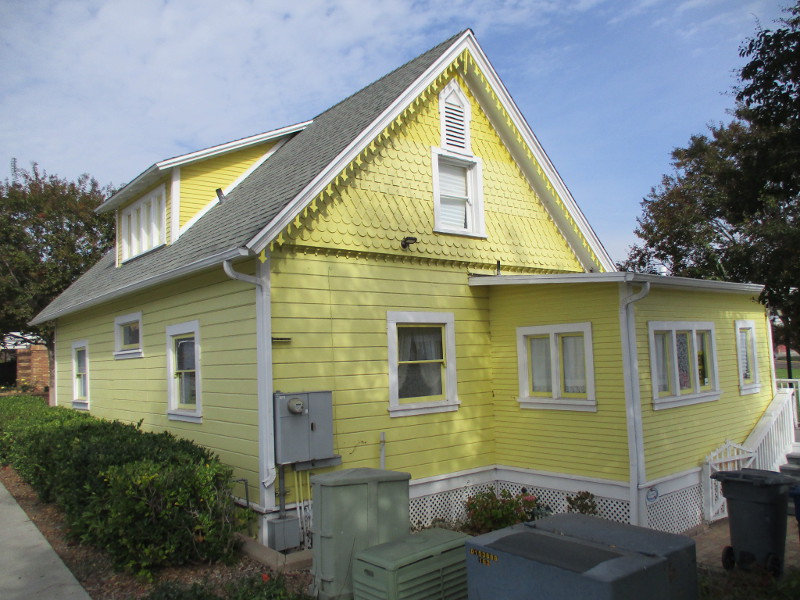
The Parsonage Museum, operated by the Lemon Grove Historical Society, occupies a beautifully restored Victorian building at Treganza Heritage Park. The building began as Lemon Grove’s first church, the 1897 Atherton Chapel.
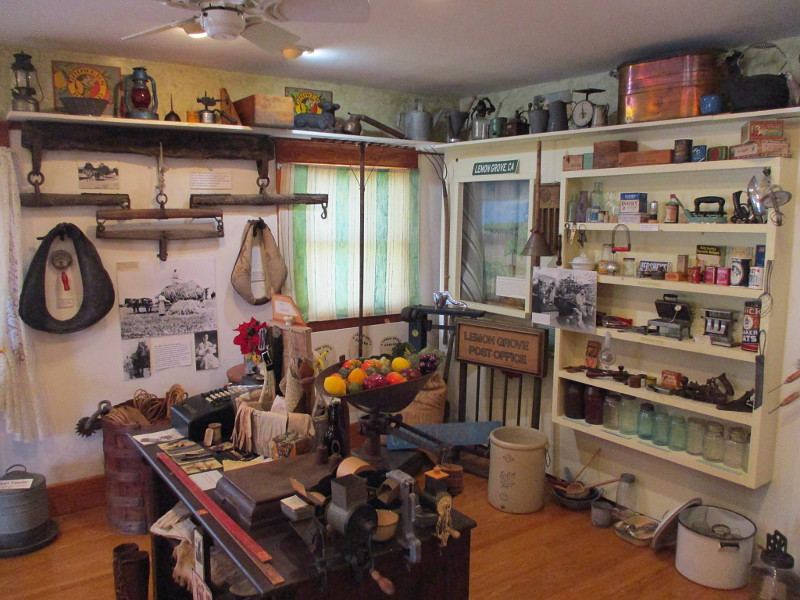
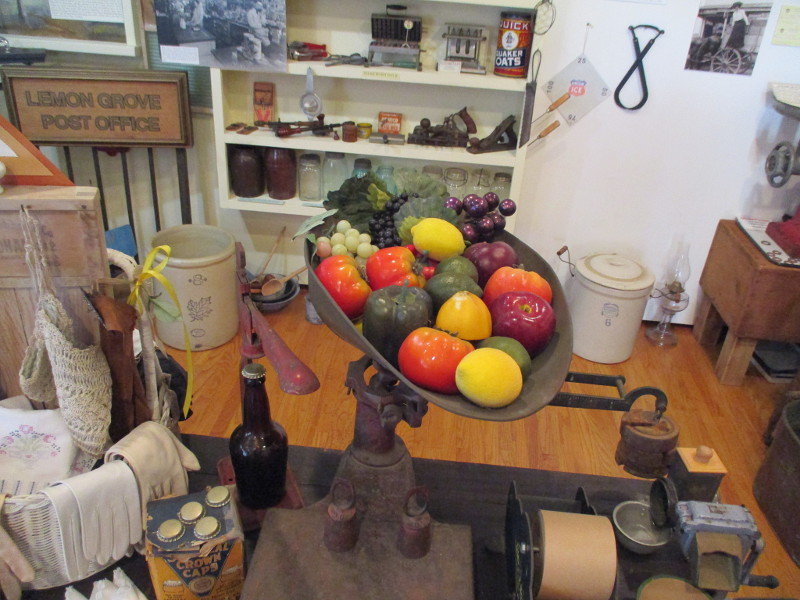
The old church was eventually moved from its original location, served as a community meeting hall, then became a private residence. Today it houses a museum whose exhibits recall a time when Lemon Grove was a small agricultural town with citrus orchards and packing houses, a general store, and a boast of the Best Climate on Earth!
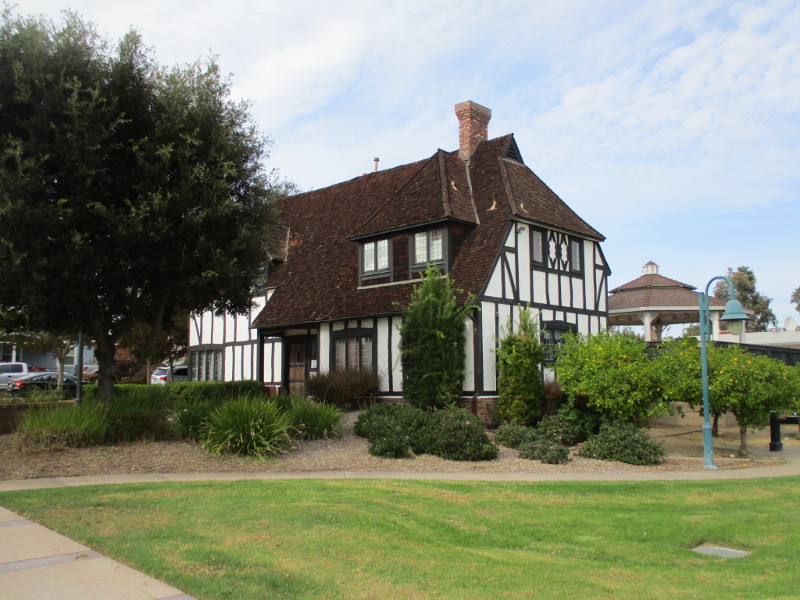
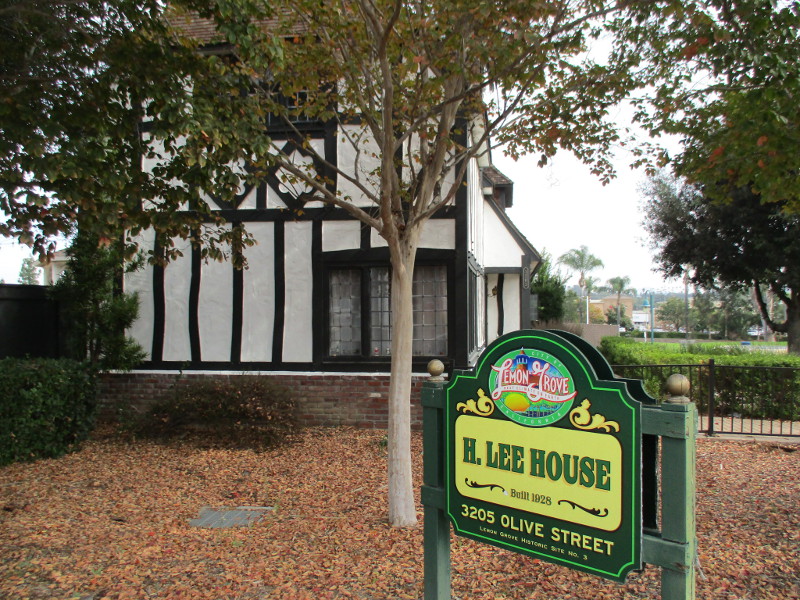
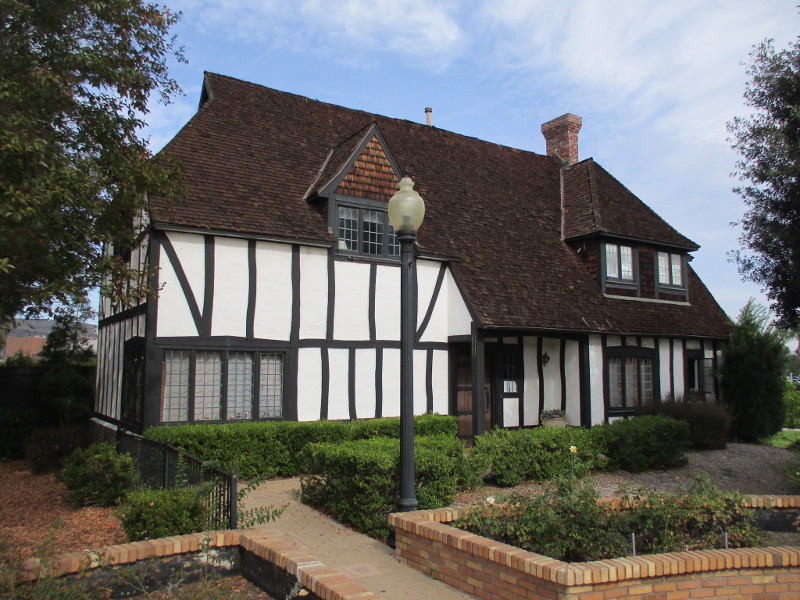
I walked about Treganza Heritage Park and visited the Parsonage Museum last weekend. I also took a quick look at the 1928 H. Lee House, a Tudor Revival structure that stands nearby in the park and serves as a cultural center.
I urge anyone interested in the history of San Diego and Lemon Grove to head to the Parsonage Museum on a day when they are open. See their website for more information here!
To get an idea of what you’ll discover, please read my photo captions!
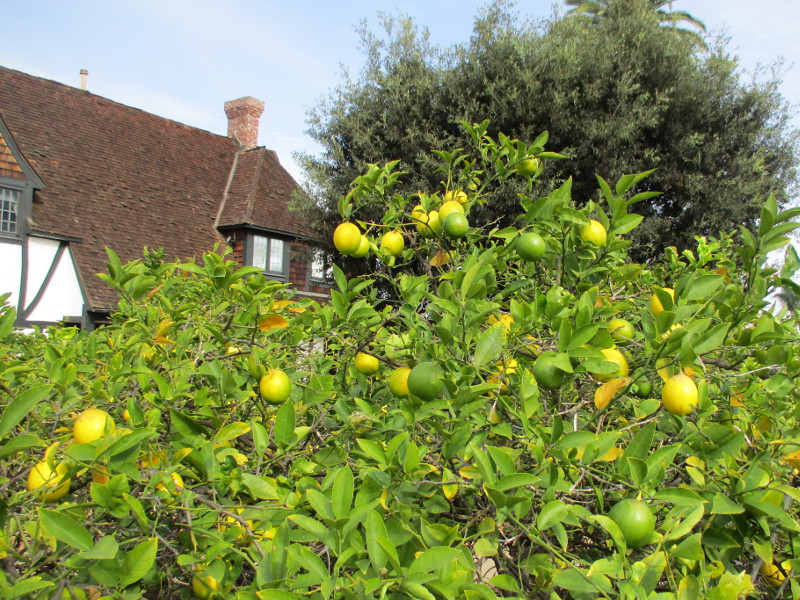
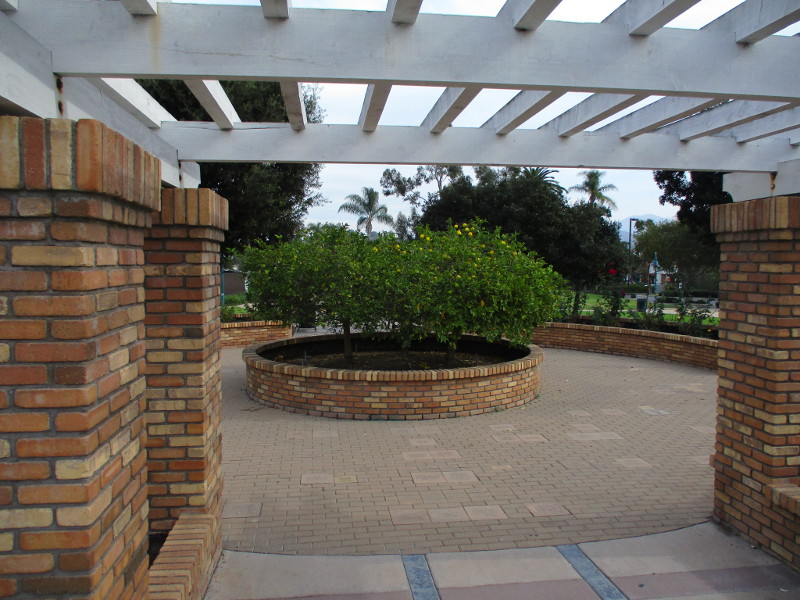
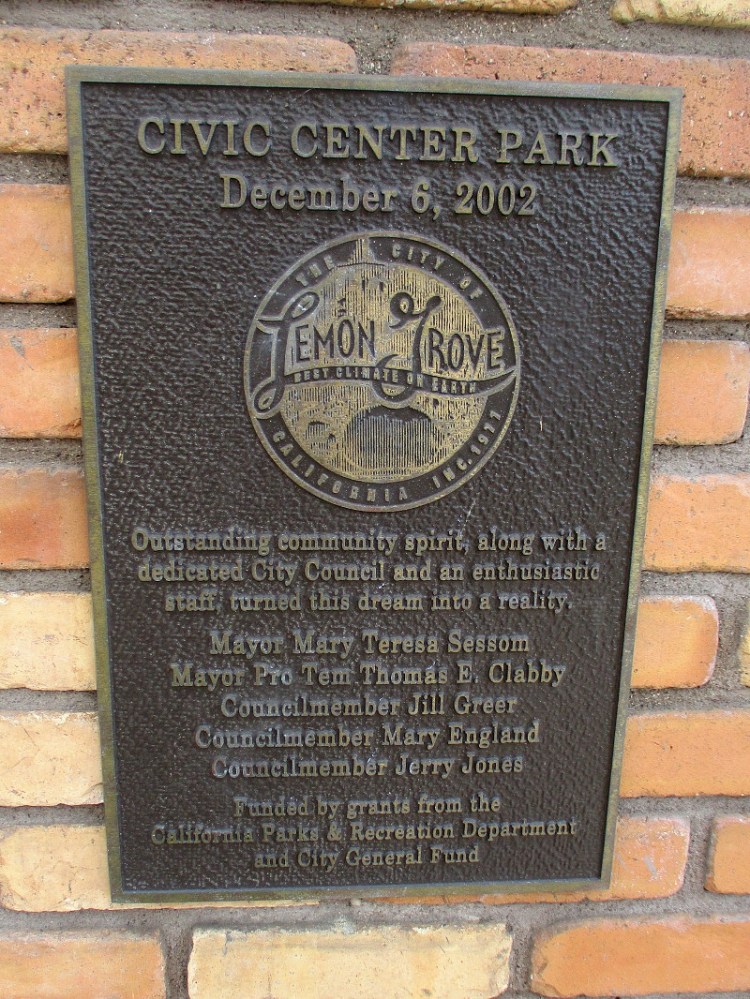
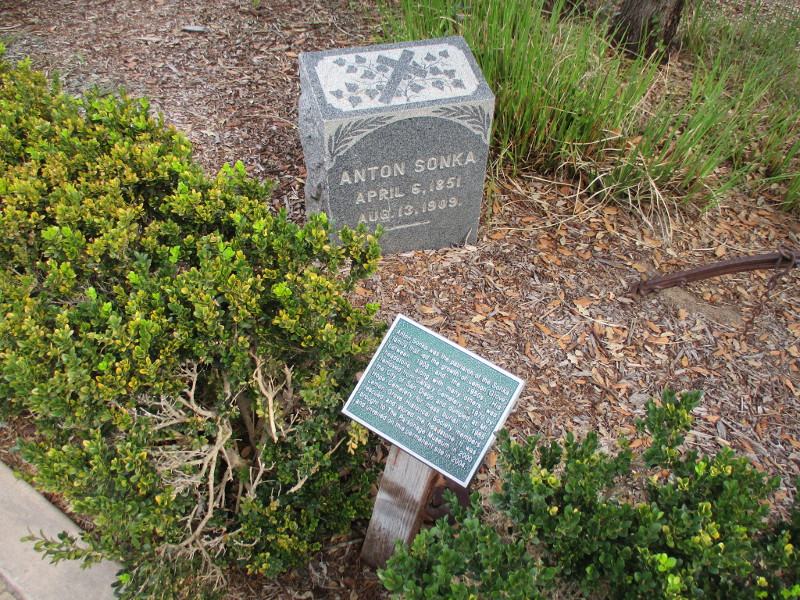
Treganza Heritage Park in Lemon Grove was first called Civic Center Park. It’s name was changed in 2020. The Treganza family was an influential pioneer family in Lemon Grove.A view of the H. Lee House. It was moved to this location to make way for the extension of State Route 125.The H. Lee House was built in 1928. It was designed by British architect Frederick C. Clemesha. Today it serves as a cultural center, where events such as History Alive lectures can be enjoyed. One more photo of the handsome H. Lee House.Lemon trees stand in a plaza between the H. Lee House and the Parsonage Museum.The small plaza welcomes visitors to Treganza Heritage Park.A 2002 dedication plaque from back when it was called Civic Center Park.Now turning to look at the Parsonage Museum. The restored Folk Victorian building, the 1897 Atherton Chapel, served as the only Lemon Grove church until 1912. Recovered grave marker of Anton Sonka just outside the museum entrance.
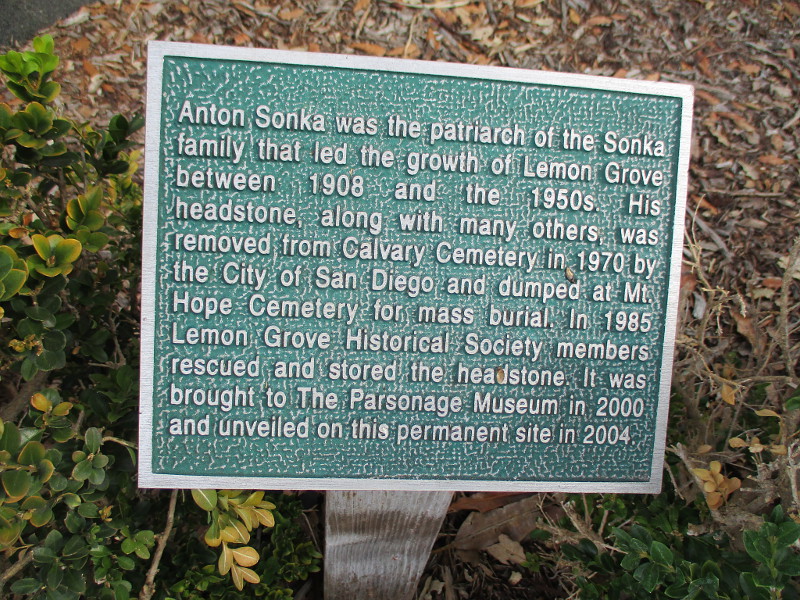
Anton Sonka was the patriarch of the Sonka family that led the growth of Lemon Grove between 1908 and the 1950s. His headstone, along with many others, was removed from Calvary Cemetery in 1970 by the City of San Diego and dumped at Mt. Hope Cemetery for mass burial. In 1985 Lemon Grove Historical Society members rescued and stored the headstone. It was brought to The Parsonage Museum in 2000 and unveiled on this permanent site in 2004.
(If you’d like to learn more about this callous dumping of gravestones, which were discovered in a gully at Mt. Hope Cemetery, I posted a blog concerning it here.)
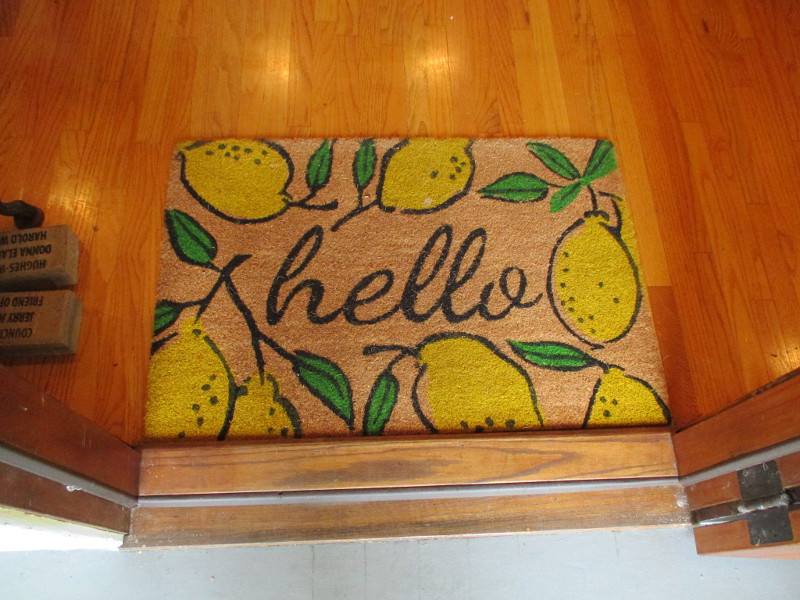
When I visited in November 2021, the Parsonage Museum was featuring several historical exhibits concerning Lemon Grove.The museum building was “Built in 1897 as First Congregational Church of Lemon Grove.”Stepping into the museum, greeted by a lemony, welcoming doormat!Look at what’s in the museum! A recreation of the Sonka Brothers General Store.Items on display recall Lemon Grove’s rural history, which includes general stores where the community would gather.
The Sonka Brothers General Store stood near the center of town for decades. You can see photos of the Lemon Grove History Mural that’s painted on the south side of the historic Sonka Brothers General Store building here!
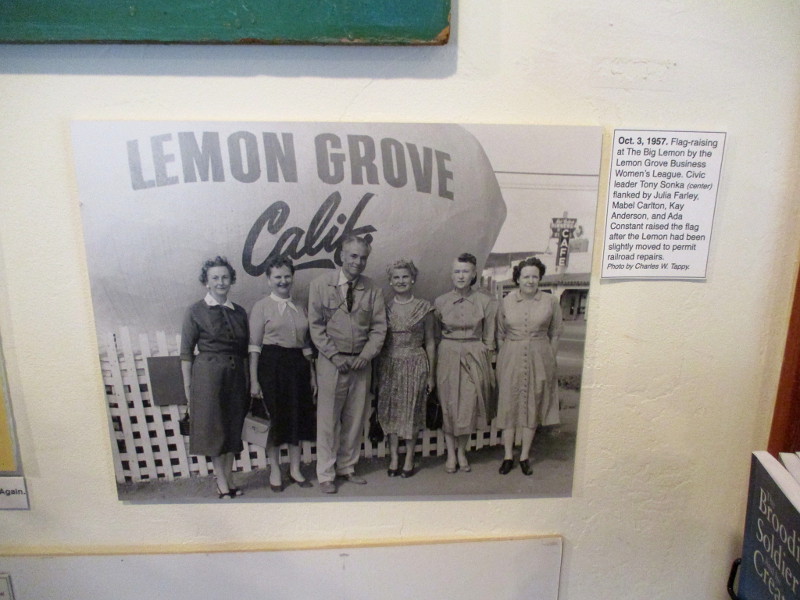
Photo from October 3, 1957 of The Big Lemon during a flag-raising. Civic leader Tony Sonka stands at the center.
If you like to see The Big Lemon today, which still stands on Broadway, check out these photos!
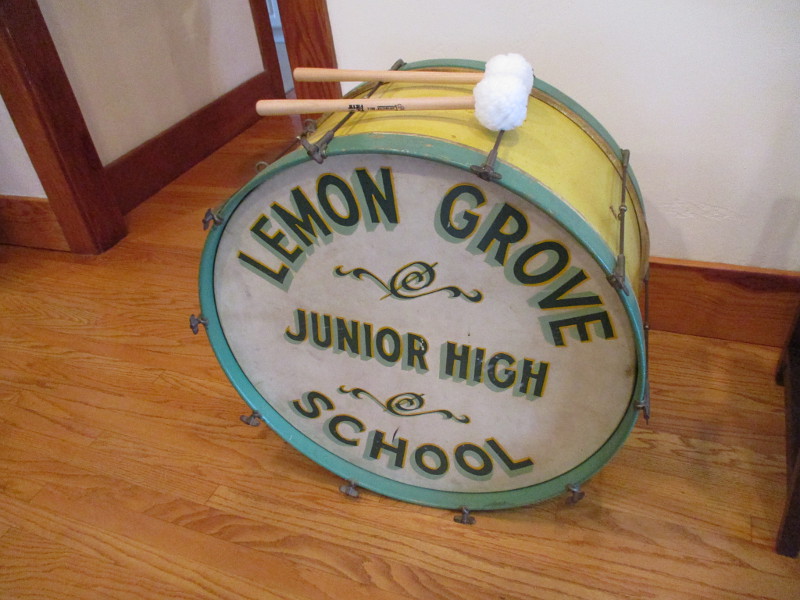
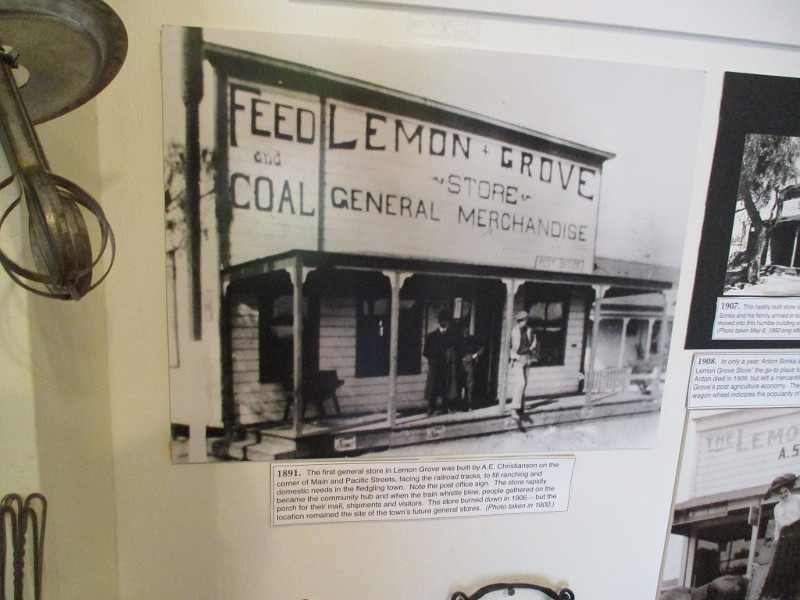
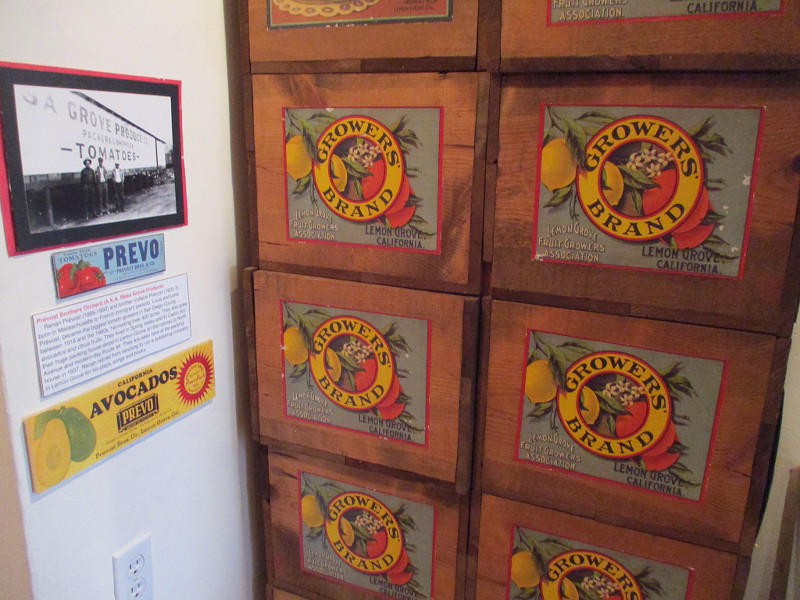
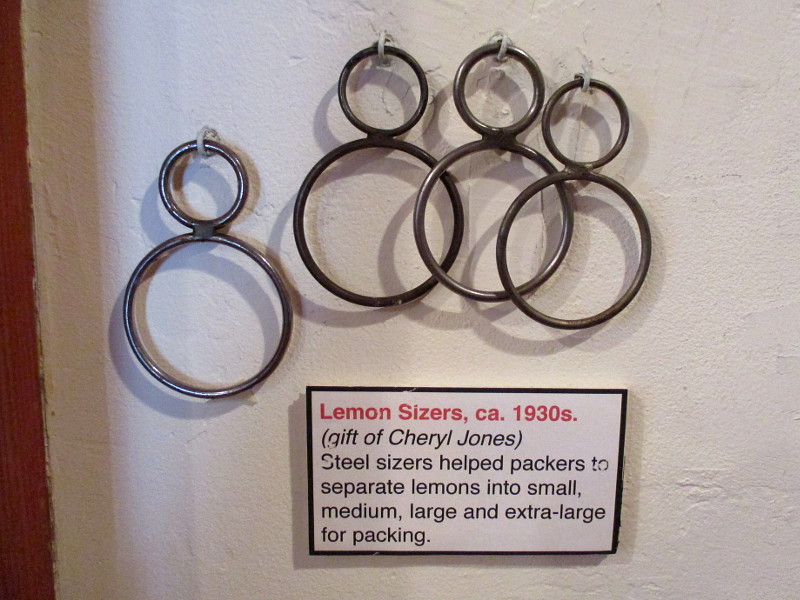
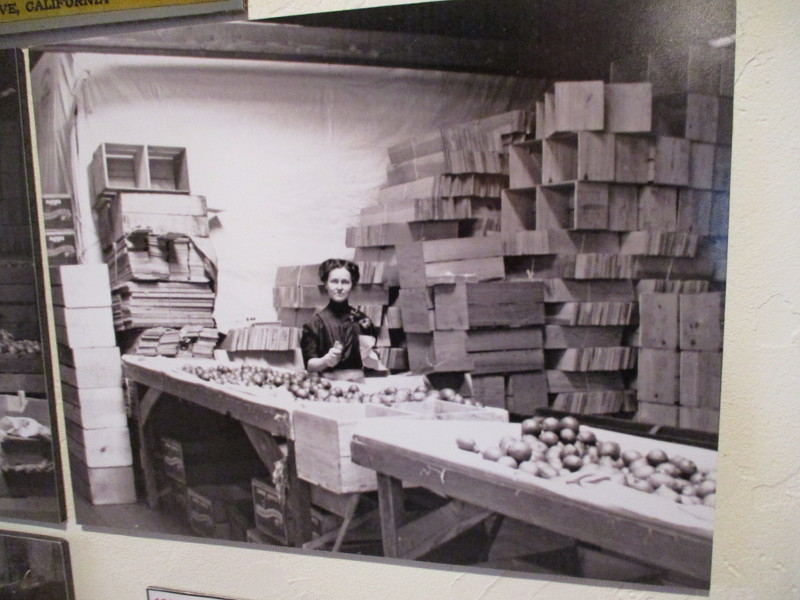
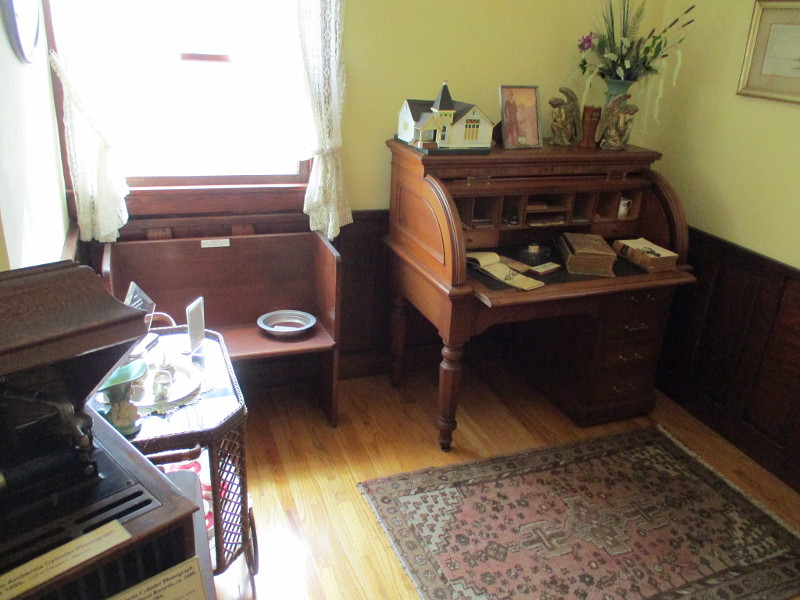
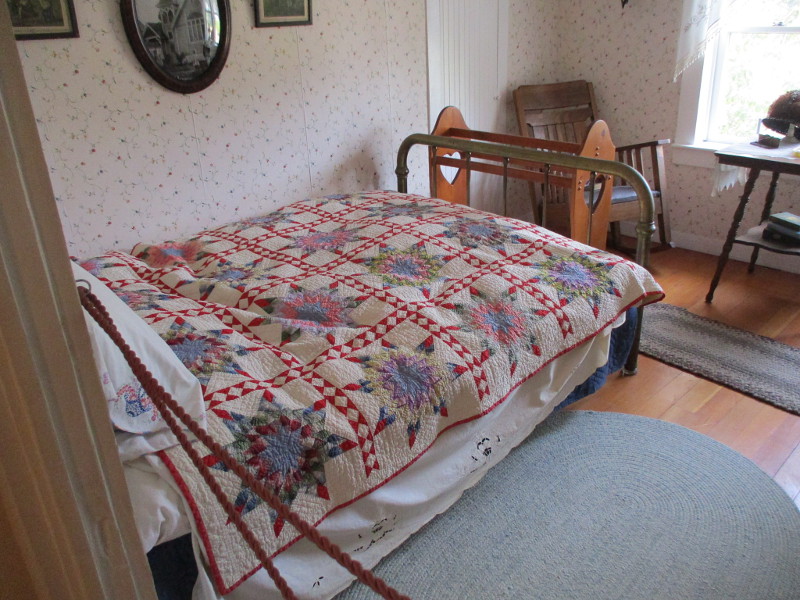
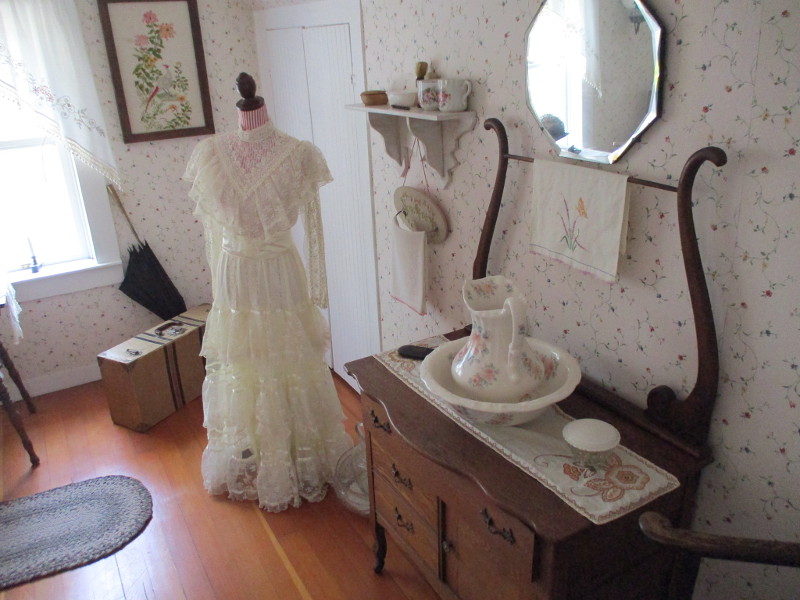
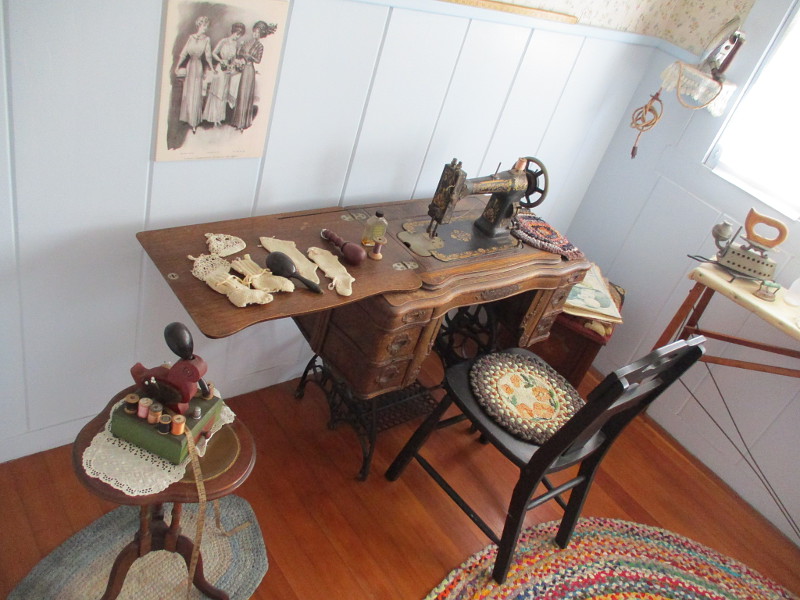
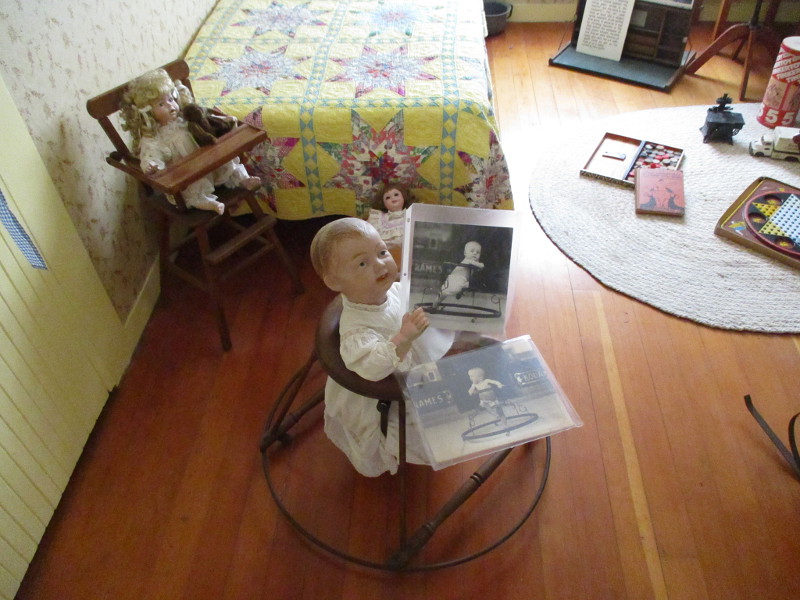
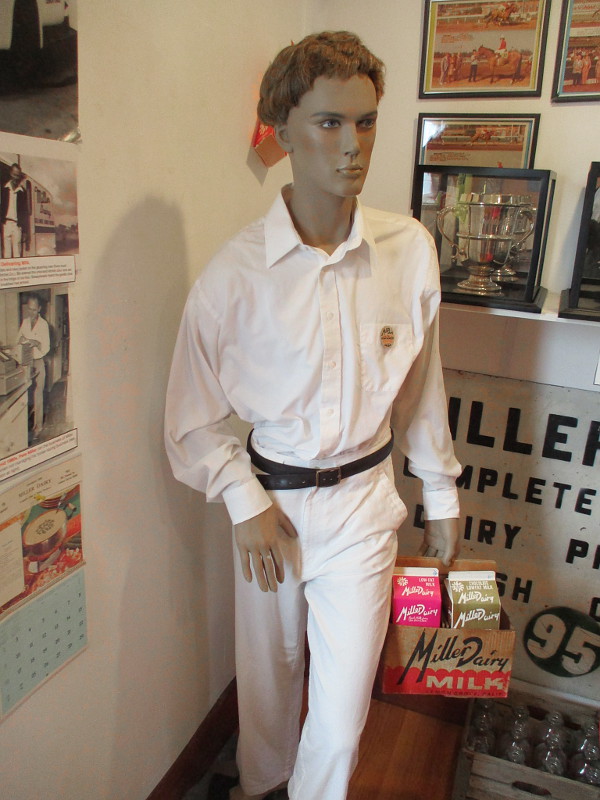
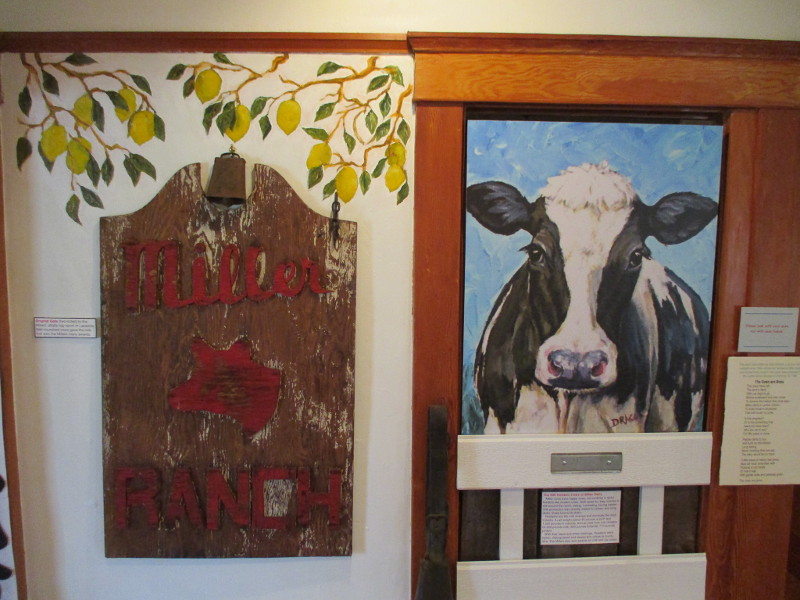
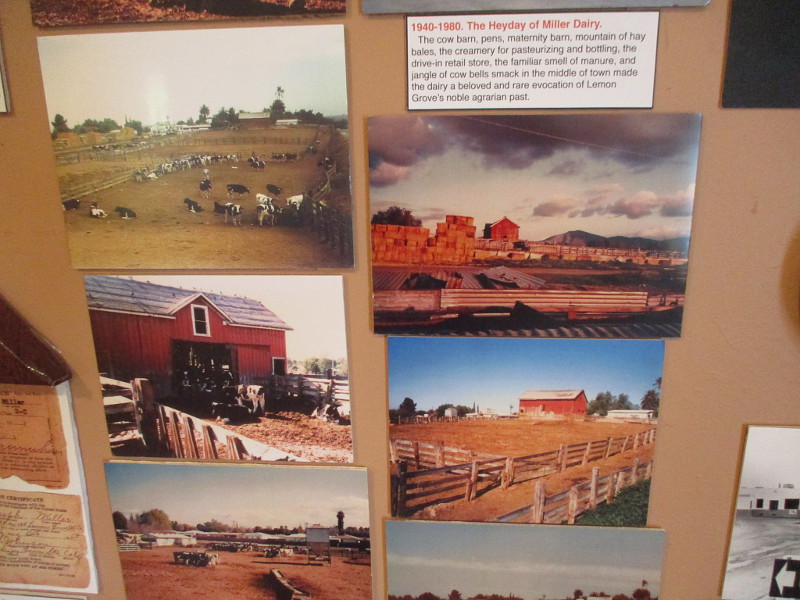
Old drum from the Lemon Grove Junior High School band.1891 photograph of the first general store in Lemon Grove, built by A. E. Christianson at Main and Pacific Streets.The many displays at the Parsonage Museum include these Lemon Grove Fruit Growers Association packing crates.Lemon sizers, circa 1930’s. Packers would separate lemons by size.Woman holding lemon sizer, with stacked ready-to-assemble crates nearby.A room on the ground floor of the Parsonage Museum recreates the Parson’s Study. Reverend Isaac Atherton established the First Congregational Church of Lemon Grove in 1894. The building was constructed in 1897.Several rooms can be viewed on the second floor of the Parsonage Museum, including this Parents’ Room, or bedroom.The Sewing Room.The Children’s Room.Back on the museum’s ground floor, in a corner gallery, the current exhibit is titled Miller Dairy Remembered. This local dairy sold its first milk in 1926. Houses were finally built on the ranch site in the 1980’s. An important chapter of Lemon Grove’s agrarian past is recalled.Lemon Grove’s old Miller Dairy and their 300 freely roaming Holstein cows are fondly remembered at the Parsonage Museum.Historical photos show the Miller Dairy in Lemon Grove, from 1940-1980.One last look at the lemon yellow Parsonage Museum!
…
I live in downtown San Diego and love to walk around with my camera! You can follow Cool San Diego Sights via Facebook or Twitter!
You can easily explore Cool San Diego Sights by using the search box on my blog’s sidebar. Or click a tag! There are thousands upon thousands of photos for you to enjoy!
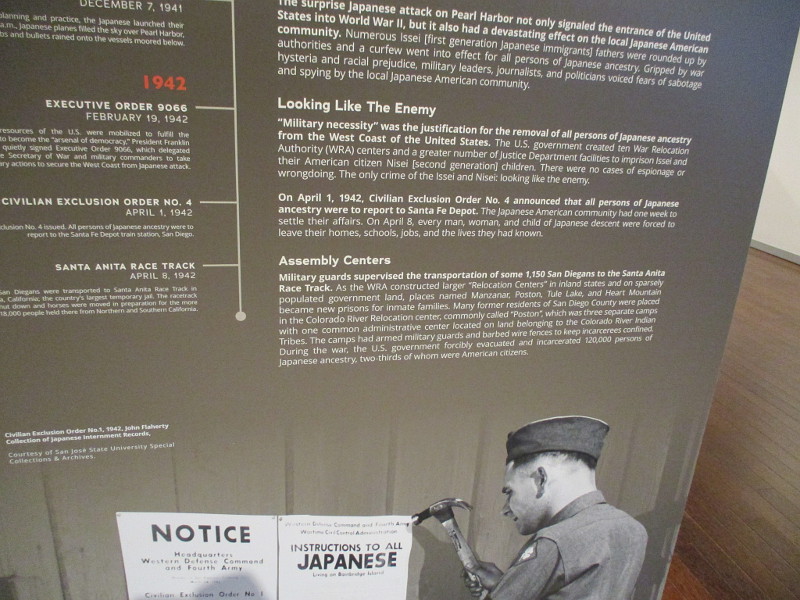
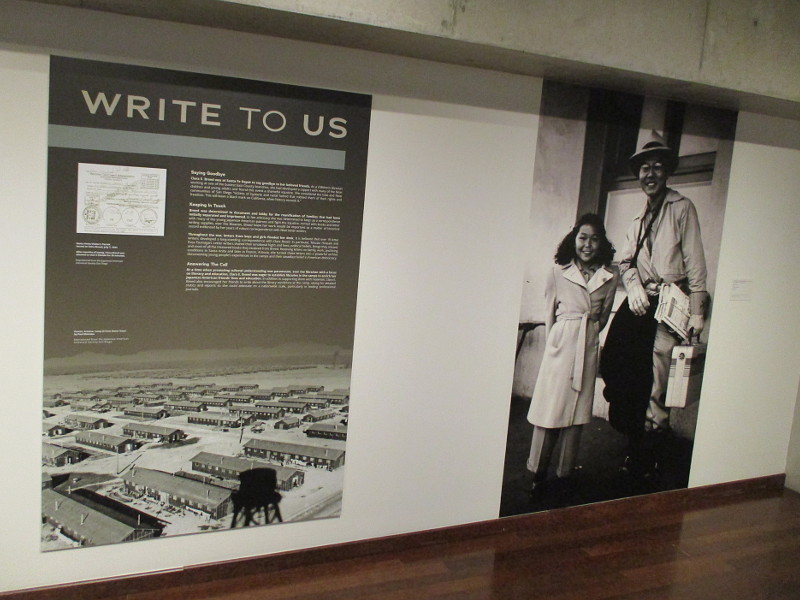
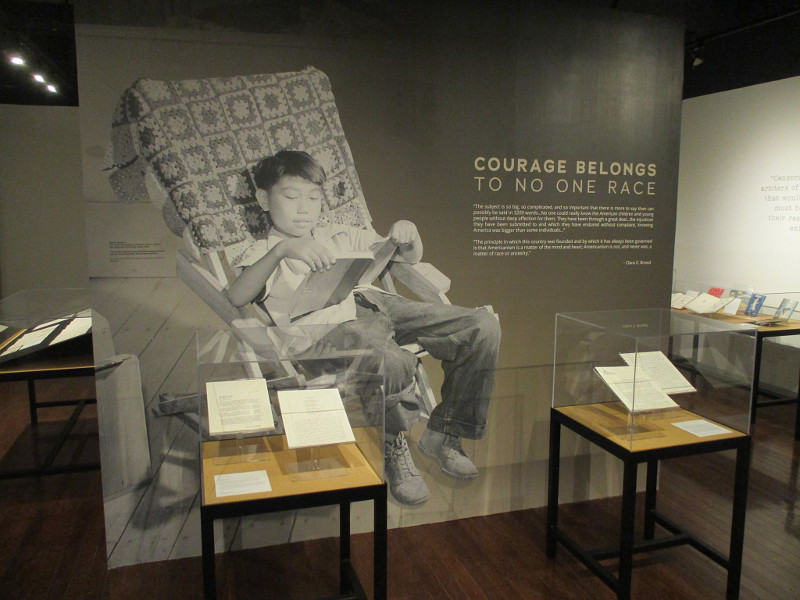
An inspiring exhibit now on display at the San Diego Central Library is titled Call to Serve: Clara E. Breed & The Japanese American Incarceration. It can be viewed through January 2022 in the Art Gallery on the downtown library’s Ninth Floor.
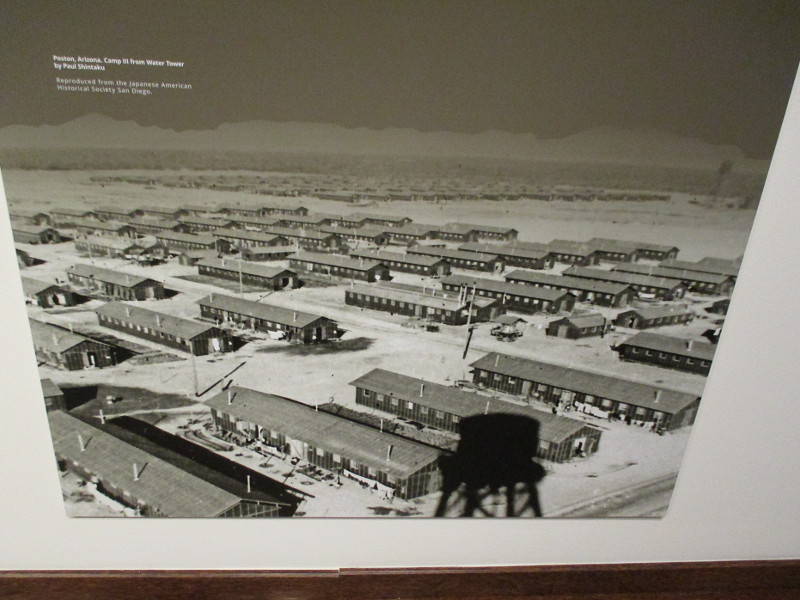
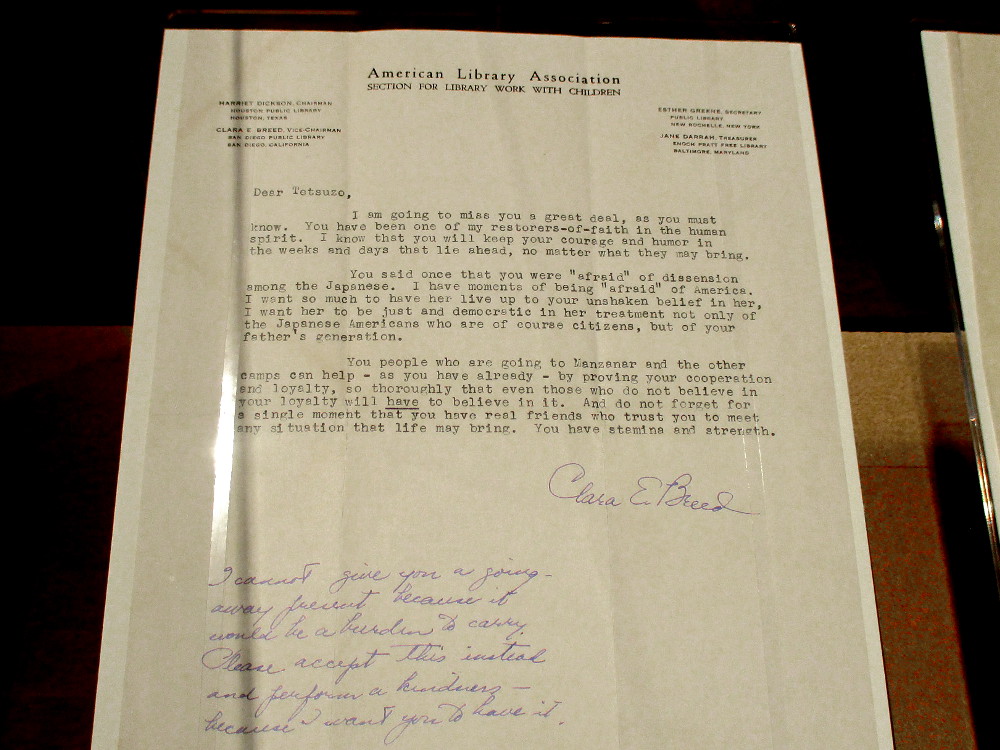
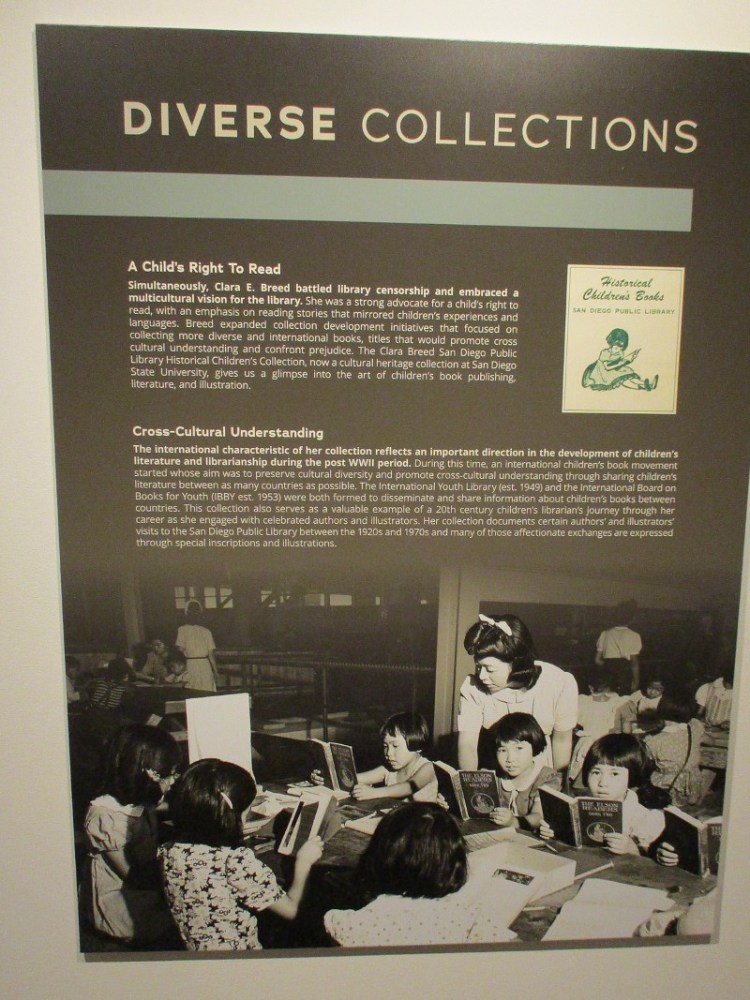
The exhibit recalls how San Diego librarian Clara E. Breed comforted and advocated for those American citizens of Japanese ancestry who were sent away to internment camps during World War II. She particularly helped and encouraged the children, with whom she kept in communication. Part of the exhibit includes many of her letters.
Clara Breed also fought against the censorship of books, and for a library collection that contained more international and multicultural material, that would speak to readers from diverse backgrounds.
I was touched by Clara’s compassion as I read many of the letters. She clearly had a love for the hundreds of children that she tirelessly championed. Anyone reading her words will be moved.
A replica of a barracks that was used to incarcerate Japanese-Americans during World War II can be viewed on the Central Library’s First Floor, near the main entrance. I blogged about it about a month ago here.
“Military necessity” was the justification for the removal of all persons of Japanese ancestry from the West Coast of the United States…On April 1, 1942, Civilian Exclusion Order No. 4 announced that all persons of Japanese ancestry were to report to Santa Fe Depot…Military guards supervised the transportation fo some 1,150 San Diegans to the Santa Anita Race Track…“…When the children came to return their books and surrender their cards we gave them stamped postcards. Write to us. We’ll want to know where you are and how you are getting along, and we’ll send you some books to read.” –Clara E. Breed…I am going to miss you a great deal, as you must know. You have been one of my restorers-of-faith in the human spirit. I know that you will keep your courage and humor in the weeks and days that lie ahead, no matter what they may bring…
…
I live in downtown San Diego and love to walk around with my camera! You can follow Cool San Diego Sights via Facebook or Twitter!
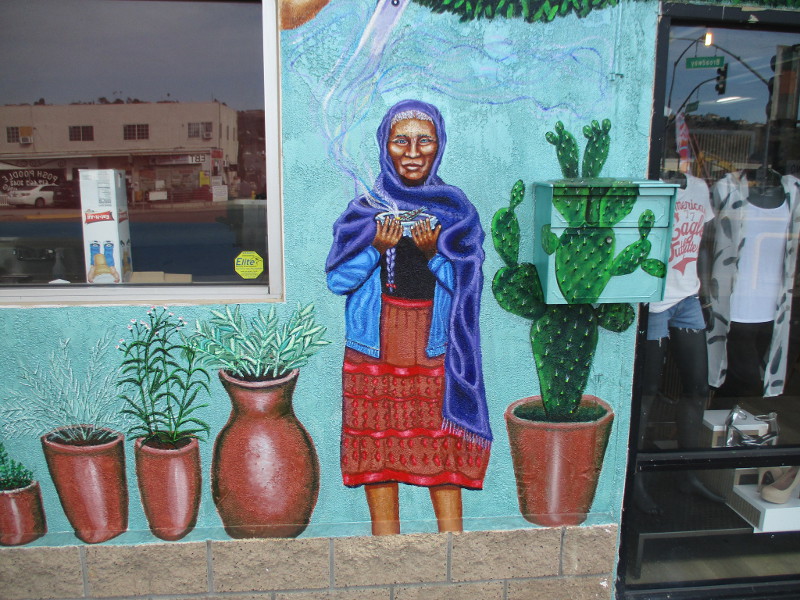
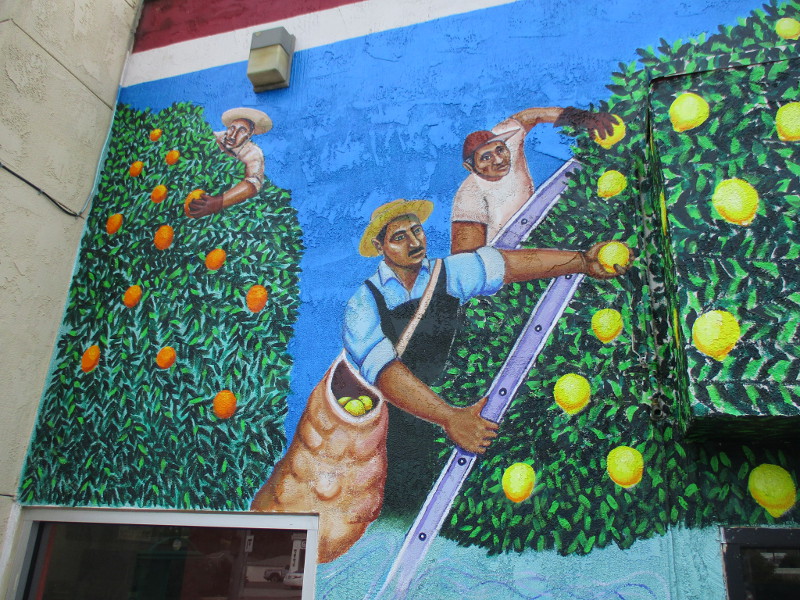
There’s a beautiful new mural on the front of the Welcome Home Boutique & Art Space in Lemon Grove. I spotted it yesterday during a walk down Broadway near Grove Street.
The art is by muralist and social justice activist Mario Chacón. It was painted this year.
Included in the artwork is the image of migrant workers collecting fruit from citrus trees.
Lemon Grove used to be largely agricultural. It’s sunny climate is perfect for growing citrus. The San Diego Union newspaper in 1894 referred to Lemon Grove as “a sea of lemon trees.”
My adventure yesterday included a visit to the Lemon Grove Parsonage Museum, which is operated by the Lemon Grove Historical Society. I’ll be sharing those fascinating photos in the next few days!
…
I live in downtown San Diego and love to walk around with my camera! You can follow Cool San Diego Sights via Facebook or Twitter!
You can easily explore Cool San Diego Sights by using the search box on my blog’s sidebar. Or click a tag! There are thousands upon thousands of photos for you to enjoy!
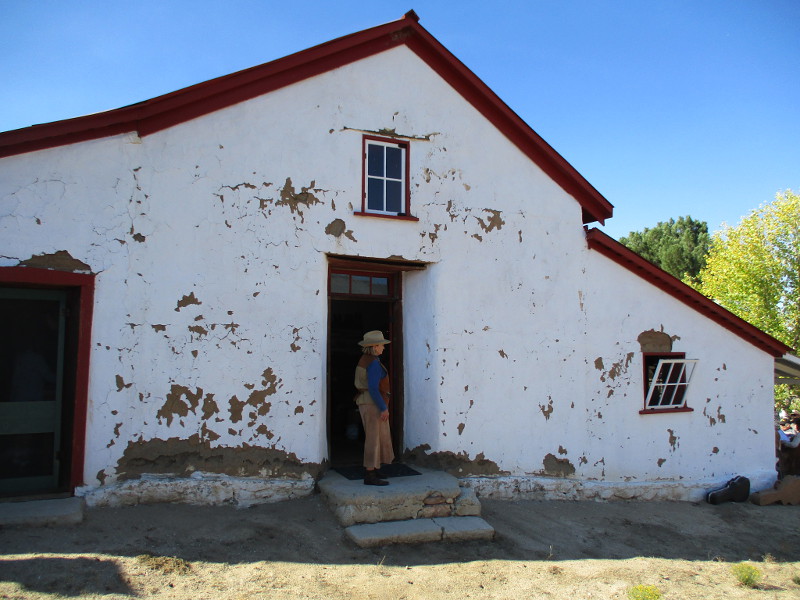
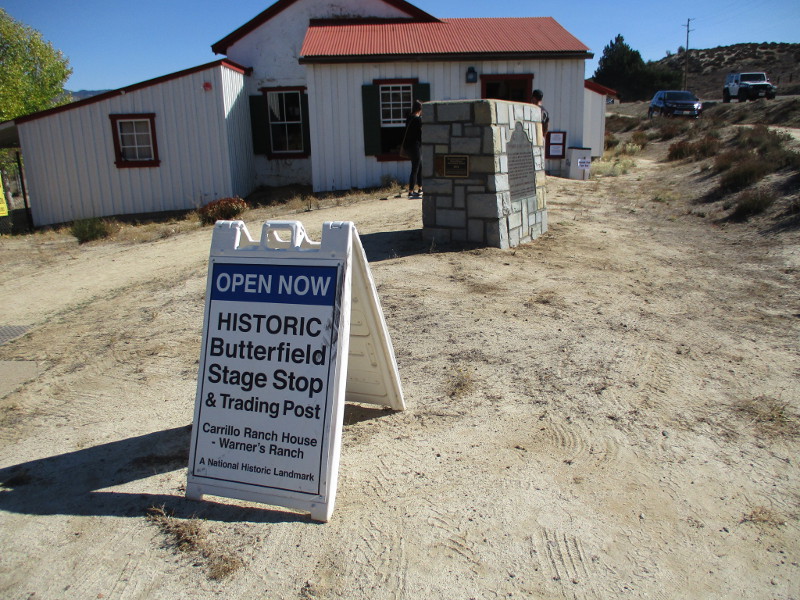
One of San Diego County’s most important historical sites can be visited in Warner Springs. The Warner-Carrillo Ranch House, built in 1857, is a National Historic Landmark maintained by SOHO, the San Diego-based Save Our Heritage Organisation.
The “Ranch House at Warner’s” preserves centuries of history. You can read a bit about the site and see some old photographs at this SOHO web page.
The adobe ranch house “represents Mexican and American culture contact during the Mexican Republic; the Frontier period of the westward migration; and the Gold Rush and the cattle ranching industry from 19th century Californio to 20th century to today.” Built beside the emigrant trail, many early settlers wrote about their experiences here.
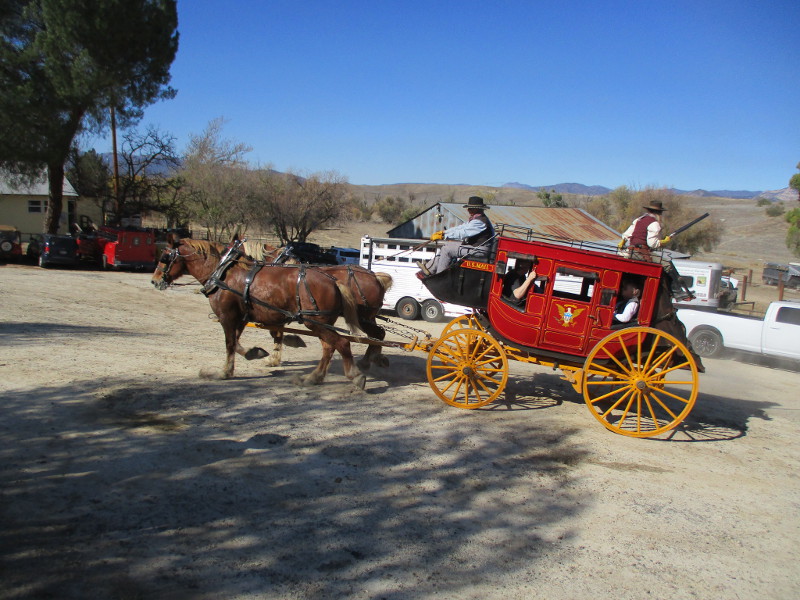
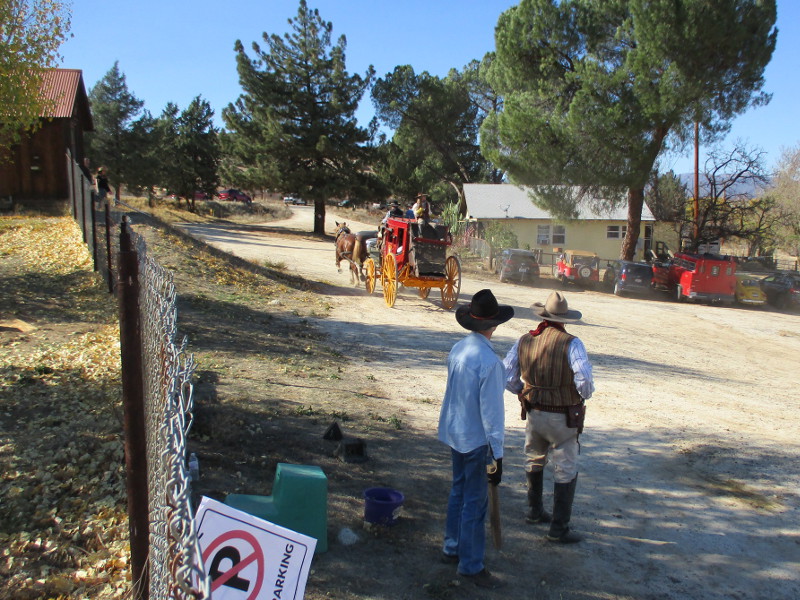
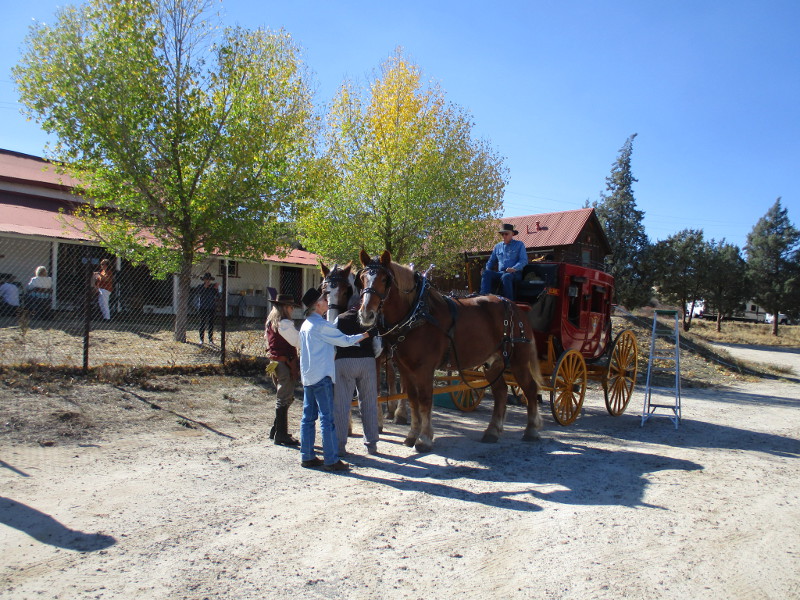
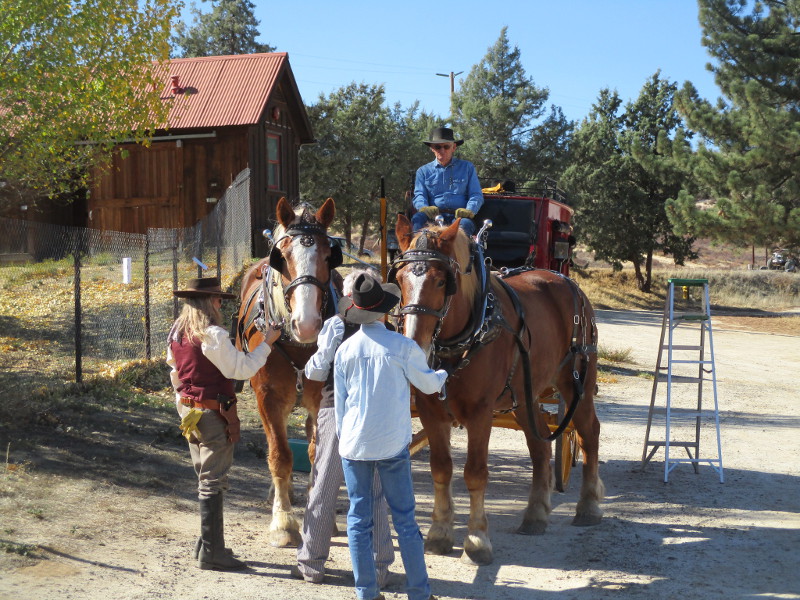
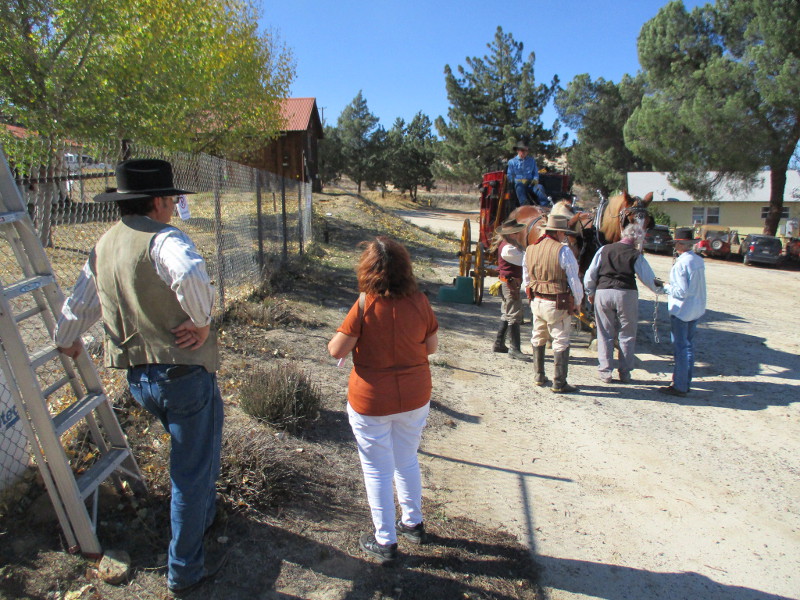
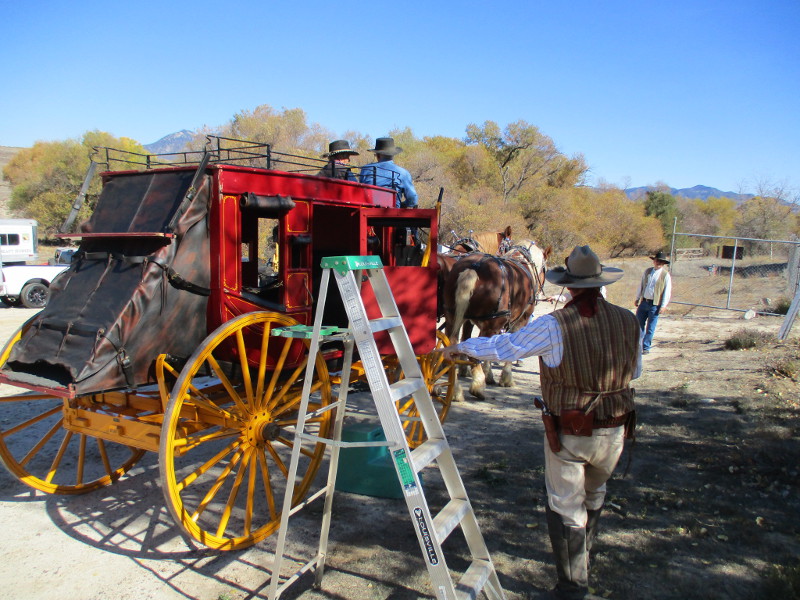
Last weekend I visited the restored adobe. I went for a special reason. One day every year at Warner’s Ranch, visitors can ride an authentic Concord stagecoach down a short stretch of the old Overland Trail. For several years, from 1858 to 1861, the ranch house served as a Butterfield Overland Stage Station. Thousands of passengers stopped for a few minutes at this swing station as they travelled through the region. If you’d like to see photos from my fun stagecoach ride, click here!
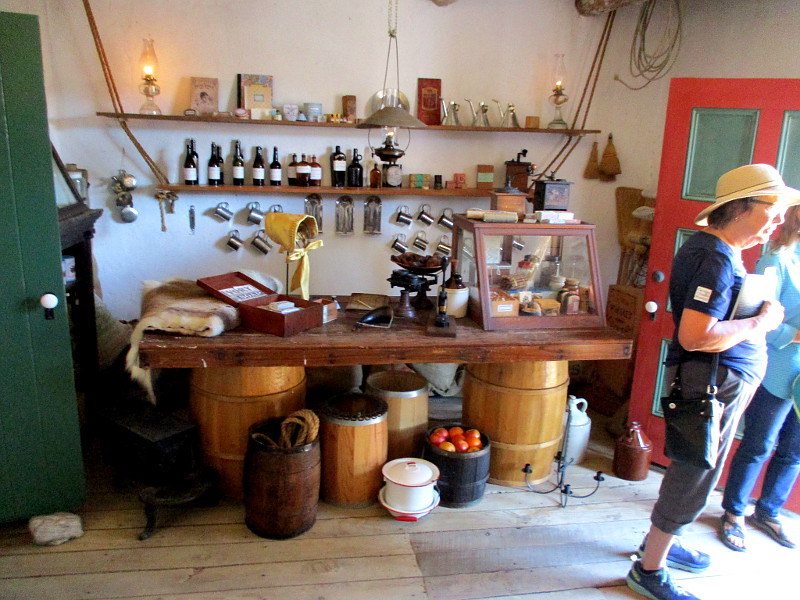
The present structure, maintained today as a museum, was built by Doña Vicenta Sepúlveda de Carrillo, an early Californio woman rancher. It consists of two main rooms and several adjacent smaller rooms that were added in later years. One of the main rooms was the sala, or living room. The other served as a trading post–a small store where travelers could purchase necessities during their brief stopover.
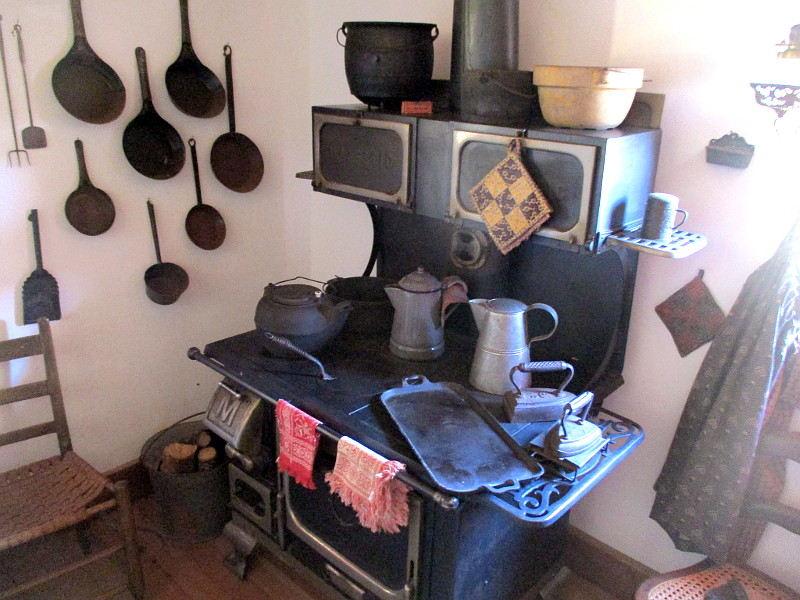
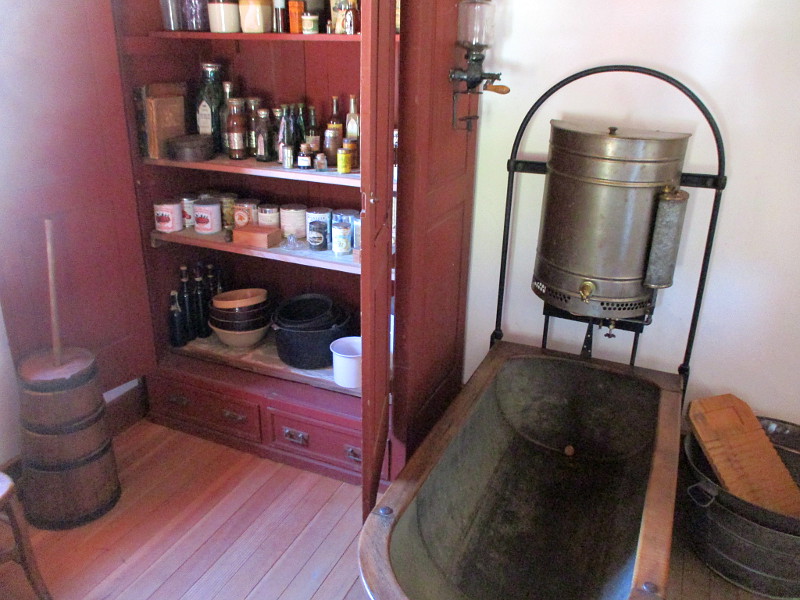
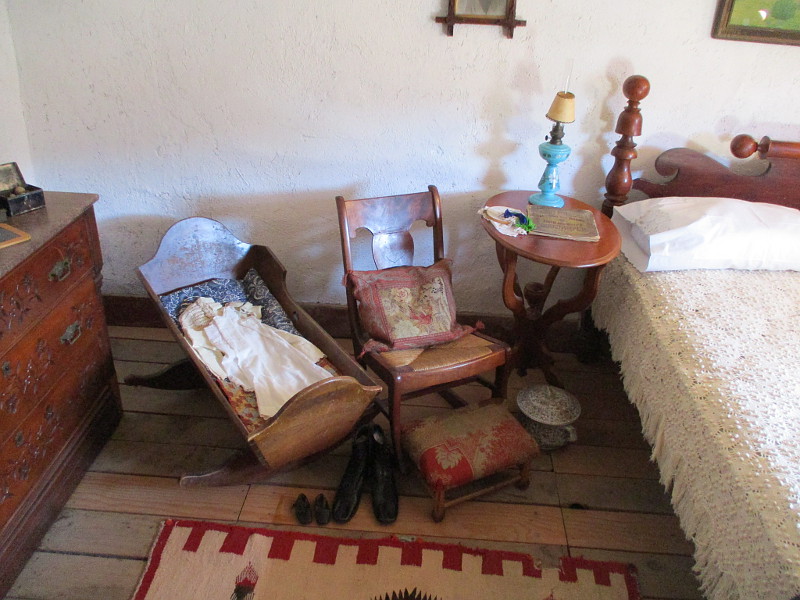
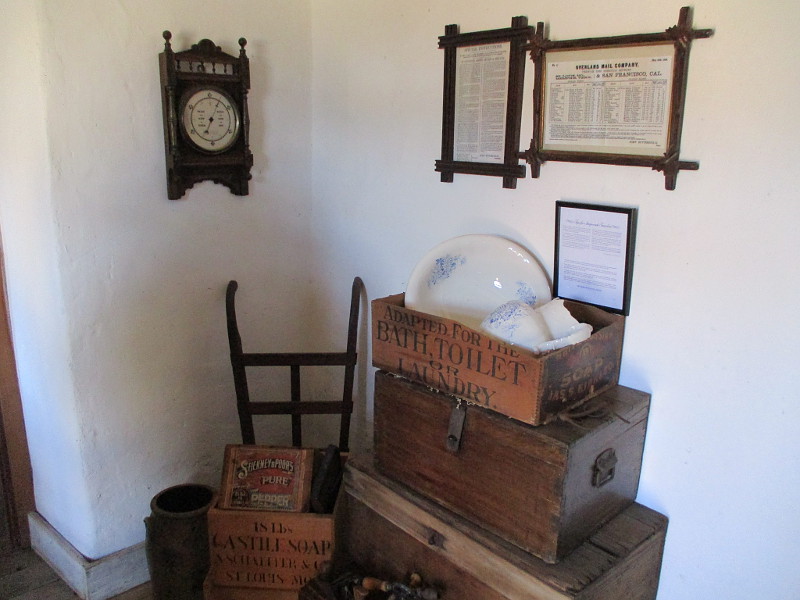
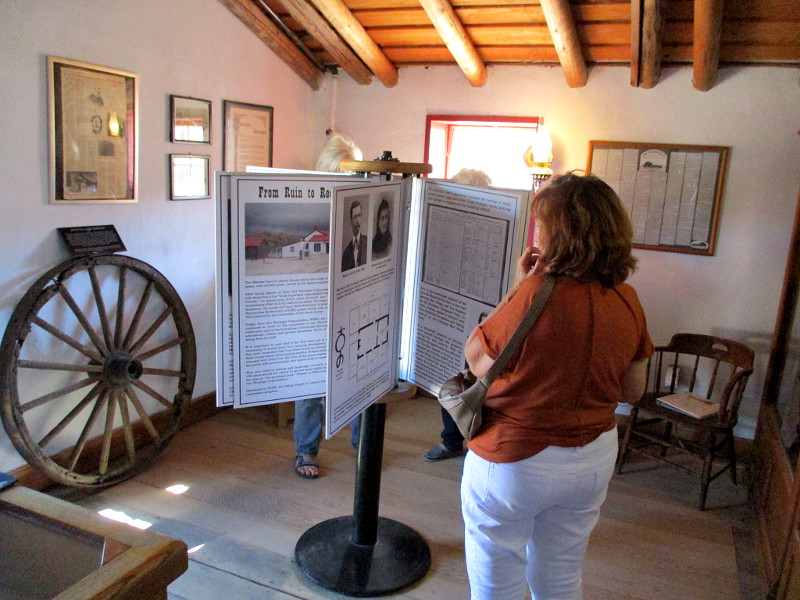
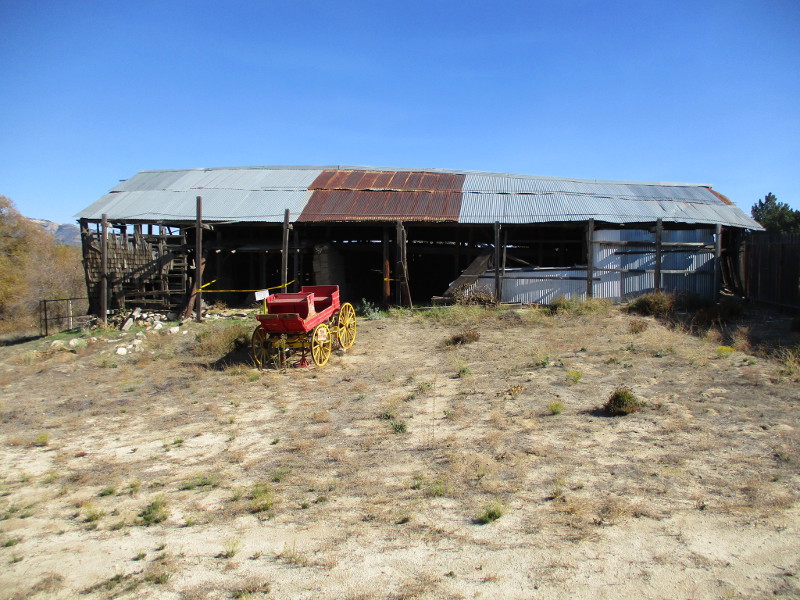
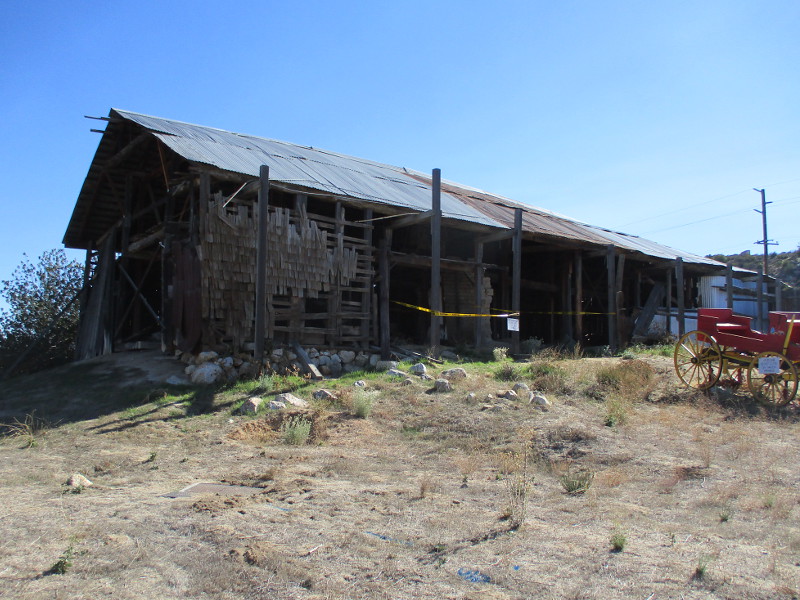
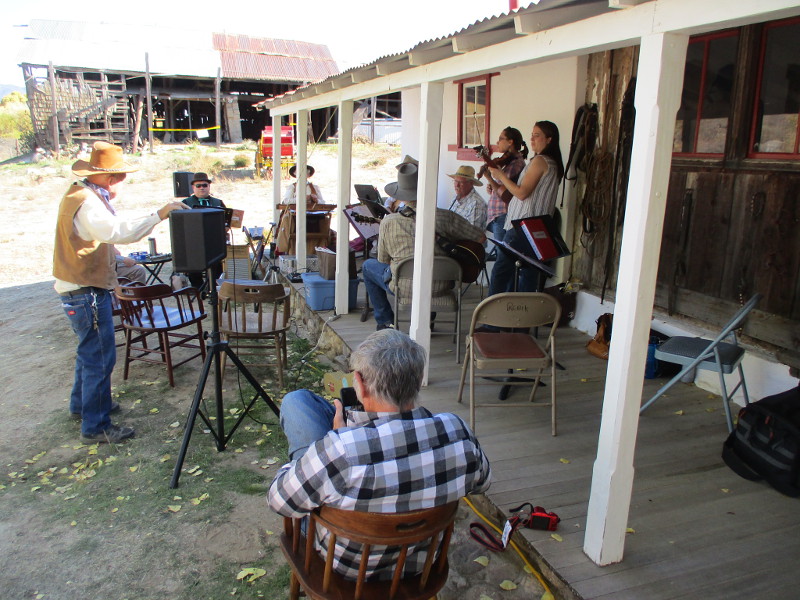
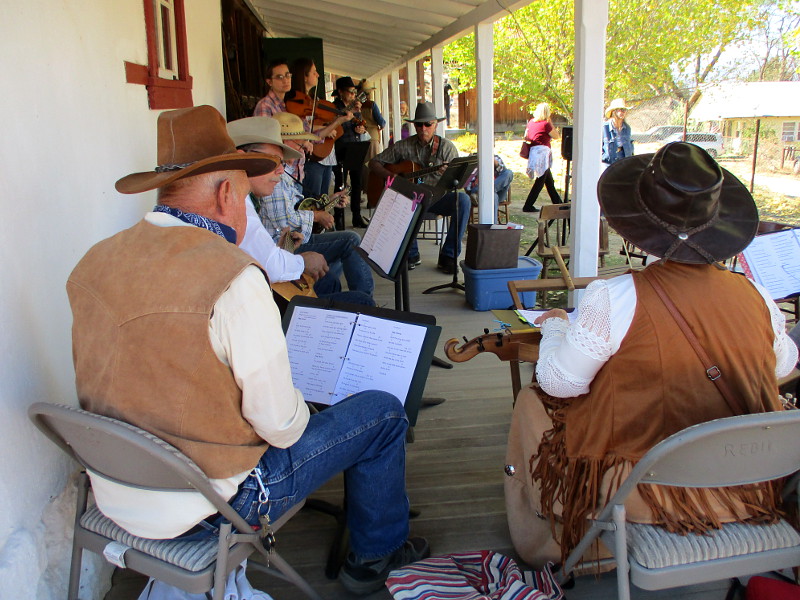
Some of the smaller rooms include bedrooms and a kitchen, which featured a family bathtub, as you’ll see in my photos! The adobe walls are 18 inches thick, providing a cool inside temperature on a hot day. There’s also a pleasant veranda, where musicians were playing the day I visited. The veranda was built at the front of the ranch house, which faced the old stage route. As I understand it, the nearby barn, which SOHO also plans to restore, was for ranch horses and carriages.
Please enjoy these photos. I took few notes, and I’m no expert, so please don’t rely on anything I’ve written here as absolute fact. Do your own research. The history of the ranch is complex. Over the years it had many different owners.
So why is the ranch house named Warner-Carrillo? The original Warner’s Ranch, whose buildings no longer exist, was established here on a Mexican land grant given to Jonathan Trumbull Warner, an American-Mexican citizen and former California State Senator who changed his name to Juan José Warner. His ranch, a camping stop on the Gila Overland Trail to California, was attacked during the Garra Uprising of 1851 and burned down. I photographed the burial site of Antonio Garra in Old Town San Diego and provided a brief description of the Native American Cupeño revolt due to unfair taxation here.
The Warner-Carrillo Ranch House is open year-round on Saturday and Sundays from 12 to 4 pm. If you’re ever in the area, make sure to stop by. Not only will you learn much, but you’ll feel the rich history!
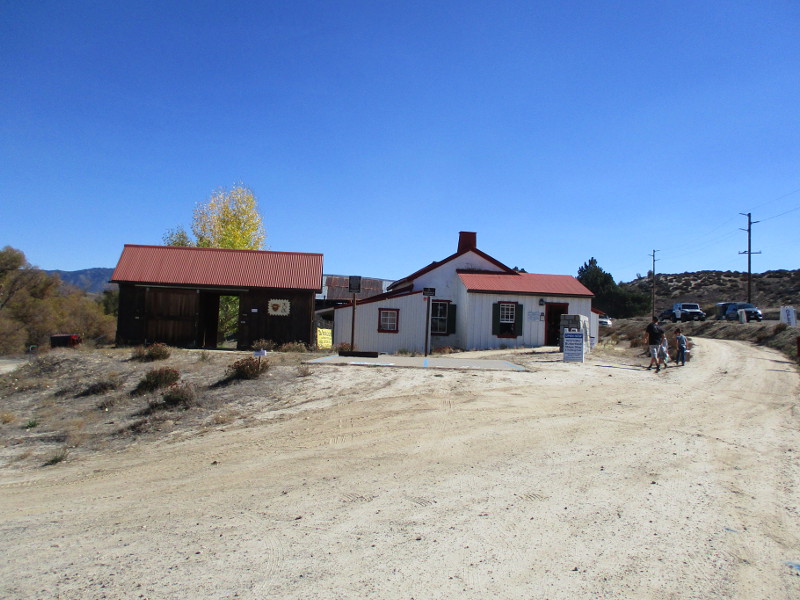
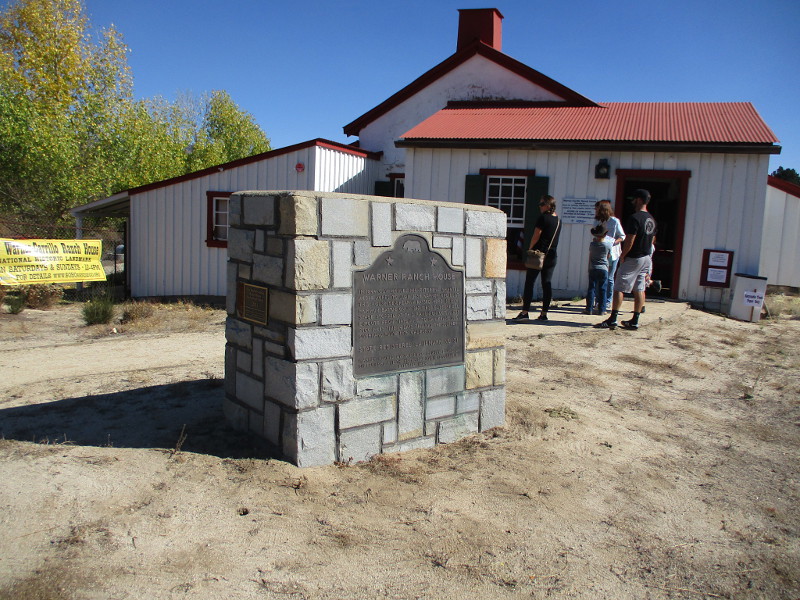
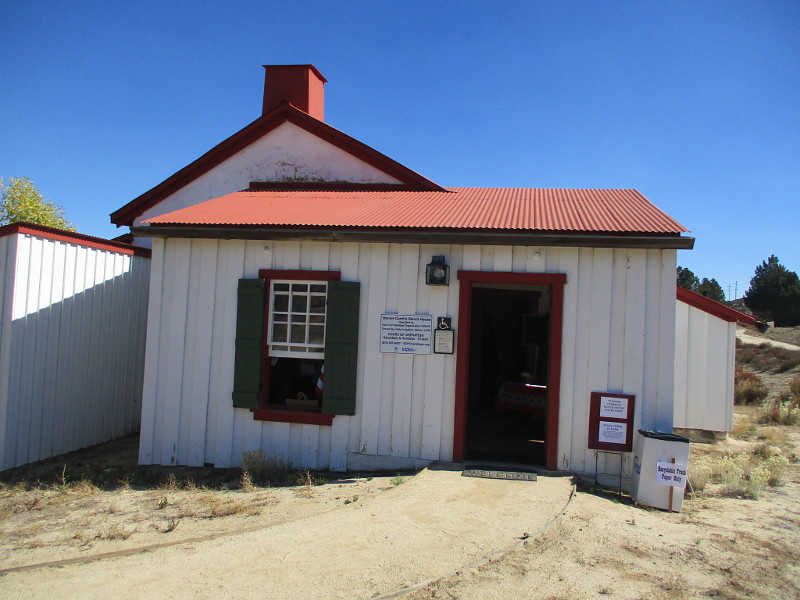
Approaching the restored Warner-Carrillo Ranch House. (Interesting note: that brown modern structure to the left of the old ranch house contains visitor restrooms. I learned from Christopher Pro of SOHO that the restroom building design was copied from the historic Stein Family Farm in National City!)
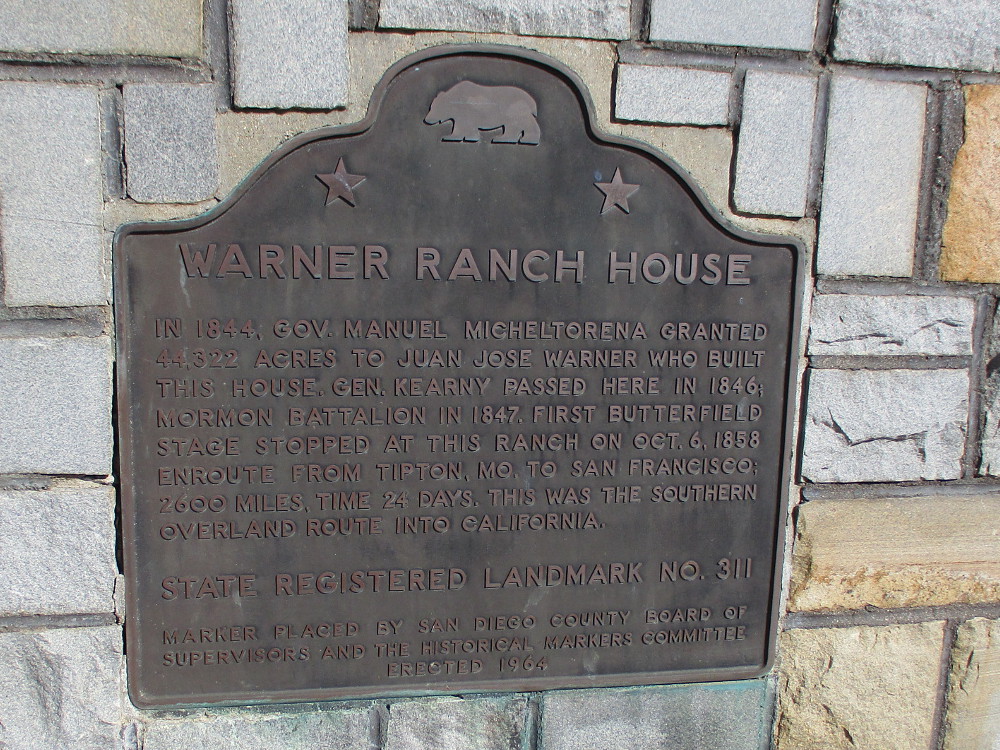
The historical plaque near the museum entrance reads:
WARNER RANCH HOUSE
IN 1844, GOV. MANUEL MICHELTORENA GRANTED 44,322 ACRES TO JUAN JOSE WARNER WHO BUILT THIS HOUSE. GEN. KEARNY PASSED HERE IN 1846; MORMON BATTALION IN 1847. FIRST BUTTERFIELD STAGE STOPPED AT THIS RANCH ON OCT. 6, 1858 ENROUTE FROM TIPTON, MO. TO SAN FRANCISCO; 2600 MILES, TIME 24 DAYS. THIS WAS THE SOUTHERN OVERLAND ROUTE INTO CALIFORNIA.
STATE REGISTERED LANDMARK NO. 311
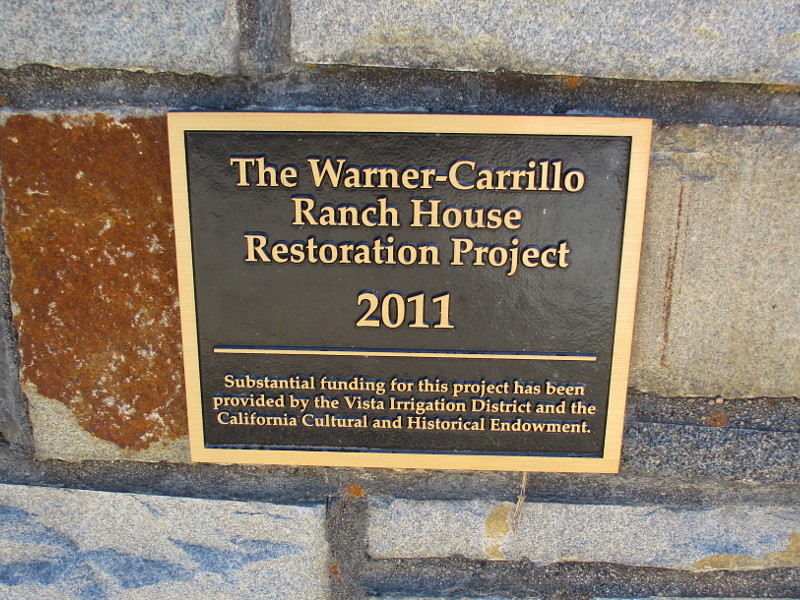
A major restoration of the Warner-Carrillo Ranch House was completed in 2011. The ranch stands on land owned by the Vista Irrigation District.
The Vista Irrigation District has a really good web page concerning the ranch house and its history here.
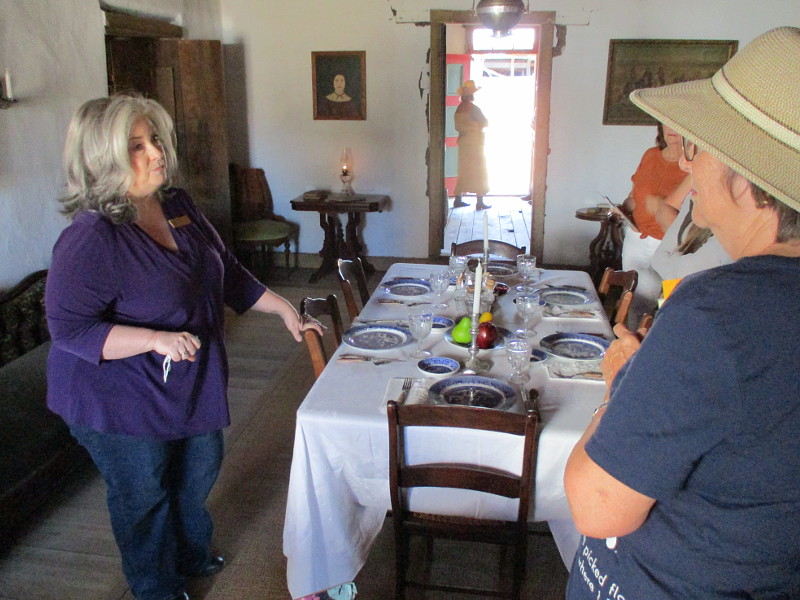
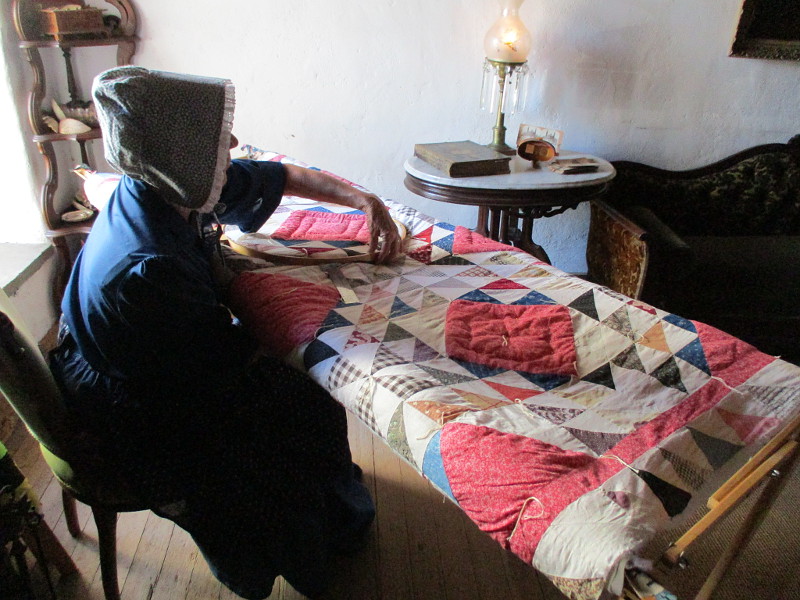
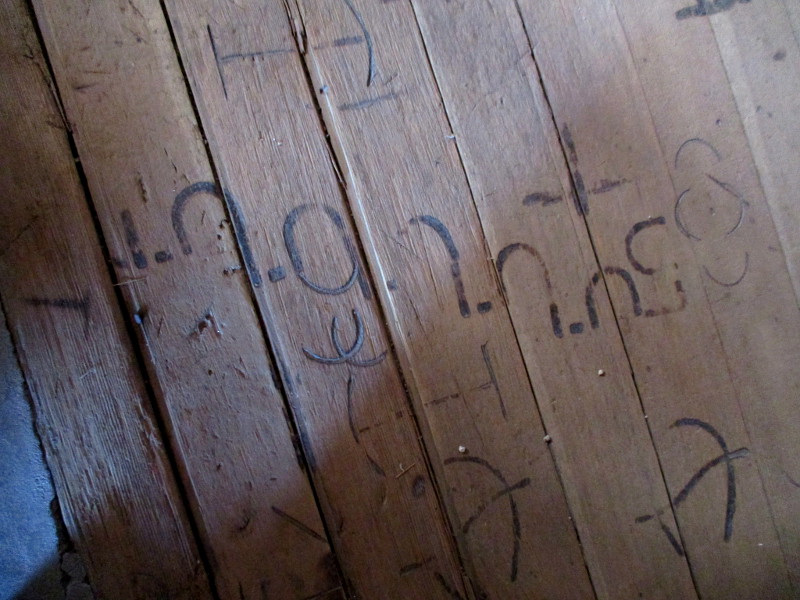
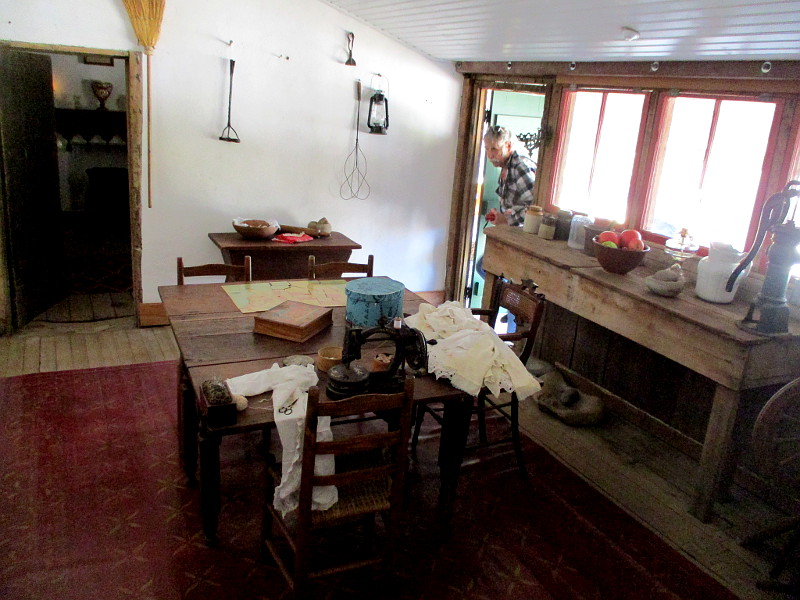
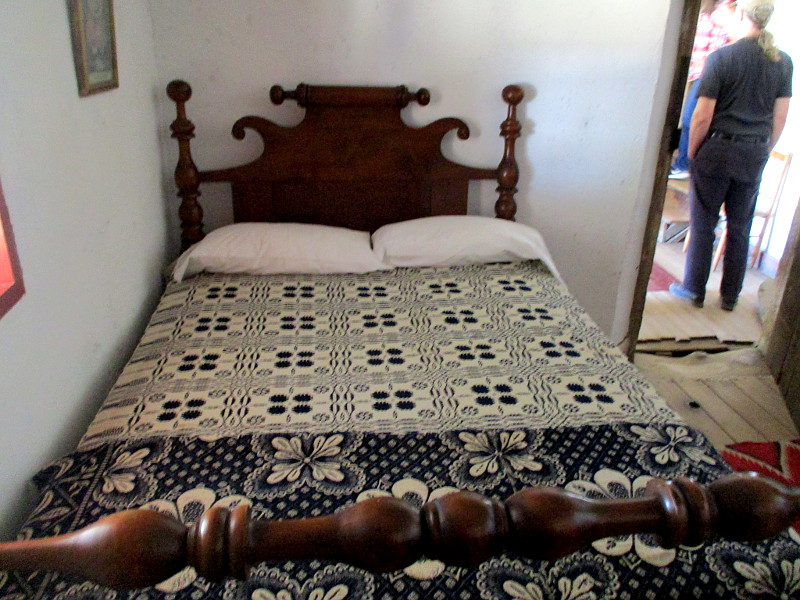
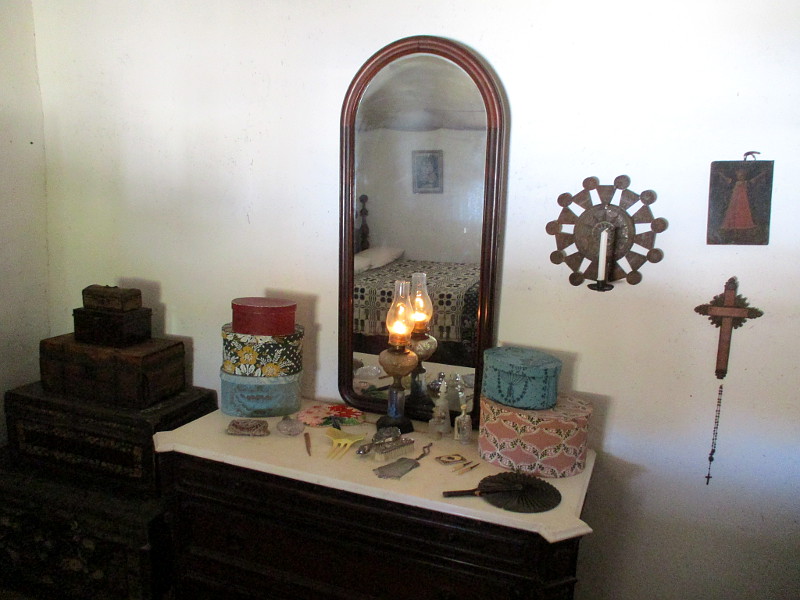
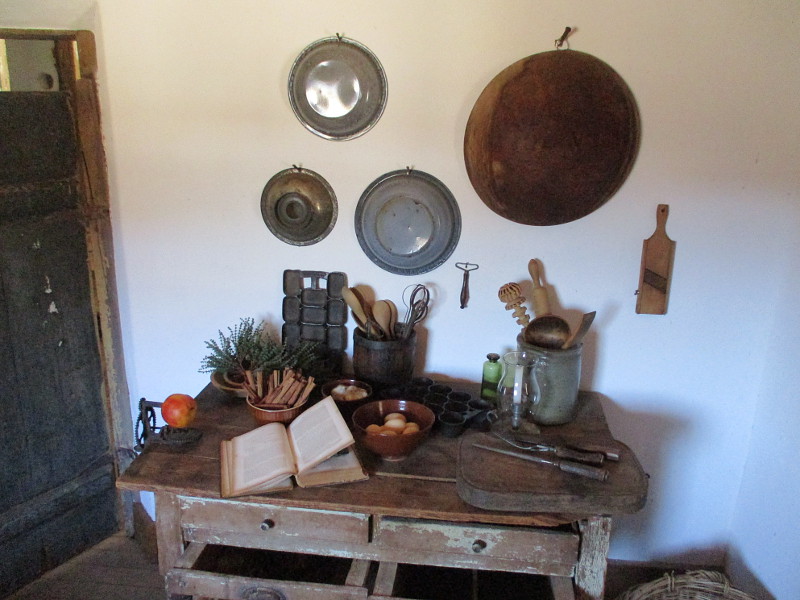
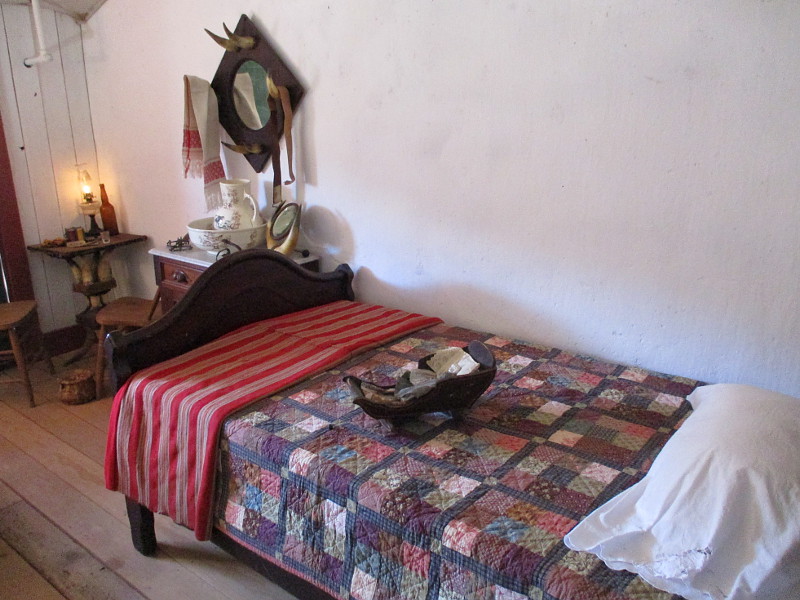
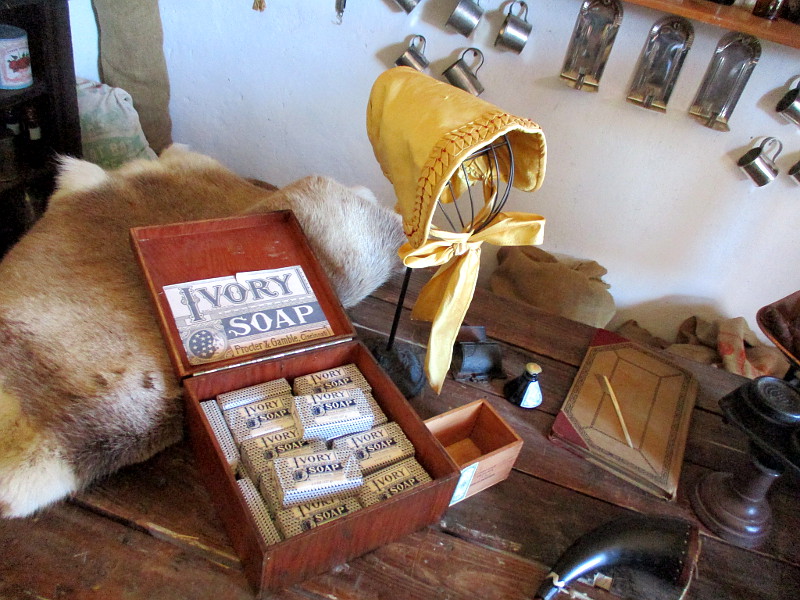
Inside the sala, or living room, with its dining table. Some of the elegant furniture was obtained from William Heath Davis, who helped to establish “New Town” (present day downtown) San Diego.A quilt being made in one corner of the sala.The sala in later years became a ranch bunkhouse, which explains why the wood floor is branded!A work room between the sala and veranda.A bedroom.A look inside the kitchen.How’d you like to take a bath here?!A look inside the children’s bedroom.The trading post offered goods to stagecoach travelers, who’d enter from a side door, which is located opposite the old barn.Soap, a bonnet, and other useful items.One small room contains information displays and archaeological artifacts from the ranch.A look at the old barn, which is presently in a state of arrested decay.On this special once-a-year stagecoach riding day, musicians were out on the veranda playing popular tunes from the Old West. The group is called Jugless Jug Band.Some visitors enjoying a short ride on the authentic Concord stage.
…
I live in downtown San Diego and love to walk around with my camera! You can follow Cool San Diego Sights via Facebook or Twitter!
You can easily explore Cool San Diego Sights by using the search box on my blog’s sidebar. Or click a tag! There are thousands upon thousands of photos for you to enjoy!
Today I had the opportunity to experience something amazing in Warner Springs.
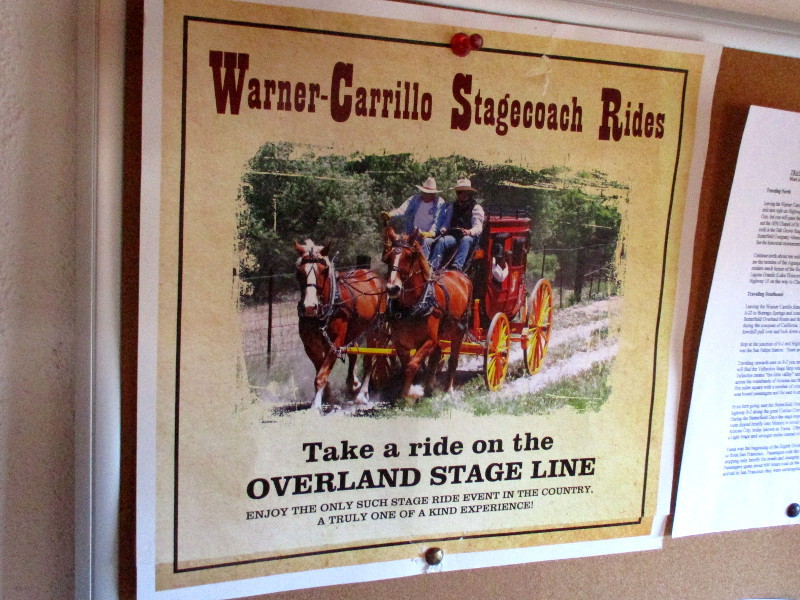
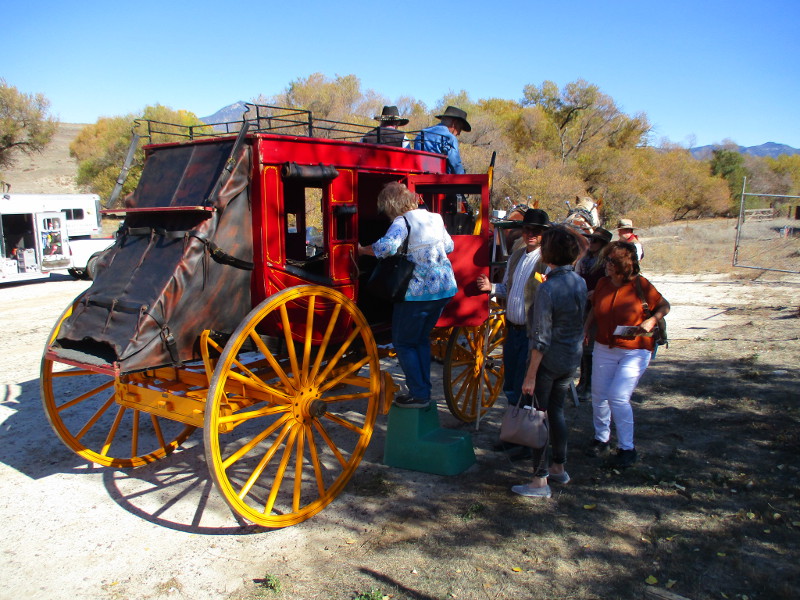
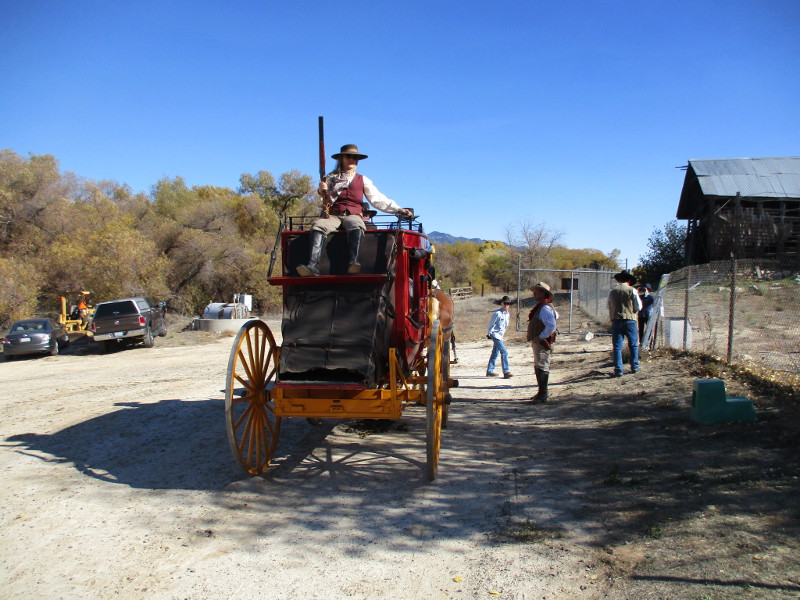
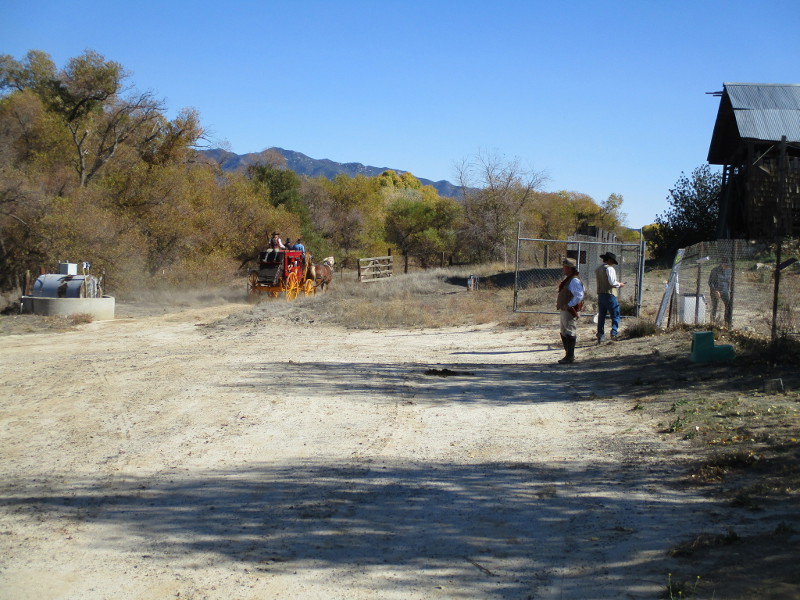
Once a year, at the Warner-Carrillo Ranch House, people can ride an authentic stagecoach a short distance down an actual, historic stage line route!
Such a ride can be experienced nowhere else in the entire country!
I purchased a ticket for a stagecoach ride a couple weeks ago before it sold out, then drove up to the Warner-Carrillo Ranch House in Warner Springs this morning to enjoy the short but memorable adventure!
Warner’s Ranch back in the 19th century was a swing stop for the Butterfield Overland Mail stage line. According to the event website, “The Butterfield Overland stage transported thousands of passengers across the United States years prior to the Civil War as California’s first regular overland stage connection with St. Louis.“
Travelers, packed elbow to elbow in solidly-built, relatively “elegant” Concord Coaches, would stop at the ranch house to rest and stretch their legs and sore bodies for a few minutes while new horses were brought up from the nearby barn. Passengers could buy useful items in the ranch’s one-room trading post before resuming their dusty, bumpy journey.
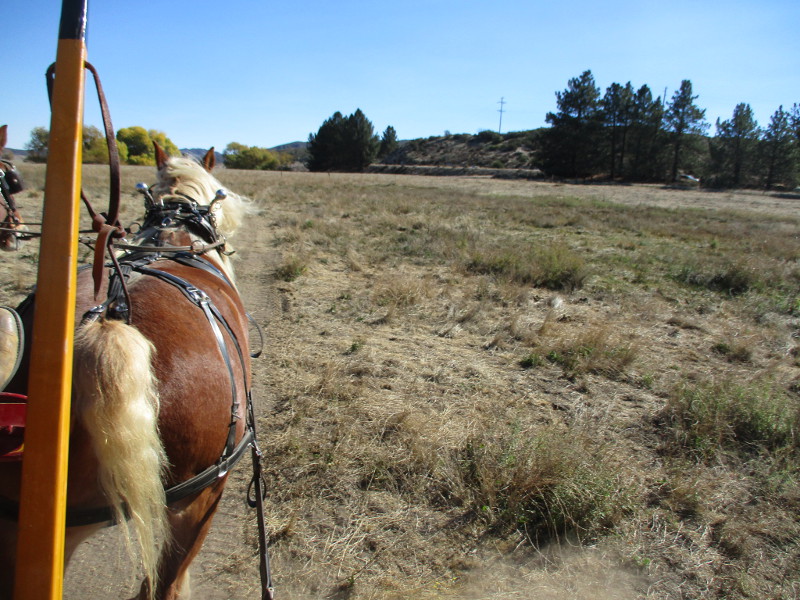
This afternoon I and other excited passengers got to actually experience a few minutes of that dusty, very bumpy overland journey!
If you live in Southern California, or plan to visit, I highly recommend going on this once-every-year stagecoach ride. You’ll also enjoy an in-depth tour of the Warner-Carrillo Ranch House, which is operated by the Save Our Heritage Organisation. SOHO’s mission in San Diego County is the “preservation of architecturally and historically significant structures, sites, and cultural landscapes.”
Okay! You want to see what the ride is like? Here we go!
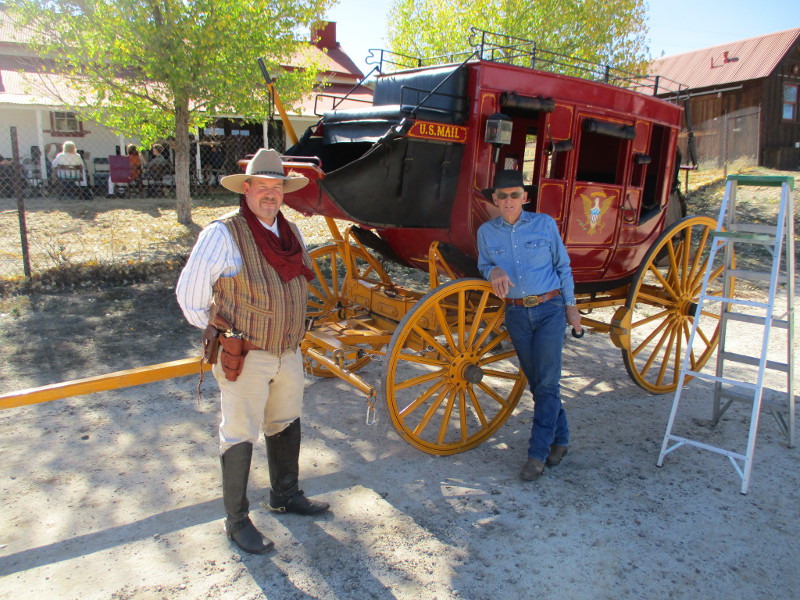
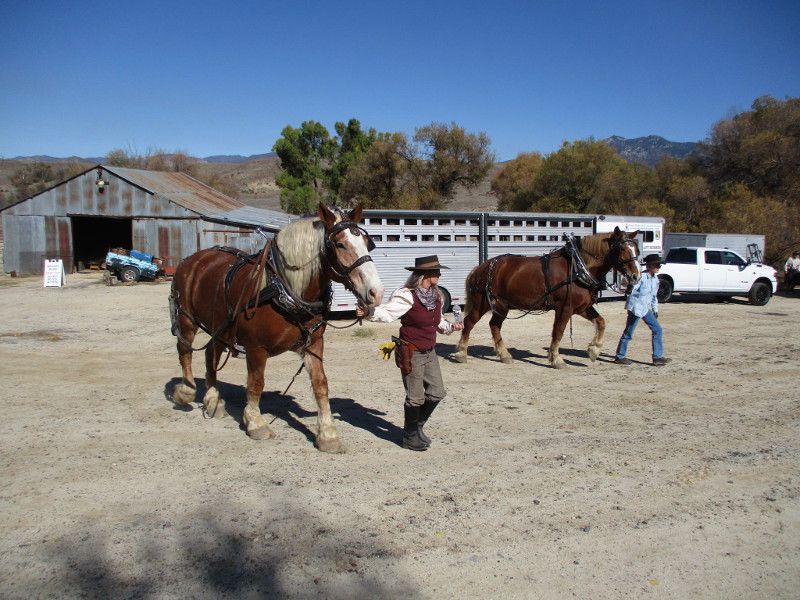
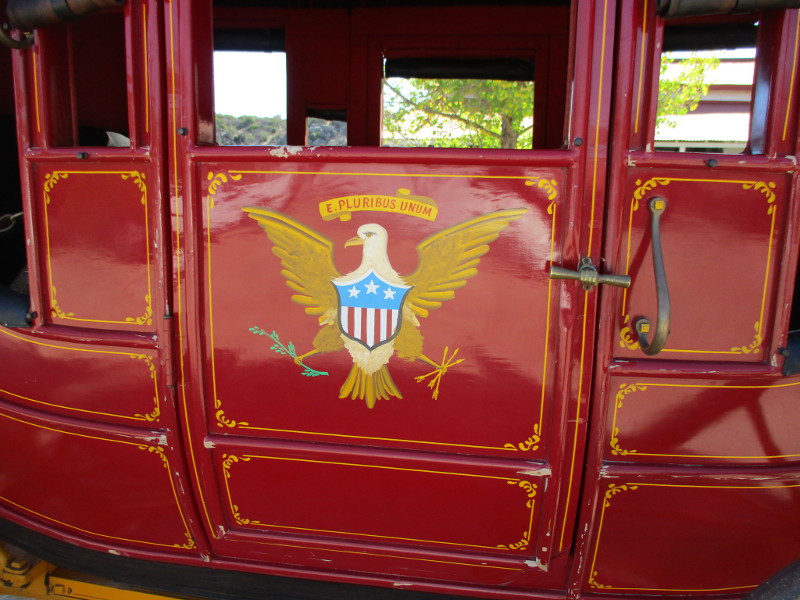
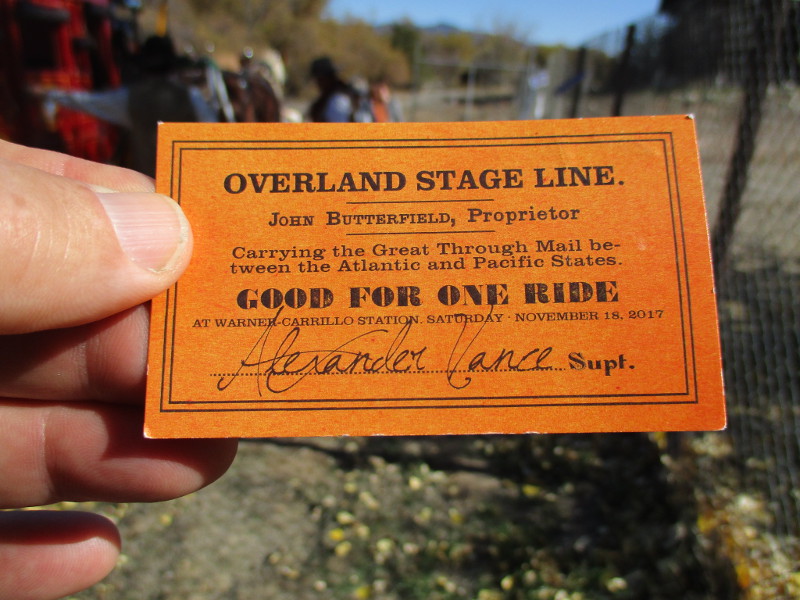
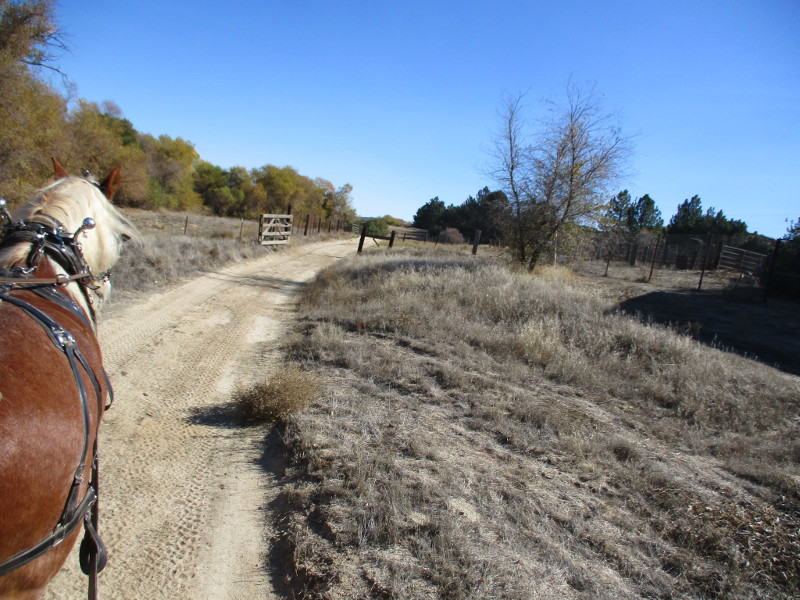
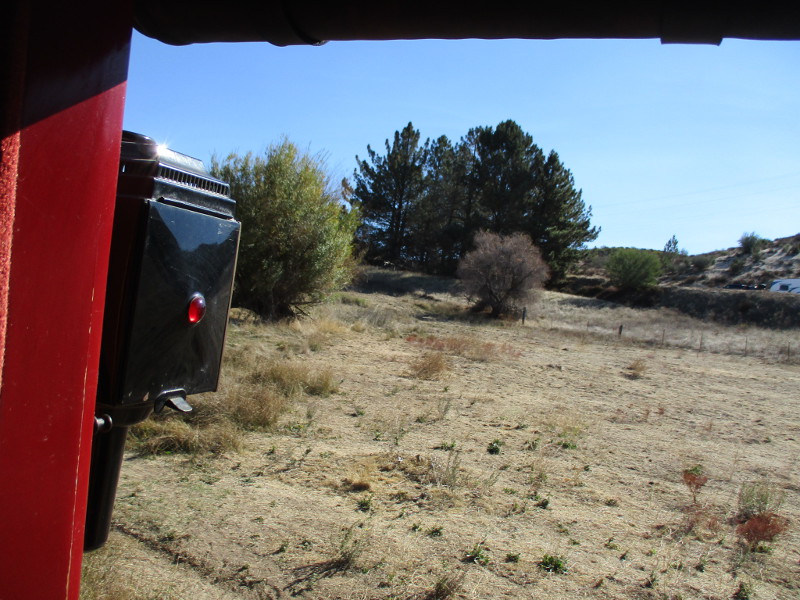
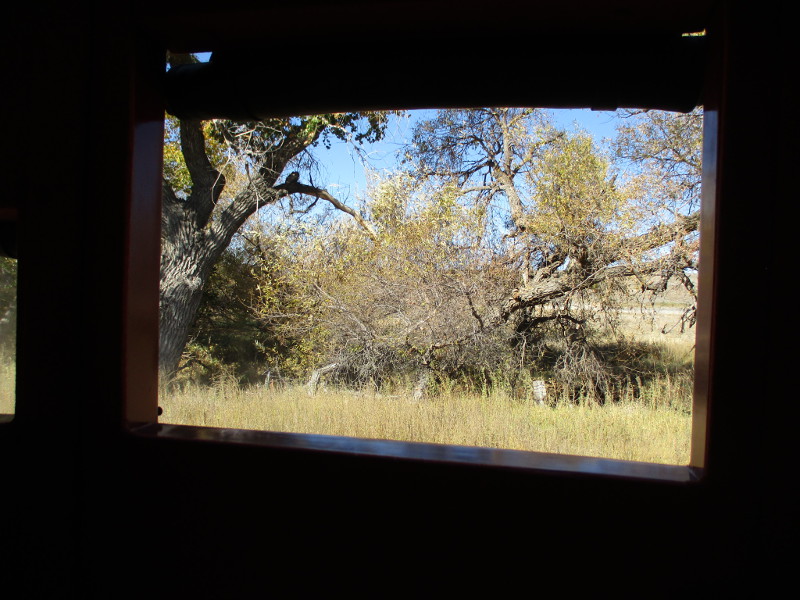
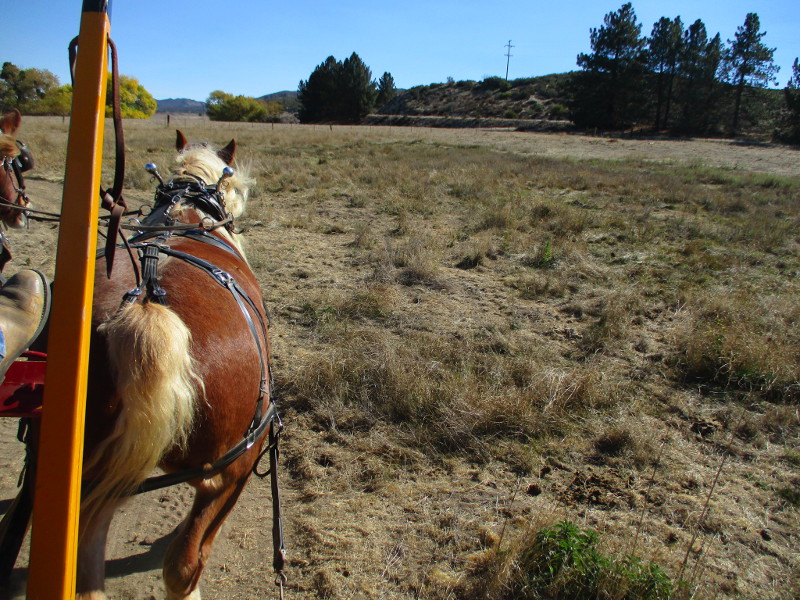
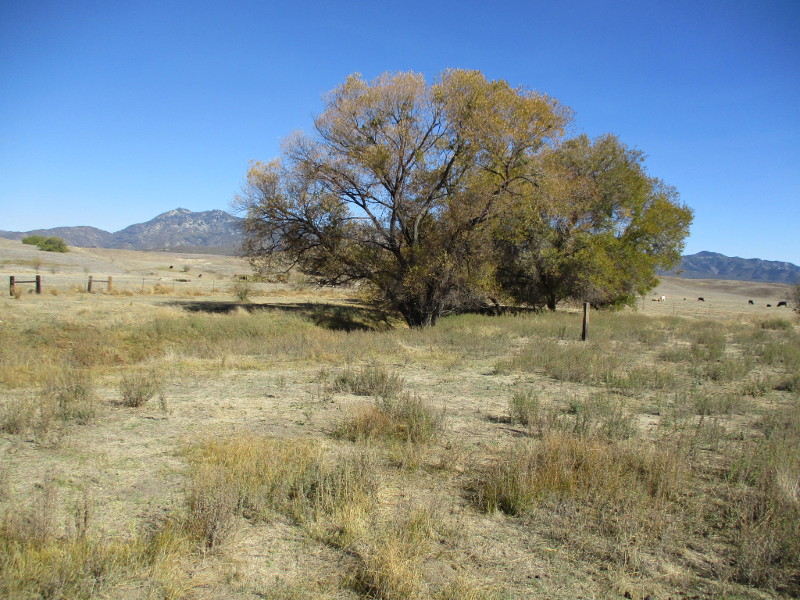
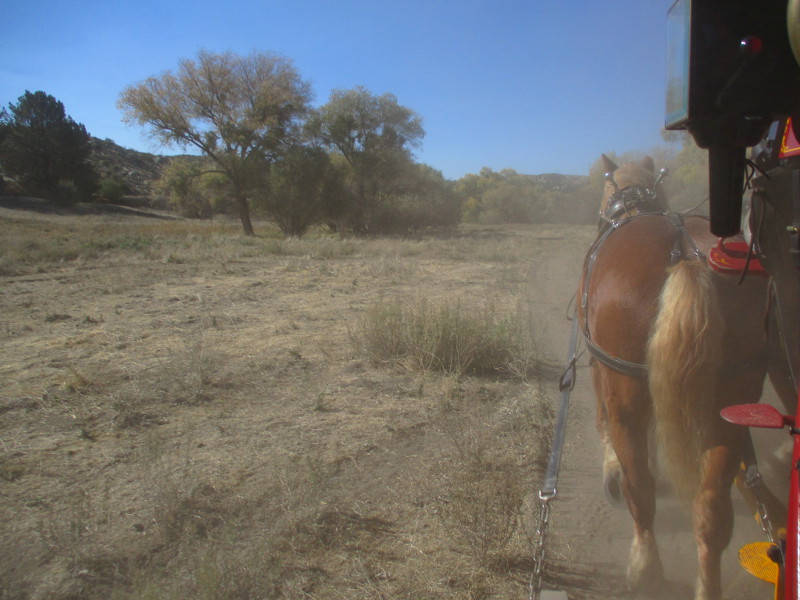
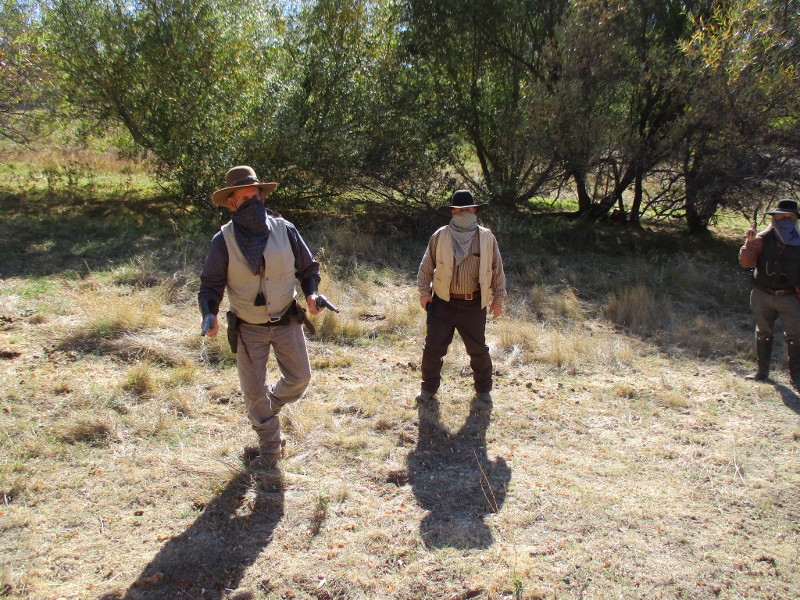
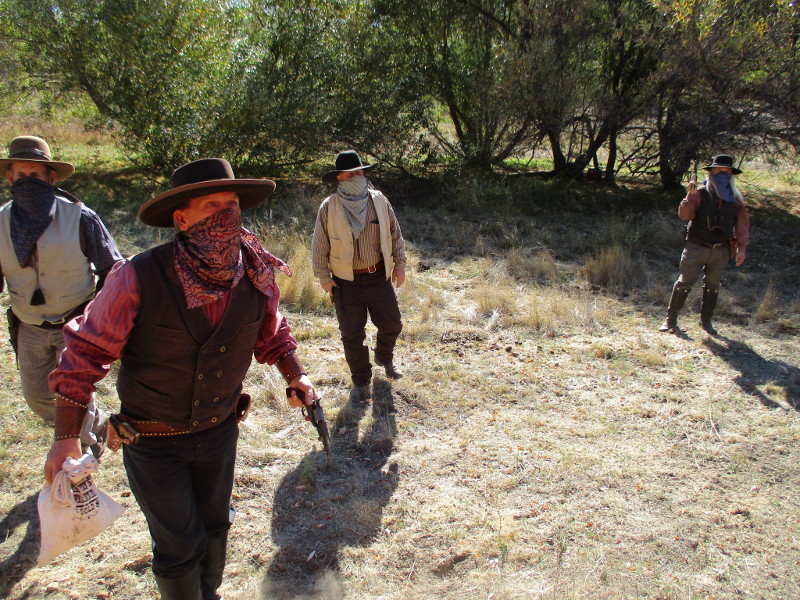
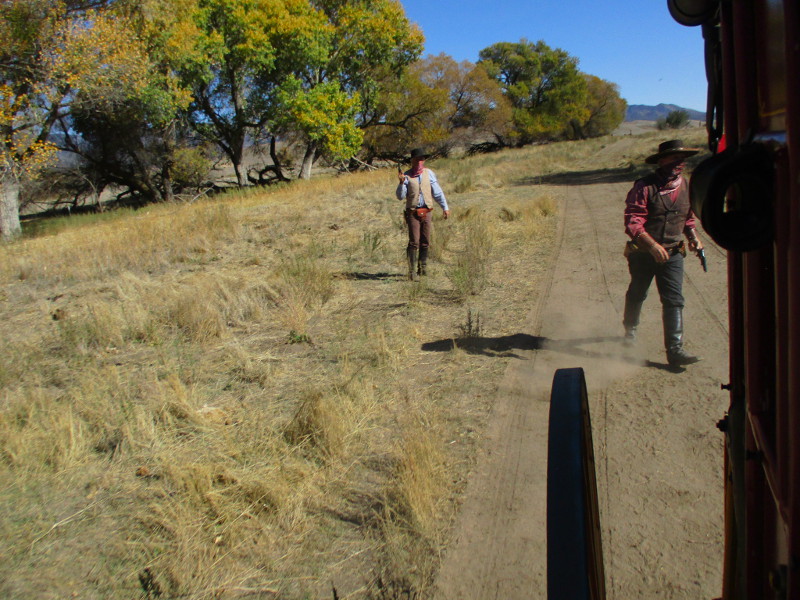
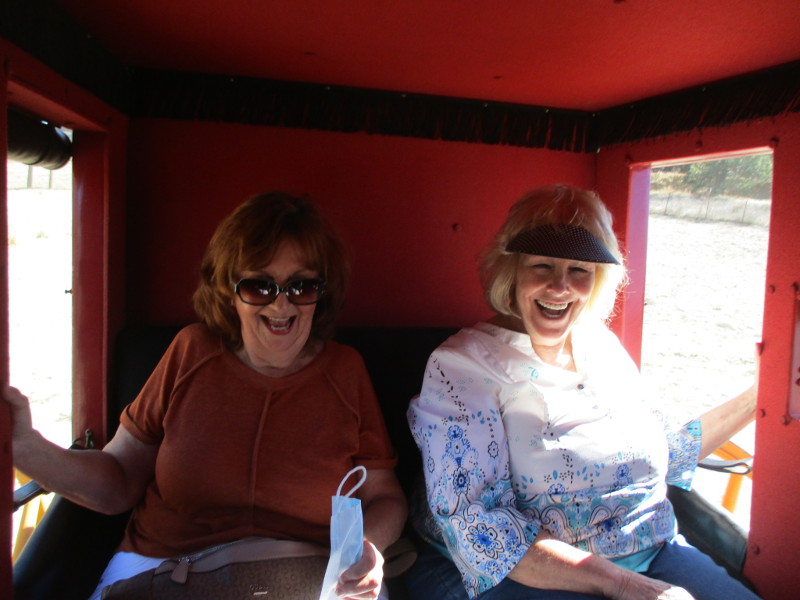
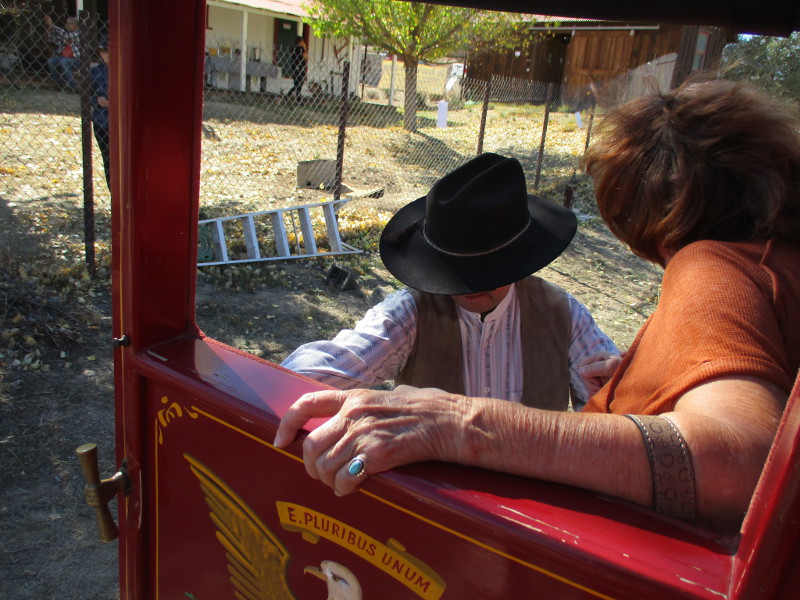
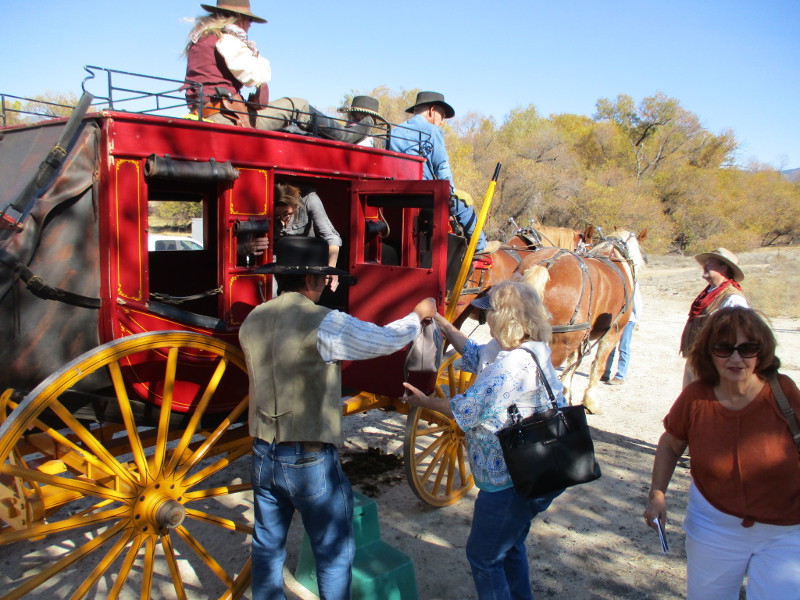
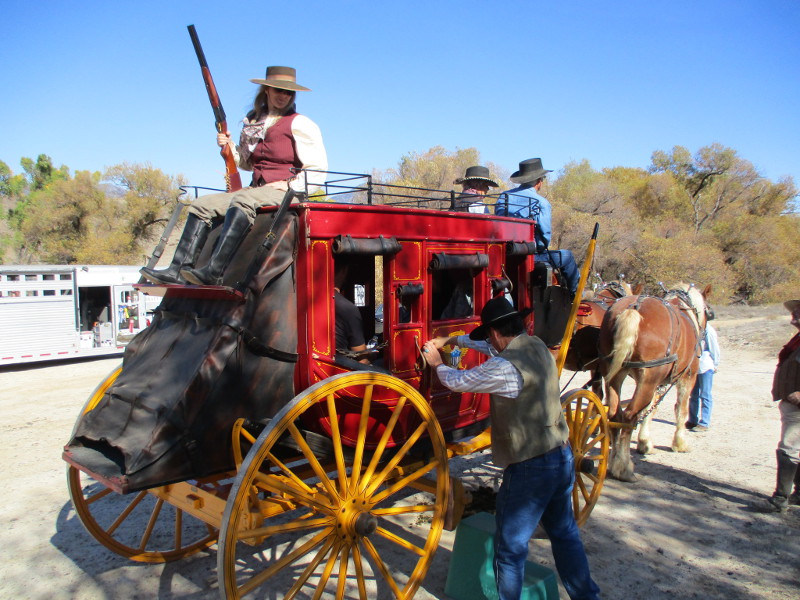
Approaching the entrance of the historic Carrillo Ranch House at Warner’s Ranch, a National Historic Landmark.I arrived early and will be on the first ride of the day. But no horses yet.Here they come!Two beautiful horses will pull the genuine Concord Coach, which is owned by the Save Our Heritage Organisation. I believe I heard the horses are Clydesdales. (UPDATE! I see on the SOHO website these were Belgian Draft horses.)Another passenger waits as the horses are hooked up.I’m pretty sure they didn’t have aluminum ladders like this a century and a half ago!American eagle on side of the historic red Concord Coach, with E. Pluribus Unum.Four passengers will sit inside the coach for this short journey.Here’s my ticket!We managed to squeeze into the small coach and here we go!Looking at the countryside beyond an outside stagecoach lantern.Looking out the other window at oak trees.Were going down the actual historic stage route. It’s dusty and bumpy! A few sudden lurches took me by surprise–like some sort of amusement park ride!Mountains and cattle in the distance.I did say dusty!What’s this? Armed robbers!The stagecoach driver threw down the Army payroll. The passengers got off easy.We are allowed to continue back to our stage stop.Yes, the experience is fun!It’s over far too soon.Another group of passengers is ready to go!There they go!
…
I live in downtown San Diego and love to walk around with my camera! You can follow Cool San Diego Sights via Facebook or Twitter!
You can easily explore Cool San Diego Sights by using the search box on my blog’s sidebar. Or click a tag! There are thousands upon thousands of photos for you to enjoy!









 Cool San Diego Sights!